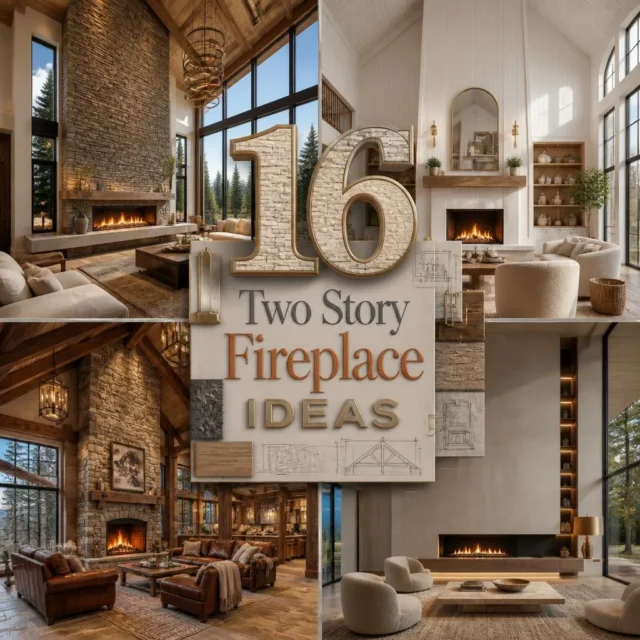

A two-story fireplace is the one feature in a house you can’t ignore. Two story fireplace ideas have to solve a problem most fireplaces never face: a wall of stone or plaster rising nine metres into a vaulted ceiling is a genuinely difficult thing to make feel warm rather than merely impressive. Get the material, the proportion, and the lighting right and a great room becomes a proper room. At Sunday Abode, we care about the difference between a wall that photographs well and one that’s pleasant to sit beside on a Tuesday. These 16 designs cover both, plus the TV-height mistake almost everyone makes.
Key Takeaways
- The most common mistake is mounting the TV too high. Center it near seated eye level, around 100–110 cm (40–43 in) from the floor, not visually centered on the stack.
- Heat rises, and a two-story chimney breast funnels the whole plume upward. A TV above a working firebox on a tall wall is at real risk of heat damage.
- Double-height rooms are genuinely cold at floor level because warm air stratifies at the ceiling. A ceiling fan on reverse pushes it back down.
- You cannot light a two-story room from the ceiling alone. Layer light at three heights: floor, table, and wall.
- Vertical materials exaggerate the height; horizontal banding tempers it. The material is a proportion lever, not just a finish.
The Two-Story TV Mistake
On a two-story fireplace, mounting the TV where it looks centered will put it far too high to watch comfortably. A screen’s center should sit close to seated eye level, roughly 100–110 cm (40–43 in) from the floor, which on a tall stone stack means the TV sits surprisingly low.
The instinct is to balance the TV against that enormous chimney breast, and it produces a beautiful photograph and a room where everyone watches television with their chin tilted up all evening. Neck strain from a too-high screen is a real and well-documented consequence of this layout. The honest answer is that a two-story fireplace and a comfortable TV position are often in conflict.
Heat compounds it. A two-story chimney breast acts like a chimney in miniature, funneling the whole rising plume of heat straight up the wall, and a TV mounted in that path can be damaged over time. Check the manufacturer’s stated maximum operating temperature and clearances before committing, and consider whether the fire will actually be lit often.
Where Should the TV Actually Go?
Four options, honestly compared. Choose based on how much you watch and how often you light the fire.
| Option | Pros | Cons |
| Mounted above the firebox | Looks balanced; keeps the wall as one feature | Usually too high to watch; exposed to rising heat |
| Pull-down / articulating mount | Drops to eye level for viewing, hides up high | Costly; mechanism visible; still in the heat path |
| Beside the fireplace | Comfortable eye level; away from the heat plume | Breaks the wall’s symmetry; needs wall space |
| In a different room or zone | Best viewing; fireplace stays a pure feature | Not possible in an open-plan great room |
| No fireplace: full TV wall | Free to place the screen at eye level | Loses the warmth and focal point of a fire |
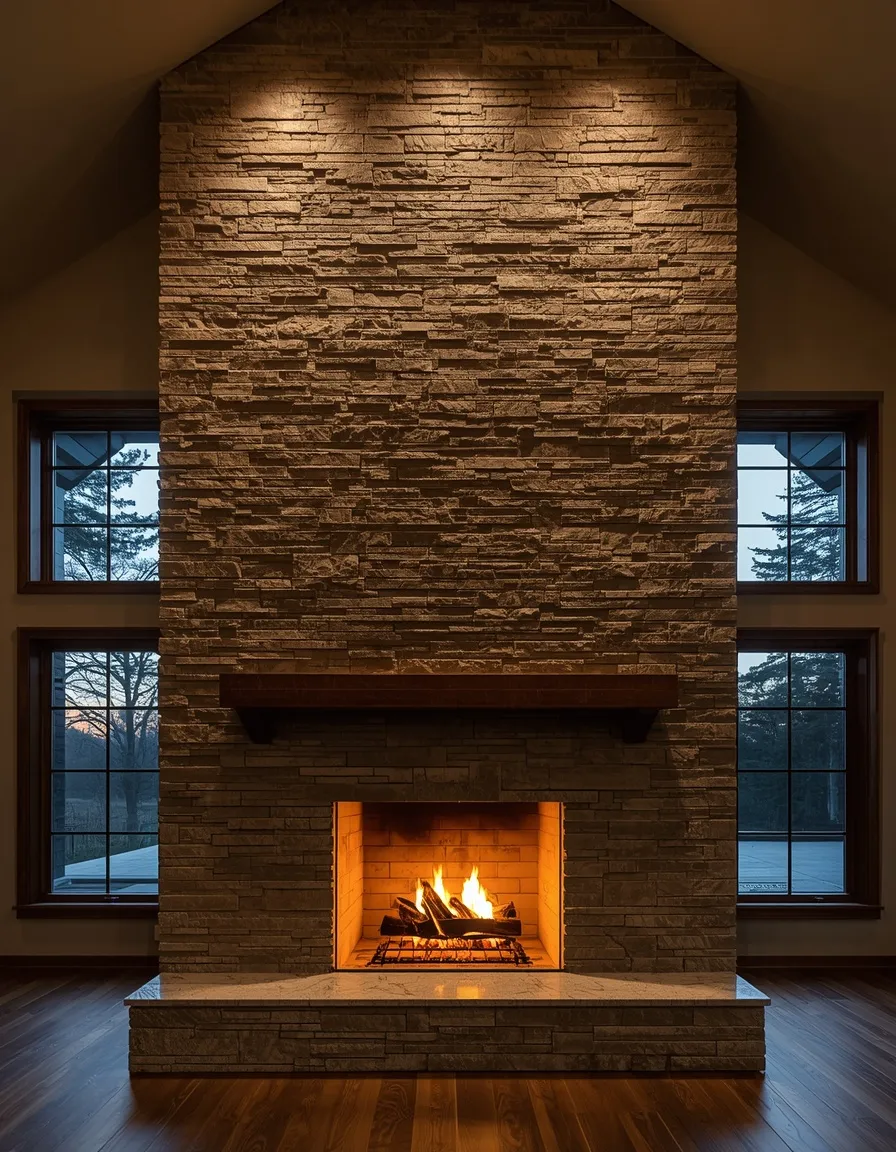
1. Floor-to-Ceiling Stone
Stone running the full two storeys is the classic, and still the most powerful. Rough-cut ledgestone climbing unbroken from hearth to vaulted ceiling gives a great room a spine of natural texture that no paint can imitate.
Run the stone in continuous courses without a horizontal break, since any interruption partway up reads as an unfinished thought. Real stone is heavy and needs proper structural support designed in from the start, whereas manufactured stone veneer weighs far less and is the practical choice for a retrofit, a distinction worth settling before you fall in love with a sample. Uplight the stone from the hearth to rake across the texture at night. This suits mountain homes, lodges, and large great rooms with the height to carry it.
- Best for: large great rooms and lodge-style homes with real ceiling height.
- Watch out: real stone is heavy, veneer is the practical retrofit choice.
- Key elements: unbroken ledgestone courses, hearth uplighting, vaulted ceiling.
2. Modern White Shiplap
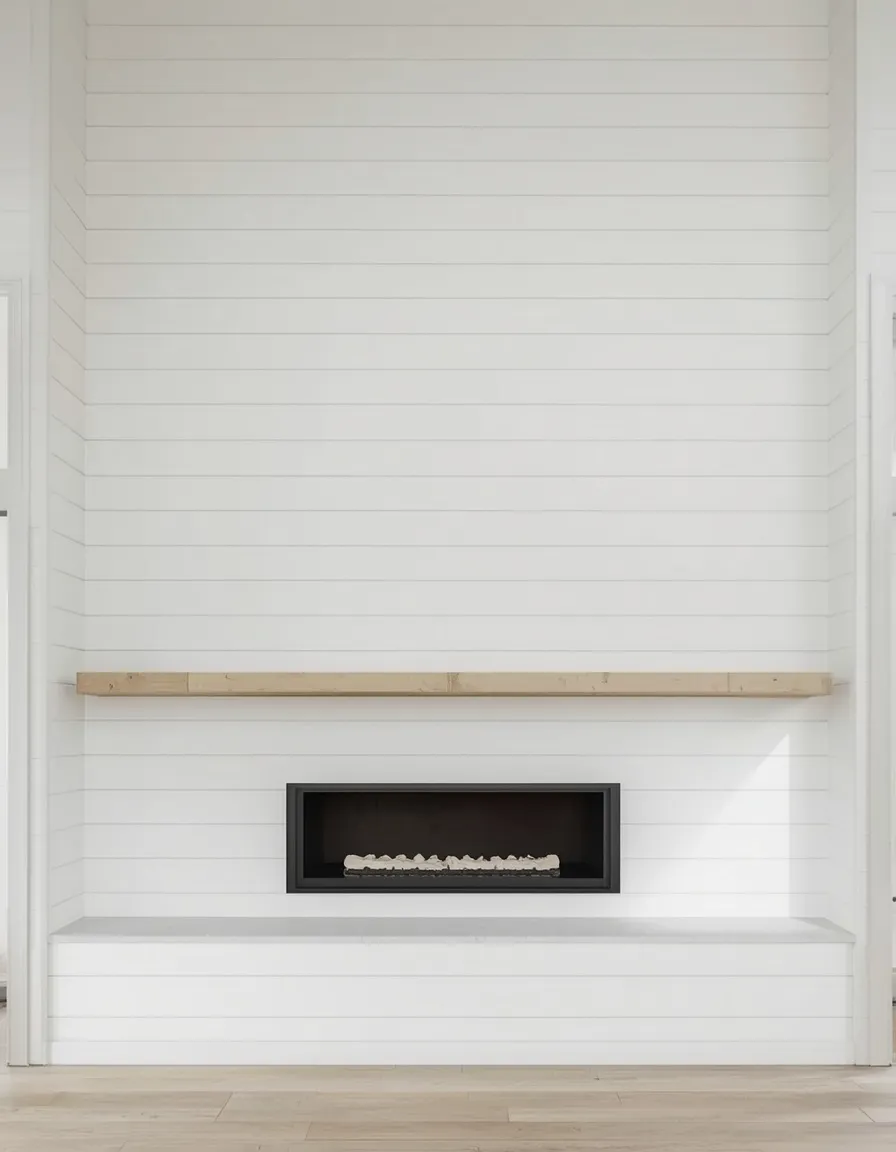
White shiplap climbing two storeys keeps a tall room bright and calm. Horizontal boards running the height of the wall, a slim dark firebox, and a simple floating mantel make the scale feel airy rather than imposing.
Horizontal shiplap is a genuinely useful proportion tool here: the repeating horizontal lines visually shorten a very tall wall and stop it feeling like a canyon, which is the opposite of what vertical cladding does. Paint it in a durable eggshell or satin rather than flat matte, since a wall this size collects dust and marks. Keep the firebox slim and dark for contrast. This suits farmhouse, coastal, and modern homes and works especially well in rooms that already feel cold or cavernous.
- Best for: tall rooms that feel cavernous; farmhouse and coastal homes.
- Why it works: horizontal boards visually shorten the wall where vertical would stretch it.
- Key elements: horizontal shiplap, slim dark firebox, floating mantel, satin paint.
3. Rustic Stone with Reclaimed Beam
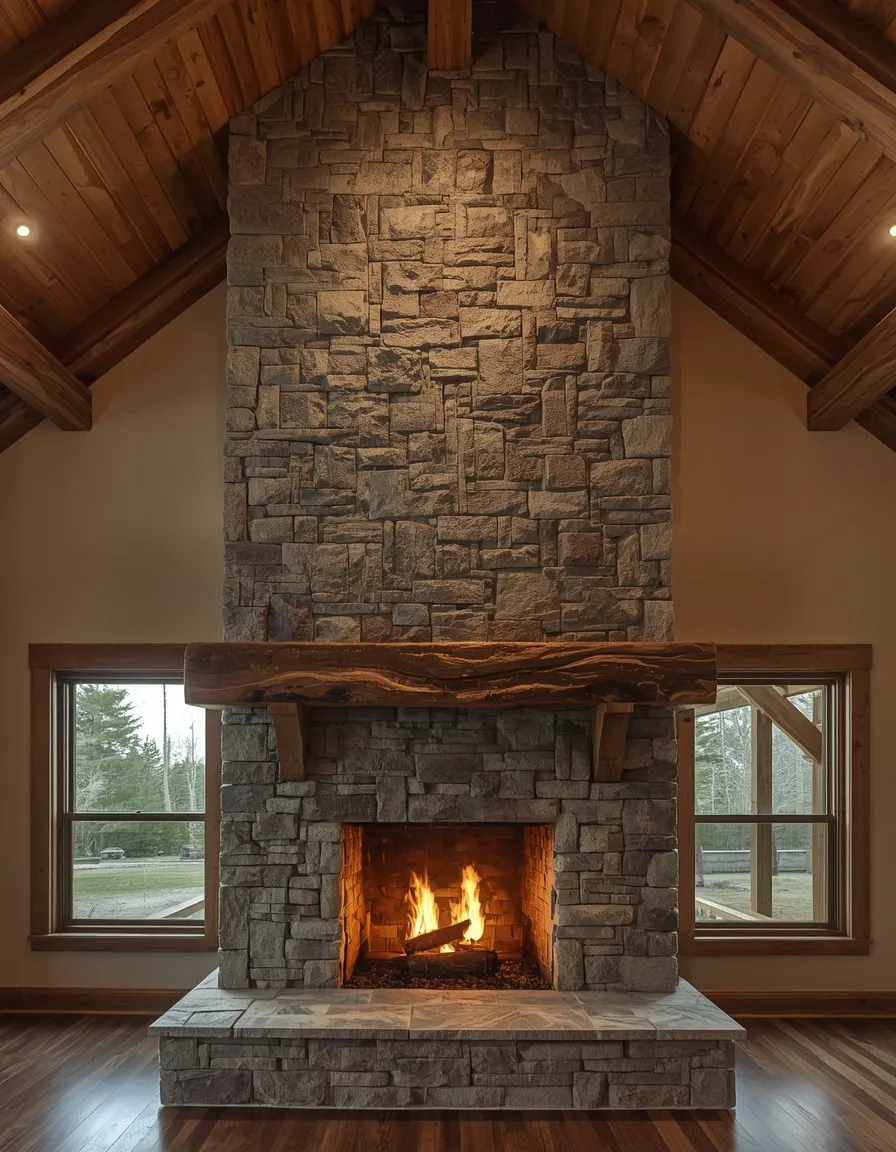
A hefty reclaimed beam mantel is what makes a two-story stone fireplace feel human. Rough stone rises past it on both sides, but the beam gives the wall a horizontal anchor at a height you can actually reach.
Scale the beam to the wall: a standard-size mantel on a two-storey stack looks like a postage stamp, so go considerably chunkier than instinct suggests, a beam of at least 20–25 cm (8–10 in) deep holds its own against that mass. Mount it at around 130–150 cm (51–59 in) from the floor so it reads at human height. A timber mantel above a working firebox must respect the manufacturer’s clearance from the opening. This suits rustic, mountain, and farmhouse great rooms.
- Best for: rustic and mountain great rooms needing a human-scale anchor.
- Watch out: scale up the beam; a standard mantel looks tiny on a two-story stack.
- Key elements: 20–25 cm deep reclaimed beam at 130–150 cm, rough stone above.
4. Contemporary Linear Fireplace
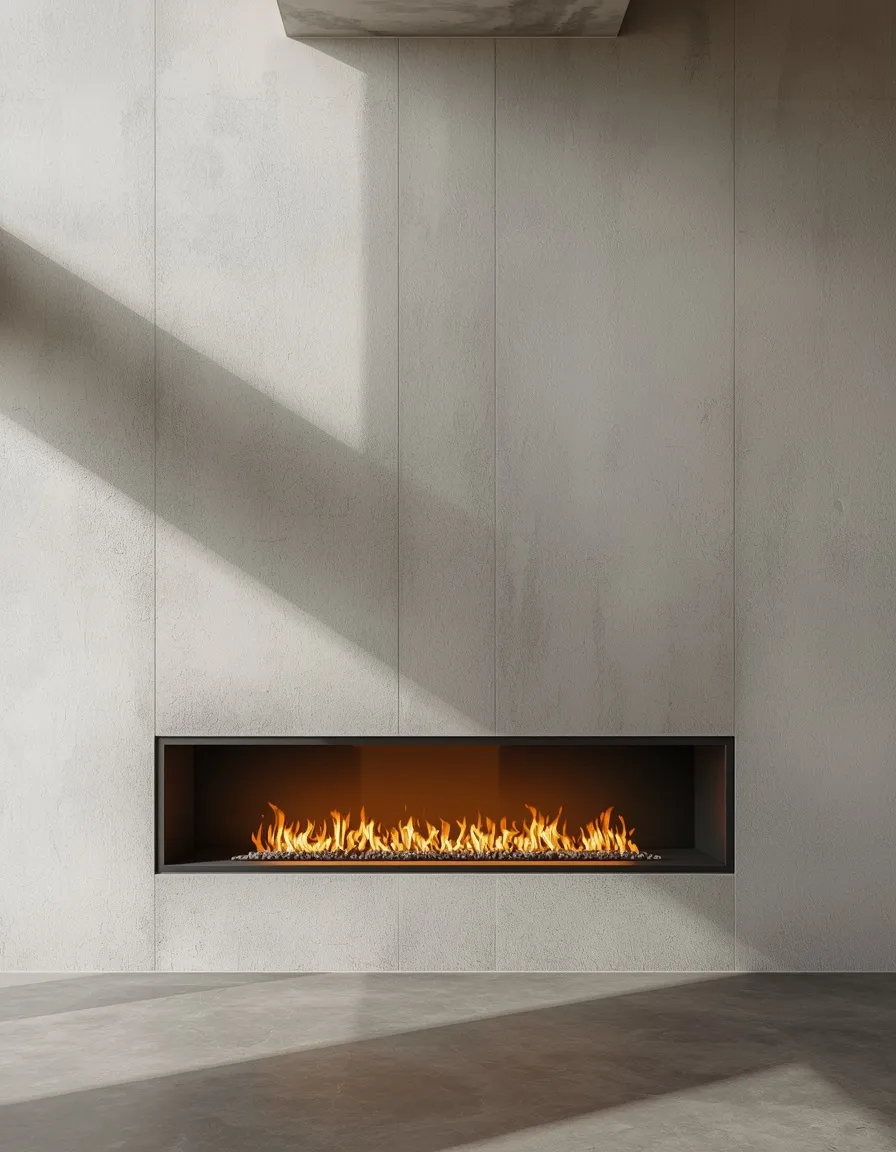
A long ribbon of flame set into a sheer two-story plane is architecture rather than decoration. A wide linear gas firebox, a flush plastered surround, and no mantel at all create a wall of pure, uninterrupted geometry.
With no mantel and no molding, the finish is everything: a flat or matte plaster on a properly true surface, because any sheen across a plane this large will spotlight every ripple and joint. A linear gas unit also removes the smoke, ash, and wood storage that a two-storey wood fire demands. Light the wall from a concealed source at the base or the ceiling to graze it. This suits contemporary and architect-designed homes and rooms where the wall itself is the feature.
- Best for: contemporary homes where the wall itself is the architecture.
- Watch out: matte only; sheen on a plane this large exposes every imperfection.
- Key elements: wide linear gas firebox, flush plaster, no mantel, grazing light.
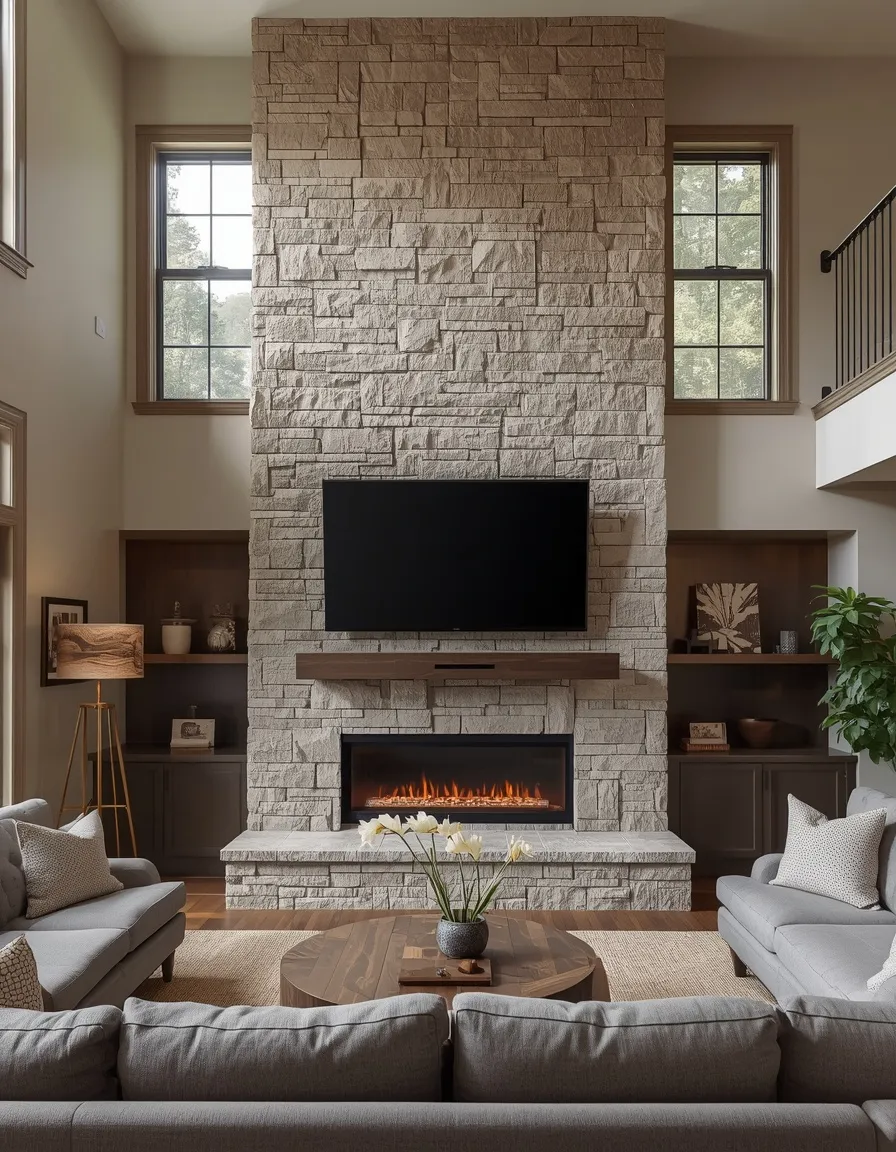
5. Two-Story Fireplace with a TV
Putting a television on a two-story fireplace can be done well, but only by ignoring what looks balanced. The screen sits lower than instinct wants, closer to the seating, with the stone rising freely above it.
Set the center of the screen near seated eye level, roughly 100–110 cm (40–43 in) from the floor, and accept that this will look low against the stack in photographs while being right in the room. A pull-down or articulating mount is the compromise that lets the TV sit high when off and drop to eye level to watch. Check the TV’s maximum operating temperature, since a two-storey chimney breast channels rising heat straight past it. This suits family rooms where the television is genuinely used.
- Best for: family rooms where the TV is watched, not just displayed.
- Watch out: rising heat funnels up a tall breast, check the TV’s temperature limits.
- Key elements: screen center at 100–110 cm, pull-down mount option, stone above.
6. Two-Story Built-In Wall
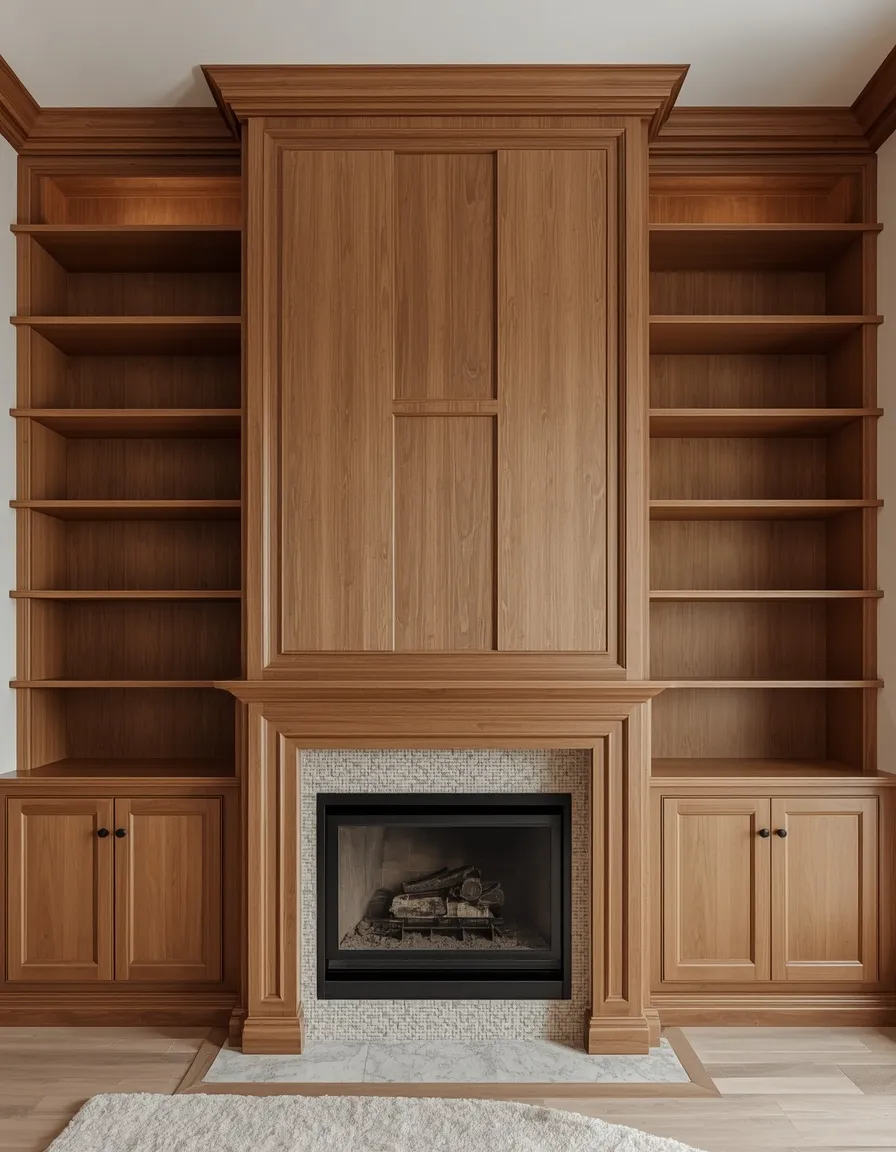
Flanking a tall fireplace with full-height built-ins turns one dramatic object into a complete wall. Shelving and cabinetry climbing both sides frame the fireplace and give the eye somewhere to travel other than straight up.
Full-height joinery either side balances the fireplace’s mass and, crucially, breaks the wall into readable sections rather than one overwhelming plane. Keep the lower cabinets closed for storage and the upper shelves open and sparsely styled, since a shelf 5 m up will never be dusted and shouldn’t hold anything precious. Include integrated lighting in the shelving, which does real work in a room the ceiling lights can’t reach. This suits great rooms and family rooms needing storage as well as drama.
- Best for: great rooms needing storage as well as a focal point.
- Why it works: full-height joinery breaks one overwhelming plane into readable sections.
- Watch out: don’t put anything precious on a shelf you’ll never reach to dust.
7. Cozy Layered Great Room
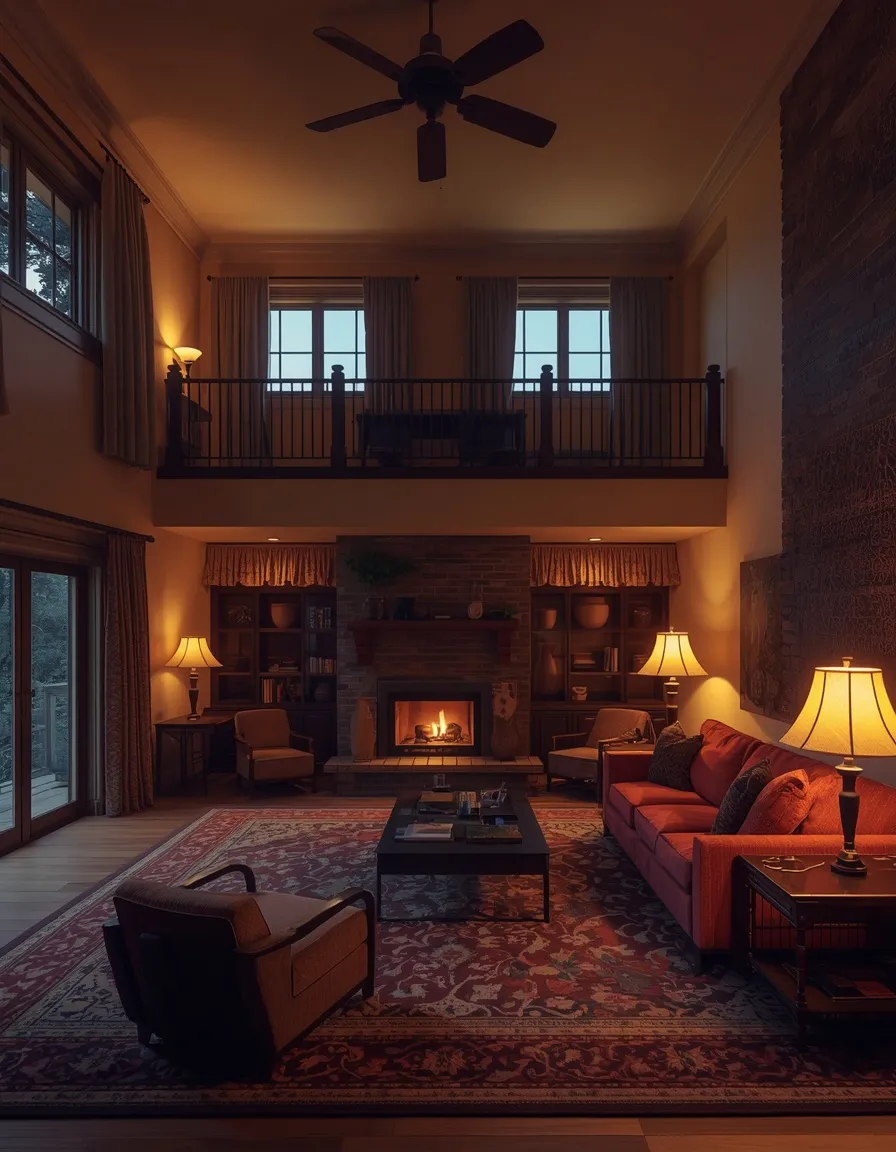
The hardest thing about a two-story fireplace is making the room around it feel warm. A generous rug, low-slung deep seating, layered lighting, and heavy textiles pull the whole space back down to human scale.
Double-height rooms feel cold for a physical reason: warm air rises and stratifies at the ceiling while you sit chilly at floor level. A ceiling fan run in reverse, its winter setting, pushes that warm air back down and makes a genuine difference. Hard tall surfaces also echo, so soften with a large rug, curtains, and upholstered furniture. Light at three heights, floor lamps, table lamps, and wall sconces, because you cannot light a room like this from the ceiling alone. This suits any two-story room that feels more like a lobby than a living room.
- Best for: any tall room that currently feels like a hotel lobby.
- Why it works: a ceiling fan in reverse pushes stratified warm air back down to you.
- Key elements: large rug, low deep seating, textiles, lighting at three heights.
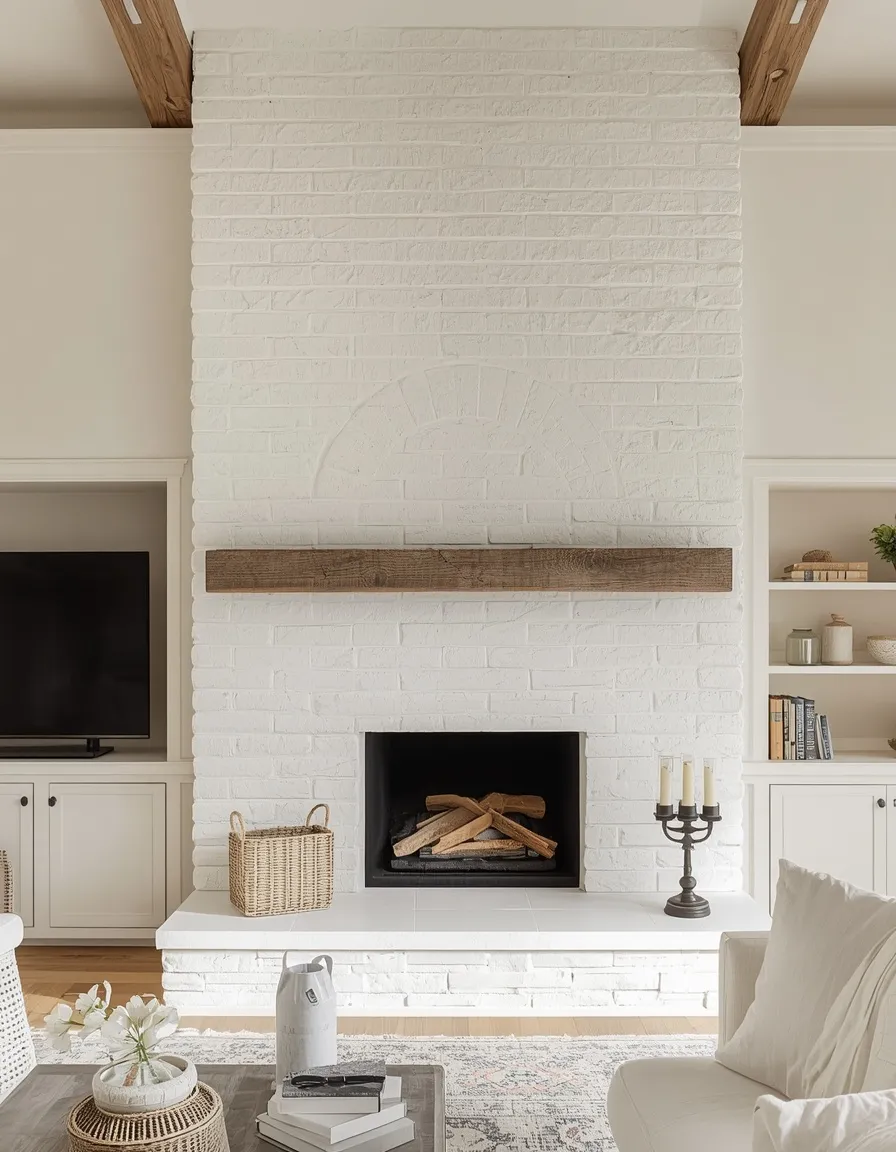
8. Painted Brick Two-Story
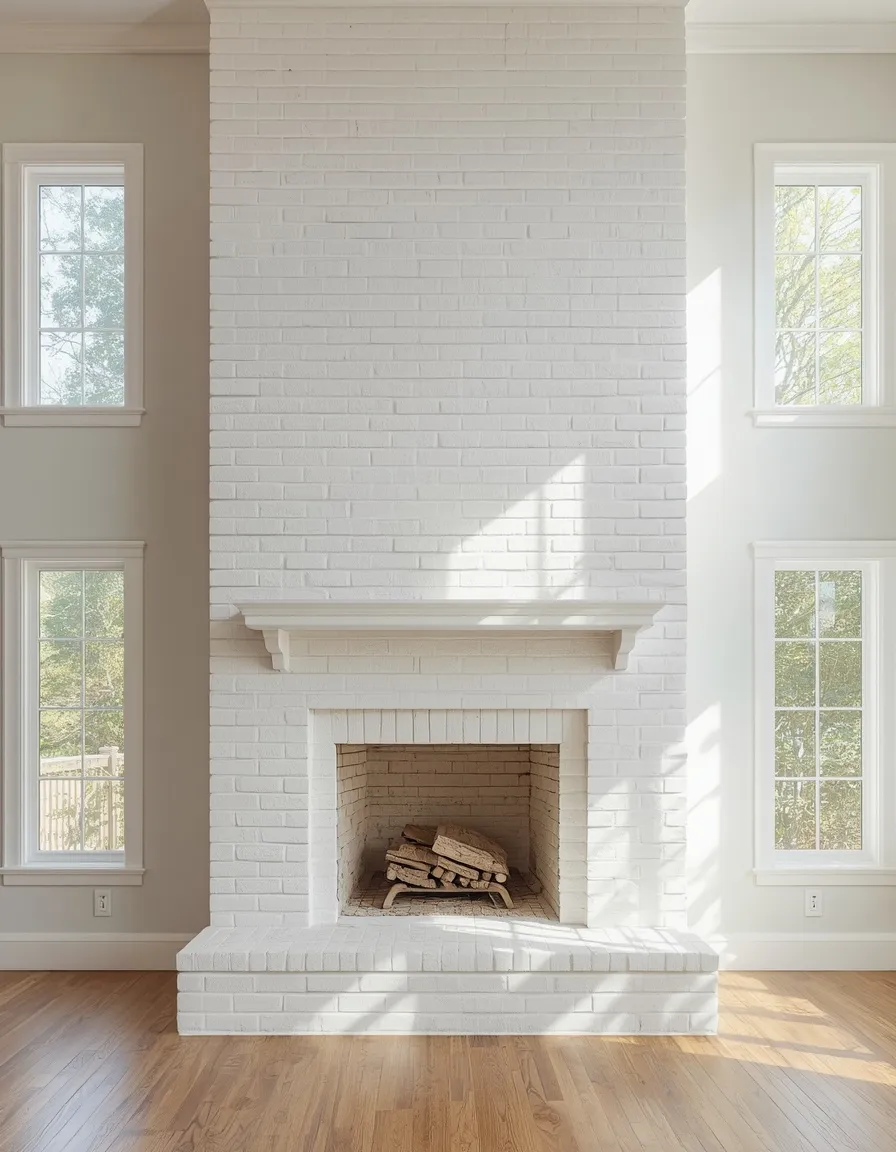
Painting a dated two-story brick fireplace is the cheapest possible transformation. A coat of soft white or greige over red brick calms the wall instantly while keeping every bit of its texture and mortar line.
This is the highest-impact, lowest-cost change available on a wall this size, and it’s close to irreversible, since stripping paint from two storeys of brick is a job nobody wants. Use a breathable mineral or masonry paint rather than a standard latex, because a plastic-like film traps moisture in the masonry. Access is the practical hurdle: painting to a 6 m height needs proper scaffolding or a professional, not a stepladder and optimism. This suits dated great rooms stuck with brick nobody likes.
- Best for: dated great rooms with brick nobody likes; the cheapest transformation.
- Watch out: near-irreversible, and painting at height needs proper scaffolding.
- Key elements: breathable masonry paint, soft white or greige, texture retained.
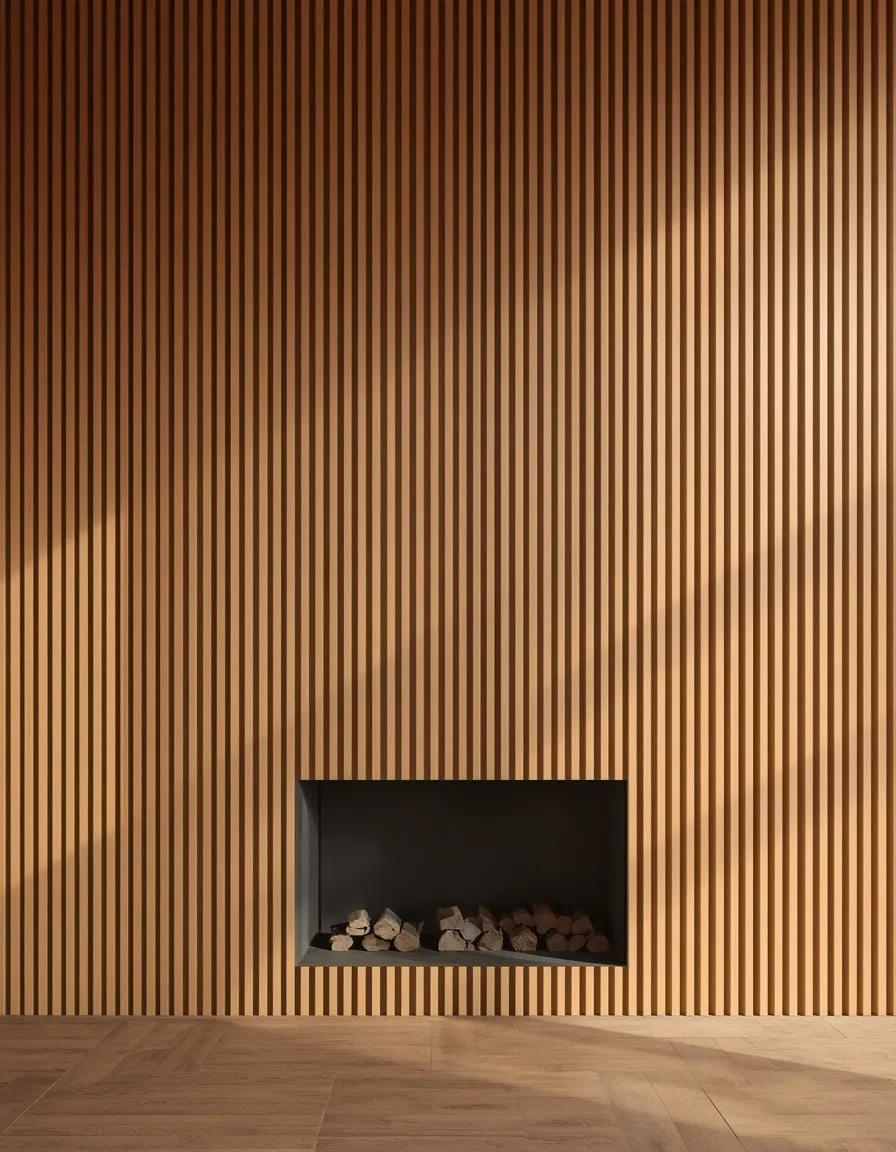
9. Vertical Wood Slat Wall
Fine vertical timber slats running the full two storeys give a tall fireplace warmth and rhythm. The narrow battens throw shadow lines up the wall, and the wood softens what would otherwise be a hard, cold plane.
Be deliberate here: vertical slats exaggerate the height of an already tall wall, so use them when you want to celebrate the volume rather than tame it. Slatted timber also absorbs sound, which genuinely helps the echo problem that plagues double-height rooms. Keep timber slats well clear of the firebox opening at the manufacturer’s specified clearance, since wood near a heat source is a real fire risk. This suits modern, Scandinavian, and Japandi interiors and rooms with an acoustic problem.
- Best for: modern and Japandi rooms; genuinely helps the echo problem.
- Watch out: slats exaggerate height, and timber must stay clear of the firebox.
- Key elements: fine vertical battens, shadow rhythm, acoustic absorption.
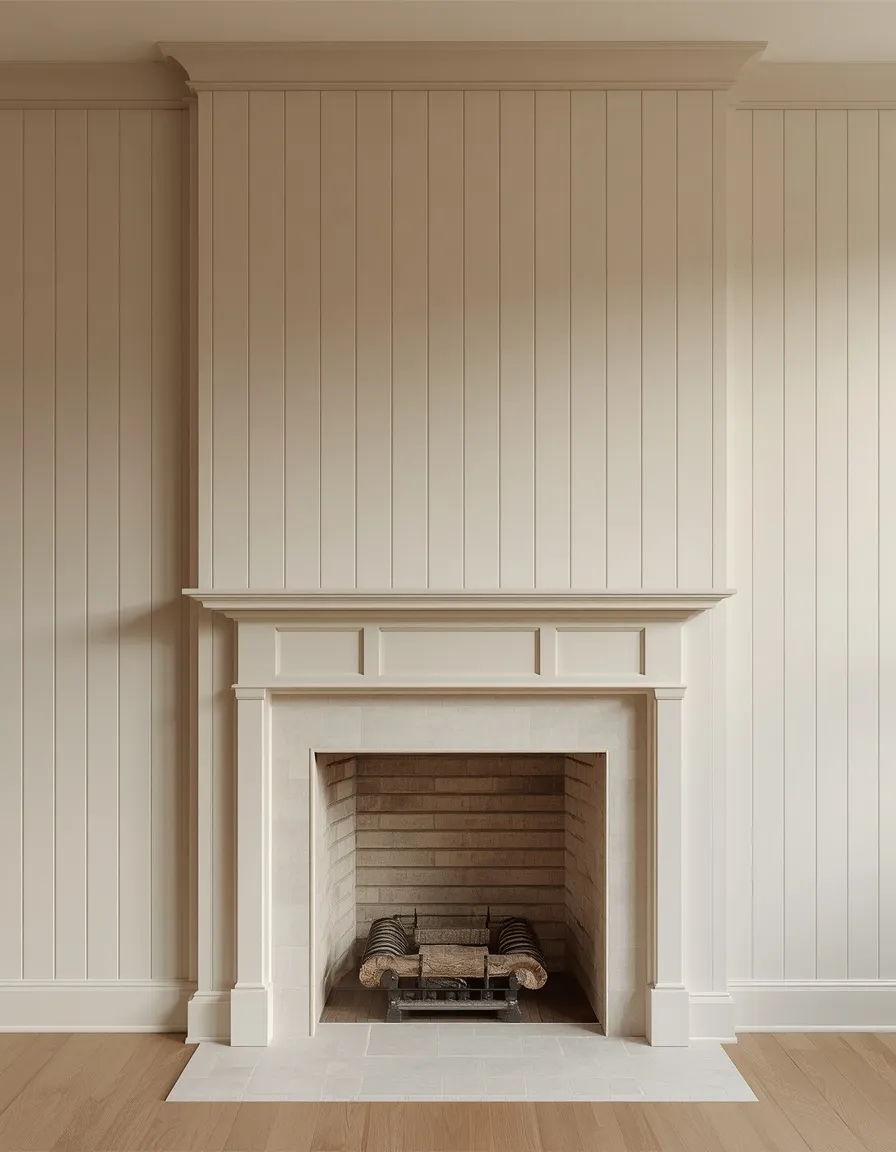
10. Board and Batten Two-Story
Board and batten brings order and craft to a huge blank wall. Vertical battens over painted board, capped with a horizontal rail partway up, give the fireplace wall structure and a traditional, considered feel.
The horizontal cap rail is the clever part: it divides the wall into two readable bands and gives the eye a resting place, which is exactly what an enormous uninterrupted plane lacks. Set it at around a third of the height for a pleasing proportion rather than halfway, which looks static. Paint in a durable satin. This is a comparatively affordable way to add architectural detail at scale, since the material cost is low even when the area is vast. It suits traditional, farmhouse, and transitional homes.
- Best for: traditional homes; affordable architecture on a very large wall.
- Why it works: a cap rail at a third height divides the plane and rests the eye.
- Key elements: vertical battens, horizontal cap rail at one-third height, satin paint.
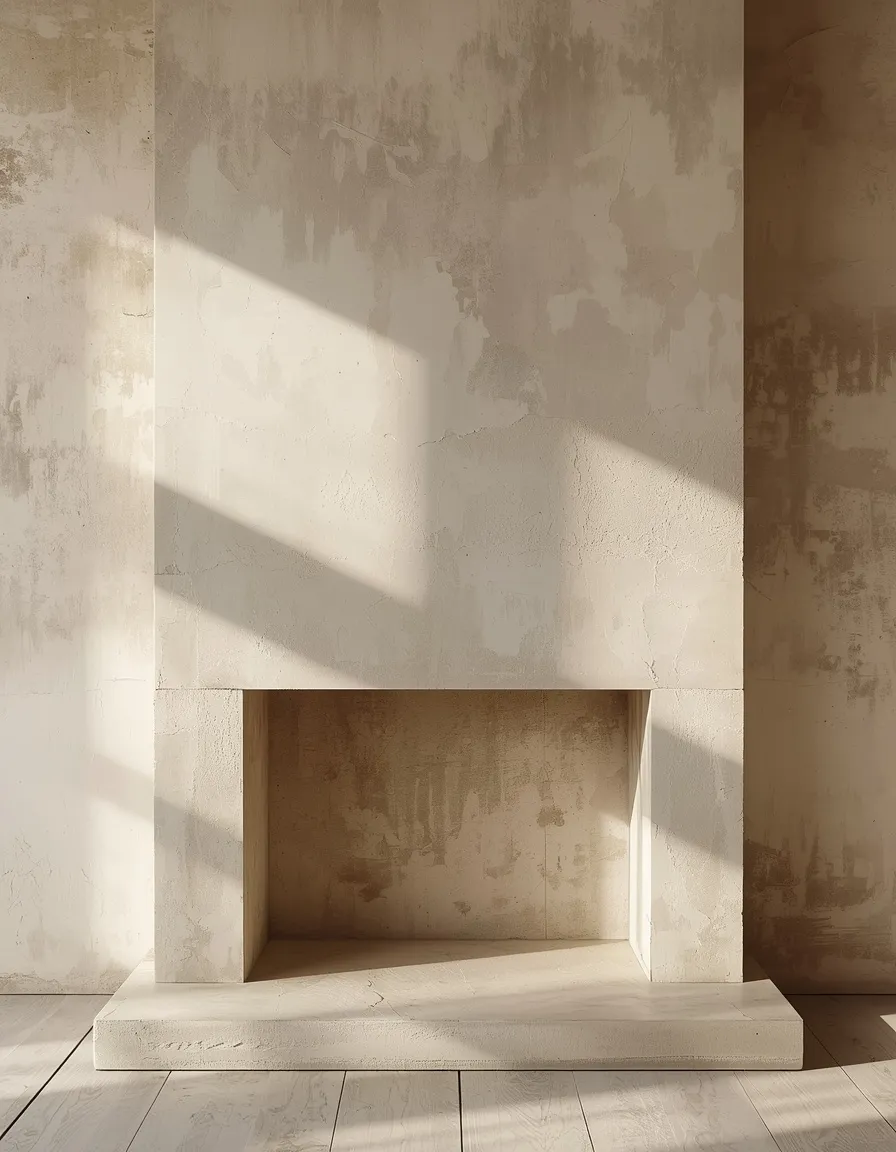
11. Limewashed Plaster Two-Story
A limewashed or plastered two-story fireplace has a soft, cloudy depth that reads as old-world rather than new-build. The mottled surface catches raking light down its whole height, shifting as the day moves.
On a wall this size, a flat painted finish can look dead, whereas limewash and mineral plasters give tonal variation that keeps a huge plane alive. They’re also genuinely breathable, which suits masonry. Apply in thin cross-hatched coats and let the irregularity happen, fighting it defeats the point. Grazing the wall with light from above or below emphasizes the texture, which is essential, because the finish is invisible under flat ambient light. This suits Mediterranean, old-world, and modern organic interiors.
- Best for: Mediterranean and modern organic homes; keeps a huge plane alive.
- Watch out: it needs grazing light; flat ambient light makes the texture invisible.
- Key elements: limewash or mineral plaster, cross-hatched coats, raking light.
12. Whitewashed Coastal Stone
Whitewashing a two-story stone fireplace lightens the mass without losing the texture. Pale, chalky stone with the grain and joints still visible turns an oppressive dark wall into something breezy and calm.
A whitewash or German schmear leaves the stone’s texture and irregularity legible while dropping the visual weight enormously, which is exactly what a dark stone wall two storeys high needs. Dilute the wash and work in sections, wiping back as you go, since you can always add another coat but you can’t easily take one off. Pair with pale oak and linen. This suits coastal and Hamptons-style homes and any tall room that feels dark and heavy.
- Best for: coastal homes and any tall stone wall that feels dark and heavy.
- Watch out: dilute and wipe back in sections, you can add coats, not remove them.
- Key elements: diluted whitewash or schmear, visible texture, pale oak and linen.
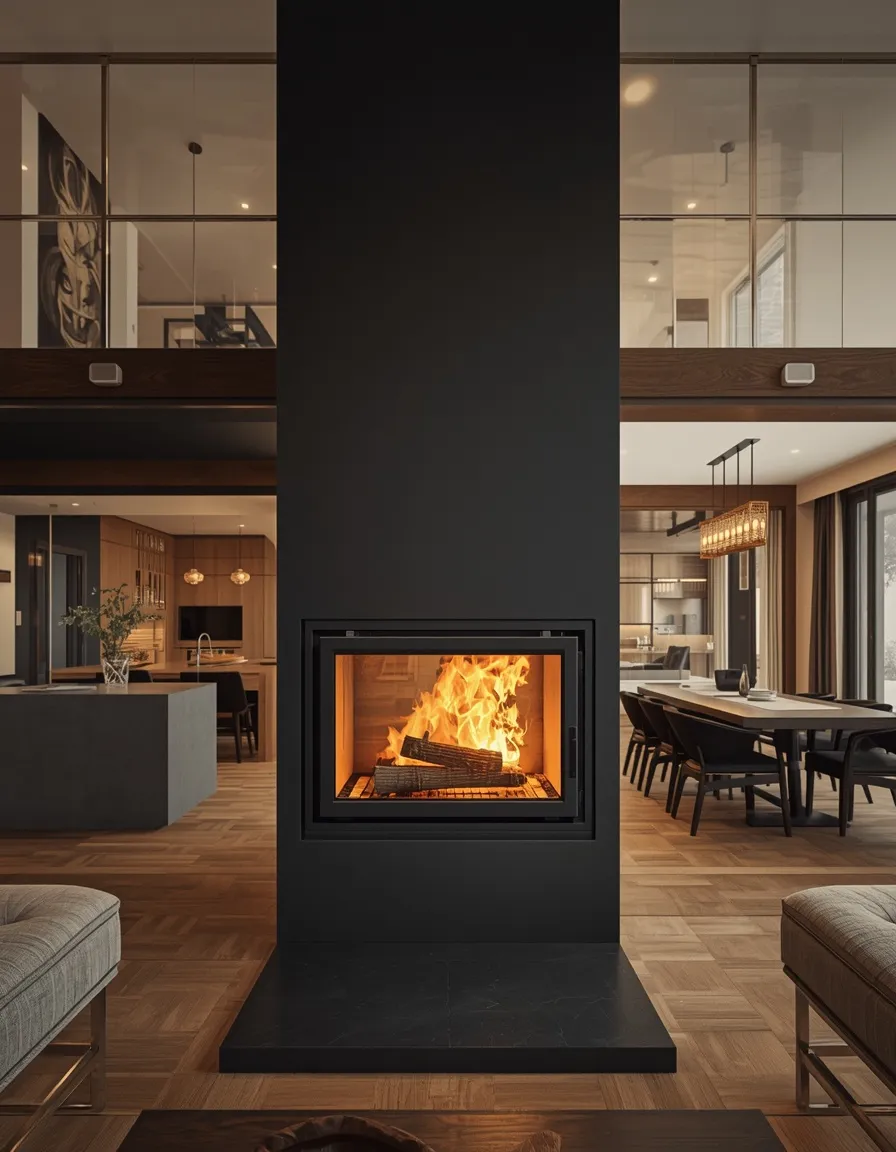
13. See-Through Double-Sided
A see-through firebox set into a two-story stack serves two rooms at once. The flame is visible from both sides, and the tall chimney becomes a shared spine between a living area and a dining room or kitchen.
A double-sided unit is a genuinely efficient use of a fireplace this large, giving two rooms a focal point for the cost of one. Both sides need their own clearances and, if glazed, glass that stays hot, a real burn risk in a home with young children, so a screen or a barrier is worth planning in. Sight lines matter: check what you’ll actually see through the opening from each side before committing. This suits open-plan homes and great rooms adjoining a kitchen or dining space.
- Best for: open-plan homes; two rooms served by one fireplace.
- Watch out: the glass gets hot, plan a barrier if young children are around.
- Key elements: see-through firebox, shared tall stack, checked sight lines.
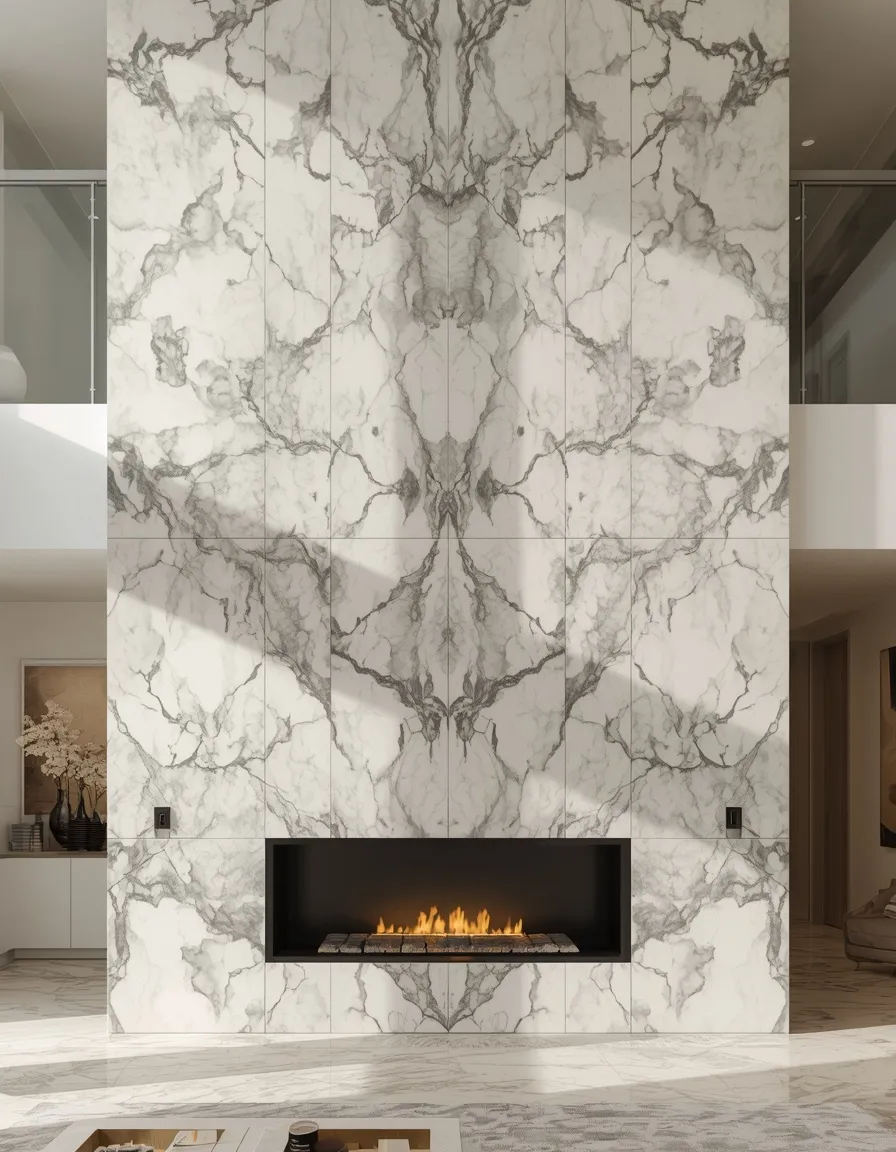
14. Porcelain Slab Modern
Large-format porcelain slabs give a two-story fireplace a seamless, luxurious plane. Book-matched marble-look panels running the full height create dramatic veining with barely a visible joint.
Book-matching, mirroring the veining across adjacent slabs, is what turns porcelain from a surface into a statement, and it’s the whole reason to choose it over paint. Large-format slabs also mean very few grout lines, which keeps the wall reading as one clean plane. Installation is specialist work, since the panels are heavy, brittle, and expensive to break. Choose a porcelain rated for the temperatures near a firebox. This suits contemporary, luxury, and minimalist interiors.
- Best for: contemporary and luxury homes wanting a seamless dramatic plane.
- Watch out: specialist install only, the slabs are heavy, brittle, and costly.
- Key elements: book-matched veining, minimal grout lines, heat-rated porcelain.
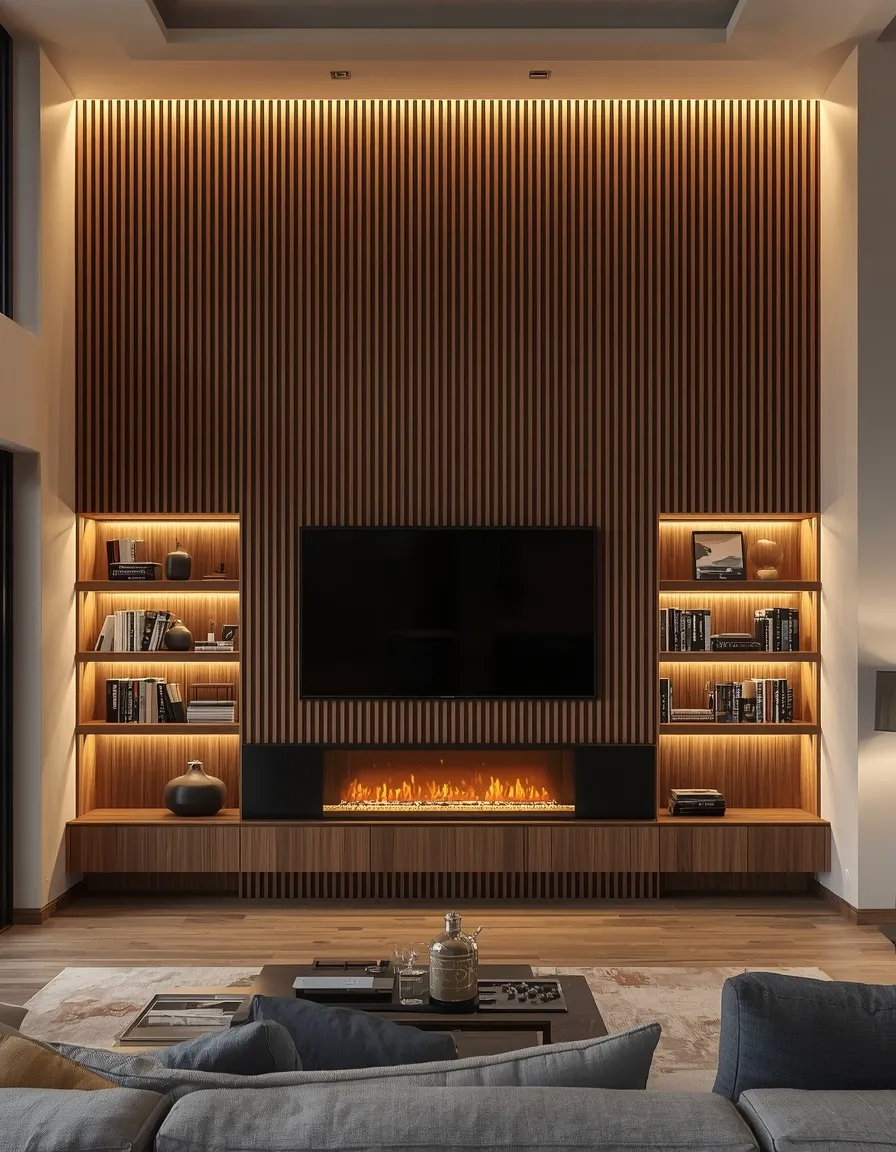
15. Two-Story TV Wall, No Fireplace
Sometimes the honest answer is to skip the fireplace entirely. A two-story feature wall built purely around the television, slatted timber, integrated shelving, and concealed lighting, gives a tall room a focal point without the compromise.
Dropping the fireplace solves the whole problem at once: the screen can sit at a comfortable seated eye level of around 100–110 cm (40–43 in), there’s no rising heat to worry about, and the wall above can be designed freely. Use slats, panelling, or shelving to carry the eye upward and integrate concealed lighting behind the screen to reduce eye strain in a dark room. This suits homes where the television is the real focal point and honesty beats tradition.
- Best for: homes where the TV is genuinely the focal point, not the fire.
- Why it works: no fire means no heat and no height compromise, the screen sits right.
- Key elements: slatted or panelled wall, integrated shelving, concealed backlighting.
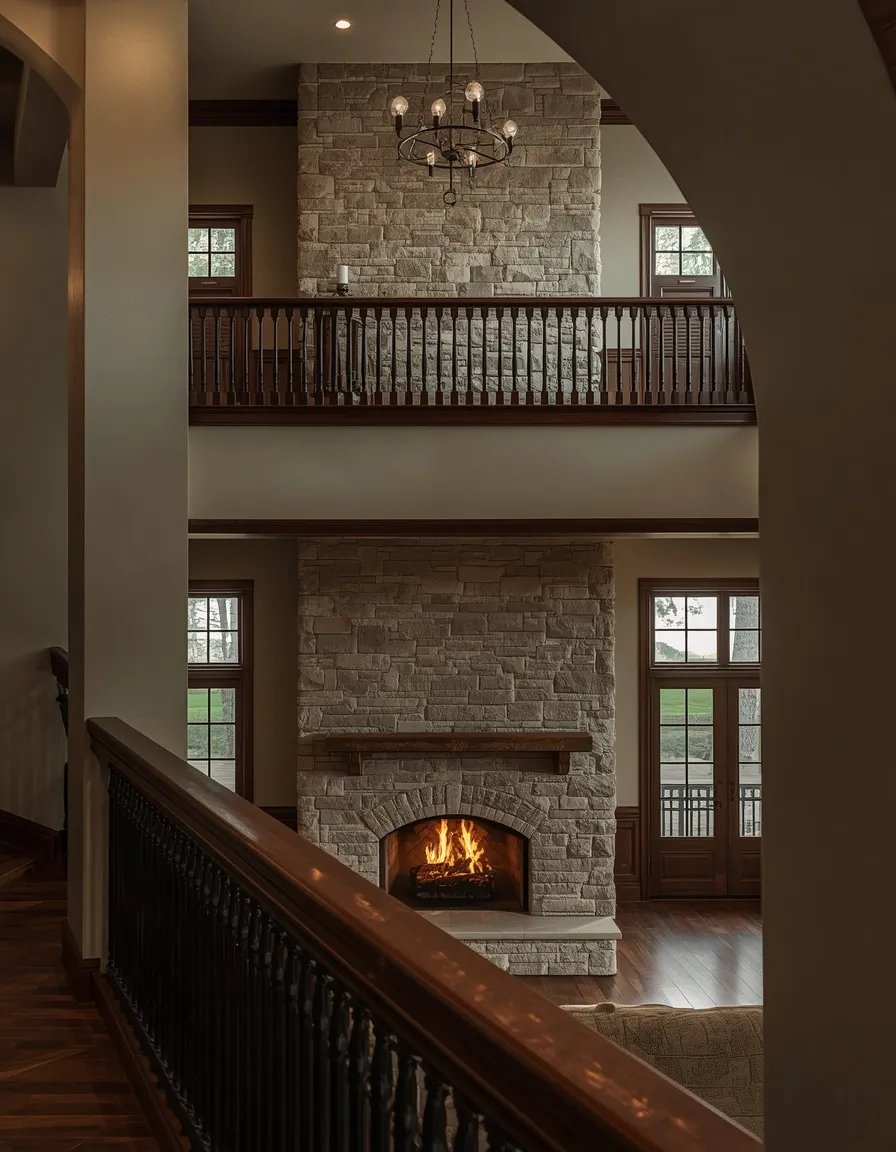
16. Balcony Overlook Fireplace
When a landing or balcony overlooks the great room, the top half of the fireplace becomes something you see close up. Carrying the stone or panelling past the balcony rail ties the two floors into one composition.
The upper storey of the fireplace is usually treated as an afterthought and never seen properly, but from a balcony you’re right beside it, so the material and its detailing at that height suddenly matter. Continue the same material past the rail rather than changing it, and consider a light at balcony level to wash the upper stone. Anything mounted high needs to be genuinely secure, since a falling object from that height is dangerous. This suits homes with a galleried landing over the living space.
- Best for: homes with a galleried landing overlooking the great room.
- Why it works: from a balcony you see the upper stack up close, so detail it properly.
- Watch out: secure anything mounted high; a fall from that height is dangerous.
Why Do Two-Story Rooms Feel Cold?
Double-height rooms feel cold because warm air rises and stratifies near the ceiling, leaving the air at seating level noticeably cooler. It’s physics, not imagination, and it’s why a beautiful great room can be an uncomfortable place to sit.
The single most effective fix is a ceiling fan run in reverse, its winter or clockwise setting, which pushes the layer of warm air trapped at the ceiling gently back down the walls without creating a draft. Beyond that, treat the room’s comfort as a design problem: a large rug, heavy curtains, and upholstered furniture all absorb the echo that hard, tall surfaces create, and they warm the space visually as well as acoustically.
Light it properly, too. A ceiling light 6 m up does almost nothing for a person sitting on a sofa, so layer light at three heights, floor lamps, table lamps, and wall sconces, and add uplighting at the base of the fireplace to graze the material and give the wall depth after dark.
Scale changes everything about how a fire feels, indoors or out, the same question in a tight garden produces completely different answers, as our guide to compact outdoor fireplace design explores. You’ll find more across our fireplace ideas.
Conclusion
The best two story fireplace ideas all wrestle with the same tension: a wall that impressive can easily overwhelm the room it’s meant to anchor. Use horizontal materials to temper the height or vertical ones to celebrate it, scale the mantel up so it doesn’t look lost, layer the light at three heights, and run the ceiling fan in reverse so the warm air comes back to you. And if you’re mounting a television, put it where it’s comfortable to watch rather than where it looks balanced. For more ways to make a fireplace the best thing in the room, browse our fireplace ideas.
Frequently Asked Questions
Q: How high should you mount a TV on a two-story fireplace?
Center the screen near seated eye level, roughly 100–110 cm (40–43 in) from the floor, rather than visually centering it on the tall stack. Mounting it high to balance the stonework looks good in photographs but leaves everyone watching with their chin tilted up. A pull-down or articulating mount is the compromise, letting the TV sit high when off and drop to eye level to watch.
Q: Can you put a TV above a two-story fireplace?
You can, but two problems apply. It usually ends up far too high to watch comfortably, and a two-story chimney breast funnels rising heat straight up past the screen, which can damage it over time. Check the TV’s stated maximum operating temperature and clearances, and consider whether you’ll actually light the fire often. Mounting the TV beside the fireplace avoids both issues.
Q: Why does my two-story great room feel cold?
Because warm air rises and stratifies near the ceiling, leaving the air at sofa level noticeably cooler. Running a ceiling fan in reverse, the winter or clockwise setting, pushes that warm layer back down the walls without creating a draft, and it makes a real difference. A large rug, curtains, and upholstered furniture also help both the temperature and the echo.
Q: What is the best material for a two-story fireplace?
It depends on the effect you want. Stone gives natural texture and drama but is heavy and needs structural support, so manufactured veneer is the practical retrofit. Horizontal shiplap or board and batten visually shortens a very tall wall, while vertical slats exaggerate its height. Limewash and plaster give a huge plane tonal life that flat paint can’t.
Q: How do you make a two-story fireplace feel cozy?
Bring the room back to human scale. Use a chunky mantel at around 130–150 cm (51–59 in) so there’s a horizontal anchor you can actually reach, add a large rug and low, deep seating, layer light at three heights rather than relying on the ceiling, and soften the echo with curtains and textiles. Uplighting the fireplace at its base gives the wall depth after dark.
Q: Should the stone run all the way to the ceiling?
On a two-story fireplace, yes, run it unbroken. Stopping partway up reads as an unfinished thought and draws attention to the join rather than the material. If you want to break the height visually, do it deliberately with a substantial mantel beam or a horizontal cap rail, not by simply running out of stone.