
Introduction
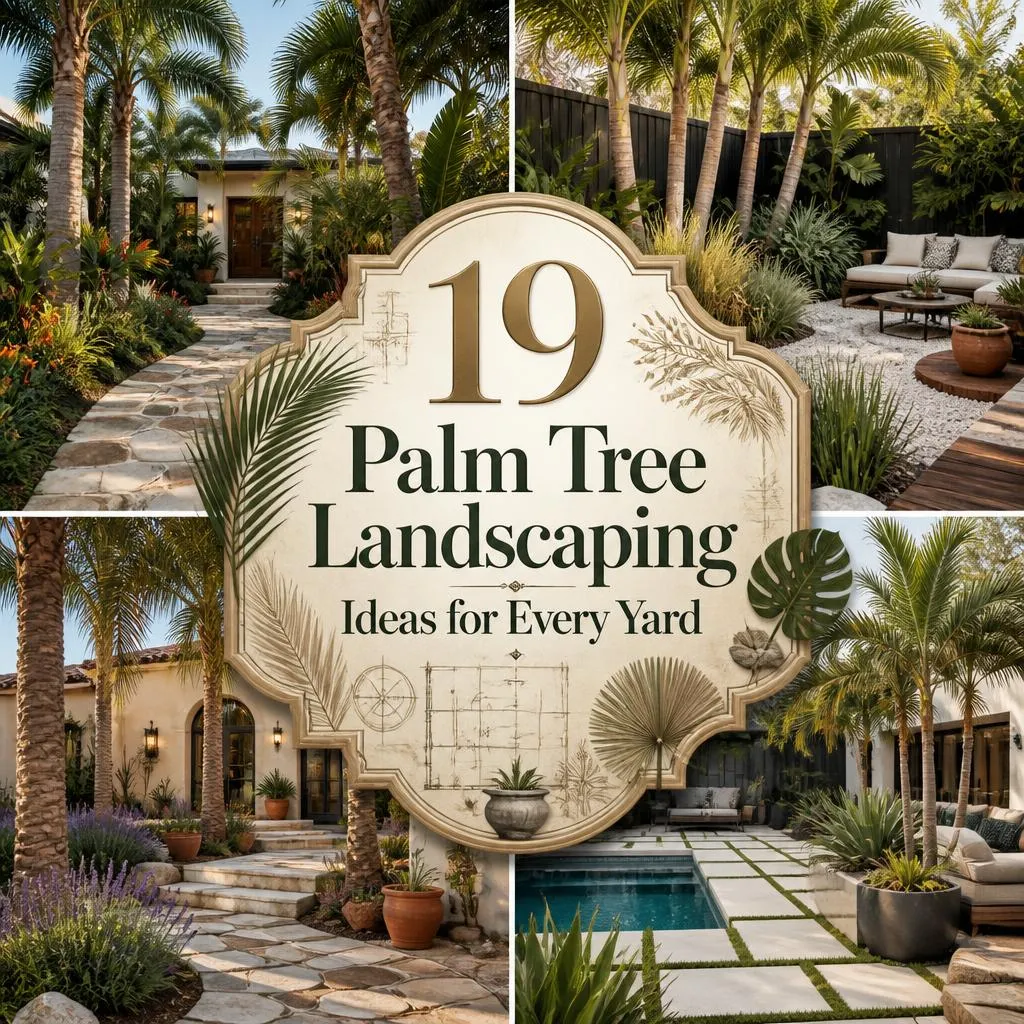
Palm tree landscaping ideas conjure a specific feeling before a single plant goes in the ground, arrival, warmth, a sense of being somewhere worth slowing down in, and the right variety and placement genuinely deliver that even in a modest front yard. Not every palm suits every climate or lot size, though, and the difference between a thriving, well-proportioned landscape and an overgrown, ill-suited one usually comes down to matching the specific variety to the actual space and conditions available. This guide covers nineteen palm tree landscaping ideas, from specific varieties like bottle palm, date palm, and foxtail palm to layout techniques for borders, pools, and small yards, along with the cold-hardiness and safety details most palm content skips. Whatever the climate or lot size, there’s a version of this that fits any abode.
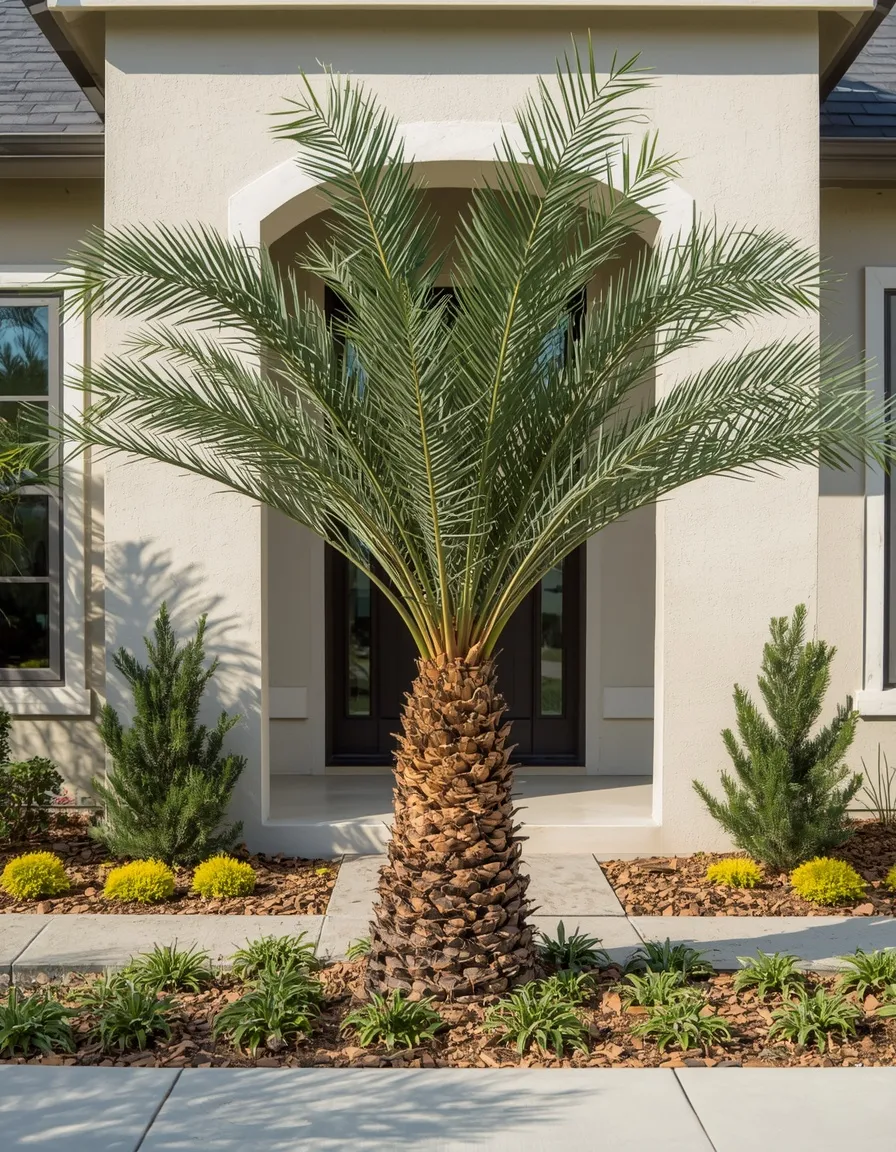
1. Single Statement Palm for a Small Front Yard
A single, well-chosen palm standing near the entrance of a small front yard does more visual work than a crowded bed of mixed shrubs ever could, giving even a modest lot an instantly established, resort-adjacent feel.
Choose a slow-growing, moderate-height variety like a pygmy date palm (Phoenix roebelenii), which tops out around 6 to 10 feet (1.8 to 3 m), rather than a towering canopy palm that will eventually overwhelm a small lot’s proportions and cast the entire yard in shade. Position it slightly off-center from the front door rather than dead center, which reads as more natural and considered than a perfectly symmetrical placement. A common mistake in small yards is planting a palm too close to the foundation or walkway without accounting for its mature trunk width and root flare, generally leave at least 4 to 6 feet (1.2 to 1.8 m) of clearance from hardscape and structures.
- Establishes an instant, mature-looking focal point without a large planting budget
- A slow-growing, moderate-height variety keeps proportions right for a small lot long-term
- Off-center placement near the entrance reads as more natural than dead-center symmetry
2. Bottle Palm as a Sculptural Focal Point
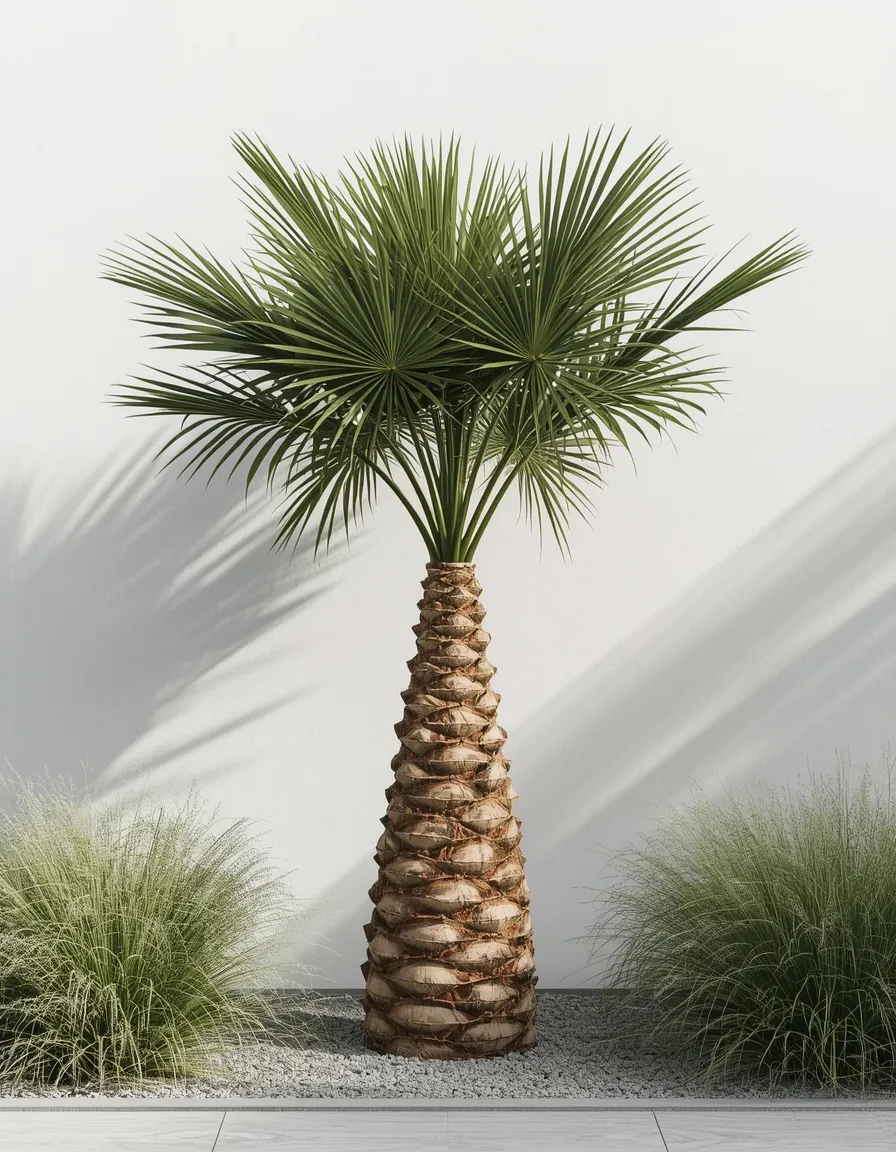
A bottle palm’s swollen, bulbous trunk narrowing toward the crown looks almost sculptural on its own, making it one of the few palm varieties that genuinely works as a standalone art piece in a landscape design.
Give a bottle palm (Hyophorbe lagenicaulis) full sun and well-draining soil, and resist the urge to surround its base with a busy planting bed, since the trunk’s unusual shape is the entire visual point and deserves negative space to read clearly. It’s a genuinely slow grower, often gaining less than a foot of height a year, which makes it a strong choice for a permanent, low-maintenance focal point near an entryway or in a raised planter bed. Bottle palms are also more cold-sensitive than many other ornamental varieties, generally suited to USDA zones 10 through 11, so this idea works best for genuinely tropical and subtropical climates rather than as an experiment in a marginal zone.
- The bulbous trunk shape functions as a genuine sculptural element on its own
- Best displayed with minimal surrounding planting so the trunk shape stays visible
- Suited specifically to zones 10 through 11, not a cold-hardiness experiment
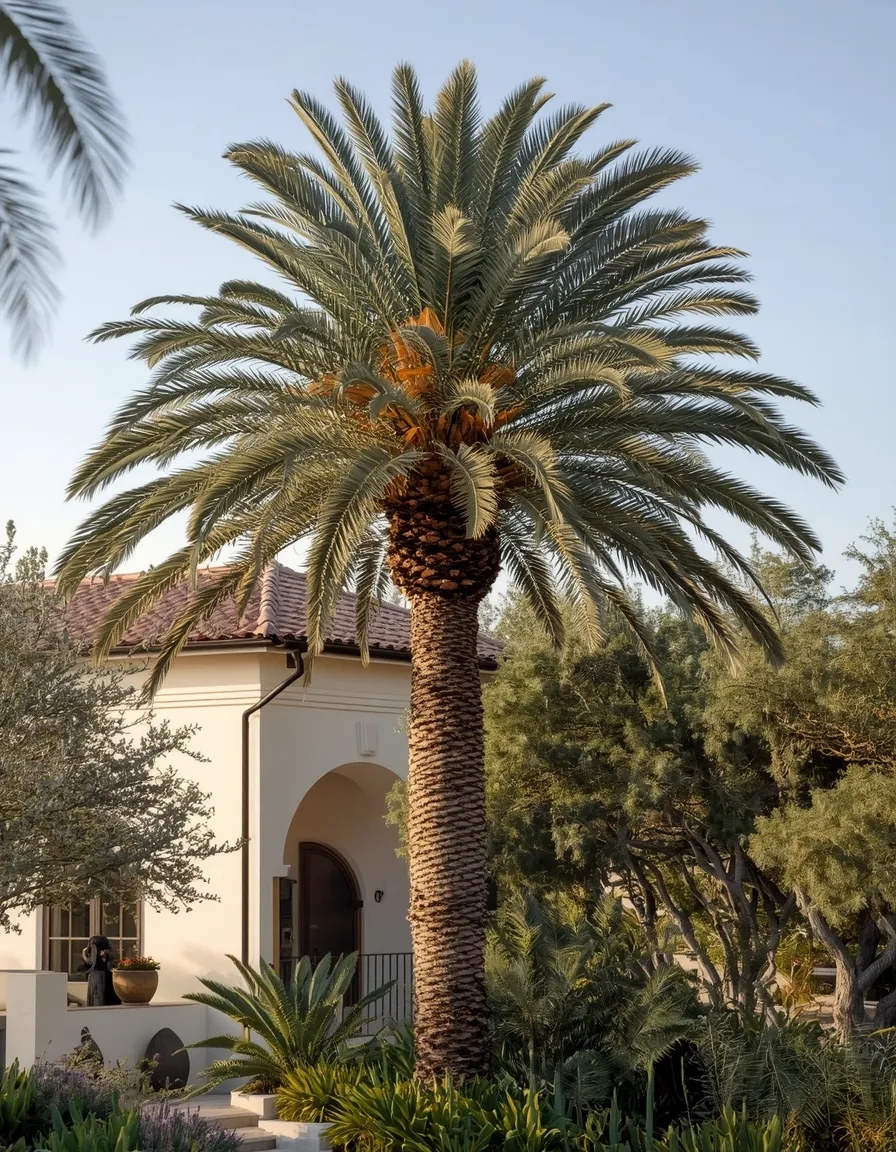
3. Date Palm for Timeless Mediterranean Style
A mature date palm’s tall, straight trunk topped with a crown of arching gray-green fronds instantly signals Mediterranean or Southern California style, the kind of silhouette most people picture when they imagine palm-lined landscaping.
True date palms (Phoenix dactylifera) grow tall, often 50 to 80 feet (15 to 24 m) at full maturity, so this idea suits larger properties or street-facing plantings with genuine vertical space rather than a compact suburban lot; for a similar look at a smaller scale, ornamental relatives like the Canary Island date palm still read as classic Mediterranean style at a more manageable mature height. Pair with silvery, drought-tolerant companion planting, lavender, rosemary, or olive trees, to reinforce the Mediterranean palette rather than mixing in lush tropical greens that clash with the aesthetic. Date palms tolerate genuinely hot, dry summers better than most ornamental palms, making them a strong choice for climates with real heat rather than humid tropical conditions.
- Delivers the classic, instantly recognizable Mediterranean landscaping silhouette
- Best suited to larger properties given its considerable mature height
- Pairs naturally with silvery, drought-tolerant Mediterranean companion plants
4. Christmas Palm for a Compact Tropical Look
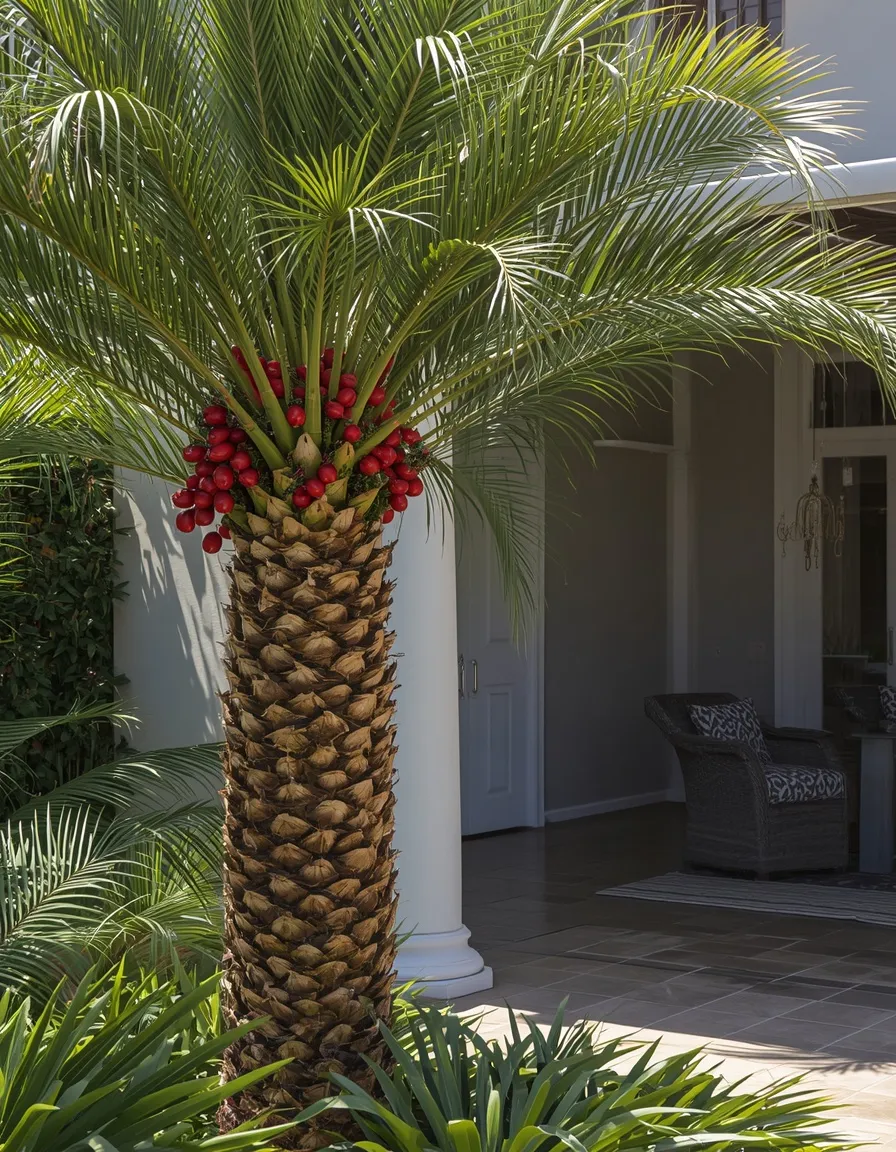
A Christmas palm’s slim, ringed trunk and clusters of bright red holiday-colored fruit bring genuine tropical character to a landscape without demanding the towering height of larger palm varieties.
Christmas palm (Adonidia merrillii) typically reaches just 15 to 25 feet (4.5 to 7.5 m) at maturity, a genuinely manageable height for residential landscaping that still delivers real tropical presence, and its self-cleaning habit, meaning old fronds and fruit clusters drop on their own, reduces maintenance compared to varieties that need regular hand-pruning. Plant it where the bright red fruit clusters that give the tree its name will actually be visible, near a patio or front walkway, rather than tucked into a back corner where the seasonal display goes unnoticed. It’s more cold-sensitive than several other options on this list, best suited to zones 10b and warmer, so it’s worth confirming local hardiness before committing.
- Delivers real tropical character at a genuinely manageable residential height
- Self-cleaning habit reduces the hand-pruning some other palm varieties require
- Best sited where its seasonal red fruit clusters remain visible from a patio or walkway
5. Foxtail Palm for Feathery Texture
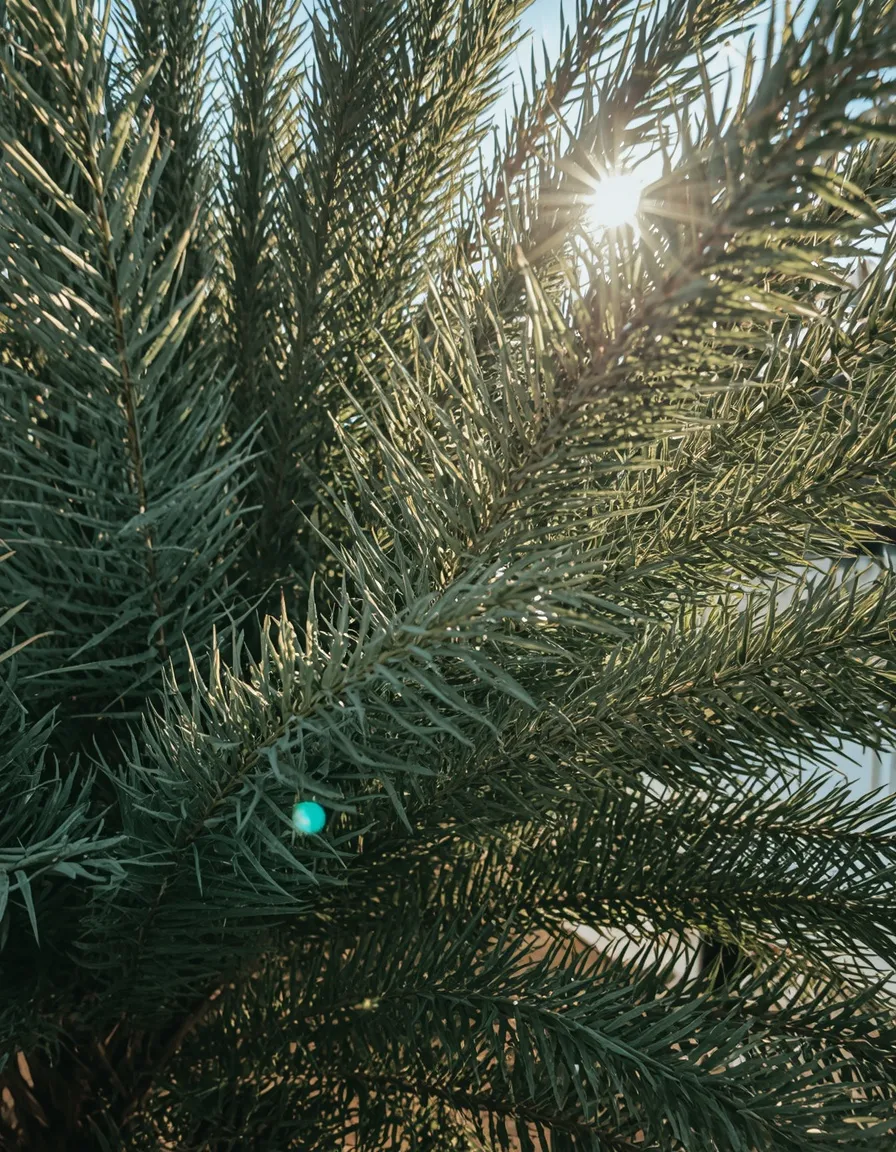
A foxtail palm’s dense, plume-like fronds, thicker and fuller than the typical feathery palm leaf, bring a distinctly soft, textured silhouette that reads differently from the sparser canopy of most other ornamental palms.
Foxtail palm (Wodyetia bifurcata) grows at a moderate pace to around 20 to 30 feet (6 to 9 m), making it a solid mid-height option for landscapes that want real texture without an overly sparse crown. Its fast-ish growth rate compared to more sculptural varieties like bottle palm makes it a better choice for anyone wanting a fuller look within a decade rather than waiting considerably longer. Plant it where afternoon light will backlight the plume-like fronds, near a west-facing patio or pool deck, since the texture becomes considerably more dramatic when light passes through the dense foliage rather than hitting it flatly from the front.
- Delivers noticeably fuller, denser texture than sparser-fronded palm varieties
- Grows at a moderate pace, reaching an established look faster than very slow varieties
- Backlighting from afternoon sun makes the plume-like fronds considerably more dramatic
6. Palm Tree Border Along a Driveway or Walkway
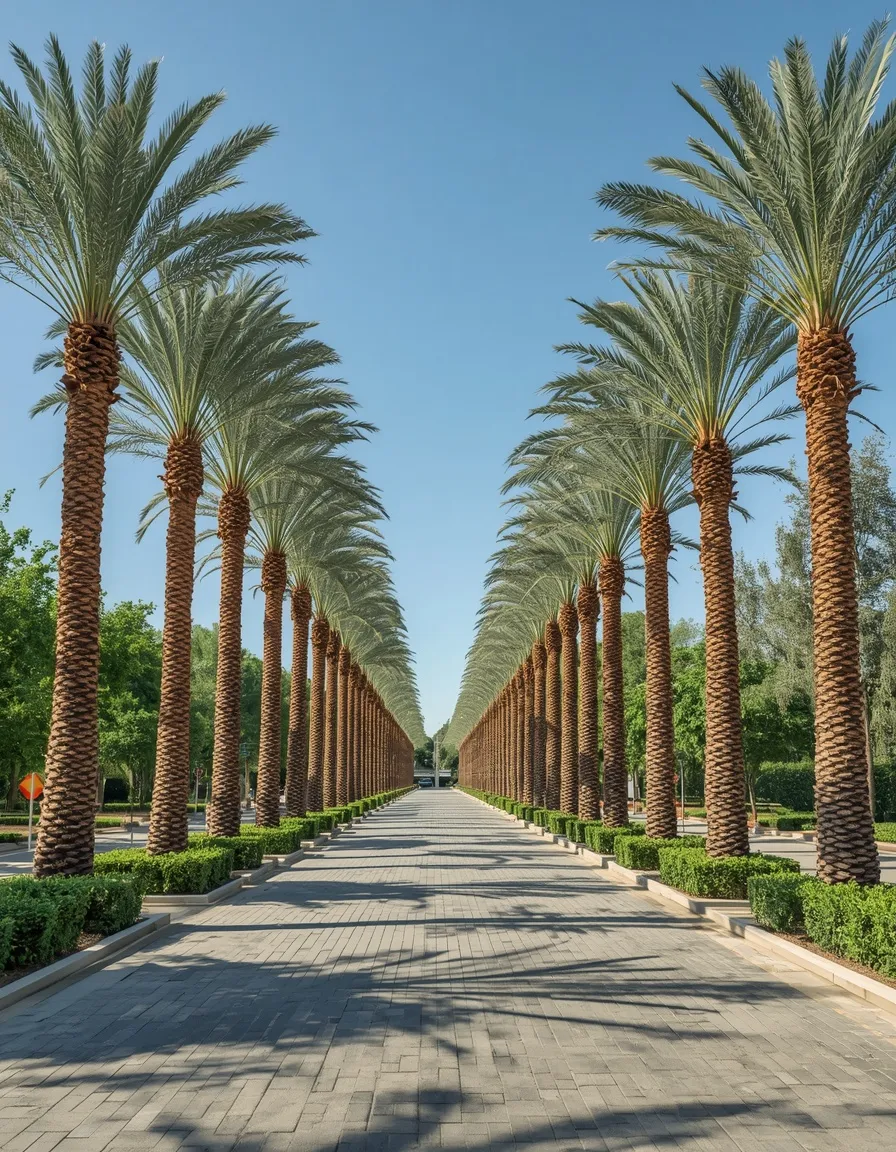
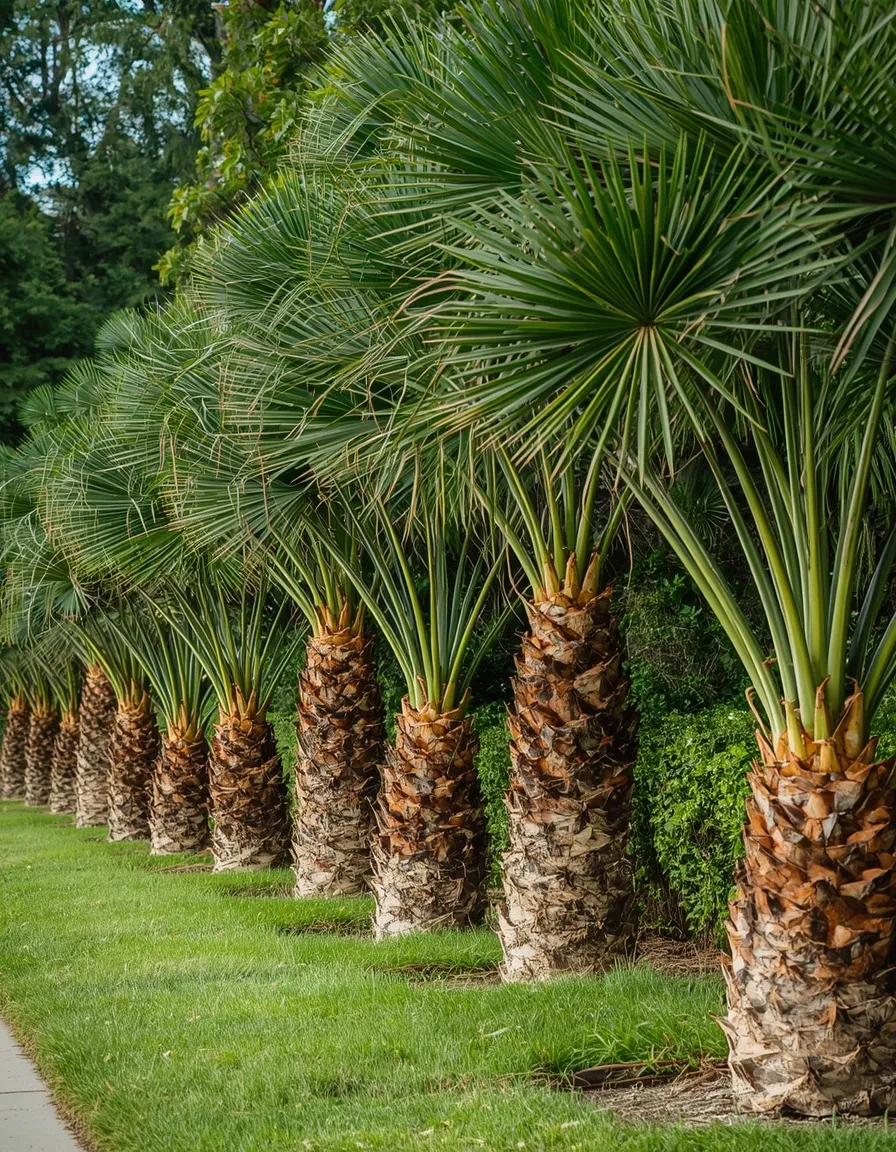
A row of matching palms spaced evenly along a driveway or front walkway creates one of the most recognizable palm tree border looks, turning a purely functional path into a genuine arrival experience.
Space individual palms based on their mature canopy spread rather than their current nursery size, generally 10 to 15 feet (3 to 4.5 m) apart for mid-sized varieties, so the mature border reads as an intentional colonnade rather than an overcrowded hedge. Choosing a single variety for the entire border, rather than mixing several types, is what makes this look read as cohesive and architectural instead of a random collection. This idea works particularly well along a long driveway with enough length to establish real rhythm, a border of just two or three trees along a short walkway tends to look sparse rather than intentional.
- Creates a genuine sense of arrival and architectural rhythm along a driveway
- A single consistent variety reads as far more intentional than a mixed border
- Works best along a driveway or path with enough length for real visual rhythm
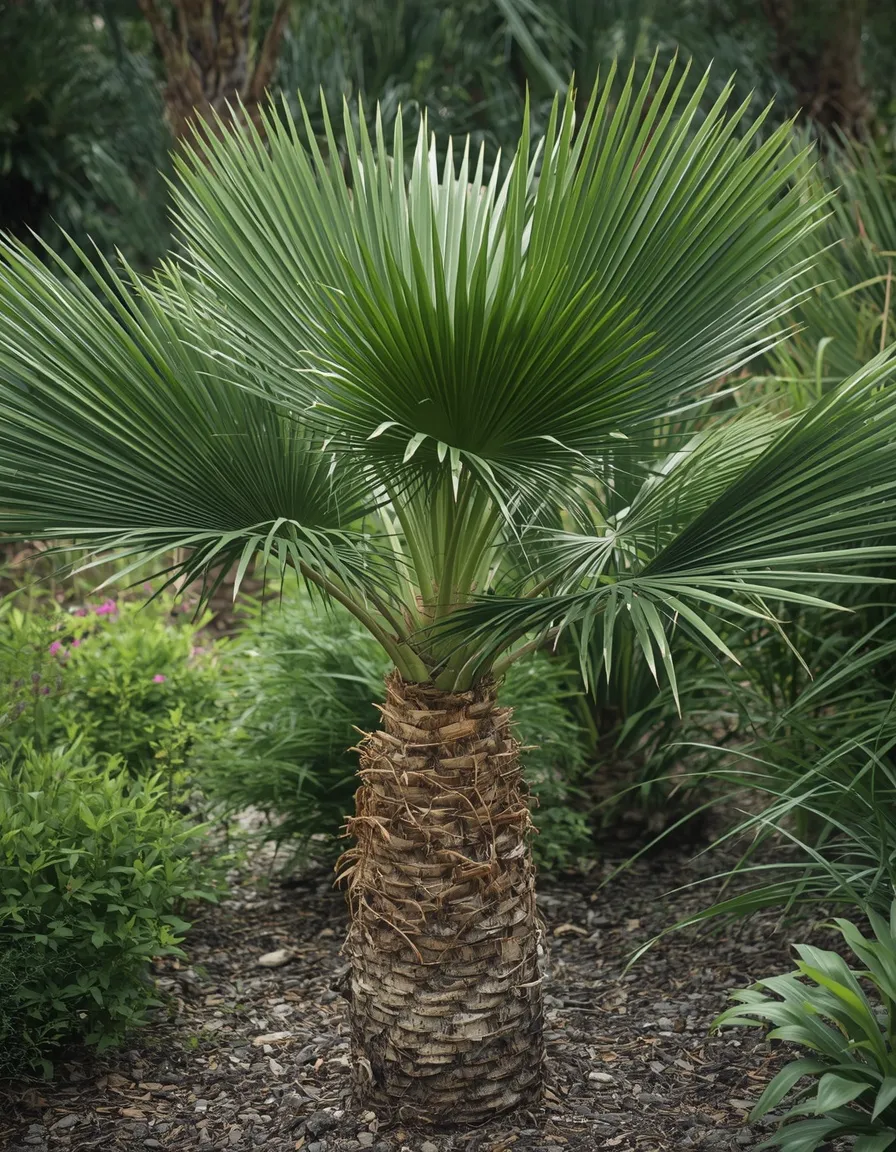
7. Windmill Palm for Cold-Hardy Landscaping
A windmill palm’s fan-shaped fronds and fibrous, hairy trunk bring genuine palm tree landscaping to climates most people assume are too cold for palms entirely.
Windmill palm (Trachycarpus fortunei) is remarkably cold-hardy for a palm, tolerating brief drops down to around 5 to 10°F (minus 15 to minus 12°C) once established, which puts it within reach of USDA zone 7b and 8 gardens that couldn’t otherwise support true palm landscaping. Give young trees some protection through their first couple of winters, a layer of mulch over the root zone and wrapping the trunk during hard freezes, since establishment-year cold tolerance is noticeably lower than a mature tree’s. This is a genuinely useful pick for anyone in a marginal climate who wants real palm character without gambling on a tropical variety that won’t survive the first winter.
- One of the most cold-hardy true palms, extending palm landscaping into zone 7b and 8
- Young trees need winter protection for their first couple of seasons
- A realistic option for marginal climates rather than a tropical variety unlikely to survive
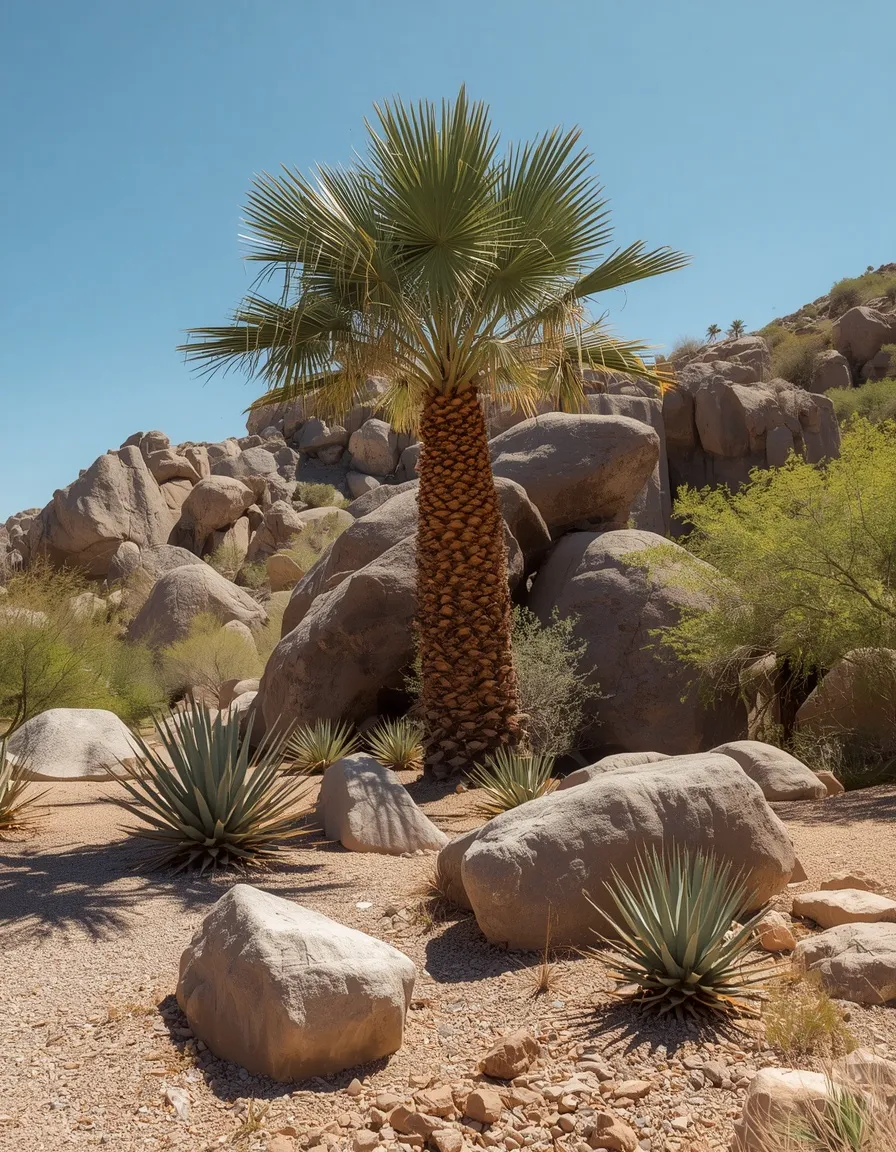
8. Desert and Rock Garden Landscaping with Palms
A palm rising from a bed of decomposed granite, boulders, and drought-tolerant succulents brings genuine height and shade to a desert landscape without requiring the water a lush tropical planting scheme would demand.
California fan palm and Mediterranean fan palm both tolerate genuinely arid, low-water conditions once established, making them far better desert landscaping choices than tropical varieties that need consistent moisture to thrive. Anchor the composition with one or two large boulders positioned near the palm’s base, both for visual scale and because they provide a cooler root zone microclimate in extreme heat, then fill remaining space with drought-tolerant companions like agave, yucca, or barrel cactus rather than water-hungry groundcover. A common mistake is planting a desert-appropriate palm but then surrounding it with thirsty turf grass or tropical underplanting, which defeats the water-saving purpose of the palm choice in the first place.
- Delivers real height and shade in a genuinely low-water desert landscape design
- Boulders add both visual scale and a cooler microclimate around the root zone
- Pairing with true drought-tolerant companions keeps the design’s water savings intact
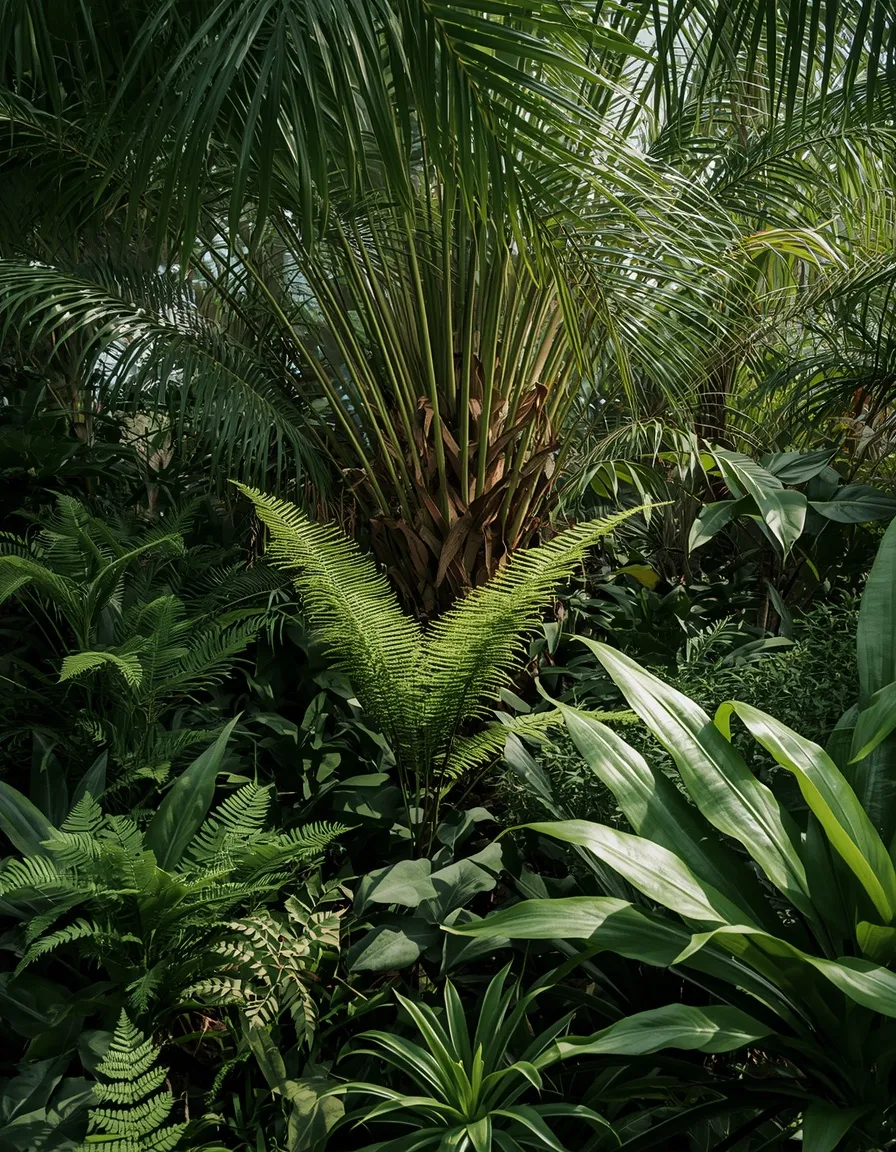
9. Underplanting Beneath a Palm Canopy
The dappled, filtered light beneath a mature palm’s canopy creates a genuinely distinct growing microclimate, different from the deep, dense shade cast by a broadleaf tree, and opens up specific underplanting options most yards underuse.
Choose shade-tolerant tropical plants that actually appreciate the filtered light palm fronds allow through, like bromeliads, ferns, or ti plants, rather than assuming any typical shade plant will thrive there. Palm root systems are generally shallow and fibrous rather than deep and invasive, which means underplanting can go in relatively close to the trunk without the root competition a large oak or maple would create, though it’s still worth leaving a couple of feet of clear space directly around the trunk itself for air circulation and easier maintenance access. A useful variation is layering underplanting height, taller bromeliads or philodendrons closer to the trunk, low groundcover like creeping fig further out, to create genuine depth rather than a flat single layer beneath the canopy.
- Filtered palm-canopy light suits specific shade plants better than dense-shade species
- Shallow, fibrous palm roots allow underplanting closer to the trunk than most shade trees
- Layering underplanting height beneath the canopy creates real visual depth
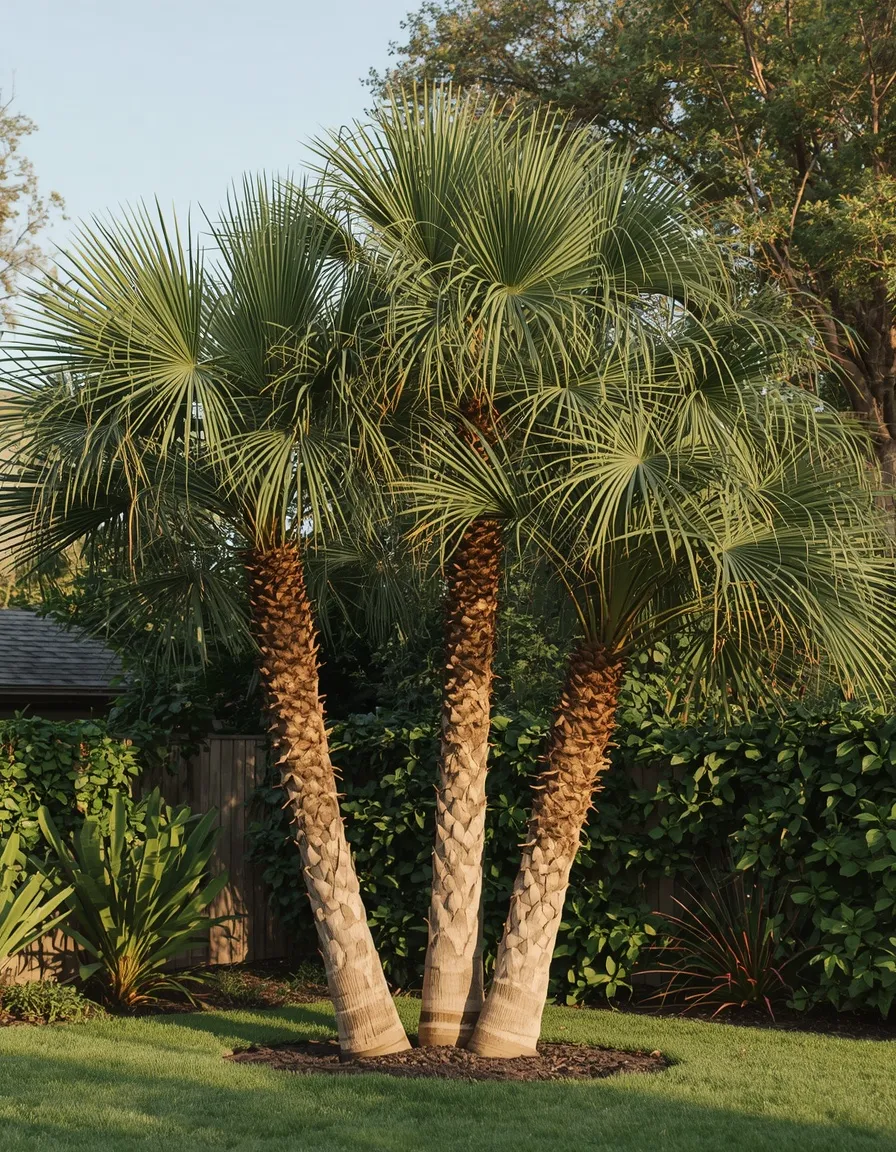
10. Backyard Palm Grove for a Resort Feel
A cluster of three or more palms grouped together in a backyard corner, rather than spaced as individual specimens, creates the dense, layered look of a genuine resort grove instead of a scattering of single trees.
Group palms in odd numbers, three or five, planted at slightly irregular spacing rather than a rigid grid, since natural groves never grow in perfectly even rows and the irregularity is what sells the resort effect. Mixing two or three different heights within the same grove, rather than all identical mature specimens, adds the layered depth a real tropical grove has, a tall canopy variety with a couple of mid-height palms clustered beneath it reads far more convincing than uniform height. This idea needs genuine space to work, a backyard corner of at least 15 by 15 feet (4.5 by 4.5 m), since a cramped grove just looks overcrowded rather than lush.
- Grouped, irregularly spaced palms read as a genuine grove rather than scattered specimens
- Mixing heights within the grouping adds convincing layered depth
- Needs real space to work, since a cramped attempt looks crowded rather than lush
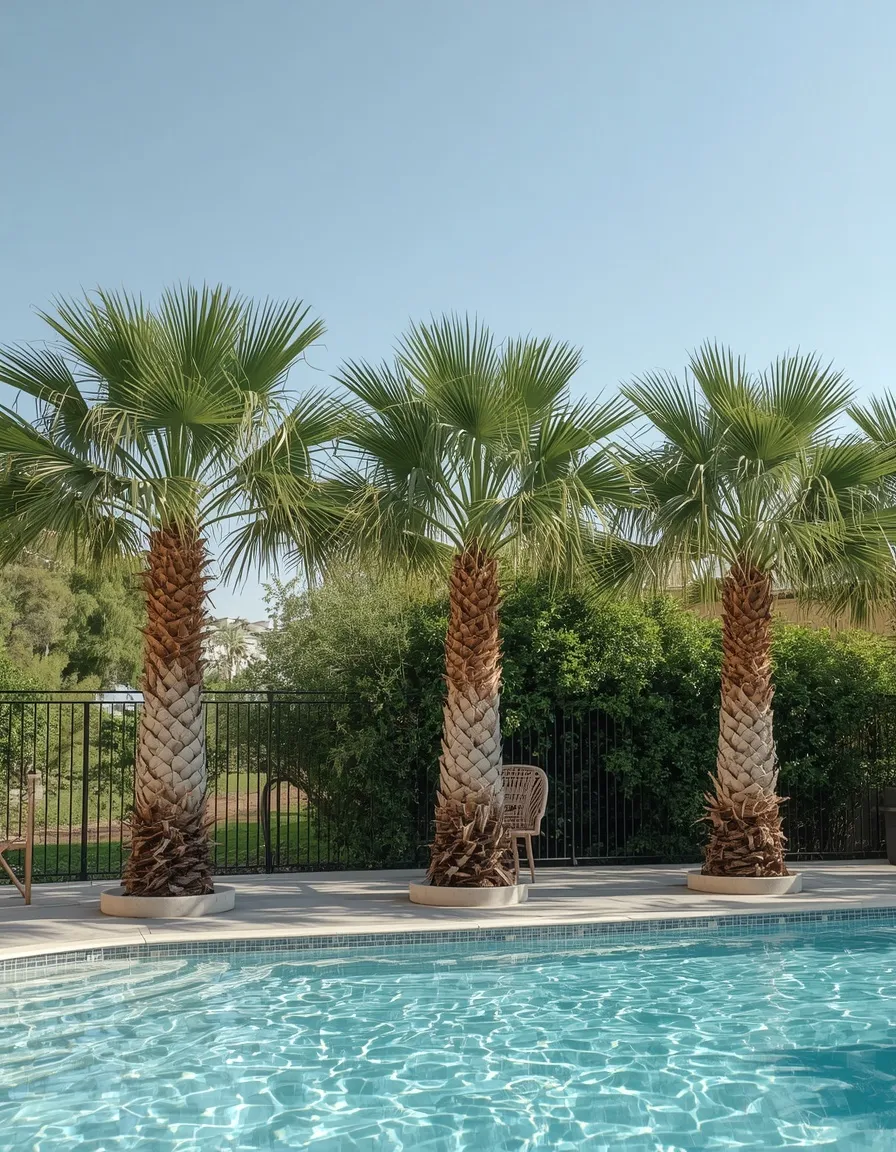
11. Poolside Palm Landscaping
Palms planted around a pool deck deliver genuine tropical resort atmosphere while avoiding a real practical problem broadleaf shade trees create: heavy leaf litter constantly falling into the water.
Most ornamental palms drop fronds occasionally rather than continuously shedding leaves the way deciduous trees do, which meaningfully reduces the daily pool-skimming maintenance a leafy canopy tree nearby would demand. Palms also generally have non-invasive, fibrous root systems compared to trees like ficus or willow, making them a safer planting choice near pool decking and plumbing, which are vulnerable to root intrusion from more aggressive species. Position palms with mature height and canopy spread in mind relative to the pool’s actual layout, tall canopy palms set back from the deck edge provide shade without directly overhanging the water, where falling fronds would still eventually need to be fished out.
- Produces meaningfully less constant leaf litter than broadleaf shade trees nearby
- Non-invasive fibrous root systems are safer near pool decking and plumbing than aggressive tree roots
- Setting canopy palms back from the deck edge avoids direct overhang into the water
12. Palm Trees Paired with Ornamental Grasses
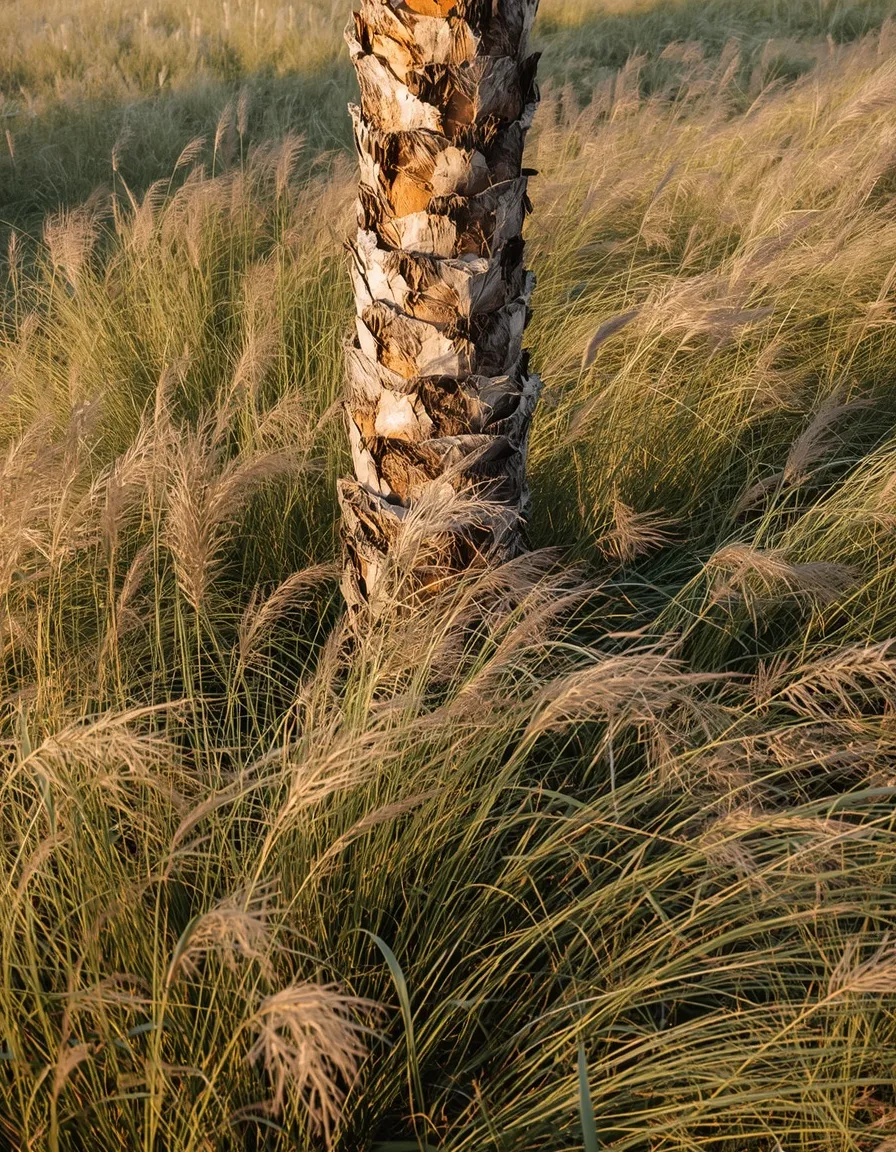
Ornamental grasses like muhly grass or fountain grass swaying beneath a palm’s rigid, upright trunk create a genuine textural contrast, soft and moving against tall and still, that a purely tropical planting scheme often misses.
Plant grasses in loose drifts rather than a tight, formal row, since the contrast works best when the grasses’ natural movement feels informal against the palm’s more architectural form. Muhly grass’s pink autumn plumes specifically extend seasonal interest at a time when many tropical-style plantings look static, adding a genuine change through the year that a palm-and-tropical-foliage combination alone doesn’t provide. This pairing suits a more relaxed, coastal, or prairie-adjacent landscaping style particularly well, softening what could otherwise read as a stiff, purely formal tropical arrangement.
- Creates genuine textural contrast between rigid palm form and soft, moving grass
- Extends seasonal visual interest beyond what tropical foliage alone typically provides
- Softens a formal tropical arrangement into a more relaxed, coastal-style planting
13. Symmetrical Palm Pairs Flanking an Entryway
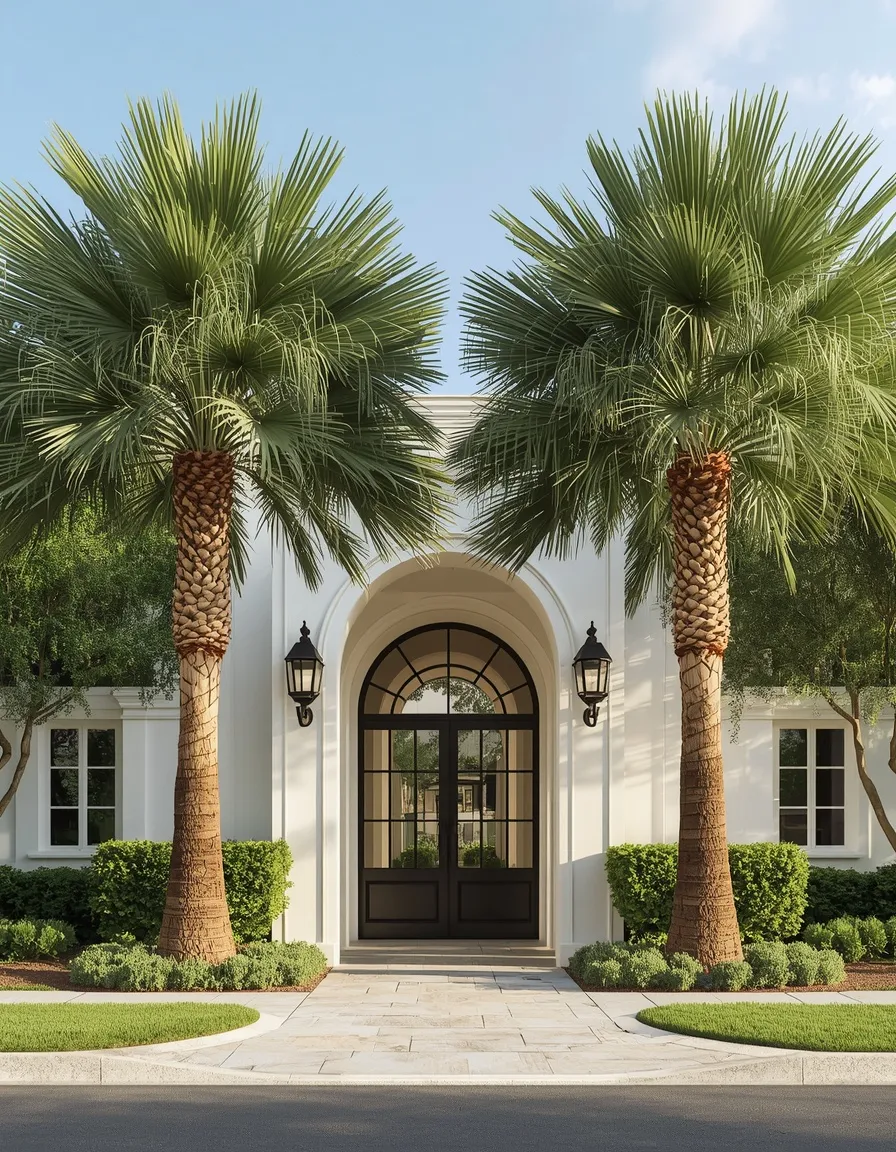
A matched pair of identical palms positioned on either side of a front door or gate delivers an immediate, formal sense of arrival that a single asymmetrical planting can’t replicate.
Choose a variety with a naturally uniform, predictable growth habit, like a Mexican fan palm or Christmas palm, for this look, since any noticeable difference in height or trunk shape between the two trees undermines the entire symmetrical effect. Plant both trees the same distance from the entryway and from each other, measuring carefully rather than eyeballing placement, since even a foot of difference reads as visually off in a design that depends entirely on precise mirroring. This idea suits formal architectural styles, Mediterranean, colonial, or resort-style homes, considerably better than a relaxed cottage or naturalistic landscape design, where the formality would feel out of place.
- Delivers an immediate, formal sense of arrival through precise symmetry
- Depends entirely on choosing a variety with predictable, uniform growth habit
- Suits formal architectural home styles far better than relaxed, naturalistic designs
14. Container-Grown Palms for Patios and Renters
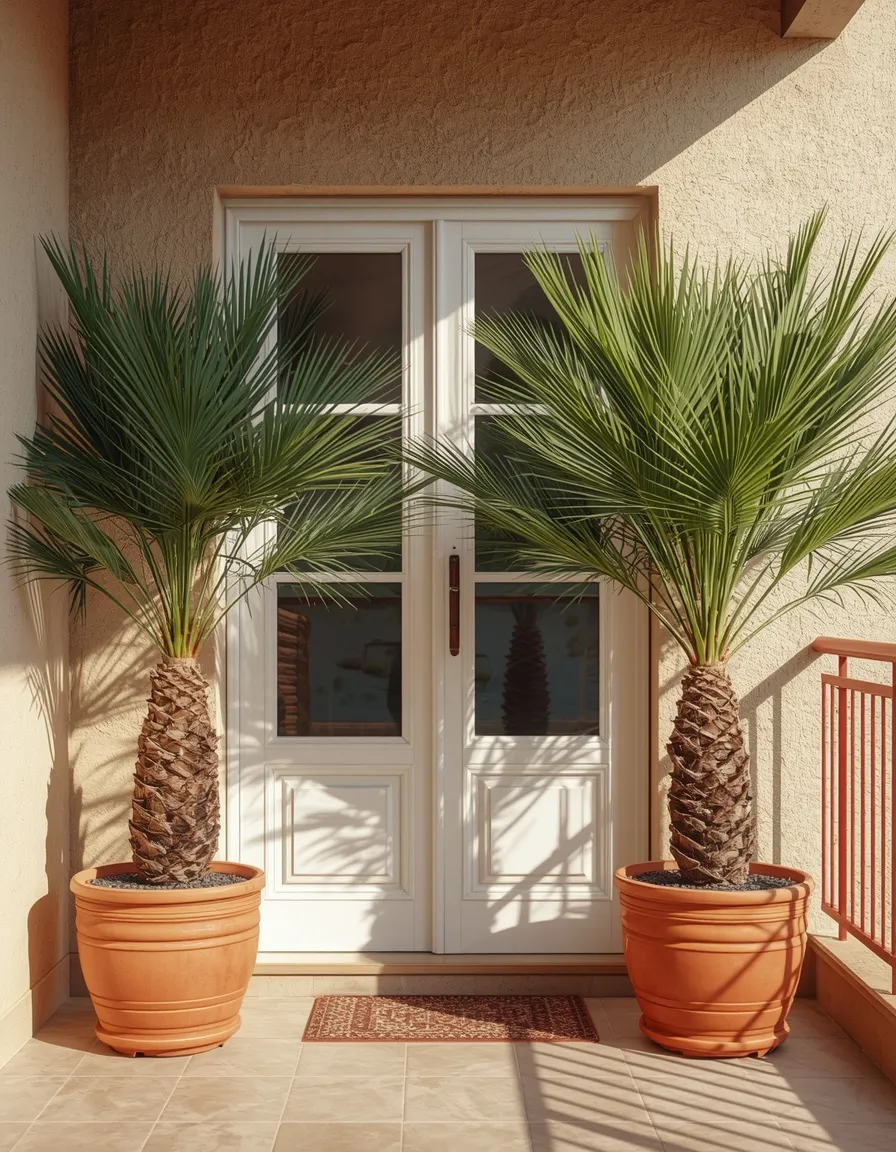
A pair of large potted palms flanking a patio door or balcony rail brings genuine palm tree landscaping character to renters, apartment dwellers, and anyone without in-ground planting space at all.
Choose naturally compact, slower-growing varieties for containers, like pygmy date palm or parlor palm, rather than large canopy species that will quickly outgrow any reasonably sized pot. Use a container at least 16 to 20 inches (40 to 50 cm) in diameter with genuine drainage holes, and repot every 2 to 3 years into a slightly larger container as the root system fills the available space, since a rootbound palm in a stagnant pot stops thriving even with otherwise good care. In climates with real winter freezes, container palms have a genuine advantage over in-ground plantings: they can be moved indoors or into a garage during the coldest stretches, extending the range of varieties that survive climates well outside their normal outdoor hardiness zone. This same portable, small-space approach to outdoor styling runs through Sunday Abode’s boho patio ideas, where container plantings do a lot of the same visual work.
- Brings real palm character to renters and anyone without in-ground planting space
- Regular repotting into a larger container prevents the rootbound stagnation that stalls growth
- Portability lets container palms survive winters well outside their normal outdoor hardiness zone
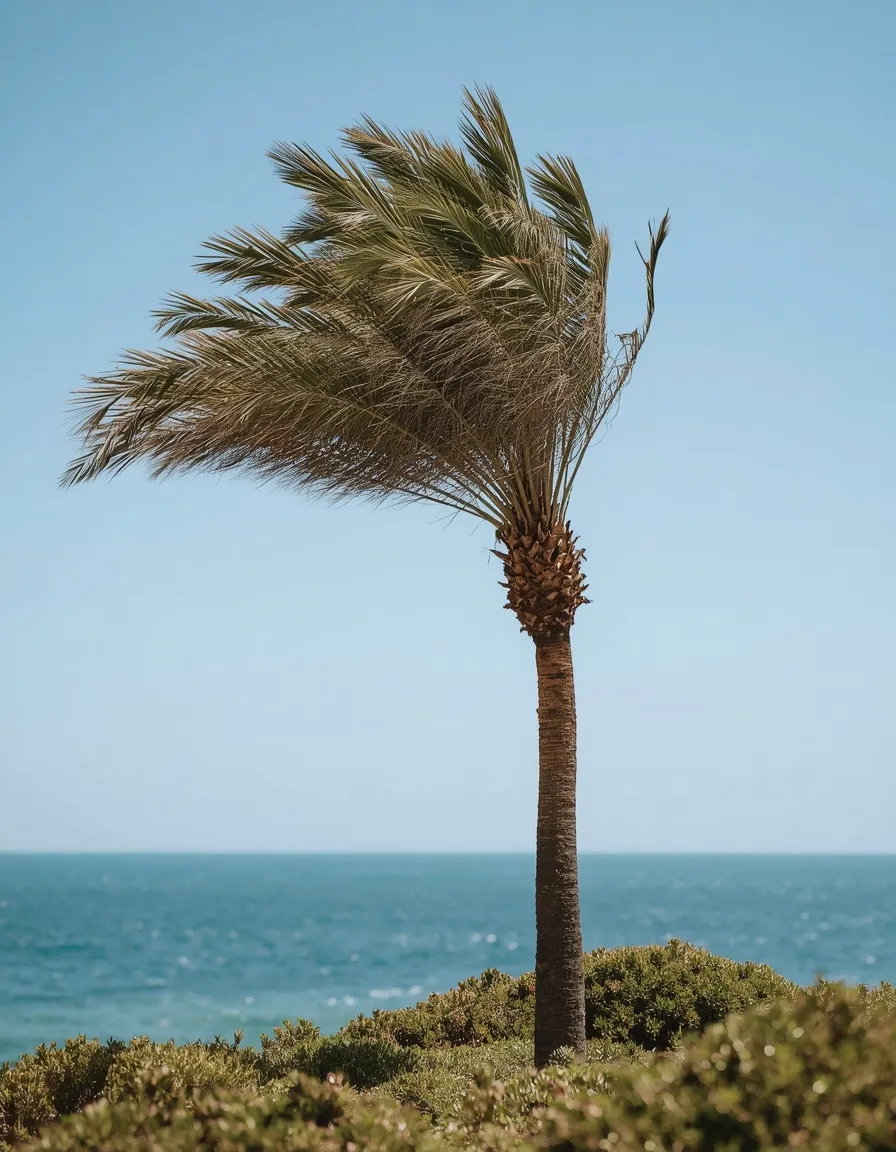
15. Coastal Palm Landscaping for Wind Resistance
A coastal property facing regular salt spray and strong onshore wind needs a genuinely different palm selection than an inland garden, since not every ornamental variety tolerates those conditions without significant frond damage.
Cabbage palm and coconut palm are both naturally salt-tolerant and flexible enough to withstand sustained coastal wind without the frond shredding that damages less-suited varieties, making them considerably more reliable choices for beachfront or near-shore properties than inland ornamental palms. Plant with the prevailing wind direction in mind, since a palm planted in the lee of a structure or dune will show noticeably less wind stress than one facing the full brunt of onshore gusts directly. In regions with real hurricane or tropical storm risk, choosing palms specifically bred or known for wind resilience matters considerably more than it does inland, since a shredded or toppled palm after a major storm often needs professional removal rather than simple cleanup.
- Salt and wind-tolerant varieties avoid the frond shredding less-suited palms experience
- Positioning relative to prevailing wind direction meaningfully reduces visible wind stress
- Wind-resilient variety selection matters considerably more in hurricane-prone coastal regions
16. Clumping Palms for a Natural Privacy Screen
A row of naturally multi-trunked, clumping palms planted along a property line creates a softer, more textured privacy screen than a single-trunk hedge of identical trees ever achieves.
Areca palm, also called golden cane palm, and clustering varieties of Chamaedorea both naturally produce multiple stems from a single root system, filling a screening row with fuller density per plant than single-trunk species would provide at the same spacing. Space clumping palms roughly 6 to 8 feet (1.8 to 2.4 m) apart along the property line, closer than single-trunk varieties would need, since each clump’s multiple stems fill the gaps between plants faster than a lone trunk could. This works particularly well for screening a pool equipment area, a neighbor’s second-story window line, or a utility box, functional screening that still reads as an intentional landscaping feature rather than an obvious cover-up.
- Multiple stems per plant create fuller screening density than single-trunk varieties
- Closer spacing between clumps fills gaps faster than equivalent single-trunk planting
- Functions as genuine privacy screening while still reading as intentional design
17. Layered Tropical Landscaping with Multiple Palm Heights
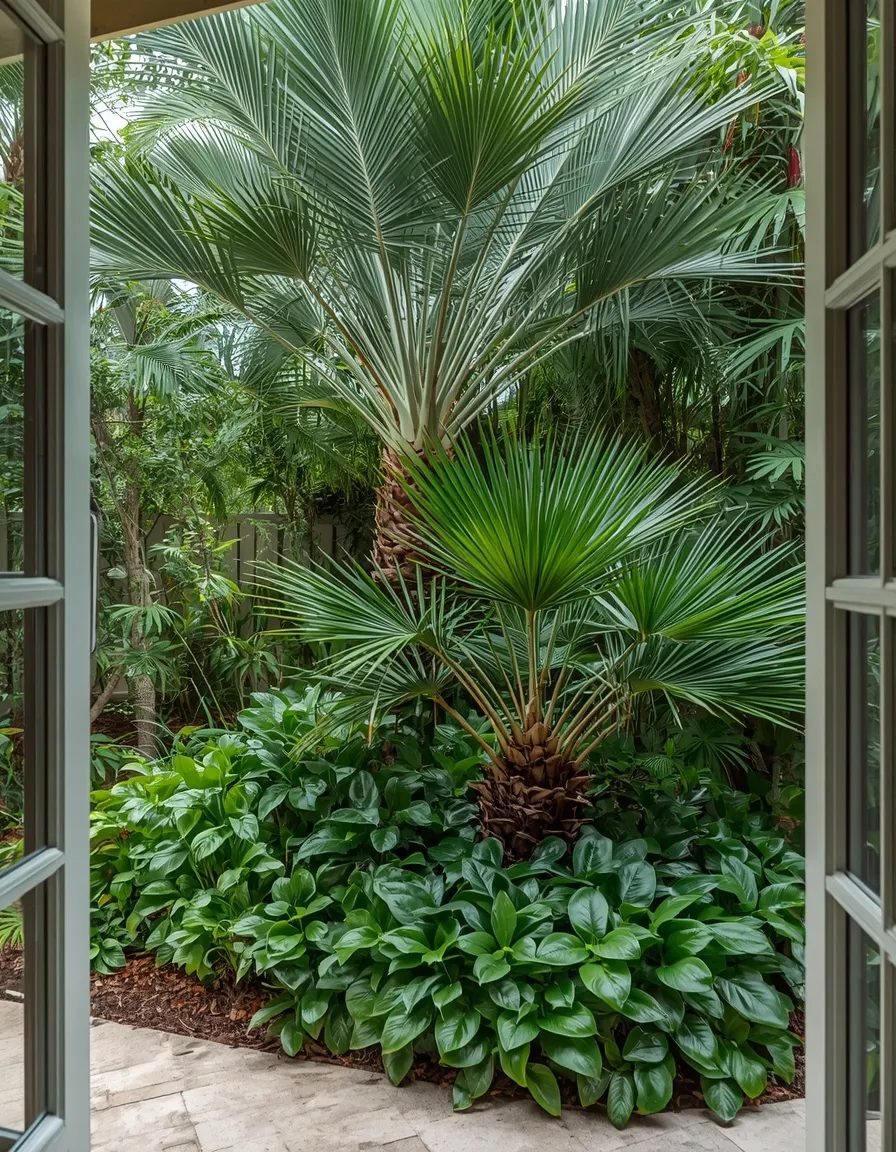
Combining a tall canopy palm, a mid-height understory variety, and low tropical foliage in the same bed creates the kind of genuine vertical depth a single-height palm planting can’t achieve on its own.
Structure the layers deliberately: one tall canopy variety as the anchor, positioned toward the back or center of the view, a mid-height palm like a Christmas or foxtail palm filling the middle layer, and broad-leafed tropical foliage, bird of paradise, elephant ear, or philodendron, filling the lowest layer close to the viewer. Vary leaf shape and texture between the layers as deliberately as height, pairing the fine, feathery texture of palm fronds against the bold, broad leaves of tropical understory plants creates contrast that a palms-only planting misses entirely. This layered approach works especially well viewed from a single fixed vantage point, a patio, a main window, or a front walkway, where the depth reads clearly rather than needing to be walked around to appreciate.
- Creates genuine vertical and visual depth that single-height palm plantings lack
- Contrasting leaf textures between layers adds interest beyond height alone
- Reads most effectively from a single fixed viewing point like a patio or window
18. Night Lighting to Showcase Palm Silhouettes
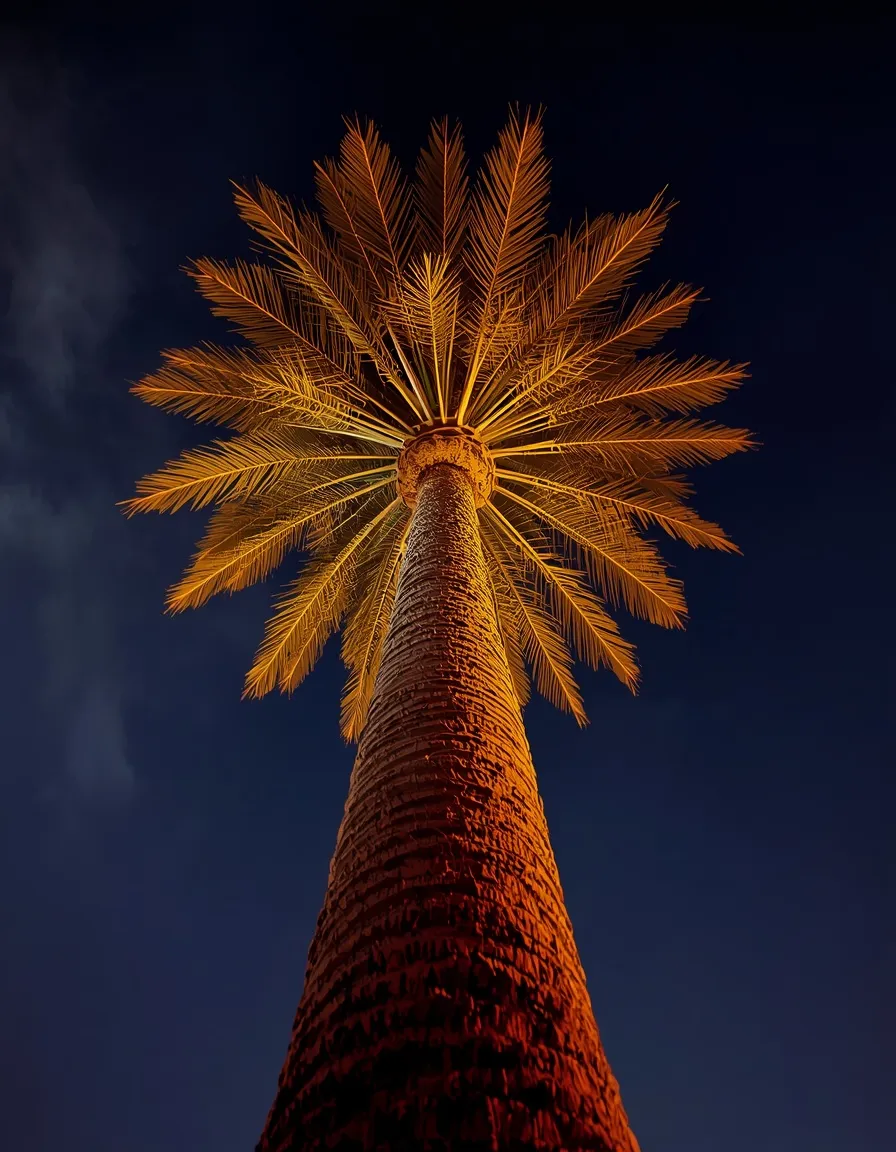
Uplighting positioned at the base of a palm, angled to shine up through the trunk and into the crown, turns an ordinary daytime landscape feature into a dramatic nighttime silhouette against the sky.
Position low-voltage LED uplights 12 to 18 inches (30 to 45 cm) from the trunk base, angled upward through the canopy rather than directly at eye level, where the light source itself becomes a glare rather than a feature. Warm white light, generally in the 2700 to 3000 Kelvin range, renders palm trunk texture and frond color more naturally than a cooler blue-white light, which tends to flatten the warm tones of bark and foliage. Run lighting on a simple timer or smart switch rather than manually flipping it on each evening, since consistent nightly use is what actually delivers the visual payoff rather than an occasionally-remembered feature.
- Uplighting transforms a daytime feature into a genuine nighttime focal point
- Warm white light renders palm trunk and frond tones more naturally than cool light
- A timer ensures consistent nightly use rather than an inconsistently remembered feature
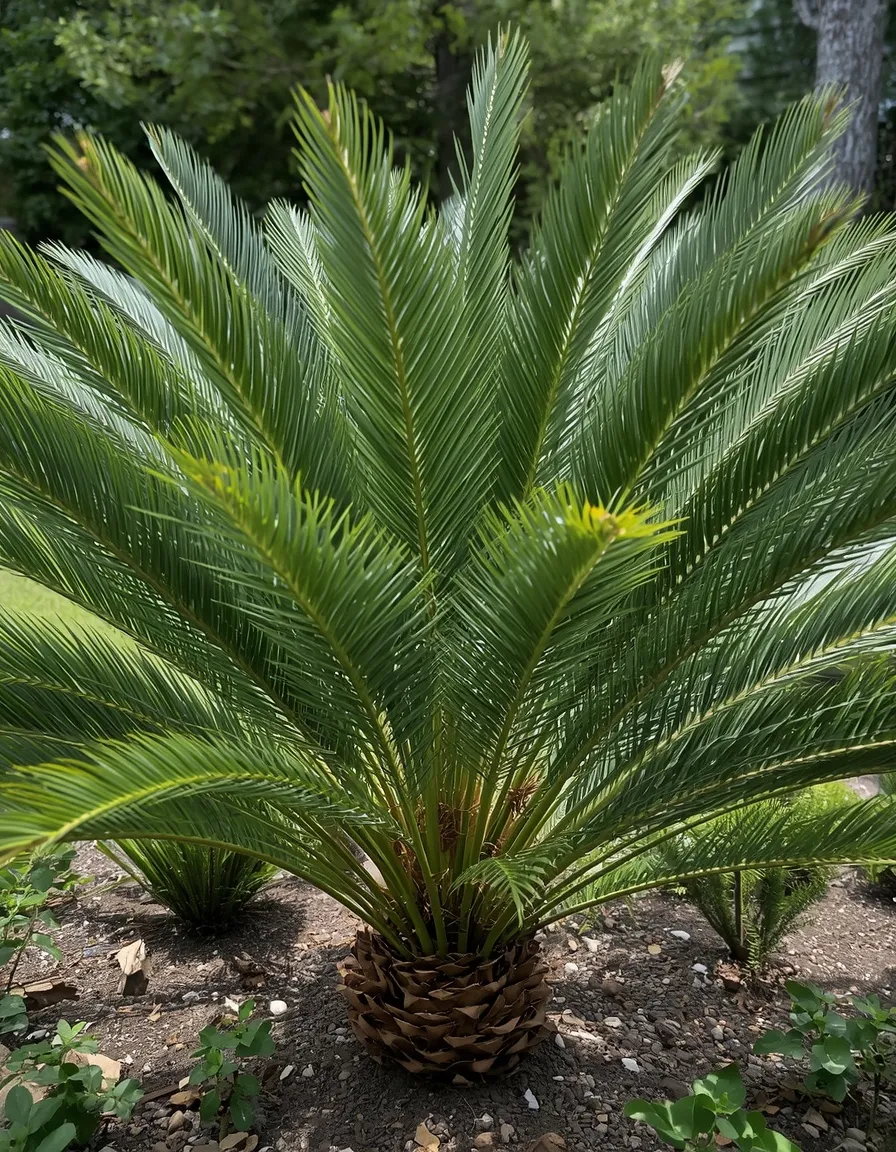
19. Avoiding the Sago Palm Mix-Up
Despite the name and the palm-like fronds, sago palm isn’t a true palm at all, and mistaking it for one is a genuinely common and potentially serious error in landscaping decisions around pets and children.
Sago palm (Cycas revoluta) is actually a cycad, an ancient plant lineage unrelated to true palms, and it regularly appears on generic palm plant lists and in nursery displays alongside genuine palm varieties, which contributes to the confusion.
This distinction matters considerably more than botanical trivia: the ASPCA identifies sago palm as one of the most dangerous plants for dogs, with every part of the plant, especially the seeds, causing severe liver damage and a notably high fatality rate even with treatment, unlike true palm varieties, which are generally considered non-toxic. Anyone landscaping with pets in the household should confirm a plant is a genuine palm species, not a cycad, before assuming the general non-toxic reputation of true palms applies.
- Sago palm is a cycad, not a true palm, despite frequently appearing on generic palm plant lists
- Every part of the plant is highly toxic to dogs, with a notably high fatality rate
- True palm varieties are generally non-toxic, making species confirmation genuinely important for pet safety
Conclusion
The best palm tree landscaping ideas start with matching the variety to the actual climate, space, and function needed, a slow-growing bottle palm as a sculptural focal point calls for a completely different approach than a windmill palm pushing the boundaries of a cold-climate garden. Start with one well-chosen specimen or a single technique, like underplanting or uplighting, rather than attempting a full tropical overhaul at once, and let the design build outward from there.
For more layout and design inspiration, Sunday Abode’s garden design ideas cover plenty of complementary approaches. Choose the variety that actually suits the climate, give it room to mature, and let the palm do the rest of the visual work.
FAQs
What is the best palm tree for a small front yard?
A slow-growing, moderate-height variety like a pygmy date palm, which tops out around 6 to 10 feet (1.8 to 3 m), works well for small front yards without eventually overwhelming the space’s proportions. Positioning it slightly off-center from the front door, rather than dead center, also tends to read as more natural in a compact space.
Which palm trees are cold hardy enough for non-tropical climates?
Windmill palm is the most cold-hardy true palm commonly used in landscaping, tolerating brief drops down to around 5 to 10°F (minus 15 to minus 12°C) once established, which makes real palm landscaping possible in USDA zones 7b and 8. Young trees still need winter protection, like mulch over the root zone and trunk wrapping, for their first couple of seasons.
What should I plant under a palm tree?
Shade-tolerant tropical plants that appreciate filtered light, like bromeliads, ferns, or ti plants, generally do better beneath a palm canopy than plants suited to deep, dense shade. Palm root systems are shallow and fibrous rather than deep and invasive, so underplanting can go in relatively close to the trunk, leaving a couple of feet of clear space directly around the base for air circulation.
Are palm trees safe to plant around pets?
True palm trees are generally considered non-toxic to pets, but a genuinely common point of confusion is sago palm, which despite its name is a cycad, not a true palm, and is highly toxic to dogs, with every part of the plant capable of causing severe liver damage. Confirming a plant is a genuine palm species before assuming it’s safe is worth the extra step in households with pets.
What palm trees work best for a pool area?
Most ornamental palms drop fronds occasionally rather than continuously shedding leaves, which meaningfully reduces pool-skimming maintenance compared to a broadleaf shade tree nearby. Palms also generally have non-invasive, fibrous root systems that pose less risk to pool decking and plumbing than more aggressive tree species.
Can I grow palm trees in containers if I don’t have yard space?
Yes, naturally compact, slower-growing varieties like pygmy date palm or parlor palm do well in containers at least 16 to 20 inches (40 to 50 cm) in diameter with good drainage. In colder climates, container palms have the added advantage of being movable indoors during the coldest stretches, extending the range of varieties that can survive outside their normal outdoor hardiness zone.
What’s the difference between sago palm and a true palm tree?
Sago palm is a cycad, an entirely different and much older plant lineage than true palms, despite having palm-like fronds and frequently appearing on generic plant lists alongside genuine palm varieties. The distinction matters most for pet safety, since sago palm is highly toxic to dogs while true palms are generally non-toxic.