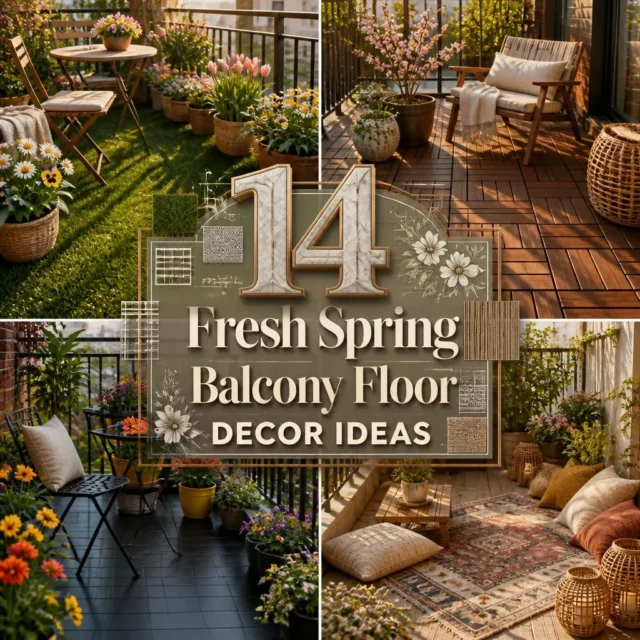

Most of us style a balcony from eye level up and leave the floor as whatever the builder poured. That’s a missed chance. The ground is the largest single surface out there, and dressing it well is the whole Sunday Abode idea of treating every corner of your home as a place worth living in. The looks below all begin underfoot.
Key Takeaways
- The floor is the fastest way to change a balcony’s whole feel, start there before adding furniture or plants.
- Renters have plenty of no-damage options: interlocking tiles, outdoor rugs, and peel-and-stick patterns all lift out cleanly.
- Always keep drainage in mind, solid rugs and turf without airflow trap water and grow mildew within a few damp weeks.
- Dark “black floor” looks are striking but heat up fast in direct sun, so pair them with heat-tolerant plants and a rug underfoot.
- Many favorite spring bulbs (tulips, daffodils, hyacinths) are toxic to cats and dogs, so choose pet-safe blooms if animals share the space.
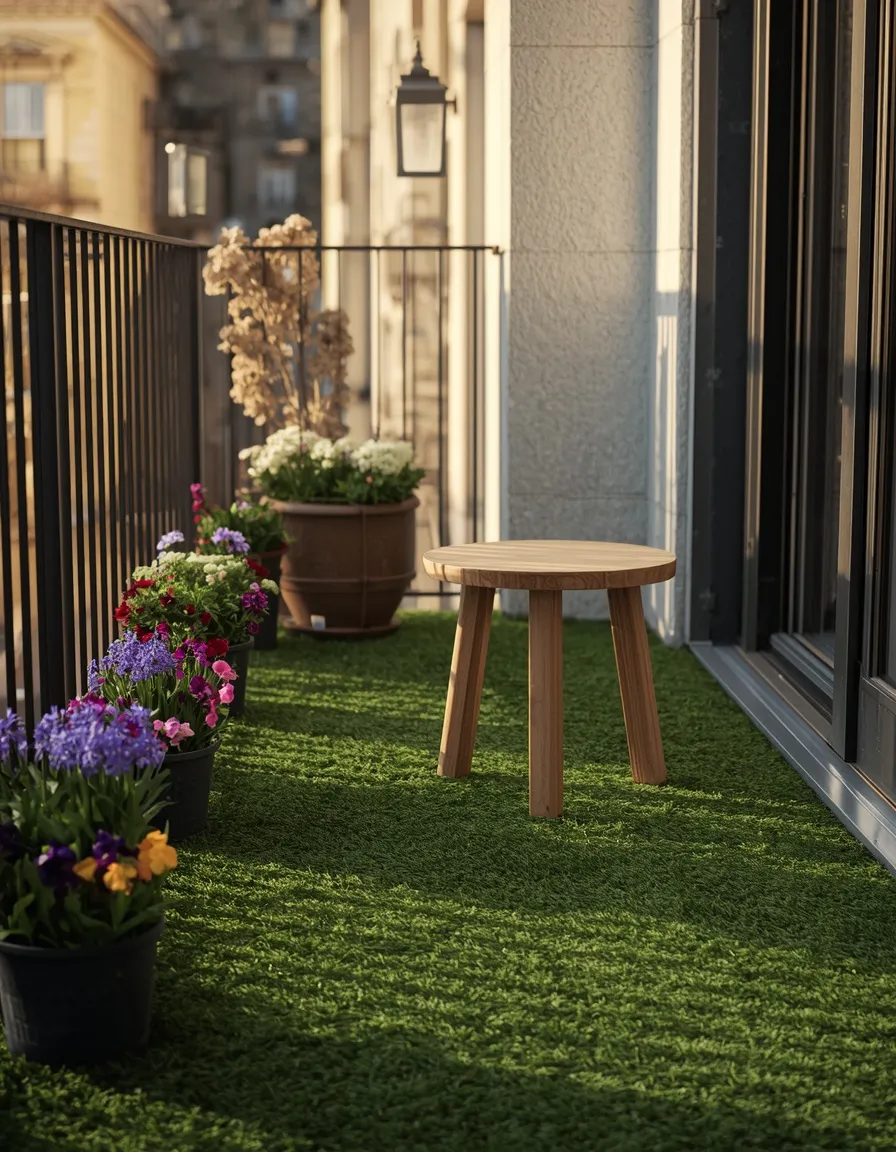
1. Faux Grass Spring Meadow
A roll of quality faux grass turns a hard concrete slab into a soft green lawn you can sit on barefoot. It’s the quickest way to make a small balcony read as a garden the moment spring arrives.
Lay interlocking artificial-turf tiles or a cut-to-fit roll straight over the existing floor, then cluster shallow pots of grape hyacinth, pansies, and violas along one edge so the “meadow” seems to bloom out of the grass. Choose turf with drainage holes and a permeable backing, and lift a corner every couple of weeks to let the slab dry, turf laid on a solid, poorly drained floor traps moisture and grows mildew within about two to three damp weeks. Rinse it occasionally to keep the blades bright.
- Why it works: softens noise and hard edges instantly, with no construction.
- Best for: renters, families with young kids, and pet owners who want a soft surface.
- Watch out: in full afternoon sun, dark-backed turf can feel hot underfoot by midday.
2. Boho Layered Outdoor Rug Lounge
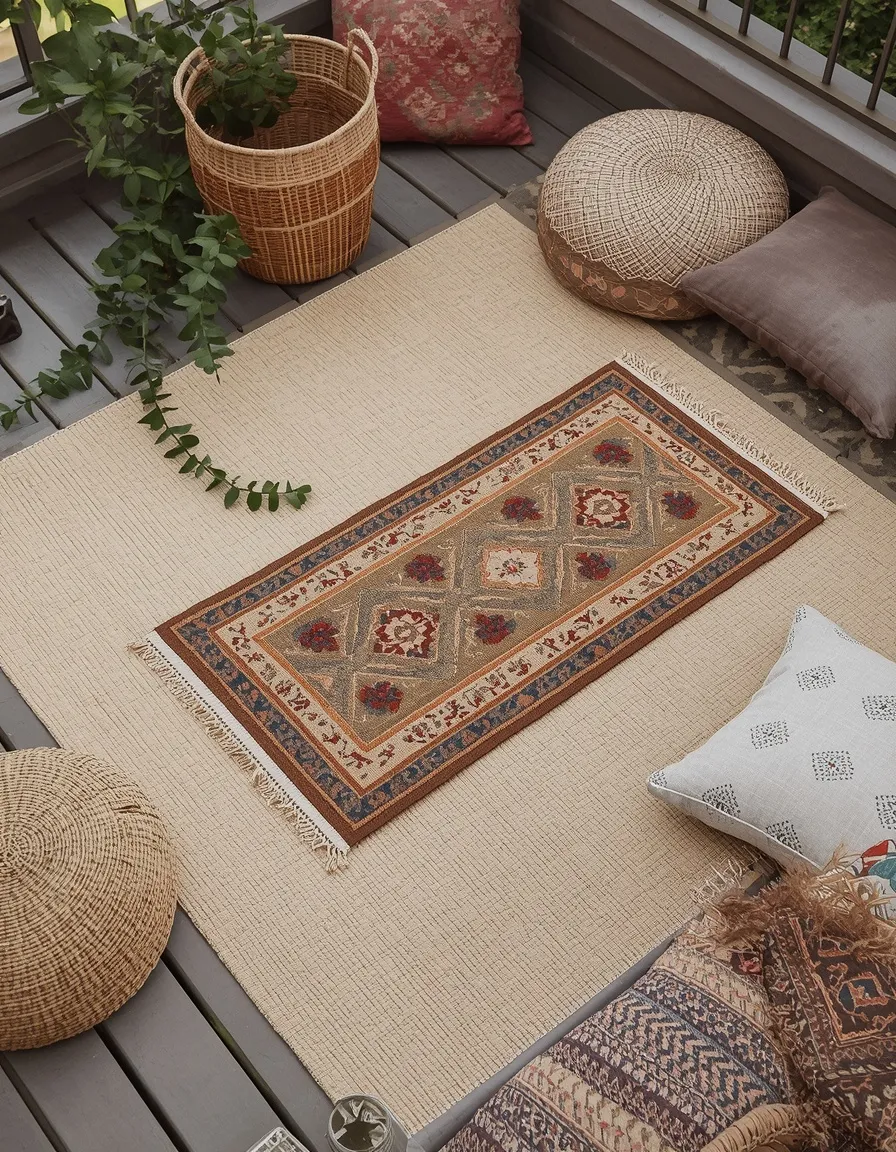
Layering two outdoor rugs is the fastest floor-first way to create a relaxed, textured lounge. The look is warm, collected, and completely removable, which makes it a renter favorite.
Start with a large flatweave outdoor rug as your base, then layer a smaller patterned kilim-style rug on top at a slight angle. Add low floor cushions and a couple of woven poufs so the whole seating zone lives at floor level. Use rugs labeled for outdoor or high-moisture use, and always place a ventilated non-slip pad underneath, a rug sitting flat on a wet balcony floor stays damp and stains the surface beneath it. Shake and air both rugs weekly through the rainy part of spring.
- Why it works: adds instant color and comfort without drilling or gluing anything.
- Best for: renters and small balconies that need a cozy sit-down spot.
- When to use it: covered or partly sheltered balconies where rugs won’t stay soaked.
3. Warm Wood Deck-Tile Retreat
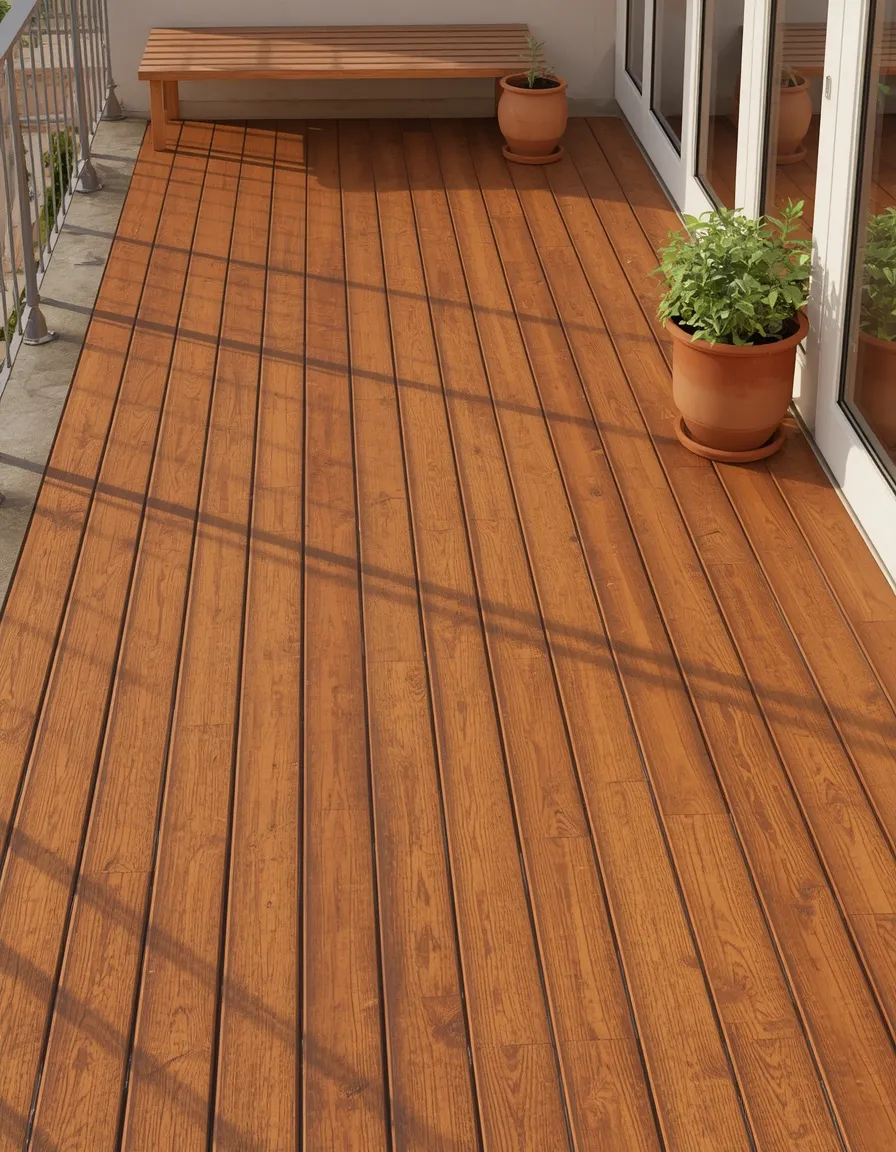
Interlocking wood deck tiles snap together over concrete to give a warm, natural floor that looks built-in. This is the single most convincing upgrade for a bare rental balcony.
Acacia or eucalyptus tiles click together edge to edge with no tools, and their raised plastic bases lift the wood a few millimeters off the slab so water drains and air moves freely. Run the grain in one direction for a calm, elongating effect on narrow balconies. Sweep grit out from between the tiles each spring and re-oil the wood once a year to stop it graying, untreated hardwood left through winter can splinter, so run your hand over the boards before you go barefoot. The tiles pop up in seconds when you move.
- Why it works: hides ugly concrete and solves drainage in one step.
- Best for: renters wanting a permanent-looking floor they can take with them.
- Smart variation: mix in a few tray-style planter tiles for built-in greenery.
4. Terracotta Mediterranean Floor
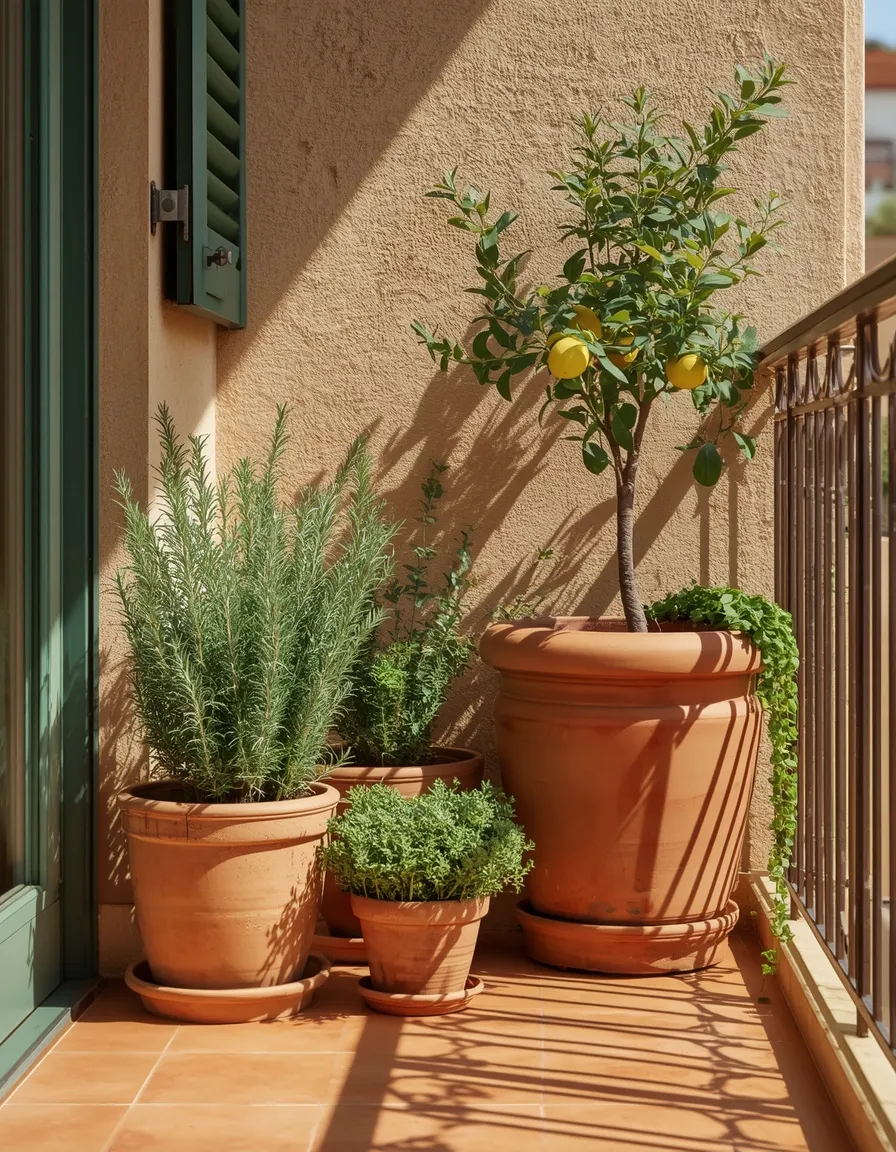
Terracotta tiles bring sun-warmed, earthy color that makes even a small balcony feel like a courtyard in Provence. The tone flatters spring greens and citrus beautifully.
Peel-and-stick terracotta-look vinyl tiles work over concrete without adhesive fuss, or lay genuine unglazed terracotta on a properly sealed, load-checked balcony. Pair the warm floor with a cluster of clay pots holding rosemary, thyme, and trailing oregano so the herbs echo the tile color. Seal real terracotta before spring rain, because unsealed clay soaks up water and can spall when temperatures swing. A single olive-toned pot or a lemon tree in a large planter anchors the whole scheme.
- Why it works: warm neutral tones read as timeless, not trendy, so it ages well.
- Best for: sunny, south-facing balconies and Mediterranean-style homes.
- Watch out: confirm your balcony’s weight limit before laying real clay tile.
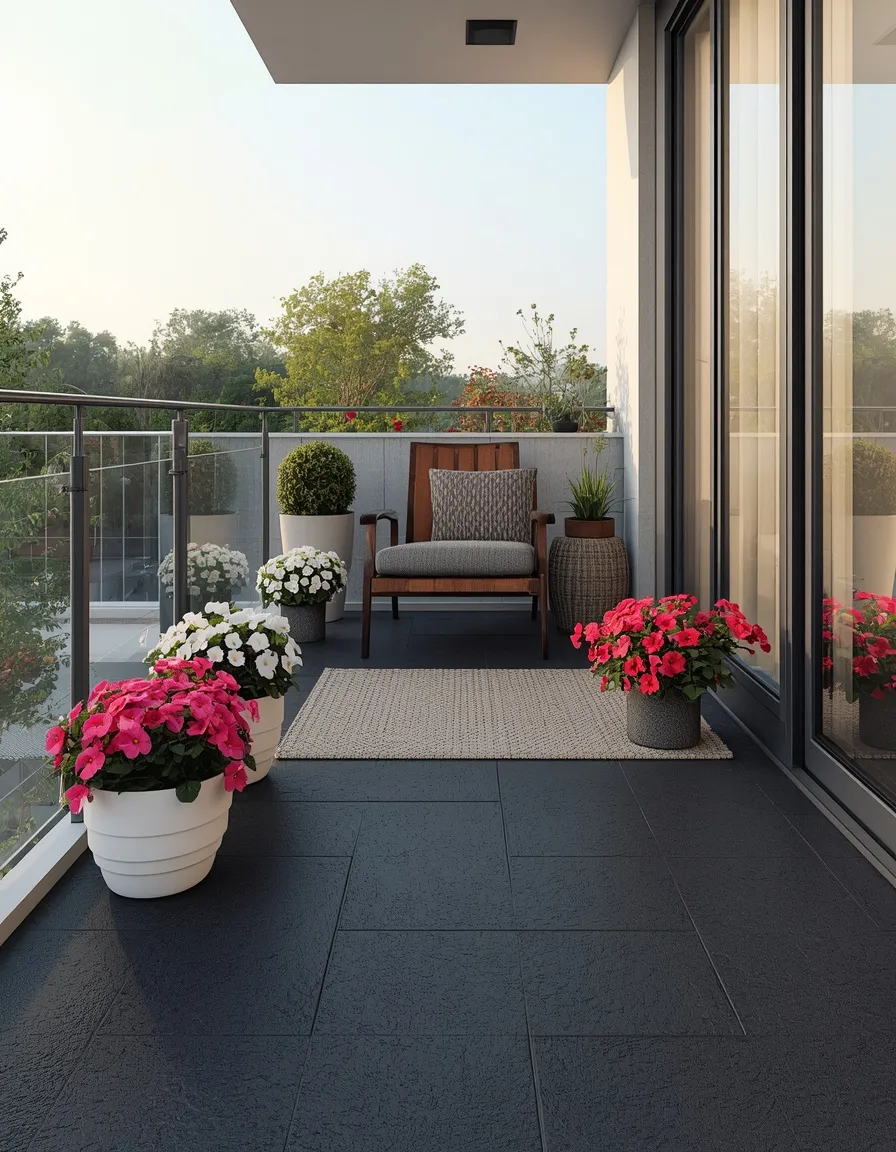
5. Moody Black-Floor Bloom Contrast
A black balcony floor is the boldest backdrop you can choose, and it makes spring flowers look almost neon against the dark. This is modern drama done through the ground rather than the walls.
Use charcoal composite deck tiles or matte outdoor floor paint over concrete, then stage white, coral, and hot-pink blooms, petunias, geraniums, ranunculus, in pale or metallic pots for maximum contrast. Here’s the caveat competitors skip: dark surfaces absorb heat, and in direct afternoon sun a black floor can grow genuinely hot underfoot and stress shallow-rooted plants nearby. Keep an outdoor rug over the main sitting zone, choose heat-tolerant plants, and lift pots onto small feet so roots don’t cook against the surface.
- Why it works: high contrast makes pastel spring color pop with almost no extra styling.
- Best for: modern, minimalist balconies and shaded or morning-sun exposures.
- Watch out: avoid a full black floor on an unshaded, all-day sun balcony.
6. Sunken Floor-Cushion Nook
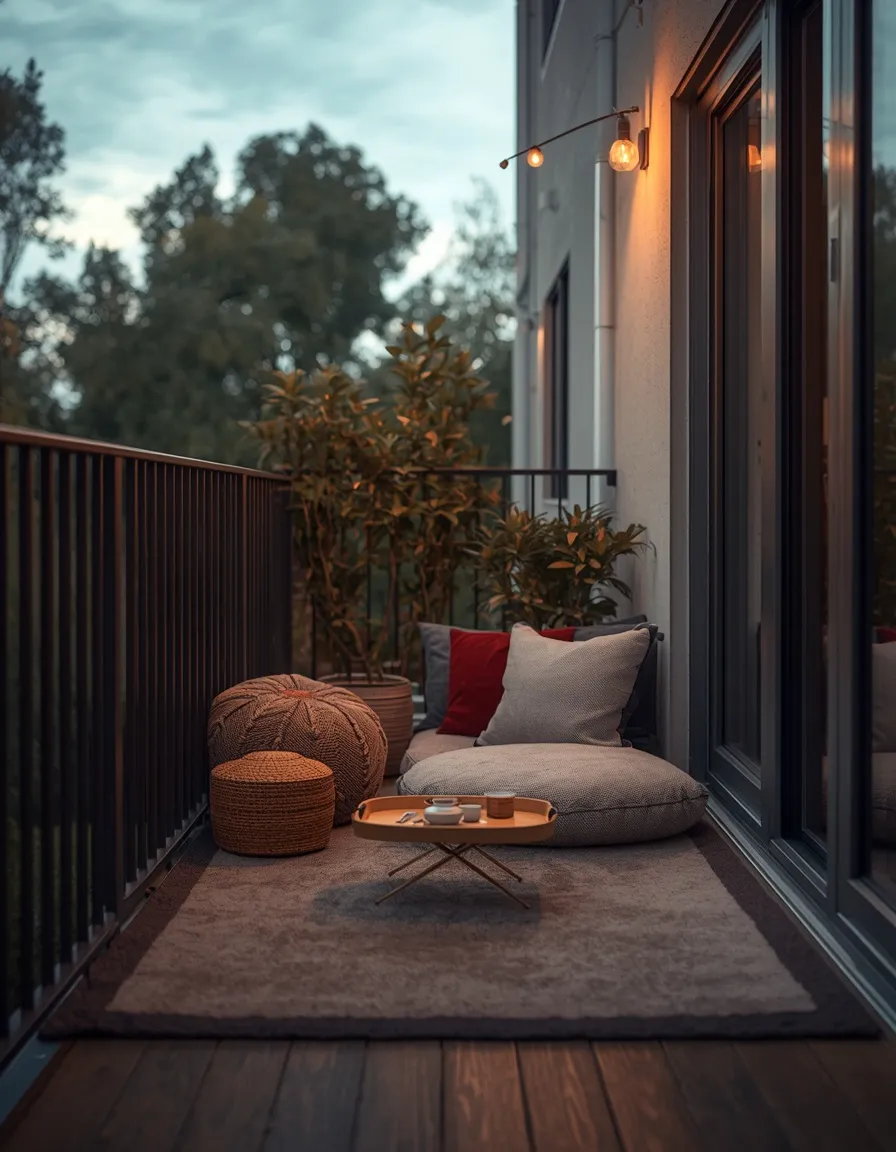
Floor seating is the smartest way to add lounging space to a balcony too narrow for a sofa. Building the whole comfort zone at ground level opens up the space and keeps sightlines low and airy.
Layer a thick outdoor floor mat, then add oversized floor cushions, a couple of firm poufs, and a low folding tray table for tea. Keep everything modular so it lifts inside during storms. The common mistake is using indoor cushions, they soak up dew overnight and go musty fast, so choose covers rated for outdoor use with quick-dry foam, and store them in a bench box when rain is forecast. A string of lights overhead finishes the den-like feel.
- Why it works: low seating makes a tight balcony feel more open than bulky chairs.
- Best for: renters, small-space dwellers, and casual entertainers.
- Solves: no room for standard furniture on a narrow ledge.
7. Pebble & Stone Zen Floor
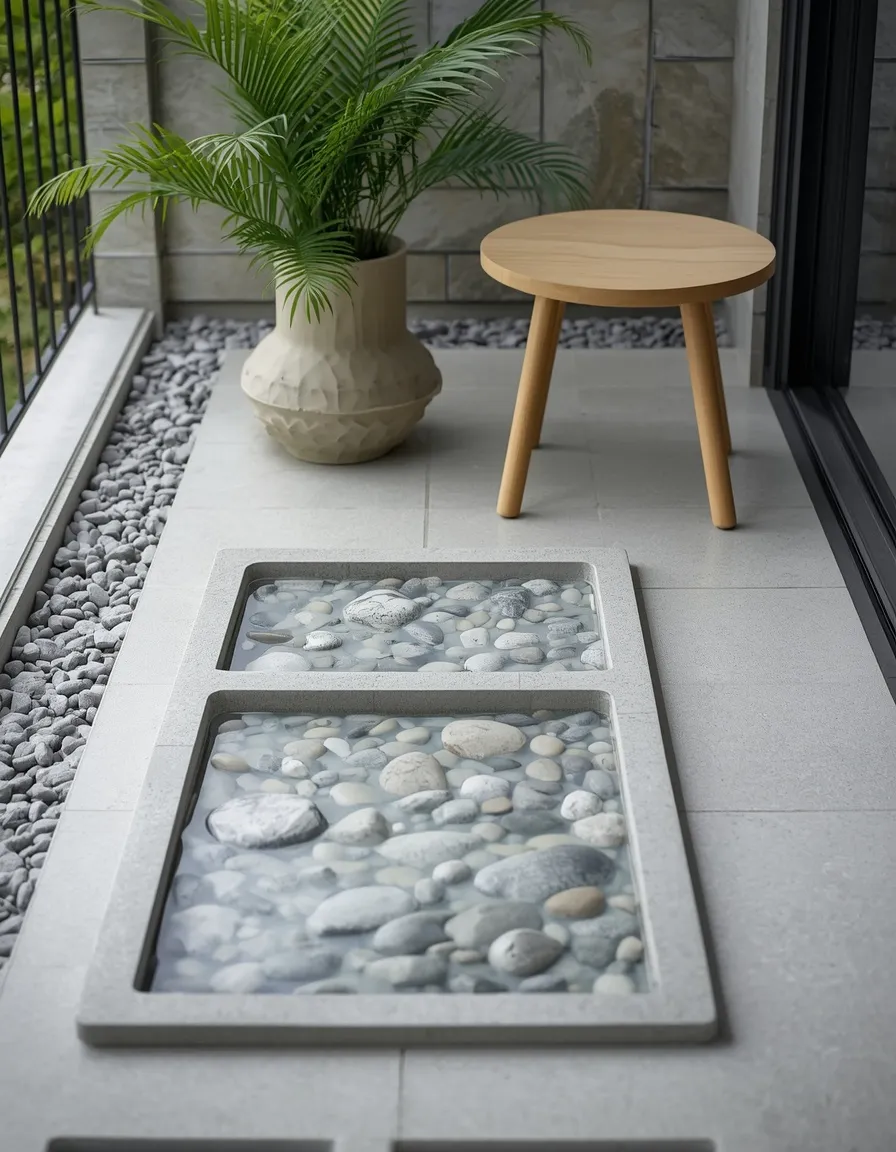
A pebble floor turns a balcony into a calm, spa-like retreat you feel through your feet. It’s a texture-first look that suits people who find bright color too busy.
Fill shallow interlocking stone-tray tiles with smooth river pebbles, or edge a wood-tile floor with a border of loose gravel and a few larger accent stones. Add one sculptural pot with a fern or dwarf pine and a simple wooden stool. Because loose stones can shift and clog drains, contain them in trays or a defined border rather than scattering them across the whole floor. Rinse the pebbles each spring to wash off pollen and keep them looking fresh.
- Why it works: natural texture creates instant calm without needing many plants.
- Best for: minimalists and anyone wanting a low-maintenance, meditative corner.
- When to use it: shaded or partly shaded balconies where a serene mood fits.
8. Hand-Painted Pastel Tile Pattern
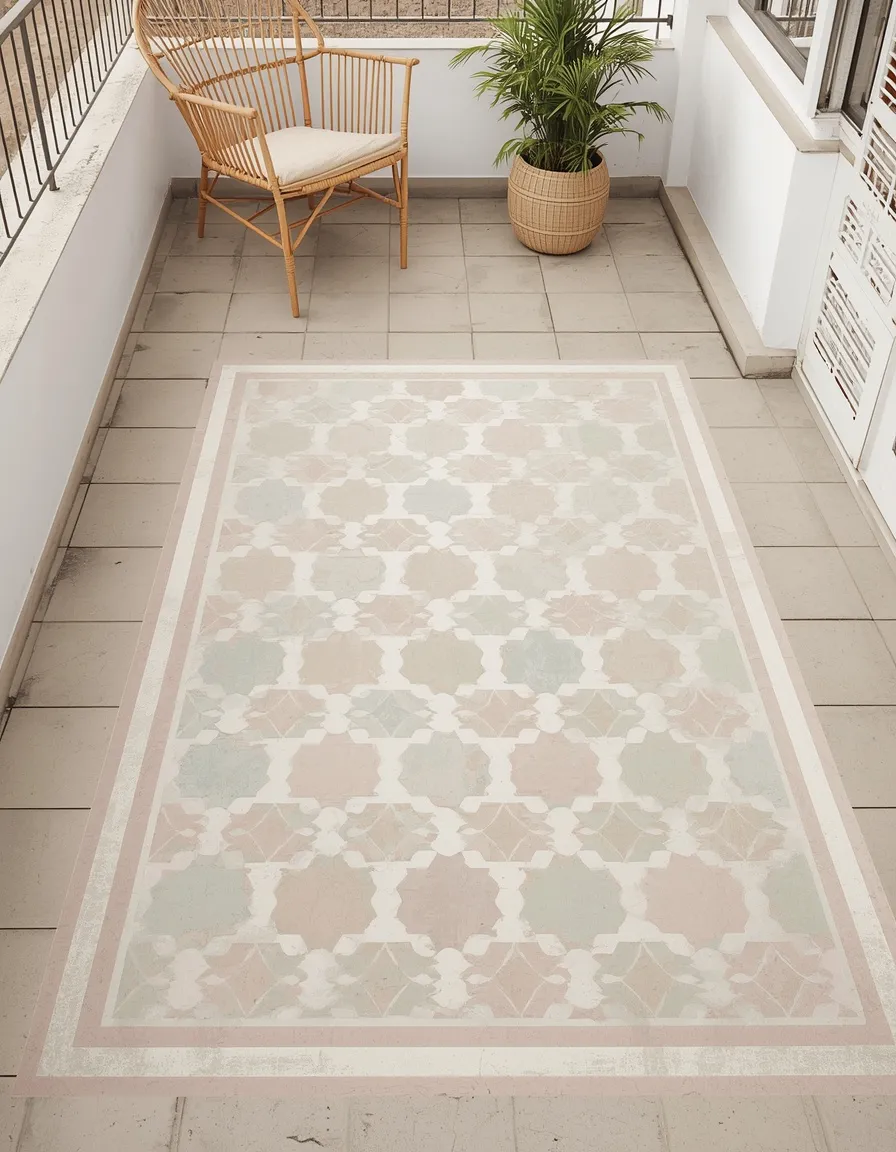
A hand-painted floor pattern is the most personal, budget-friendly way to reinvent a dull concrete slab. For the cost of a couple of paint samples, you get a one-of-a-kind spring floor.
Clean and prime the concrete, then use a stencil to paint a soft geometric or Moroccan pattern in pale sage, blush, and cream with outdoor floor paint, finishing with a clear sealer for durability. Two thin coats hold up far better than one thick one, and sealing is non-negotiable if you want it to survive a rainy spring. This is an owner project or a renter one only with landlord permission, since it’s semi-permanent. Tape your lines crisply and let each coat cure a full 24 hours.
- Why it works: delivers a designer-tile look for a fraction of tiling cost.
- Best for: owners, DIY enthusiasts, and anyone on a tight budget.
- Smart tip: paint a “rug” of pattern in the center and leave a plain border to fake a layered floor.
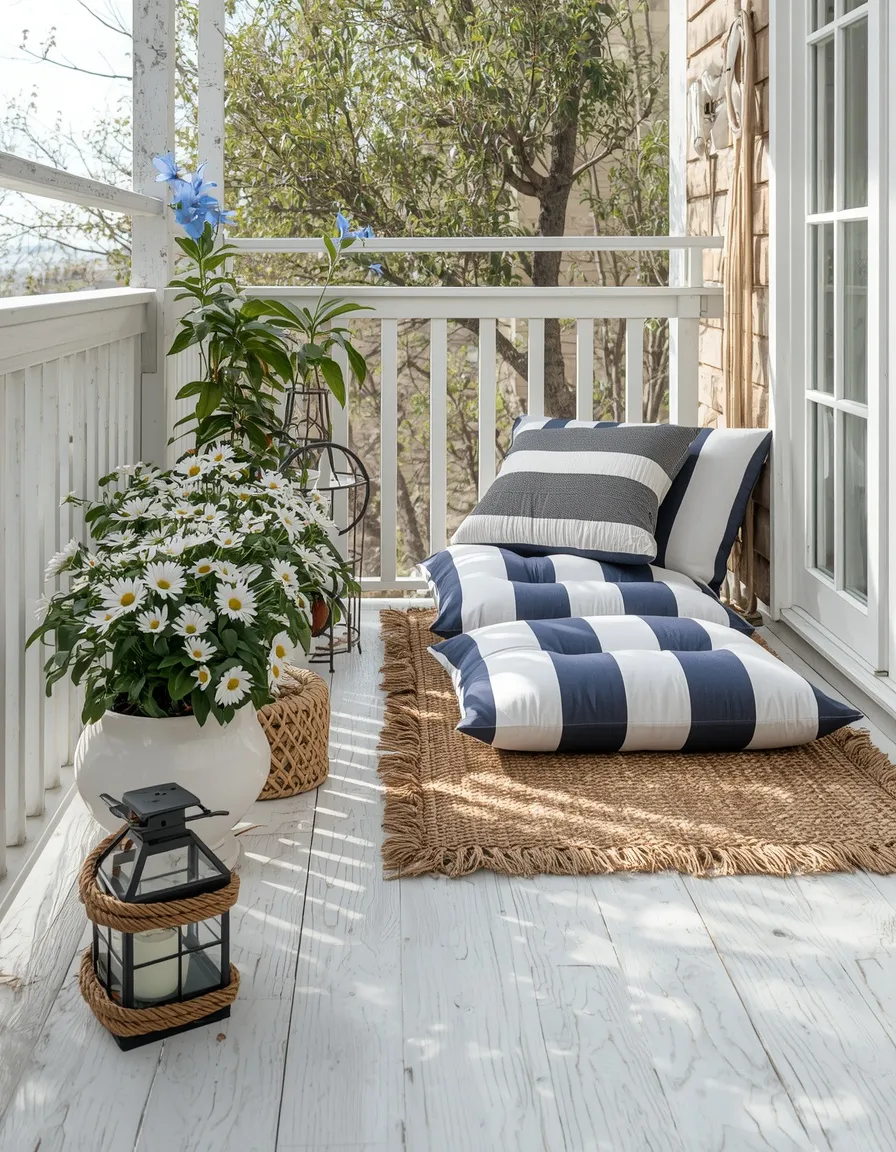
9. Coastal Blue-and-White Deck
A pale wood deck with blue-and-white accents gives a breezy, seaside feel that suits spring perfectly. The light floor bounces sunlight and makes a small balcony feel bigger and cooler.
Choose whitewashed or driftwood-toned deck tiles as your base, then bring in navy-and-white striped floor cushions, a jute-edged rug, and pots of white daisies and blue lobelia. The pale floor is the anchor, so keep everything above it in the same restrained palette. Whitewashed wood shows dirt quickly, so plan a quick sweep and wipe every week or so through pollen season. A rope-wrapped lantern on the floor completes the nautical note.
- Why it works: light, cool tones make cramped balconies feel open and airy.
- Best for: small or shaded balconies that need to feel brighter.
- Best suited to: anyone drawn to coastal, cottage, or Hamptons styling.
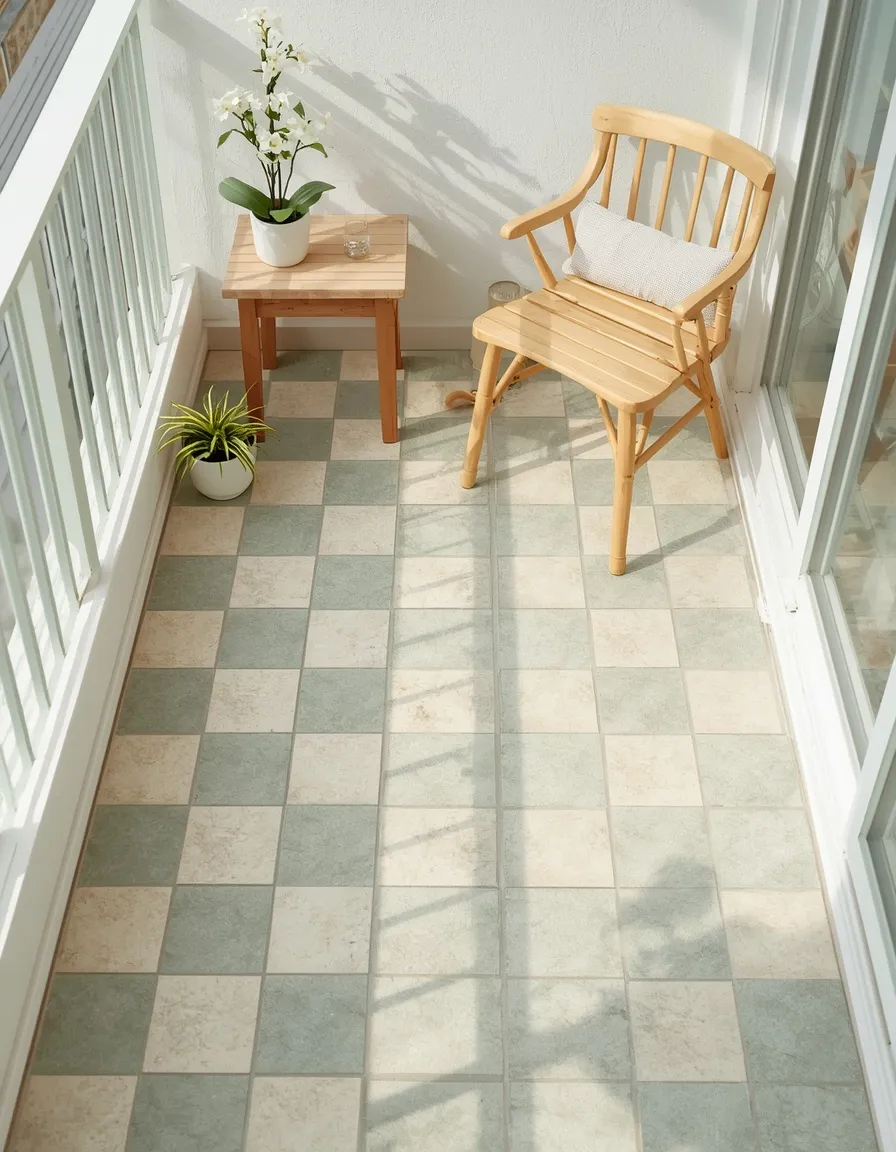
10. Bold Checkerboard Statement Floor
A checkerboard floor is the trend-forward choice that turns the ground itself into the main event. It reads as playful and fresh, exactly the mood spring calls for.
Create the pattern with peel-and-stick vinyl tiles in a soft sage-and-cream or terracotta-and-white pairing, which lift off cleanly for renters, or paint the grid directly onto sealed concrete for a permanent version. Keep everything else calm, natural furniture, plain pots, one type of flower, so the floor stays the star. The classic error is going too high-contrast with stark black and white, which can feel harsh outdoors; muted spring pairings age far more gracefully. Line up your first row dead straight, because the whole grid follows it.
- Why it works: a strong pattern makes the space memorable with almost no other decor.
- Best for: renters (peel-and-stick) and anyone wanting a Pinterest-worthy focal point.
- Watch out: skip stark high-contrast for a softer, more livable spring palette.
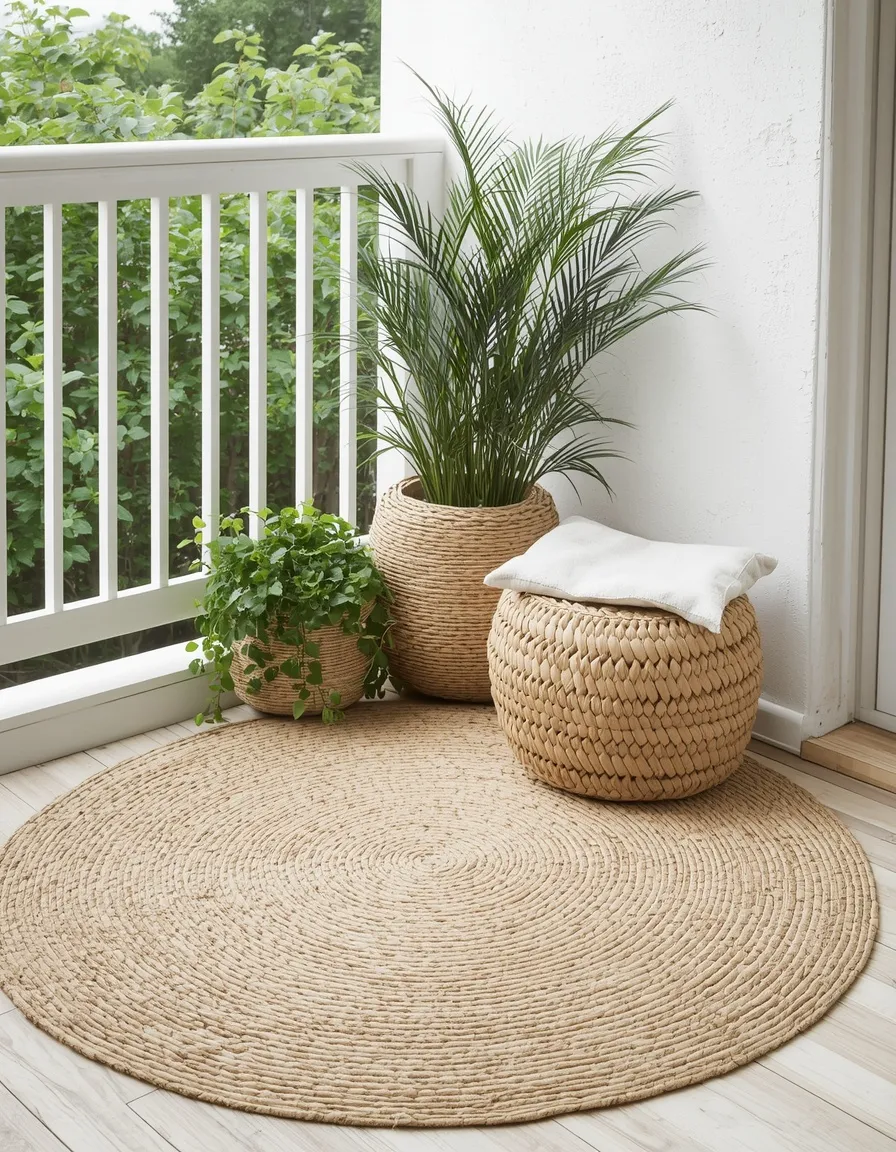
11. Woven Jute Natural-Fiber Corner
A jute floor covering brings warm, neutral texture that grounds a balcony without competing with your plants. It’s the quiet, earthy alternative to a patterned rug.
Lay a jute or synthetic jute-look outdoor rug, genuine jute rots when constantly wet, so choose a poly-jute blend for exposed balconies, and pair it with a low rattan stool and a couple of woven baskets holding trailing pothos or spring bulbs. The tonal, sandy palette lets fresh green foliage do all the talking. Keep true jute only on fully covered balconies, and always use a breathable pad beneath any rug so the floor can dry. A linen floor cushion adds softness underfoot.
- Why it works: neutral texture makes greenery and blooms look richer by contrast.
- Best for: boho, Scandinavian, or minimalist balconies.
- When to use it: covered balconies for real jute; open ones for the synthetic version.
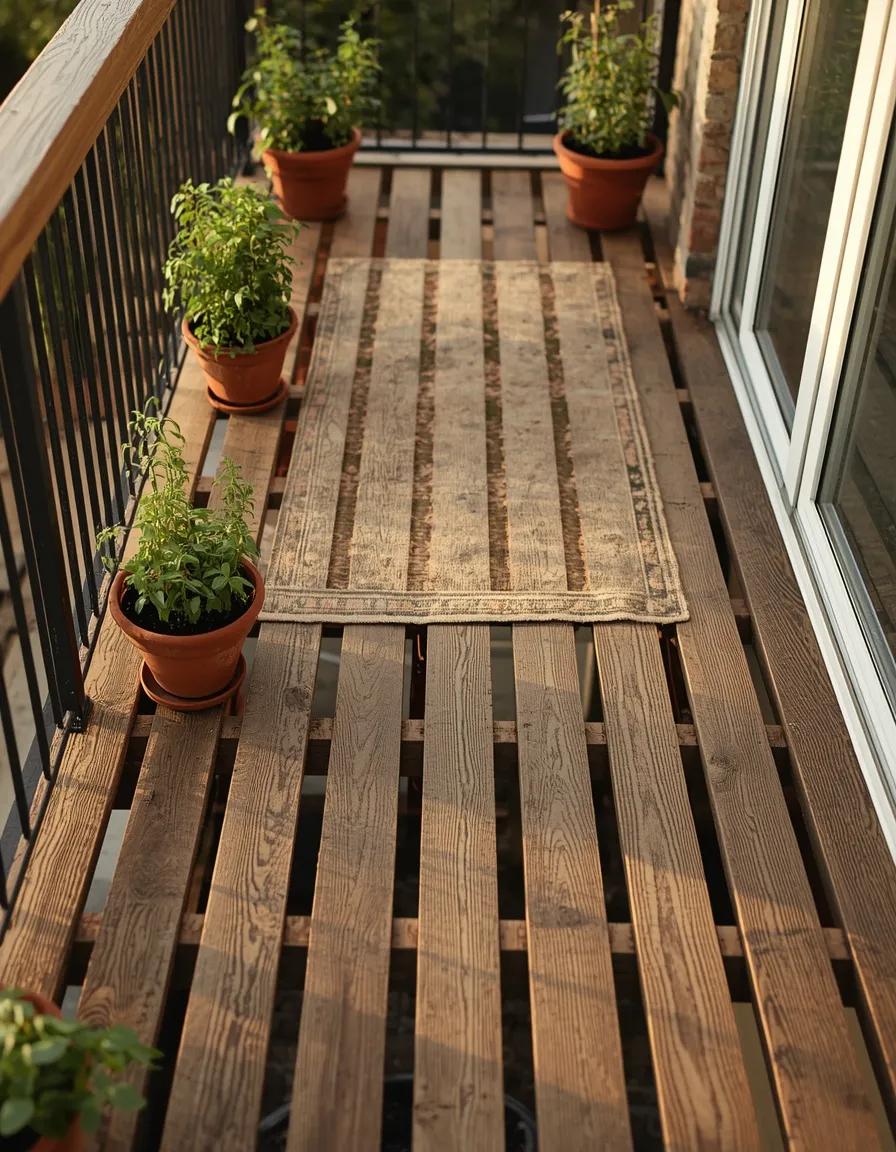
12. Upcycled Pallet Deck Floor
A deck built from upcycled pallets is the most budget-conscious way to get a raised wooden floor. It gives you the warmth of decking and the satisfaction of a real DIY project.
Sand reclaimed pallets thoroughly, seal them with an outdoor wood finish, and lay them across the balcony with small gaps for drainage and airflow. Top with a runner rug and a row of herb pots tucked into the slat gaps. Two safety notes matter here: sand every surface to remove splinters, and only use heat-treated pallets (stamped “HT,” never “MB” for chemical treatment) so you’re not sitting on treated wood. Check your balcony’s load rating before adding the weight of wood plus planters.
- Why it works: delivers a real raised deck look for very little money.
- Best for: DIY lovers, budget renovators, and owners of solid, load-rated balconies.
- Watch out: confirm the pallet stamp and the balcony’s weight limit first.
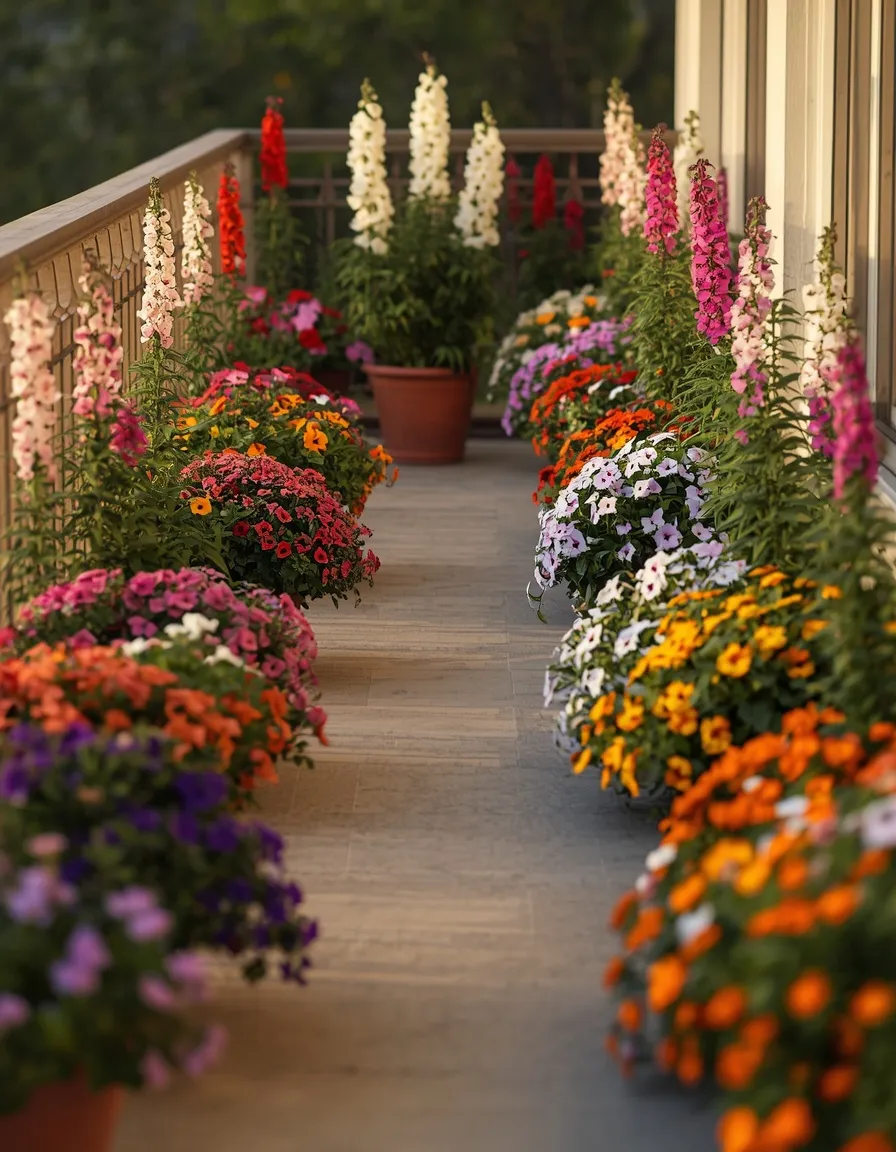
13. Cottage Container-Garden Floor
Lining the floor with clustered pots turns the ground itself into a spring flower bed. Instead of a few scattered planters, you build a lush, layered garden that spills across the whole surface.
Group pots of different heights along the edges, tall snapdragons at the back, mounding petunias in the middle, trailing lobelia and calendula at the front, leaving a clear walking path through the center. Raising pots on plant stands and stacked risers creates the tiered, overgrown cottage look. If pets share the space, note that many classic spring bulbs like tulips, daffodils, and hyacinths are toxic to cats and dogs, so lean on pet-safe blooms such as petunias, snapdragons, and calendula instead. For more on styling vessels themselves, our guide to decorating with vintage planters pairs beautifully with this look, and you’ll find plenty more seasonal styling in our spring decorating collection.
- Why it works: creates a full garden feel on a floor with zero planting bed.
- Best for: plant lovers and anyone wanting maximum bloom in minimum space.
- Watch out: on upper floors, weight and secure pots so wind can’t tip them off the edge.
14. Spring Picnic Lounge Floor
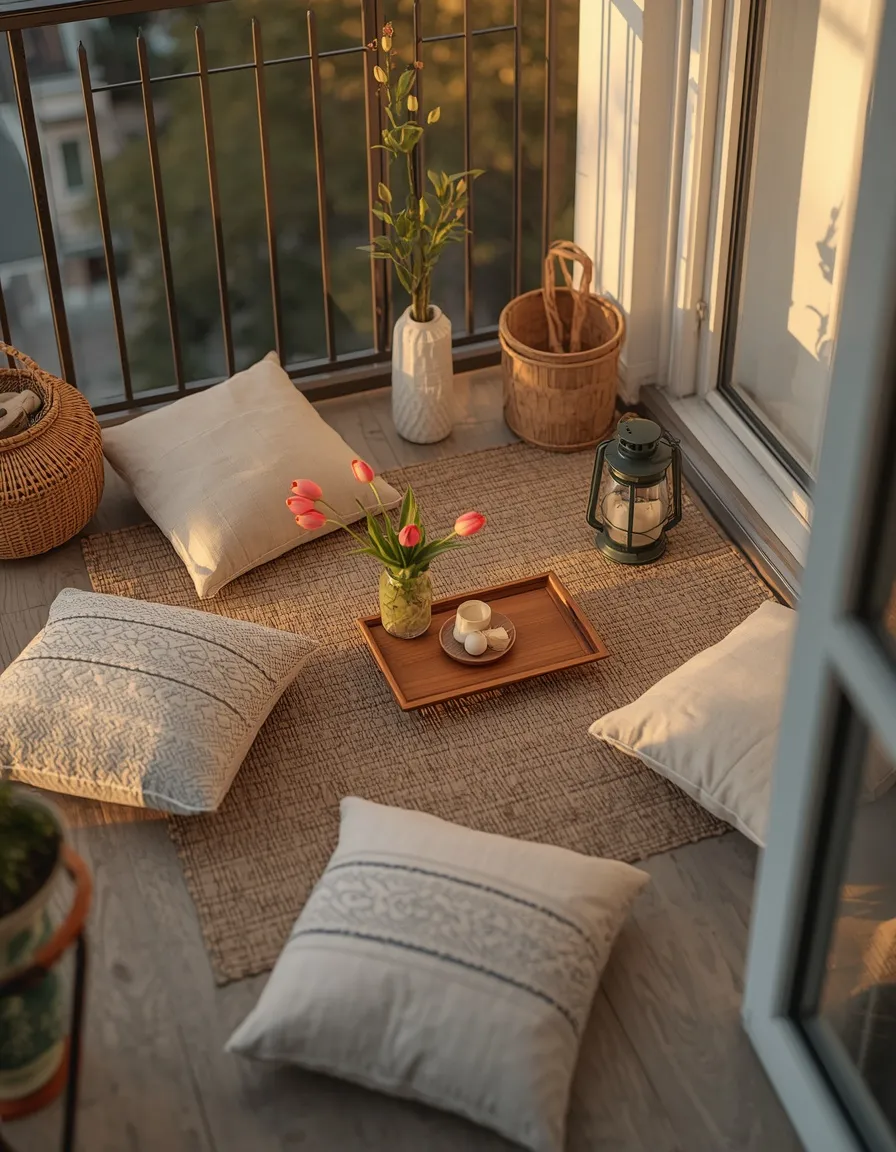
A picnic-style floor setup makes casual outdoor dining possible on the tiniest balcony. The whole scene lives on the ground, which keeps a small space feeling relaxed and uncluttered.
Spread a washable outdoor picnic blanket or flatweave rug, add a low folding table, and scatter a few floor cushions for seating. Style it with a small vase of tulips, a woven tray, and a lantern for evenings. Keep the base rug non-slip and lift the whole setup inside after use, since a blanket left out overnight collects dew and can stain the floor beneath it. This look shines for brunches and golden-hour drinks when the weather first turns warm.
- Why it works: turns a bare floor into a dining spot without any bulky furniture.
- Best for: small-space dwellers and casual entertainers.
- Best suited to: first warm weekends of spring and impromptu gatherings.
A Quick Renter-vs-Owner Decision Guide
Not every floor idea suits every situation. Here’s how the main options compare on the two questions people ask most, can I install it without damage, and does it handle water well.
| Floor treatment | Renter-safe (no damage) | Handles rain / drainage | Best exposure |
| Faux grass | Yes | Only with drainage backing | Part sun |
| Interlocking wood/composite tiles | Yes | Excellent (raised base) | Any |
| Outdoor rug (layered / jute) | Yes | Covered balconies only | Sheltered |
| Peel-and-stick / checkerboard vinyl | Yes | Moderate | Covered |
| Painted concrete pattern | No (semi-permanent) | Good (once sealed) | Any |
| Pallet or real terracotta | Owner / permission | Good (with sealing) | Any, load-checked |
Conclusion
The best spring balcony floor decor ideas all share one habit: they treat the ground as the foundation of the whole space rather than an afterthought. Whether you roll out faux grass, snap in wood deck tiles, or hand-paint a pastel pattern, starting from the floor makes every plant and cushion above it look intentional. Keep the practical notes in mind, drainage under rugs and turf, heat on dark surfaces, weight limits on upper floors, and pet-safe blooms, and your balcony will feel like a genuine outdoor room. Browse more seasonal looks in our spring decor ideas and pick the one floor concept that fits your space, your light, and your lease. Then pull up a cushion and enjoy it.
Frequently Asked Questions
Q: How do you decorate a balcony floor cheaply?
The most affordable options are an outdoor rug over the existing surface, peel-and-stick vinyl tiles, or a hand-painted pattern using outdoor floor paint and a stencil. All three cost far less than tiling and dramatically change the look. Painted concrete and peel-and-stick tiles give the biggest visual payoff for the smallest budget.
Q: What flooring is best for a rental balcony I can’t alter?
Interlocking wood or composite deck tiles are ideal because they snap together over concrete with no adhesive and lift out cleanly when you move. Outdoor rugs and peel-and-stick tiles are equally damage-free. Avoid painting or gluing anything without written landlord permission, since those are semi-permanent.
Q: Are outdoor rugs a problem on a balcony that gets rain?
They can be if water gets trapped underneath. Always use a breathable, ventilated non-slip pad so air can circulate, and lift or hang the rug to dry after heavy rain. On fully exposed balconies, choose synthetic (poly-jute or polypropylene) rugs rather than natural jute, which rots when constantly wet.
Q: Is a black balcony floor a bad idea?
Not at all, but placement matters. Dark surfaces absorb heat and can get hot underfoot in strong afternoon sun, which is uncomfortable and can stress nearby shallow-rooted plants. A black floor works beautifully on shaded or morning-sun balconies, or with a rug over the main sitting area.
Q: Which spring flowers are safe if I have pets on the balcony?
Petunias, snapdragons, calendula, and roses are generally considered pet-friendly choices. Many popular spring bulbs, including tulips, daffodils, and hyacinths, are toxic to cats and dogs. Keep toxic blooms out of reach or skip them entirely if animals share the space.
Q: Do I need to worry about weight on my balcony floor?
Yes, especially with heavy materials like real terracotta tile, stone, or many large planters full of wet soil. Every balcony has a load limit set by its construction, so check with your building manager before adding significant weight. Spreading weight out and choosing lightweight materials keeps you well within safe limits.
Q: How do I keep pots from blowing off an upper-floor balcony?
Wind is stronger higher up, so use heavier planters, group them against a wall, and weight lightweight pots with stones or bricks in the base. Never place loose or top-heavy pots near the railing edge, where a gust could tip them over the side. Securing them protects both your plants and anyone below.