
Introduction
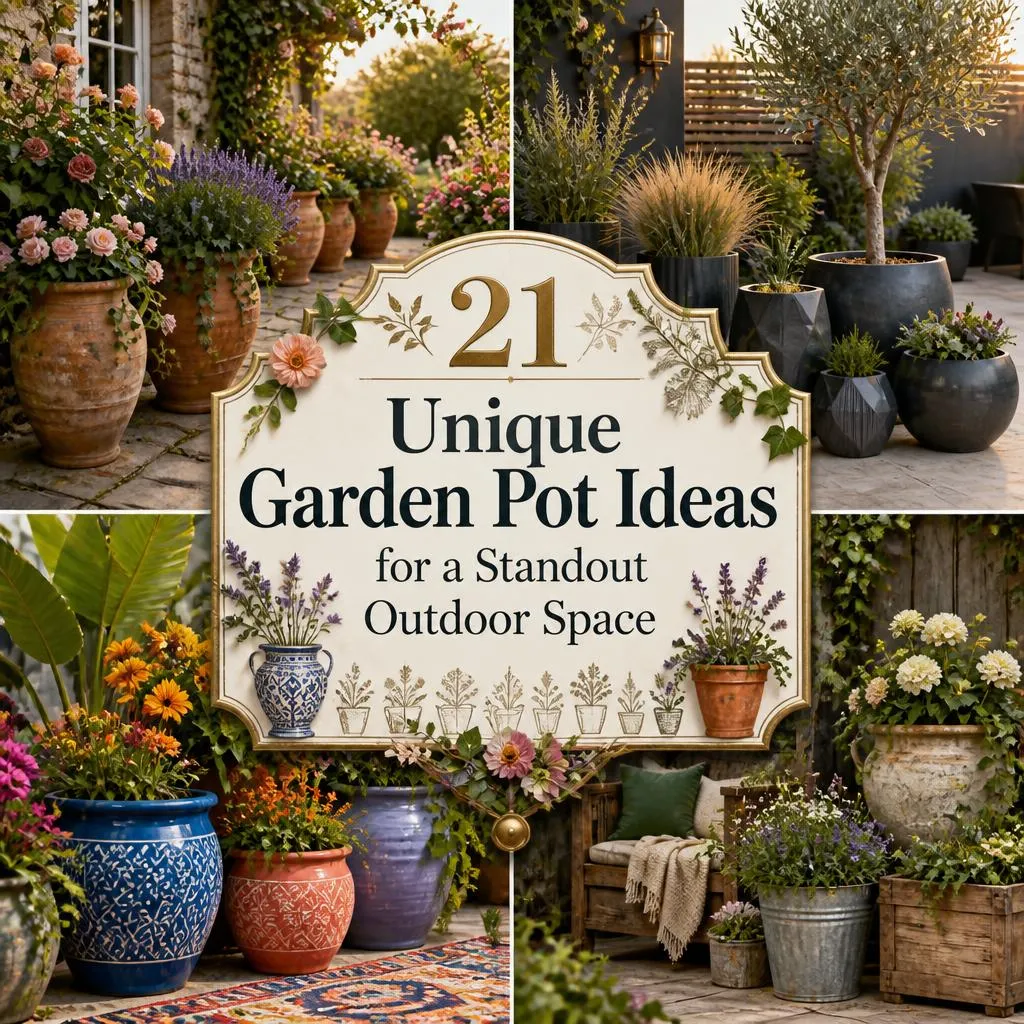
A cracked teapot repurposed as a trailing planter. A trio of terracotta pots stepped like stairs. A galvanized tub overflowing with zinnias by the porch steps. The best garden pot ideas do more than hold soil, they set the tone for an entire outdoor space, turning a bare patio, balcony, or garden bed into something that feels curated and personal. Whether you’re working with a sprawling backyard or a single sunny windowsill, this collection of unique garden pot ideas covers rustic terracotta arrangements, DIY upcycled containers, fairy garden focal points, and deck-ready groupings, each one built around real materials, real placement logic, and the kind of detail that turns a simple abode into a garden worth lingering in.
Container gardening is one of the most flexible entry points into broader garden design projects, since pots can be repositioned, swapped, and layered in ways an in-ground bed can’t. If you’re building out the rest of the space on a tighter budget, this list of cheap garden ideas pairs naturally with the upcycled and DIY pot projects below.
1. Layered Terracotta Trios
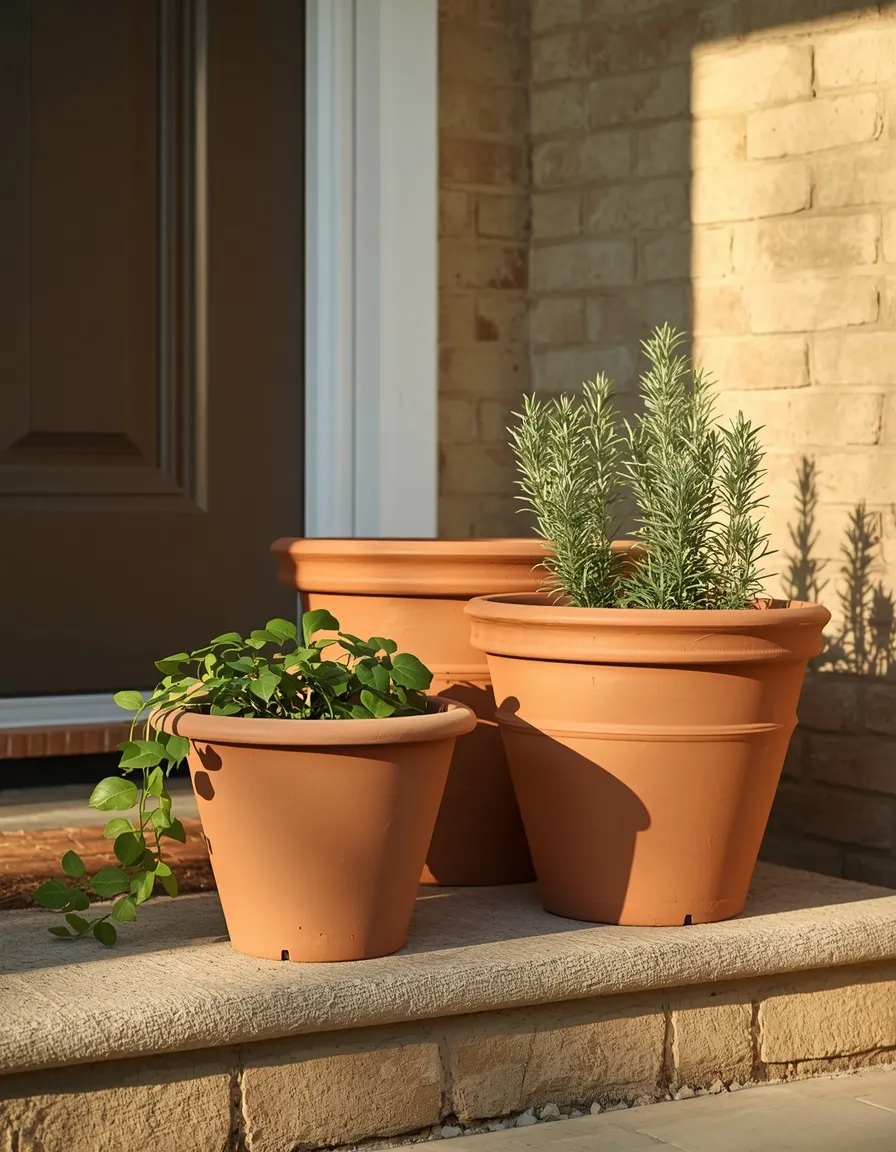
Three unglazed terracotta pots in ascending heights, clustered at a doorstep or porch corner, are one of the most reliable rustic garden pot ideas because the warm clay tone works with almost any planting scheme, from trailing ivy to upright rosemary.
Group pots in odd numbers, three or five, and vary height rather than width for a stepped silhouette that reads as intentional rather than accidental. Unglazed terracotta is porous, so soil dries faster than in plastic or glazed containers, which works in its favor for drought-tolerant herbs and succulents but means more frequent watering for thirsty annuals. A common mistake is planting every pot with the same thing; instead, repeat one anchor color, like silvery dusty miller or a single trailing vine, across all three to tie the grouping together without making it match too perfectly. For an aged look without waiting years, brush diluted plain yogurt onto the clay to encourage natural moss growth in a shaded spot.
- Works in tight entryways, porches, and stair landings with limited floor space
- Terracotta’s porous walls reduce root rot risk for herbs like rosemary and thyme
- Solves the lonely single-pot problem without needing a full planting bed
2. Vintage Teapot Planters
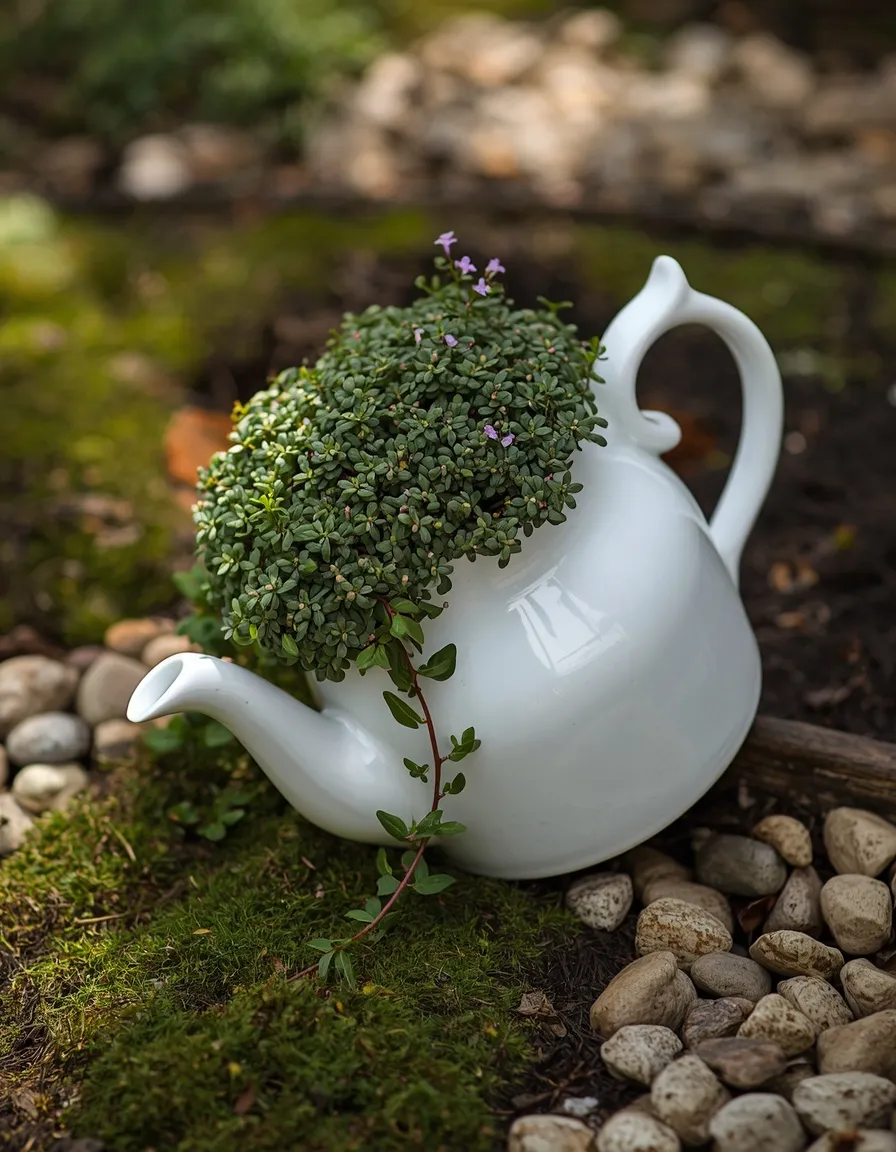
A chipped porcelain teapot tucked into a flower bed or perched on a garden wall, spilling over with lobelia or creeping thyme, turns a piece nobody wants in the kitchen into one of the most charming tea pot garden decor DIY projects around, especially for cottage-style plots.
Drill drainage holes before planting using a diamond-tip masonry bit at slow speed with the teapot submerged in a shallow tray of water to keep the ceramic cool and prevent cracking; skipping this step is the most common reason these projects fail. Choose trailing or compact plants, since teapots have shallow, narrow cavities that dry out quickly and won’t support deep-rooted specimens. Position the spout slightly downward so it looks like it’s mid-pour, and tuck moss or small stones around the base to hide the transition where teapot meets soil. Mismatched, chipped, or lidless teapots from thrift stores work better here than pristine ones, since the imperfections read as intentional patina rather than damage.
- Repurposes broken or chipped teapots that would otherwise be discarded
- Ideal focal point for cottage, English garden, or vintage-inspired planting
- Solves clutter from mismatched kitchenware by giving it outdoor purpose
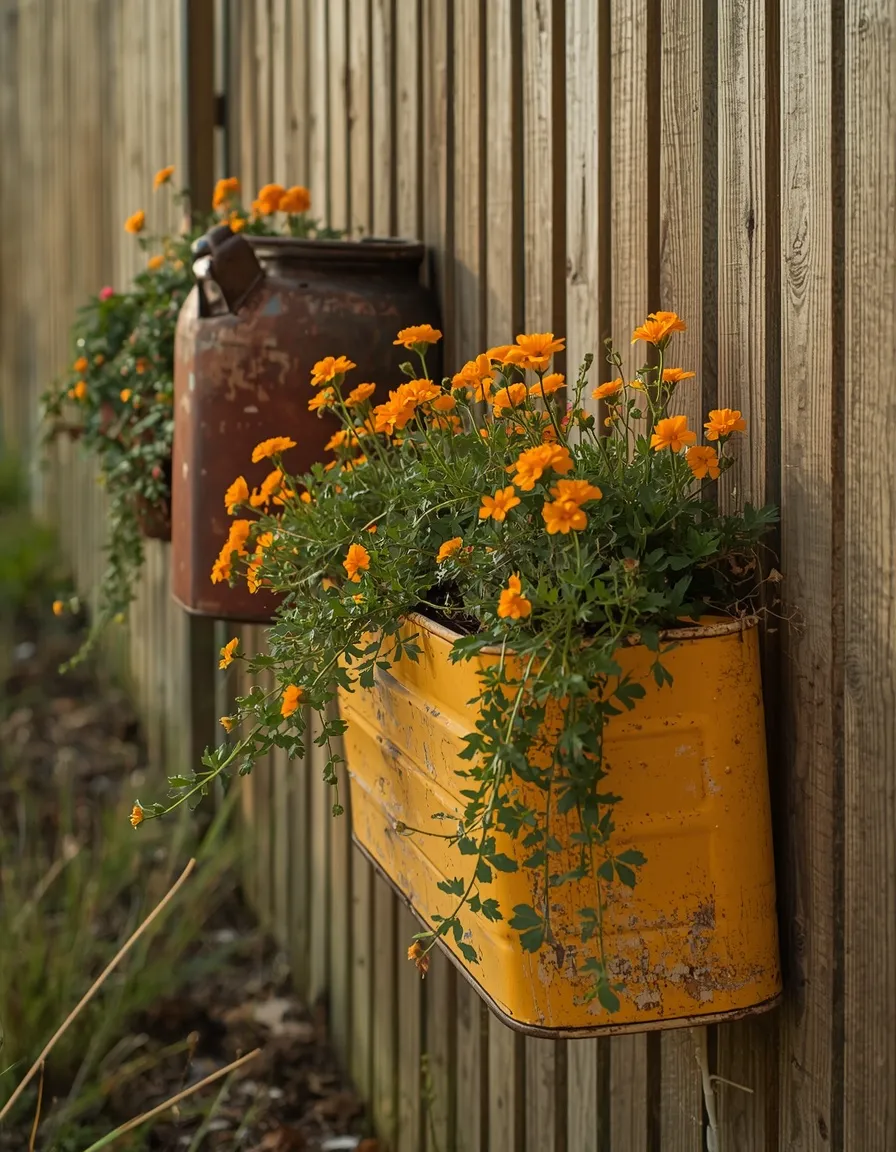
3. Upcycled Oil Can Planters
A row of old metal oil cans, painted in weathered mustard yellow or left to rust naturally, lined along a fence or workbench edge, gives a vegetable patch or potting shed corner an industrial-rustic character that store-bought planters can’t fake.
Metal oil cans need drainage holes punched from the inside out with a hammer and nail, or a drill for thicker steel, to avoid sharp, outward-facing burrs that can cut hands during watering or weeding; this is the key safety step to handle before planting. Because bare metal heats up fast in direct sun, line the interior with a plastic nursery pot or landscape fabric before adding soil, especially in warmer climates, to protect roots from heat stress. A weathered, slightly rusted finish suits succulents and herbs, while a freshly painted can in a saturated color works well for trailing petunias or nasturtiums. Group cans of different original sizes together rather than buying a matching set, since the mismatched labels and dents are what make this decorative pot for the garden from an oil can feel authentically upcycled rather than staged.
- Turns scrap metal containers into free or low-cost outdoor planters
- Suits vegetable gardens, potting benches, and industrial or farmhouse yards
- Solves overheating risk with a liner, safer for root-sensitive plants
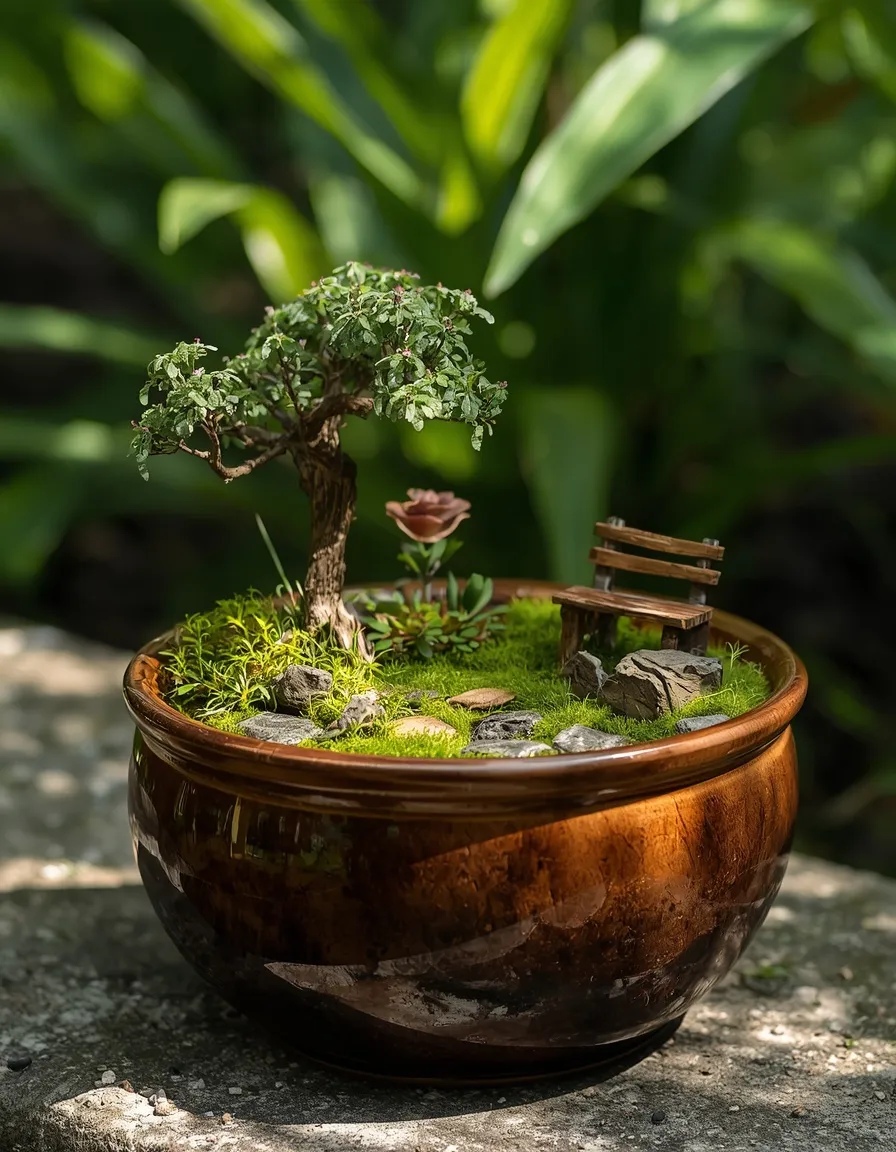
4. Fairy Garden in an Oversized Pot
A single large glazed pot, big enough to hold a miniature landscape of moss, tiny pathways, and a dollhouse-scale bench, gives kids and adults alike a self-contained world to check on daily, no dedicated garden bed required.
Choose a wide, shallow-to-medium pot, at least 40cm or 16in across, rather than a deep, narrow one, since fairy gardens read best when the miniature scene has horizontal room to breathe. Layer a base of moss, dwarf mondo grass, or Irish moss as a lawn, then add small stones as a path and a few dwarf or slow-growing plants like miniature hostas or baby’s tears so the scale stays believable as everything grows. The most common mistake is overcrowding it with too many figurines at once; start with two or three focal accessories and let the plants do most of the visual work. Keep this style of large-pot fairy garden in partial shade, since full sun will scorch the delicate moss and shallow-rooted groundcovers faster than it would a standard container planting.
- Gives kids a hands-on project without committing an entire garden bed
- Works on patios, balconies, and porches with no in-ground space
- Solves the where-to-put-a-fairy-garden problem in small yards
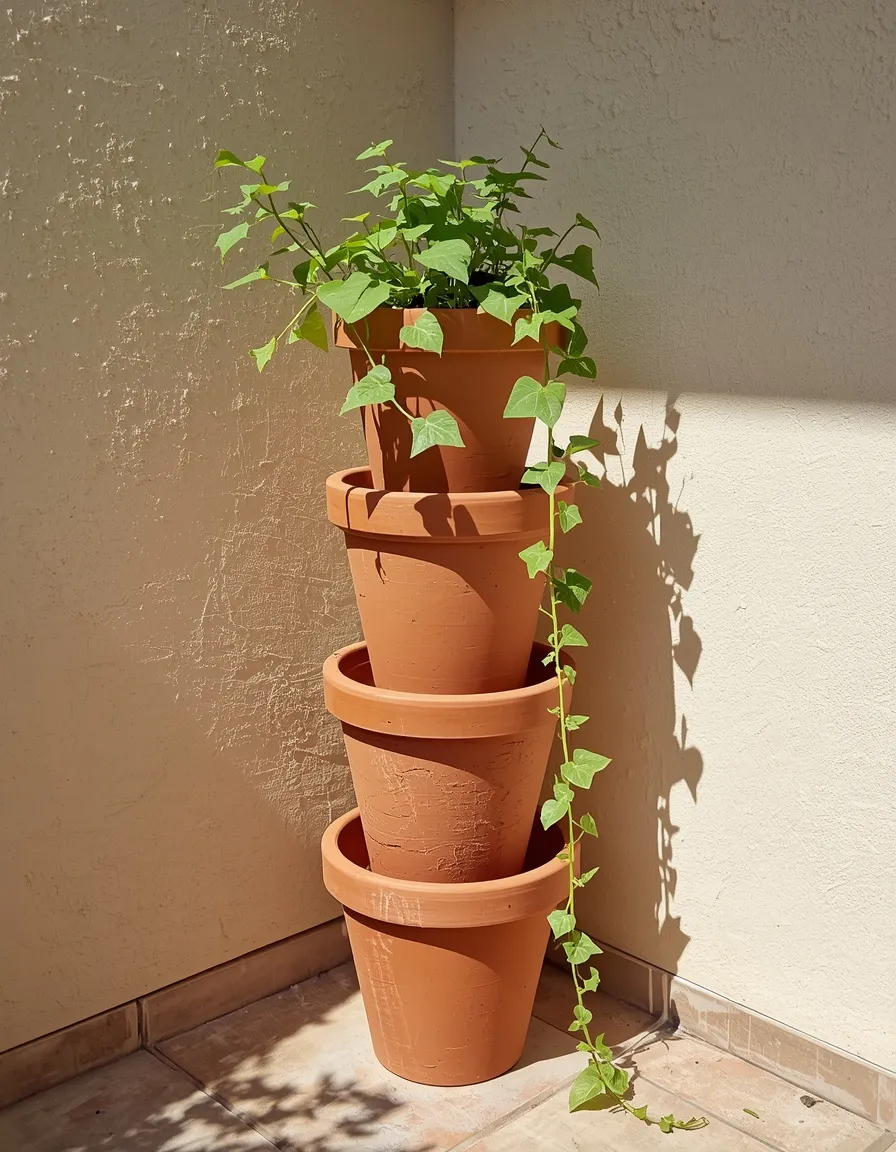
5. Stacked Pot Towers
Three to five pots of decreasing size threaded onto a central rod or simply stacked and glued, rising like a small pagoda from a corner of the patio, solve the age-old problem of wanting more plants than you have floor space for.
Build the tower by inverting the largest pot as a stable base, then working upward with progressively smaller pots, using exterior-grade construction adhesive or a threaded metal rod through the drainage holes to keep everything secure in wind. Only the top two or three pots are actually plantable, so pull from mismatched terracotta pots you already own rather than buying a matching set, since visual variety reads better at this scale than uniformity does. Trailing plants like sweet potato vine or verbena in the top tier will spill down and soften the hard stacked lines within a few weeks. Check stability after heavy rain or before storms, since a tall, top-loaded stack can tip in strong wind if it isn’t anchored or weighted at the base.
- Maximizes planting space on small balconies, decks, or patios
- Creates height and vertical interest without built-in trellising
- Solves storage clutter by repurposing spare mismatched pots
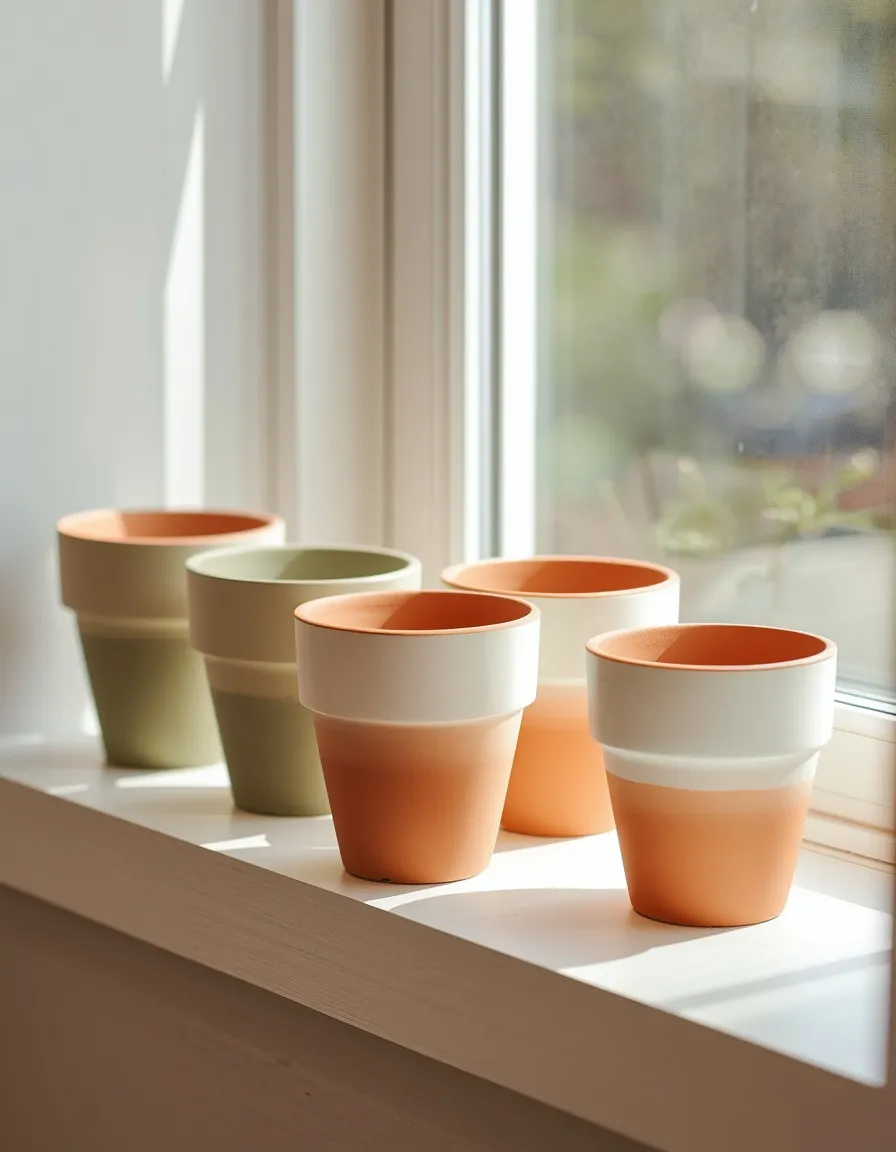
6. Chalk-Painted Color Blocking
A cluster of identical plain pots, each painted in a different shade from the same color family, dusty blue, sage, and warm white, turns a budget multipack of nursery pots into a coordinated display that looks custom-bought.
Chalk paint is the most forgiving option for outdoor pots because it adheres to terracotta, plastic, and glazed ceramic without heavy sanding or priming first; apply two thin coats and let each cure fully before sealing with an exterior matte or satin topcoat to protect against rain and UV fading. Stick to a limited palette of two to three colors maximum, since more than that starts to look scattered rather than styled, which is the most common misstep with this kind of garden pot decoration idea. Ombre effects, where the same color deepens from pot to pot, work particularly well for a grouped display along a step or windowsill. Avoid painting the interior rim where soil and water contact the pot regularly, since paint there tends to flake fastest and can look shabby within a season.
- Turns inexpensive plastic or terracotta multipacks into a cohesive set
- Works for balconies, windowsills, entryways, and rental-friendly styling
- Solves mismatched pot clutter without buying new containers
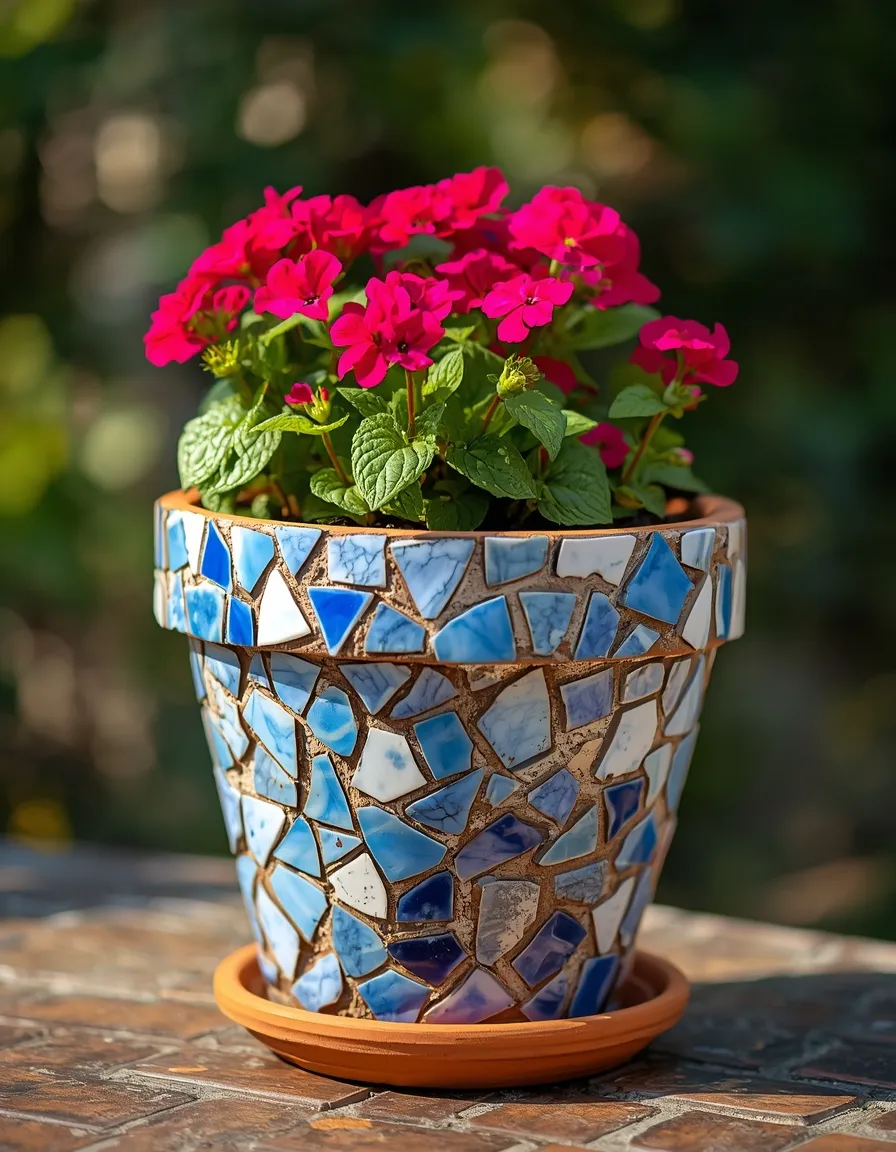
7. Mosaic Tile Pot Art
Broken ceramic tile, sea glass, or leftover bathroom mosaic pieces pressed into a plain concrete or terracotta pot create a one-of-a-kind piece that no store-bought planter can replicate, and it uses up materials most people already have.
Apply tile adhesive in small sections rather than coating the whole pot at once, since it sets faster than most first-timers expect, then grout the gaps once the adhesive has cured for at least 24 hours. Wear gloves and safety glasses when breaking tile with a hammer, and work inside a folded towel or cardboard box to contain shards, since this is the step where most injuries happen with this kind of DIY garden pot idea. Keep the pattern simple for a first attempt, a single color family or a basic geometric border, rather than a detailed image, since curved pot surfaces make intricate mosaic work genuinely difficult. Seal the finished grout with a food-safe silicone sealant if the pot will hold edible herbs, so grout dust doesn’t leach into the soil over time.
- Uses up broken tile, sea glass, or leftover renovation materials
- Creates a genuinely one-of-a-kind piece unavailable in stores
- Solves boring plain-pot syndrome for a low material cost
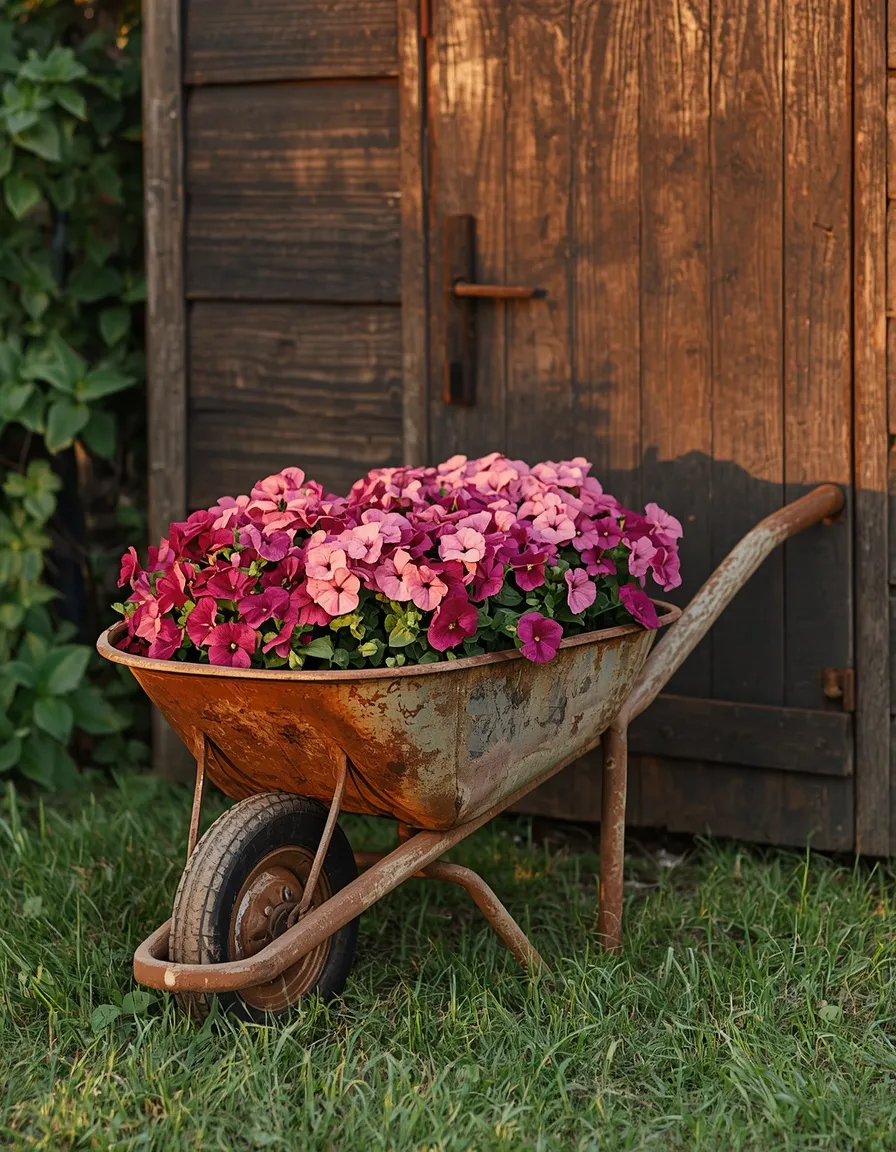
8. Repurposed Wheelbarrow Planter
An old, slightly rusted wheelbarrow, wheel and all, overflowing with petunias or trailing lobelia beside a garden gate or shed, is one of those garden pot ideas outdoor planters that instantly signals a working, lived-in garden rather than a newly installed one.
Drill several drainage holes across the base before adding soil, since wheelbarrow trays are flat and shallow and will hold standing water otherwise, which quickly rots roots. Fill the bottom third with broken pot shards, gravel, or packing material before topping with potting mix, both to save on soil volume and to keep the overall weight manageable if you ever want to reposition it. A wheelbarrow with a locked or removed wheel makes a more stable, permanent planting than one left mobile, since the tray can tip if bumped while still rolling freely. This works best as a single dramatic statement piece near a shed, gate, or garden entrance rather than grouped with other containers, since its shape and scale already command attention on their own.
- Repurposes a retired or broken wheelbarrow instead of discarding it
- Ideal statement piece for garden entrances, gates, and shed corners
- Solves standing water risk with proper drainage prep
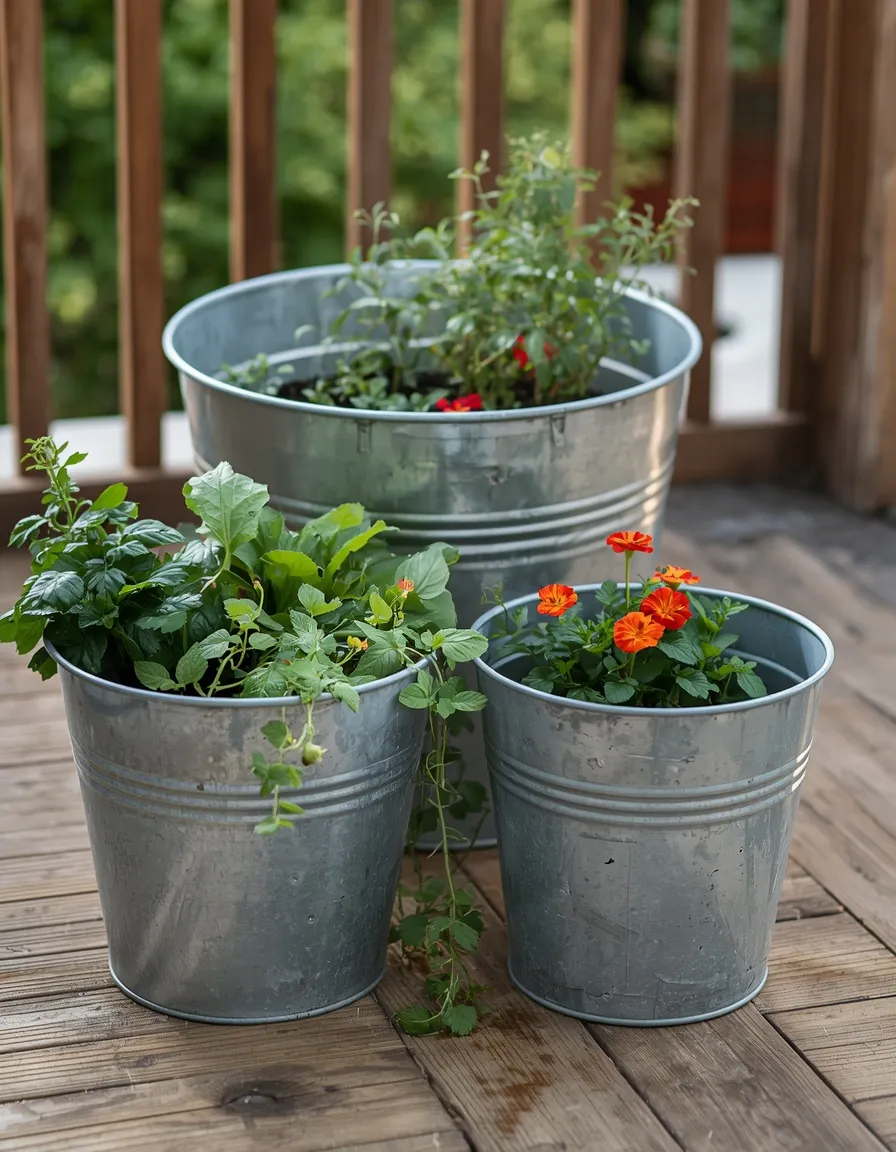
9. Galvanized Tub Groupings
Round galvanized washtubs or feed troughs, silvery and slightly dented, clustered at different heights on a deck or gravel patio, bring a farmhouse warmth that pairs naturally with wildflowers, herbs, or a small vegetable patch.
Galvanized metal conducts heat quickly, so in hot climates or full-sun spots, line the interior with landscape fabric or set a plastic liner pot inside rather than planting directly into bare metal, which can scorch roots against the tub walls in summer. Drill drainage holes in a ring pattern near the base using a metal-rated drill bit, and elevate the tub slightly on bricks or pot feet so water can actually escape rather than pooling underneath. These tubs read best in odd-numbered groupings of varying diameters rather than a single matched pair, echoing the layered-height principle that works well across most rustic garden pot ideas. Root vegetables and leafy greens do particularly well here, since the tubs are typically deep enough for real vegetable gardening rather than purely decorative planting.
- Deep enough for genuine vegetable and root crop growing, not just decoration
- Suits farmhouse, cottage, and rustic-modern outdoor styles
- Solves the cheap-plastic-planter look with an affordable metal alternative
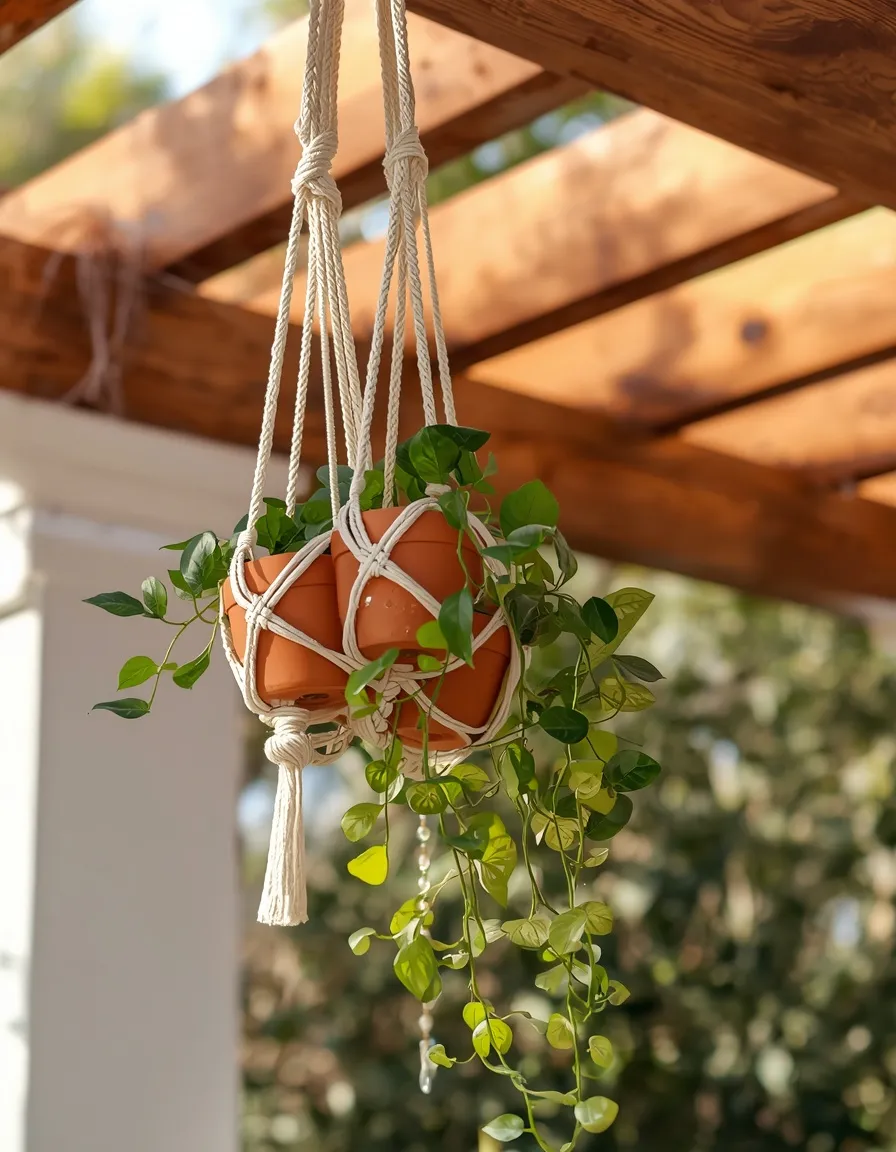
10. Macrame Hanging Planters
A cluster of small pots suspended in hand-knotted macrame at staggered heights from a porch beam or pergola turns unused overhead space into planting real estate, ideal for renters and small-yard gardeners with no ground bed to work with.
Use pots no larger than about 20cm or 8in for hanging displays, since heavier ceramic or filled soil pots put real strain on knots, hooks, and the structure they hang from over time; always check that the ceiling hook or beam is rated for the combined weight of pot, soil, and mature plant, not just the empty pot. Trailing or cascading plants like pothos, string of pearls, or ivy geranium suit this format better than upright ones, since the whole point is the downward drape. Space multiple hangers at different lengths, staggered by 15 to 20cm or 6 to 8in, rather than hanging them all level, which creates visual rhythm instead of a flat row. In regions with strong seasonal wind, swap natural cotton cord for a UV-resistant polyester macrame cord, since cotton breaks down and weakens faster outdoors than indoors.
- Uses vertical space instead of floor space, ideal for balconies and porches
- Works well for renters since no permanent planting bed is needed
- Solves hanger overload with weight-rated hooks and proper cord choice
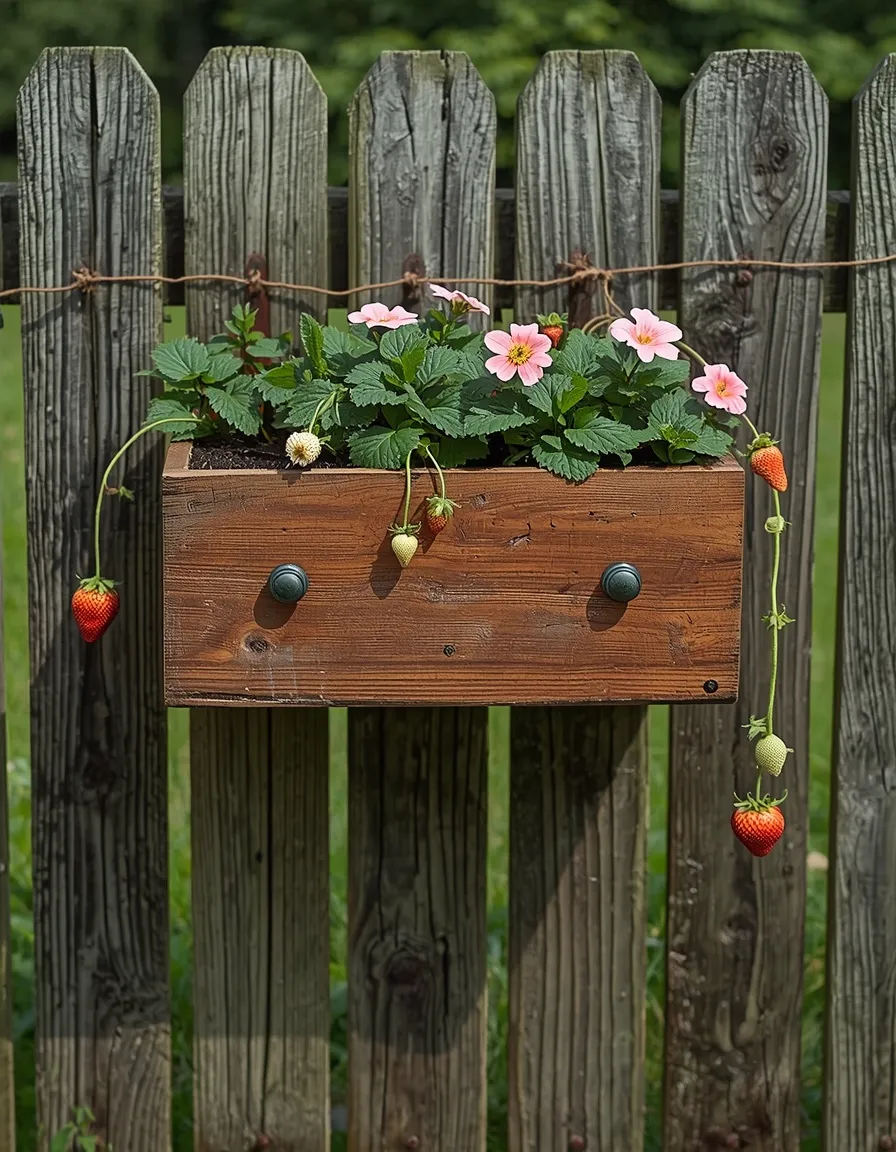
11. Repurposed Drawer Planter Boxes
An old wooden dresser drawer or vintage fruit crate, lined and filled with soil, mounted on a wall or set along a fence, gives flat, narrow spaces, like a bare fence line or a windowsill, a planting option that a round pot simply can’t fill.
Line the interior with heavy-duty plastic sheeting or landscape fabric stapled along the seams before adding soil, since raw untreated wood will rot within a season or two of direct soil contact and regular watering. Drill several drainage holes through the base and set the box on brick feet or wall brackets so water drains freely instead of pooling against the wood. This format is especially good for shallow-rooted plants like lettuce, strawberries, or annual flowers, since most drawers and crates aren’t deep enough for anything with a substantial root system. A weathered, unpainted finish suits rustic and farmhouse styles, while a coat of exterior paint in a saturated color works better for a cottage or coastal look, so choose the finish based on the surrounding palette rather than the box’s original color.
- Fills narrow, flat spaces like fences and walls that round pots waste
- Best for shallow-rooted crops like lettuce, strawberries, and annuals
- Solves rot risk with a proper liner and drainage prep
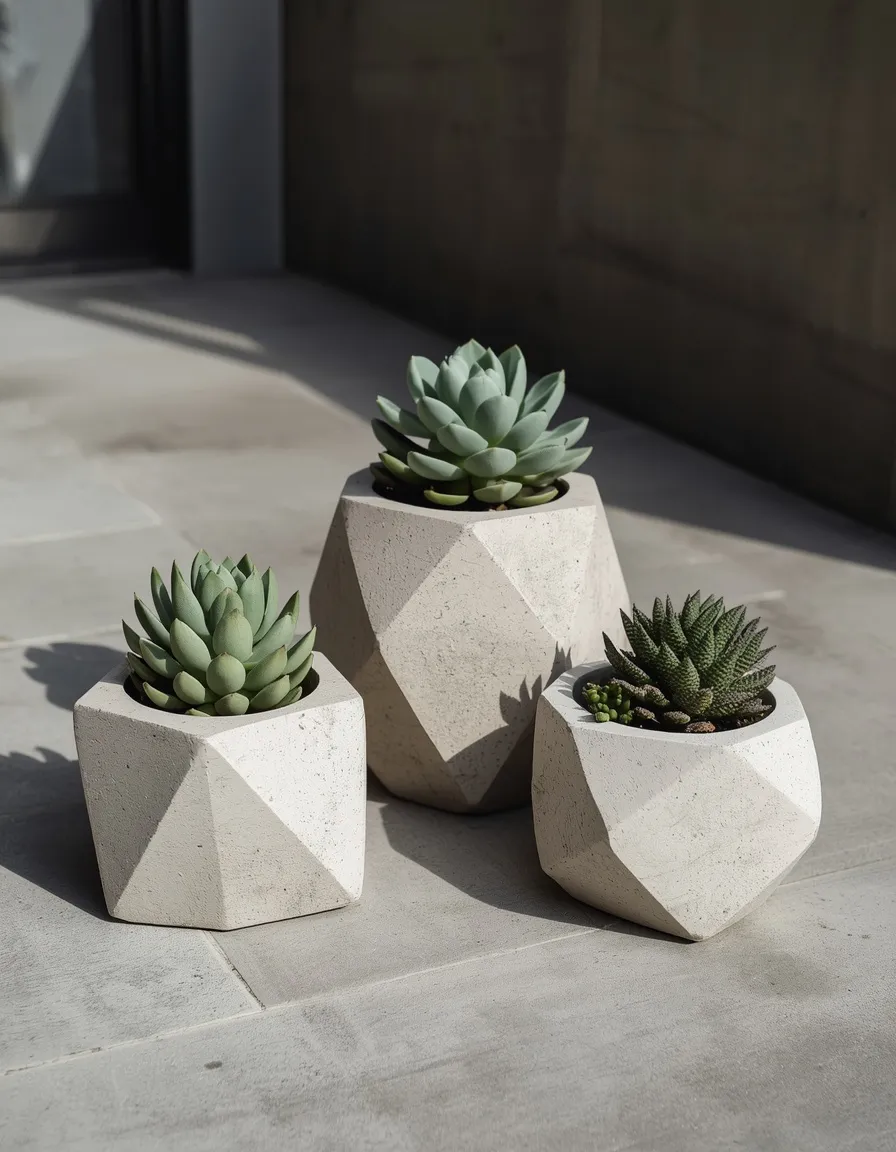
12. Handmade Concrete Pots
Simple geometric planters cast from quick-set concrete in nested plastic containers or cardboard molds bring a clean, modern edge to a garden pot ideas outdoor palette that otherwise leans heavily on terracotta and ceramic.
Mix concrete slightly wetter than the bag instructs for pouring into molds, tap the filled mold repeatedly on a hard surface to release trapped air bubbles, which cause visible pitting once cured, and let it cure for at least 48 hours before demolding. Insert a small piece of dowel or a greased bolt in the base before pouring to leave a drainage hole once removed, since drilling through cured concrete afterward risks cracking the pot. Concrete is heavy even in small sizes, so this style suits permanent placements like a patio corner or entry step rather than pots you plan to move seasonally. For a softer look, sand the exterior lightly once cured and seal with a concrete sealer, which also helps prevent efflorescence, the chalky white mineral bloom that raw concrete develops outdoors over time.
- Suits modern, minimalist, and Scandinavian-style outdoor spaces
- Extremely durable and weather-resistant once fully cured
- Solves too-much-terracotta monotony with a different material
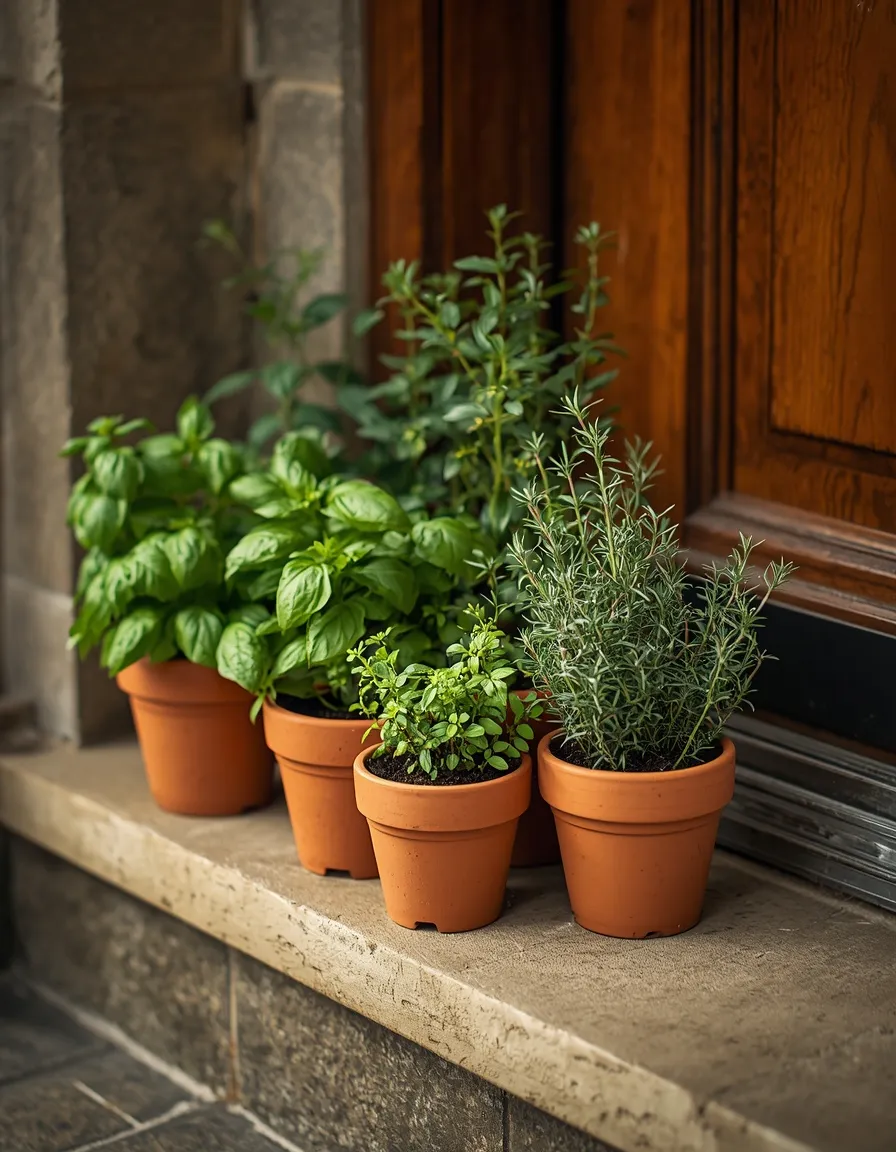
13. Kitchen-Door Herb Clusters
A tight grouping of small pots, basil, thyme, chives, mint, kept right outside the kitchen door rather than scattered around the yard, turns garden pot ideas into an actual daily habit instead of a one-time styling project.
Keep mint in its own separate pot rather than mixing it with other herbs, since its roots spread aggressively and will crowd out slower-growing companions within a single season; this is the single most common herb-pot mistake. Group sun-loving herbs like rosemary, thyme, and oregano together, since they share similar watering needs, and keep moisture-loving basil and mint in a separate cluster so one group isn’t over- or under-watered to accommodate the other. Terracotta suits Mediterranean herbs particularly well because its porous walls mimic the well-drained soil these plants evolved in, while mint and basil do better in glazed or plastic pots that retain a bit more moisture. Position the cluster within a few steps of the kitchen door specifically, since herb pots placed farther into the garden get used noticeably less often, regardless of how well they’re planted.
- Encourages actual daily use instead of purely decorative planting
- Groups herbs by water needs to prevent over- or under-watering
- Solves mint’s invasive spreading by isolating it in its own pot
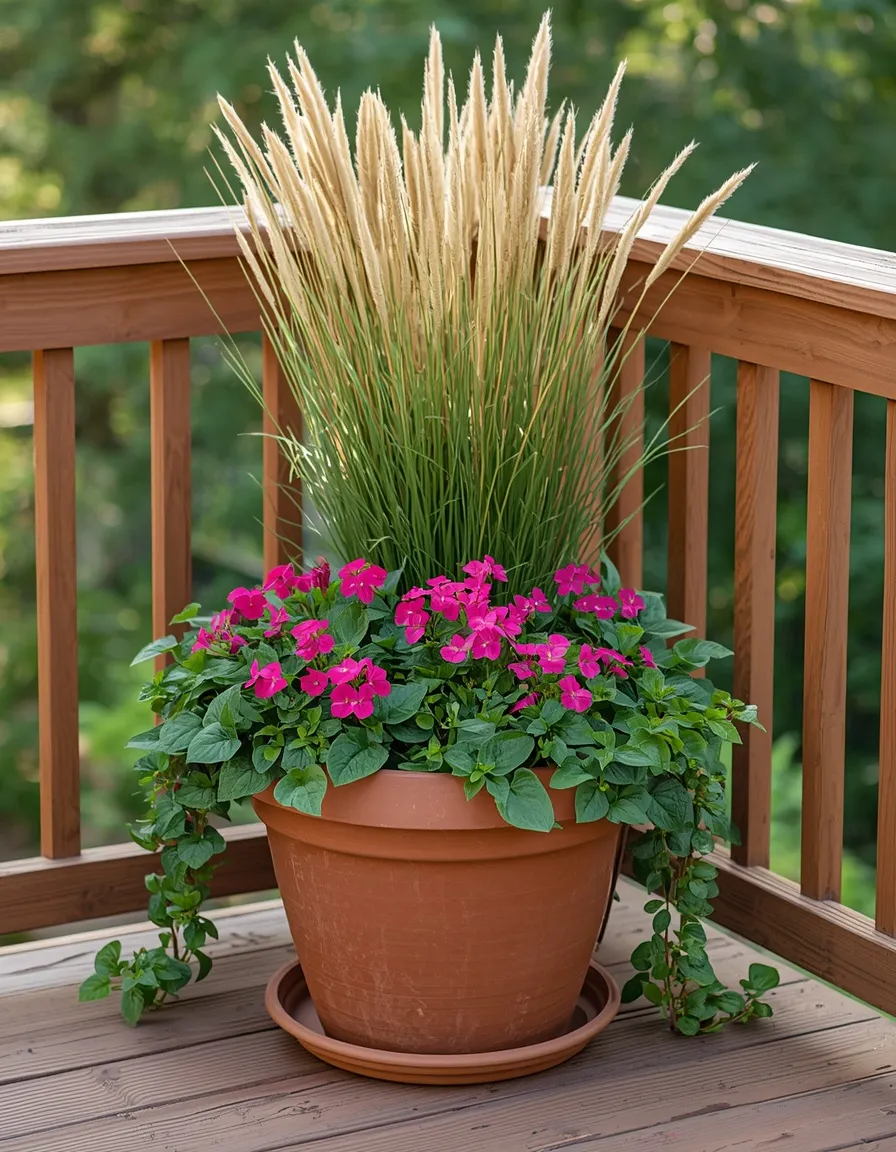
14. Layered Deck Container Garden
A deck corner filled with pots at three distinct heights, tall upright grasses at the back, mid-height flowering shrubs in the middle, and low trailing plants spilling over the deck edge, creates the kind of depth that a single row of matching pots never achieves.
Use the classic thriller-filler-spiller planting structure within this layered pot garden on deck setup: a tall, dramatic plant like ornamental grass or a small conifer as the thriller, mounding flowers like geraniums or petunias as filler, and trailing vinca or sweet potato vine as the spiller draping over the pot’s edge. Group pots by watering needs rather than purely by looks, since a deck in full sun dries containers faster than an in-ground bed, often needing daily water in peak summer. Check your deck’s weight rating before clustering several large, soil-filled pots in one spot, especially on raised or older decks, since wet potting mix is significantly heavier than it looks; distributing pots across the deck rather than clustering all the weight in one corner is the safer approach. Rotate a few pots seasonally so the display doesn’t look identical from spring through fall.
- Creates layered visual depth that a single row of matching pots lacks
- Suits decks, patios, and balconies with no in-ground planting space
- Solves deck weight-load risk by spreading containers rather than clustering
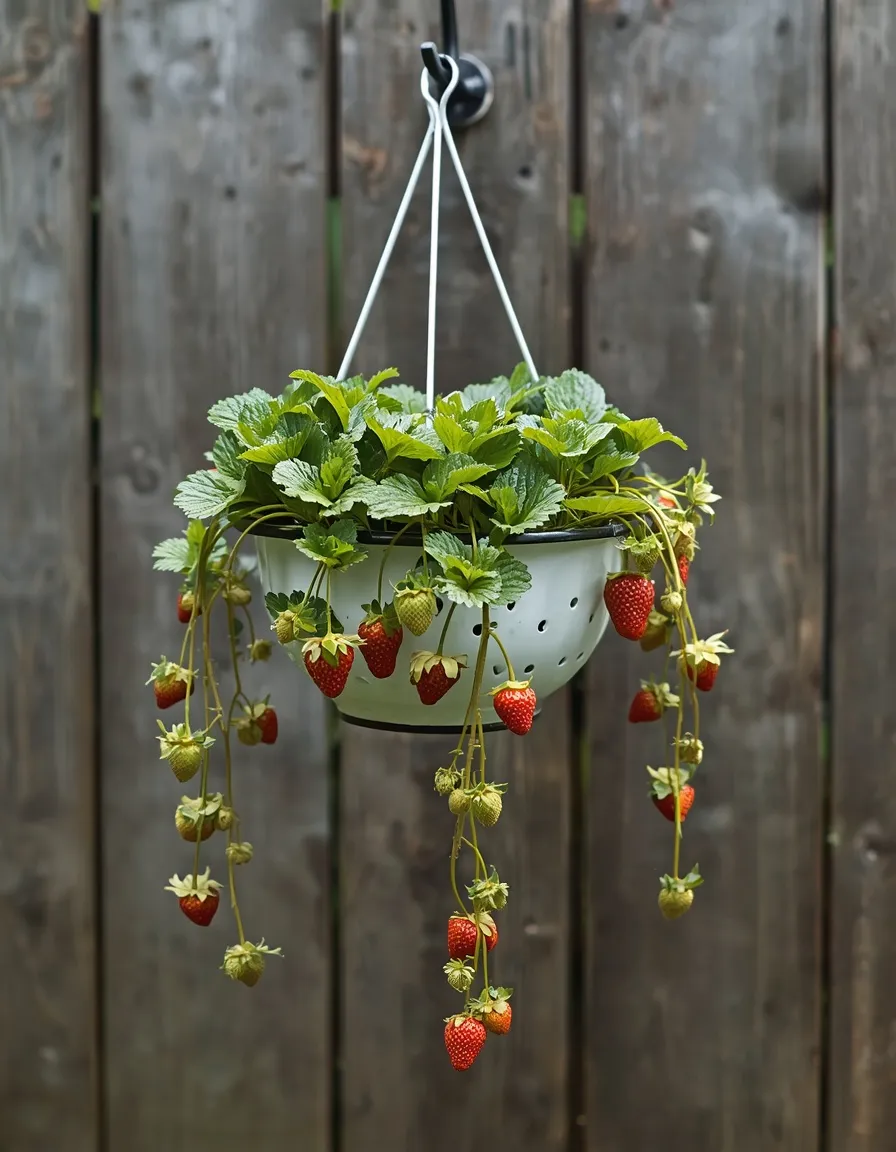
15. Upcycled Colander Planters
An old metal or enamel colander, already full of drainage holes, hung from a hook or set on a stand and filled with trailing strawberries or nasturtiums, needs almost no modification to become a functional, slightly playful planter.
The existing holes mean no drilling is required, though very fine mesh colanders benefit from a layer of coconut coir or landscape fabric inside to stop fine soil from washing straight through with every watering. Enamel and stainless colanders hold up outdoors far better than plain tin ones, which rust through within a season or two of regular watering, so check the material before committing a favorite piece. This works particularly well as a hanging planter, since the existing handles are often already built for that purpose, or set into a wrought-iron plant stand for a tabletop version. Choose shallow-rooted, trailing plants, strawberries, nasturtiums, or trailing petunias, since colanders are typically too shallow and open at the base to support anything with a deeper root structure.
- Requires zero drilling since drainage holes already exist
- Doubles as a hanging planter using the colander’s built-in handles
- Solves fine-soil washout with a coir or fabric liner
16. Aged Stone Trough Planters
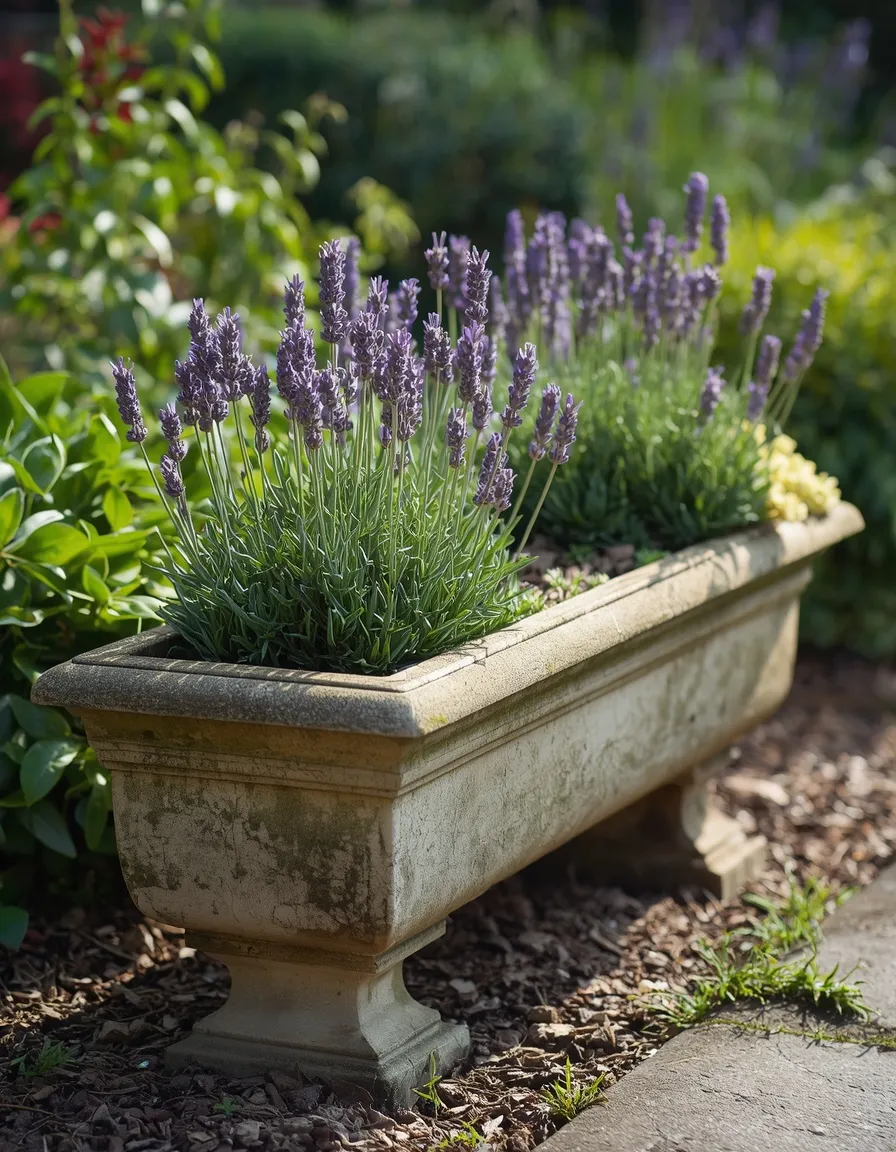
A weathered stone or reconstituted-stone trough, the kind once used for livestock feed, planted with alpines, sedums, or a tight cluster of lavender, brings an established, almost architectural presence that newer materials take years to earn.
Genuine antique stone troughs are heavy enough to need at least two people, or equipment, to move, so decide on final placement before filling with soil rather than after; repositioning a full trough later is genuinely difficult. Reconstituted stone or hypertufa versions, a lightweight mix of cement, peat, and perlite, offer the same weathered look at a fraction of the weight and cost, and can be hand-cast in a shallow mold for a DIY alternative. Good drainage matters more here than in almost any other pot style, since standing water in a trough will rot alpine and Mediterranean root systems quickly; a generous gravel layer at the base is essential rather than optional. This suits a genuinely rustic or English-cottage garden style best and tends to look out of place in a modern or minimalist setting.
- Adds an established, architectural presence to rustic and cottage gardens
- Hypertufa versions replicate the look at a fraction of the weight
- Solves alpine root rot with essential gravel-based drainage
17. Half Whiskey Barrel Planters
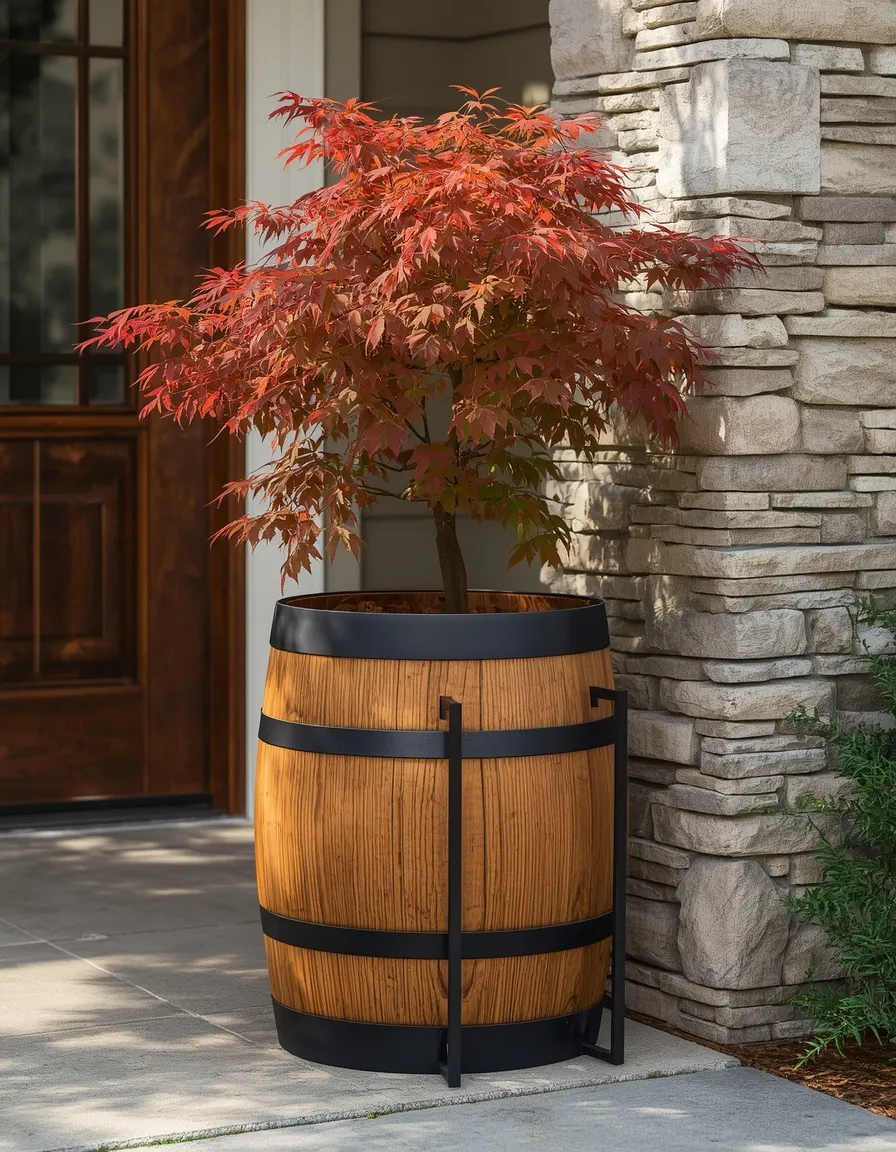
A halved oak whiskey or wine barrel, banded in dark metal hoops and planted with a small ornamental tree or a full mix of summer annuals, works as one of the most reliable large, rustic garden pot ideas for anchoring a patio corner or driveway entrance.
Drill four to six drainage holes across the base before adding soil, since the original barrel wood is watertight by design and will hold standing water otherwise, which is fatal to most root systems within weeks. Line the interior with heavy-duty landscape fabric to slow the wood’s natural breakdown from constant soil moisture, extending its usable life from roughly two or three years to five or more. Because a filled barrel is extremely heavy once planted, set it on furniture coasters or a wheeled plant caddy before filling if there’s any chance you’ll want to move it later. These barrels have enough soil volume for a genuine small tree, dwarf citrus, Japanese maple, or hydrangea, which makes them a good option for gardeners who want real height without an in-ground planting bed.
- Deep enough soil volume for small trees and shrubs, not just annuals
- Strong focal point for entrances, driveways, and patio corners
- Solves standing-water rot risk with proper drainage and fabric lining
18. Vintage Ladder Pot Display
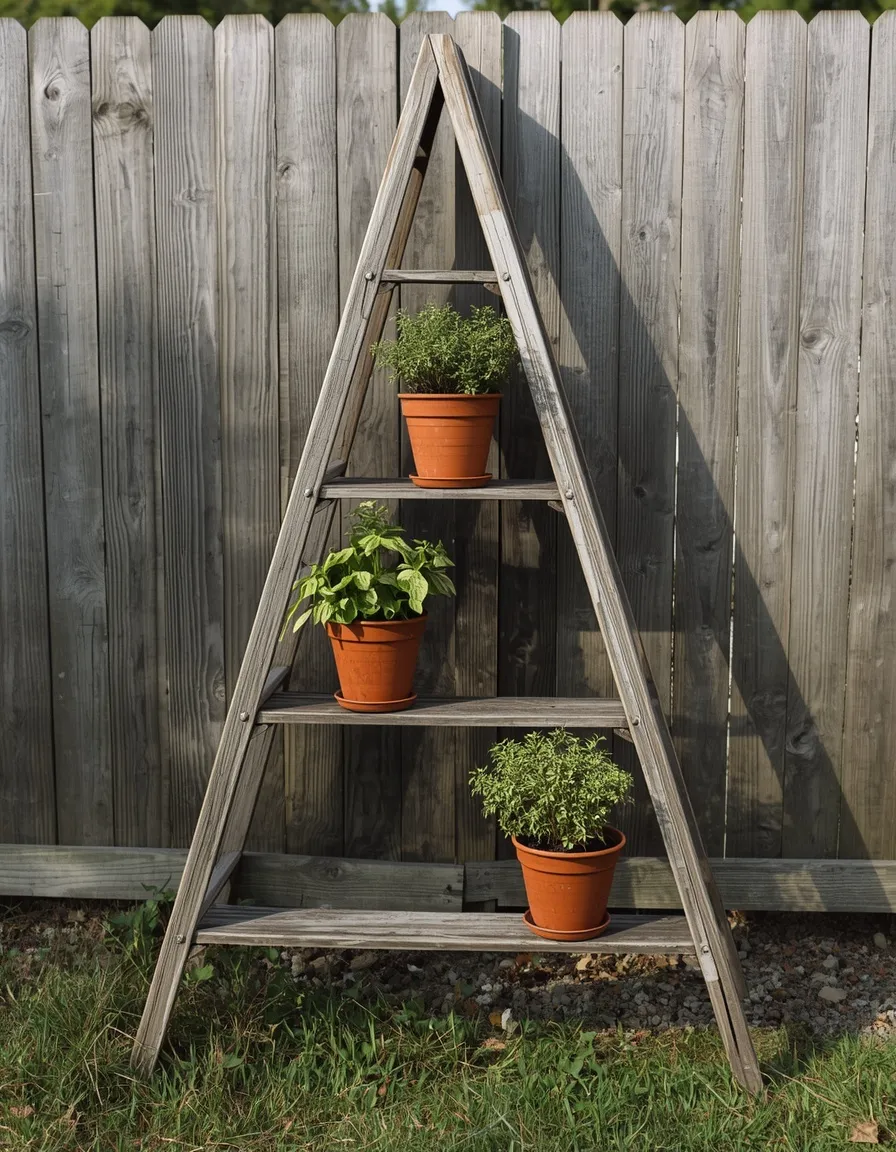
An old wooden A-frame ladder, leaned against a wall or fence with small pots resting on each rung, creates an instant multi-level display without any building or drilling required, a genuinely fast option for anyone new to styling garden pots.
Choose a ladder with flat, stable rungs rather than a narrow-runged extension ladder, since round or narrow rungs let pots slide or tip, especially once they’re wet from watering or rain. Lean the ladder at a shallow angle against a solid wall or fence rather than propping it freestanding, and check it periodically for stability, since a top-heavy ladder display can topple in wind if pots are clustered unevenly toward one side. Vary pot size and plant height across the rungs, small trailing plants near the bottom, upright or bushier ones near the top, so the display reads as a graduated arrangement rather than a random collection. A weathered, unpainted wooden ladder suits rustic and farmhouse styles, while a lightly whitewashed one works better against a darker fence or wall background.
- Requires no drilling, building, or permanent installation
- Fast, low-cost way to display multiple small pots vertically
- Solves display clutter for gardeners with several mismatched small pots
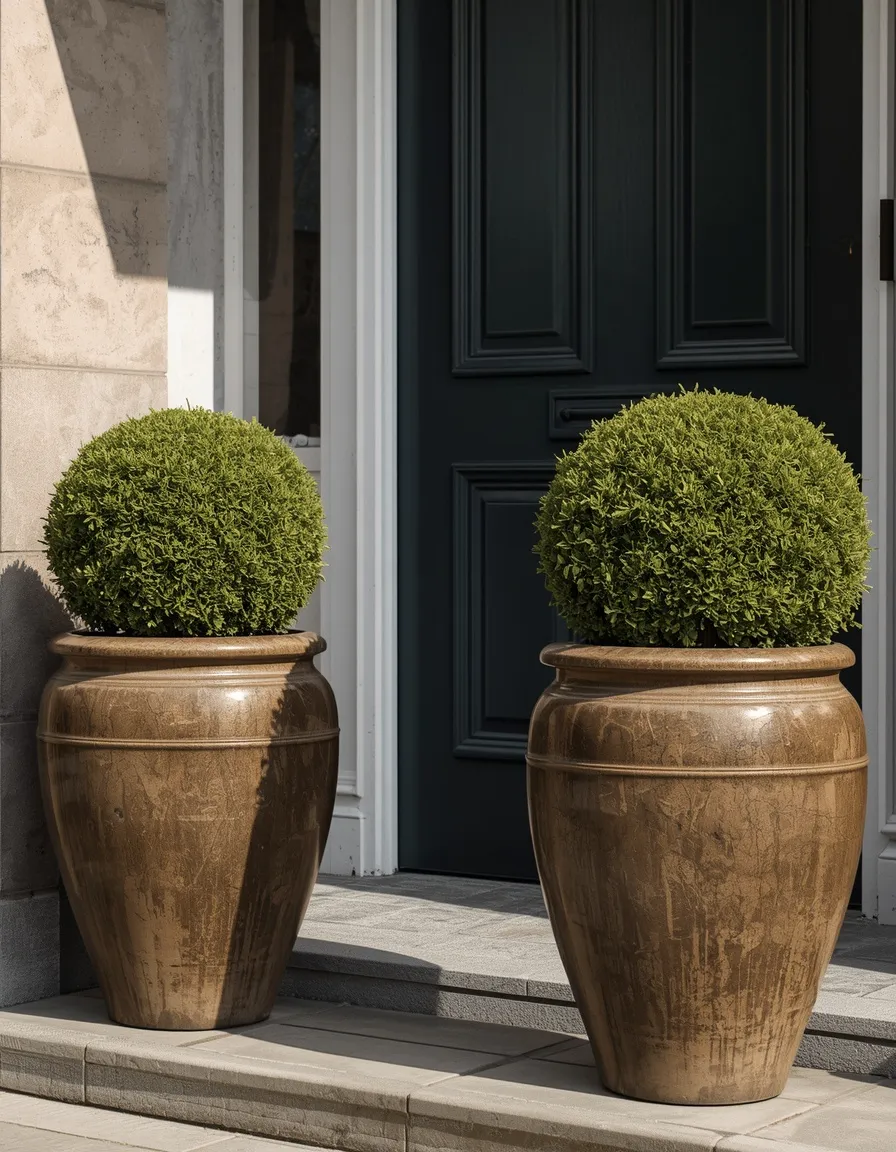
19. Symmetrical Doorway Pot Pairs
A matching pair of large, identical pots flanking a front door or garden gate, planted with the same specimen on each side, gives an entrance the kind of formal, balanced presence that mismatched containers never quite achieve.
Symmetry works best with pots that are large enough to feel substantial next to a doorway, generally at least 35 to 40cm or 14 to 16in in diameter, since undersized pots look more like an afterthought than a considered entrance feature. Choose a single structural plant per pot rather than a full mixed arrangement, a clipped boxwood, a standard rose, or an upright grass, since a busy filler-spiller mix tends to compete with the entrance rather than frame it. Keep both pots on the same watering and feeding schedule and rotate them occasionally so one side doesn’t grow noticeably larger or lusher than the other over a season, the most common way this kind of pairing starts to look uneven. In colder climates, choose frost-hardy evergreen structure plants for this spot specifically, since replacing both containers seasonally is more upkeep than most entrances need.
- Gives entrances and gates a formal, considered first impression
- Works with a single structural plant rather than a busy mix
- Solves lopsided growth by keeping both pots on identical care schedules
20. Self-Watering Pot Systems
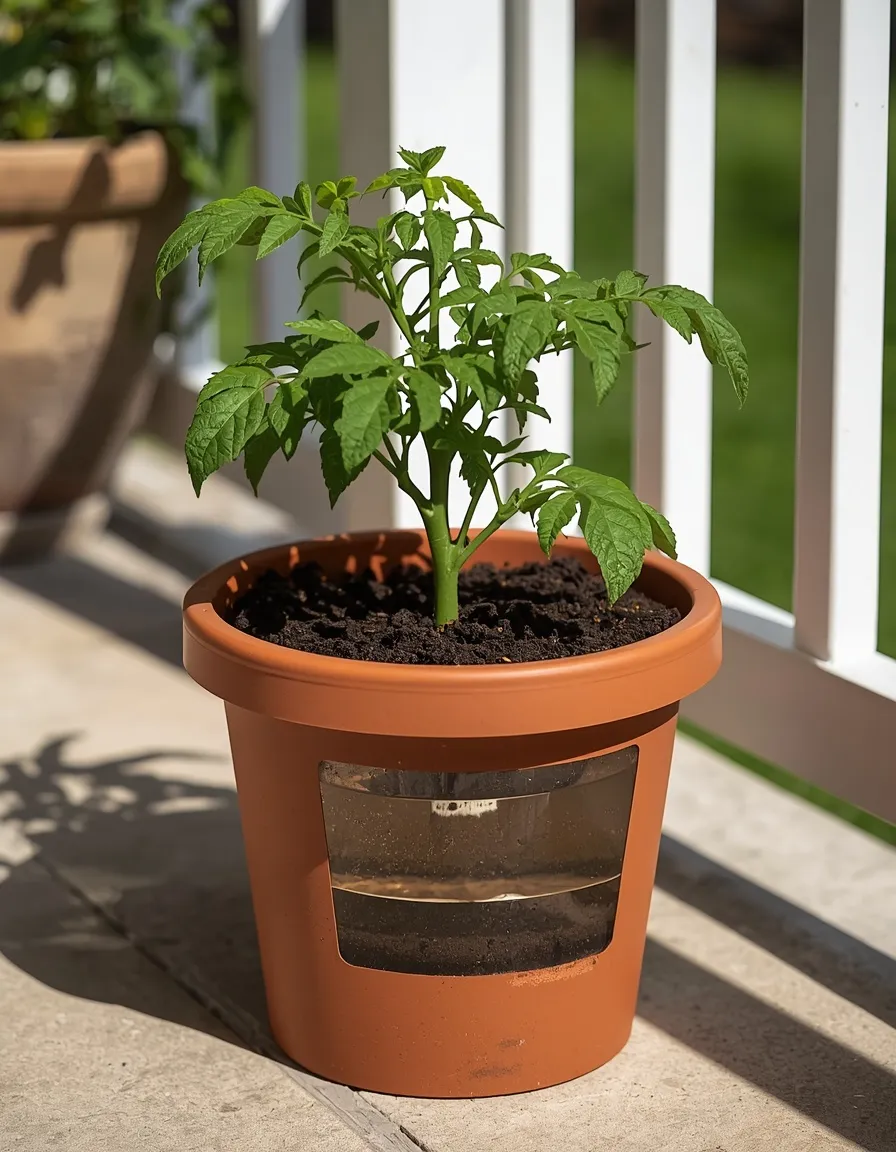
A pot with a built-in water reservoir at its base, either bought ready-made or converted from two nested plastic containers, keeps soil consistently moist for days at a time, solving the single biggest reason container plants struggle: inconsistent watering.
To build one, nest a smaller pot with drainage holes inside a larger, solid outer pot, leaving a gap at the base as the water reservoir, then run a length of cotton rope or a wicking fabric strip between the two so moisture draws upward into the soil as it dries. Add a length of PVC pipe as a fill tube reaching down into the reservoir, so you can top up water without disturbing the soil surface or guessing how full the reservoir actually is. This setup particularly suits vegetables, tomatoes, peppers, cucumbers, that are notoriously sensitive to inconsistent watering, and for gardeners who travel or simply can’t water daily. Empty and clean the reservoir at the end of each growing season, since stagnant standing water left over winter can encourage algae, mold, and mosquito breeding, particularly in warmer climates.
- Reduces watering frequency to roughly once or twice a week
- Especially useful for vegetables sensitive to inconsistent moisture
- Solves algae and mosquito risk with seasonal reservoir cleaning
21. Seasonal Rotating Displays
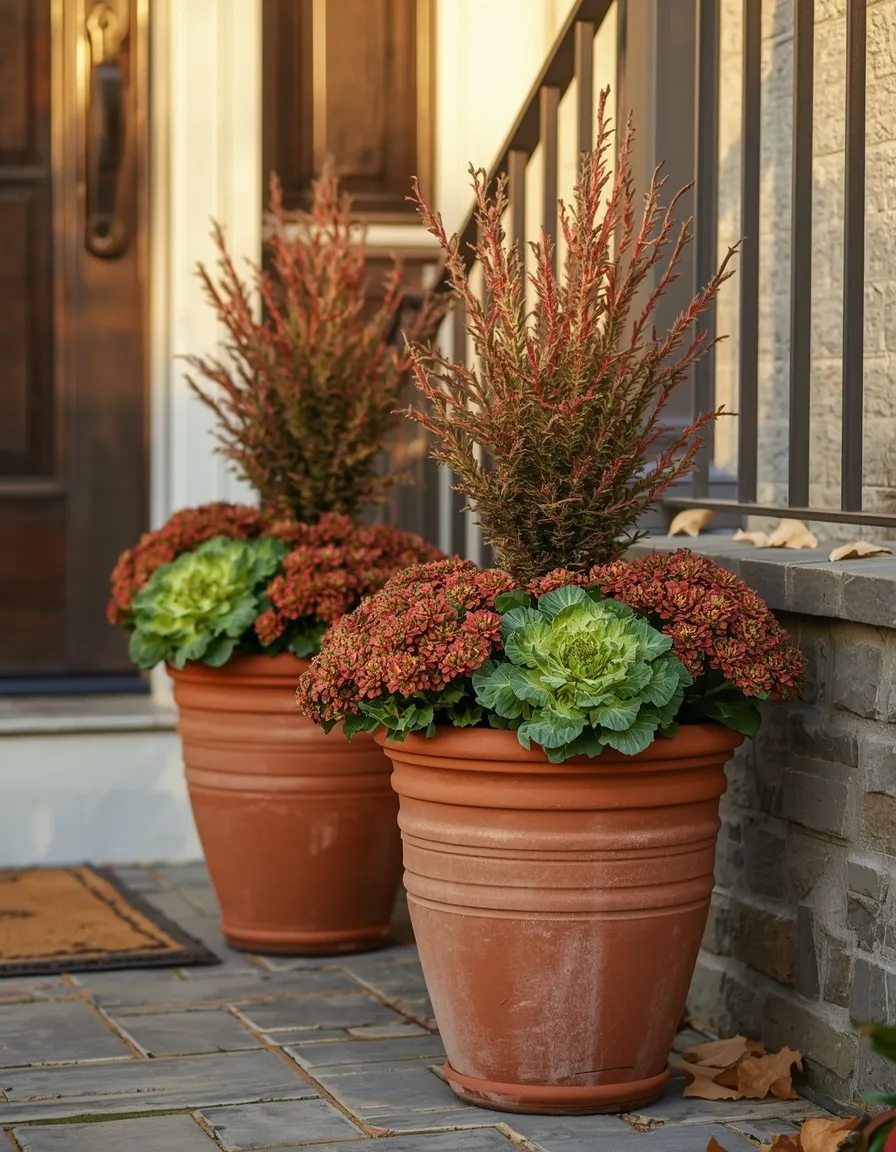
A single set of well-placed pots, swapped out plant by plant as the seasons change rather than left static year-round, keeps a doorway or patio corner looking intentional in every month instead of tired by midsummer.
Plant spring pots with cool-season bulbs and pansies that can handle a late frost, then transition to heat-tolerant annuals like zinnias or lantana once frost risk has fully passed in your region, checking local last-frost dates rather than a fixed calendar date, since this varies by climate zone. For fall, ornamental kale, mums, and grasses hold up well through the first light frosts, and for winter interest in colder climates, evergreen boughs, dogwood stems, and berried branches tucked into the same pots keep them from sitting empty through the coldest months. Keep the pots themselves neutral, terracotta, aged concrete, or a consistent painted color, so the container isn’t competing for attention every time the planting changes; let the seasonal plants do the visual work instead. This approach also spreads the cost of garden pot ideas across the year rather than requiring one large seasonal investment all at once.
- Keeps the same pots looking fresh across all four seasons
- Spreads planting costs throughout the year instead of one large spend
- Solves the empty winter pot look with evergreen branch fillers
Final Thoughts
The most memorable garden pot ideas rarely come from a single perfect purchase, they come from mixing textures, repurposing what’s already lying around a shed or kitchen cupboard, and paying attention to placement as much as the pots themselves. Whether that means a trio of aged terracotta on a porch step, a whimsical fairy garden tucked into one oversized pot, or a simple herb cluster by the back door, the goal is a container garden that actually gets used and enjoyed, not just photographed once. Pick two or three ideas that suit your climate and space, start there, and let the collection grow season by season.
For more inspiration on shaping every corner of an outdoor space, Sunday Abode has plenty more to explore.
Frequently Asked Questions
What’s the best type of pot for a small balcony garden?
For balconies, prioritize lightweight materials like plastic-lined wood crates, fiberglass, or self-watering setups over heavy stone or concrete, since weight limits matter more than they do at ground level. Hanging macrame planters and stacked pot towers are also excellent choices because they add planting space vertically instead of using limited floor area.
Can I mix different pot materials in the same garden?
Mixing materials, terracotta, metal, concrete, works well as long as a consistent color or style thread runs through the grouping, rather than combining every texture at once. A good rule is to limit any single grouping to two materials maximum so the display reads as curated rather than cluttered.
How do I stop my garden pots from drying out too quickly?
Unglazed terracotta and metal containers dry out fastest because their walls are porous or heat-conductive, so group thirstier plants in glazed ceramic, plastic, or self-watering pots instead. Adding a layer of mulch on top of the soil and moving pots out of the hottest afternoon sun during heatwaves also slows moisture loss significantly.
Are garden pots safe to use around pets?
Most bare terracotta and glazed ceramic pots are physically safe for pets, but the plants inside them are a bigger concern than the containers themselves. It’s worth checking individual plant species against the ASPCA’s toxic and non-toxic plant list before placing pots somewhere a curious cat or dog can reach, since common garden plants like lilies and oleander are genuinely dangerous if chewed.
What’s the cheapest way to try new garden pot ideas?
Upcycling is the most budget-friendly route: old teapots, oil cans, colanders, and wooden drawers all convert into planters with little more than a drill and some drainage holes. Pairing that approach with broader budget planning keeps the whole project affordable from pots to plants.
How many pots is too many for a small patio?
There’s no fixed number, but a good visual test is whether the plants still read as individuals rather than a solid mass of foliage and containers. Once pots start touching or fully blocking walking paths, it’s usually time to consolidate into fewer, larger containers instead of adding more small ones.
Do painted or DIY pots need to be resealed every year?
Chalk-painted pots benefit from a fresh coat of exterior sealant every one to two years, since sun and rain gradually wear down even a well-applied topcoat. Concrete and mosaic pots are more durable and typically only need resealing every three to five years, depending on climate exposure.