
Introduction
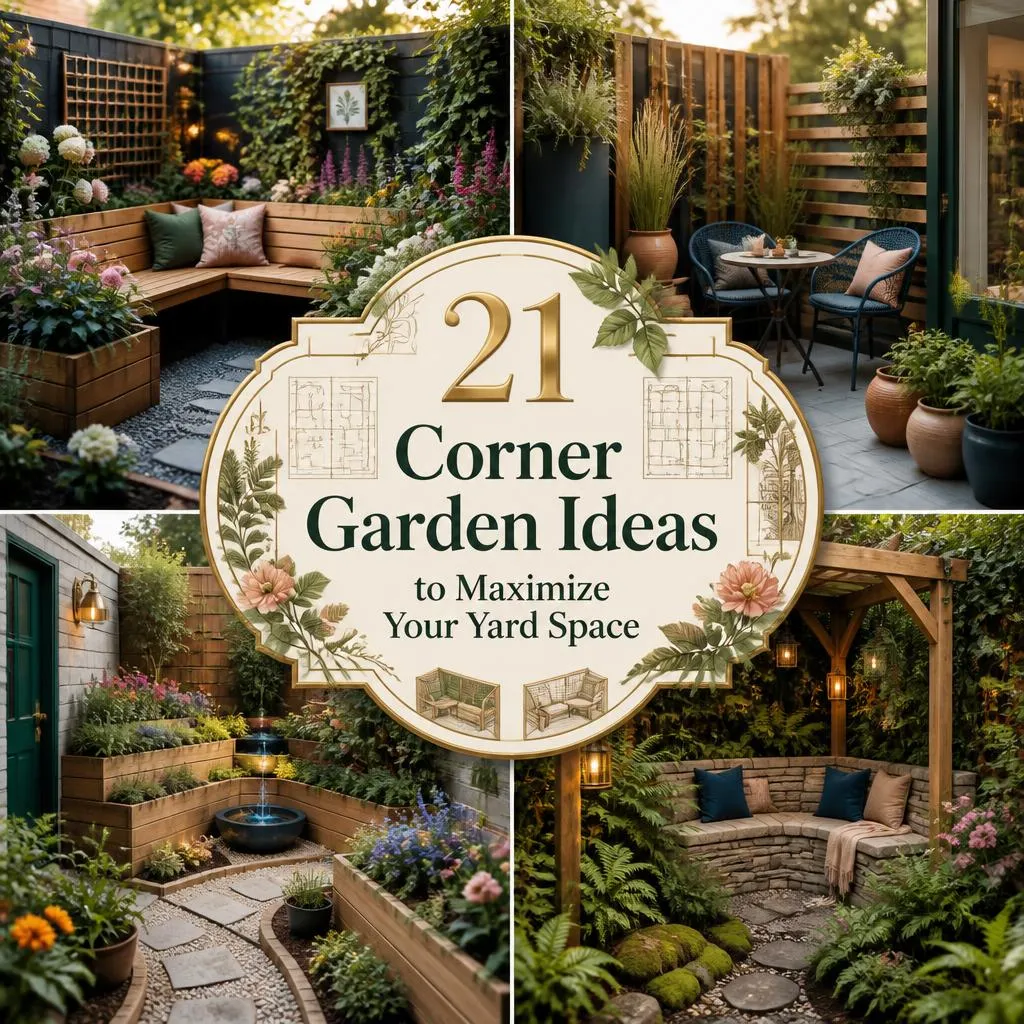
Every yard has one: that leftover triangle of space where two fences meet, or the dead patch beside the garage where nothing quite fits. Corner garden ideas turn that overlooked wedge into the most interesting spot in the whole landscape. Instead of forcing a corner to work like the rest of the yard, the best designs lean into its shape, using diagonal sightlines, layered height, and enclosure to create a destination rather than a leftover. This guide, part of the wider garden and outdoor inspiration on Sunday Abode, gathers twenty-one corner garden ideas for front yards, backyards, fenced boundaries, sunny walls, shaded tree lines, and tight balconies alike, covering everything from stone paths and trickling fountains to cozy garden dens. Whatever shape your outdoor corner takes, there is a layout here built to fit it, not fight it.
Classic and Flower-Filled Corner Garden Ideas
1. Tiered Corner Flower Bed
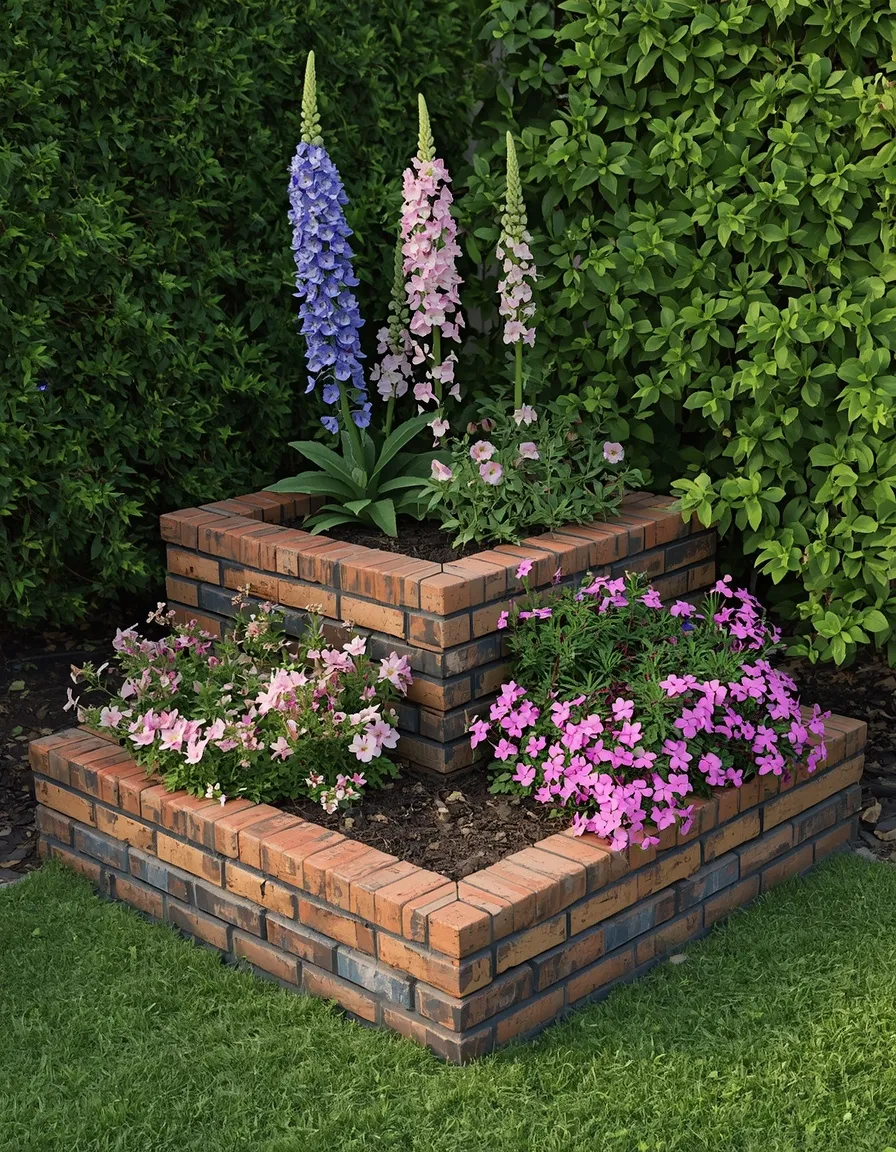
A corner where two paths or fences meet is the perfect stage for height, and a tiered flower bed uses that geometry instead of ignoring it. Stack three graduated levels, tallest plants against the back corner, then step down toward the open side, so the whole bed reads like a wedge of color rather than a flat rectangle tucked out of sight.
Build the tiers with low retaining edges of brick, stacked stone, or pressure-treated timber, each roughly 15 to 20cm (6 to 8in) higher than the one in front, and fill with well-draining topsoil blended with compost. Anchor the back row with tall perennials such as delphinium or ornamental grasses, fill the middle with mid-height bloomers like coneflower or salvia, and edge the front with trailing alyssum or creeping phlox. A common mistake is planting everything at the same height, which flattens the design from any angle other than directly above; stagger bloom times too, so the bed has color from spring through fall rather than one short burst.
- Works especially well in triangular yard corners where two fence lines converge
- Solves the dead corner problem without hardscaping or major digging
- Ideal for gardeners who want maximum bloom in a compact footprint
5. Fenced Cottage Corner Garden
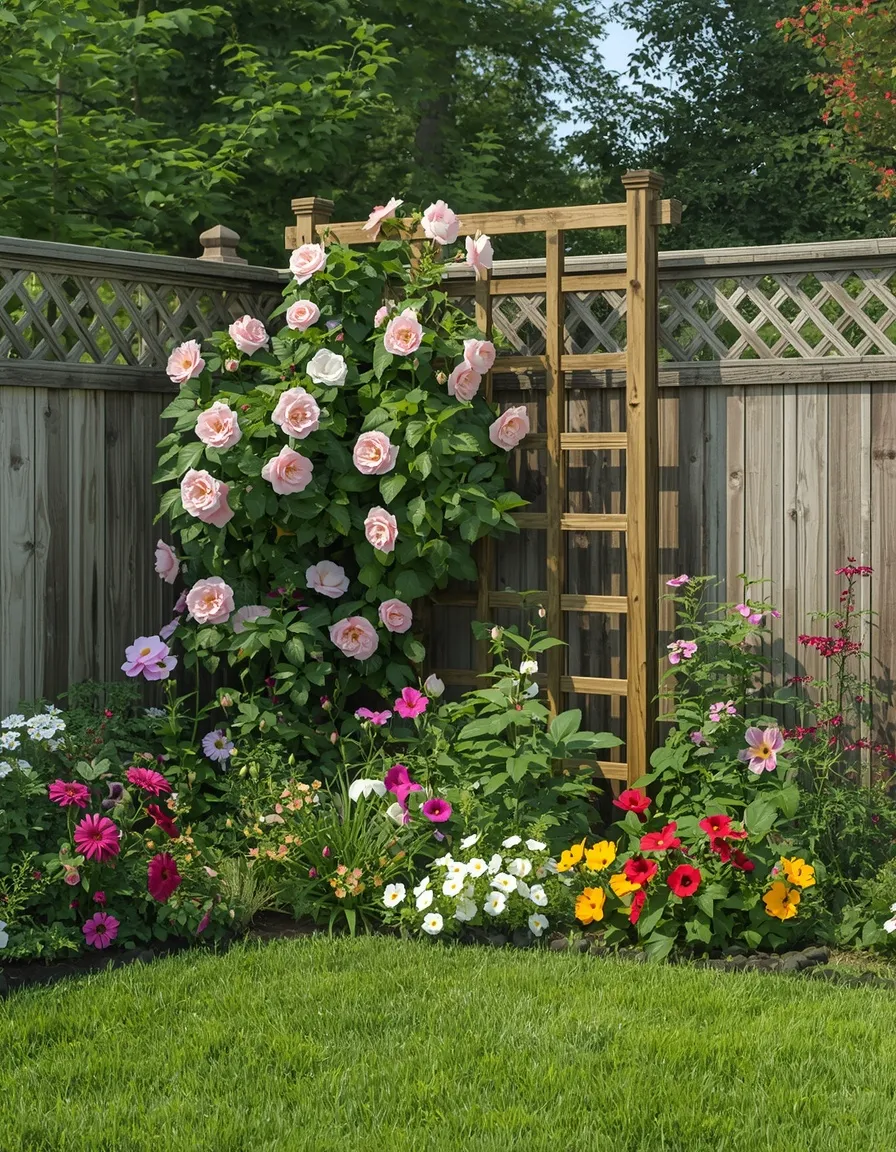
A corner fence garden design borrows the informal, slightly overflowing charm of a cottage garden and uses the two fence panels as a natural frame, letting climbing roses or clematis soften the boundary while a dense mix of perennials spills forward into the lawn.
Plant climbers directly against the fence with sturdy wire or trellis support, then layer tall cottage staples like foxglove, hollyhock, and delphinium in front, stepping down to lower self-seeders such as cosmos and calendula near the grass edge. Deadhead spent blooms weekly through summer to keep the informal look from turning into an unkempt one, and note that foxglove and delphinium are toxic if ingested by pets or children, so position them toward the back of the bed, away from where a curious dog or toddler might reach. This style is forgiving of imperfect spacing, which makes it a good choice for beginner gardeners.
- Perfect for backyard corners bordered by wooden or vinyl privacy fencing
- Forgiving of uneven planting, unlike more formal or geometric designs
- Attracts bees and pollinators throughout the growing season
17. Corner Butterfly and Pollinator Garden
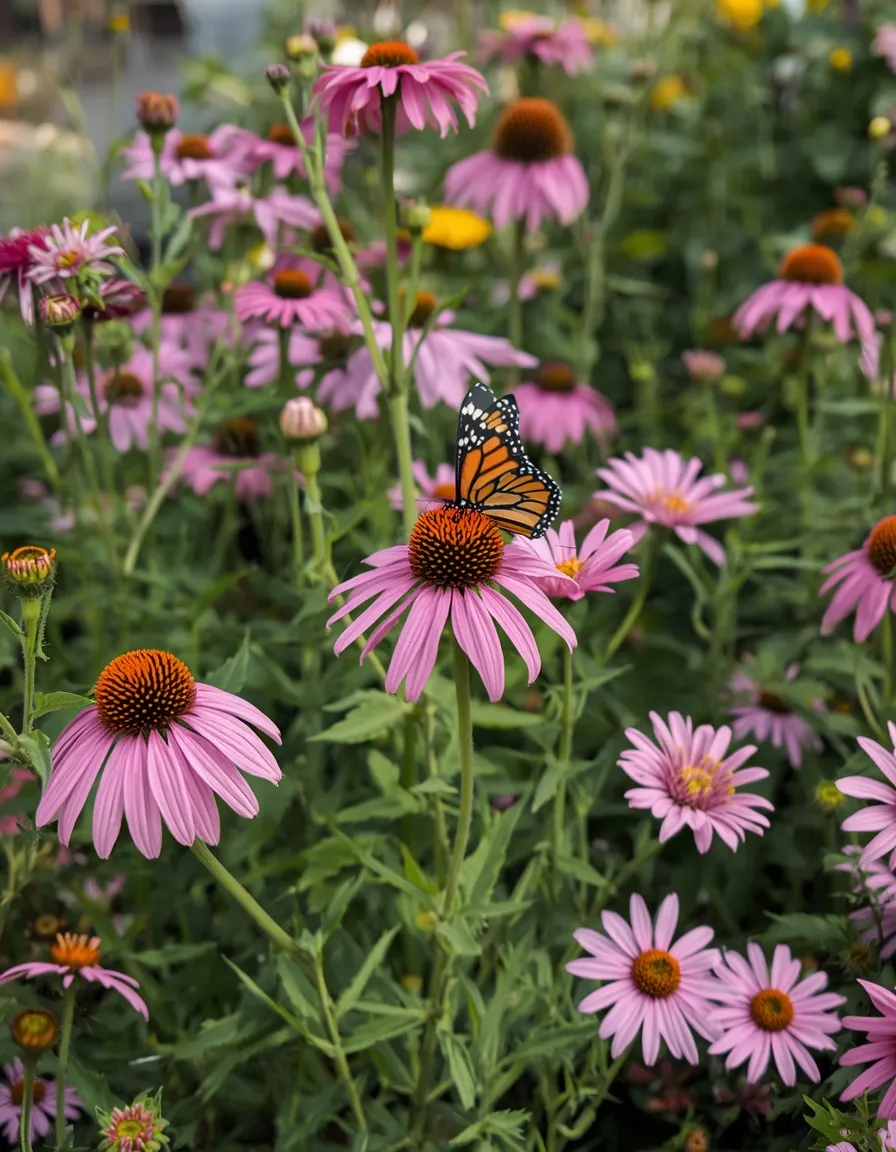
A corner set aside for pollinators does double duty, filling an underused patch of yard while supporting bees, butterflies, and hummingbirds with a concentrated planting of nectar-rich flowers that a mowed lawn simply cannot offer.
Choose a mix of native, region-appropriate flowering plants with staggered bloom times, early bloomers like catmint, mid-summer coneflower and bee balm, and late-season asters, so nectar is available across the whole growing season rather than in one short window. For a full plant list and layout logic built specifically around pollinator movement and bloom succession, the Sunday Abode guide to butterfly garden design layout breaks the planning down step by step. Note that some classic pollinator plants, including milkweed and certain salvias, can be mildly toxic to pets if chewed in quantity; the ASPCA maintains a full list of toxic and non-toxic garden plants worth checking against a household’s specific pets before planting near a spot dogs frequent.
- Solves the ecological gap a mowed lawn corner leaves for local pollinators
- Works in nearly any sunny corner regardless of soil quality
- Provides months of color with far less deadheading than a formal flower bed
15. Corner Herb Spiral Garden
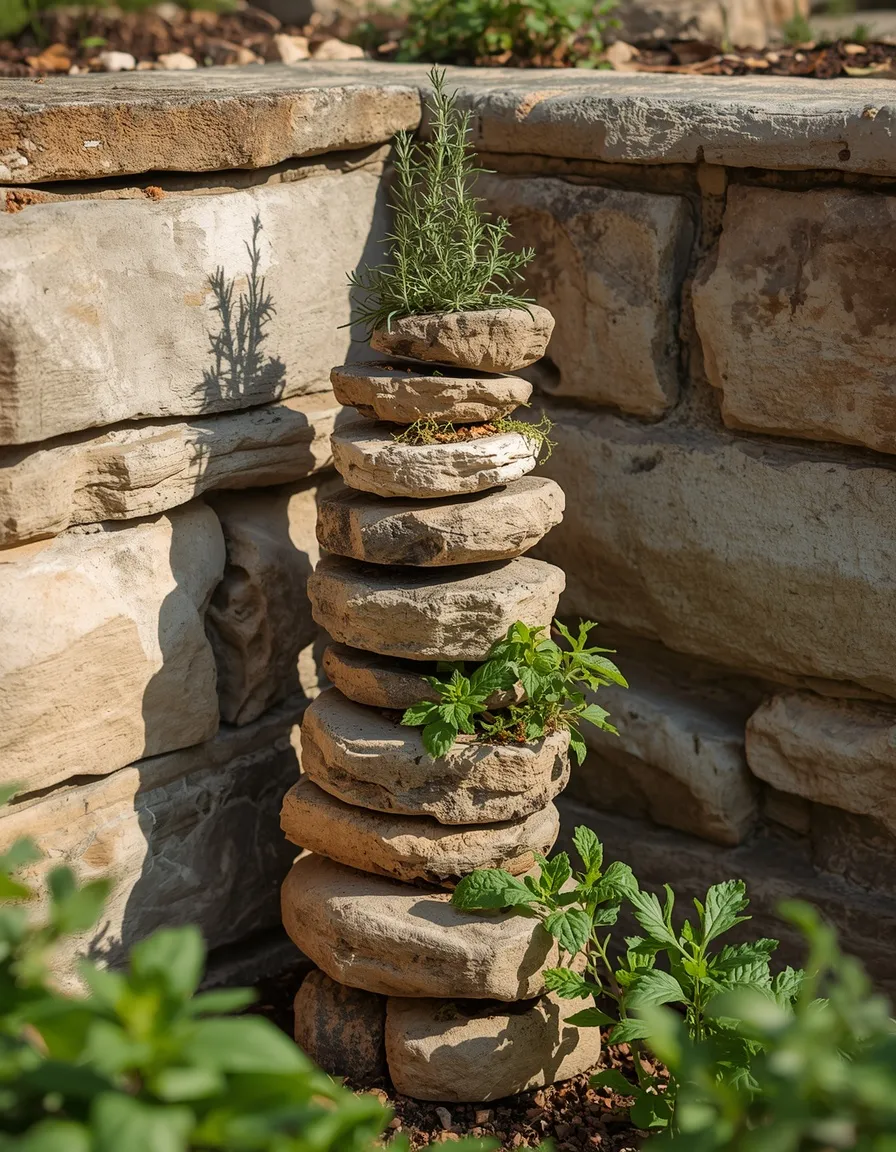
An herb spiral turns a small corner into a surprisingly efficient microclimate garden, stacking stone or brick in a rising coil so that herbs needing sharp drainage sit near the sunny top while moisture-loving varieties settle into the shadier, damper base.
Build the spiral roughly 1 to 1.2m (3 to 4ft) in diameter and up to 90cm (35in) tall at its center, using stacked stone, brick, or reclaimed pavers without mortar so the structure can be adjusted later. Plant Mediterranean herbs like rosemary, thyme, and oregano near the top and sunniest side, and mint, parsley, or chives lower down where the soil stays more consistently moist; keep mint contained in a buried pot within the spiral, since it spreads aggressively otherwise. This design fits neatly into a corner too small for a full vegetable bed but still delivers a genuinely useful, cook-from-the-garden harvest.
- Fits corners as small as 1.2m (4ft) across where a full bed will not
- Creates several microclimates in one structure, from dry and sunny to cool and moist
- Keeps culinary herbs within easy reach of a kitchen door
Front Yard and Landscape Corner Garden Ideas
6. Front Yard Corner Foundation Garden
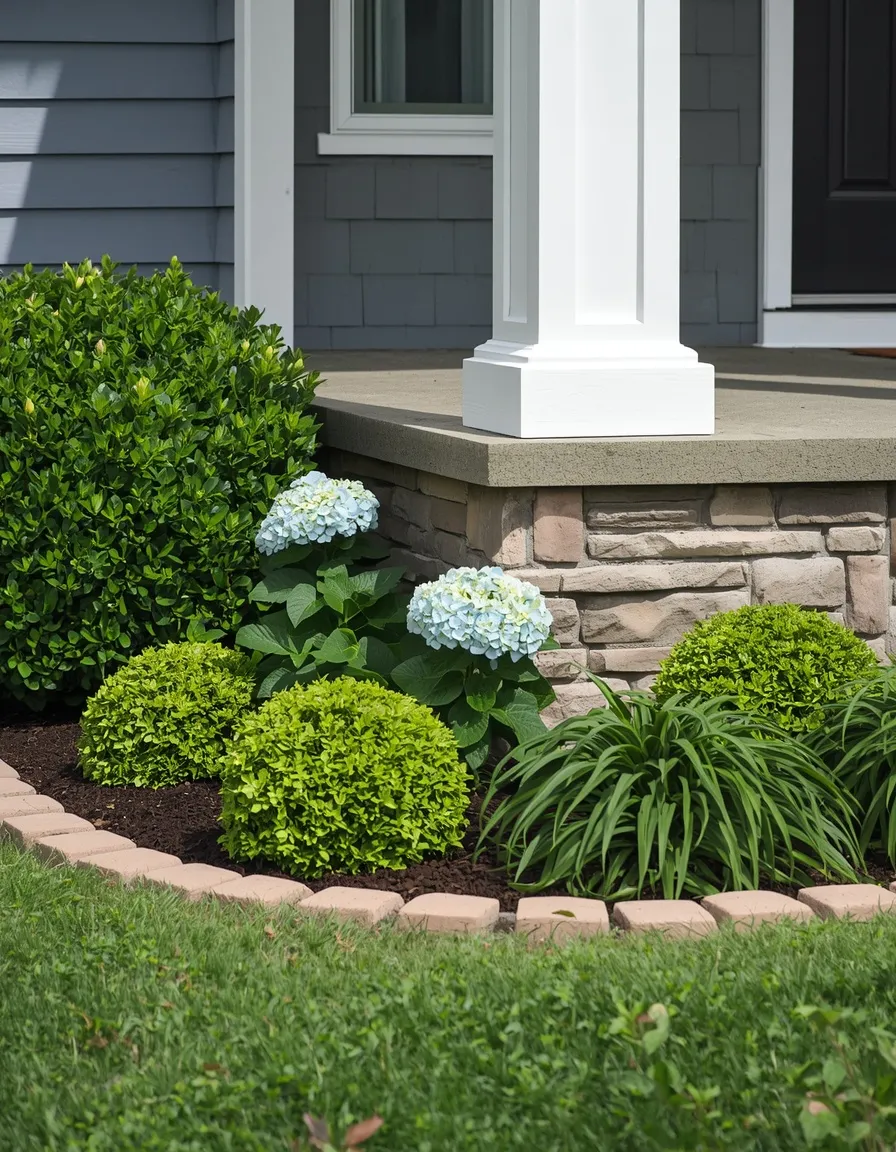
Corner garden ideas for front yards often need to do double duty, softening the hard edge where the house foundation meets the property line while still reading as tidy and welcoming from the street. A layered foundation planting at this junction frames the entrance without blocking windows or walkways.
Keep the tallest shrubs, boxwood, dwarf hydrangea, or holly, at least 60 to 90cm (24 to 36in) from the foundation to allow airflow and prevent moisture damage to siding, then layer mid-height perennials and a low evergreen groundcover like liriope along the front edge. Check mature plant heights before installing anything beneath windows; a common and easily avoided mistake is planting a shrub that will eventually block the view or require constant hard pruning. In frost-prone regions, hold off planting tender perennials until after the average last frost date for the local hardiness zone.
- Solves the awkward triangular space where a front porch meets the property line
- Improves curb appeal without competing with the home’s architecture
- Works with almost any home style, from craftsman to modern
16. Layered Landscape Corner with Grasses
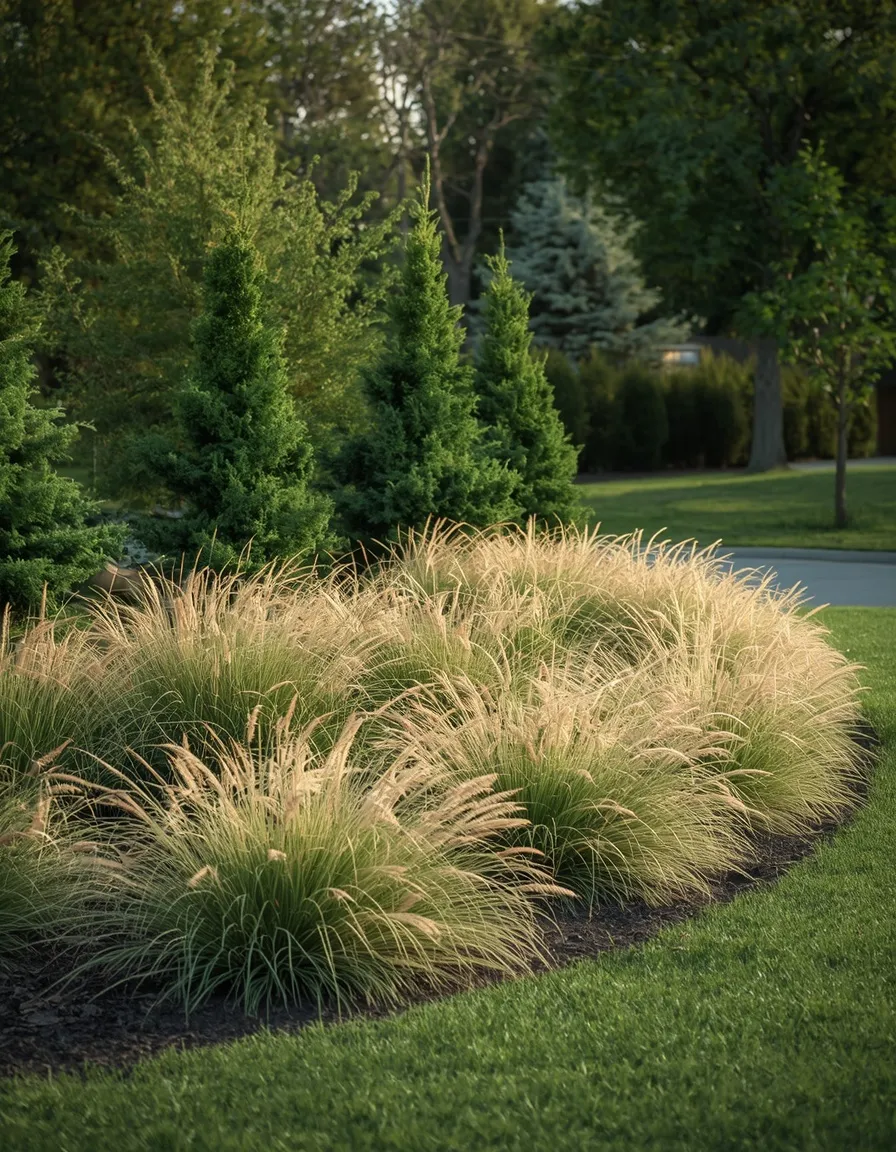
Corner garden ideas for landscape design at a larger scale benefit from a layered, naturalistic planting that reads well from a distance, mixing ornamental grasses, flowering shrubs, and structural evergreens so the corner anchors the whole yard’s sightline rather than fading into the background.
Plant in drifts rather than single specimens; three to five of the same ornamental grass, such as switchgrass or miscanthus, read far more intentionally than one lonely plant, with flowering shrubs like panicle hydrangea or spirea breaking up the grass with seasonal color. Leave the grasses uncut through winter for structure and wildlife shelter, then cut them back to roughly 10 to 15cm (4 to 6in) in early spring before new growth emerges. This layered approach works especially well on corner lots or larger properties where the garden needs to hold its own when viewed from the street or a second-story window.
- Best for larger yards or corner lots visible from multiple angles
- Provides four-season interest, including winter texture from uncut grasses
- Solves the flat and empty look of a large, under-planted corner
2. Rock and Stone Corner Garden
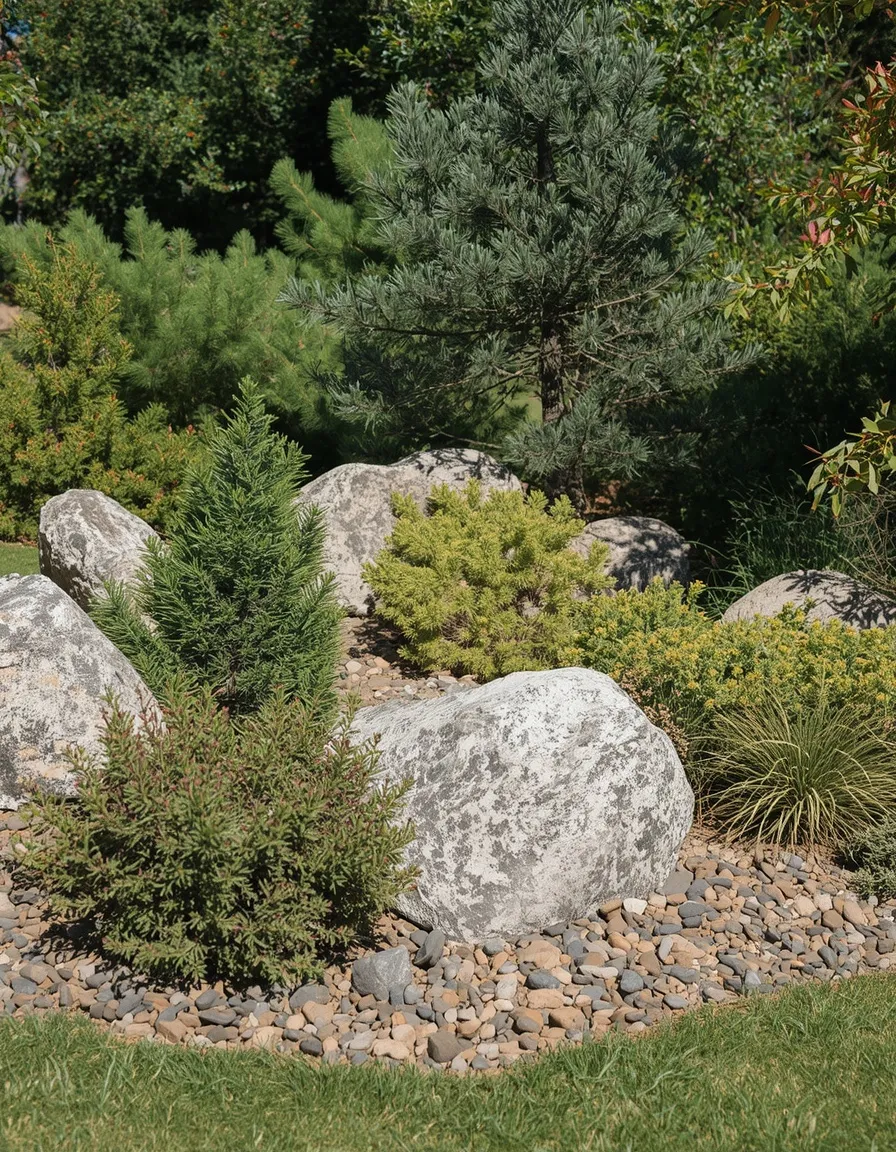
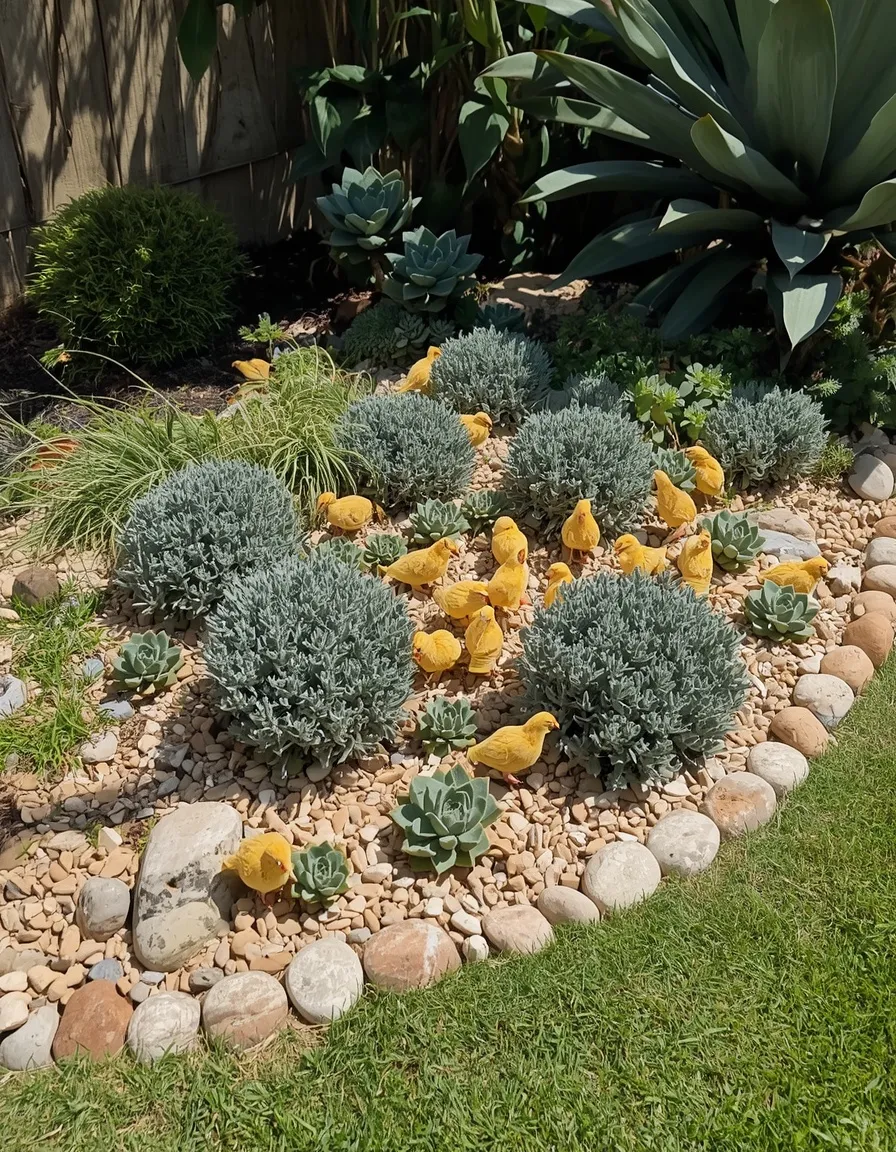
Corner garden ideas with stones lean on texture and permanence rather than constant upkeep, turning a patch of bare or awkward ground into something that looks intentional in every season, even winter. Large fieldstones or boulders anchor the space, with smaller gravel and pea stone filling the gaps between drought-tolerant plantings.
Choose two or three stone sizes, large anchor boulders around 25 to 40cm (10 to 16in), medium accent rocks, and fine gravel groundcover, and lay landscape fabric beneath the gravel to slow weed growth. Tuck sedum, creeping thyme, or dwarf conifers into pockets between the stones for softness against the hard material. Because unsecured boulders can shift or roll, especially on sloped corners, always set larger stones on a compacted gravel base and bury the bottom third for stability, particularly if children play nearby. This style suits hot, dry corners where grass struggles and irrigation is limited.
- Ideal for full-sun corners with poor or rocky soil
- Needs far less watering and mowing than a traditional flower bed
- Works well as a transition zone between lawn and fence line
Water Features and Gathering Spot Corner Garden Ideas
3. Corner Water Feature Retreat
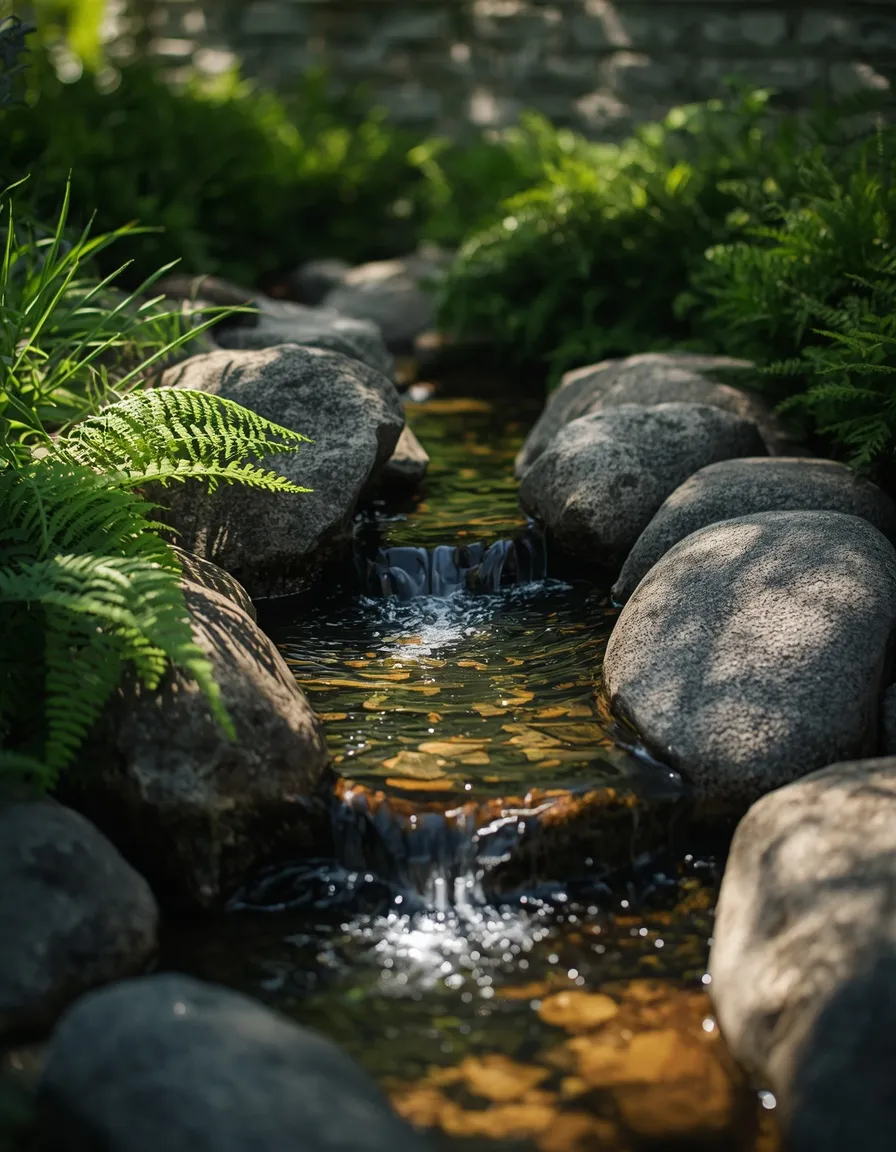
Placing a water feature in the garden’s corner rather than its center gives it a natural backdrop of fencing or hedging, so the sound of moving water feels tucked away and intentional rather than exposed in the middle of the lawn. Even a modest basin can make a corner feel like a destination.
A pondless disappearing fountain, where water recirculates through a hidden reservoir beneath gravel, is the lowest-maintenance option for a corner because there is no open pool to skim or a liner exposed to fence-line debris. Surround it with moisture-loving plants like ferns, hostas, or Japanese sweet flag, and run a shaded electrical line to a GFCI outlet for the pump, always installed by a qualified electrician for outdoor wiring. If young children or pets have access to the yard, choose a pondless design over an open pool; the U.S. Consumer Product Safety Commission notes that even small amounts of standing water present a drowning risk for toddlers, so supervision and secure fencing matter regardless of the feature’s size.
- Best for corners near a patio or seating area where sound carries
- Masks street noise or nearby neighbor sounds effectively
- A pondless design solves the safety and maintenance concerns of open ponds
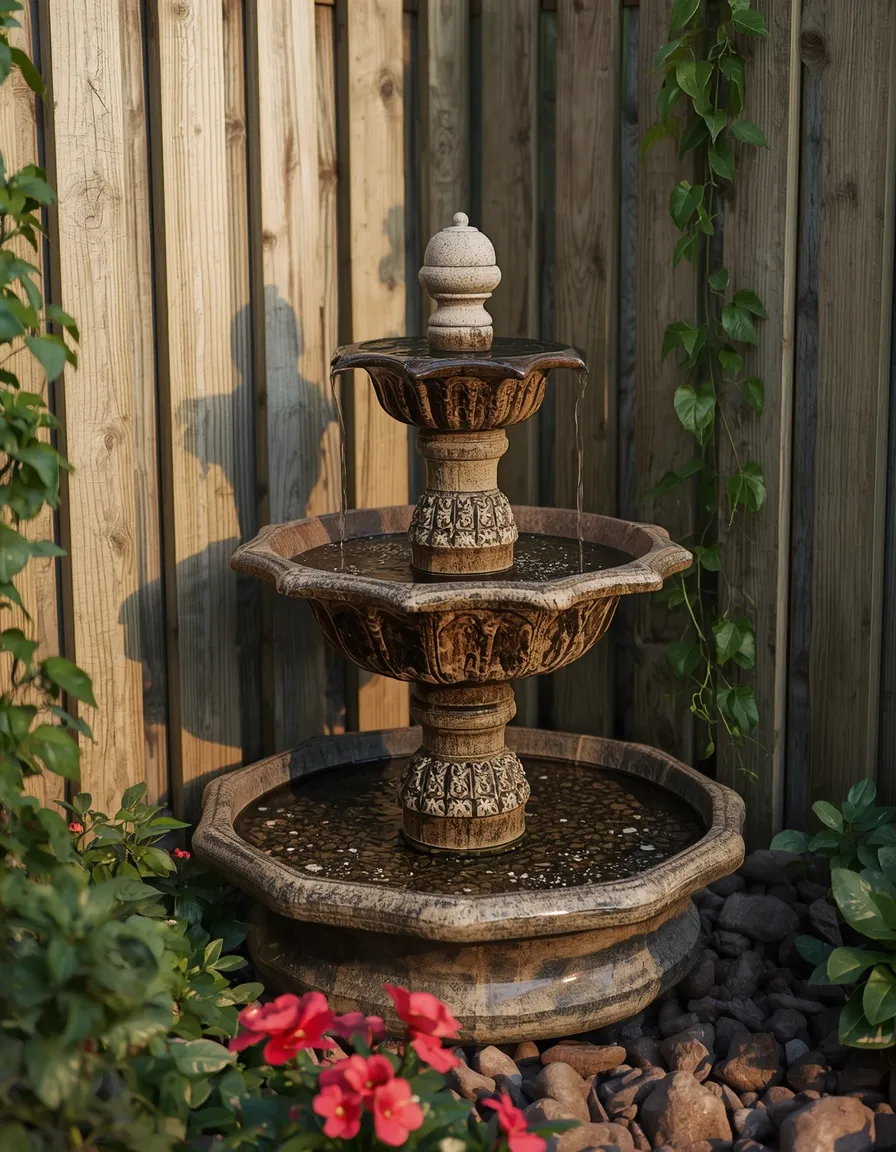
4. Trickling Corner Fountain Nook
Corner garden ideas with a fountain work best when the fountain feels discovered rather than displayed, half-screened by planting so the sound reaches a seating area before the fixture itself comes into view. A tiered ceramic or cast-stone fountain fits neatly against two converging walls or fence panels.
Size the fountain to the corner; a three-tier model roughly 90 to 120cm (35 to 47in) tall suits most residential corners without overwhelming the space, and set it on a level paver base so it does not tip as the reservoir empties between refills. Check the water level weekly in warm weather, since most small pump models are damaged by running dry, and add a floating deicer or bring the fountain indoors before the first hard frost in cold climates to prevent the basin from cracking. Underplant with lady’s mantle or creeping Jenny to soften the fountain’s base and hide the electrical cord.
- Adds ambient sound to mask traffic or street noise near front yard corners
- Works in smaller footprints than a full pond or stream feature
- Solves the visual emptiness of a corner without requiring new plantings
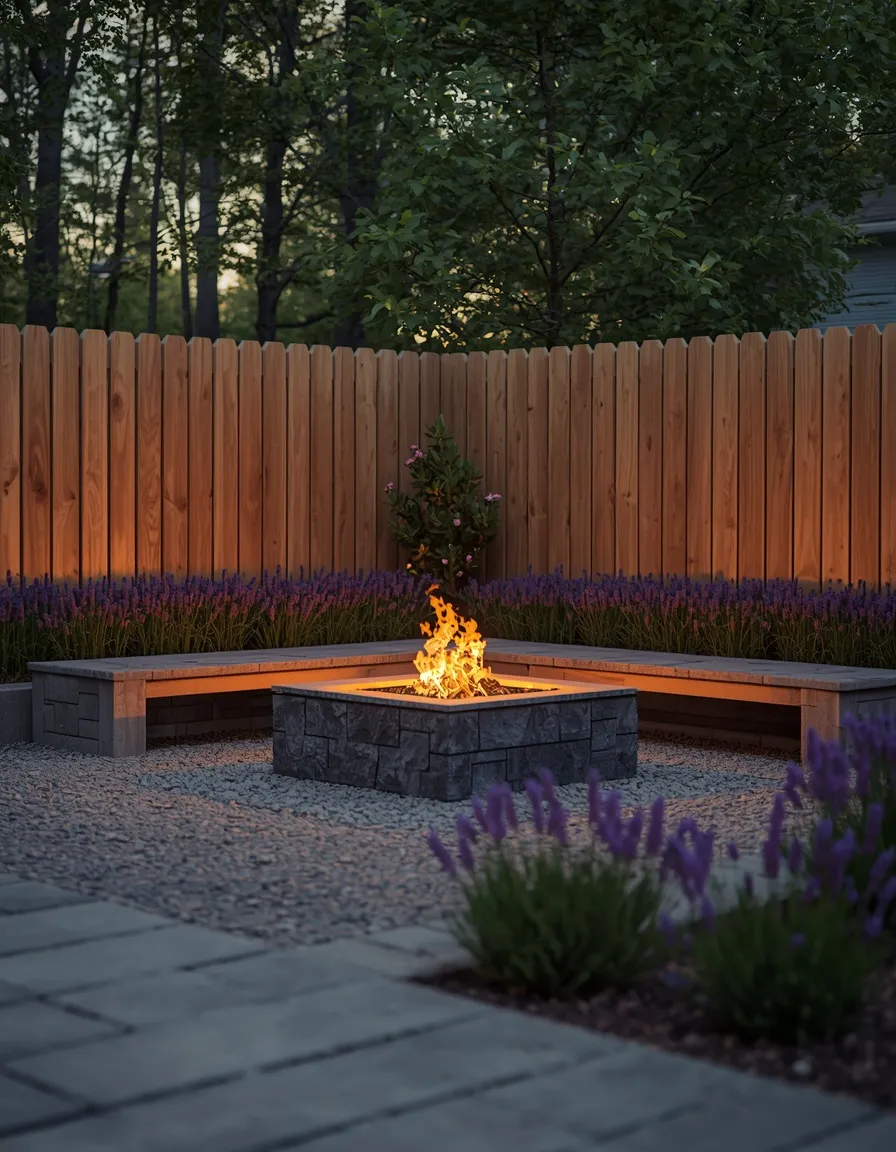
19. Corner Fire Pit Garden Lounge
A corner set back from the house, often the farthest point from windows and doors, is frequently the safest and most natural spot for a fire feature, giving a fire pit lounge both physical distance from structures and a sense of enclosure from surrounding planting.
Position any fire pit at least 3m (10ft) from fences, structures, and overhanging branches, and check local ordinances first, since many municipalities restrict or require permits for open flame or wood-burning pits, particularly in dry regions. Surround the seating area with a non-combustible base like gravel or pavers rather than mulch or bark, which can smolder from stray embers, and plant fire-resistant, low-flammability species such as lavender or sedum nearby rather than resinous shrubs. Never leave a fire pit unattended, keep a hose or extinguisher within reach, and confirm the pit is fully extinguished, not just smoldering, before leaving the corner for the night.
- Best for backyard corners set well away from fences and structures
- Solves the lack of evening gathering space in yards without a patio
- Works with gravel, pavers, or built-in stone seating for low upkeep
Modern, Tropical, and Sun-Loving Corner Garden Ideas
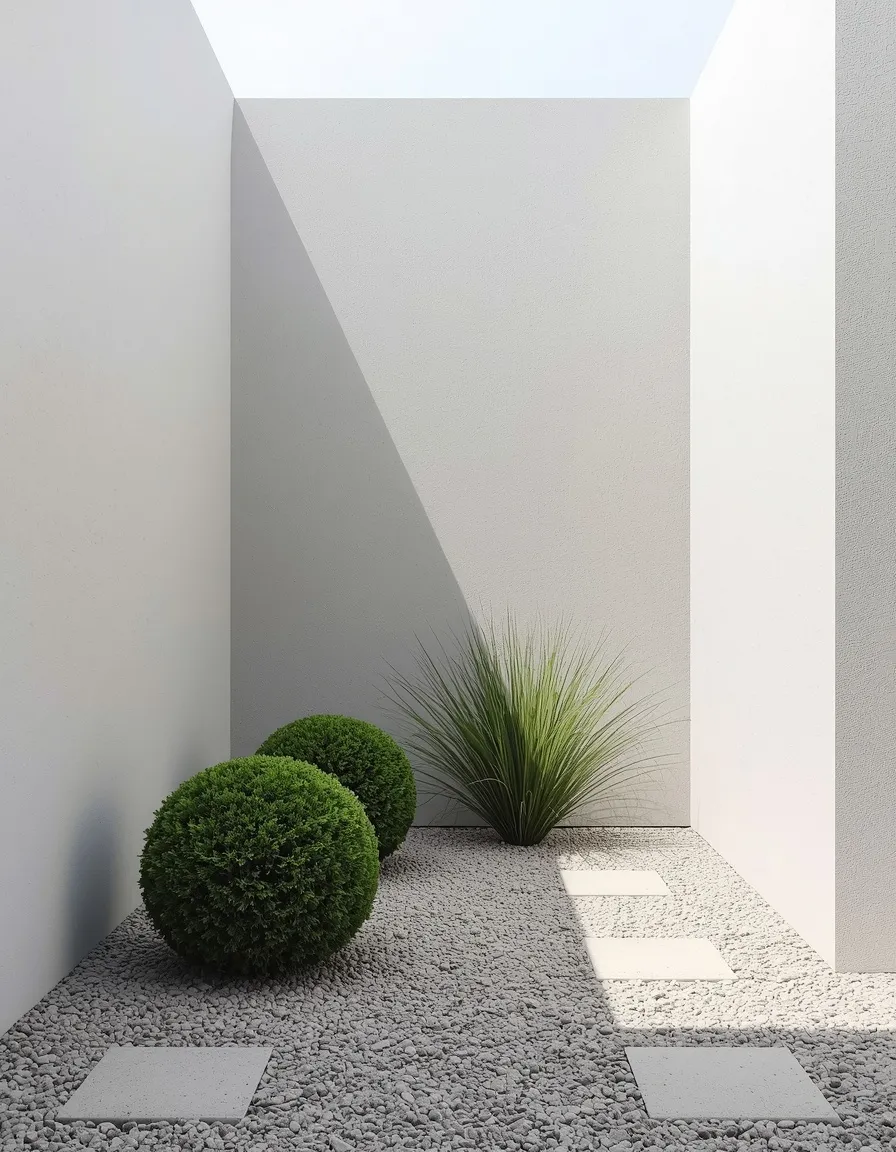
9. Modern Minimalist Corner Garden
A modern corner garden trades abundance for restraint, using a tight plant palette, clean geometric lines, and negative space to make a small corner feel architectural rather than cluttered. Think of it as landscaping with the same discipline as interior styling: fewer elements, each one considered.
Limit the plant list to three or four species, one structural shrub like boxwood clipped into a simple form, one ornamental grass for movement, and one low groundcover, then repeat that same palette if the design continues around the yard. Use hard materials, poured concrete pavers, steel edging, or crushed granite, in straight or gently curved lines rather than organic, meandering shapes. The most common misstep is over-planting a modern design out of habit; resist filling every gap, since the bare gravel or paving between plants is part of the composition, not a mistake to correct.
- Suits contemporary homes with clean architectural lines
- Requires less ongoing maintenance than a densely planted cottage-style corner
- Works well for corners visible from indoor living spaces year-round
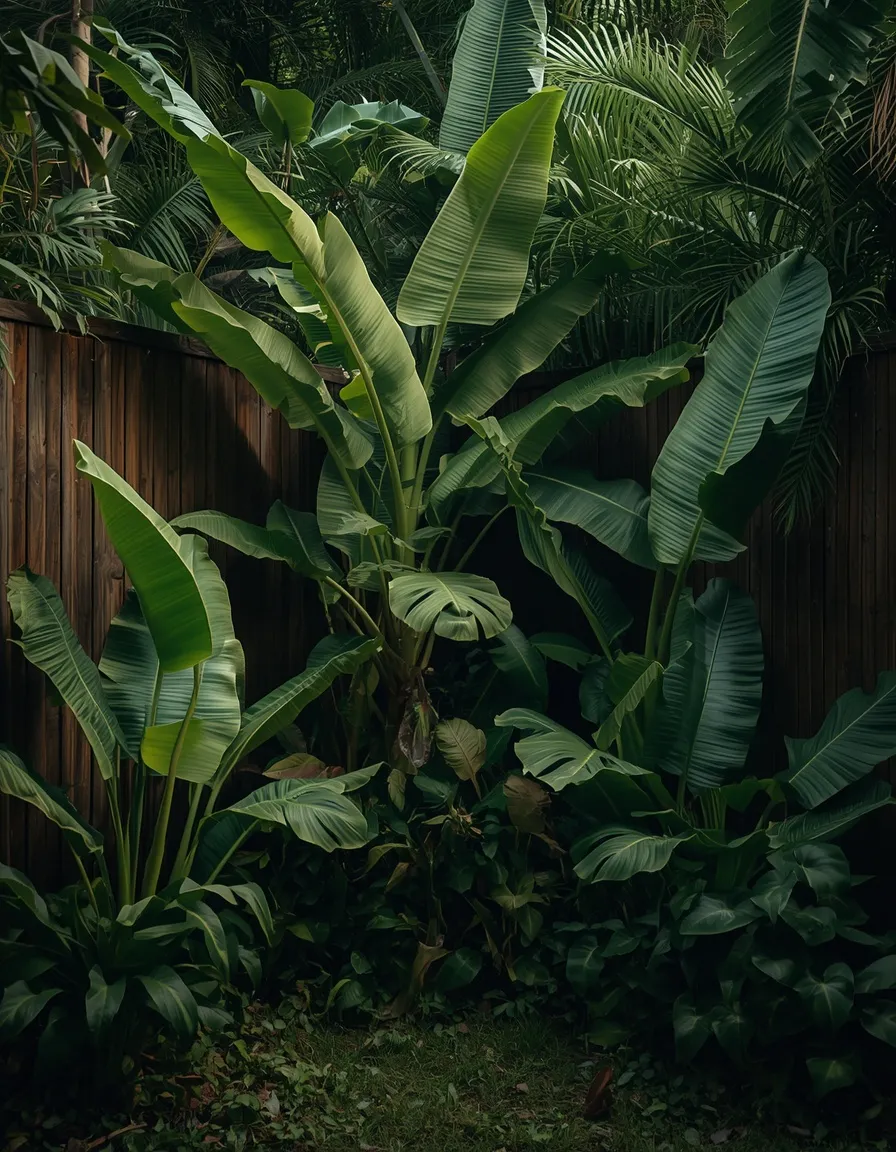
8. Tropical Corner Oasis
Corner garden ideas for backyards in warm, humid climates can lean fully into a tropical look, layering broad-leafed plants like canna lily, elephant ear, and banana to create dense, jungle-like privacy exactly where two fences already box the space in.
Choose the corner with the most reliable moisture and partial afternoon shade, since large-leafed tropicals lose water quickly in full, unshaded sun. Layer heights deliberately: banana or canna at the back for a leafy canopy, elephant ear in the middle for bold texture, and lower cannas or coleus at the front for color. In climates outside USDA zones 9 to 11, treat tender bulbs like elephant ear and canna as annuals or dig and store the tubers indoors over winter rather than leaving them in the ground to freeze. This look reads as lush and established faster than a traditional perennial bed, often within a single growing season.
- Best for humid climates or corners with consistent afternoon shade and moisture
- Creates fast, dense privacy screening along a fence line
- Doubles as a focal point visible from indoor windows
7. Full-Sun Succulent and Grass Corner
A full-sun corner that bakes for six or more hours a day is exactly where hostas and ferns fail and where drought-tolerant succulents and grasses genuinely thrive, turning the yard’s harshest exposure into its lowest-maintenance feature. Hens-and-chicks, sedum, and clumping ornamental grasses like blue fescue create movement and texture without daily watering.
Improve drainage before planting by mixing coarse sand or fine gravel into the top 20 to 25cm (8 to 10in) of soil, since succulents rot quickly in heavy, water-retentive clay. Group plants by mature size, tallest grasses toward the back corner, spreading succulents as a living groundcover in front, and mulch with light-colored gravel rather than bark, which holds moisture against succulent crowns and encourages rot. Check the USDA Plant Hardiness Zone Map before choosing succulent varieties, since many sedums are hardy well into cooler zones while others need winter protection or must be treated as annuals.
- Ideal for corners with reflected heat from pavement, siding, or a fence
- Needs minimal irrigation once established, even in summer heat
- Provides year-round structure in climates where grasses stay upright through winter
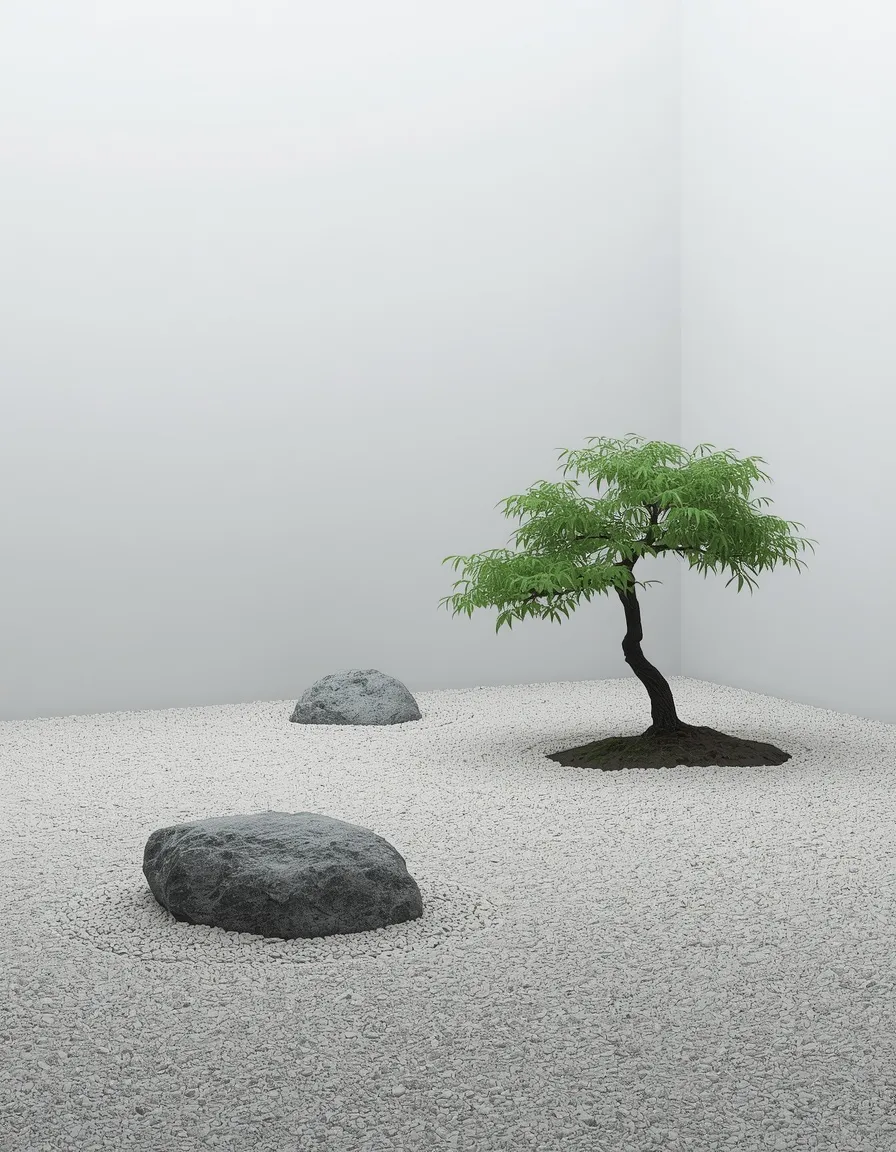
20. Zen Gravel and Bonsai Corner Garden
A Japanese-inspired zen corner uses raked gravel, a single dwarf tree, and a handful of carefully placed stones to create calm through restraint, the opposite approach from a densely planted bed and often the better fit for a small or oddly shaped corner.
Lay a bed of fine, light-colored gravel over landscape fabric, then rake it into simple wave patterns around two or three placed stones, adjusting the pattern periodically as a low-effort, meditative maintenance task rather than a chore. Anchor the design with one dwarf or bonsai-style tree; Japanese maple works well in temperate climates, positioned off-center rather than in the middle, which reads as more natural and intentional. Bonsai and dwarf specimens need more frequent, careful watering than their size suggests, since their root systems are shallow and can dry out quickly in full sun; check the soil moisture at the trunk base every few days during summer rather than relying on a fixed schedule.
- Solves awkward or narrow corners too small for full planting beds
- Requires minimal watering apart from the featured tree once gravel is laid
- Creates a calm, low-clutter focal point visible from indoor windows
Decking, Structure, and Vertical Corner Garden Ideas
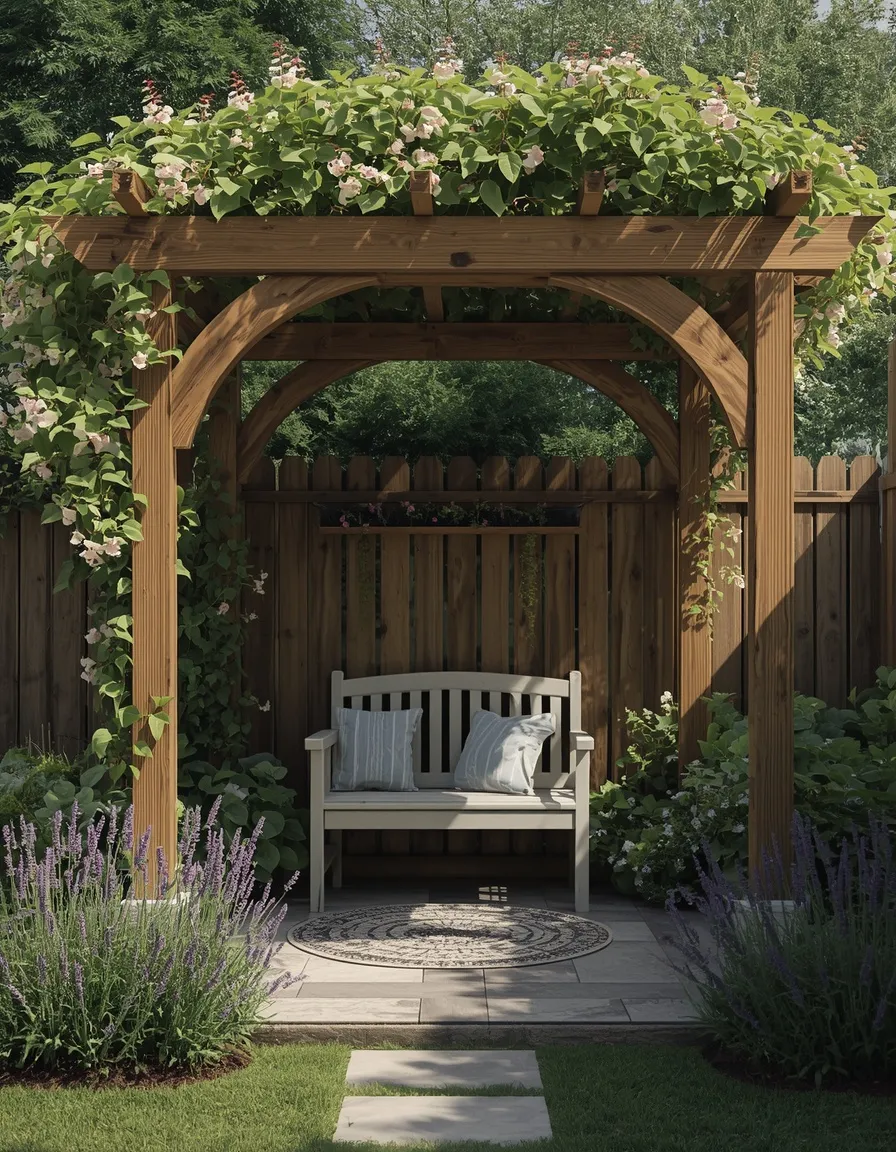
10. Corner Garden Den
A corner garden den turns the most sheltered part of the yard, where two fences or a fence and a hedge meet, into a small enclosed hideaway with just enough room for a bench, a side table, and overhead greenery, more private retreat than open garden bed.
Define the space with a simple pergola frame or arched trellis over the corner, then train a fast climber like clematis, jasmine, or a thornless climbing rose across the top for dappled shade within one to two growing seasons. Add a weatherproof bench or two chairs scaled to the footprint, usually no more than 1.2 by 1.2m (4 by 4ft) for a true nook, and layer fragrant, low plantings like lavender or catmint along the open side for privacy without blocking the entrance. If the structure includes a taller trellis or pergola post, anchor it below the frost line or secure it to a concrete footing so wind does not work it loose over time.
- Solves the problem of yards with no dedicated quiet seating area
- Doubles as a reading or morning coffee spot screened from the rest of the yard
- Works in both front and back yard corners with adequate privacy
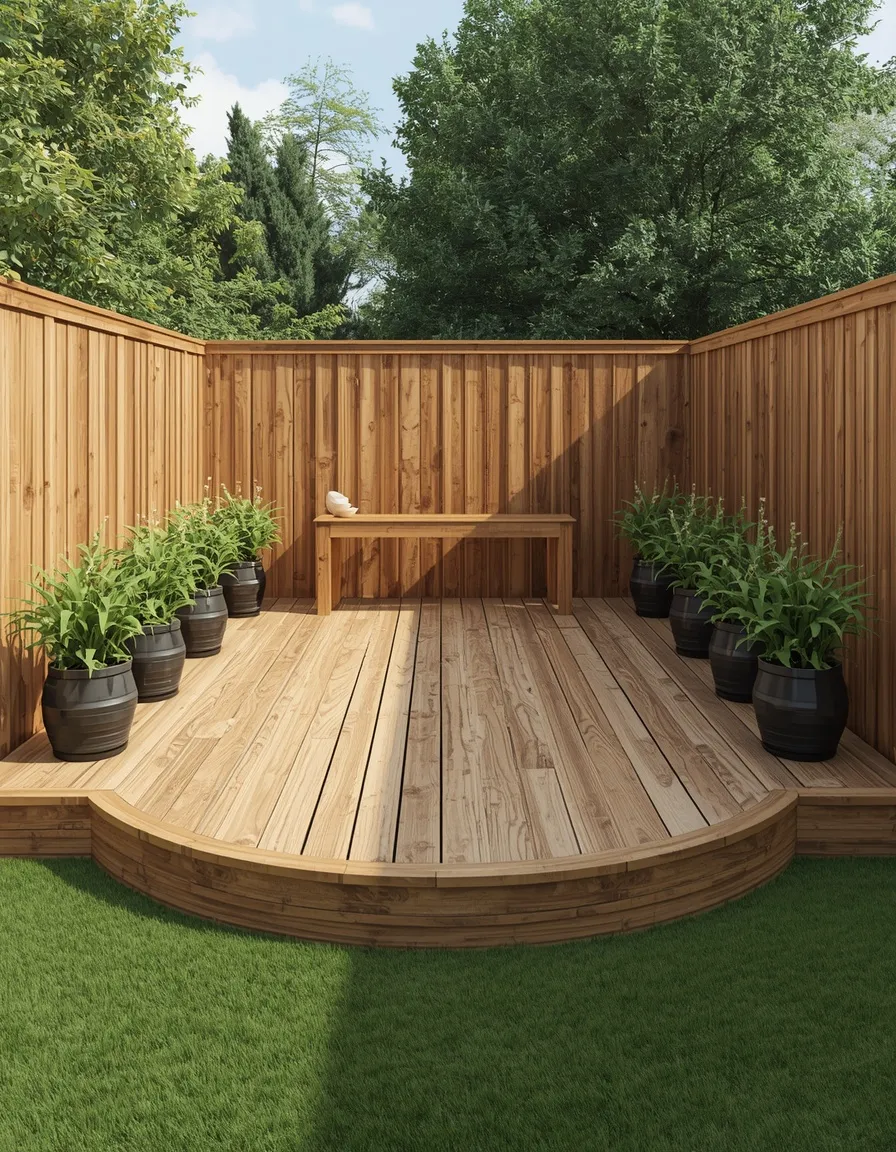
11. Wraparound Corner Decking Garden
Corner garden decking ideas work well where the ground itself is uneven, sloped, or holds water, replacing a struggling lawn corner with a low platform deck that wraps both fence lines and creates level, usable footing for pots and furniture.
Build the deck low, typically one or two steps above grade, using pressure-treated joists set on concrete deck blocks rather than direct soil contact, which shortens the wood’s lifespan considerably. Leave a gap of at least 1cm between deck boards for drainage and expansion, and check local building codes before adding any deck higher than 30cm (12in) off the ground, since many regions require guardrails above that height. Group container plants of varying heights along the two fence-facing edges to soften the hard lines of the decking, and choose a wood species or composite rated for ground-level moisture exposure.
- Solves drainage or slope problems that make in-ground planting difficult
- Creates a level surface for furniture in an otherwise unusable corner
- Works well combined with built-in bench seating along the fence lines
12. Elevated Corner Deck Planter Boxes
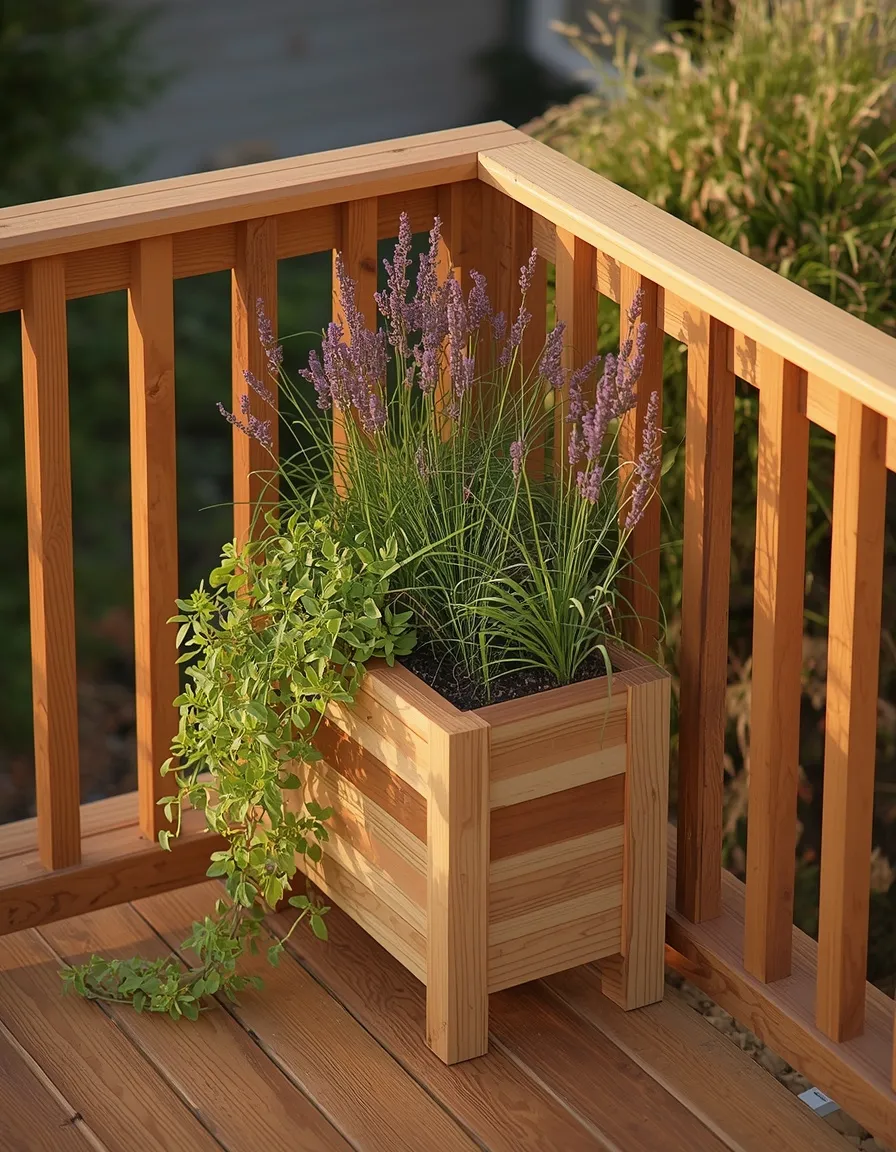
Rather than a full deck, built-in planter boxes along the top rail or base of an existing corner deck bring greenery to a hard-surfaced area without sacrificing floor space, particularly useful on raised decks where in-ground planting is not an option at all.
Use rot-resistant cedar or composite lumber for the boxes, and always line the interior with breathable landscape fabric rather than plastic sheeting, which traps moisture against the wood and accelerates rot. Drill drainage holes every 15 to 20cm (6 to 8in) along the base and elevate boxes slightly on furniture feet so water does not pool beneath them and stain the decking. Because elevated planters dry out faster than in-ground beds, especially on a sun-exposed corner, choose drought-tolerant options like sedum, lavender, or dwarf ornamental grasses over thirsty annuals unless a drip irrigation line is already in place.
- Ideal for raised decks or balconies where ground planting is not possible
- Adds privacy screening along an open deck corner without a full fence
- Solves limited floor space by using vertical rail height instead
18. Vertical Corner Garden Wall
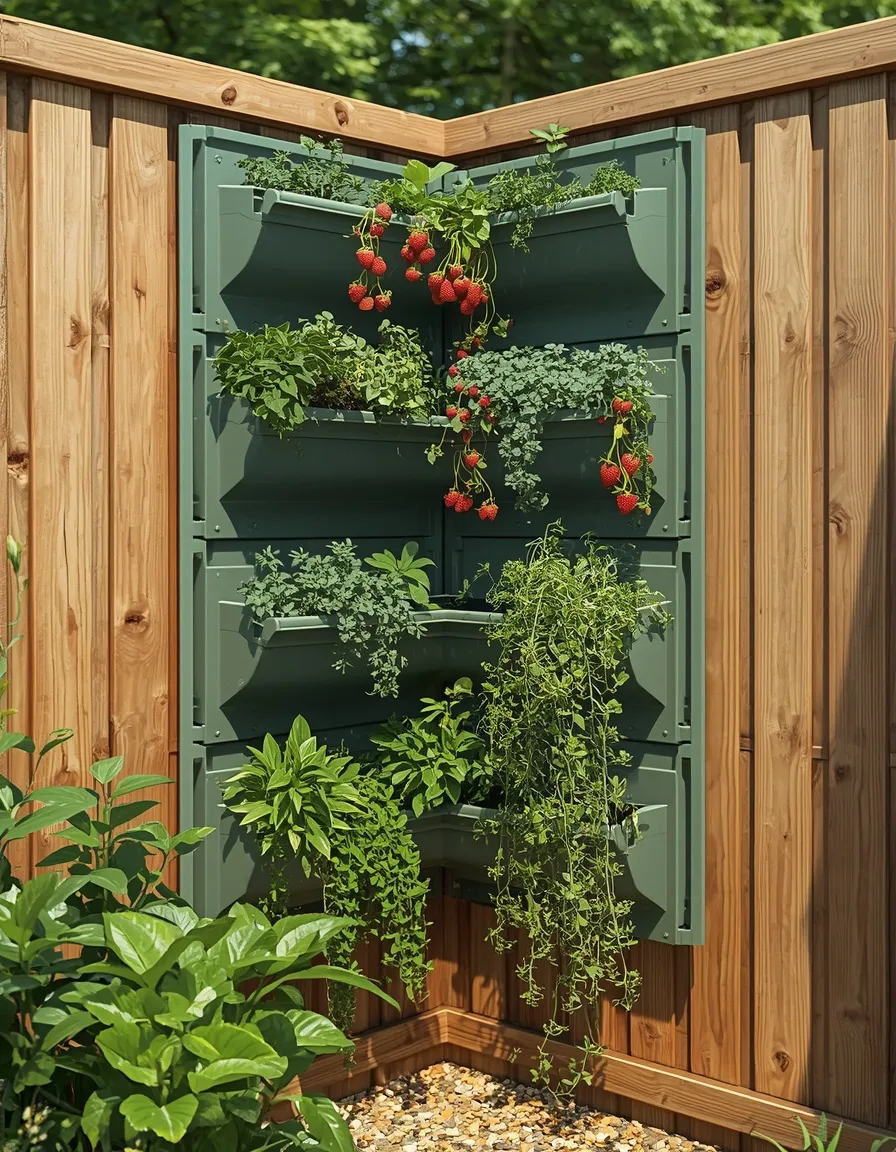
When floor space in the corner is limited but two intersecting walls or fences offer height, a vertical garden wall stacks planting upward instead of outward, using modular planter panels or a simple trellis grid to grow considerably more in the same footprint.
Attach a modular wall planter system or a heavy-duty trellis directly to a masonry wall with appropriate anchors, or to a fence post reinforced from behind, since a fully planted vertical system can weigh considerably more once soil and plants are watered. Choose shallow-rooted plants for pocket-style systems; succulents, strawberries, and leafy herbs perform better than deep-rooted vegetables, which need more soil volume than most vertical pockets provide. Check the mounting hardware’s weight rating before installing, and avoid attaching heavy systems to fence panels not built to bear extra load, since a saturated vertical garden can pull a weak panel down.
- Solves limited floor space in tight or paved corners
- Creates a living privacy screen against a plain wall or fence
- Works well on both sunny walls and partially shaded fence corners
Shade, DIY, and Small-Space Corner Garden Ideas
13. Shady Woodland Corner Garden
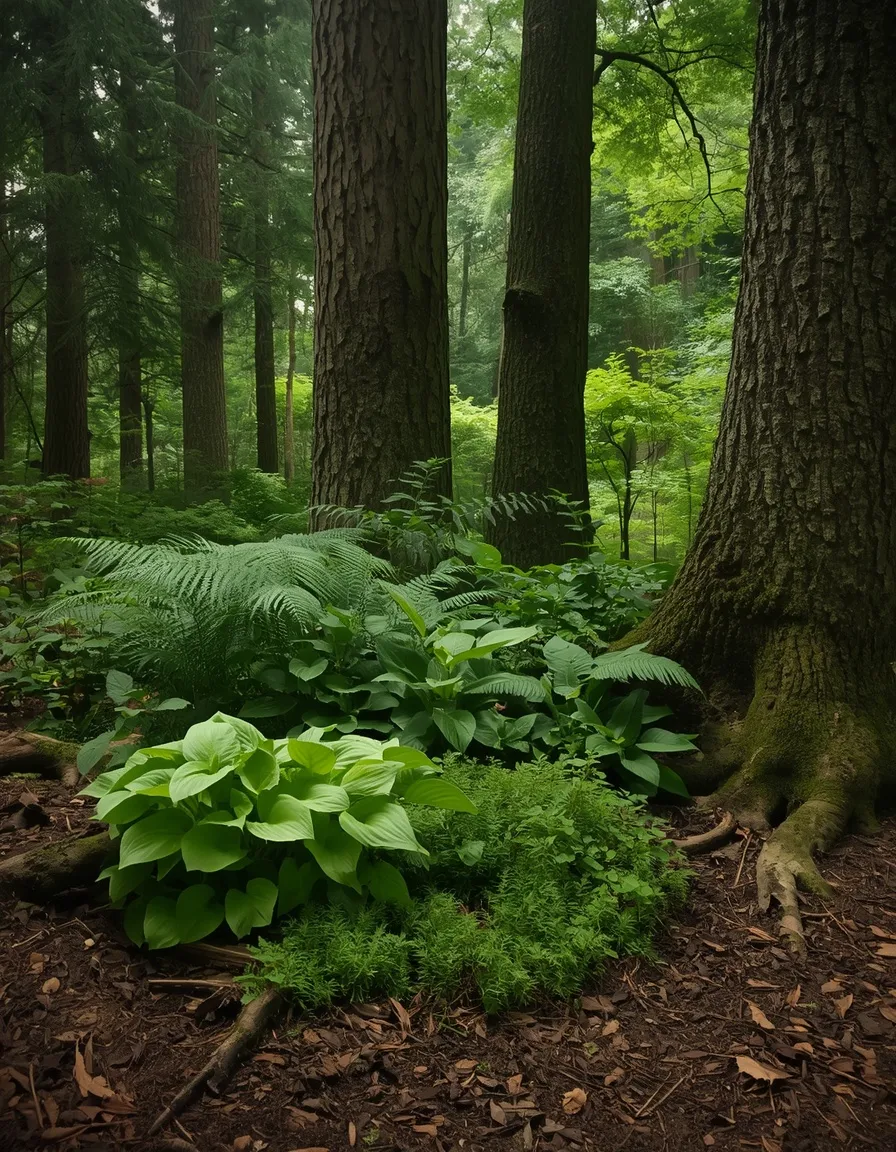
Corner garden ideas with trees usually inherit deep, dappled shade and root competition that stop most sun-loving plants cold, but that same shade is exactly what woodland species like hosta, astilbe, and ferns are built for, turning a tree-shaded corner into one of the yard’s more textured areas.
Work around existing tree roots rather than cutting through them, digging shallow planting pockets between roots instead of trenching, which can damage the tree’s structural stability. Layer plants by shade tolerance, ferns and hostas closest to the trunk where shade is deepest, astilbe and heuchera slightly further out where a little filtered light reaches. Mulch lightly, no more than 5 to 7cm (2 to 3in), and keep it pulled back from the trunk itself, since piling mulch against bark holds moisture and invites rot and pests. This is one of the few corner styles that genuinely improves with less interference once established.
- Solves the nothing-grows-here problem under mature trees
- Requires less watering once established than sun-exposed corner beds
- Provides texture and interest in shaded corners overlooked by most designs
14. DIY Raised Bed Corner Vegetable Patch
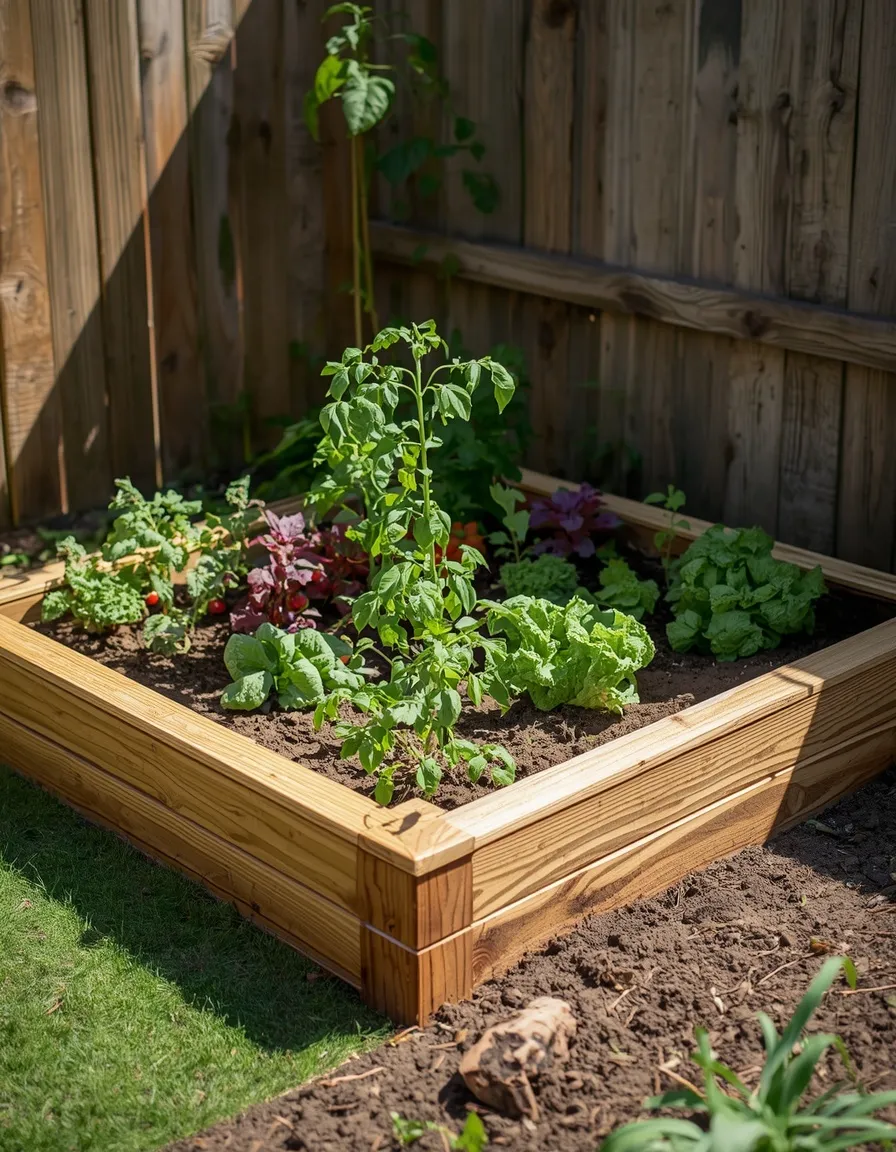
Corner garden ideas for backyards with a DIY spirit often turn toward food, and a raised bed tucked into a sunny corner keeps vegetable growing contained, tidy, and separate from ornamental beds elsewhere in the yard.
Build the bed to follow the corner’s natural angle; an L-shaped or triangular frame uses the space more efficiently than forcing a rectangular box into an odd-shaped area, and keep the width to no more than 1.2m (4ft) so every plant stays within arm’s reach from the outer edge. Use untreated cedar or a food-safe composite rather than older pressure-treated lumber for anything growing edibles, and wear safety glasses and gloves when cutting lumber with a circular saw. Because corners often sit against two fence lines, confirm the spot still gets at least six hours of direct sun before building, since even a well-built bed will underperform in a shadier corner.
- Best for corners that receive full sun for six or more hours daily
- Keeps vegetable growing visually separate and tidy from ornamental beds
- Solves poor native soil by filling with a custom growing mix
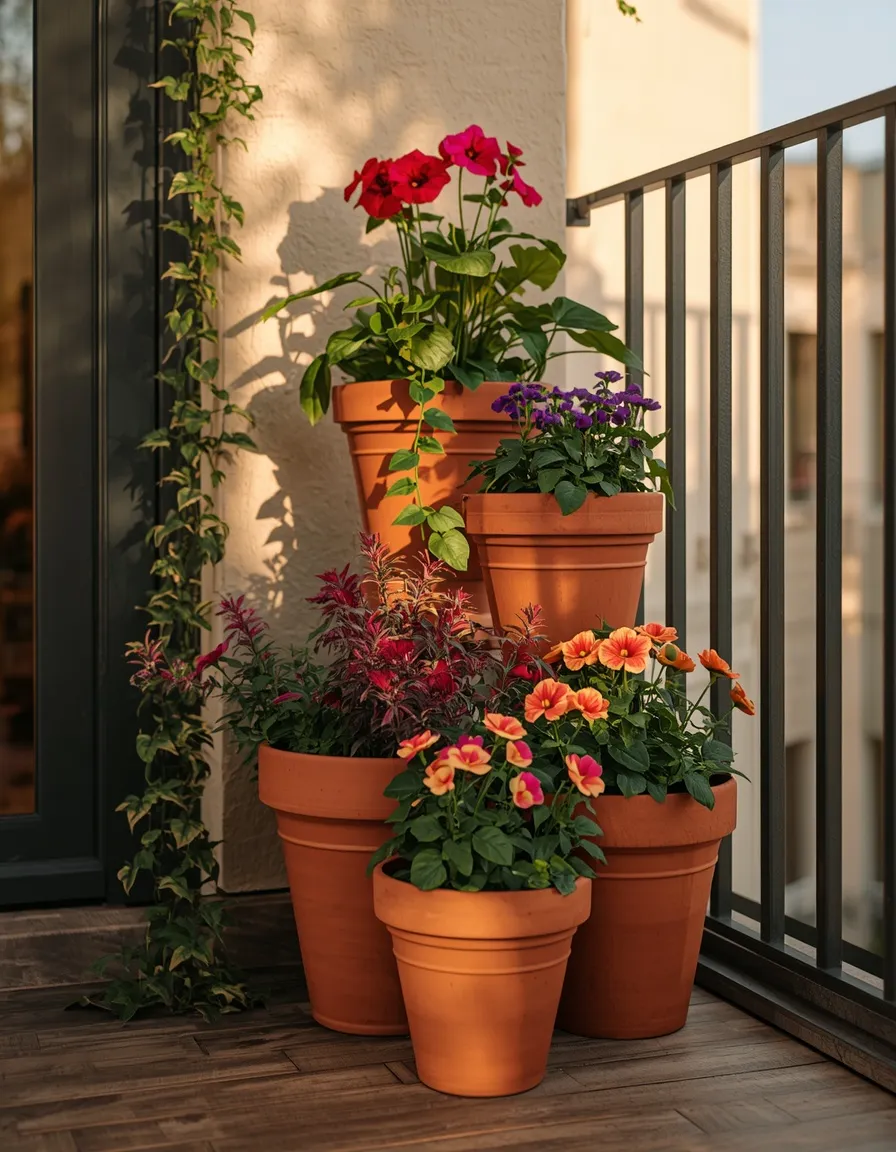
21. Small-Space Container Corner Garden
Corner garden ideas are not limited to yards at all; a balcony, patio, or entryway corner can hold a full container garden using nothing but pots, a plant stand, and careful height layering to make the most of a few square feet.
Group containers in odd numbers, three or five, at varying heights using plant stands or upturned crates, with the tallest pot in the back corner and trailing plants like ivy or petunia cascading from the front. Choose pots with drainage holes and matching saucers to protect decking or flooring underneath, and group plants with similar watering needs together so nothing gets accidentally over- or under-watered. On upper-floor balconies, check the weight limit of the structure before grouping heavy ceramic or filled soil containers in one corner, since saturated potting mix is considerably heavier than it looks; lightweight resin or fiberglass pots are a safer choice where load is a concern.
- Solves the lack of ground-level garden space entirely
- Works on balconies, patios, porches, and small entryway corners alike
- Allows a full seasonal refresh by swapping a handful of pots rather than replanting a bed
Conclusion
A corner rarely stays awkward once it has a real plan behind it. Whether the goal is a stone-edged succulent bed baking in full sun, a fountain tucked against two fence lines, or a simple gravel and bonsai corner near the back door, the ideas above prove that corner garden ideas work best when they follow the shape of the space instead of resisting it. Start with the corner that bothers the household most, front yard, fence line, or shaded tree base, and build outward from there. For more inspiration on shaping the rest of the yard, the garden design category has plenty of layouts worth saving and revisiting as the seasons change.
Frequently Asked Questions
What is the best plant for a shady corner garden?
Hostas, ferns, astilbe, and heuchera are reliable choices for a shaded corner beneath trees or between two structures, since they tolerate low light and the root competition that often comes with tree-shaded ground. Plant them in shallow pockets between roots rather than trenching through them, and keep mulch pulled back from tree trunks to avoid rot.
How do I fix an awkward triangular corner in my yard?
A triangular corner usually looks best when the design follows its angle rather than fighting it; an L-shaped raised bed, a tiered flower bed, or a curved gravel path all work with the shape instead of against it. Layering plant heights from tall at the back point to low along the open edge also helps the eye read the space as intentional rather than leftover.
Can I put a water feature in a small corner garden?
Yes, a pondless disappearing fountain is the best option for a small or narrow corner, since it recirculates water through a hidden reservoir without the footprint or safety concerns of an open pond. A compact tiered fountain, roughly 90 to 120cm (35 to 47in) tall, also fits neatly against two converging fence panels without overwhelming the space.
What are good corner garden ideas for a small backyard or balcony?
Container gardening is the most flexible option for a small backyard corner, patio, or balcony, using grouped pots at varying heights to mimic the layering of an in-ground bed. A herb spiral or a set of elevated planter boxes along a deck rail are also strong choices when ground space is limited but vertical or footprint space is available.
How do I keep a corner garden looking good in winter?
Ornamental grasses left uncut through winter, evergreen shrubs like boxwood or holly, and hardscaping such as stone, gravel, or a fountain basin all keep a corner from looking bare once flowers die back. Choosing at least one evergreen or structural element in the original design, rather than relying entirely on seasonal blooms, is what makes the biggest difference through colder months.
Are corner gardens safe for pets and children?
Most corner garden styles are safe, but a few details are worth checking: some cottage garden and pollinator-friendly plants, including foxglove, delphinium, and milkweed, can be toxic if ingested in quantity, so position them away from areas pets or young children frequent. Water features, fire pits, and taller structures like pergolas also need supervision, secure fencing, or proper anchoring, and the ASPCA’s plant list is a useful reference before finalizing a plant selection around pets.
What is the cheapest way to fill an empty yard corner?
A layered planting of perennials and grasses, grown from smaller nursery starts or divided from an existing bed, is typically the least expensive way to fill a corner, since it needs no hardscaping or built structures. Mulch heavily around new plantings to suppress weeds while they establish, which also reduces long-term watering and maintenance costs.