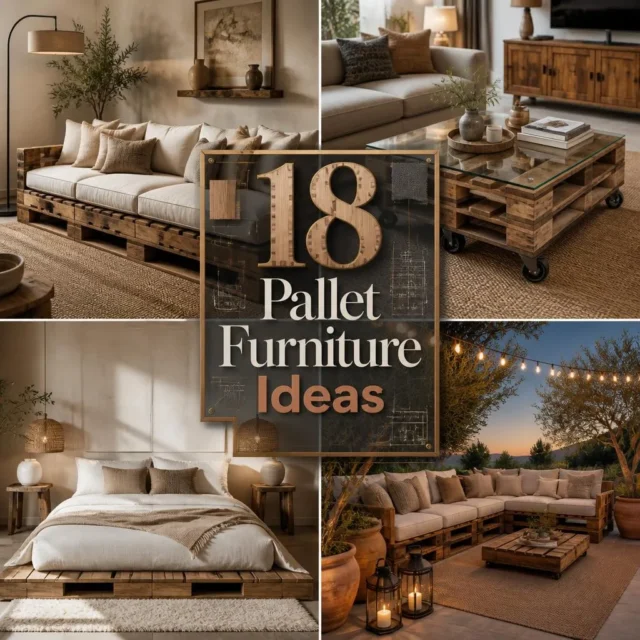

A stack of discarded shipping pallets doesn’t look like much until you see what it can become. The best pallet furniture ideas turn rough, free timber into a sofa you’d actually sit on, a platform bed with hidden storage, or a patio sectional that cost almost nothing, with that warm, weathered grain no flat-pack furniture can fake. It’s the most genuinely sustainable furniture project there is: you’re rescuing wood that was headed for landfill. At Sunday Abode, we love a project that’s kind to both your budget and the planet. These 18 ideas span every room and the garden, starting with the safety check almost nobody tells you about.
Key Takeaways
- Check the stamp before anything else: HT means heat-treated and safe, while MB means fumigated with methyl bromide, a toxic pesticide you should never bring home.
- Avoid pallets with oily stains, dark discoloration, or unknown industrial origins; they can carry chemical residues, bacteria, and mold.
- Pallet wood is softwood and isn’t furniture-rated, so reinforce anything that carries weight, beds and seating especially.
- Sand thoroughly (80, then 120, then 220 grit), remove every protruding nail, and seal with a low-VOC or non-toxic finish for indoor use.
- Outdoors, pallets rot quickly unless sealed and raised off the ground; expect a shorter life than treated garden timber.
Which Pallets Are Safe to Use?
Only use heat-treated pallets, marked HT, and never use pallets stamped MB. The MB marking means the wood was fumigated with methyl bromide, a pesticide, and that timber has no place in your home or garden.
Most pallets used in international shipping carry an IPPC stamp, a small oval logo with letters beside it. Those letters tell you exactly how the wood was treated, so learn to read them before you drag anything home. If a pallet has no stamp at all, its origin and treatment are unknown, and it’s safest to leave it.
The stamp isn’t the only check. Reject any pallet with oily stains, dark patches, chemical smells, or unexplained discoloration, since pallets routinely carry industrial chemicals, raw food, and worse. Wood that has sat outdoors in the wet can also harbor mold. In practice, clean, dry, lightly used HT pallets from a known source, a garden center, a hardware store, a local shop, are the ones worth taking.
How to Read a Pallet Stamp
The letters on the IPPC stamp are the fastest safety check you can make. Here’s what each one means.
| Marking | What it means | Safe to use? |
| HT | Heat treated (no chemicals) | Yes, the one to look for |
| KD | Kiln dried | Yes, dried with heat |
| DB | Debarked | Yes, but check for HT too |
| MB | Fumigated with methyl bromide | No, toxic pesticide, avoid |
| No stamp | Unknown origin and treatment | No, leave it |
| Stained / oily | Possible chemical or food spill | No, leave it |
Every idea below assumes you’ve started with a clean, heat-treated (HT) pallet, sanded smooth and free of protruding nails.
1. Pallet Sofa Living Room
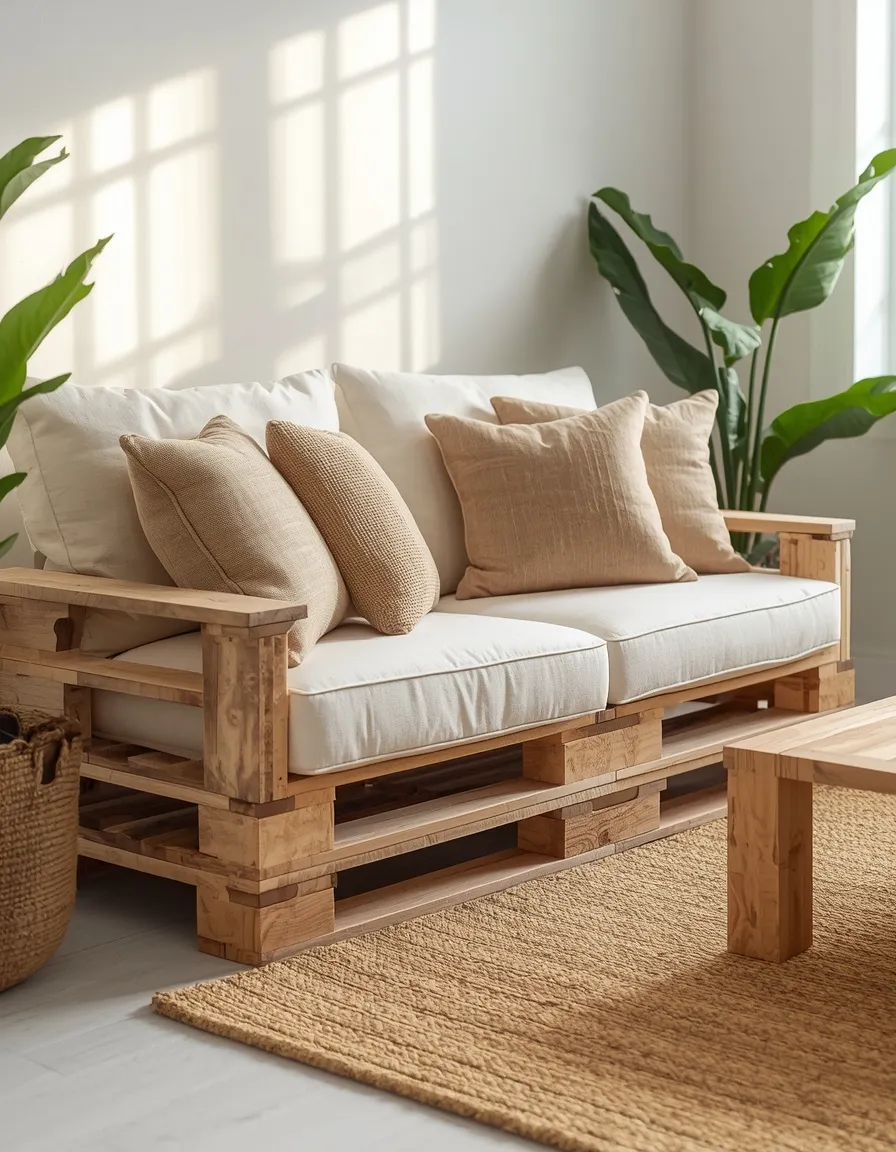
A pallet sofa is the project that started the whole movement, and done properly it looks intentional rather than improvised. Two or three stacked pallets form a low, deep base, topped with thick foam cushions and linen covers, anchored by a jute rug and a plant or two.
Stack two pallets for the seat and stand one upright behind for the backrest, bolting the sections together with coach bolts rather than nails, which work loose under repeated use. Sand every surface to 220 grit and seal it before any fabric touches it. The single thing that separates a good pallet sofa from a sad one is cushion quality: use foam at least 10 cm (4 in) thick, not thin cushions, which flatten and reveal the slats beneath. This suits living rooms, studios, and anyone furnishing a first home on almost nothing.
- Best for: first homes, studios, and rock-bottom furniture budgets.
- Watch out: bolt sections together, never nail; nails loosen under body weight.
- Key elements: stacked HT pallets, 10 cm+ foam, linen covers, jute rug.
2. Rustic Pallet Coffee Table
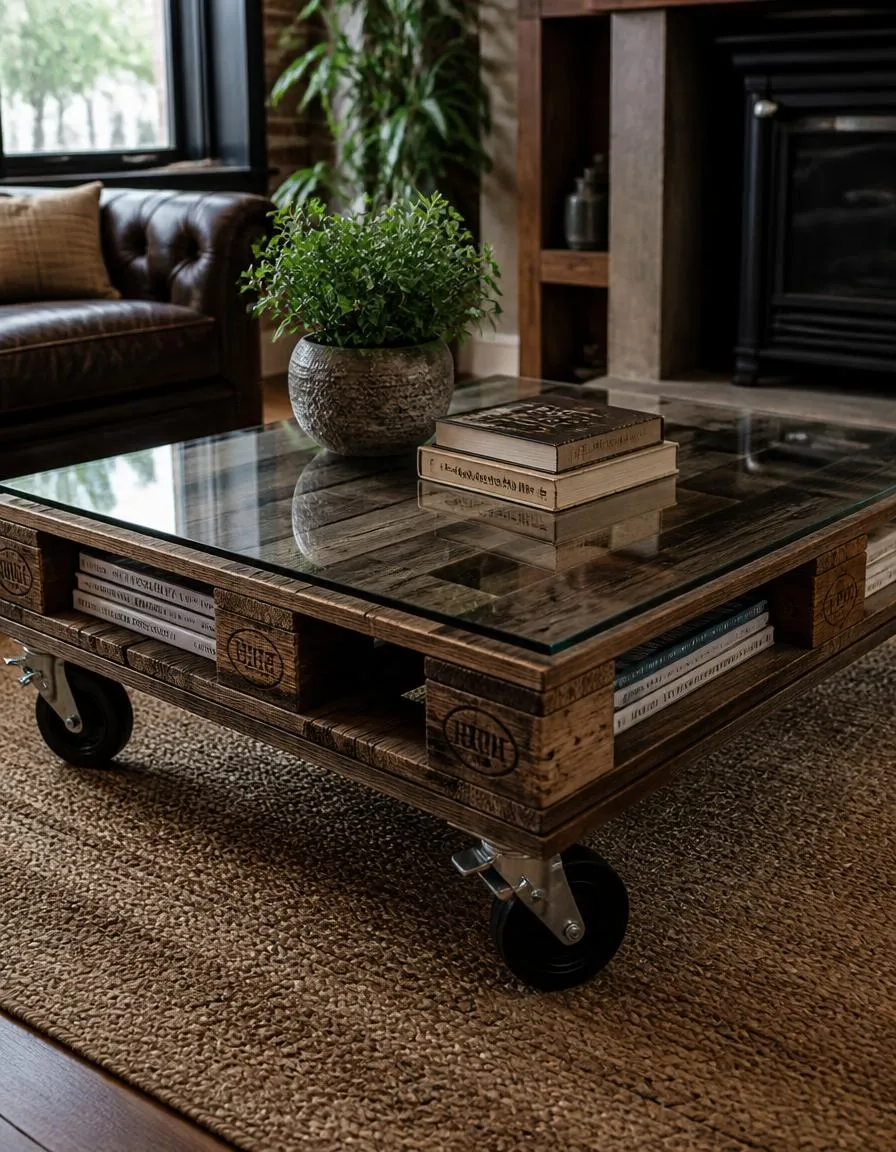
A single pallet on castors makes a coffee table with genuine character. The chunky slatted top, a glass or plywood surface laid over it, and four rolling wheels create a piece that looks rustic, moves easily, and hides magazines in the gaps below.
Use one pallet, sanded and sealed, and add heavy-duty locking castors, locking is the detail people forget, and an unlocked table that rolls when you rest a foot on it becomes annoying fast. A cut glass top turns the rough slats into a deliberate design feature and gives you a level, spill-proof surface; a piece of plywood painted white does the same for less. This is the easiest entry-level pallet build, achievable in an afternoon, and it suits living rooms of any style.
- Best for: beginners; the easiest first pallet project.
- Watch out: use locking castors, or the table rolls away when you lean on it.
- Key elements: one HT pallet, glass or plywood top, locking castors.
3. Pallet Platform Bed
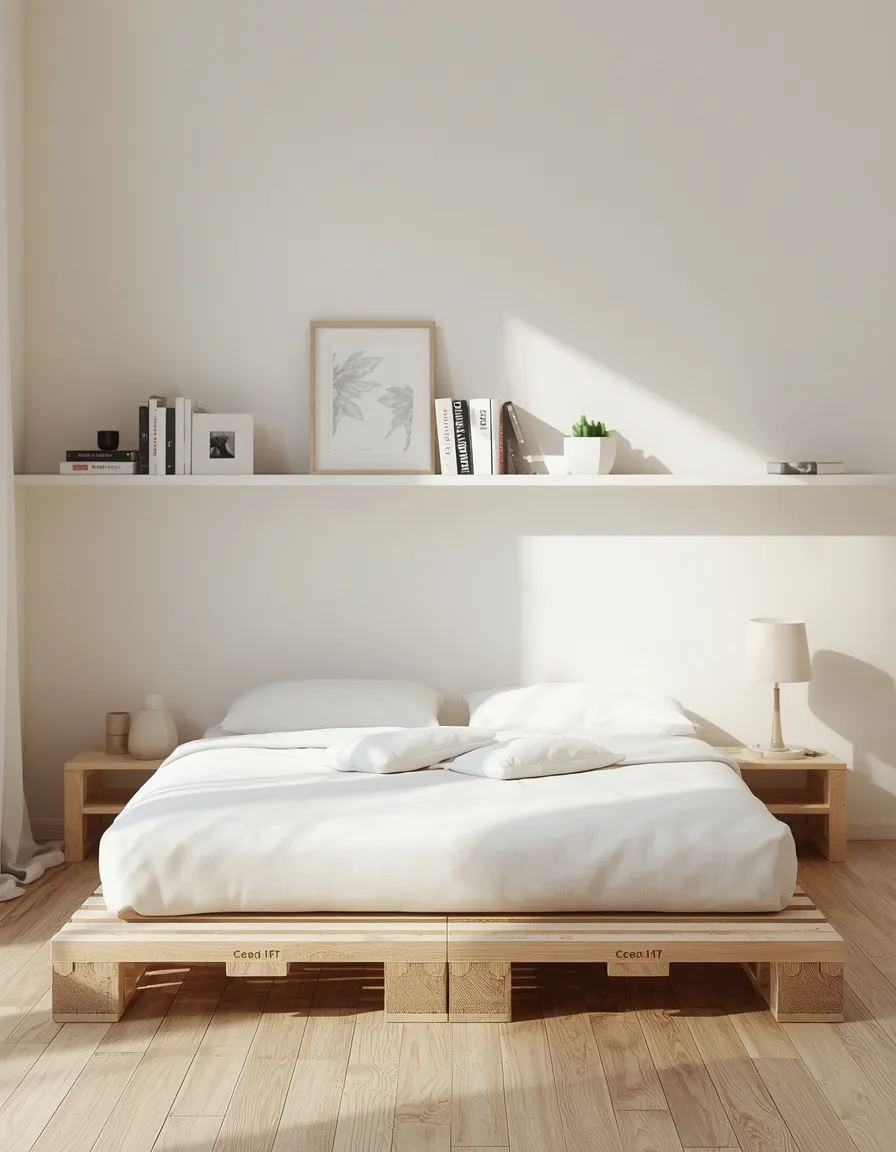
A pallet platform bed gives a bedroom that low, calm, Japandi-style silhouette for a fraction of the cost. Pallets laid flat in a grid form a broad base, the mattress sits directly on top, and the extra width around the edges becomes a natural ledge for books and a lamp.
Lay four to six pallets in a grid, bolting them together into a single rigid platform, and place the mattress on top. Crucially, pallet wood is softwood and isn’t rated for furniture loads, so add cross-bracing or a plywood sheet beneath the mattress for a bed that will genuinely take two adults’ weight over years. Leave a 10–15 cm (4–6 in) border around the mattress to use as a shelf. Seal the wood well, since bare pallet timber can splinter bare feet. This suits minimalist, boho, and rental bedrooms.
- Best for: minimalist and boho bedrooms; renters furnishing cheaply.
- Watch out: pallets aren’t furniture-rated, cross-brace or add plywood beneath.
- Key elements: 4–6 bolted pallets, plywood support, 10–15 cm shelf border.
4. Pallet Headboard Feature Wall
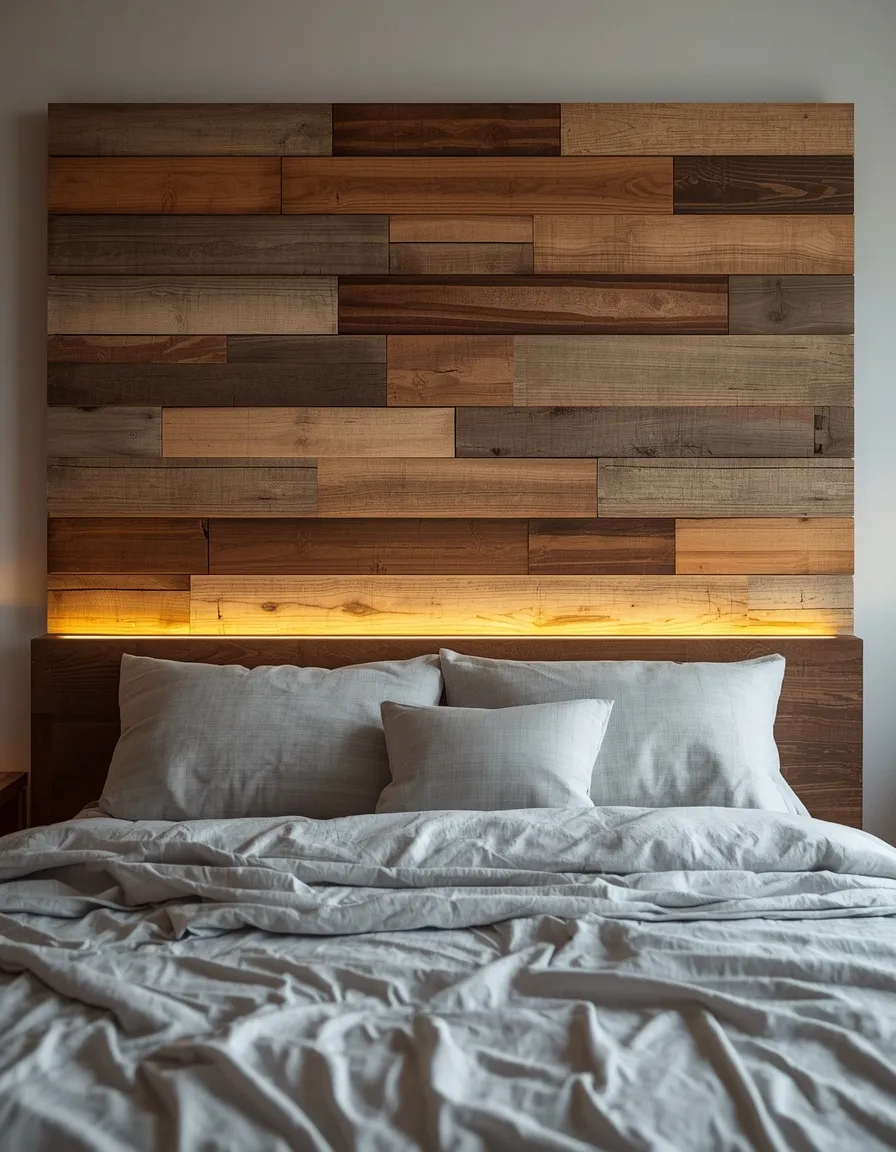
A pallet headboard turns a bare bedroom wall into a warm, textured focal point. Pallet boards mounted behind the bed, stained in mixed tones or whitewashed, bring reclaimed-wood character without touching the rest of the room.
Dismantle pallets into individual boards and mount them onto a plywood backing panel, then fix that whole panel to the wall, this is far easier than fixing boards one by one, and it means renters can take it with them. Mix two or three stain tones for depth, or whitewash for a Scandi feel. Fix the panel into wall studs, not just plasterboard, since a full headboard panel is heavy. Add a string of warm LED lights behind it for a soft glow. This suits rustic, boho, and rental bedrooms.
- Best for: rental bedrooms; a removable feature wall.
- Why it works: mounting boards to one plywood panel makes it far easier to hang and move.
- Watch out: fix into studs; a full pallet panel is heavy on plasterboard alone.
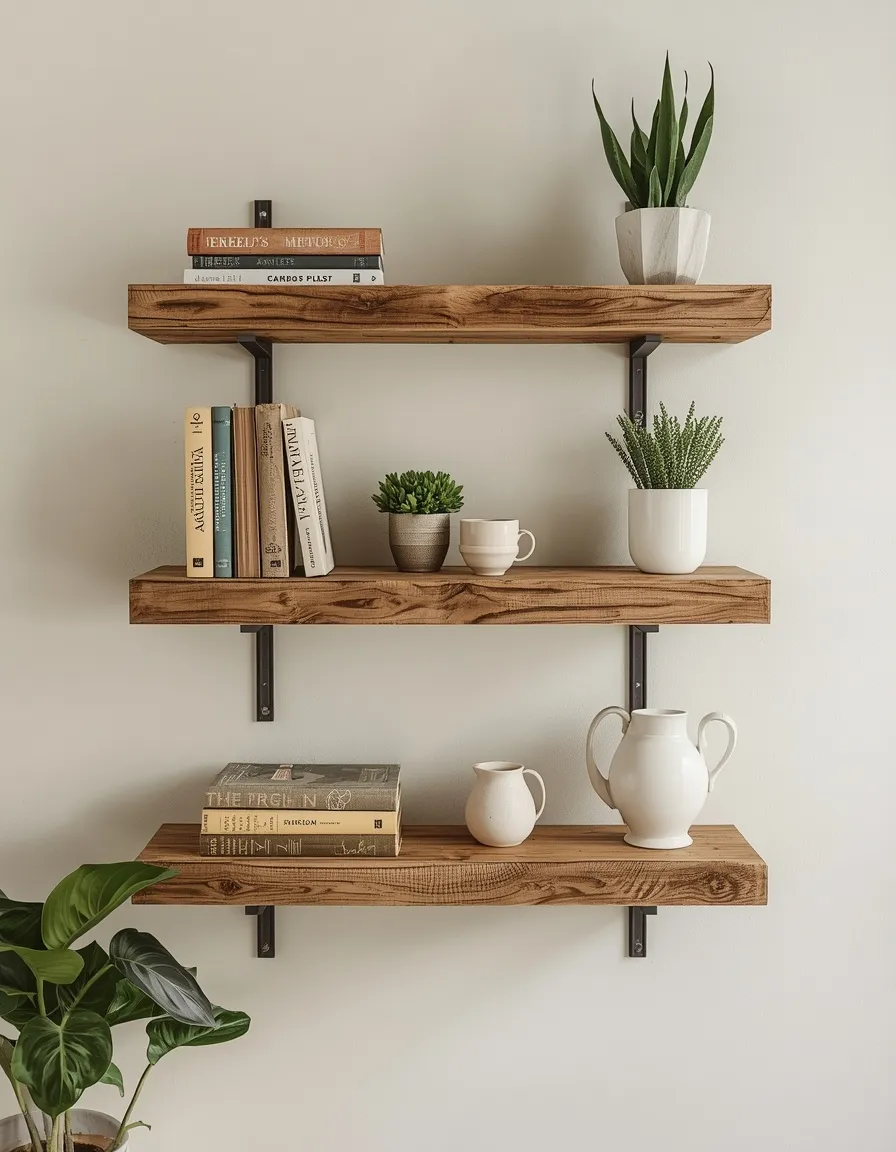
5. Floating Pallet Wall Shelves
Pallet sections mounted on the wall make characterful, near-free shelving. A shallow pallet segment with its slats intact becomes a rustic shelf with a built-in lip, perfect for books, plants, and small ceramics.
Cut a pallet into shallow sections and mount them with heavy-duty brackets or a French cleat, which is the strongest and cleanest way to hang them. Always fix into wall studs and check the load rating of your fixings, a shelf of books is much heavier than people expect. The gaps between slats are useful, letting you hook or hang small items beneath. Sand well, since a rough shelf edge will snag hands and fabric. This suits kitchens, living rooms, and home offices, and is one of the cheapest storage upgrades going.
- Best for: cheap storage in kitchens, living rooms, and offices.
- Watch out: fix into studs with rated fixings; books are heavier than they look.
- Key elements: shallow pallet sections, French cleat or heavy brackets.
6. Pallet Kitchen Island
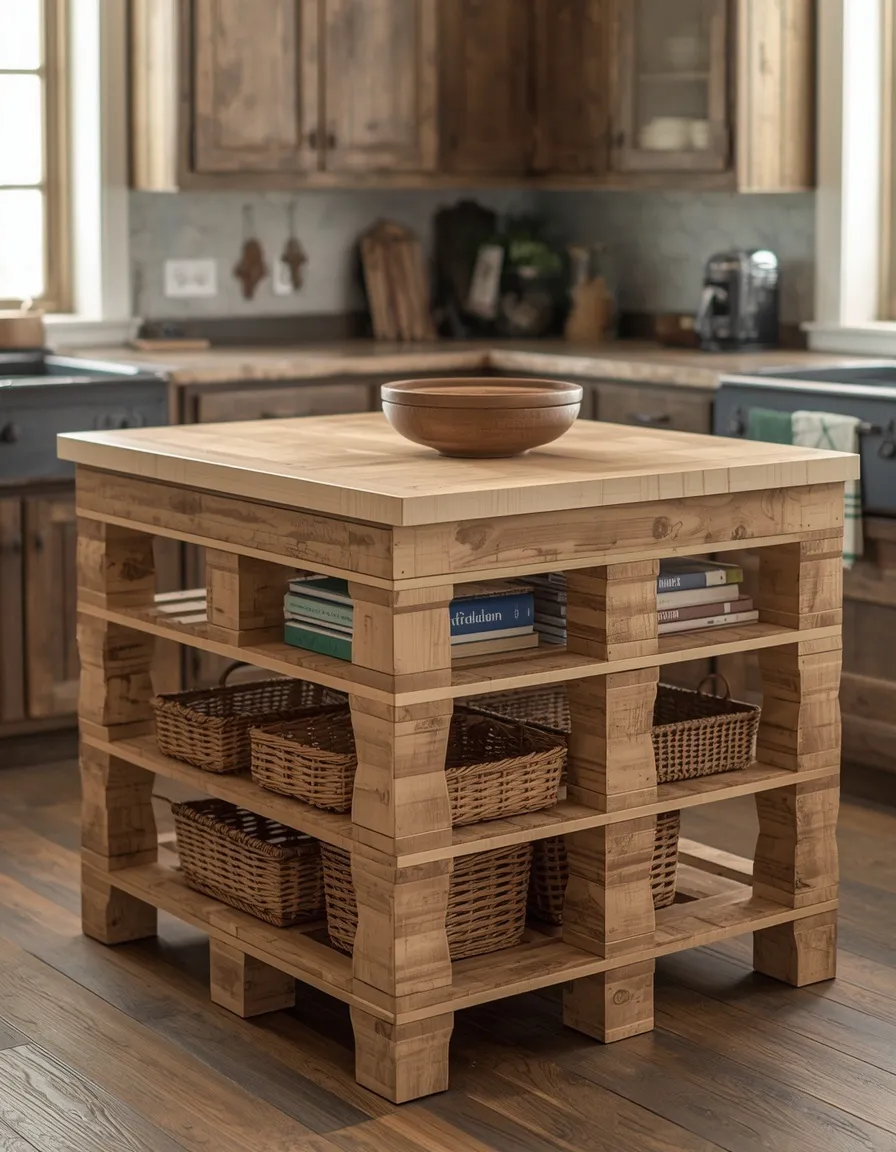
A pallet kitchen island brings rustic workspace to a kitchen that lacks one. Stacked pallets form the base, a butcher-block or reclaimed timber worktop caps it, and open slats below hold baskets, cookbooks, and pans.
Build the base from two or three bolted pallet stacks, then top with a proper worktop, butcher block, a salvaged countertop, or a sealed plywood slab. Food safety matters here: never prepare food directly on pallet wood, which is porous and can harbor bacteria, so the worktop must be a genuine, sealed, food-safe surface. Add castors if you want it mobile, and store baskets in the open gaps. Seal all wood against kitchen moisture and grease. This suits rustic, farmhouse, and industrial kitchens needing extra prep space cheaply.
- Best for: farmhouse and industrial kitchens needing cheap extra prep space.
- Watch out: never prep food on pallet wood; fit a sealed, food-safe worktop.
- Key elements: bolted pallet base, butcher-block top, basket storage in gaps.
7. Industrial Pallet Dining Table
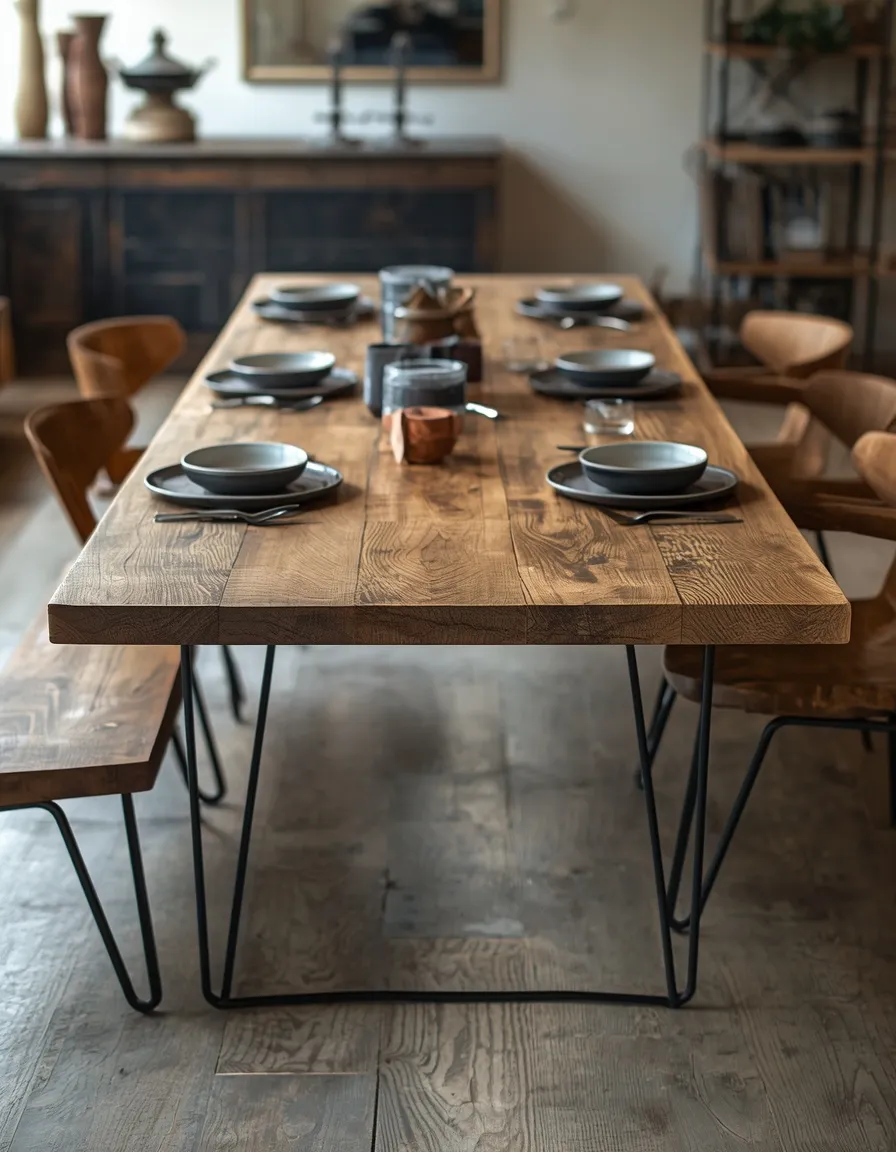
Pallet wood on steel legs makes a dining table with real industrial presence. The reclaimed timber top, planed level and sealed to a warm glow, sits on black hairpin or box-section legs for a look that’s rugged but refined.
Dismantle pallets, plane or sand the boards flat, and glue and clamp them into a solid slab, a flat, level top is what makes this read as furniture rather than a project. Fill the gaps with wood filler or clear resin so crumbs don’t disappear into the cracks, which is the practical failing of most pallet tables. Fit steel hairpin legs, widely available and simple to bolt on. Seal with a hardwearing, food-safe finish. This suits industrial and modern rustic dining rooms, and it’s a genuine step up in skill from the simpler builds.
- Best for: industrial and modern rustic dining rooms; intermediate builders.
- Watch out: fill the slat gaps, or crumbs and spills vanish into them.
- Key elements: planed and glued pallet slab, steel hairpin legs, food-safe seal.
8. Pallet Media Console
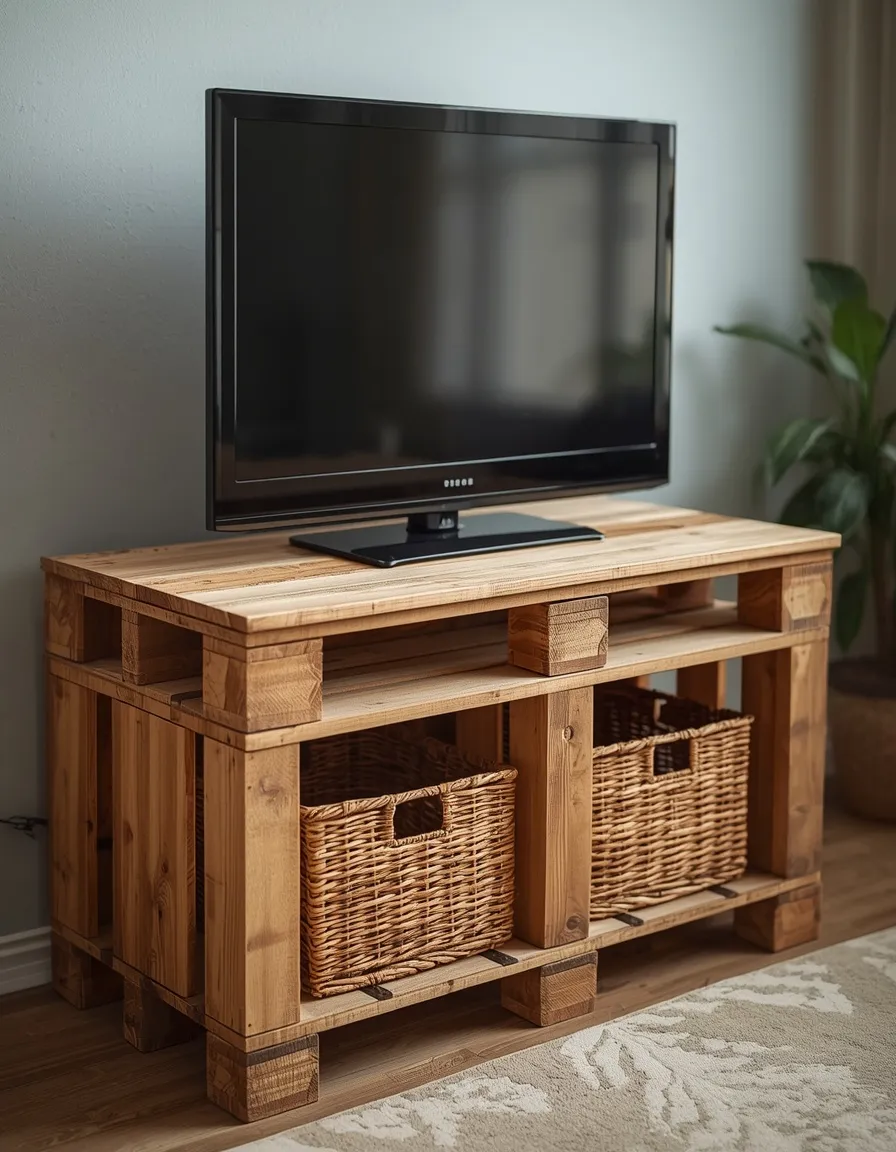
A pallet media unit anchors a living room with warm, low-slung storage. Two pallets laid horizontally and stacked create an open console for the television, with the slat gaps swallowing cables, consoles, and boxes.
Stack two pallets, bolt them, and add a plywood or timber top so the television sits on a level surface rather than across slats. The gaps between boards are genuinely useful here, giving natural cable routing that keeps the whole setup tidy, a rare case where the pallet’s rough form solves a real problem. Add baskets in the openings for remotes and cables. If you have children, anchor the unit to the wall with an anti-tip strap, as a television on a low open unit is a tipping risk. This suits rustic and industrial living rooms.
- Best for: rustic and industrial living rooms; hiding cable clutter.
- Watch out: with children, anchor the unit to the wall with an anti-tip strap.
- Key elements: two bolted pallets, level timber top, baskets in the slat gaps.
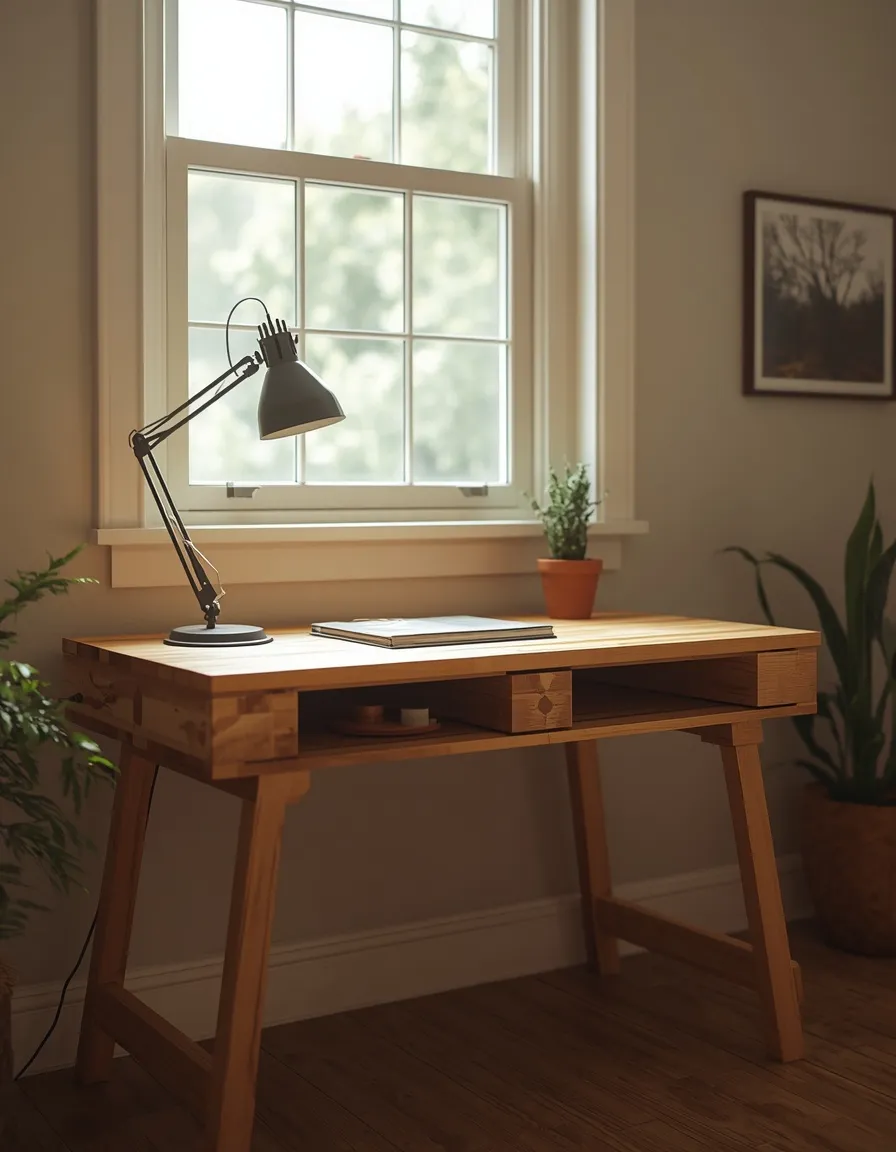
9. Pallet Desk Workspace
A pallet desk makes a home office feel grounded and handmade. A planed pallet top on a simple frame or trestle legs, set beneath a window with a plant and a task lamp, creates a workspace with warmth and zero cost.
Build the top from dismantled, planed pallet boards glued into a slab, then sand to 220 grit and seal, a desk gets constant contact with forearms, so a genuinely smooth, splinter-free surface is essential rather than optional. Set it on trestles or a simple pallet base. Placing a desk in front of a window gives you natural light while you work, though you’ll want to manage glare on your screen. Cable-manage through the slat gaps beneath. This suits home offices, studios, and small spaces, and it’s a satisfying intermediate build.
- Best for: home offices and studios; a warm, handmade workspace.
- Watch out: sand to 220 grit and seal; forearms find every splinter on a desk.
- Key elements: planed pallet slab top, trestle or pallet base, task lamp.
10. Pallet Kids’ Playroom Storage
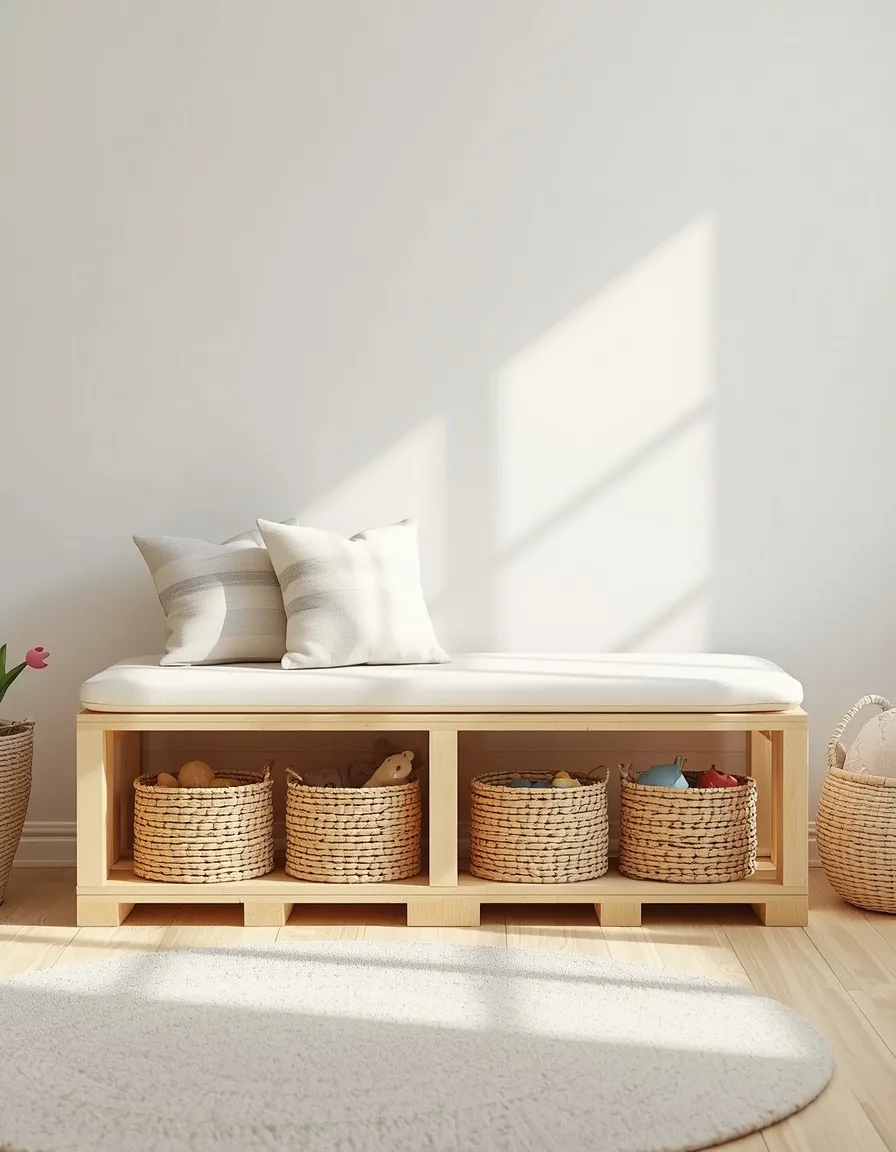
In a playroom, a pallet bench with toy storage does two jobs at once. A low pallet seat with cubbies or baskets tucked beneath gives children somewhere to sit and a place for everything to disappear at the end of the day.
Build a low bench from a single pallet, adding baskets or bins in the openings below, and round over every edge and corner so there’s nothing sharp at a child’s head height. For children’s furniture, two things are non-negotiable: sand exhaustively until the wood is truly splinter-free, and finish with a certified non-toxic, low-VOC sealant, since children touch, lean on, and chew furniture. Anchor any tall pallet shelving to the wall to prevent tipping. This suits playrooms, kids’ bedrooms, and family living rooms.
- Best for: playrooms and kids’ rooms; seating plus hidden toy storage.
- Watch out: non-toxic low-VOC finish only, edges rounded, tall units anchored.
- Key elements: low pallet bench, baskets beneath, rounded splinter-free edges.
11. Pallet Pet Bed Nook
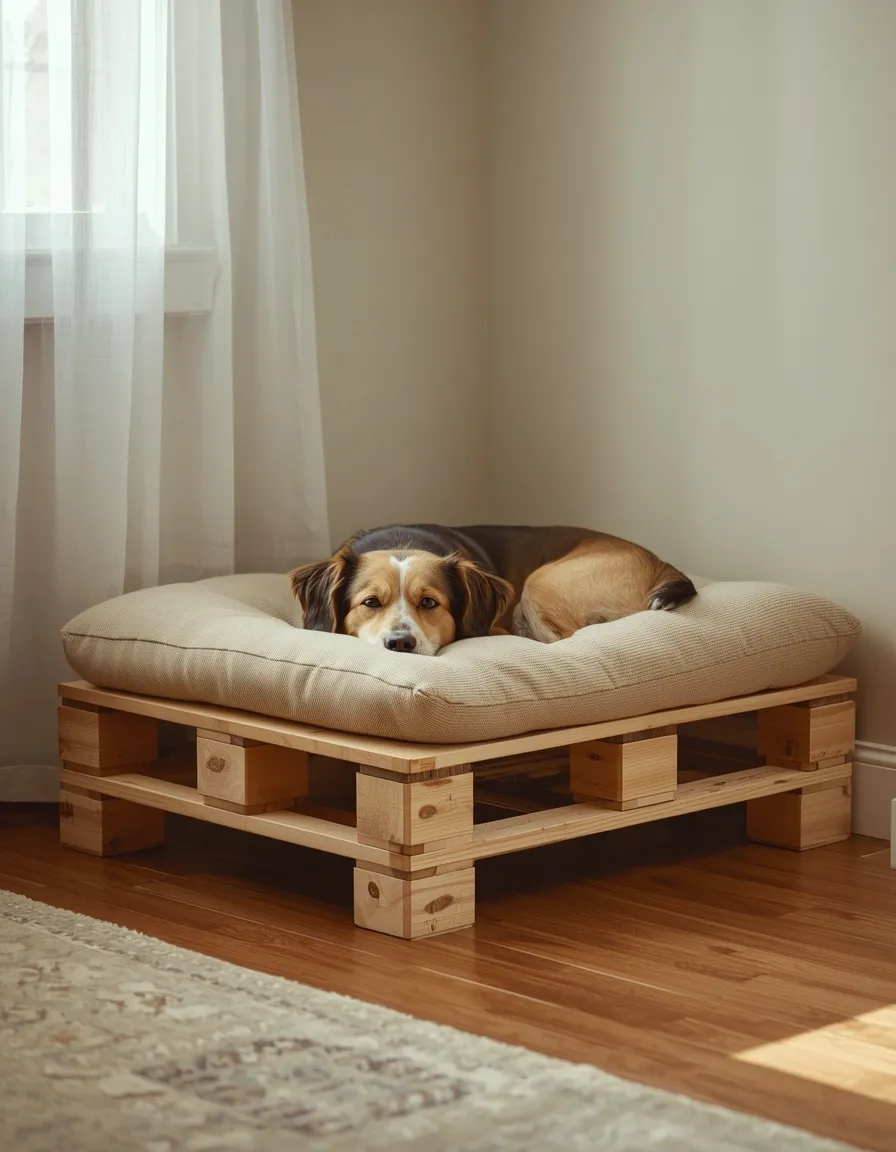
A raised pallet pet bed gives a dog or cat a proper spot of their own. A single pallet frame with a cushion inside, lifted slightly off the floor, keeps a pet off cold tiles and out of the draft, and looks far better than plastic.
Build a shallow frame from one pallet, adding short legs to raise it 10–15 cm (4–6 in) off the floor, which keeps bedding out of drafts and dust. Sand it completely smooth, since pets lie against every surface, and use a non-toxic, pet-safe finish, animals lick and chew furniture, so a standard solvent-based varnish is the wrong choice. Size the frame to a washable cushion you already own. Check regularly for loose nails or splinters. This suits pet owners in any home and makes a genuinely useful weekend project.
- Best for: pet owners wanting a raised, draft-free bed on a budget.
- Watch out: pets lick and chew, use only a non-toxic, pet-safe finish.
- Key elements: shallow pallet frame, 10–15 cm legs, washable cushion.
12. Pallet Entryway Bench
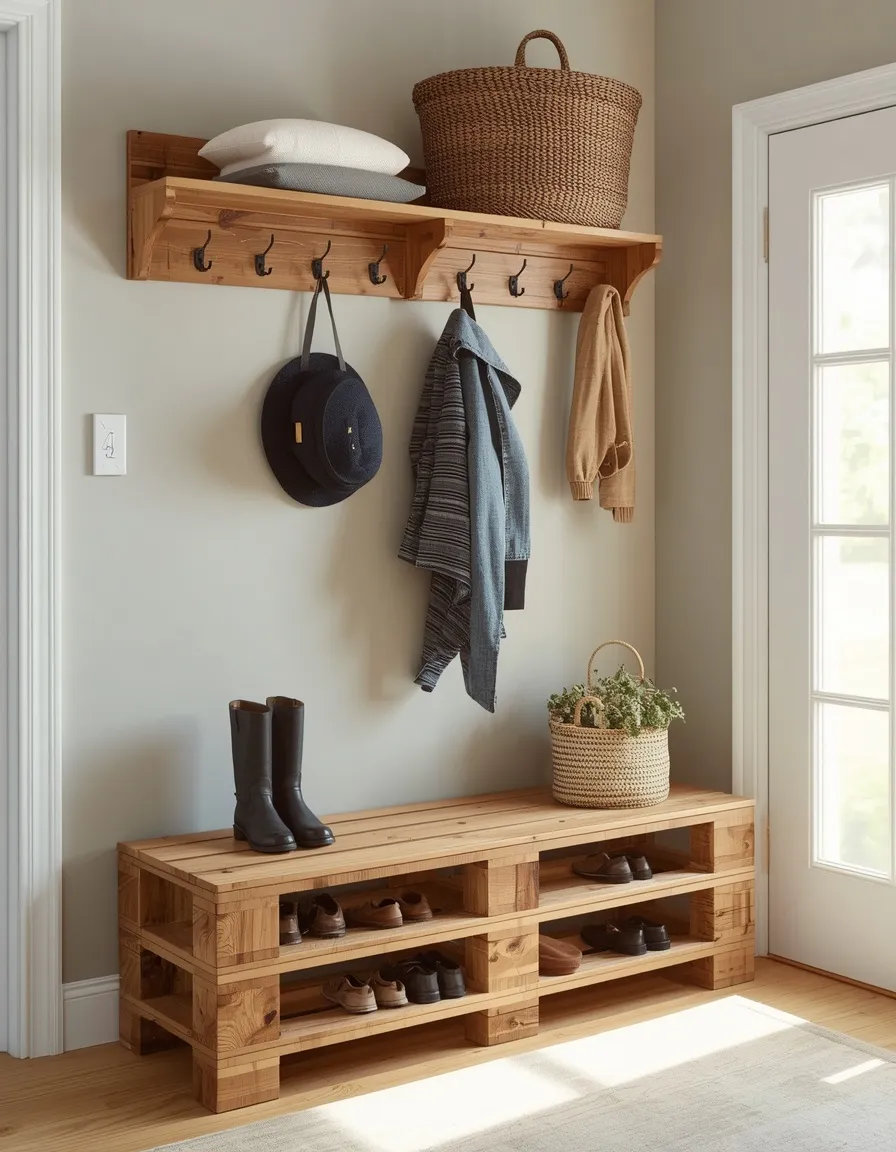
An entryway pallet bench catches everything that comes through the door. A sturdy seat for pulling on boots, shoe storage in the slats below, and a matching pallet coat rack above turn a chaotic hallway into an organized landing zone.
Build a bench from two stacked, bolted pallets, using the openings below as shoe cubbies, and mount a pallet section with hooks on the wall above for coats and bags. This works as a set, the bench, the rack, and a basket for gloves function together as one system rather than three separate objects. Seal the wood well, since an entryway takes wet shoes and dripping coats. Fix the coat rack into studs, as loaded coats are heavier than they look. This suits busy family entryways and small hallways.
- Best for: busy family entryways and small hallways.
- Why it works: bench, coat rack, and baskets function as one organizing system.
- Key elements: two bolted pallets, shoe cubbies below, wall-fixed pallet coat rack.
13. Small-Space Pallet Seating Nook
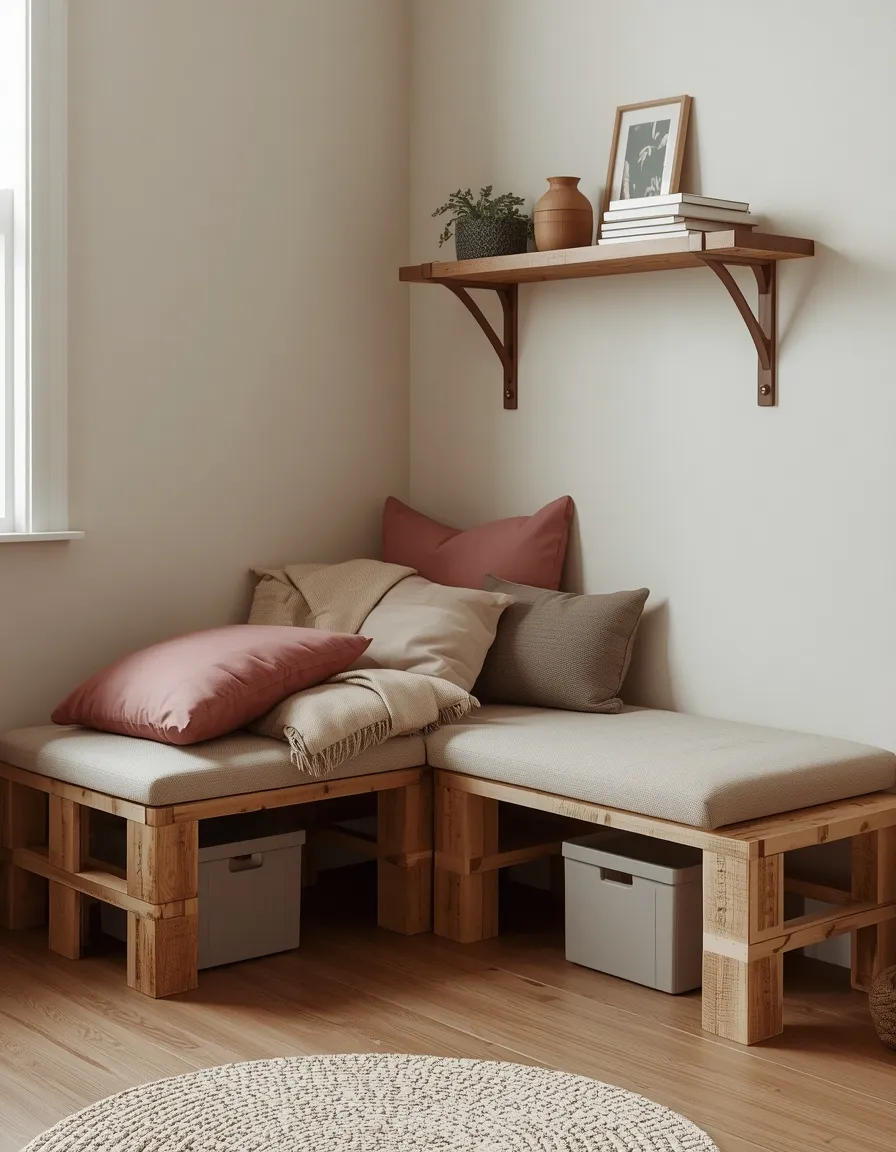
In a studio or tiny apartment, a corner pallet bench creates seating where no sofa would fit. An L-shaped low bench built from pallets, piled with cushions and a throw, turns a dead corner into a reading and lounging spot.
Build the bench to fit your corner precisely, which is the whole advantage of building rather than buying, a custom L-shape wastes none of the floor area a standard sofa would. Keep it low, around 40 cm (16 in), so the room still feels open, and use the space beneath for storage boxes. Add a wall-mounted shelf above rather than a side table to save more floor. Cushions do all the comfort work here, so don’t skimp on them. This suits studios, small apartments, and renters.
- Best for: studios and small apartments where a sofa won’t fit.
- Why it works: a custom L-shape uses a corner a standard sofa would waste.
- Key elements: low 40 cm L-bench, storage beneath, generous cushions.
14. Pallet Patio Sectional
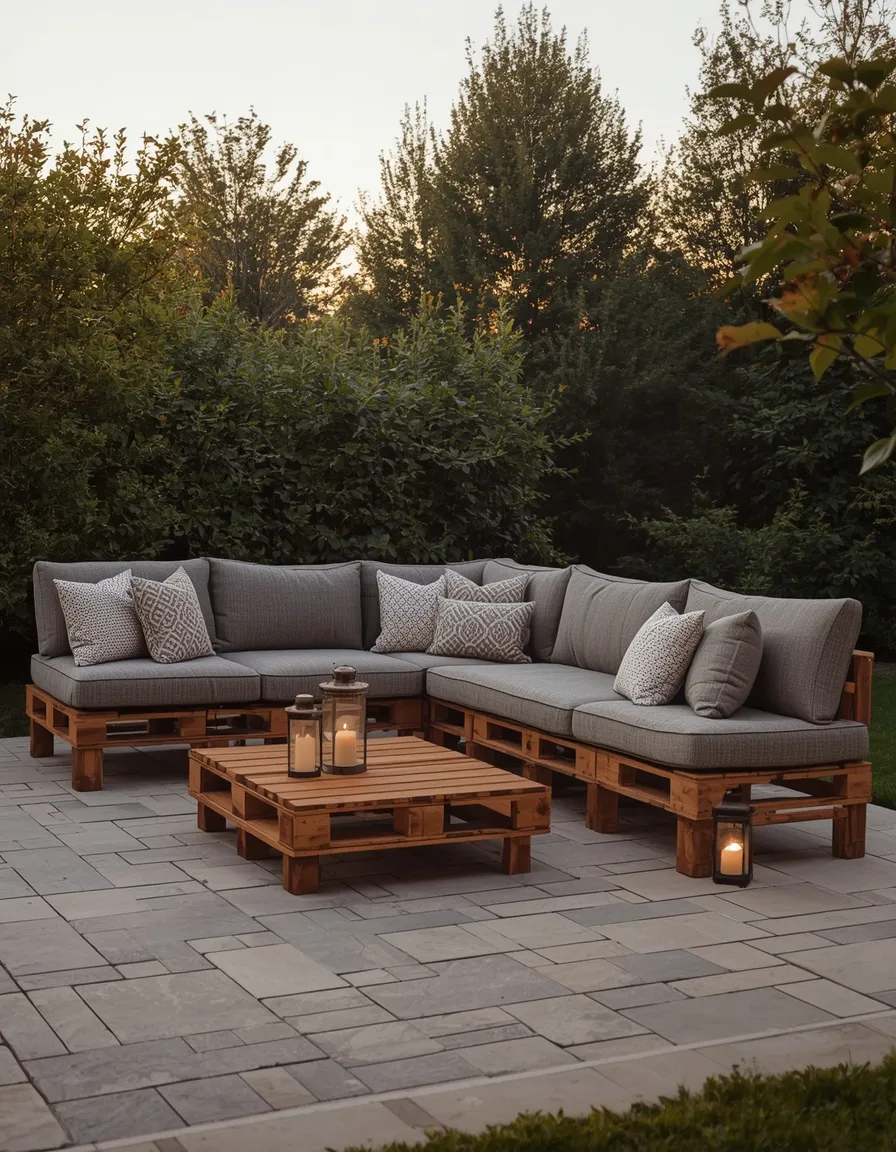
Outdoors, pallets come into their own. A generous L-shaped patio sectional built from stacked pallets, dressed with weatherproof cushions and lanterns, creates a lounge area that would cost a fortune to buy.
Bolt stacked pallets into an L or U shape sized to your patio, and raise the whole thing on feet or paving slabs so the timber never sits in standing water, ground contact is what rots pallet furniture fastest. Seal every surface with an exterior wood preservative and re-coat it annually. Use outdoor-rated, fade-resistant cushion fabric, and store cushions indoors in wet weather. Expect a shorter life than treated garden furniture; pallets are softwood and will weather. This suits patios and gardens on a tight budget.
- Best for: patios and gardens on a tight budget.
- Watch out: raise it off the ground and re-seal annually, or it rots quickly.
- Key elements: bolted L-shape, raised feet, exterior preservative, outdoor fabric.
15. Balcony Pallet Bench
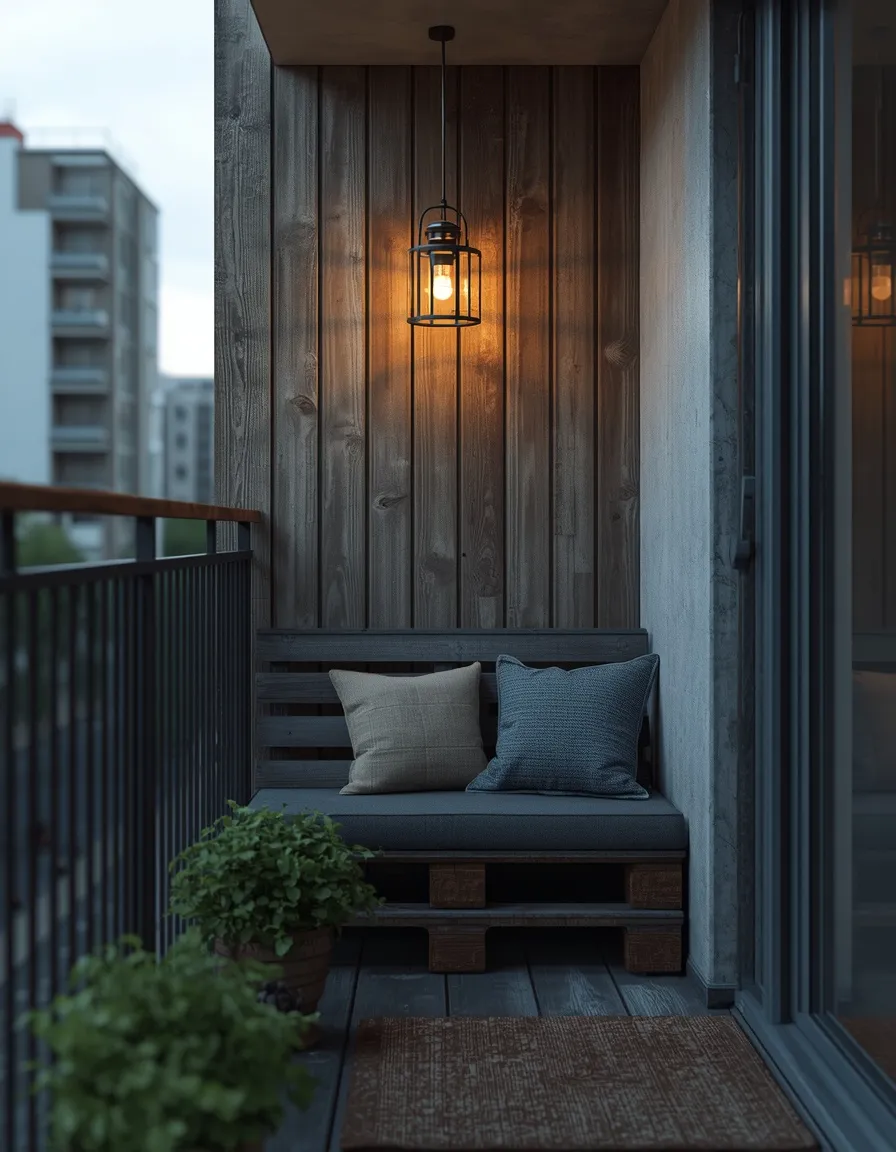
On a small balcony, a slim pallet bench transforms an unused ledge into an outdoor room. A narrow bench along one wall, cushions, a few potted herbs, and a hanging lantern make even a tiny balcony somewhere you’d actually sit.
Build a narrow bench, around 40–50 cm (16–20 in) deep, to leave walking room, and store cushions or gardening bits in a lidded compartment beneath. Balconies have real weight limits, so keep the build light and avoid stacking heavy planters and furniture along one edge; check your building’s rules if you’re renting or in a leasehold flat. Seal thoroughly against rain, and secure anything that could catch the wind at height. This suits apartment balconies, renters, and small outdoor spaces.
- Best for: apartment balconies and renters with tight outdoor space.
- Watch out: respect balcony weight limits; secure items against wind at height.
- Key elements: 40–50 cm deep bench, storage beneath, sealed against rain.
16. Vertical Pallet Herb Garden
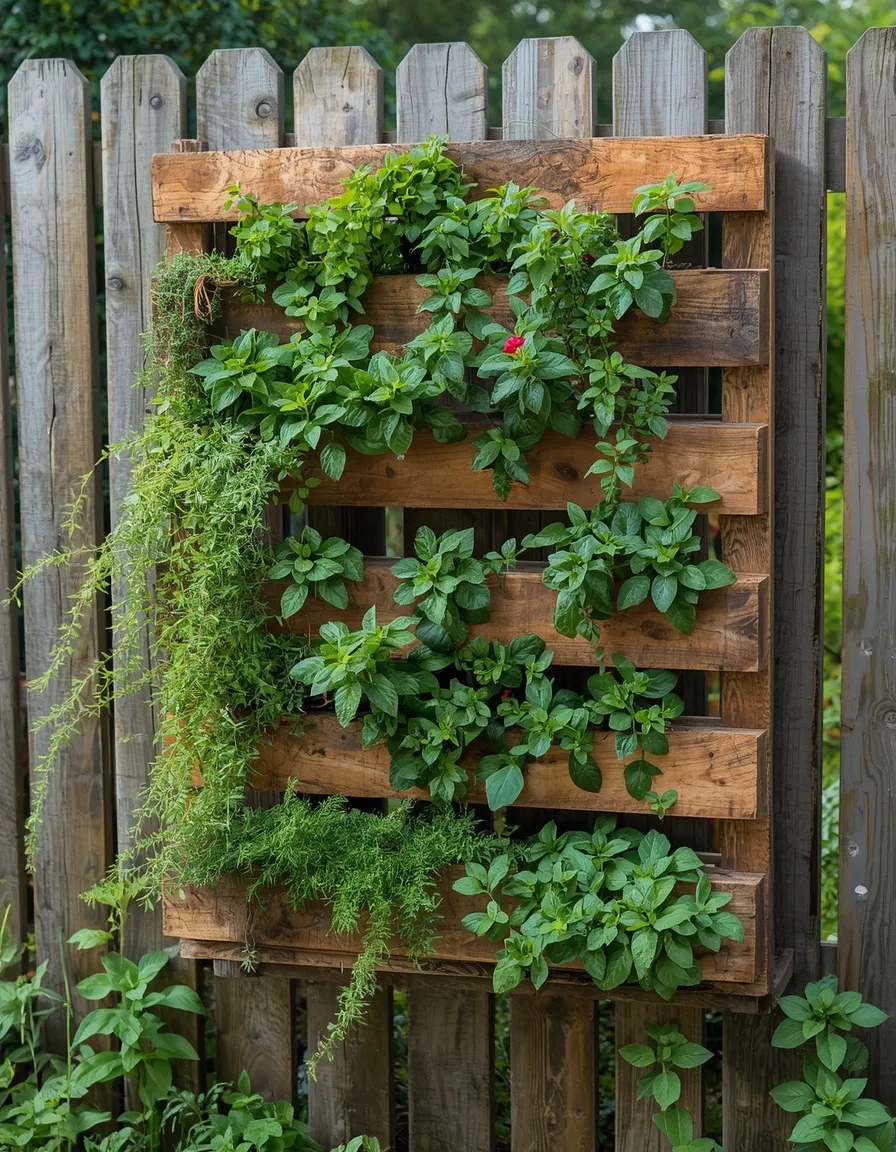
Stood upright against a wall, a pallet becomes a living green wall. Rows of herbs and trailing plants spill from planted pockets between the slats, turning a bare fence or balcony wall into a productive vertical garden.
Stand the pallet upright, staple landscape fabric across the back and between the slats to form planting pockets, then fill with potting compost and plant. Herbs like thyme, oregano, and mint thrive in the shallow depth; deeper-rooted vegetables will struggle, which is the mistake people make. Secure the pallet firmly to a wall or fence, a soil-filled pallet is extremely heavy once watered and is a genuine hazard if it topples. Water often, as vertical pockets dry out fast. This suits balconies, courtyards, and small gardens.
- Best for: balconies and courtyards; growing herbs in no floor space.
- Watch out: a watered, soil-filled pallet is very heavy, fix it securely to the wall.
- Key elements: upright pallet, fabric-lined pockets, shallow-rooted herbs.
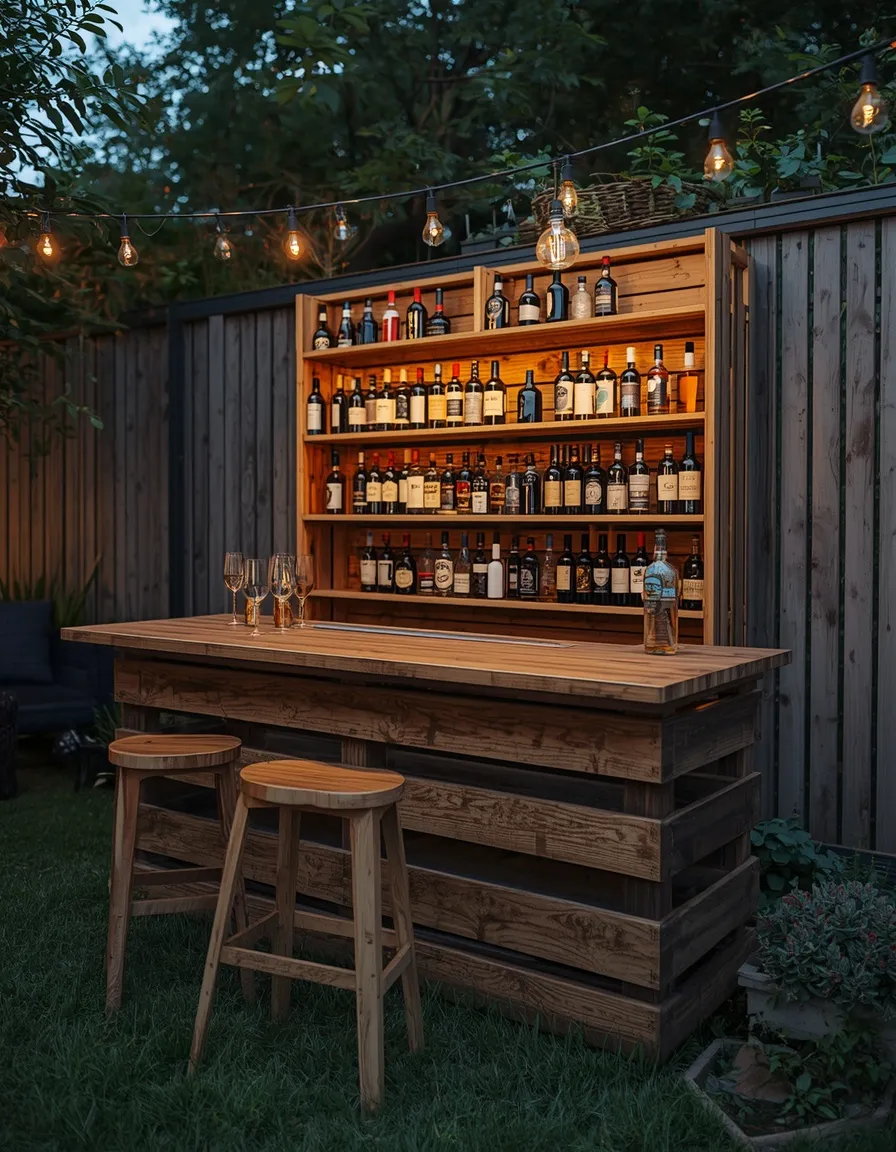
17. Pallet Garden Bar
A pallet bar turns a garden into a place people linger. A waist-height counter built from stacked pallets, with bottle storage in the slats, string lights overhead, and a couple of stools, makes an instant outdoor entertaining station.
Stack and bolt pallets to roughly 100–110 cm (40–43 in) high, the standard bar-counter height, and cap it with a sealed timber worktop. Use the open slats as bottle and glass storage. Weight it or fix it in place so it can’t be knocked over when leaned on, and seal it against weather like any outdoor pallet build. Any lighting used outdoors must be rated for outdoor use, and any powered items must run from a weatherproof, RCD-protected outdoor socket. This suits garden entertaining, patios, and summer parties.
- Best for: garden entertaining and summer parties.
- Watch out: outdoor-rated lighting only, on an RCD-protected weatherproof socket.
- Key elements: 100–110 cm bar height, sealed worktop, bottle storage in slats.
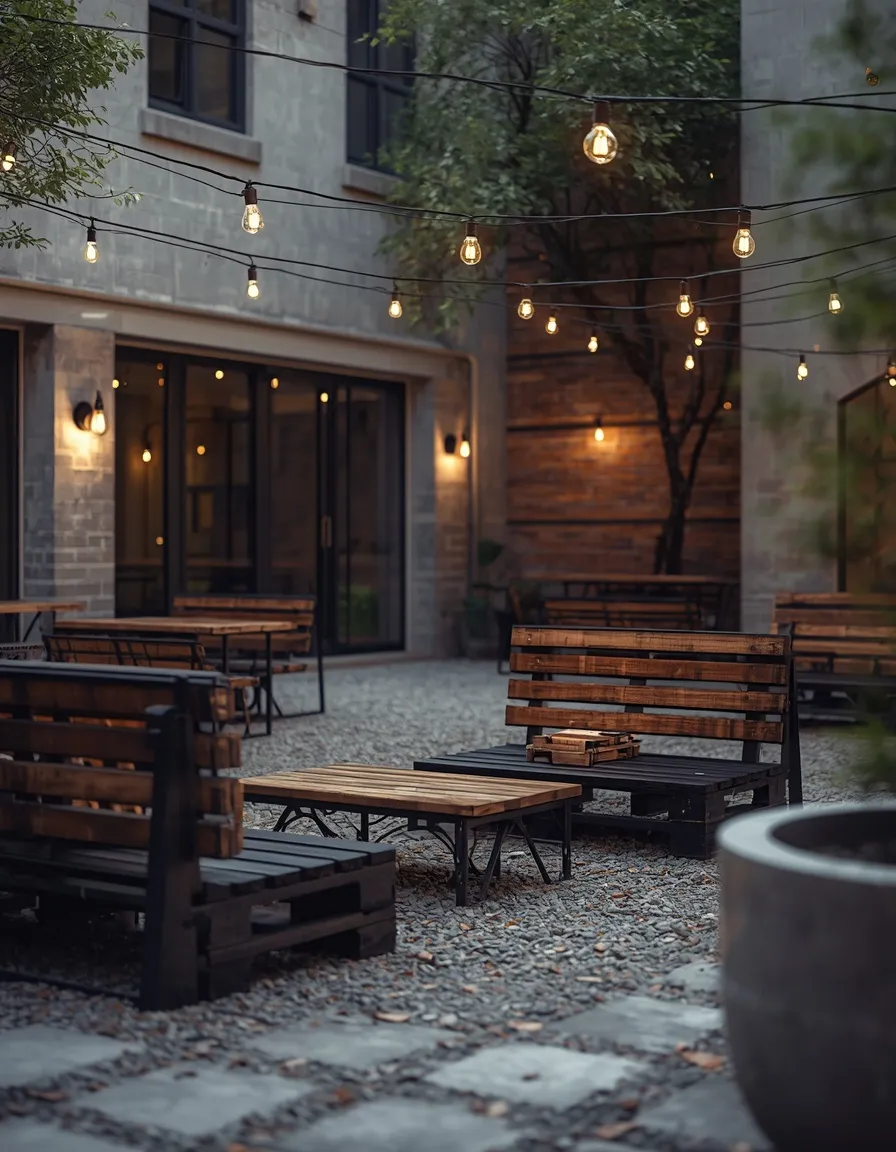
18. Industrial Pallet Lounge
Pairing pallet wood with black steel creates an industrial outdoor lounge with serious style. Raw timber seating on dark metal frames, concrete planters, and Edison-style string lights give a courtyard a warehouse-loft attitude.
Combine pallet seating with black metal legs, scaffold poles, or steel brackets so the wood reads as a deliberate material choice rather than a compromise. Concrete planters and a gravel base complete the industrial palette. Leave the timber tone natural or stain it dark, then seal it, an oiled or dark-stained finish suits this look better than a glossy varnish. Metal fixings outdoors should be galvanized or stainless, or they’ll rust and stain the wood. This suits courtyards, roof terraces, and modern industrial gardens.
- Best for: courtyards and roof terraces with a modern industrial look.
- Watch out: use galvanized or stainless fixings, or rust will stain the timber.
- Key elements: pallet seating, black steel frames, concrete planters, string lights.
How Do You Prepare a Pallet for Indoor Furniture?
Prepare a pallet by cleaning it, removing every protruding nail, sanding it progressively smooth, and sealing it. Skipping any of these steps is the difference between furniture and a splinter hazard.
Start by scrubbing the pallet with warm soapy water and letting it dry completely for a day or two, never pressure-wash it indoors, and let damp wood dry fully or it will warp and grow mold. Punch down or pull out every nail, checking the undersides where they’re easy to miss. Then sand in stages: 80 grit to knock off the roughness, 120 to smooth it, and 220 for a finish you can run a bare hand over. Wear a dust mask and eye protection while sanding, and work outdoors or in a ventilated space.
Finish with a sealant suited to the room. Indoors, choose a low-VOC, water-based polyurethane; for children’s or pets’ furniture, use a certified non-toxic finish; outdoors, use an exterior wood preservative and re-coat annually. Bolts beat nails for anything carrying weight.
Where you place a piece matters as much as how you build it. Our guide to positioning a desk in front of a window is worth reading before you fix your pallet desk in place, and you’ll find plenty more in our furniture and layout ideas.
What Pallet Furniture Can’t Do
Pallet furniture is cheap, sustainable, and genuinely rewarding, but it isn’t a like-for-like replacement for manufactured furniture, and pretending otherwise leads to disappointment.
Pallet timber is softwood, usually pine, so it dents, marks, and flexes far more readily than hardwood. It isn’t engineered or load-rated, which is why beds and seating need reinforcing rather than trusting the pallet as-is. Outdoors, expect it to weather and eventually rot, even sealed, a pallet sofa on a patio is a project you’ll refresh, not an heirloom. And a rough pallet is genuinely unpleasant to live with, so the sanding and sealing is the work, not an optional finishing touch. Go in knowing that, and the results are hard to beat for the money.
Conclusion
The appeal of pallet furniture ideas is real: free or nearly free timber, a satisfying weekend’s work, and a finished piece with warmth and grain that no flat-pack box delivers. Start with a heat-treated pallet, sand it properly, bolt anything that bears weight, and seal it for the room it’s going in. Whether you build a low platform bed, a patio sectional, or just a coffee table on castors, you’ll have rescued good wood from landfill and made something genuinely yours. For more ideas on furnishing a home with intention, browse our furniture and layout ideas, then go find a clean HT pallet.
Frequently Asked Questions
Q: Are pallets safe to use for indoor furniture?
Only heat-treated pallets, stamped HT, are safe for indoor furniture. Never use a pallet stamped MB, which means it was fumigated with methyl bromide, a toxic pesticide. Also reject any pallet with oily stains, chemical smells, or dark discoloration, since pallets often carry industrial chemicals and food spills, and unstamped pallets are unknown-origin and best avoided.
Q: How do you prepare pallets for making furniture?
Scrub the pallet with warm soapy water and let it dry completely for a day or two, then remove or punch down every protruding nail. Sand in stages, starting at 80 grit, then 120, finishing at 220 for a surface smooth enough to run a bare hand over. Seal with a low-VOC finish indoors, or an exterior preservative outdoors.
Q: Is pallet furniture strong enough for a bed or sofa?
Not without reinforcement. Pallet wood is softwood and isn’t engineered or load-rated for furniture use, so anything carrying weight needs strengthening, add cross-bracing or a plywood sheet beneath a mattress, and bolt sections together with coach bolts rather than nails, which work loose under repeated body weight.
Q: Where can I get free pallets?
Local shops, garden centers, hardware stores, and small warehouses often give away surplus pallets, and it’s always worth asking rather than taking. Choose clean, dry pallets from a known source, check for the HT stamp, and skip anything stained, oily, or stored outdoors in the wet, where mold can take hold.
Q: How long does outdoor pallet furniture last?
Less time than treated garden furniture, since pallets are softwood and weather quickly. To get the most from it, raise the piece off the ground on feet or slabs so it never sits in standing water, seal every surface with an exterior wood preservative, and re-coat annually. Store cushions indoors in wet weather.
Q: Is pallet furniture safe for kids and pets?
It can be, with care. Sand exhaustively until the wood is genuinely splinter-free, round over every edge and corner, and use a certified non-toxic, low-VOC finish, since children and pets touch, lean on, and chew furniture. Anchor any tall pallet shelving or media unit to the wall with an anti-tip strap.