
Introduction
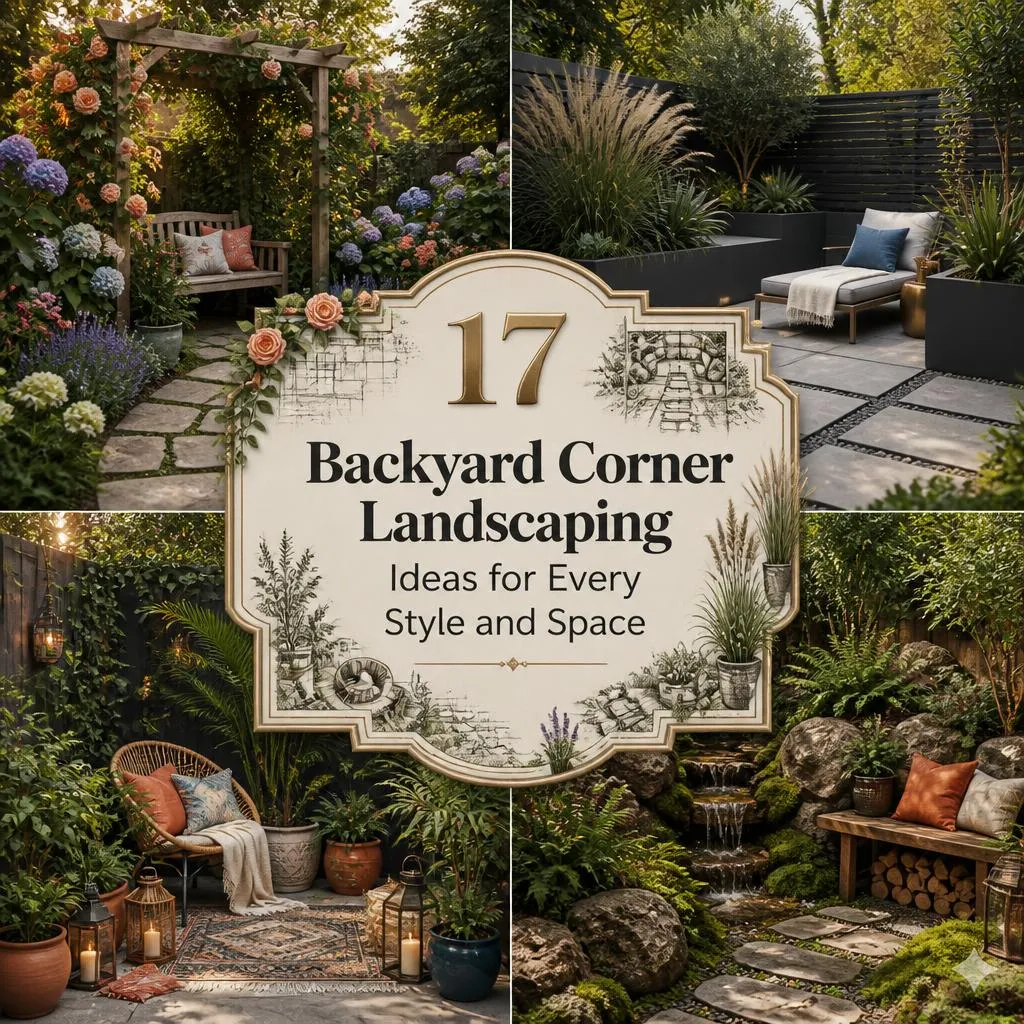
That empty corner where two fence lines meet is often the most overlooked spot in the whole yard, yet it is usually the easiest one to turn into something worth stepping outside for. Backyard corner landscaping ideas exist precisely because corners are awkward: too tight for a full patio, too shaded for grass, too visible to ignore. Awkward does not mean unusable. With the right mix of plants, hardscaping, and a little structure, a dead corner can become a rock garden, a fire pit nook, a shaded reading spot, or a privacy screen that finally blocks the neighbor’s view. This guide walks through seventeen distinct ways to fill that space, suited to small yards, corner lots, full sun, deep shade, and every skill level, so your outdoor abode finally puts every square foot to use, in the same spirit as the wider home and garden inspiration Sunday Abode was built around.
17 Backyard Corner Landscaping Ideas to Try
Each idea below is built around a real corner condition, sun, shade, drainage, or a corner lot’s double street exposure, so you can match the design to what your yard actually gives you rather than forcing a Pinterest photo onto the wrong spot.
1. Rock Garden Corner
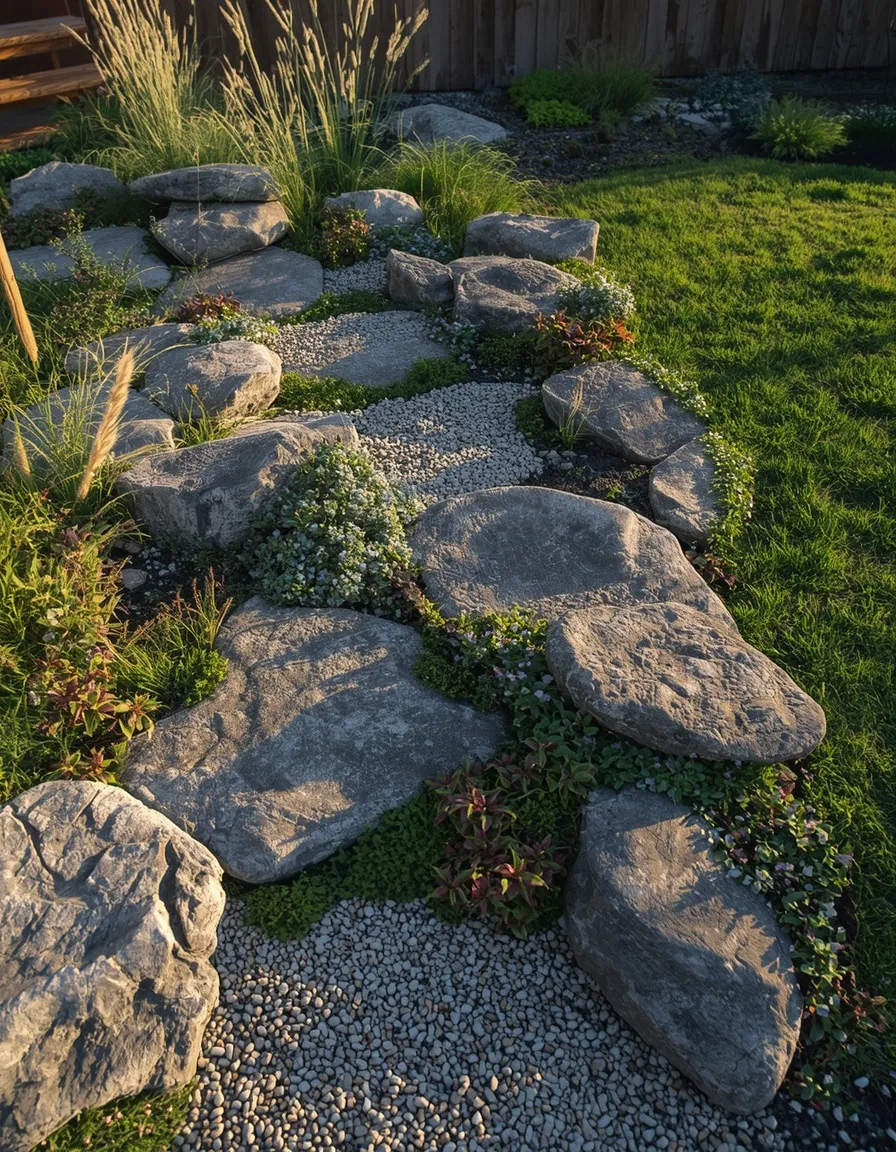
Picture a raised mound of weathered granite boulders and pea gravel tucked into the corner where grass always struggled to grow, softened by clumps of sedum, blue fescue, and creeping thyme spilling over the stones.
A corner rock garden works because it turns a corner’s usual liabilities, poor drainage and awkward angles, into design assets. Build it by layering landscape fabric, then coarse gravel for drainage, before setting boulders at varying heights (30 to 90 cm / 12 to 36 inches) in odd-numbered groupings for a natural look. Choose drought-tolerant, low-maintenance plants such as sedum, hens-and-chicks, and ornamental grasses that thrive in the fast-draining conditions rock gardens create. A common mistake is spacing rocks too evenly; stagger them and let two or three anchor boulders dominate the composition rather than scattering many small stones. This idea suits full-sun corners and dry, rocky, or sloped yards where grass has always struggled.
- Solves poor drainage and awkward slopes that resist lawn grass
- Needs minimal watering once established, ideal for low-maintenance yards
- Works in full sun or partial shade with the right plant mix
2. Arborvitae Privacy Screen
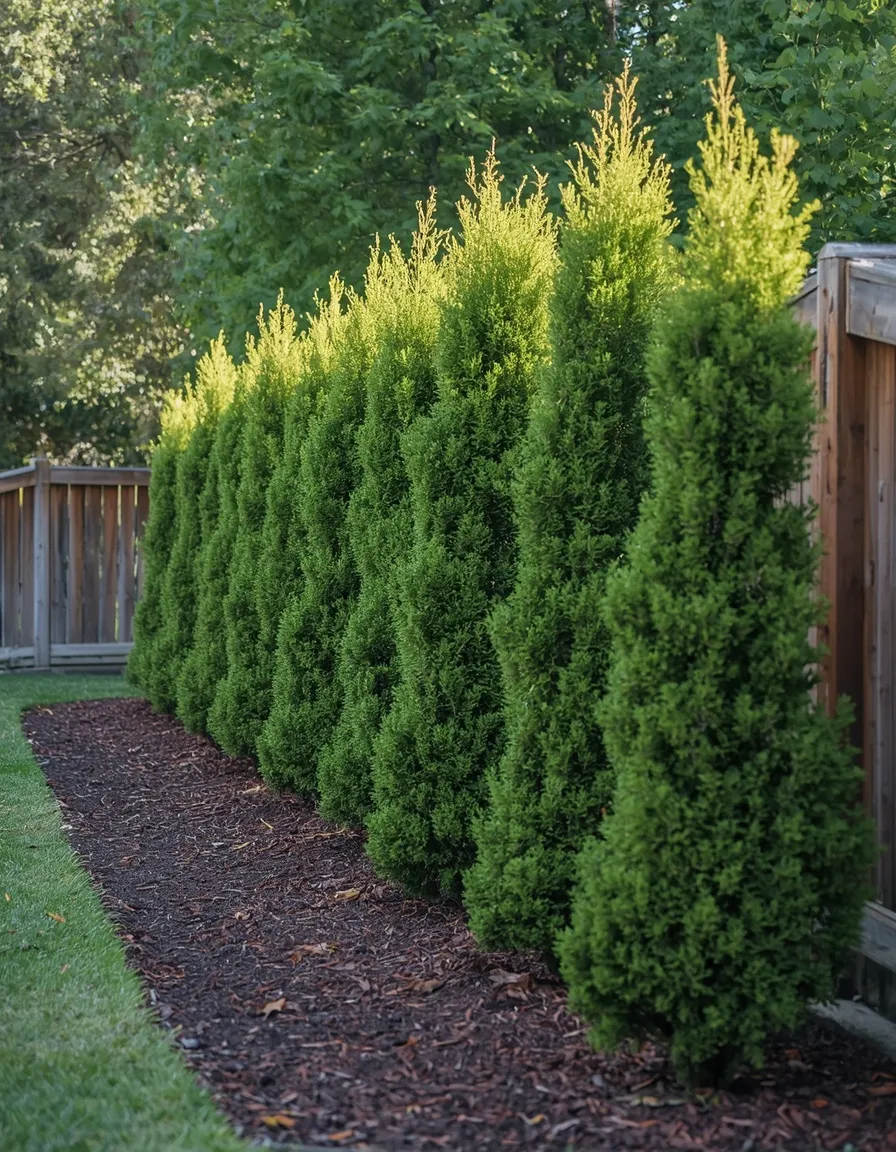
A staggered row of emerald green arborvitae planted diagonally across a bare corner can block a neighbor’s second-story window within two to three growing seasons, turning an exposed edge into a private green wall.
Arborvitae are a go-to for backyard corner landscaping because their narrow, upright habit fits tight spaces where a wide hedge will not. Plant them 60 to 90 cm (2 to 3 feet) apart in a gently curved or diagonal line that follows the corner’s angle rather than a stiff right angle, which softens the geometry and reads more intentional. Emerald Green varieties reach roughly 3.5 to 4.5 m (12 to 15 feet) and stay narrow, while Green Giant grows faster for those wanting privacy sooner. Water deeply during the first two summers to establish roots, and avoid planting too close to fences or structures, since arborvitae need airflow to resist fungal disease. Mulch the base but keep it a few centimeters from the trunk to prevent rot.
- Delivers year-round privacy screening in two to three growing seasons
- Fits narrow corner spaces better than wide-spreading hedge shrubs
- Works well along fence corners facing neighboring yards or streets
3. Corner Fire Pit Lounge
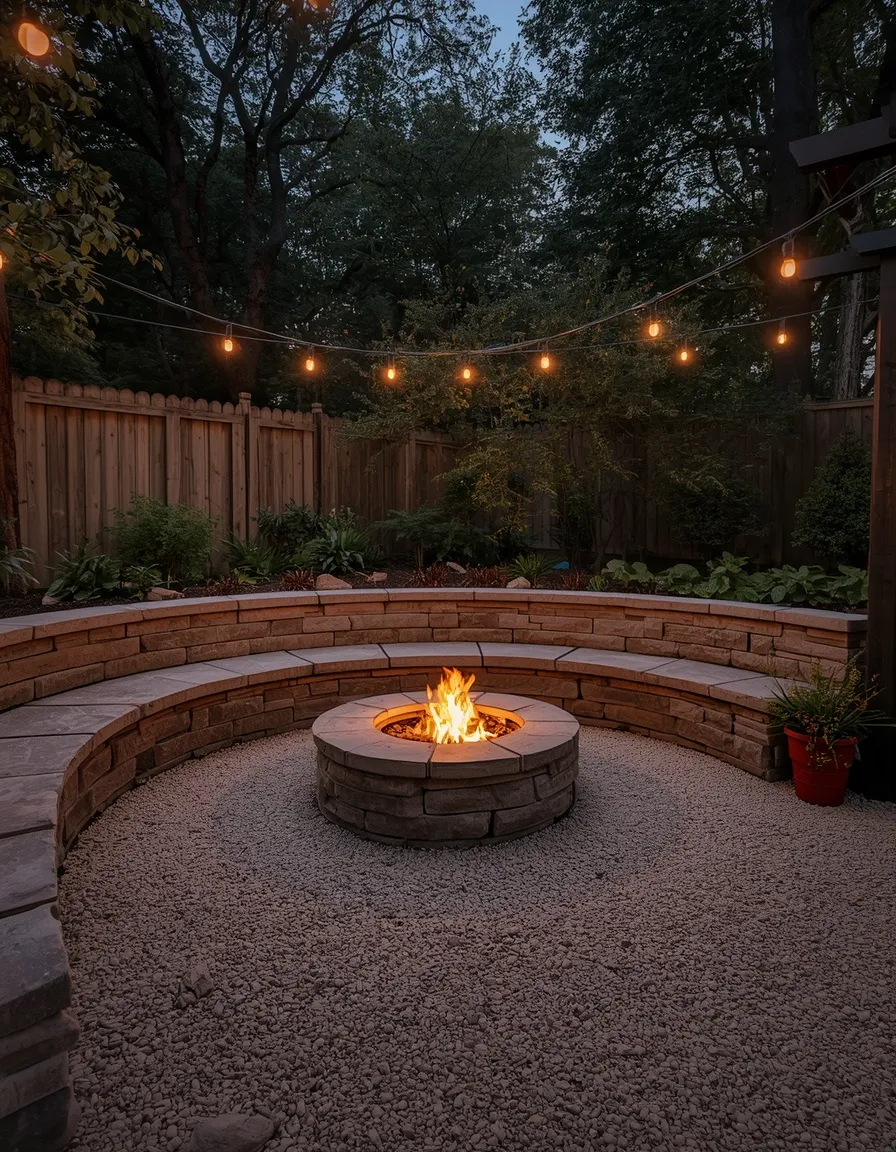
A circular gravel patio anchored by a stone fire pit and two curved built-in benches can turn the most unused corner of the yard into the spot everyone gravitates toward after dark.
Corners work surprisingly well for fire pits because the two boundary lines, fence and property edge, naturally frame the seating area without extra structure. Lay a base of compacted gravel or pavers at least 3 m (10 feet) in diameter to keep the pit a safe distance from fences, overhanging branches, and structures, and check local fire codes, since many municipalities require a minimum clearance and may restrict open flame during dry seasons. Curved bench seating, built from stacked retaining wall block or reclaimed timber, follows the corner angle better than straight furniture. Add solar path lights along the seating edge for safety after dusk. A common mistake is placing the pit too close to wooden fencing; keep at least 3 m (10 feet) of clearance and consider a spark screen.
- Creates a natural gathering spot from previously unused corner space
- Curved seating follows the corner’s angle better than straight furniture
- Requires fire-safe clearance from fences and overhanging tree branches
4. Vertical Trellis Wall
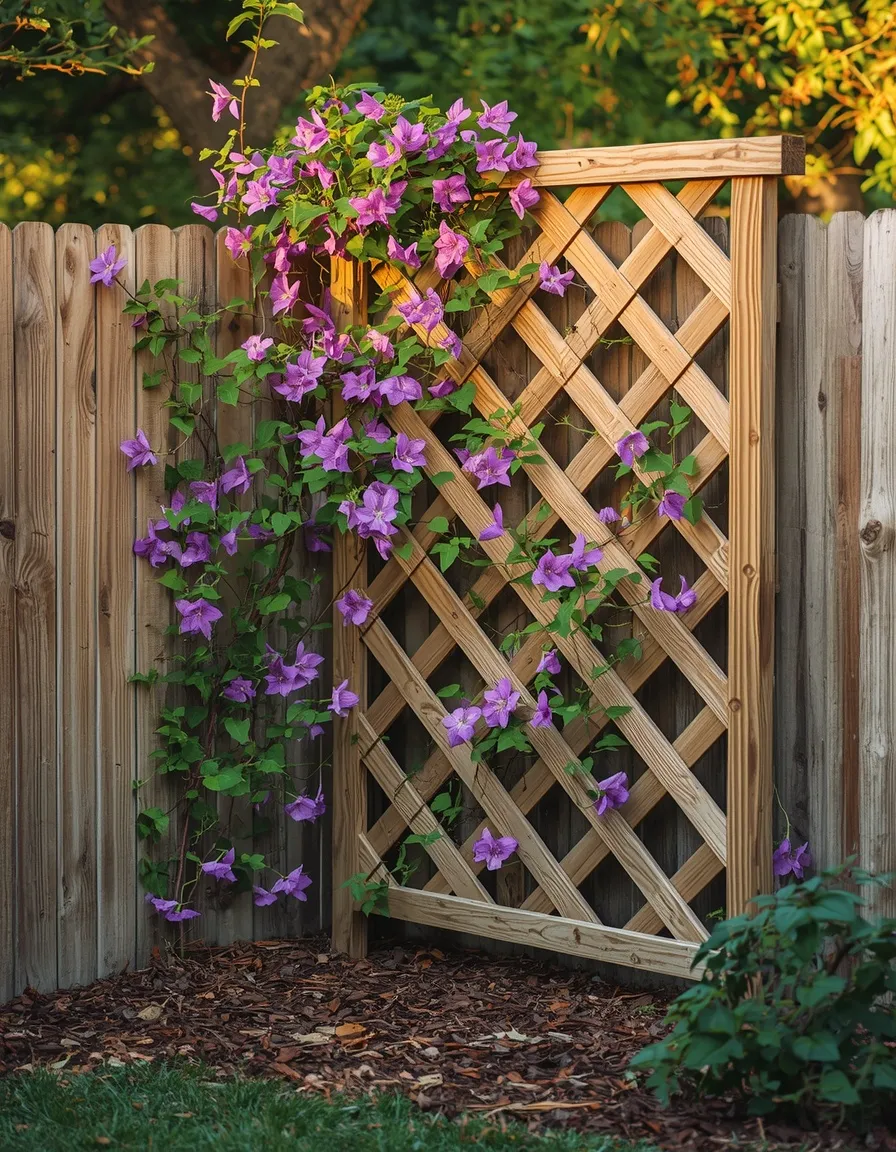
A tall wooden lattice panel angled across a bare corner, laced with clematis or climbing hydrangea, can replace a blank fence view with a living wall of flowers by midsummer.
Vertical trellis structures solve one of the most common corner landscaping problems: a fence corner that looks unfinished no matter what is planted at ground level. Mount a cedar or pressure-treated lattice panel diagonally across the corner, roughly 1.8 to 2.4 m (6 to 8 feet) tall, anchored into concrete footings for stability, which matters most in windy climates. Choose vines suited to your sun exposure: clematis and climbing roses for full sun, climbing hydrangea for shade. This is a genuinely approachable DIY weekend project requiring only a post-hole digger, lattice panels, and exterior screws. A frequent mistake is under-anchoring the structure; a fully leafed vine adds significant wind load, so set posts at least 45 cm (18 inches) deep in concrete.
- Disguises an unfinished fence corner with a living, flowering wall
- Straightforward DIY project completable in a single weekend
- Adapts to sun or shade depending on the vine species chosen
5. Shade-Loving Woodland Nook
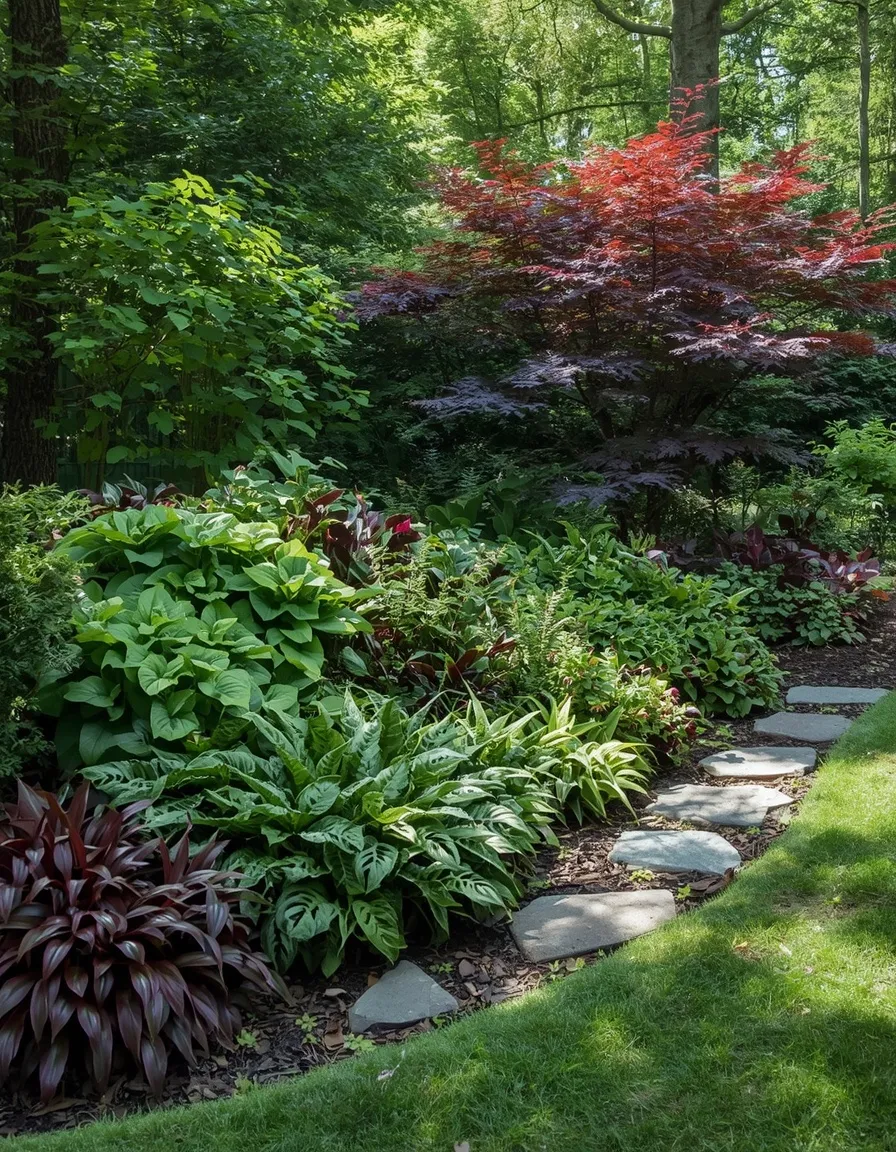
Beneath the deep shade cast by a fence and mature tree canopy, a corner planted with hostas, ferns, and heuchera can look lush and intentional in a spot most yards leave bare and patchy.
Shaded corners are one of the trickiest zones in backyard corner landscaping because grass thins out and bare soil erodes. Instead of fighting the shade, work with it: layer textures using broad-leafed hostas, feathery ferns, and colorful heuchera for year-round interest, then edge the bed with river rock or mulch to control weeds and retain moisture. Amend heavy or compacted soil with compost before planting, since shaded corners often have poorer drainage. Add a stepping-stone path through the bed so the space stays walkable rather than becoming a plant-choked dead end. A common mistake is over-mulching around hosta crowns, which invites slug damage; keep mulch a few centimeters from the base of each plant.
- Solves patchy grass and bare soil in permanently shaded corners
- Layered textures from hostas, ferns, and heuchera add year-round interest
- Works well under mature trees or beside tall privacy fences
6. Full-Sun Pollinator Corner
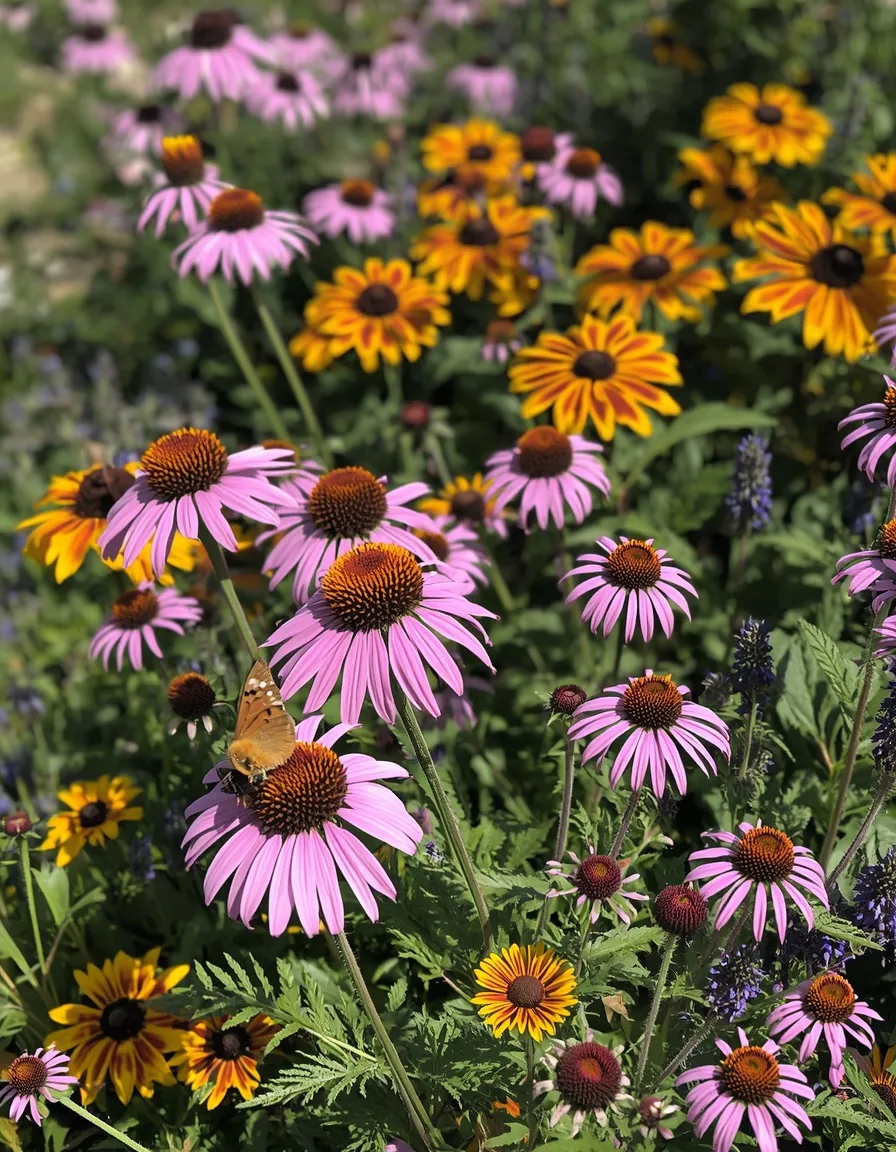
A sun-baked corner that once grew nothing but crabgrass can become a waist-high drift of coneflowers, black-eyed Susans, and Russian sage humming with bees and butterflies by midsummer.
Full-sun corners, especially those facing south or west, are ideal for a naturalistic pollinator planting because most native perennials that attract wildlife need at least six hours of direct sun daily. Layer the bed with taller plants like Russian sage or ornamental grasses at the back corner point, mid-height coneflower and black-eyed Susan through the middle, and low-growing catmint or creeping thyme along the front edge. Group plants in clusters of three to five rather than single specimens, since pollinators find and use large blocks of color more efficiently. Most of these species are drought-tolerant once established, cutting watering needs by the second season. Avoid pesticide use in this bed entirely, since the goal is attracting the very insects a pesticide would kill.
- Thrives in hot, exposed corners where lawn grass often struggles
- Attracts bees, butterflies, and beneficial insects to the whole yard
- Needs little watering once perennials are established after year one
7. Corner Pergola With Climbing Vines
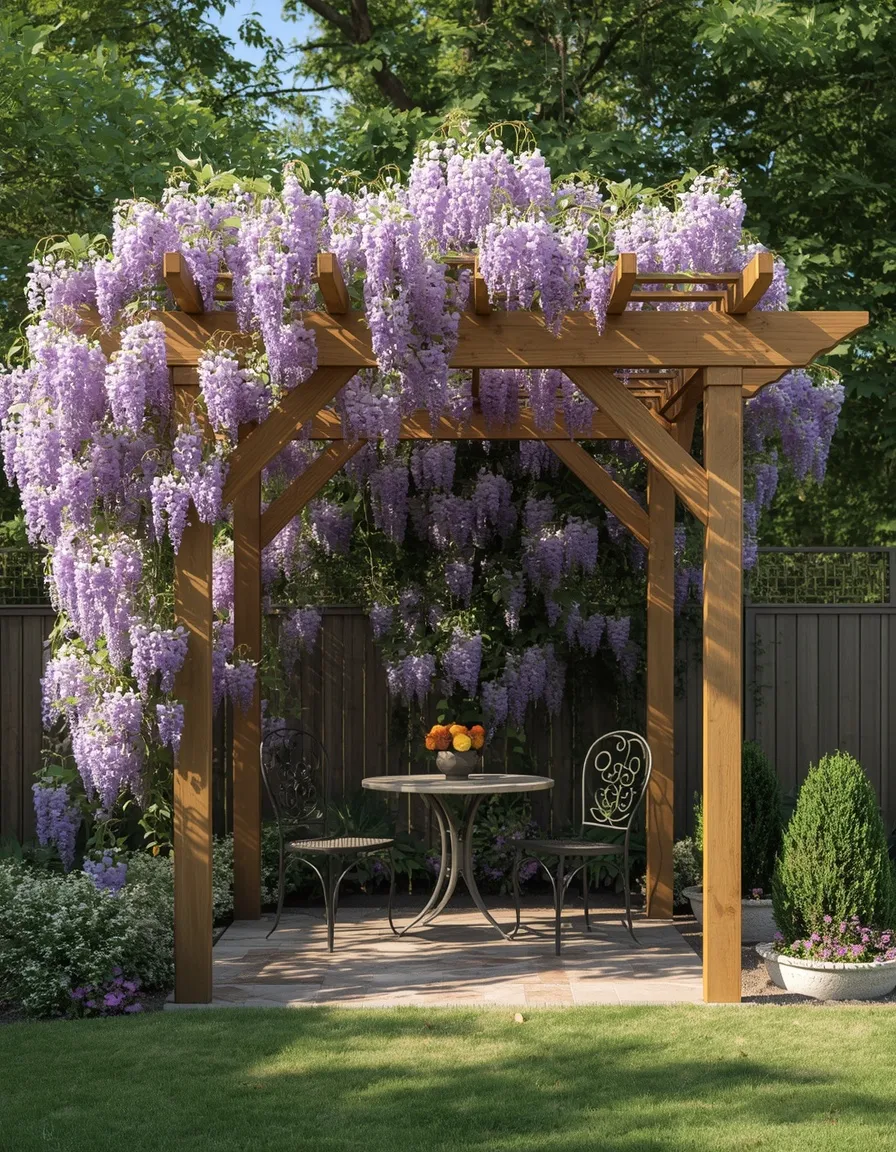
A freestanding wooden pergola set diagonally into the corner, draped in wisteria or grapevine, can turn an unused patch of lawn into a shaded outdoor room without the cost of a full patio cover.
A corner pergola works especially well on corner lots or yards where the property lines meet at a wide angle, since the structure can straddle both fence lines to define a genuinely private outdoor room. Standard kits run roughly 3 x 3 m (10 x 10 feet), which fits most residential corners without overwhelming the space; secure posts in concrete footings at least 60 cm (24 inches) deep. Underplant with a fast-growing but well-behaved vine like wisteria, trained yearly to prevent it from overtaking the structure, or grapevine for a productive twist. Add a small bistro table beneath it and the corner becomes a functional outdoor room rather than a decorative afterthought. Check local permit requirements before building, since some municipalities regulate freestanding structures over a certain height.
- Creates a defined outdoor room from open, unused corner space
- Well suited to wide-angle corner lots and larger backyards
- Provides natural shade once climbing vines mature, cutting cooling costs
8. Dry Creek Bed Feature
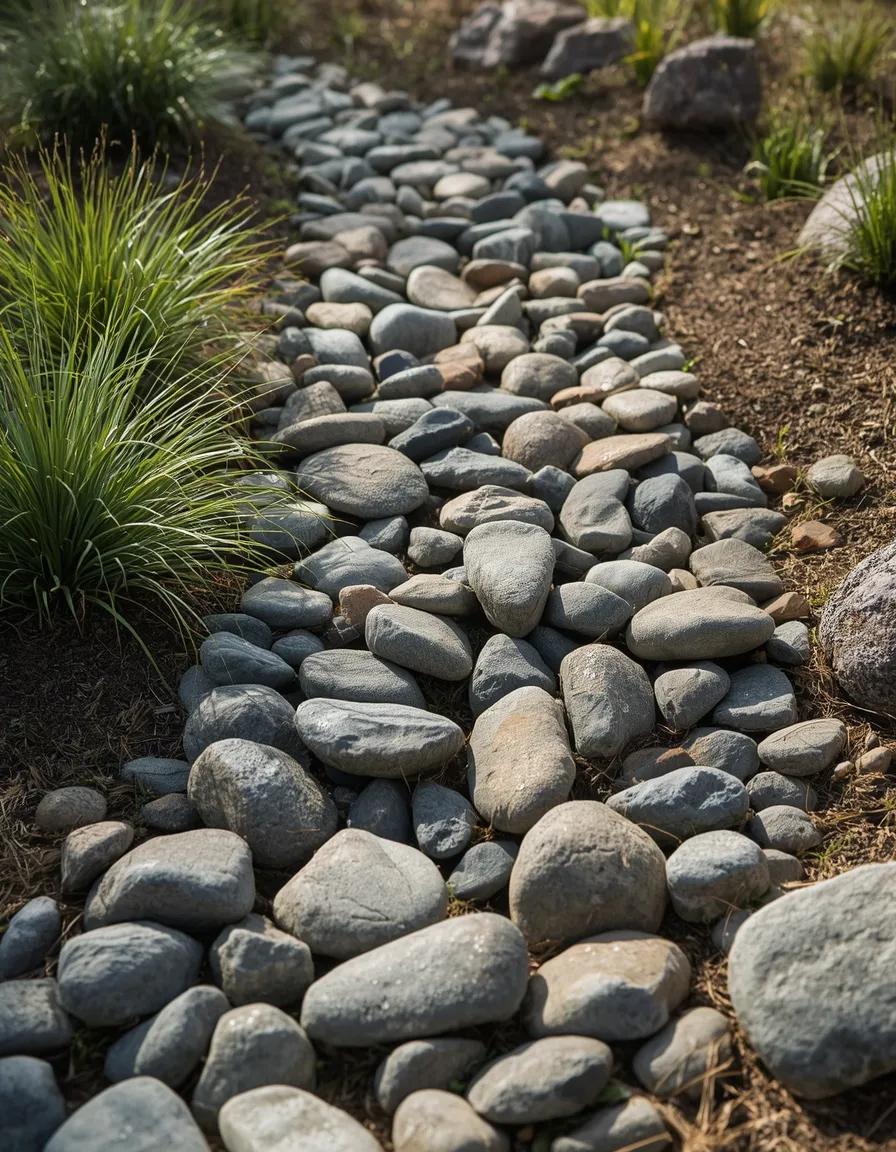
A meandering path of smooth river rock, edged with ornamental grasses and boulders, can look like a seasonal stream bed even in a yard that never sees standing water.
A dry creek bed is one of the most functional backyard corner landscaping ideas for corners that collect runoff, since it doubles as a decorative drainage solution. Dig a shallow channel 15 to 30 cm (6 to 12 inches) deep, line it with landscape fabric, then fill with a mix of river rock sizes, larger stones along the edges, smaller gravel in the center, to mimic a natural stream. Curve the path rather than running it straight, and let it appear to originate from a downspout or low point where water actually collects. Plant moisture-tolerant grasses and sedges along the banks, which help stabilize the rock during heavy rain. This is a strong choice for corners that stay soggy after storms, since it channels water away from foundations and fences instead of letting it pool.
- Solves standing water and drainage problems in low-lying corners
- Adds visual interest without ongoing watering or mowing maintenance
- Can be routed to redirect downspout runoff away from structures
9. Raised Bed Kitchen Garden
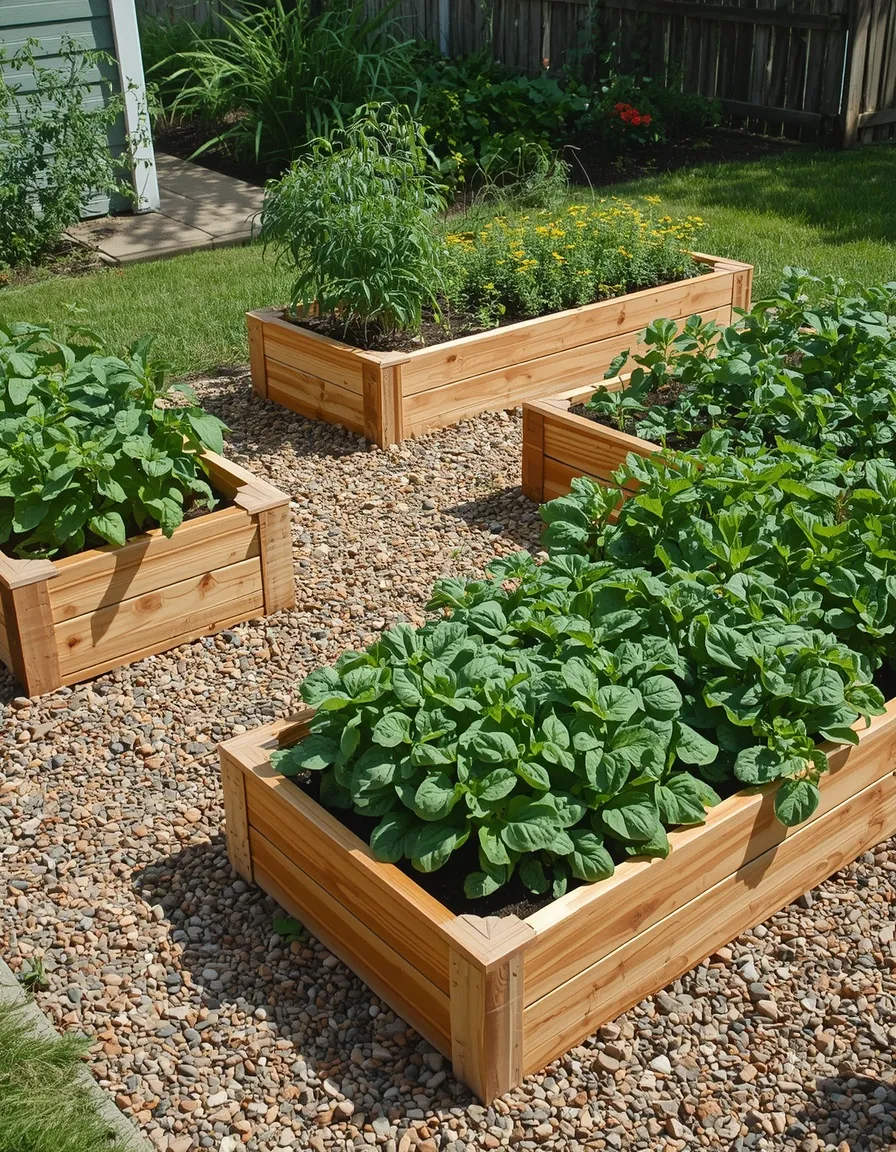
Three cedar raised beds arranged in an L-shape to follow the corner’s angle can turn unused lawn into a productive kitchen garden growing tomatoes, herbs, and greens within arm’s reach of the back door.
Corners that get at least six hours of sun are well suited to a raised bed vegetable garden, and the L-shaped layout uses the corner’s two boundary lines as a natural frame instead of fighting the angle. Build beds from untreated cedar or composite lumber; standard depths of 30 to 45 cm (12 to 18 inches) give root vegetables and tomatoes enough depth without excessive soil cost. Fill with a blended mix of topsoil, compost, and aged manure rather than plain garden soil, which compacts and drains poorly in raised structures. Leave at least 75 cm (30 inches) between beds for a wheelbarrow-width path. This is one of the more beginner-friendly DIY corner projects, since raised beds sidestep poor native soil entirely. Rotate crops yearly within the beds to reduce soil-borne disease buildup. If container growing suits your space better than in-ground beds, our garden pot ideas guide covers additional container options worth combining with a corner bed like this one.
- Turns unproductive corner lawn into a functional vegetable garden
- L-shaped layout uses the corner’s angle instead of fighting it
- Beginner-friendly DIY project that bypasses poor native soil quality
10. Corner Water Feature
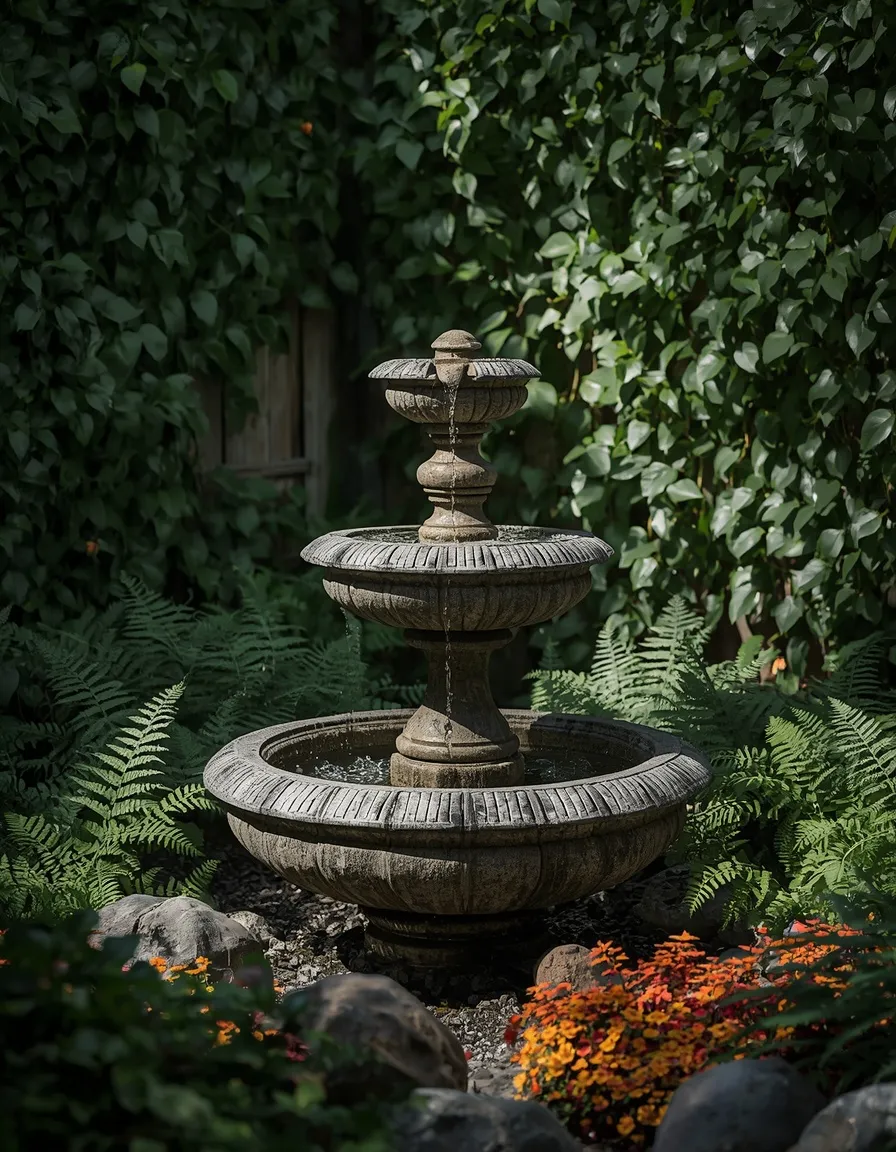
A tiered stone fountain tucked into the back corner, half-hidden by ferns and ornamental grasses, brings the sound of moving water to a spot most people only glance at on their way past.
A corner is often the ideal spot for a water feature precisely because it is naturally enclosed by two fence lines, which contains and amplifies the sound of trickling water rather than letting it dissipate across an open yard. Pre-formed tiered fountains are the most approachable option, requiring only a level gravel base, a submersible pump, and a nearby outdoor electrical outlet, and a licensed electrician should install any new outdoor circuit. Surround the base with moisture-loving plants like ferns, hostas, or creeping Jenny to soften the hard edges and hide the pump’s tubing. Clean the pump and check water levels every one to two weeks in summer to prevent algae buildup and evaporation-related damage. In colder climates, drain and store the pump over winter to avoid freeze cracking.
- Enclosed corner walls amplify the sound of moving water naturally
- Adds ambient noise that helps mask street or neighbor sounds
- Requires seasonal maintenance draining in climates with hard winter freezes
11. Sculptural Specimen Tree
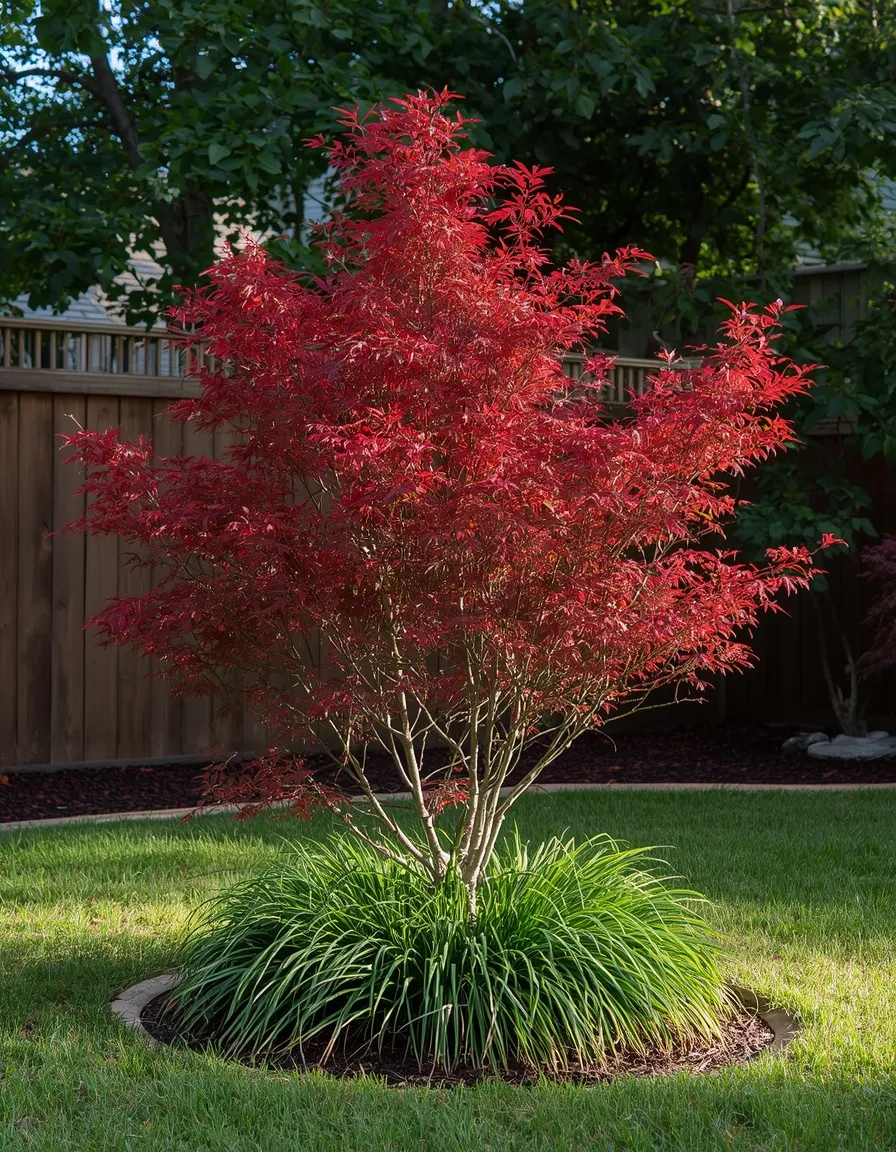
A single Japanese maple planted off-center in the corner, underplanted with a low ring of mondo grass, can carry more visual weight than an entire row of shrubs.
Rather than filling a corner with multiple plants, this approach uses one striking specimen tree as a focal point, a technique borrowed directly from professional garden design. Japanese maples, weeping cherries, and dwarf conifers all work well in corners because their mature spread, often 2.5 to 4 m (8 to 13 feet), fits the space without overwhelming it the way a large shade tree would. Position the tree slightly off the exact corner point rather than dead-center, which reads as more natural and lets it be viewed from multiple angles. Underplant with a single low groundcover, mondo grass, creeping thyme, or moss, rather than a mixed bed, so nothing competes with the tree’s silhouette. Check the mature root spread before planting near fences or foundations to avoid future structural issues.
- Uses one specimen tree as a focal point instead of many plants
- Fits tighter corners better than a full shade tree would
- Works well for small backyard corner landscaping where space is limited
12. Fence-Line Vertical Planter Wall
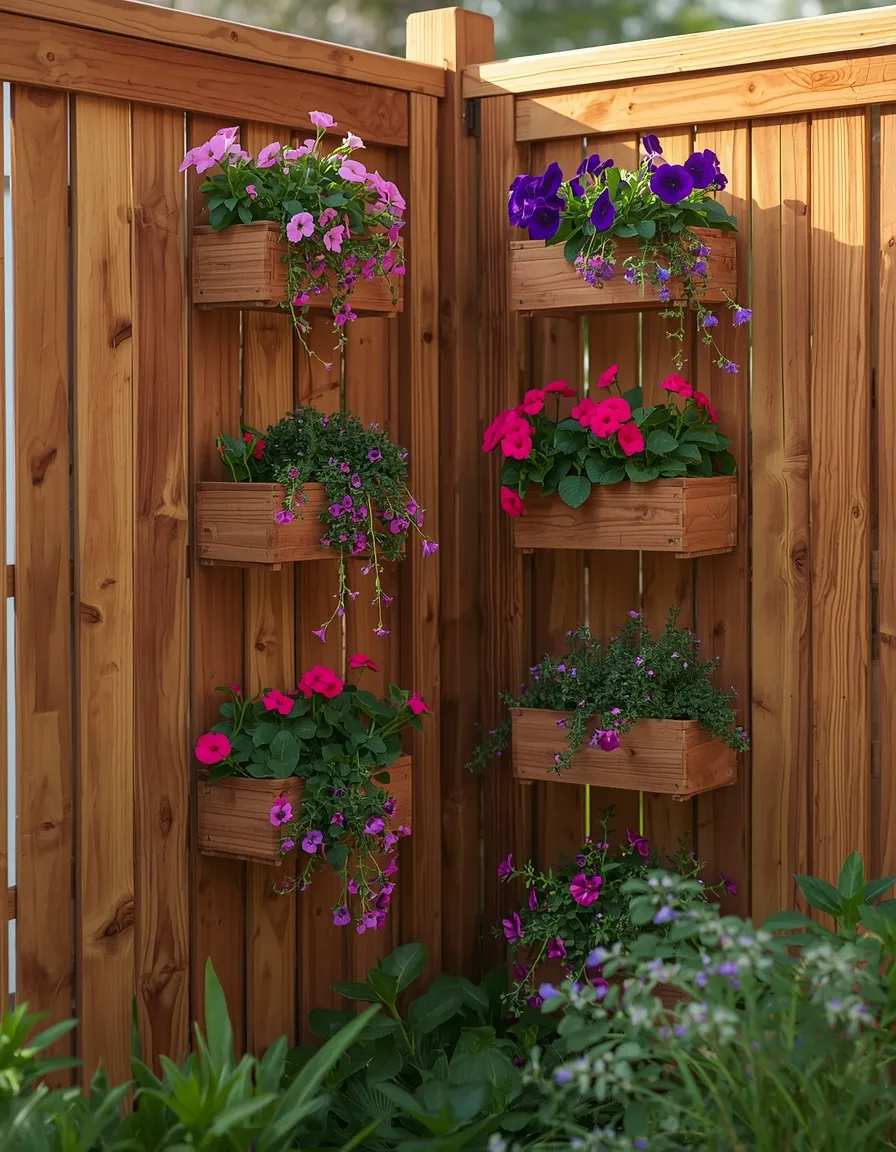
A grid of stained cedar planter boxes mounted directly onto the corner fence, spilling over with trailing petunias and strawberries, can turn two blank fence panels into the most colorful spot in the yard.
Vertical planter walls solve a specific corner problem: two fence panels meeting at a right angle with nothing but bare wood to look at. Mount galvanized or cedar planter boxes directly to fence posts, never fence panels alone, which are not structurally rated to hold wet soil weight, using exterior-grade brackets rated for at least 25 kg (55 lbs) per box. Stagger box heights across both fence sections to create a green quilt effect rather than a rigid grid. Trailing plants like petunias, lobelia, or strawberries soften hard edges best, while herbs make the setup doubly useful near a kitchen door. This is a genuinely accessible weekend DIY project using little more than a drill, brackets, and potting mix, though drainage holes in every box are essential to prevent fence rot.
- Turns two bare fence panels into a full vertical garden display
- Compact footprint suits the smallest backyard corner landscaping ideas
- Mounting to posts, not panels, prevents fence damage from wet soil weight
13. Corner Hammock Reading Nook
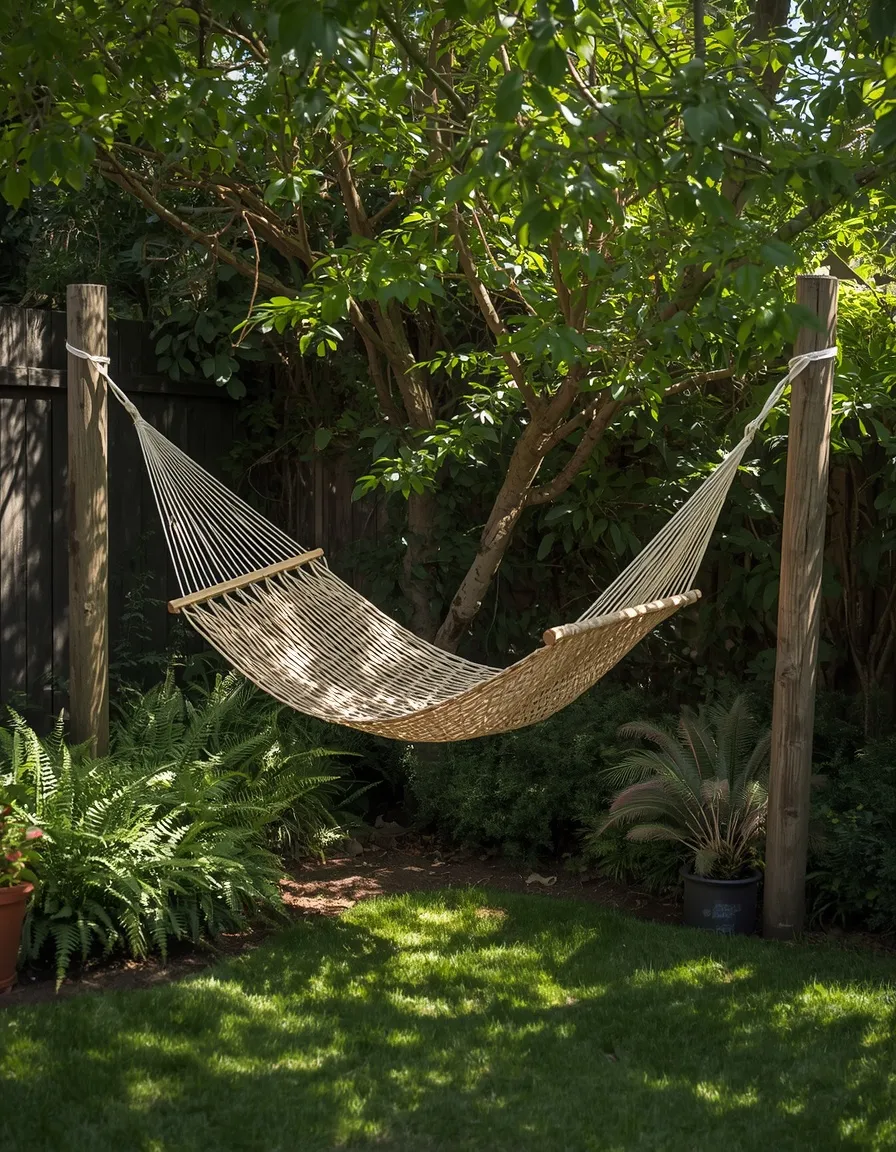
A single hammock strung diagonally between two sturdy posts in the back corner, shaded by a small tree canopy and framed with potted ferns, can become the quietest seat in the whole yard.
Corners work well for hammock nooks because two existing boundaries, fence and property line, already provide a sense of enclosure without building anything. If no mature trees are available for anchoring, install two pressure-treated posts set in concrete at least 60 cm (24 inches) deep, spaced according to the hammock manufacturer’s recommended distance, typically 3.5 to 4.5 m (12 to 15 feet) apart. Lay a small gravel or mulch pad beneath the hammock to keep the ground from wearing bare. Surround the space with potted shade plants like ferns or hostas rather than in-ground beds, which keeps the nook flexible if furniture needs to shift later. Always check post anchoring before first use; an under-anchored post is the most common cause of hammock accidents.
- Uses existing corner boundaries to create a sense of enclosure
- Freestanding posts work even without mature trees for anchoring
- Portable potted plants keep the layout flexible for future changes
14. Mixed Shrub Border for Corner Lots
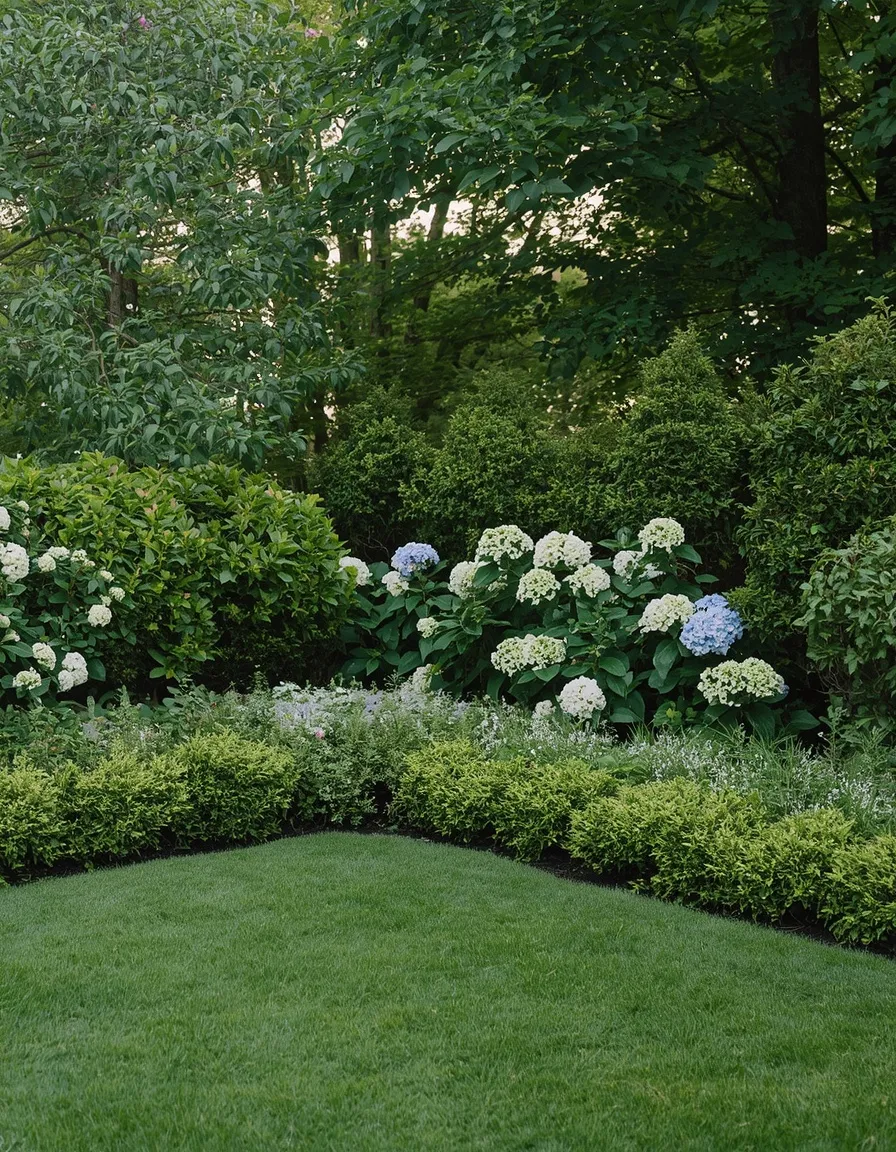
A layered border of boxwood, hydrangea, and viburnum planted along both fence lines of a corner lot can screen two directions of street view at once, something a single hedge species rarely manages well.
Corner lots face a specific privacy problem that interior lots do not: two exposed sides instead of one, often facing sidewalks or a second street. A mixed shrub border solves this more effectively than a single hedge species because varying heights and bloom times create year-round screening interest rather than a flat green wall. Plant taller viburnum or forsythia at the back corner point, mid-height hydrangea through the middle, and low, dense boxwood along the front edge for a tiered look. Stagger planting in a zigzag rather than a straight line, which improves screening density at eye level, the point most passersby actually see. Space larger shrubs based on their mature spread, typically 1.2 to 1.8 m (4 to 6 feet), to avoid an overcrowded look within a few seasons.
- Screens two street-facing sides at once, ideal for corner lots
- Mixed heights and bloom times add interest beyond a flat hedge
- Zigzag spacing improves eye-level privacy more than a straight row
15. Gravel Patio Seating Corner
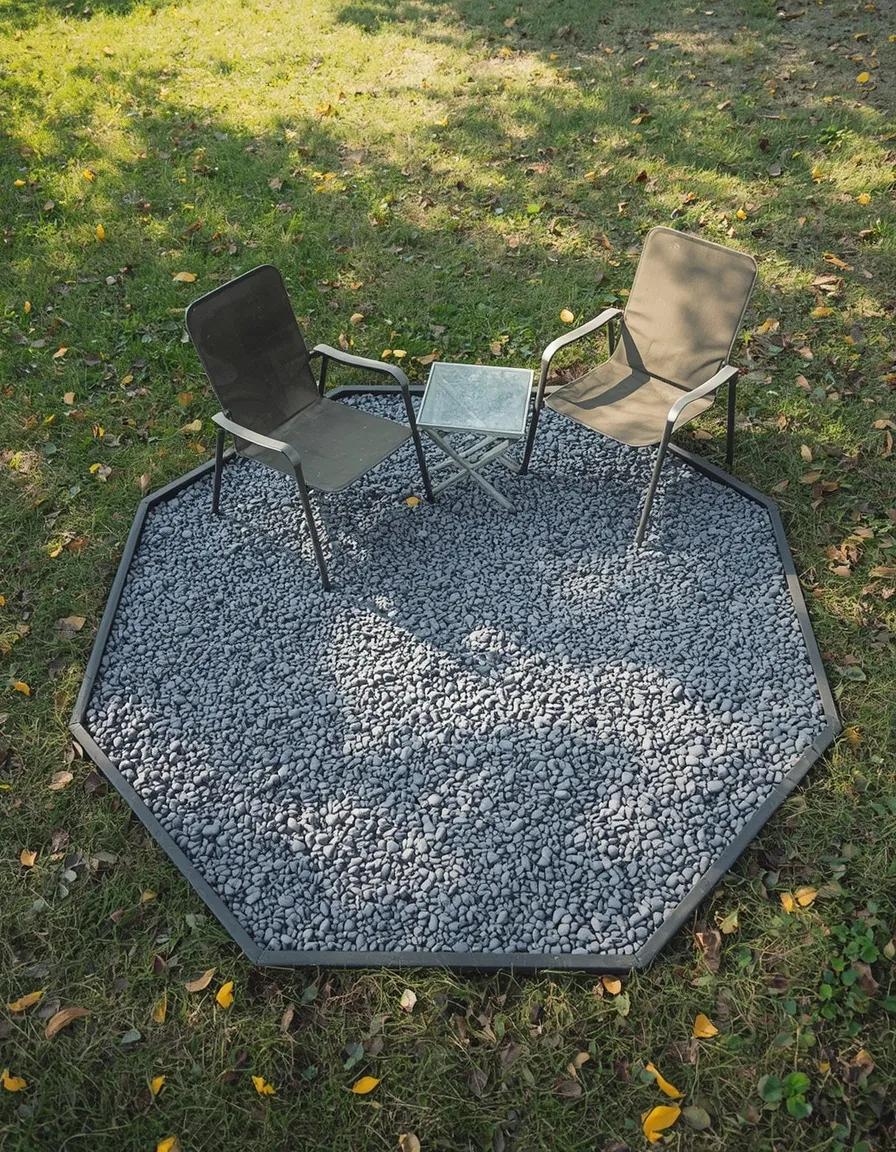
A simple hexagon of pea gravel edged in steel landscape border, furnished with two weatherproof chairs and a side table, can turn a patchy grass corner into usable outdoor seating in a single afternoon.
Gravel patios are among the most budget-friendly and DIY-approachable backyard corner landscaping ideas because they require no mortar, no concrete curing time, and minimal tools. Excavate 10 to 15 cm (4 to 6 inches) of soil, install a paver base or crushed stone sub-layer for drainage, then top with 5 cm (2 inches) of decorative pea gravel or crushed granite, edged with steel or plastic landscape border to keep gravel from migrating onto the lawn. Choose angular crushed gravel over smooth pea gravel if the space will hold furniture regularly, since angular stone compacts and stays put better underfoot. Add a couple of potted plants at the outer edge to soften the transition into the lawn. This layout suits corners too small or oddly shaped for a full paver or concrete patio.
- Budget-friendly, weekend-doable DIY project needing no concrete work
- Fits awkward or small corner shapes better than rigid pavers
- Angular gravel stays compacted underfoot better than smooth pea gravel
16. Herb Spiral Garden
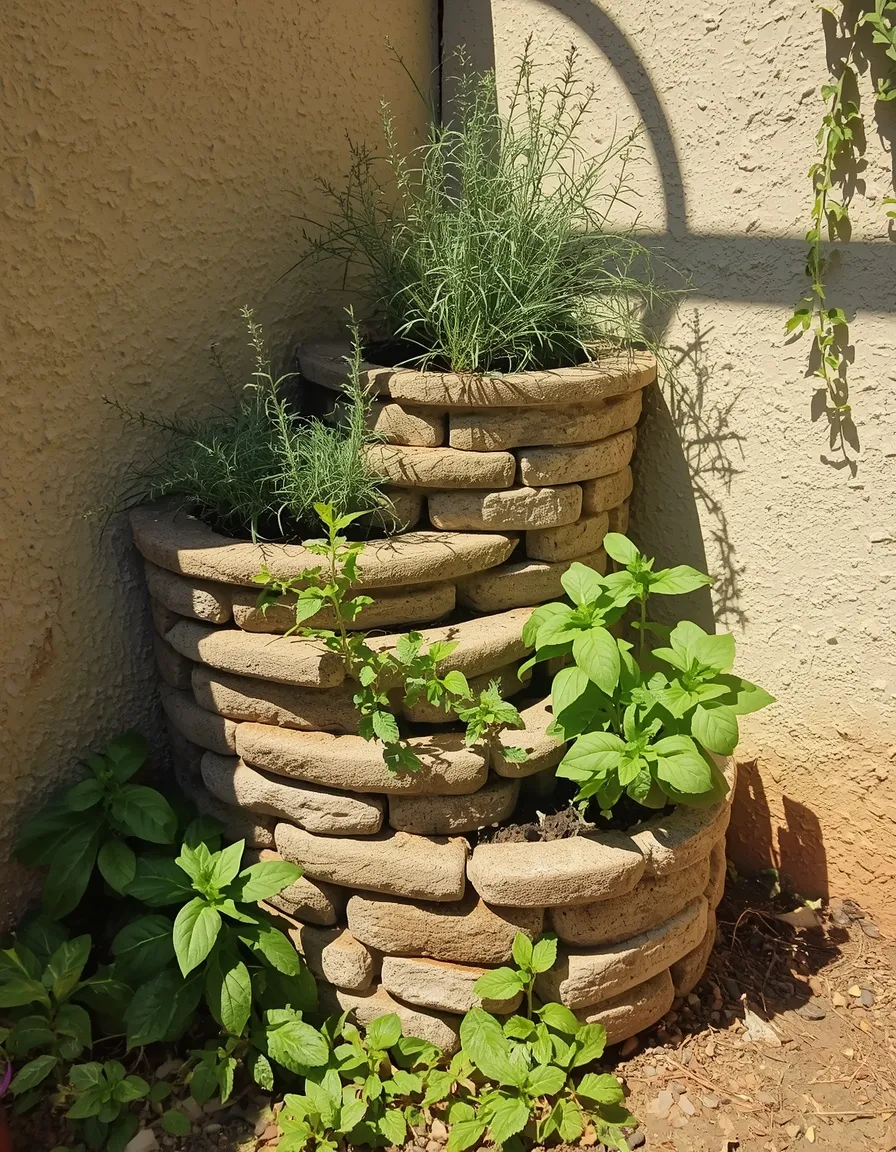
A spiral of stacked stone rising from ground level to about knee height, planted with rosemary, thyme, and basil, packs a dozen herb varieties into a footprint no bigger than a kiddie pool.
An herb spiral is a compact, sculptural solution for corners too small for a full raised bed but sunny enough to grow something useful. Build the spiral from stacked flat stones or reclaimed brick, coiling upward from a base roughly 1.2 to 1.5 m (4 to 5 feet) in diameter to a height of 45 to 60 cm (18 to 24 inches) at the center. The spiral shape naturally creates several microclimates in one small space: the sunny, well-drained top suits Mediterranean herbs like rosemary and thyme, while the shadier, moister base suits mint, parsley, and chives. This lets a single small structure grow herbs with completely different watering needs side by side, something a flat bed cannot do. Position the opening of the spiral facing the most direct sun for the strongest microclimate range.
- Fits a dozen herb varieties into a tight, small corner footprint
- Spiral shape creates multiple microclimates for herbs with different needs
- Doubles as a sculptural focal point beyond its practical use
17. Wildlife-Friendly Birdbath Corner
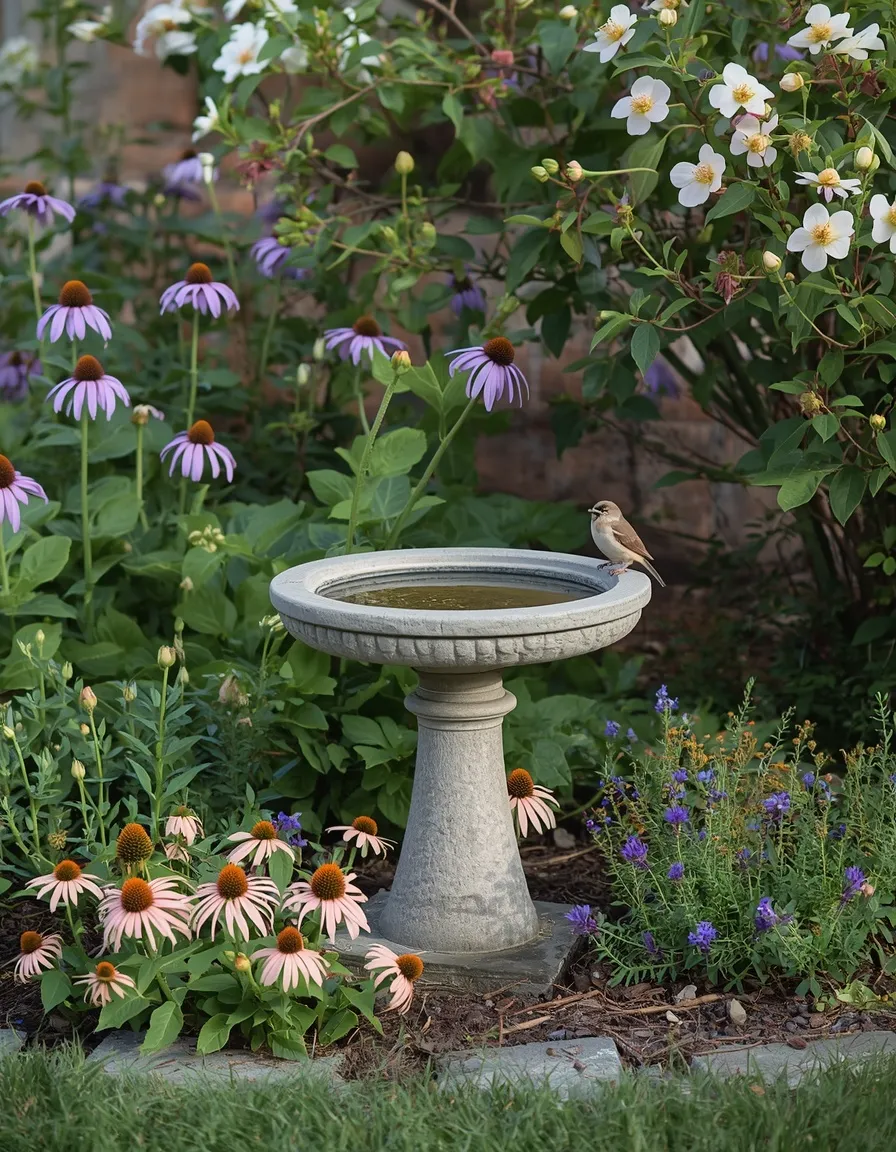
A weathered stone birdbath set among native coneflowers and dogwood shrubs in the farthest corner of the yard can quietly turn into the most active wildlife spot on the property within a single season.
A wildlife corner works best placed at the yard’s farthest point from the house, since birds and pollinators favor spots slightly removed from daily foot traffic and pet activity. Center the layout on a birdbath or shallow water dish, refreshed every two to three days to prevent mosquito breeding, surrounded by native flowering shrubs like dogwood or serviceberry that provide berries for birds later in the season. Layer in native perennials such as coneflower and aster for pollinators, and leave a small brush pile or log at the back edge, an intentional, tucked-away habitat feature rather than yard waste. Avoid pesticide and herbicide use throughout this corner entirely, since the point is supporting the insect population birds rely on for food. This idea pairs especially well with a full-sun pollinator planting elsewhere in the yard for a connected habitat corridor.
- Attracts birds, bees, and butterflies for a genuinely active wildlife corner
- Best placed farthest from the house, away from foot traffic
- Refreshing birdbath water every few days prevents mosquito breeding
Final Thoughts
A neglected corner rarely stays neglected once it has a job to do: screening a view, catching runoff, feeding pollinators, or giving you somewhere to sit with morning coffee. These backyard corner landscaping ideas work because they build around what a corner already offers, two natural boundaries, a defined shape, and often more sun or shade than the rest of the yard. Start with whichever idea matches your corner’s real conditions, not just the one that photographs best, and let the space grow from there. For more garden design ideas to carry the look through the rest of your garden, explore Sunday Abode’s full collection next.
Frequently Asked Questions
What is the cheapest way to landscape a backyard corner?
A gravel patio or a simple rock garden are the most budget-friendly backyard corner landscaping ideas, since both need only gravel, edging, and a handful of drought-tolerant plants rather than lumber, concrete, or irrigation. DIY installation over a weekend keeps labor costs at zero, and starting with a small footprint lets you expand the bed later without wasting materials.
What should I plant in a shady backyard corner?
Hostas, ferns, and heuchera are reliable choices for a shaded corner, since all three tolerate low light and thrive in the moister soil shaded areas tend to hold. Layering their heights and leaf textures, as covered in the shade-loving woodland nook idea above, keeps the bed visually interesting even without flowers carrying the color.
How do I landscape a corner lot for privacy?
Corner lots need screening on two sides rather than one, so a mixed shrub border or a staggered arborvitae planting along both fence lines typically works better than a single straight hedge. Zigzag spacing the shrubs and mixing heights improves eye-level privacy faster than planting one species in a straight row.
Can I put a fire pit in a backyard corner?
Yes, provided it sits far enough from fences, overhanging branches, and structures, generally at least 3 m (10 feet) of clearance, and complies with local fire codes, which often restrict open flame during dry seasons. Corners work particularly well for fire pits because the existing fence lines naturally frame the seating area.
What backyard corner landscaping ideas work for a small yard?
Compact options like an herb spiral, a single specimen tree underplanted with groundcover, or a vertical fence planter make the most of limited square footage without crowding the rest of the yard. These small-footprint ideas add visual interest and function without requiring the space a full patio or pergola would need.
Do I need a permit to landscape a backyard corner?
Most planting, gravel, and raised bed projects do not require a permit, but freestanding structures like pergolas, and any new outdoor electrical work for a water feature, often do depending on local building codes. It is worth checking with your municipality before starting any project involving structures, electrical work, or significant excavation.
How far should trees be planted from a fence in a backyard corner?
Most flowering and privacy trees should be planted at least 60 to 90 cm (2 to 3 feet) from a fence line to allow for root and canopy growth without damaging the structure, though larger shade trees need considerably more clearance. Checking a species’ mature spread before planting prevents costly removal or fence repair years later.