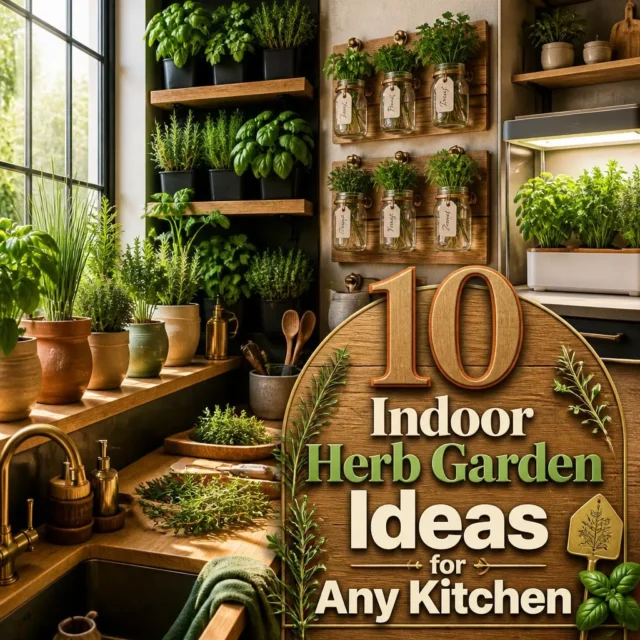

Imagine reaching past your cutting board to snip fresh basil from a pot on the sill, no shoes, no garden, no grocery run. These indoor herb garden ideas turn a windowsill, a bare wall, or a corner of the counter into a living, good-looking supply of the herbs you cook with most.
Below are ten complete setups, each a full style you can recreate as a whole rather than a single lonely pot. Some are budget DIY projects, some lean aesthetic and Pinterest-ready, and several solve the classic apartment problem of having almost no space. Whatever your kitchen and light, there’s a way here to make your abode greener and your cooking fresher.
1. Sunny Windowsill Herb Lineup
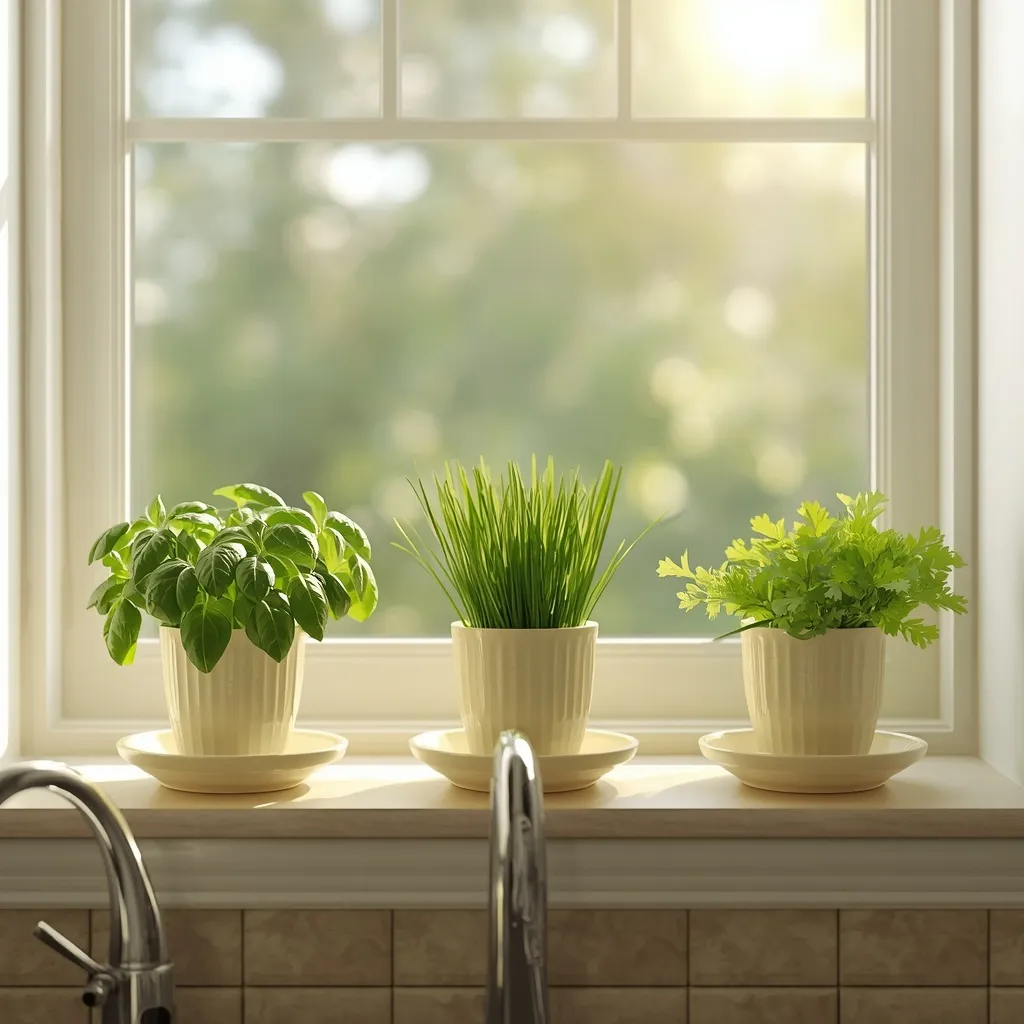
Picture a bright kitchen window with a neat row of matching pots, basil, chives, and parsley, soaking up the morning sun right above the sink. A windowsill herb lineup is the classic indoor herb garden, and the easiest place for a beginner to start.
Choose a south or west-facing window that gets at least 6 hours of sun, and use pots around 12–15 cm (5–6 in) wide with drainage holes, each on a saucer so water never marks the sill. Rotate the pots a quarter turn every few days so herbs grow upright instead of leaning toward the glass. Keep leaves from pressing against cold winter glass, which can scorch them. If your only window faces north, add a small grow light, since a dim sill will leave herbs pale and leggy no matter how tidy the row looks.
- Why it works: A sunny sill gives free natural light and puts herbs within arm’s reach of the stove.
- Best for: Beginners and renters with a bright kitchen window and no other space.
- Key elements: Matching pots, saucers, a south/west window, quarter-turn rotation.
2. Vertical Wall-Mounted Herb Garden
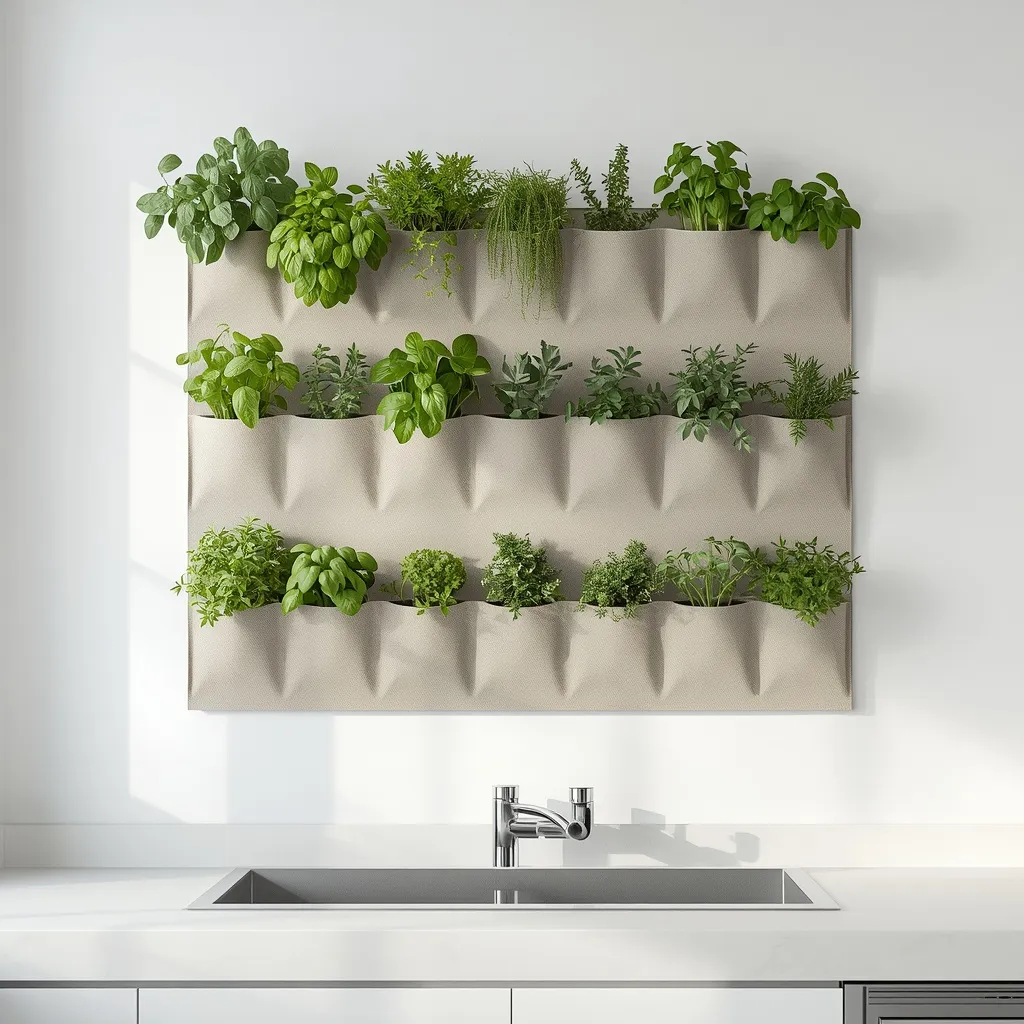
Envision a bare kitchen wall transformed into a living panel of greenery, rows of wall-mounted pots or a felt pocket planter holding basil, mint, thyme, and parsley, climbing from counter to ceiling. A vertical wall-mounted herb garden grows the most herbs in the least floor and counter space.
Mount a rail of pots, a pocket planter, or a grid of wall cups on a wall that gets good light, using anchors rated for the wet weight, since a watered planter is heavy. Put thirsty herbs like basil at the top so runoff trickles down, and keep spreading mint in its own pocket. Use a lightweight, moisture-retentive potting mix because shallow wall pots dry out fast, and hang a slim tray or liner beneath to catch drips and protect the wall. This is the standout choice for tiny apartment kitchens.
- Why it works: Growing upward multiplies space and turns a blank wall into a living herb feature.
- Best for: Renters and small apartment kitchens with wall room but no counter to spare.
- Key elements: Wall-mounted pots or pockets, secure anchors, top-down water layout, drip tray.
3. Modern Aesthetic Shelf Garden
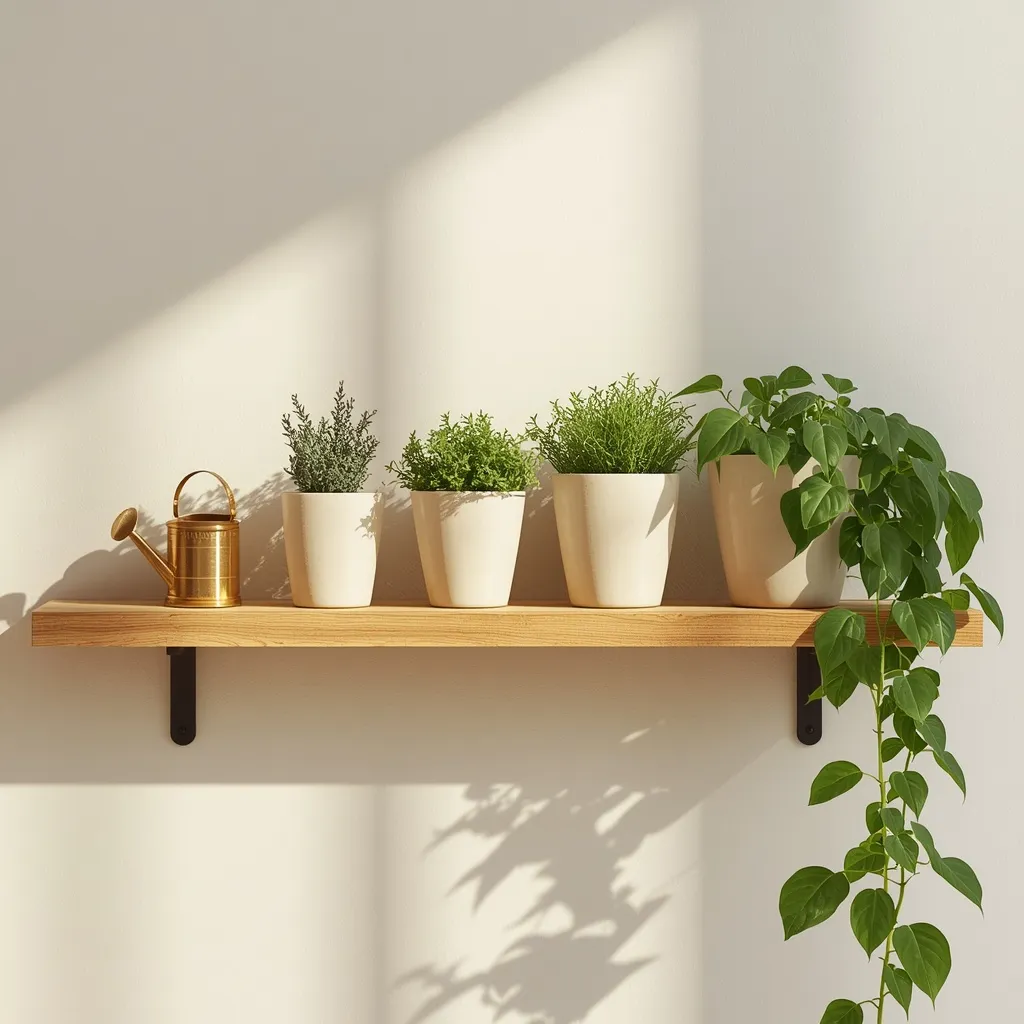
Picture a floating shelf styled like a still life, matching ceramic pots in soft neutral tones, herbs arranged by height, a small brass watering can and a trailing pothos tying it together. A modern aesthetic shelf garden treats your indoor herbs as décor as much as ingredients.
The look comes from restraint: pick one pot color family and two or three shapes, then vary plant height and leave breathing room between pieces. Group herbs in odd numbers, add one non-herb like a trailing houseplant for softness, and keep the palette calm. A trailing pothos works beautifully here, though it’s mildly toxic if chewed, so keep it out of reach of pets, you can read more in our guide to caring for this easygoing vine. Make sure the shelf sits near real light, since a styled shelf in a dark corner will look good briefly, then decline.
That trailing accent is worth getting right, pothos is a favorite for these shelves because it’s nearly indestructible, and our full guide to pothos plant care covers light, watering, and the pet-safety points to know before you add one.
- Why it works: A tight palette and styled heights make herbs read as intentional interior décor.
- Best for: Aesthetic-focused renters and anyone wanting a Pinterest-worthy kitchen display.
- Key elements: Neutral matching pots, varied heights, a trailing accent plant, good light.
4. DIY Mason Jar Rail Garden
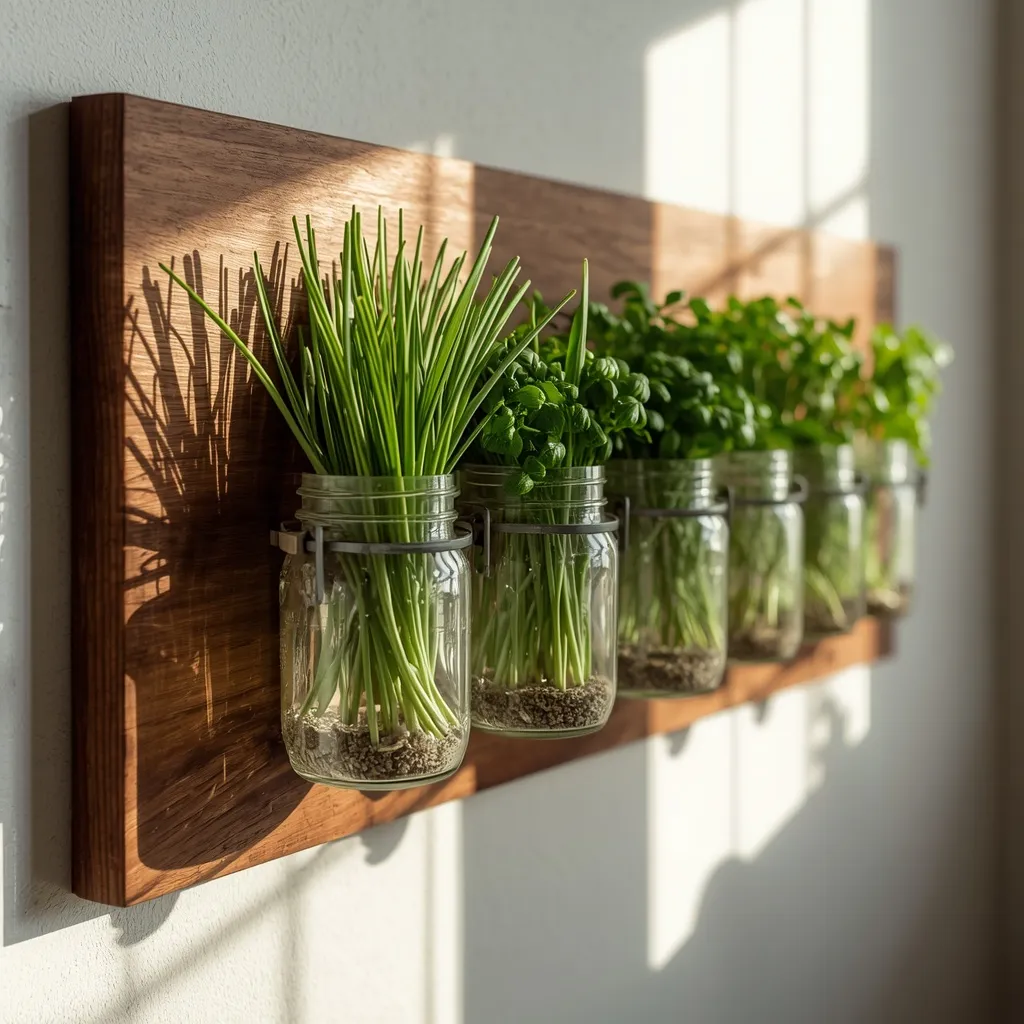
Imagine a reclaimed wooden board fixed to the wall, a row of mason jars clamped along it in metal rings, each sprouting a bright tuft of chives, basil, or parsley, part herb garden, part rustic kitchen art. A DIY mason jar rail garden is a charming, low-cost weekend project.
Screw pipe clamps or jar rings to a sanded board, mount it on a sunny wall, and slot a jar into each. Because jars have no drainage holes, add a 3–4 cm (1–2 in) layer of gravel or clay pebbles at the bottom and water sparingly, or roots will sit in water and rot, the single most common jar-planting mistake. Grow shallow-rooted herbs like chives, parsley, and basil cuttings, and use wide-mouth jars for more root room. It doubles as a spot to root cuttings in water before potting them on.
- Why it works: Wall-mounted jars combine a working herb garden with rustic decor for very little money.
- Best for: DIY lovers, farmhouse kitchens, and tight budgets.
- Key elements: Mounted board, clamped mason jars, gravel drainage layer, shallow-rooted herbs.
5. Hanging Kitchen Herb Garden
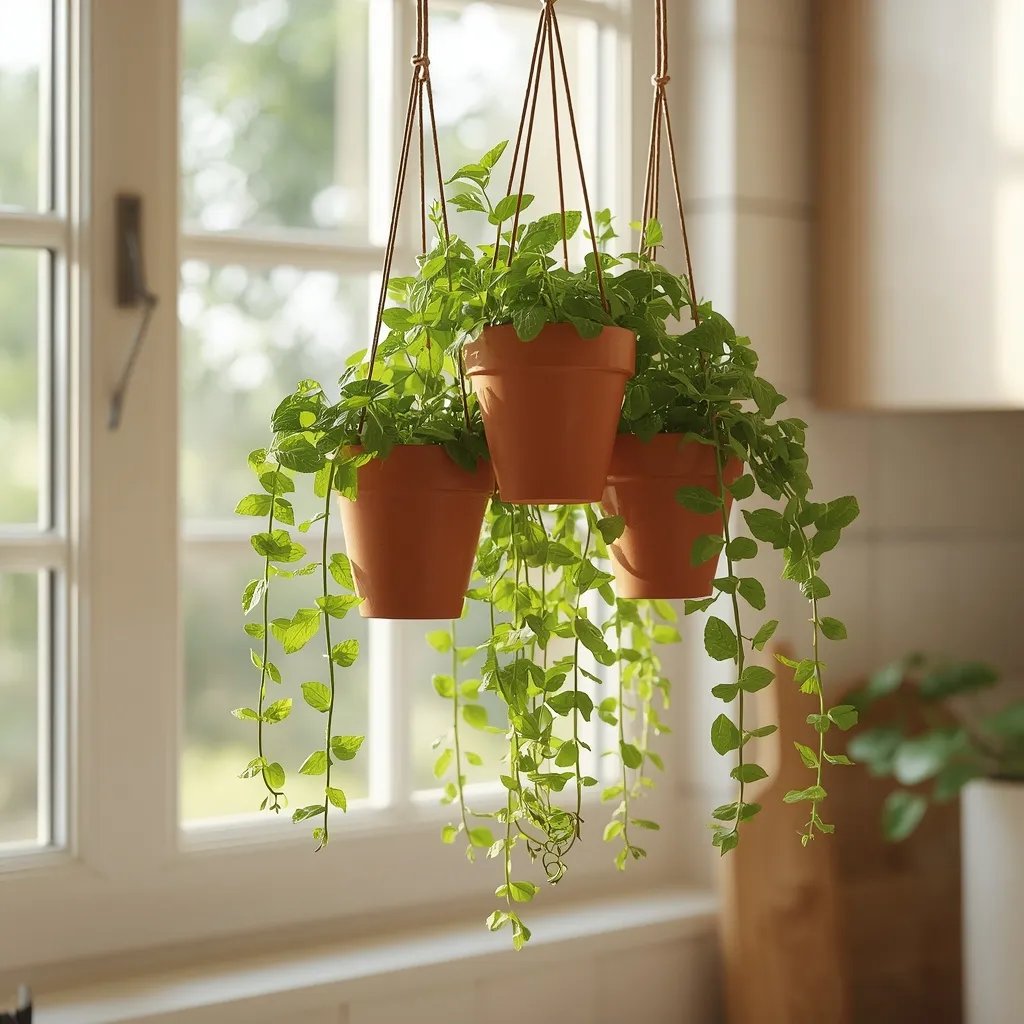
Envision a cluster of small pots hanging at staggered heights in front of a bright kitchen window, trailing mint and thyme spilling over the rims like a soft green curtain. A hanging kitchen herb garden uses the empty air in front of a window that would otherwise go to waste.
Suspend pots from a sturdy, weight-rated ceiling hook or a tension rod across the window frame, keeping the herbs you pick most within easy reach. Trailing herbs like thyme, oregano, and mint look best cascading, while upright basil suits the higher spots. Because hanging pots dry out fastest of all, air reaches them from every side, line them well and check moisture every day or two. Keep the arrangement clear of the stove so grease and heat don’t coat or stress the leaves, and use a drip tray or take pots to the sink to water.
- Why it works: Hanging pots use unused window air space and show off trailing herbs beautifully.
- Best for: Small kitchens and renters with a bright window but no free counter or sill.
- Key elements: Weight-rated hooks or tension rod, trailing herbs, lined pots, drip management.
6. Under-Cabinet Grow-Light Garden
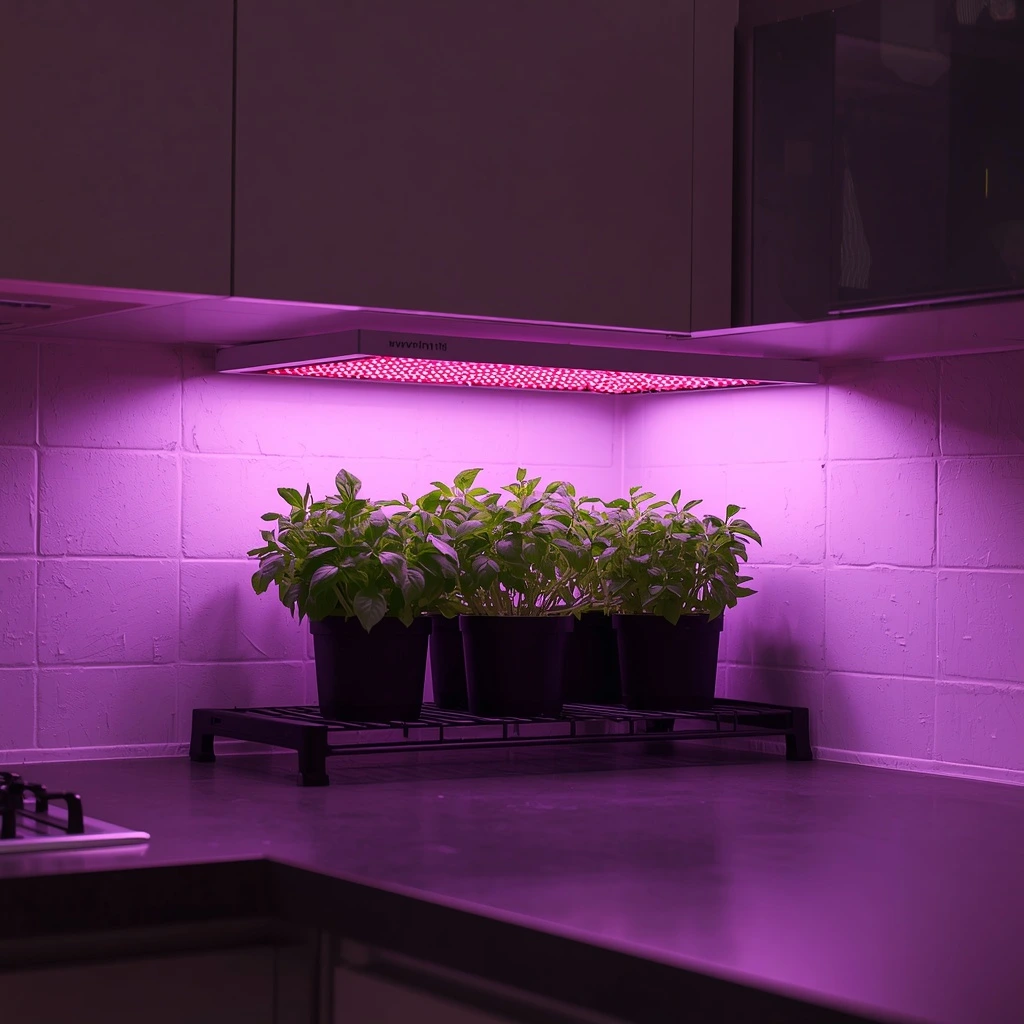
Picture a slim shelf tucked beneath the upper cabinets, fitted with a warm LED grow strip, pots of basil and parsley thriving in its glow even in a windowless kitchen corner. An under-cabinet grow-light garden lets you grow herbs indoors where no natural light reaches.
This setup solves the biggest indoor problem: too little light. Fix a full-spectrum LED grow strip under a cabinet and run it 12–14 hours a day on an outlet timer, keeping herbs 15–30 cm (6–12 in) below the light. It’s ideal for north-facing apartments, interior kitchens, and dark winter months. Choose fast, leafy herbs like basil, parsley, and chives that respond well to grow lights. Keep the light and cords away from the sink and splashes for safety, and use a timer so you never forget to switch it on or off.
- Why it works: A grow light removes the light limit, letting herbs grow in windowless kitchens.
- Best for: North-facing apartments, interior kitchens, and winter growing.
- Key elements: LED grow strip, outlet timer, leafy herbs, safe cord placement.
7. Rustic Wooden Crate Garden
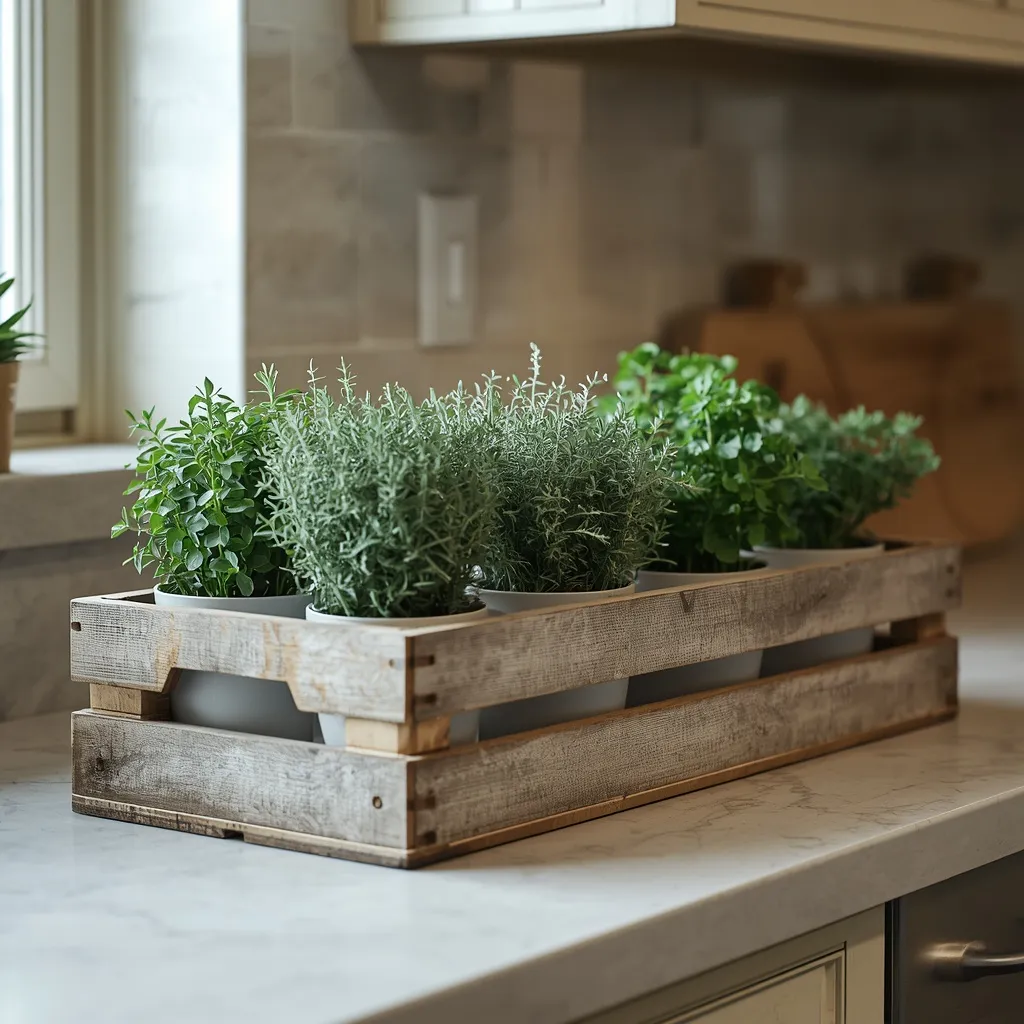
Imagine a shallow wooden crate or vintage tray sitting on the counter or a sideboard, lined with small pots of thyme, oregano, sage, and parsley, the weathered wood and soft green foliage giving a warm farmhouse feel. A rustic wooden crate garden gathers a whole herb collection into one moveable, characterful container.
Use a crate or tray deep enough to hide the pots’ rims, and line it with plastic (with a few holes) or set the pots on a waterproof liner so water doesn’t rot the wood or mark the counter. Grouping the pots together raises local humidity, which most herbs enjoy, and makes watering a one-stop job. Keep individual pots inside the crate rather than filling it with soil directly, so you can swap out any herb that fades without disturbing the rest. This look suits homeowners and renters alike, since nothing is fixed down.
- Why it works: A single crate corrals many pots into one tidy, portable, farmhouse-style display.
- Best for: Farmhouse-style kitchens and anyone wanting an easy, moveable grouped garden.
- Key elements: Wooden crate or tray, waterproof liner, grouped individual pots, easy swaps.
8. Freestanding Tiered Plant Stand
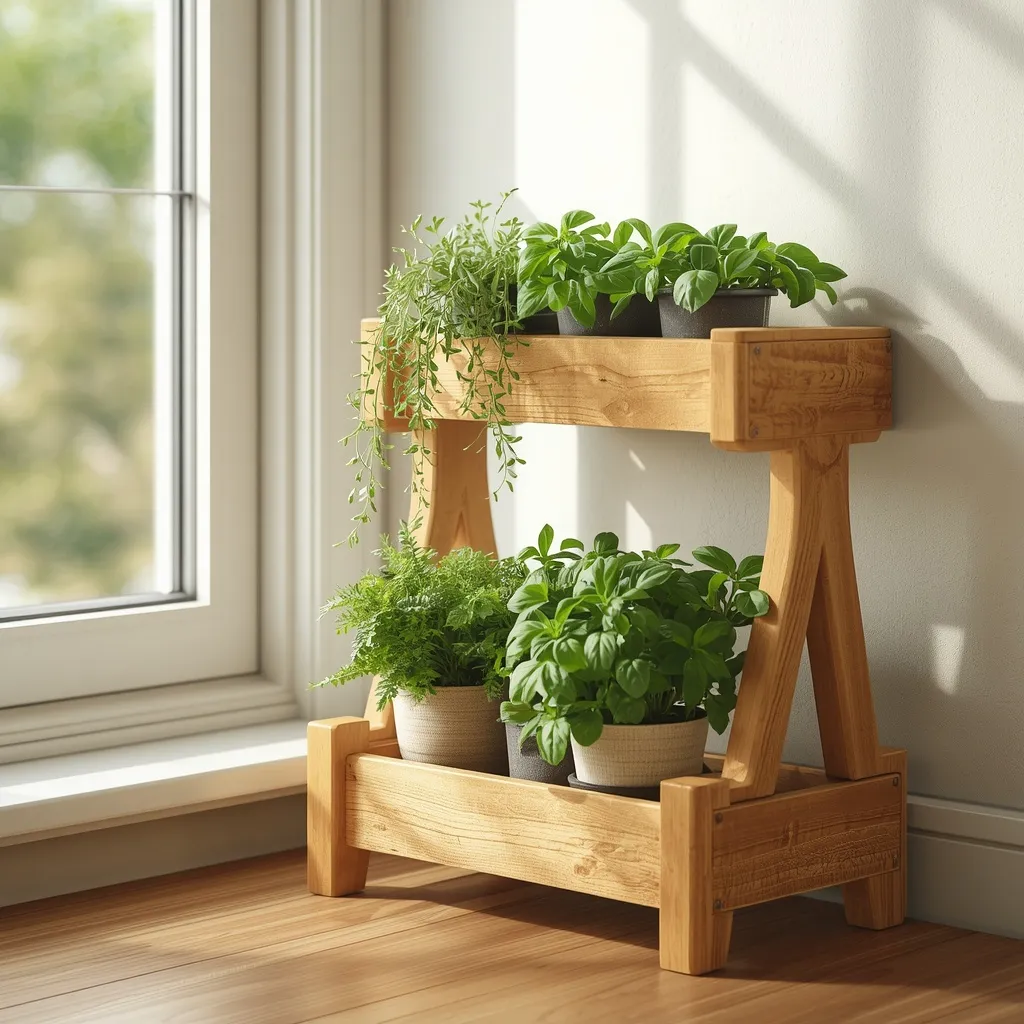
Picture a compact three-tier plant stand set beside a bright window, each level lined with potted herbs, trailing thyme up top, bushy basil and parsley in the middle, leafy mint at the base. A freestanding tiered plant stand fits a full herb collection into a single square of floor with no drilling.
A tiered stand works because each shelf steps back, so upper pots don’t shade lower ones. Place it where it gets even light and turn it weekly so every side develops evenly, reserving the top, brightest shelf for sun-lovers and shadier lower shelves for tolerant herbs like mint and parsley. Choose a stand with slatted or grid shelves so water drains through, and set saucers under the pots. Since it needs no wall fixings, it’s an ideal renter setup that moves with you.
- Why it works: Stepped shelving stacks many pots vertically without any pot shading another.
- Best for: Renters and small kitchens wanting a movable, no-drill floor-standing garden.
- Key elements: Three-tier stand, slatted shelves, light-sorted placement, saucers.
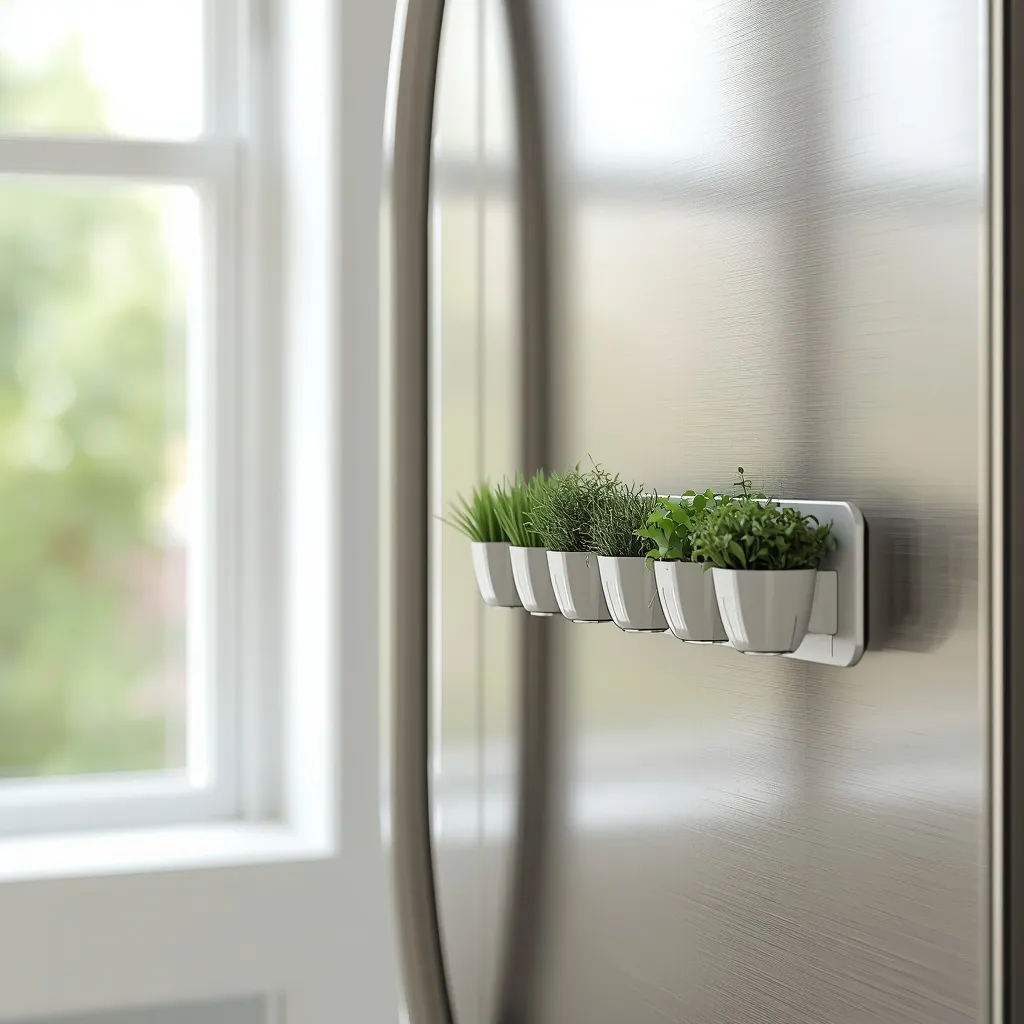
9. Magnetic Metal-Wall Mini Garden
Envision a row of small magnetic pots stuck to the side of the fridge or a hung steel panel, each holding a compact herb like chives or thyme, a tiny herb garden floating on a surface most people never use. A magnetic metal-wall mini garden is the ultimate no-space, no-drill solution.
Use lightweight magnetic planters (sold for exactly this) on the side or front of a fridge, a metal splashback, or a mounted steel sheet, choosing shallow-rooted, compact herbs like chives, thyme, and small parsley. Keep the pots small and light so the magnets hold, and site the fridge or panel near a window since even the cleverest spot needs light to grow. These planters have tiny soil volumes that dry out fast, so check them every day or two and water carefully to avoid drips down the fridge. It’s a fun, space-free option perfect for the smallest rentals.
- Why it works: Magnets turn an unused metal surface into growing space with zero floor or counter use.
- Best for: The smallest apartments and renters wanting a no-drill, no-footprint garden.
- Key elements: Magnetic planters, a metal surface near light, compact shallow-root herbs.
10. Hydroponic Countertop Garden
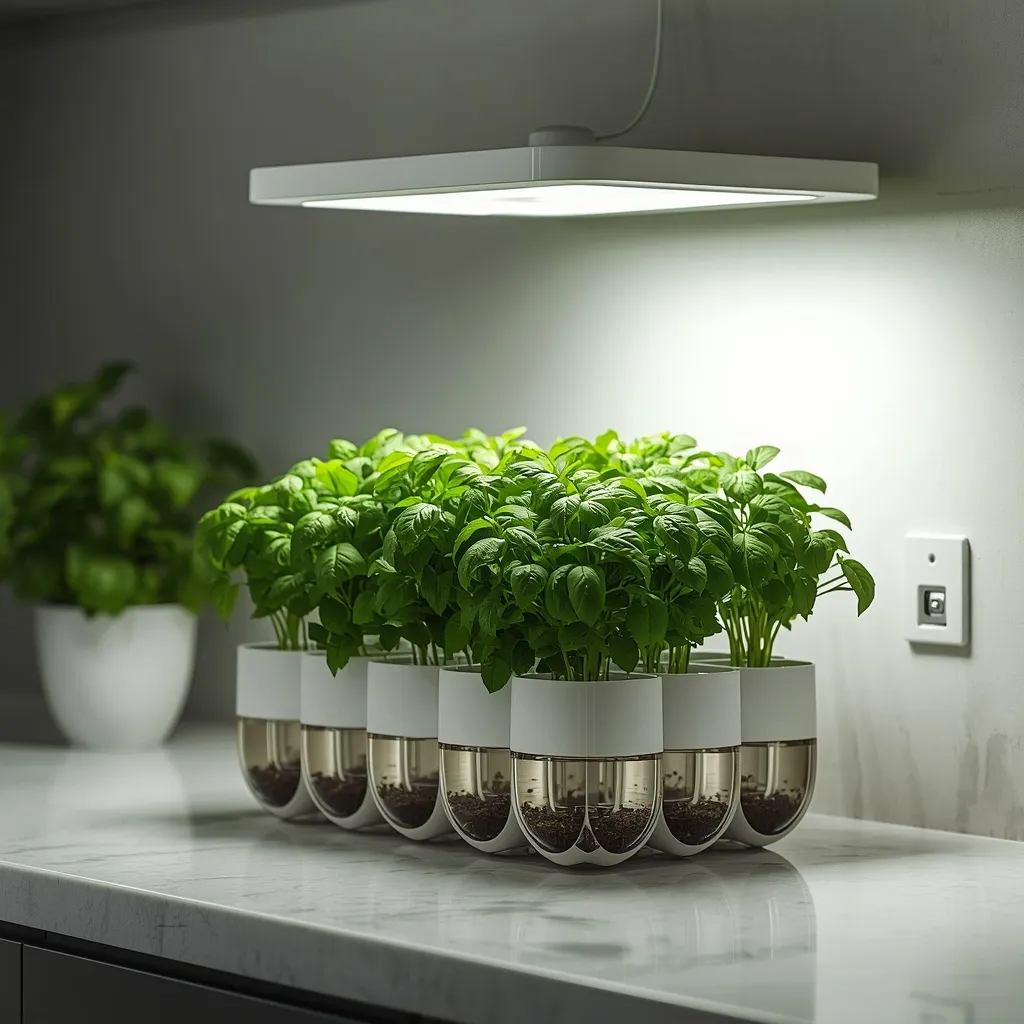
Finally, picture a sleek countertop hydroponic unit, herbs growing in water-filled pods under a built-in LED light, basil and cilantro flourishing with no soil at all. A hydroponic countertop garden is the modern, mess-free way to grow herbs indoors year-round.
Hydroponic systems grow herbs in a nutrient-water solution under their own grow light, so they sidestep both the light and the soil problems of indoor gardening. Drop in seed pods, fill the reservoir, add the nutrient dose, and the built-in light and pump do the rest, most run on a timer automatically. They suit fast leafy herbs like basil, cilantro, mint, and parsley, and are ideal for tech-friendly apartments or anyone who kills soil plants by forgetting to water. The trade-off is cost and a little upkeep: refresh the water and nutrients on schedule, and clean the unit between crops to prevent algae.
- Why it works: A built-in light and water reservoir remove the light, soil, and watering hurdles at once.
- Best for: Tech-friendly apartments, forgetful waterers, and reliable year-round harvests.
- Key elements: Countertop hydroponic unit, seed pods, nutrient reservoir, built-in grow light.
Best Herbs for Growing Indoors
The single biggest factor in an indoor herb garden is light, and matching your herbs to how much sun your spot actually gets is what separates a thriving garden from struggling pots. Not every herb suits life indoors, either.
| Window / light | Herbs that thrive | Notes |
| South-facing (6+ hrs) | Basil, thyme, oregano, chives | The best indoor spot for sun-lovers |
| East / west (4–6 hrs) | Parsley, mint, chives, cilantro | Reliable for most leafy herbs |
| North-facing / dim | Mint, parsley (leggy) | Usually needs a grow light to do well |
| No natural light | Basil, parsley, cilantro | Grow light or hydroponics required |
A quick honesty note: rosemary and cilantro are the trickiest common herbs to keep happy indoors, so start with forgiving basil, chives, mint, and parsley if you’re new. For more compact growing inspiration, explore our full library of herb garden ideas, part of the wider Sunday Abode approach to a home and garden you genuinely enjoy.
Conclusion
From a simple sunny windowsill to a living wall, a rustic crate, or a soil-free hydroponic unit, these indoor herb garden ideas prove that fresh basil, mint, and parsley belong in every kitchen, no matter how little space or light you have. Start with one setup that matches your window, choose forgiving herbs, and protect your surfaces with trays or liners.
Pick the design that fits your kitchen, gather a few herbs you actually cook with, and set up your first indoor garden this week, then save this guide to expand it next season. For more small-space growing, our herb garden collection has a setup for every corner of your abode.
FAQs
Which herbs grow best indoors?
Basil, chives, mint, parsley, thyme, and oregano are the most reliable indoor herbs because they tolerate pot life and moderate light well. Match them to your window: basil and thyme want bright south-facing light, while parsley, chives, and mint cope with less. Rosemary and cilantro are the trickiest to keep happy indoors, so they’re best left until you have some experience.
How much light does an indoor herb garden need?
Most herbs need about 6 hours of bright light a day, ideally from a south or west-facing window. In a dim room, a north window, or through dark winters, a full-spectrum LED grow light run 12–14 hours daily replaces the sun. Without enough light, herbs grow pale, thin, and leggy, so light is the first thing to get right.
How do I set up an indoor herb garden in a small apartment?
Go vertical and use walls and surfaces instead of counter space. A wall-mounted pocket planter, a mason jar rail, magnetic fridge pots, or a freestanding tiered stand all fit a full herb garden into a tiny kitchen. Choose forgiving herbs, place them by your brightest window, and add a grow light if your apartment faces north.
Why do my indoor herbs keep dying?
The two most common culprits are too little light and overwatering. A windowsill that looks bright to us is often too dim for basil or rosemary, and soggy soil rots roots fast. Let the top 2–3 cm (about 1 in) of soil dry between waterings, use pots with drainage holes, keep herbs away from stove heat and grease, and add a grow light if needed.
What’s the cheapest way to start an indoor herb garden?
A DIY setup with repurposed containers keeps costs near zero. Mason jars, upcycled tins, and wooden crates (with drainage added) cost little, and starting herbs from seed is far cheaper than buying nursery plants, though it takes a few extra weeks. A mason jar wall or a crate of small pots gives a full herb garden on a tiny budget.
Can I grow herbs indoors without any natural light?
Yes, with a grow light or a hydroponic system. A full-spectrum LED grow light run 12–14 hours a day lets herbs grow in a windowless kitchen, and countertop hydroponic units include their own light and water reservoir. Fast leafy herbs like basil, parsley, and cilantro respond best to artificial light.