
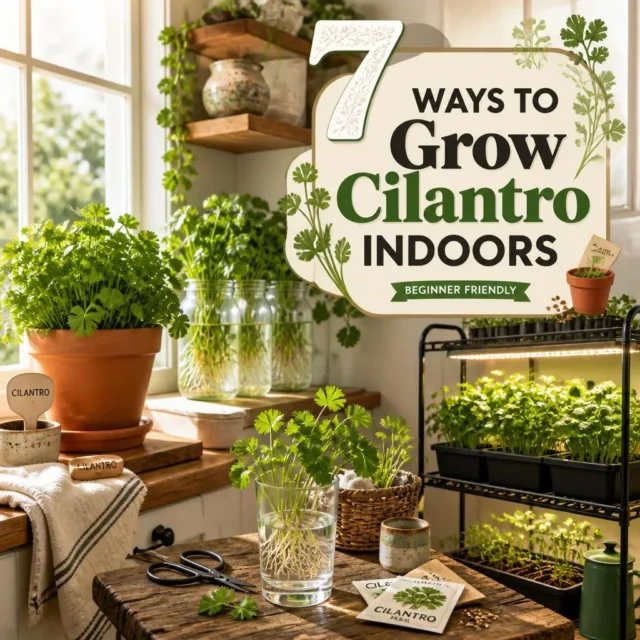

Few things beat snipping fresh cilantro straight into a curry or a bowl of tacos, and you don’t need a garden to do it. You can grow cilantro indoors on a windowsill, in a mason jar, from kitchen scraps, or under a grow light, and this guide walks through seven distinct ways to do exactly that.
Cilantro (Coriandrum sativum) has a reputation for being fussy indoors, mostly because it grows fast, bolts in heat, and hates being moved. Each method below works with those quirks rather than against them, so you get more leaf and less disappointment. Whether you rent a studio or just want herbs by the stove, there’s a setup here to make your abode a little fresher.
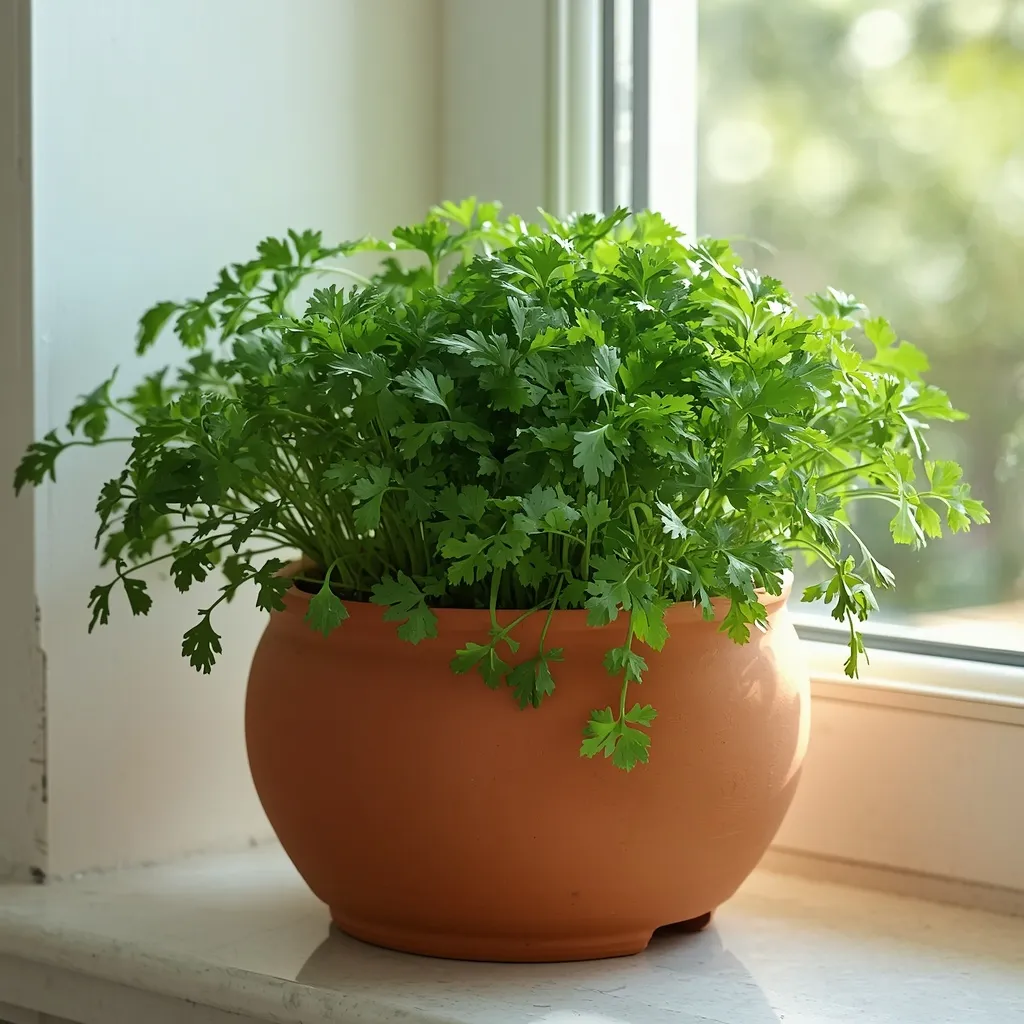
1. Sunny Windowsill Seed Garden
Picture a wide, deep pot of cilantro on a bright kitchen windowsill, feathery green leaves catching the morning sun right where you cook. Growing cilantro from seed on a sunny sill is the most reliable indoor method and the one that gives real, repeat harvests.
Sow cilantro seeds directly into a pot at least 20 cm (8 in) deep filled with free-draining potting mix, scattering them about 1 cm (½ in) deep and keeping the soil lightly moist. Seeds usually sprout in 7–14 days, and you can start snipping outer leaves at around 3–4 weeks. Cilantro has a long taproot and resents transplanting, so always sow where it will grow rather than moving seedlings. Give it the brightest window you have, ideally south-facing with 5–6 hours of sun, or it will grow pale and leggy.
Cilantro is one of several herbs that grow happily on a bright sill, and if you’d like to pair it with basil, mint, or parsley, our roundup of indoor herb garden ideas shows how to bring several together in one space.
- Why it works: Direct sowing avoids transplant shock and a deep pot suits cilantro’s taproot for full growth.
- Best for: Beginners and anyone with a bright window wanting genuine, repeat harvests.
- Key elements: Deep pot, direct-sown seed, bright south window, light moisture.
2. Mason Jar Cilantro Garden
Imagine a row of mason jars along a sunny sill, each filled with soil and sprouting a bright tuft of cilantro, the glass catching the light like a little herb apothecary. A mason jar cilantro garden is a charming, low-cost way to grow indoors, popular for its rustic, farmhouse look.
Since mason jars have no drainage holes, this method needs care: add a 3–4 cm (1–2 in) layer of gravel or clay pebbles at the bottom, then soil, and water sparingly so roots never sit in standing water, waterlogging is the number-one killer here. Sow a small pinch of seed per jar and thin to the strongest few seedlings. Wide-mouth quart (roughly 1-litre) jars give the best root room. Keep jars in a bright window and turn them every few days so growth stays even rather than leaning to the light.
- Why it works: Jars add rustic kitchen charm and suit small-batch, decorative indoor growing.
- Best for: DIY and farmhouse-style lovers, and small windowsills.
- Key elements: Wide-mouth jars, gravel drainage layer, sparing watering, bright light.
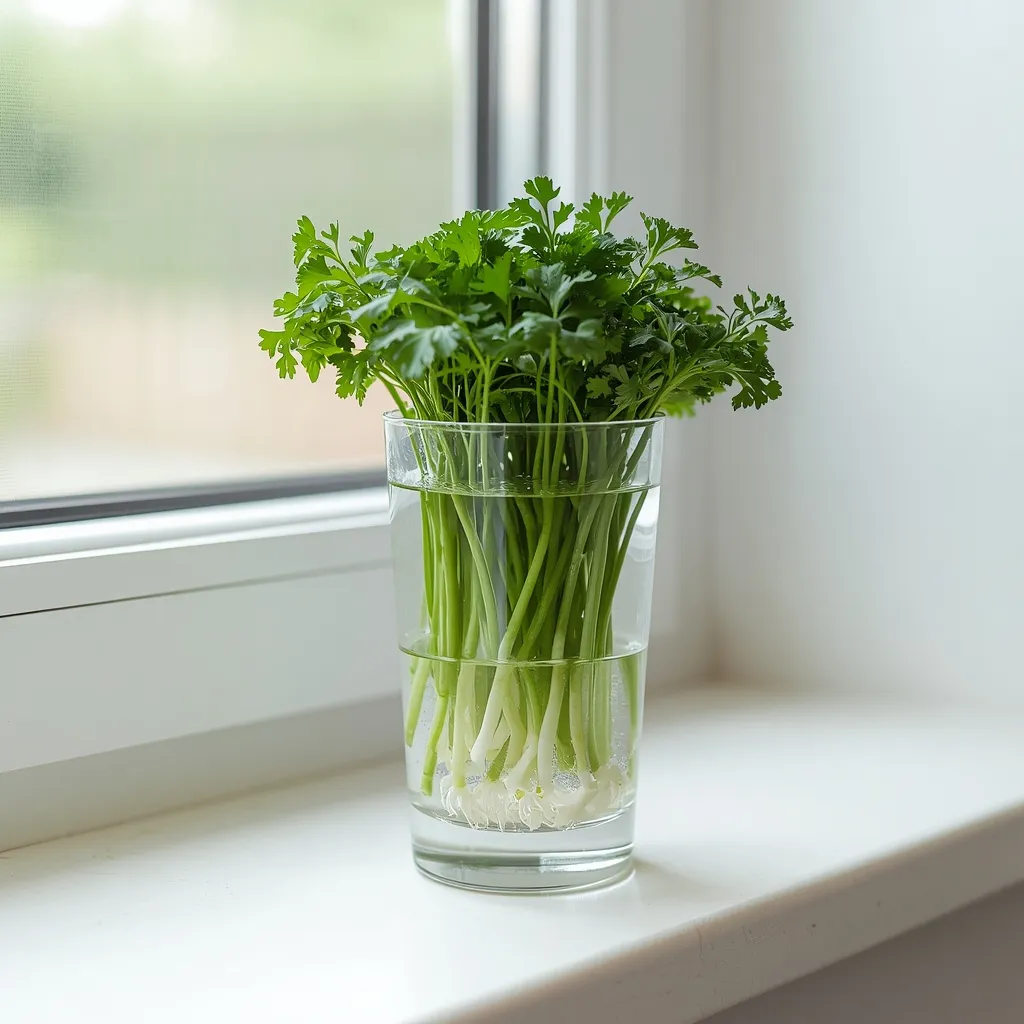
3. Water-Glass Regrow Setup
Picture a clear glass on the windowsill holding the base of a store-bought cilantro bunch, fresh green shoots reaching up from the stems in water. Regrowing cilantro in a glass of water is the quickest, cheapest indoor project, but it comes with an honest limit worth knowing.
To try it, stand a bunch of cilantro (or leftover stems with a little base) upright in a glass with 2–3 cm (1 in) of water, keep it in bright light, and change the water every day or two. You’ll get fresh green shoots and can even coax small roots. The honest truth, though: cilantro won’t regrow into a lasting, full plant from water or scraps the way green onions do, you’ll get a short flush of usable leaves, then it fades. Treat this as a handy way to stretch a store bunch, and move rooted stems into soil if you want them to keep going.
- Why it works: It’s free and instant, extending a store-bought bunch for a week or two of extra snipping.
- Best for: Beginners and anyone wanting a quick, no-soil kitchen project or to use up a bunch.
- Key elements: Store bunch or stems, shallow water, bright light, frequent water changes.
4. Grow-Light Kitchen Shelf
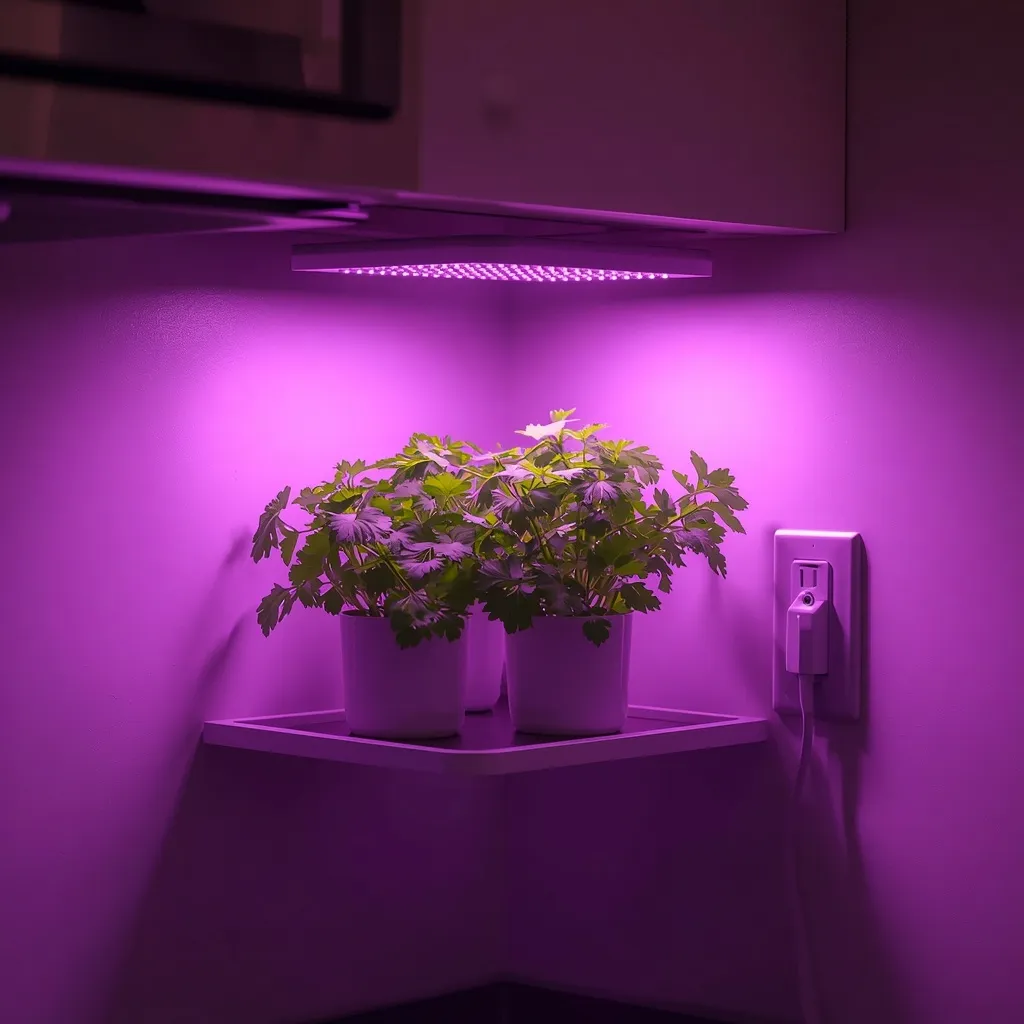
Envision a small kitchen shelf fitted with a warm LED grow strip, pots of cilantro thriving in its glow even in a windowless corner or through dark winter months. A grow-light kitchen shelf removes the biggest barrier to indoor cilantro: not enough light.
Fix a full-spectrum LED grow light above a shelf and run it 12–14 hours a day on an outlet timer, keeping the cilantro pots about 15–30 cm (6–12 in) below the light. This method is ideal for north-facing apartments, basements, or short winter days when no window gives enough sun. Because grow lights and consistent warmth can push cilantro to bolt (flower and turn bitter), keep the room on the cooler side, around 18–21°C (65–70°F), and harvest often. Keep the light and cords away from the sink and any splashes for safety.
- Why it works: A grow light supplies the strong light cilantro needs when a window can’t, year-round.
- Best for: North-facing homes, basements, winter growing, and anyone with a dark kitchen.
- Key elements: LED grow light, outlet timer, cooler room temp, frequent harvest.
5. Self-Watering Container Garden
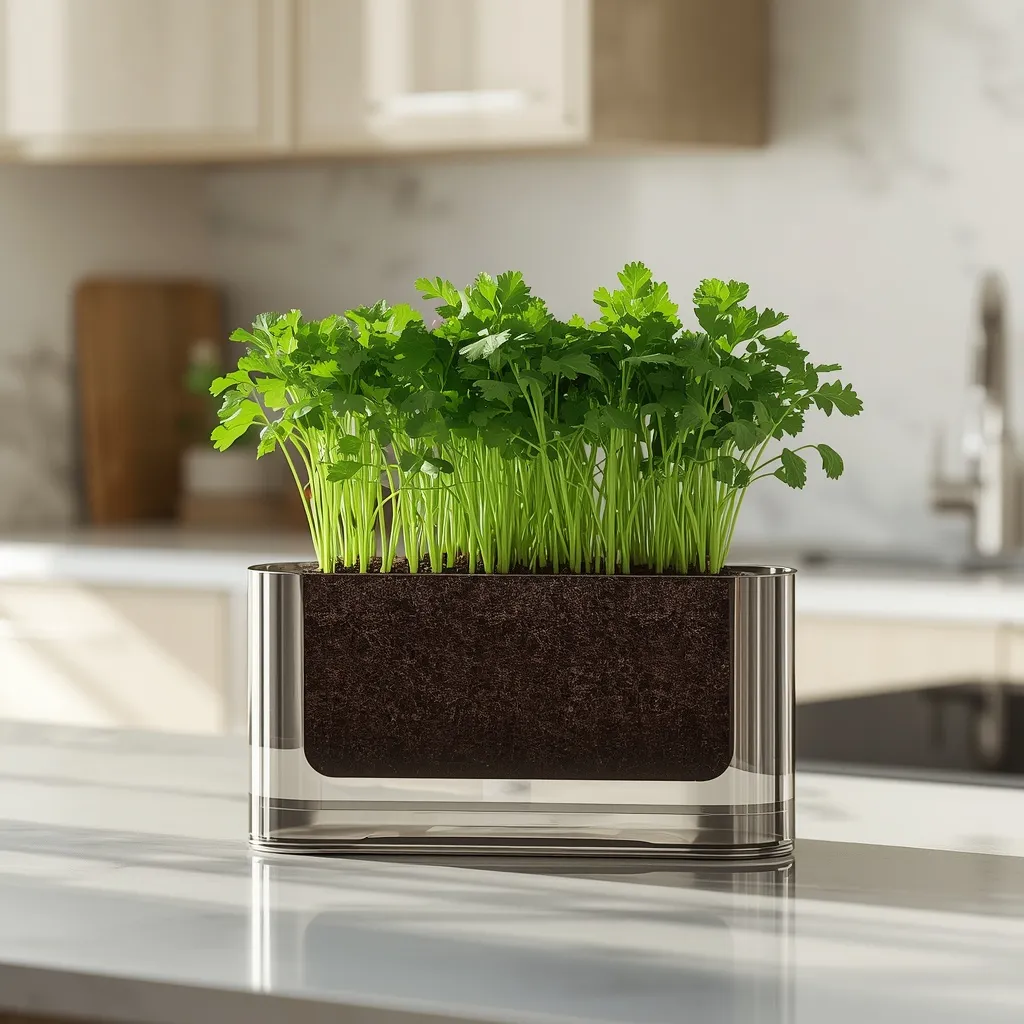
Imagine a sleek self-watering planter on the counter, cilantro growing steadily above a hidden water reservoir that keeps the soil evenly moist without daily fuss. A self-watering container takes the guesswork out of cilantro’s dislike of both drought and soggy roots.
Self-watering pots draw moisture up from a bottom reservoir through the soil, giving cilantro the steady, even moisture it likes without the swings that cause wilting or rot. Fill the reservoir, sow seed directly into the deep soil section, and top up the water every several days rather than watering the surface daily. This suits busy people and frequent travelers who forget to water. Choose a container with a reservoir at least a few centimeters deep and still give it bright light, self-watering solves moisture, not the light requirement.
- Why it works: A reservoir delivers steady moisture, preventing the wilting and rot that stress cilantro.
- Best for: Busy people, forgetful waterers, and anyone wanting low-maintenance consistency.
- Key elements: Self-watering planter, bottom reservoir, direct sowing, bright light.
6. Deep-Pot Succession Garden
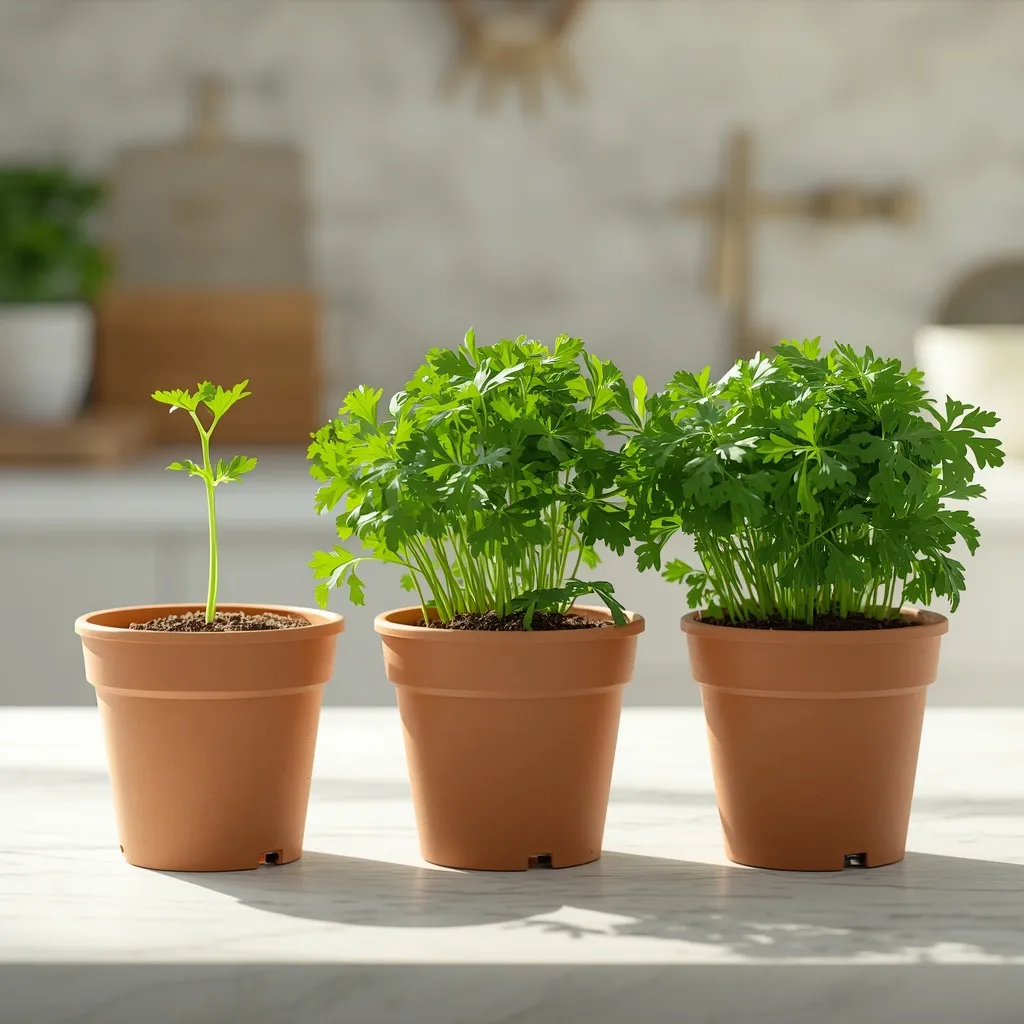
Picture two or three deep pots of cilantro at slightly different stages, one young and just sprouting, one full and ready to snip, one just sown, lined up on a bright counter so you never run out. A deep-pot succession garden is the pro method for a steady, unbroken cilantro supply.
Because cilantro is short-lived and bolts quickly, the trick to a constant harvest is succession sowing: start a new deep pot every 2–3 weeks so a fresh crop is always coming on as the older one fades. Use pots at least 20 cm (8 in) deep to suit the taproot, and choose slow-bolt cultivars like ‘Santo’ or ‘Calypso’ that stay leafy longer. Harvest outer leaves first and pinch out any flower stalks the moment they appear to delay bolting. This is the setup for people who cook with cilantro often and want it always on hand.
- Why it works: Staggered sowing means a fresh crop is always maturing, beating cilantro’s short life.
- Best for: Regular cilantro cooks who want a continuous, never-out supply.
- Key elements: Multiple deep pots, sowing every 2–3 weeks, slow-bolt cultivars, flower-stalk removal.
7. Rustic Upcycled-Tin Garden
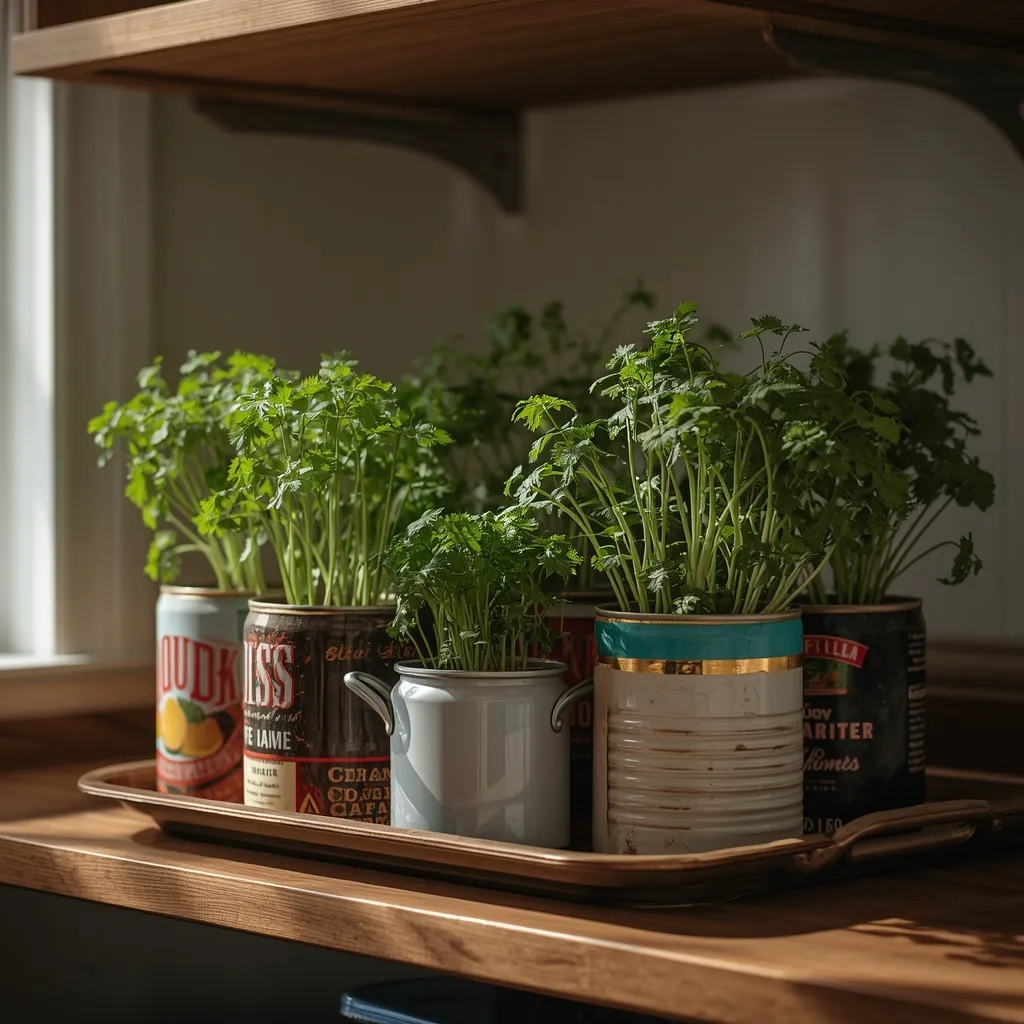
Finally, picture a cluster of upcycled tins and cans, old coffee tins, painted food cans, a vintage enamel pot, grouped on a shelf, each sprouting cilantro, mismatched but charming with a shared vintage feel. A rustic upcycled-tin garden is the cheapest, most characterful way to grow cilantro indoors.
Almost any container grows cilantro if it drains and is deep enough for the taproot, so choose tall tins (a coffee tin is ideal) over shallow cans, and punch or drill 3–4 holes in the base of each. Set the tins on a tray to protect the surface, sow seed directly, and unify the mismatched look with a loose theme like all-metal or one paint color. Bare metal tins can heat up in direct sun and dry the soil fast, so check moisture often and consider lining them. This budget setup is perfect for renters and anyone wanting a fresh, personal look.
- Why it works: Upcycled tins cost nothing and, chosen tall, give cilantro’s taproot the depth it needs.
- Best for: Budget growers, DIY and vintage-style lovers, and small kitchens.
- Key elements: Tall upcycled tins, drilled drainage, a protective tray, unifying theme.
Which Method Should You Choose?
The best way to grow cilantro indoors depends on your light, your budget, and how much cilantro you actually cook with. This quick comparison helps you match a method to your situation.
| Method | Effort / cost | Best for |
| Windowsill from seed | Low cost, low effort | Reliable repeat harvests with a bright window |
| Mason jar | Low cost, medium care | Decorative small-batch growing |
| Water glass / scraps | Free, temporary | A quick flush of greens, not a lasting plant |
| Grow-light shelf | Higher setup cost | Dark rooms and winter growing |
| Self-watering pot | Medium cost, low effort | Busy or forgetful waterers |
| Deep-pot succession | Low cost, ongoing effort | A constant, never-out supply |
Whichever you choose, two rules hold: cilantro needs bright light and it will eventually bolt, so sow more before it does. For more ways to grow food indoors, browse our full collection of herb garden ideas, part of the wider Sunday Abode approach to a home and garden you genuinely enjoy .
Conclusion
Whether you sow a deep pot on a sunny sill, root a store bunch in water, or set up a grow-light shelf for winter, you can grow cilantro indoors with far less fuss once you work with the plant’s habits instead of against them. Give it bright light, keep the soil evenly moist, and sow a fresh batch every couple of weeks so bolting never leaves you short.
Pick the method that fits your kitchen and light, sow your first pot this week, and save this guide so you can start the next succession before the first one bolts. For more indoor-growing inspiration, our herb garden collection has a setup for every corner of your abode.
FAQs
Can you grow cilantro indoors from scraps or in water?
You can get a short flush of fresh greens, but not a lasting plant. Cilantro stems in water will sprout new shoots and even small roots for a week or two, but unlike green onions, cilantro won’t regrow into a full, ongoing plant this way. For real, repeat harvests, grow it from seed in a deep pot of soil.
How much light does cilantro need indoors?
Cilantro needs bright light, ideally a south-facing window giving 5–6 hours of direct sun a day. In a dim room, a north-facing window, or through dark winters, a full-spectrum LED grow light run 12–14 hours daily replaces the sun. Without enough light, cilantro grows pale, thin, and leggy.
Why does my indoor cilantro keep dying or flowering?
Cilantro is short-lived and bolts (sends up flowers and turns bitter) quickly, especially in warmth. Once it bolts, leaf production stops. Keep the room cooler, around 18–21°C (65–70°F), harvest often, pinch out flower stalks early, and sow a fresh pot every 2–3 weeks so you always have young plants coming on.
What size pot does cilantro need indoors?
Use a pot at least 20 cm (8 in) deep, because cilantro grows a long taproot and doesn’t like being cramped or moved. Sow seeds directly into the pot where they’ll grow rather than transplanting seedlings, since disturbing the taproot triggers early bolting. A deeper pot also holds moisture more evenly.
How do you grow cilantro indoors in mason jars?
Because jars have no drainage holes, add a 3–4 cm (1–2 in) gravel or clay-pebble layer at the bottom, then soil, and water sparingly so roots never sit in water. Use wide-mouth quart (about 1-litre) jars, sow a pinch of seed, thin to the strongest seedlings, and keep them in a bright window.
How long does cilantro take to grow indoors?
Cilantro seeds usually germinate in 7–14 days, and you can start snipping outer leaves at around 3–4 weeks. Because the plant matures and bolts fairly fast, most indoor growers harvest steadily for several weeks per pot, then start a fresh sowing to keep the supply going.