
Introduction
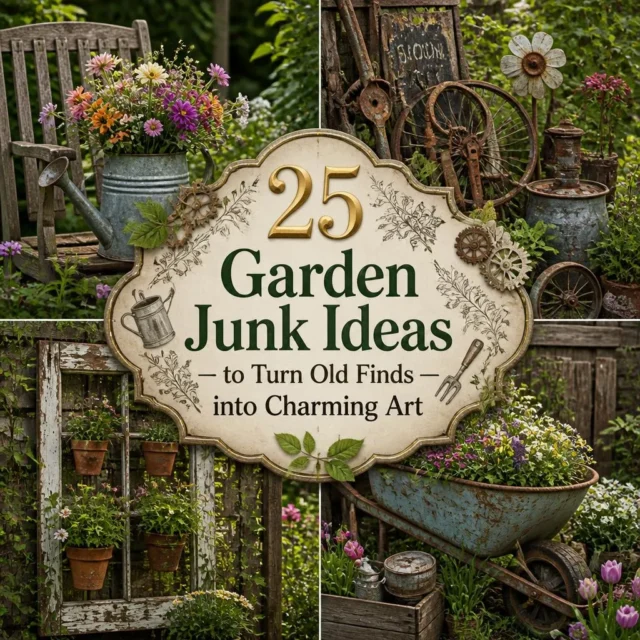
A rusty wheelbarrow overflowing with petunias says more about a garden’s personality than any glossy planter from the garden center, and that is the whole appeal of garden junk ideas: turning tools, furniture, and scraps headed for the dump into decor with real history. Whether it is a chipped teapot doubling as a fairy garden or an old ladder dressed in trailing vines, junk-inspired styling rewards patience and imagination over budget. This guide walks through 25 ways to repurpose what is already sitting in a garage, barn sale, or curbside pile, plus the practical know-how, drainage, safety, and placement, to make each one hold up outdoors. It is exactly the kind of resourceful, personality-first styling Sunday Abode was built around.
Many of these ideas double as the finishing layer on a broader garden design plan, adding personality once the paths, beds, and borders underneath are already mapped out. Think of the list below as the last ten percent, the details that make a garden feel collected rather than store-bought.
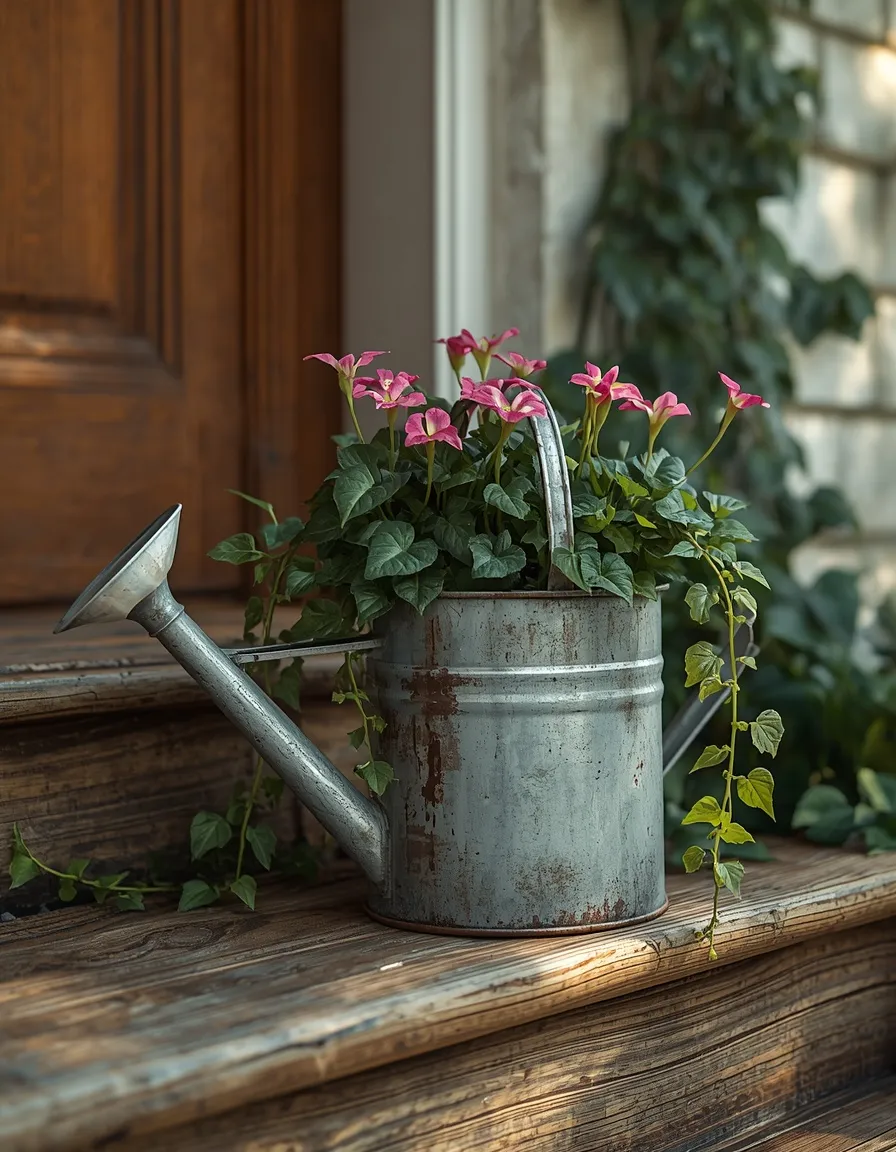
1. Rusty Watering Can Planters
A dented galvanized watering can with a worn handle looks more at home tucked beside a cottage door than any glossy nursery pot ever could. Set on a porch step or lined up in twos along a garden path, it turns an ordinary tool into a small, sculptural planter with a story attached.
Drill two or three drainage holes through the base with a metal bit before planting, then add a thin layer of gravel so roots never sit in trapped water. Narrow-spouted cans work especially well for trailing plants like ivy or creeping Jenny, since the spout becomes a second cascade of foliage. Wear gloves when drilling, since rusted metal edges can be sharp. A common mistake is skipping drainage entirely, which rots roots quickly in a metal container that already holds heat.
- Works well for entryways, porch steps, and cottage-style borders
- Solves the problem of finding characterful containers without buying new ones
- Best suited to shallow-rooted annuals and trailing perennials
2. Vintage Bicycle Flower Display
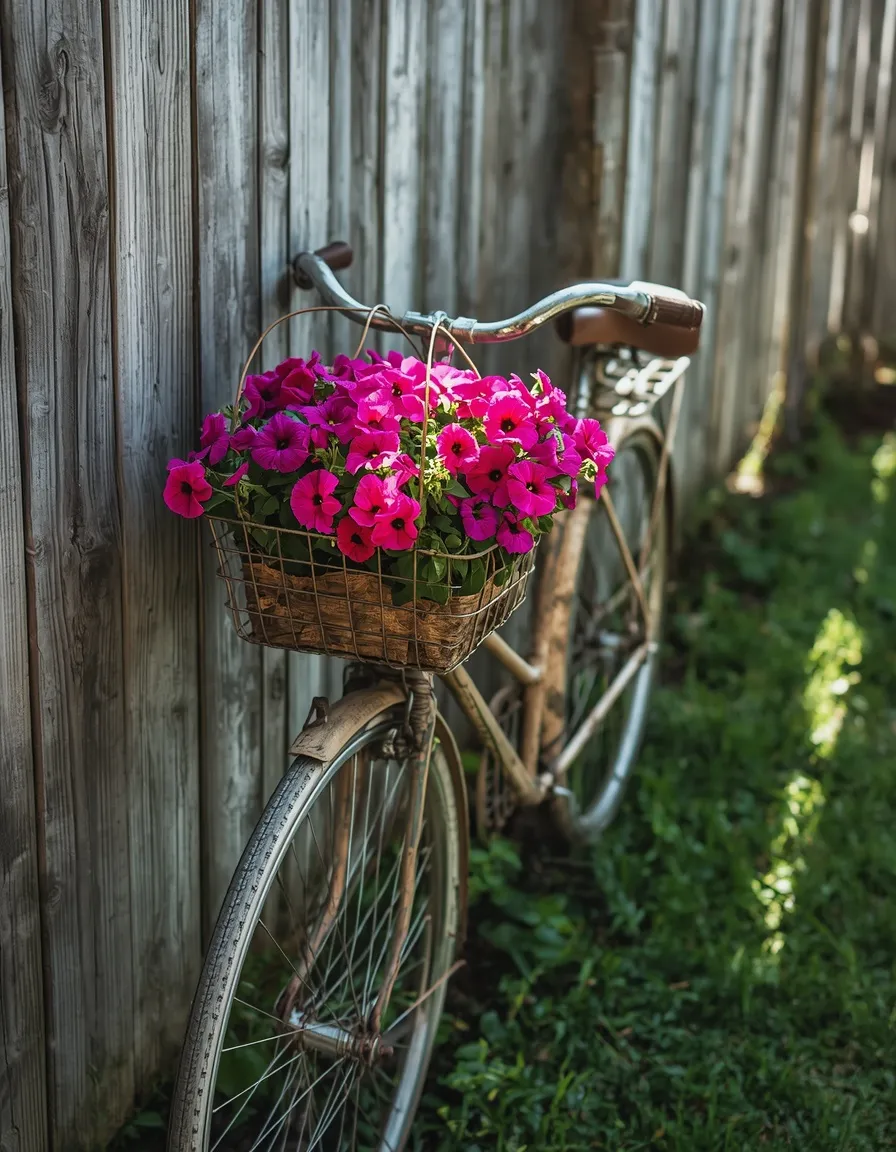
An old bicycle leaned against a fence, its basket and handlebars spilling over with pink geraniums or trailing petunias, is one of the most photographed garden junk ideas for good reason. It brings height, movement, and a sense of whimsy that a flat flower bed cannot match on its own.
Choose a bike that already has rust or chipped paint rather than restoring it, since the imperfections are what read as charming rather than staged. Attach a wire basket to the front and a second planter or hanging pot to the rear rack, then secure the frame to a fence post or a metal stake driven into the ground so wind cannot tip it over. Wicker or coir-lined baskets hold soil best; plastic liners work but should have drainage holes punched through the bottom.
- Creates a strong vertical focal point in an otherwise flat border
- Ideal for cottage, farmhouse, and eclectic garden styles
- Solves the problem of adding height without building a structure
3. Wheelbarrow Flower Bed
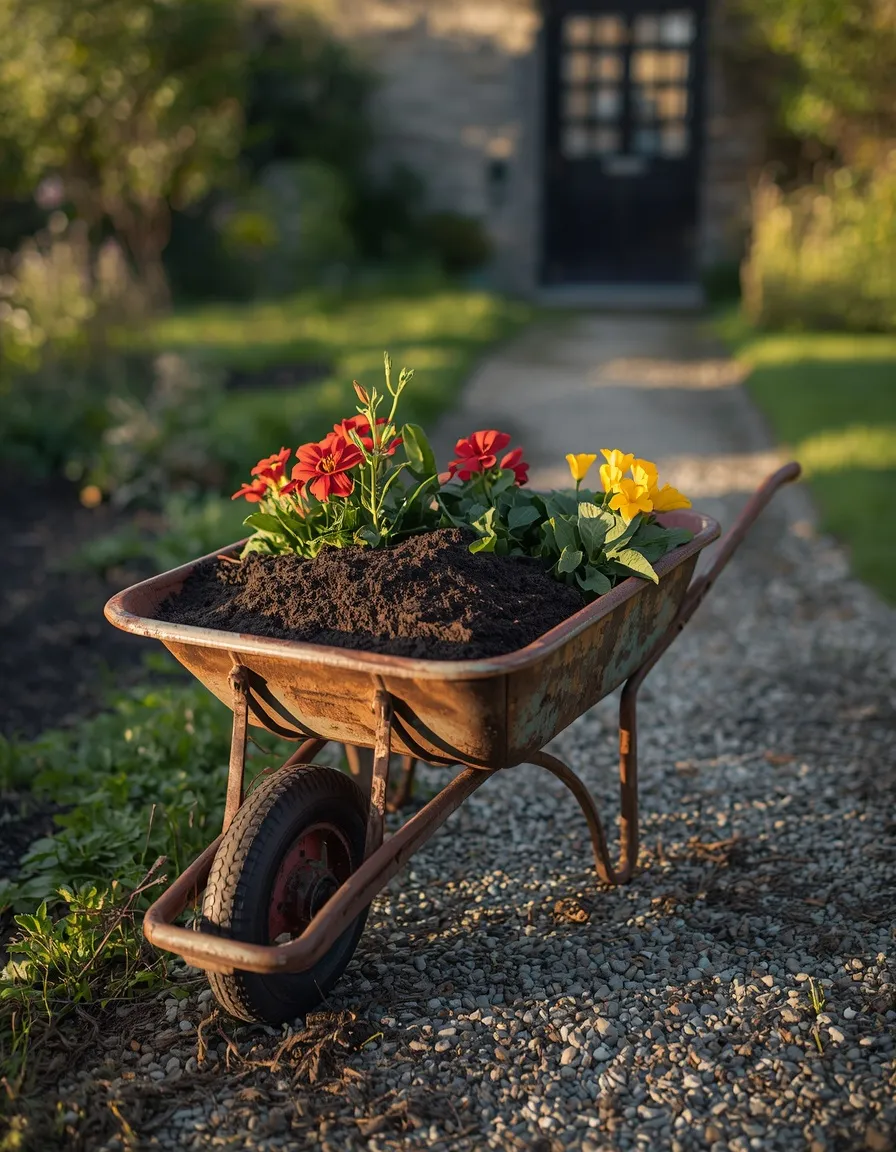
A retired wheelbarrow, wheel and all, makes a raised flower bed that needs no construction, just soil and a sunny spot. Left to rust naturally or given a coat of matte black paint, it becomes a mobile mini garden that can be rolled to catch more light through the season.
Drill several drainage holes in the metal or wooden base, and if the bin has any large rust holes already, use those as a head start rather than patching them. Fill with a lightweight potting mix rather than garden soil, since the wheelbarrow will need to drain well and stay light enough to move. This idea works especially well as a portable accent once the rest of the yard’s backyard landscaping ideas are already in place, giving a movable pop of color near a patio or front step.
- Doubles as portable decor that can shift with the season or the light
- Great for renters who cannot dig permanent garden beds
- Fills an awkward corner without any building or leveling required
4. Tiered Ladder Plant Stand
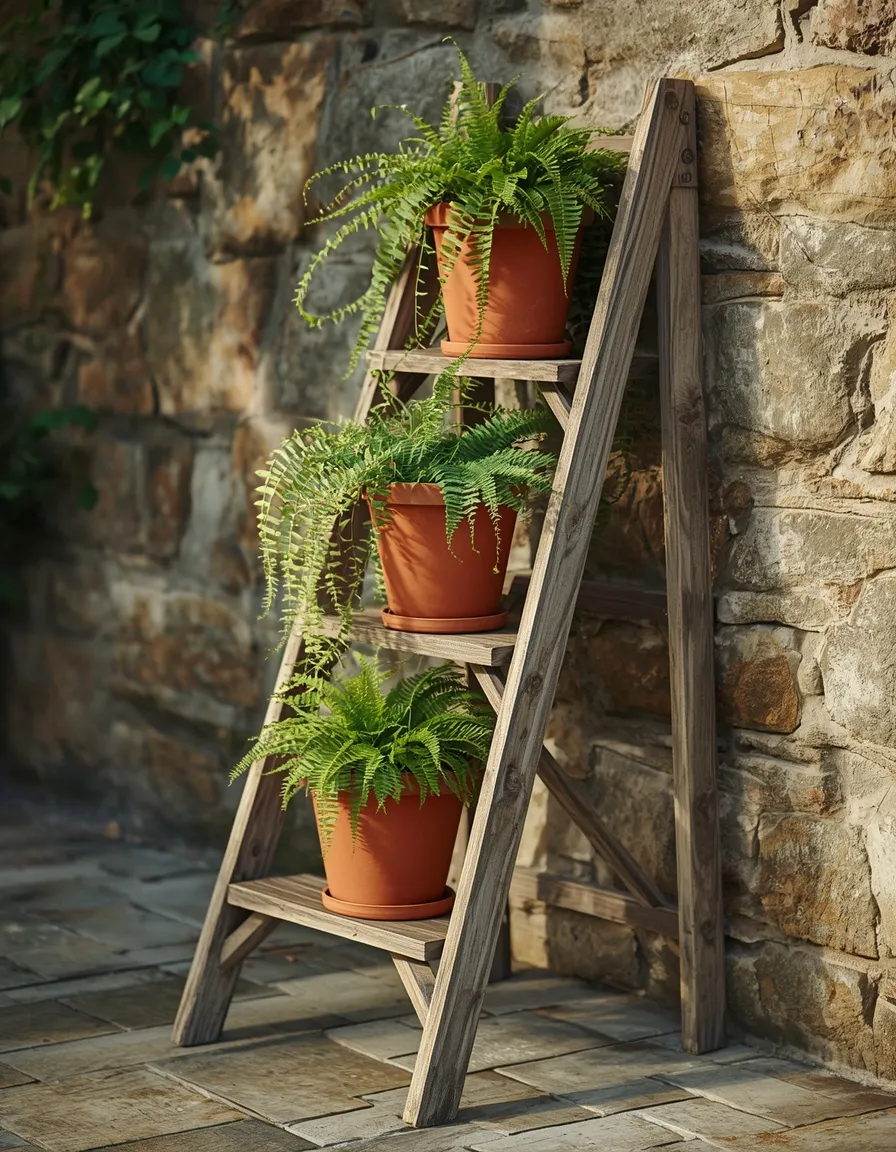
A wooden stepladder, splayed open and leaned against a wall, turns into an instant multi-level plant stand that shows off a whole collection of pots at once. Each rung becomes a shelf, so trailing plants at the top can spill down past upright ones lower down.
Choose a ladder with sturdy, unbroken rungs rated to hold weight, since a full pot of wet soil is heavier than it looks. Secure the ladder’s feet against a wall or stake it to the ground with an L-bracket so it cannot tip forward, especially in a yard with kids or pets running through. Space three to five pots along the rungs, mixing heights and leaf textures rather than lining up identical plants, and leave the top rung for the tallest or most trailing specimen.
- Solves vertical storage for gardeners short on ground space
- Works on a patio, balcony, or against a bare fence line
- Best for pots under about 4 kg (9 lb) once watered
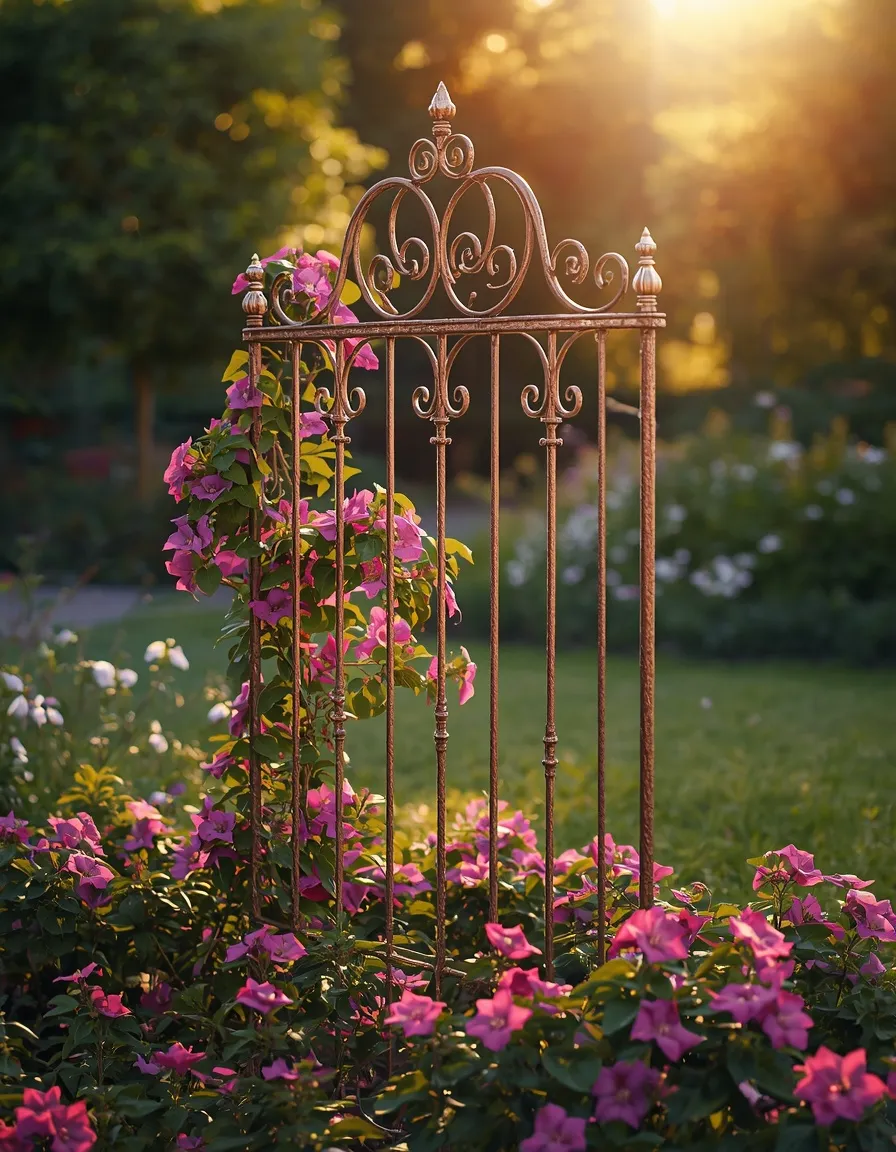
5. Garden Gate Trellis for Climbers
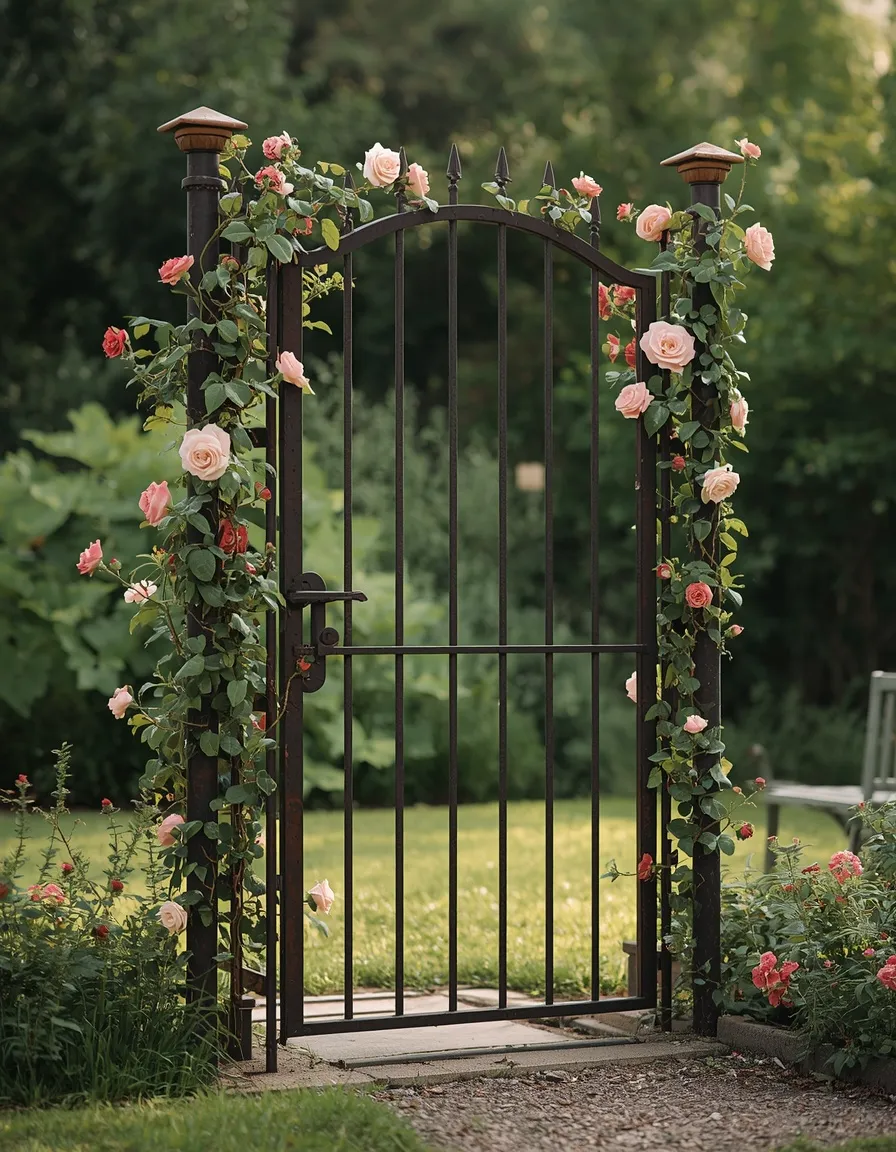
An old wooden or wrought-iron gate, no longer attached to any fence, becomes a freestanding trellis when propped upright and anchored in a border. Climbing roses, clematis, or sweet peas weave through the slats and eventually soften the whole structure into a living screen.
Sink the gate’s bottom edge into the ground by 15 to 20 cm (6 to 8 in) and brace it with two stakes driven at an angle behind it, since an unanchored gate can blow over in wind once it is carrying a full season of foliage. Position it where it can catch at least four to six hours of sun if using flowering climbers. A gate with peeling paint needs no extra treatment for this use, since the plants will eventually cover most of the surface anyway.
- Solves the problem of screening a view without building a fence
- Gives climbing plants a head start over training them up a bare wall
- Works as a freestanding accent in an open bed or along a path
6. Upcycled Dresser Drawer Planters
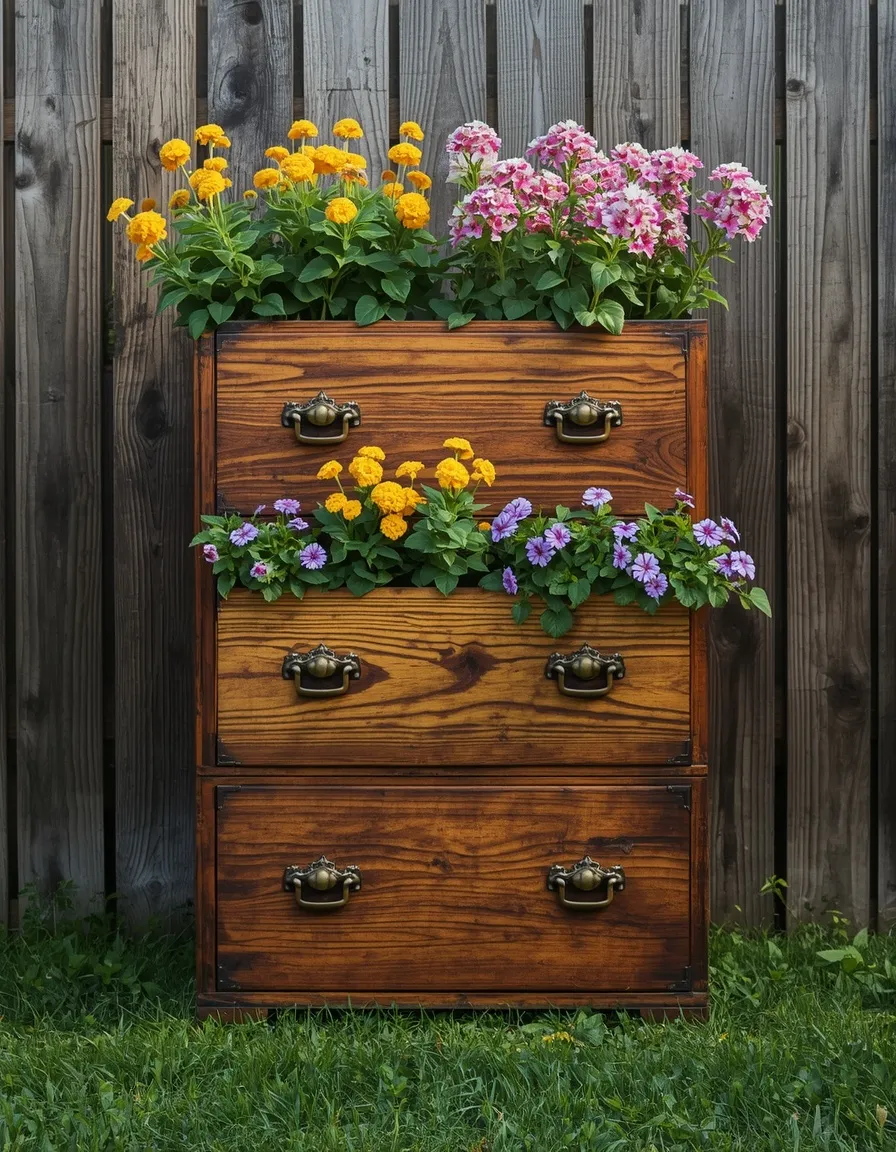
Pull the drawers from a broken dresser, stack them at staggered heights, and fill each one with a different plant to build a tiered garden that looks like it was designed by a set stylist. The wood grain and old hardware carry more visual interest than any matching planter set.
Line each drawer with landscape fabric before adding soil, and drill drainage holes through the bottom so water has somewhere to go. If the piece is old enough to predate 1978, treat the paint as a potential lead hazard rather than sanding it bare; the U.S. Environmental Protection Agency recommends lead-safe handling for any pre-1978 painted furniture, so keep the finish intact and use a liner instead of scraping it down. Stack drawers on bricks or a low pallet base to keep the bottom layer off damp soil.
- Creates a tiered display from a single piece of broken furniture
- Solves the problem of styling an awkward flat wall or fence corner
- Works well for shallow-rooted annuals and succulents
7. Clawfoot Tub Water Garden
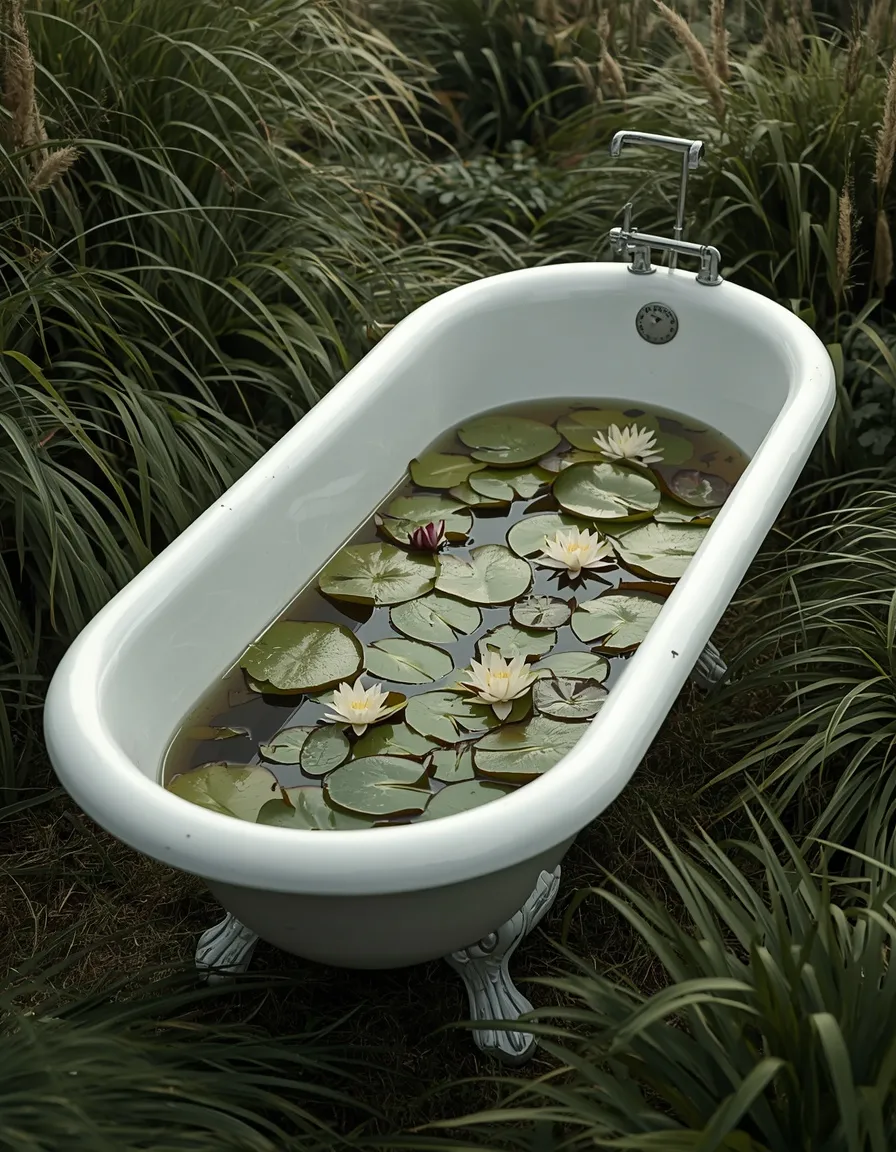
A chipped clawfoot bathtub, too far gone for a bathroom but far too handsome to scrap, makes a striking water feature once it is set into a garden bed and filled with aquatic plants. The curved cast iron reads as a genuine antique rather than a garden-center water feature.
Because a cast iron tub can weigh well over 150 kg (330 lb) empty, plan its final position before filling it, ideally with help moving it or a dolly rated for the load. Standing water attracts mosquitoes within days, so add a small solar-powered fountain pump to keep the surface moving, or use a larvicide safe for ornamental ponds if a pump is not practical. Plant water lilies or marginal plants like pickerelweed directly in submerged pots rather than loose soil, which keeps the water clearer.
- Solves the problem of adding water without a full pond installation
- Works as a striking focal point at the end of a path or border
- Best suited to a level, sunny spot near an outdoor seating area
8. Colander Hanging Baskets
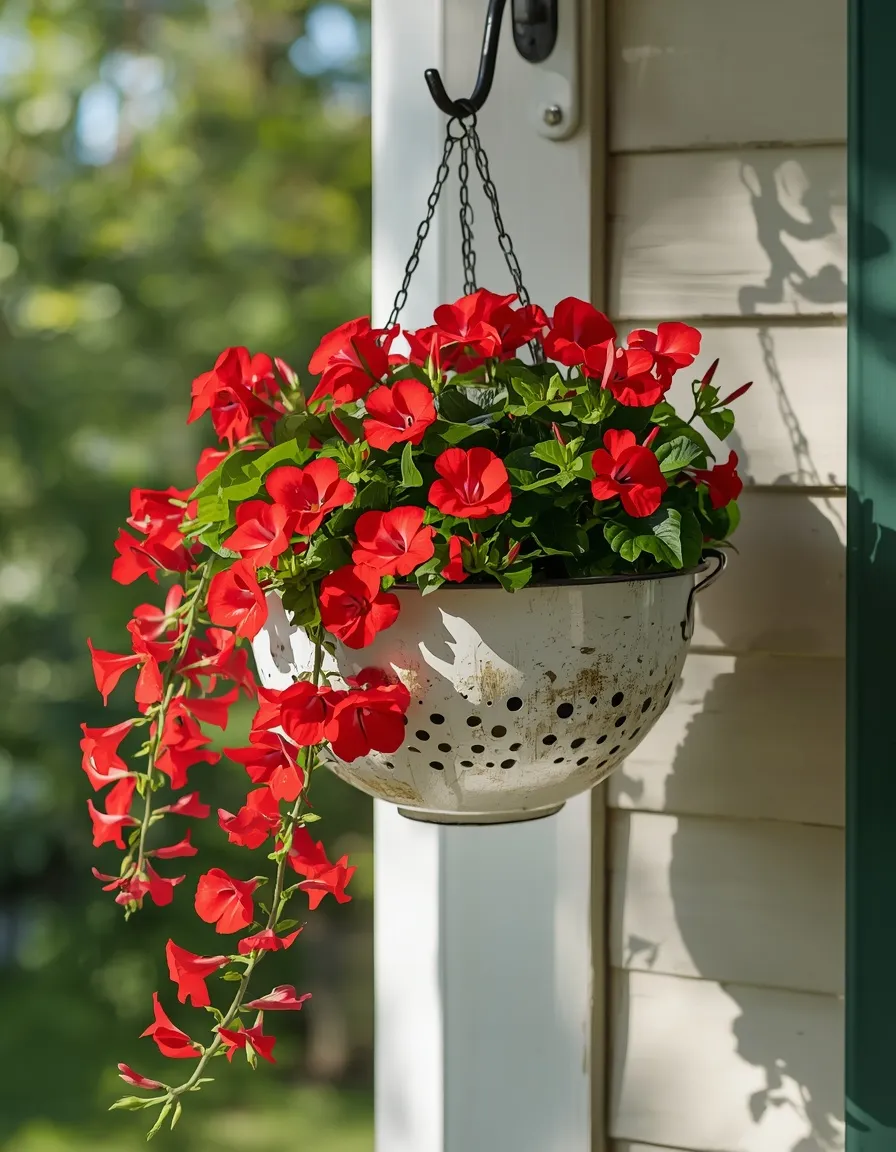
A metal or enamel colander, already full of holes, needs almost no modification to become a hanging planter. Suspended from a pergola beam or shepherd’s hook, it holds trailing flowers like lobelia or nasturtium while its built-in drainage does all the work.
Thread a sturdy chain or wire through three evenly spaced holes near the rim to hang it level, and add a coco liner or moss layer inside before the soil to keep it from washing straight through the larger gaps. Enamel colanders with chipped spots add character and do not need touching up. This is one of the fastest garden junk ideas to execute, since there is no drilling required, just a hanging point and a bag of potting mix.
- Ready to plant with zero drilling or drainage prep required
- Ideal for porches, pergolas, and small balconies with hanging hooks
- Ties naturally into a kitchen-garden theme when paired with other cookware pieces
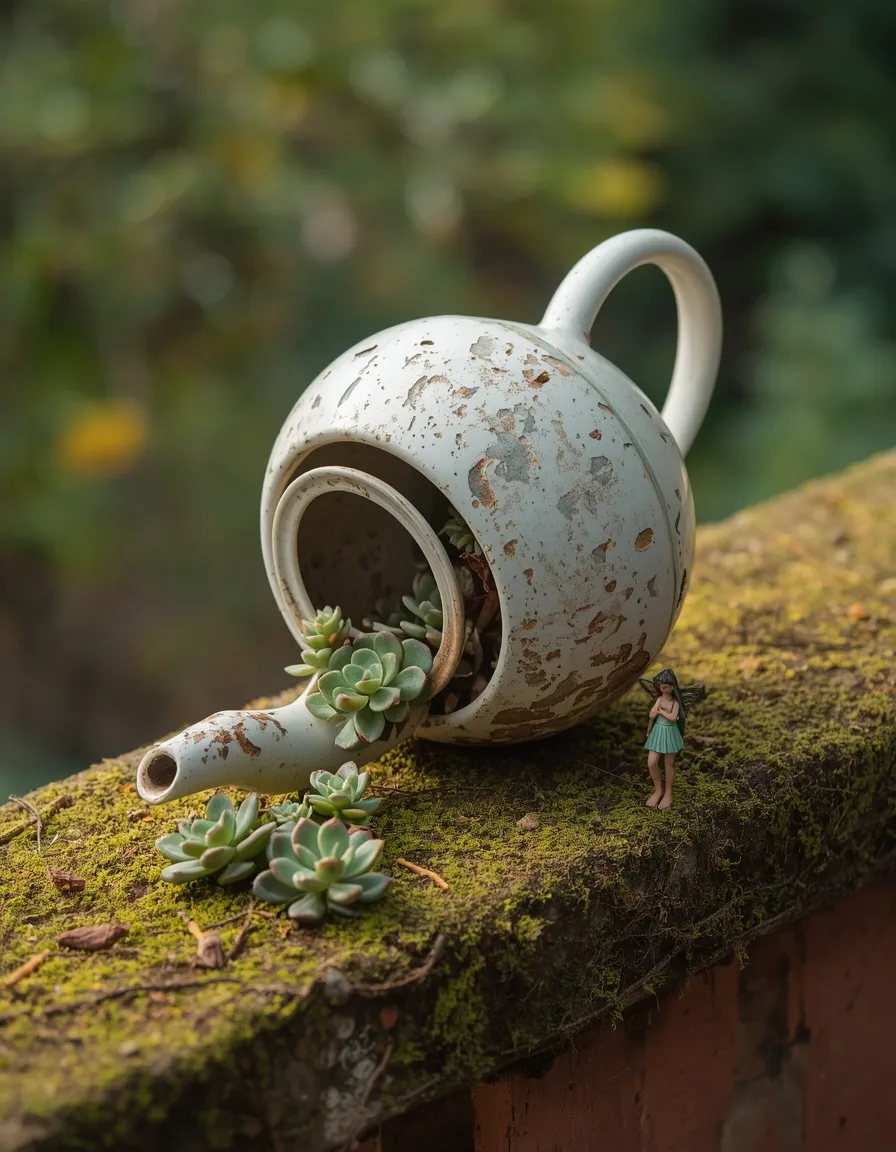
9. Teacup and Teapot Fairy Garden
A cracked teapot laid on its side with tiny succulents spilling from the spout, surrounded by a saucer garden of moss and miniature figurines, turns a mismatched china set into a fairy garden scene. It is one of the most Pinterest-friendly garden junk ideas precisely because of its small scale.
Use a fast-draining succulent or cactus mix rather than regular potting soil, since teapots and cups rarely have drainage holes and standing water will rot roots within a week. Set the display somewhere it gets morning sun but afternoon shade if temperatures regularly climb past 30°C (86°F), since the small ceramic vessels heat up fast. Because these gardens sit low to the ground where pets and curious toddlers can reach them, check any flowering plants used against the ASPCA’s toxic and non-toxic plant list before placing the display where animals roam.
- Works beautifully on a low table, tree stump, or garden ledge
- Solves the problem of using orphaned or chipped china pieces
- Best planted with succulents, sedum, or moss rather than thirsty annuals
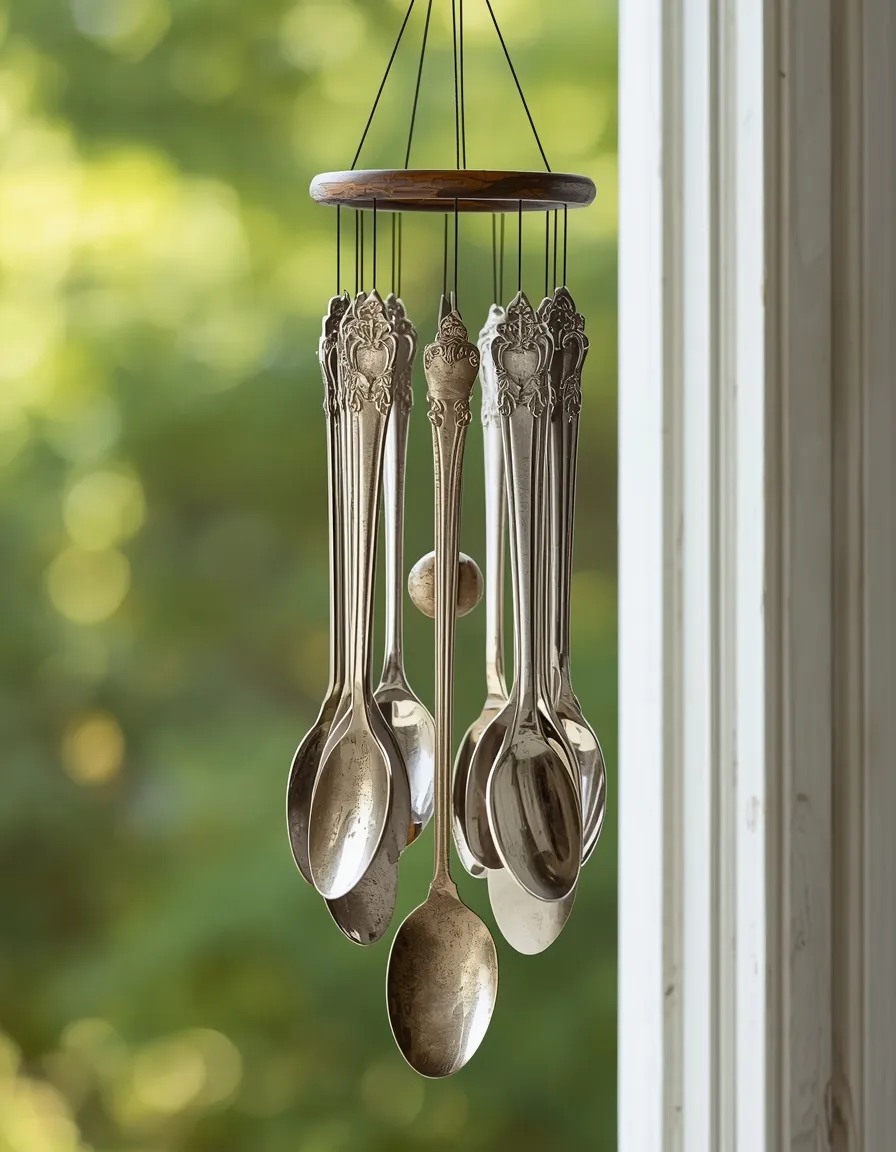
10. Silverware Wind Chimes
Mismatched forks, spoons, and knives from a broken flatware set, strung at different lengths from a rustic wood or metal ring, catch the breeze with a bright, unmistakable clink. Hung near a window or reading nook, they add sound to a garden the way flowers add color.
Drill a small hole through the handle end of each piece with a metal bit, using a center punch first so the drill does not skate across the polished surface. Vary the lengths by 5 to 8 cm (2 to 3 in) between pieces so the tones layer instead of clanging in unison, and finish with the heaviest spoon at the center to act as the striker. Bent spoons make good hooks for hanging smaller ornaments alongside the chime.
- Gives leftover or mismatched flatware a genuine second life
- Adds sound and movement to a porch, patio, or garden gate
- Works as a quick weekend project needing only a drill and wire
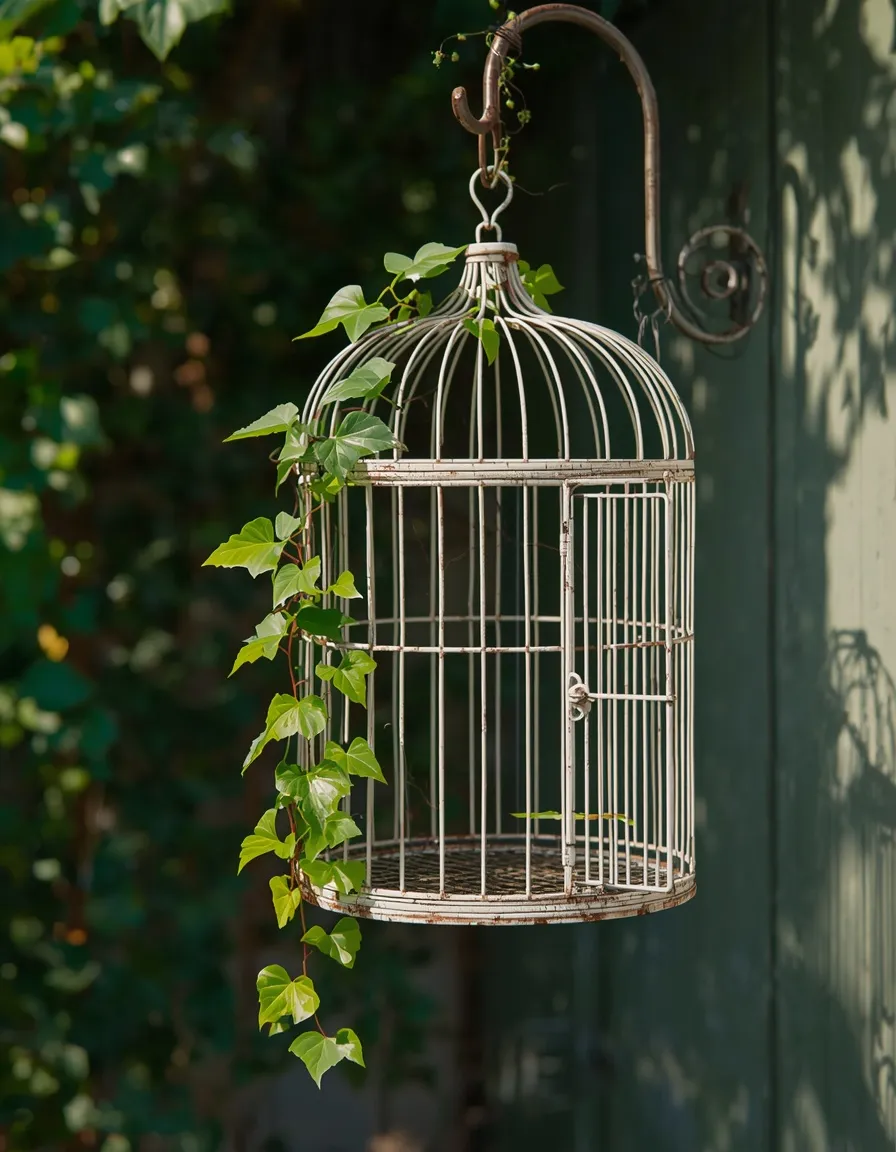
11. Vintage Birdcage Planter
An old wire or wooden birdcage, door propped open, filled with trailing ivy or a cluster of small succulents, reads as vintage garden decor rather than a literal cage. Hung from a shepherd’s hook or set on a plant stand, it draws the eye upward in a way flat borders do not.
Line the base with moss or coco fiber before adding a plastic liner and soil, since most birdcages were never built to hold potting mix and will rust faster once wet metal sits against wet dirt. Leave the door slightly ajar and let a few vines spill through the gap for a more natural, unstaged look. Smaller cages work well grouped in odd numbers of three, hung at slightly different heights.
- Adds vertical interest without needing a trellis or wall space
- Works well grouped in threes at varying heights
- Suited to trailing succulents, ivy, or small ferns in shade
12. Old Boots as Planters
A pair of weathered rubber wellies or leather work boots, planted with cheerful annuals spilling over the tops, is a classic garden junk idea precisely because it takes something entirely utilitarian and gives it a second, decorative job. Set on a doorstep, they double as an instant welcome mat.
Cut or puncture several drainage holes through the sole with a utility knife or drill, since boots hold water far longer than terracotta and will otherwise rot the plant’s roots and the boot itself. Fill the toe with gravel before adding soil to keep the weight balanced and the boot standing upright. Because boots sit low to the ground, choose pet-safe annuals such as marigolds or petunias if dogs or cats have yard access.
- Turns a genuinely worn-out item into a doorstep welcome feature
- Solves the problem of decorating a small entry with almost no cost
- Best for compact annuals rather than deep-rooted perennials

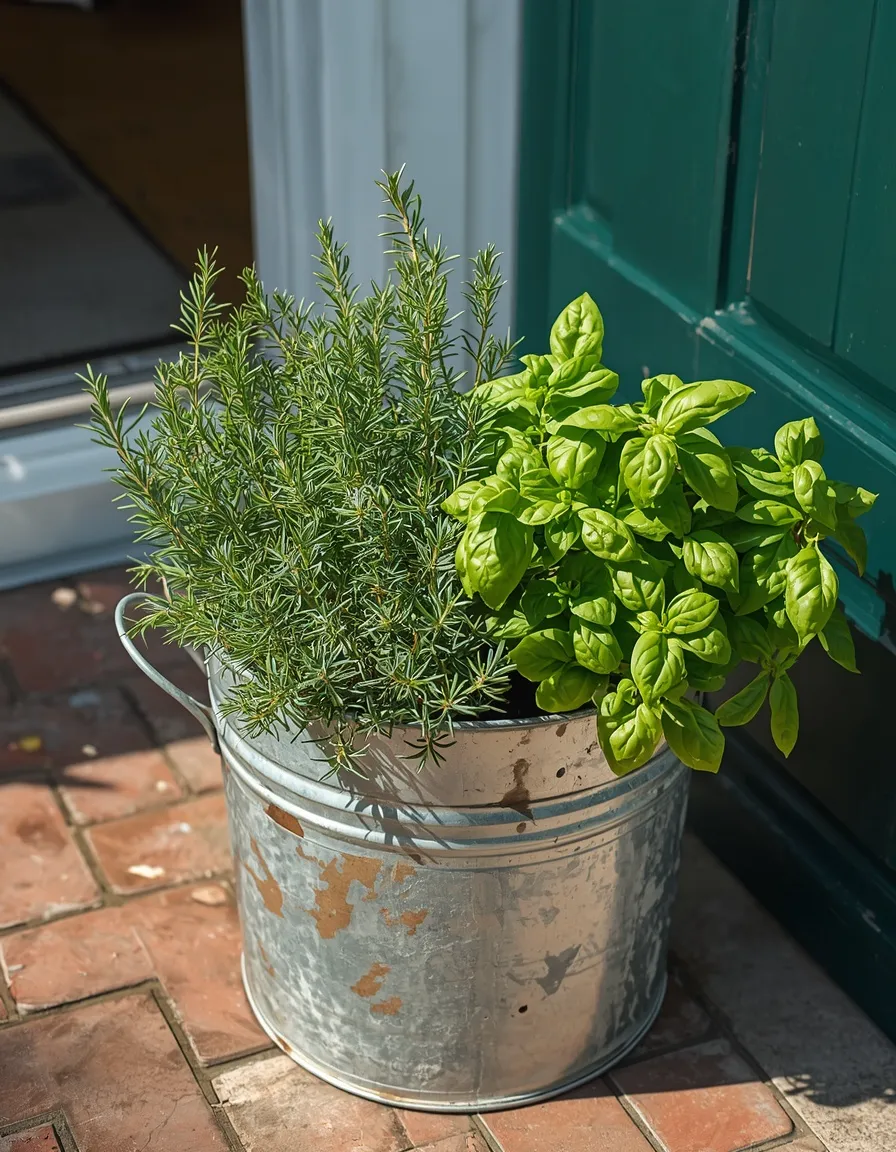
13. Galvanized Washtub Herb Garden
A dented galvanized washtub, once used for laundry, makes a generous, ready-made raised bed for a kitchen herb garden. Set near the back door, it keeps rosemary, thyme, and basil within easy reach of the kitchen while looking every bit as intentional as a built-in planter box.
Drill four to six drainage holes across the base, spaced evenly so water does not pool on one side. Galvanized metal heats up quickly in direct sun, so in hot climates raise the tub off the ground on bricks to let air circulate underneath and protect tender herb roots from overheating. Because this container is meant for edible plants, avoid any tub with visible old paint or solder seams, and rinse it thoroughly before filling with a fresh, food-safe potting mix.
- Keeps culinary herbs within arm’s reach of the kitchen door
- Solves drainage and soil-quality issues common in in-ground herb beds
- Works in full sun locations that get at least six hours of light
14. Headboard Garden Trellis
An ornate wooden or iron headboard, retired from the bedroom, becomes a striking garden trellis or bed border when sunk upright into the soil behind a row of climbing sweet peas or clematis. The scrollwork or slats that once framed a bed now frame a flower bed instead.
Iron headboards hold up outdoors with little more than a coat of rust-inhibiting spray paint, while wooden ones benefit from an exterior sealant to slow rot at the base where it meets damp soil. Sink the legs 15 cm (6 in) into the ground and, for taller pieces, add a stake at the back for extra stability in windy areas. This works particularly well as a backdrop for a single garden bed, giving even a small planting a sense of architecture.
- Gives a flower bed a defined backdrop and clear focal point
- Solves the problem of screening a fence or utility area
- Best suited to sturdy climbers like clematis, sweet peas, or climbing roses
15. Painted Tire Planters
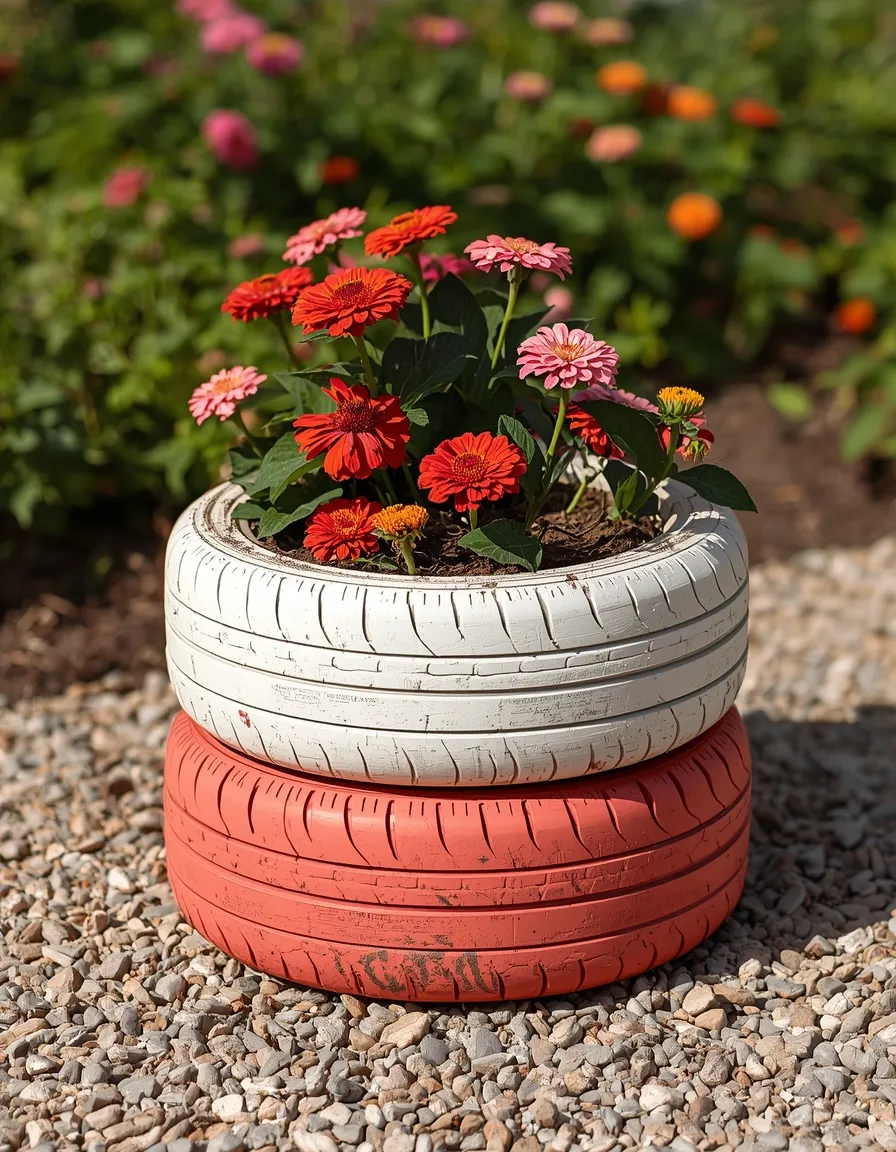
An old car or tractor tire, stacked flat and filled with soil, becomes a bold, colorful planter once it is painted in a solid hue or a scalloped edge pattern. It is one of the most budget-friendly garden junk ideas, since tires are usually free from a local shop.
Use exterior-grade spray paint rated for rubber and plastic, applying two thin coats rather than one heavy one to avoid drips and peeling. Stack two tires for extra planting depth if growing vegetables with deeper roots like tomatoes, and always drill a few extra drainage holes through the bottom tire even though the center is already open. Old tires do leach small amounts of chemicals over many years, so many gardeners choose to line the interior with heavy plastic before adding soil if the planter will be used for edible crops.
- One of the lowest-cost garden junk ideas, often free from tire shops
- Works well for bold color-blocked borders or a playful kids’ garden bed
- Solves drainage and structure for raised vegetable growing
16. Wagon Wheel Focal Point
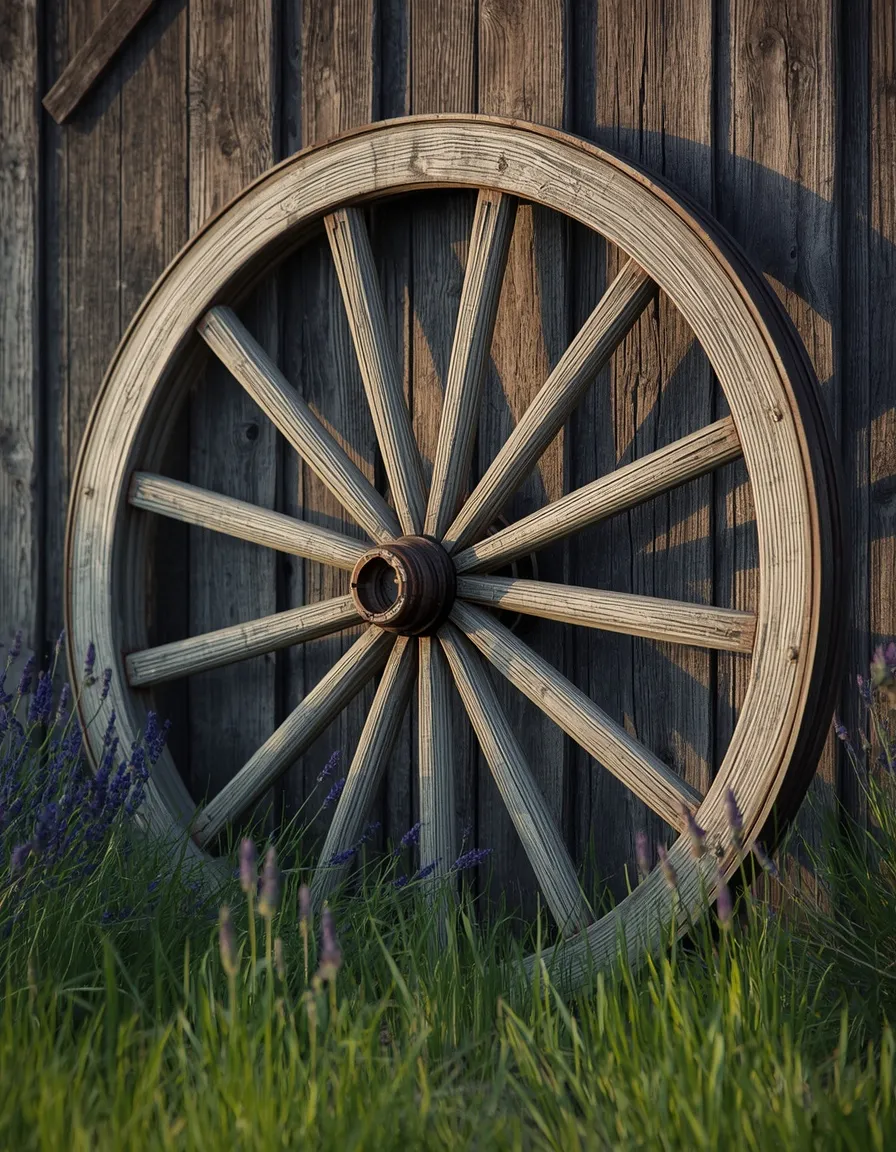
A weathered wooden or iron wagon wheel, leaned against a shed or set flat as the centerpiece of a gravel circle, gives a garden an instant sense of history. Ring it with lavender or ornamental grasses and it becomes the kind of focal point a visitor’s eye lands on first.
If leaning the wheel upright, anchor it with a metal stake driven through the hub and into the ground so it cannot be blown over. Laid flat, it works as a decorative base for a circular herb spiral or a simple stepping-stone path through the spokes. This kind of anchor piece is worth placing early, since broader garden layout decisions about paths and sightlines tend to work better once a strong focal point is already set.
- Gives an open lawn or gravel area a clear anchor point
- Works upright as a screen accent or flat as a path feature
- Pairs naturally with rustic, farmhouse, and prairie-style plantings
17. Horseshoe Border Edging
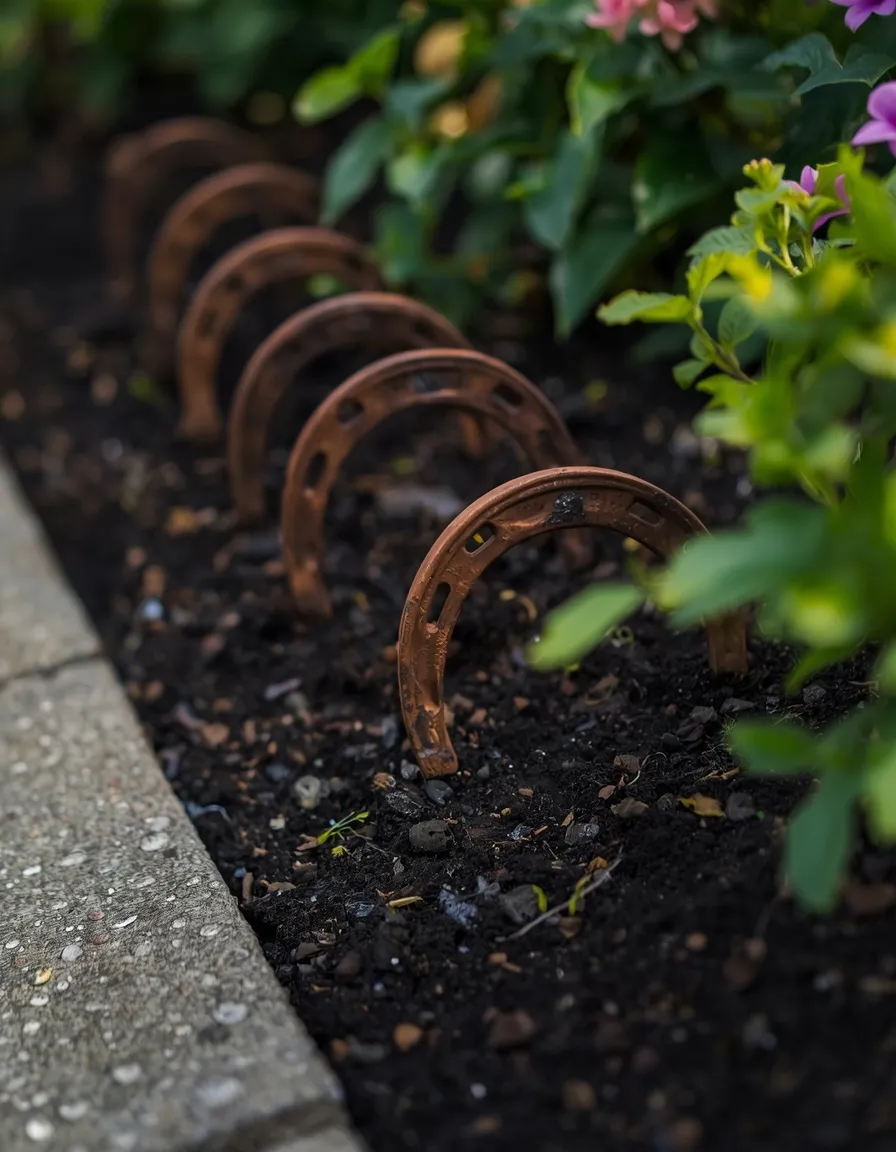
Rows of old horseshoes, half-buried heel-down along the edge of a flower bed, create a low, textured border that photographs beautifully and costs almost nothing if sourced from a local farm or stable. Painted or left to rust, they read as both rustic and intentional.
Sink each horseshoe about a third of the way into the soil, spacing them 10 to 15 cm (4 to 6 in) apart along the bed’s edge for a continuous line rather than scattered accents. Cast iron horseshoes hold their shape and rust attractively over time, while cheaper stamped steel versions bend and are better suited to a coat of matte spray paint for durability. This edging works especially well paired with gravel paths, since the texture of both materials complements rather than competes.
- Creates a low-cost, low-maintenance edge for beds and paths
- Solves the problem of defining a border without brick or stone
- Works well in farmhouse, western, and rustic garden themes
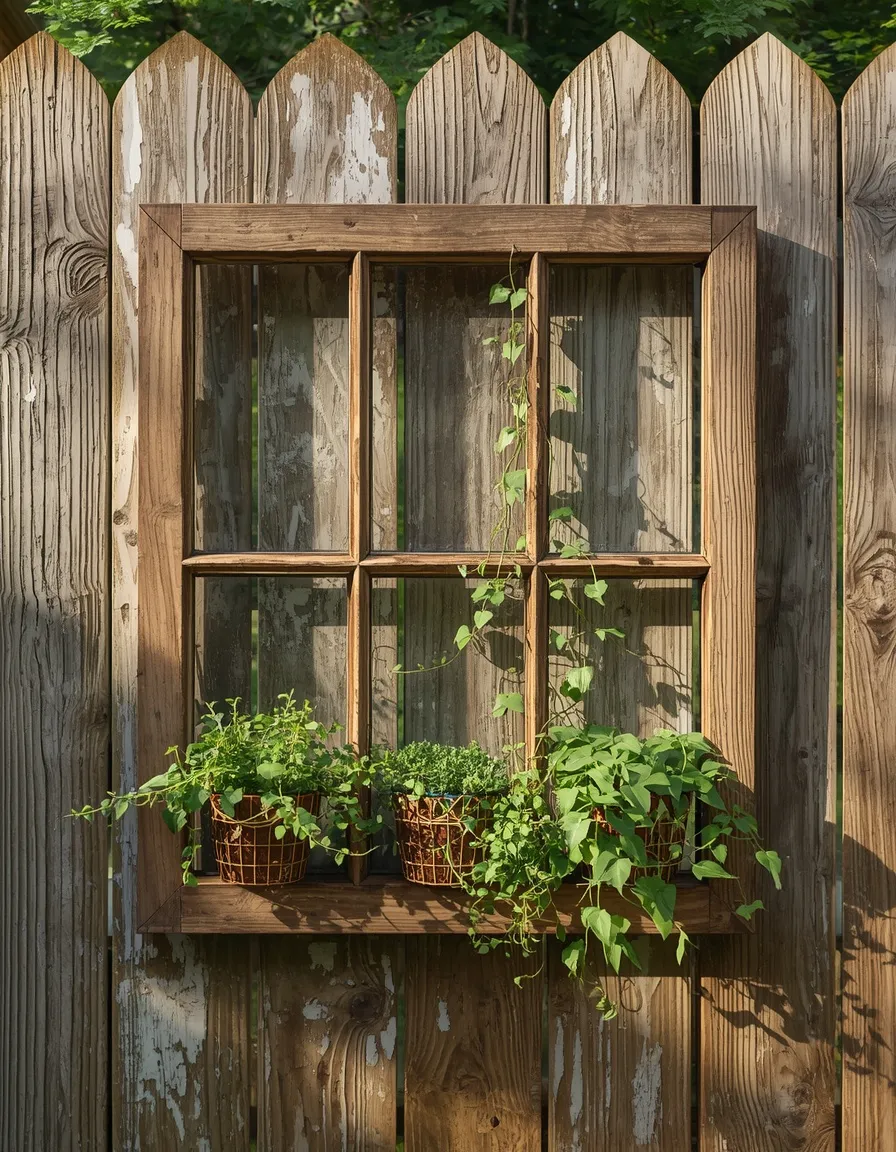
18. Window Frame Wall Display
An old six-pane window, glass intact or removed entirely, mounted flat against a fence or shed wall, becomes a framed garden gallery. Fill each pane with a small mounted planter or leave the frame bare so climbing vines eventually fill the grid on their own.
If the glass is missing, attach small wire-mesh planter baskets behind each opening so the frame reads as a series of individual windows into greenery. Mount the frame securely to wall studs or a fence rail with heavy-duty brackets rather than relying on the frame’s own hardware, since a fully planted window frame gets significantly heavier once soil and foliage are added. Weathered, peeling paint on the frame only strengthens the look and needs no touch-up.
- Turns a blank fence or shed wall into a real focal point
- Solves vertical display for gardeners with little ground space
- Works with or without the original glass panes intact
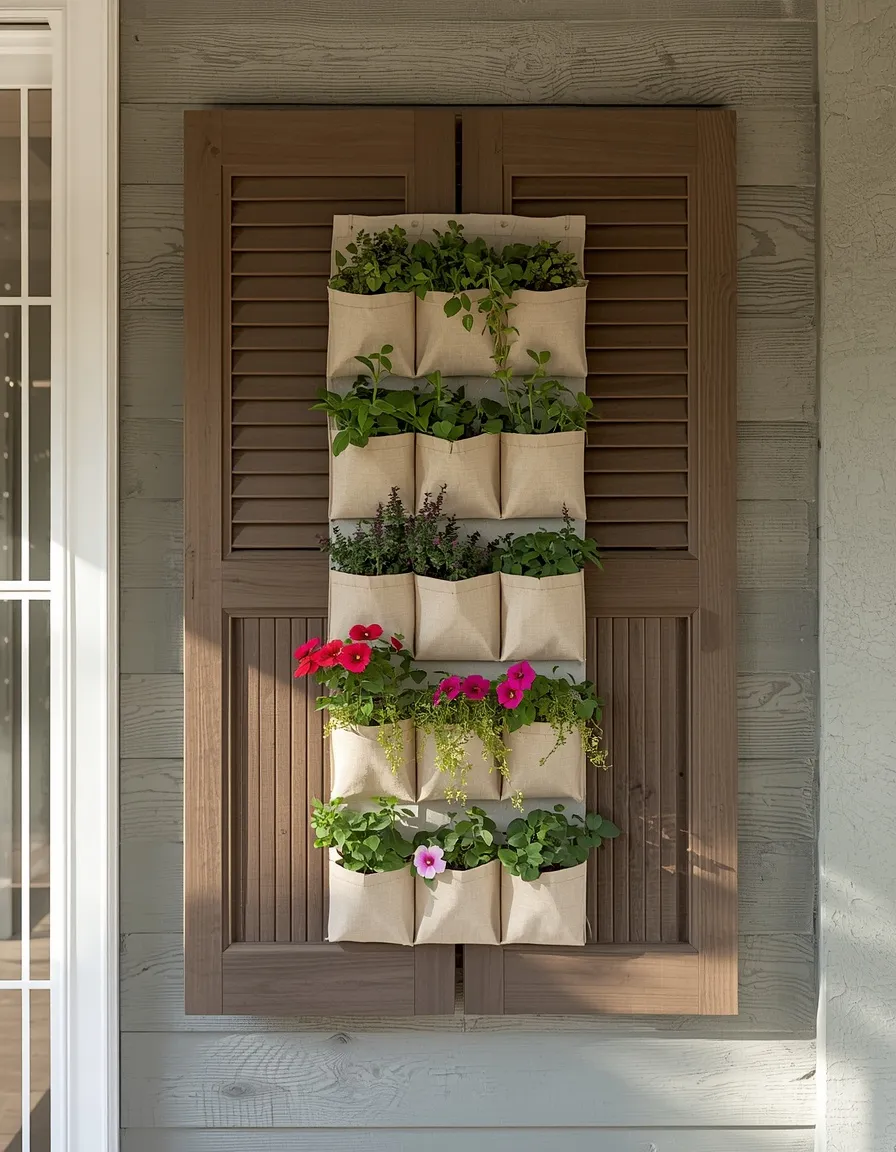
19. Shutter Vertical Planter
A pair of louvered wooden shutters, hinged open or mounted flat, becomes a vertical planter when small pots or a fabric planting pocket system is attached across the slats. Leaned against a porch wall, they add cottage charm while making use of otherwise dead vertical space.
Attach a canvas or felt vertical-garden pocket system across the shutter’s face using screws through the slats into the wall behind, which spreads the weight better than adhesive alone. Choose shallow-rooted plants like herbs, lettuces, or trailing petunias, since each pocket typically holds only a few centimeters of soil depth. Two shutters mounted side by side, salvaged from the same window, keep the proportions matched and the finished look intentional rather than mismatched.
- Makes efficient use of narrow porch or entryway wall space
- Solves the problem of growing herbs or greens without floor space
- Best suited to shallow-rooted plants due to limited soil depth
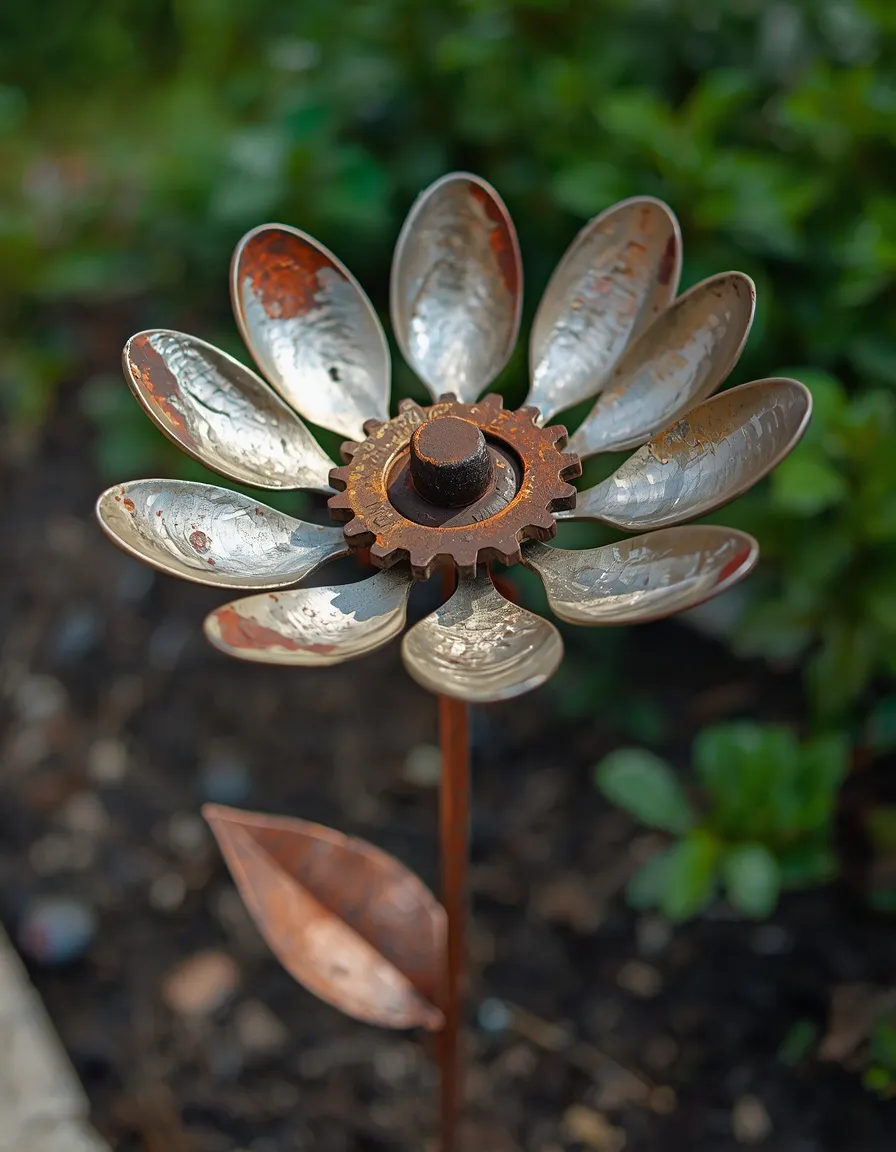
20. Scrap Metal Flower Garden Stakes
Old spoons hammered flat into petal shapes, gears stacked into a flower’s center, and a length of rebar for a stem come together as scrap metal flower art, one of the most searched garden junk ideas for anyone drawn to sculptural yard decor. Clustered in threes along a border, they bloom all year regardless of season.
Flatten spoon or fork heads with a metal hammer on a hard surface, then drill a center hole and bolt them around a washer or old gear to form the flower’s face. Weld or bolt the whole flower head to a length of rebar or thick wire for the stem, and sink the stake at least 20 cm (8 in) into the soil so it stays upright through wind and watering. Sand down any sharp edges left from cutting or hammering before placing the stakes anywhere children play.
- Creates year-round color and texture that never wilts or needs water
- Solves the problem of a bare border in the off-season
- Works as a satisfying weekend project for anyone handy with basic tools
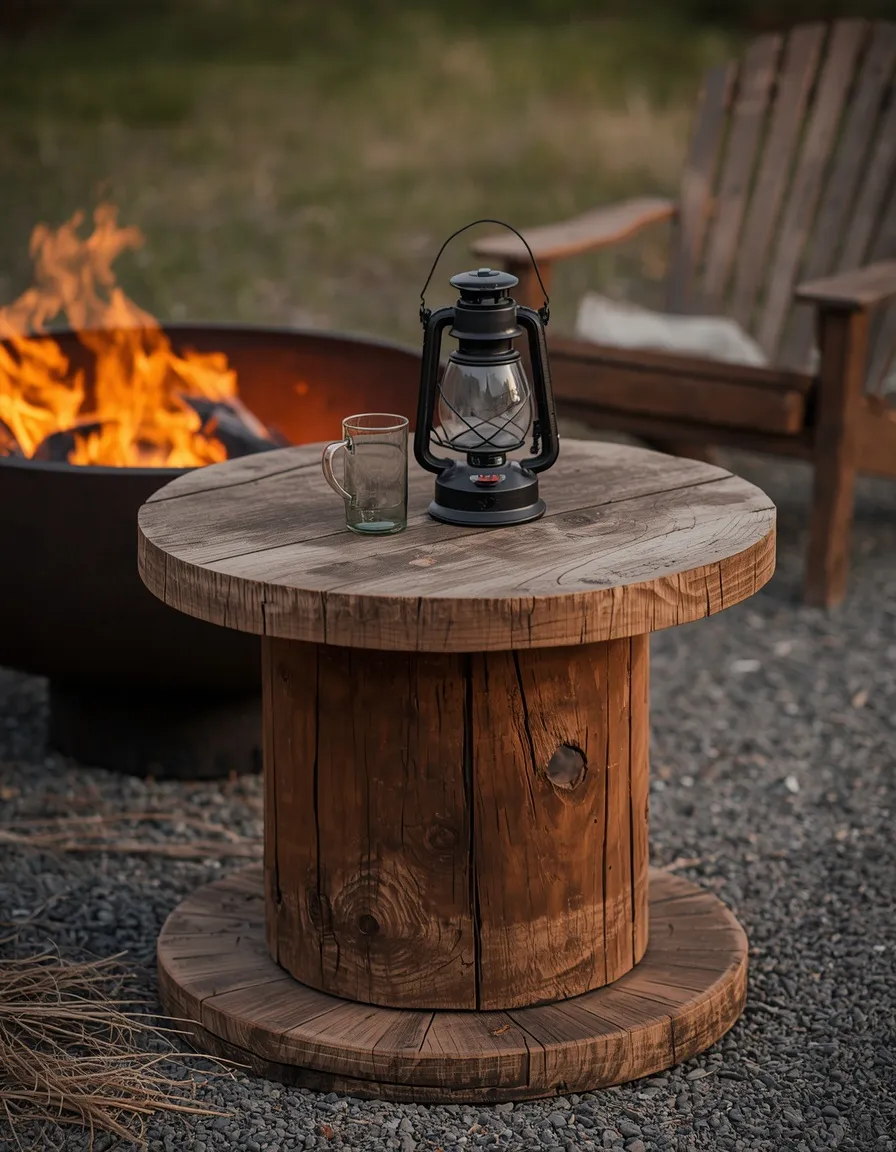
21. Cable Spool Garden Table
A large wooden cable spool, laid flat, turns into an instant rustic side table for a patio or fire pit area, its industrial rings and rough-sawn top giving off far more character than anything flat-packed. Add a round of glass or leave the raw wood exposed for a farmhouse feel.
Sand the top surface smooth before use to avoid splinters, then seal with exterior-grade polyurethane or a food-safe oil finish if it will double as a serving surface. Because most spools were designed to sit on soft ground rather than a level patio, check that the base sits flat and does not rock; shim one edge with a paver if needed. Spools stored outdoors long-term should be raised slightly off wet grass or soil on a few bricks to slow rot at the base.
- Solves the problem of furnishing a patio or fire pit area cheaply
- Works well as a plant stand base if left unsealed for outdoor use
- Best placed on a level, hard surface rather than directly on grass
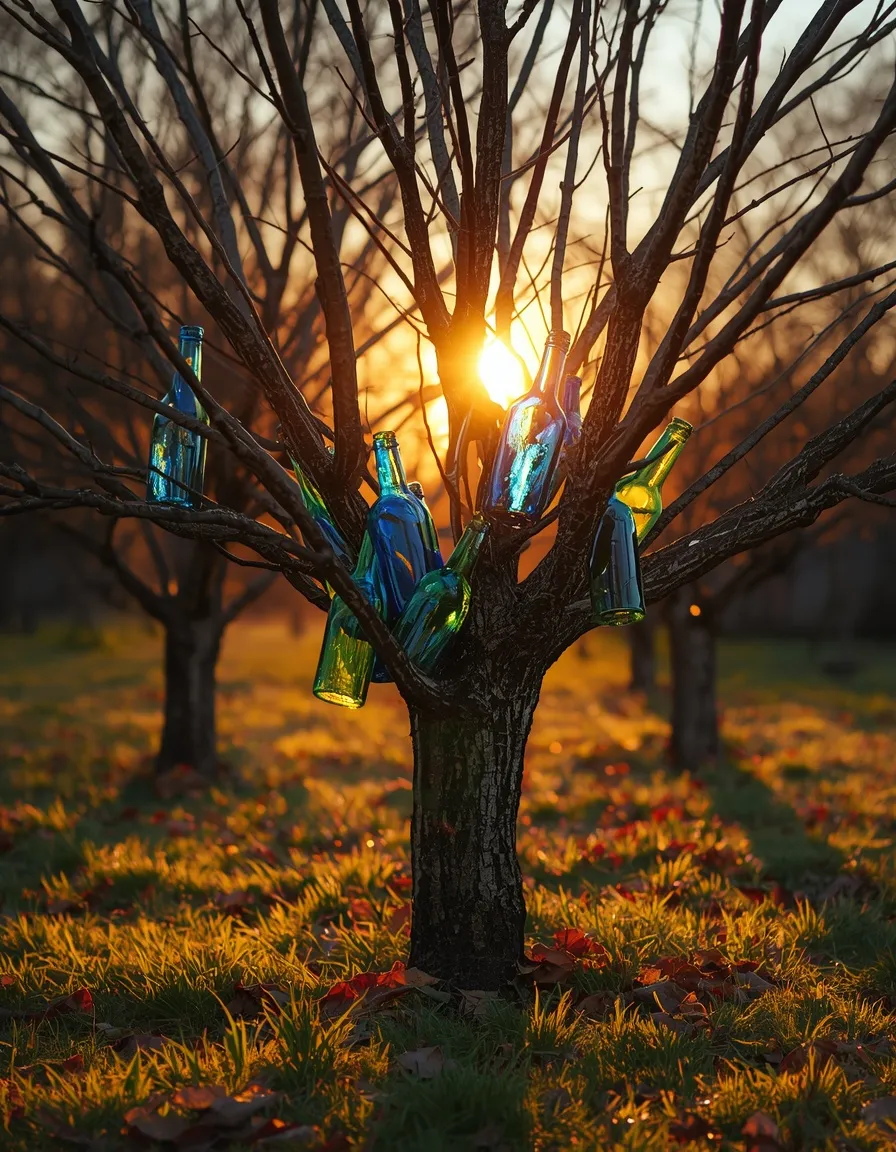
22. Glass Bottle Tree
Colored glass bottles slid onto the bare branches of a dead tree or a purpose-built metal pole catch the light like stained glass, casting blue and green shadows across the garden at sunset. Bottle trees have deep roots in Southern folk garden tradition and remain one of the most striking garden junk ideas around.
Use branches or rebar rods slightly angled upward so bottles stay seated rather than sliding off in wind, and choose bottles with necks narrow enough to grip the branch snugly. Because broken glass is a real risk, keep the tree out of high-traffic areas and away from spots where children play or run, and use tumbled or tempered glass bottles where possible rather than thin, easily shattered ones. Group bottles by color, blues and greens together, for the most cohesive look.
- Adds color and light play without a single flower needed
- Works well as a focal point in a bed that gets afternoon sun
- Solves the problem of a bare or dead tree still standing in the yard
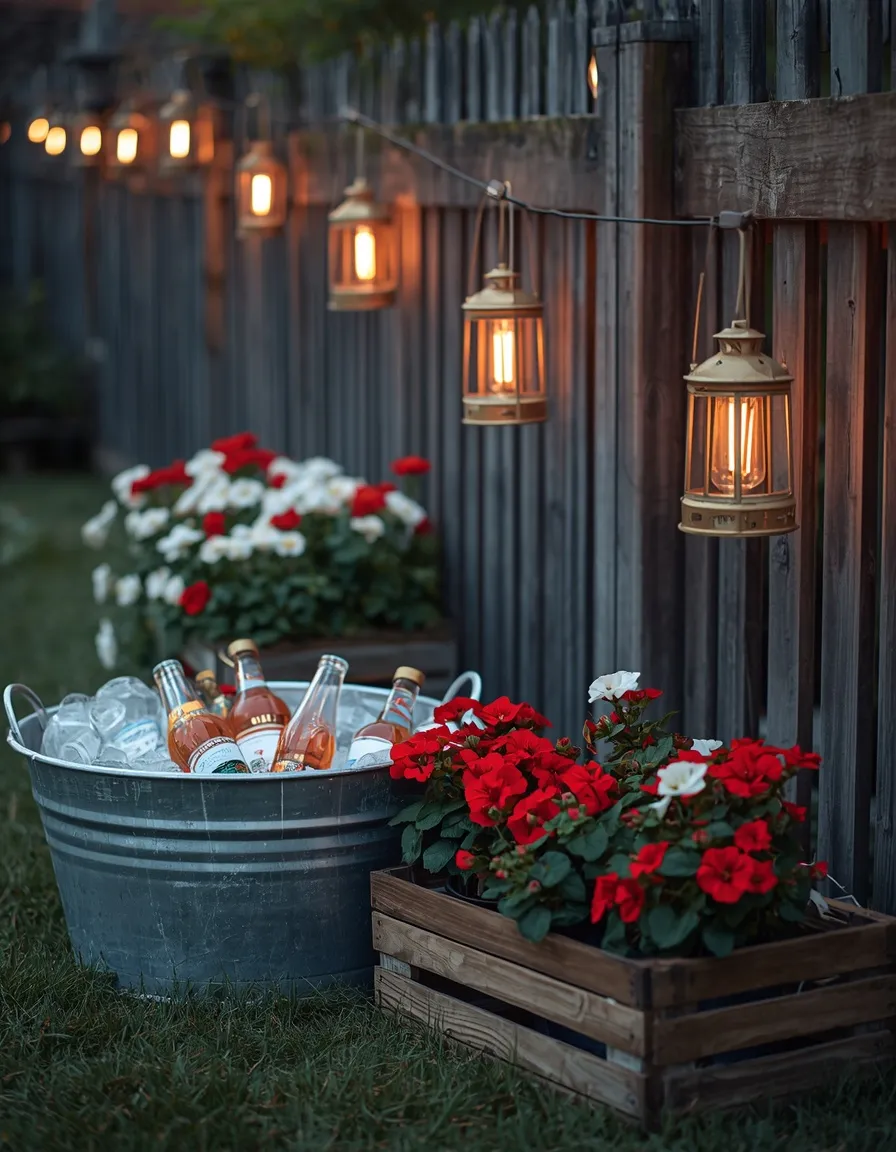
23. Seasonal Junk Display for Summer Celebrations
A galvanized tub filled with ice for drinks, an old crate stacked with red, white, and blue potted geraniums, and a string of tin-can lanterns along the fence turn everyday garden junk into a ready-made setup for a Fourth of July gathering or any warm-weather celebration. The same pieces used year-round simply get a seasonal styling refresh.
Swap in seasonal color, red geraniums, white alyssum, blue salvia, without buying new hardware, since the wheelbarrows, tubs, and crates already doing double duty the rest of the year are the same ones that carry a holiday theme. For evening lanterns, use battery-powered LED tea lights inside tin cans rather than open flames, especially in dry summer conditions where a stray spark near mulch or dry grass is a real fire risk. This idea travels well beyond one holiday, since the same rustic pieces work for any backyard cookout or garden party through the season.
- Refreshes existing garden junk pieces for a holiday or party in minutes
- Solves the problem of festive decor without disposable, single-use items
- Works for any warm-weather gathering, not only a single holiday
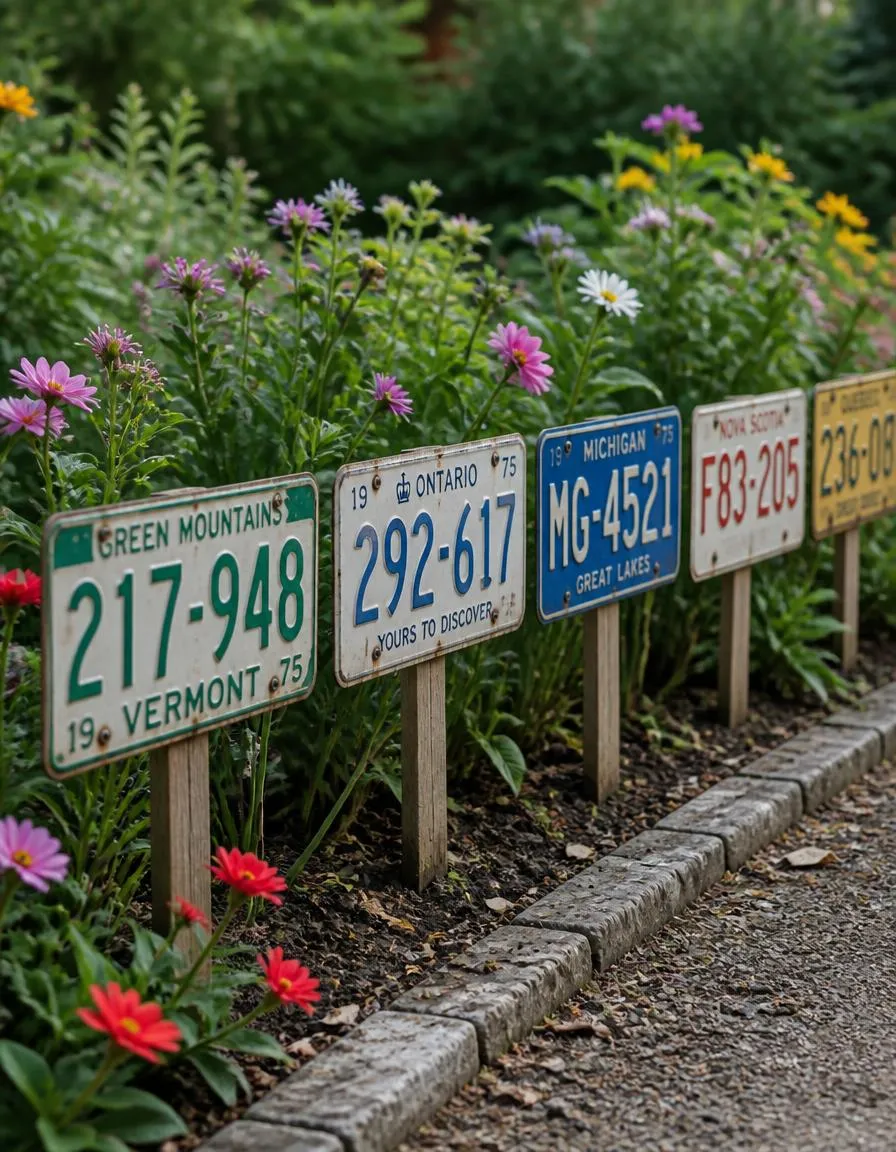
24. License Plate Garden Border
A row of old, mismatched license plates nailed to short wooden stakes and lined along a bed edge adds a graphic pop of color and a genuinely nostalgic, road-trip feel to a garden border. Angled slightly and spaced evenly, they read as folk art rather than clutter.
Attach each plate to a stake with two screws through the existing bolt holes so the plate sits flush and does not rattle in wind, and sink the stakes 10 cm (4 in) into the soil along the bed’s front edge. Mixing plates from different states, provinces, or decades gives the most visual interest, while a matched set in similar colors reads more polished for a smaller space. File down any sharp cut edges on older or damaged plates before placing them where hands or paws brush past.
- Adds bold color and a personal, collected feel to any border
- Solves the problem of edging a bed without brick, stone, or metal edging strips
- Works especially well for road-trip, Americana, or eclectic garden themes
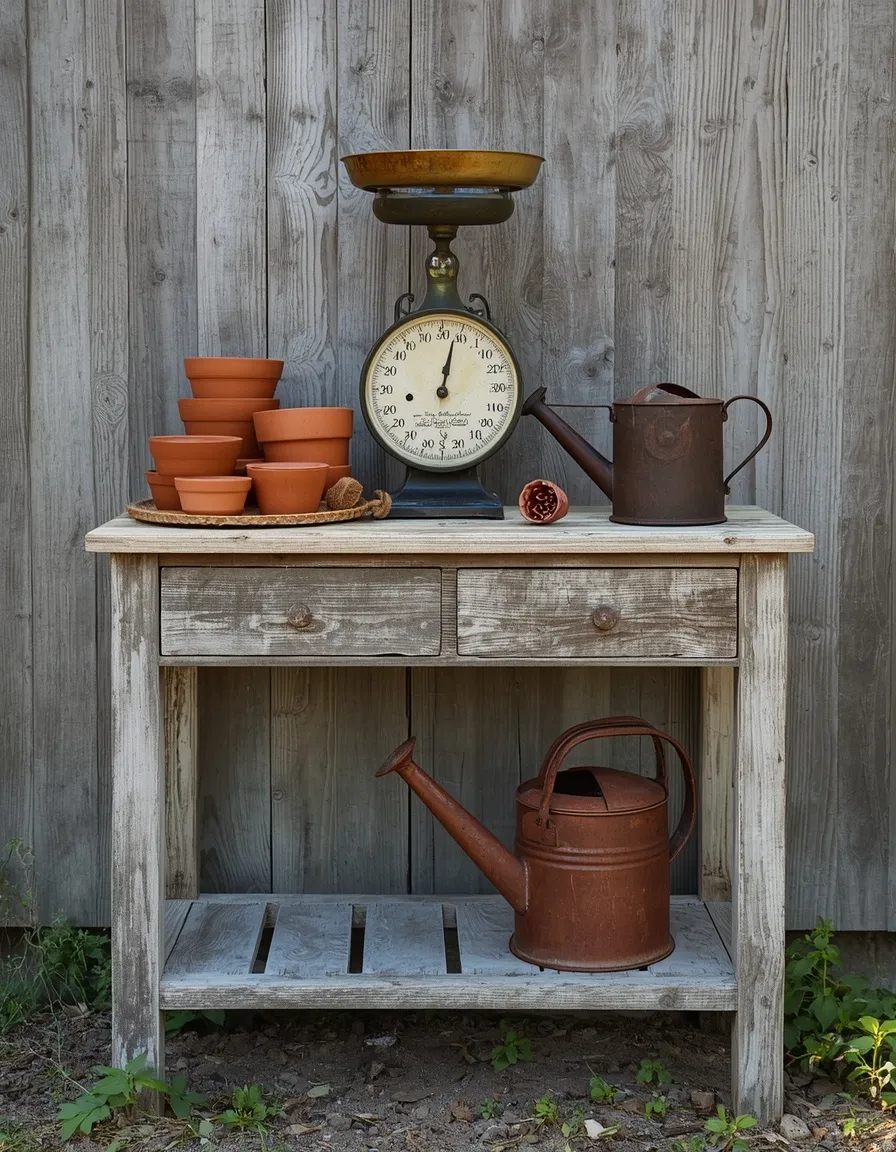
25. Antique Table Potting Station
A weathered wooden table, its finish long gone and one leg slightly uneven, makes a far more characterful potting station than a purpose-built garden bench. Set against a shed wall and topped with terracotta pots, an old scale, and a watering can, it becomes a genuine outdoor workspace.
Choose a table with a solid, wobble-free base even if the surface is scarred, since a potting station needs to hold real weight, bags of soil, trays of seedlings, without shifting. If the table’s original finish is painted and the piece is old enough to predate 1978, avoid sanding it and instead work on top of a removable board or oilcloth to keep any old paint dust out of the growing area. A shallow drawer, if the table has one, becomes instant storage for hand tools and twine.
- Creates a real outdoor workspace instead of just decor for its own sake
- Solves the problem of potting and repotting without hauling everything indoors
- Works well positioned near a shed, greenhouse, or garden gate for easy access
Conclusion
Good garden junk ideas are not about clutter, they are about giving a space history that a brand-new planter can never fake. Start with one or two pieces, a ladder here, a washtub there, and let the collection grow the way real collections do, slowly and with intention, rather than all at once. Every idea above solves a real styling problem, whether that is filling an awkward corner, adding height to a flat border, or simply making use of something too good to throw away. For more inspiration on shaping the space these pieces will live in, pair your favorite finds with a broader garden design layout that lets them shine. Pick a piece from your own garage this weekend, give it a coat of primer or a good scrub, and let it earn its spot in the garden.
Frequently Asked Questions
What exactly counts as “garden junk” for yard decor?
Garden junk generally means any retired household item, tool, or piece of furniture that gets a second life outdoors as a planter, trellis, or art piece, think old watering cans, ladders, dressers, bicycles, or flatware. The defining trait is not the item’s age but its texture and history, which is exactly what gives it more visual interest than a new, mass-produced planter.
Is it safe to plant directly in old metal, wood, or painted containers?
Most metal containers just need drainage holes drilled through the base and a rinse before planting, and rust itself is not a plant safety concern. The one real caution is old paint on furniture or containers made before 1978, since it may be lead-based; the EPA recommends leaving old paint intact and using a liner rather than sanding it, especially for anything growing edible herbs or vegetables.
How do I keep a junk-inspired garden from looking like an actual junkyard?
Limit the palette to two or three materials, such as galvanized metal, weathered wood, and one accent color, so the pieces feel curated rather than random. Group items in odd numbers, give each piece some breathing room instead of crowding them together, and let plants soften hard edges so the eye reads greenery first and the salvaged object second.
What are good garden junk ideas for a small yard, balcony, or rental?
Small-scale pieces work best in tight spaces: a colander hanging basket, a teacup fairy garden, an old boot planter by the door, or a single mini ladder plant stand all add character without needing a full bed. Renters can favor freestanding or hanging pieces over anything that requires drilling into a fence or wall, since most of these ideas need no permanent installation at all.
Will repurposed junk hold up outdoors, or will it just rust away?
Galvanized metal, cast iron, and stoneware hold up for years outdoors with little more than occasional touch-up paint, while raw wood and anything with old fabric or upholstery will break down faster and may need to come indoors for winter in colder climates. Sealing wood with an exterior-grade product and choosing naturally weather-tolerant materials for permanent pieces makes the biggest difference in longevity.
Where is the best place to find garden junk pieces?
Flea markets, estate sales, and barn sales tend to have the widest and most interesting selection, while local salvage yards, curbside “free” piles, and online marketplace listings are good for larger furniture pieces like dressers or headboards. Checking a family garage or attic first often turns up a watering can or old ladder that only needs a little cleaning to be ready for the garden.