

Introduction
A whimsical urban balcony proves that even a few square feet of concrete, several floors above traffic noise, can feel like a private, fairy-tale hideaway. Between fairy lights strung overhead, trailing vines softening the railing, and mismatched furniture with real personality, small-space styling has moved well past the sterile all-white balcony trend. This guide gathers twenty-one distinct ways to bring that layered, storybook charm to an apartment balcony, patio, or fire escape, covering lighting, plants, furniture, and the practical realities of decorating several stories above the street. Each idea is sized and priced for real city living, not a sprawling backyard, so you can pick the ones that fit your actual space and start building your own little urban abode in the sky.
Before You Style: Balcony Safety Basics for City Dwellers
Decorating several floors above a sidewalk comes with a few practical considerations that a ground-floor patio does not. Before diving into these whimsical urban balcony ideas, keep three things in mind. First, ask your building manager or landlord about weight limits before adding multiple large planters, a tiered plant stand, or a hammock chair, since older buildings in particular may have specific load restrictions on balcony slabs. Second, treat anything hanging over or near the outer railing, planters, wind chimes, string lights, as a potential falling hazard to people below, and always use hardware rated for outdoor and wind exposure rather than improvised hooks or string. Third, check your lease or HOA rules before drilling into railings, walls, or ceilings for trellises, hanging chairs, or mounted lighting, since many rental agreements restrict permanent alterations. None of this should discourage you, it simply means choosing the right anchor point and hardware for each idea below.
21 Whimsical Urban Balcony Ideas to Try in Your Space
Each idea below is genuinely distinct in purpose, budget, and skill level, so scan for the ones that match your balcony rather than trying to fit a full furniture set onto a narrow galley-style ledge.
1. Fairy Light Canopy Overhead
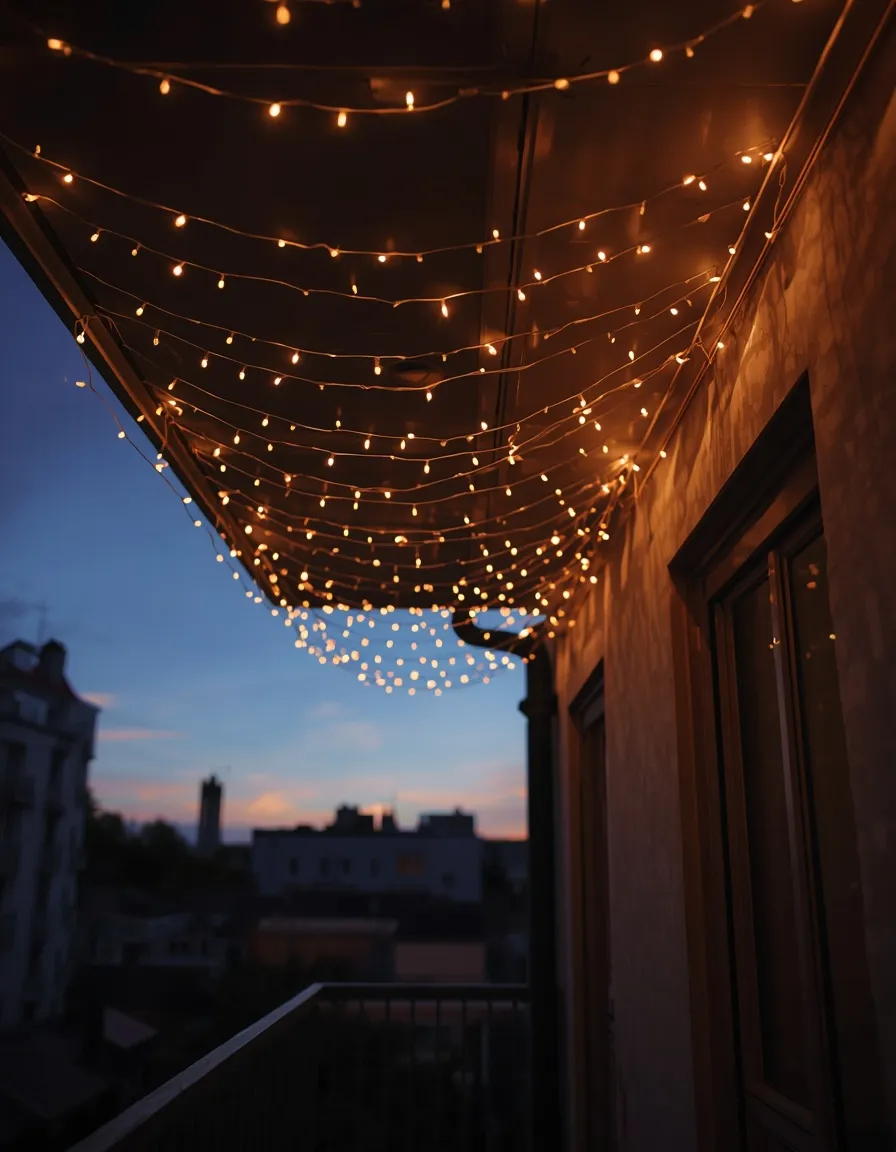
Strung in loose, overlapping loops across the ceiling or an overhead beam, warm white fairy lights turn a plain concrete balcony into a softly lit hideaway the moment the sun goes down, the kind of glow that makes even a fifth-floor walkup feel like a garden party.
Use low-voltage, outdoor-rated LED string lights rather than indoor sets, since exposure to rain and temperature swings degrades standard lights quickly. Anchor the lights to a ceiling hook, an overhead pergola bar, or tension wire rather than running them loosely, which keeps them from whipping in wind and reduces strain on the plug connection. Avoid routing extension cords through a window or door left ajar, since this is both a fire-code and security issue in many buildings; instead, use a solar-powered or battery-operated set if there is no exterior outlet.
- Creates ambient evening light without needing a ceiling fixture
- Works on balconies too small for floor lamps or lanterns
- Solves the flat, uninviting look of bare overhead space after dark
2. Vertical Urban Jungle Wall
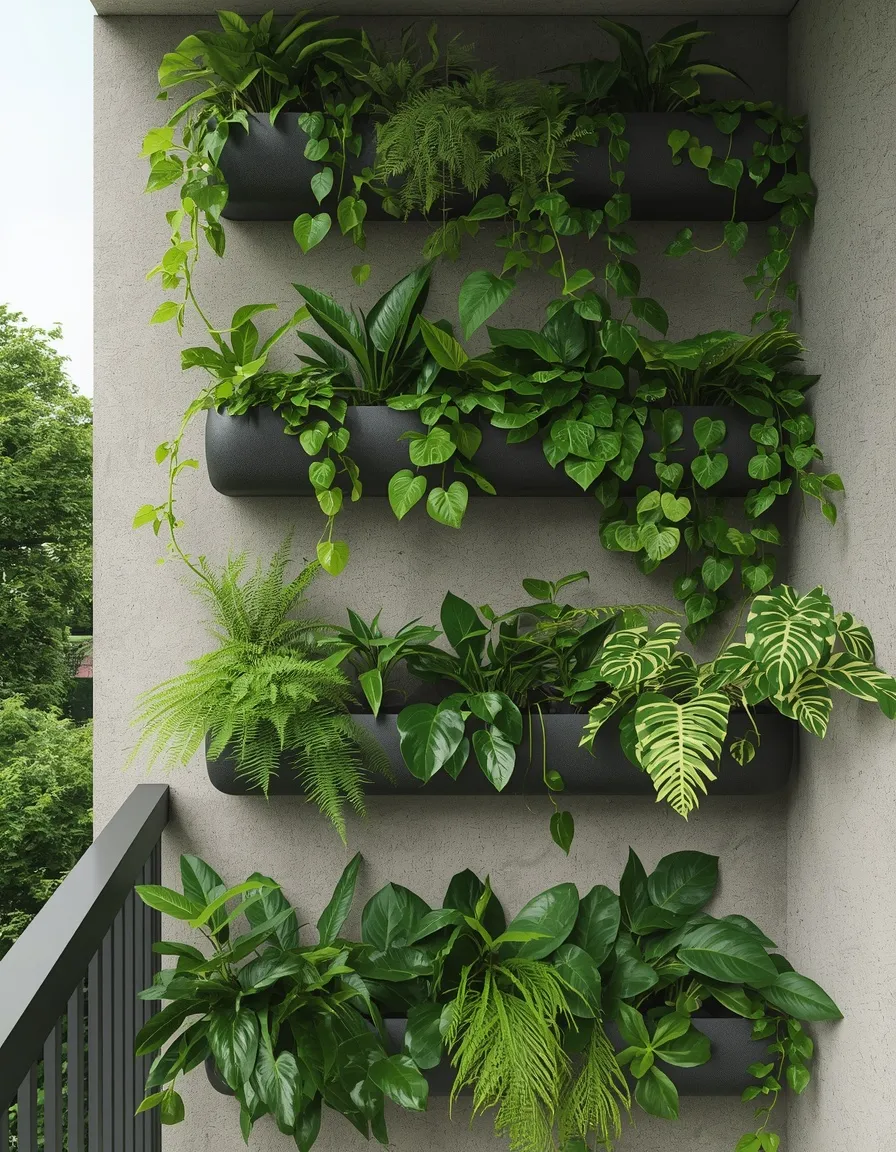
A wall of trailing pothos, ferns, and philodendron mounted in tiered planters turns a narrow balcony wall into a living green backdrop, the closest thing to a jungle you can build in a few square feet of city air.
Mount a modular vertical planter system or a series of wall brackets into masonry anchors rather than drywall anchors alone, since exterior walls carry more weight and moisture than interior ones. Group plants by light needs, shade-tolerant pothos and ferns toward the more sheltered side, sun-loving trailing plants where direct light reaches longest. Check with your landlord before drilling into an exterior wall, and consider a freestanding trellis or ladder shelf instead if permanent mounting is not allowed.
- Maximizes greenery on a narrow footprint using vertical space
- Suits shaded balconies where floor-level sun-loving plants struggle
- Solves the nowhere-left-to-put-another-pot problem
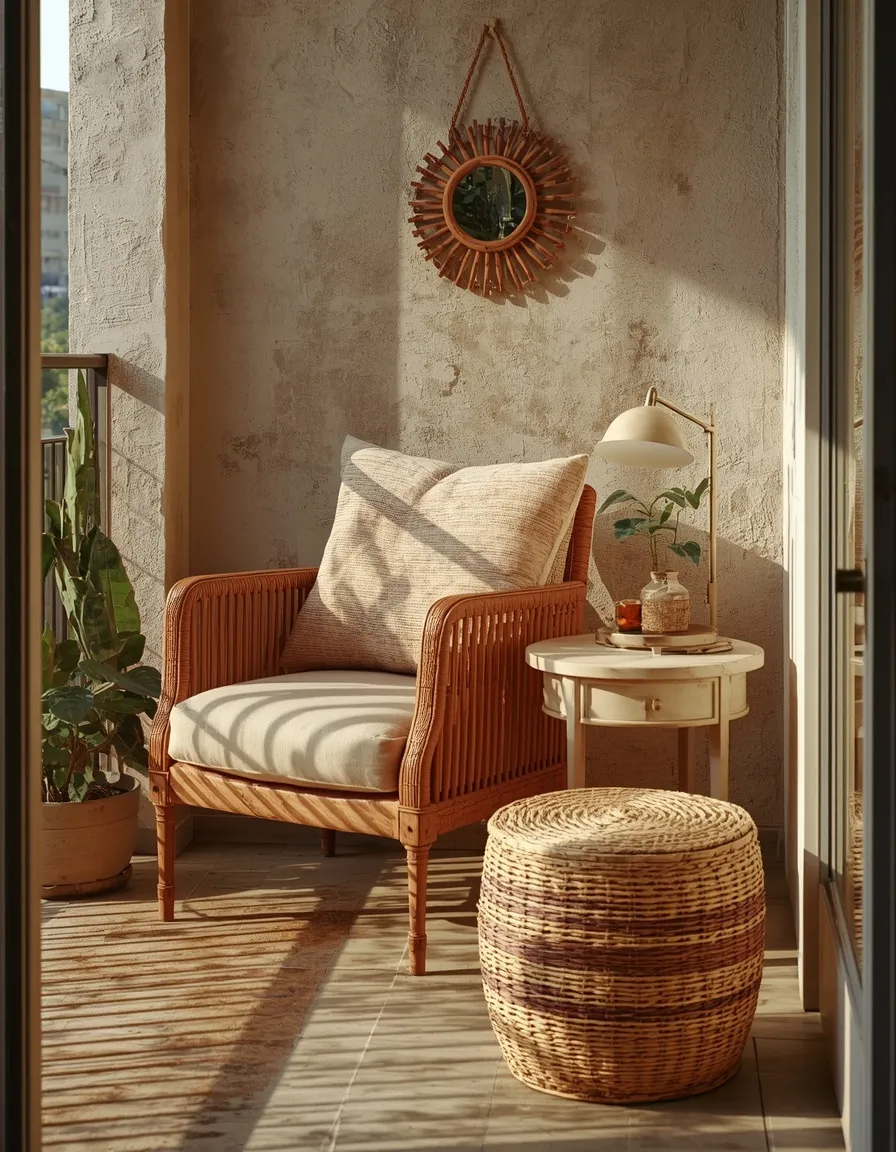
3. Mismatched Vintage Furniture Corner
A flea-market armchair, a chipped-paint side table, and a woven stool that do not match on paper somehow work together on a balcony, giving the space a lived-in, collected-over-time feel rather than a matched patio set.
Tie the mismatched pieces together with a single unifying element, one fabric pattern on cushions, one paint color repeated across two pieces, or all-natural materials like rattan and wood, so the eclectic look reads as curated rather than accidental. Favor lightweight furniture on higher floors, since gusty wind between buildings can tip over anything too light or too tall, and secure loose cushions with ties or weighted covers. This works especially well on balconies used more for sitting and reading than for dining.
- Adds personality that manufactured matching sets cannot replicate
- Suits reading or lounging balconies over dining-focused ones
- Solves the sterile, showroom feel of coordinated furniture sets
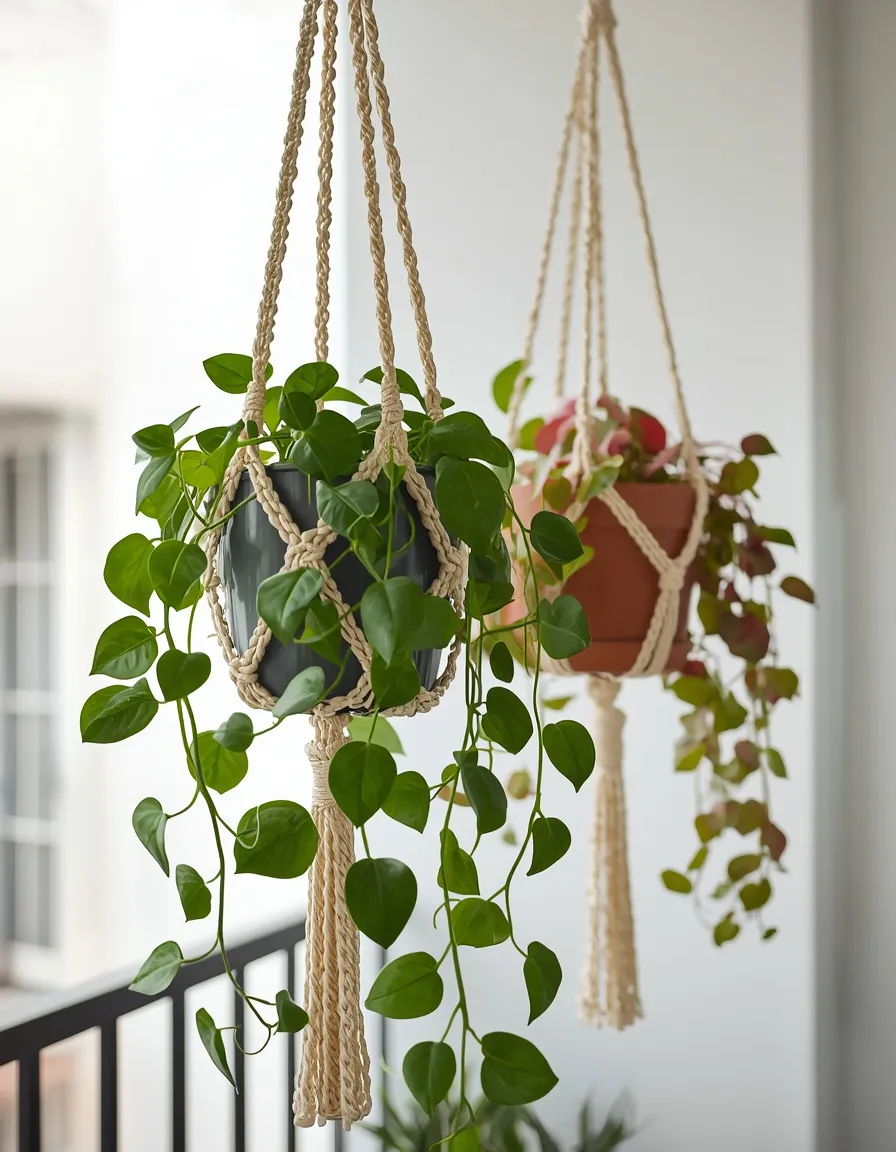
4. Macrame Hanging Planters
Trailing pothos or string-of-pearls suspended in hand-knotted macrame slings adds height and texture without taking up an inch of floor space, filling the awkward zone between eye level and ceiling.
Hang macrame planters from ceiling hooks or a horizontal tension rod rather than the railing itself, since anything suspended over the outer edge of a high balcony risks falling to the street below if a knot or hook fails. Use rated ceiling anchors sized to the combined weight of the pot, soil, and mature plant, not just the empty planter, and check knots seasonally for wear. This idea works well in corners and along interior-facing walls where a fall would land on your own floor, not a sidewalk.
- Adds greenery at eye level without using floor or rail space
- Works well in small corners other planters cannot fill
- Solves clutter on plant-heavy balconies by moving pots overhead
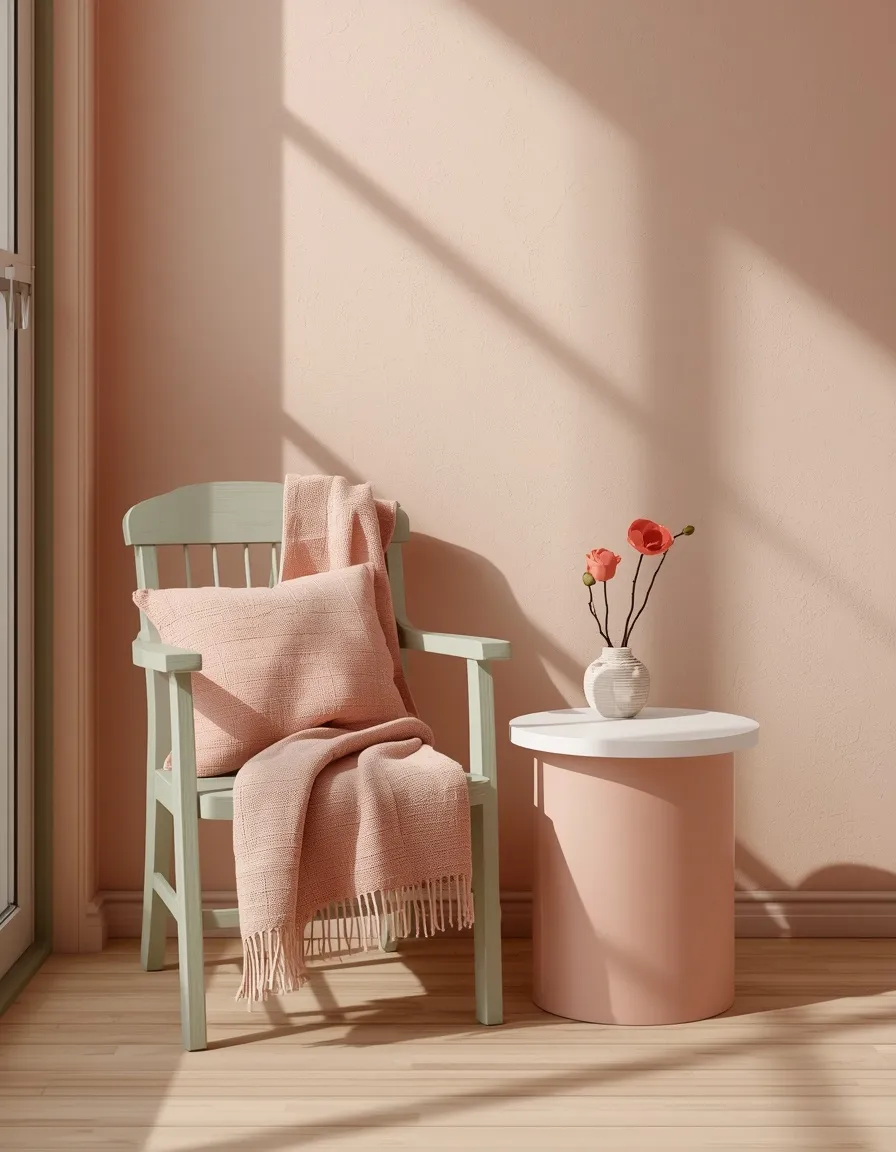
5. Pastel Painted Furniture Palette
A once-plain wooden chair or side table, repainted in a soft blush, sage, or buttery yellow, brings a candy-colored, storybook charm that instantly reads as whimsical rather than generic outdoor furniture.
Choose two or three pastel shades maximum and repeat them across at least two pieces so the palette feels intentional rather than random, then use exterior-grade paint or a clear weatherproof sealant over chalk paint, since untreated pieces chip and fade quickly outdoors. This is a genuinely low-cost way to refresh secondhand or hand-me-down furniture rather than buying new, and works particularly well combined with the mismatched furniture idea above for a fully collected look.
- Refreshes secondhand furniture for a fraction of new-furniture cost
- Suits renters wanting personality without permanent changes
- Solves the mismatched-but-boring problem with a shared color thread
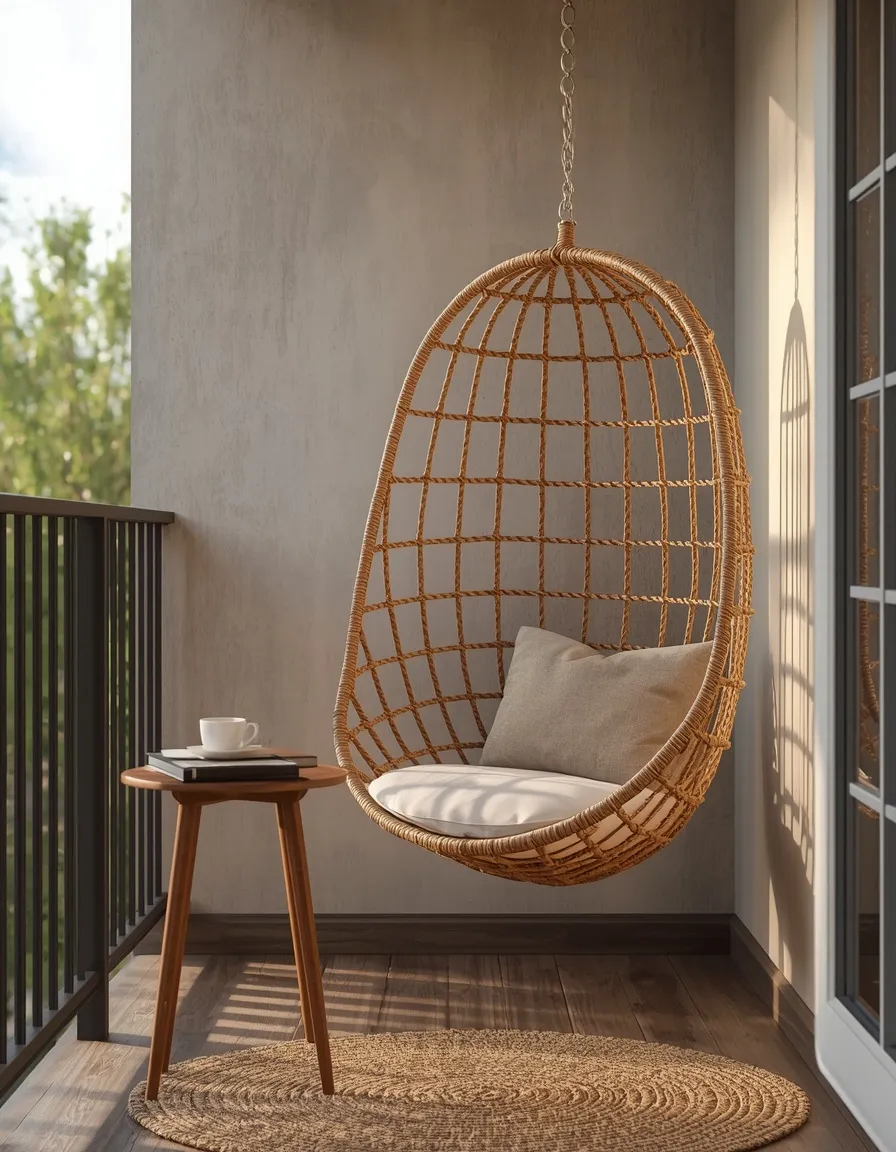
6. Hammock Chair Reading Nook
A woven hammock chair hung in a quiet corner, paired with a small side table for tea and a book, turns even a narrow balcony into a legitimate escape from a small apartment’s four walls.
Hang the chair from a rated ceiling hook anchored into a joist or structural beam, not drywall or a suspended ceiling tile, since a hammock chair carries dynamic, swinging weight that static furniture does not. If a structural ceiling anchor is not possible, a freestanding hammock chair stand avoids drilling entirely and can be moved as needed. This idea needs roughly 3 feet (about 90 cm) of clearance on each side to swing safely, so it suits wider balconies more than narrow galley-style ones.
- Creates a dedicated relaxation spot distinct from dining or plant zones
- Suits wider balconies with room for gentle swinging clearance
- Solves the lack of a genuine lounging spot in small apartments
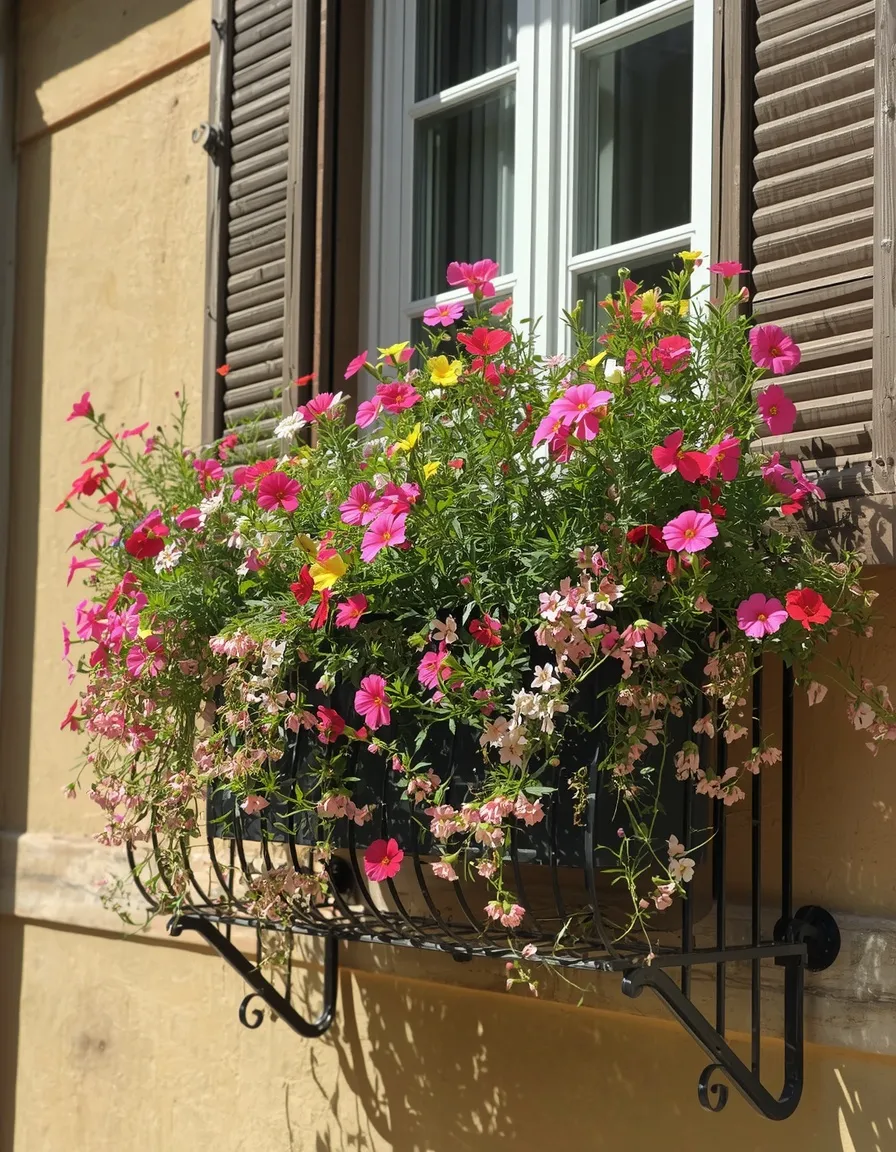
7. Wildflower Window Boxes
A railing-mounted window box overflowing with cosmos, alyssum, and trailing lobelia brings a loose, cottage-garden wildflower look to the outside of the balcony, visible from the street as much as from inside.
Choose a railing planter with a secure clamp or bracket rating matched to your railing’s thickness, and always mount it on the inside of the railing on upper floors rather than the outside, since an outward-facing box risks falling if a clamp loosens. Deadhead spent blooms weekly to keep wildflower mixes blooming continuously through the season rather than going to seed early. This works best on railings that get at least four to six hours of direct sun daily; in shadier spots, swap in shade-tolerant impatiens or begonias instead.
- Adds visible color from both inside and outside the apartment
- Suits balconies with railings rated for mounted planter brackets
- Solves the lack of a true garden bed on a hard-surface balcony
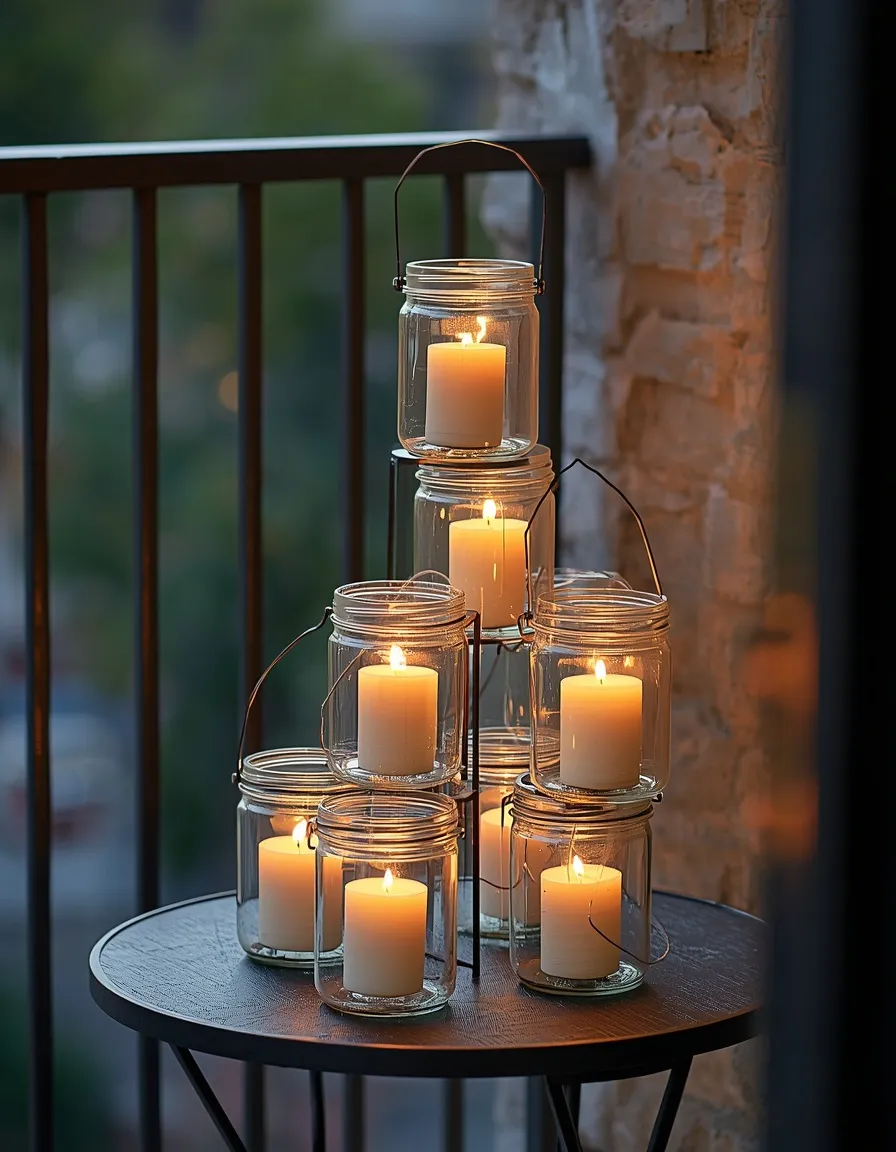
8. Lantern and Mason Jar Lighting
Clustered mason jars fitted with flameless candles, or small metal lanterns hung from plant hooks, add a warm, flickering glow at table height, the kind of low, cozy light that overhead fairy lights alone cannot provide.
Use battery-operated flameless LED candles rather than real flames wherever jars or lanterns sit near fabric bunting, dry plants, or anything flammable, since open flame on a wind-exposed balcony is a genuine fire risk that spreads faster than it would indoors. Group lanterns in odd numbers, three or five, at varied heights on a table or shelf for a more natural, gathered look than a single symmetrical row. This pairs especially well with the overhead fairy light canopy for layered evening ambiance.
- Adds warm table-height light to complement overhead string lights
- Works well for evening entertaining on even the smallest balconies
- Solves the single-light-source flatness of relying on fairy lights alone
9. Fabric Bunting and Flags
Triangular fabric bunting strung along a railing or overhead line brings the same playful, celebratory feel as a garden party, in colors and patterns that can shift with the season or simply your mood.
Choose outdoor-rated or quick-drying fabric like canvas or treated cotton rather than paper bunting, which disintegrates after one rain, and hang it a few inches below any overhead string lights so the two layers do not tangle in wind. Take bunting down before storms or high-wind days, since fabric strung along a railing acts like a small sail and can strain its anchor points. This is one of the lowest-cost, most easily changed ideas on this list, ideal for renters who want seasonal flexibility without buying new decor each time.
- Adds color and movement without any planting or furniture cost
- Suits renters who want easily removable, temporary decor
- Solves the need for quick seasonal refreshes on a tight budget

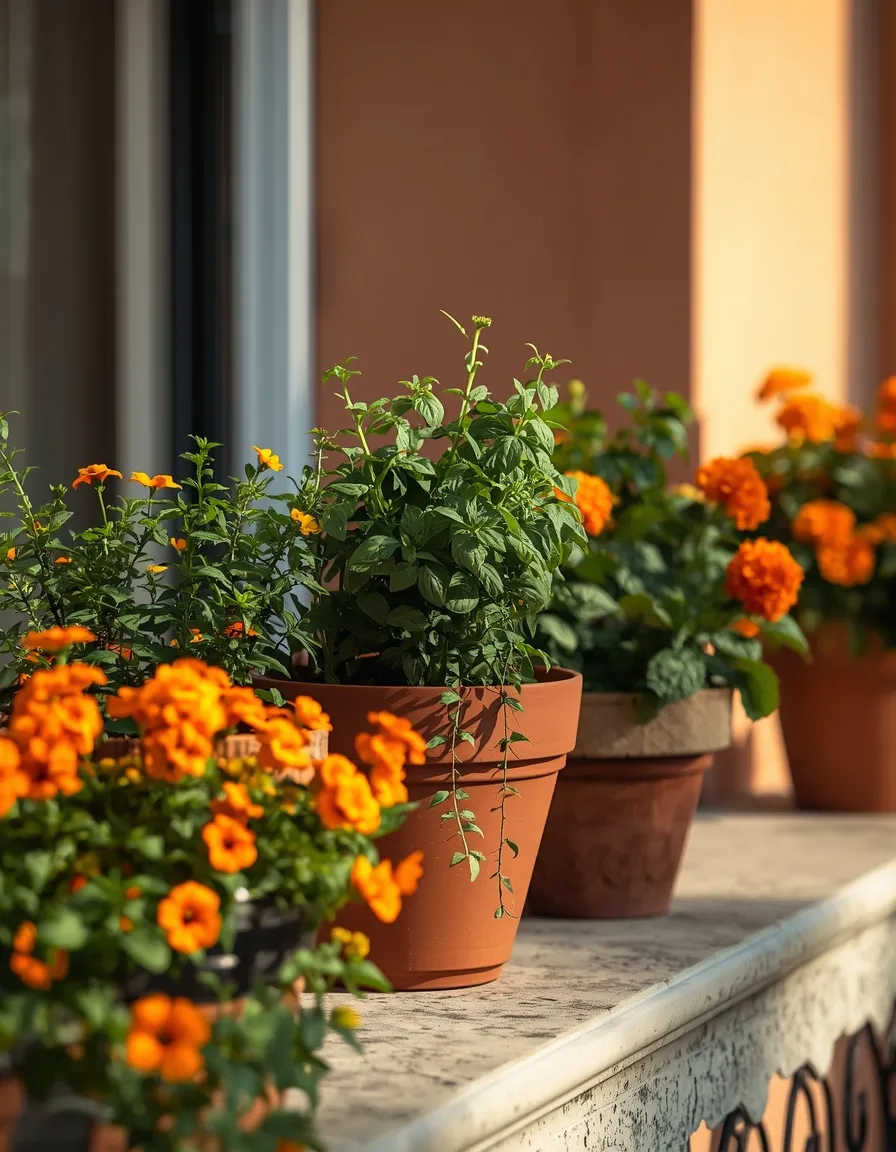
10. Mixed Herb and Flower Container Garden
A cluster of terracotta pots holding basil, thyme, trailing nasturtium, and a few marigolds blurs the line between kitchen garden and flower bed, giving the balcony something to harvest as well as something to look at.
Group pots by watering needs rather than only by looks, since herbs like rosemary and thyme prefer to dry out between waterings while basil and nasturtium want consistently moist soil, and mixing them in one pot often kills one or the other. Nasturtium flowers and leaves are edible and add color to salads, a nice bonus for a whimsical, cottage-style container garden. Before filling several large pots with wet soil, revisit the weight-limit guidance covered earlier, since a cluster of full terracotta containers adds up quickly on a small balcony slab.
- Combines edible herbs with ornamental flowers in one collection
- Suits balconies with at least a few hours of direct sun
- Solves the either-or choice between a kitchen garden and a flower display
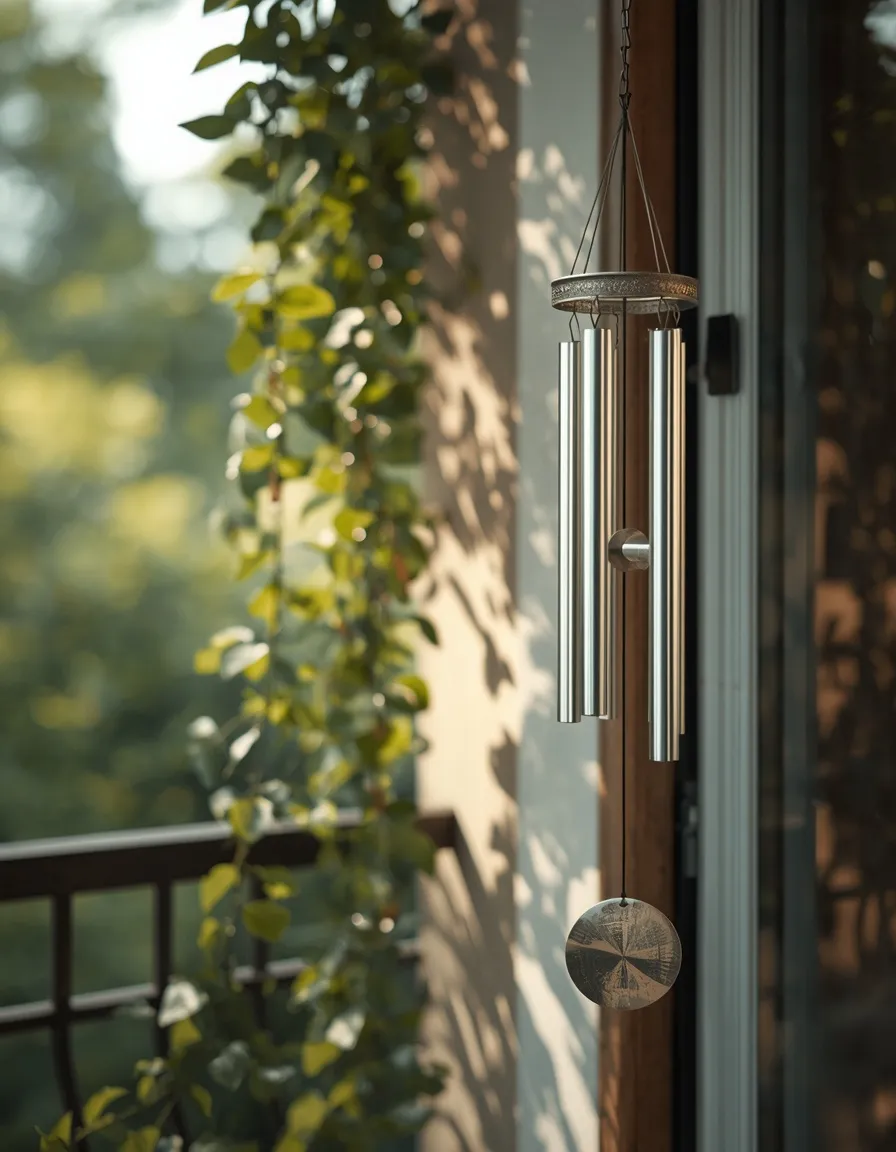
11. Wind Chimes and Garden Mobiles
A small metal or bamboo wind chime hung near a doorway, or a delicate glass mobile catching light near a window, adds sound and gentle movement that make a balcony feel alive even when no one is out there.
Hang chimes from a hook mounted into a structural point rather than a light fixture or curtain rod, since constant wind motion puts repeated stress on the anchor. Choose a chime with a softer, lower tone for balconies close to shared walls or neighboring units, since a bright, high-pitched chime can carry further than expected in dense urban housing and become a source of noise complaints. This idea suits balconies that already have some greenery to catch afternoon light and cast moving shadows alongside the chime’s sound.
- Adds sensory interest beyond visual styling alone
- Suits balconies near shared walls when a softer tone is chosen
- Solves the silent, static feeling of a purely visual balcony setup
12. Bistro Table with Eclectic Chairs
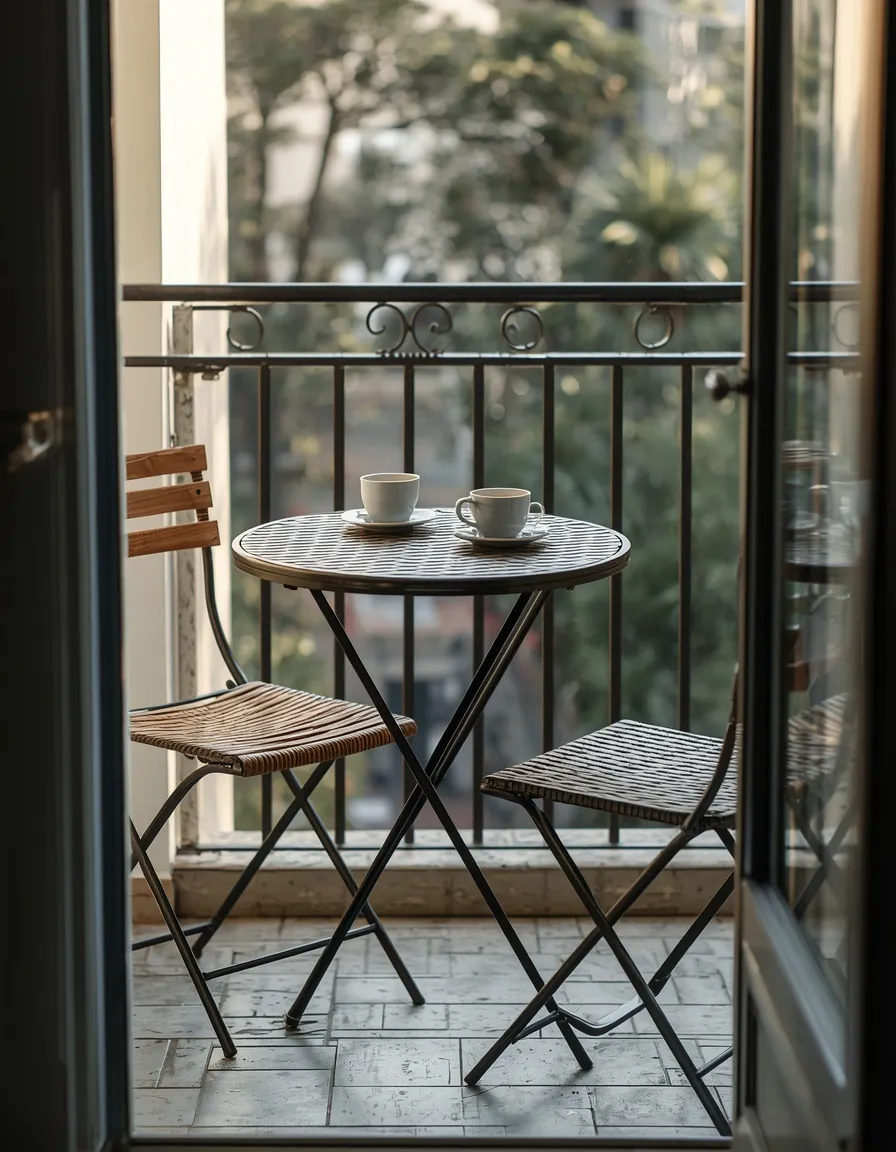
A small round bistro table paired with two chairs that intentionally do not match, one rattan, one painted metal, sets up a balcony for actual use: morning coffee, a solo lunch, or a glass of wine at sunset.
Keep the table diameter under about 24 inches (61 cm) on narrow balconies so there is still room to walk past comfortably, and choose folding versions if the space needs to convert back to open floor for other activities. Anchor an umbrella or shade option separately rather than relying on a table-mounted umbrella on a windy high floor, since the added surface area of an open umbrella increases tipping risk in gusts. This setup works best as the anchor piece of the whole balcony rather than one of several furniture zones.
- Provides genuine seating for meals, not just decorative lounging
- Suits narrow balconies when a compact, foldable table is chosen
- Solves the lack of a real dining or coffee spot outdoors
13. Layered Vintage Rugs for Coziness
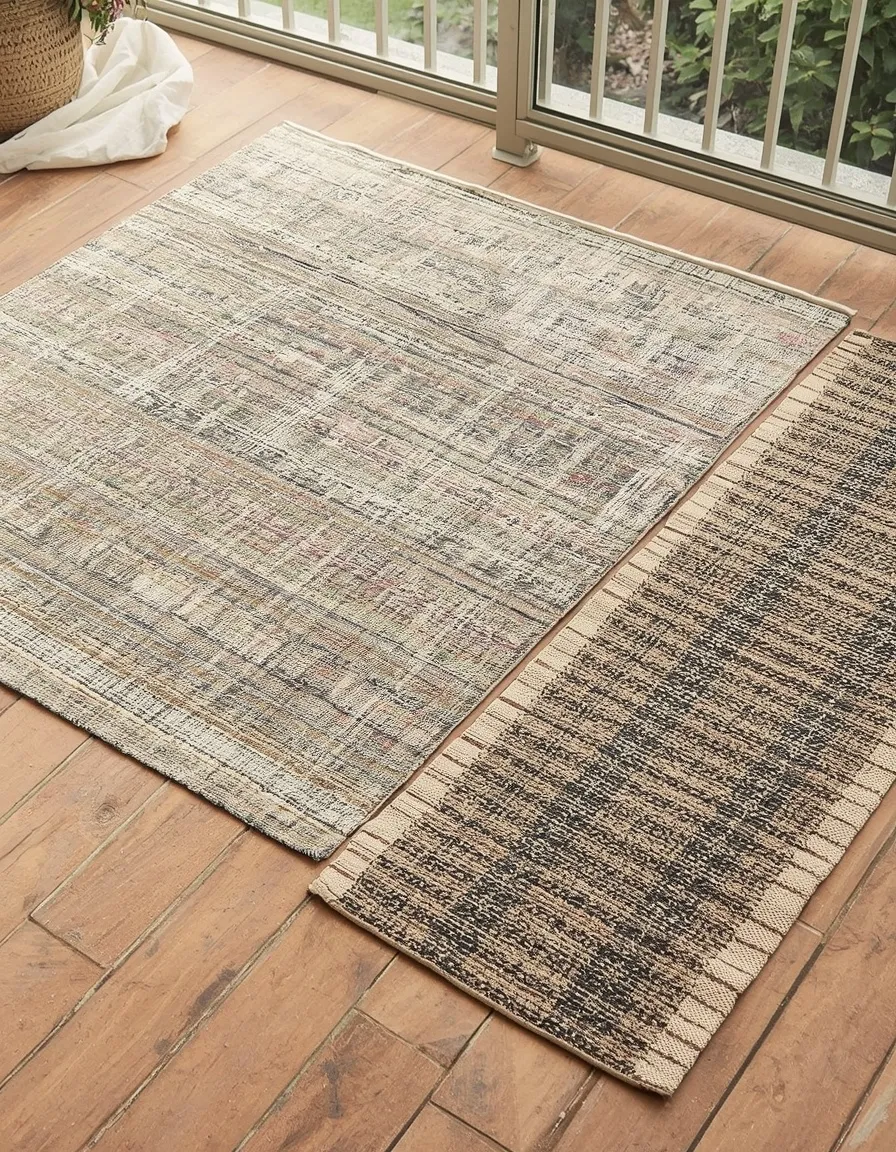
Two overlapping outdoor rugs, a faded Persian-style pattern under a smaller striped runner, ground the balcony visually and make bare concrete or tile feel like an extension of the living room rather than a leftover exterior space.
Choose rugs made from polypropylene or other outdoor-rated fibers rather than natural wool or jute, which hold moisture and mildew quickly in exposed weather. Layer a smaller rug at an angle over a larger one rather than centering them squarely, which reads as more intentionally eclectic than perfectly aligned layers. Lift and dry rugs fully after heavy rain, and expect to replace outdoor rugs every two to three seasons depending on sun and moisture exposure, since even weather-rated fibers degrade over time.
- Softens hard concrete or tile flooring visually and underfoot
- Suits balconies used for lounging or dining rather than plant-heavy setups
- Solves the cold, unfinished look of bare balcony flooring
14. Climbing Vine Trellis
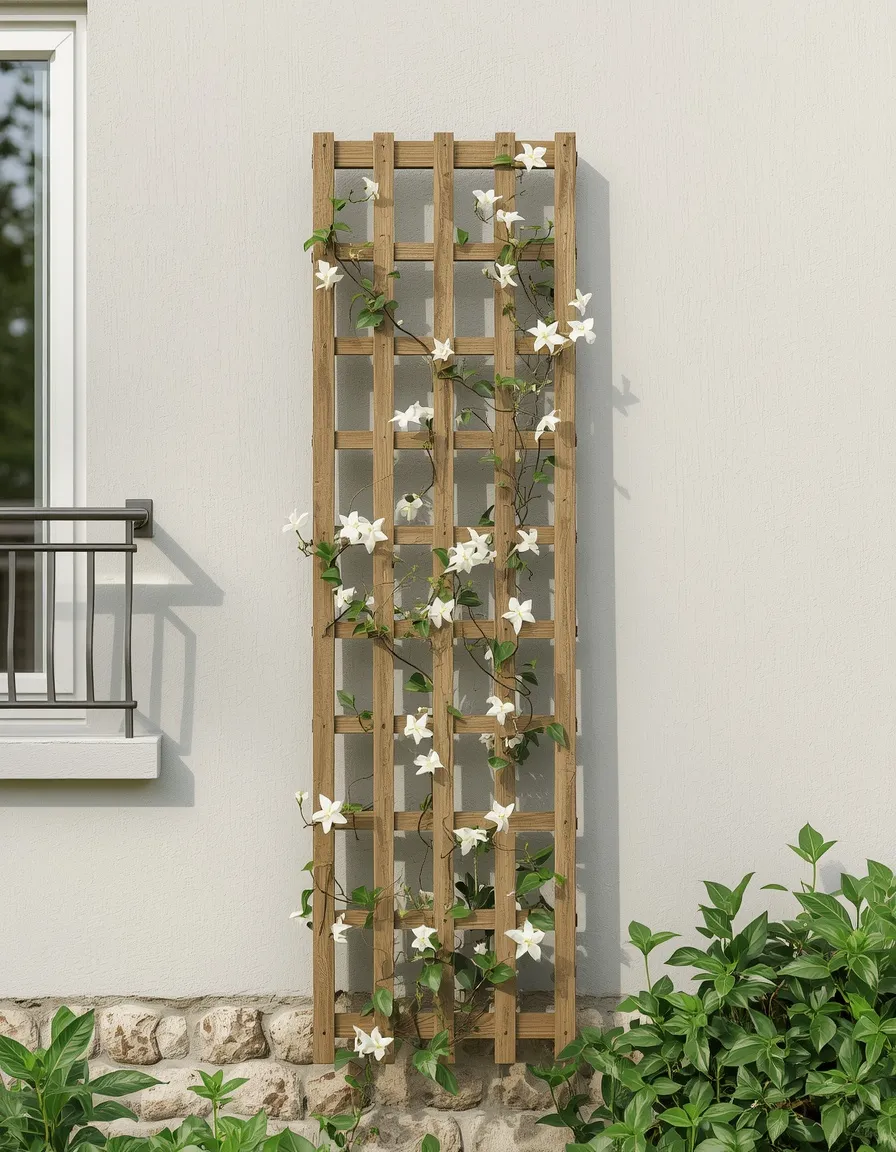
A slim trellis mounted along one wall, trained with a fast-growing climbing vine like star jasmine or a flowering clematis, turns a flat, unused wall into a living, fragrant screen by midsummer.
Choose a lightweight trellis, wood lattice or coated metal wire, and mount it with masonry anchors if attaching to an exterior wall, checking your lease first since this counts as a semi-permanent alteration in most rental agreements. If pets have balcony access, be selective about the vine: English ivy and morning glory are both listed as toxic to cats and dogs by the ASPCA, while star jasmine is confirmed non-toxic to both, making it a safer fragrant option for pet-owning households. Train young vines onto the trellis with soft plant ties rather than wire, which can cut into growing stems.
- Adds vertical greenery and fragrance without using floor space
- Suits sunny walls that otherwise stay visually empty
- Solves privacy and screening needs while adding seasonal blooms
15. Miniature Fairy Garden Accents
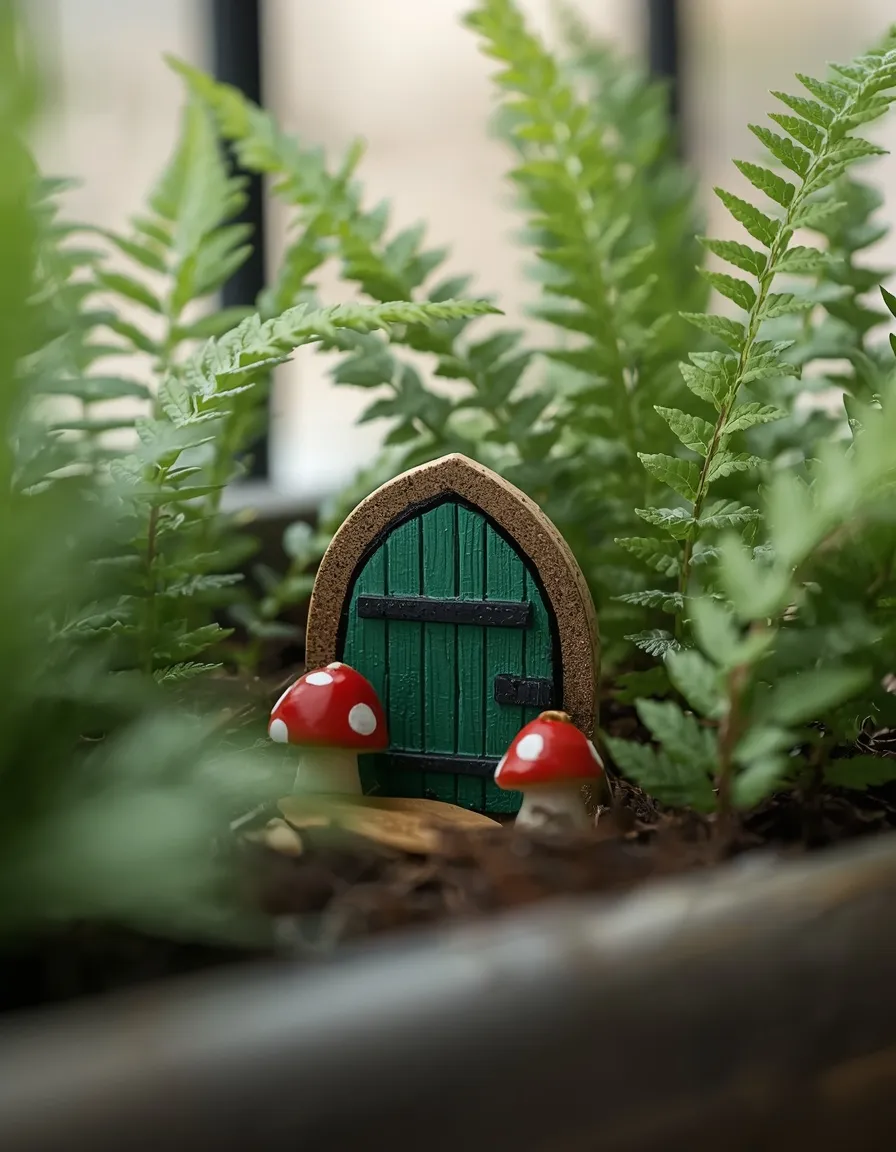
A tiny painted door tucked at the base of a potted tree, a thimble-sized birdhouse, or a cluster of miniature mushroom ornaments among the ferns adds a storybook, almost secret-garden detail that catches visitors off guard in the best way.
Keep miniature accents concentrated in one or two pots rather than scattering them across every planter, which keeps the whimsy feeling like a discovered detail rather than a theme park. Choose weather-resistant resin or ceramic pieces over painted wood or paper, since untreated materials warp and fade within a season outdoors. This idea layers well on top of almost any other plant-focused idea on this list, the jungle wall, the herb garden, or the wildflower boxes, without requiring any structural changes.
- Adds a playful, storytelling layer to existing plant displays
- Suits balconies that already have established greenery to nestle pieces into
- Solves the pretty-but-generic feeling of plants without personality
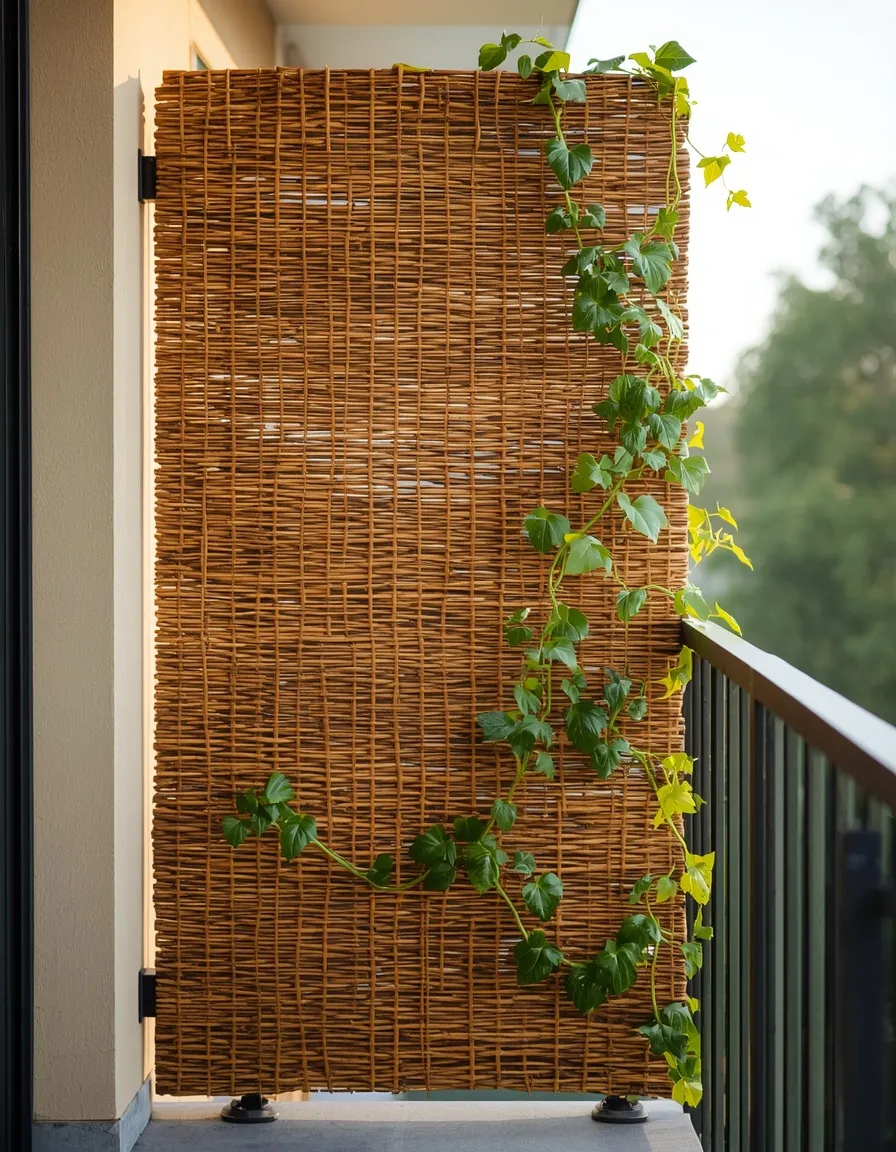
16. Woven Privacy Screen with Greenery
A woven willow or bamboo privacy panel, softened with a trailing vine growing up through it, blocks the direct sightline from a neighboring balcony while still letting light and air through, unlike a solid wall panel.
Attach the screen to the railing with weatherproof zip ties or brackets rather than leaning it freestanding, since an unsecured panel becomes a wind hazard on higher floors. Measure your railing height first, since most woven panels come in standard sizes and may need trimming to fit without extending dangerously above the railing line. This solves privacy concerns without requesting a permanent structural change, which makes it one of the more renter-friendly screening options compared to a built-in partition.
- Blocks direct sightlines from neighboring balconies or windows
- Suits renters who cannot install permanent partitions
- Solves privacy needs while still allowing light and airflow through
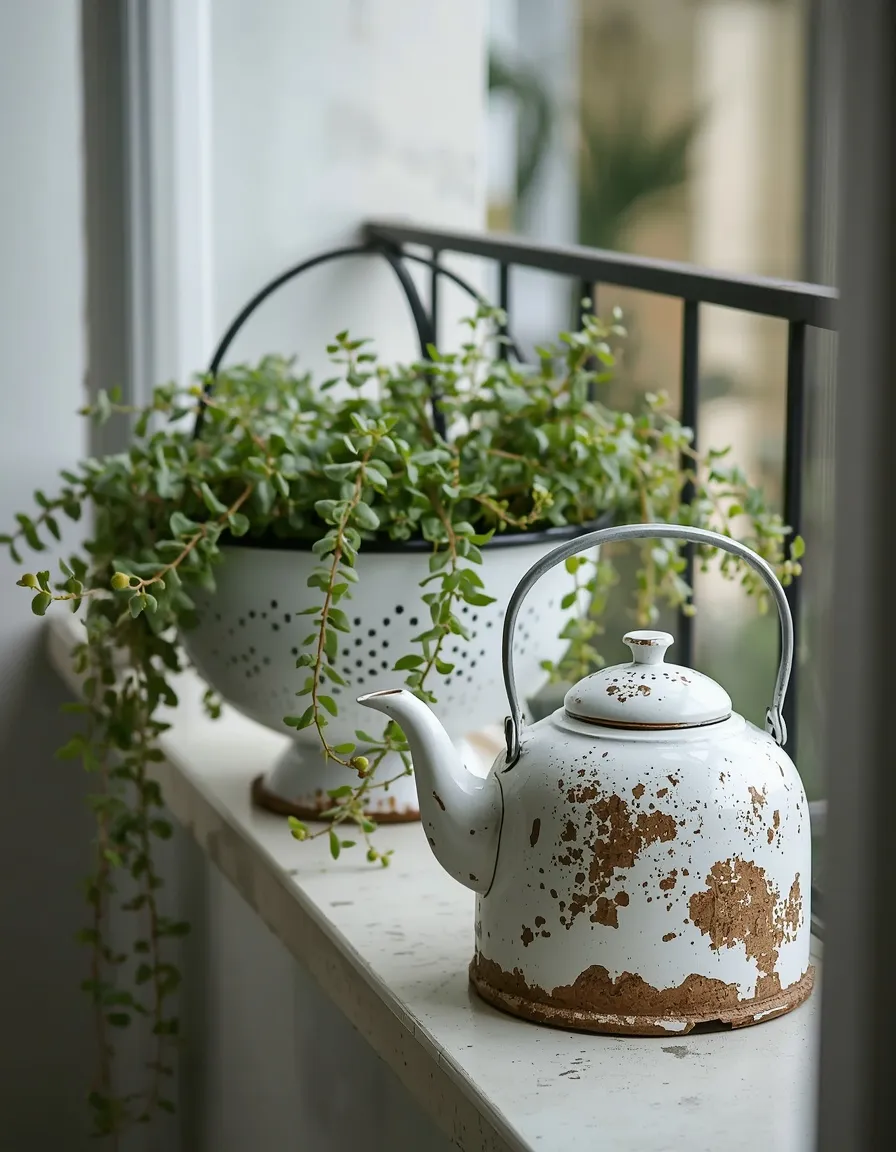
17. Upcycled and Repurposed Planters
An old enamel colander, a chipped teapot, or a paint-splattered boot repurposed as a planter gives the balcony the same charmingly imperfect, treasure-hunt feel as a well-stocked flea market stall.
Drill drainage holes in any repurposed container before planting, since standing water in a sealed vintage container rots roots within days, and add a layer of gravel at the bottom for extra drainage insurance. Mismatched, upcycled containers work best when grouped by a shared material or color story, all metal vessels together, for instance, rather than scattered randomly across the balcony. For more inspiration on turning found and secondhand objects into garden features, this pairs naturally with these garden junk ideas beyond just planters.
- Keeps decorating costs low using items already on hand
- Suits gardeners who enjoy a collected, thrifted aesthetic
- Solves the generic look of matching plastic nursery pots
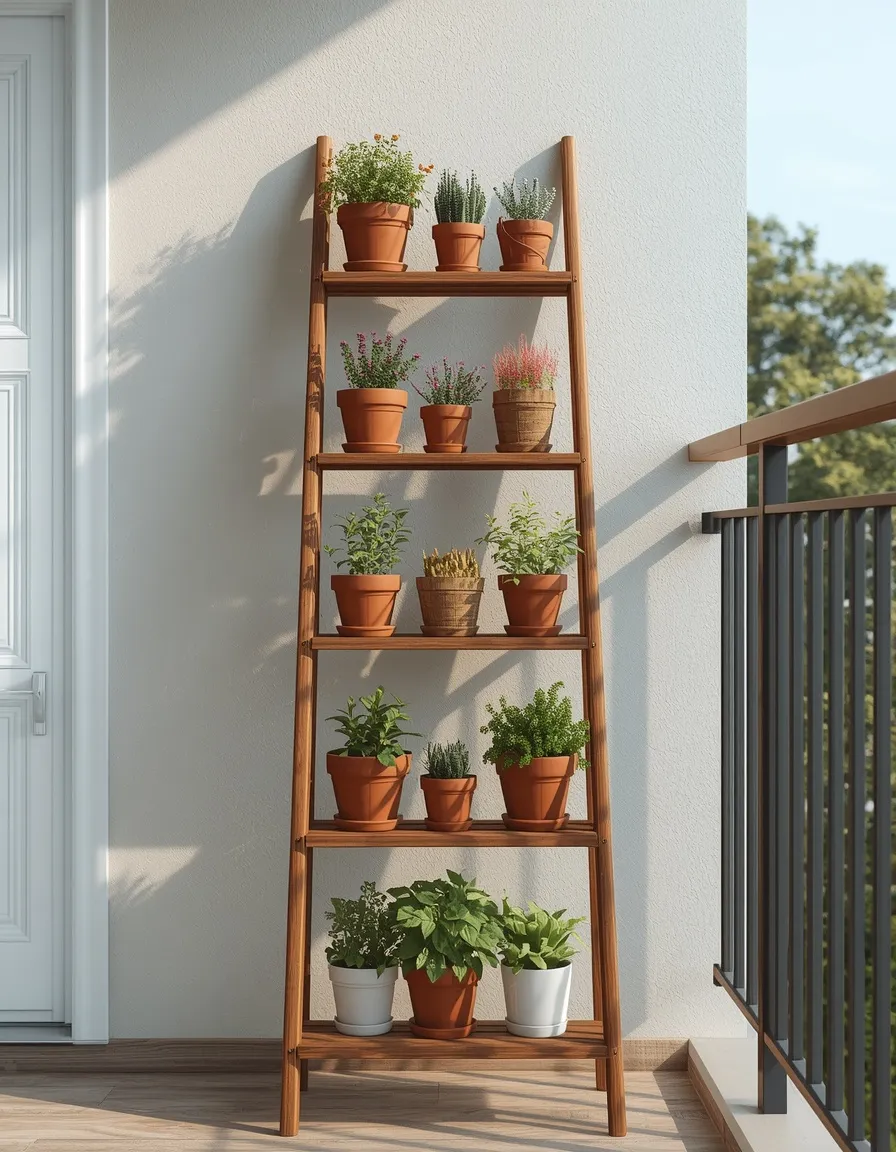
18. Tiered Plant Ladder Display
A wooden ladder shelf, leaned against a wall and lined with small potted plants on each rung, turns a single narrow footprint into three or four levels of greenery, ideal for balconies too small for spread-out pots.
Choose a ladder shelf rated for outdoor use, cedar or teak hold up better than untreated pine, and lean it against a solid wall rather than the railing, since railing-mounted ladders shift more in wind. Load the heaviest pots on the bottom rungs and the lightest, most delicate plants on top, both for visual balance and because a top-heavy ladder is more likely to tip. This is one of the most space-efficient ideas on this list for balconies under about 30 square feet (2.8 sq m).
- Maximizes plant display in a small floor footprint
- Suits narrow galley-style balconies better than spread-out plant groupings
- Solves the flat, single-level look of plants lined up on the floor
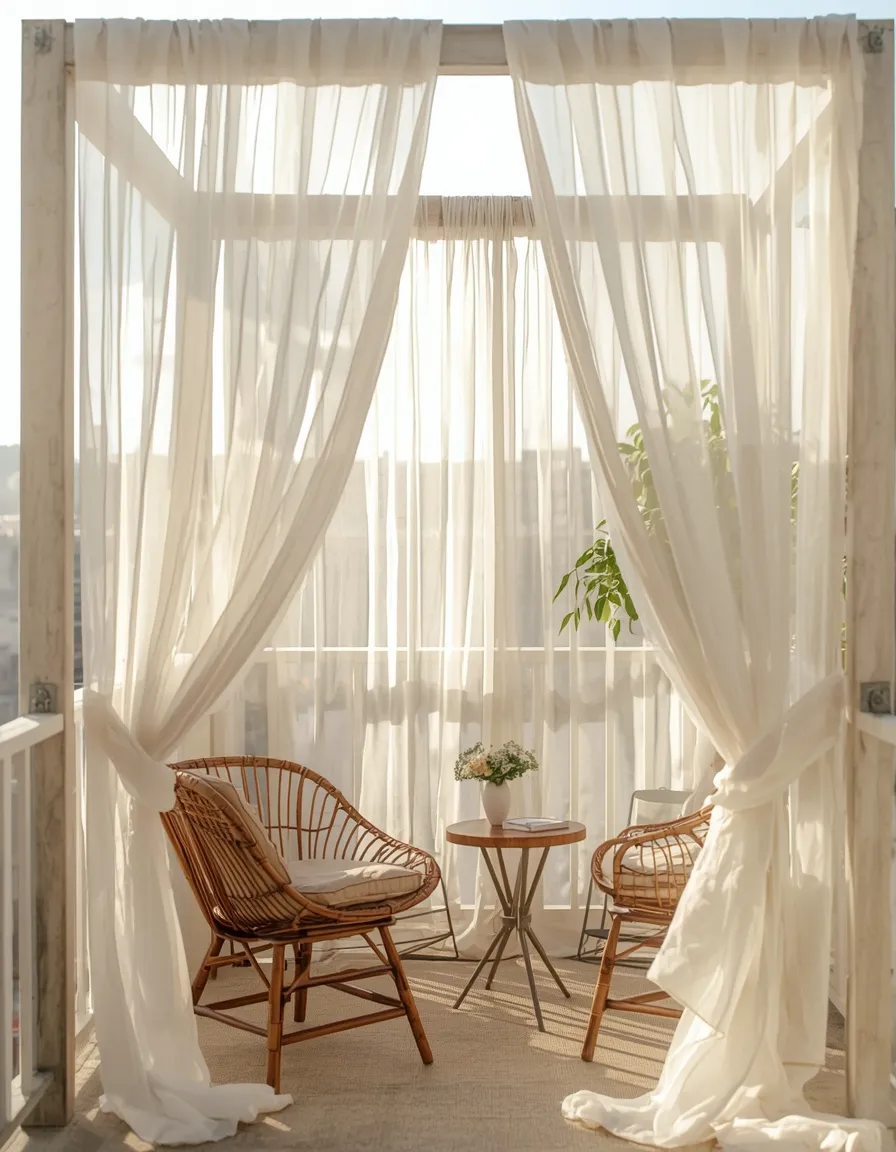
19. Sheer Canopy Drape for Shade
Lengths of sheer, gauzy outdoor fabric draped from an overhead frame or tension rod filter harsh afternoon sun into a soft, diffused light, giving even a small balcony the airy feel of a garden pavilion.
Use polyester or acrylic outdoor fabric rather than cotton voile, which sags, molds, and discolors quickly once exposed to rain and humidity. Secure the fabric at multiple points along its length rather than only the corners, since a single-point anchor allows more fabric to catch wind like a sail. Take the canopy down or tie it back tightly ahead of forecasted storms, and skip this idea entirely on balconies known for strong wind tunneling between buildings, where a smaller fixed umbrella is the safer shade option.
- Softens harsh midday sun without blocking the view entirely
- Suits balconies wanting an airy, romantic feel over a solid awning
- Solves the too-bright, shadeless problem of south-facing balconies
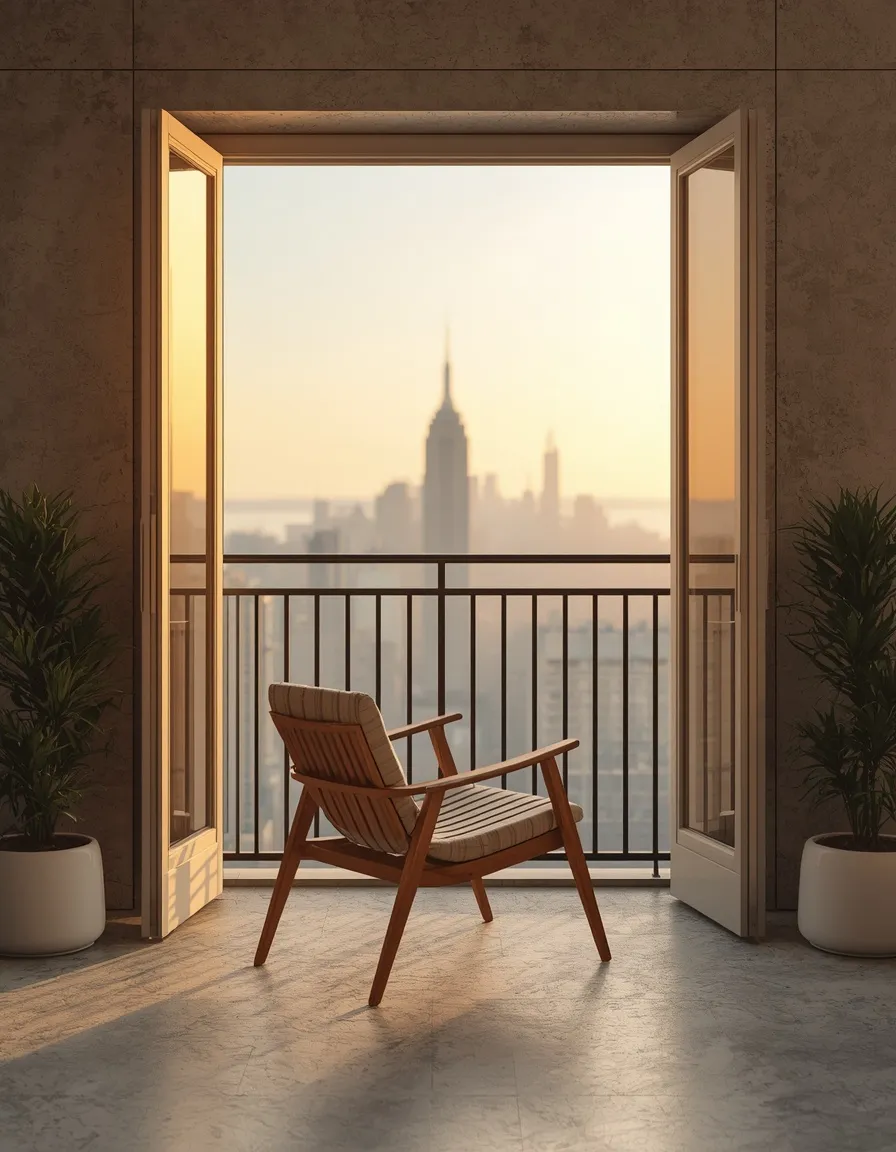
20. Skyline View Framing Nook
A single low chair angled toward the open railing, with plants kept low and out of the direct sightline, turns the city skyline itself into the balcony’s main decorative feature instead of competing with it.
Keep taller plants and furniture along the side walls rather than directly in front of the railing, so the view stays the visual focal point rather than getting cluttered by pots and chair backs. A single small side table for a drink or book is usually enough furniture for this idea, since the goal is an uncluttered sightline rather than a full seating arrangement. This works especially well on higher floors with an open skyline or park view, and less well on lower floors facing directly into another building’s wall.
- Turns an existing city or skyline view into intentional decor
- Suits higher-floor balconies with genuine open sightlines
- Solves the tendency to over-decorate and block a good view
21. Rotating Seasonal Accents
A small collection of interchangeable seasonal touches, mini pumpkins and dried grasses in autumn, a few forced spring bulbs in a jar, keeps a whimsical urban balcony feeling current and considered throughout the year rather than static.
Keep a dedicated small basket, shelf, or crate specifically for seasonal pieces so swapping them takes minutes rather than a full restyle, and store off-season items indoors rather than leaving faded decor out through weather it was not designed for. Favor natural materials, dried grasses, pinecones, real or faux gourds, over anything that requires plugging in or open flame during colder, wetter months when the balcony sees less use. This idea works as a light finishing layer on top of nearly any other idea on this list rather than a standalone display.
- Keeps the balcony feeling fresh without a full seasonal overhaul
- Suits anyone who enjoys rotating decor by season or holiday
- Solves the same-look-all-year staleness of fixed balcony styling

Final Thoughts
A whimsical urban balcony does not need square footage, it needs layers: light, texture, greenery, and a few personal, slightly imperfect touches that make the space feel collected rather than purchased as a set. Whether you start with a single string of fairy lights, a repainted secondhand chair, or a trailing vine along the railing, small additions compound quickly into a space worth stepping outside for, even on a Tuesday. For more small-space greenery inspiration, the garden design category on Sunday Abode covers plant pairings and layout ideas well beyond balconies alone. Pick two or three ideas that fit your actual space and weight limits, and let the rest fill in gradually as the season allows.
FAQs
What makes a balcony whimsical versus just decorated?
A whimsical balcony leans into a slightly imperfect, storybook feel through layered lighting, mismatched textures, and small playful details like miniature fairy garden accents or painted secondhand furniture, rather than a single matched patio set. The goal is a collected, personal look built up over time instead of a uniform showroom style.
How do I decorate a tiny urban balcony without making it feel cluttered?
Lean on vertical space, wall-mounted planters, hanging macrame plants, and a tiered ladder display, so the floor stays mostly clear for walking and sitting. Choosing two or three focal ideas rather than attempting all twenty-one at once also keeps a small space feeling curated instead of overloaded.
Are hanging planters and string lights safe on a high-rise balcony?
They can be, provided they are anchored properly. Use ceiling hooks or tension wire rated for the combined weight of pots and plants, avoid hanging anything directly over the outer railing where a fall could reach the street below, and choose outdoor-rated hardware built to handle wind exposure.
What plants work best for a shaded urban balcony?
Pothos, ferns, and philodendron tolerate lower light well and work beautifully in a vertical jungle wall or hanging planters, while shade-tolerant flowers like impatiens or begonias can replace sun-loving wildflowers in a railing box. Check how many hours of direct sun the balcony actually receives before choosing plants, since urban buildings often cast more shade than expected.
Do I need my landlord’s permission for these balcony ideas?
For anything involving drilling into walls, railings, or ceilings, trellises, mounted lighting, or a hammock chair anchor, yes, check your lease first, since many rental agreements restrict permanent alterations. Freestanding furniture, container gardens, rugs, and removable bunting generally do not require permission and are good starting points for renters.
Are any common whimsical balcony plants toxic to pets?
Yes. English ivy and morning glory are both listed as toxic to cats and dogs by the ASPCA, so keep them out of reach if pets have balcony access. Star jasmine is a fragrant, flowering alternative confirmed non-toxic to both cats and dogs, making it a safer choice for a climbing vine trellis.
How much does it cost to style a whimsical urban balcony?
Cost varies widely depending on which ideas you choose, painted secondhand furniture, upcycled planters, and fabric bunting cost very little, while a hammock chair, a full vertical jungle wall, or a custom trellis system involve more investment. Starting with lighting, a container garden, and one furniture piece covers the core of the look before adding higher-cost elements later.
A note on safety: always confirm balcony weight limits and any lease or building restrictions with your landlord or building management before adding heavy planters, mounted trellises, or hanging furniture.