
Introduction
Picture the backyard as another room, not leftover space behind the house: a lawn for a rug, a pergola for a ceiling, a fire pit for a hearth. That’s the idea behind these backyard landscaping ideas, not one big renovation, but a handful of deliberate choices, a defined path, a privacy hedge, a gravel bed that never needs mowing, that add up to a yard people actually use. This list pulls from small-lot tricks, budget-friendly materials, pool-adjacent planting, and climate-specific advice, since a Florida backyard and a Midwest one rarely need the same plan. Consider it a starting point for making the outdoor half of your Sunday Abode just as worth spending an evening in as the rooms indoors, whatever the yard’s size or your comfort with a shovel.
Backyard Landscaping Layout and Design Ideas
Before choosing a single plant or paver, it helps to decide how the space should actually function, since layout is what makes every other idea on this list work together instead of competing for attention.
1. Zone the Yard Into Outdoor Rooms
A backyard that feels chaotic almost always traces back to one problem: everything is competing for the same open patch of lawn instead of having its own defined zone.
Walk the yard and sketch three or four rough zones on paper first, a dining area near the kitchen door, a lounge spot farther back, a garden bed along one edge, before buying a single plant. Mark each zone’s boundary with something simple: a change in paving material, a low hedge, or even a rug-sized gravel patch, so the eye reads it as a distinct room rather than an extension of the lawn. This works in yards of almost any size, though smaller lots may need to combine two functions, dining and lounging, into one zone rather than forcing four separate areas into a tight footprint. A common mistake is scattering furniture and features evenly across the whole yard, which leaves no zone feeling complete.
- Gives every corner of the yard a clear purpose instead of leftover, unused lawn
- Works as the very first planning step, before buying plants, pavers, or furniture
- Solves the “big yard, but nowhere feels finished” problem
2. Small Yard Layout Tricks
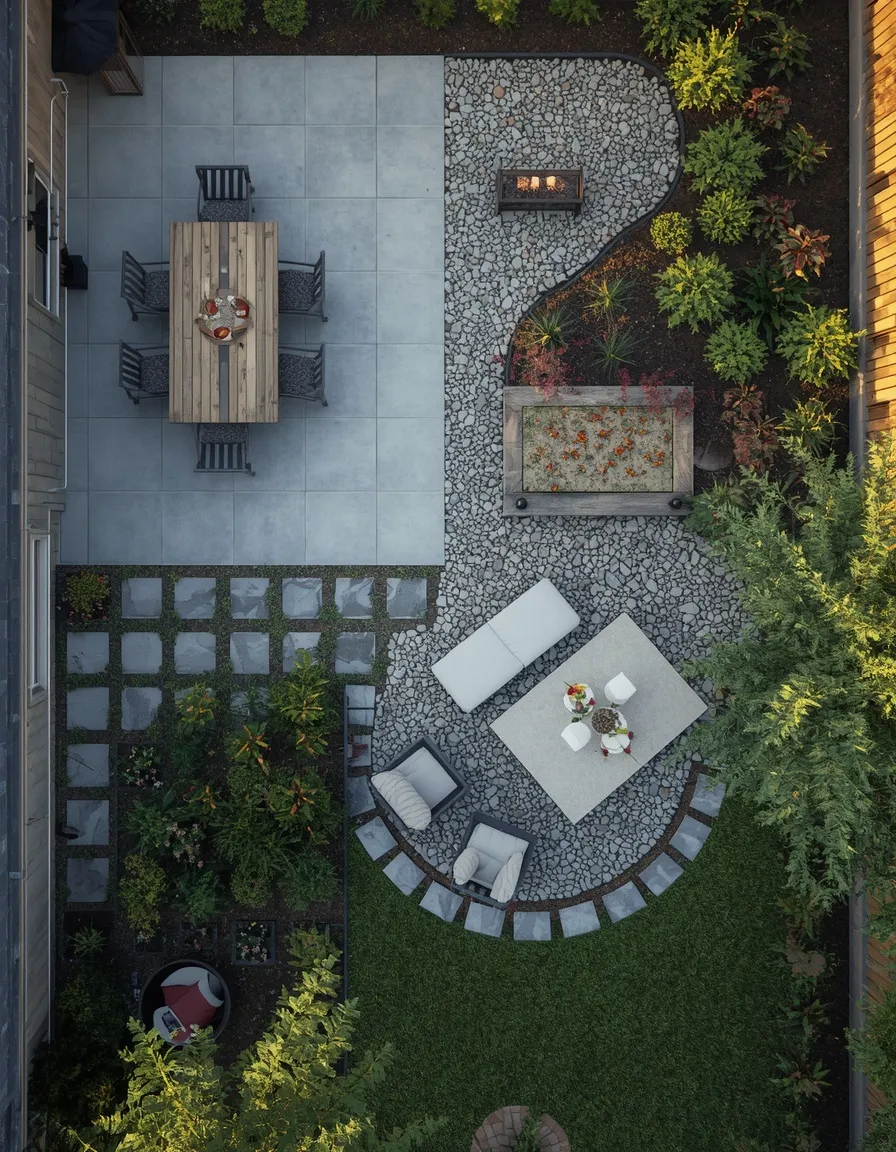
A compact backyard reads larger the moment sightlines get broken up instead of laid out in one flat rectangle, the same trick small rooms use indoors.
Use a diagonal path or planting line instead of one running parallel to the fence; it forces the eye to travel farther and makes the space feel deeper than its actual footprint. Add a raised planter box or a low retaining wall to introduce a change in level, even 20 to 30cm (8 to 12in) reads as a second floor and adds visual interest a flat lawn can’t. Vertical elements, a trellis, a tall narrow planter, a mounted living wall, do a lot of work in small spaces because they use height the ground plan can’t offer. Avoid the common mistake of filling every square meter with something; small yards actually need more negative space per object than large ones, not less, or they read as cluttered.
- Makes a compact backyard feel larger without any additional square footage
- Works especially well for townhouse, rowhouse, and starter-home lots
- Solves the “small yard looks even smaller once decorated” problem
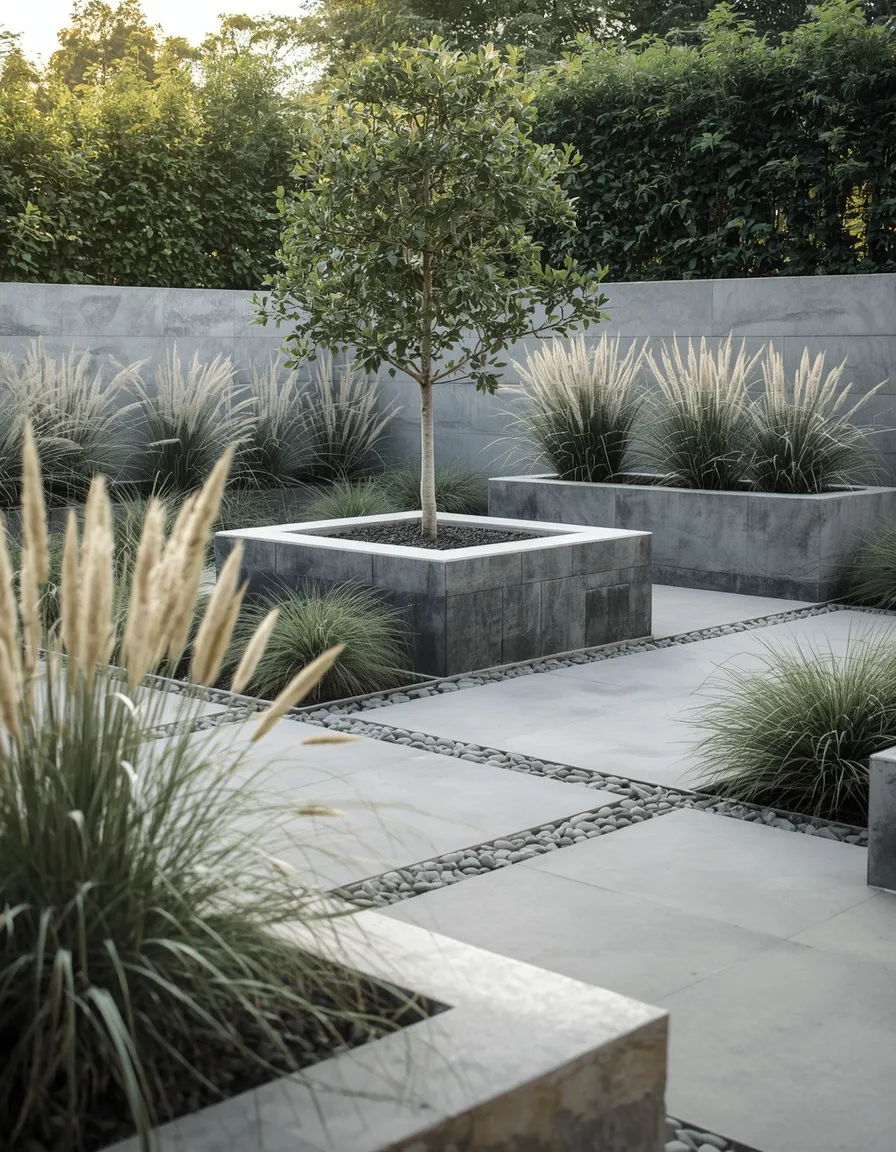
3. Modern Minimalist Hardscape
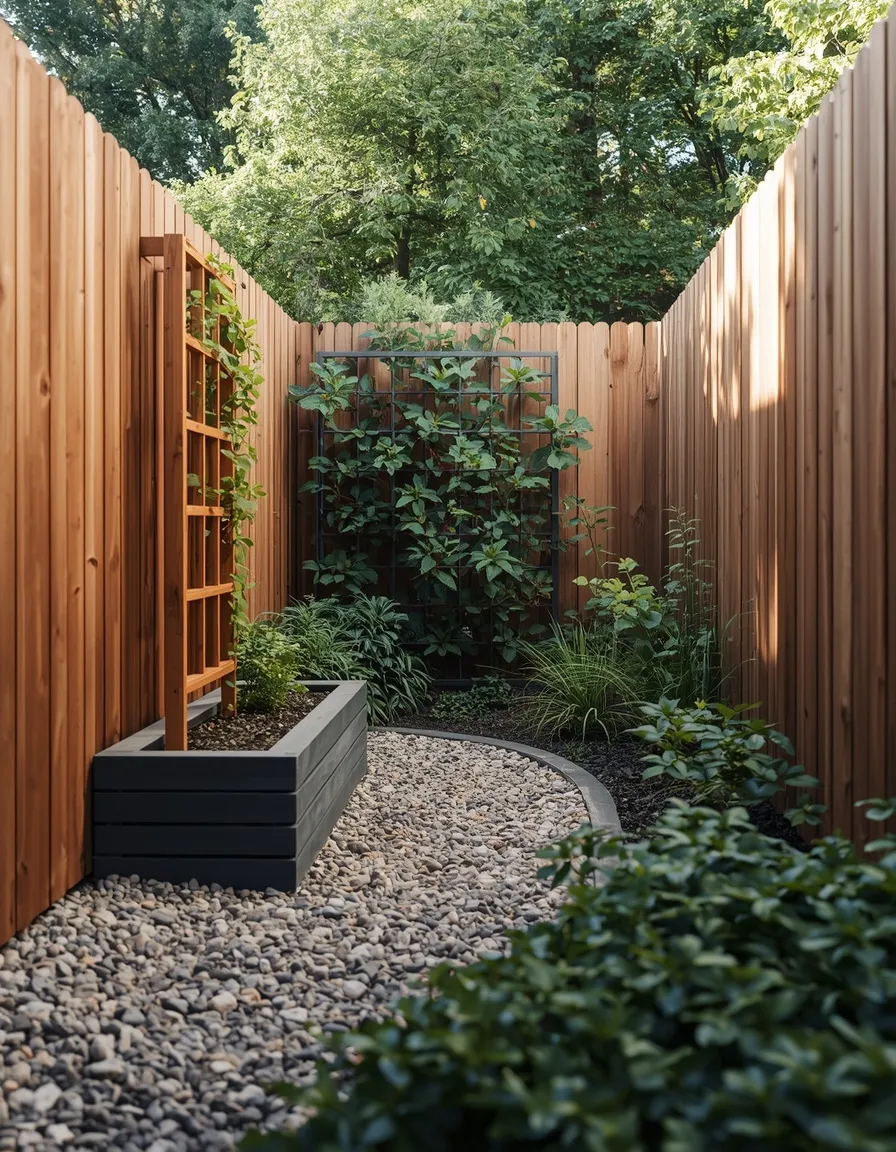
A modern backyard leans on restraint: clean-edged concrete pavers, a single dominant plant species repeated in blocks, and a limited material palette rather than a mix of everything.
Stick to two or three hard materials total, concrete, wood, and gravel, for example, and repeat them consistently rather than introducing a new material for every feature. Choose structural plants with strong architectural shapes, ornamental grasses, boxwood spheres, a single specimen tree, and plant them in repeated blocks or rows instead of a mixed border. Straight lines and 90-degree corners read as more modern than curved beds, so keep path and bed edges geometric. The most common mistake with this style is under-planting; a truly minimal yard still needs enough greenery to avoid feeling stark or unfinished, the restraint is in the palette, not the plant count.
- Reads as intentional and high-end without requiring rare or expensive materials
- Works well for contemporary homes or anyone who wants low visual clutter
- Solves the “too many materials, too busy” problem common in mixed-style yards
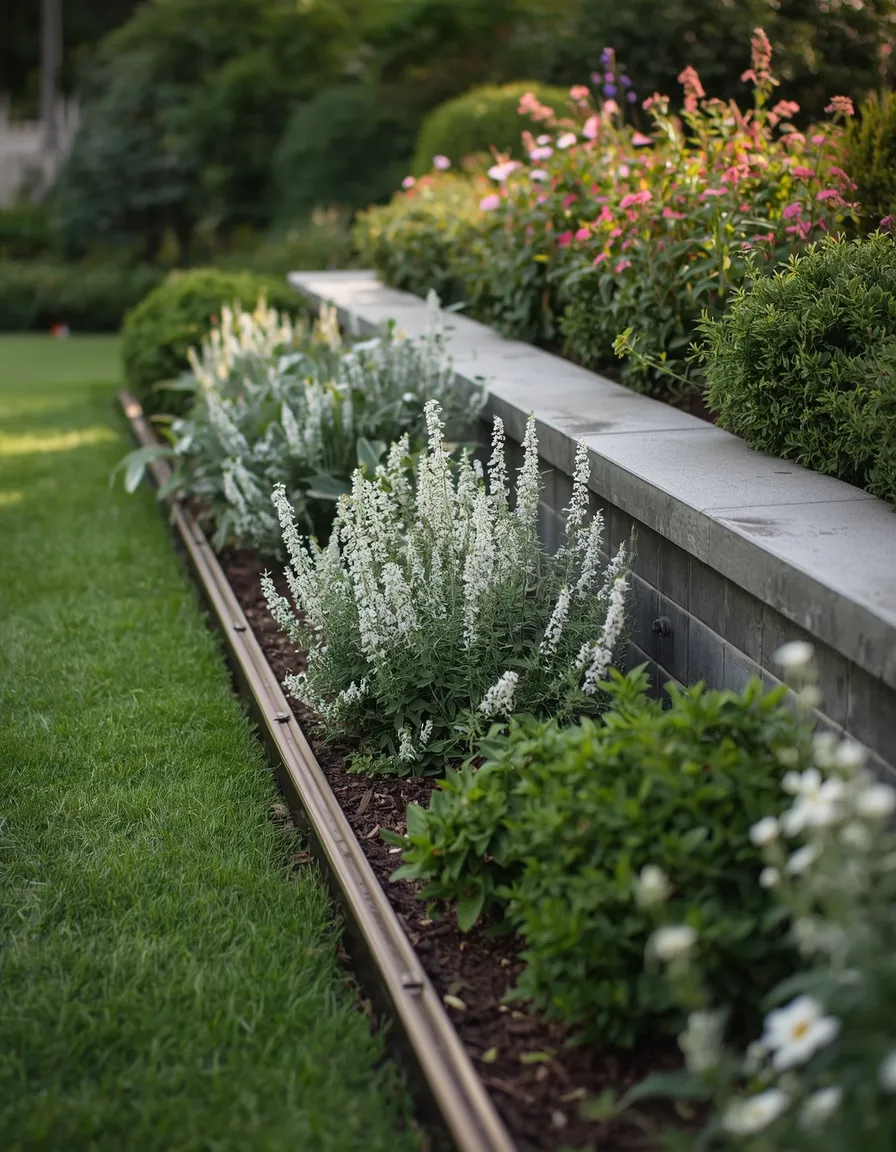
4. Simple Two-Tier Border
A single strip of steel or stone edging between lawn and garden bed, paired with a second, slightly raised planting tier behind it, turns a flat border into something with real depth.
Install a low edging material, steel, brick, or concrete curbing, directly at the lawn line, then build a second planting level 15 to 20cm (6 to 8in) higher just behind it using stacked stone, timber, or a simple soil berm. Fill the lower tier with groundcover or low perennials and the upper tier with taller shrubs or ornamental grasses, so the border reads in layers from the lawn. This is one of the simplest upgrades on this list, achievable in a weekend, and works along nearly any straight or gently curved bed line. Skip the mistake of making the second tier too narrow to plant properly; anything under 30cm (12in) wide struggles to support real root systems.
- Adds visual depth to a flat border without a major excavation project
- Works along any straight or gently curved bed edge
- Solves the “flat, one-note garden border” problem in an afternoon
Backyard Landscaping Ideas Along the House and Fence
The edges of a backyard, the foundation line, the fence, a sloped border, do more visual work than most people give them credit for, and they’re often the cheapest place to start.
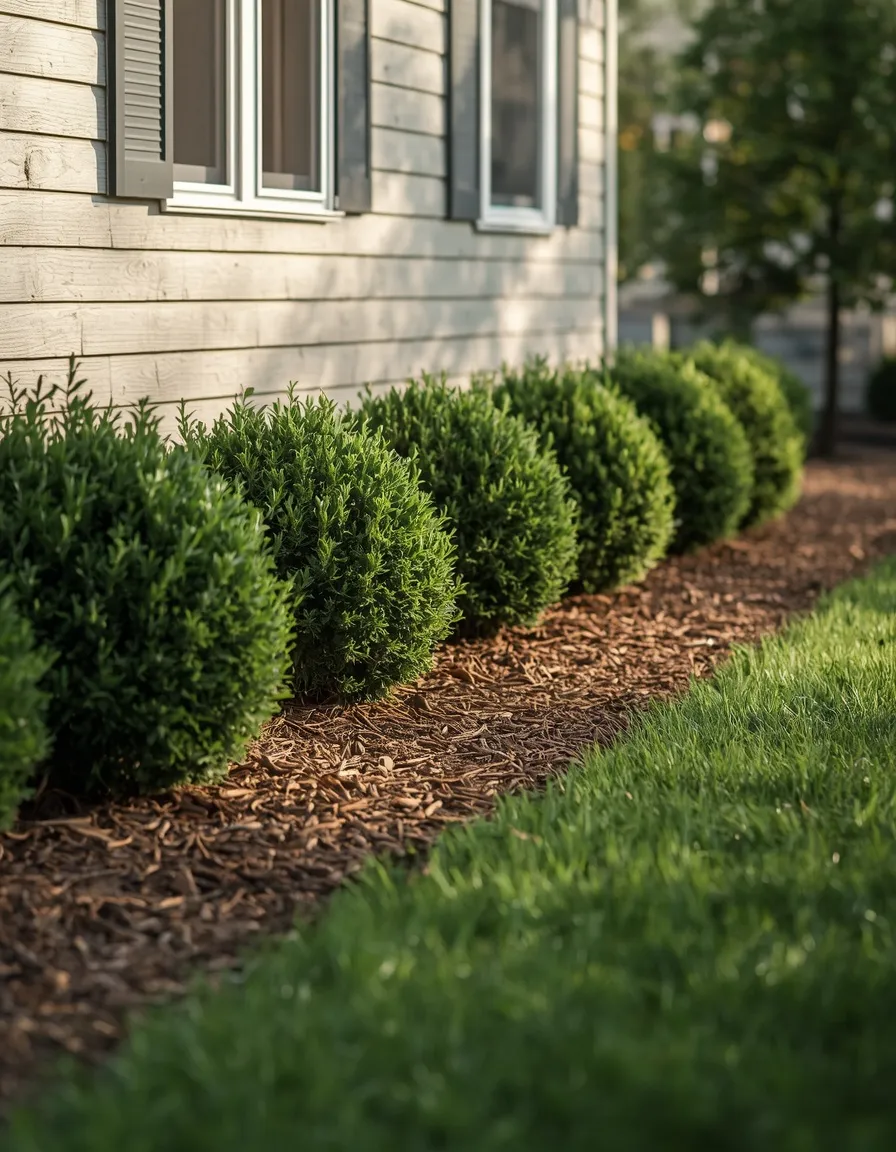
5. Foundation Planting Along the House
The bed running along the house’s foundation is often the first thing anyone sees from the street or the back door, yet it’s frequently an afterthought of leftover mulch and a few overgrown shrubs.
Plan for mature size before planting; shrubs listed at 1.2m (4ft) wide will eventually block windows and walkways if placed less than that distance from the foundation and from each other. Layer plant heights so the tallest sits at the back near the wall and heights step down toward the lawn, and leave a clear gap of at least 30cm (12in) between mature plant growth and the siding itself to allow airflow and reduce moisture damage to the house. Choose plants suited to the specific light exposure on that side of the house rather than whatever looked good at the nursery; a north-facing foundation bed and a south-facing one need entirely different plant lists. A common mistake is planting too close to the foundation initially because young plants look small, then needing to rip everything out within a few years once they mature.
- Frames the house itself, which is the backdrop for every other feature in the yard
- Works differently depending on sun exposure, so plan per side of the house, not as one bed
- Solves the “overgrown shrubs jammed against the siding” problem long term
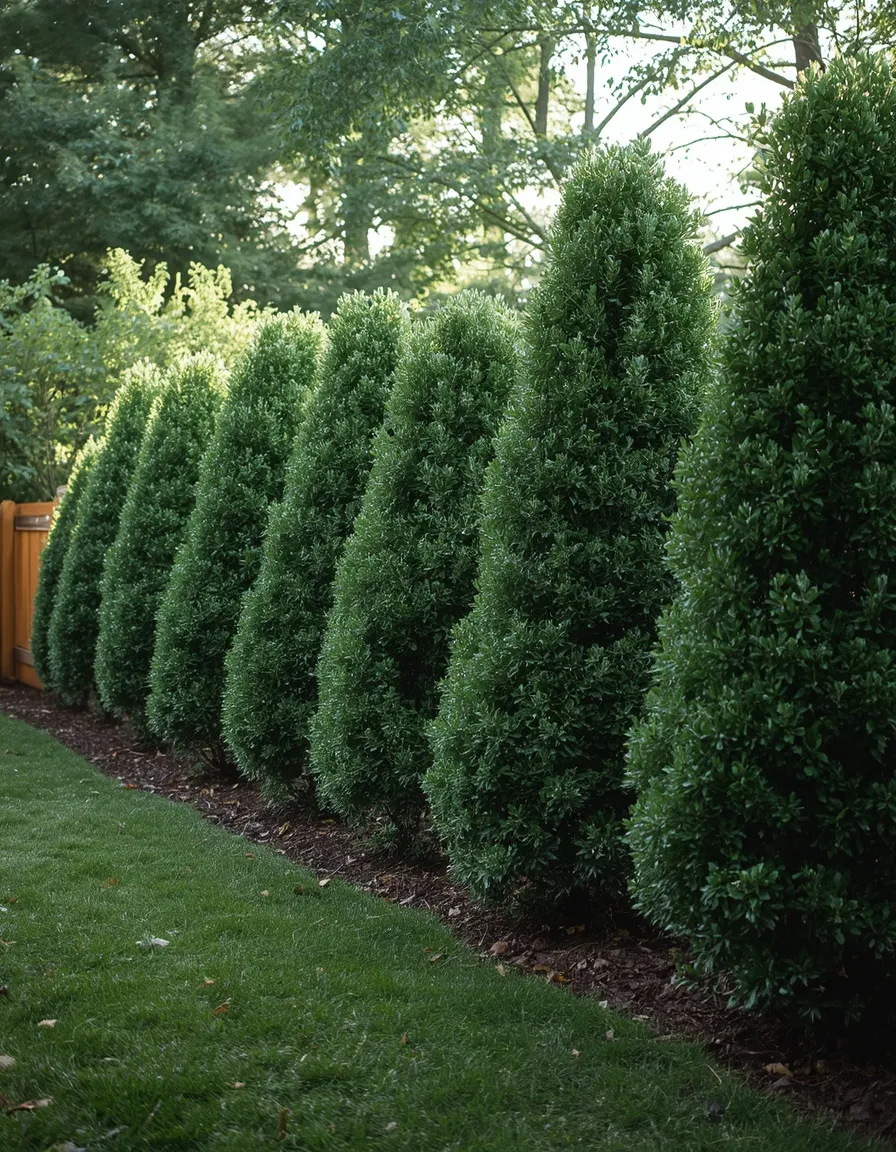
6. Privacy Hedge Along the Fence
A living hedge planted just inside the fence line does what a taller fence often can’t: it softens a hard boundary while adding real privacy height without a permit or a dispute over fence height limits.
Choose a fast but not overly aggressive grower for the climate; arborvitae, holly, or bamboo in a root-barrier container are common choices, and space plants according to their mature spread rather than how full the hedge looks the day it’s planted, gaps close within two to three growing seasons. Leave a maintenance path of at least 45cm (18in) between the hedge and the fence itself so both sides can actually be pruned and reached. In regions with strict water restrictions, a mixed screen of large shrubs and ornamental grasses uses less water than a solid hedge wall while still blocking sightlines effectively. Skip planting directly against the fence itself, since roots and foliage against wood or vinyl fencing trap moisture and accelerate rot or warping over time.
- Adds privacy height without triggering fence-height restrictions in many municipalities
- Works well along shared property lines or busy streets where a solid fence feels heavy
- Solves noise buffering and sightline privacy at the same time
7. Retaining Wall for Slopes
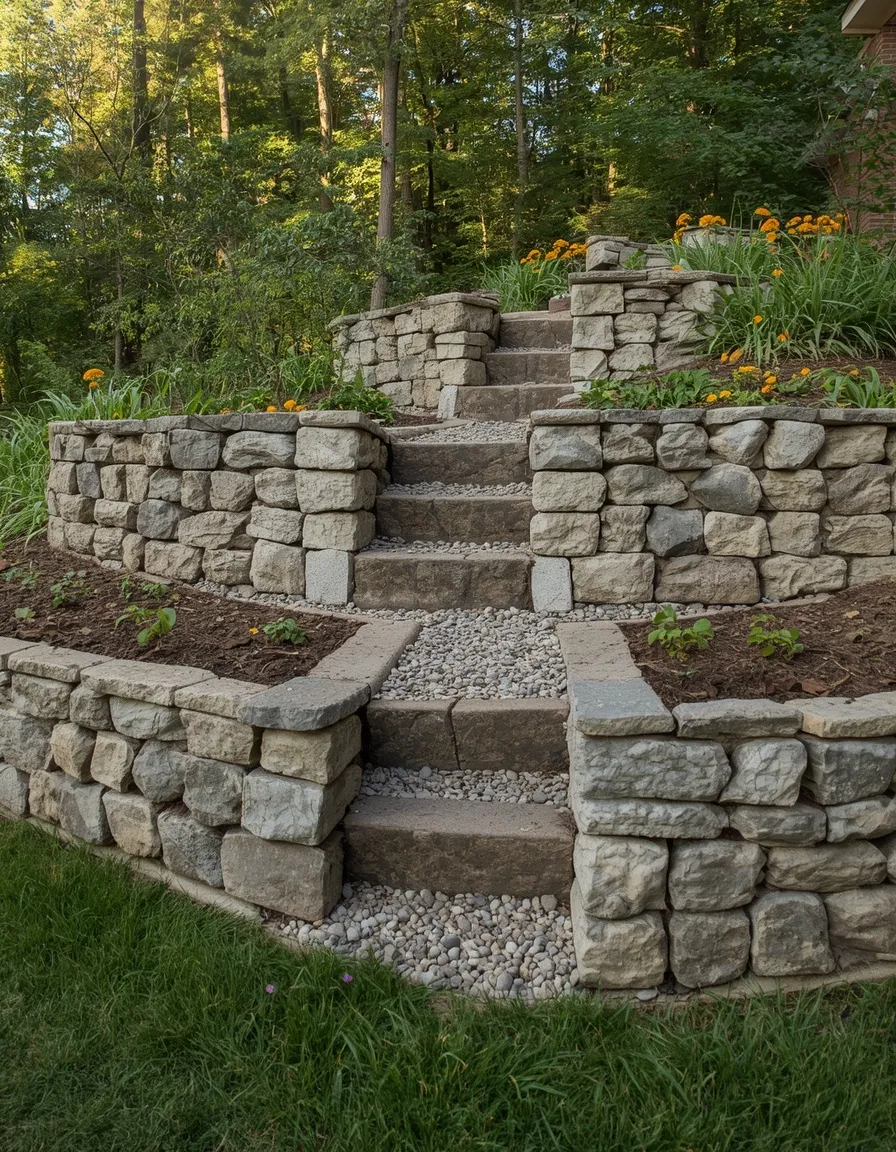
A sloped backyard that sheds soil every time it rains needs more than mulch, a retaining wall turns unusable grade into flat, plantable, walkable terrain.
For walls under about 60cm (24in), a simple dry-stacked or interlocking concrete block system is a realistic DIY project; anything taller typically needs engineered drainage and, depending on local building codes, a permit, since a failed tall retaining wall is a genuine safety hazard, not just a cosmetic issue. Always include a gravel drainage layer and perforated pipe behind the wall regardless of height, water pressure buildup is the number one reason retaining walls eventually fail or bulge. Terracing a steep slope into two or three shorter walls with planting beds between them is often more stable and visually interesting than one tall wall. Consult a local landscaper or structural professional for anything supporting a structure, driveway, or significant grade change.
- Converts unusable sloped ground into flat, plantable, and walkable space
- Works especially well for hillside lots or yards with significant grade change from the house
- Solves erosion and soil runoff problems that mulch alone can’t fix
Backyard Landscaping on a Budget and DIY Projects
None of these require a full contractor crew, each is a weekend-to-a-season project built around materials that don’t demand a big budget to look intentional.
8. Budget Gravel and Mulch Beds
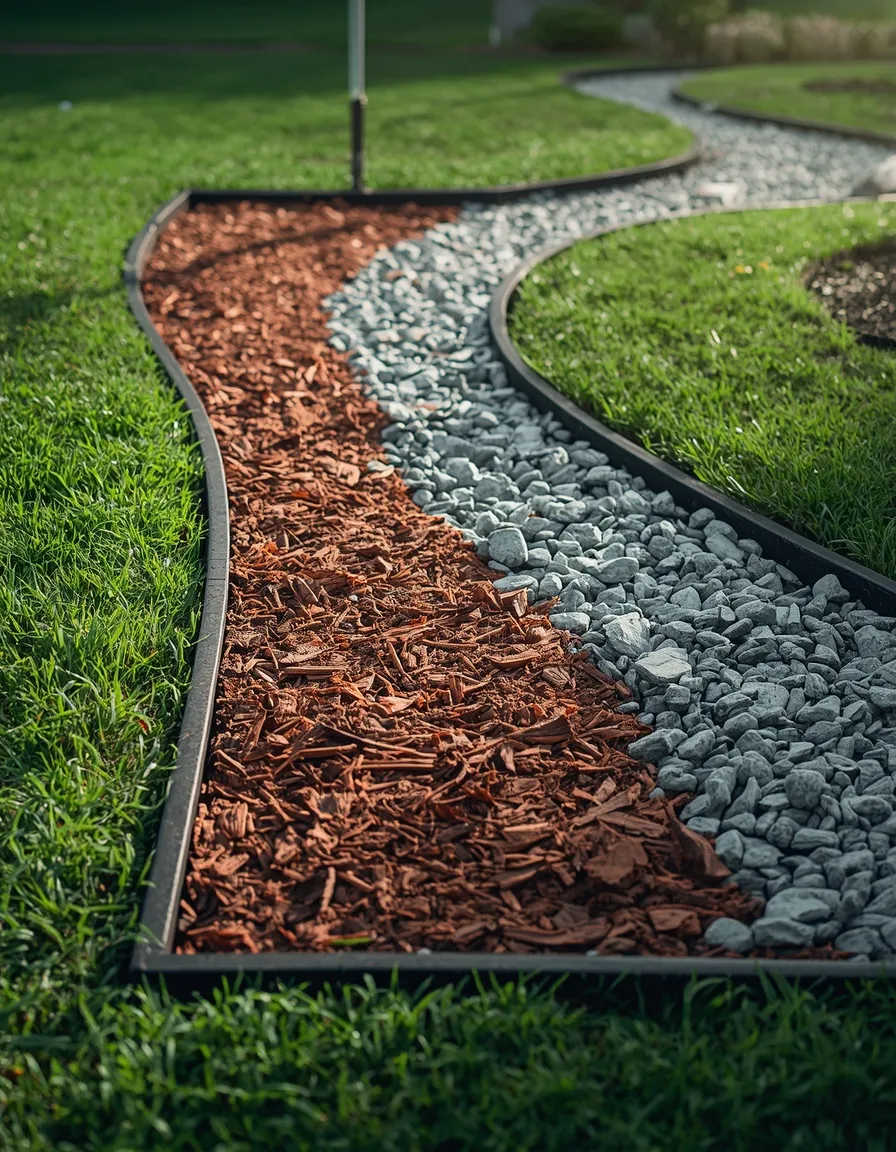
Swapping a struggling patch of lawn for a bed of decomposed granite, pea gravel, or dyed mulch is one of the fastest, cheapest ways to change how a backyard reads, often for a fraction of the cost of new plants alone.
Lay a woven landscape fabric barrier before adding gravel or mulch to cut down on weeding, and choose a material depth of at least 5 to 7cm (2 to 3in) for mulch or 4 to 5cm (1.5 to 2in) for gravel, thinner layers let weeds and fabric show through within a season. Use gravel in high-traffic or dry-shade areas where grass struggles anyway, and reserve organic mulch for planting beds where it can break down and feed the soil over time. Steel or paver edging keeps loose material contained and prevents it from migrating into the lawn with every mow. The main budget mistake is skipping the fabric barrier to save a little money upfront, since regravelling a weed-choked bed a year later costs more in time and material than doing it properly the first time.
- Delivers a visible before-and-after for one of the lowest costs on this list
- Works especially well in dry-shade or high-traffic spots where lawn struggles
- Solves patchy, hard-to-maintain grass without a full landscaping budget
9. DIY Paver Pathway
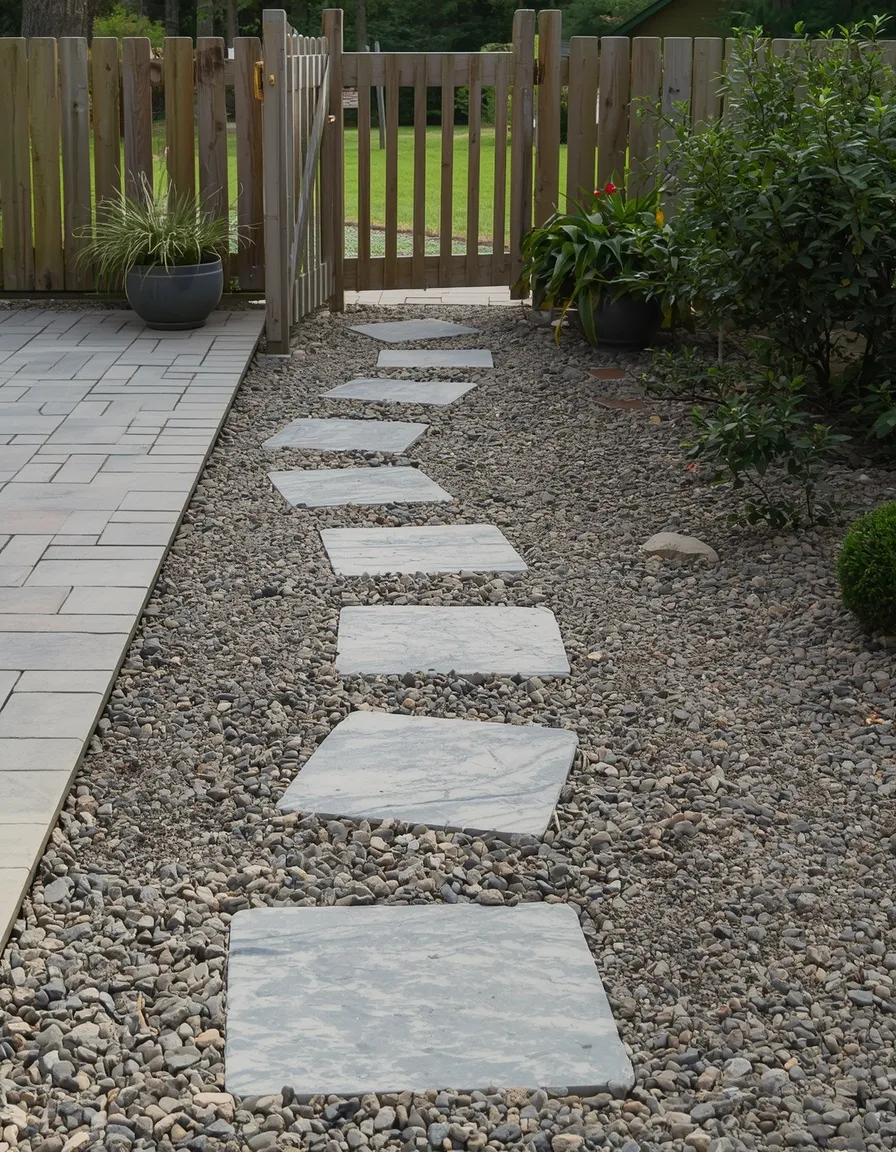
A simple flagstone or concrete paver path laid directly into a bed of sand or gravel is one of the most approachable weekend landscaping projects, no mortar, no mixing, no specialized tools.
Excavate about 10 to 15cm (4 to 6in) of soil along the path route, fill with a compacted gravel base topped with a thin leveling layer of coarse sand, then set pavers directly into the sand and fill the joints with polymeric sand or fine gravel to lock them in place. Space stepping-stone-style pavers to match a natural walking stride, roughly 45 to 60cm (18 to 24in) center to center, rather than an arbitrary even spacing. A slight slope away from the house, about a 2 percent grade, keeps water from pooling on the path itself. The most common DIY mistake is skipping the compacted gravel base entirely and setting pavers straight into loose soil, which leads to shifting, sinking, and uneven stones within a single wet season.
- Delivers a genuinely durable path without hiring a contractor or pouring concrete
- Works well connecting a patio to a garden bed, gate, or side yard
- Solves muddy foot-worn trails across the lawn
10. Xeriscape for Low Water Use
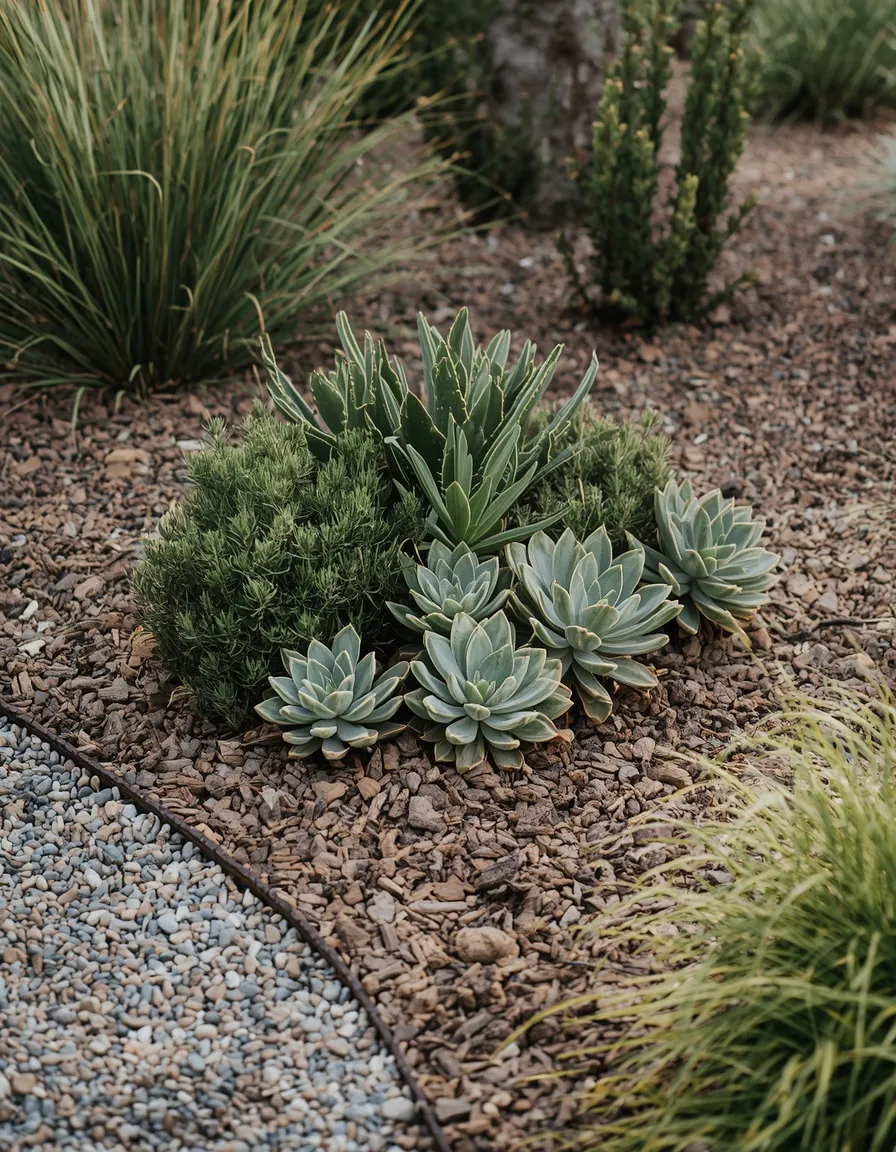
A xeriscape bed swaps thirsty lawn and annuals for drought-tolerant perennials, succulents, and native grasses, cutting watering needs dramatically without giving up color or texture.
Group plants by water need rather than by bloom color; drought-tolerant species clustered together can be watered on a completely different schedule than anything nearby that still needs regular irrigation. Use a thick mulch layer, 7 to 10cm (3 to 4in), to slow evaporation from exposed soil, and favor deep, infrequent watering over frequent shallow watering, which trains roots to grow deep and drought-resilient rather than staying near the surface. This approach works especially well in regions with water restrictions or naturally dry summers, and it pairs naturally with a gravel or rock-based hardscape elsewhere in the yard. A common mistake is assuming drought-tolerant means no water ever; most xeriscape plants still need regular watering during their first one to two growing seasons while roots establish.
- Cuts irrigation needs significantly once plants are established
- Works especially well in regions with water restrictions or hot, dry summers
- Solves the ongoing cost and effort of watering a thirsty lawn
Backyard Landscaping Features and Focal Points
Once the layout and edges are settled, a focal point, something with sound, fire, shade, or light, gives the eye somewhere to land and the family somewhere to gather.
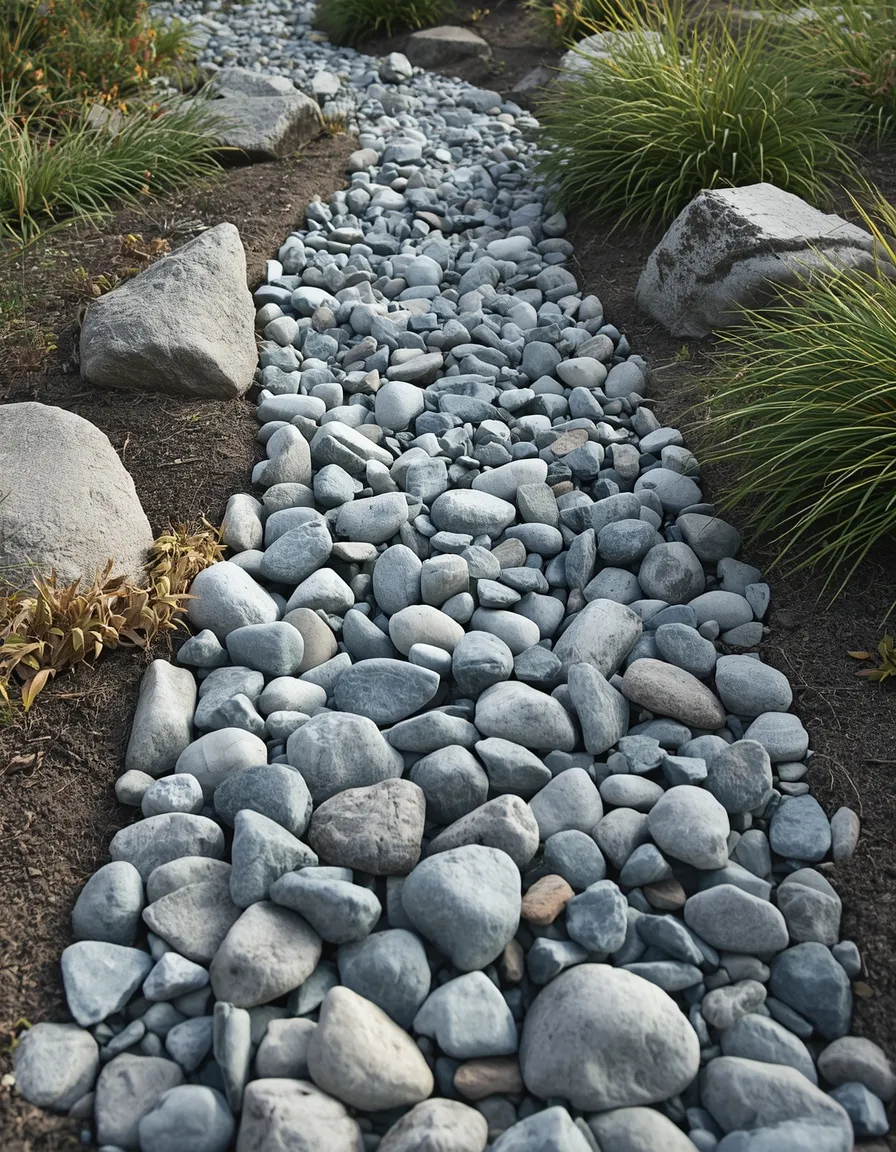
11. Rock Garden or Dry Riverbed
A dry riverbed, a curved channel of graded river rock running through a bed as if water once flowed there, adds movement and texture to a yard without a single drop of actual water.
Excavate a shallow channel, roughly 10 to 15cm (4 to 6in) deep, and layer it with a mix of rock sizes, larger boulders along the edges, smaller cobbles and gravel through the center, to mimic how a real streambed sorts material by size. This idea does real functional work in yards with drainage problems; positioned correctly, a dry riverbed can direct heavy rainwater runoff away from the house foundation instead of just decorating the yard. Tuck ornamental grasses or low, spreading perennials along the rock edges so it reads as a natural feature rather than a straight gravel strip. Skip the mistake of using uniform-sized rock throughout, real streambeds are never made of one consistent size, and that variation is what sells the illusion.
- Adds visual movement and texture without any water feature maintenance
- Works double duty as functional drainage in yards with runoff issues
- Solves the “flat gravel bed looks artificial” problem with natural-looking grading
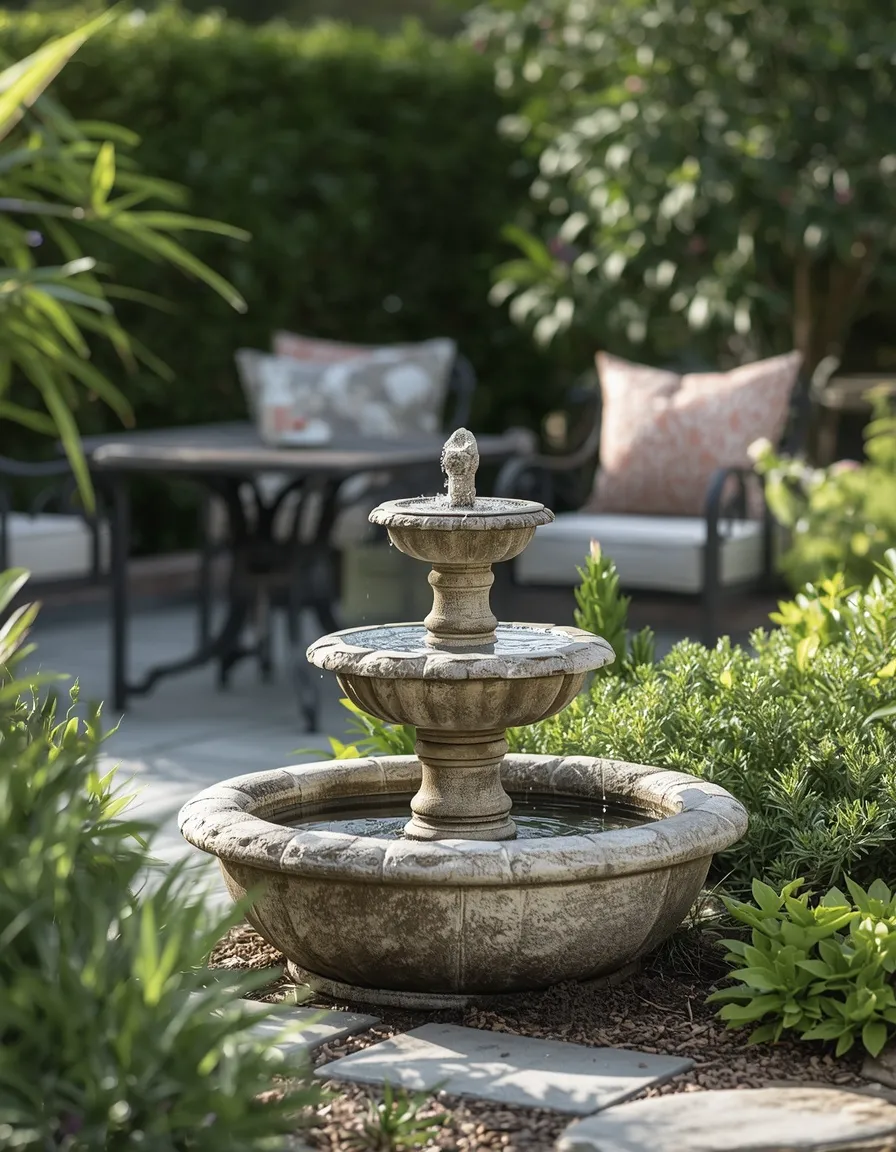
12. Garden Fountain Water Feature
The sound of moving water does more for a backyard’s atmosphere than almost any other single addition; a small tiered fountain or a simple recirculating basin can mask street noise and make a patio feel like a genuine retreat.
A self-contained, pre-formed fountain kit with a recirculating pump is the most realistic option for most homeowners, no pond excavation or liner required, and can typically be set up in an afternoon near an outdoor outlet. Position it within earshot of the main seating area, since the sound is the actual benefit; a fountain tucked in a far corner of the yard does little for the patio experience. Clean the pump and basin every four to six weeks during the growing season to prevent algae buildup, and drain it fully before the first hard freeze in climates with cold winters, trapped water can crack the basin as it expands. If pets or young children use the yard, keep standing water features under close supervision, even shallow basins present a drowning risk for very young children and toddlers.
- Adds ambient sound that masks street or neighbor noise on a patio
- Works best positioned near the main seating area rather than a distant corner
- Solves the “backyard feels flat and quiet” problem without electrical rewiring in most kits
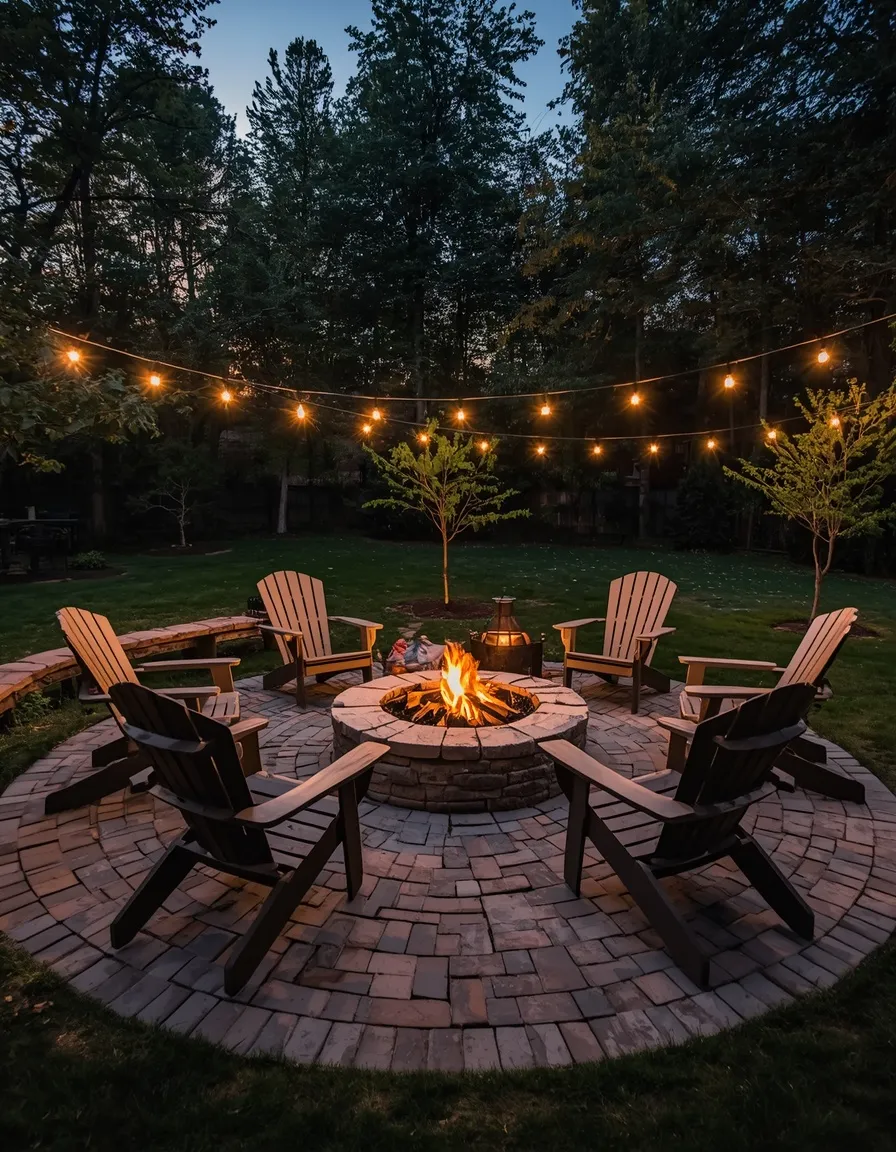
13. Fire Pit Gathering Area
A fire pit surrounded by a simple ring of pavers or gravel instantly becomes the backyard’s most-used gathering spot once the sun goes down, especially in shoulder seasons when it’s too cool to sit outside otherwise.
Keep the fire pit at least 3m (10ft) from the house, fence, overhanging branches, and any other structure, and check local fire codes before installing one; some municipalities restrict or ban open wood fires entirely and require propane or natural gas instead. Build the seating area wide enough for chairs plus walking space; a full circle at least 3.5 to 4m (12 to 13ft) in diameter usually accommodates a fire pit and four to six chairs comfortably. A non-combustible base, gravel, pavers, or concrete, extends at least 60cm (2ft) beyond the pit’s edge to catch sparks and embers. Never leave an open fire unattended, keep a hose or extinguisher within reach, and check wind conditions before lighting, especially in dry climates or during local burn bans.
- Extends the usable outdoor season into cooler evenings, spring, and fall
- Works as the natural focal point for a gathering or lounge zone
- Solves the “backyard is only used in peak summer daylight” problem
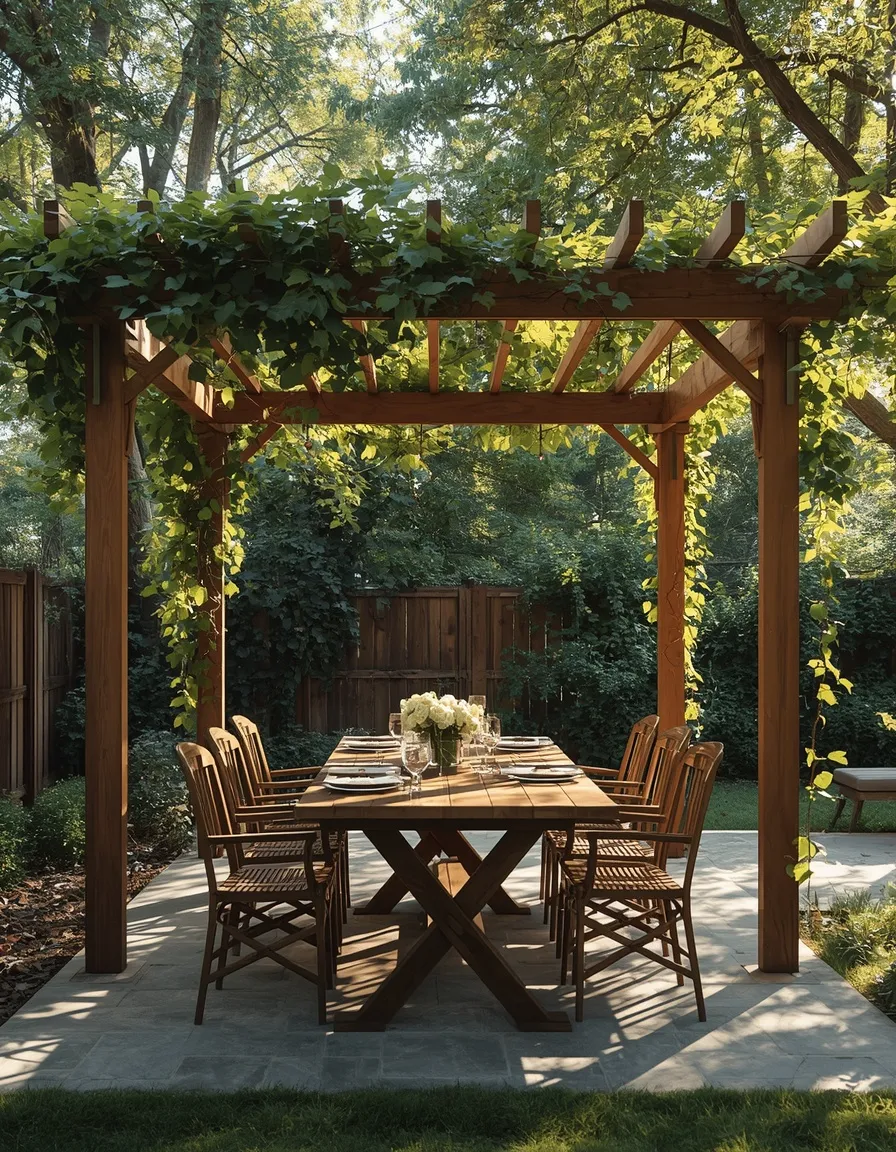
14. Pergola or Shade Structure
A pergola over the main patio does double duty: it defines the dining or lounge zone visually from the rest of the yard, and it cuts direct sun enough to make the space usable through the hottest part of the day.
Standard pergola posts run 4x4in or 6x6in depending on span, and anything spanning more than about 3.5m (12ft) between posts should be sized by a contractor or engineered plan rather than eyeballed, an undersized beam sags and can fail under snow or wind load over time. Add a retractable canopy, shade cloth, or climbing vine across the top for actual shade, a bare pergola frame provides structure but very little real sun protection on its own. If the goal is a cozier, more layered feel rather than just shade, string lights, sheer curtains, and floor cushions can turn the space into something closer to an outdoor lounge; our guide to whimsical garden bedroom ideas has more on layering fabric and lighting for that softer, retreat-like feel. A common mistake is building the structure before deciding on the shade material, which sometimes means retrofitting a frame that wasn’t designed to support a heavier canopy or climbing plant.
- Extends comfortable outdoor time through the hottest hours of summer
- Works as a visual anchor for a dining or lounge zone
- Solves harsh midday sun without a permanent roof structure
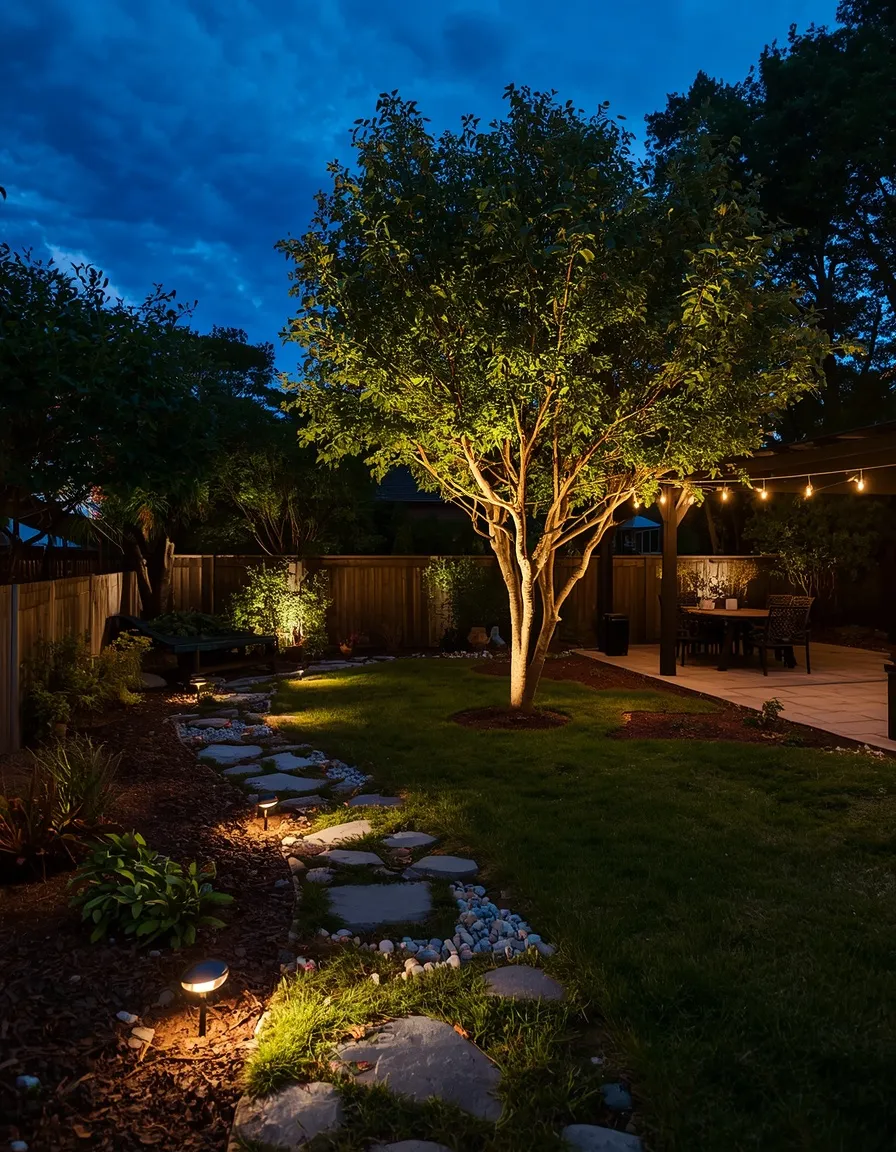
15. Low-Voltage Landscape Lighting
A backyard that looks great in daylight and disappears entirely after dark is only doing half its job; low-voltage path and accent lighting extends the space’s usable hours without a big electrical project.
Low-voltage (12-volt) transformer kits are genuinely DIY-friendly since they don’t require an electrician or permit in most areas, unlike line-voltage outdoor wiring. Layer three light types rather than relying on one: path lights along walkways for safety, uplights aimed at a specimen tree or architectural feature for drama, and softer string or bistro lighting over the main seating area for ambiance. Bury cable at least 15cm (6in) deep or run it along bed edges under mulch to keep it out of sight and away from foot traffic or a mower. Avoid the common mistake of over-lighting, spacing path lights every 1.2 to 1.5m (4 to 5ft) rather than every 60cm (2ft) usually looks more intentional and less like a runway.
- Extends usable hours into the evening without a full electrical rewiring project
- Works as a safety feature along paths and steps, not just decoration
- Solves the “gorgeous by day, invisible by night” problem cheaply and safely
Functional and Planting-Focused Backyard Landscaping Ideas
The last stretch of ideas is about making the yard work for how the household actually lives in it, whether that’s swimming, growing food, or letting the kids run.
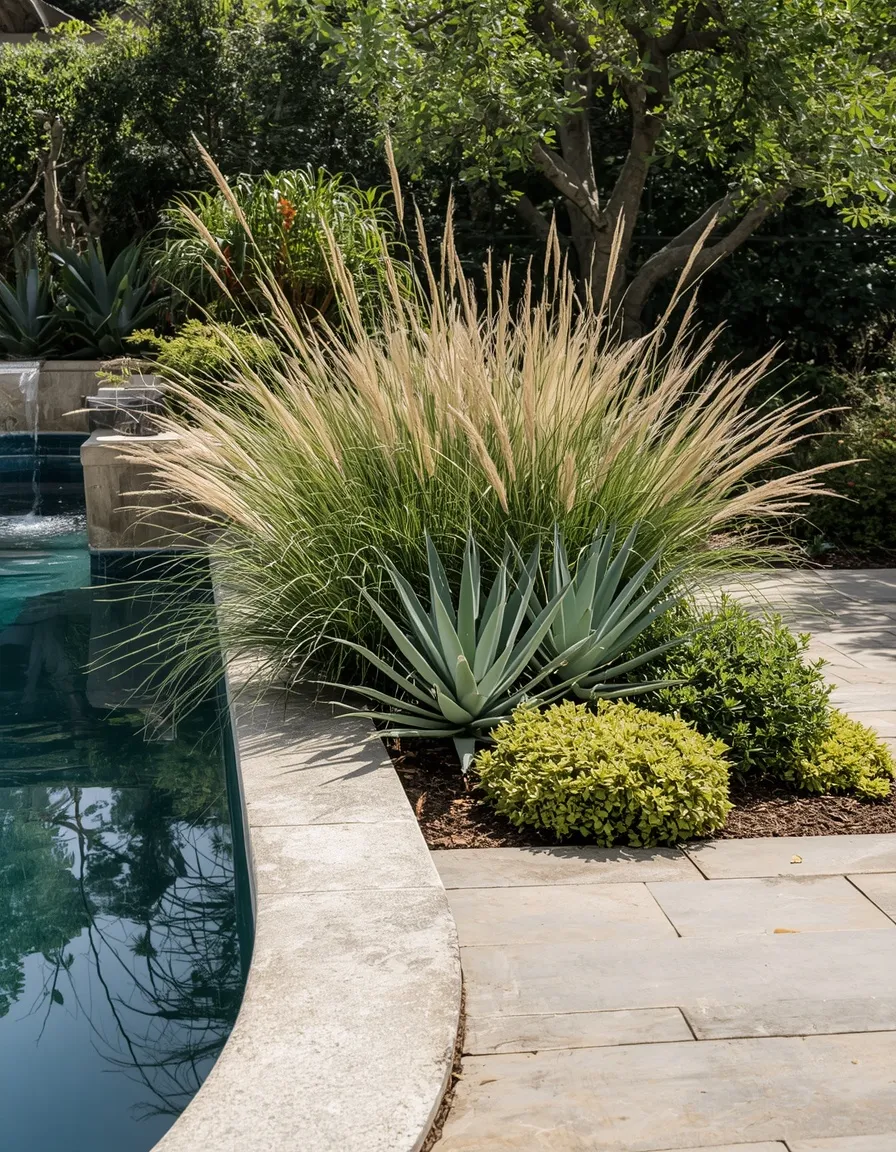
16. Pool-Adjacent Landscaping
The planting directly around a pool has to work harder than anywhere else in the yard, it needs to handle splashed chlorinated water, bare feet, and near-constant sun reflected off the surface.
Choose plants that tolerate occasional chlorine exposure and heat reflection; ornamental grasses, agave, lantana, and many Mediterranean herbs handle pool-adjacent conditions better than shade-loving or moisture-sensitive species. Avoid anything with thorns, sharp leaf edges, or heavy seed and fruit drop directly at the pool’s edge, both are a genuine hazard for bare feet and pool filters alike. Keep root systems in mind too; fast-spreading or invasive roots can eventually crack pool decking, so stick to well-behaved, clumping plants within about 1m (3ft) of the coping. In many regions, a pool also legally requires a fence or self-latching gate around it for child safety; check local building codes before finalizing the layout, since landscaping alone doesn’t meet most pool-safety requirements.
- Withstands splash, chlorine, and reflected heat better than typical garden plants
- Works as a heat and glare buffer around the hottest part of the yard
- Solves debris and hazard concerns, thorns, heavy seed drop, right at the pool’s edge
17. Kid-Friendly Play Zone
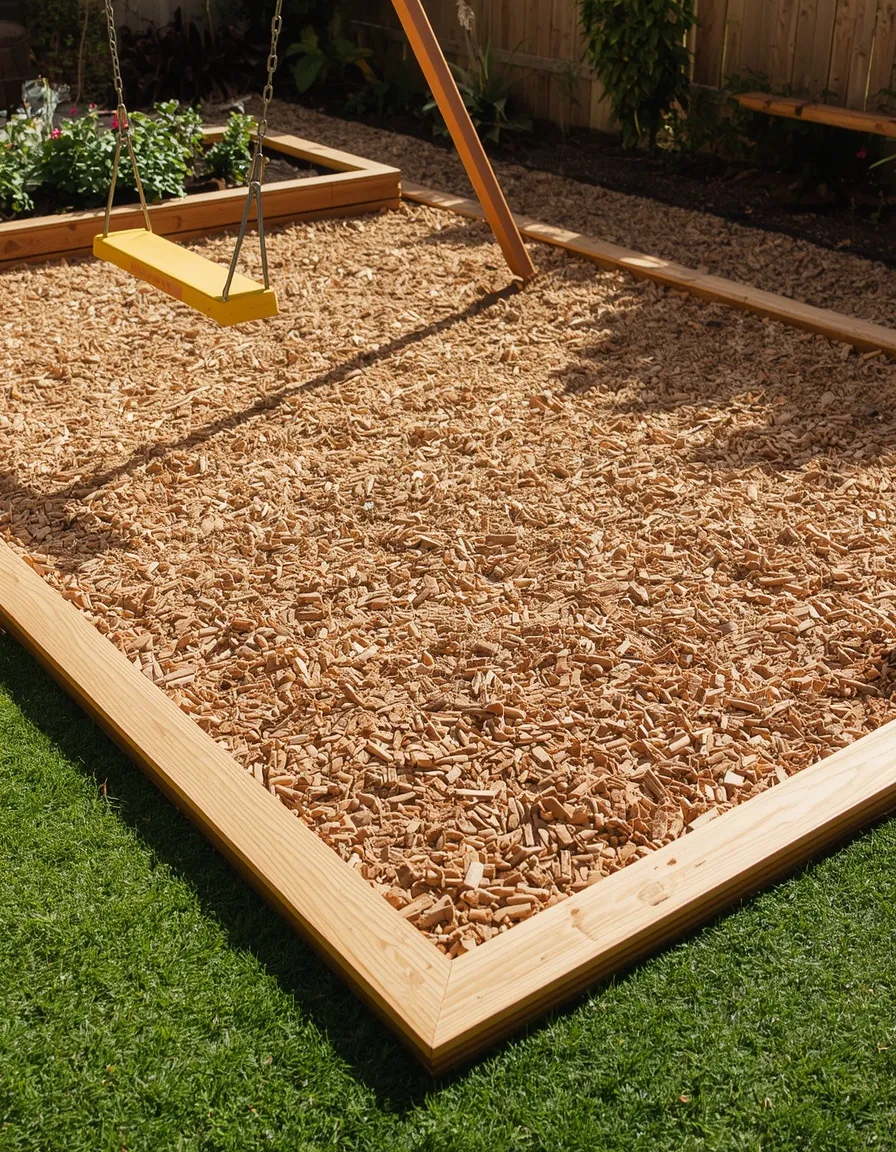
A dedicated play zone, defined by soft ground cover and a clear boundary from garden beds, gives kids a space to actually run without every ball ending up in the flower border.
Use a soft, impact-absorbing surface under any play equipment; engineered wood mulch or rubber mulch at a depth of at least 15cm (6in) meets typical playground safety guidance for fall protection, while plain grass or hard paving does not. Keep the play zone at least 2m (6ft) from any water feature, pond, or pool edge, and avoid planting toxic species like oleander, foxglove, or sago palm anywhere within reach of that area, since young children explore with their mouths as much as their hands. Define the boundary with something low and soft, a row of shrubs or a change in ground material, rather than anything sharp-edged kids might fall against during active play. A smart variation for growing families is designing the zone to convert later; sturdy edging now can outline a future vegetable bed or fire pit area once kids outgrow a swing set.
- Gives kids a defined space to play without damaging garden beds nearby
- Works best with impact-absorbing ground cover rather than grass or hard paving
- Solves toy clutter and safety concerns by containing active play to one zone
18. Raised Beds for Edibles
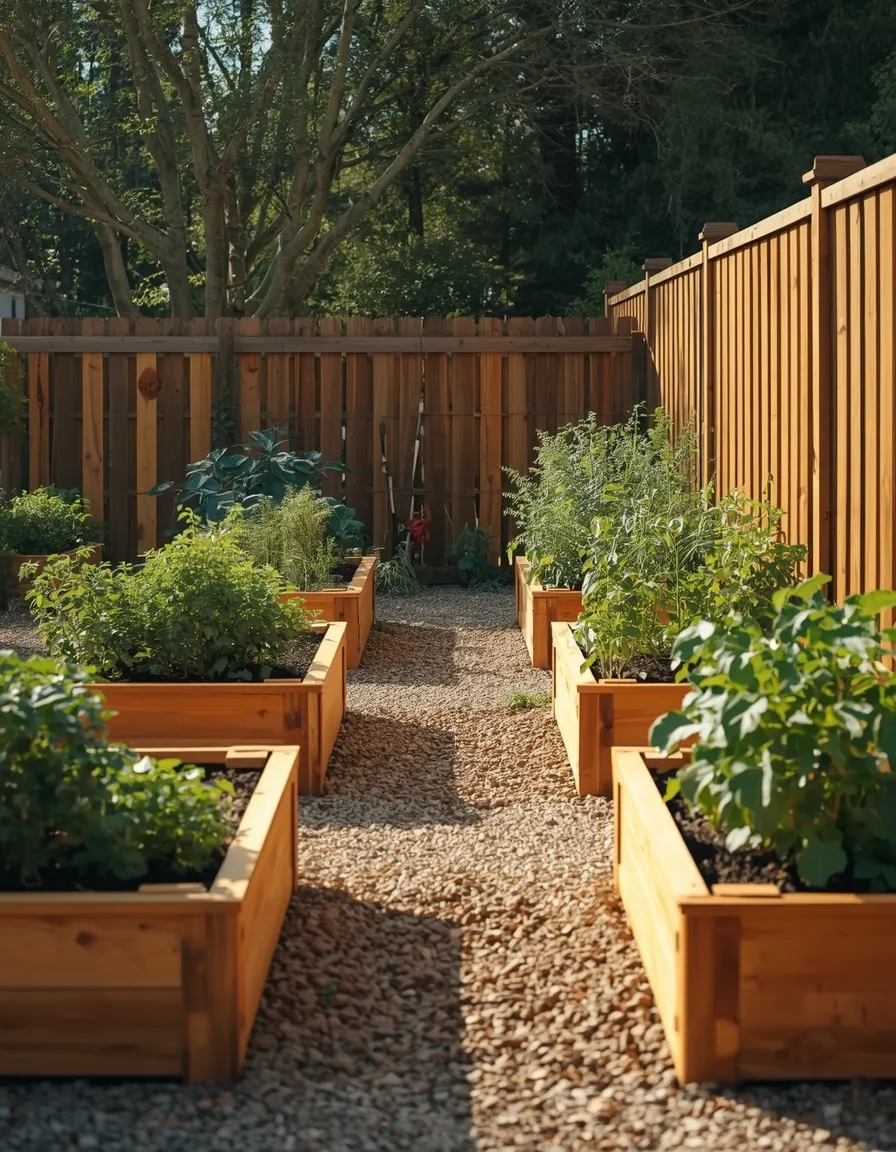
A row of raised wooden or metal beds along a sunny fence line turns unused backyard space into a working vegetable and herb garden without disturbing existing soil or drainage.
Build or buy beds at least 30cm (12in) deep for most vegetables, and keep the width to 1.2m (4ft) or less so the center can be reached from either side without stepping on the soil and compacting it. Site beds where they get a minimum of six hours of direct sun daily, most vegetables are non-negotiable on this point regardless of how appealing a shadier spot looks. Fill with a blended raised-bed soil mix rather than straight garden soil, which compacts too heavily in a contained bed and drains poorly. Leave at least 60 to 90cm (2 to 3ft) of path width between beds for a wheelbarrow or kneeling access; a common mistake is spacing beds so tightly that maintenance becomes physically awkward.
- Adds genuine food-producing function to a backyard, not just ornamental value
- Works well along a sunny fence line or side yard with otherwise limited use
- Solves poor native soil or drainage issues by containing fresh growing medium
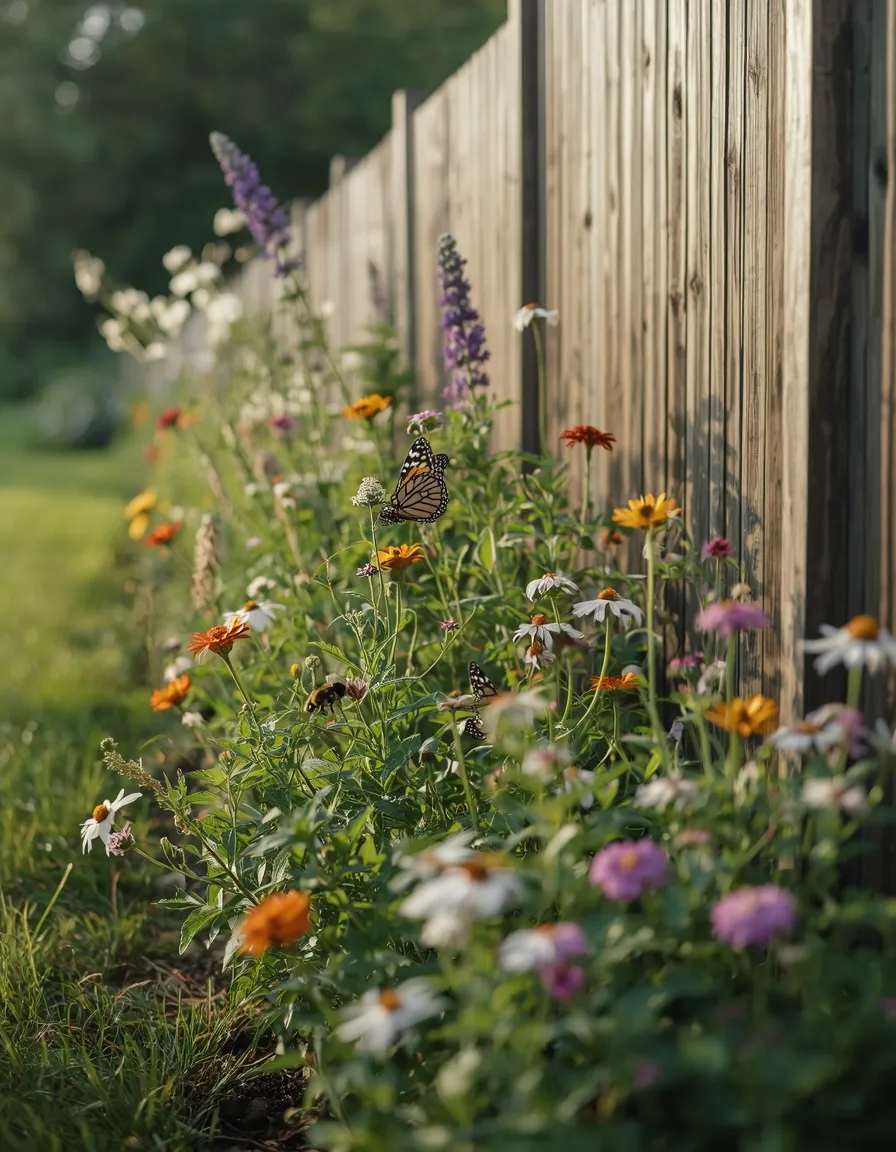
19. Native Pollinator Border
A border planted with native flowering perennials does more than look good, it supports the bees, butterflies, and other pollinators that a lawn and a few imported ornamentals simply can’t.
Choose species genuinely native to the local region rather than generic pollinator-friendly plants sold nationally; a native plant database or local extension office can confirm what actually belongs in a specific area, since a plant native to one region can be mildly invasive in another. Aim for a bloom succession, some species flowering in spring, others in summer, and a few into fall, so the border supports pollinators across the full growing season rather than one short burst. Leave some seed heads and stems standing through winter rather than cutting the border back completely each fall, many native bee species overwinter in hollow plant stems. This border works especially well along a back fence line or side yard where a slightly looser, less manicured look is more acceptable than it might be near the main patio.
- Supports local bee, butterfly, and beneficial insect populations directly
- Works well along back fences or side yards where a looser look fits naturally
- Solves the “lawn with no ecological value” problem in one dedicated bed
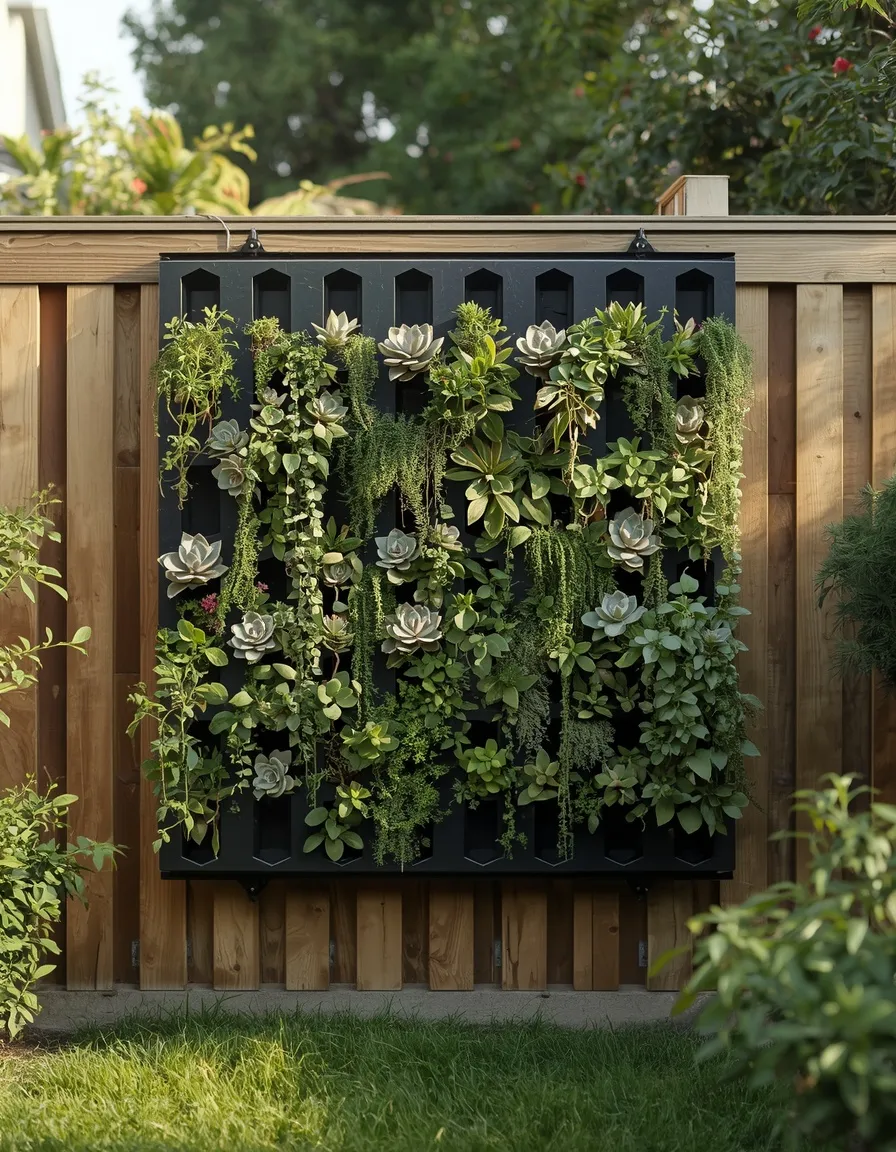
20. Vertical Garden or Living Wall
A wall-mounted planting system, whether a simple grid of hanging pots or a purpose-built living wall panel, adds real greenery to a backyard with almost no ground footprint at all.
Modular living wall panels with built-in irrigation are the lowest-maintenance option and work well on a sunny fence or exterior wall, though a simple version built from mounted wooden crates or a wire grid with individual pots achieves a similar look at a fraction of the cost. Choose shallow-rooted plants; succulents, herbs, and trailing varieties like creeping jenny generally outperform deep-rooted perennials in the limited soil volume most vertical systems offer. Mount any wall system securely into structural framing, not just siding or fence slats, fully saturated soil and pots add significant weight, and a poorly anchored system can pull away from the wall over time. This idea is especially useful for small yards, rental properties, or balconies attached to a small backyard, where ground space for a traditional bed simply isn’t available.
- Adds significant greenery without using any ground-level planting space
- Works especially well for tiny yards, rentals, or narrow side-yard walls
- Solves the “no room for a garden bed” problem in small-footprint backyards
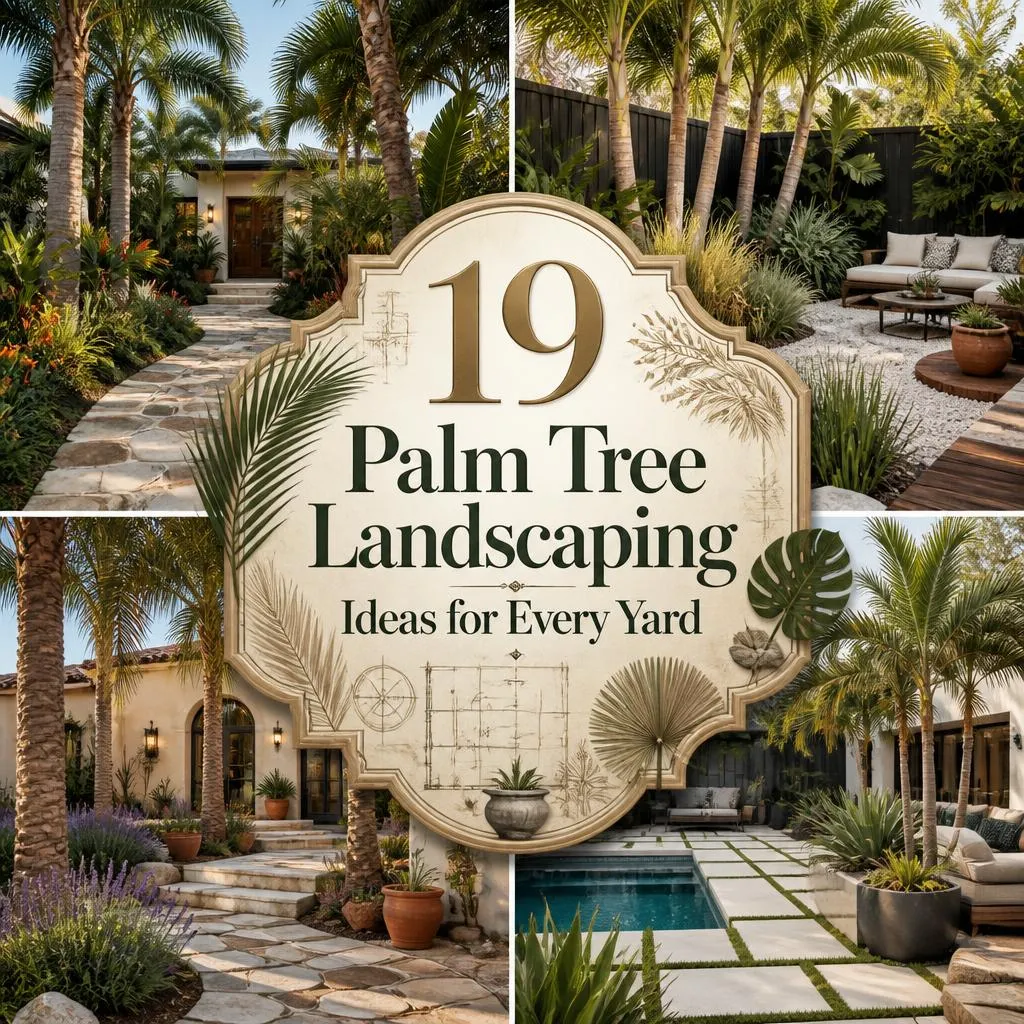
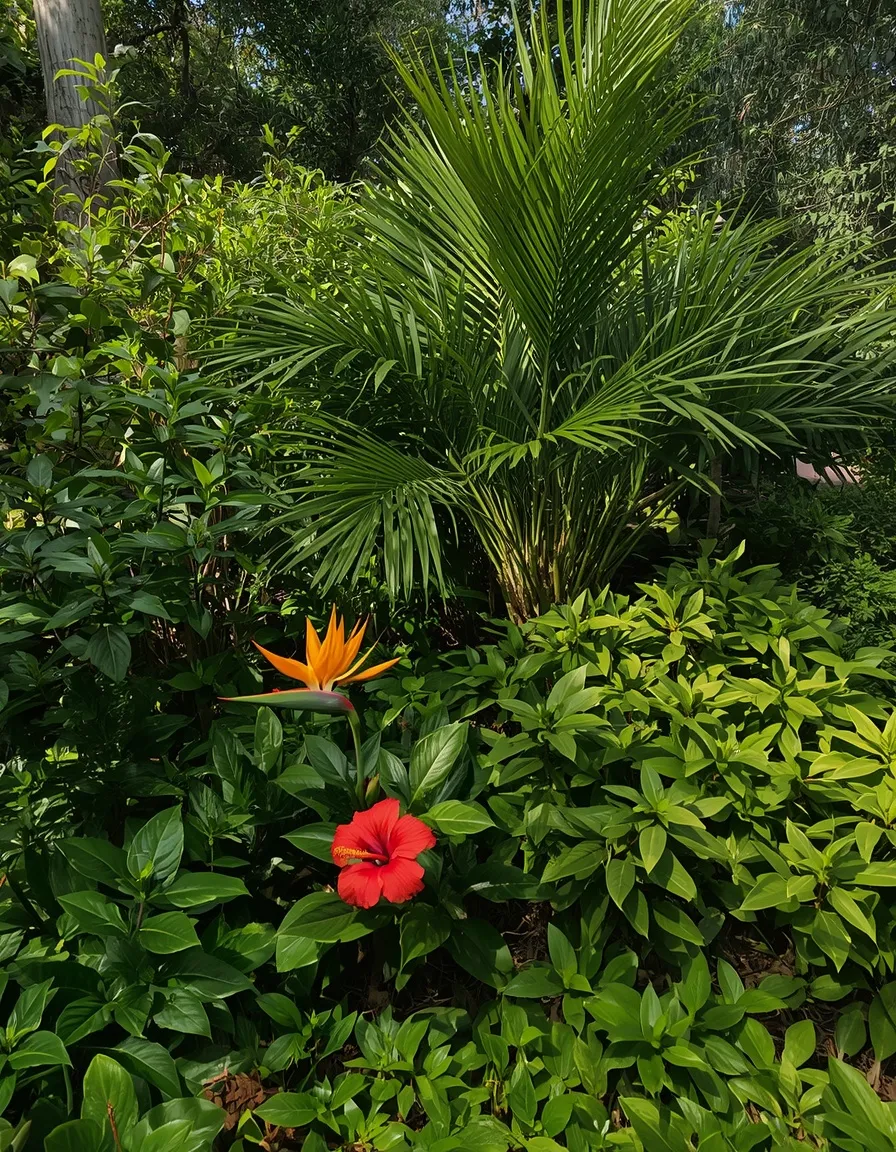
21. Florida-Friendly Tropical Planting
In hot, humid climates like Florida’s, a backyard planted with true tropical and subtropical species, hibiscus, bird of paradise, philodendron, and ornamental palms, holds up to heat and heavy summer rain far better than plants bred for temperate gardens.
Choose species rated for the local USDA hardiness zone, much of Florida falls in zones 9 through 11, and check hurricane resilience specifically in coastal areas; deeply rooted, wind-tolerant species like live oak or sabal palm handle storm season better than shallow-rooted, brittle varieties. Group plants by water and drainage needs, Florida’s sandy soil drains quickly in some yards and holds standing water in others after heavy rain, and mismatching plant needs to the wrong microclimate is one of the most common regional planting mistakes. One safety note worth flagging directly: sago palm, a popular ornamental in Florida landscaping, is severely toxic to dogs and cats according to the ASPCA, ingesting even a small amount of any part of the plant can cause liver failure, so it’s worth reconsidering near a yard used by pets. This tropical palette also extends naturally to other warm, humid regions well beyond Florida, coastal Gulf Coast areas and similar subtropical climates worldwide.
- Handles heat, humidity, and heavy seasonal rain better than temperate-climate plant lists
- Works throughout Florida and comparable warm, humid coastal regions globally
- Solves storm and drought resilience with properly matched, regionally suited species
Conclusion
Backyard landscaping ideas work best layered rather than chosen one at a time: a defined zone here, a budget-friendly gravel bed there, one focal feature like a fire pit or fountain that gives the whole space a reason to be used after dinner. None of this requires tackling everything on this list at once. Pick whichever idea matches the yard’s biggest current problem, a muddy slope, an unused corner, a fence that needs softening, and start there. For more layout and planting inspiration once that first project is finished, the Garden Design category has plenty more to explore. Whatever gets built first, the goal is a backyard that earns its keep well past the first season of new mulch.
Frequently Asked Questions
What’s the cheapest way to landscape a backyard?
Gravel and mulch beds are typically the lowest-cost transformation, since they replace struggling lawn or bare soil for a fraction of what new plants or hardscaping cost, especially when a landscape fabric barrier is installed correctly the first time. DIY paver pathways and a simple two-tier lawn border are the next most budget-friendly options, since both use inexpensive materials and require only hand tools over a weekend.
How do I landscape a small backyard so it doesn’t feel cramped?
Break up sightlines with a diagonal path or planting line instead of one straight down the middle, and add vertical elements like a trellis or living wall so the design uses height rather than only ground space. Resist the instinct to fill every square meter; small yards actually need more negative space per feature than large ones to avoid feeling cluttered.
What plants work well for backyard landscaping in Florida and other hot, humid climates?
Tropical and subtropical species suited to USDA zones 9 through 11, including hibiscus, bird of paradise, and wind-tolerant palms like the sabal palm, handle Florida’s heat, humidity, and storm season far better than temperate-climate plant choices. It’s also worth checking any species against a pet-toxicity list before planting, since some common Florida ornamentals, sago palm in particular, are seriously dangerous if ingested by dogs or cats.
How do I landscape around a pool safely?
Choose plants that tolerate chlorine splash and reflected heat, avoid anything thorny or heavy with seed drop right at the coping, and keep fast-spreading roots away from the deck to prevent cracking. Separately from planting choices, check local building codes, most regions legally require a fence or self-latching gate around a backyard pool for child safety, and landscaping alone doesn’t satisfy that requirement.
What backyard landscaping ideas work well for kids?
A defined play zone with soft, impact-absorbing ground cover, like engineered wood mulch at a proper depth, gives kids room to run while protecting nearby garden beds, and keeping that zone away from any water feature adds an extra layer of safety. It’s also worth avoiding toxic ornamental plants like oleander or sago palm anywhere within reach of the play area, since young children explore with their mouths.
Do I need a permit for backyard landscaping projects like retaining walls or fire pits?
It depends on the project and local jurisdiction, but retaining walls taller than about 60cm (24in) and any open wood-burning fire pit commonly require a permit or at least a check against local fire codes. Checking with the local building or planning department before starting is faster and cheaper than redoing work that doesn’t meet code.
How do I add privacy to a backyard without a taller fence?
A living hedge planted just inside the fence line adds real height and screening without triggering fence-height restrictions that many municipalities apply to solid structures. Fast but well-behaved growers like arborvitae or holly, spaced according to mature width rather than how full they look at planting, typically close into a solid screen within two to three growing seasons.