

Introduction
Most disappointing flower beds fail before a single plant goes in, the shape is wrong, or the bed is too narrow to hold anything properly. These flower bed ideas cover 19 complete designs, from three-layer borders and island beds to shade woodland planting, ornamental grasses, rock gardens, and cutting beds, each with the layout logic that makes it work.
You’ll find beds for every position, front yard, backyard, entryway, along a side path, and around the house itself, plus honest guidance on depth, spacing, and sun that most inspiration galleries skip entirely. Whether you’re planning from scratch or fixing a bed that never quite looked right, the design principles here apply at any size or budget. Consider it the starting point for the beds around your abode.
The rule that fixes most flower beds: Depth decides everything. A bed needs roughly 1.2–1.5 m (4–5 ft) from front to back to hold the three planting layers, tall at the back, mid-height through the middle, low at the front, that make a border look full. A 60 cm (2 ft) strip physically cannot hold more than a single row, which is why narrow beds look thin no matter how carefully they’re planted. If a bed disappoints you, widen it before you replant it.
19 Flower Bed Ideas
1. Classic Three-Layer Border
The three-layer border is the foundation of every good bed: tall plants at the back, mid-height through the middle, and low growers spilling over the front edge, so the whole planting is visible at once. Structured and generous, this layout underpins most of the designs below. Layered, full, and reliable.
Give the bed at least 1.2 m (4 ft) of depth and divide it roughly into thirds by height, back layer above 90 cm (3 ft), middle 45–90 cm (18–36 in), front below 45 cm. Plant each variety in odd-numbered drifts of three, five, or seven rather than as single specimens, which read as spotty and unresolved. The most common error is planting in single rows like soldiers, so let drifts overlap and interlock instead. This suits borders against a fence, wall, or hedge.
- Why it works: Dividing the depth into three height bands makes every plant visible from the viewing side.
- Best for: Borders against fences, walls, or hedges; beginners learning structure.
- Key elements: minimum 1.2 m depth, three height bands, odd-numbered drifts, overlapping not rowed.
2. Free-Standing Island Bed
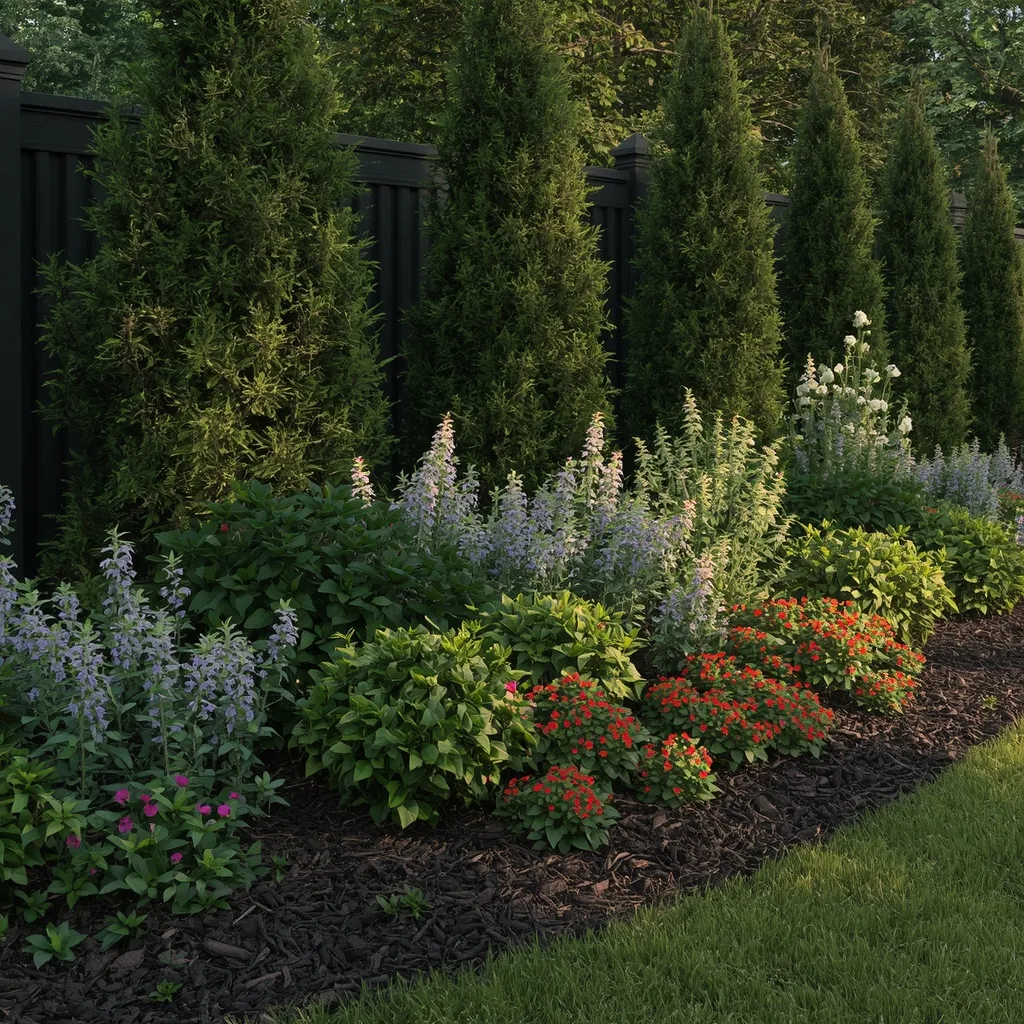
An island bed sits surrounded by lawn and is viewed from every side: tallest planting through the center, stepping down evenly in all directions, so there is no back and no front. Sculptural and open, an island bed breaks up a flat lawn beautifully. Rounded, central, and full.
Build the height in the middle rather than at one edge, since an island bed has no viewing side, and keep the tallest plants under roughly half the bed’s width so the proportions don’t look top-heavy. Curve the outline generously, a long oval reads better than a circle in most gardens. Leave at least 90 cm (3 ft) of mown grass around it so a mower can pass without awkward reversing. This suits open lawns, large gardens, and breaking up flat spaces.
- Why it works: Centering the height works from every angle, where a back-loaded planting only reads from one side.
- Best for: Open lawns; large gardens; breaking up flat expanses.
- Key elements: height at the center, tallest under half the bed width, generous oval outline, 90 cm mower clearance.

3. Sweeping Curved Border
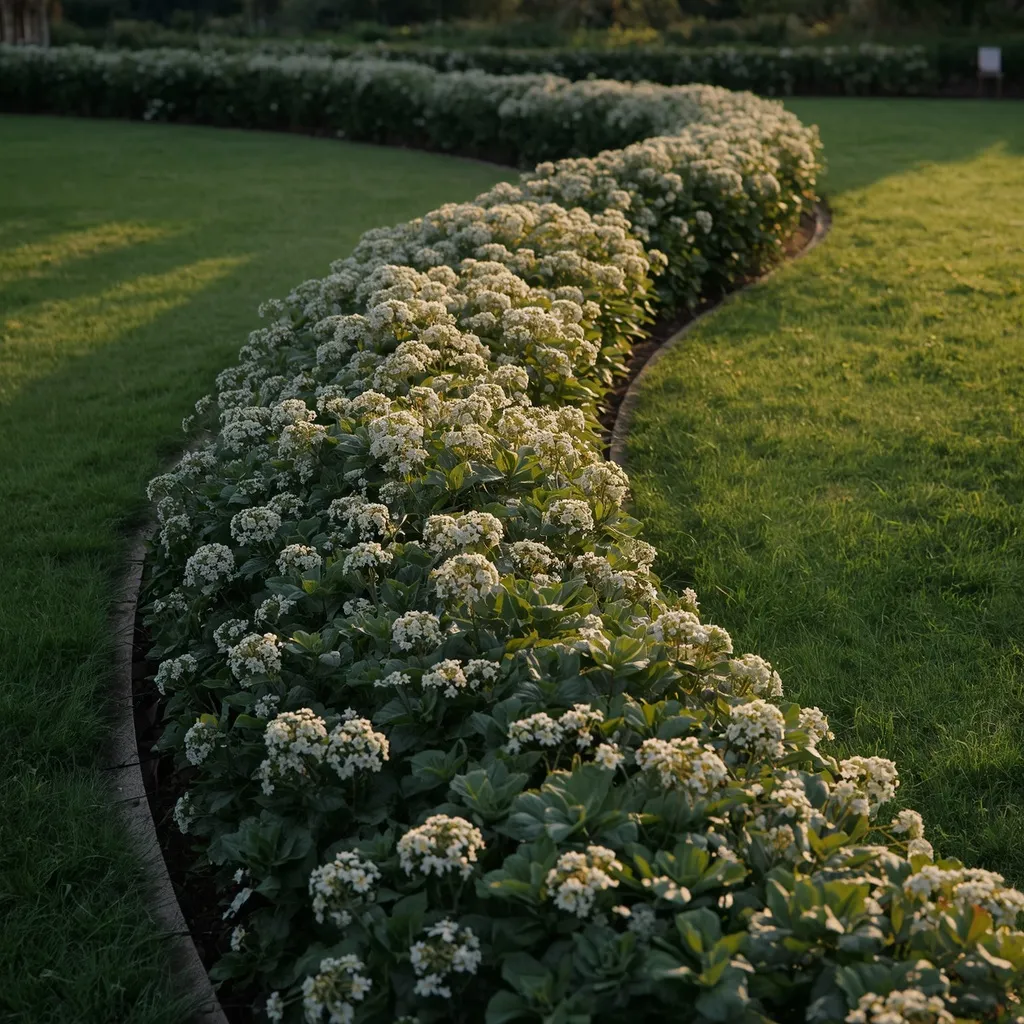
A curved border flows rather than runs straight: a long sinuous edge sweeping along a boundary, deep in places and narrower in others, with planting following the rhythm. Relaxed and natural, curves make a rectangular plot feel designed. Flowing, informal, and softening.
Mark the curve with a garden hose and view it from the house before cutting, since curves that look right at ground level often read as wobbly from an upstairs window. Use few, generous curves rather than many small ones, which look fussy and are miserable to mow around. Where the bed swells deepest, put your tallest planting; where it narrows, keep it low. This suits rectangular plots, informal gardens, and softening straight boundaries.
- Why it works: Placing tall planting at the deepest points ties the planting to the bed’s shape rather than fighting it.
- Best for: Rectangular plots; informal gardens; softening hard boundaries.
- Key elements: hose-marked curve, checked from an upstairs window, few generous curves, height at the deep points.
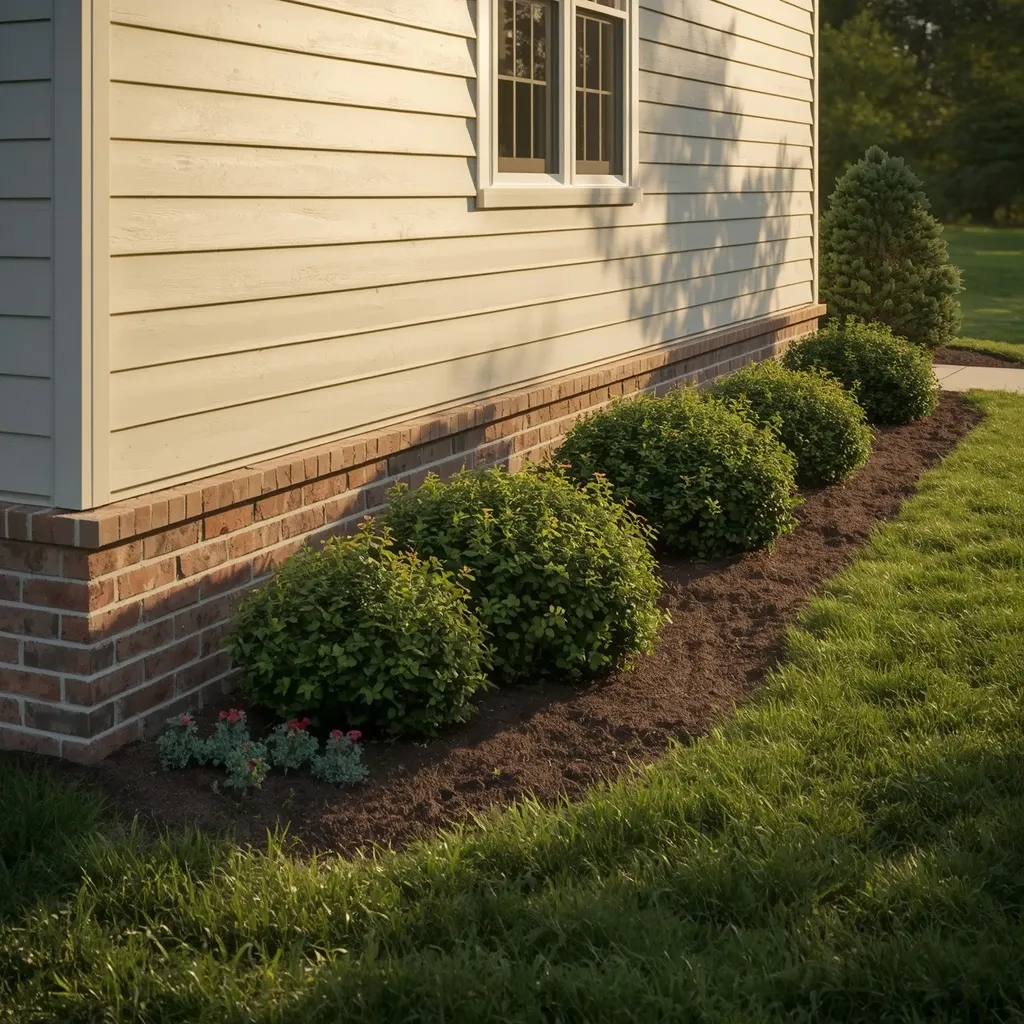
4. Foundation Bed Around the House
A foundation bed wraps the base of the house: a continuous planting that grounds the building, softening the hard line where walls meet ground. Practical and transformative, foundation beds are the highest-impact planting on most properties. Anchoring, tidy, and structural.
One detail matters more than any plant choice here. Keep soil at least 15 cm (6 in) below siding, cladding, or the damp-proof course, since soil banked against a wall bridges that barrier and invites moisture damage into the building fabric. Leave a 45–60 cm (18–24 in) access gap between planting and the wall for painting, repairs, and airflow, and keep shrubs clear of vents and meter boxes. Scale depth to the house: a two-story wall needs a bed of at least 1.5 m (5 ft) to look proportionate. This suits any house wall, front or back.
- Why it works: Keeping soil below the damp course and leaving an access gap protects the building as well as the planting.
- Best for: House walls anywhere on the property; grounding a building visually.
- Key elements: soil 15 cm below siding or damp course, 45–60 cm wall access gap, vents kept clear, depth scaled to wall height.
5. Entryway Welcome Bed
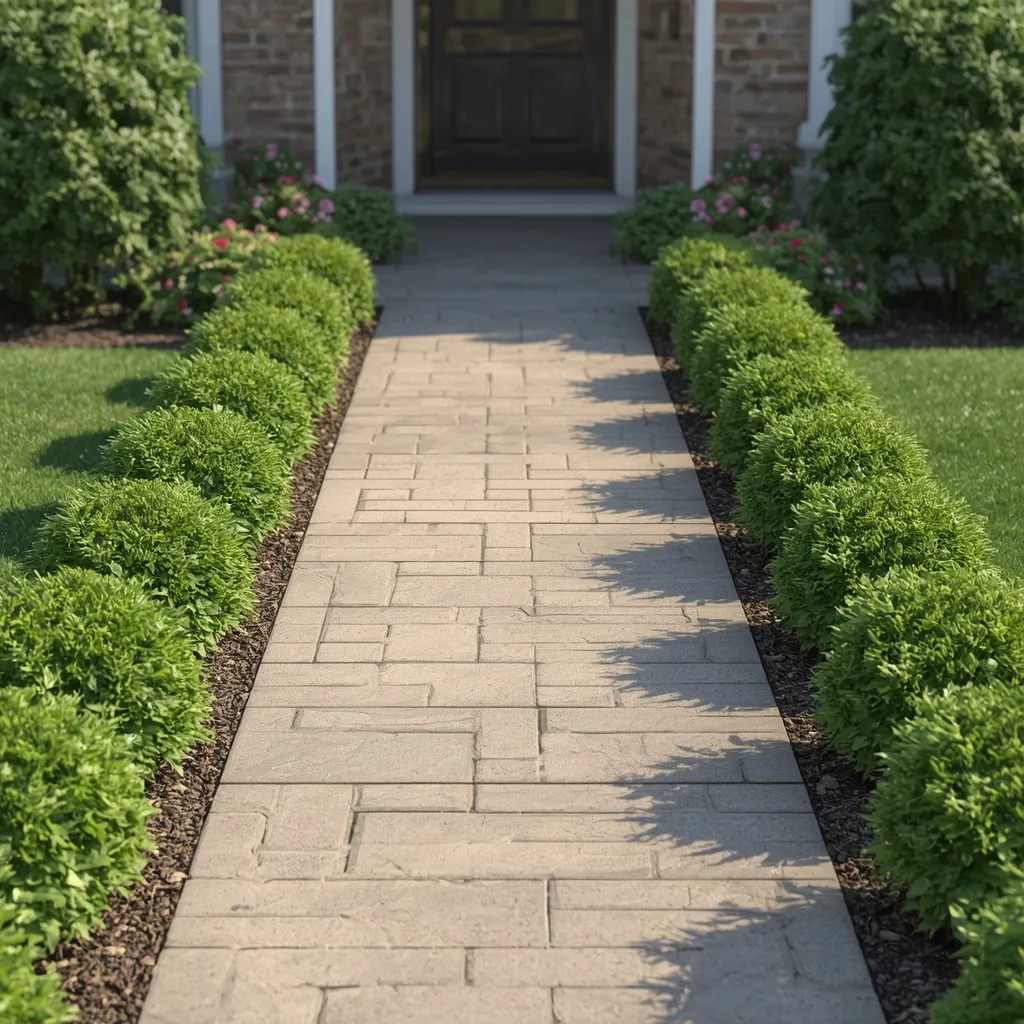
An entryway bed frames the front door: symmetrical or near-symmetrical planting either side of the path, drawing the eye to the entrance and making arrival feel considered. Formal and welcoming, entry planting is what visitors actually see. Balanced, neat, and inviting.
Use repetition rather than variety, planting the same combination on both sides so the eye reads balance immediately, entryways are the one place where matching planting genuinely works better than mixed. Keep everything beside the path below 60 cm (24 in) so nothing crowds people carrying bags, and choose plants that look presentable year-round, since an entry bed is on display constantly. Add fragrance near the door, where it’s noticed daily. This suits front doors, formal houses, and curb appeal projects.
- Why it works: Repeating the same planting both sides reads as balance instantly, where mixed planting reads as busy.
- Best for: Front doors; formal houses; curb appeal.
- Key elements: mirrored planting both sides, under 60 cm beside the path, year-round presentable plants, fragrance near the door.
6. Narrow Side-of-House Strip
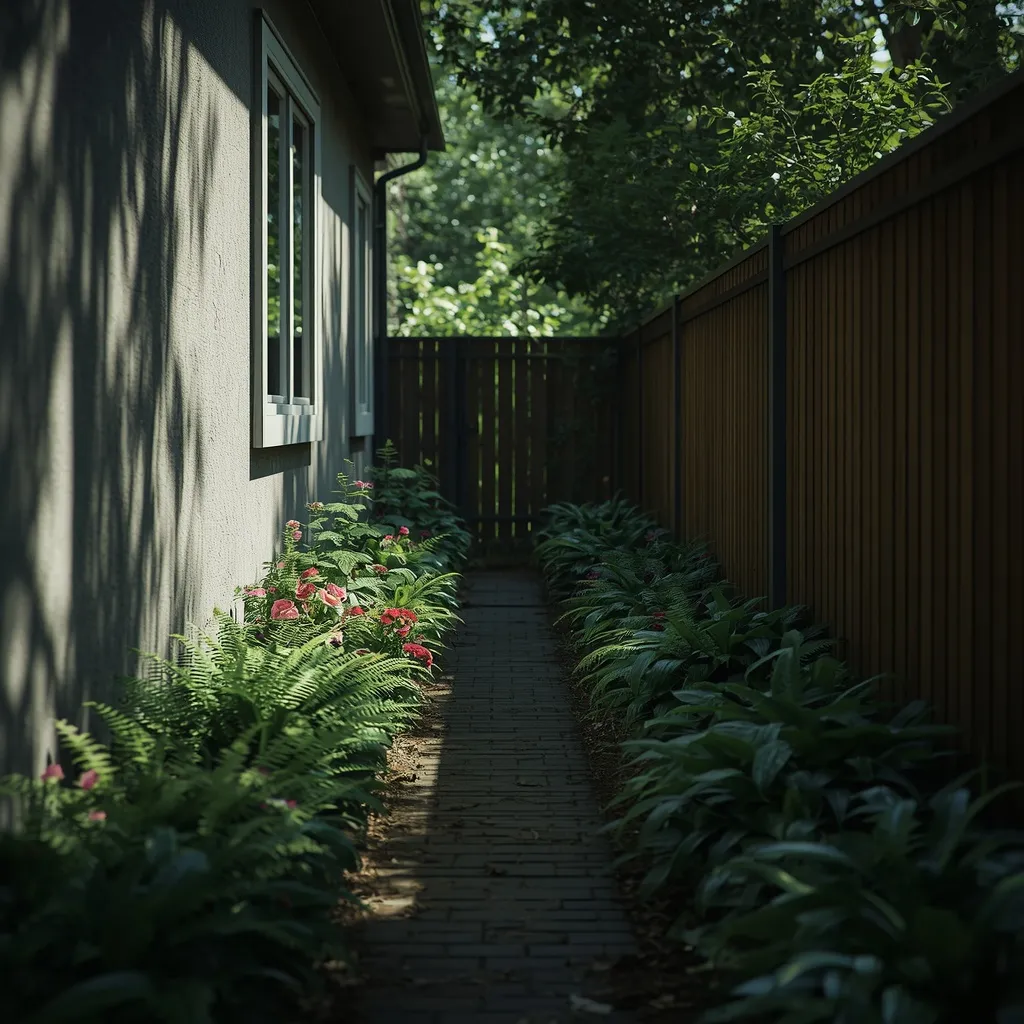
A side-of-house bed makes something of the least-loved strip on the property: a narrow run between wall and fence, usually shaded, often just gravel and bins. Practical and reclaiming, side beds turn dead ground into a green corridor. Slim, shady, and tidy.
Accept the constraint rather than fighting it. Side passages are typically shaded and dry from the wall above, so choose genuinely shade-tolerant, compact plants, ferns, hardy geraniums, and Japanese anemone all cope, while sun-lovers will simply sulk. Keep a clear walking route of at least 60 cm (24 in) and plant only along one side, since blocking a side passage causes real problems on bin day. Use containers where the ground is paved. This suits terraced and semi-detached houses and awkward passages.
- Why it works: Planting one side only keeps a side passage usable, which two-sided planting quickly destroys.
- Best for: Terraced and semi-detached houses; shaded passages; renters using containers.
- Key elements: shade-tolerant ferns and geraniums, one side planted only, 60 cm clear walking route, containers on paving.
7. Full-Sun Perennial Border
A full-sun perennial border peaks in high summer: echinacea, salvia, achillea, and rudbeckia in bold drifts, humming with bees from morning to evening. Colorful and self-renewing, perennials return larger every year. Bright, buzzing, and long-lived.
Full sun means six or more hours of direct sunlight, so map the site across a day before choosing anything, most bed failures start with a plant in the wrong light rather than poor soil. Space perennials by their mature width, not their pot size, then fill the inevitable year-one gaps with annuals rather than overplanting. Perennials typically need dividing every three to four years to stay vigorous. This suits sunny gardens, low ongoing cost, and pollinator planting.
- Why it works: Filling year-one gaps with annuals prevents the overplanting that turns a bed into a thicket by year three.
- Best for: Sunny gardens; long-term value; pollinator planting.
- Key elements: 6+ hours sun confirmed, Echinacea and Salvia and Achillea, mature-width spacing, annuals as gap fillers, division every 3–4 years.

8. Shade Woodland Bed
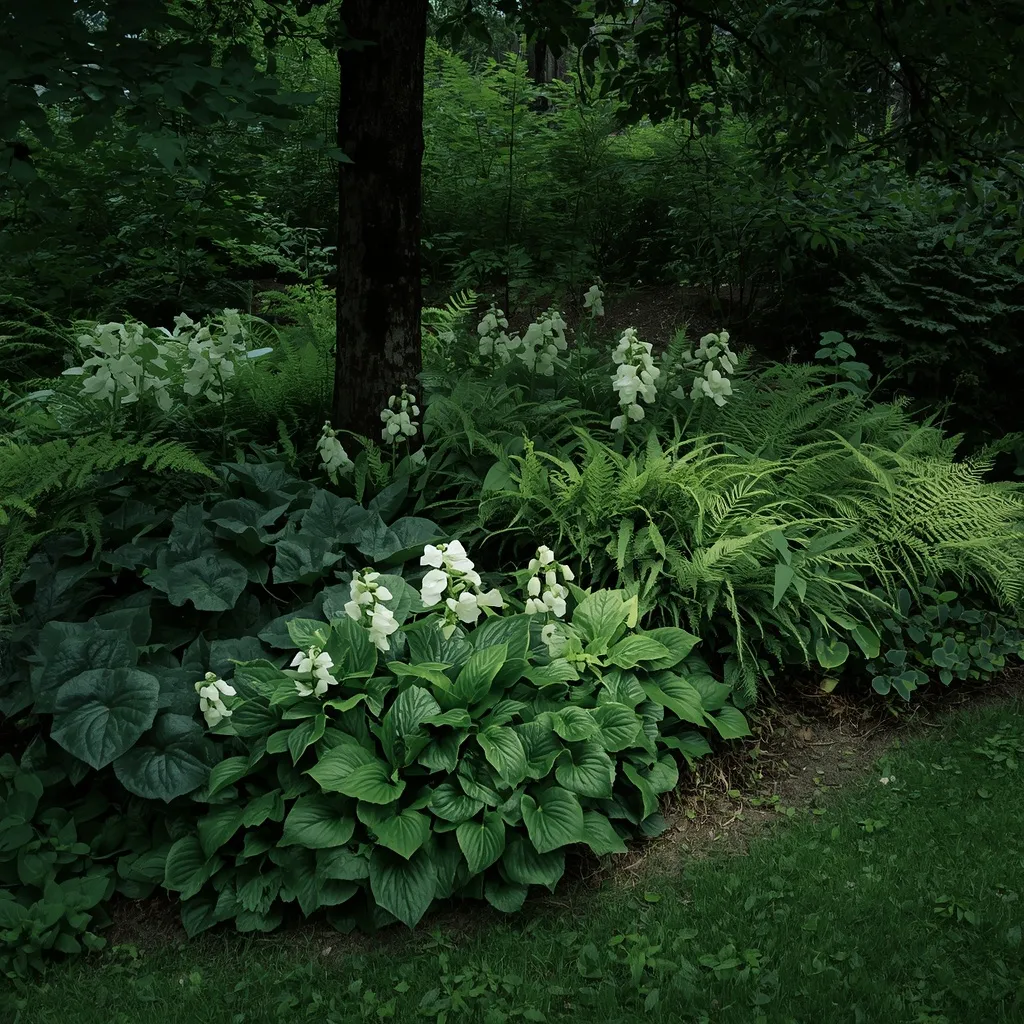
A shade bed trades flowers for foliage: hostas, ferns, heuchera, and epimedium layered in contrasting textures beneath trees, cool and green even in high summer. Restful and lush, shade beds are calmer than sunny ones and often easier. Textural, green, and serene.
Build the planting from leaf texture rather than color, broad hosta against fine fern against ruffled heuchera, and use white or pale flowers, which stay visible in low light where deep colors disappear. Dry shade beneath established trees is the hardest condition in any garden, since tree roots take both water and nutrients, so improve the soil with compost and water through the first two seasons. This suits north-facing gardens, beds under trees, and low-color schemes.
- Why it works: Texture contrast carries a shade bed where flower color simply disappears into low light.
- Best for: North-facing gardens; beds beneath trees; calm green schemes.
- Key elements: hosta and fern and heuchera texture layers, pale flowers, compost for dry shade, first two seasons watered.
9. Backyard Mixed Border
A backyard border does everything at once: shrubs for structure, perennials for color, bulbs for spring, and annuals filling gaps, all in one deep bed along the garden’s edge. Versatile and practical, the mixed border is the workhorse of home gardens. Layered, seasonal, and generous.
Start with shrubs as the permanent skeleton, spacing them at mature width and accepting the bed will look sparse initially, then weave perennials between them and use annuals to fill until the shrubs mature. Roughly one third shrubs to two thirds softer planting keeps a mixed border from looking either bare or shapeless. Backyard beds are seen mostly from the house, so check the view from your main window before finalizing heights. This suits family gardens, all-season interest, and moderate maintenance.
- Why it works: A one-third shrub skeleton gives permanent structure that all-perennial beds lack in winter.
- Best for: Family gardens; all-season interest; general backyard borders.
- Key elements: shrubs first at mature spacing, roughly one third shrubs, annuals as fillers, view checked from the house.
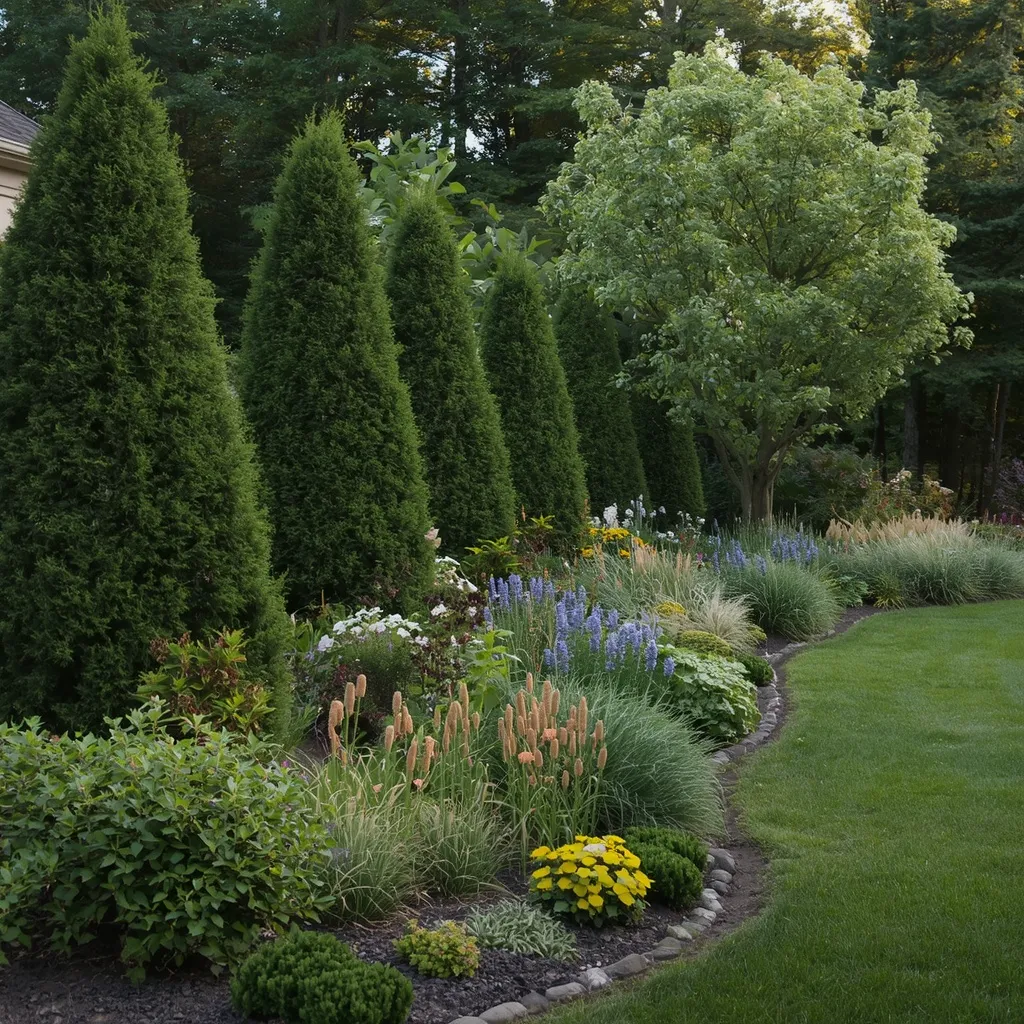
10. Ornamental Grass Bed
A grass bed moves: miscanthus, calamagrostis, and stipa catching every breeze, backlit by low sun, with a few strong perennials threaded through for contrast. Contemporary and dynamic, grasses give a bed motion and sound. Airy, golden, and modern.
Site grasses where low morning or evening sun will backlight them, which is when they look transformative rather than merely tidy, a grass bed in flat midday light is the least impressive version of itself. Combine with sturdy upright perennials like echinacea or sedum so there’s contrast in form. Leave grasses standing over winter for structure and frost interest, cutting back in late winter before new growth starts. Check whether any species is invasive in your region before planting. This suits modern gardens, low maintenance, and winter interest.
- Why it works: Backlighting from low sun is what makes grasses glow; flat overhead light wastes them entirely.
- Best for: Modern gardens; low-maintenance planting; winter structure.
- Key elements: sited for low backlighting, Miscanthus and Calamagrostis, upright perennial contrast, cut back in late winter, invasiveness checked.
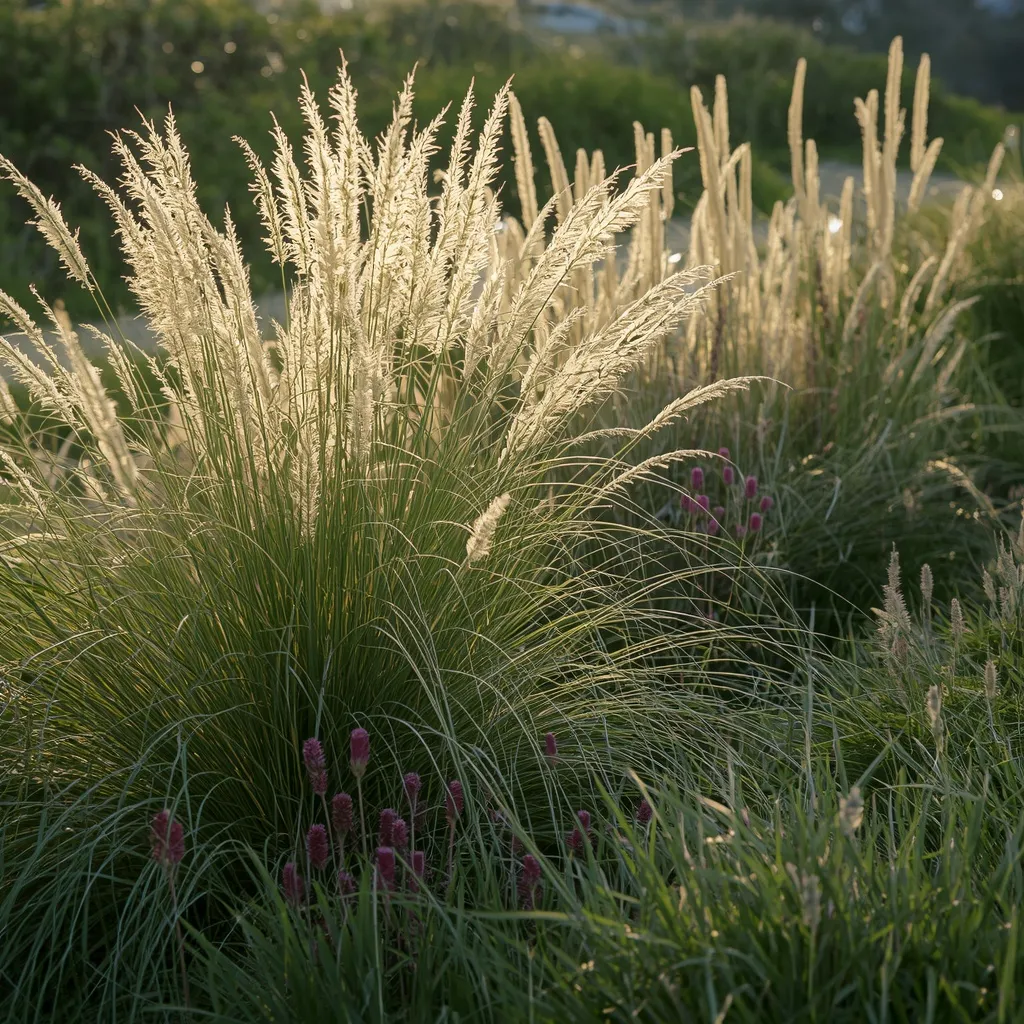
11. Rock and Gravel Bed
A rock bed is sharp-drained and sun-baked: boulders and gravel with alpines, sedums, and thyme tucked between, thriving where richer beds struggle. Rugged and low-input, rock gardens suit the driest spots. Stony, textural, and tough.
Bury each rock by at least a third of its depth so it looks geologically settled rather than placed on the surface, that single detail separates a designed rock bed from a pile of delivered stone. Drainage is everything, since alpines and sedums die from winter wet far more often than from cold, so improve heavy soil with grit before planting. Spread gravel 5 cm (2 in) deep around plants. Rocks are heavy: lift with your legs and get help with larger stones. This suits dry sunny sites, slopes, and low-water gardens.
- Why it works: Alpines and sedums are killed by winter wet rather than cold, so drainage matters more than shelter.
- Best for: Dry sunny sites; slopes; low-water gardens.
- Key elements: rocks buried a third deep, grit-improved drainage, sedums and thyme and alpines, 5 cm gravel, safe lifting.
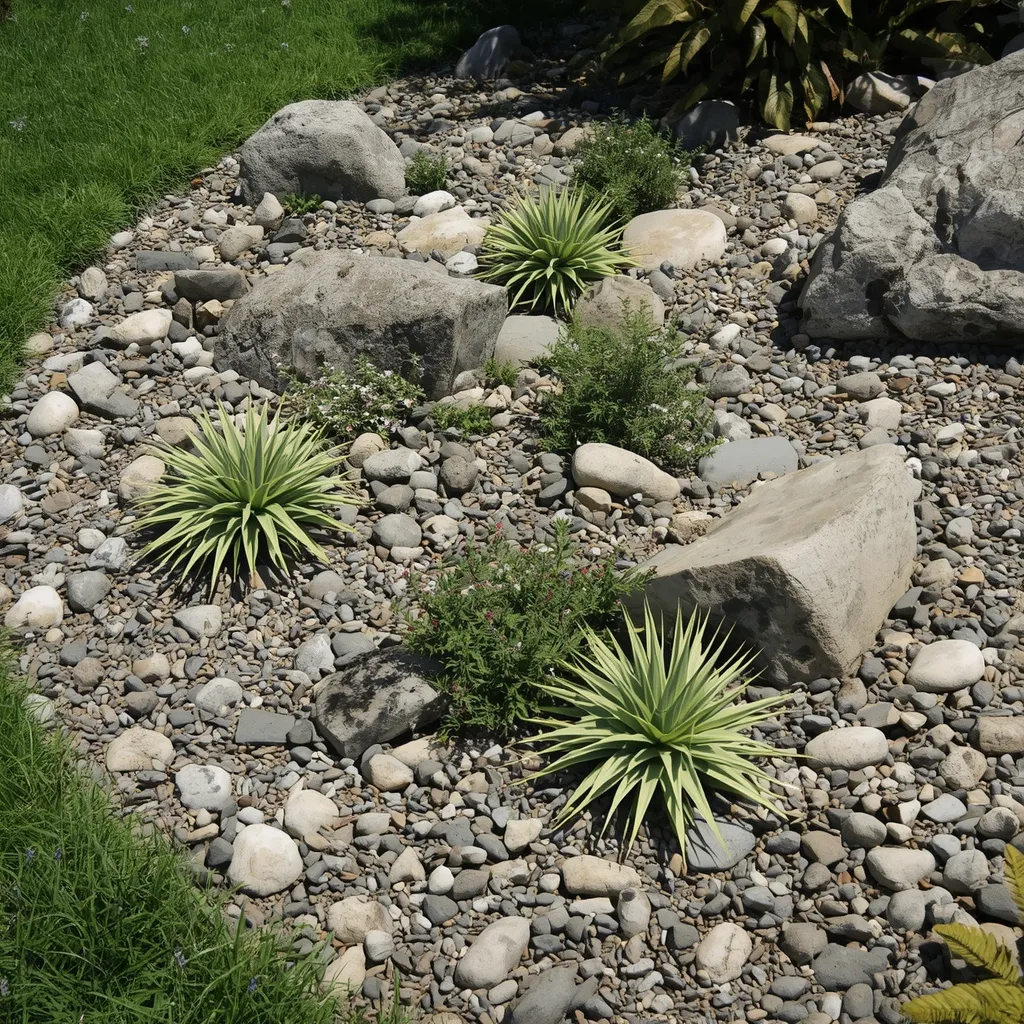
12. Raised Timber Bed
A raised bed lifts the planting into a defined frame: timber sides 30–45 cm high, filled with good soil, planting spilling over the edges. Neat and controlled, raised beds solve poor soil outright. Contained, tidy, and accessible.
Build to 30–45 cm (12–18 in) high, which improves drainage and reduces bending without needing engineered retaining, and use cedar or timber rated for ground contact. Keep the bed within about 75 cm (30 in) of reach from any accessible side, so you never stand on the soil and compact it. Leave the base open to the ground below so water drains and roots can travel. Raised beds dry faster than open ground and need more frequent watering in summer. This suits poor or compacted soil, reduced-mobility gardening, and defined layouts.
- Why it works: Keeping every part within 75 cm of reach means the soil never gets compacted underfoot.
- Best for: Poor or compacted soil; reduced bending; crisp defined layouts.
- Key elements: 30–45 cm height, cedar or ground-contact timber, 75 cm reach limit, open base, watered more often.
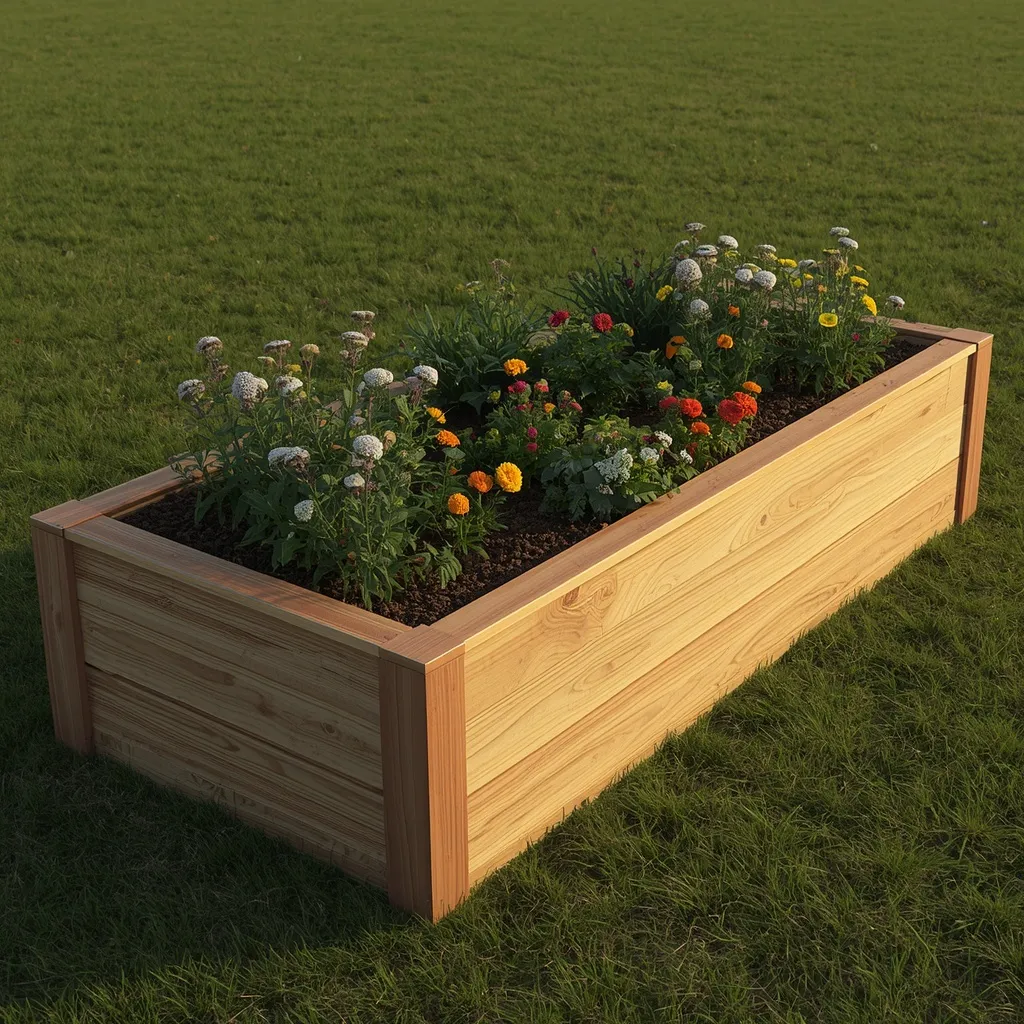
13. Cottage Garden Bed
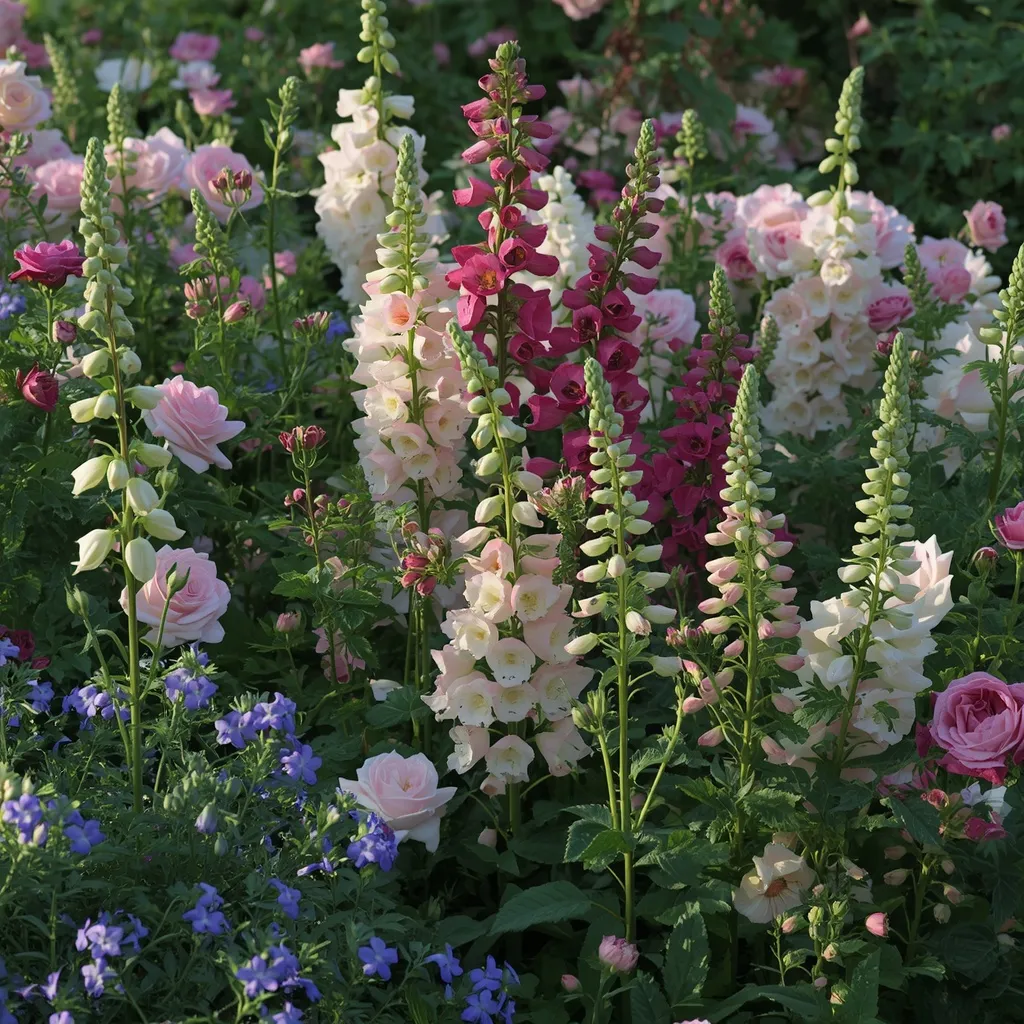
A cottage bed is packed and romantic: roses, foxgloves, delphiniums, hardy geraniums, and catmint crowded together with barely any soil showing, colors mingling freely. Abundant and old-fashioned, cottage planting forgives imperfection. Dense, soft, and charming.
Plant more densely than the labels suggest and let plants lean into one another, since the fullness is the whole point of the style and tidy spacing works against it. Long-flowering workhorses like Nepeta ‘Six Hills Giant’ and Geranium ‘Rozanne’ carry months of color and re-bloom after a mid-season cut back. Note that foxglove is toxic if eaten, so site it away from paths where children or pets pass. This suits informal gardens, hands-on gardeners, and forgiving planting.
- Why it works: Denser-than-labelled planting creates the interlocking fullness the style depends on.
- Best for: Informal gardens; hands-on gardeners; romantic planting.
- Key elements: dense planting, Nepeta and Geranium as workhorses, mid-season cutback, foxglove sited away from paths.
14. Modern Block Planting
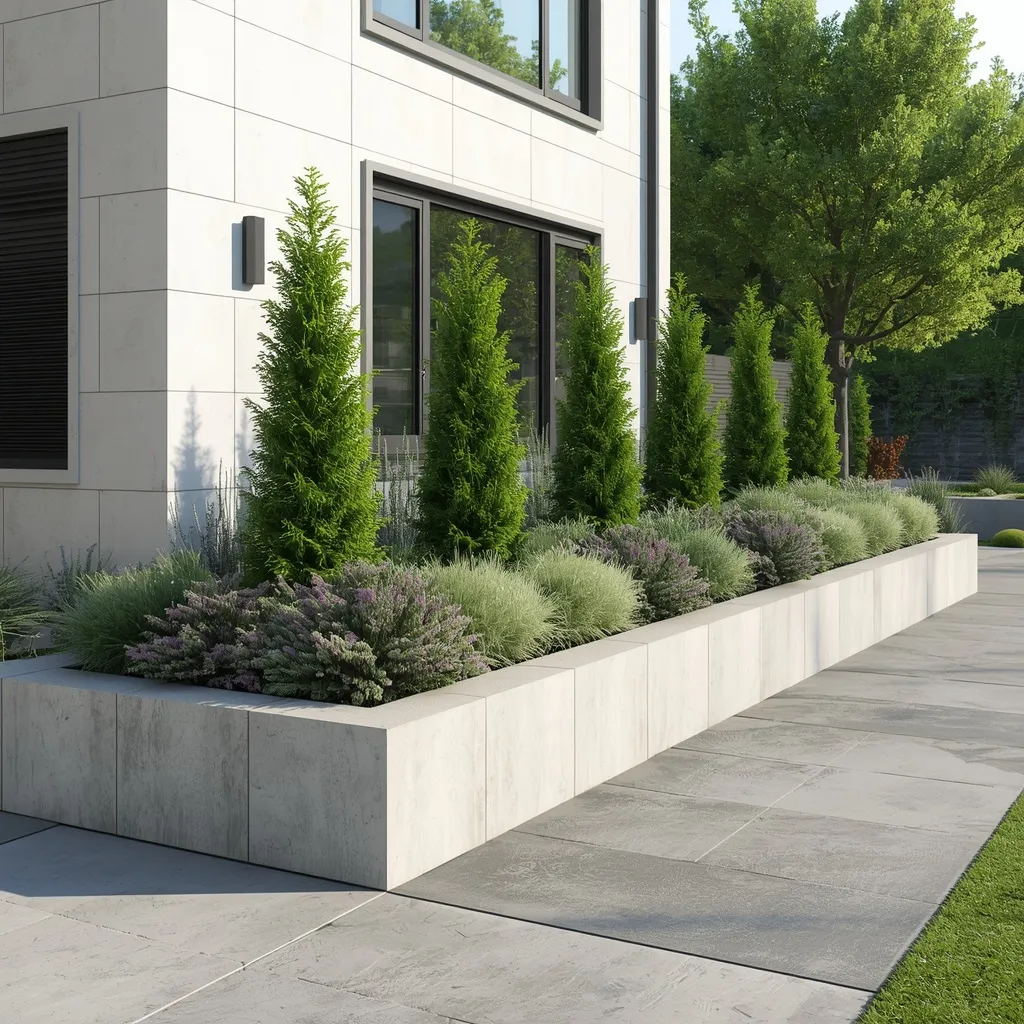
Modern block planting uses few species in large masses: broad sweeps of a single grass or perennial repeated in blocks, restrained and architectural. Bold and disciplined, block planting suits contemporary houses. Graphic, calm, and confident.
Limit yourself to three to five species total and plant each in large blocks rather than mixing, restraint is the entire effect, and adding a sixth or seventh species collapses it into an ordinary mixed border. Repeat blocks rhythmically along the bed so the eye follows a pattern. This style depends on every plant performing, since there’s nowhere to hide a failure, so choose reliable species suited to your conditions. This suits modern houses, large beds, and low-decision maintenance.
- Why it works: Restricting to three to five species is what creates the graphic effect; more species reads as ordinary.
- Best for: Contemporary houses; large beds; disciplined low-decision planting.
- Key elements: 3–5 species maximum, large single-species blocks, rhythmic repetition, reliable performers only.
15. Mediterranean Gravel Bed
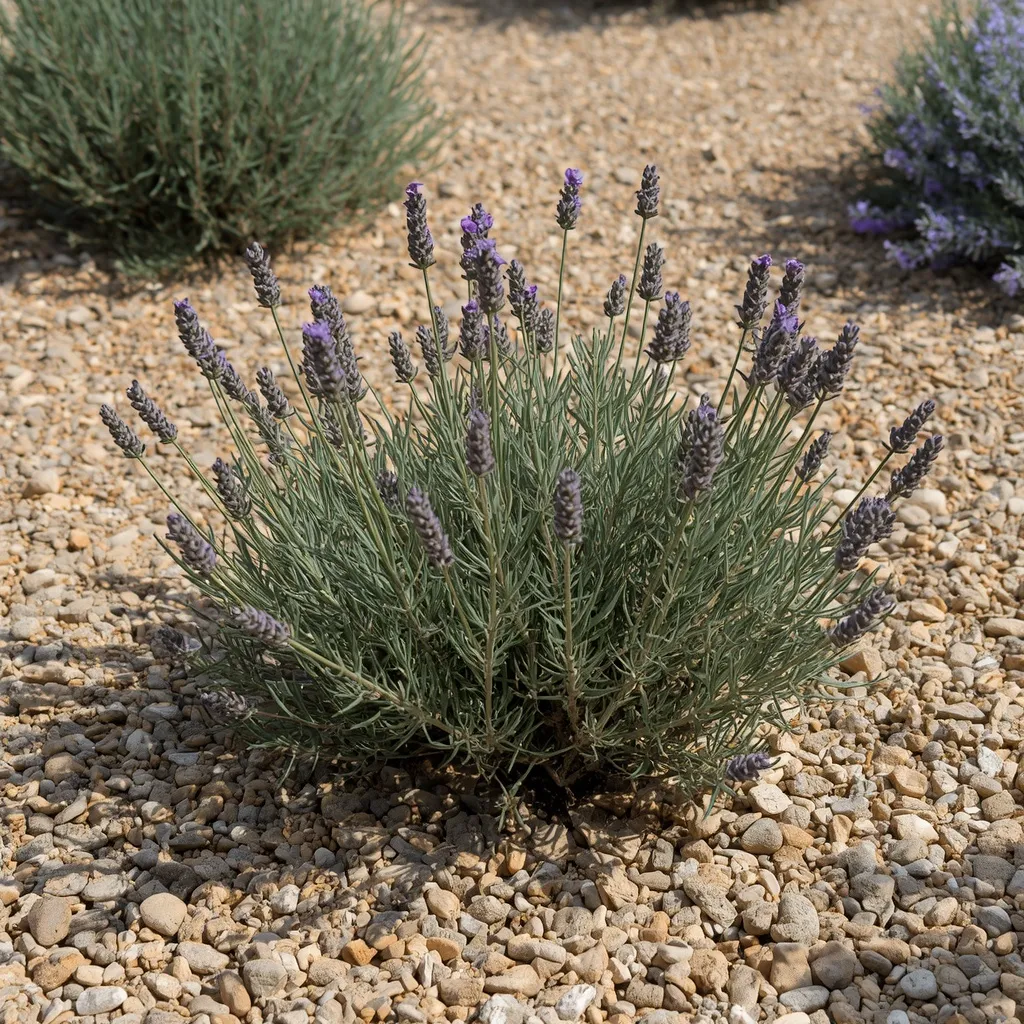
A Mediterranean bed bakes happily: lavender, santolina, rosemary, and phlomis in silver and grey-green, growing through gravel with no irrigation once established. Sun-loving and frugal, this bed thrives on neglect. Silvery, aromatic, and drought-proof.
Spread gravel 5–8 cm (2–3 in) deep over free-draining soil and plant directly through it, skipping landscape fabric in planted areas since it blocks self-seeding and complicates future planting. Mediterranean species genuinely prefer lean soil, so resist enriching it, over-fed lavender grows soft and short-lived. Water through the first season only, then let roots go deep. This suits hot dry sites, water restrictions, and low-maintenance gardens.
- Why it works: Lean unimproved soil keeps Mediterranean plants compact and long-lived, where rich soil shortens them.
- Best for: Hot dry sites; water restrictions; very low maintenance.
- Key elements: 5–8 cm gravel, lavender and santolina and rosemary, no soil enrichment, no fabric, first-season watering only.
16. Pollinator Meadow Bed
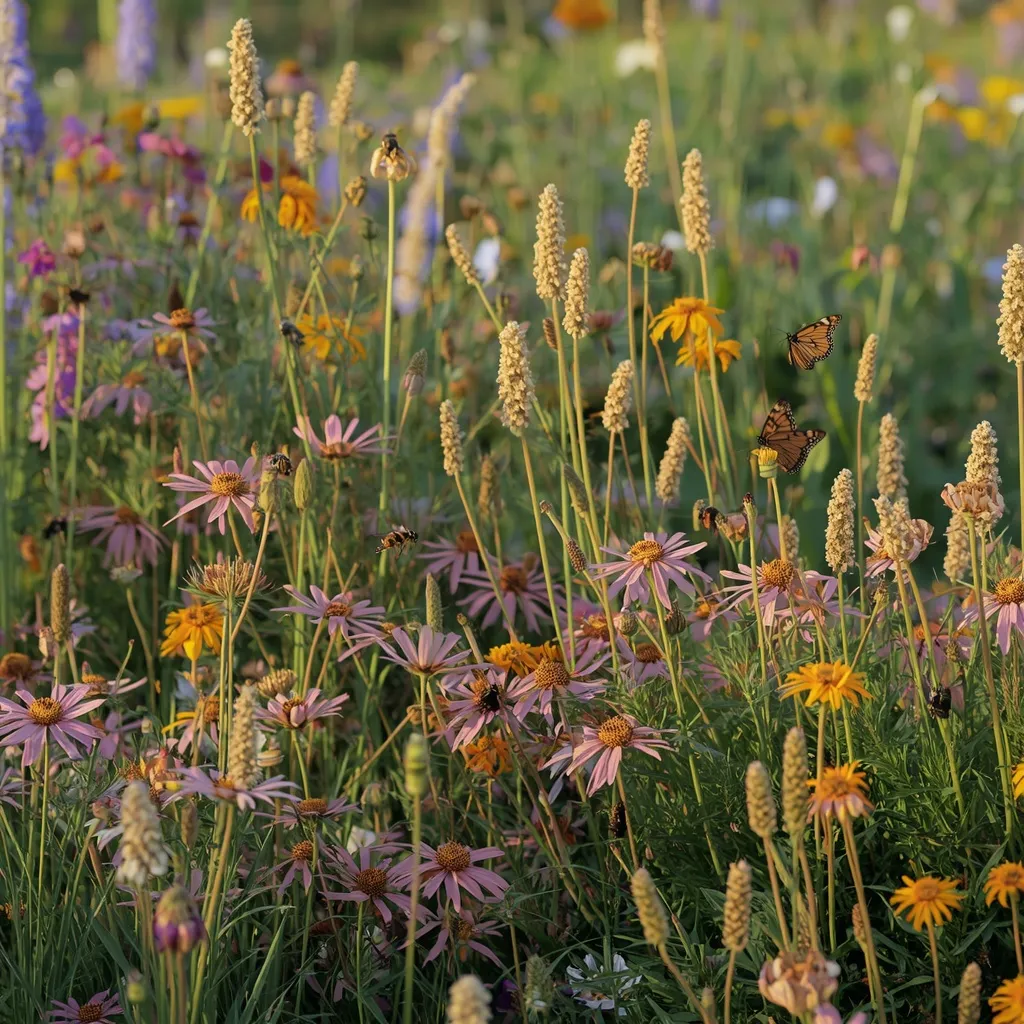
A pollinator bed hums from spring to autumn: native perennials in generous drifts with overlapping bloom times, seedheads left standing, alive with bees and butterflies. Purposeful and relaxed, this bed works ecologically as well as visually. Natural, busy, and rewarding.
Choose species native to your region, since local extension services and botanical gardens publish region-specific lists far more reliable than generic recommendations, and plant in drifts of at least three to five so pollinators forage efficiently. Aim for overlapping bloom across the whole season rather than one spectacular peak. Leave stems standing over winter to shelter overwintering insects, cutting back in late winter rather than autumn, and avoid pesticides entirely. This suits wildlife gardeners and naturalistic planting.
- Why it works: Leaving stems standing over winter shelters overwintering insects that autumn tidying destroys.
- Best for: Wildlife gardens; naturalistic planting; ecological gardening.
- Key elements: region-specific natives, drifts of 3–5, overlapping bloom season, late-winter cutback, no pesticides.
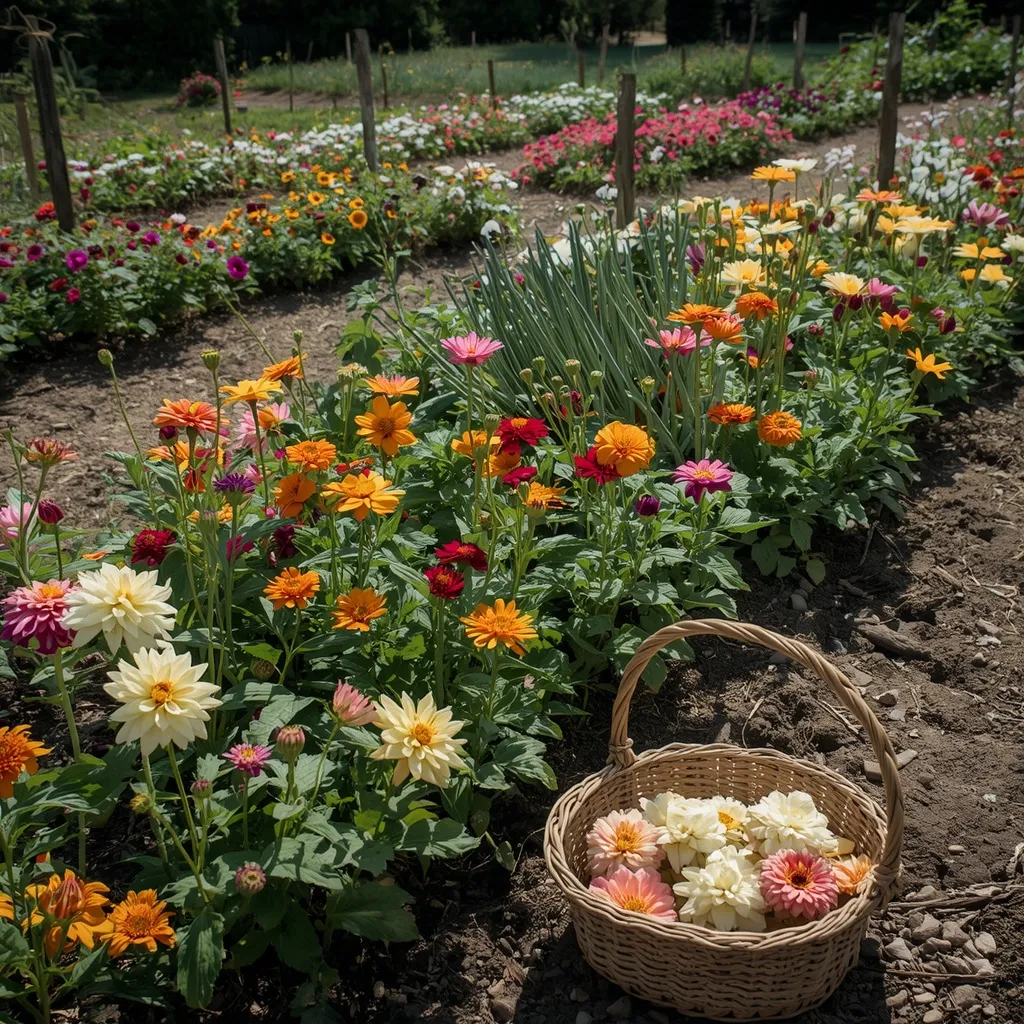
17. Dedicated Cutting Bed
A cutting bed is grown to be harvested: rows or blocks of dahlias, cosmos, sweet peas, and zinnias planted for picking rather than display, tucked somewhere less prominent. Productive and generous, a cutting bed keeps the house in flowers all summer. Practical, colorful, and abundant.
Plant in rows or blocks rather than artful drifts, since a cutting bed is a working space and rows make harvesting and succession sowing far easier. Choose cut-and-come-again varieties, cosmos, zinnia, and sweet pea all produce more the more you pick, while cutting actively prolongs flowering. Sow in succession every two to three weeks for continuous supply. Site it out of the main view, since a harvested bed looks patchy by design. This suits keen gardeners, flower arrangers, and anyone with spare ground.
- Why it works: Cut-and-come-again varieties produce more the more you harvest, so picking extends the season.
- Best for: Flower arrangers; keen gardeners; spare or hidden ground.
- Key elements: rows not drifts, cosmos and zinnia and sweet pea, succession sowing every 2–3 weeks, sited out of main view.
18. Four-Season Structure Bed
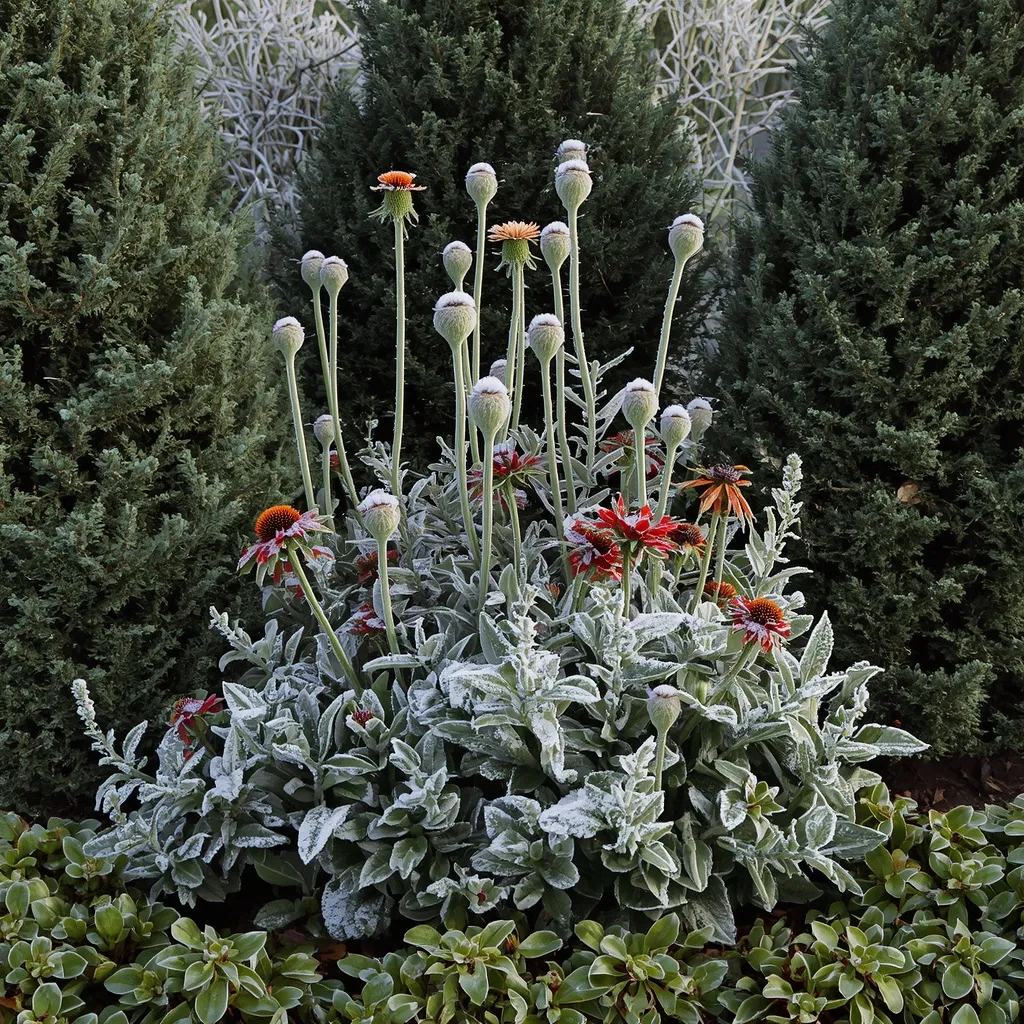
A four-season bed never looks empty: evergreen structure holding the shape year-round, bulbs for spring, perennials for summer, and seedheads and berries carrying winter. Considered and reliable, this bed earns its place in every month. Structured, layered, and enduring.
Start with roughly one third evergreen structure, which is what stops a bed reading as bare soil from November to March, then layer bulbs beneath perennials so each takes over as the last fades. Plant spring bulbs in autumn, setting them at roughly three times their own depth. Choose perennials with good seedheads, echinacea, sedum, and rudbeckia all stand well through frost. This suits beds visible from the house in winter and gardeners who dislike a dead season.
- Why it works: A one-third evergreen framework is what keeps a bed from reading as bare soil all winter.
- Best for: Beds visible from windows; year-round interest; winter gardens.
- Key elements: one third evergreen, bulbs layered beneath perennials, bulbs at 3x their depth, strong seedheads retained.
19. The Bed Planning Method
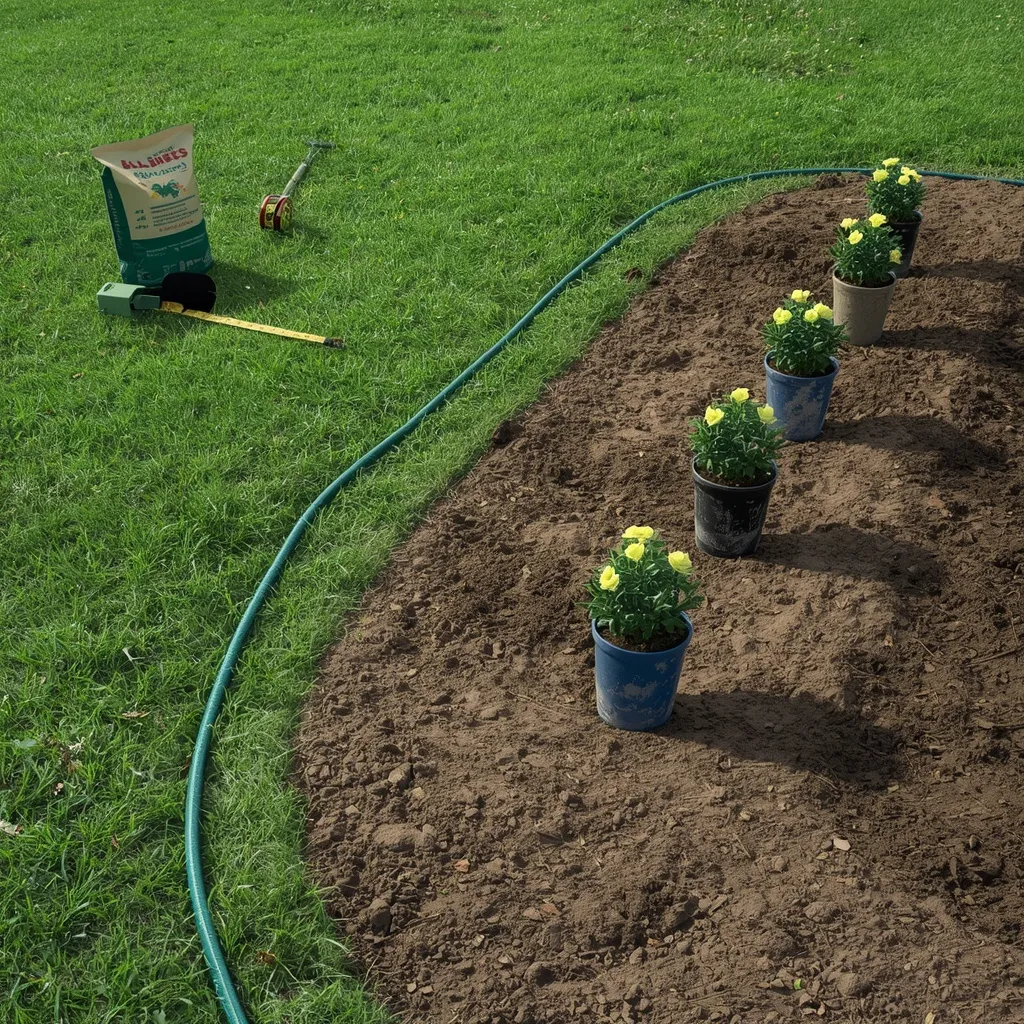
Planning a bed properly takes an afternoon and prevents years of disappointment: sun mapped, shape marked and viewed, soil improved, plants trialled in their pots, and spacing set by mature size. Methodical and unglamorous, this sequence underpins every design above. Ordered, careful, and worth it.
Work in order. Contact your utility locating service before digging, since service lines run near boundaries and house frontages. Map the sun across a full day and note where six or more hours of direct light falls. Mark the shape with a hose and check it from the house and an upstairs window. Confirm depth: aim for at least 1.2 m (4 ft) if you want three planting layers. Improve the soil with 5–10 cm (2–4 in) of compost. Set plants out in their pots, tallest to the back or center, spaced at mature width rather than pot size, and adjust before planting anything. Mulch 5–8 cm (2–3 in) deep, keeping mulch clear of stems. Against a house, confirm soil sits below the damp course. This suits every new bed.
- Why it works: Trialling plants in their pots lets you fix spacing and height order while everything is still movable.
- Best for: Every new flower bed; first-time gardeners; fixing a bed that never worked.
- Key elements: utilities located, sun mapped across a day, hose-marked shape checked from indoors, 1.2 m minimum depth, compost added, mature-width spacing, 5–8 cm mulch clear of stems.
How Deep Should a Flower Bed Be?
A flower bed should be at least 1.2–1.5 m (4–5 ft) deep from front to back to hold three layers of planting. Depth is what allows tall plants at the back, mid-height through the middle, and low growers at the front, which is the structure that makes a border look full. A bed 60 cm (2 ft) deep can only hold a single row of plants, which is why narrow strips look thin regardless of what goes into them. Against a two-story wall, allow at least 1.5 m so the bed stays proportionate to the building.
Practical, plant-led garden advice that works in real conditions is central to the Sunday Abode approach. If you plant a cutting bed, the harvest deserves a good vase, and our guide to creative ways to arrange cut stems covers what to do with it. For more planting inspiration, browse the rest of our flower garden ideas.
What Fits in a Bed of Each Depth?
Bed depth directly limits how much planting structure is possible. Use this before marking out, since widening a bed later means moving established plants.
| Bed depth | Planting layers | What it holds | Best used for |
| Under 60 cm (2 ft) | One | A single row of low plants | Path edging, tight side passages |
| 60–90 cm (2–3 ft) | Two | Low front, mid-height behind | Small gardens, narrow entry beds |
| 1.2–1.5 m (4–5 ft) | Three | Full tall, mid and low layering | Standard borders, most gardens |
| 1.5–2 m (5–6.5 ft) | Three plus shrubs | Shrub skeleton with perennials | Mixed borders, foundation beds |
| Over 2 m (6.5 ft) | Full depth | Small trees, layered drifts | Large gardens, island beds |
Safety notes: contact your national utility locating service before digging, 811 in the United States, with free equivalents in most countries, since service lines commonly run near boundaries and house frontages. Against any building, keep soil at least 15 cm (6 in) below siding, cladding, or the damp-proof course, and keep planting clear of air bricks, vents, and meter boxes; soil banked against a wall can bridge the damp barrier and cause moisture damage to the building. Wear gloves and sturdy boots when digging, and lift rocks, slabs, and bagged compost with your legs rather than your back, using a helper for heavy stones. Keep retaining and raised structures under about 60 cm (2 ft) unless engineered. Check plant toxicity before siting anything near paths, play areas, or pet runs, the ASPCA publishes a searchable list of plants toxic to cats and dogs, and common garden plants including foxglove are toxic if eaten. Confirm that ornamental grasses and vigorous spreaders are not classed as invasive in your region before planting. Keep mulch pulled back a few centimeters from plant stems and tree trunks, since mulch piled against stems traps moisture and causes rot.
Frequently Asked Questions
How do I design a flower bed for beginners?
Start with depth and shape rather than plants. Mark the outline with a garden hose, check it from the house and an upstairs window, and aim for at least 1.2 m (4 ft) of depth so three planting layers fit. Map where the sun falls across a full day, improve the soil with 5–10 cm (2–4 in) of compost, then set plants out in their pots before planting so you can adjust heights and spacing.
How deep should a flower bed be?
At least 1.2–1.5 m (4–5 ft) from front to back for a standard border, which is what allows tall, mid-height, and low planting layers. Anything under 60 cm (2 ft) holds only a single row and will look thin no matter what you plant. For a bed against a two-story wall, allow 1.5 m or more so the planting stays in proportion with the building.
How far apart should I space plants in a bed?
Space by each plant’s mature width, not by the size of the pot it arrived in. New beds inevitably look sparse in the first year, which tempts people into overplanting, and by year three the bed becomes a thicket that needs thinning. Fill first-year gaps with annuals instead, they’re cheap, they flower all season, and they disappear as the permanent planting fills out.
What can I plant in a shady flower bed?
Build shade beds from foliage texture rather than flower color. Combine broad hosta leaves with fine fern fronds and ruffled heuchera, then add white or pale flowers, which stay visible in low light where deep colors vanish. Dry shade beneath established trees is the hardest condition, since tree roots take both water and nutrients, so add compost and water through the first two seasons.
What should I know before planting a bed against my house?
Keep the soil level at least 15 cm (6 in) below siding, cladding, or the damp-proof course, since soil banked against a wall can bridge that barrier and let moisture into the building. Leave a 45–60 cm (18–24 in) access gap between planting and the wall for maintenance and airflow, and keep shrubs clear of air bricks, vents, and meter boxes.
How do I arrange plants so a bed doesn’t look spotty?
Plant in odd-numbered drifts of three, five, or seven rather than single specimens dotted about, and let the drifts overlap rather than sitting in neat rows. Repeating the same plant at intervals along a bed also ties the whole thing together. Single plants of many different varieties is the most common reason a well-stocked bed still looks unresolved.
What’s the lowest-maintenance flower bed design?
A Mediterranean gravel bed or an ornamental grass bed needs the least ongoing work. Lavender, santolina, and rosemary in gravel need watering only through their first season and actively prefer poor soil. Grasses need cutting back just once, in late winter. Both give strong structure with minimal intervention, unlike cottage or cutting beds, which reward regular hands-on attention.
Conclusion
The best flower bed ideas all start with the same unglamorous decisions: how deep the bed is, what shape it takes, and how much sun it actually gets. Get the depth right and three layers of planting will fill it properly; plant in odd-numbered drifts spaced at mature width and the bed will read as designed rather than dotted. Whether you choose a full-sun perennial border, a shady woodland bed, or a working cutting patch, those fundamentals carry the design. For more planting inspiration, explore the flower garden ideas collection on Sunday Abode and mark out a shape this weekend.