


Introduction
A white cotton curtain lifting in an open window says summer better than any amount of décor. Farmhouse summer bedroom ideas work because the style is already built from the right materials, natural wood, worn metal, and honest cotton and linen that breathe when the nights turn warm. These 20 schemes cover the whole room, from palette and bedding to the seasonal swap that makes it feel different in July than it did in January.
Below are complete farmhouse bedrooms in white, sage green, soft blue, and black, sized for master suites, small rooms, attics, guest rooms, and kids’ bedrooms, and spanning rustic reclaimed timber through crisp modern farmhouse. Each explains the materials, the layout logic, and who it suits, with practical notes on which fabrics actually sleep cool. Consider it your guide to a bedroom in your abode that feels like an open window and clean sheets.
What makes a farmhouse bedroom a summer bedroom: The style stays the same; the layers change. Summer farmhouse styling is mostly subtraction, take away the heavy quilt, the velvet cushions, the wool throw, and the dark seasonal textiles, then let a lighter palette and breathable fabrics do the work. Swap to linen or cotton percale bedding, leave surfaces less cluttered, and add one jug of garden flowers. The furniture and wall color can stay exactly as they are.
20 Farmhouse Summer Bedroom Ideas
1. Classic White Farmhouse Retreat
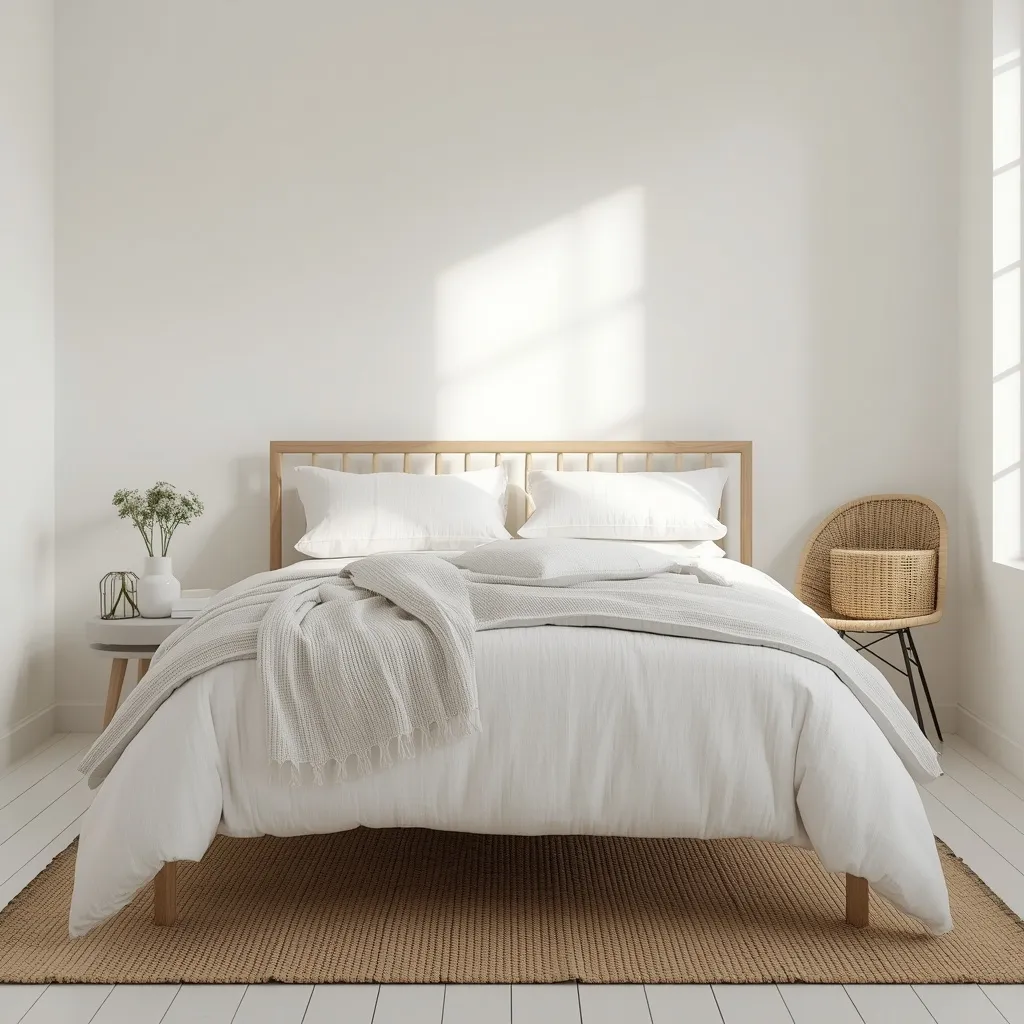
A white farmhouse bedroom in summer is pure calm: whitewashed walls, a simple wooden bed frame, and layered white cotton bedding with sunlight falling across it. Bright and restful, white is farmhouse at its most timeless. Clean, airy, and endlessly restful.
Choose a soft or warm white rather than a stark brilliant white, which reads cold against natural wood, and build interest through texture instead of color, waffle cotton, chunky knit, a jute rug, a rush-seated chair. Keep the palette to white, wood, and one soft neutral so the room stays serene. Wash-and-wear white cotton is genuinely practical here, since it can be washed hot and bleached if needed. This suits any room size, renters, and anyone wanting a calm summer bedroom that works year-round.
- Why it works: Texture rather than color keeps an all-white room from feeling flat or clinical.
- Best for: Any room size; renters; year-round calm.
- Key elements: warm white walls, wooden bed, layered white cotton, jute and knit texture.
2. Rustic Reclaimed Wood Bedroom
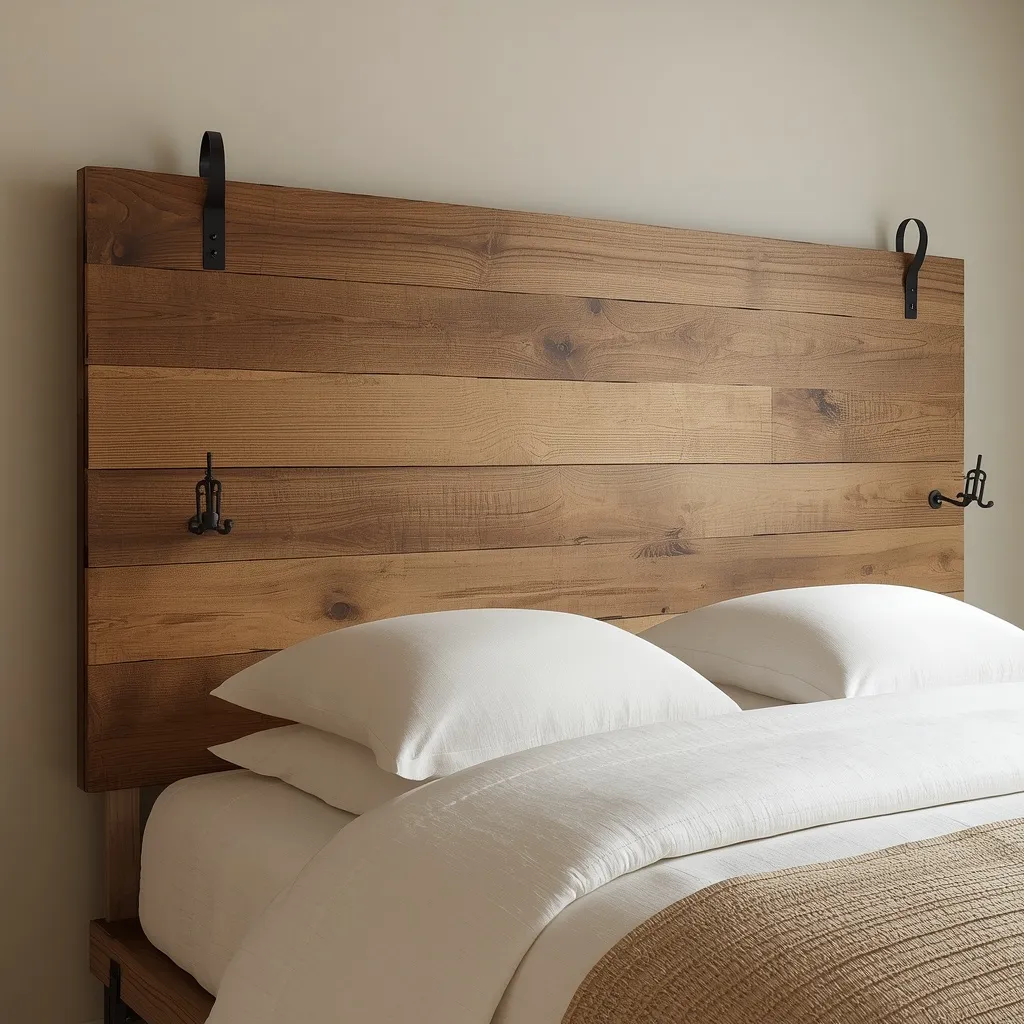
A rustic farmhouse bedroom leads with timber: a reclaimed wood bed or plank accent wall, visible grain and saw marks, paired with simple cream linens and iron hardware. Warm and characterful, old wood gives a room instant history. Weathered, honest, and grounded.
Use one substantial reclaimed timber element, a headboard, a beam, or a plank wall, rather than filling the room with wood, which quickly reads heavy and dark. Balance it with pale walls and light bedding so the timber stands out. Reclaimed timber should be checked for old nails and cleaned before use indoors, and if it came from a building painted before 1978 it may carry lead paint, which releases hazardous dust when sanded, check before working on it. This suits period homes, barn conversions, and anyone wanting warmth over polish.
- Why it works: One substantial timber element gives character without darkening the whole room.
- Best for: Period homes and barn conversions; warmth seekers.
- Key elements: reclaimed wood headboard or plank wall, pale walls, cream linen, iron hardware.
3. Modern Farmhouse Black and White
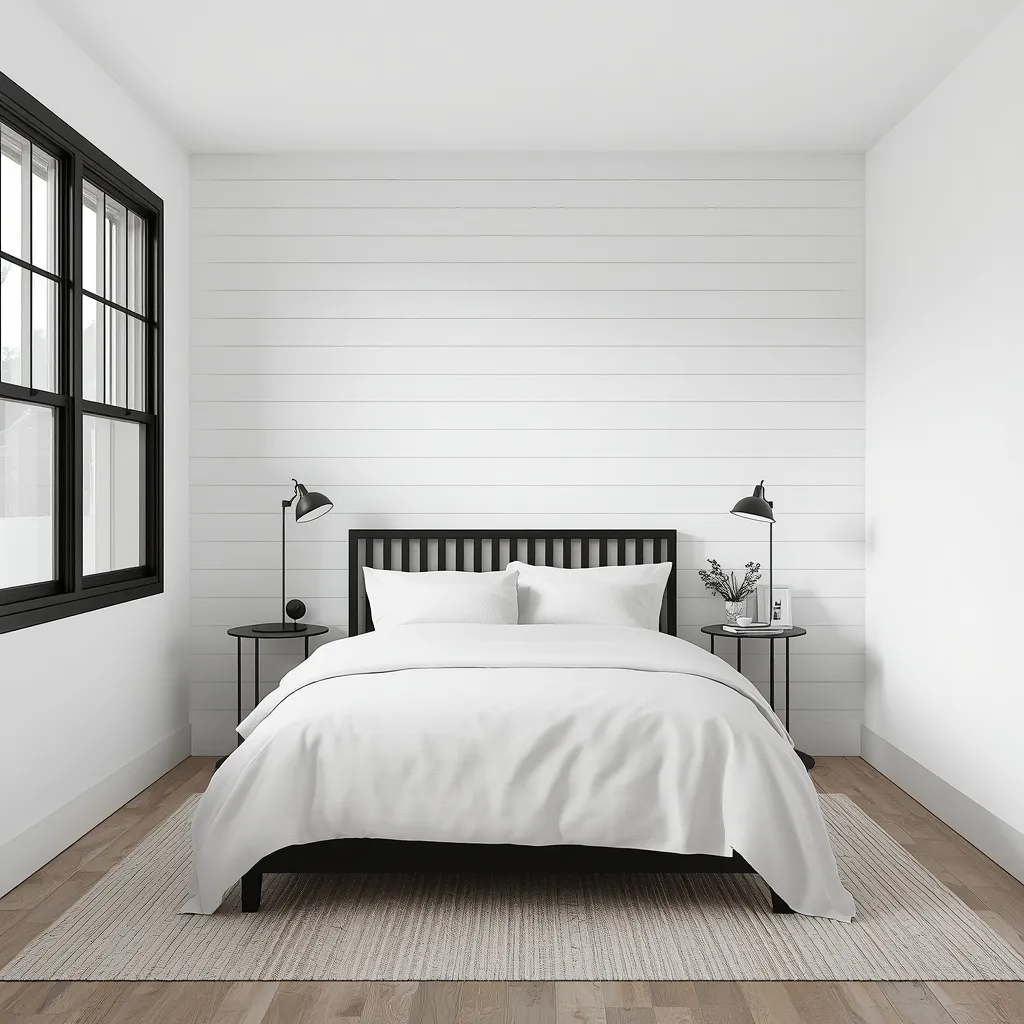
The modern farmhouse bedroom is crisp and graphic: white shiplap walls, black window frames and hardware, and simple black-and-white bedding with no fuss anywhere. Sharp and current, this is the version that made farmhouse mainstream. Clean-lined, contrasting, and photogenic.
Keep walls and bedding white, then repeat black in three or four places, a bed frame, window frames, a light fixture, drawer pulls, so the contrast reads as a deliberate scheme rather than scattered dark objects. This look, popularized by renovation shows and the wider modern farmhouse movement, relies on restraint: one pattern maximum, and plenty of empty wall. Matte black hardware shows dust more than brushed finishes. This suits new builds, modern homes, and anyone who finds traditional farmhouse too cluttered.
- Why it works: Black repeated three or four times against white reads as a scheme, not scattered accents.
- Best for: New builds and modern homes; minimalists.
- Key elements: white shiplap, black frames and hardware repeated, one pattern maximum, empty wall space.
4. Sage Green Farmhouse Bedroom
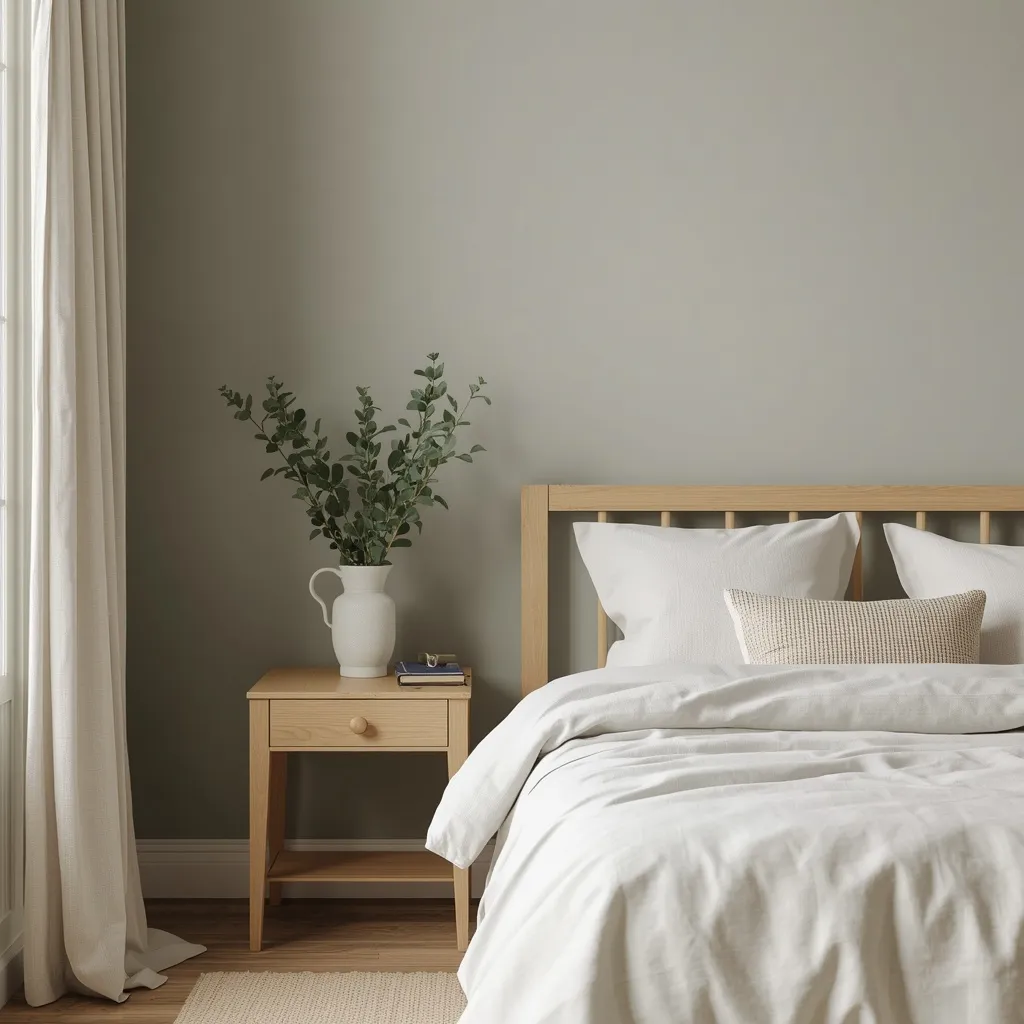
A sage green farmhouse bedroom feels like a summer morning in the garden: soft grey-green walls, natural oak, cream bedding, and a jug of eucalyptus on the nightstand. Gentle and restorative, sage sits between color and neutral. Muted, calm, and quietly current.
Choose a muted grey-leaning sage rather than a bright or yellow-toned green, pairing it with cream and natural oak rather than stark white, which can wash sage out. Sage’s low saturation means it shifts gently through the day rather than dramatically, making it forgiving in rooms with changeable light. Test a large sample on the wall and check it morning and evening. This suits almost any bedroom, nervous color-users, and anyone wanting a restful summer palette that isn’t beige.
- Why it works: Low saturation lets sage read almost neutral while still bringing color.
- Best for: Most bedrooms; cautious color users.
- Key elements: muted grey-sage walls, natural oak, cream bedding, garden foliage.
5. Soft Blue Summer Farmhouse
A soft blue farmhouse bedroom is cool and breezy: pale chambray-blue walls, white bedding, and unpainted wood, with light bouncing off every surface. Fresh and airy, blue is the classic summer bedroom color. Cool, calm, and open.
Use a pale, slightly grey-leaning blue rather than a bright or baby blue, keeping bedding and trim white so the room stays crisp. Blue reads coolest in rooms with good natural light; in a north-facing or dim bedroom, cool blues can turn grey and flat, so a warmer blue-green suits those better. Pair with natural wood to stop the scheme feeling cold. This suits bright bedrooms, coastal-leaning homes, and anyone wanting a room that feels physically cooler in summer.
- Why it works: Pale grey-blue with white and wood reads genuinely cool without feeling cold.
- Best for: Bright bedrooms; coastal-leaning homes.
- Key elements: pale chambray blue, white bedding and trim, natural wood, good natural light.
6. Farmhouse Master Suite
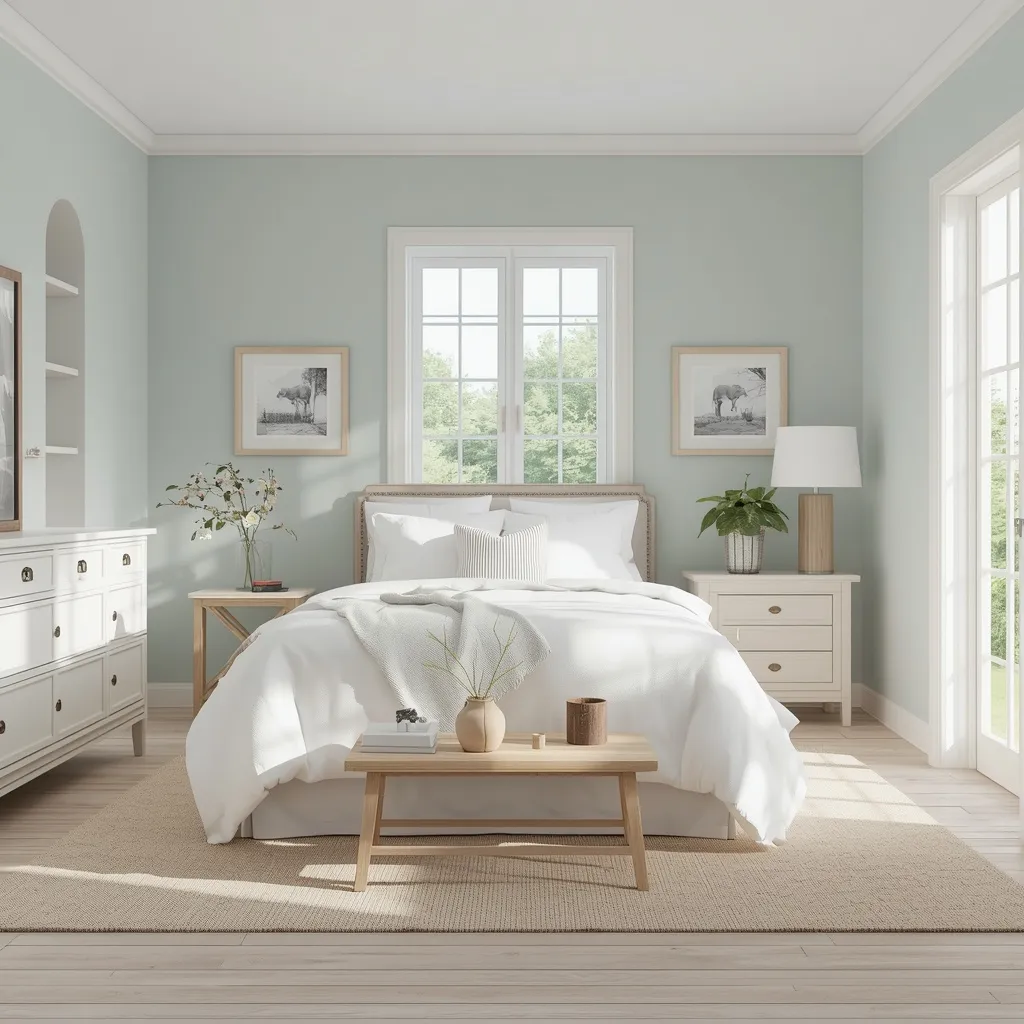
A farmhouse master suite is generous and layered: a substantial wooden or upholstered bed centered on the wall, matching nightstands, a bench at the foot, and a seating corner by the window. Composed and hotel-like, scale is what makes a master feel finished. Balanced, spacious, and considered.
Center the bed on the longest uninterrupted wall with matching nightstands either side, since symmetry is what makes a large bedroom feel resolved rather than sparse. Allow at least 60–75 cm (24–30 in) of walking space on each side of the bed and at the foot. Add a bench or small armchair only if the room genuinely has space, a crowded master feels worse than an empty one. Layer three textures in the bedding rather than three patterns. This suits larger bedrooms and anyone renovating a primary bedroom.
- Why it works: Symmetry and generous clearances make a large room feel composed rather than empty.
- Best for: Larger primary bedrooms; renovations.
- Key elements: centered bed, matched nightstands, 60–75 cm clearances, three textures not three patterns.
7. Small Room Farmhouse Layout
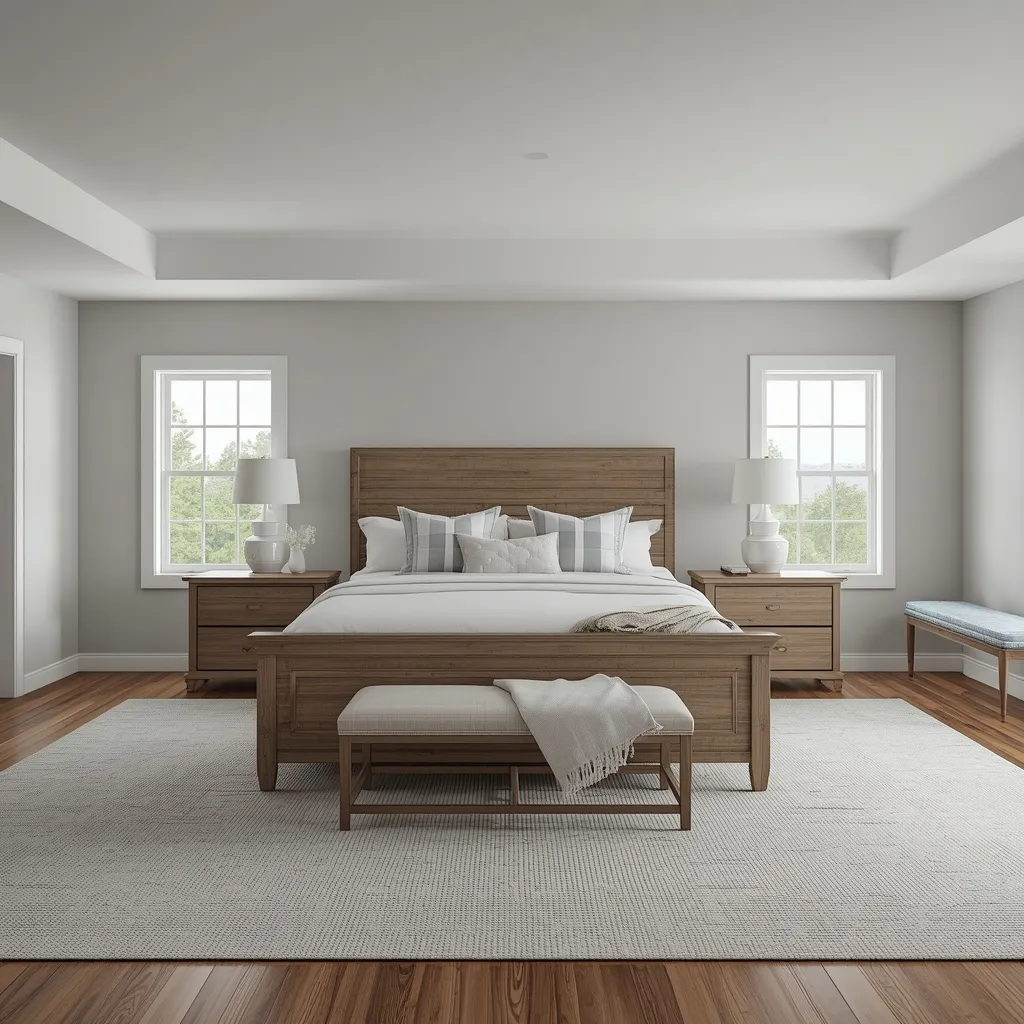
A small farmhouse bedroom works by keeping everything low and light: a simple low bed frame, one slim nightstand, wall-mounted lighting, and pale walls that blur the room’s edges. Efficient and uncluttered, restraint is what makes a small room feel bigger. Compact, airy, and practical.
Push the bed against the longest wall, use wall-mounted sconces or picture lights instead of table lamps to free up surface space, and choose one slim nightstand rather than a matching pair if space is tight. Keep walls, bedding, and curtains within a few shades of each other, since contrast is what visually chops a small room into pieces. Under-bed storage in baskets keeps the floor clear. This suits small bedrooms, box rooms, apartments, and renters.
- Why it works: Low furniture and low contrast remove the visual breaks that shrink a small room.
- Best for: Box rooms, apartments, renters.
- Key elements: low bed on longest wall, wall-mounted lighting, one slim nightstand, under-bed baskets.
8. Linen-Layered Summer Bed
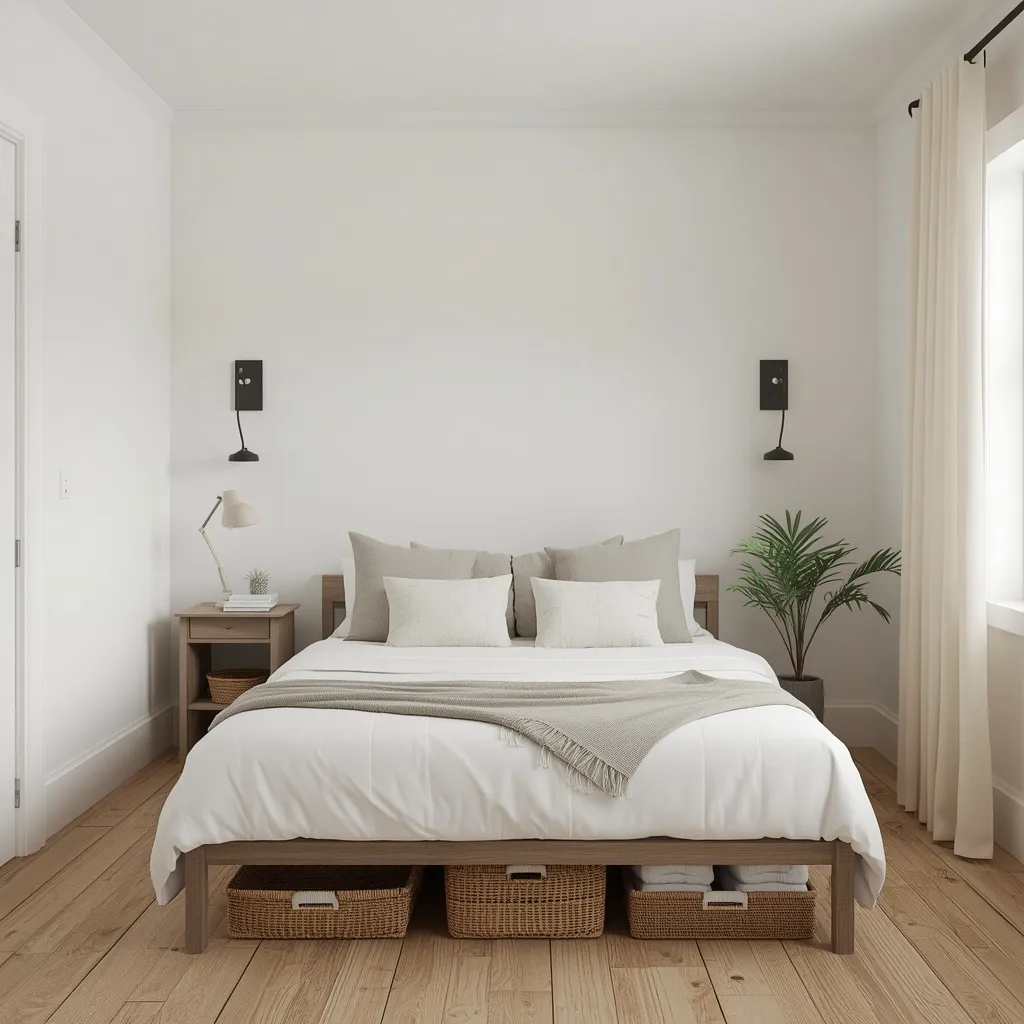
A linen-dressed bed is the single most effective summer change: rumpled natural linen sheets and duvet cover in oatmeal or white, deliberately unpressed, with one lightweight cotton throw folded at the foot. Relaxed and breathable, linen looks best slightly undone. Soft, cool, and effortless.
Switch to washed linen or cotton percale for summer, since both are loosely woven and breathe far better than sateen or microfiber, which trap heat. Linen softens with every wash and doesn’t need ironing, the crumpled look is the point. Strip the winter quilt entirely and use a single lightweight layer, adding a folded throw only for cooler nights. Wash linen on a cool cycle and skip fabric softener, which coats the fibers and reduces breathability. This suits hot sleepers and anyone in a warm climate.
- Why it works: Loosely woven linen and percale breathe, while sateen and microfiber trap heat.
- Best for: Hot sleepers; warm climates.
- Key elements: washed linen or percale, unpressed finish, single light layer, no fabric softener.

9. Wildflower Cottage Farmhouse
A cottage-leaning farmhouse bedroom is soft and gathered: floral cotton bedding, a vintage quilt folded at the foot, mismatched painted furniture, and jam jars of garden flowers on every surface. Romantic and lived-in, this is farmhouse at its most charming. Pretty, layered, and unfussy.
Combine small-scale floral prints with plain linens so the pattern has somewhere to rest, and keep the flower colors within one family, soft pinks and creams, or blues and whites, rather than mixing everything. Painted vintage furniture in mismatched but tonally related colors reads as collected rather than chaotic. Cut garden flowers last longest if stems are cut at an angle and the water is changed every two days. This suits cottages, period homes, and anyone who finds minimal farmhouse too austere.
- Why it works: Plain linens give small florals room to breathe so the pattern reads charming, not busy.
- Best for: Cottages and period homes; maximalists.
- Key elements: small-scale florals, plain linen balance, mismatched painted furniture, garden flowers.
10. Shiplap Accent Wall Bedroom
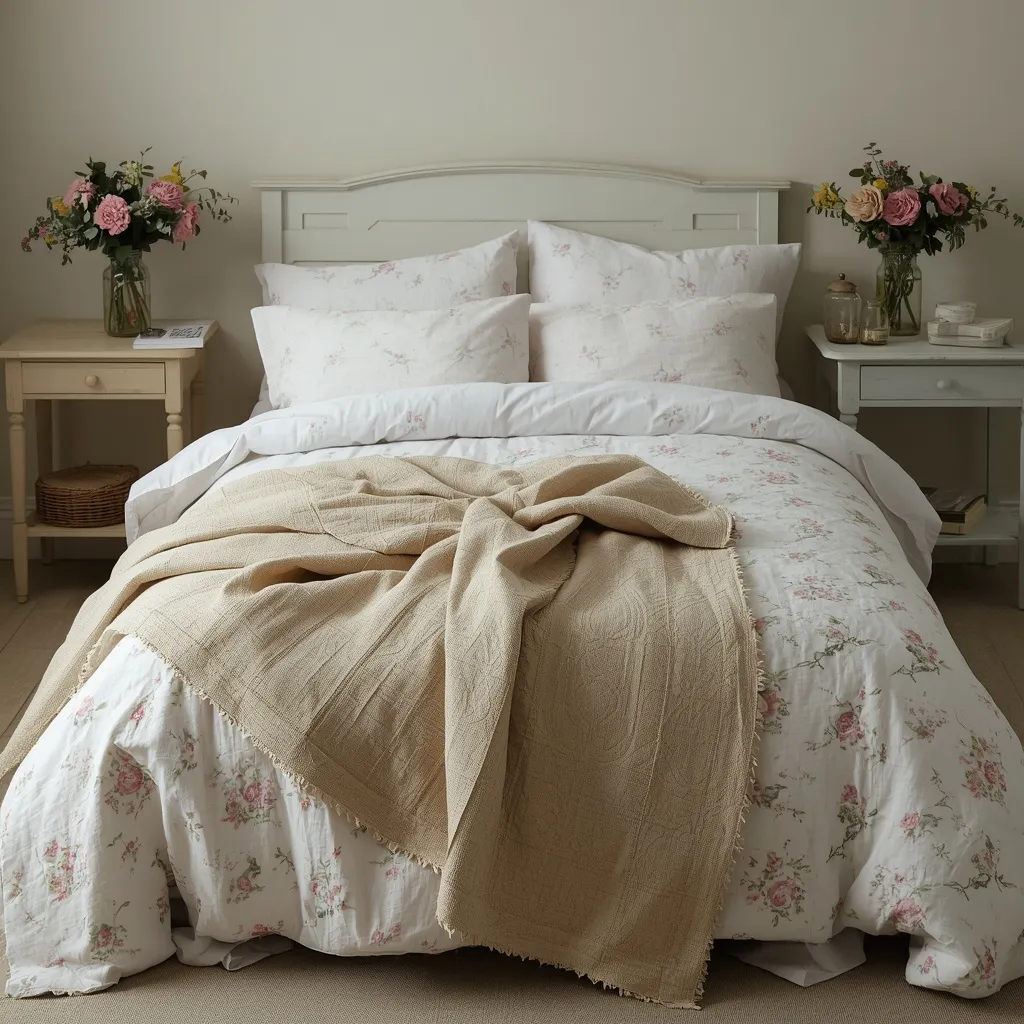
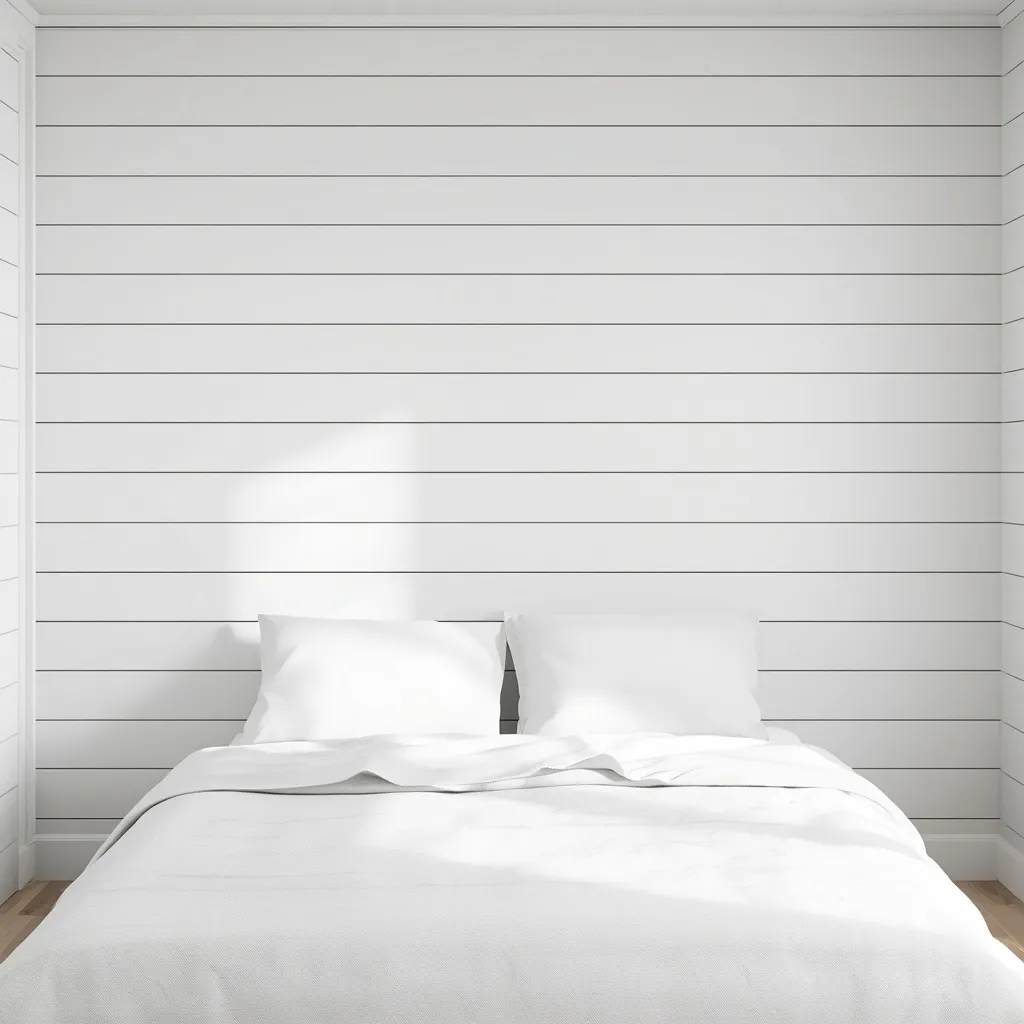
A shiplap wall behind the bed gives a plain bedroom instant farmhouse architecture: horizontal white-painted boards with fine shadow lines, a simple bed against it, and minimal decoration elsewhere. Textural and structural, shiplap does what paint alone can’t. Clean, linear, and characterful.
Fit shiplap or tongue-and-groove boards to the headboard wall only, painting them the same white as the surrounding walls so the effect is textural rather than a contrasting block. Horizontal boards widen a wall visually while vertical boards heighten it, useful in a low-ceilinged bedroom. Locate studs before fixing and use appropriate fixings, and check for wiring or pipework before driving anything into a wall. This suits plain modern rooms, new builds, and confident DIYers.
- Why it works: Painting shiplap the same white as the walls makes it read as texture, not a feature block.
- Best for: Plain modern rooms; new builds; DIYers.
- Key elements: shiplap on headboard wall only, matched white paint, horizontal or vertical by ceiling height, located studs.
11. Kids’ Farmhouse Bedroom
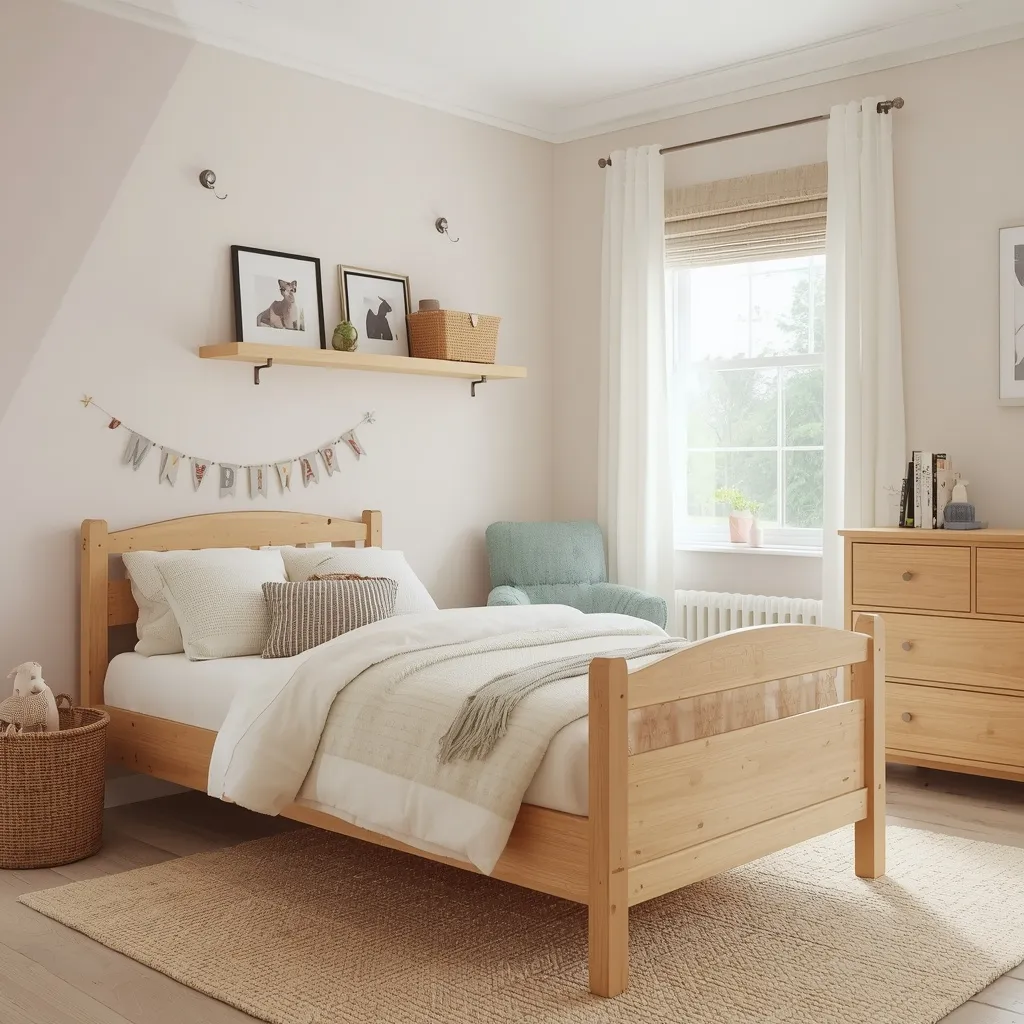
A kids’ farmhouse bedroom is sturdy and cheerful: a simple wooden bed, washable cotton bedding in soft colors, open shelving with baskets, and a wall of framed animal prints. Practical and warm, farmhouse suits children’s rooms genuinely well. Hardwearing, friendly, and easy to tidy.
Choose washable cotton over linen for children, and durable painted or solid wood furniture that survives real use, farmhouse style began as practical, hardwearing rooms, which makes it a natural fit. Baskets on low open shelves let children tidy independently. Two important safety points: anchor dressers, bookcases, and any tall furniture to the wall with anti-tip restraints, since furniture tip-over is a serious and preventable hazard, and keep cribs and beds away from window blind cords, which pose a strangulation risk, cordless blinds are the safest choice in a child’s room. This suits family homes and shared kids’ rooms.
- Why it works: Farmhouse’s practical, hardwearing origins suit children’s rooms better than delicate styles.
- Best for: Family homes; shared children’s rooms.
- Key elements: washable cotton, solid wood furniture, low baskets, anchored furniture, cordless blinds.
12. Airy Neutral Linen Loft
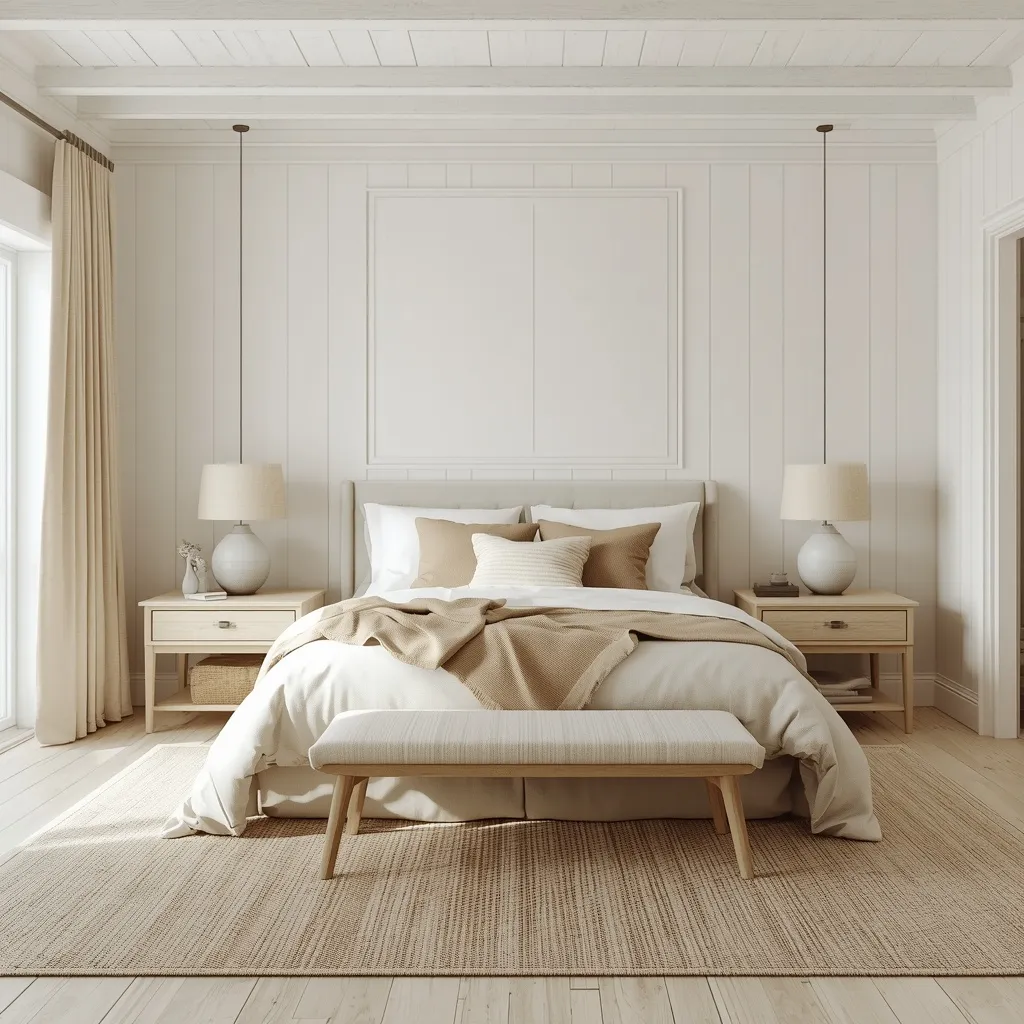
A neutral linen bedroom is calm on a larger scale: oatmeal, sand, and warm white layered across bedding, curtains, and rugs, with pale timber and nothing bright anywhere. Serene and tonal, neutrals let light do the decorating. Soft, quiet, and expansive.
Work within a narrow band of warm neutrals and vary texture deliberately, linen curtains, a wool rug, a rattan bench, ceramic lamps, since with no color contrast, texture is the only thing preventing flatness. Warm neutrals look better than cool greys under evening lamp light, which matters in a bedroom used mostly at either end of the day. Full-length linen curtains hung close to the ceiling make any room feel taller. This suits larger bedrooms, loft conversions, and minimalists.
- Why it works: With no color contrast, deliberately varied texture is what prevents flatness.
- Best for: Larger bedrooms, loft conversions, minimalists.
- Key elements: oatmeal-sand-white band, varied texture, pale timber, ceiling-hung linen curtains.
13. Vintage Iron Bed Frame Room
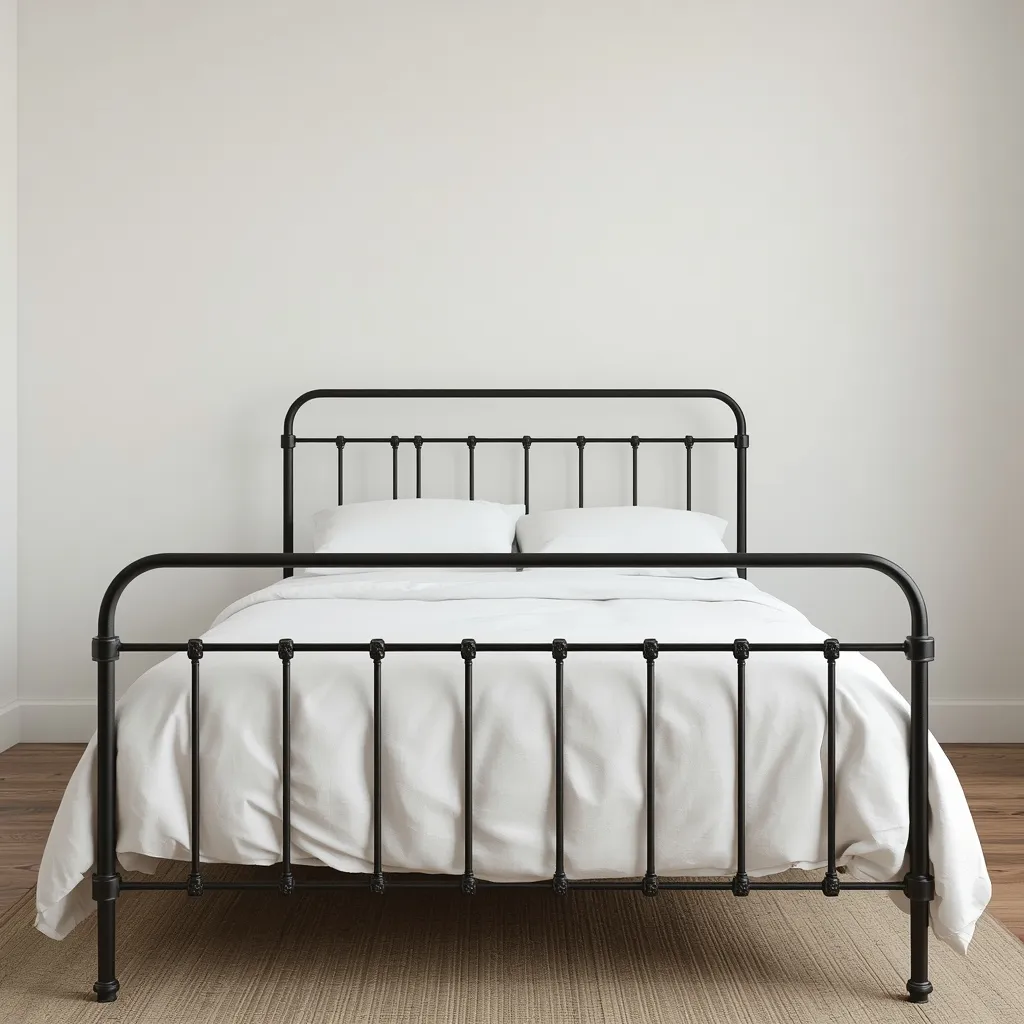
An antique iron bed anchors a farmhouse bedroom with real history: a black or white painted metal frame with scrolled or simple bars, dressed in crisp white cotton against pale walls. Nostalgic and structural, an old bed frame gives a room its story. Characterful, graphic, and timeless.
Source a genuine vintage iron or brass frame and keep the bedding simple and white, letting the frame’s silhouette be the focal point. Check that an antique frame fits a modern mattress size before buying, since older beds are often narrower or shorter than current standards, measure the interior before committing. Old painted metal may carry lead paint, so avoid sanding it indoors and seal rather than strip where possible. This suits period homes, vintage lovers, and anyone wanting one substantial statement piece.
- Why it works: A simple white dressing lets an antique frame’s silhouette become the focal point.
- Best for: Period homes; vintage collectors.
- Key elements: vintage iron or brass frame, crisp white cotton, pale walls, mattress size checked first.
14. Coastal Farmhouse Crossover
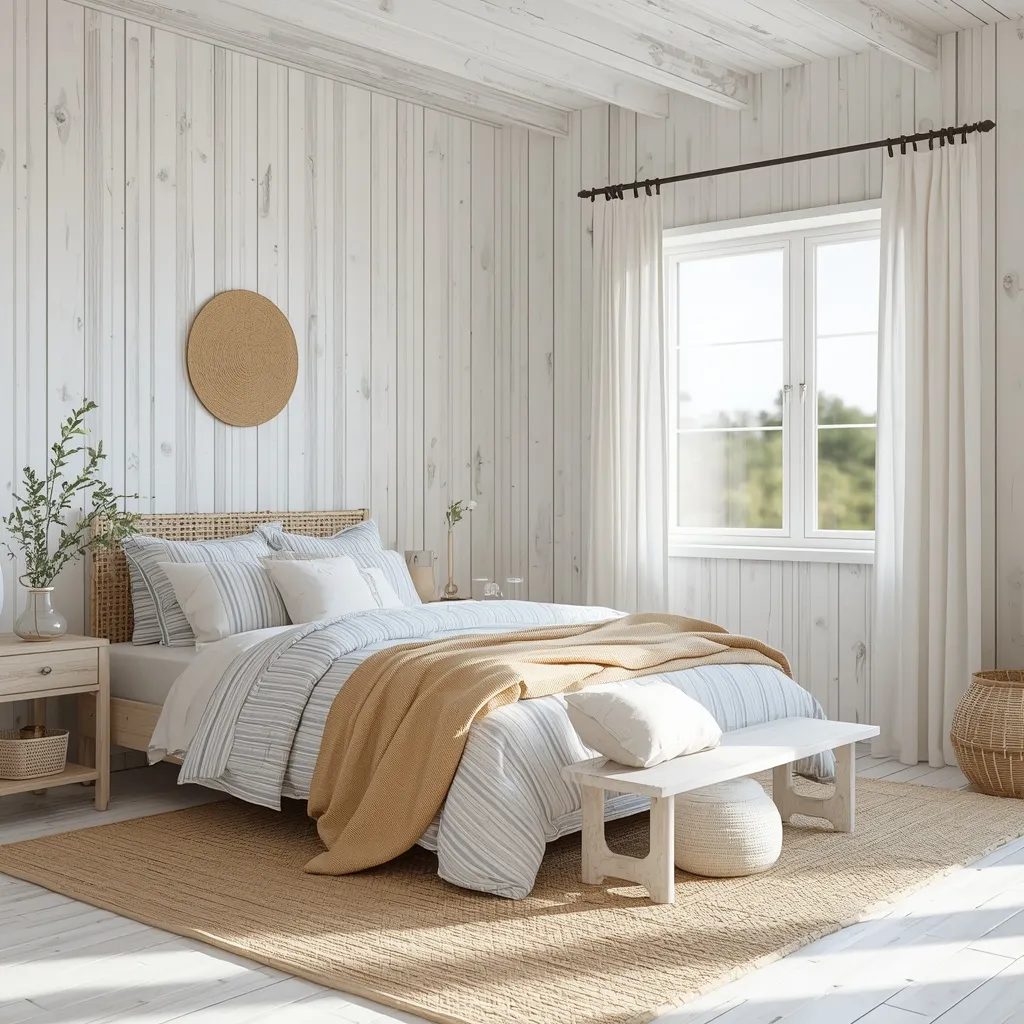
Where farmhouse meets coastal, summer arrives properly: whitewashed wood, pale blue-grey accents, striped cotton bedding, rope and rattan details, and sheer curtains moving in the breeze. Relaxed and light, this crossover is built for warm months. Breezy, bright, and easygoing.
Combine farmhouse timber and simplicity with a coastal palette of white, sand, and soft blue-grey, using natural fibers like jute, rattan, and rope for texture. Keep it restrained, avoid literal nautical motifs like anchors and shells, which tip the look into theme territory quickly. Sheer white curtains let light through while softening it, and move visibly with any breeze from an open window. This suits summer homes, coastal properties, and anyone wanting the lightest possible farmhouse variant.
- Why it works: Natural fibers and a sand-and-blue palette read coastal without literal nautical motifs.
- Best for: Summer and coastal homes; lightest farmhouse look.
- Key elements: whitewashed wood, sand and blue-grey palette, jute and rattan, sheer curtains.
15. Green and Cream Botanical
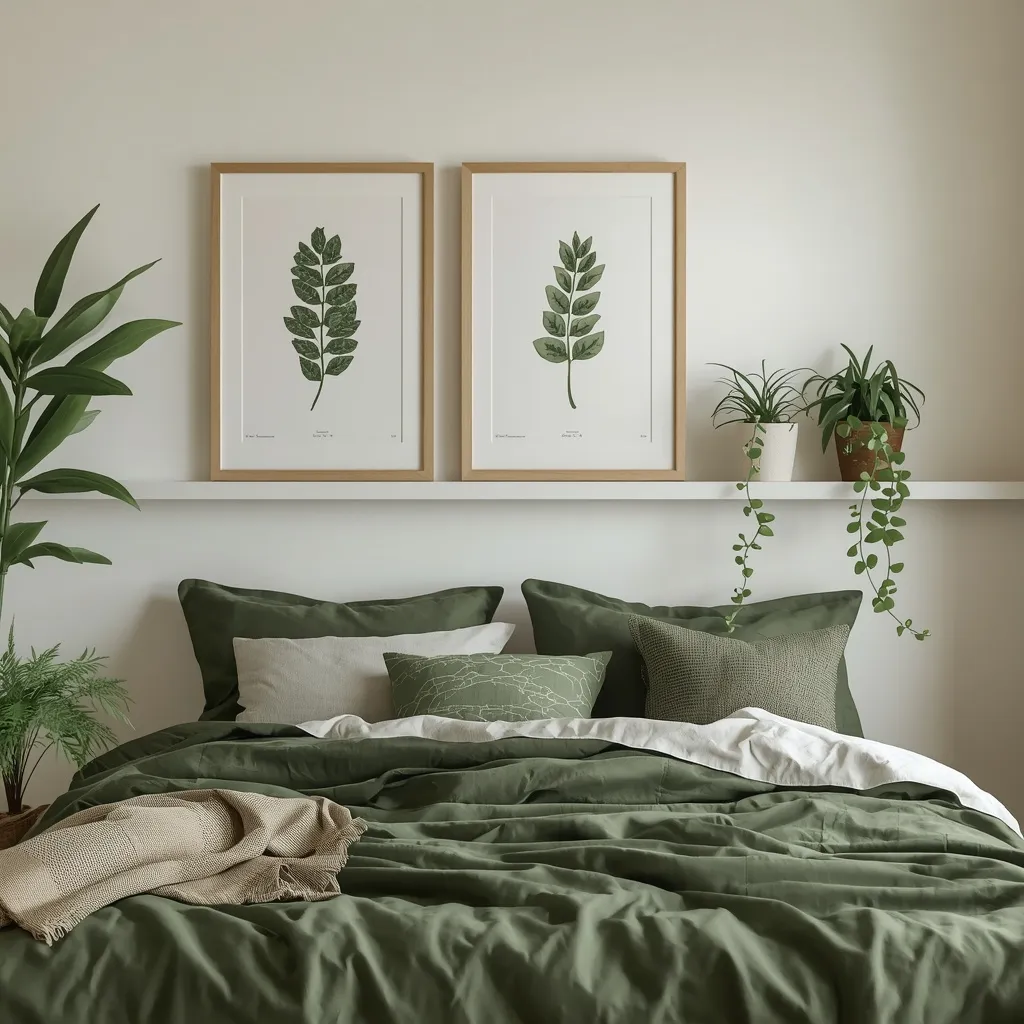
A botanical farmhouse bedroom brings the garden indoors: deeper green accents against cream walls, framed pressed-leaf prints, trailing plants on a shelf, and cotton bedding in leaf tones. Fresh and layered, green is the most natural summer bedroom color. Verdant, cool, and alive.
Use green as the accent rather than the whole room, bedding, artwork, and plants, against cream or warm white walls, which keeps a bedroom restful rather than saturated. Group plants in odd numbers of three or five at varied heights instead of dotting single pots around. Bedrooms are often the darkest rooms in a house, so choose genuinely low-light tolerant species, and if you have pets, check toxicity, since pothos and several common trailing plants are toxic to cats and dogs. This suits plant lovers and anyone wanting color without commitment.
- Why it works: Green as accent against cream stays restful where a fully green room would saturate.
- Best for: Plant lovers; gentle color use.
- Key elements: green bedding and art, cream walls, plants grouped in threes, low-light species, toxicity checked.
16. Black Metal Frame Modern Rustic
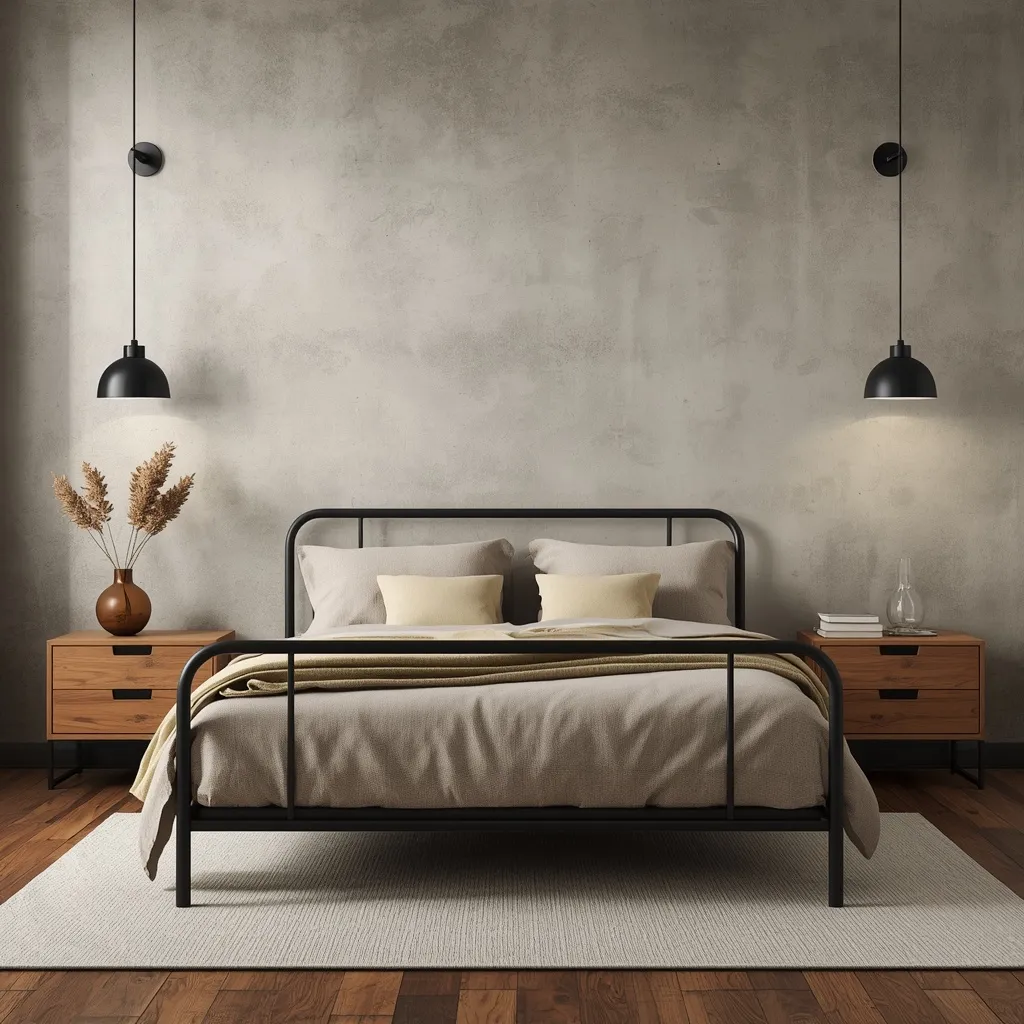
A black metal bed against warm timber is farmhouse with an edge: a slim black frame, raw wood nightstands, oatmeal linen, and black-shaded lighting. Sharp and grounded, black gives rustic warmth a modern spine. Structural, warm, and contemporary.
Pair a slim black metal frame with warm timber and soft neutral bedding so the black reads as structure rather than heaviness, repeating it in a light fitting or picture frames. Black works here because it defines the room’s lines against soft materials, the contrast is the point. A thin frame keeps a small bedroom feeling open in a way a solid headboard wouldn’t. This suits modern rustic homes, small bedrooms needing definition, and anyone who finds all-neutral farmhouse too soft.
- Why it works: A slim black frame defines the room’s lines without the visual bulk of a solid headboard.
- Best for: Modern rustic homes; small rooms needing definition.
- Key elements: slim black metal frame, warm timber, oatmeal linen, black repeated in lighting.
17. Attic Farmhouse Under the Eaves
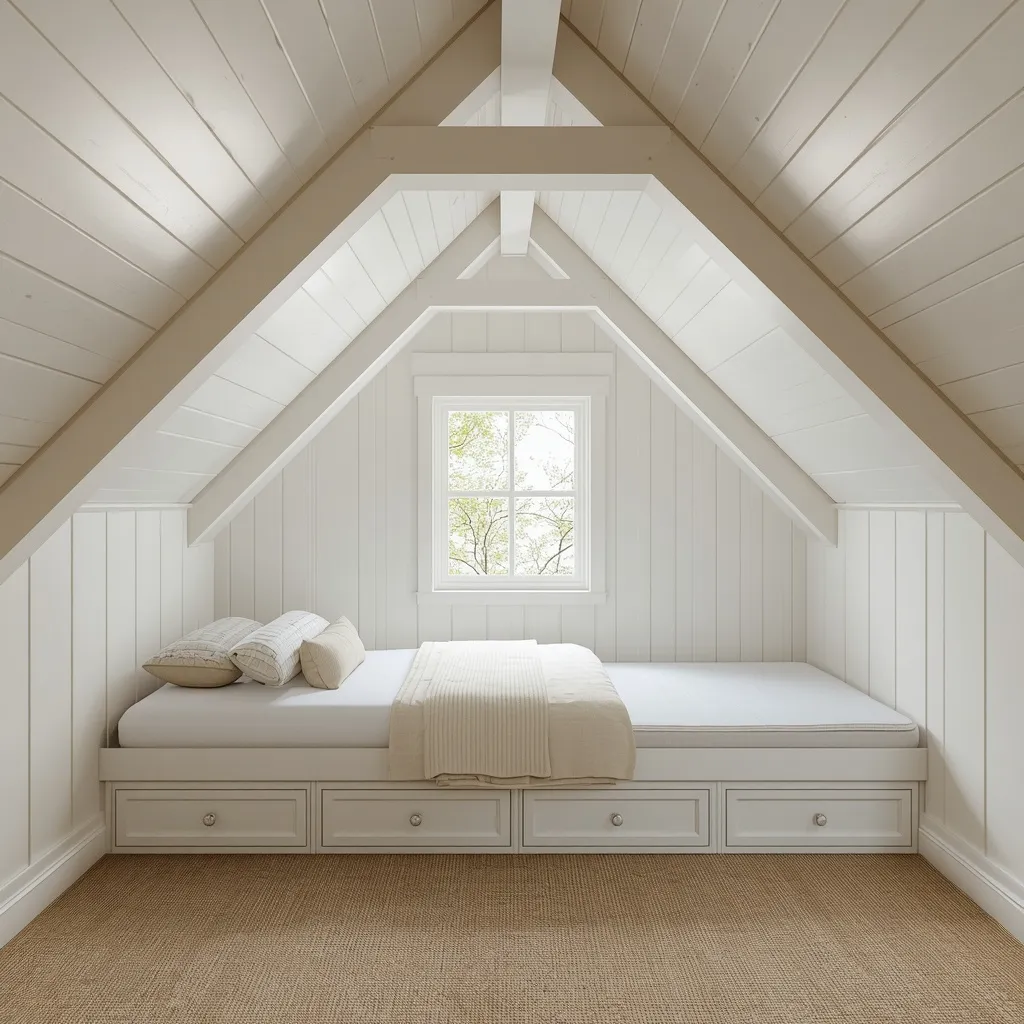
An attic farmhouse bedroom makes a feature of its awkward shape: sloped ceilings painted the same soft white as the walls, a low bed tucked under the eaves, and a small window framing treetops. Cozy and characterful, sloped rooms suit farmhouse naturally. Snug, angular, and charming.
Paint the walls, sloped ceiling, and any beams the same soft white or pale neutral, since contrast emphasizes awkward angles while a single color makes them read as one continuous shell. Place the bed where the ceiling is lowest and standing headroom isn’t needed, keeping full-height space for walking and storage. Built-in drawers under the eaves use space nothing else can. This suits attic conversions, loft bedrooms, and older houses with sloping ceilings.
- Why it works: One color across walls and slopes makes awkward angles read as a continuous shell.
- Best for: Attic conversions; loft bedrooms; older houses.
- Key elements: single pale color on walls and slopes, bed under the lowest point, eaves storage.
18. Farmhouse Guest Bedroom
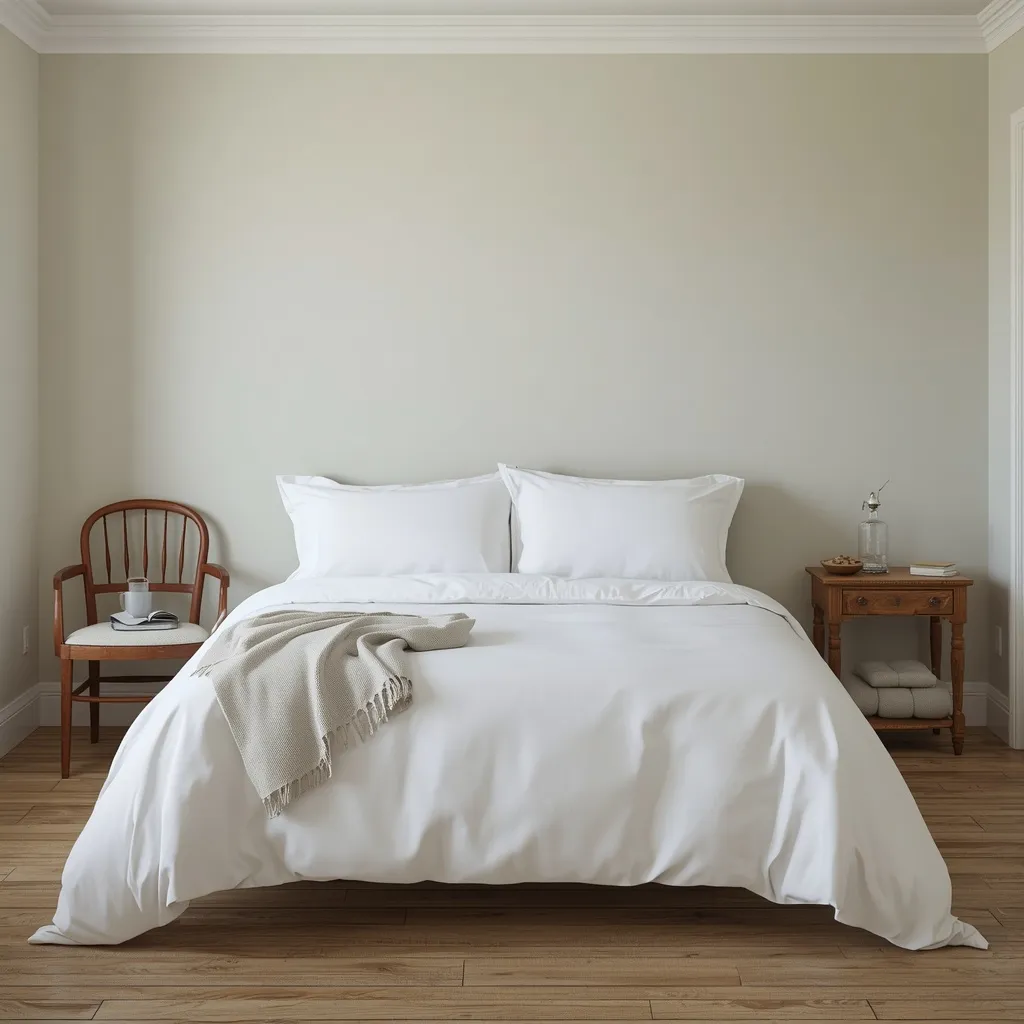
A farmhouse guest room is welcoming and uncluttered: a neatly made bed with white cotton, a folded throw, an empty chair, a water carafe, and clear space for a suitcase. Thoughtful and calm, restraint is what makes a guest feel comfortable. Simple, tidy, and considerate.
Keep the room deliberately spare and leave genuine empty space, a clear surface, an empty drawer or two, and floor room for a suitcase matter more to a guest than extra styling. Add practical touches: a bedside light with an easy switch, spare blankets visible rather than hidden, and hooks on the back of the door. Guest rooms are often unused for weeks, so air the room and wash the bedding before arrival rather than relying on it being clean. This suits spare rooms and anyone hosting in summer.
- Why it works: Empty drawers and clear floor space serve a guest better than additional styling.
- Best for: Spare rooms; summer hosting.
- Key elements: spare styling, empty drawers, suitcase floor space, visible spare blankets, aired before arrival.
19. Barn Door and Beam Statement
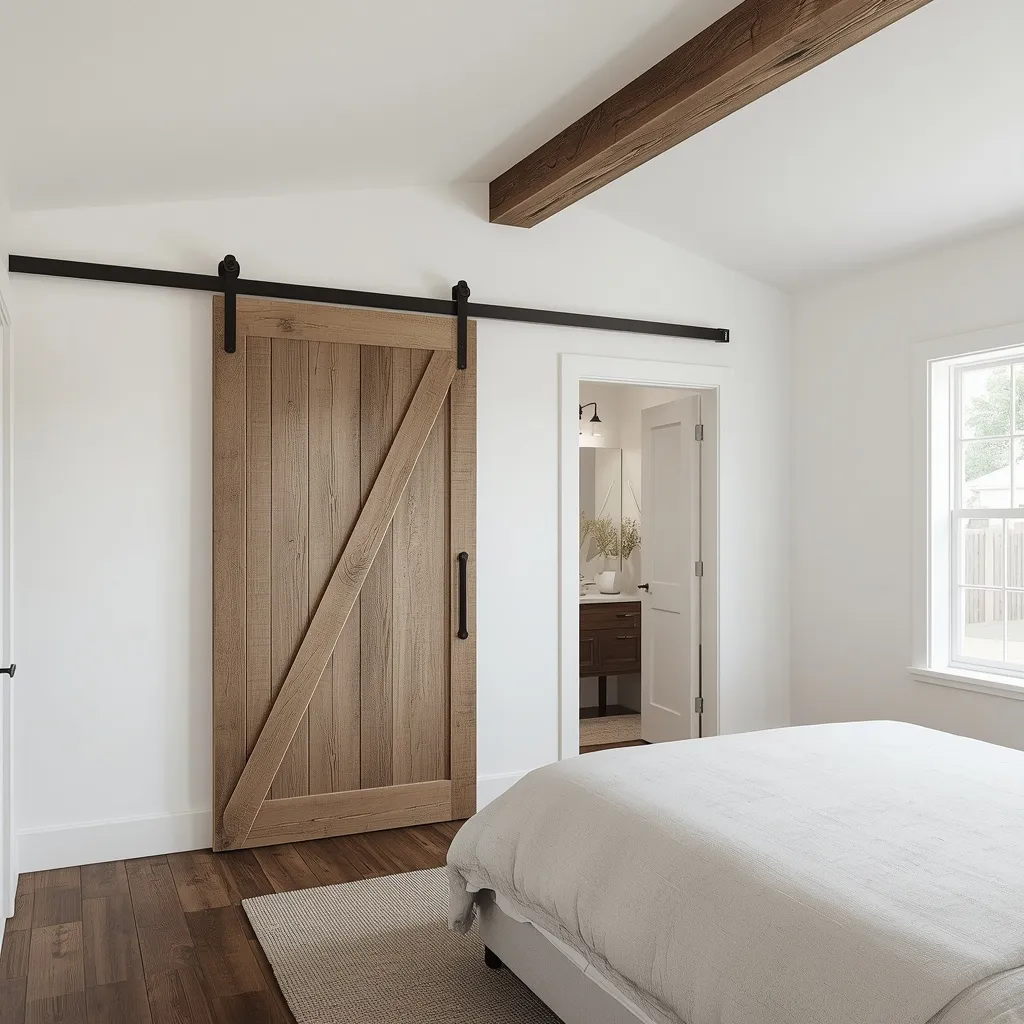
A sliding barn door or exposed beam gives a bedroom unmistakable farmhouse architecture: rough timber against smooth white walls, black track hardware, and simple bedding letting the structure speak. Bold and architectural, one big element sets the whole tone. Substantial, rustic, and striking.
Add one architectural statement, a sliding barn door to an en suite or closet, or a single exposed beam, and keep everything else simple so it doesn’t compete. Sliding barn doors are best suited to closets and en suites rather than bedroom entrances, since they don’t seal or lock well and offer limited sound privacy. Barn door hardware is heavy, so mount the track into structural framing rather than plasterboard alone, following the manufacturer’s weight guidance. This suits larger bedrooms, barn conversions, and rustic-leaning homes.
- Why it works: One substantial architectural element sets the tone so the rest of the room can stay simple.
- Best for: Larger bedrooms; barn conversions.
- Key elements: barn door or single beam, simple bedding, track mounted into framing, used for closets not main doors.
20. The Summer Swap System
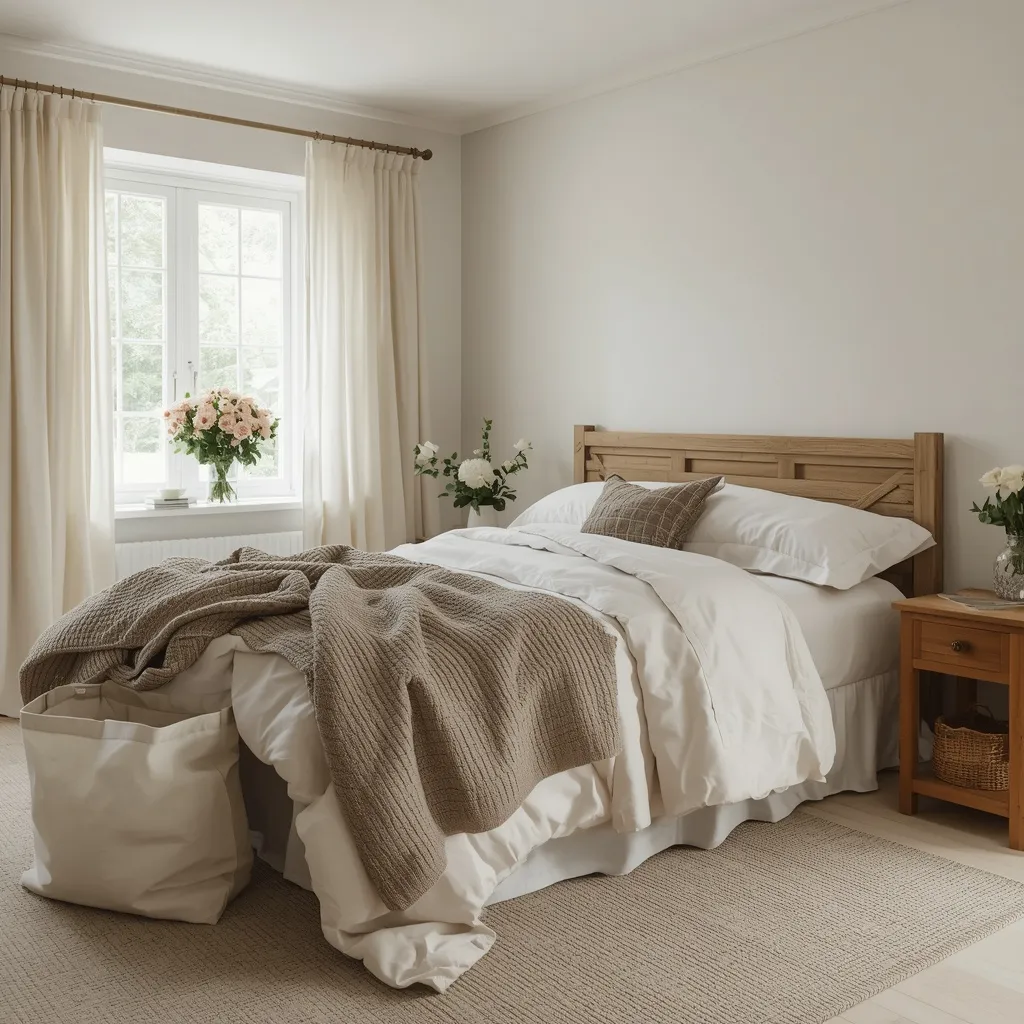
The seasonal swap is what turns a farmhouse bedroom into a summer bedroom: winter’s quilt, wool throws, and heavy curtains packed away in one afternoon, replaced by linen, cotton, and bare polished surfaces. Practical and repeatable, this is the system rather than a single look. Light, changed, and seasonal.
Work through the room in one pass: strip the heavy quilt and store it clean and dry in a breathable cotton bag rather than plastic, which traps moisture; swap to linen or percale bedding; replace wool throws and velvet cushions with cotton; change heavy curtains for sheer or lightweight linen; and clear about a third of the surface clutter. Finish with one jug of garden flowers. Store winter textiles washed, since body oils and dust attract moths and set into stains over months. This suits anyone wanting a genuine seasonal change without redecorating.
- Why it works: A single afternoon of swapping textiles changes a room more than any amount of new décor.
- Best for: Anyone wanting seasonal change without redecorating.
- Key elements: quilt stored clean in breathable bags, linen bedding, cotton throws, sheer curtains, a third less clutter.
How Do You Make a Farmhouse Bedroom Feel Like Summer?
Make a farmhouse bedroom feel like summer by removing layers rather than adding décor. Strip the heavy quilt, wool throws, and velvet cushions, switch to linen or cotton percale bedding, hang lighter curtains, and clear roughly a third of the surface clutter. The wall color and furniture can stay exactly the same, the textiles are what carry the season.
Seasonal changes that take an afternoon rather than a renovation are central to the Sunday Abode approach. If you’re styling a room for an older child, our guide to summer bedrooms for teenagers covers a different set of priorities. For more on shaping the space, browse the rest of our bedroom ideas.
Which Bedding Actually Sleeps Cool?
Weave matters as much as fiber. A loose weave lets air move through the fabric, while a tight or brushed weave traps warmth against the body, which is why two cotton sheets can feel completely different on a hot night.
| Fabric | Breathability | Feel | Care |
| Washed linen | Excellent | Textured, relaxed | No ironing needed |
| Cotton percale | Very good | Crisp, matte | Creases; iron if wanted |
| Cotton sateen | Moderate | Smooth, slight sheen | Resists creasing |
| Bamboo viscose | Good | Silky, cool to touch | Wash cool, gentle |
| Microfiber | Poor | Soft, slightly slick | Easy but traps heat |
| Flannel | Poor | Brushed, warm | Winter only |
Safety notes: anchor dressers, chests, bookcases, and any tall furniture to the wall using anti-tip restraints, particularly in children’s bedrooms, furniture and television tip-overs cause serious injuries every year and are almost entirely preventable, and most flat-pack furniture now ships with the necessary hardware. Keep cribs, beds, and climbable furniture away from window blind cords, which present a strangulation risk to young children; cordless or motorized blinds are the safest option in a child’s room. Fix heavy mirrors, shelves, and headboards into studs or properly rated anchors rather than plasterboard alone, and think carefully before hanging anything heavy directly above a bed. Never leave candles burning unattended in a bedroom or place them near curtains and bedding, and use decorative string lights that carry a recognized safety certification without overloading sockets. Antique or reclaimed painted furniture from homes built before 1978 may contain lead paint, which releases hazardous dust when sanded, so check before refinishing. Store winter bedding clean and fully dry in breathable cotton bags rather than plastic, which traps moisture and encourages mildew.
Frequently Asked Questions
How do you make a bedroom look farmhouse?
Start with natural materials and restraint rather than décor. Real wood, worn metal, cotton and linen textiles, and a simple palette of white, cream, and one soft color do most of the work. Add one architectural element if you can, shiplap on the headboard wall, an exposed beam, or a vintage iron bed frame. Farmhouse reads best when surfaces stay relatively clear.
What colors work best in a farmhouse summer bedroom?
Soft white and cream form the base, with sage green, pale chambray blue, and warm neutrals working particularly well for summer. Black is effective as an accent rather than a wall color, repeated across hardware, frames, and lighting. Keep the palette to three colors maximum and let texture rather than pattern carry the interest, which keeps a bedroom restful.
Which bedding is coolest for summer?
Washed linen and cotton percale are the coolest common choices, because both are loosely woven and let air pass through. Cotton sateen and microfiber feel smoother but trap more heat against the body, and flannel is a winter fabric. Skip fabric softener on linen and cotton, since it coats fibers and reduces breathability over time.
How do you do farmhouse style in a small bedroom?
Keep furniture low and contrast minimal. Push the bed against the longest wall, use wall-mounted sconces instead of table lamps to free surface space, and choose one slim nightstand rather than a matching pair. Keep walls, bedding, and curtains within a few shades of each other, since strong contrast visually chops a small room into pieces. Baskets under the bed keep the floor clear.
Is farmhouse style suitable for a kids’ bedroom?
Very much so, because farmhouse began as practical, hardwearing rooms rather than delicate ones. Choose washable cotton bedding, solid or painted wood furniture, and low open shelving with baskets that children can manage themselves. Two safety essentials apply: anchor all tall furniture to the wall with anti-tip restraints, and choose cordless blinds, since blind cords pose a strangulation risk.
What’s the difference between rustic and modern farmhouse?
Rustic farmhouse leads with visible age and texture, reclaimed timber, saw marks, worn paint, and warm tones. Modern farmhouse is crisper and more graphic, built on white walls, black hardware and window frames, clean lines, and very little pattern. Both share natural materials and simplicity; they differ mainly in how much wear and warmth they show.
How do I switch my bedroom from winter to summer?
Work through the room in one pass rather than piecemeal. Strip the heavy quilt and store it clean and dry in a breathable cotton bag, switch to linen or percale bedding, replace wool throws and velvet cushions with cotton, swap heavy curtains for sheer or lightweight linen, and clear about a third of the surface clutter. Always store winter textiles washed, since body oils attract moths.
Conclusion
The best farmhouse summer bedroom ideas share one quality: they’re made from materials that already suit warm weather. Natural wood, worn metal, and honest cotton and linen don’t need reinventing each June, they just need the heavy layers taken away. Pick a palette and stick to three colors, choose bedding by weave rather than thread count, and anchor anything tall to the wall before you start styling. For more ways to shape the room, explore the bedroom ideas collection on Sunday Abode and save the scheme that suits your light and your summers.