
Introduction
Every garden has one: the awkward angle where two fences meet, usually holding a coiled hose and a patch of tired grass. These corner flower bed ideas turn that dead space into the part of the garden people actually look at, with 24 complete designs covering sun and shade, backyards and front gardens, and corners built around a bench, a tree, a fountain, or a trellis.
A corner is a genuinely different design problem from a border or an island bed, and the designs below work with that rather than against it. You’ll find rustic timber and raised wooden beds, stone edging, gravel and cottage planting, pathway and container combinations, and a layout method for setting the shape out properly. Consider it a guide to reclaiming the most neglected square meters in your abode.
The rule that makes corner beds work: A corner is seen from one direction, the open diagonal facing into the garden. That makes it a border wrapped around an angle, not an island bed. Plant the tallest material into the angle itself and step heights down toward the open point, so nothing hides behind anything else. Getting this backwards, with tall plants at the front point, is the single most common corner bed mistake and it hides the whole design.
24 Corner Flower Bed Ideas
1. Classic Triangular Corner
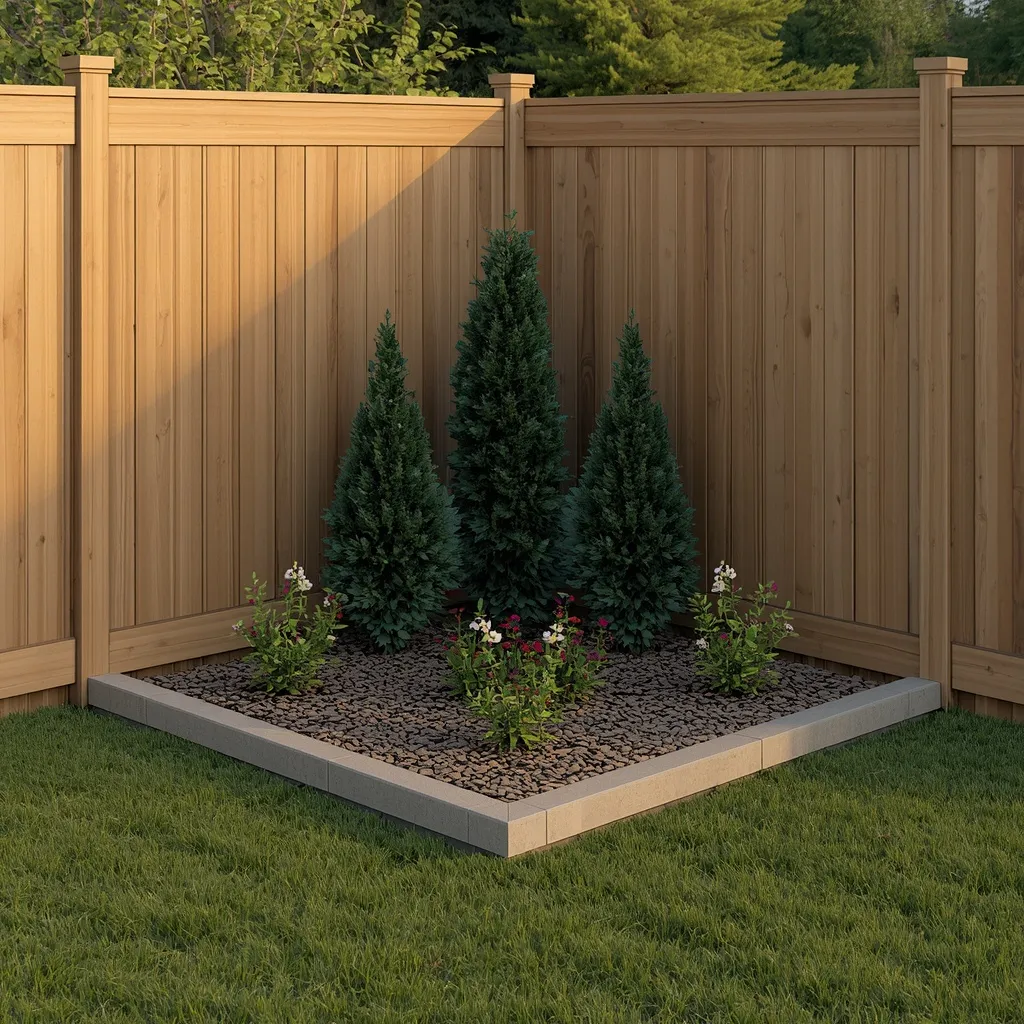
The classic corner bed is a simple triangle: two straight sides following the fences, a diagonal front edge, and planting stepping down from the angle to the point. Tidy and geometric, this is the shape most corners want. Structured, simple, and effective.
Set the two straight sides along the boundaries and run the front edge as a diagonal, extending at least 1.2–1.5 m (4–5 ft) along each side so the bed has real presence. Plant the tallest material into the angle, medium through the middle, and low growers along the front diagonal. Anything shorter than about a meter along each side reads as a token gesture rather than a designed bed. This suits formal gardens, beginners, and anyone wanting a clear, simple shape.
- Why it works: Stepping heights down from the angle to the point keeps every plant visible from the one viewing direction.
- Best for: Formal gardens; beginners; clear geometric layouts.
- Key elements:2–1.5 m along each side, straight boundary edges, diagonal front, tall-to-low stepping.
2. Curved Quarter-Circle Bed
A quarter-circle corner bed softens the angle: the two sides still follow the fences, but the front edge sweeps in a generous arc. Flowing and natural, the curve makes the same footprint feel larger. Soft, generous, and inviting.
Mark the curve with a garden hose and stand back to check it before cutting, since curves that look right on the ground often look mean from the house. A sweeping arc reads far more generous than a straight diagonal across the same space, and it also gives you more planting depth at the center where you need it. Keep the arc a single smooth curve rather than a wavy line, which looks unresolved. This suits informal gardens and anyone softening a rigid rectangular plot.
- Why it works: A single smooth arc gives more depth at the center and reads more generous than a straight diagonal.
- Best for: Informal gardens; softening rectangular plots.
- Key elements: hose-marked curve, one smooth arc, checked from the house, deeper at the center.
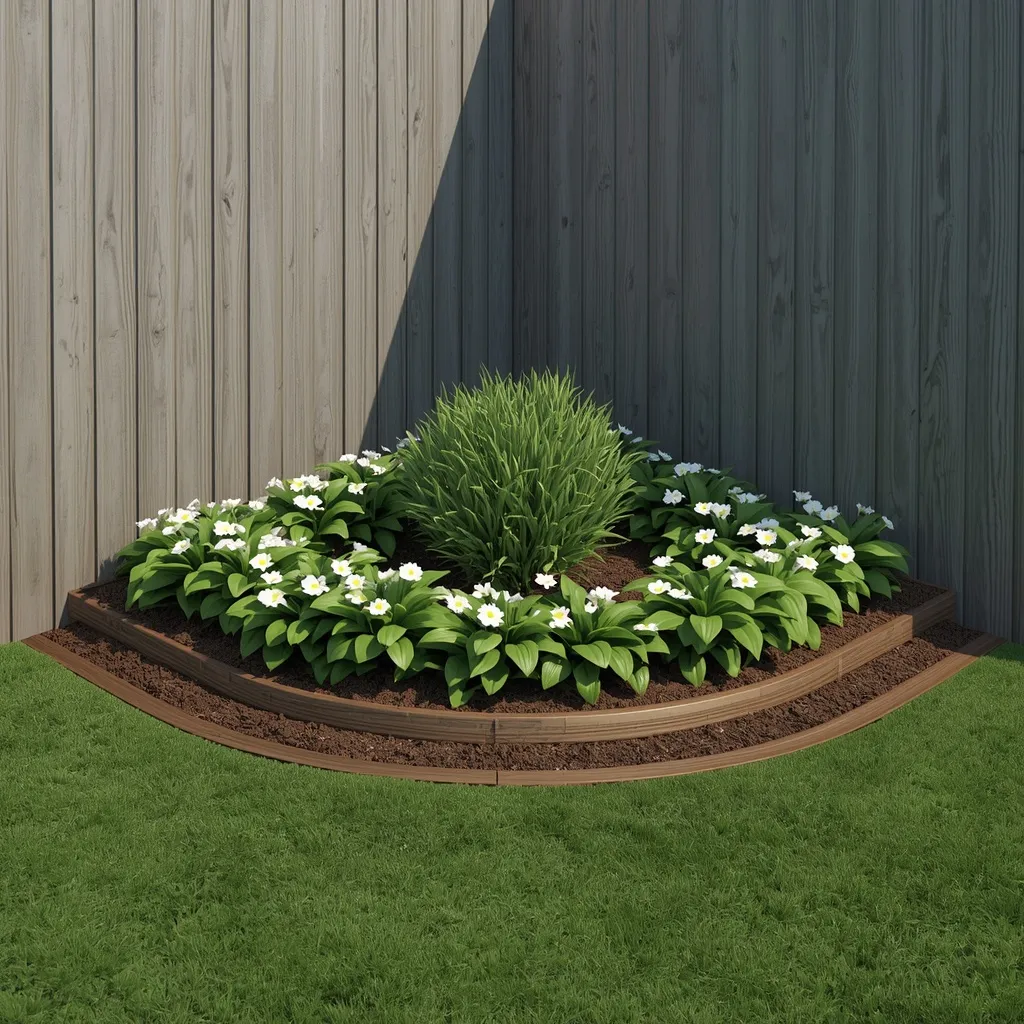
3. Backyard Fence Corner
A backyard fence corner is the classic problem spot: two panels meeting behind the lawn, often dry, often forgotten. Planted properly it becomes a green backdrop with height at the angle and flowers spilling forward. Lush, screening, and transformative.
The critical detail here is the rain shadow. Ground within 30–45 cm (12–18 in) of a solid fence gets significantly less rainfall, so plants sited tight against panels dry out even in wet climates. Set planting slightly forward of the fence line and water new plants there more often through the first two seasons. Leave 30–45 cm of access behind tall shrubs if the fence will ever need repainting or replacing, or you’ll be cutting through mature planting to reach it. This suits backyard corners and boundary screening.
- Why it works: Planting forward of the fence line avoids the rain shadow that dries out tight-against-panel planting.
- Best for: Backyard fence corners; boundary screening.
- Key elements: planting set forward of panels, extra first-season water, 30–45 cm maintenance access.
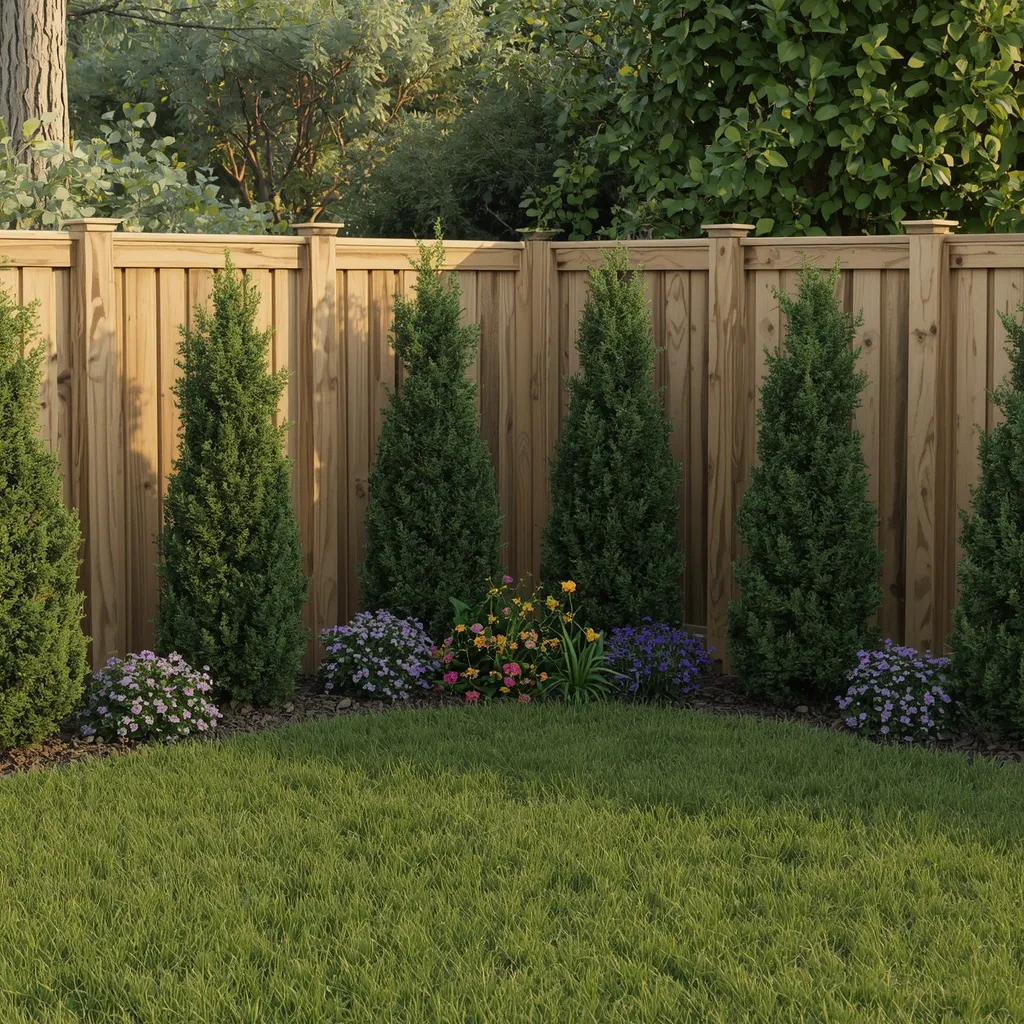
4. Front Garden Corner
A front garden corner works hard for curb appeal: the angle where a boundary meets a path or driveway, planted to be seen from the street rather than the house. Neat and welcoming, front corners are high-visibility real estate. Tidy, colorful, and public-facing.
Plan a front corner for its street viewing angle, which is often different from the backyard logic, check the shape from the sidewalk, not just the front door. Keep planting near a driveway mouth below about 75 cm (30 in) so sight lines stay clear when reversing out. Choose tough, tidy plants that look presentable year-round, since a front corner is on display constantly. This suits front gardens, curb appeal projects, and corner plots.
- Why it works: Checking the shape from the sidewalk rather than the door matches the angle it’s actually seen from.
- Best for: Front gardens; curb appeal; corner plots.
- Key elements: street-side viewing check, under 75 cm near driveways, year-round tidy plants.
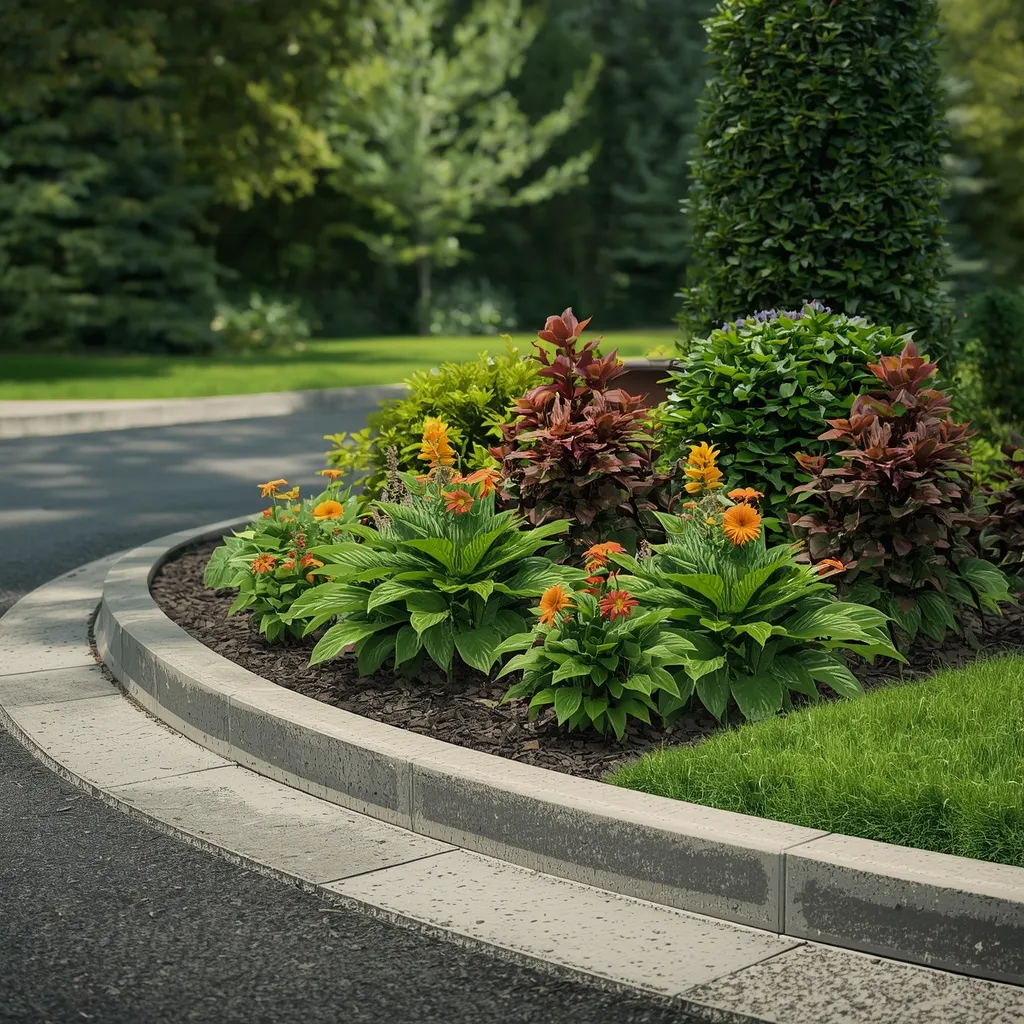
5. Full-Sun Corner Border
A full-sun corner blazes through summer: salvias, echinacea, and rudbeckia layered against a warm fence, with silver foliage catching the light and bees working it all day. Hot and vivid, sunny corners are the easiest to fill well. Bright, buzzing, and generous.
A corner receiving six or more hours of direct sun counts as full sun, and it will usually be the hottest, driest spot in the garden because fences reflect heat as well as blocking rain. Choose genuinely sun-loving, drought-tolerant perennials, Salvia nemorosa, Echinacea purpurea, Rudbeckia, and lavender all cope, and plant in drifts of three or five rather than singles. Mulch 5–8 cm (2–3 in) deep to hold moisture. This suits south or west-facing corners in the northern hemisphere.
- Why it works: Fences reflect heat as well as blocking rain, so sunny corners need genuinely drought-tolerant planting.
- Best for: South or west-facing corners; hot dry spots.
- Key elements: 6+ hours sun, Salvia and Echinacea and Rudbeckia, drifts of 3–5, 5–8 cm mulch.
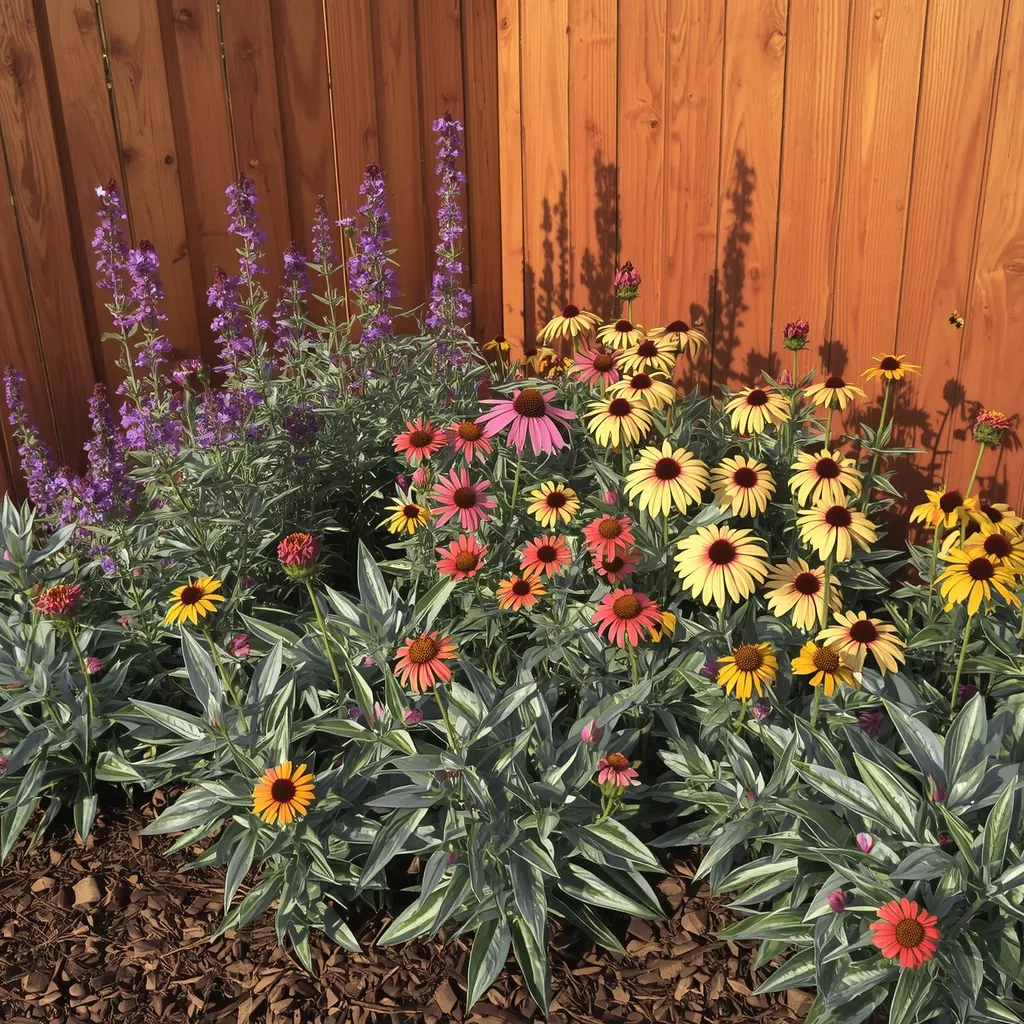
6. Shady Corner Retreat
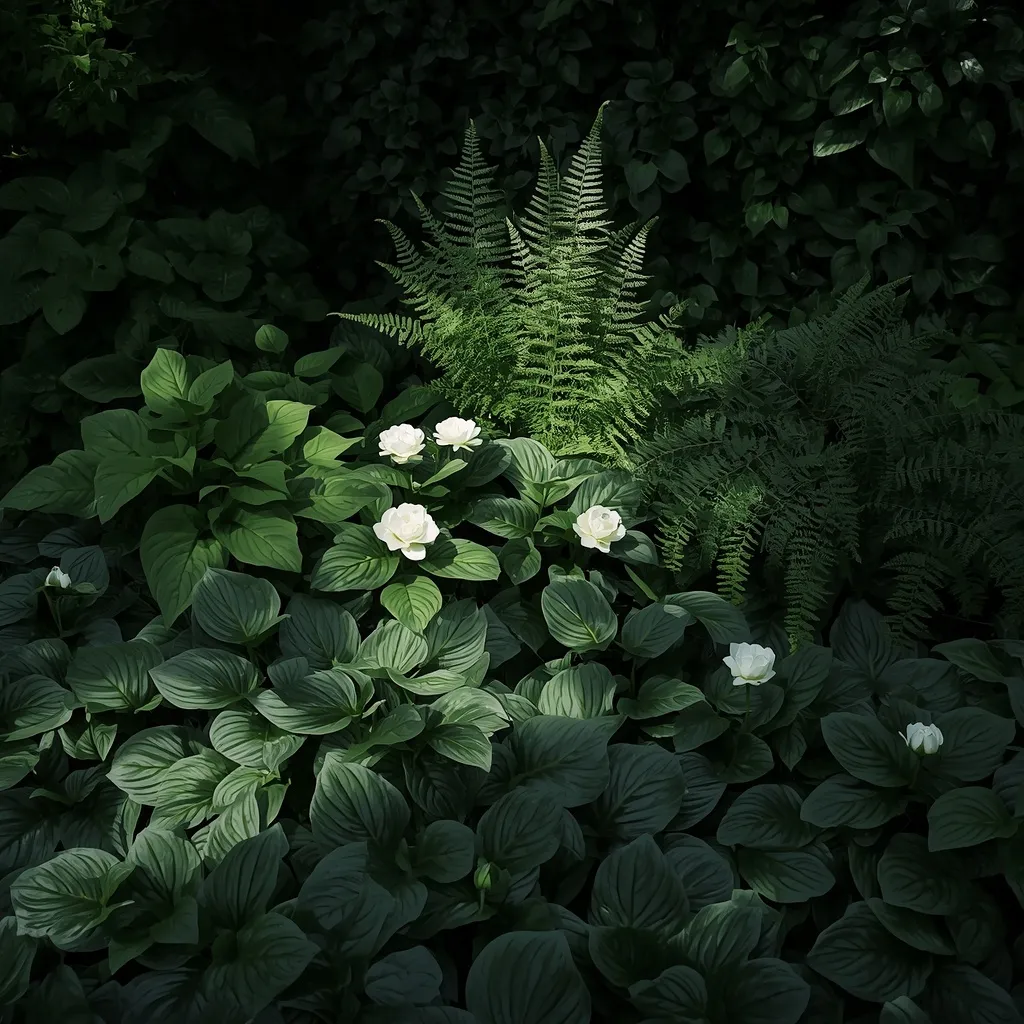
A shady corner becomes the coolest, calmest part of the garden: hostas, ferns, and heuchera layered in textures, with pale flowers lifting the gloom. Green and restful, shade corners reward texture over color. Cool, layered, and serene.
Work with the shade rather than fighting it, since a corner shaded by both a fence and a building will never support sun-lovers no matter how they’re fed. Layer foliage textures, broad hosta leaves against fine fern fronds against ruffled heuchera, and use white and pale flowers, which read much better in low light than deep colors that disappear into shadow. Shady corners are often dry as well as dark, so add organic matter and water through the first two seasons. This suits north-facing corners and spots shaded by buildings.
- Why it works: Pale flowers stay visible in low light where deep colors disappear into the shadow.
- Best for: North-facing corners; building-shaded spots.
- Key elements: hosta and fern and heuchera texture layers, white and pale flowers, organic matter, first-season watering.
7. Corner Bed With a Tree
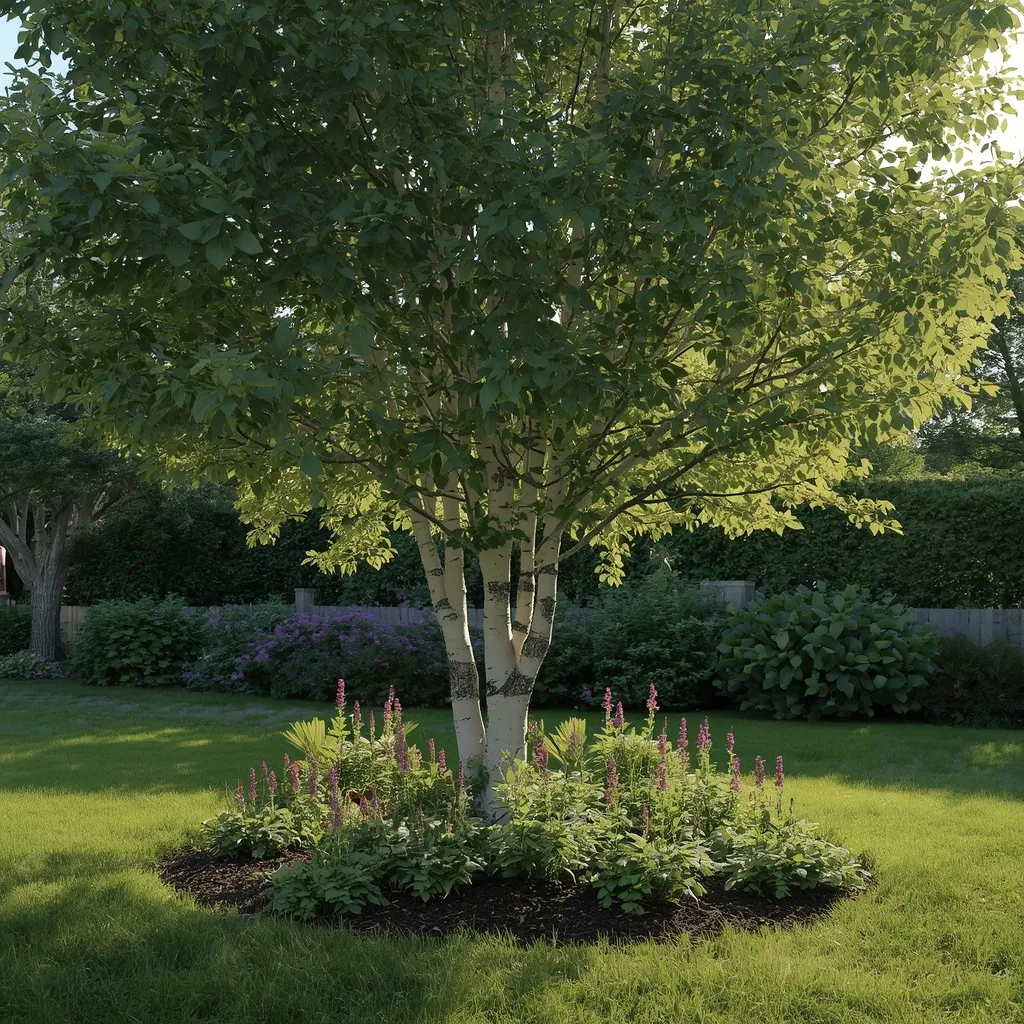
A small tree anchors a corner like nothing else: a multi-stem birch or Japanese maple set into the angle, underplanted with shade-tolerant perennials as the canopy fills. Structural and elegant, one tree gives a corner instant maturity. Tall, dappled, and anchored.
Choose a genuinely small species and check its mature height and spread, not its nursery size, a corner is exactly where an oversized tree becomes a problem within a few years, overhanging a neighbor’s garden or lifting a fence. Multi-stem birch, Japanese maple, and crab apple all stay manageable. Plant at least 1.5–2 m (5–6.5 ft) from the boundary where possible, and underplant with species that tolerate increasing shade as the canopy develops. This suits corners needing height and gardens wanting one focal point.
- Why it works: Checking mature spread rather than nursery size prevents the overhang and boundary problems corners are prone to.
- Best for: Corners needing height; single-focal-point gardens.
- Key elements: small species like multi-stem birch or Japanese maple, 1.5–2 m from boundary, shade-tolerant underplanting.
8. Rustic Timber Corner
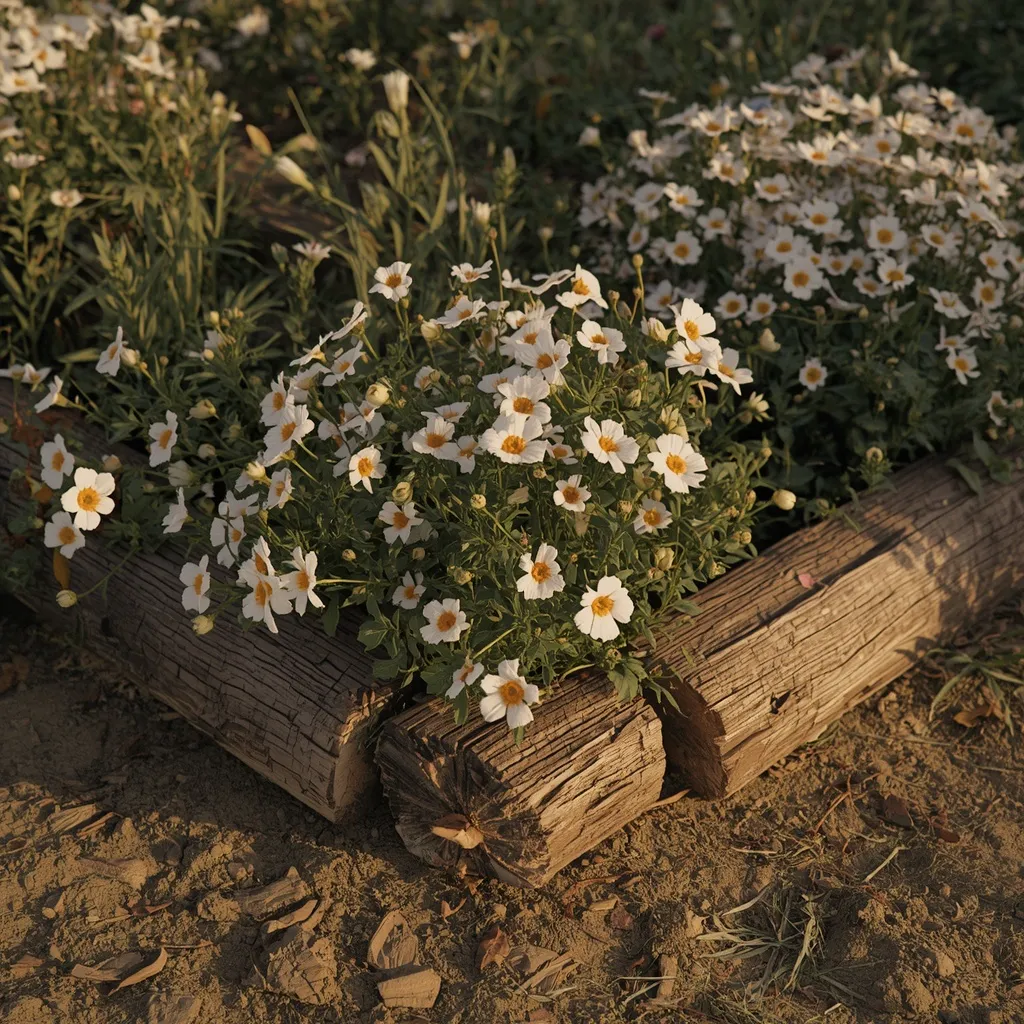
A rustic corner is all natural materials and relaxed planting: split logs or reclaimed timber edging the bed, cottage flowers tumbling over, and a weathered, settled look. Informal and characterful, rustic corners suit older gardens. Weathered, warm, and unfussy.
Use split logs, log rolls, or reclaimed timber as low edging, setting each piece into a shallow trench so it holds its line rather than tipping. Untreated softwood typically lasts around five to seven years in ground contact before it needs replacing, while naturally durable timber like cedar or oak lasts considerably longer. Wear gloves handling rough or reclaimed timber, and check reclaimed pieces for old nails and screws before use. This suits cottage gardens, informal plots, and low budgets.
- Why it works: Setting each timber into a shallow trench keeps the edging line true rather than tipping over time.
- Best for: Cottage and informal gardens; low budgets.
- Key elements: split log or reclaimed edging, trenched in, cedar or oak for longevity, reclaimed timber checked for nails.
9. Raised Wooden Corner Bed
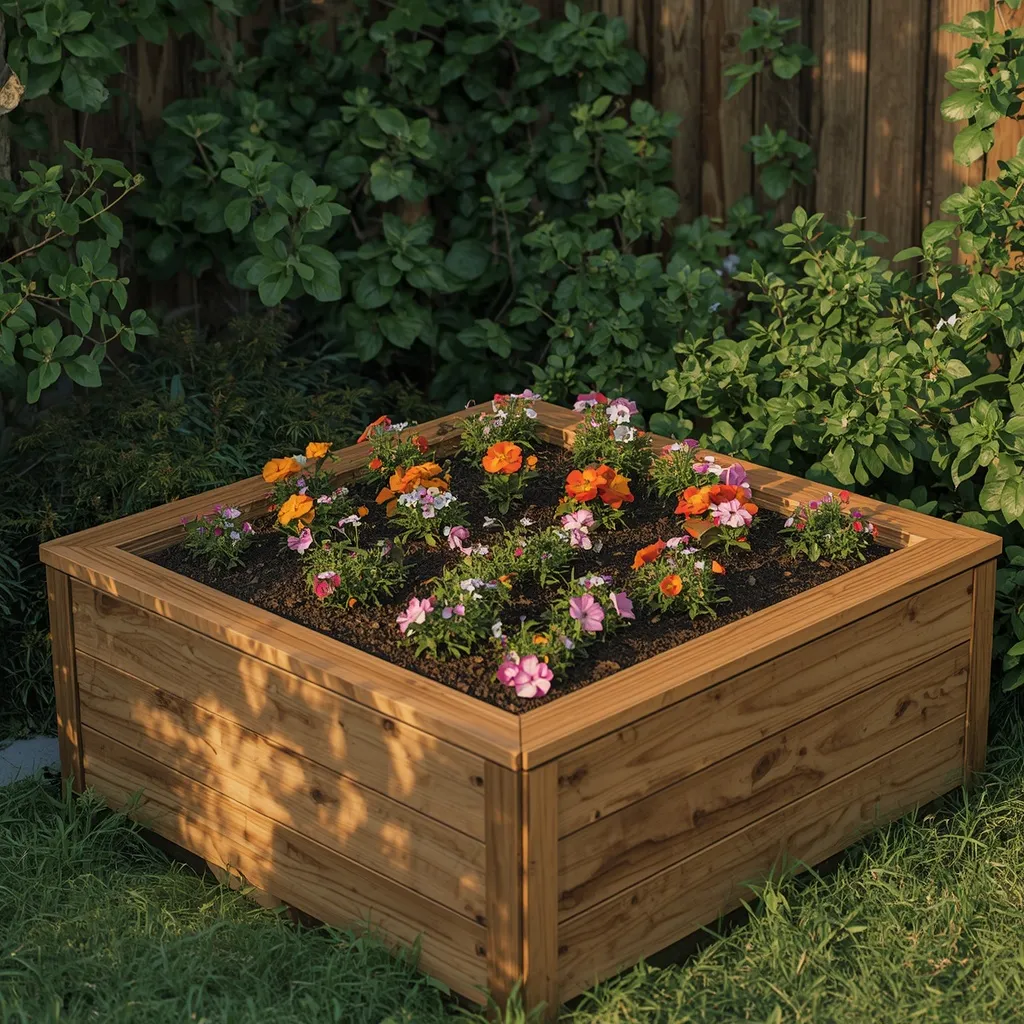
A raised wooden corner bed gives the angle instant definition: an L-shaped or triangular timber frame, 30–45 cm high, filled with good soil and planted to spill over the edges. Contained and productive, raising a corner solves poor soil at the same time. Neat, structured, and practical.
Build to 30–45 cm (12–18 in) high, which improves drainage and reduces bending without needing engineered retaining. Use cedar or timber treated for ground contact, and leave the base open so water drains freely. Corners are where reach becomes a problem, so keep the bed within about 75 cm (30 in) from any accessible edge, beyond that you’ll be standing on the soil to weed, compacting it every time. This suits poor or compacted soil, and gardeners wanting less bending.
- Why it works: Keeping the bed within 75 cm of an accessible edge means never standing on and compacting the soil.
- Best for: Poor soil; reduced-bending gardening; defined layouts.
- Key elements: 30–45 cm height, cedar or treated timber, open base, 75 cm maximum reach.
10. Stone-Edged Corner Bed
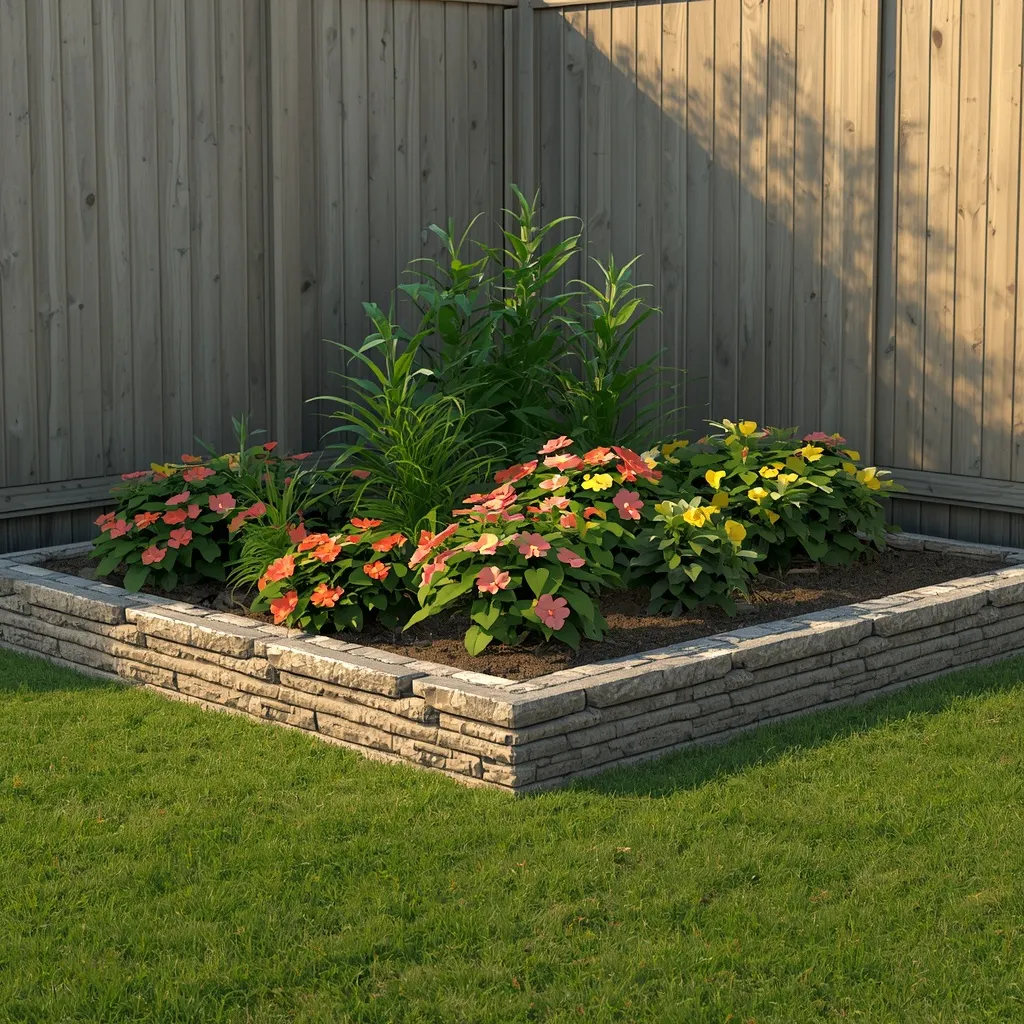
A stone-edged corner has weight and permanence: dry-stacked or laid natural stone following the bed’s front edge, planting tumbling over the top, and a settled look that improves with age. Solid and timeless, stone suits corners that stay put. Substantial, natural, and lasting.
Lay stone along the front edge only, since the boundary sides are already defined by the fence or wall, this halves the material cost of edging a corner compared with edging a freestanding bed. Set the first course into a shallow trench so it doesn’t shift, and keep any stacked height under about 60 cm (2 ft), above which retaining structures usually need engineered design. Stone is heavy, so lift with your legs and get help with larger pieces. This suits permanent gardens and traditional houses.
- Why it works: A corner only needs edging on its front face, halving the stone required compared with a freestanding bed.
- Best for: Permanent gardens; traditional houses; slopes.
- Key elements: front-edge stone only, trenched first course, under 60 cm stacked, safe lifting.
11. Corner Bed With a Bench
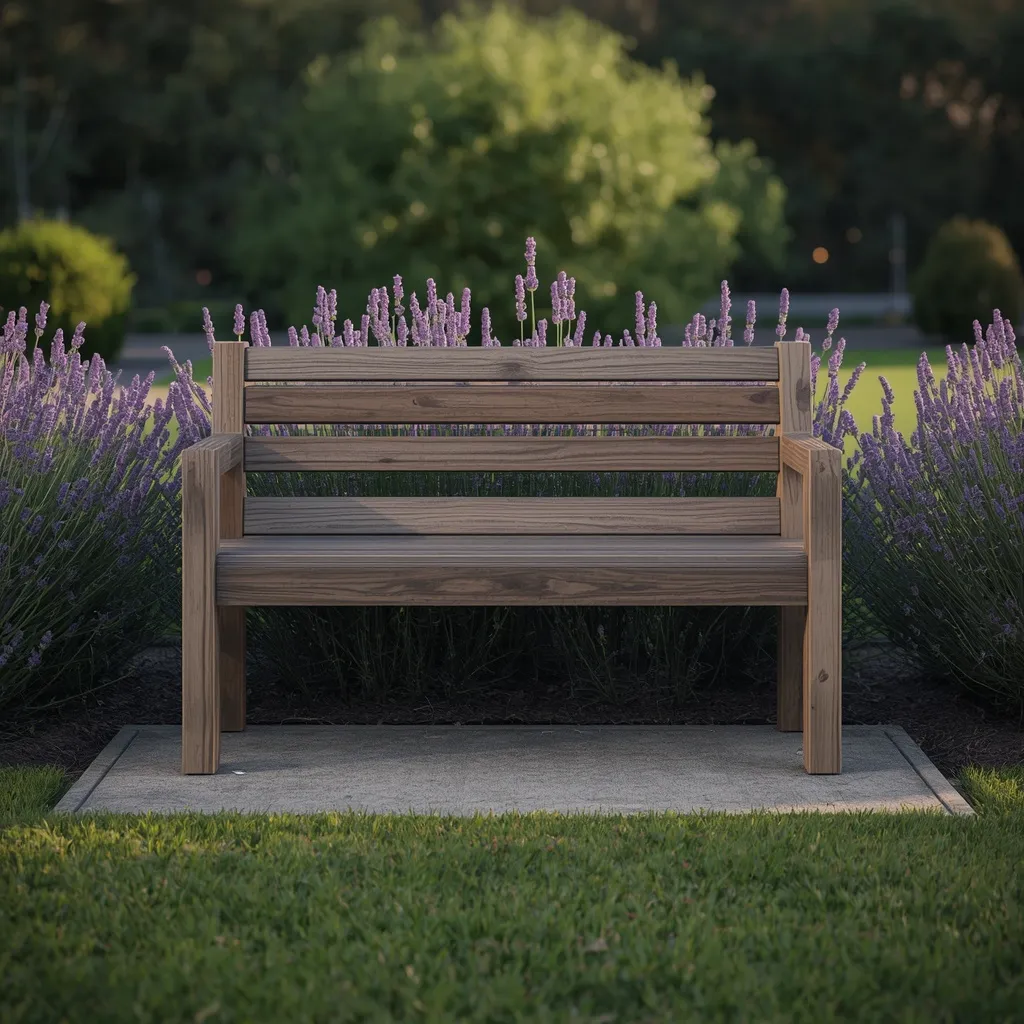
A bench tucked into a planted corner creates a destination: seating set into the angle with flowers rising behind and around it, fragrance at shoulder height, and a reason to walk down the garden. Restful and purposeful, a seated corner earns its space. Comfortable, scented, and secluded.
Set the bench into the angle facing back down the garden, with planting wrapping behind and to each side so it feels enclosed rather than exposed. Leave 60–75 cm (24–30 in) of clear space in front for legs, and keep planting immediately beside the seat low or soft, nothing thorny or prone to flopping across where people sit. Place fragrant plants like lavender or philadelphus within arm’s reach. Set the bench on a firm, level base rather than bare soil, which shifts and becomes muddy. This suits gardens wanting a quiet spot.
- Why it works: Planting wrapping behind and beside the seat makes a corner bench feel enclosed rather than exposed.
- Best for: Quiet retreat corners; fragrance gardens.
- Key elements: bench facing down the garden, 60–75 cm legroom, soft non-thorny neighbors, fragrance at arm’s reach, firm level base.
12. Corner Water Feature Bed
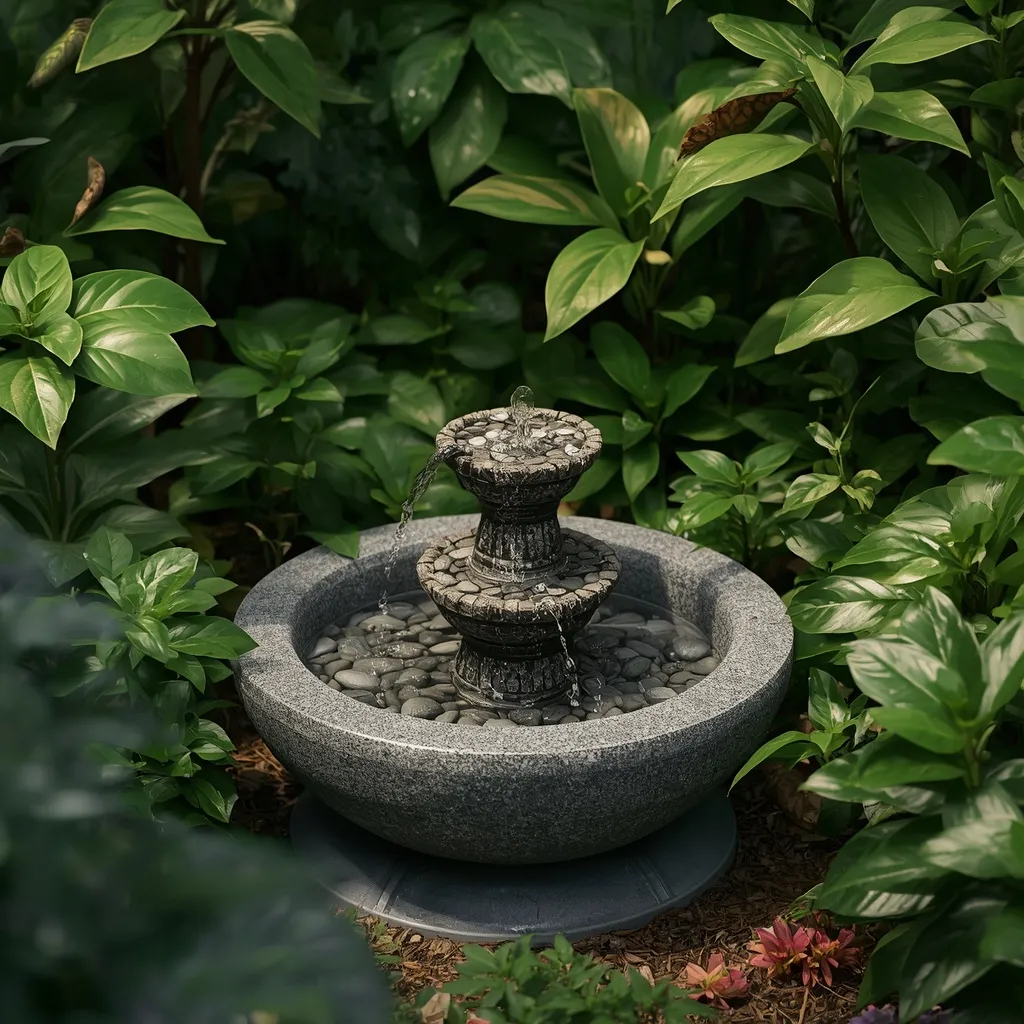
A small fountain in a planted corner brings sound and movement: a self-contained water feature set into the angle, surrounded by lush foliage, with the splash softening street or neighbor noise. Tranquil and sensory, water makes a corner feel finished. Cool, gentle, and calming.
Choose a self-contained recirculating feature rather than an open pond, since it uses far less water and needs no separate reservoir. Set it on a firm, level base, an unlevel feature runs unevenly and can topple, and plant lush moisture-tolerant foliage around it, keeping leaves out of the pump intake to prevent blockages. Two safety points: any outdoor electrical supply should be installed by a qualified electrician with appropriate protection, and open water of any depth is a drowning risk to young children, so choose a pebble-fountain style with no standing water where children have access. This suits noise-affected gardens and sensory planting.
- Why it works: A self-contained recirculating feature gives the sound of water without a pond’s water use or reservoir.
- Best for: Noise-affected gardens; sensory and tranquil corners.
- Key elements: self-contained recirculating unit, firm level base, foliage clear of pump intake, qualified electrician, pebble style where children have access.
13. Trellis Corner Screen
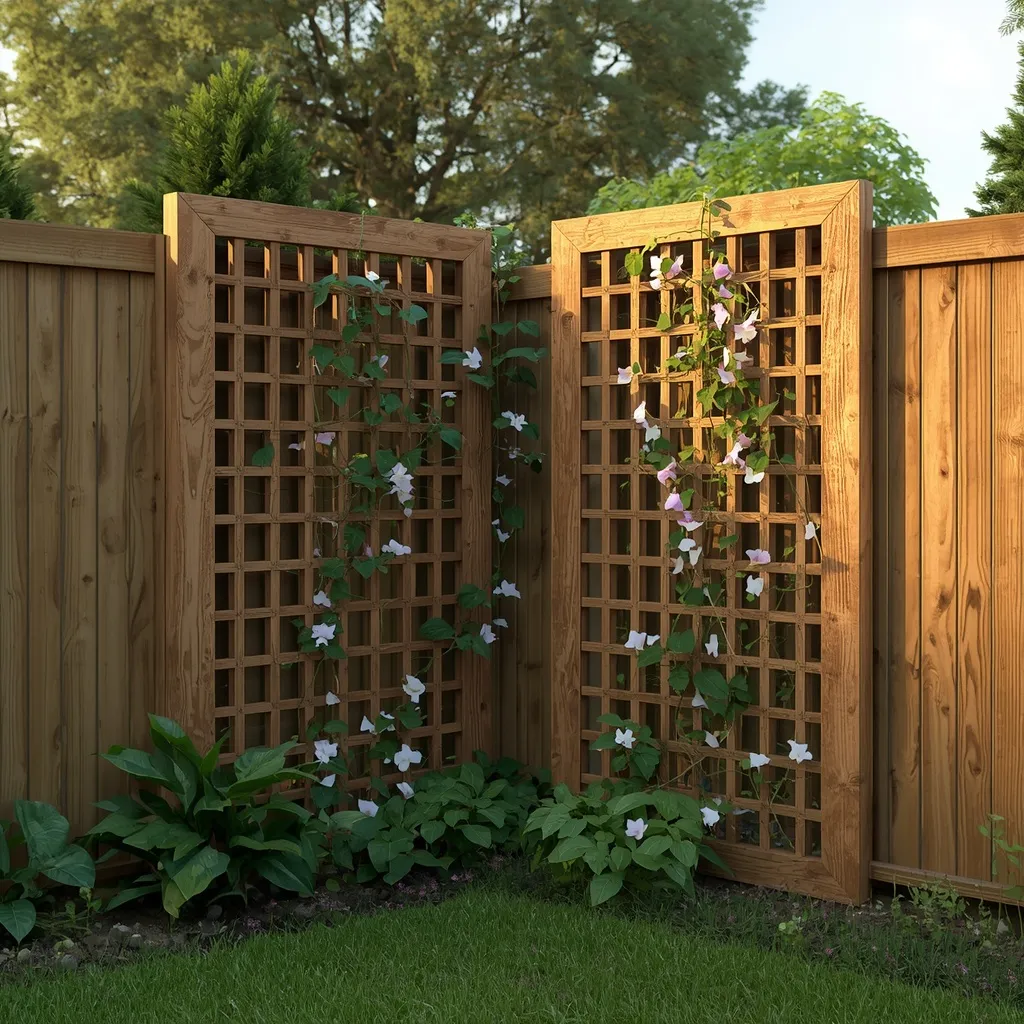
A trellis turns a corner into a green wall: panels fixed above the fence line at the angle, climbers threading upward, and planting at the base grounding the whole structure. Vertical and screening, a trellis corner buys privacy without floor space. Tall, leafy, and private.
Fix trellis to sturdy posts rather than directly to fence panels, which rarely take the wind load of a mature climber and can pull loose in a gale. Mount panels 5 cm (2 in) clear of any solid surface so air circulates and stems have something to twine around. Choose climbers by vigor: clematis and annual climbers stay manageable, while wisteria and Russian vine overwhelm a small corner within a few seasons. Check height rules with neighbors before raising a boundary. This suits overlooked gardens and small plots needing privacy.
- Why it works: Fixing to sturdy posts rather than fence panels handles the wind load a mature climber creates.
- Best for: Overlooked gardens; small plots needing privacy.
- Key elements: posts not panels, 5 cm standoff, manageable climbers like clematis, boundary height checked.
14. Corner Bed With a Pathway
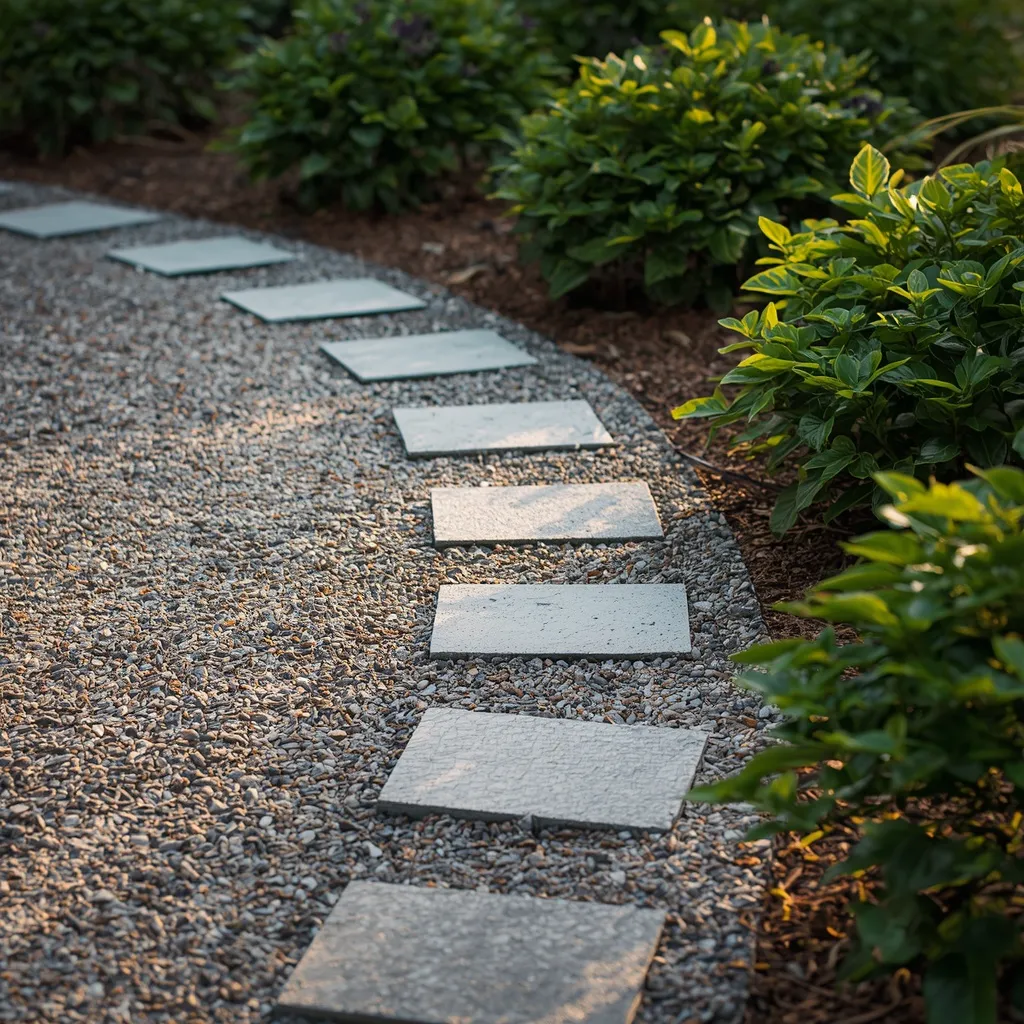
A path curving past a corner bed makes the whole garden feel bigger: stepping stones or gravel sweeping around the planting, drawing the eye and the feet toward the angle. Directional and inviting, a path gives a corner a purpose. Curving, textured, and welcoming.
Curve the path around the bed rather than running it straight past, since a curve conceals the destination briefly and makes a short garden feel longer. Keep the walking surface at least 60 cm (24 in) wide for a secondary path, or 90 cm (3 ft) for a main route. Set stepping stones flush with the surrounding surface so they don’t become trip hazards, and keep low planting from flopping across the walking line after rain. This suits gardens wanting flow and corners at the end of a route.
- Why it works: Curving a path briefly conceals the destination, which makes a short garden feel longer.
- Best for: Gardens wanting flow; corners at the end of a route.
- Key elements: curved not straight, 60–90 cm width, stepping stones set flush, planting kept off the walking line.
15. Container and Corner Combination
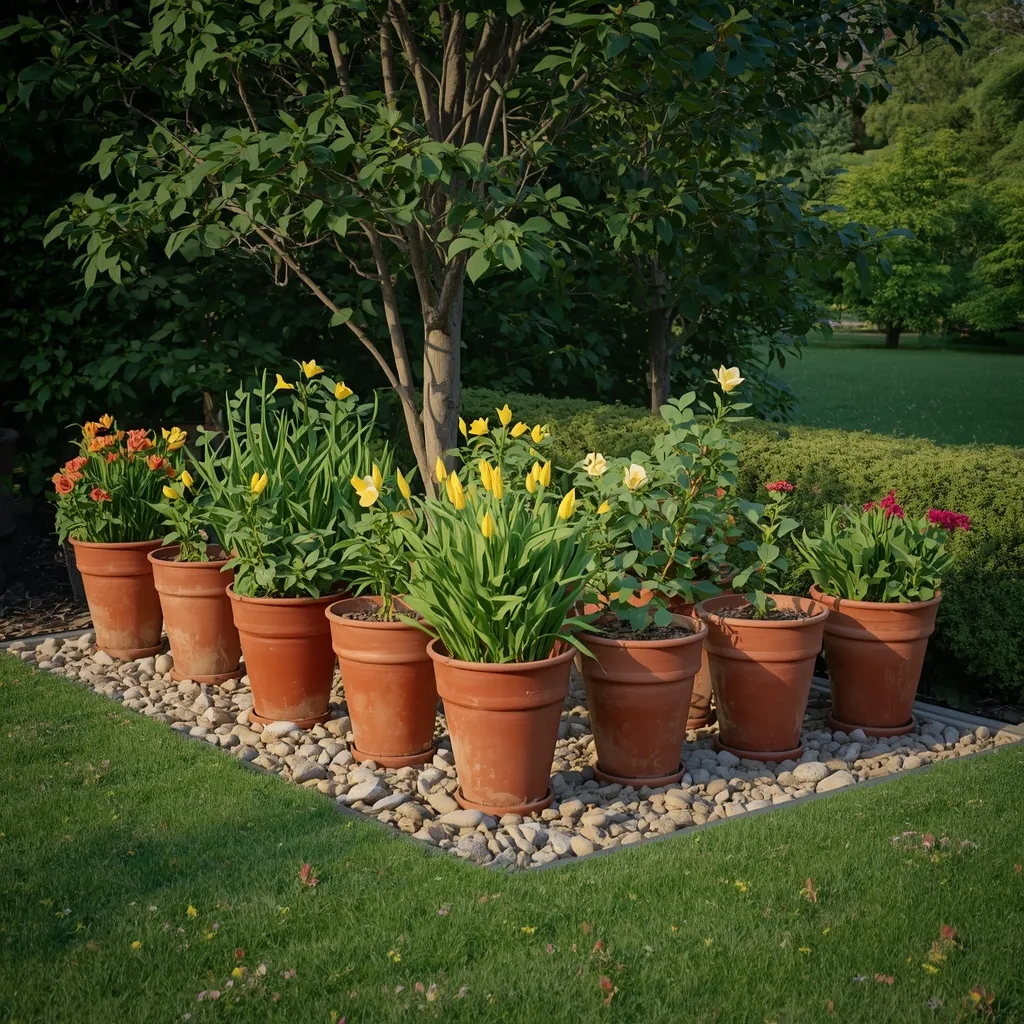
Pots grouped at the edge of a corner bed add instant height and flexibility: a cluster of terracotta or glazed containers at varied heights, holding seasonal color the bed itself doesn’t need to carry. Adaptable and immediate, containers fill a corner while planting establishes. Layered, movable, and colorful.
Cluster pots in odd numbers at three different heights rather than lining them up, choosing containers over 30 cm (12 in) across since smaller pots dry out within a day in summer heat. Use containers for seasonal changes and let the bed hold the permanent structure. This combination is particularly useful in a corner’s first two years, filling gaps while perennials reach mature size. Containers need feeding through the growing season, as nutrients wash out with every watering. This suits renters, new beds, and hard-surfaced corners.
- Why it works: Containers fill a corner’s gaps during the first two years while permanent planting reaches mature size.
- Best for: Renters; new beds; hard-surfaced corners.
- Key elements: odd-numbered cluster, three heights, pots over 30 cm, regular feeding, seasonal swaps.
16. Small Balcony Corner
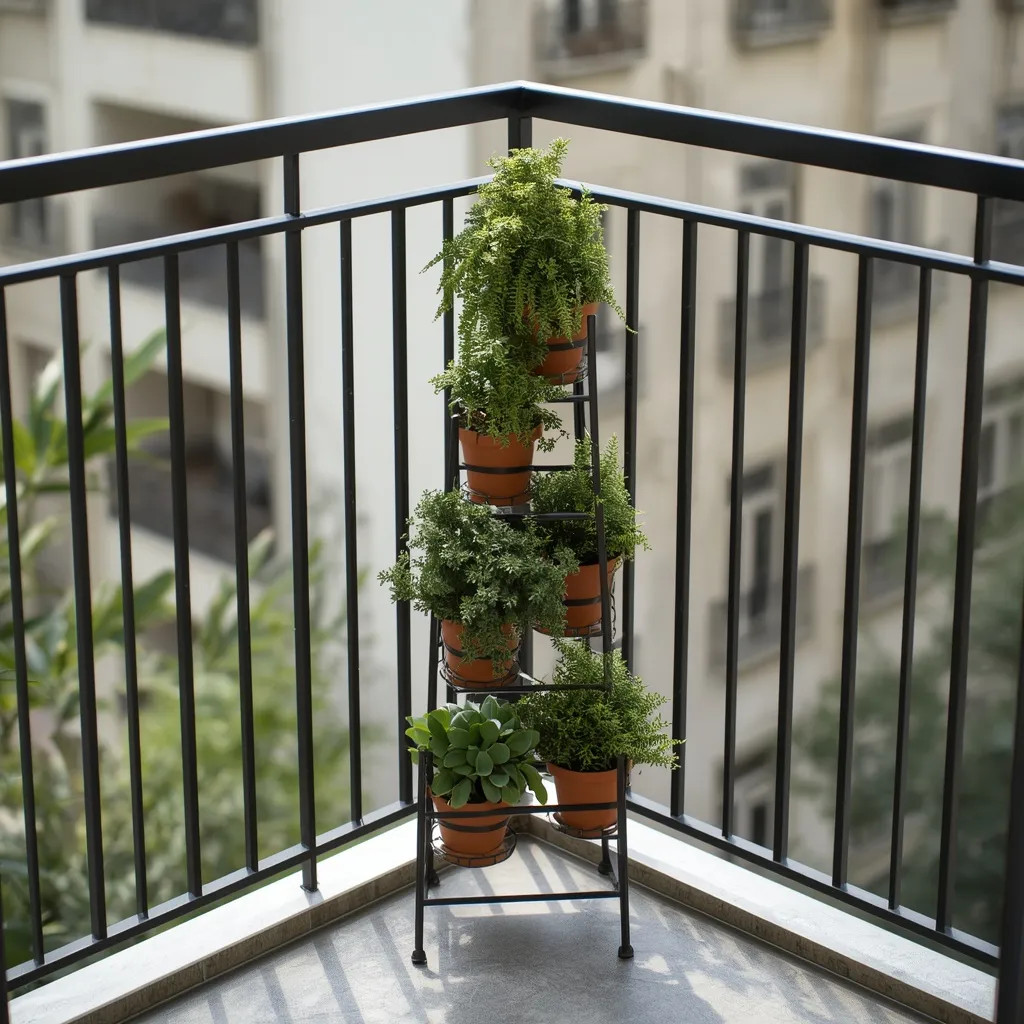
A balcony corner proves the idea scales down: a tiered arrangement of pots filling the angle where two railings meet, planted as one composition rather than scattered containers. Compact and clever, a small corner still follows the same rules. Tight, layered, and green.
Apply the corner logic at container scale, tallest pot into the angle, stepping down to the open side, and use a corner plant stand or tiered shelf to gain height without floor space. Check the balcony’s load limits before adding heavy pots, since wet soil is considerably heavier than dry, and secure anything tall against wind, which is stronger at height than at ground level. Use lightweight potting mix rather than garden soil. This suits balconies, small patios, and renters.
- Why it works: The same tall-to-low corner logic works at container scale on a balcony as it does in a bed.
- Best for: Balconies; small patios; renters.
- Key elements: tallest pot in the angle, tiered stand, load limits checked, wind-secured, lightweight mix.
17. Cottage Corner Border
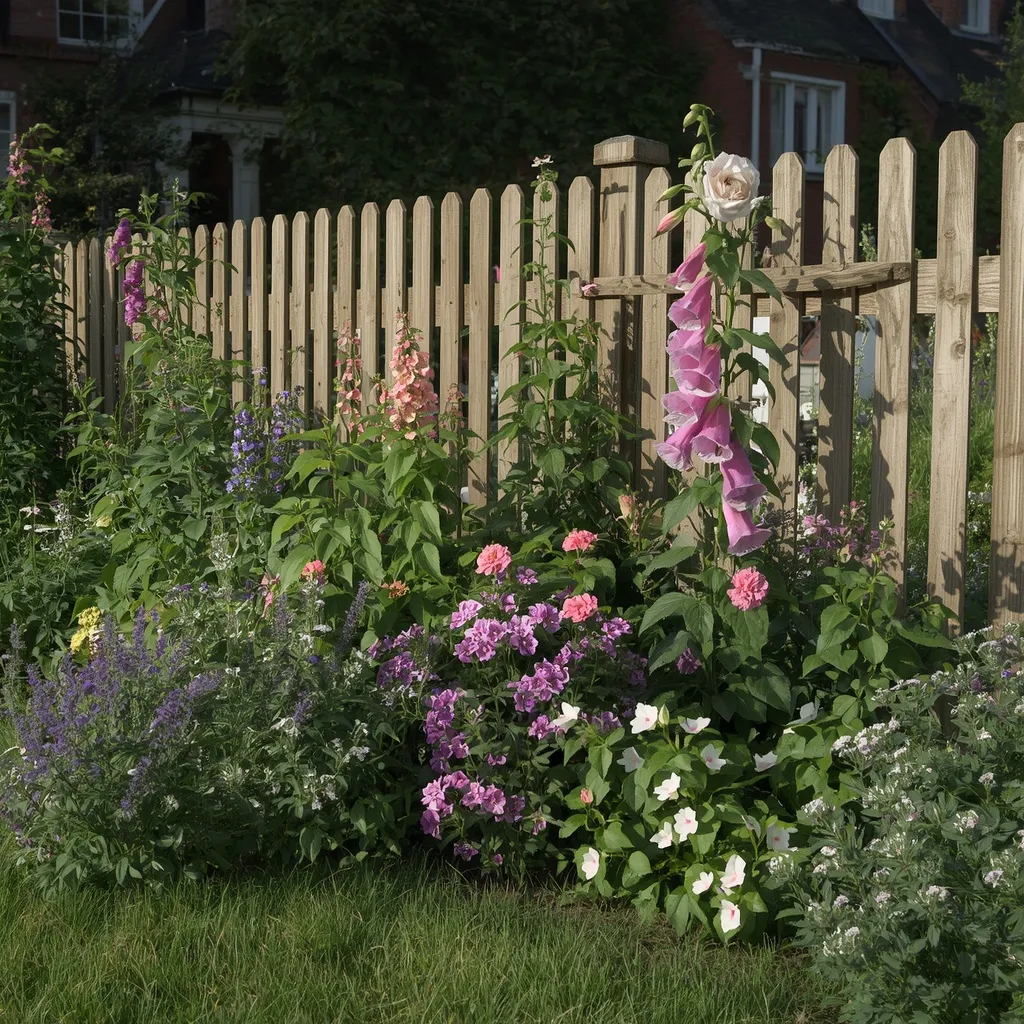
A cottage corner is packed and romantic: roses climbing the fence at the angle, foxgloves and delphiniums behind, and catmint and hardy geraniums tumbling over the front edge. Abundant and informal, cottage planting suits corners perfectly. Full, soft, and charming.
Plant densely in drifts of three or five so the bed knits together, letting plants lean into one another rather than sitting in isolation, that fullness is the whole point of the style. Long-flowering workhorses like Nepeta ‘Six Hills Giant’ and Salvia nemorosa carry months of color and re-bloom after a mid-season cut back. Note that foxgloves are toxic if eaten, so site them away from paths where children or pets pass. This suits informal gardens and hands-on gardeners.
- Why it works: Dense drift planting lets plants lean together, which is what creates the cottage fullness.
- Best for: Informal gardens; hands-on gardeners; romantic planting.
- Key elements: drifts of 3–5, climbing rose at the angle, Nepeta and Salvia, foxgloves sited away from paths.
18. Mediterranean Gravel Corner
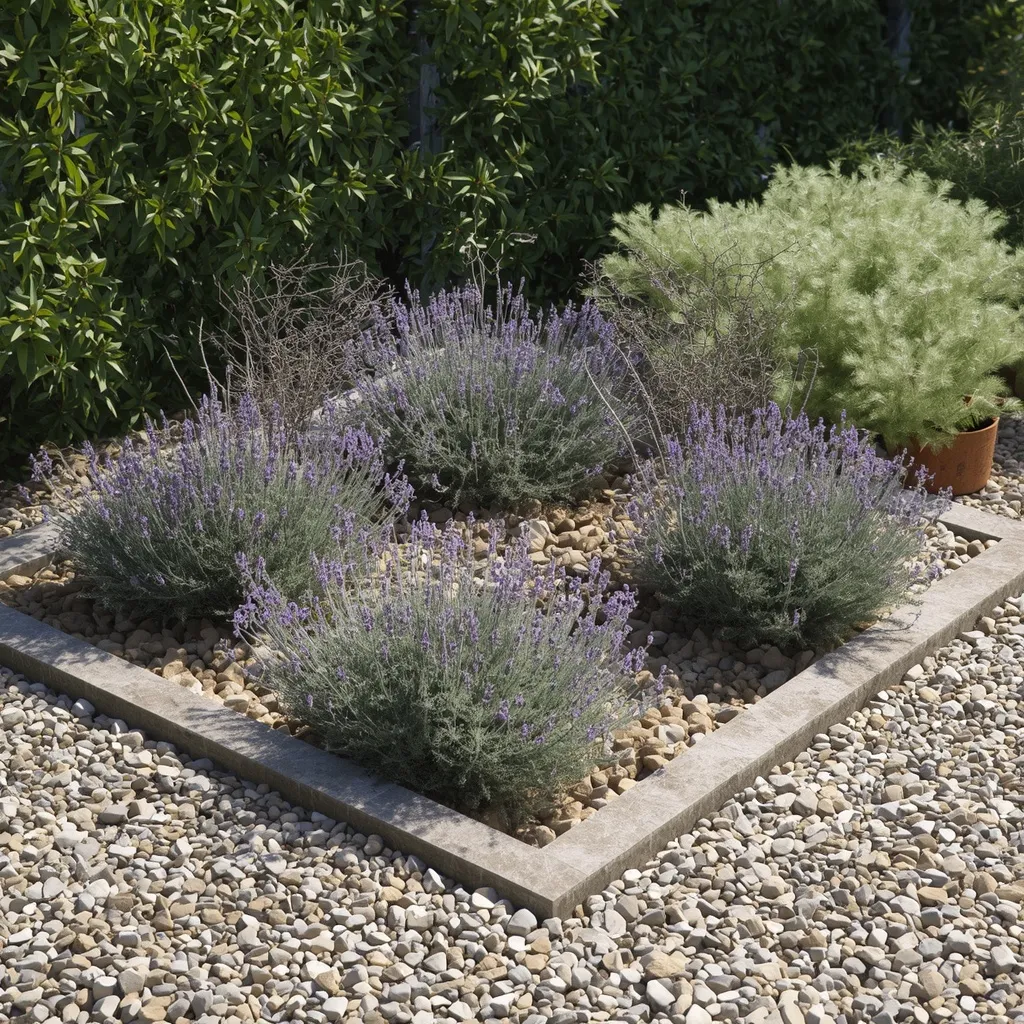
A gravel corner bakes beautifully: silvery lavender, santolina, and phlomis rising through angular gravel, with a few terracotta pots and no irrigation once established. Sun-baked and low-input, gravel corners suit hot dry angles. Silver, textured, and tough.
Spread gravel 5–8 cm (2–3 in) deep over free-draining soil and plant directly through it, skipping landscape fabric in planted areas since it blocks self-seeding and makes future planting difficult. Mediterranean species genuinely prefer lean soil, so resist enriching it heavily. Water through the first season only, then let roots go deep. A hot, dry, reflected-heat corner that defeats other planting is exactly where this thrives. This suits hot climates, water restrictions, and neglected sunny corners.
- Why it works: Mediterranean species prefer lean soil, so a hot dry corner that defeats other planting suits them.
- Best for: Hot climates; water restrictions; neglected sunny corners.
- Key elements: 5–8 cm gravel, lavender and santolina and phlomis, no fabric in planted areas, first-season watering only.
19. Tropical Lush Corner
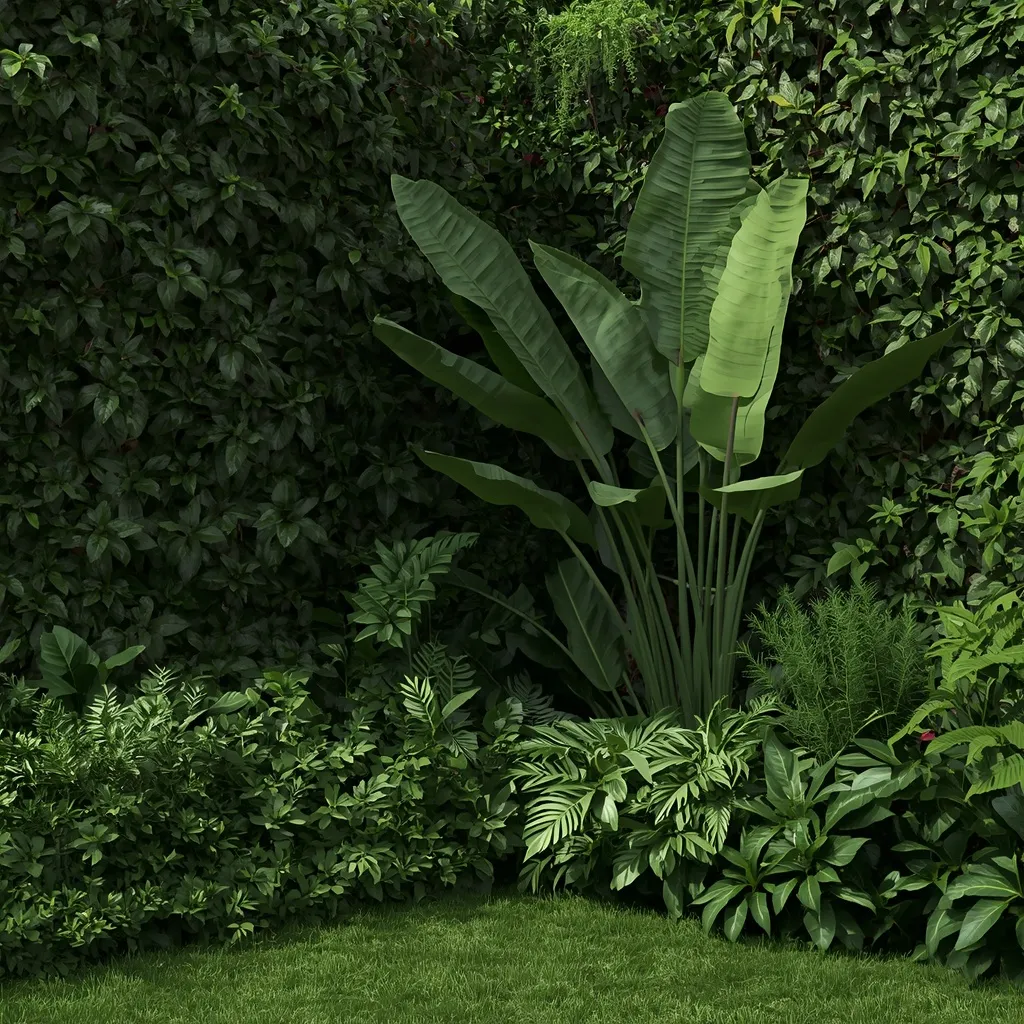
A tropical corner is all scale and drama: huge-leaved foliage layered against the fence, banana or canna at the angle, and dense green filling every gap. Bold and jungly, big leaves make a small corner feel like an escape. Lush, dramatic, and enveloping.
Build the look from leaf size and layering rather than flowers, combining large-leaved plants at the back with mid-sized and fine foliage forward. In cooler climates, hardy substitutes deliver the effect without the tenderness, Fatsia japonica, hardy bananas, and large-leaved hostas all read tropical while surviving frost. Tender species like canna need lifting or heavy mulching before the first frost in cold-winter areas. Sheltered corners suit this best, since large leaves shred in wind. This suits sheltered gardens and bold planting styles.
- Why it works: Hardy substitutes like Fatsia japonica deliver the tropical effect in climates that would kill tender species.
- Best for: Sheltered gardens; bold planting; frost-prone areas using hardy swaps.
- Key elements: layered leaf sizes, Fatsia and hardy banana, tender species lifted before frost, sheltered position.
20. White Moonlight Corner
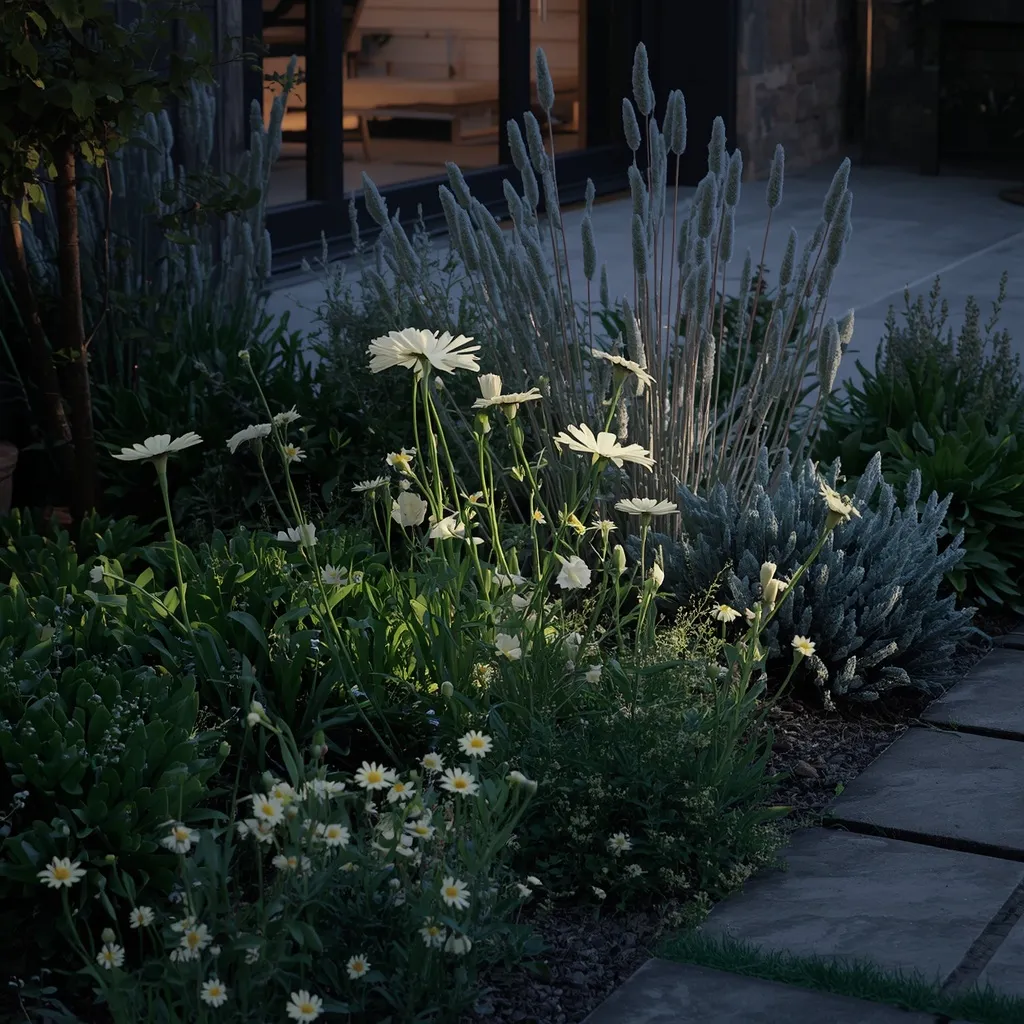
A white corner glows after sunset: cream and white flowers against silver foliage, catching the last light long after colored planting has vanished into the dark. Luminous and quiet, white corners work hardest in the evening. Pale, glowing, and serene.
Combine white flowers with silver-leaved plants like artemisia and lamb’s ear, which reflect low light more effectively than any bloom. Site this where you’ll actually see it after dark, visible from a patio, a window, or beside a seating corner, since a moon garden hidden behind a shed wastes its whole point. Add evening-fragrant plants like nicotiana or night-scented stock, which release scent as the light goes. This suits evening gardens and households home mainly after dark.
- Why it works: Silver foliage reflects low light better than flowers, keeping a corner visible well after dusk.
- Best for: Evening gardens; corners visible from a patio or window.
- Key elements: white and cream flowers, silver artemisia and lamb’s ear, sited within evening view, night fragrance.
21. Pollinator Corner Patch
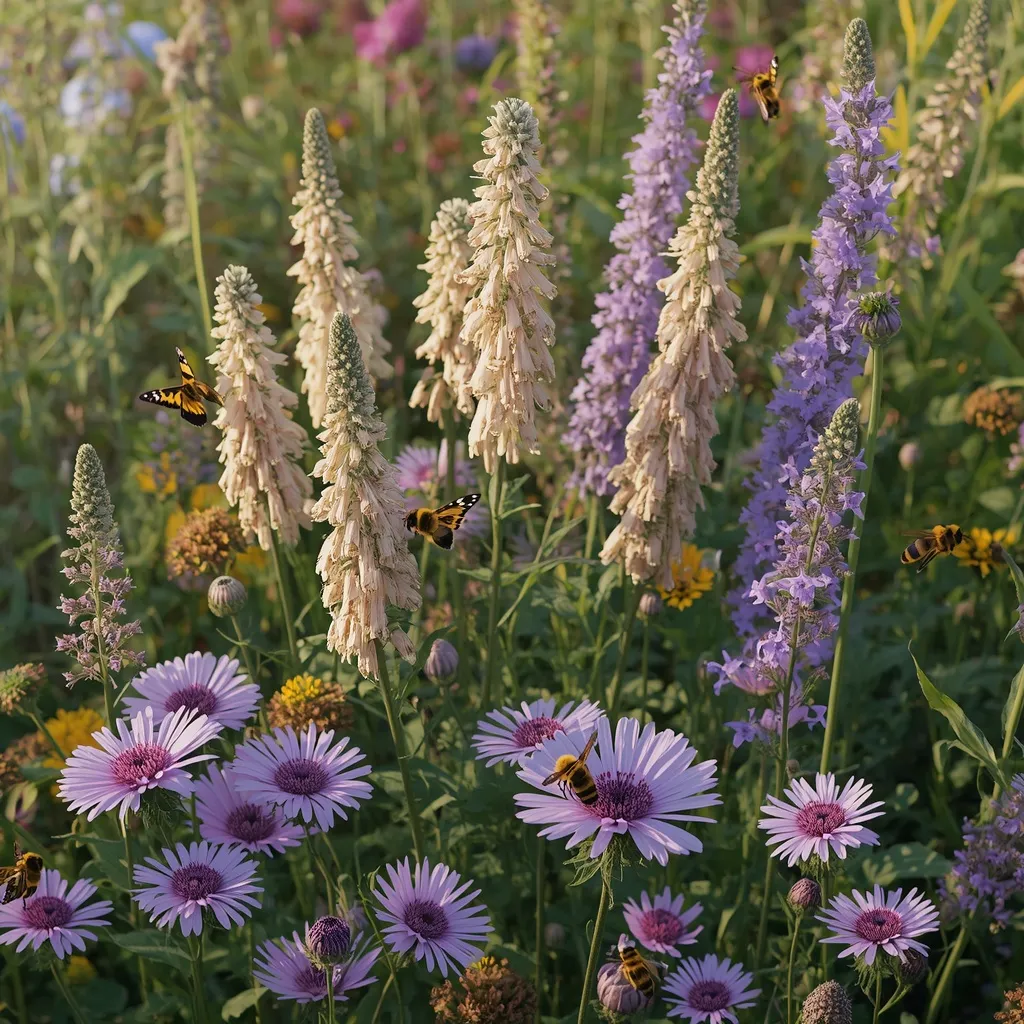
A pollinator corner hums all summer: native perennials in generous drifts, overlapping bloom from spring to autumn, and bees working the angle from morning to dusk. Purposeful and alive, a corner is an ideal size for wildlife planting. Buzzing, natural, and rewarding.
Choose species native to your region, since local extension services and botanical gardens publish region-specific lists far more reliable than generic recommendations, and plant in drifts of at least three to five so pollinators forage efficiently. Aim for overlapping bloom periods across the season. A corner suits this particularly well because it’s usually out of the main traffic route, so planting can be left standing over winter to shelter overwintering insects, cut back in late winter rather than autumn. Avoid pesticides entirely. This suits wildlife-minded gardeners.
- Why it works: A corner sits out of the traffic route, so planting can be left standing to shelter overwintering insects.
- Best for: Wildlife gardens; low-traffic corners; ecological planting.
- Key elements: region-specific natives, drifts of 3–5, overlapping bloom, late-winter cutback, no pesticides.
22. Evergreen Structure Corner
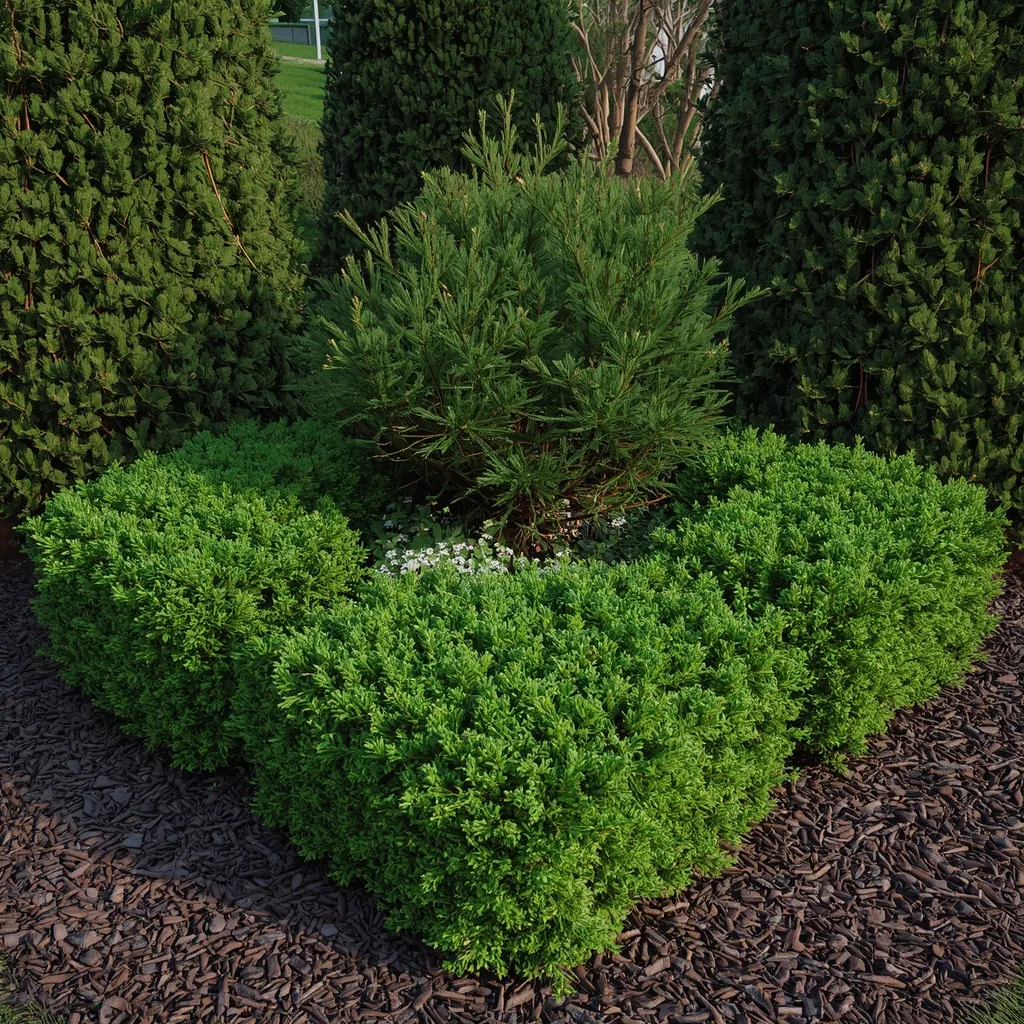
An evergreen corner holds its shape all year: clipped or naturally compact evergreens forming a permanent green anchor, with a few seasonal flowers threaded through. Reliable and neat, evergreen corners never look bare. Green, tidy, and year-round.
Choose slow-growing structural evergreens so clipping stays occasional rather than constant, dwarf conifers, compact hebe, or box alternatives where box blight is a local problem. Corners suit evergreens especially well because they’re often the part of the garden seen from a window in winter, when a deciduous bed is bare soil. Mulch 5–8 cm (2–3 in) deep to suppress weeds. This suits low-maintenance gardens, winter views, and anyone who dislikes a bare season.
- Why it works: A corner is often what’s seen from a window in winter, when a deciduous bed shows only bare soil.
- Best for: Low-maintenance gardens; winter views; year-round structure.
- Key elements: slow-growing evergreens, occasional clipping, seasonal flowers threaded through, 5–8 cm mulch.
23. Tiered Corner Bed
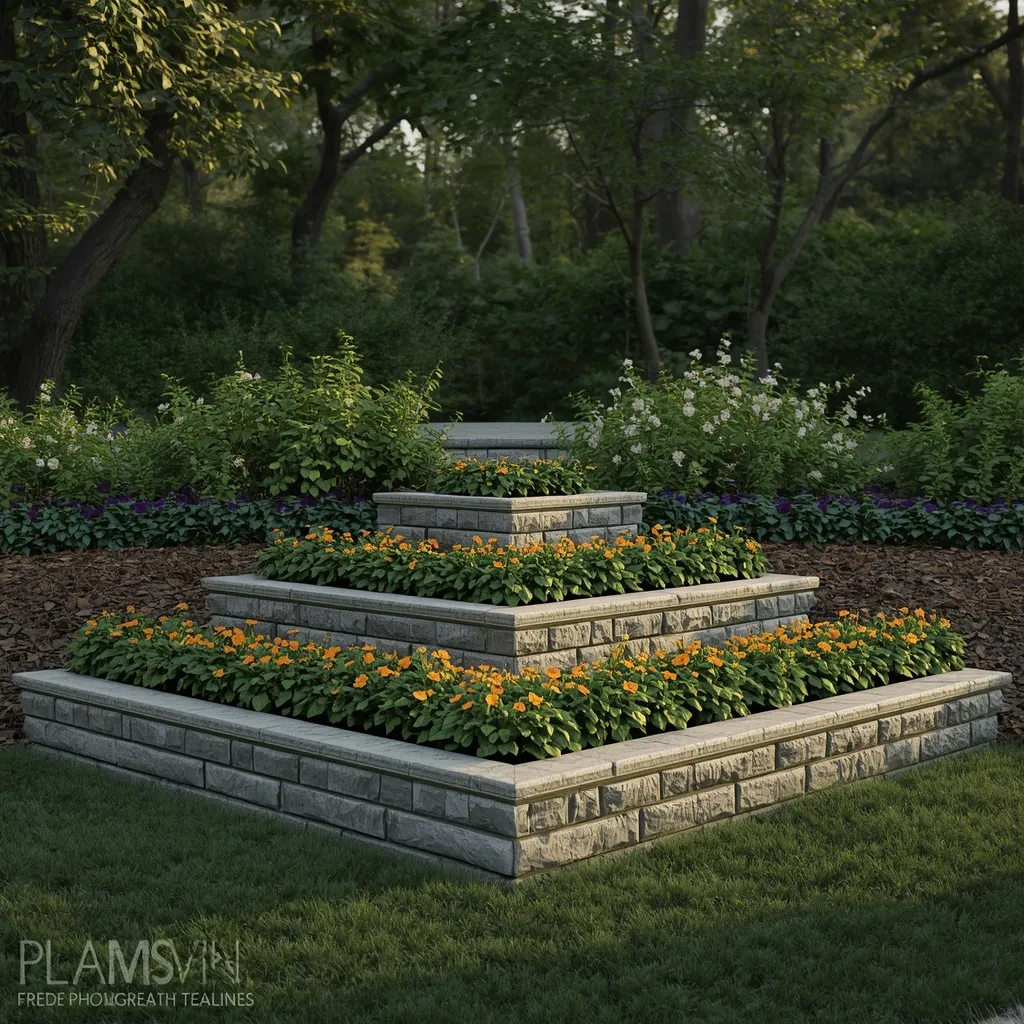
A tiered corner steps up into the angle: two low retaining courses rising toward the boundary, each level planted so the whole face reads as one composition. Layered and space-efficient, tiering solves sloping corners and adds depth to flat ones. Stepped, structured, and generous.
Keep each tier under about 60 cm (2 ft), since taller retaining structures usually need engineered design and sometimes a permit, and include drainage behind each course so water pressure doesn’t build, that pressure causes most wall failures. Step tiers back rather than stacking vertically. Tiering suits a corner particularly well because the raised levels are all visible from the single viewing angle, unlike a freestanding tiered bed where the back is wasted. This suits sloping corners and gardens wanting depth.
- Why it works: In a corner every raised tier faces the single viewing angle, so no level is wasted out of sight.
- Best for: Sloping corners; adding depth to flat ground.
- Key elements: tiers under 60 cm, drainage behind each course, stepped back, planted to read as one face.
24. The Corner Layout Method
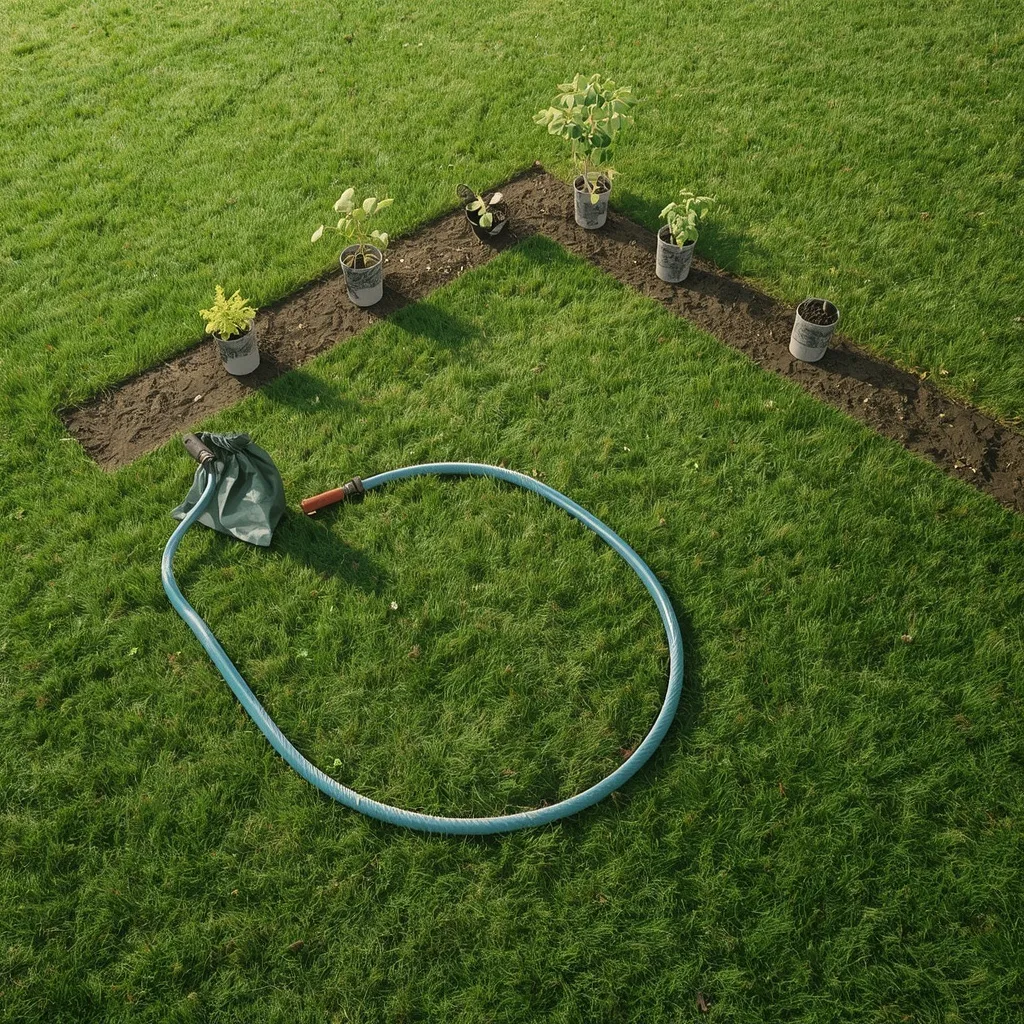
Setting a corner out properly takes an hour and decides everything after: shape marked and viewed, reach checked, access left, soil improved, and plants trialled in their pots before anything is planted. Methodical and unglamorous, this sequence underpins every design above. Careful, ordered, and worth doing.
Work in order. Mark the shape with a hose and view it from the house and the main sitting spot, not just standing over it. Check reach: keep every part within about 75 cm (30 in) of an accessible edge, or set a stepping stone into the bed. Leave 30–45 cm (12–18 in) behind tall planting if the fence needs future access. Improve soil with 5–10 cm (2–4 in) of compost, remembering the strip nearest a solid fence sits in a rain shadow and stays drier. Set plants out in their pots, tallest into the angle, and adjust before planting. Contact your utility locating service before digging near a boundary, where cables and pipes often run. This suits every new corner bed.
- Why it works: Trialling plants in their pots lets you fix the tall-to-low order while they’re still easy to move.
- Best for: Every new corner bed; first-time gardeners.
- Key elements: hose-marked shape viewed from the house, 75 cm reach limit, fence access left, compost added, utilities located.
How Do You Design a Corner Flower Bed?
Design a corner flower bed as a border wrapped around an angle, not as an island. Because a corner is seen from one direction, the open diagonal, the tallest planting goes into the angle itself and heights step down toward the open point. Extend the bed at least 1.2–1.5 m (4–5 ft) along each side so it has presence, curve the front edge rather than cutting a straight diagonal, and keep every part within about 75 cm (30 in) of reach so you never stand on the soil.
Practical, plant-led garden advice that works in real conditions is central to the Sunday Abode approach. Once the shape is settled, the edge is what makes it look finished, and our guide to edging a flower bed neatly covers the materials in detail. For more planting inspiration, browse the rest of our flower garden ideas.
Which Corner Style Fits Your Conditions?
Corner beds differ mainly by light, effort, and whether you want a structure in the angle. Use this to narrow the options before marking anything out.
| Corner style | Light needed | Upkeep | Best for |
| Cottage planting | Full sun to part | High | Romantic, informal gardens |
| Shade retreat | Shade or part | Moderate | North-facing angles |
| Mediterranean gravel | Full sun | Very low | Hot, dry, neglected corners |
| Evergreen structure | Most conditions | Very low | Winter views from windows |
| Bench or fountain | Any | Moderate | Corners wanting a destination |
| Trellis screen | Any | Moderate; annual prune | Overlooked, private plots |
| Container cluster | Any | High; daily summer water | Renters, balconies, new beds |
Safety notes: contact your national utility locating service before digging near a boundary, 811 in the United States, with free equivalents in most countries, since cables and pipes frequently run along property lines. Keep dry-stacked stone and timber tiers under about 60 cm (2 ft) each; taller retaining structures usually need engineered design and sometimes a permit. Stone, timber, and bagged soil are heavy, so lift with your legs, wear gloves and sturdy footwear, and get help with larger pieces. Check reclaimed timber for old nails and screws before handling. Fix trellis to sturdy posts rather than fence panels, which rarely take the wind load of a mature climber. Any outdoor electrical supply for a water feature or lighting should be installed by a qualified electrician with appropriate protection. Open water of any depth is a drowning risk to young children, so choose a pebble-fountain style with no standing water where children have access. On balconies, check load limits before adding large pots, since wet soil is much heavier than dry, and secure tall containers against wind. Check plant toxicity before planting near paths where children and pets pass, the ASPCA publishes a searchable list of plants toxic to cats and dogs, and common ornamentals including foxglove are toxic if eaten. Confirm boundary height rules with neighbors before raising a fence or adding trellis.
Frequently Asked Questions
How do you make a corner flower bed?
Mark the shape with a garden hose, extending at least 1.2–1.5 m (4–5 ft) along each boundary, and view it from the house before cutting. Remove the turf, improve the soil with 5–10 cm (2–4 in) of compost, then set plants out in their pots, tallest into the angle, stepping down toward the open point, and adjust before planting anything. Mulch last, 5–8 cm (2–3 in) deep.
What should I plant in a corner flower bed?
Plant tallest at the angle and lowest at the front point, since a corner is viewed from one direction. In full sun, Salvia nemorosa, Echinacea, Rudbeckia, and lavender all perform well; in shade, layer hostas, ferns, and heuchera for texture and use pale flowers, which stay visible in low light. Plant in drifts of three or five rather than singles so the bed knits together.
What can I put in a shady garden corner?
Shade corners reward foliage texture over flower color. Combine broad hosta leaves with fine fern fronds and ruffled heuchera, then add white or pale flowers, which read far better in low light than deep colors that vanish into shadow. Shady corners are often dry as well as dark, so add organic matter and water through the first two seasons while roots establish.
How big should a corner flower bed be?
Extend it at least 1.2–1.5 m (4–5 ft) along each side, since anything shorter reads as a token gesture rather than a designed bed. Keep every part within about 75 cm (30 in) of an accessible edge, or set a stepping stone into the bed, so you never have to stand on the soil and compact it when weeding.
Why do plants near a fence dry out?
Ground within roughly 30–45 cm (12–18 in) of a solid fence or wall sits in a rain shadow, receiving noticeably less rainfall than open ground, and fences also reflect heat. That combination means plants tight against panels dry out even in wet climates. Set planting slightly forward of the fence line and water new plants there more often through the first two seasons.
Can I put a bench or water feature in a corner bed?
Both work well, since a corner is naturally enclosed on two sides. For a bench, set it into the angle facing down the garden with planting wrapping behind it, leaving 60–75 cm (24–30 in) of legroom and keeping thorny plants away from the seat. For water, choose a self-contained recirculating feature on a firm level base, with electrical work done by a qualified electrician.
What’s the best low-maintenance corner flower bed idea?
A Mediterranean gravel corner or an evergreen structure corner needs the least ongoing work. Gravel planted with lavender, santolina, and phlomis needs watering only through its first season and thrives in the hot, dry, reflected-heat conditions that defeat other planting. Slow-growing evergreens hold their shape year-round with occasional clipping and look presentable in winter when deciduous beds are bare.
Conclusion
The best corner flower bed ideas all start from the same insight: a corner is seen from one direction, so it plants like a border wrapped around an angle rather than a bed in the round. Put your height into the angle, step down toward the open point, keep the bed within arm’s reach, and remember that the strip nearest a solid fence stays drier than the rest. Whether you choose cottage planting, a gravel corner, or a bench tucked into the green, those fundamentals are what make it work. For more planting inspiration, explore the flower garden ideas collection on Sunday Abode.