


There’s a particular pleasure in looking up from your screen and seeing something living, a tree moving, weather changing, light shifting across a garden. Desk in front of window ideas are popular for exactly that reason: natural light lifts your mood, and a view gives tired eyes somewhere to rest. But the setup has real drawbacks nobody warns you about, from screen glare to being a silhouette on every video call. At Sunday Abode, we think the best layout is one that looks beautiful and actually works all day. These 16 ideas deliver both, with honest fixes for the problems the pretty photos never show.
Key Takeaways
- A window desk gives you natural light and a restorative view, both genuinely good for focus and eye comfort.
- The main problem is glare: a bright window behind your screen forces your eyes to constantly readjust, which is the fastest route to eye strain.
- On video calls, a window behind you turns you into a silhouette, face the light or add a light source in front of you.
- Check what’s under the window first. A radiator is the most common obstacle, and blocking it wastes heat and cooks your legs.
- Sheer or light-filtering shades solve most issues at once, softening glare while keeping the light and the view.
1. Minimalist Scandinavian Setup
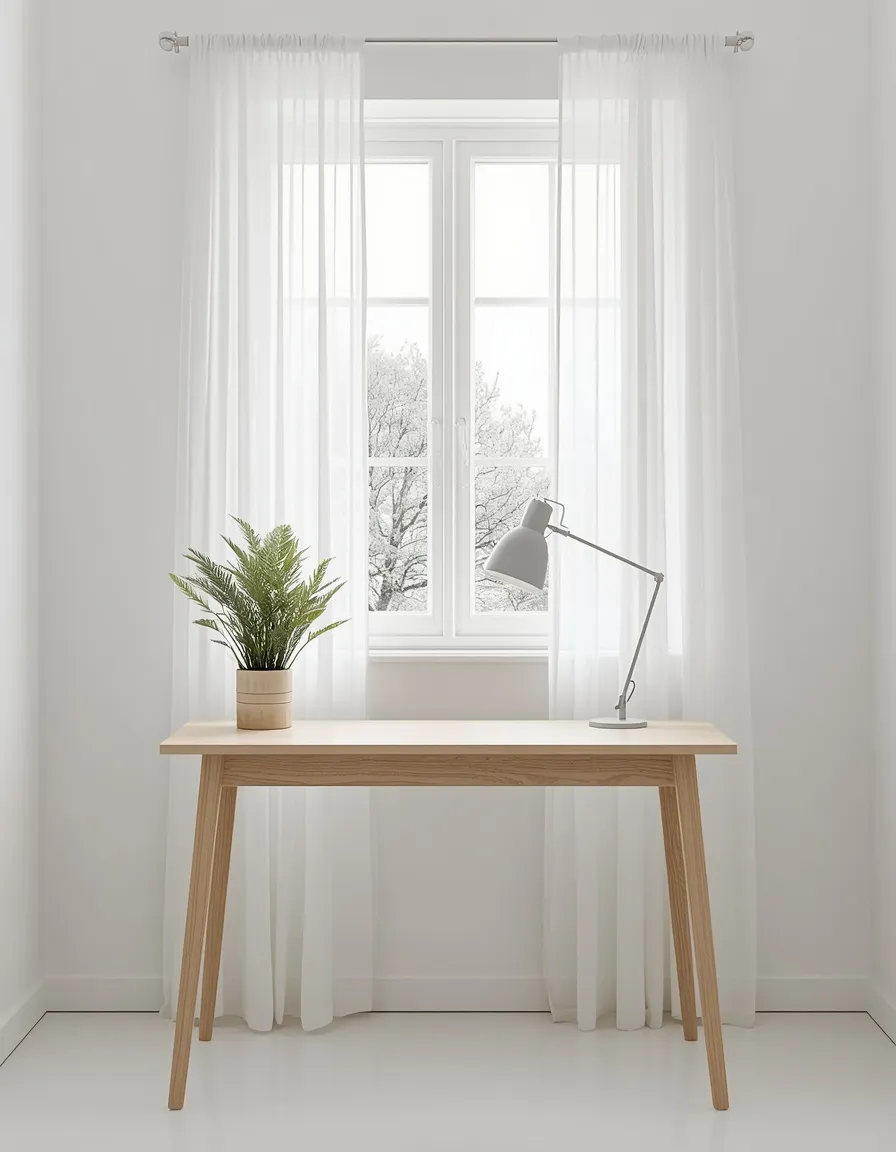
A pale wood desk set squarely beneath a bright window, with a single plant, a slim task lamp, and nothing else, is the calm Scandi workspace in its purest form. White walls, oak legs, and clear surfaces let the daylight do all the decorating.
Choose a simple oak or birch desk, keep the surface almost empty, and store everything else out of sight, since a minimalist setup collapses the moment clutter creeps in. Pair it with sheer white curtains that diffuse harsh light without blocking the view, this is the single most effective fix for glare on a screen. Add one plant and one lamp, and stop there. This suits home offices, small apartments, and anyone who finds visual clutter distracting.
- Best for: minimalists and anyone distracted by visual clutter.
- Why it works: sheer curtains diffuse glare while keeping the light and the view.
- Key elements: pale oak desk, clear surface, sheer curtains, one plant, task lamp.
2. Cozy Layered Desk Nook
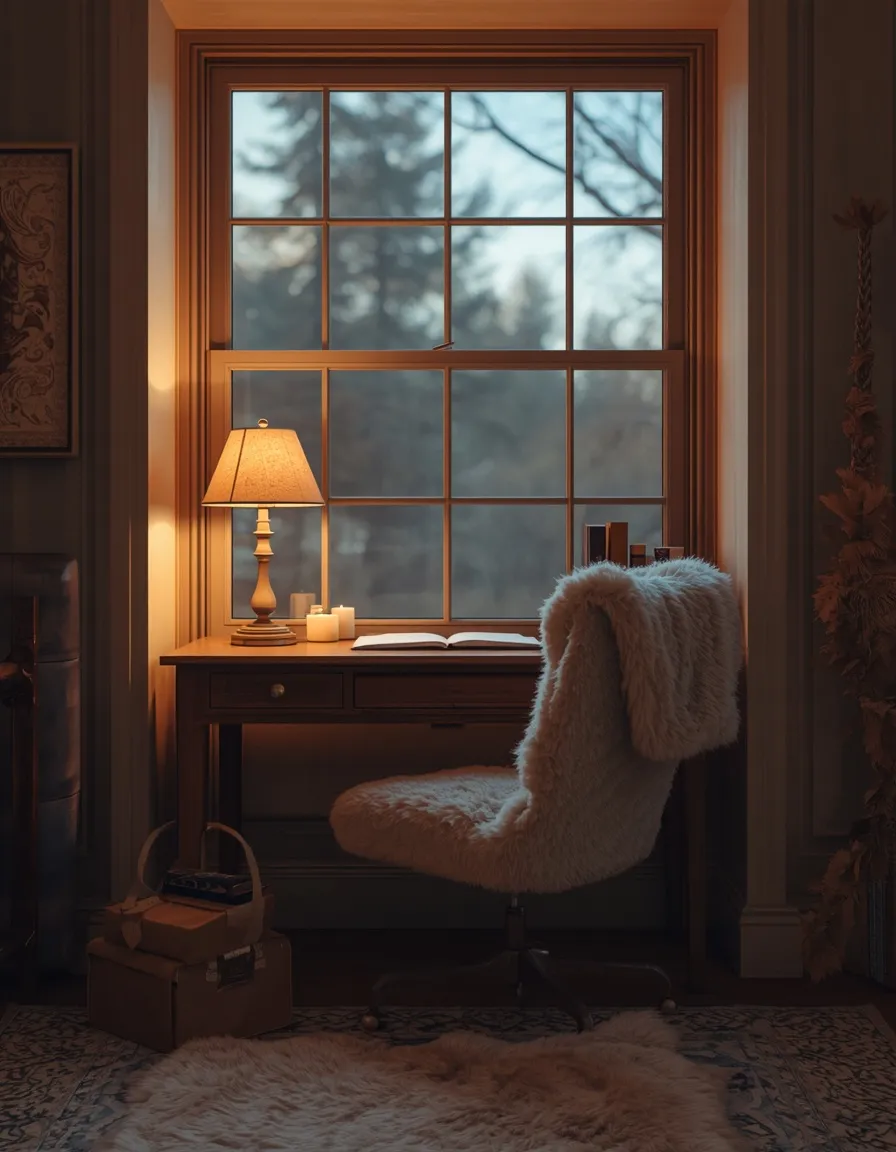
A warm, layered desk nook makes working feel like settling into a favorite chair. A wooden desk against the window, a sheepskin over the seat, a warm lamp, a candle, and a stack of books create a workspace with genuine comfort.
Build the cozy feel through texture rather than clutter: a soft throw or sheepskin on the chair, a linen curtain, a warm wool rug underfoot, and lighting in the 2700K warm-white range rather than a cold blue-white bulb. Keep the desk surface itself workable, the mistake is styling a nook so heavily there’s no room to actually work. Add a small tray to corral the pretty things. This suits bedrooms, reading corners, and anyone who works better in a soft, inviting space than a stark one.
- Best for: bedrooms and reading corners; people who work better in warm spaces.
- Watch out: style the edges, not the whole surface, leave real working room.
- Key elements: wood desk, sheepskin, warm 2700K lamp, wool rug, linen curtain.
3. Floating Desk for Small Spaces
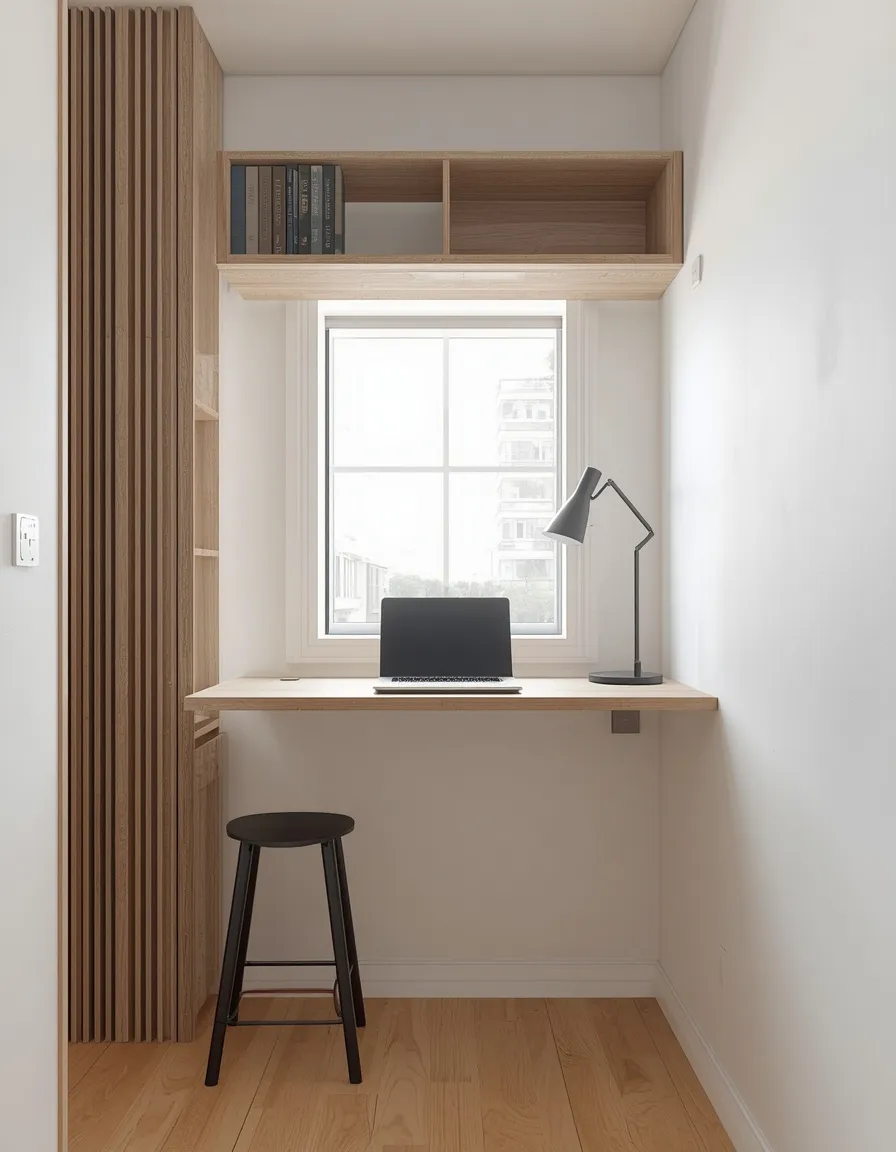
A wall-mounted floating desk beneath a window makes a workspace appear where there was no room for one. With no legs to eat floor space, the shelf-like surface tucks into a narrow wall, keeping the room feeling open beneath it.
Mount the desk at around 72–75 cm (28–30 in) high, the standard desk height for most adults, and fix it into wall studs, a floating desk carries real weight once a laptop, monitor, and elbows are on it, and plasterboard fixings alone will eventually pull free. Keep the depth to about 45–50 cm (18–20 in) so it doesn’t crowd the room. Use the wall above for a shelf. This suits studios, tiny apartments, and any awkward narrow wall beneath a window.
- Best for: studios and tiny apartments with no floor space to spare.
- Watch out: fix into studs; plasterboard fixings alone will pull free over time.
- Key elements: wall-mounted top at 72–75 cm, 45–50 cm deep, shelf above.
4. Bedroom Corner Workspace
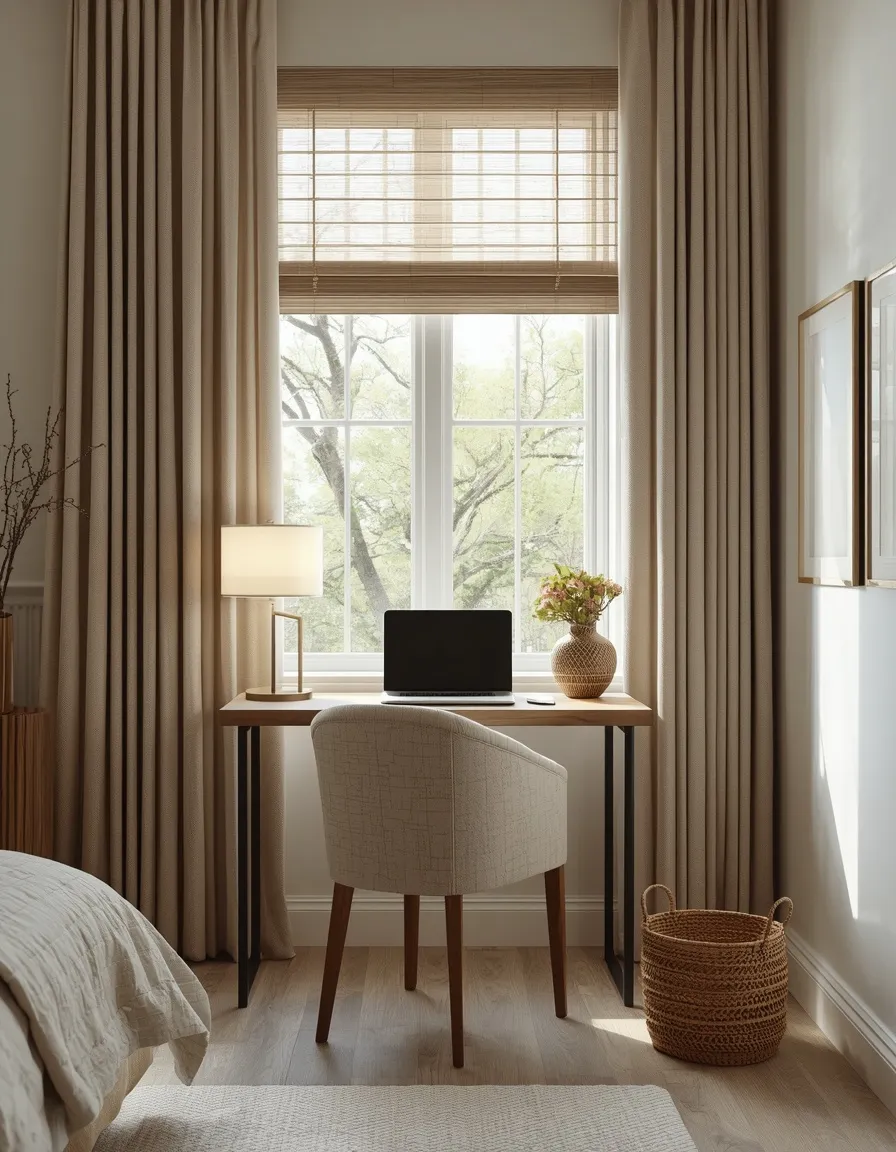
A compact desk at a bedroom window carves out a working zone without turning the room into an office. A slim desk, a chair that doesn’t scream ergonomics, and a lamp create a spot that disappears into the bedroom when the laptop closes.
Choose a desk that reads as furniture rather than office equipment, a slim writing desk or console works beautifully, and pick a chair you’d happily have in a bedroom. The real trick is being able to close it down: store the laptop and cables in a drawer or basket at the end of the day, because a visible workstation makes it much harder to switch off and sleep well. Keep the palette consistent with the rest of the bedroom. This suits anyone working from a bedroom or a studio.
- Best for: bedroom and studio workers who need work to disappear at night.
- Why it works: storing the laptop away at day’s end genuinely helps you switch off.
- Key elements: slim writing desk, non-office chair, hidden cable and laptop storage.
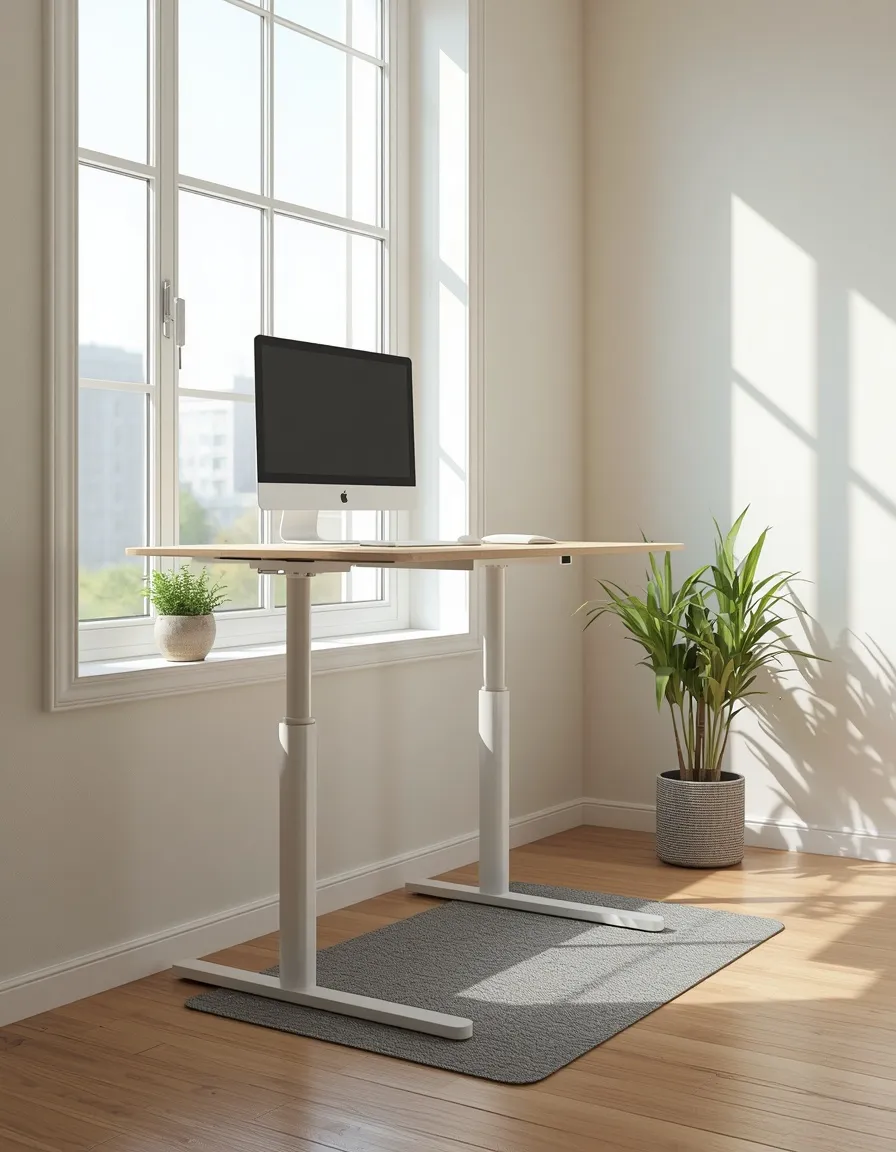
5. Standing Desk at the Window
A standing desk at a window turns the view into the reward for getting on your feet. A height-adjustable desk, a rail-side plant, and an anti-fatigue mat make standing sessions genuinely pleasant rather than a chore you abandon in a week.
Set the desktop at roughly elbow height when standing, with your forearms parallel to the floor, and position the screen so the top of it sits at or just below eye level. Alternate sitting and standing rather than standing all day, which causes its own fatigue, a common beginner mistake. Standing raises your eyeline, so glare from the window can worsen; a light-filtering blind you can drop at will is the fix. This suits home offices and anyone trying to move more during the workday.
- Best for: home offices; anyone trying to sit less through the day.
- Watch out: standing raises your eyeline and can worsen glare, fit an adjustable blind.
- Key elements: height-adjustable desk at elbow height, anti-fatigue mat, blind.
6. L-Shaped Corner Window Desk
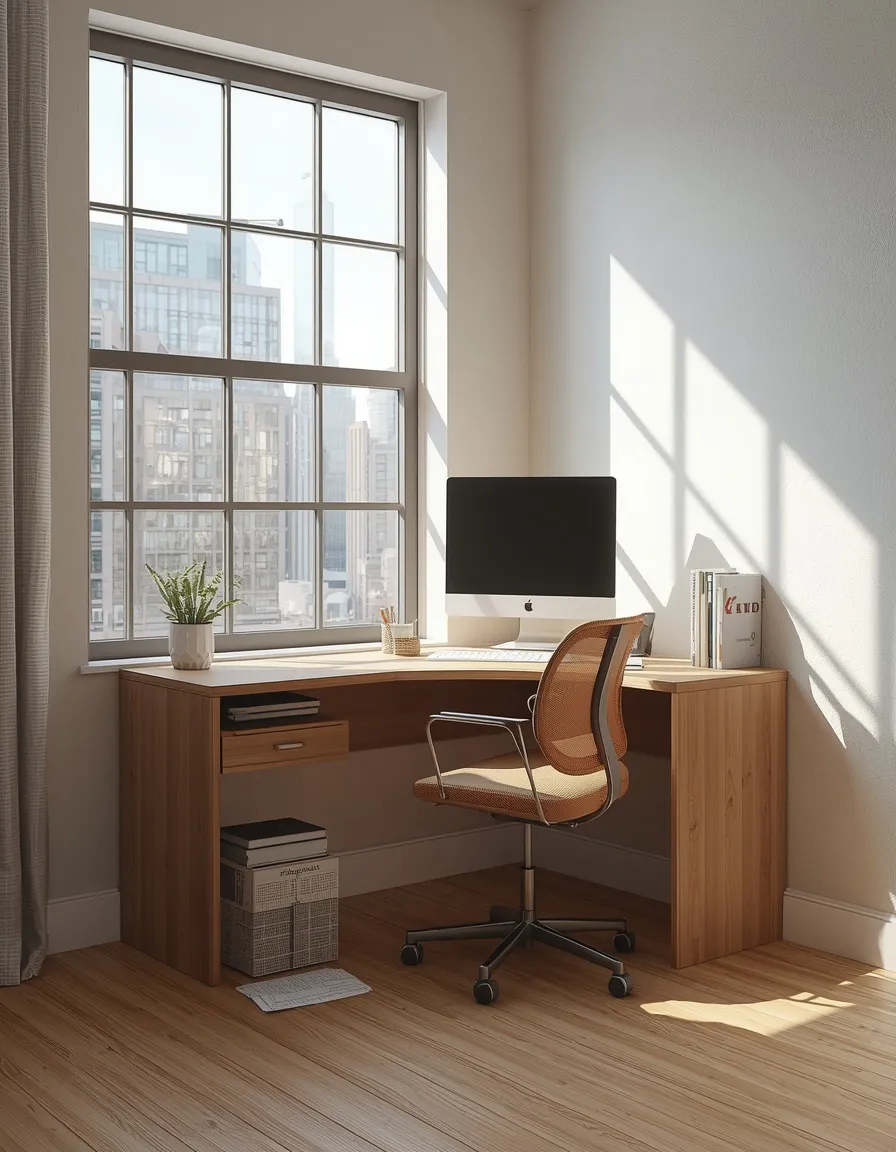
An L-shaped desk in a window corner gives you generous surface and a clever way to dodge glare. One leg of the L faces the window and the other runs along the side wall, so you can work perpendicular to the light rather than staring into it.
Place your monitor on the arm running along the side wall, so the window falls to your side rather than behind the screen, this is the single best structural fix for backlighting, and it’s the reason an L-shape beats a straight desk at a window. Use the window-facing leg for writing, reading, and laptop work where glare matters less. It also gives generous room for dual monitors. This suits home offices, gamers, and anyone who works across multiple screens or spreads out on paper.
- Best for: home offices with dual monitors or lots of paperwork.
- Why it works: working perpendicular to the window is the best structural glare fix.
- Key elements: L-shape in the corner, monitor on the side-wall arm, window to your side.
7. Two-Person Shared Desk
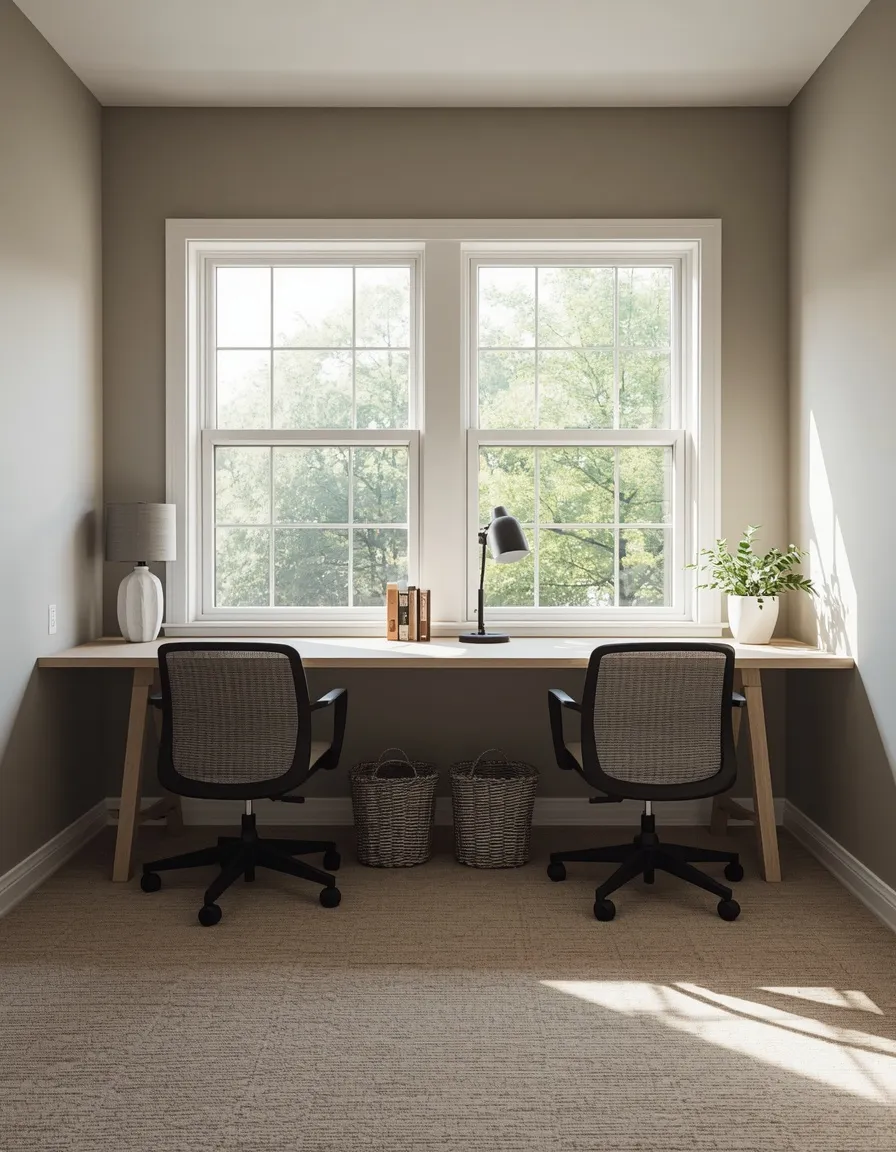
A long shared desk spanning a window lets two people work side by side without either drawing the short straw. One continuous top, two chairs, two lamps, and a shared view make a home office genuinely workable for a couple or siblings.
Use a single long surface, a solid timber top on trestles or two cabinets is a cheap way to build one, rather than two desks pushed together, which never quite line up. Give each person their own lamp, their own drawer or basket, and a physical divider if you take calls at the same time. Plan outlets carefully, as two workstations quickly overload a single socket; use a properly rated power strip rather than daisy-chaining extension leads. This suits couples working from home, siblings sharing a study, and family homework zones.
- Best for: couples working from home and siblings sharing a study.
- Watch out: two workstations overload one socket; use a properly rated power strip.
- Key elements: one long continuous top, two lamps, individual storage, divider.
8. Teen Study Zone
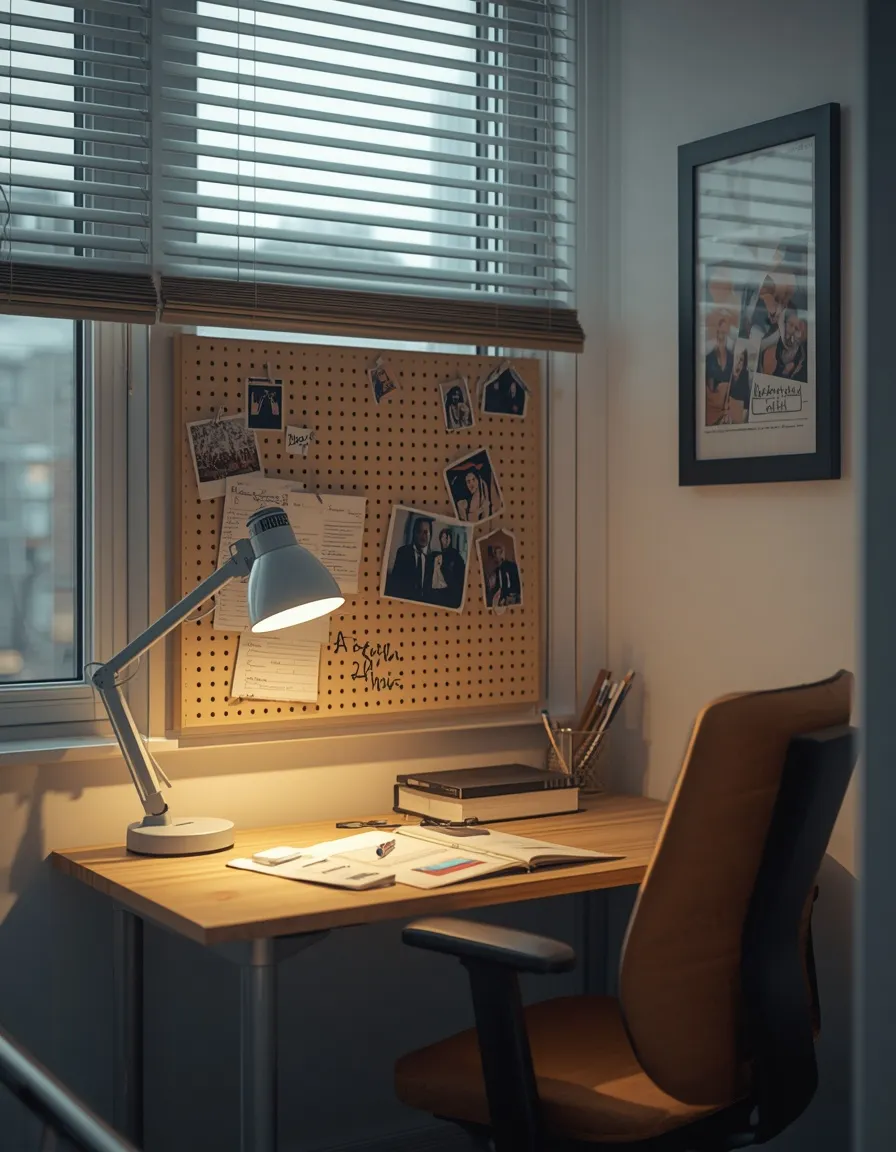
A teen’s desk at the window balances focus with personality. A sturdy desk, a pinboard or pegboard above, a good task lamp, and a comfortable chair create a study zone that a teenager will actually use rather than avoid.
Prioritize a proper task lamp and a supportive chair, since a teenager doing homework needs light on the page rather than just daylight behind the screen, homework happens after dark more often than not. Add a pegboard or corkboard for revision timetables and photos so the space feels theirs. If the room has corded blinds, swap them for cordless: pull cords are a genuine strangulation hazard for younger siblings, and safety guidance is to keep cords out of children’s reach entirely. This suits teen bedrooms and shared study rooms.
- Best for: teen bedrooms and homework zones used after dark.
- Watch out: swap corded blinds for cordless, pull cords are a strangulation risk.
- Key elements: sturdy desk, pegboard, proper task lamp, supportive chair.
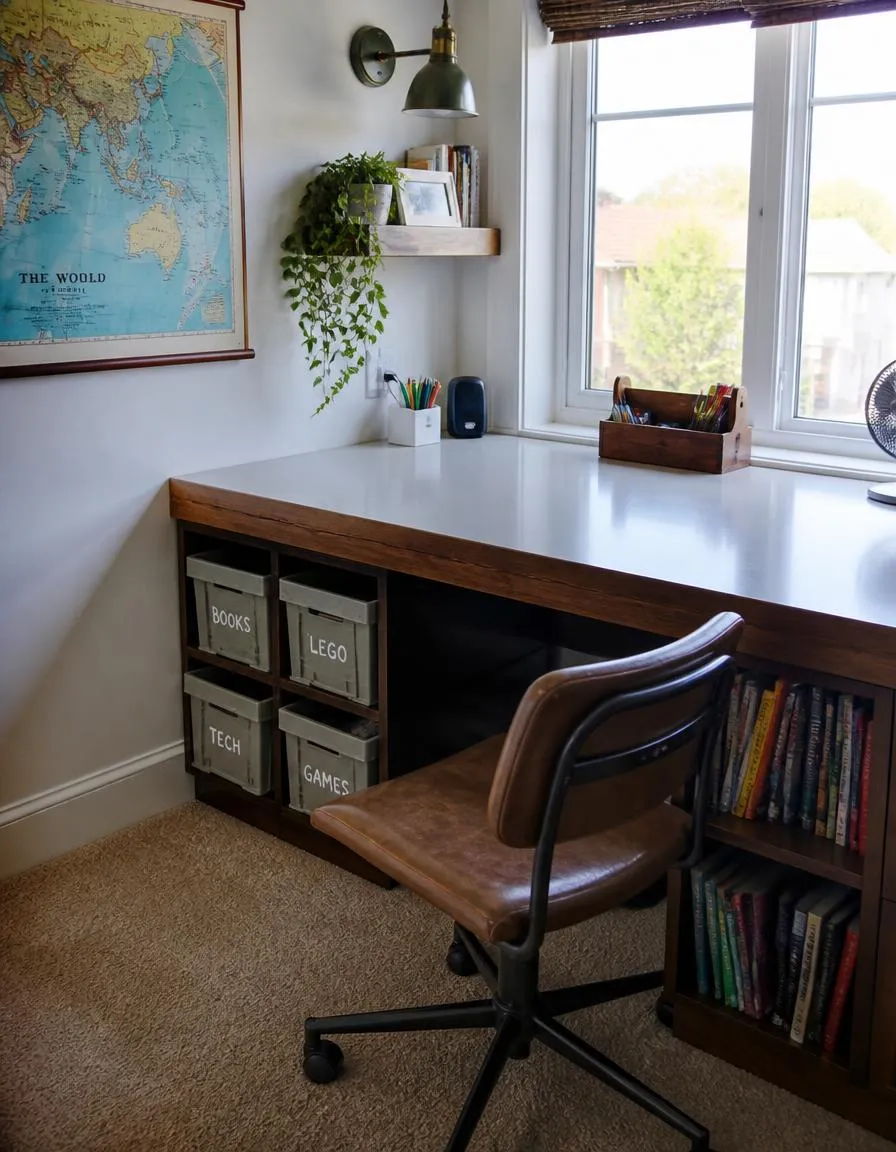
9. Boys’ Room Desk Setup
A practical, hard-wearing desk by the window suits a boys’ room where homework, models, and gaming all happen in one spot. A robust desk, open shelving, a wall map or poster, and storage crates keep it functional and easy to tidy.
Choose durable surfaces that survive glue, paint, and dropped controllers, a laminate or sealed timber top wipes clean far better than raw wood. Use open shelves and labeled crates so tidying up is genuinely quick, since a system a child can’t manage alone won’t be used. Anchor any tall shelving or bookcase to the wall with anti-tip brackets, which is essential in a child’s room. Keep cables bundled and out of reach. This suits shared kids’ rooms, homework corners, and gaming setups.
- Best for: kids’ rooms doubling as homework and gaming spaces.
- Watch out: anchor tall shelving with anti-tip brackets in any child’s room.
- Key elements: wipe-clean desktop, open shelves, labeled crates, bundled cables.
10. Curtain-Framed Desk
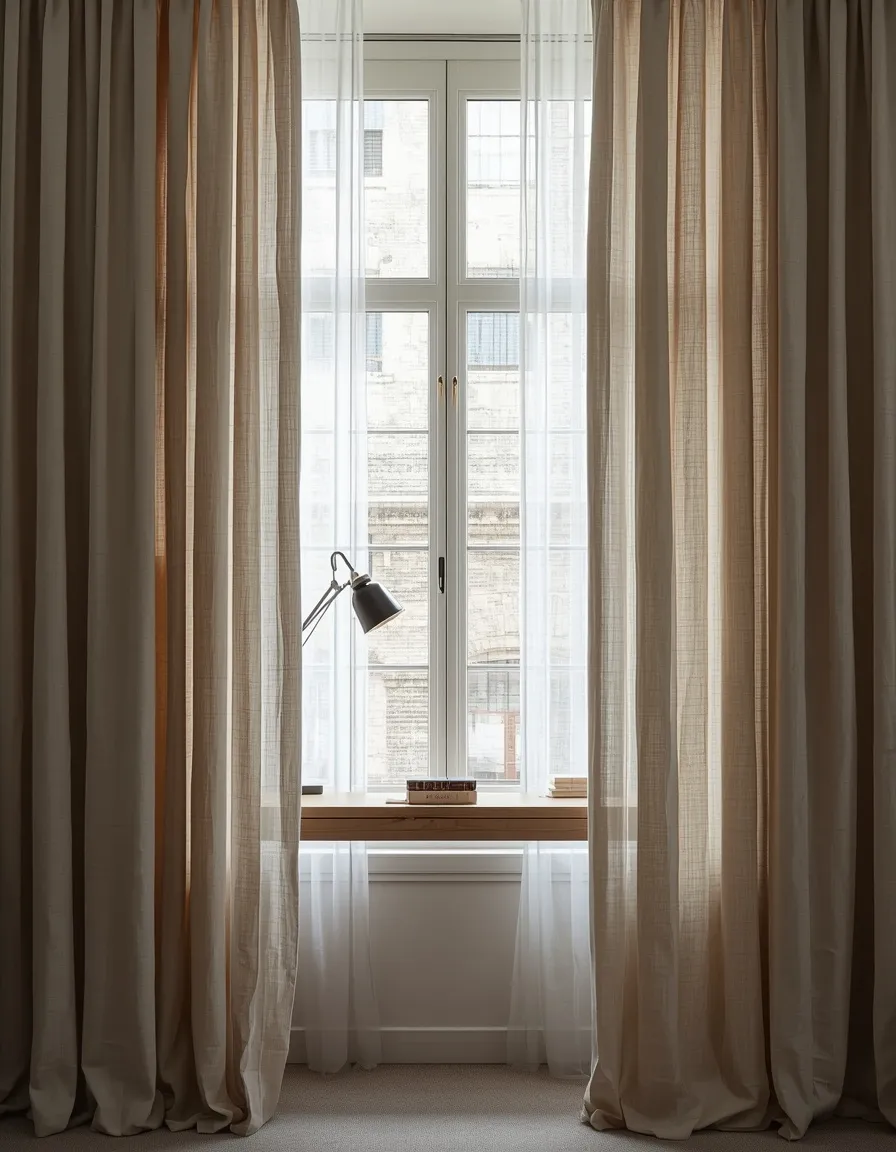
Framing a window desk with full-length curtains turns a functional corner into a designed one. Floor-length linen panels either side of the window soften the hard architecture and make the desk feel deliberately staged rather than shoved against a wall.
Hang the curtain rod wide and high, extending 15–20 cm (6–8 in) beyond the frame on each side and closer to the ceiling than the window top, so the panels stack clear of the glass and the window looks larger. Choose sheer or light-filtering fabric to soften glare while keeping the daylight; blackout panels defeat the point of a window desk unless you also need the room dark for sleeping. Keep the fabric clear of the desk lamp. This suits bedrooms, home offices, and rentals wanting an instant upgrade.
- Best for: rentals and bedrooms wanting an instant, no-build upgrade.
- Why it works: hanging the rod wide and high makes the window look bigger.
- Key elements: floor-length linen panels, rod extended 15–20 cm each side.
11. Plant-Filled Window Desk
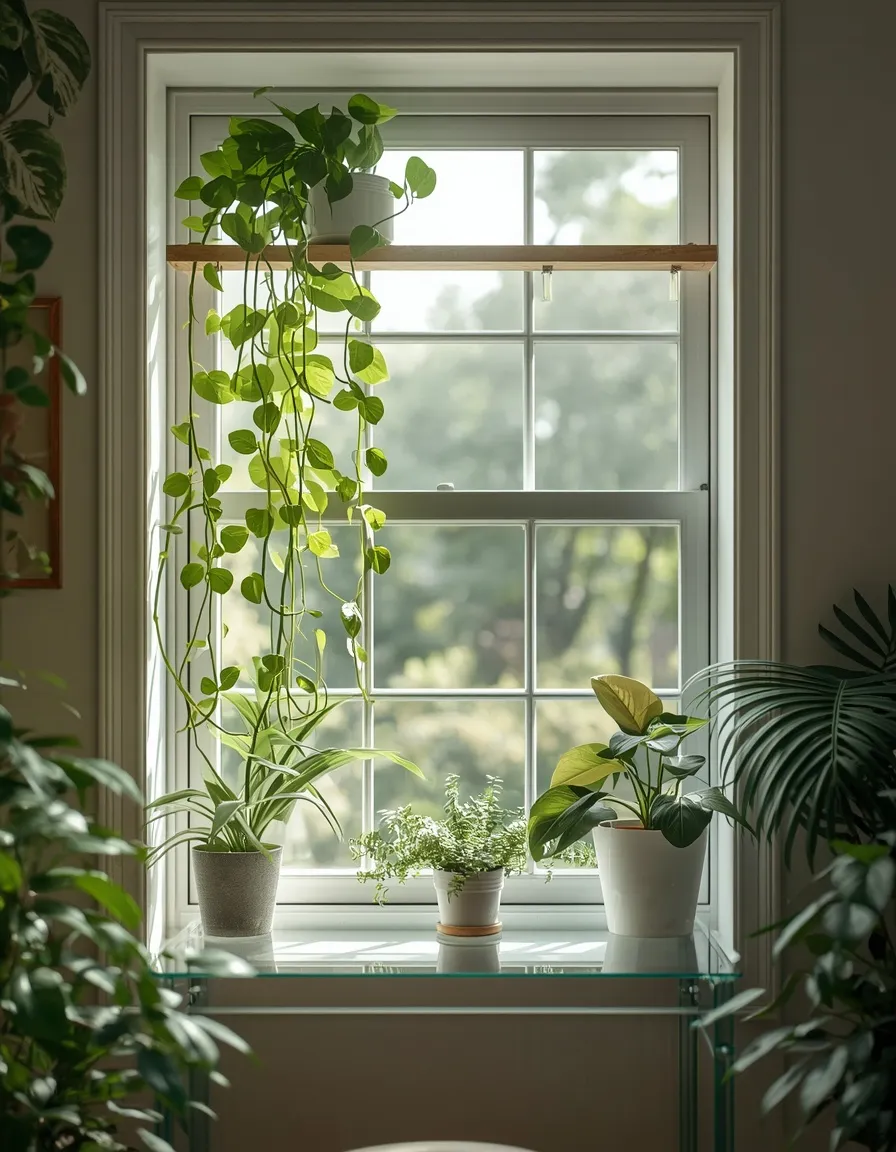
Surrounding a window desk with plants creates a small green world to work inside. Trailing pothos on a shelf above, a leafy plant on the sill, and a small pot on the desk turn a workspace into something that feels alive.
A window desk is one of the best places in the house for plants, since the bright light most houseplants want is exactly what you’ve got. Match plants to the window’s aspect: a south-facing sill suits succulents and herbs, while a north-facing one is better for a pothos or ZZ plant. Keep the desk surface itself mostly clear and put the greenery on the sill and a shelf above, or you’ll lose your working room. Note that pothos is toxic to pets if chewed. This suits plant lovers and anyone in a dull room needing life.
- Best for: plant lovers; bright windows that suit houseplants anyway.
- Watch out: pothos is toxic to pets; keep plants on the sill and shelf, not the desk.
- Key elements: trailing plants on a shelf above, sill plants matched to the aspect.
12. Built-In Window Desk with Shelving
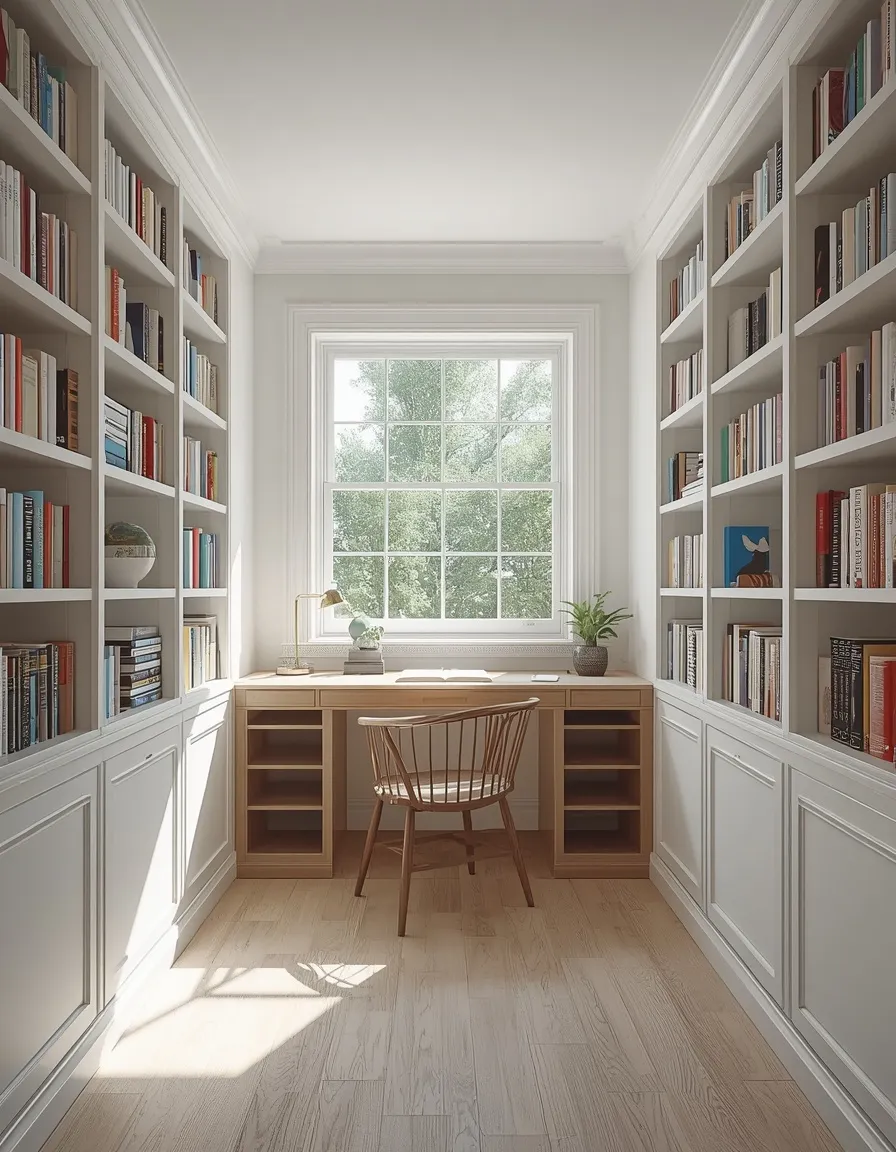
A built-in desk beneath a window, flanked by floor-to-ceiling shelving, is the setup that makes a room look architect-designed. The desktop runs wall to wall, the shelves frame the window, and every centimeter earns its keep.
Run a continuous worktop across the recess and build shelving up both sides, which uses the awkward dead space beside a window that furniture never fits properly. Before building, check what’s under the window, a radiator is the most common obstacle, and boxing one in without a ventilated grille will waste its heat and bake your legs. Leave a clear knee recess of at least 60 cm (24 in) width. This suits alcoves, box rooms, and anyone doing a proper home-office renovation.
- Best for: alcoves and box rooms; a permanent home-office renovation.
- Watch out: check for a radiator first; box it in only with a ventilated grille.
- Key elements: wall-to-wall worktop, flanking shelves, 60 cm knee recess.
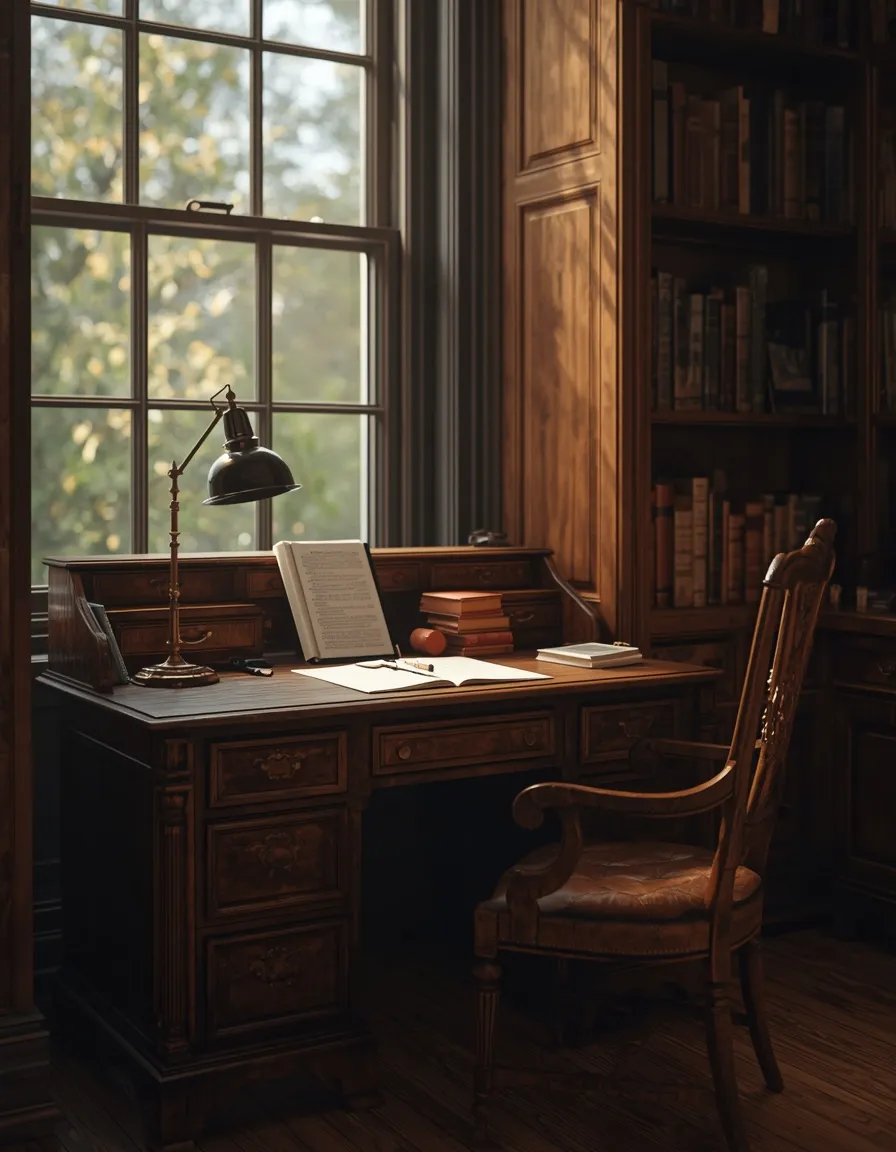
13. Vintage Writing Desk
An antique writing desk at a window has a quiet romance no flat-pack can match. A wooden secretary or bureau, a brass lamp, a leather chair, and a view make a workspace that feels like it belongs in a study rather than an office.
Look for a secretary desk or bureau with a fold-down top, which lets you close the whole workspace away, genuinely useful in a bedroom or living room where you don’t want to look at work all evening. Vintage desks are often lower than modern ones, so check the height suits your chair before buying, since an awkward working height causes real discomfort over time. Keep direct sun off an antique finish, which fades and dries wood. This suits period homes, bedrooms, and anyone who works mostly on paper.
- Best for: period homes and paper-based work; closing work away at night.
- Watch out: vintage desks often sit low, check the height against your chair.
- Key elements: secretary or bureau desk, brass lamp, leather chair, no direct sun.
14. Budget IKEA-Style Hack
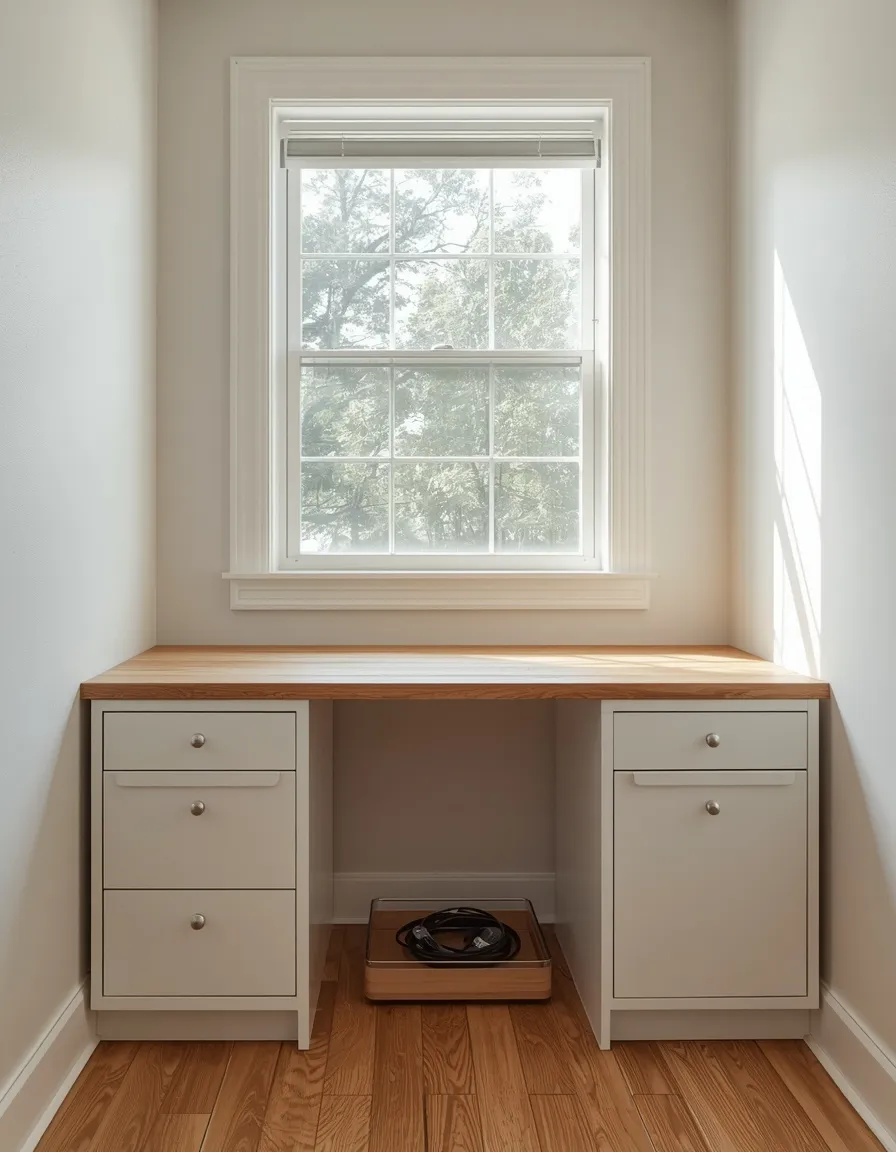
A simple tabletop on two storage units makes a window desk for very little money. A plain wooden top spanning a pair of drawer units or bookcases gives you a generous surface and a wall of storage beneath, for a fraction of a fitted price.
Use two low cabinets or drawer units as legs and lay a solid tabletop across them, which gives far more storage than a conventional desk and lets you size the run to your window exactly. Check the finished height lands near 72–75 cm (28–30 in), the standard desk height, cabinets vary, and a desk even a few centimeters too high causes shoulder ache over a long day. Add a shelf above and a cable tray beneath. This suits renters, students, and first home offices on a tight budget.
- Best for: renters, students, and first home offices on a tight budget.
- Watch out: check the finished height lands at 72–75 cm; too high causes shoulder ache.
- Key elements: tabletop across two drawer units, shelf above, cable tray.
15. Organized Command Center
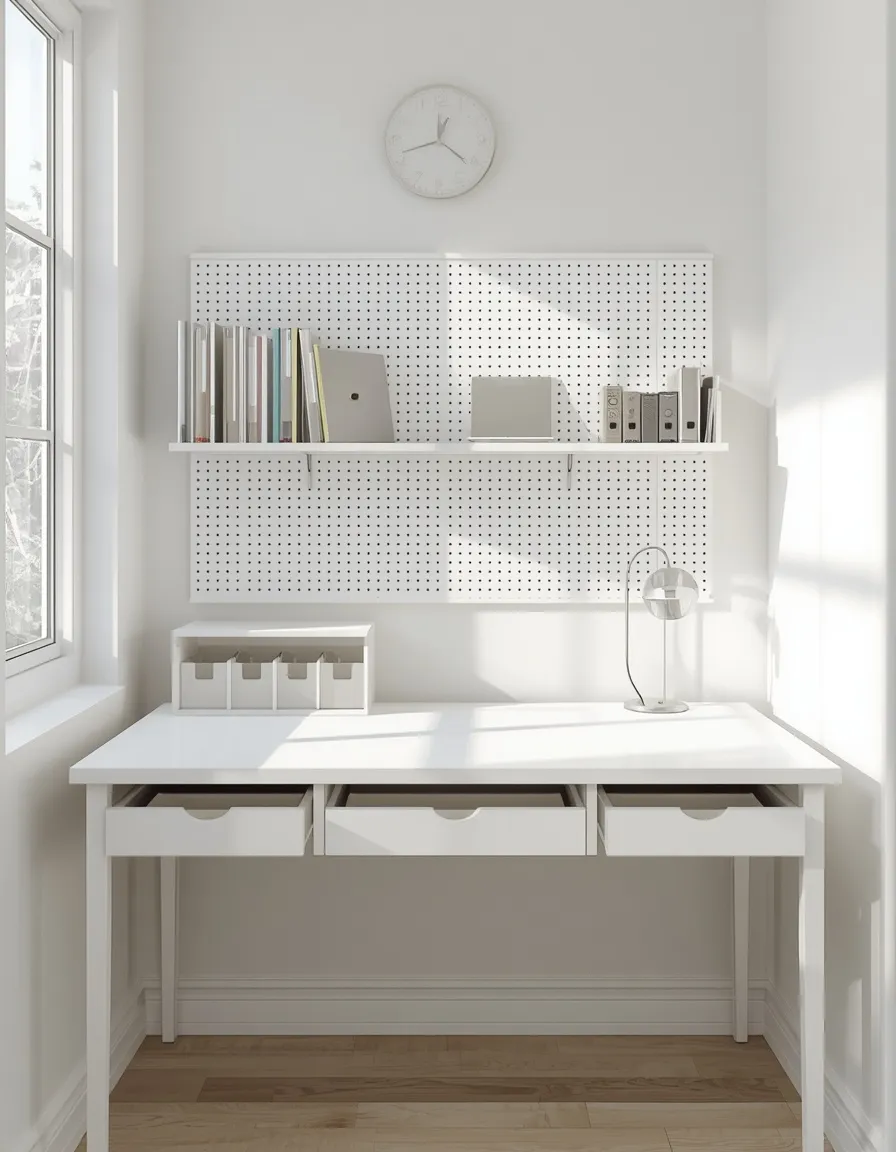
A well-organized window desk feels calm before you’ve done a thing. A pegboard or wall grid above, drawer dividers, a document tray, and a cable channel beneath keep every tool at hand and every surface clear.
Build the system in three zones: the desktop for what you use daily, a wall board or shelf for what you reach for weekly, and closed drawers for everything else. This zoning is what keeps a desk clear long-term, whereas simply buying more organizers just relocates the clutter. Run cables through a tray or channel under the desktop, since outlets are rarely near a window and trailing leads are both untidy and a trip hazard. Never daisy-chain extension leads. This suits anyone whose desk drifts back into chaos within a week.
- Best for: anyone whose desk slides back into clutter every week.
- Why it works: three-zone storage keeps surfaces clear where more organizers don’t.
- Watch out: outlets are rarely near windows; use a cable tray, never daisy-chained leads.
16. Bay Window Desk Nook
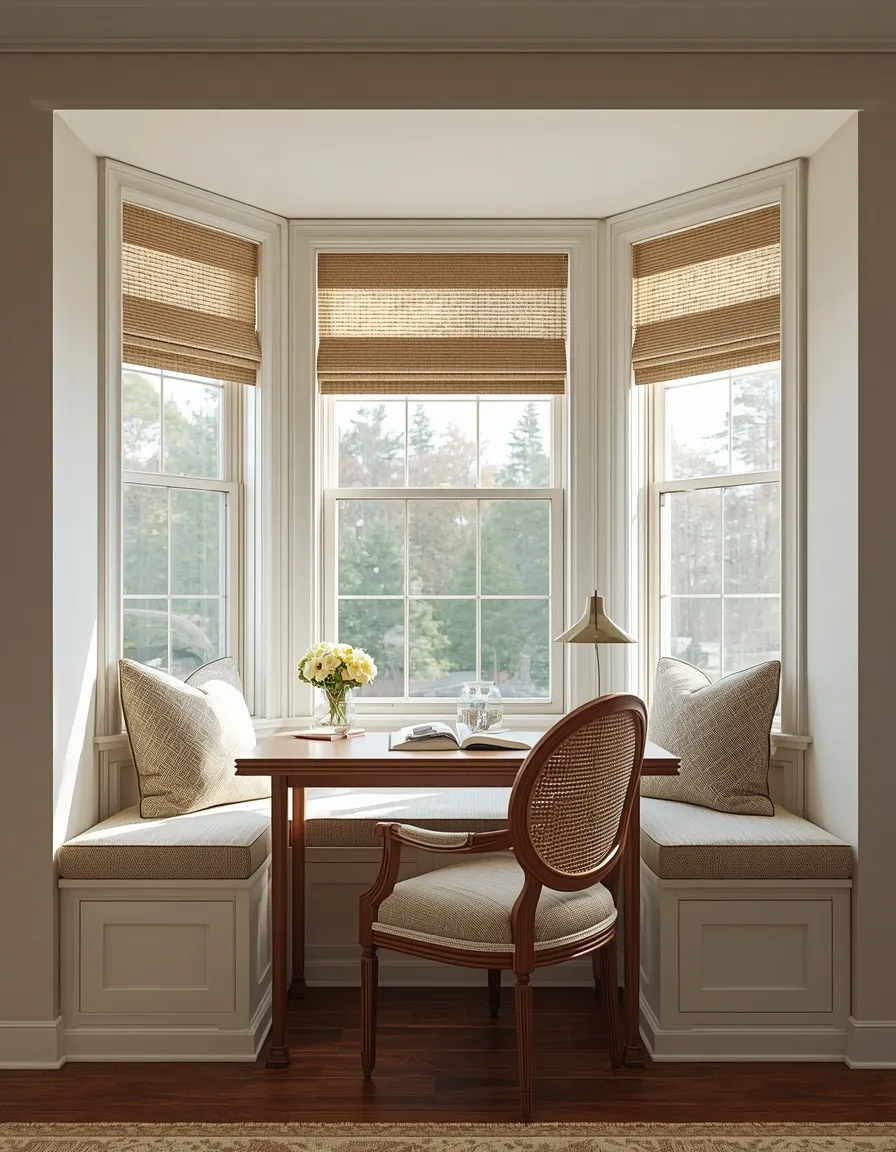
A bay window is the most generous gift a room can give a desk. A curved or wrap-around top following the bay creates a light-flooded nook with a view on three sides, and a bench seat beneath for a reading break.
Have a top cut to follow the bay’s angles, which makes use of a space that standard furniture never fits, and add a padded bench or window seat beneath for reading. Bays are glass on three sides, so they get hot in summer and cold in winter, fit blinds you can adjust through the day, and check for drafts if the windows are older. Position your screen on the flattest section to minimize glare. This suits period homes, living-room offices, and anyone lucky enough to have a bay going spare.
- Best for: period homes with an underused bay window.
- Watch out: bays run hot in summer and cold in winter, fit adjustable blinds.
- Key elements: top cut to the bay’s angles, bench seat beneath, adjustable blinds.
How Do You Stop Screen Glare at a Window Desk?
Reduce glare by softening the light rather than blocking it: fit sheer or light-filtering shades, match your screen brightness to the room, and where possible sit perpendicular to the window rather than facing it. Glare is the single biggest drawback of a window desk, and it’s entirely fixable.
The problem is contrast. When a bright window sits directly behind your monitor, your eyes constantly readjust between a dim screen and a blazing background, and that repeated adjustment is what causes eye strain, headaches, and fatigue by mid-afternoon. Three fixes work, and they stack:
- Filter the light. Sheer curtains, light-filtering roller blinds, or top-down/bottom-up shades cut the intensity while keeping the daylight and the view.
- Turn your desk. Sitting with the window to your side, rather than in front of you, removes the backlighting entirely. An L-shaped desk lets you do this while still facing the view.
- Balance your screen. Raise your monitor brightness to match the room rather than working with a dim screen against a bright background, and tilt the screen slightly to deflect reflections.
For video calls, the fix is different: a window behind you turns you into a silhouette, however good your camera. Either turn to face the window, which gives famously flattering light, or place a lamp or ring light in front of you to balance the exposure.
Layout decisions like this are what turn a room from awkward to effortless, and they’re the heart of our furniture and layout ideas. If you enjoy built-in solutions that use every awkward corner, our guide to the built-in deck bench applies the same thinking outdoors.
Check What’s Under the Window First
Before committing to a window desk, look at what’s already in that space. A radiator is the most common obstacle, and it decides more layouts than people expect.
A desk pushed over a radiator blocks the heat from circulating, wastes energy, warms your legs uncomfortably, and can push a laptop toward its thermal limits. If you can’t avoid it, leave a clear air gap above and in front of the radiator, or fit a shelf-style desktop that lets heat escape rather than a solid boxed-in run. Older windows can also be drafty in winter, which is unpleasant when you sit still for hours, check for drafts before you commit, and consider draft-proofing strips.
Two more practicalities. Direct sunlight fades desk timber, washes out screens, and can overheat a laptop, so watch how the sun moves across the room over a full day before fixing anything in place. And outlets are rarely positioned near windows, so plan cable routing, use a cable tray or channel rather than trailing leads across a walkway, and never daisy-chain extension leads.
Which Window Direction Do You Have?
The window’s aspect changes everything about how a desk there feels. Use this to work out what you’re dealing with before you set up.
| Window faces | Light through the day | What to do |
| North | Soft, cool, even all day | Best for screens; least glare. Add a warm task lamp. |
| South | Bright and strong for hours | Fit light-filtering blinds; watch heat and screen washout. |
| East | Bright early, softer later | Great for morning work; a blind helps at sunrise. |
| West | Dim early, harsh late afternoon | Hardest for glare; adjustable blinds are essential. |
| Bay / multiple | Light from several angles | Hot in summer, cold in winter; fit adjustable blinds. |
Note: these apply to the Northern Hemisphere. South of the equator, swap north and south.
Conclusion
The best desk in front of window ideas all share one thing: they take the daylight and the view, and solve the glare rather than pretending it isn’t there. Filter the light with a sheer blind, turn your screen away from the backlighting, check for a radiator before you build anything, and face the window when you’re on a call. Get those right and you’ll have the setup people photograph and, more importantly, one you can actually work at from morning until dusk. For more layouts that make a room work harder, browse our furniture and layout ideas.
Frequently Asked Questions
Q: Is it a good idea to put a desk in front of a window?
Yes, provided you manage the glare. Natural light and a view genuinely help mood, focus, and eye comfort, and looking at something distant gives tired eyes a rest from the screen. The drawback is backlighting behind your monitor, which causes eye strain, but sheer or light-filtering blinds and correct screen brightness solve it.
Q: How do I stop glare on my screen from the window?
Fit sheer curtains or light-filtering blinds to soften the light rather than block it, and raise your monitor brightness so it matches the room instead of working with a dim screen against a bright background. Better still, position the desk so the window is to your side rather than behind the screen, an L-shaped desk in a corner does this neatly.
Q: Why do I look like a silhouette on video calls at my window desk?
Because the window behind you is far brighter than your face, so the camera exposes for the background. Either turn to face the window, which gives soft, flattering light, or place a lamp or ring light in front of you to balance the exposure. Closing a sheer blind behind you also helps considerably.
Q: Can you put a desk over a radiator?
It’s best avoided. A desk over a radiator blocks heat from circulating, wastes energy, warms your legs uncomfortably, and can push a laptop toward overheating. If the layout leaves no choice, leave a clear air gap above and in front of the radiator, or use a shelf-style desktop that lets heat escape rather than boxing it in solidly.
Q: What is the best desk setup for a small room with a window?
A wall-mounted floating desk beneath the window is the most space-efficient option, since it has no legs to eat floor space. Mount it at 72–75 cm (28–30 in) high and around 45–50 cm (18–20 in) deep, fixing into wall studs. A tabletop across two slim drawer units is a good budget alternative with built-in storage.
Q: Which way should a window face for a home office?
A north-facing window (in the Northern Hemisphere) is generally the best for screen work, giving soft, even light all day with the least glare. South-facing windows are bright and can wash out screens, and west-facing windows produce harsh late-afternoon glare. Whatever the aspect, adjustable blinds let you control it through the day.