

There’s an awkward fortnight every year when summer’s bleached grasses look tired but a mantel full of orange pumpkins would be absurd. The best summer to fall mantel ideas solve exactly that: they move the shelf through the season in stages rather than swapping one boxed-up look for another overnight. Change three things, keep your anchors, and let the mantel warm up gradually as the light does. At Sunday Abode, we’d rather edit than replace. These 16 ideas cover the whole transition, including how to time it, and the safety check to make before the season’s first fire.
Key Takeaways
- Transition in stages rather than all at once: go full pumpkin in early September and you’ll be bored of it long before November.
- Change three things, the stems, one textile, one accent color, and keep the anchors (mirror, candlesticks, vessels) exactly where they are.
- Deepen the palette gradually: green to gold, then rust, then finally the rich reds and browns of late fall.
- Before the first fire of the season, clear all dried decor off the mantel and have the chimney swept. Wheat, pampas, and paper leaves are highly flammable.
- Real pumpkins last roughly one to two weeks on a warm indoor mantel, so plan around that or use faux.
The Three-Swap Method
Move a mantel from summer to fall by changing exactly three things: the stems, one textile, and one accent color. Everything else, the mirror, the candlesticks, the vessels, stays put. That’s genuinely all a seasonal shift requires.
The anchors are the pieces that give a mantel its structure, and they work in every season. Replacing them each time is why seasonal decorating turns into a loft full of labeled boxes. Instead, keep them and swap only what’s easy: hydrangeas become wheat or dried oak leaves, a linen runner becomes wool, and the coastal blue accent becomes rust or gold.
Deepen the palette in steps rather than one jump. Summer’s greens and whites move first to gold, sage, and warm neutrals; only later do you bring in rust, burgundy, and deep brown. That gradual warming is what makes a mantel feel like the season is arriving rather than being announced.
When Should You Start Decorating for Fall?
Start the transition in stages from late summer, and hold the heavy autumn color back until the weather actually turns. A mantel that peaks too early has nowhere left to go by November.
| Stage | What to change | What to keep |
| Late summer | Swap fading stems for wheat or dried oak; add texture | Green foliage, light neutrals, all anchors |
| Early fall | Bring in gold, amber, and sage; add a wool textile | Greens still present; no pumpkins yet |
| Mid fall | Add rust, burnt orange, pumpkins or gourds | The anchors; keep some green for balance |
| Late fall | Deepen to burgundy, brown, and dark greenery | Everything; just enrich the palette |
| Post-Halloween | Remove novelty pieces, keep the harvest tones | Wheat, gourds, candles, carry into Thanksgiving |
Exact timing depends on your climate, the transition arrives weeks earlier in a cool northern autumn than in a warm southern one. Follow the weather rather than the calendar.
1. The Green-to-Gold Transition
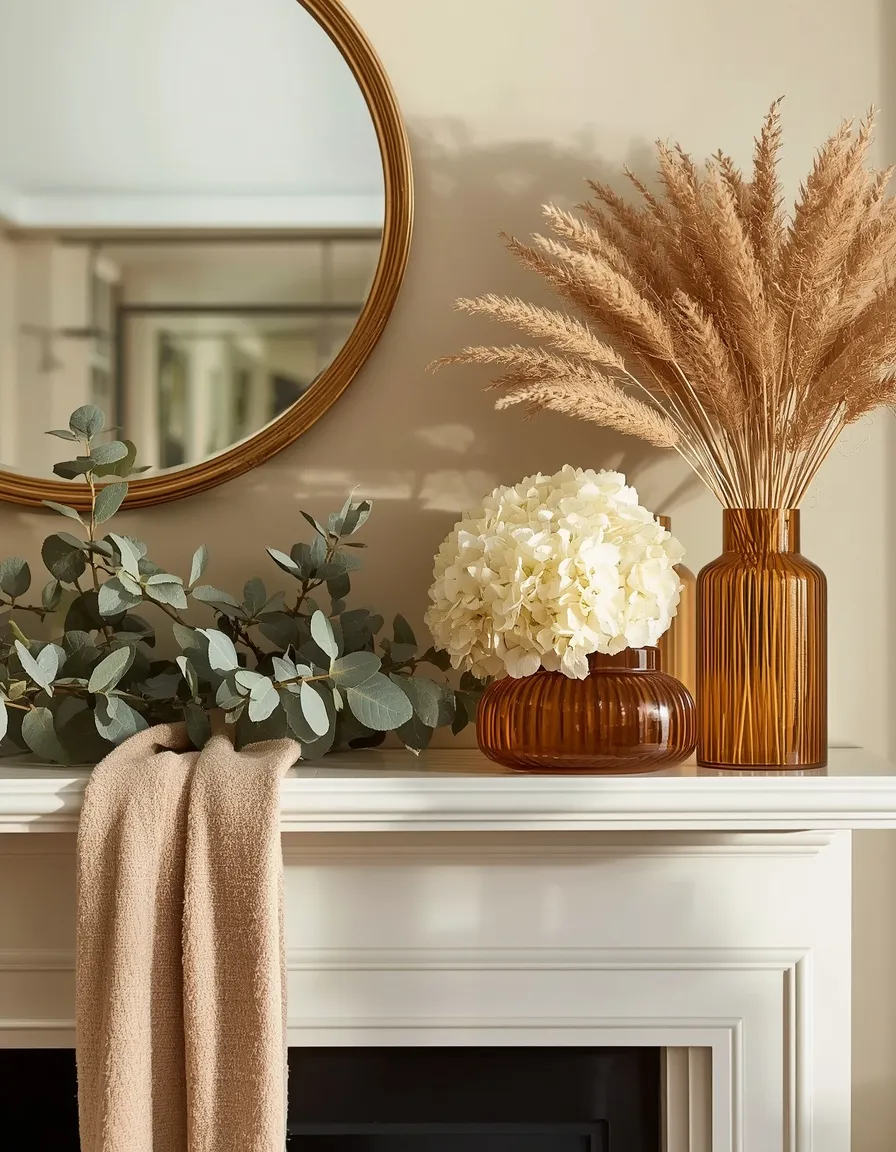
The first move out of summer barely changes anything. Eucalyptus stays, but the white hydrangeas become dried wheat and amber glass, and a wool throw replaces the linen one, warming the mantel by a single degree.
This is the transition at its most restrained, and it’s the one that carries you through those weeks when summer is fading but autumn hasn’t arrived. Keep the greens, they’re what stops it looking premature, and introduce warmth only through gold, amber, and dried grasses. Swap one textile for something with weight. Resist adding orange at this stage, since orange is what tips a mantel from transitional into fully autumnal. This suits anyone who wants the season to arrive gradually rather than overnight.
- Best for: the awkward weeks when summer’s gone but fall hasn’t landed.
- Watch out: no orange yet, orange is what makes it read as full autumn.
- Key elements: retained greenery, dried wheat, amber glass, wool textile.
2. Modern Minimalist Fall Mantel
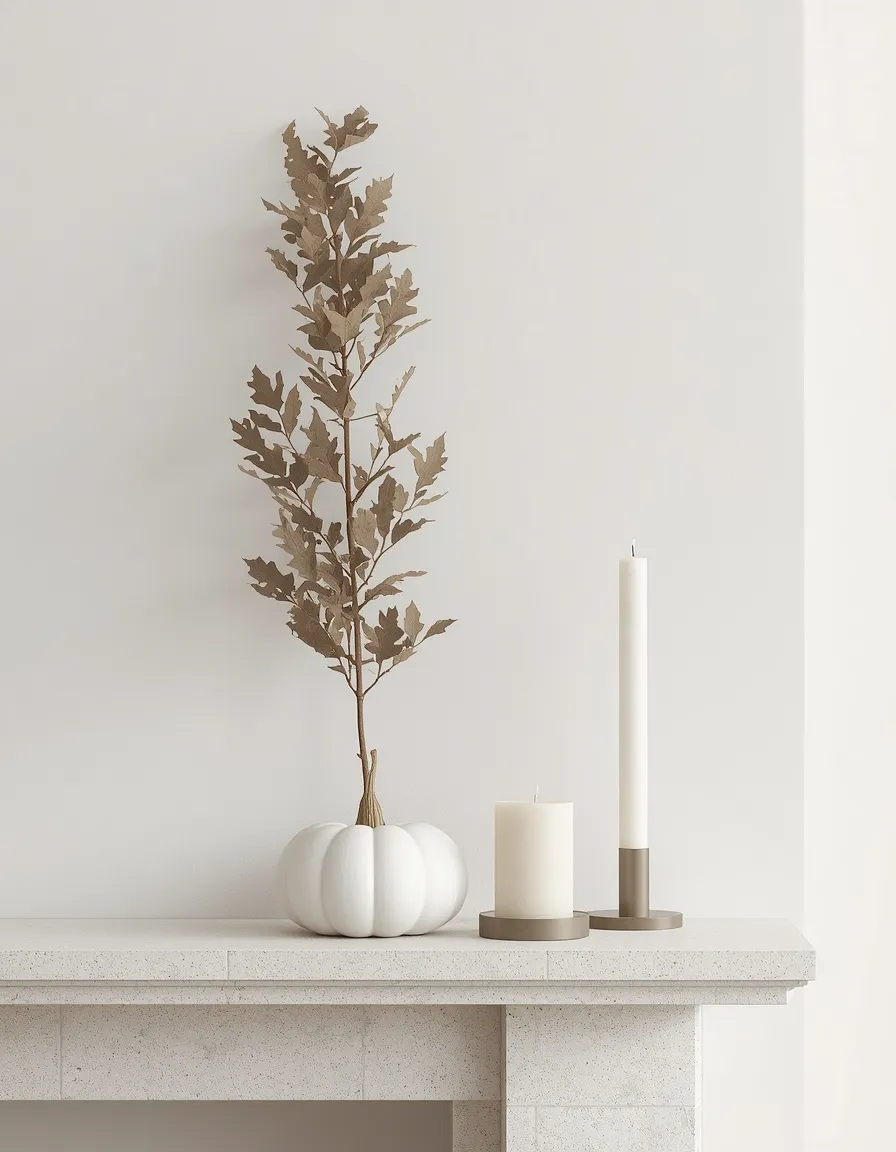
A modern fall mantel says autumn in three objects. A single branch of dried oak leaves in a tall vessel, one sculptural gourd in matte white, and a taper candle, with the rest of the shelf deliberately, generously empty.
Restraint carries this look, so choose three objects, vary their heights sharply, and leave the mantel genuinely bare between them. Skip orange entirely and work in a tight palette of white, stone, black, and one warm neutral, which reads as autumn without a single cliché. A white or pale-grey gourd gives the seasonal shape without the color. This suits modern and Scandinavian interiors and anyone who finds traditional fall decor overwhelming or twee.
- Best for: modern rooms; anyone who finds traditional fall decor too twee.
- Why it works: a pale gourd gives the seasonal shape without any orange at all.
- Key elements: three objects, dried oak branch, matte pale gourd, taper candle.
3. Elegant Neutral Fall Mantel
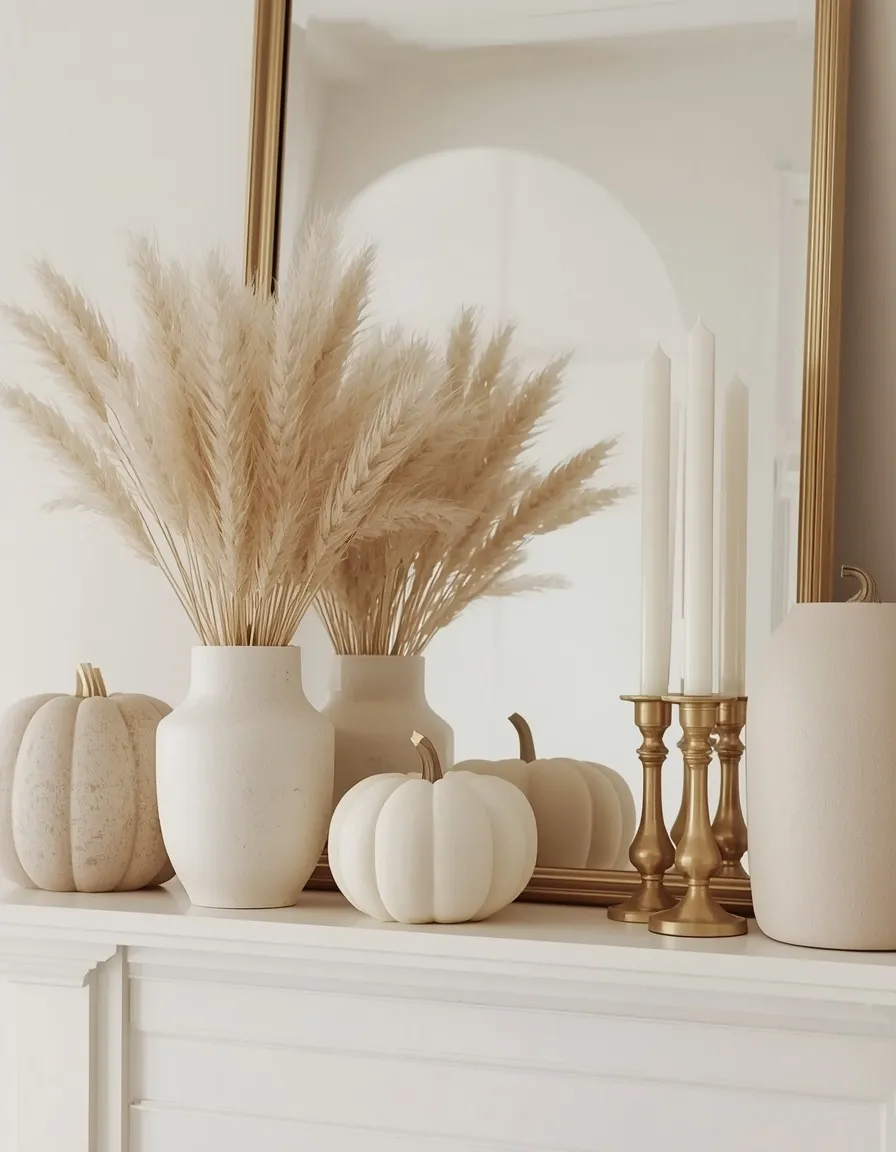
An elegant fall mantel trades harvest colors for texture and tone. Bleached wheat, cream velvet pumpkins, brass candlesticks, and a gilded mirror create autumn in a whisper rather than a shout.
Build the whole scheme in cream, bone, taupe, and brass, letting texture rather than color signal the season, velvet, dried grasses, and aged metal do all the work. Velvet pumpkins in cream or dusty sage are the piece that makes this look, and unlike real ones they last for years. Group in odd numbers and keep roughly a third of the mantel empty. This suits formal, traditional, and elegant interiors, and anyone whose living room is too refined for bright orange gourds.
- Best for: elegant and formal rooms too refined for bright orange.
- Why it works: texture and tone signal the season where color would shout.
- Key elements: bleached wheat, cream velvet pumpkins, brass, gilded mirror.
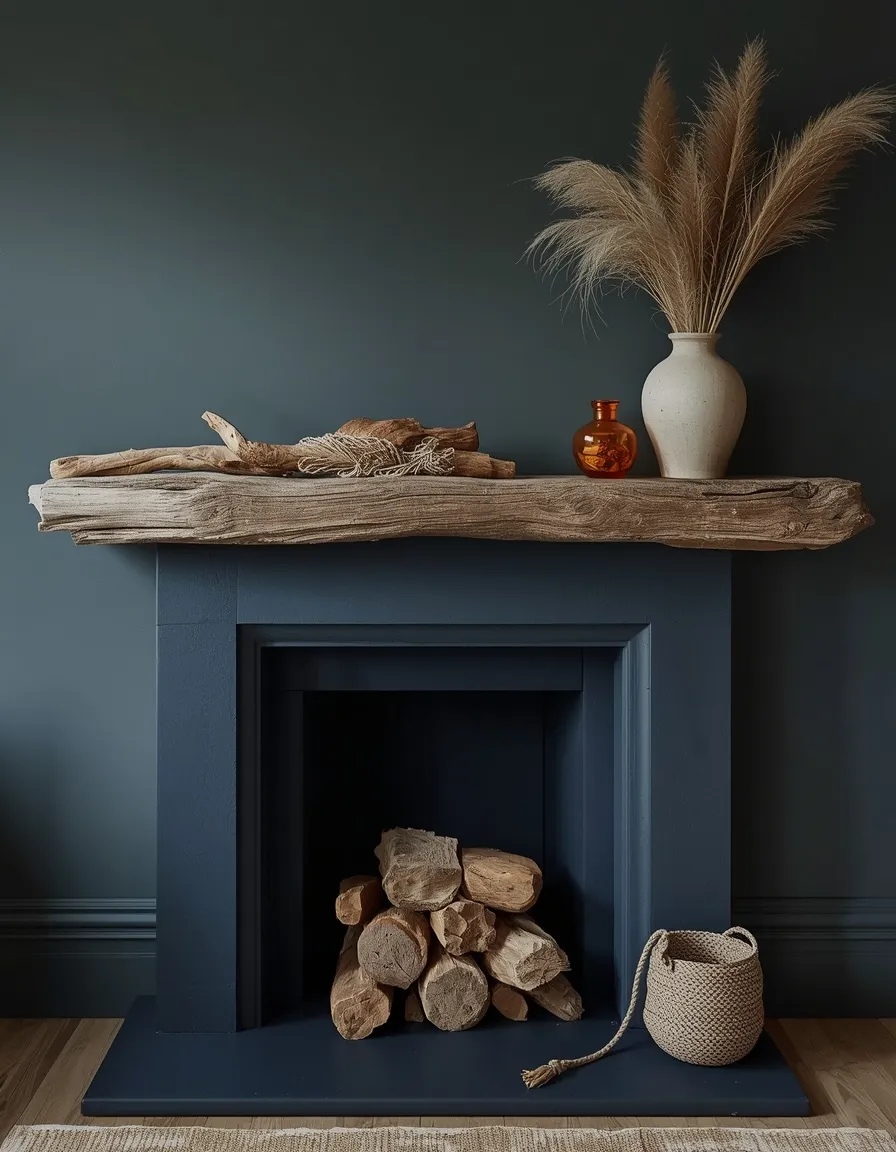
4. Coastal Fall Mantel
Coastal style doesn’t have to disappear in September. Driftwood stays, but the sea glass becomes amber, the blues deepen to slate and navy, and dried grasses and rope replace the shells for an autumn-by-the-sea mood.
Keep the coastal bones, driftwood, rope, weathered wood, a leaning seascape, and shift only the palette, deepening summer’s bright blues to slate, navy, and stormy grey, then adding rust or amber as the single warm accent. This is a much more natural transition than swapping a coastal mantel for a farmhouse one, and it means your year-round style survives the season. Dried grasses bridge coastal and fall beautifully. This suits coastal homes and anyone who doesn’t want to abandon their style each autumn.
- Best for: coastal homes that don’t want to abandon their style each fall.
- Why it works: deepening the blues beats swapping the whole scheme for farmhouse.
- Key elements: driftwood, slate and navy blues, rope, dried grasses, amber accent.
5. Rustic Farmhouse Fall Mantel
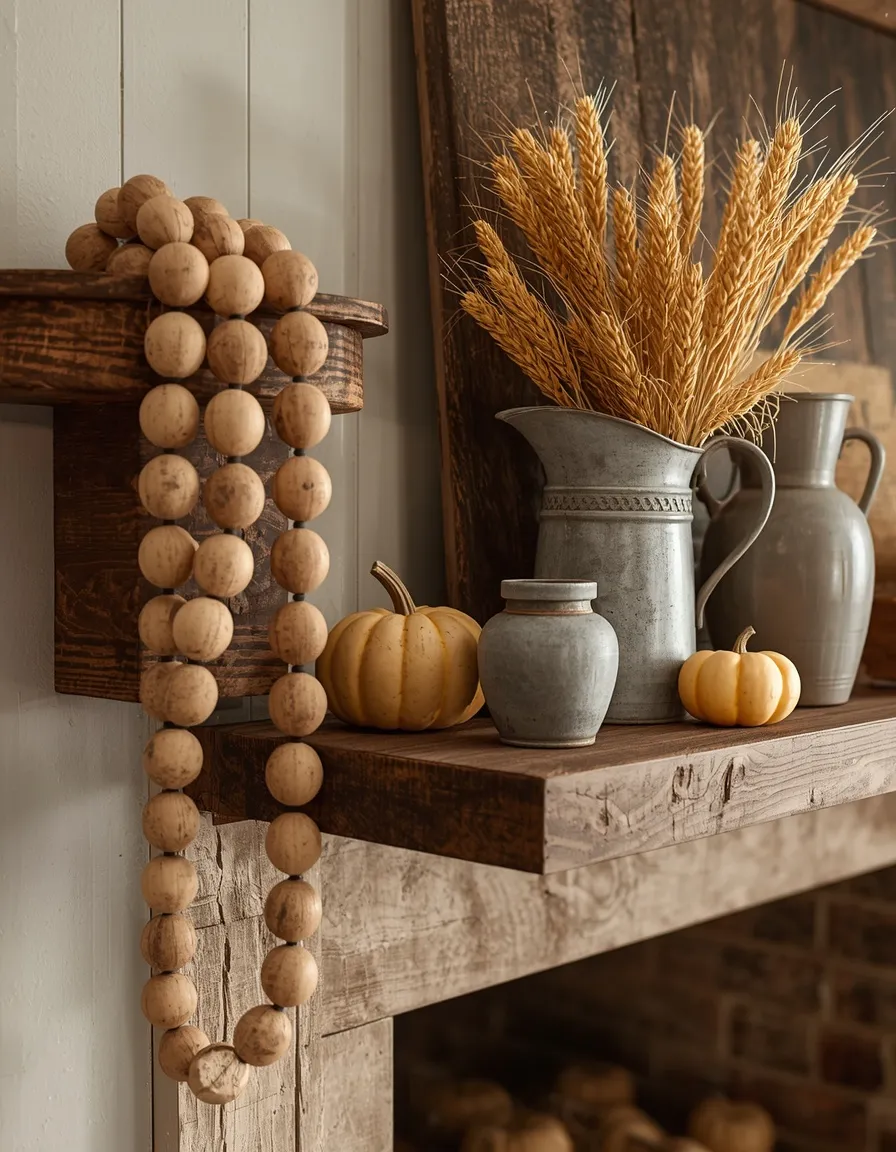
The farmhouse fall mantel is autumn’s most familiar look, and it earns its place. A chunky wooden bead garland, galvanized buckets of wheat, ironstone crocks, and a scatter of small gourds sit on weathered timber.
The transition here is easy because farmhouse pieces work in every season, the galvanized pitcher that held hydrangeas in July holds wheat in October, which is exactly the point. Deepen the palette from summer’s whites and greens to cream, wheat, rust, and warm wood. Drape a bead garland trailing over one end rather than sitting symmetrically. This suits farmhouse and cottage homes and is the most forgiving fall mantel to assemble from things you already own.
- Best for: farmhouse homes; the most forgiving mantel to build from what you own.
- Why it works: the same vessels carry summer hydrangeas and autumn wheat.
- Key elements: wooden bead garland, galvanized pitcher of wheat, ironstone, gourds.
6. Fall Mantel With a TV
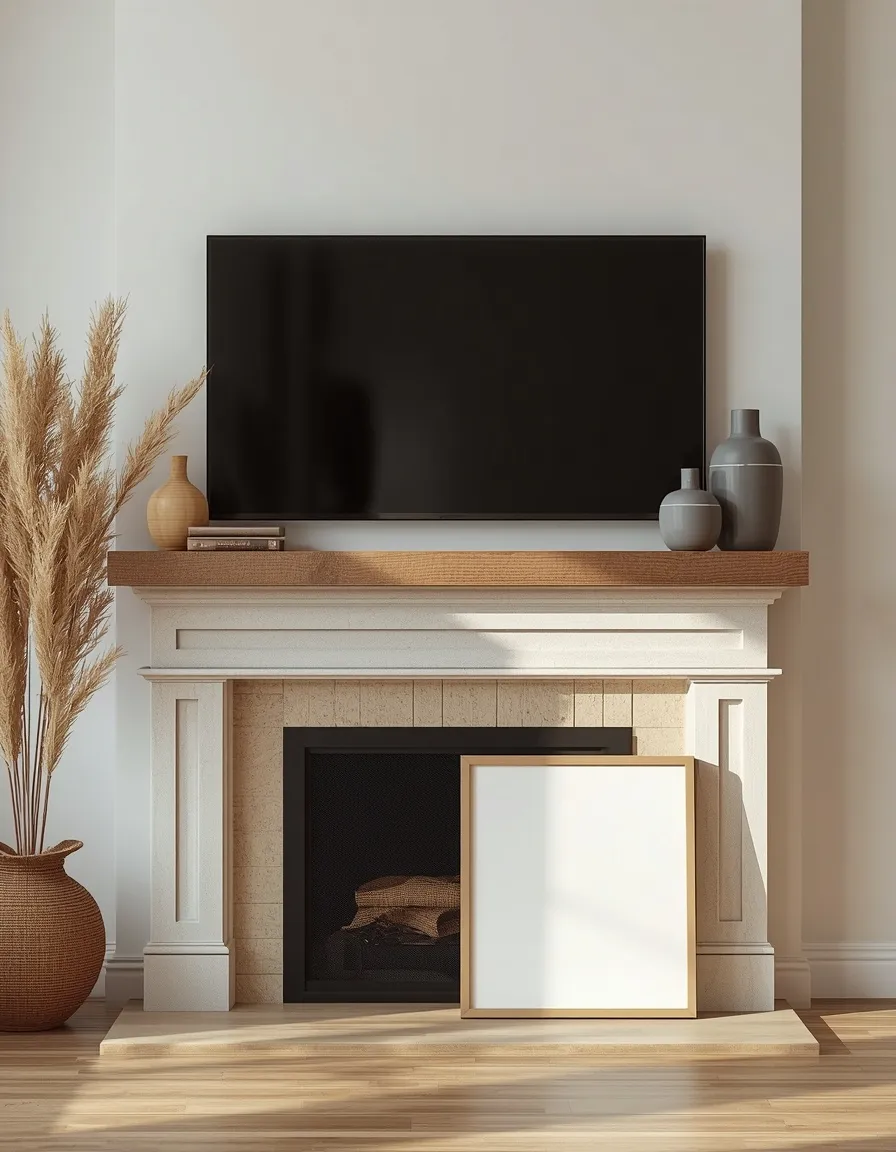
A television above the fireplace doesn’t rule out a proper fall mantel. Low decor along the shelf, one tall dried arrangement anchoring to a single side, and a leaning frame overlapping the screen’s edge soften the black rectangle.
Keep everything on the shelf low so it doesn’t compete with the screen, and anchor asymmetrically with one tall element, a branch of dried oak, a vase of wheat, to a single side, which balances the TV’s mass rather than fighting it. Let a leaning frame or a trailing garland overlap the screen’s lower edge to blur the hard boundary, and use art mode if your TV has it. One genuine caution: heat from a working fireplace can damage a TV mounted above it, so check the manufacturer’s guidance before lighting fires all autumn.
- Best for: the majority of living rooms, where the TV is already there.
- Watch out: fireplace heat can damage a TV above it, check the maker’s guidance.
- Key elements: low decor, one tall asymmetric anchor, frame overlapping the screen.
7. Brick Fireplace Fall Mantel
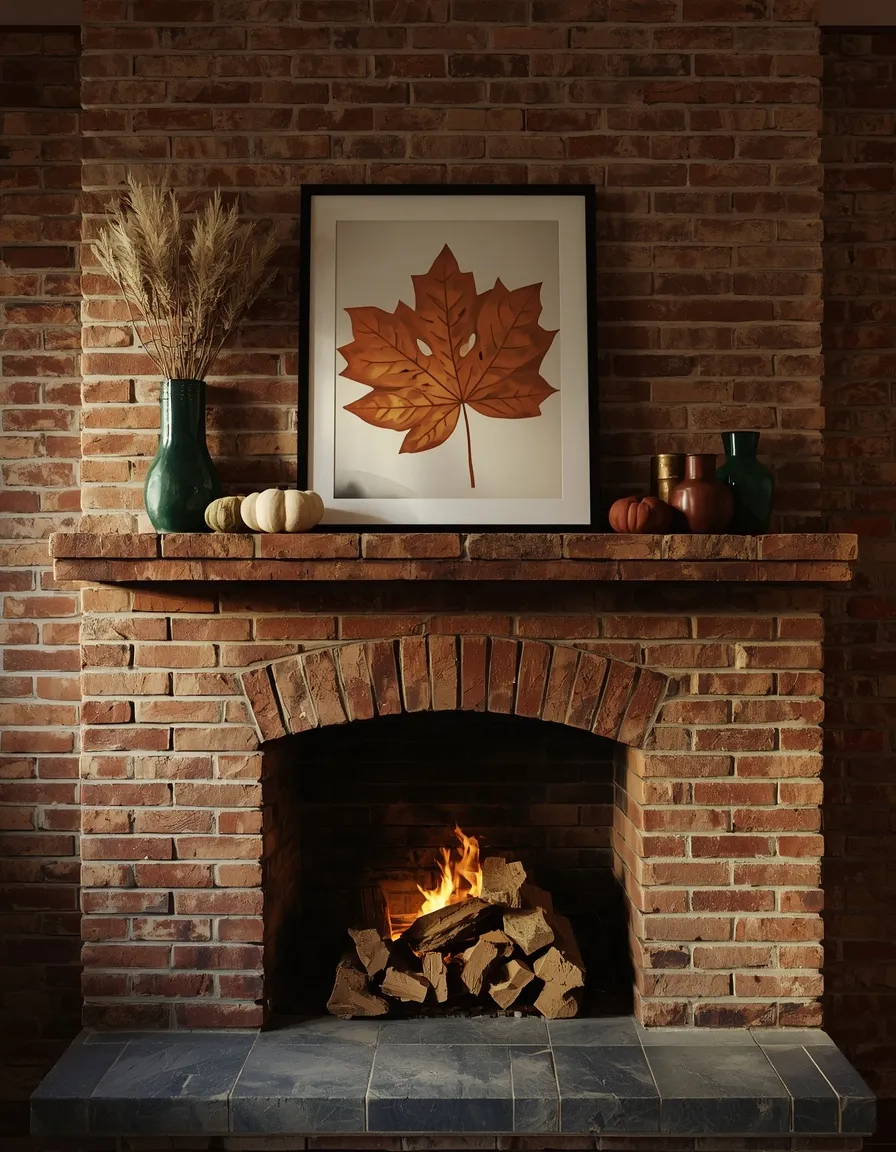
A brick fireplace gives a fall mantel a ready-made backdrop of warmth and texture. Rust, cream, and deep green sit beautifully against red brick, with a chunky timber mantel and copper vessels catching the firelight.
Work with the brick’s undertone rather than against it, which is the mistake most people make. Warm red-orange brick clashes badly with bright orange pumpkins, so choose cream, deep green, burgundy, and copper instead, all of which flatter it. Cooler grey-brown brick can carry rust and amber more happily. Leaning a large mirror or a dark-framed print against brick gives the eye somewhere to rest. This suits period homes and anyone with an exposed brick chimney breast.
- Best for: period homes with an exposed brick chimney breast.
- Watch out: bright orange clashes with red brick, use cream, green, and copper.
- Key elements: rust and cream palette, copper vessels, leaning dark-framed art.
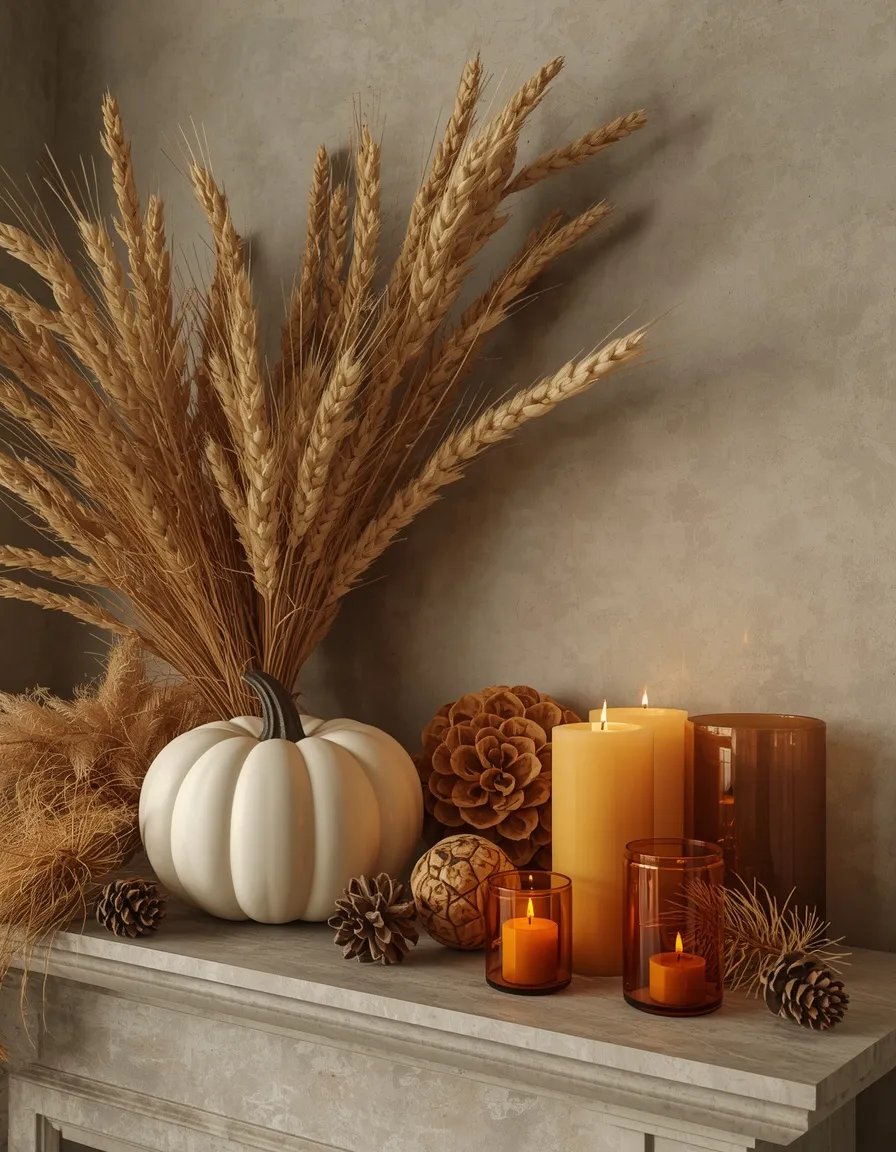
8. Pumpkin-Free Fall Mantel
Autumn without a single pumpkin is not only possible, it’s often more beautiful. Dried oak and beech branches, bundles of wheat, pinecones, amber glass, and beeswax candles carry the season on texture and light alone.
Plenty of people want autumn without the costume-shop version of it, and the natural materials of the season, branches, seed heads, wheat, acorns, dried hydrangea, do it far more elegantly. Foraged material is free and looks better than anything shop-bought, so gather fallen branches and seed heads from your own garden. The warm glow of beeswax or amber-glass candlelight does more for an autumn mood than any gourd. This suits minimalists, elegant interiors, and anyone tired of the pumpkin.
- Best for: anyone who wants autumn without the costume-shop version.
- Why it works: the season’s real materials, branches, wheat, seed heads, beat props.
- Key elements: dried oak and beech, wheat, pinecones, amber glass, beeswax candles.
9. Budget-Friendly Fall Mantel
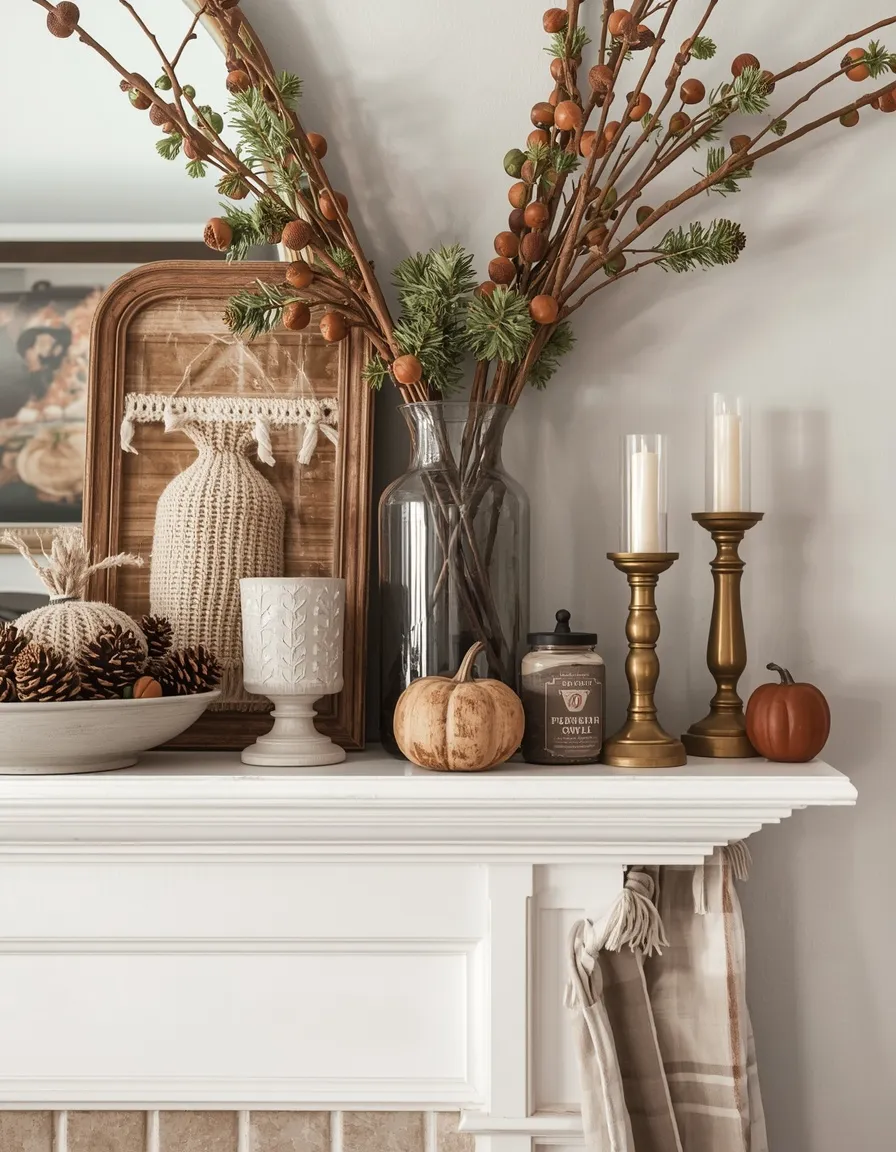
A beautiful fall mantel can cost almost nothing. Branches cut from the garden, conkers and acorns gathered on a walk, thrifted brass candlesticks, and a charity-shop wool throw make a mantel with genuine character.
Autumn is the one season that furnishes itself, the raw material is literally falling off the trees, and a single walk yields branches, seed heads, pinecones, and leaves. Forage responsibly, taking fallen material rather than stripping living plants and never from protected sites. Charity shops fill with brass, wool, and stoneware at this time of year. Because it’s all free, you can restyle whenever you like. This suits renters, students, and anyone refusing to buy a box of new decor every autumn.
- Best for: renters and anyone refusing to buy new decor every autumn.
- Watch out: forage responsibly, fallen material, never protected sites.
- Key elements: garden branches, acorns and pinecones, thrifted brass, wool throw.
10. Dried Grasses to Wheat
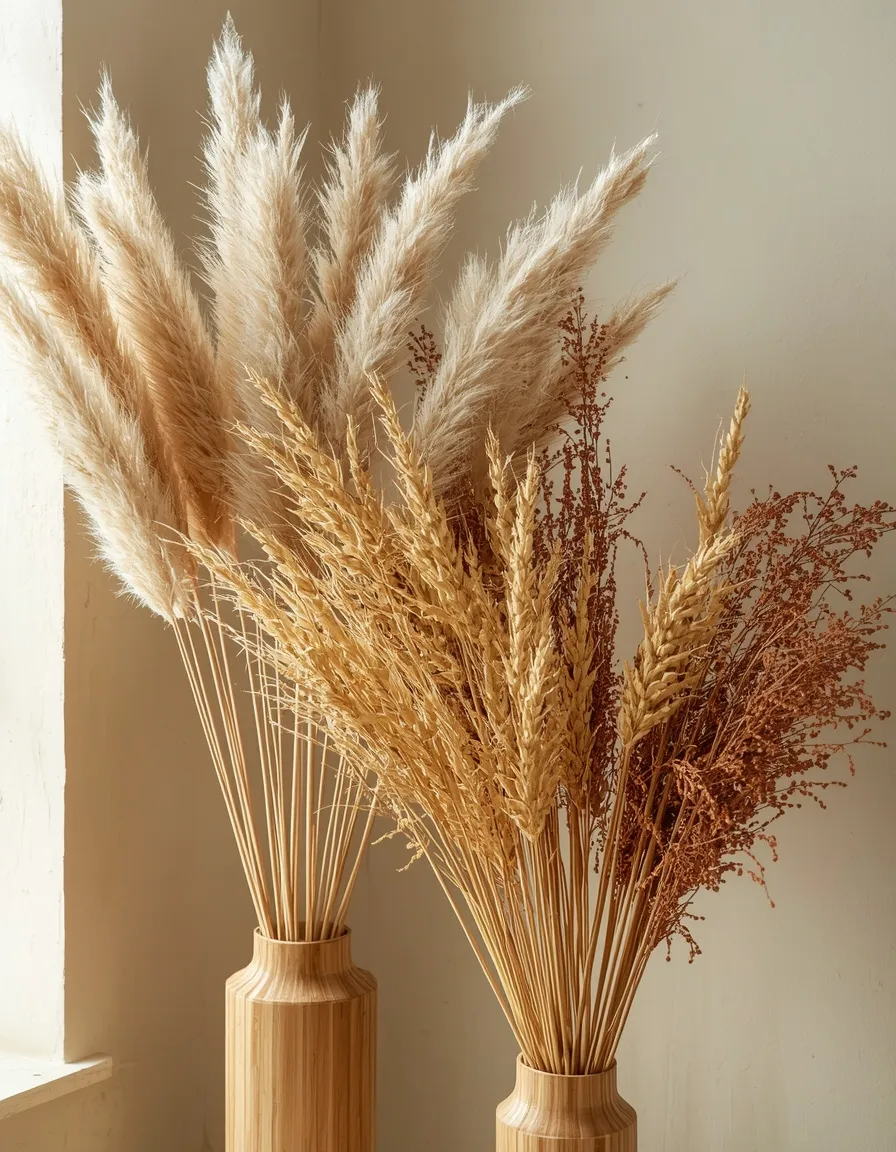
Summer’s pampas doesn’t have to leave, it just gets company. Bleached pampas alongside golden wheat, dried bunny tails, and rust-toned seed heads carries the dried-stem look straight from August into November.
Dried arrangements are the easiest thing to transition, since you’re simply adding warmer tones rather than starting over, swap a few pale stems for wheat, dried oak, or amber grasses and the whole vessel shifts season. Dried stems last for months, making this the lowest-effort mantel here. The safety point is genuine and matters far more now than in summer: dried pampas and wheat are highly flammable, and in autumn the fire beneath is actually lit. Clear them off before you light it.
- Best for: low-effort decorators; the dried look lasts for months.
- Watch out: dried pampas and wheat are highly flammable, clear before lighting a fire.
- Key elements: bleached pampas, golden wheat, bunny tails, rust seed heads.
11. Sage Green Autumn Mantel
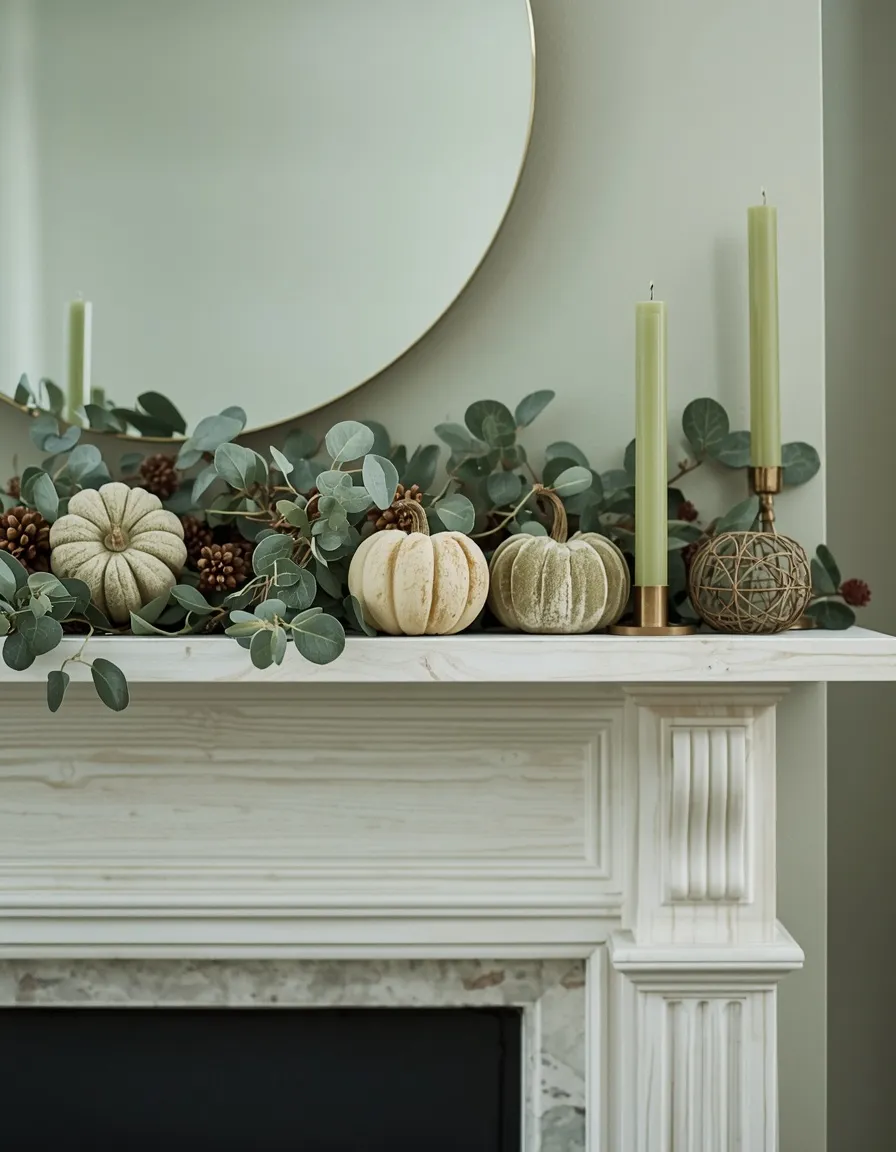
Sage green is autumn’s quiet alternative to orange. Soft green candles, eucalyptus, sage velvet pumpkins, and pale wood create a mantel that feels seasonal and calm rather than loud.
Sage bridges summer and fall better than almost any color, since it carries summer’s green forward while sitting perfectly alongside cream, wheat, and warm brass. That makes it the ideal transition shade for people who want the season without the heat of orange. Pair it with dried grasses and one metallic, brass or antique gold, and keep everything else neutral. Sage looks especially good against a painted fireplace in a related tone. This suits calm, modern, and elegant interiors.
- Best for: calm interiors wanting autumn without the heat of orange.
- Why it works: sage carries summer’s green forward while sitting beside wheat and brass.
- Key elements: sage candles, eucalyptus, sage velvet pumpkins, brass, pale wood.
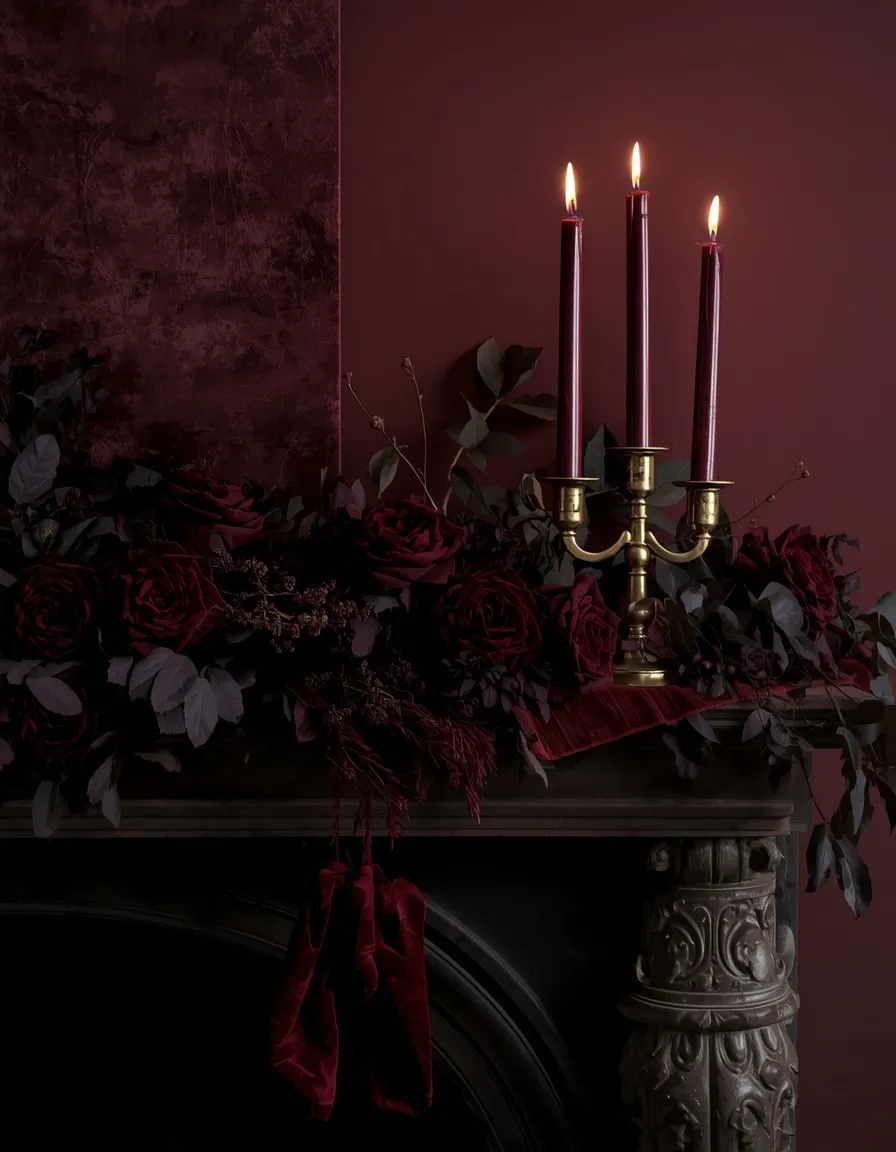
12. Moody Dark Fall Mantel
Late autumn suits a darker hand. Deep burgundy, near-black foliage, oxblood velvet, dark dried roses, and heavy brass candlesticks create a mantel with real drama and depth.
This is the mantel for the back end of the season, when the light drops and warm neutrals start feeling thin. Work in burgundy, aubergine, oxblood, and dark green, and lean on candlelight, a moody mantel lives or dies by how it’s lit, and it will look flat under a bright overhead. Cluster candles at varying heights, using flameless LEDs if anything overhangs them. This suits dark academia, maximalist, and dramatic interiors, and rooms with rich wall colors already.
- Best for: late autumn and dramatic, richly colored rooms.
- Watch out: it lives or dies by candlelight; it looks flat under a bright overhead.
- Key elements: burgundy and oxblood, dark foliage, dried roses, brass candlesticks.
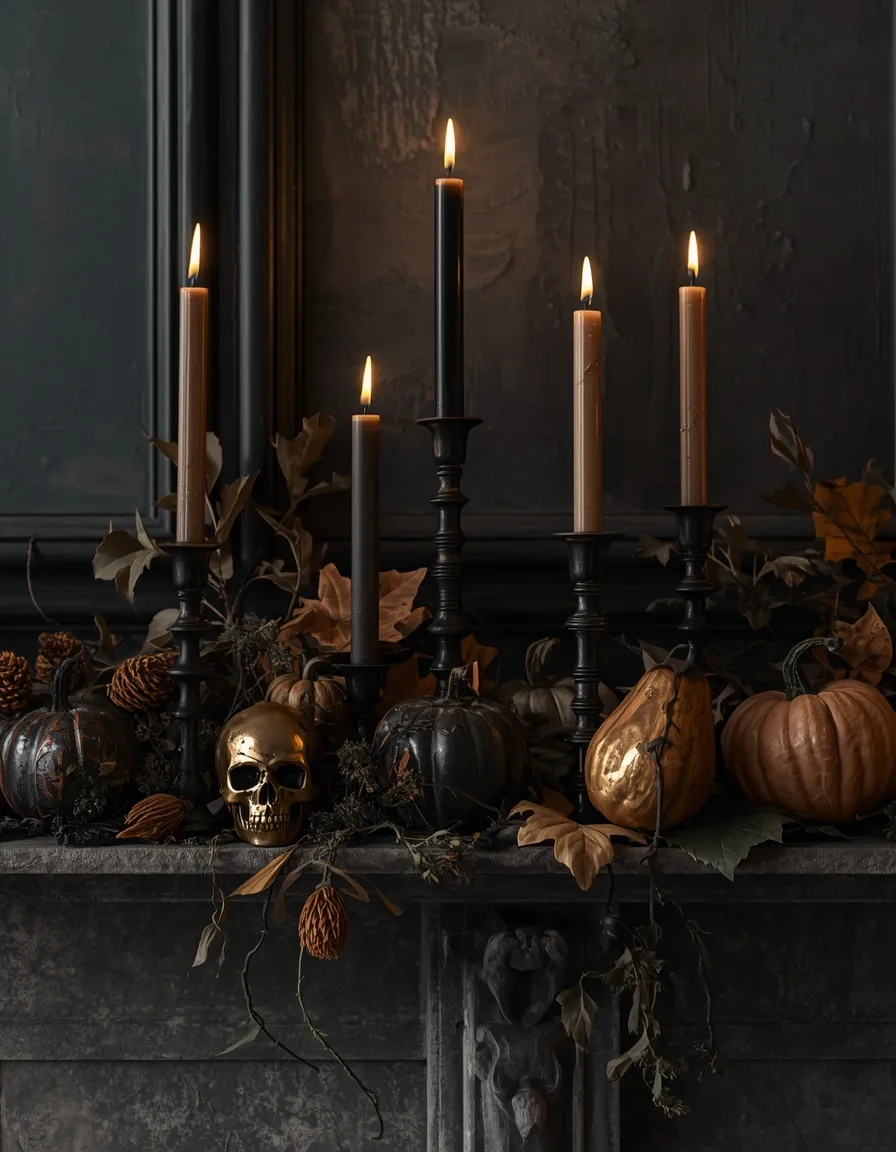
13. Halloween-to-Harvest Mantel
A clever fall mantel handles Halloween without needing a second one. Black candles, dark dried foliage, amber glass, and a few brass skulls or bats read as gently gothic in October, then the novelty pieces come off and the harvest mantel remains.
Build the mantel around a moody harvest base, dark foliage, black and amber candles, deep gourds, and add only a handful of removable Halloween pieces on top. Come November first, those few pieces leave and the mantel underneath is already right for Thanksgiving, which saves you decorating the fireplace twice in a month. Keep the Halloween elements elegant rather than plastic. Note that paper decorations near candles are a real fire risk. This suits anyone who marks Halloween but doesn’t want a whole separate scheme.
- Best for: those who mark Halloween but won’t decorate the mantel twice.
- Why it works: remove a few pieces on Nov 1 and the harvest mantel is already there.
- Watch out: paper decorations near candles are a genuine fire risk.
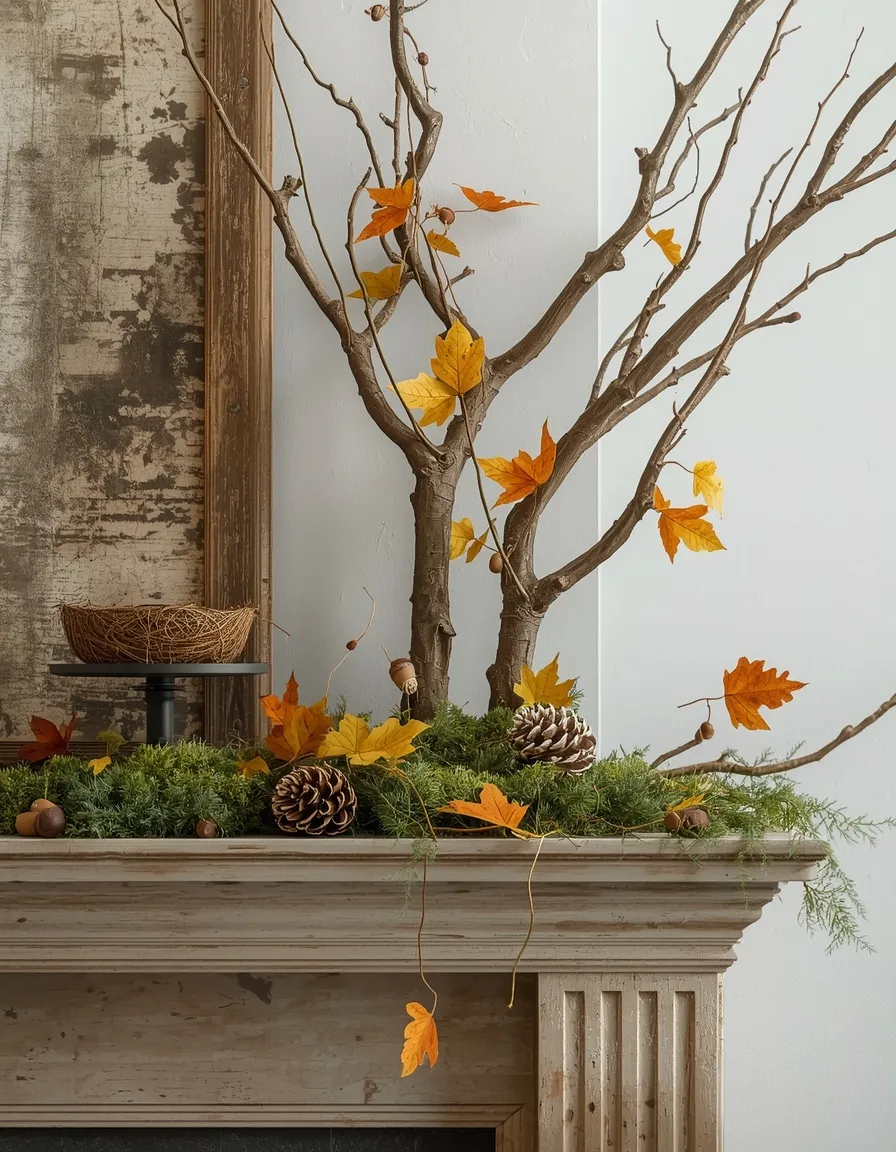
14. Foraged Woodland Mantel
A foraged mantel brings the actual autumn indoors. Branches still holding their turning leaves, moss, bark, acorns, pinecones, and a bird’s-nest bowl create something that looks like the woods arrived on the shelf.
Cut branches while the leaves are still turning rather than fully dry, since they hold color far longer that way, and preserve them by standing the stems in a glycerine-and-water solution for a week or two if you want them supple through the season. Otherwise expect fresh leaves to curl and drop within a couple of weeks. Shake foraged material outdoors before bringing it in, since it often carries insects. This suits rustic and nature-loving homes, and it costs nothing but a walk.
- Best for: nature lovers; costs nothing but an afternoon walk.
- Watch out: shake foraged material outdoors first, it often carries insects.
- Key elements: turning branches, moss, bark, acorns, pinecones, nest bowl.
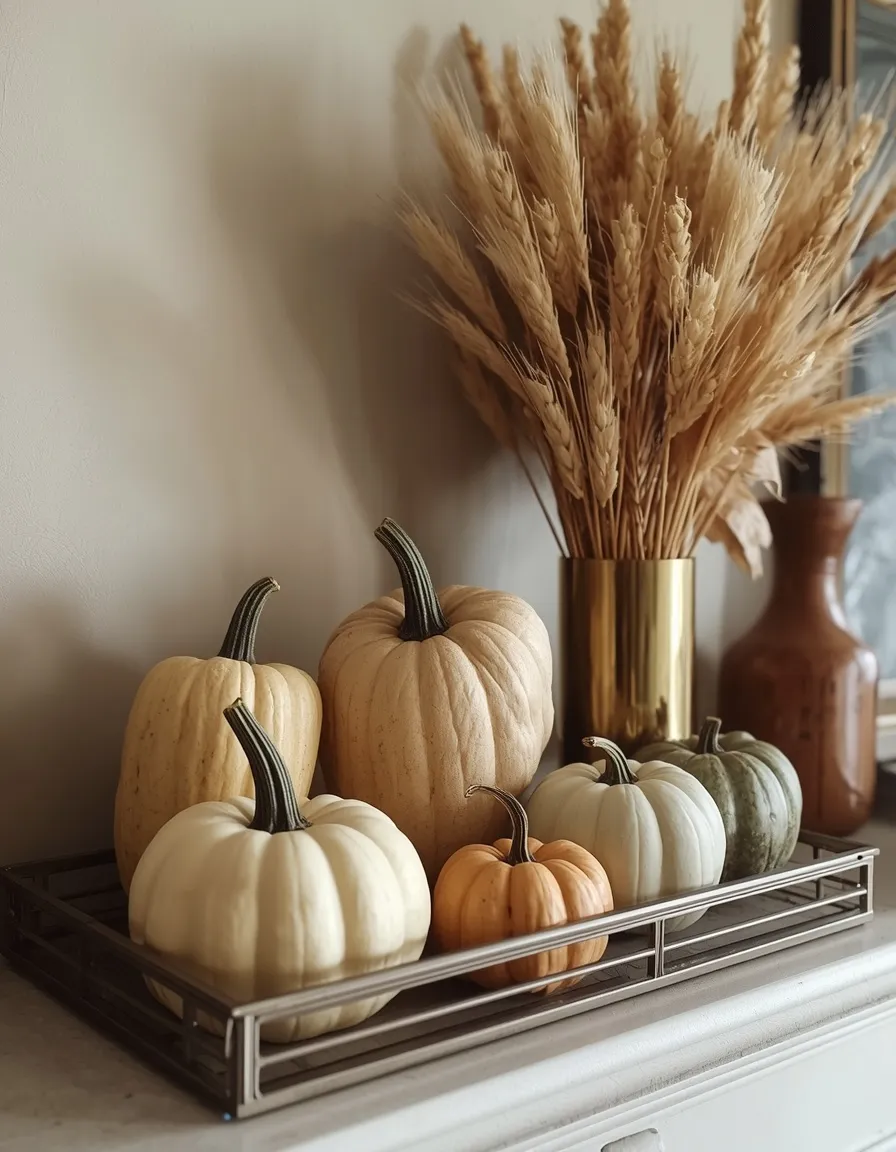
15. Real vs Faux Pumpkin Mantel
Pumpkins are fall’s signature, and how you use them decides how long the mantel lasts. A grouping of real heirloom pumpkins in cream, sage, and pale orange looks far better than the supermarket kind, but it won’t last the season.
Real pumpkins on a warm indoor mantel typically last around one to two weeks before they soften and start to mark the shelf, so put them on a tray or a cloth and check them regularly. Wiping the skin with a diluted vinegar solution and drying it well can extend that a little. Heirloom varieties in cream, blue-grey, and sage look considerably more elegant than bright orange ones. For a mantel that holds all season, faux or velvet pumpkins are the honest answer. This suits anyone deciding between the two.
- Best for: anyone weighing real pumpkins against faux ones.
- Watch out: real pumpkins last 1–2 weeks indoors, use a tray and check them.
- Key elements: heirloom cream and sage pumpkins, tray beneath, faux for longevity.
16. The First-Fire Reset
The season’s first fire is the moment a fall mantel has to be rethought. Dried wheat, pampas, paper leaves, and garlands come off, the chimney gets swept, and the mantel is restyled with what can safely live above a working fire.
This is the step almost every decorating guide skips, and it genuinely matters: the mantel decor you built in September is largely dried plant material and paper, and in October there is suddenly a fire beneath it. Clear all dried material and anything overhanging before the first fire, and keep candles well clear of the firebox. Have the chimney professionally swept before the season’s first use, which is basic fire safety rather than a nicety. Restyle with ceramics, metal, and stone, which are safe near heat.
- Best for: everyone with a working fireplace, this step is not optional.
- Watch out: sweep the chimney before the first fire; clear all dried decor off.
- Key elements: dried material removed, ceramics and metal in, chimney swept.
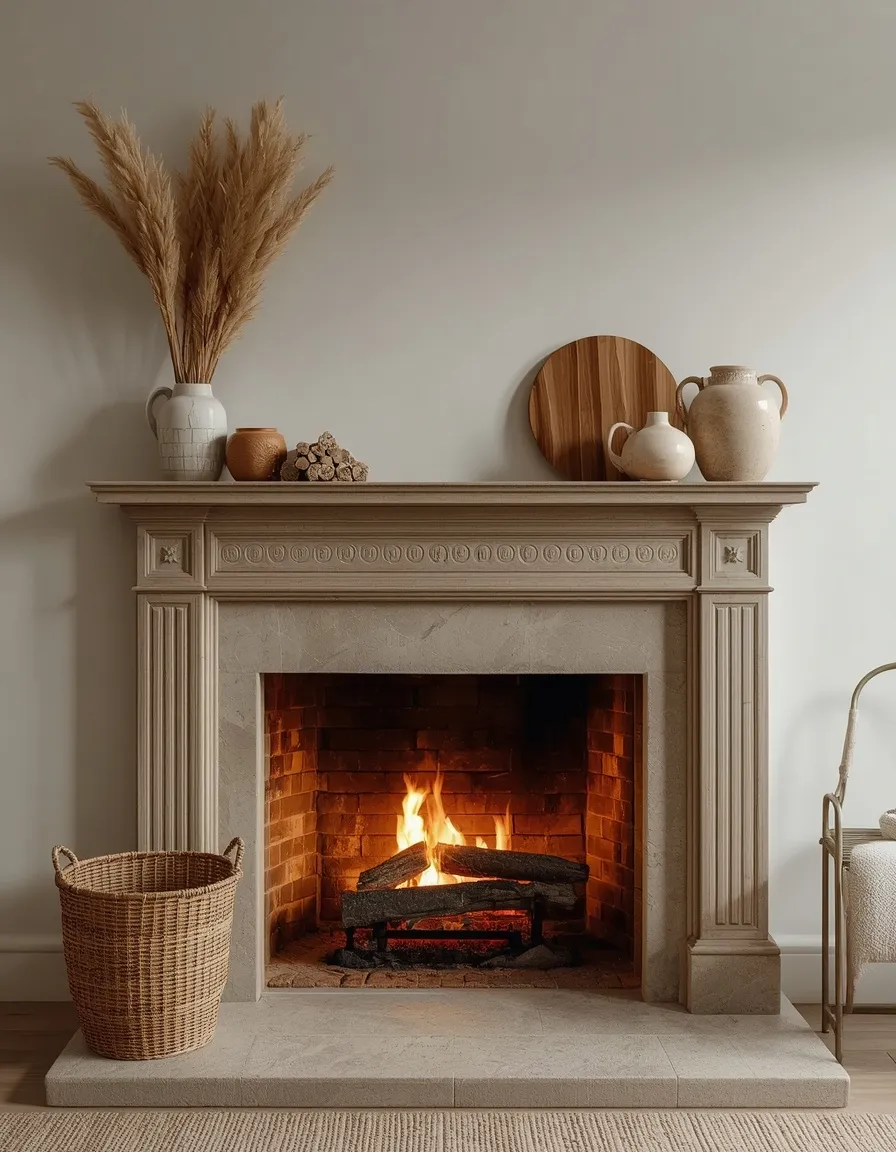
Before the First Fire: The Safety Check
Fall is when the fireplace stops being decoration and becomes a fire again, and that changes the rules for everything sitting above it. Clear the mantel of dried material before you light it, and have the chimney swept first.
Autumn mantel decor is largely made from the most flammable things in the house: dried wheat, pampas grass, corn husks, paper leaves, dried florals, and garlands. Through September they sit harmlessly above a cold firebox. The moment you light a fire, they’re above a heat source, so take them down, and never let a garland drape near the opening. Keep candles well clear of anything overhanging, and use flameless LEDs where decor sits above them.
Have the chimney professionally swept and checked before the season’s first use. Creosote builds up in a flue over time and is the cause of chimney fires; an annual sweep before the burning season is standard practice, not an optional extra. Restyle the mantel with ceramics, stone, and metal, which are all safe above a working fire.
Autumn is also the moment people rethink the fireplace itself, not just the shelf. Our guide to the sage green fireplace shows how a painted surround changes the whole room, and you’ll find plenty more in our fireplace ideas.
Conclusion
The best summer to fall mantel ideas aren’t about replacing one look with another, they’re about editing. Keep the anchors, swap the stems, add one textile and one warmer accent, and let the palette deepen from green to gold to rust as the weather actually turns. Hold the pumpkins back until they’re earned, and before you light the season’s first fire, take the dried grasses down and get the chimney swept. Do it that way and the mantel will still feel right in November, rather than exhausted. For more ways to make a fireplace the best thing in the room, browse our fireplace ideas.
Frequently Asked Questions
Q: How do you transition a mantel from summer to fall?
Change three things and keep everything else. Swap the stems (hydrangeas become wheat or dried oak), change one textile (linen to wool), and introduce one warmer accent color. Leave the anchors, the mirror, candlesticks, and vessels, exactly where they are. Deepen the palette in stages, from green and white to gold, then rust, rather than jumping straight to full autumn.
Q: When should you start decorating for fall?
Start the transition in late summer, but hold the heavy autumn color back until the weather turns. Begin with texture and dried stems while keeping greens, add gold and amber in early fall, and save rust, pumpkins, and deep tones for mid-autumn. Timing depends on your climate, follow the weather rather than the calendar, since autumn arrives weeks earlier in a cool northern region than a warm southern one.
Q: Can you decorate a fall mantel without pumpkins?
Absolutely, and it often looks more elegant. The season’s real materials, dried oak and beech branches, wheat, pinecones, acorns, seed heads, and dried hydrangea, carry autumn on texture and warm light alone. Amber glass and beeswax candles do more for the mood than any gourd, and most of it can be foraged for free.
Q: Is dried wheat or pampas grass safe above a working fireplace?
No. Dried wheat, pampas grass, corn husks, and paper decorations are highly flammable, and above a lit fire they’re a genuine hazard. They’re fine on a cold firebox through September, but take them down before the season’s first fire. Keep candles clear of anything overhanging, and use flameless LEDs where decor sits above them.
Q: How long do real pumpkins last on a mantel?
Roughly one to two weeks indoors, since a warm room and the rising heat from a fireplace speed up softening. Stand them on a tray or cloth to protect the mantel, check them regularly, and remove any that start to soften. Wiping the skin with a diluted vinegar solution and drying it well can extend the life a little. For a mantel that holds all season, use faux or velvet pumpkins.
Q: How do you style a fall mantel with a TV above it?
Keep the decor low so it doesn’t compete with the screen, anchor asymmetrically with one tall dried arrangement to a single side, and let a leaning frame or garland overlap the screen’s lower edge to soften the boundary. Many TVs have an art mode for idle display. Be aware that heat from a working fireplace can damage a TV mounted above it, so check the manufacturer’s guidance.