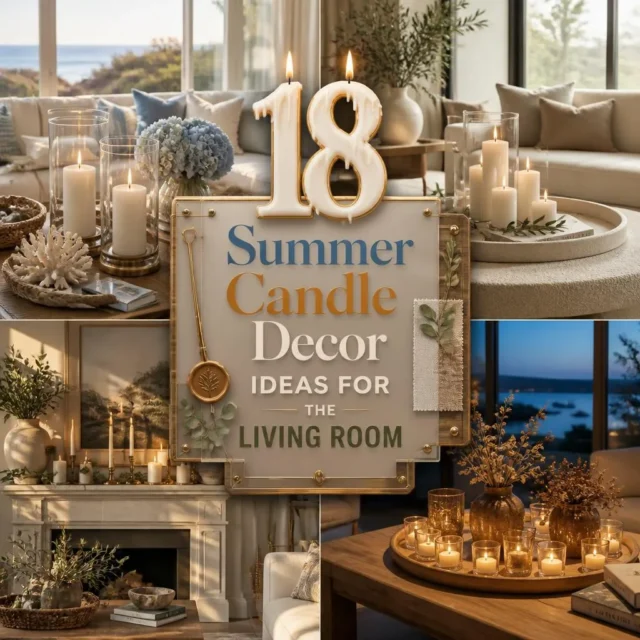
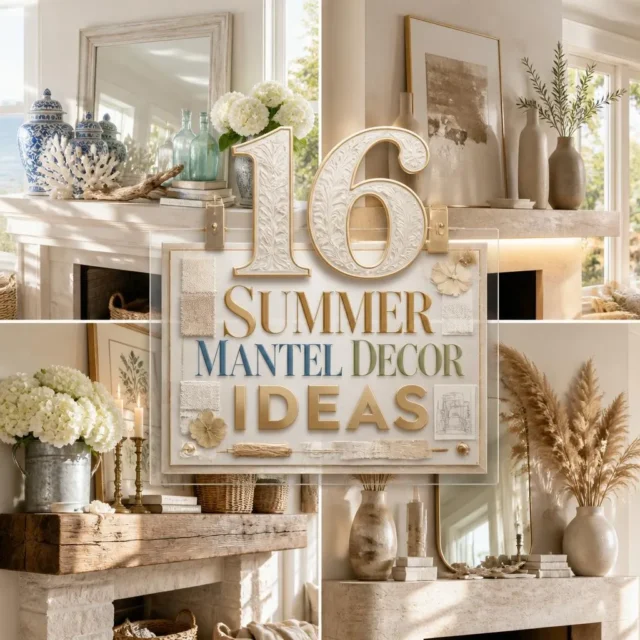

The mantel is the one shelf in the house everybody looks at. Summer mantel decor ideas work because that shelf sets the tone for the whole room, swap heavy winter greenery for bleached wood, sea glass, and a jar of hydrangeas, and the living room feels lighter before you’ve changed anything else. It’s the cheapest seasonal refresh there is, and often the fastest. At Sunday Abode, we love a change that takes twenty minutes and shifts the mood of a whole room. These 16 mantels cover every style, plus how to style around a TV, and the safety detail that dried-decor guides never mention.
Key Takeaways
- Anchor the mantel with one tall item placed off-center, then build down in varied heights. Perfectly symmetrical centering looks stiff and dated.
- Art or a mirror should span roughly two-thirds of the mantel’s width, much smaller and it looks lost, much wider and it overwhelms.
- Dried decor is beautiful and highly flammable. Pampas grass, dried florals, and paper should never drape over or near a working firebox, and candles need real clearance.
- Fresh flowers struggle on a mantel because warm air rises off the firebox; hydrangeas wilt notoriously fast without water.
- With a TV above the mantel, keep decor low, anchor asymmetrically to one side, and let art overlap the screen’s edge.
The Mantel Styling Formula
Style a mantel by anchoring it with one tall element placed off-center, then building down through varied heights and layering items front to back. That single principle is the difference between a mantel that looks designed and one that looks like objects lined up on a shelf.
Three rules do most of the work. First, scale the artwork: a mirror or picture leaning against the wall should span roughly two-thirds of the mantel’s width, which reads as deliberate rather than lost or overbearing. Second, group in odd numbers, threes and fives look natural, pairs look static except in a deliberately symmetrical scheme. Third, layer depth: push art to the back, overlap a shorter object in front of it, and let something trail over the front edge so the arrangement has dimension rather than sitting in a single flat line.
Leave breathing space. The most common mantel mistake is filling every centimeter, which makes even lovely objects read as clutter. Aim to leave roughly a third of the surface visibly empty.
Fresh, Dried, or Faux: What Actually Works?
Summer mantels lean heavily on flowers, grasses, and greenery, and the material you choose affects both how long it lasts and how safe it is. Dried decor in particular deserves more caution than it usually gets.
| Material | How long it lasts | Fire-safety note |
| Fresh flowers | Days, warm rising air shortens it | Not flammable, but keep water topped up |
| Fresh greenery | 1–2 weeks in water; less if dry | Dries out and becomes combustible over time |
| Dried grasses (pampas) | Months to years | Highly flammable, keep well away from flame |
| Dried florals | Months | Flammable; never drape near a firebox |
| Quality faux stems | Years | Usually safer, but still keep clear of heat |
| Candles | Single-use | Never leave unattended; clear all overhanging decor |
Even an unused summer fireplace can be warm if a gas pilot light is running, and a mantel is exactly where people put candles. Keep flame and dried material apart.
1. Coastal Blue and White Mantel
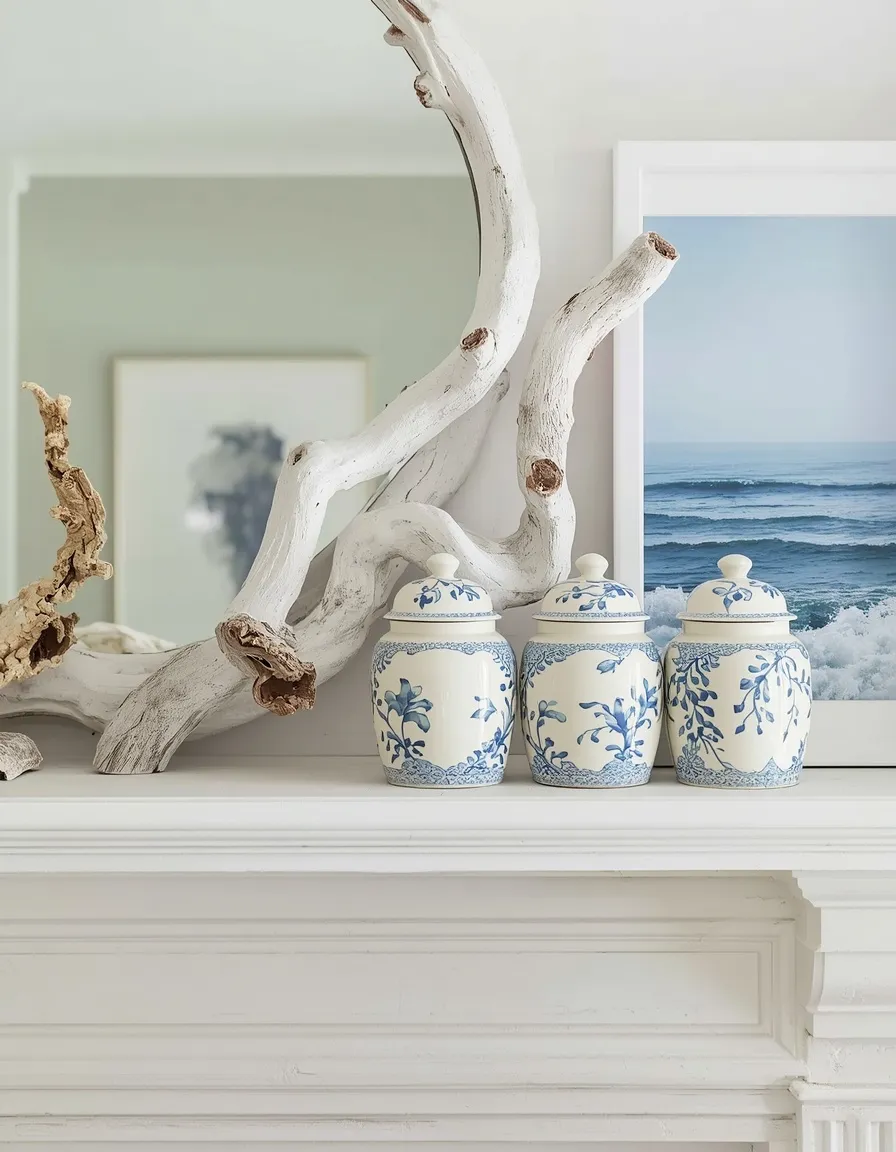
Blue and white is summer’s most reliable mantel palette. Bleached driftwood, a large piece of coral, blue-and-white ceramic jars, and a leaning seascape print create a mantel that feels like a sea breeze in a room.
Build the look around a leaning mirror or a coastal print roughly two-thirds the mantel’s width, then group ceramics in threes at varying heights. Real driftwood, shells, and sea glass beat plastic reproductions every time, and a beachcombing walk costs nothing. Keep the palette to two colors plus natural texture, since adding a third color is what tips coastal into cluttered. This suits coastal, Hamptons, and traditional living rooms, and it’s the most foolproof summer mantel there is.
- Best for: coastal and traditional rooms; the most foolproof summer look.
- Watch out: two colors plus texture; a third color tips it into cluttered.
- Key elements: driftwood, coral, blue-white ceramics, leaning seascape print.
2. Modern Minimalist Mantel
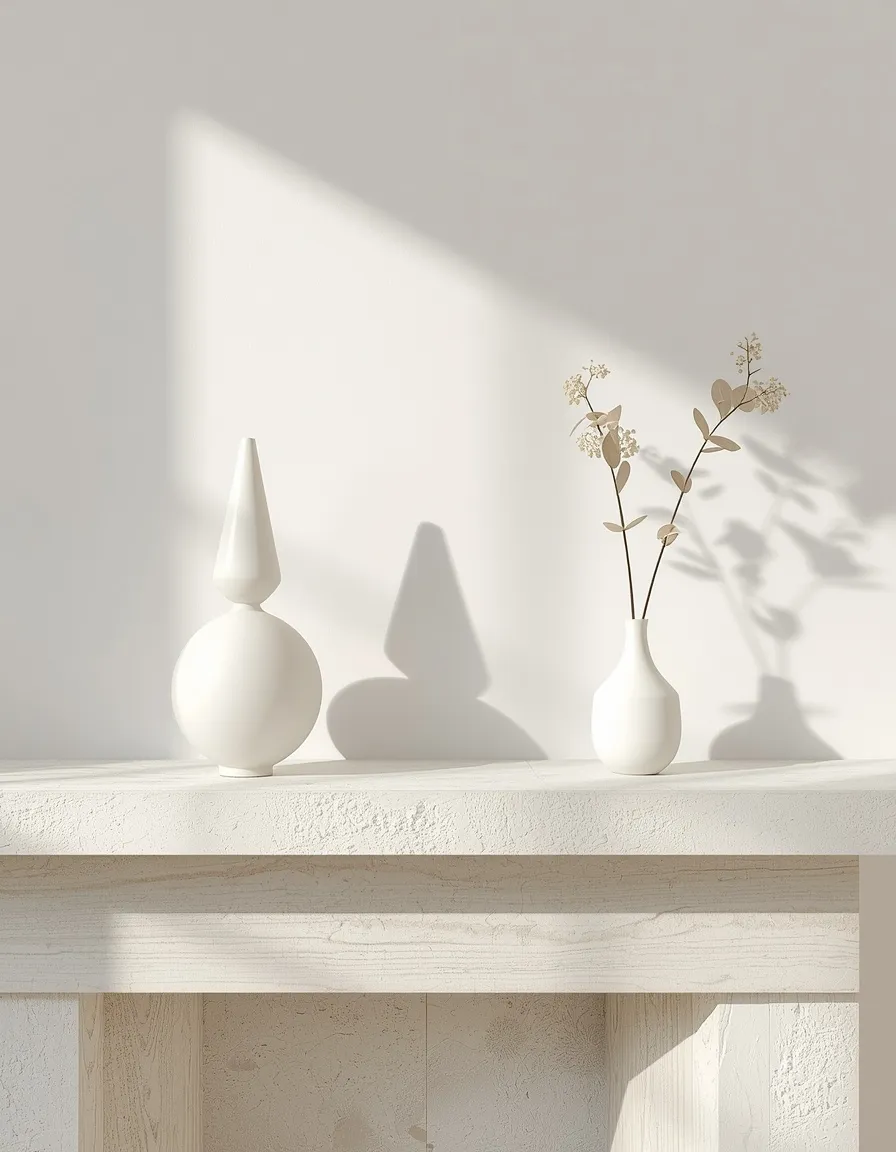
A modern summer mantel says almost nothing, beautifully. Two or three sculptural objects, a single stem in a slim vase, and acres of empty surface let the fireplace’s architecture speak instead.
Restraint is the whole technique here: choose three objects at most, vary their heights sharply, and leave the rest of the mantel genuinely empty. That emptiness is the design, and filling it is what ruins a minimalist mantel. Stick to a tight palette of white, stone, and pale wood, and let one sculptural shape, a curved vase, a marble bookend, carry the composition. This suits modern and Scandinavian interiors and anyone who finds seasonal decorating overwhelming, since it takes about five minutes.
- Best for: modern rooms; anyone who finds seasonal decorating a chore.
- Why it works: the empty space is the design, filling it destroys the effect.
- Key elements: three objects maximum, sharp height contrast, one sculptural shape.
3. Farmhouse Summer Mantel
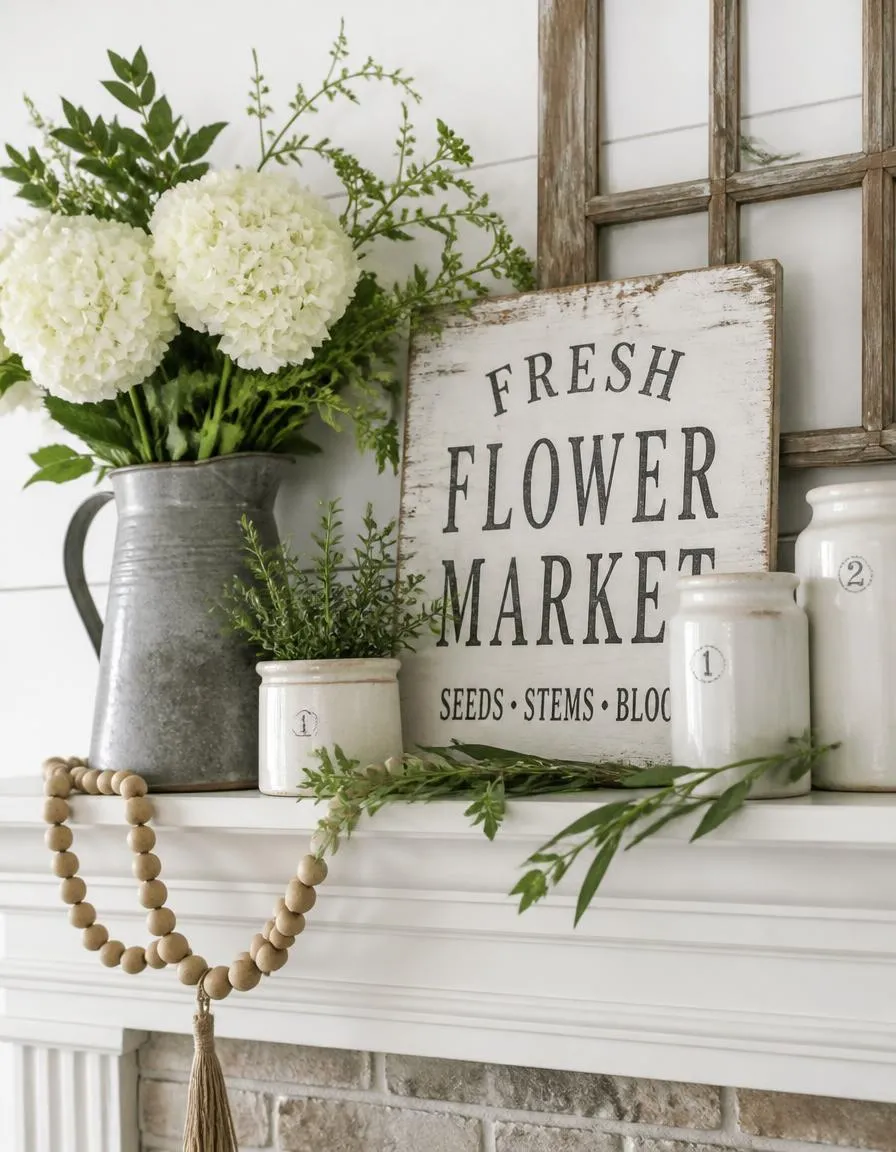
The farmhouse summer mantel swaps autumn’s warmth for something lighter. A weathered wooden sign, a galvanized pitcher of white hydrangeas, ironstone crocks, and a strand of wooden beads make it fresh but still homespun.
Keep the farmhouse bones, galvanized metal, chippy paint, natural wood, but lighten the palette to whites, creams, and soft greens, which is the single change that shifts farmhouse from fall to summer. Hydrangeas are the classic choice but wilt fast in the warm air rising off a firebox, so use water or switch to dried or good-quality faux. Drape wooden beads over the edge for that trailing layer. This suits farmhouse and cottage homes and works with pieces you probably already own.
- Best for: farmhouse homes; lightening pieces you already own.
- Watch out: hydrangeas wilt fast in the warm air rising off a firebox.
- Key elements: galvanized pitcher, ironstone, wooden beads, white and green palette.
4. Rustic Wood and Greenery
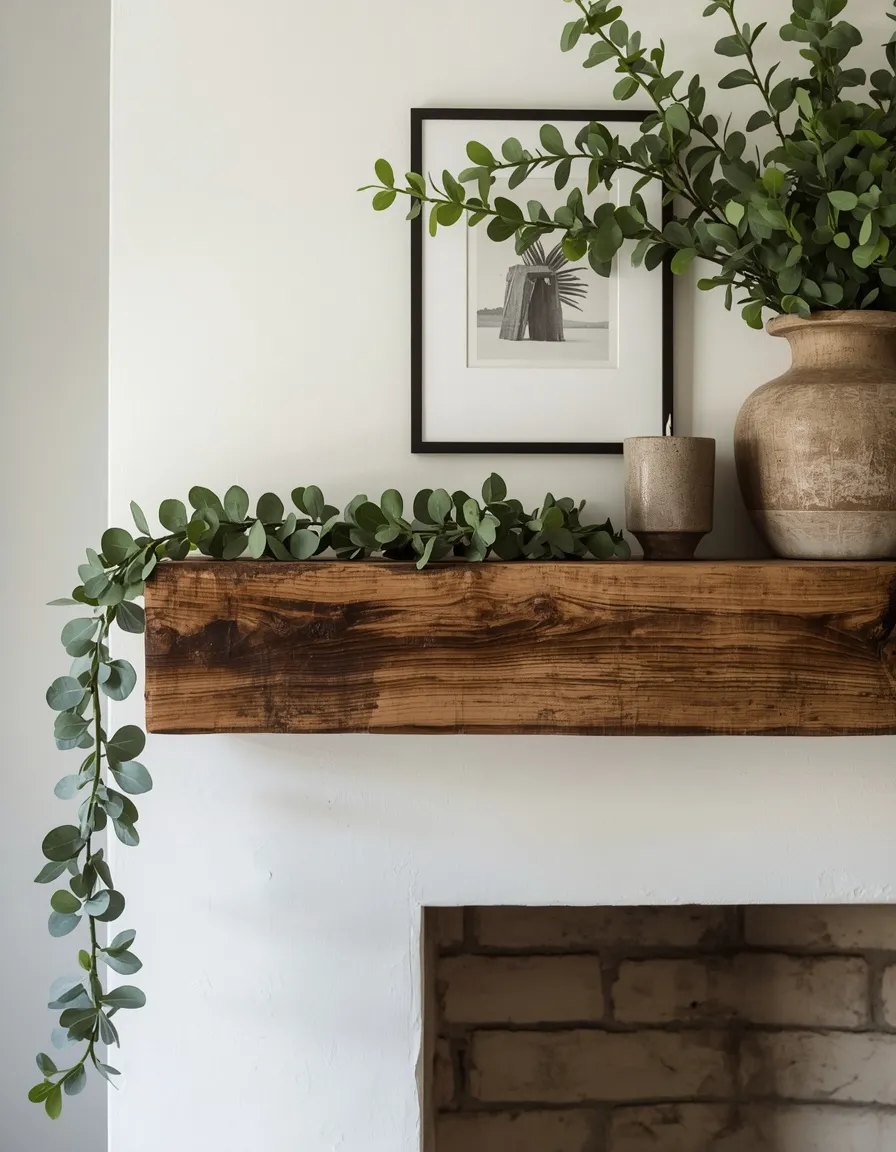
A rustic summer mantel is all warm wood and living green. A thick reclaimed timber shelf, a garland of eucalyptus or olive branches, stoneware vessels, and a chunky candle create something earthy and unfussy.
Let one long garland run the length of the mantel and trail slightly over one end rather than sitting symmetrically, which instantly looks more natural. Eucalyptus and olive both dry beautifully and hold their shape for weeks, unlike most greenery. Here’s the important part: as greenery dries it becomes genuinely combustible, so never let a garland drape near a working firebox or a lit candle. This suits rustic, farmhouse, and modern rustic rooms and looks best on a mantel with real texture.
- Best for: rustic and modern rustic rooms with a textured timber mantel.
- Watch out: greenery becomes flammable as it dries, keep it clear of flame.
- Key elements: eucalyptus or olive garland trailing off one end, stoneware, candle.
5. Vintage Summer Mantel
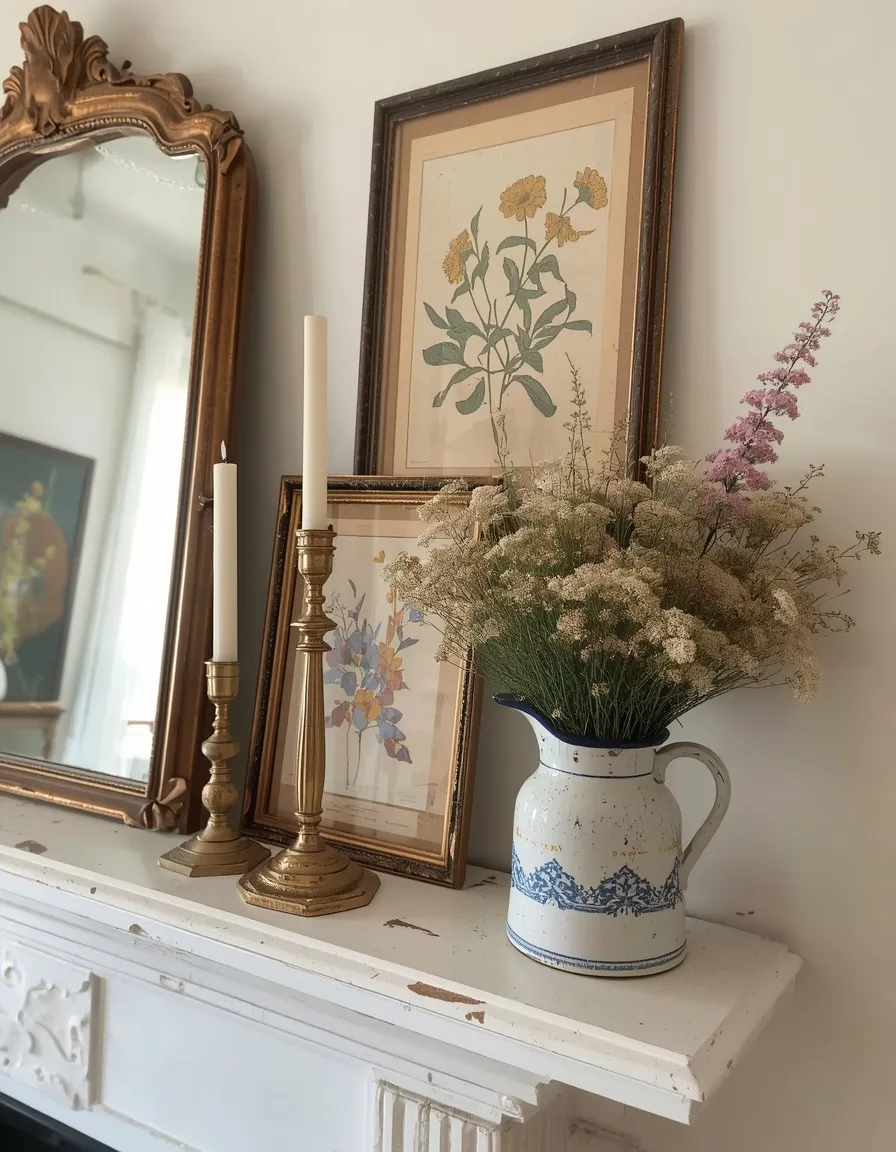
A vintage mantel gathers small treasures into a summer story. Antique brass candlesticks, a foxed mirror, old botanical prints, and a chipped enamel jug of wildflowers give the shelf a quiet, collected charm.
Unify a mismatched vintage collection with a single thread, one repeated metal tone, or a shared color across the objects, since that thread is what turns a jumble into a curation. Flea markets and charity shops are the natural hunting ground, making this the cheapest sophisticated mantel going. Cluster in odd numbers, and let the mirror lean rather than hang. If you’re using antique brass candlesticks with real candles, keep flames well clear of any prints or dried stems. This suits period homes, vintage lovers, and thrifters.
- Best for: period homes and thrifters; a sophisticated mantel for very little.
- Why it works: one repeated metal tone turns a jumble into a curated collection.
- Key elements: brass candlesticks, foxed mirror, botanical prints, enamel jug.
6. Traditional Symmetrical Mantel
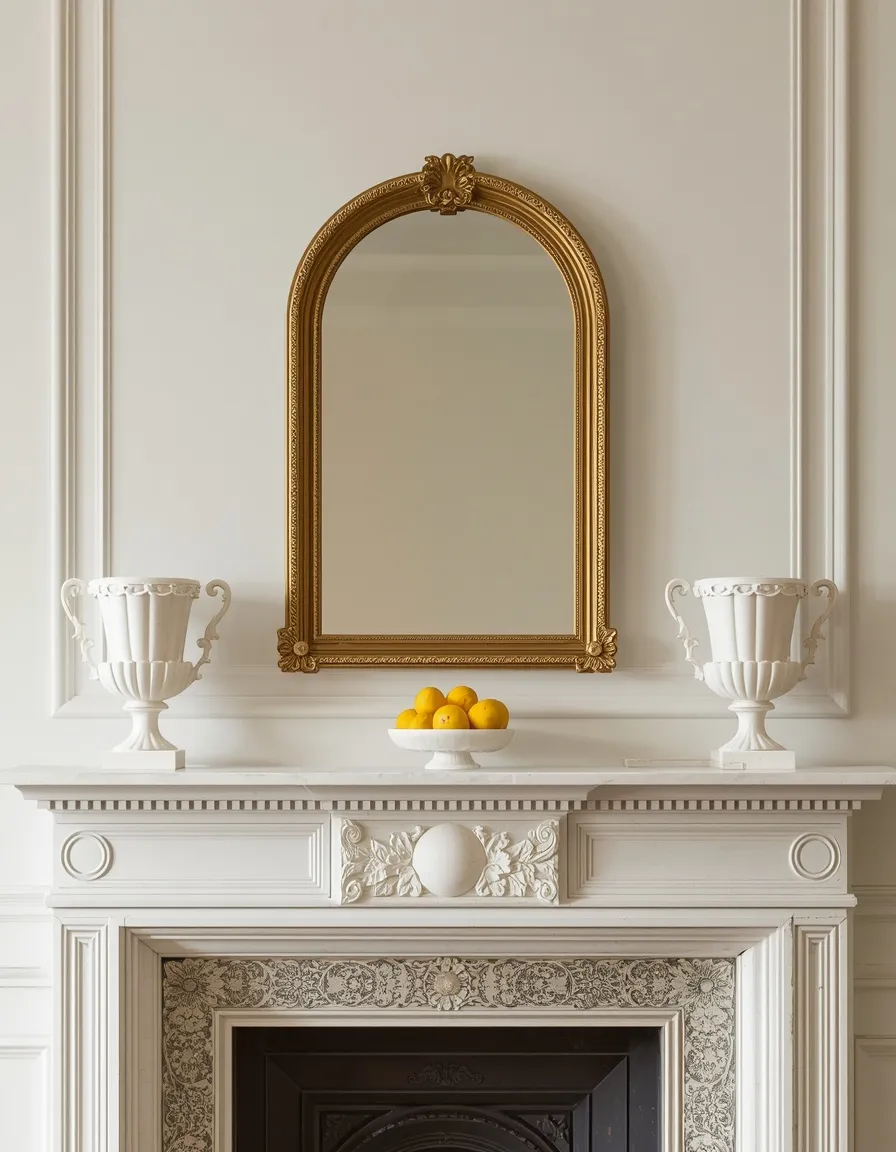
Sometimes symmetry is exactly right. A centered mirror or artwork, matched lamps or urns either side, and a low arrangement in the middle create a formal, calm mantel with real classical poise.
Symmetry only works if it’s genuinely precise, so measure rather than eyeballing it, a matched pair that’s slightly off-center looks like a mistake rather than a choice. Use identical or near-identical items on each side, and vary height only in the center. This is the one scheme where pairs beat odd numbers. A low bowl of lemons or white flowers in the middle keeps it summery rather than stately. This suits traditional, formal, and classical interiors and rooms with fine architectural detail.
- Best for: traditional and formal rooms with fine architectural detail.
- Watch out: symmetry must be precise; slightly off-center reads as a mistake.
- Key elements: centered mirror, matched pair either side, low central arrangement.
7. Styling a Mantel With a TV
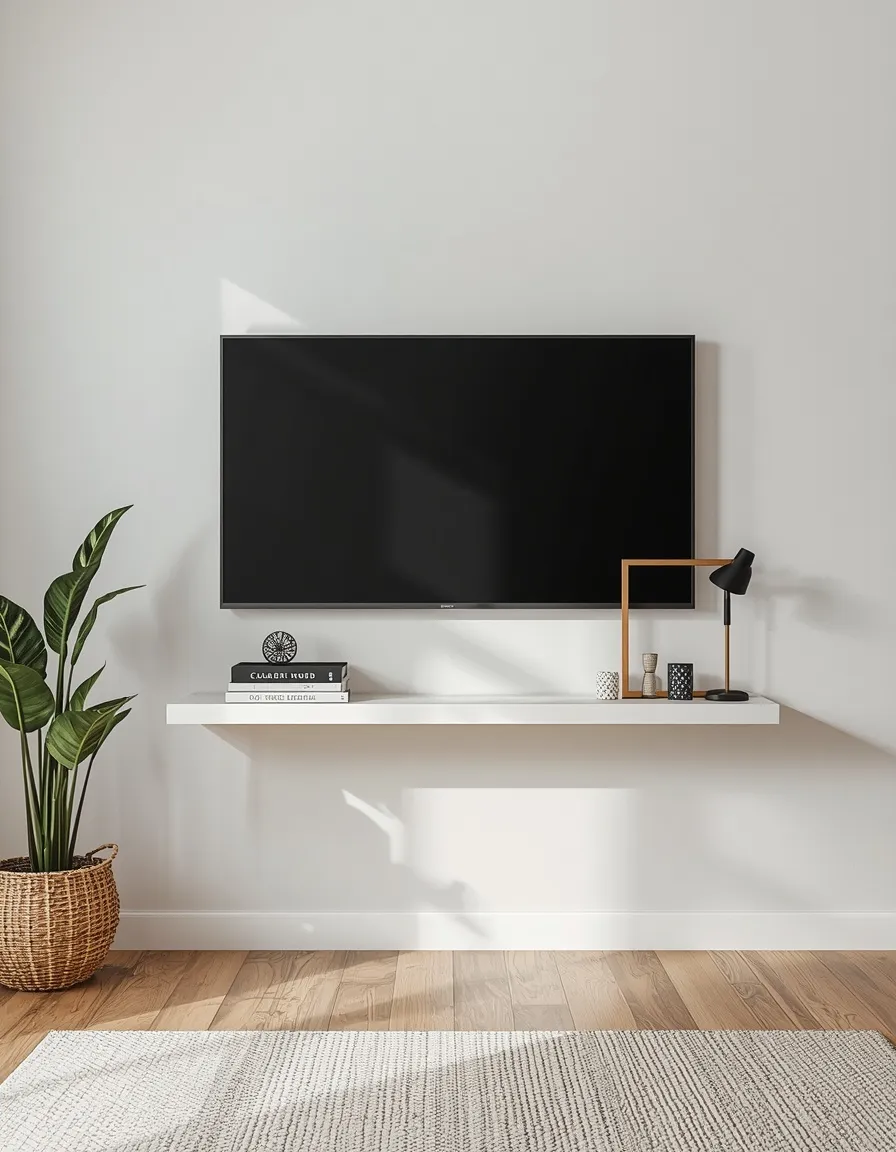
A television above the fireplace is the reality in most living rooms, and it can still look good. Tall asymmetric objects to one side, low decor along the shelf, and a leaning frame that overlaps the screen’s edge soften the black rectangle.
Three moves work. Keep everything on the mantel low, so it doesn’t compete with the screen for attention. Anchor asymmetrically with one tall plant or vase to a single side, which balances the TV’s mass rather than fighting it. And let a leaning frame or a trailing plant slightly overlap the screen’s lower edge, blurring the hard boundary. Many TVs also have an art mode that displays a picture when idle. One real caution: heat from a working fireplace can damage a TV mounted above it, so check the manufacturer’s guidance.
- Best for: the majority of living rooms, where the TV is already up there.
- Watch out: heat from a working fireplace can damage a TV mounted above it.
- Key elements: low decor, one tall asymmetric anchor, frame overlapping the screen.
8. Budget DIY Foraged Mantel
The best summer mantel might cost nothing at all. Branches cut from the garden, wildflowers in a jam jar, beach-found shells, and a stack of secondhand books make a mantel with real personality and no receipt.
Forage with a light touch: cut branches from your own garden, gather fallen material rather than stripping public planting, and never take from protected sites or private land. A jam jar or an old bottle makes a perfectly good vase. Because everything is free, you can restyle whenever you like, which is the real luxury here. Give woody stems a fresh diagonal cut and change the water every two to three days to keep them going. This suits renters, tight budgets, and anyone who redecorates on a whim.
- Best for: renters and tight budgets; restyle as often as you like.
- Watch out: forage responsibly, your own garden, never protected sites.
- Key elements: garden branches, wildflowers in a jar, shells, secondhand books.
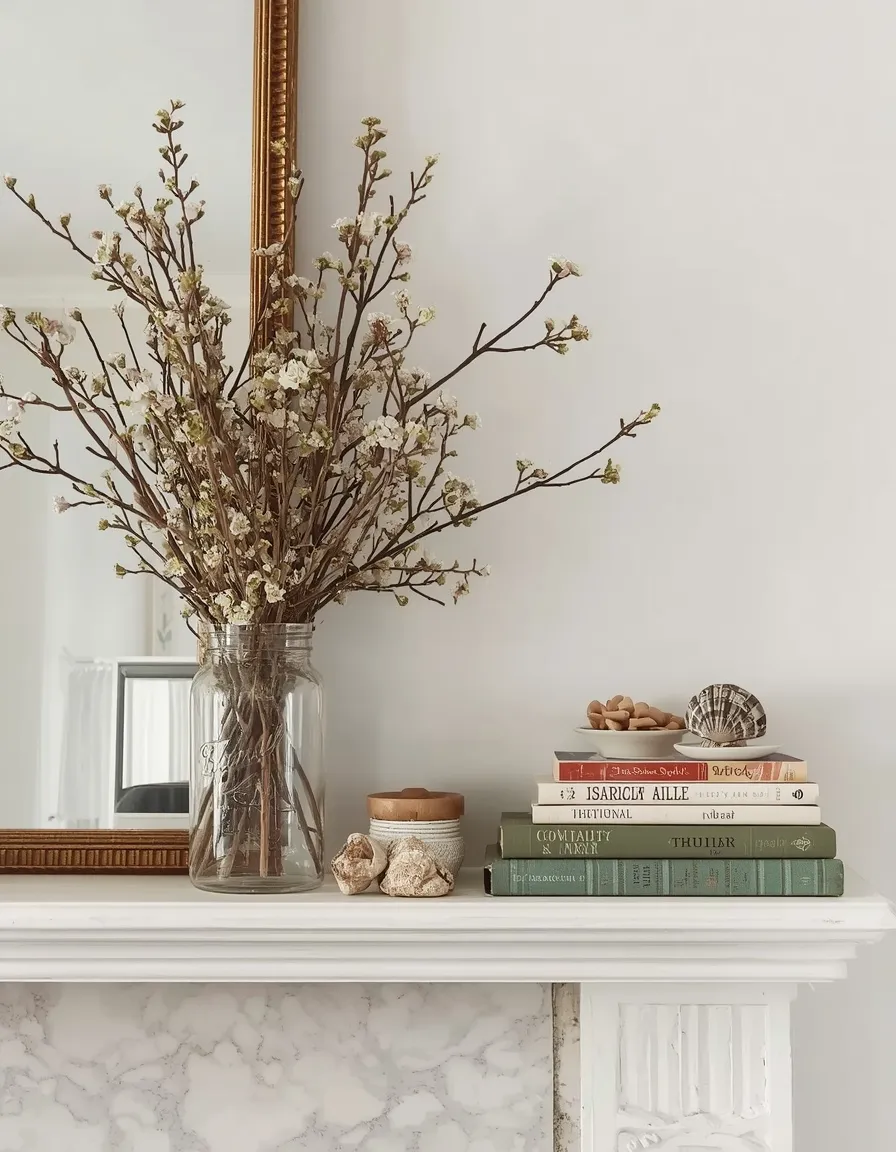
9. Fresh Hydrangea Mantel
Nothing says high summer like an armful of hydrangeas. Blowsy blue and white heads in a ceramic pitcher, flanked by a leaning mirror and a few simple candlesticks, make a mantel that feels generous and abundant.
Hydrangeas are notoriously thirsty and wilt fast, and a mantel is one of the worst places for them because warm air rises off a firebox even when it’s unlit. Cut the stems at a sharp angle, submerge them in water immediately, and top the vessel up daily. If a stem wilts, re-cut it and plunge the whole head in water for an hour, which often revives it. For an arrangement that lasts, dry them instead, hydrangeas dry beautifully. This suits anyone with hydrangeas in the garden and a taste for abundance.
- Best for: gardeners with hydrangeas; an abundant, generous summer look.
- Watch out: rising warm air wilts them fast, top up water daily, or dry them.
- Key elements: blue and white hydrangeas, ceramic pitcher, leaning mirror.
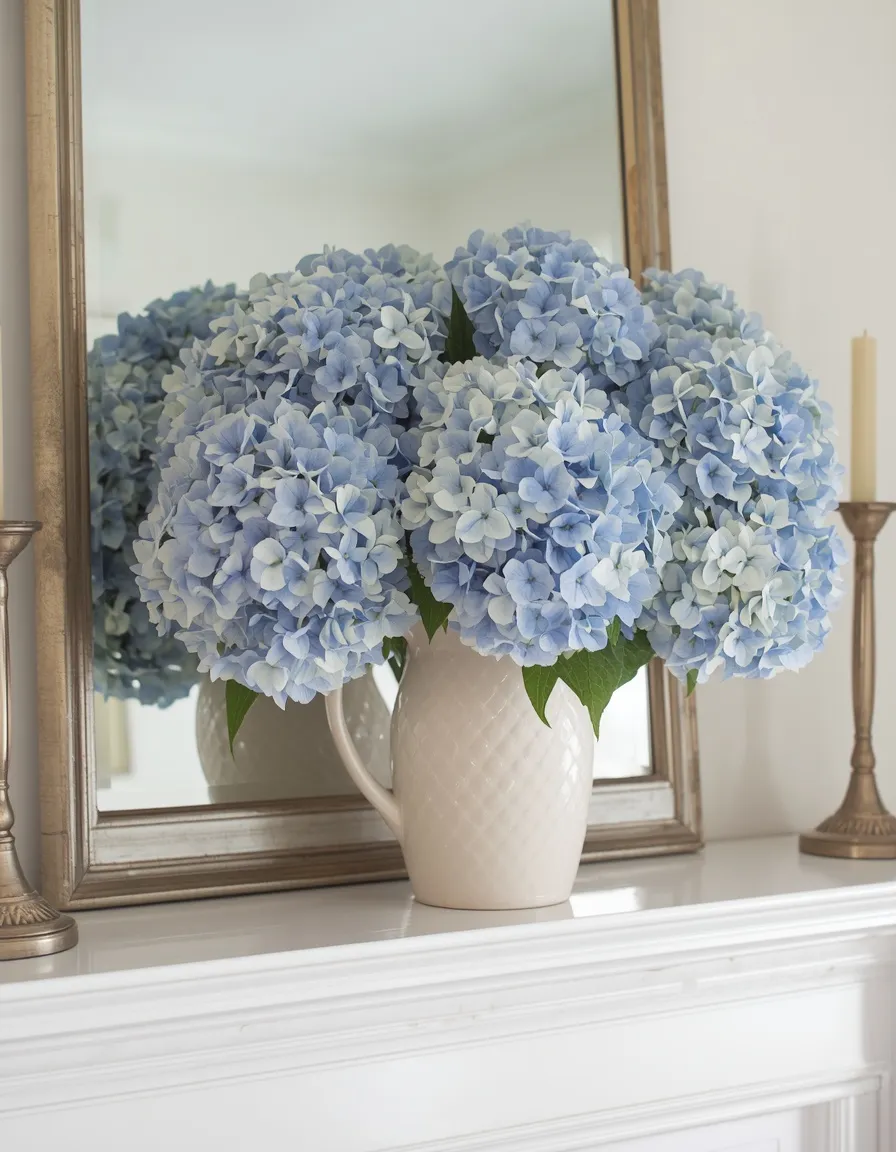
10. Dried Grass and Pampas Mantel
Dried grasses give a summer mantel soft, sunbleached texture. Plumes of pampas, bunny tails, and dried wheat in tall vessels, paired with linen and pale ceramics, create a look that’s warm, tactile, and lasts for months.
Dried grasses are wonderfully long-lived, holding their shape for months or years, which makes them the low-effort choice. The safety point is genuine and rarely stated: dried pampas grass is highly flammable, and so are dried florals and wheat. Never place them where they could catch a flame, keep them well away from candles, and never over a working firebox. Shake them outdoors occasionally, as pampas sheds. This suits boho and neutral interiors and anyone who wants a mantel they can leave alone for a season.
- Best for: boho and neutral rooms; a mantel you can leave alone for months.
- Watch out: dried pampas is highly flammable, keep it well clear of any flame.
- Key elements: pampas, bunny tails, dried wheat, linen, pale ceramics.
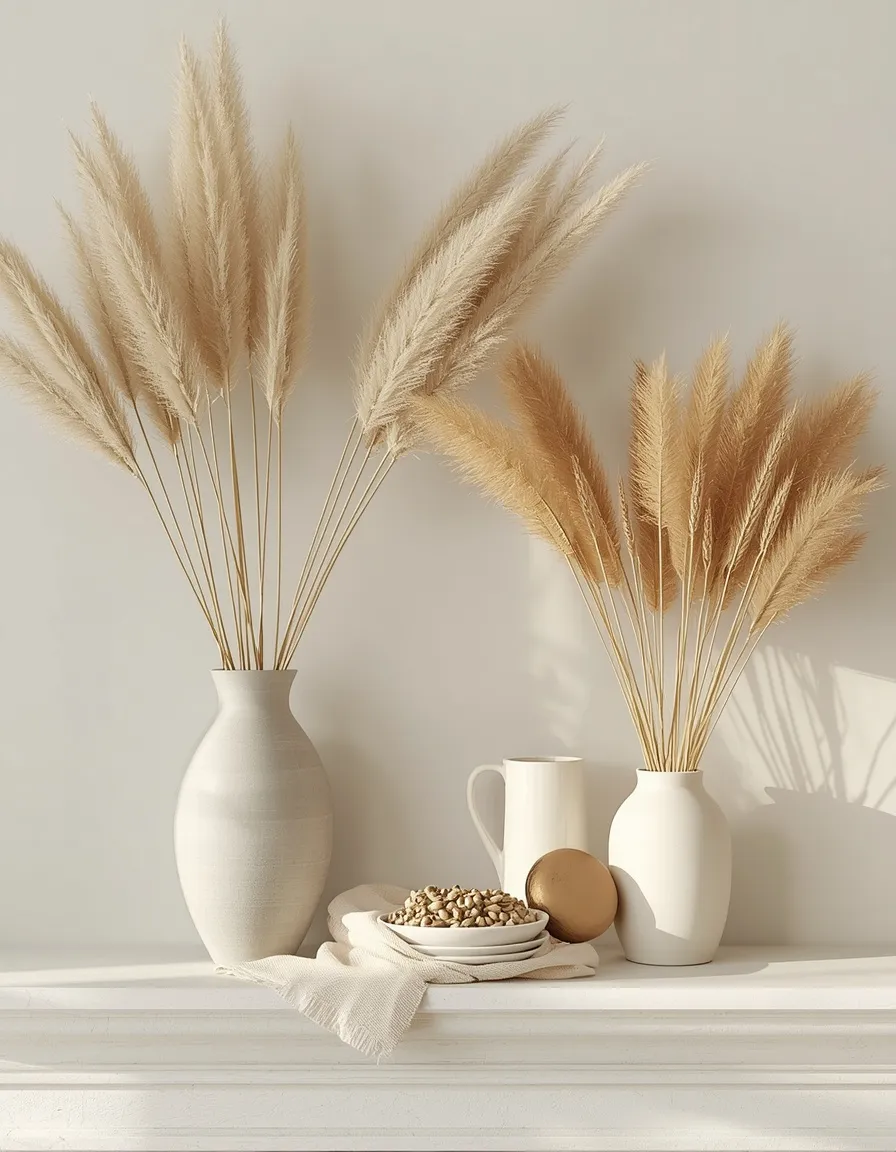
11. Botanical Green Mantel
A green mantel brings the garden indoors. Trailing ivy, potted ferns, olive branches in a stoneware jug, and botanical prints turn the shelf into a small living wall of foliage.
Use a trailing plant such as ivy or a pothos to spill over one end, which creates the vertical movement a flat shelf badly needs. Mantels can be dim and warm, so choose plants that tolerate lower light, ferns and pothos cope far better than sun-lovers. Note that pothos and ivy are both toxic to pets if chewed, so place them out of a cat’s easy reach. Water carefully, since a saucer overflowing on a painted mantel leaves marks. This suits plant lovers and anyone wanting a mantel that’s alive rather than styled.
- Best for: plant lovers wanting a living mantel rather than a styled one.
- Watch out: pothos and ivy are toxic to pets; choose low-light-tolerant plants.
- Key elements: trailing ivy or pothos, ferns, olive branches, botanical prints.
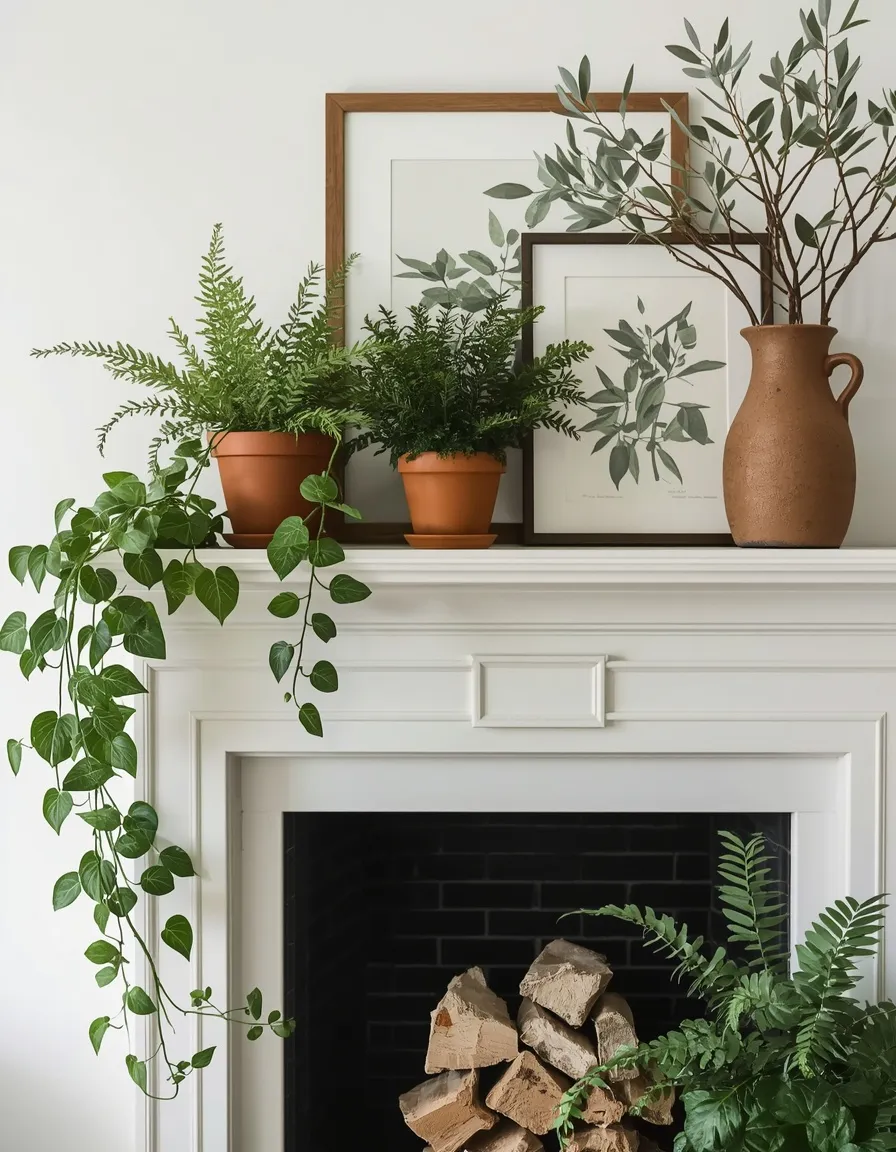
12. Neutral Linen and Texture
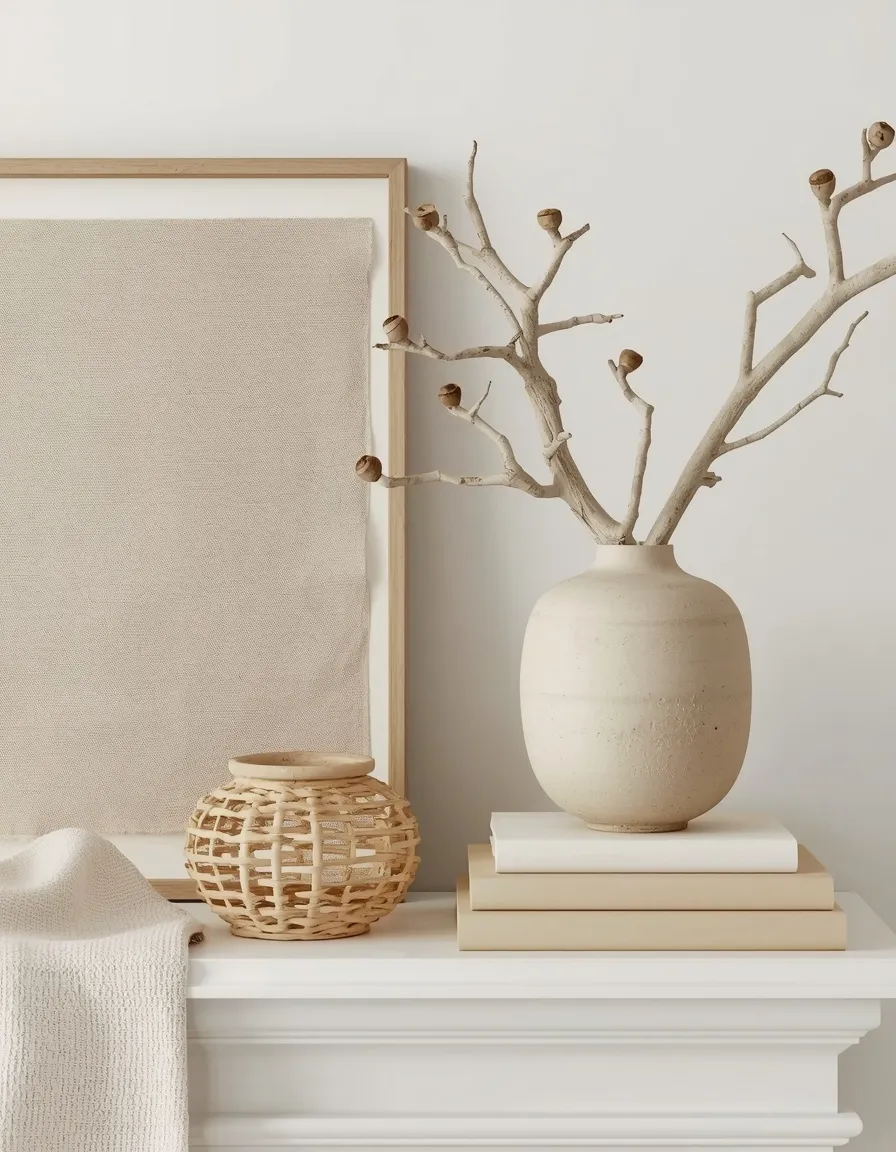
A neutral mantel proves color isn’t necessary. Layers of oatmeal, bone, and pale oak, a linen-wrapped frame, a raw ceramic vase, a bleached branch, a stack of pale books, create quiet, textural calm.
With no color doing the work, texture becomes the entire scheme, so combine at least four contrasting surfaces: nubby linen, unglazed ceramic, weathered wood, woven rattan, and matte stone. Varying the finishes so some are matte and some have a soft sheen is what catches the light and creates depth. This is the most forgiving mantel to live with, since nothing clashes with the room. It suits minimalist, Japandi, and modern interiors and anyone whose living room already has plenty going on.
- Best for: minimalist and Japandi rooms; a mantel that never clashes.
- Why it works: four or more contrasting textures replace color entirely.
- Key elements: linen, unglazed ceramic, bleached wood, rattan, matte stone.
13. Citrus and Lemon Mantel
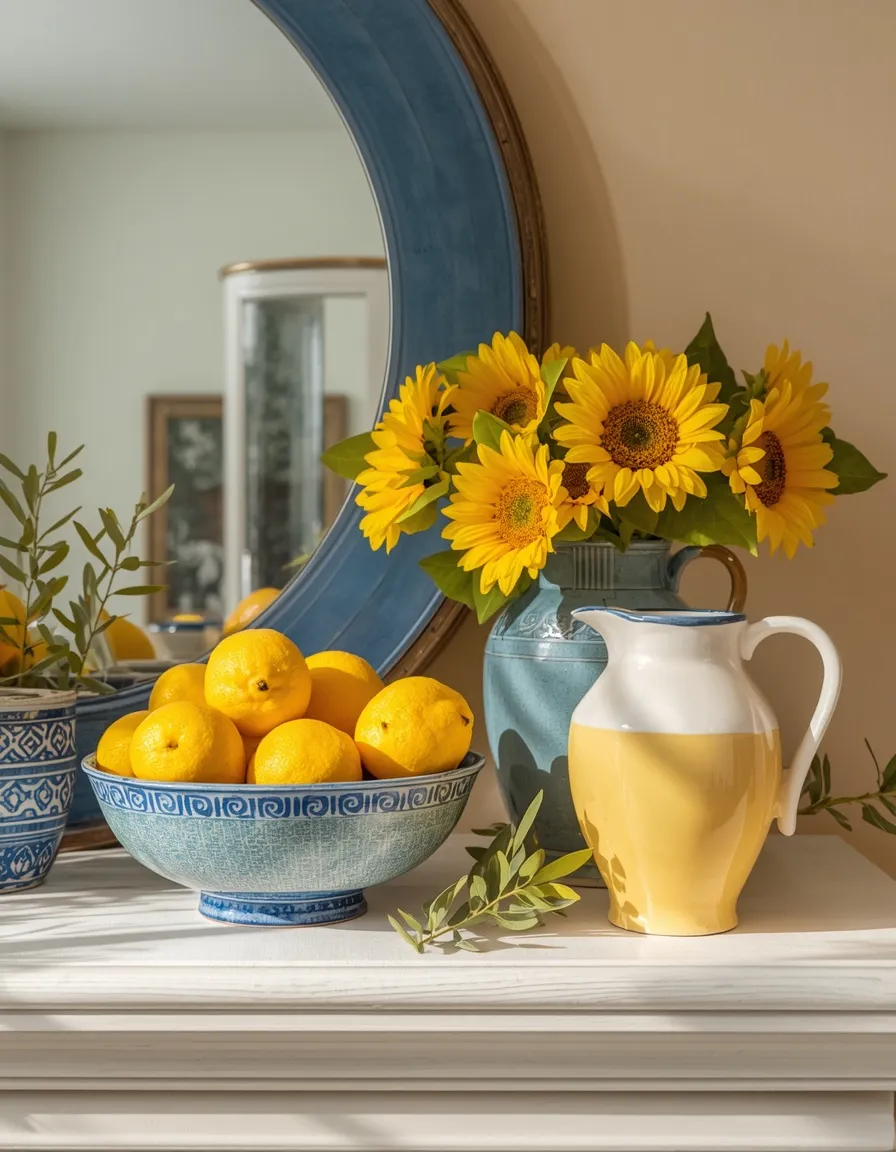
Lemons are summer’s cheapest and cheeriest decoration. A bowl of bright fruit, a lemon-print tea towel, blue and yellow ceramics, and a jug of sunflowers create a mantel with instant Mediterranean warmth.
Real lemons look far better than faux, and they’ll last roughly one to two weeks on display before they start to soften, so check them regularly and swap any going past their best. Pair the yellow with blue or white rather than more warm tones, since blue is what makes the citrus sing rather than muddying it. Add a small olive branch or rosemary sprig for that Mediterranean note. This suits kitchens, cheerful living rooms, and anyone who wants a bright, joyful summer mantel on a supermarket budget.
- Best for: bright, joyful rooms; a summer mantel on a supermarket budget.
- Watch out: real lemons last 1–2 weeks, check and swap them regularly.
- Key elements: bowl of lemons, blue and yellow ceramics, sunflowers, olive sprig.
14. Boho Layered Mantel
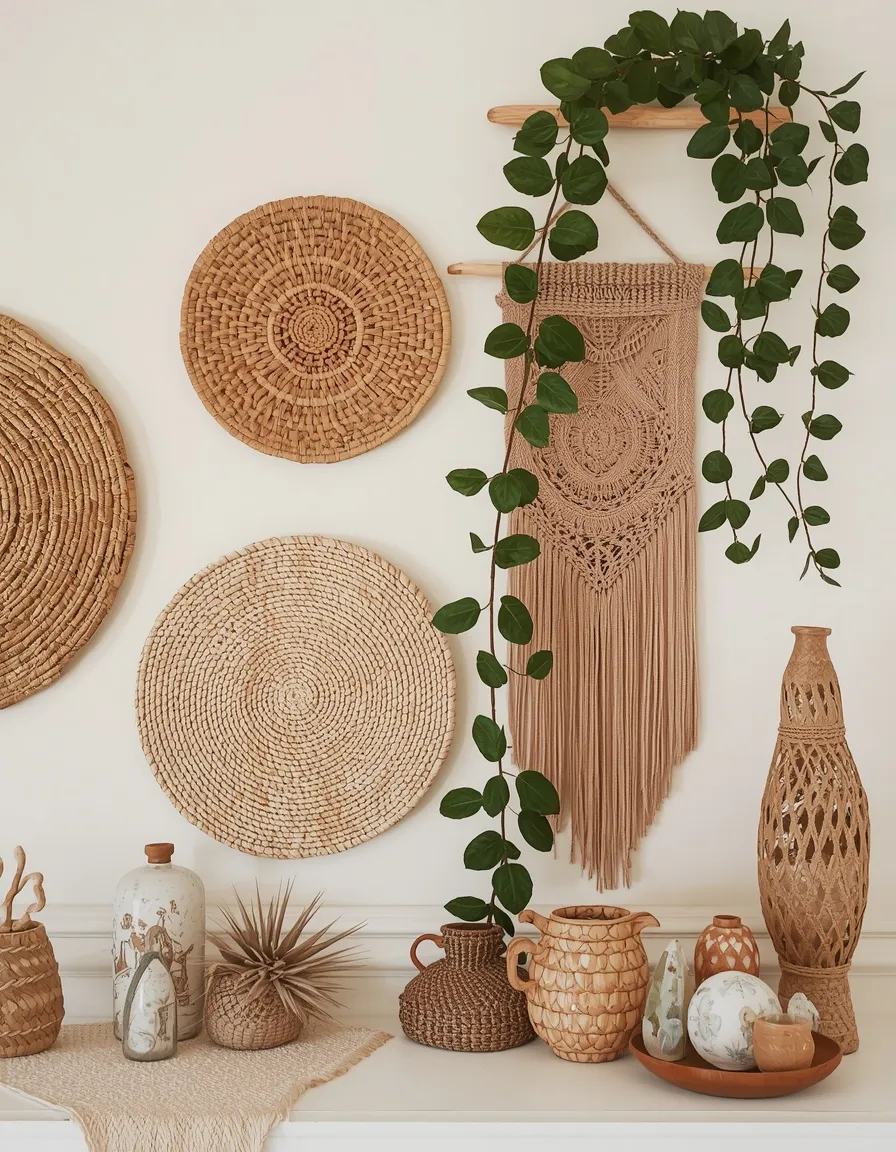
A boho mantel is happily crowded with texture and story. Woven wall art, a macrame hanging, trailing greenery, mismatched vessels, and a few crystals layer up into something warm and collected.
Layering is the point, but there’s a line: leave roughly a third of the mantel visible so the eye has somewhere to rest, or a boho mantel reads as clutter rather than abundance. Mix materials freely, rattan, brass, ceramic, dried stems, but hold them together with a warm, earthy palette. Hang a woven piece or macrame behind, and let something trail over the front edge. This suits boho and eclectic rooms and rewards a collector’s eye rather than a shopping trip.
- Best for: boho and eclectic rooms; collectors rather than one-trip shoppers.
- Watch out: leave a third of the surface visible, or abundance becomes clutter.
- Key elements: woven art, macrame, trailing greenery, mixed vessels, earthy palette.
15. Spring-to-Summer Transition
The easiest summer mantel is the one you already have, edited. Swapping spring’s tulips and pastels for bolder greens, heavier textures, and warmer light moves a mantel through the season without starting again.
Change three things rather than everything: replace the flowers, swap one textile, and change the color of a single accent. That’s genuinely enough to shift the season, and it’s why seasonal decorating doesn’t need to mean a box of new things twice a year. Move from soft pastels and delicate blossom to fuller greens, linen, and stronger blues or citrus. Keep the anchor pieces, the mirror, the candlesticks, the vessels, exactly where they are. This suits sustainable decorators and anyone who dislikes storing seasonal clutter.
- Best for: sustainable decorators who dislike storing seasonal boxes.
- Why it works: changing just three things is enough to shift the whole season.
- Key elements: swap flowers, one textile, and one accent color; keep the anchors.
16. Styling the Empty Summer Firebox
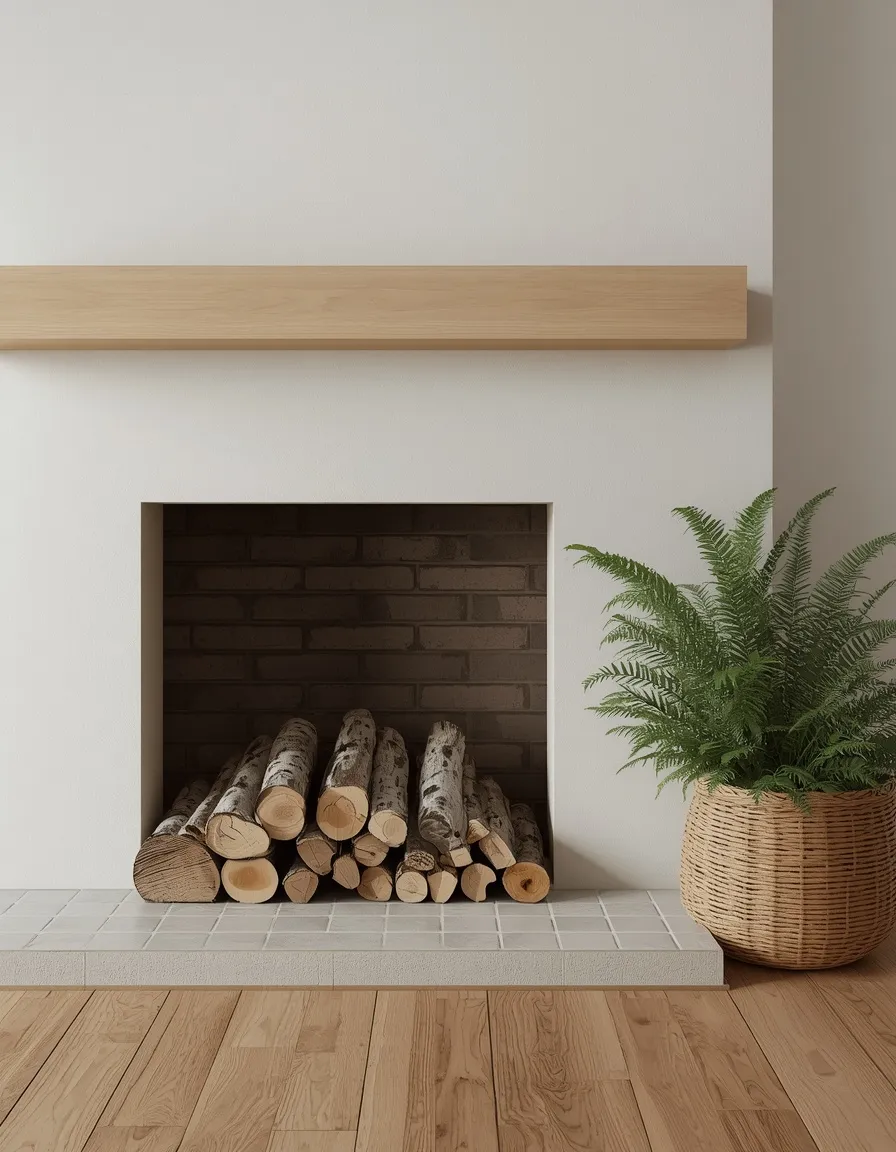
In summer the firebox itself sits empty and dark, and it’s the part of the fireplace everyone forgets. A stack of birch logs, a large pitcher of stems, a woven basket, or a cluster of candles turns that black hole into part of the display.
An unstyled empty firebox undermines even the loveliest mantel above it, which is precisely why the whole fireplace should be considered as one composition. Fill it with something with presence, a big basket, a fern, birch logs stacked on end, or a group of chunky candles. If you use real candles inside the firebox, never leave them unattended and keep them clear of the flue and any decor. Sweep the firebox before styling. This suits anyone with a fireplace that goes unused from May to September.
- Best for: any fireplace sitting unused through the warm months.
- Why it works: an empty black firebox undermines the mantel styled above it.
- Watch out: never leave candles in a firebox unattended; sweep it first.
The Mantel Safety Rule Nobody Mentions
Summer mantel decor is built from the most flammable materials in the house, dried grasses, dried flowers, paper, and greenery, and mantels are exactly where people put candles. Keep flame and dried material firmly apart.
Dried pampas grass is notoriously combustible, and dried florals, wheat, and paper are little better. Never drape a dried garland over or beside a working firebox, and never set candles beneath overhanging greenery or stems. Fresh greenery is safer at first, but as it dries over a few weeks it becomes combustible too. If your fireplace has a gas pilot light running, the mantel can stay warm even in July.
The practical rules are simple: keep decor well clear of the firebox opening, never leave a lit candle unattended, use flameless LED candles where anything overhangs, and if the fire is lit at all, clear the dried material off first.
A mantel is worth restyling as the light changes, and the shift out of summer is a natural moment for it. Our guide to moving a mantel from summer into fall picks up exactly where this leaves off, and you’ll find plenty more in our summer decor ideas.
Conclusion
The best summer mantel decor ideas share the same quiet structure: one tall anchor off to one side, art about two-thirds the mantel’s width, odd-numbered groupings, layered depth, and a third of the shelf left empty. Choose a palette, coastal blues, bleached neutrals, farmhouse whites, or a bowl of lemons, and let the materials do the rest. Keep the dried grasses away from the candles, style the empty firebox while you’re there, and the whole room will feel lighter for it. For more seasonal refreshes that take an afternoon, browse our summer decor ideas.
Frequently Asked Questions
Q: How do you decorate a mantel for summer?
Anchor it with one tall item placed off-center, then build down through varied heights and layer objects front to back. Choose a light summer palette, coastal blue and white, bleached neutrals, farmhouse cream and green, or bright citrus, and leave roughly a third of the surface empty so the arrangement reads as designed rather than cluttered.
Q: How do you style a mantel with a TV above it?
Keep everything on the mantel low so it doesn’t compete with the screen, anchor asymmetrically with one tall plant or vase to a single side, and let a leaning frame or trailing plant slightly overlap the screen’s lower edge to soften the hard boundary. Many TVs also have an art mode. Note that heat from a working fireplace can damage a TV mounted above it.
Q: Is pampas grass a fire hazard on a mantel?
Yes, dried pampas grass is highly flammable, as are dried florals, wheat, and paper decorations. Never place them where they could catch a flame: keep them well away from candles and never drape them over or beside a working firebox. Use flameless LED candles if anything overhangs, and clear dried material away entirely before lighting a fire.
Q: What flowers last longest on a summer mantel?
Dried grasses and dried florals last for months, and quality faux stems last for years. Fresh flowers struggle on a mantel because warm air rises off the firebox even when it’s unlit, hydrangeas are especially thirsty and wilt fast. If using fresh, cut stems at a sharp angle and top up the water daily; hydrangeas also dry beautifully.
Q: How big should a mirror or artwork be above a mantel?
Roughly two-thirds of the mantel’s width is the reliable guide. Much smaller and the piece looks lost against the wall; much wider and it overwhelms the fireplace. Leaning the piece against the wall rather than hanging it looks more relaxed and lets you overlap a shorter object in front of it for depth.
Q: What do you put in a fireplace in summer when it’s not in use?
Fill the empty firebox so it doesn’t sit as a black hole beneath a styled mantel, birch logs stacked on end, a large woven basket, a fern, or a cluster of chunky candles all work well. Sweep it out first. If you use real candles inside the firebox, never leave them unattended and keep them clear of the flue.