


Key Takeaways
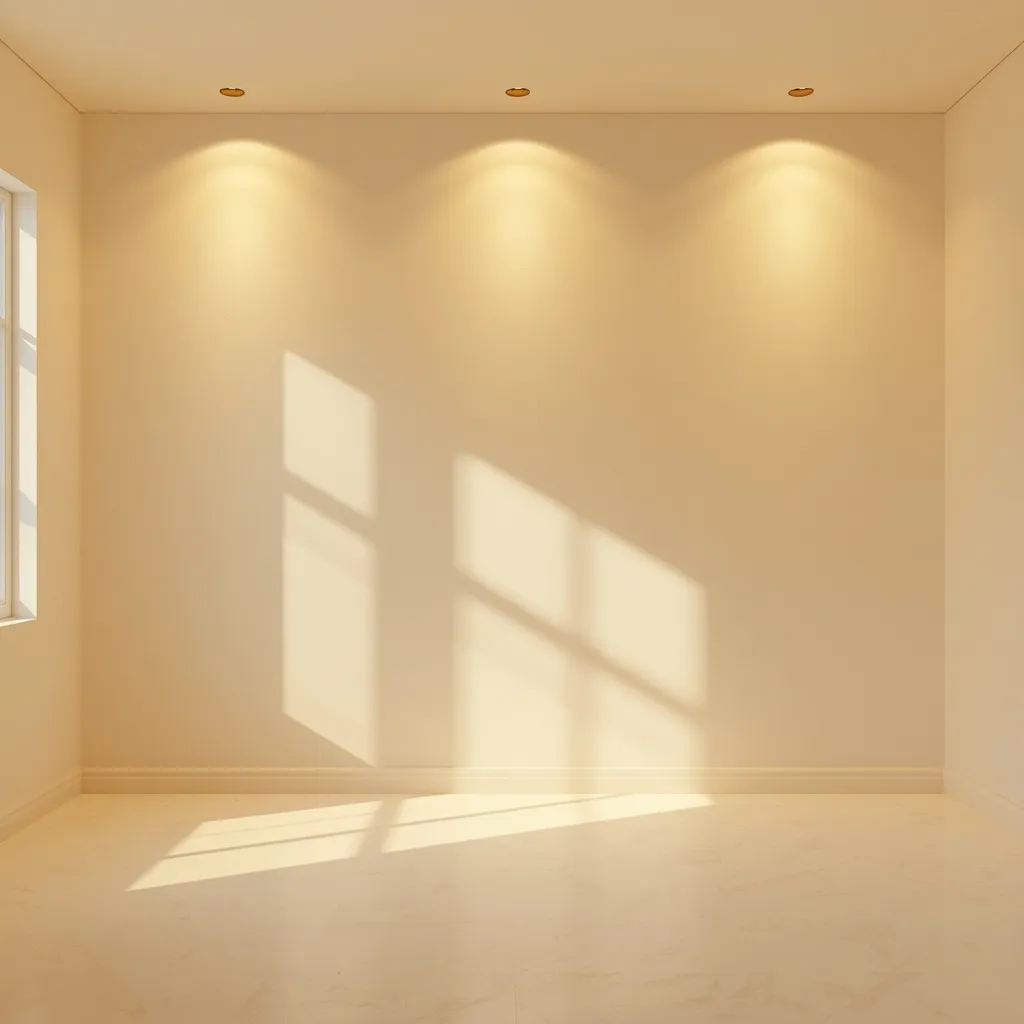
- An airy living room comes from three things working together: light color, low visual weight, and breathing space, not just white paint.
- Check a paint’s LRV (Light Reflectance Value): above about 70 reflects light well and reads genuinely bright; below 50 will absorb it.
- North-facing rooms need warm whites like Benjamin Moore Linen White, because cool whites turn gray in that light.
- Furniture on visible legs, sheer drapery hung high and wide, and pale continuous flooring all make a room read larger and lighter.
- Most of it is renter-friendly, curtains, rugs, mirrors, and editing what you own cost little and change nothing permanently.
Introduction
Some rooms just breathe. These airy summer living room ideas show how to create that feeling deliberately, through light color, low visual weight, and generous open space, whether your living room is flooded with sun or facing north and stubbornly dim. Each one is a complete scheme you can actually recreate, with the paint, materials, and layout choices that make it work.
Below are 21 full airy living room schemes, covering light paint palettes with real color references, sheer window treatments, pale flooring, leggy furniture, and layouts built around negative space, plus named directions like California casual, modern, and Scandinavian. Every idea includes practical detail and renter-friendly notes. Consider it your guide to making the living room of your abode feel lighter, calmer, and more open all summer.
The three levers that actually make a room feel airy: First, light color, walls, large furniture, and flooring that reflect rather than absorb light. Second, low visual weight, furniture on visible legs, open frames, glass and pale wood instead of bulky solid mass. Third, breathing space, genuinely empty surfaces and floor. Most people only pull the first lever, which is why ‘I painted it white and it still feels heavy’ is such a common frustration.
21 Airy Summer Living Room Ideas
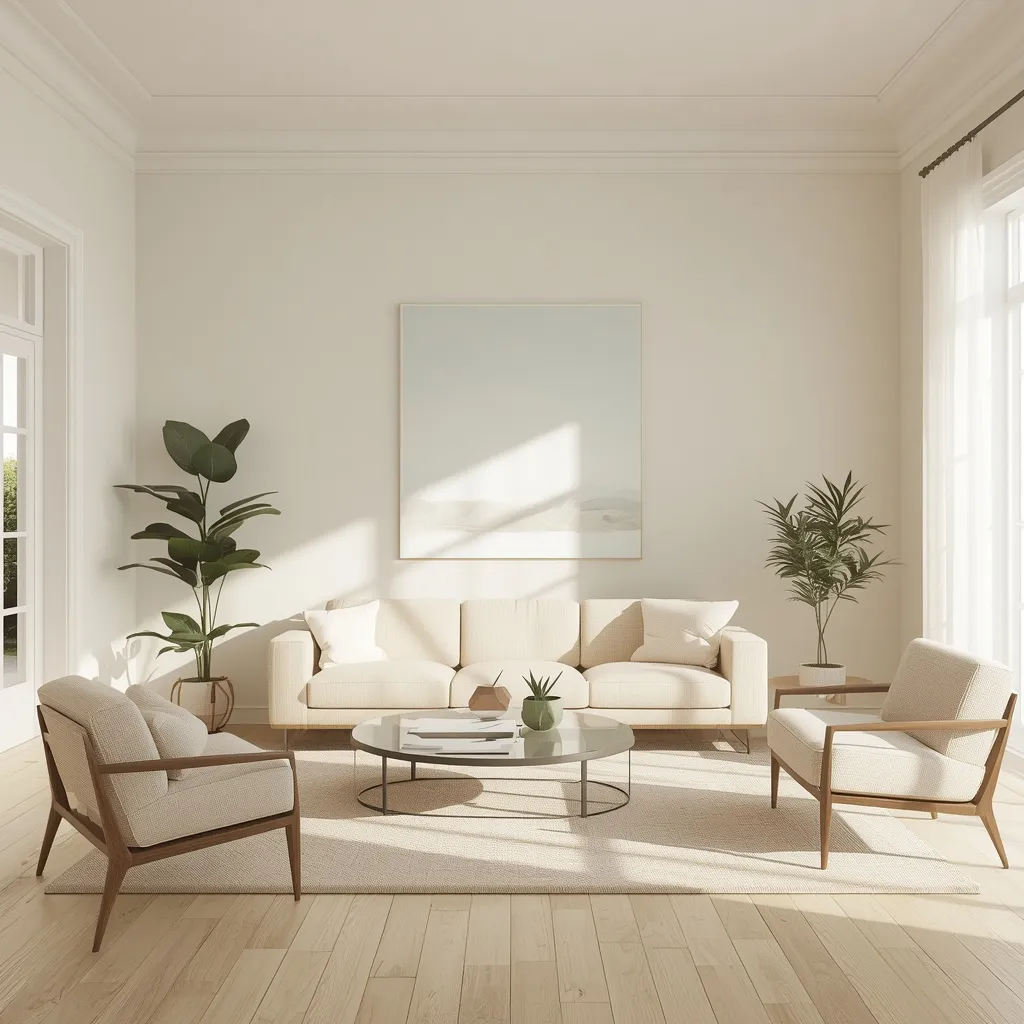
1. Soft White Base Scheme
The most reliably airy living room starts with a soft, warm white on the walls: light bouncing across a room in Behr Swiss Coffee or a similar creamy white, paired with pale furniture and natural light. Clean and expansive, a good white is the foundation everything else sits on. Bright without being stark.
Choose a warm, softened white rather than a stark bright white, which can read cold and clinical in a living room. Behr Swiss Coffee is a widely used example, a creamy off-white with a high Light Reflectance Value, so it bounces light well while staying soft. Paint a test patch at least 30 x 30 cm (12 x 12 in) and check it morning and evening before committing, since whites shift dramatically with light. This suits almost any living room and is the safest starting point.
- Why it works: A warm high-LRV white reflects light without the coldness of stark white.
- Best for: Almost any living room; the safest starting point.
- Key elements: soft warm white walls, pale furniture, tested paint patch, natural light.
2. Greige and Natural Light
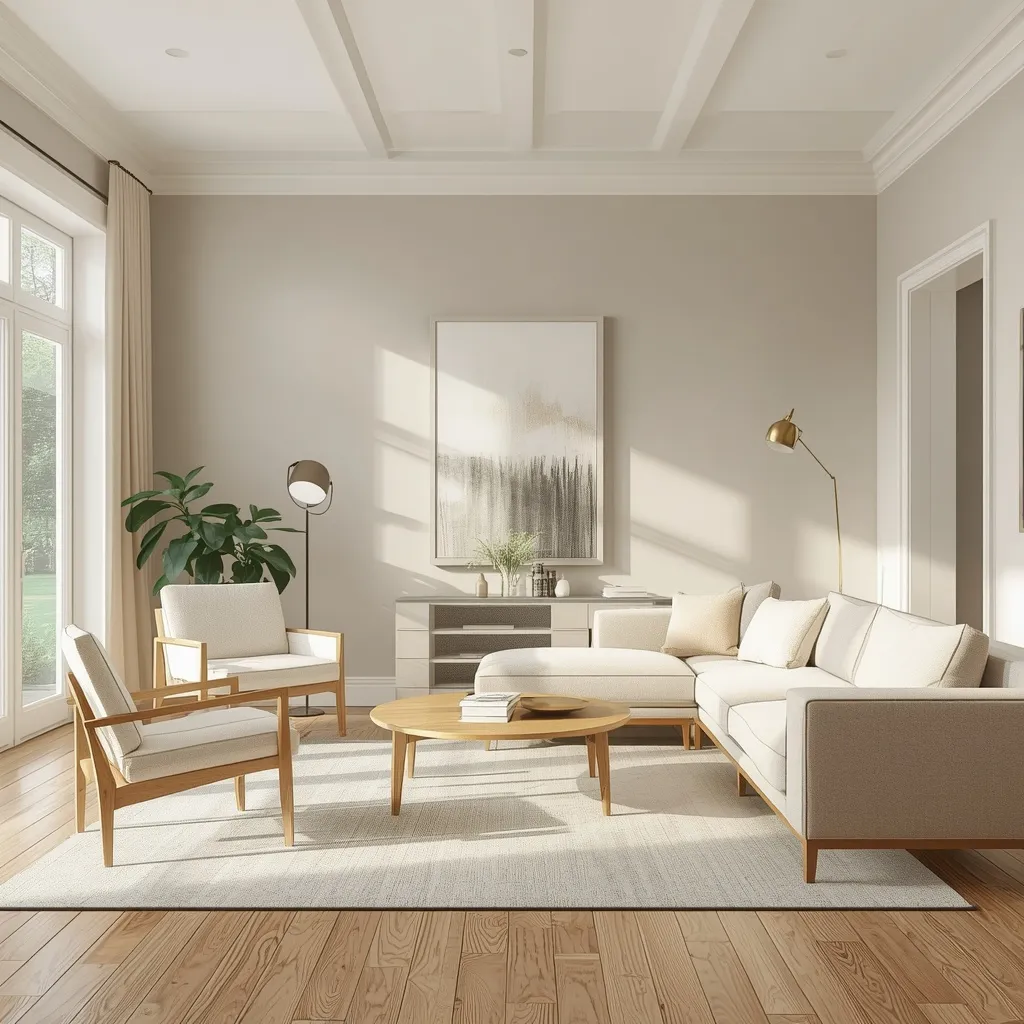
A greige living room is warmer and more forgiving than pure white: walls in a soft beige-gray like Sherwin-Williams Accessible Beige, paired with cream upholstery, oak furniture, and plenty of daylight. Grounded and calm, greige keeps a room airy without feeling like a gallery. Soft, livable, and light.
Use a light greige, a beige-gray hybrid, when pure white feels too stark or shows every mark. Sherwin-Williams Accessible Beige is a widely used example with enough warmth to feel cozy and a light enough value to keep a room bright. Pair it with cream and oak rather than cool grays, which can drag it flat. Greige also hides scuffs better than white, which matters in family rooms. This suits family homes and anyone who finds all-white too severe.
- Why it works: Light greige stays bright but is warmer and more forgiving than white.
- Best for: Family rooms; those who find all-white too stark.
- Key elements: light greige walls, cream upholstery, oak furniture, warm accents.
3. Warm White North-Facing Room
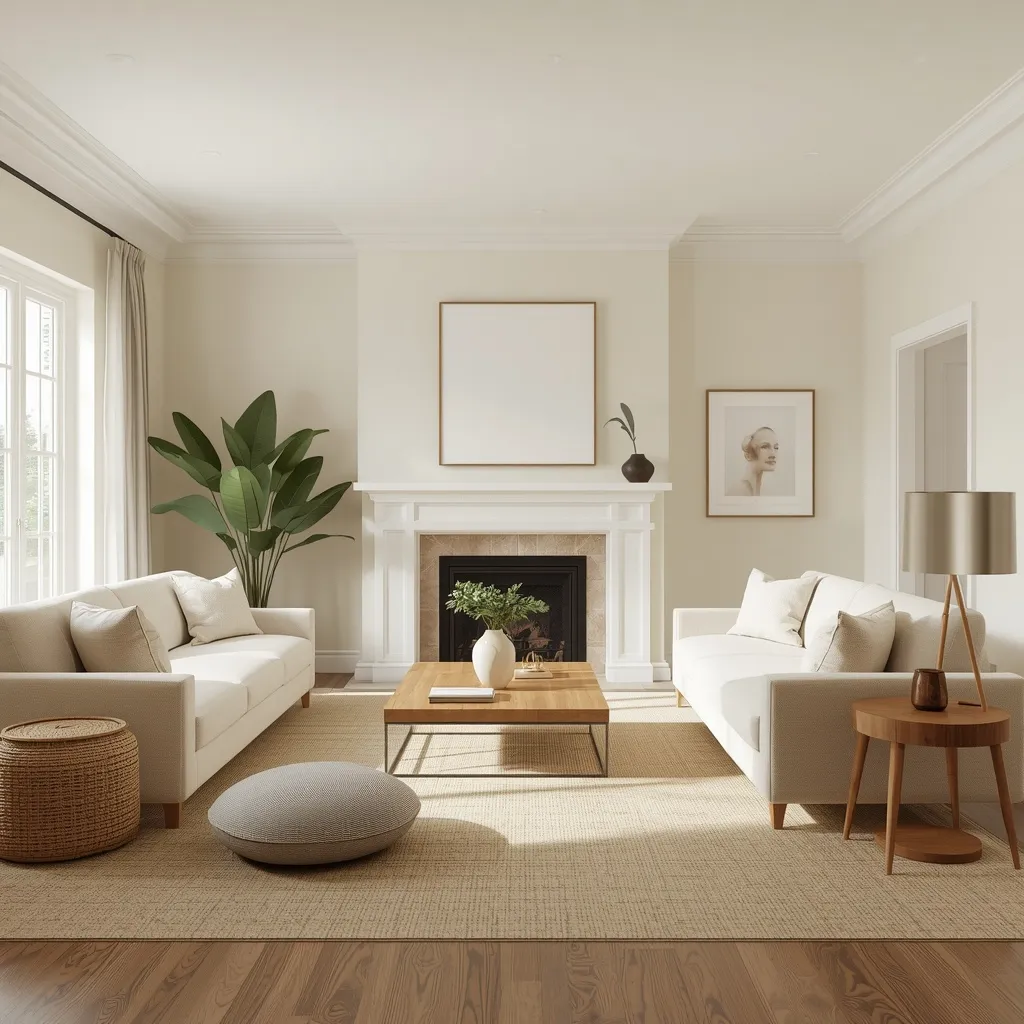
North-facing living rooms need a different approach: a genuinely warm white like Benjamin Moore Linen White counteracts the cool, gray-blue daylight those rooms receive. Balanced and bright, the right white rescues a room that always looked dingy. Warmth where the light is cold.
In north-facing rooms (south-facing in the southern hemisphere), daylight skews cool and blue, which turns cool-toned whites gray and lifeless. Counter it with a warm white carrying yellow or cream undertones, Benjamin Moore Linen White is a well-known example. This is the single most common paint mistake in dim rooms: choosing a crisp cool white that then looks dirty. Always test on the actual wall, not from a chip. This suits north-facing and low-light living rooms.
- Why it works: Warm undertones counteract the cool blue daylight of north-facing rooms.
- Best for: North-facing and low-light living rooms.
- Key elements: warm white with cream undertones, on-wall testing, warm bulbs.
4. Sheer Drapery Light Filter
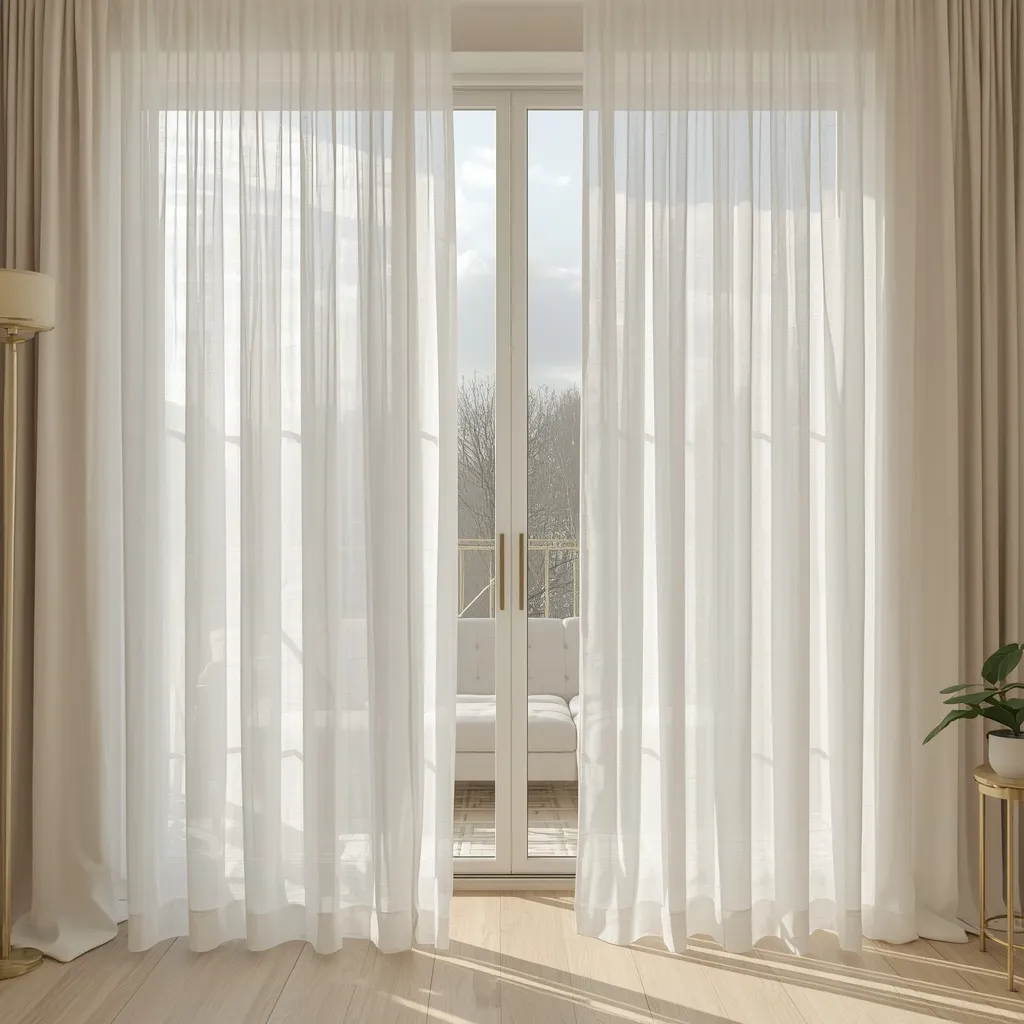
Sheer drapery is the fastest route to an airy room: floor-length white voile or loose-weave linen panels diffusing sunlight into a soft glow, moving gently whenever a window is open. Effortless and romantic, sheers make light itself part of the decor. Soft light, gentle movement.
Hang sheer linen or voile panels with the rod mounted close to the ceiling and extended 15–25 cm (6–10 in) beyond each side of the window frame, so the panels stack off the glass and never block daylight. Floor-length panels that just skim the floor look lightest. The most common mistake is hanging the rod at the window frame, which visually shortens the wall and eats light. For privacy, layer sheers with a discreet blind rather than heavy curtains. This suits any room and is highly renter-friendly.
- Why it works: High, wide-hung sheers maximize daylight while softening and diffusing it.
- Best for: Any living room; renters wanting high impact.
- Key elements: sheer linen or voile panels, ceiling-height rod, extended width, floor-length drop.
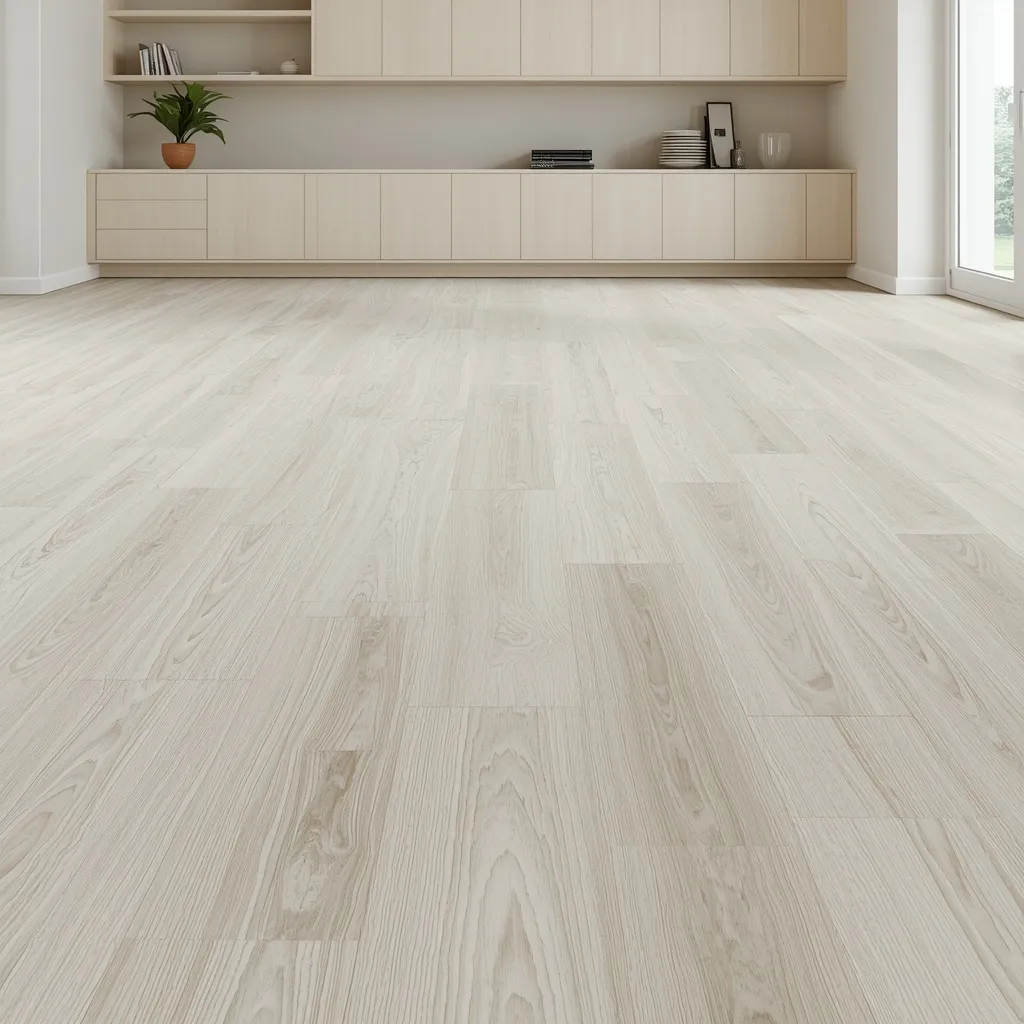
5. Pale Continuous Flooring
Pale flooring running unbroken through the space instantly opens a living room: light oak, ash, or a wide pale plank flowing into adjoining rooms without thresholds or color changes. Expansive and calm, continuous flooring is one of the biggest spatial tricks there is. Fewer breaks, more space.
Choose light-toned flooring, white oak, ash, or a pale engineered plank, and run it in the same direction and color through connected spaces, since every flooring change visually chops a home into smaller boxes. Laying planks along the longest sightline stretches the room further. Renters can approximate this with a large pale rug that covers most of the visible floor. Pale floors show dust more than mid-tones, so factor that in. This suits open-plan homes and anyone renovating.
- Why it works: Unbroken pale flooring removes visual breaks that make a home feel chopped up.
- Best for: Open-plan homes; renovators (rug workaround for renters).
- Key elements: light oak or ash planks, continuous run, longest-sightline direction.
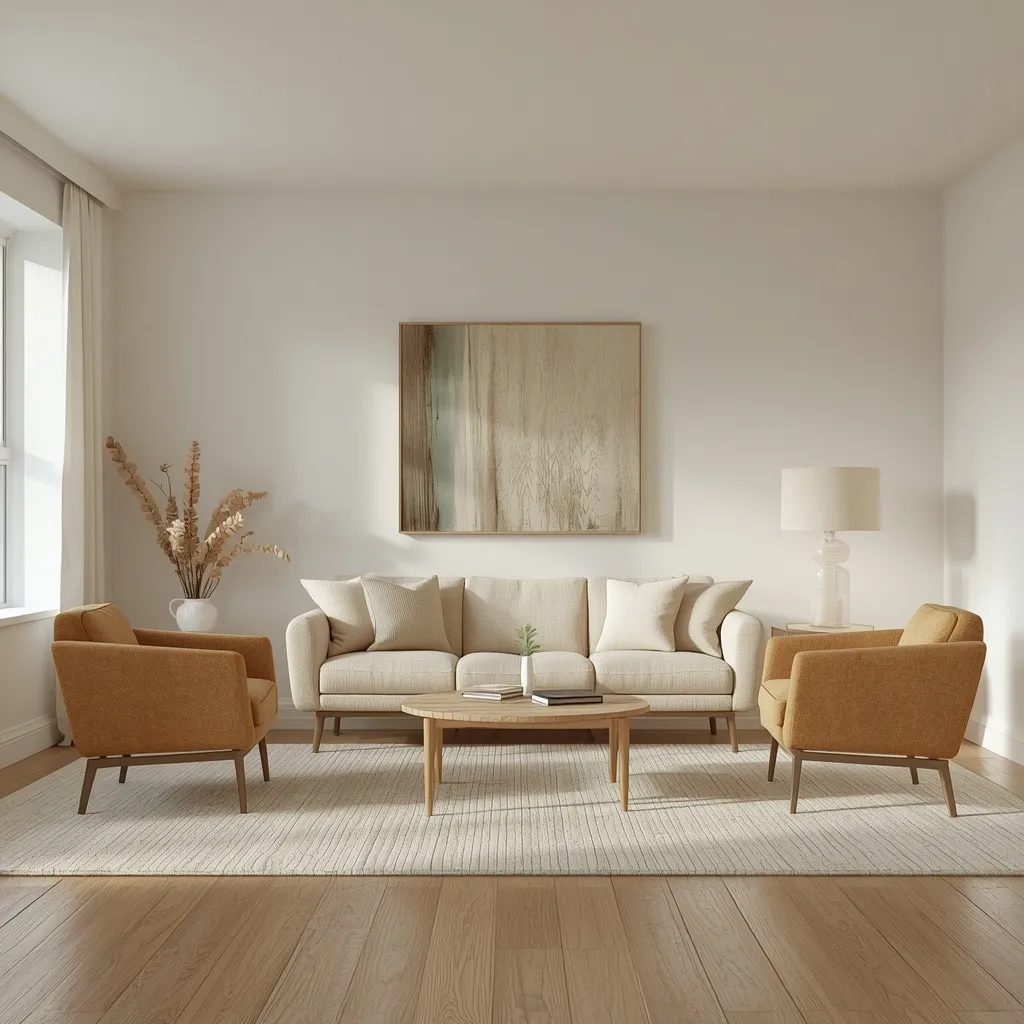
6. Leggy Furniture Layout
A room full of furniture you can see under feels dramatically lighter: a sofa and chairs raised on slim tapered legs, a console with open space beneath, and floor visible throughout. Light and buoyant, leggy furniture is the trick that makes rooms breathe. Visible floor, visible air.
Replace or choose furniture with exposed legs at least 10–15 cm (4–6 in) high rather than pieces that sit flush to the floor, because visible floor beneath furniture reads as continuous space and makes a room feel larger. Skirted sofas and solid plinth bases do the opposite. If replacing furniture isn’t an option, raising an existing piece on taller legs or feet is a cheap, effective fix. This suits small living rooms and anyone whose room feels crowded despite being a decent size.
- Why it works: Visible floor under furniture reads as continuous space, so the room feels larger.
- Best for: Small or crowded-feeling living rooms.
- Key elements: exposed legs 10–15 cm high, open-base console, visible floor throughout.
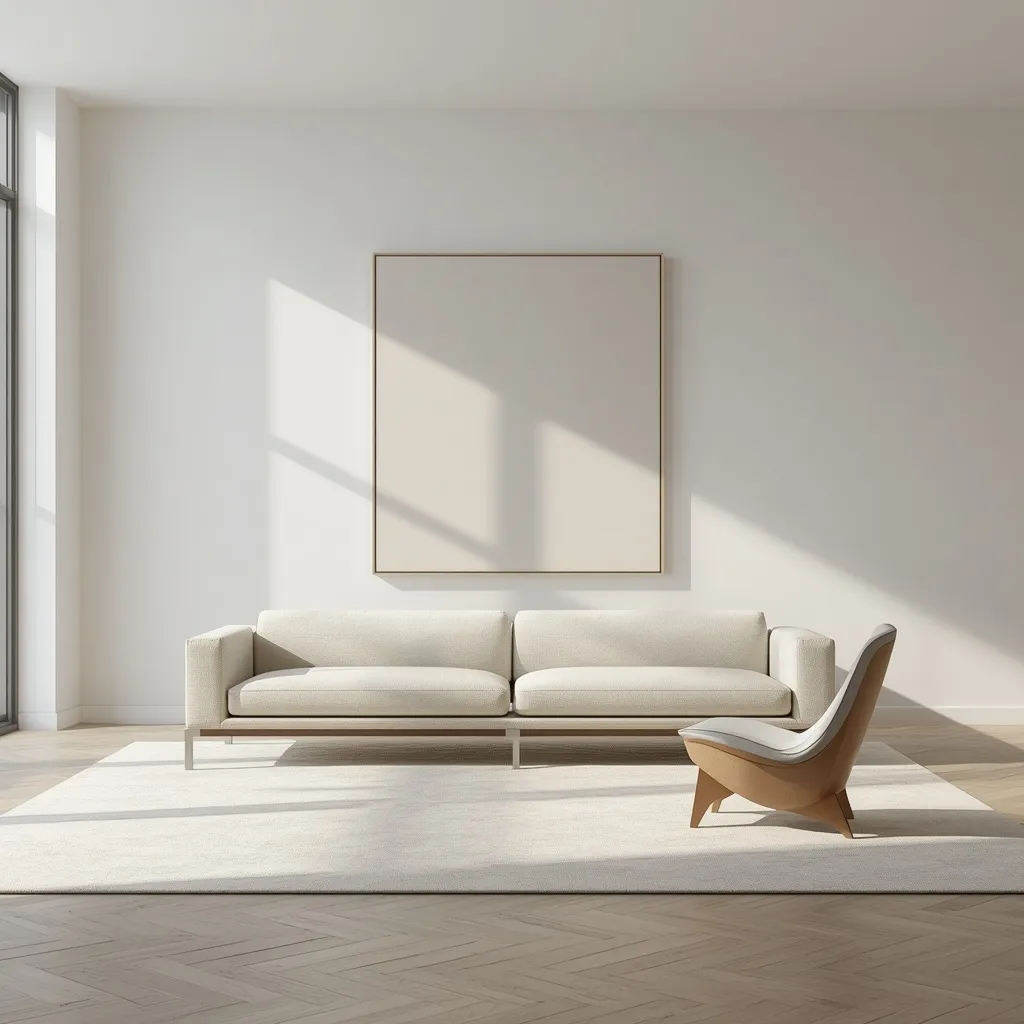
7. Modern Minimal Airy Room
A modern airy living room is defined by what’s absent: a low clean-lined sofa, one sculptural chair, a single artwork, and large stretches of genuinely empty wall and floor. Calm and deliberate, modern minimalism treats space itself as the material. Uncluttered, quiet, and intentional.
Edit ruthlessly, keep clean-lined low furniture, one or two statement pieces, and leave walls and surfaces largely bare, resisting the urge to fill every gap. The empty space is the design, not a failure to decorate. Choose a few high-quality pieces rather than many mediocre ones, since minimalism exposes everything you own. Closed storage keeps the necessary clutter invisible. This suits modern homes and anyone who feels visually overwhelmed by busy rooms.
- Why it works: Deliberate empty space is what makes minimal rooms feel expansive and calm.
- Best for: Modern homes; the visually overwhelmed.
- Key elements: low clean-lined sofa, one sculptural chair, single artwork, closed storage.
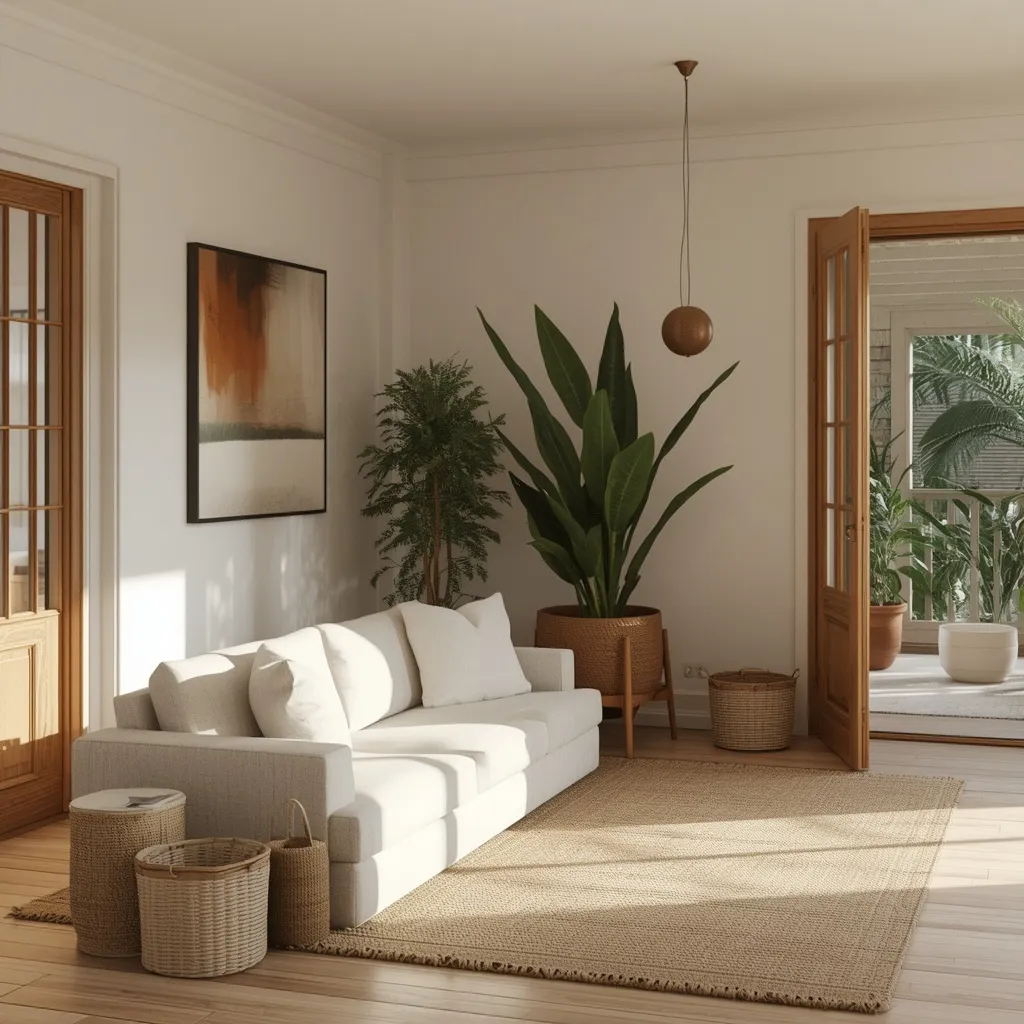
8. California Casual Living Room
California casual is relaxed, sun-washed, and effortless: a deep white linen sofa, warm wood, woven textures, oversized plants, and doors open to the outside. Laid-back and light, it’s indoor-outdoor living as a decorating style. Easy, warm, and sunlit.
Combine a generous low-slung sofa in washed white or oatmeal linen with warm mid-tone wood, jute or wool rugs, woven baskets, and a couple of large plants, keeping the whole palette warm-neutral. The look is deliberately undone, so soft rumpled linen suits it better than crisp tailored upholstery. Slipcovers in washable fabric make it genuinely practical. This suits warm climates, indoor-outdoor homes, and anyone wanting relaxed rather than formal.
- Why it works: Warm neutrals and undone linen make lightness feel relaxed, not formal.
- Best for: Warm climates and indoor-outdoor homes.
- Key elements: washed linen sofa, warm wood, jute rug, baskets, large plants.
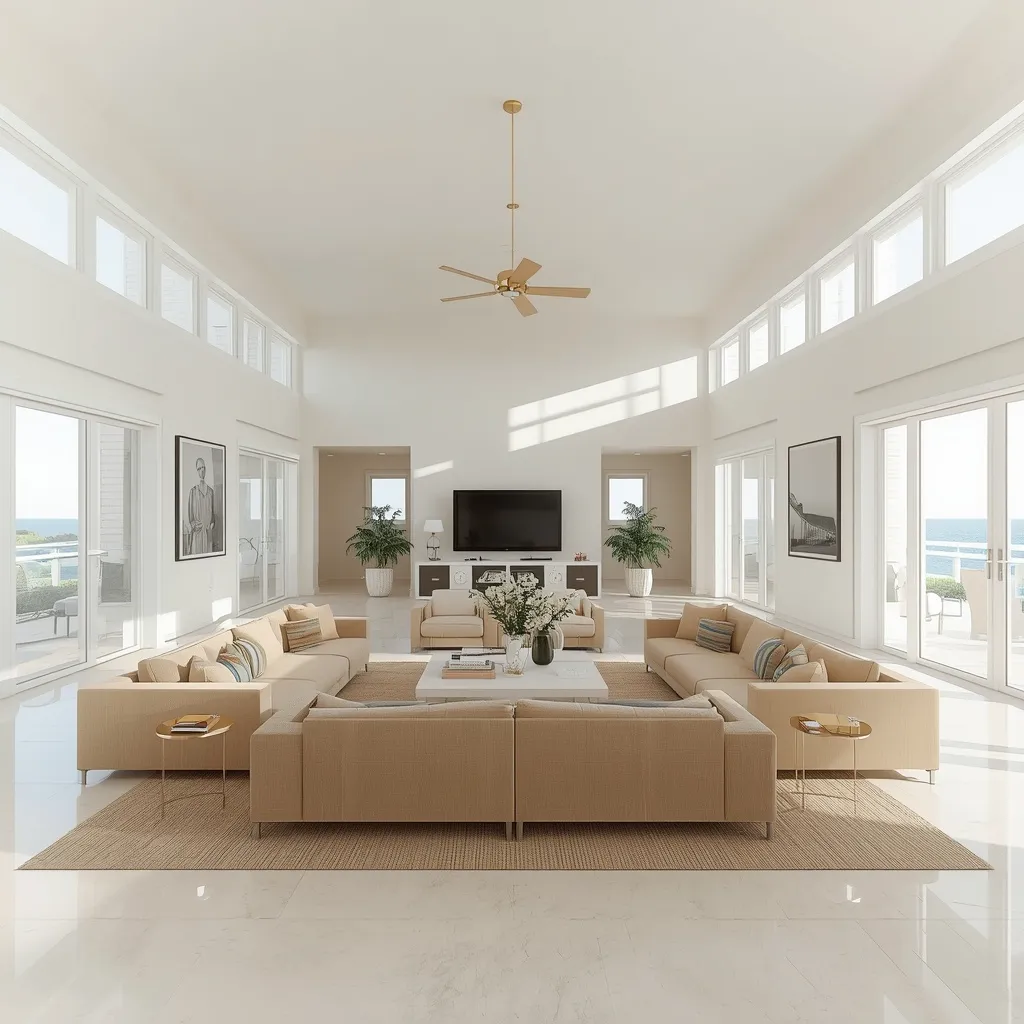
9. Open Beach House Living Room
An open beach house living room is built around sightlines and air: furniture pulled off the walls into a floating arrangement, wide openings to other spaces, pale surfaces, and windows left largely unadorned. Expansive and breezy, it’s openness as the organizing principle. Room to move, room to breathe.
Float the seating arrangement rather than pushing everything against the walls, leaving circulation routes of at least 75–90 cm (30–36 in) around the group so people move easily. Keep window treatments minimal where privacy allows. Contrary to instinct, pushing all furniture to the walls usually makes a room feel smaller and more like a waiting area. This suits larger or open-plan rooms and homes with good natural light.
- Why it works: A floated layout with real circulation routes reads open, not like a waiting room.
- Best for: Larger and open-plan rooms with good light.
- Key elements: floated seating, 75–90 cm circulation, minimal window treatments, pale surfaces.
10. Mirror and Reflected Light
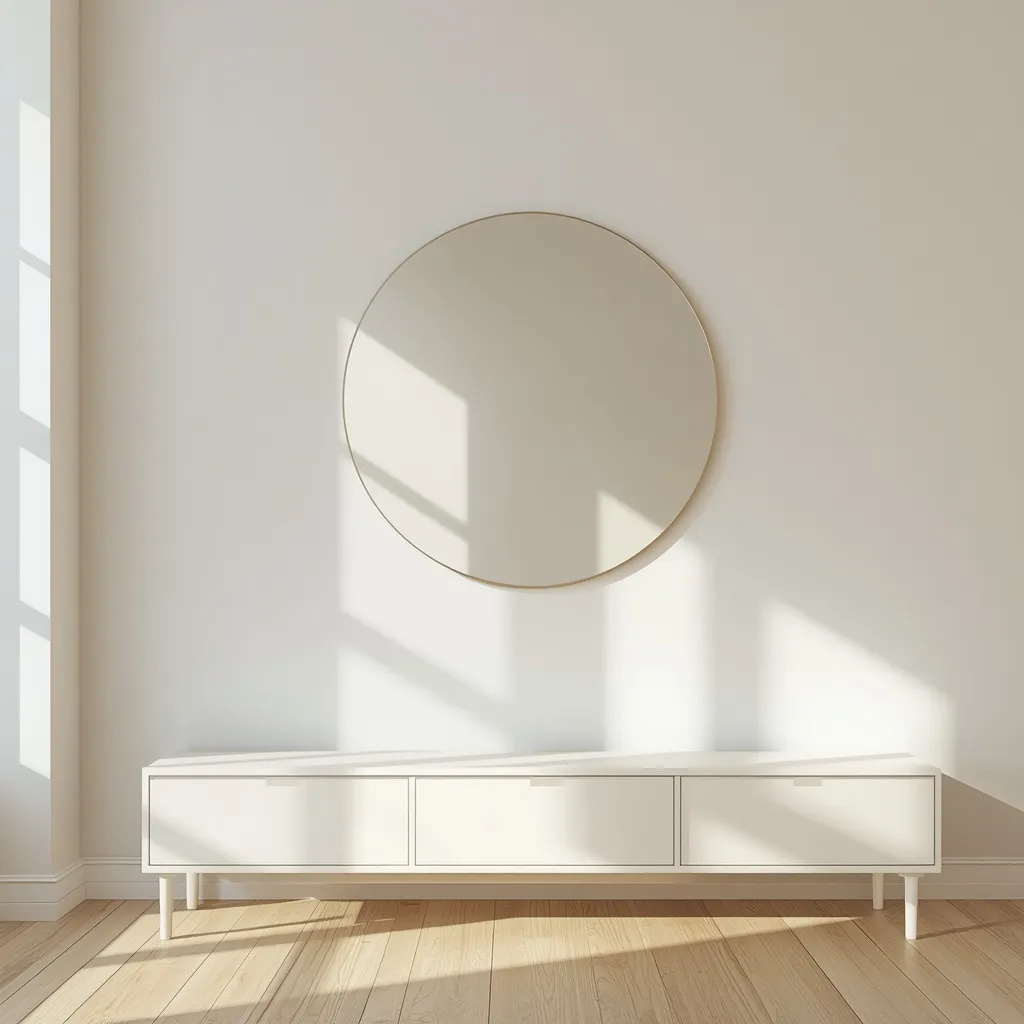
A large mirror positioned to catch daylight doubles a room’s brightness: a full-length or oversized round mirror on the wall opposite or adjacent to the main window, bouncing light deep into the space. Clever and instant, mirrors are the cheapest way to add light. Twice the daylight, no renovation.
Hang one large mirror rather than several small ones, positioned to reflect the window or the brightest part of the room, reflecting a blank wall or a cluttered corner just doubles that instead. A leaning floor mirror achieves the same effect with no drilling, which suits renters. Use proper wall fixings for heavy mirrors, and secure a leaning mirror to the wall so it can’t tip, especially around children. This suits dark rooms, small rooms, and rentals.
- Why it works: One large well-placed mirror reflects daylight deeper into the room.
- Best for: Dark and small rooms; renters.
- Key elements: one large mirror, positioned to reflect the window, secured fixings.
11. Tonal Layered Neutrals
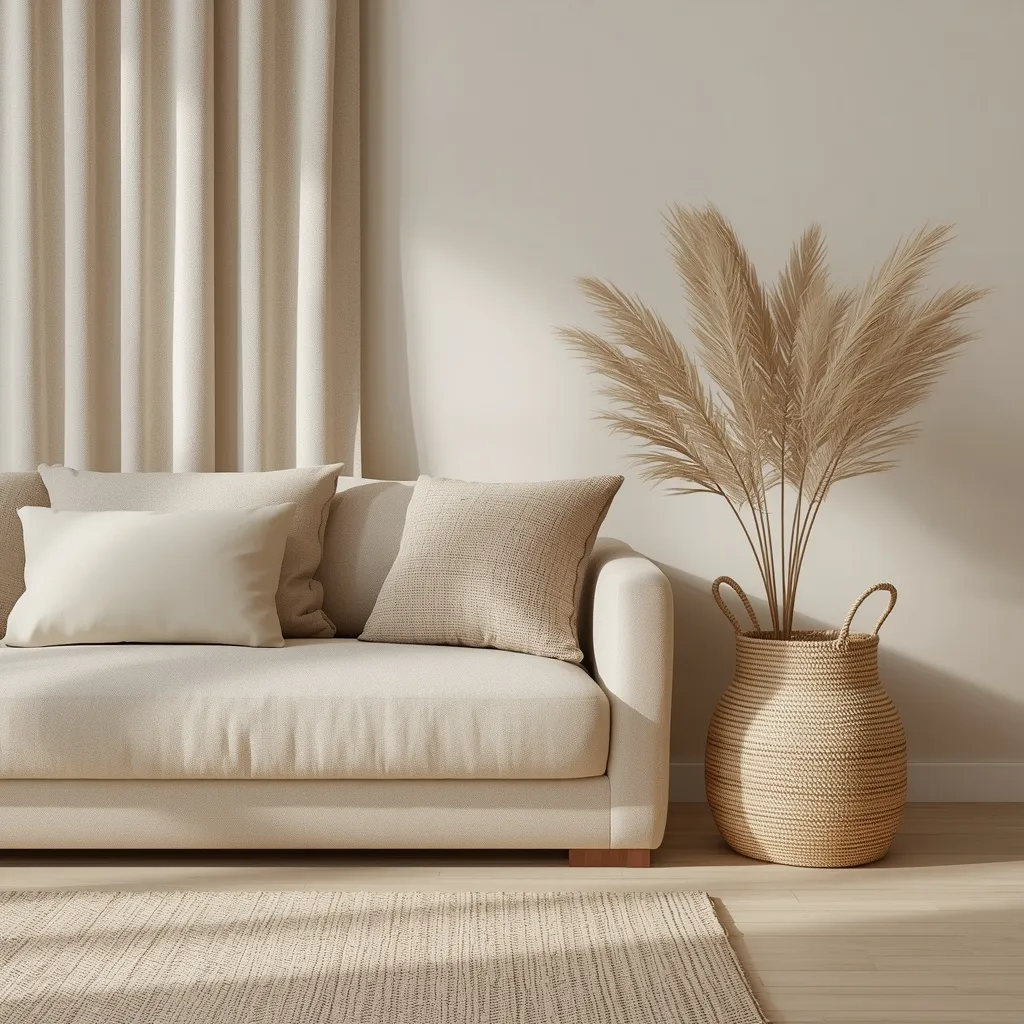
A tonal living room stays light while gaining depth: cream, oatmeal, bone, and pale taupe layered together so nothing is stark but nothing is heavy either. Sophisticated and soft, tonal neutrals prove airy doesn’t mean flat. Quietly rich, still bright.
Work within a narrow band of light neutrals, using texture rather than color for contrast, a nubby bouclé cushion against smooth linen, a matte ceramic beside a woven basket. Keeping every tone within a few shades of each other prevents the choppiness that makes rooms feel busy and smaller. The trap is flatness, so vary texture deliberately. This suits anyone who finds all-white sterile but wants to keep the room light, and it’s very forgiving to build gradually.
- Why it works: A narrow tonal band with varied texture adds depth without visual heaviness.
- Best for: Those who find all-white sterile; gradual builders.
- Key elements: cream, oatmeal, bone, pale taupe, contrast through texture not color.
12. Glass and Acrylic Accents
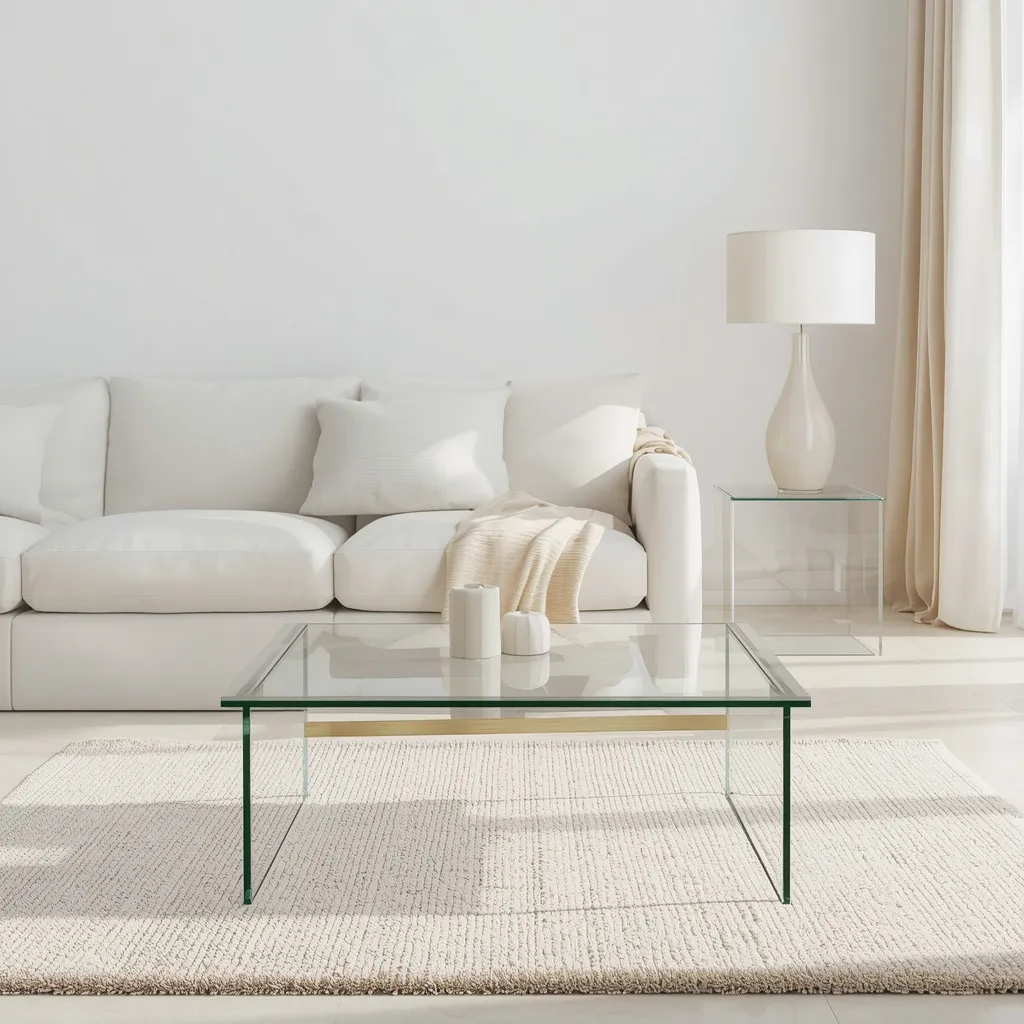
Transparent furniture disappears into a room: a glass coffee table, an acrylic side table, and clear-based lamps that take up physical space without taking up visual space. Clever and light, see-through pieces are a small room’s best friend. Function without visual bulk.
Swap a bulky solid coffee table for glass or acrylic, which occupies the same footprint while letting the rug and floor show through, so the eye reads the space as continuous. One or two transparent pieces is the sweet spot; more starts to feel cold and showroom-like. Choose tempered glass with rounded or finished edges, and be cautious with glass tables around young children. This suits small living rooms and anyone whose furniture feels visually heavy.
- Why it works: Transparent pieces occupy space physically but not visually.
- Best for: Small rooms; visually heavy furniture layouts.
- Key elements: glass coffee table, acrylic side table, clear lamp bases, tempered glass.
13. Scandinavian Light Room
A Scandinavian living room is bright, spare, and warm at once: pale ash or birch, white walls, a simple light sofa, one soft wool throw, and a few carefully chosen objects. Functional and restful, Scandi style is airy design refined over decades of dark winters. Bright, warm, and uncluttered.
Combine pale wood (ash, birch, light oak) with white walls and a simple low-arm sofa, adding warmth through a single sheepskin or chunky wool throw and one or two plants rather than lots of decor. Scandinavian design keeps surfaces genuinely clear, which is what preserves the lightness. Layered lamps at different heights matter here, since the style evolved in low-daylight climates. This suits small spaces, minimalists, and northern-climate homes.
- Why it works: Pale wood plus clear surfaces keeps a room bright and warm simultaneously.
- Best for: Small spaces, minimalists, northern climates.
- Key elements: ash or birch wood, white walls, low sofa, wool throw, layered lamps.
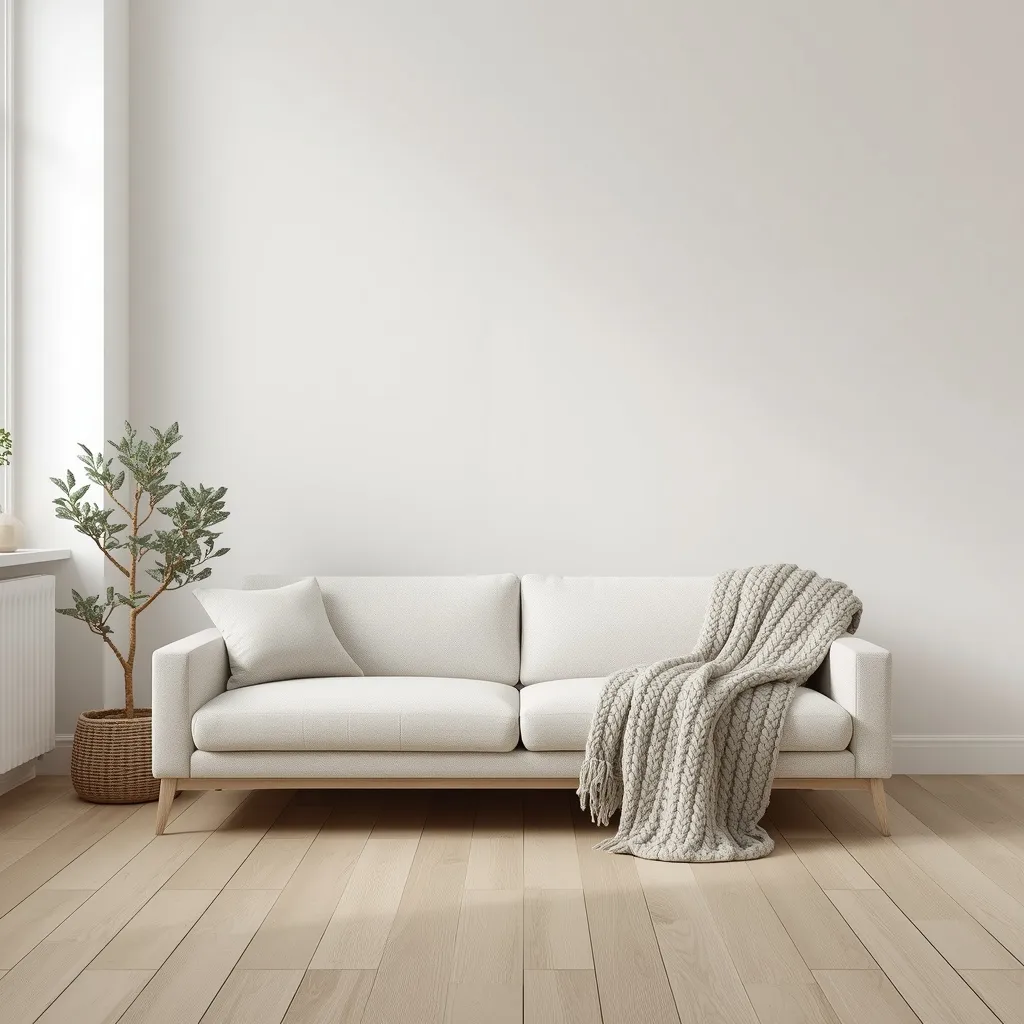
14. Low-Profile Furniture Scheme
Keeping furniture low makes ceilings feel higher: a low-back sofa, a low console, and nothing above eye level, so the wall space above stays open and the room breathes upward. Spacious and modern, low furniture buys you vertical air. More wall, more height.
Choose seating with backs under about 80 cm (32 in) and avoid tall bookcases or high-backed chairs in the main sightline, so more uninterrupted wall shows above the furniture line and the ceiling reads higher. This is especially effective in rooms with standard or low ceilings. If you need tall storage, place it against the wall you see least from the entrance. Anchor any tall furniture to the wall, especially with children in the home. This suits low-ceilinged rooms and apartments.
- Why it works: A low furniture line leaves more open wall, making ceilings read higher.
- Best for: Low-ceilinged rooms and apartments.
- Key elements: sofa backs under 80 cm, low console, tall storage off the main sightline, anchored.
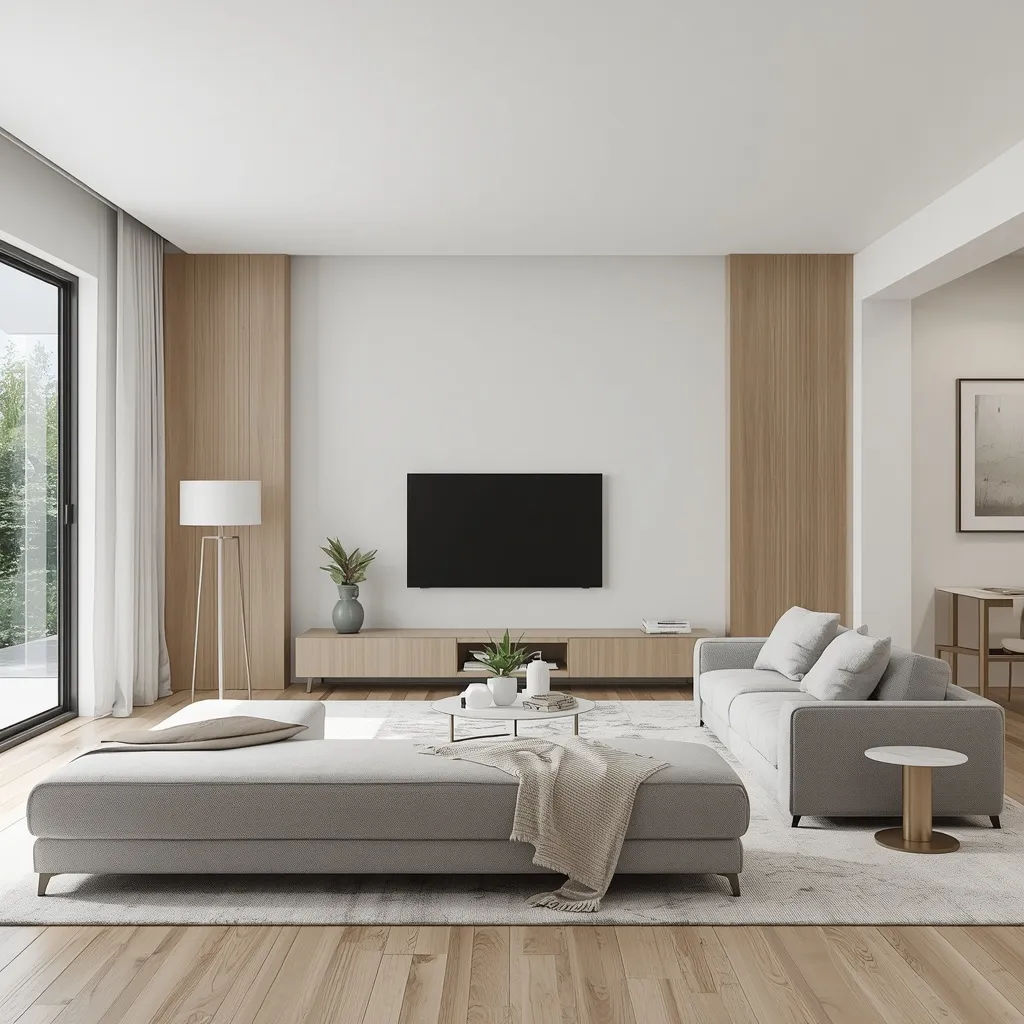
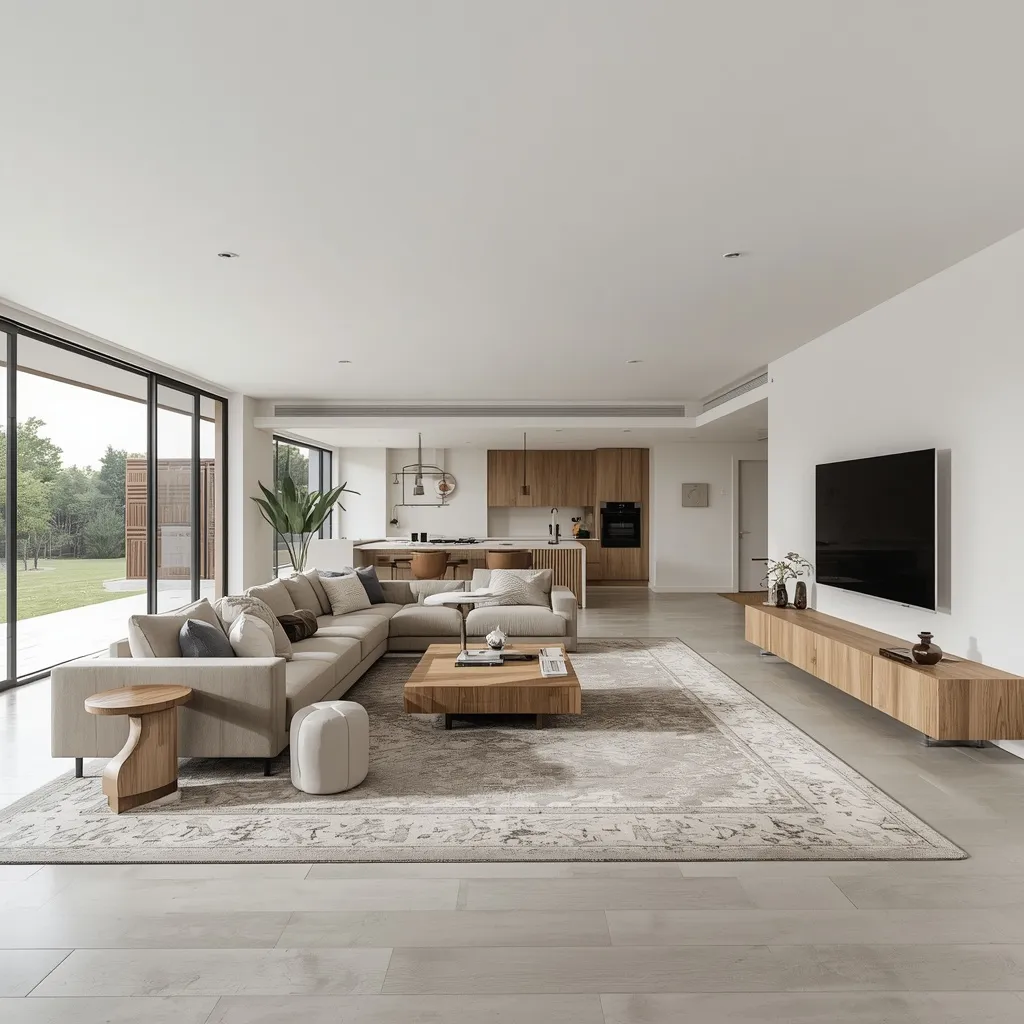
15. Breezy Open-Plan Flow
An open-plan living space feels airiest when zones are defined without walls: a rug anchoring the seating group, a console marking the boundary, and clear sightlines running the full length of the space. Connected and generous, zoning gives structure without closing anything in. Defined, not divided.
Define the living zone with a large rug that at least the front legs of all seating sit on, plus a low console or slim shelf as a soft boundary, keeping everything below eye level so sightlines run uninterrupted. Avoid tall room dividers and back-to-back bulky furniture, which recreate the walls you don’t have. Keep the palette continuous across zones so the space reads as one. This suits open-plan homes and studio apartments.
- Why it works: Low-level zoning defines areas while keeping sightlines and light continuous.
- Best for: Open-plan homes and studio apartments.
- Key elements: large anchoring rug, low console boundary, continuous palette, no tall dividers.
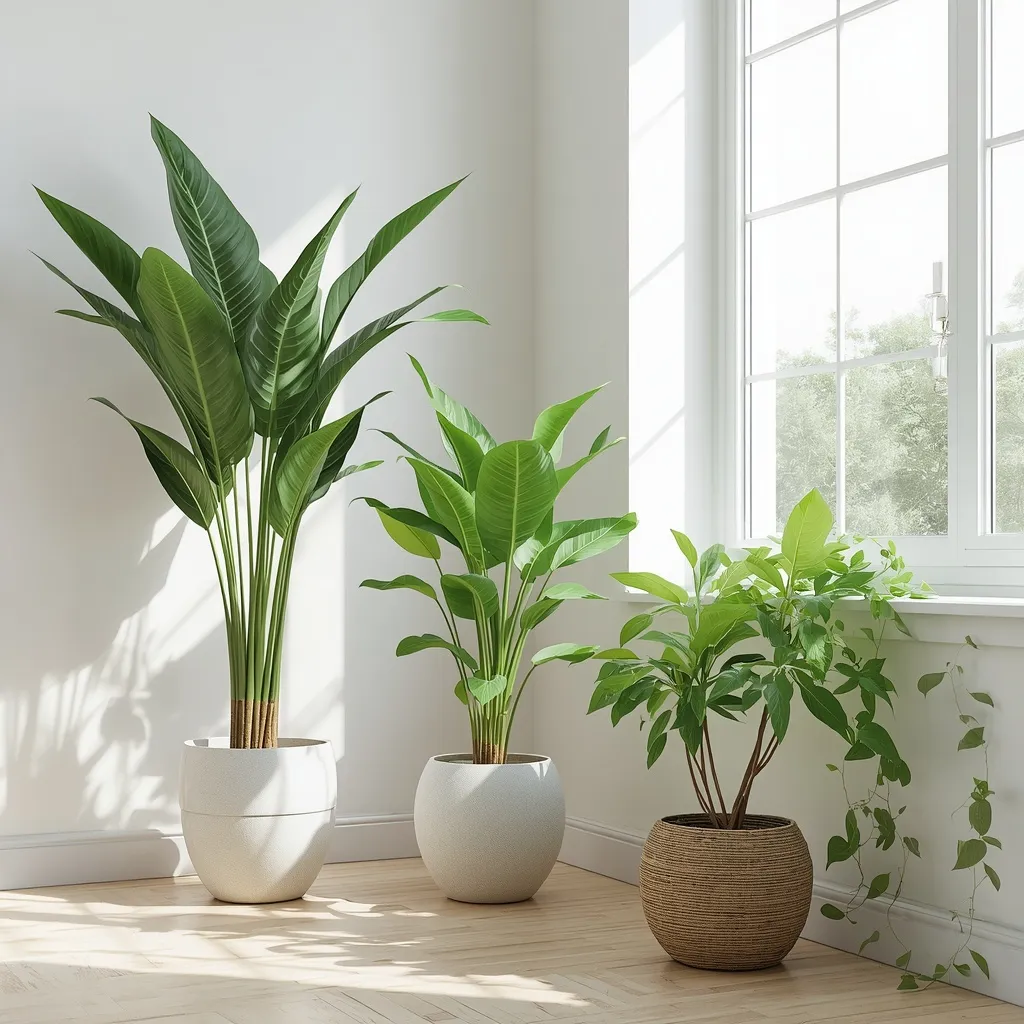
16. Light-Filled Plant Corner
A cluster of plants in a bright corner makes a room feel alive and fresh: a tall palm or fiddle-leaf fig, a mid-height plant, and something trailing, all in pale ceramic or woven pots near the window. Green and vital, plants add life without visual weight. Fresh air, literally and visually.
Group three plants of varied heights near your brightest window, choosing airy, open-leaved species, a kentia palm, a parlor palm, or a trailing pothos, rather than dense, dark, heavy foliage that closes a corner in. Pot them in pale ceramic or woven baskets to keep the visual weight low. Water most when the top 2–3 cm (1 in) of soil is dry. Pet owners should note that many common houseplants are toxic to cats and dogs if chewed, so check the ASPCA lists first. This suits any room with a decent window.
- Why it works: Open-leaved plants add life and freshness without heavy visual mass.
- Best for: Any room with a decent window; renters.
- Key elements: three plants at varied heights, airy species, pale pots, brightest corner.
17. Airy Room Without Much Daylight
A dim living room can still feel airy with the right strategy: warm white walls, layered lamps at three heights, a large mirror opposite the window, and pale reflective surfaces throughout. Resourceful and effective, lightness is achievable even without much sun. Brightness you create rather than receive.
When daylight is limited, compensate deliberately: use a warm white with a high LRV, add at least three light sources at different heights (floor, table, and a wall or ceiling fixture), choose warm bulbs around 2700K, and add a large mirror plus satin-finish paint that reflects more light than matte. Avoid dark accent walls and heavy curtains entirely here. This suits north-facing rooms, basement or garden-level flats, and rooms shaded by neighboring buildings or trees.
- Why it works: Layered warm light plus reflective surfaces manufactures brightness daylight can’t.
- Best for: North-facing, basement, and heavily shaded rooms.
- Key elements: warm high-LRV paint, three light sources, 2700K bulbs, large mirror, satin finish.
18. Decluttered Surface Reset
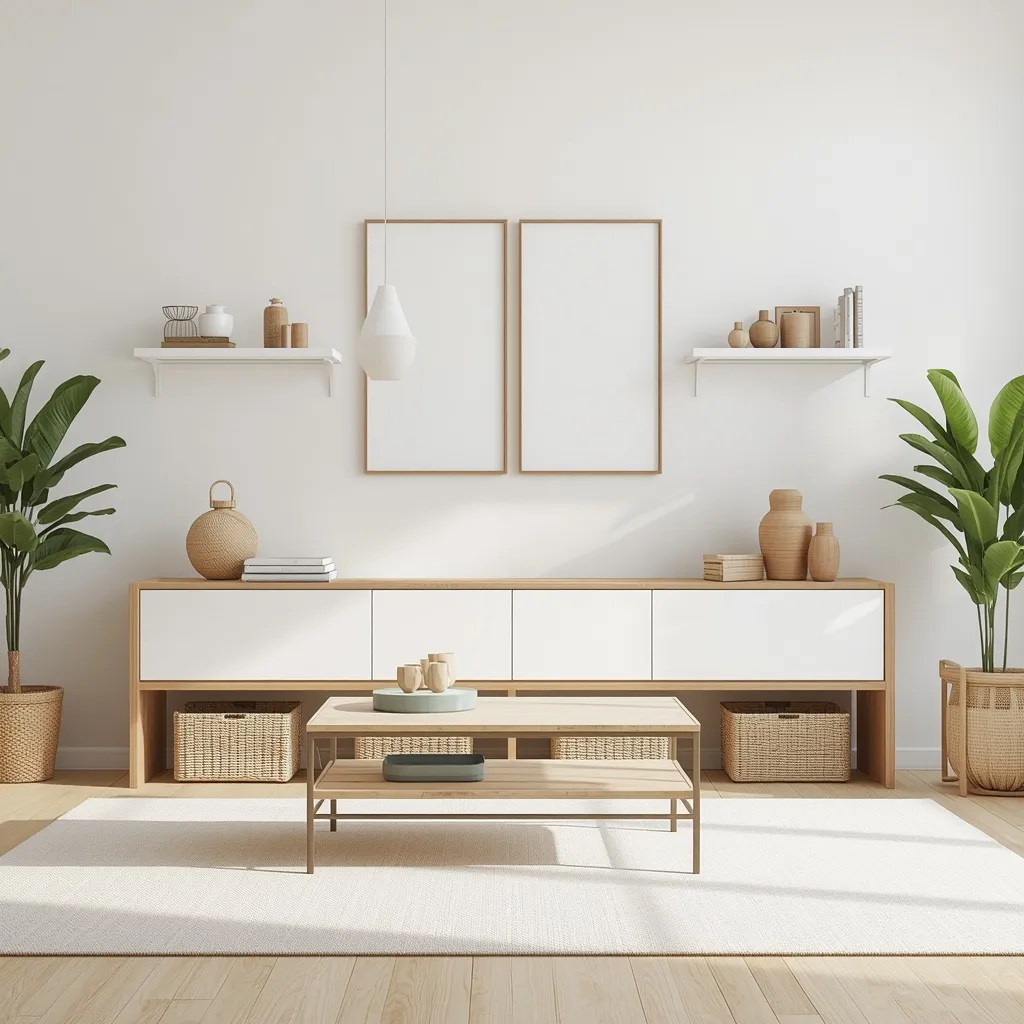
An airy room is often just an edited one: coffee table, shelves, and console reduced to a few considered objects, with closed storage swallowing everything else. Calm and restorative, editing costs nothing and changes everything. The cheapest transformation there is.
Clear every surface completely, then return only what earns its place, roughly three objects per surface, grouped rather than scattered, and move the rest into baskets, a storage ottoman, or closed cabinets. Visual clutter is what makes a room feel small and heavy far more often than the room’s actual size. Work one surface at a time so it doesn’t become overwhelming. This suits every living room, costs nothing, and is the best possible starting point for renters.
- Why it works: Reducing visual clutter lightens a room more reliably than any purchase.
- Best for: Every living room; free and renter-friendly.
- Key elements: cleared surfaces, roughly three objects each, grouped, closed storage for the rest.
19. Light Linen Slipcover Refresh
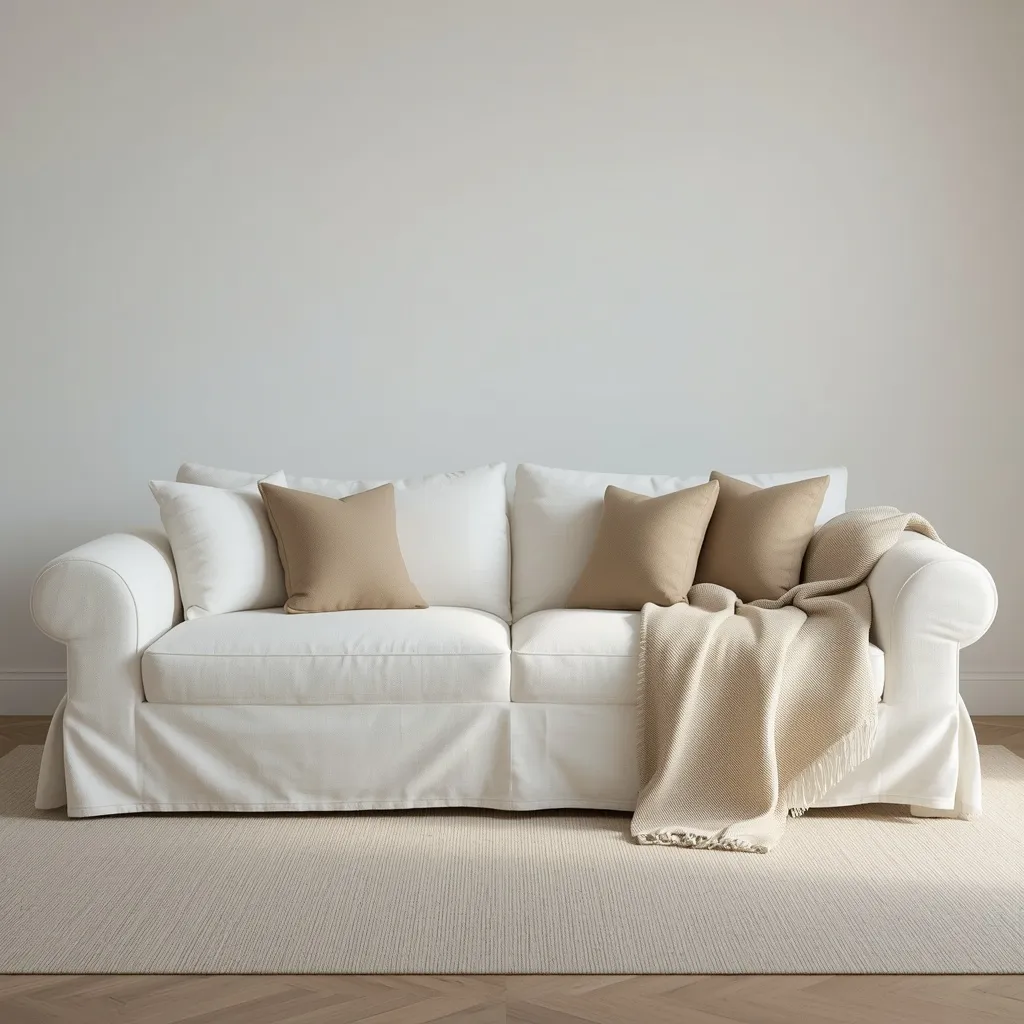
Swapping heavy upholstery for washable light linen instantly lifts a room: a dark or dated sofa disappearing under a soft white or oatmeal slipcover, paired with linen cushions in the same tonal family. Practical and transformative, slipcovers change everything without replacing anything. New sofa, old sofa.
Cover an existing dark or heavy sofa with a light linen or cotton slipcover in white, oatmeal, or bone, then add tonal cushions and a light throw so the whole seating group reads as one soft mass rather than a dark block. Machine-washable covers make pale upholstery genuinely practical with kids and pets, wash on a cool cycle and put covers back on slightly damp for the best fit. This suits renters, budget refreshes, and anyone stuck with furniture they can’t replace.
- Why it works: A light slipcover removes the single heaviest dark mass in most rooms.
- Best for: Renters, budget refreshes, unreplaceable furniture.
- Key elements: washable linen slipcover, tonal cushions, light throw, cool-wash care.
20. Negative Space Gallery Wall
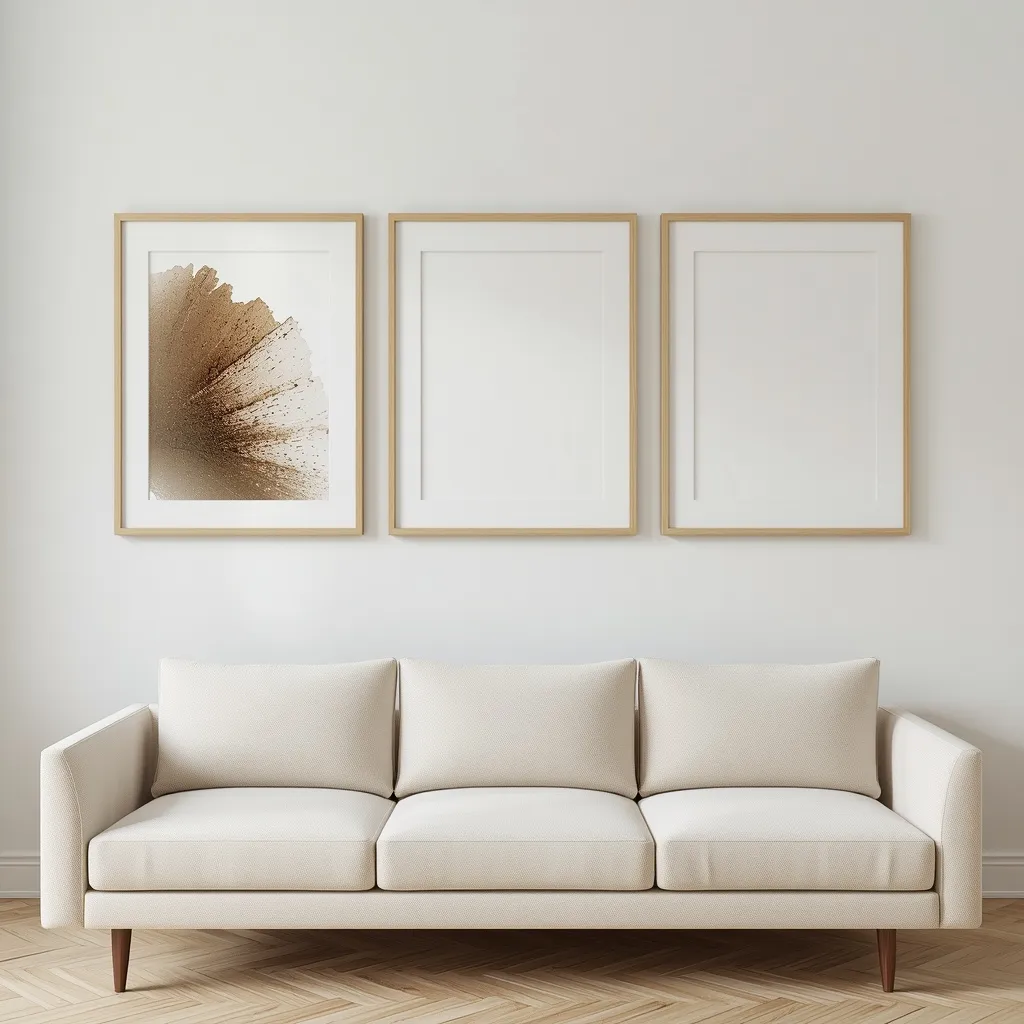
An airy gallery wall uses restraint: three or five pieces in pale frames with generous white space between them and around the group, rather than a dense salon-style cluster. Considered and calm, breathing room is what keeps art from weighing a wall down. Fewer pieces, more air.
Hang an odd number of pieces, three or five, in light wood or white frames with plenty of matting, spacing them 8–10 cm (3–4 in) apart and leaving clear wall around the whole group. Wide mats and pale frames are what make art feel light rather than dense. Center the arrangement on the furniture below, hanging the middle of the group around eye level, roughly 145–150 cm (57–59 in) from the floor. This suits any living room and works especially well above a low sofa.
- Why it works: Wide mats, pale frames, and generous spacing keep art from weighing down a wall.
- Best for: Any room; especially above a low sofa.
- Key elements: three to five pieces, pale frames, wide mats, 8–10 cm spacing, eye-level center.
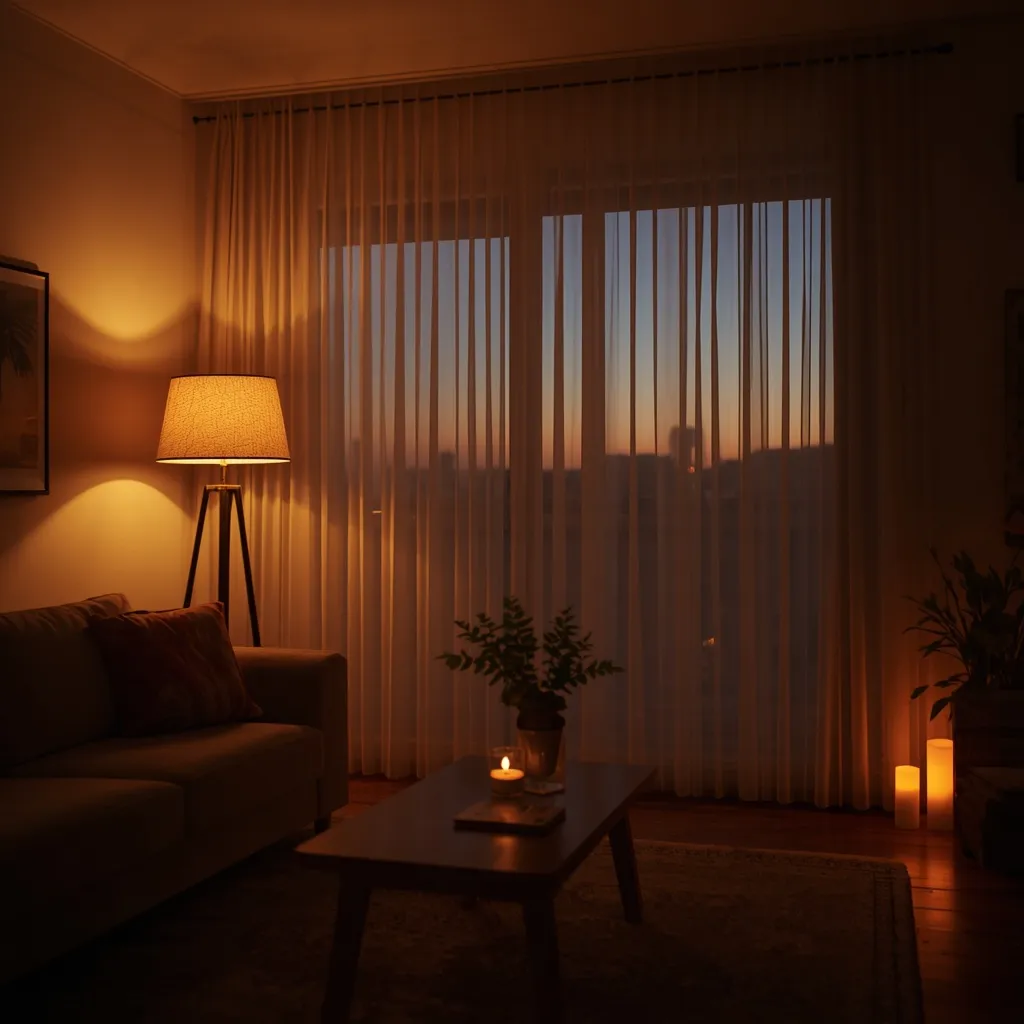
21. Summer Evening Airy Room
An airy room stays light after dark with the right lighting: warm lamplight layered at several heights, candles glowing low, sheer curtains left open to the dusk, and no harsh overhead glare. Soft and restful, evenings don’t have to close a bright room in. Gentle light, still open.
Skip the single overhead light and layer at least three warm sources at different heights, a floor lamp, a table lamp, and candles, using bulbs around 2700K so the light reads golden rather than clinical, and add dimmers where you can. Leaving sheers open at dusk keeps the connection to outside. Never leave real candles lit unattended, and keep flames clear of curtains and throws; flameless candles are the safe choice around kids and pets. Our summer candle styling guide covers the groupings in more detail. This suits every airy living room.
- Why it works: Layered warm lamplight keeps a bright room soft and open after dark.
- Best for: Every airy living room; long summer evenings.
- Key elements: three warm light sources at varied heights, 2700K bulbs, dimmers, safe candles.
What Makes a Living Room Feel Airy?
A living room feels airy when three things work together: light color that reflects rather than absorbs daylight, low visual weight from furniture you can see under and around, and genuine breathing space on floors and surfaces. Paint color alone won’t do it, a white room full of bulky, floor-hugging furniture and cluttered surfaces will still feel heavy.
Building rooms that feel calm and genuinely livable is central to the Sunday Abode approach. Once the room is light by day, our guide to styling summer candles keeps it soft and inviting after dark. For more ways to shape the space, browse the rest of our living room ideas.
Choosing Light Paint Colors: What LRV Means
LRV stands for Light Reflectance Value, a 0–100 scale measuring how much light a paint color reflects. Pure black is 0 and pure white is 100. For a genuinely airy living room, look for colors with an LRV above roughly 70; anything below 50 will absorb noticeably more light than it returns. Manufacturers publish the LRV for each color, so check it before you commit.
| Light situation | Choose | Why |
| North-facing / dim | A warm white (cream undertone) | Cool whites turn gray in cool light |
| South-facing / sunny | A soft or cooler white | Warm light already adds warmth |
| Shows every mark | A light greige | Brighter than beige, hides scuffs |
| Feels too stark in white | Tonal light neutrals | Depth from texture, not darker color |
| Any room | Check LRV above ~70 | Higher LRV reflects more daylight |
Always test on the actual wall: paint a patch of at least 30 x 30 cm (12 x 12 in), or use a peel-and-stick sample, and look at it in morning, afternoon, and evening light before deciding, undertones shift dramatically through the day. Practical & safety notes: anchor tall or heavy furniture to the wall, especially in homes with children, and secure leaning mirrors so they cannot tip. Choose tempered glass for glass tables and take care around young children. Never leave real candles lit unattended, and keep flames clear of curtains and throws. Several popular houseplants are toxic to cats and dogs if chewed, so check the ASPCA toxicity lists before choosing.
Frequently Asked Questions
What paint colors make a living room look light and airy?
Soft warm whites, light greiges, and pale neutrals with a high Light Reflectance Value work best, look for an LRV above roughly 70. Widely used examples include Behr Swiss Coffee for a creamy white, Sherwin-Williams Accessible Beige for a warmer greige, and Benjamin Moore Linen White for north-facing rooms. Always test the color on your actual wall, since undertones shift with the light in each room.
How do you make a dark living room feel airy?
Compensate deliberately rather than just painting it white. Use a warm white with a high LRV, add at least three light sources at different heights with warm bulbs around 2700K, hang a large mirror to reflect whatever daylight exists, and choose a satin rather than matte finish so surfaces reflect more light. Avoid dark accent walls and heavy curtains, which work against you in an already dim room.
Why does my white living room still feel heavy?
Because paint is only one of three levers. If the furniture sits flush to the floor, the pieces are bulky and solid, and the surfaces are cluttered, a room will feel heavy no matter how white the walls are. Add furniture with visible legs, swap a solid coffee table for glass, and clear surfaces down to a few grouped objects, the visual weight and clutter usually matter more than the wall color.
How should you hang curtains to make a room feel bigger?
Mount the rod close to the ceiling rather than at the top of the window frame, and extend it 15–25 cm (6–10 in) past each side so the panels stack against the wall instead of over the glass. Choose floor-length sheer linen or voile that just skims the floor. This draws the eye upward, makes the window look larger, and lets in significantly more daylight.
Does flooring affect how airy a living room feels?
Yes, considerably. Light-toned flooring reflects more light than dark, and running the same flooring continuously through connected spaces removes the visual breaks that chop a home into smaller boxes. Laying planks along the longest sightline stretches the room further. Renters can get much of the effect with one large pale rug covering most of the visible floor.
What are the cheapest ways to make a living room feel airier?
Editing costs nothing and often works best: clear surfaces down to about three grouped objects each and move the rest into closed storage. Beyond that, a light linen slipcover over a dark sofa, a large leaning mirror positioned to reflect the window, sheer curtains hung high and wide, and swapping a bulky coffee table for glass all deliver a lot for very little and leave no permanent changes.
Can a living room feel airy without being all white?
Absolutely. Tonal layered neutrals, cream, oatmeal, bone, and pale taupe used within a narrow band, keep a room light while adding depth through texture rather than color. A light greige is another warmer alternative that stays bright and hides marks better than white. What matters is keeping values light and contrast low, not eliminating color entirely.
Conclusion
The most effective airy summer living room ideas all work the same three levers: light color that reflects daylight, furniture with low visual weight, and genuine breathing space on floors and surfaces. Whether you start by testing a warm white on a north-facing wall, rehanging your curtains higher and wider, slipcovering a heavy sofa, or simply clearing every surface and putting back only what earns its place, each change compounds. Begin with the free one, editing, and build from there. For more seasonal inspiration, explore the living room ideas collection on Sunday Abode and save the airy scheme that suits your light.