


Key Takeaways
- A beachy living room is built on light, texture, and a restrained palette, not on literal anchors, ropes, and seashell motifs.
- Use the 60-30-10 rule: about 60% light neutral (white, sand, cream), 30% natural texture (rattan, jute, linen, wood), and 10% accent color (blue, sage, or coral).
- Texture beats motif, jute, linen, rattan, and weathered wood read coastal far more convincingly than themed decorations.
- Almost every look here is renter-friendly: rugs, textiles, cushions, and light-filtering curtains do most of the work with no permanent changes.
- Beachy style works anywhere, inland included, it’s a feeling of light and airiness, not a postcode.
Introduction
There’s a particular kind of calm that comes from a room full of light, soft textures, and sea-glass color. These beachy summer living room ideas show how to create that feeling in any home, coastal cottage, city apartment, or somewhere with no ocean in sight. Each one is a complete look you can actually recreate, from palette and materials to furniture and finishing touches.
Below are 22 full beachy living room schemes, spanning classic coastal, cottage, boho, rustic, vintage, and chic directions, plus focused looks for small spaces, rentals, and rooms you’re working with as-is. Every idea covers the colors, materials, and layout that make it work, with budget and renter-friendly notes throughout. Consider it your guide to bringing easy, sun-bleached summer calm into the living room of your abode.
The one rule that makes it work: Beachy style is about texture and light, not theme. Build the room on a light neutral base (roughly 60%), layer in natural textures like jute, rattan, linen, and weathered wood (about 30%), and add color as a restrained accent (about 10%). Skip the literal nautical props, anchors, ship wheels, rope everywhere, because texture reads coastal far more convincingly than motif ever does.
22 Beachy Summer Living Room Ideas
1. Classic Coastal Blue and White
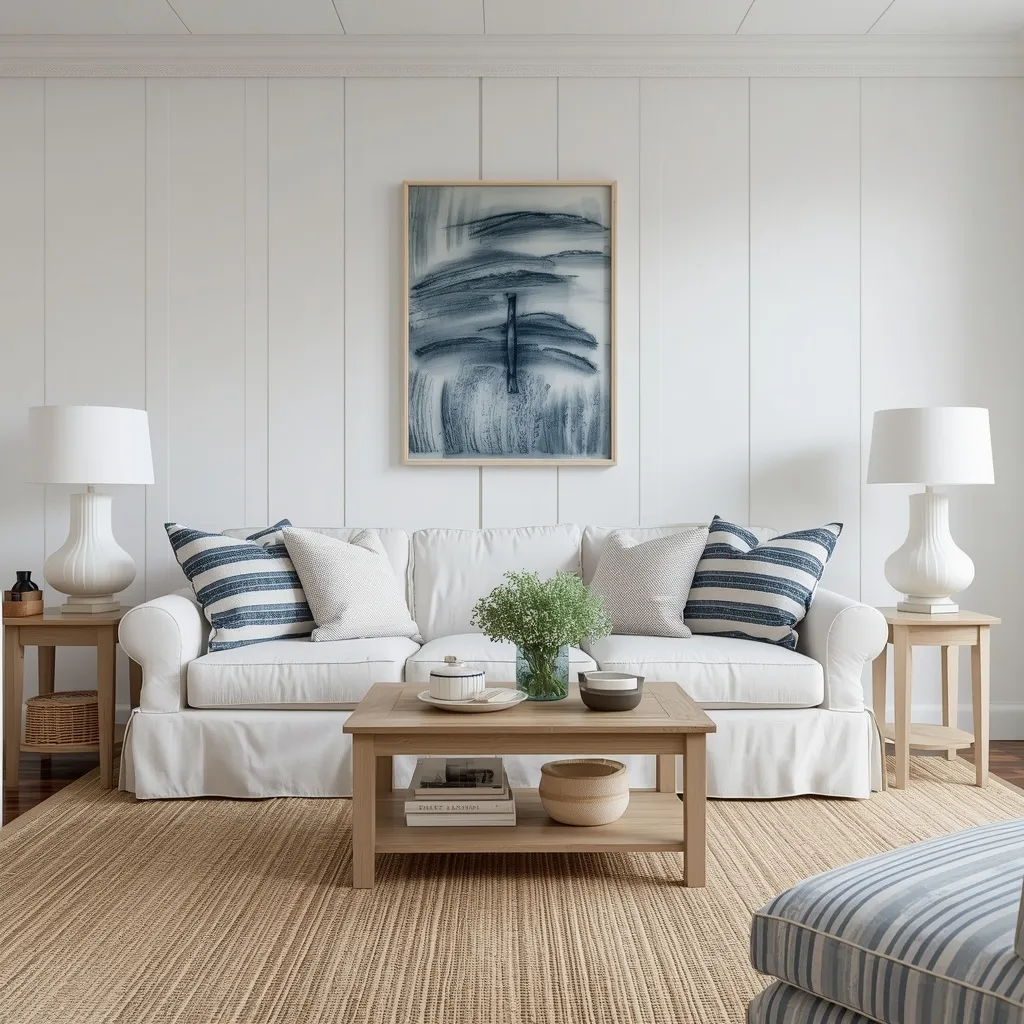
The timeless beachy living room pairs crisp white walls with soft blue accents: a white slipcovered sofa, blue-and-white striped cushions, a jute rug, and pale wood furniture. Fresh and enduring, blue-and-white is coastal style at its purest. Clean, calm, and always right.
Build this on a white or off-white base, then layer blue in two or three tones (sky, denim, and a deeper navy) through cushions, throws, and art, keeping the walls neutral so the blue reads as accent rather than theme. Add a jute or sisal rug and light oak or rattan furniture for warmth. Keep the blue to roughly 10–15% of the room so it stays fresh, not overwhelming. This suits classic, traditional, and coastal homes.
- Why it works: A white base with restrained blue accents reads coastal without cliché.
- Best for: Classic and traditional homes; first-time coastal schemes.
- Key elements: white sofa, layered blue cushions, jute rug, pale wood, blue-and-white art.
2. Coastal Cottage Charm
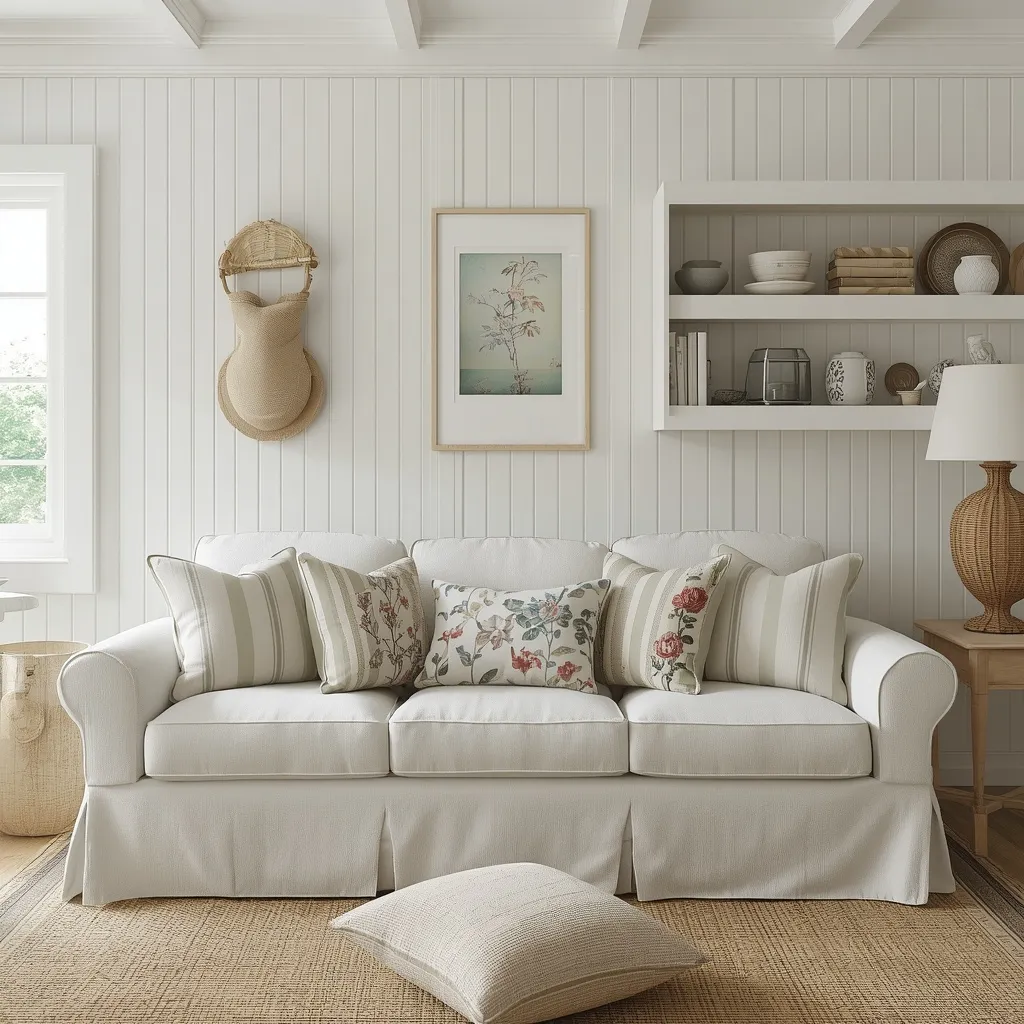
A coastal cottage living room feels soft, lived-in, and gently faded: painted wood paneling, a slipcovered sofa in linen, floral-meets-stripe cushions, and vintage finds on open shelves. Cozy and unpretentious, cottage style is coastal with a warm heart. Relaxed, charming, and welcoming.
Combine painted or beadboard-look paneling with a soft slipcovered sofa, mixed linen cushions in muted stripes and small florals, and a few worn wooden pieces. Cottage style forgives imperfection, so mismatched vintage finds actually help. Renters can fake paneling with removable wall panels or simply lean into textiles and painted furniture instead. Keep the palette to cream, soft blue, and sage. This suits cottage, country, and older homes wanting warmth alongside coastal light.
- Why it works: Soft textiles and worn vintage pieces make coastal feel warm and lived-in.
- Best for: Cottage and country homes; imperfection-friendly stylists.
- Key elements: painted paneling, linen slipcover, mixed stripe cushions, vintage shelf finds.
3. Beachy Boho Layers
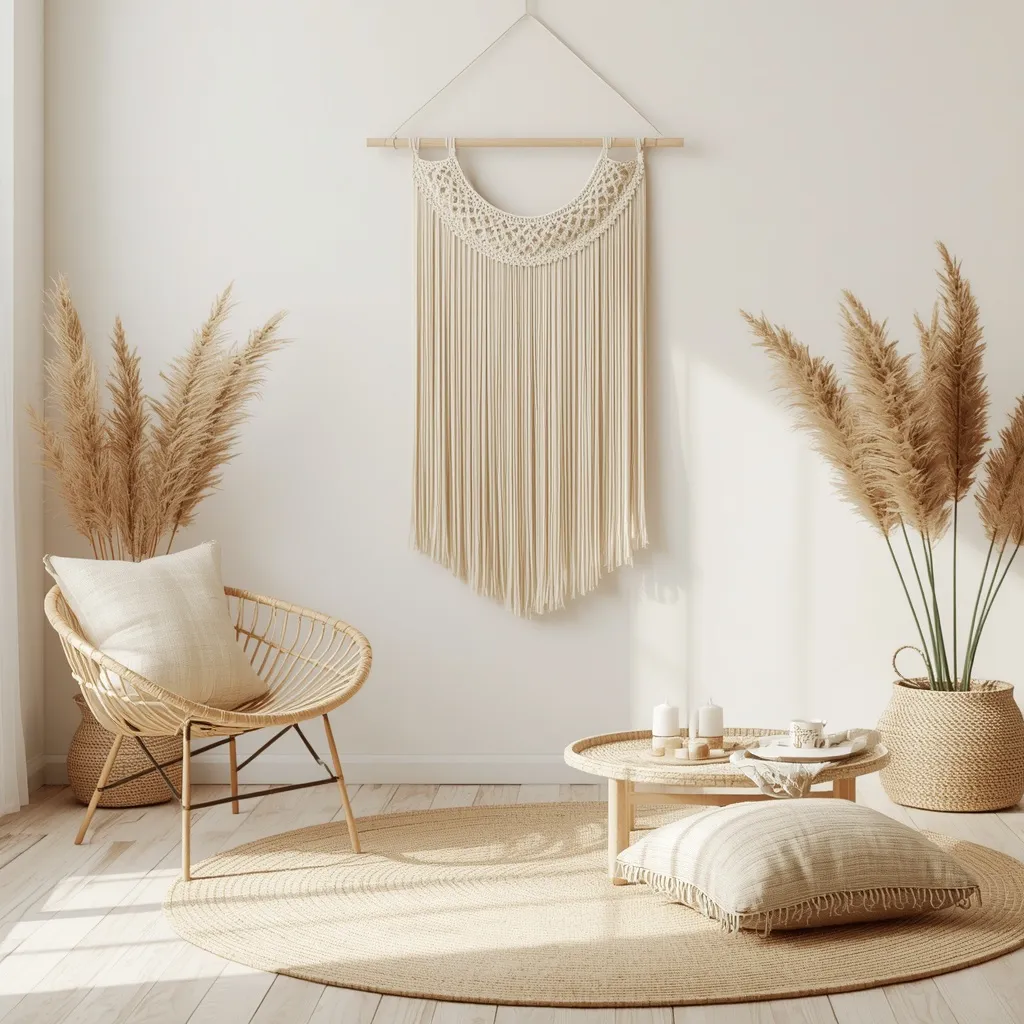
A beachy boho living room layers texture on texture: a rattan chair, a macramé wall hanging, fringed cushions, dried pampas, and a low woven coffee table over a jute rug. Relaxed and free-spirited, boho gives coastal style a soft, collected edge. Warm, textural, and easygoing.
Layer at least four different natural textures, rattan, macramé, jute, and raw cotton or linen, in a tonal palette of cream, sand, and warm tan, then add one or two green plants for life. The layering is what makes boho work; a single woven piece isn’t enough. Keep colors muted so it reads beachy rather than busy. Most pieces are inexpensive or secondhand. This suits boho, eclectic, and rental homes wanting warmth without permanent changes.
- Why it works: Layered natural textures in a tonal palette make coastal feel warm and boho.
- Best for: Boho, eclectic, and rental homes.
- Key elements: rattan chair, macramé hanging, fringed cushions, pampas, jute rug.
4. Rustic Driftwood Retreat
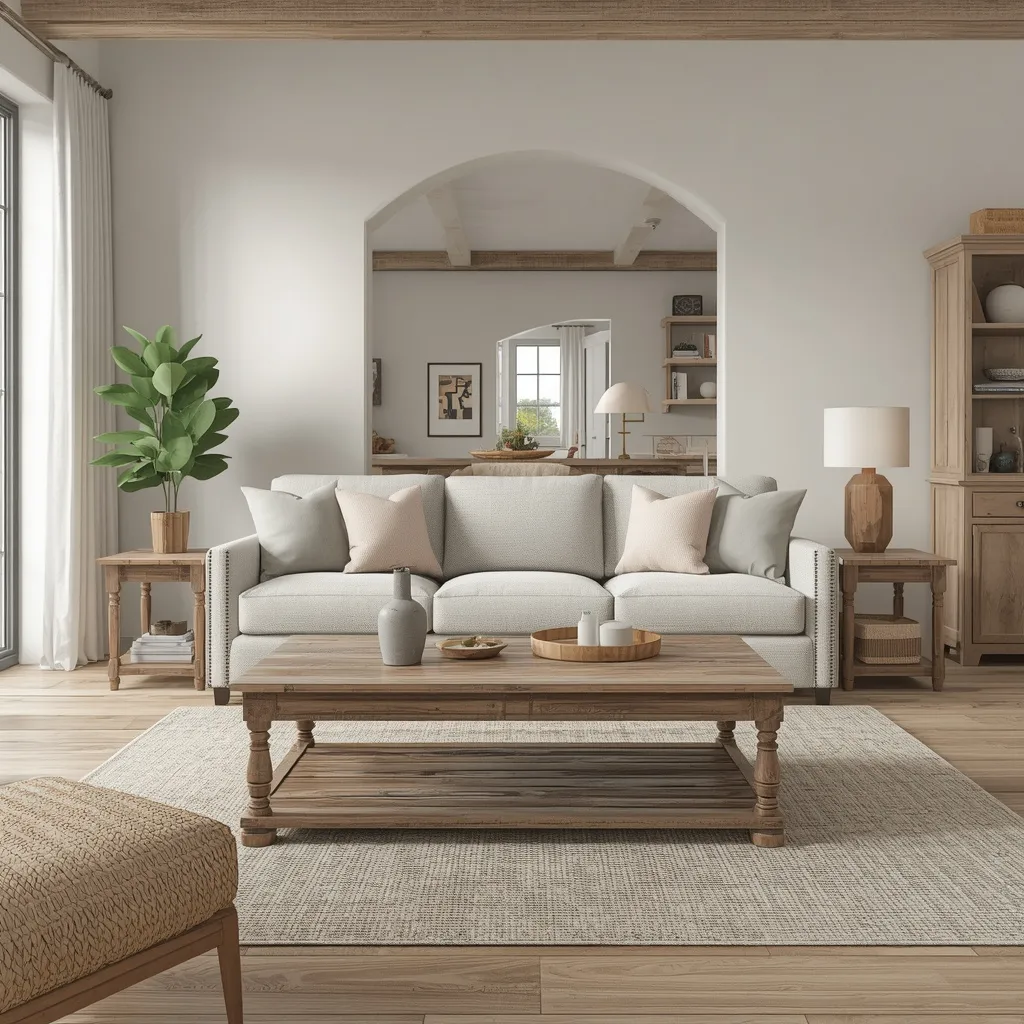
A rustic beachy living room leans on weathered wood and honest materials: a reclaimed-wood coffee table, exposed beams or wood accents, linen upholstery, and driftwood-toned finishes. Grounded and textural, rustic coastal feels sturdy and sun-bleached. Weathered, warm, and real.
Center the room on weathered or reclaimed wood, a chunky coffee table, a wood console, or a shelf, paired with soft linen upholstery and a wool or jute rug in oatmeal tones. The contrast between rough wood and soft textiles is the whole effect. Choose gray-brown driftwood tones rather than orange-toned wood, which fights the coastal palette. This suits rustic, farmhouse, and older homes wanting a more grounded, less polished coastal look.
- Why it works: Rough weathered wood against soft linen gives coastal a grounded, sun-bleached feel.
- Best for: Rustic and farmhouse homes; less-polished coastal.
- Key elements: reclaimed-wood table, wood accents, linen upholstery, oatmeal rug, driftwood tones.
5. Chic Modern Coastal
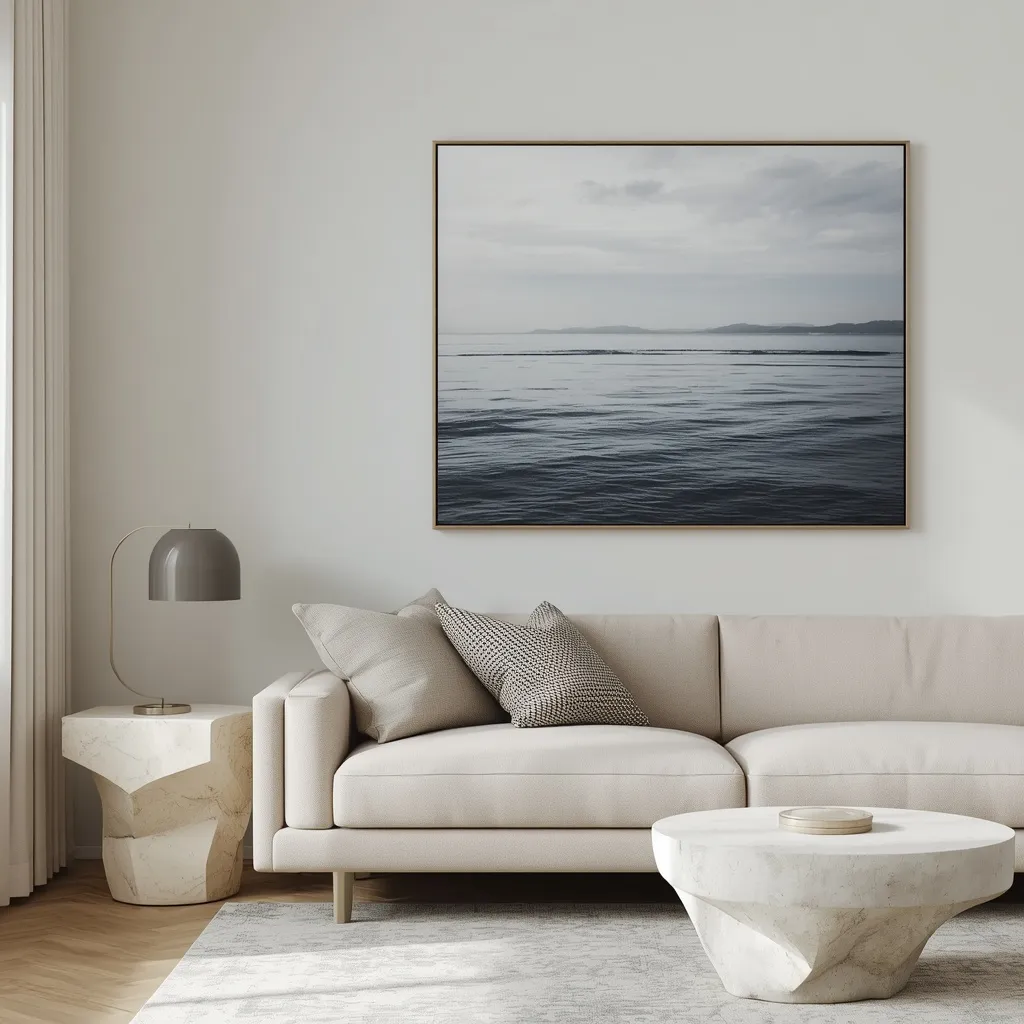
A chic coastal living room is polished and restrained: a low-profile sofa in pale bouclé, sculptural lighting, a large abstract seascape, and one or two refined natural textures. Elevated and calm, this is coastal without a single seashell. Sophisticated, quiet, and design-led.
Keep the palette almost entirely tonal, white, bone, greige, and let quality materials do the talking: bouclé or heavy linen upholstery, a sculptural lamp, a marble or pale stone side table, and one large abstract piece in soft blue-gray. Restraint is the point; add texture, not decoration. A single oversized artwork reads more expensive than a gallery of small pieces. This suits modern homes and anyone who finds traditional coastal too themed.
- Why it works: Tonal restraint and quality materials give coastal a polished, elevated feel.
- Best for: Modern homes; those who dislike themed coastal.
- Key elements: bouclé sofa, sculptural lamp, pale stone table, one large abstract seascape.
6. Small Space Beachy Living Room
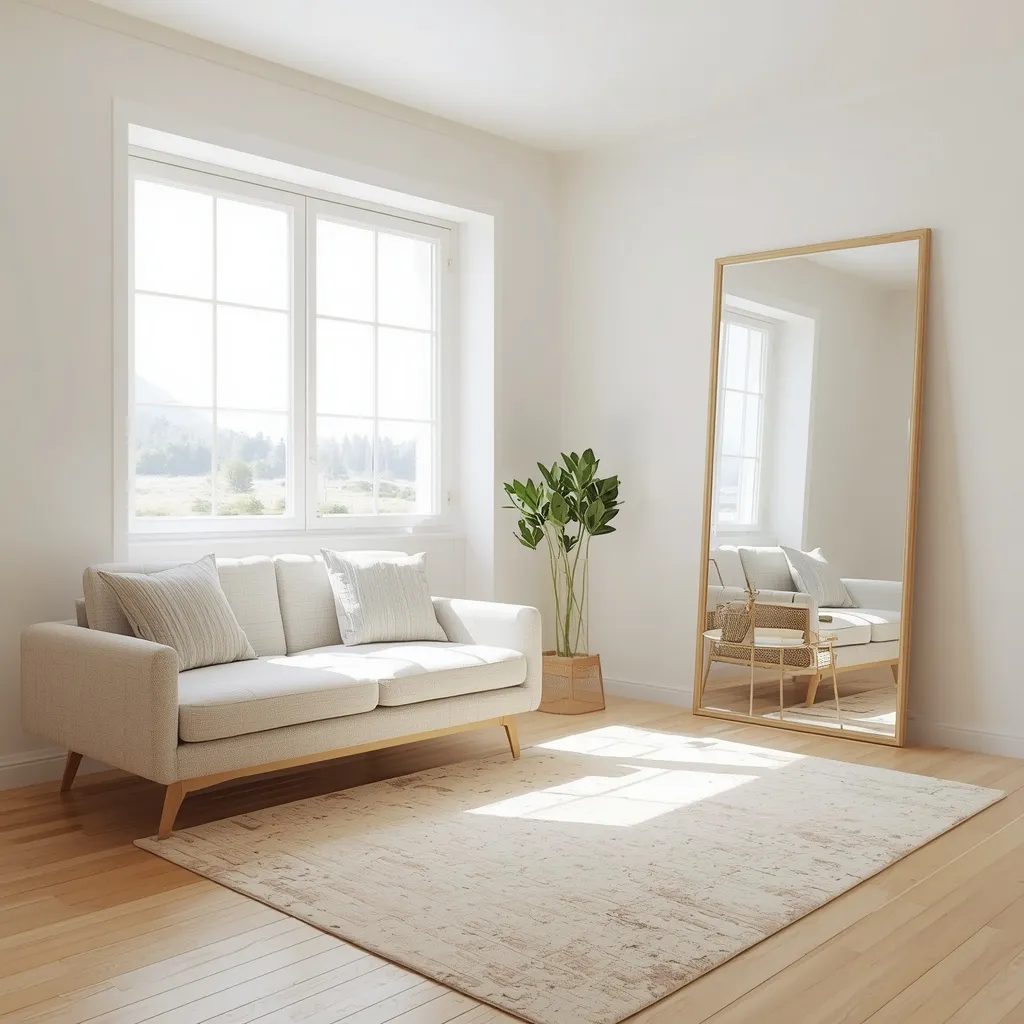
A small beachy living room maximizes light and air: a compact light-toned sofa, leggy furniture that shows floor beneath, a large mirror opposite the window, and a pale rug that stretches the space. Bright and uncluttered, small rooms suit coastal style beautifully. Light, open, and space-smart.
Choose furniture with visible legs (which makes floor space read larger), keep upholstery pale, and hang a large mirror opposite the main window to bounce daylight. Use a rug large enough that the front legs of the sofa sit on it, since undersized rugs make small rooms look smaller. Skip heavy or dark pieces. This suits small living rooms, apartments, and anyone whose room feels cramped, the light coastal palette is genuinely space-enhancing.
- Why it works: Pale tones, leggy furniture, and a mirror make a small room feel open and airy.
- Best for: Small living rooms and apartments.
- Key elements: compact pale sofa, leggy furniture, large mirror, correctly sized pale rug.
7. Coastal Apartment Refresh
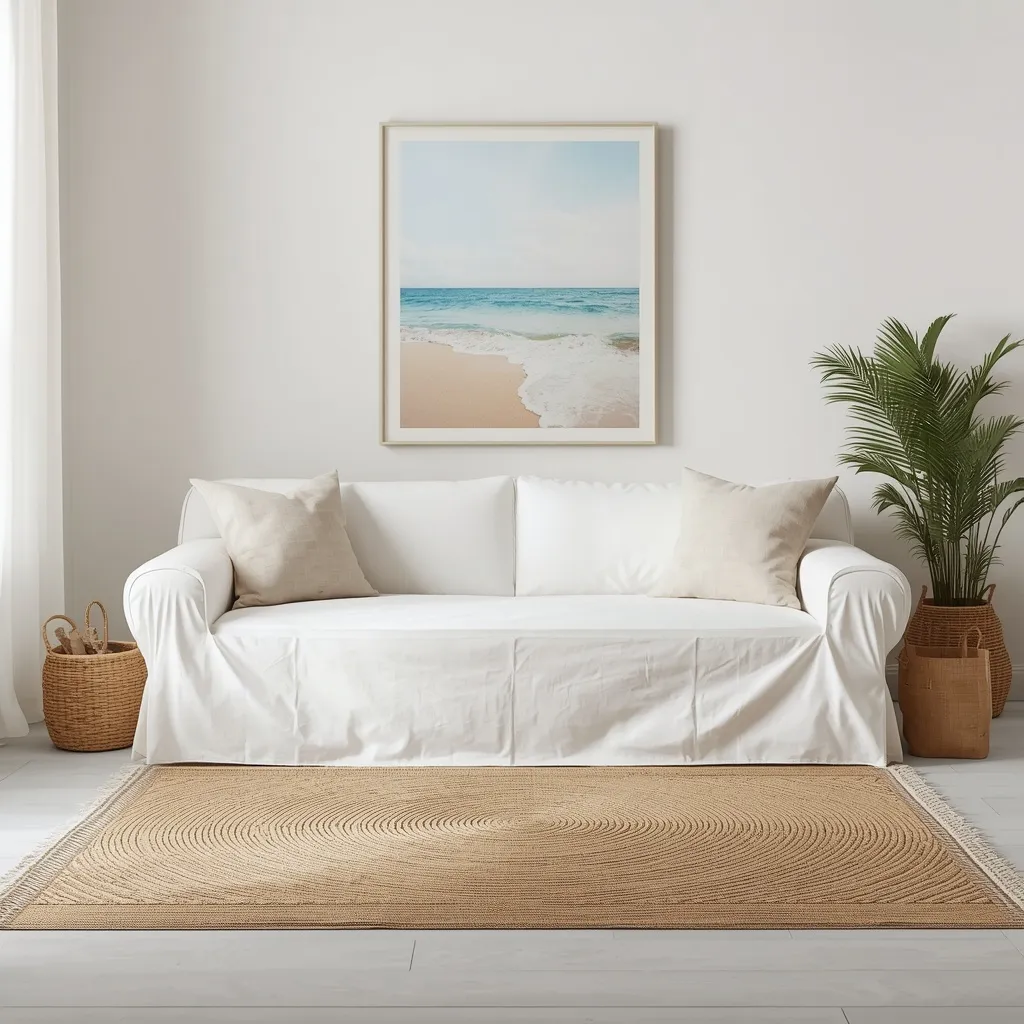
A beachy apartment living room works entirely with removable pieces: light slipcovers, layered textiles, a jute rug over existing flooring, leaning art, and plenty of woven baskets. Renter-friendly and reversible, it needs no permission and no paint. Easy, temporary, and beautiful.
Transform a rental with textiles alone, a white or oatmeal slipcover over an existing sofa, linen cushions, a jute rug to cover unloved flooring, and leaning artwork instead of hanging it. Baskets add texture and storage in one. Nothing here needs drilling or paint, so the whole scheme leaves with you. Command-style hooks handle any light hanging. This suits renters, apartment dwellers, and anyone who can’t make permanent changes.
- Why it works: Slipcovers, rugs, and leaning art create coastal style with zero permanent changes.
- Best for: Renters and apartment dwellers.
- Key elements: slipcover, jute rug over existing floor, linen cushions, leaning art, baskets.
8. Sea Glass Color Scheme
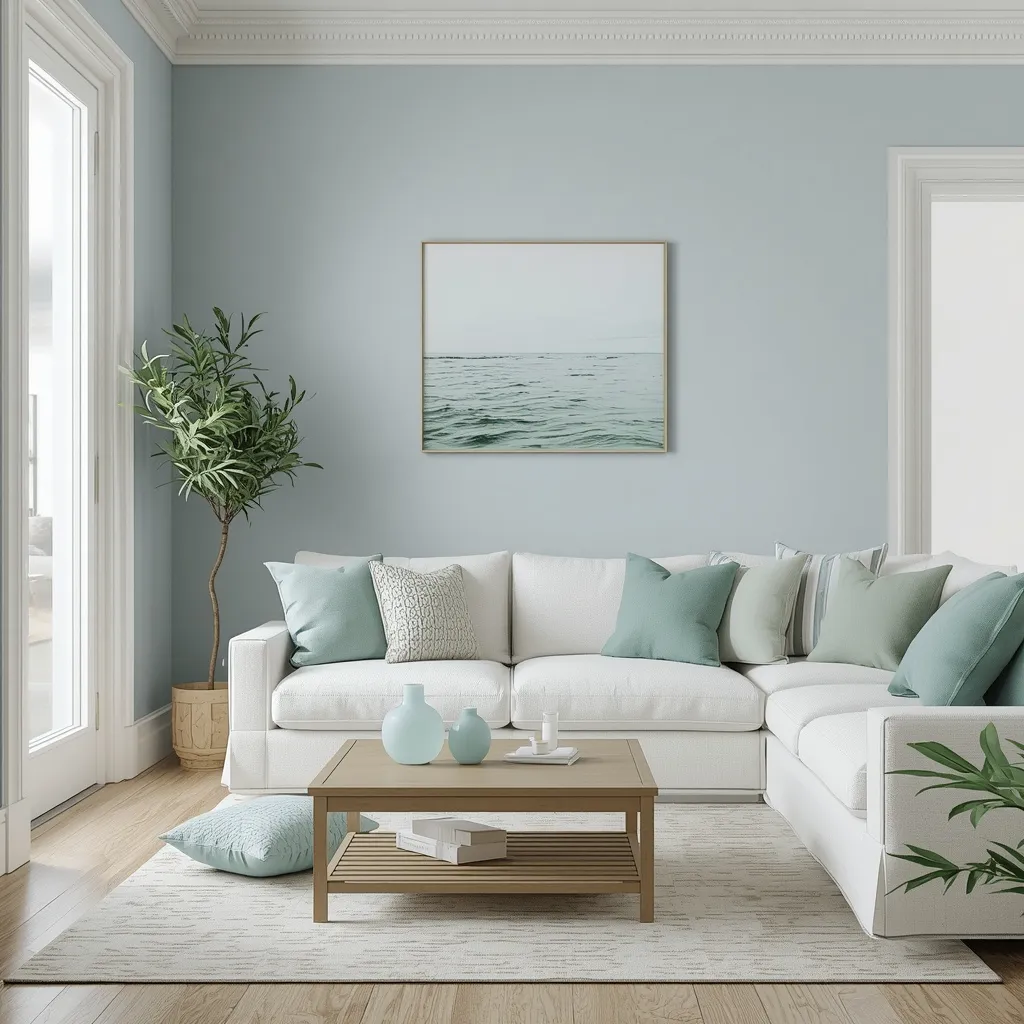
A sea-glass living room glows in soft, watery greens and blues: pale aqua walls or accents, sage cushions, milky glass accessories, and white trim. Soothing and slightly unexpected, sea glass is coastal color at its most tranquil. Cool, watery, and calming.
Work with muted greens and blue-greens, sage, aqua, and soft teal, rather than bright primary blue, keeping walls pale and using the color across cushions, ceramics, and glass accessories. Sea-glass tones are gentler and more livable than nautical navy. Test paint on the wall and check it in both morning and evening light, since blue-greens shift dramatically. This suits homes wanting a softer, more distinctive coastal palette than blue-and-white.
- Why it works: Muted blue-greens feel gentler and more livable than bright nautical blue.
- Best for: Homes wanting a softer, distinctive coastal palette.
- Key elements: sage and aqua accents, pale walls, milky glass, white trim.
9. Breezy Linen Curtain Living Room
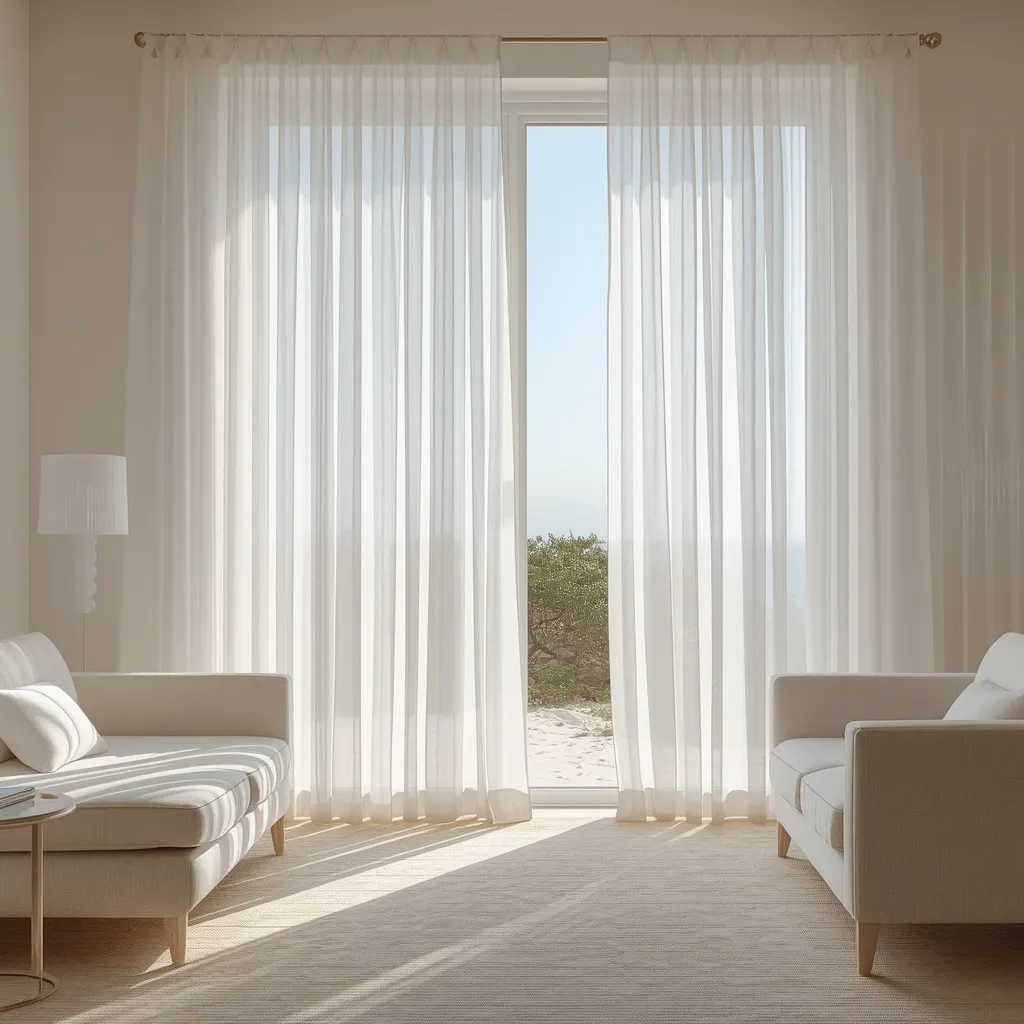
Light, floor-length linen curtains define this airy beachy room: sheer white panels moving in the breeze, filtering sunlight into a soft glow across pale furniture. Effortless and romantic, curtains do more for coastal feeling than almost anything else. Soft light, gentle movement.
Hang light-filtering linen or cotton-voile curtains in white or oatmeal, mounting the rod close to the ceiling and extending it well past the window frame so panels stack off the glass and let in maximum light. Floor-length panels that just skim or slightly puddle look softest. Avoid heavy blackout fabrics in the main living space, which kill the airy effect. This suits any living room and is one of the highest-impact single changes for a beachy feel.
- Why it works: High, wide-hung sheer linen panels maximize light and add gentle movement.
- Best for: Any living room; highest-impact single change.
- Key elements: light linen or voile panels, ceiling-height rod, extended width, floor-length drop.
10. Layered Natural Fiber Rugs
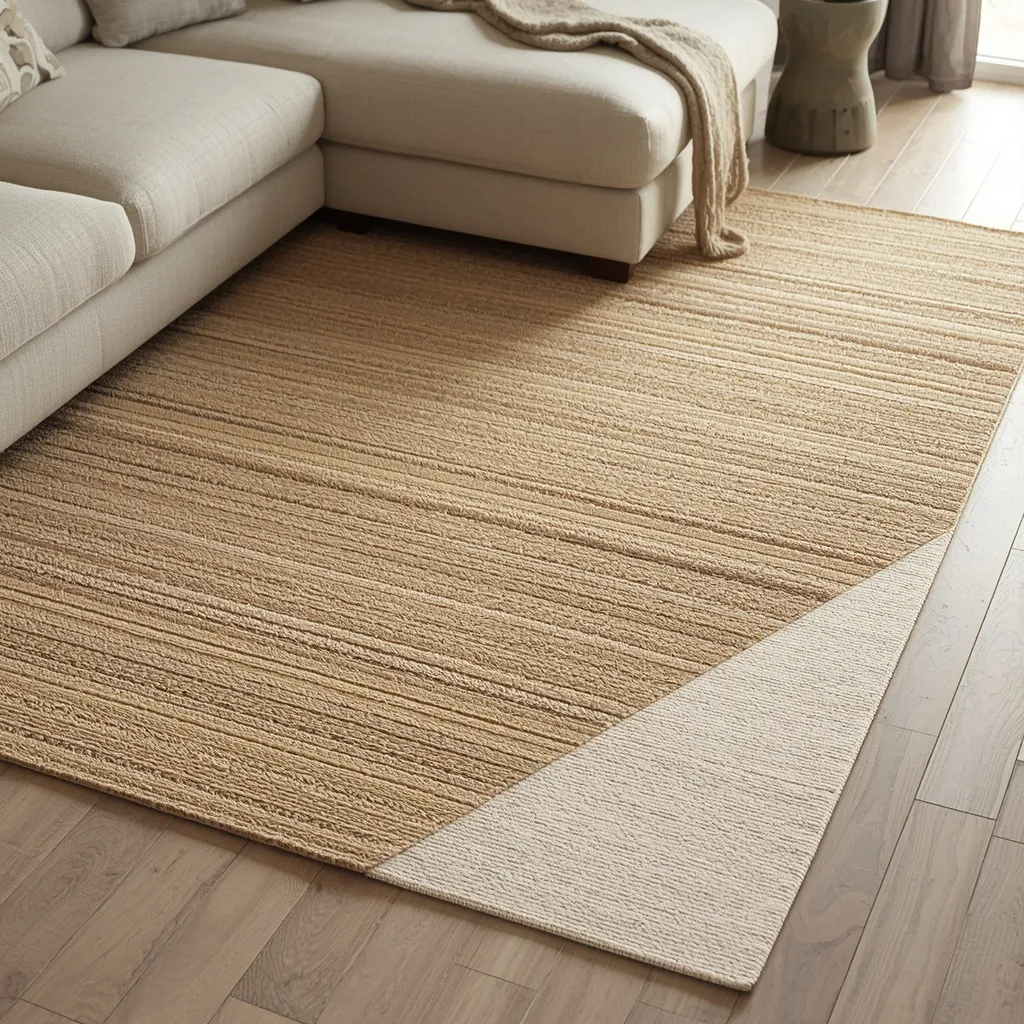
A layered-rug beachy living room grounds the space in texture: a large jute or sisal rug topped with a smaller flatweave or vintage cotton rug at an angle. Warm underfoot and visually rich, layered rugs add instant coastal texture. Textural, cozy, and forgiving.
Start with a large natural-fiber base rug (jute or sisal) sized so at least the front legs of all seating sit on it, then layer a softer, smaller flatweave or washable cotton rug on top for comfort and pattern. Layering solves the classic jute problem: great texture, rough underfoot. Use a non-slip pad between layers so nothing shifts and no one trips. This suits family rooms, rentals, and anyone wanting texture without recarpeting.
- Why it works: Layering softens scratchy jute while doubling the texture and warmth.
- Best for: Family rooms and rentals; texture without recarpeting.
- Key elements: large jute base rug, smaller soft top rug, non-slip pad, correct sizing.
11. Styling Around a Gray Couch
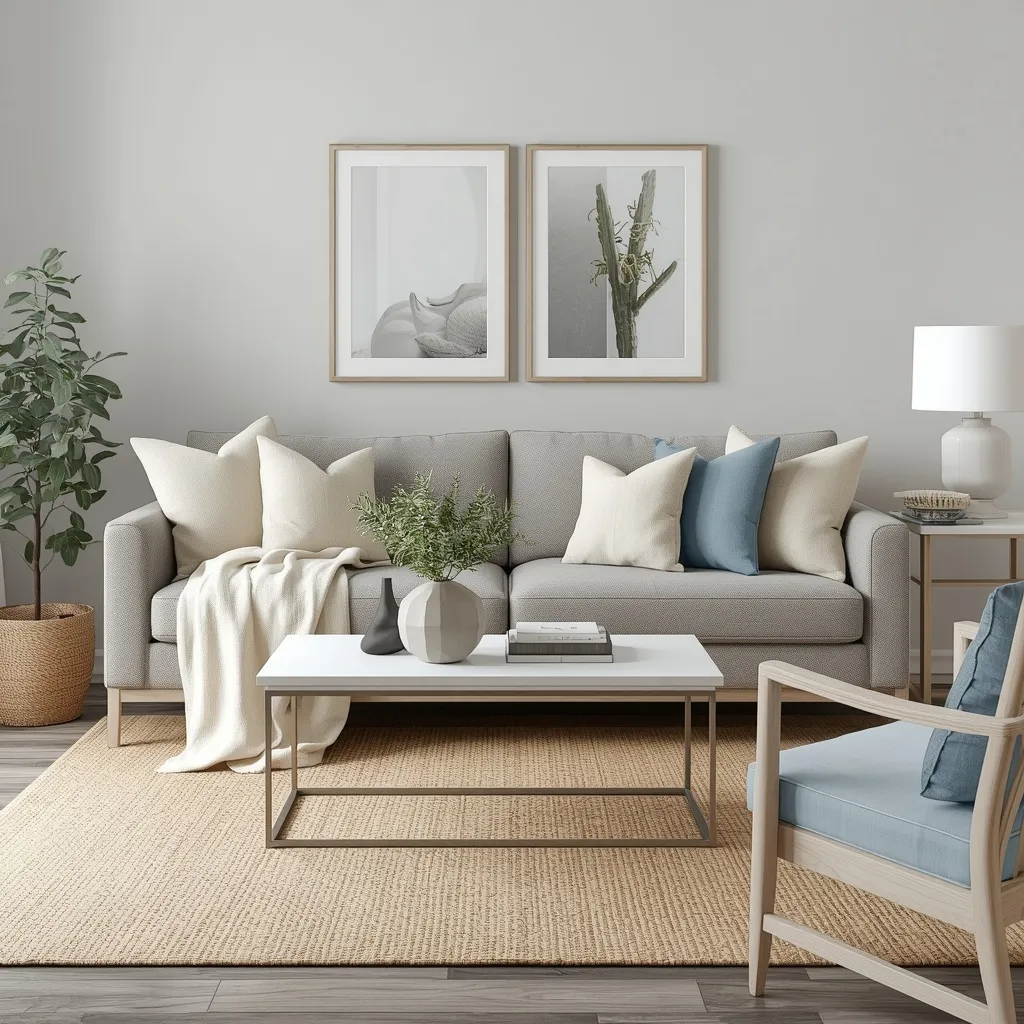
A gray couch becomes convincingly coastal with the right layers: warm sand and cream textiles, a jute rug, pale wood, and soft blue accents that shift the gray from cool to coastal. Practical and clever, you don’t need a new sofa. Work with what you already own.
Warm up a gray sofa with sand, cream, and oatmeal cushions and a chunky knit or linen throw, then add a jute rug and light wood pieces so the gray reads as driftwood rather than corporate. A few soft blue or sage accents tie it to the coastal palette. Avoid pairing gray with more cool gray, which flattens the room; warmth is what rescues it. This suits anyone keeping existing furniture and is far cheaper than replacing a sofa.
- Why it works: Warm sand and jute layers shift a cool gray sofa toward driftwood coastal.
- Best for: Anyone keeping existing furniture; budget refreshes.
- Key elements: sand and cream cushions, linen throw, jute rug, pale wood, blue accents.
12. Summer Fireplace Feature
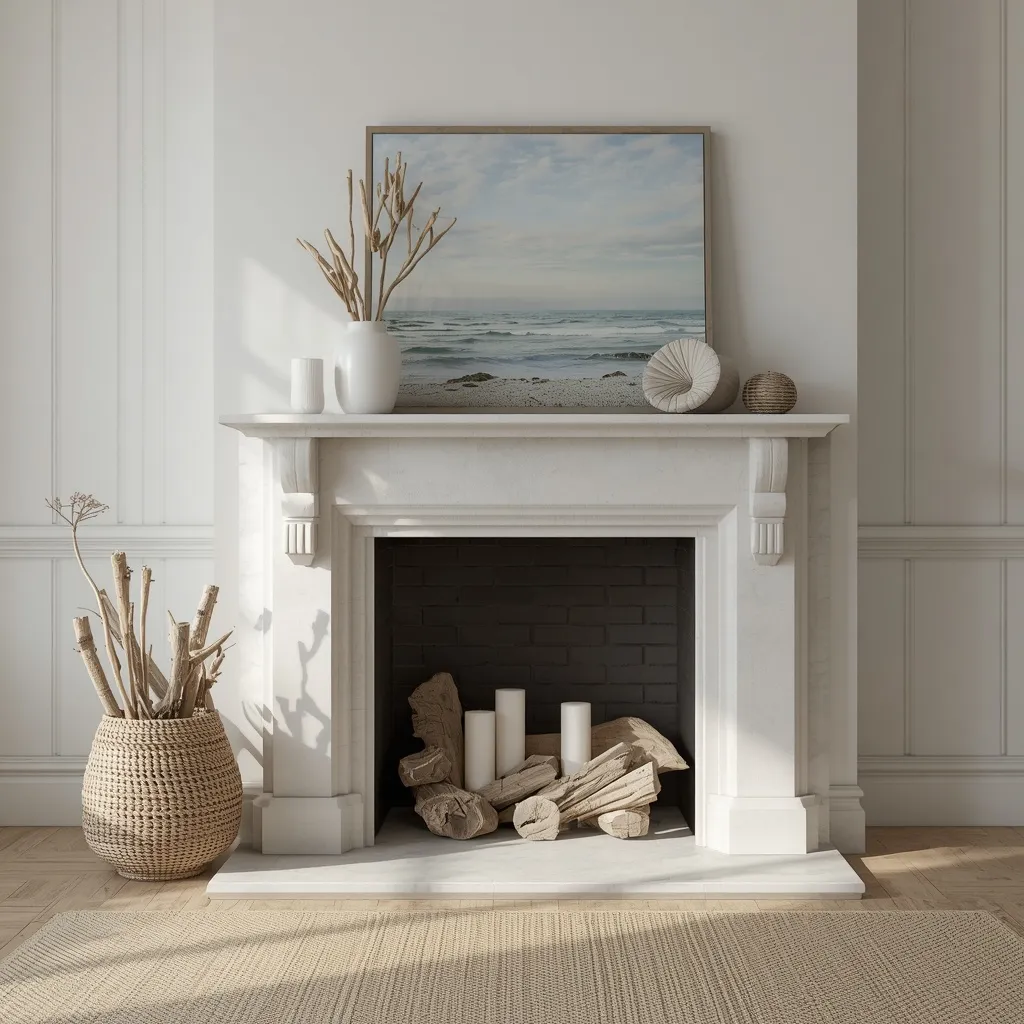
An unused summer fireplace becomes a coastal focal point: the firebox filled with pillar candles or a woven basket of driftwood, a mantel styled with pale ceramics, coral, and a leaning seascape. Purposeful and pretty, it solves the empty-hearth problem. A fireplace that still earns its place.
Fill an unused summer firebox with a cluster of pillar candles, a basket of birch or driftwood, or a large trailing plant, then style the mantel with a leaning artwork, two or three pale ceramics, and a piece of coral or driftwood. Group mantel objects in odd numbers at varied heights. If you use real candles in the firebox, never leave them lit unattended and keep flames clear of the surround; flameless pillars are safest in an enclosed recess. This suits homes with a fireplace that sits unused all summer.
- Why it works: A filled firebox and styled mantel turn a dead summer hearth into a focal point.
- Best for: Homes with an unused summer fireplace.
- Key elements: candle or driftwood-filled firebox, leaning seascape, pale ceramics, odd-number grouping.
13. Vintage Coastal Finds
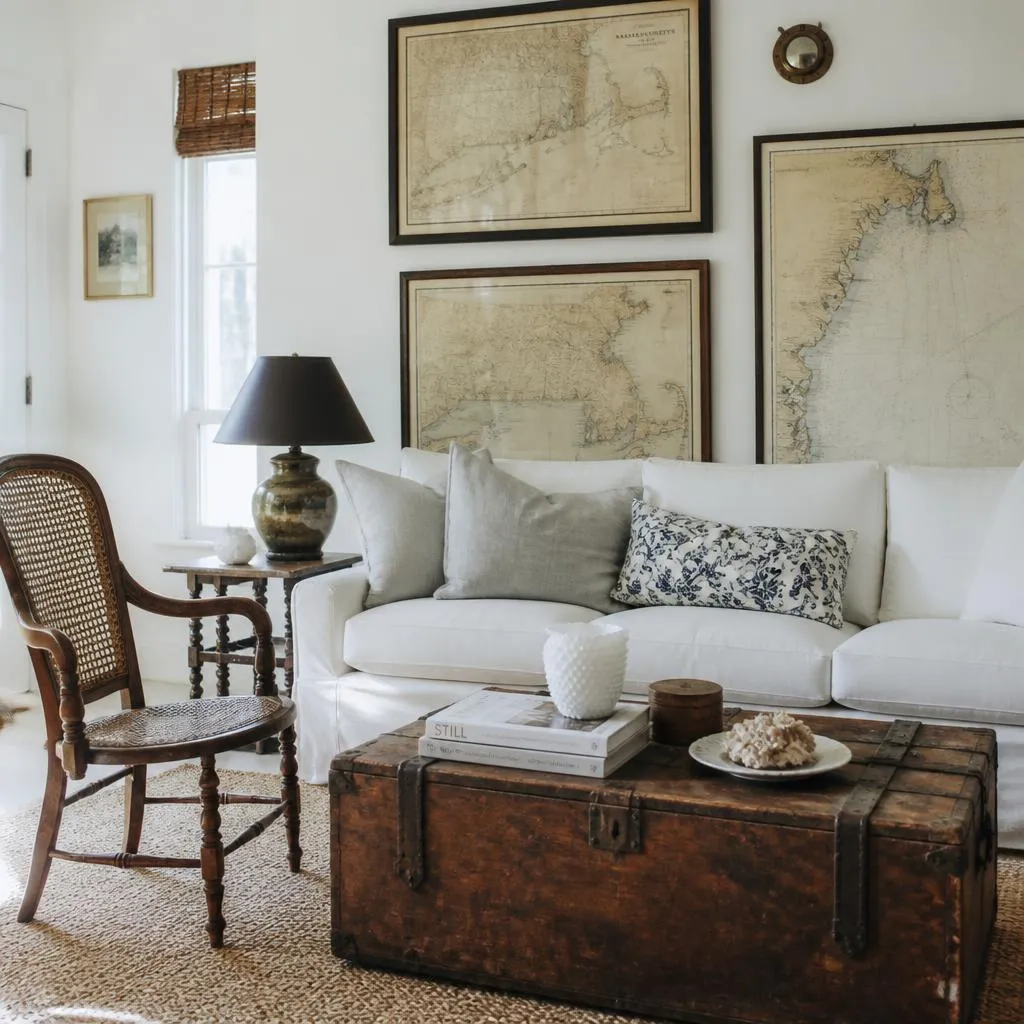
A vintage beachy living room is full of character and history: a worn leather or cane chair, antique maritime maps, thrifted milk glass, and a patinated wooden trunk as a coffee table. Collected and characterful, vintage coastal has genuine soul. Storied, sustainable, and one-of-a-kind.
Hunt secondhand for pieces with age, a cane-back chair, an old wooden trunk, framed vintage maps or botanical prints, and milk glass or ironstone ceramics, then mix them with light modern textiles so the room feels current, not like an antique shop. One or two genuinely old pieces do more than a dozen reproductions. Check secondhand furniture is structurally sound and stable before use. This suits vintage lovers, budget stylists, and sustainability-minded homes.
- Why it works: A few genuinely old pieces give coastal style real soul and sustainability.
- Best for: Vintage lovers, budget and sustainability-minded homes.
- Key elements: cane or leather chair, vintage maps, milk glass, wooden trunk table, modern textiles.
14. Mediterranean Coastal Calm
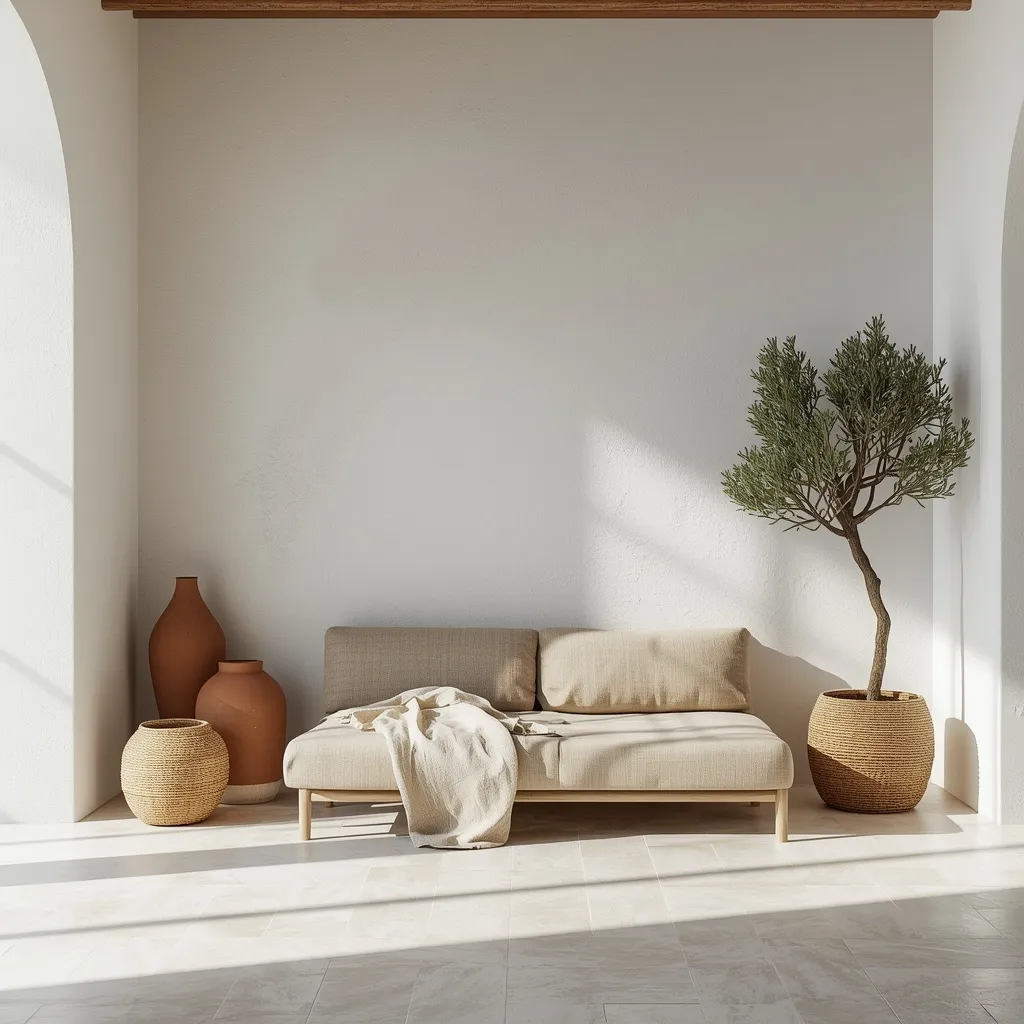
A Mediterranean-leaning beachy living room brings sun-warmed white and terracotta: white plaster-look walls, a low linen sofa, terracotta and olive accents, and an olive tree in a clay pot. Warm and serene, it’s the coast of southern Europe rather than the Atlantic. Sun-drenched, earthy, and calm.
Shift the coastal palette warm, white walls, natural linen, terracotta, and soft olive green, with textured plaster-look finishes, a low sofa, clay vessels, and a potted olive tree for structure. This warmer take suits homes with strong, warm sunlight, where cool blue-gray coastal can feel stark. Keep the palette to three or four tones so it stays serene. This suits Mediterranean-style, warm-climate, and modern homes wanting an earthier coastal feel.
- Why it works: Warm white, terracotta, and olive give coastal an earthier Mediterranean feel.
- Best for: Warm-climate homes; earthier coastal palettes.
- Key elements: plaster-look white walls, low linen sofa, terracotta, olive accents, potted olive tree.
15. Scandi Coastal Minimalism
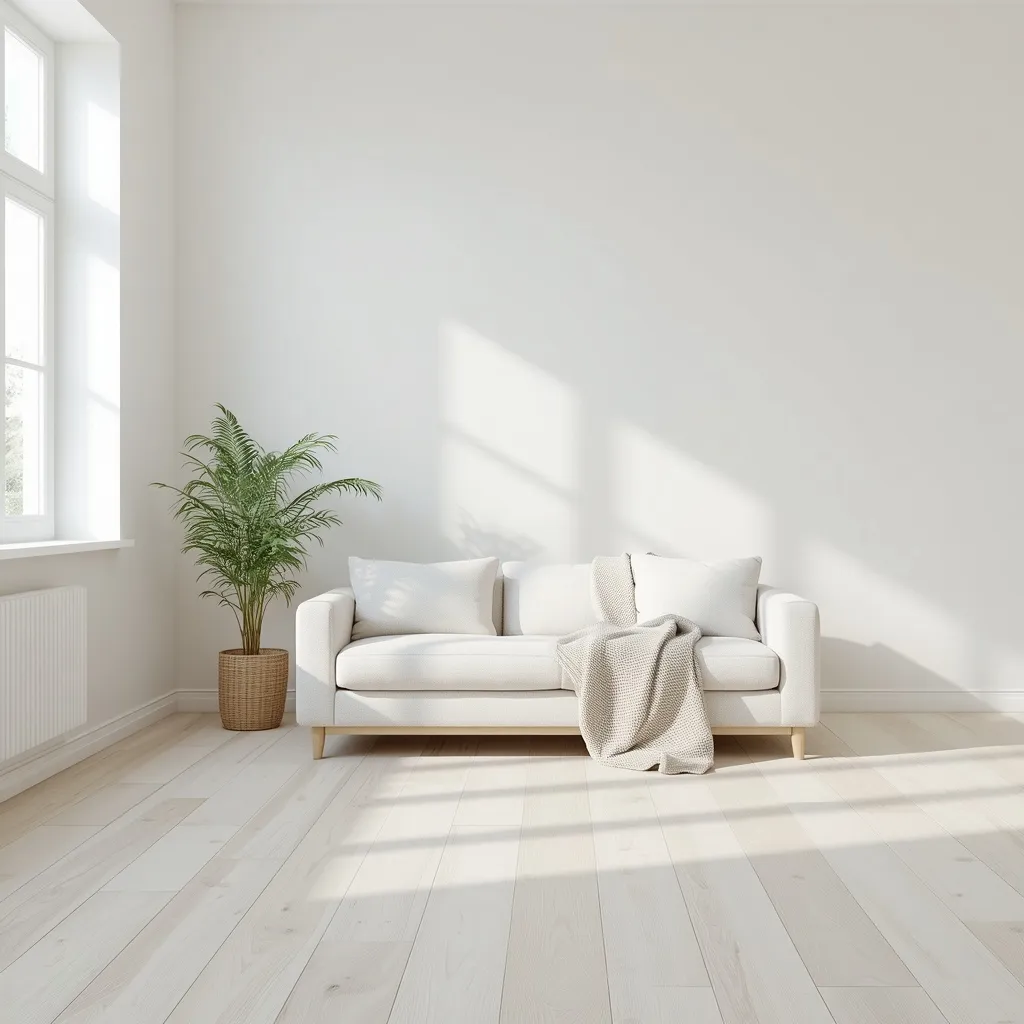
A Scandi-coastal living room is bright, spare, and functional: pale wood floors, a simple light sofa, one soft wool throw, minimal decor, and lots of empty space. Clean and serene, it’s coastal calm with Nordic discipline. Bright, uncluttered, and restful.
Combine pale wood (ash, birch, or light oak), white walls, a simple low-arm sofa, and just a few well-chosen pieces, one throw, one plant, one artwork, keeping surfaces genuinely clear. Negative space is the design here, so resist filling it. A single sheepskin or chunky wool throw adds warmth without clutter. This suits Scandinavian and minimalist homes, small spaces, and anyone who finds heavily decorated rooms overwhelming.
- Why it works: Pale wood plus genuine empty space makes coastal feel bright and restful.
- Best for: Minimalist homes and small spaces.
- Key elements: pale wood, simple low sofa, one wool throw, minimal decor, clear surfaces.
16. Woven Texture Statement Wall
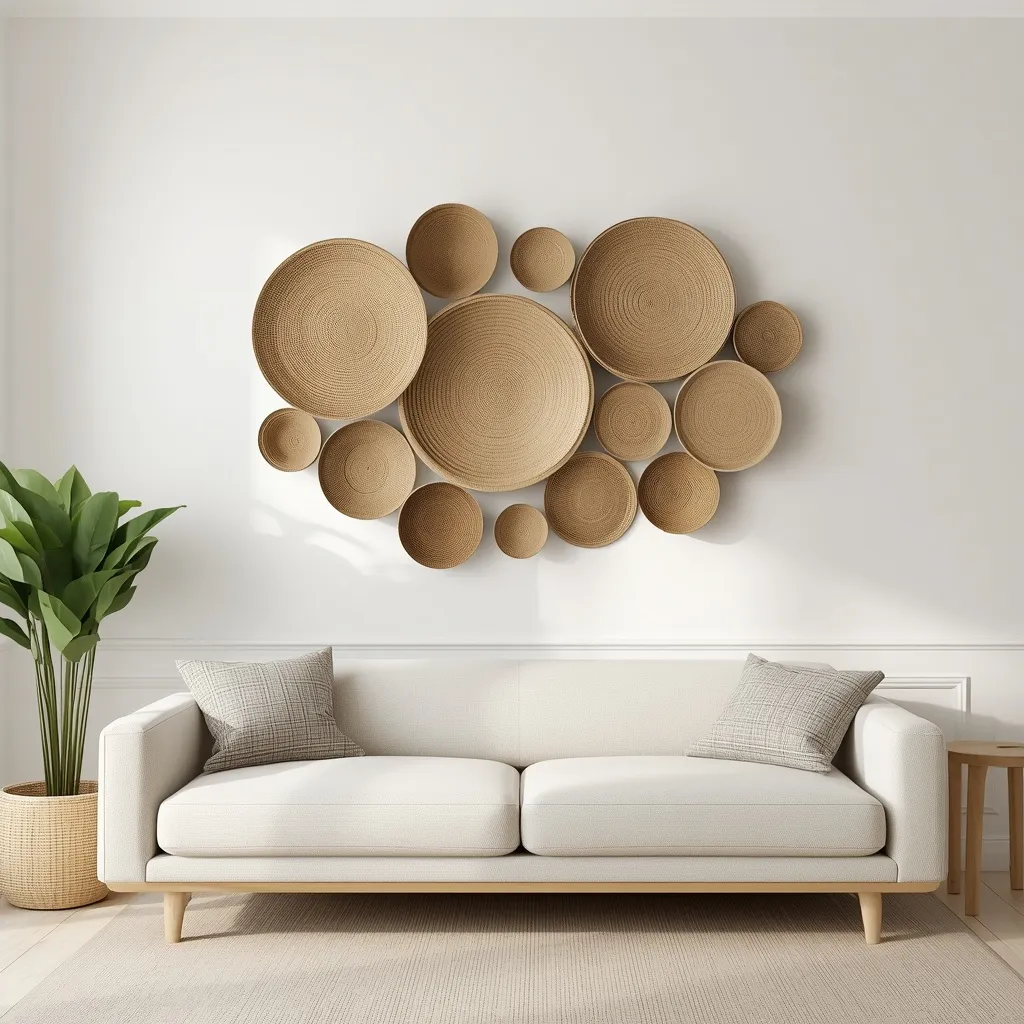
A woven feature wall gives a beachy living room instant warmth and craft: a grouping of woven seagrass or rattan wall discs, or one oversized woven hanging, above a low sofa. Tactile and striking, it’s texture used as art. Handcrafted, warm, and Pinterest-perfect.
Hang a cluster of woven seagrass discs in varied sizes (an odd number, spaced roughly evenly) or one large woven hanging above the sofa, centering the arrangement on the furniture rather than the wall. Woven pieces are lightweight, so they’re renter-friendly with adhesive hooks. Keep the surrounding wall clear so the texture reads. This suits any living room and is a genuinely affordable way to fill a large blank wall.
- Why it works: Woven wall pieces fill a blank wall with texture instead of expensive art.
- Best for: Any room; large blank walls and renters.
- Key elements: odd-numbered woven discs or one large hanging, centered on sofa, clear surround.
17. Coastal Coffee Table Styling
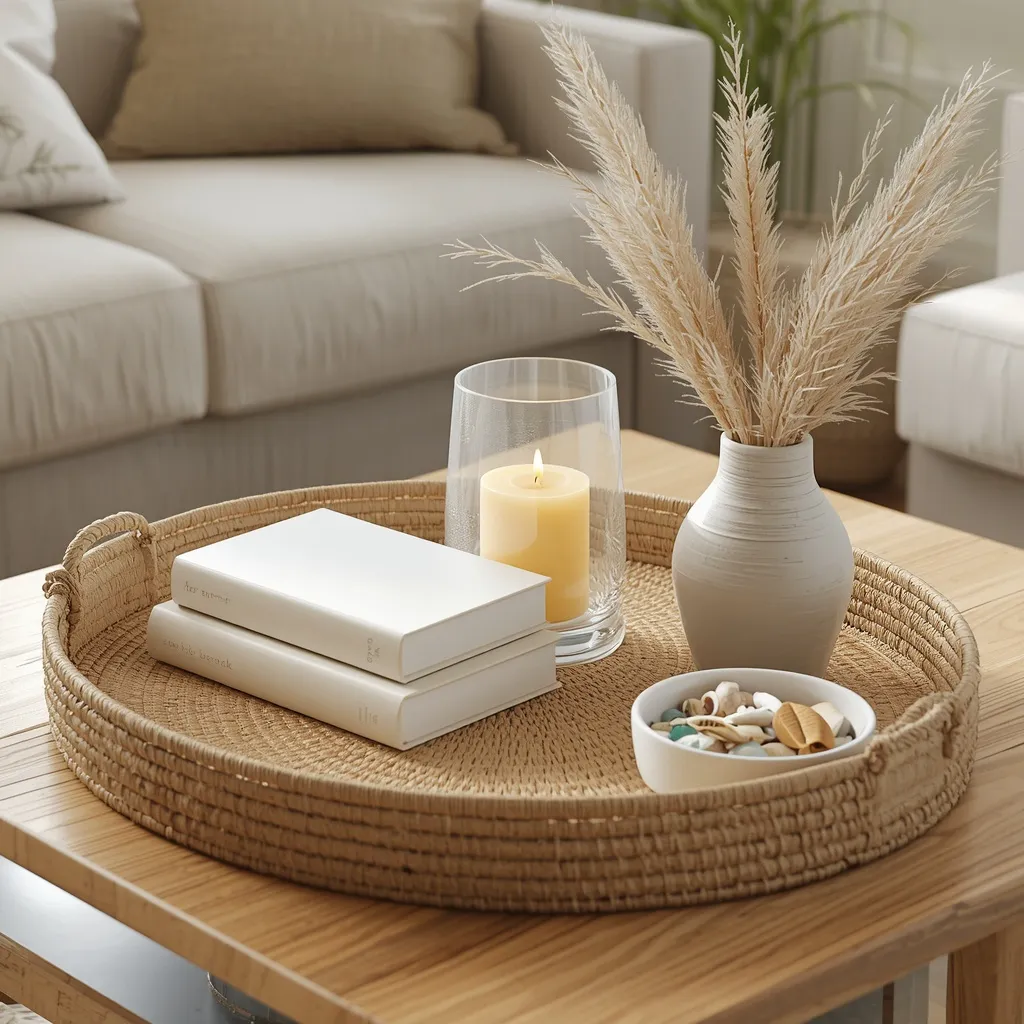
The coffee table is where a beachy room comes into focus: a rattan tray holding a glass hurricane, pale books, a small bowl of shells, and a bud vase of dune grass. Tidy and intentional, it grounds the whole scheme. The room’s beachy detail in miniature.
Style the table on a rattan or pale wood tray, combining a glass hurricane with a white candle, two or three pale-spined books, a small dish of sea glass or shells, and a single stem of dune grass. Keep the display under about 25 cm (10 in) tall so sightlines stay open, and leave two-thirds of the surface clear for drinks. Rinse and dry any beach finds before bringing them in. This suits every beachy living room and works with any coffee table you already own.
- Why it works: A tray-based low vignette focuses the scheme without blocking sightlines.
- Best for: Every beachy living room; any existing table.
- Key elements: rattan tray, glass hurricane, pale books, shell dish, dune grass stem.
18. Bright White Coastal Base
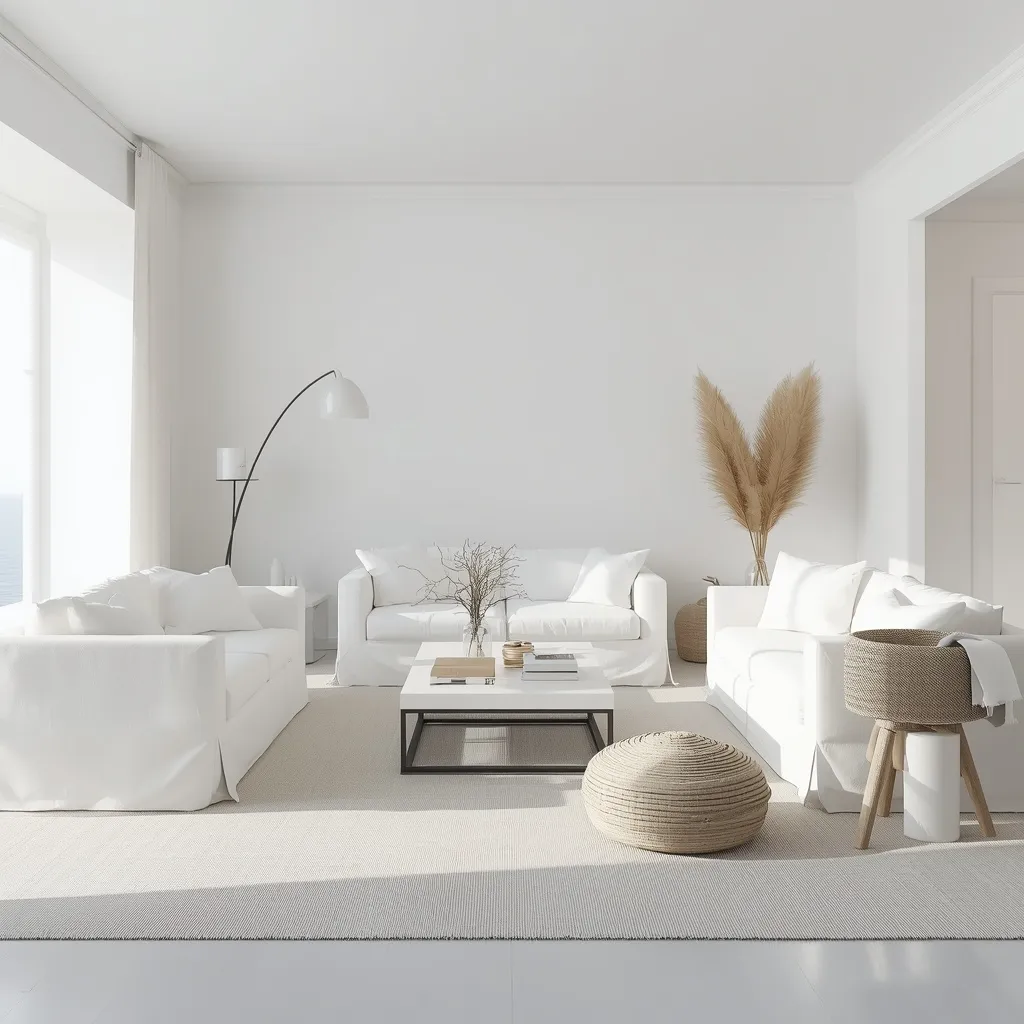
An all-white beachy living room is pure light: white walls, white slipcovered seating, white-painted floors or a pale rug, with texture rather than color providing all the interest. Crisp and expansive, white is the ultimate coastal base. Bright, clean, and endlessly calm.
Go nearly monochrome in whites and creams, layering different textures, nubby linen, smooth cotton, woven jute, matte ceramic, so the room has depth without color. Choose washable slipcovers, which make an all-white scheme genuinely practical with kids or pets. The trap is flatness: without varied texture, all-white reads sterile rather than serene. This suits bright rooms, small spaces, and anyone wanting maximum light and a blank canvas for seasonal accents.
- Why it works: Layered white textures give maximum light and depth without color.
- Best for: Bright rooms, small spaces, seasonal-accent lovers.
- Key elements: white walls and slipcovers, pale floor or rug, varied textures, washable fabrics.
19. Ocean Art Gallery Wall
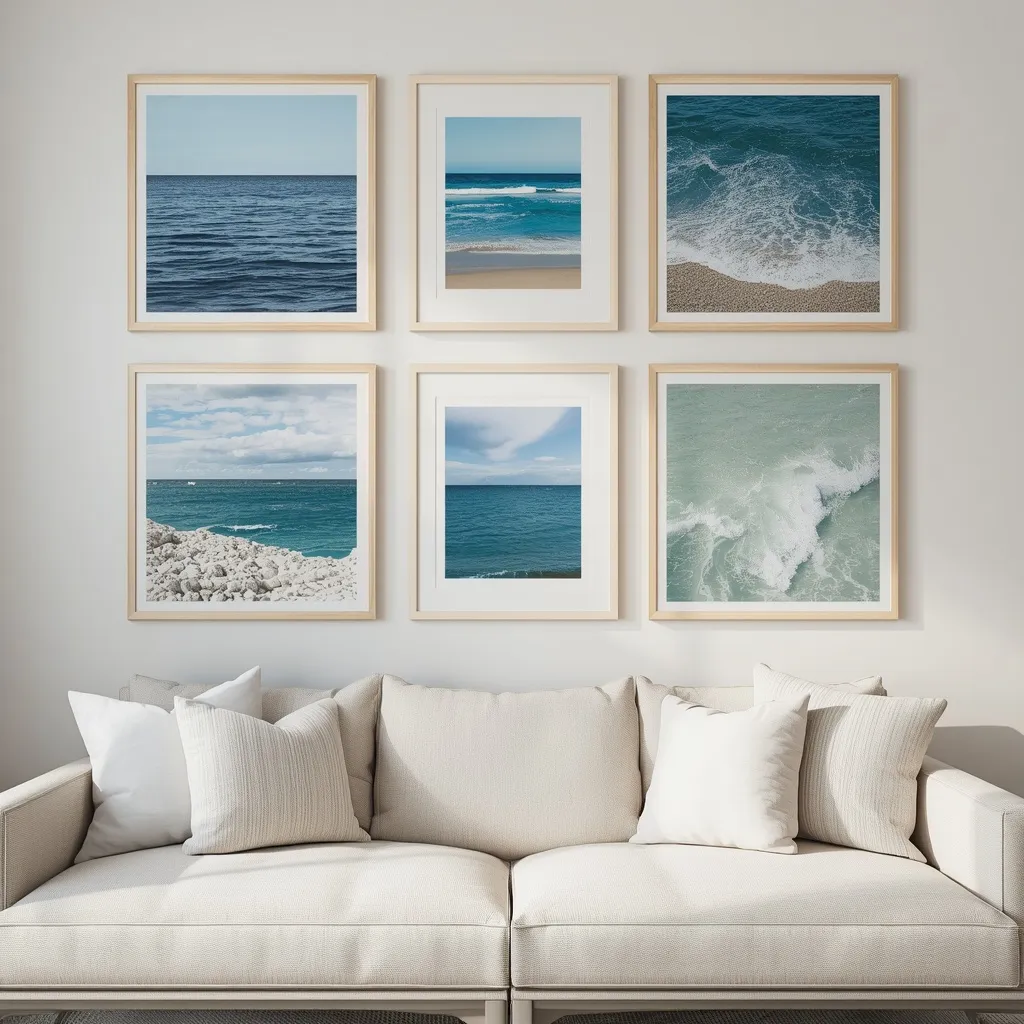
A wall of ocean-inspired art anchors the room in coastal feeling: framed seascapes, abstract water studies, and beach photography in mixed pale frames, arranged as one cohesive grouping. Personal and atmospheric, art sets the scene instantly. Evocative, custom, and affordable.
Group six to nine pieces, seascapes, abstract blues, and beach photography, in a mix of light wood and white frames, laying the arrangement out on the floor first and keeping roughly 5–8 cm (2–3 in) between frames. Unifying the frames while varying the images is what keeps it cohesive. Your own holiday photos printed and framed work beautifully and cost very little. Use proper wall fixings so heavier frames stay secure. This suits any living room and personalizes a scheme cheaply.
- Why it works: Unified frames with varied ocean images create instant coastal atmosphere.
- Best for: Any room; personalizing on a budget.
- Key elements: six to nine framed ocean images, light wood and white frames, even spacing.
20. Indoor-Outdoor Flow Room
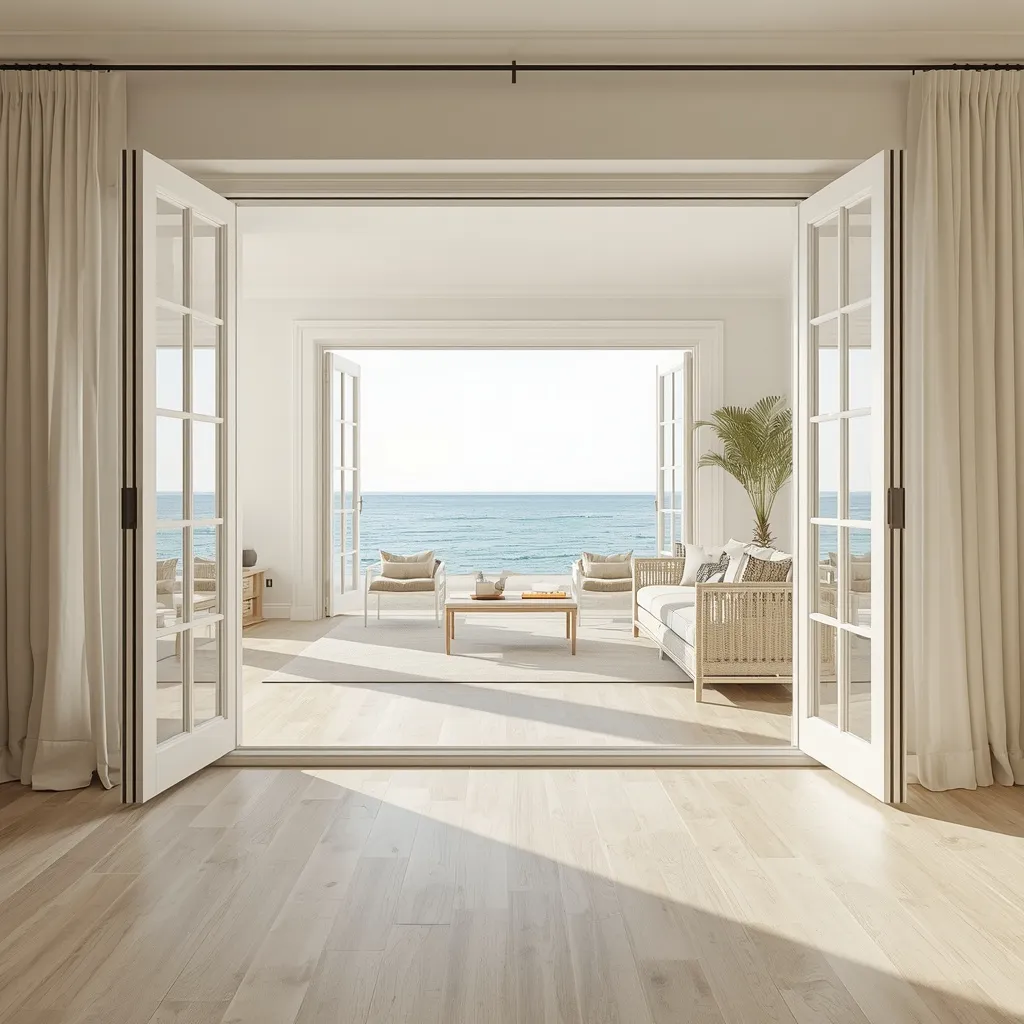
A beachy living room that opens to the outside blurs the boundary: doors thrown open, matching light flooring inside and out, breezy curtains, and durable outdoor-friendly fabrics on the seating. Open and effortless, summer simply flows through. Fresh air as decor.
Emphasize the connection by keeping flooring tones consistent inside and out, using performance or outdoor-rated fabrics on seating so the room handles damp air and sun, and hanging light curtains that move with the breeze. Position seating to face the opening rather than only the TV. Performance fabrics resist fading and moisture, which matters in bright, humid summer rooms. This suits homes with patio doors, balconies, or a garden connection.
- Why it works: Consistent flooring and outdoor-rated fabrics make inside and out feel continuous.
- Best for: Homes with patio doors, balconies, or garden access.
- Key elements: open doors, matched flooring tones, performance fabrics, breezy curtains, outward-facing seating.
21. Coastal Plant-Filled Room
A plant-filled beachy living room feels tropical and alive: a tall palm in a woven basket, trailing pothos on a shelf, and a cluster of smaller greens against pale walls. Fresh and vital, plants make coastal rooms breathe. Green, living, and effortlessly summery.
Choose plants with coastal or tropical character, a kentia or parlor palm as a floor statement, pothos or philodendron trailing from shelves, and a snake plant for a low-light corner, and pot them in woven baskets or pale ceramic to fit the palette. Group plants in odd numbers at varied heights. Water most when the top 2–3 cm (1 in) of soil is dry. Important for pet owners: several popular houseplants are toxic to cats and dogs if chewed, so check the ASPCA lists before choosing. This suits any beachy room and rentals especially.
- Why it works: Palms and trailing greens make a coastal room feel alive and tropical.
- Best for: Any beachy room; renters and plant lovers.
- Key elements: tall palm in basket, trailing pothos, low-light snake plant, odd-number grouping.

22. Cozy Evening Coastal Living Room
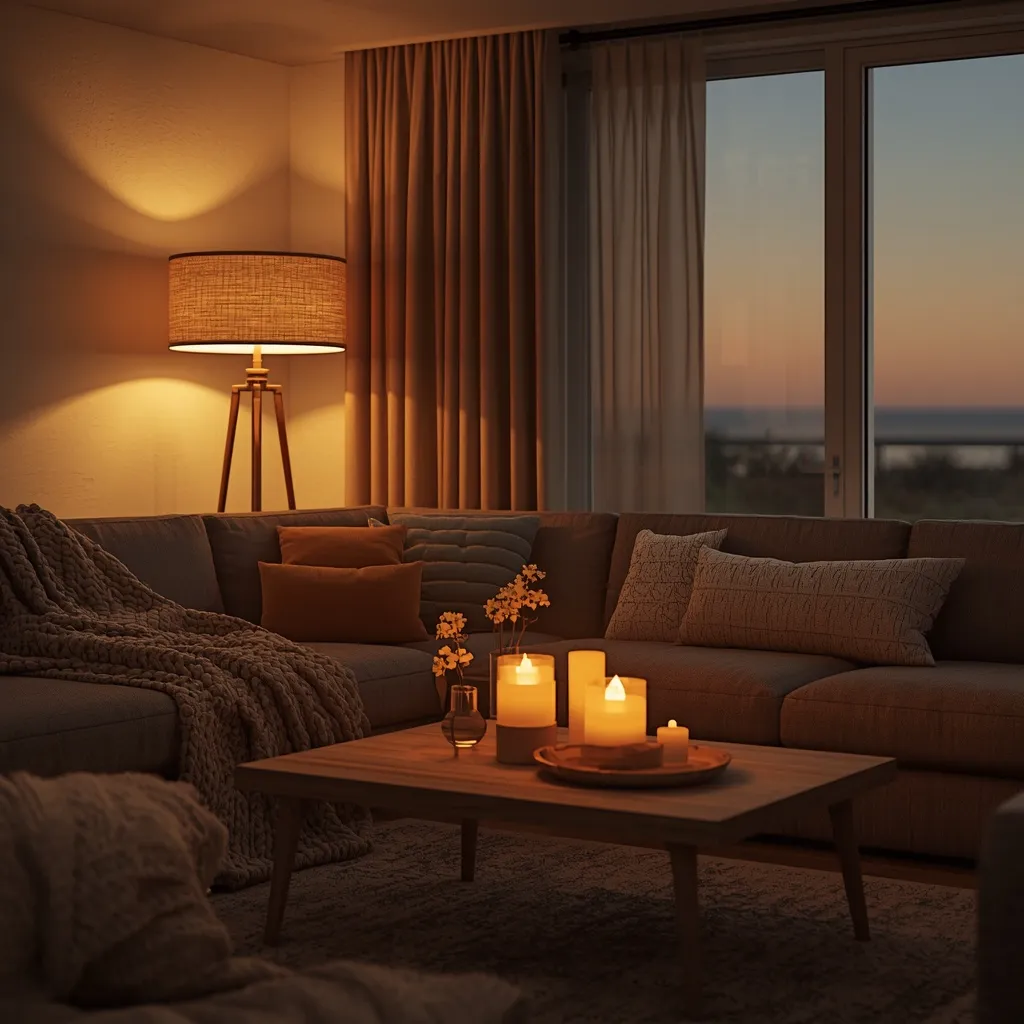
A beachy living room styled for evening turns soft and golden: layered lamplight instead of an overhead, chunky knit throws, candles glowing on the coffee table, and curtains drawn against the dusk. Warm and intimate, coastal style works after dark too. Golden, soft, and restful.
Layer at least three light sources at different heights, a floor lamp, a table lamp, and candles, instead of relying on a single overhead light, and use warm bulbs (around 2700K) so the light reads golden rather than clinical. Add chunky knit or linen throws for texture. Never leave real candles lit unattended, and keep flames clear of throws and curtains; flameless candles are the safe choice around kids and pets. This suits every beachy living room and matters most in cooler climates and evenings.
- Why it works: Layered warm lamplight and candles make a bright coastal room cozy after dark.
- Best for: Every beachy room; cooler climates and evenings.
- Key elements: three light sources at varied heights, 2700K warm bulbs, knit throws, safe candles.
How Do You Make a Living Room Look Beachy?
A living room looks beachy when it’s built on light, texture, and a restrained palette rather than on nautical decorations. Start with a light neutral base of white, cream, or sand, layer in natural textures like jute, rattan, linen, and weathered wood, then add color as a small accent in blue, sage, or coral. Maximize natural light with sheer curtains and a mirror, and skip the literal anchors and ship wheels.
Creating rooms that feel calm and genuinely livable is at the heart of the Sunday Abode approach. If you love the lightness but want a less coastal-specific scheme, our guide to an airy summer living room is a natural next read. For more ways to shape the space, browse the rest of our living room ideas.
The Beachy Palette and Materials at a Glance
Every scheme in this article uses the same underlying formula in different proportions. Use this quick guide to build a beachy living room in any style, whatever you’re starting from.
| Layer | What to use | Roughly how much |
| Base neutral | White, cream, sand, oatmeal | About 60% (walls, big furniture) |
| Natural texture | Jute, rattan, linen, weathered wood | About 30% (rug, textiles, furniture) |
| Accent color | Soft blue, sage, sea glass, coral | About 10% (cushions, art, ceramics) |
| Light | Sheer curtains, mirrors, warm lamps | As much as possible |
| Avoid | Anchors, ropes, ship wheels, heavy dark wood | Skip entirely |
Practical & safety notes: anchor any tall or heavy furniture (bookcases, tall shelving) to the wall, especially in homes with children, tip-overs are a genuine hazard. Never leave real candles lit unattended and keep flames clear of throws, curtains, and greenery; flameless candles are the safe choice around kids and pets. Several popular houseplants, including some palms and trailing varieties, are toxic to cats and dogs if chewed, so check the ASPCA toxicity lists before choosing. Use a non-slip pad under layered rugs to prevent trips, and proper fixings for framed art.
Frequently Asked Questions
How do you make a living room look beachy without it feeling like a theme?
Focus on texture and light rather than motif. Build the room on a light neutral base, layer in natural materials like jute, rattan, linen, and weathered wood, and keep color to a small accent in blue, sage, or sea glass. Skip literal props such as anchors, ship wheels, and rope, which push a room from coastal into costume; a woven rug and linen curtains read far more convincingly.
What colors work best for a beachy summer living room?
A light neutral base of white, cream, sand, or oatmeal works best, with natural material tones providing the middle layer and a restrained accent color on top. Soft blue, sage green, sea glass, and warm coral all read coastal. A useful guide is roughly 60% neutral, 30% natural texture, and 10% accent color, which keeps the scheme fresh rather than overwhelming.
Can you have a beachy living room if you don’t live near the coast?
Absolutely, beachy style is a feeling of light and airiness, not a location. The palette, natural textures, and emphasis on daylight work just as well inland, and a warmer Mediterranean-leaning version suits homes with strong warm sunlight. Focus on maximizing whatever natural light you have with sheer curtains and a well-placed mirror.
How do you get a beachy look in a rental?
Use textiles and freestanding pieces that leave with you: a white or oatmeal slipcover over an existing sofa, a jute rug over unloved flooring, linen cushions, light-filtering curtains, leaning artwork, and woven baskets. Lightweight woven wall pieces hang on adhesive hooks with no drilling. None of it needs paint or permission, and it’s all reversible.
Does a gray couch work in a beachy living room?
Yes, with the right layers. Warm up a gray sofa with sand, cream, and oatmeal cushions and a linen or chunky knit throw, then add a jute rug and pale wood so the gray reads as driftwood rather than cool and corporate. A few soft blue or sage accents connect it to the palette. Avoid pairing it with more cool gray, which flattens the room.
What can I do with my fireplace in a beachy living room in summer?
An unused summer fireplace makes a great coastal focal point. Fill the firebox with a cluster of pillar candles, a basket of driftwood or birch, or a large trailing plant, and style the mantel with a leaning seascape and a few pale ceramics grouped in odd numbers. If you use real candles in the recess, never leave them unattended; flameless pillars are the safest option there.
How do I choose the right rug for a beachy living room?
Natural fibers like jute and sisal are the classic coastal choice, and layering a softer flatweave or washable cotton rug on top solves their scratchiness. Size matters most: choose a rug large enough that at least the front legs of all seating sit on it, since an undersized rug makes a room look smaller and disconnected. Use a non-slip pad between layers.
Conclusion
The best beachy summer living room ideas share one thing: they build the room from light, natural texture, and a calm palette rather than from nautical decorations. Whether you go classic blue-and-white, layer up a boho scheme, work around the gray couch you already own, or refresh a rental with nothing but slipcovers and a jute rug, the formula holds, light base, natural texture, restrained accent color, and as much daylight as you can gather. Pick the direction that suits your space and start with one layer. For more seasonal inspiration, explore the living room ideas collection on Sunday Abode and save the beachy scheme you want to live in.