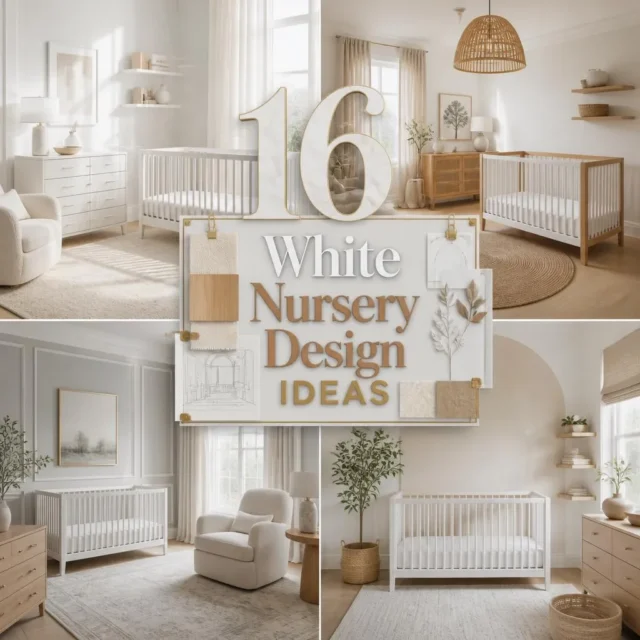

There’s a reason so many parents land on white. White nursery design ideas give you a calm, light-filled room that costs nothing to change your mind about, the crib stays, the walls stay, and the whole personality of the room can shift with a rug and a few prints. It’s the most forgiving canvas there is for a room whose occupant will be a completely different person in eighteen months. At Sunday Abode, we care as much about whether a room is safe as whether it photographs well. These 16 nurseries deliver both, including the safe-sleep rules that most styled nursery photos quietly break.
Key Takeaways
- A safe crib is a bare crib: a firm, flat mattress and a fitted sheet, with no pillows, quilts, bumpers, or stuffed toys. Most styled nursery photos get this wrong.
- Anchor every piece of furniture, dressers, changing tables, and bookshelves, to the wall with anti-tip straps.
- Keep the crib away from windows and blind cords. Choose cordless blinds, since pull cords are a strangulation hazard.
- Hang nothing heavy directly above the crib, and use low-VOC paint applied several weeks before the baby arrives.
- White shows everything, so specify scrubbable eggshell paint, a washable rug, and removable, machine-washable covers.
Before the Styling: Nursery Safety
A safe crib is an empty one. The American Academy of Pediatrics recommends a firm, flat mattress with a fitted sheet and nothing else, no pillows, no quilts, no bumpers, and no stuffed animals, because soft bedding in a crib is a suffocation risk.
This matters here more than in any other room, because the nursery photographs that fill Pinterest are almost universally unsafe: a crib heaped with knitted blankets, a plush bunny propped in the corner, a quilted bumper running the perimeter. Crib bumpers are no longer sold in the United States, having been banned under the Safe Sleep for Babies Act. Style the room, not the crib. Everything soft and lovely can live on the chair, the shelf, or the floor, just not where the baby sleeps.
Anchoring is the second non-negotiable. Furniture tip-overs injure and kill children every year, which is why anti-tip straps now come with most furniture and why regulations such as the STURDY Act exist. Strap the dresser, the changing table, and every bookshelf to the wall studs, without exception.
The Nursery Safety Checklist
Work through this before you style a single shelf. It’s the part that actually matters.
| Item | The rule | Why |
| The crib | Firm flat mattress, fitted sheet, nothing else | Pillows, quilts, bumpers, and toys are suffocation risks |
| All furniture | Anchor to wall studs with anti-tip straps | Tip-overs are a leading cause of child injury at home |
| Blinds | Cordless only | Pull cords are a strangulation hazard |
| Crib placement | Away from windows, cords, and radiators | Falls, cords, and overheating |
| Above the crib | Nothing heavy, no shelves or framed art | Anything that can fall, will |
| Paint | Low-VOC or zero-VOC, applied weeks ahead | Let fumes fully clear before the baby arrives |
| Rug | Non-slip backing or a rug pad | Prevents slips when carrying a baby |
Guidance evolves and varies by country. Check your national health service or pediatric body, in the US, the American Academy of Pediatrics publishes current safe-sleep recommendations.
1. All-White Minimalist Nursery
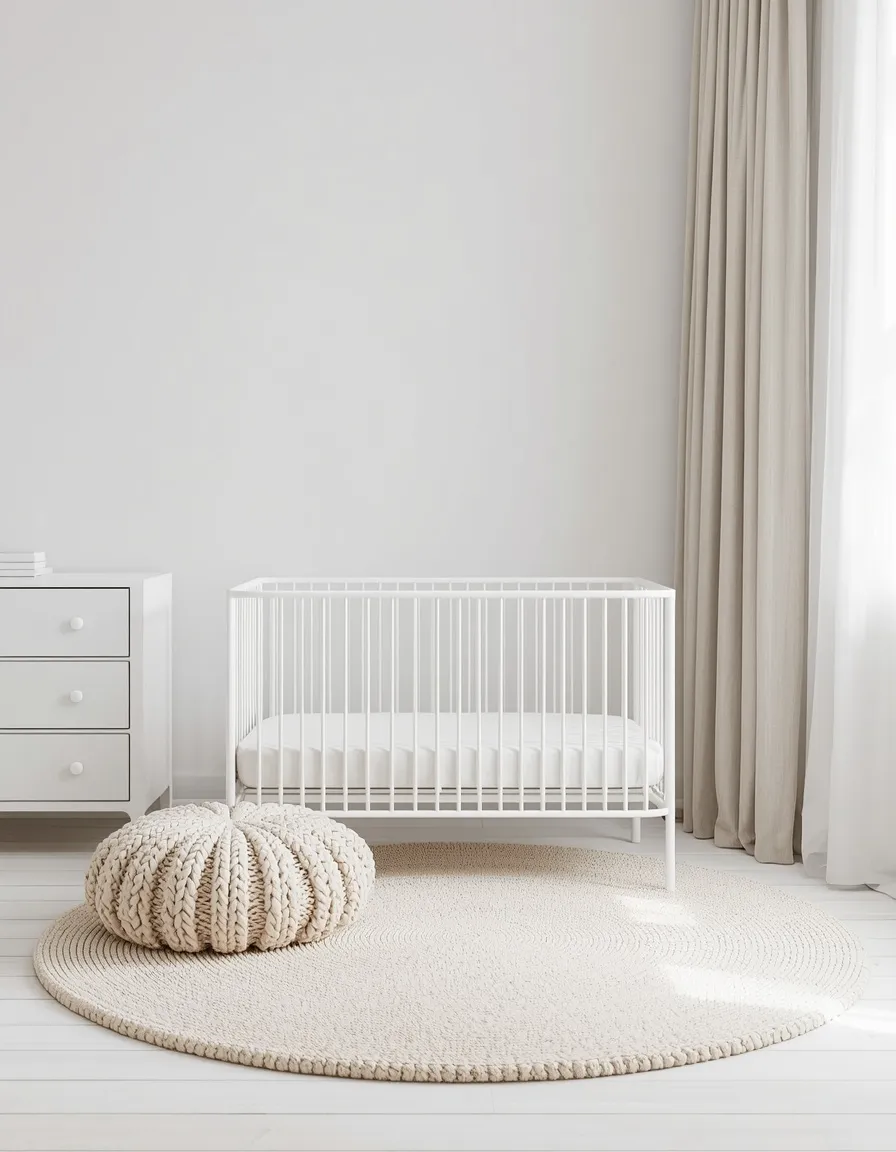
A pure white nursery is calm in a way few rooms manage. White walls, a white crib, a white dresser, and a single soft rug create a space that feels serene, uncluttered, and endlessly adaptable.
With no color doing the work, texture carries the room: a chunky knit throw over the chair, a bouclé pouf, a linen curtain, a wool rug. Choose a scrubbable eggshell or satin paint rather than flat matte, because a nursery wall meets sticky hands and splashes within a year and flat paint cannot be washed. Keep the crib bare, and let all the softness live on the chair and the floor instead. This suits minimalists and anyone who wants the room to grow with the child.
- Best for: minimalists; a room that adapts as the child grows.
- Watch out: use scrubbable eggshell, not flat matte, white walls meet sticky hands.
- Key elements: white crib and dresser, layered textures, bare crib, washable rug.
2. White and Wood Scandi Nursery
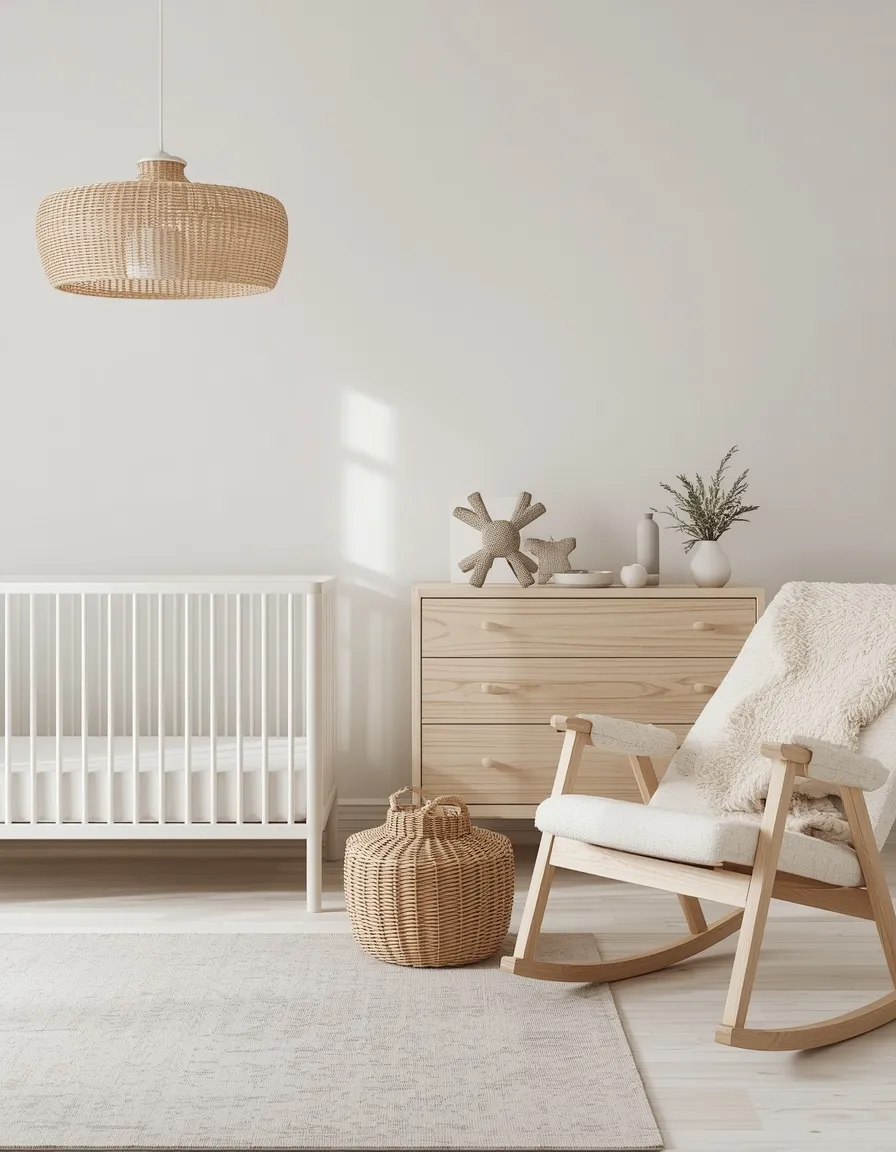
White with warm wood is the most reliably beautiful nursery there is. A white crib beside a pale oak dresser, a rattan pendant, a woven basket, and a sheepskin over a rocking chair make a room that’s bright but never cold.
Blonde woods, oak, birch, beech, are what keep a white nursery from feeling clinical, so bring wood in at three points: the furniture, a small item like a stool or shelf, and something woven. A rocking or gliding chair is the piece you’ll use most at three in the morning, so prioritize comfort over looks when choosing it. This suits almost every home and is the safest bet if you’re unsure which direction to take.
- Best for: almost any home; the safest bet if you’re undecided.
- Why it works: wood at three points stops a white room from feeling clinical.
- Key elements: white crib, pale oak dresser, rattan, sheepskin, comfortable glider.
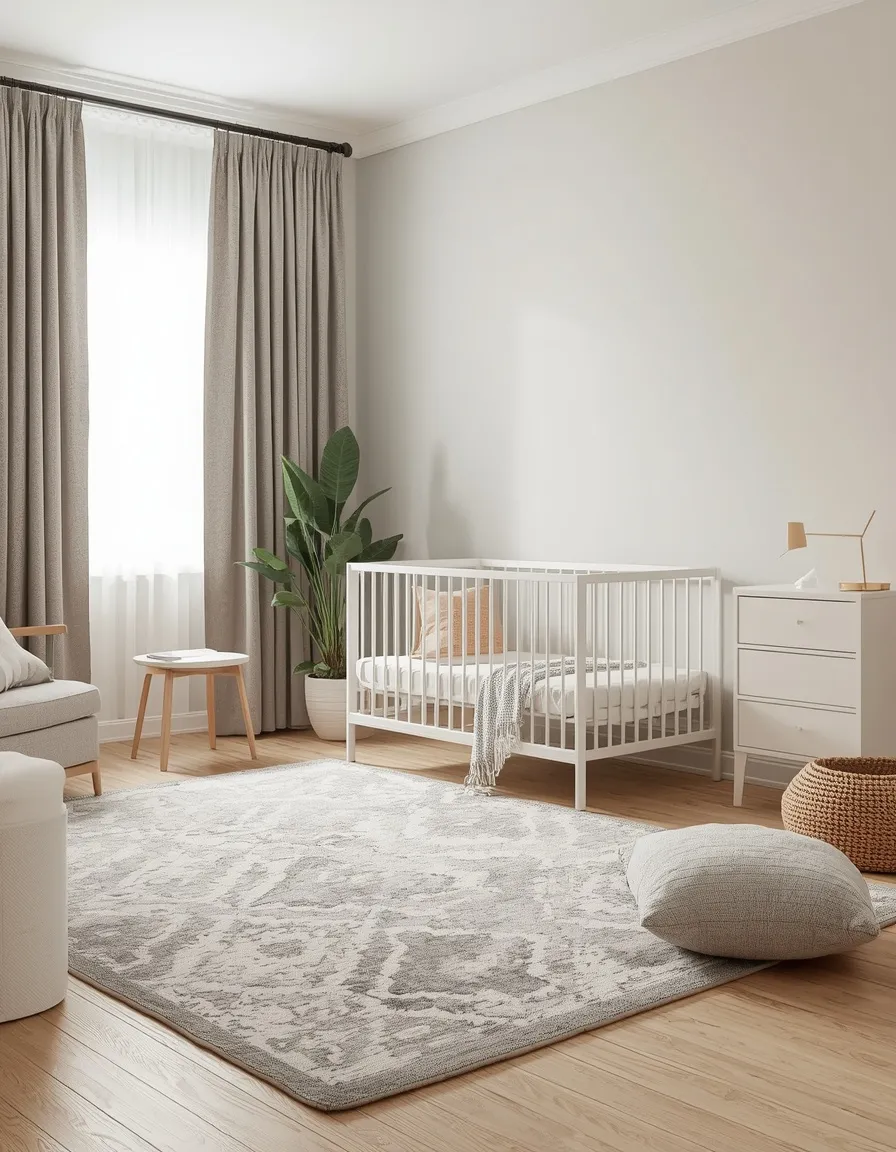
3. Grey and White Nursery
Grey and white is the calm, contemporary middle ground. Soft grey walls or textiles against white furniture create a nursery that’s gentle, gender-neutral, and quietly modern.
Keep the greys warm rather than cool, since a cold blue-grey in a north-facing room reads bleak rather than soothing, this is the single most common mistake with grey nurseries. Layer several tones of grey through the rug, the curtains, and the cushions rather than painting everything one flat shade. Add wood or brass to warm it. This suits parents who want a modern, unfussy room, and it’s an easy scheme to buy for since grey nursery goods are everywhere.
- Best for: parents wanting a modern, calm, gender-neutral room.
- Watch out: choose warm greys; a cool grey in a north-facing room reads bleak.
- Key elements: warm grey layers, white furniture, wood or brass warmth.
4. Black and White Modern Nursery
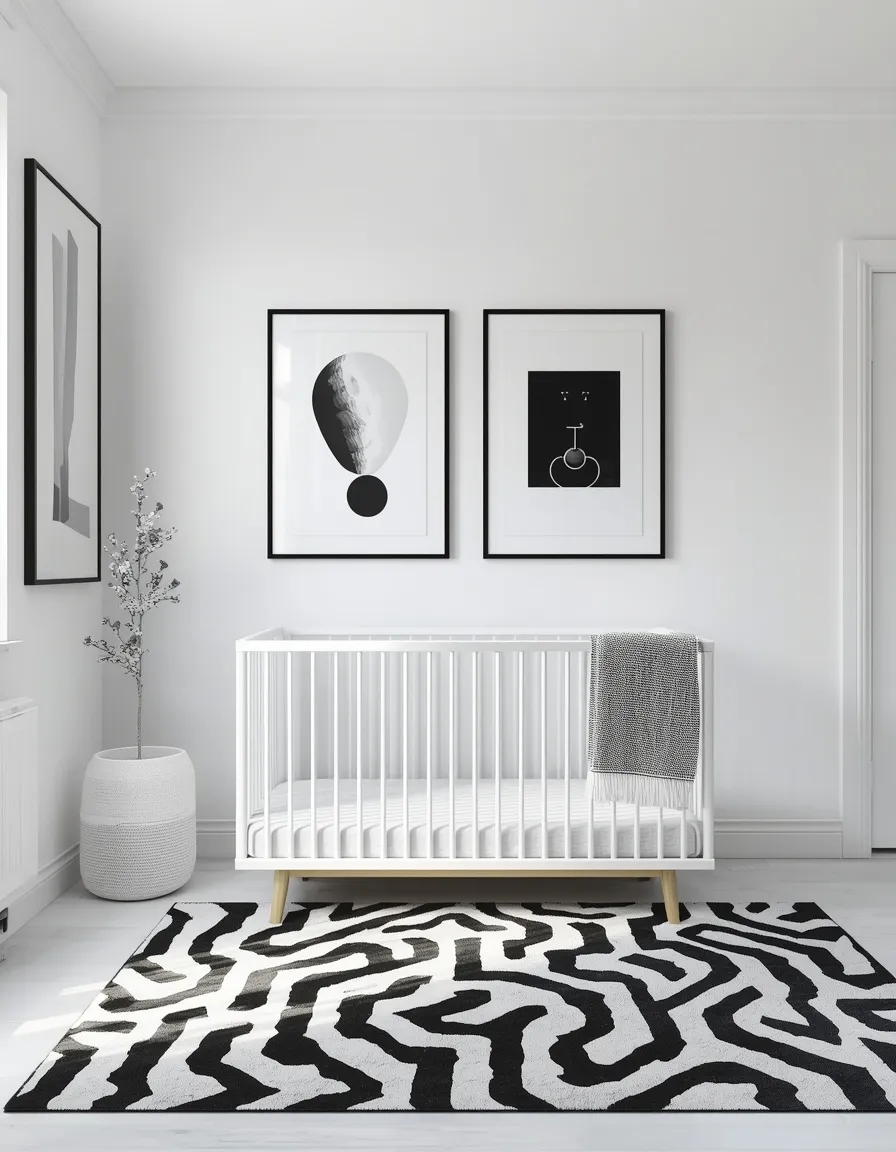
Black and white is graphic, striking, and genuinely good for a newborn. High-contrast prints, a monochrome rug, black-framed art against white walls, and a white crib create a room that’s as stimulating as it is stylish.
There’s a real reason beyond aesthetics: newborn vision is limited, and high-contrast black-and-white patterns are among the first things babies can focus on clearly, which is why black-and-white baby books and cards exist. Keep the black to art, frames, and a rug rather than large furniture, so the room stays light. Ensure any framed art is hung well away from the crib. This suits modern homes and design-led parents.
- Best for: modern homes; high contrast is genuinely engaging for newborns.
- Why it works: newborns focus on high-contrast patterns before they see soft colors.
- Watch out: keep framed art well away from the crib, nothing hangs above it.
5. Beige and Cream Neutral Nursery
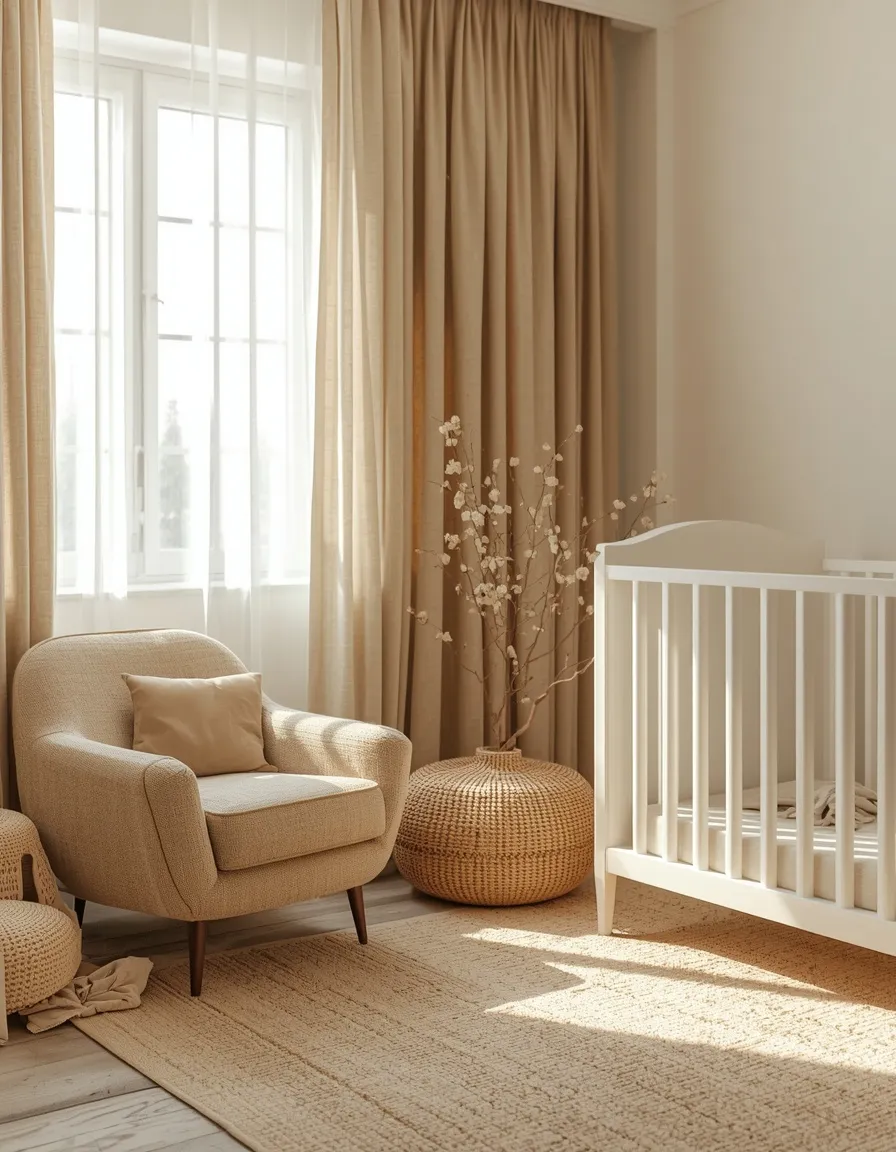
A beige and cream nursery is white’s warmer, softer relative. Layers of oat, sand, and bone in the rug, curtains, and knits create a room that glows gently rather than gleaming.
Warm neutrals are far kinder in a north-facing or low-light nursery, where a stark white can look grey and cold, so if your room is dim, this scheme will serve you better than a bright white. Keep every tone in the warm family, since one cool blue-white in the mix will look dirty against the creams. Layer texture through bouclé, linen, and wool. This suits low-light rooms and anyone who finds pure white too clinical for a baby.
- Best for: north-facing and low-light nurseries; a softer take on white.
- Watch out: keep every tone warm; one cool white will look dirty against creams.
- Key elements: oat, sand, and bone layers, bouclé and linen, warm glow.
6. Soft Blush White Nursery
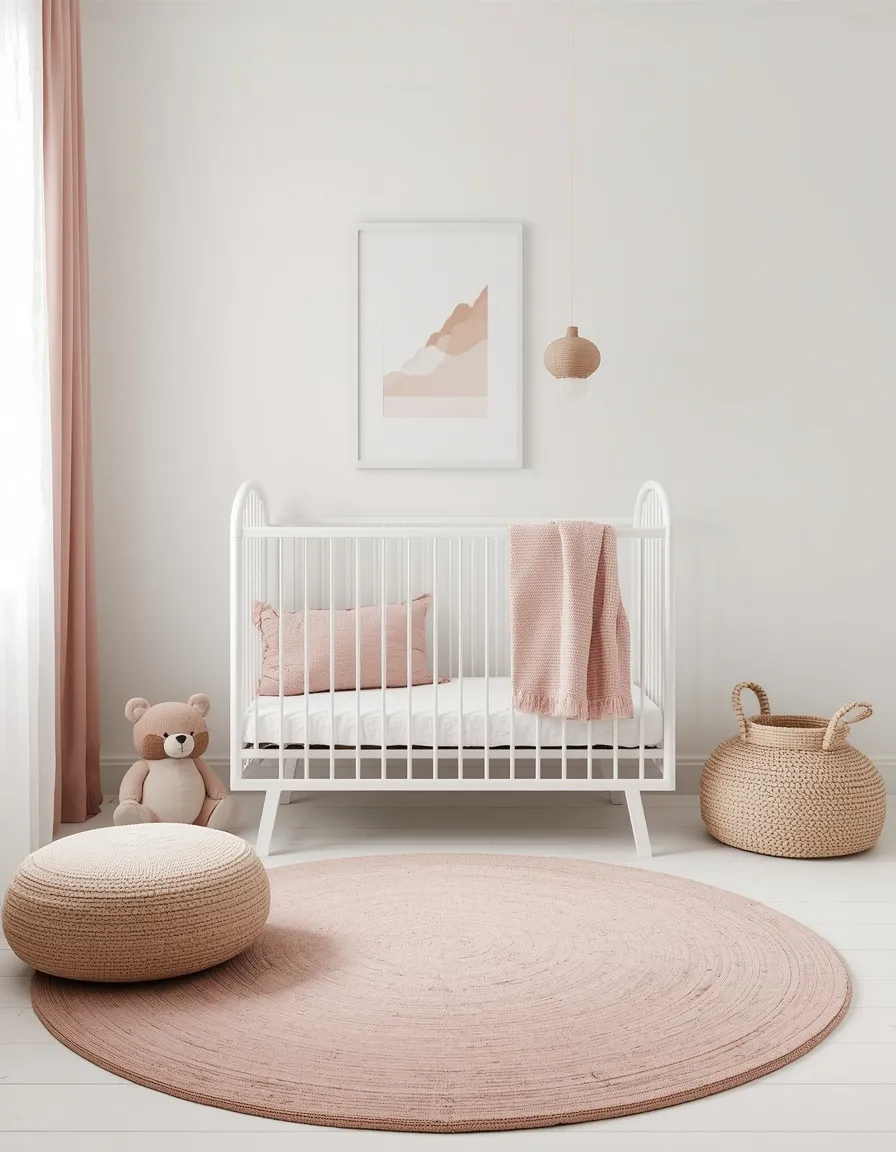
White with dusty blush is a gentle, grown-up take on a girl’s nursery. Pale pink accents in a rug, a cushion, and a print sit against white walls and furniture without a hint of candy-pink cliché.
Keep the pink dusty and muted rather than bright, which is what separates a nursery that still looks lovely at age four from one that will need redoing. Use it as roughly ten percent of the room, a rug, a throw, one print, so it accents rather than dominates. Because the pink lives in textiles rather than paint, it’s cheap and easy to change. This suits parents who want something feminine without committing to it permanently.
- Best for: a feminine nursery you won’t need to redo in three years.
- Why it works: pink in textiles, not paint, means it costs nothing to change later.
- Key elements: dusty blush at ~10%, white base, muted rather than bright.
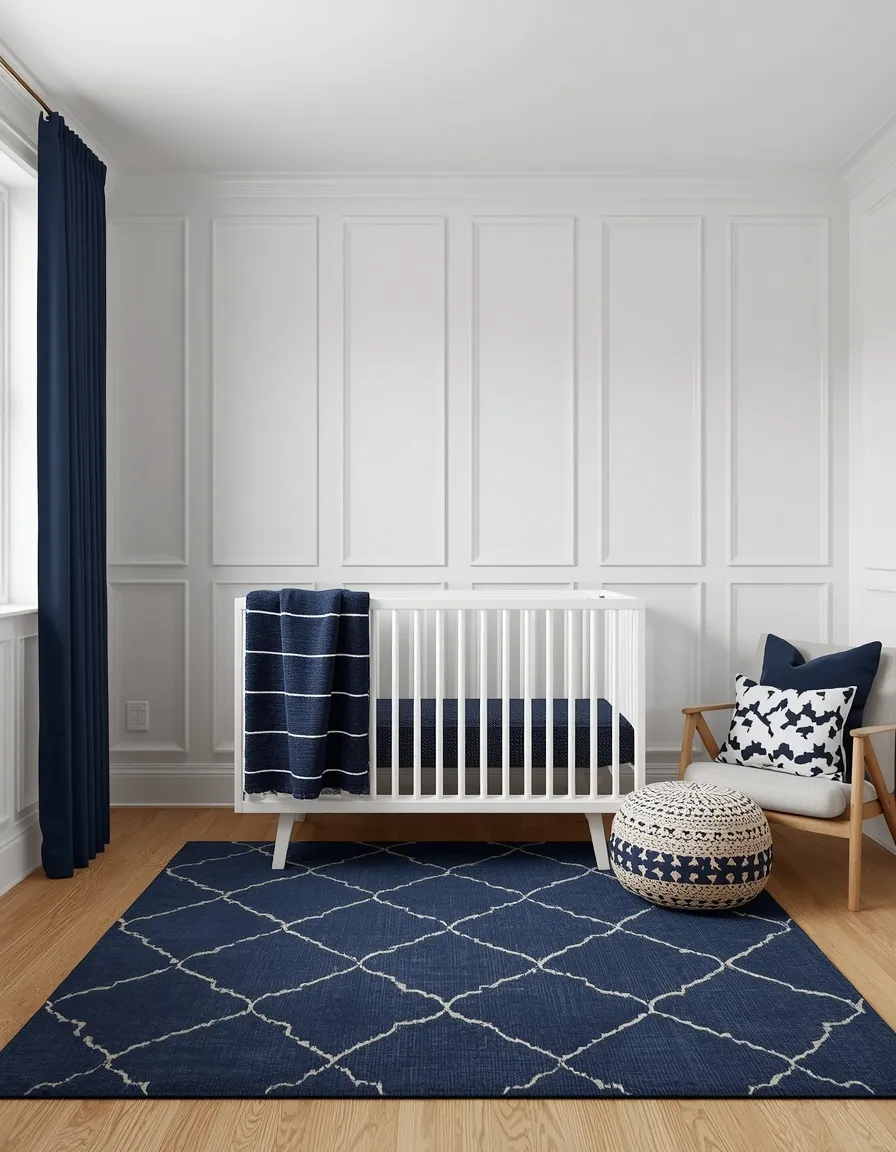
7. Navy and White Boy’s Nursery
Navy against white is crisp, classic, and holds up for years. A white crib, navy accents in the rug and cushions, and a few nautical or geometric prints create a room that reads boyish without being babyish.
Navy is a genuinely long-lived choice because it works just as well for a ten-year-old as for a newborn, which is more than can be said for pale blue teddy bear wallpaper. Keep the walls white and let navy live in the textiles, so the room stays light and the color can shift when tastes do. Add warm wood to soften the contrast. This suits parents who want the nursery to become a big-kid room without a full redecoration.
- Best for: a nursery that becomes a big-kid room without redecorating.
- Why it works: navy suits a ten-year-old as well as a newborn; pastel themes don’t.
- Key elements: white walls and crib, navy textiles, warm wood, simple prints.
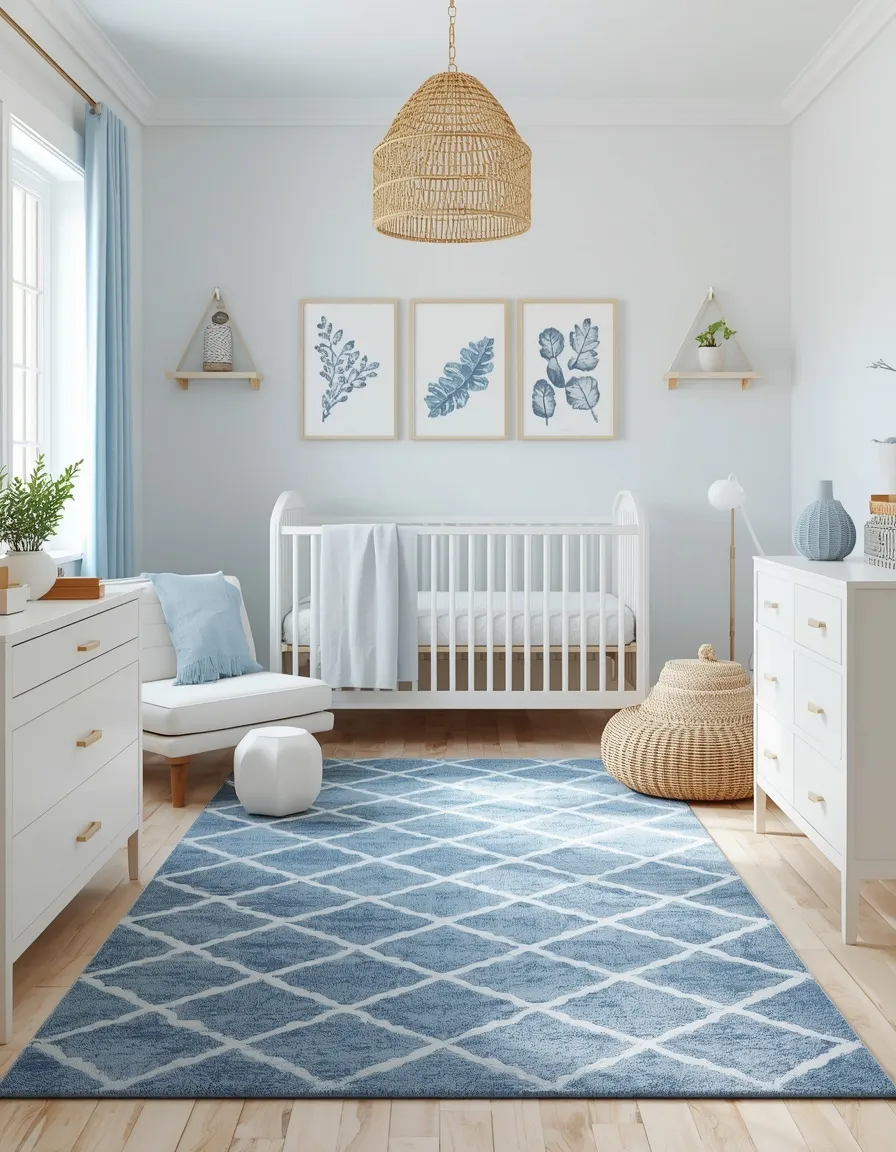
8. Blue and White Coastal Nursery
Soft blue and white feels fresh and endlessly calm. A blue-and-white striped or patterned rug, white furniture, and pale blue textiles create a nursery with a light, coastal serenity.
The rug is the piece that carries this scheme, and it’s worth choosing carefully: pick a washable, low-pile rug with a non-slip backing or a rug pad, because you’ll be walking on it half-asleep holding a baby, and it will be spilled on. Keep the blues soft and slightly grey rather than bright primary. Add rattan and white linen. This suits bright rooms and parents who want calm rather than stimulation.
- Best for: bright rooms; parents who want calm over stimulation.
- Watch out: the rug needs a non-slip backing, you’ll cross it half-asleep.
- Key elements: blue-and-white washable rug, white furniture, rattan, soft blues.
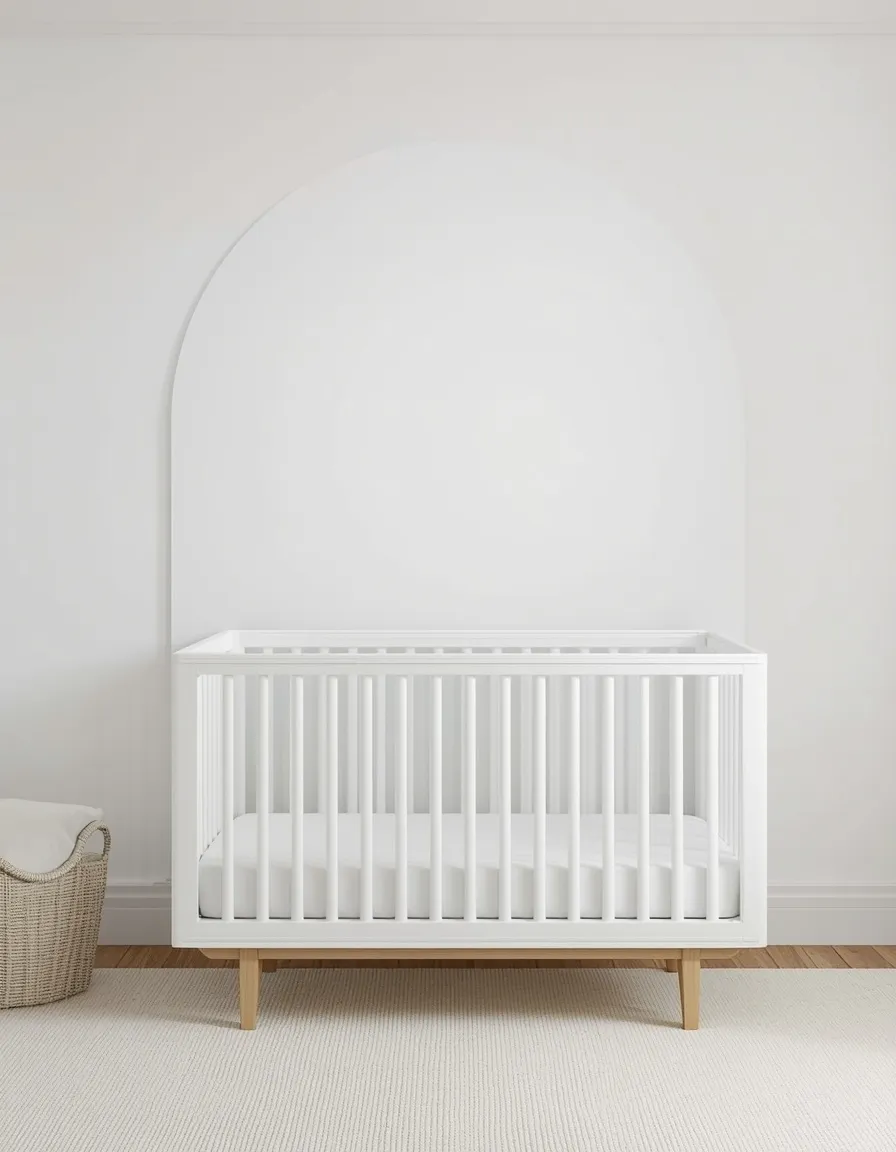
9. Arched Feature Wall Nursery
A single painted arch behind the crib gives a white nursery one perfect moment of interest. A soft arc of color or a subtle mural rises behind the white crib, framing it like a headboard.
An arch is cheap, needs only a pencil, a length of string, and a tin of paint, and it looks custom, which makes it the highest-return decorating move in a nursery. Center it on the crib and make it wider than the crib by roughly 20–30 cm (8–12 in) each side so it frames rather than crowds. Painted decoration is the safe way to decorate above a crib, since nothing can fall. This suits renters and small budgets and anyone wanting impact without buying anything.
- Best for: renters and small budgets; maximum impact for a tin of paint.
- Why it works: painted decoration above a crib is safe, nothing can fall.
- Key elements: arch centered on the crib, 20–30 cm wider each side, soft color.
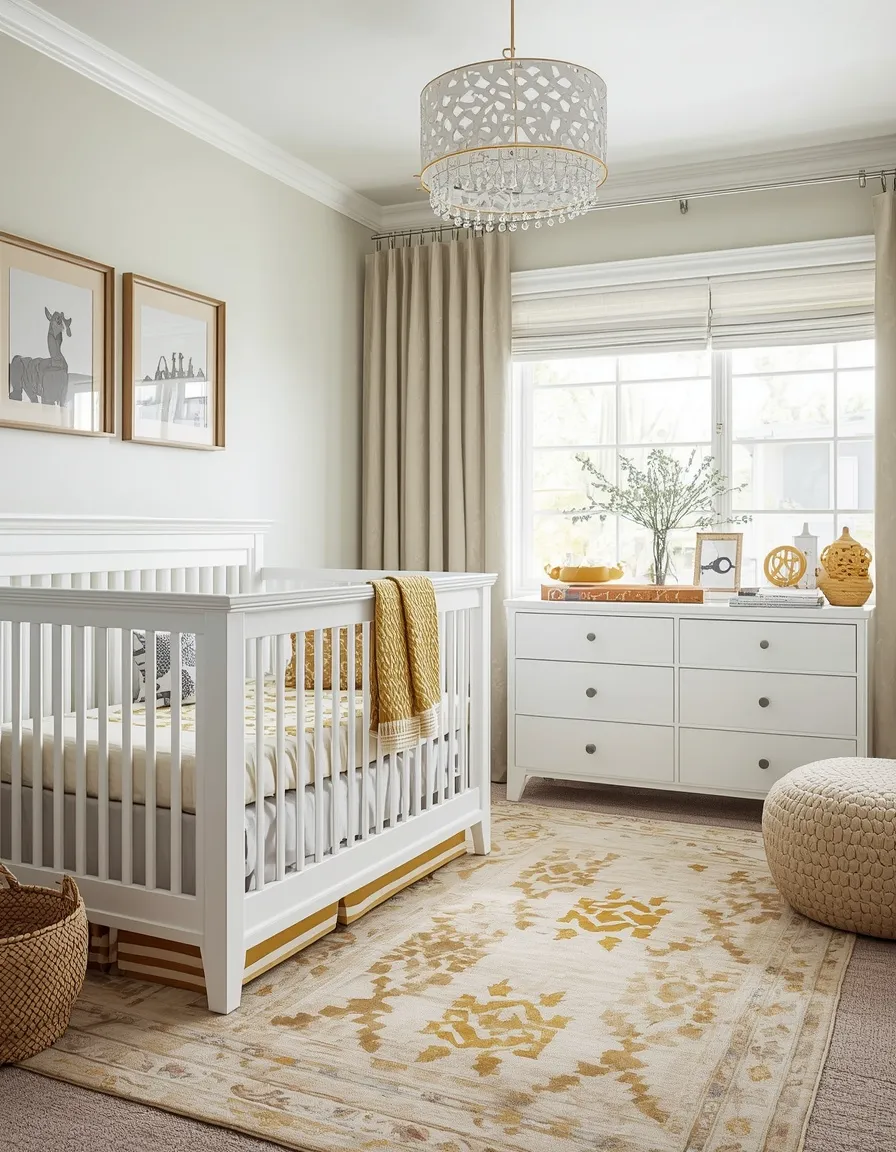
10. White Furniture with Color Pops
White furniture is the smartest long-term buy, because it lets the color live somewhere replaceable. A white crib and dresser with mustard, sage, or terracotta accents in the rug, prints, and baskets create a cheerful room you can restyle in an afternoon.
Buy the expensive things white and the cheap things colorful, that’s the whole strategy, and it means the room can go from soft sage to bold mustard for the cost of a rug and two prints. Keep the accent color to about ten percent of the room. Choose furniture that converts, such as a crib that becomes a toddler bed, so the white pieces genuinely last. This suits budget-conscious parents and anyone who changes their mind.
- Best for: budget-conscious parents; restyle the room for the cost of a rug.
- Why it works: buy the expensive things white and the cheap things colorful.
- Key elements: white convertible crib and dresser, ~10% accent color in textiles.
11. Cozy Textured White Nursery
Texture is what turns a white nursery from stark to soothing. Bouclé, chunky knit, sheepskin, linen, and a deep-pile rug layer up into a room that feels soft before you touch anything.
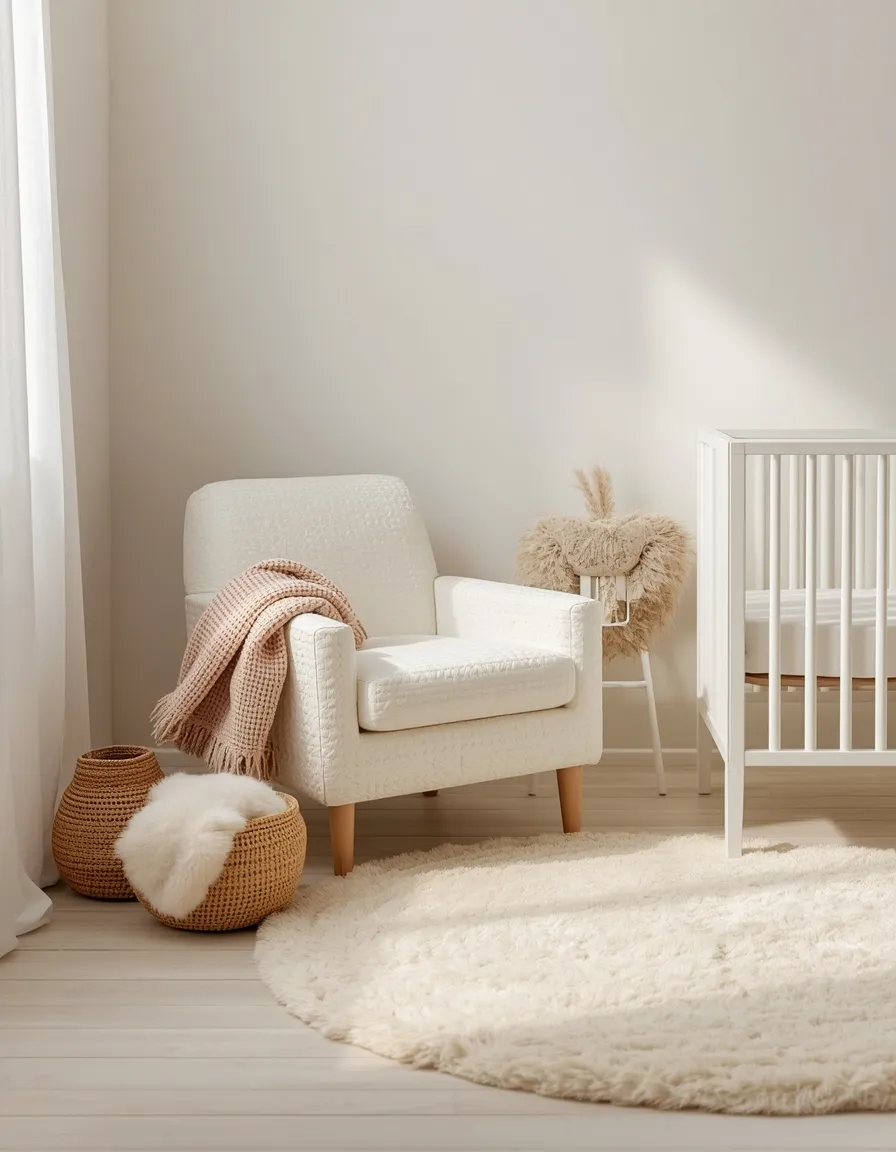
Combine at least four contrasting textures, a bouclé chair, a waffle blanket over its arm, a jute basket, a wool rug, since with no color present, texture is doing the entire job. All the soft things belong outside the crib: drape the knit over the chair, not the crib rail, where a baby could pull it in. Choose machine-washable covers wherever you can. This suits anyone who finds white too cold and wants warmth without color.
- Best for: anyone who finds white too cold but doesn’t want color.
- Watch out: soft things go on the chair, never over the crib rail.
- Key elements: bouclé, chunky knit, sheepskin, linen, deep-pile washable rug.
12. Small-Space White Nursery
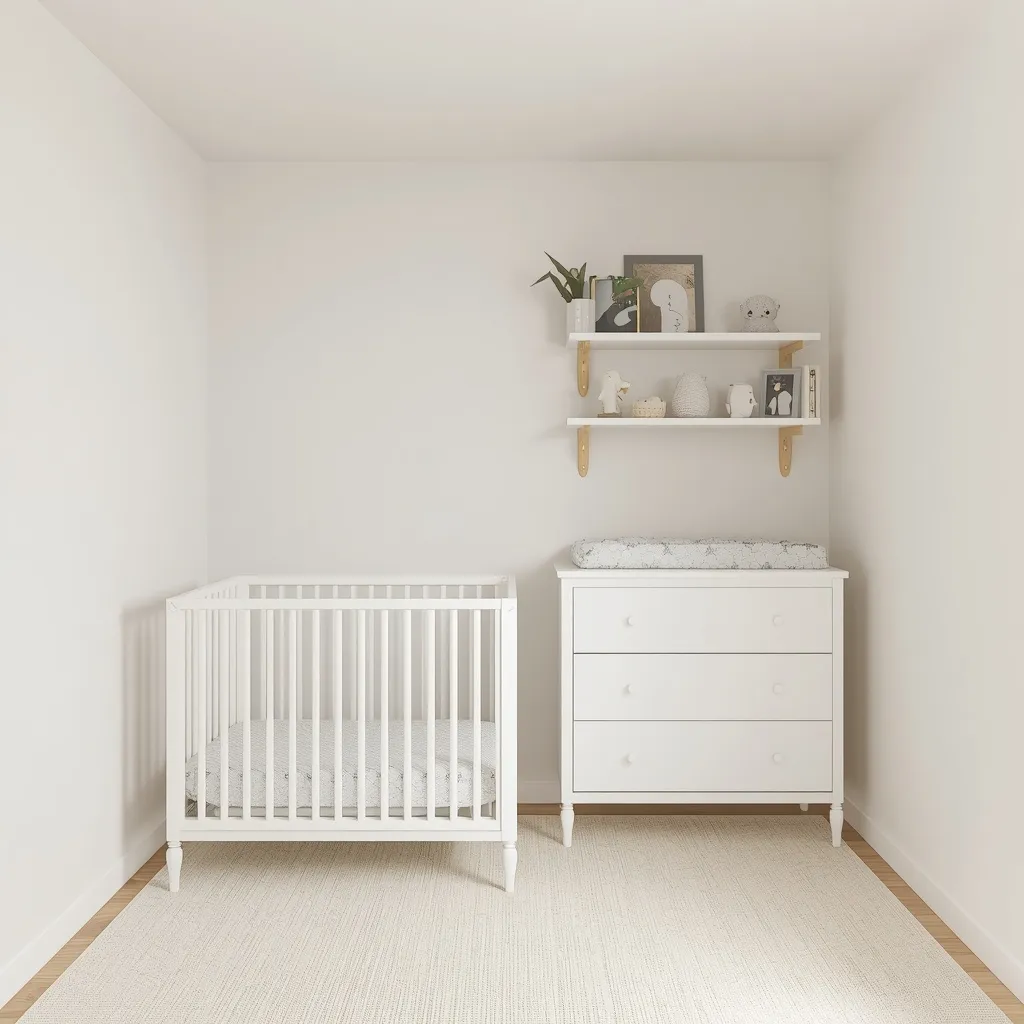
In a box room or a corner of the main bedroom, white is what keeps the space breathable. A compact white crib, a wall-mounted shelf instead of a bookcase, and a dresser doubling as a changing table make a tiny nursery work.
White reflects light and blurs the boundaries between wall, furniture, and floor, which genuinely makes a small nursery feel larger. Choose a dresser with a removable changing topper rather than a separate changing table, since it’s the single biggest space saving available and the dresser outlives the changing years. Go vertical with wall shelves, anchored, and never above the crib. This suits box rooms, apartments, and nursery corners in a parent’s bedroom.
- Best for: box rooms, apartments, and nursery corners in a bedroom.
- Why it works: a dresser with a changing topper saves the most space of anything.
- Watch out: anchor wall shelves, and never place one above the crib.
13. White Reading Nook Nursery
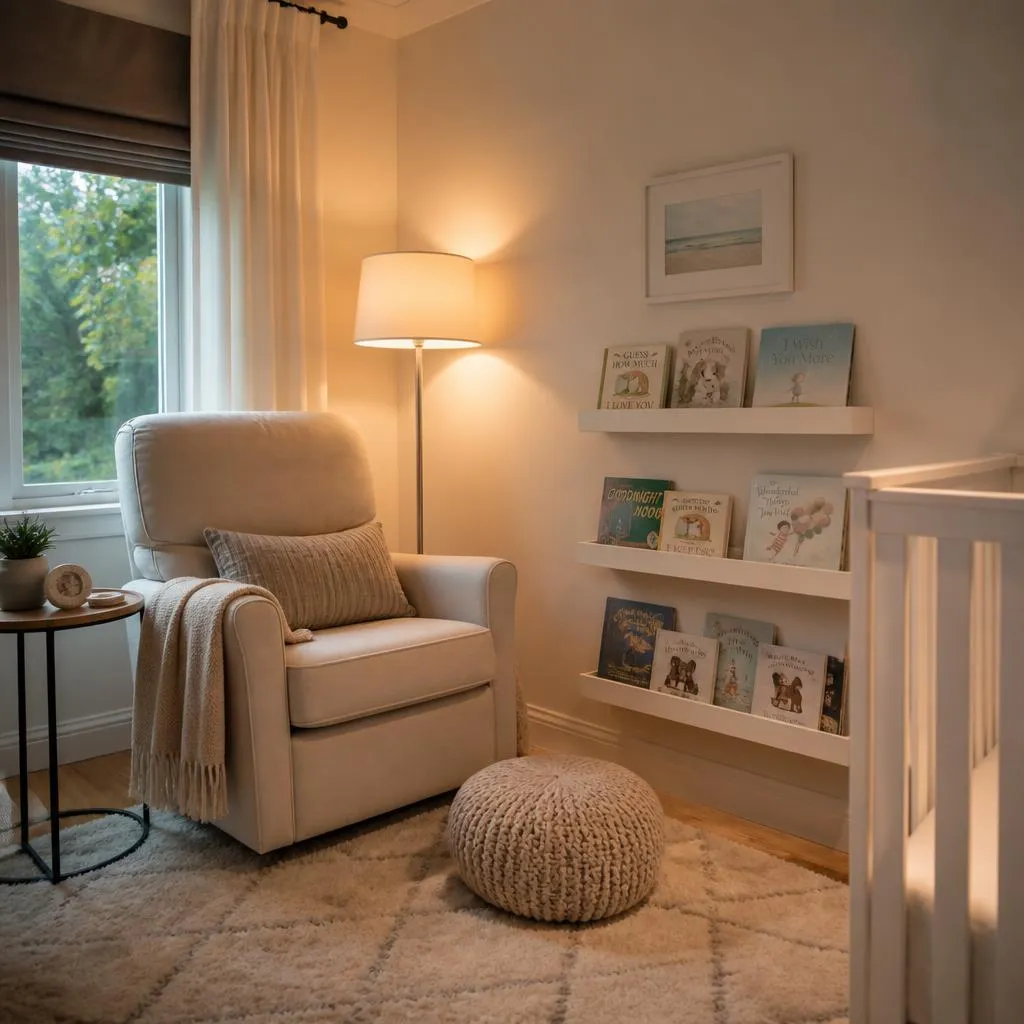
A reading corner turns a nursery into a room you’ll both love. A comfortable chair, a soft rug, a sconce or floor lamp, and forward-facing book ledges create a nook for bedtime stories from the very first week.
Forward-facing picture ledges let a child see the covers rather than the spines, which genuinely encourages them to pick books out themselves once they’re mobile. Keep the ledges low and anchored, and put a warm, dimmable light beside the chair, dimmable matters enormously for night feeds, when a bright overhead is the last thing anyone wants. Choose a chair you’d happily sit in for an hour. This suits every nursery and is the part parents most often say they’re glad they included.
- Best for: every nursery; the feature parents are gladdest they added.
- Why it works: forward-facing ledges let children choose books by the cover.
- Key elements: comfortable chair, low anchored ledges, warm dimmable light.
14. Gender-Neutral White Nursery
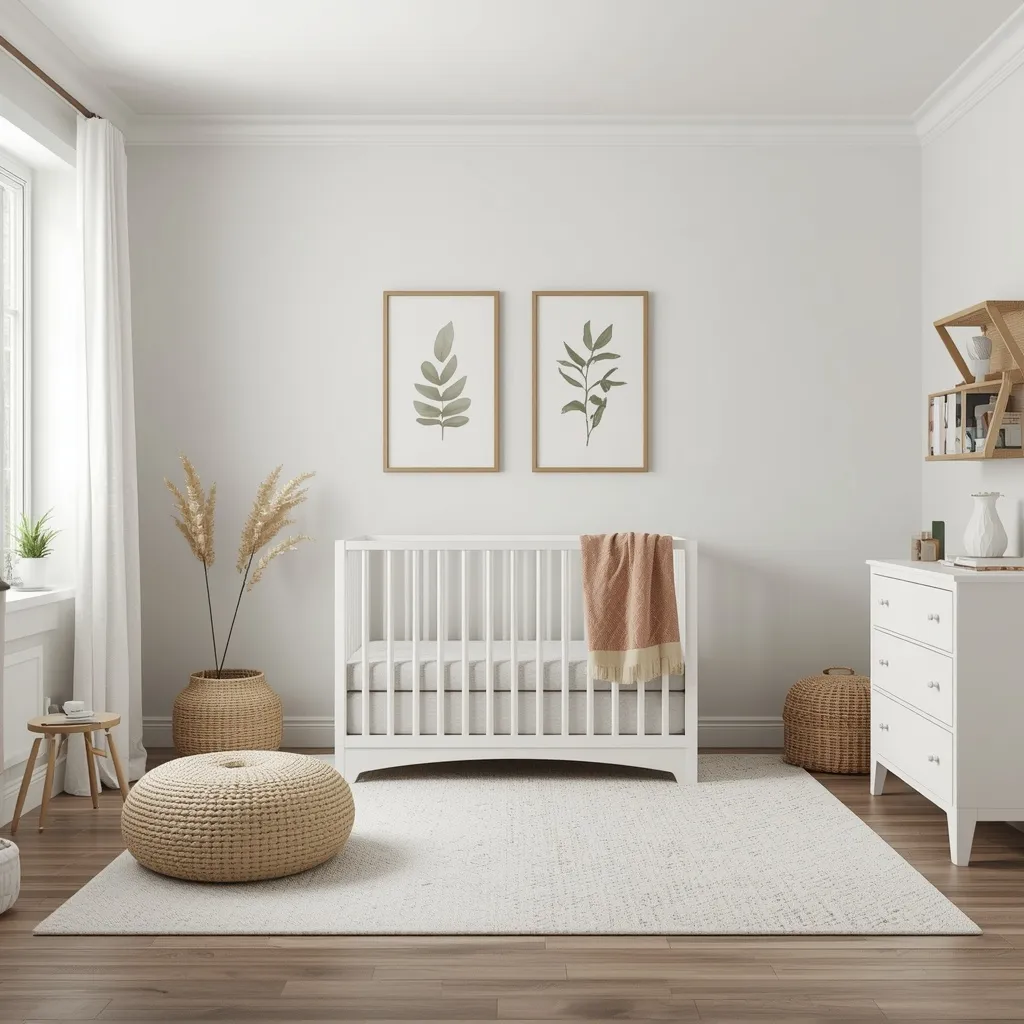
A gender-neutral white nursery works before you know, and long after. Sage, oat, and terracotta accents against white furniture, botanical prints, and natural materials create a room built around nature rather than pink or blue.
Nature is the reliable neutral theme, leaves, animals, mountains, arches, and it dates far more slowly than any character or color-coded scheme. Choose earthy accent tones such as sage, rust, and mustard, which read as warm rather than gendered. Since the palette isn’t tied to anything, the room carries a second child without redecorating. This suits parents not finding out the sex, families planning more children, and anyone who dislikes pink-and-blue conventions.
- Best for: parents not finding out; families planning a second child.
- Why it works: nature-led themes date far more slowly than color-coded ones.
- Key elements: sage, oat, terracotta, botanical prints, natural materials.
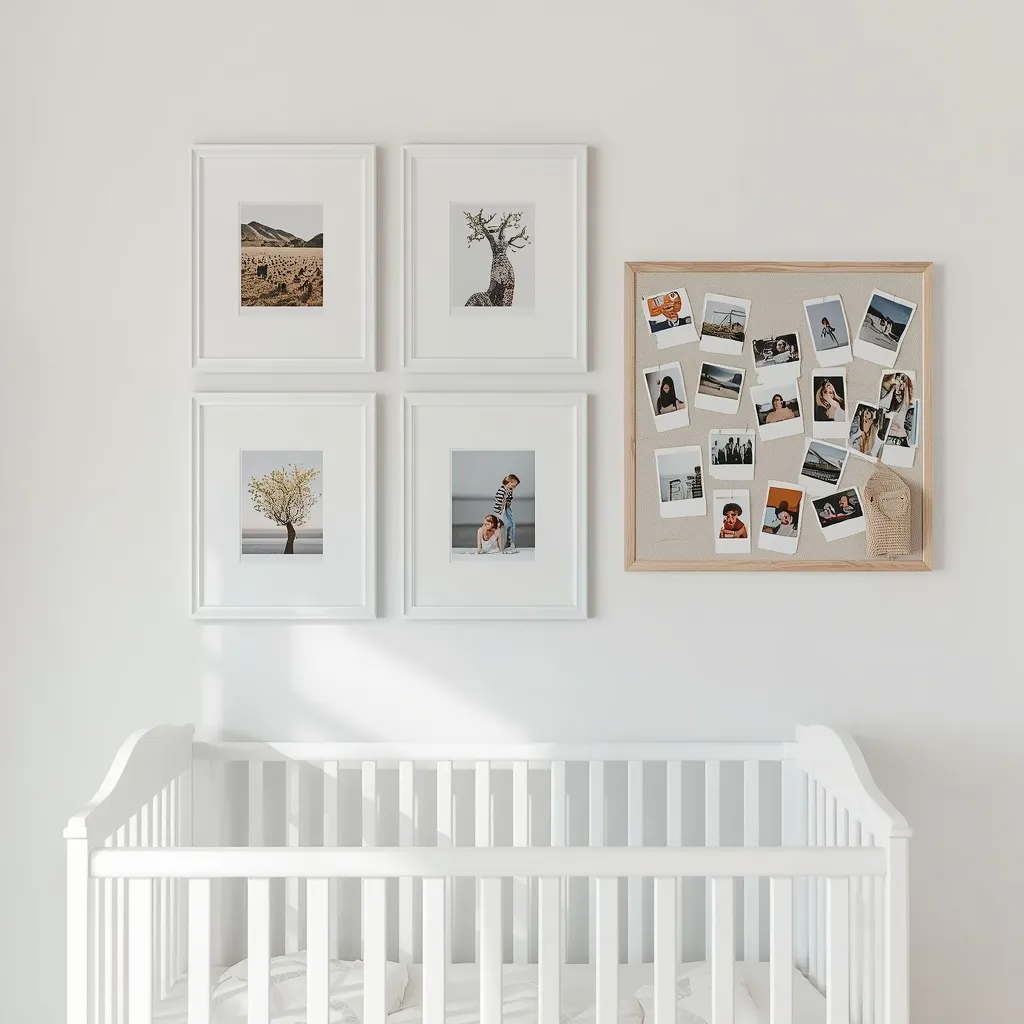
15. Gallery Wall and Pinboard Nursery
A gallery wall gives a white nursery personality that costs almost nothing. Framed prints, a fabric pinboard for scan photos and cards, and a few hand-lettered pieces cluster on one wall, telling a story that grows.
A pinboard is the clever addition, since it holds the things that actually matter, the scan photo, the hospital bracelet, a first birthday card, and changes constantly as the child does. Place the gallery on the wall opposite or beside the crib, never above it, and use proper fixings, since a frame falling into a crib is exactly the scenario to design out. Keep frames light. This suits sentimental parents and anyone wanting a room that evolves.
- Best for: sentimental parents; a wall that evolves with the child.
- Watch out: never hang a gallery above the crib; use proper fixings, light frames.
- Key elements: framed prints, fabric pinboard, placed beside or opposite the crib.
16. Grow-With-Me White Nursery
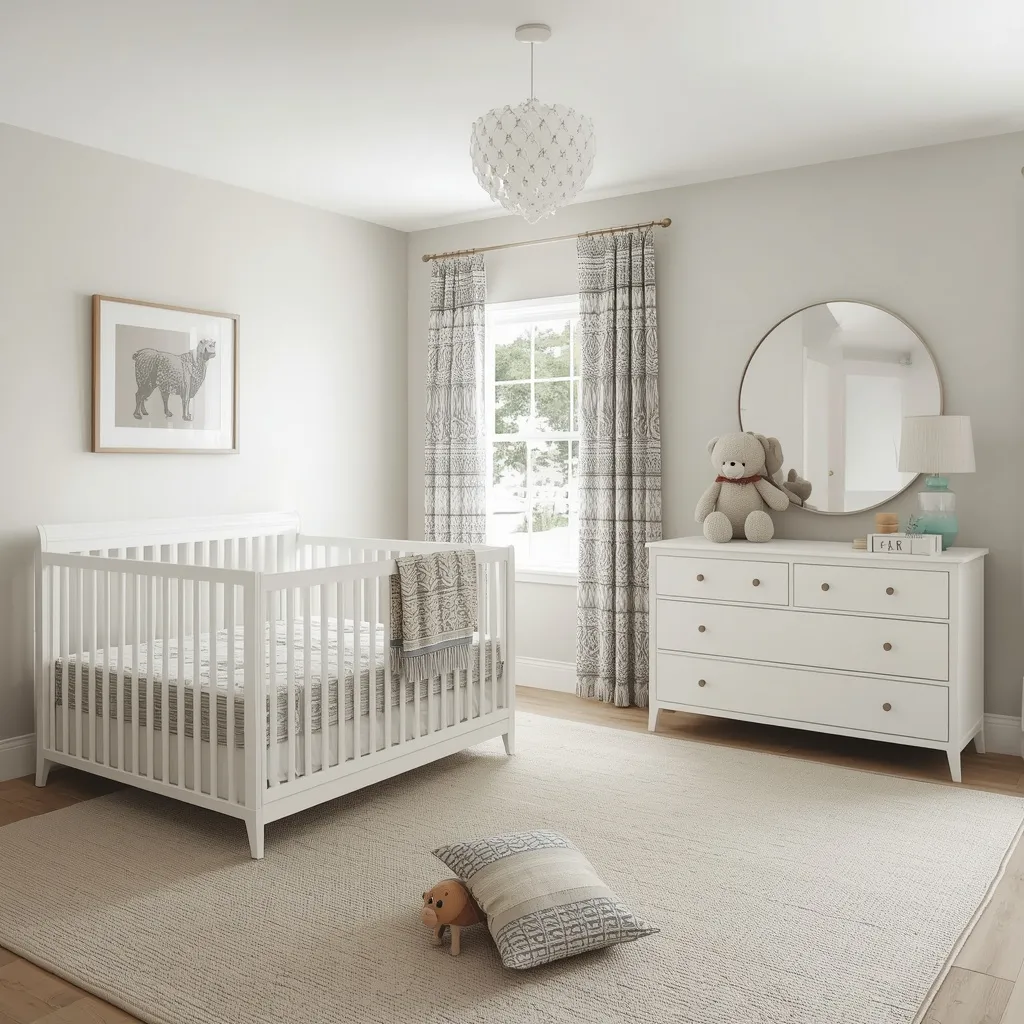
The smartest white nursery is the one you won’t have to redo. A convertible crib, a dresser that outlasts the changing table, neutral walls, and swappable textiles create a room that becomes a toddler’s and then a child’s without a redecoration.
Buy the permanent things neutral and the temporary things cheap, a convertible crib becomes a toddler bed, a full-size dresser serves for twenty years, and the babyish charm lives entirely in a rug, some prints, and a mobile that can all be swapped in an afternoon. Avoid themed wallpaper and character furniture, which are the fastest things to date. Keep anchoring in place as the child grows and starts to climb. This suits anyone thinking beyond the first year.
- Best for: anyone planning further ahead than the first twelve months.
- Why it works: permanent pieces neutral, temporary charm cheap and swappable.
- Watch out: keep furniture anchored, climbing starts sooner than you expect.
Is a White Nursery Actually Practical?
A white nursery is practical if you specify for mess from the start. White shows everything, and a nursery generates a remarkable amount of everything, so the finishes matter more than the color.
Use a scrubbable eggshell or satin paint rather than flat matte, which marks instantly and cannot be washed. Choose a washable, low-pile rug with a non-slip backing, and pick a nursing chair with removable, machine-washable covers rather than a beautiful fixed upholstery you’ll be afraid to sit in. Keep a small tin of the wall paint for touch-ups, since a scuffed white wall is the easiest thing in the world to fix.
On paint itself, choose a low-VOC or zero-VOC product and paint several weeks before the baby arrives, ventilating well while it cures. That’s a genuine reason to start the nursery early rather than a nice-to-have.
A nursery rarely stays a nursery for long, and many become shared rooms. Our guide to designing a room for two children is worth reading before you commit to a layout, and you’ll find plenty more in our kids’ room ideas.
Frequently Asked Questions
Q: What should go in a crib in a white nursery?
Nothing but a firm, flat mattress and a fitted sheet. The American Academy of Pediatrics advises against pillows, quilts, blankets, bumpers, and stuffed toys in the crib, because soft bedding is a suffocation risk, and crib bumpers are no longer sold in the US following the Safe Sleep for Babies Act. Style the chair, the shelf, and the floor instead.
Q: Is a white nursery practical with a baby?
Yes, if you specify for mess. Use a scrubbable eggshell or satin paint rather than flat matte, choose a washable low-pile rug with a non-slip backing, and pick a nursing chair with removable machine-washable covers. Keep a small tin of the wall paint for touch-ups, since white walls are the easiest of all to repair.
Q: How do you stop a white nursery feeling cold?
Layer texture and warm wood. Bouclé, chunky knit, sheepskin, linen, and a deep-pile rug do the work that color would, and blonde woods like oak or birch stop the room feeling clinical. If your nursery is north-facing or dim, choose a warm cream or beige scheme rather than a stark bright white, which can read grey and cold in low light.
Q: What colors work with a white nursery?
Almost anything, which is white’s advantage. Warm wood and rattan are the most reliable partners, sage and terracotta give a gender-neutral natural feel, dusty blush and navy work for softer or crisper schemes, and black-and-white is both graphic and genuinely engaging for a newborn’s developing vision. Keep any accent color to roughly ten percent of the room.
Q: Where should the crib go in a nursery?
Away from the window, away from any blind cords, and away from radiators. Choose cordless blinds, since pull cords are a strangulation hazard. Never hang shelves or framed art directly above the crib, anything that can fall eventually will. A painted arch is the safe way to decorate that wall.
Q: What’s the best nursery layout for a small room?
Use a dresser with a removable changing topper rather than a separate changing table, which is the single biggest space saving available and leaves you with a dresser that lasts for decades. Go vertical with wall shelves, anchored, and never above the crib, and keep the palette white so light bounces and the boundaries blur.
Conclusion
The best white nursery design ideas are the ones that stay lovely and stay safe. Layer texture rather than color, warm the white with wood, put the personality in a rug and a few prints you can swap in an afternoon, and specify scrubbable paint because you will need it. Above all, style the room and not the crib: a firm mattress, a fitted sheet, and nothing else, with every piece of furniture strapped to the wall. Do that and you’ll have a nursery that photographs beautifully and, far more importantly, works. For more, browse our kids’ room ideas.