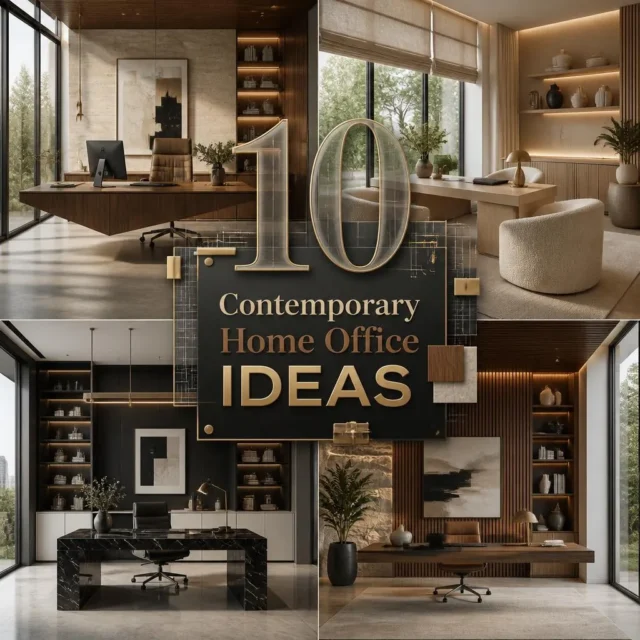

Key Takeaways
- Contemporary means current, not fixed: Unlike modern (a set 20th-century style), contemporary evolves with today’s design.
- Clean lines need real storage: The uncluttered look only holds up with hidden storage and disciplined cable management.
- Warm it with texture: One wood tone plus linen, boucle, or a rug stops contemporary feeling cold.
- Keep the palette tight: Neutrals plus one or two accents read polished; too many colors break the look.
- Invest in a few quality pieces: A great chair, desk, and light matter more than lots of decor.
10 Contemporary Home Office Ideas
Clean lines, a calm palette, and a workspace that feels current rather than dated, that’s the pull of contemporary home office ideas, and it’s why the style has become the default for anyone building a room they’ll enjoy working in for years. Contemporary design is about the here and now: uncluttered, comfortable, and quietly sophisticated.
Below are ten complete contemporary office looks, each a full design direction you could recreate as a whole rather than a single decor piece. Some lean warm and minimalist, some chic and monochrome, some blend vintage character with modern lines, plus small-space and study-room versions. Whatever your room and taste, there’s a way here to make this corner of your abode feel polished, purposeful, and thoroughly of its moment.
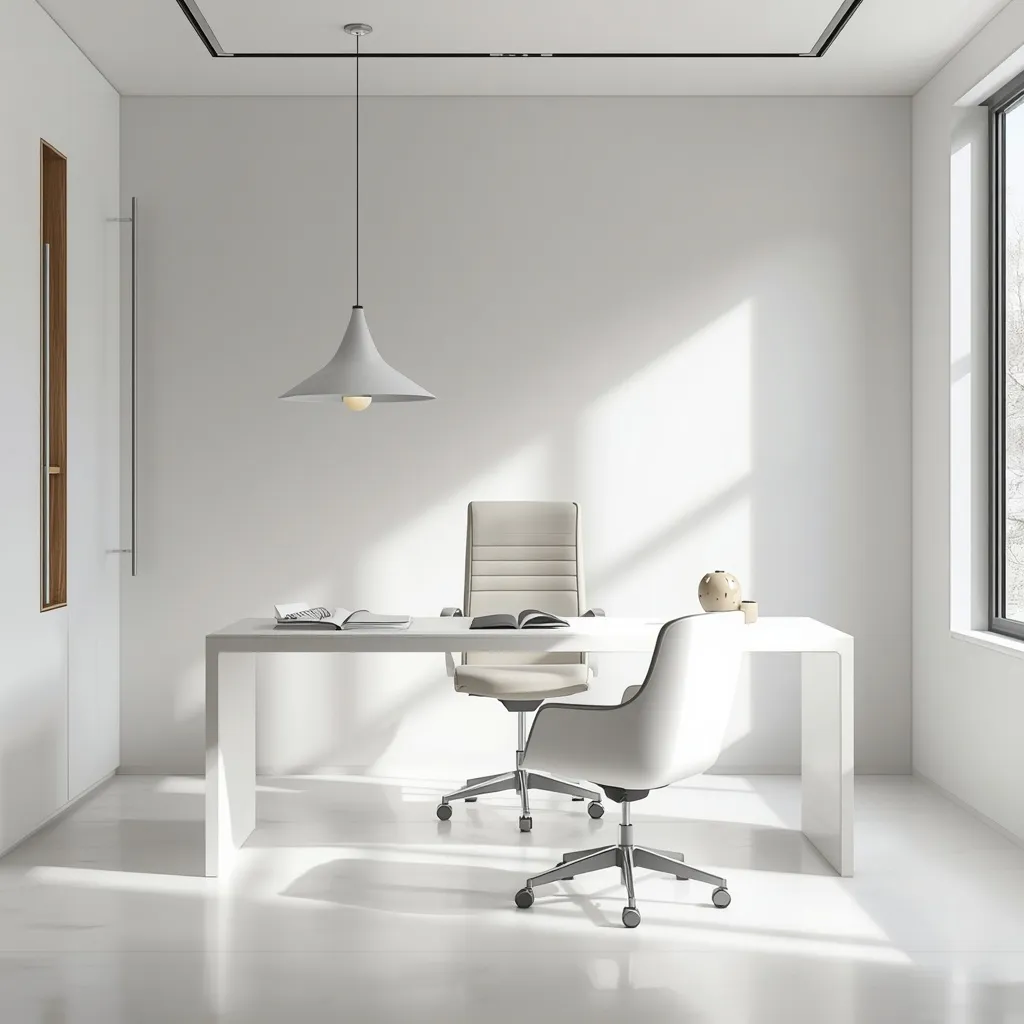
1. Sleek Modern Contemporary Office
Picture a handle-less white desk, a sculptural ergonomic chair, glossy surfaces, and a single dramatic pendant over a clutter-free workspace. A sleek modern contemporary office is the crisp, high-polish version of the style, all clean geometry and quiet confidence.
This look leans on smooth surfaces, a tight neutral palette, and statement furniture with sculptural lines. Choose a minimal desk with hidden storage, one standout chair or light fixture, and keep everything else pared back and symmetrical. The key is discipline: sleek contemporary lives or dies on clear surfaces, so hide cables in trays and store everything out of sight. Warm the crispness with a single wood or stone accent so it reads sophisticated, not clinical. Best for modern homes, apartments, and anyone who thinks clearly in a sharp, uncluttered space.
- Why it works: Clean geometry and one statement piece read polished, current, and calm.
- Best for: Modern homes, apartments, and lovers of sharp, uncluttered spaces.
- Key elements: Handle-less desk, sculptural chair, statement pendant, hidden cables, one warm accent.
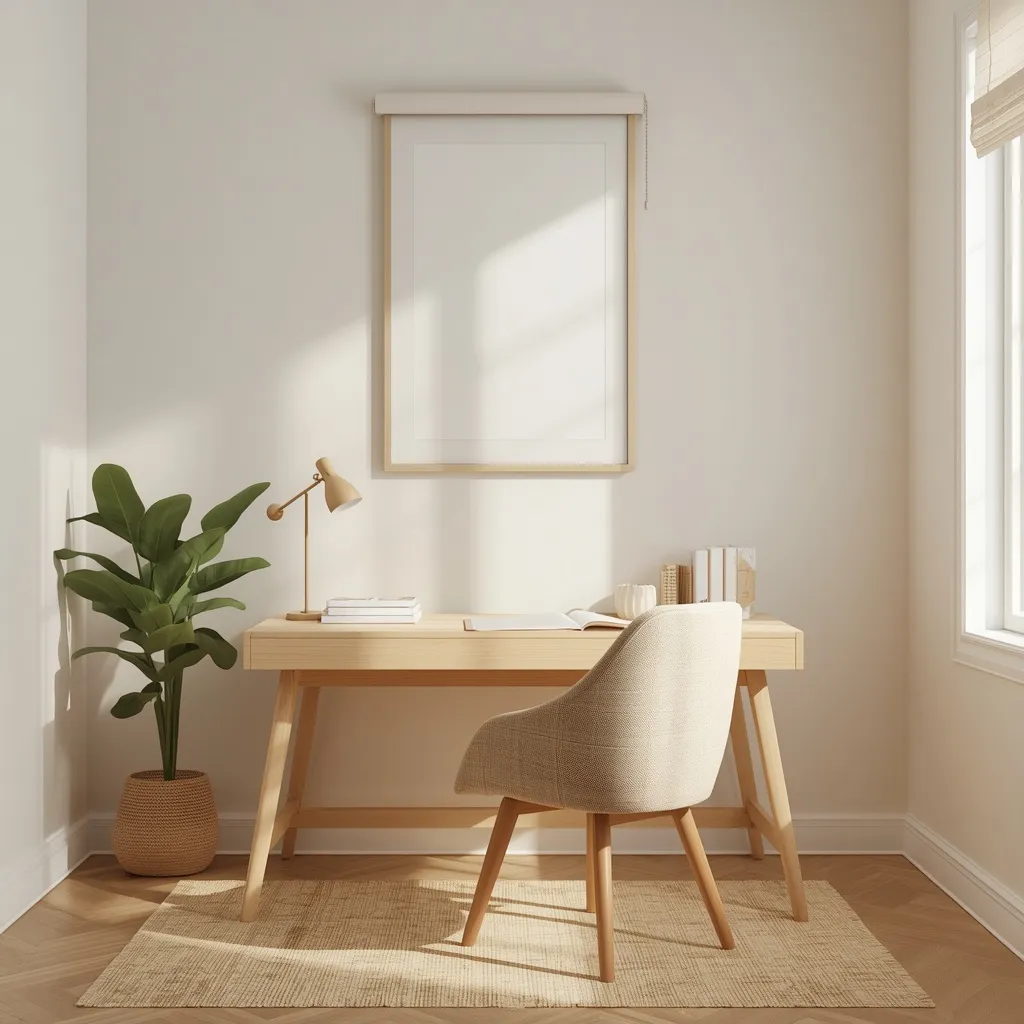
2. Warm Minimalist Contemporary Office
Imagine a pale oak desk, a soft boucle chair, warm white walls, and a linen roman shade, with just a plant and a stack of books for life. A warm minimalist contemporary office keeps the clean contemporary base but layers natural warmth so the room feels calm and inviting, never stark.
Warm minimalism pairs contemporary restraint with cozy, tactile materials: light woods like oak, soft textiles such as boucle, wool, and linen, and a palette of warm whites, oatmeal, and greige. Keep the lines simple and surfaces mostly clear, but add warmth through texture and one or two natural elements rather than color. This is the antidote to cold minimalism, and it’s the easiest contemporary look to live with day to day. Best for anyone who loves a clean space but finds pure white-and-glass too clinical.
- Why it works: Contemporary lines plus warm woods and soft textures feel calm and genuinely livable.
- Best for: Those who love clean design but find stark minimalism too cold.
- Key elements: Pale oak desk, boucle chair, warm neutrals, linen shade, natural texture.
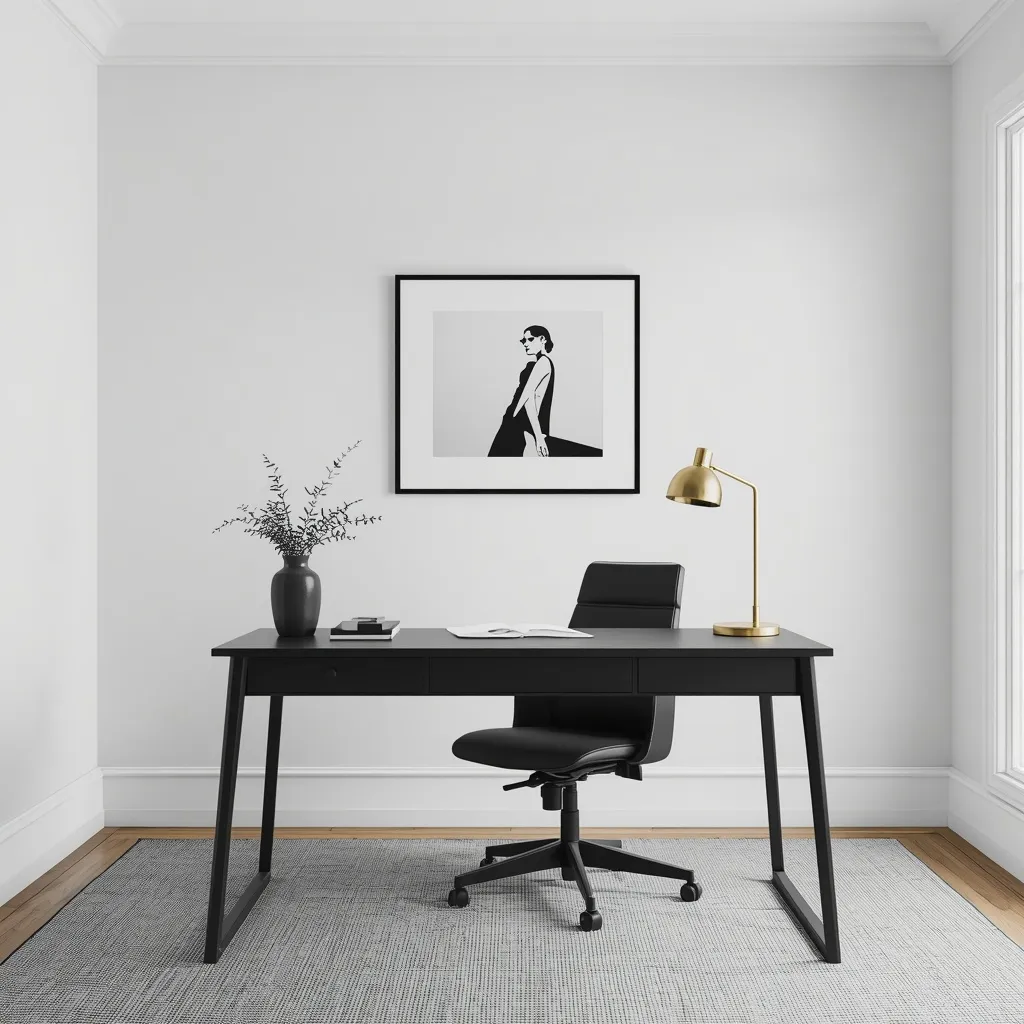
3. Monochrome Chic Contemporary Office
Envision a striking black-and-white scheme, white walls, a black desk, graphic art, and matte-black hardware, sharpened with one metallic accent. A monochrome chic contemporary office is the bold, editorial take on the style, high in contrast and effortlessly polished.
Monochrome contemporary uses a disciplined black, white, and grey palette with strong contrast and graphic shapes. Keep the base light and airy, then use black as a deliberate accent through the desk, framing, lighting, or shelving, and add one metallic like brushed brass for a chic lift. Repeat the black in two or three spots so it reads intentional. Matte finishes keep it sophisticated and cut glare. Best for design-led spaces, chic apartments, and anyone wanting a bold, editorial workspace that still feels calm and current.
- Why it works: High-contrast black and white with one metallic reads bold, editorial, and chic.
- Best for: Design-led, chic apartments and bold monochrome lovers.
- Key elements: White base, black desk/framing, graphic art, one metallic accent, matte finishes.
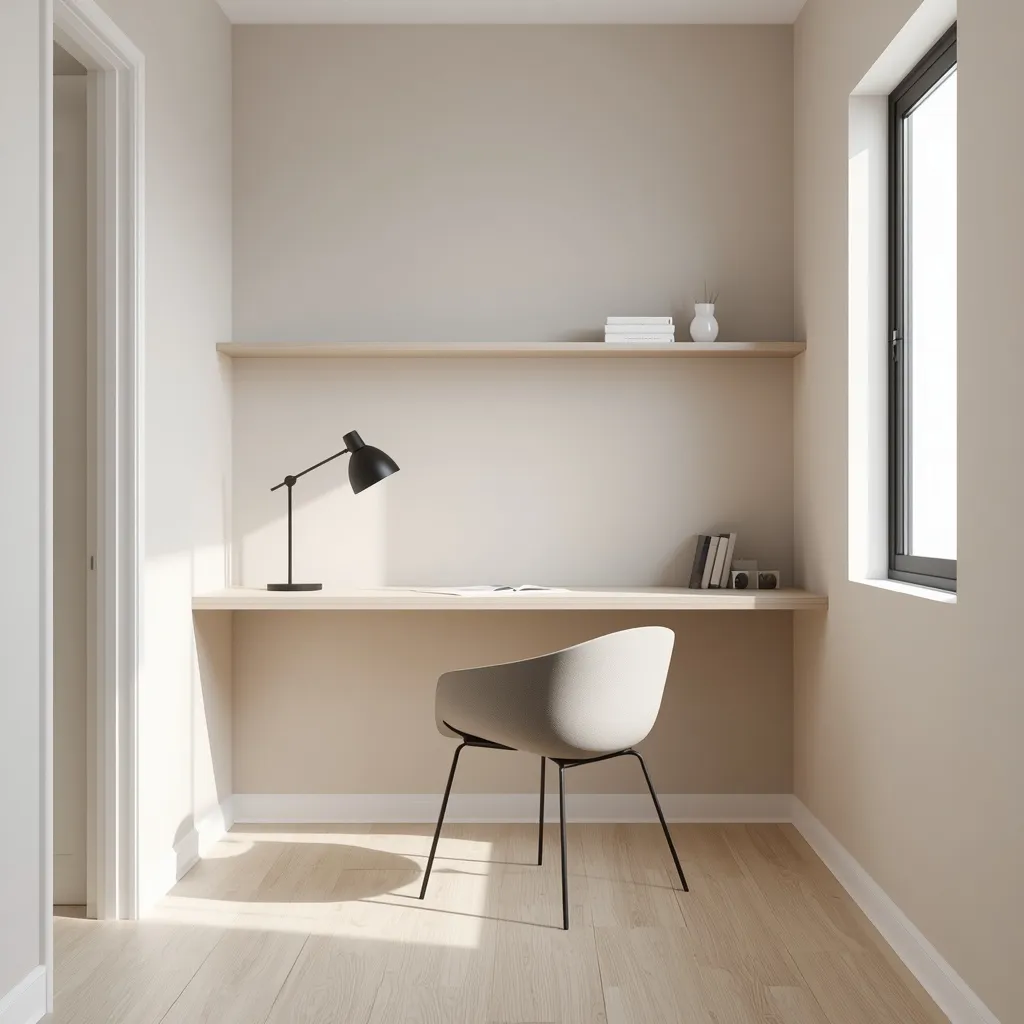
4. Small Contemporary Corner Office
Picture a slim floating desk in a neutral nook, a compact designer chair, and a single floating shelf, everything scaled down but still sharp and current. A small contemporary corner office fits the whole clean-lined aesthetic into an apartment corner or spare nook without feeling cramped.
In small spaces, contemporary style is an advantage because its clean lines and pale palette make a room feel bigger. Use a slim floating or wall-mounted desk around 100–120 cm (40–47 in) wide, keep the palette light to bounce daylight, and add one floating shelf or vertical storage so the desk stays clear. Choose one compact statement piece, a designer chair or a nice lamp, rather than crowding the corner. Position the desk with the window to the side to cut screen glare. Best for renters, apartments, and small-room or nook workspaces.
- Why it works: Clean lines and a pale palette make a small contemporary setup feel open, not cramped.
- Best for: Renters, apartments, and small nook or corner workspaces.
- Key elements: Slim floating desk, compact designer chair, floating shelf, pale palette, side window.
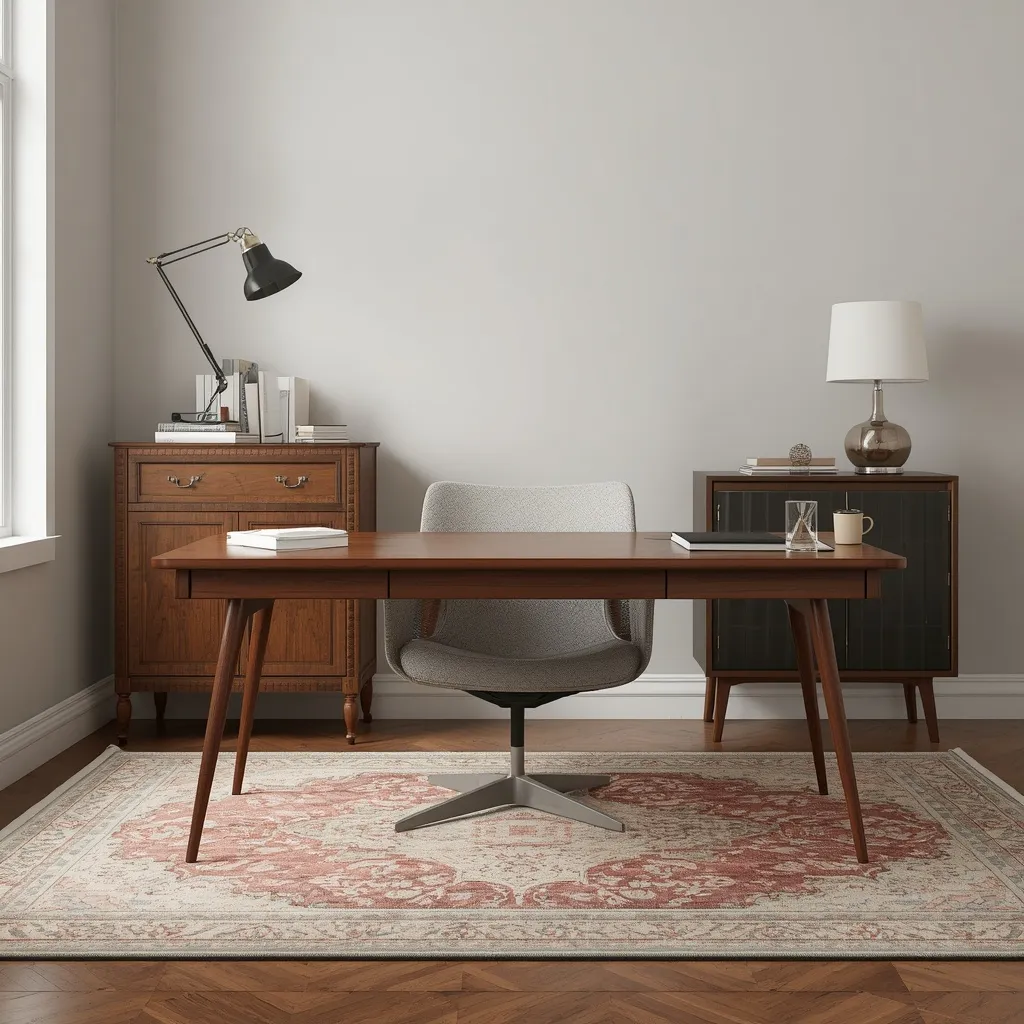
5. Vintage-Contemporary Mix Office
Imagine a sleek contemporary desk paired with a restored mid-century chair, a vintage rug, and a modern lamp, old and new balanced with intention. A vintage-contemporary mix office layers character and history into a clean contemporary shell for a collected, personal, one-of-a-kind workspace.
This look works by contrast: keep the backdrop and main furniture contemporary and neutral, then introduce one or two genuine vintage pieces, a retro chair, an antique cabinet, a worn leather or patterned rug, as focal points. The trick is restraint and a shared thread, like a repeated wood tone or a consistent metal finish, so old and new feel curated rather than clashing. One or two vintage elements is plenty; more tips it into cluttered. Best for those who find pure contemporary too impersonal and want warmth, story, and individuality.
- Why it works: A few vintage pieces in a contemporary shell add character, warmth, and individuality.
- Best for: Collectors and anyone wanting personality over showroom-perfect minimalism.
- Key elements: Contemporary neutral base, one or two vintage focal pieces, a shared wood or metal thread.
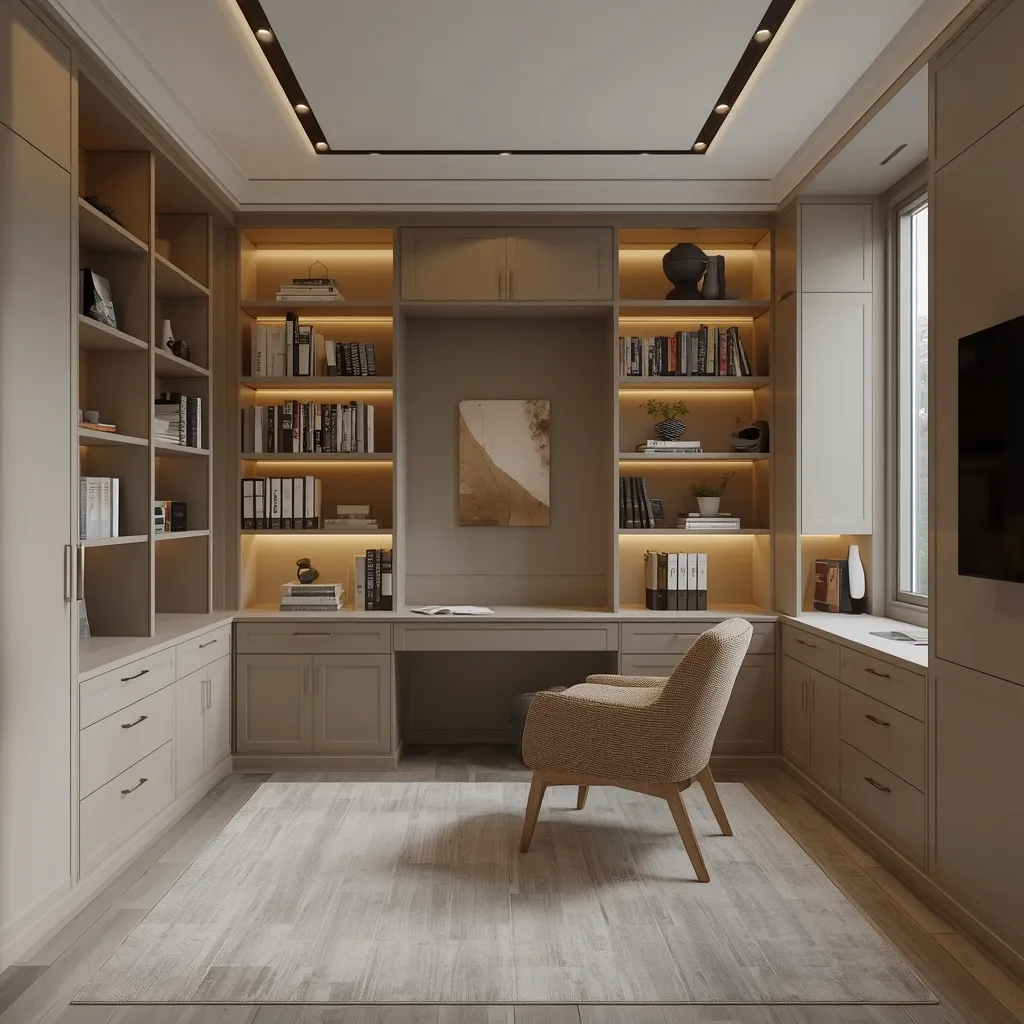
6. Contemporary Study with Built-Ins
Envision floor-to-ceiling built-in shelving in a smooth matte finish wrapping around a integrated desk, everything seamless, tidy, and architectural. A contemporary study with built-ins turns a whole wall into a sleek, custom workspace where storage and desk feel like one considered piece.
Built-ins are the contemporary answer to a proper study: custom joinery that runs floor to ceiling, hiding clutter behind flat, handle-less doors while displaying a curated few pieces on open shelves. Keep the cabinetry in one calm color, integrate the desk into the run, and mix closed storage (most of it) with a little open shelving for balance. Good lighting, recessed or linear LED, completes the built-in look. This is a bigger commitment, so it suits homeowners over short-term renters. Best for those wanting a permanent, highly organized, architectural home office.
- Why it works: Full-height built-ins hide clutter and make the desk and storage one seamless feature.
- Best for: Homeowners wanting a permanent, organized, architectural study.
- Key elements: Floor-to-ceiling joinery, integrated desk, handle-less doors, mixed closed/open storage, LED lighting.
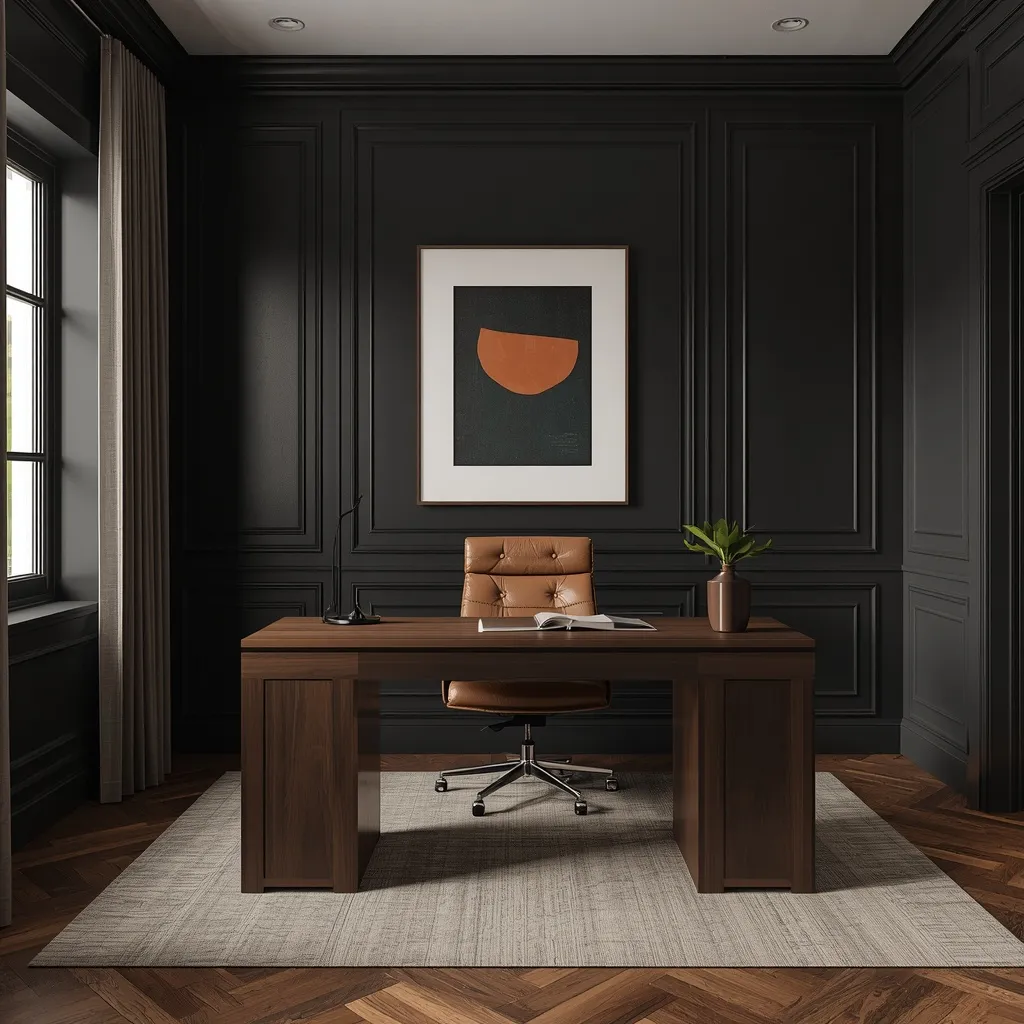
7. Contemporary Masculine Office
Picture a dark-toned contemporary desk, charcoal walls, a leather chair, and matte-black details balanced by warm walnut and clean lines. A contemporary masculine office grounds the clean aesthetic in deeper tones and richer materials for a look that’s current, confident, and tailored.
This take keeps contemporary’s clean lines and restraint but shifts to a moodier, grounded palette: charcoal, deep grey, walnut, and matte black, with leather and stone in place of pale textiles. Keep the styling minimal and let a few strong materials carry the room, a walnut desk, a leather chair, one piece of bold art. Layer lighting so the darker palette stays workable rather than gloomy. Best for those who want a contemporary space with a warmer, moodier, more masculine edge; it pairs naturally with a dedicated look at styling an office for him.
This moodier direction has a whole world of its own, for a full range of masculine-leaning looks, our guide to styling a home office for him explores nine complete setups in depth.
- Why it works: Deeper tones, walnut, and leather give contemporary lines a warm, tailored, masculine edge.
- Best for: Anyone wanting a moodier, grounded contemporary workspace.
- Key elements: Walnut or dark desk, charcoal walls, leather chair, matte black, layered lighting.
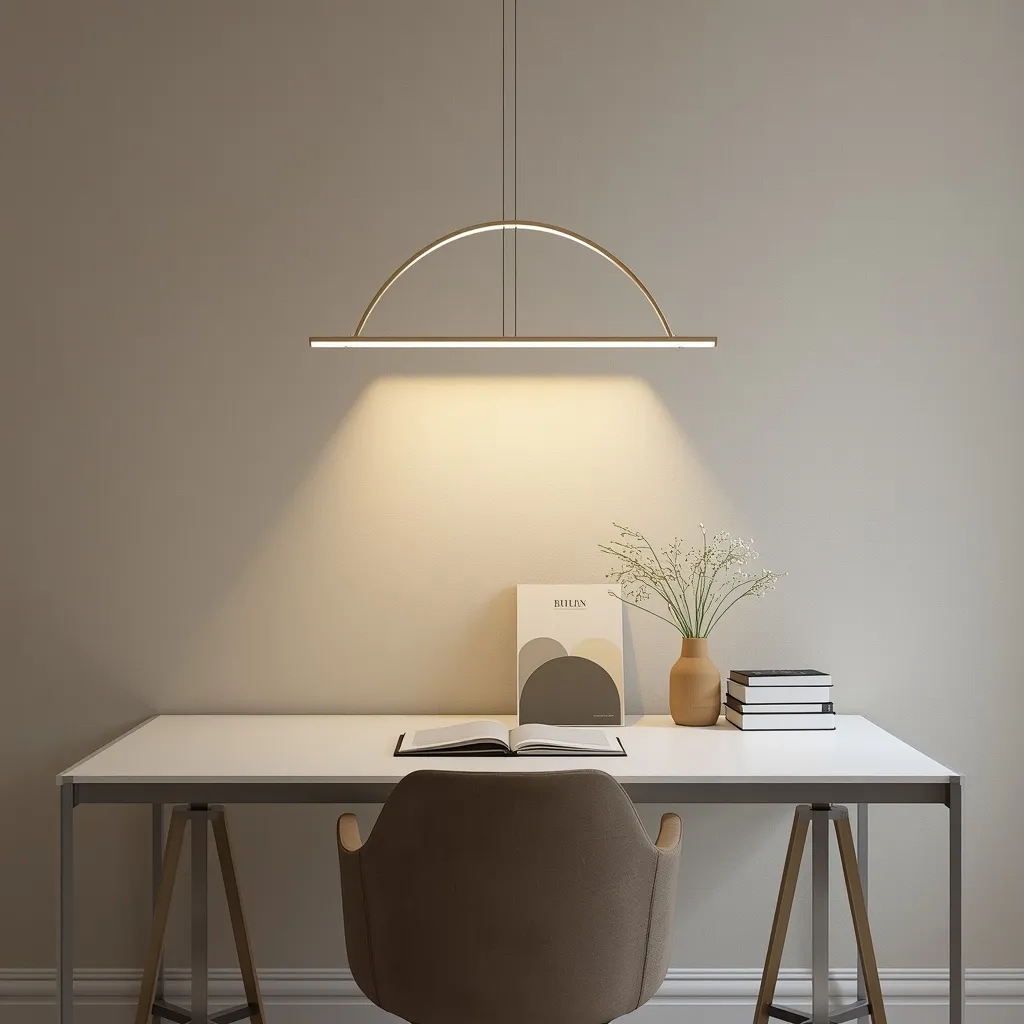
8. Statement-Lighting Contemporary Office
Imagine a restrained neutral office where a single sculptural light, an oversized arc lamp or an artful linear pendant, steals the show above a clean desk. A statement-lighting contemporary office uses one bold, design-forward fixture as the room’s focal point and personality.
When the palette is deliberately minimal, lighting becomes the art. Choose one sculptural, contemporary fixture, an arc floor lamp, a linear LED pendant, or a cluster of orbs, and let it anchor the room while everything else stays quiet and neutral. Layer in practical task light too, since a statement piece rarely lights a desk well enough on its own. Keep other decor minimal so the fixture reads as the intentional hero. Best for design lovers wanting maximum impact from one considered piece rather than lots of decoration.
- Why it works: One sculptural light becomes the focal point, adding drama to a restrained room.
- Best for: Design lovers wanting big impact from a single considered piece.
- Key elements: Sculptural statement fixture, neutral backdrop, added task lighting, minimal other decor.
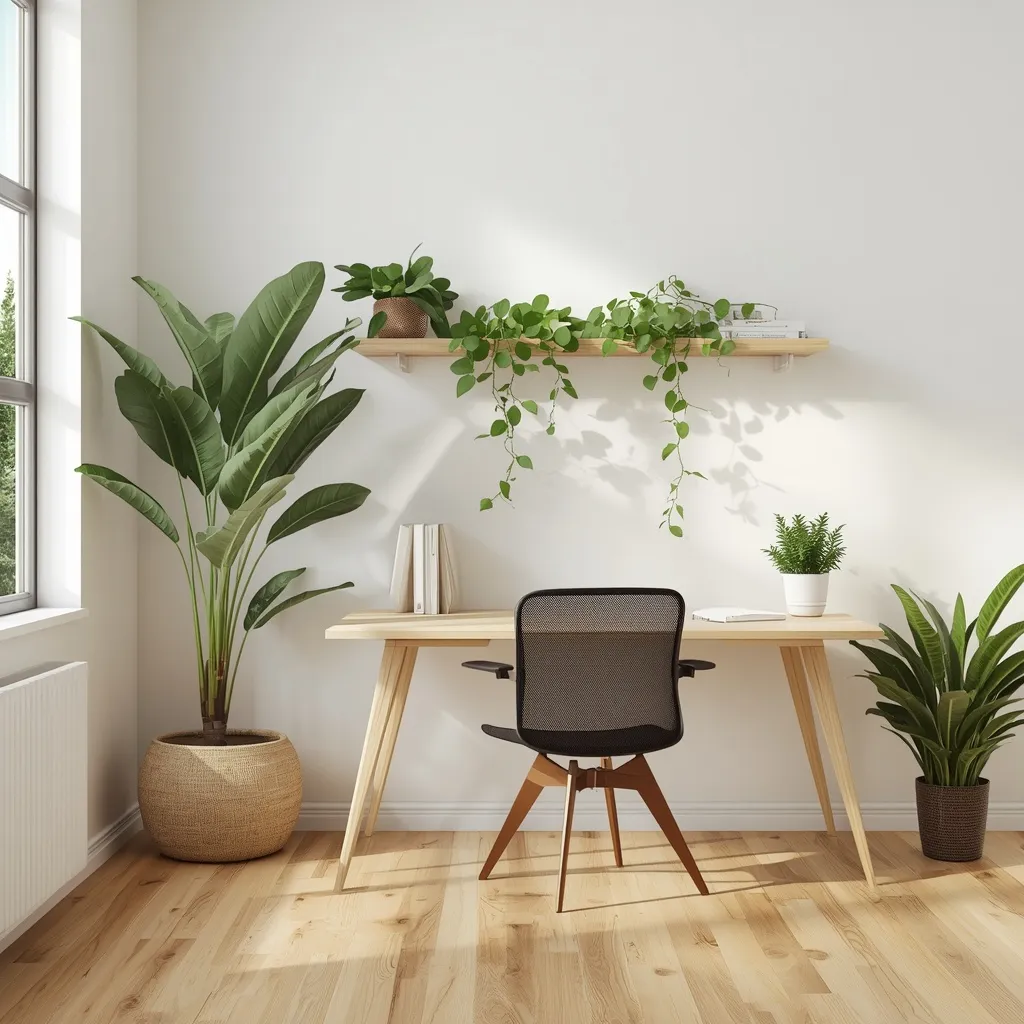
9. Contemporary Biophilic Green Office
Envision a clean contemporary office softened by greenery, a large potted plant in the corner, trailing vines on a floating shelf, and natural wood warming the neutral palette. A contemporary biophilic green office blends today’s clean design with nature for a fresh, calming, restorative workspace.
Biophilic contemporary keeps the clean lines and neutral base but weaves in nature through plants, natural wood, and natural light. Add greenery at a few heights, a floor plant, a shelf trailer, a desktop pot, and choose easy species like the ZZ plant, snake plant, or pothos if light is limited. One safety note: those three are mildly toxic if chewed, so keep them out of reach of pets and small children. Let the plants be the color against an otherwise restrained palette. Best for anyone wanting a calm, current office that feels fresh and alive without bold color.
- Why it works: Greenery adds life and calm to a clean contemporary base without needing bold color.
- Best for: Plant lovers wanting a fresh, restorative contemporary office.
- Key elements: Clean neutral base, plants at several heights, easy low-light species, natural wood, pet-safe placement.
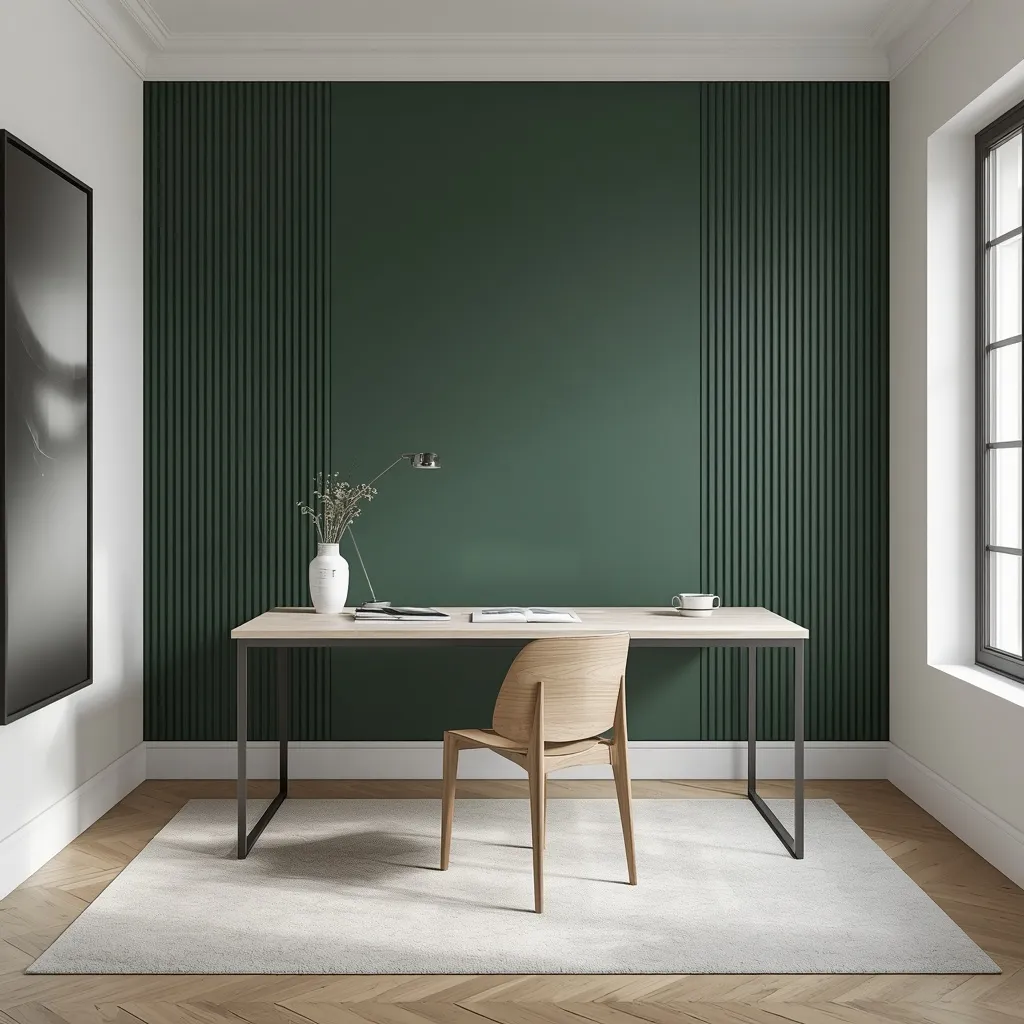
10. Two-Tone Feature-Wall Office
Finally, picture a contemporary office defined by one bold move: a feature wall in deep green, terracotta, or panelled wood behind the desk, the rest of the room kept calm and neutral. A two-tone feature-wall office adds contemporary color and depth through a single considered wall rather than an all-over scheme.
A feature wall is the contemporary way to add color or texture without overwhelming a room. Choose one wall, usually behind the desk so it frames video calls, and give it a deep paint color, fluted wood panelling, or a subtle textured finish, keeping the other walls neutral. Match a couple of accents in the room to the feature color so it feels connected. Fluted or slatted wood also adds a little acoustic softening. Keep the rest minimal so the wall stays the star. Best for anyone wanting contemporary personality and a strong video-call backdrop from one focused change.
- Why it works: One bold wall adds contemporary color and depth without overwhelming the whole room.
- Best for: Renters (removable options) and anyone wanting a strong video-call backdrop.
- Key elements: Single feature wall, deep color or wood panelling, neutral surrounds, matched accents.
Contemporary vs. Modern: What’s the Difference?
Contemporary and modern are often used interchangeably, but they aren’t the same thing. Modern design refers to a specific 20th-century movement with fixed features, while contemporary means whatever is current now, so it keeps evolving. Knowing the difference helps you get the look you actually want.
| Feature | Contemporary | Modern (mid-century) |
| Definition | Current, always evolving | Fixed 20th-century style |
| Palette | Neutrals + shifting accents | Warm woods, bold retro tones |
| Lines | Softer, curved or clean | Strong, geometric, functional |
| Feel | Fresh, of-the-moment | Retro, iconic, timeless |
| Best if you want | A current, adaptable look | A specific era’s aesthetic |
In short, contemporary is the more flexible, forgiving choice for a home office you’ll update over time. For more looks in this space, from beachy to bold, explore our full library of home office ideas, part of the wider Sunday Abode approach to a home you love living in. If you’d like a lighter, breezier direction, our coastal home office ideas make a great companion
FAQs
What is a contemporary home office?
A contemporary home office is a workspace designed in the current, of-the-moment style: clean lines, a calm neutral palette, uncluttered surfaces, and comfortable, quality furniture. Unlike ‘modern,’ which refers to a fixed 20th-century movement, contemporary evolves with today’s design trends. The result is a fresh, adaptable room that emphasizes simplicity, good light, and a few well-chosen pieces over heavy decoration.
What’s the difference between contemporary and modern office design?
Modern design refers to a specific mid-20th-century style with warm woods, bold retro tones, and strong geometric lines, while contemporary means whatever is current and continues to evolve. In practice, contemporary offices use softer, shifting neutral palettes and mix influences freely, whereas modern (mid-century) offices commit to that era’s iconic look. Contemporary is the more flexible choice if you want a room you’ll update over time.
How do I create a contemporary home office in a small space?
Contemporary style suits small rooms well because its clean lines and pale palette make a space feel larger. Use a slim floating or wall-mounted desk around 100–120 cm (40–47 in) wide, keep the palette light to bounce daylight, and add vertical or floating storage so the desk stays clear. Choose one compact statement piece rather than crowding the corner, and position the desk with the window to the side to cut glare.
How do I keep a contemporary office from feeling cold?
Texture and warmth are the fix. Because contemporary leans neutral and minimal, add one warm wood tone like oak or walnut, plus soft materials such as boucle, wool, linen, and a rug, to stop the room feeling clinical. A plant or two and warm-toned lighting also soften the look. The goal is clean but inviting, not stark and empty.
Can you mix vintage pieces into a contemporary office?
Yes, and it often makes the room more interesting. Keep the backdrop and main furniture contemporary and neutral, then add one or two genuine vintage focal pieces, like a mid-century chair or an antique cabinet, tied together by a shared wood tone or metal finish. Restraint is key: one or two vintage elements add character, while too many tip the room into clutter.
What furniture and lighting suit a contemporary home office?
Look for clean-lined, quality pieces: a minimal desk (ideally with hidden storage), a sculptural ergonomic chair, and handle-less cabinetry or built-ins. For lighting, layer a good task lamp with one sculptural statement fixture, such as an arc lamp or linear pendant, since a single striking light can anchor an otherwise restrained room. A few quality pieces always beat lots of small decorative items in contemporary design..
Conclusion
From a sleek monochrome scheme to a warm minimalist room, a vintage-contemporary mix, or a built-in study, these contemporary home office ideas prove that a current, polished workspace is within reach whatever your room or budget. Keep the lines clean, warm the palette with texture and a wood tone, and stay disciplined about storage so the uncluttered look actually lasts.
Pick the direction that fits your space and taste, gather a few quality pieces and a tight palette, and restyle your workspace this weekend, then save this guide to plan the next update. For more room-by-room inspiration, our home office collection has a design for every corner of your abode.