
Introduction
A teenager’s bedroom is bedroom, study, and living room in one, and in summer it also has to stay cool and dark enough to actually sleep in. These summer teen bedroom ideas cover complete rooms rather than styling tips: the palette, the layout, the storage, and the zoning that lets one small space do three jobs without feeling chaotic.
Below are 25 full schemes spanning coastal, cottagecore, minimalist, boho, Scandi, and preppy aesthetics, plus dedicated setups for small rooms, shared rooms, attic spaces, study corners, gaming, and sleepovers. Each explains how the elements work together and who it suits, with practical notes on budget, reversibility, and summer sleep. Consider it a guide to a room in your abode that a teenager will genuinely want to spend time in, and still like next year.
Before you choose a single thing: zone the room first. A teen bedroom serves three functions that pull against each other, sleeping, studying, and hanging out with friends. Decide where each one lives before you pick a color. The bed should sit away from the desk if at all possible, since studying in bed blurs the line between rest and work, and even in a small room a visual break helps: a rug, a shelf, or simply facing the desk toward a wall rather than the bed. Get the zones right and the styling becomes easy.
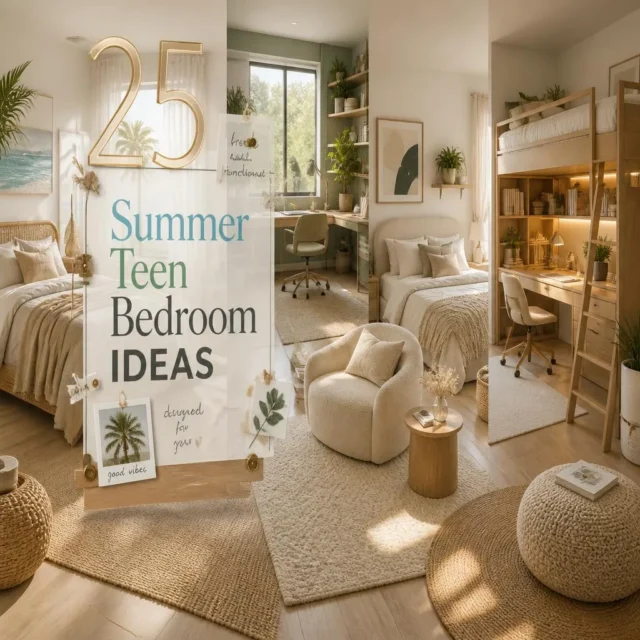
25 Summer Teen Bedroom Ideas
1. Coastal Summer Teen Room
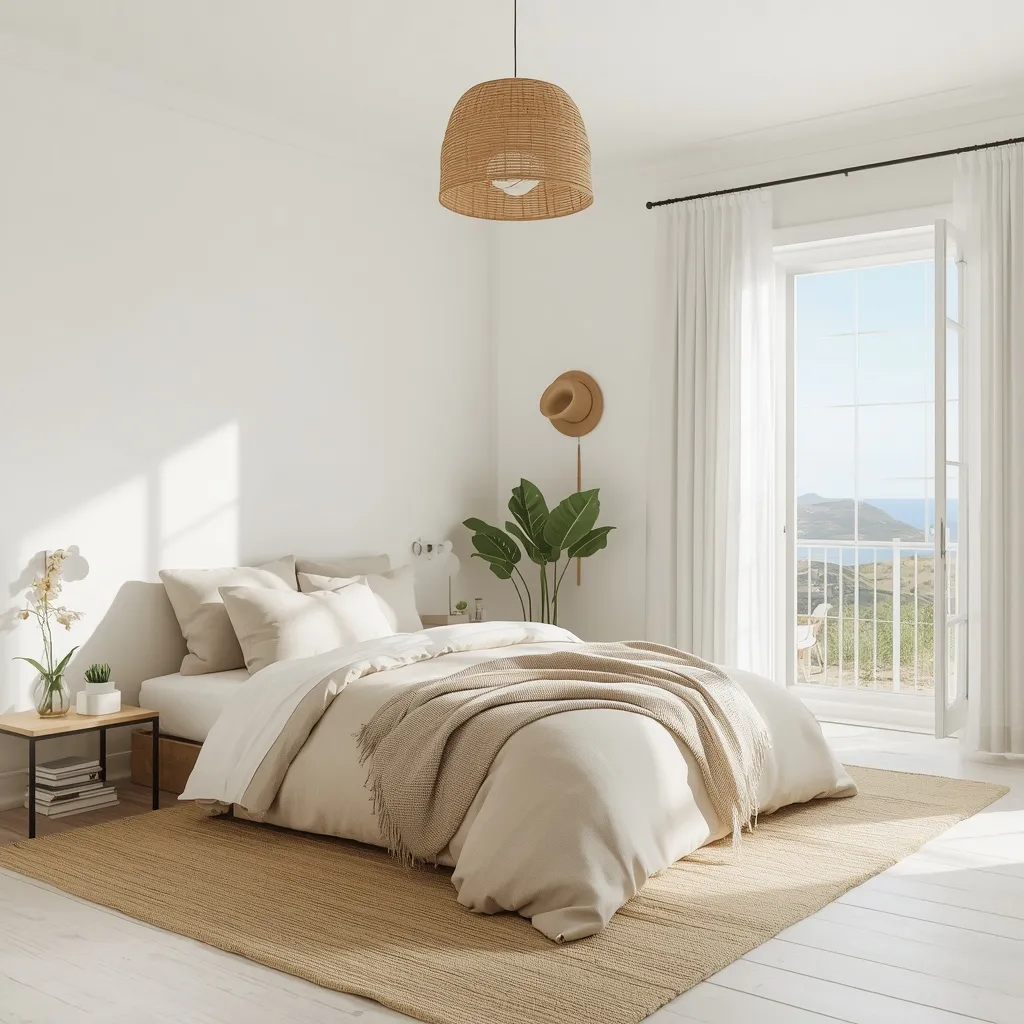
A coastal teen bedroom is all light and air: white walls, sand-toned bedding, a rattan pendant, and sheer curtains moving at an open window. Relaxed and bright, it’s the most naturally summery direction. Breezy, calm, and easy to live with.
Build the scheme from white, sand, and one soft blue, using natural textures, jute rug, rattan basket, cotton throw, rather than pattern to create interest. Keep literal beach motifs out of it: shells and anchors read as childish to most teenagers, while the palette and textures alone read as grown-up. Sheer curtains soften harsh summer light without darkening the room during the day, though pair them with a blackout blind for sleeping. This suits bright rooms, calm-preferring teens, and anyone wanting a look that ages well.
- Why it works: Palette and natural texture read coastal without motifs teens find childish.
- Best for: Bright rooms; teens who want calm over bold.
- Key elements: white and sand base, one soft blue, jute and rattan, sheer curtains plus blackout blind.
2. Cottagecore Floral Bedroom
A cottagecore teen room is soft and gathered: small floral prints, cream walls, a vintage quilt, dried flowers in bottles, and warm lamp light. Romantic and cozy, this aesthetic has real staying power among teenagers. Pretty, layered, and nostalgic.
Mix small-scale florals with plain linens so the pattern has room to breathe, keeping flower colors within one family rather than mixing everything. Dried flowers and pressed-flower frames last for years and cost very little, which suits a changeable teen budget. Thrifted or hand-me-down wooden furniture fits the look better than new flat-pack and is often cheaper. This suits teens who like softness and vintage things, and rooms where a warm rather than cool palette works best.
- Why it works: Plain linens give small florals space so the room reads charming, not busy.
- Best for: Vintage-loving teens; warm-toned rooms.
- Key elements: small florals, plain linen balance, dried flowers, thrifted wooden furniture.

3. Modern Minimalist Teen Room
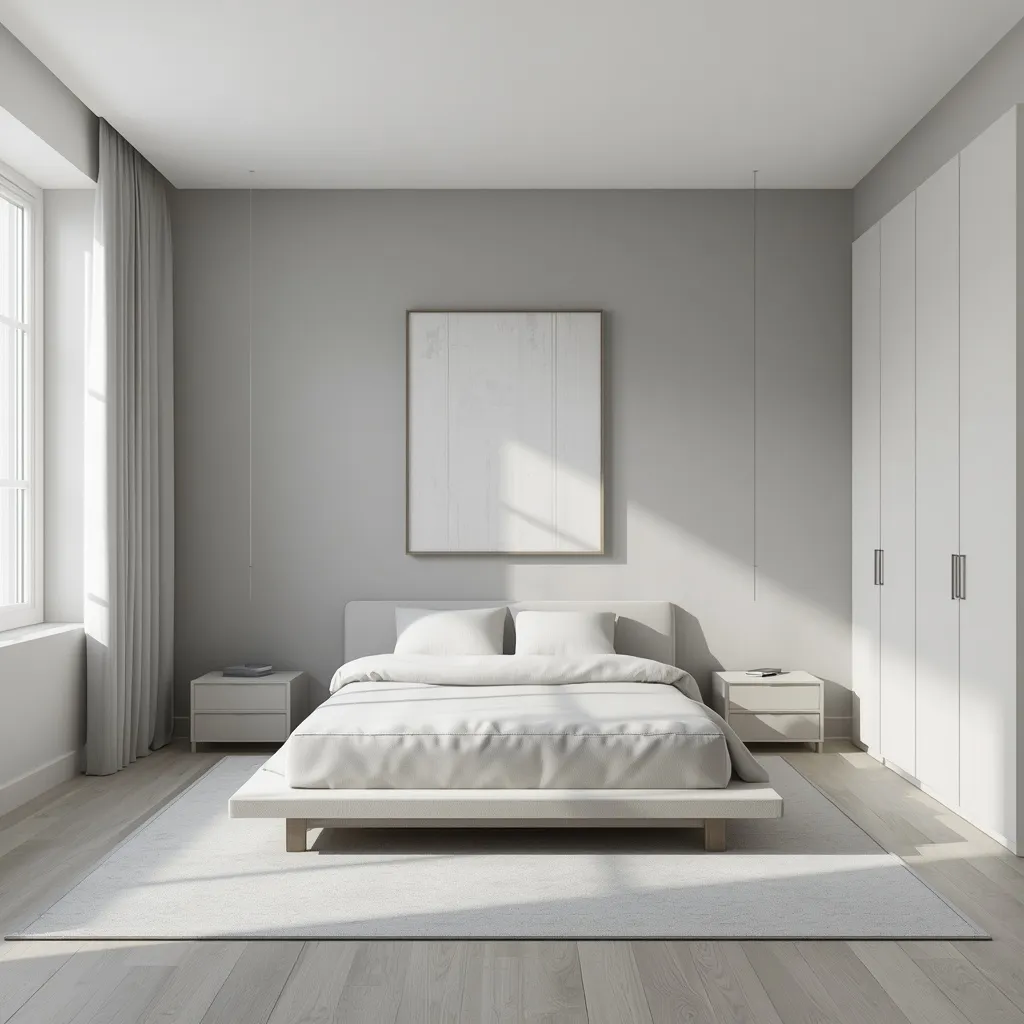
A minimalist teen bedroom is clean and uncluttered: white or pale grey walls, a low platform bed, one piece of large artwork, and almost nothing on the surfaces. Sharp and calm, minimalism suits teenagers who find visual noise stressful. Simple, ordered, and restful.
Limit the palette to two neutrals plus one accent, choose furniture with clean lines and no ornament, and build in enough closed storage that surfaces genuinely stay clear, minimalism fails without somewhere to put things. One oversized artwork or photo print does more than a cluster of small frames. This look only works if it’s the teen’s own choice, since an imposed minimalist room tends to fill up within a month. This suits tidy teens, small rooms, and anyone who studies better without clutter.
- Why it works: Closed storage is what makes clear surfaces sustainable rather than aspirational.
- Best for: Tidy teens; study-focused rooms; small spaces.
- Key elements: two neutrals plus one accent, clean-lined furniture, closed storage, one large artwork.
4. Sage Green Study Retreat
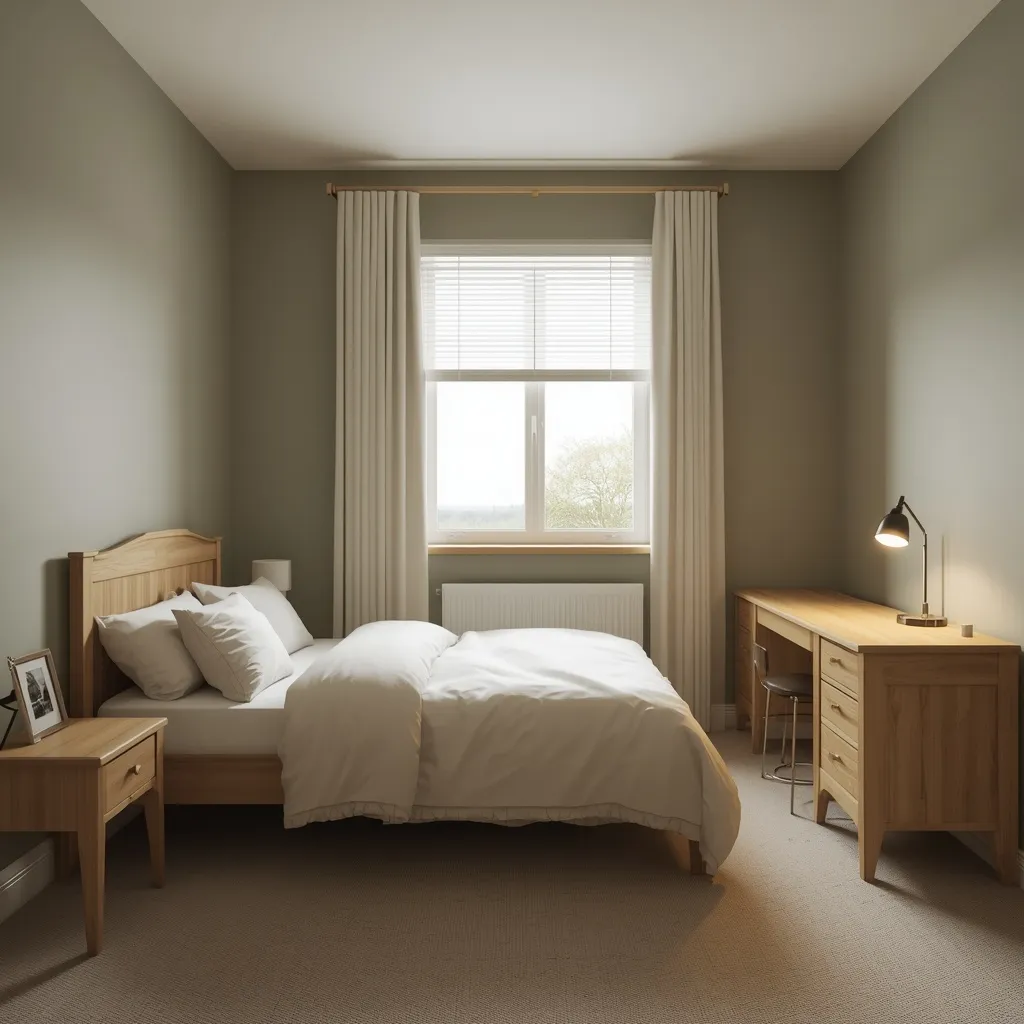
A sage green teen bedroom feels calm and grown-up: muted grey-green walls, natural wood, cream bedding, and a proper desk by the window with a task lamp. Restful and focused, green is the easiest color to live and work in. Soft, current, and easy on the eyes.
Choose a muted grey-leaning sage rather than a bright green, pairing it with natural oak and cream. Position the desk to face a window or a wall rather than the bed, and add a dedicated task lamp, overhead lighting alone casts shadows across a page and makes evening study harder. Green’s low saturation is genuinely restful in a room used for hours of homework. This suits study-heavy teens, exam years, and anyone wanting color that isn’t loud.
- Why it works: Low-saturation green stays restful across long study sessions where bright color tires the eye.
- Best for: Study-heavy teens; exam years.
- Key elements: muted grey-sage, natural oak, cream bedding, desk facing a wall or window, task lamp.
5. Boho Layered Textile Room
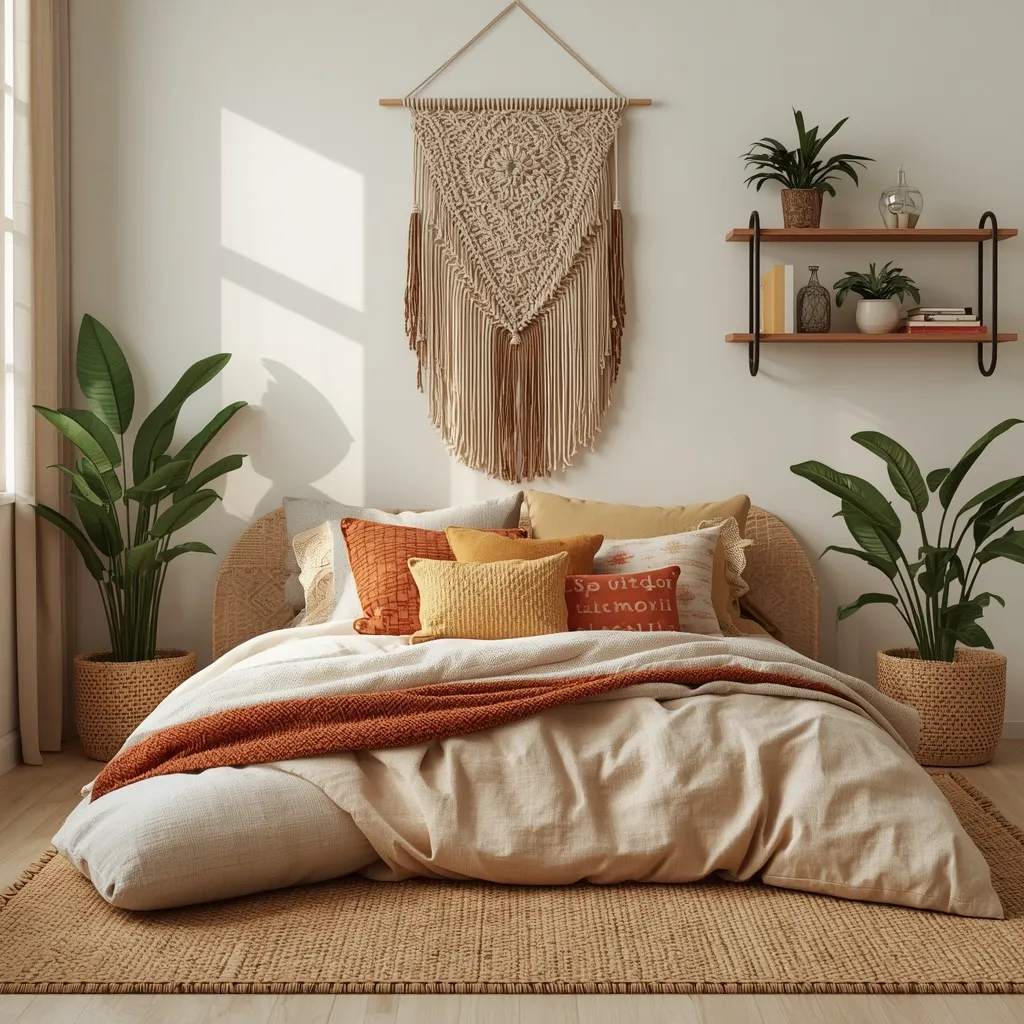
A boho teen bedroom is warm and collected: layered rugs, a macramé hanging, mixed cushions, rattan details, and plants on every surface. Textural and personal, boho rewards collecting things over time. Cozy, eclectic, and full of character.
Layer textiles in a consistent palette, warm neutrals with terracotta and mustard, say, so the mix reads intentional rather than random, and keep the walls fairly plain to stop the room feeling overwhelming. Layering a smaller patterned rug over a large plain one is a cheap way to add depth. Boho suits teens who accumulate things, since the style absorbs additions gracefully instead of being ruined by them. This suits maximalist teens and rooms that will change gradually.
- Why it works: A consistent palette makes layered textiles read collected rather than cluttered.
- Best for: Maximalist teens; rooms that evolve over time.
- Key elements: warm neutral palette, layered rugs, macramé, rattan, plants, plain walls.
6. Neutral Aesthetic Cloud Room
A neutral aesthetic bedroom is soft and photogenic: cream and beige layers, a fluffy rug, cloud-shaped cushions, and warm lamp light everywhere. Gentle and calm, this is one of the most popular teen looks for good reason. Soft, tonal, and soothing.
Work within a narrow band of creams, beiges, and warm whites, letting texture do everything, a bouclé cushion, a shaggy rug, waffle cotton bedding. Warm lamps at 2700K look far better in photos and feel calmer at night than a cool overhead light, which matters in a room teens photograph constantly. The risk is flatness, so vary textures deliberately rather than repeating one. This suits teens who want a calm, aesthetic-led room, and it photographs beautifully.
- Why it works: Deliberately varied texture prevents an all-neutral room from reading flat.
- Best for: Aesthetic-led teens; photo-friendly rooms.
- Key elements: cream and beige band, mixed textures, warm 2700K lamps, no cool overheads.
7. Bold Color-Pop Summer Room
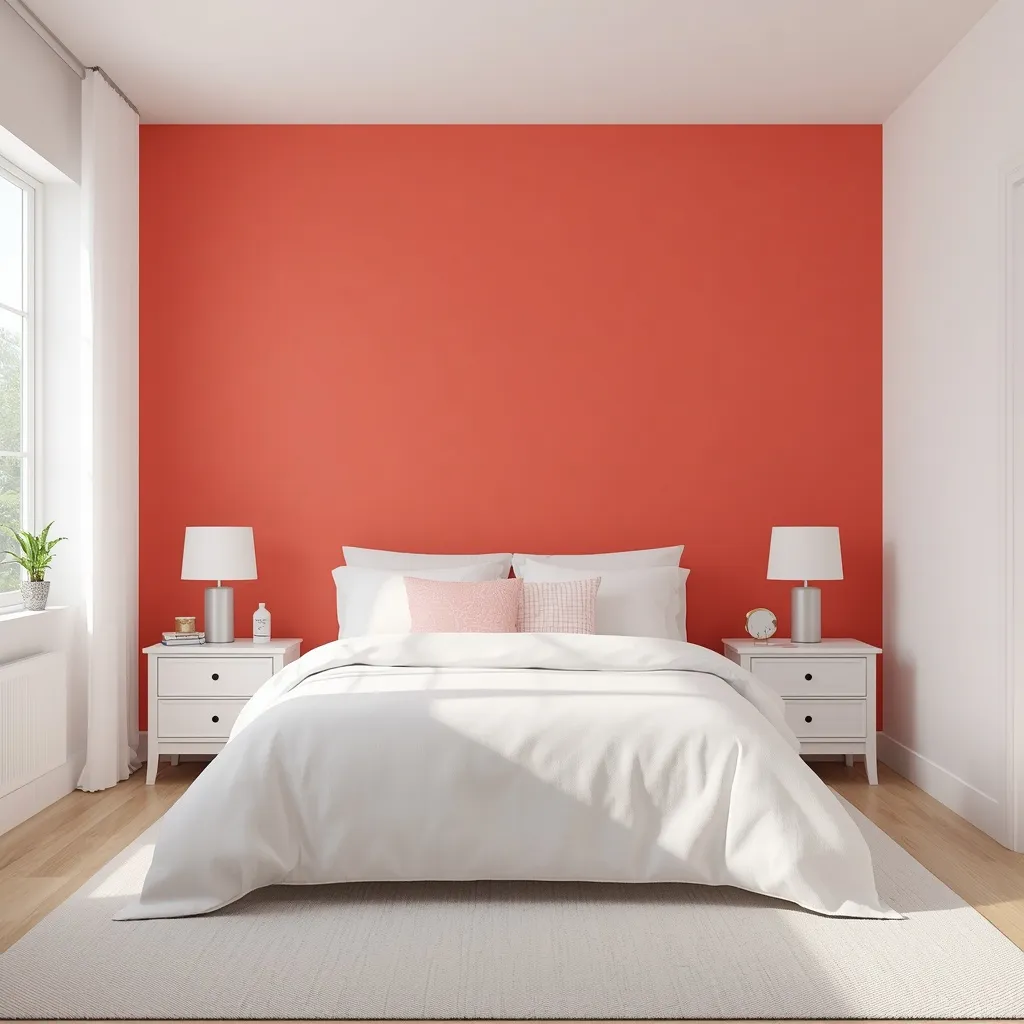
A bold teen bedroom commits to one strong color: a saturated wall in coral, cobalt, or emerald, with white bedding keeping it fresh and clean. Confident and energetic, bright color suits summer perfectly. Vivid, cheerful, and unmistakably personal.
Choose one saturated color and use it generously on a wall or two, keeping bedding and furniture simple so the color has a clean frame. A bedroom is a low-risk place for bold color because it’s a small area and repainting is cheap. Test a large sample on the wall and look at it in the evening as well as daylight, since saturated colors shift dramatically under lamp light. This suits expressive teens, rented rooms where paint is permitted, and anyone bored of neutrals.
- Why it works: White bedding and simple furniture frame a saturated wall so it reads designed.
- Best for: Expressive teens; low-risk bold experiments.
- Key elements: one saturated wall color, white bedding, large sample tested day and evening.
8. Gallery Wall Art Studio
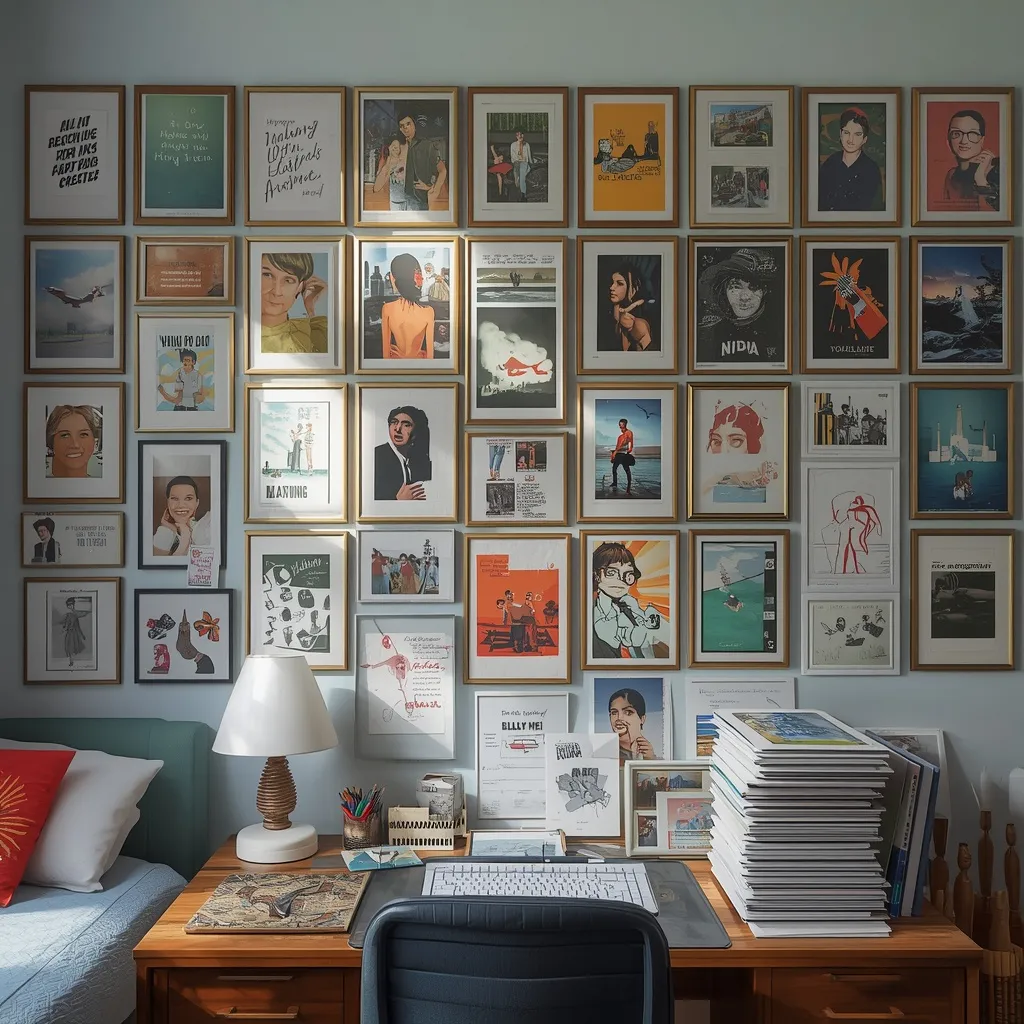
An art-studio teen bedroom puts the walls to work: a dense gallery of prints, photos, postcards, and the teen’s own artwork, above a desk stacked with supplies. Personal and creative, this room shows who lives in it. Busy, expressive, and genuinely individual.
Lay the gallery out on the floor first to settle the arrangement before anything goes on the wall, keeping frame colors consistent even when the artwork isn’t. Use removable adhesive strips rather than nails in rented or repeatedly-changed rooms, checking the weight rating and following the removal instructions to avoid pulling paint off. Leave space to keep adding, since the point is that the wall grows. This suits creative teens, renters, and rooms that need personality without a big budget.
- Why it works: Consistent frames hold a varied, growing collection together visually.
- Best for: Creative teens; renters; low budgets.
- Key elements: floor-planned layout, consistent frames, removable adhesive strips, room to grow.
9. Plant-Filled Green Oasis
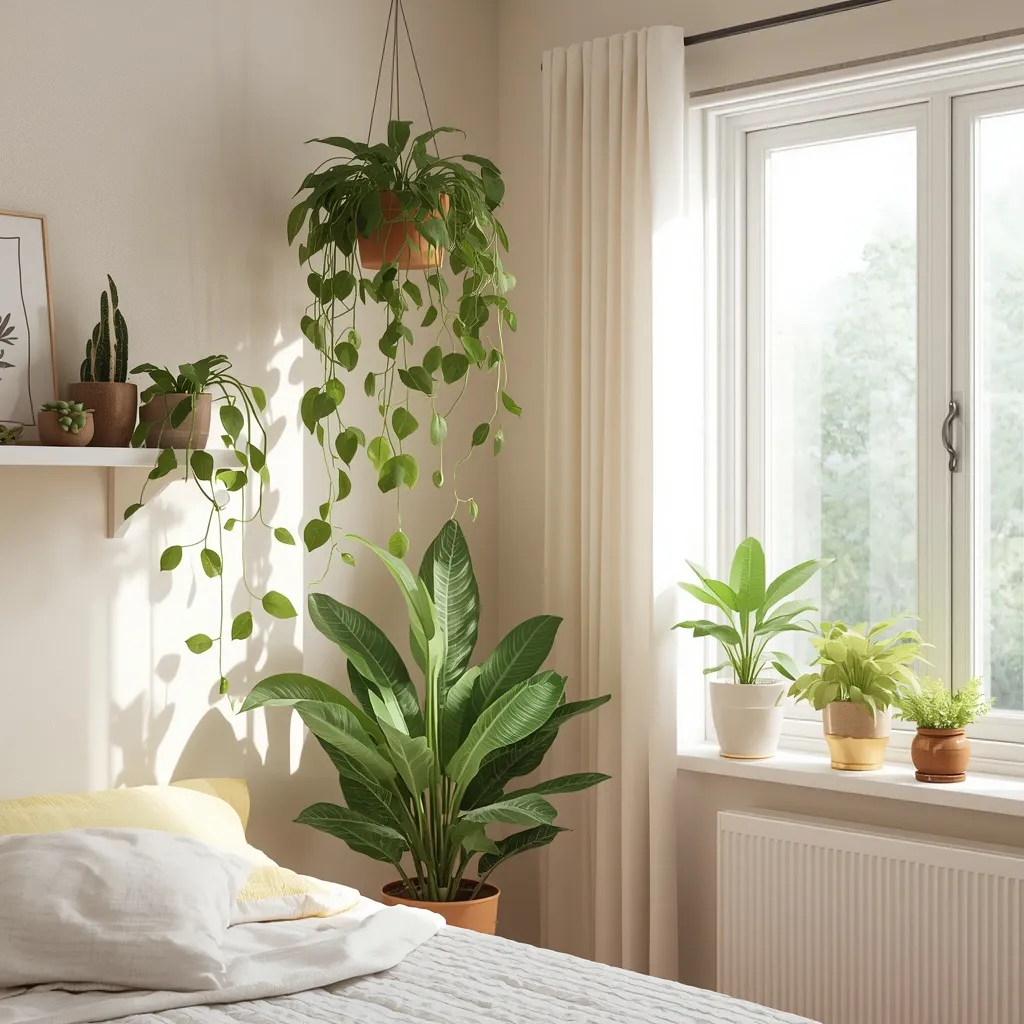
A plant-filled teen bedroom feels alive: trailing pothos on a high shelf, a snake plant in the corner, small pots along the windowsill, and green everywhere against pale walls. Fresh and calming, plants make a room feel cared for. Leafy, cool, and restorative.
Group plants in odd numbers at varied heights rather than spacing single pots evenly, and match the species to the room’s actual light, bedrooms are often dim, so snake plants, ZZ plants, and pothos are the reliable choices. Start with three and add more once they’ve survived a season, since buying twelve at once usually ends badly. If pets share the room, check toxicity, as pothos and several common trailing plants are toxic to cats and dogs. This suits teens who want a calm room and enjoy looking after something.
- Why it works: Odd-numbered groups at varied heights read as styling rather than scattered pots.
- Best for: Calm-seeking teens; beginners willing to learn plant care.
- Key elements: three plants to start, varied heights, low-light species, toxicity checked for pets.
10. Monochrome Black and White
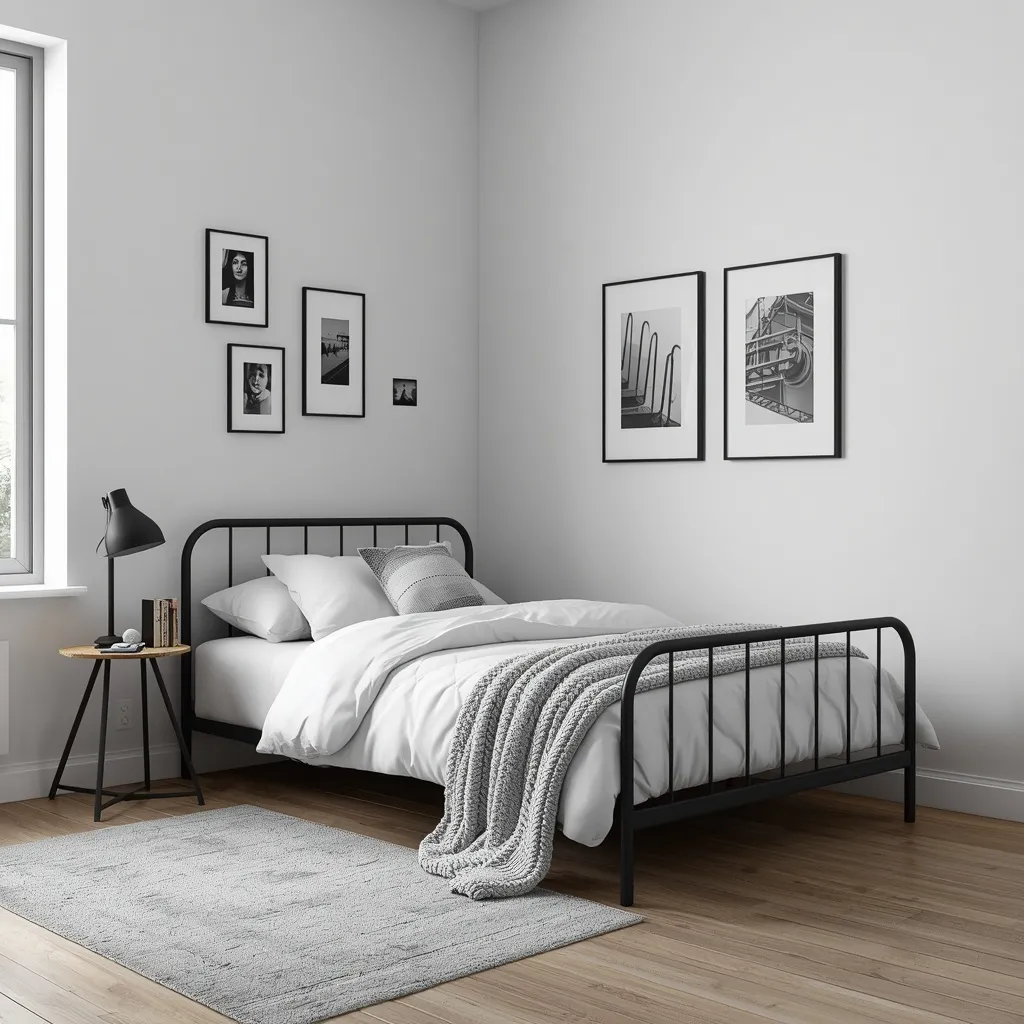
A black-and-white teen bedroom is graphic and modern: white walls, black bed frame, monochrome prints, and one grey rug anchoring the floor. Sharp and confident, monochrome always looks deliberate. Bold, clean, and low-fuss.
Keep the base white and repeat black in three or four places, bed frame, lamp, frames, shelf brackets, so it reads as a scheme. Add one texture-heavy element like a chunky knit throw or a shaggy rug to stop the room feeling cold and hard. Monochrome is one of the cheapest looks to pull off, since black-and-white prints and simple frames cost very little. This suits modern-minded teens, small rooms needing definition, and tight budgets.
- Why it works: Black repeated three or four times against white reads as a scheme, not stray dark objects.
- Best for: Modern teens; small rooms; tight budgets.
- Key elements: white base, black repeated, one heavy texture, monochrome prints.
11. Sporty Teen Room
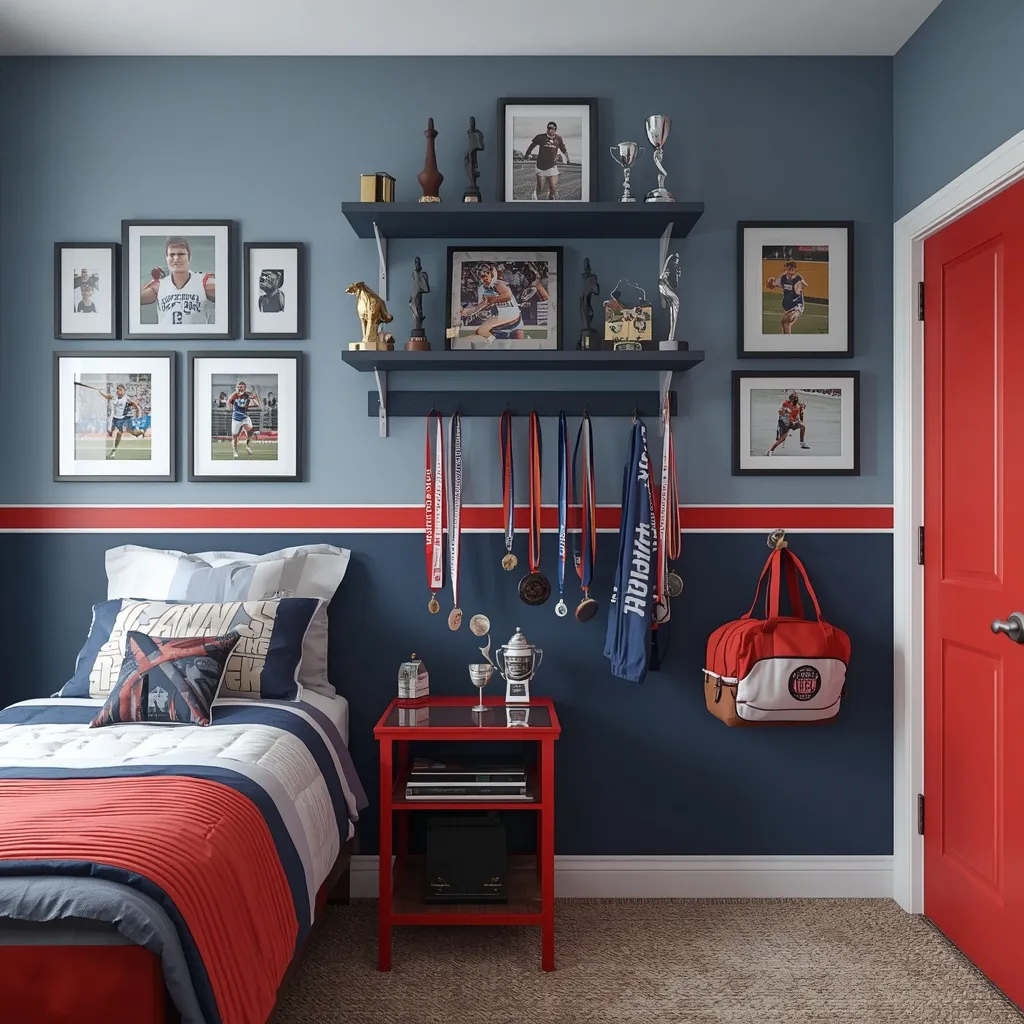
A sport-led teen bedroom is energetic and personal: a strong team-adjacent color scheme, framed photos, shelving for medals and kit, and a clear space for a ball or bag by the door. Active and organized, this room works around a real hobby. Purposeful, personal, and practical.
Build the palette around one or two colors the teen actually associates with their sport rather than covering the walls in merchandise, which dates fast and is hard to change. Open shelving displays medals and trophies properly, and hooks by the door stop kit ending up on the floor. Store damp kit outside the bedroom where possible, since wet sports gear in a warm room causes odor and mildew. This suits active teens and rooms that need to absorb equipment.
- Why it works: A color scheme built around the sport ages far better than wall-to-wall merchandise.
- Best for: Active teens; rooms storing sports kit.
- Key elements: one or two sport colors, display shelving, door hooks, damp kit stored elsewhere.
12. Gaming Setup Bedroom
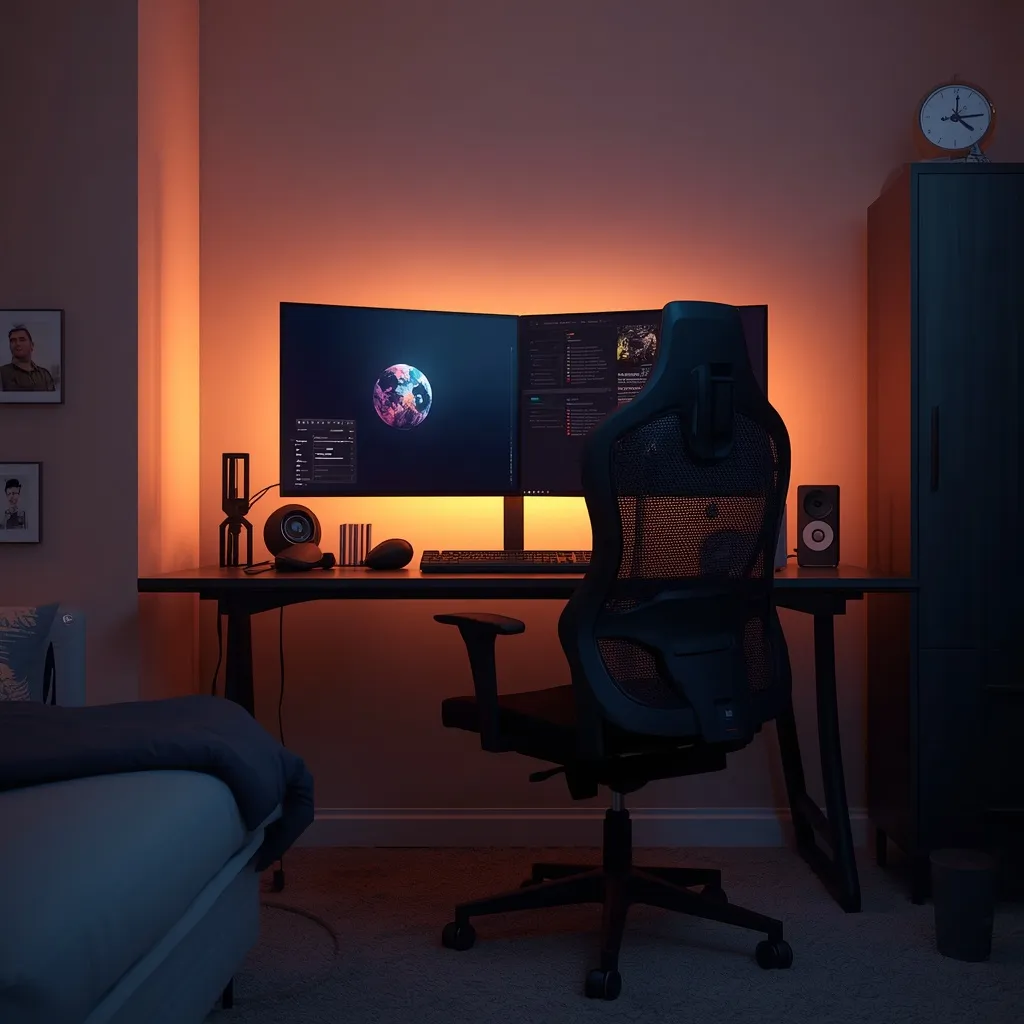
A gaming teen bedroom is built around the desk: a proper monitor setup, adjustable chair, controlled lighting, and cable management keeping the whole thing tidy. Focused and functional, a good gaming room is an ergonomics problem first. Organized, comfortable, and genuinely usable.
Set the monitor about an arm’s length away with the top of the screen at or just below eye level, and choose a chair with adjustable height so feet rest flat on the floor, teenagers grow fast, and a fixed-height chair stops fitting within a year. Add bias lighting behind the monitor to reduce eye strain in a dark room. Electrical safety matters here: don’t daisy-chain extension leads or overload a single socket with multiple high-draw devices, and keep cables out of walkways. This suits gaming teens and rooms doubling as study spaces.
- Why it works: Screen height and an adjustable chair prevent the neck and back strain long sessions cause.
- Best for: Gaming teens; rooms doubling as study spaces.
- Key elements: monitor at arm’s length, top at eye level, adjustable chair, bias lighting, safe cable management.
13. Music-Lover’s Bedroom
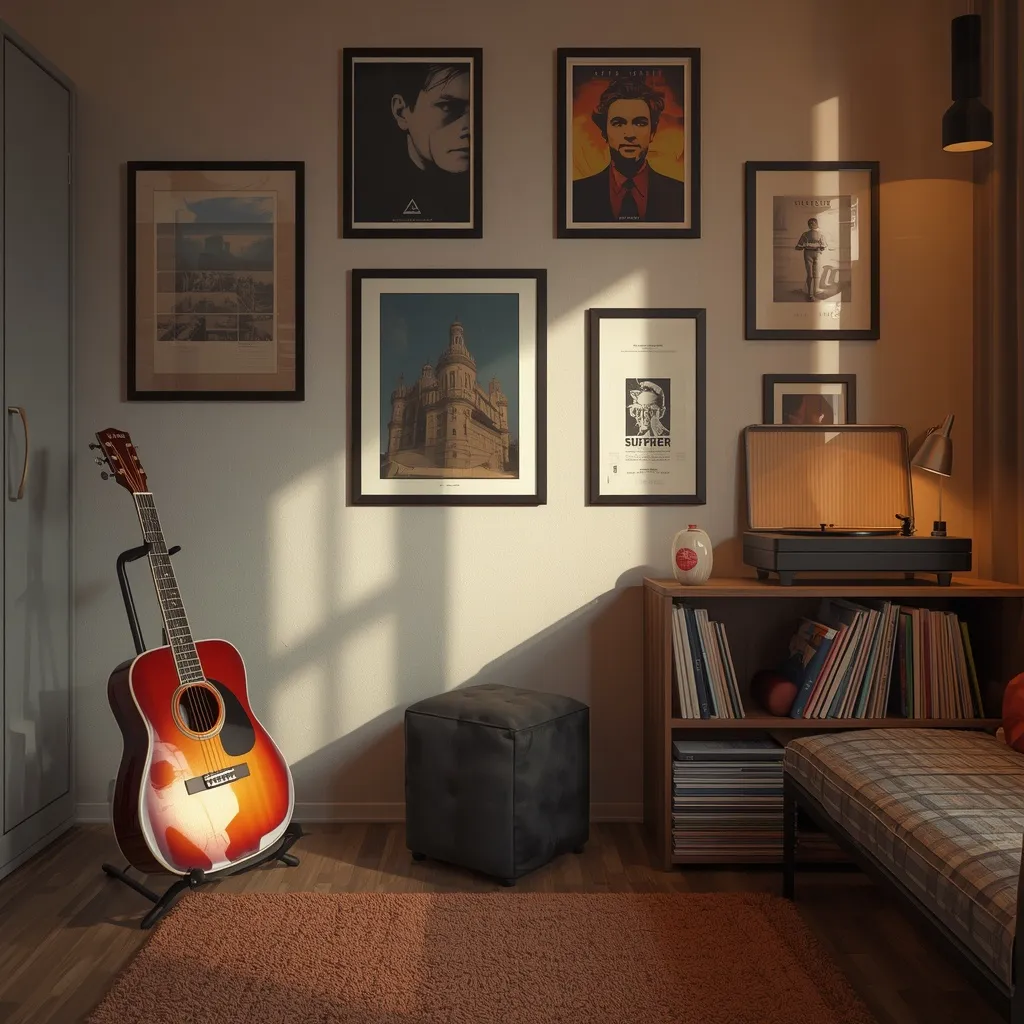
A music-led teen bedroom shows what they listen to: framed album artwork, an instrument on a proper stand, a record player on a shelf, and a comfortable corner for listening. Personal and warm, music rooms feel genuinely inhabited. Expressive, characterful, and functional.
Display instruments on wall mounts or floor stands rather than leaning them against furniture, where they get knocked over and damaged. Frame album artwork in matching frames for a gallery effect, and keep the listening corner separate from the desk so the room has somewhere to relax that isn’t the bed. A rug and soft furnishings genuinely reduce echo in a hard-surfaced room. This suits musical teens and rooms where a hobby needs displaying rather than hiding.
- Why it works: Proper stands and mounts protect instruments while turning them into display pieces.
- Best for: Musical teens; hobby-forward rooms.
- Key elements: wall mounts or stands, matching album frames, separate listening corner, soft furnishings for echo.
14. Small Room Loft Bed Layout
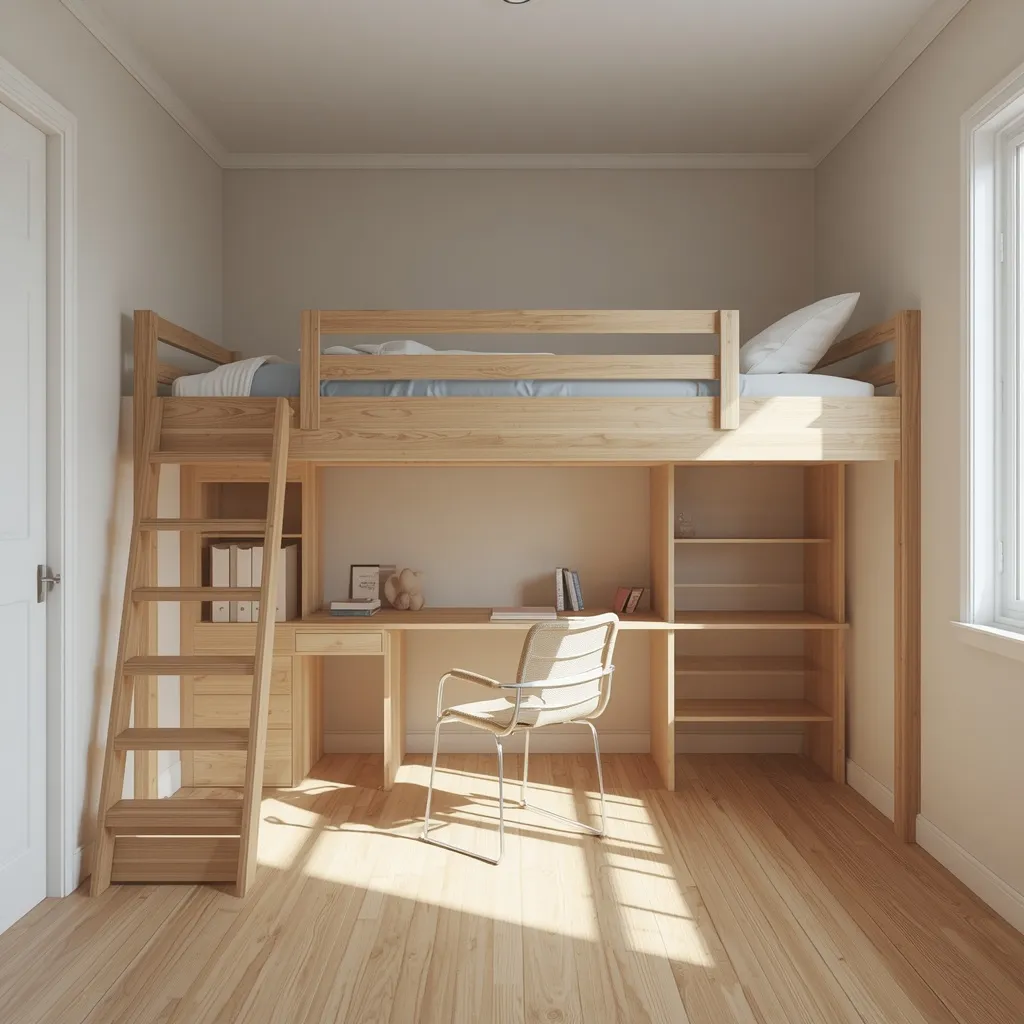
A loft bed transforms a small teen room: the bed raised high with a desk, storage, or a seating nook tucked underneath, freeing the entire floor. Clever and space-doubling, this is the single biggest win in a tiny room. Efficient, vertical, and practical.
Use a loft bed to stack two functions in one footprint, allowing roughly 90 cm (3 ft) of headroom above the mattress so it doesn’t feel claustrophobic, and check ceiling height before buying. Safety points that matter: loft and bunk beds should have guardrails on all open sides, be assembled exactly per the manufacturer’s instructions, and be secured to the wall where the instructions require it, most guidance advises against raised beds for children under six, though teenagers are well past that. Never fit a loft bed directly under a ceiling light or fan. This suits box rooms and shared spaces.
- Why it works: Stacking two functions in one footprint frees the entire floor of a small room.
- Best for: Box rooms; tiny bedrooms; shared spaces.
- Key elements: 90 cm headroom, guardrails all sides, wall-secured per instructions, clear of ceiling fittings.
15. Shared Sibling Teen Room
A shared teen bedroom gives each person their own territory: matching beds with individual lighting, a divider or shelving unit between them, and personal display space each. Fair and workable, good shared rooms are about boundaries. Balanced, organized, and peaceable.
Give each teenager an identical set of core elements, bed, storage, light, and display area, since perceived fairness prevents most arguments, then let each personalize their own zone differently. An open shelving unit or curtain between beds creates privacy without blocking light. Individual reading lights matter enormously when two people keep different hours. This suits siblings sharing, and rooms that need to serve two personalities without becoming a battleground.
- Why it works: Identical core elements create perceived fairness, which prevents most shared-room conflict.
- Best for: Siblings sharing; two-personality rooms.
- Key elements: matched beds and storage, open shelf or curtain divider, individual reading lights, separate display zones.
16. Simple Scandi Teen Room
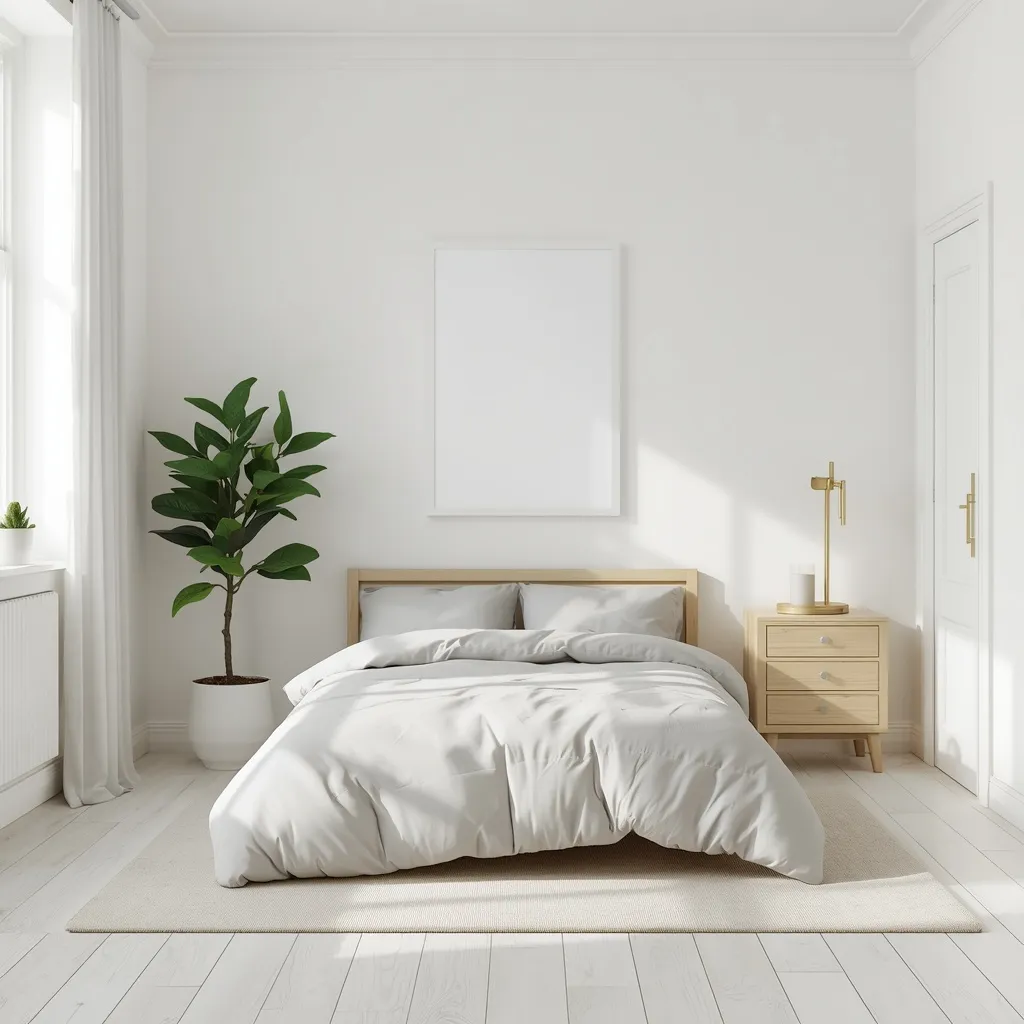
A Scandi teen bedroom is bright and uncomplicated: white walls, pale wood, a plain grey duvet, one plant, and nothing extraneous. Clean and functional, Scandi design is minimalism with warmth. Light, simple, and calm.
Combine white walls with pale birch or beech furniture and one or two soft textiles, keeping the palette to white, wood, and grey. Scandi differs from strict minimalism in that natural materials add warmth, which stops a simple room feeling stark. This is the most budget-friendly aesthetic on the list, since flat-pack pale wood furniture is widely available and cheap. This suits teens who want simple over styled, small rooms, and modest budgets.
- Why it works: Natural wood adds the warmth that keeps a very simple room from feeling stark.
- Best for: Simplicity-preferring teens; small rooms; modest budgets.
- Key elements: white walls, pale birch or beech, white-wood-grey palette, one or two soft textiles.
17. Warm Terracotta Desert Room
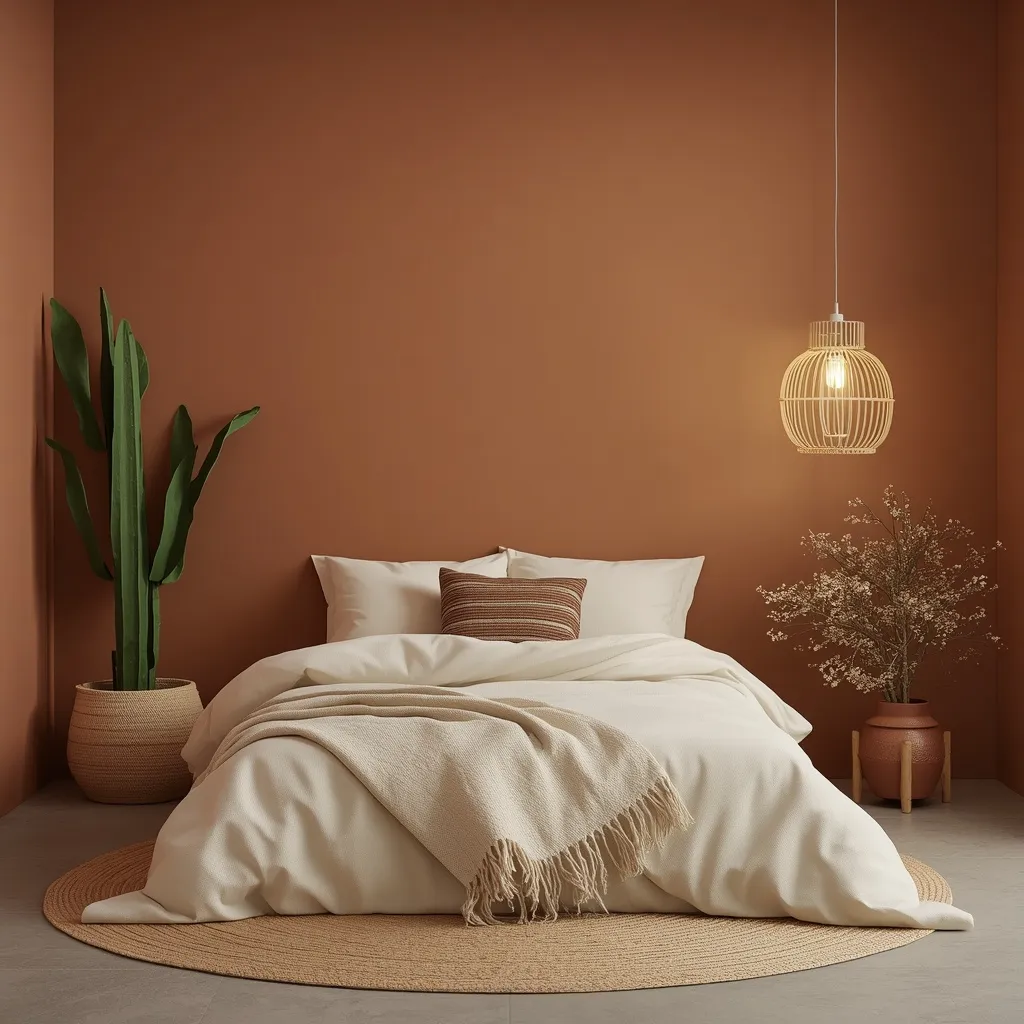
A desert-toned teen bedroom is warm and earthy: terracotta and clay walls, cream bedding, woven textures, and a single large plant. Grounded and cozy, warm tones feel welcoming rather than cold. Sun-baked, tactile, and inviting.
Use muted terracotta or clay rather than bright orange, pairing it with cream, tan, and natural fibers like jute and cotton. Warm earthy pigments look particularly good under lamp light in the evening, which matters in a room used late. Avoid combining terracotta with cool grey, which makes both look dull. This suits teens who find cool palettes unwelcoming, north-facing rooms needing warmth, and anyone wanting something less common than grey or white.
- Why it works: Warm earthy pigment stays rich under evening lamp light where cool tones go flat.
- Best for: North-facing rooms; teens who dislike cool palettes.
- Key elements: muted terracotta, cream and tan, jute and cotton, one large plant, no cool grey.
18. Blue and White Preppy Room
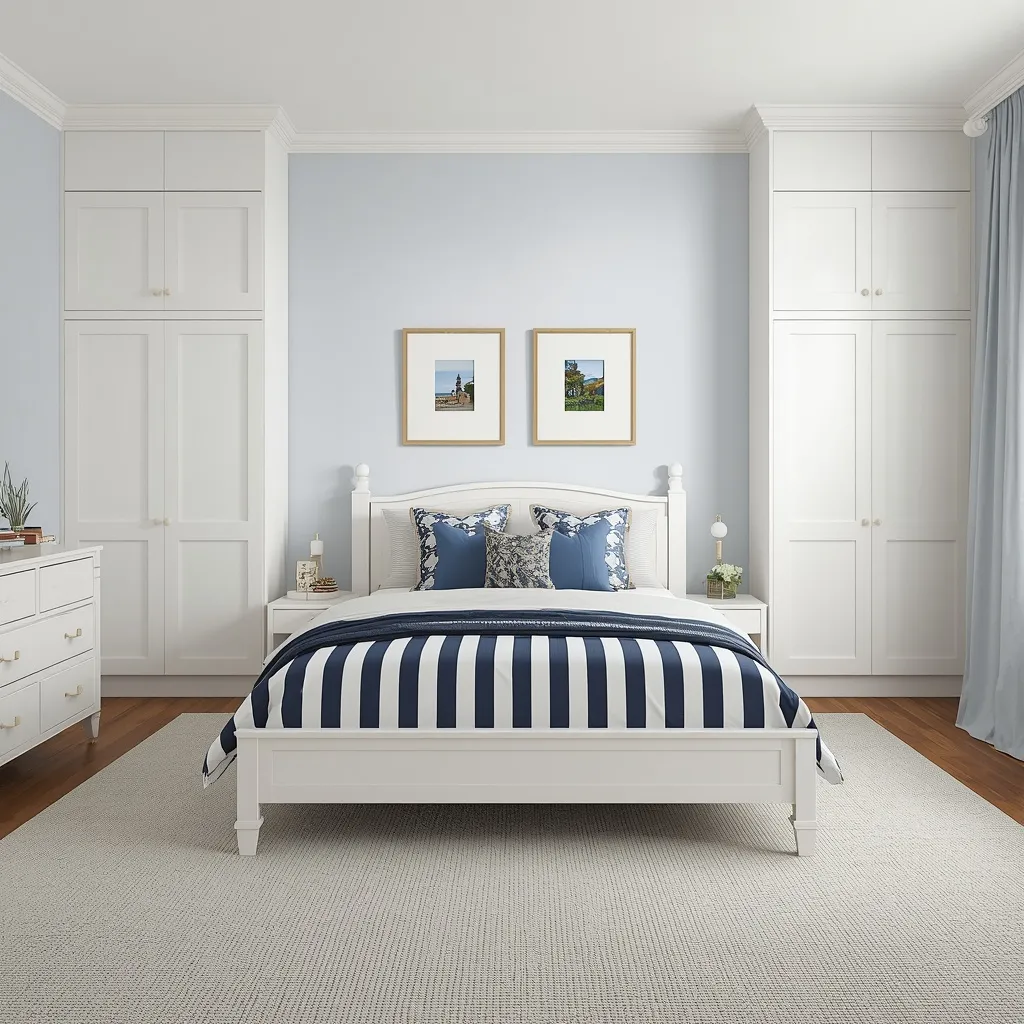
A preppy teen bedroom is crisp and tailored: navy and white stripes, a neatly made bed, framed prints in matching frames, and everything squared away. Smart and traditional, preppy is the tidiest look here. Sharp, classic, and orderly.
Keep to navy, white, and one accent, using stripes or a simple check rather than busy pattern, and choose furniture with clean traditional lines. This aesthetic depends on tidiness to work, so it needs generous closed storage, a preppy room with clutter just looks messy rather than relaxed. Matching frames and coordinated bedding do most of the heavy lifting. This suits naturally tidy teens and rooms shared with guests or used for study.
- Why it works: The look depends on order, so closed storage is what makes it sustainable.
- Best for: Naturally tidy teens; study and guest-facing rooms.
- Key elements: navy-white-one accent, stripes or check, clean traditional lines, generous closed storage.
19. Study-Focused Desk Zone
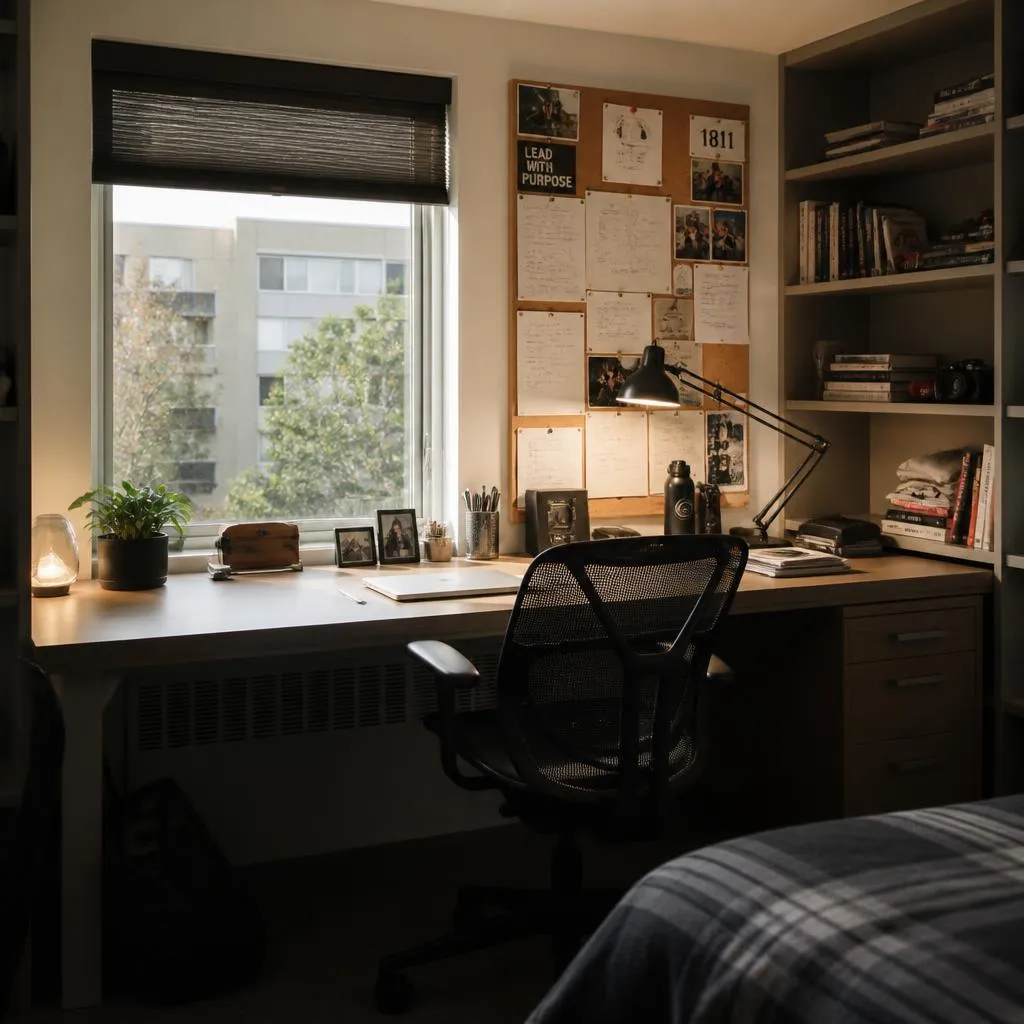
A study-led teen bedroom treats the desk as the main event: a proper-depth desk under a window, an adjustable chair, a pinboard above, and shelving within arm’s reach. Functional and focused, this room is built for exam years. Organized, practical, and calm.
Give the desk at least 60 cm (24 in) of depth and 100–120 cm (40–47 in) of width so a laptop and open books fit side by side, and position it facing a window or wall rather than the bed. Add a task lamp positioned to the opposite side from the writing hand, so it doesn’t cast a shadow across the page. Keep a pinboard rather than sticky notes on the wall, and store everything used weekly within arm’s reach. This suits exam-year teens and rooms that must double as workspaces.
- Why it works: Correct desk depth and task lighting remove the small frictions that make studying harder.
- Best for: Exam years; rooms doubling as workspaces.
- Key elements: 60 cm deep desk, 100–120 cm wide, facing wall or window, task lamp opposite writing hand, pinboard.
20. Sleepover-Ready Floor Lounge
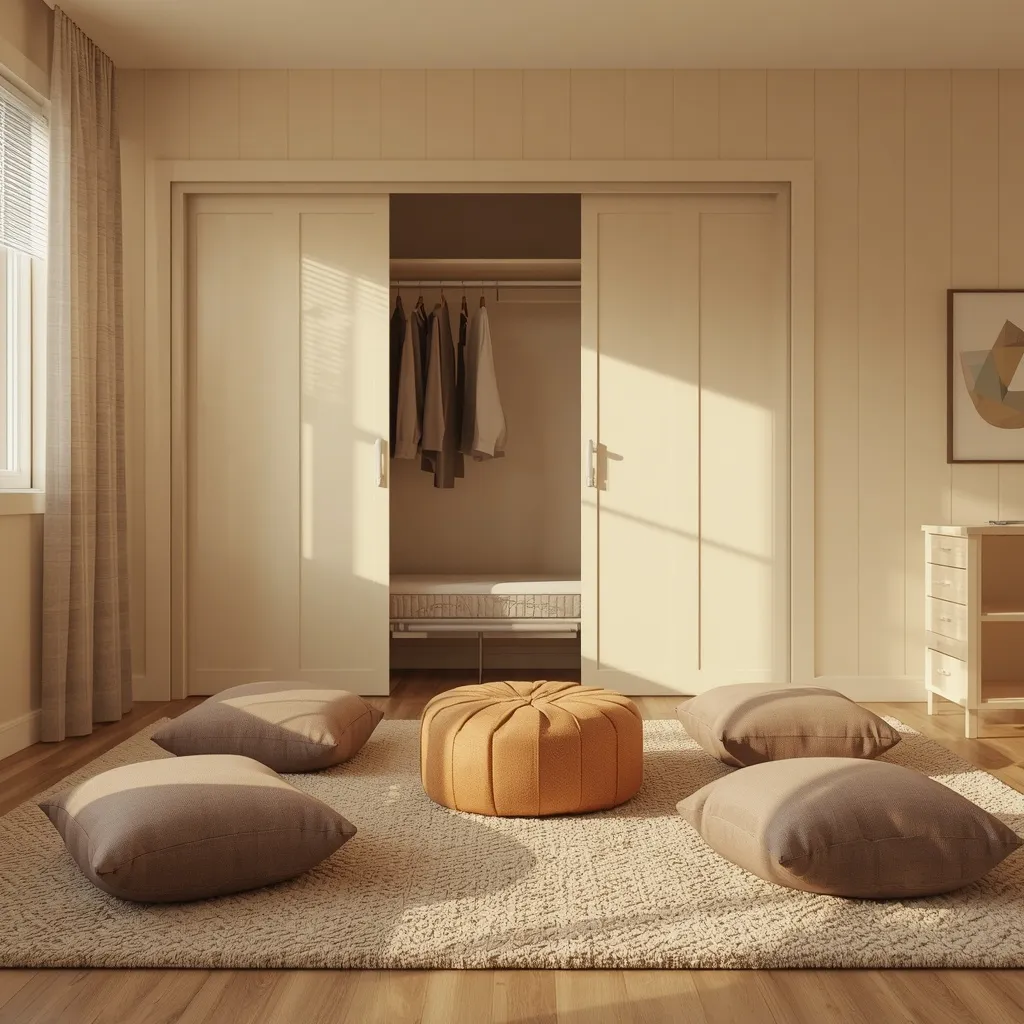
A social teen bedroom makes room for friends: floor cushions, a poufe, a folded spare mattress in a closet, and a clear area of rug where people can actually sit. Welcoming and flexible, this room expects visitors. Relaxed, sociable, and adaptable.
Keep a clear floor zone of at least 1.5 × 2 m (5 × 6.5 ft) if space allows, using furniture that moves easily, floor cushions, a lightweight poufe, a folding chair, rather than fixed seating that wastes space the rest of the time. Store a rollaway or folding mattress somewhere accessible. Keep the social zone away from the desk so schoolwork isn’t disturbed or knocked over. This suits sociable teens and rooms that host friends regularly.
- Why it works: Movable seating serves guests without wasting floor space the rest of the week.
- Best for: Sociable teens; rooms that host friends.
- Key elements:5 × 2 m clear zone, floor cushions and poufe, accessible spare mattress, kept clear of the desk.
21. Vintage Thrifted Eclectic
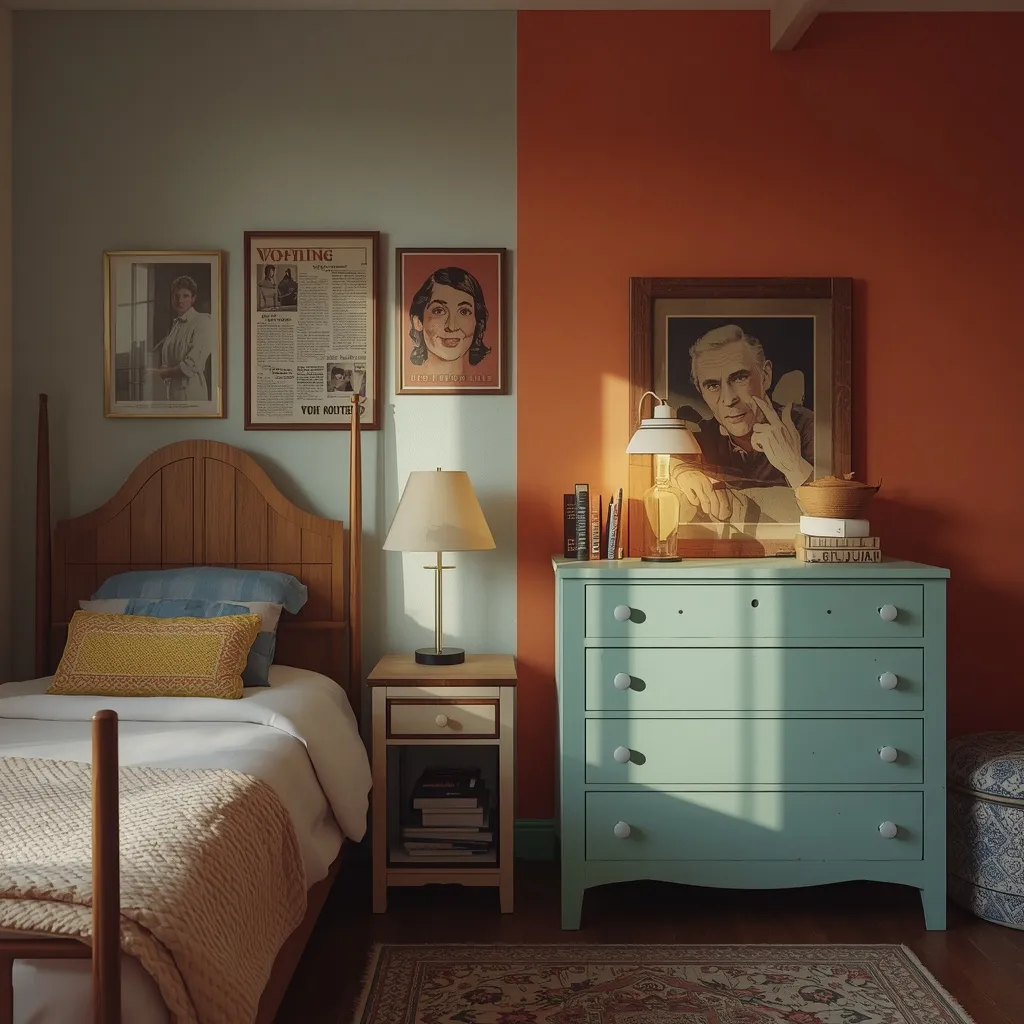
A thrifted teen bedroom is unrepeatable: a secondhand dresser, charity-shop lamps, vintage posters, and mismatched furniture pulled together by paint. Individual and sustainable, this is the cheapest genuinely stylish route. Collected, characterful, and one-of-a-kind.
Unify mismatched secondhand furniture by painting pieces in one or two colors, which turns a random collection into a scheme. Thrifting suits teenagers particularly well because it’s cheap enough to change often and nothing is precious. Check secondhand upholstered furniture for damage and odor before bringing it in, and note that painted furniture made before 1978 may contain lead paint, which releases hazardous dust when sanded, check before refinishing. This suits budget-conscious and environmentally-minded teens.
- Why it works: Painting mismatched pieces in one or two colors turns a random collection into a scheme.
- Best for: Budget and sustainability-minded teens.
- Key elements: secondhand furniture unified by paint, vintage posters, checked upholstery, lead paint caution.
22. Blackout Summer Sleep Setup
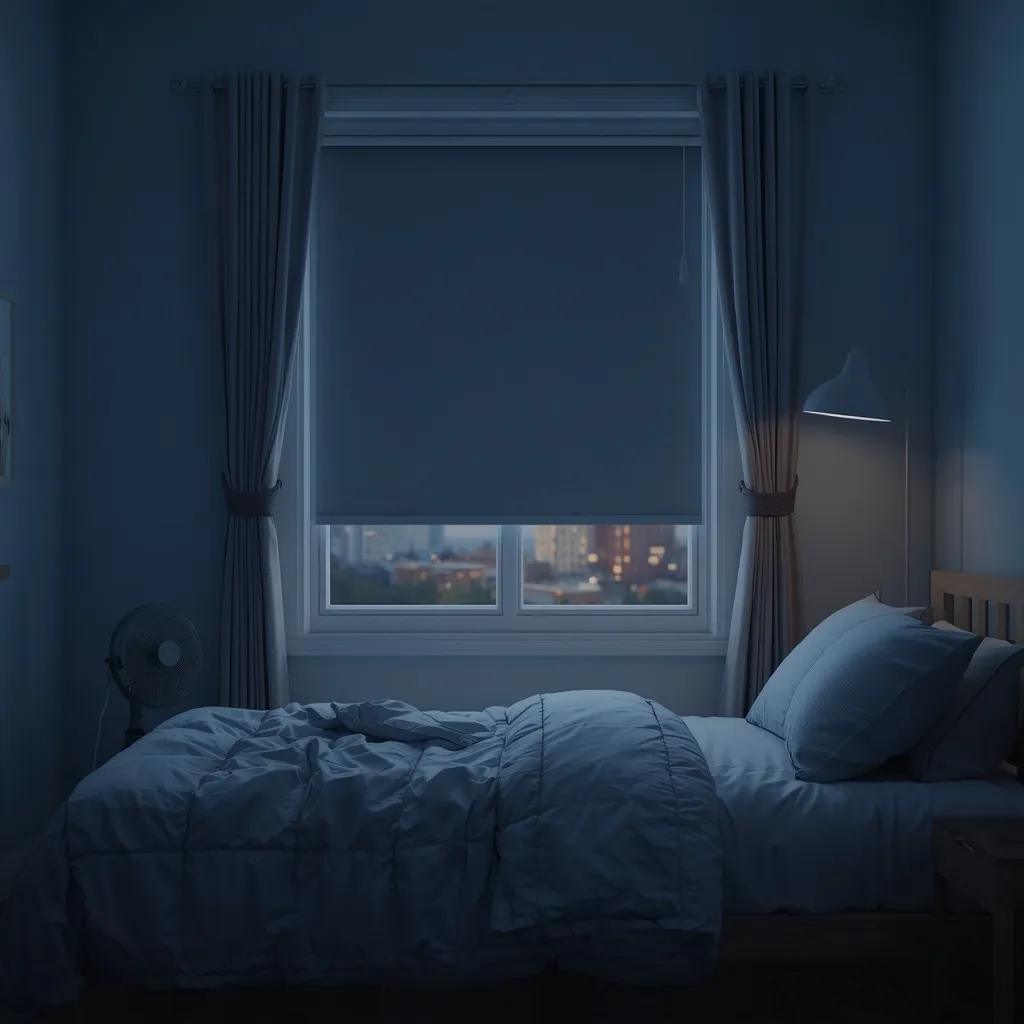
A sleep-first teen bedroom takes summer light seriously: proper blackout blinds behind curtains, a fan, cool cotton bedding, and screens kept off the nightstand. Practical and restorative, this setup solves a real summer problem. Dark, cool, and genuinely restful.
Fit blackout blinds inside the window recess with curtains over them, since light leaking around the edges is what usually defeats blackout curtains alone. This matters more for teenagers than adults: adolescent body clocks naturally shift later, and long summer evenings push sleep even later, so darkness in the hour before bed genuinely helps. Keep bedding to cotton percale or linen, which breathe better than sateen or microfiber, and charge phones outside the room or across it rather than beside the pillow. Choose cordless blinds, since blind cords are a strangulation hazard. This suits every teen bedroom in summer.
- Why it works: Recess-fitted blackout stops the edge light leak that defeats curtains alone.
- Best for: Every teen room in summer; late sleepers.
- Key elements: recess blackout blind plus curtains, fan, cotton percale or linen bedding, phone charged away from the bed, cordless blinds.
23. Renter-Friendly No-Damage Room
A rental teen bedroom gets its personality from everything except the walls: peel-and-stick decals, freestanding shelving, textiles, and lighting that clips rather than screws. Reversible and cheap, this leaves no trace behind. Colorful, temporary, and landlord-proof.
Build the scheme through textiles, rugs, and freestanding furniture, using removable adhesive hooks and strips rated for the weight of what they hold. Test any peel-and-stick product on a small hidden patch first and follow removal instructions exactly, since pulling too fast is what takes paint with it. Clip-on and plug-in lights avoid any wiring work. This suits renters, student accommodation, and families who move often.
- Why it works: Textiles and freestanding pieces deliver a full scheme with nothing fixed to the walls.
- Best for: Renters; student housing; frequent movers.
- Key elements: peel-and-stick tested first, weight-rated adhesive hooks, freestanding shelving, clip-on lighting.
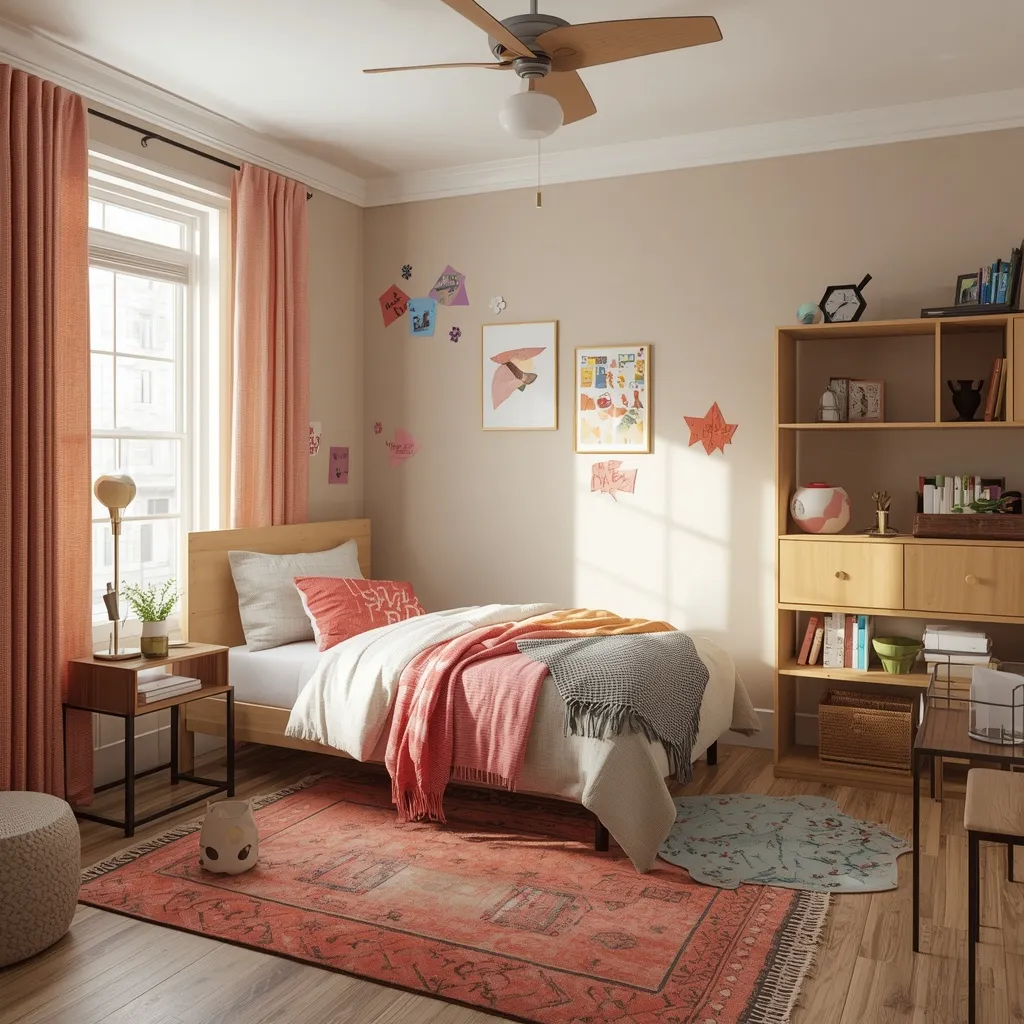
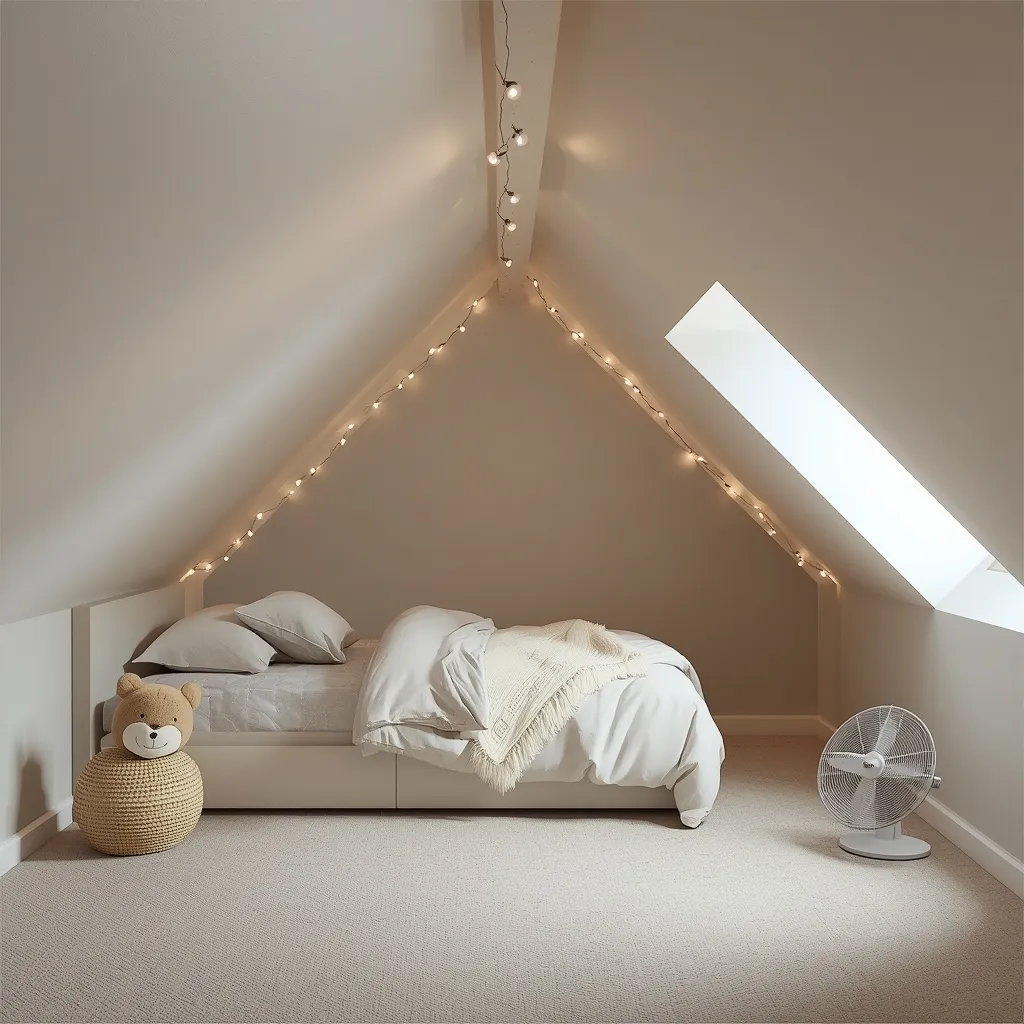
24. Attic Teen Hideaway
An attic teen bedroom uses its awkward shape as the appeal: sloped ceilings painted the same pale color as the walls, a low bed under the eaves, fairy lights along a beam, and built-in drawers in the low space. Snug and private, attic rooms feel like a retreat. Cozy, tucked-away, and characterful.
Paint walls, slopes, and beams a single pale color so the angles read as one continuous shell rather than being emphasized by contrast. Put the bed where headroom is lowest and keep full-height space for standing and the desk. Attic rooms overheat badly in summer, since heat rises and roof spaces have limited insulation, a fan, opening window, and blackout blind matter more here than anywhere else in the house. This suits loft conversions and teens who want privacy.
- Why it works: One pale color across walls and slopes turns awkward angles into a continuous shell.
- Best for: Loft conversions; privacy-seeking teens.
- Key elements: single pale color, bed under the lowest point, eaves drawers, fan and blackout for summer heat.
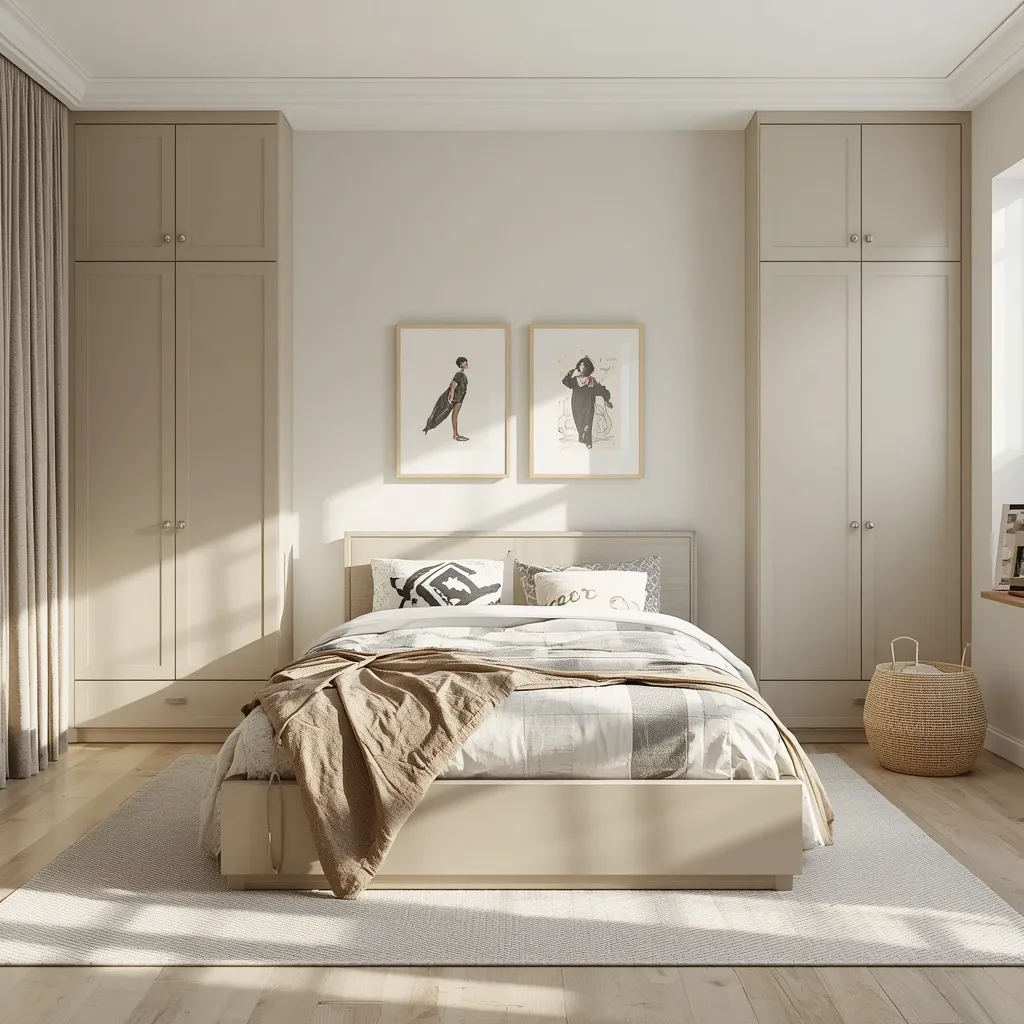
25. Grow-With-Me Neutral Base
The smartest teen bedroom is built in two layers: a neutral, well-made base of bed, storage, and flooring that will last a decade, plus a cheap style layer of bedding, posters, and cushions that can change every year. Strategic and economical, this is how a room survives changing taste. Adaptable, lasting, and sensible.
Spend the budget on the things that are expensive and disruptive to replace, a good bed frame, solid storage, neutral flooring, plain walls, and keep everything expressive cheap and swappable. A teenager’s taste can shift completely within two years, and this approach means a full refresh costs the price of bedding and a few prints rather than a whole room. Let the teen own the style layer entirely; a room they chose is a room they’ll look after. This suits every teen bedroom and any family planning more than one year ahead.
- Why it works: Splitting the room into a lasting base and a cheap style layer makes refreshes affordable.
- Best for: Every teen room; families planning long term.
- Key elements: quality neutral bed, storage and flooring, cheap swappable textiles and prints, teen chooses the style layer.
How Do You Plan a Teen Bedroom That Actually Works?
Plan a teen bedroom by zoning it for three functions before choosing any décor: sleeping, studying, and socializing. Give each zone its own defined space, keep the desk out of the bed’s immediate area, and make sure storage matches the amount of stuff actually being stored. Style comes last, and it should be the teenager’s choice, because a room they didn’t pick is a room they won’t maintain.
Rooms planned around how people really live are what the Sunday Abode approach is built on. For seasonal styling that works in any bedroom rather than a teen’s specifically, our guide to decorating a bedroom for summer covers the wider picture. For more on shaping the space, browse the rest of our bedroom ideas.
The Three Zones Every Teen Room Needs
Most teen bedroom problems are zoning problems rather than décor problems. Use this reference when planning the layout, and adapt the clearances down proportionally in a very small room rather than dropping a zone entirely.
| Zone | Space needed | Essentials | Common mistake |
| Sleep | Bed plus 60 cm (24 in) access | Blackout, reading light, fan | Phone charging by the pillow |
| Study | Desk 60 × 100 cm (24 × 40 in) | Task lamp, chair, storage in reach | Desk facing the bed |
| Social | 1.5 × 2 m (5 × 6.5 ft) clear | Movable seating, clear rug | Fixed seating wasting space |
| Storage | Scaled to actual belongings | Closed storage, door hooks | Open shelving only |
Why Summer Sleep Is Harder for Teenagers
Adolescent body clocks naturally shift later during the teenage years, meaning teens genuinely feel sleepy later at night than younger children or adults. Long summer evenings push that later still, because light in the hours before bed delays the body’s wind-down signals. Blackout blinds, a cool room, and keeping screens away from the bed are practical responses to a real physiological pattern rather than décor preferences.
Safety notes: anchor dressers, bookcases, and tall shelving to the wall with anti-tip restraints, furniture and television tip-overs cause serious injuries every year and are almost entirely preventable, and most flat-pack furniture now includes the hardware. Choose cordless blinds, since blind cords present a strangulation risk. Assemble loft and bunk beds exactly per the manufacturer’s instructions, fit guardrails on all open sides, secure them to the wall where specified, and never position one directly beneath a ceiling light or fan. With decorative string lights, buy products carrying a recognized safety certification, never drape them over bedding, curtains, or other fabric, don’t run them under rugs, and switch them off before sleeping. Avoid candles and incense in a teen bedroom entirely. Gaming and study setups draw real power, so avoid daisy-chaining extension leads or overloading one socket, and keep cables out of walkways. Fix heavy mirrors and shelves into studs or rated anchors rather than plasterboard alone, and think twice before hanging anything heavy above a bed. Furniture painted before 1978 may contain lead paint, which releases hazardous dust when sanded, so check before refinishing thrifted pieces.
Frequently Asked Questions
How do you decorate a teen bedroom on a budget?
Split the room into a base and a style layer. Spend on the things that are expensive to replace, a decent bed frame, solid storage, neutral flooring, and keep everything expressive cheap and swappable, such as bedding, prints, cushions, and string lights. Thrifted furniture unified with a coat of paint delivers real character for very little, and a gallery wall of prints and photos costs almost nothing.
How do you make a small teen bedroom feel bigger?
Go vertical and reduce contrast. A loft bed with a desk or storage underneath stacks two functions into one footprint and frees the entire floor. Keep walls, bedding, and curtains within a few shades of each other, since strong contrast visually chops a small room into pieces, and use wall-mounted lights instead of table lamps to keep surfaces clear.
What colors work best in a summer teen bedroom?
Soft white and cream make the most flexible base, with sage green, pale blue, and warm terracotta all working well for summer. Green is particularly good in a room used for hours of homework, because low-saturation colors are restful over long periods. If your teen wants something bold, a bedroom is a low-risk place for it, one saturated wall with white bedding reads as a deliberate scheme.
How do you help a teenager sleep better in summer?
Fit blackout blinds inside the window recess with curtains over them, since light leaking around the edges is what usually defeats blackout curtains alone. Keep the room cool with a fan and breathable cotton percale or linen bedding rather than sateen or microfiber. Charging phones across the room rather than beside the pillow helps too, particularly since teenage body clocks already run later than adults’.
How do you fit a study space into a teen bedroom?
Allow a desk of at least 60 cm (24 in) deep and 100–120 cm (40–47 in) wide so a laptop and open books fit side by side, and position it facing a window or wall rather than the bed. Add a task lamp on the opposite side from the writing hand so it doesn’t cast a shadow across the page. Keep everything used weekly within arm’s reach and use a pinboard rather than scattering notes.
What should you do about a teen bedroom that’s always messy?
Check whether the storage actually matches what’s being stored, since most persistent mess is a storage shortfall rather than a habit problem. Closed storage keeps surfaces clear far better than open shelving, and hooks on the back of the door catch the bags and coats that otherwise land on the floor. Letting the teenager choose the room’s style also genuinely helps, because ownership drives maintenance.
How do you share a bedroom between two teenagers?
Give each person an identical set of core elements, bed, storage, lighting, and display space, because perceived fairness prevents most arguments, then let each personalize their own zone however they like. An open shelving unit or a curtain between the beds creates privacy without blocking light, and individual reading lights matter a great deal when two people keep different hours.
Conclusion
The best summer teen bedroom ideas start with function and finish with style, not the other way round. Zone the room for sleeping, studying, and socializing first; take summer light and heat seriously, since teenage sleep is genuinely harder to protect in July; then spend the budget on a neutral base that lasts and keep the expressive layer cheap enough to change. Above all, let the teenager choose that layer, ownership is what keeps a room cared for. For more ways to shape the space, explore the bedroom ideas collection on Sunday Abode and save the scheme that fits your room.