


Key Takeaways
- Summer bedroom décor is mostly subtraction, strip heavy layers and swap textiles before buying anything new.
- Sheer curtains soften light beautifully but don’t block it, so keep a blackout blind behind them for sleep.
- Paper and pressed-flower crafts fade and curl in direct sun, so hang them on a wall the sun doesn’t reach.
- Three colors is the working limit for a restful bedroom; let texture carry the rest.
- Store off-season décor clean, dry, and labeled in breathable containers so it’s actually usable next year.
Introduction
The easiest summer bedroom starts with what you take away, not what you buy. These summer bedroom decor ideas cover complete looks, palette, textiles, light, and handmade pieces working together, alongside six DIY wall and corner treatments you can make in an afternoon from inexpensive materials.
Below are 26 full schemes spanning coastal blue, soft pink, tropical green, warm neutral, Mediterranean, boho, and cottage directions, plus paper craft galleries, pressed flower displays, painted canvases, and no-sew cushion refreshes. Each explains how the elements combine, what it costs in effort, and who it suits, with honest notes on what actually lasts in a sunny room. Consider it your guide to a bedroom in your abode that feels like an open window and a slower morning.
The principle that saves the most money: swap before you buy. Most of a summer bedroom already exists in your cupboards. Strip the heavy quilt, wool throws, and dark velvet cushions; bring out lighter cotton and linen; change a heavy curtain for a sheer one; and clear about a third of the surface clutter. That single pass changes a room more than any purchase, and it costs nothing. Buy only to fill a real gap once the room is already lighter.
26 Summer Bedroom Decor Ideas
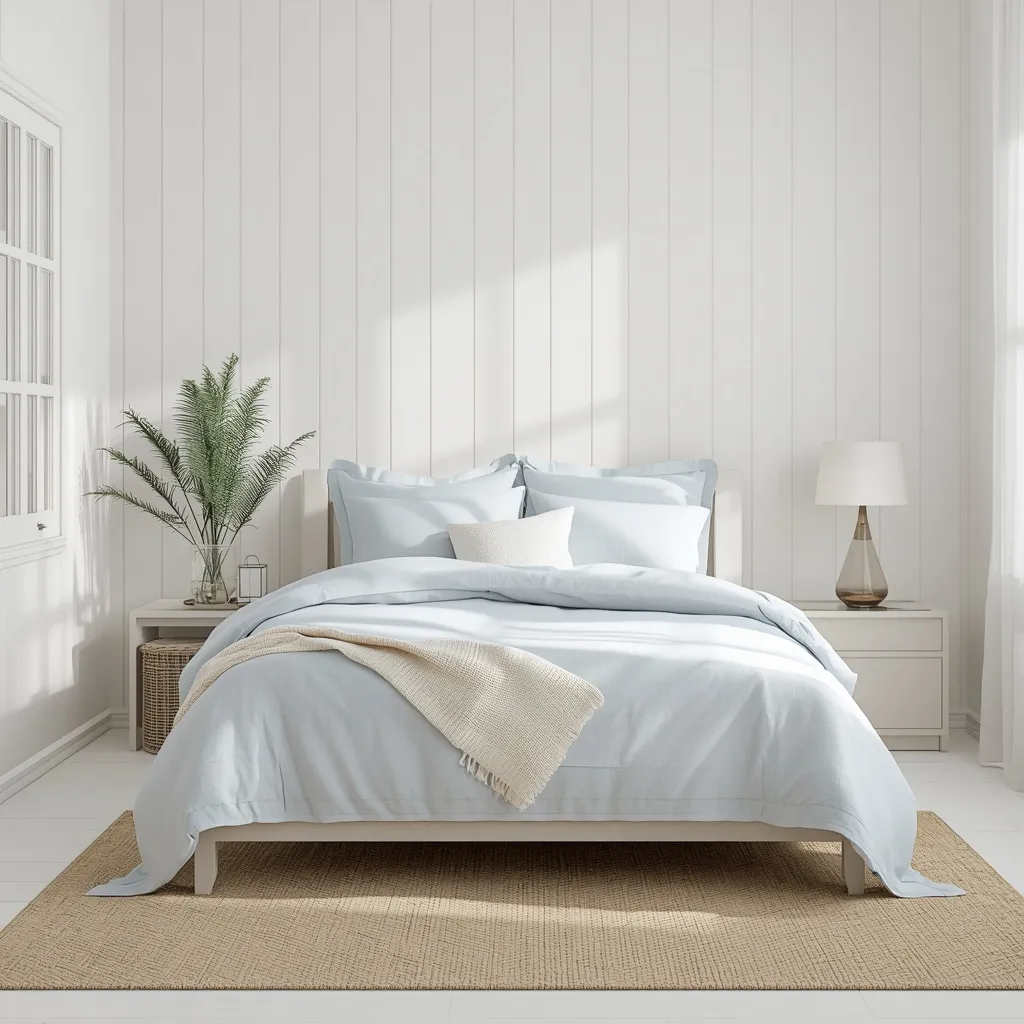
1. Coastal Blue and White
A coastal bedroom is the classic summer scheme: crisp white walls, soft blue bedding, natural woven texture, and light bouncing off every pale surface. Fresh and calm, blue and white never feels dated. Cool, airy, and endlessly easy.
Build from white and one soft blue, chambray, denim, or a grey-leaning sky blue, adding jute, rattan, and cotton for texture rather than pattern. Keep literal beach motifs out of it; the palette and materials carry the coastal feeling on their own, while shells and anchors tip a room into theme territory. Blue reads coolest in rooms with good natural light. This suits bright bedrooms, renters working with white walls, and anyone wanting a scheme that lasts beyond one season.
- Why it works: Palette and natural texture read coastal without motifs that date quickly.
- Best for: Bright rooms; renters; long-lasting schemes.
- Key elements: white base, one soft blue, jute and rattan, no literal beach motifs.
2. Airy Neutral Linen Scheme
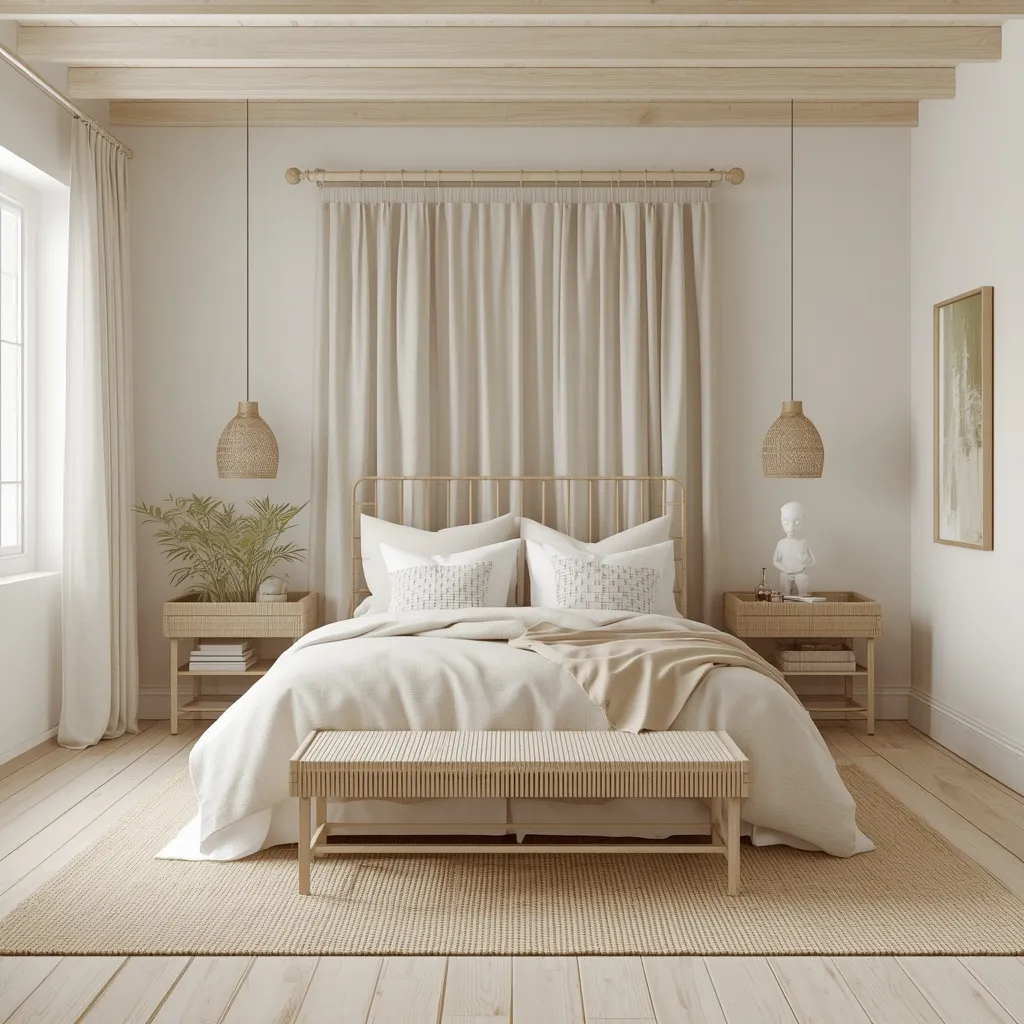
A neutral summer bedroom is tonal and serene: oatmeal, sand, and warm white layered across bedding, curtains, and rugs, with pale timber and nothing bright anywhere. Calm and expansive, neutrals let the light do the decorating. Soft, quiet, and restful.
Work within a narrow band of warm neutrals and vary texture deliberately, washed linen bedding, a wool rug, a rattan bench, ceramic lamps, since with no color contrast, texture is the only thing preventing flatness. Warm neutrals look considerably better than cool greys under evening lamp light, which matters in a room used at either end of the day. Hanging curtains close to the ceiling makes any room feel taller. This suits minimalists, rented rooms, and anyone who finds color tiring.
- Why it works: Without color contrast, deliberately varied texture is what prevents flatness.
- Best for: Minimalists; rentals; color-fatigued readers.
- Key elements: oatmeal-sand-white band, mixed textures, pale timber, ceiling-hung curtains.
3. Tropical Green Palm Room
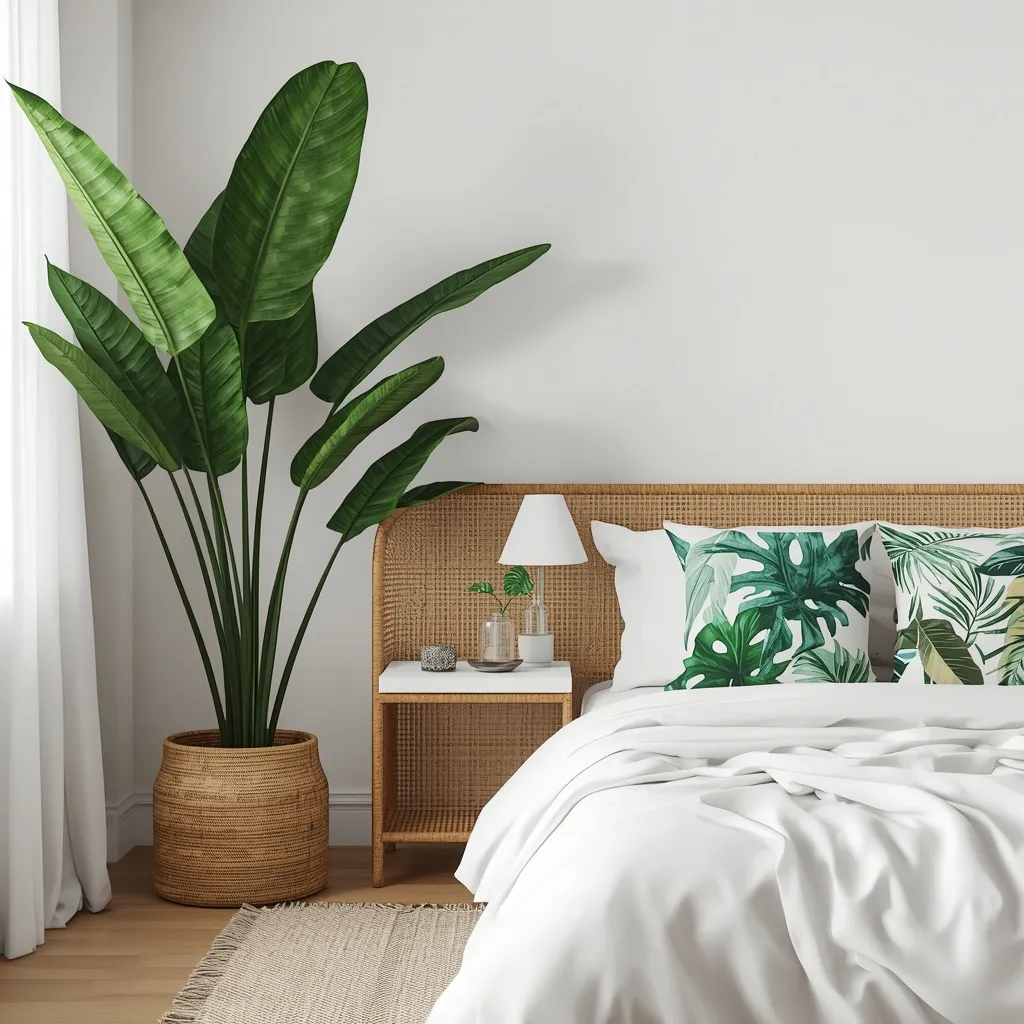
A tropical bedroom is lush and shaded: deep green foliage prints, real palms and monsteras, rattan furniture, and white bedding keeping it fresh rather than heavy. Bold and leafy, tropical styling feels like summer indoors. Verdant, textured, and cooling.
Pair one botanical print, on cushions, a single curtain panel, or artwork, with real plants and natural rattan, keeping walls and bedding plain so the green has somewhere to sit. Large-leaved plants like monstera and kentia palm carry the look better than several small pots. Bedrooms are often dim, so check the light before buying, and note that monstera and several tropical favorites are toxic to cats and dogs if chewed. This suits bright rooms, plant lovers, and pet-free households.
- Why it works: One botanical print plus real large-leaved plants reads tropical without overwhelming.
- Best for: Bright rooms; plant lovers; pet-free homes.
- Key elements: one botanical print, monstera or kentia palm, rattan, plain walls and bedding.
4. Soft Pink Sunset Bedroom
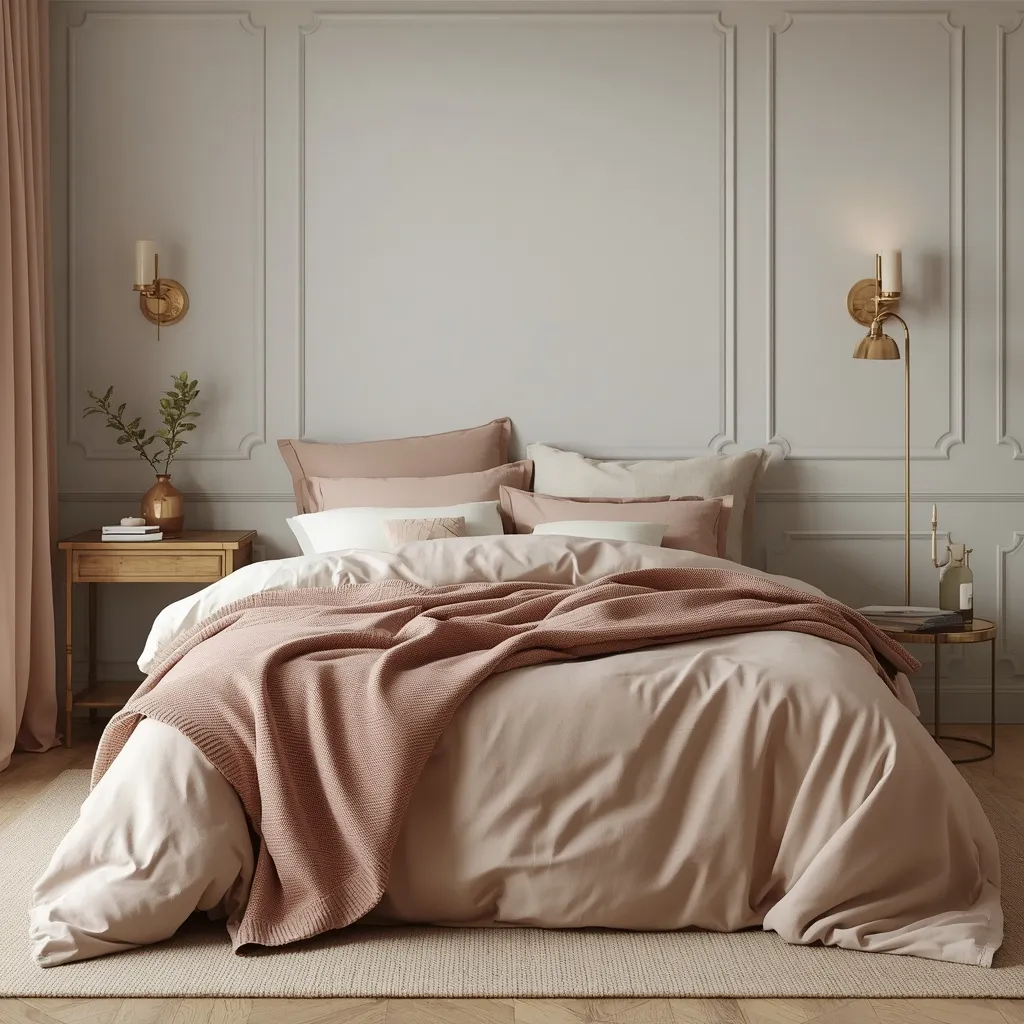
A pink summer bedroom is warmer and more grown-up than it sounds: dusty rose and blush layered with cream, warm brass, and pale wood in low evening light. Gentle and flattering, muted pink behaves like a warm neutral. Soft, warm, and quietly romantic.
Choose a heavily muted, dusty or greyed pink rather than a clear bright pink, pairing it with cream, tan, and brass rather than stark white. Pink has a practical advantage in a bedroom: warm pink light reflects kindly, which is why it feels flattering in a room with a mirror. Keep pattern minimal so the color reads as a considered neutral rather than a theme. This suits adults wanting warmth without boldness, north-facing rooms, and anyone tired of grey.
- Why it works: Heavily muted pink behaves like a warm neutral and flatters in low light.
- Best for: Adult bedrooms; north-facing rooms; grey-fatigued readers.
- Key elements: dusty greyed pink, cream and tan, brass, minimal pattern.
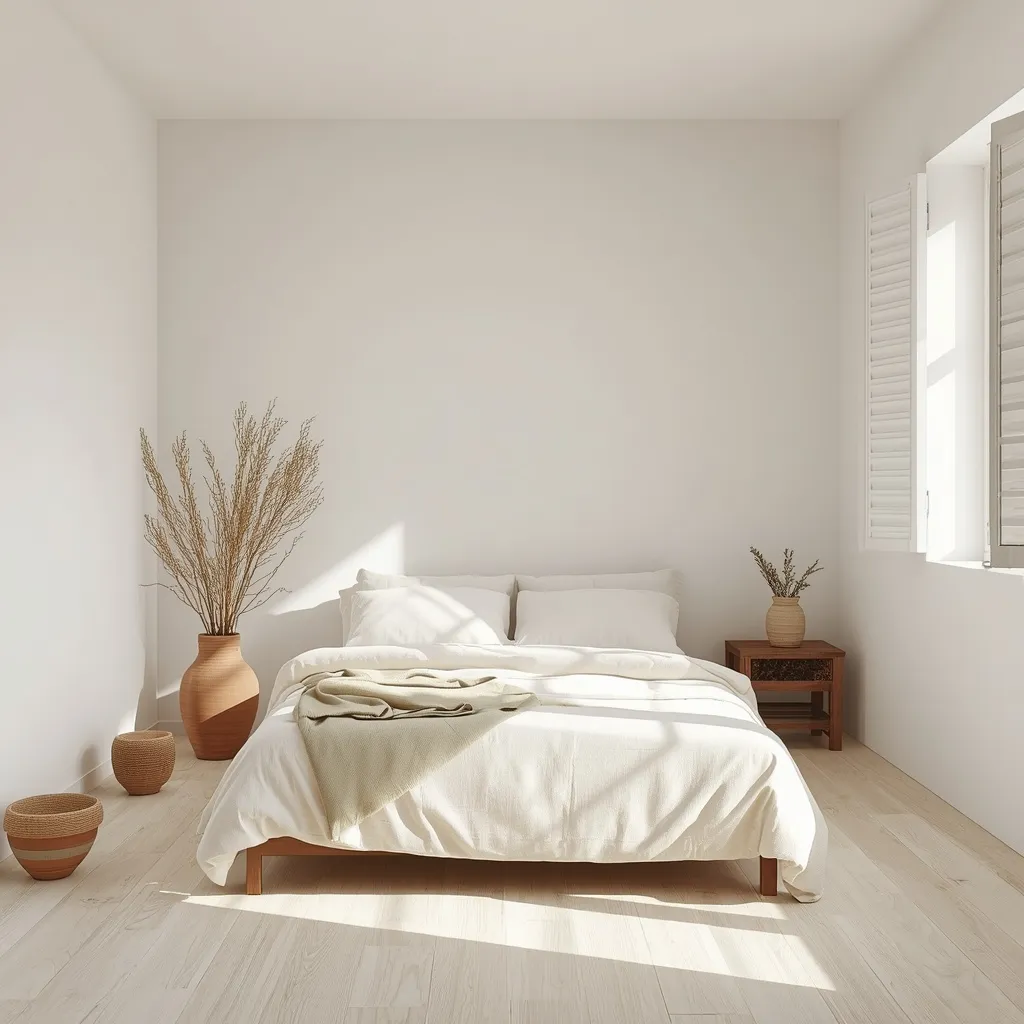
5. Mediterranean Whitewash Room
A Mediterranean summer bedroom is sun-bleached and simple: chalky white walls, a plain linen bed, terracotta pots, dark wood accents, and shutters filtering hard light into stripes. Rustic and cool, this look is built for heat. Bright, textured, and elemental.
Combine chalky matte white walls with natural linen, terracotta, and one dark timber piece for contrast, keeping everything else stripped back, Mediterranean rooms work through restraint and texture, not layering. Matte and limewash-style finishes absorb light softly, which reads cooler than glossy paint. Shutters or slatted blinds cast the striped light that defines the look and control heat better than curtains alone. This suits hot climates, minimalists, and rooms with strong direct sun.
- Why it works: Chalky matte surfaces absorb light softly, which reads cooler than glossy finishes.
- Best for: Hot climates; strong-sun rooms; minimalists.
- Key elements: chalky white walls, natural linen, terracotta, one dark timber piece, shutters.
6. Boho Rattan Summer Room
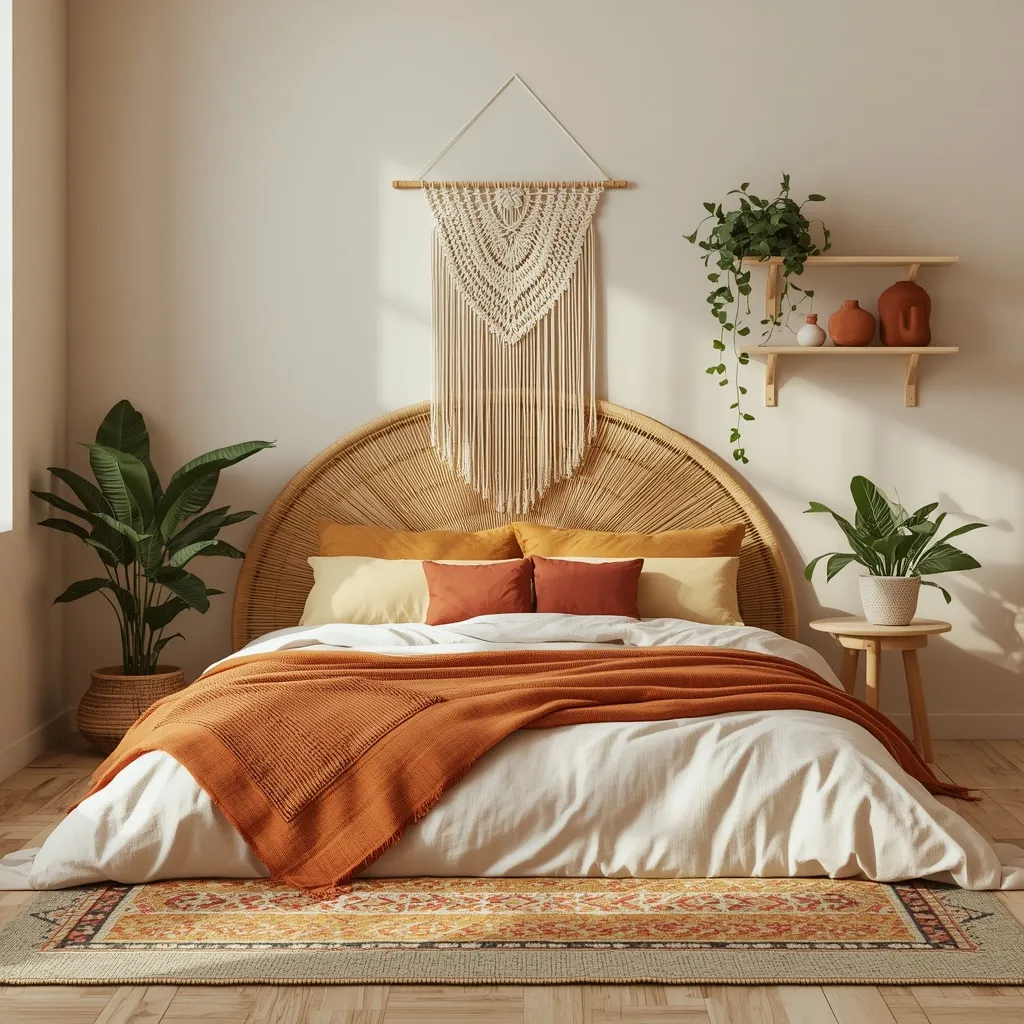
A boho summer bedroom is warm and collected: layered rugs, a rattan headboard, macramé on the wall, mixed cushions in earthy tones, and plants trailing from shelves. Textural and personal, boho absorbs additions gracefully. Cozy, eclectic, and lived-in.
Layer textiles within a consistent palette, warm neutrals with terracotta and mustard, so the mix reads intentional rather than random, and keep walls fairly plain to stop the room feeling busy. Layering a smaller patterned rug over a larger plain one adds depth cheaply. Natural fibers like jute, seagrass, and rattan feel cooler underfoot and to the touch than synthetics in summer. This suits collectors, renters, and rooms that will evolve gradually.
- Why it works: A consistent palette makes layered textiles read collected rather than cluttered.
- Best for: Collectors; renters; gradually evolving rooms.
- Key elements: warm earthy palette, layered rugs, rattan headboard, macramé, plain walls.
7. Scandi Minimal Summer Room
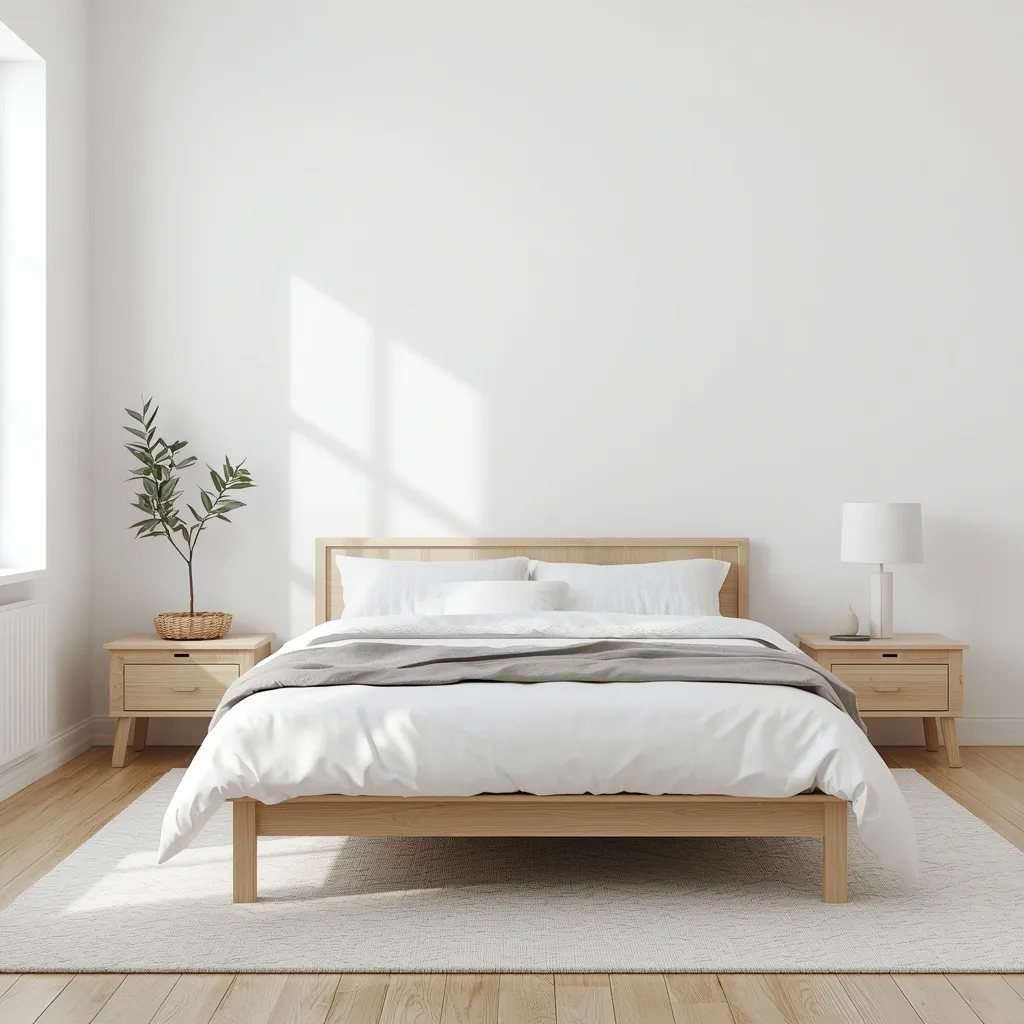
A Scandi summer bedroom is bright and uncomplicated: white walls, pale birch furniture, plain grey or white bedding, one plant, and nothing extraneous anywhere. Clean and functional, Scandi is minimalism with warmth. Light, simple, and calm.
Combine white walls with pale birch or beech and one or two soft textiles, keeping the palette to white, wood, and grey. Natural wood is what separates Scandi from stricter minimalism, it adds warmth that stops a simple room feeling stark. This is among the cheapest schemes to achieve, since pale flat-pack furniture is widely available. This suits small bedrooms, tight budgets, and anyone who finds decoration stressful rather than pleasurable.
- Why it works: Pale natural wood adds the warmth that keeps a very simple room from feeling stark.
- Best for: Small bedrooms; tight budgets; simplicity seekers.
- Key elements: white walls, pale birch, white-wood-grey palette, one or two textiles.
8. Cottage Floral Summer Bedroom
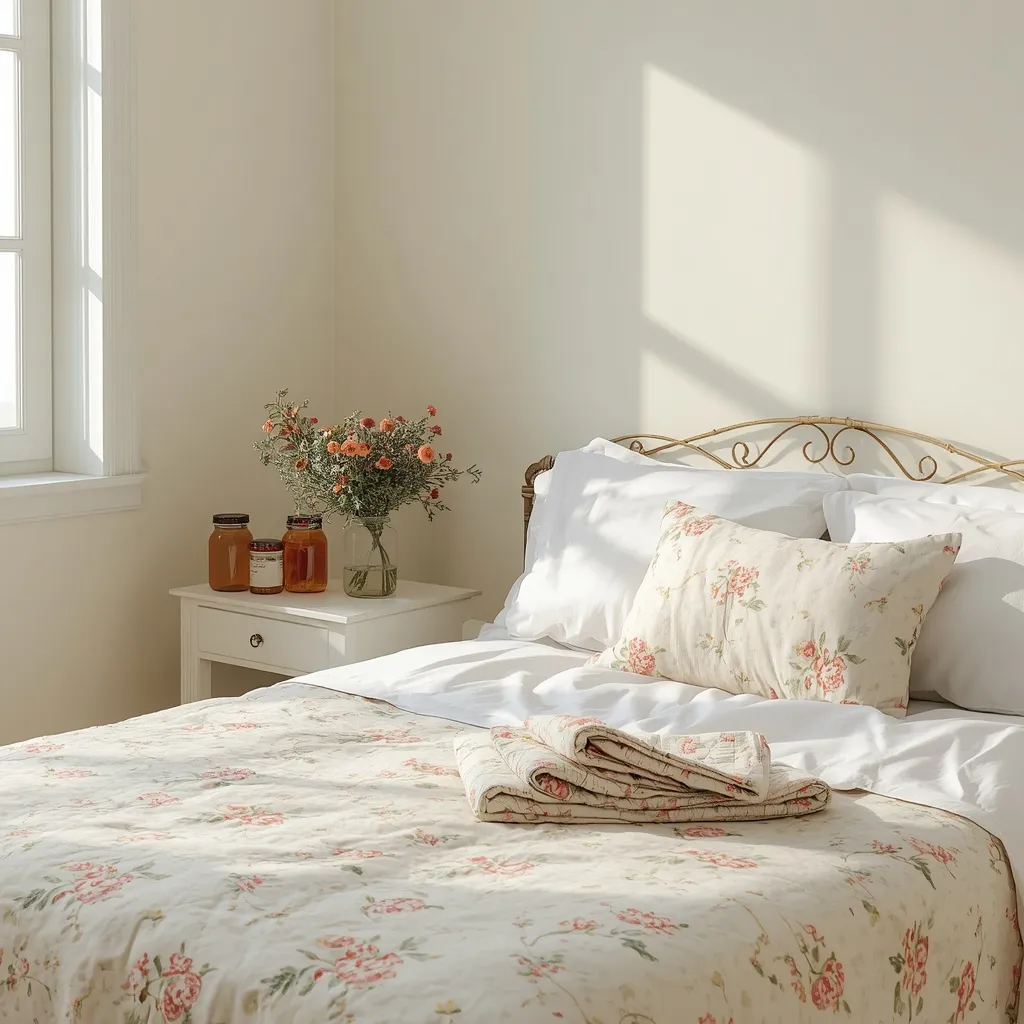
A cottage summer bedroom is soft and gathered: small-scale floral bedding, cream walls, a vintage quilt folded at the foot, and jam jars of garden flowers on the nightstand. Romantic and unfussy, cottage style feels like an open window in June. Pretty, layered, and warm.
Mix small florals with plain linens so the pattern has somewhere to rest, keeping flower colors within one family rather than mixing everything. Garden flowers last noticeably longer if stems are cut at an angle and the water is changed every two days. Painted vintage furniture in tonally related colors reads as collected rather than mismatched. This suits period homes, cottage-style houses, and anyone who finds minimal rooms cold.
- Why it works: Plain linens give small florals space so the room reads charming rather than busy.
- Best for: Period and cottage homes; minimal-averse readers.
- Key elements: small florals, plain linen balance, vintage quilt, fresh garden flowers.
9. Coastal Grandmother Layers
This scheme is coastal with more comfort: slipcovered furniture, blue-and-white china on a shelf, chintz cushions against plain linen, wicker baskets, and a lamp with a pleated shade. Nostalgic and cozy, it’s coastal styling with softness added back. Comfortable, layered, and characterful.
Combine a blue-and-white base with softer traditional elements, a skirted table, a pleated lampshade, a floral cushion, china on open shelving, so the room feels lived-in rather than styled. The trick is balance: one or two traditional patterns against plenty of plain, or the room tips into fussiness. Thrifted china and lamps suit this look better than new. This suits older homes, comfort-first decorators, and anyone who finds minimal coastal too austere.
- Why it works: One or two traditional patterns against plenty of plain keeps softness from becoming fussy.
- Best for: Older homes; comfort-first decorators.
- Key elements: blue-and-white base, pleated shade, chintz cushion, wicker, thrifted china.
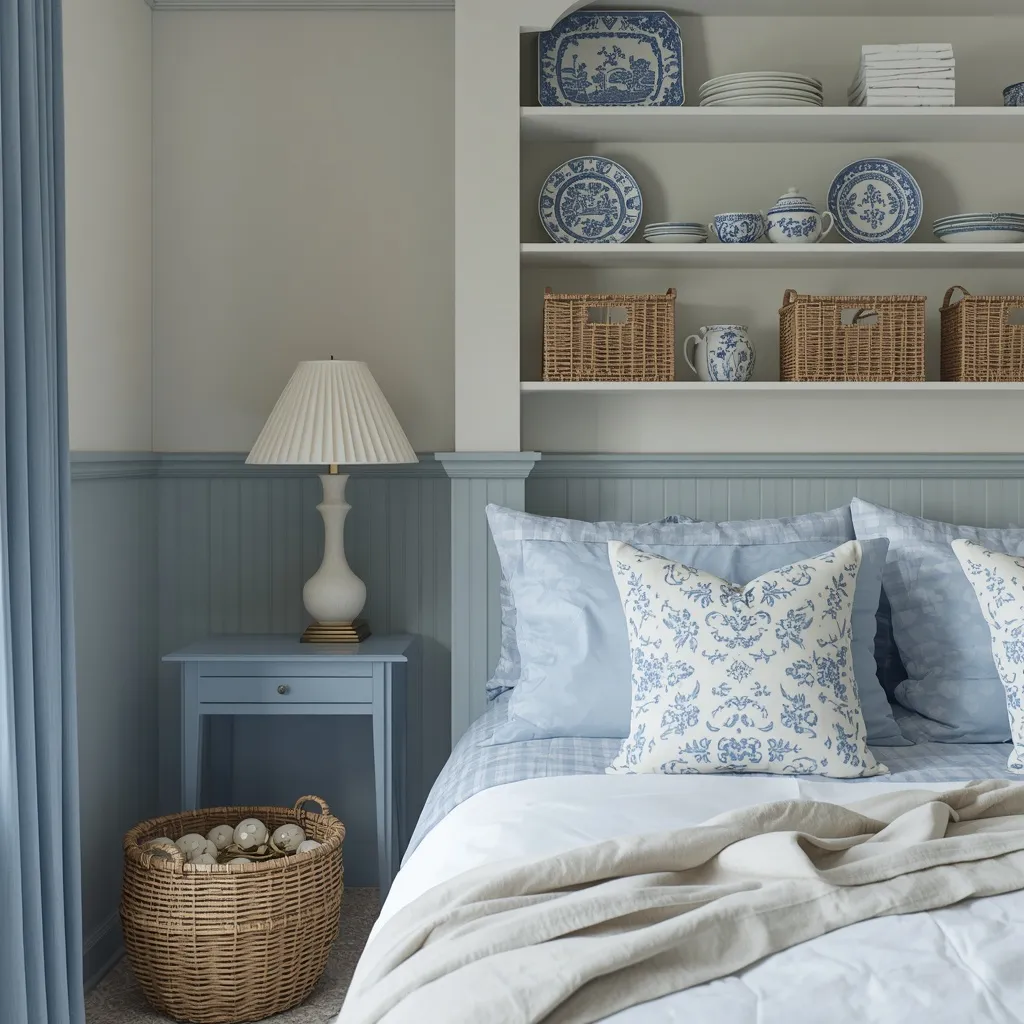
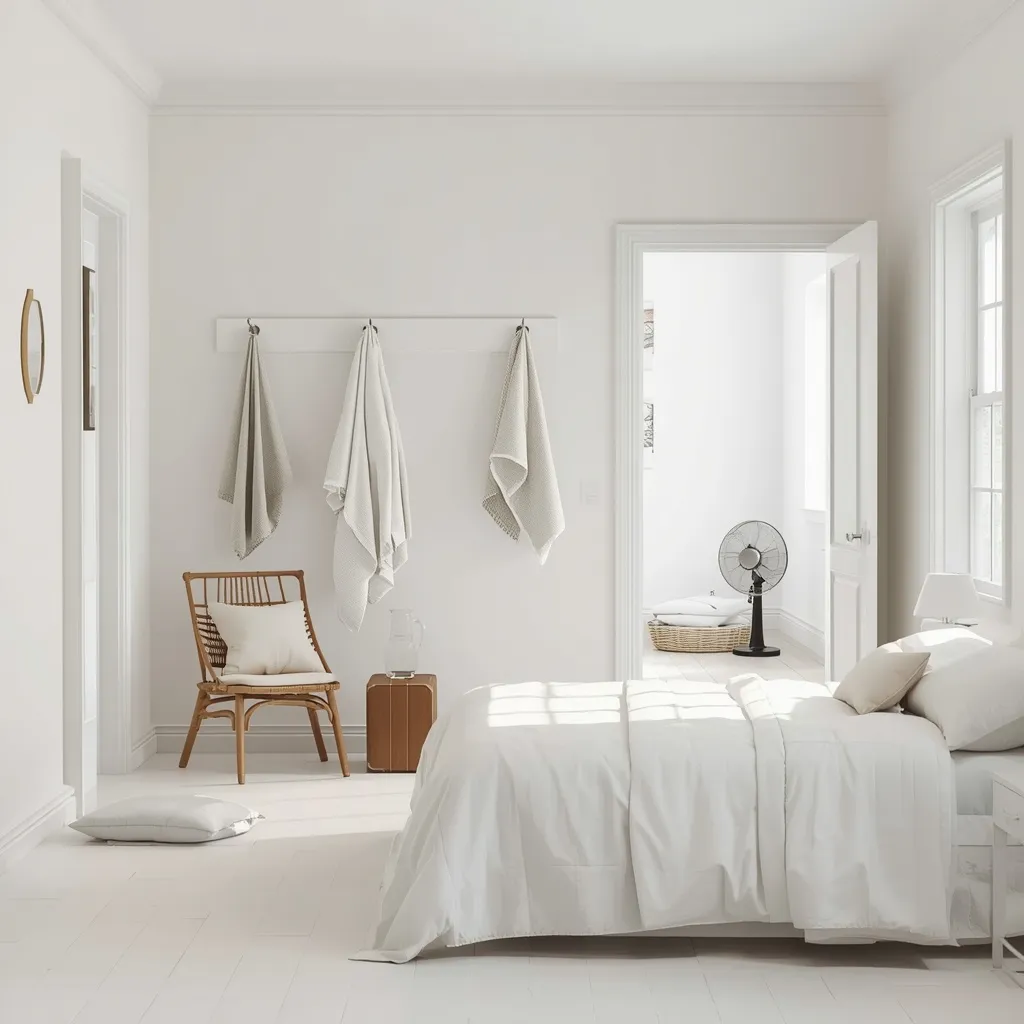
10. Summer House Guest Bedroom
A summer house guest room is spare and welcoming: white walls, plain cotton bedding, an empty chair, hooks on the door, a water carafe, and clear floor space for a suitcase. Simple and generous, restraint is what makes a guest comfortable. Uncluttered, calm, and considerate.
Keep the room deliberately spare and leave genuine empty space, a clear surface, an empty drawer, and floor room for a bag matter more to a guest than extra styling. Add practical touches: a bedside light with an easy switch, visible spare blankets, and a fan in summer. Guest rooms sit unused for weeks, so air the room and wash the bedding before arrival rather than assuming it’s fresh. This suits holiday homes, spare rooms, and summer hosting.
- Why it works: Empty drawers and clear floor space serve a guest better than additional décor.
- Best for: Holiday homes; spare rooms; summer hosting.
- Key elements: spare styling, empty drawers, suitcase space, visible blankets, fan, aired before arrival.
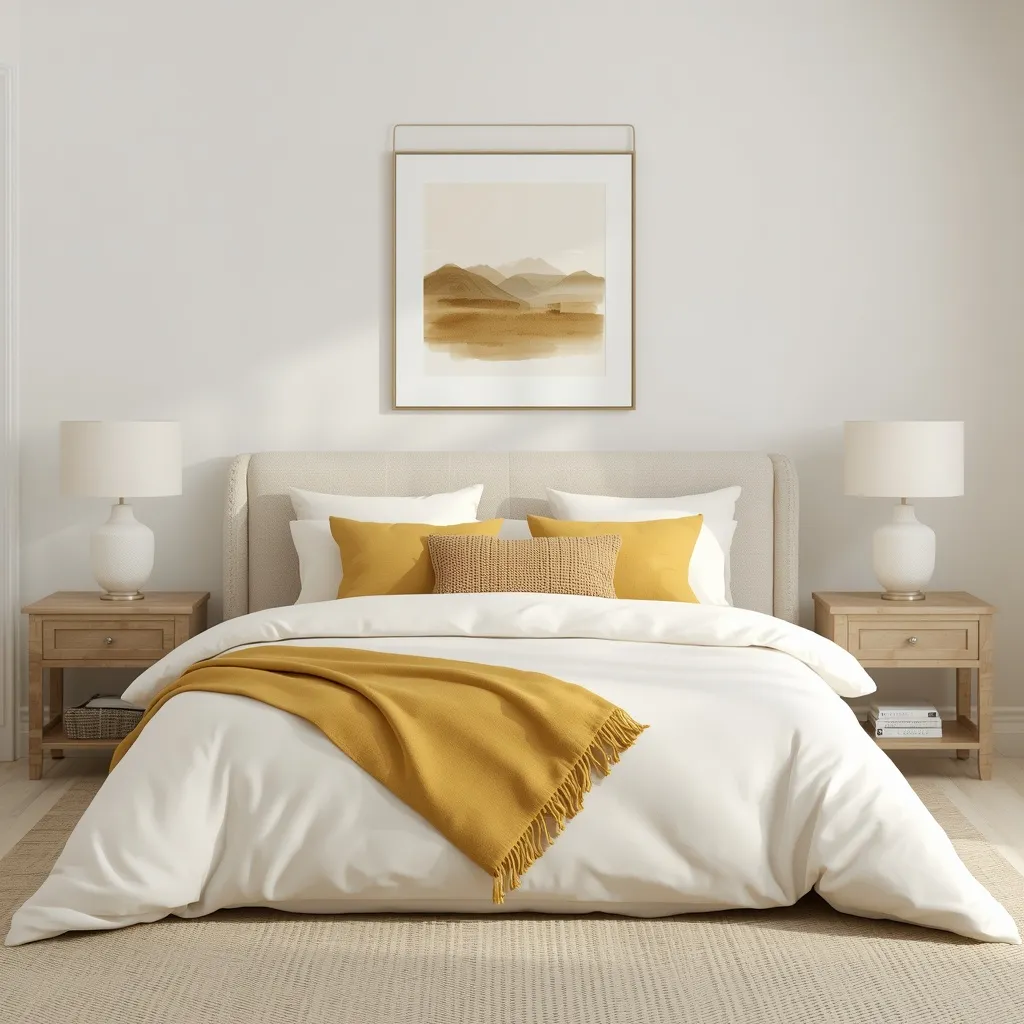
11. Citrus Yellow Accent Room
A citrus-accented bedroom is cheerful without being loud: white and cream base with soft lemon and ochre accents in cushions, a throw, and one piece of artwork. Sunny and optimistic, yellow used sparingly lifts a whole room. Bright, warm, and uplifting.
Use yellow as accent only, cushions, a throw, artwork, a lampshade, against a white or cream base, since a fully yellow bedroom is difficult to rest in. Muted ochre and soft lemon work better than saturated primary yellow, which reads harsh in a room meant for sleeping. Repeat the accent three times so it looks deliberate. This suits north-facing rooms needing warmth, small budgets, and anyone wanting cheer without repainting.
- Why it works: Yellow repeated three times as accent lifts a room where a full yellow scheme would tire.
- Best for: North-facing rooms; small budgets; cheerful without repainting.
- Key elements: white-cream base, muted ochre or soft lemon, accent repeated three times.
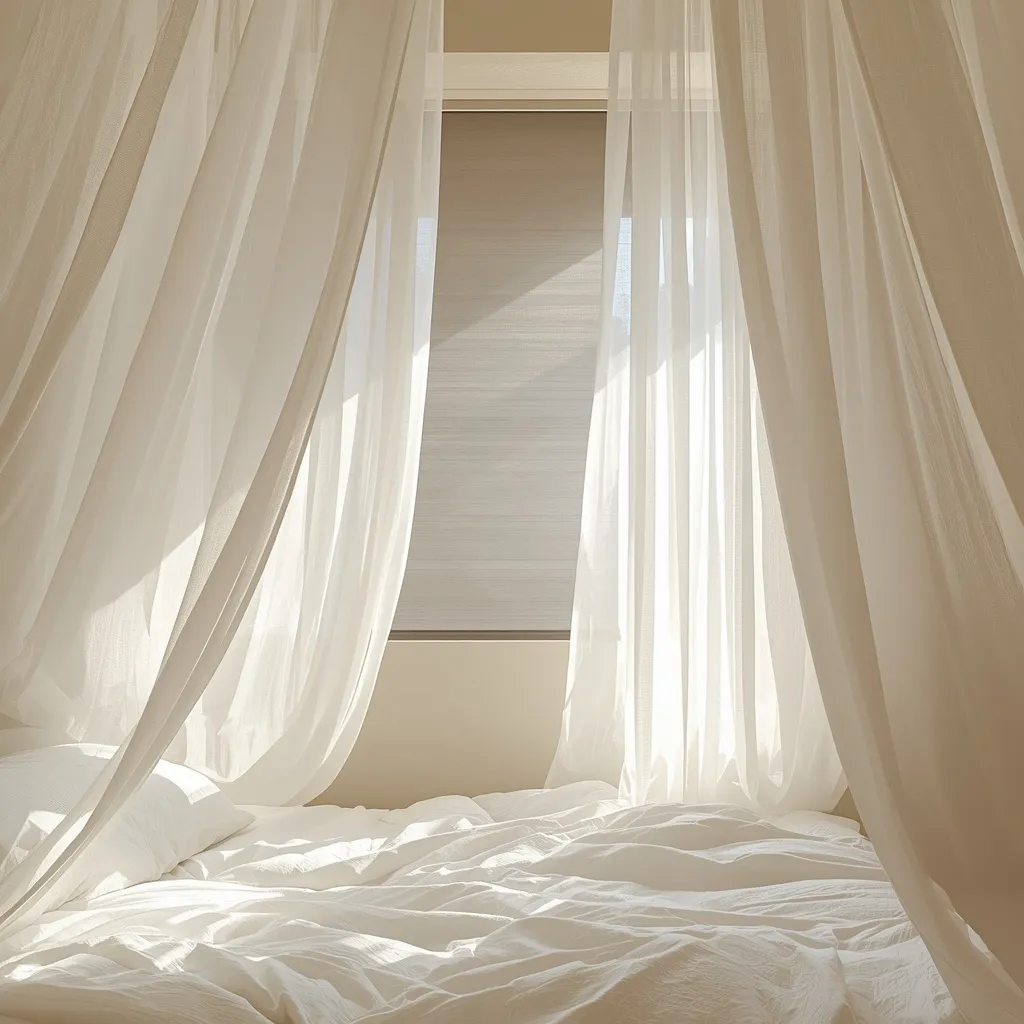
12. Sheer Curtain Light Play
A room styled around light is pure summer: floor-length sheer white curtains lifting in a breeze, sunlight patterning the bed, and everything else kept pale and simple. Ethereal and cheap to achieve, curtains change a room more than furniture. Soft, moving, and luminous.
Hang sheer linen or voile curtains close to the ceiling and wide enough to extend past the window frame, using panels roughly twice the window’s width so they fall in proper folds rather than stretching flat. Important caveat: sheers soften light beautifully but don’t block it, so keep a blackout blind fitted inside the recess behind them if the room is used for sleeping, summer light arrives early. This suits every bedroom, renters using tension rods, and low budgets.
- Why it works: Panels at twice the window width fall in real folds instead of stretching flat.
- Best for: Every bedroom; renters; low budgets.
- Key elements: sheer linen or voile, ceiling-hung, double-width panels, blackout blind behind.
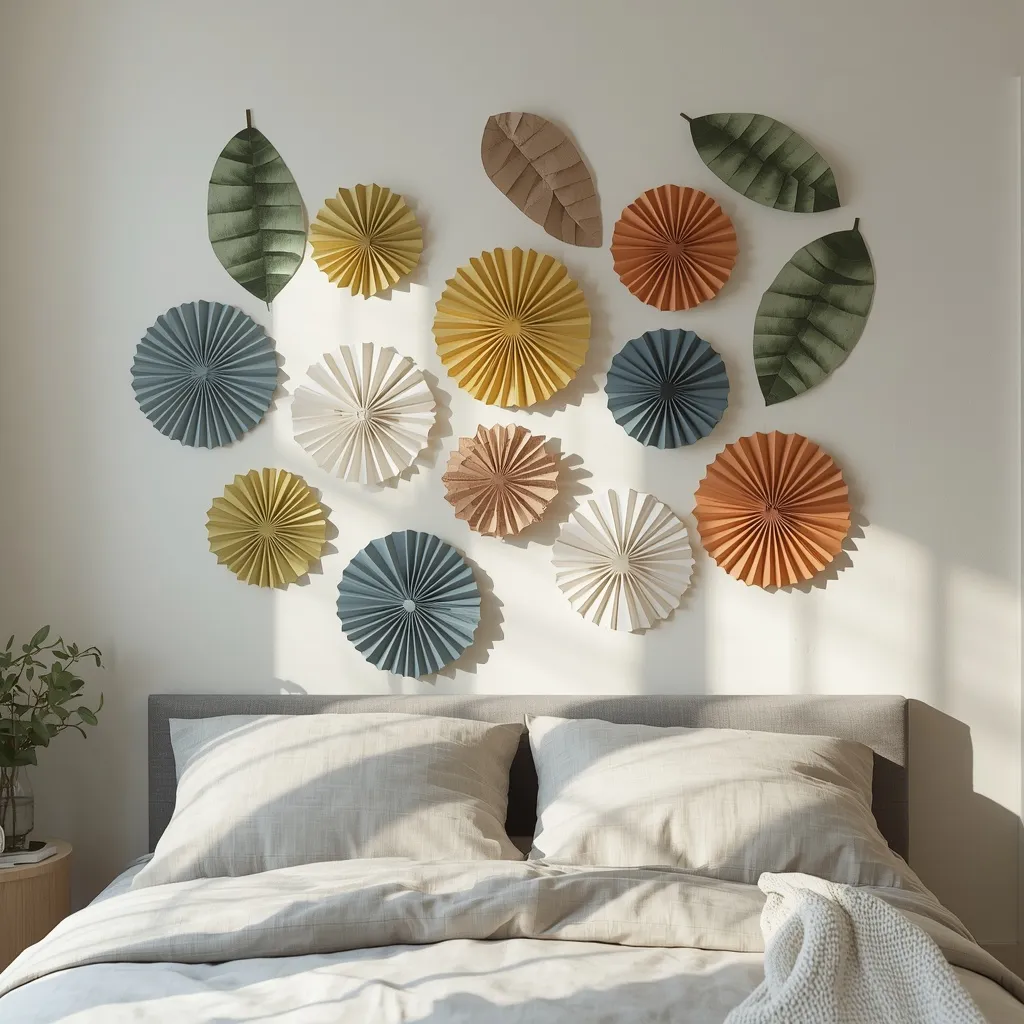
13. DIY Paper Craft Gallery Wall
A handmade paper gallery wall is a full afternoon project with real impact: cut paper leaves, folded fans, and simple geometric shapes in a coordinated palette, arranged above a bed or desk. Crafty and personal, paper costs almost nothing. Textured, graphic, and genuinely handmade.
Cut shapes from heavyweight paper or cardstock at 200 gsm or above, which holds its form far better than standard printer paper, and plan the arrangement on the floor before anything goes on the wall. Mount pieces with removable adhesive putty or strips rated for the weight, testing removal on a hidden patch first. Honest durability note: paper fades and curls in direct sunlight and humid air, so hang this on a wall the sun doesn’t reach and expect to refresh pieces after a season or two. This suits crafters, renters, and near-zero budgets.
- Why it works: Heavyweight 200 gsm cardstock holds its shape where thin paper sags within days.
- Best for: Crafters; renters; near-zero budgets.
- Key elements: 200 gsm+ cardstock, floor-planned layout, removable adhesive, hung out of direct sun.
14. DIY Painted Canvas Art Wall
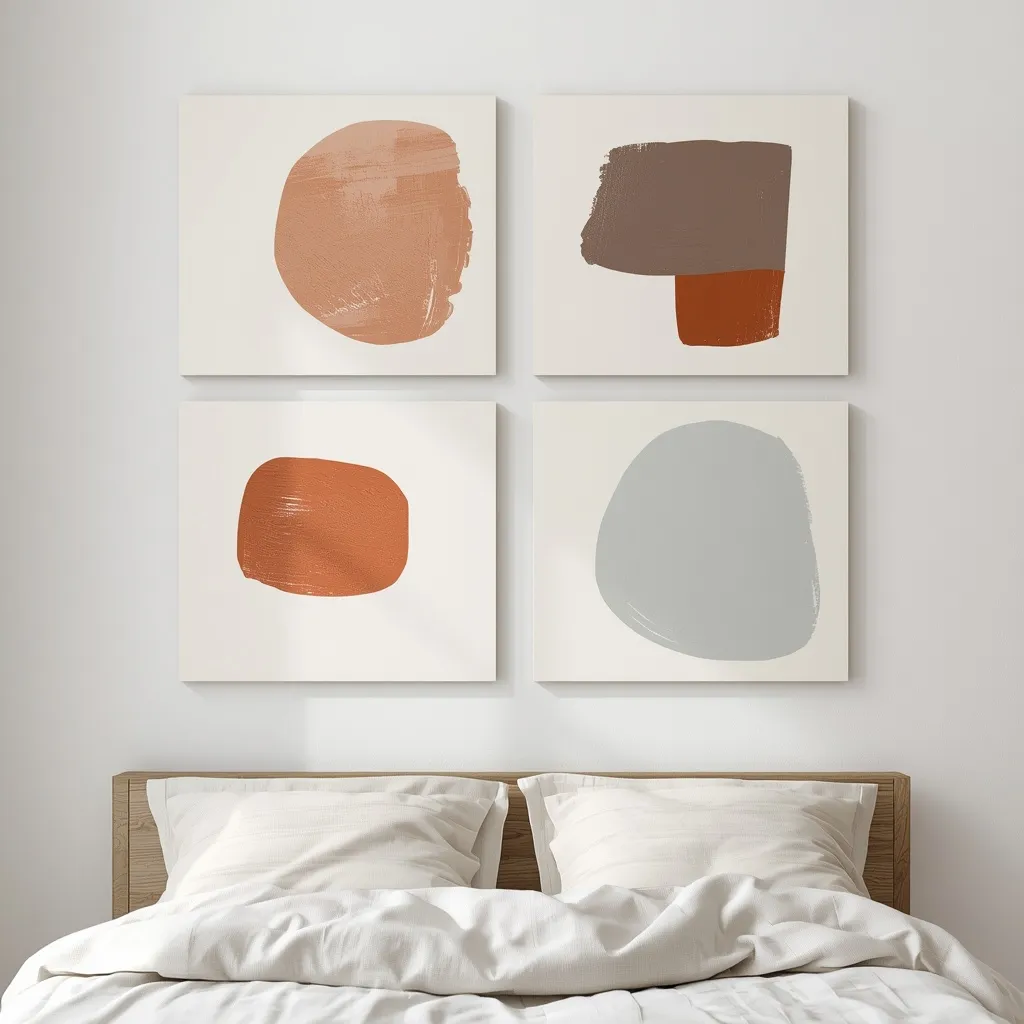
A wall of handmade canvases looks far more expensive than it is: three or four simple abstract paintings in a shared palette, hung as a set above the bed. Bold and personal, abstract painting needs no drawing skill. Artistic, cohesive, and satisfying.
Paint three or four pre-stretched canvases in one restricted palette, two colors plus white keeps a set coherent, using acrylics, which dry within about 20–30 minutes between layers and clean up with water. Simple shapes, blocks, and brushstrokes work better than attempting realism. Hang as a grid with consistent gaps of around 5–8 cm (2–3 in) so the set reads as one piece. Work on a covered surface in a ventilated room and keep paints out of reach of children and pets. This suits creative beginners and anyone wanting large-scale art cheaply.
- Why it works: A restricted two-color-plus-white palette makes amateur abstracts read as a deliberate set.
- Best for: Creative beginners; large art on a budget.
- Key elements: 3–4 canvases, two colors plus white, acrylics, 5–8 cm grid gaps, ventilated workspace.
15. DIY Pressed Flower Display
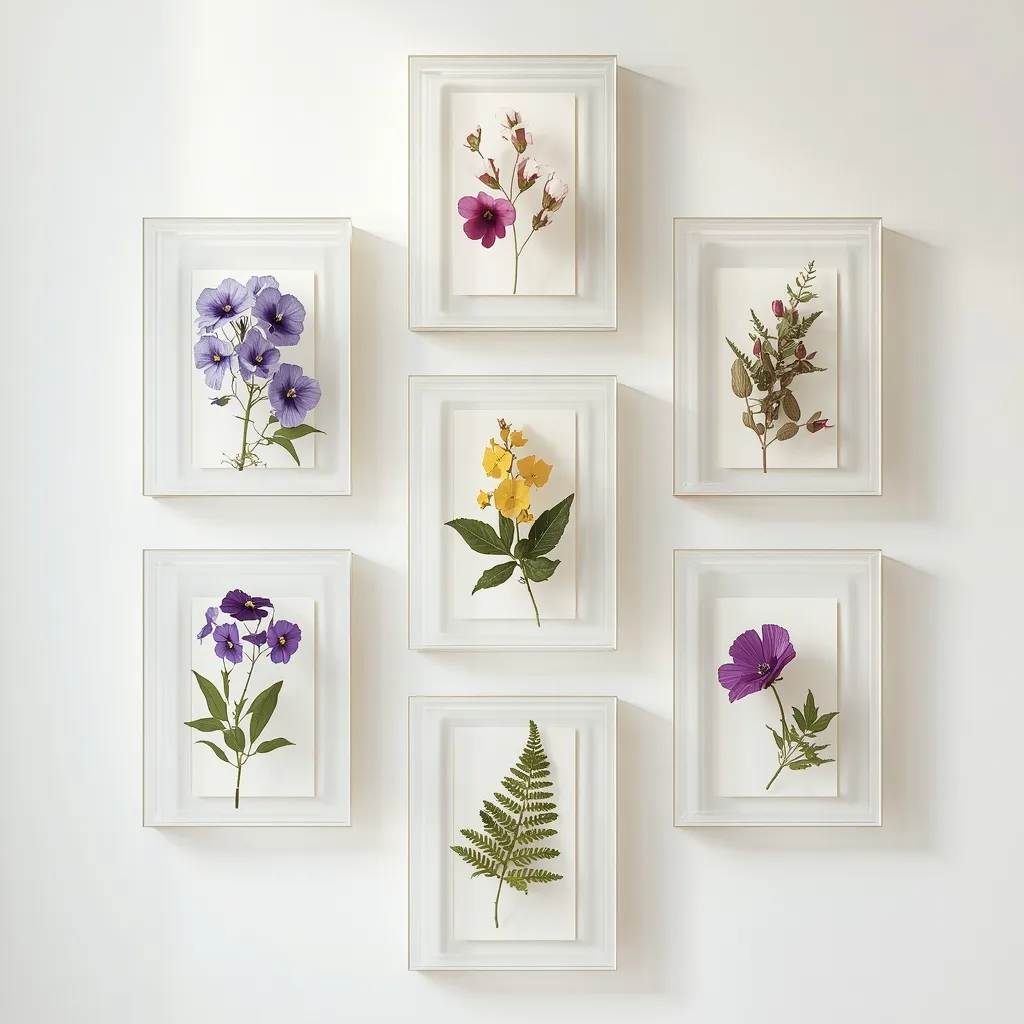
A pressed flower wall is delicate and personal: garden blooms flattened, dried, and framed in simple glass frames, hung as a cluster with plenty of white space around them. Botanical and quiet, this project turns a summer garden into wall art. Fine, natural, and sentimental.
Press flowers between sheets of absorbent paper under heavy books for roughly two to four weeks until fully dry and papery, choosing naturally flat blooms like pansies, cosmos, and ferns, which press far better than thick-centered flowers like roses. Mount them on plain card in simple frames and cluster several together. Durability note: pressed flowers fade in sunlight, so hang the cluster on a wall out of direct sun to keep the colors. This suits gardeners, patient makers, and anyone wanting personal artwork.
- Why it works: Naturally flat blooms press cleanly where thick-centered flowers rot or bulge.
- Best for: Gardeners; patient makers; sentimental displays.
- Key elements: pansies, cosmos, ferns, 2–4 weeks pressing, plain card mounts, out of direct sun.
16. DIY Macramé Fiber Wall
A handmade fiber wall is warm and textural: a knotted macramé hanging, a woven wall piece, and a length of driftwood or dowel holding it all, layered against a plain wall. Tactile and boho, fiber softens hard rooms. Soft, dimensional, and handmade.
Use natural cotton rope of about 3–5 mm for macramé, since thinner cord takes far longer for the same coverage, and learn two knots, the square knot and the half hitch, which between them make most beginner patterns. Mount the dowel on two hooks fixed into studs or rated anchors, as a large fiber piece is heavier than it looks once knotted. Natural undyed cotton suits summer better than dark dyed cord. This suits patient beginners, boho rooms, and anyone wanting texture without pattern.
- Why it works: Two knots, square and half hitch, cover most beginner patterns.
- Best for: Patient beginners; boho rooms; texture without pattern.
- Key elements: 3–5 mm natural cotton rope, square and half hitch knots, dowel on rated hooks.

17. DIY Painted Pot Plant Corner
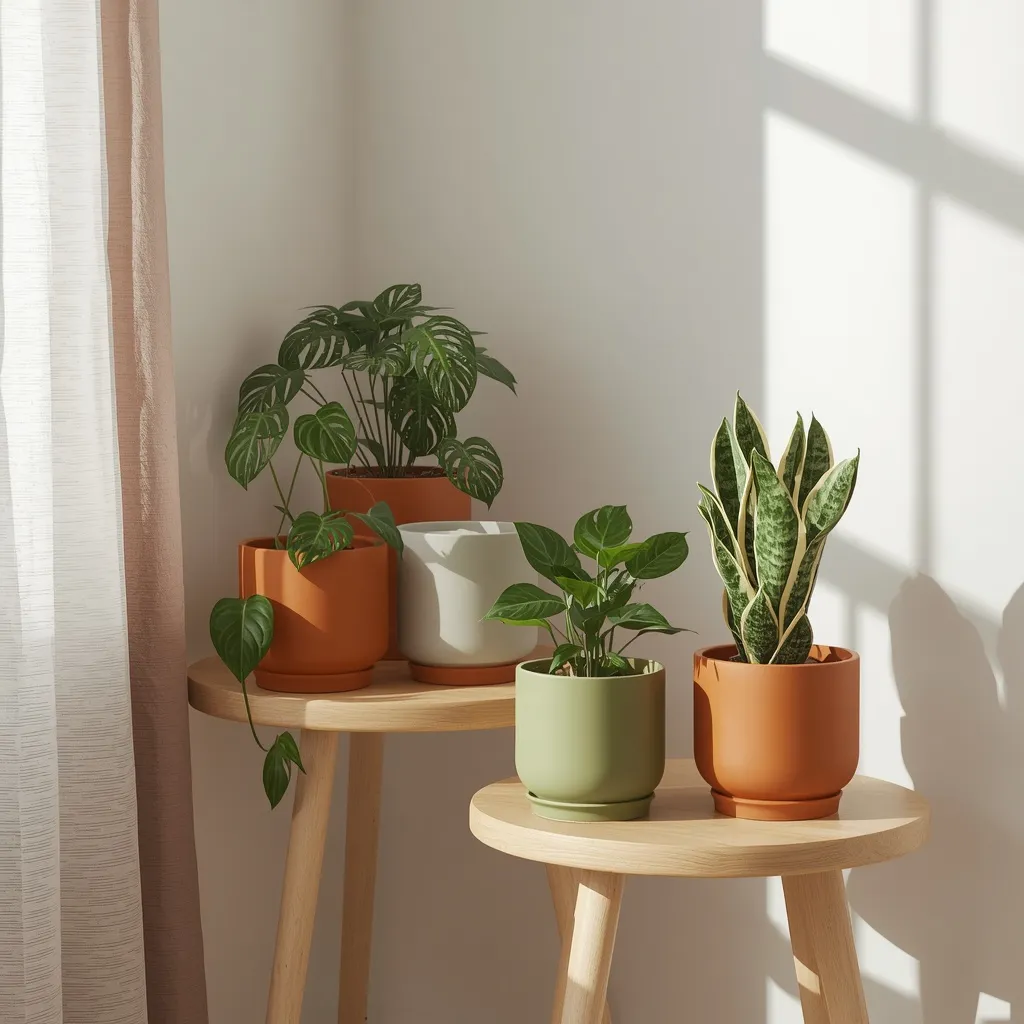
A painted terracotta plant corner brings coordinated green to one part of the room: half a dozen pots painted in a shared palette, holding trailing and upright plants on a small shelf or stool. Fresh and unified, matching pots turn a plant collection into a display. Green, tidy, and inexpensive.
Paint plain terracotta pots in two or three related colors using a paint suitable for terracotta, sealing the outside if you want a wipeable finish and leaving the inside unsealed so the clay can still breathe. Group pots in odd numbers at varied heights, and match plants to the room’s real light, since bedrooms are often dim, snake plants, ZZ plants, and pothos cope best. Check toxicity if you have pets, as pothos and several common trailing plants are toxic to cats and dogs. Spray paint should only be used outdoors or in a well-ventilated space. This suits plant lovers and small budgets.
- Why it works: A shared pot palette turns a mismatched plant collection into a coordinated display.
- Best for: Plant lovers; small budgets; renters.
- Key elements: terracotta pots in 2–3 colors, inside left unsealed, odd-numbered grouping, low-light species, toxicity checked.
18. DIY No-Sew Cushion Refresh
A no-sew cushion refresh changes a bed’s whole look for the price of fabric: existing cushion pads re-covered in light summer cotton and linen, tied or folded closed with no stitching at all. Quick and cheap, this is the highest-value hour in the article. Fresh, simple, and reversible.
Re-cover existing cushion inserts using the envelope-fold method, a rectangle of fabric roughly three times the pad’s width, folded around it with overlapping flaps at the back, or use fabric glue rated for textiles, following its curing time before use. Cotton and linen in light colors suit summer far better than velvet or wool. Keeping the inserts and changing only covers means storing a season’s worth takes almost no space. This suits renters, budget refreshes, and anyone with no sewing skills.
- Why it works: Re-covering existing inserts changes the look while storage stays almost nothing.
- Best for: Renters; budget refreshes; non-sewers.
- Key elements: existing pads, fabric three times pad width, envelope fold or textile glue, light cotton and linen.
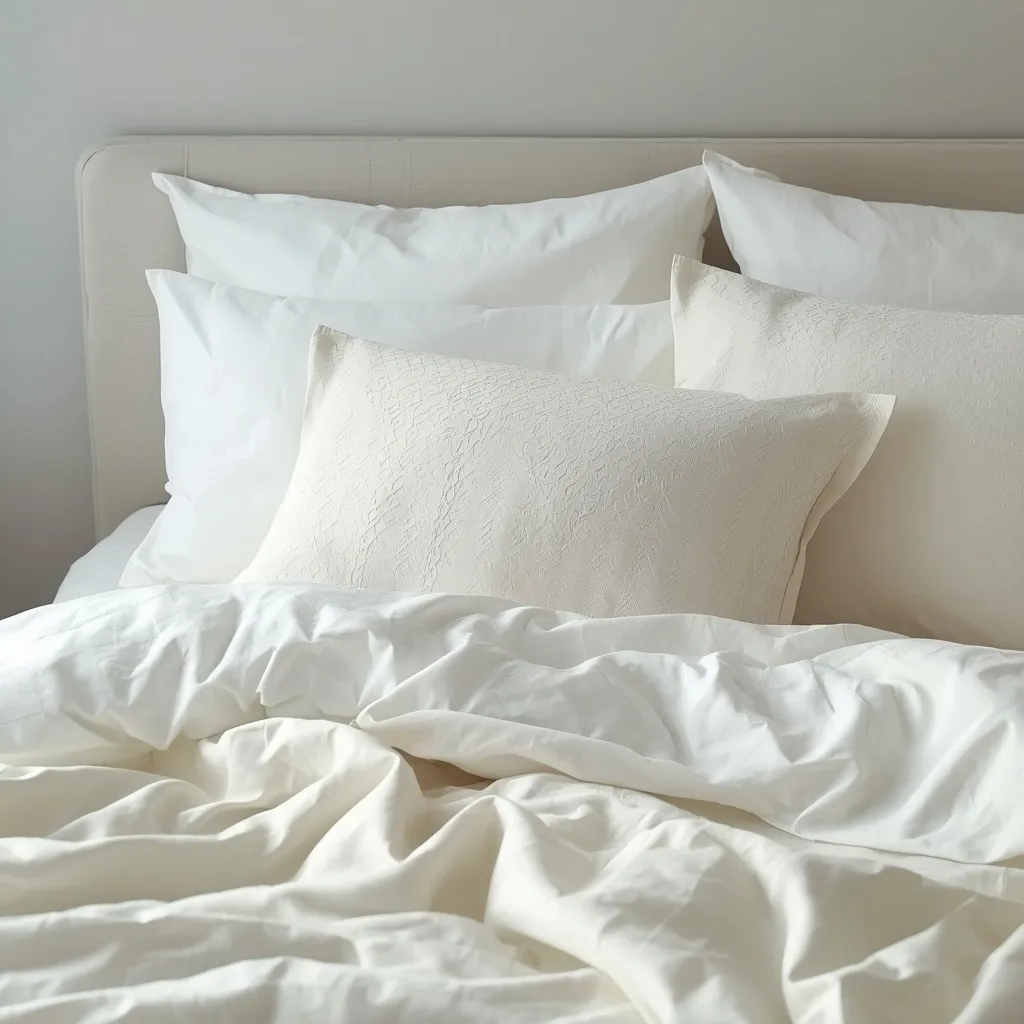
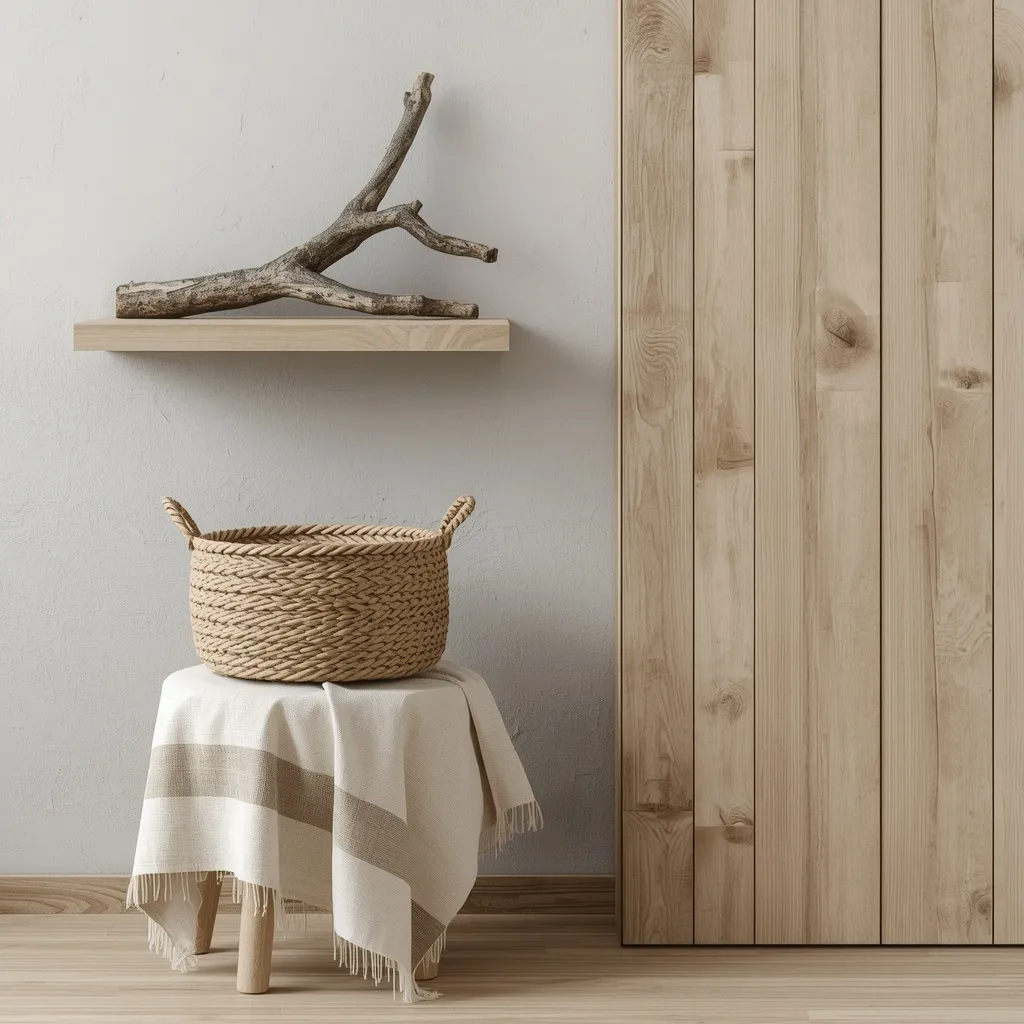
19. Driftwood and Rope Texture Corner
A natural texture corner delivers coastal feeling without a single shell: driftwood on a shelf, a coiled rope basket, a linen throw over a stool, and a piece of unfinished timber leaning against the wall. Sculptural and restrained, texture beats motif. Organic, tactile, and grown-up.
Group three to five natural objects of varying height and material on one surface, keeping them all within a narrow color range of sand, grey, and pale timber so the collection reads as intentional. Any beach-found driftwood should be scrubbed, dried thoroughly, and checked for pests before coming indoors, and some coastlines restrict removing natural material, so check local rules. This suits coastal homes, minimalists, and anyone who wants seaside feeling without kitsch.
- Why it works: Grouped natural texture reads coastal and grown-up where shells and anchors read as kitsch.
- Best for: Coastal homes; minimalists; anti-kitsch decorators.
- Key elements: 3–5 natural objects, varied heights, sand-grey-timber range, driftwood cleaned and checked.
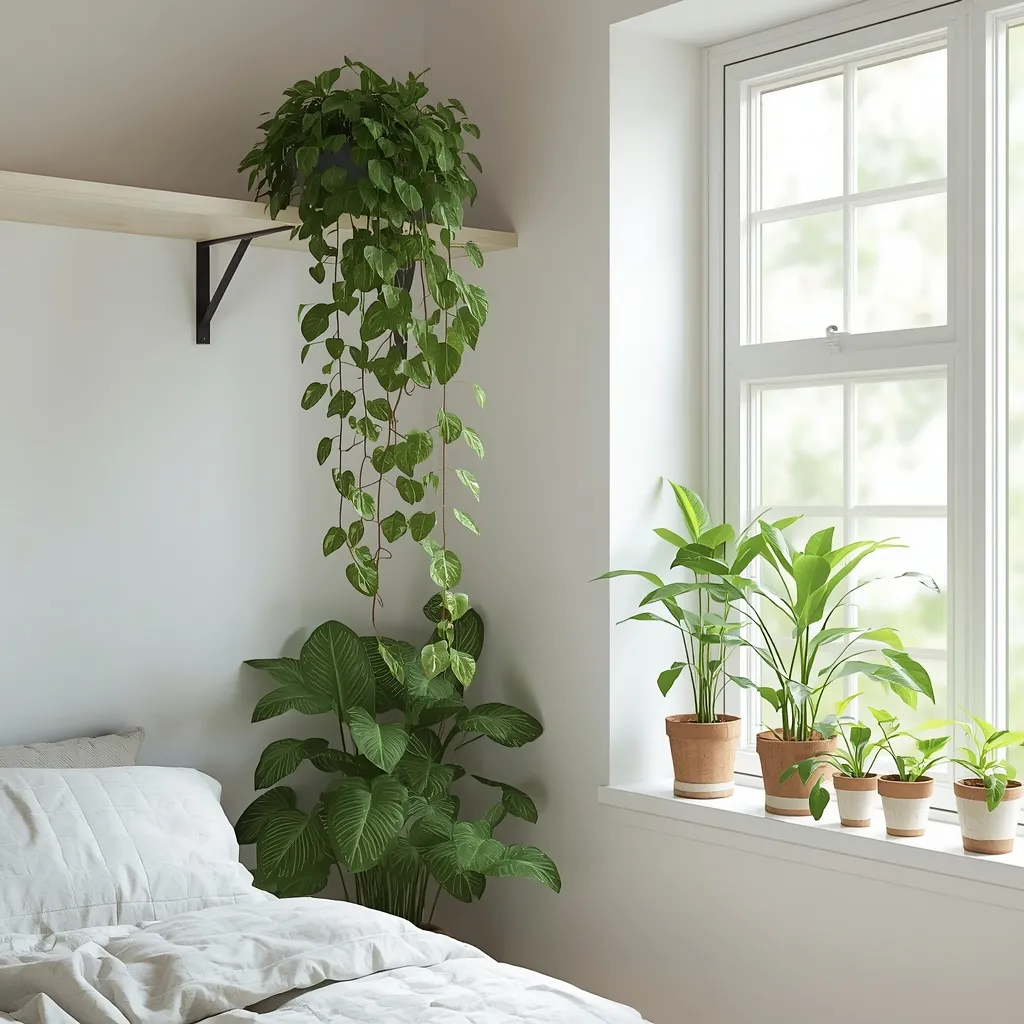
20. Green Plant-Filled Bedroom
A plant-filled bedroom is alive and cooling: trailing pothos from a high shelf, a snake plant in the corner, small pots along the sill, and green everywhere against pale walls. Fresh and calming, plants make a room feel tended. Leafy, restful, and inexpensive.
Group plants in odd numbers at varied heights rather than spacing single pots evenly, and match species to the room’s real light, bedrooms are often dim, so snake plants, ZZ plants, and pothos are the reliable choices. Start with three and add more once they’ve survived a season. Check the ASPCA lists if pets share the room, since pothos, philodendron, and several other common bedroom plants are toxic to cats and dogs. This suits beginners willing to learn care and anyone wanting green without paint.
- Why it works: Odd-numbered groups at varied heights read as styling rather than scattered pots.
- Best for: Beginners; renters; green without repainting.
- Key elements: three plants to start, varied heights, low-light species, ASPCA toxicity check.
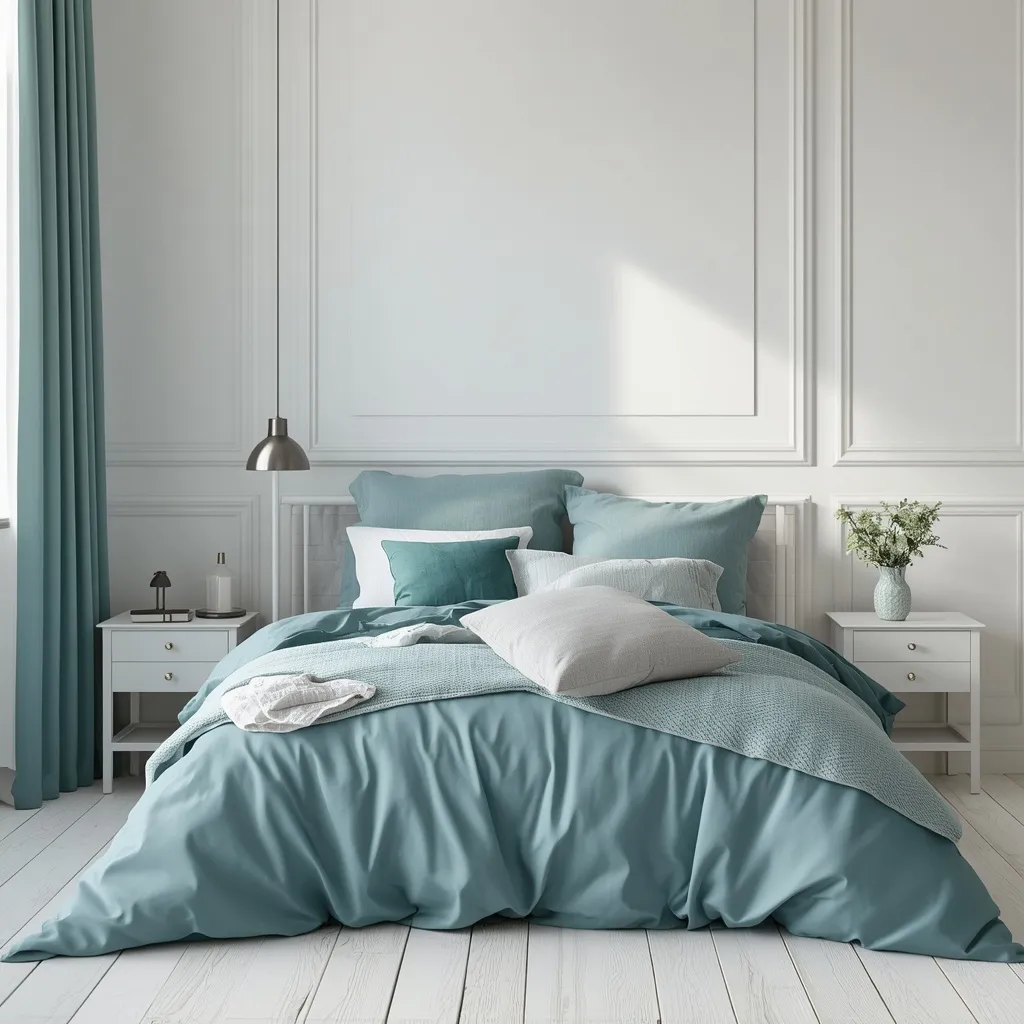
21. Blue-Green Ocean Palette
A blue-green bedroom sits somewhere between sea and shade: teal, seafoam, and soft aqua layered with white and pale wood. Cool and immersive, blue-green is the most restful summer palette. Watery, calm, and enveloping.
Blend two or three related blue-greens rather than pairing one blue with one green, which can look accidental, teal bedding, a seafoam cushion, and an aqua throw read as one considered palette. Keep walls white or very pale so the colors stay fresh. Blue-greens hold their color better than pure blues in rooms with warm artificial light, where cool blues can turn grey. This suits bright and dim rooms alike, and anyone wanting color that still feels calm.
- Why it works: Two or three related blue-greens read as one palette where blue plus green looks accidental.
- Best for: Any light level; calm color seekers.
- Key elements: teal, seafoam, and aqua together, white walls, pale wood.
22. Warm Terracotta Desert Room
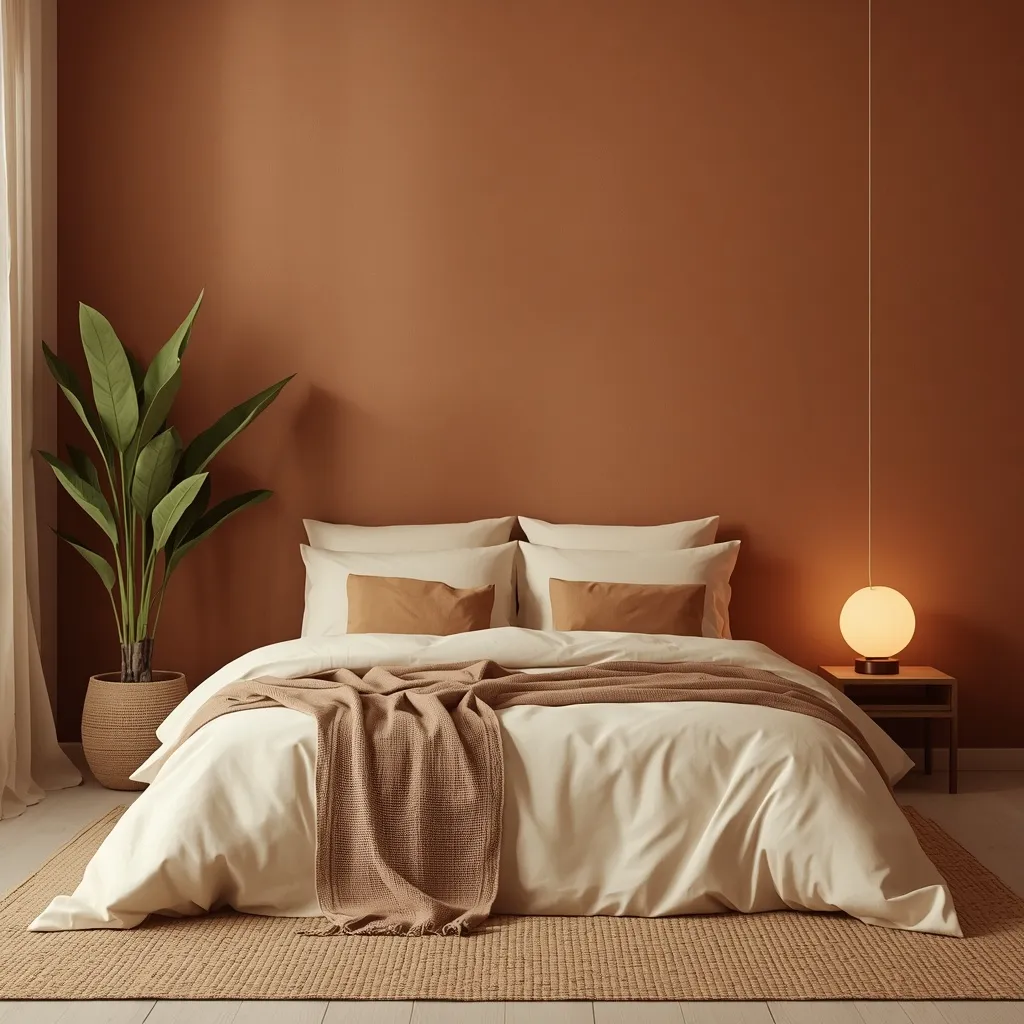
A desert-toned bedroom is warm and earthy: terracotta and clay tones, cream bedding, woven jute, and a single large plant against a plain wall. Grounded and cozy, warm tones feel welcoming rather than cool. Sun-baked, tactile, and inviting.
Use muted terracotta or clay rather than bright orange, pairing it with cream, tan, and natural fibers. Warm earthy pigments look particularly good under lamp light in the evening, which matters in a bedroom used late. Avoid combining terracotta with cool grey, which makes both look dull and muddy. This suits north-facing rooms needing warmth, autumn-leaning decorators who still want a summer feel, and anyone tired of blue and white.
- Why it works: Warm earthy pigment stays rich under evening lamp light where cool tones go flat.
- Best for: North-facing rooms; warmth seekers; blue-fatigued readers.
- Key elements: muted terracotta, cream and tan, jute, one large plant, no cool grey.
23. All-White Summer Room
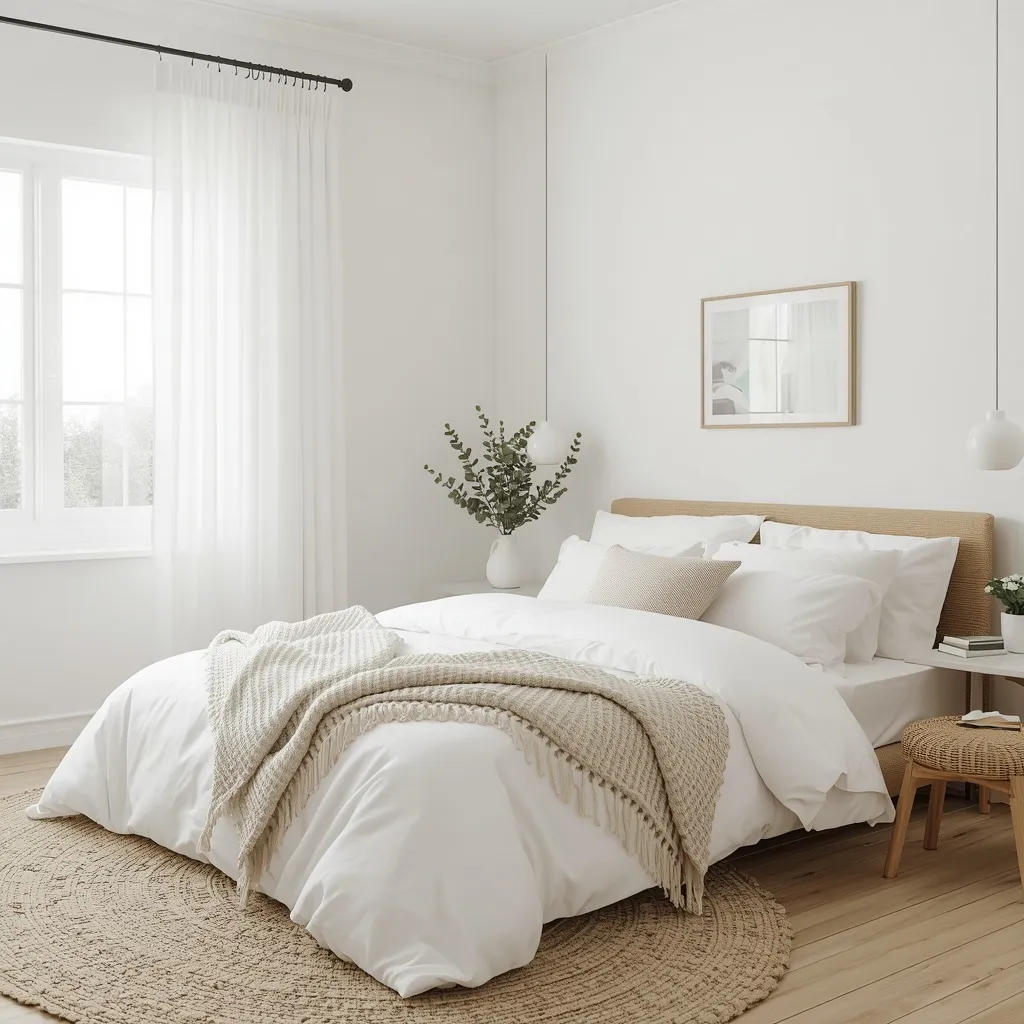
An all-white bedroom is summer at its simplest: white walls, white bedding, white curtains, and texture doing every bit of the work. Bright and pure, white reflects the most light of any scheme. Clean, luminous, and calm.
Choose a soft or warm white rather than a stark brilliant white, which reads cold, and layer several textures, waffle cotton, chunky knit, linen, jute, so the room has depth without color. The common mistake is mixing three different whites that clash; pick one white family and stay within it. White bedding is genuinely practical since it can be washed hot. This suits bright rooms, hot climates, and anyone wanting maximum light.
- Why it works: One white family plus layered texture gives depth where mixed whites look accidental.
- Best for: Bright rooms; hot climates; maximum-light seekers.
- Key elements: one soft white family, waffle, knit, linen and jute texture, hot-washable bedding.
24. Renter’s Summer Refresh
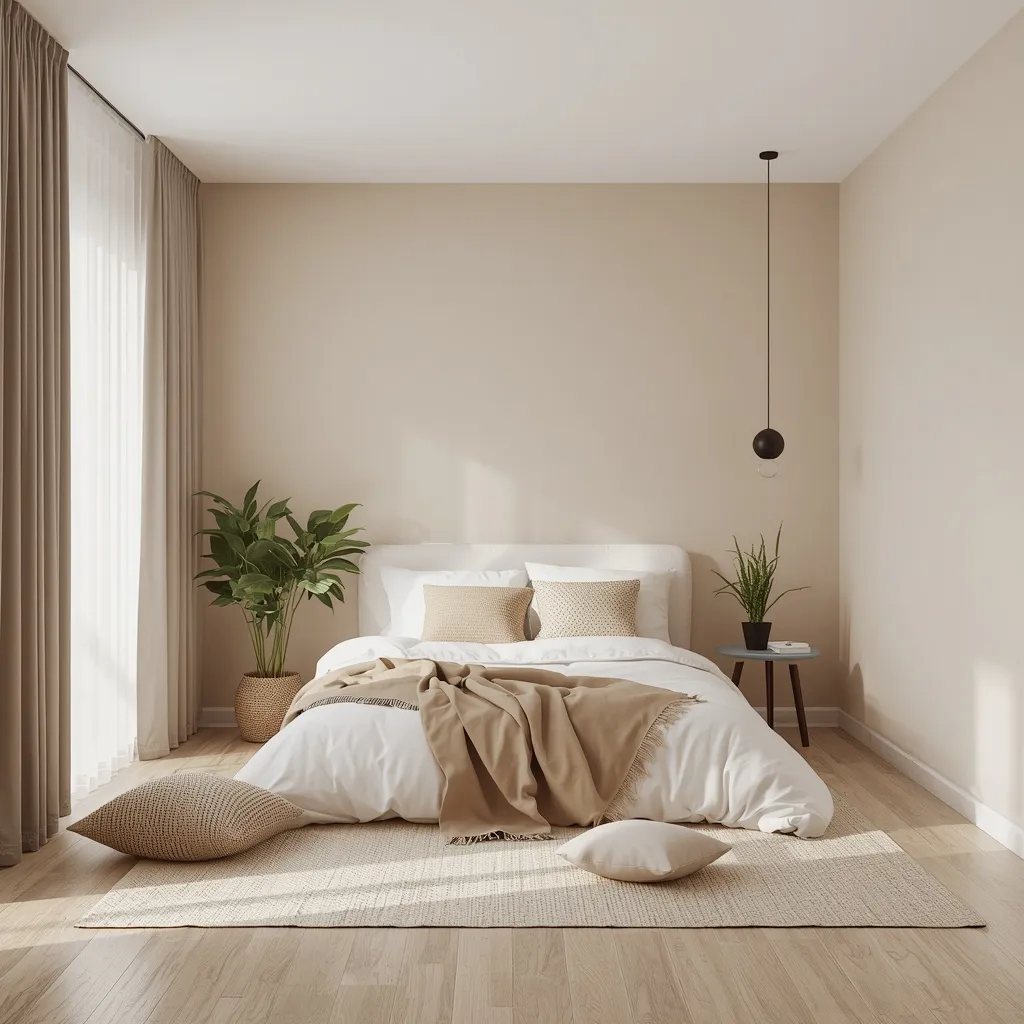
A rental summer bedroom gets its whole character from textiles and freestanding pieces: new bedding, a rug, cushions, a plant, and clip-on lighting, with nothing fixed to the walls. Reversible and cheap, this leaves no trace. Colorful, temporary, and landlord-proof.
Build the scheme through textiles and freestanding furniture in a tight palette of two or three colors repeated throughout, so it reads as designed rather than assembled. Use removable adhesive hooks and strips rated for the weight they hold, testing on a hidden patch and following removal instructions exactly, since pulling too fast is what takes paint with it. Tension rods hang curtains without drilling. This suits renters, student housing, and anyone who moves often.
- Why it works: A tight repeated palette in textiles delivers a full scheme with nothing fixed to walls.
- Best for: Renters; student housing; frequent movers.
- Key elements: 2–3 color palette, weight-rated adhesive tested first, tension rods, freestanding pieces.
25. The Summer Bedding Swap
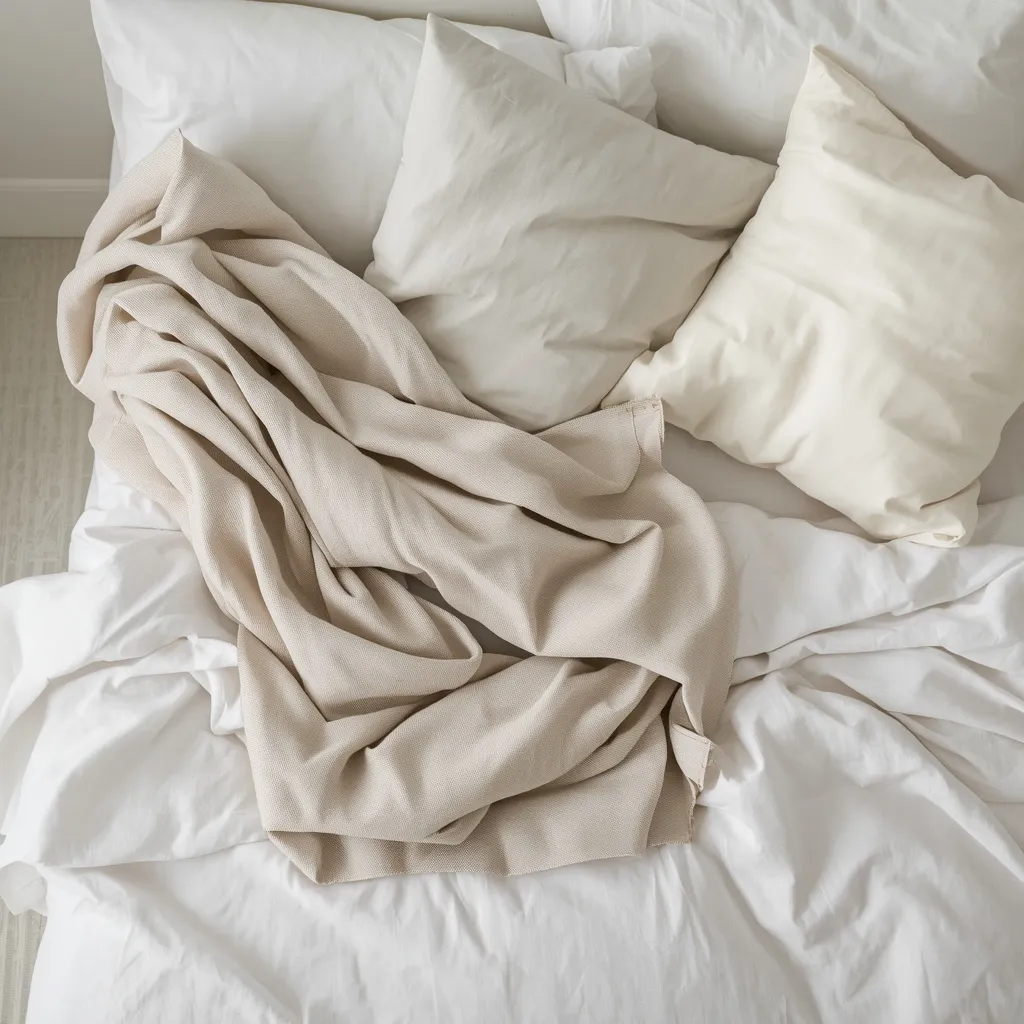
The bedding swap is the single change that most defines a summer bedroom: winter’s quilt and wool throws packed away, replaced by washed linen or cotton percale and one light folded throw. Practical and repeatable, this is a system rather than a look. Cool, fresh, and immediate.
Switch to washed linen or cotton percale, both of which are loosely woven and breathe far better than sateen or microfiber, which trap heat. Strip the winter quilt entirely and use a single lightweight layer. Skip fabric softener, which coats fibers and reduces breathability over time. Store the quilt clean and fully dry in a breathable cotton bag rather than plastic, which traps moisture. This suits hot sleepers, warm climates, and everyone wanting real seasonal change without spending on décor.
- Why it works: Loosely woven linen and percale breathe where sateen and microfiber trap heat.
- Best for: Hot sleepers; warm climates; zero-décor-budget refreshes.
- Key elements: washed linen or percale, single light layer, no fabric softener, quilt stored clean in cotton bags.
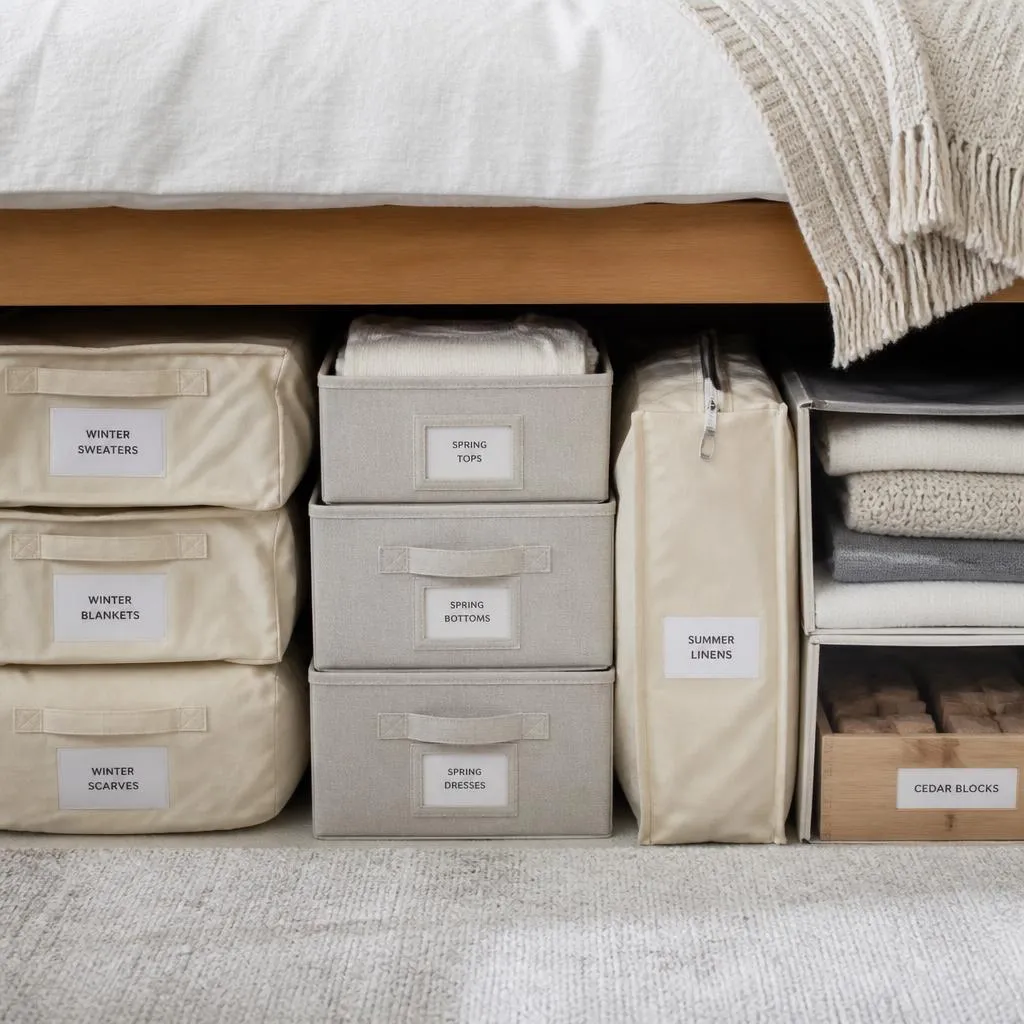
26. Off-Season Storage System
A proper storage system is what makes seasonal décor sustainable: winter textiles and décor washed, dried, labeled, and boxed in one afternoon so next year’s swap takes minutes. Organized and unglamorous, this is the entry that saves the most future effort. Tidy, systematic, and genuinely useful.
Store textiles clean and completely dry, since body oils and dust attract moths and set into stains over months of storage. Use breathable cotton bags or fabric boxes rather than sealed plastic, which traps moisture and encourages mildew, and label each container by season and contents. Keep everything under the bed or on a high shelf rather than in a damp loft or basement. Cedar blocks or lavender sachets deter moths without the smell of mothballs. This suits anyone who swaps décor seasonally and hates rediscovering ruined textiles.
- Why it works: Clean, dry, breathable storage prevents the moth damage and mildew that ruin stored textiles.
- Best for: Seasonal swappers; small homes; anyone who’s lost bedding to storage damage.
- Key elements: washed and fully dry, breathable cotton bags, labeled by season, dry storage spot, cedar or lavender.
How Do You Decorate a Bedroom for Summer?
Decorate a bedroom for summer by subtracting before adding. Strip the heavy quilt, wool throws, and dark cushions, switch to linen or cotton percale bedding, hang lighter curtains, and clear roughly a third of the surface clutter. Then add back only what fills a genuine gap, a lighter throw, fresh flowers, or one handmade piece. The wall color and furniture rarely need to change at all.
Seasonal changes that cost an afternoon rather than a budget are central to the Sunday Abode approach. If your main problem is heat rather than styling, our guide to keeping a bedroom cool in summer tackles that side directly. For more on shaping the space, browse the rest of our bedroom ideas.
Which Summer DIY Project Should You Start With?
The six DIY treatments in this article differ considerably in effort, cost, and how long they last. Use this to pick one that matches the time you actually have, and note that paper and pressed flowers need a wall out of direct sunlight.
| DIY project | Time | Cost | Durability |
| No-sew cushions | About 1 hour | Very low | Years; washable |
| Painted pots | An afternoon | Very low | Years indoors |
| Painted canvases | An afternoon | Low | Years; no fading indoors |
| Paper craft wall | An afternoon | Almost nothing | A season or two; fades in sun |
| Pressed flowers | 2–4 weeks drying | Almost nothing | Years if kept out of sun |
| Macramé hanging | Several hours | Low to medium | Years; dusts easily |
Safety notes: use craft knives on a proper cutting mat, cutting away from your body and retracting the blade between cuts, and keep hot glue guns on a heatproof surface, molten glue reaches temperatures that cause genuine burns, so never touch it to test. Use spray paint only outdoors or in a well-ventilated space, following the product’s guidance on respiratory protection. Choose water-based, low-VOC paints and adhesives for indoor projects wherever possible, ventilate while working and while things cure, and keep all paints, glues, and small craft components away from children and pets. Fix heavy mirrors, shelves, and fiber hangings into studs or properly rated anchors rather than plasterboard alone, and think twice before hanging anything heavy directly above a bed. Anchor dressers and tall furniture to the wall with anti-tip restraints. Never leave candles burning unattended or place them near curtains, paper décor, or bedding, and use decorative string lights carrying a recognized safety certification without draping them over fabric. Furniture painted before 1978 may contain lead paint, which releases hazardous dust when sanded, so check before refinishing thrifted pieces.
Frequently Asked Questions
How do you make a bedroom feel like summer?
Start by removing layers rather than adding décor. Strip the heavy quilt, wool throws, and dark cushions, switch to linen or cotton percale bedding, hang lighter or sheer curtains, and clear about a third of the surface clutter. Add back one or two fresh touches such as garden flowers or a lighter throw. The wall color and furniture usually don’t need to change at all.
What colors work best for a summer bedroom?
Soft white, cream, and pale neutrals make the most flexible base, with soft blue, blue-green, sage, muted pink, and terracotta all working well as the color layer. Keep the palette to about three colors so the room stays restful, and let texture rather than pattern carry the interest. Muted versions of any color are easier to live with in a bedroom than saturated ones.
What are the easiest DIY summer bedroom decorations?
No-sew cushion covers are the fastest genuine win, taking about an hour and using existing cushion pads with fabric folded envelope-style around them. Painted terracotta pots and simple abstract canvases are next, each an afternoon’s work. Paper craft walls cost almost nothing but fade in sunlight, and pressed flowers need two to four weeks of drying before framing.
Do paper decorations last in a bedroom?
Not indefinitely. Paper fades and curls in direct sunlight and humid air, so a paper craft wall typically looks good for a season or two before needing refreshing. Using heavyweight cardstock of 200 gsm or above helps considerably, as does hanging the display on a wall the sun doesn’t reach directly. Treat paper décor as a cheap seasonal refresh rather than a permanent fixture.
Can you use sheer curtains and still sleep well?
Only with a second layer. Sheer curtains soften and diffuse light beautifully but don’t block it, and summer daylight arrives early. Fit a blackout blind inside the window recess behind the sheers, since a recess-fitted blind stops the edge light leak that defeats blackout curtains hung alone. That combination gives you the daytime look and proper darkness at night.
How do you decorate a rented bedroom for summer?
Build the whole scheme from textiles and freestanding pieces: bedding, a rug, cushions, a plant, and clip-on or plug-in lighting, keeping to a palette of two or three colors repeated throughout. Removable adhesive hooks and strips handle lightweight wall décor, but test them on a hidden patch first and follow the removal instructions exactly. Tension rods hang curtains without drilling.
How should you store summer or winter decor between seasons?
Store everything clean and completely dry, since body oils and dust attract moths and set into stains over months. Use breathable cotton bags or fabric boxes rather than sealed plastic, which traps moisture and encourages mildew, and label containers by season and contents. Keep them somewhere dry such as under the bed or a high shelf, and add cedar blocks or lavender sachets to deter moths.
Conclusion
The most effective summer bedroom decor ideas cost far less than the shopping-led versions suggest, because most of the change comes from taking things away and swapping what you already own. Strip the heavy layers, switch to breathable bedding, let more light in, then add one handmade piece if you want the room to feel personal rather than merely lighter. Keep paper and pressed-flower projects out of direct sun, keep a blackout layer behind those sheers, and store what you pack away properly. For more ways to shape the room, explore the bedroom ideas collection on Sunday Abode and save the scheme that suits your light.