


Key Takeaways
- A fan doesn’t lower a room’s air temperature, it cools people by speeding evaporation from skin, so switch it off in an empty room.
- Blocking sunlight at the glass matters more than anything you do inside, and external shading beats internal blinds by a wide margin.
- On a hot day, closed blinds and closed windows keep a room cooler than open ones when outdoor air is hotter than indoor air.
- Cool-toned palettes and breathable natural fabrics make a room feel cooler even when the thermometer doesn’t move.
- Swap sateen and microfiber for linen or cotton percale, weave matters more than fiber for sleeping temperature.
Introduction
There are two kinds of cool bedroom, and this article covers both. These cool summer bedroom ideas include schemes that simply look cool, blues, greens, crisp whites, and aesthetic-led rooms for teens, couples, and grown-ups, alongside four setups that genuinely lower how hot a room feels on a July night.
Below are 27 complete looks spanning coastal blue, sage green, soft pink, sunny yellow, beach-house, boho, Scandi, and monochrome directions, sized for small rooms, kids’ rooms, shared rooms, and adult retreats. The final entries cover breathable bedding, daytime shading, airflow layout, and the night-flush routine that uses the daily temperature swing rather than fighting it. Consider it your guide to a bedroom in your abode that looks good and sleeps well.
The one thing worth knowing before you start: Color and styling change how cool a room feels; only shading, airflow, and fabric change how cool it actually is. Both matter, and they work best together. A pale blue room with breathable linen bedding and the blinds drawn against afternoon sun will beat a beautifully styled room with heavy curtains open to the west every time. The four system entries at the end handle the physical side.
27 Cool Summer Bedroom Ideas
1. Coastal Blue Cool Retreat
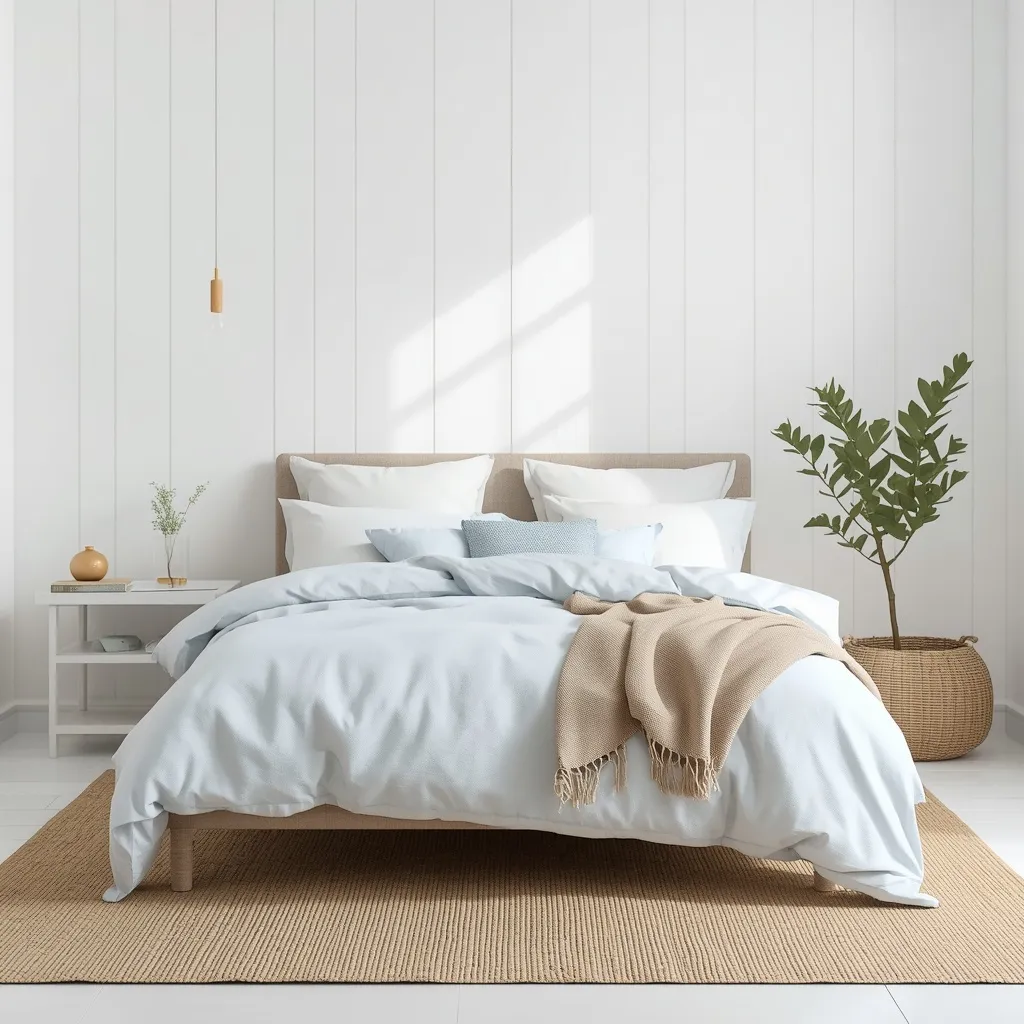
A coastal blue bedroom is the definitive cool summer room: crisp white walls, soft blue bedding, woven natural texture, and light bouncing off every pale surface. Fresh and calm, blue reads cool before you’ve touched the thermostat. Breezy, bright, and restful.
Build from white and one soft blue, chambray, denim, or grey-leaning sky blue, adding jute, rattan, and cotton for texture rather than pattern. Cool-toned colors genuinely affect perceived temperature even though they don’t change the air, which is why blue rooms feel calmer in heat. Skip literal beach motifs; the palette carries it. This suits bright rooms, renters with white walls, and anyone wanting a scheme that lasts past summer.
- Why it works: Cool-toned palettes shift perceived temperature even when the thermometer doesn’t move.
- Best for: Bright rooms; renters; year-round schemes.
- Key elements: white base, one soft blue, jute and rattan, no beach motifs.
2. Crisp All-White Room
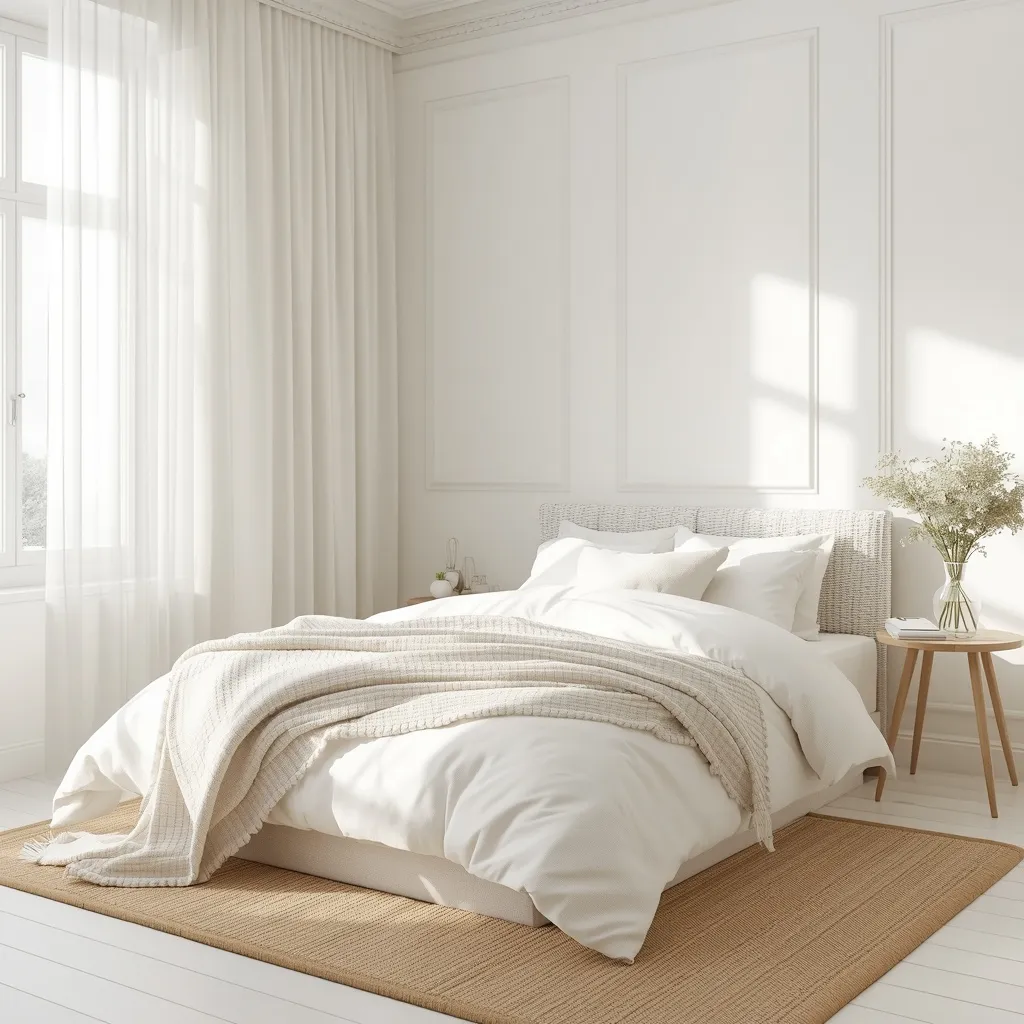
An all-white bedroom is summer at its most pared-back: white walls, white bedding, white curtains, and texture doing all the work. Bright and clean, white reflects more light than any other scheme. Luminous, simple, and calm.
Choose a soft or warm white rather than a stark brilliant white, which reads cold, and layer waffle cotton, chunky knit, linen, and jute so the room has depth without color. The common mistake is mixing three different whites that clash, pick one white family and stay in it. Pale surfaces reflect rather than absorb light, which helps modestly with heat gain in a very sunny room. This suits bright rooms, hot climates, and maximum-light seekers.
- Why it works: One white family plus layered texture gives depth where mixed whites look accidental.
- Best for: Bright rooms; hot climates; minimalists.
- Key elements: one soft white family, waffle and knit and linen texture, no clashing whites.
3. Sage Green Calm Bedroom
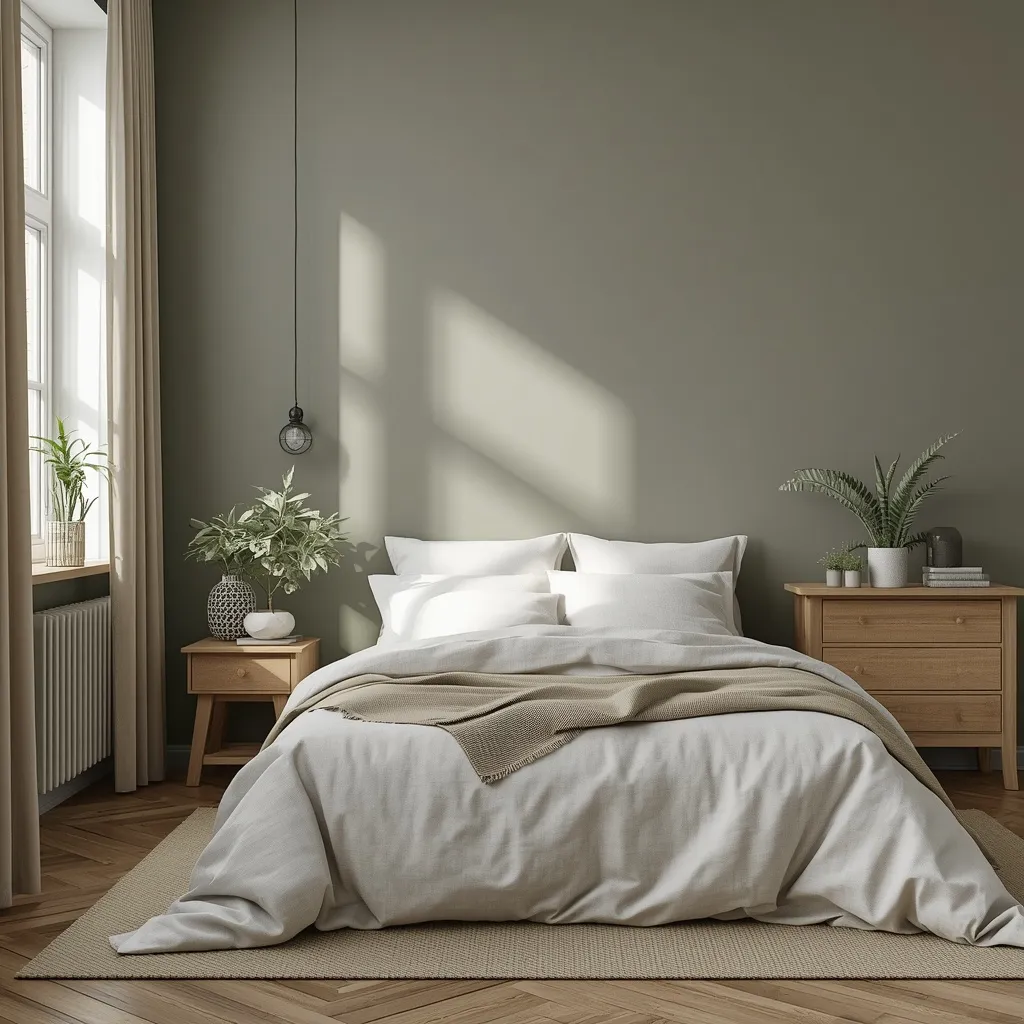
A sage green bedroom is quietly restful: muted grey-green walls, natural oak, cream bedding, and a few plants catching the light. Gentle and grounding, sage sits between color and neutral. Soft, current, and easy to live with.
Choose a muted grey-leaning sage rather than a bright or yellow-toned green, pairing it with cream and natural oak rather than stark white, which can wash sage out. Low-saturation greens shift gently through the day rather than dramatically, making them forgiving in rooms with changeable light. Test a large sample and check it morning and evening. This suits almost any bedroom, cautious color users, and rooms used for both rest and work.
- Why it works: Low saturation lets sage read almost neutral while still bringing real color.
- Best for: Most bedrooms; cautious color users.
- Key elements: muted grey-sage, natural oak, cream bedding, large sample tested twice daily.
4. Soft Pink Sunset Room
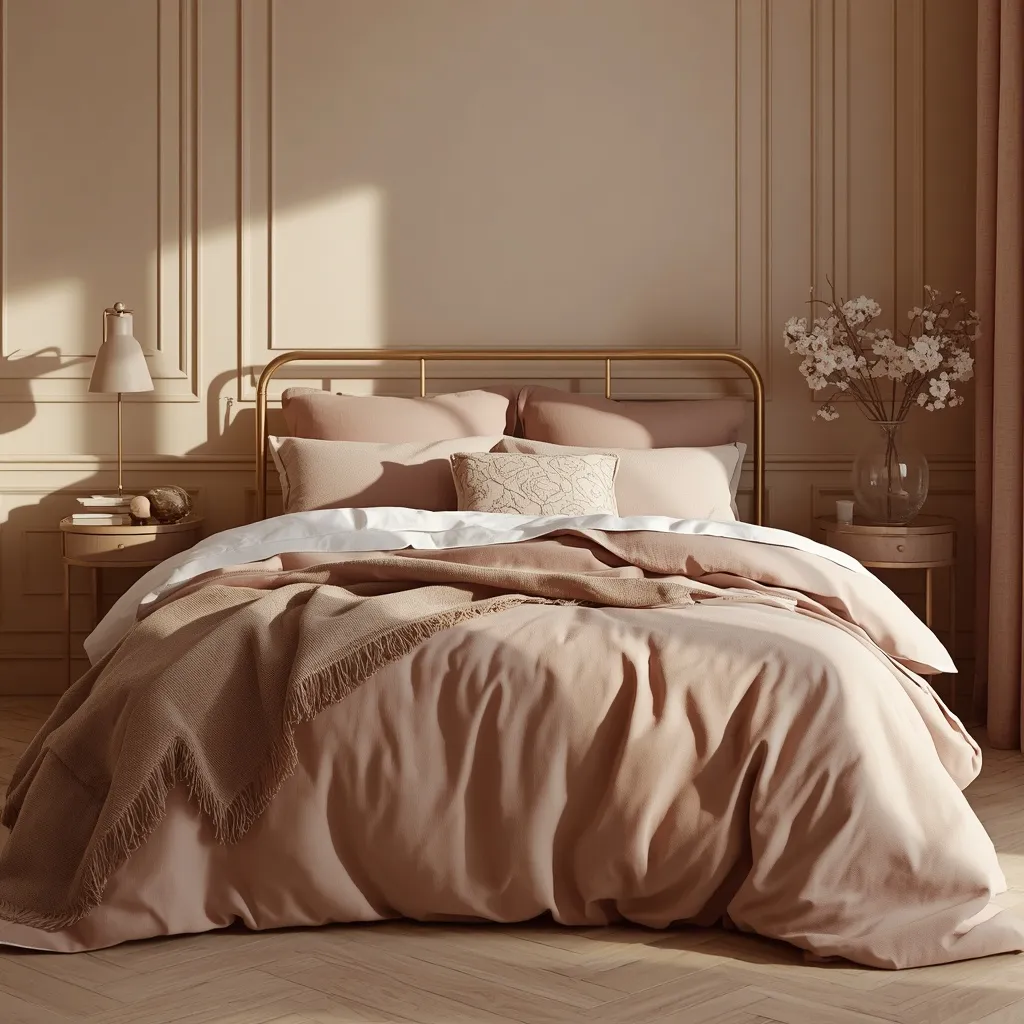
A pink bedroom is warmer and more grown-up than it sounds: dusty rose and blush layered with cream, brass, and pale wood in low evening light. Gentle and flattering, muted pink behaves like a warm neutral. Soft, calm, and quietly romantic.
Choose a heavily muted, dusty or greyed pink rather than a clear bright pink, pairing it with cream, tan, and brass rather than stark white. Keep pattern minimal so the color reads as a considered neutral rather than a theme. Pink is a warm tone, so pair it with breathable bedding and good shading if the room runs hot, the scheme won’t do the cooling work for you. This suits adult bedrooms, north-facing rooms, and anyone tired of grey.
- Why it works: Heavily muted pink behaves like a warm neutral rather than a statement color.
- Best for: Adult bedrooms; north-facing rooms.
- Key elements: dusty greyed pink, cream and tan, brass, minimal pattern, breathable bedding.
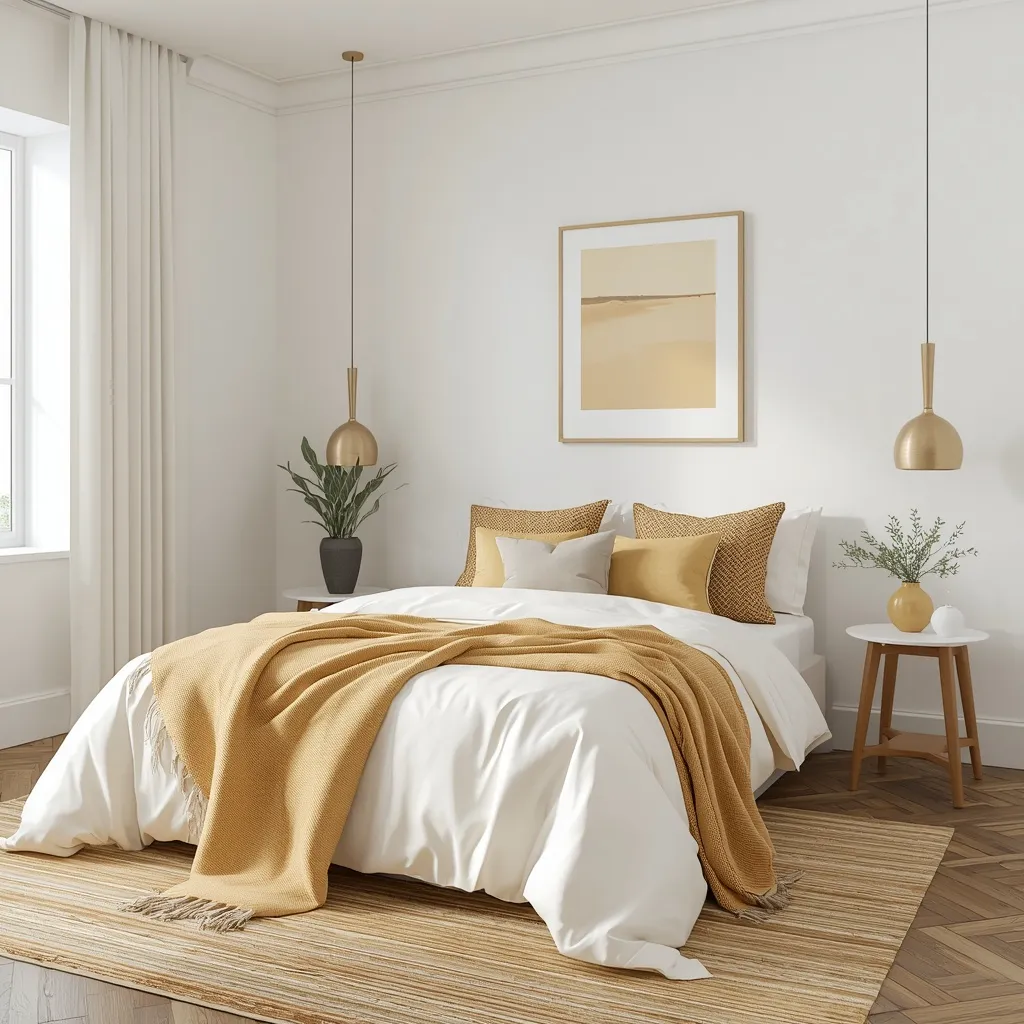
5. Sunny Yellow Accent Room
A yellow-accented bedroom is cheerful without shouting: white and cream base with soft lemon and ochre in cushions, a throw, and one artwork. Bright and optimistic, yellow used sparingly lifts the whole room. Warm, sunny, and uplifting.
Use yellow as accent only against a white or cream base, since a fully yellow bedroom is genuinely difficult to rest in. Muted ochre and soft lemon work better than saturated primary yellow, which reads harsh in a sleeping room. Repeat the accent three times, cushion, throw, artwork, so it looks deliberate rather than accidental. This suits north-facing rooms needing warmth, small budgets, and anyone wanting cheer without repainting.
- Why it works: Yellow repeated three times as accent lifts a room where a full scheme would tire the eye.
- Best for: North-facing rooms; small budgets; no-repaint refreshes.
- Key elements: white-cream base, muted ochre or soft lemon, accent repeated three times.
6. Blue and White Classic Combo
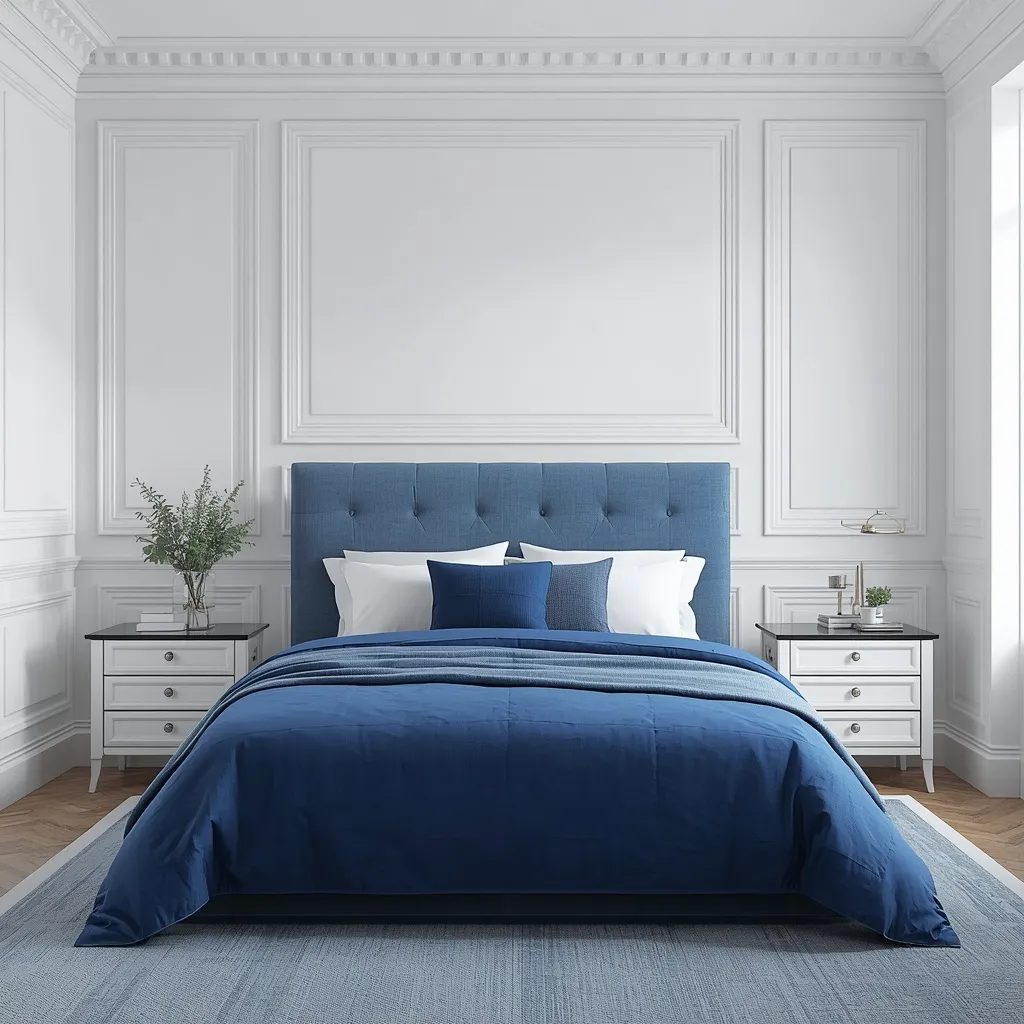
Blue and white is the color combination that never dates: navy or chambray against crisp white, sharp and tailored, with polished metal and simple lines. Timeless and versatile, this pairing suits any house. Clean, smart, and reliable.
Split the scheme clearly, blue on bedding and one accent wall or headboard with white everywhere else, keeping the proportion roughly one-third color to two-thirds white so it stays fresh. A true blue rather than a purple-leaning one keeps the white looking crisp. Chrome or nickel suits this cooler and more traditional than brass would. This suits family homes, resale-minded updates, and anyone wanting a safe but striking combination.
- Why it works: A one-third to two-thirds color ratio keeps a two-color scheme fresh rather than heavy.
- Best for: Family homes; resale-minded updates.
- Key elements: true blue, crisp white, one-third to two-thirds ratio, chrome or nickel.
7. Green and Cream Botanical
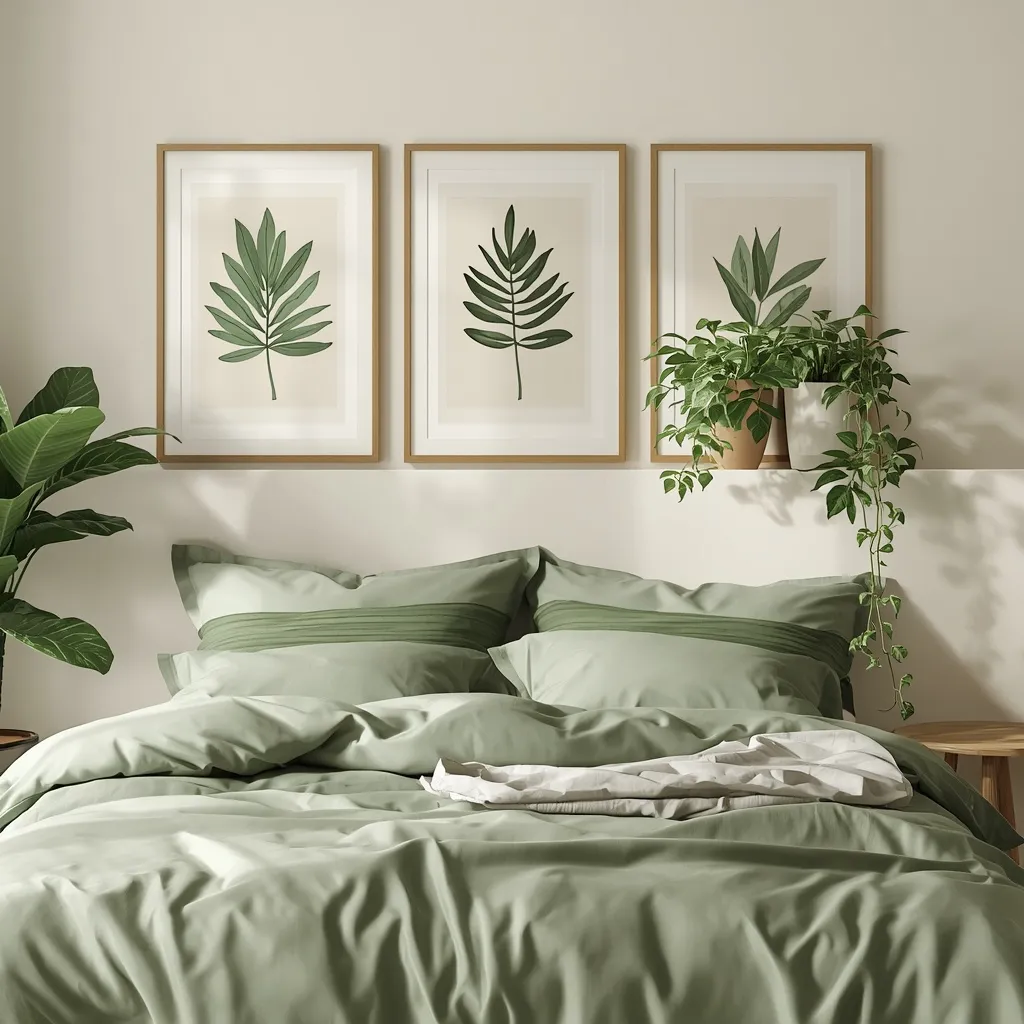
A botanical bedroom brings the garden indoors: green accents against cream walls, framed pressed-leaf prints, trailing plants on a shelf, and leaf-toned bedding. Fresh and layered, green is the most naturally cooling color. Verdant, calm, and alive.
Use green as accent, bedding, artwork, plants, against cream or warm white walls, keeping the room restful rather than saturated. Group plants in odd numbers of three or five at varied heights instead of dotting single pots around. Bedrooms are often the dimmest rooms in a house, so choose low-light tolerant species, and if pets share the room, check toxicity, since pothos and several common trailing plants are toxic to cats and dogs. This suits plant lovers and gentle color users.
- Why it works: Green as accent against cream stays restful where a fully green room would saturate.
- Best for: Plant lovers; renters; gentle color use.
- Key elements: green bedding and art, cream walls, plants grouped in threes, toxicity checked.
8. Beach House Bedroom
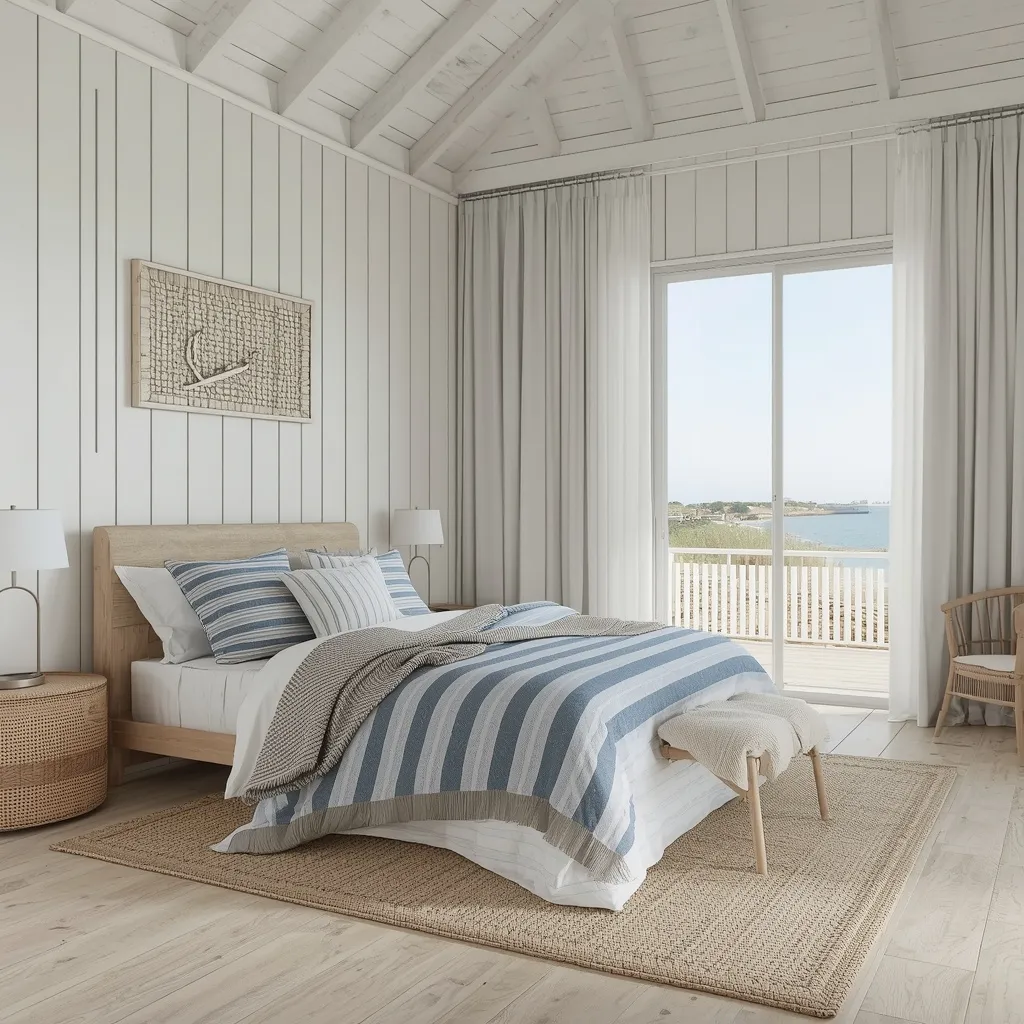
A beach house bedroom is relaxed and sun-bleached: whitewashed timber, striped cotton bedding, sand and blue-grey tones, rope and rattan, and sheer curtains moving at the window. Easygoing and light, this is the holiday version of coastal. Breezy, casual, and warm-weather ready.
Combine whitewashed or pale timber with a sand, white, and blue-grey palette, using stripes as the only pattern and natural fibers for texture. Keep it restrained: anchors, shells, and rope-wrapped lettering tip the look into theme-park territory fast, while materials and palette read genuinely coastal. Sheer curtains let light through while softening it and move visibly with any breeze. This suits holiday homes, coastal properties, and relaxed family houses.
- Why it works: Materials and palette read coastal where literal nautical motifs read as theme décor.
- Best for: Holiday and coastal homes; relaxed family houses.
- Key elements: whitewashed timber, sand and blue-grey, stripes only, rope and rattan, sheers.
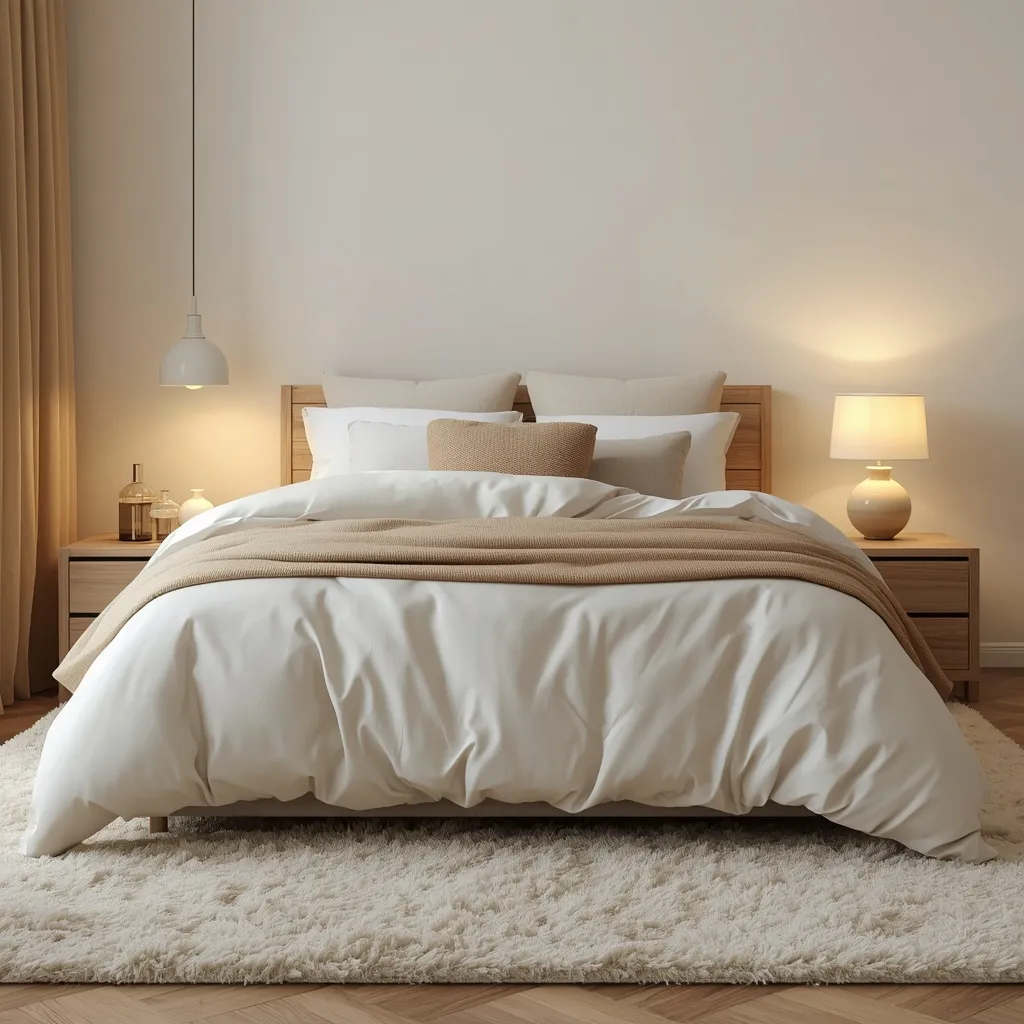
9. Neutral Aesthetic Cloud Room
A neutral aesthetic bedroom is soft and photogenic: cream and beige layers, a fluffy rug, bouclé cushions, and warm lamp light everywhere. Gentle and calm, this is among the most saved looks online for good reason. Soft, tonal, and soothing.
Work within a narrow band of creams, beiges, and warm whites, letting texture do everything, bouclé, shaggy wool, waffle cotton, linen. Warm lamps at around 2700K look far better in photographs and feel calmer at night than a cool overhead light. The risk is flatness, so vary textures deliberately rather than repeating one. In a hot room, choose cotton and linen versions of these textures rather than heavy wool. This suits aesthetic-led decorators and photo-friendly rooms.
- Why it works: Deliberately varied texture prevents an all-neutral room from reading flat.
- Best for: Aesthetic-led decorators; photo-friendly rooms.
- Key elements: cream and beige band, bouclé and waffle texture, 2700K lamps, cotton in hot rooms.
10. Moody Dark Aesthetic Room
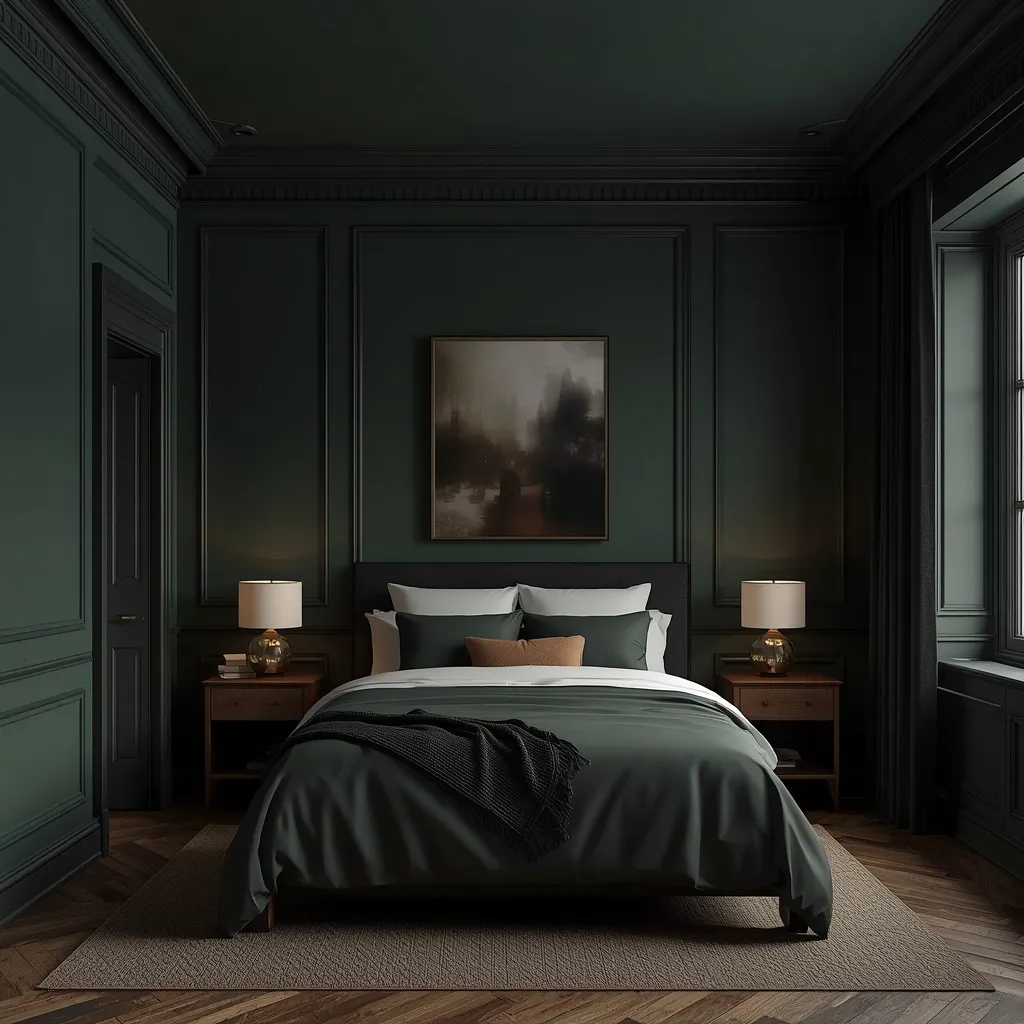
A dark aesthetic bedroom is dramatic and enveloping: charcoal or deep green walls, black metal details, moody artwork, and warm low lighting. Confident and cocooning, dark rooms feel intentional rather than gloomy. Rich, sophisticated, and calm.
Commit fully, walls, ceiling, and trim in one deep color, since half-measures read as a mistake rather than a scheme. Add warmth through timber, brass, and layered lamp light rather than overhead lighting, which flattens dark colors. Practical caveat: dark surfaces absorb more heat than pale ones, so this suits cooler rooms, north-facing spaces, or rooms with good shading rather than a west-facing box under a roof. This suits confident decorators and adults wanting a retreat.
- Why it works: Full commitment across walls, ceiling, and trim makes a dark room read as designed.
- Best for: North-facing and well-shaded rooms; confident decorators.
- Key elements: one deep color throughout, timber and brass warmth, layered lamps, not for hot sunny rooms.
11. Couples’ Balanced Bedroom
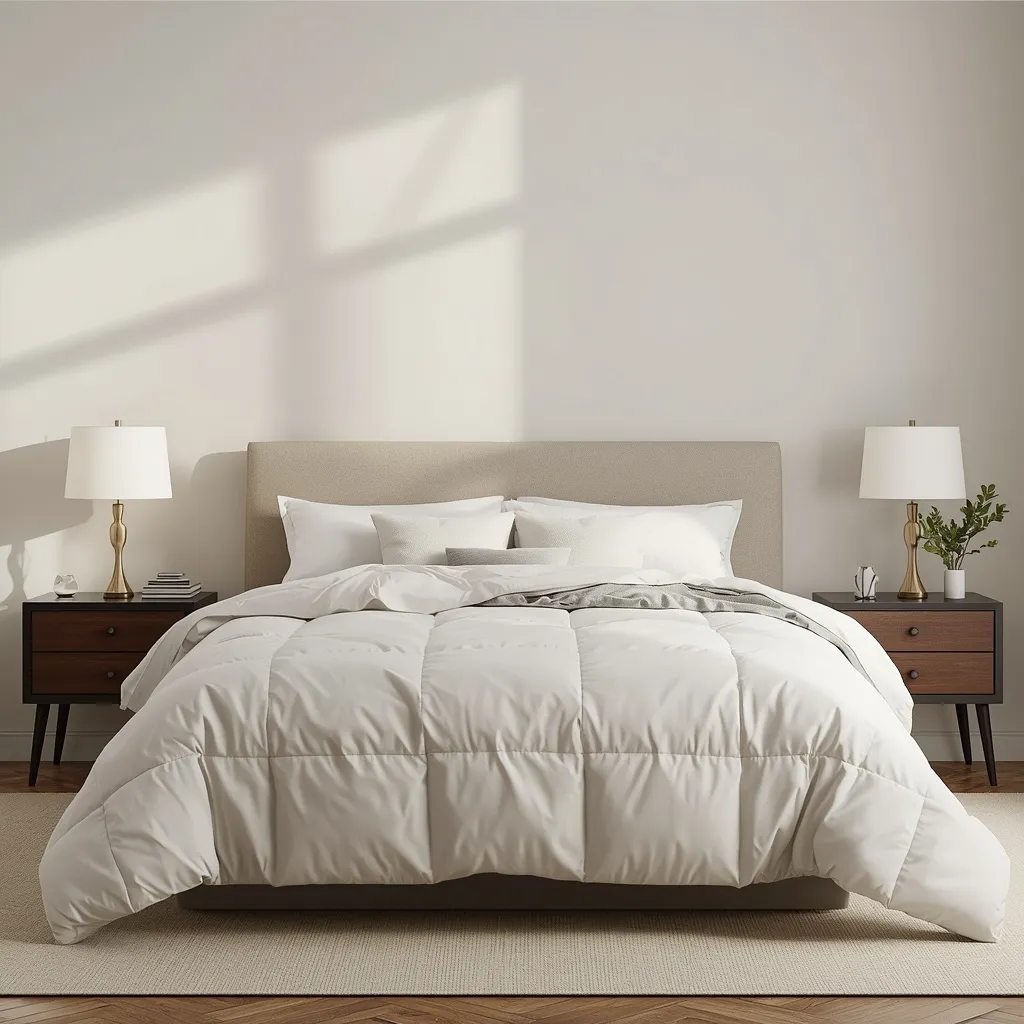
A shared adult bedroom works when both people are visible in it: a neutral base both agreed on, symmetrical nightstands and lamps, and personal touches balanced on each side. Considered and equal, symmetry is what makes a shared room feel calm. Harmonious, grown-up, and restful.
Start with a neutral base both people genuinely like, then let each side carry its own lamp, books, and one personal item, keeping the arrangement roughly symmetrical. Individual reading lights matter enormously when two people keep different hours, as does bedding wide enough that neither person pulls it off the other, a duvet one size larger than the mattress solves most nighttime disputes. Separate lighter layers work well if one sleeps hotter. This suits couples and any shared adult bedroom.
- Why it works: Symmetry plus one personal item each makes a shared room feel equal rather than negotiated.
- Best for: Couples; shared adult bedrooms.
- Key elements: agreed neutral base, matched nightstands and lamps, oversized duvet, individual reading lights.
12. Cozy Teen Hangout Room
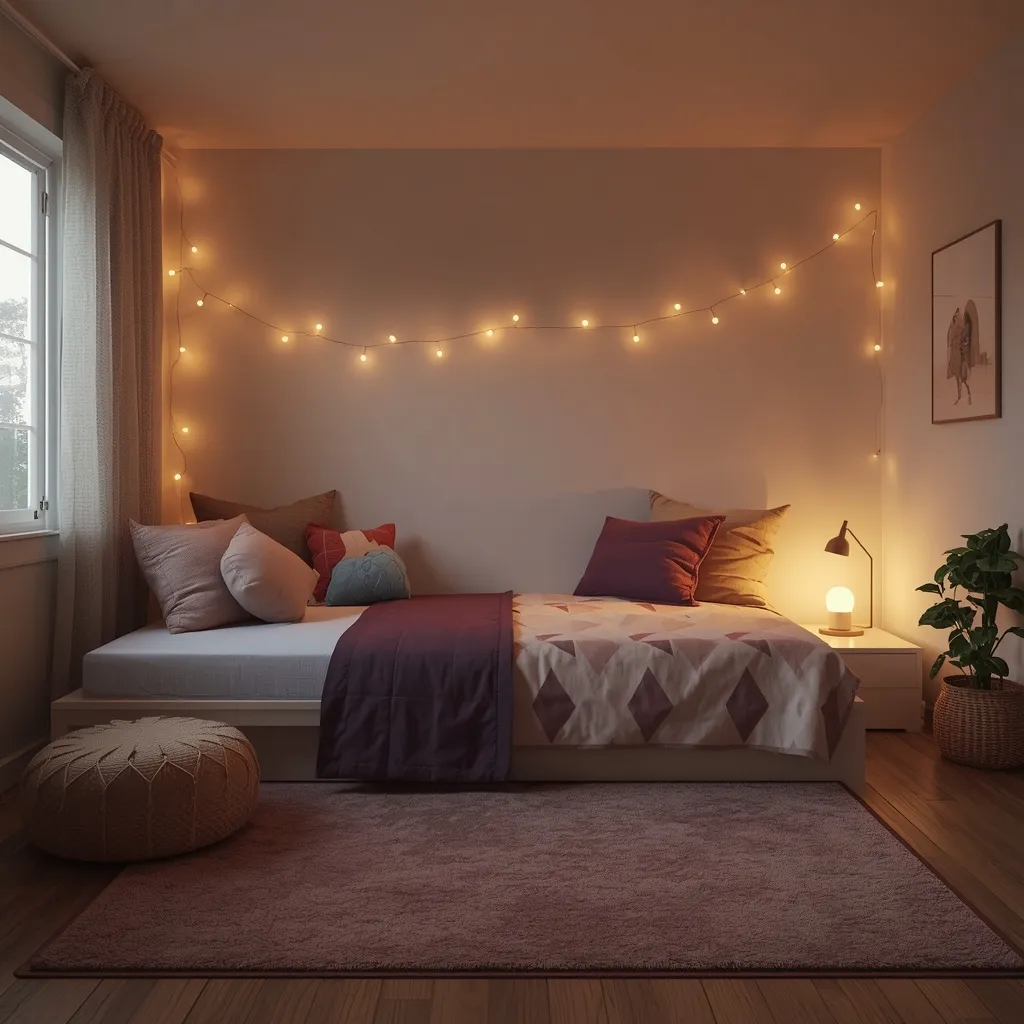
A cozy teen bedroom is soft and social: layered cushions, a floor pouf, warm string lights, a rug you can sit on, and a bed dressed to double as a sofa. Relaxed and welcoming, this room expects friends. Comfortable, warm, and personal.
Dress the bed with enough cushions to work as seating, add a floor zone with a rug and pouf, and use warm lamp and string lighting rather than a bright overhead. Keep a clear floor area of about 1.5 × 2 m (5 × 6.5 ft) if space allows. Safety points: choose string lights carrying a recognized safety certification, never drape them over bedding or fabric, don’t run them under rugs, and switch them off before sleeping. This suits sociable teens and rooms that host friends.
- Why it works: A bed dressed as seating plus a floor zone lets one room work socially without extra furniture.
- Best for: Sociable teens; rooms that host friends.
- Key elements: cushion-layered bed, rug and pouf, warm lighting, certified string lights kept off fabric.
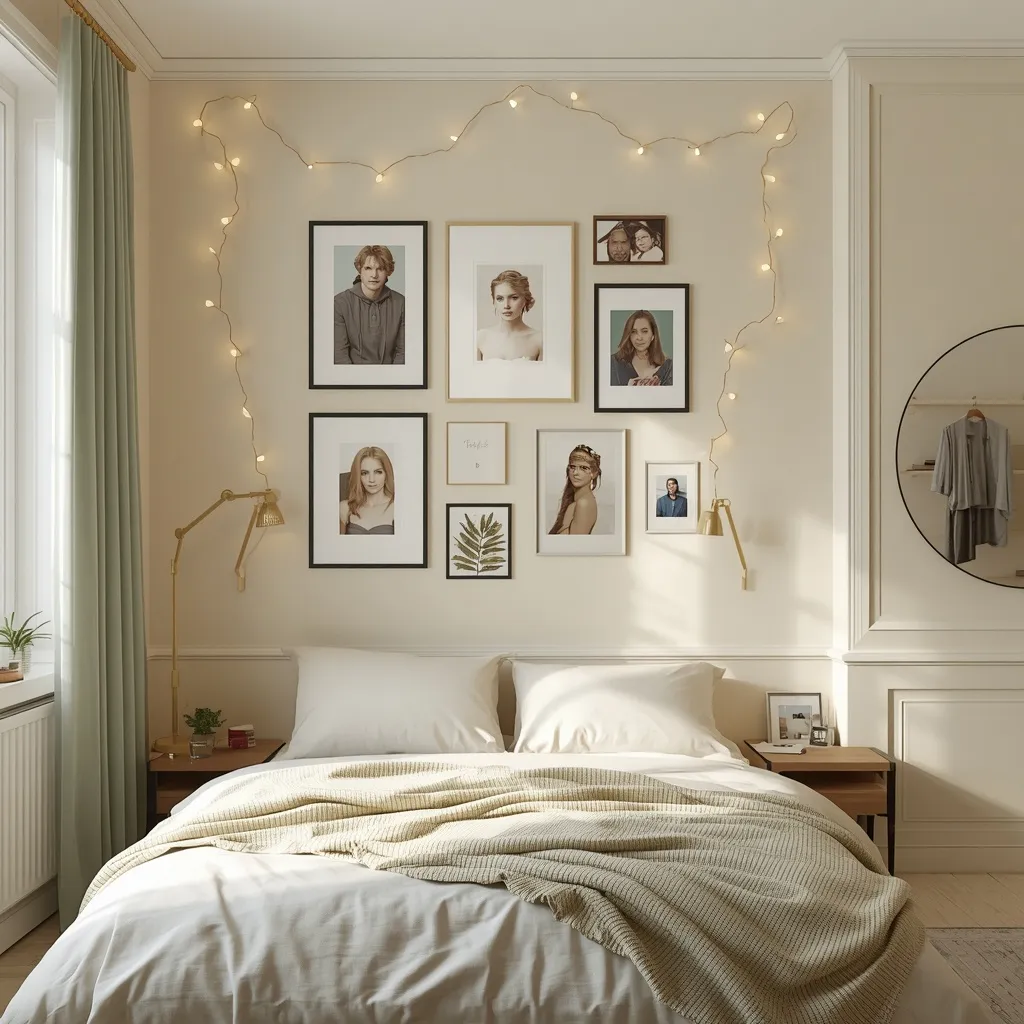
13. Teen Girl Aesthetic Room
An aesthetic-led teen room is styled and personal: a soft palette of cream, sage, or blush, a gallery wall, fairy lights, mirrors, and shelves of carefully arranged things. Curated and photogenic, this room is designed to be seen. Pretty, personal, and considered.
Pick one aesthetic direction and commit, cottagecore, coastal, neutral, or Scandi, rather than mixing several, which is what makes a room look cluttered rather than curated. Build a gallery wall from prints, photos, and postcards in consistent frames, planning the layout on the floor first. Let the teenager choose the direction, since a room someone didn’t pick is a room they won’t maintain. This suits aesthetic-led teens and rooms that change often.
- Why it works: Committing to one aesthetic is the difference between curated and cluttered.
- Best for: Aesthetic-led teens; frequently restyled rooms.
- Key elements: one committed direction, consistent frames, floor-planned gallery, teen chooses.
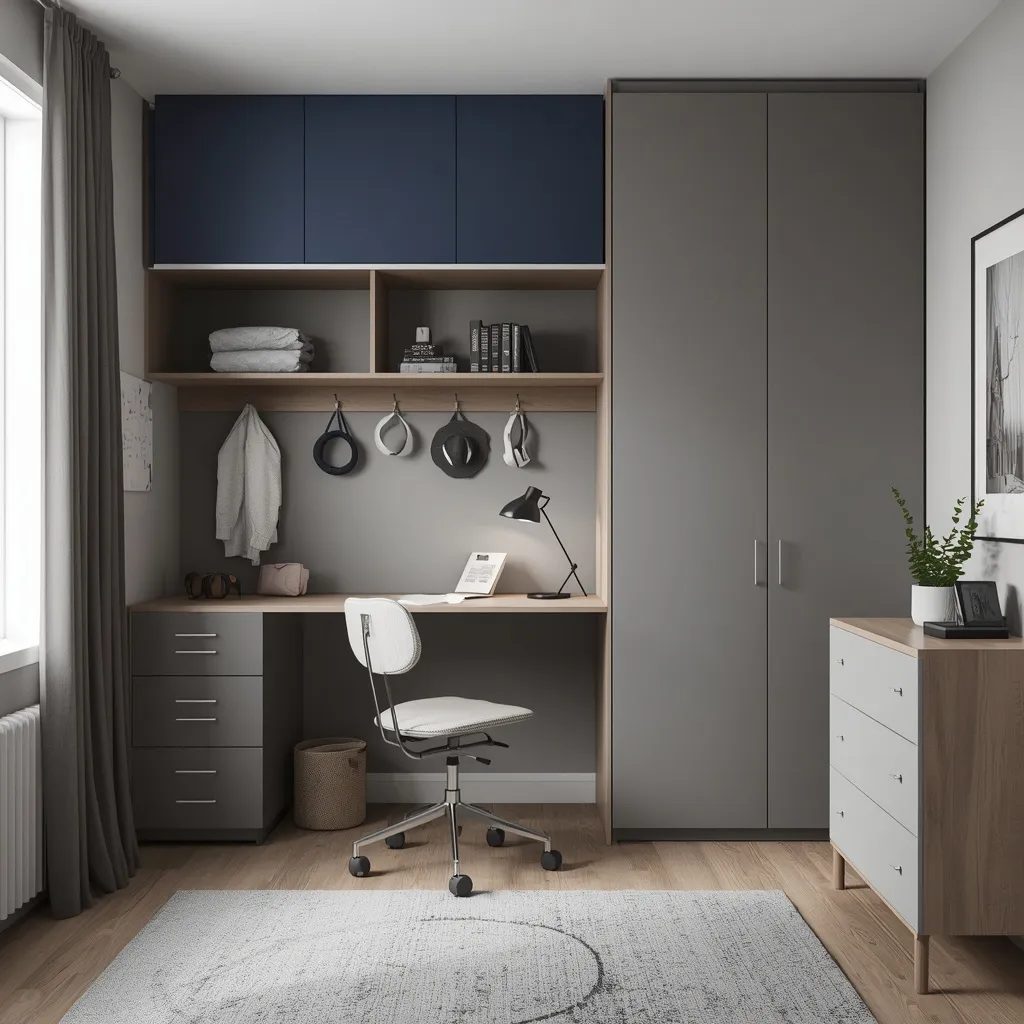
14. Teen Boy Modern Room
A modern teen room is clean and functional: a muted palette of grey, navy, or forest green, a proper desk setup, open shelving for gear, and simple graphic artwork. Uncluttered and practical, this room is built to be used. Sharp, organized, and low-fuss.
Build on two muted colors plus white and keep the palette consistent across bedding, storage, and artwork so the room reads deliberate. Prioritize function: a desk at least 60 cm (24 in) deep, a chair with adjustable height, hooks by the door, and closed storage that actually matches what’s being stored. Anchor tall furniture to the wall with anti-tip restraints. This suits teens who want simple over styled, and rooms doubling as study or gaming spaces.
- Why it works: Two muted colors carried across every element makes a simple room read designed.
- Best for: Function-first teens; study and gaming rooms.
- Key elements: two muted colors plus white, 60 cm desk, adjustable chair, closed storage, anchored furniture.
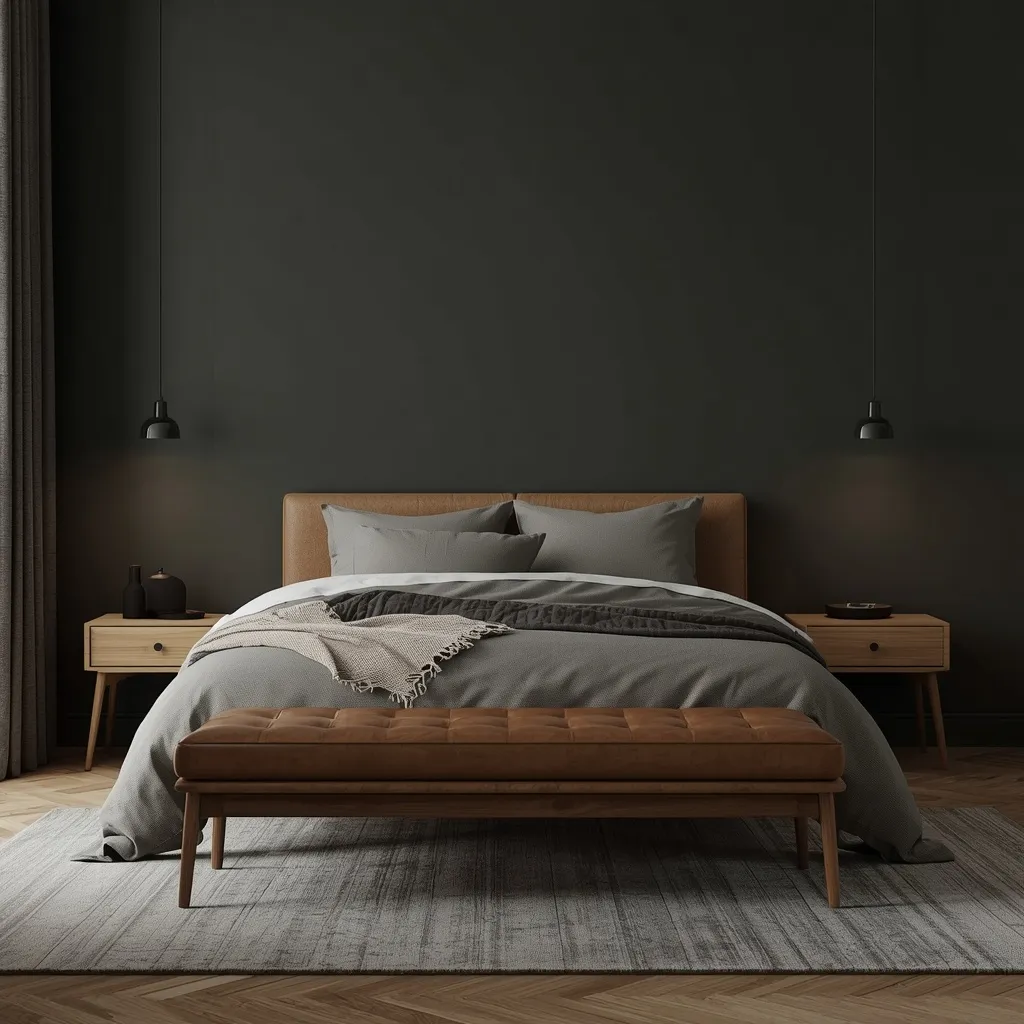
15. Grown-Up Masculine Bedroom
A masculine adult bedroom is understated and tailored: charcoal, navy, or olive with timber and leather, clean-lined furniture, and almost no ornament. Confident and calm, restraint is the whole point. Sharp, warm, and quietly luxurious.
Combine one deep muted color with natural timber and one leather or leather-look piece, keeping lines clean and surfaces largely clear. Texture rather than pattern carries the interest, a wool throw, a linen duvet, a rug with depth. Two colors plus timber is enough; adding more dilutes the effect. Keep bedding breathable if the room runs warm, since darker schemes tend to feel heavier in heat. This suits adult bedrooms, apartments, and anyone wanting a hotel-like room.
- Why it works: One deep color plus timber and texture reads tailored where more colors dilute it.
- Best for: Adult bedrooms; apartments; hotel-style rooms.
- Key elements: one deep muted color, timber, one leather piece, clean lines, breathable bedding.
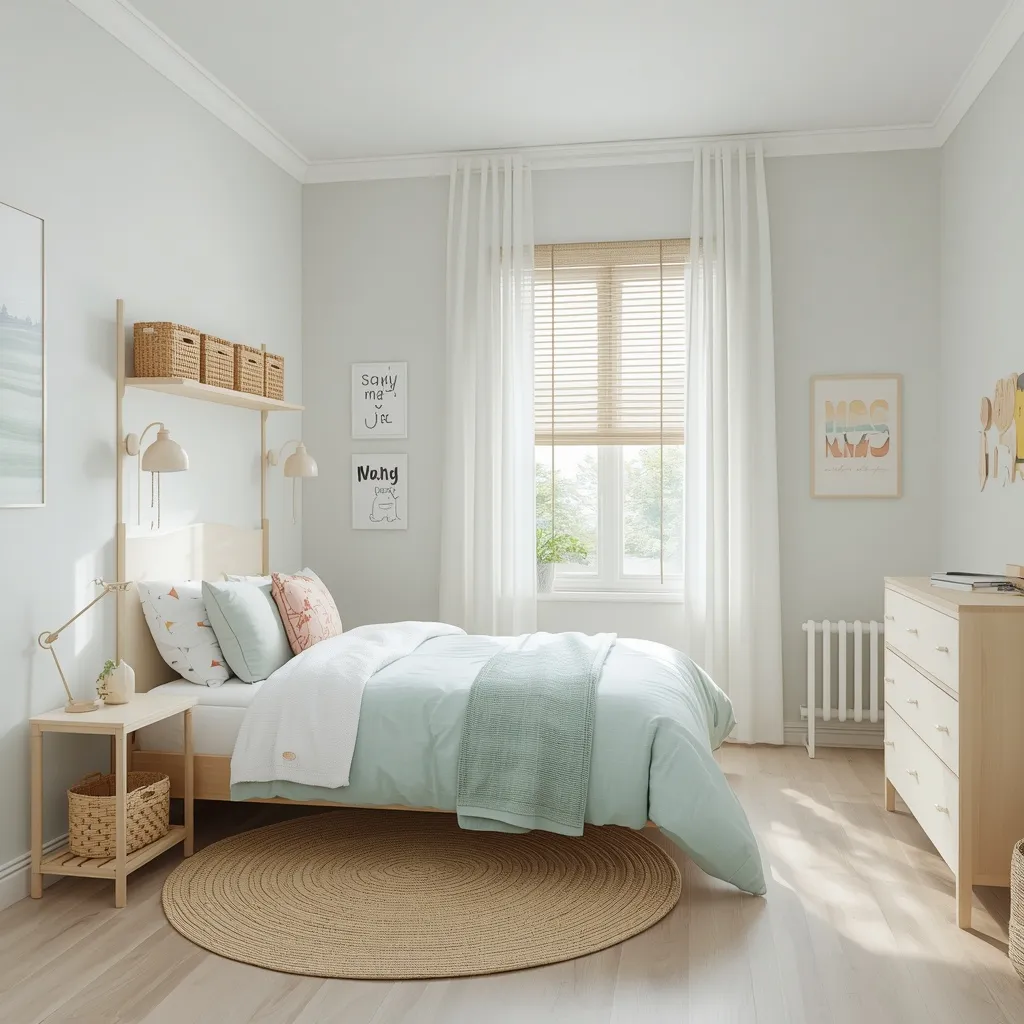
16. Kids’ Cool Summer Room
A children’s summer bedroom is bright and hardwearing: washable cotton bedding in fresh colors, low open shelving with baskets, a rug for floor play, and cheerful artwork. Practical and cheerful, kids’ rooms need to survive real use. Fun, durable, and easy to tidy.
Choose washable cotton over linen for children, with durable painted or solid wood furniture and low baskets they can manage themselves. Keep summer bedding light, a single cotton layer rather than a heavy duvet, since children regulate temperature less efficiently than adults and overheat more easily in warm rooms. Two safety essentials: anchor dressers, bookcases, and tall furniture with anti-tip restraints, and choose cordless blinds, since blind cords pose a strangulation risk to young children. This suits family homes and shared kids’ rooms.
- Why it works: Washable cotton and low baskets keep a children’s room usable rather than merely styled.
- Best for: Family homes; shared children’s rooms.
- Key elements: washable cotton, single light summer layer, low baskets, anchored furniture, cordless blinds.
17. Small Room Cool Layout
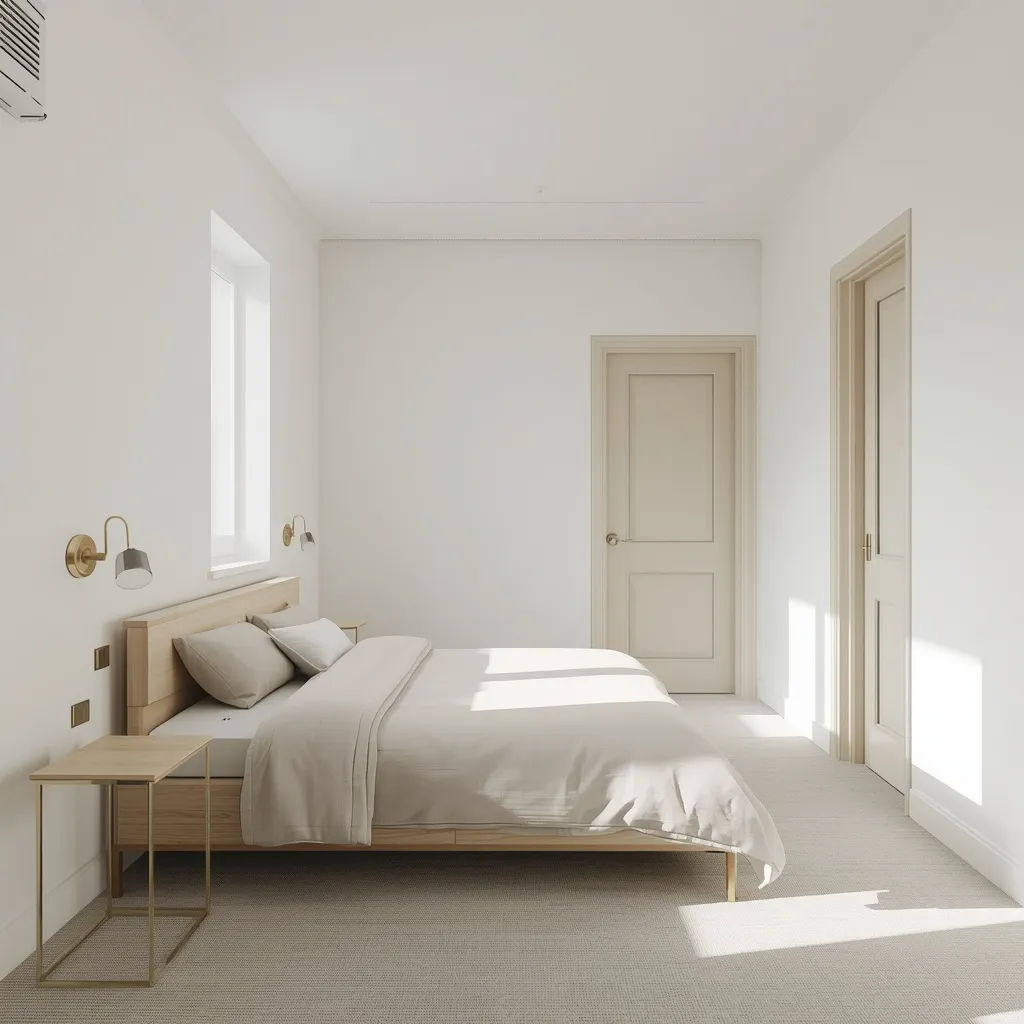
A small bedroom feels cooler when it feels less crowded: a low bed against the longest wall, wall-mounted lighting, one slim nightstand, and pale low-contrast surfaces. Efficient and open, restraint is what makes a box room breathe. Compact, airy, and calm.
Push the bed against the longest wall and use wall-mounted sconces instead of table lamps to free surface space, choosing one slim nightstand rather than a matching pair. Keep walls, bedding, and curtains within a few shades of each other, since contrast visually chops a small room into pieces. Crucially for summer, leave the path between window and door clear so air can actually move through, furniture blocking a window is the most common airflow mistake in small rooms. This suits box rooms, apartments, and renters.
- Why it works: A clear path between window and door is what lets air actually move through a small room.
- Best for: Box rooms; apartments; renters.
- Key elements: low bed on longest wall, wall sconces, low contrast, clear window-to-door path.
18. Monochrome Black and White
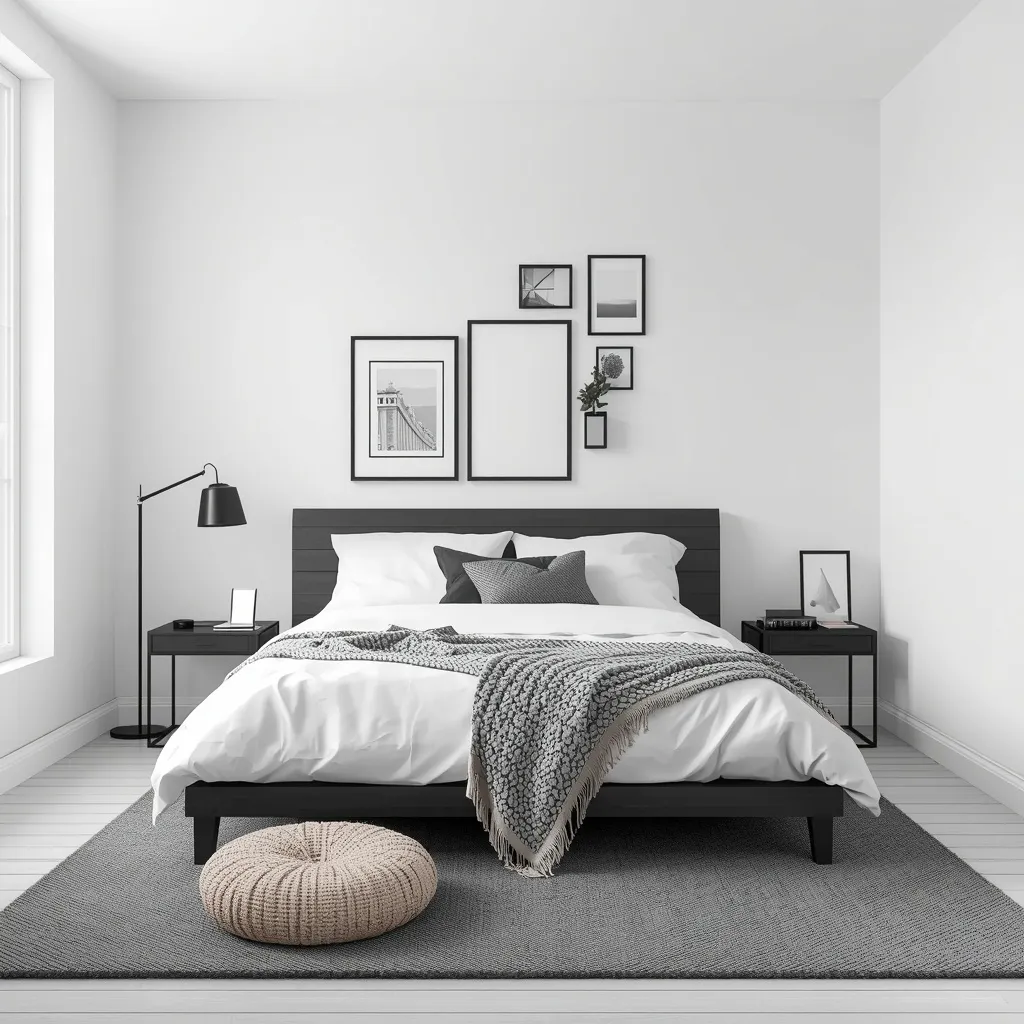
A monochrome bedroom is graphic and confident: white walls, black bed frame, black-and-white prints, and one grey rug anchoring the floor. Sharp and modern, monochrome always looks deliberate. Bold, clean, and inexpensive.
Keep the base white and repeat black three or four times, bed frame, lamp, frames, shelf brackets, so it reads as a scheme rather than stray dark objects. Add one texture-heavy element such as a chunky knit throw to stop the room feeling hard. This is one of the cheapest looks to achieve, since black-and-white prints and simple frames cost very little. This suits modern homes, small rooms needing definition, and tight budgets.
- Why it works: Black repeated three or four times against white reads as a scheme, not scattered accents.
- Best for: Modern homes; small rooms; tight budgets.
- Key elements: white base, black repeated, one heavy texture, monochrome prints.
19. Boho Rattan Airy Room
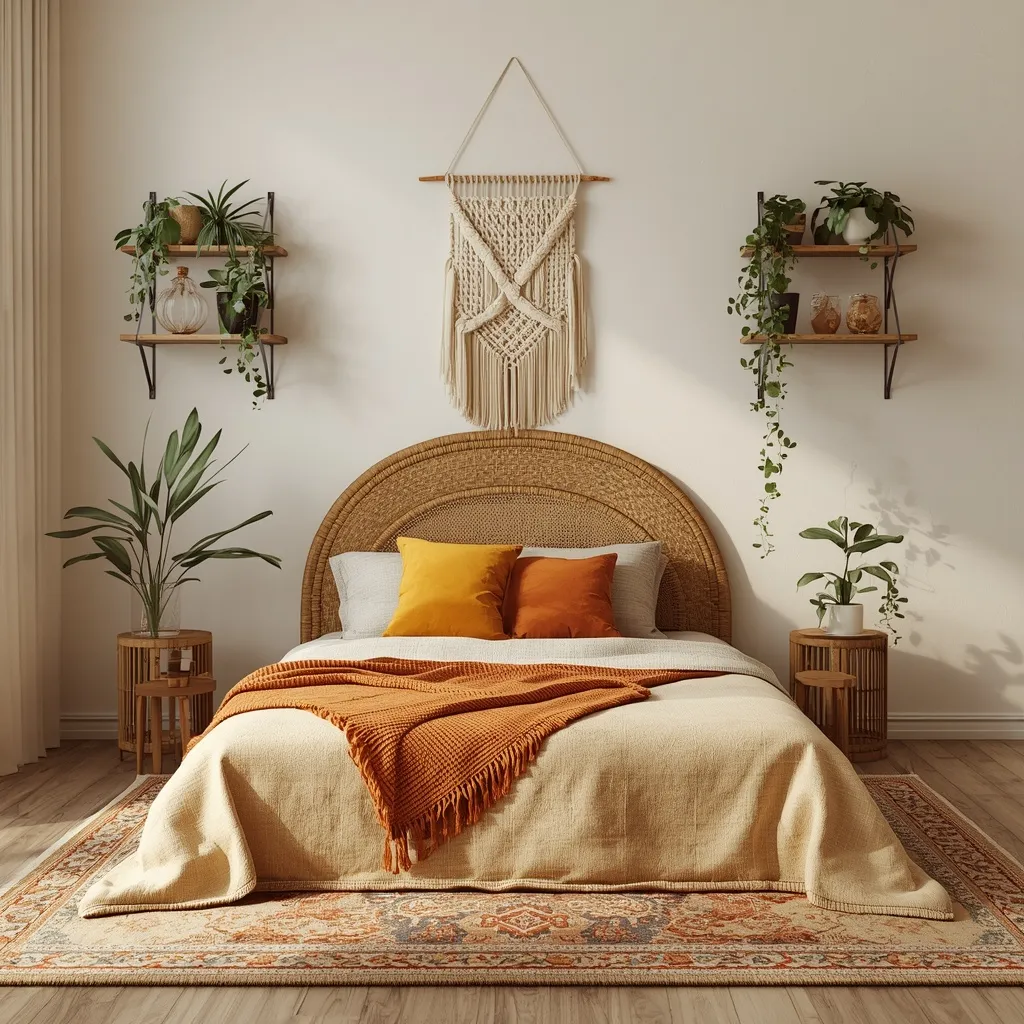
A boho bedroom is warm and collected: a rattan headboard, layered rugs, macramé on the wall, earthy cushions, and plants trailing from shelves. Textural and personal, boho absorbs additions gracefully. Relaxed, tactile, and lived-in.
Layer textiles within a consistent palette, warm neutrals with terracotta and mustard, so the mix reads intentional, keeping walls plain so the room doesn’t feel busy. Natural fibers like jute, seagrass, and rattan genuinely feel cooler to the touch than synthetics, which matters underfoot and against skin in summer. Layering a smaller patterned rug over a larger plain one adds depth cheaply. This suits collectors, renters, and rooms that evolve gradually.
- Why it works: Natural fibers feel cooler against skin than synthetics, which matters in a summer bedroom.
- Best for: Collectors; renters; evolving rooms.
- Key elements: warm earthy palette, rattan headboard, layered rugs, macramé, plain walls.
20. Scandi Pale Wood Room
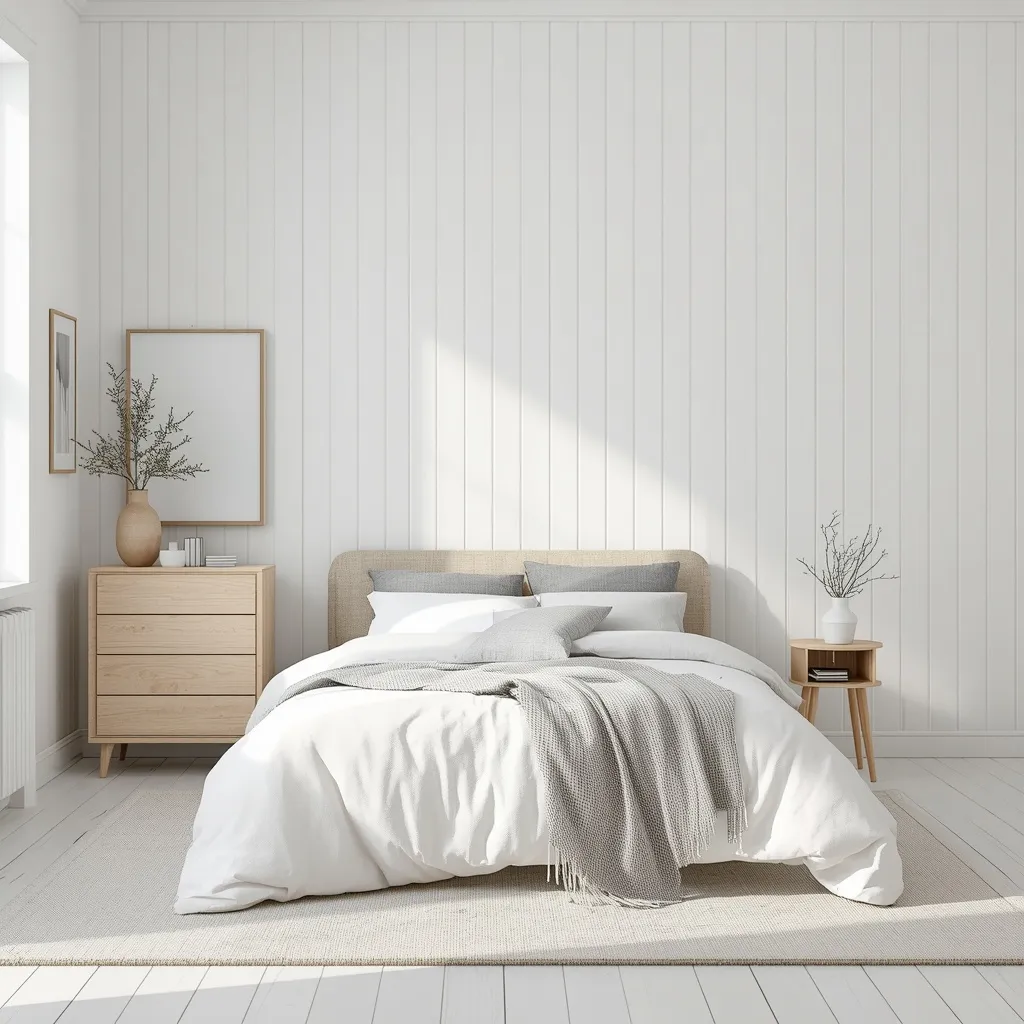
A Scandi bedroom is bright and uncomplicated: white walls, pale birch furniture, plain grey or white bedding, one plant, and nothing extra. Clean and functional, Scandi is minimalism with warmth. Light, simple, and calm.
Combine white walls with pale birch or beech and one or two soft textiles, keeping the palette to white, wood, and grey. Natural wood is what separates Scandi from stricter minimalism, adding warmth that stops a simple room feeling stark. Pale timber and light surfaces reflect rather than absorb light, which helps a sunny room modestly. This is the most budget-friendly scheme here. This suits small bedrooms, modest budgets, and anyone who finds decoration stressful.
- Why it works: Pale natural wood adds the warmth that keeps a very simple room from feeling stark.
- Best for: Small bedrooms; modest budgets; simplicity seekers.
- Key elements: white walls, pale birch, white-wood-grey palette, one or two textiles.
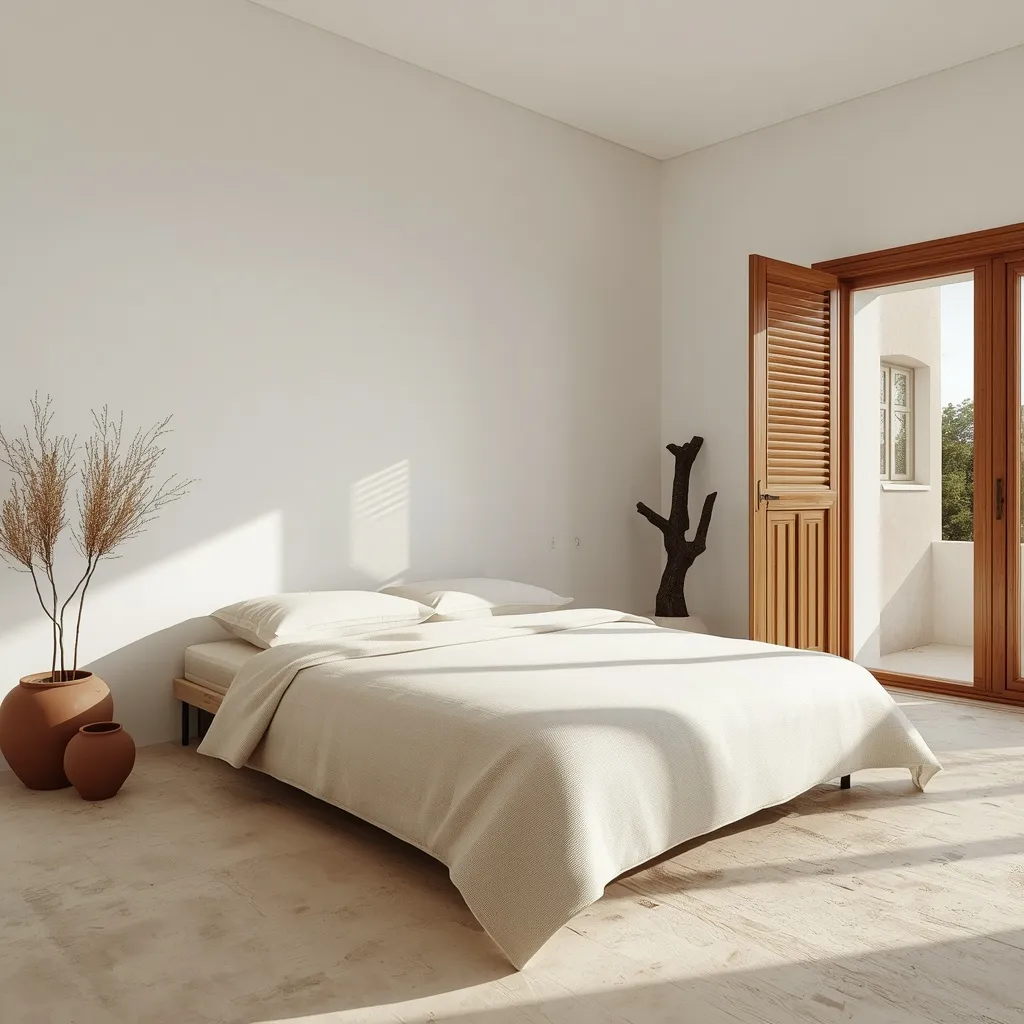
21. Mediterranean Shuttered Room
A Mediterranean bedroom is built for heat: chalky white walls, a plain linen bed, terracotta pots, dark timber accents, and shutters slicing hard light into stripes across the floor. Rustic and cool, this look evolved in hot climates for good reason. Bright, textured, and elemental.
Combine chalky matte white walls with natural linen, terracotta, and one dark timber piece, keeping everything else stripped back. Shutters or external slatted blinds are the genuinely functional element here: shading applied outside the glass stops heat before it enters, which is far more effective than any internal blind. Matte finishes absorb light softly and read cooler than gloss. This suits hot climates, strong-sun rooms, and minimalists.
- Why it works: Shading outside the glass stops heat before it enters, unlike internal blinds.
- Best for: Hot climates; strong-sun rooms; minimalists.
- Key elements: chalky white walls, natural linen, terracotta, external shutters, matte finishes.
22. DIY Wall Art Feature Room
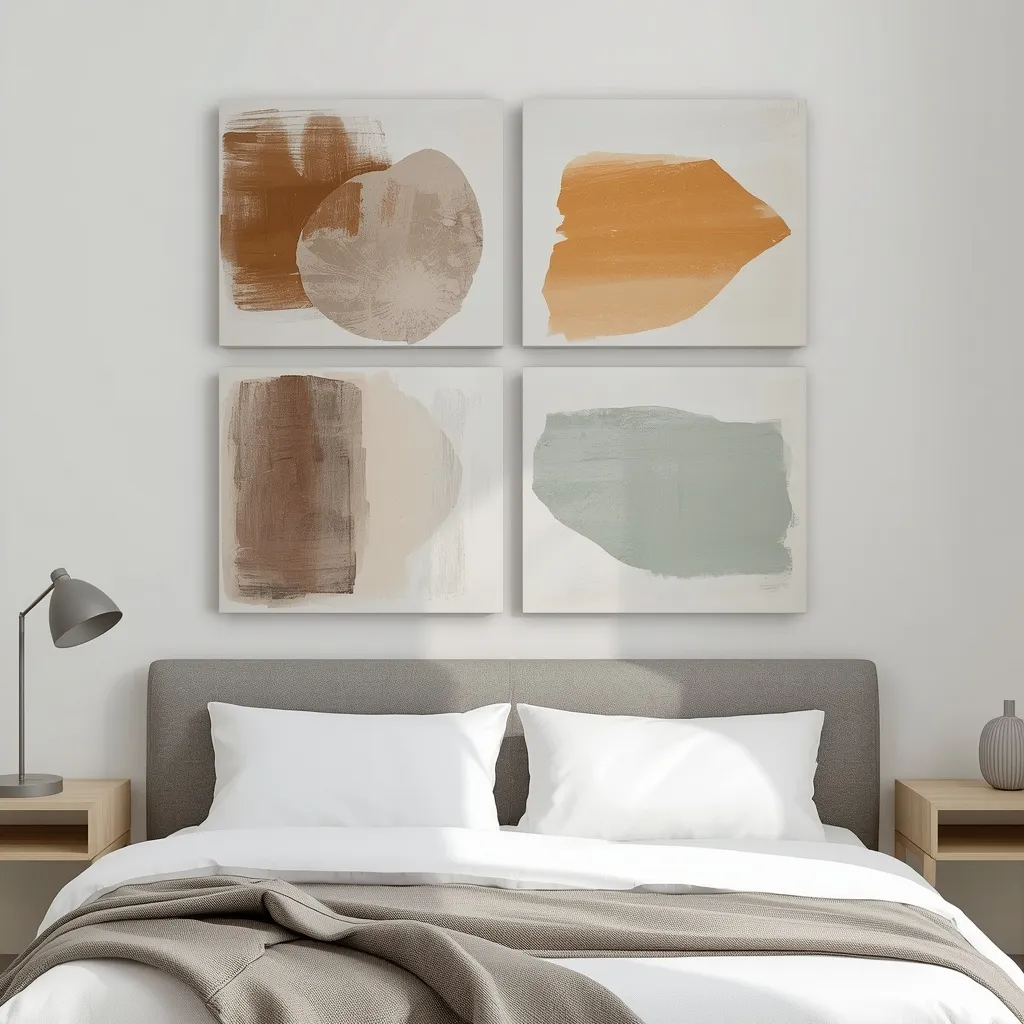
A handmade feature wall gives a plain bedroom personality for almost nothing: three or four simple abstract canvases in one palette, or a cluster of framed pressed flowers, hung as a considered set. Personal and cheap, handmade art beats mass-produced prints. Artistic, individual, and satisfying.
Paint three or four pre-stretched canvases in a restricted palette of two colors plus white using acrylics, which dry in about 20–30 minutes between layers and clean up with water. Hang them as a grid with consistent 5–8 cm (2–3 in) gaps so the set reads as one piece. Work on a covered surface in a ventilated room, keep paints away from children and pets, and fix heavier pieces into studs or rated anchors rather than plasterboard alone. This suits creative beginners and low budgets.
- Why it works: A restricted two-color-plus-white palette makes amateur abstracts read as a deliberate set.
- Best for: Creative beginners; low budgets; renters.
- Key elements: 3–4 canvases, two colors plus white, 5–8 cm grid gaps, ventilated workspace, rated fixings.
23. Breathable Bedding Setup
The bedding setup is the single change that most affects how hot you feel at night: washed linen or cotton percale, one lightweight layer, and the winter quilt packed away entirely. Practical and immediate, this beats any styling change for comfort. Cool, fresh, and simple.
Switch to washed linen or cotton percale, both loosely woven so air passes through, and drop sateen, microfiber, and flannel, which trap heat against the body. Use a single lightweight layer rather than stacking. Skip fabric softener, which coats fibers and reduces breathability over time. If two people sleep at different temperatures, separate lighter layers work better than one compromise duvet. This suits hot sleepers, warm climates, and anyone who wakes up too warm.
- Why it works: Loose weaves let air pass through where tight or brushed weaves trap heat against skin.
- Best for: Hot sleepers; warm climates; mismatched couples.
- Key elements: washed linen or percale, single light layer, no fabric softener, separate layers if needed.

24. Daytime Blackout Cooling Setup
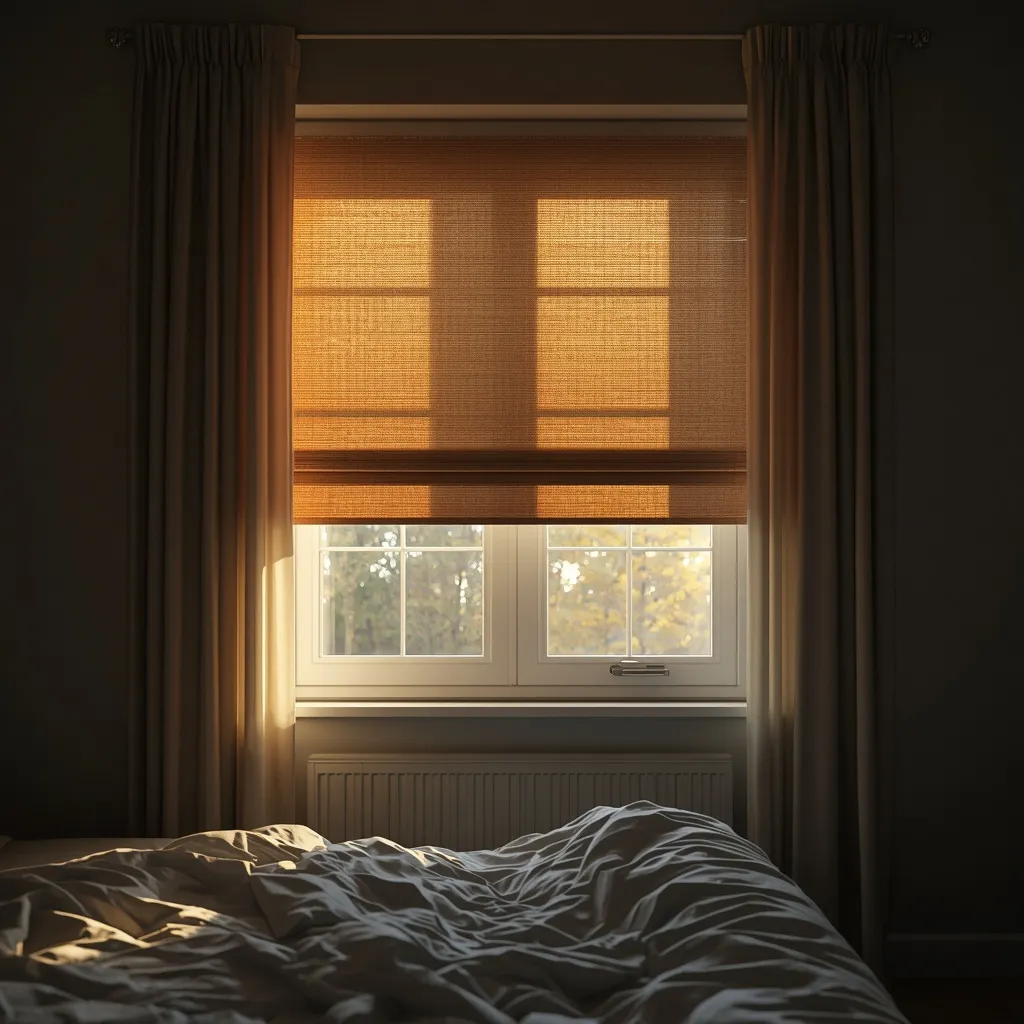
The most effective cooling setup is invisible: blinds closed against the sun during the hottest hours, blackout fitted inside the window recess, and pale external shading where possible. Unglamorous and highly effective, this stops heat before it arrives. Dark, cool, and quiet.
Close blinds and curtains on sun-facing windows during the hottest part of the day, since glass is where most unwanted heat enters a bedroom. External shading, shutters, awnings, or an outside blind, is substantially more effective than anything fitted inside, because it stops sunlight before it passes through the glass. Fit blackout inside the recess so light doesn’t leak around the edges, which also helps sleep during long summer evenings. This suits every bedroom that gets direct sun, and renters can use temporary or tension-fitted options.
- Why it works: Glass is where most heat enters, and external shading stops it before it gets through.
- Best for: Any sun-facing bedroom; renters using temporary fittings.
- Key elements: blinds closed in peak sun, external shading where possible, recess-fitted blackout.
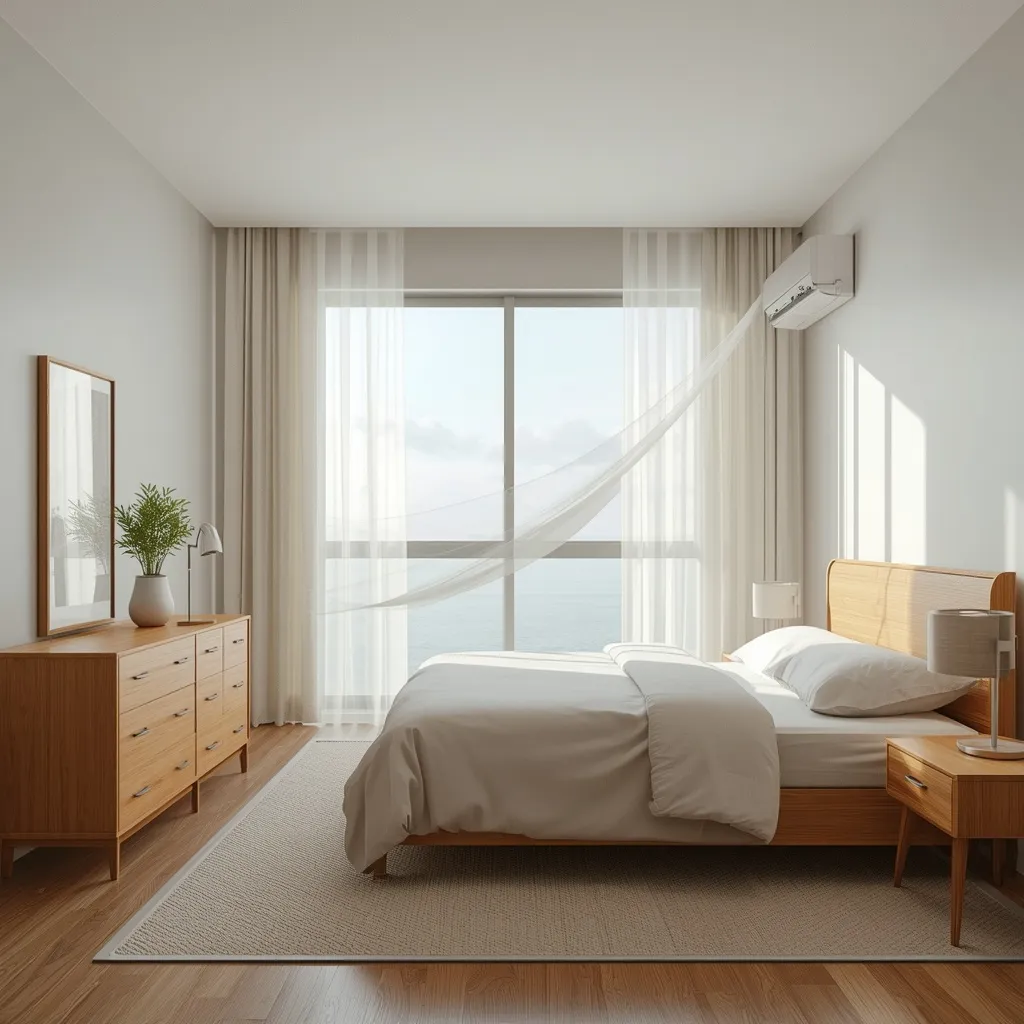
25. Cross-Breeze Airflow Layout
An airflow-first bedroom is arranged around moving air: furniture clear of the window, a fan positioned to push air across the bed rather than at a wall, and a clear path from window to door. Practical and free, layout is a cooling tool. Open, breezy, and considered.
Arrange furniture so nothing blocks the window or the path to the door, since cross-ventilation needs two openings to work at all, a single open window moves very little air. Position a fan to move air across the bed, and understand what it’s actually doing: a fan doesn’t lower air temperature, it cools people by speeding evaporation from skin, which is why running one in an empty room only adds heat from the motor. Switch fans off when you leave. This suits every bedroom, especially those without air conditioning.
- Why it works: Cross-ventilation needs two openings; one open window moves very little air.
- Best for: Rooms without air conditioning; renters; zero budget.
- Key elements: nothing blocking the window, clear window-to-door path, fan aimed across the bed, switched off when empty.
26. Bare-Floor Summer Switch
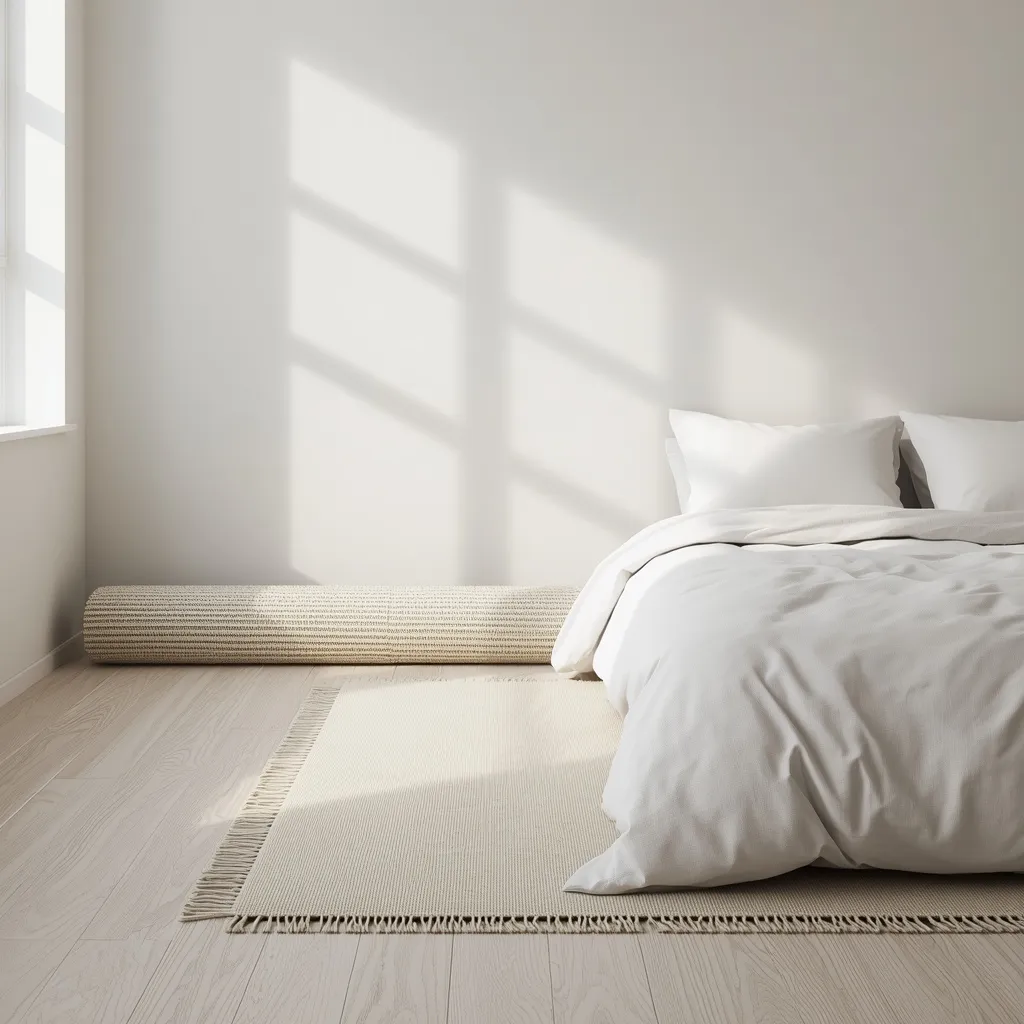
The summer floor switch is simple and genuinely noticeable: heavy winter rugs rolled up and stored, leaving bare timber, tile, or a thin flat-weave underfoot. Cool and clean, hard floors feel markedly cooler than deep pile. Bare, fresh, and easy.
Roll up thick wool and shaggy rugs for summer and either go bare or switch to a thin cotton or jute flat-weave, which feels considerably cooler underfoot than deep pile. Tile and stone feel coolest, timber next, deep carpet warmest. Store rolled rugs clean and dry in a breathable cover rather than plastic, which traps moisture and encourages mildew and moths. If the floor is slippery underfoot, keep a small non-slip mat beside the bed. This suits hard-floored rooms and anyone doing a seasonal swap.
- Why it works: Hard and flat-weave surfaces feel markedly cooler underfoot than deep pile carpet.
- Best for: Hard-floored rooms; seasonal swappers.
- Key elements: winter rugs rolled and stored clean, thin flat-weave or bare floor, non-slip mat if needed.
27. The Night-Flush Routine
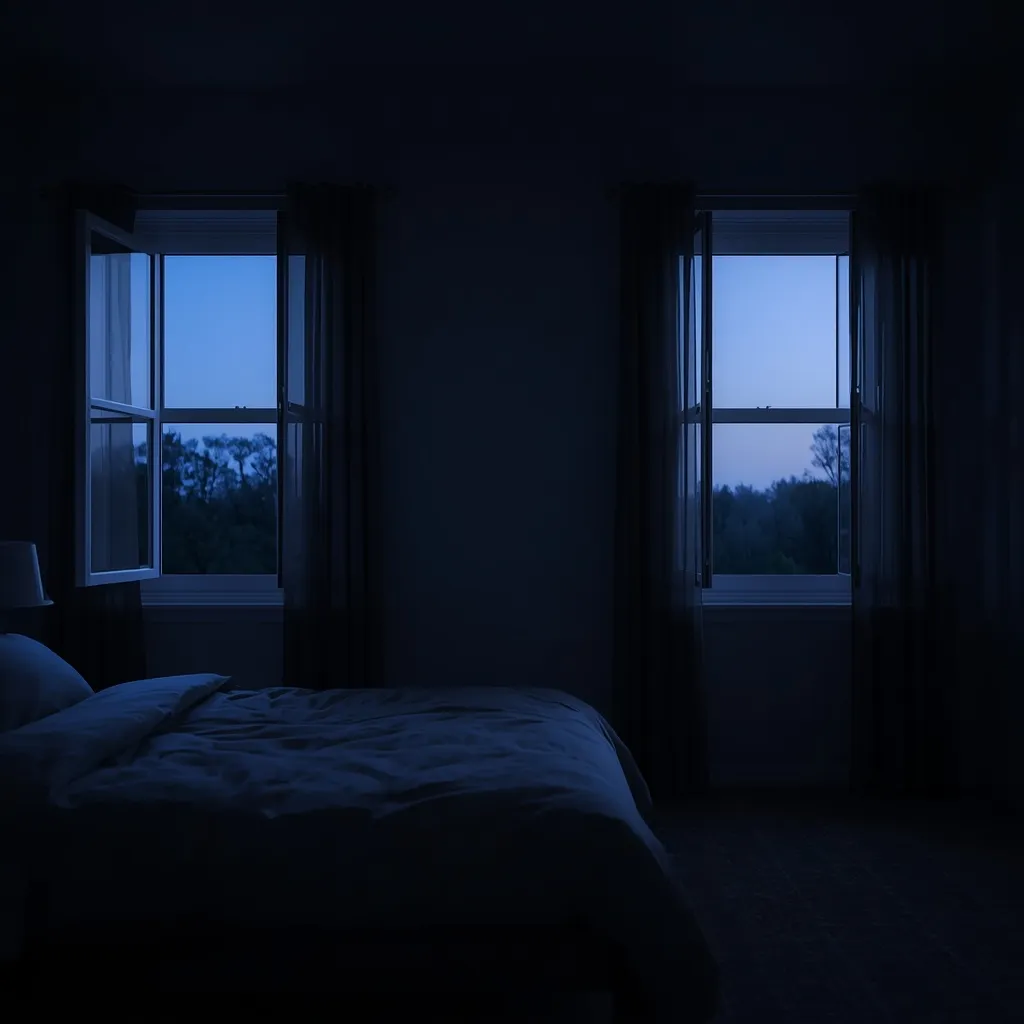
The night-flush routine works with the daily temperature swing instead of against it: the room sealed and shaded all day, then opened wide once outdoor air drops below indoor air in the evening. Systematic and free, this is the most effective no-cost cooling method. Cool, dark, and disciplined.
Keep windows and blinds closed through the hottest part of the day, since opening a window when outdoor air is hotter than indoor air actively makes a room warmer, a mistake almost everyone makes. Once evening air drops below the indoor temperature, open windows on two sides to flush warm air out, ideally overnight where security allows. Close everything again in the morning before the day heats up. Use window locks or restrictors to ventilate securely on ground floors. This suits climates with a real day-to-night temperature swing.
- Why it works: Opening windows when outdoor air is hotter than indoor air warms the room rather than cooling it.
- Best for: Climates with a large day-night temperature swing; no-cost cooling.
- Key elements: sealed and shaded by day, two-sided opening at night, closed again by morning, window restrictors for security.
How Do You Actually Make a Bedroom Cooler?
Make a bedroom cooler by stopping heat at the window first, then improving airflow, then changing what touches your skin. Shading sun-facing glass during the day does more than anything else, cross-ventilation needs two openings to work, and swapping sateen or microfiber bedding for linen or cotton percale changes how hot you feel more than any décor decision. Color and styling change how cool a room feels; shading, airflow, and fabric change how cool it is.
Practical changes that don’t require a renovation are central to the Sunday Abode approach. If you’re planning a bigger seasonal overhaul rather than a few swaps, our guide to giving a bedroom a summer makeover takes it further. For more on shaping the space, browse the rest of our bedroom ideas.
What Actually Works for Cooling a Bedroom
Not every cooling method does what people assume. This compares the common approaches by what they physically do, so you can spend effort where it counts.
| Method | What it actually does | Impact | Cost |
| External shading | Blocks sun before the glass | Highest | Medium to high |
| Internal blinds closed | Blocks some heat after glass | Moderate | Low |
| Night-flush venting | Swaps hot air for cooler air | High | Free |
| Cross-ventilation | Moves air through the room | Moderate | Free |
| Fan | Cools skin, not air | Feels high | Low |
| Linen or percale bedding | Lets body heat escape | High for sleep | Medium |
| Pale wall colors | Reflects a little light | Small; mostly perceived | Low |
Safety notes: anchor dressers, bookcases, and tall furniture to the wall with anti-tip restraints, particularly in children’s and teens’ rooms, since furniture tip-overs cause serious injuries and are almost entirely preventable. Choose cordless blinds in any room used by children, as blind cords present a strangulation risk. Keep summer bedding light for children, who regulate temperature less efficiently than adults, and never cover a fan or heater with fabric. Don’t daisy-chain extension leads or overload a single socket with fans, chargers, and gaming equipment, and keep cables out of walkways. Use only string lights carrying a recognized safety certification, never draped over bedding or fabric, never under rugs, and switched off before sleeping. Avoid candles in a bedroom entirely, especially near curtains or paper décor. Fix heavy mirrors, shelves, and artwork into studs or properly rated anchors rather than plasterboard alone, and think twice before hanging anything heavy above a bed. If ventilating overnight on a ground floor, use window locks or restrictors so the room stays secure. Furniture painted before 1978 may contain lead paint, which releases hazardous dust when sanded, so check before refinishing.
Frequently Asked Questions
What colors make a bedroom feel cooler?
Cool-toned colors, blue, blue-green, sage, and crisp white, genuinely lower how cool a room feels, even though they don’t change the air temperature. Pale surfaces also reflect rather than absorb light, which helps modestly in a very sunny room. Warm colors like terracotta, deep pink, and charcoal can feel heavier in heat, so pair them with breathable bedding and good shading if the room runs hot.
Does a fan actually cool a room?
No. A fan doesn’t lower the air temperature at all, it cools people by moving air across skin and speeding up evaporation, which is why a fan feels effective while you’re in front of it. Running one in an empty room actually adds a small amount of heat from the motor, so switch fans off when you leave rather than leaving them running to cool the space.
Should you open windows to cool a bedroom in summer?
Only when the outdoor air is cooler than the indoor air, which usually means evening and overnight rather than midday. Opening a window when it’s hotter outside actively warms the room, which is one of the most common summer mistakes. Keep windows and blinds closed through the hottest hours, then open windows on two sides in the evening to flush warm air out.
What’s the coolest bedding for hot sleepers?
Washed linen and cotton percale are the coolest common choices, because both are loosely woven and let air pass through. Cotton sateen and microfiber feel smoother but trap more heat against the body, and flannel is a winter fabric. Skip fabric softener, which coats fibers and reduces breathability, and use one lightweight layer rather than stacking several.
How do you cool a small bedroom without air conditioning?
Start with shading, keep blinds closed on sun-facing windows during the day, then make sure furniture isn’t blocking the window or the path to the door, since cross-ventilation needs two openings to work. Swap to linen or percale bedding, roll up heavy rugs, and open windows on two sides once evening air drops below the indoor temperature.
What’s a cool bedroom idea for teenagers?
Let them pick one aesthetic direction and commit to it rather than mixing several, which is what makes a room look cluttered instead of curated. Cozy layered rooms with floor seating and warm string lights suit sociable teens, while a muted two-color scheme with a proper desk suits those who study or game. Anchor tall furniture to the wall, and keep string lights off bedding and out from under rugs.
Do dark colors make a bedroom hotter?
Dark surfaces absorb more light energy than pale ones, so a dark room in direct sun can warm up more than a pale one, though the effect indoors is modest compared with shading the window. A deep, moody scheme works best in north-facing rooms or spaces with good external shading. In a west-facing room under a roof, a pale palette with proper blinds is the more comfortable choice.
Conclusion
The best cool summer bedroom ideas work on both meanings at once. A blue and white scheme, a sage green retreat, or a cozy layered teen room will make a space feel cooler and look considered, but the real comfort comes from shading the glass before the sun gets in, arranging furniture so air can actually move, and sleeping under linen rather than microfiber. Get the physical layer right and the styling has something to stand on. For more ways to shape the space, explore the bedroom ideas collection on Sunday Abode and save the scheme that suits your room’s light.