
Key Takeaways
- Choose the cabinet color around what you can’t change, the tile, countertop, and floor already set the undertone you have to work with.
- The vanity is the safest place in a home to use strong color: it’s a small surface, and repainting it later is a weekend job, not a renovation.
- Use a cabinet-grade enamel with a bonding primer, in satin or semi-gloss, matte paint marks and stains too easily on bathroom cabinetry.
- Paint dries in hours but cures in weeks, so treat freshly painted cabinet doors gently for about three to four weeks.
- Warm neutrals and wood tones flatter skin tones under bathroom lighting better than cool greys, which matters at a mirror.
Introduction
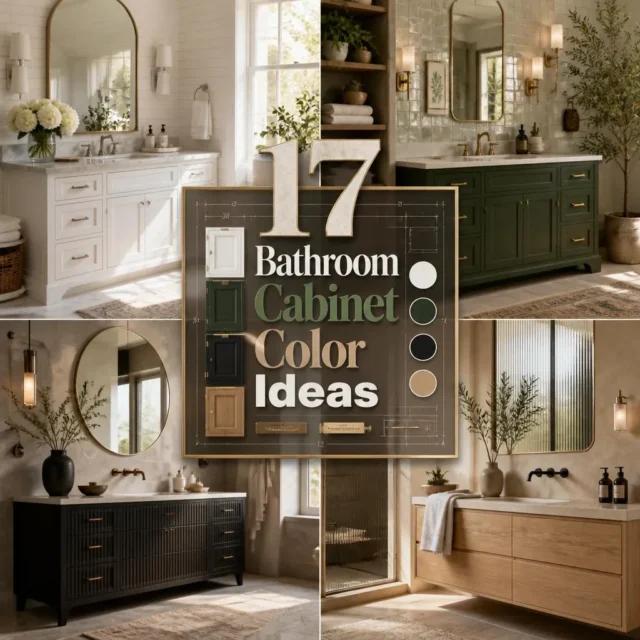
The vanity is the one piece of furniture in a bathroom, which makes it the natural place to bring in color. These bathroom cabinet color ideas cover complete looks, the cabinet color, the hardware and countertop it pairs with, and the wall tones around it, so you get a scheme that works rather than a color you like in isolation. Painting existing cabinets is included throughout, because it’s the cheapest real change you can make in a bathroom.
Below are 17 full cabinet color schemes, from crisp white and warm greige to deep green, navy, black, and natural wood, plus focused approaches for small bathrooms, guest bathrooms, and coordinating with tile you’re keeping. Every entry covers what to pair it with, and there’s practical guidance on paint type, sheen, and preparation so the finish lasts. Consider it your guide to choosing a vanity color for the bathroom in your abode, and getting a finish that survives daily use.
Start here, the one rule that prevents regret: Choose your cabinet color to suit the elements you aren’t replacing. Tile, countertop, and flooring already carry an undertone (warm, cool, or neutral), and a cabinet color that fights it will look subtly wrong no matter how lovely the color is on its own. Hold a paint sample directly against the tile and countertop in the bathroom’s actual light before deciding, not in the store, and not against a white wall.
17 Bathroom Cabinet Color Ideas
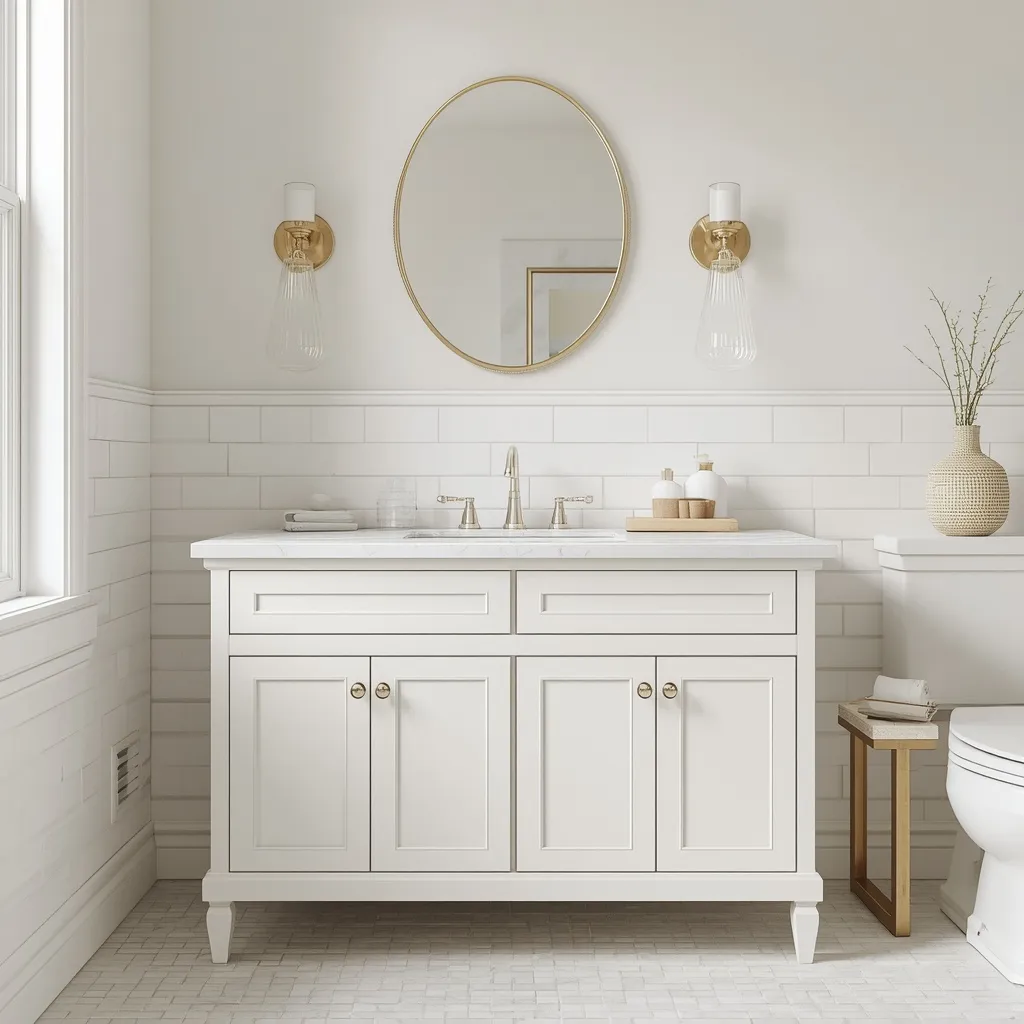
1. Crisp Classic White Vanity
A white vanity is the clean, timeless default: bright cabinet fronts against a pale countertop, with the room’s character coming from hardware, tile, and mirror instead. Fresh and versatile, white never dates and never competes. Simple, light, and endlessly adaptable.
Choose a soft or warm white rather than a stark bright white, which can look cold and clinical under bathroom lighting and will clash with an off-white countertop or tile. Match the white to the undertone of your existing surfaces: creamy whites with warm tile, cleaner whites with cool grey or marble. Use satin or semi-gloss enamel, since white shows every mark and needs to be wipeable. This suits small bathrooms, rentals in need of a refresh, and anyone wanting a long-lasting neutral base.
- Why it works: A soft white stays fresh and lets tile and hardware carry the character.
- Best for: Small bathrooms, resale-minded updates, neutral lovers.
- Key elements: warm-toned white, matched to existing undertones, satin or semi-gloss enamel.
2. Deep Forest Green Vanity
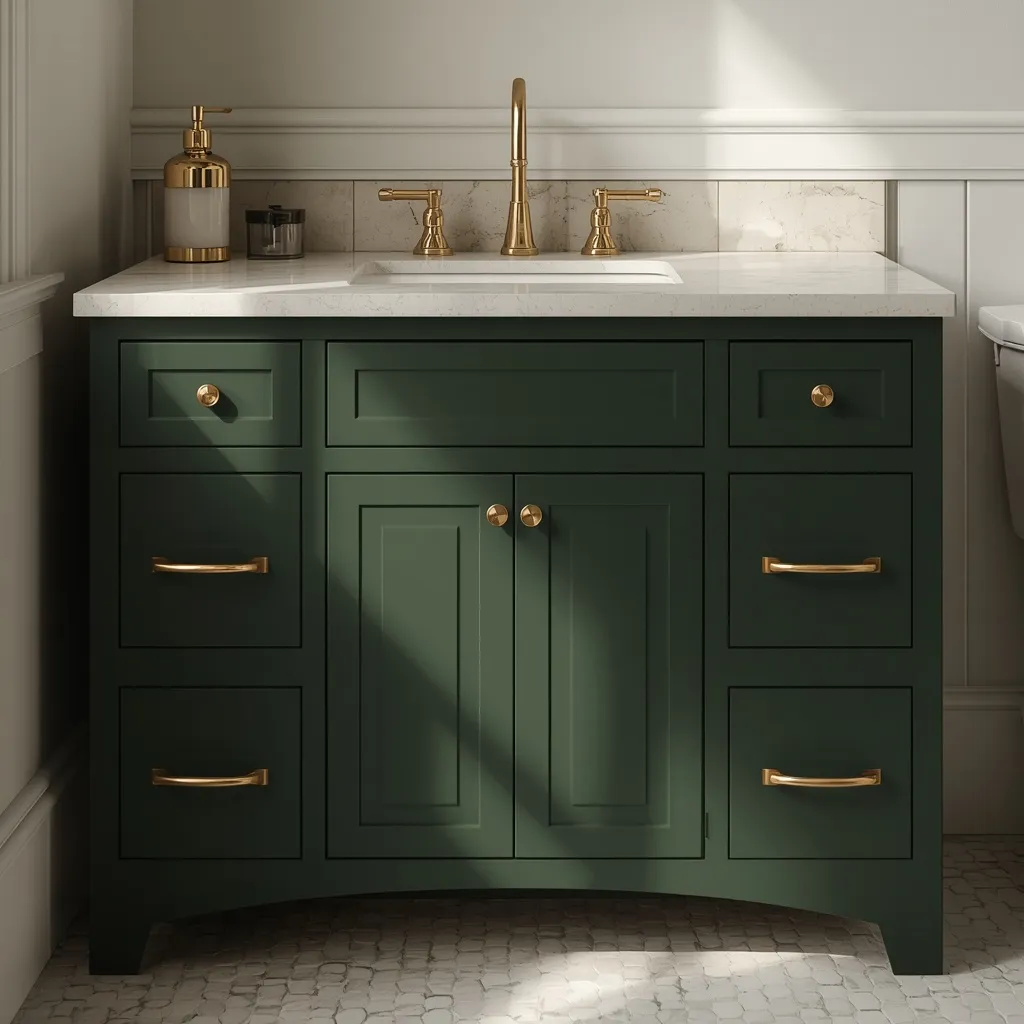
A deep green vanity brings quiet richness to a bathroom: forest or olive cabinet fronts against white tile, with brass hardware warming the whole scheme. Grounded and natural, green is the color that makes a bathroom feel considered. Rich, calm, and quietly confident.
Pair a deep green, forest, olive, or a muted sage-green, with warm brass or unlacquered brass hardware, white or pale stone countertops, and simple white wall tile so the cabinet is clearly the focal point. Green sits comfortably between neutral and bold, which is why it reads as a design choice rather than a risk. Test the color under the bathroom’s own lighting, since greens shift noticeably under warm bulbs. This suits traditional, modern, and nature-leaning bathrooms alike.
- Why it works: Green reads as considered rather than risky, and brass warms its natural depth.
- Best for: Almost any style; first-time color commitments.
- Key elements: forest or olive green, brass hardware, pale countertop, white wall tile.
3. Dramatic Black Cabinetry
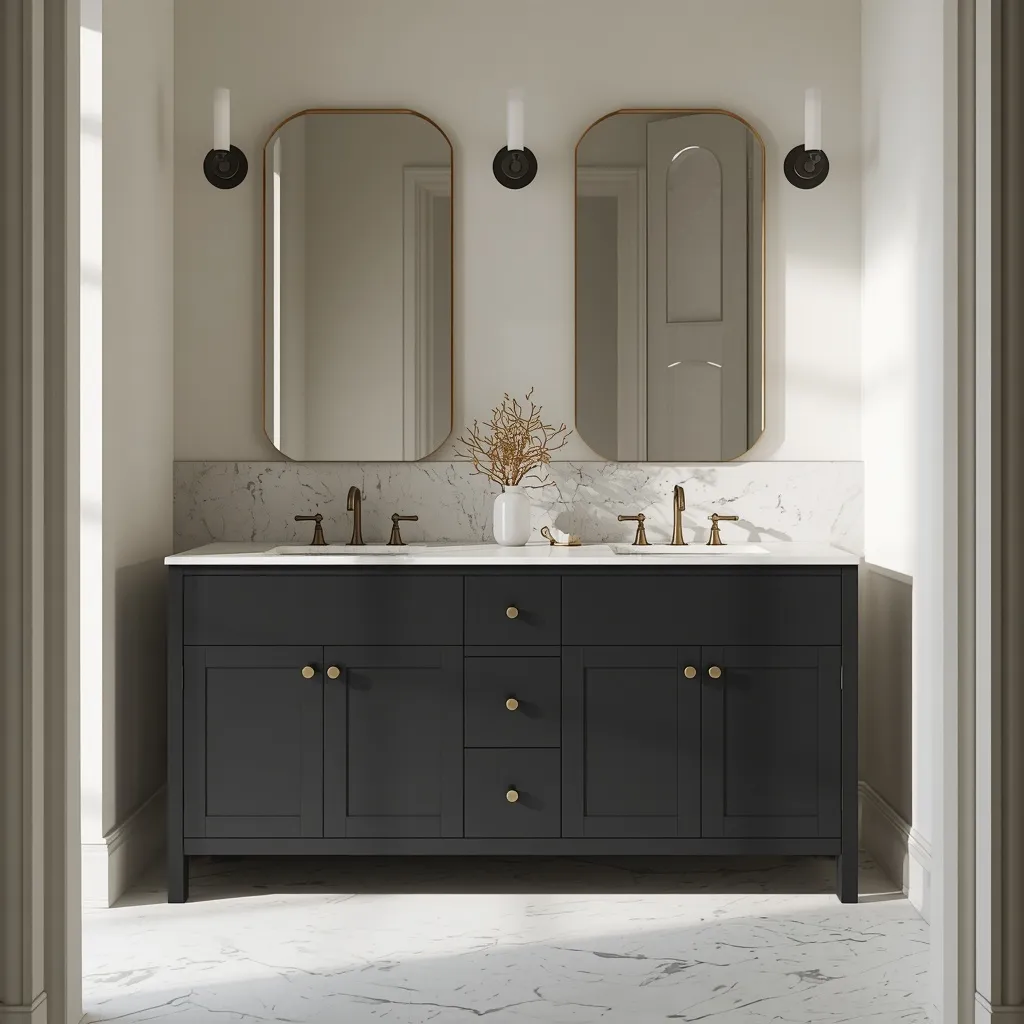
A black vanity anchors a bathroom with real drama: matte or satin black cabinet fronts against pale walls, with a white or veined countertop above and metal hardware catching the light. Bold and architectural, black gives a small room serious presence. Sharp, modern, and grounding.
Choose a soft black or near-black charcoal rather than a flat pure black, which can look harsh and shows dust and water spots badly. Pair it with a pale countertop and light walls so the cabinet reads as a deliberate anchor rather than a heavy block, and add brass or matte black hardware depending on whether you want warmth or a monochrome look. Satin sheen hides fingerprints better than gloss on dark cabinets. This suits modern, dramatic, and hotel-inspired bathrooms.
- Why it works: A dark anchor against pale surfaces gives a small room architectural presence.
- Best for: Modern and hotel-style bathrooms; drama seekers.
- Key elements: soft black or charcoal, pale countertop, light walls, satin sheen.
4. Navy Blue Vanity Scheme
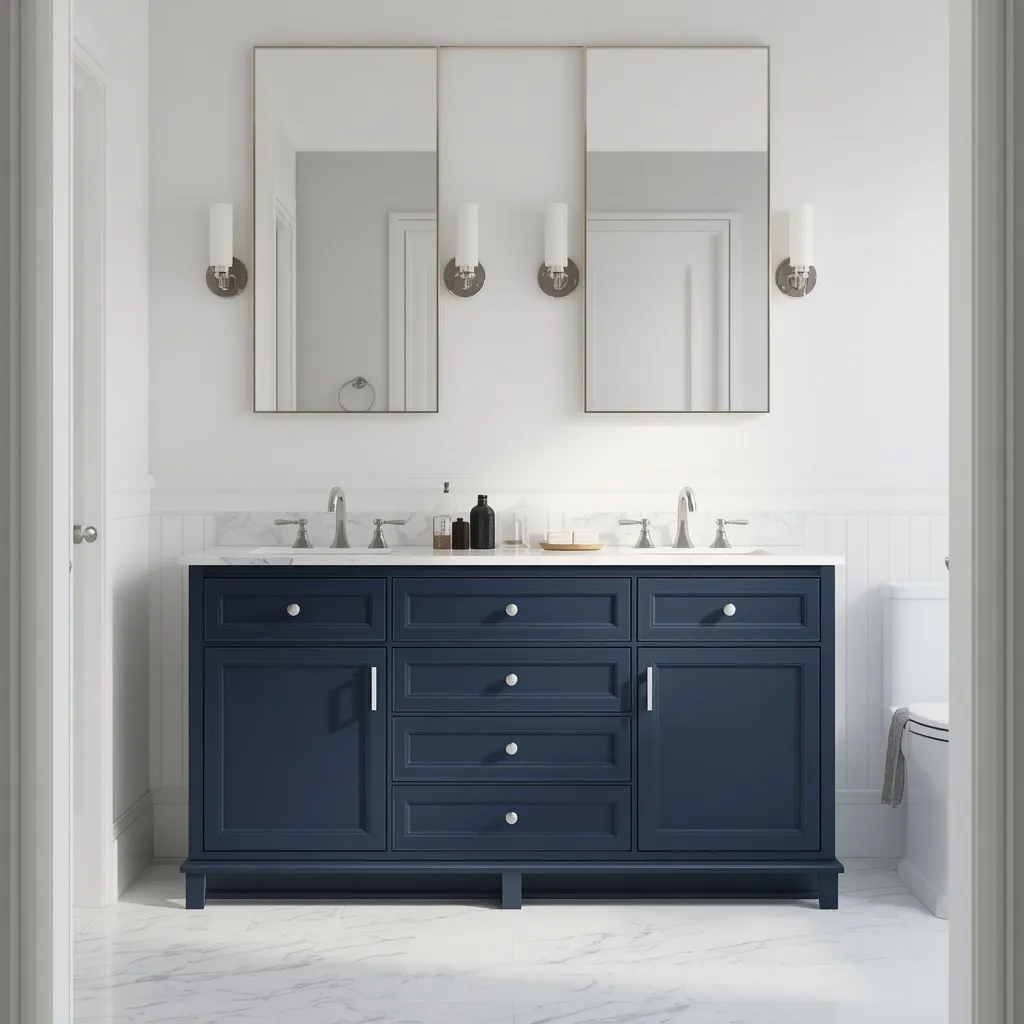
A navy vanity is the reliable bold choice: deep blue cabinet fronts with white marble or quartz above, chrome or brass hardware, and crisp white walls. Confident and classic, navy behaves almost like a neutral. Timeless, smart, and easy to live with.
Use a true navy or a slightly softened ink blue, pairing it with white or marble-look countertops and either polished chrome for a classic look or brass for warmth. Navy works because it has the depth of a strong color but the versatility of a neutral, so it coordinates with both warm and cool tile. The common mistake is pairing navy with a cool grey tile that has a purple undertone, which makes both look muddy. This suits classic, coastal, and transitional bathrooms.
- Why it works: Navy has the depth of strong color but coordinates as easily as a neutral.
- Best for: Classic, coastal, and transitional bathrooms.
- Key elements: navy or ink blue, white or marble countertop, chrome or brass, white walls.
5. Warm Greige Coordinating Vanity
A greige vanity is the great coordinator: a warm beige-grey that bridges cool tile and warm wood without committing to either. Understated and flexible, greige solves bathrooms with mismatched existing finishes. Quiet, forgiving, and genuinely useful.
Choose a light-to-mid greige when your bathroom has a mix of undertones you can’t change, say cool grey floor tile alongside a warm oak door or a beige countertop. Greige contains both warm and cool pigment, so it acts as a bridge rather than taking a side. It also hides everyday marks far better than white. Check the sample against every fixed surface in the room, since greiges vary widely in how warm they lean. This suits bathrooms with mismatched finishes and anyone renovating in stages.
- Why it works: Greige contains both warm and cool pigment, bridging mismatched finishes.
- Best for: Mismatched existing tile and fittings; staged renovations.
- Key elements: light-to-mid greige, checked against every fixed surface, marks-hiding finish.
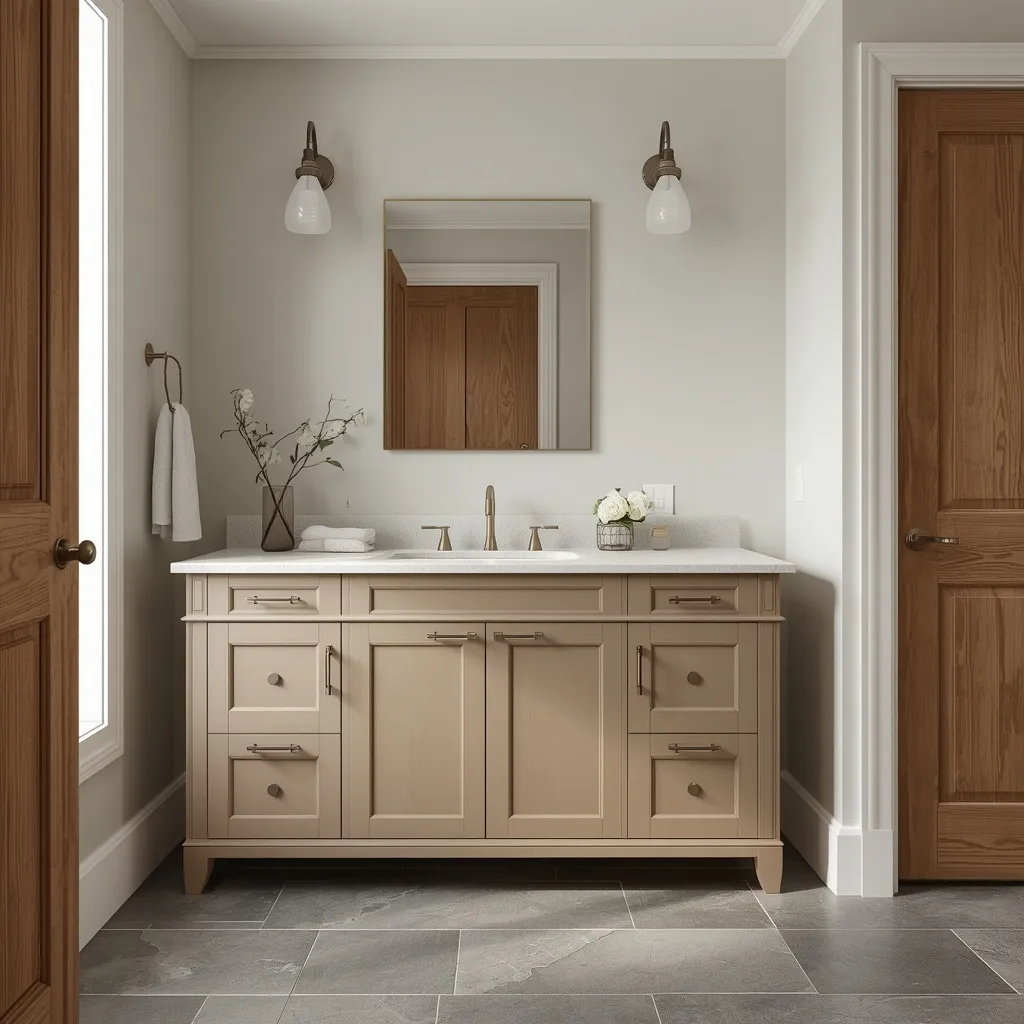
6. Natural Wood Grain Vanity
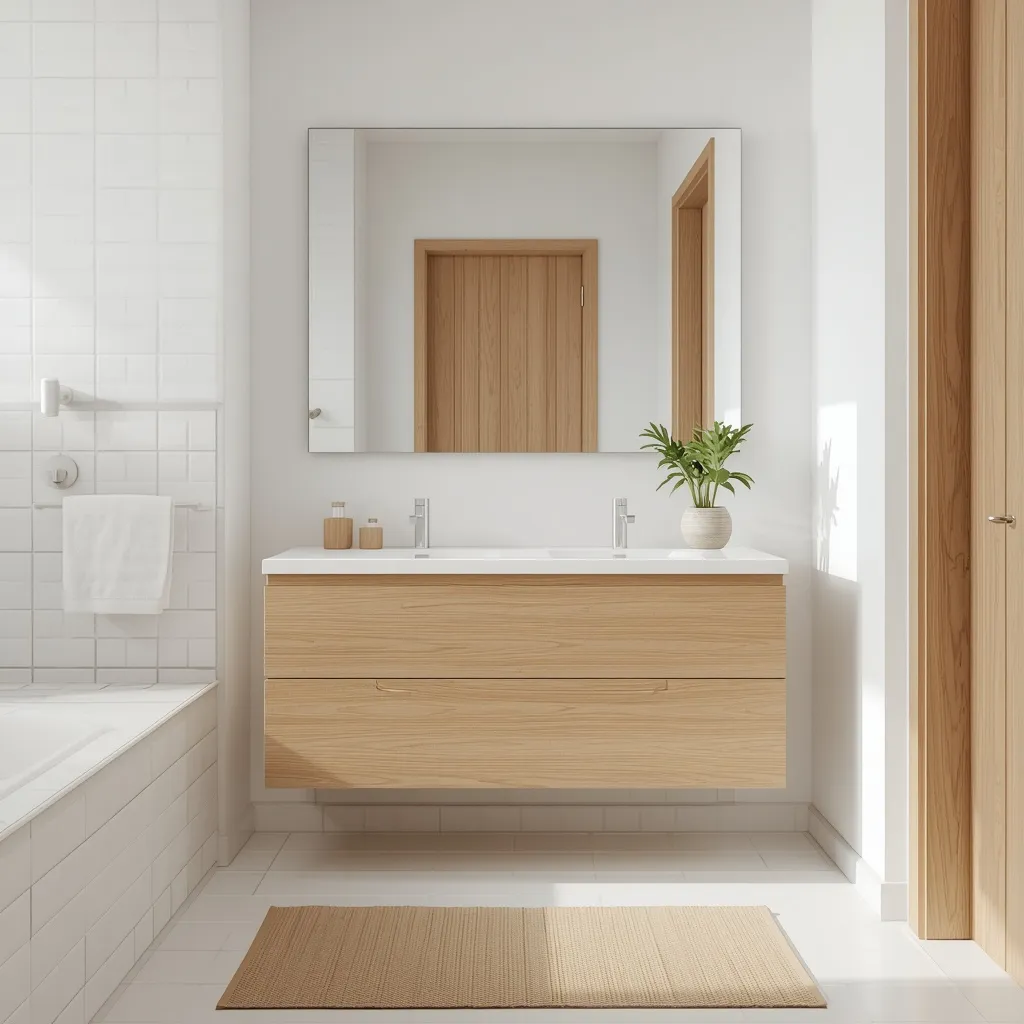
A natural wood vanity brings warmth that paint can’t replicate: visible oak or walnut grain against white tile and stone, softening a room full of hard, cold surfaces. Organic and calming, wood makes a bathroom feel like a room rather than a utility space. Warm, textural, and timeless.
Leave a solid wood vanity unpainted and finish it with a water-resistant sealer or oil suited to bathroom humidity, refreshing it periodically as the manufacturer recommends. White oak and walnut are the most popular choices because their grain reads clearly without looking orange. Important caveat: real wood needs a well-ventilated bathroom, since constant damp will eventually swell and split unsealed timber, so run an extractor fan. This suits spa-style, Scandinavian, Japandi, and warm modern bathrooms.
- Why it works: Visible wood grain adds warmth and texture that paint cannot replicate.
- Best for: Spa, Scandi, Japandi, and warm modern bathrooms.
- Key elements: white oak or walnut, water-resistant sealer, good ventilation, periodic refresh.
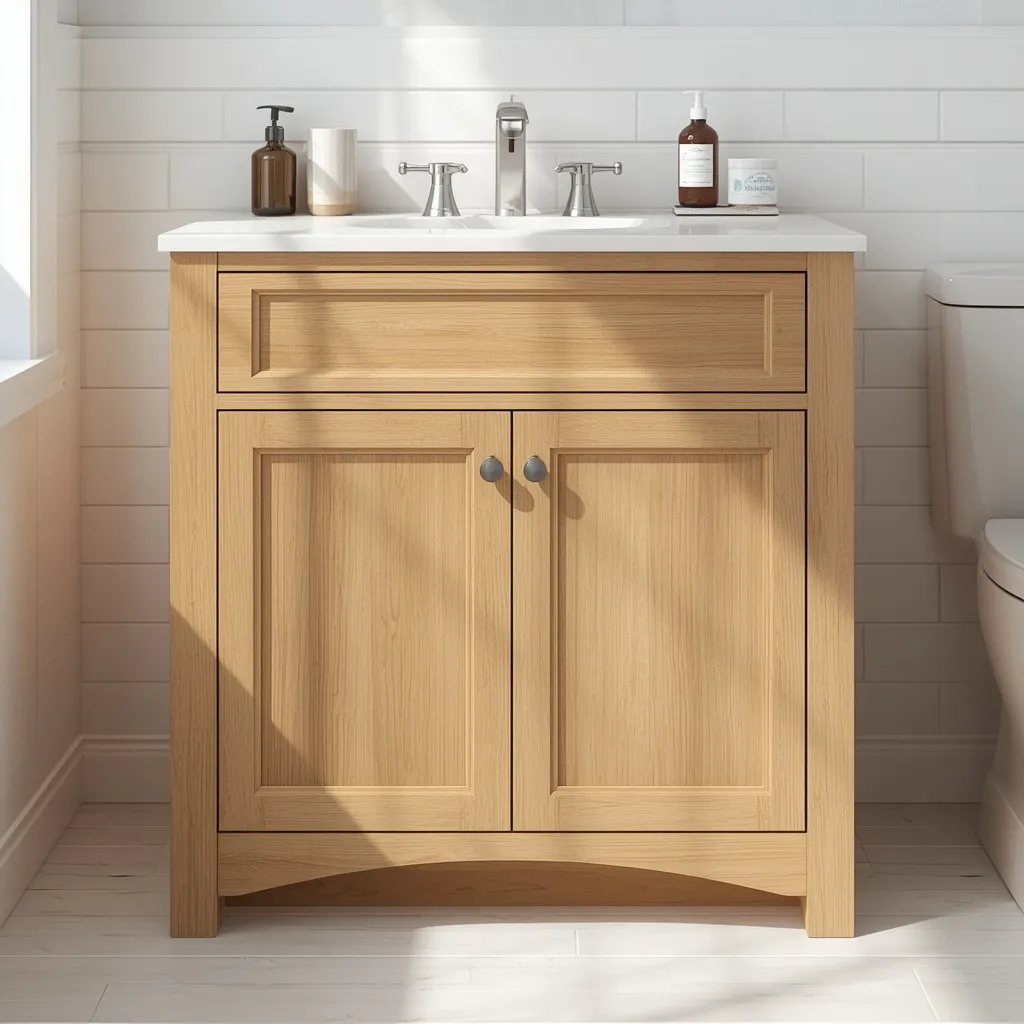
7. Soft Sage Green Cabinets
A sage green vanity is gentle and restorative: muted grey-green cabinet fronts against cream tile and warm wood accents, with the color soft enough to feel like a neutral. Peaceful and current, sage is color for people who don’t think they like color. Subtle, soothing, and easy.
Pick a muted, grey-leaning sage rather than a bright or yellow-toned green, and pair it with cream, off-white, or natural stone rather than stark white, which can make sage look washed out. Sage is one of the easiest colors to live with in a bathroom because its low saturation reads almost neutral in changing light. It also flatters warm brass and aged bronze hardware. This suits cottage, spa, and calm modern bathrooms, and anyone nervous about committing to color.
- Why it works: Low saturation lets sage read almost as a neutral while still adding color.
- Best for: Cottage and spa bathrooms; the color-cautious.
- Key elements: muted grey-sage, cream or stone pairing, brass or bronze hardware.
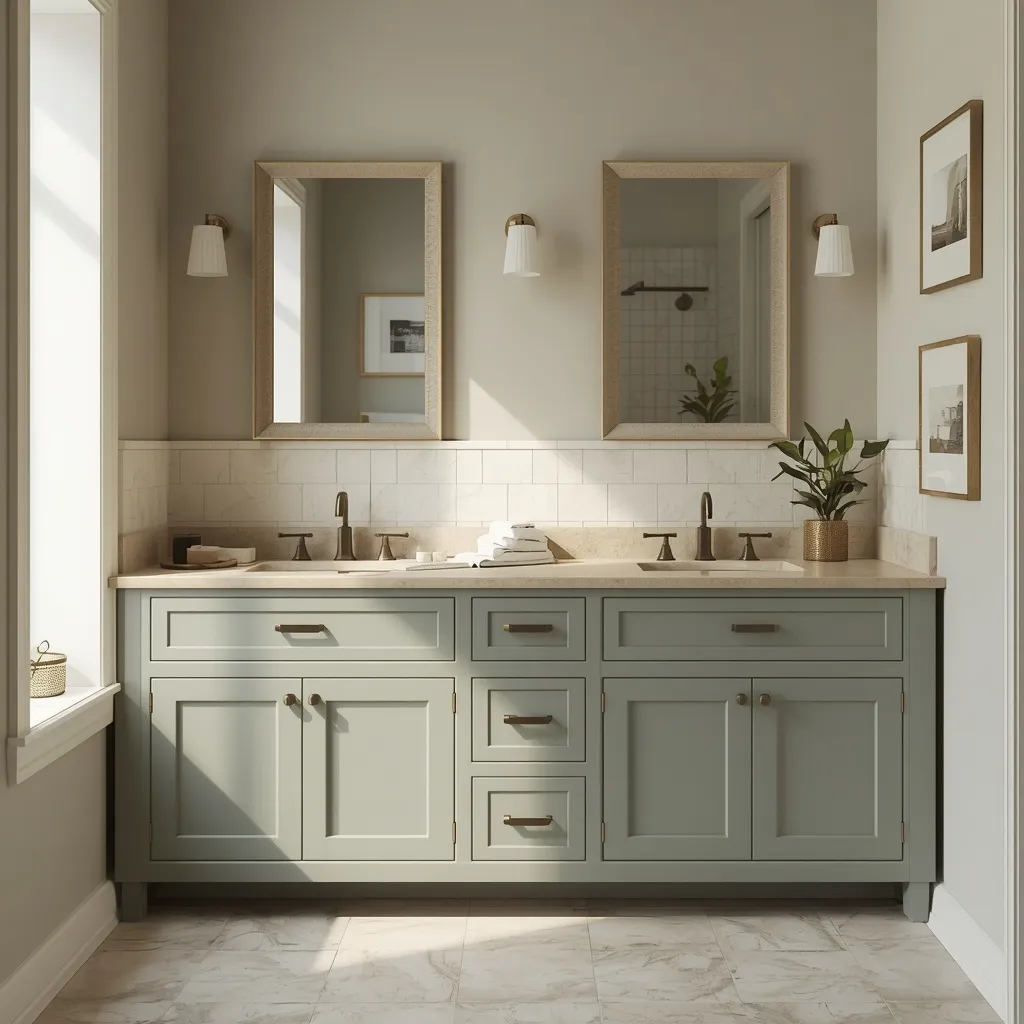
8. Small Bathroom Light Cabinet
In a small bathroom, a light vanity keeps the room feeling open: pale cabinet fronts blending into light walls so the eye reads one continuous surface rather than a bulky block of furniture. Airy and space-conscious, light cabinetry visually disappears. Less visual bulk, more room.
Paint the vanity close to the wall color, the same shade or one step lighter or darker, so the cabinet doesn’t visually cut the room in half. Keeping cabinet and wall in the same tonal family removes the hard line that makes small bathrooms feel cramped. A wall-hung vanity with visible floor beneath compounds the effect considerably. Slim, low-profile hardware keeps the front uncluttered. This suits small bathrooms, cloakrooms, and windowless spaces where openness matters most.
- Why it works: Matching cabinet and wall tones removes the visual break that shrinks a room.
- Best for: Small bathrooms, cloakrooms, windowless spaces.
- Key elements: cabinet near wall color, wall-hung if possible, slim hardware.
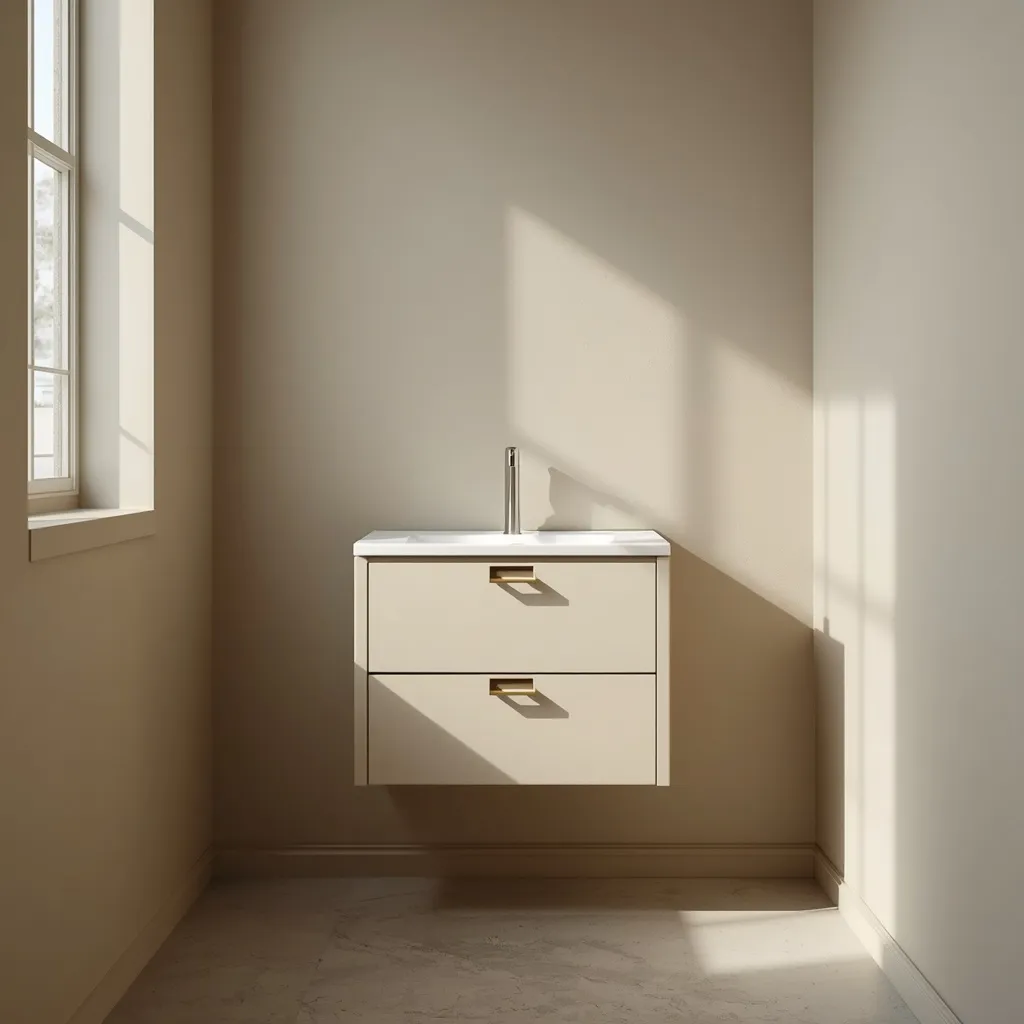
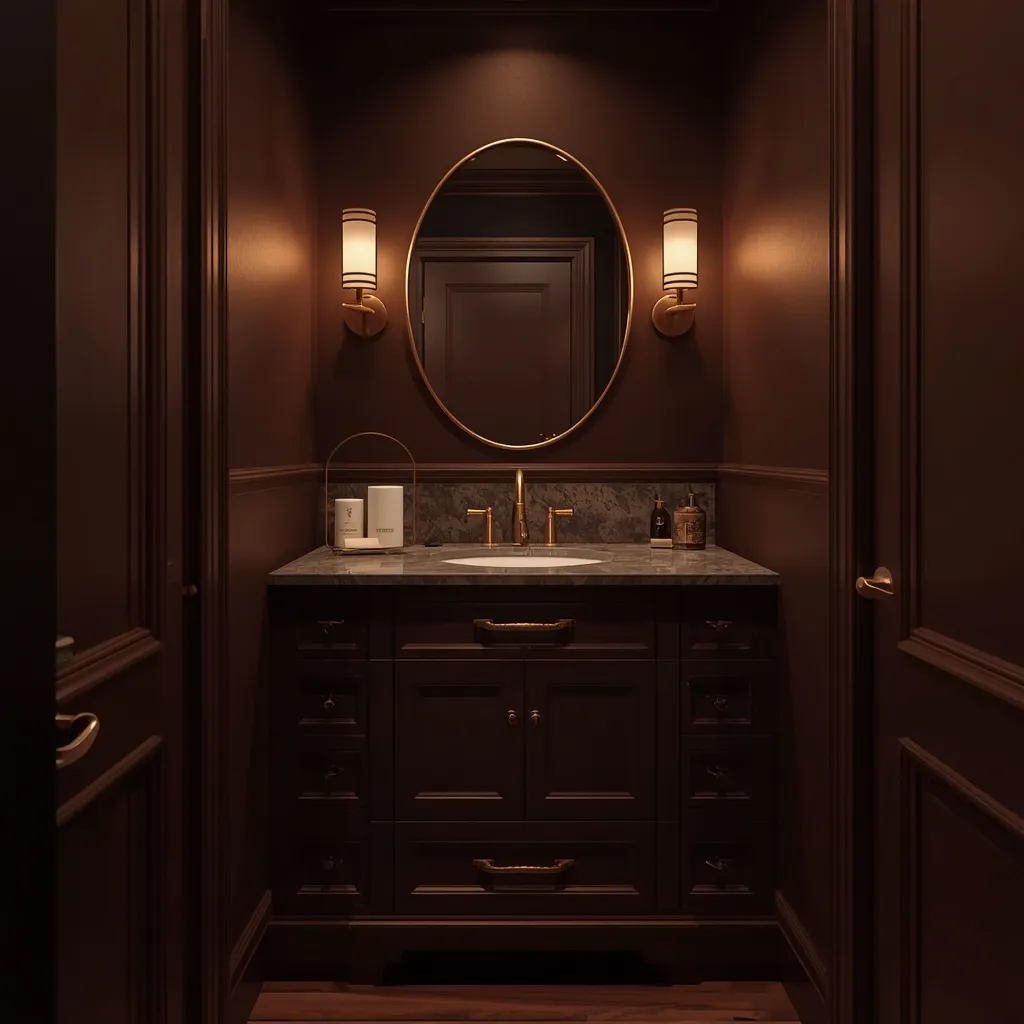
9. Dark and Moody Guest Bathroom
A guest bathroom is the ideal place for a dark, enveloping scheme: charcoal or deep plum cabinetry against moody walls, with warm metallic hardware and soft lighting creating a jewel-box effect. Atmospheric and memorable, guests only spend minutes there. Dramatic, intimate, and unexpected.
Go darker than you would in a bathroom you use daily, deep charcoal, oxblood, or aubergine cabinetry with walls in a similar depth for an enveloping effect. Guest bathrooms and powder rooms suit this because they’re small, used briefly, and don’t need to feel bright for a morning routine. Add warm lighting and brass or bronze hardware, since dark schemes need warmth to avoid feeling cave-like. This suits guest bathrooms and powder rooms where personality matters more than practicality.
- Why it works: A briefly used room can take enveloping depth a daily bathroom can’t.
- Best for: Guest bathrooms and powder rooms.
- Key elements: charcoal, oxblood, or aubergine, matching dark walls, warm lighting, brass.
10. Two-Tone Vanity and Wall Units
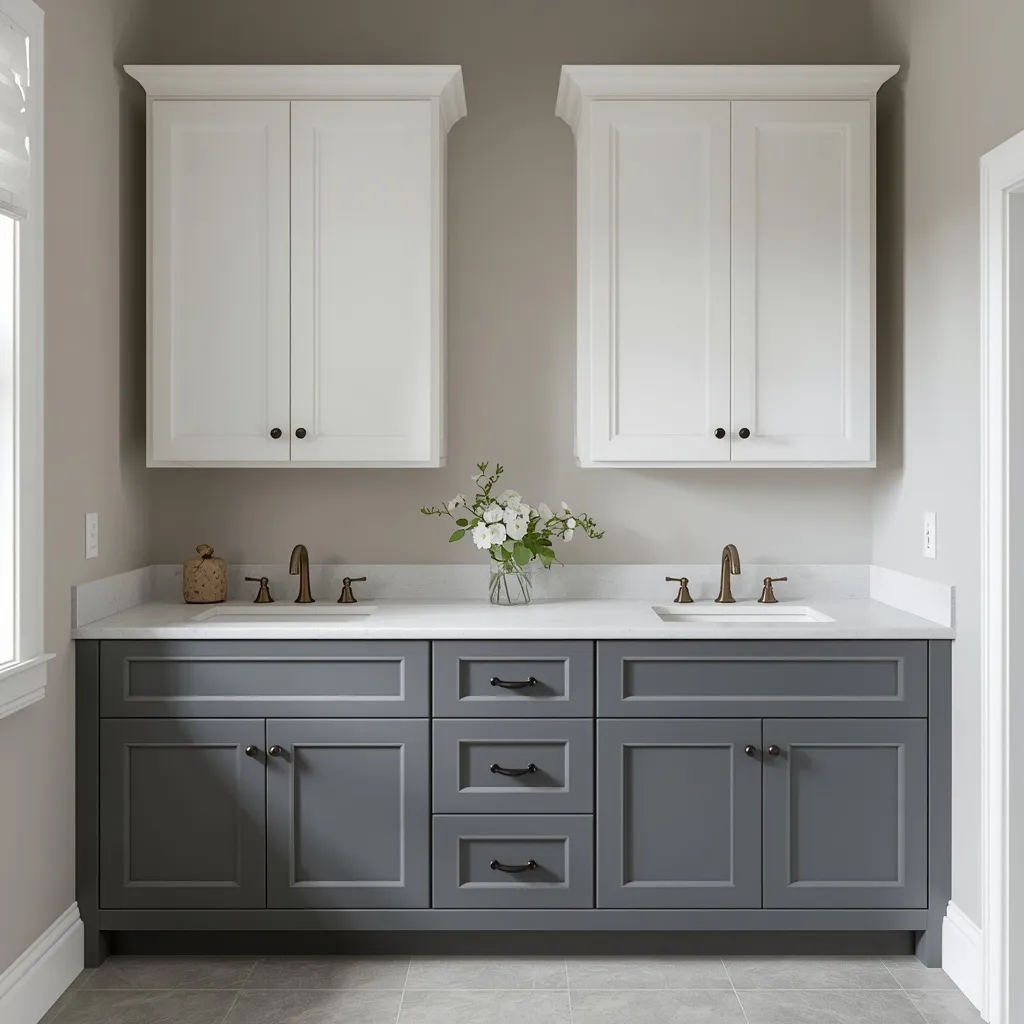
A two-tone bathroom splits the color between pieces: a colored floor vanity paired with white wall cabinets or a white vanity with a contrasting tall unit. Balanced and layered, two-tone gives color without saturating a small room. Considered, dynamic, and practical.
Put the darker or stronger color on the lower vanity and keep upper or taller units light, which grounds the room and keeps the eye moving upward, the same logic that works in kitchens. Two-tone lets you use a bold color without it dominating a small bathroom. Keep hardware consistent across both tones so the scheme reads as deliberate rather than accidental. This suits bathrooms with multiple cabinet pieces, and anyone wanting color while keeping the room light.
- Why it works: Color low and light high grounds the room while keeping it feeling open.
- Best for: Bathrooms with several cabinet pieces; cautious color use.
- Key elements: stronger color on the base unit, light uppers, consistent hardware.
11. Terracotta and Clay Warmth
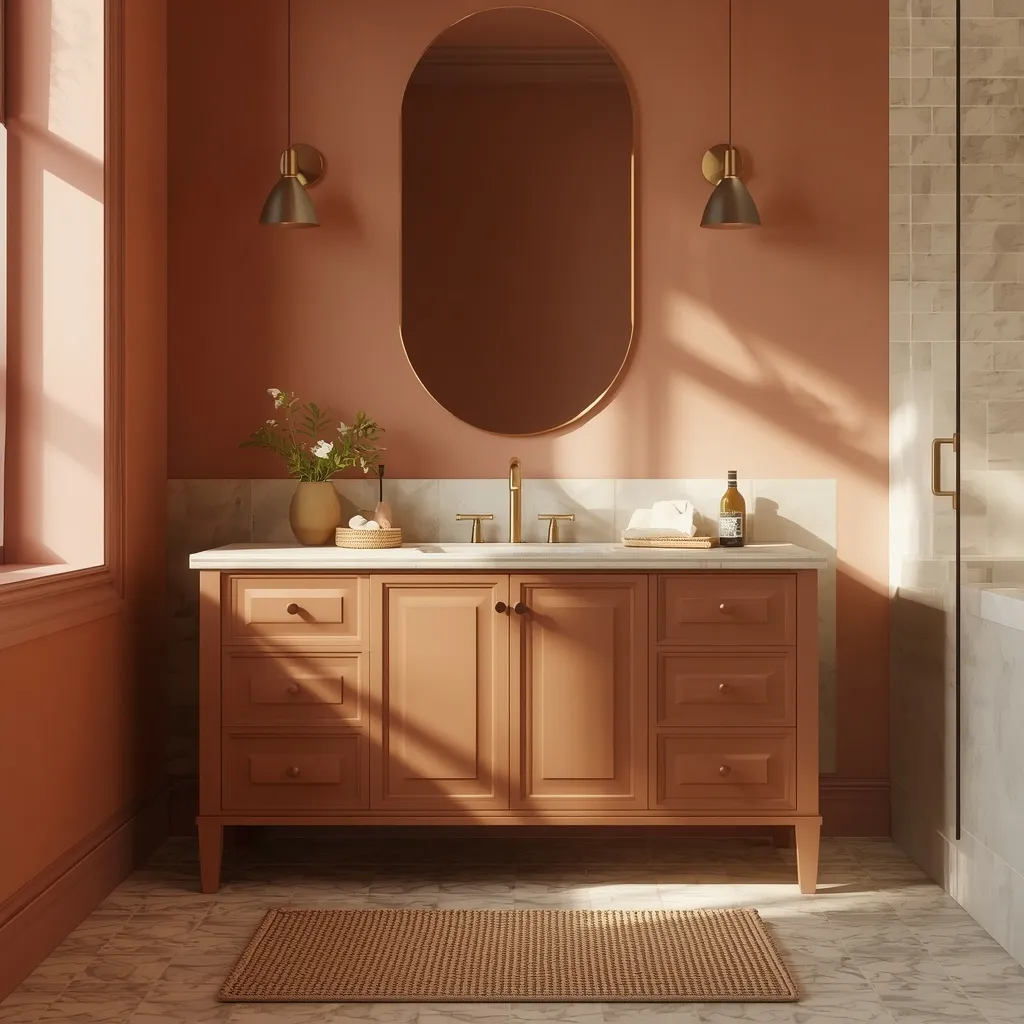
A terracotta vanity brings sun-warmed earthiness to a bathroom: soft clay or muted rust cabinet fronts against cream tile and natural textures. Warm and grounding, earthy tones make a bathroom feel welcoming rather than clinical. Sun-baked, soft, and inviting.
Choose a muted, dusty terracotta rather than a bright orange, pairing it with cream, off-white, or limestone tones and unlacquered brass or aged bronze hardware. Earthy colors work particularly well in bathrooms that rely on artificial light, because warm pigments look better under warm bulbs than cool tones do. Avoid pairing terracotta with cool grey tile, which makes both look dirty. This suits Mediterranean, desert-modern, and warm eclectic bathrooms.
- Why it works: Warm pigment looks better than cool tones under the artificial light bathrooms rely on.
- Best for: Mediterranean, desert-modern, warm eclectic bathrooms.
- Key elements: muted terracotta, cream or limestone pairing, brass or bronze, no cool grey.
12. Coordinating With Existing Tile
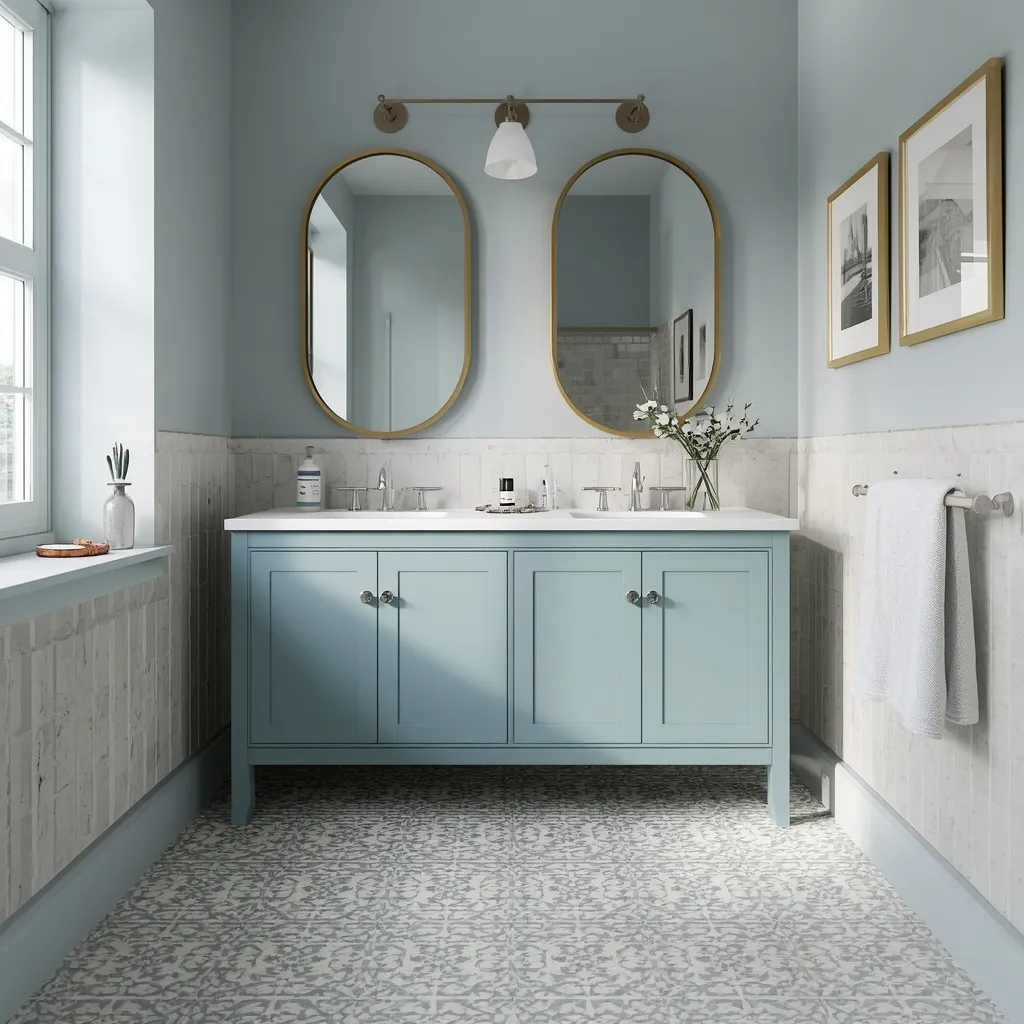
The smartest cabinet color is often drawn from the tile you’re keeping: pulling a secondary tone out of patterned floor tile and repeating it on the vanity ties a whole bathroom together. Cohesive and clever, this makes existing tile look intentional. Instant coherence, no new tile.
Identify a minor color within your existing tile, the soft blue in a patterned encaustic floor, the warm grey in a stone tile, and use a muted version of it on the cabinet, rather than trying to match the tile’s dominant color exactly. Pulling a secondary tone reads as designed, while an exact match of the main color usually looks like a failed attempt. Hold samples against the tile in the room’s real light. This suits anyone keeping existing tile they didn’t choose, and it’s the highest-impact trick for dated bathrooms.
- Why it works: Echoing a secondary tile tone ties the room together without a literal match.
- Best for: Keeping tile you didn’t choose; dated bathroom updates.
- Key elements: secondary tile tone, muted version on cabinet, sampled in room light.
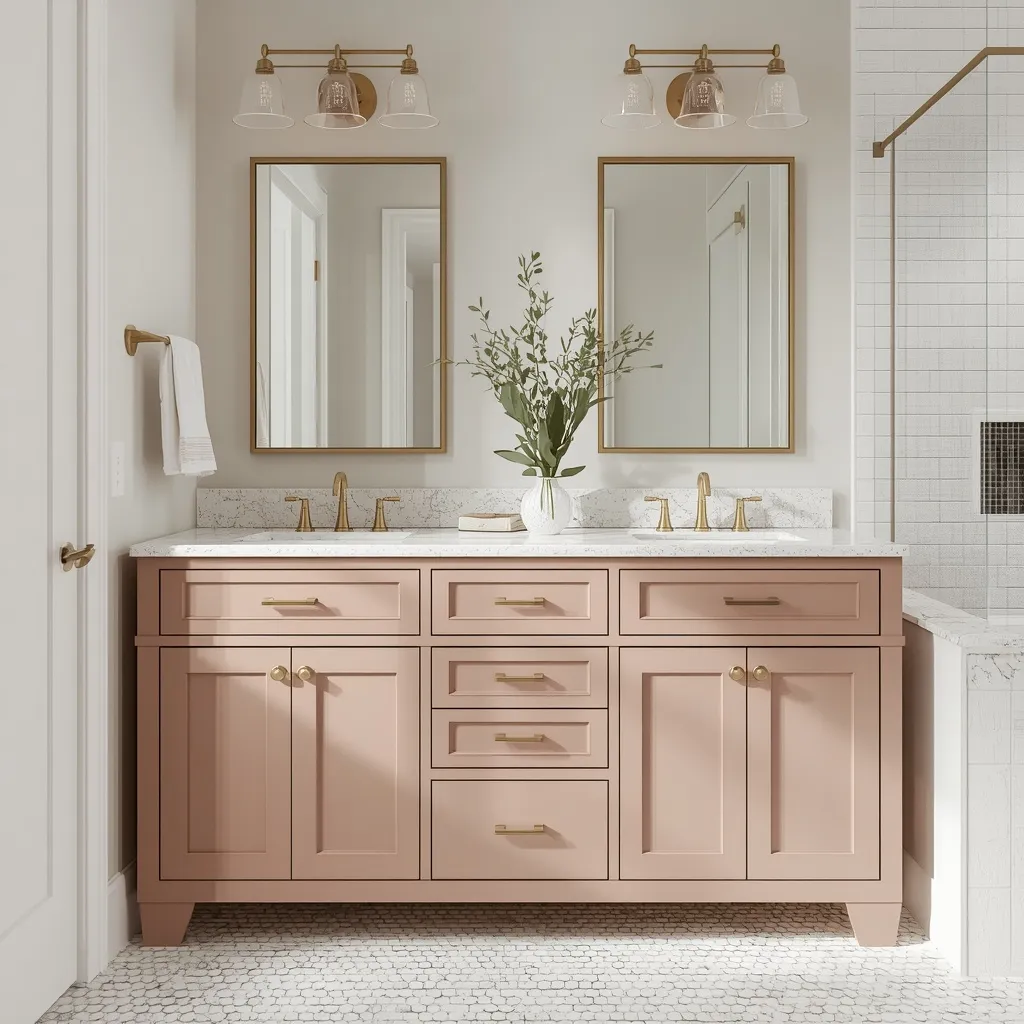
13. Soft Blush and Muted Pink
A blush vanity is softer and more sophisticated than it sounds: dusty pink cabinet fronts against white tile and warm brass, reading as a warm neutral rather than a statement. Gentle and flattering, muted pink is unexpectedly easy to live with. Soft, warm, and quietly stylish.
Choose a heavily muted, dusty or greyed pink rather than a clear or bright pink, so the color reads as a warm neutral. Blush pairs particularly well with brass hardware and white or terrazzo countertops. It’s genuinely flattering at a bathroom mirror, since warm pink light reflects onto skin more kindly than cool tones, a practical reason it works in a room where people get ready. This suits modern, feminine, and eclectic bathrooms, and works well in guest bathrooms wanting personality.
- Why it works: Muted pink reads as a warm neutral and reflects flatteringly at the mirror.
- Best for: Modern and eclectic bathrooms; guest spaces.
- Key elements: dusty greyed pink, brass hardware, white or terrazzo countertop.
14. Charcoal Grey Modern Vanity
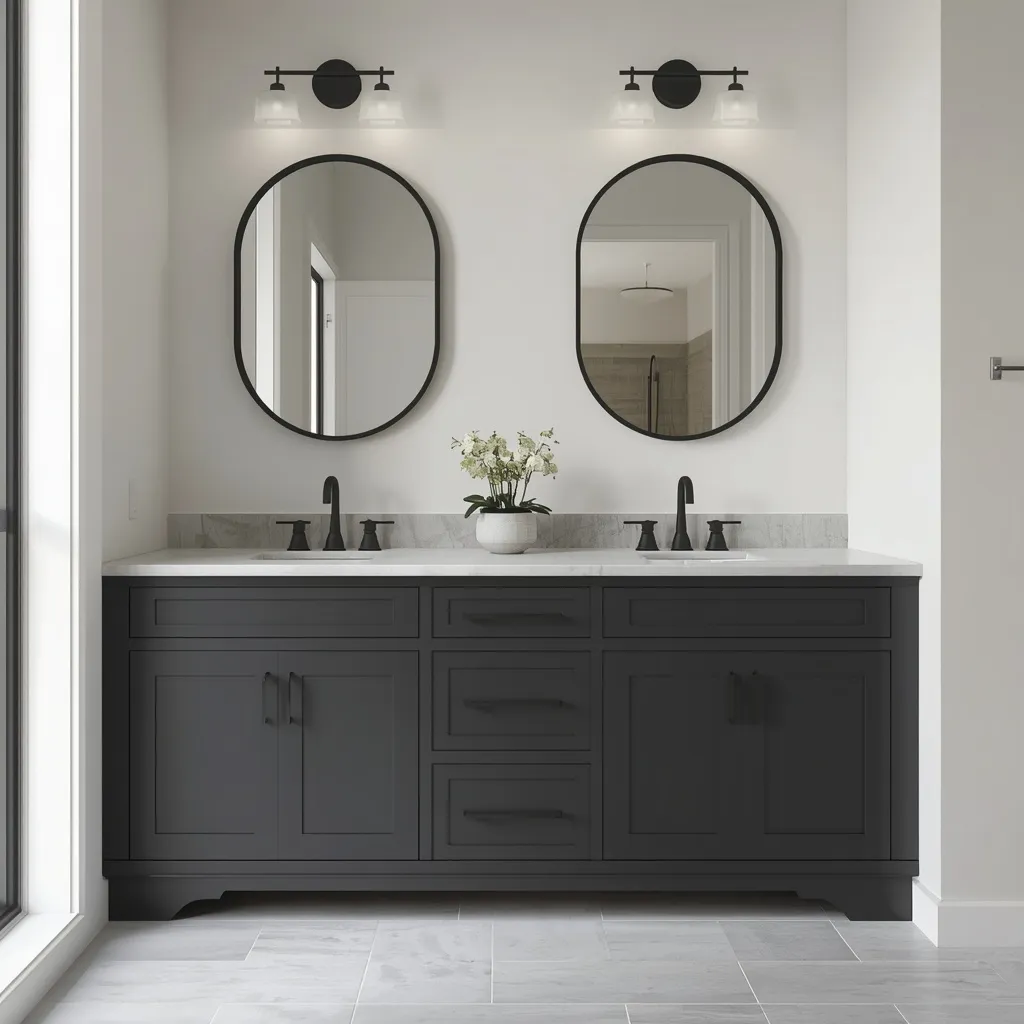
A charcoal vanity is the practical dark choice: deep grey cabinet fronts that give definition without black’s starkness, paired with pale surfaces and simple hardware. Understated and hard-wearing, charcoal hides everyday bathroom mess. Modern, forgiving, and easy.
Use a deep charcoal with a slight warm or blue lean depending on your tile, pairing it with white or light stone countertops and either chrome or matte black hardware. Charcoal is the most practical dark cabinet color because it hides water spots, toothpaste splashes, and dust noticeably better than either true black or white. It also gives definition to a scheme without the visual weight of black. This suits family bathrooms, modern schemes, and anyone wanting depth with low maintenance.
- Why it works: Charcoal hides water spots and splashes better than either black or white.
- Best for: Family bathrooms; low-maintenance modern schemes.
- Key elements: deep charcoal, light countertop, chrome or matte black hardware.
15. Color-Drenched Monochrome Bathroom
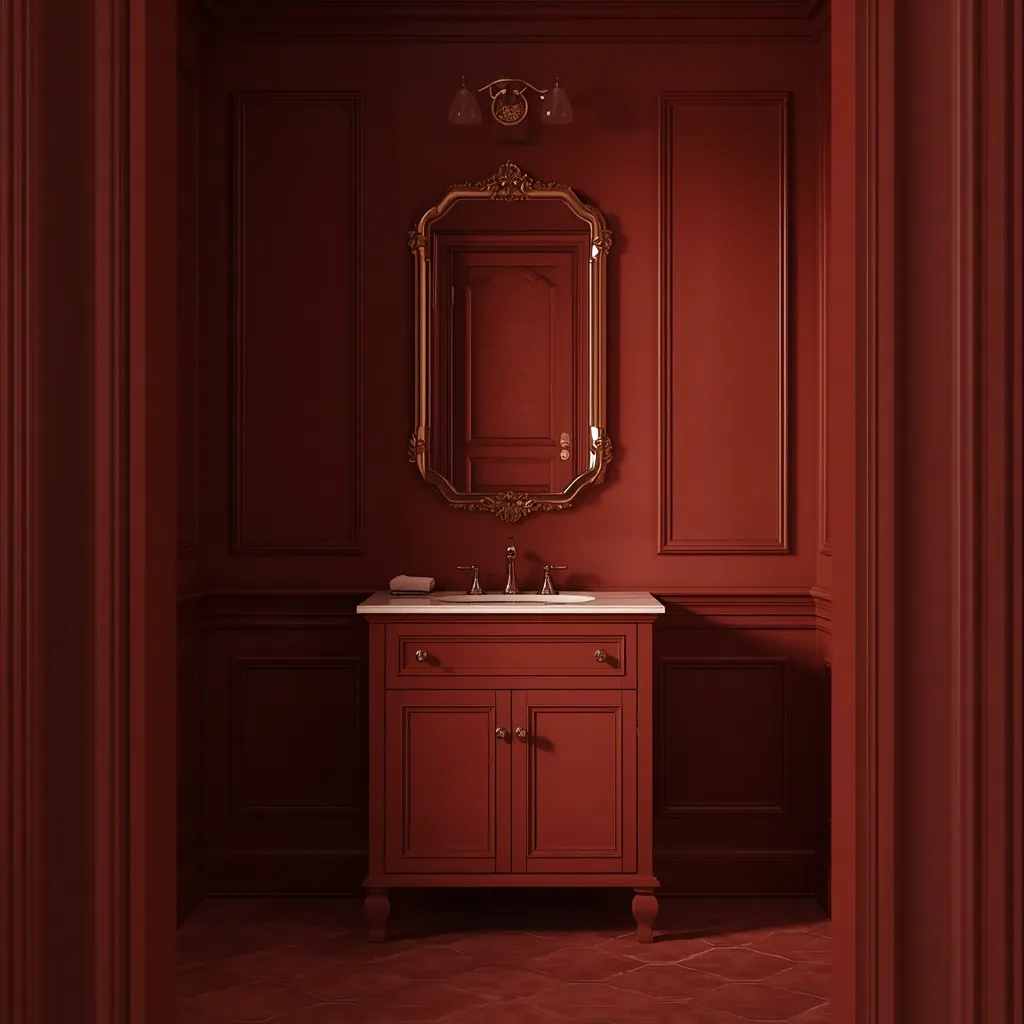
Color drenching paints everything one color: cabinet, walls, and often trim in a single deep shade, so the vanity dissolves into an enveloping whole. Immersive and confident, monochrome makes a small bathroom feel deliberate rather than cramped. Bold, cocooning, and cohesive.
Paint the cabinetry, walls, and woodwork in the same color, varying the sheen instead of the shade, walls in a flatter finish and cabinets in satin or semi-gloss for durability. Because there’s no contrast to break up the space, the room’s boundaries blur and a small bathroom reads as intentional rather than tight. Use the correct paint type for each surface even though the color matches. This suits small bathrooms, powder rooms, and confident decorators.
- Why it works: Removing contrast blurs boundaries, so a small room feels deliberate not cramped.
- Best for: Small bathrooms and powder rooms; confident decorators.
- Key elements: one color across cabinet, walls, and trim, varied sheen, correct paint per surface.
16. Painted Vanity Refresh on a Budget
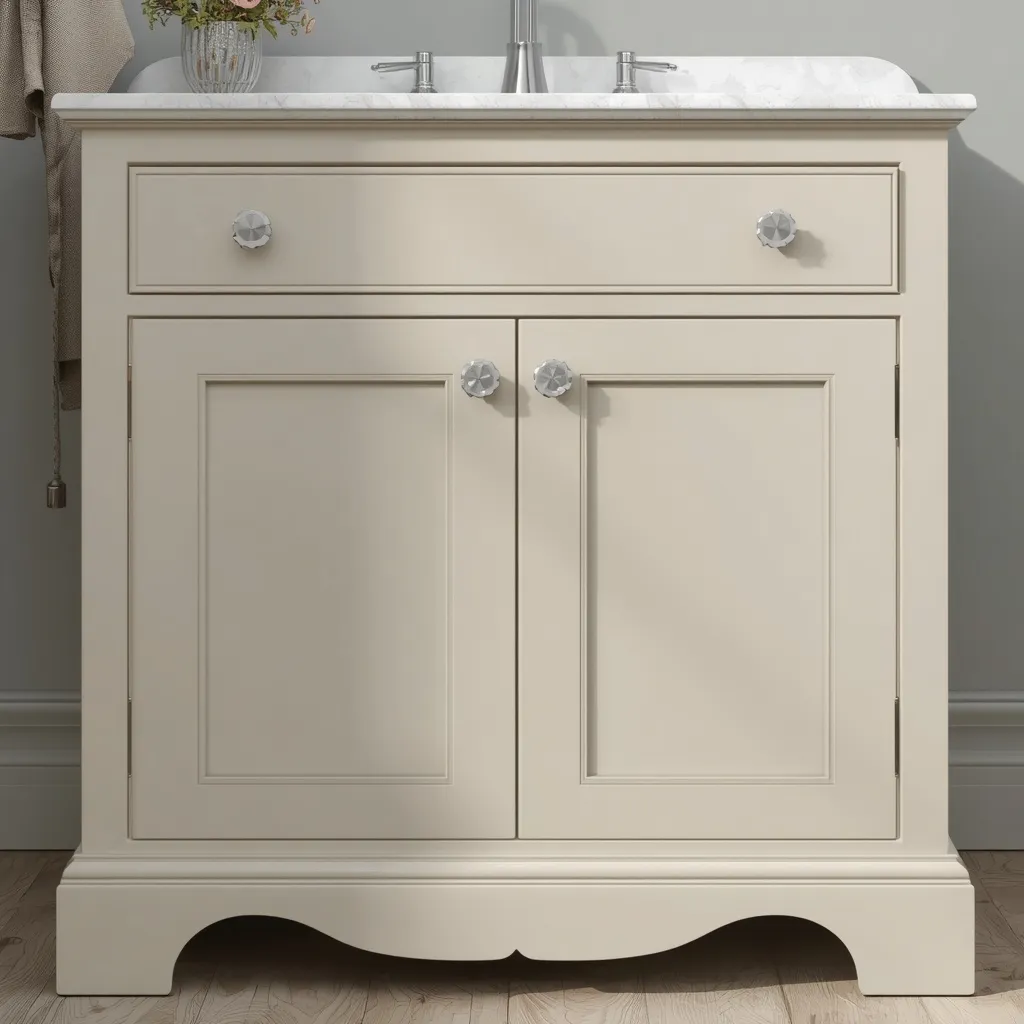
Painting an existing vanity is the cheapest genuine change in a bathroom: dated oak or laminate cabinet fronts reborn in a fresh color over a weekend, with new hardware completing the change. Practical and high-impact, it costs a fraction of replacement. Same cabinet, entirely new room.
Refinish rather than replace: clean thoroughly with a degreaser, sand or use a liquid deglosser to dull the existing finish, apply a bonding primer suited to the surface, then two thin coats of cabinet-grade enamel in satin or semi-gloss. Thin coats beat thick ones every time, since thick paint stays soft and chips at the edges. Swap the hardware while the doors are off. Laminate and melamine need a primer specifically rated to bond to them. This suits renters with permission, budget updates, and dated but structurally sound vanities.
- Why it works: Refinishing delivers a new-looking vanity for a fraction of replacement cost.
- Best for: Budget updates; dated but sound cabinets.
- Key elements: degrease, sand or deglosser, bonding primer, two thin enamel coats, new hardware.
17. Warm Wood and White Combination
Pairing a wood vanity with white surroundings gives warmth and lightness at once: natural oak cabinet fronts against white walls, white tile, and a pale countertop. Balanced and fresh, it’s the combination that suits almost every bathroom. Warm, bright, and universally likeable.
Combine a light or mid-tone wood vanity with white or very pale surroundings, letting the wood provide all the warmth so nothing competes. This pairing is popular for good reason: it delivers the warmth of natural material without the enclosing effect of a dark or strongly colored cabinet, which matters in bathrooms that lack natural light. Choose wood with a neutral rather than orange undertone for a current look that ages well. This suits small bathrooms, Scandinavian and spa schemes, and anyone wanting warmth while keeping the room bright.
- Why it works: Wood supplies warmth while white surroundings keep the room bright and open.
- Best for: Small, low-light bathrooms; Scandi and spa schemes.
- Key elements: light or mid-tone wood, white walls and tile, neutral (not orange) undertone.
How Do You Choose a Bathroom Cabinet Color?
Choose a bathroom cabinet color by working backward from the elements you aren’t replacing. Identify the undertone of your tile, countertop, and flooring, whether they lean warm, cool, or neutral, then pick a cabinet color in the same undertone family. Test the sample against those surfaces in the bathroom’s own lighting, at different times of day, before committing.
Practical decisions like this one sit at the heart of the Sunday Abode approach to a home. If you’re planning the whole room rather than just the vanity, our guide to color in a small bathroom covers walls and surfaces too. For more on planning the space, browse the rest of our bathroom ideas.
Matching Cabinet Color to What You Already Have
The fixed surfaces in a bathroom decide which cabinet colors will work. Use this quick guide to narrow your options before you start collecting samples.
| Existing surfaces lean | Cabinet colors that work | Avoid |
| Warm (beige, cream, travertine) | Cream white, sage, olive, terracotta, wood | Cool stark white, icy grey |
| Cool (grey tile, cool marble) | Crisp white, charcoal, navy, cool grey | Terracotta, yellow-toned cream |
| Mixed / mismatched | Greige, muted sage, natural wood | Strongly warm or cool colors |
| Patterned tile | A muted secondary tone from the tile | Matching the dominant color exactly |
| Very little natural light | Warm colors, or light to reflect | Cool greys, which go flat |
Getting a Finish That Survives a Bathroom
Bathroom cabinets need a harder finish than walls do, because they face humidity, splashes, and constant handling. Use a cabinet-grade enamel over a bonding primer, in satin or semi-gloss, matte marks and stains too easily on cabinetry.
- Clean first: degrease thoroughly, since bathroom cabinets carry soap, hairspray, and skincare residue that stops paint bonding.
- Dull the surface: sand lightly or use a liquid deglosser so the primer has something to grip.
- Prime correctly: use a bonding primer, and one specifically rated for laminate or melamine if your cabinets aren’t solid wood.
- Two thin coats beat one thick one: thick paint stays soft, chips at the edges, and sags on vertical doors.
- Choose satin or semi-gloss: both are wipeable and handle humidity; matte holds marks and is hard to clean.
- Dry is not cured: paint dries to touch in hours but keeps hardening for weeks, treat doors gently for roughly three to four weeks and avoid heavy cleaning during that time.
- Remove doors and hardware: painting flat gives a smoother finish than painting in place and prevents drips.
Safety notes: bathrooms are small and often poorly ventilated, so ventilate well while painting and while the finish cures, open a window, run the extractor fan, and take breaks. Follow the product’s own guidance on respiratory protection, and use a suitable respirator or mask with solvent-based products in a confined space. Wear eye protection when sanding, and keep paints, primers, and solvents away from children and pets. Important: homes built before 1978 may contain lead paint, and sanding it releases hazardous dust, in the United States the EPA publishes guidance on testing and safe practices, and many countries have equivalent rules, so check before sanding old painted cabinetry. Dispose of solvent-soaked rags as directed on the product label, since some can generate heat as they dry. Good ventilation also protects the finish itself, because trapped humidity slows curing.
Frequently Asked Questions
What is the best color for bathroom cabinets?
There’s no single best color, but the most reliably successful choices are ones that suit the undertone of your existing tile and countertop. Soft whites, warm greige, sage green, and navy all work across a wide range of bathrooms. Green and navy are particularly popular because they have the depth of a real color while coordinating almost as easily as a neutral.
What kind of paint should you use on bathroom cabinets?
Use a cabinet-grade or trim enamel over a bonding primer, in a satin or semi-gloss sheen. Bathroom cabinets face humidity, splashes, and constant handling, so they need a harder, wipeable finish than wall paint provides. If your cabinets are laminate or melamine rather than wood, choose a primer specifically rated to bond to those surfaces, or the topcoat will peel.
Do dark cabinets make a small bathroom look smaller?
Not necessarily. A dark vanity can anchor a small bathroom and give it presence, particularly when the walls and countertop above stay light. What makes a small bathroom feel cramped is usually strong contrast breaking the space up, not darkness itself. If you want maximum openness, keep the cabinet close to the wall color instead, that removes the visual break.
How do you choose a cabinet color to match existing tile?
Pull a secondary color out of the tile rather than trying to match its dominant color exactly. A muted version of the soft blue in a patterned floor, or the warm grey in stone tile, ties the room together and looks deliberate. An exact match of the main color usually reads as a near-miss. Always hold samples against the tile in the bathroom’s own light.
How long does painted bathroom cabinetry take to cure?
Paint dries to the touch within hours but continues hardening for considerably longer, typically around three to four weeks depending on the product and conditions. During that period, treat doors gently, avoid harsh cleaning, and don’t stack items against painted surfaces. Rushing this stage is the most common reason a freshly painted vanity ends up marked or chipped.
Can you paint bathroom cabinets without sanding?
You can skip full sanding, but you can’t skip surface preparation. Use a liquid deglosser to dull the existing finish and a quality bonding primer designed to adhere to glossy or laminate surfaces. Degreasing first matters just as much in a bathroom, because soap and cosmetic residue prevents adhesion. Without any of these steps, the paint will chip at the edges within months.
What cabinet color works best in a guest bathroom?
Guest bathrooms are the ideal place for something bolder, since they’re small, used briefly, and don’t need to serve a daily routine. Deep charcoal, oxblood, aubergine, or a muted blush all create a memorable jewel-box effect. Pair a dark scheme with warm lighting and brass or bronze hardware so the room feels inviting rather than cave-like.
Conclusion
The most successful bathroom cabinet color ideas all start from the same place: the tile, countertop, and flooring you already have. Once the undertone is settled, everything from a soft white to a deep forest green or a color-drenched monochrome becomes a genuine option, and the vanity is small enough that repainting it later is a weekend rather than a renovation. Prepare properly, use a cabinet-grade enamel in satin or semi-gloss, and let it cure before it goes back into daily service. For more on planning the space, explore the bathroom ideas collection on Sunday Abode and save the cabinet color you keep returning to.