
Key Takeaways
- A powder room is the best room in the house for a bold floor, it’s small, low-traffic, and stays dry, so you can take risks you wouldn’t elsewhere.
- Check slip resistance before you buy: choose a tile rated for wet-area floor use, and avoid polished stone or high-gloss tile underfoot.
- Fewer grout lines usually make a small floor read larger, so large-format tile often works better in a tiny powder room than tiny tile does.
- Grout color is a design decision, matching grout blurs the pattern, contrasting grout makes it the whole point.
- Because the floor area is tiny (often 1.5–3 sq m / 16–32 sq ft), premium tile is far more affordable here than in any other room.
Introduction
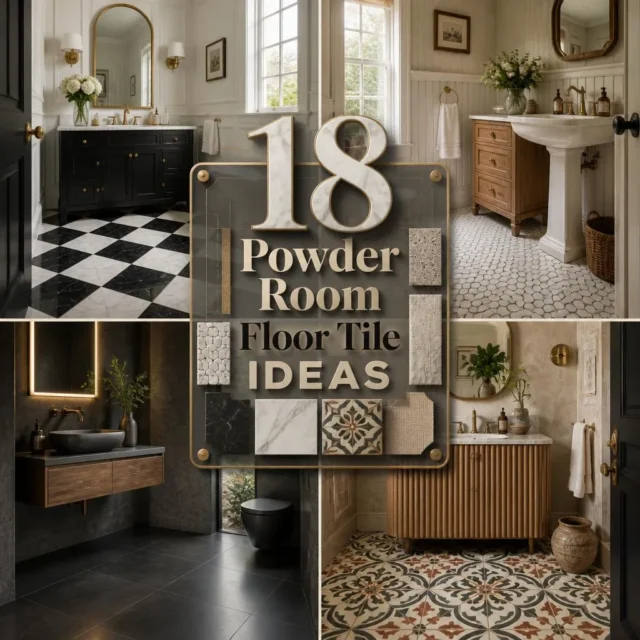
The powder room is the one place in a home where you can be genuinely daring with flooring. These powder room floor tile ideas cover complete floor schemes, pattern, material, color, and grout working together, for the small half bathroom that guests always notice. Because the area is so small, tile you’d never afford elsewhere suddenly becomes possible.
Below are 18 full floor schemes, from graphic checkerboard and vintage hex to moody black slate, warm terrazzo, and classic marble, each with the practical detail that makes it work: how the tile is laid, what grout to pair with it, and how it behaves in a room of two or three square meters. Every entry includes slip-resistance and maintenance notes. Consider it your guide to choosing a floor for the smallest room in your abode, and getting it right the first time.
Before you choose, three things that decide everything: First, slip resistance: pick a tile rated for wet-area floors, since a powder room floor gets splashed even without a shower. Second, scale: fewer grout lines generally make a small floor look bigger, so don’t default to tiny tile just because the room is tiny. Third, grout color: matching grout softens a pattern into a texture, while contrasting grout turns the pattern into the room’s main event. Decide those three and the rest is style.
18 Powder Room Floor Tile Ideas
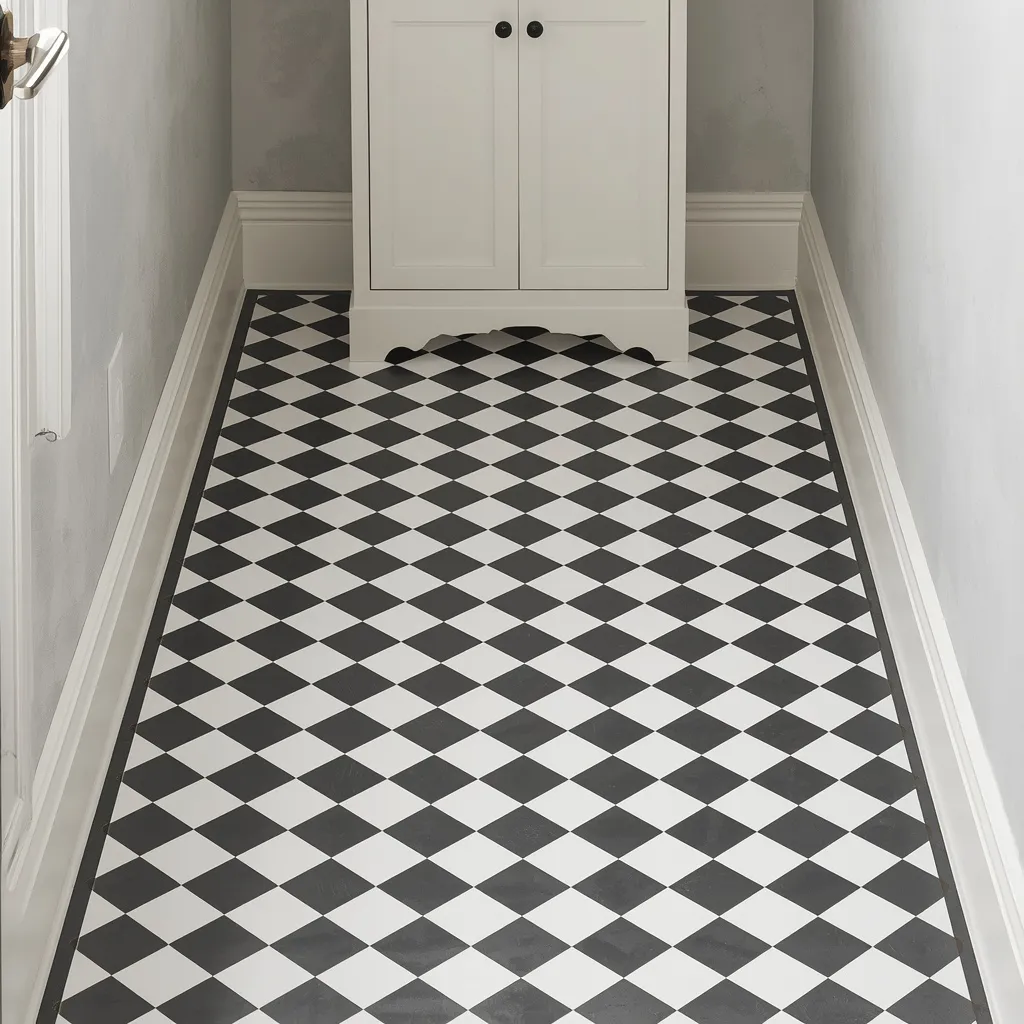
1. Classic Black and White Checkerboard
A black-and-white checkerboard floor is the powder room classic that never dates: square tiles alternating in crisp contrast, often set on the diagonal, grounding a small room with graphic confidence. Timeless and bold, checkerboard makes a tiny floor the room’s best feature. Sharp, cheerful, and endlessly stylish.
Lay square tiles, commonly 20 x 20 cm (8 x 8 in) or 30 x 30 cm (12 x 12 in), in an alternating black-and-white grid, either straight or turned 45 degrees on the diagonal, which makes a narrow room read wider. Use a mid-grey grout rather than pure white or black, since it’s the one color that doesn’t fight either tile and won’t show dirt as fast as white. Choose a matte or honed finish for grip. This suits traditional, farmhouse, and modern powder rooms alike.
- Why it works: High-contrast squares turn a tiny floor into a graphic feature.
- Best for: Traditional, farmhouse, and modern powder rooms.
- Key elements: alternating black and white squares, optional diagonal lay, mid-grey grout, matte finish.
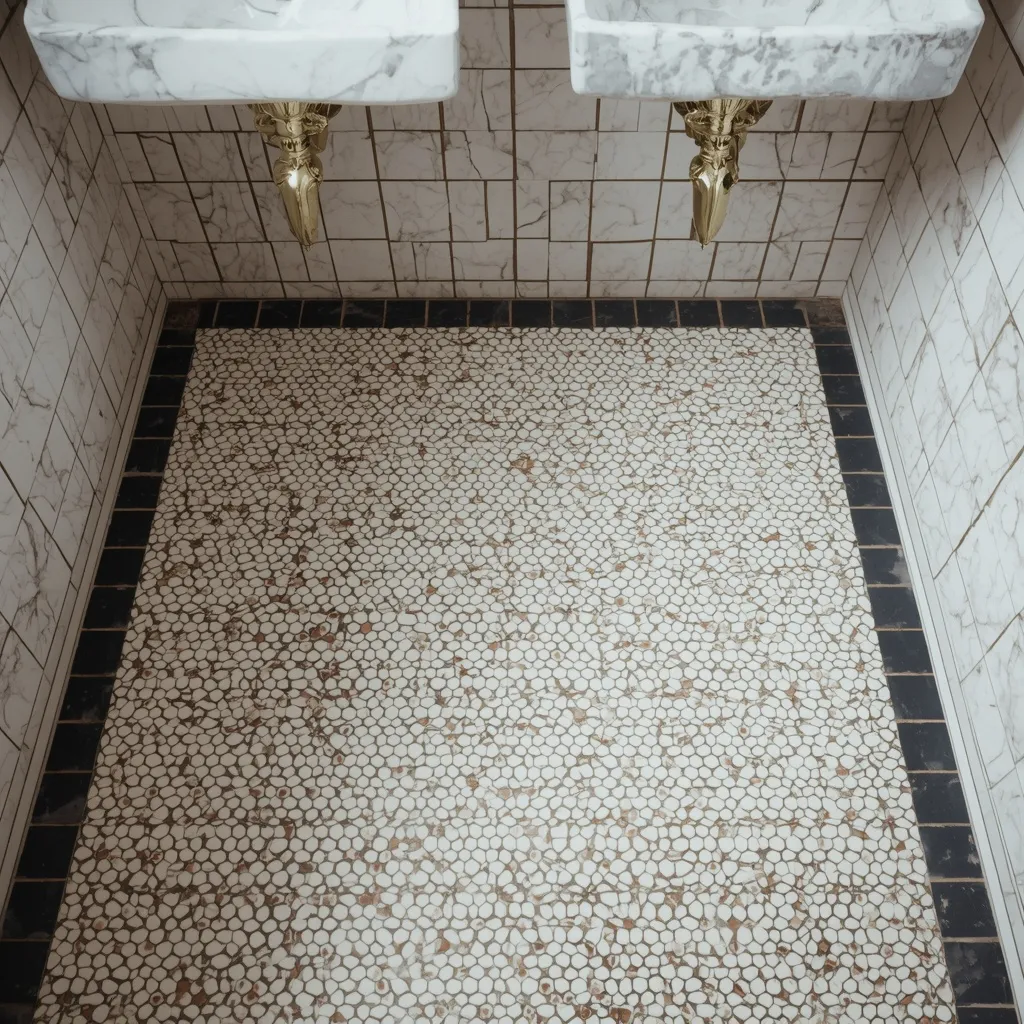
2. Vintage Hexagon Mosaic
Small white hexagon mosaic tile is the authentic vintage bathroom floor: a honeycomb of little hexes running wall to wall, often with a black border or scattered black accent hexes. Charming and period-correct, it belongs in any home with old bones. Classic, characterful, and instantly recognizable.
Use 2.5–5 cm (1–2 in) hexagon mosaic sheets in white or off-white, optionally adding a simple black border two tiles in from the wall or scattered black hexes for period detail. Mosaic sheets are easier to lay around a toilet base and other curves than large tiles, which is a real practical advantage in a powder room. The many grout lines add grip but also more grout to clean, so seal it and use a stain-resistant grout. This suits period homes, Victorian and Edwardian restorations, and vintage-leaning schemes.
- Why it works: Small hexes suit period homes and navigate curves around a toilet easily.
- Best for: Period homes and vintage restorations.
- Key elements:5–5 cm white hex mosaic, optional black border or accent hexes, sealed grout.
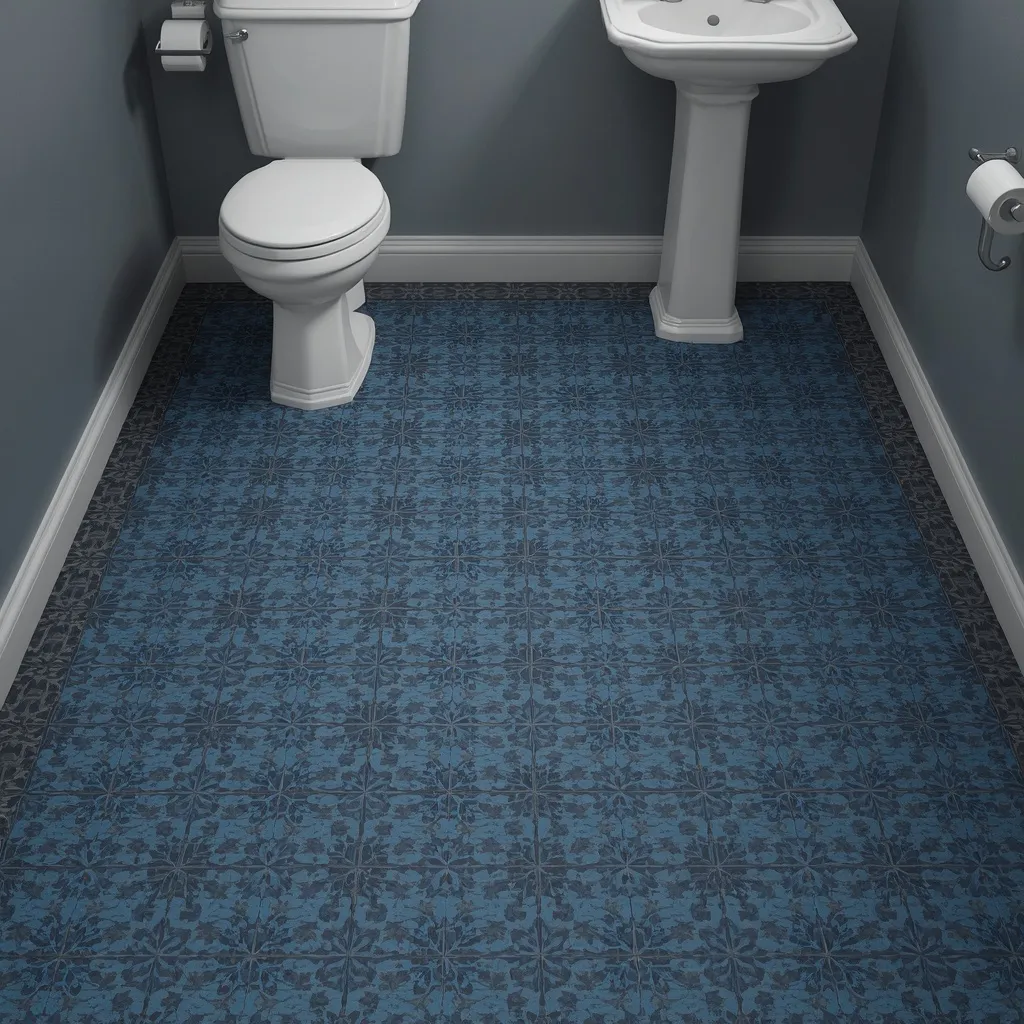
3. Encaustic Pattern Statement Floor
An encaustic-look patterned tile turns a powder room floor into a rug: intricate geometric or floral motifs in blue, charcoal, or terracotta covering the whole floor edge to edge. Rich and characterful, patterned tile is the single most impactful choice for a small room. A floor that stops people in the doorway.
Cover the entire floor in a single patterned tile, traditional cement encaustic or, more practically, a porcelain tile printed to look like it, keeping the walls and fittings plain so the floor carries the room. Porcelain versions are the sensible pick for most homes because true cement encaustic is porous, needs sealing on installation and periodically after, and stains easily. Buy about 10% extra for cuts and future repairs. This suits eclectic, Mediterranean, and boho powder rooms wanting maximum personality.
- Why it works: A single all-over pattern acts like a rug and carries the whole room.
- Best for: Eclectic, Mediterranean, and boho schemes.
- Key elements: all-over patterned tile, porcelain over cement, plain walls, 10% overage.
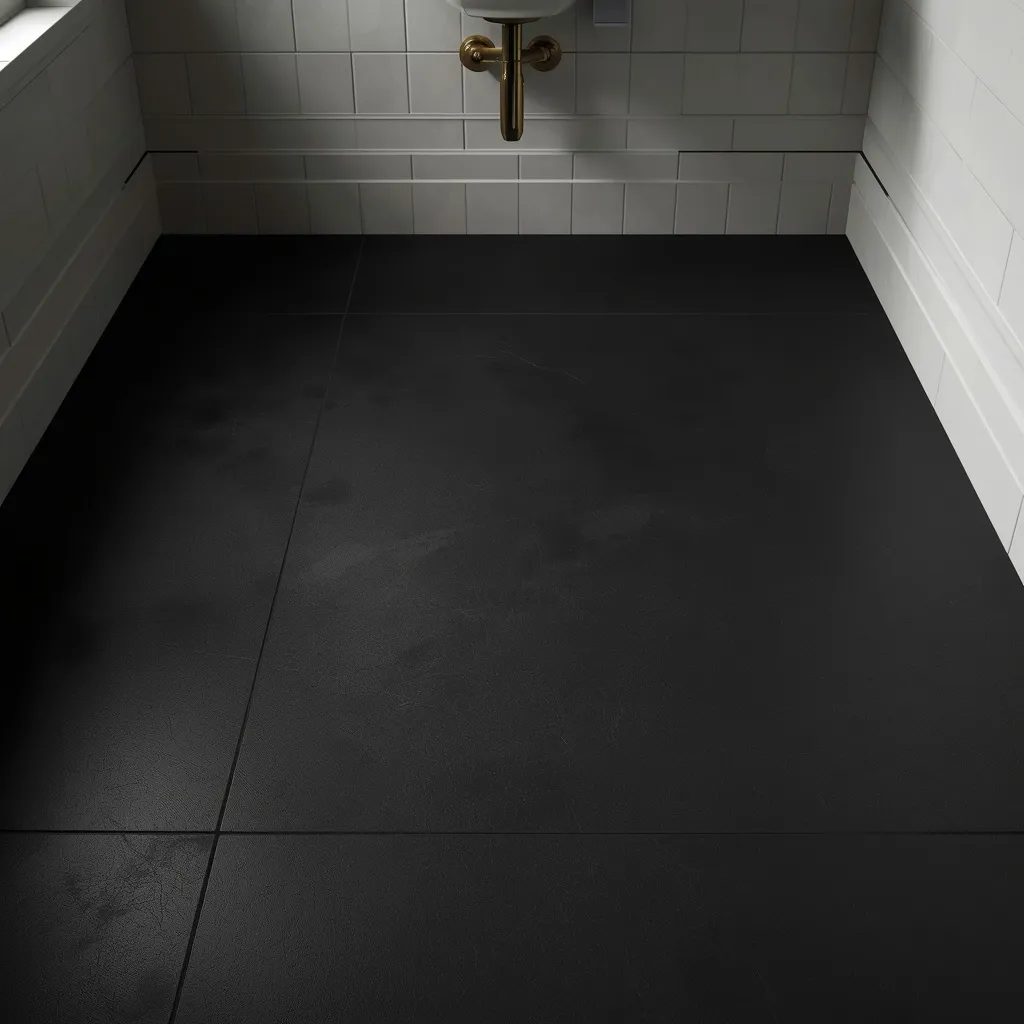
4. Moody Black Tile Floor
A black tile floor gives a powder room instant drama: deep matte black underfoot, grounding the space and making brass fittings and pale walls pop against it. Confident and enveloping, black works beautifully in a room you’re only in briefly. Bold, moody, and surprisingly practical.
Choose a matte or honed black porcelain in a large format with a dark grey or black grout so the floor reads as one continuous surface rather than a grid. Contrary to the usual worry, a dark floor doesn’t shrink a powder room the way a dark ceiling would; it grounds it, especially with lighter walls above. Matte black shows dust and water spots more than mid-tones, so a slightly textured or stone-look finish hides marks better than a flat one. This suits modern, dramatic, and hotel-inspired powder rooms.
- Why it works: A grounded dark floor adds drama and makes pale walls and brass pop.
- Best for: Modern, dramatic, hotel-style powder rooms.
- Key elements: matte black porcelain, large format, dark grout, textured finish to hide marks.
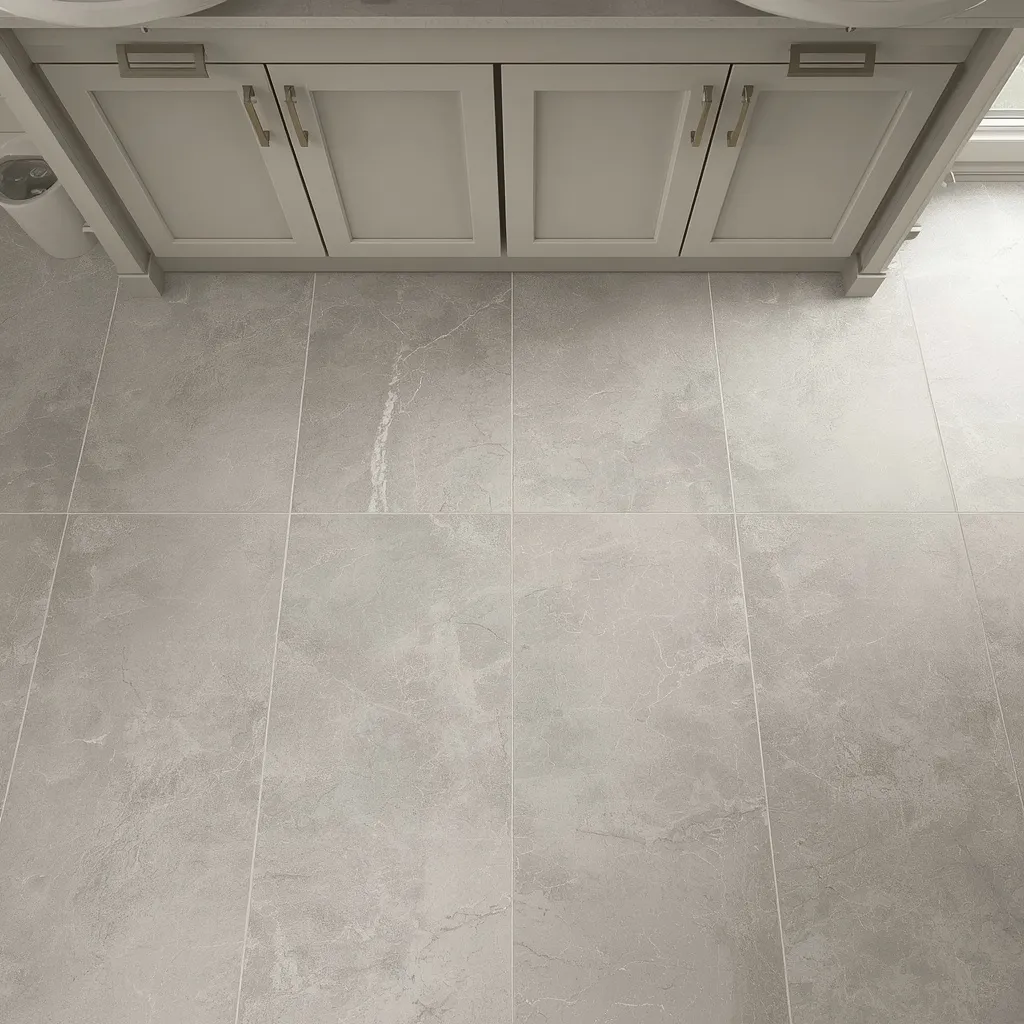
5. Soft Grey Stone-Look Floor
A grey stone-look porcelain floor is the quiet all-rounder: soft mid-grey with subtle natural veining, calm underfoot and impossible to date. Understated and versatile, grey flatters almost every wall color and fitting finish. Easy, elegant, and forgiving.
Use a stone-look porcelain in a mid-grey with gentle tonal variation, in a large format such as 60 x 60 cm (24 x 24 in), with a closely matched grey grout. Mid-grey is the most forgiving floor color in a bathroom because it hides both dust and water marks far better than either white or black. Look for tiles with several different face patterns so the floor doesn’t visibly repeat. This suits anyone wanting a safe, long-lasting choice, and it works in modern and traditional rooms equally.
- Why it works: Mid-grey hides dust and water marks better than white or black.
- Best for: Anyone wanting a safe, versatile, long-lasting floor.
- Key elements: grey stone-look porcelain, large format, matched grout, varied face patterns.
6. Marble Herringbone Elegance
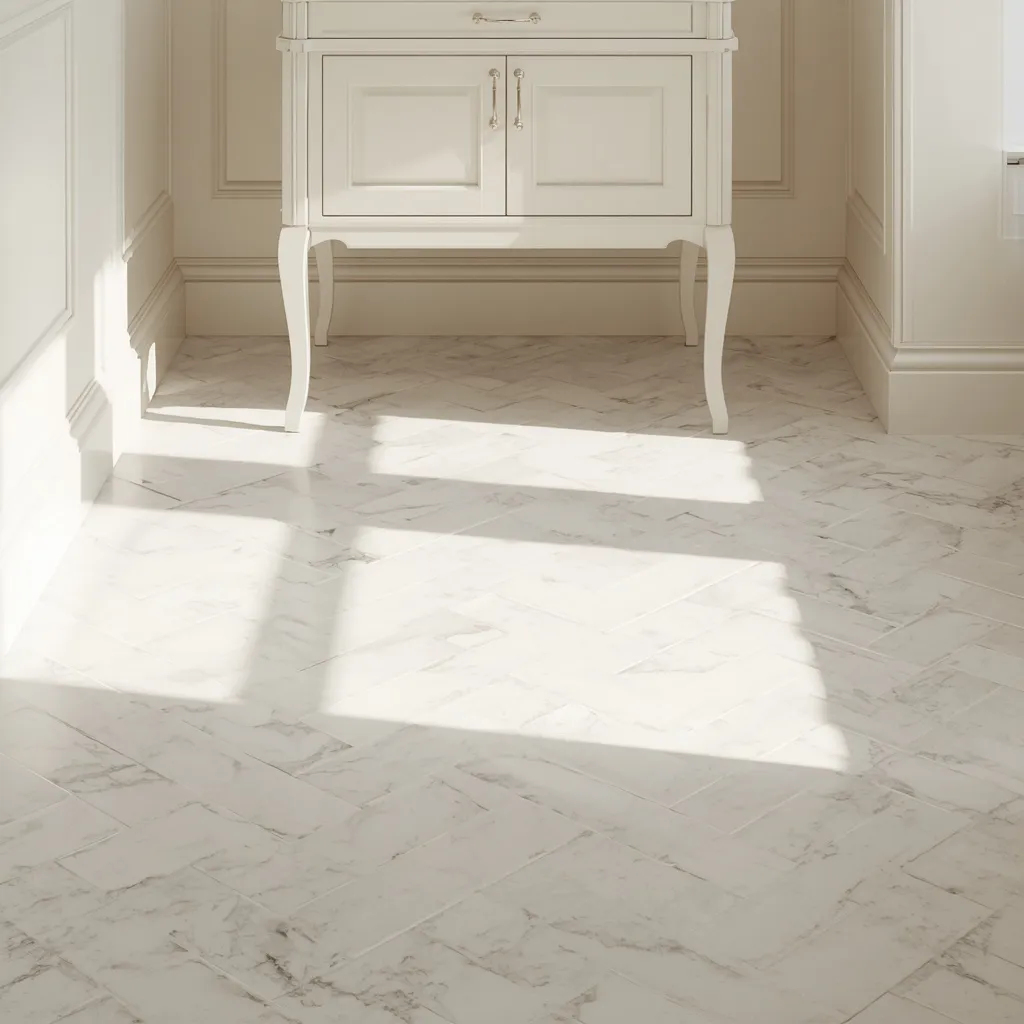
Marble laid in a herringbone pattern brings quiet luxury to a powder room: pale Carrara rectangles zigzagging across the floor, veining catching the light. Refined and expensive-looking, herringbone adds movement without color. Elegant, classic, and worth the splurge here.
Lay rectangular marble or marble-look porcelain tiles, often 5 x 25 cm (2 x 10 in) or similar, in a herringbone pattern, which draws the eye along its zigzag and makes a small floor feel more dynamic. Because a powder room floor is typically only 1.5–3 sq m (16–32 sq ft), genuine marble is far more affordable here than anywhere else in the home. Choose honed rather than polished marble: polished stone is slippery when wet and marble is porous, so it needs sealing and reacts to acidic cleaners. This suits classic and luxury-leaning powder rooms.
- Why it works: Herringbone adds movement and elegance, and marble is affordable at this size.
- Best for: Classic and luxury-leaning powder rooms.
- Key elements: marble or marble-look rectangles, herringbone lay, honed finish, sealing.
7. Penny Round Retro Floor
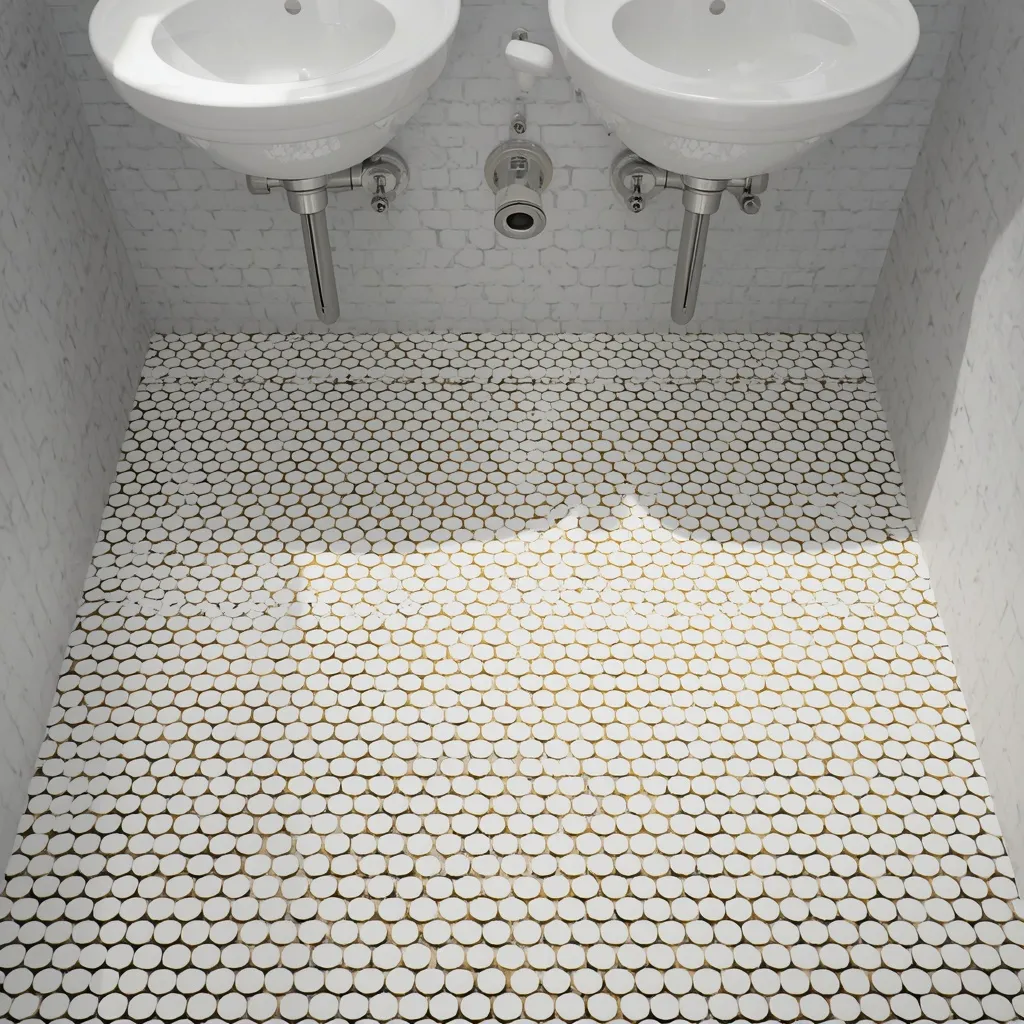
A penny round tile floor is playful and tactile: hundreds of small circles in white, black, or a soft color, with visible grout creating an all-over texture. Nostalgic and charming, penny tile has a handmade quality larger tiles can’t match. Sweet, textured, and full of character.
Install penny round mosaic sheets, small circles roughly 2 cm (0.75 in) across, in a single color or with a scattered contrast pattern, using a grout color chosen deliberately since grout makes up a large share of the visible surface here. The many joints give genuinely good grip underfoot, which is a real advantage in a bathroom. The trade-off is more grout to clean, so use an epoxy or stain-resistant grout. This suits vintage, retro, cottage, and playful powder rooms.
- Why it works: Many small joints give excellent grip and a handmade, tactile look.
- Best for: Vintage, retro, cottage, and playful schemes.
- Key elements: 2 cm penny rounds, deliberate grout color, epoxy or stain-resistant grout.
8. Large-Format Small Room Floor
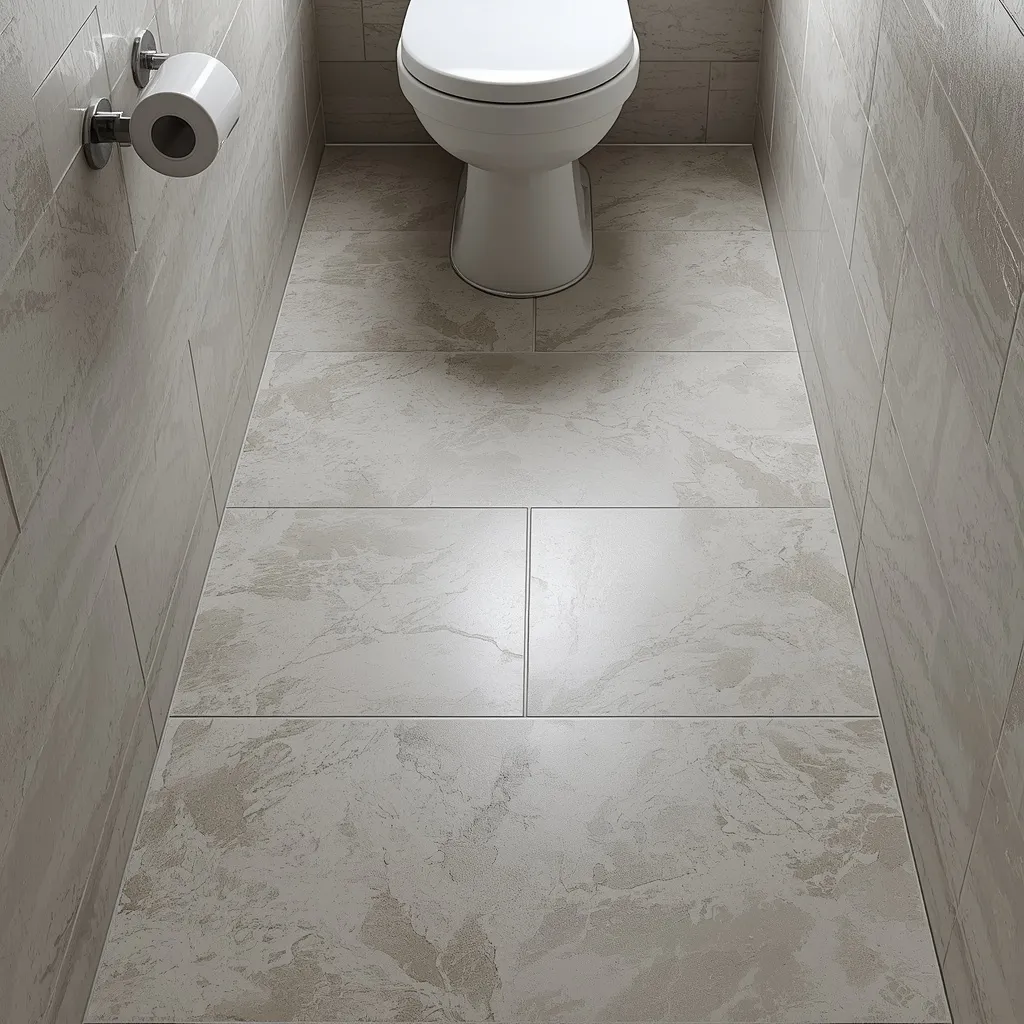
In a tiny powder room, one large-format tile running wall to wall with almost no visible joints makes the floor feel expansive: a smooth continuous surface rather than a busy grid. Calm and space-enhancing, big tile in a small room is the counterintuitive trick that works. Fewer lines, more space.
Use large-format porcelain, 60 x 60 cm (24 x 24 in) or larger, with a thin joint and closely matched grout, so the eye reads one continuous plane instead of counting tiles. The common advice to use small tile in small rooms is backwards for floors: fewer grout lines make a floor look bigger, not smaller. The caveat is cuts, since a big tile in a tiny room means significant waste and precise cutting around the toilet, so this is usually a job for a professional installer. This suits the smallest powder rooms and modern minimal schemes.
- Why it works: Fewer grout lines make a small floor read as one larger continuous surface.
- Best for: The smallest powder rooms; modern minimal schemes.
- Key elements: 60 cm+ porcelain, thin joints, matched grout, professional cutting.
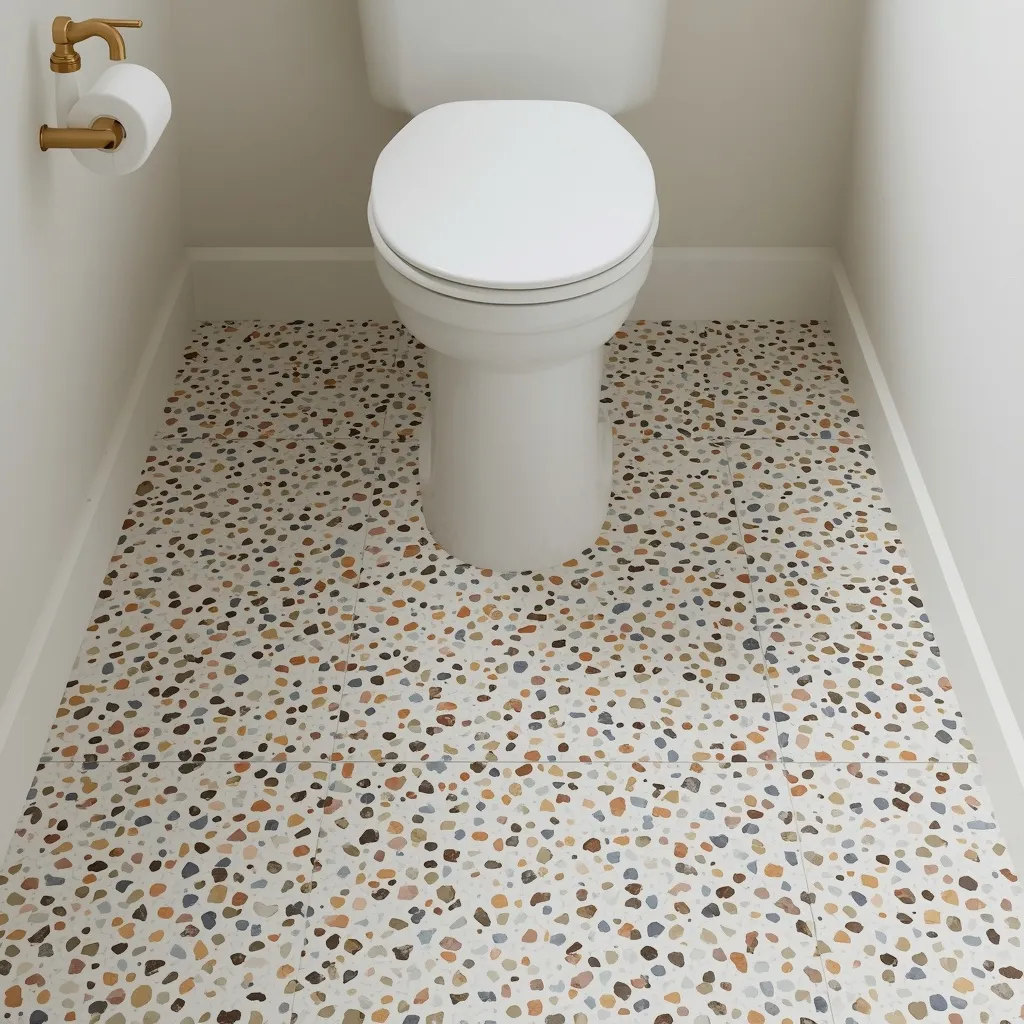
9. Terrazzo Speckle Floor
A terrazzo floor scatters color across a powder room: chips of stone and glass suspended in a pale or dark base, creating a confetti effect that’s both retro and current. Lively and forgiving, terrazzo hides everyday mess beautifully. Speckled, cheerful, and practical.
Choose terrazzo or terrazzo-look porcelain in a large format, picking chip colors that echo something else in the room, a brass tap, a green vanity, a terracotta pot. The speckled surface is genuinely practical because it camouflages dust, hair, and water spots better than almost any plain floor. Keep walls plain, since terrazzo is already busy. Porcelain versions cost far less than real poured terrazzo and need no sealing. This suits modern, retro, and family powder rooms where low-maintenance matters.
- Why it works: The speckled surface camouflages dust and water spots exceptionally well.
- Best for: Modern and retro schemes; low-maintenance priorities.
- Key elements: terrazzo-look porcelain, chip colors echoing fittings, plain walls.
10. Dark Slate Natural Floor
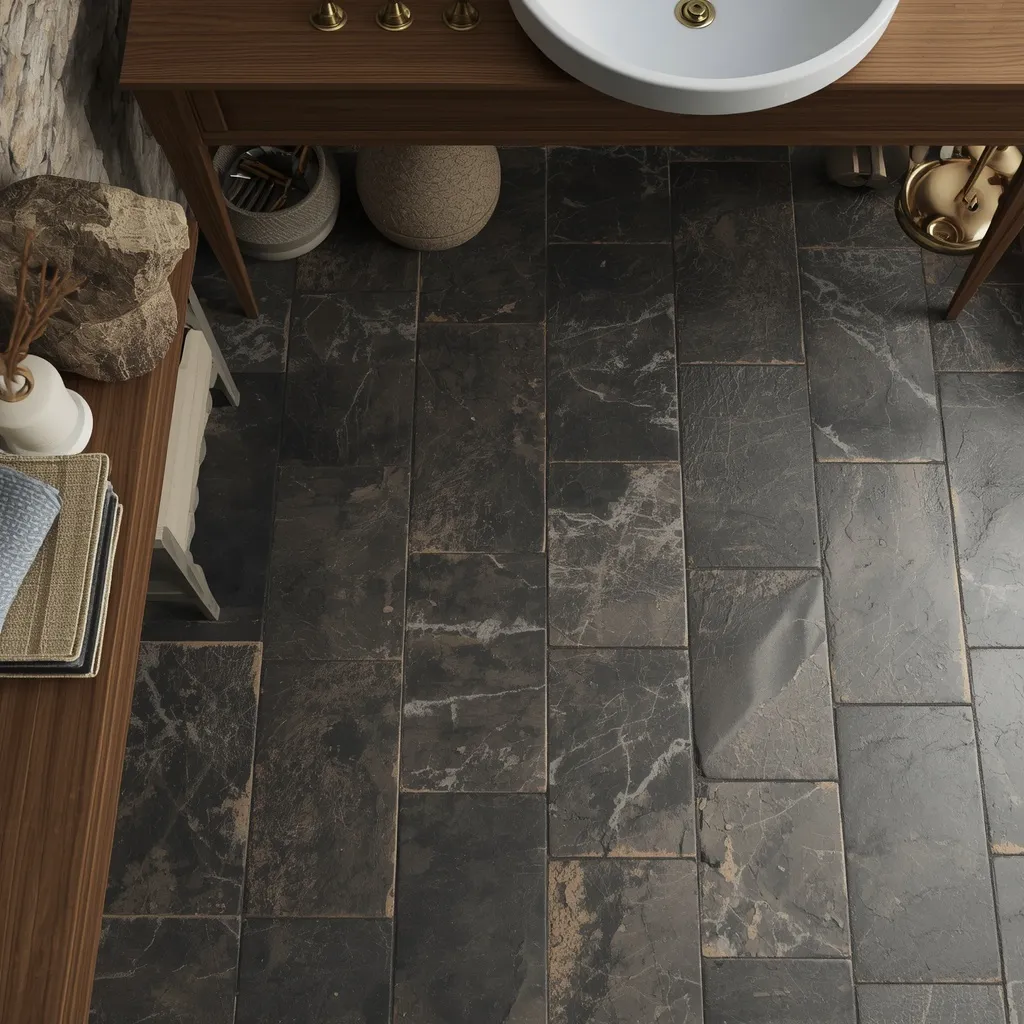
A slate floor brings rugged natural texture to a powder room: dark charcoal stone with a riven, slightly uneven surface and subtle color variation across each piece. Earthy and grounding, slate feels solid and organic underfoot. Natural, tactile, and quietly luxurious.
Lay natural slate or a slate-look porcelain in charcoal or blue-grey, choosing a riven (textured) surface, which gives genuinely excellent slip resistance, one of the grippiest natural stone options for a bathroom floor. Real slate is porous and needs sealing on installation and periodically afterward, and some slates shed fine flakes early on, so porcelain lookalikes are the lower-maintenance route. Pair with warm wood or brass to stop the room feeling cold. This suits rustic, industrial, and natural-material schemes.
- Why it works: Riven slate offers excellent grip plus real natural texture and depth.
- Best for: Rustic, industrial, and natural-material schemes.
- Key elements: charcoal slate or slate-look porcelain, riven surface, sealing, warm accents.
11. Wood-Look Plank Tile Floor
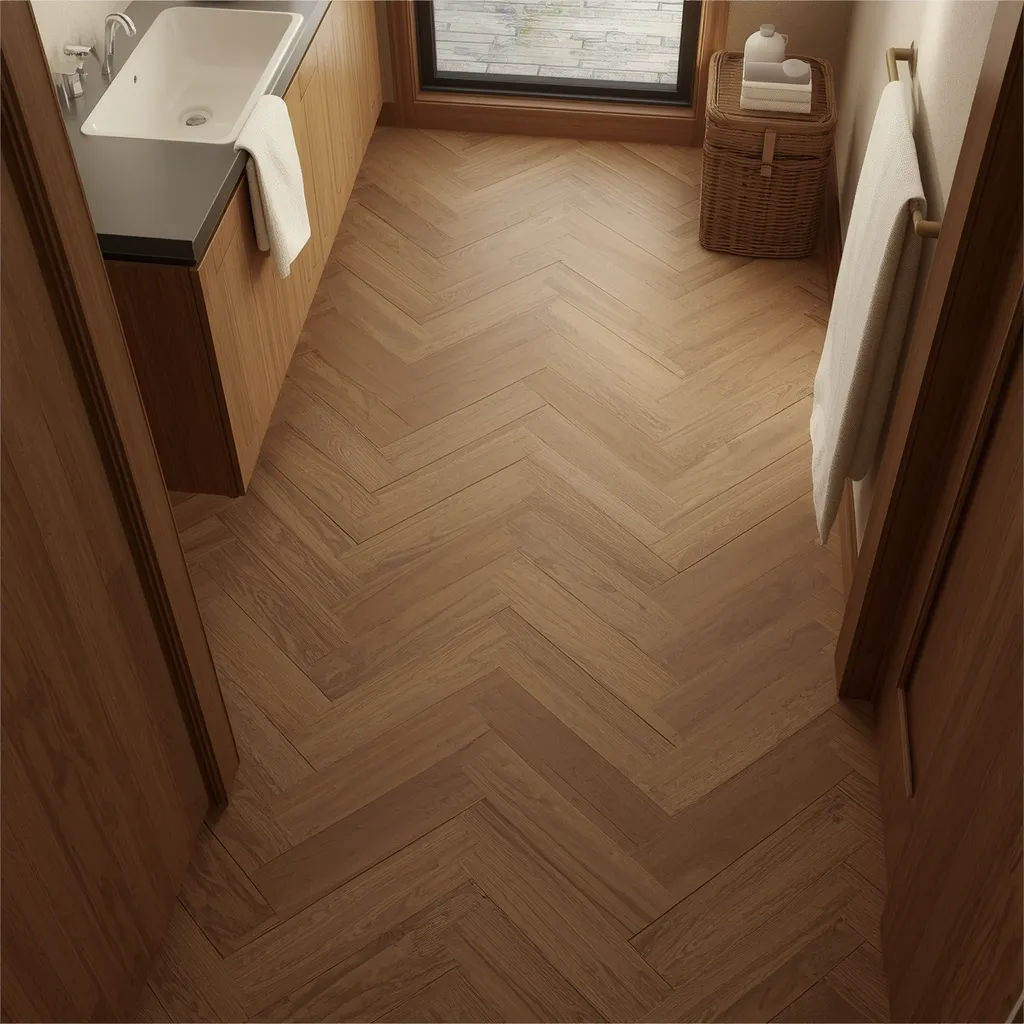
Wood-look porcelain planks give a powder room the warmth of timber with none of the water worry: long plank tiles with realistic grain, laid in a staggered pattern like a real wood floor. Warm and inviting, it softens a room full of hard surfaces. Timber looks, tile performance.
Lay wood-look porcelain planks in a staggered brick pattern, offsetting each row by about a third rather than exactly half, which looks more like real timber and less like a repeating grid. Running planks along the room’s longest dimension visually lengthens a narrow powder room. Unlike real wood or laminate, porcelain is fully waterproof, making it the sensible choice next to a basin. Choose a matte, textured finish for grip. This suits farmhouse, transitional, and warm modern powder rooms.
- Why it works: Porcelain planks give timber warmth with full waterproof performance.
- Best for: Farmhouse, transitional, and warm modern schemes.
- Key elements: wood-look planks, one-third stagger, laid along the longest dimension, matte finish.
12. Bold Color Floor Statement
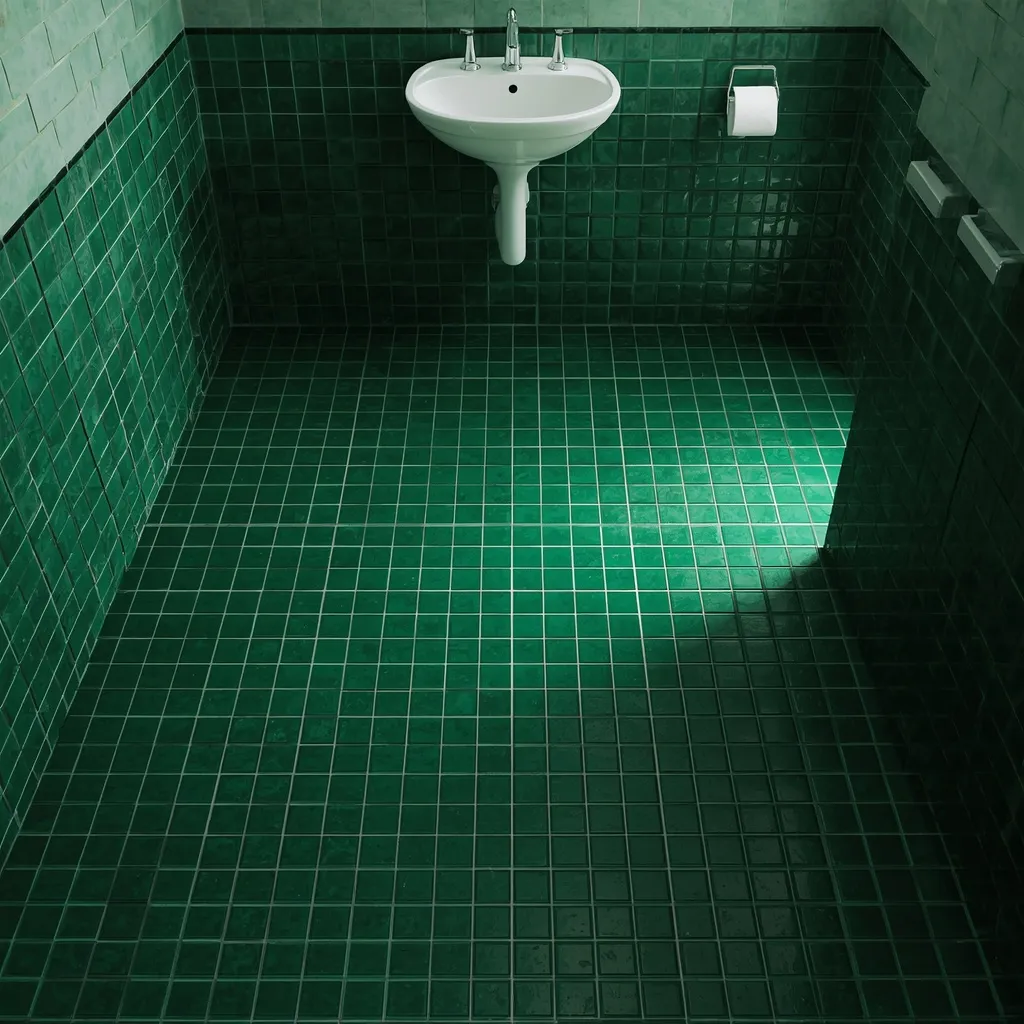
A saturated color floor makes a powder room unforgettable: deep green, ink blue, or ochre tile covering the floor completely, turning a functional little room into a jewel box. Daring and joyful, strong color pays off in a space you pass through. Confident, unexpected, and memorable.
Choose a strongly colored tile, forest green, navy, or terracotta, and let the floor carry the color while keeping walls and fittings quieter, or go further and match the wall color for an enveloping effect. The powder room is the ideal place to take this risk: it’s small, low-traffic, guests see it briefly, and redoing a 2 sq m (22 sq ft) floor later costs a fraction of any other room. Test a sample under the room’s actual lighting, since strong colors shift under artificial light. This suits maximalists and anyone tired of neutral bathrooms.
- Why it works: A small, low-traffic room is the safest place to commit to strong color.
- Best for: Maximalists; anyone bored of neutral bathrooms.
- Key elements: saturated colored tile, quieter walls or full color-drench, lighting test.
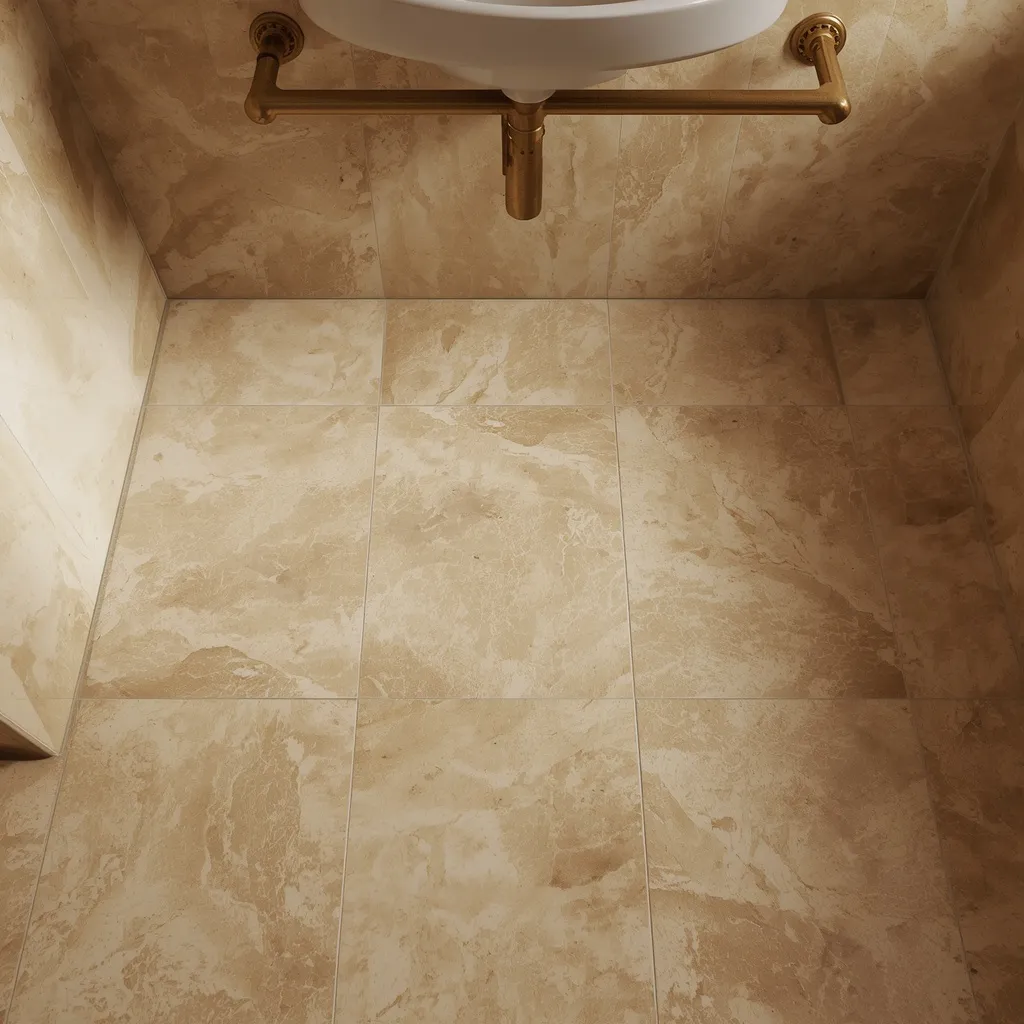
13. Warm Neutral Limestone Look
A warm limestone-look floor keeps a powder room soft and inviting: sandy beige and cream tones with a gentle matte surface and barely-there variation. Calm and welcoming, warm neutrals flatter skin tones and warm light. Soft, timeless, and easy to live with.
Use a limestone-look porcelain in sand, oatmeal, or greige, in a large format with matched grout for a seamless look. Warm neutral floors suit powder rooms particularly well because these rooms usually rely on artificial light, and warm-toned floors look better under warm bulbs than cool greys, which can go flat and cold. Pair with warm metals like brass or bronze. This suits traditional, Mediterranean, and warm-modern powder rooms and anyone who finds grey too cold.
- Why it works: Warm neutrals look better than cool greys under the artificial light these rooms rely on.
- Best for: Traditional and warm-modern schemes; grey-averse readers.
- Key elements: limestone-look porcelain, sand or greige tone, matched grout, warm metals.
14. Contrast Grout Grid Floor
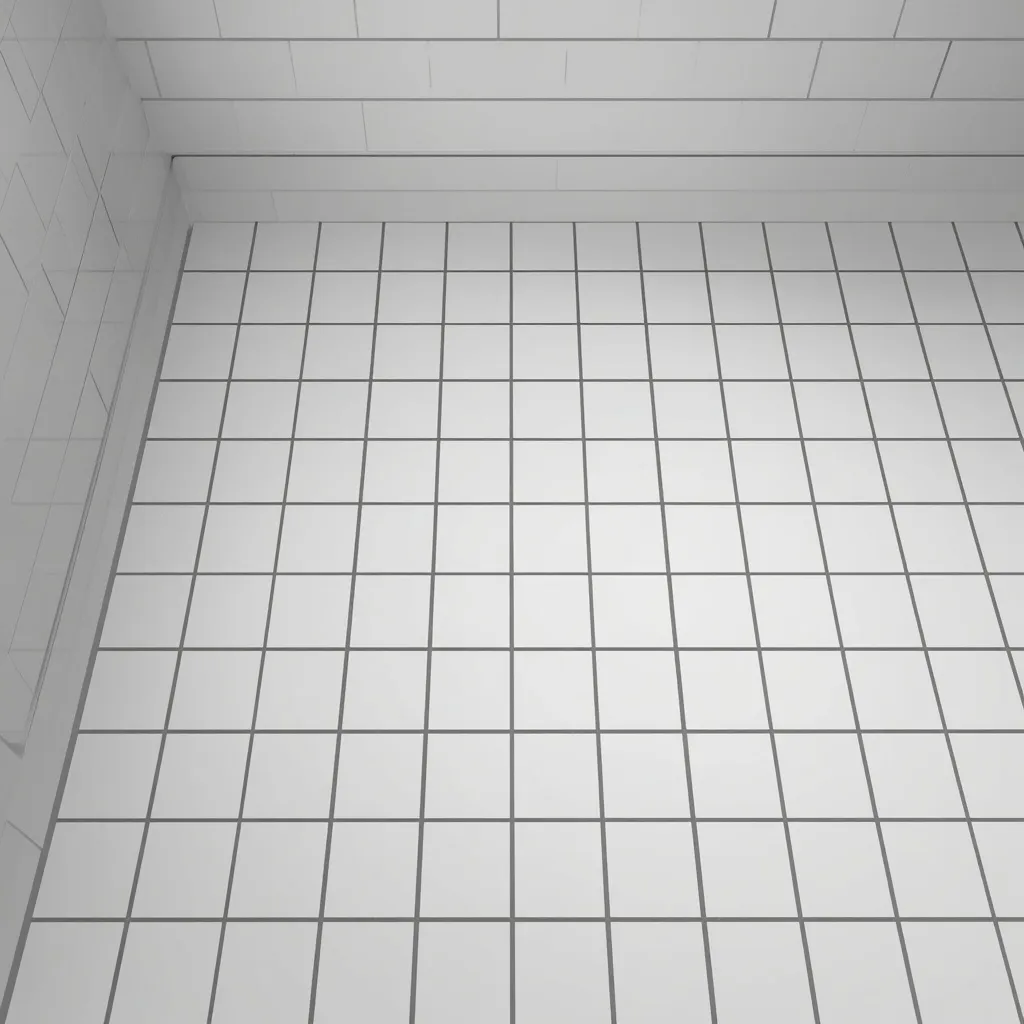
Contrast grout turns a plain tile into a graphic statement: simple white or pale square tiles with dark charcoal grout drawing a crisp grid across the floor. Clever and budget-friendly, the grout does the design work. Maximum impact, minimum tile cost.
Pair an inexpensive plain tile with a deliberately contrasting grout, charcoal grout against white tile, or pale grout against dark, so the joints become a visible grid pattern. This is the cheapest way to get a designed-looking floor, since the effect comes from the grout rather than expensive tile. Two cautions: contrast grout demands very precise tile alignment because every wobble shows, and dark grout can fade unevenly over time, so use a quality product and seal it. This suits budget renovations and modern graphic schemes.
- Why it works: Grout creates the pattern, so plain budget tile looks deliberately designed.
- Best for: Budget renovations and modern graphic schemes.
- Key elements: plain tile, deliberately contrasting grout, precise alignment, sealed quality grout.
15. Basketweave Vintage Floor
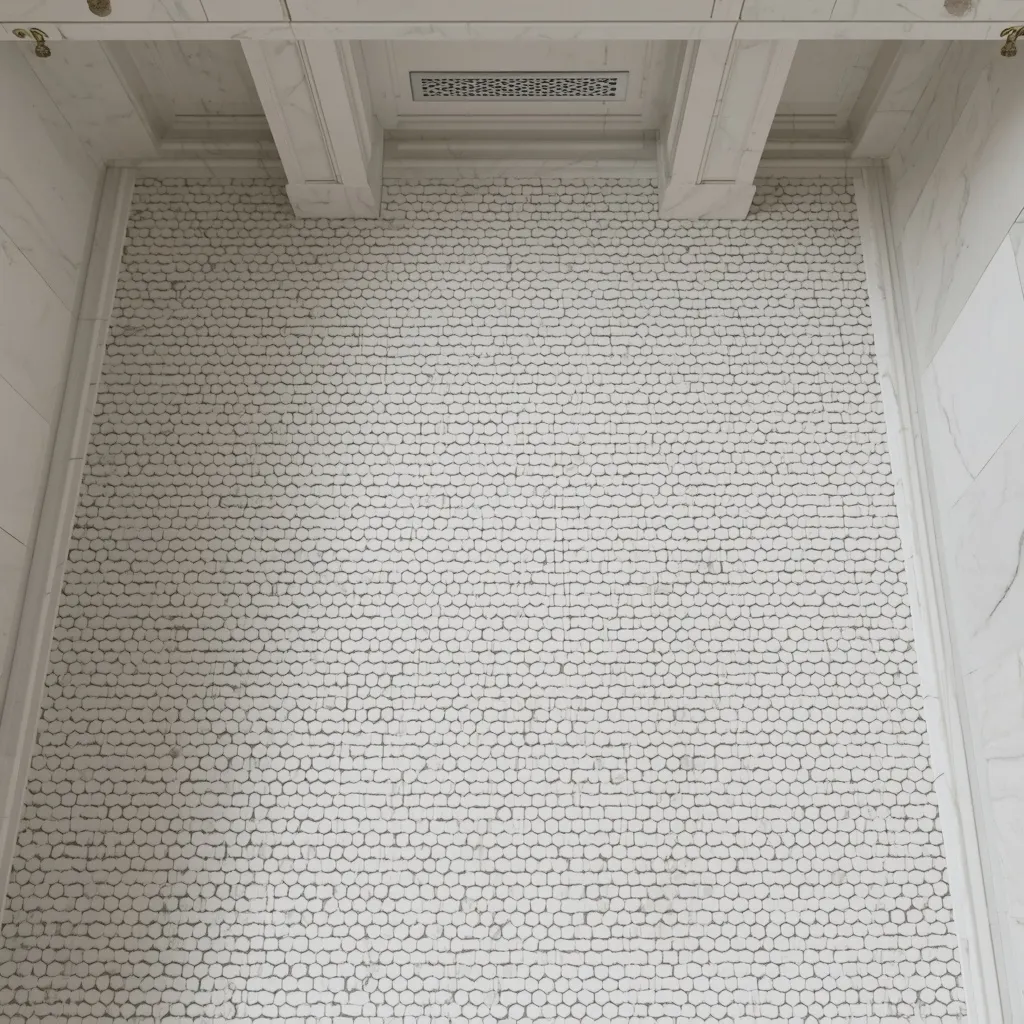
Basketweave mosaic is the quietly elegant vintage floor: small rectangles woven around square dots, usually in marble or white ceramic with black accents. Detailed and refined, basketweave reads as period craftsmanship. Intricate, classic, and beautifully understated.
Install basketweave mosaic sheets in white marble with black dots, or all-white for a softer effect, keeping the rest of the room simple so the pattern reads clearly. Like other mosaics, the sheets make cutting around a toilet base far easier than large tiles do, and the many joints add grip. If using marble, choose honed rather than polished and seal it. This suits period homes, classic powder rooms, and anyone wanting pattern that’s detailed without being loud.
- Why it works: Woven detail reads as period craftsmanship without shouting for attention.
- Best for: Period homes and classic powder rooms.
- Key elements: basketweave mosaic, marble or ceramic, black dot accents, honed and sealed.
16. Star and Cross Patterned Floor
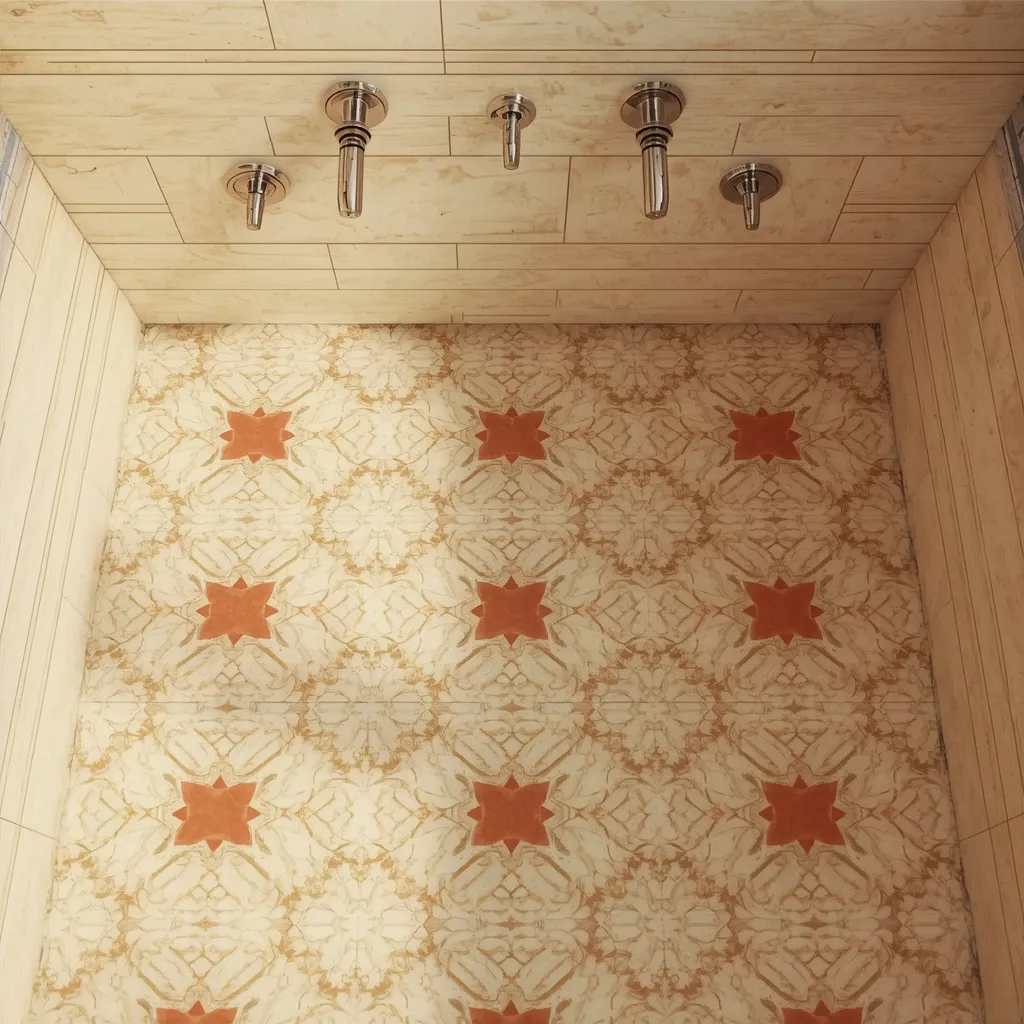
A star-and-cross tile floor brings gentle geometry to a powder room: eight-pointed stars interlocking with small crosses, often in cream with a contrast accent. Distinctive and Moorish in origin, it’s pattern with a softer edge than encaustic. Intricate, warm, and a little exotic.
Lay interlocking star-and-cross tiles, typically in a cream or white base with terracotta, black, or blue crosses providing the accent, letting the shapes themselves supply the interest rather than adding surface pattern. This gives a floor real character while staying calmer than a busy printed encaustic. Because the shapes interlock, the layout must start from a carefully planned center point, so dry-lay the pattern before fixing anything. This suits Mediterranean, Spanish, and Moroccan-influenced powder rooms.
- Why it works: Interlocking shapes give character with a calmer feel than printed pattern.
- Best for: Mediterranean, Spanish, and Moroccan-influenced rooms.
- Key elements: star-and-cross tiles, cream base with accent crosses, planned center, dry-lay first.
17. Subtle Tonal Zellige Floor
A zellige-look floor brings handmade irregularity to a powder room: slightly uneven tiles with variation in tone and a softly rippling surface that catches light differently across the floor. Artisanal and full of life, no two tiles look quite the same. Handmade character, quietly luxurious.
Use zellige-look porcelain in a tonal range, soft white, sage, or clay, laid in a simple grid or brick bond, letting the natural color variation between tiles create the interest. Important caveat: true handmade zellige is usually intended for walls, since its uneven surface and glaze aren’t rated for floor traffic or wet-floor grip, so use a floor-rated porcelain that imitates the look rather than the real thing underfoot. Mix tiles from several boxes as you lay so the variation distributes evenly. This suits artisanal, Mediterranean, and organic-modern schemes.
- Why it works: Tonal variation gives handmade character without pattern or strong color.
- Best for: Artisanal, Mediterranean, and organic-modern schemes.
- Key elements: floor-rated zellige-look porcelain, tonal range, mixed boxes, simple grid or brick bond.
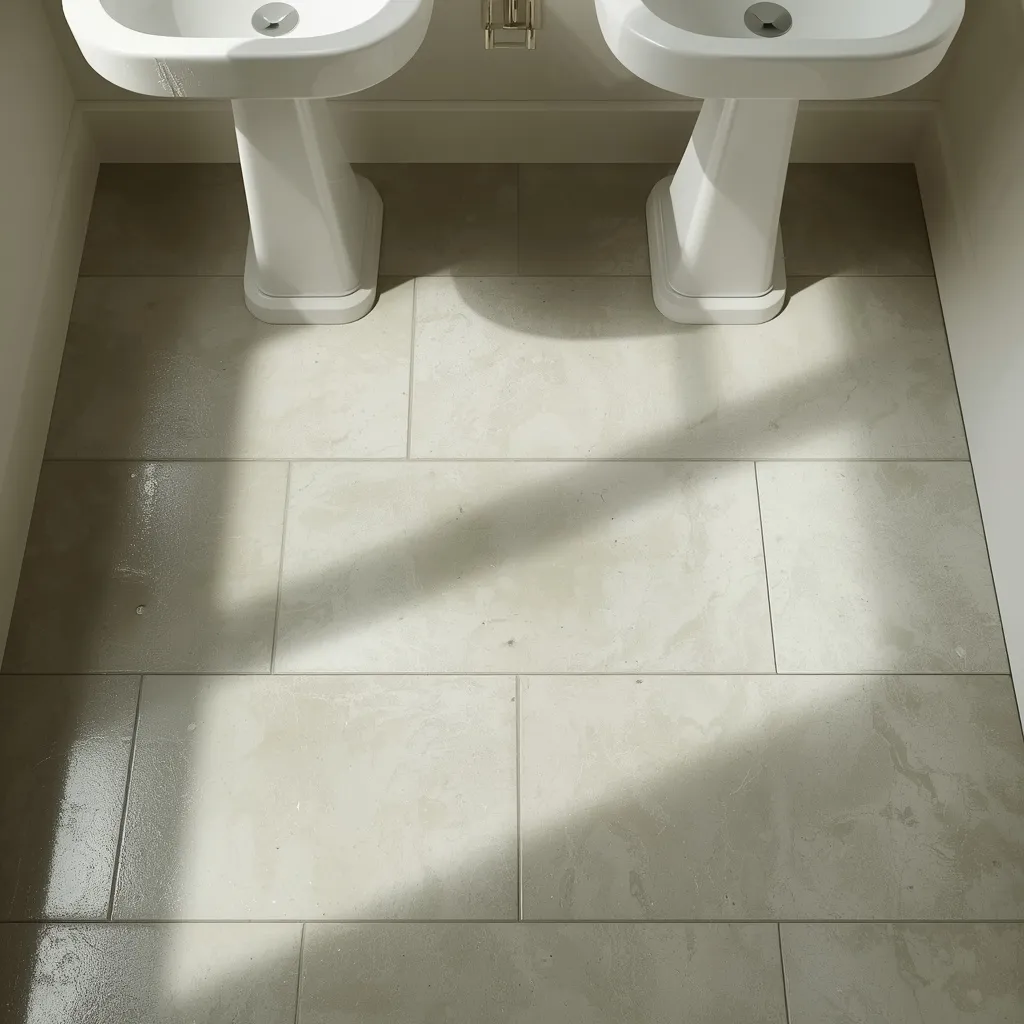
18. Diagonal Lay Space Stretcher
Turning any tile 45 degrees changes how a powder room reads: a simple square tile laid on the diagonal draws the eye to the corners and makes a narrow room feel wider. Clever and free, the layout does the work. Same tile, bigger-looking room.
Lay square tiles on the diagonal rather than square to the walls, which leads the eye along the room’s longest diagonal line and visually widens a narrow space, genuinely useful in the long, skinny powder rooms carved out under stairs. The technique costs nothing extra in tile design but does create more cuts and roughly 10–15% more waste, so order accordingly. It works with plain tile, checkerboard, or stone-look equally. This suits narrow, awkward, and under-stairs powder rooms.
- Why it works: A 45-degree lay draws the eye along the longest line and widens a narrow room.
- Best for: Narrow, awkward, and under-stairs powder rooms.
- Key elements: square tile turned 45 degrees, corner-drawing sightline, 10–15% extra for waste.
What Is the Best Floor Tile for a Small Powder Room?
Porcelain is the best all-round floor tile for a powder room: it’s fully waterproof, hard-wearing, needs no sealing, and comes in versions that convincingly imitate marble, stone, terrazzo, and wood. For the look of natural stone without the upkeep, choose stone-look porcelain over the real thing. Whatever you pick, make sure it’s rated for floor use in a wet area rather than being a wall tile.
Getting the practical details right alongside the pretty ones is the Sunday Abode approach to a home. Once the floor is chosen, our guide to choosing a bathroom cabinet color helps you pair a vanity with it. For more ways to plan the space, browse the rest of our bathroom ideas.
Comparing Powder Room Floor Tile Materials
Each tile material behaves differently underfoot and over time. Use this quick guide to weigh looks against maintenance before you commit.
| Material | Best for | Upkeep | Watch out for |
| Porcelain | Almost every scheme | None; no sealing | Cheap prints look flat |
| Ceramic | Budget builds | Low | Softer than porcelain |
| Marble | Classic luxury | Seal; avoid acids | Polished is slippery |
| Slate | Natural texture | Seal periodically | Some types flake early |
| Cement encaustic | True vintage pattern | Seal on fit, then repeat | Porous; stains easily |
| Mosaic sheets | Curves and grip | More grout to clean | Grout staining |
Slip resistance & practical notes: a powder room floor gets splashed even without a shower, so choose a tile the manufacturer rates for wet-area floor use. Manufacturers publish slip ratings (often as an R-value or a wet coefficient of friction), and matte, honed, textured, and small-mosaic surfaces generally grip better than polished or high-gloss ones. Avoid polished stone and glossy wall tile underfoot entirely. Small mosaics gain grip from their many grout joints. Order roughly 10% extra tile for cuts and future repairs, and 10–15% for diagonal or herringbone layouts. Seal natural stone and cement tile on installation and periodically after, and check your cleaning products are suitable, since acidic cleaners damage marble and limestone. Tile cutting involves dust and sharp edges, so use eye protection and a dust mask, or use a professional installer for large-format or intricate patterns.
Frequently Asked Questions
What is the best floor tile for a small powder room?
Porcelain is the strongest all-round choice: it’s fully waterproof, hard-wearing, needs no sealing, and imitates marble, stone, terrazzo, and wood convincingly. Whatever material you choose, confirm it’s rated for floor use in a wet area rather than being a wall tile. For natural stone looks without the maintenance, stone-look porcelain gives you the appearance with none of the sealing.
Should you use large or small tiles in a small powder room?
Large tiles usually work better, which surprises people. Fewer grout lines let the eye read the floor as one continuous surface, so the room looks bigger, while lots of small tiles create a busy grid that visually chops the floor up. The exception is where curves around a toilet base make cutting difficult, since mosaic sheets handle those far more easily.
Does a dark tile floor make a powder room look smaller?
Not usually. A dark floor grounds a room rather than shrinking it, especially with lighter walls above, and a powder room is a space you pass through briefly rather than linger in. Black and charcoal floors can look genuinely dramatic there. Just choose a matte or textured finish, since flat matte black shows dust and water spots more than mid-tones do.
What grout color should you use with powder room floor tile?
It depends on the effect you want. Matching grout blurs the joints and lets the tile read as one surface, which suits large-format floors and makes a small room look bigger. Contrasting grout turns the joints into a visible grid, which is a cheap way to make plain tile look designed. Mid-grey is the practical middle ground because it hides dirt far better than white.
Is marble a good idea for a powder room floor?
It can be an excellent choice here, because the floor area is typically only 1.5–3 sq m (16–32 sq ft), making real marble far more affordable than in any other room. Choose honed rather than polished marble, since polished stone is slippery when wet. Marble is porous, so it needs sealing and reacts badly to acidic cleaners such as vinegar or lemon-based products.
How do you make a narrow powder room look wider with tile?
Lay square tiles on the diagonal at 45 degrees, which draws the eye toward the corners along the room’s longest line and visually widens the space. Running wood-look planks along the room’s longest dimension has a similar lengthening effect. Both are layout choices that cost nothing extra in tile design, though diagonal laying creates more cuts and roughly 10–15% more waste.
How much tile do you need for a powder room floor?
Measure the floor area and add about 10% extra for cuts, breakages, and future repairs, and 10–15% for diagonal or herringbone layouts, which generate more waste. Powder room floors are small, often 1.5–3 sq m (16–32 sq ft), so the overage costs little. Keeping a few spare tiles from the same batch matters, because dye lots vary between production runs.
Conclusion
Few decisions give as much return for as little floor area as powder room floor tile. Because the space is small, low-traffic, and stays relatively dry, it’s the one room where marble, a bold pattern, or a saturated color is genuinely achievable, and where a layout choice like a diagonal lay or a contrasting grout can do the design work for almost nothing. Choose a floor-rated tile with decent grip, think about scale and grout before pattern, and the floor will still look right in a decade. For more ideas on planning the space, explore the bathroom ideas collection on Sunday Abode and save the tile scheme you keep coming back to.