

Introduction
Few houseplants invite creativity quite like the air plant, which grows with no soil at all and can perch almost anywhere you can dream up. The best air plant display ideas turn these little tillandsias into living sculpture, nestled in driftwood, framed on a wall, or floating in glass, bringing greenery to shelves, walls, and corners where a potted plant would never fit. Because they need no soil, air plants free you to decorate in ways ordinary houseplants can’t. At Sunday Abode, we love plants that double as art, and these 16 displays do exactly that, with the honest care notes woven in, so your beautiful display keeps its plant alive and thriving, not just looking good for a week.
Key Takeaways
- Air plants (tillandsia) need bright indirect light, good air circulation, and regular soaking or misting, so choose displays that let you remove and re-wet them easily.
- Never glue an air plant down, glue blocks the tiny trichomes it drinks and breathes through; use wire, fishing line, or removable museum putty instead.
- Skip closed terrariums; trapped moisture rots air plants. Open glass globes with airflow are the safe version of that look.
- Natural materials, driftwood, cork bark, seashells, copper wire, suit their organic form and are the backbone of most displays here.
- Most displays are beginner-friendly DIYs, and air plants are non-toxic and safe around cats and dogs.
1. Driftwood Centerpiece
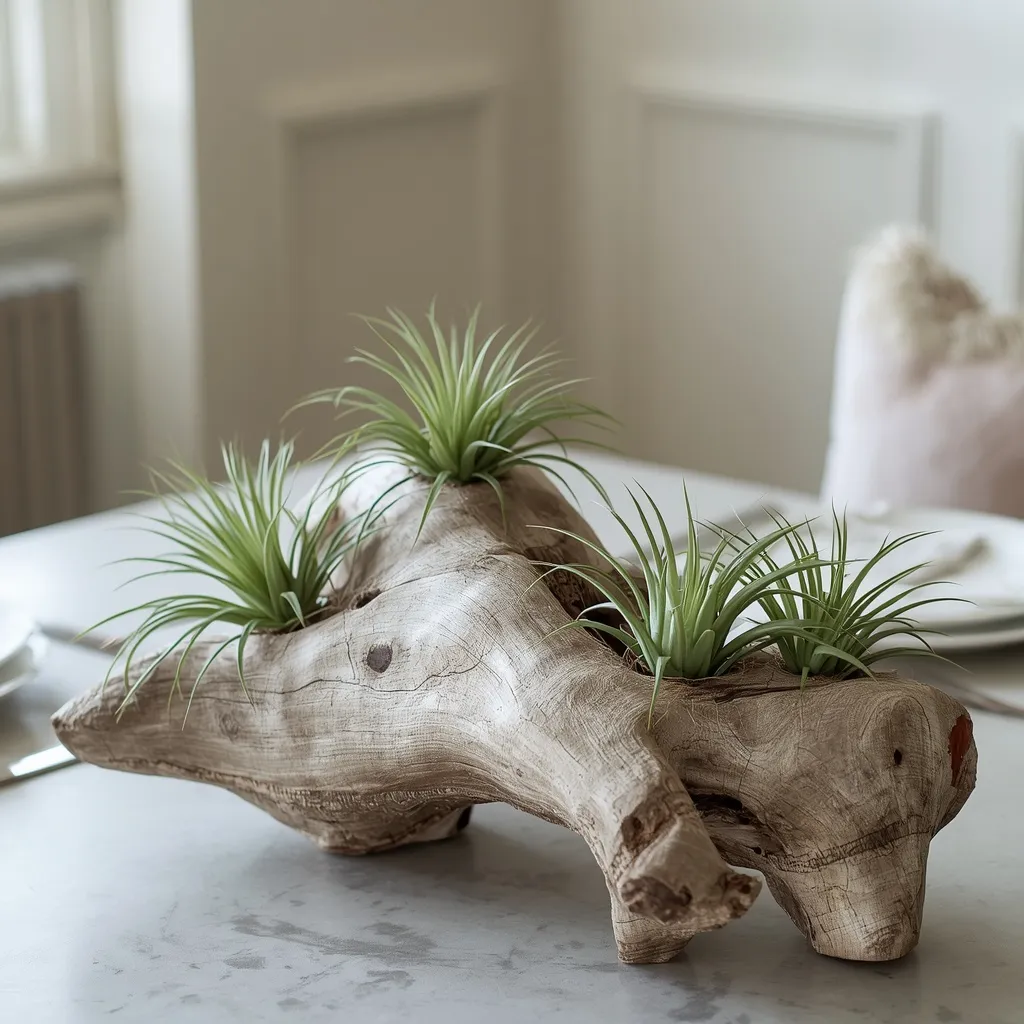
A weathered piece of driftwood studded with air plants makes a stunning, organic centerpiece. The silvery, twisting wood cradles a few tillandsias in its natural hollows, looking like a little coastal landscape brought indoors to a table or mantel.
Choose a driftwood piece with natural crevices, then tuck air plants into the gaps or secure them with a loop of clear fishing line or florist wire, never glue, which blocks the trichomes the plant uses to absorb water. Cluster three or five plants of varying sizes for a natural look. To water, lift each plant out for its soak, or mist the whole piece if plants are wedged in. This coastal-style display suits living rooms and dining tables and is the classic air plant look for good reason.
- Best for: living room and dining table centerpieces; coastal decor.
- Watch out: never glue plants on, wire or wedge them so you can remove to soak.
- Key elements: weathered driftwood, clustered tillandsias, fishing line or wire.
2. Hanging Glass Globe Terrarium
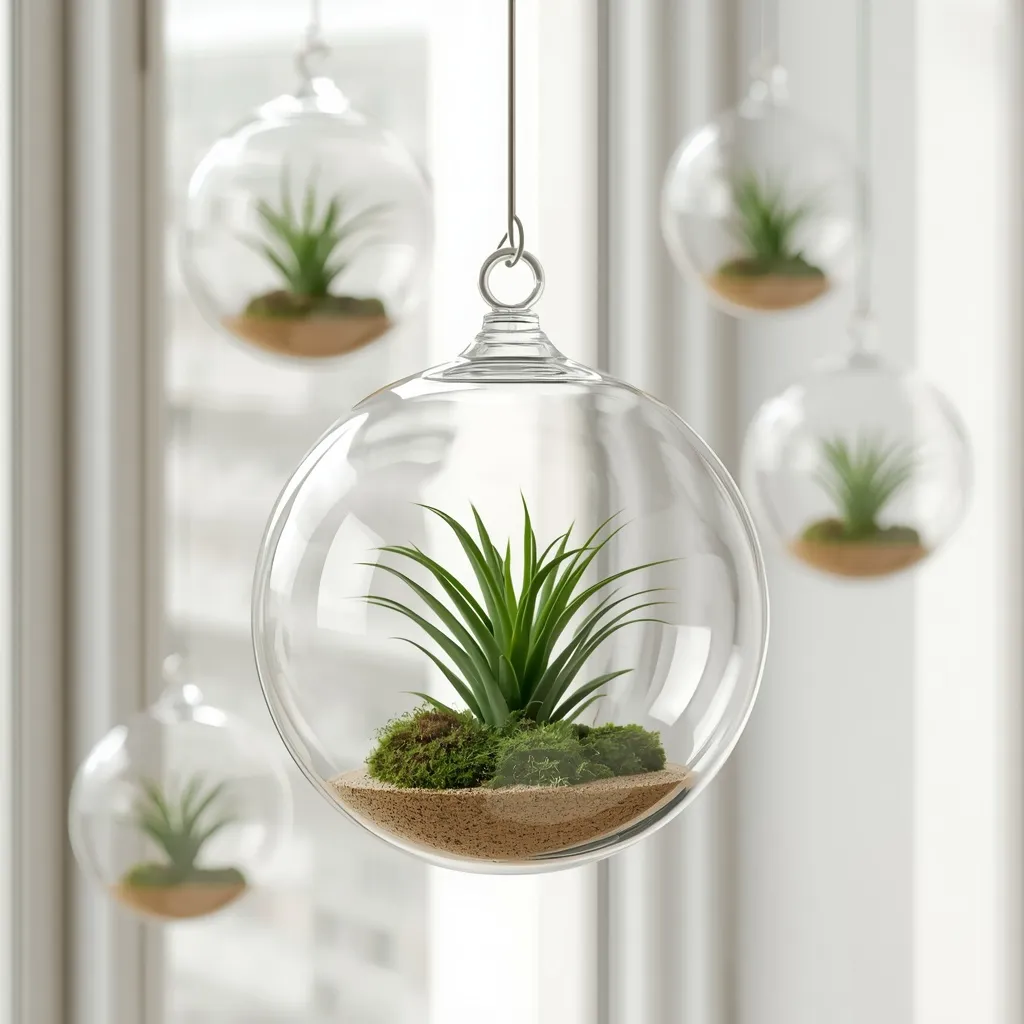
An open glass globe suspended from the ceiling turns an air plant into floating living jewelry. The clear orb, holding a single tillandsia over a bed of sand or moss, catches the light and adds a delicate, modern touch by a window.
Hang open-fronted glass globes, never fully sealed ones, where they get bright, indirect light, since trapped moisture in a closed terrarium quickly rots an air plant. Add a little sand, pebbles, or reindeer moss for texture, but keep the plant sitting on top where air flows freely. Take the plant out to soak it, then let it dry fully before returning it. This airy display suits windows, reading nooks, and small spaces, and looks especially good hung at staggered heights in a group of three.
- Best for: windows and small spaces; a modern floating look.
- Watch out: use open globes only, sealed terrariums trap moisture and cause rot.
- Key elements: open glass globe, single tillandsia, sand or moss, ceiling hook.
3. Framed Living Wall Art
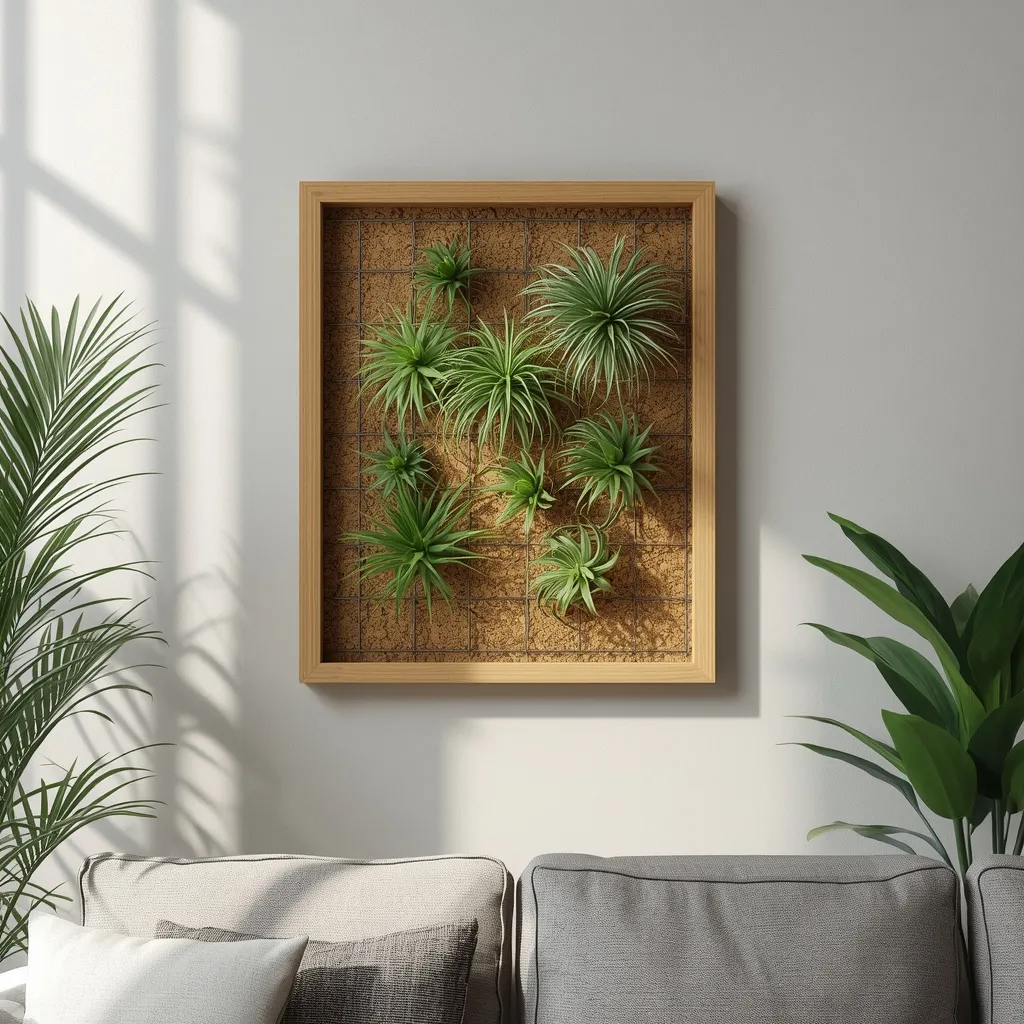
Air plants mounted in a frame become a living piece of wall art. Set against a backing of cork, moss, or wire within a wooden frame, a cluster of tillandsias turns a bare wall into a green, textural gallery piece.
Build the display in an open-backed or shadow-box frame with a cork or wire-mesh backing, tucking air plant roots behind the wire or into cork crevices so they hold without glue. Arrange plants in an off-center, organic grouping rather than a rigid grid. Crucially, hang the frame where you can lift plants out for soaking, or take the whole frame down to mist it weekly. This living wall art suits living rooms, hallways, and home offices, and is a striking, space-saving way to display several plants at once.
- Best for: living rooms and hallways; saving surface space.
- Watch out: mount so plants lift out or the frame comes down for watering.
- Key elements: open frame, cork or wire backing, grouped tillandsias.
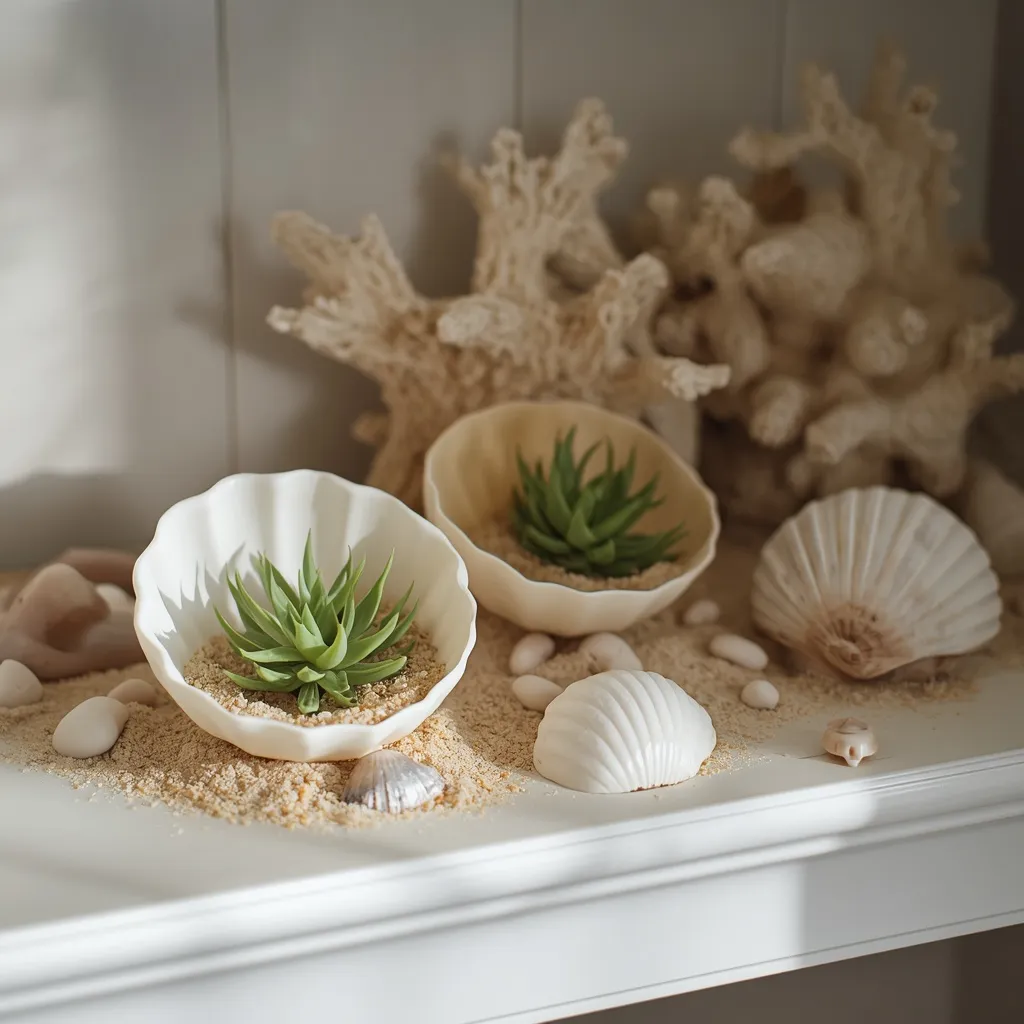
4. Seashell Beach Display
Air plants nestled into seashells create a charming coastal vignette. A large spiral or clam shell holds a small tillandsia perfectly, its green tendrils spilling from the shell like something found on the shore.
Set small air plants into the natural cup of large shells, conch, clam, or scallop work well, resting them in place so you can lift them out to water rather than gluing. Group several shells with sand and a piece of coral or driftwood on a bathroom shelf or windowsill for a beach-house feel. Take each plant out for its soak and let the shell drain fully, since standing water in a shell can rot the plant’s base. This budget-friendly display suits bathrooms, coastal-themed rooms, and windowsills.
- Best for: coastal-themed rooms, bathrooms, and budget displays.
- Watch out: don’t leave water pooled in the shell; it rots the plant base.
- Key elements: large seashells, small tillandsias, sand, coral or driftwood.
5. Copper Wire Hanger
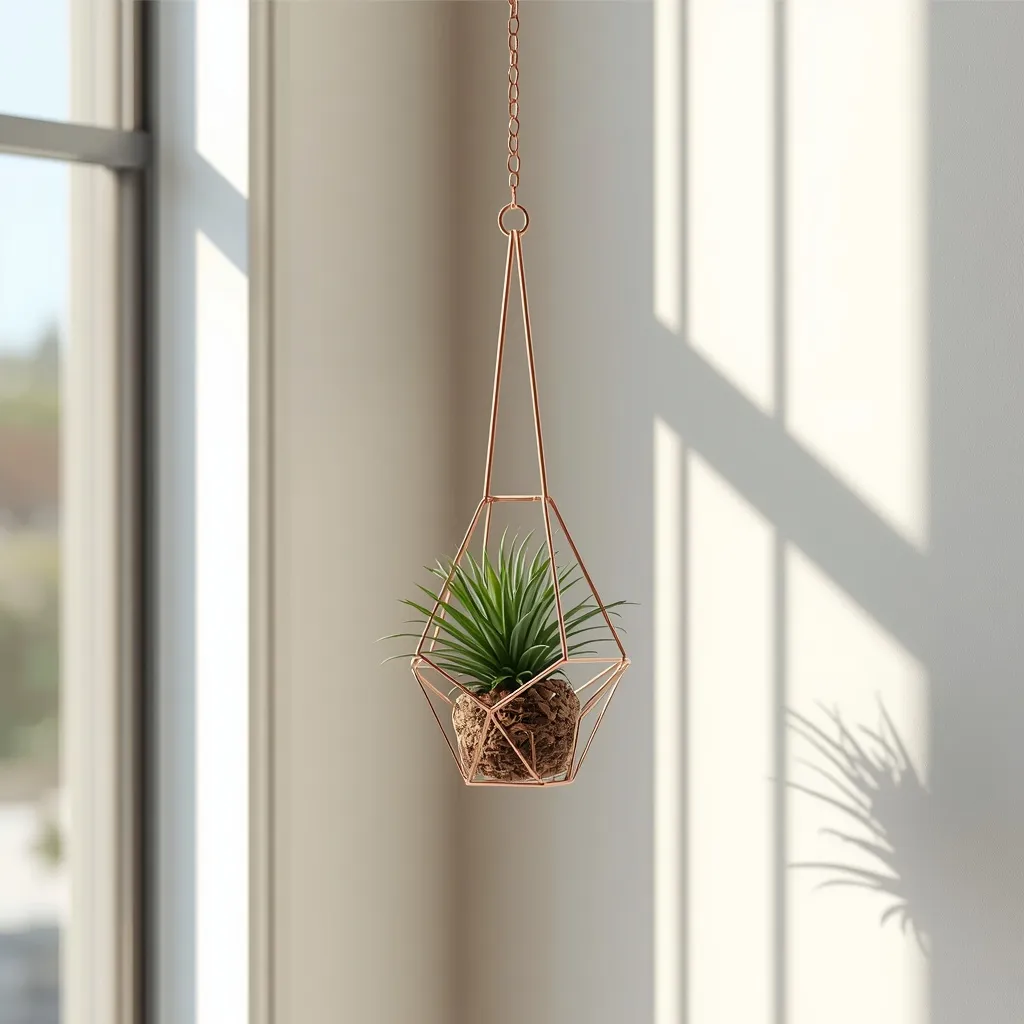
A simple copper wire holder turns an air plant into a minimalist hanging sculpture. The warm metallic wire, bent into a geometric cradle or spiral, suspends a tillandsia in mid-air, casting pretty shadows in the light.
Shape thick copper or brass wire into a hook, teardrop, or geometric cage that cradles the plant without pinching it, then hang it from a shelf bracket, curtain rod, or wall hook. This is an easy, satisfying DIY needing only wire and pliers. The open metal design keeps airflow perfect and lets you unhook the plant to soak it. Copper develops a natural patina over time that many people love. This modern display suits minimalist and industrial rooms, and looks great in a hanging row by a window.
- Best for: minimalist and industrial rooms; easy DIY makers.
- Why it works: open wire keeps airflow ideal and unhooks easily for soaking.
- Key elements: copper or brass wire, geometric cradle, wall or shelf hook.
6. Mounted Cork Bark Wall Piece
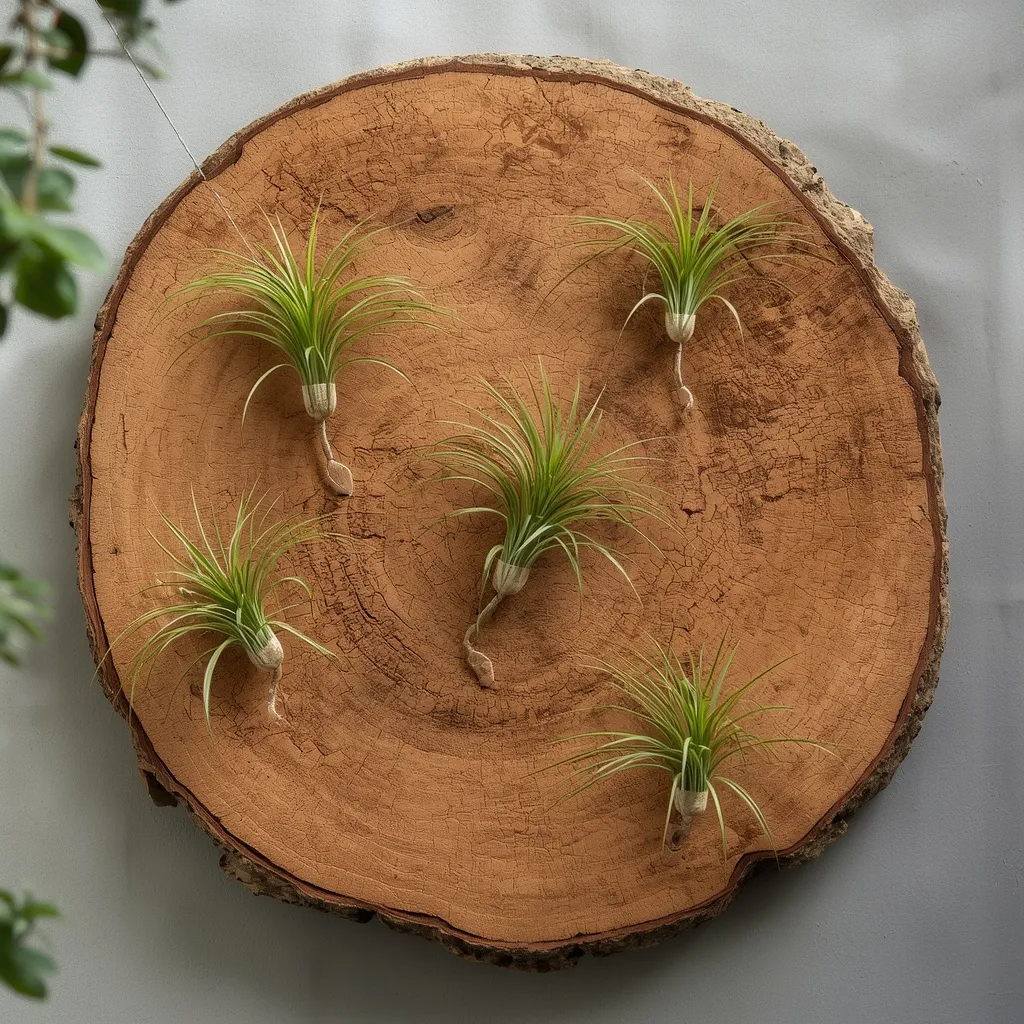
An air plant mounted on a slab of cork bark makes a natural, woodland-style wall piece. The rugged brown bark, hung flat against the wall with tillandsias attached, mimics how these plants grow on trees in the wild.
Attach air plants to cork bark or a wooden plaque using loops of fishing line, plastic-coated wire, or waterproof museum putty, positioning the base against the bark so roots can anchor naturally over time. This mirrors the plant’s epiphytic habit of growing on branches. Mount it where it gets bright, indirect light, and take the whole piece down weekly to soak or mist. Avoid copper wire in direct contact with the plant long-term, as copper can harm tillandsias. This natural display suits boho and nature-inspired rooms.
- Best for: boho and nature-inspired rooms; a wild, epiphytic look.
- Watch out: avoid copper touching the plant directly; it can harm tillandsia.
- Key elements: cork bark or wood plaque, fishing line or putty, tillandsia.
7. Geometric Himmeli Holder
A brass himmeli, a geometric wire ornament, makes an elegant, modern home for an air plant. The angular metal frame holds a tillandsia at its center, creating a striking piece of hanging or tabletop decor.
Set or nestle an air plant inside a himmeli’s open geometric frame, either hung from the ceiling or standing on a shelf or desk. These frames are widely available and easy to make from brass tubing and string for a DIY project. Their fully open structure keeps airflow excellent and makes removing the plant for watering simple. Choose a himmeli sized so the plant sits securely without being squeezed. This contemporary display suits modern, Scandinavian, and minimalist interiors and pairs beautifully in a set of two or three.
- Best for: modern, Scandi, and minimalist interiors.
- Why it works: the open geometric frame keeps airflow ideal and looks sculptural.
- Key elements: brass himmeli frame, single tillandsia, hook or shelf.
8. Magnetic Fridge Garden
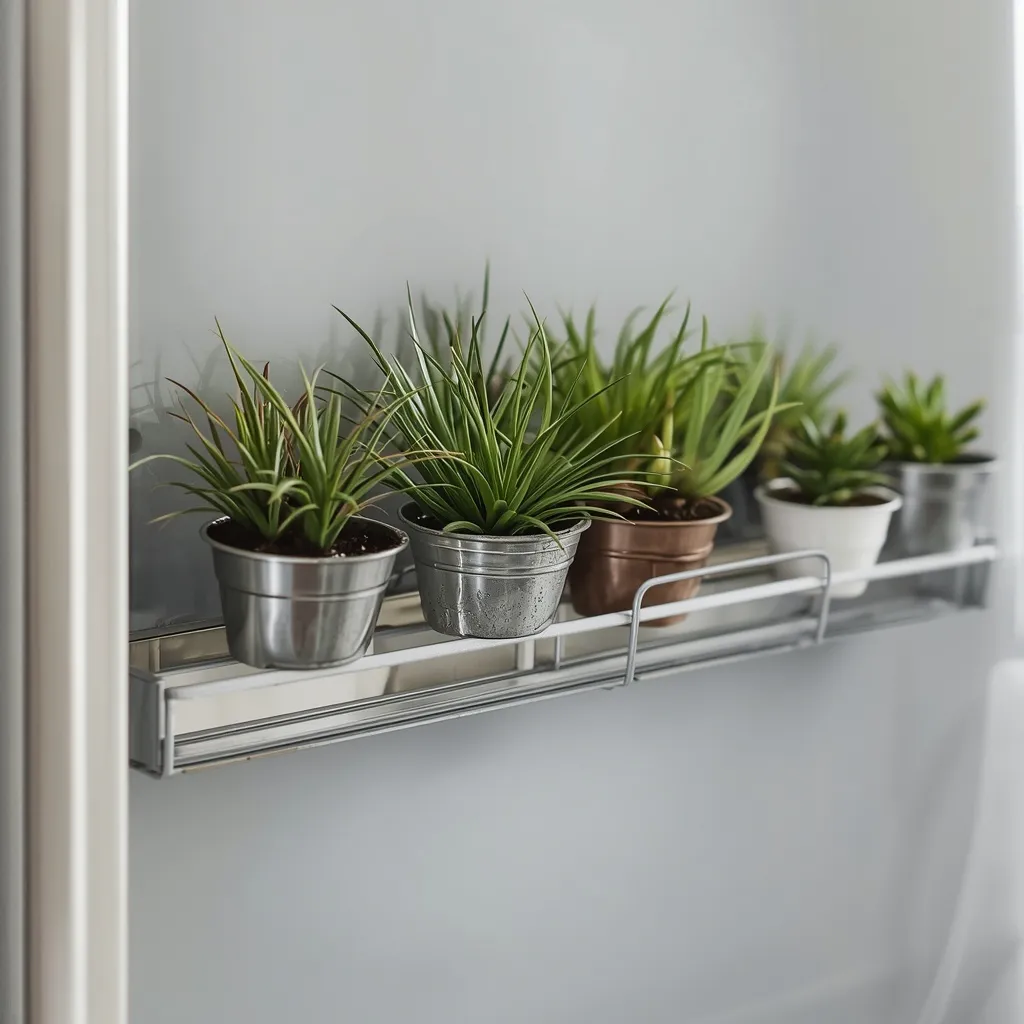
Tiny air plants attached to magnets turn a fridge or metal surface into a living mini-garden. Small tillandsias in little magnetic holders cluster across the fridge door, bringing unexpected greenery to the kitchen.
Glue small magnets to tiny cups, shells, or wire holders (not directly to the plants), then pop an air plant into each and arrange them on the fridge, a magnetic board, or a radiator. Choose the smallest tillandsia varieties, like Tillandsia ionantha, for this. Simply lift each holder off to soak the plants weekly. Keep them away from the hot back of appliances and off surfaces that get greasy. This playful, space-saving display suits kitchens and small apartments where surface space is scarce.
- Best for: kitchens and small apartments short on surface space.
- Key elements: small magnets, tiny cups or holders, mini tillandsias.
- Watch out: keep away from appliance heat; lift off to soak weekly.
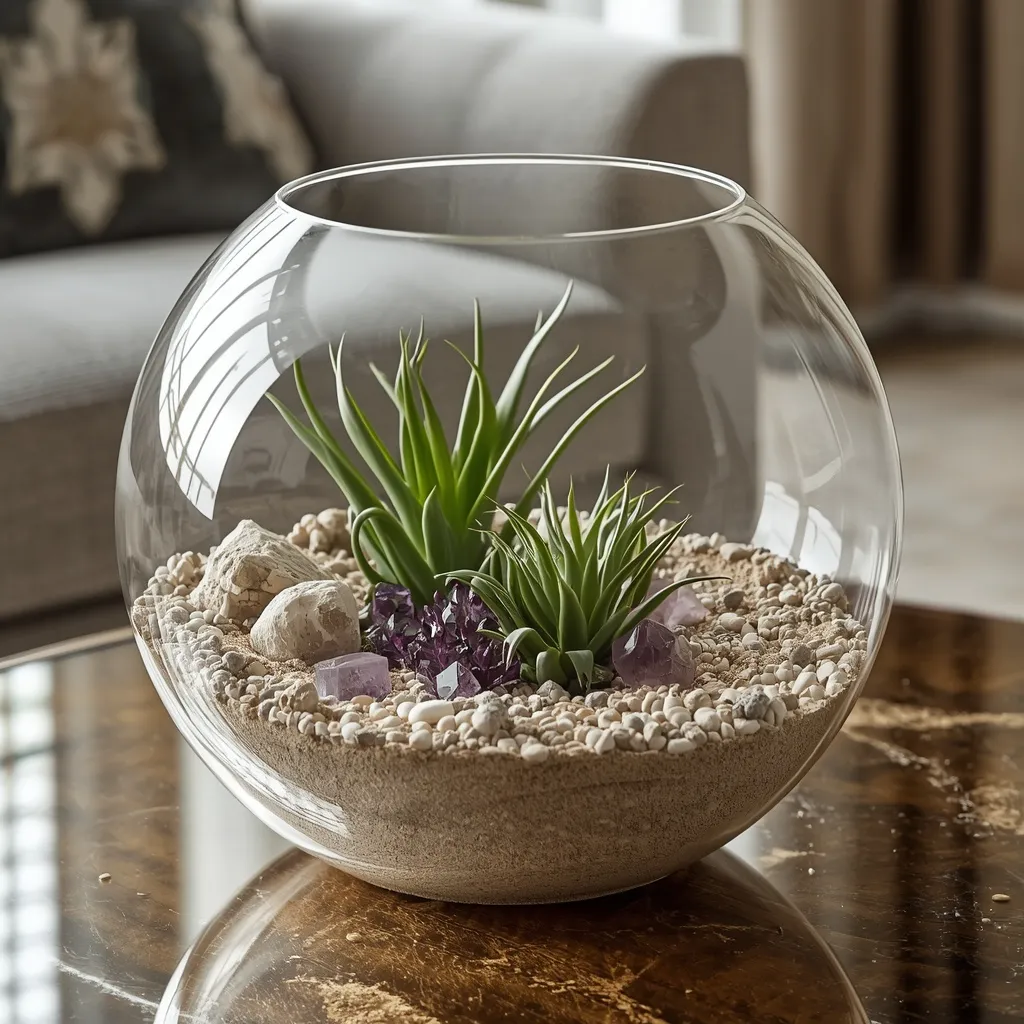
9. Terrarium Bowl Arrangement
An open glass bowl arranged with air plants and natural accents makes a lush tabletop terrarium. Tillandsias sit among sand, pebbles, and crystals in a wide, shallow bowl, creating a little desert-meets-jungle world.
Use a wide, open glass bowl, never a closed jar, and layer sand, pebbles, or decorative crystals as a base, then rest air plants on top where air circulates freely. Amethyst or quartz crystals add a pretty, on-trend touch among the greenery. Lift the plants out to soak them and let both plants and bowl dry before reassembling, since moisture pooling in the base causes rot. This decorative display suits coffee tables, desks, and shelves, and lets you restyle the arrangement whenever you like.
- Best for: coffee tables and desks; a restyleable decorative piece.
- Watch out: use an open bowl and dry fully after soaking to prevent rot.
- Key elements: open glass bowl, sand or crystals, resting tillandsias.
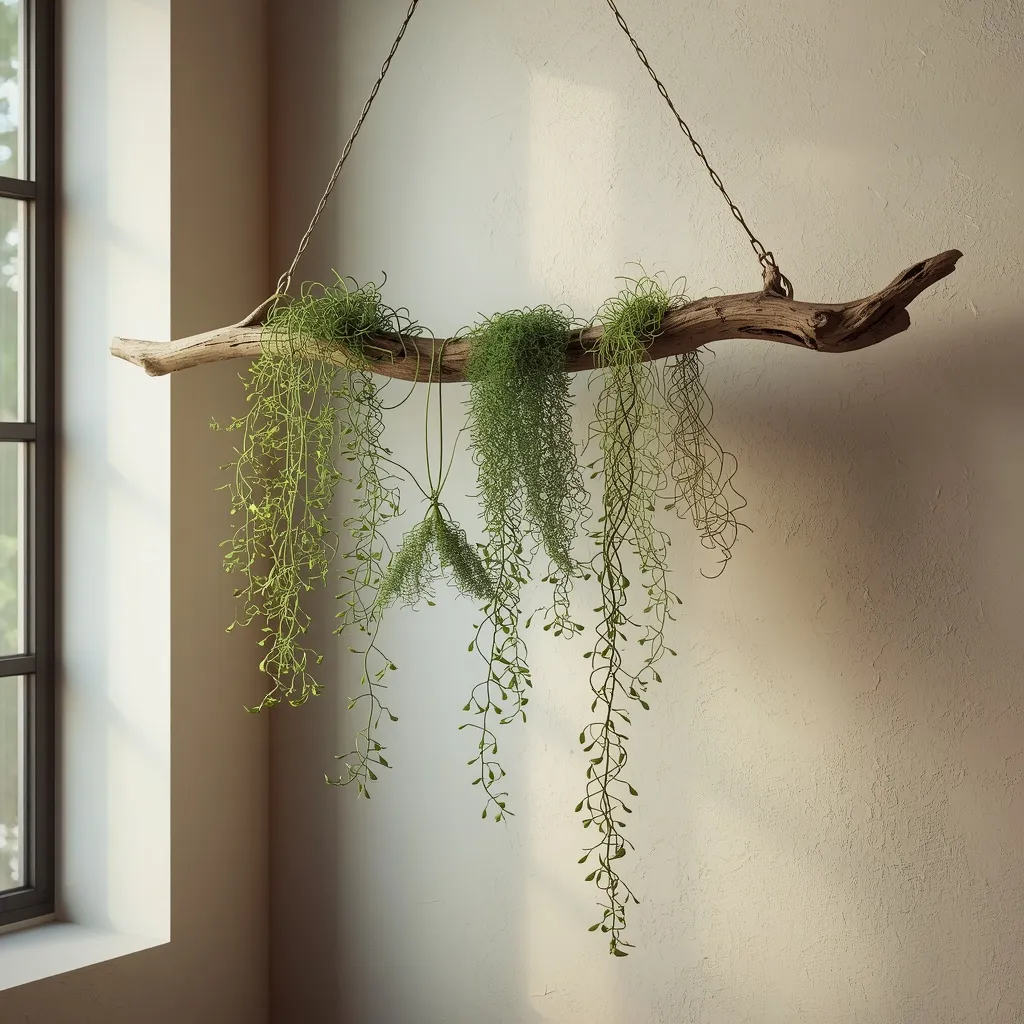
10. Hanging Vertical Garden
A vertical run of air plants strung down a length of driftwood or rope creates a living green curtain. Several tillandsias descending a hanging branch or ladder bring height and drama to a bare wall or window.
Suspend a horizontal branch, a piece of driftwood, or a small wooden ladder, then attach air plants down its length with a fishing line or by resting them on rungs. Vary plant sizes down the run for a natural cascade. This makes striking use of vertical space where floor and shelf room is limited. Take the whole hanging piece down, or lift individual plants, to soak weekly. Position it in bright, indirect light near a window. This dramatic display suits studios, rentals, and any narrow space needing greenery.
- Best for: studios and rentals; using empty vertical wall space.
- Why it works: a vertical run adds greenery where there’s no floor or shelf room.
- Key elements: hanging branch, driftwood or ladder, cascading tillandsias.
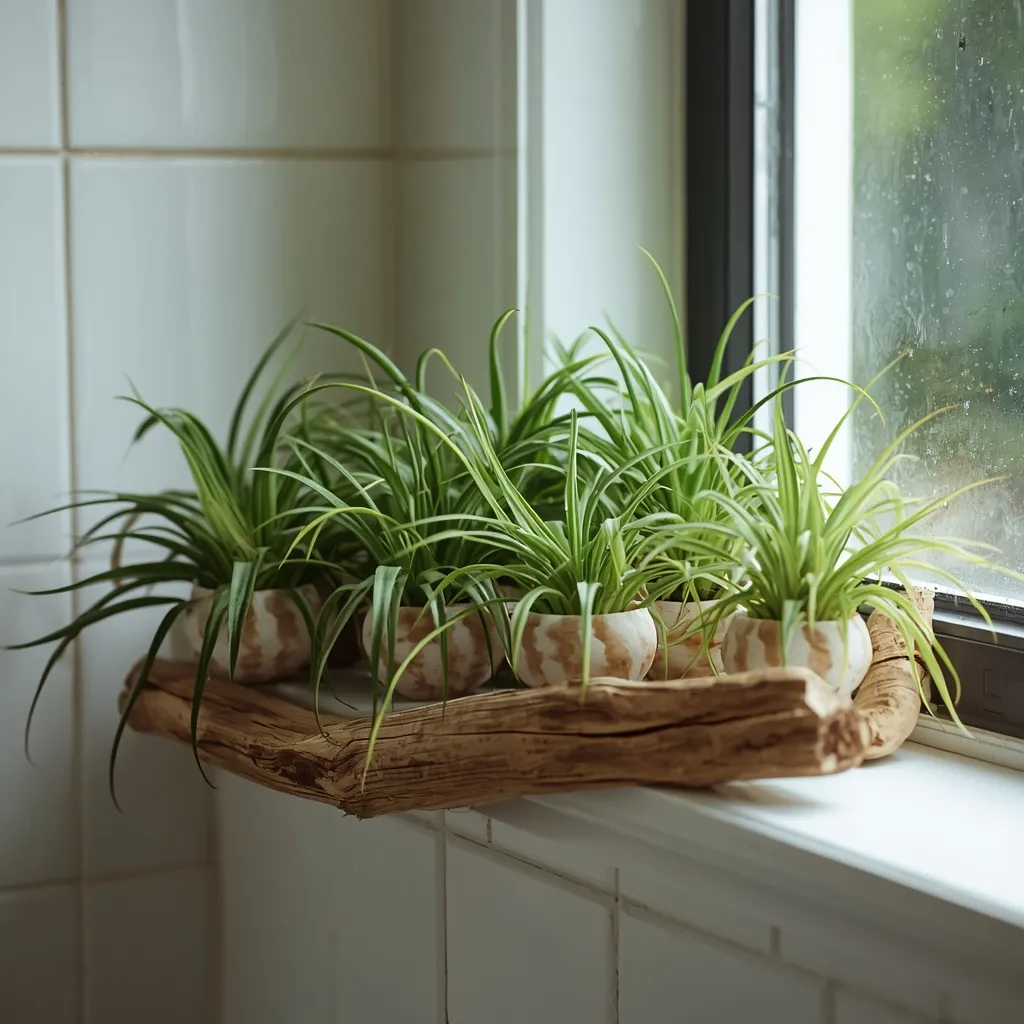
11. Bathroom Humidity Display
A grouping of air plants on a bathroom shelf turns steamy air into a thriving mini-garden. Tillandsias clustered in shells, on driftwood, or in a wire holder near the shower love the humidity, staying lush with minimal effort.
The bathroom is one of the best rooms for air plants, since shower steam gives them the moisture they crave, meaning less frequent soaking is needed. Place them on a shelf or windowsill that gets natural light, as a windowless bathroom is too dark long-term. Group them with natural materials for a spa feel. Even in a humid bathroom, still give them a proper soak every week or two and ensure they dry fully afterward. This low-effort display suits any bathroom with some daylight.
- Best for: bathrooms with some natural light; low-effort growers.
- Why it works: shower humidity keeps air plants lush with less watering.
- Watch out: a windowless bathroom is too dark; still soak every week or two.
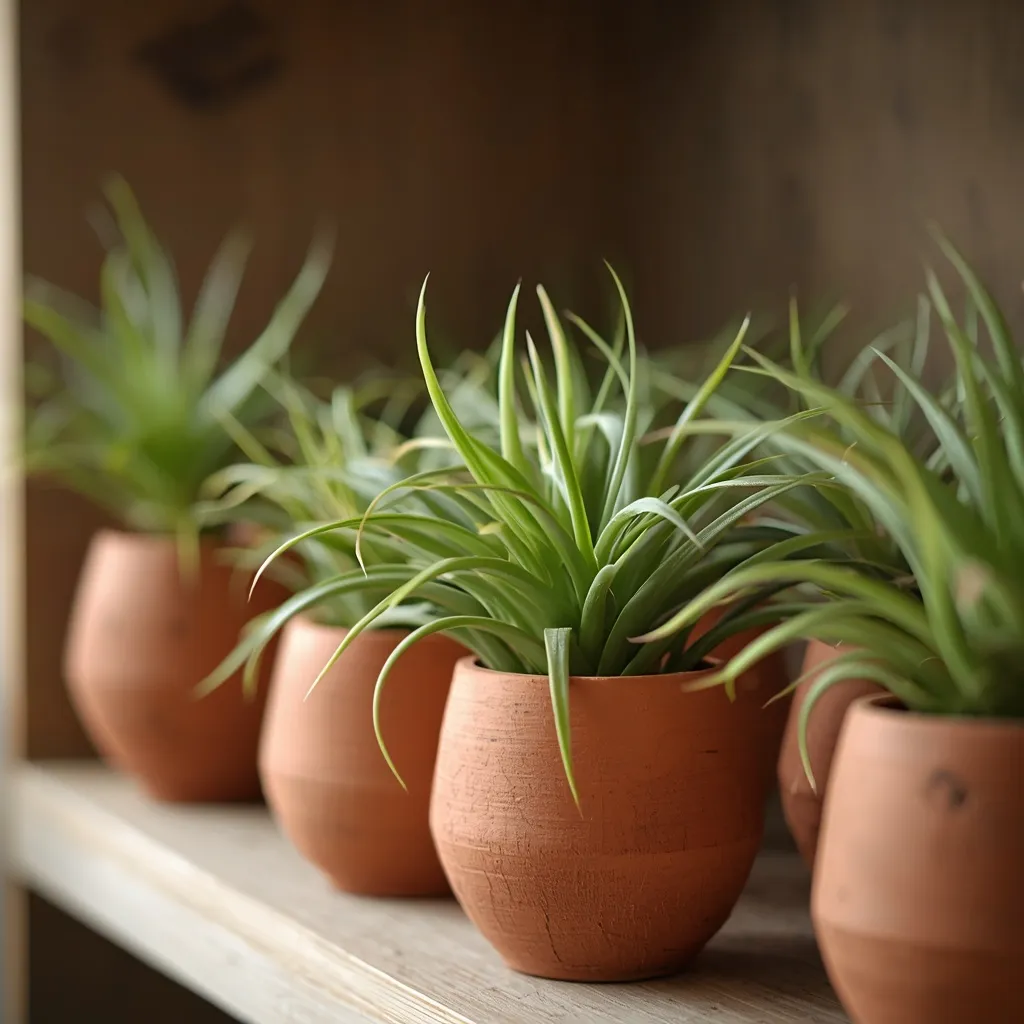
12. Clay Pot Perch Display
Air plants perched in or on small clay and ceramic vessels offer a soft, earthy display. Little terracotta pots, pinch pots, or ceramic figures cradle tillandsias on a shelf or sill, blending handmade charm with greenery.
Rest air plants in the mouths of small clay pots, propagation-style ceramic holders, or hollow figurines, no soil needed, since the pot is purely decorative. Handmade or thrifted pinch pots give a lovely artisan feel. Because there’s no soil to hold moisture, simply lift the plant out to soak it weekly. Cluster several pots of different heights for a styled vignette. This warm, tactile display suits boho, rustic, and craft-loving interiors and makes great use of pretty pots too small for potted plants.
- Best for: boho and rustic rooms; showcasing small handmade pots.
- Key elements: small clay or ceramic pots, resting tillandsias, no soil.
- Why it works: the decorative pot needs no soil; lift the plant out to soak.
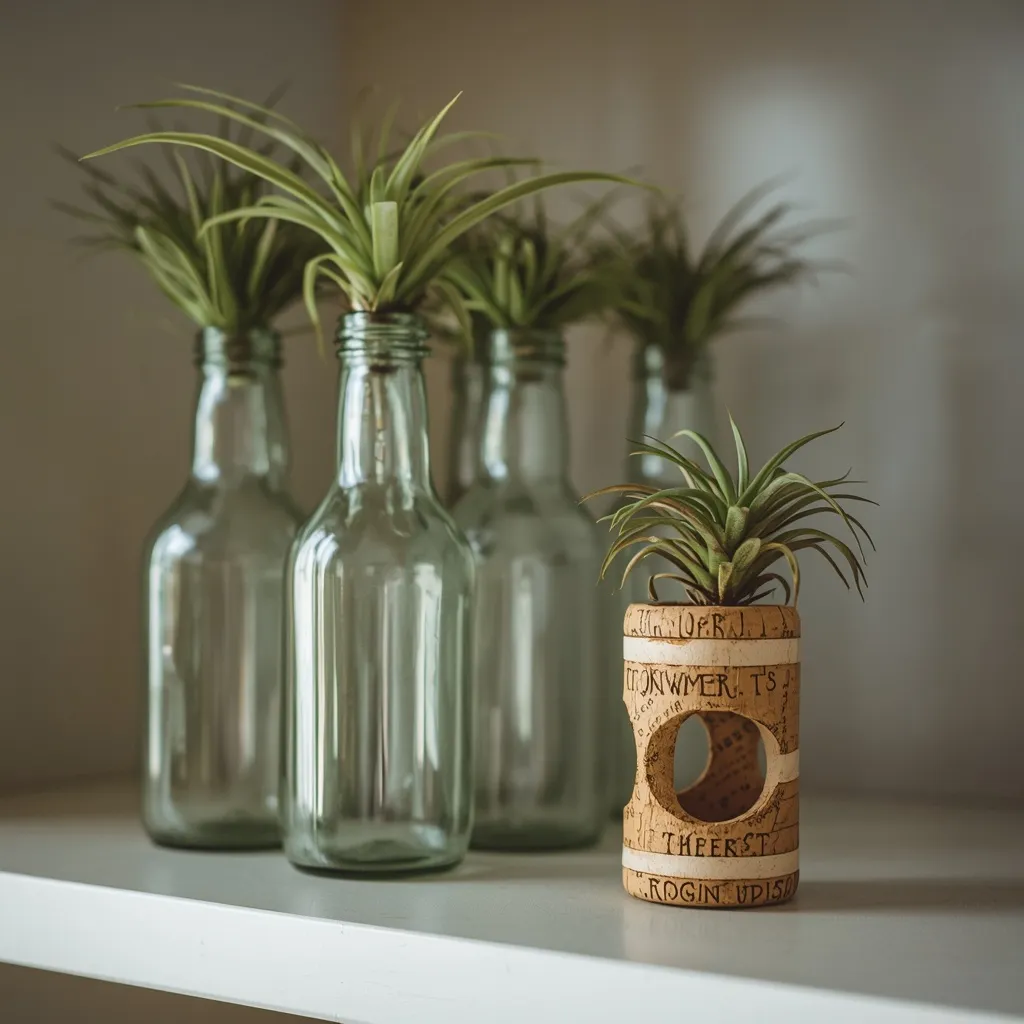
13. Wine Cork or Bottle Display
Upcycled wine corks and bottles make a charming, thrifty home for tiny air plants. A cork hollowed to hold a small tillandsia, or a cluster of bottles with plants perched in their necks, adds quirky greenery for next to nothing.
Hollow a small cavity in a wine cork and rest a tiny air plant inside, adding a magnet on the back for the fridge or leaving it loose on a shelf. Alternatively, perch small tillandsias in the mouths of clear glass bottles grouped together. This is a satisfying upcycle that costs almost nothing. Lift each plant out to soak weekly, and never wedge it so tightly you can’t remove it. This budget, eco-friendly display suits kitchens, small spaces, and anyone who loves a DIY upcycle.
- Best for: budget and eco-minded decorators; DIY upcyclers.
- Why it works: upcycled corks and bottles hold air plants for almost nothing.
- Key elements: hollowed wine cork or glass bottles, tiny tillandsias.
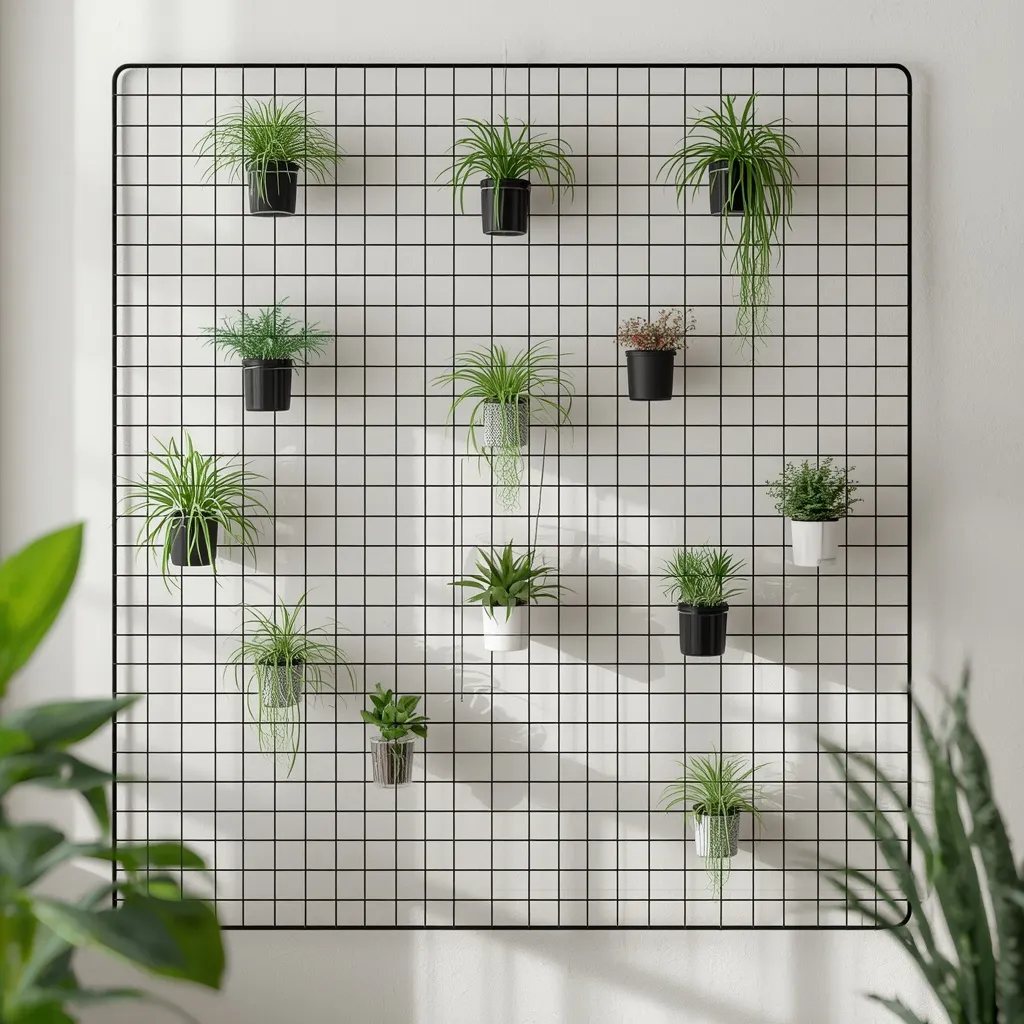
14. Wall-Mounted Grid or Trellis
A metal grid or wooden trellis on the wall becomes a flexible, ever-changing air plant gallery. Tillandsias clipped and tucked across the grid create a living display you can rearrange whenever the mood strikes.
Mount a wire mesh grid, a piece of hog-wire, or a slim trellis on the wall, then attach air plants with small clips, S-hooks, or loops of wire threaded through the grid. The open framework keeps airflow ideal and lets you move plants around freely. It’s perfect for a growing collection, since you just add more as you go. Unclip plants to soak them, or mist the whole grid weekly if they’re lightly attached. This modern, collector-friendly display suits home offices, studios, and plant lovers.
- Best for: growing collections; home offices and studios.
- Why it works: an open grid keeps airflow ideal and rearranges endlessly.
- Key elements: wire grid or trellis, clips or S-hooks, multiple tillandsias.
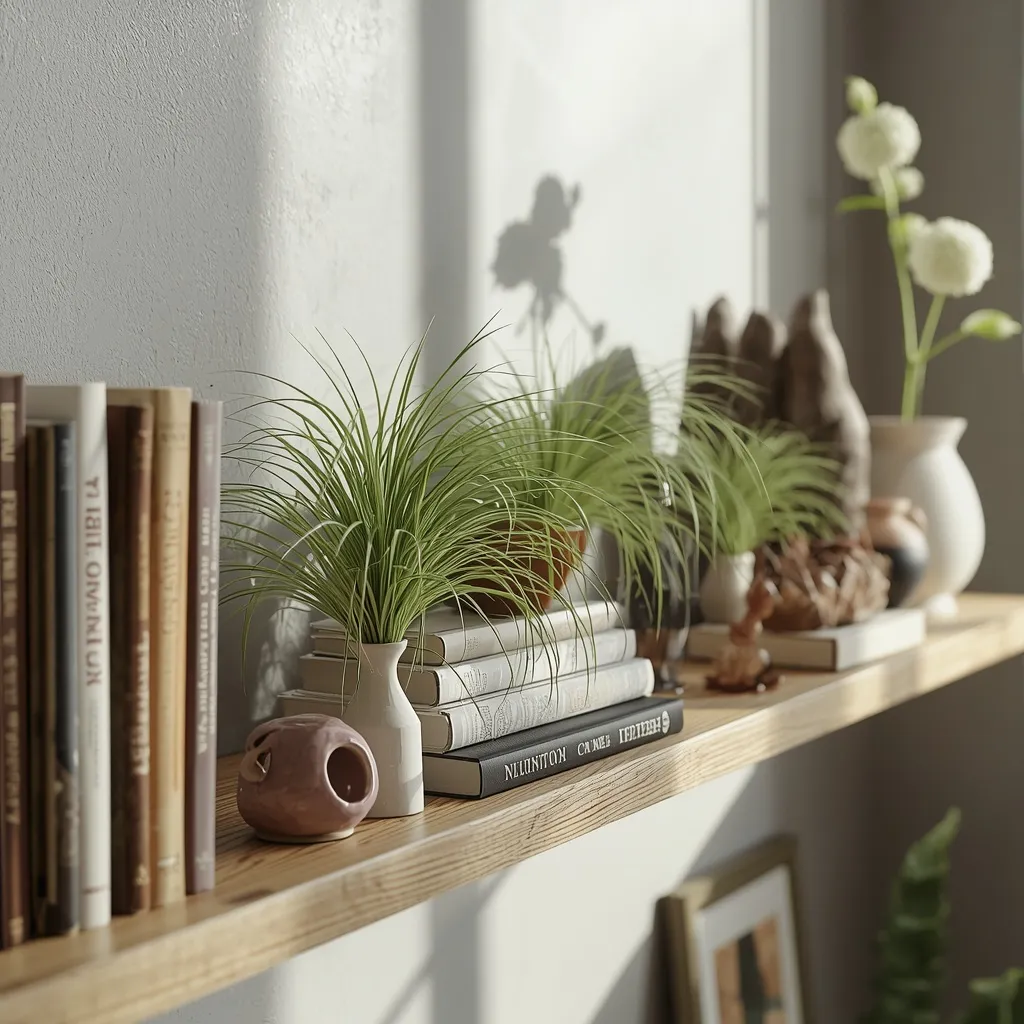
15. Floating Shelf Plant Vignette
Air plants styled along a floating shelf among objects create a relaxed, collected vignette. Tillandsias resting between books, ceramics, crystals, and small sculptures bring living green into a curated shelf display.
Rest air plants directly on a floating shelf or perch them in small holders among your favorite objects, grouping in odd numbers and varying heights. Because they need no pot, they slot into gaps a potted plant couldn’t fill, softening hard edges between books and decor. Give the shelf bright, indirect light and lift each plant off to soak it weekly. Keep them off shelves directly above radiators, which dry them out. This easy, no-DIY display suits any styled living room, office, or bedroom shelf.
- Best for: styled shelves in any room; the easiest no-DIY option.
- Why it works: needing no pot, air plants fill gaps a potted plant can’t.
- Watch out: avoid shelves right above radiators, which dry plants out.
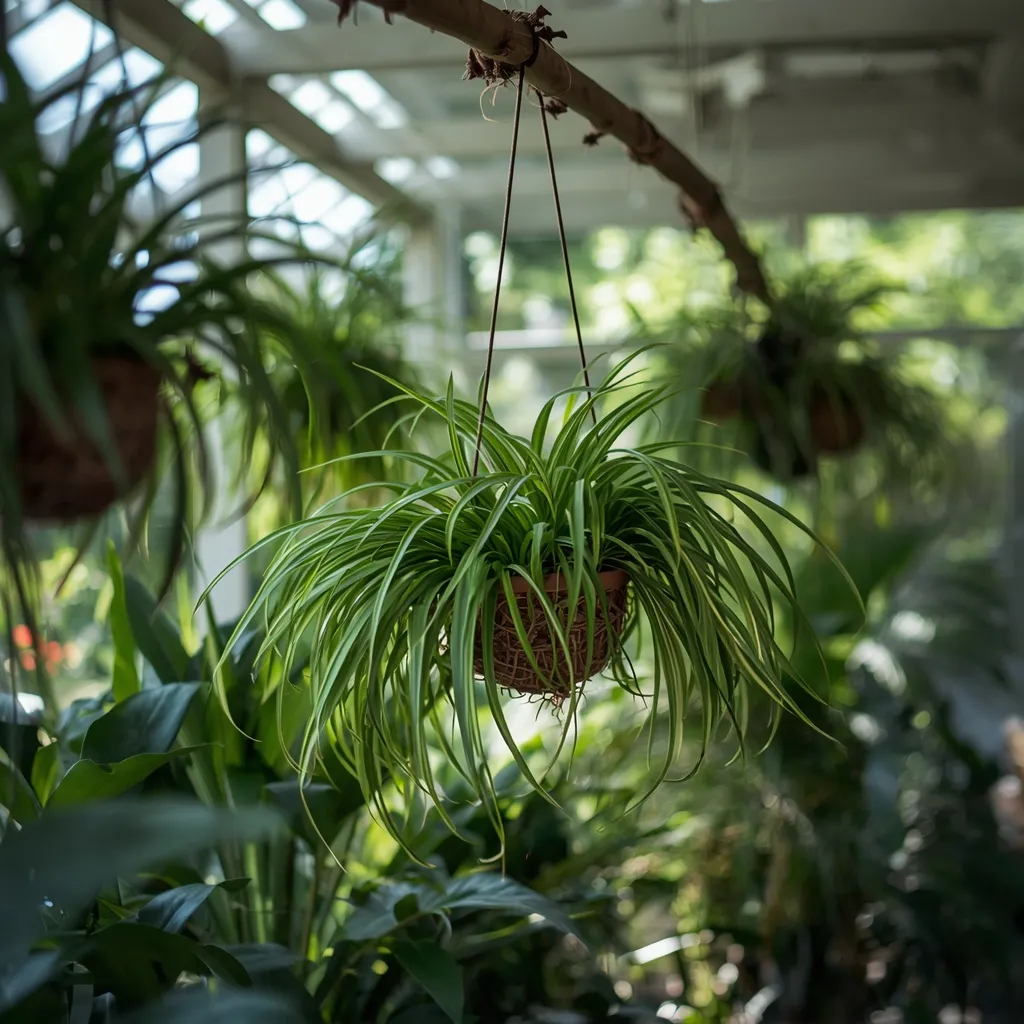
16. Outdoor Patio or Garden Display
In warm weather, air plants bring living texture to a shaded patio, porch, or garden nook. Tillandsias tucked into a hanging branch, a covered wall, or among outdoor plants thrive in the fresh air and gentle humidity.
Display air plants outdoors in bright shade, never harsh direct sun, which scorches them, on a covered porch, under a pergola, or nestled among other shade plants. They love outdoor air circulation and natural humidity in the warm months. Crucially, air plants are not frost-hardy: bring them indoors once nights drop below around 7–10°C (45–50°F), as cold kills most tillandsias. Rain gives them a natural soak, but check they dry between wettings. This seasonal display suits covered patios, porches, and shaded garden spots.
- Best for: covered patios and porches in warm months.
- Watch out: not frost-hardy, bring indoors below ~7–10°C (45–50°F).
- Key elements: bright shade, hanging branch or wall, other shade plants.
How Do You Display Air Plants Without Killing Them?
Display air plants in a way that keeps three things possible: bright indirect light, good air circulation, and easy removal for watering. The prettiest display fails if you can’t get the plant out to soak it or if it can’t breathe.
Air plants drink and breathe through tiny scales called trichomes across their leaves, which is why you must never glue them down, glue smothers those scales and slowly kills the plant. Instead, hold them with fishing line, plastic-coated wire, or removable museum putty. Skip sealed terrariums, which trap the moisture that rots them, and keep every display somewhere you can lift the plant out to soak it in water for 20–30 minutes each week, then dry it fully upside down before returning it.
Styling low-maintenance plants like these is a favorite theme in our indoor plant styling section. If you love greenery that asks very little, you’ll also enjoy our styling ideas for the easygoing snake plant, another near-indestructible plant that pairs beautifully with an air plant collection.
Air Plant Care Basics for Any Display
Whatever display you choose, air plants need the same simple care: a weekly soak, bright indirect light, and good airflow to dry out afterward. Master these and almost any display will thrive.
Soak air plants in room-temperature water for 20–30 minutes about once a week, more often in dry or heated rooms, less in a humid bathroom. After soaking, shake off excess water and lay them upside down to dry fully within a few hours, since water trapped in the base is the most common cause of rot. Give them bright, indirect light, never harsh direct sun, and keep them away from cold drafts and hot radiators. A weak orchid or air-plant fertilizer once a month in spring and summer encourages blooming.
Which Air Plant Display Is Right for You?
Your space, style, and DIY appetite point to the best display. This quick reference matches each type to who it suits and how hard it is to water.
| Display type | Best for | Watering ease | DIY level |
| Driftwood centerpiece | Tables, coastal decor | Easy (lift out) | Low |
| Hanging glass globe | Windows, small spaces | Easy | Low |
| Framed wall art | Saving space | Medium (take down) | Medium |
| Copper wire hanger | Minimalist rooms | Easy | Medium DIY |
| Terrarium bowl | Desks, coffee tables | Easy | Low |
| Wall grid / trellis | Collections | Easy (unclip) | Medium |
| Bathroom display | Humid rooms | Easiest | Low |
| Outdoor patio | Warm-month porches | Rain + soak | Low |
Conclusion
The beauty of air plant display ideas is the sheer freedom they offer: with no pot or soil to hide, a tillandsia can become a driftwood centerpiece, a framed piece of wall art, or a tiny globe floating by the window. Choose a display that fits your space and style, hold each plant with wire or putty rather than glue, and keep it somewhere you can lift it out for its weekly soak. Do that, and these little living sculptures will thrive for years while doubling as decor. For more ways to bring greenery indoors, browse our indoor plant styling ideas and find the display your favorite shelf or wall has been waiting for.
Frequently Asked Questions
Q: How do you display air plants at home?
Air plants can be displayed almost anywhere since they need no soil, popular options include driftwood, open glass globes, wall frames, seashells, wire hangers, and shelves. The key is choosing a display with good airflow and bright indirect light where you can easily lift the plant out to soak it weekly. Avoid gluing plants down or sealing them in closed jars.
Q: Can you glue air plants to a display?
No, you should never glue air plants down. Glue blocks the tiny trichomes on their leaves that absorb water and air, which slowly kills the plant. Instead, secure them with clear fishing line, plastic-coated wire, or removable museum putty, or simply rest them in a holder so you can lift them out to water.
Q: Do air plants need to come out of their display to be watered?
Usually yes. Air plants need soaking in water for 20–30 minutes about once a week, so the best displays let you lift the plant out easily. If a plant is fixed in place, mist it thoroughly instead, though misting alone is often not enough, most air plants stay healthiest with a proper soak.
Q: Are closed terrariums good for air plants?
No, closed or sealed terrariums are bad for air plants. They trap humidity around the plant, and moisture that can’t dry out causes rot, the most common way air plants die. If you love the terrarium look, use an open glass globe or bowl with plenty of airflow and remove the plant to soak it.
Q: What are the best air plant displays for small spaces?
Hanging glass globes, wall-mounted frames or grids, copper wire hangers, and magnetic fridge displays all save surface space beautifully. Because air plants need no pot, they fit into gaps and vertical spots a potted plant never could. Vertical hanging displays are especially good for studios and rentals short on room.
Q: Are air plants safe for cats and dogs?
Yes, air plants (tillandsia) are non-toxic and considered safe for cats and dogs, making them a good choice for pet households. That said, it’s still wise to display them out of reach, since a curious pet could damage the plant or knock over a glass display. Hanging and wall displays keep them safely up high.