
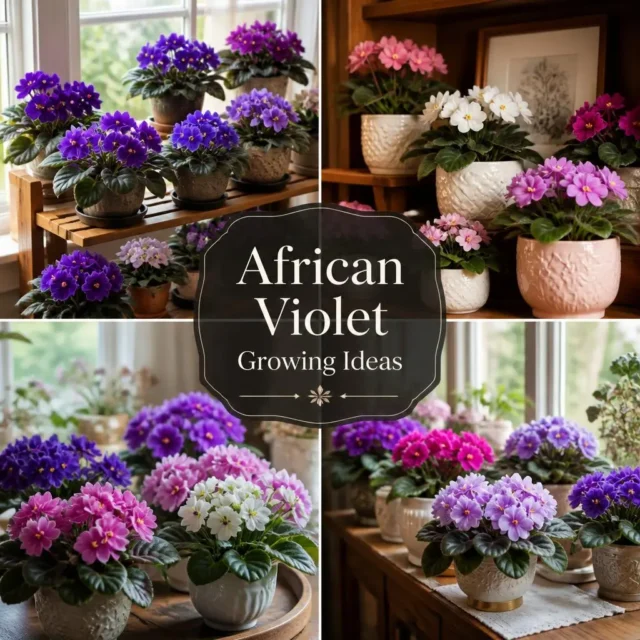

Picture a windowsill lined with velvety green rosettes and clusters of purple, pink, or white blooms that reappear every few weeks with barely any fuss. That is the realistic promise of a well-kept African violet, and it is closer than most beginner plant parents assume. These african violet care tips walk through exactly what the plant needs to move from an occasional bloomer to a steady performer: the right light, a watering rhythm that protects the crown from rot, soil built for shallow roots, and a feeding schedule that actually supports flowers instead of just leaves. Whether your home has a bright east window or only a desk lamp, this guide adapts classic advice to real living spaces, the same room-by-room thinking behind everything Sunday Abode covers for houseplants and home style.
What African Violets Need to Thrive
African violets (botanically Saintpaulia, though many growers still use that name interchangeably with their reclassification under Streptocarpus) are compact, rosette-forming plants known for fuzzy leaves and near-continuous flowering when conditions are right. Unlike houseplants that shrug off weeks of neglect, African violets respond within days to changes in light, water temperature, and soil moisture, which is exactly why targeted care makes such a visible difference.
Four fundamentals drive nearly everything else in this guide: bright, indirect light; consistent moisture without a soggy crown; fast-draining, slightly acidic soil; and steady warmth without cold drafts. Get those right and a mature plant will typically produce a new flush of blooms every six to eight weeks, including through winter, when few other flowering houseplants are performing at all.
Light Requirements for Steady Blooms
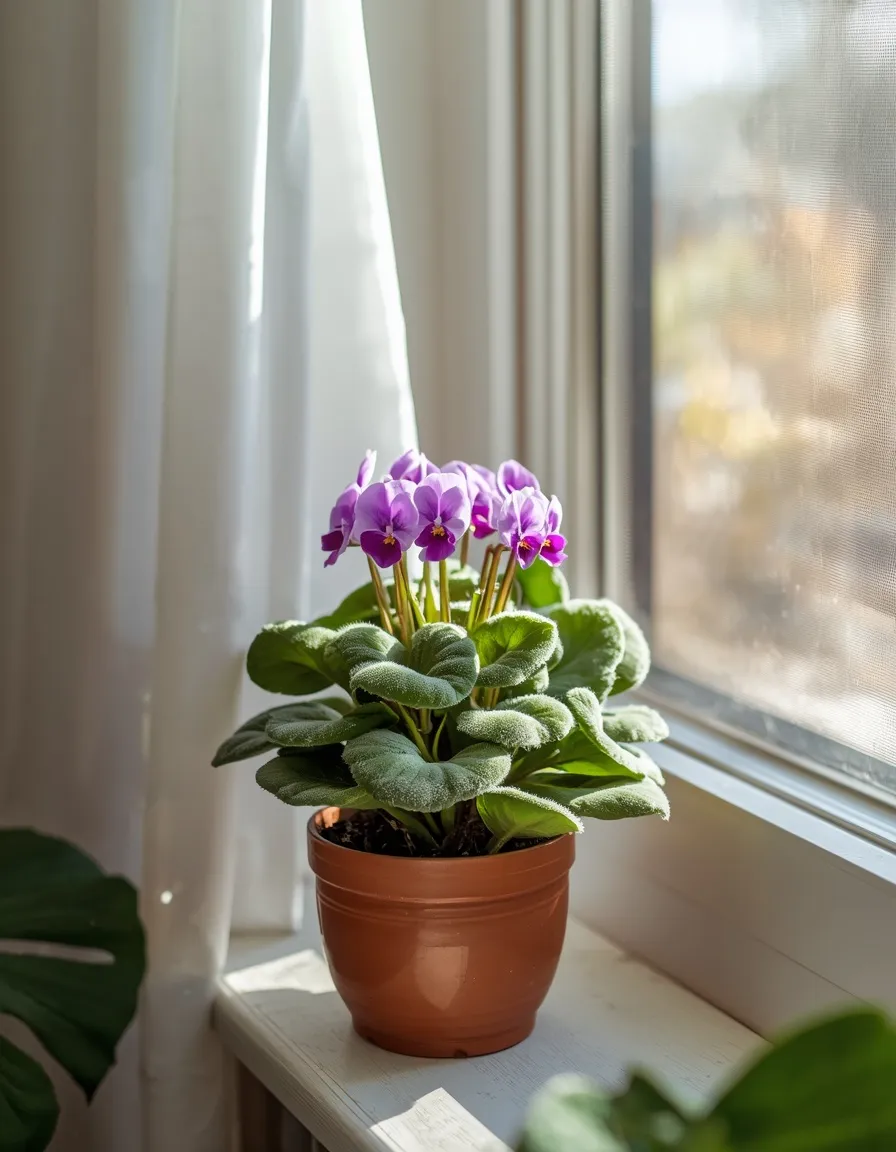
Light is the single biggest factor separating a leafy, bloom-shy African violet from one that flowers on a loop. These plants want bright, indirect light, never direct sun through unfiltered glass, which scorches the fuzzy leaves and leaves pale, crispy patches within hours. An east-facing window is usually ideal; south or west-facing windows work too, as long as the plant sits two to three feet (about 60 to 90 cm) back from the glass or behind a sheer curtain.
If you want to measure it precisely, aim for roughly 1,000 foot-candles, around 10,000 to 12,000 lux, a range multiple university extension programs, including University of Minnesota Extension, recommend for reliable flowering. No light meter on hand? Hold your hand about a foot above the plant during the brightest part of the day. A faint, soft shadow means the light is close to right; a sharp, dark shadow means it is too intense.
Growing under fluorescent or LED shop lights works just as well, and often more reliably, since natural light shifts with the seasons. Position tubes or panels 10 to 14 inches (25 to 35 cm) above the foliage and run them for 12 to 16 hours a day, always leaving at least eight hours of uninterrupted darkness, since African violets need a genuine dark rest period to set flower buds.
The leaves themselves are a diagnostic tool. Dark green leaves with unusually long stems, called petioles, reaching toward the light source signal too little light and almost always explain a violet that grows lush foliage but never flowers. Pale, yellowish, or bleached leaves with a tight, compact form point to too much light. Rotate the pot a quarter turn each week so all sides of the rosette receive even exposure and grow symmetrically.
Watering African Violets the Right Way
More African violets are lost to watering mistakes than to any other single cause, mostly because the plant’s crown, the small point where leaves meet roots at soil level, rots quickly if it stays wet. Check the top inch (about 2.5 cm) of soil before watering again; when it feels dry to the touch, it is time.
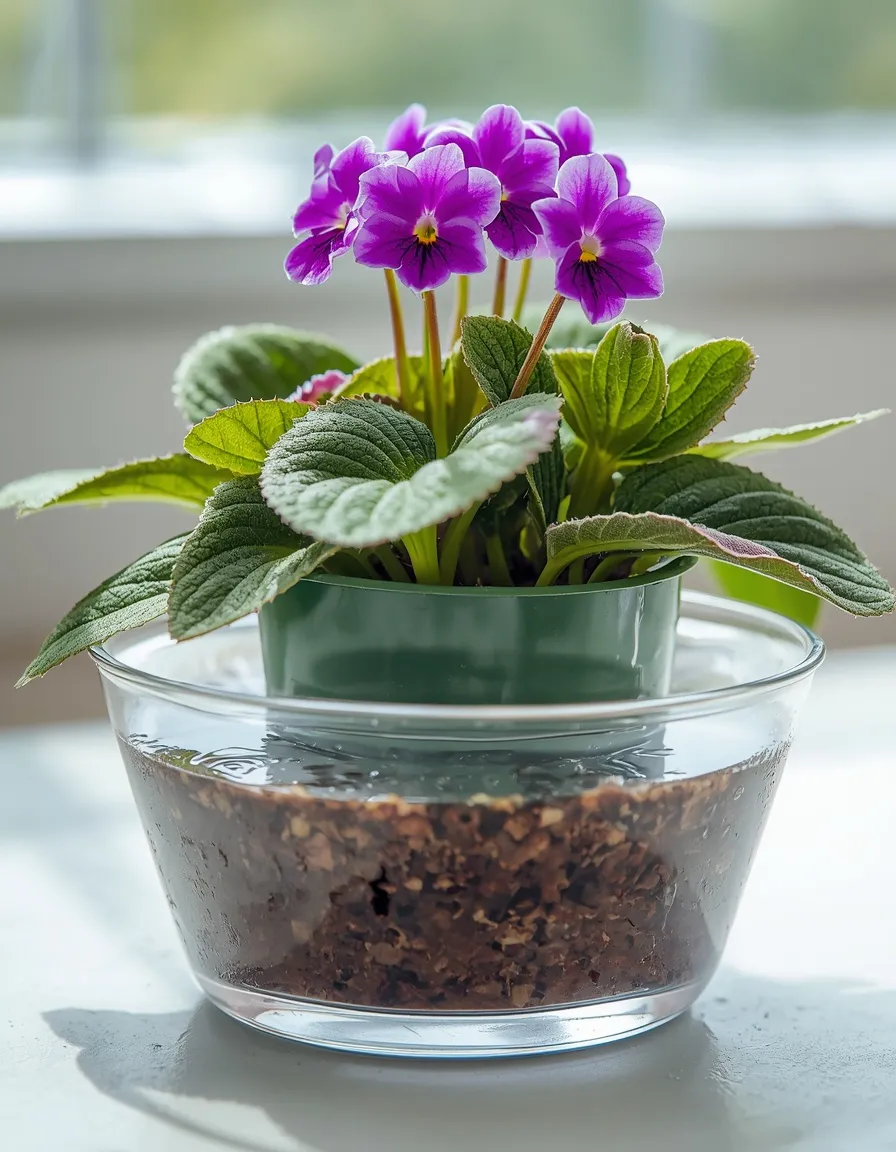
Always use room-temperature water. Cold water shocks the roots and causes permanent ring-shaped spots if it splashes on the leaves, so top-watering with a narrow spout, aimed carefully at the soil, is the safer approach for gardeners who prefer it. Many experienced growers instead use bottom watering: set the pot in a saucer with about an inch of water for 15 to 30 minutes, let the soil wick moisture upward, then remove the pot so it never sits in standing water afterward. This method keeps the crown dry and the moisture level even throughout the root ball.
Water quality matters more than most guides mention. Water that has gone through a home softener contains sodium that builds up in the soil and damages roots over time, so use unsoftened tap water, filtered water, or water that has rested uncovered for 24 hours to let chlorine dissipate. A common mistake is watering on a fixed weekly schedule regardless of conditions; soil dries faster in a warm, bright spot and slower in a cool, shaded one, so check by touch rather than by calendar. Self-watering or wick-fed pots, covered further below, remove much of this guesswork for anyone who travels often or tends to forget.
Soil and Potting Mix
African violets have shallow, fine root systems that suffocate in dense, water-retentive soil, so the growing medium matters as much as the watering schedule. Look for a light, well-aerated mix labeled specifically for African violets, or blend your own using roughly equal parts peat moss or coco coir, perlite, and vermiculite. This combination drains quickly while still holding enough moisture between waterings, and it keeps the soil pH in the slightly acidic range, around 6.0 to 6.5, that African violets prefer.
Skip generic garden soil or heavy all-purpose potting mixes; both compact over time and hold water against the crown and roots, inviting rot. Pot size matters just as much as soil texture. Choose a pot roughly one-third the diameter of the plant’s leaf spread, since African violets bloom more reliably when their roots are slightly snug rather than swimming in excess soil and moisture. A plant with a 9-inch (23 cm) leaf spread, for example, is usually happiest in a 3 to 4-inch (7.5 to 10 cm) pot.
Humidity and Temperature
African violets thrive in the same general temperature range most people find comfortable indoors: roughly 65 to 80 degrees F (18 to 27 degrees C) during the day, without dropping below about 60 degrees F (15 degrees C) at night. Keep pots away from cold windowsills in winter, heating vents, air conditioning units, and any spot with frequent drafts, since sudden temperature swings stress the plant and can halt blooming altogether.
Humidity is the other half of the equation. These plants prefer 40 to 60 percent relative humidity, noticeably higher than the dry air many homes have in winter when heating systems run constantly. A pebble tray, a small humidifier, or simply grouping several houseplants together on a shared tray can raise the humidity around the foliage. Avoid misting the leaves directly to boost humidity; water sitting on the fuzzy foliage leads to the same spotting and rot risk as cold water splashed during watering.
Feeding and Fertilizing
African violets are relatively light feeders, but consistent, dilute fertilizing makes a real difference in bloom frequency. Choose a balanced, water-soluble fertilizer formulated for African violets or flowering houseplants, ideally one with a slightly higher phosphorus number, the middle figure in the N-P-K ratio on the label, since phosphorus specifically supports flower development.
Two approaches both work well: feed at quarter to half strength every time you water during the active growing months of spring through fall, or use a standard-strength dose every two to four weeks on the same schedule. Ease off in winter if the plant’s growth visibly slows under lower natural light, since a resting plant cannot use nutrients it is not actively growing with.
Watch for a white or crusty buildup on the soil surface or around the pot’s rim; that is a sign of fertilizer salts accumulating, usually from over-application. Flush the soil thoroughly with plain water every month or so, letting it drain completely, to prevent those salts from burning the roots.
Repotting and Root Care
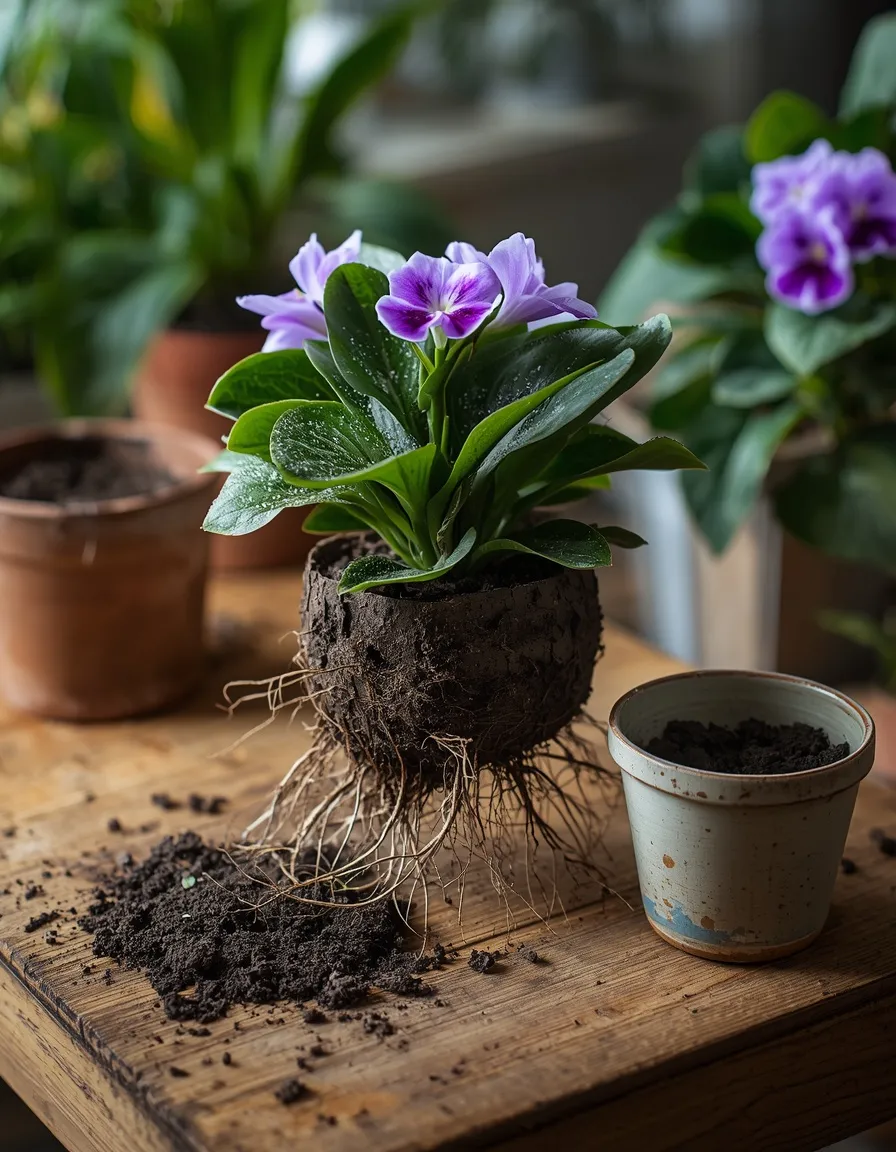
African violets generally need repotting every six to twelve months, less about a fixed calendar and more about what the plant tells you. The clearest sign is a visible neck, a bare stretch of stem below the lowest ring of leaves, which develops as older leaves are naturally shed and the crown pushes upward over time. Wilting leaves despite moist soil is another common cue that roots have outgrown the pot.
Spring is the best season to repot, when the plant is entering active growth and recovers fastest. Gently remove the plant from its pot, shake off the old soil, and trim away any mushy, dark, or foul-smelling roots with clean scissors. Replant at a depth that buries the exposed neck up to just below the lowest leaves, using fresh African violet mix. Resist the urge to size up dramatically; move into the same size pot with fresh soil, or one size larger only if the current pot is clearly too small, since an oversized pot holds more moisture than the roots can use.
Propagating African Violets from Leaf Cuttings
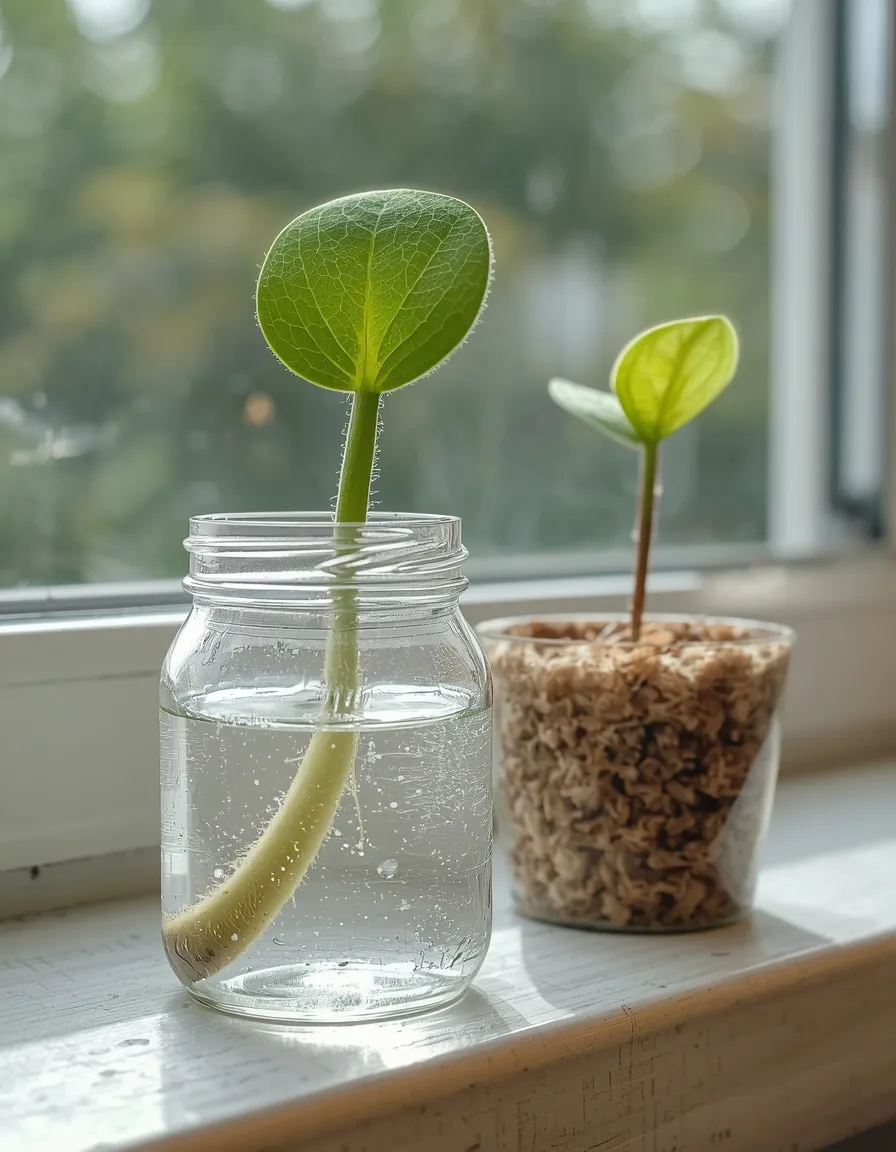
Leaf-cutting propagation is one of the most rewarding parts of african violet care, and it is genuinely simple once you know the timing. Choose a healthy, medium-aged leaf, not the oldest outer leaves and not the newest center growth, and cut it cleanly with sterilized scissors or a craft knife, leaving about 1 to 1.5 inches (2.5 to 4 cm) of stem, called the petiole, attached at a 45-degree angle.
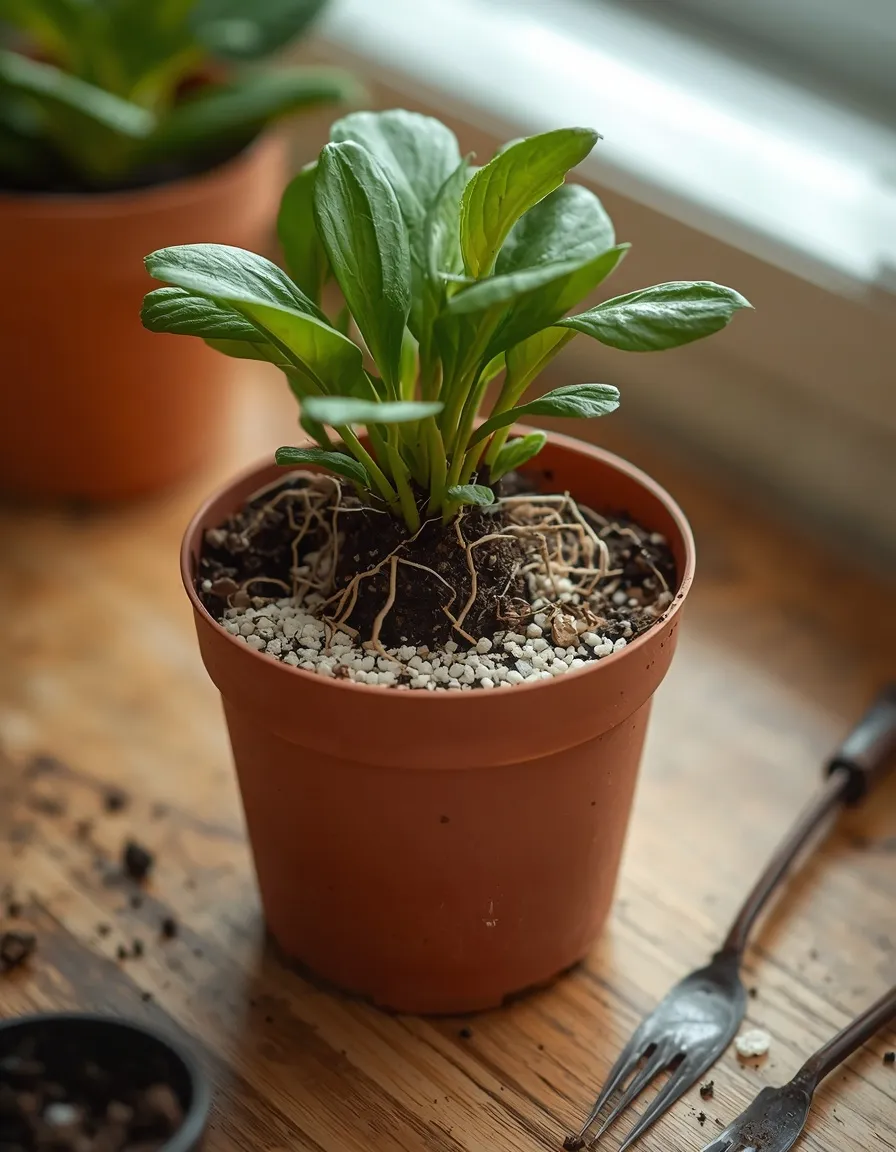
From there, two rooting methods work reliably. In water, suspend the petiole so it touches the water while the leaf itself stays dry and above the rim; a small jar with plastic wrap and a hole poked through works well for this. In soil, insert the petiole at an angle into a moist, soilless mix such as vermiculite or a peat-perlite blend, then cover loosely with plastic or a clear bag to hold humidity while roots form.
Roots typically appear within three to four weeks, and tiny plantlets emerge at the base of the buried petiole anywhere from two to six months later, depending on light and warmth. Once plantlets have two or three leaves of their own, separate them gently and pot each one individually. It is common, and expected, for the original mother leaf to eventually yellow and die back once its plantlets are established; that is simply the leaf giving up its stored energy to the new plants, not a sign anything went wrong.
Common Problems and How to Fix Them
No Blooms Despite Healthy Leaves
This is the single most common complaint, and insufficient light is the cause in the vast majority of cases. Dark, glossy foliage with no flowers almost always means the plant needs to move closer to a bright window or under a stronger grow light. If light already looks adequate, check the fertilizer’s phosphorus content and confirm the plant is getting a genuine dark period of at least eight hours at night, since constant light, even dim light from a nearby lamp left on overnight, can suppress budding.
Yellow or Pale Leaves
Yellowing usually points to one of three causes: overwatering, water that is too cold, or too much direct light. Start by checking soil moisture with a finger before assuming the worst, since soggy soil combined with yellowing lower leaves usually means root or crown rot has already begun. If the soil feels appropriately dry and the yellowing is more of a pale, washed-out color across the whole leaf, move the plant slightly farther from its light source and reassess after a week or two.
Crown or Stem Rot
Rot at the crown, the point where soil, stem, and leaves meet, is almost always caused by water sitting there directly or by a pot left standing in a saucer of water for too long. Remove any soft, mushy, or discolored tissue with a clean blade as soon as you notice it, let the remaining plant dry slightly, and switch to bottom watering going forward so water never touches the crown again. Badly affected plants can sometimes be saved by taking healthy leaf cuttings from unaffected growth and starting fresh, even if the main plant does not recover.
Pests: Mealybugs, Aphids, and Cyclamen Mites
Mealybugs show up as small tufts of white, cottony residue, usually tucked into leaf joints, and are the pest most commonly reported on African violets. Light infestations respond well to dabbing each insect directly with a cotton swab dipped in isopropyl alcohol. Cyclamen mites are harder to spot with the naked eye but cause new growth to look stunted, twisted, or unusually hairy; because they are notoriously difficult to eliminate fully, isolating and often discarding a heavily infested plant is usually the more practical choice to protect the rest of a collection. Whatever the pest, isolate the affected plant immediately to keep problems from spreading to nearby houseplants.
Choosing the Right Pot and Location
Beyond soil and light, the container itself shapes how consistently an African violet performs. Unglazed clay pots breathe well and dry out faster, which suits growers who tend to overwater, while plastic pots hold moisture longer and work well paired with the bottom-watering method described earlier. Self-watering pots with a built-in wick or reservoir have become especially popular for African violets specifically, since they maintain steady soil moisture without the crown ever touching standing water, essentially automating the bottom-watering approach.
The same size-to-root-mass logic that keeps African violets blooming instead of sulking in oversized soil applies well beyond flowering houseplants; anyone growing bell peppers in pots on a balcony or patio relies on a similar snug-fit principle to avoid waterlogged, root-bound problems in a very different kind of container garden.
For placement, a kitchen or bathroom windowsill often works surprisingly well thanks to the ambient humidity from cooking or showers, as long as the spot avoids direct sun and cold drafts near the glass. Because the ASPCA lists African violets as non-toxic to cats, dogs, and horses, placement does not need to prioritize pet-proofing the way it does with many other popular flowering houseplants, though keeping any plant out of constant chewing range is still good practice for the plant’s own sake. A desk or shelf away from any window is equally viable under a small grow light, which sidesteps seasonal light changes entirely. For a wider range of houseplant-specific setup ideas, from potting choices to placement by room, the houseplant care section of Sunday Abode covers additional species and situations in more depth.
Bringing It All Together
African violets reward attentiveness more than expertise. Once the core rhythm clicks, bright indirect light, water that never touches the crown, soil that drains fast, and steady warmth and humidity, most of these african violet care tips become second nature rather than a checklist. The occasional yellow leaf or missed bloom cycle is not failure; it is useful information about what to adjust next.
Start with whichever section addresses your current plant’s biggest gap, whether that is moving it a few feet from a window or switching to bottom watering, and give it a few weeks to respond. For more houseplant inspiration and species-specific guidance, the Houseplants & Care library has plenty more to explore, and a windowsill full of blooming violets is a genuinely satisfying place to start.
Frequently Asked Questions
How often should I water an African violet?
There is no fixed schedule; check the top inch of soil before watering again and only water once it feels dry to the touch. Most African violets in typical home conditions need water every seven to ten days, though bottom watering with a 15 to 30 minute soak, drained completely afterward, keeps the schedule more forgiving.
Why is my African violet not blooming?
Insufficient light is the most common cause by far, so check whether the plant sits close enough to a bright, indirect window or grow light. If light already looks sufficient, review your fertilizer’s phosphorus level and make sure the plant gets at least eight hours of uninterrupted darkness each night to trigger flower buds.
Can African violets tolerate direct sunlight?
Not for extended periods; direct sun through unfiltered glass scorches the fuzzy leaves and leaves pale, crispy patches within hours. Bright, indirect light from an east-facing window, or a south or west window softened by a sheer curtain, gives the plant the intensity it needs without the burn risk.
What is the best soil mix for African violets?
A light, fast-draining mix labeled specifically for African violets works well, or you can blend equal parts peat moss or coco coir, perlite, and vermiculite. This combination holds enough moisture between waterings while still draining quickly enough to protect the plant’s shallow, rot-prone roots.
How do I propagate an African violet from a leaf cutting?
Cut a healthy, medium-aged leaf with about 1 to 1.5 inches of stem attached, then root it in water or a moist, soilless mix like vermiculite. Roots typically form within three to four weeks, with plantlets appearing at the base of the petiole anywhere from two to six months later.
Are African violets safe for pets?
Yes; the ASPCA lists African violets as non-toxic to cats, dogs, and horses, which makes them one of the safer flowering houseplants for pet-owning households. That said, curious pets chewing on any plant material, or on fertilizer residue, can still cause mild digestive upset, so keeping pots out of easy reach is still a sensible precaution.
What should I do if I do not have a bright window?
Grow lights solve this reliably; position fluorescent or LED tubes 10 to 14 inches above the foliage and run them for 12 to 16 hours daily, always leaving a genuine dark period overnight. Many experienced growers actually find artificial light more consistent than a window, since it does not shift with the seasons or weather.