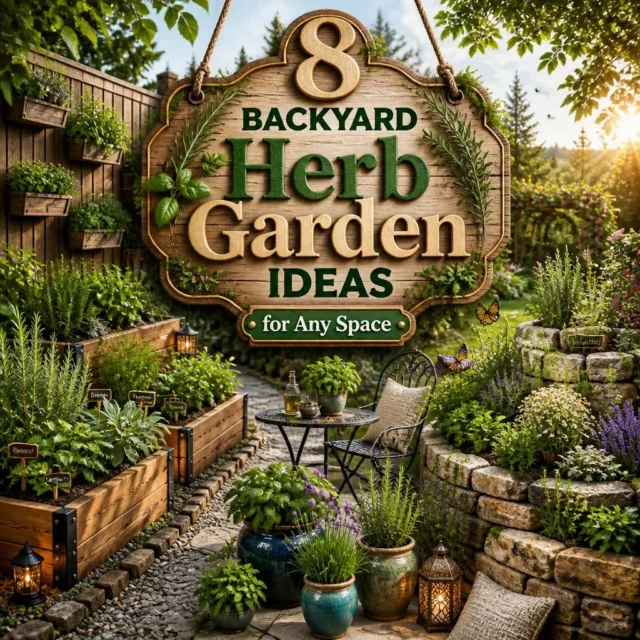

Step out the back door, snip a handful of basil still warm from the sun, and dinner already feels better, that’s the quiet luxury these backyard herb garden ideas are built around. A well-planned herb garden turns an unused strip of yard, a bare fence, or a small patio into something useful, fragrant, and genuinely good to look at.
Below are eight complete garden designs, each a full style you could recreate as a whole rather than a single planter dropped in isolation. Whether you have a wide sunny yard or a rented balcony corner, there’s a layout here that fits your space, your climate, and how much digging you actually want to do.
1. Raised Bed Kitchen Garden
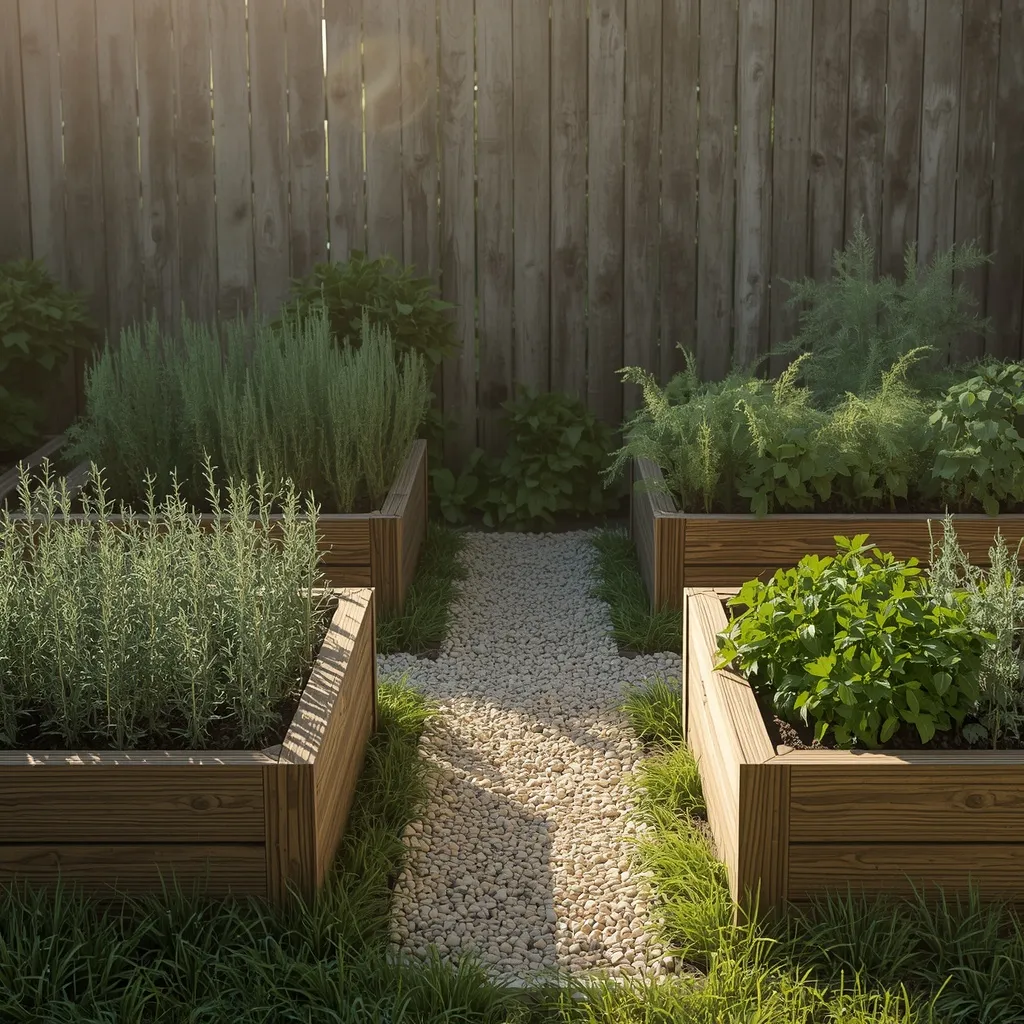
Picture two or three timber raised beds set in a sunny corner, brimming with rosemary, thyme, sage, and parsley, with a narrow gravel path between them so you can harvest without stepping on the soil. This is the workhorse of backyard herb gardens: tidy, productive, and easy on your back.
Build or buy beds around 30 cm (12 in) deep and no wider than 1.2 m (4 ft) so you can reach the center from either side. Fill them with a free-draining mix of quality topsoil and compost, and group herbs by water needs, thirsty basil and parsley together, drought-tolerant rosemary and thyme in their own drier bed. A common mistake is planting mint in a shared bed; keep it in a sunken pot within the bed instead, or it will crowd out everything around it.
- Why it works: Raised beds warm up faster in spring and drain well, giving a longer, healthier growing season.
- Best for: Homeowners with a sunny yard who want a productive, long-term herb garden.
- Key elements: Timber beds, gravel paths, grouped-by-water herbs, a contained mint pot.
2. Boho Herb-and-Vegetable Blend
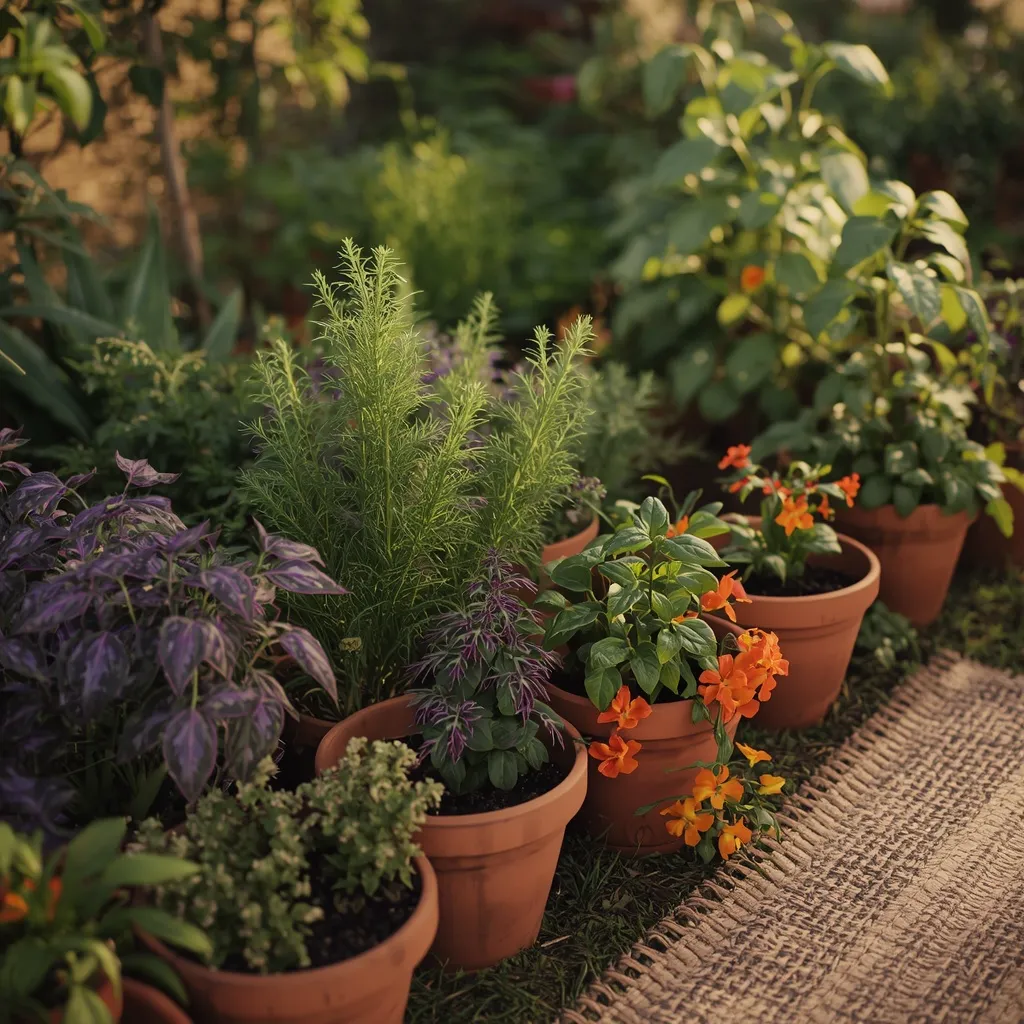
Imagine a relaxed, layered patch where feathery dill and purple basil mingle with cherry tomatoes, nasturtiums, and trailing beans, edged with terracotta pots and a woven jute rug on the path. A boho backyard herb and vegetable garden throws out rigid rows in favor of abundance and warm, earthy color.
The trick to keeping “relaxed” from tipping into “messy” is a loose structure underneath: plant taller vegetables like tomatoes and beans at the back, herbs in the middle, and low edible flowers such as nasturtiums and calendula spilling over the front edge. Mix leaf textures and colors on purpose, bronze fennel, purple basil, silvery sage, and repeat one or two terracotta or ceramic pots for rhythm. Add a small rug, a low stool, or string lights so the space invites you to linger, not just harvest.
- Why it works: Interplanting herbs, vegetables, and edible flowers attracts pollinators and makes better use of space.
- Best for: Gardeners who want a lived-in, colorful backyard herb and flower garden that also feeds them.
- Key elements: Layered heights, edible flowers, mixed foliage color, terracotta pots, cozy textiles.
3. Modern Minimalist Herb Garden
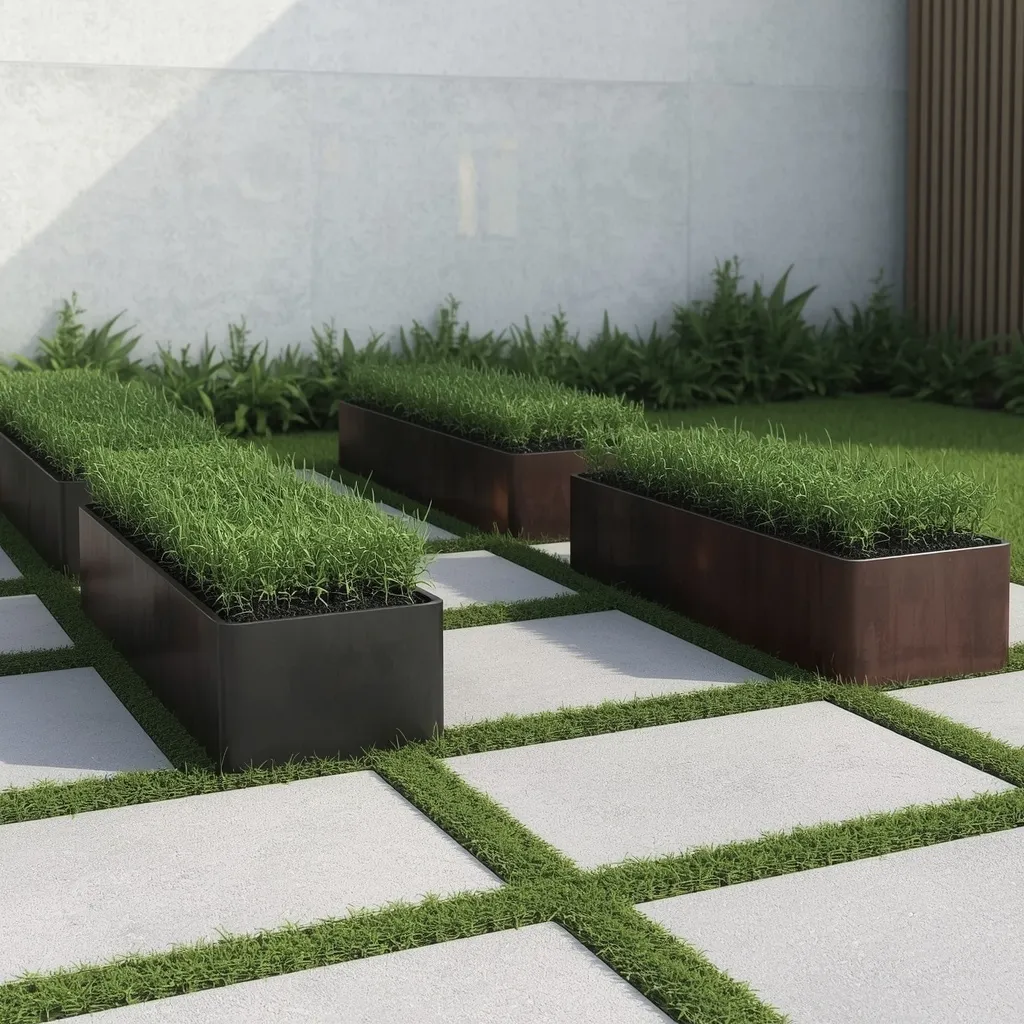
Now the opposite mood: clean corten-steel or matte-black planters set in a neat grid on a poured-concrete or large-format paver base, each holding a single herb in a tidy block, a square of chives, a square of thyme, a square of sage. A modern backyard herb garden is calm, architectural, and low-effort to maintain.
Restraint is the whole design here. Choose two or three planter shapes in one material and one or two colors, and plant each in monoculture blocks rather than mixing, so the geometry stays crisp. Repeat the same herb across a few planters for symmetry, and leave deliberate empty space around them. Metal planters can heat up fast in strong sun and dry out quickly, so line them or use a moisture-retentive mix and check watering in summer more often than you’d expect.
- Why it works: Simple repetition and hard materials read as intentional and pair well with contemporary homes.
- Best for: Design-focused homeowners and small modern yards or courtyards.
- Key elements: Matching planters, single-herb blocks, hard paving, negative space.
4. Cottage Herb-and-Flower Border
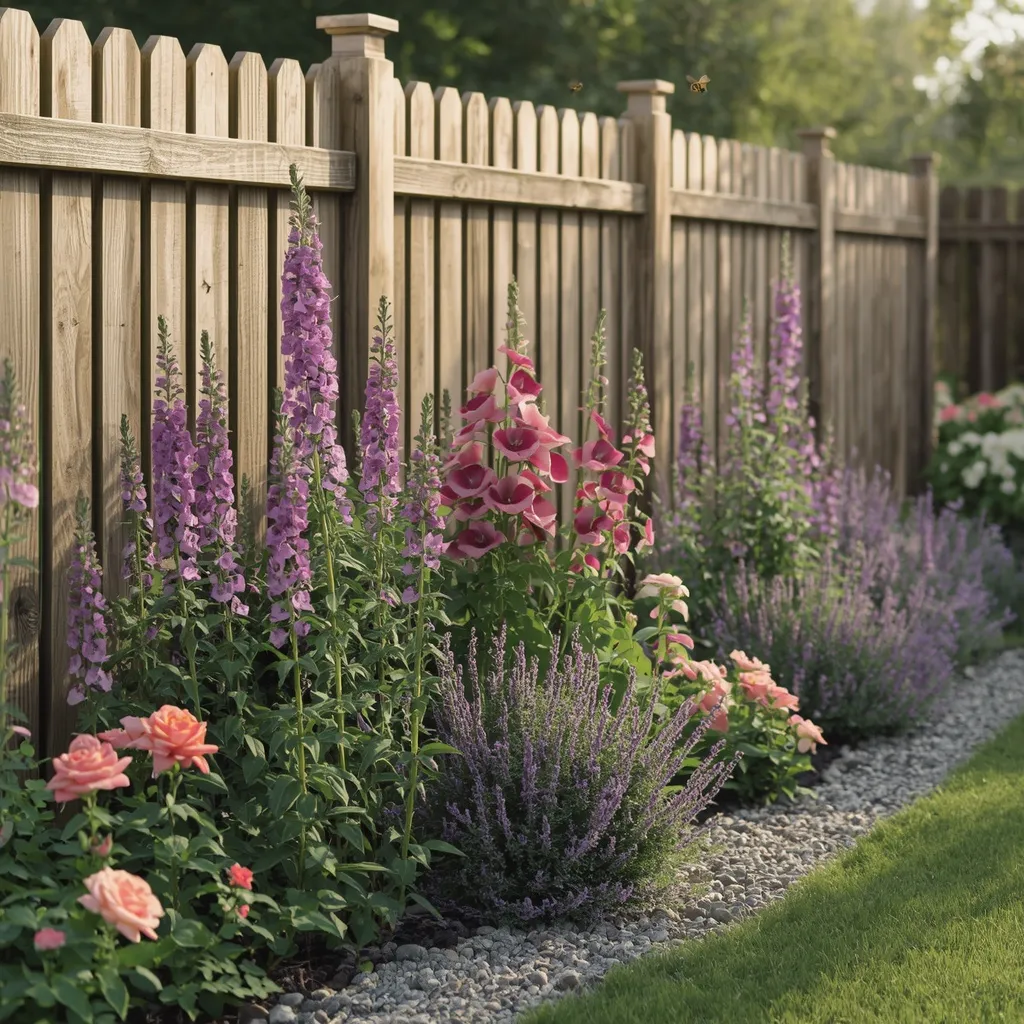
Envision a soft, billowing border along a fence or path where lavender, oregano, and chamomile tumble together with foxgloves, roses, and hollyhocks, bees drifting between them on a warm morning. A cottage-style herb and flower border blurs the line between kitchen garden and flower bed in the most romantic way.
Plant in generous drifts rather than single specimens, three or five of each herb grouped together reads far lusher than one of everything dotted about. Weave culinary herbs like sage, thyme, and oregano among cottage flowers so foliage and blooms support each other, and let self-seeders like chamomile and calendula fill gaps naturally. Lavender needs sharp drainage and full sun to thrive, so give it the driest, sunniest spot in the border and avoid overwatering it alongside thirstier plants.
- Why it works: Dense, drifted planting suppresses weeds and creates a haven for bees and butterflies.
- Best for: Romantic-garden lovers with a fence line or path to soften.
- Key elements: Drifted herbs, cottage flowers, self-seeders, a sunny well-drained lavender spot.
5. Small-Space Vertical Herb Wall
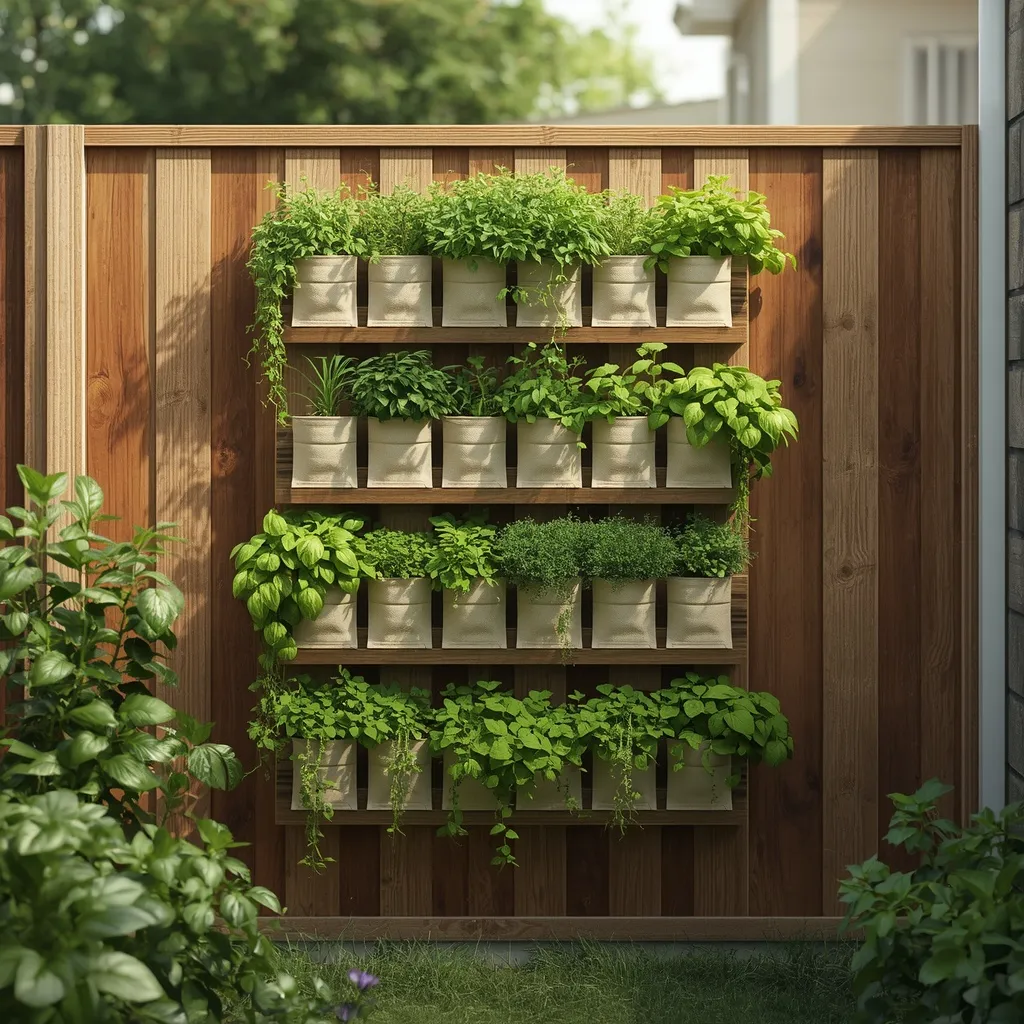
On a bare fence or exterior wall, picture a vertical arrangement of pocket planters, tiered shelves, and hanging pots overflowing with trailing thyme, basil, mint, and parsley, a whole herb garden that takes up almost no ground at all. A vertical herb wall is the answer when floor space is the one thing you don’t have.
Mount a sturdy trellis, a row of rail planters, or a pocket-fabric planter on a wall that gets good light, and put the herbs you harvest most at a comfortable reach around waist-to-eye height. Group by water needs, keeping thirsty herbs at the top where runoff drips down to those below, and use a lightweight, moisture-retentive potting mix since small pockets dry out fast. This is also the ideal spot to finally give mint its own container, where its spreading habit does no harm.
- Why it works: Growing upward multiplies planting space and keeps herbs off the ground, away from many pests.
- Best for: Renters, balcony gardeners, and anyone with a small backyard or courtyard.
- Key elements: Wall-mounted pockets or shelves, trailing herbs, water-smart top-to-bottom layout.
6. Patio Container Herb Garden
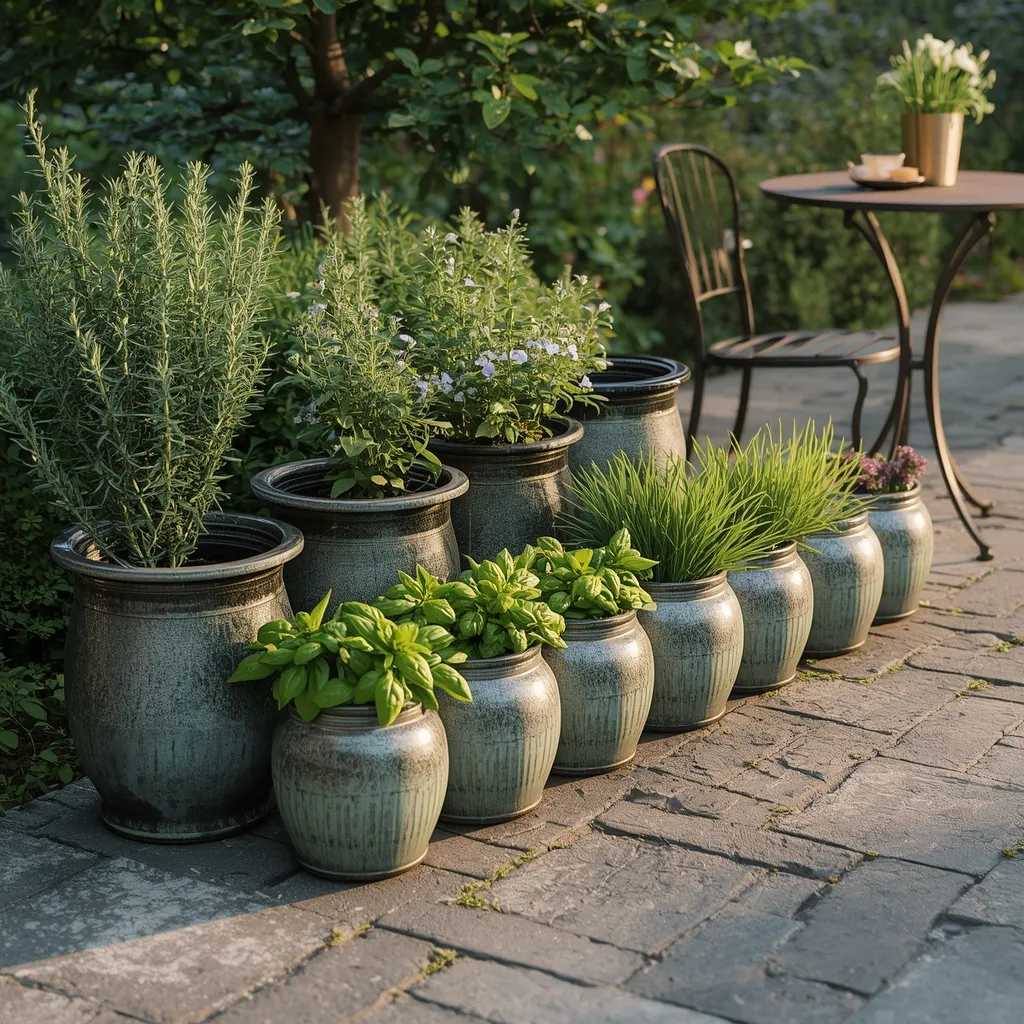
On a paved patio, imagine a cluster of glazed pots and a long trough brimming with rosemary, basil, chives, and oregano, grouped beside a bistro table so seasoning is an arm’s reach from where you cook and eat. A patio container herb garden brings the kitchen garden right to the door.
Choose pots at least 20 cm (8 in) across with drainage holes, and cluster odd numbers of varying heights for a designed look rather than lining them up like soldiers. Group the pots by sun and water needs, and raise them on pot feet so water drains freely and the patio stays clean. Because containers dry out quickly on warm paving, check moisture daily in summer and feed every couple of weeks with a balanced liquid fertilizer.
If a paved patio is your main growing space, it’s worth planning it in more detail, our dedicated guide to container herb gardens for patios walks through pot choices and planting combinations for exactly this setup.
- Why it works: Containers are fully portable, so you can chase the sun and shelter tender herbs in cold snaps.
- Best for: Renters, small yards, and cooks who want herbs steps from the kitchen.
- Key elements: Clustered glazed pots, a trough, pot feet, a nearby seating spot.
7. Classic Herb Spiral
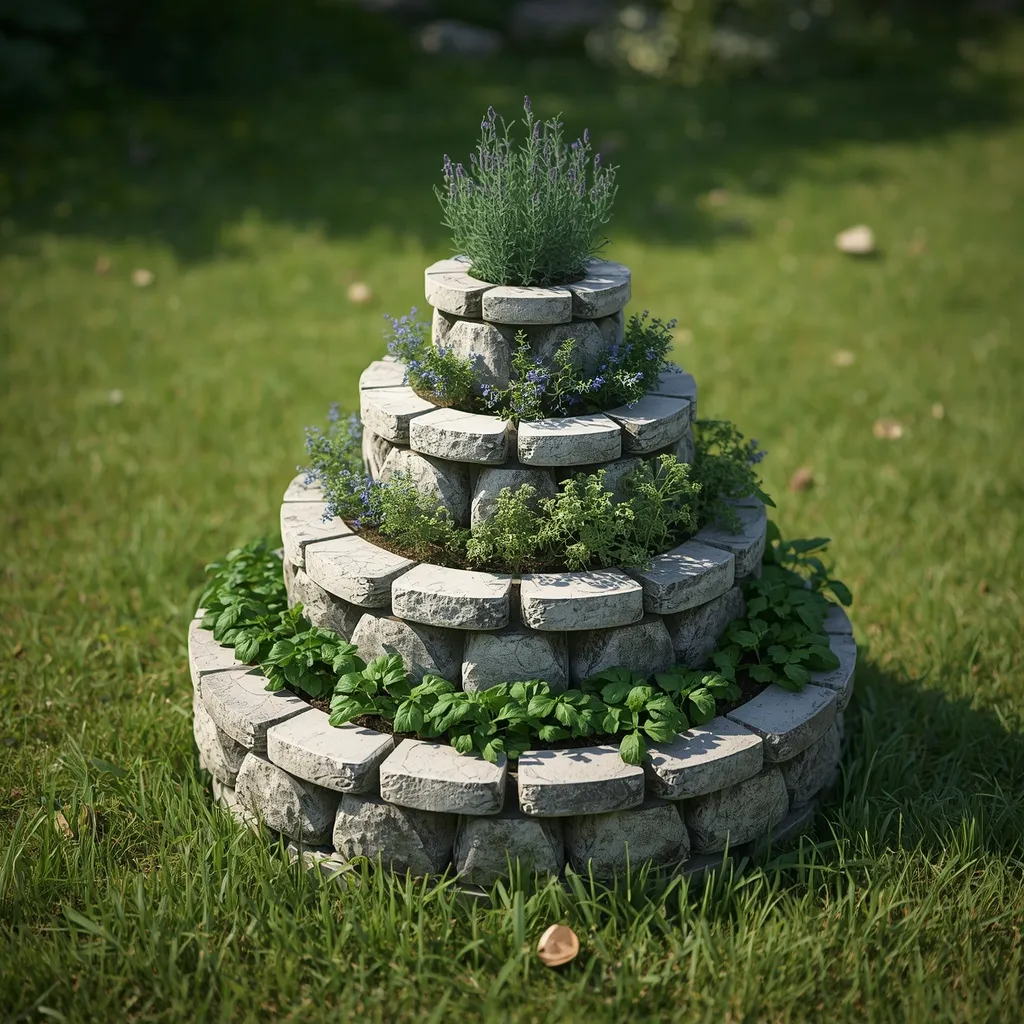
Picture a knee-high stone or brick spiral, about 1.5 m (5 ft) across, winding up to a small peak, with herbs tucked into every level, dry-loving rosemary and thyme baking at the sunny top, moisture-lovers like chives and parsley cradled at the shaded, damper base. A herb spiral packs many microclimates into one compact, sculptural feature.
The spiral works because height and orientation create different conditions in a small footprint: the top drains fast and stays hot, while the bottom holds moisture and shade. Build the wall from stacked stone or brick, backfill with free-draining soil, and place each herb where its needs match, Mediterranean herbs high and sun-facing, leafy herbs low. It’s a rewarding weekend build, but stack the stones carefully and keep the structure low and stable so there’s no risk of it toppling, especially around children.
- Why it works: One structure gives sunny-dry and shady-moist spots, suiting many herbs in little space.
- Best for: Hands-on gardeners wanting a standout centerpiece for a small-to-mid backyard.
- Key elements: Stacked-stone spiral, graded soil, herbs placed by microclimate.
8. Rustic Gravel-Path Herb Garden
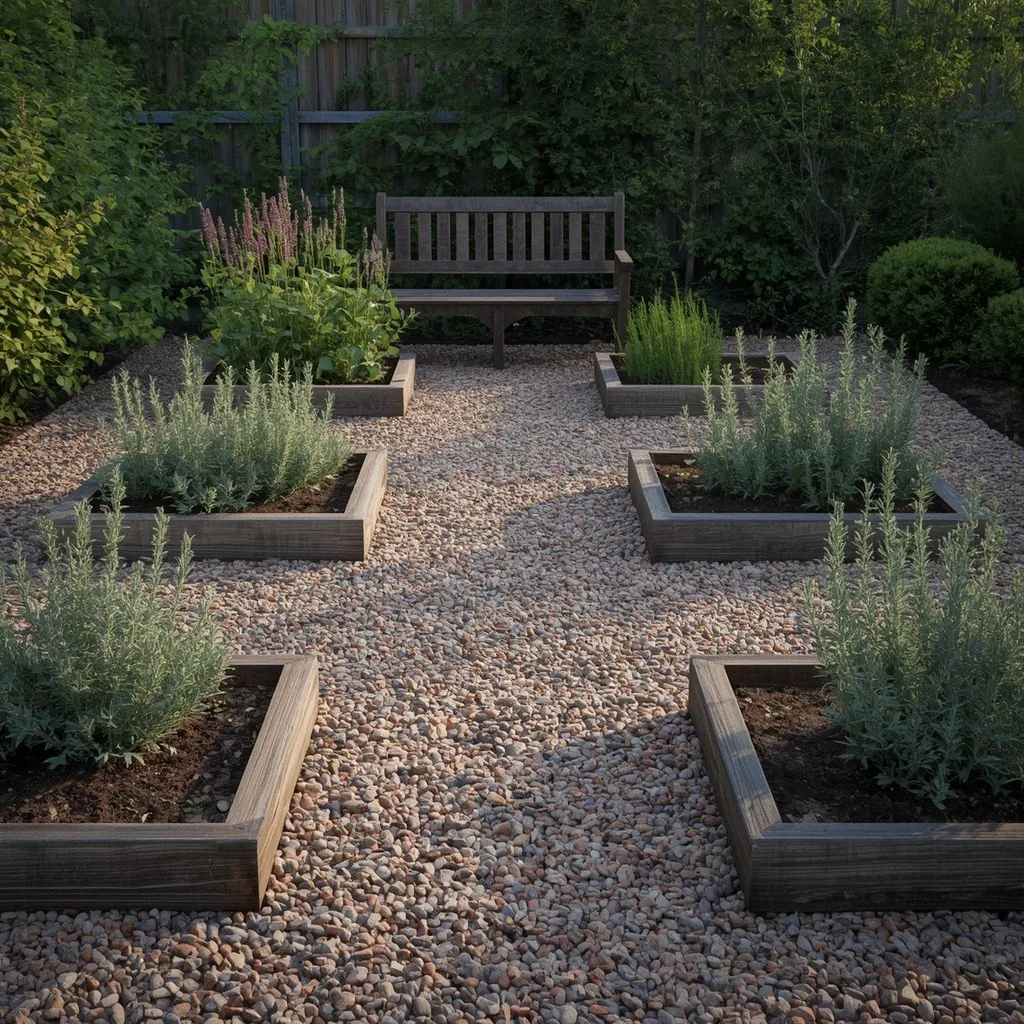
Finally, imagine a relaxed geometric layout of small planting squares divided by wide pea-gravel paths, weathered timber edging holding each bed, and a rustic bench at the end to sit and take in the scent of warm oregano and sage. A gravel-path herb garden feels like a scaled-down potager, structured yet unfussy.
Lay out four to six square or rectangular beds in a simple grid, separated by paths wide enough for a wheelbarrow (around 60 cm / 24 in), and edge each with timber or brick to keep gravel and soil apart. The gravel improves drainage, suppresses weeds, and radiates gentle warmth that Mediterranean herbs love. Plant one main herb per square for a clean look, and set a few stepping stones or a bench so the garden is somewhere to be, not just a plot to tend.
- Why it works: Defined beds and gravel paths keep the garden low-maintenance, well-drained, and easy to walk.
- Best for: Those wanting a structured, characterful herb garden for a medium or larger yard.
- Key elements: Grid of edged beds, pea-gravel paths, timber edging, a seating spot.
Which Layout Should You Choose?
The best backyard herb garden idea for you comes down to three things: how much ground space you have, how much sun it gets, and whether you can make permanent changes. This quick comparison helps you match a style to your situation.
| Layout | Space needed | Best for |
| Raised beds | Medium–large yard | Long-term, high-yield growing |
| Containers / patio | Any, incl. rentals | Renters, small yards, portability |
| Vertical wall | Minimal ground | Tiny spaces, balconies, fences |
| Herb spiral | Compact footprint | A sculptural, multi-climate centerpiece |
| In-ground border | Medium–large yard | Blending herbs with flowers |
Whichever you pick, the fundamentals stay the same: most culinary herbs want at least 6 hours of sun and soil that drains freely. For more ways to plan an outdoor kitchen garden, browse our full library of herb garden ideas, part of the wider Sunday Abode approach to making a home and garden you actually enjoy living in.
Conclusion
From tidy raised beds to a scent-filled cottage border or a single vertical wall on a rented balcony, these backyard herb garden ideas prove you don’t need acreage to grow food worth harvesting. Start with one design that suits your light and space, get the drainage right, and keep the spreaders like mint safely contained.
Pick the layout that fits your yard, sketch it out this weekend, and plant a first square of the herbs you actually cook with, then save this guide to plan your next season. For more outdoor kitchen-garden inspiration, our herb garden collection has a design for every corner of your abode.
FAQs
What herbs grow best together in a backyard herb garden?
Group herbs by their water and sun needs rather than by flavor. Drought-tolerant Mediterranean herbs like rosemary, thyme, sage, and oregano thrive together in dry, sunny spots, while thirstier herbs like basil, parsley, and chives prefer richer, more evenly moist soil. Keep mint on its own in a container, since it spreads aggressively and will crowd out neighbors.
How much sun does a backyard herb garden need?
Most culinary herbs need at least 6 hours of direct sun a day to grow well and stay flavorful. If your yard is shadier, leafy herbs like parsley, chives, mint, and chervil tolerate partial shade better than sun-lovers like basil and rosemary. Choosing a layout you can move, such as containers, lets you follow the sun through the seasons.
What’s the best herb garden idea for a small backyard?
For small backyards, a vertical herb wall or a patio container cluster gives you the most herbs in the least ground space. Both work for renters since they need no digging, and a vertical setup on a sunny fence can hold a dozen or more herbs at an easy harvesting height. A compact herb spiral is a good pick if you want a sculptural in-ground feature.
Should I use raised beds or plant herbs in the ground?
Raised beds are worth it if your soil drains poorly or you want to garden without bending as much, since they warm up faster and give you full control over the soil. In-ground planting suits good existing soil and a more natural, cottage-style look. Both need the same essentials: full sun and free-draining soil.
Which herbs come back every year?
Perennial herbs such as rosemary, thyme, sage, oregano, mint, and chives return year after year in suitable climates, making them the backbone of a low-maintenance herb garden. Annuals like basil, dill, and cilantro need replanting each season. Mixing perennials for structure with a few annuals for variety keeps the garden productive without constant replanting.
How do I stop mint from taking over my herb garden?
Always grow mint in its own container, or sink a bottomless pot into the bed so its roots can’t spread sideways. Mint sends out underground runners that quickly colonize a shared bed and choke out slower-growing herbs. Keeping it contained on a patio, in a vertical planter, or in a buried pot lets you enjoy it without losing the rest of your garden.