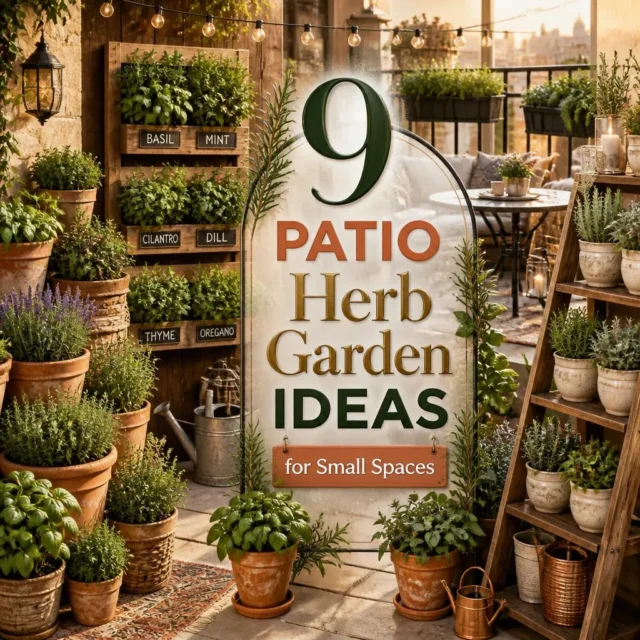

There’s a particular kind of satisfaction in stepping onto your patio in slippers, scissors in hand, and snipping fresh mint for your tea before the kettle’s even boiled. These patio herb garden ideas are built for exactly that, turning a small paved patio, balcony, or terrace into a productive, good-looking outdoor kitchen garden, no yard required.
Below are nine complete setups, each a full style you can recreate as a whole rather than a lone pot in a corner. Whether you rent a third-floor apartment or own a compact courtyard, you’ll find a layout here that suits your light, your space, and how much you want to build versus simply arrange.
1. Tiered Terracotta Pot Cluster
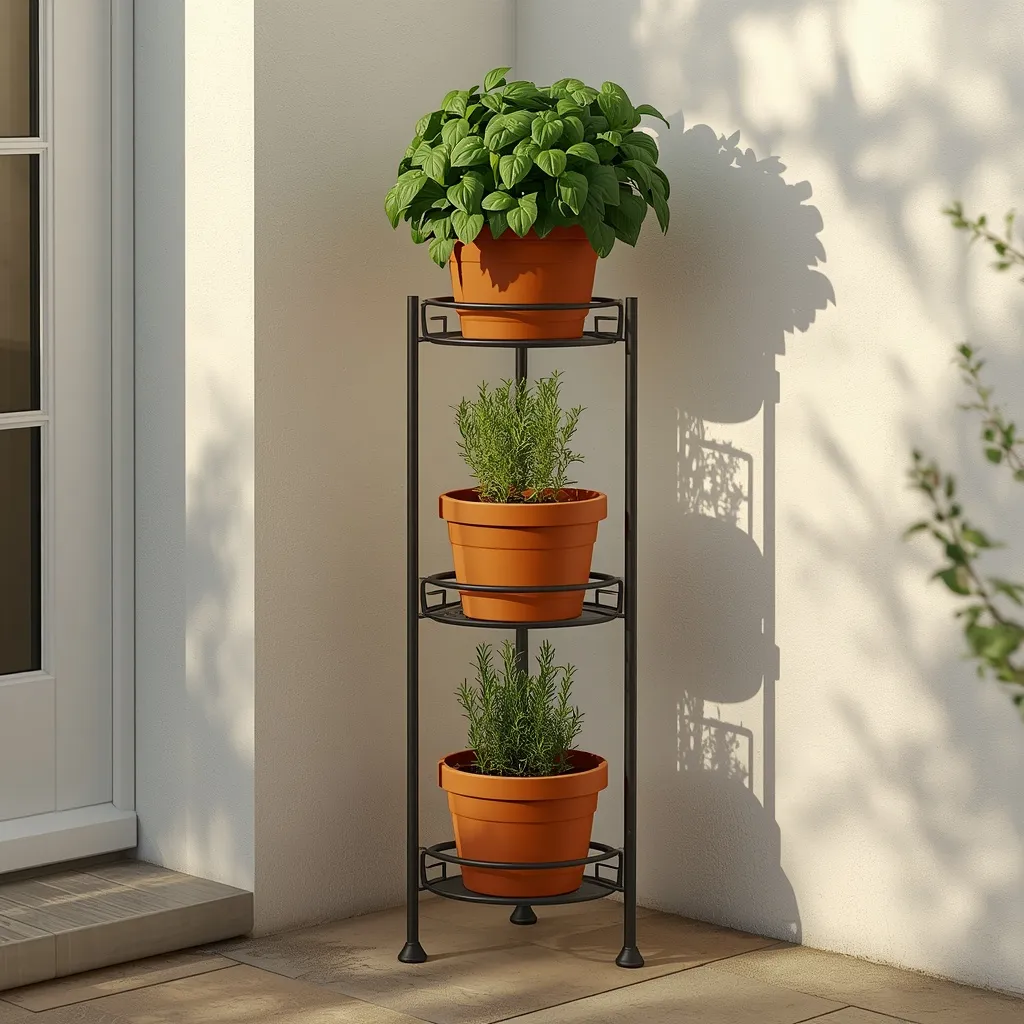
Picture a sunny patio corner stacked with terracotta pots on a three-tier plant stand, basil and parsley spilling from the top, rosemary and thyme anchoring the base, all in warm clay tones against a pale wall. A tiered pot cluster gives a full herb garden a small, sculptural footprint.
The tiered stand is the trick: it lets every herb get light without shading its neighbors, and keeps the whole collection in roughly 60 cm (24 in) of floor space. Group thirstier basil and parsley on upper tiers where you’ll notice them drying first, and put drought-tolerant rosemary and thyme lower down. Terracotta breathes, which suits Mediterranean herbs, but it also dries out fast, so line pots or water more often in peak summer, and stand them on pot feet so the patio doesn’t stain.
- Why it works: Vertical tiering fits six or more herbs into one small, sunlit corner.
- Best for: Small patios and beginners who want an instant, arrangeable garden with no building.
- Key elements: Three-tier stand, terracotta pots, herbs grouped by water need, pot feet.
2. DIY Pallet Herb Wall
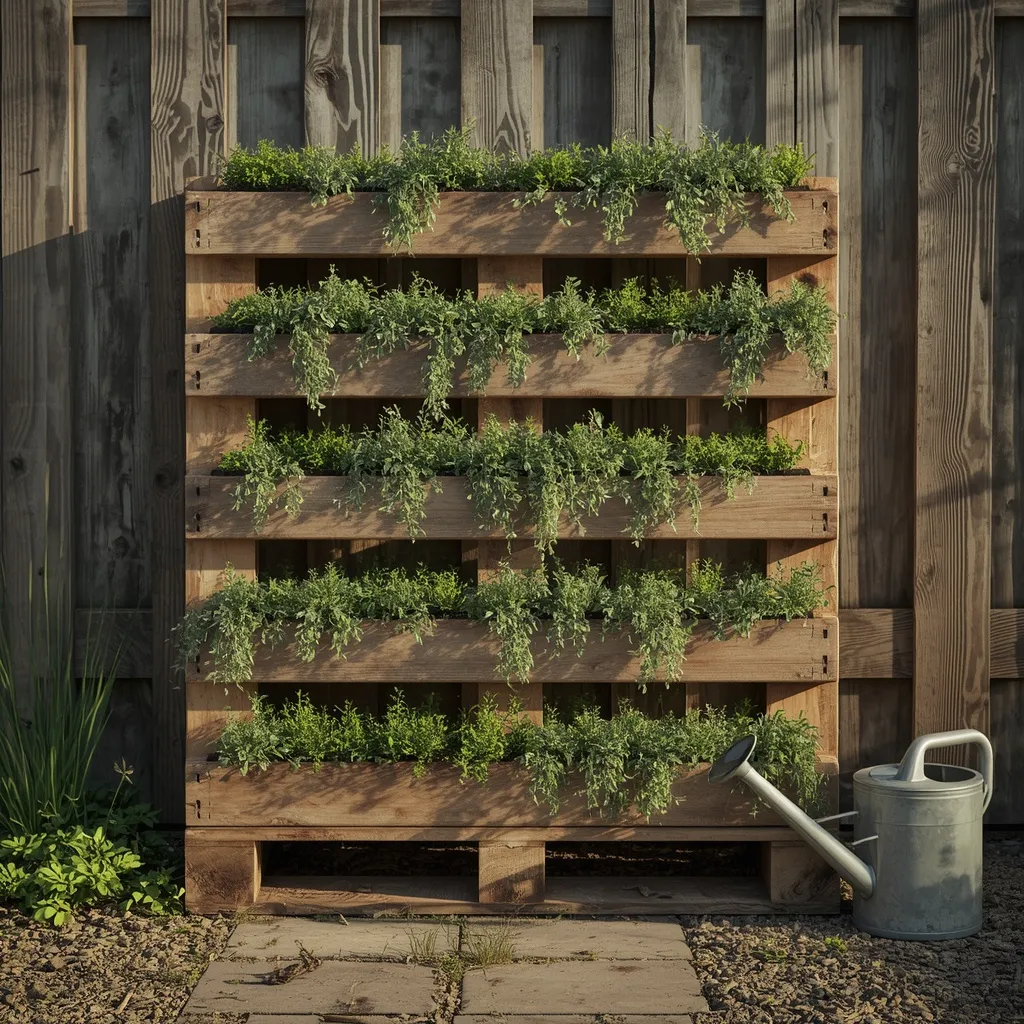
Imagine a reclaimed wooden pallet stood upright against a fence, its slats lined with soil pockets bursting with trailing thyme, oregano, and chives, a whole herb garden growing on a wall that once held almost nothing. A DIY pallet herb wall is the budget hero of patio gardening.
To build one, sand a heat-treated (HT-stamped) pallet, staple landscape fabric to the back and base of each row to hold soil, then fill and plant the pockets. Lean it securely against a wall or fix it in place so it can’t tip, especially around children or pets. Plant trailing and compact herbs rather than tall ones so the wall stays tidy, and water from the top, letting it soak down through the rows. Avoid chemically treated pallets (look for the HT, not MB, stamp) since you’re growing food.
- Why it works: Reuses free material and turns unused vertical wall space into a productive herb garden.
- Best for: DIY-minded renters and small patios on a tight budget.
- Key elements: HT-stamped pallet, landscape fabric, trailing herbs, secure fixing.
3. Modern Trough Planter Garden
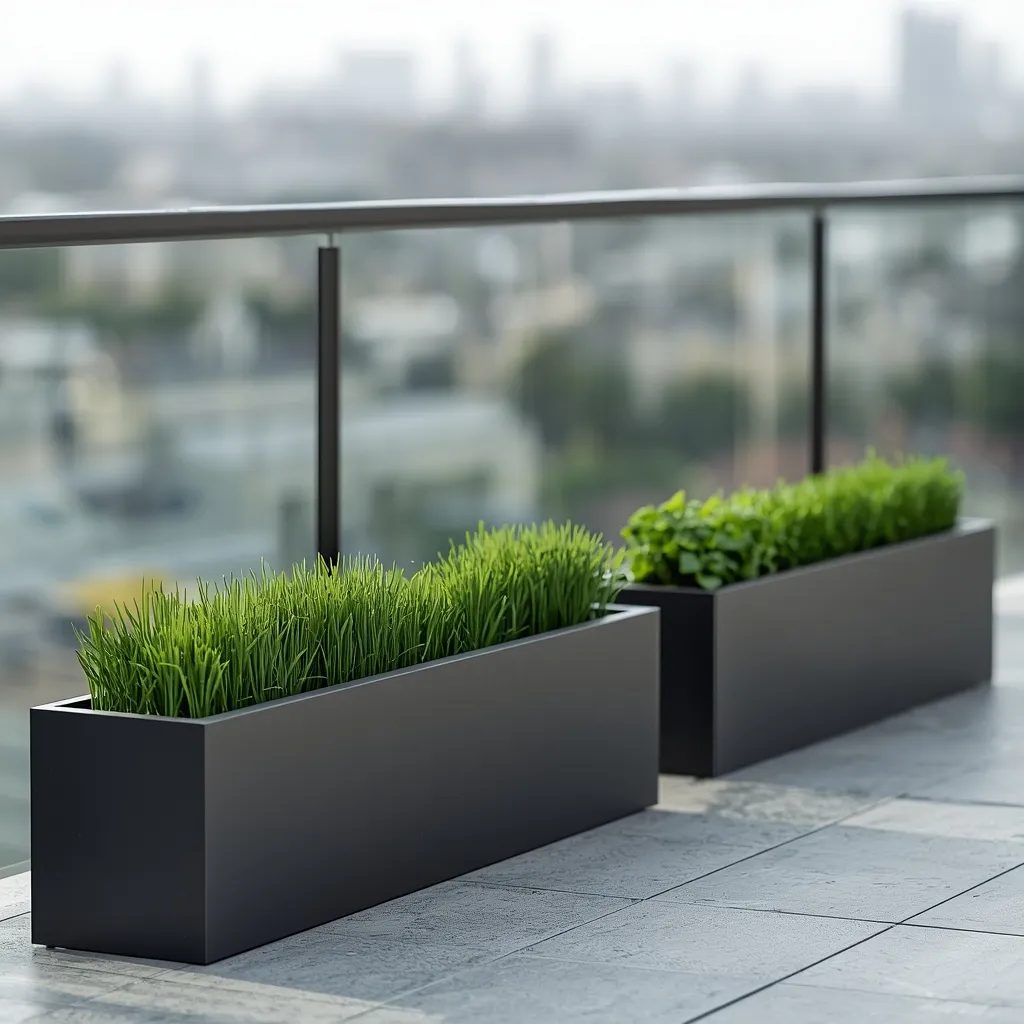
Envision two long, low planter troughs in matte charcoal, set along a patio railing or wall, each planted with clean rows of a single herb, a stripe of chives, a stripe of parsley, a stripe of basil. A modern trough garden reads architectural and calm, more design feature than veg patch.
Choose troughs at least 20 cm (8 in) deep so roots have room, and repeat one material and color for that intentional, contemporary look. Planting in single-herb rows keeps the geometry crisp and makes harvesting obvious. On a balcony, position filled troughs over a load-bearing edge and pick lightweight fiberglass or composite over concrete to keep weight down. Line the base with a drainage layer and use saucers so runoff doesn’t stain paving or drip onto a neighbor below.
- Why it works: Long troughs hold many herbs in a slim, tidy line that suits modern patios.
- Best for: Contemporary balconies and design-focused renters wanting a streamlined look.
- Key elements: Matte troughs, single-herb rows, lightweight material, saucers.
4. Boho Hanging Herb Corner
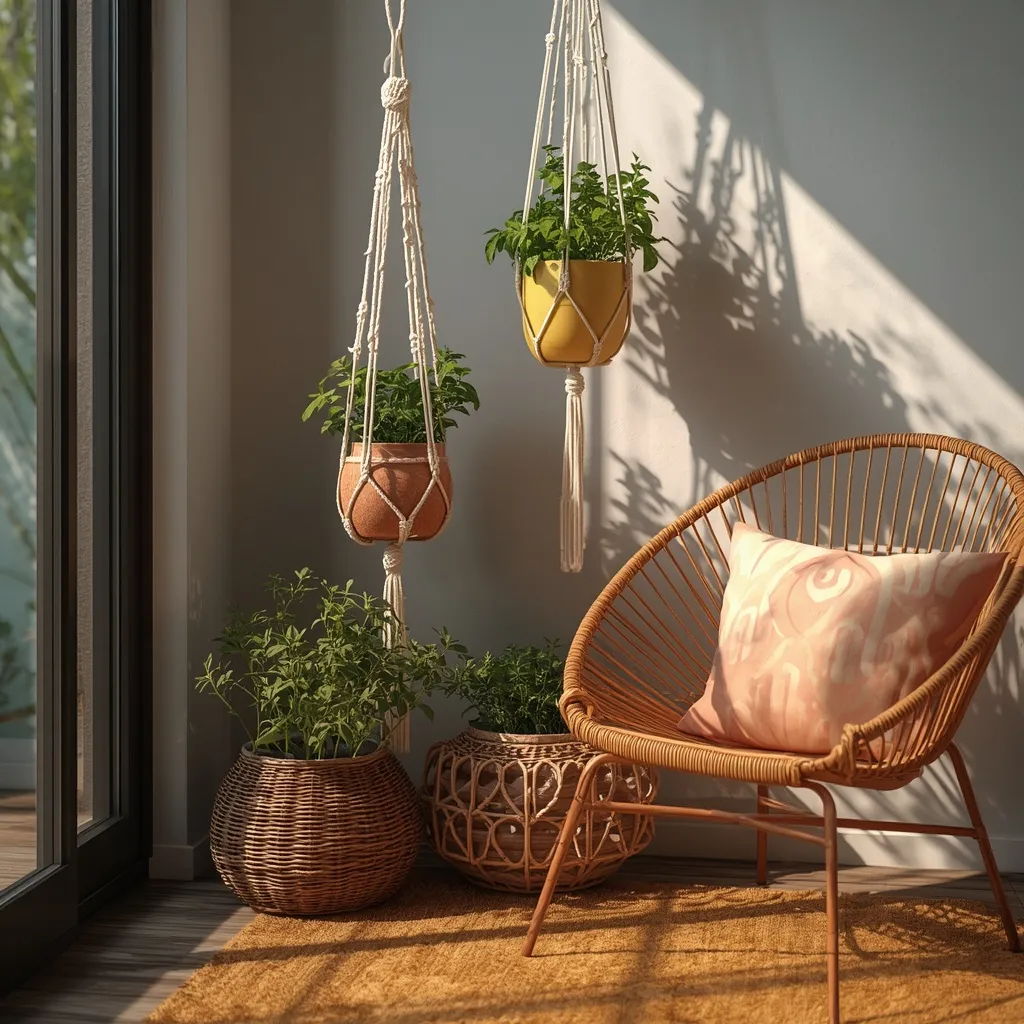
Picture a shady patio nook layered with macramé hangers, woven baskets, and mismatched glazed pots dripping mint, lemon balm, and parsley, with a rattan chair and a warm-toned rug beneath. A boho hanging herb corner turns growing herbs into a cozy, lived-in retreat.
Hang herbs at staggered heights from a sturdy hook, beam, or tension rod rated for the weight, keeping the pots you harvest most within easy reach. Mix pot styles and textures on purpose, terracotta, glazed ceramic, woven cover-pots, and lean into leafy, shade-tolerant herbs like mint, parsley, and chives if the corner gets under six hours of sun. Line woven baskets with plastic and add drainage, or water will rot both the roots and the basket. This is also the perfect spot to contain mint, since hanging it keeps its spreading roots out of every other pot.
A small patio like this shares a lot with other compact growing spots, if you’re also working with windowsills or an indoor nook, our guide to herb gardens for small spaces covers those setups in detail.
- Why it works: Hanging planters free up floor space and thrive in cozier, partly shaded corners.
- Best for: Renters and boho-style lovers with a shadier patio or balcony nook.
- Key elements: Macramé hangers, mixed pots, shade-tolerant herbs, lined baskets.
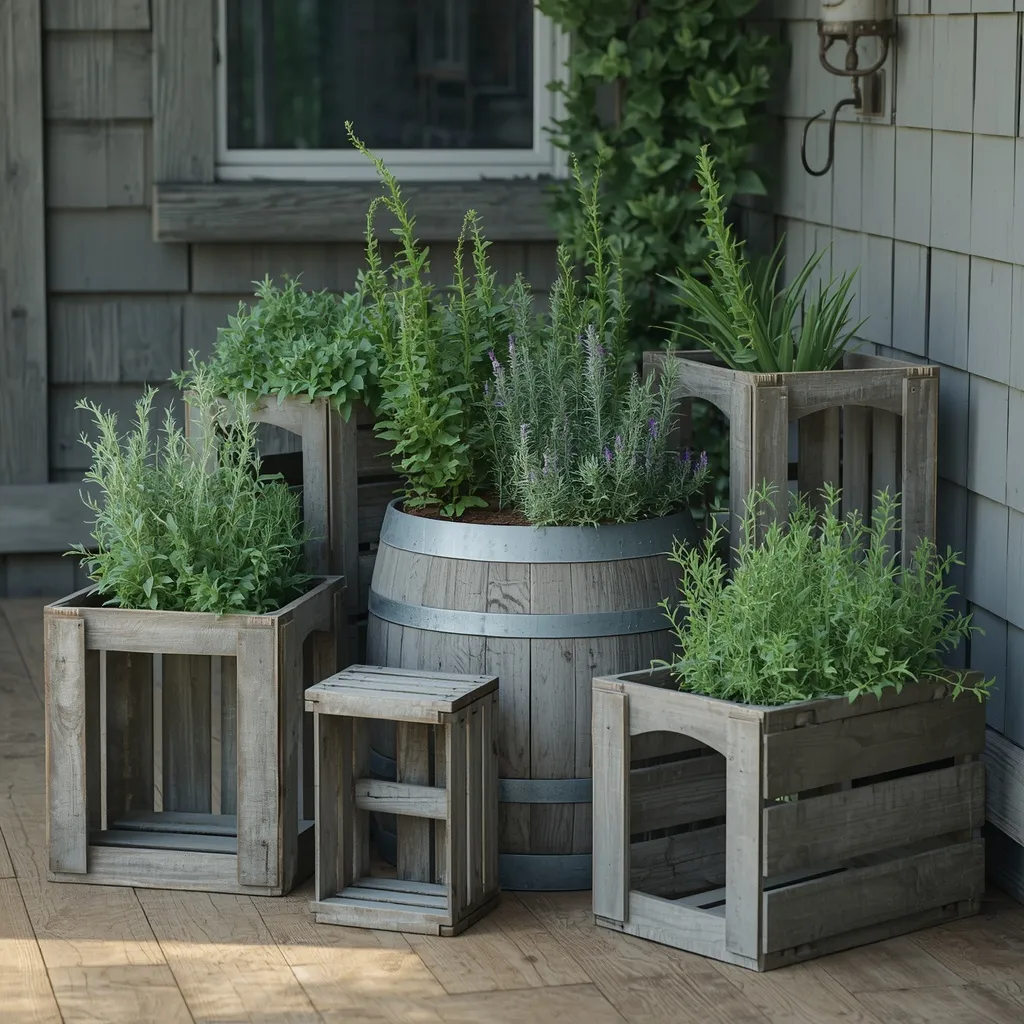
5. Rustic Crate & Barrel Garden
Imagine weathered wooden crates and a half-barrel grouped on a patio, brimming with sage, oregano, and thyme, the grey timber and soft green foliage giving a relaxed, farmhouse-market feel. A rustic crate-and-barrel garden brings warmth and character to a plain paved space.
Cluster crates of different heights with a half-barrel as the anchor, and line the wooden containers with plastic (holes punched for drainage) so soil doesn’t wash through the slats. A half-barrel around 40 cm (16 in) deep can hold several herbs together, plant one bold herb like sage in the center ringed by lower thyme and oregano. Raise wooden crates slightly off the paving on bricks or feet so the bases don’t sit in water and rot. This look suits homeowners and renters alike, since nothing is fixed down.
- Why it works: Mixed rustic containers add instant character and hold generous amounts of soil.
- Best for: Farmhouse-style patios and cooks wanting a few herbs in bold, roomy containers.
- Key elements: Weathered crates, a half-barrel anchor, plastic liners, raised bases.
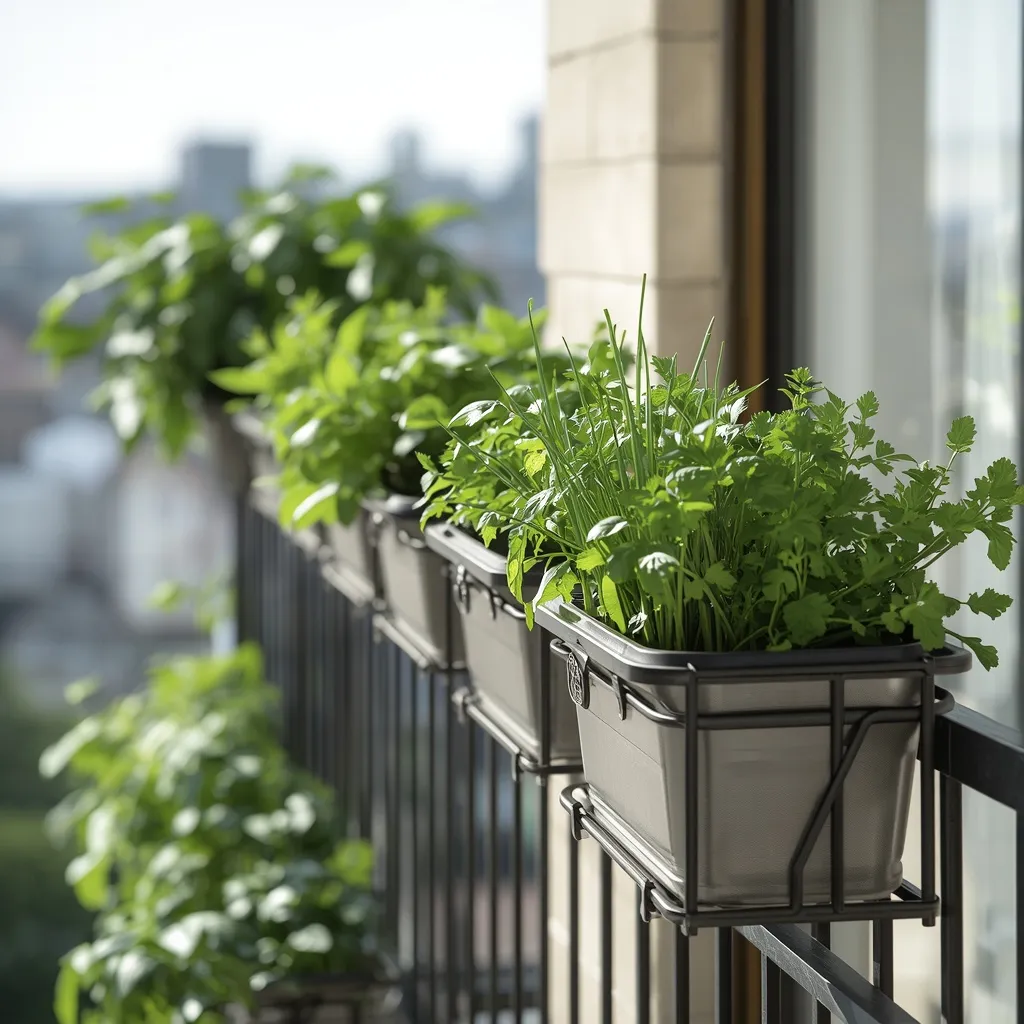
6. Rail-Mounted Balcony Garden
Envision a row of matching rail planters hooked over a balcony railing, each packed with basil, cilantro, chives, and parsley, greening the edge without using a single inch of floor. A rail-mounted balcony garden is the classic answer when your patio is really a narrow apartment balcony.
Use purpose-made rail planters that clamp or hook securely over your railing width, and always fit them on the inside of the rail so nothing can fall onto anyone below. Balconies get more wind and sun than ground patios, which dries pots fast, so choose self-watering rail planters or check moisture daily in summer. Keep herbs compact and pinch them often to stay bushy rather than leggy. Confirm your building’s rules first, since some prohibit anything mounted on the outside of a railing.
- Why it works: Railing planters add a full herb row while keeping precious balcony floor clear.
- Best for: Apartment dwellers and tiny balconies with no floor space to spare.
- Key elements: Secure inside-mounted rail planters, compact herbs, self-watering option.
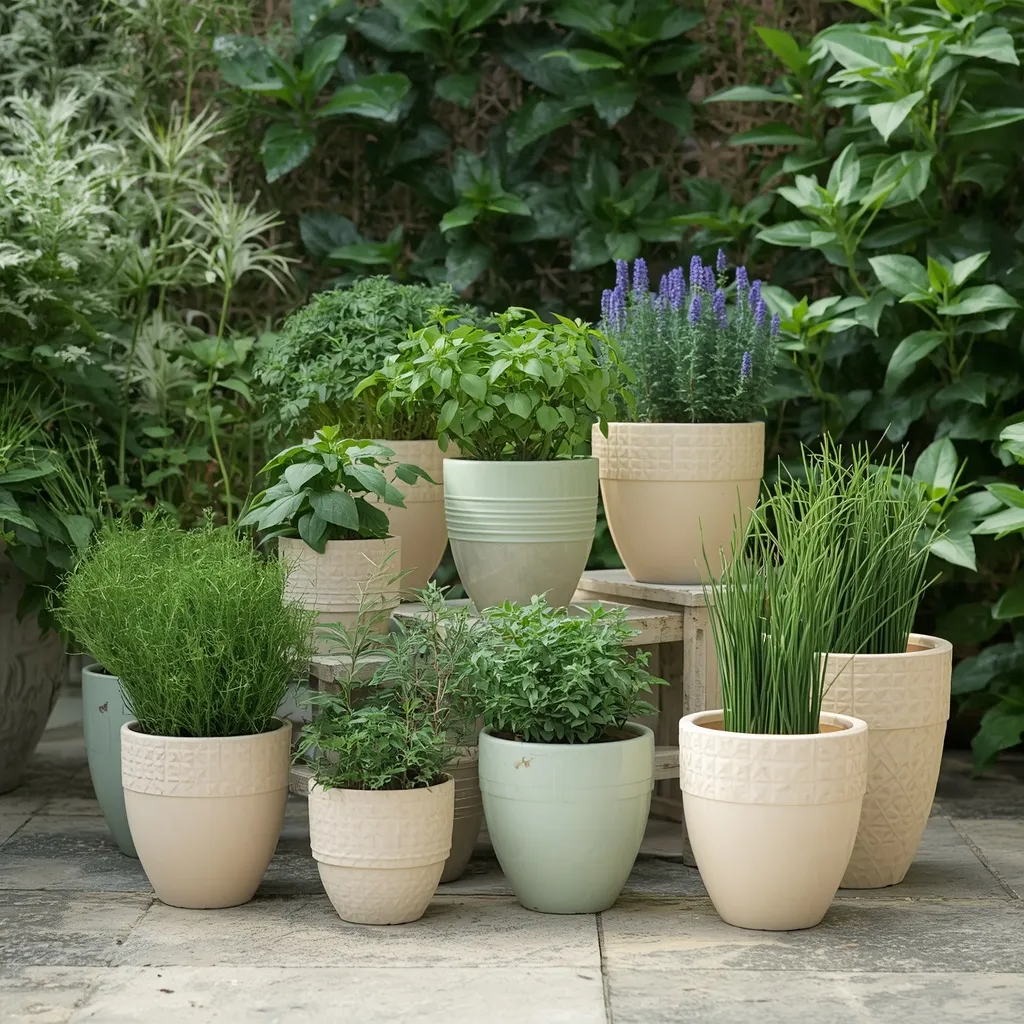
7. Aesthetic Matching-Pot Collection
Picture a curated cluster of pots all in one palette, soft creams, sage greens, and pale stone, arranged in odd-numbered groups on a patio, each holding a single herb, styled like an outdoor still life. An aesthetic matching-pot collection makes a small herb garden look intentional and Pinterest-ready.
The whole effect comes from restraint: pick one color family and two or three pot shapes, then vary height and repeat the palette. Arrange pots in clusters of three or five at slightly different levels using a low stool or upturned crate for lift. Keep the herbs practical, basil, chives, mint, thyme, but let the containers do the styling. Mixing wildly clashing pots is the usual mistake that turns a curated look messy; consistency in color is what reads as designed.
- Why it works: A tight color palette makes even a small pot grouping look styled and cohesive.
- Best for: Aesthetic-focused renters and anyone wanting a Pinterest-worthy patio display.
- Key elements: One-palette pots, odd-numbered clusters, varied heights, simple herbs.
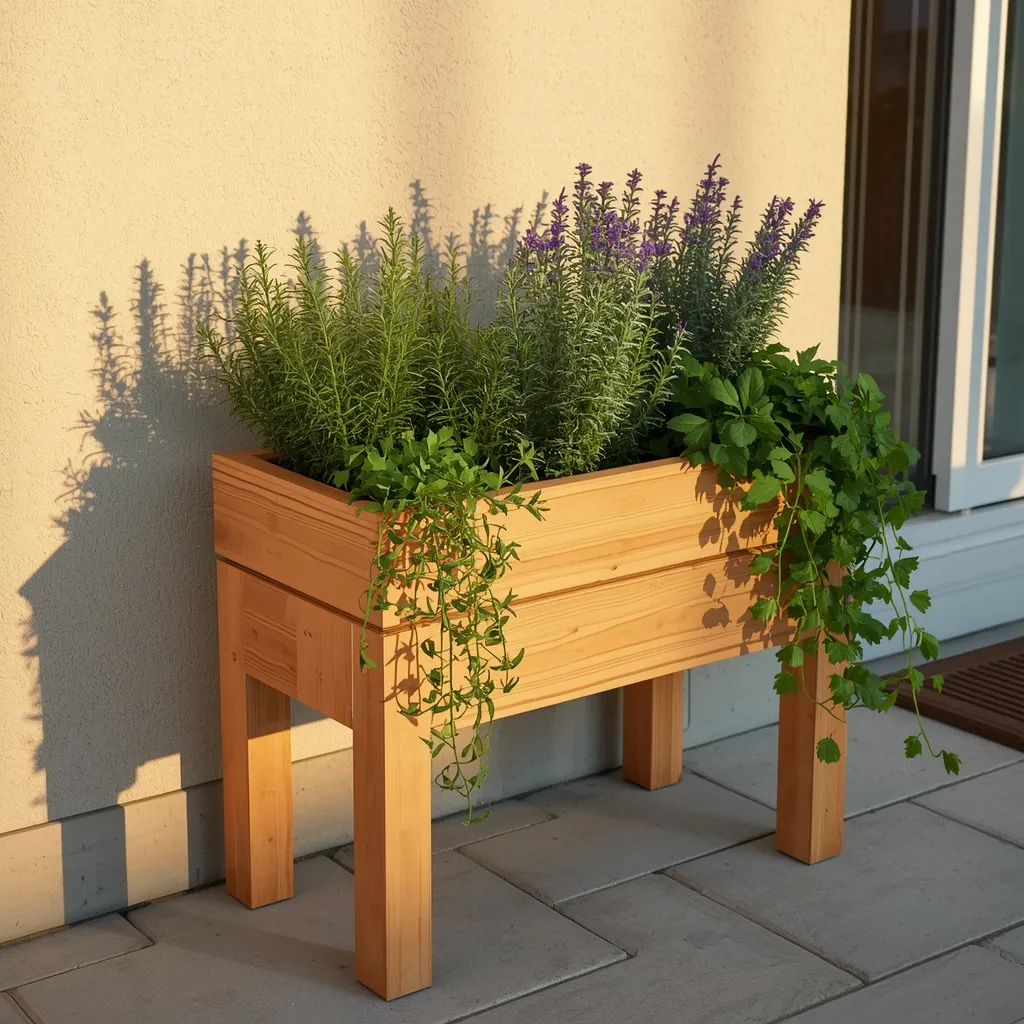
8. Raised Planter-Box Patio Garden
Imagine a waist-high raised planter box on legs sitting against a patio wall, filled with a mixed border of rosemary, sage, parsley, and trailing thyme softening the front edge. A raised planter-box garden brings bed-style growing to a hard patio without any bending.
An elevated planter (often around 75–80 cm / 30–32 in tall) puts the soil at a comfortable working height, which is ideal for anyone who finds ground-level pots hard on the back or knees. Fill it with a free-draining container mix, and plant taller herbs at the back with trailing thyme or oregano at the front to spill over. Because raised boxes hold a shallow, exposed volume of soil, they dry quickly, add a mulch layer and check watering often. Confirm the box has drainage holes and a tray so it won’t stain or waterlog the patio.
- Why it works: Waist-height growing needs no bending and packs a mixed herb border into one unit.
- Best for: Older gardeners, accessibility needs, and anyone wanting a tidy all-in-one planter.
- Key elements: Elevated leg planter, mixed herb layers, drainage tray, mulch.
9. Ladder-Shelf Herb Display
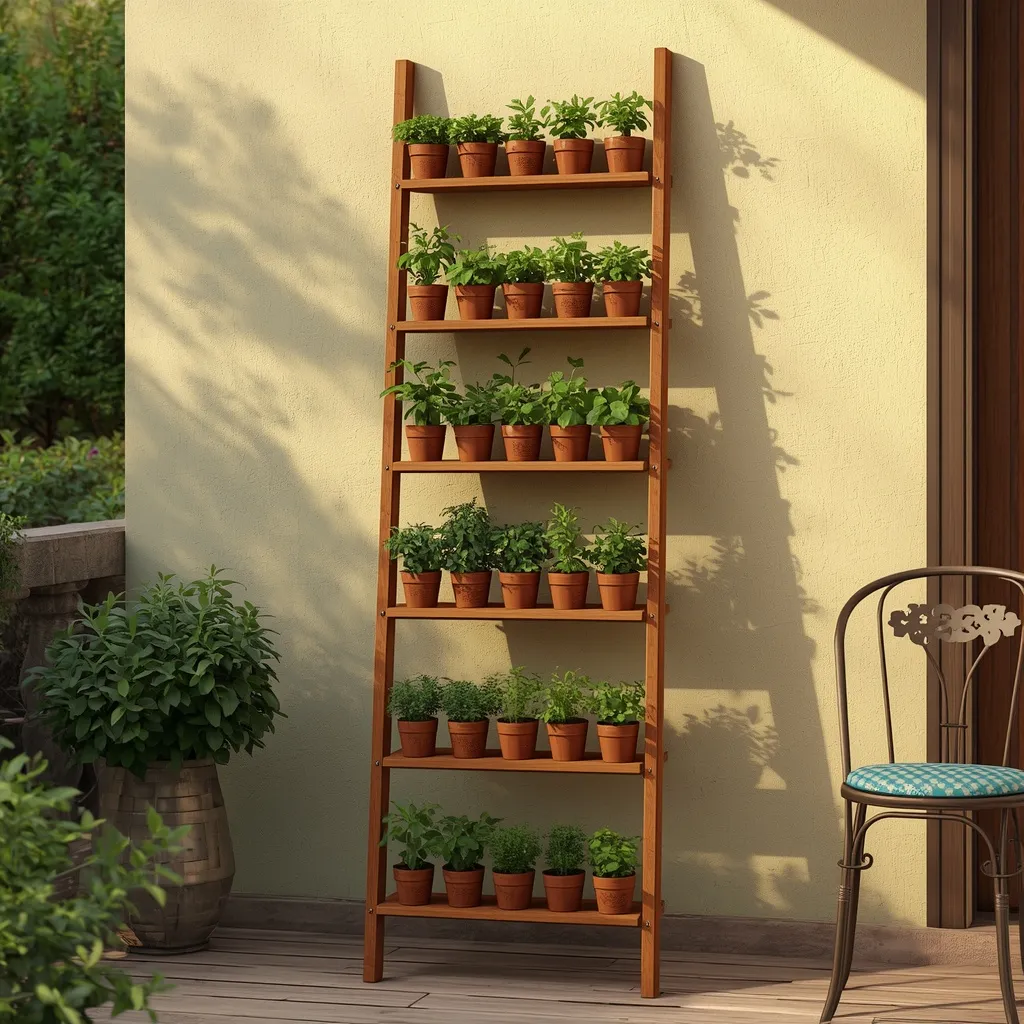
Finally, picture a leaning wooden ladder shelf against a patio wall, each rung-shelf lined with small matching pots of basil, parsley, mint, and thyme, herbs climbing in tidy tiers from floor to eye level. A ladder-shelf display gives a vertical, gallery-like herb garden with a tiny footprint.
A leaning ladder shelf uses the wall’s height while resting on the floor, so no drilling is needed, a real plus for renters. Put sun-lovers like basil and thyme on the top, brightest shelves and shade-tolerant parsley and mint lower down. Anchor or lean the ladder securely so it can’t slide on smooth paving, and keep pots small and evenly sized for a clean, repeated look. Add a saucer under each pot so water doesn’t drip down onto the herbs below and pool on the patio.
- Why it works: A leaning ladder stacks many herbs upward with no wall fixings required.
- Best for: Renters and small patios wanting height without drilling or building.
- Key elements: Leaning ladder shelf, small matching pots, sun-sorted placement, saucers.
Choosing the Right Pots for a Patio
The best pot for a patio herb garden balances weight, drainage, and how fast it dries out. On balconies, weight and wind matter more than anywhere else, so match the material to your space rather than just the look.
| Pot material | Weight | Best for |
| Terracotta / clay | Heavy | Ground patios; Mediterranean herbs that like drying out |
| Glazed ceramic | Heavy | Sheltered patios; holds moisture longer than terracotta |
| Fiberglass / resin | Light | Balconies; frost-resistant, weight-sensitive spots |
| Plastic | Very light | Rentals, upper floors, and low budgets |
| Fabric grow bags | Very light | Renters wanting foldaway, drainage-friendly options |
Whatever you choose, every pot needs drainage holes and, on a patio, a saucer or pot feet so runoff doesn’t stain the paving. For more compact growing inspiration, browse our full collection of herb garden ideas, part of the wider Sunday Abode approach to a home and garden you actually enjoy.
Conclusion
From a tiered pot cluster to a leaning ladder shelf or a rail garden clipped over a balcony, these patio herb garden ideas prove a paved space can grow real, useful herbs with a little clever arranging. Start with one setup that matches your light and space, get the drainage right, and remember that patio and balcony pots need watering more often than you’d expect.
Pick the look that fits your patio, gather a few herbs you actually cook with, and arrange your first setup this weekend, then save this guide to plan your next season. For more small-space kitchen-garden inspiration, our herb garden collection has a design for every corner of your abode.
FAQs
What herbs grow best on a patio?
Sun-loving herbs like basil, rosemary, thyme, oregano, chives, and parsley all thrive in patio pots as long as they get at least 6 hours of direct sun. If your patio is shadier, lean on mint, parsley, chives, and lemon balm, which tolerate partial shade better. Keep mint in its own pot, since it spreads and will crowd out neighbors.
How do I set up a herb garden on a small apartment patio?
Go vertical to save floor space: use rail planters on the balcony railing, a leaning ladder shelf, or a pallet wall against a fence. All three add several herbs without taking up walking room, and none require a yard. On upper floors, choose lightweight plastic or fiberglass pots and check your building’s rules before mounting anything on a railing.
How often should I water patio herb pots?
Patio and balcony pots dry out faster than garden soil because sun and wind pull moisture from all sides, so check them daily in summer. Water when the top 2–3 cm (about 1 in) of soil feels dry, until it runs from the drainage holes. Self-watering planters or grouping pots together can reduce how often you need to water.
Can I grow herbs on a patio that only gets a few hours of sun?
Yes, but choose shade-tolerant herbs and manage expectations. Mint, parsley, chives, cilantro, and lemon balm cope with partial shade and four to five hours of sun, while sun-lovers like basil and rosemary will grow leggy and weak. A boho hanging corner or a shelf near a bright wall makes the most of a shadier patio.
What’s the best low-cost patio herb garden idea?
A DIY pallet herb wall is the standout budget option, since a reclaimed heat-treated pallet costs little or nothing and holds a dozen or more herbs. Grow bags and simple plastic pots are also inexpensive and lightweight. Starting herbs from seed rather than nursery plants cuts the cost further, though it takes a few extra weeks.
How do I stop pots from staining or damaging my patio?
Raise every pot on pot feet or a saucer so water drains freely and doesn’t pool under the base, which is what causes stains and rot. On balconies, saucers also stop runoff dripping onto the neighbor below. Terracotta and unsealed pots can leave mineral marks, so feet plus occasional repositioning keep the paving clean.