
Introduction
Picture a garden where moonlight catches silvery sage, black tulips lean over a weathered stone path, and a ring of amethyst rims a bed of lavender. That is the spirit behind witchy garden ideas: an outdoor space that reads like folklore, built from real horticulture rather than a costume. This style borrows from moon gardens, herbalist cottage beds, and gothic garden design to create a sanctuary that feels alive after dark as much as it does at noon. It fits the broader idea behind Sunday Abode, that a home extends into every corner of the yard, not only the rooms indoors. Whether the space is a sprawling backyard or a single balcony railing, the seventeen ideas ahead show how to layer plants, hardscaping, and decor into one cohesive, enchanted retreat.
Witchy Plant and Herb Garden Ideas
The plants do most of the storytelling in a witchy garden, so it helps to start with what actually grows well in your climate before reaching for decor.
1. Moon Garden With Night-Blooming White Flowers
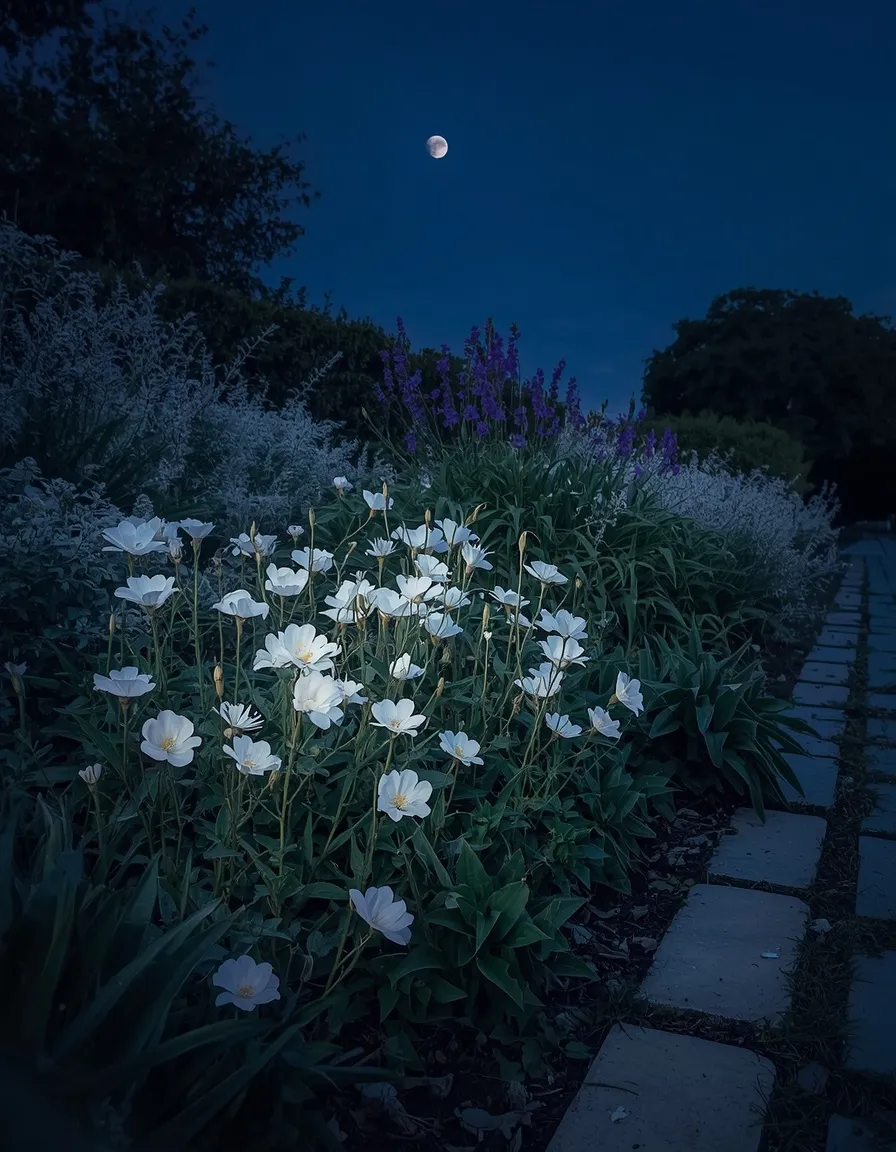
In the last hour of daylight, a moon garden seems to switch itself on. White moonflowers unfurl into wide trumpets, silvery artemisia catches the fading light, and pale evening primrose glows against dark mulch until the whole bed looks lit from within.
Build one by grouping white and silver plants together rather than scattering them through a mixed bed. Moonflower vine (Ipomoea alba) on a trellis, dusty miller (Senecio cineraria) for silvery foliage, white cosmos, and evening primrose all do well in USDA zones 8 to 11, or as warm-season annuals farther north. Site the bed near a patio, porch, or bedroom window so the scent and glow can actually be enjoyed after dark. Safety note: moonflower seeds and foliage contain toxic alkaloids, so keep the vine away from pets or young children who tend to put things in their mouths, or use white cosmos or astilbe instead if that is a concern. A common mistake is mixing in too many other colors, which dilutes the glow-in-the-dark effect that makes a moon garden worth the trouble.
- Reflects available moonlight and porch light, making evening gatherings brighter without extra fixtures
- Works best near a patio, deck, or bedroom window where the scent and glow can be enjoyed after sunset
- Solves the “the garden goes dark after sunset” problem for warm-weather evening entertaining
2. Traditional Witch’s Herb Garden
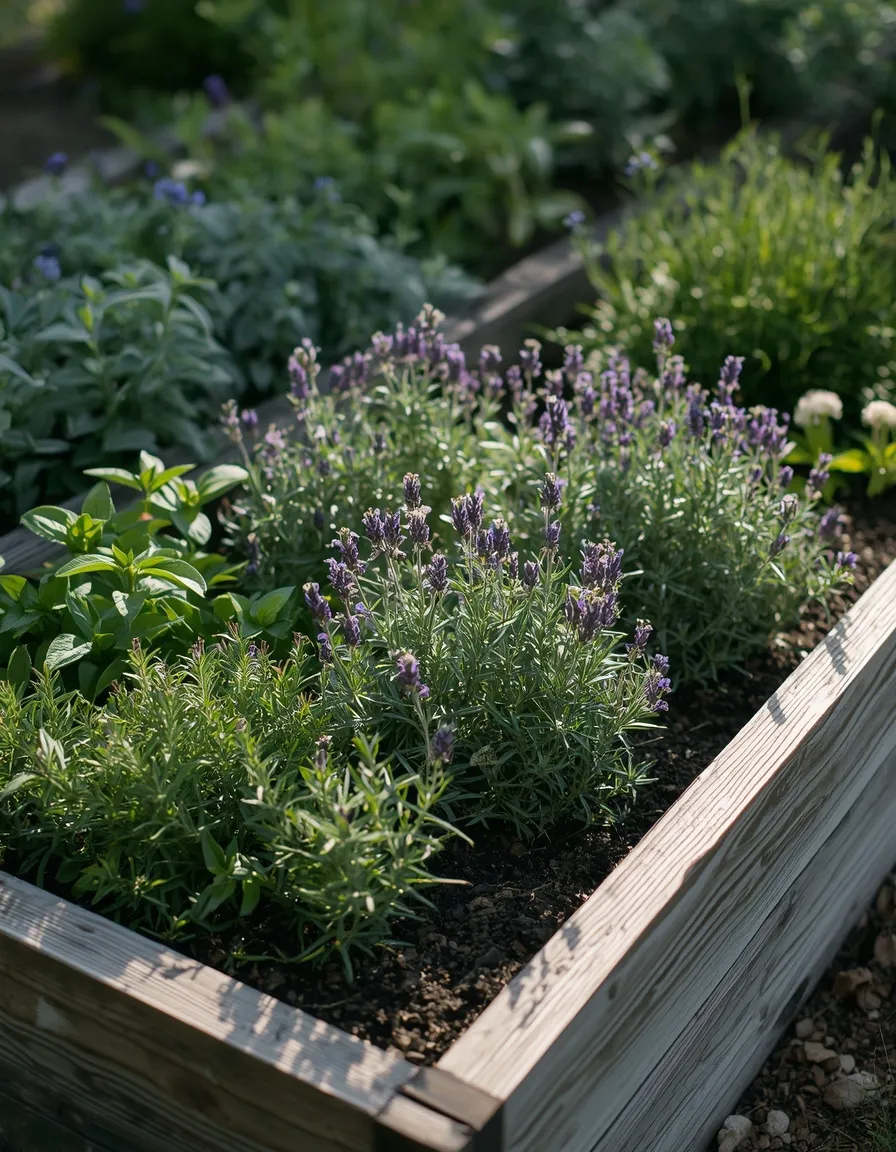
A witch’s herb garden is less about spectacle and more about substance: a dense, fragrant bed of sage, rosemary, thyme, lavender, mugwort, and feverfew, the same plants that have shown up in folk medicine and kitchen lore for centuries.
Give it a raised bed at least 30cm (12in) deep, full sun for six or more hours a day, and well-drained soil; most of these herbs are Mediterranean natives that resent soggy roots. Group plants by water needs so thirstier herbs like lavender don’t end up crowded next to drought-tolerant sage, and keep spreading species like mugwort or wormwood contained in a buried root barrier or their own pot, since both can become invasive in a mixed bed. If outdoor space or a short growing season limits what’s possible, most of these same herbs adapt well to a bright windowsill; our guide on how to grow an indoor survival garden walks through the pots, light, and rotation for keeping a herb stash going indoors year-round.
- Gives you a working herb shelf of culinary and aromatic plants, not just decoration
- Works well in a raised bed, along a kitchen-door path, or in large pots on a patio
- Solves the problem of a themed garden that looks pretty but has no daily function
3. Dark and Dramatic Flower Beds
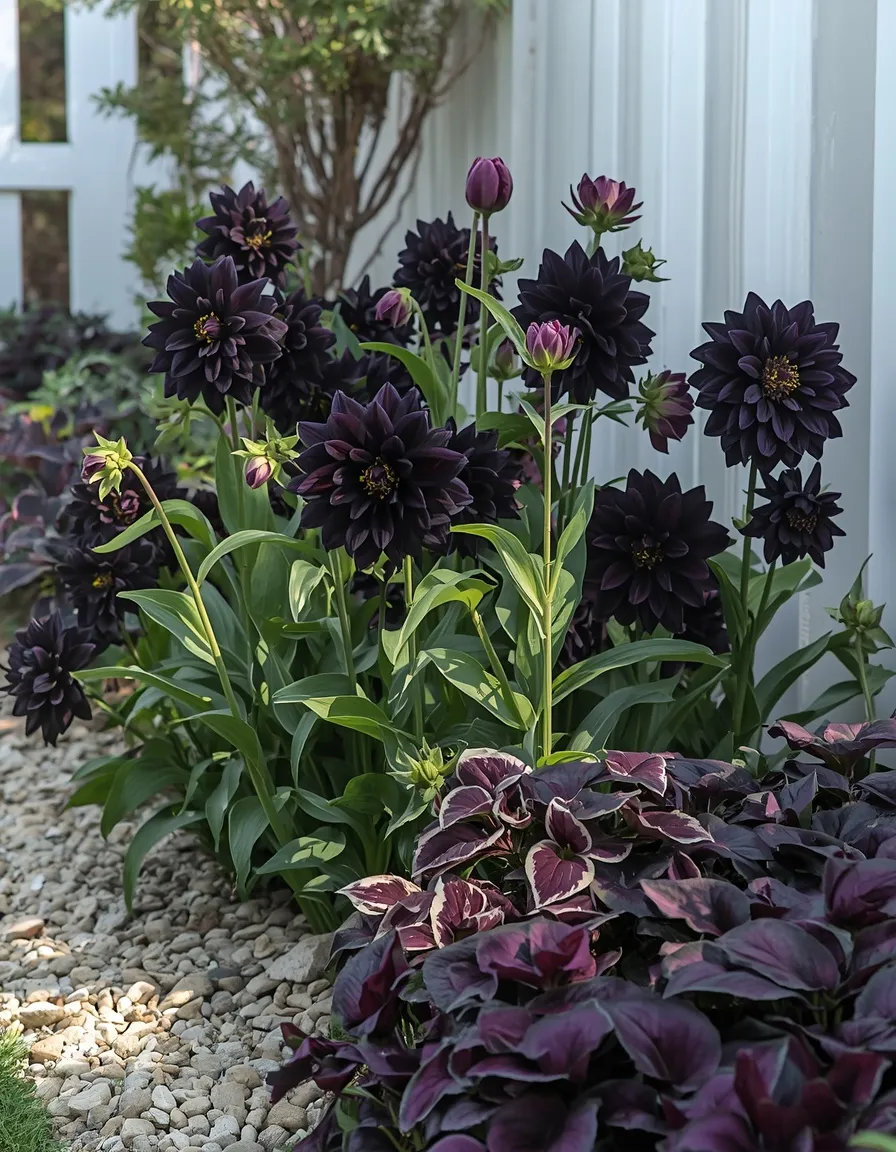
Near-black dahlias, deep purple ‘Queen of Night’ tulips, and dark coleus foliage read as genuinely dramatic against typical pastel garden palettes, especially when set against something pale like light gravel or a whitewashed fence.
Plant in drifts of three to five rather than single specimens so the dark color reads as intentional instead of accidental, and always give it a light-colored backdrop. Dark blooms against dark mulch or a shaded fence tend to visually disappear by late afternoon. Dahlias go in after the last frost date and, in cold climates (roughly zone 8 and below), need to be lifted and stored over winter since the tubers will not survive a hard freeze. Deadhead spent dahlia and tulip blooms regularly to keep the bed producing new flowers through the season, and pair the dark palette with silver foliage, such as artemisia or lamb’s ear, for contrast so the bed does not read as one flat block of color.
- Creates instant visual drama and contrast against typical pastel garden palettes
- Works best in a bed with a light-colored backdrop like pale gravel, stucco, or a painted fence
- Solves the overly matched cottage-garden look with a bolder, moodier alternative
4. Climbing Vines on a Rustic Trellis
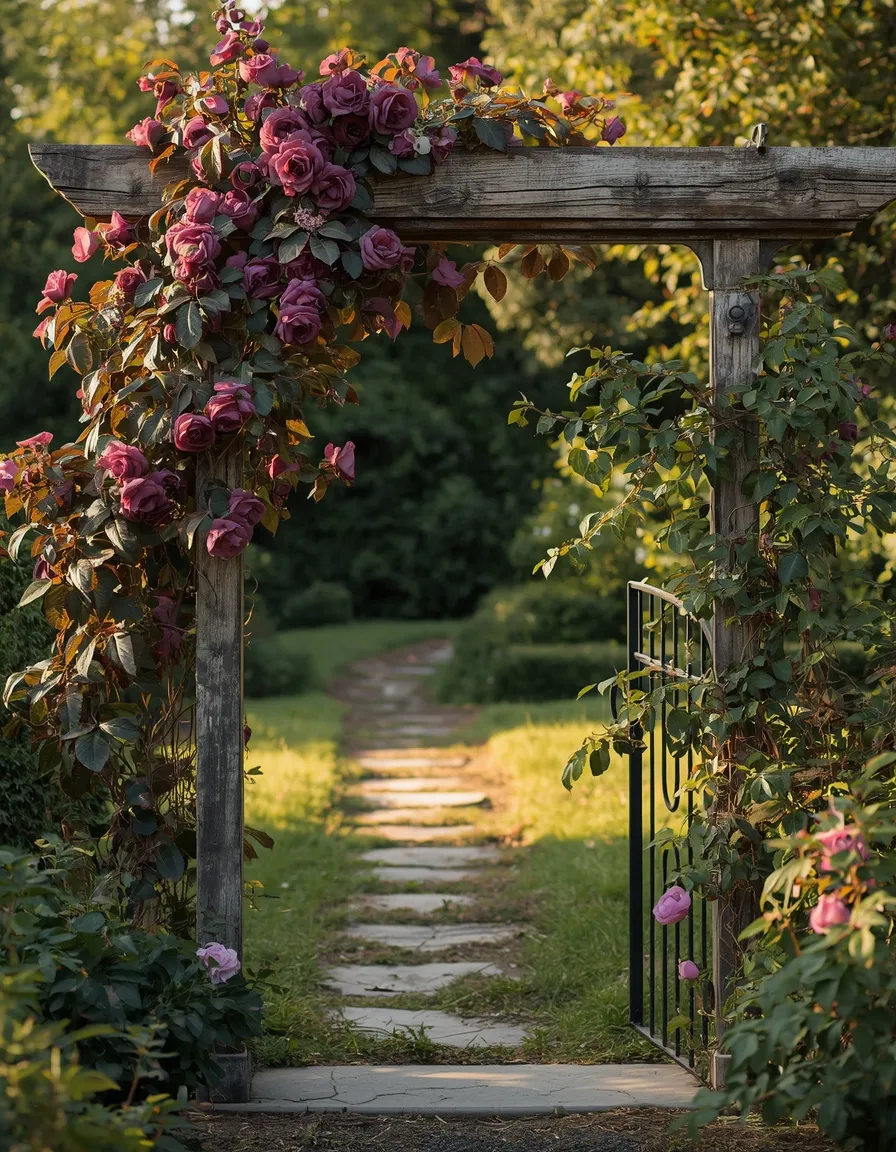
A weathered wood or wrought iron trellis wrapped in twisting clematis or climbing roses turns a bare fence or gate into a living doorway, an especially effective way to frame a garden entrance or arbor.
Anchor the trellis into the ground or a wall stud rather than leaning it against a fence. Mature wisteria and climbing roses get heavy fast and will pull down anything that is not properly secured. Dark purple clematis varieties like ‘Étoile Violette’ fit the theme without the aggressive spread of wisteria, which suits larger, established gardens with room to prune it back twice a year. Smaller spaces can lean on black-eyed Susan vine or climbing black hyacinth bean for a similar effect within a single season. One safety note: wisteria seeds are toxic if ingested, so keep pods out of reach of pets and small children once the vine matures.
- Turns a flat fence or bare wall into a living, textured focal point
- Works especially well framing an entry gate, arbor, or garden gateway
- Solves privacy and screening needs while staying fully in theme
5. Dried Herb Bundles and Besoms as Garden Decor
Bundles of dried lavender, rosemary, and mugwort tied with twine and hung along a fence, gate, or potting shed door recycle the herb garden’s own trimmings into decor that costs nothing but time.
Cut small stems in the morning once the dew has dried, gather them into bundles no thicker than a finger, and hang them upside down in a dark, well-ventilated spot for two to three weeks. A besom, a simple twig broom made from bundled birch or willow branches around a wooden handle, leaning by the garden gate or door, is a classic and easy DIY addition in the same spirit. Hang finished bundles out of direct sun, which fades their color within weeks, and rotate the display seasonally so it always reflects what is actually growing.
- Recycles the herb garden’s own trimmings into free, ready-made decor
- Works well on a potting shed door, garden fence, or covered porch
- Solves a bare wall or gate problem with almost no cost

Witchy Garden Structures and Hardscaping
Getting the bones right matters as much as the plants: paths, arches, and layout choices that hold the theme together even when nothing is in bloom.
6. Wrought Iron Garden Arbor or Gate
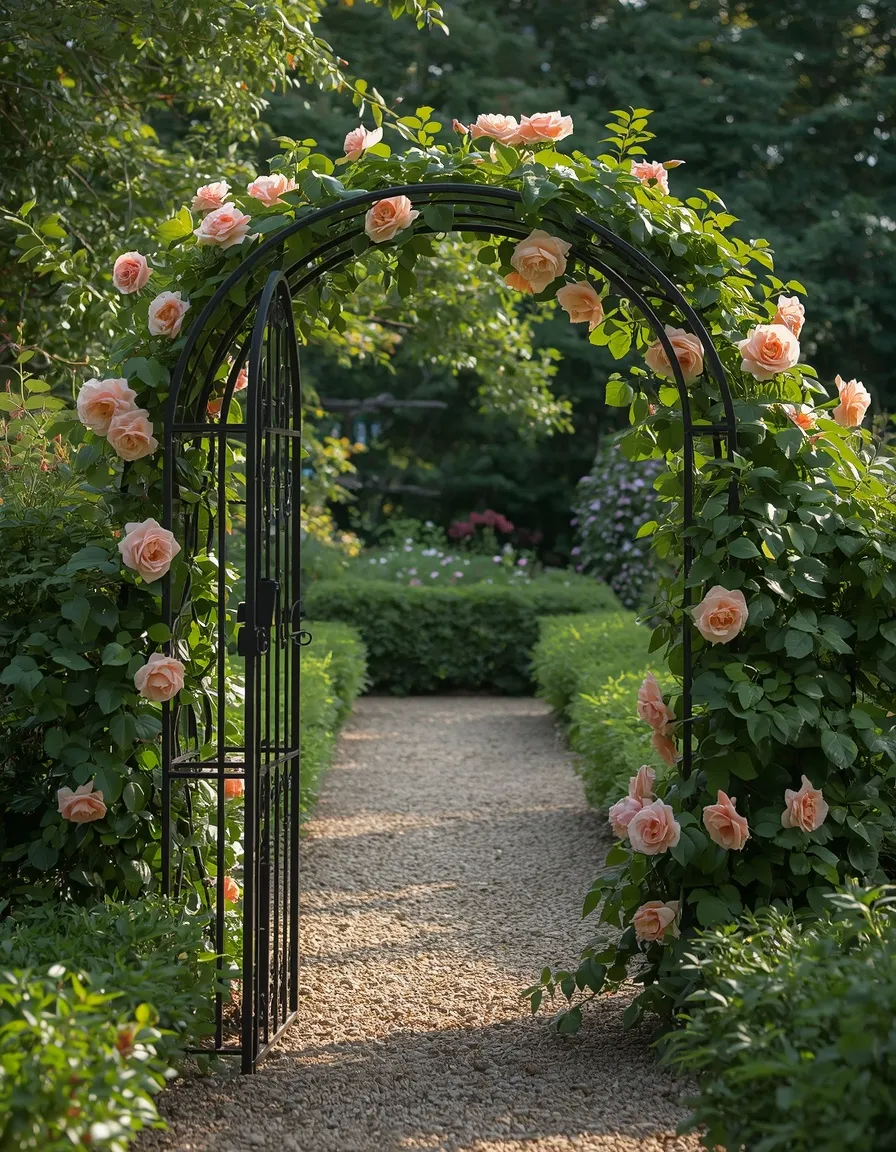
A black wrought iron arbor, whether a reclaimed salvage-yard find or a modern powder-coated version, marks a clear entrance and instantly frames the main sightline into a witchy garden.
Look for medium-gauge welded construction rather than thin decorative iron, which tends to rust or bend under the weight of a mature climbing vine within a couple of seasons. Set posts in concrete footings at least 45cm (18in) deep for stability, especially if roses or wisteria will eventually cover the structure. Place the arbor at a genuine transition point, a front-to-backyard passage, the start of a path, or the entrance to a fenced garden room, rather than in the middle of an open lawn where it has no functional reason to be there.
- Signals a clear entry point and frames the garden’s main sightline
- Works at the transition between a front yard and a backyard garden room, or at a path entrance
- Solves the problem of a garden with no obvious beginning or focal point
7. Gravel Labyrinth or Spiral Path
A spiral gravel path winding through beds of lavender and creeping thyme toward a central stone slows down movement through the garden and gives it a genuine sense of ritual.
Lay a proper landscape fabric barrier underneath the gravel before spreading it. Skipping this step is the single biggest reason a fresh gravel path looks weedy again within one growing season. Edge the spiral with steel or stone edging to hold its shape as the gravel settles, and plant low aromatic groundcover like creeping thyme right at the path’s edge so brushing past releases scent underfoot. This idea works especially well as a dedicated meditation or altar corner rather than a main thoroughfare, since a spiral is a slower route by design, not the most direct one.
- Slows down movement through the garden, encouraging a more contemplative walk
- Works well in a dedicated meditation, altar, or herb-viewing corner
- Solves the flat, straight-path problem with something more atmospheric and intentional

8. Weathered Stone and Statuary Accents
A moss-covered stone bench or a weathered concrete raven tucked among ferns gives a shaded garden corner a fixed point for the eye to land on.
New concrete statuary can be aged faster with a slurry of plain yogurt, water, and a little garden soil brushed on and left in a damp, shaded spot. Moss and lichen typically start colonizing within a few months. Place statuary as a genuine focal point, at the end of a path, in a bed corner, or beside a bench, rather than scattering several small pieces through the same bed, which tends to read as clutter rather than atmosphere. One well-placed piece almost always outperforms three competing for attention.
- Adds a fixed, weathered focal point that anchors the eye among moving foliage
- Works best tucked into shade gardens, fern beds, or path endpoints
- Solves the flat, colorless look of a shaded corner with little bloom

9. Twisted Branch and Willow Arches
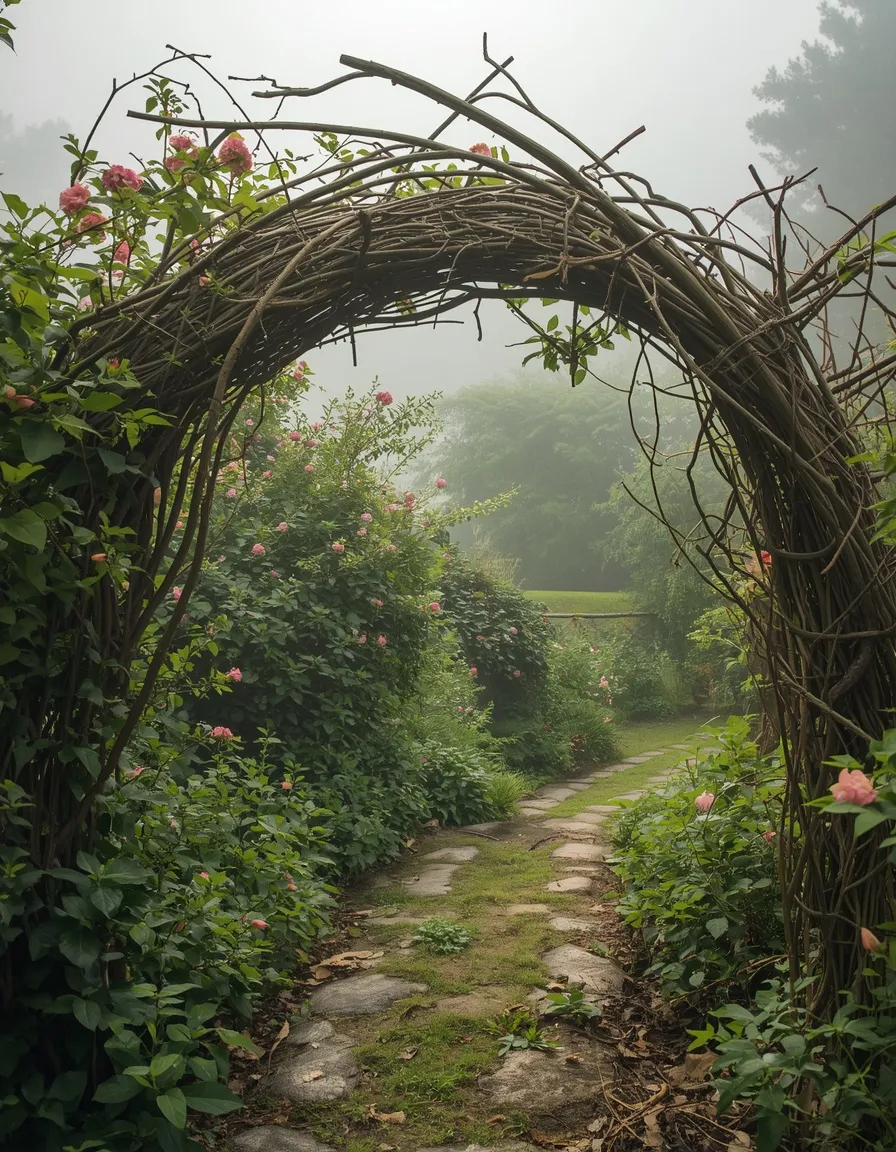
A woven archway of curly willow or grapevine branches over a garden entrance brings organic, sculptural structure that straight lumber can’t quite match.
Soak willow whips in water for a day or two before weaving to make them pliable enough to bend without cracking, then work them over a simple wood or metal frame. In climates with reliable moisture, a living willow arch can be planted directly into the ground, where the branches will root and leaf out on their own each spring. This idea suits damp, temperate climates best; willow is thirsty and struggles in consistently dry or arid regions. A common mistake is using branches that have already dried out, which snap instead of bending.
- Adds organic, sculptural structure without the cost of milled lumber or iron
- Works well over a gate, path entrance, or as a freestanding garden feature
- Solves the need for vertical interest in a young garden that hasn’t filled in yet
10. Zodiac or Celestial-Themed Garden Bed Layout
A circular bed divided into twelve wedge-shaped sections, each planted with an herb or flower tied to a different zodiac sign, gives a themed garden real geometric structure instead of scattered planting.
Lay out the wedges from a center point using stakes and string, then define each section with a low edging material like brick, stone, or dwarf boxwood so the radial pattern stays visible as plants fill in. Keep each wedge to two or three repeated species rather than a mix; an overplanted wedge quickly loses the geometry that makes this layout work in the first place. A sundial, armillary sphere, or simple stone marker at the center gives the whole bed a natural focal point, and this design reads best viewed from above, an upstairs window or elevated deck.
- Gives a themed garden real structure and symmetry instead of scattered planting
- Works best as a centerpiece bed viewed from an upstairs window or seating area
- Solves the “where do I even start” problem with an easy-to-follow planting grid

11. Toad House and Wildlife-Friendly Nooks
A small ceramic or upturned clay pot tucked into a shaded, damp corner gives toads a home and turns them into the garden’s own natural pest control team.
Place it in a cool, shaded spot near the herb or vegetable bed, ideally close to a shallow water dish; toads need consistent moisture and won’t use a house sitting in full sun. A single resident toad can eat a meaningful number of slugs, snails, and soft-bodied insects each night, cutting down on the need for pesticides around edible herbs. This is a low-effort way to make the garden feel genuinely alive rather than only decorated, and it fits naturally alongside the herb beds and moon garden plantings already doing double duty in the space.
- Adds natural, low-effort pest control for slugs, snails, and soft-bodied insects
- Works in shaded, damp corners near the herb or vegetable bed
- Solves the desire for a garden that feels genuinely alive, not just decorated

Witchy Garden Decor and Magical Accents
Once the plants and structure are in place, small decorative touches are what push a garden from pleasant to genuinely magical.
12. Cauldron-Style Planters
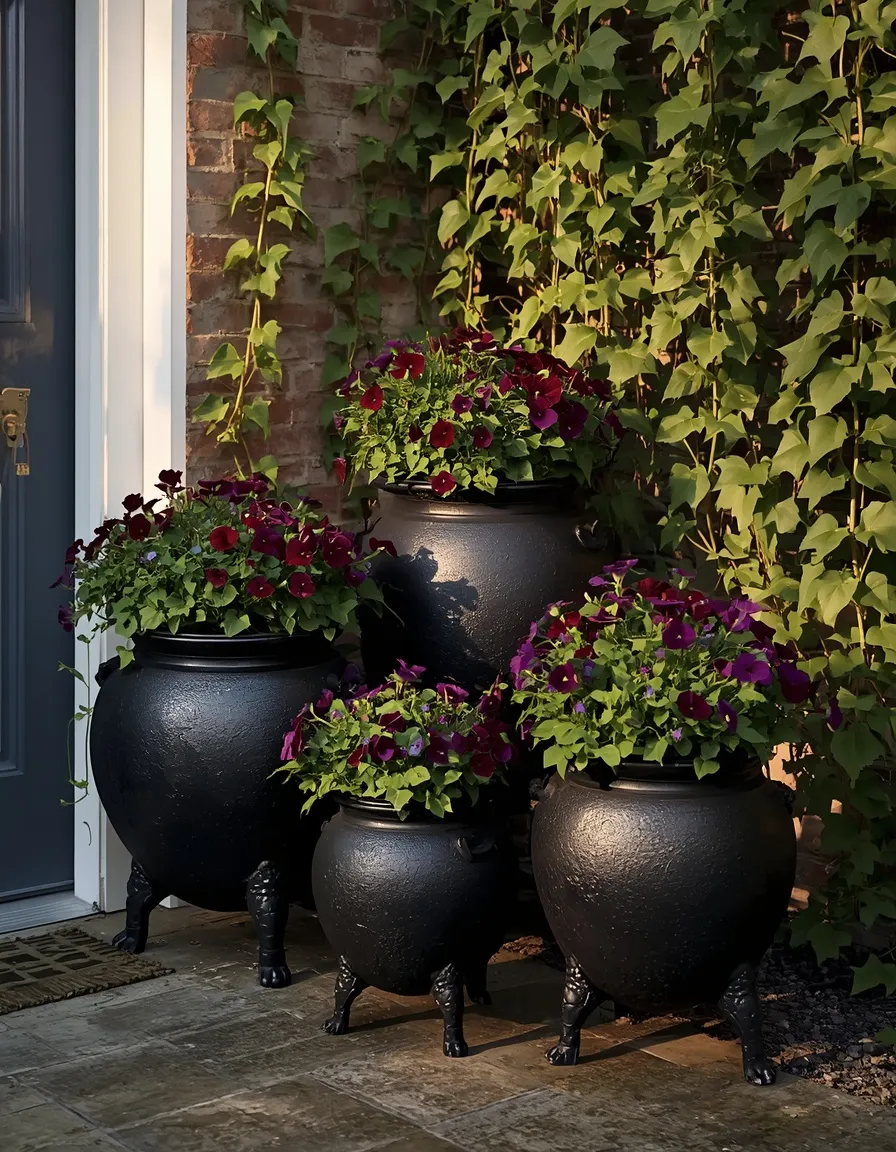
A black cast iron or resin cauldron overflowing with trailing ivy, dark petunias, or a mix of purple and silver foliage is the single most recognizable visual in the entire witchy garden style.
If using an actual cauldron or kettle without drainage holes, drill several into the base before planting; standing water is the fastest way to rot roots in a container this deep. Line the inside with landscape fabric before adding soil to protect against rust staining on a patio or deck. Group two or three cauldrons of different sizes near an entry or seating area rather than using just one, which tends to look isolated. This idea works especially well for renters, balcony gardeners, or anyone without in-ground bed space, since the whole look travels in a single container.
- Delivers the theme’s most recognizable visual in a single, movable container
- Works on a porch, doorstep, or as a grouped container feature
- Solves the small-space problem for renters or balcony gardeners
13. Garden Altar or Nature Shrine
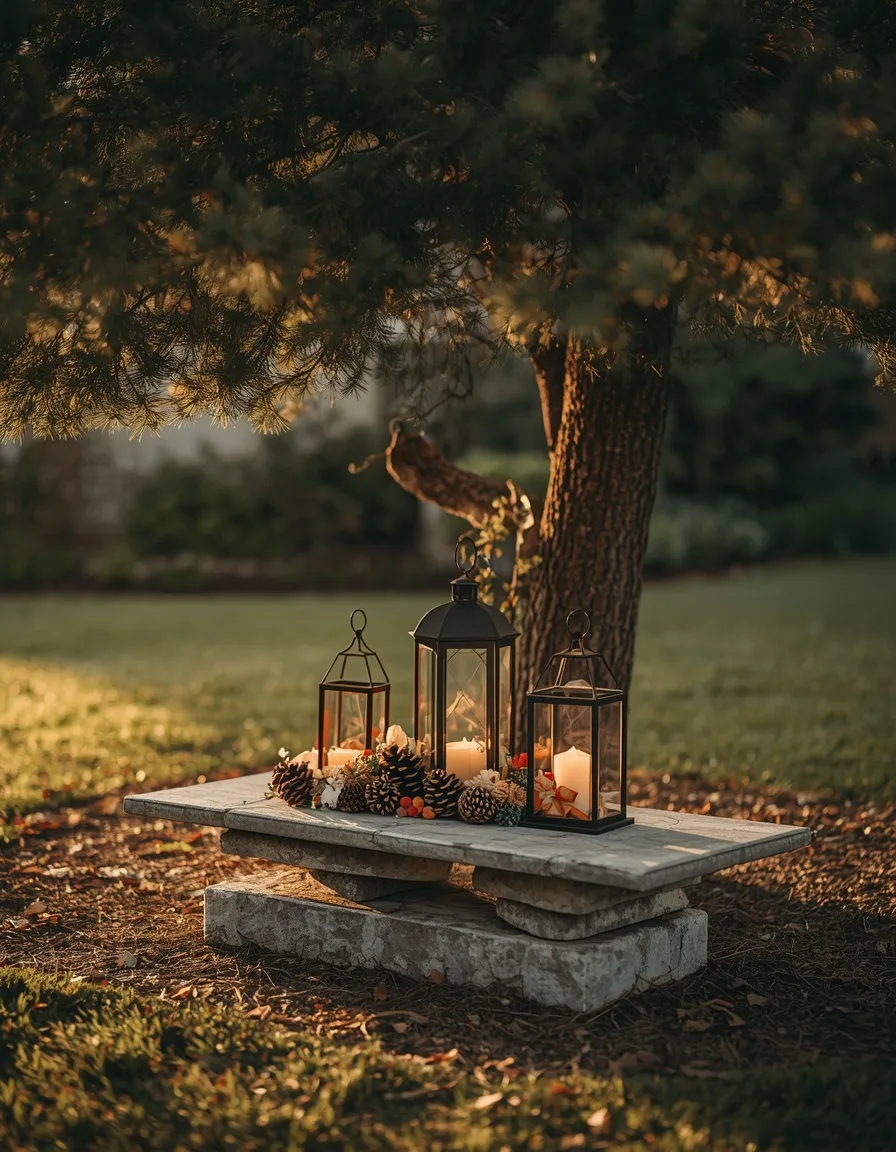
A flat fieldstone slab or a sealed tree stump, topped with candles, pinecones, and whatever is currently blooming, gives the garden a quiet, intentional focal point rather than just another planted bed.
Build it on a level base in a secluded corner, under a tree, or facing a favorite view, and refresh what sits on top seasonally so it reflects what is actually growing nearby. For safety, use enclosed lanterns or battery LED candles rather than open flame near dry mulch, mature foliage, or overhanging branches, particularly in regions with fire restrictions during dry months, and never leave any open flame unattended outdoors. Treat this as a place to actually sit or pause, not only a photo backdrop; that distinction is what separates a real garden altar from a styled prop.
- Gives the garden a quiet, intentional focal point instead of just planted beds
- Works in a secluded corner, under a tree, or facing a favorite view
- Solves the desire for a reflective outdoor space, not only a decorative one
14. Crystal-Lined Garden Borders
Clusters of raw amethyst, rose quartz, or clear quartz lining the edge of a flower bed or ringing the base of a young tree add sparkle and texture right at ground level, where the eye naturally lands first.
Source tumbled or raw stones from a reputable rock or mineral shop, and rinse them occasionally to keep their color visible under accumulated soil and dirt. Nestle clusters along bed edges or among low groundcover rather than lining an entire border in a single unbroken row, which reads as more decorated than natural. Because loose crystal clusters are an easy target for casual theft, this idea generally works better in an enclosed backyard than an open front yard visible from the street.
- Adds sparkle and texture at ground level where the eye naturally lands
- Works well edging a bed, ringing a young tree, or lining a doorstep
- Solves the “borders look unfinished” problem without adding more plants

15. Potion-Inspired Container Garden
A collection of amber and cobalt glass bottles, apothecary jars, and chipped ceramic jugs repurposed as small planters for trailing herbs and succulents gives a windowsill or shelf real apothecary-shelf character.
Have drainage holes professionally drilled into glass bottles if planting directly into them, or use undrilled bottles as decorative cachepots over a plastic liner instead; standing water in a sealed glass bottle will rot roots within days. Group an odd number of bottles, three or five, at varying heights on a shelf, ladder, or windowsill for a naturally collected look rather than a matched set. This is one of the most apartment- and balcony-friendly ideas on this list, since it needs no outdoor bed space at all.
- Repurposes glassware into a genuinely useful small-space growing solution
- Works on a windowsill, shelf, ladder, or hanging from a porch beam
- Solves container gardening for tiny balconies or apartment patios

16. Whimsical Mismatched Lanterns and Fairy Lights
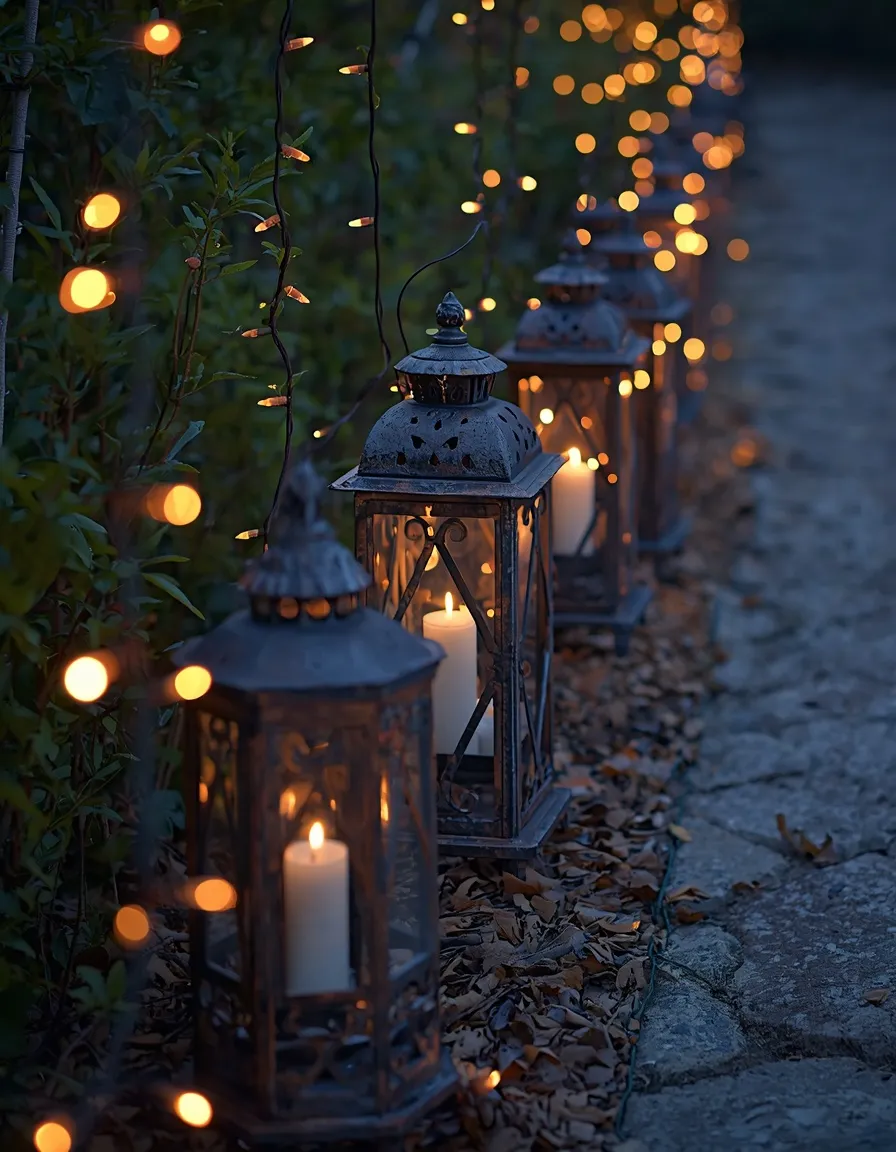
A collection of mismatched iron and glass lanterns at different heights, strung with warm amber fairy lights along a path or over a seating nook, extends the garden’s usable hours well past sunset.
Use solar or battery-powered LED candles rather than real flame for anything left outdoors unattended; they’re weatherproof and need no rewiring or extension cords across a lawn. Vary lantern heights, shapes, and finishes instead of buying a matched set, since a collected-over-time look sits much closer to the aesthetic than a uniform one. Stick to warm-toned lighting, 2700K or lower; cool white LEDs read sterile and clinical rather than atmospheric in this style. This is an easy, renter-friendly upgrade that needs no digging or permanent installation.
- Extends the garden’s usable hours into the evening without hardwired electrical work
- Works along paths, over dining areas, or wrapped around an arbor
- Solves the “beautiful by day, invisible by night” problem cheaply
17. Fairy Garden Corner With Miniature Witch Cottage
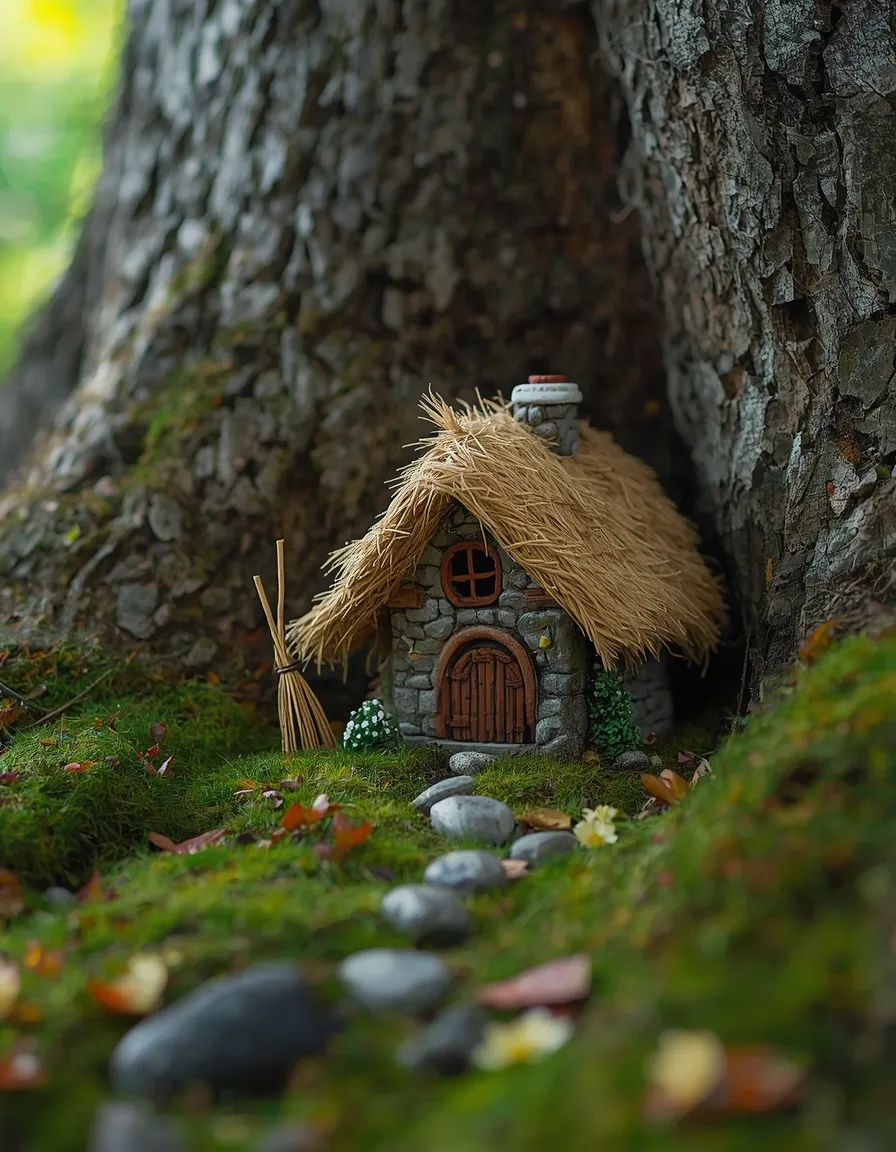
A shaded nook at the base of a tree, holding a miniature thatched-roof cottage, a tiny broom, and a moss lawn, brings storybook charm to a garden at almost any scale.
Build the scene on a stump, in a shallow container, or directly into a shaded bed, using moss for lawn, small pebbles for a pathway, and miniature furniture from a craft or garden store. Keep the scale consistent throughout; roughly one to twelve works well, since mixing a huge acorn beside a tiny door breaks the illusion the whole idea depends on. This is one of the lowest-commitment, lowest-maintenance projects on this list, and it works just as well in a large planter for renters or small-space gardeners with no in-ground bed at all.
- Adds storybook charm at a scale that works even in the smallest yard
- Works at the base of a tree, in a large planter, or on a shaded stump
- Solves the desire for a witchy detail with almost no ongoing maintenance
Conclusion
A witchy garden works best when it grows out of real horticulture, not a single trip to the decor aisle: herbs chosen for what they actually do, hardscaping built to last a season, and a few well-placed touches like a cauldron planter or a stone altar. Start small if the full look feels like a lot at once. One moon garden bed or a single wrought iron arbor sets the tone, and the rest can build outward from there. For more layout and planting inspiration, the Garden Design category has plenty to explore. However the space comes together, these witchy garden ideas are meant to be lived in, not just photographed, so let the garden earn a little wear.
Frequently Asked Questions
What plants make a garden look witchy?
Plants with dramatic color, fragrance, or folklore ties do most of the work, think near-black dahlias, silvery artemisia, white moonflowers, lavender, sage, rosemary, and mugwort. Pairing dusky, dark foliage with a few pale, glowing blooms like white cosmos or evening primrose gives the classic witchy contrast without needing rare species.
Do I need a large yard for witchy garden ideas to work?
No. Many of the ideas here scale down easily, a cauldron planter on a doorstep, a potion bottle container garden on a windowsill, or a single fairy garden corner at the base of one tree all deliver the aesthetic in a small footprint. Balconies and rented patios can lean on containers and lanterns rather than in-ground beds.
What is a moon garden, and is it the same as a witchy garden?
A moon garden is a bed planted specifically with white, silver, and pale-colored flowers and foliage that reflect available light and glow at dusk. It is one popular building block within the broader witchy garden style rather than a separate look, and combining it with herb beds, altars, or dark hardscaping is what rounds out a full witchy design.
Are witchy garden plants safe around pets and kids?
Not all of them. Several classic choices, including foxglove and moonflower vine, are toxic if ingested, so it’s worth checking any plant against a resource like the ASPCA’s toxic and non-toxic plant list before adding it to a yard used by pets or young children. Safer substitutes exist for most looks; white astilbe or white cosmos can stand in for foxglove’s spiky silhouette without the risk.
How do I grow witchy herbs indoors when the outdoor season is short?
Many of the herbs associated with a witchy garden, including rosemary, sage, and thyme, adapt well to bright windowsills or grow lights during colder months. Our guide on growing an indoor survival garden covers the pots, light levels, and rotation schedule for keeping a small herb stash going year-round.
How do I stop a gravel witchy garden path from filling in with weeds?
Lay a proper landscape fabric barrier under the gravel before it goes down, and edge the path with steel or stone so soil can’t creep in from the sides. Skipping the fabric is the single most common reason a fresh gravel path looks weedy again within one growing season.
What color palette works best for witchy garden decor ideas?
Deep purples, near-black foliage, weathered iron gray, and warm amber lantern light form the core palette, balanced with silver-green herbs and a few pale white blooms so the space doesn’t read as one flat dark mass. Using at least one light, reflective element, whether that’s pale gravel, white flowers, or crystal, keeps the design from disappearing at dusk.