
Introduction
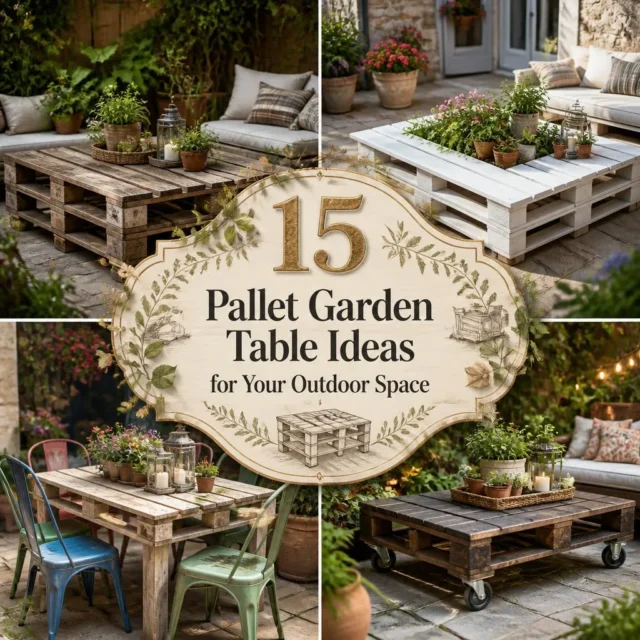
Pallet garden table ideas are some of the most rewarding outdoor DIY projects you can take on, turning free or low-cost reclaimed wood into rustic-chic furniture with real personality. A single warehouse pallet, sanded and reassembled with basic tools, can become a coffee table, a full dining surface, or even a working potting station with a built-in sink. Whether you are furnishing a compact balcony, dressing up a backyard patio, or setting up a garden work corner, these fifteen builds cover a genuine range of skill levels, budgets, and outdoor spaces. Consider this your practical starting point, the kind of small, considered project that makes any abode feel a little more finished.
Before You Build: Choosing Safe Pallets
Not every pallet is safe to bring into a garden or turn into furniture that will hold food, drinks, or bare skin. Pallets used domestically are typically stamped near the center block with either HT or MB. HT means the wood was heat treated to meet international shipping standards enforced in the United States by the USDA’s Animal and Plant Health Inspection Service, while MB indicates chemical fumigation with methyl bromide. For any pallet garden table idea, especially a dining table, potting bench, or table with a sink, choose only HT-stamped pallets and skip any pallet with no stamp at all, visible chemical staining, or an unpleasant odor.
Beyond stamp-checking, a few tools make every build in this list easier: a pry bar or reciprocating saw for disassembly, a random orbital sander, exterior wood glue, corrosion-resistant screws or carriage bolts, and an outdoor-rated sealant or stain. Wear gloves and eye protection when removing old nails, since they often bend or shear unpredictably. Once a table is built, reseal it every one to two seasons depending on your climate, more often in areas with heavy rain, snow, or direct coastal sun exposure.
Once your table is finished, browse the full collection of pallet garden table ideas for more styling inspiration across different outdoor spaces.
15 Pallet Garden Table Ideas to Try in Your Outdoor Space
Each build below is genuinely distinct in purpose, skill level, or setting, so scan for the ones that match your space rather than trying to squeeze a bar-height dining table onto a one-person balcony.
1. Classic Single-Pallet Coffee Table
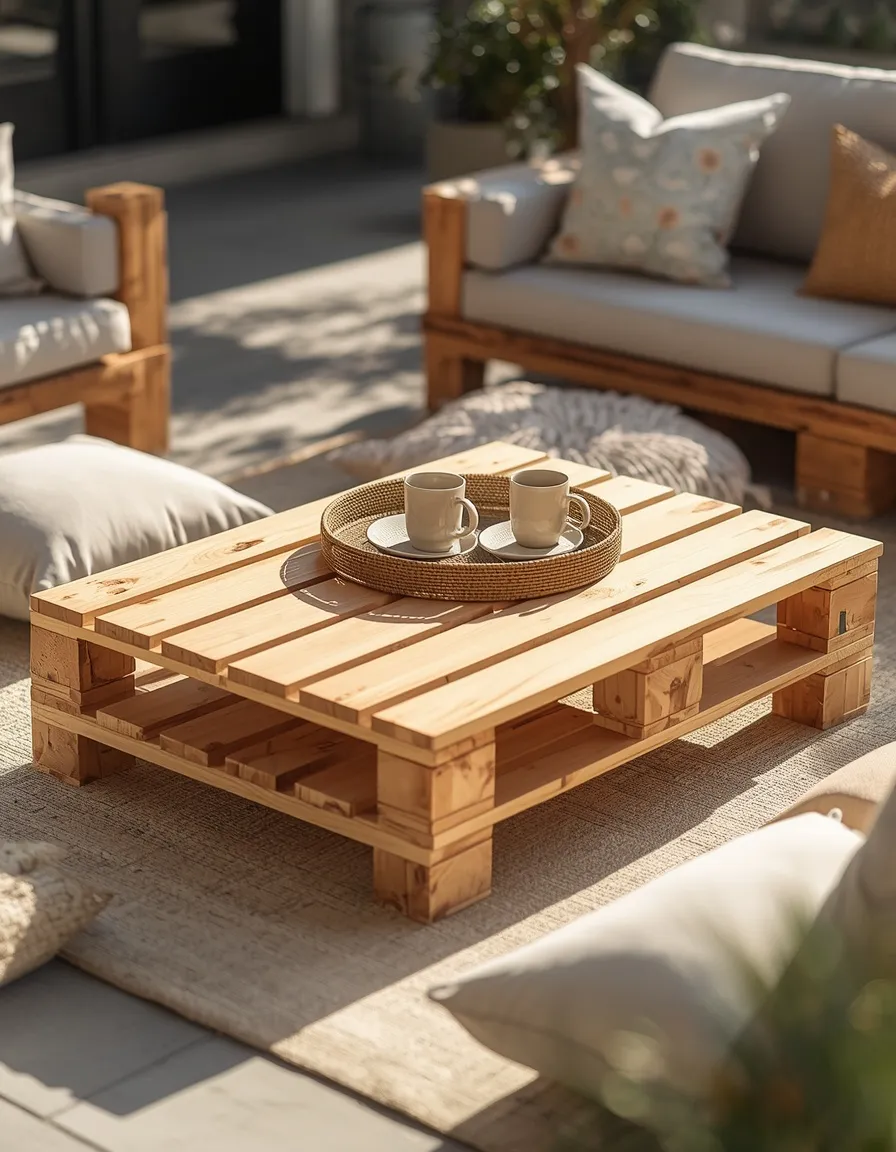
A single sanded pallet, set low on simple feet, makes an easy centerpiece for a lounge-style seating area with an outdoor sofa or floor cushions. The exposed slat pattern reads as intentional rather than unfinished once it is cleaned up, stained, and paired with a woven tray or a stack of garden magazines on top.
To build one, start with a single standard pallet, roughly 48 by 40 inches (122 by 102 cm), remove any protruding nails, and sand every surface smooth, since this is the idea most likely to sit at bare-leg or bare-arm height. Add simple furniture feet or locking casters underneath, then finish with an exterior-grade stain or polyurethane rated for direct weather exposure. A common mistake is skipping the sanding step entirely, which leaves splinters exactly where hands and legs will rest most often.
- Works well anchoring a low-slung outdoor lounge or sofa set
- Best for beginners since it uses a single pallet and minimal cuts
- Solves the problem of needing a casual surface for drinks, books, or trays
2. Double-Stacked Pallet Dining Table
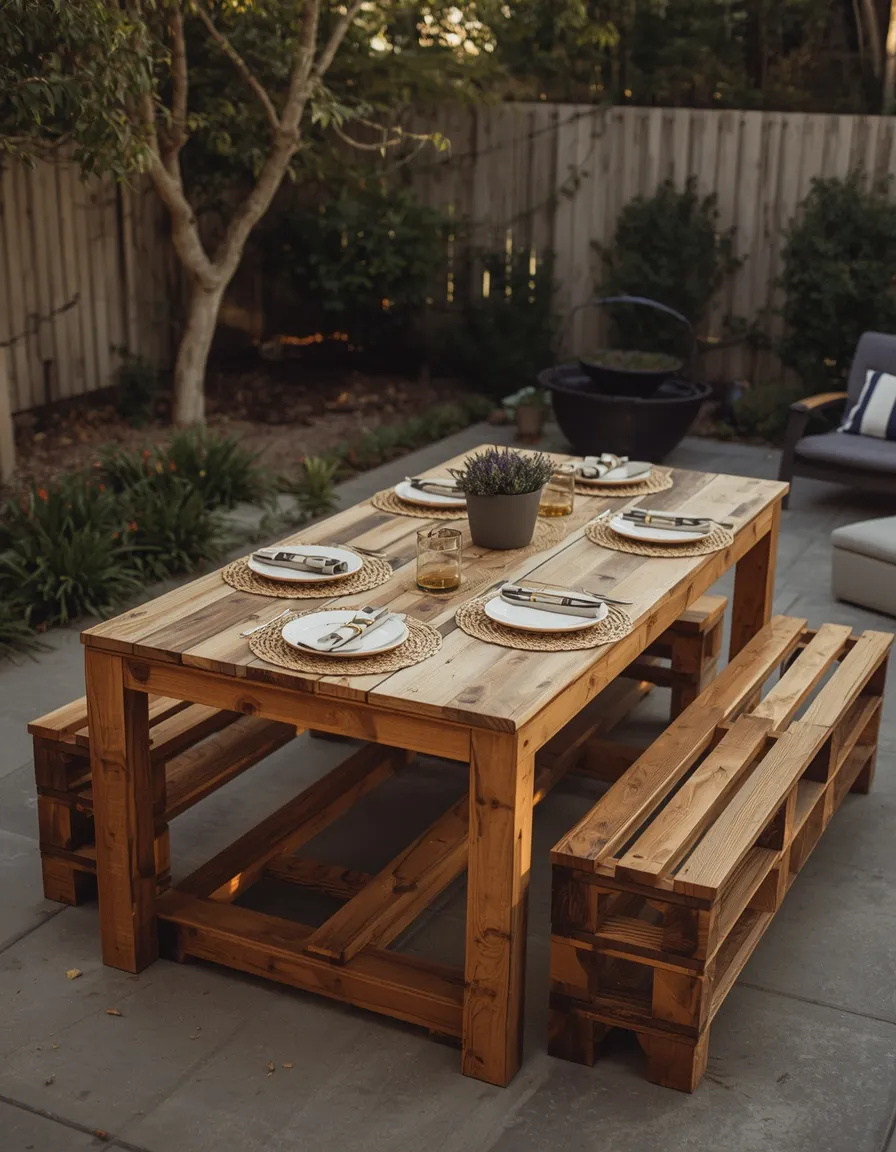
Two pallets bolted together and topped with a flat board bring a table up to true dining height, ready for plates, glasses, and a full evening meal outdoors rather than just drinks.
Stack one pallet on another, align the internal support blocks, and join them with carriage bolts rather than screws alone, since bolts hold up better under the repeated weight and movement of a dining table. Top the assembly with a smooth plywood or extra pallet-board layer for an even eating surface, then add diagonal cross-bracing underneath if the tabletop runs longer than about 5 feet (1.5 m). Check and retighten hardware once or twice a season, since outdoor wood naturally expands and contracts, which can gradually loosen bolts.
- Reaches standard dining height, about 28 to 30 inches (71 to 76 cm)
- Ideal for backyards that host regular outdoor meals
- Solves the height problem that single-pallet tables cannot
3. Pallet Potting Bench with Built-In Table
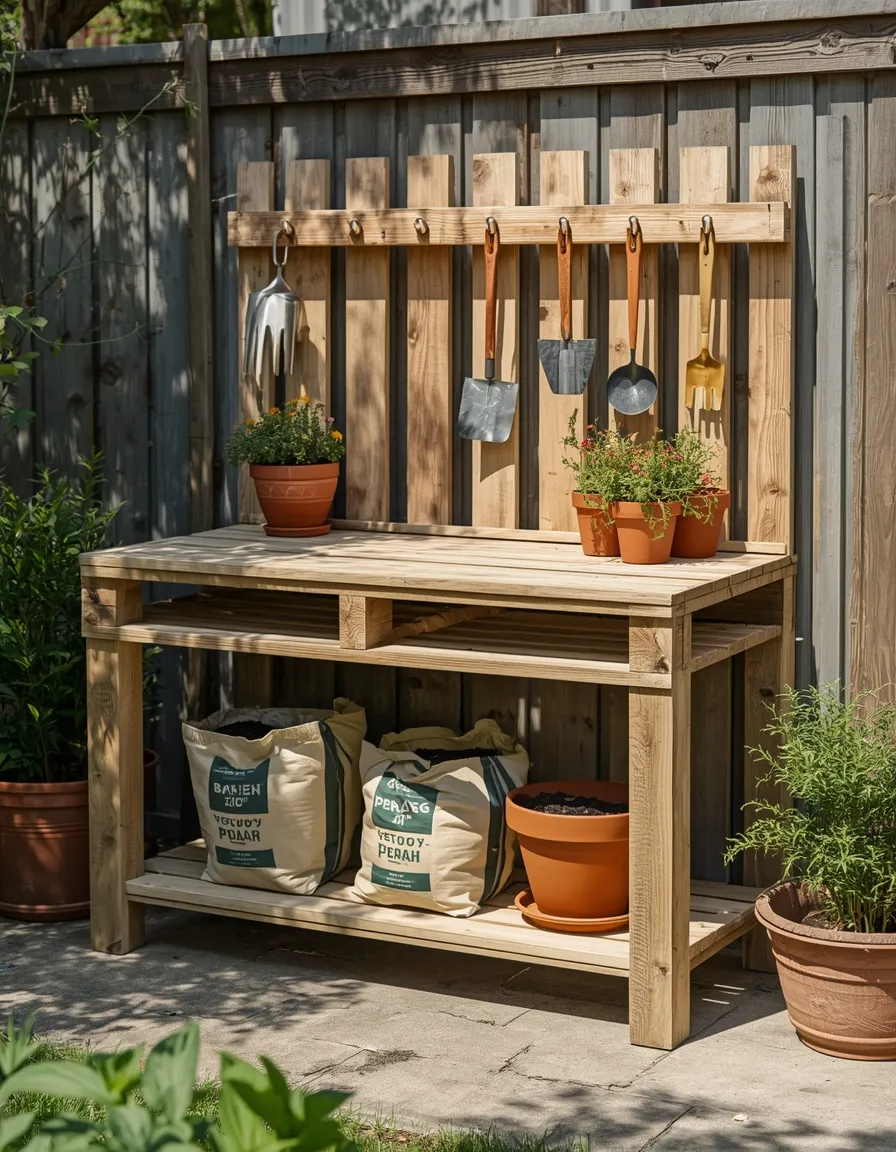
For gardeners who spend more time potting up seedlings than sipping coffee outside, a waist-height pallet table with a slatted lower shelf turns into a genuine workstation, not just a decorative piece.
Build the tabletop at a comfortable working height, typically 34 to 36 inches (86 to 91 cm), and use a second, disassembled pallet to create an open lower shelf for soil bags, trays, and pots. Add a few screw hooks along one side for hand trowels and gloves. Measure your own working height before cutting legs, since a bench built for someone taller can strain the back of a shorter gardener during long potting sessions.
- Doubles as storage and workspace in one footprint
- Works best positioned near a hose bib or other water source
- Solves the lack of a dedicated potting surface in small gardens
4. Pallet Garden Table with Integrated Sink
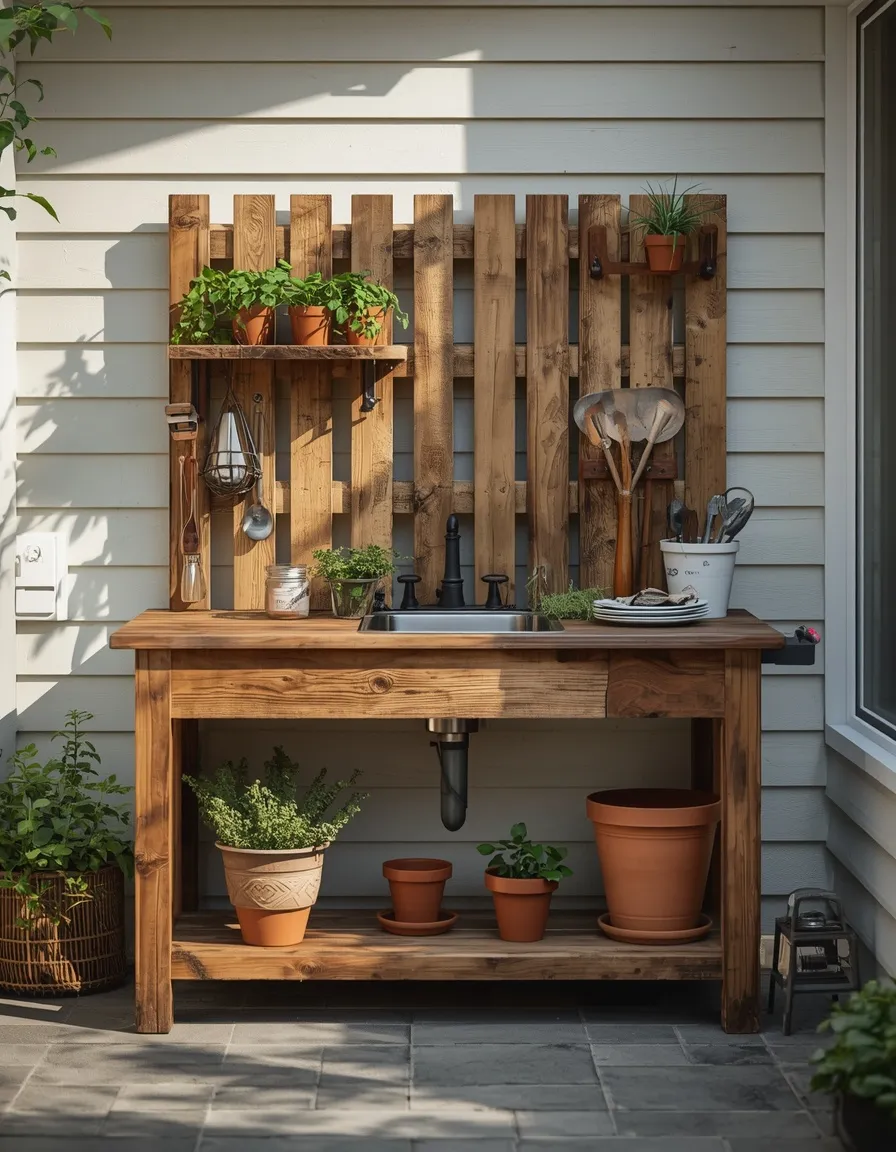
Cutting a sink into a pallet tabletop turns a simple garden table into a full potting station, one where soil, cut flowers, and dirty hands can be rinsed without a trip back indoors.
Cut an opening sized to a small drop-in utility or bar sink, then seal every exposed edge generously with exterior wood sealant to prevent water damage and rot around the cutout. For a permanent setup with a drain line, consult a licensed plumber or check local plumbing codes before connecting to household water, since incorrect drainage can cause standing water and structural rot. A simpler, code-free version uses a manual-fill basin that drains into a bucket underneath, which still delivers the convenience without any plumbing work.
- Adds real function beyond styling, especially for avid gardeners
- Best suited to a covered patio, shed corner, or garden work zone
- Solves the mid-task cleanup problem that standard tables cannot
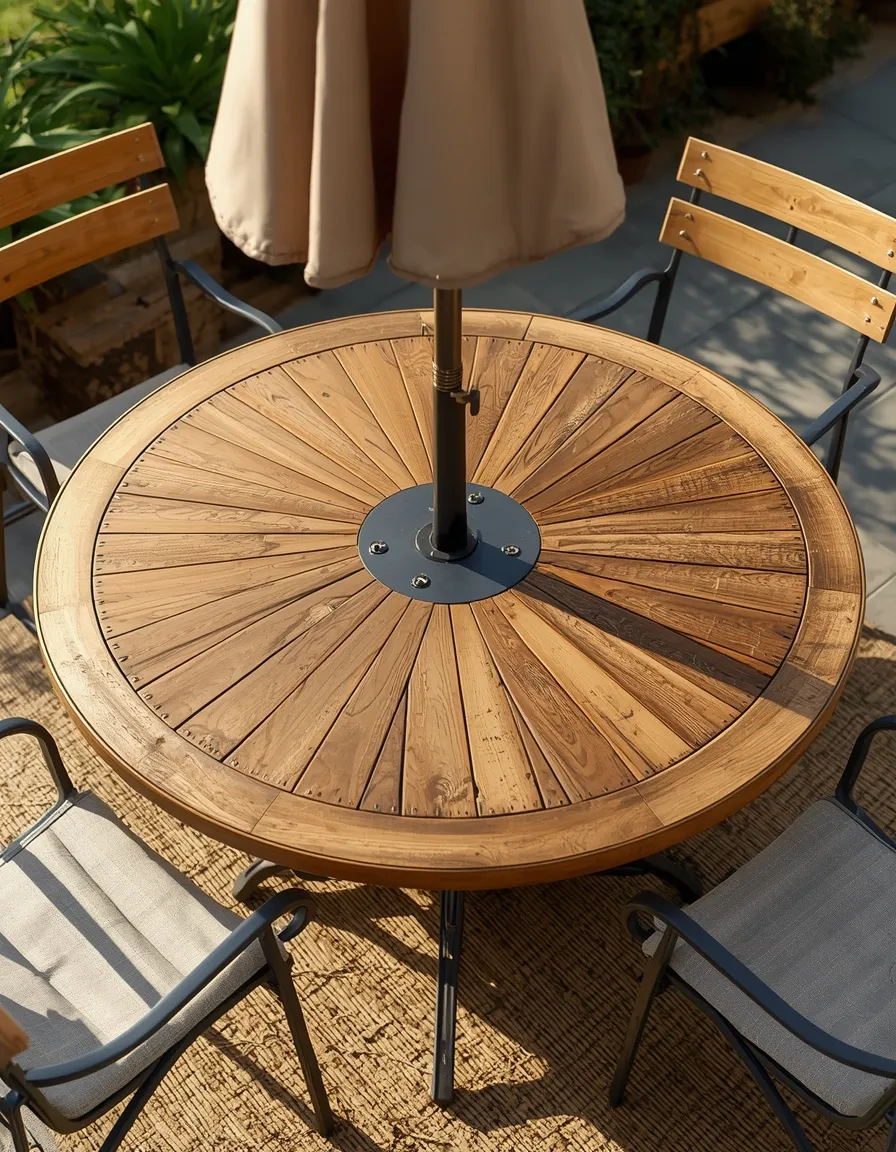
5. Round Pallet Table with Umbrella Hole
A circular tabletop cut from pallet boards and drilled through the center for a market umbrella brings shade-ready dining to a patio without buying a manufactured table.
Arrange trimmed boards radially or trace a circle with a simple string-and-pencil compass, then drill a center hole sized to your umbrella pole, typically 1.5 to 2 inches (3.8 to 5 cm) in diameter. Because round tops flex more at the joints than square ones, reinforce the underside with a plywood support ring before attaching the base. Staggering board lengths slightly as you build out the circle gives the top a more natural, less uniform look than perfectly matched planks.
- Provides a built-in shade option for sunny, exposed patios
- Suits round or curved seating arrangements better than square tables
- Solves the visual bulkiness that large square tables bring to small patios
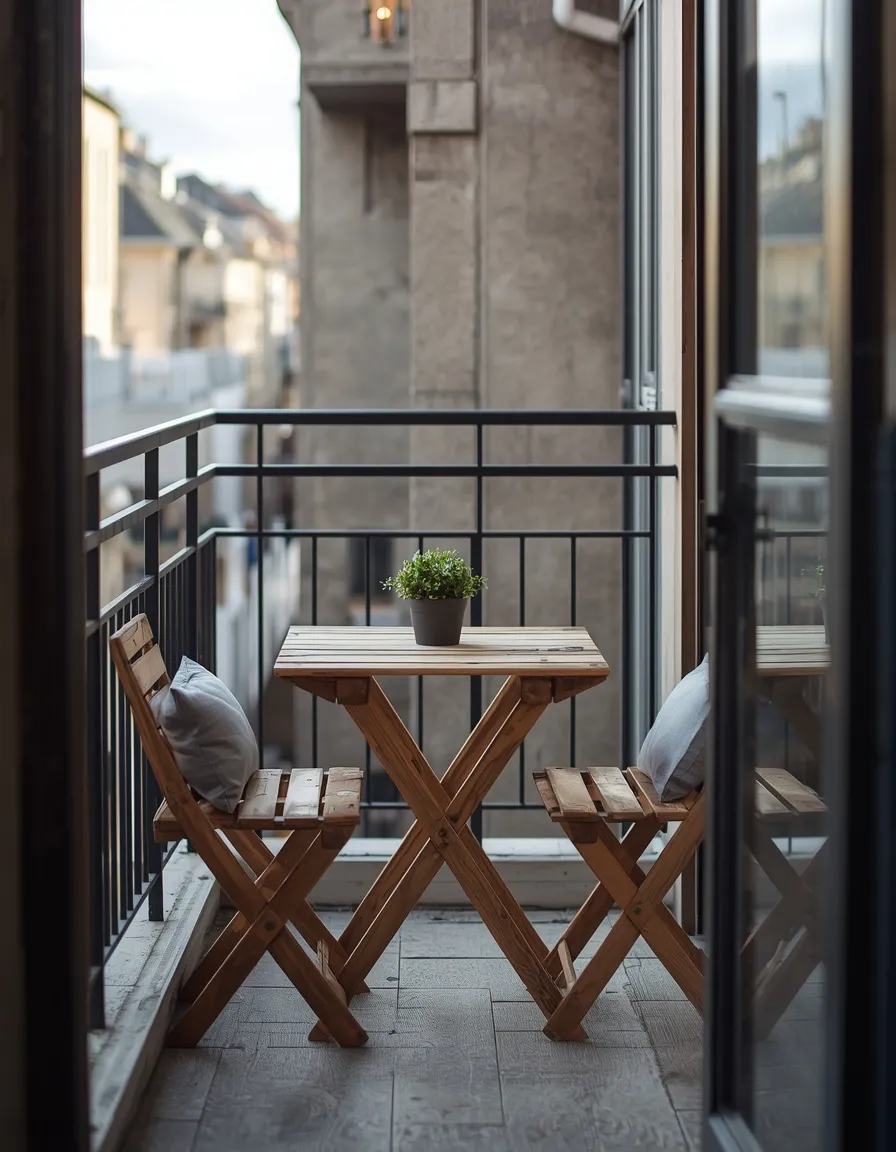
6. Pallet Garden Table and Chairs for Two
A small square table paired with two matching chairs, all cut from pallet slats and finished in the same stain, turns a narrow courtyard or apartment balcony into a genuine bistro corner.
Keep the table around 24 to 28 inches (61 to 71 cm) square, and build both chairs from the same batch of wood so grain and color stay consistent across the set. Add weatherproof cushions for comfort, since bare pallet slats are not especially forgiving for extended seating. This is one of the more budget-friendly builds on this list, since a table-and-chair set for two uses noticeably less lumber than a full dining table.
- Fits tight balconies, courtyards, and rental patios
- Uses less material than full-size dining builds
- Solves the need for a matched, intentional-looking small-space set
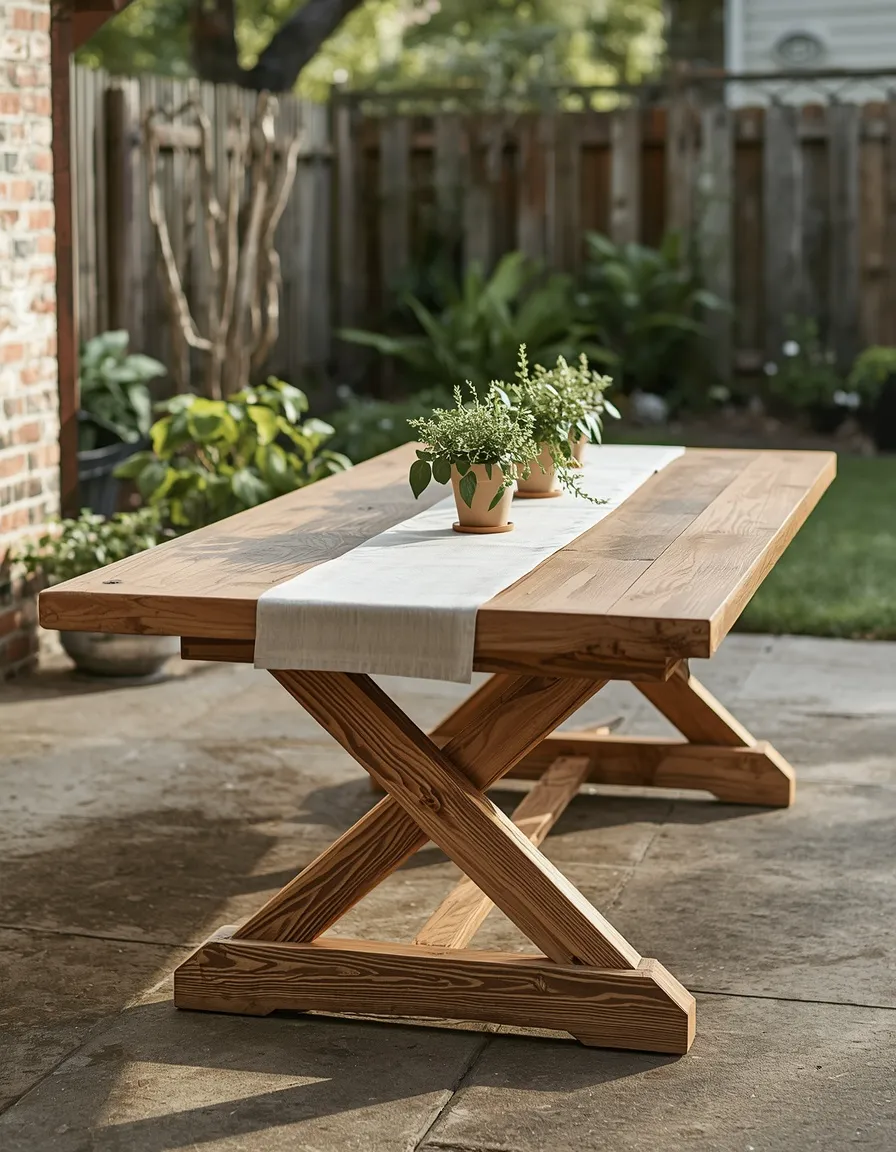
7. X-Frame Trestle Pallet Table
Two X-shaped leg frames built from thick pallet stringers, joined by a center stretcher and topped with sanded planks, give a farmhouse-style trestle table real structural presence.
Use the pallet’s stringers, the thick internal support beams, for the legs rather than the thinner deck boards, since stringers are the only pallet component rated for real structural load. Join the two X-frames with a horizontal center stretcher before attaching the tabletop, which keeps the base from racking side to side. Skipping this step and relying on thin deck boards for legs is a common mistake that leads to a wobbly, short-lived table.
- Delivers a sturdier base than most single-pallet builds
- Suits a farmhouse or rustic garden design style
- Solves stability issues common in taller or longer tables
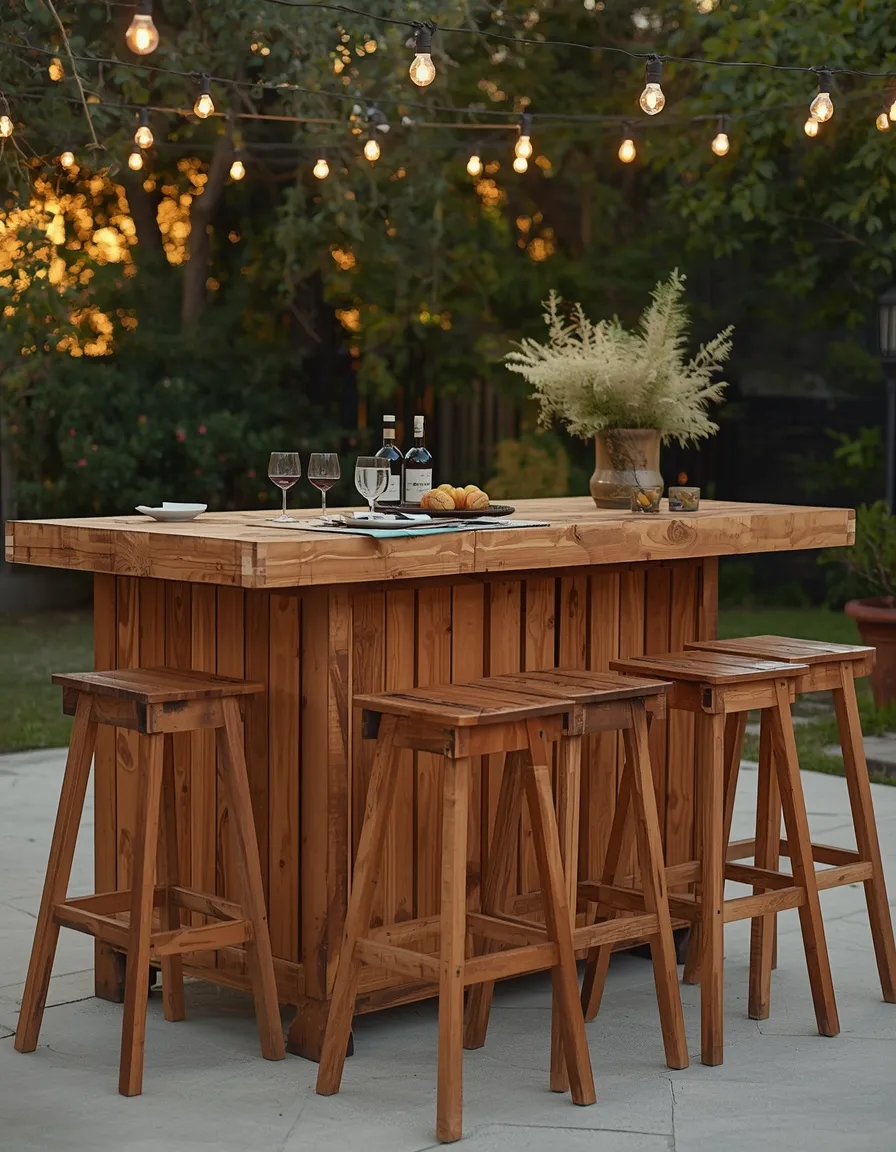
8. Bar-Height Pallet Table for Patio
Raised to bar height with extended legs, a pallet table becomes a standing gathering spot for patio entertaining, paired with tall stools instead of chairs.
Reach the standard bar height of about 40 to 42 inches (102 to 107 cm) by stacking a third pallet or extending the legs with 4×4 posts, and brace the frame at two points rather than one, since height adds leverage that increases wobble. Test the finished table by pushing firmly on each corner before it goes into regular use, and treat this as a build to double-check around children, since a taller, less stable table poses a bigger tip-over risk than a low coffee table.
- Creates a standing, mingling zone for parties and gatherings
- Pairs naturally with outdoor bar stools
- Solves the lack of eye-level surfaces during patio entertaining
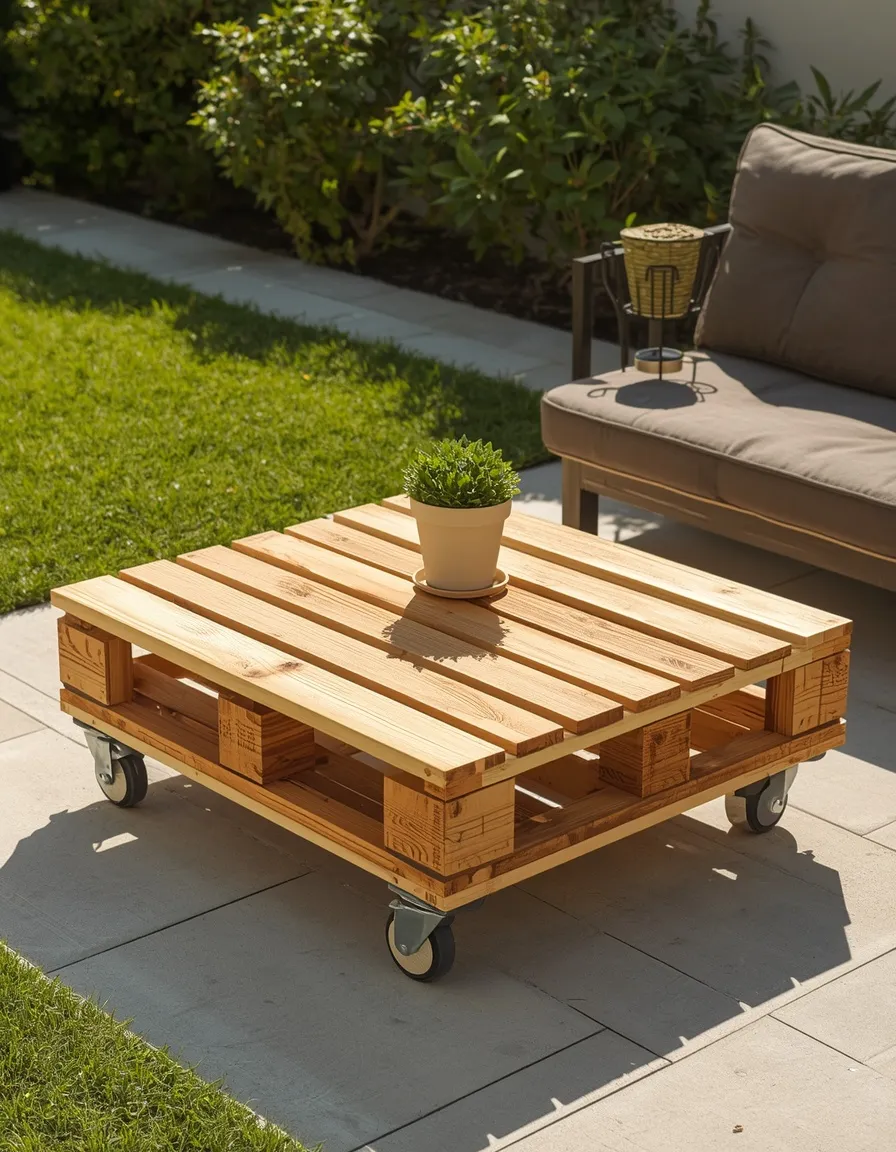
9. Pallet Table on Locking Casters
Mounting locking casters underneath a pallet table turns a fixed piece into a flexible one, easy to roll into the sun, tuck against a wall, or shift out of the way entirely.
Choose casters specifically rated for outdoor or wet exposure, ideally galvanized steel or stainless hardware, since indoor caster hardware rusts quickly once left outside. Lock the wheels once the table is positioned to keep it stable during use, and check the weight rating on the casters against the finished table’s approximate weight before loading it up. This idea suits renters and small-space owners who rearrange furniture seasonally more than anyone planning a permanent, fixed dining setup.
- Adds flexibility for small or multi-use outdoor spaces
- Suits renters who rearrange furniture between seasons
- Solves the awkwardness of a heavy table in a tight footprint
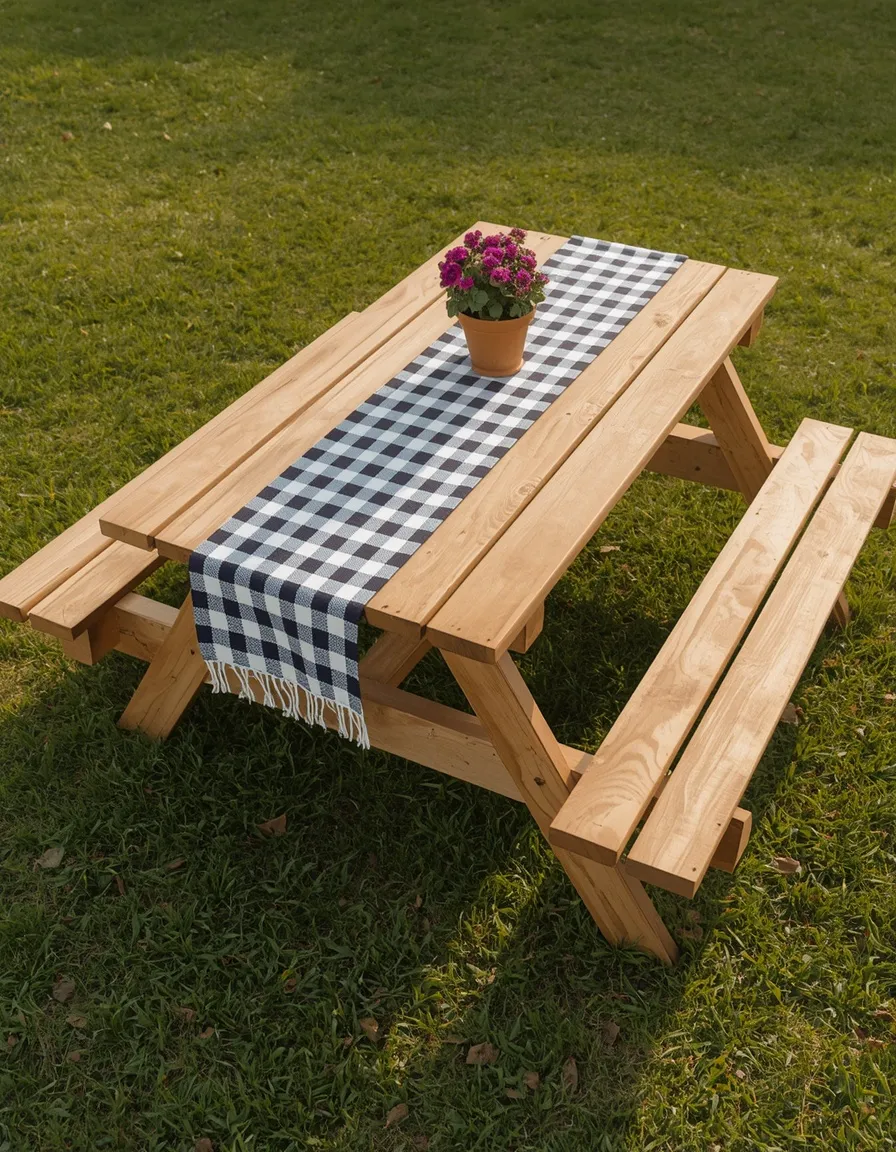
10. Pallet Picnic Table with Attached Benches
Built from several pallets at once, a classic A-frame picnic table with attached benches on either side brings a communal, backyard-gathering feel that a standalone table cannot match.
Follow standard picnic table proportions, roughly 72 inches (183 cm) long, with bench legs angled slightly outward for stability, the same design logic used on traditional A-frame picnic tables. Because this build carries more leverage and weight than a simple table, especially once several people sit down at once, use carriage bolts rather than screws at every leg joint and check them for tightness each season. This is best suited to families or hosts who regularly seat larger groups outdoors.
- Seats a group without needing separate chairs
- Suits backyards used for regular family or friend gatherings
- Solves the need for combined seating and table space in one build
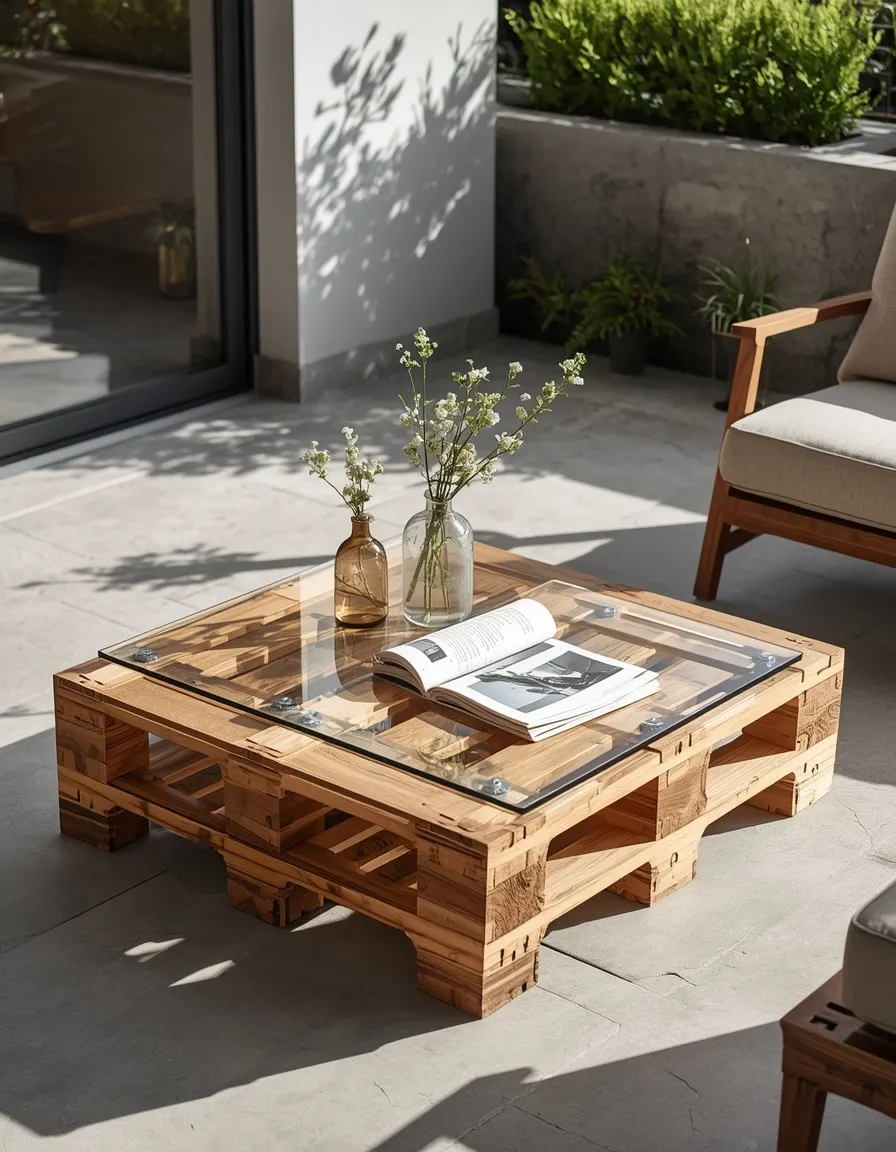
11. Pallet Coffee Table with Tempered Glass Top
Topping a low pallet base with a custom-cut glass panel blends reclaimed rustic texture with a cleaner, more modern finish, a popular pairing for patios that mix styles.
Build a simple, low frame from a single pallet, then order tempered glass, not standard annealed glass, cut to size with rounded or polished edges. Tempered glass is the only safe choice for an outdoor tabletop, since it is designed to break into small, blunt pieces rather than sharp shards if it is ever struck or stressed by temperature changes. Add small felt or rubber bumpers between the wood frame and the glass to stop scratching and sliding.
- Balances rustic wood with a polished, modern surface
- Suits patios blending farmhouse and contemporary style
- Solves the rough-surface problem of bare pallet tabletops
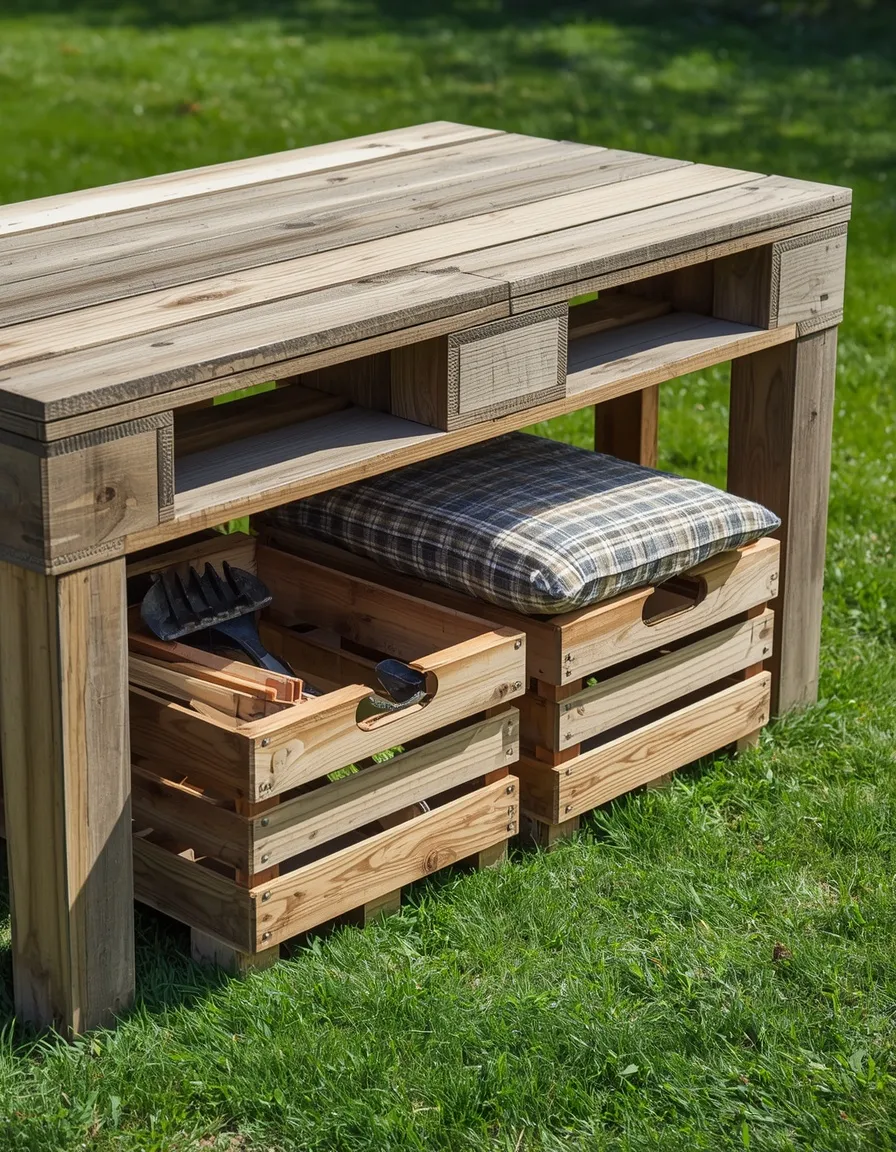
12. Pallet Table with Hidden Storage Crates
Building a table frame with crate-sized gaps underneath turns wasted space into slide-out storage for garden tools, cushions, or citronella candles between uses.
Size the openings to fit reclaimed wooden crates or simple slatted boxes built from extra pallet boards, and attach small handles for easy sliding. Leave a little clearance around each crate, since wood swells in humid weather, and a tightly fitted crate can jam shut after a rainy stretch. Lining crate bottoms with landscape fabric is a smart variation for anyone storing soil-covered tools, since it keeps dirt and moisture contained.
- Adds functional storage without extra furniture pieces
- Suits gardeners who want tools stored near where they work
- Solves outdoor clutter around cushions, tools, and small decor items
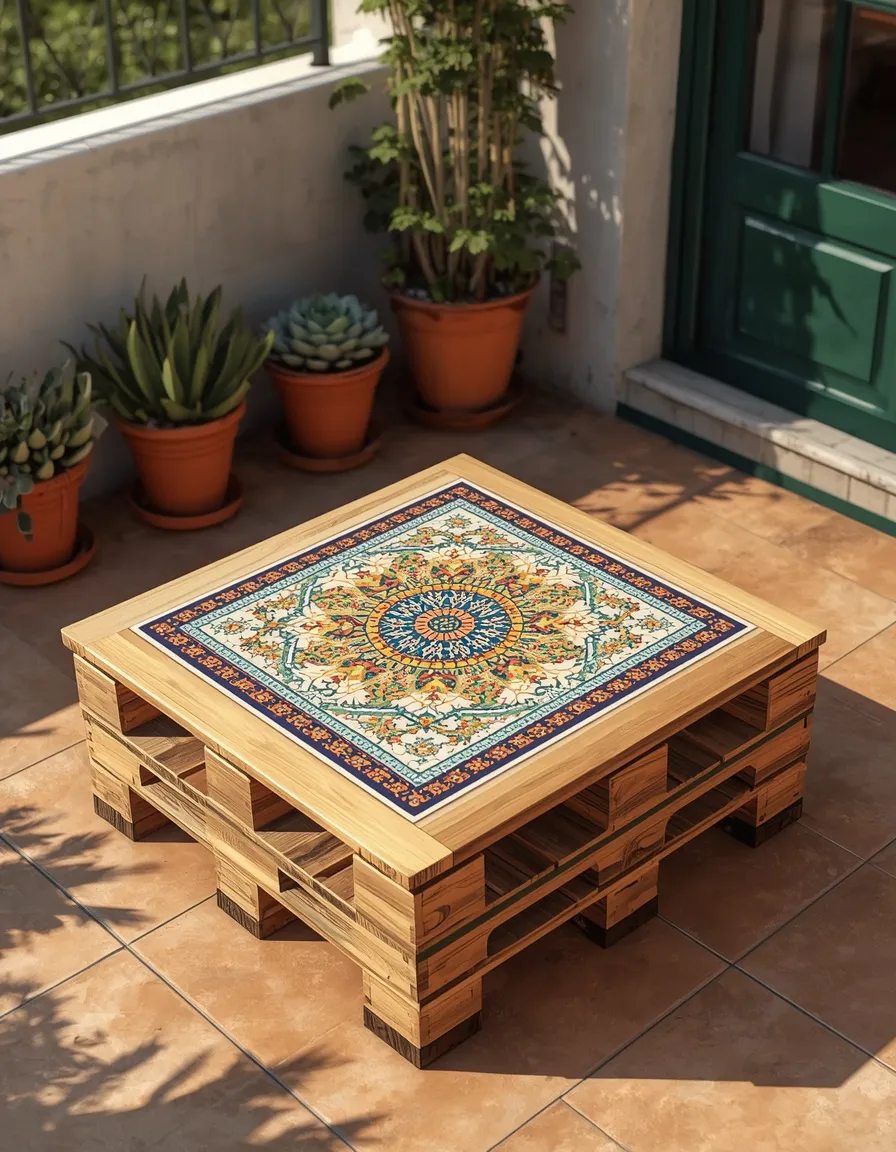
13. Mosaic-Tiled Pallet Table Top
Setting broken or leftover ceramic tile into the tabletop in a mosaic pattern turns a plain pallet build into a colorful focal point, closer to Mediterranean patio style than rustic farmhouse.
Build a sturdy, flat-topped frame first, then adhere tiles with an outdoor-rated tile adhesive and grout the joints with exterior sanded grout, sealing the grout lines afterward against moisture. Leftover or broken tile pieces work well here and keep the project inexpensive, since a genuine mosaic look benefits from irregular shapes rather than uniform cuts. Using indoor adhesive or grout is a common mistake, since both tend to crack once exposed to freeze-thaw cycles in colder climates.
- Introduces color and pattern to an otherwise neutral wood palette
- Suits Mediterranean, boho, or eclectic garden styles
- Solves the plain, unfinished look of a bare wood tabletop
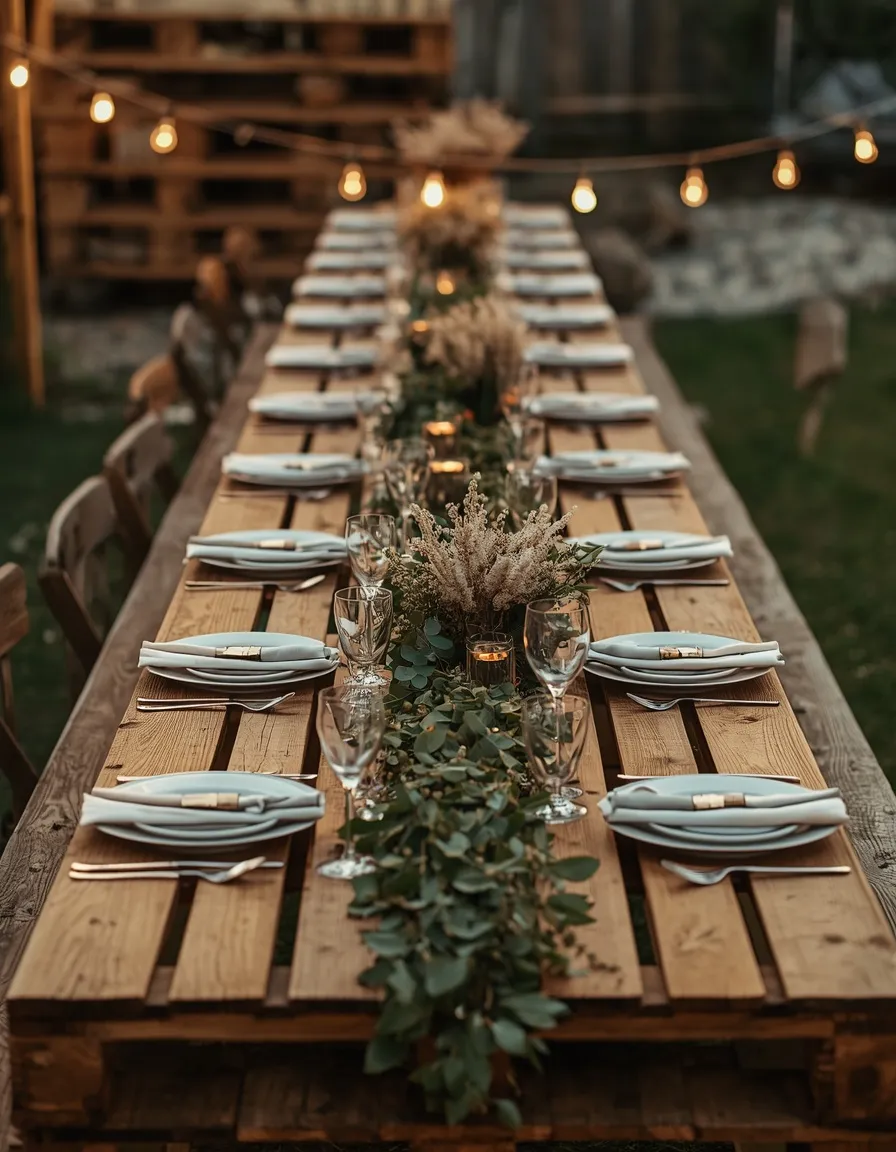
14. Long Pallet Dining Table for Entertaining
Joining two or three pallets end to end lengthwise creates an extended table built for larger garden parties, the kind of build that turns a backyard into a genuine entertaining space.
Aim for an overall length of about 70 to 90 inches (178 to 229 cm) for six to eight guests, and add a center support leg or trestle roughly every 40 inches (102 cm) to stop the tabletop from sagging across the span. Sand the full surface smooth before finishing, since this table will see plates, elbows, and serving dishes sliding across it during meals. This build works best for households that host regularly rather than occasionally, given the larger footprint and material cost.
- Seats larger groups than a standard dining build
- Suits hosts who entertain outdoors on a regular basis
- Solves the seating shortage smaller tables create at parties
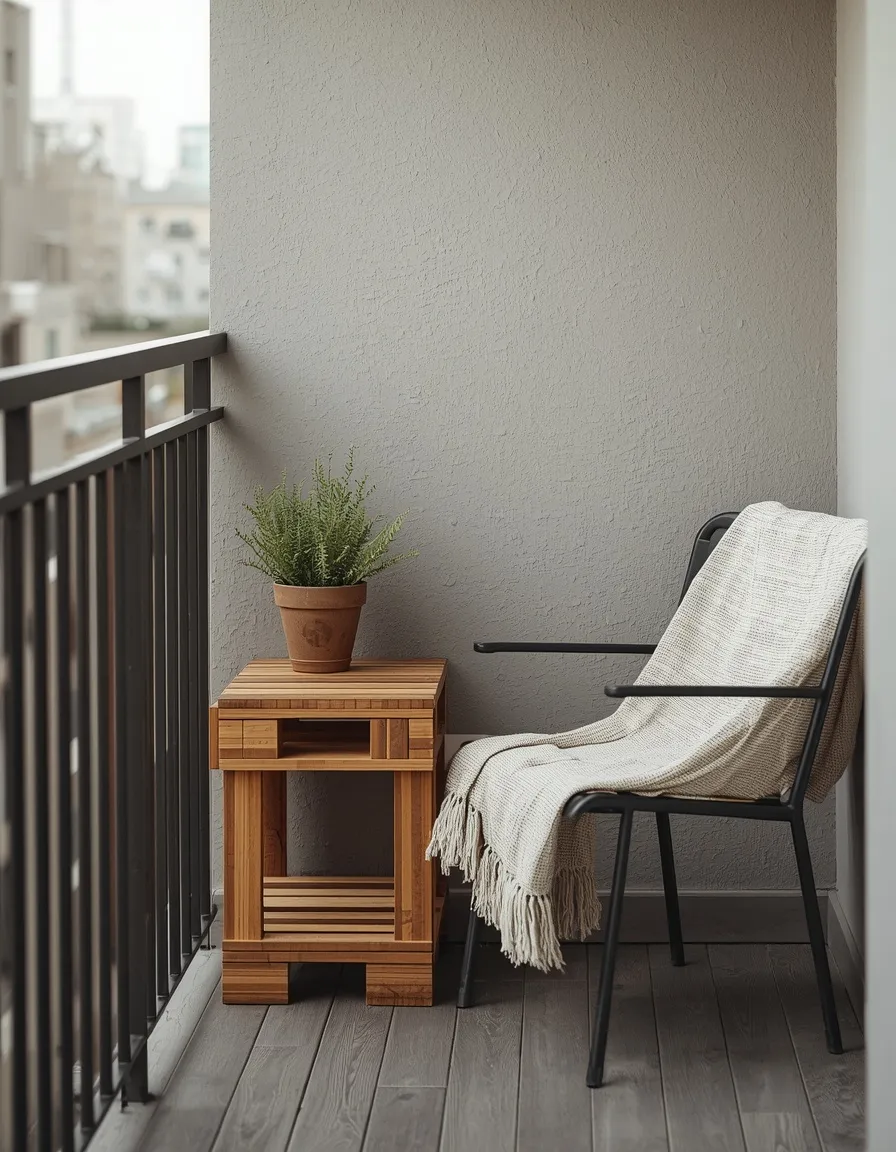
15. Compact Pallet Side Table for Balconies
Cut down to a smaller footprint, a single pallet becomes a lightweight side table that fits neatly beside a balcony chair or a narrow apartment patio without overwhelming the space.
Trim a standard pallet into a smaller square or rectangle, keeping the design light enough to lift and move easily, since portability matters more than size on a balcony or rental patio. Pair it with a single planter or a small stack of books for a simple styled vignette rather than overloading a small surface. This idea works especially well for renters, since a compact, unattached piece like this is easy to take along at the end of a lease.
- Fits narrow balconies and small apartment patios
- Suits renters who need portable, non-permanent furniture
- Solves the scale problem of full-size tables in small outdoor spaces
Final Thoughts
Pallet garden table ideas prove that a genuinely good outdoor table does not need a big budget or a fully equipped workshop, just a safe, well-chosen pallet and a clear plan for how the space will actually be used. Whether that means a low lounge table for two, a full potting station with a sink, or a long table built for regular entertaining, the right build comes down to matching height, size, and finish to daily habits rather than chasing a trend. That is the kind of practical, doable project Sunday Abode is built around. For more ways to shape a functional, good-looking outdoor space, the garden design category covers layout and styling well beyond furniture alone. Pick one idea here that fits your space now, and build toward the rest as the season allows.
FAQs
Are free pallets always safe to use for garden furniture?
Not automatically. Only pallets stamped HT (heat treated) are safe to reuse for furniture that will sit outdoors or hold food and drinks; pallets stamped MB, or bearing no stamp at all, may carry chemical fumigation residue and should be avoided.
What is the best pallet size for a garden table?
A standard pallet measures roughly 48 by 40 inches (122 by 102 cm), which works well for coffee tables, side tables, and small dining tops. For a full-size dining table or a long entertaining table, plan to join two or three pallets rather than trying to stretch a single one.
How do I keep a pallet garden table from rotting outdoors?
Sand the wood smooth, apply an exterior-grade sealant or stain rated for direct weather exposure, and reseal it every one to two seasons depending on your climate. Elevating the table slightly off wet ground and avoiding standing water on the tabletop after rain also slows moisture damage significantly.
Can I build a pallet garden table without power tools?
Yes, though a few tools speed the process considerably. A pry bar and hand saw can disassemble and cut pallets manually, but a drill, orbital sander, and reciprocating saw make the work faster and the joints sturdier, especially for taller or longer builds like the trestle and dining table ideas.
What if I only have a small balcony instead of a backyard?
Several ideas on this list scale down well, particularly the compact side table, the small table-and-chairs set for two, and a mobile table on locking casters. Keep the footprint light and portable rather than building a large, fixed piece that will feel oversized in a tight space.
How do I safely add a sink to a pallet potting table?
For a simple, code-free setup, use a basin sink that drains manually into a bucket rather than connecting to plumbing. If you want a permanent drain line, consult a licensed plumber or check local codes first, since improper drainage can cause standing water, rot, and structural damage to the table.
A note on sensitive DIY tasks: this article covers general furniture-building guidance only; always follow local building and plumbing codes, and consult a licensed professional for permanent electrical or plumbing connections.