
Introduction
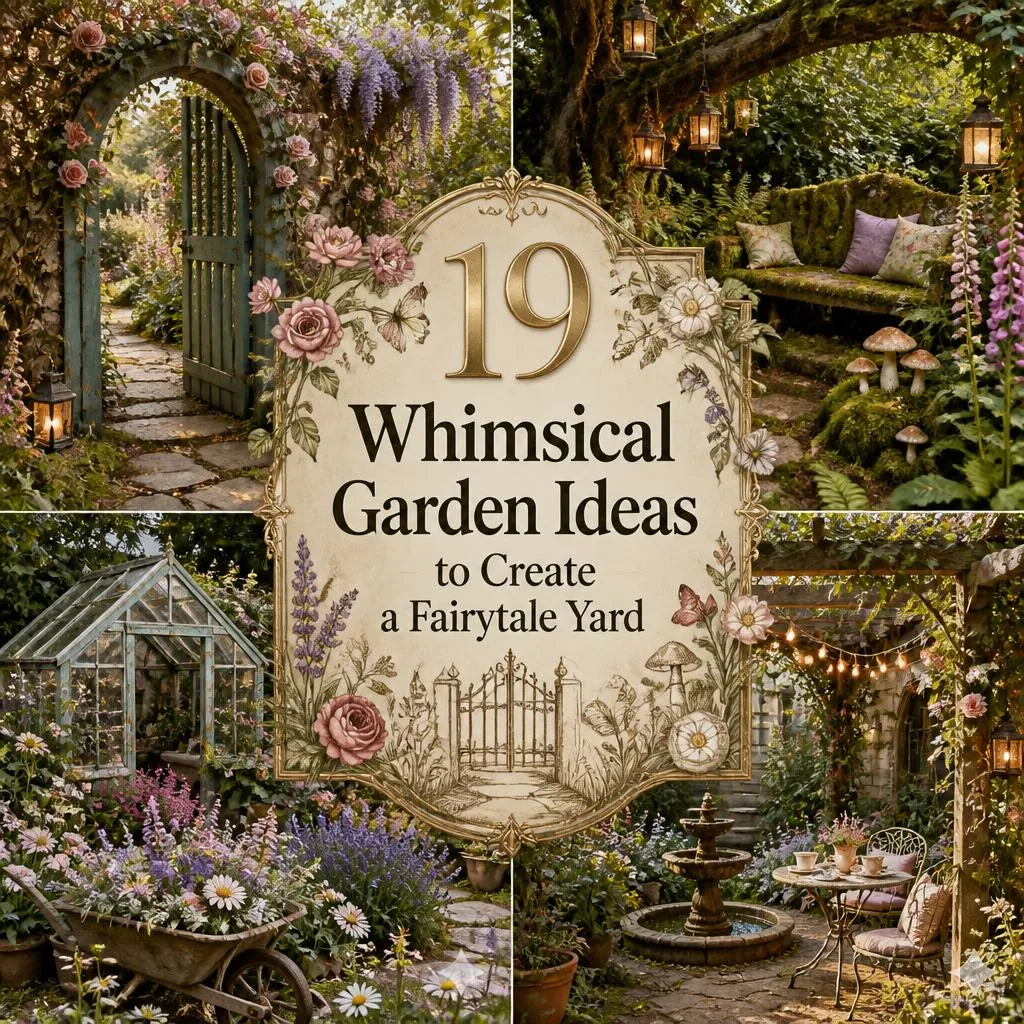
Picture a garden path lit by hand-painted lanterns, where teacups sprout succulents and a tiny door waits at the base of an old oak. That’s the spirit behind whimsical garden ideas: playful, storybook-inspired touches that turn an ordinary yard into a space that feels a little bit magical.
Whimsy has less to do with square footage and more to do with small, thoughtful surprises tucked among the greenery, so a balcony corner can feel just as enchanted as a sprawling backyard. This guide gathers nineteen distinct whimsical garden ideas, ranging from quick weekend DIY projects to lasting landscaping features, each one chosen to bring genuine character and a bit of storybook wonder to your own outdoor abode.
19 Whimsical Garden Ideas Worth Trying
1. Miniature Fairy Garden Nook
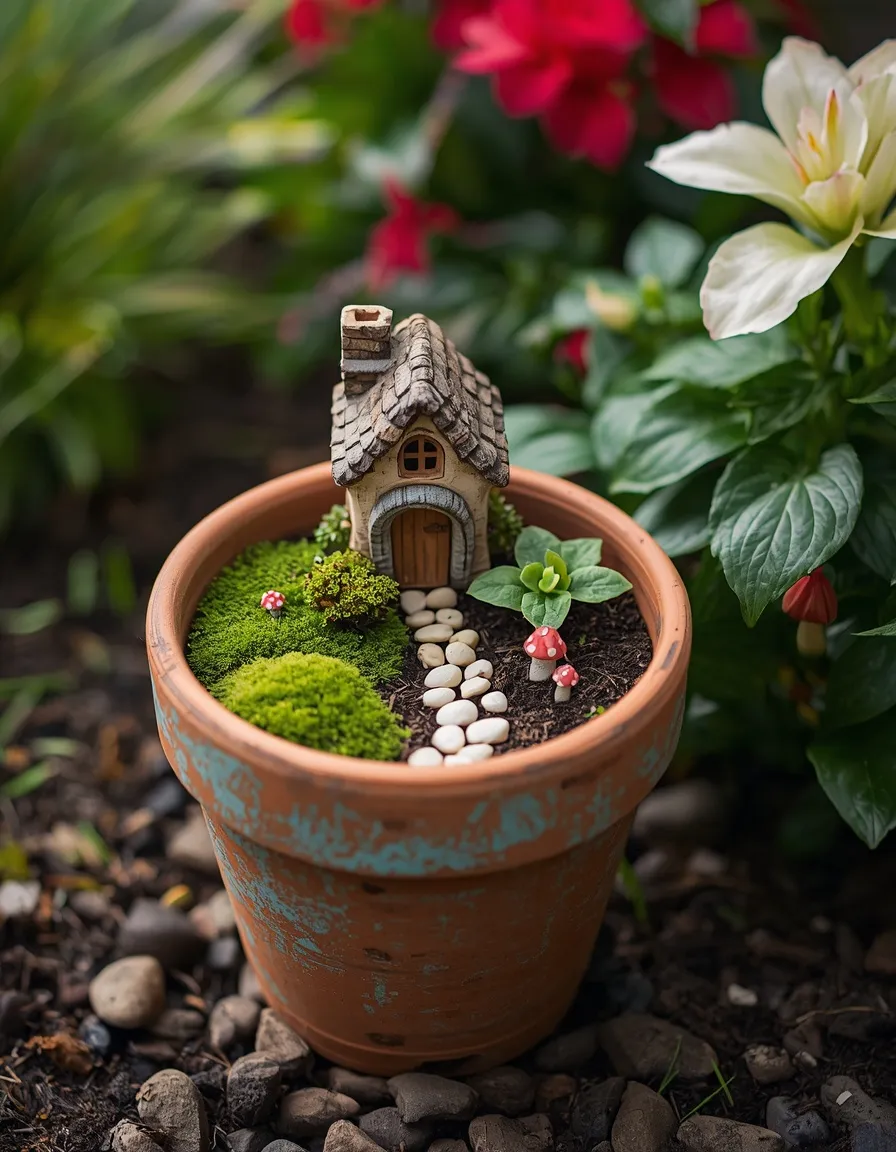
Tuck a miniature fairy garden into a shaded corner of a flower bed, complete with a thumbnail-sized cottage, a pebble path, and moss standing in for a tiny lawn. The scale is what makes it feel enchanted: a whole little world can live inside a terracotta saucer, an old tree stump, or a forgotten wheelbarrow.
Start with a container that has good drainage, then layer in potting mix, moss, and low-growing plants like baby’s tears or Irish moss to mimic grass. Add miniature furniture, a tiny bridge, or a dollhouse door from a craft store, and anchor larger pieces with garden-safe adhesive so wind or curious pets don’t scatter them. This idea works especially well near a porch or play area where kids can spot new details each week, and it’s inexpensive enough to expand a little at a time rather than buying everything at once.
- Turns a single container or tree stump into a self-contained scene
- A low-cost project that can grow over several weekends
- Gives kids a hands-on reason to spend time in the garden
2. Hanging Lantern Pathway
String a row of hanging lanterns along a garden path or between two trees, using a mix of heights so the light falls in uneven, flickering pools rather than one flat line. At dusk, the effect turns a simple walkway into something closer to a scene from a storybook, guiding guests toward a patio or hidden seating area.
Choose weatherproof lanterns with battery-powered LED candles or solar inserts so there’s no need to run electrical cords through the yard, and space them roughly three to four feet (about one meter) apart for a path, or cluster them tighter over a seating area for a warmer glow. Vary the lantern shapes and finishes, aged brass, milk glass, dark iron, rather than buying one matching set, since the mismatch is part of the whimsical garden decor charm. Check hooks and hanging wire seasonally, since freeze-thaw cycles can loosen fixtures over a winter.
- Creates a clear evening focal point without any wiring
- Works along a path, over a dining area, or through a tree canopy
- Mismatched lantern styles read as curated rather than cluttered

3. Vintage Teacup Planters
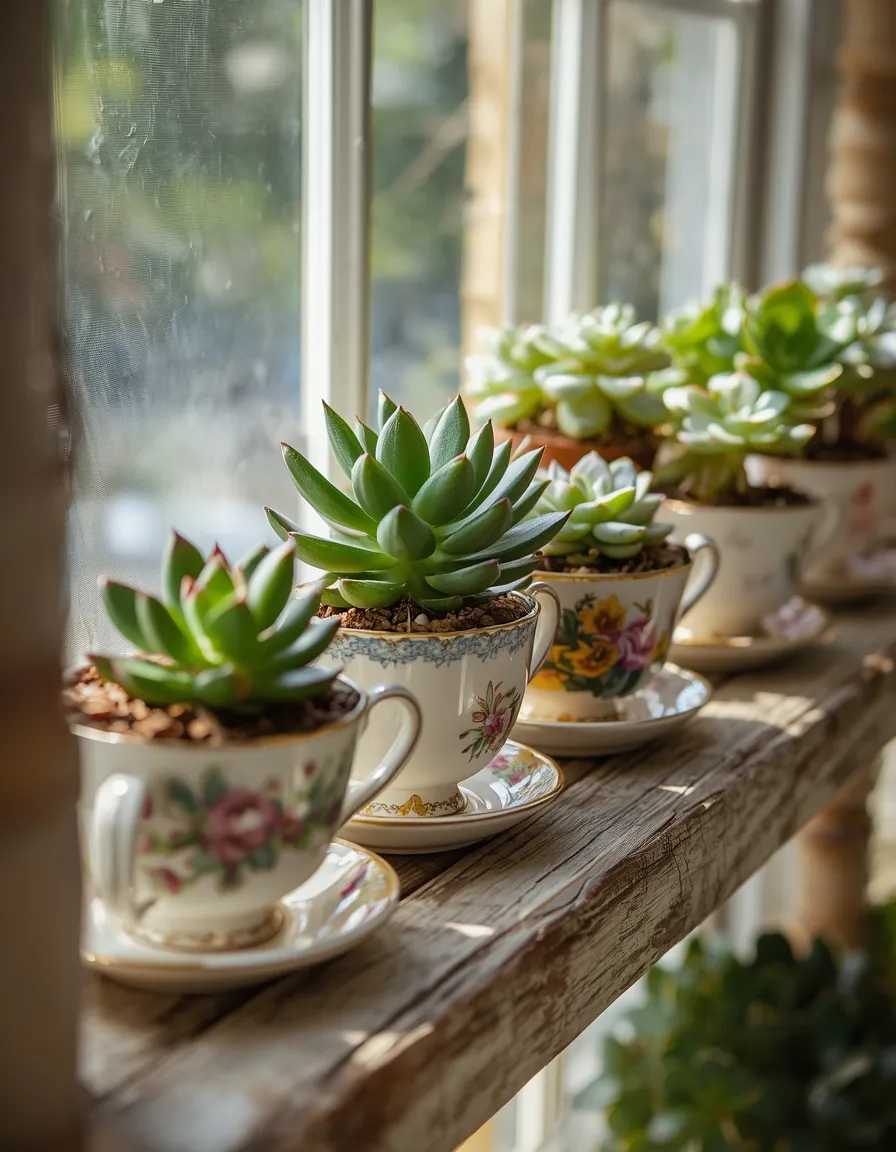
Repurpose chipped teacups and saucers from a thrift store into tiny planters for succulents, sedum, or trailing thyme, lining them along a windowsill, garden wall, or the top of a low fence. The delicate floral patterns and gold rims look intentionally romantic next to rough stone or weathered wood.
Drill a small drainage hole in the base of each cup using a diamond-tip masonry bit on a slow speed to avoid cracking the porcelain, then add a thin layer of gravel before the potting mix. Pair the planters with drought-tolerant succulents so watering stays forgiving, since teacups hold very little soil and dry out faster than standard pots. This is one of the more affordable whimsical garden decor DIY projects, since a full set of secondhand cups often costs less than a single new planter, and no two gardens end up looking the same.
- Uses secondhand pieces instead of new decor, keeping costs low
- Small scale suits window ledges, patios, and apartment balconies
- Succulents tolerate the shallow soil depth teacups allow
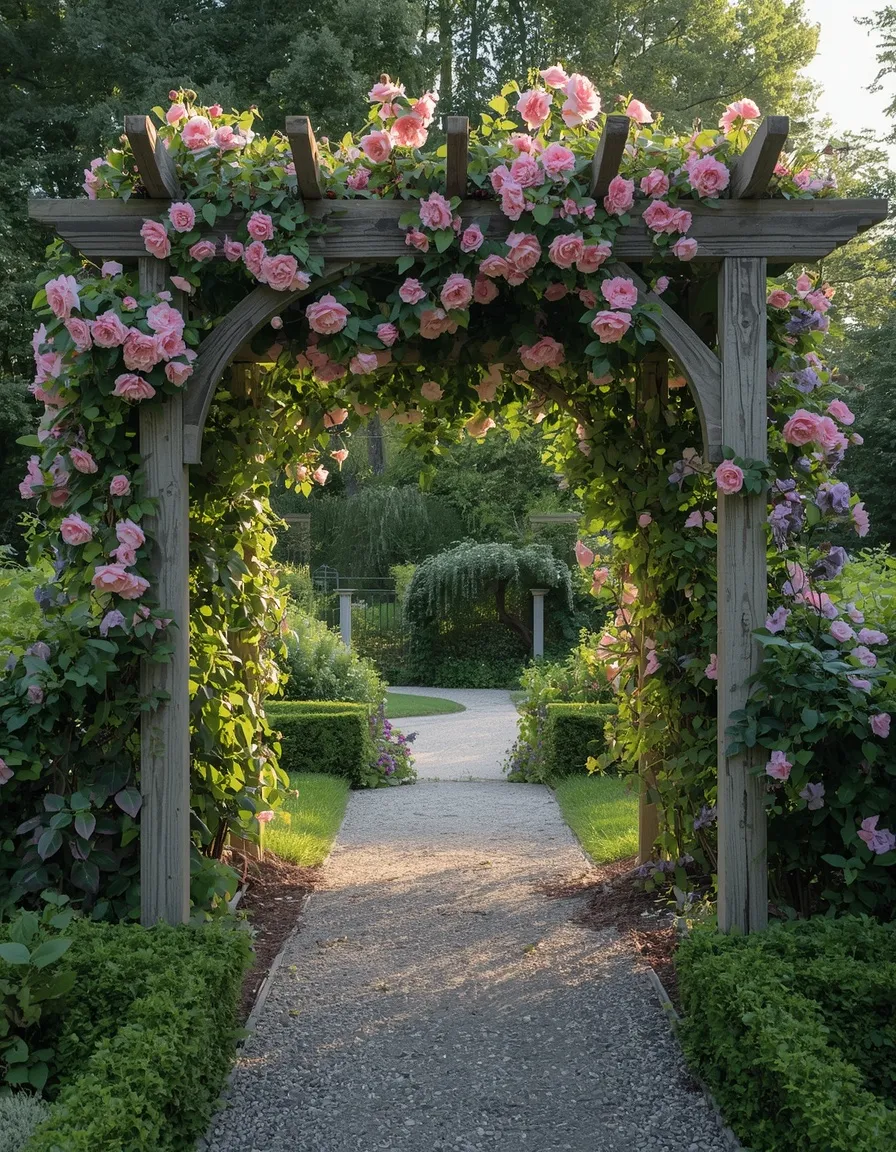
4. Flower-Draped Garden Arbor
Frame an entrance, path, or bench with an arbor smothered in climbing roses, clematis, or sweet pea, so walking through it feels like stepping into a different part of the garden. A well-placed arbor also gives an otherwise flat yard a sense of rooms and transitions.
Choose a sturdy wood or powder-coated metal frame rated for outdoor use, and anchor the posts at least 18 inches (45 cm) into the ground with concrete footings so mature vines don’t pull it over in wind. Plant two vigorous climbers on either side and train new growth onto the frame with soft garden twine every few weeks during the growing season. For faster impact on a budget, an annual vine like sweet pea or morning glory fills in within a single summer while slower perennial climbers establish underneath.
- Marks a transition between garden zones without a fence
- Combines structure with living, changing color through the seasons
- Fast annual vines give impact the first year while perennials establish
5. Whimsical Stepping Stone Mosaic
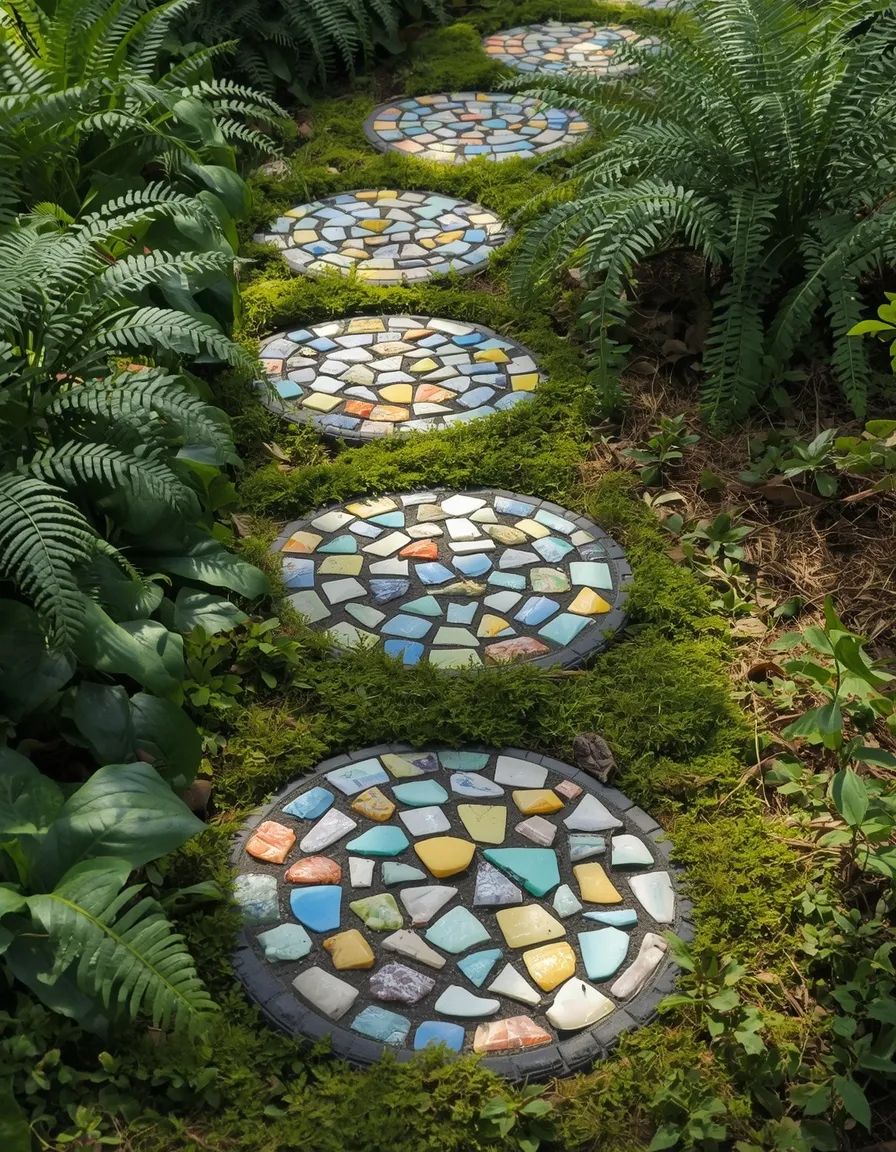
Turn a plain concrete path into a mosaic of stepping stones inlaid with broken tile, sea glass, or pressed leaves, so every step reveals a slightly different pattern underfoot. It’s one of the simplest whimsical garden ideas to try, and it doubles as a low, safe way to guide foot traffic through planting beds.
Pour quick-set concrete into round or hexagonal molds, then press in glass beads, china fragments, or a child’s handprint before the concrete cures, usually within 20 to 30 minutes depending on the product. Space stones about 24 inches (60 cm) apart, center to center, matching an average adult stride so the path feels natural to walk. Seal finished stones with an outdoor concrete sealant to protect the inlay from frost damage, and set them on a leveled sand base so they don’t shift or become a trip hazard.
- A weekend project that costs far less than a paved path
- Each stone can be personalized with a theme, initials, or found objects
- Proper spacing and a sand base keep the path safe underfoot
6. Upcycled Yard Art Sculptures
Give old kitchen colanders, rusted bicycle wheels, or broken garden tools a second life as freestanding yard art, positioned like small sculptures among the perennials. Rust and patina work in this project’s favor, since the weathered look reads as intentional rather than neglected.
Look for oddly shaped, sturdy metal objects, watering cans, gears, springs, that can be welded, wired, or bolted together, and finish them with an outdoor clear coat if you want to slow further rusting, or leave them bare for a raw, aged look. Position taller pieces where they catch late afternoon light and cast long shadows across the lawn, and check any welded joints annually for stability if the piece is tall enough to tip. This is one of the more inventive whimsical garden ideas for DIY yard art because nearly every piece starts as something otherwise headed for the scrap pile.
- Repurposes materials that would otherwise be thrown away
- Rust and patina add character rather than detract from it
- Tall or top-heavy pieces need a stable, checked base

7. Solar Fairy Light Canopy
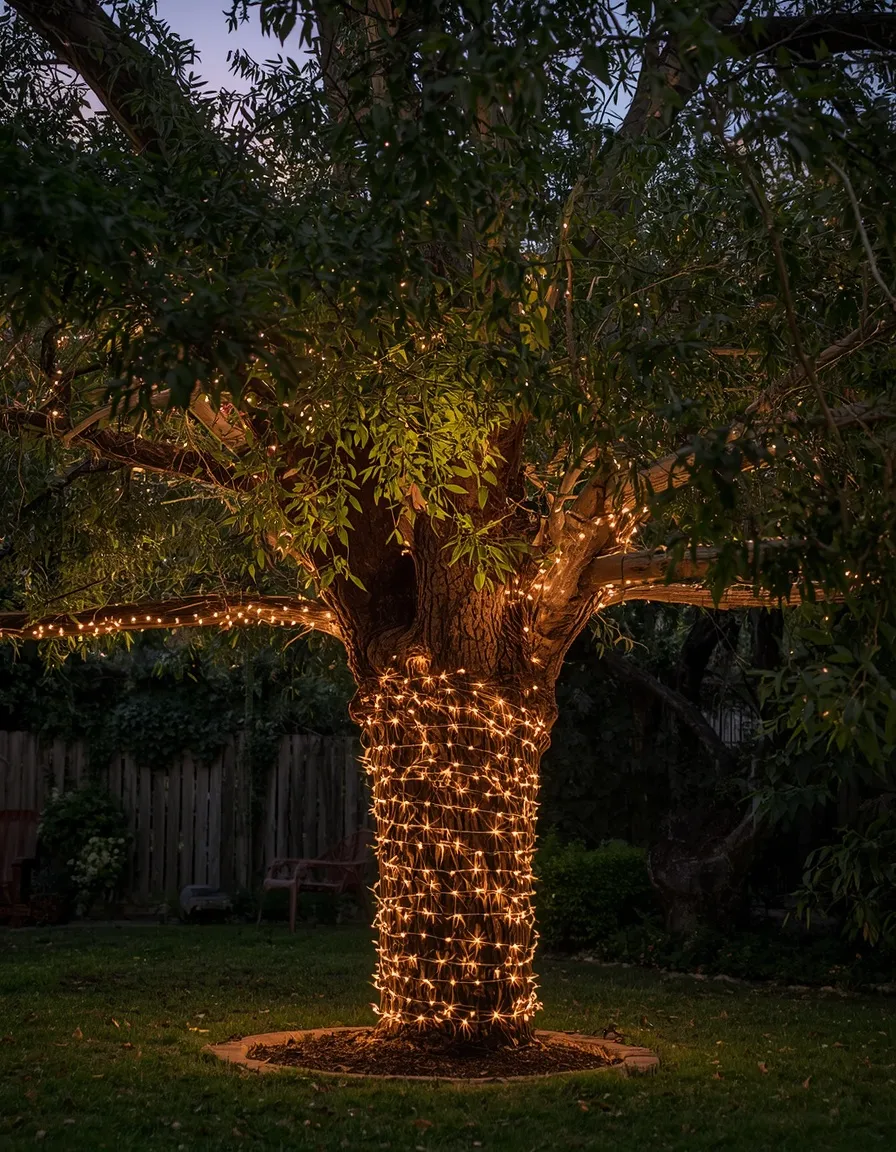
Drape strands of solar-powered fairy lights through the branches of a mature tree or across a pergola so the whole canopy glows softly once the sun goes down, no outlets required. It’s a low-effort way to bring whimsical garden ideas with solar lights into a space that already has good tree cover.
Mount the small solar panel somewhere it gets several hours of direct sun daily, ideally away from the shaded canopy itself, and run the light strand back to the branches so the panel isn’t hidden under leaves. Warm white LEDs, around 2700K, read as cozy rather than clinical, and copper-wire strands are flexible enough to wind naturally around branches instead of hanging in stiff, straight lines. In regions with limited winter sun, expect dimmer performance for a few months, and choose lights rated IP65 or higher so they hold up through rain.
- Requires no wiring or outlet access, ideal for renters
- Warm white tones feel cozy rather than like holiday decor
- Winter daylight hours affect brightness in low-sun climates
8. Butterfly Corner Garden
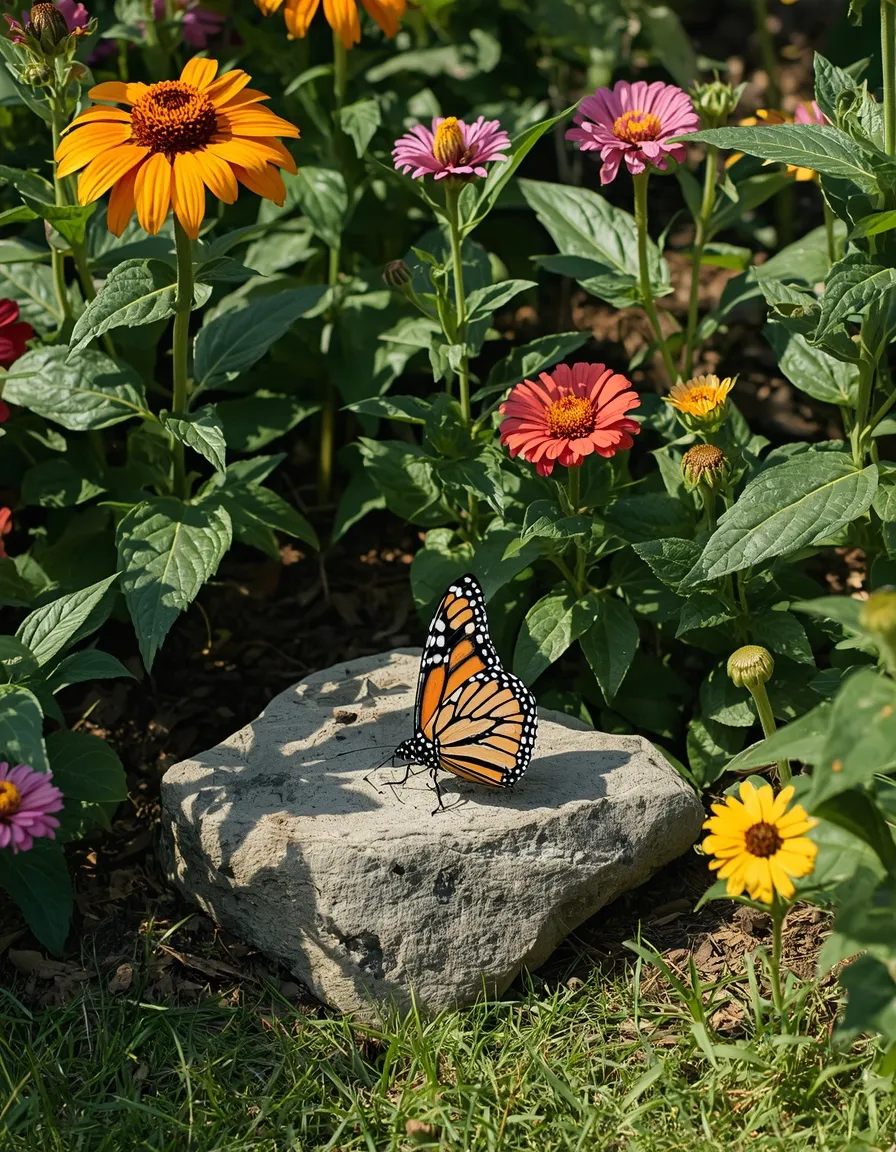
Dedicate an underused corner of the yard to a butterfly garden design layout, mixing nectar-rich flowers like coneflower, milkweed, and zinnia with flat basking stones where butterflies can warm their wings in the sun. It’s one of the few whimsical garden ideas that also does real ecological work.
Layer plants by height, taller natives like Joe Pye weed toward the back, mid-height coneflower and bee balm in the middle, low-growing alyssum along the front edge, and include at least one native milkweed species, since it’s the only host plant monarch caterpillars can eat. Skip pesticides in this corner entirely, since even organic sprays can harm butterflies and caterpillars at every life stage. A shallow dish of wet sand or a puddling station gives butterflies a mineral source and adds another small, tucked-away detail to discover.
- Combines whimsical appeal with genuine pollinator habitat
- Native milkweed supports the full monarch life cycle, not just adult butterflies
- A pesticide-free approach is essential for this corner to work
9. Painted Birdhouse Village
Cluster a handful of small, brightly painted birdhouses along a fence line or mounted on individual posts of varying heights to form a tiny painted village peeking out from the greenery. Uneven roof colors and hand-lettered street numbers add a storybook detail that photographs beautifully.
Use exterior latex paint rather than oil-based, since it holds up better to weather and is safer for any birds that eventually nest inside, and avoid painting the interior of the house or the entrance hole itself, which can trap heat or repel nesting birds. Space birdhouses several feet apart if you want them actually used as nesting sites, since many species are territorial, and clean out old nesting material each fall. Purely decorative, unpainted-interior houses can sit closer together for a denser, more villagelike cluster along a fence.
- Works as pure decor or as genuine nesting habitat, depending on placement
- Exterior latex paint holds color without harming birds
- Varying post heights and roof colors create a storybook skyline effect

10. Storybook Garden Shed
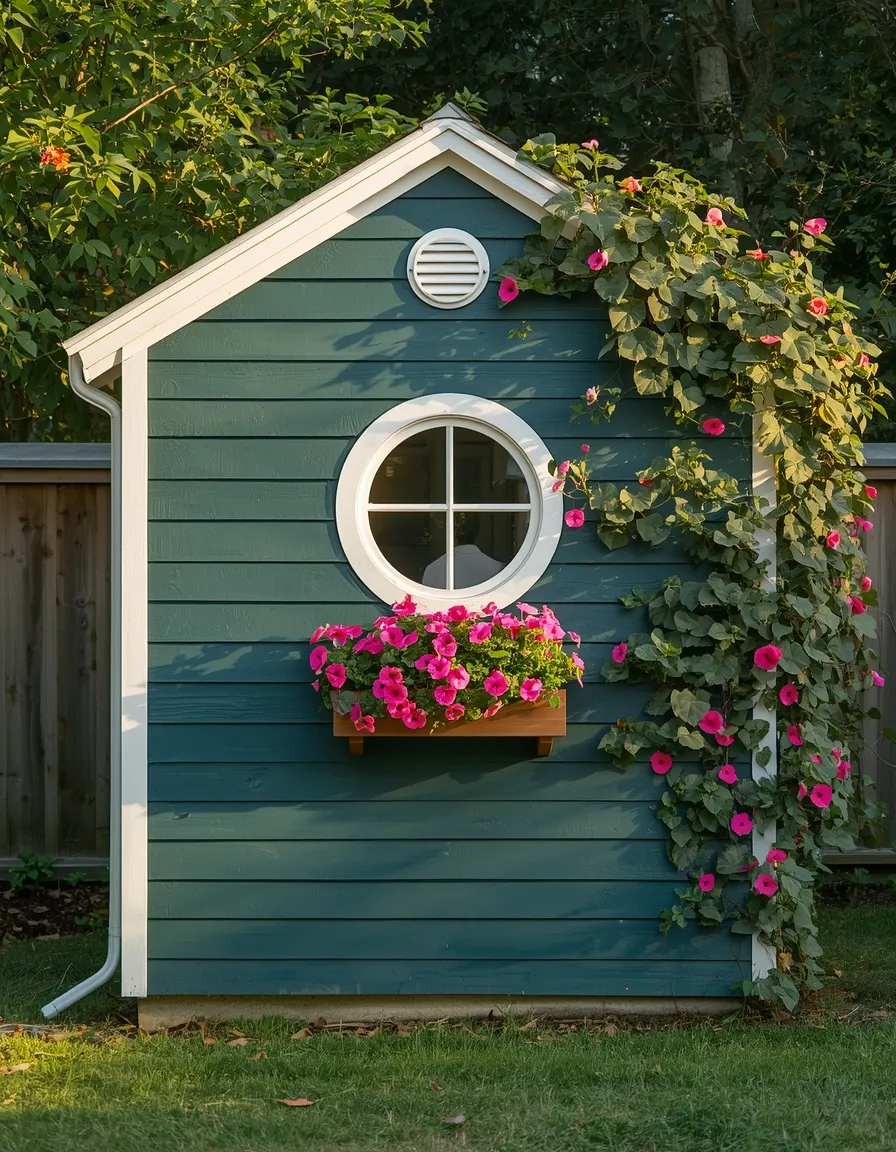
Treat the garden shed itself as a whimsical garden design centerpiece rather than a purely functional box, painting the door a saturated color, adding a round window, and framing the entrance with climbing vines or window boxes overflowing with trailing flowers. A shed styled this way becomes a destination in the yard, not just storage.
Start with the door and trim, since a coat of paint in a color like deep teal, mustard, or barn red makes the biggest visual change for the least effort, then add hardware like a black iron latch or a small brass house number for character. Window boxes filled with petunias or nasturtium soften the shed’s straight lines, and a small overhead lantern or string light extends its use into the evening. For a deeper look at layout, materials, and storage-smart design, this guide to garden shed ideas covers the structural side in more detail.
- Paint and hardware changes cost little but shift the whole feel
- Window boxes and vines soften a shed’s boxy shape
- Doubles as both storage and a garden focal point
11. Woodland Gnome Nook
Nestle a small collection of gnome and woodland creature statues into the base of a shaded tree or fern bed, half-hidden the way they might appear in an illustrated storybook rather than lined up in a row. Partial concealment is what keeps this idea from tipping into clutter.
Choose two or three figures in a similar material and scale, weathered resin or painted concrete work well outdoors, and tuck them behind hostas, ferns, or a fallen log rather than placing them in the open. Position the scene somewhere it will genuinely be noticed, along a path edge or near a window, rather than in a far corner that rarely gets visited. This idea suits fairytale-themed yards especially well and pairs naturally with a fairy garden nook or fairy door elsewhere in the same bed for a connected storyline through the space.
- Partial concealment keeps the look charming rather than cluttered
- Resin or painted concrete figures hold up best outdoors
- Pairs naturally with other fairytale elements for a connected theme

12. Vintage Bicycle Planter
Prop a weathered vintage bicycle against a fence or wall and fill its front basket, and sometimes the rear rack, with cascading flowers like petunias or ivy geranium, so the whole bike reads as a single, oversized planter. It’s a strong focal point for a front yard or side garden that gets seen from the street.
Look for a secondhand frame at a flea market or online marketplace rather than a new decorative one, since real wear on the paint and chrome is part of the charm, and remove the chain and any sharp moving parts if children will be nearby. Anchor the bike upright with a metal stake through the frame or a hidden concrete-filled base, since a top-heavy planter in a full basket can tip in wind. Line the basket with coconut coir or moss before adding potting mix so soil doesn’t wash out through the wire.
- Turns a secondhand find into an instant vertical planter
- A hidden anchor point prevents tipping once the basket is full
- Removing sharp or moving parts makes it safer around kids

13. Round Moon Gate Doorway
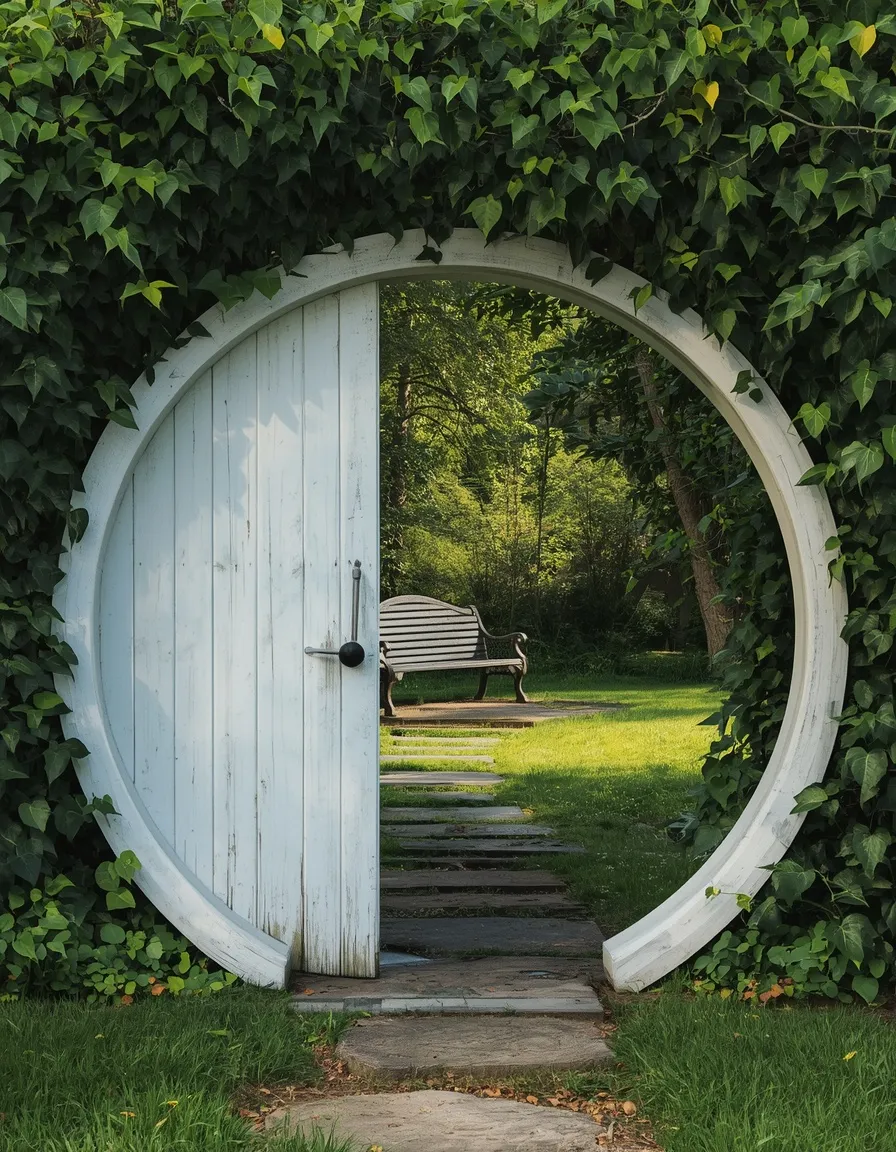
Install a circular moon gate, a freestanding round doorway inspired by traditional Chinese garden design, as a threshold between two parts of the yard, so stepping through it feels deliberate and a little theatrical. Even a modest one made from painted plywood or metal tubing reads as a strong architectural moment.
Build the ring from curved metal conduit or a pre-cut wood arch kit, mounted on two buried posts set in concrete for stability, and paint it in a color that contrasts with the surrounding greenery, white, black, or a deep red all work well. Position it to frame a specific view on the other side, a bench, a tree, a stretch of lawn, so the gate feels purposeful rather than decorative filler. This is a more advanced build among these whimsical garden landscaping ideas and is worth planning on paper first, since the proportions matter more than they do with smaller decor pieces.
- Creates a clear, photogenic threshold between garden areas
- Framing a specific view on the other side makes it feel intentional
- A more involved build best planned and measured before cutting materials
14. Wild Meadow Patch
Let a section of lawn grow into a loose wildflower meadow instead of mowing it, mixing in cosmos, poppy, and native grasses so the patch sways and shifts color through the season. It’s one of the most budget-friendly whimsical garden ideas here, since it trades mowing time for a single seed packet.
Clear the area of existing turf, rake the soil lightly, and scatter a regionally appropriate wildflower seed mix in early spring or fall, then keep the area lightly watered until seedlings are established. Mow the whole patch down once in late fall after seeds have dropped, which resets it for the following year, and mark the meadow’s edge with a low border of stone or timber so it reads as designed rather than simply unmowed. Choose a native seed mix suited to your specific climate zone, since generic mixes sometimes include species that can become invasive outside their home range.
- One of the cheapest ways to fill a large area with color
- A defined border keeps it looking intentional, not neglected
- Native, region-appropriate seed mixes avoid introducing invasive species

15. Fairy Door on a Tree
Attach a tiny painted door, sometimes with a matching miniature window, to the base of a mature tree trunk, positioned as though a small character lives just behind the bark. It’s one of the most beloved whimsical garden ideas for kids, since it invites made-up stories every time someone walks past.
Choose a lightweight wooden or resin door kit and attach it with exterior-rated adhesive rather than nails or screws, which can damage living bark and create an entry point for pests or disease. Position the door at a child’s eye level rather than an adult’s, and add small touches nearby, a pebble path, a miniature mailbox, a scattering of tiny acorns, to extend the story further. Refresh the paint every year or two, since bark movement and weather wear finishes faster than a door mounted on a stationary surface.
- A simple, low-cost project that consistently delights younger visitors
- Adhesive mounting avoids damaging the tree’s bark
- Small added props extend the storytelling beyond the door alone

16. Ladder Plant Display
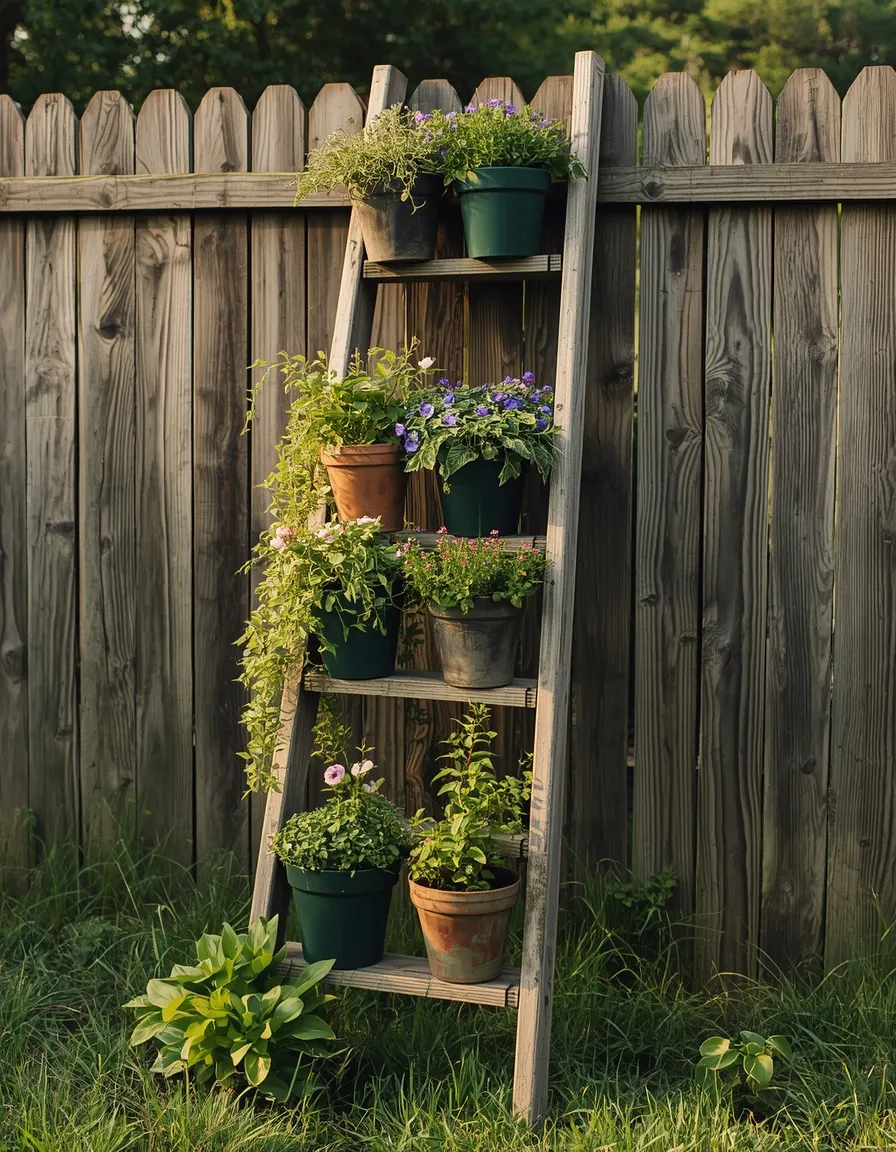
Lean an old wooden ladder against a fence or wall and rest potted plants on each rung, creating a tiered, slightly leaning display that takes up very little floor space. The imperfect angle of a weathered ladder gives the arrangement a relaxed, unstudied feel that a straight shelf can’t match.
Look for a ladder with sturdy, unbroken rungs, since it needs to hold real weight once pots are filled with damp soil, and secure the top to the wall or fence with a strap or hook so it can’t slide out from underneath the plants. Mix pot sizes and plant heights across the rungs, trailing plants like ivy or string of pearls near the top so they cascade down, sturdier upright plants lower down where they’re less likely to be knocked. This is one of the easier whimsical garden decor DIY projects for a small patio or balcony, since it needs no permanent installation.
- Fits tight spaces like balconies and narrow side yards
- Securing the ladder prevents it sliding once pots add weight
- Trailing plants on upper rungs create natural cascading movement
17. Wind Chime Grove
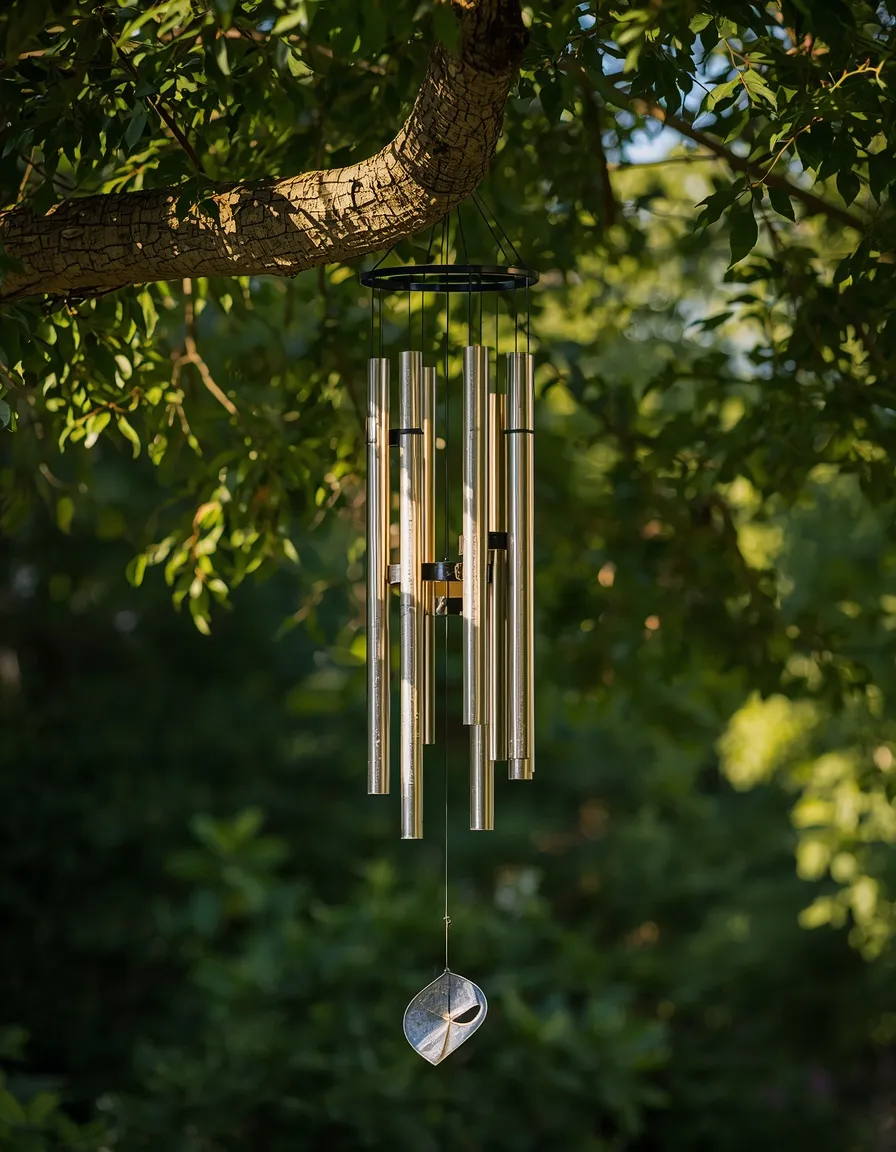
Hang a small cluster of wind chimes, mixing metal tubes, bamboo, and sea shells, from the branches of a single tree so the garden gains sound as well as sight. Grouped this way, they layer into a soft, irregular chorus rather than one repetitive tone.
Choose chimes tuned to different notes or scales so overlapping sounds stay pleasant rather than clashing, and hang the largest, heaviest chimes on the sturdiest branches, since wind and their own weight put steady strain on the mounting point. Position the grove near a window, patio, or bench where the sound will actually be heard often, rather than in a far corner of the yard. If neighbors are close by, keep the cluster modest, three or four chimes is usually plenty, since a large grove can become intrusive rather than pleasant for people nearby.
- Adds a sensory layer that photos alone can’t capture
- Mixed tones and materials avoid a single repetitive sound
- Best placed within earshot of where people actually sit
18. Sunken Teacup Seating Nook
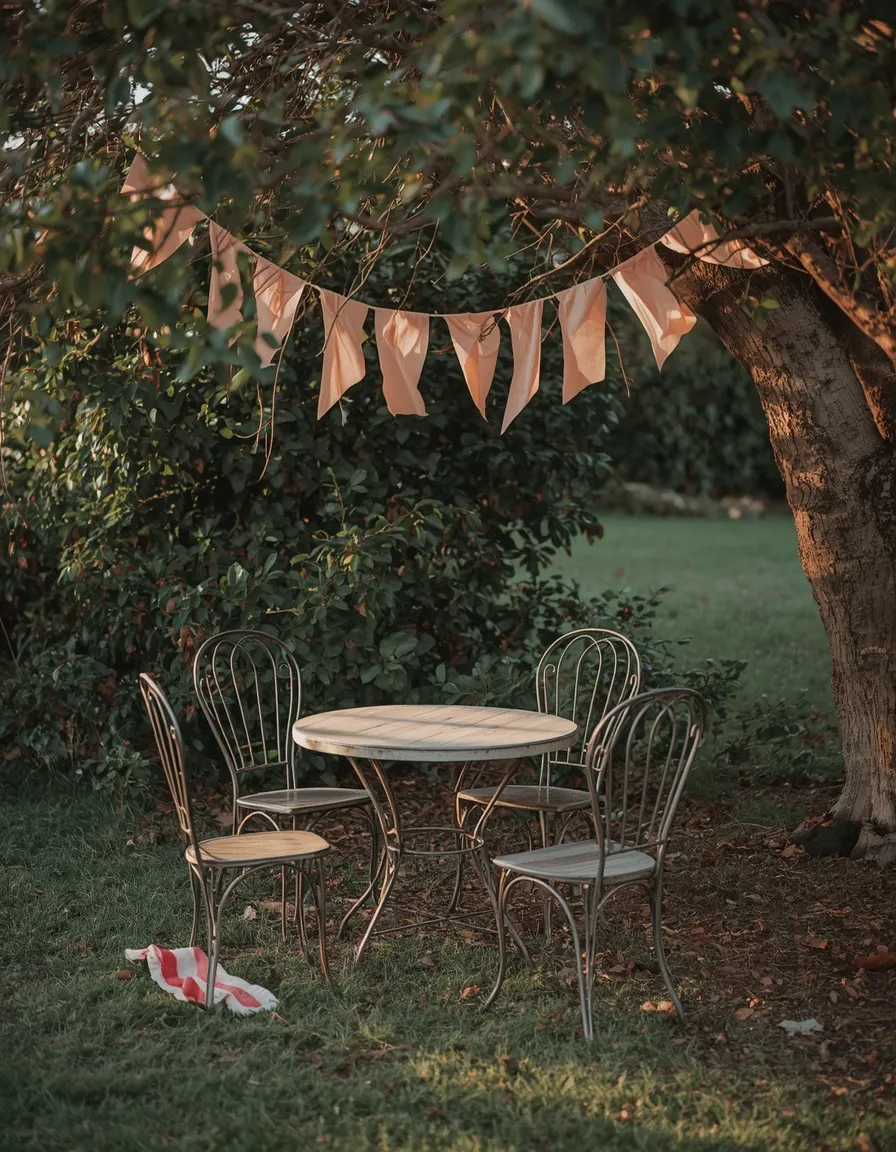
Set a mismatched vintage table and chairs, or even a repurposed clawfoot bathtub turned bench, into a quiet, half-hidden corner of the garden, styled like a scene from a storybook tea party. A canopy of overhanging branches or a simple fabric awning above completes the sense of a room within the garden.
Choose furniture rated for outdoor use, or treat indoor secondhand pieces with an exterior sealant and keep them under cover during heavy rain, since untreated wood and fabric degrade quickly outside. Ground the space with a rug-sized patch of gravel, pavers, or a round outdoor-rated rug, which visually separates the nook from the surrounding lawn. This kind of styled corner also works well for a small garden party gathering, since it already reads as an inviting, ready-made setting rather than a spot that needs extra decorating.
- Creates a distinct destination rather than open, undefined lawn
- Outdoor-rated or sealed furniture holds up through weather
- A defined ground surface visually separates the nook from the lawn
19. Tiny Whimsical Corner Garden
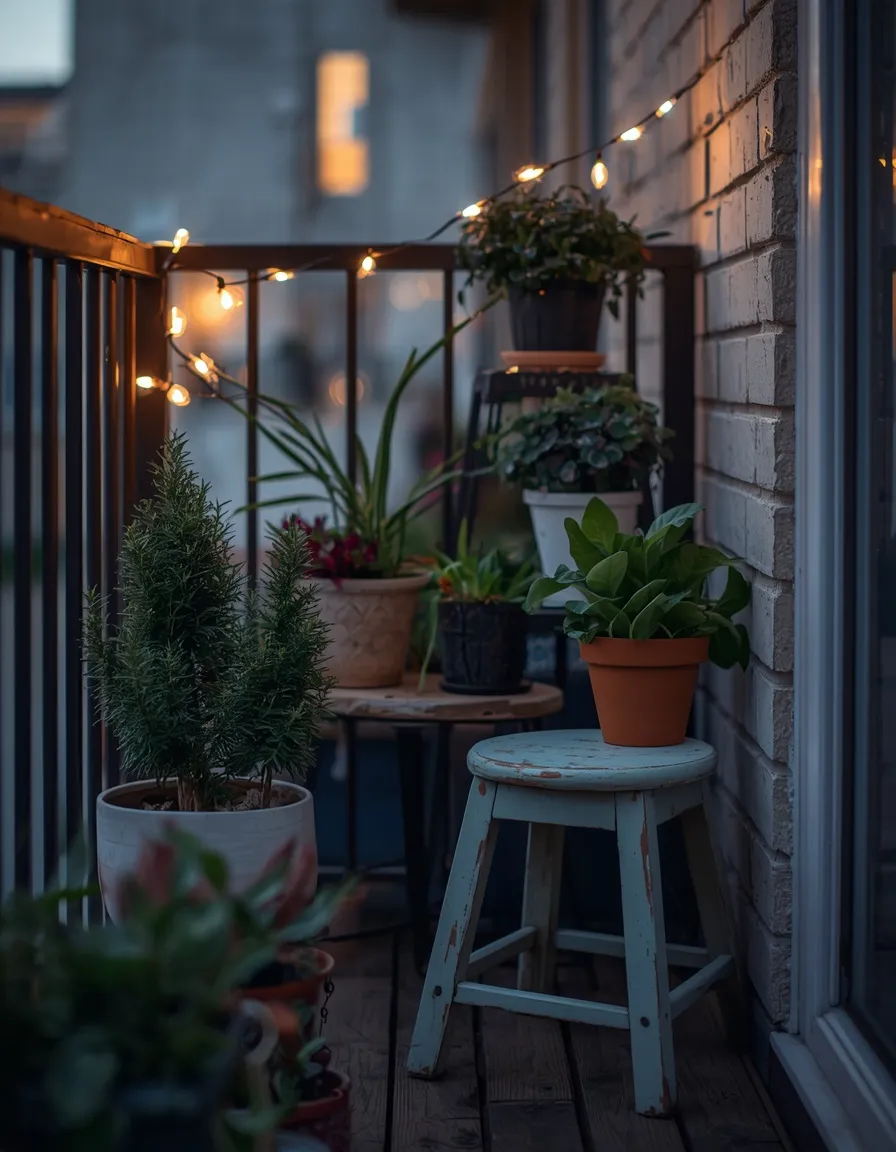
Even a single corner of a small backyard, patio, or apartment balcony can carry whimsical garden ideas at a scale that fits the space, a cluster of potted plants, one string of fairy lights, a small painted stool doubling as a plant stand. Choosing one or two focal details rather than crowding the corner keeps a tiny space feeling curated instead of cramped.
Work vertically when floor space is limited, using wall-mounted planters, a hanging basket, or a leaning ladder display to add greenery without eating into walking room, and choose a single unifying color or material, such as terracotta or weathered wood, so a mix of small objects still reads as one cohesive scene. Container plants in a tight corner dry out faster than in-ground beds, so group pots by watering needs and check soil moisture every few days during warm weather. This approach makes the earlier ideas in this list scalable even for the smallest backyard on a budget.
- Proves whimsy scales down to a balcony or single corner
- Vertical displays add charm without using floor space
- One unifying material keeps a mix of small pieces cohesive
Final Thoughts
Whimsical garden ideas work best as a handful of well-placed surprises rather than an attempt to fill every inch of the yard at once. Start with whichever idea matches your space and budget, a single strand of solar lights, one repurposed planter, or a proper storybook garden shed, and let the rest of the garden grow around it over time.
The goal isn’t a finished, static display but a space that keeps revealing small new details on repeat visits. For more ways to shape the rest of the yard, this collection of garden design inspiration is worth a browse next, and if one of these ideas catches your eye, it’s worth sketching out before the next free weekend arrives.
Frequently Asked Questions
What makes a garden idea “whimsical” rather than just decorative?
Whimsical garden ideas lean into playful, storybook-style details, tiny doors, mismatched lanterns, hidden figures, rather than matched, symmetrical decor. The through-line is a sense of discovery, where a visitor notices something new each time they look closely at a bed or corner.
Can whimsical garden ideas work in a small space or on a balcony?
Yes. Scale is flexible, so a single corner with potted plants, a string of fairy lights, and one painted accent piece can carry the same storybook feel as a full backyard. Working vertically with hanging baskets or a leaning ladder display keeps small spaces from feeling crowded.
How do I keep a whimsical garden from looking cluttered?
Choose two or three focal ideas per area rather than combining every idea from a list into one bed, and repeat a unifying color, material, or theme across the pieces you do use. Partial concealment, tucking figures behind ferns rather than lining them up, also keeps small details feeling discovered rather than crowded.
Are whimsical garden decorations safe for pets and children?
Most are, with a few precautions: avoid small, swallowable pieces within reach of young children, remove sharp or moving parts from repurposed items like bicycles, and check that any DIY structure like an arbor or moon gate is anchored securely. If adding new plants for pollinator or fairy garden corners, confirm they’re non-toxic to pets before planting, since the ASPCA maintains an updated toxic and non-toxic plant list.
What’s the most budget-friendly way to start?
A wildflower meadow patch, a set of upcycled yard art, or vintage teacup planters from a thrift store are among the cheapest entry points, often costing less than a single new decor purchase. Solar fairy lights are another low-cost option, since they need no wiring or added electrical costs.
Do whimsical garden ideas work for a wedding, party, or one-off event, not just everyday use?
Several of these ideas, hanging lanterns, a flower-draped arbor, a styled seating nook, adapt well to a garden party or outdoor gathering, since they already read as an inviting, decorated space rather than something requiring extra setup. For a permanent garden, choose the sturdier, weatherproof versions rather than event-only rentals.
How much maintenance do whimsical garden features typically need?
Most require only light seasonal upkeep: refreshing paint on wooden pieces every year or two, checking anchor points on taller structures like arbors or moon gates, and repositioning solar panels as needed. Living elements, like a butterfly corner or wildflower meadow, need a bit more regular attention than static decor pieces such as birdhouses or lanterns.