
Introduction
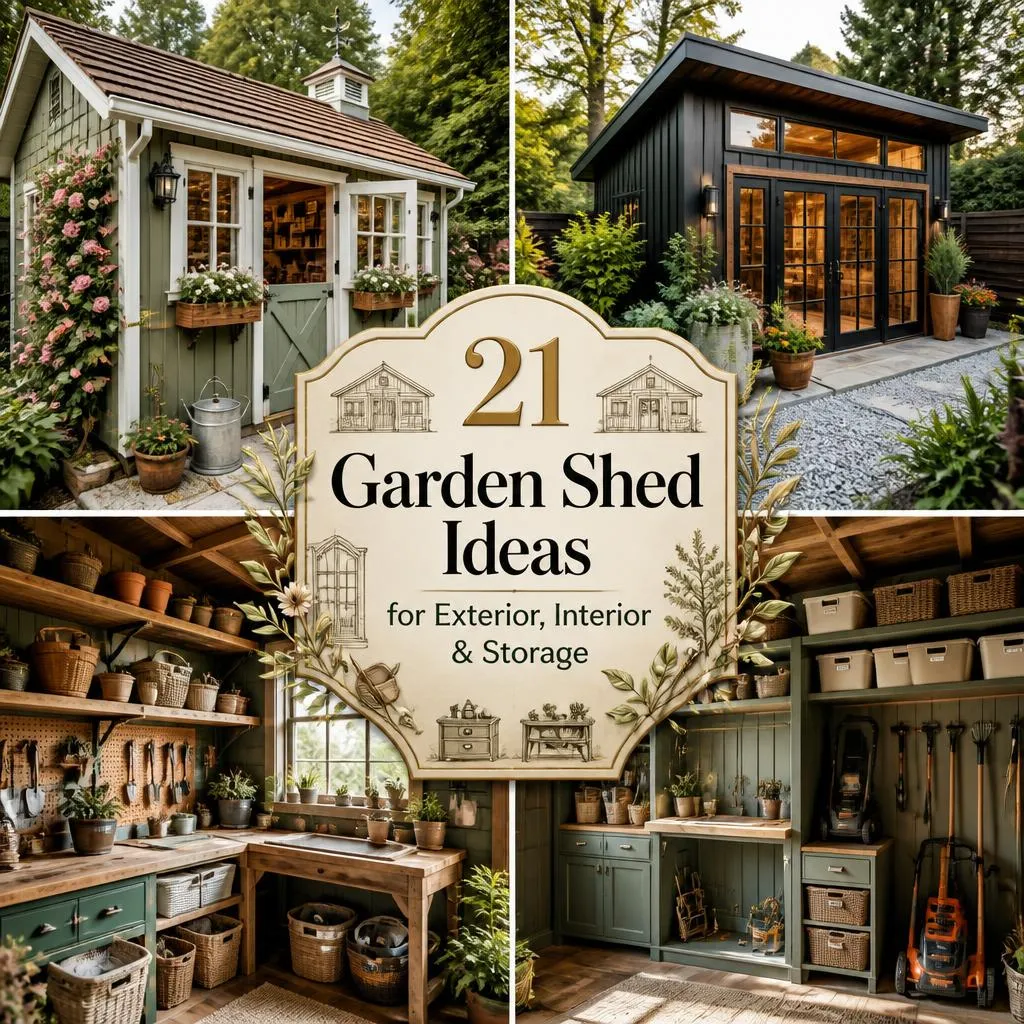
Garden shed ideas rarely stop at a fresh coat of paint anymore. Whether it is a compact toolshed tucked behind a fence or a larger outbuilding ready for a second life, the gap between a plain storage box and the best-looking corner of the garden is often just a weekend of thoughtful styling. This guide gathers 21 garden shed ideas spanning exterior color and curb appeal, clever interior storage, cozy work spaces and den setups, and low-cost DIY touches anyone can tackle without specialist skills. Some ideas focus purely on function, like reclaiming ceiling space for seasonal storage; others are about atmosphere, like a chalkboard door or a reading nook. Together, they follow the same approach found across Sunday Abode, where a garden and home are meant to feel considered, not overdone, right down to the shed at the back of it.
Exterior Paint and Color Ideas
1. Soft Sage and Cream Two-Tone
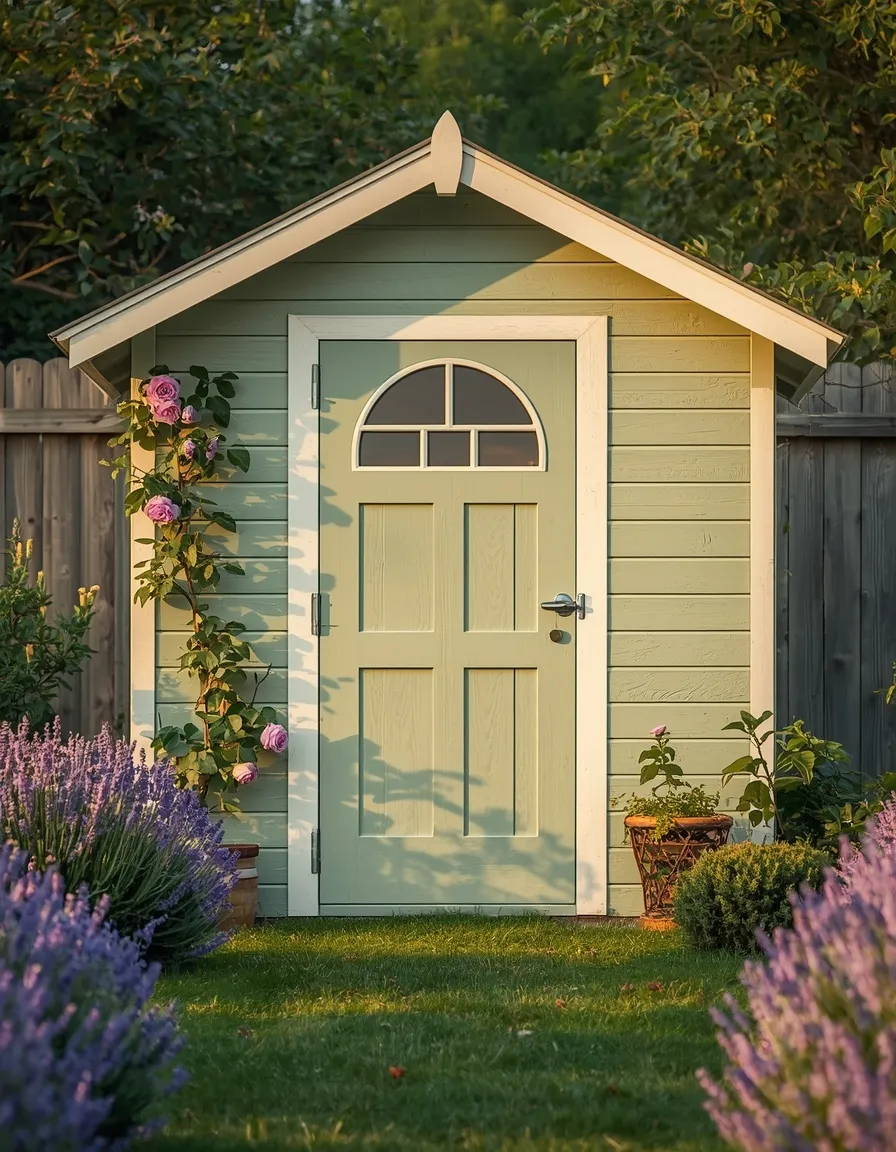
A pale sage green body paired with a creamy white trim turns a plain timber shed into a cottage-garden focal point, especially when it sits against a backdrop of lavender, boxwood, or climbing roses. The muted green reads as an extension of the garden rather than a separate structure, so the shed blends in instead of competing with the planting around it.
To get the two-tone effect right, paint the main cladding in the sage shade first, then use a smaller brush for the trim, door frame, and window surrounds in cream so the lines stay crisp. This palette works particularly well on sheds used as potting rooms or garden storage, since the soft tones don’t clash with foliage colors year-round. A common mistake is choosing a sage that leans too yellow, which can look dated fast; test a sample patch and view it in both morning and evening light before committing to the full shed. Always use an exterior-grade, weather-resistant paint formulated for wood, and paint on a dry, mild day with the doors and windows open for ventilation.
- Works especially well against green, white, or pastel-flowered planting schemes
- A low-maintenance option that hides dirt and weathering better than pure white
- Solves the problem of a shed looking like an afterthought in a styled garden
2. Bold Charcoal with Brass Hardware
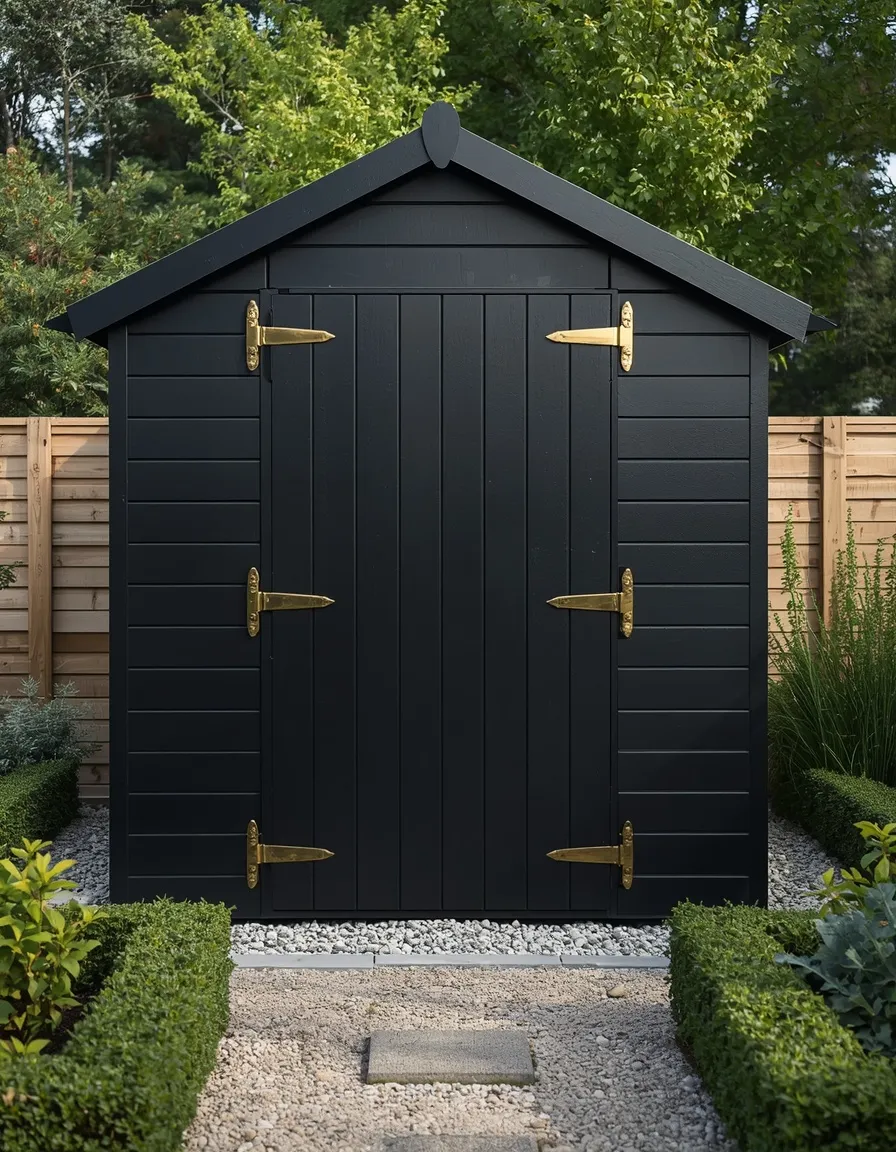
A charcoal or near-black exterior gives a garden shed a modern, architectural presence, especially when paired with warm brass or matte black door hardware and a light-colored gravel or paved surround. Instead of hiding the shed at the back of the plot, this treatment turns it into a deliberate design statement, similar to how a dark front door anchors a house facade.
This look suits contemporary gardens with clean lines, raised beds, or minimalist planting, and it photographs especially well against greenery, which reads brighter and more saturated next to dark paint. Use a masonry or exterior wood paint rated for full sun exposure, since darker colors absorb more heat and can accelerate fading or warping on the side that gets the most afternoon sun. A frequent misstep is using flat black on every surface, which can look heavy; breaking it up with brass door pulls, a house number plaque, or a pale wood door adds contrast and keeps the structure from feeling like a void in the garden.
- Ideal for modern or minimalist garden design ideas with structured planting
- Creates strong contrast that makes surrounding greenery look richer
- Works well on the sun-exposed side only if paired with a heat-tolerant paint formula
3. Classic Barn Red
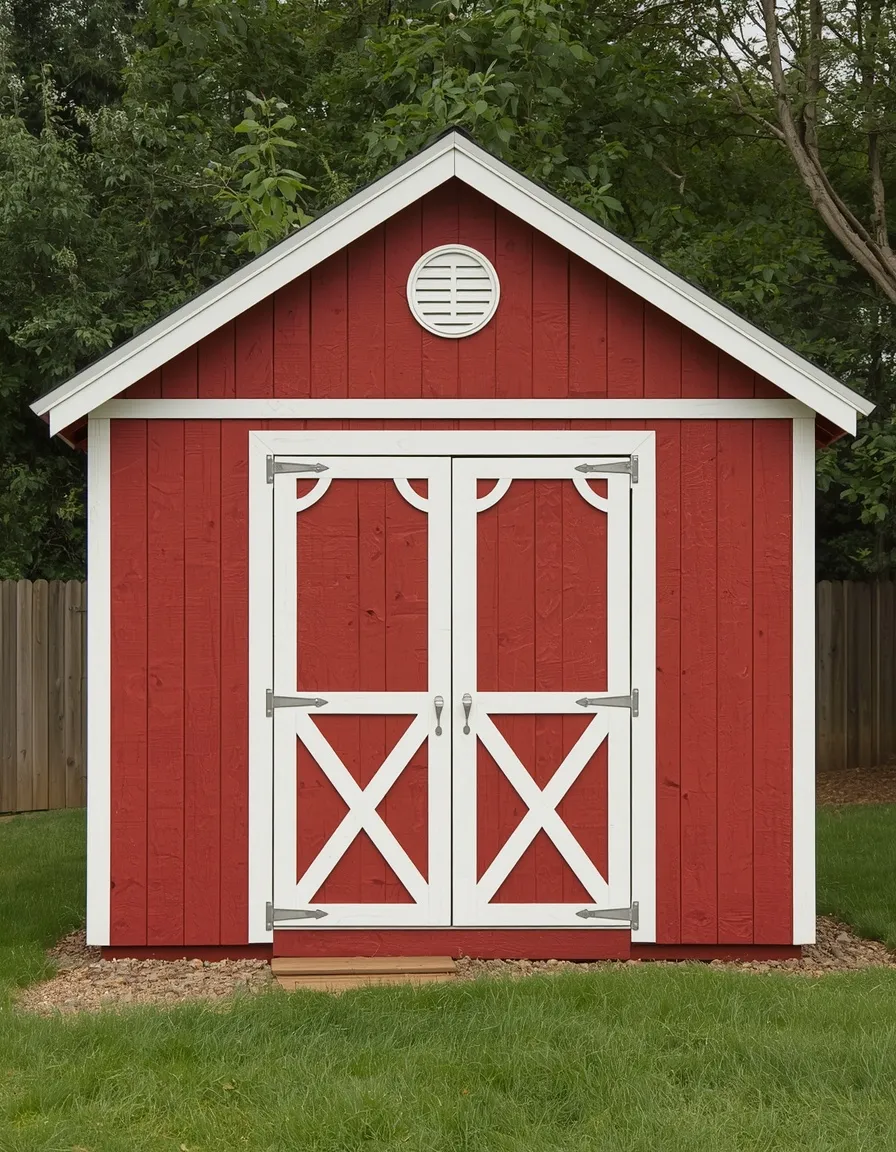
A traditional barn red exterior, especially paired with white trim and a slightly pitched roof, gives a garden shed the look of a miniature countryside barn. It’s a dependable choice for larger plots, allotments, or gardens with a rustic or farmhouse style, where a bright white or grey shed can feel out of place.
Barn red works best on sheds with visible board-and-batten or shiplap cladding, since the vertical or horizontal lines catch the light and add texture to a strong color. Apply a primer coat first if the shed has never been painted, and choose an exterior formula with UV protection so the red doesn’t fade to a chalky pink within a couple of seasons, which is a common complaint with cheaper paints. This shade pairs naturally with galvanized metal hardware, a black roof, and climbing plants like clematis or nasturtium trained along the base.
- Best suited to rustic, farmhouse, or countryside garden design ideas
- Hides soil splashes and weathering better than pale colors
- Solves the problem of a shed looking too clinical in an informal garden
4. Coastal Blue-Grey Weatherboard
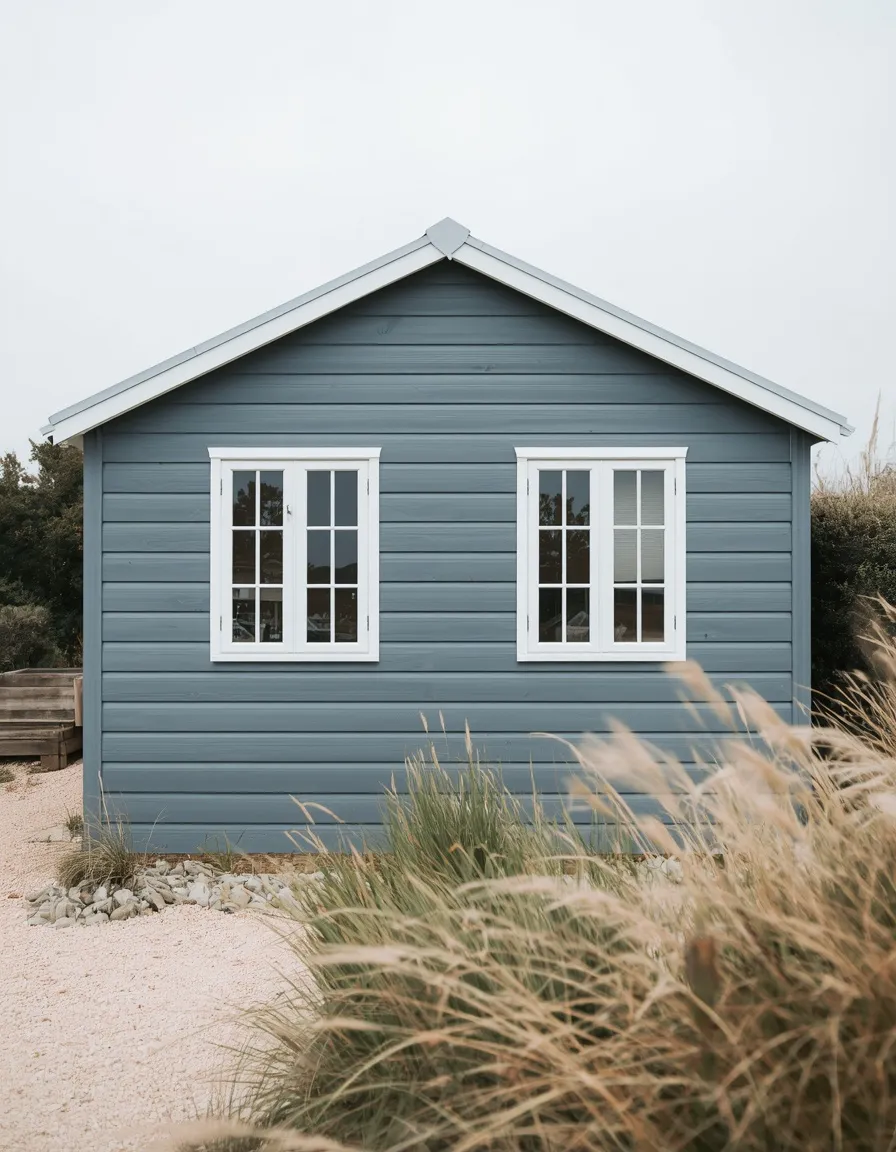
A muted blue-grey weatherboard finish gives a garden shed a relaxed, coastal feel that works particularly well in gardens near the coast or in climates with a lot of overcast weather, where the soft tone echoes the color of the sky and sea rather than fighting it.
This shade performs best on horizontal weatherboard or clapboard cladding, since the layered boards catch shadow and add depth to what would otherwise be a flat expanse of color. Because coastal locations expose timber to salt air and higher humidity, choose a marine-grade or exterior wood stain rather than a standard paint, and reapply every two to three years to prevent the wood underneath from swelling or rotting. Pair the blue-grey with white-painted window frames and a light oak or driftwood-toned door for a finished, cohesive look rather than letting every surface compete for attention.
- Particularly suited to coastal, seaside, or Scandinavian-style gardens
- A practical choice in humid or salt-exposed climates when paired with marine-grade finishes
- Works as a calming backdrop for white or pale pink flowering plants
Exterior Decor and Curb Appeal
5. Window Boxes Bursting with Flowers
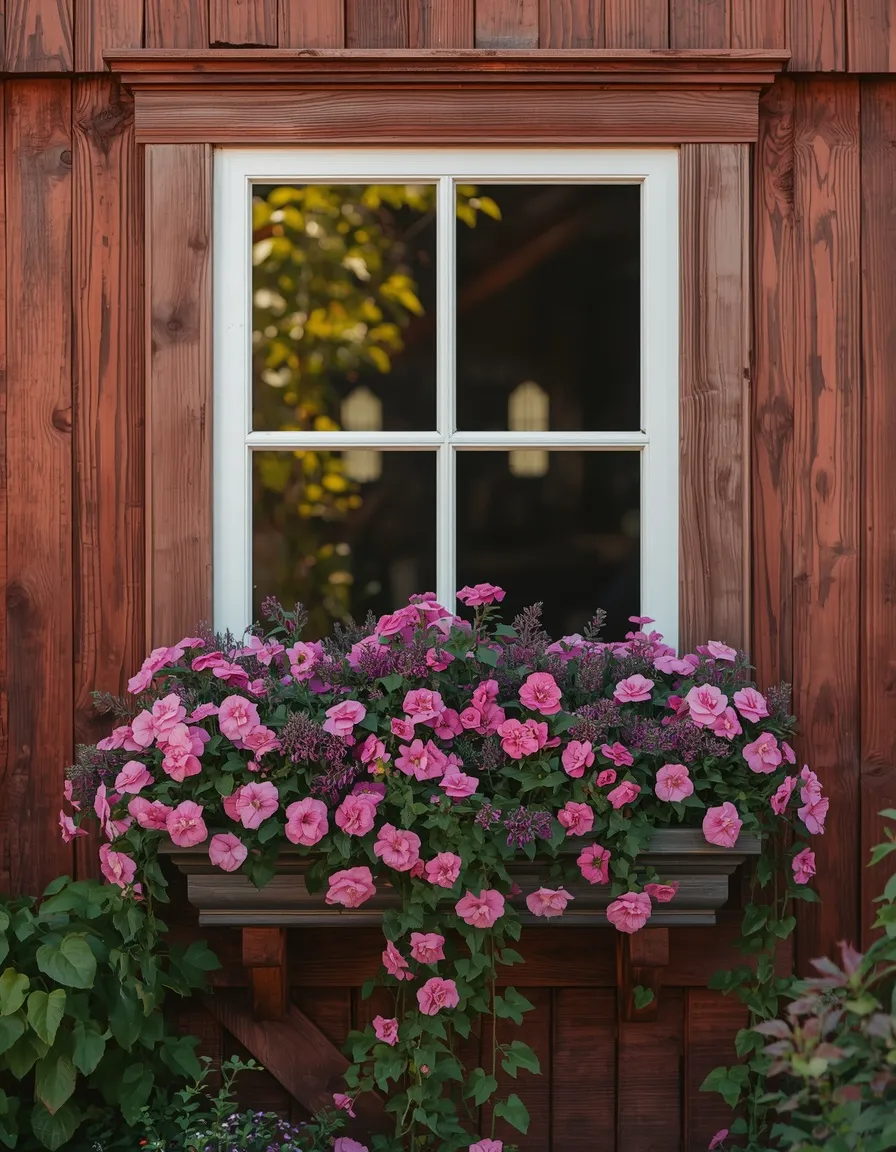
Mounting a simple wooden or galvanized window box beneath a shed window instantly softens the structure and ties it visually to the rest of a flower-filled garden, especially when the blooms echo colors used elsewhere in nearby beds or borders.
For a shed that only gets a few hours of direct sun, fill the box with shade-tolerant options like begonias, fuchsias, or trailing ivy; in full sun, geraniums, petunias, and marigolds hold up better through summer heat. Attach the box with brackets rated for the weight of wet, planted soil rather than small nails, since a fully watered box can weigh considerably more than it looks. Readers building out a broader flower display around the shed can find more planting combinations in this guide to backyard flower garden ideas, which covers color pairing and bloom timing in more depth.
- Softens a utilitarian structure and connects it to the wider garden design
- Adaptable to full sun or shade depending on plant choice
- Solves the problem of a shed wall or window looking bare and unfinished
6. Climbing Vines on a Trellis Wall
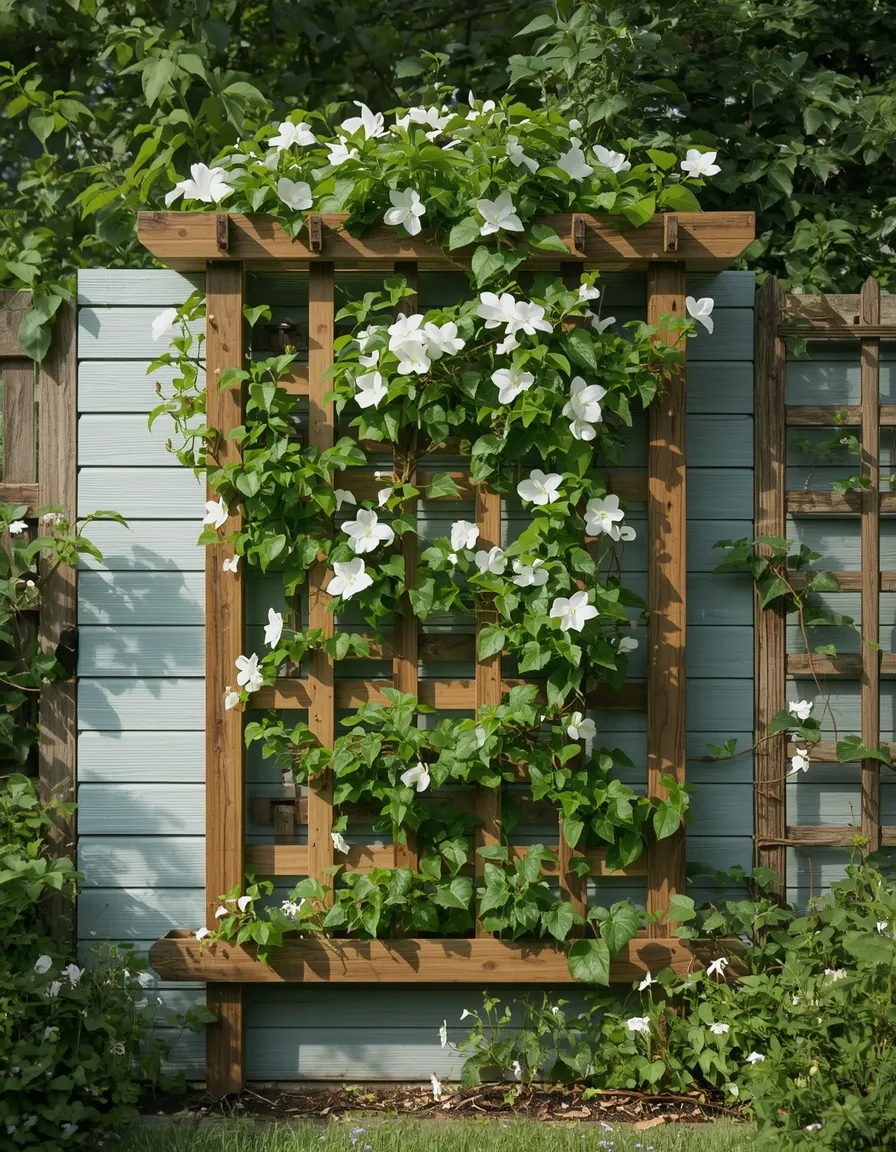
A simple wooden trellis fixed a few inches off the shed wall lets climbing plants like clematis, sweet pea, or star jasmine grow up and across the structure without their tendrils gripping directly into the paint or cladding, softening hard edges with movement and seasonal color.
Leaving a gap between the trellis and the shed wall is essential, since vines grown flush against timber trap moisture and can accelerate rot behind the foliage. Choose a non-invasive climber for a shed with wooden cladding, as aggressive growers like ivy or wisteria can work their way under shingles and boards and cause structural damage over several seasons. This idea suits gardens where the shed backs onto a fence or a less-visible boundary, turning what’s normally the ugliest side of the plot into a green, flowering wall.
- Best for softening a blank or less attractive side of the shed
- Choose climbers rated for the shed’s sun exposure and your local hardiness zone
- Avoid aggressive climbers that can lift shingles or trap damaging moisture against the wood
7. Cedar Shake Roof Upgrade
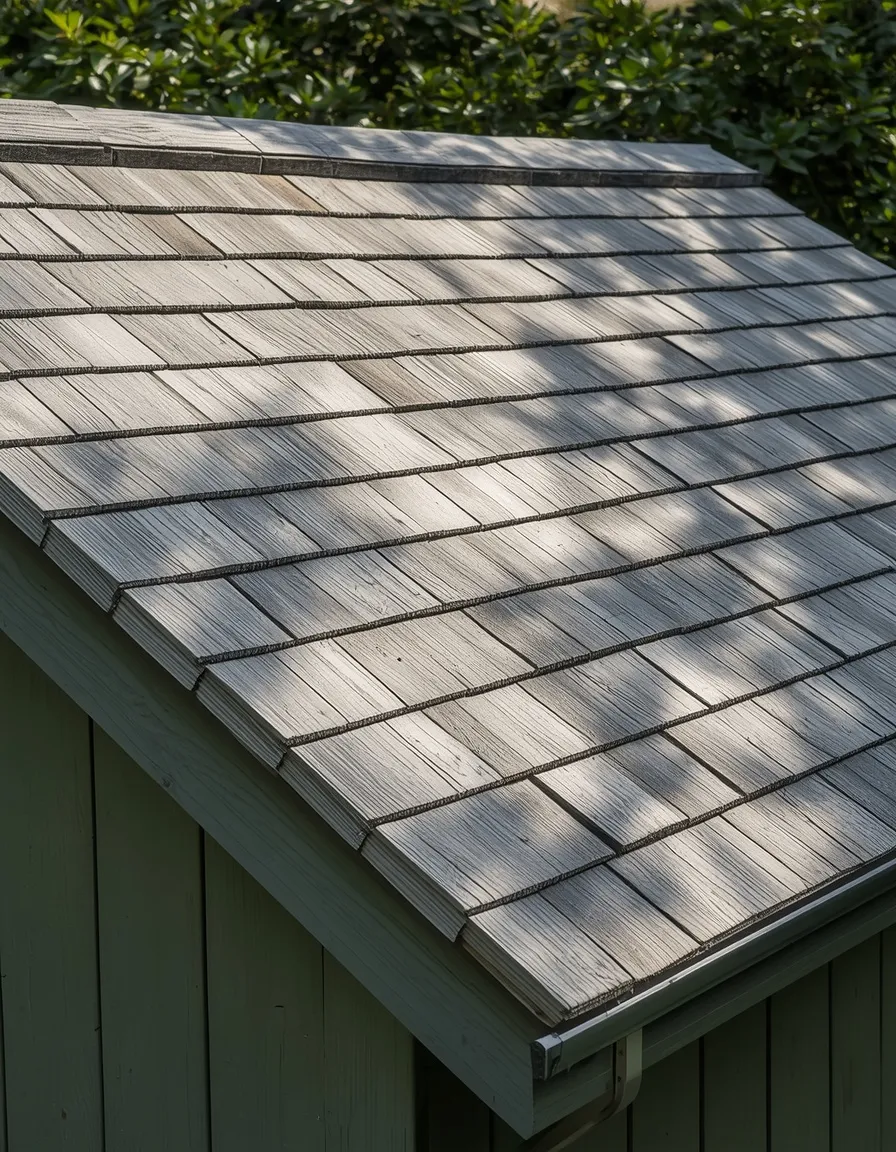
Swapping a standard felt or asphalt shingle roof for cedar shakes gives a garden shed a warm, textured, almost cottage-like appearance that ages into a soft silver-grey over time, adding character that a flat synthetic roof simply can’t match.
Cedar shakes are naturally resistant to rot and insects due to the wood’s oils, but they still need a breathable underlay and proper overlap to shed water correctly in wet climates. This upgrade is best handled by someone comfortable working at height, and a stable ladder, roof anchor points, and a second person to steady the ladder are non-negotiable safety basics, since shed roofs are often steeper and more slippery than they appear from the ground. Budget-conscious gardeners can achieve a similar textured look with cedar-effect composite shingles, which cost less and require no periodic oiling.
- Adds natural texture and a weathered, high-end look over time
- A composite alternative exists for lower cost and less maintenance
- Requires safe ladder and roof access; not a solo ground-level project
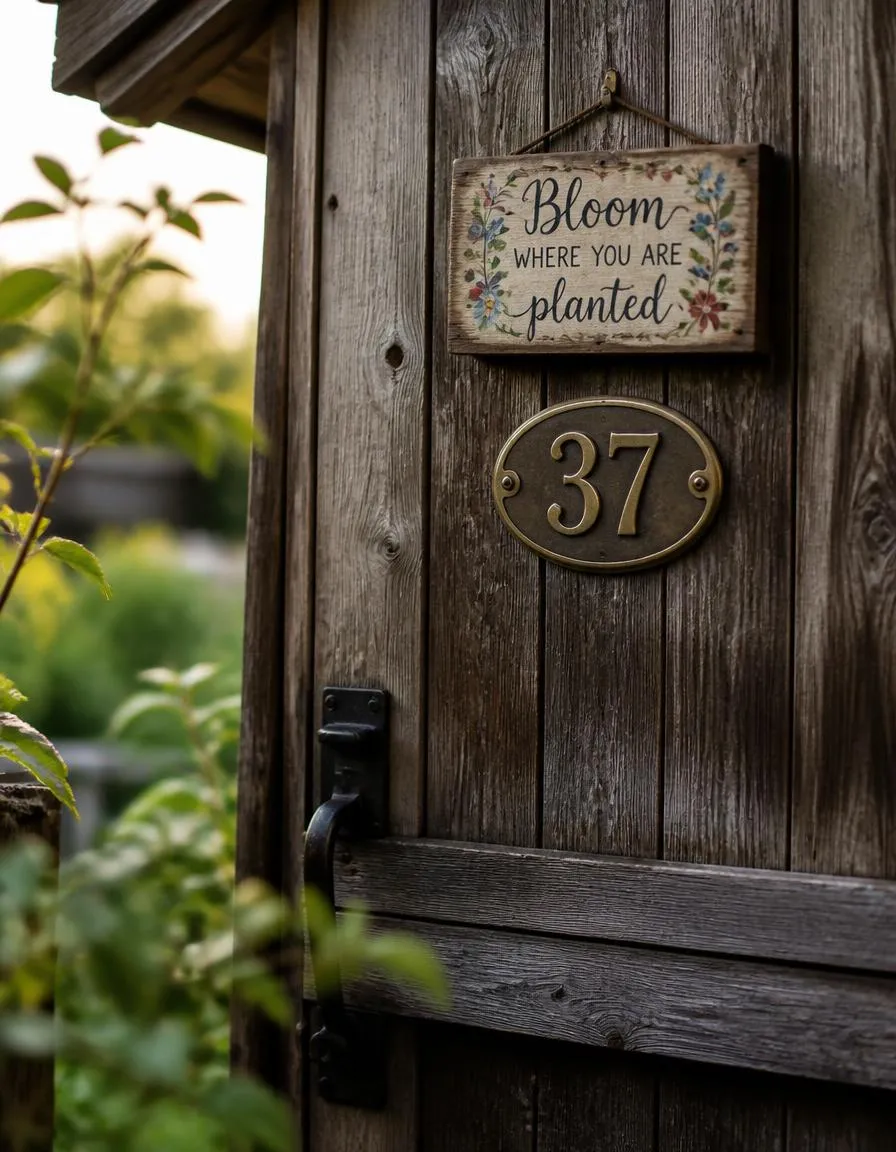
8. Vintage House Numbers and Signage
Adding a small enamel or cast-metal sign, a set of vintage-style house numbers, or a hand-painted name plaque above the shed door gives it a sense of identity, as though it’s a proper little building rather than an anonymous storage box at the end of the garden.
Simple phrases like a plot number, a whimsical name, or even just the shed’s build year work well, and antique or reproduction signage in a contrasting metal finish, like aged brass against a dark green door, adds instant personality without any structural work. This is one of the lowest-cost ways to add character to a shed, and it suits almost any exterior color scheme since a single small sign rarely clashes with the paint underneath it.
- One of the cheapest garden shed decoration ideas with high visual impact
- Suits sheds converted into a den, office, or workshop that deserve a name
- Works with any exterior color, since it’s a small, contained accent
Interior Storage Solutions
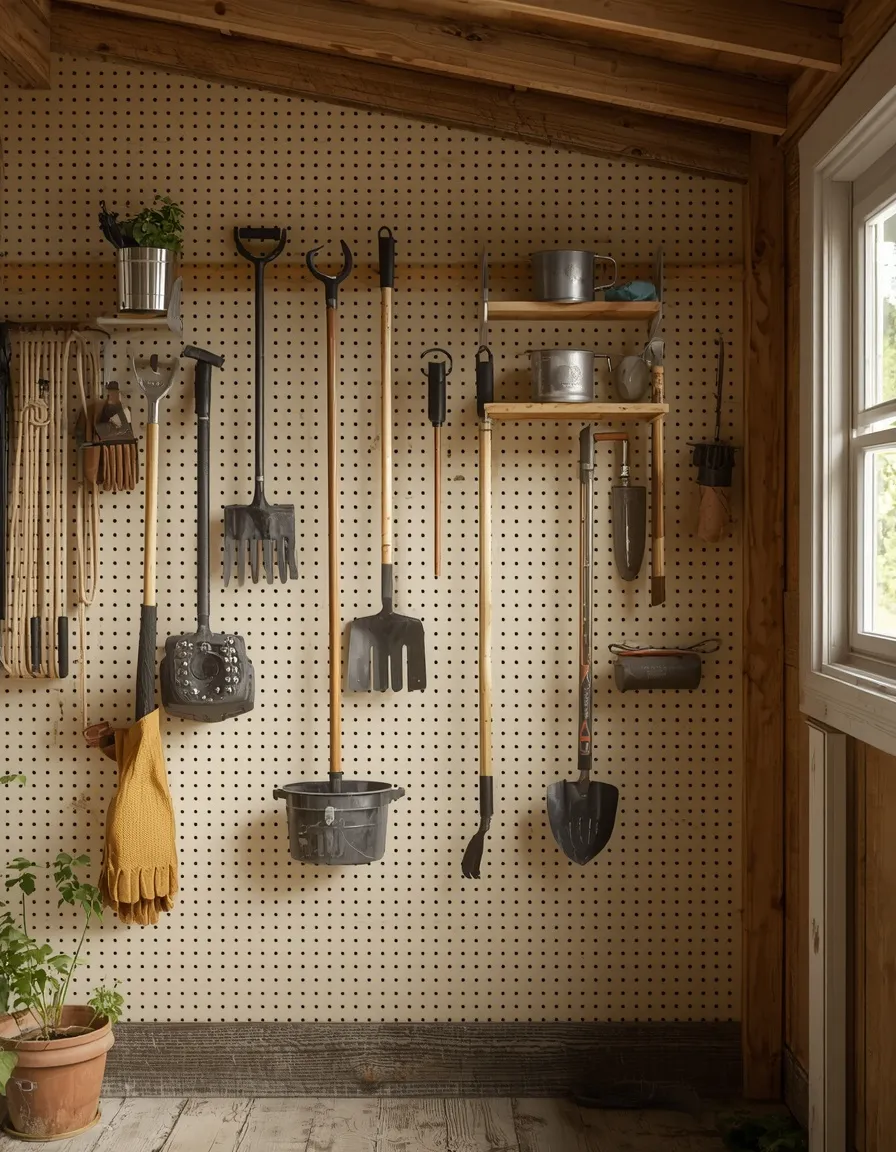
9. Wall-Mounted Pegboard System
Covering one full interior wall with pegboard turns a shed’s most wasted surface into flexible, visible storage for hand tools, gardening gloves, twine, and small pots, all of which are otherwise easy to lose in a drawer or bin.
Paint the pegboard a light color before installing it, since a pale background makes it far easier to spot a tool at a glance, and trace an outline around each hook position with a marker so everything has an obvious home and gets put back correctly. Use screws long enough to bite into the wall studs behind the panel rather than relying on the pegboard’s own thin material to hold weight, and wear safety glasses when drilling into shed walls, since old timber can splinter unpredictably. This system works especially well in sheds under about 8 by 6 feet (2.4 by 1.8 meters), where floor space for shelving units is limited.
- Ideal for small to mid-sized sheds where floor space is limited
- Keeps frequently used tools visible instead of buried in bins
- Solves the common problem of losing small tools among garden clutter
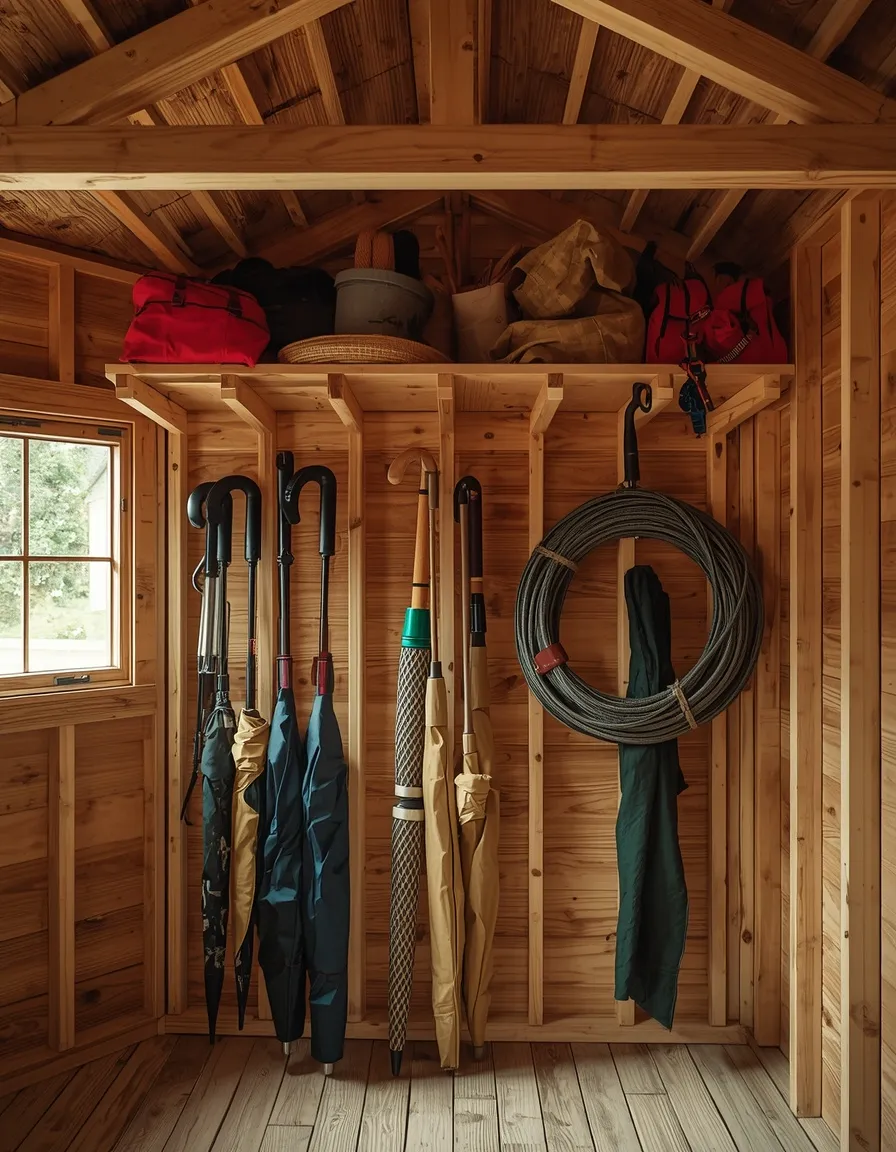
10. Overhead Ceiling Racks
Suspending a simple slatted rack or a set of joist-mounted hooks from the shed ceiling reclaims space that almost never gets used, ideal for storing seasonal items like folded patio umbrellas, spare planters, or coiled hoses that don’t need daily access.
Ceiling storage works best for lightweight or bulky items rather than heavy tools, since anything mounted overhead needs to be secured into the roof joists or rafters, not just the plasterboard or thin roof lining, to avoid it working loose and falling. Leave clear headroom for the tallest person who regularly uses the shed, and mark stored items clearly if the rack is high enough that contents aren’t visible at a glance, since forgotten overhead items are a common source of clutter creep over a few seasons.
- Frees up wall and floor space for daily-use tools and equipment
- Best suited to lightweight, bulky, seasonal items rather than heavy tools
- Must be anchored into structural joists, not thin roof lining, to stay secure
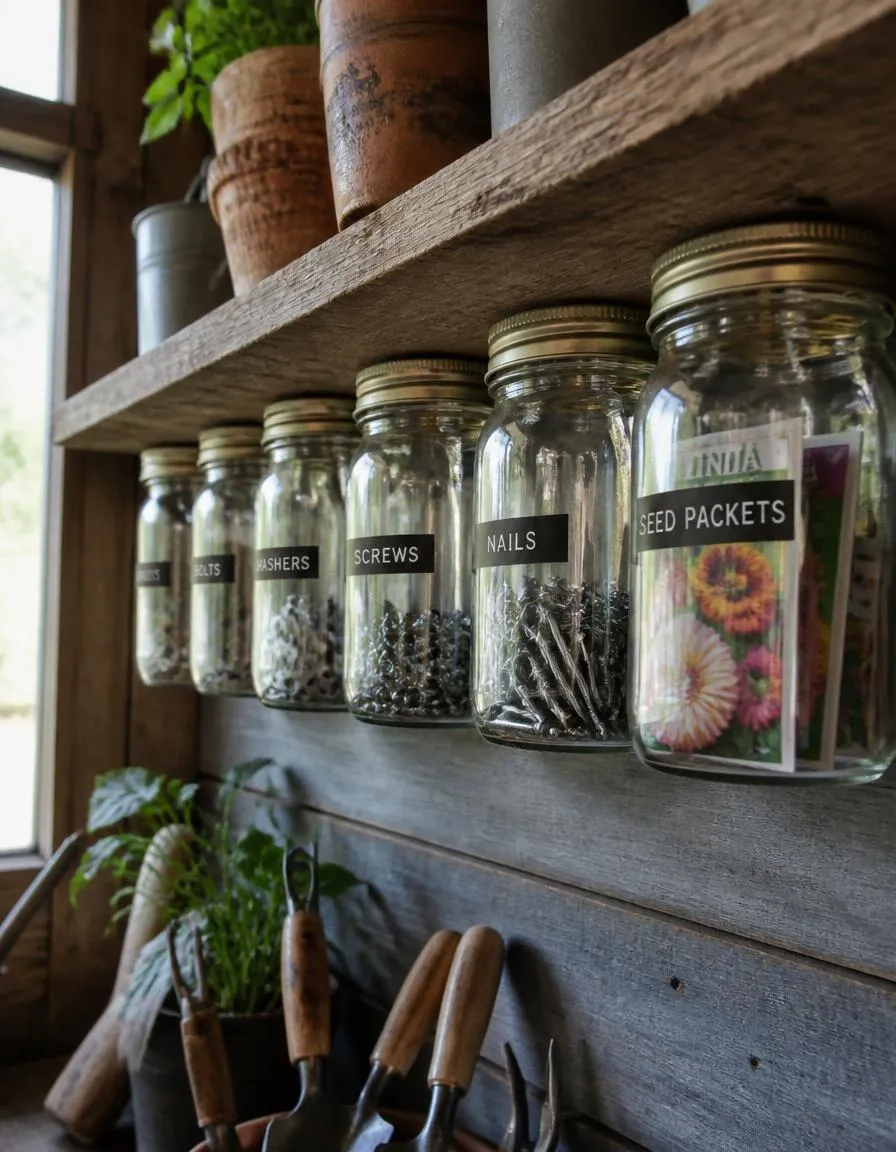
11. Labeled Mason Jar Hardware Wall
A row of mason jars or clear glass jars, lids screwed to the underside of a shelf and jars twisted up into them, keeps screws, nails, seed packets, and other small items visible and sorted by type instead of jumbled together in a single catch-all drawer.
Label each lid before mounting rather than after, since it’s much easier to write on a lid sitting flat on a workbench than one already fixed overhead. This system particularly suits sheds that double as a light workshop, where finding the right size screw quickly matters more than in a purely storage-focused shed. A useful variation for a shed with more humidity is swapping paper labels for a paint pen written directly on the glass, since paper labels can peel or smudge over a damp winter.
- Keeps small hardware and seed packets visible and sorted at a glance
- A low-cost storage idea using reused jars rather than bought containers
- Best suited to workshop-style sheds with a workbench underneath
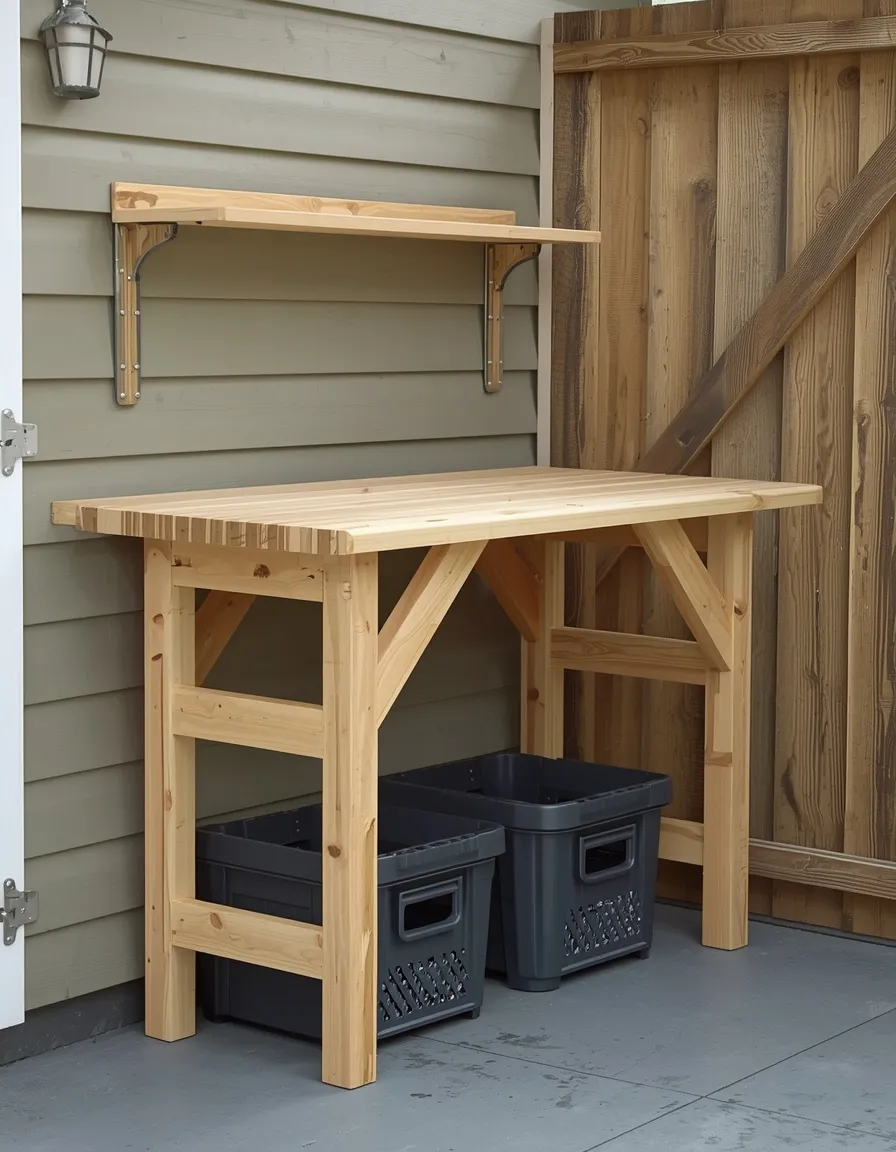
12. Fold-Down Workbench with Under-Storage
A hinged, wall-mounted workbench that folds flat against the wall when not in use gives a small shed a genuine work surface for potting, repairs, or projects without permanently sacrificing floor space, which matters most in sheds under about 6 by 6 feet (1.8 by 1.8 meters).
Build or buy a bench with a support leg that swings out to bear the weight when the surface is down, rather than relying on the wall hinge alone, since hinges are not rated to support someone leaning on the bench while it’s extended. Use the space underneath, whether folded or open, for stackable crates or a slide-out bin to store pots, compost, or offcuts, so the storage works even when the bench itself is tucked away. This is one of the most space-efficient garden shed ideas for anyone using the structure as a genuine workspace rather than pure storage.
- Reclaims floor space in small sheds when the bench isn’t in use
- Needs a proper support leg, not just a hinge, to safely bear weight
- Pairs well with under-bench crates for a fully dual-purpose setup
Interior Work Spaces and Den Ideas
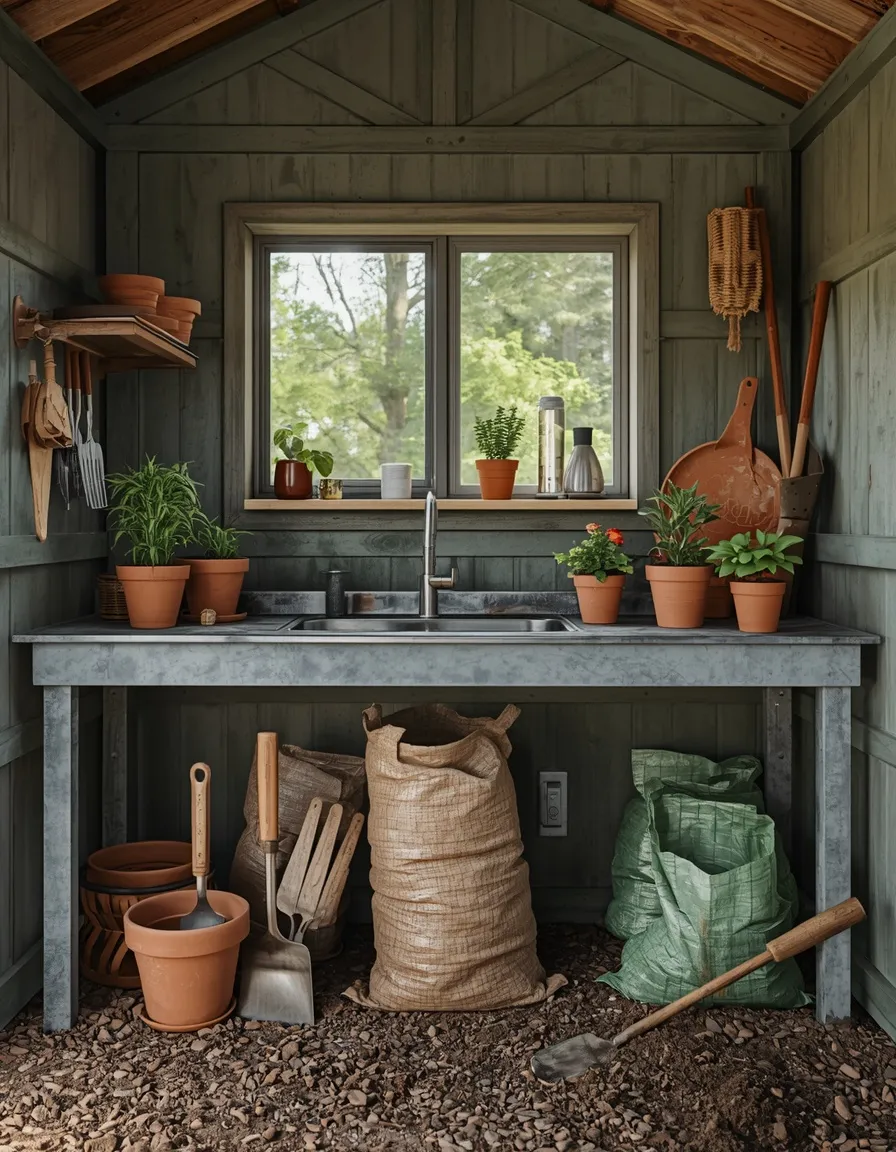
13. Potting Station with Zinc Countertop
A dedicated potting bench with a zinc, galvanized steel, or reclaimed wood countertop gives serious gardeners a proper station for repotting, seed starting, and soil mixing, instead of using the kitchen table or a wobbly outdoor surface each spring.
Position the bench under or beside the shed’s brightest window, and add a small lip or raised edge around the countertop to keep spilled soil contained rather than scattering across the floor. A galvanized or zinc surface is easy to wipe clean and won’t absorb moisture the way untreated wood does over repeated use. Store fertilizers, pest treatments, and other garden chemicals in a lockable cabinet or high shelf out of reach of children or pets, since a shed’s contents are often more accessible to curious hands than a locked garage.
- Ideal for gardeners who repot or start seeds regularly through the season
- A wipeable metal surface handles soil and moisture better than bare wood
- Keep chemicals and fertilizers stored securely away from children and pets
14. She Shed Reading Nook
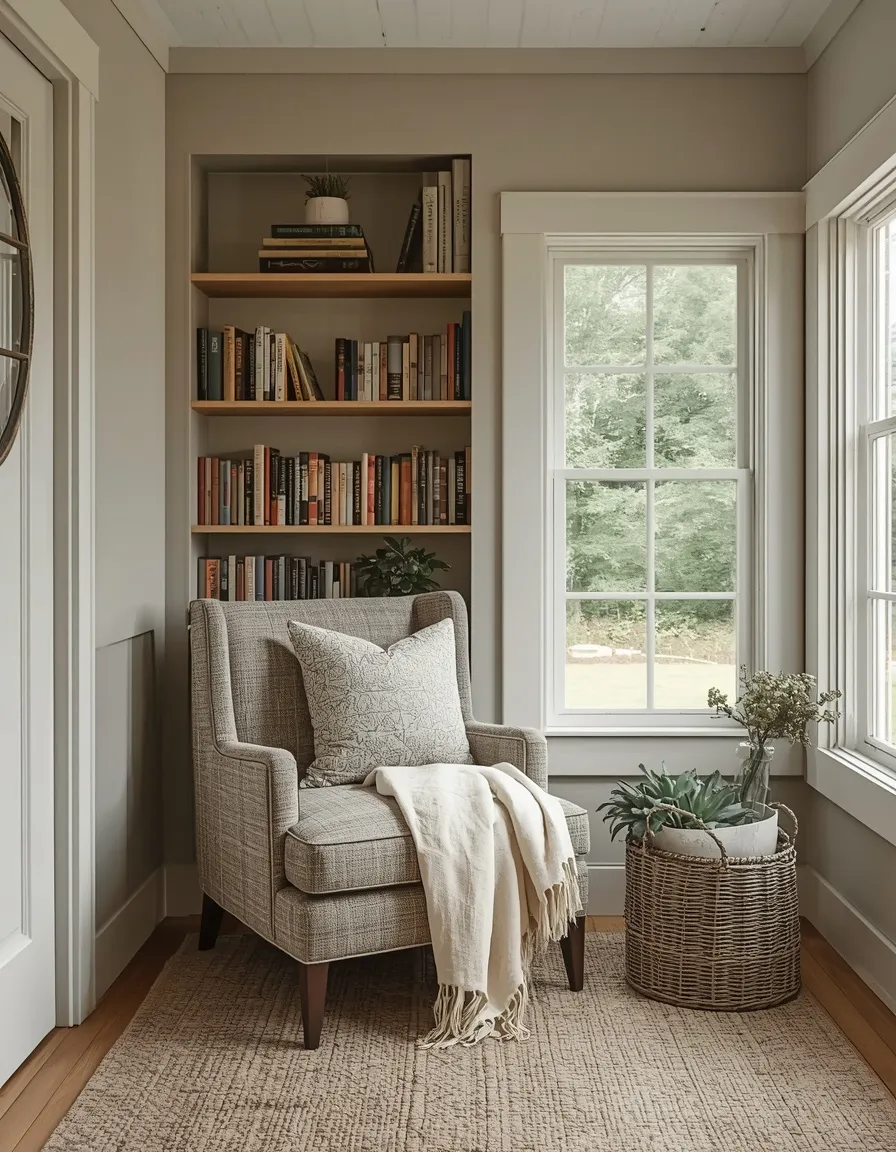
Turning a spare garden shed into a she shed with a small armchair, a soft throw, and a bookshelf built into the depth of one wall creates a quiet retreat that feels miles away from the house despite being a few steps out the back door.
Prioritize good natural light with a larger window or a skylight if the budget allows, since a den without daylight quickly starts to feel more like a garage than a garden retreat. Insulate the walls and floor if the space will be used across seasons, and choose a soft rug and curtains to dampen echo, since bare timber walls can make a small room sound surprisingly hollow. If heating is needed in cooler months, use a shed-rated electric heater with a thermostat and automatic shut-off rather than an open flame or an uninsulated portable heater left unattended.
- Best suited to a shed that already gets good natural daylight
- Insulation and soft furnishings make it usable across more of the year
- Use a thermostat-controlled electric heater rather than an open flame for safety
15. Compact Home Office Pod
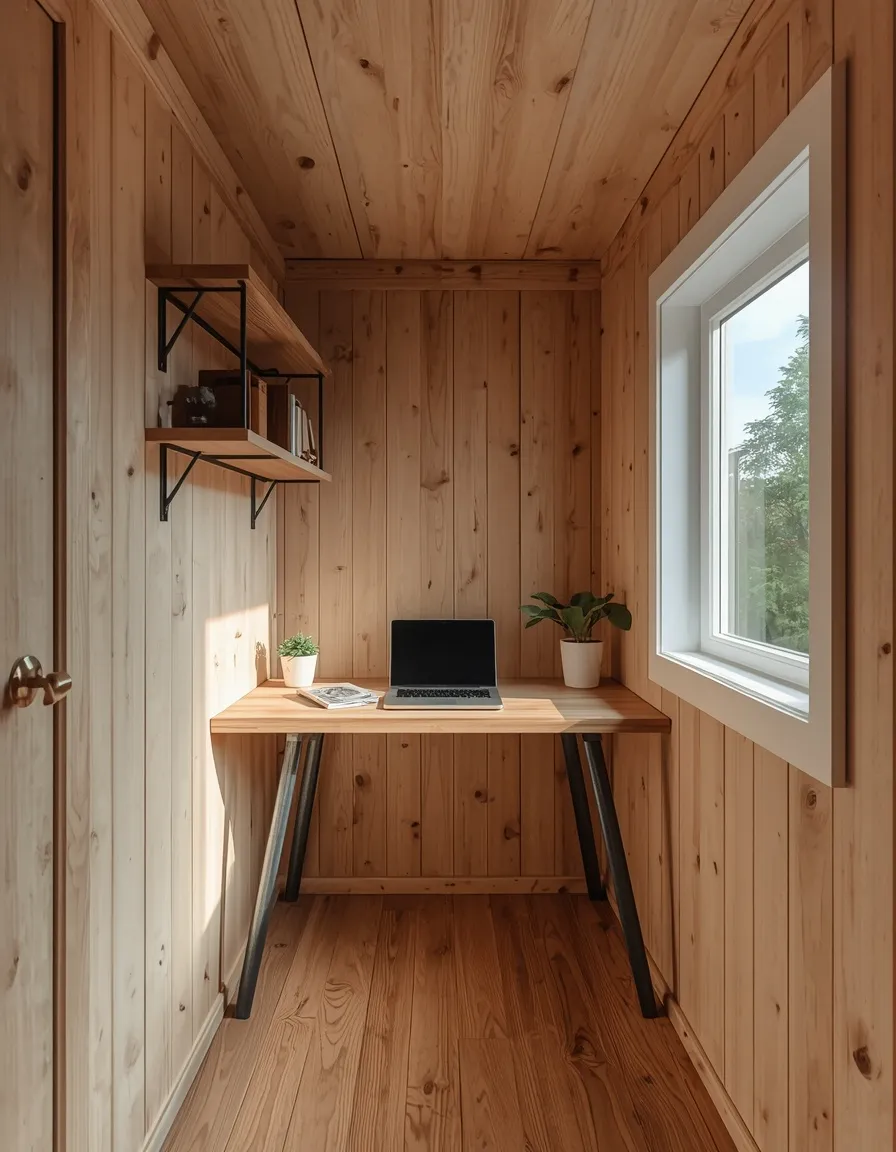
With a narrow desk along the longest wall, a wall-mounted monitor arm, and open shelving above, a garden shed can function as a genuine home office pod, giving remote workers a physical boundary between work and home life that a spare bedroom rarely provides.
Run power to the shed properly rather than trailing extension cords from the house, since a shed used daily for work needs reliable outlets for a laptop, monitor, and lighting; any mains electrical run from the house to an outbuilding should be installed or signed off by a qualified electrician, not done as a DIY extension lead job. In many regions, converting a shed into a habitable workspace also falls under permitted development or planning rules depending on its size and proximity to boundaries, so it’s worth checking local regulations before finishing the interior. Add blackout blinds or reflective window film if the desk faces a window, since glare on a laptop screen is one of the most common complaints from shed-office converts.
- Gives remote workers a genuine physical separation from the main house
- Requires a qualified electrician for any permanent mains power run
- Check local planning or permitted development rules before converting for regular use
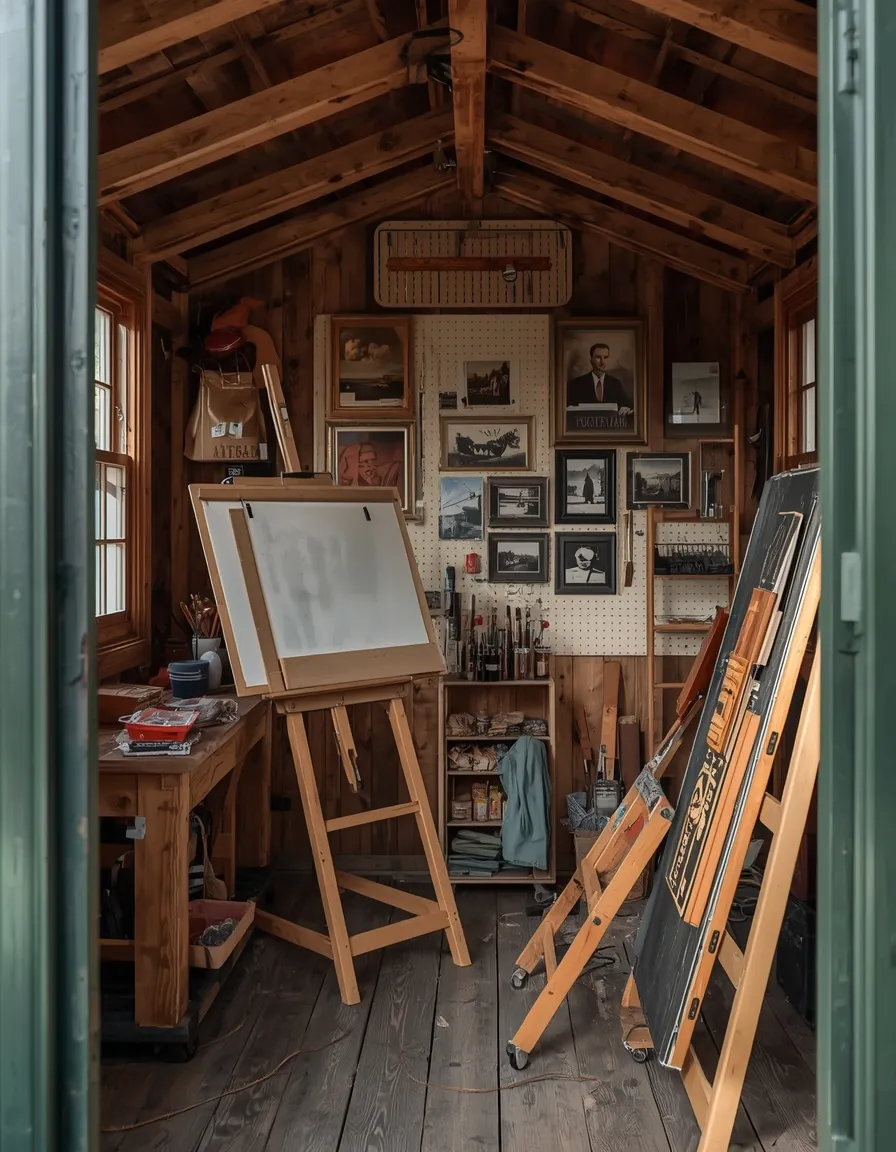
16. Artist Studio Corner
A shed corner fitted with a slanted drafting table, a rolling cart for paints or supplies, and a section of pegboard for hanging brushes and reference images gives a hobby painter, printmaker, or crafter a dedicated creative space that doesn’t need to be packed away after every session.
North-facing windows are traditionally favored by painters because they give even, consistent light throughout the day without the harsh shifts of direct sun, so orient the easel or table toward the shed’s most stable light source if there’s a choice. Lay down an easy-wipe floor covering like vinyl sheet or an old rug dedicated to messy work, since paint, clay, or ink spills are far easier to manage on a surface that isn’t the shed’s original timber floor. Good ventilation matters if the hobby involves solvents, varnishes, or spray fixatives, so keep a window or vent openable even in cooler months.
- Suits hobbies like painting, printmaking, or craft work that need dedicated space
- North-facing light gives more consistent, glare-free working conditions
- Ventilation is essential when working with solvents, varnishes, or sprays
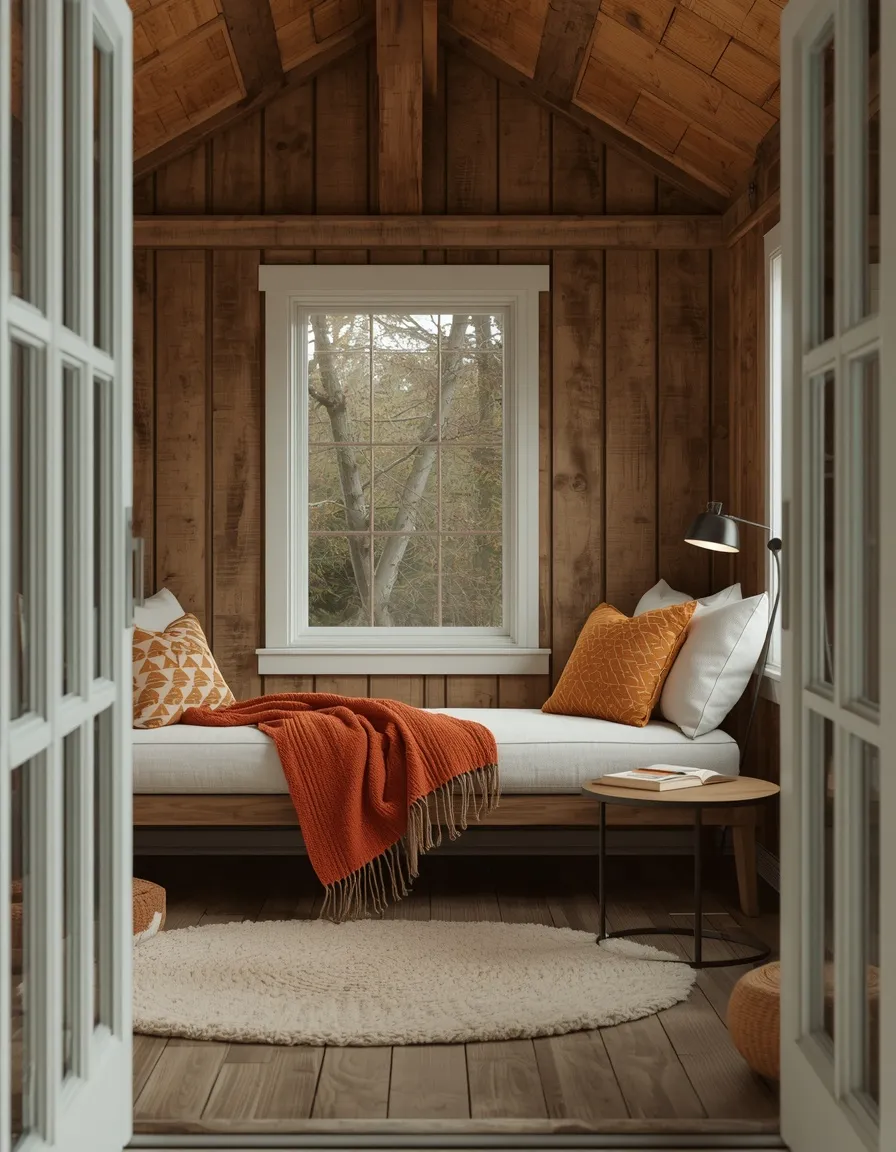
17. Cozy Garden Den with Daybed
A narrow daybed or a wide built-in bench with cushions along one wall turns a garden shed into a proper garden den, a spot to read, nap, or escape the house for an hour, especially when paired with a small side table and a warm reading lamp.
Choose outdoor-rated or easily washable cushion covers even for an interior daybed, since a shed’s humidity levels swing more than a house’s and fabric that’s fine indoors can develop damp patches in an unheated outbuilding over winter. Add a small rug to warm up the space underfoot, and if the den will be used after dark, run low-voltage LED lighting on a battery pack or a properly installed circuit rather than trailing multiple extension leads across the floor, which becomes a trip hazard in a small room.
- Works well as a low-key alternative to a full she shed or office conversion
- Washable or outdoor-rated fabrics handle shed humidity better than standard upholstery
- Keep lighting cords tidy and off the floor to avoid trip hazards
DIY and Budget-Friendly Touches
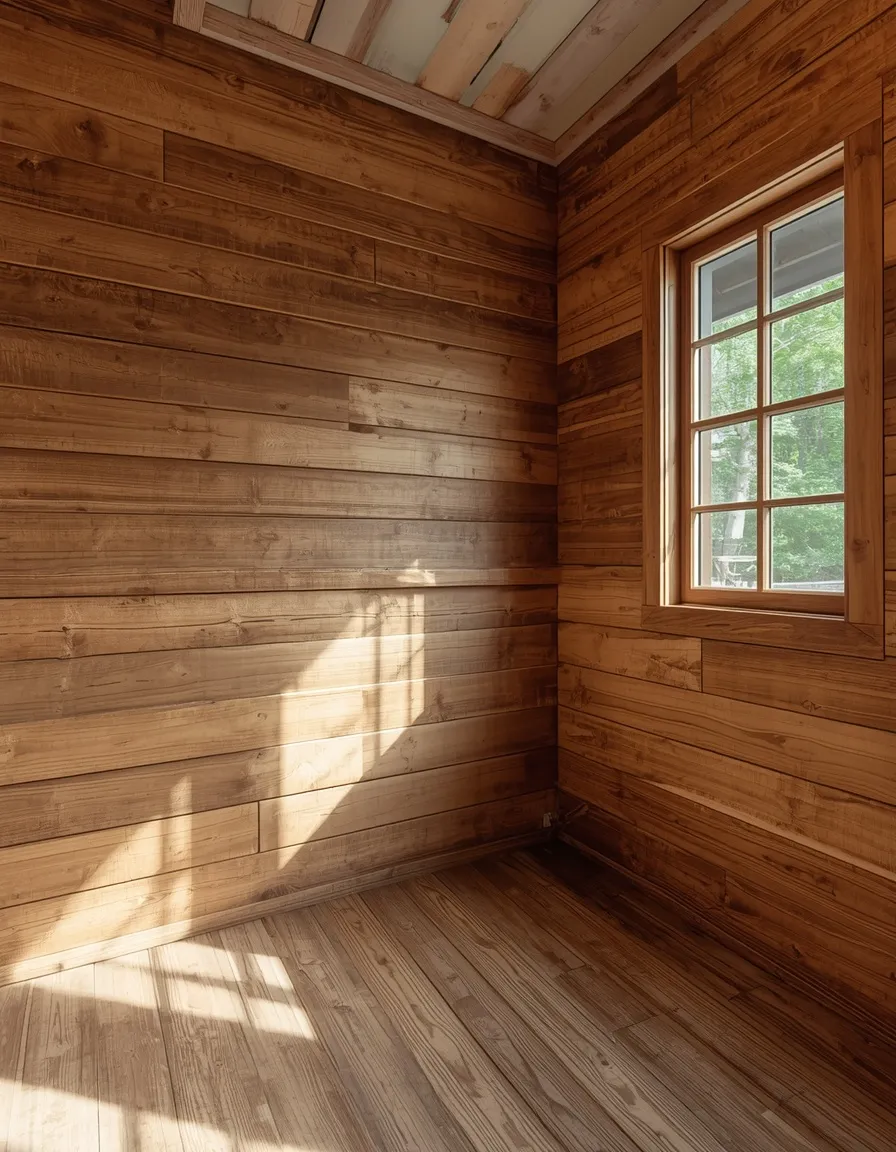
18. Reclaimed Pallet Wood Accent Wall
Cladding a single interior wall in disassembled pallet wood gives a garden shed instant rustic texture and warmth for very little cost, especially compared to buying new tongue-and-groove paneling, and it’s one of the most popular garden shed decorating ideas for a reason.
Only use pallets stamped “HT” for heat-treated rather than “MB” for methyl bromide fumigated, since chemically treated pallets aren’t safe to bring into an enclosed space people will spend time in. Sand the boards to remove splinters before mounting, wear gloves when prying pallets apart since embedded nails are common, and seal the finished wall with a clear matte varnish to cut down on dust from the raw wood. This treatment pairs particularly well with a potting station or workshop-style shed, where a rougher, more industrial look fits the function of the space.
- One of the lowest-cost garden shed decoration ideas using reclaimed material
- Only use heat-treated pallets, never chemically fumigated ones, for interior use
- Suits workshop or potting shed interiors more than a polished den look
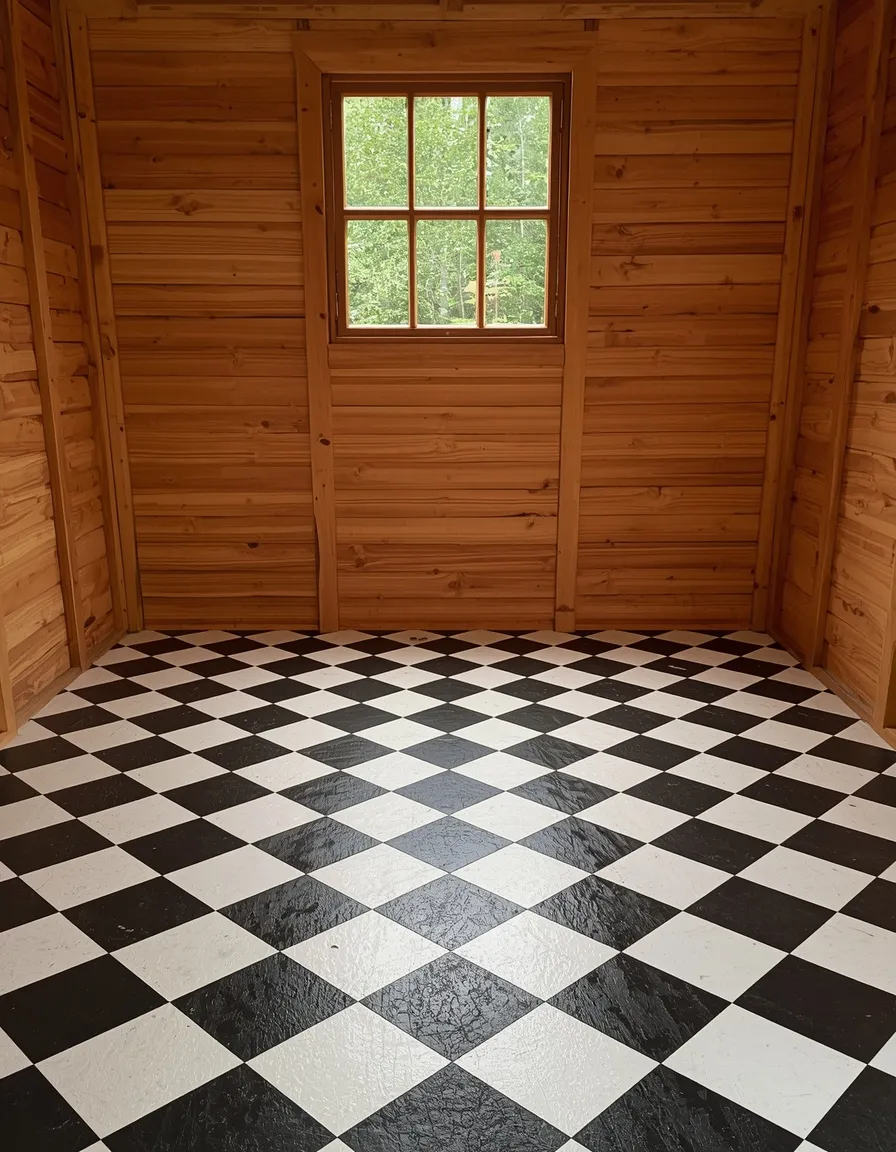
19. Painted Floor Stencil
Rather than replacing worn shed flooring, a painted geometric or checkerboard stencil directly onto existing timber or concrete floorboards adds a surprising amount of personality for the cost of a pot of floor paint and a stencil, and it hides old stains far better than leaving the floor bare.
Clean and lightly sand the floor before painting so the stencil paint actually bonds instead of flaking off within a season, and always use a floor-rated paint rather than wall paint, since foot traffic wears standard paint through quickly. Tape the stencil pattern down firmly at every edge to prevent bleed, and finish with a couple of coats of clear floor varnish to protect the design from scuffs, especially near the doorway where grit gets tracked in most.
- A low-cost way to disguise an old, stained, or uneven shed floor
- Floor-rated paint and a protective varnish coat are essential for durability
- Works well in a den, office, or studio-style shed rather than a pure storage unit
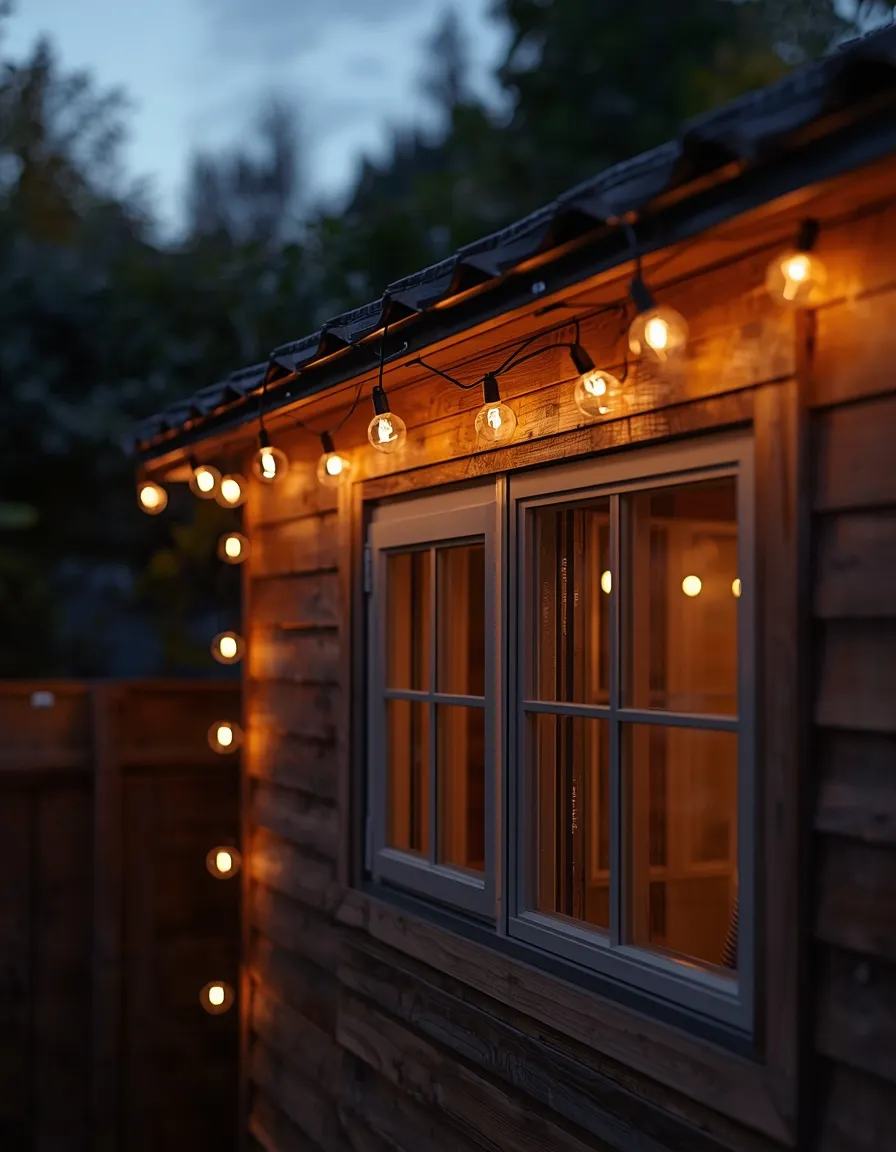
20. Solar String Lighting
Draping solar-powered string lights along the shed eaves, roofline, or around a window frame gives it a soft evening glow without running any new electrical wiring, making it one of the easiest garden shed exterior decor ideas to install in an afternoon.
Position the small solar panel where it gets several hours of direct sun each day, ideally on the roof or a south-facing wall, since a panel tucked in shade will barely charge and the lights will dim early each evening. Choose warm white rather than cool white LEDs for a cozier look that suits most garden styles, and bring the panel and battery pack indoors or into a sheltered spot over winter in colder climates, since repeated freeze-thaw cycles shorten the lifespan of cheaper solar units.
- No electrical wiring required, making it one of the fastest shed decor upgrades
- Panel placement in direct sun matters more than the number of lights used
- Warm white LEDs suit most exterior color schemes better than cool white
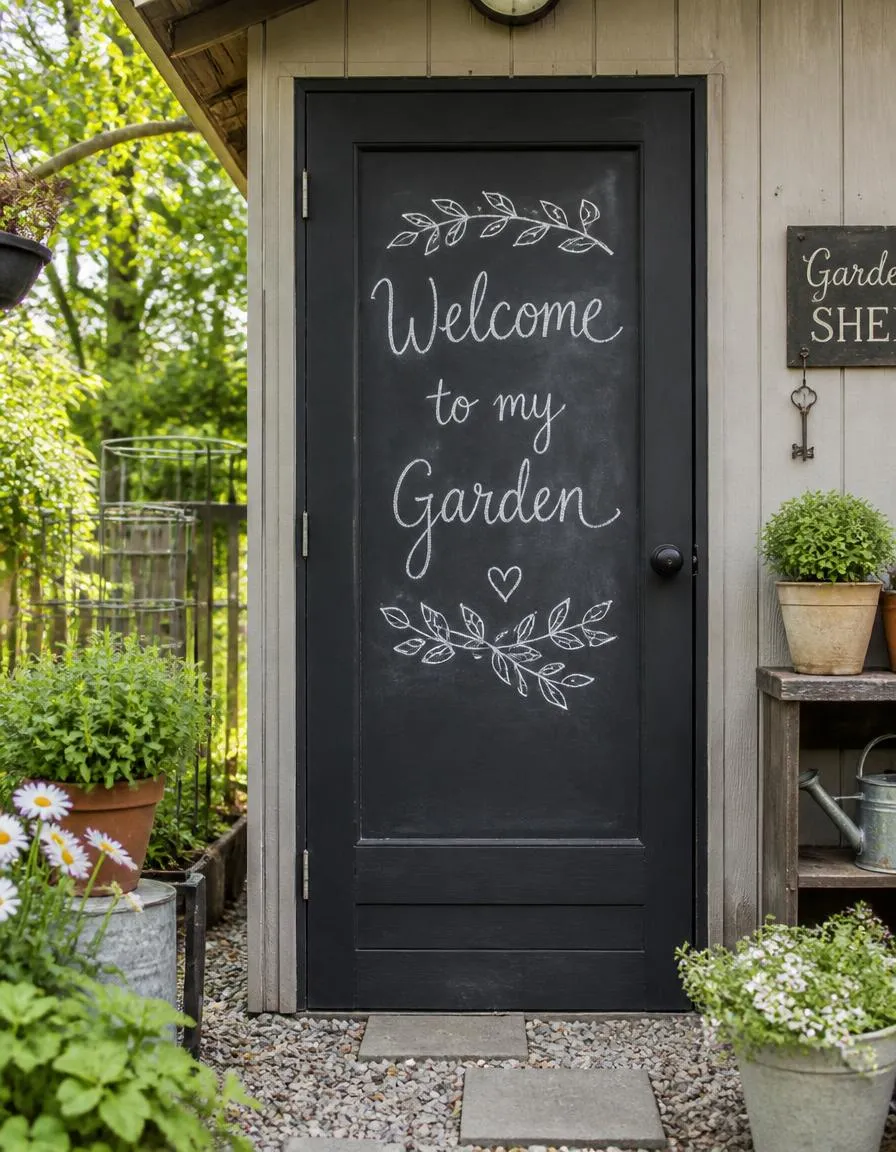
21. Chalkboard Door Panel
Painting a large panel on the shed door, or a full sheet of exterior-grade board mounted onto it, with chalkboard paint gives the shed a playful, functional surface for jotting planting notes, watering schedules, or a simple welcome message that changes with the seasons.
Use a chalkboard paint formulated for exterior use rather than an interior craft paint, since standard chalkboard paint isn’t weatherproof and will streak or peel within a few months outdoors. Apply at least two coats and season the board by rubbing the side of a piece of chalk over the entire surface before the first real use, which prevents a “ghosting” effect where the first message stays faintly visible underneath later ones. This is a particularly good project for families, since kids can decorate or leave notes on the shed without anyone worrying about permanent paint on the door itself.
- A playful, changeable alternative to a permanent painted design or sign
- Requires exterior-rated chalkboard paint, not an indoor craft version
- A family-friendly project kids can safely help decorate
Conclusion
A great garden shed does not need a full rebuild to earn its place in the garden. Small, considered choices, whether it is an exterior color that suits the surrounding planting, a pegboard wall that finally gets tools off the floor, or a daybed and a lamp for ten quiet minutes after work, add up to a structure that feels intentional rather than incidental. Not every idea here needs to happen at once; even one or two picks from this list of garden shed ideas can shift how the whole space feels and functions. Start with whichever change solves the most immediate frustration, whether that is exterior curb appeal or genuine interior storage, then keep browsing more garden design inspiration for the beds and borders around it, and let the rest follow at its own pace.
Frequently Asked Questions
What is the cheapest way to decorate a garden shed?
Paint is nearly always the lowest-cost, highest-impact option, especially a two-tone exterior scheme or a chalkboard door panel that costs little more than a can of paint. Reclaimed pallet wood for an interior accent wall and solar string lights are two other essentially budget-friendly projects, since both avoid buying new materials or running electrical wiring.
How do I stop a garden shed from feeling dark inside?
Prioritize natural light first, either by adding a second window or a small skylight, since even bright interior paint can only do so much in a room with no daylight. Painting interior walls a pale color and adding a light-colored floor stencil or finish also bounces available light around the room rather than absorbing it.
What paint should I use on a wooden garden shed exterior?
Always choose an exterior-grade wood paint or stain rated for UV and weather exposure rather than an interior formula, since indoor paint breaks down quickly outside. In coastal or high-humidity climates, a marine-grade stain holds up better than a standard exterior paint and typically needs reapplying every two to three years.
Can a garden shed really work as a home office or she shed?
Yes, as long as it has reliable natural light, insulation for cooler months, and properly installed electrics rather than trailing extension cords from the house. It is also worth checking local planning or permitted development rules before converting a shed for regular daily use, since requirements vary depending on the shed’s size and how close it sits to a boundary.
Are any plants used in garden shed decor unsafe for pets?
Some common climbing and flowering plants used around sheds, including certain lilies and some ivy varieties, can be toxic to cats and dogs if chewed. The ASPCA maintains a searchable list of toxic and non-toxic plants that is worth checking before choosing what to grow around a shed in a garden pets can access.
How do I organize a small garden shed for maximum storage?
Look up and overhead before adding more shelving, since a pegboard wall and a joist-mounted ceiling rack can free up significant floor space in even the smallest shed. Group items by how often they are used, keeping daily tools within easy reach on the pegboard and seasonal or occasional items stored higher up or further back.
Do I need planning permission to convert or decorate a garden shed in the UK?
Simple decoration, like paint, lighting, or interior storage, generally does not require permission. Converting a shed into a livable space such as an office or den can fall under permitted development rules depending on its height, footprint, and proximity to a boundary, so it is worth checking guidance on the UK Planning Portal before starting a larger conversion project.