
Introduction
Tall outdoor planters ideas need more than a taller pot, height changes how a container drains, how often it needs water, and how stable it stays in wind, details most styling guides skip entirely. This guide gathers nineteen distinct ways to plant and style a tall planter across full sun, shade, and every season, plus DIY builds, material choices, and grouping techniques that go well beyond a single generic photo. Each idea pairs a specific plant combination or material approach with the exact conditions it actually suits, so you can match a real planter to your real patio rather than guessing. Consider it a working plan for adding genuine height and presence to your abode’s entry, patio, or side yard, season after season.
Before You Plant: Stability, Drainage, and Frost Safety
A few practical considerations are worth addressing before choosing plants, since a tall planter carries some genuine physical risks that a low, wide pot does not. Height raises a planter’s center of gravity considerably, so a tall, narrow container topped with a mature tree, ornamental grass, or trailing growth catching wind is a real tip-over risk, more so than most planting guides acknowledge. Choose a planter with a wide, heavy base relative to its height, generally at least a third of the planter’s total height in base diameter, and consider filling the bottom third with sand, gravel, or a weighted liner rather than lightweight potting mix alone for anything over about 3 feet (91 cm) tall in a windy or high-traffic spot. Confirm every tall planter has drainage holes and sits on pot feet or a stand rather than flush against a hard surface, since standing water at the base is the most common cause of root rot in a deep container. In freezing climates, note that ceramic and terracotta crack when water inside the material’s pores freezes and expands, so either bring these materials indoors for winter, choose frost-resistant fiberglass, concrete, or resin instead, or empty and cover unglazed pots through the coldest months. Finally, match soil depth to the plant, most perennials and annuals only need 12 to 18 inches (30 to 46 cm) of actual root depth even in a much taller container, so filling the lower portion of a very tall planter with an inverted nursery pot or packing peanuts before adding soil saves both weight and cost without harming the plant.
19 Tall Outdoor Planters Ideas to Try
Each idea below is matched to a specific season, light condition, material, or technique, so scan for the ones that fit your actual patio and climate rather than trying to recreate every combination at once.
1. Full-Sun Tropical Tall Planter
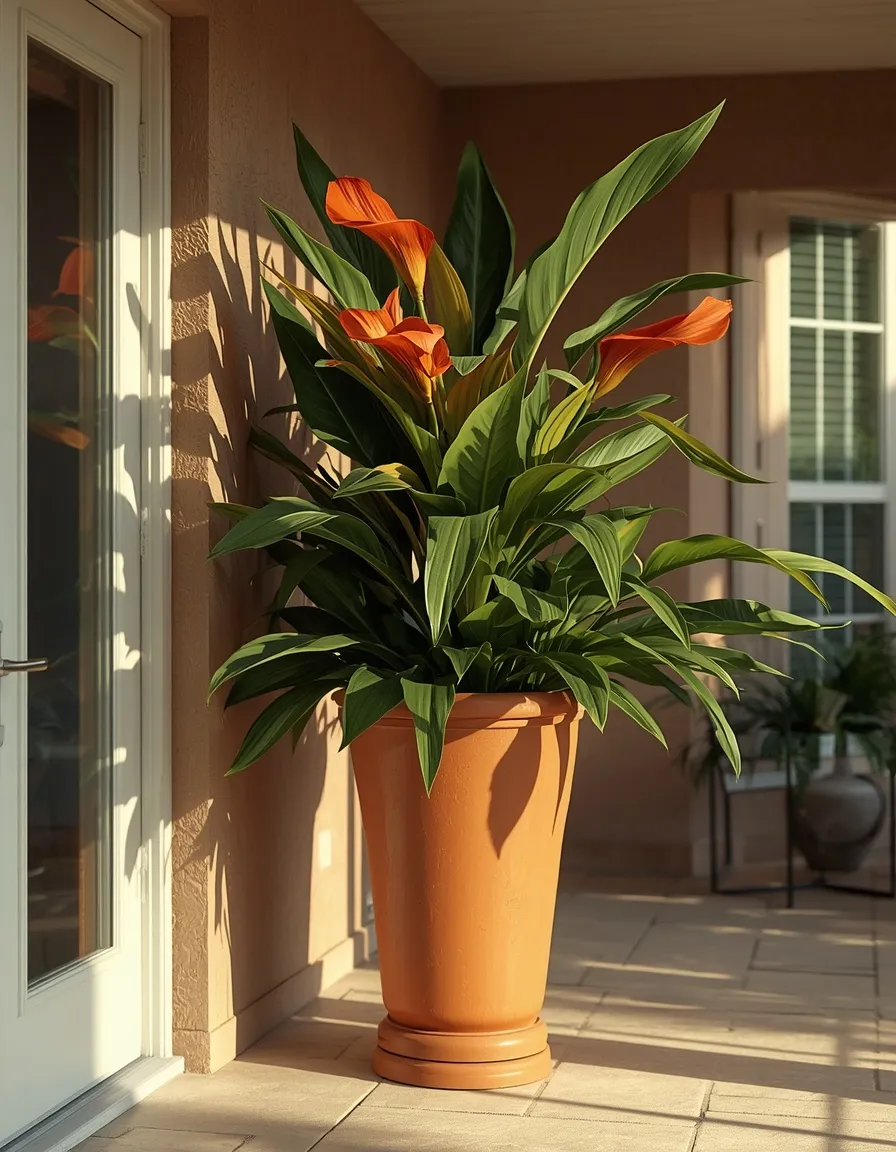
A tall planter filled with the bold, oversized foliage of canna lily, elephant ear, or a dwarf banana plant brings the lush, vacation-like drama of a tropical resort to a sunny patio corner, the kind of planting that reads as a genuine focal point rather than background greenery.
Choose a container at least 18 inches (46 cm) in diameter for these larger-rooted tropicals, since undersized pots restrict growth and require more frequent watering than the plant’s roots can keep up with in full sun. Water deeply and often through summer, tropical foliage plants in containers typically need watering every one to two days in hot weather rather than the weekly schedule that suits more drought-tolerant choices. In climates with any frost, treat these as annuals or dig and store tubers like canna and elephant ear indoors over winter, since a hard freeze kills the above-ground growth and can damage the root structure if left in the ground or a thin-walled pot.
- Delivers dramatic, oversized texture that smaller plants cannot match
- Suits sunny patios, poolsides, and entries wanting a bold focal point
- Solves the want for real vacation-style drama in a temperate-climate yard
2. Shade-Loving Fern and Hosta Tower
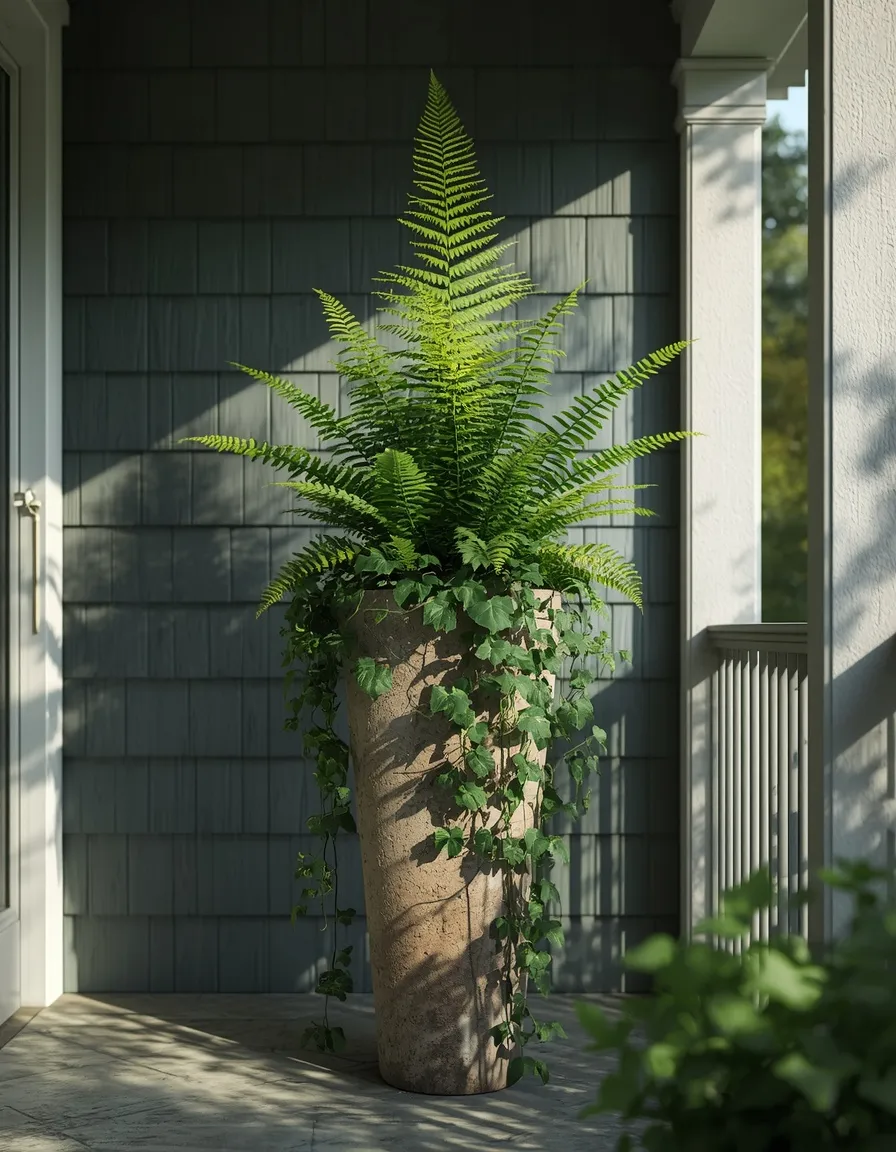
A tall planter layered with an upright fern at the center, ringed by trailing ivy or a low hosta variety at the base, brings genuine lushness to a shaded porch or side yard corner where sun-loving plants would simply fail.
Choose a container with a lighter-colored or reflective finish rather than dark material in a fully shaded spot, since dark containers absorb what little heat is available and can actually run cooler than the surrounding air in deep shade, slowing root growth. Water shaded tall planters less frequently than sunny ones, generally every four to five days rather than daily, since shaded soil retains moisture considerably longer, and overwatering is a more common problem in shade planters than underwatering. This combination works particularly well on a north-facing porch or beneath a covered patio roof, spots most planting guides leave as an afterthought compared to sunnier locations.
- Fills a shaded spot most tall planter guides ignore in favor of sun
- Suits north-facing porches and covered patios with limited direct light
- Solves the bare, plant-free look that shaded entries often have
3. Winter Evergreen Structural Planter
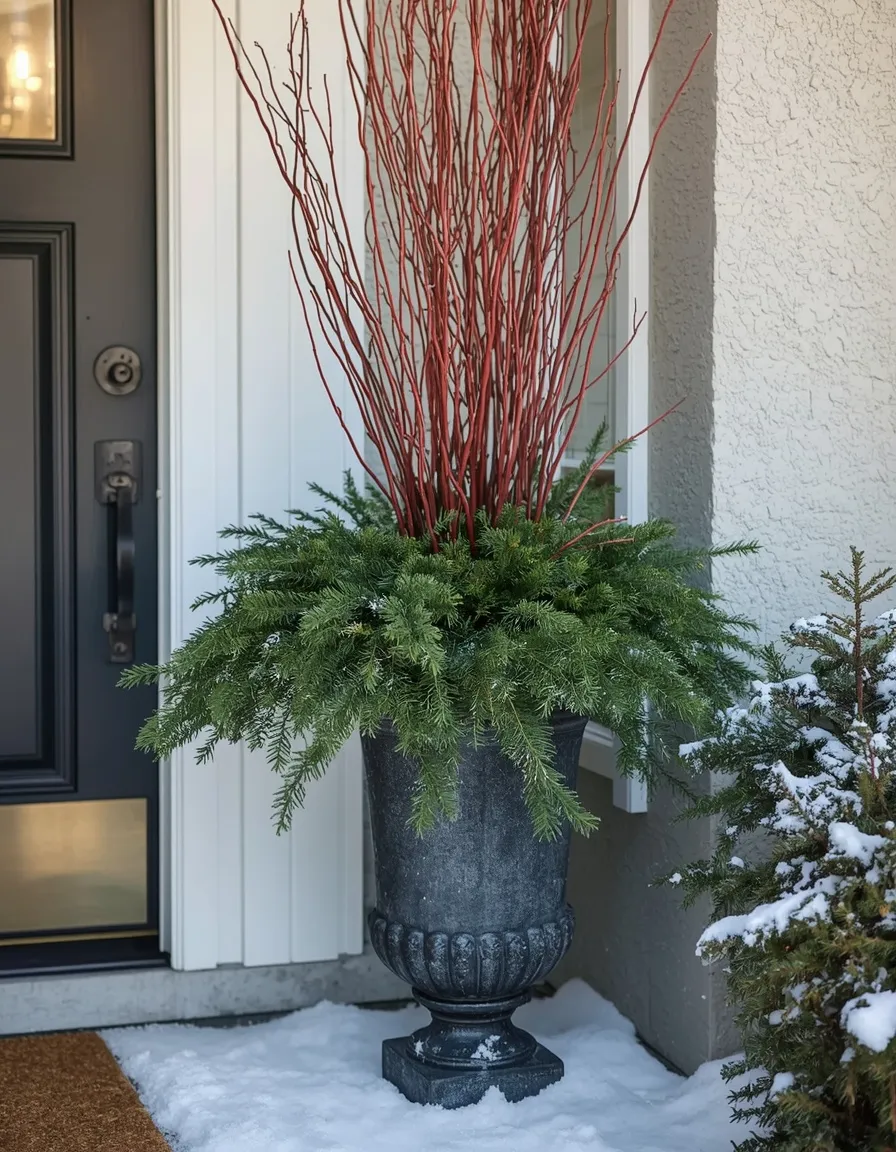
A tall planter filled with upright evergreen boughs, dwarf spruce, cedar, or holly branches arranged in a loose, natural cluster, keeps a front entry or patio looking genuinely styled through the coldest months rather than sitting empty from first frost to spring.
Use fresh-cut evergreen boughs pushed into damp floral foam or sand at the container’s base rather than trying to keep a living plant thriving through winter dormancy, since cut greenery holds its color and shape for six to eight weeks in cold weather without needing active growth. Add height variation with a few taller birch branches or red-twig dogwood stems mixed among the evergreen, and finish with a cluster of pinecones or a simple ribbon at the base for a considered, finished look. Refresh the arrangement once through the season if boughs dry out or discolor, typically needed only in unusually mild winters where freeze-thaw cycles accelerate browning.
- Keeps a tall planter genuinely styled through winter dormancy
- Suits front entries and patios wanting year-round curb appeal
- Solves the empty, neglected look most planters have from November to March
4. Fall Mum and Ornamental Grass Combo
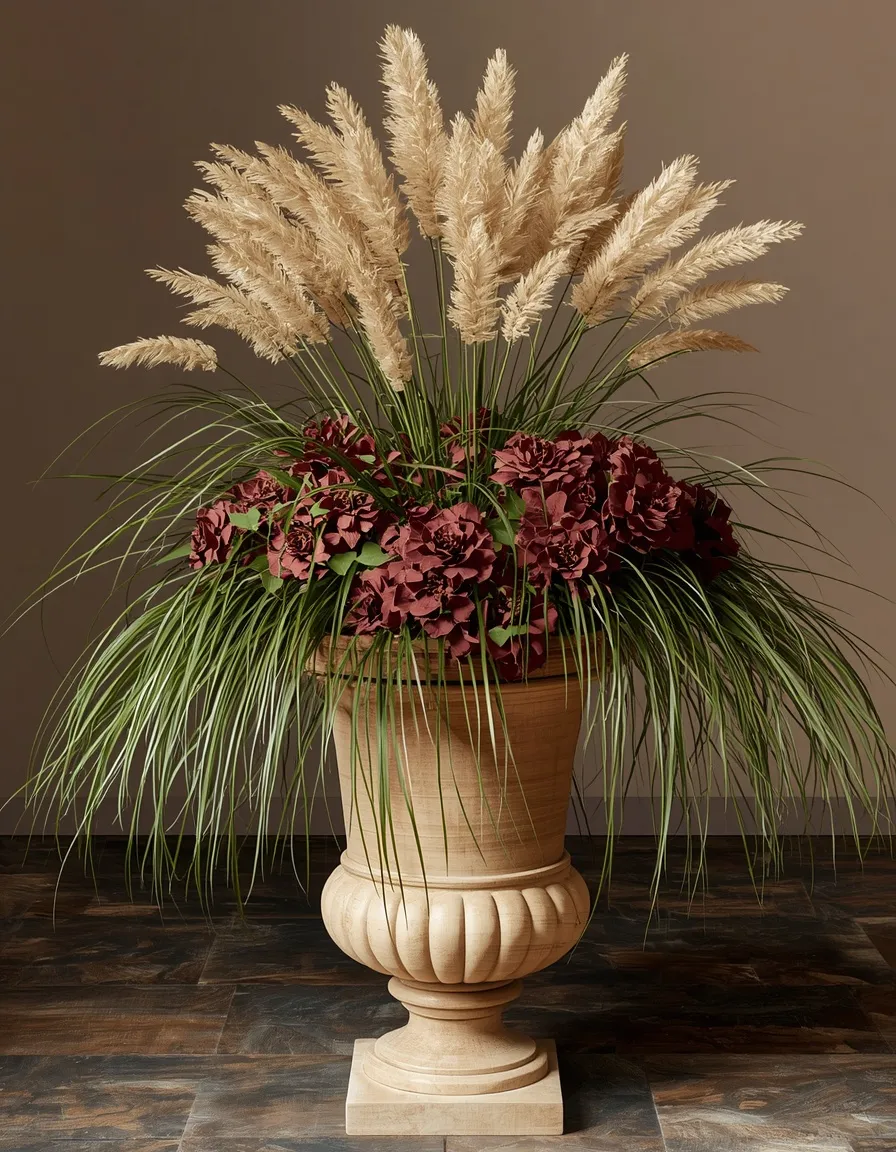
A tall planter topped with a cluster of deep burgundy or burnt-orange mums, underplanted with a wisp of feather reed grass spilling over the rim, captures the specific warm, textured look of autumn better than mums alone in a standard round pot.
Plant mums while still in their nursery pots nested inside the larger container rather than transplanting directly into the tall planter’s soil, since this makes it considerably easier to swap in fresh blooms as early mums fade partway through the season. Choose a grass variety already established from summer rather than planting new grass alongside fall mums, since grass planted this late in the season will not have time to develop the fuller look that makes the combination work visually. This pairing transitions naturally from a late-summer planter, since ornamental grass often already exists in the container from earlier in the season.
- Captures fall’s specific color and texture better than mums alone
- Suits entries and porches wanting a seasonal refresh without full replanting
- Solves the flat, single-note look of a mum-only fall planter
5. Spring Bulb and Pansy Tall Planter
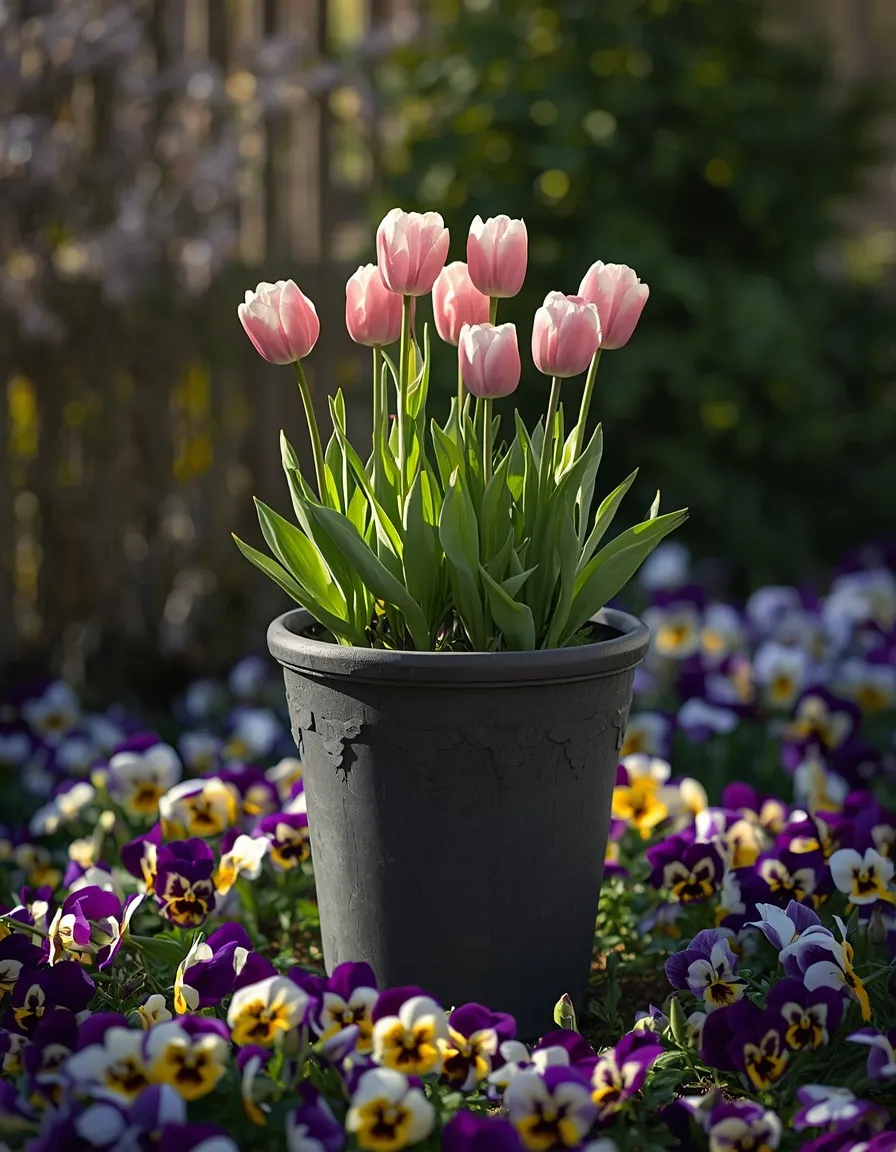
A tall planter layered with early tulips or daffodils planted the previous fall, underplanted with cold-hardy pansies or violas at the surface, delivers a genuine two-stage spring display, first the pansies alone through late winter, then bulbs pushing up through them as the season warms.
Plant bulbs in autumn at roughly three times their own depth, then plant pansies directly above and around them once the soil has cooled but before the ground freezes, layering the two plantings in the same container rather than treating them as separate seasons. Pansies tolerate light frost well and often bloom through all but the coldest weeks of winter, giving the planter color even before bulbs emerge. Deadhead spent pansy blooms regularly to extend their flowering into the bulb display, and expect to replace pansies with a summer planting once temperatures consistently exceed about 80 degrees Fahrenheit (27 degrees Celsius), when they typically decline.
- Delivers two distinct bloom stages from a single autumn planting session
- Suits entries and patios wanting color through the entire cold-to-warm transition
- Solves the gap between winter dormancy and full spring bloom
6. DIY Concrete Tall Planter
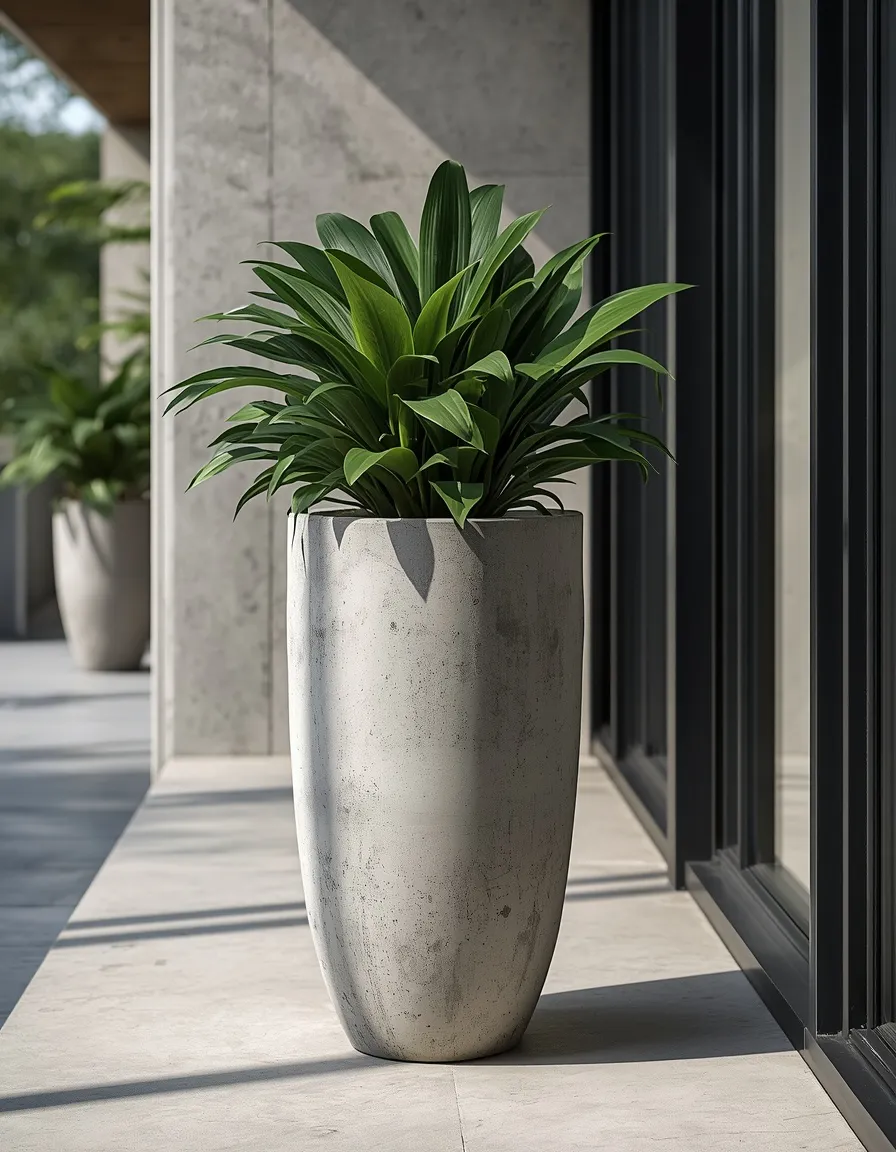
A tall planter cast from hand-mixed concrete in a simple cylindrical or tapered mold delivers the same weighty, modern look as an expensive designer planter at a fraction of the retail cost, with a raw, matte texture that only improves as it weathers outdoors.
Use a lightweight concrete mix formulated with added perlite or vermiculite rather than standard construction-grade concrete, since a solid concrete planter tall enough to be genuinely useful becomes extremely heavy and difficult to move once cured. Build or buy a two-piece mold, an outer form and a slightly smaller inner form, and cast the concrete in the gap between them, remembering to insert a drainage hole former, a length of dowel works well, before the mix sets. Cure the finished planter for at least a full week before planting, misting it occasionally to slow the cure and reduce surface cracking, since concrete that dries too quickly is prone to hairline cracks.
- Delivers a premium, modern material look at meaningfully lower cost
- Suits patios and entries wanting a heavy, grounded, contemporary style
- Solves the high price of retail concrete and concrete-look planters
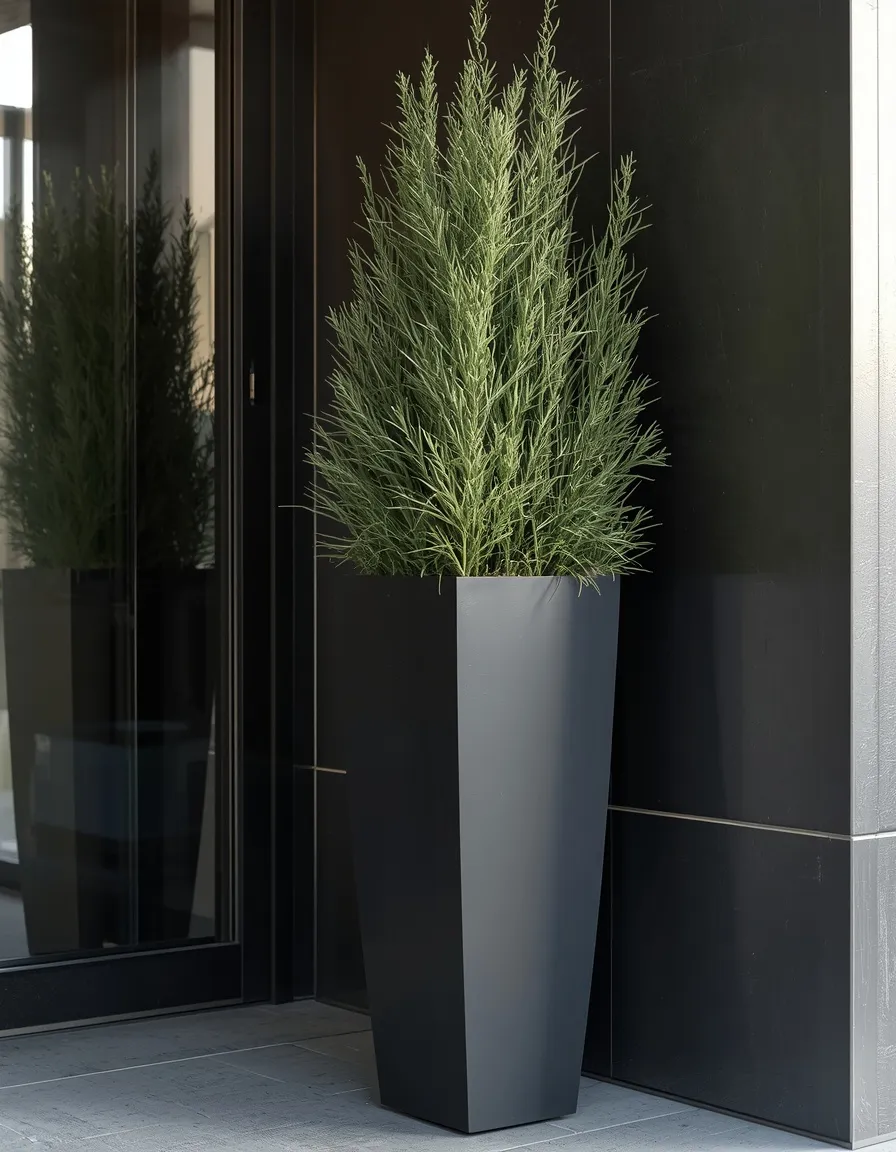
7. Tall Black Modern Planter
A tall planter in matte black, whether powder-coated metal, resin, or fiberglass, brings a clean, architectural presence to a modern entry or patio, the kind of neutral, grounding element that lets bold plant choices or a colorful facade stand out against it.
Choose a matte rather than glossy black finish for most modern exteriors, since matte reads as more contemporary and shows fewer water spots and fingerprints than a glossy surface. Black containers absorb considerably more heat than lighter colors in full sun, which can stress root systems in extreme summer heat, so in hot climates favor black planters for partly shaded spots or choose a heat-tolerant, well-established plant if placing one in full afternoon sun. Pair black planters with plants that offer strong silhouette contrast, upright grasses, a small tree, or trailing greenery, rather than delicate flowers that can visually disappear against the dark backdrop.
- Adds architectural, grounding neutral color to a modern exterior
- Suits contemporary entries and patios wanting a clean, cohesive palette
- Solves the visual clutter that bright or patterned planters can create
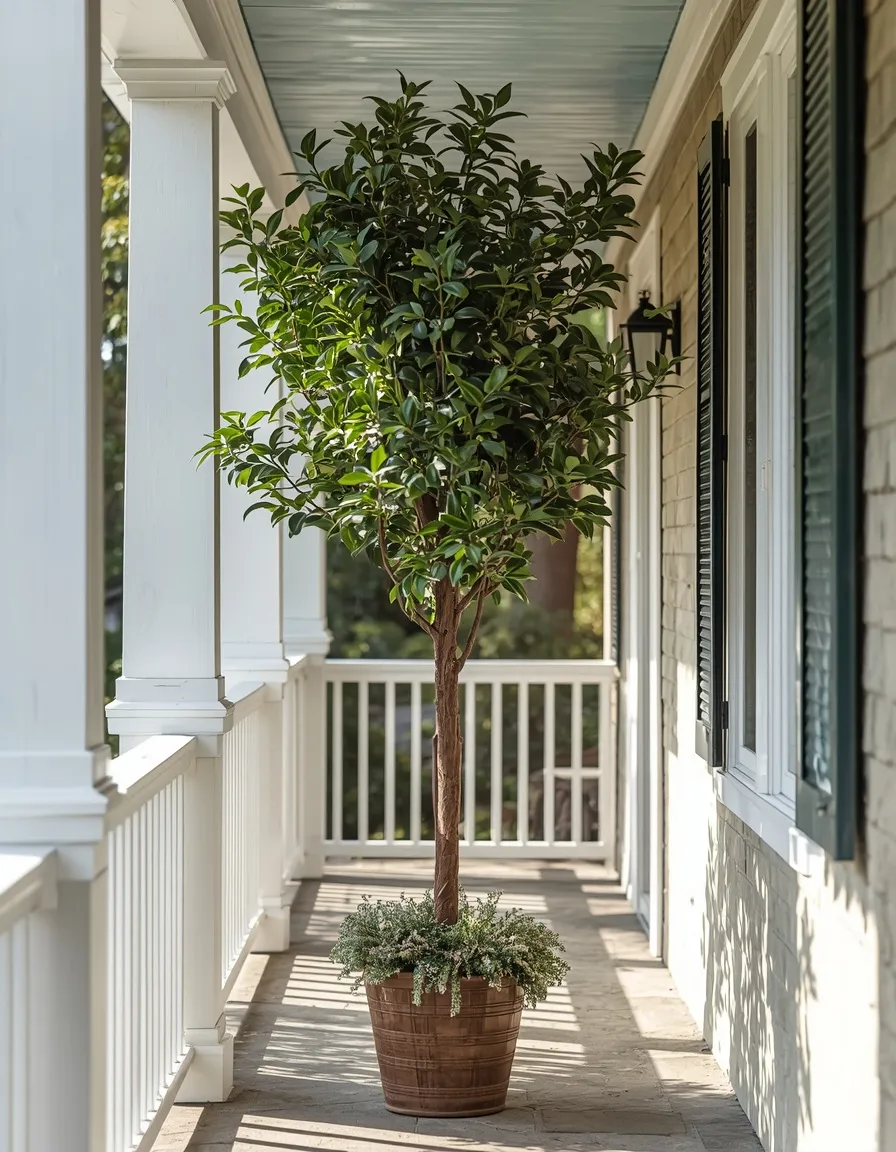
8. Artificial Tall Planter for Low-Light Spots
A tall planter filled with a high-quality artificial tree or trailing greenery brings consistent, full-looking height and color to a deeply shaded entry, covered breezeway, or low-light apartment balcony where live plants would struggle or fail entirely regardless of care.
Choose UV-resistant outdoor-rated artificial foliage specifically, since standard indoor artificial plants fade, become brittle, and discolor considerably faster with direct sun and weather exposure than materials built for outdoor use. Weight the base of the planter with sand or gravel before inserting the artificial arrangement, since without a living root system’s mass, a tall faux arrangement is even more prone to tipping in wind than a planted one. Rinse artificial foliage periodically with a hose to remove dust and pollen buildup, which is the main maintenance artificial planters genuinely need, considerably less than watering and feeding a living plant but not entirely zero upkeep.
- Delivers consistent height and greenery in spots too dark for living plants
- Suits deeply shaded entries and covered spaces year-round
- Solves the repeated plant failure that low-light spots cause with living greenery
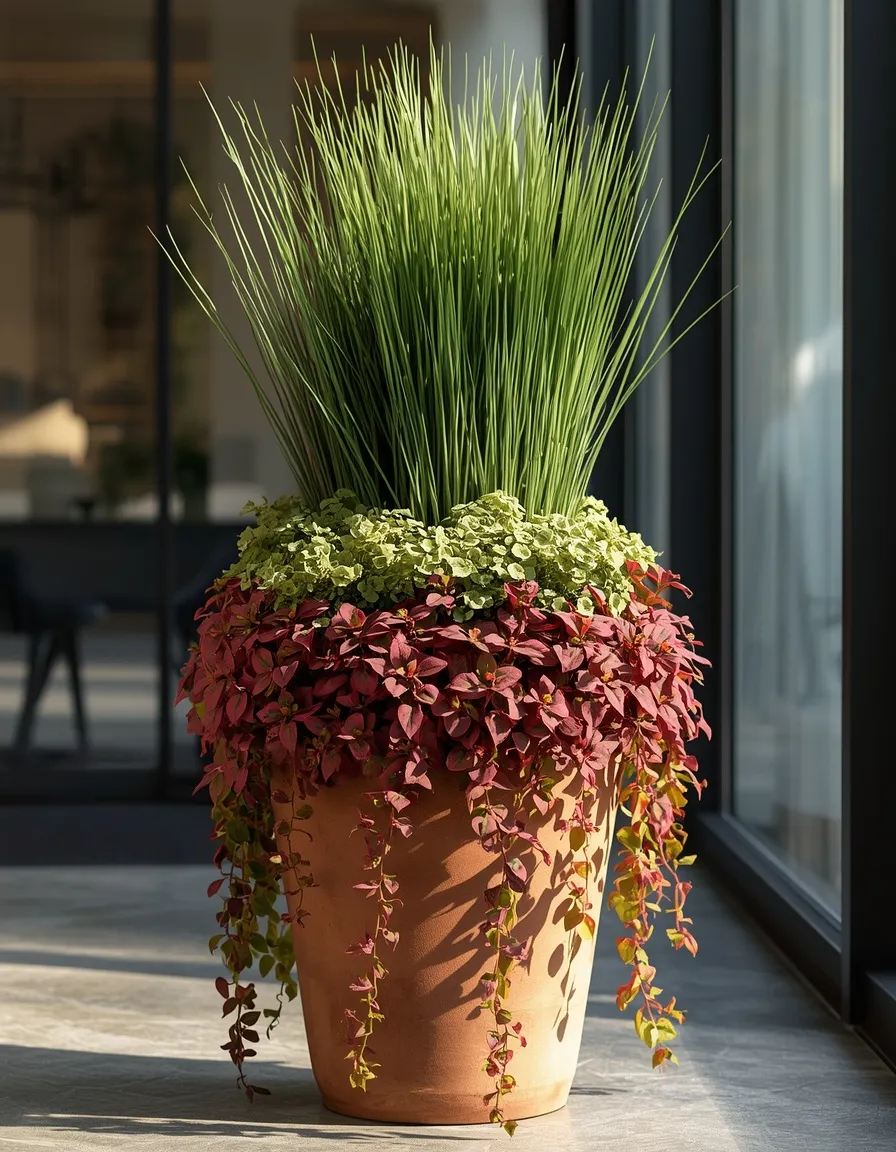
9. Thriller-Filler-Spiller Trailing Combo
A tall planter built on the classic thriller-filler-spiller structure, one upright accent plant at the center, mounding filler plants around it, and trailing spillers cascading over the rim, delivers a genuinely full, professionally styled look in a single container.
Choose the thriller first, since its height and form drive the scale of everything else, typically something with strong vertical structure like an ornamental grass, a small dracaena, or a spike plant reaching well above the container’s rim. Fill the mid-layer with mounding plants like petunias, coleus, or dusty miller in a color that complements rather than competes with the thriller, and finish with trailing spillers, sweet potato vine or trailing lobelia, planted right at the rim edge where they can cascade down the planter’s sides. This structural approach works in nearly any season or light condition, since the technique is about proportion and layering rather than any specific plant palette.
- Delivers a professionally styled, full look from a proven design formula
- Suits any season or light condition once plant choices are adjusted
- Solves the flat, one-note look of a single plant variety filling a container
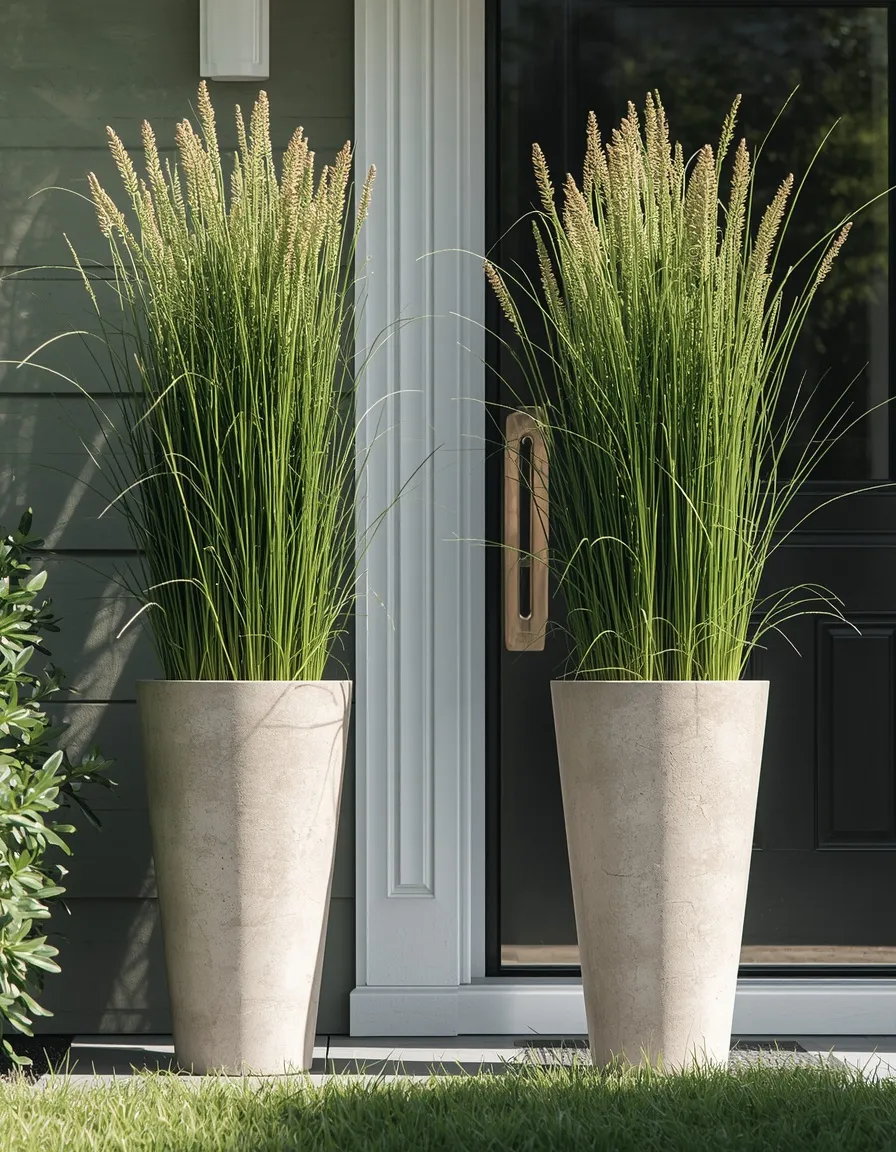
10. Ornamental Grass Planter Pair for an Entry
A matched pair of tall planters, each filled with a single upright ornamental grass variety like feather reed grass or miscanthus, flanking a front door brings movement and soft texture to an entry without the formality of clipped topiary or the fuss of seasonal flower rotation.
Choose a clumping grass variety rather than a running type for container growth, since running grasses can become root-bound and stressed considerably faster in a confined space than a naturally clumping habit. Match the two planters in exact size, material, and grass variety, since the pairing’s visual power comes specifically from that symmetry rather than from the plant choice alone. Cut grasses back to a few inches above the container’s soil line once a year in late winter, which is the only significant maintenance this combination genuinely needs across the rest of the growing season.
- Adds movement and texture without seasonal replanting or clipping
- Suits entries wanting symmetry with less maintenance than matched florals
- Solves the formal, static feeling that clipped topiary pairs can create
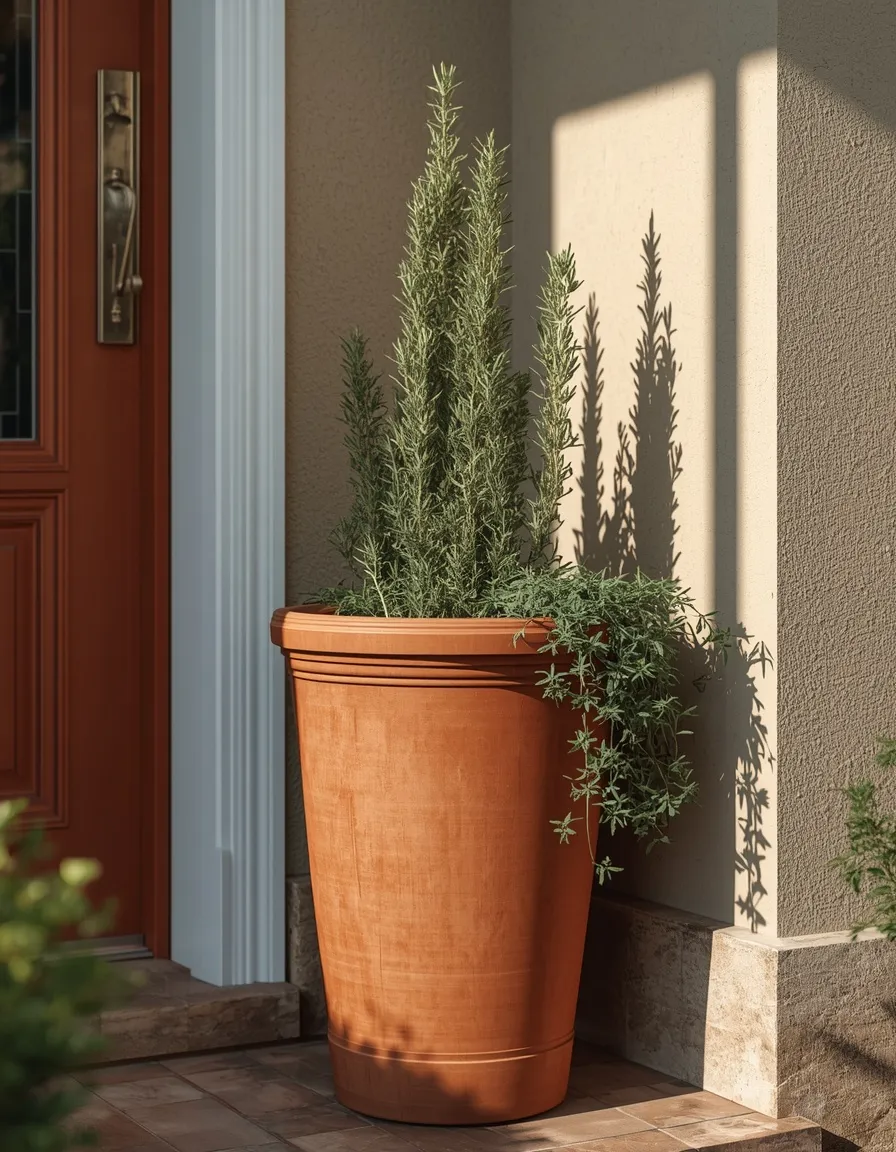
11. Terracotta Herb Tower for Full Sun
A tall terracotta planter filled with upright rosemary at the center and a mix of trailing thyme and oregano cascading down the sides turns a sunny doorstep or kitchen-adjacent patio corner into a genuinely useful herb garden with real height and presence.
Choose unglazed terracotta specifically for Mediterranean herbs, since its porous, breathable material actually benefits rosemary, thyme, and oregano by allowing soil to dry between waterings, mimicking the well-drained, sun-baked conditions these herbs evolved in. Position the planter within easy reach of the kitchen door, since the entire point of an herb tower is regular harvesting, and an herb garden planted somewhere inconvenient tends to go unused regardless of how well it grows. Harvest regularly rather than letting rosemary grow unchecked, since consistent trimming keeps the plant fuller and more productive than occasional heavy cutting.
- Delivers a genuinely functional, harvestable herb garden with real height
- Suits sunny spots near a kitchen door where herbs get regular use
- Solves the want for edible planting in a container usually reserved for ornamentals
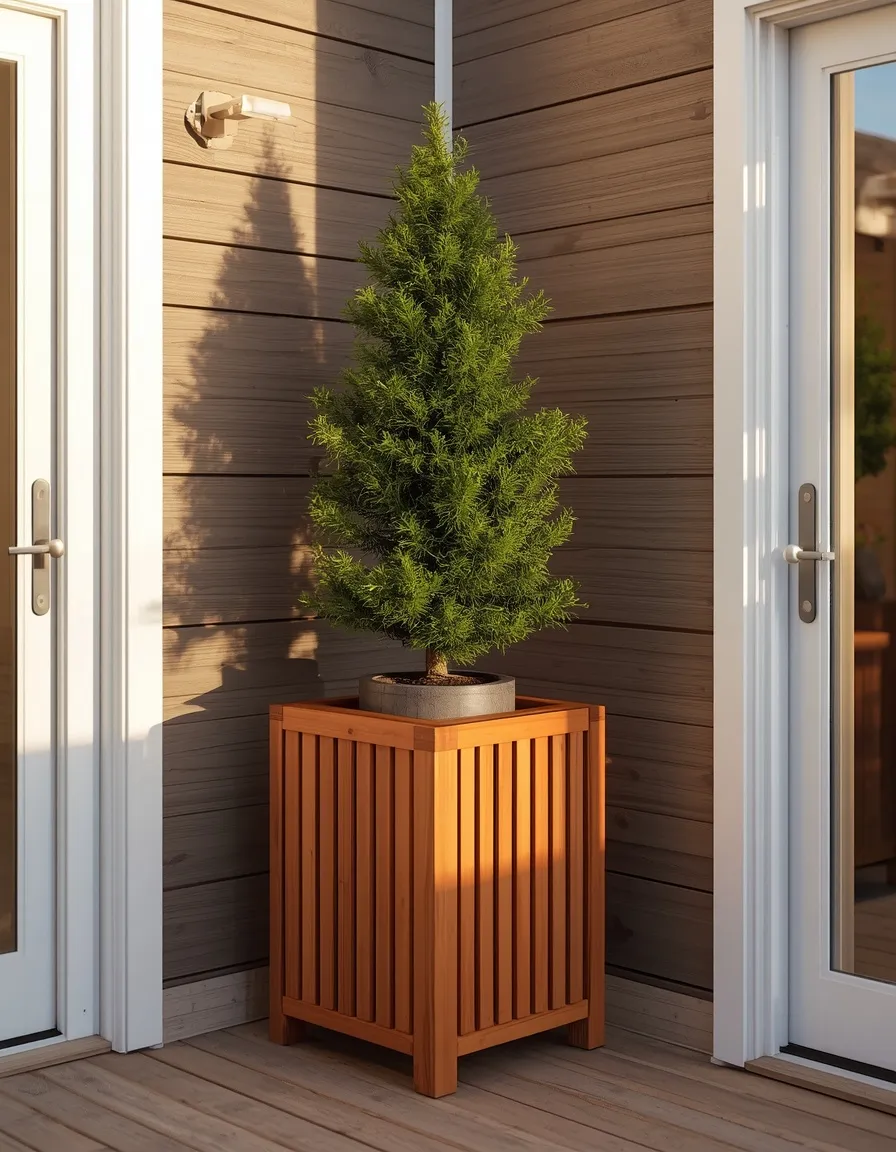
12. DIY Wood Slat Tall Planter
A tall planter built from vertical cedar or redwood slats, fastened around a simple square or rectangular frame, delivers a warm, natural material story that pairs well with almost any exterior, at a cost considerably lower than a comparable retail wood planter.
Choose naturally rot-resistant wood, cedar, redwood, or thermally modified pine, rather than standard construction lumber, since untreated softwood breaks down within a season or two of constant soil moisture contact. Line the interior with heavy-duty plastic sheeting before adding soil, leaving drainage holes cut through both the liner and the wood base, which meaningfully extends the wood’s lifespan by keeping damp soil from direct contact with the interior slat surfaces. Space slats with a small gap between them for a more contemporary, airy look, or fit them flush for a more solid, traditional appearance, both structurally sound as long as the frame itself is secure.
- Delivers genuine natural material warmth at meaningfully lower cost than retail
- Suits patios and entries wanting a wood tone rather than metal, resin, or ceramic
- Solves the high price of comparable retail wood planters
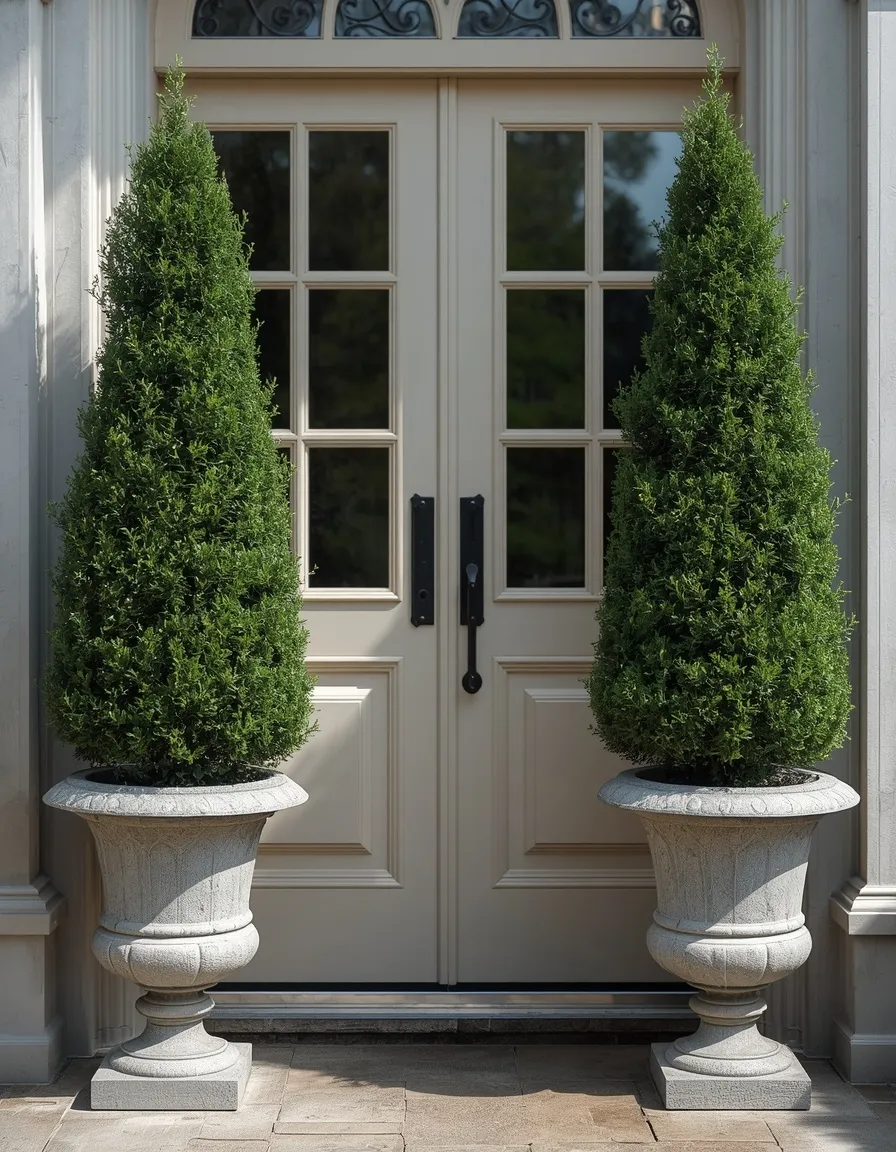
13. Tall Planter Pair Flanking a Front Door
Two identical tall planters, each filled with a matched, uniform planting, a single clipped boxwood shape or an identical floral combination, positioned on either side of a front door creates the kind of symmetrical, welcoming entry that reads as considered from the moment someone approaches.
Match container size, material, and plant variety exactly between the pair, since even a small difference, a slightly different pot color or plant size, undermines the symmetry that makes this idea work. Size the planters to the door’s actual scale, generally planters reaching to roughly a third or half the door’s height read as proportionate, while undersized planters get visually lost against a full-size entry. If pets have unsupervised access to the entry, avoid boxwood specifically, since it is listed as toxic to dogs and cats by the ASPCA, and consider inkberry holly or a non-toxic evergreen alternative for a similar clipped look.
- Creates an immediately welcoming, symmetrical first impression
- Suits front entries of nearly any architectural style
- Solves the lopsided, unfinished look of a single planter or mismatched pair
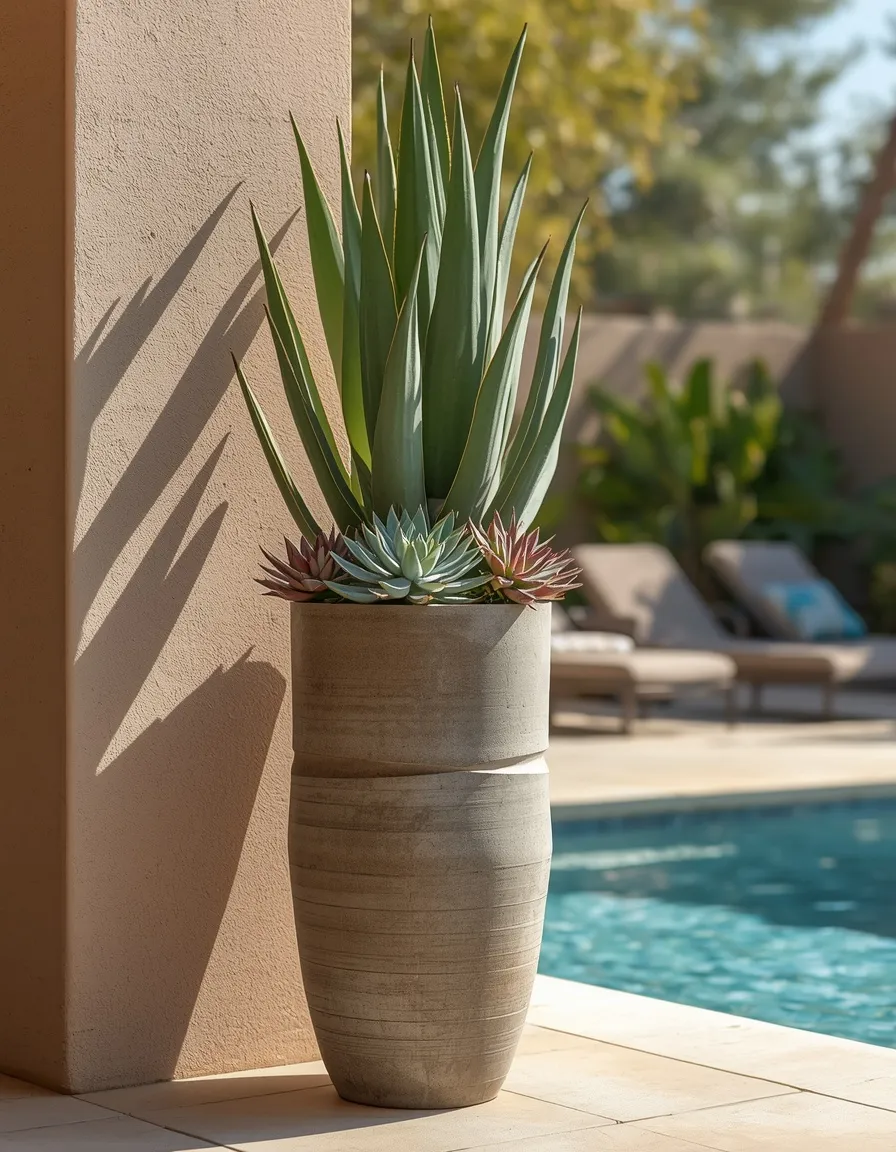
14. Heat-Tolerant Succulent Planter for Poolside
A tall planter filled with architectural succulents, a central agave or yucca surrounded by lower-growing sedum and echeveria, withstands poolside heat, reflected light, and occasional chlorine splash better than almost any flowering alternative.
Choose a well-draining cactus and succulent soil mix rather than standard potting soil, since succulents planted in moisture-retentive soil near a pool, where humidity and splash add extra water, are especially prone to root rot. Position spiny varieties like agave and yucca back from direct pool-edge walking paths, since their physical structure poses a genuine scratch and puncture hazard in an area where people are often barefoot and moving quickly. This combination needs minimal watering through summer, an advantage in a poolside setting where irrigation systems are often not routed, and tolerates the reflected heat and light that pool decking radiates better than most flowering plants.
- Withstands poolside heat and reflected light better than flowering plants
- Suits sunny pool decks with minimal irrigation access
- Solves the frequent plant failure that poolside heat and splash cause
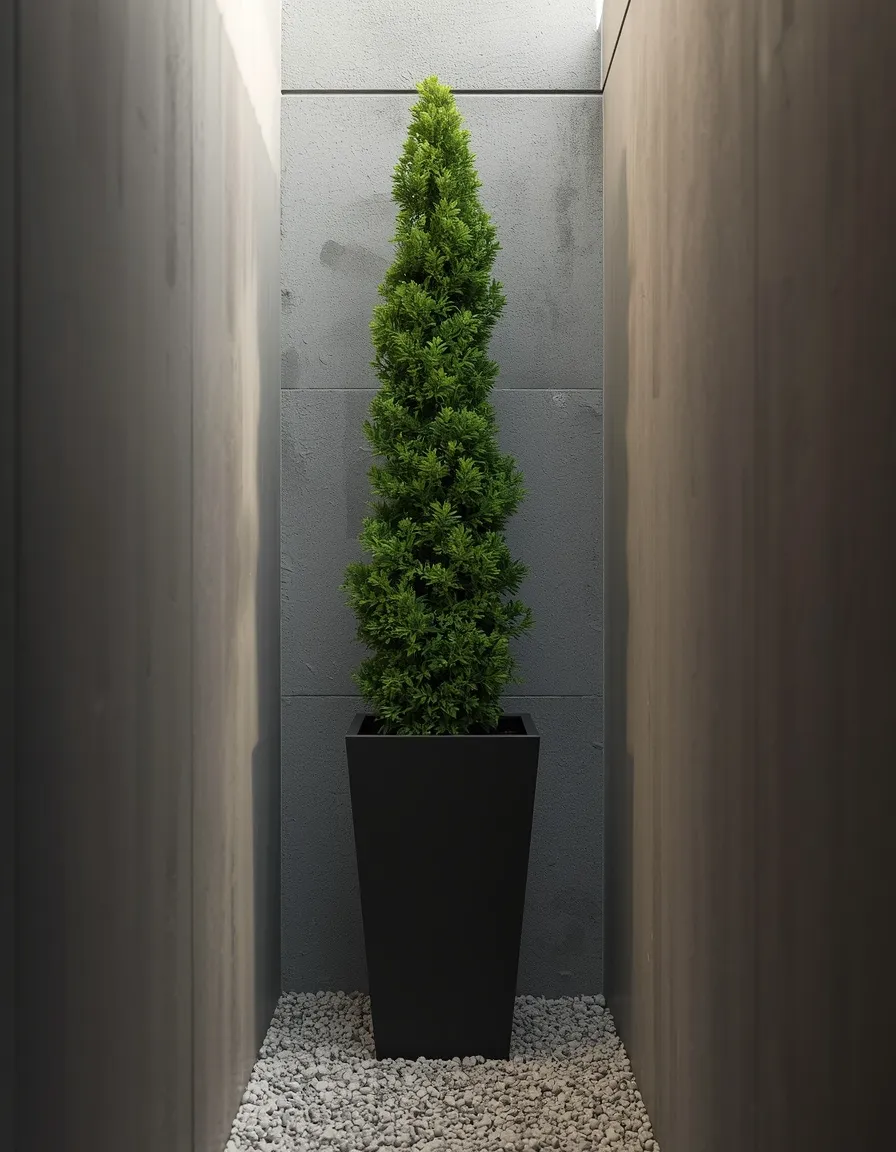
15. Narrow Tall Planter for a Side Yard
A slim, tall planter, narrower in diameter than most container styles but still substantial in height, fits a narrow side yard passage or the tight gap between a driveway and fence, adding greenery to a space too tight for almost any other planting solution.
Choose an upright, columnar plant habit specifically, a narrow conifer, an upright ornamental grass, or a trained topiary, rather than anything with a naturally wide or spreading growth pattern, since a narrow container cannot support a plant that wants to grow outward. Weight the base carefully in a narrow planter, since the height-to-width ratio here is more extreme than in most other ideas on this list, making tip-over risk in wind genuinely higher than a standard proportioned planter. This idea solves one of the more commonly wasted spaces in residential landscaping, since narrow side yards are frequently left entirely bare due to the assumption that nothing fits there.
- Fits genuinely tight spaces most planting solutions cannot use
- Suits narrow side yards, gaps beside driveways, and tight passageways
- Solves the commonly wasted, bare look of narrow residential side spaces
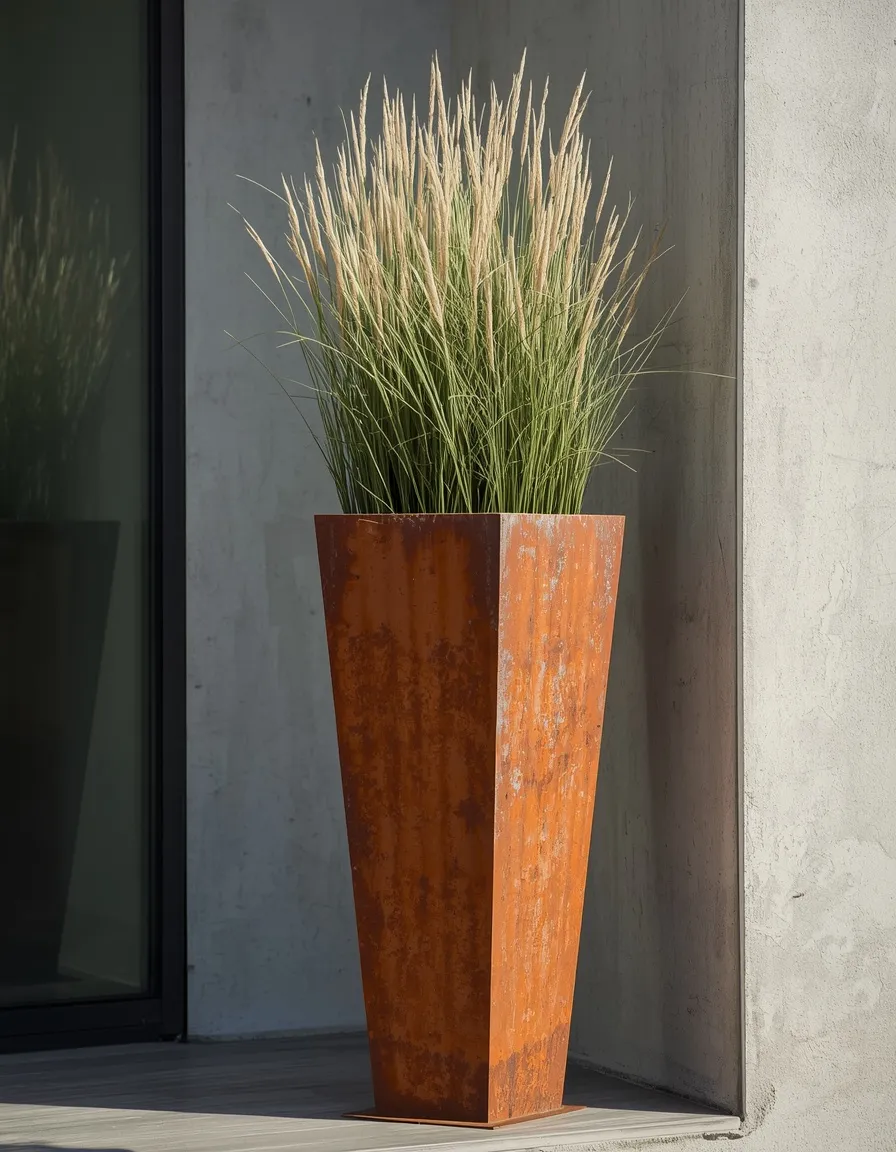
16. Corten Steel Modern Industrial Planter
A tall planter in raw Corten steel, its surface developing a deep rust-orange patina over its first several months outdoors, brings a modern industrial material story that few other planter options can replicate, aging into its final look rather than starting there.
Expect the rusting process to take roughly three to six months to develop a stable, protective patina, during which the steel will shed some rust-colored runoff onto surrounding surfaces, so avoid positioning a new Corten planter directly on light-colored stone or concrete until the surface has stabilized. Once patinated, Corten’s rust layer is actually protective rather than actively corroding further, unlike untreated steel, which continues to rust and eventually fails structurally. Pair this material with structural plants, ornamental grasses, a small tree, or architectural succulents, which suit the material’s industrial, modern character better than soft, romantic florals would.
- Delivers a genuinely modern, industrial material story that ages intentionally
- Suits contemporary patios and entries wanting a distinctive metal finish
- Solves the want for a planter material with real texture and depth over time
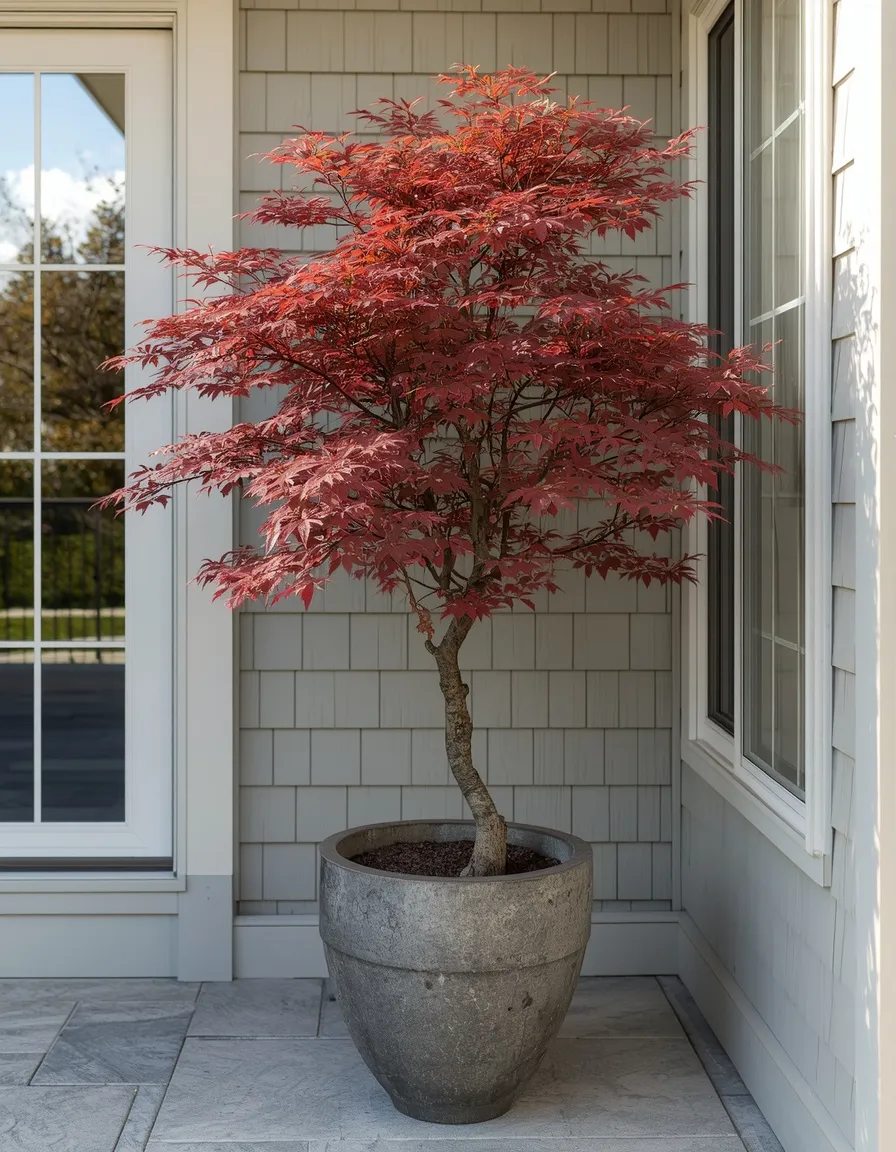
17. Small Ornamental Tree in a Tall Planter
A small, container-appropriate tree, a dwarf Japanese maple, a standard olive, or a columnar juniper, planted in a substantial tall planter, brings genuine height and structure that no perennial or annual combination can match, functioning almost like living architecture on a patio or entry.
Choose a container at least 24 inches (61 cm) in diameter and equally deep for most small trees, since root-bound trees decline in health and vigor considerably faster than perennials in an undersized container. Confirm the specific tree’s hardiness zone rating against your actual climate before committing, since container-grown trees experience more extreme root-zone temperature swings than the same tree planted in the ground, often needing one additional zone of cold hardiness to survive winter in a container. Weight and stabilize the container carefully, since a mature small tree in a tall planter represents the most significant tip-over risk on this entire list, both from wind load on the canopy and from the tree’s own weight raising the whole planter’s center of gravity.
- Delivers genuine architectural height that no smaller planting can match
- Suits patios and entries wanting a long-term, structural focal point
- Solves the want for tree-like presence without an in-ground planting commitment
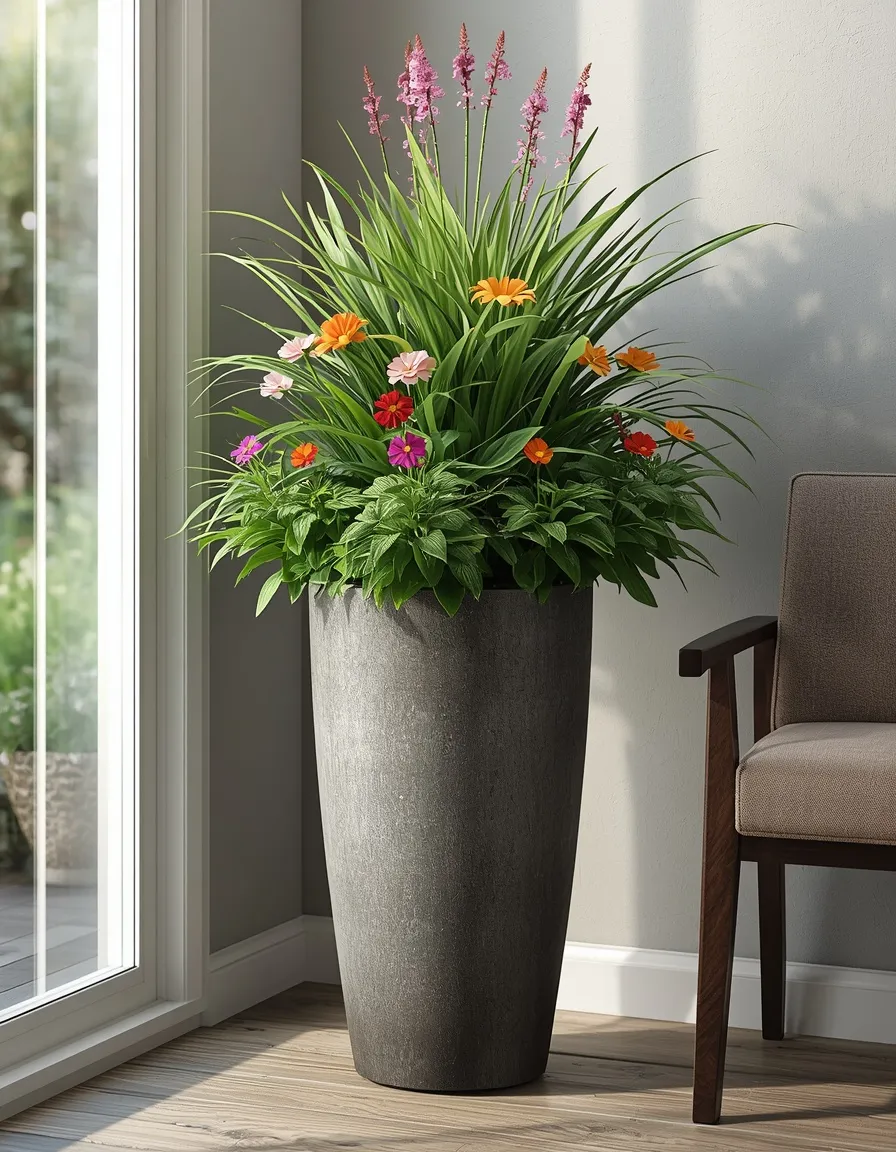
18. Self-Watering Tall Planter for Low Maintenance
A tall planter built with a built-in water reservoir at its base, wicking moisture up to plant roots as needed, keeps even a full-sun, water-hungry planting alive through several days of neglect or vacation without the wilting a standard container would show.
Fill the reservoir fully before planting and check the water level indicator, most self-watering planters include one, every few days rather than assuming the system is working correctly without checking, since a dry reservoir defeats the entire purpose and a plant can decline quickly once it runs dry with no backup watering routine in place. This idea suits water-hungry plantings specifically, tropical foliage, annual flowers, and vegetables, more than drought-tolerant succulents, which can actually suffer from a constantly available water source. Refresh the reservoir with diluted liquid fertilizer periodically through the growing season, since the same wicking system that delivers water also delivers nutrients evenly to the root zone.
- Keeps water-hungry plantings alive through vacations and missed watering days
- Suits busy households and water-intensive plant choices specifically
- Solves the inconsistent watering that causes most tall planter plant failures
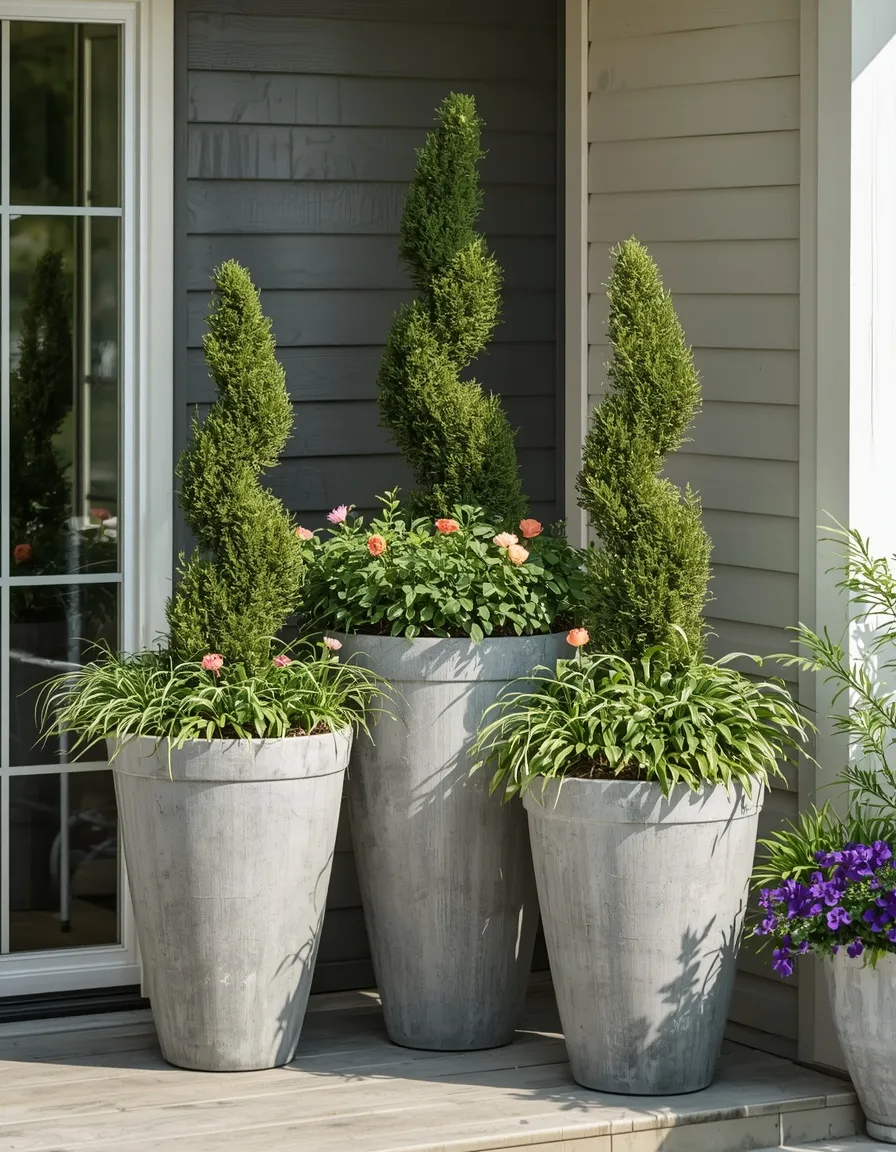
19. Varied-Height Tall Planter Grouping
Three or five tall planters of genuinely different heights, clustered together rather than lined up in a matching row, creates a layered, sculptural composition that a single tall planter or a uniform row simply cannot achieve on its own.
Use an odd number of planters, three or five rather than two or four, since odd-numbered groupings read as more intentionally composed than even ones, a principle that holds across most visual design disciplines. Vary height meaningfully rather than subtly, aiming for at least 6 to 8 inches (15 to 20 cm) of difference between each planter in the group, since planters too close in height read as a mismatched set rather than a deliberate composition. Repeat one unifying element across the group, a single material, a single plant variety, or a consistent color, so the height variation reads as intentional styling rather than a random collection of leftover pots.
- Creates a sculptural, layered composition beyond what any single planter offers
- Suits entries, patios, and corners with room for a genuine grouping
- Solves the flat, single-note look of one tall planter standing alone
Final Thoughts
Tall outdoor planters ideas work best when the container and the planting are chosen together rather than as separate decisions, since height changes everything from watering frequency to wind stability to which plants genuinely thrive in a deep, elevated root zone. Whether that means starting with a single dramatic tropical planter for a sunny entry, building a DIY concrete or wood version to save on cost, or grouping several varied heights together for a layered look, the strongest results come from matching the idea to your actual light, climate, and space rather than copying a planting scheme built for different conditions. That same considered approach to containers is what Sunday Abode is built around, and if you want to look beyond height specifically, these garden planters ideas cover a broader range of container styles and planting combinations. For more ways to bring structure into a garden, the garden design category covers layout and planting well beyond containers alone. Start with the spot in your yard most in need of height and presence, and build the rest of your collection from there.
FAQs
How do I keep a tall planter from tipping over in wind?
Choose a planter with a base diameter at least a third of its total height, and fill the bottom third with sand, gravel, or a weighted liner rather than lightweight potting mix alone, especially for anything over about 3 feet (91 cm) tall. Tall, narrow planters and anything topped with a mature tree or ornamental grass carry the highest tip-over risk and benefit most from this extra weighting.
What can I plant in a tall outdoor planter for full sun?
Tropical foliage like canna lily and elephant ear deliver dramatic height and texture in full sun, while a Mediterranean herb combination of rosemary, thyme, and oregano works well in a sunnier spot near a kitchen door. Both need more frequent watering in full sun than a shaded planter would, since deep containers dry out faster with direct heat and light exposure.
What tall outdoor planter ideas work in shade?
A fern and hosta combination, or trailing ivy layered around an upright shade-tolerant centerpiece, brings genuine lushness to a shaded porch or north-facing entry where sun-loving plants would fail. Water shaded tall planters less often than sunny ones, since shaded soil retains moisture considerably longer and overwatering is the more common problem in low light.
Are artificial tall planters actually a good option?
For genuinely low-light spots where living plants repeatedly fail, yes, provided the artificial foliage is specifically rated for UV and outdoor exposure rather than indoor-only material. Weight the base carefully, since an artificial arrangement lacks a living root system’s mass and can be even more prone to tipping than a planted container.
How do I keep ceramic or terracotta tall planters from cracking in winter?
Water trapped in the material’s pores freezes and expands, cracking the pot, so bring ceramic and terracotta planters indoors or into an unheated garage for winter in freezing climates, or empty and cover them if moving is not practical. Frost-resistant materials like fiberglass, concrete, and resin handle freezing temperatures without this risk if you want a planter that can stay outside year-round.
Is a DIY tall planter actually cheaper than buying one?
Generally yes, particularly for concrete and wood versions, since the raw materials for a single planter typically cost meaningfully less than a comparable retail piece, though the tradeoff is your own time and some basic tool access. A DIY build also lets you size the planter to your exact space rather than settling for whatever dimensions are commercially available.
How much soil does a really tall planter actually need?
Less than it appears, most perennials and annuals only need 12 to 18 inches (30 to 46 cm) of actual root depth, so filling the lower portion of a very tall planter with an inverted nursery pot or packing material before adding soil saves weight and cost without harming the plant. This technique also reduces the total water a large planter needs to fully saturate at each watering.
A note on safety: weight the base of any tall planter over 3 feet (91 cm) to reduce tip-over risk, avoid boxwood in entries shared with pets given its ASPCA-listed toxicity, and position spiny succulents like agave and yucca away from walkways and pool edges.