
Introduction
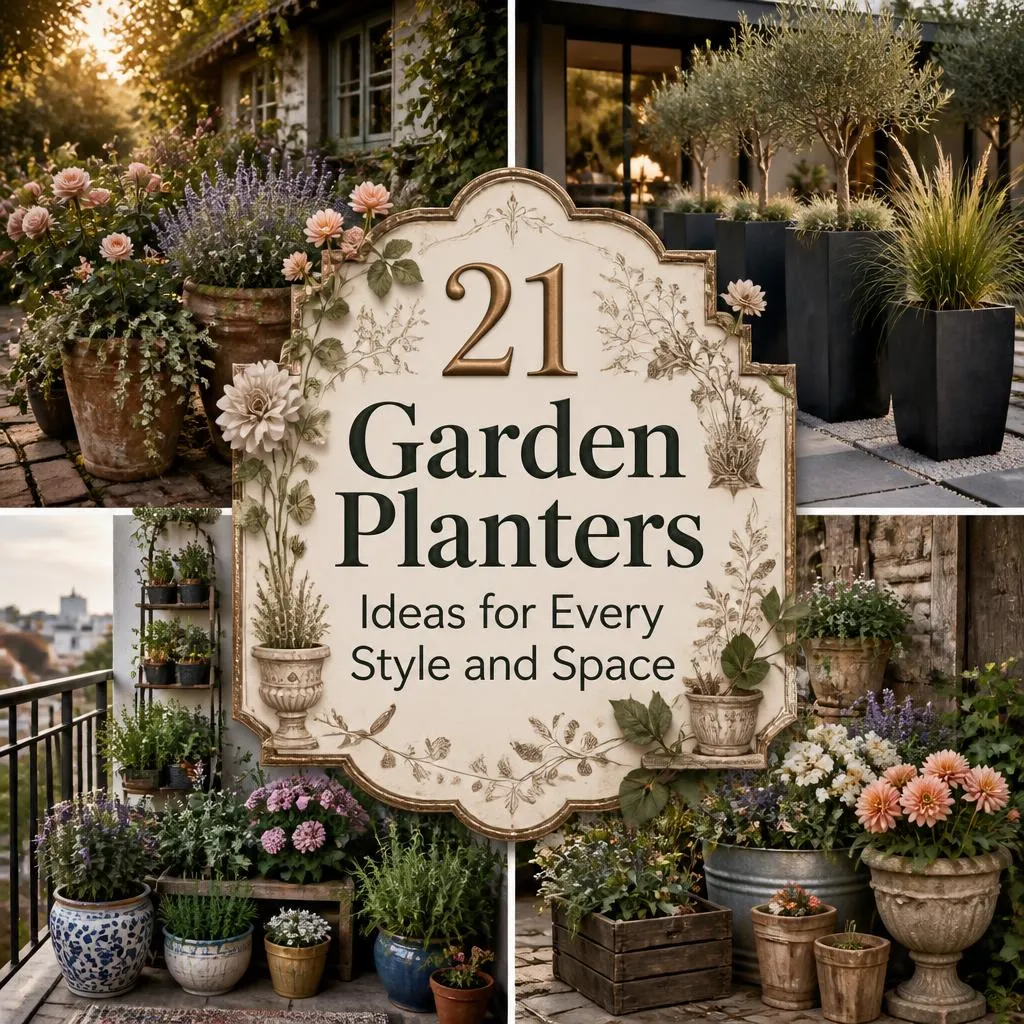
Garden planters ideas cover a lot more ground than a row of matching pots by the front door, the right planter can define an entryway, soften a bare wall, replace a garden bed, or turn an awkward corner into the most interesting spot in the yard. Material, size, and drainage do more of the real work than color or shape ever will, and most guides skip exactly those details in favor of a pretty photo. This list moves through the material choices worth knowing, front-yard and entrance placement, structural and functional ideas like raised beds and planter benches, a few distinct styles, and the sizing and grouping techniques that make the difference between planters that thrive and ones that struggle. Consider it the reference for building real character into your own Sunday Abode, one well-chosen planter at a time.
Garden Planter Ideas by Material
Material determines more about a planter’s long-term performance than almost anything else, how it handles weather, how often it needs watering, and how it ages over the years it sits outside.
1. Corten Steel Planters
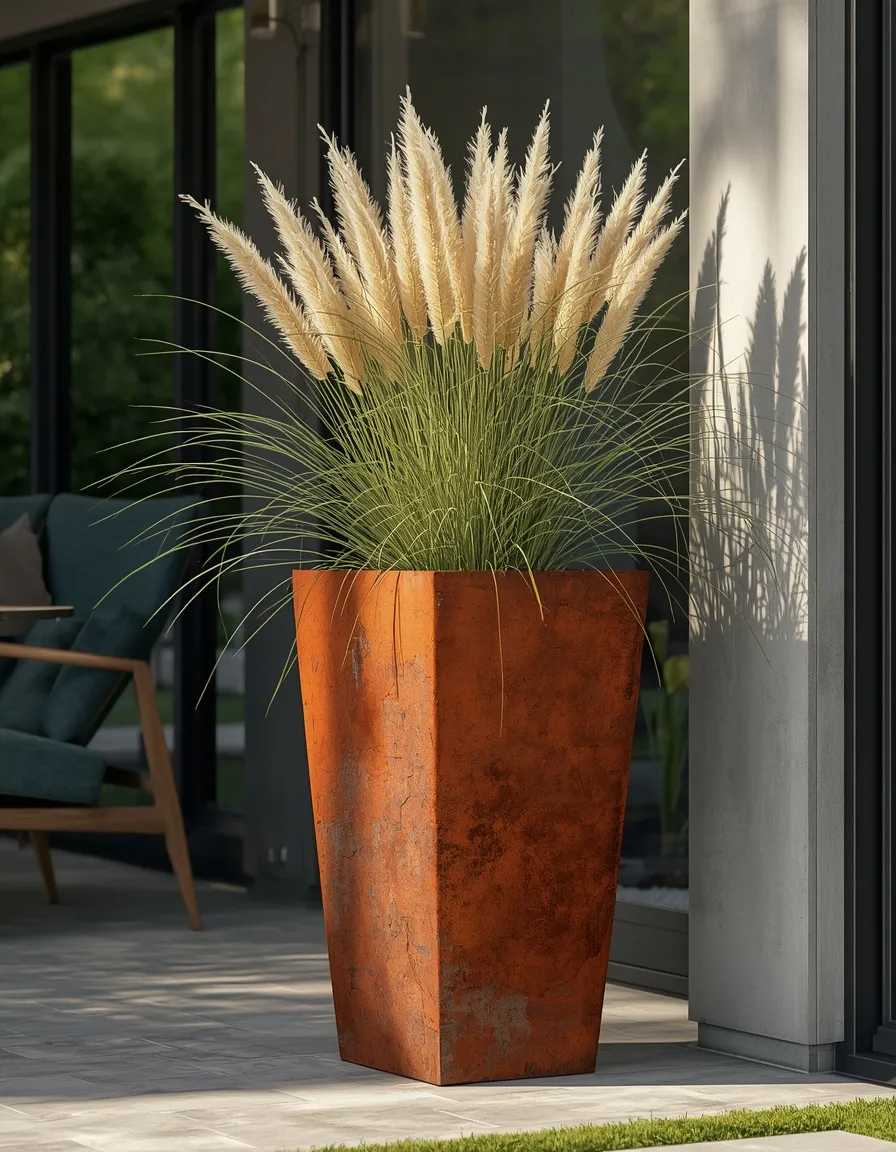
A corten steel planter, its surface a deep, even rust-orange that develops naturally rather than through paint, brings a genuinely modern, industrial warmth that few other planter materials can match.
Corten’s rusted surface is actually a protective layer, the steel oxidizes on contact with air and moisture and forms a stable patina that shields the metal underneath from further corrosion, which is why the material holds up outdoors for decades rather than rusting through. Expect some rust runoff during the first few rainy seasons specifically, fresh corten sheds reddish-brown staining onto anything porous beneath it, a patio, decking, or light-colored pavers, so position new planters on gravel, dark stone, or a protective tray until the surface fully stabilizes, typically within one to two years. Line the interior with a plastic barrier before adding soil if growing edible plants specifically, this is a reasonable precaution against trace metal contact with food crops even though corten is broadly considered safe for ornamental planting. Choose corten specifically for a modern, minimalist, or industrial-style garden, its warm rust tone reads considerably more contemporary than a traditional terracotta or wood planter would in that context.
- Delivers a genuinely modern, warm industrial look that develops naturally over time
- Works especially well in contemporary, minimalist, or industrial-style garden settings
- Solves the desire for a statement material that only improves with age and weather
2. Modern Concrete Planters
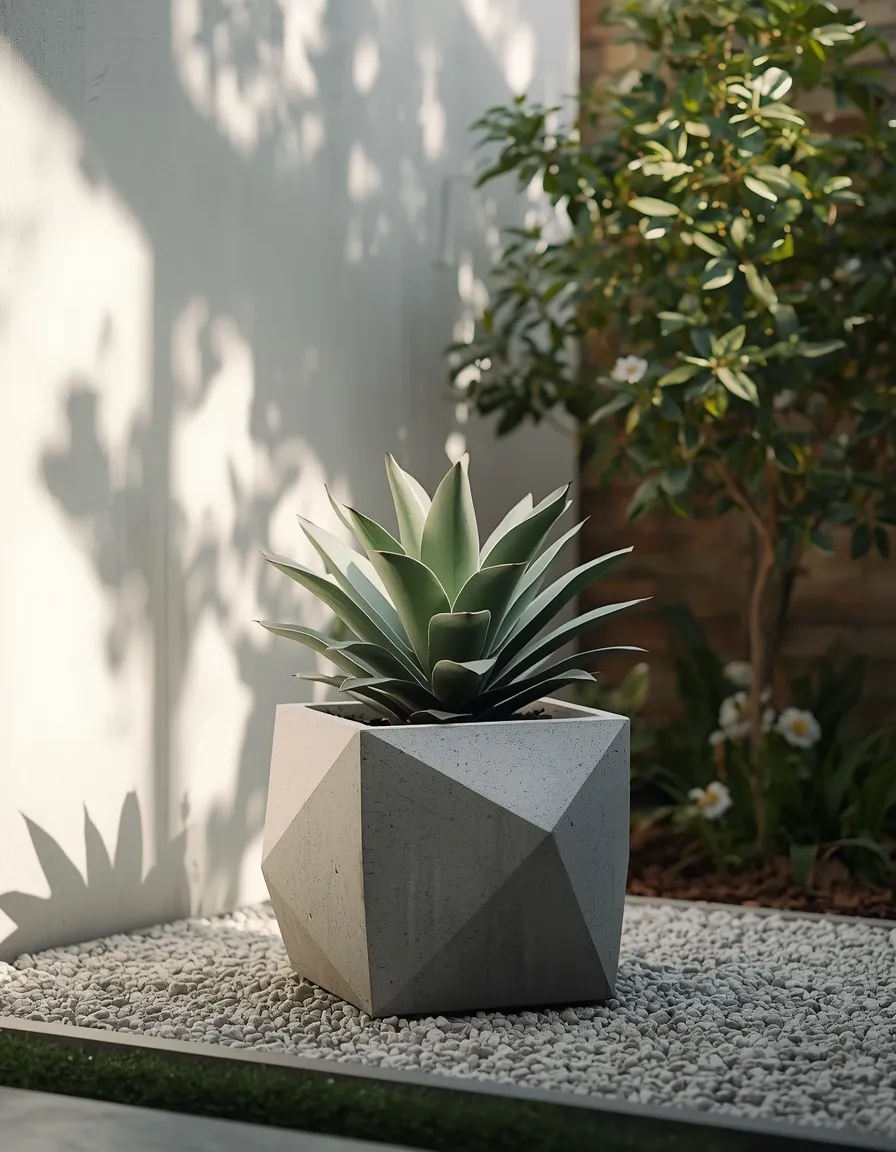
A concrete planter, its surface smooth or lightly textured in a clean geometric form, anchors a garden with genuine visual weight and a distinctly contemporary, architectural presence.
Concrete is genuinely heavy even before soil goes in, a mid-sized concrete planter can weigh 15 to 25kg (33 to 55lb) empty, which matters considerably for anywhere with weight restrictions like a balcony or rooftop, and matters practically for anywhere the planter might need to be moved later, plan its final position carefully before filling it. New concrete is naturally alkaline and can slightly raise soil pH in the first season, this generally isn’t a problem for most ornamental plants but is worth flushing with a few thorough waterings before planting anything genuinely pH-sensitive. Choose a lighter-weight cast concrete or a concrete-composite blend specifically for anywhere weight is a real concern, these hold the same aesthetic at a meaningful fraction of solid concrete’s weight. This material suits modern, minimalist gardens particularly well, and works as an effective visual counterweight to softer, looser planting since its geometric solidity contrasts naturally against trailing or wild-growing foliage.
- Anchors a garden with genuine architectural weight and a clean, contemporary look
- Works especially well as a visual counterweight to loose, trailing planting
- Solves the desire for a substantial, permanent-feeling planter with true modern character
3. Glazed Ceramic Pots
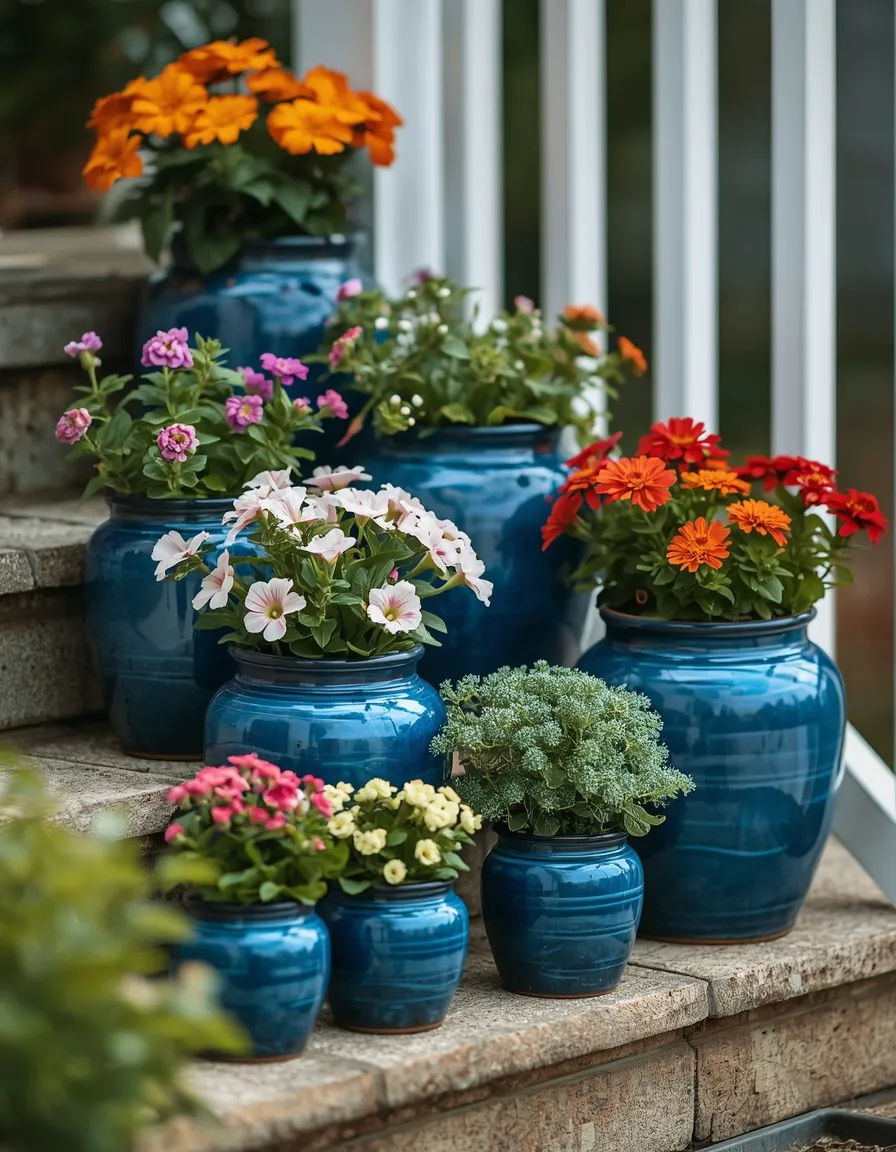
A glazed ceramic pot in a single bold color, or a cluster of several in complementary tones, brings genuine color and shine to a garden in a way most other planter materials, all more muted and matte, simply can’t.
Choose fully vitrified, frost-resistant ceramic specifically for anywhere with real winter freezing, unglazed or partially glazed ceramic absorbs moisture into the clay body and cracks when that trapped water freezes and expands, a genuinely common and disappointing loss for an otherwise beautiful pot. Check that the glaze covers the interior as well as the exterior, an unglazed interior still absorbs water and remains vulnerable to frost damage even if the outside looks fully finished. Move genuinely valuable or irreplaceable glazed pots undercover for winter in freeze-prone climates as the safest precaution regardless of how frost-resistant the ceramic claims to be, and always ensure a drainage hole exists, some decorative glazed pots are sold without one and need a hole drilled with a masonry bit before use. This material rewards a bold, considered color choice, one or two strong colors repeated across a grouping reads as considerably more intentional than a wide, uncoordinated mix.
- Delivers genuine color and shine no other common planter material matches
- Works best as fully vitrified, frost-resistant stock in climates with real winter freezing
- Solves the desire for real color in the garden beyond what flowers alone provide
4. Lightweight Resin Planters for Balconies and Rooftops
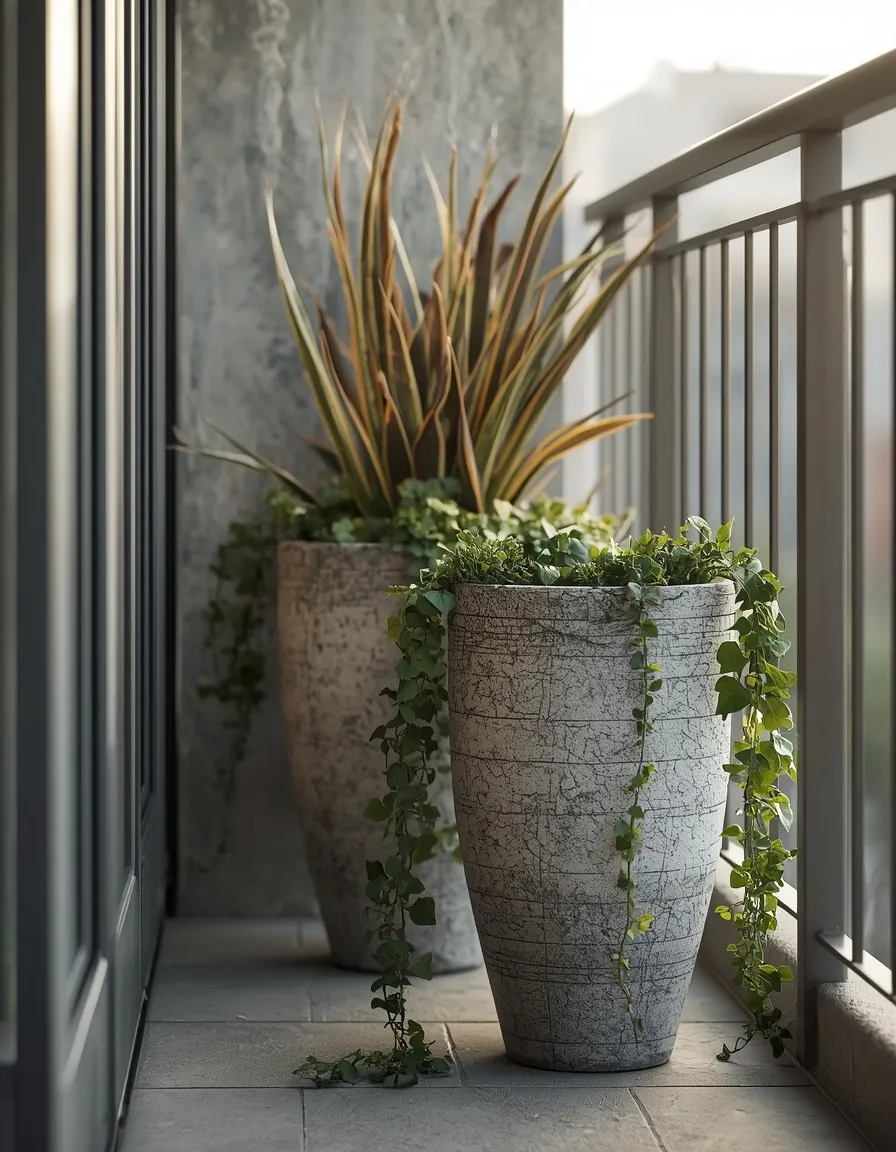
A resin or fiberglass planter, molded to mimic the look of stone, concrete, or metal at a fraction of the actual weight, solves the specific problem that heavier materials create on a balcony, rooftop terrace, or upper floor.
Check the space’s actual weight load limit before committing to any large planter, filled soil adds meaningful weight regardless of the container’s own weight, and an upper-floor balcony or rooftop typically has a specified maximum load per square meter worth confirming rather than assuming. Choose a UV-stabilized resin product specifically for anywhere with significant sun exposure, standard, non-stabilized plastic becomes brittle and visibly fades within just a couple of seasons of full sun, while UV-stabilized versions hold their color and structural integrity considerably longer. Drill additional drainage holes if the factory-installed ones seem insufficient, many mass-produced resin planters ship with minimal drainage that works poorly for anything beyond very drought-tolerant plants. This material delivers real design flexibility, genuinely convincing faux-stone or faux-metal finishes exist, at a small fraction of the actual material’s weight and cost, making it the practical choice anywhere structural weight is a genuine constraint.
- Delivers the visual weight of stone or metal at a fraction of the actual load
- Works specifically where weight limits rule out concrete, stone, or large ceramic
- Solves the “want substantial-looking planters on a balcony or rooftop” problem directly
5. Natural Wood Planter Boxes
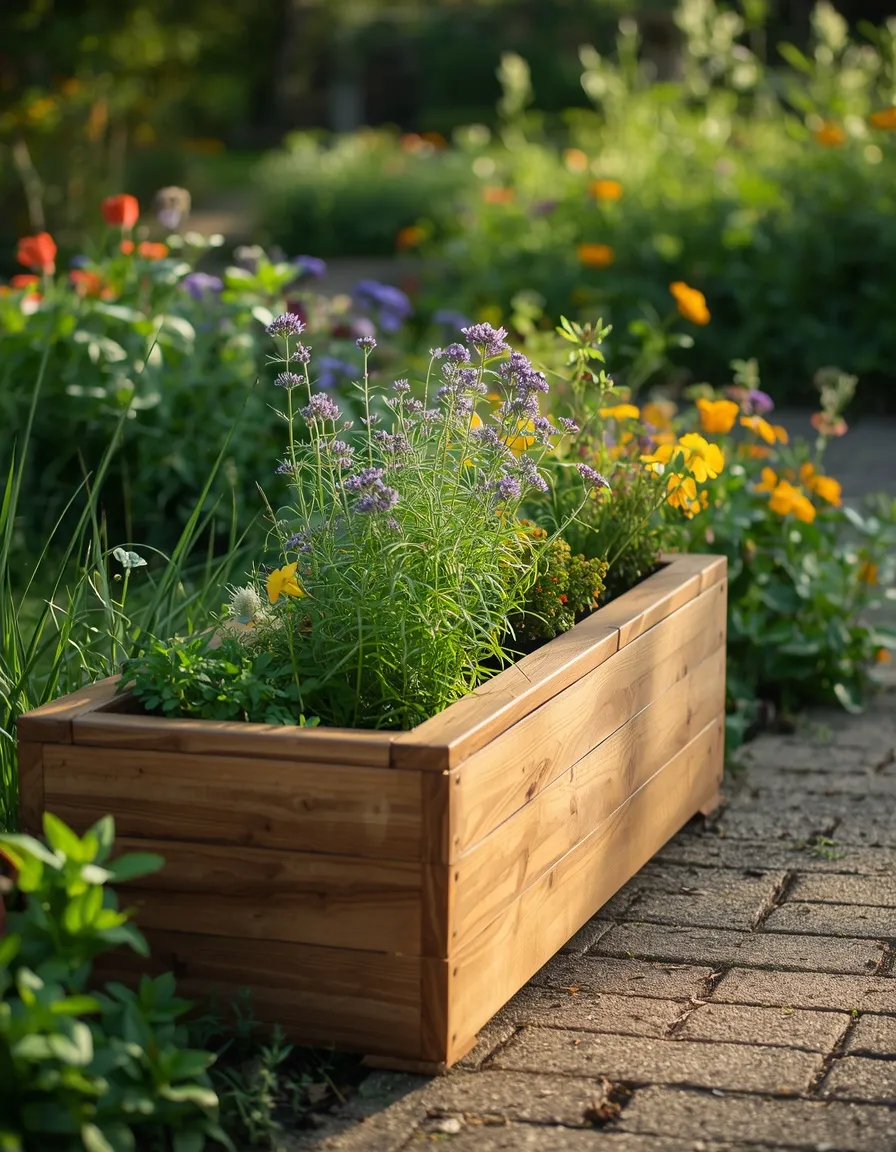
A simple wood planter box, its boards left to weather naturally or finished with a protective stain, brings warmth and a genuinely classic, versatile look that suits nearly any garden style.
Choose a naturally rot-resistant species, cedar, redwood, or teak all hold up to soil moisture and outdoor weather considerably longer than pine or other softwoods without chemical treatment. Line the interior with landscape fabric or a plastic liner before adding soil, this single step meaningfully slows moisture-driven rot by keeping the wood from sitting in constantly damp soil, and it’s worth doing even with a rot-resistant species. Avoid older reclaimed or salvaged wood of unknown treatment history for anything growing edible plants specifically, older lumber may have been treated with chromated copper arsenate before the material was phased out of residential use, and that history often can’t be confirmed on a reclaimed board. Reinforce corners with galvanized L-brackets rather than nails alone for anything holding real soil volume, a fully saturated wood planter box is considerably heavier than an empty one and benefits from genuinely solid joinery.
- Delivers genuine warmth and versatility that suits nearly any garden style
- Works best in naturally rot-resistant wood species with a protective liner inside
- Solves the desire for a classic, natural-material look at a reasonable cost
Garden Planter Ideas for Front Yards and Entrances
The front of the house does more visual work than any other part of the garden, since it’s the one view every visitor and passerby actually sees.
6. Front Door Entrance Planters
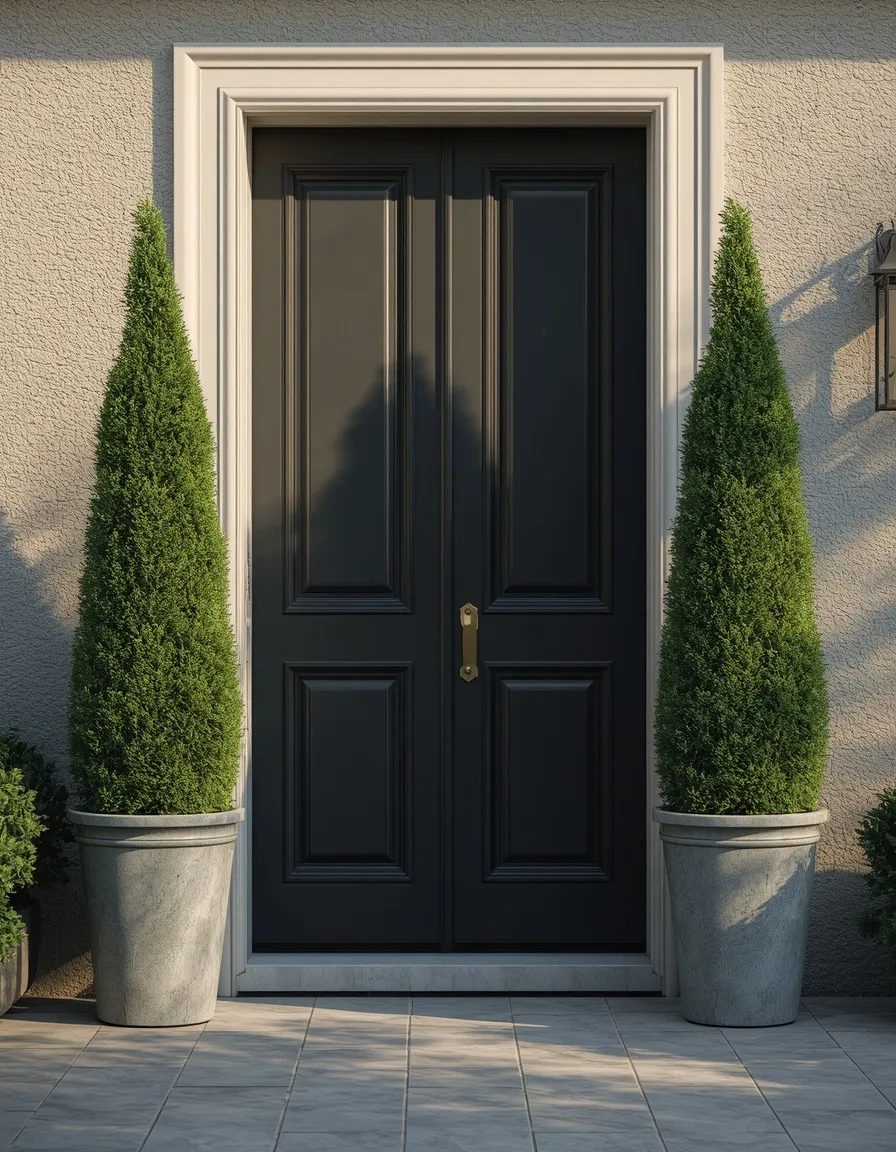
A matched pair of planters flanking the front door, identical in size, material, and planting, brings instant symmetry and a genuine sense of welcome to the single most-viewed spot on the property.
Size planters generously relative to the door itself, a pair that reads as too small gets visually lost against a full-sized entrance, generally 40 to 60cm (16 to 24in) in height and width for a standard residential door. Keep the planting genuinely simple and matched exactly between the two pots, a single upright plant like a boxwood cone or a small evergreen in each, rather than a busy mixed planting that’s difficult to keep looking identical on both sides over a full season. Choose a material and color that complements the door and surrounding trim specifically, this is one spot where matching the existing architecture matters more than making an independent style statement. Refresh the planting seasonally to keep this high-visibility spot looking consistently maintained, an entrance planter that’s clearly neglected undercuts the welcoming effect the whole idea is built around.
- Creates instant symmetry and a genuine sense of arrival at the front door
- Works best with simple, exactly matched planting on both sides
- Solves the “front entrance feels bare or unwelcoming” problem directly
7. Front Yard Curb Appeal Planter Bed
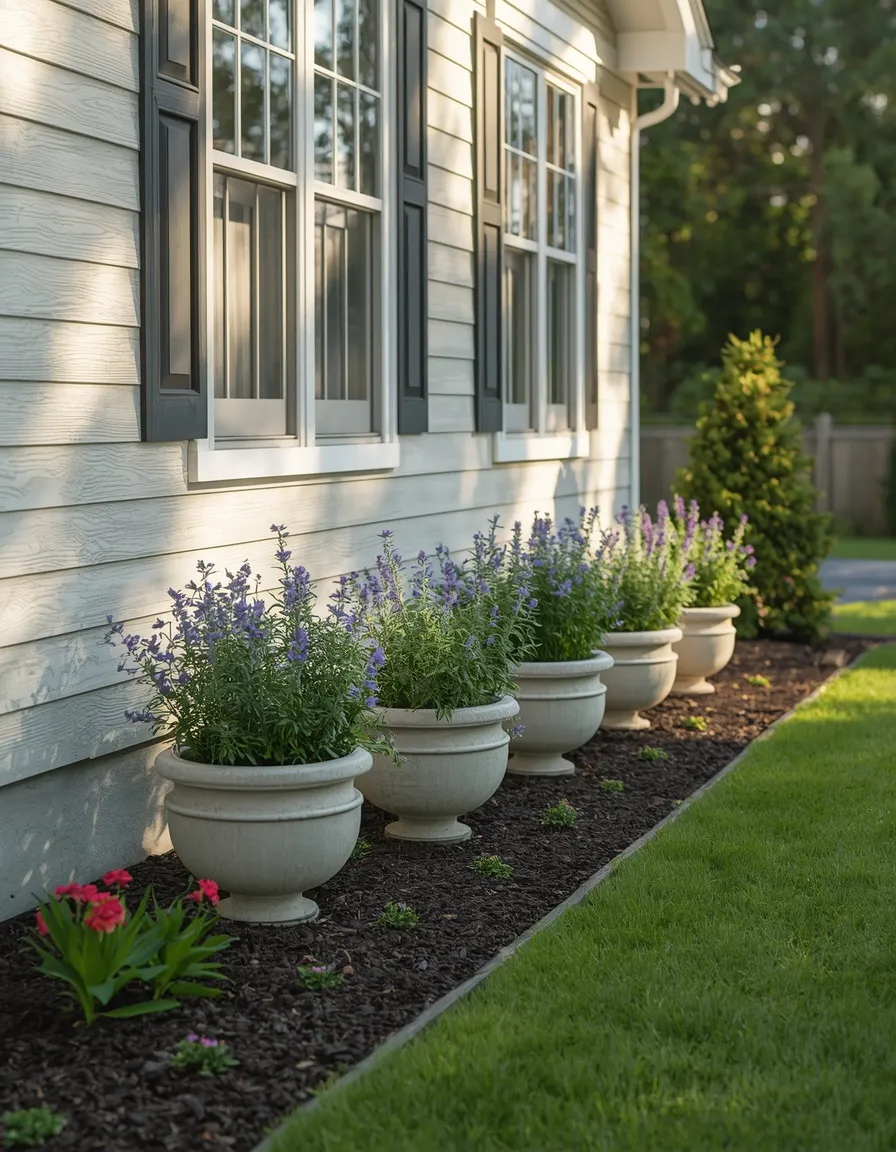
A run of large planters along the front of the house, standing in for a dug garden bed entirely, brings real curb appeal without disturbing the foundation or existing hardscaping beneath.
Size planters to genuinely read as a continuous bed rather than scattered individual pots, using fewer, larger containers spaced with minimal gaps between them creates a more cohesive line than many small pots spread along the same run. This approach works particularly well over an existing concrete or paved area along the house’s foundation, where digging an actual bed isn’t possible or would mean breaking up hardscaping that’s otherwise in good condition. Choose plants with a similar mature height and habit across the full run for visual cohesion, a foundation planting look depends on that consistency considerably more than an informal garden bed would. This idea also suits a rented property especially well, since the entire “bed” lifts away completely at move-out with zero permanent change to the property.
- Delivers real curb appeal without digging into or altering the existing foundation area
- Works especially well over hardscaping where an actual garden bed isn’t possible
- Solves the “want foundation planting but can’t or shouldn’t dig” problem
8. Small Front Garden Container Grouping
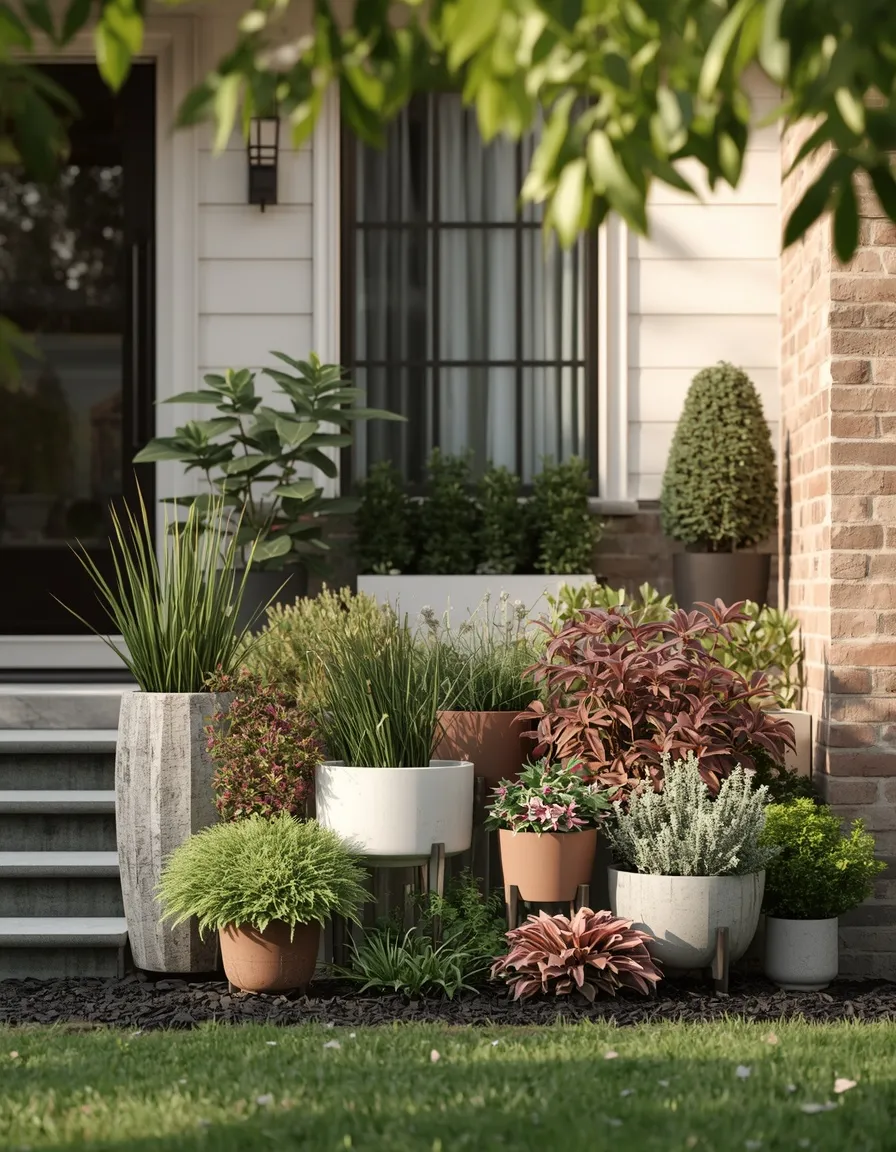
For a genuinely small front garden, the kind common outside a terraced house or a compact urban plot, a well-chosen grouping of containers can deliver more garden character than the limited ground space alone ever could.
Prioritize height variation within a genuinely tight footprint, a single tall planter, a medium one, and something low and spreading does more visual work in a small space than several same-height pots crowded together. Choose weather-tolerant, low-maintenance planting specifically for a UK-style small front garden exposed to regular rain and limited direct sun, evergreens, hardy grasses, and spring bulbs all perform reliably in these conditions with minimal ongoing care. Keep the total number of containers genuinely restrained, three to five well-chosen planters in a small footprint reads as curated, while doubling that number in the same space starts to look cluttered and blocks what little ground space remains for walking. This idea works as a complete garden solution on its own for a plot too small for any dug beds at all, not simply a supplement to a larger planted area.
- Delivers real garden character in a footprint too small for dug beds
- Works especially well with weather-tolerant planting suited to rainy, limited-sun climates
- Solves the “front garden is genuinely tiny” problem as a complete solution, not an add-on
9. Corner Garden Planter Solution
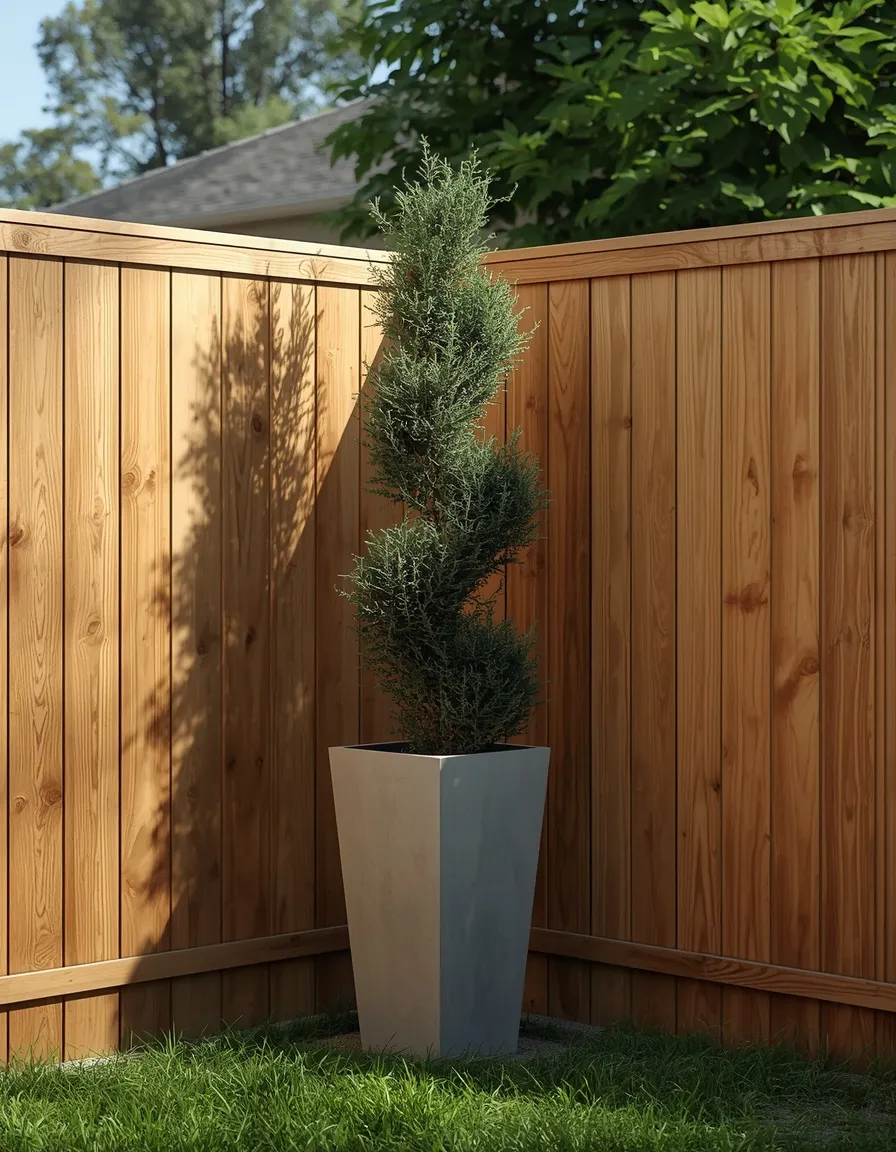
An awkward outdoor corner, too narrow for furniture and too small for a real bed, fits a single well-chosen, appropriately scaled planter considerably better than most people assume.
Measure the actual usable corner space before choosing a planter, a corner reads as genuinely awkward mainly when nothing placed there is sized correctly for the angle, a planter roughly two-thirds the width of the corner’s shortest side generally fits without feeling cramped or lost. Choose a plant with an upright, columnar growth habit for a tight corner specifically, a spreading or bushy plant needs width a corner spot usually doesn’t have, while a columnar shape uses vertical space a corner typically has plenty of. This works especially well softening a hard architectural corner, where two fences meet, where a wall turns a sharp angle, since the planter’s organic shape breaks up what’s otherwise an entirely straight-lined junction. A corner spot often gets less direct light than the rest of the yard depending on which direction it faces, so match the plant choice to the corner’s actual light exposure rather than assuming it matches the sunnier parts of the garden.
- Solves genuinely awkward corner spaces too small for furniture or a dug bed
- Works best with an upright, columnar plant suited to a narrow footprint
- Solves the “this corner has always just been empty and unused” problem
Garden Planter Ideas for Structure and Function
These ideas ask more of a planter than simply holding soil, doing double duty as a wall feature, a seat, a growing system, or a genuine focal point.
10. Garden Wall-Mounted Planters
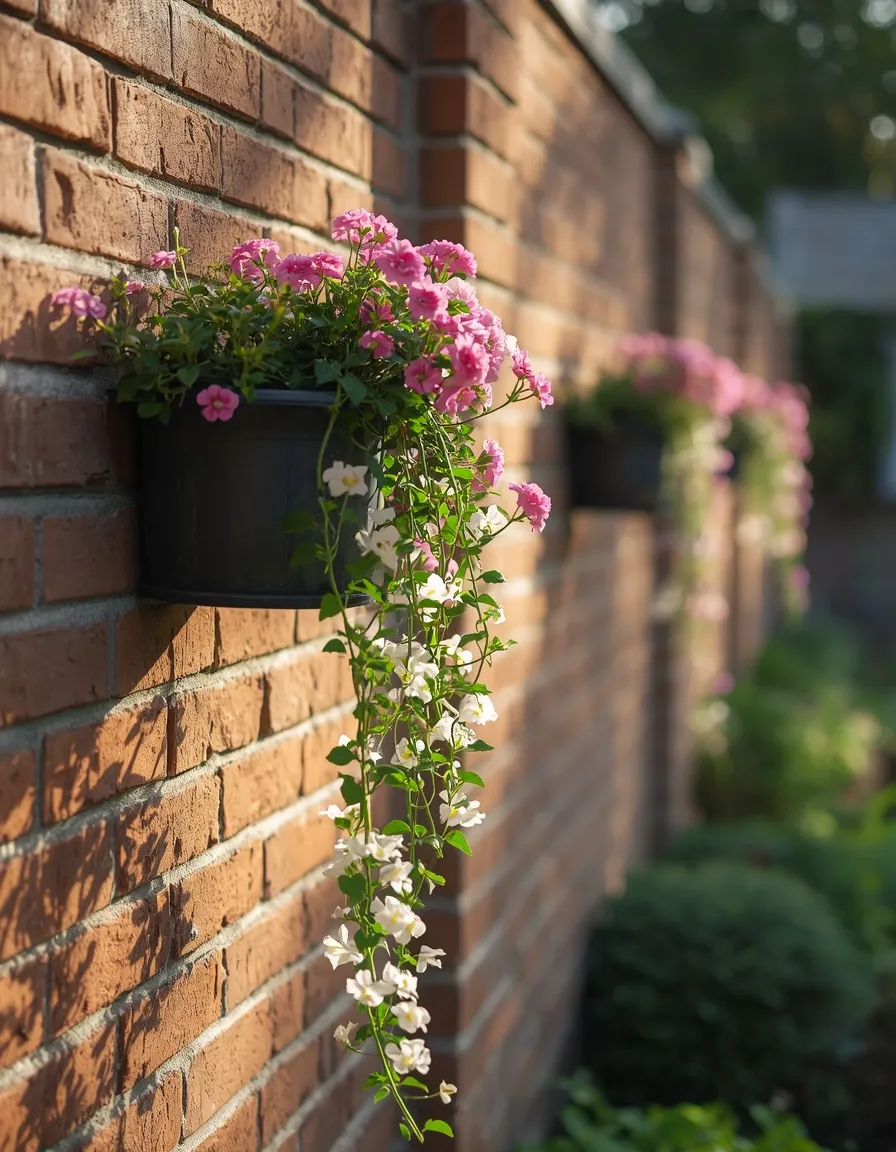
A row of planters mounted directly onto a garden wall or fence, rather than standing on the ground beneath it, turns a flat vertical surface into genuine growing space without using any floor area at all.
Mount brackets into masonry anchors for a brick or stone wall, or directly into fence posts and rails for a wood fence, rather than into thin fence panels alone, a fully watered wall planter is considerably heavier than it looks and a weak mounting point is a genuine failure risk over time. Choose planters with a self-contained drainage tray or a gap beneath them, water draining directly off a wall-mounted planter onto a painted or rendered wall surface below causes real staining and, over years, moisture damage to that surface. Space mounted planters with enough gap between them for each plant to actually fill out, a common mistake is mounting them close enough together that the planting reads as cramped once mature rather than while it’s still small and young. This idea works especially well on a plain, unadorned garden wall or fence that currently does nothing but define a boundary, giving that surface genuine purpose beyond simple screening.
- Turns a flat vertical wall or fence into genuine growing space using zero floor area
- Works especially well on a plain boundary wall or fence with no other feature
- Solves the “want more planting but have no more ground space” problem vertically
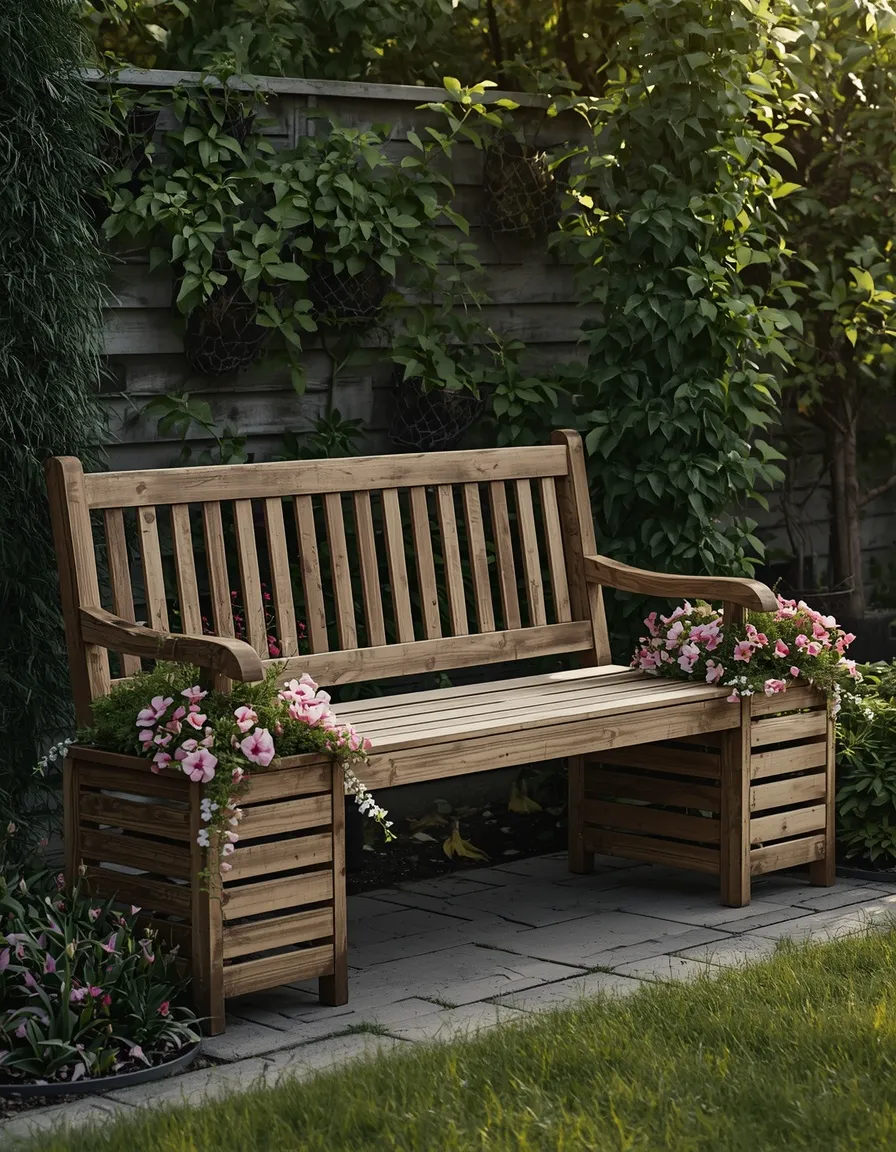
11. Planter Bench Combo
A garden bench with built-in planter boxes at either end, or a full planted back and seat combination, delivers genuine seating and growing space in a single, considerably more space-efficient piece of furniture.
Choose a design where the planter sections are structurally separate from the seating’s weight-bearing frame, or confirm the combined piece is genuinely rated to support both a seated adult’s weight and a fully saturated planter’s weight simultaneously, this is a real structural consideration that a decorative-only bench design might not actually account for. Use a rot-resistant wood or a powder-coated metal frame specifically, this piece sees more direct water exposure at the planter sections than a standard bench would from splashing and soil moisture. Plant something that won’t crowd or overhang the actual seating area as it matures, a spreading or thorny plant defeats the bench’s function as usable seating within a season or two of growth. This works especially well in a smaller garden where separate furniture and planters would use meaningfully more total space than one combined piece.
- Delivers genuine seating and growing space in one considerably more space-efficient piece
- Works especially well in smaller gardens where separate furniture and planters cost more space
- Solves the “want both seating and planting but don’t have room for both separately” problem
12. Raised Planter Beds
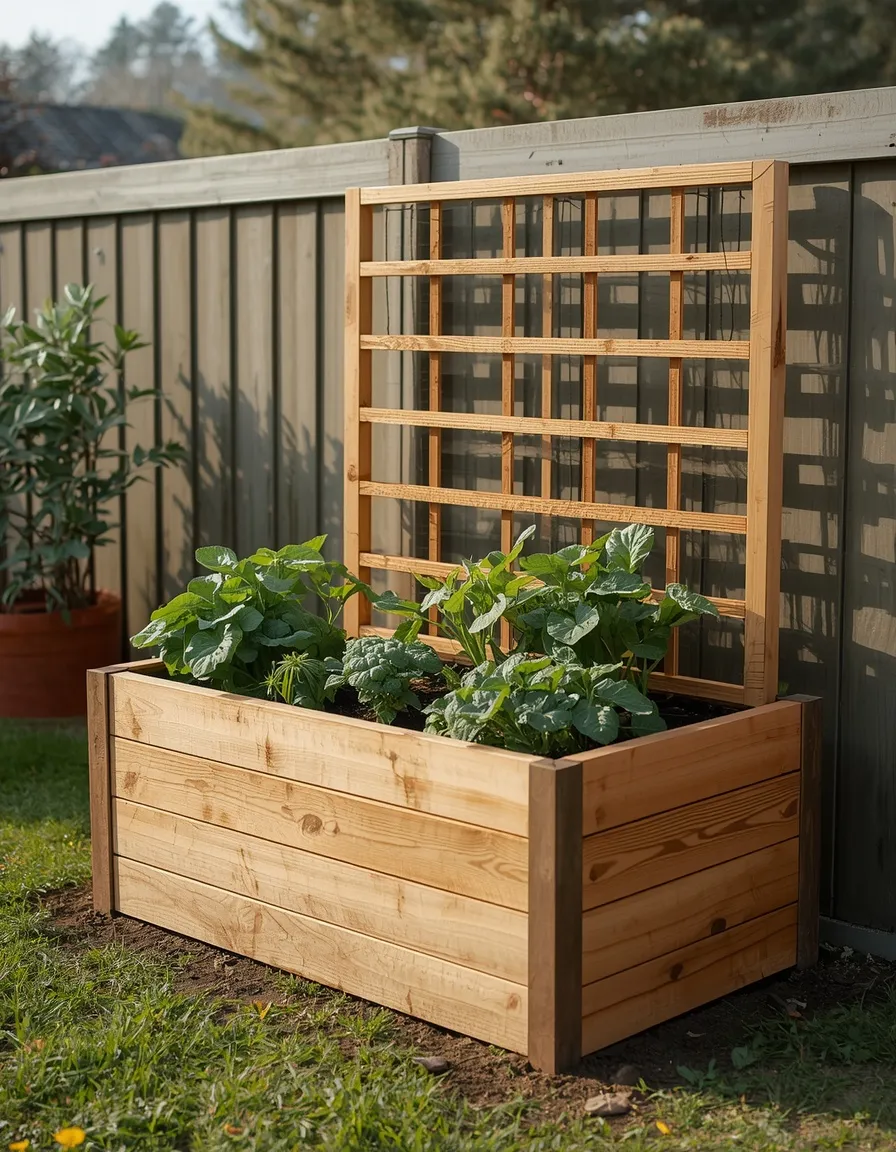
A raised planter bed, its sides typically 40 to 90cm (16 to 35in) tall, brings the growing space of an in-ground bed to a height that’s considerably easier to tend without kneeling or bending.
Build sides from rot-resistant wood, cedar or naturally treated timber, or from concrete block or brick for a genuinely permanent installation, and confirm any reclaimed or older wood hasn’t been treated with chromated copper arsenate, phased out of residential use by the EPA at the end of 2003, before using it for anything growing edible plants. Fill with a genuine raised-bed soil blend rather than straight garden soil, which compacts too densely and drains poorly at this depth and volume, most garden centers sell a specific raised-bed or container mix formulated for exactly this purpose. This height works especially well for anyone with limited mobility or back issues, since the bed’s height genuinely eliminates the kneeling and deep bending a ground-level bed requires. For anything growing vining vegetables or climbing flowers within a raised bed, adding a simple trellis at the back extends the usable growing space vertically; our guide to cheap trellis ideas covers budget-friendly ways to add that vertical structure without much added cost.
- Brings genuinely accessible growing space to anyone who can’t easily kneel or bend
- Works well filled with a proper raised-bed soil blend rather than dense garden soil
- Solves the “want to garden but ground-level beds are genuinely hard on the body” problem
13. Tiered or Stepped Planter Arrangement
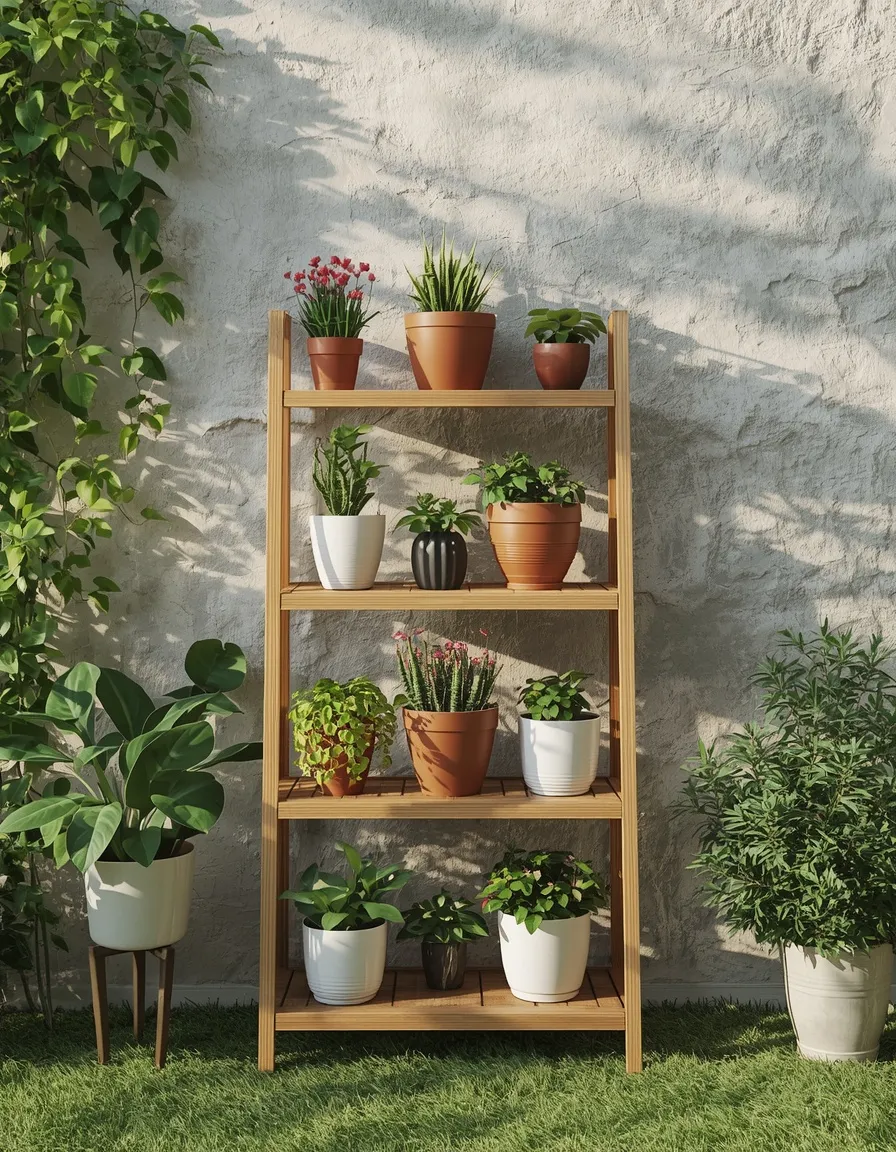
A staggered arrangement of planters at ascending heights, whether on genuine tiered shelving or simply a mix of pot stands and risers, turns a flat collection of pots into something with real dimensional depth.
Build height variation deliberately rather than randomly, a clear front-to-back or side-to-side progression, shortest to tallest, reads as considerably more intentional than pots at scattered, inconsistent heights with no clear logic. Use genuinely sturdy risers or purpose-built tiered shelving rated for the combined weight of multiple filled pots, a tier that bows or wobbles under weight is both a real stability risk and visually undermines the clean, structured look this idea depends on. This technique works especially well maximizing a narrow footprint against a wall or fence, since the tiers stack planting vertically rather than spreading it across ground space the site might not have. Position taller tiers toward the back specifically if the arrangement will be viewed primarily from one side, this ensures every plant actually gets seen rather than the tallest tier blocking the view of everything shorter in front of it.
- Adds genuine dimensional depth to what would otherwise be a flat pot collection
- Works especially well maximizing a narrow footprint against a wall or fence
- Solves the “have several planters but they all look the same flat height” problem
14. Large Statement Planter
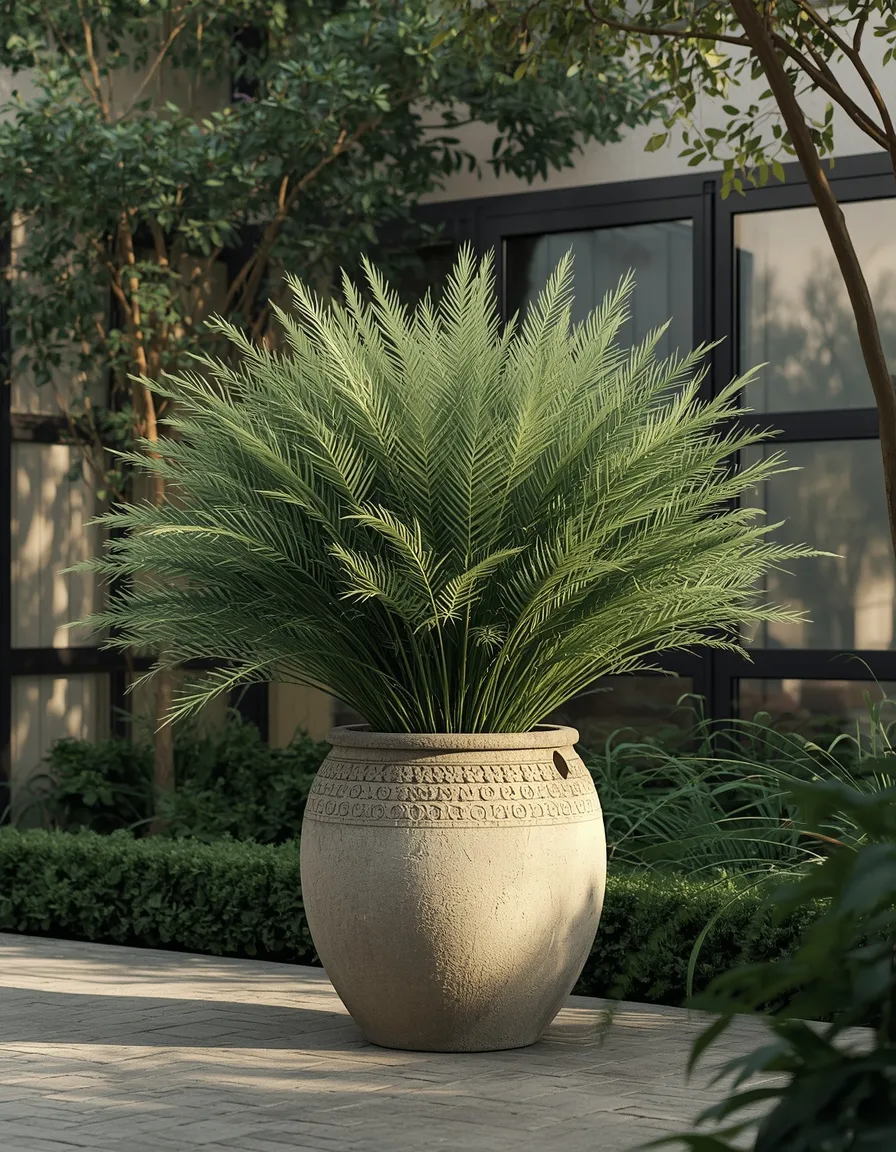
A single, genuinely oversized planter, deliberately scaled well beyond what the space seems to call for, functions as a true focal point rather than one element among many in a garden.
Size the statement planter to actual proportion with its setting, a planter that reads as merely large in a small courtyard becomes the obvious focal point, while the same planter in an expansive yard needs to be considerably larger to achieve the same effect, scale is always relative to the surrounding space rather than an absolute size. Choose a mobility solution before filling it, a large planter on locking caster wheels or a simple plant caddy underneath allows repositioning even after it’s filled with soil and considerably heavier, since moving a filled large planter without one typically requires more than one person and real physical effort. Plant something with genuine presence to match the container’s scale, a single large specimen plant or a dramatically oversized ornamental grass suits this idea considerably better than a fussy mixed planting that gets visually lost against such a large container. This works as the strongest single focal point idea on this entire list, one statement planter placed well can anchor an entire garden view.
- Functions as a genuine singular focal point rather than one element among many
- Works best scaled proportionally to its actual setting, not to an arbitrary size
- Solves the “garden has no clear focal point” problem in one deliberate piece
Garden Planter Ideas by Style
Once material and placement are settled, style is what gives a planter collection its personality, from lush and tropical to pared-back and modern to genuinely playful.
15. Tropical Container Garden
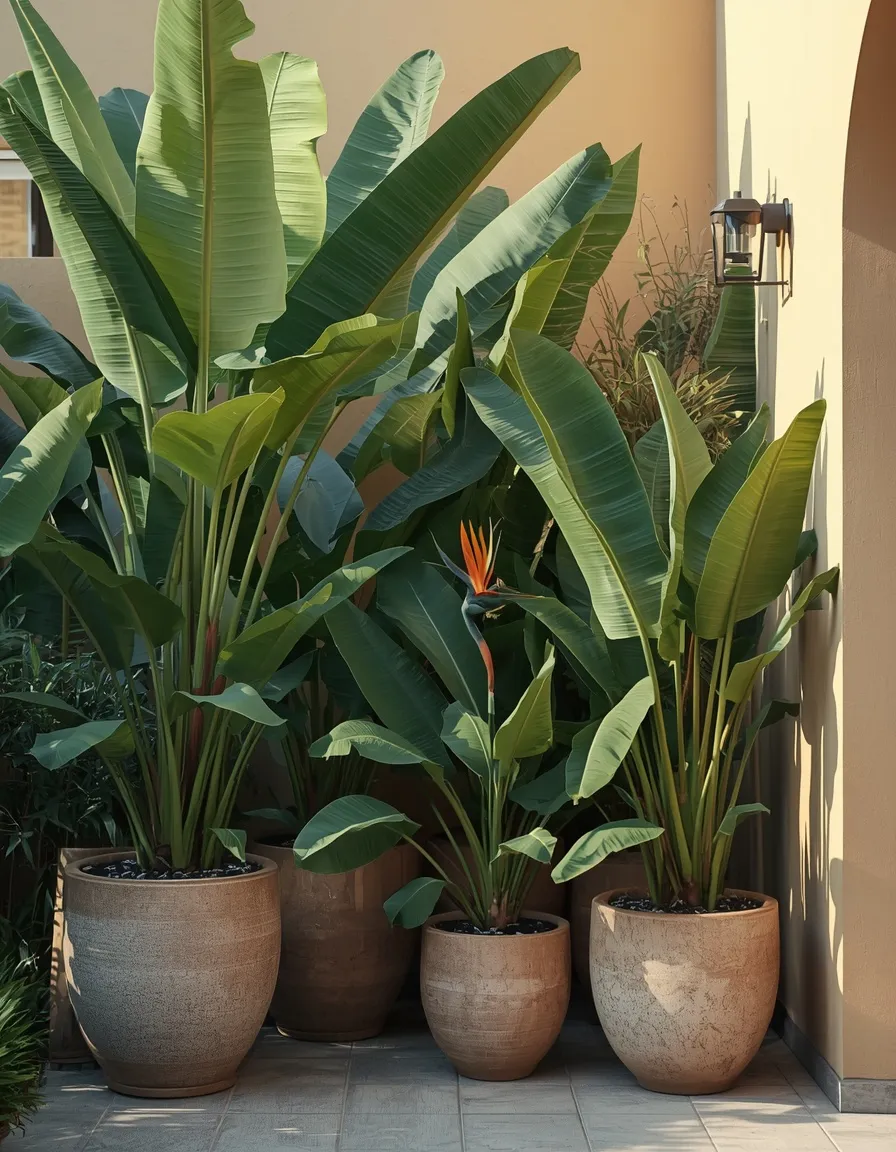
A dense grouping of large-leafed, architectural plants in containers, banana, bird of paradise, elephant ear, brings a genuinely lush tropical feel to a garden regardless of the actual climate outside.
Choose genuinely large containers for this style specifically, tropical foliage plants generally have substantial root systems and a container that’s too small restricts growth and forces considerably more frequent watering than a properly sized pot would need. Group plants closely together with minimal visible gaps between containers, the lush, jungle-like density that defines this look depends on that tight grouping considerably more than it does on any single spectacular plant. In climates with real winter cold, treat this as a seasonal, movable display, container-grown tropicals can come indoors or into a sheltered space for winter considerably more easily than the same plants grown directly in the ground, which makes containers the practical choice for this look outside genuinely tropical or subtropical regions. This idea works especially well in a small courtyard or patio space specifically, where the concentrated density of a container grouping achieves the tropical effect in a footprint too small for the same look grown in open ground.
- Delivers a genuinely lush tropical look regardless of the actual local climate
- Works especially well in small courtyards where container density achieves the effect efficiently
- Solves the “want tropical planting but don’t live in a tropical climate” problem
16. Modern Minimalist Planter Styling
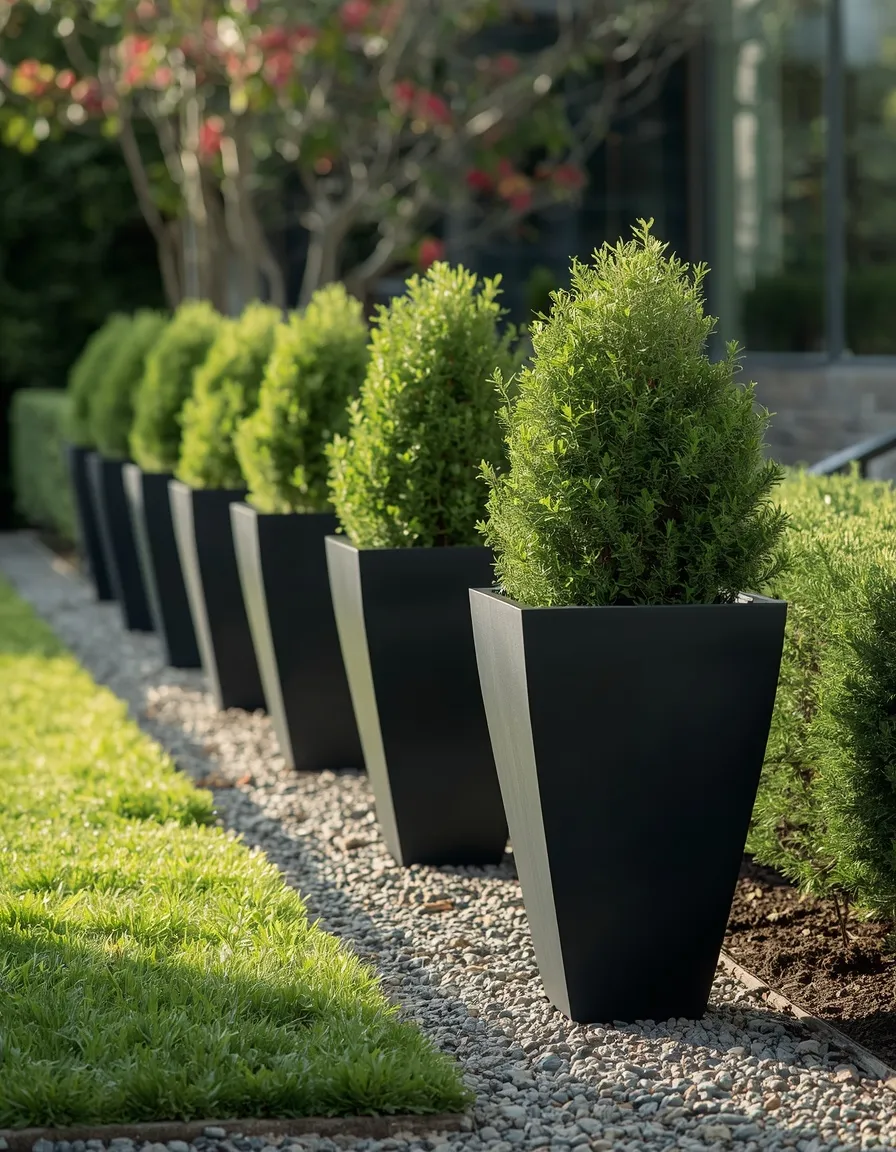
A collection of planters in one consistent shape, material, and color, repeated rather than varied, brings the restrained, considered look that defines modern minimalist garden styling more than any single planter choice could.
Choose one planter shape and material and commit to it across the full collection, mixing a round terracotta pot with an angular concrete one and a curved ceramic vessel undermines the cohesive, repeated look this style actually depends on, even if each individual piece is attractive on its own. Limit the plant palette to match the same restraint, two or three species repeated across the grouping reads as considerably more intentional than a different plant in every container. Favor a neutral, muted color palette, matte black, warm gray, or plain terracotta, over anything bright or patterned, since color variation works directly against the calm, unified look this style is built around. This is fundamentally a styling discipline more than a material or object choice, and it applies equally well to any of the materials covered earlier in this list, corten, concrete, or resin all suit this approach provided the collection stays genuinely consistent.
- Delivers the restrained, cohesive look that defines modern minimalist styling specifically
- Works as a governing principle applicable to nearly any material already covered
- Solves the “planters all look attractive individually but don’t feel like a collection” problem
17. Welly Boot Planters
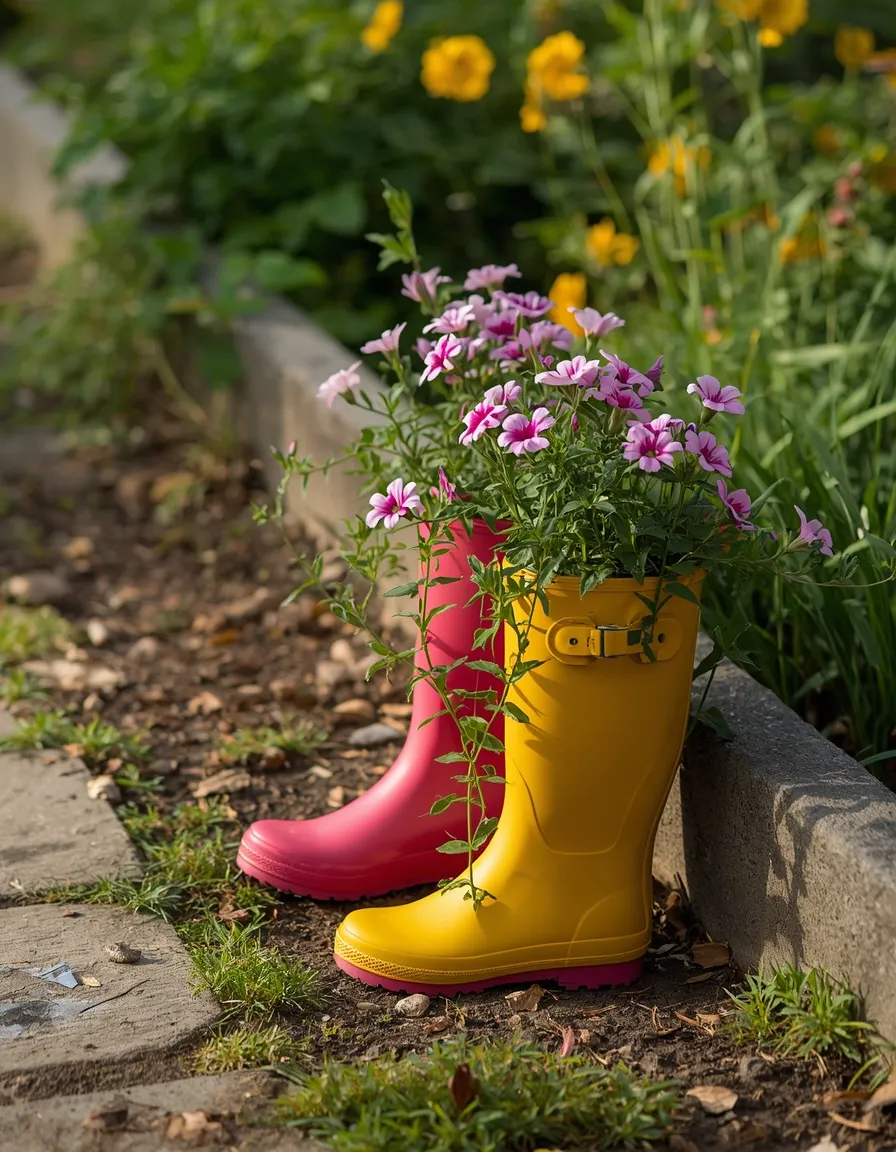
A pair of old wellington boots, no longer waterproof enough for actual wear, filled with trailing flowers and set beside a back door or along a path, brings a genuinely charming, distinctly British upcycled character no purchased planter can replicate.
Drill several drainage holes through the sole of each boot before adding soil, rubber holds water completely and roots rot within weeks in a boot with no drainage at all. Choose trailing or spilling plants specifically, lobelia, trailing petunias, and ivy all suit a boot’s narrow opening and tall shape considerably better than an upright plant would, letting the planting cascade out and down the boot’s leg. Use a lightweight potting mix rather than heavy garden soil, a boot’s narrow base doesn’t provide much stability, and heavy wet soil in a tall, narrow container makes it genuinely prone to tipping over in wind. This idea works best as a genuinely playful, low-cost accent rather than a serious garden feature, a single pair by a back door or a scattered few along an informal path reads as charming, while dozens throughout a formal garden tips into novelty territory that undercuts a more considered design.
- Delivers genuinely charming upcycled character using something otherwise headed for the bin
- Works best as a playful accent piece rather than a primary garden feature
- Solves the “want something fun and free rather than another purchased pot” desire
Smart Garden Planter Techniques
The last stretch covers the technical and design principles that apply across every material and style already covered, the details that actually determine whether a planter thrives.
18. Self-Watering Planter System
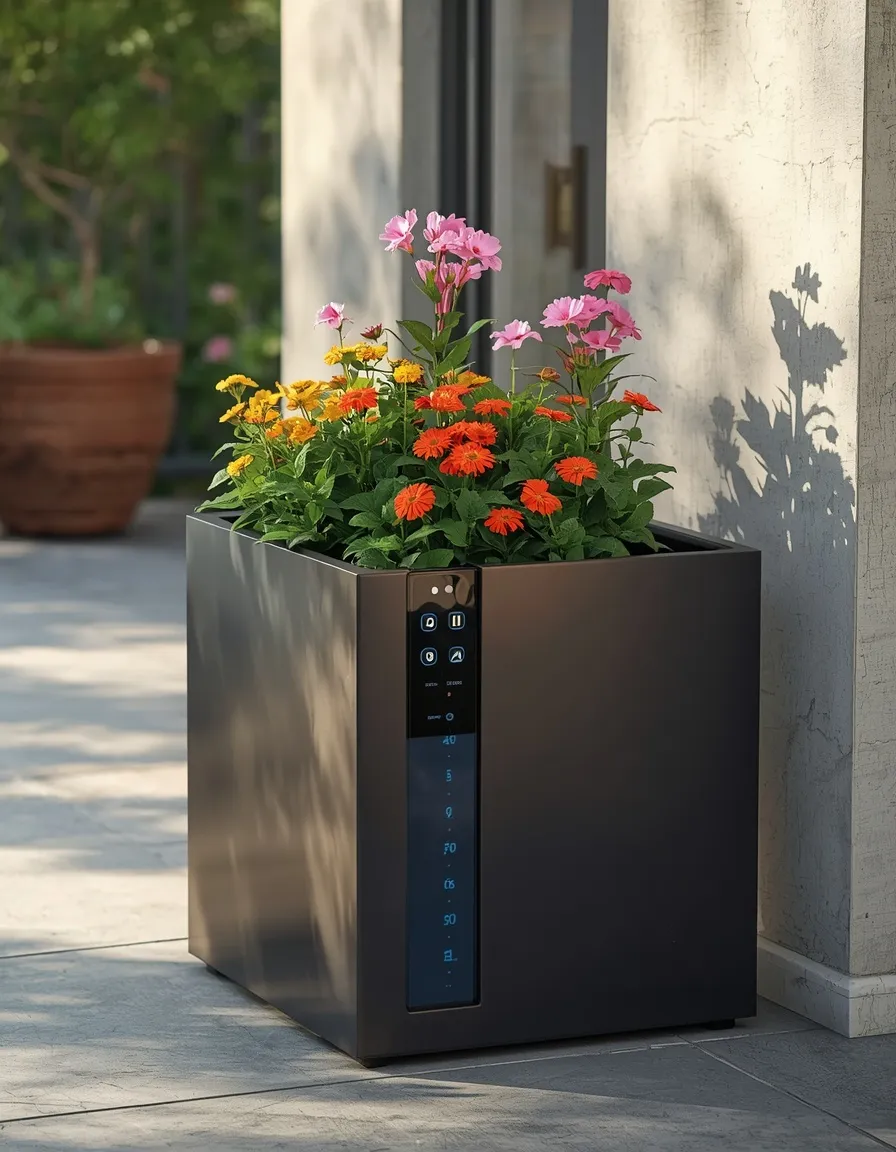
A self-watering planter, its reservoir beneath the soil wicking moisture upward as the plant needs it, keeps container plants properly hydrated through hot stretches or short absences without daily attention.
Understand the basic mechanism before relying on one, a wicking cord or capillary matting draws water up from the reservoir into the soil above as it dries out, rather than the plant sitting directly in standing water, which would drown the roots rather than hydrate them properly. Let the reservoir run genuinely dry between refills at least occasionally rather than keeping it topped up constantly, a permanently full reservoir with no dry period increases root rot risk for anything other than a genuinely water-loving plant. Cover or seal the reservoir’s fill opening when not actively refilling it, standing water in an open reservoir becomes a mosquito breeding site within about a week during warm weather, the same concern that applies to any other open water source in a garden. This system works especially well for anyone traveling regularly or managing a large planter collection single-handedly, since it genuinely extends the interval between required waterings considerably beyond a standard container.
- Keeps container plants properly hydrated through hot stretches or short absences
- Works especially well for frequent travelers or anyone managing many containers alone
- Solves the “container plants dry out too fast and need daily watering” problem
19. Seasonal Planter Rotation
Swapping a planter’s planting scheme with the seasons, spring bulbs giving way to summer annuals, then fall foliage, then winter evergreens, keeps a garden’s most visible containers looking genuinely current year-round rather than tired by midsummer.
Plan the rotation before the season it applies to actually arrives, spring bulbs need planting the previous autumn to bloom on schedule, and this forward planning is genuinely the most commonly skipped part of a seasonal rotation strategy. Keep a consistent container and its permanent structural planting, if any, in place year-round and rotate only the seasonal layer around it, this is considerably less work and expense than fully replanting every container from scratch each season. Choose a plant palette for each season suited to the container’s actual light and exposure conditions rather than whatever looks appealing at the garden center that week, a shaded entrance planter needs different seasonal choices than a full-sun front yard bed regardless of the calendar. This technique works especially well on the highest-visibility planters covered earlier in this list, front door entrance pots and front yard beds benefit the most from staying visually current since they’re seen daily.
- Keeps the most visible planters looking genuinely current throughout the entire year
- Works best planned a season ahead, particularly for spring bulbs planted the prior autumn
- Solves the “planters look great in spring but tired by midsummer” problem
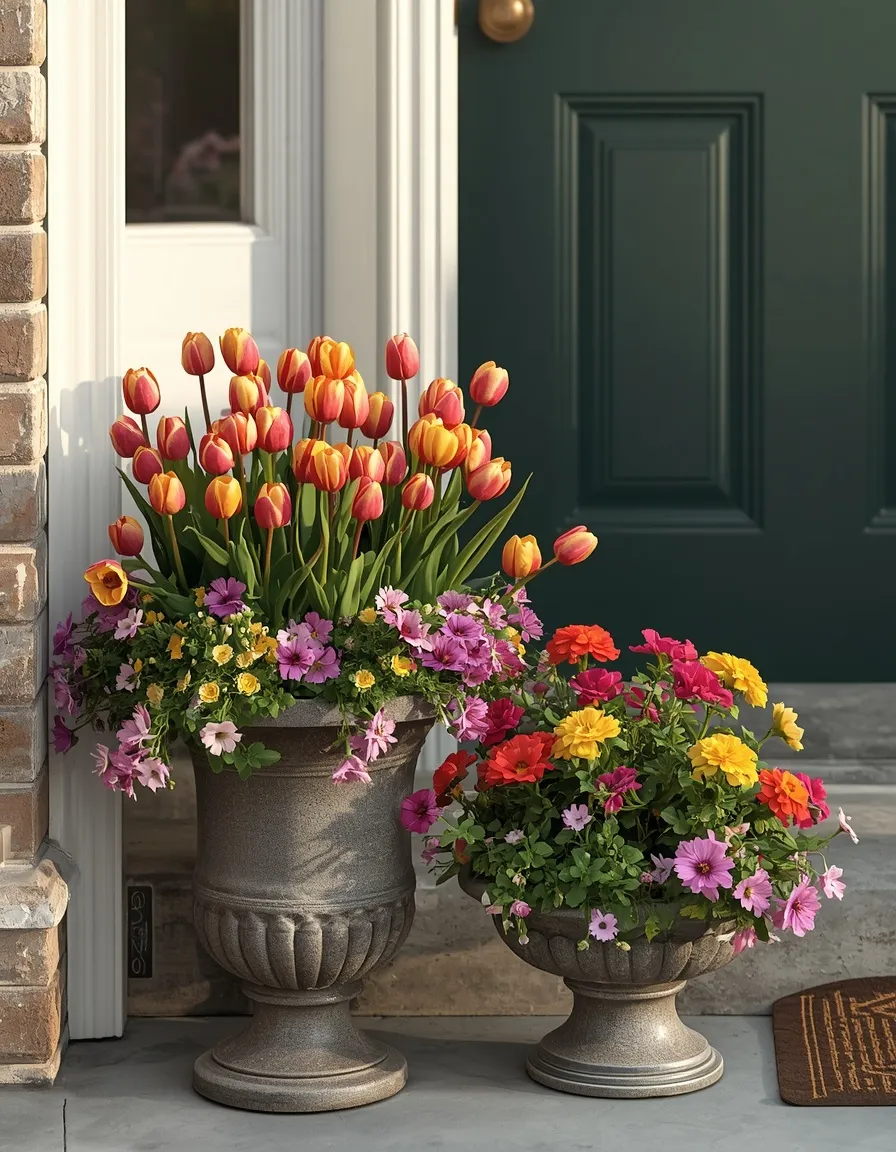
20. Odd-Number Planter Grouping
Arranging multiple planters in groups of three or five, rather than an even number spaced uniformly, reads as considerably more natural and visually dynamic, a genuine design principle worth applying deliberately rather than by accident.
Vary height and size within each odd-numbered group specifically, one clearly dominant planter with two or four smaller companions creates a visual hierarchy that a grouping of identical, evenly matched pots doesn’t achieve, regardless of whether the total count is odd or even. Cluster the group with intentional, slightly irregular spacing rather than perfectly even gaps, a small variation in distance between pots reads as more naturally gathered than a mechanically uniform arrangement. This principle applies across every material and style covered throughout this list, corten, concrete, terracotta, or resin all benefit equally from this same grouping logic regardless of which material or style a garden has settled on elsewhere. Apply this specifically wherever multiple planters already sit near each other, an entrance, a patio corner, a wall run, rather than treating it as a reason to add planters somewhere that didn’t already call for a grouping.
- Creates a naturally dynamic visual hierarchy that even, uniform groupings don’t achieve
- Works as a universal principle applicable regardless of material or style already chosen
- Solves the “planters are grouped together but somehow still look scattered or flat” problem
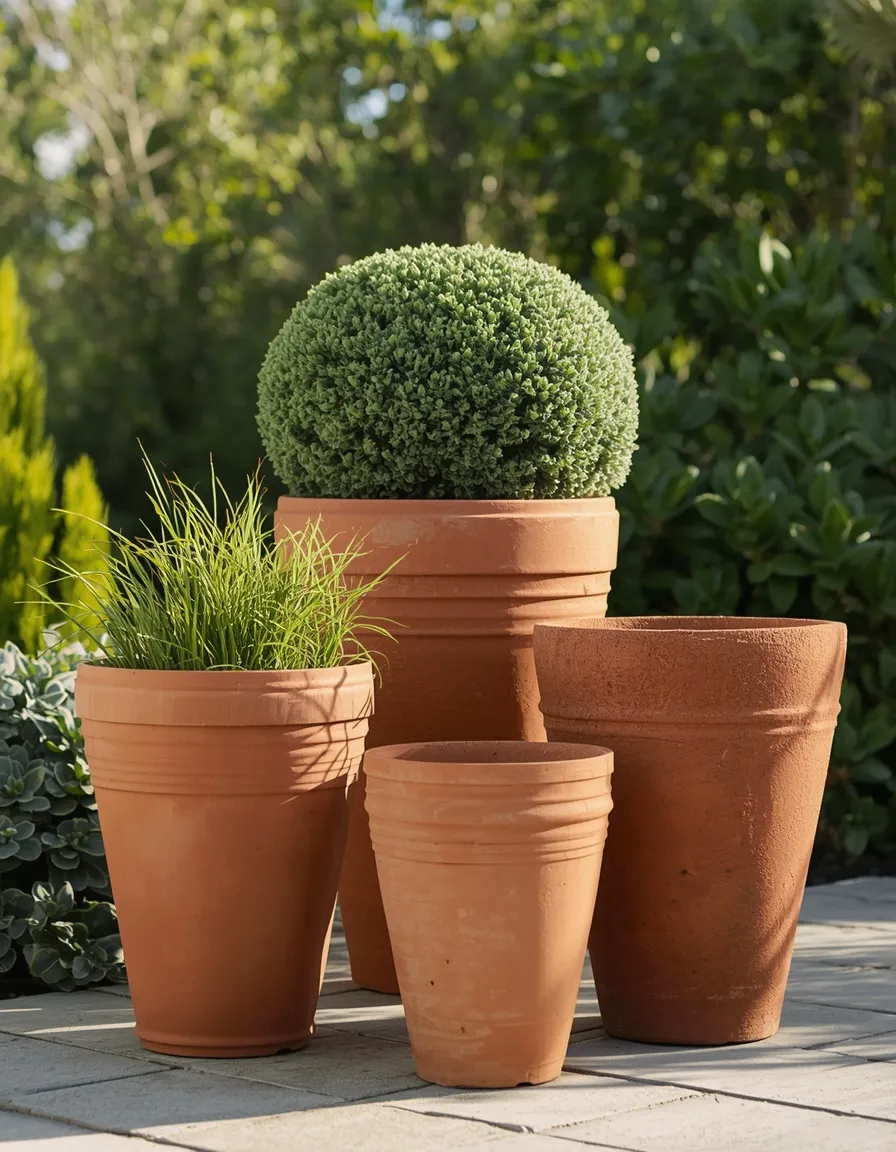
21. Proper Drainage and Sizing
Getting drainage and container size right does more for a planter’s long-term success than any material or style choice on this entire list, and it’s the single most commonly overlooked detail in casual planter shopping.
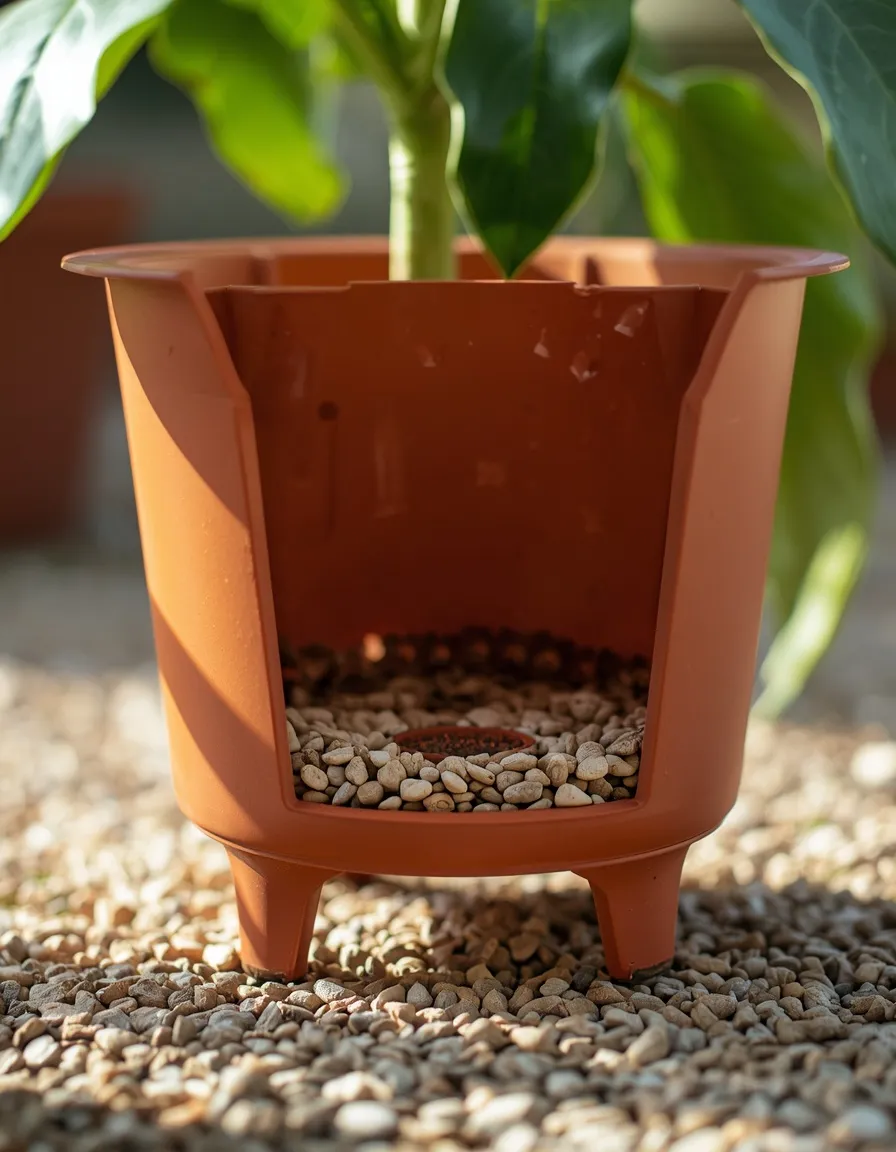
Every planter needs at least one genuine drainage hole regardless of material, standing water around plant roots with nowhere to escape causes root rot within weeks for the vast majority of garden plants, and a decorative pot without one needs a hole drilled before use or a functional liner pot with drainage set inside it. Size the container to the plant’s actual mature root system rather than its current nursery size, a young plant in an undersized pot becomes root-bound and stops thriving within a single growing season, generally sizing up by at least 5 to 8cm (2 to 3in) in diameter beyond the nursery pot gives reasonable room to grow. Raise every planter slightly off the ground on pot feet or simple risers, this keeps the drainage hole from sitting flush against a solid surface where water can’t actually escape even with a hole present. Use a genuine potting or container mix rather than garden soil in any container, garden soil compacts too densely in a confined space and drains considerably worse than a mix formulated specifically for container growing.
- Determines a planter’s actual long-term success more than material or style ever will
- Works as the foundational check for literally every idea covered elsewhere on this list
- Solves the “plants in containers keep struggling for reasons that aren’t obvious” problem
Conclusion
Garden planters ideas add up to genuinely thriving container gardens when material, size, and drainage get the same consideration as color and style, the details covered throughout this list that most photo-driven inspiration skips entirely. Start with whichever idea solves an actual gap, a bare entrance, an awkward corner, a balcony with weight limits, rather than collecting planters without a clear plan for where each one goes. Revisit the sizing and drainage fundamentals covered at the end before buying anything new, they matter more to a planter’s success than any material or style choice on this list. For more layout and hardscaping inspiration, the Garden Design category has plenty more to explore.
Frequently Asked Questions
What’s the best material for garden planters?
There’s no single best material, it depends on climate and use, corten steel and concrete both suit modern styling and hold up well outdoors, glazed ceramic needs to be genuinely frost-resistant in cold climates to avoid cracking, and lightweight resin is the practical choice anywhere weight limits rule out heavier options like stone or concrete. Wood offers the most classic, versatile look and works well across nearly any garden style provided it’s a rot-resistant species with a protective liner inside.
How do I stop garden planters from cracking in winter?
Choose fully vitrified, frost-resistant ceramic or terracotta specifically for anywhere with real winter freezing, unglazed or partially glazed material absorbs moisture that expands and cracks the container when it freezes. Moving genuinely valuable pots undercover for winter is the safest precaution regardless of how frost-resistant the material claims to be, and ensuring proper drainage also reduces how much water the container is holding when temperatures drop.
What can I use as a cheap or free garden planter?
Upcycled options like old wellington boots deliver genuine character at essentially no cost, provided drainage holes are added and a lightweight potting mix is used to prevent tipping. Reclaimed or salvaged wood also works well for a planter box, though it’s worth confirming the wood’s treatment history before using it for anything growing edible plants.
How do I arrange multiple planters together so they look intentional?
Group planters in odd numbers, three or five rather than an even count, and vary height and size within each group so one clearly dominant planter anchors two or more smaller companions. Slightly irregular spacing between pots also reads as more naturally gathered than a mechanically even, uniform arrangement.
Do all garden planters need drainage holes?
Yes, essentially without exception, standing water around plant roots with nowhere to escape causes root rot within weeks for the vast majority of garden plants regardless of the container’s material or size. A decorative pot sold without one needs a hole drilled before use, or a separate liner pot with proper drainage set inside it.
What size planter does my plant actually need?
Size the container to the plant’s mature root system rather than its current nursery size, generally sizing up by at least 5 to 8cm beyond the nursery pot gives reasonable room to grow without being drastically oversized. A plant left too long in an undersized container becomes root-bound and stops thriving within a single growing season, regardless of how well it’s watered and fed.
Are self-watering planters actually worth using?
Yes, especially for frequent travelers or anyone managing a large planter collection, since the reservoir system genuinely extends the interval between required waterings well beyond a standard container. It’s worth letting the reservoir run dry occasionally rather than keeping it constantly topped up, and keeping the fill opening covered, since standing water left open becomes a mosquito breeding concern within about a week in warm weather.