
Introduction
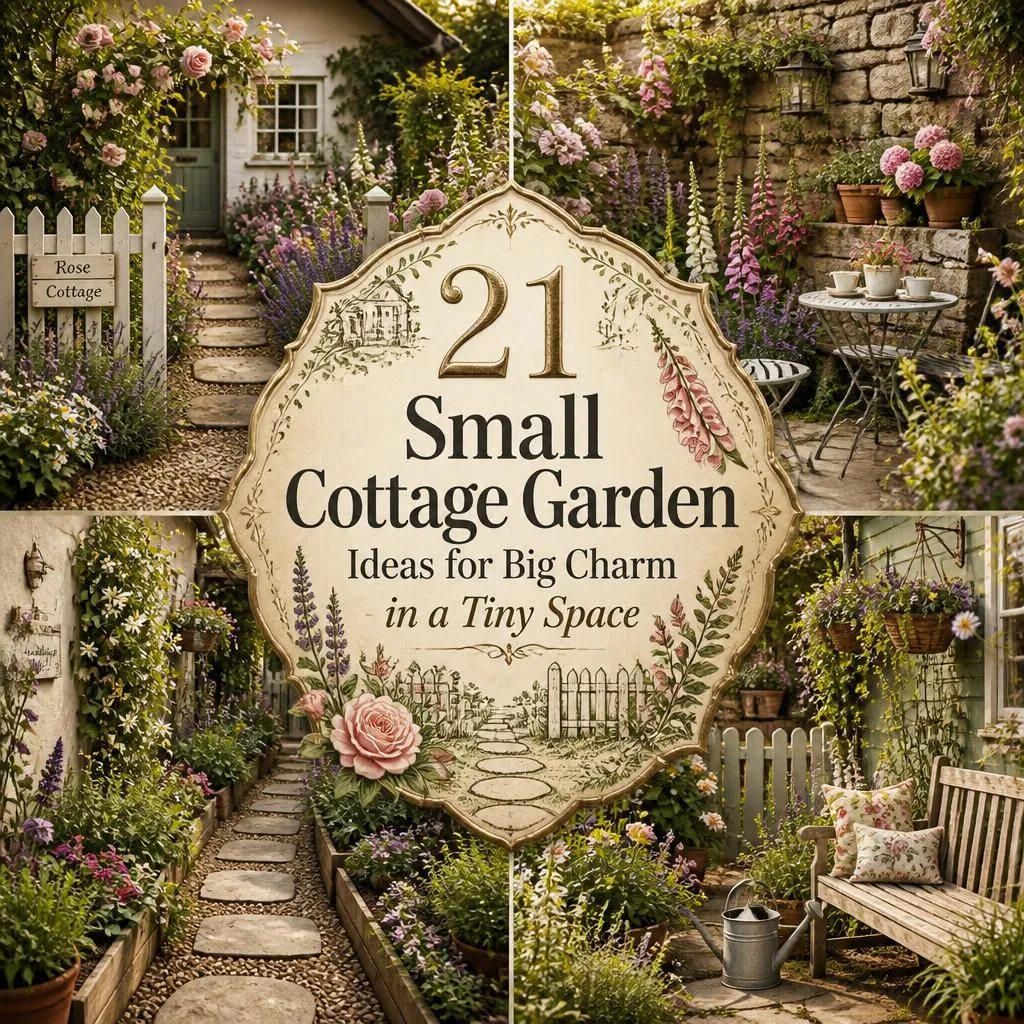
Small cottage garden ideas prove that a postage-stamp backyard, a narrow side courtyard, or even a cluster of pots on a balcony can hold all the tumbling, romantic charm of a full country plot. The classic cottage look, self-seeding flowers spilling over gravel paths, roses climbing weathered fences, herbs tucked between blooms, was never really about size. It was about layering plants close together and letting them mingle. This guide walks through 21 ways to bring that look into a genuinely small space, whether you’re working with a tiny backyard, a shared courtyard, or nothing more than a sunny doorstep. Each idea below includes the practical detail, spacing, timing, and plant choices, needed to actually pull it off. Consider it your own quiet corner of Sunday Abode’s home and garden ideas, one bed, pot, or trellis at a time.
1. Reclaimed Brick Courtyard Nook
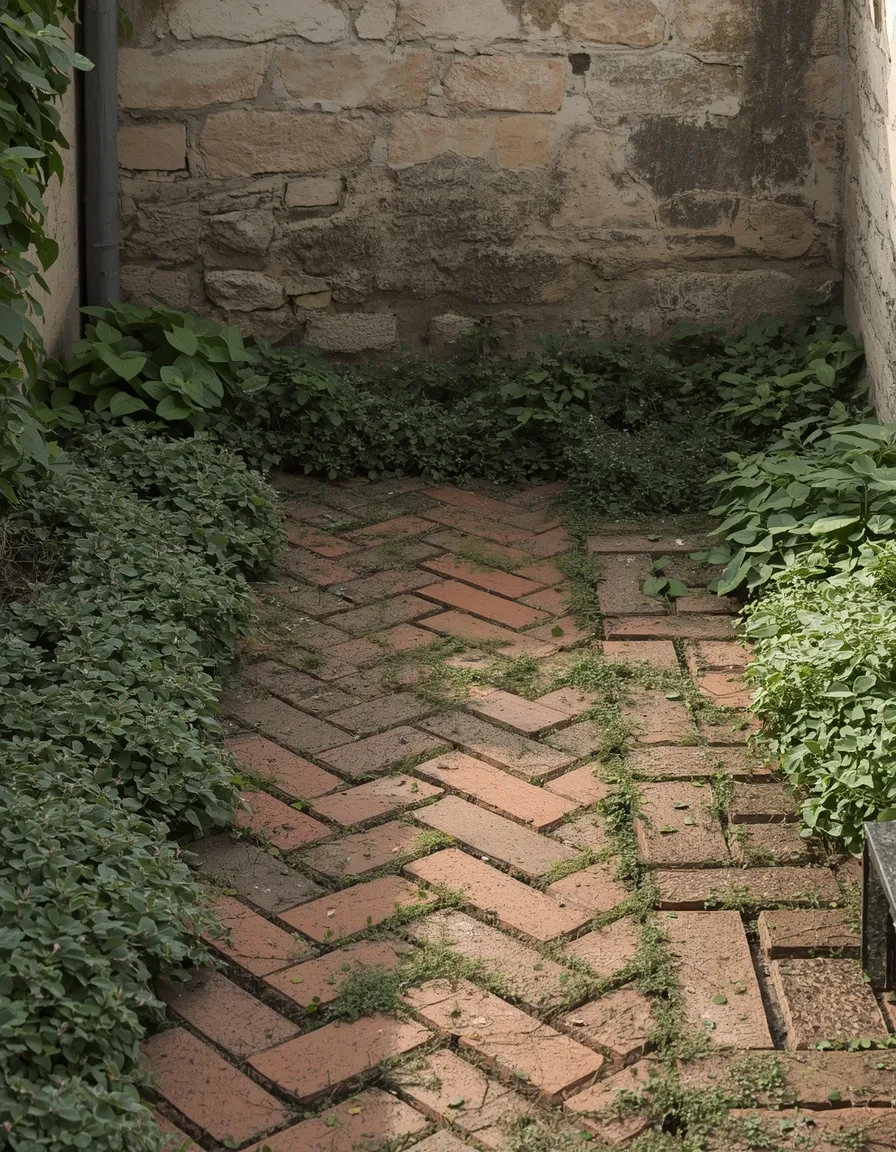
In a narrow courtyard hemmed in by fences or walls, reclaimed clay bricks laid in a herringbone or basketweave pattern underfoot instantly read as old and established, especially once creeping thyme, nepeta, or lady’s mantle push up through the joints and soften every hard edge.
This idea suits paved courtyards, rented properties, or any spot where digging into the ground isn’t an option. Lay bricks on a compacted sand base rather than mortar so pockets can be lifted and replanted as the space matures, and leave a finger’s width of gap between bricks at the perimeter for low, spreading plants to root into. A common mistake is packing the bricks edge to edge with no planting gaps at all, which leaves the space looking like a patio rather than a garden. On a tight budget, swap brick for pea gravel and get a similarly soft, aged texture for a fraction of the cost.
- Turns an all-hardscape courtyard into something that feels grown-in, not paved over
- Best for rented spaces where permanent digging isn’t allowed
- Solves the problem of a small courtyard looking stark or unfinished
2. Layered Border Along a Postage-Stamp Fence
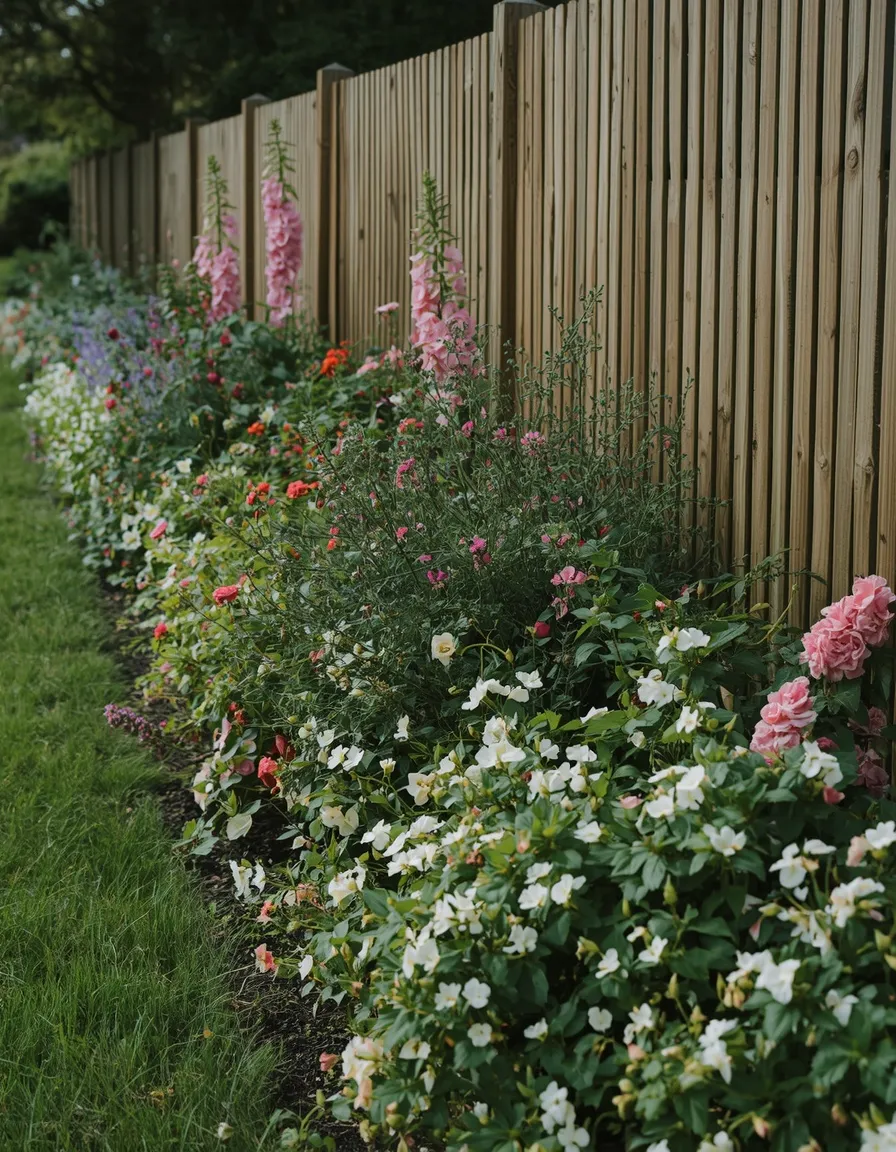
Even a fence line only a few metres long can carry a proper cottage border once plants are layered by height: tall foxgloves or delphiniums at the back, roses and geraniums in the middle, and low-growing alyssum or violas spilling over the front edge.
The trick to making a small cottage garden design idea like this work in a tight layout is planting closer than instinct suggests, roughly two thirds the spacing recommended on the plant tag, so the border fills in and touches rather than showing bare soil. Stagger the planting in a loose zigzag rather than straight rows to avoid a regimented look. This is one of the most reliable small cottage garden design ideas for layout because it works along any boundary: a fence, a garden wall, or even a driveway edge. For more layout inspiration before committing to a final plan, it’s worth browsing Sunday Abode’s garden design ideas for small outdoor spaces.
- Works along any boundary length, even under 2 metres (6.5ft)
- Creates depth and fullness without needing extra ground width
- Solves the thin, single-row look common in small garden borders
3. Container Cottage Garden for a Patio or Balcony
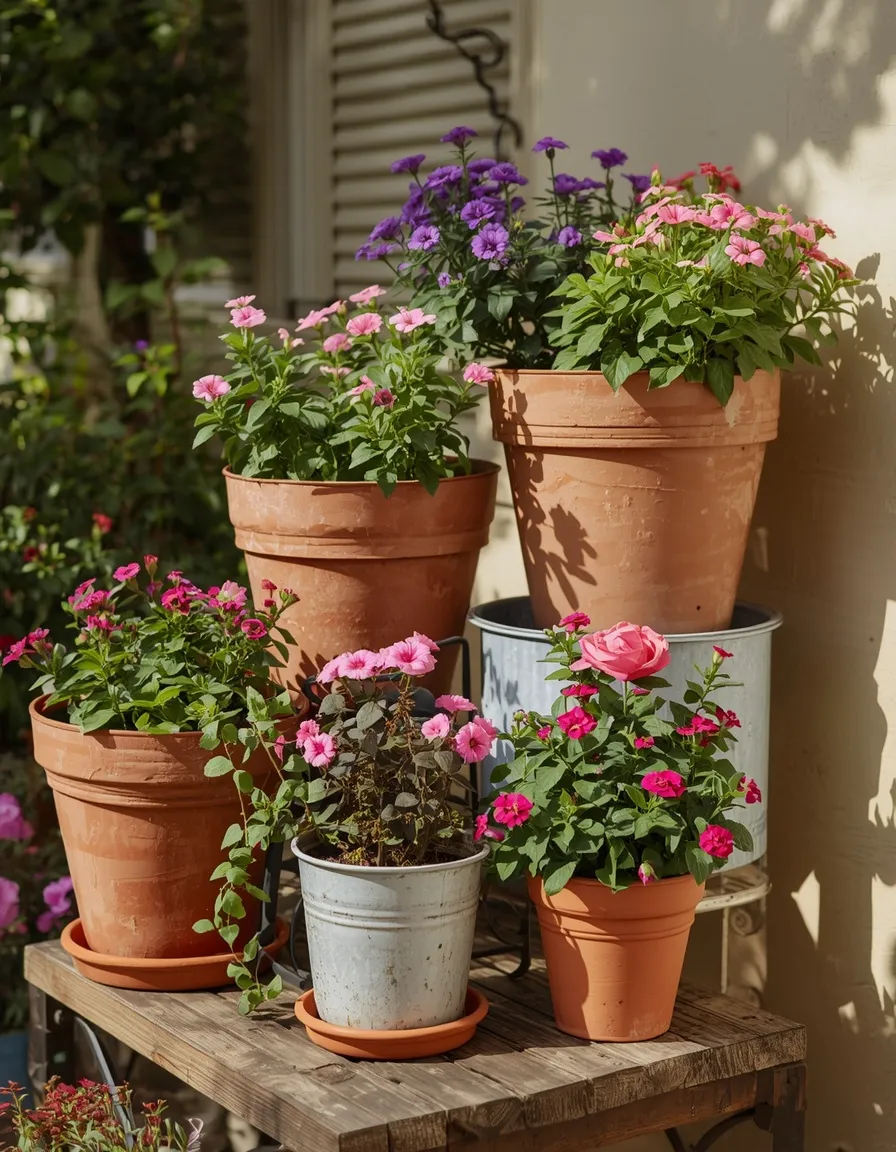
A cluster of terracotta or aged zinc pots on a balcony or patio can carry the full cottage look, think cottage pinks, trailing lobelia, and a dwarf rose in a large pot, if the containers are grouped in odd numbers of varying heights rather than lined up in a row.
Choose pots at least 30cm (12in) across for anything with real root growth, like roses or lavender, and use a loam-based compost that holds moisture better than lightweight potting mixes through a hot summer. Group three or five pots together on a plant stand, upturned crate, or shallow step so heights vary naturally. A frequent mistake is choosing pots that are all the same size and shape, which reads as tidy rather than cottage-style; mismatched vintage finds or a mix of terracotta and galvanized metal give the collected-over-time feel the style depends on. This is one of the most flexible small cottage garden ideas for pots because it works on balconies, patios, and doorsteps alike, with zero digging required.
- No garden bed required, works on balconies, patios, and paved yards
- Odd-numbered, varied-height groupings avoid a stiff, lined-up look
- Solves the problem of renting or having no ground to plant into
4. Self-Seeding Budget Border
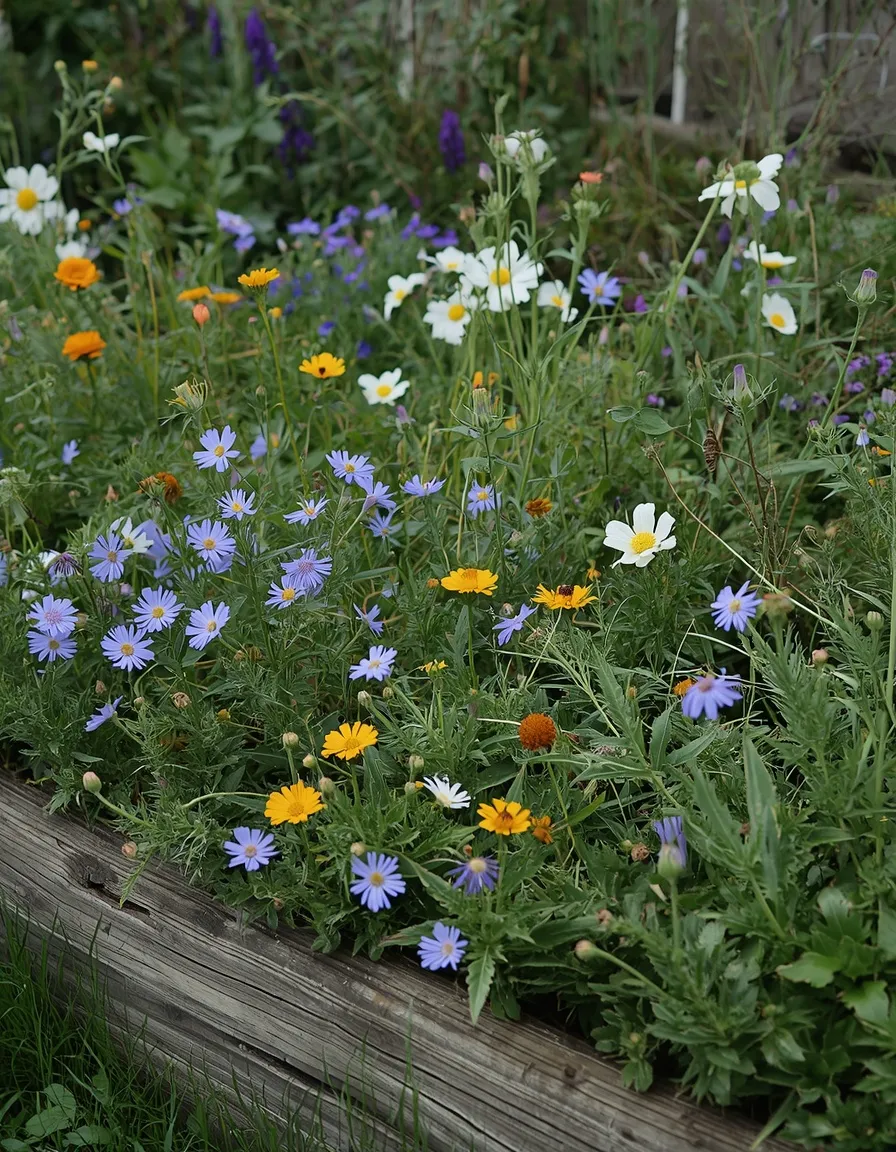
A border built almost entirely from self-seeding annuals and biennials, cornflowers, calendula, foxgloves, and love-in-a-mist, fills a small bed for the cost of one or two seed packets and comes back looking fuller every year without replanting.
Sow directly into cleared soil in early autumn or early spring, thinning seedlings to roughly 15 to 20cm (6 to 8in) apart once established, then let a portion of the plants go to seed at the end of the season instead of deadheading everything. The main budget mistake is buying mature plants from a nursery every single year instead of letting self-seeders do the work; one packet of seed can fill a bed that would otherwise cost far more in bedding plants. Note that foxglove and larkspur, both classic cottage self-seeders, can be toxic if ingested by pets or children, so keep them toward the back of a bed if a curious dog or toddler uses the garden.
- Costs a fraction of buying mature bedding plants each season
- Self-seeders fill gaps and get fuller year after year with little effort
- Best for gardeners who want a low-cost, low-maintenance cottage look
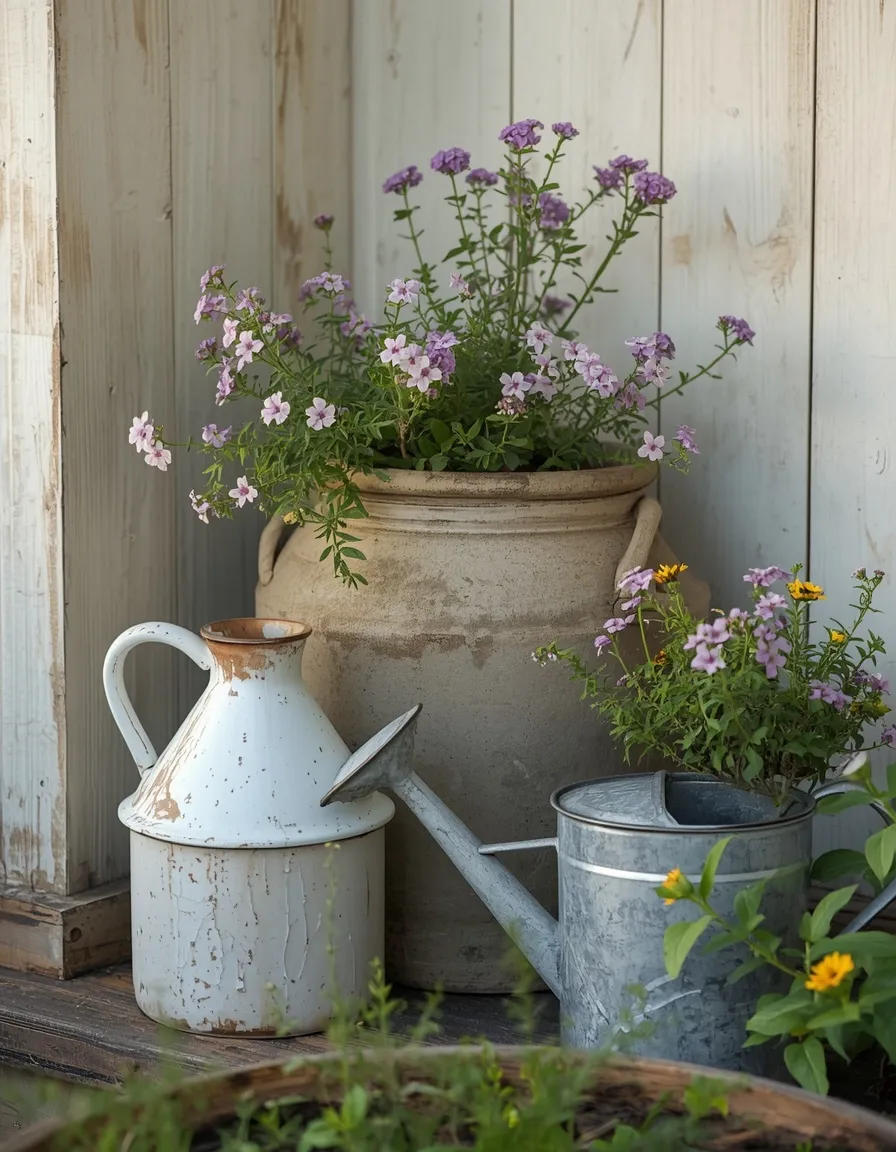
5. Vintage Container Shabby Chic Corner
A weathered enamel jug, a chipped stoneware crock, and an old galvanized watering can, each planted with something soft and trailing, turn an empty corner into the kind of shabby chic vignette that looks collected over decades rather than bought in a weekend.
Look for genuinely worn pieces at flea markets or secondhand sales rather than new items distressed to look old, the texture reads differently up close. Drill drainage holes in the base of anything without them before planting, and line metal containers with a layer of gravel to stop roots sitting in trapped water. A common mistake is over-restoring vintage finds; a little rust or peeling paint is the point. Plant with soft, informal choices like trailing verbena, sweet alyssum, or a small hosta in shade, rather than anything stiff or formal that fights the relaxed feel.
- Uses genuinely aged or secondhand pieces instead of new decor
- Works in a single small corner, no bed or border needed
- Solves the too-new, too-matched look common in small container gardens
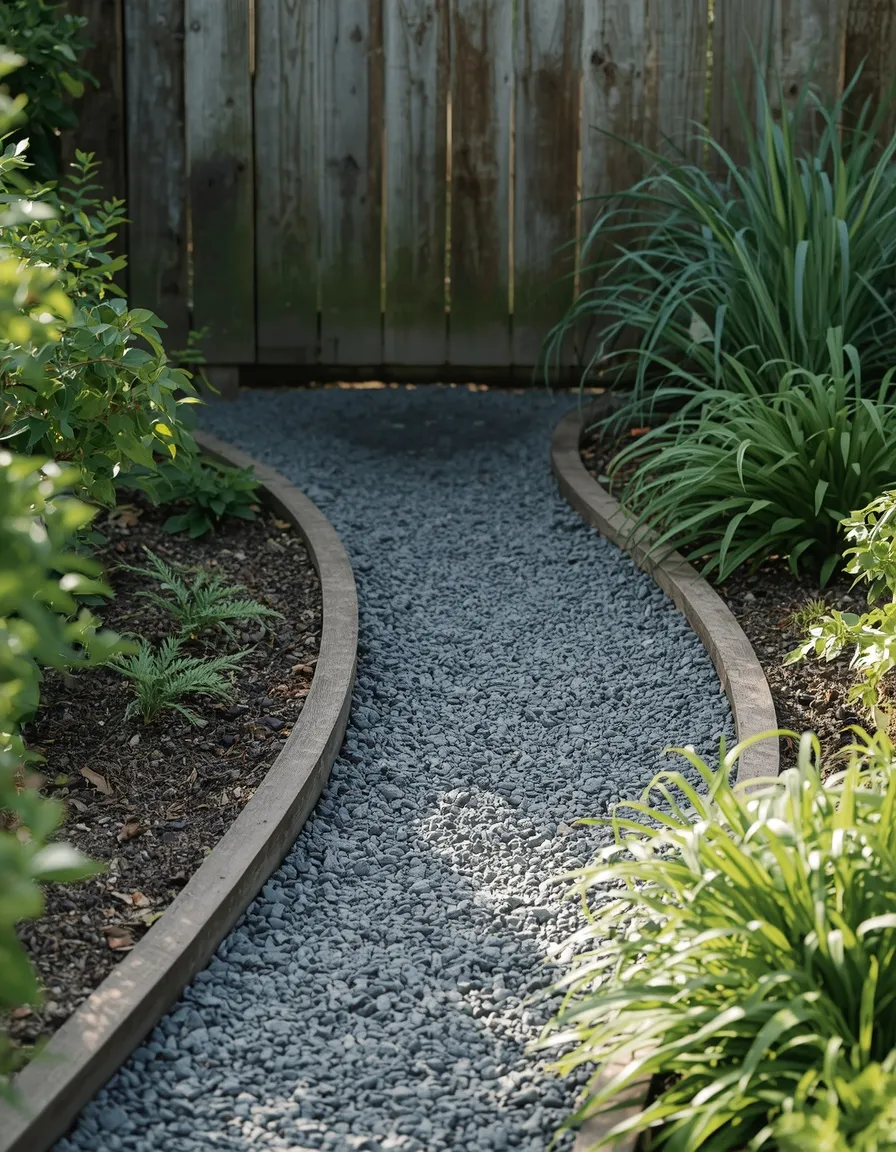
6. Gravel Path Threading Through the Beds
A narrow gravel path, just wide enough for one person, curving rather than running straight between two small beds, makes a tiny plot feel like it has more than one room, even when the whole garden could fit inside a single large room indoors.
Lay a weed-suppressant membrane under 5cm (2in) of pea gravel, and let plants from the borders on either side spill over the path edge by a few centimetres so the line between path and bed blurs. Curve the path even in a garden only 3 to 4 metres (10 to 13ft) long; a straight path makes a small space look smaller by showing its full length at a glance, while a curve hides part of the garden and makes it feel bigger than it is. This is one of the most useful small cottage garden ideas for landscaping a tight, awkward-shaped plot because gravel is affordable, permeable, and easy to lay without professional help.
- Creates a sense of more than one zone in a single small plot
- Curved paths make a small garden feel larger than a straight one
- Affordable, permeable, and beginner-friendly to install yourself
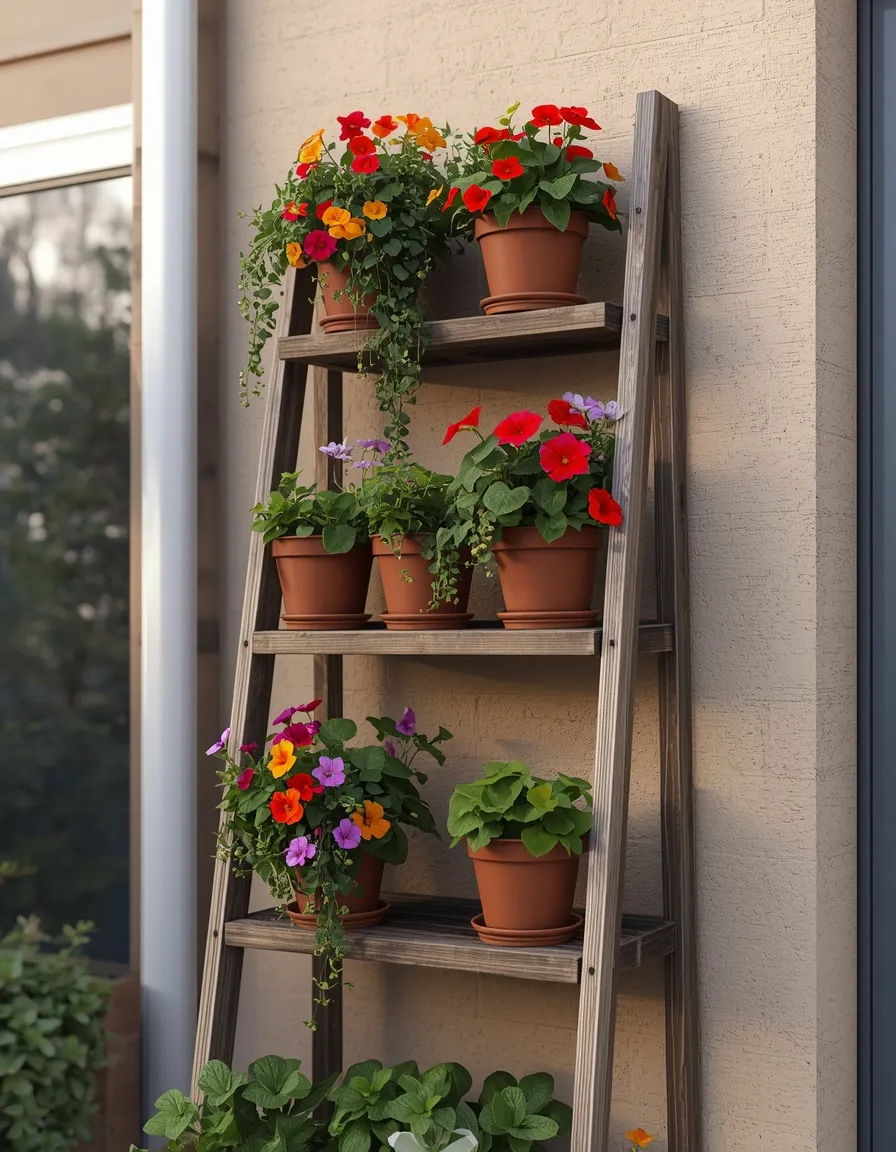
7. Vertical Cottage Wall for Tiny Homes
When there’s no ground to plant into at all, a tiered wall-mounted planter or a simple ladder shelving unit stacked with pots of trailing nasturtium, strawberries, and cascading petunias turns a bare exterior wall into a green, flowering backdrop.
This suits tiny homes, narrow terraces, and courtyards with more wall than floor space. Mount planters onto a sturdy batten fixed into wall studs or masonry anchors rather than directly into render, since a fully watered planter is far heavier than it looks. Water little and often rather than deeply and rarely; vertical planters dry out faster than ground beds due to increased air exposure on all sides. A useful variation for renters is a freestanding ladder shelf that leans against the wall and needs no fixings at all, so nothing is drilled into a wall that isn’t yours.
- Ideal when there is no ground bed, only wall or fence space
- Freestanding ladder version needs no drilling for renters
- Solves the lack-of-space problem common to tiny homes and terraces
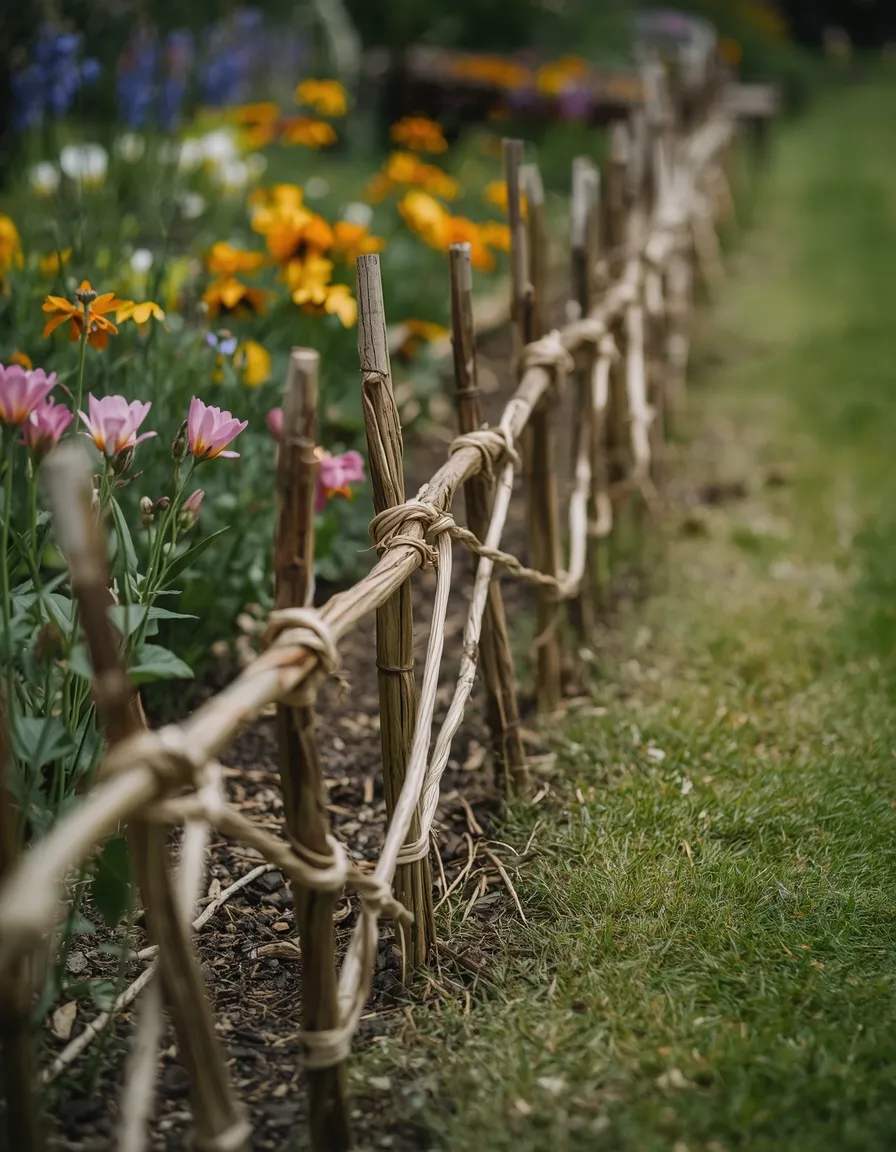
8. DIY Woven Willow Border
A low woven willow or hazel hurdle, wound by hand around driven-in stakes, gives a cottage bed a soft, rustic edge that looks like it belongs on a countryside smallholding, at a fraction of the cost of a built timber edge.
Buy fresh willow whips in late winter while they’re still pliable, drive stakes 20 to 25cm (8 to 10in) into the ground every 30cm (12in) along the bed edge, then weave the whips over and under between them, working the ends back in neatly rather than leaving them loose. Wear gloves throughout, willow can be surprisingly sharp at the cut ends, and check for buried cables or pipes before driving any stakes into the ground. Left untreated, a willow edge naturally weathers to grey over a couple of seasons, which only adds to the cottage look, so resist the urge to varnish or stain it.
- Costs far less than a built timber or brick edge
- A genuine weekend DIY project needing no power tools
- Weathers naturally into the cottage aesthetic rather than looking new
9. Cottage-Style Doorstep Planting
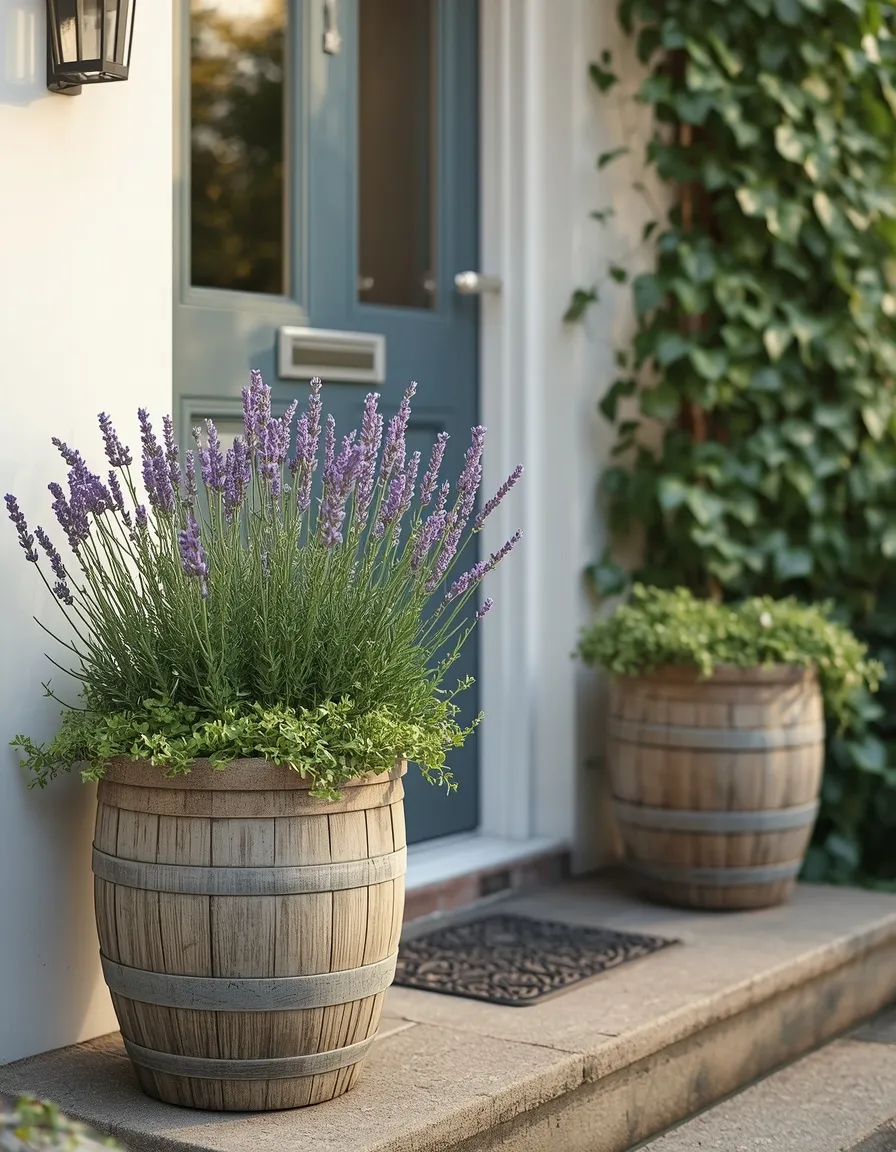
A pair of matched half-barrel planters flanking the front door, overflowing with lavender, rosemary, and trailing ivy or vinca, is one of the simplest ways to signal cottage style before a visitor even reaches the garden itself.
This idea works especially well for terraced houses and UK-style front gardens with only a strip of space between the door and the pavement. Choose plants that can handle some foot traffic brushing past; lavender and rosemary both release scent when touched, which adds to the experience of arriving at the door. Trim lavender back by about a third immediately after flowering to keep it bushy rather than woody and bare at the base, a common mistake is leaving it unpruned until it becomes leggy and sparse. In colder regions, swap rosemary for a hardier evergreen like dwarf boxwood if winters regularly dip below -10°C (14°F).
- Needs only a strip of space either side of the front door
- Scented plants create an experience, not just a view
- Solves the problem of a bare or purely functional entryway
10. Mixed Herb and Flower Kitchen Bed
A bed that mixes culinary herbs, sage, chives, thyme, with cottage flowers like calendula and nasturtium blurs the line between kitchen garden and ornamental border, giving a small space double duty as something to look at and something to cook with.
Plant herbs toward the front or edge of the bed where they’re easy to reach and snip, with taller flowering plants like calendula behind. Chive and nasturtium flowers are both edible and can be added straight to salads, which makes this idea genuinely useful in a way that’s easy to overlook. Be careful, though: some classic cottage garden flowers, foxglove, delphinium, and lily of the valley among them, are toxic to pets and to people if ingested, and shouldn’t be planted in a bed that doubles as an edible patch. The ASPCA maintains a full list of pet-toxic plants worth checking against before finalizing a mixed bed like this one.
- Combines edible herbs with ornamental cottage flowers in one bed
- Chive and nasturtium blooms are edible; calendula petals are too
- Requires checking plant toxicity before mixing edible and ornamental beds

11. Climbing Roses on a Slim Trellis
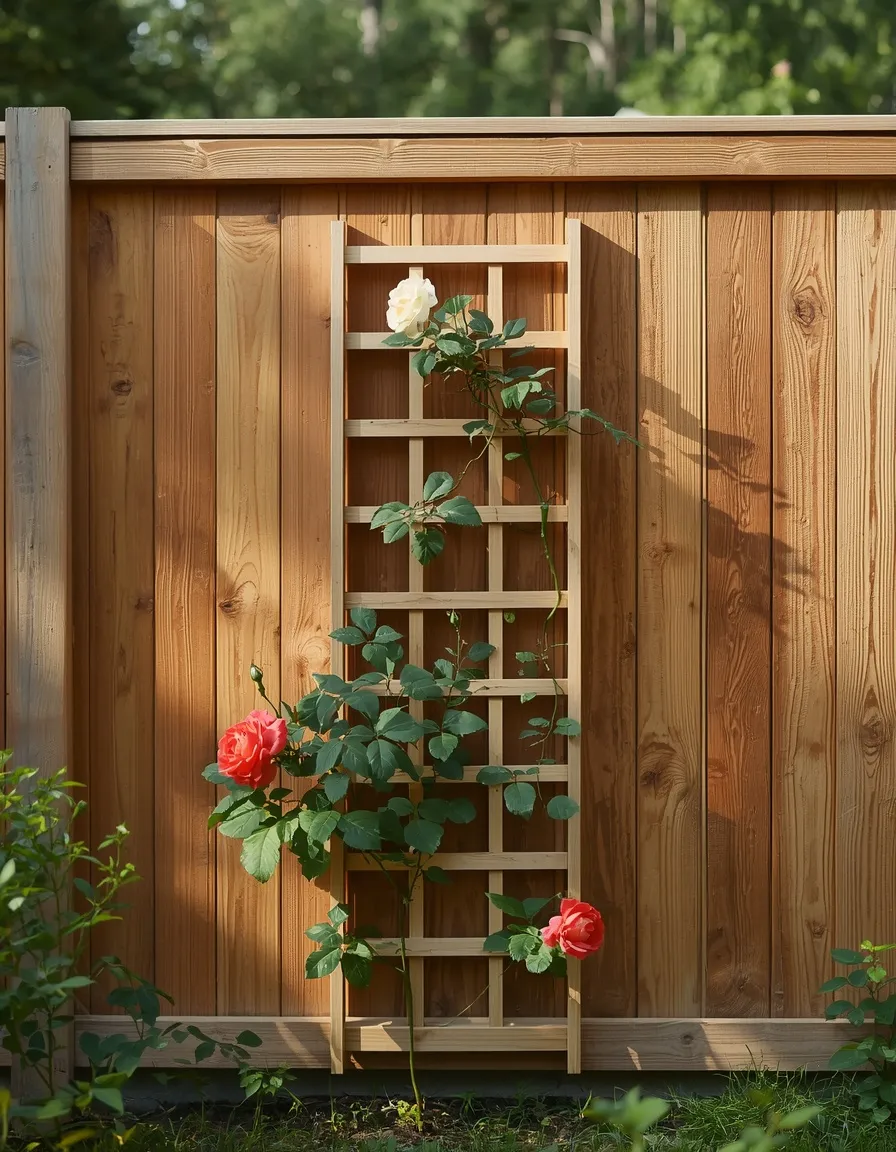
A single climbing rose trained up a slim, wall-mounted trellis turns a flat, empty fence panel into a vertical wall of bloom, without eating into any of the limited ground space a small backyard has to offer.
Fix the trellis a few centimetres off the fence or wall, rather than flush against it, so air can circulate behind the foliage and reduce the risk of powdery mildew, a common problem for climbing roses in tight, low-airflow spaces. Tie new growth in loosely with soft garden twine every few weeks through the growing season, training stems horizontally where possible rather than straight up; horizontal growth produces more flowering side shoots than a rose left to climb straight upward. Repeat-flowering varieties like ‘Compassion’ or ‘New Dawn’ are more forgiving in a small space than one-flush climbers, since they keep producing blooms through summer rather than putting on a single early show.
- Adds a full wall of flowers without using ground space
- Repeat-flowering varieties extend the display through summer
- Solves the flat, empty fence problem common to small backyards
12. Salvaged Potting Bench Corner
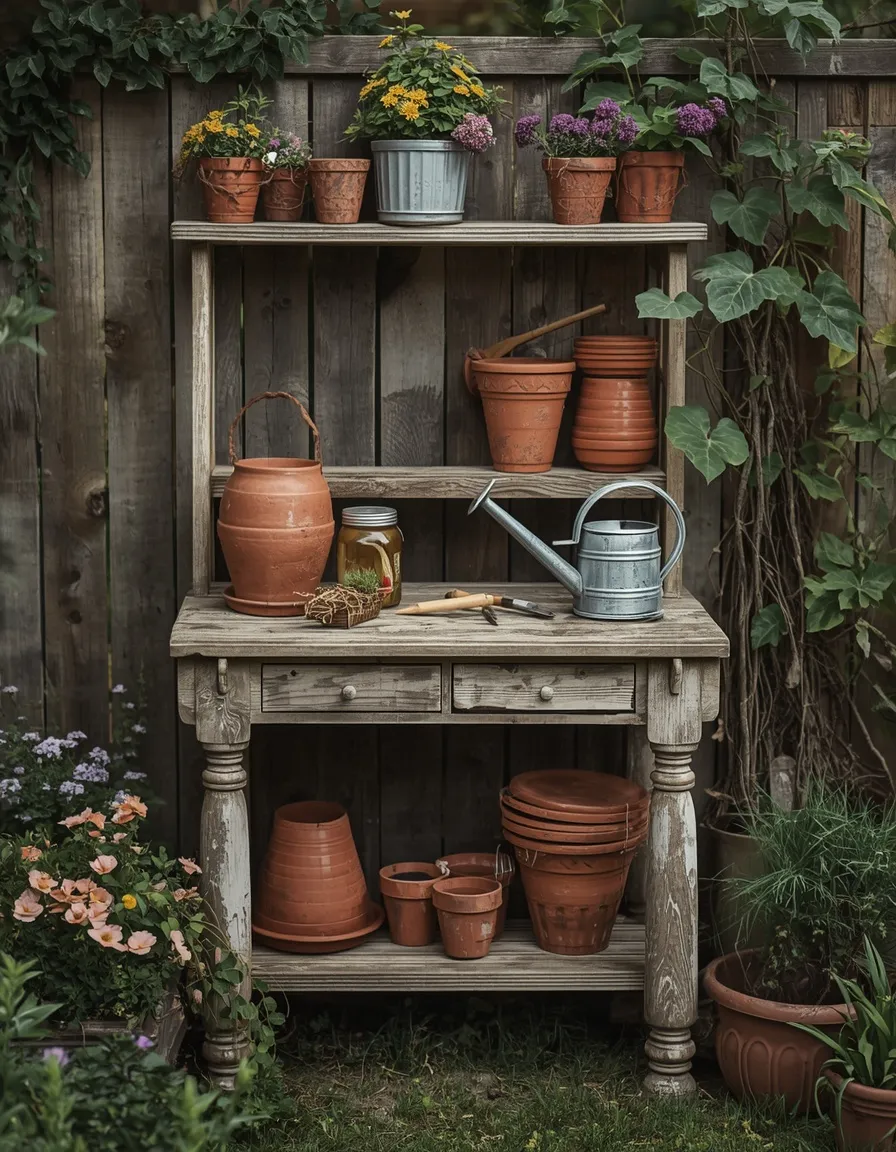
An old salvaged table or workbench, set into a corner and stacked with terracotta pots, a watering can, and a few tools, becomes both a functional potting station and a piece of cottage garden styling in its own right.
Look for a solid secondhand table rather than anything with a laminate top, since it will be exposed to weather; a light coat of exterior wood oil once a season keeps it from warping or rotting. Keep the surface genuinely in use rather than purely decorative, a bench that’s actually used for potting up plants gathers the kind of authentic wear that a styled-but-untouched one never quite achieves. If space is tight, a wall-mounted fold-down shelf does the same job in a fraction of the footprint. This is a strong small cottage garden idea for DIY-minded gardeners because it repurposes something already owned or found secondhand rather than requiring a new purchase.
- Doubles as genuine potting space and a styling feature
- Fold-down wall version suits very tight corners
- Uses secondhand or repurposed furniture rather than new buys
13. Wildflower Patch Along a Lawn Edge
A metre-wide strip of lawn left unmowed and sown with a native wildflower mix, poppies, ox-eye daisy, corn marigold, brings the loose, meadow-adjacent feel of a cottage garden into a space too small for a full lawn-to-meadow conversion.
Scarify or lightly rake the strip to expose bare soil before sowing in early spring or early autumn, since wildflower seed needs soil contact rather than sitting on top of turf to germinate well. Mow the strip once in early spring to keep grasses from outcompeting the flowers, then leave it uncut until after the flowers have set seed in late summer or early autumn. A common mistake is choosing a generic wildflower mix that isn’t suited to local soil and climate; a mix labelled for the region’s conditions establishes far more reliably than an imported blend. This idea works particularly well as a landscaping choice along the edge of a small lawn that’s otherwise too narrow to mow comfortably anyway.
- Turns an awkward narrow lawn strip into a feature instead of a chore
- Native, region-appropriate seed mixes establish far more reliably
- One of the lowest-maintenance landscaping ideas for a small plot

14. Layered Window Box Display
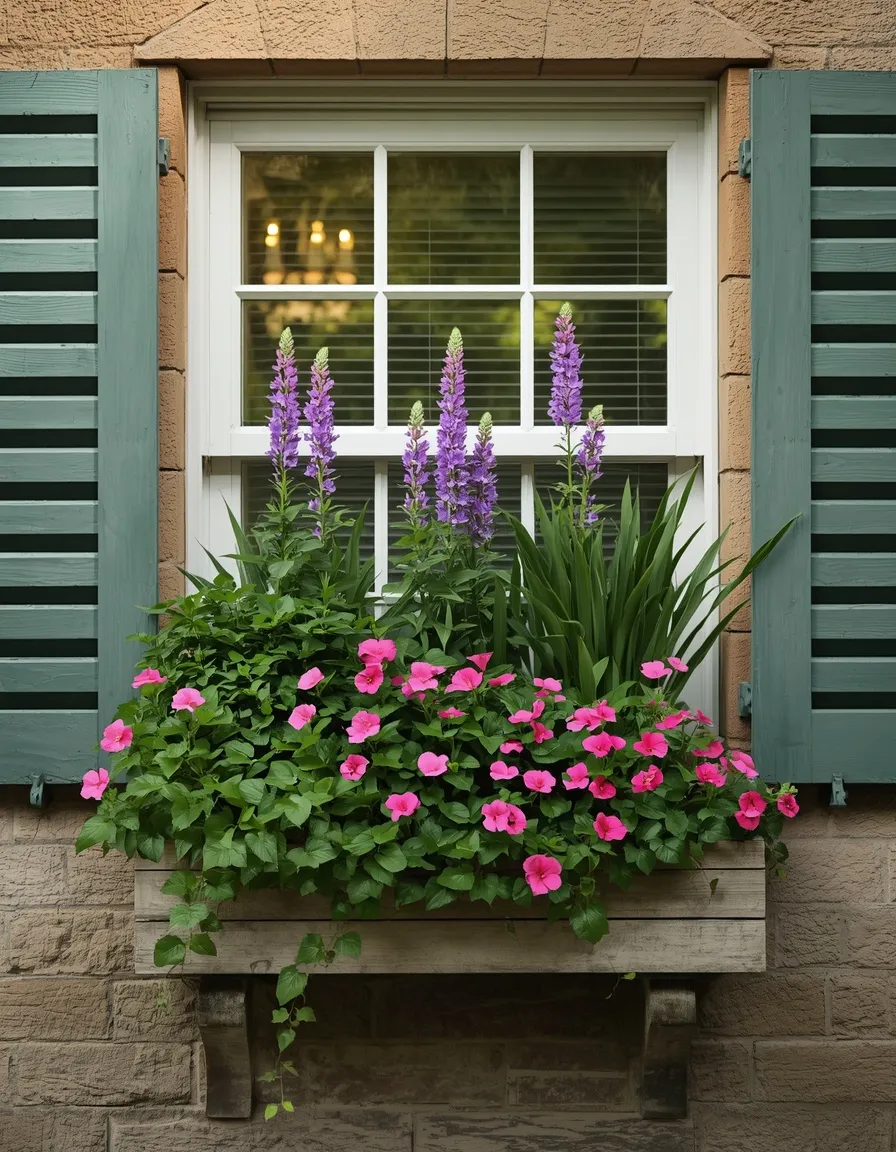
A single window box planted in three layers, trailing plants like ivy or lobelia at the front edge, mid-height geraniums or petunias in the centre, and one or two taller spikes of grass or salvia at the back, packs a full cottage planting scheme into a strip barely 20cm (8in) deep.
This is one of the most space-efficient small cottage garden ideas for tiny homes and terraced properties, since it needs no ground at all, only a windowsill or a bracket-mounted box below a window. Use a box with a built-in reservoir or drip tray if the window faces full sun, since a shallow box dries out considerably faster than a ground bed and can need daily watering in a summer heatwave. Deadhead spent blooms every few days to keep the display flowering continuously through the season rather than putting on one early flush and then fading.
- Needs only a windowsill, no ground space required at all
- Three-layer planting fits a full cottage look into 20cm of depth
- Ideal for terraced houses, flats, and tiny homes with no yard
15. Repurposed Furniture Planters
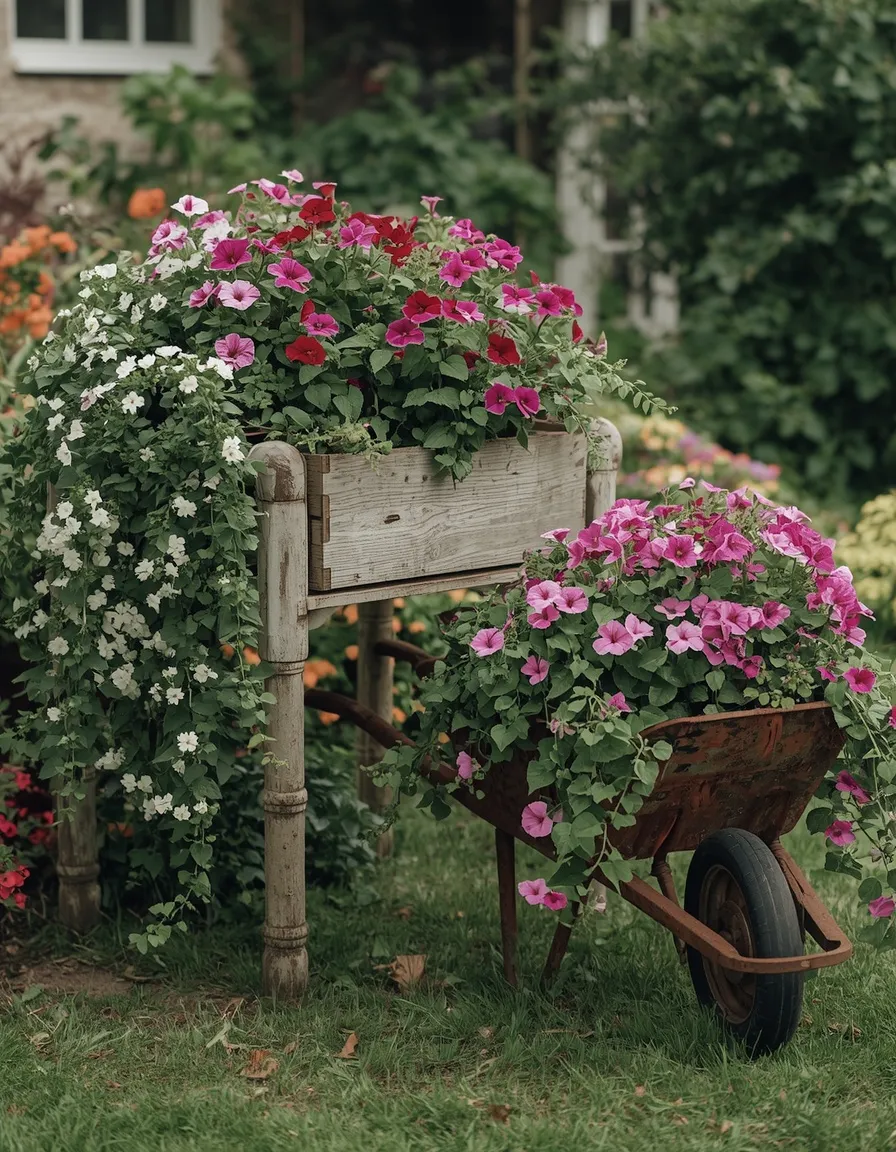
An old wooden drawer, a chipped ceramic sink, or a rusted wheelbarrow, each planted up and left to spill over with trailing lobelia or geraniums, gives a small cottage garden its charm for the cost of drainage holes and a bag of compost.
This is the most budget-friendly route into the shabby chic side of cottage style, since the containers themselves come from what’s already lying around or turned up secondhand rather than a garden centre. Drill several drainage holes in the lowest point of any repurposed container before planting, standing water is the main reason repurposed pieces fail as planters, then raise the container slightly off the ground on bricks or pot feet so it drains freely. A wheelbarrow with a working axle can even be moved to follow the sun through the season, a flexibility a fixed bed doesn’t offer.
- Uses items already owned or found secondhand, minimal new spend
- Drainage holes are essential to stop repurposed containers waterlogging
- A movable wheelbarrow planter can be shifted to chase the sun
16. Classic English Color Layering
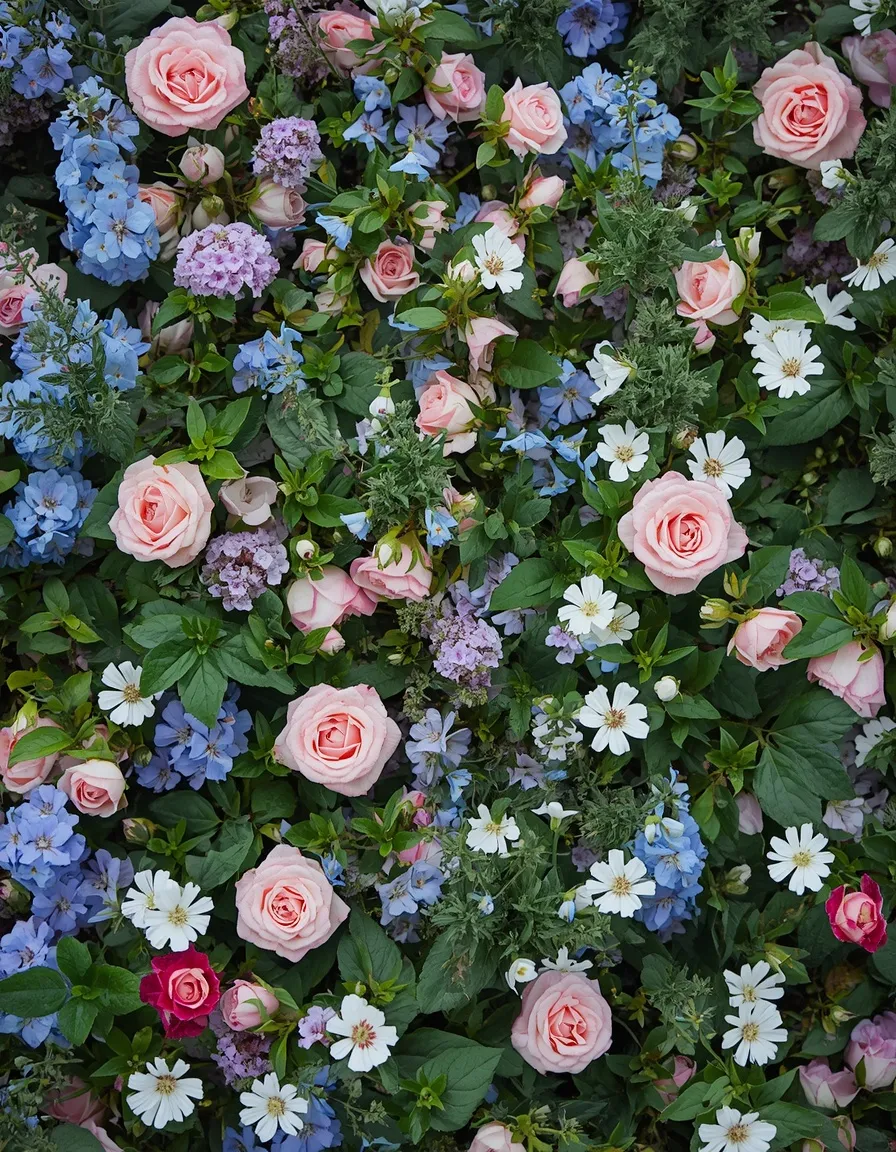
The instantly recognisable English cottage garden palette, soft pink, mauve, and blue, with white woven through to keep it from feeling heavy, works just as well in a bed 2 metres long as it does across a full country garden.
Choose a restrained palette rather than one of everything; three or four core colors repeated through different plants (a pink rose, mauve catmint, blue delphinium, white cosmos) reads as considered rather than chaotic, even when the planting itself is loose and informal. According to the RHS, this restrained, repeated palette is one of the defining traits of true cottage garden style, distinct from the one-of-everything look many small gardens default to. Repeat the same two or three colors at both ends of a small bed so the eye reads it as one connected scheme rather than two separate, unrelated ends.
- Keeps a loose, informal planting style from reading as chaotic
- Works in a bed as short as 2 metres, no large plot needed
- Solves the one-of-everything look common in small mixed beds
17. Stepping Stone Path Through Billowing Beds
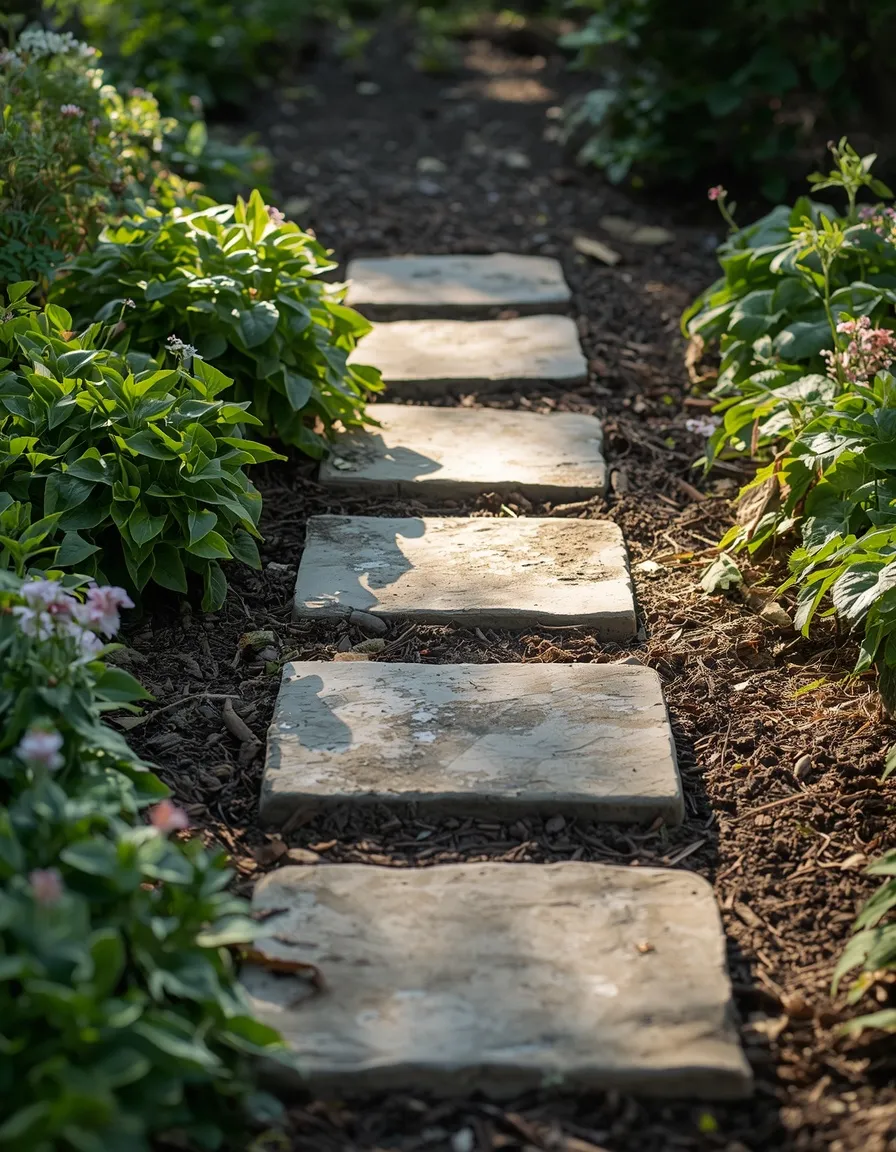
Flat stone or reclaimed paving slabs, set as individual stepping stones rather than a solid path, let planting spill right up to the edge of each stone so the beds on either side seem to merge into one continuous, billowing planting rather than being separated by a hard walkway.
Space stones roughly 45 to 50cm (18 to 20in) apart, centre to centre, to match a natural walking stride, and set each one slightly below the surrounding soil level so plants can flop over the edges without being tripped over. This layout idea works particularly well in a small plot because a solid path visually divides the space into two halves, while stepping stones read as part of the planting rather than a hard boundary between beds. A useful variation for a very tight budget is broken concrete slabs, sometimes called urbanite, laid the same way for close to no material cost.
- Merges beds on either side into one continuous planting visually
- Stepping stones read as part of the garden, not a hard divider
- Broken concrete (urbanite) offers a near-free material variation
18. Miniature Water Feature Nook
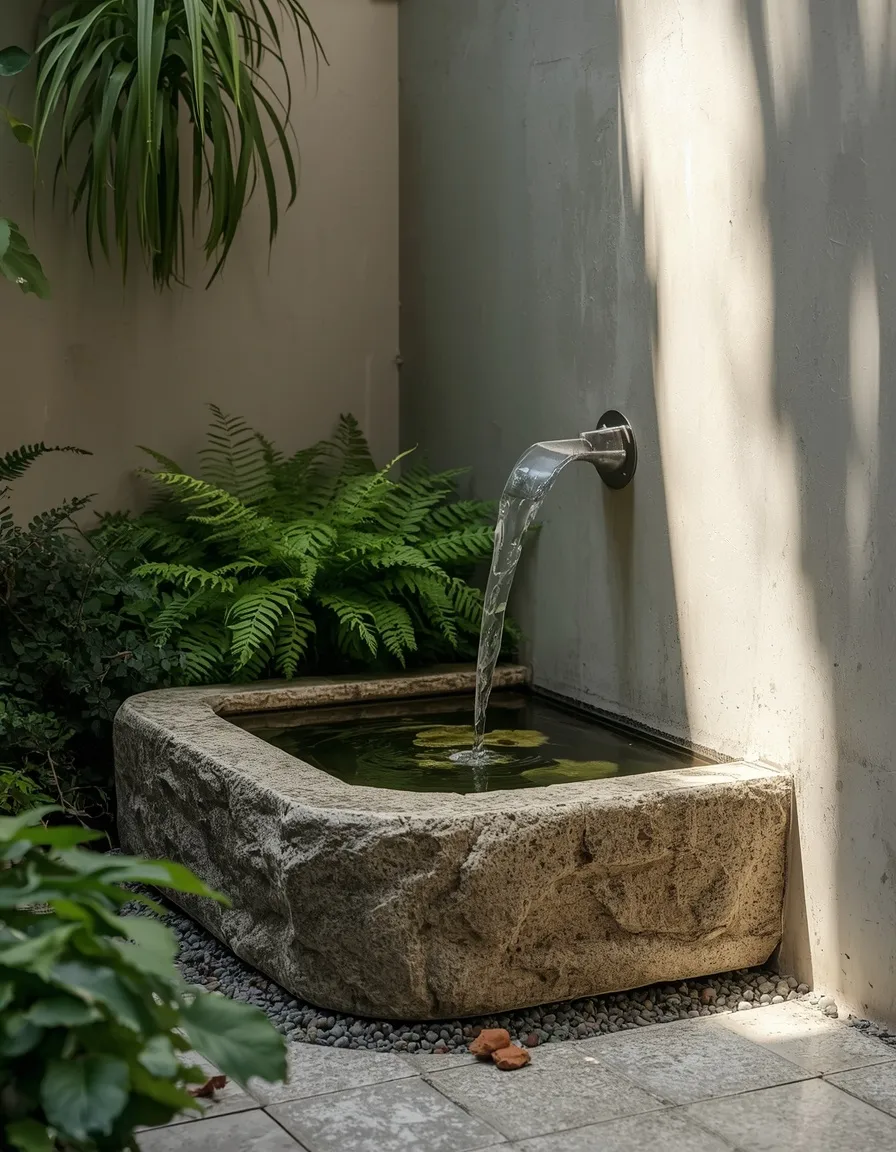
A small recirculating water bowl or an old stone trough fitted with a simple pump, tucked into a corner and edged with moisture-loving plants like hosta or lady’s fern, brings the sound of moving water into a courtyard too small for a full pond.
Choose a self-contained recirculating unit rather than a standing open pond in a small family garden, since even a shallow open body of water is a genuine drowning risk for young children and needs constant supervision or secure fencing if a pond is added instead. Position the feature where the pump’s electrical cable can reach an outdoor-rated socket without running across a path, and clean the reservoir every few weeks in summer to stop algae building up in warm, still water. The sound alone does a lot of work in a small space; even a modest trickle can mask nearby traffic noise and make a tiny courtyard feel more enclosed and calm.
- Recirculating design avoids the safety risk of standing open water
- Sound from even a small feature masks nearby noise effectively
- Fits courtyards and corners too small for a full garden pond
19. Vine-Wrapped Seating Nook
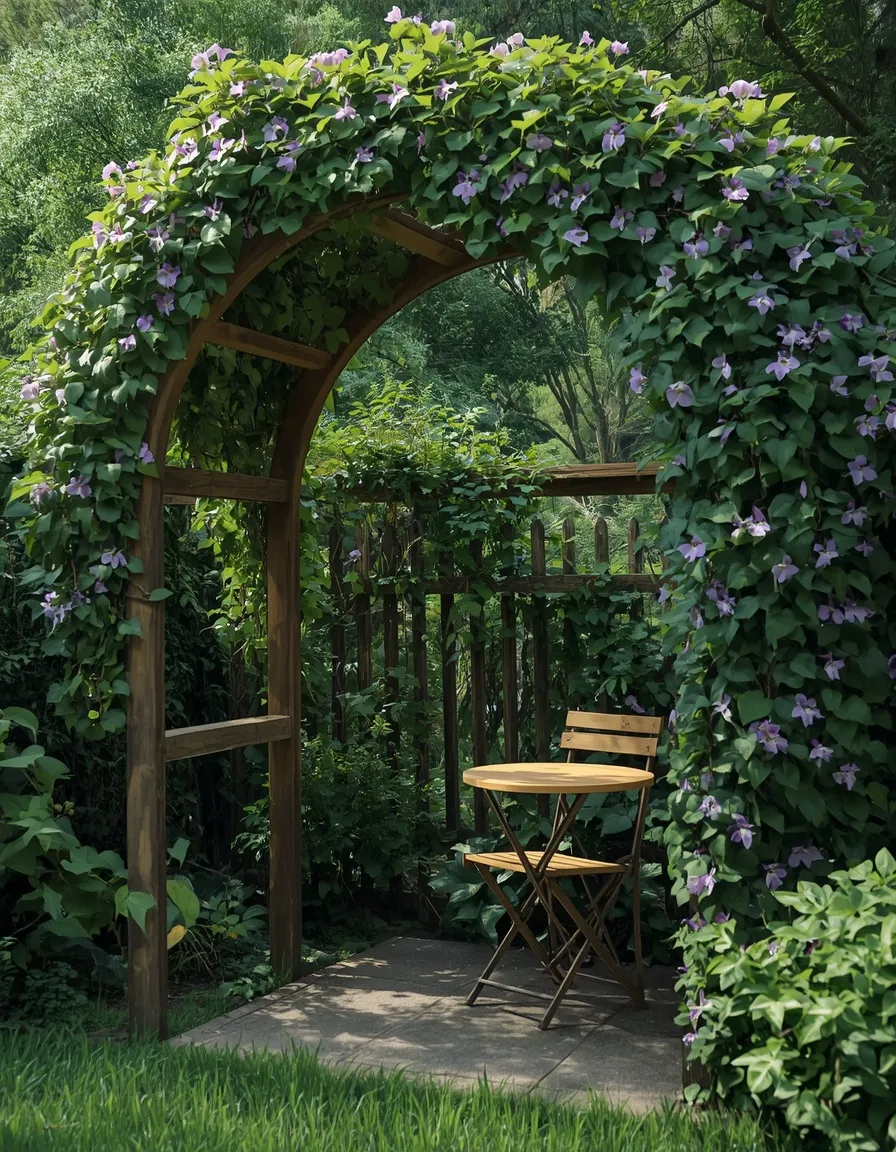
A single bistro chair or small bench, tucked into a corner and half-enclosed by a vine-wrapped arch or trellis, honeysuckle and clematis are both classic choices, turns an unused corner into the kind of quiet spot a cottage garden is really built for.
Position the seat facing back into the garden rather than out toward a wall or fence, so the view from the seat is worth sitting down for. Plant the climbing vine on the side that gets the most sun and train it up and partly across the top of the arch to create a partially shaded, enclosed feeling rather than a fully open frame. This idea overlaps closely with a broader garden nook idea, carving out a defined, sheltered spot within a larger space, and it’s worth reading through more approaches to that concept for additional ways to create a similar sheltered corner elsewhere in a small garden.
- Turns an unused corner into a genuine place to sit and linger
- Vine-covered framing gives an open garden a sense of enclosure
- Works in courtyards, side yards, or the back of a small border
20. Raised Bed Terracing for a Sloped or Small Plot
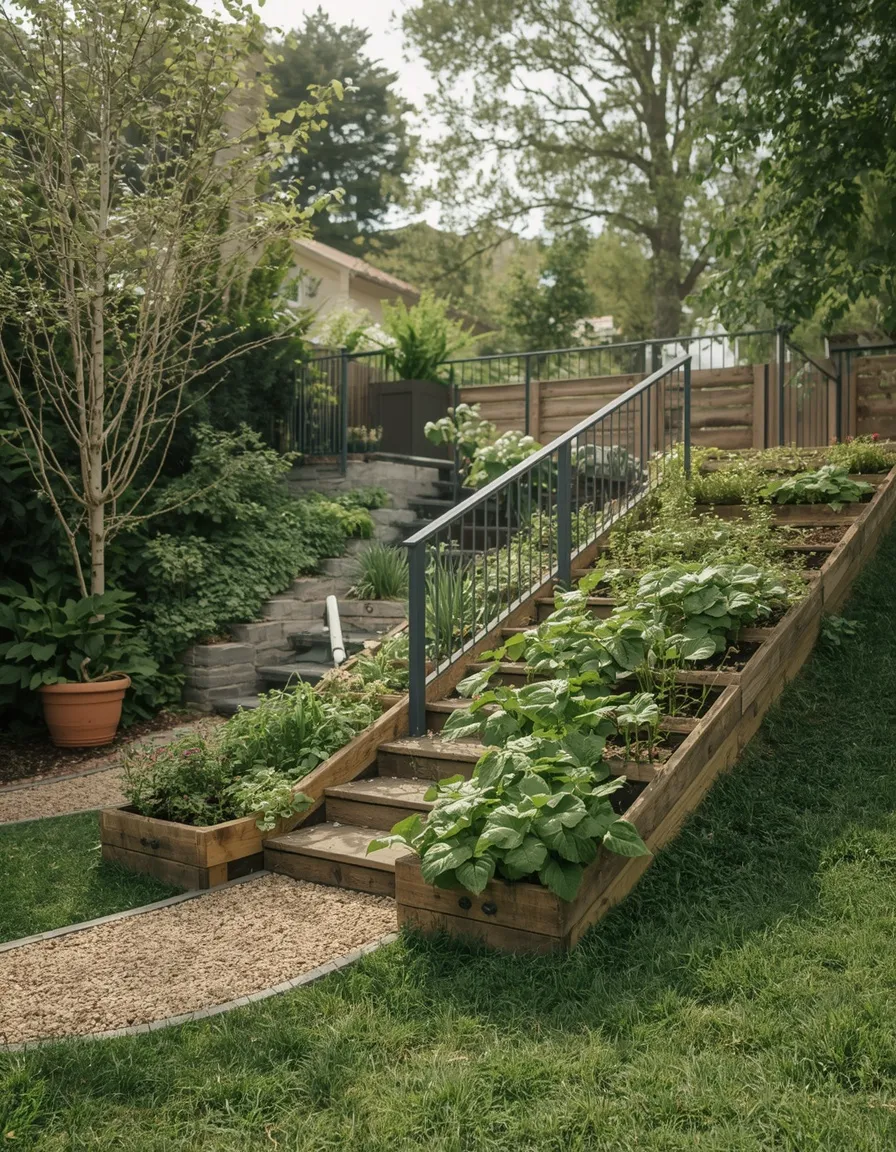
A series of low raised beds, stepped down a gentle slope or simply arranged at two different heights on flat ground, gives a small cottage garden more visual depth and more growing space than a single flat bed of the same footprint.
Build beds from timber sleepers or reclaimed brick, keeping each tier no more than 40 to 45cm (16 to 18in) tall so plants toward the back remain easy to reach for weeding and deadheading. On a sloped plot, terracing also solves a genuine drainage problem, water and soil erode down a bare slope over time, while terraced beds hold both in place. Fill the lowest tier with taller plants and the upper tiers with lower, trailing varieties so the whole arrangement reads as one layered scheme when viewed from below, rather than a stack of disconnected boxes.
- Adds growing depth and visual layers without needing more ground footprint
- Solves soil erosion and drainage problems on sloped small plots
- Keeps every plant within easy reach for regular deadheading and weeding
21. Warm Evening Lighting for Cottage Ambience
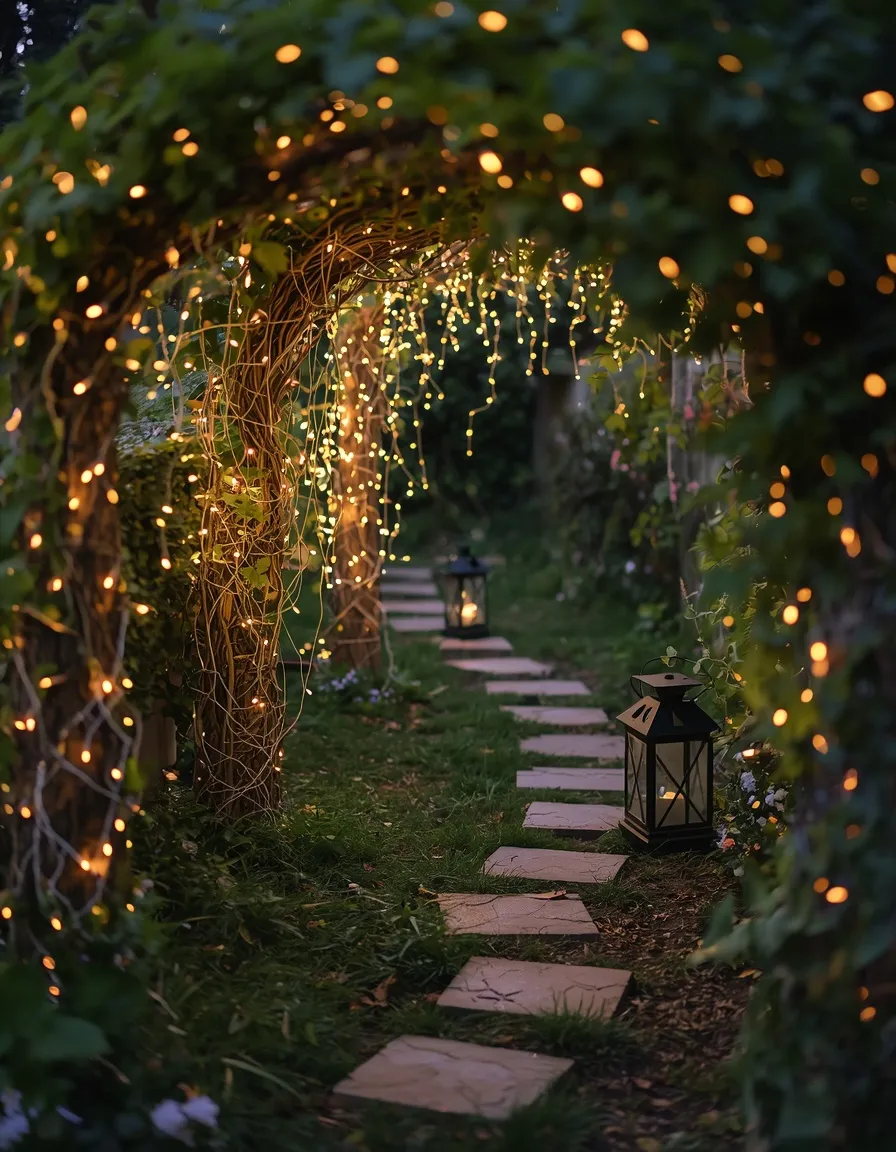
Strung fairy lights woven through a trellis or overhead vine, paired with a scattering of low lanterns along a path edge, extends a small cottage garden’s charm into the evening, when soft, warm-toned light does more for atmosphere than almost any daytime feature.
Choose warm white (around 2700K) LED lights rated for outdoor use over cool white or multicolor; warm tones read as cozy and cottage-appropriate, while cool white can feel closer to security lighting. If real candles or oil lanterns are part of the plan, keep them well clear of dry foliage, hanging fabric, or anything that could catch, and never leave an open flame unattended in a small space where a breeze can carry it closer to plants than expected. Solar path lights along a stepping stone path are a low-effort, no-wiring variation that works well for renters or anyone who doesn’t want to run outdoor cable.
- Warm-toned LED lighting reads as cozy rather than security-style
- Solar path lights need no wiring or outdoor sockets at all
- Open flame sources need real clearance from dry foliage as a safety basic
Conclusion
Small cottage garden ideas like these prove that scale was never really the point. Layering, texture, and a slightly loose hand with planting are what create that lived-in, tumbling charm, and all of that translates just as well to a balcony of pots as it does to a proper backyard bed. Start with just one or two ideas rather than attempting the whole list at once, a layered border here, a cluster of vintage pots there, and let the space fill in gradually the way an actual cottage garden always has. For more ways to shape a small outdoor space with intention, Sunday Abode’s garden design category is a good next stop, and there’s no reason not to bookmark this list and come back to it season by season.
FAQs
What makes a garden count as a “cottage garden” style?
A cottage garden is defined less by size and more by dense, informal planting, self-seeding flowers, climbing roses, and a mix of ornamental and edible plants grown close together rather than in neat, spaced-out rows. The classic English version leans on a restrained color palette, soft pinks, mauves, blues, and white, repeated throughout the bed, which is why even a very small planting can still read as authentically cottage-style.
Can a cottage garden actually work in a small backyard or courtyard?
Yes. Several of the ideas above, like layered borders, reclaimed brick paving, and stepping-stone paths, are specifically designed for tight backyards and courtyards rather than sprawling plots. The key is planting closer together than feels natural and layering by height so the space fills in fully instead of showing bare soil.
What if I only have a balcony or patio and no yard at all?
Container groupings, layered window boxes, and vertical wall planters bring the full cottage look to a space with no ground to dig into. Choose pots at least 30cm (12in) wide for anything with real roots, like a rose or lavender, and group containers in odd numbers at varying heights rather than lining them up.
What are the best plants for a small cottage garden on a budget?
Self-seeding annuals and biennials like cornflower, calendula, and love-in-a-mist are the most cost-effective option, since one packet of seed fills a bed and the plants return on their own the following year. Repurposed containers, an old sink, drawer, or wheelbarrow, drilled with drainage holes, are a similarly low-cost way to add planting space without buying new pots.
Are cottage garden flowers safe to grow around pets and children?
Not all of them. Classic cottage flowers including foxglove, delphinium, and lily of the valley are toxic if ingested by pets or people, so it’s worth checking a plant list, like the one the ASPCA maintains, before planting near a space where pets or young children play. Positioning riskier plants toward the back of a bed, out of easy reach, is a simple way to reduce that risk without giving up the plants entirely.
How do I keep a small cottage garden from looking messy or overgrown?
Stick to a restrained color palette of three or four repeated colors rather than one of everything, which keeps loose, informal planting from reading as chaotic. Regular light maintenance, deadheading spent blooms and trimming lavender back after flowering, also keeps a densely planted small space looking intentional rather than neglected.
Does cottage garden style work with a modern house, or only period homes?
Cottage-style planting pairs with almost any architecture because the softness comes from the plants themselves rather than the building behind them; a layered border or a cluster of vintage containers reads as cottage-style against a modern render wall just as easily as against exposed brick. Keeping hard landscaping, paths, edging, pots, simple and letting the planting do the work is usually what makes the style translate well to a contemporary small garden.