
Introduction
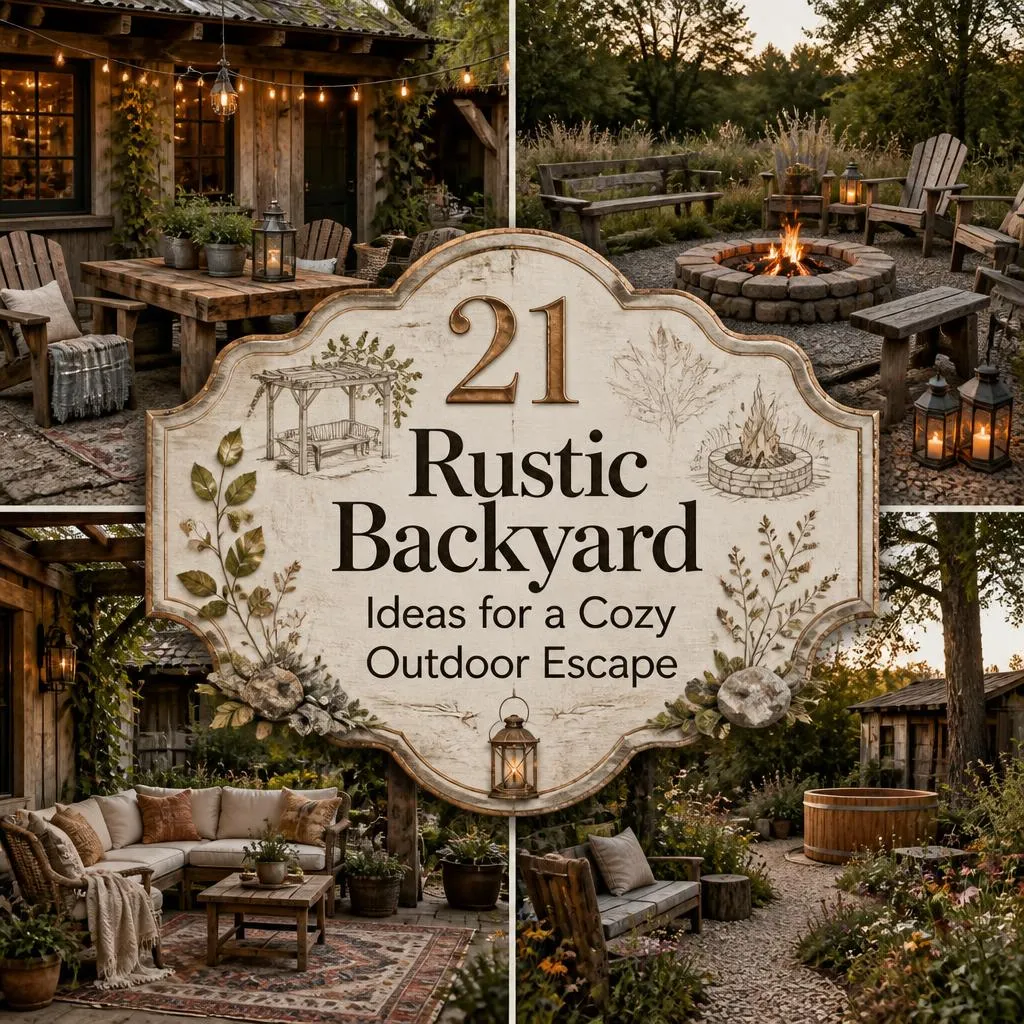
Rustic backyard ideas work because they lean into imperfection: reclaimed wood with visible grain, stone that isn’t perfectly matched, a fire pit built for real use rather than a showroom photo. This look draws from farmhouses, cabins, and working landscapes rather than a single decorating trend, which is part of why it holds up season after season instead of feeling dated within a year or two. This guide gathers twenty-one distinct ways to bring that warm, lived-in character to a real backyard, from budget DIY projects using reclaimed materials to bigger additions like a pergola or wood-fired oven, plus guidance for drier climates where a classic cottage-garden version simply will not survive. Consider it a practical starting point for turning an ordinary yard into a genuinely welcoming outdoor abode.
A Few Practical Notes Before You Start
A handful of practical realities are worth sorting out before adding any of the ideas below, since a few of them involve real structural or fire safety considerations rather than just styling choices. If a fire pit, wood-fired oven, or open-flame feature is part of the plan, check local burn ordinances and clearance requirements first, most jurisdictions require a fire feature to sit a minimum distance from fences, structures, and overhanging trees, and a portable spark screen is a smart addition regardless of what local code technically requires. If a deck or raised platform is part of the build, note that most building codes in the US follow the International Residential Code’s 4-inch sphere rule for railings, meaning no gap in a guardrail should allow a 4-inch (10 cm) sphere to pass through, since that is roughly the size that can trap a small child’s head; this matters if a deck sits more than about 30 inches (76 cm) above grade. If a tree swing is on the list, only hang it from a living branch at least 8 inches (20 cm) in diameter with no visible rot, cracking, or dead wood, and inspect the branch and hardware at least once a season, since a failed branch under swinging weight is a genuine injury risk.
This rustic look also leans more rugged and working-land than polished. If that reads a little too rough for your taste and you are drawn to something softer, more floral, and closer to painted furniture, a farmhouse garden approach might suit your space better instead.
21 Rustic Backyard Ideas to Try in Your Outdoor Space
Each idea below is genuinely distinct in material, structure, and budget level, so scan for the ones that suit your climate, space, and skill level rather than trying to build all twenty-one at once.
1. Stone Fire Pit Gathering Area
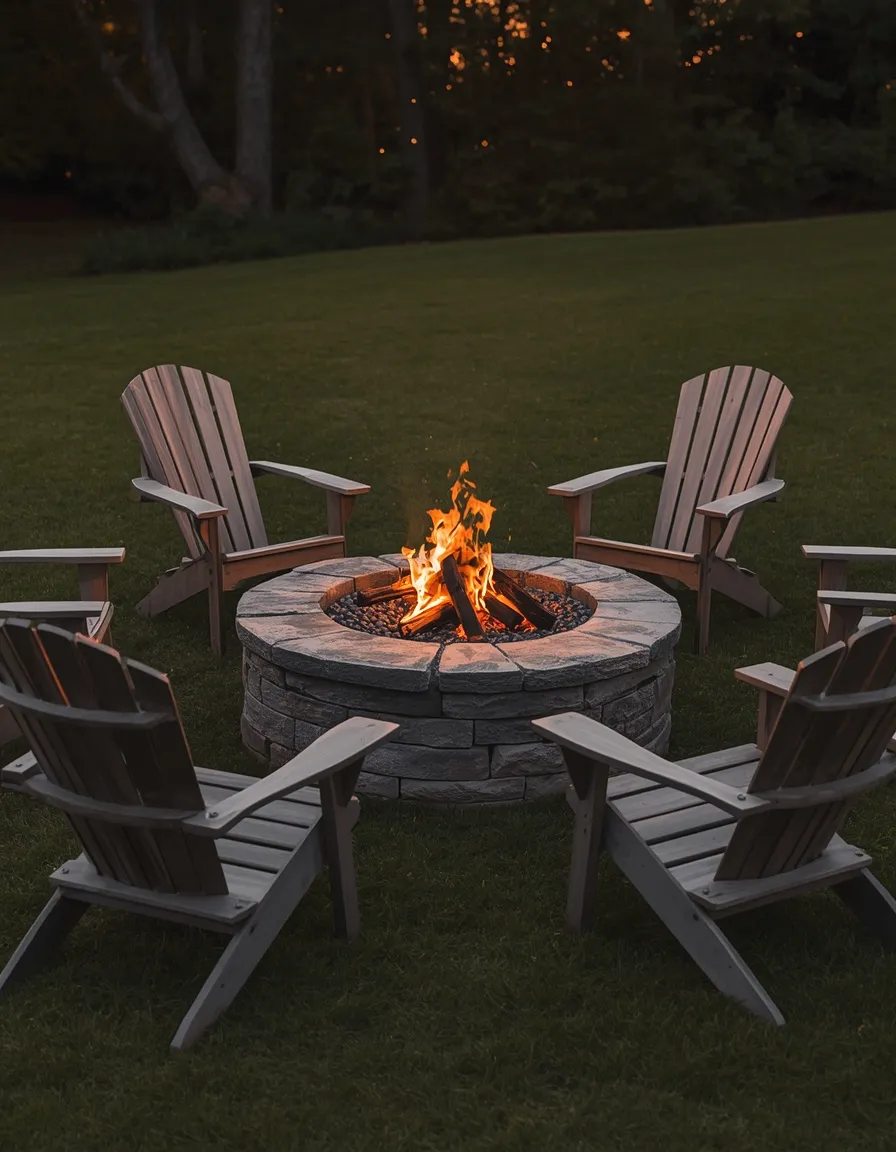
A circular fire pit, built from dry-stacked or mortared fieldstone and surrounded by a loose ring of Adirondack chairs or log stools, becomes the backyard’s natural gathering point the moment evenings start to cool, the kind of spot that gets used year-round rather than sitting decorative and empty.
Size the pit to roughly 36 to 44 inches (91 to 112 cm) in diameter for a seating group of four to six, and set it at least 10 feet (3 m) from the house, fences, and any overhanging branches, checking local burn ordinances first since some areas restrict or ban open wood fires entirely and require a spark screen or gas-fueled alternative instead. Line the interior with fire-rated brick rather than ordinary stone, since some stone types can crack or even fracture when exposed to sustained high heat due to trapped moisture. A propane or natural gas insert is a lower-maintenance variation that skips the smoke and ash entirely while keeping the same stacked-stone look.
- Creates a genuine year-round gathering spot, not just a summer feature
- Suits backyards wanting a focal point for evening entertaining
- Solves the lack of a dedicated cool-weather outdoor seating reason
2. Reclaimed Wood Pergola
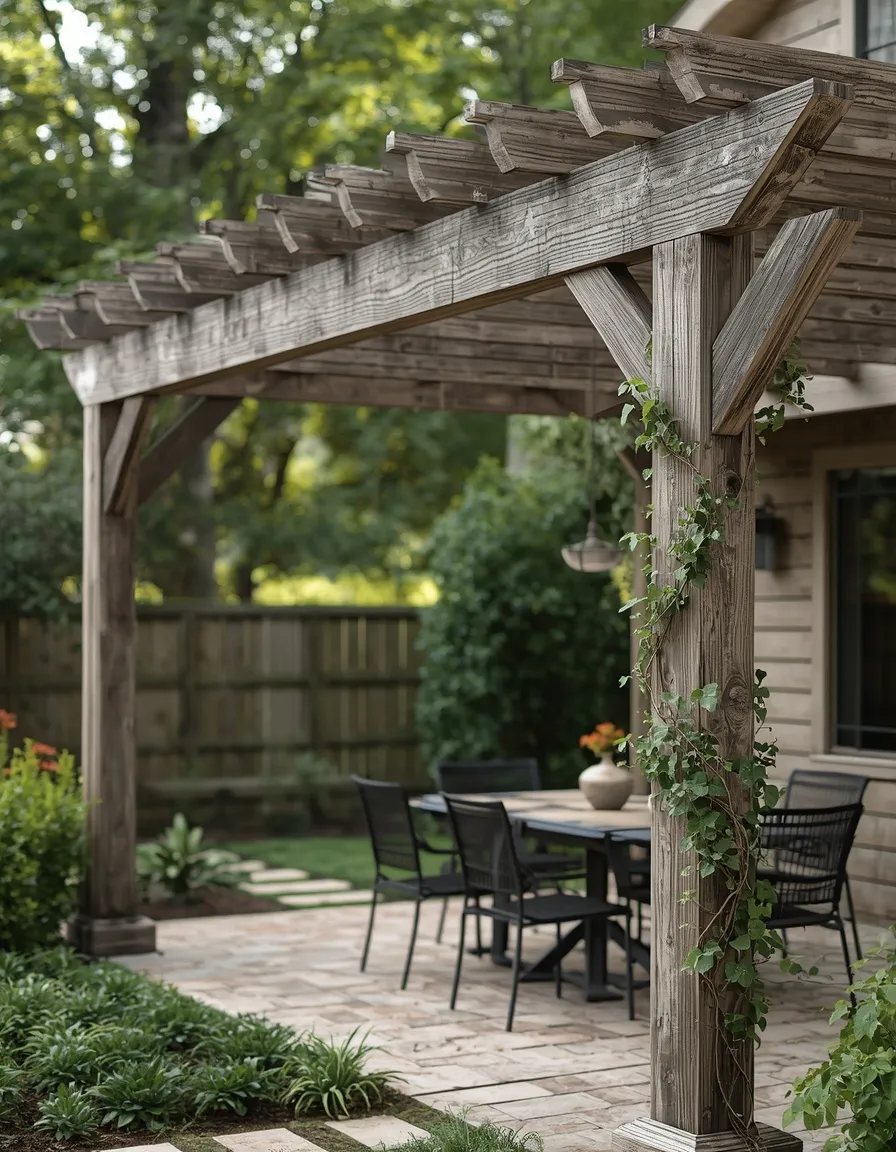
A pergola built from weathered, reclaimed barn beams rather than fresh dimensional lumber gives a patio or dining area instant history, the kind of silvery, characterful wood that new material takes years to achieve on its own.
Source reclaimed structural beams from a salvage yard rather than a general lumberyard, and have any load-bearing beam inspected for rot, insect damage, and structural soundness before building with it, since reclaimed wood’s age is exactly what makes it look right but also what can compromise its strength. In colder climates with heavy snow load, confirm the beam spacing and post sizing meet local structural requirements for your specific snow zone rather than copying a design built for a milder region. Train a climbing vine, wisteria, grape, or a hardy climbing rose, along one or two posts for a softer, more established look within a couple of growing seasons.
- Adds shaded structure with genuine age and character
- Suits dining and lounge areas wanting definition without full enclosure
- Solves the stark, new-lumber look of a standard prefab pergola kit
3. Rustic Outdoor Grill Station
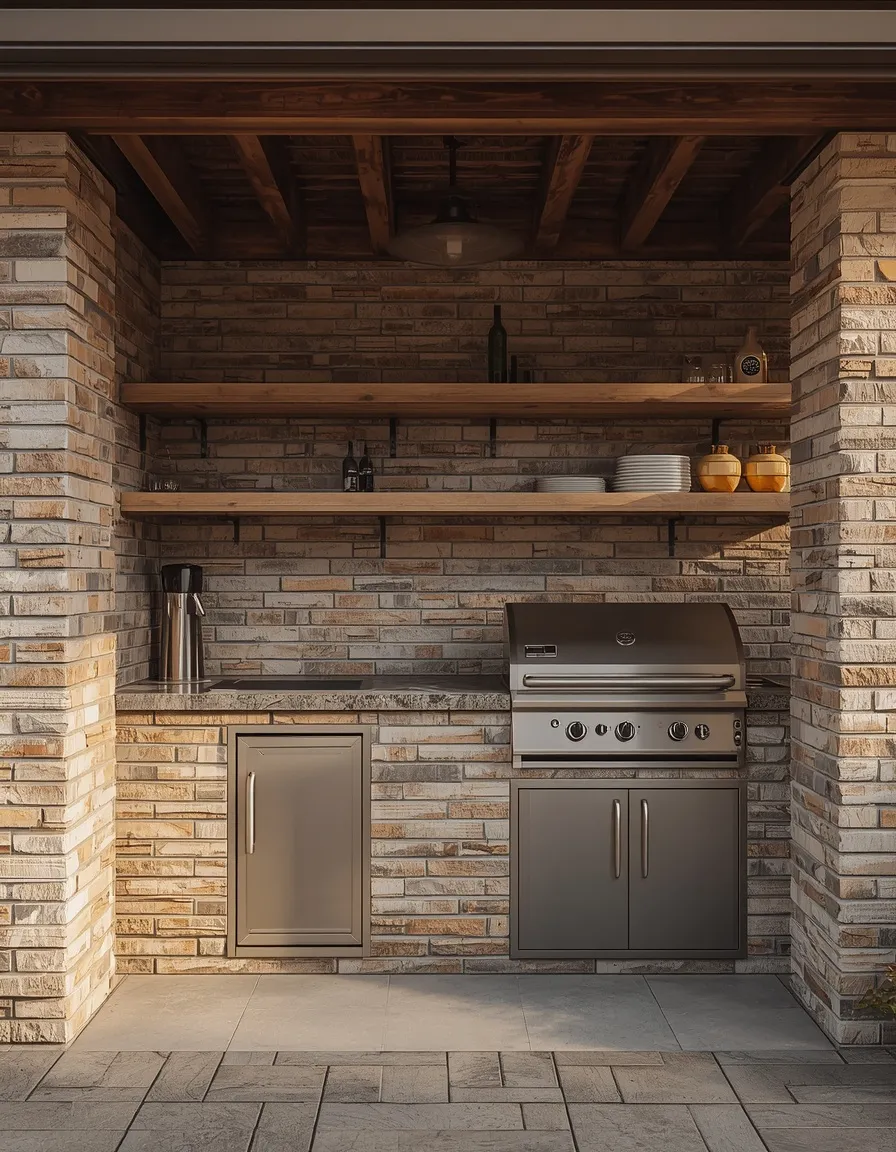
A grill set into a stone or reclaimed-brick counter, flanked by open shelving for utensils and a small prep surface, turns backyard cooking into a real station rather than a single freestanding grill parked on the patio.
Leave at least 3 feet (91 cm) of clearance on all sides of a built-in grill for safe operation, and position the station away from the house’s siding, eaves, and any overhanging structure, since built-in grills run hotter and longer than portable ones and radiant heat damage to nearby materials is a real risk. If running gas to the station, use a licensed professional for the gas line connection rather than a DIY hookup, since an improperly sealed gas line is a carbon monoxide and fire hazard. Reclaimed brick or stone veneer over a standard concrete block base keeps material costs lower than solid stone construction while still delivering the rustic look.
- Creates a genuine outdoor cooking zone rather than a single appliance
- Suits households that grill and entertain outdoors regularly
- Solves the cramped, improvised feel of a grill with no prep space
4. Whiskey Barrel Planters
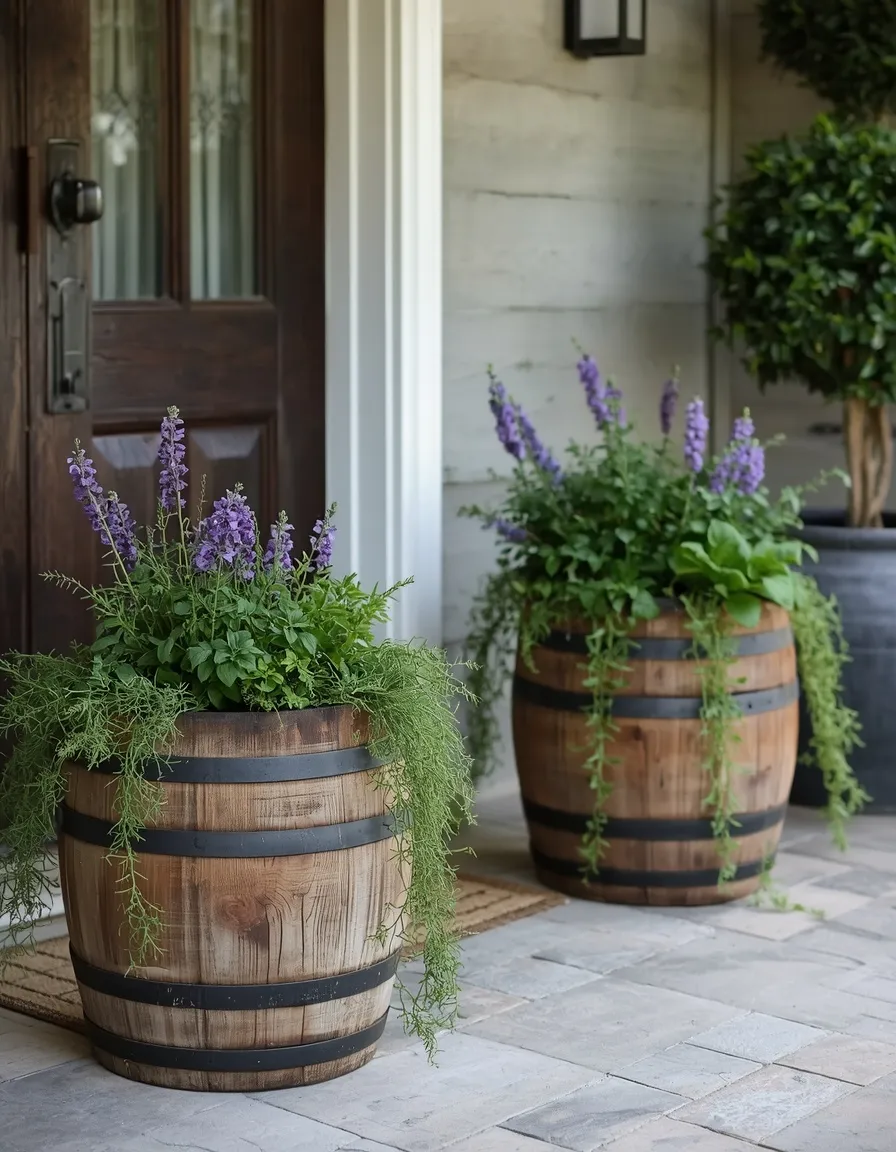
A pair of weathered whiskey barrels, cut in half and planted with trailing herbs or bright annuals, flank a doorway or patio edge with the kind of warm, rounded wood texture that a standard plastic planter simply cannot fake.
Confirm barrels are food-grade and were used for whiskey or wine rather than industrial chemical storage before planting anything edible in them, and drill four to six drainage holes in the base if they are not already present, since barrels are built to hold liquid, not drain it. Line the interior with landscape fabric before adding soil to slow the wood’s decomposition, which extends a barrel planter’s usable life by a couple of seasons. Group two or three barrels of varying heights near an entry rather than scattering single barrels around the yard for a more intentional, considered look.
- Adds warm, rounded texture that works with almost any rustic sub-style
- Suits entries, patio corners, and porch edges needing container height
- Solves the flat, uniform look of matching plastic or resin planters
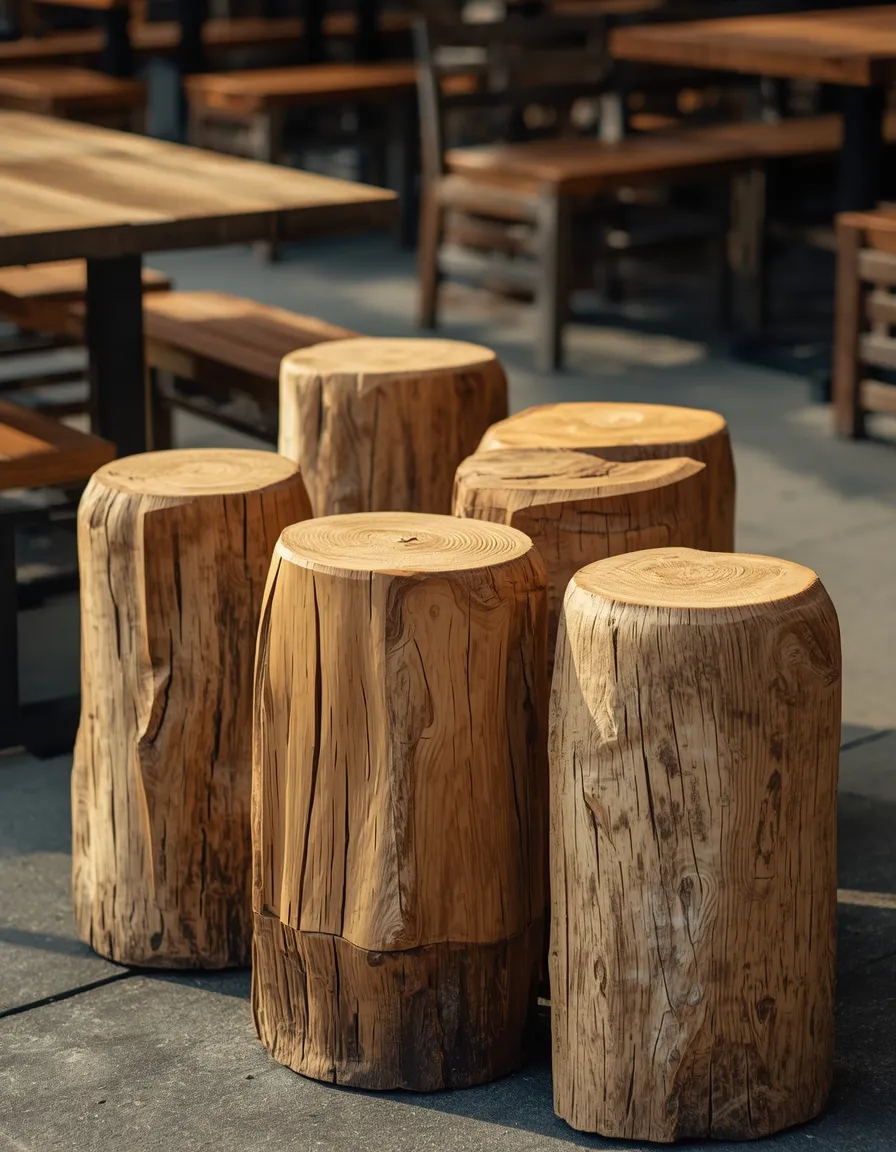
5. Log Stump Side Tables
A cluster of tree stumps, sanded smooth and sealed, standing at varying heights beside outdoor seating, gives a fire pit or patio area genuinely rustic side tables without buying a single piece of furniture.
Source stumps from a local tree service or firewood supplier rather than cutting a living tree specifically for this purpose, and let green wood dry and cure for several months before sanding and sealing, since freshly cut wood cracks unpredictably as it loses moisture. Seal the cut surfaces with an exterior-grade polyurethane or epoxy topcoat to prevent water absorption and rot, and elevate stumps slightly off the ground on gravel or pavers rather than setting them directly on soil, which speeds decay considerably. This idea costs very little beyond the sealant if stumps are sourced free or cheap locally.
- Delivers genuine rustic character at minimal material cost
- Suits fire pit seating areas needing surfaces for drinks or plates
- Solves the need for side tables without buying manufactured furniture
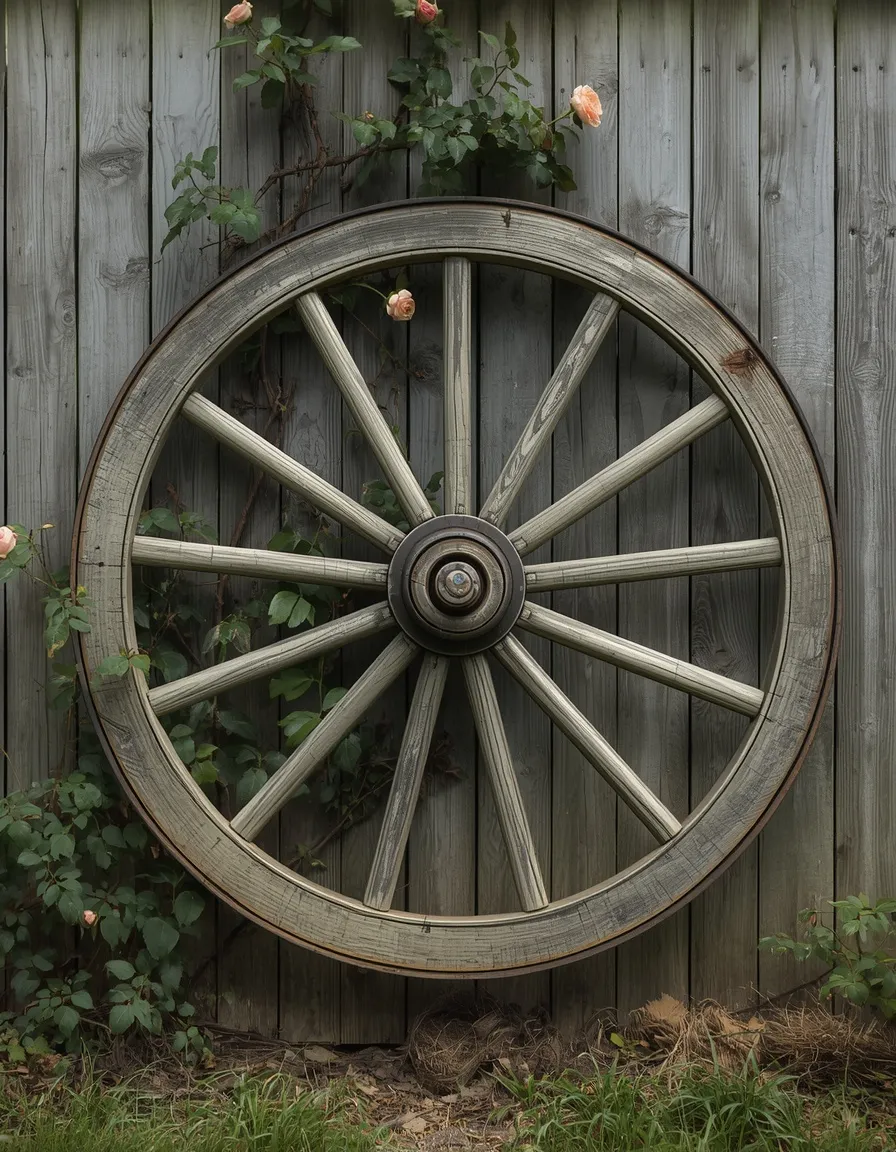
6. Wagon Wheel Garden Accent
A weathered wooden or wrought-iron wagon wheel, leaned against a fence or mounted flat as a trellis for a climbing rose, brings an unmistakable country-living silhouette to a garden bed or entry without needing any planting changes.
Choose a wheel with visible age and patina over a reproduction that looks too new and uniform, since the imperfect, weathered surface is what makes this read as authentic rather than novelty decor. Mount the wheel vertically on a simple post or lean it against a solid structure rather than laying it flat on the ground, where it becomes a tripping hazard and collects debris. This is one of the lowest-cost ideas on this list when sourced secondhand from a farm salvage sale or online marketplace rather than bought new.
- Adds an instantly recognizable rustic, country-living focal point
- Suits fence lines, garden entries, and climbing plant supports
- Solves the want for a strong decorative statement at very low cost
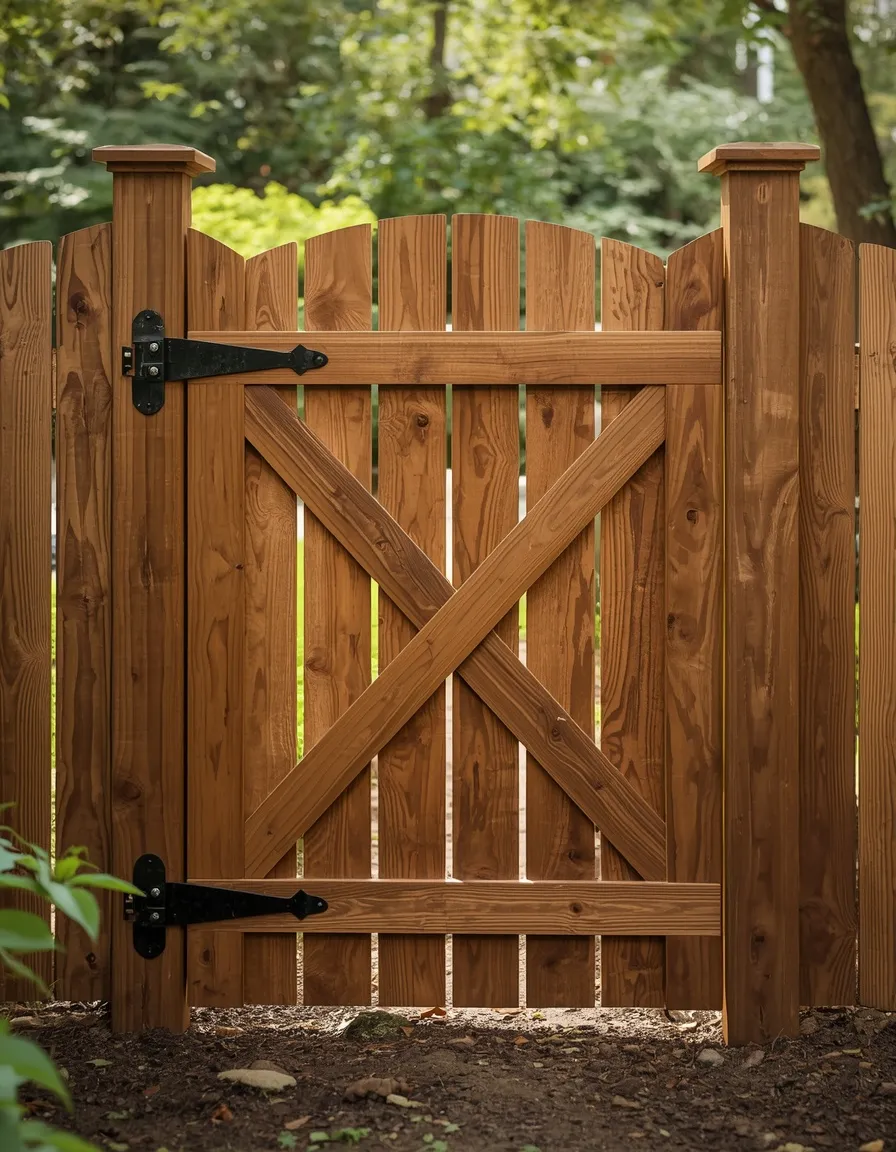
7. Cross-Buck Fence or Gate
A fence or garden gate built with the diagonal cross-buck pattern common on old ranch and farm fencing brings genuine structural character to a boundary line, reading as considerably more custom than a standard picket or panel fence.
Build the cross-buck pattern from rough-sawn cedar or pine rather than smooth pre-primed lumber, since the visible saw texture is part of what sells the rustic look, and treat or seal the wood before installation rather than after, which protects end grain from the start. Sand down any rough edges or protruding splinters along handrails and gate latches, since reclaimed or rough-sawn wood is more prone to splinters than finished lumber, particularly relevant if children regularly touch the gate. This pattern works especially well on a garden entry gate, where its diagonal lines are seen up close rather than from a distance.
- Adds genuine structural character beyond a flat panel fence
- Suits garden entries and property boundaries wanting a farm-style look
- Solves the generic, big-box look of a standard privacy fence
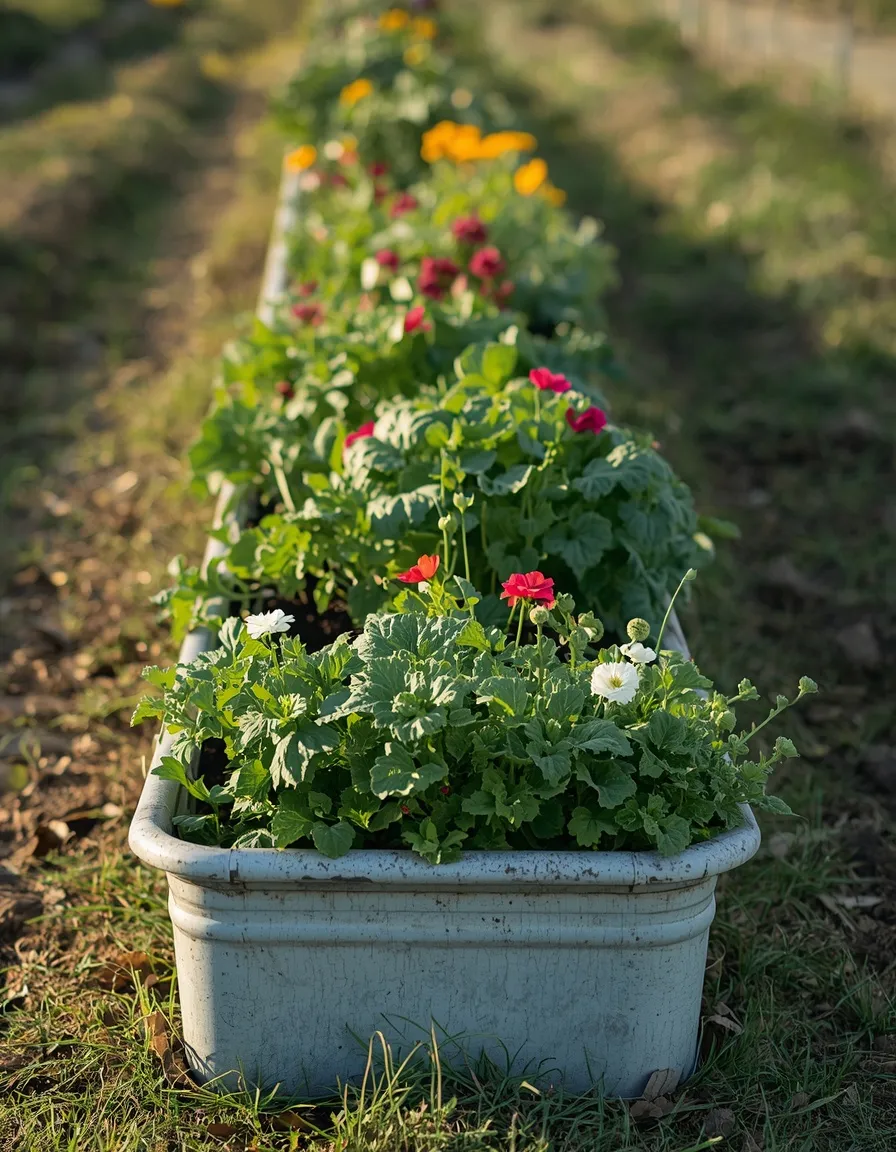
8. Galvanized Metal Trough Planters
A long galvanized stock trough, the kind originally built to water livestock, filled with a row of vegetables or cut flowers, brings an honest, working-farm texture that pairs the cool shine of metal against warm wood and stone elsewhere in the yard.
Drill several drainage holes in the base before filling with soil, since troughs are built watertight and will drown plant roots without them, and elevate the trough slightly on blocks or a simple frame to keep drainage holes clear of the ground. Galvanized metal heats up considerably faster than wood or terracotta in direct summer sun, so in hot climates, position troughs where they get some afternoon shade or line the interior with an insulating layer to protect roots from excess heat. This idea works at a larger scale than the whiskey barrel idea above, better suited to a dedicated vegetable row than a single accent pot.
- Provides significant growing space in one continuous container
- Suits vegetable gardens and cut-flower rows more than single accents
- Solves the piecemeal look of many small mismatched pots in a row
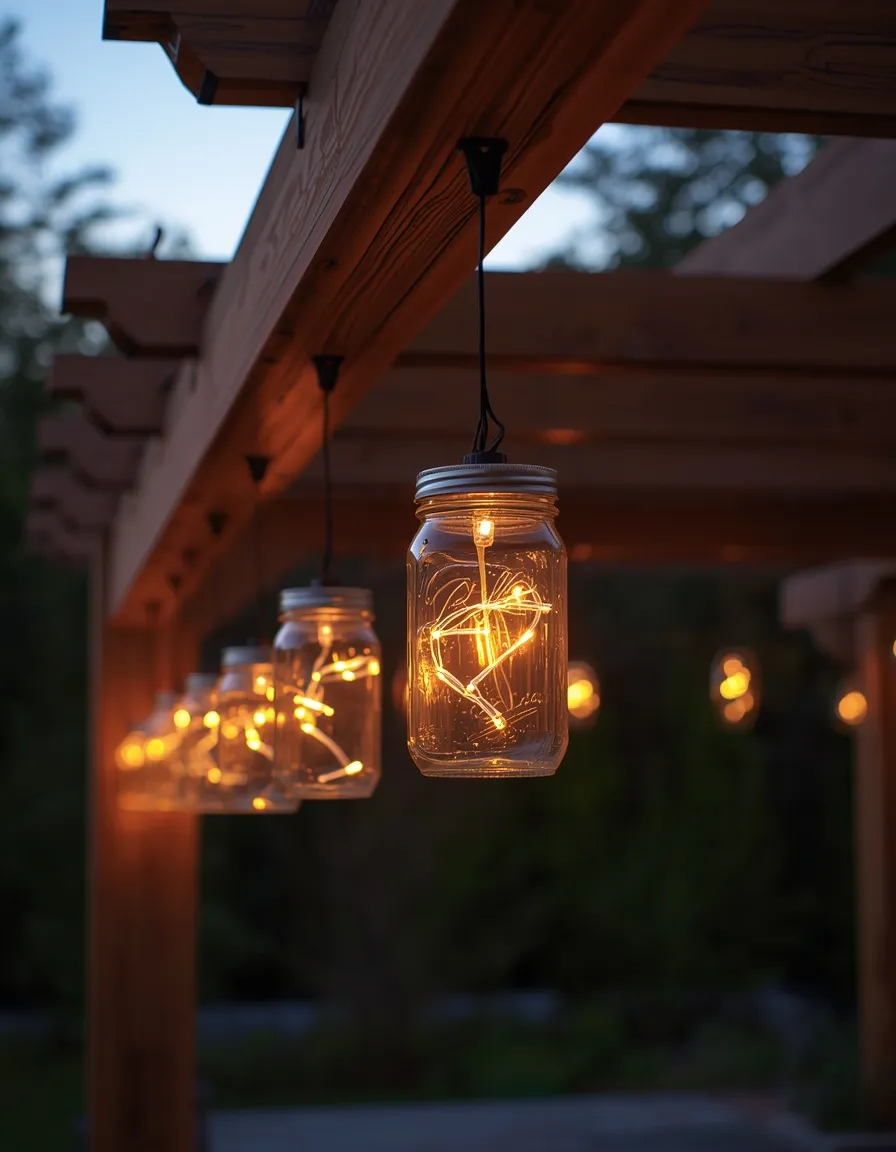
9. Mason Jar String Lighting
Mason jars fitted with hanging lantern kits, each holding a small string light or candle, strung along a pergola beam or fence line add a warm, homespun glow that reads as considerably more personal than standard patio string lights alone.
Use battery-operated LED tea lights or low-voltage string lights inside the jars rather than real candles, since glass jars swinging gently in wind are a genuine fire risk with an open flame inside, and secure each jar’s wire handle firmly to prevent it from slipping loose. Space jars unevenly along the line rather than in a perfectly uniform row, which reads as more handmade and less like stage lighting. This pairs naturally with the reclaimed wood pergola idea above, hanging directly from the overhead beams for a cohesive, layered look.
- Adds warm, personal-feeling light distinct from standard string bulbs
- Suits pergolas, fence lines, and dining areas wanting ambient glow
- Solves the impersonal look of plain, uncovered string light bulbs
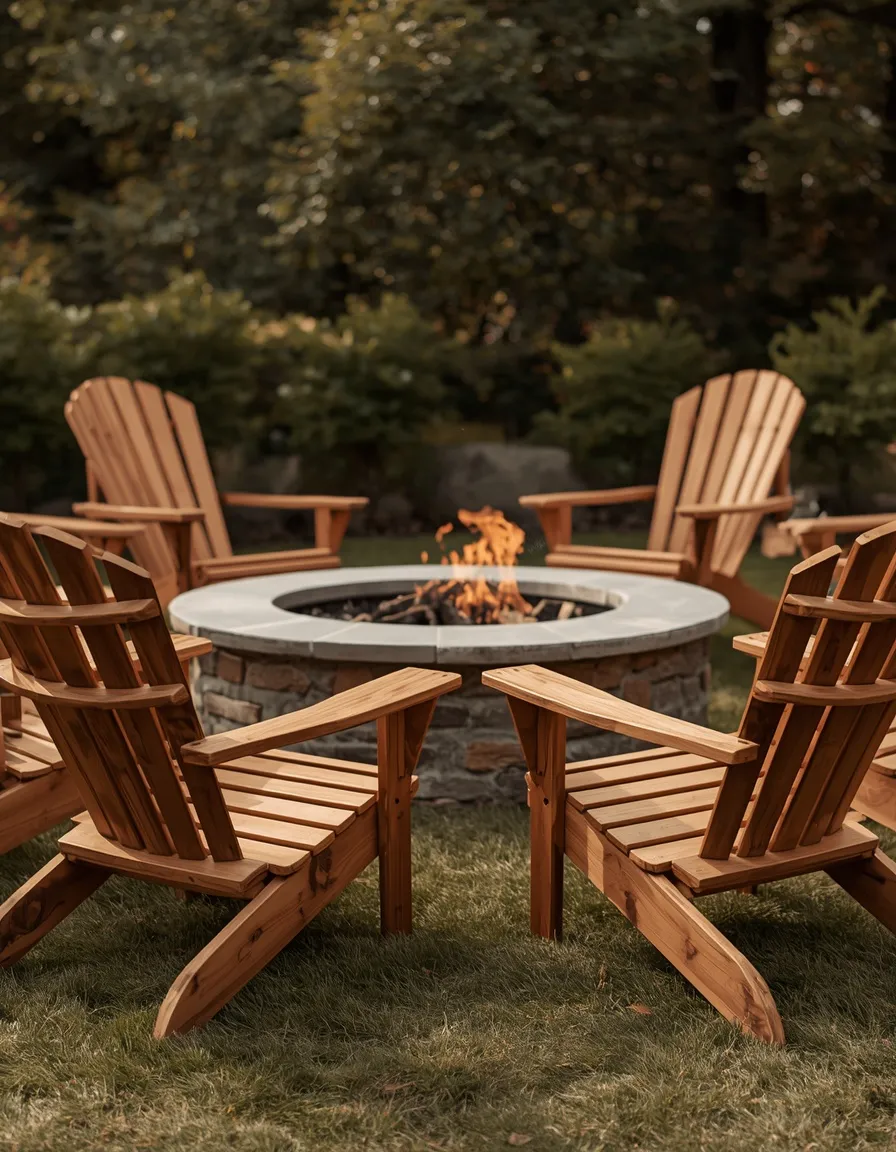
10. Adirondack Chair Seating Area
A cluster of wide-armed Adirondack chairs, angled slightly toward each other rather than lined up in a row, gives a lawn or patio edge the relaxed, settle-in-for-a-while seating that rustic backyards are built around.
Choose solid wood, cedar or pine, over resin or plastic versions if budget allows, since the visible grain and joinery read as considerably more authentic, though a well-made poly-lumber version resists weather and rot better in humid or coastal climates where wood chairs need more frequent maintenance. Angle chairs in a loose semicircle around a fire pit or view rather than facing them all the same direction, which encourages actual conversation. Oil or reseal wood chairs annually in most climates to prevent graying and cracking, or let them silver naturally if that weathered look fits the rest of the space.
- Creates genuinely comfortable, conversation-friendly outdoor seating
- Suits lawns, fire pit areas, and open patio edges alike
- Solves the stiff, formal feel of matched bistro-style furniture
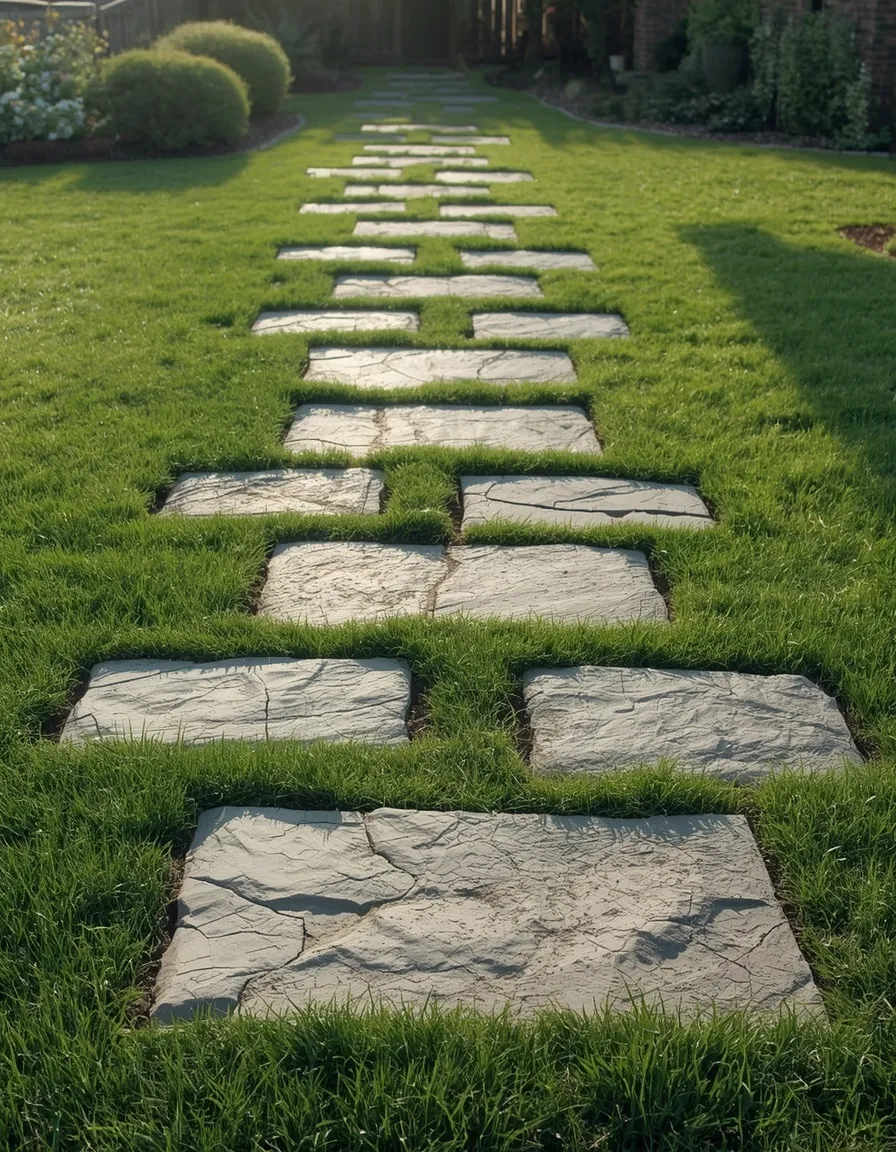
11. Flagstone Stepping Path
Large, irregular flagstone pavers set into the lawn or a gravel bed, spaced for a natural walking stride, lead visitors through the yard with the same unhurried, organic path a farm or country property would have developed over decades.
Space stones roughly 24 to 30 inches (61 to 76 cm) center to center for a comfortable adult stride, and set them slightly below the surrounding grass or gravel line so a mower can pass over them without catching an edge. Choose one regional stone type rather than mixing several, which keeps material costs down and the look cohesive, and set stones on a compacted gravel base rather than bare soil to prevent shifting and pooling water after rain. This path works particularly well connecting a fire pit area, garden shed, or grill station to the main patio.
- Creates a genuine, functional route between garden zones
- Suits lawns and looser garden beds better than a formal poured path
- Solves worn dirt tracks that develop from repeated foot traffic
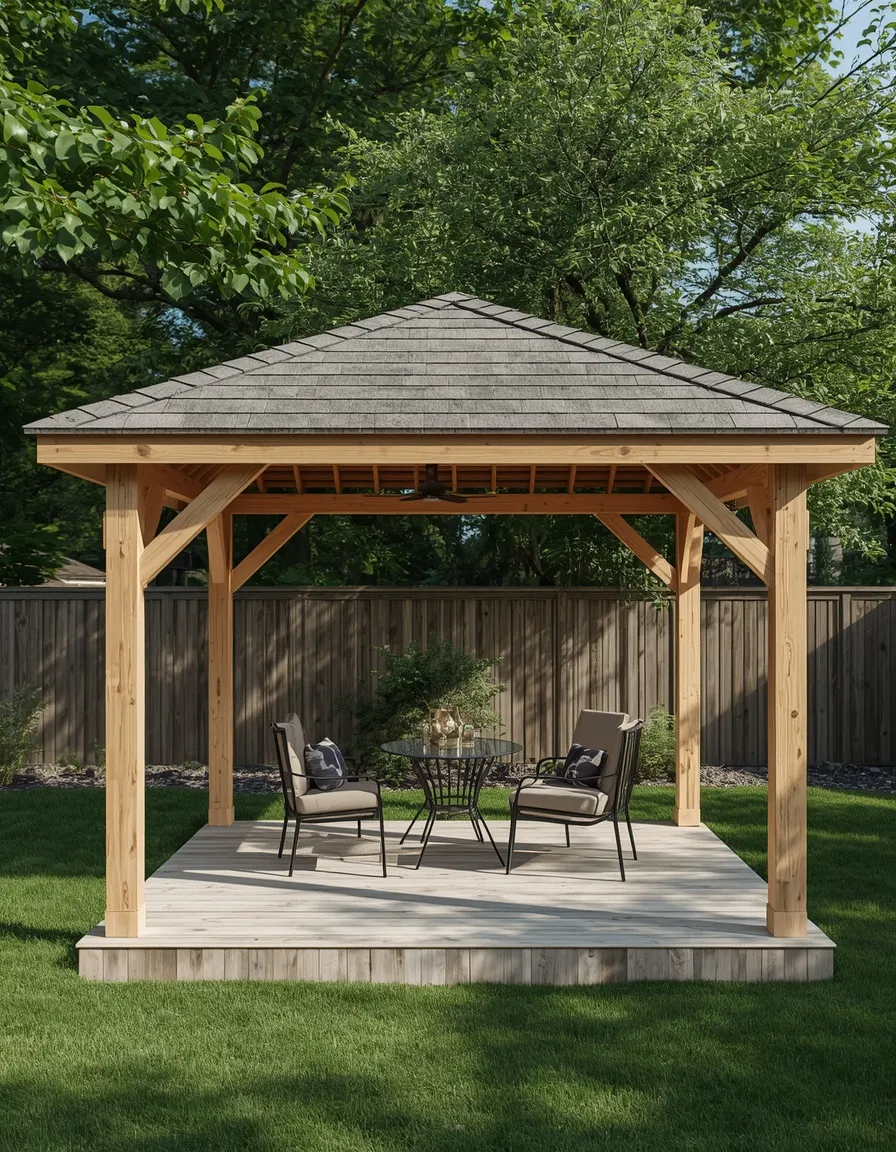
12. Budget DIY Rustic Gazebo
A simple open-frame gazebo, built from pressure-treated posts and a basic pitched roof rather than an elaborate kit structure, gives a corner of the yard defined shelter and shade at a fraction of the cost of a prefabricated version.
Keep the structure to a basic post-and-beam frame with a simple metal or shingled roof rather than adding elaborate railings or lattice detailing, which is where most of a gazebo’s cost comes from; a straightforward frame can often be built over a weekend by an intermediate DIYer with basic tools. Set posts in concrete footings below the local frost line in cold climates, since posts set too shallow will heave and shift as the ground freezes and thaws each year. Add simple curtain panels or a woven reed screen along one or two sides for partial privacy without the cost of full walls.
- Delivers defined outdoor shelter at meaningfully lower cost than a kit
- Suits patios and lawn corners wanting shade without a full pergola
- Solves the high price barrier of prefabricated gazebo structures
13. Corrugated Metal Accent Wall
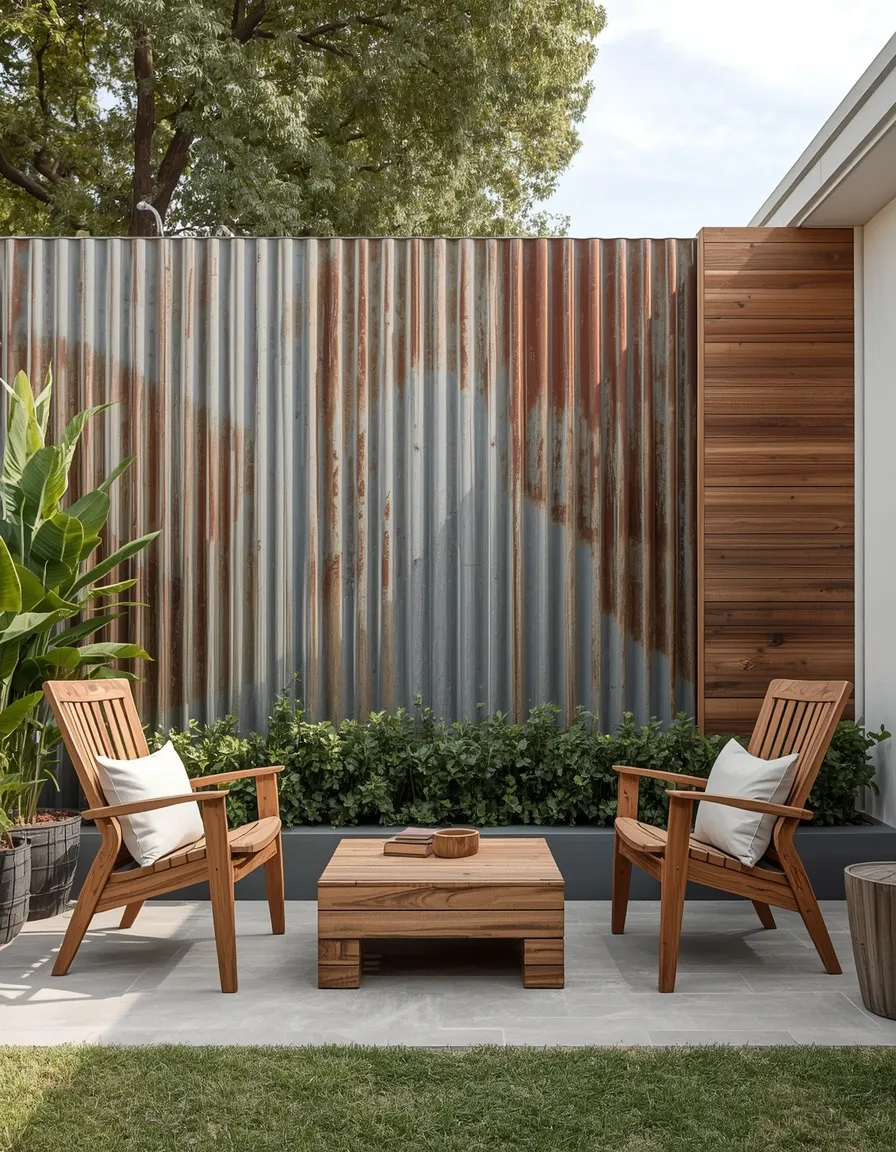
A section of corrugated or ribbed metal roofing, mounted vertically as an accent wall behind a seating area or garden bed, brings genuine barn and working-farm texture, especially striking when paired against raw wood and greenery.
Choose a weathered galvanized or Corten steel finish over painted panels for the most authentic look, since Corten steel develops a stable rust patina over time that many rustic designs specifically embrace rather than avoid. Mount panels on a simple wood or steel frame with rounded or capped edges, since raw cut metal edges are sharp and should not be left exposed at a height where hands or arms might brush against them. This idea works particularly well as a backdrop for a fire pit or grill station rather than along a full property boundary, where the material’s reflectivity and heat absorption become less practical.
- Adds authentic barn-and-farm texture distinct from wood or stone
- Suits backdrop walls behind seating or cooking areas
- Solves the flat, background-less look of a bare fence or wall
14. Wildflower Meadow Patch
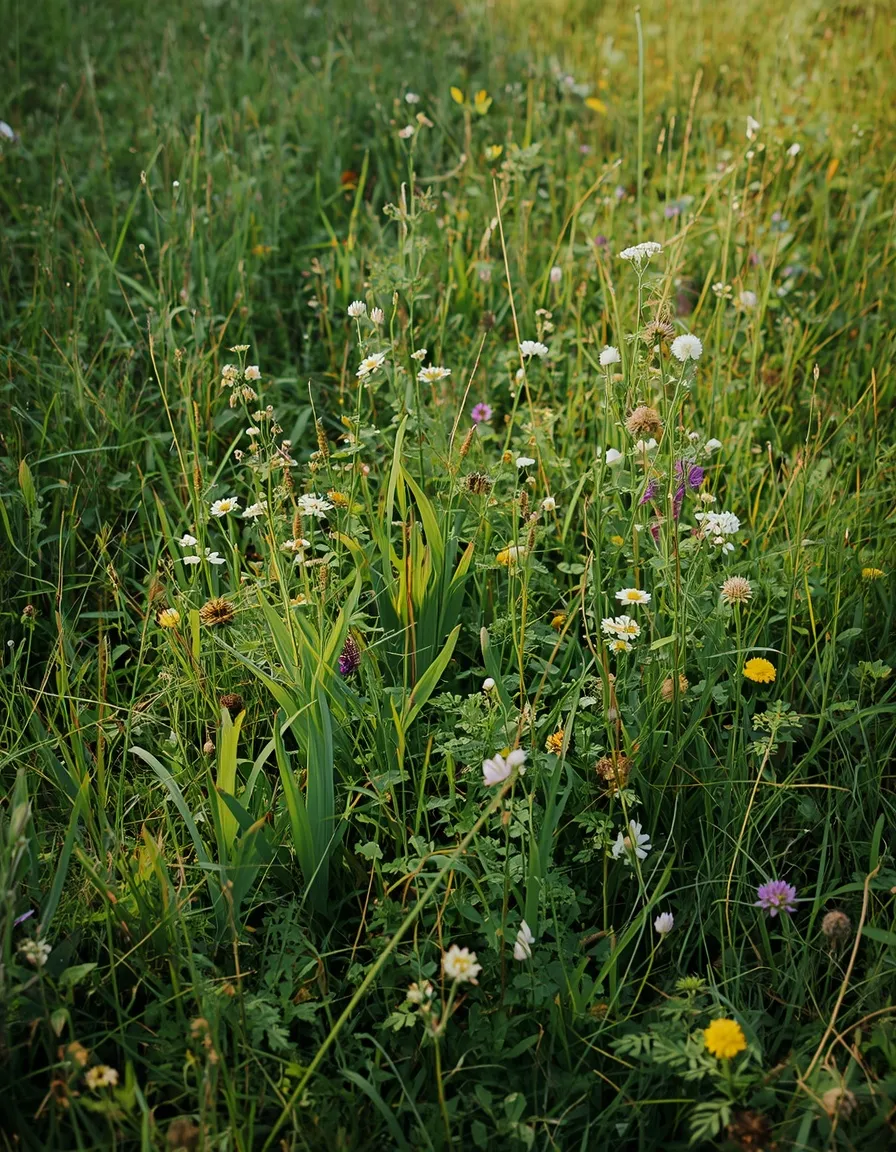
A section of lawn left unmowed and seeded instead with a native wildflower mix, black-eyed Susan, yarrow, coneflower, or regional equivalents, replaces a patch of uniform green with the loose, textured look of an actual country meadow.
Choose a seed mix specifically formulated for your region and soil type rather than a generic national blend, since wildflowers that thrive in one climate zone can fail entirely or become invasive in another; a local university extension office or native plant society can typically recommend a regionally appropriate mix. Mow the meadow patch once in late fall after seed heads have dropped, rather than maintaining it like lawn throughout the season, which allows the mix to self-seed and return the following year. Keep the meadow patch to a defined area with a mowed border around it, since an undefined edge reads as neglect rather than an intentional wildflower feature.
- Adds natural texture and pollinator habitat without daily maintenance
- Suits larger lawns with a section that can be dedicated to it
- Solves the monotony of an all-lawn backyard
15. Repurposed Vintage Garden Decor
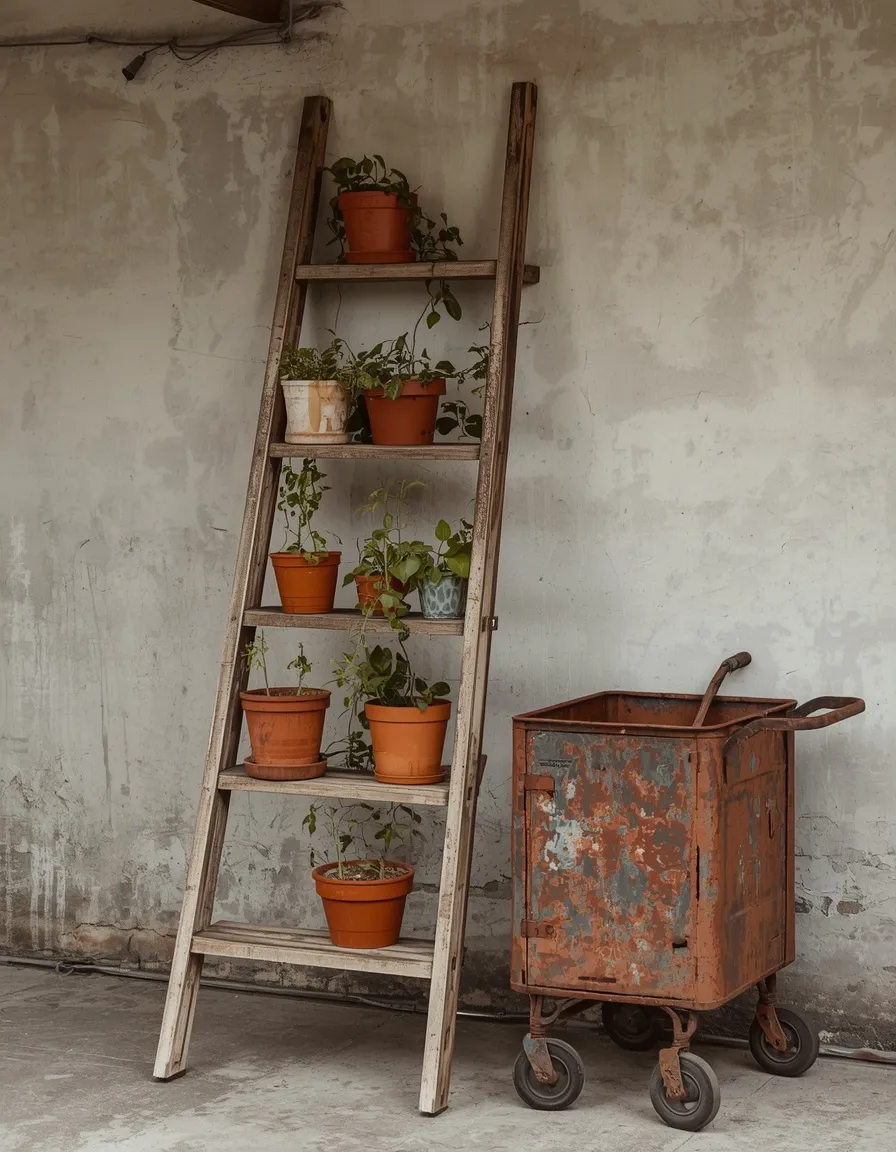
An old wooden ladder leaned against a wall and hung with potted plants, a rusted metal cart used as a rolling planter, or a weathered signpost repurposed as garden art brings genuine, one-of-a-kind character that no matching decor set can replicate.
Source pieces from estate sales, farm auctions, and salvage yards rather than reproduction decor, since authentic wear and age is the entire point of this idea, and inspect any vintage metal item for structural rust that could compromise its use before hanging plants or weight on it. Limit vintage accents to two or three well-placed pieces rather than scattering many across the yard, which starts to look cluttered rather than curated. This idea pairs naturally with the wagon wheel accent above as part of a broader collected, salvage-driven styling approach.
- Adds genuinely unique character no new decor can replicate
- Suits gardeners who enjoy hunting for pieces over buying new
- Solves the generic, catalog-decor feeling of matched garden accessories
16. Jute Natural Fiber Rug
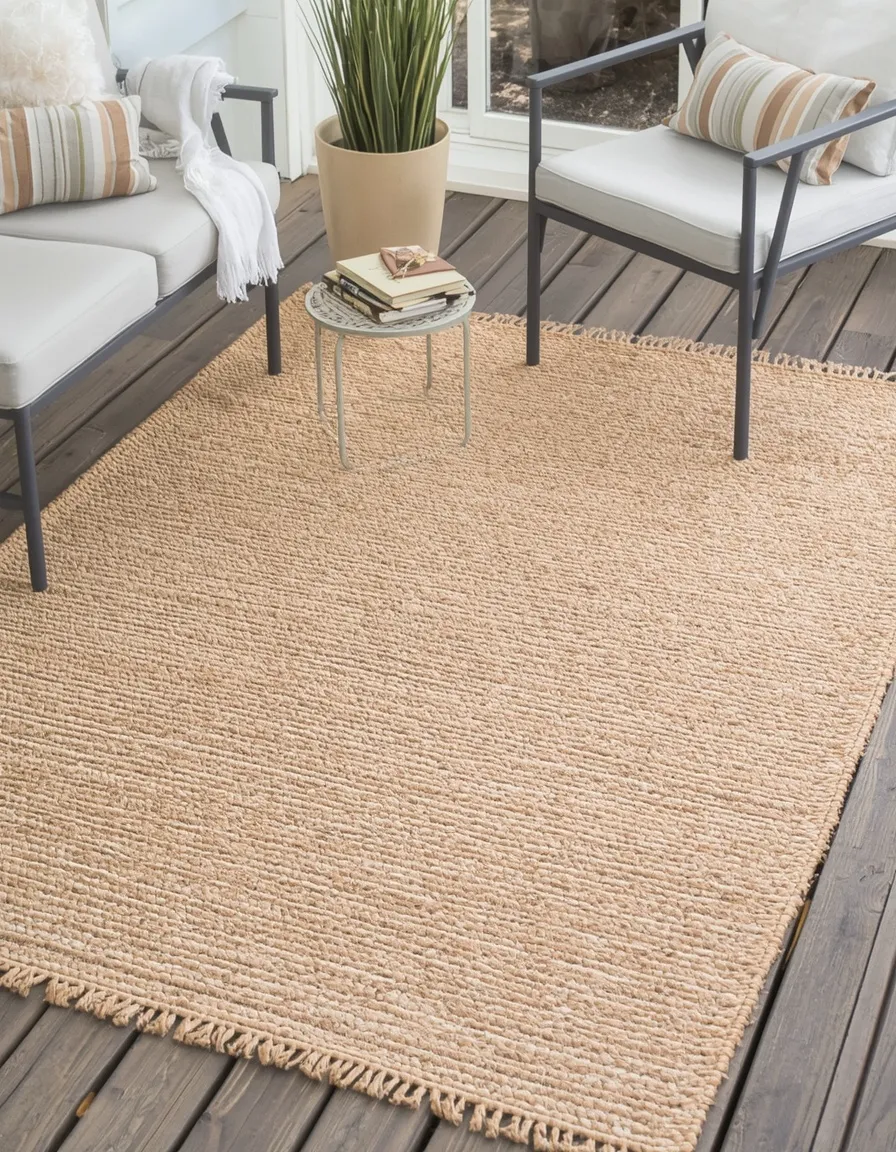
A flatwoven jute or jute-look outdoor rug, laid under a seating group on a deck or patio, softens hard flooring with the same warm, undyed texture found in farmhouse and rustic interiors, extended out into the yard.
Choose an outdoor-rated synthetic jute-look rug for anywhere exposed to regular rain, since true jute fiber absorbs moisture and mildews quickly outdoors, while a well-made polypropylene version holds the same woven texture and dries without damage. Size the rug to extend at least a foot beyond the furniture grouping on each side so it anchors the seating area rather than floating beneath it. Roll and store the rug during extended wet or freezing periods in climates where it would otherwise sit saturated for weeks at a time.
- Softens hard decking or patio stone without permanent changes
- Suits covered or partly covered outdoor seating areas
- Solves the bare, unfinished look of unstyled outdoor flooring
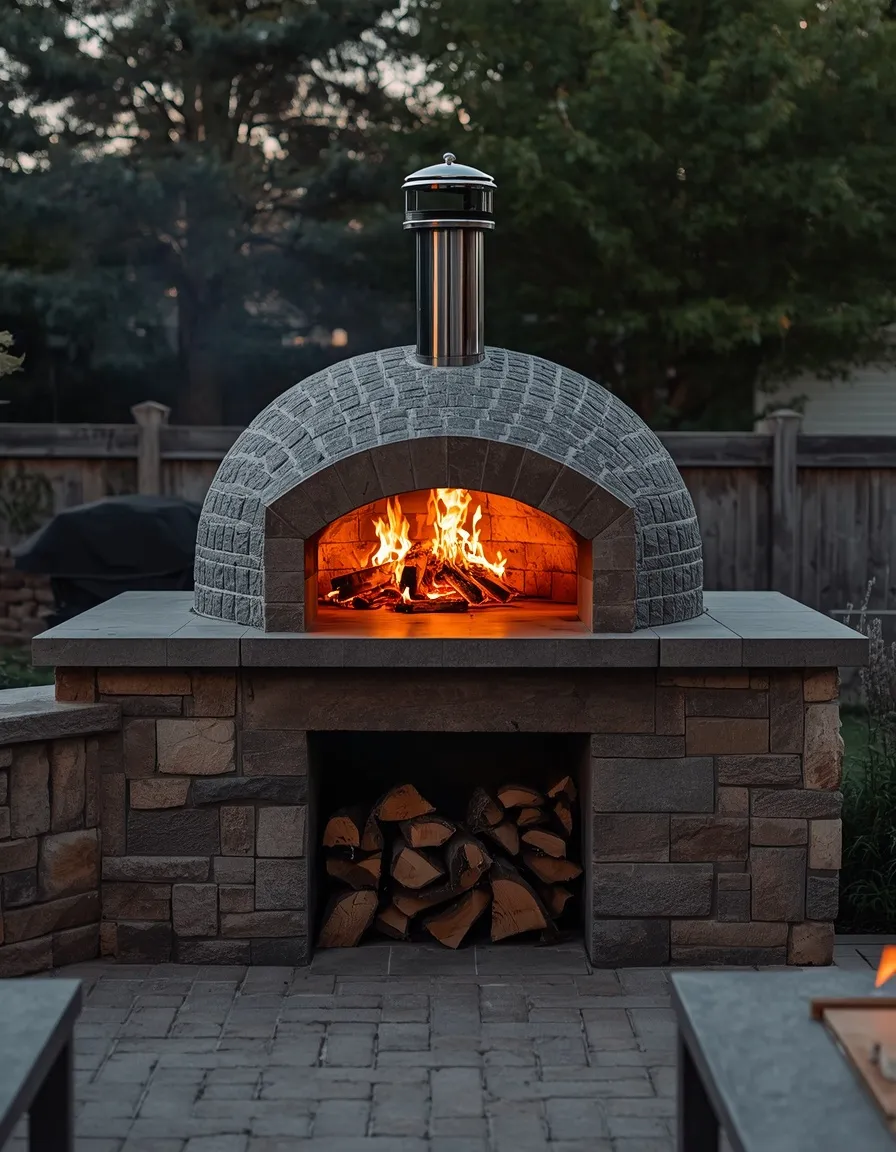
17. Wood-Fired Pizza Oven Station
A domed, wood-fired pizza oven, built into a stone or brick surround, turns a corner of the patio into a genuine cooking destination and a natural gathering point while the fire is going, distinct from a standard grill setup.
Position the oven with its chimney and opening facing away from the house and any overhanging structure, maintaining significant clearance from combustible materials per the manufacturer’s specific installation guidelines, since a wood-fired oven burns considerably hotter and longer than a grill. Cure a new oven gradually with several small, progressively hotter fires over the first week or two before full use, since firing a brand-new oven at full heat immediately can crack the masonry. This is a larger investment and build than the grill station idea above, better suited to households that entertain often and specifically want the wood-fired cooking experience rather than convenience.
- Delivers a genuine cooking destination beyond standard grilling
- Suits households that entertain regularly and enjoy hands-on cooking
- Solves the limits of a standard grill for bread, pizza, and roasting
18. Rope and Wood Tree Swing
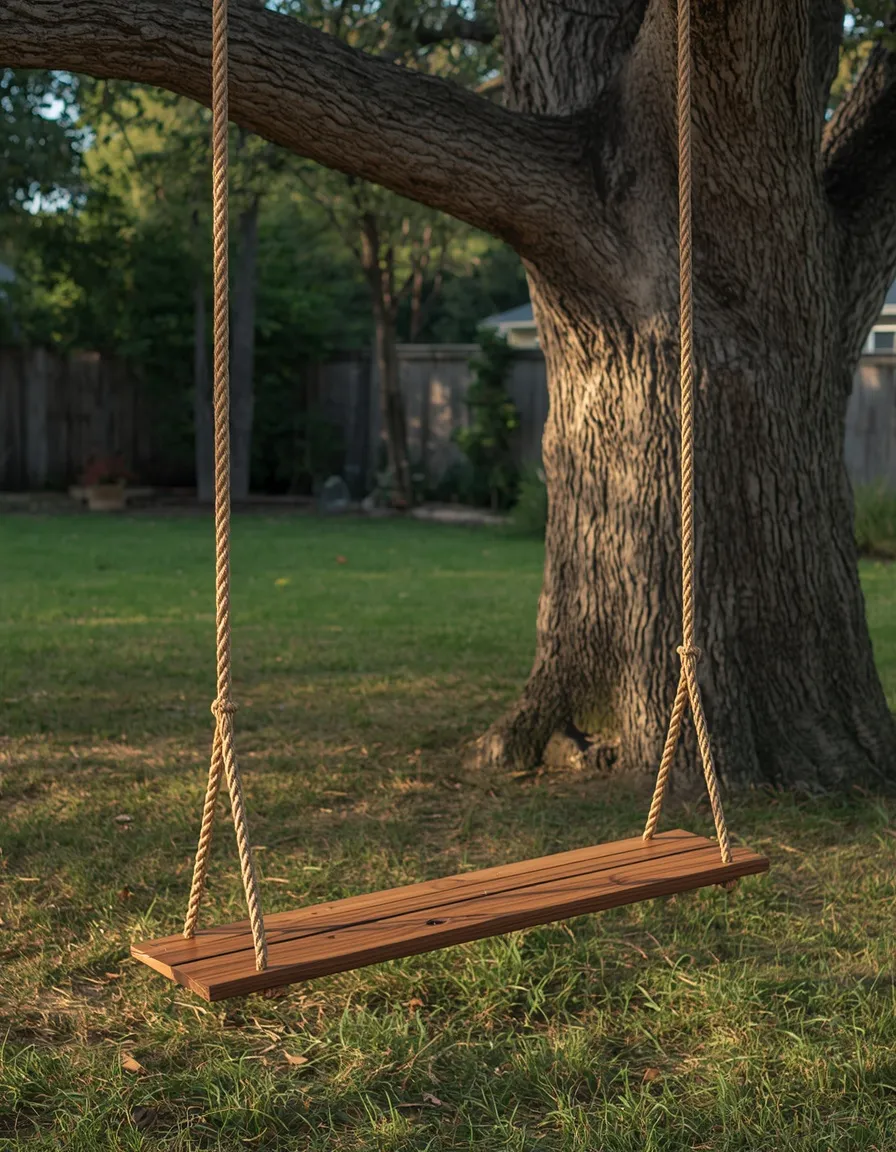
A simple wooden plank seat, suspended from thick natural rope tied over a sturdy tree branch, brings an unmistakable, nostalgic country-yard image that costs very little and appeals to kids and adults alike.
Only hang a swing from a living branch at least 8 inches (20 cm) in diameter with no visible cracking, rot, or dead wood, and inspect the branch and all hardware at the start of each season, since a branch failure under swinging, dynamic weight is a genuine injury risk that static weight testing does not fully reveal. Use rope and hardware rated for the expected weight load rather than decorative rope not intended for structural use, and position the swing with clear space on all sides, away from fences, trunks, and hard surfaces the seat could swing into. If no suitable tree exists, a freestanding A-frame swing set delivers the same look without relying on a living branch’s structural integrity.
- Adds a nostalgic, genuinely usable feature for kids and adults
- Suits yards with at least one mature, structurally sound tree
- Solves the lack of any playful, dynamic element in a purely styled yard
19. Rustic Wood-Rail Deck
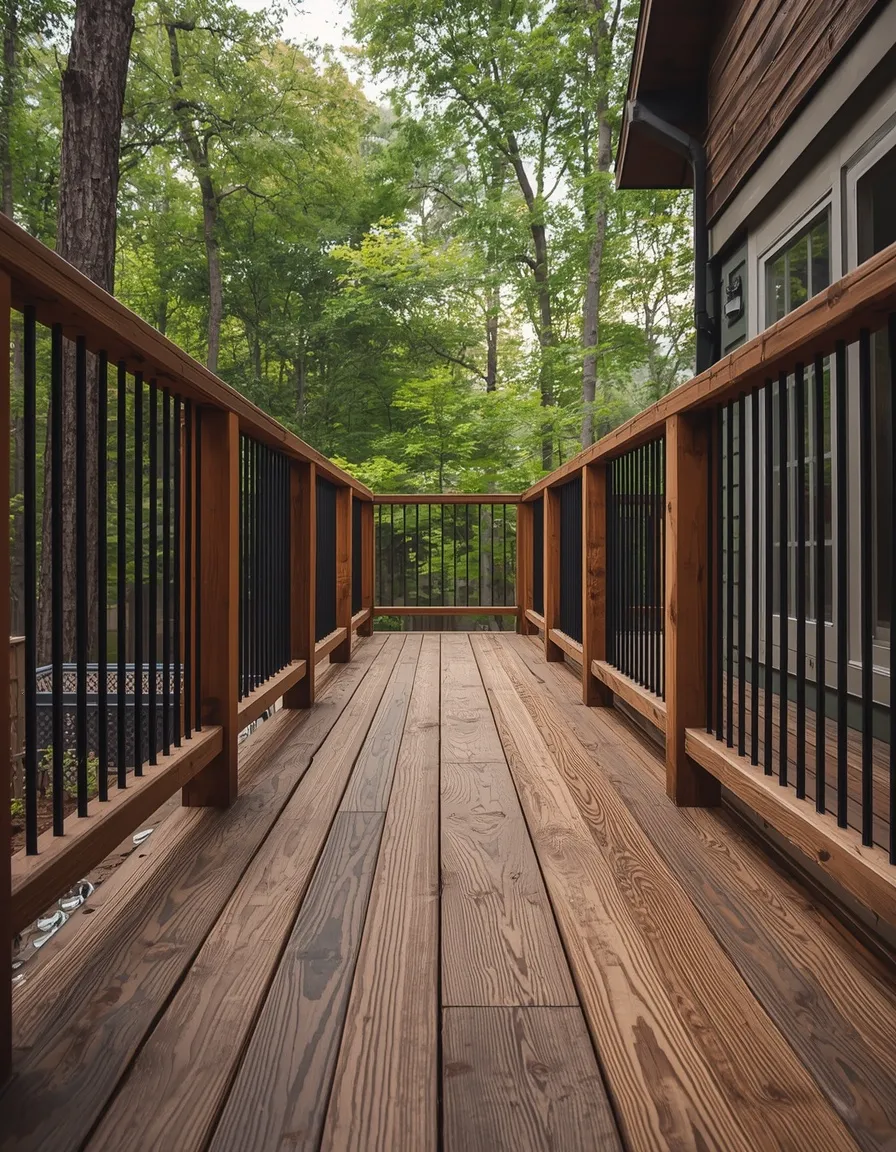
A deck built with rough-hewn or timber-style wood railings instead of standard milled balusters gives an elevated outdoor space a solid, cabin-like presence, especially when paired with wide plank decking rather than narrow composite boards.
If the deck sits more than about 30 inches (76 cm) above grade, follow the International Residential Code’s 4-inch sphere rule for railing gaps, meaning no opening in the guardrail should allow a 4-inch (10 cm) sphere to pass through, since that is close to the size that can trap a small child’s head; this applies to horizontal timber rail designs just as much as vertical baluster ones. Choose a naturally rot-resistant wood like cedar or a modified thermal-treated species for ground-contact posts, and have a structural engineer or licensed contractor confirm post sizing and footing depth for any elevated deck rather than relying on a generic online plan. Wide plank decking, 6 inches (15 cm) or wider, reinforces the timber, cabin-style look better than standard 4-inch boards.
- Adds solid, structural character beyond a standard milled railing
- Suits homes wanting a cabin or lodge feel on an elevated space
- Solves the flimsy look of thin, closely spaced standard balusters
20. Stacked Stone Garden Border
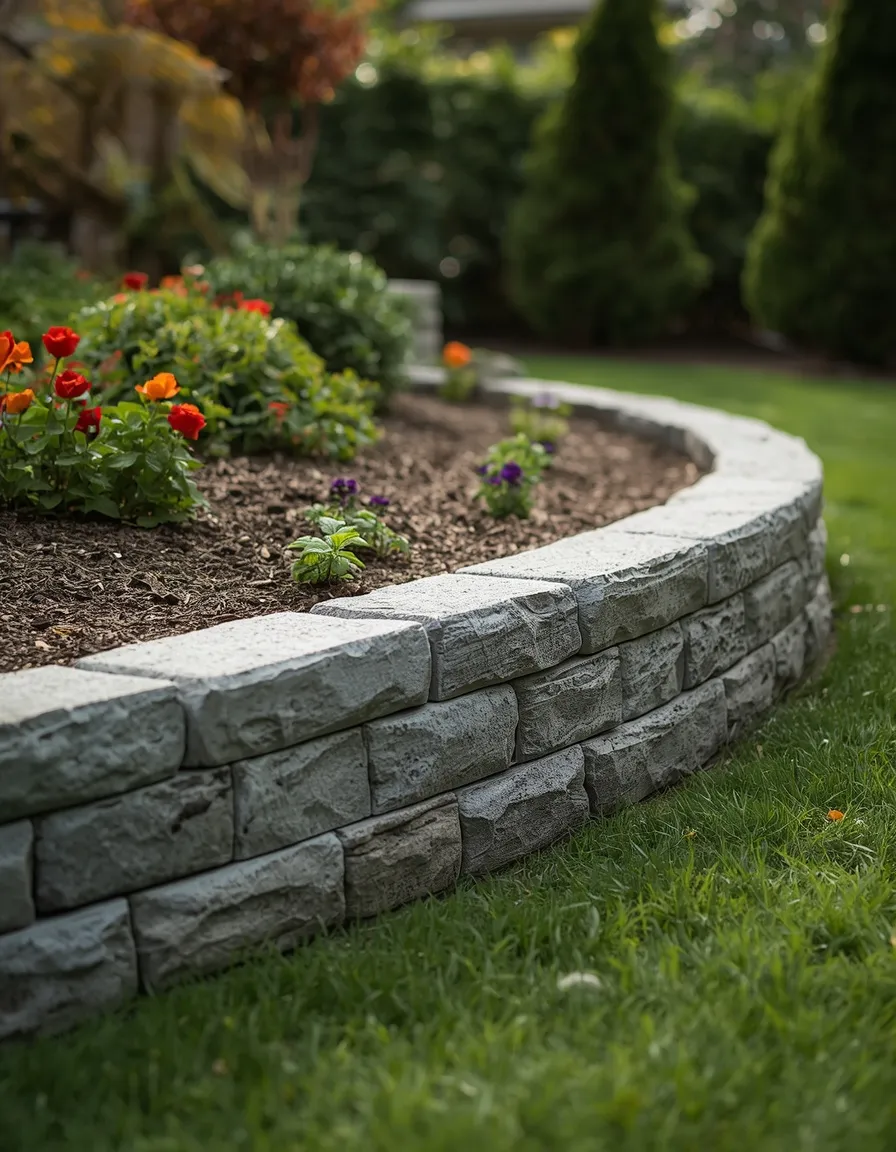
A low, dry-stacked stone wall, built without mortar and left with visible gaps and irregular stone shapes, defines a garden bed or terrace edge with the same handmade quality as an old farm boundary wall.
Use flat-faced fieldstone or a similar regional stone rather than rounded river rock, which is difficult to stack stably without mortar, and batter the wall slightly, meaning each course sits a little further back than the one below it, which is what gives a dry-stacked wall its structural stability without any binding material. Keep unmortared walls under about 2 feet (61 cm) tall for a DIY build, since taller dry-stacked walls need engineering consideration and are safer left to a professional. This border works well transitioning between a lawn and a raised garden bed, or terracing a mild slope.
- Defines garden edges with genuine handmade, old-world character
- Suits sloped yards needing simple terracing between levels
- Solves the harsh, straight-edge look of poured concrete or plastic edging
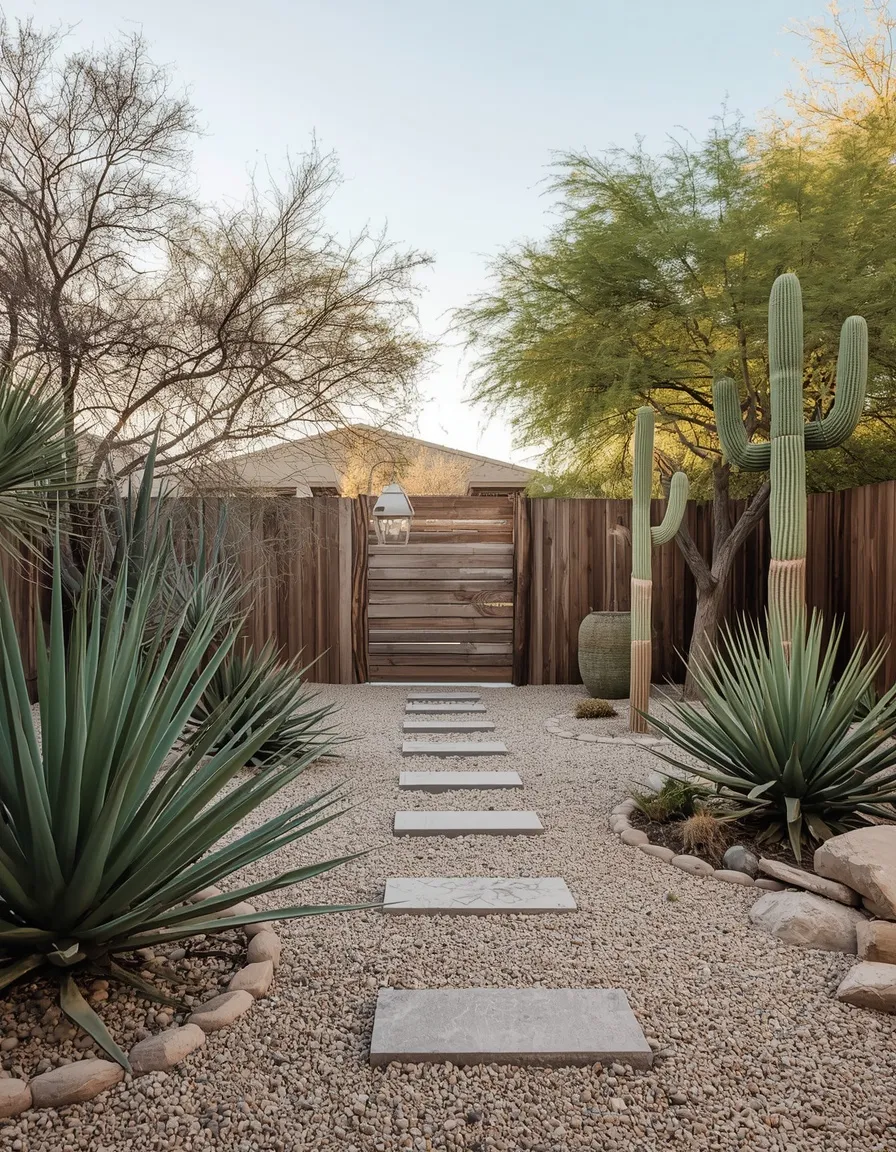
21. Drought-Tolerant Rustic Landscaping
In hot, dry climates like much of Arizona and the broader Southwest, rustic backyard style shifts away from cottage-garden greenery toward decomposed granite, weathered wood, and structural desert plants, a look that reads just as warm and lived-in without fighting the local climate.
Replace lawn and thirsty perennial beds with decomposed granite or crushed stone as the primary ground surface, then anchor the space with structural plants suited to arid conditions, agave, yucca, ocotillo, or native penstemon, rather than trying to sustain a cottage-style flower bed that will struggle and demand constant irrigation in extreme heat. Position spiny plants like agave and prickly pear well back from walkways, seating areas, and pool edges, since their physical structure poses a real scratch and puncture hazard regardless of any toxicity concern. Pair this planting approach with reclaimed wood furniture and rusted metal accents from earlier ideas on this list for a look that feels just as rustic as a cooler-climate version, simply translated for the desert.
- Delivers genuine rustic character without fighting a dry, hot climate
- Suits Arizona, the Southwest, and other low-water regions specifically
- Solves the high-maintenance failure of cottage-style planting in arid zones
Final Thoughts
Rustic backyard ideas hold up over time because they are built from real, honest materials rather than a single decorating trend, weathered wood, hand-stacked stone, a fire pit that actually gets used through the cooler months. Whether that means starting with something as small and affordable as a few sourced log stumps and a string of mason jar lights, or committing to a bigger structural project like a pergola or wood-fired oven, the strongest versions of this look come from choosing a handful of ideas that suit your actual climate and budget rather than attempting all twenty-one at once. That same practical, livable approach to outdoor space is what Sunday Abode is built around, and for more ways to bring that same natural material story into a garden, the garden design category covers layout and planting well beyond backyard styling alone. Pick the ideas that fit your space honestly, and let the materials weather in on their own time.
FAQs
What is the difference between rustic and farmhouse backyard style?
Rustic leans into raw, weathered, working-land materials, reclaimed wood, unfinished stone, wrought iron, while farmhouse style is generally softer and more polished, closer to painted furniture and cottage-style planting. Many backyards genuinely blend both, but a purely rustic space favors visible age and imperfection over a curated, matched look.
How can I create rustic backyard ideas on a tight budget?
Several ideas on this list cost very little, sourced log stumps, a secondhand wagon wheel, mason jar string lights, and a dry-stacked stone border all rely more on sourcing and labor than material cost. Prioritize one or two low-cost DIY projects first, then save toward larger structural additions like a pergola or built-in grill station.
What rustic backyard ideas work in a hot, dry climate like Arizona?
Swap cottage-style planting for decomposed granite, structural desert plants like agave and yucca, and drought-tolerant native flowers, then layer in the same reclaimed wood furniture, stacked stone, and metal accents used in cooler-climate versions. The materials and textures carry the rustic look even when the planting palette changes significantly for climate.
Are there safety concerns specific to rustic backyard features?
Yes, a few genuinely matter. Fire pits and wood-fired ovens need proper clearance from structures and local burn-ordinance compliance, tree swings need a structurally sound living branch inspected regularly, and elevated decks need railings that meet the 4-inch sphere rule to prevent a small child’s head from becoming trapped.
Can I add rustic elements without a full backyard redesign?
Absolutely, most of these ideas work as standalone additions to an existing yard rather than requiring a complete overhaul. A few log stump side tables, a wagon wheel accent, or mason jar lighting along an existing fence line can introduce the look gradually without touching the rest of the space.
What if I want a rustic look but also want a pool?
Rustic materials pair well with a pool when kept simple around the water’s edge, natural stone coping, weathered wood decking, and structural plantings positioned back from the pool edge rather than spiny or heavily shedding species right at the waterline. Keep loose gravel and unsealed wood away from bare-foot paths directly around the pool, since both can be uncomfortable or slippery when wet.
How do I keep a rustic backyard from looking messy or unfinished?
The difference between rustic and simply neglected comes down to intentional edges and groupings, a defined border around a wildflower patch, stumps sealed and arranged rather than scattered, vintage pieces limited to a few well-placed spots rather than everywhere at once. Contain the imperfection within a clear structure so it reads as a considered style choice rather than an unfinished project.
A note on safety: check local burn ordinances before adding any fire feature, follow the 4-inch sphere rule for elevated deck railings, and inspect tree branches and hardware before hanging a swing.