
Introduction
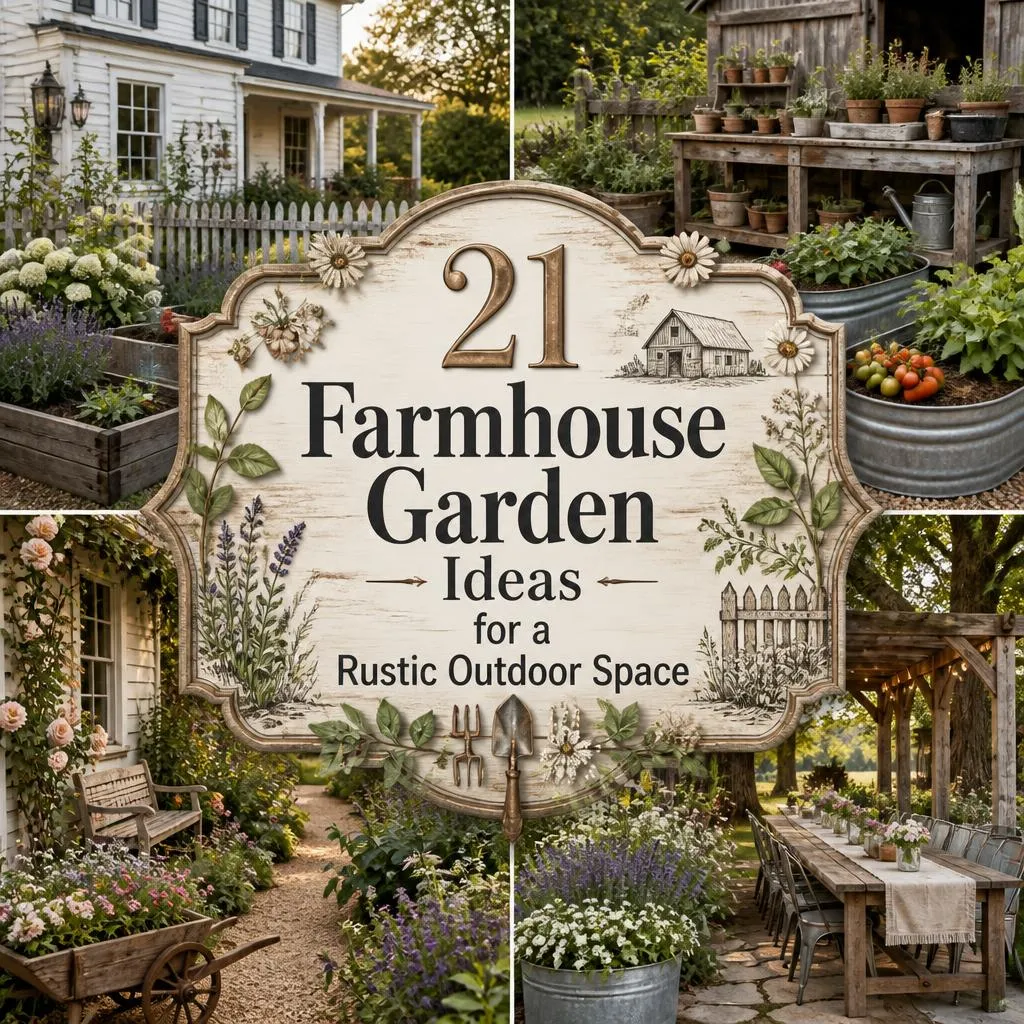
A farmhouse garden reads as lived-in before it reads as decorated: a white picket fence gone slightly weathered, rows of vegetables next to a cutting bed of zinnias, a galvanized watering can left out by the back step because it was actually used that morning. That practical, working-farm feeling is the whole point, and it’s what separates this style from a purely ornamental garden built to be looked at rather than used. This list moves through layout and structure, planting choices, vintage decor, and the functional pieces, potting nooks, rain barrels, compost corners, that most farmhouse garden guides skip in favor of decoration alone, plus a modern variation and adjustments for hot, humid climates. Consider it the reference for building your own outdoor Sunday Abode around that same honest, well-used charm.
Farmhouse Garden Layout and Structure Ideas
The bones of a farmhouse garden come first: the fence line, the paths, the beds themselves, since everything decorative later on depends on this structure already reading as practical and lived-in.
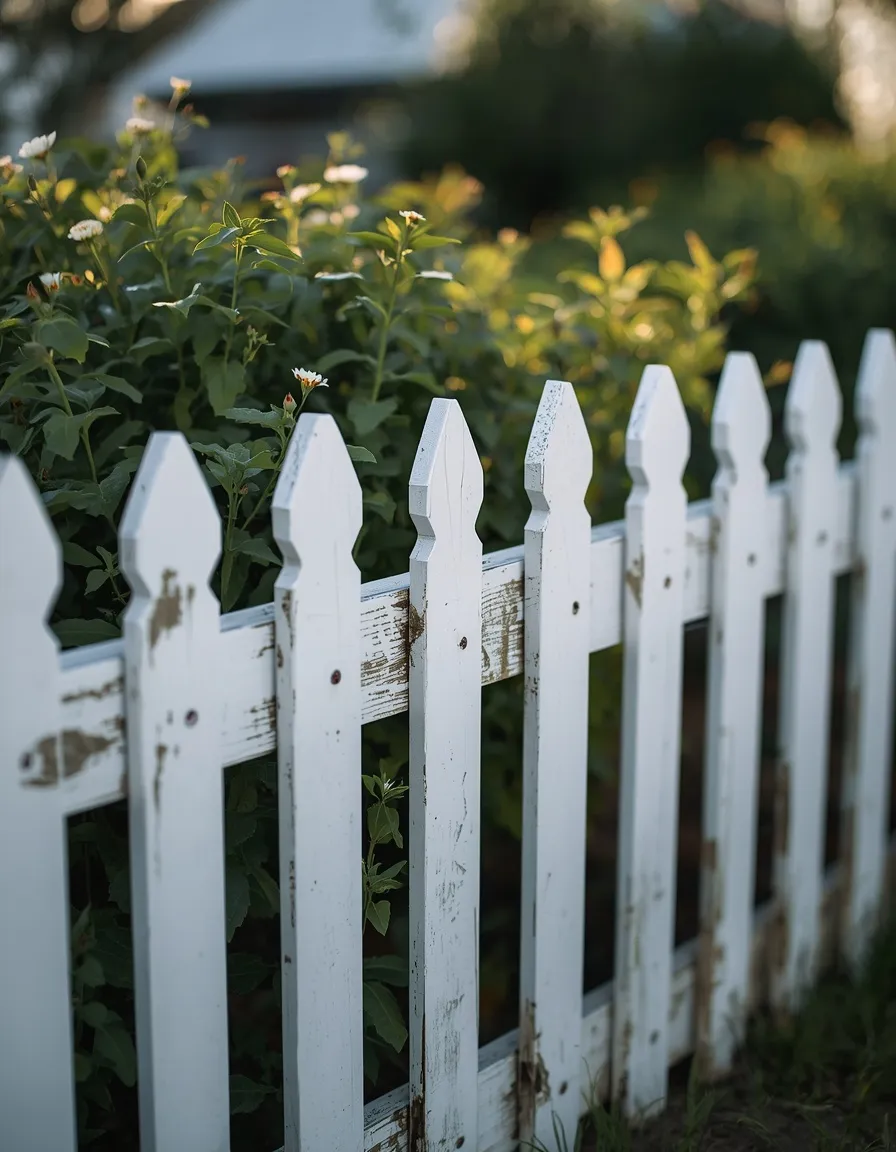
1. White Picket Fence Border
A white picket fence along the garden’s front edge, low enough to see over but distinct enough to mark a clear boundary, is the single most recognizable structural signature of a farmhouse garden.
Standard picket height runs 90cm to 1.1m (3 to 3.5ft) for a garden border, tall enough to define the space without blocking the view into it, and traditional spacing leaves a gap roughly equal to one picket’s width between boards for that classic look rather than a solid privacy panel. Prime and paint or seal all four sides of each picket before installation, not just the visible face, unsealed end grain is where rot starts first and where most picket fences actually fail years before the rest of the wood does. Set posts in concrete footings at least 45cm (18in) deep for stability, and choose a rot-resistant wood species, cedar or pressure-treated pine rated for ground contact, for the posts specifically since they take the most moisture exposure. A slightly imperfect, hand-built look actually suits this style better than a machine-perfect fence, minor variation in picket spacing reads as authentic rather than sloppy.
- Establishes the garden’s boundary and defines the space without blocking the view
- Works as the first structural element to install before layering in planting
- Solves the “garden has no clear edge” problem more effectively than planting alone
2. Gravel or Brick Garden Path
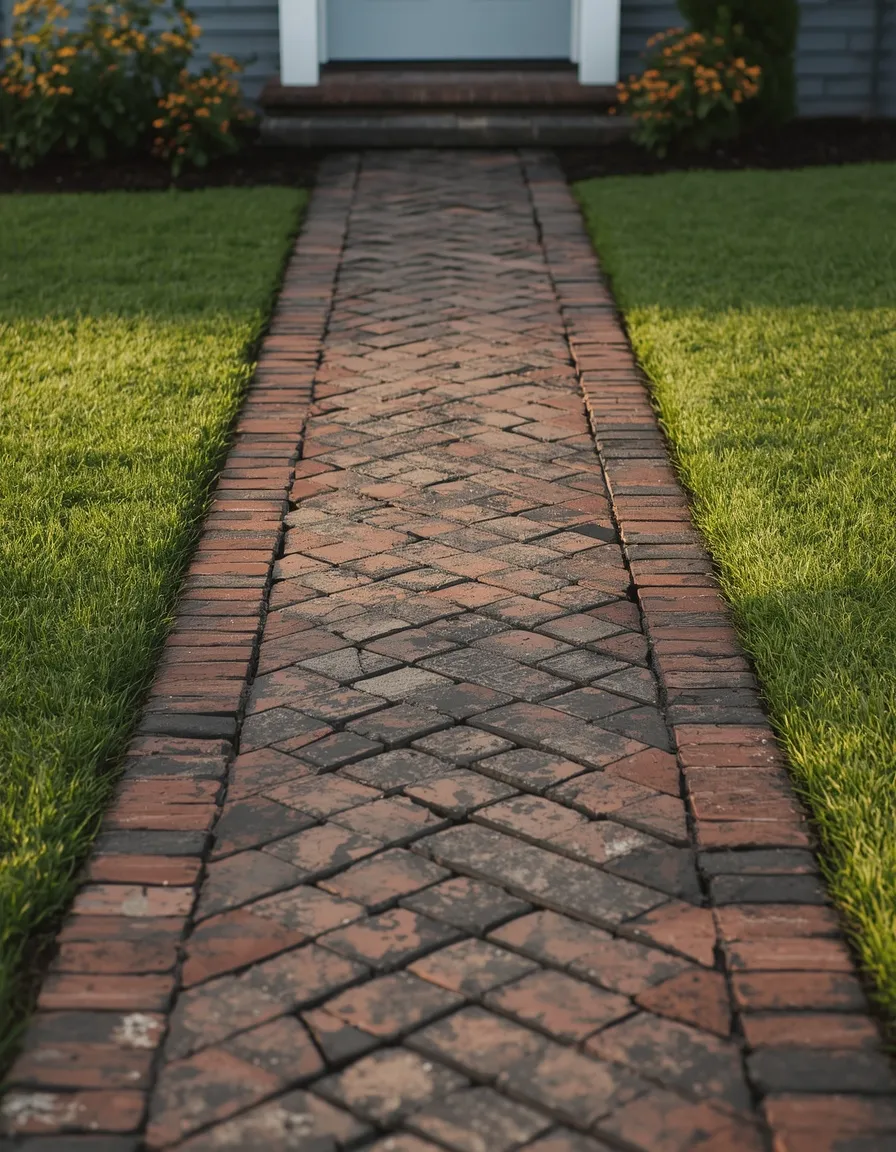
A path of pea gravel or reclaimed brick, laid with slightly irregular joints rather than a perfectly uniform grid, leads from the gate to the door the way a genuine farm path would have worn in naturally over years of foot traffic.
For a brick path, lay reclaimed or antique-style brick in a simple running bond or herringbone pattern set into a compacted sand base, and leave the joints slightly wider and less precise than a formal patio would call for, roughly 1 to 1.5cm (0.4 to 0.6in), for that worn-in look. For gravel, use angular crushed stone rather than smooth river rock, angular gravel compacts and stays put underfoot considerably better than rounded stone, which shifts and scatters. Edge either material with a low, simple border, reclaimed brick standing on edge or a plain steel strip, to keep it from migrating into surrounding beds. This works best connecting genuinely functional points, gate to door, garden to shed, rather than as a purely decorative loop with no real destination.
- Adds worn-in, well-traveled character that a plain lawn path can’t provide
- Works best on a genuinely functional route between two real destinations
- Solves muddy foot traffic across grass during wet seasons
3. Farmhouse Kitchen Garden Rows
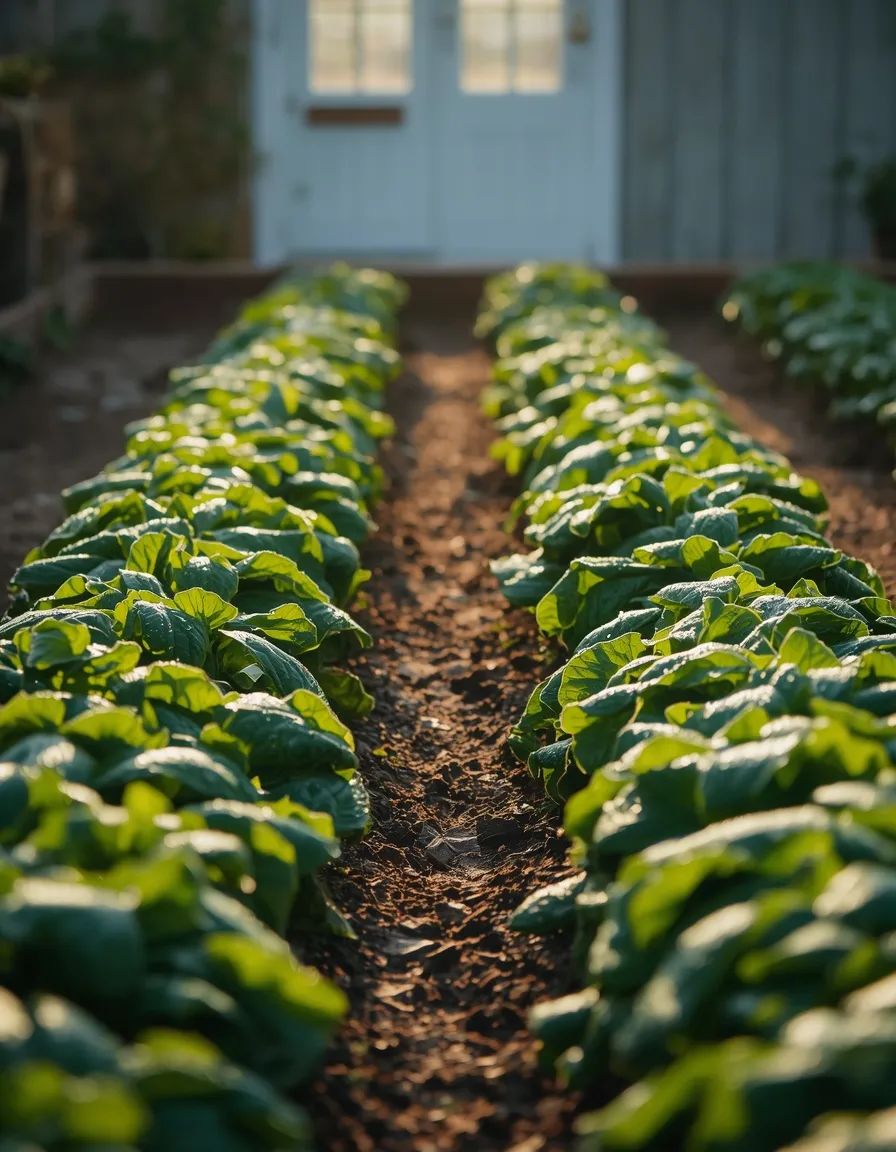
Straight, evenly spaced rows of vegetables just outside the kitchen door, the way a working farm’s kitchen garden has always been laid out, brings practical, productive structure that reads as farmhouse before a single decorative element gets added.
Orient rows north to south where possible so each row gets even sun exposure through the day rather than one side shading the other, and space rows based on what’s actually planted, roughly 45 to 60cm (18 to 24in) between rows of most vegetables allows room to kneel and weed without stepping on neighboring plants. Keep the layout genuinely rectilinear and gridded here specifically, unlike the looser, more informal planting style some other garden aesthetics favor, straight rows are part of what makes this read as farmhouse rather than cottage garden. Locate the whole bed within easy reach of the kitchen door, the traditional logic of a kitchen garden is genuine convenience for pulling ingredients mid-recipe, not just aesthetics. A raised bed frame around the rows helps define the grid further and keeps pathway soil from compacting into the growing area.
- Delivers genuine food production alongside the visual structure of the style
- Works best positioned within easy walking distance of the kitchen door
- Solves the “garden looks good but produces nothing” problem some purely ornamental styles have
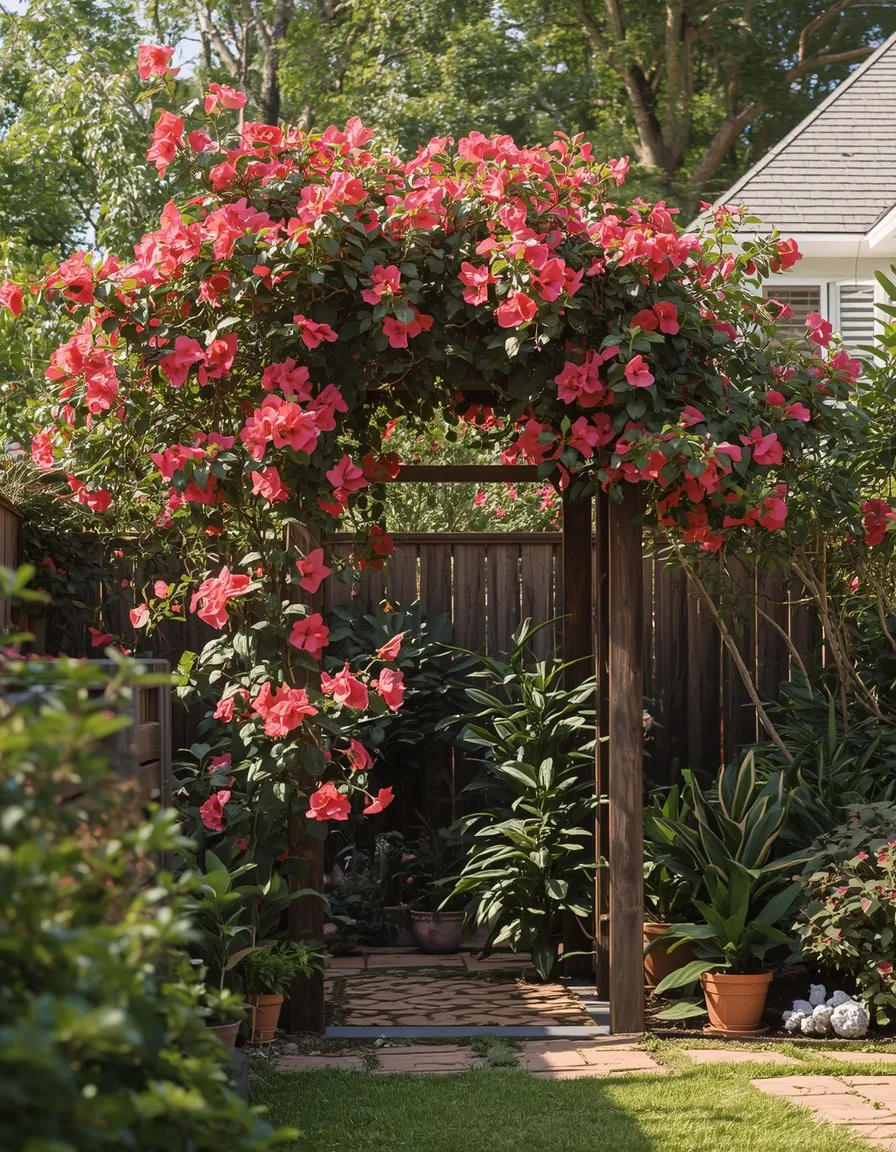
4. Rose-Covered Wood Arbor Entry
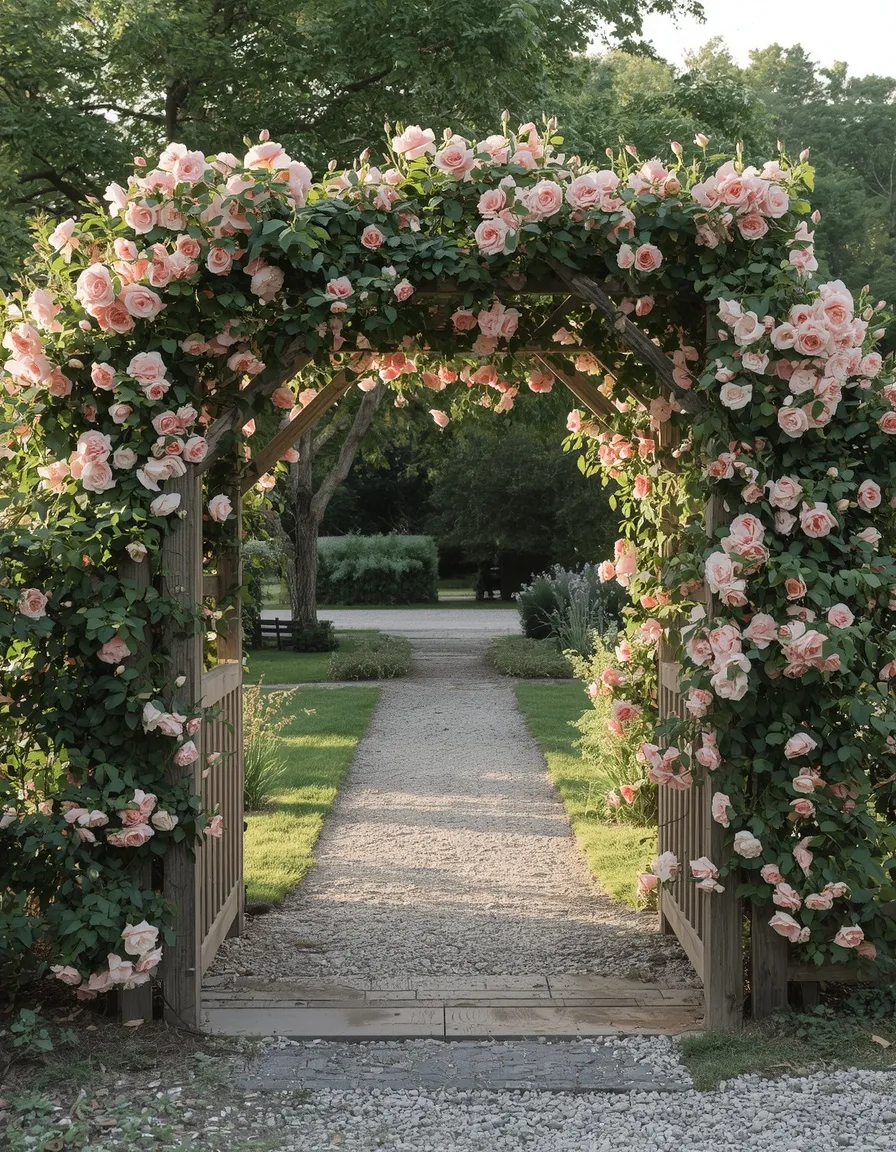
A simple wood arbor at the garden’s entrance, climbing roses trained up and over it, marks the transition into the space the way a farmhouse’s actual gate always did, functional first, decorative because of the roses.
Choose a repeat-blooming climbing rose variety over a once-blooming variety if the arbor needs to look good for more of the growing season rather than a single spring flush. Build the arbor from rot-resistant wood, cedar or pressure-treated pine, with cross bracing at the top rather than a single flat beam, roses add real weight over several seasons and an under-braced arbor can sag or fail. Train canes horizontally along the sides before letting them grow up and over the top, horizontal training produces significantly more blooms along the cane’s length than simply letting it grow straight up. Prune away any dead or crossing canes each dormant season, and watch for thorny cane litter dropping onto the path below, a genuine minor snag hazard worth sweeping regularly in a high-traffic entry spot.
- Marks a clear, welcoming entrance the way a working farm gate traditionally did
- Works best with a repeat-blooming rose variety for a longer season of color
- Solves a plain, undefined garden entrance with real structure and seasonal interest
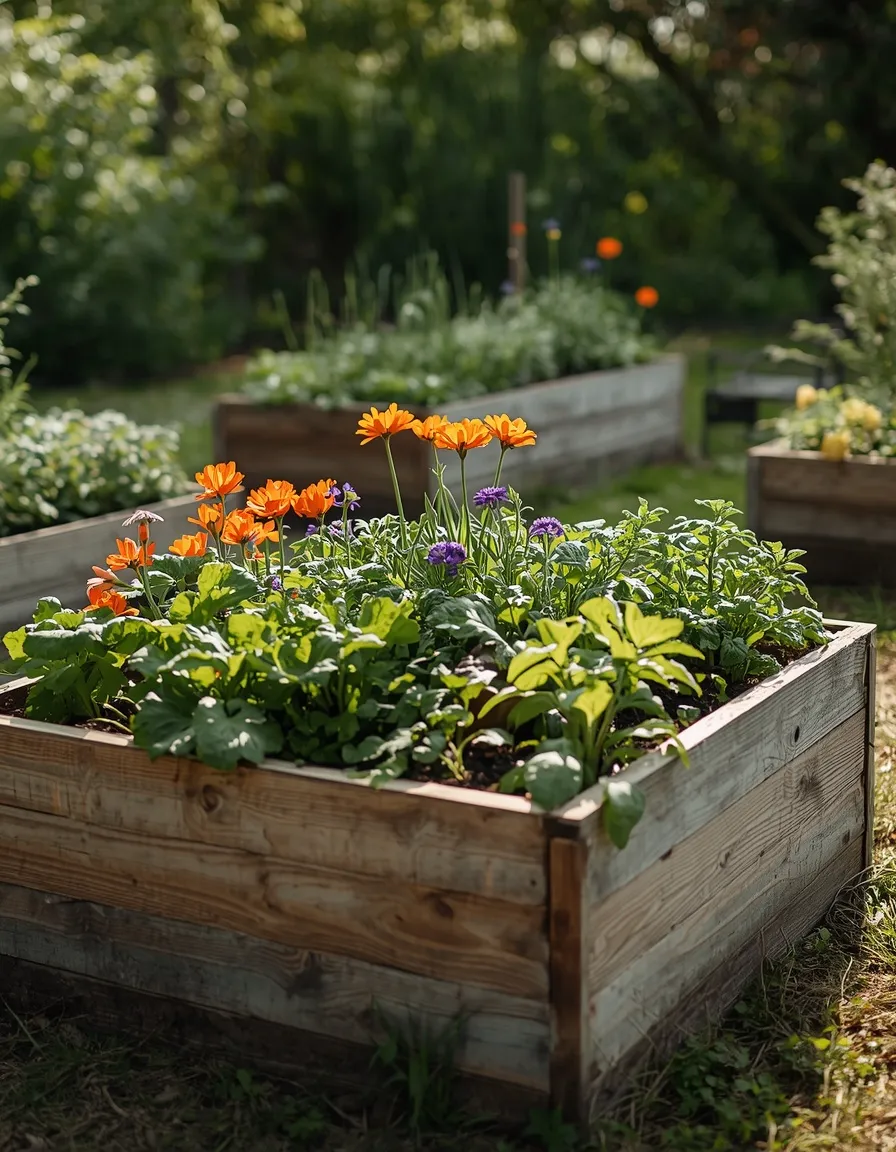
5. Reclaimed Wood Raised Beds
Raised vegetable and flower beds built from genuinely reclaimed barn wood or weathered fence boards bring real, unforced age and texture that new lumber simply can’t replicate no matter how it’s finished.
Source reclaimed wood from a salvage yard or architectural reclamation dealer who can confirm its history, and specifically avoid using wood that was originally pressure-treated with chromated copper arsenate, commonly called CCA lumber, which was standard for outdoor construction before the EPA phased it out of residential use at the end of 2003 due to arsenic leaching into surrounding soil. Older, weathered boards with no chemical treatment history, reclaimed barn siding or naturally aged fence boards, are the safer choice for anything growing edible plants; when in doubt about a board’s history, use it for a purely ornamental bed instead of a vegetable one, or line the bed’s interior with a plastic barrier before adding soil. Build beds no wider than 1.2m (4ft) so the center can be reached from either side without compacting the soil, and reinforce corners with simple L-brackets rather than relying on nails alone in older, sometimes brittle reclaimed wood.
- Delivers genuine, unforced age and texture new lumber can’t replicate
- Works best sourced from a dealer who can confirm the wood’s treatment history
- Solves the “beds look too new and matchy” problem while staying genuinely food-safe
Farmhouse Garden Planting Ideas
Planting in this style leans toward what a working farm would actually grow, cutting flowers, fruit, herbs within reach of the kitchen, rather than purely ornamental beds.
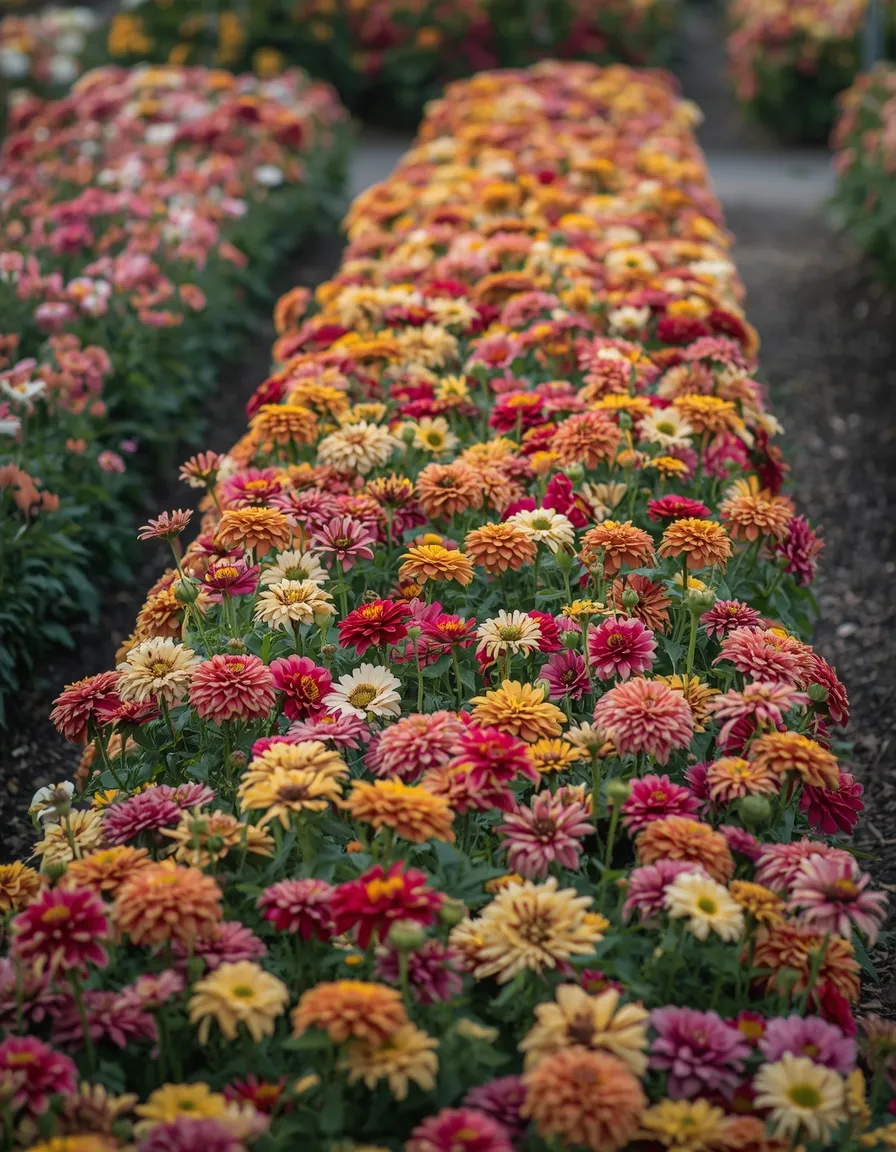
6. Cutting Garden for Fresh Flowers
A dedicated bed of zinnias, cosmos, dahlias, and sweet peas, planted specifically to be cut rather than admired in place, keeps the farmhouse kitchen table stocked with fresh flowers the way a working garden traditionally did.
Plant in the same straight, gridded rows as a vegetable bed rather than a naturalistic drift, cutting gardens are traditionally functional plots, not display beds, and the row structure also makes actual cutting and maintenance considerably easier. Choose varieties bred specifically for cutting, zinnias and cosmos rebloom readily after stems are cut, which keeps the bed productive through a full season rather than blooming once and finishing. Space plants slightly tighter than a display border would call for, since the goal is maximum stem production rather than each plant reaching full mature spread. Cut stems in the early morning while they’re still hydrated from overnight, and re-cut stems at an angle immediately before placing them in water, both meaningfully extend how long cut flowers actually last indoors.
- Supplies genuinely fresh cut flowers rather than only ornamental garden color
- Works best planted in functional rows rather than a naturalistic display bed
- Solves the desire for farmhouse-style fresh flowers without relying on a florist
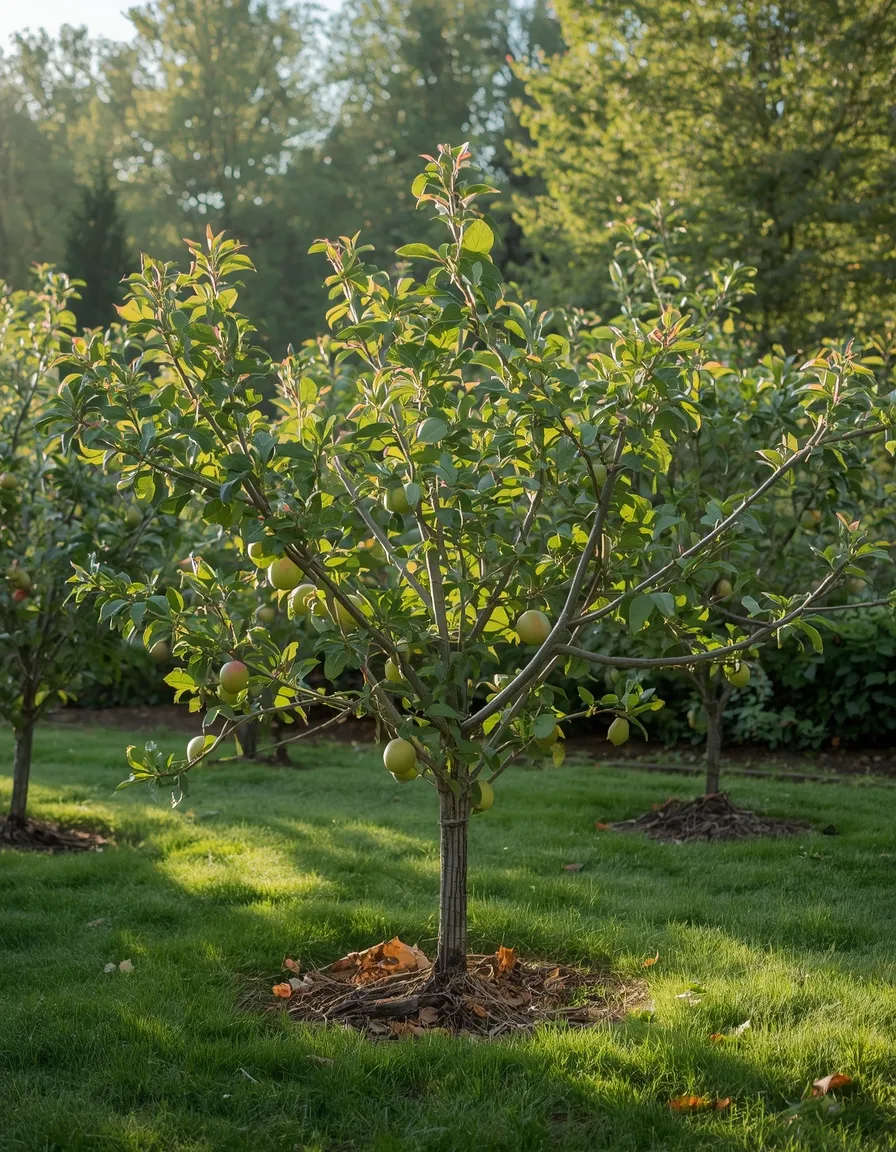
7. Orchard Corner with Dwarf Fruit Trees
A small cluster of dwarf apple, pear, or plum trees in one corner of the property brings the working-orchard element that’s long been part of the farmhouse garden tradition, even at a scale that fits a suburban lot.
Choose genuinely dwarf rootstock rather than semi-dwarf, a true dwarf apple tree tops out around 2.5 to 3m (8 to 10ft), which fits a corner planting far better than a semi-dwarf tree that can still reach 4.5m (15ft) or more at maturity. Plant at least two compatible varieties if the species requires cross-pollination for fruit set, most apple and pear varieties do, a single tree alone often produces little to no fruit regardless of how healthy it looks. Space trees roughly 3 to 4m (10 to 13ft) apart even at dwarf size to allow full canopy development and enough airflow to reduce fungal disease pressure. If space is genuinely tight, this corner pairs naturally with a broader food forest approach, layering fruit trees with shrubs and ground-level edibles in the same footprint; our guide to food forest gardens covers how to build that layered system out further.
- Adds genuine fruit production and orchard character to even a modest-sized lot
- Works best with cross-compatible varieties spaced for real canopy development
- Solves the “farmhouse garden with no orchard element” gap many suburban lots have
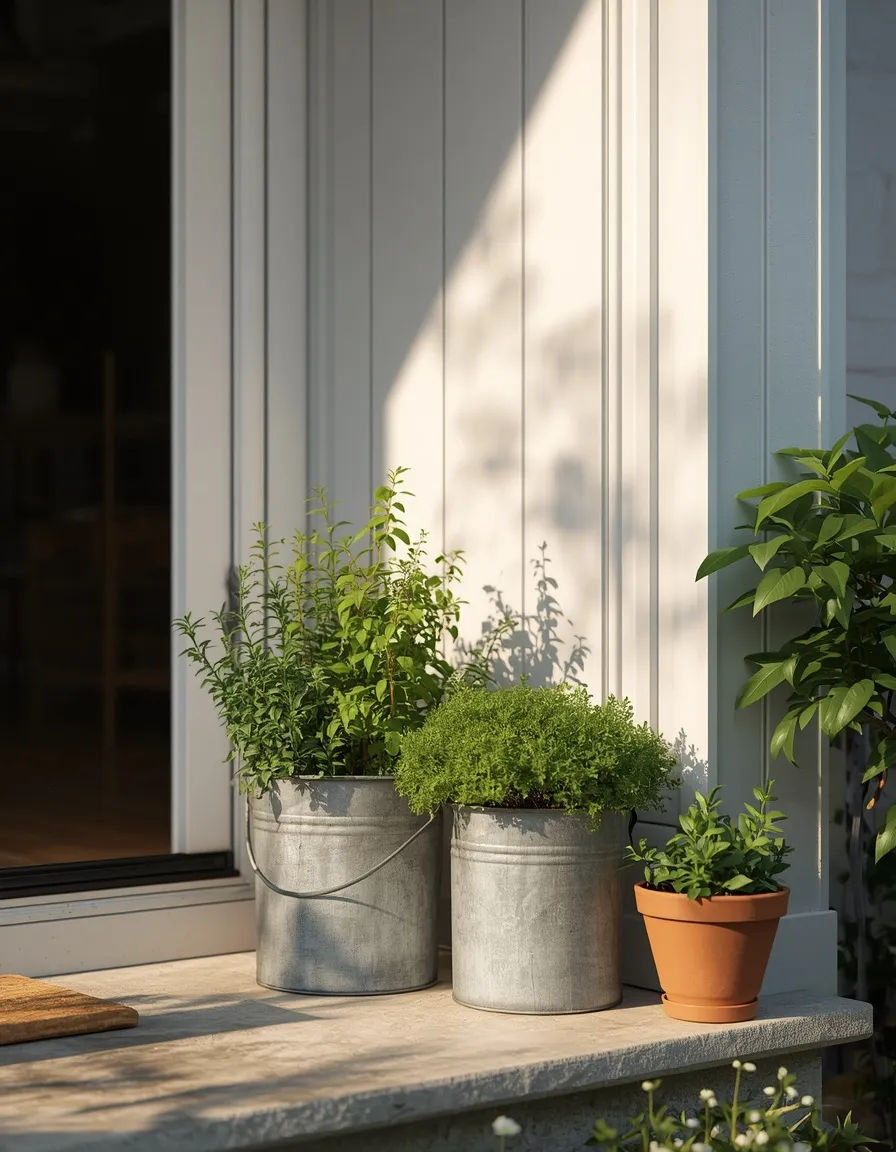
8. Herb Garden by the Kitchen Door
A small, densely planted herb bed or a row of containers positioned right outside the kitchen door puts rosemary, thyme, and sage within actual arm’s reach while cooking, the same practical logic behind the vegetable rows elsewhere in this list.
Group herbs by water need specifically, Mediterranean herbs like rosemary, thyme, and sage want considerably drier soil than basil or mint, and planting them together in one bed based on convenience rather than water requirements leads to at least one struggling plant. Keep mint contained in its own pot even this close to the house, it spreads aggressively through an open bed regardless of how convenient the location is. Galvanized metal buckets or terracotta pots work as well as an in-ground bed for this specific spot and suit a paved area right by the door better than digging into a lawn. Position the bed or containers somewhere genuinely visible from the kitchen window if possible, herbs planted somewhere forgotten get forgotten, and proximity is the entire point of this idea.
- Puts commonly used herbs within actual reach while cooking, not just decoration
- Works well in-ground or entirely in containers depending on the space right by the door
- Solves the “herbs are planted somewhere I never remember to use them” problem
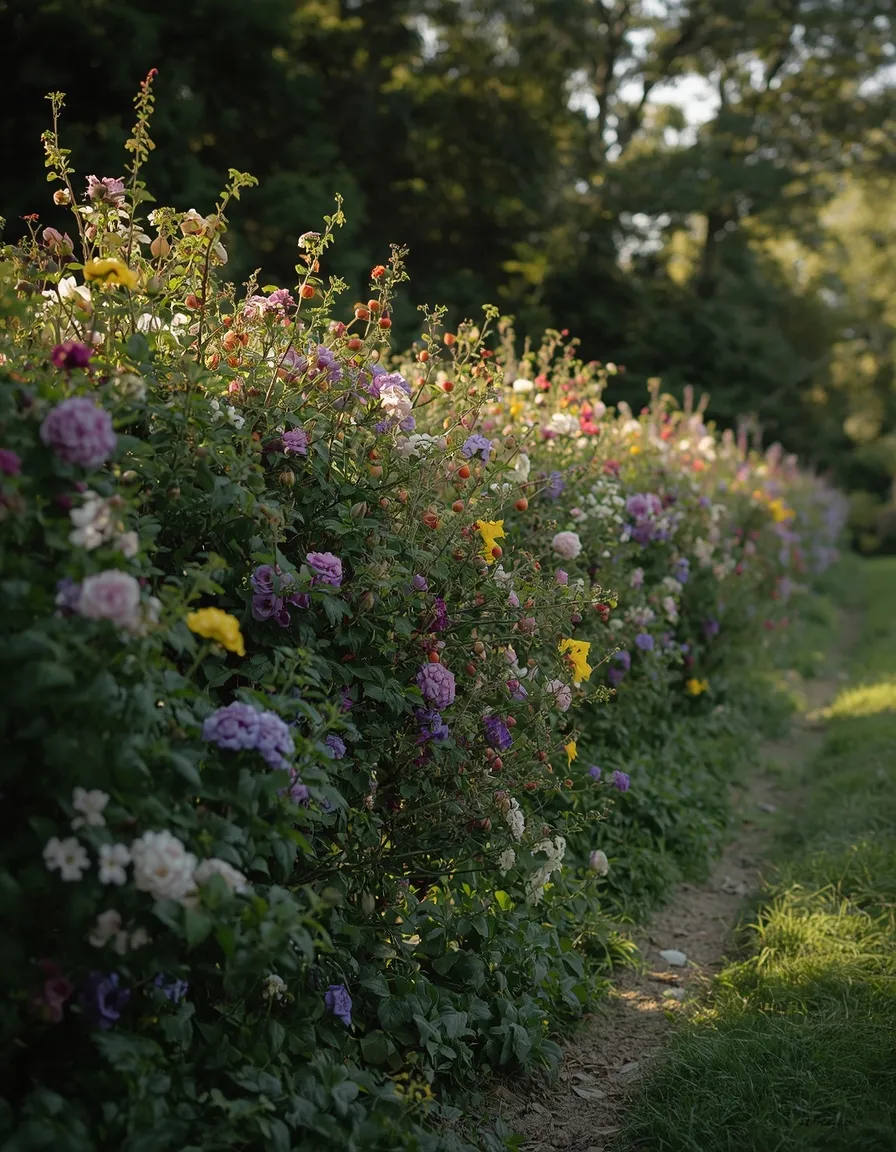
9. Farmhouse Hedgerow Border
A mixed hedgerow of flowering shrubs, berry bushes, and small trees along a property line brings the informal, productive boundary planting that traditionally separated a farmhouse garden from open fields, doing real ecological work beyond simple screening.
Mix species deliberately rather than planting a single uniform hedge, a traditional hedgerow combines something flowering, like viburnum or lilac, with something fruiting, like elderberry or serviceberry, and a thorny species like hawthorn or blackberry for wildlife cover and natural deterrent. This planting style suits a genuine property boundary or the back edge of a larger lot considerably better than a small urban garden, where a mixed hedgerow’s looser, wider footprint doesn’t fit as naturally as a tighter clipped hedge would. Space larger shrub and small tree components 1.5 to 2m (5 to 6.5ft) apart to allow the mixed planting to fill in and read as one continuous border within a few seasons rather than several isolated plants. This is a genuinely long-term planting, expect three to five years for a hedgerow to reach its full, established character.
- Brings real ecological value, food and shelter for birds and pollinators, along with screening
- Works best along a genuine property boundary or the back edge of a larger lot
- Solves privacy and wind screening needs with a softer, less formal look than a solid hedge
10. Chicken Wire Garden Trellis
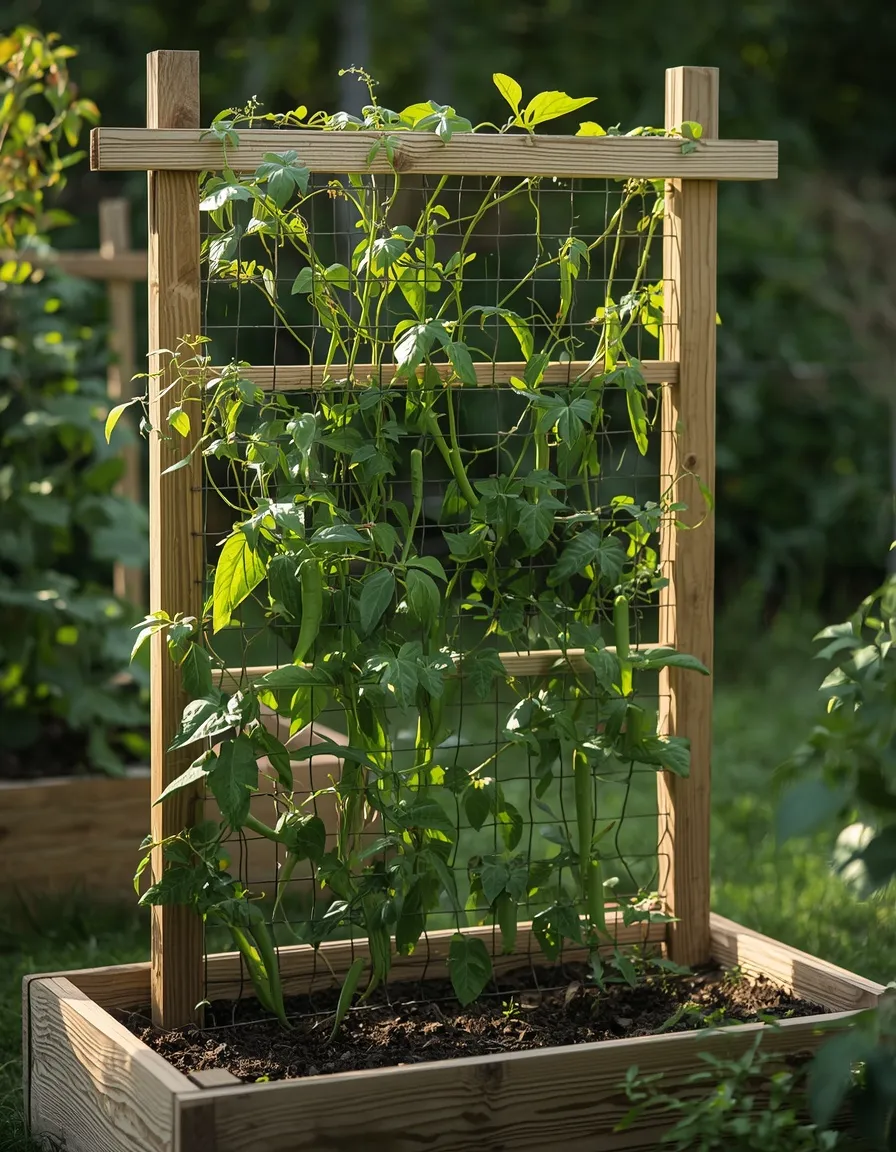
A simple wood-framed panel with chicken wire stretched across it, used to support climbing peas, beans, or sweet peas, is genuine working-farm hardware repurposed as a functional trellis rather than a purely decorative structure.
Build a basic wood frame from 2×2 or 2×4 lumber and staple galvanized chicken wire across it under tension, galvanized wire resists rust considerably longer than uncoated steel mesh left outdoors through repeated wet seasons. Fold or cap any cut wire ends along the frame’s edges, freshly cut chicken wire leaves sharp points that catch hands and clothing, a genuine minor injury risk worth the extra few minutes to address properly. Angle the panel slightly rather than mounting it perfectly vertical, roughly 10 to 15 degrees off vertical gives climbing plants an easier path to grip and generally improves yield for vining vegetables specifically. This works particularly well leaned against a raised bed’s back edge or mounted along a fence line where the plants it’s supporting are also genuinely productive, not purely ornamental climbers.
- Delivers genuine working-farm character while supporting real vegetable production
- Works especially well angled against a raised bed for climbing peas or beans
- Solves vertical growing space for vining vegetables at very low material cost
Farmhouse Garden Decor and Vintage Accents
Vintage and repurposed objects, the genuinely old alongside the convincingly aged, do more to sell the farmhouse look than any single plant choice.
11. Galvanized Metal Container Planters
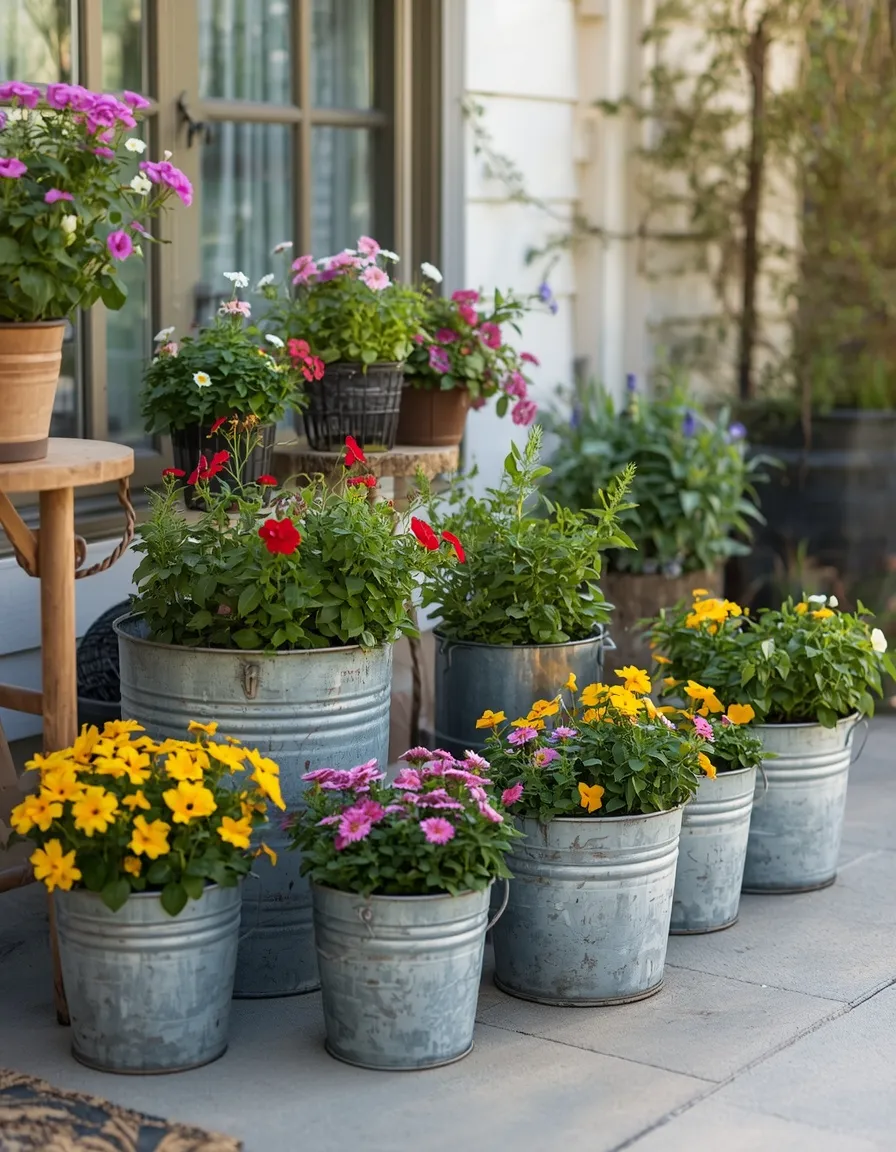
Galvanized metal tubs, buckets, and watering cans repurposed as planters bring an unmistakable farmhouse material signature, that slightly dented, matte-silver surface reading as genuinely working rather than merely decorative.
Drill drainage holes in the base of any repurposed container before planting, galvanized metal holds water without them and roots rot within weeks in a container that can’t drain. Choose galvanized steel specifically over plain uncoated metal for anything staying outside permanently, the zinc coating resists rust considerably longer, though even galvanized containers will eventually develop a soft, aged patina that suits this style rather than working against it. Group containers of varying sizes and shapes, an old watering can, a wash tub, a smaller bucket, together rather than matching sets, which reads as more collected and less purchased as a set. Line the interior with landscape fabric before adding soil specifically in containers repurposed from genuine vintage or antique sources, older galvanized coatings sometimes contain trace lead in the original manufacturing process, and a fabric barrier between metal and soil adds a simple, low-effort precaution for anything growing edible plants.
- Delivers an unmistakable farmhouse material signature at relatively low cost
- Works well grouped in varying sizes rather than as a matched set
- Solves container gardening needs while reinforcing the style more than plain plastic pots
12. Vintage Wheelbarrow Planter
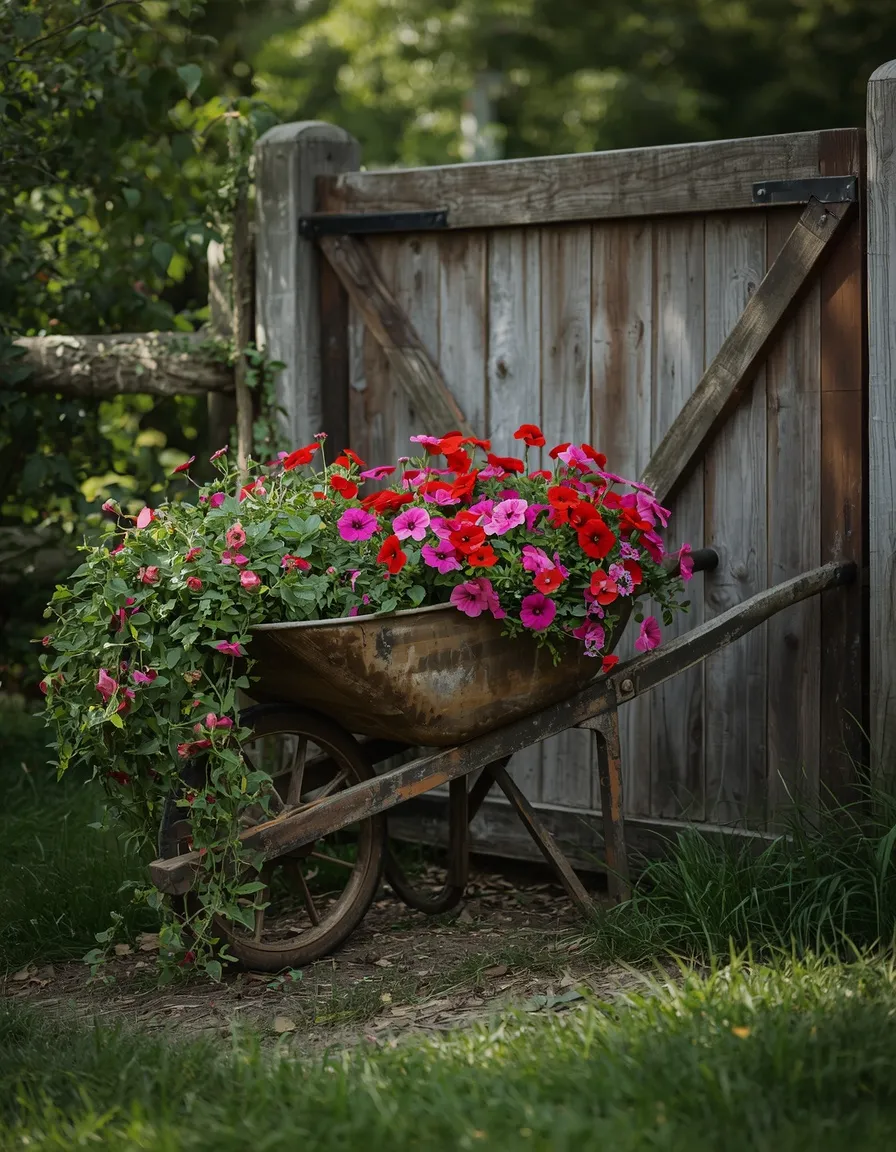
An old wooden or metal wheelbarrow, no longer road-worthy but still structurally sound, filled with cascading annuals or a small mixed planting, turns a piece of genuine farm equipment into one of the style’s most recognizable focal points.
Drill several drainage holes in the wheelbarrow’s base before adding soil, and consider lining the interior with landscape fabric first specifically if the piece has any flaking old paint, which may contain lead if the wheelbarrow predates modern paint regulations. Fill with a lightweight potting mix rather than garden soil, a wheelbarrow’s shallow basin doesn’t hold enough volume for heavy soil to drain properly, and choose trailing or mounding annuals, petunias, sweet potato vine, or nasturtium, that spill attractively over the sides. Position it somewhere it reads as intentionally placed rather than abandoned, near a gate or path junction works better than a random spot in open lawn. Check that the wheel and frame are stable enough to hold the weight of wet soil and mature plants before committing, a genuinely rusted-through wheelbarrow base can fail under that combined weight over a season.
- Turns a genuine piece of farm equipment into one of the style’s most recognizable pieces
- Works best positioned at a path junction or gate rather than open lawn
- Solves the “want a real vintage statement piece” desire without an expensive purchase
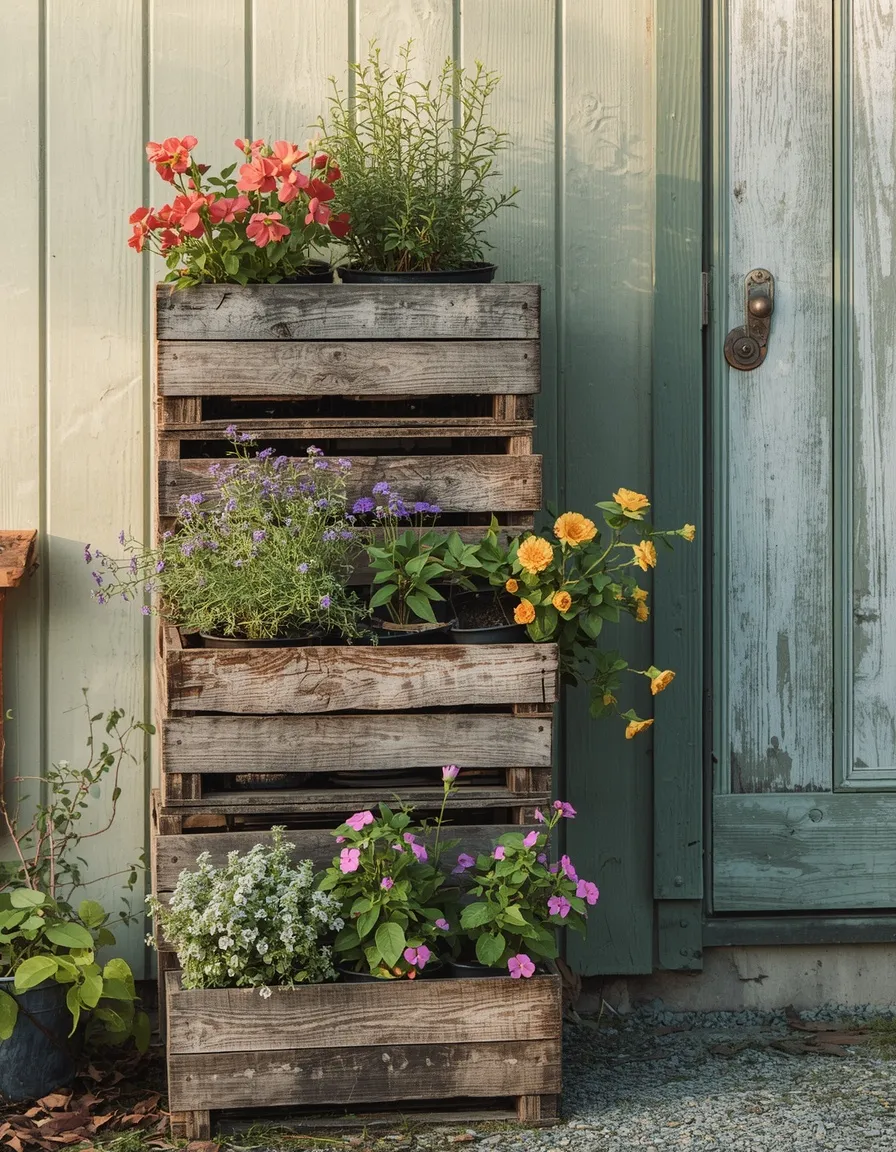
13. Wooden Crate Planter Stack
A stack or staggered arrangement of weathered wooden crates, each holding its own small planting, brings genuine farm-market character and adds vertical variation to an otherwise flat container grouping.
Line each crate’s interior with landscape fabric or a plastic liner before adding soil, since most crates have gaps between slats that let soil spill through and dry out considerably faster than a solid-walled container. Stagger crate heights and sizes rather than a uniform stack, two or three crates of different depths, some upright and some on their sides, reads as considerably more collected and intentional than matched, evenly stacked boxes. Choose crates genuinely built from solid wood rather than thin plywood or particleboard, which delaminates and falls apart within a single wet season outdoors regardless of how it’s sealed. This works especially well grouped near the galvanized containers and vintage wheelbarrow covered earlier in this list, mixing container materials is part of what makes a farmhouse container grouping read as gathered over time rather than purchased in one trip.
- Adds genuine farm-market character and vertical variation to a container grouping
- Works well staggered in different heights rather than stacked uniformly
- Solves the “container garden looks too matched and purchased” problem directly
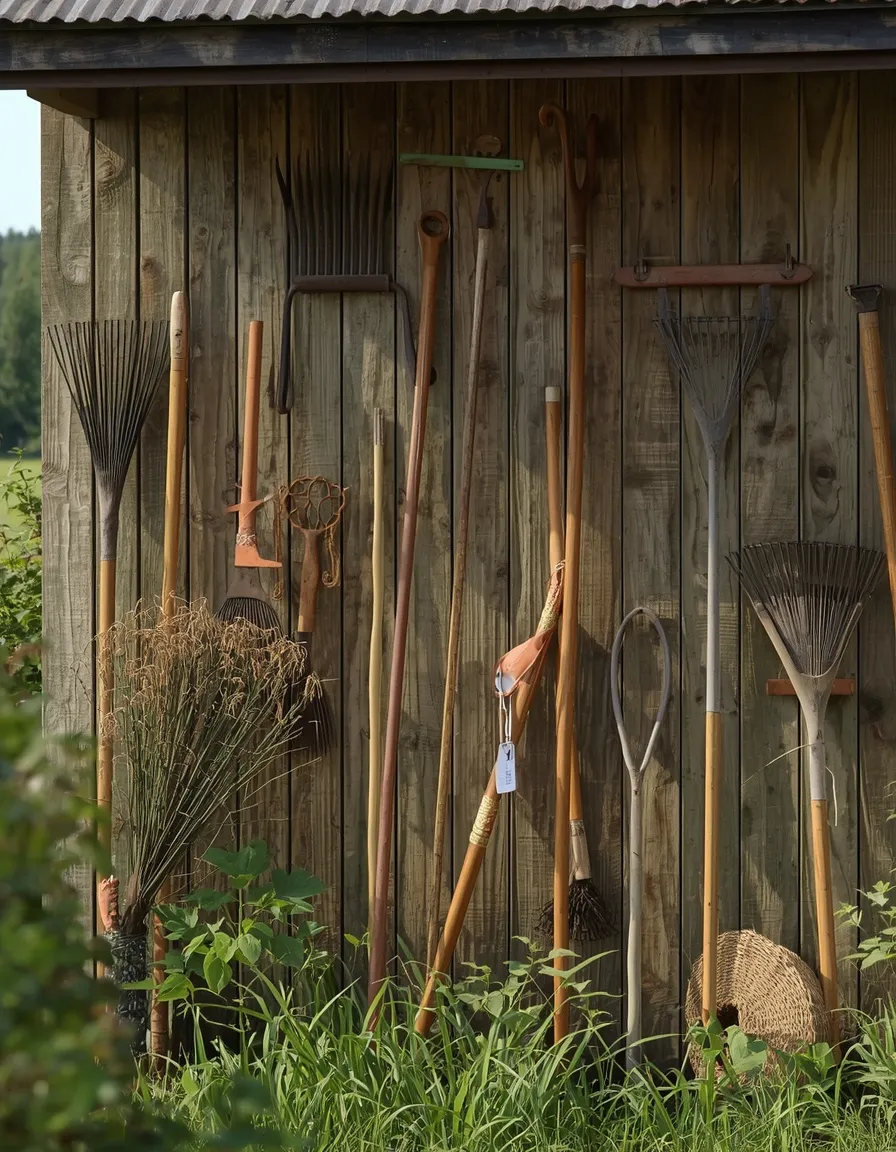
14. Antique Garden Tool Display
A collection of genuinely old hand tools, rakes, hoes, pitchforks, mounted or leaned against a shed wall or fence, adds working-farm authenticity that’s difficult to replicate with anything purchased new.
Wire-brush loose surface rust off any tool before display and apply a light coat of boiled linseed oil or a clear outdoor sealant to the metal head, this slows further rusting without stripping away the aged patina that makes the piece look genuinely old rather than restored. Mount tools securely to a wall with wire loops or hooks rather than simply leaning them against a surface, an unsecured leaning tool is a genuine tip-over and impact hazard, particularly with anything that has a sharp or pointed head. One safety note worth taking seriously: old tools, especially anything with active rust or a damaged edge, can carry a genuine tetanus risk if someone is cut while handling or moving them, keep a first aid kit accessible near any working garden area and make sure tetanus vaccination status is current for anyone regularly handling vintage metal tools. Position the display somewhere visible but genuinely out of the main walking path, and out of reach of small children specifically given the sharp edges involved.
- Adds working-farm authenticity that’s genuinely difficult to replicate with new pieces
- Works best mounted securely rather than simply leaned against a wall
- Solves the desire for real vintage character with a realistic safety approach
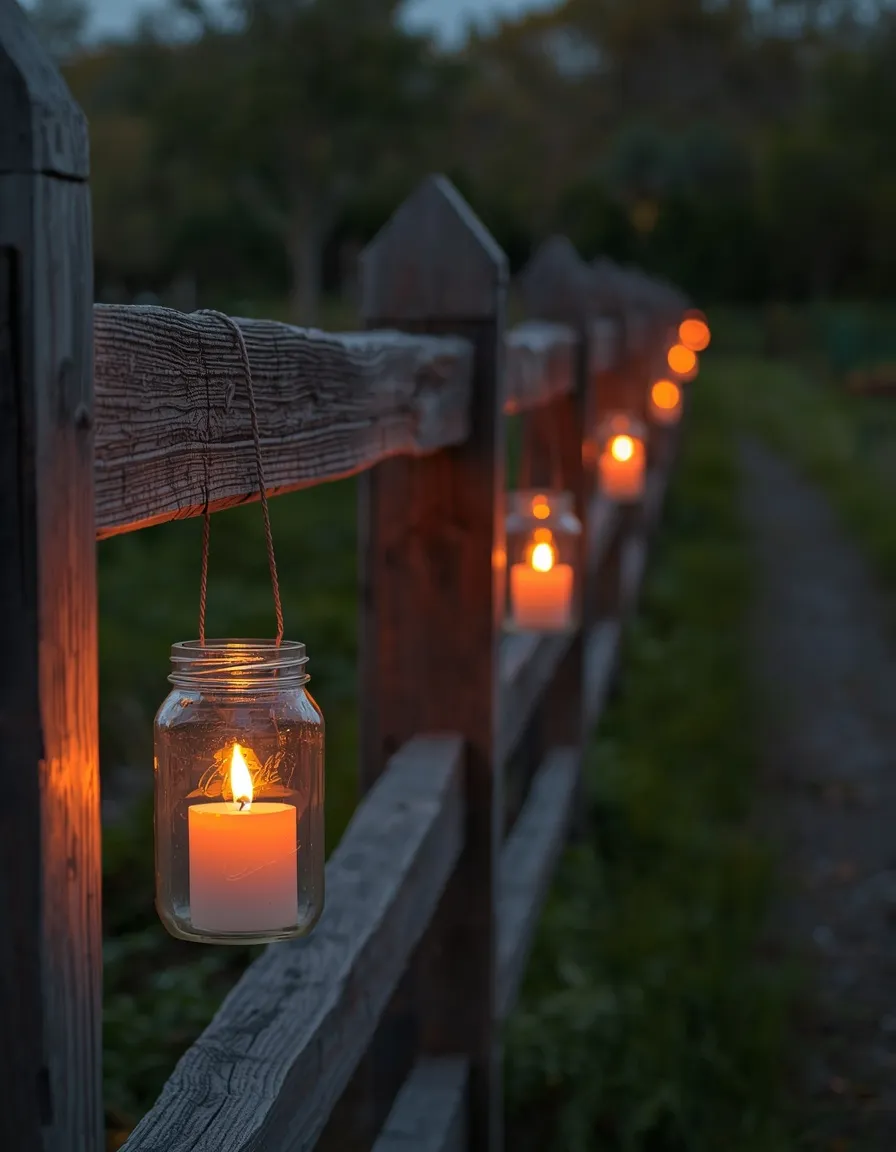
15. Mason Jar Garden Lighting
Mason jars fitted with a simple candle or battery-powered light, hung from a fence rail or shepherd’s hook along a path, bring warm, informal evening light that reads as farmhouse rather than manicured landscape lighting.
Use flameless LED tea lights inside any jar that will be left unattended, real flame inside a hanging glass jar near dry garden foliage is a genuine fire risk that a flameless option removes entirely while keeping the same warm glow. Hang jars using simple wire handles wrapped around the jar’s neck rather than adhesive mounts, which fail in humidity and temperature swings considerably faster than a properly wrapped wire handle. Space jars unevenly along a fence or path rather than at perfectly uniform intervals, a slightly irregular spacing reads as more casually gathered and less like installed landscape lighting. This works especially well along the same gravel or brick path covered earlier in this list, giving the route a defined, warmly lit edge once evening comes without needing electrical wiring run to the spot.
- Adds warm, informal evening light without any electrical wiring required
- Works especially well along a garden path or fence line already in place
- Solves path lighting needs with genuine style character rather than generic solar stake lights
Functional Farmhouse Garden Features
A real farmhouse garden earns its look partly through function, storage, water collection, a place to actually pot up plants, not just how it photographs.
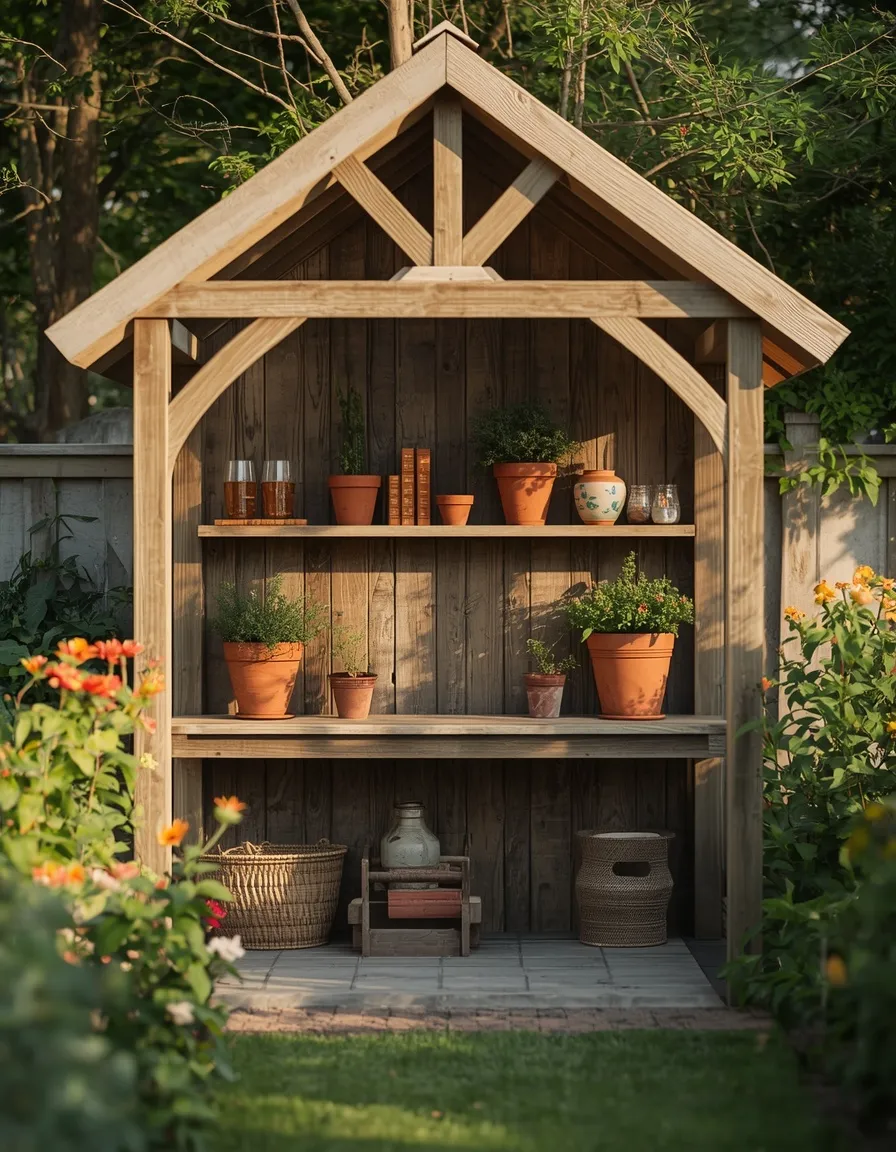
16. Farmhouse Potting Shed Nook
A small, dedicated potting nook, a simple bench with a roof or lean-to cover, shelving for pots and soil, and a work surface, gives the farmhouse garden’s practical side an actual home rather than scattering supplies across the yard.
Size the work surface at a comfortable standing height, roughly 85 to 95cm (33 to 37in), and include at least basic shelving above or below for pots, soil bags, and hand tools so the space stays genuinely functional rather than becoming another spot that accumulates clutter. A simple corrugated metal or wood-shingle roof over the nook, even a small lean-to structure attached to an existing shed or fence, keeps the work surface usable in light rain and protects stored supplies from direct weather. This works best positioned near a water source, a hose bib or rain barrel within reach, since potting and transplanting both genuinely benefit from water being close at hand rather than a walk away. A well-used potting nook, with actual soil stains and tool wear, reads as more authentically farmhouse than a pristine, purely decorative version, this is one idea on the list where function should visibly lead the aesthetic.
- Gives potting, transplanting, and tool storage an actual dedicated home
- Works best positioned near a water source for genuine day-to-day convenience
- Solves the “garden supplies scattered everywhere” problem with one functional hub
17. Rain Barrel Collection Station
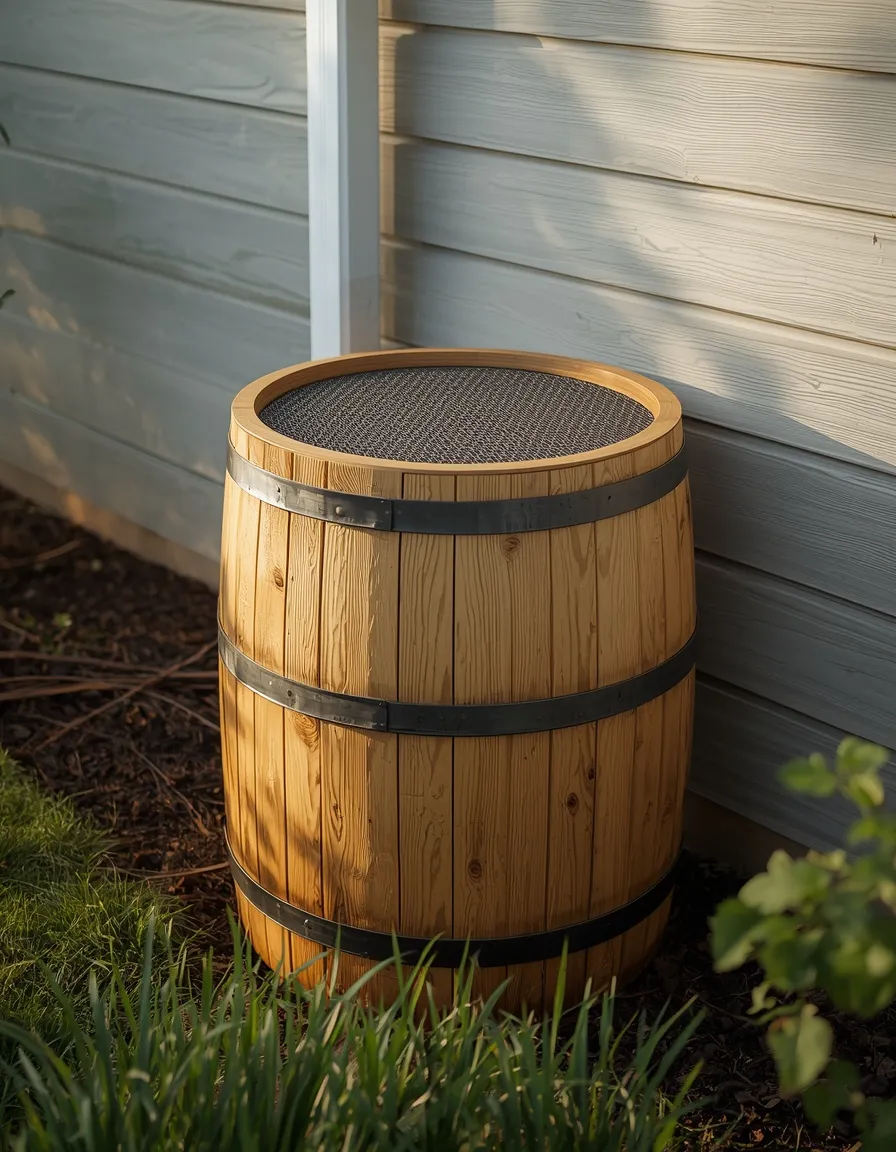
A rain barrel positioned beneath a downspout, collecting runoff for later use on the garden, brings genuine working-farm sustainability alongside its visual charm, provided it’s set up correctly.
A completely full standard rain barrel, roughly 200 liters (55 gallons), weighs over 200kg (450lb), so it needs a genuinely level, stable base, a simple concrete paver platform works well, rather than soft soil or an uneven surface that can shift under that weight over time. This is a genuine safety point worth taking seriously: always fit the barrel with a secure, mesh-screened lid rather than leaving it open, standing open water is both a drowning hazard for small children and a mosquito breeding site, and an uncovered barrel can start producing mosquitoes within about a week during warm weather according to standard public health guidance on standing water. Position the overflow outlet to direct excess water away from the house foundation rather than pooling nearby during heavy rain. Use collected rainwater on ornamental beds and the cutting garden covered earlier in this list rather than directly on edible crops close to harvest, unless the barrel and downspout system are specifically rated and maintained for potable-adjacent use.
- Brings genuine sustainability and reduces reliance on hose water for the garden
- Works best on a stable, level base with a secure, screened lid
- Solves both a mosquito-breeding hazard and a practical watering need at the same time
18. Compost Bin Working Corner
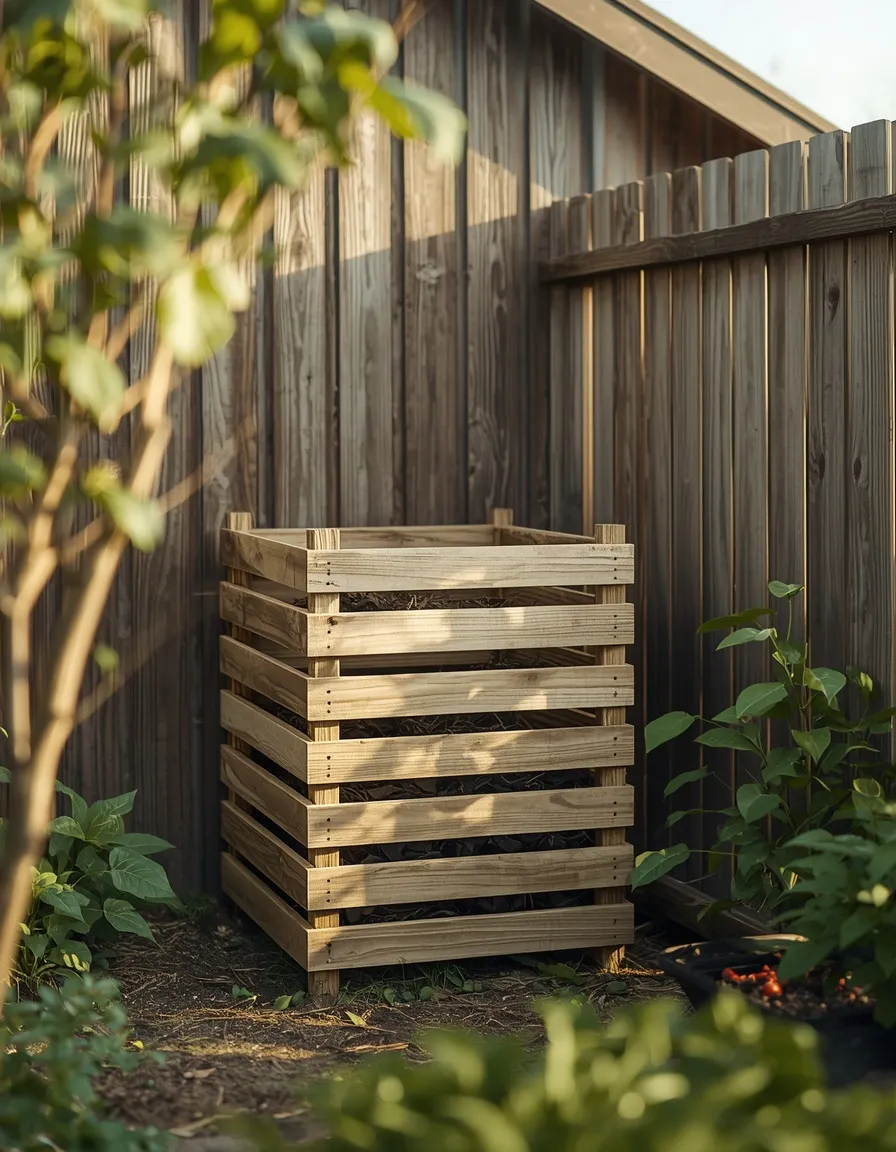
A simple wood-slatted or wire compost bin tucked into a working corner of the yard turns kitchen scraps and garden trimmings into the soil-building resource that’s always been part of an actual farm’s closed-loop system.
Build or buy a bin with reasonable airflow, wood slats with visible gaps or a wire mesh construction, rather than a fully sealed container, compost needs oxygen to break down properly and a sealed bin without airflow turns anaerobic and starts smelling considerably worse than a properly ventilated one. Keep meat, dairy, and oily food scraps out of the pile entirely, they attract pests and rodents far more than plant-based kitchen scraps and yard trimmings do. Site the bin at a slight distance from the house and any seating area specifically for this reason, close enough for convenient use but not directly beside a patio or door. This corner works naturally alongside the potting nook covered earlier in this list, positioning both functional pieces together keeps the garden’s practical side organized into one working zone rather than scattered.
- Turns kitchen and garden waste into genuine soil-building material on-site
- Works best sited a slight distance from seating areas and doors specifically
- Solves the “buying bagged compost” cost and hassle with an on-site system
19. Farmhouse Porch Planter Boxes
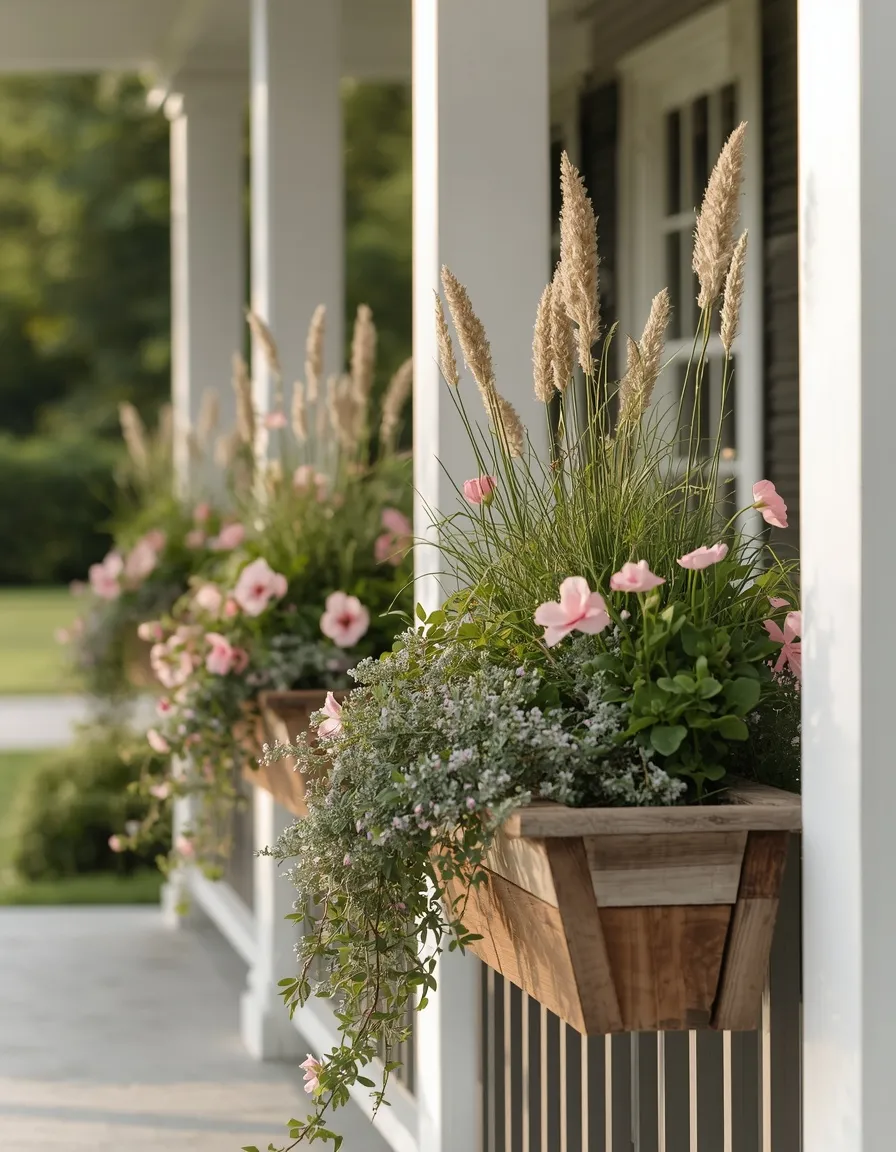
Simple wood planter boxes lining a front porch railing or steps, filled with a mix of trailing and upright plants, extend the farmhouse garden’s look right up to the house itself rather than stopping at the yard’s edge.
Build boxes from cedar or another rot-resistant wood, and always drill drainage holes in the base regardless of the box’s finish, standing water against porch decking causes real, expensive rot damage over time that’s considerably harder to fix than the planter itself. Secure boxes to railings with brackets rated for the filled weight, a fully watered planter box is meaningfully heavier than it looks, and an unsecured box balanced on a railing is a genuine fall hazard, particularly at height on a raised porch. Choose a planting mix suited to the porch’s actual light exposure, a shaded north-facing porch needs genuinely different plants than a south-facing one in full sun, rather than the same generic mix regardless of orientation. This is one of the most visible ideas on this list since it’s seen from the street or driveway, worth the extra attention to keep it consistently maintained through the season.
- Extends the farmhouse look from the yard right up to the house’s most visible face
- Works best matched to the porch’s actual light exposure rather than a generic mix
- Solves a plain, unplanted porch railing or step with real seasonal color
Modern and Climate-Adapted Farmhouse Garden Variations
The classic look isn’t the only version worth building: a cleaner modern take and adjustments for hot, humid climates both keep the same farmhouse logic while looking noticeably different.
20. Modern Farmhouse Black Metal Accents
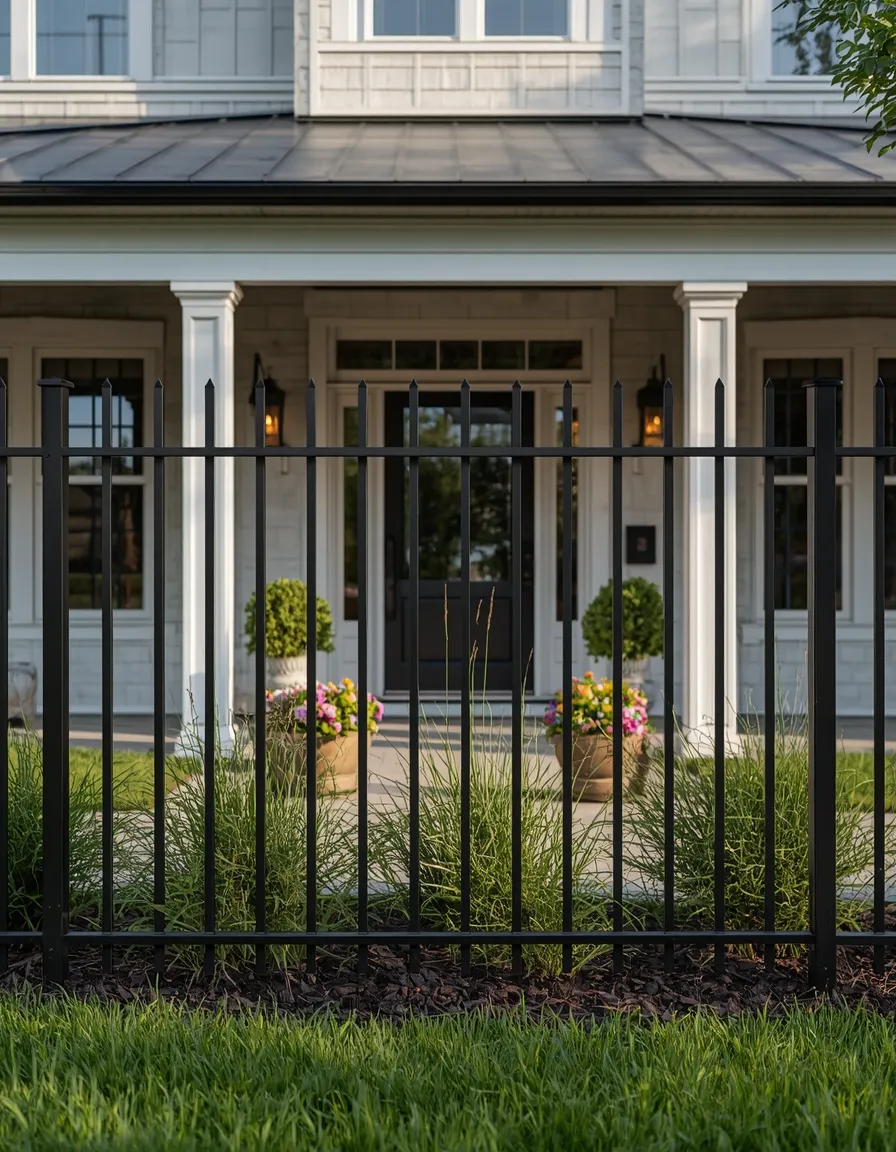
Swapping the classic white picket and weathered wood for matte black metal fencing, trellises, and planters keeps the same practical farmhouse structure while reading as considerably cleaner and more current.
Choose powder-coated matte black steel over a glossy or wrought-iron ornate finish, matte black reads as modern and intentional where a shiny or heavily scrolled finish pulls the look back toward a more traditional or Victorian aesthetic instead. Pair black metal structural elements, a simple fence, a minimal trellis, planter frames, with the same practical planting covered throughout the rest of this list, vegetable rows, a cutting garden, herbs by the door, since the modern variation changes the materials and finish, not the underlying farmhouse logic of a working, productive garden. Limit the black metal to structural and container elements specifically rather than painting every surface, overuse flattens the look into something closer to purely industrial than modern farmhouse. This variation suits a newer build or a more contemporary house exterior considerably better than the classic weathered-wood version, which can look mismatched against very clean modern architecture.
- Delivers the same practical farmhouse structure with a cleaner, more current material palette
- Works especially well paired with a newer build or contemporary house exterior
- Solves the desire for this style without the more rustic, heavily weathered look
21. Farmhouse Garden for Hot and Humid Climates
The classic farmhouse garden look, built around cool-climate roses, weathered wood, and cottage-style planting, needs real adjustment in hot, humid regions, from much of India to the American Gulf Coast, where that exact plant palette and material choice struggles rather than thrives.
Swap temperate climbing roses for heat-tolerant flowering vines with a similar cottage character, bougainvillea, mandevilla, or trumpet vine all deliver strong color on a trellis or arbor without the fungal disease pressure that roses face in sustained humidity. Choose rot- and insect-resistant wood species for structural elements specifically in this climate, teak or treated hardwood holds up to humidity and termite pressure considerably better than the cedar or pine that works fine in drier, temperate regions. Add shade structures over key seating or working areas, a simple lattice roof or a shade cloth panel over the potting nook, since direct exposure through a hot season makes daytime garden work considerably less comfortable and stresses many farmhouse-style plants not bred for intense heat. Schedule any hands-on garden work, planting, pruning, and general maintenance, for early morning or early evening hours during peak heat months rather than midday, both for plant health and for the person doing the work.
- Adapts the farmhouse look to climates where the classic cool-climate plant palette struggles
- Works especially well for readers gardening in India, Southeast Asia, or similarly hot, humid regions
- Solves the “farmhouse garden guides assume a temperate climate” gap most content leaves unaddressed
Conclusion
A farmhouse garden works best built gradually the same way an actual farm accumulates its tools and beds over years, not assembled from a single shopping trip. Start with the structural pieces, a fence line, a path, a raised bed or two, before layering in the vintage containers and decor that finish the look. Pay attention to the practical details covered throughout this list, safe reclaimed materials, covered rain barrels, well-drained beds, since those are what keep a farmhouse garden functional as well as photogenic. For more layout and planting inspiration, the Garden Design category has plenty more to explore, and this is a style genuinely worth building one season at a time.
Frequently Asked Questions
What makes a garden look like a farmhouse garden specifically?
A mix of practical, working-farm structure, straight vegetable rows, a picket fence, gravel or brick paths, layered with vintage and repurposed containers like galvanized buckets, wooden crates, and an old wheelbarrow rather than purchased matching planters. The style reads as lived-in and productive first, decorative second, which is what separates it from a purely ornamental cottage garden.
Is reclaimed wood safe to use for farmhouse garden raised beds?
It depends entirely on the wood’s history. Avoid any reclaimed lumber that may have been treated with chromated copper arsenate, commonly called CCA wood, which the EPA phased out of residential use at the end of 2003 due to arsenic leaching into surrounding soil, and when a board’s treatment history is unknown, use it for an ornamental bed rather than a vegetable one, or line the bed with a plastic barrier before adding soil.
How do I create a farmhouse garden in a hot or humid climate?
Swap cool-climate plants like classic climbing roses for heat-tolerant alternatives such as bougainvillea or mandevilla, choose rot- and termite-resistant wood like teak for structural elements, and add shade structures over seating or working areas. Scheduling planting and maintenance for early morning or evening during peak heat months also matters more in these climates than it does in a temperate one.
Are rain barrels safe to add to a farmhouse garden?
Yes, provided they’re fitted with a secure, mesh-screened lid, since standing open water becomes a mosquito breeding site within about a week during warm weather and poses a drowning risk for small children. A full rain barrel is also considerably heavier than it looks, so it needs a genuinely level, stable base rather than soft or uneven ground.
Can I create a farmhouse garden without a lot of space?
Yes, several ideas on this list scale down naturally, herb containers by the kitchen door, a stack of wooden crate planters, or a single galvanized tub grouping all deliver real farmhouse character without needing dedicated garden beds or a large yard. The kitchen garden rows and orchard corner ideas need more space, but the container and decor-based ideas work in a considerably smaller footprint.
How is a modern farmhouse garden different from a traditional one?
A modern farmhouse garden swaps the classic weathered wood and white picket fencing for matte black metal structural elements, fencing, trellises, planter frames, while keeping the same underlying practical, productive planting logic. It suits a newer or more contemporary house exterior better than the more heavily weathered traditional look does.
Is it safe to display old, rusty garden tools as farmhouse decor?
Generally yes with a few precautions, wire-brush off loose rust, apply a light protective oil to the metal, and mount pieces securely rather than leaning them against a wall where they can tip. It’s also worth keeping a current tetanus vaccination if handling old rusty tools regularly, since a cut from rusted metal carries a genuine infection risk.