
Introduction
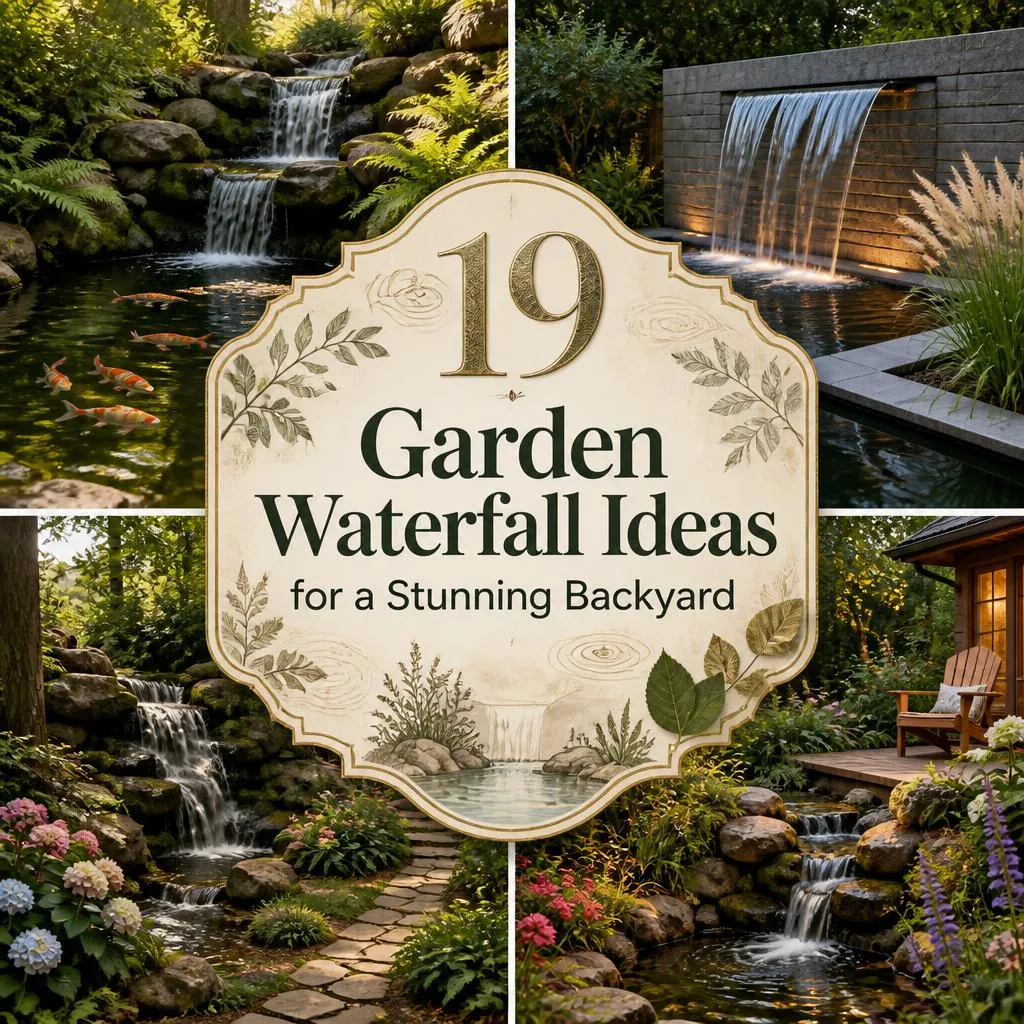
Garden waterfall ideas range from a single ceramic urn spilling into a hidden gravel basin to a full boulder-built cascade that needs a professional crew, and the right version depends more on a yard’s actual space, budget, and climate than most photo round-ups let on. A well-built garden waterfall does more than look good: the sound genuinely masks street noise, moving water discourages mosquitoes better than a still pond, and correct pump sizing determines whether a feature looks confident or apologetic in its first season. This guide covers nineteen distinct garden waterfall ideas, from rock walls and koi ponds to balcony-friendly mini builds, along with the pump sizing, safety, and material details most guides skip, so any abode ends up with a feature that actually holds up.
Getting the Basics Right Before You Build
Before choosing a style, a few practical decisions determine whether a garden waterfall actually works once it’s built rather than sitting dry or running dry within a season. Pump size, water safety, and material choice matter more to a waterfall’s long-term success than the rock arrangement itself, even though styling gets most of the attention in photos.
Size the pump to the waterfall’s width and drop: as a rough starting point, budget 100 gallons per hour (380 liters per hour) of pump flow for every inch (2.5 cm) of waterfall width, then add roughly 10 percent more capacity for every additional foot (30 cm) of vertical height the water needs to climb. Any pump running outdoors near standing water needs to be plugged into a GFCI-protected outlet, a code requirement in most regions precisely because water and electricity in the same space carries real shock risk if a cord or connection fails. A flexible EPDM rubber pond liner, rather than PVC, is worth the extra cost for anything meant to last beyond a couple of seasons, since it resists UV breakdown and punctures far better. Moving water genuinely does reduce mosquito breeding compared to standing water, since mosquitoes need still water to lay eggs, though a waterfall alone won’t eliminate mosquitoes from a yard with other standing water nearby.
One safety consideration that’s easy to overlook: any open, standing water deep enough to submerge a small child’s face is a genuine drowning risk, and the poolsafely.gov campaign, backed by the U.S. Consumer Product Safety Commission, recommends layered barriers around backyard water features in households with young children, whether that’s a pondless design or a fence around a deeper koi pond.
- Pump flow, not rock selection, is the single biggest factor in whether a waterfall looks right
- GFCI-protected outlets are essential for any pump running near standing water
- Pondless designs remove the open-water drowning risk that features with a visible pond carry
1. Rock Wall Waterfall
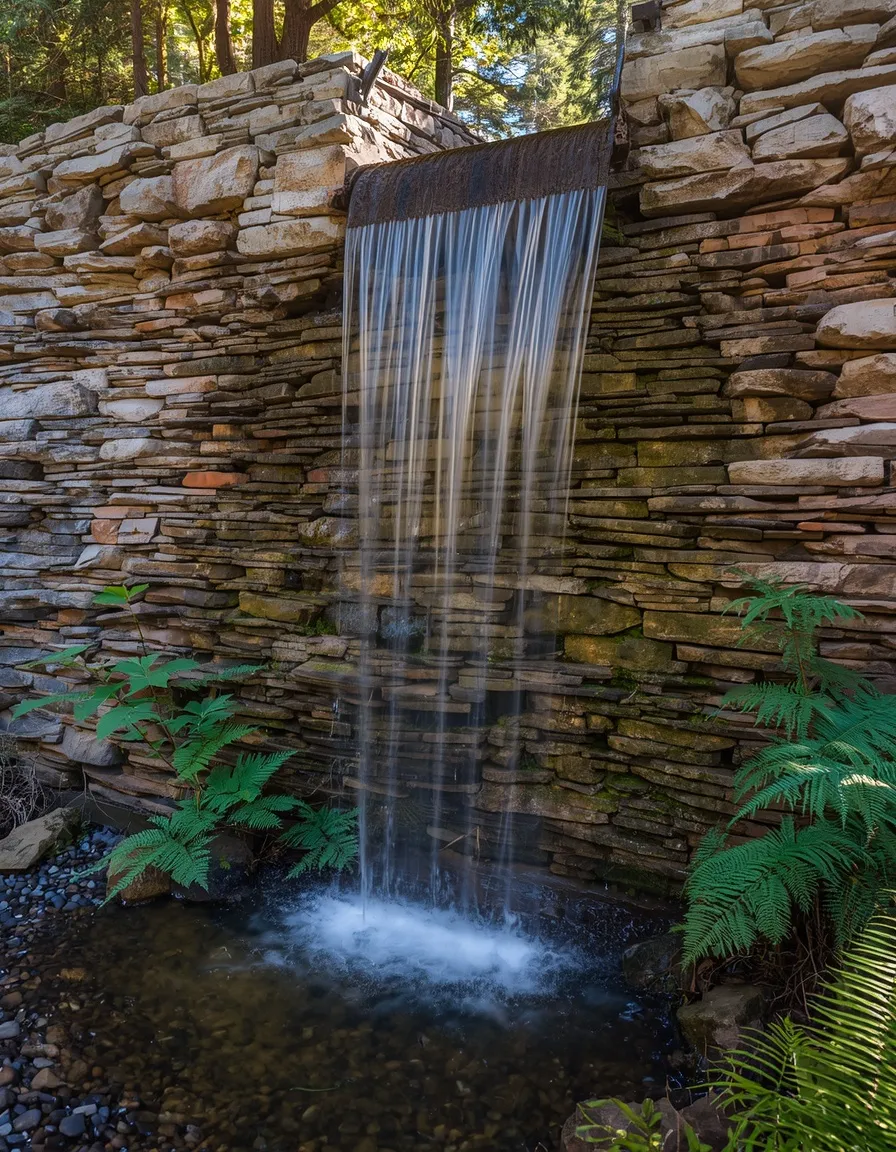
A cascading rock wall waterfall, water sheeting down a stacked stone face into a pool below, is the most classic garden waterfall design and the benchmark most other styles get compared against.
Build the wall from irregular fieldstone or flagstone set in a stair-step pattern, angling each stone slightly forward so water sheets off the front edge rather than running down the back into the gap behind. Use pond foam or landscape adhesive rated for underwater use to lock stones in place rather than relying on stacking weight alone, since a shifted stone mid-season can redirect the entire flow. A common mistake is building the wall too vertical; a slight backward lean, roughly 10 to 15 degrees, keeps the structure more stable and lets water cling to the rock face longer for a fuller sheeting effect rather than a thin trickle.
- Delivers the most visually dramatic, photo-ready waterfall style on this list
- Works as a focal point in gardens with an existing slope or raised bed
- A slight backward lean improves both stability and water coverage across the rock face
2. Pondless Waterfall
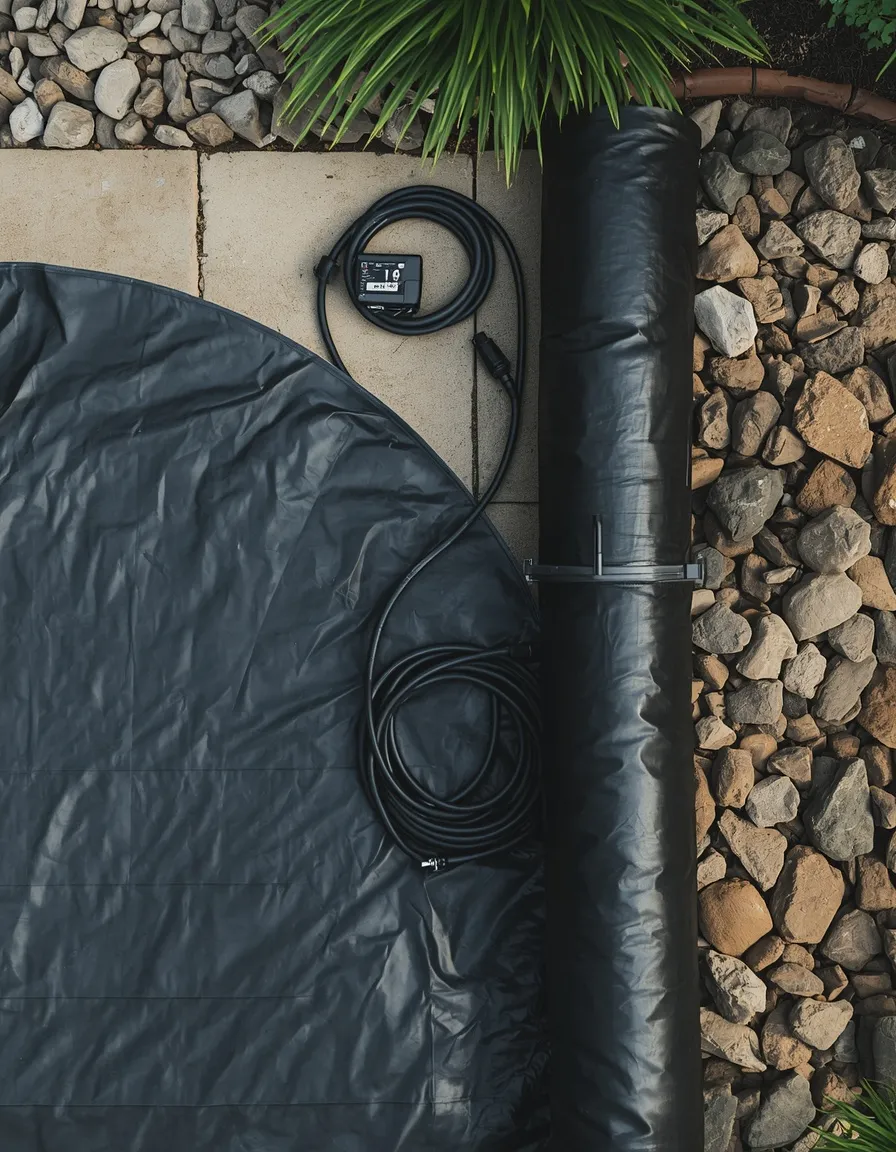
Water disappearing into a bed of river rock at the base, with no open pool in sight, defines a pondless waterfall, one of the safest and lowest-maintenance styles for households with young children or pets.
A hidden underground reservoir and basin collect the water beneath the rock bed, where a submersible pump recirculates it back up to the top of the falls continuously. Because there’s no open water surface for debris or algae to build up in, pondless designs need less regular cleaning than an open pond feature, though the reservoir still needs checking every few weeks to top off water lost to evaporation and splash-out. This style suits smaller yards particularly well, since the footprint can be as tight as 4 by 6 feet (1.2 by 1.8 m) without looking cramped. Skipping proper reservoir sizing is the most common mistake, an undersized basin runs the pump dry during hot, high-evaporation weeks.
- Removes the open-water drowning risk that pond-based waterfalls carry
- Requires less routine cleaning than a feature with a visible pond
- Fits smaller yards well, often in a 4 by 6 foot (1.2 by 1.8 m) footprint or less
3. Tiered Stepped Waterfall
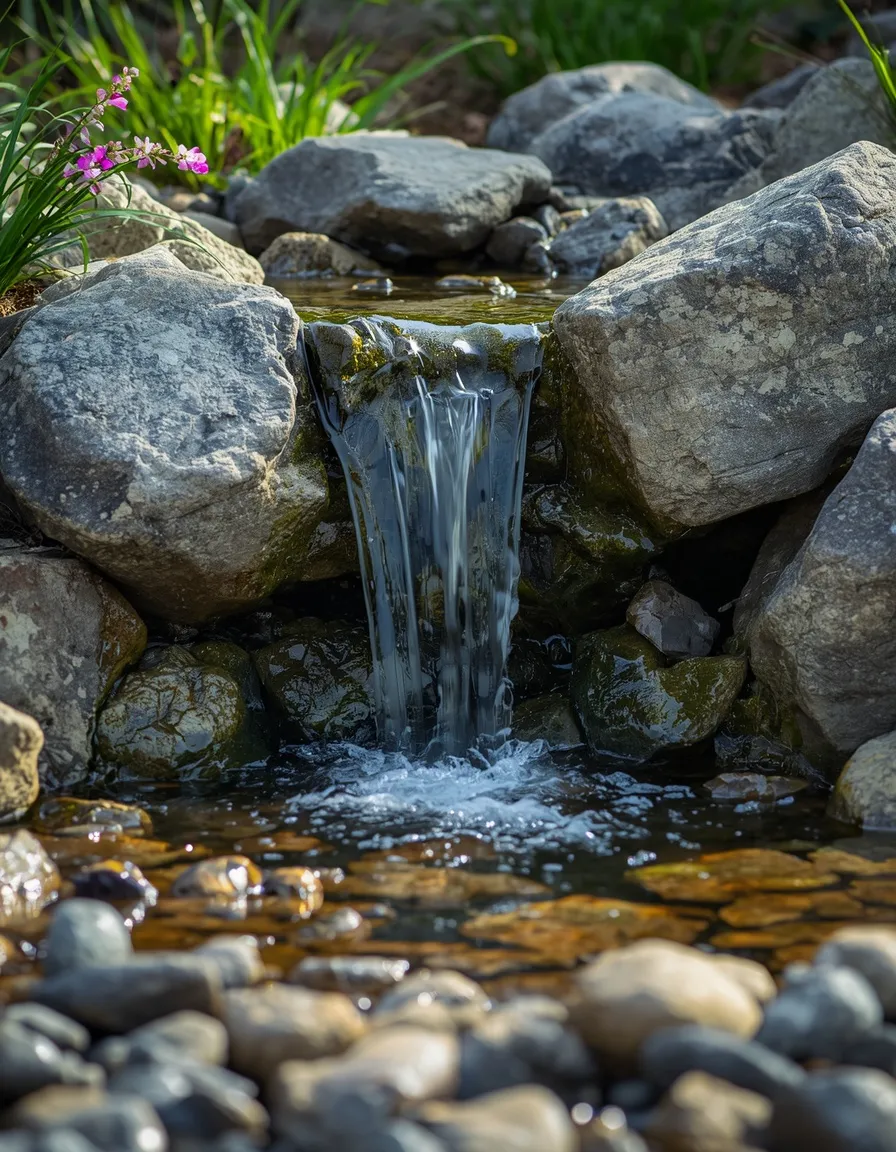
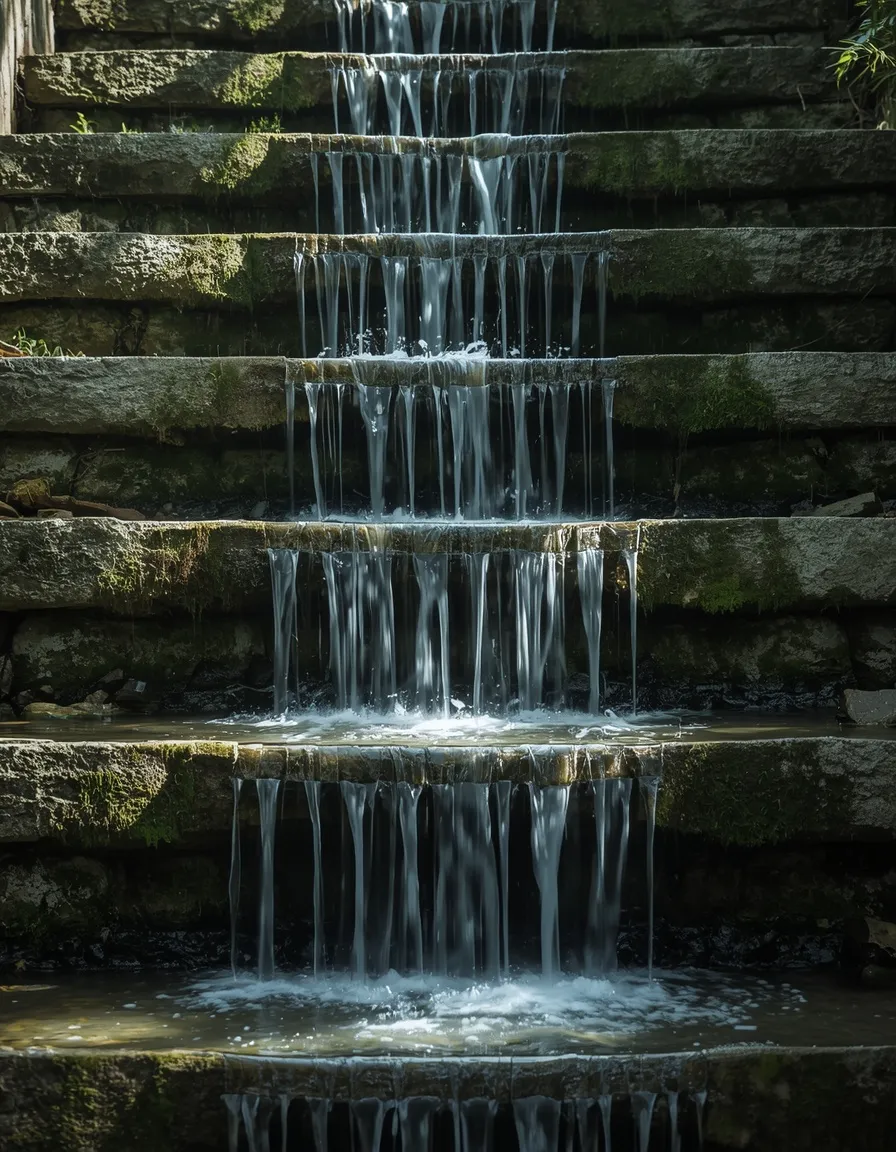
Water falling in three or four distinct stepped basins, each one catching and releasing into the next, brings a rhythmic, almost architectural quality to a tiered waterfall that a single-drop design can’t match.
Space each tier so the drop height is roughly consistent, generally 8 to 14 inches (20 to 35 cm) between basins, since uneven drop heights make the water’s pacing look accidental rather than intentional. Pre-formed rigid basins are the more forgiving option for a first build, since they arrive already sealed and level, while a fully custom stone-and-liner version gives more design freedom but takes considerably more skill to waterproof correctly at each step. This style works especially well on a naturally sloped section of yard, where the grade does much of the structural work already. A useful variation is planting low groundcover or moss along the tier edges to soften the hard lines between basins.
- Creates a rhythmic, multi-stage sound and movement pattern most single-drop designs lack
- Pre-formed basins are the more beginner-friendly build option
- Works especially well on yards with an existing natural slope
4. DIY Container Waterfall
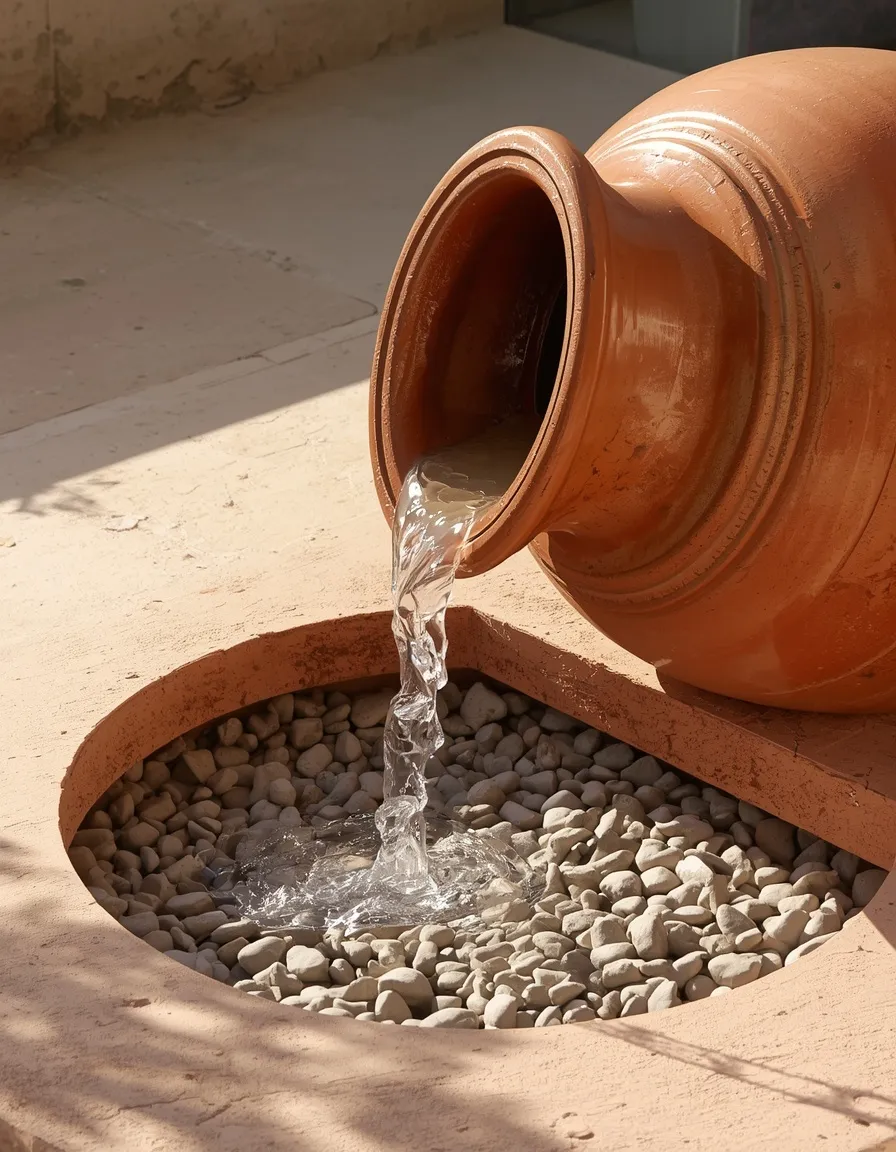
A large glazed ceramic urn, drilled and fitted with a small pump, spilling water over its rim into a hidden gravel basin below, delivers real waterfall movement and sound without any excavation at all.
Drill a hole through the base of a frost-resistant ceramic or fiberglass urn, thread the pump’s tubing through, and set the urn over a buried reservoir covered in decorative gravel or a grate, so water recirculates continuously through the container and back into the hidden basin. This is genuinely one of the most approachable weekend projects on this list, typically completable in an afternoon with basic tools and a small submersible pump rated for the urn’s height. It suits patios, courtyards, and rented properties particularly well, since the entire feature can be relocated or removed without leaving a trace. A common mistake is choosing a pump too weak for the urn’s height, resulting in a weak dribble rather than a confident pour; match pump output to the vertical lift required.
- Requires no digging or excavation, making it ideal for renters and patios
- Typically completable as a single weekend project with basic tools
- Fully portable and can move with a tenant between properties
5. Modern Water Wall
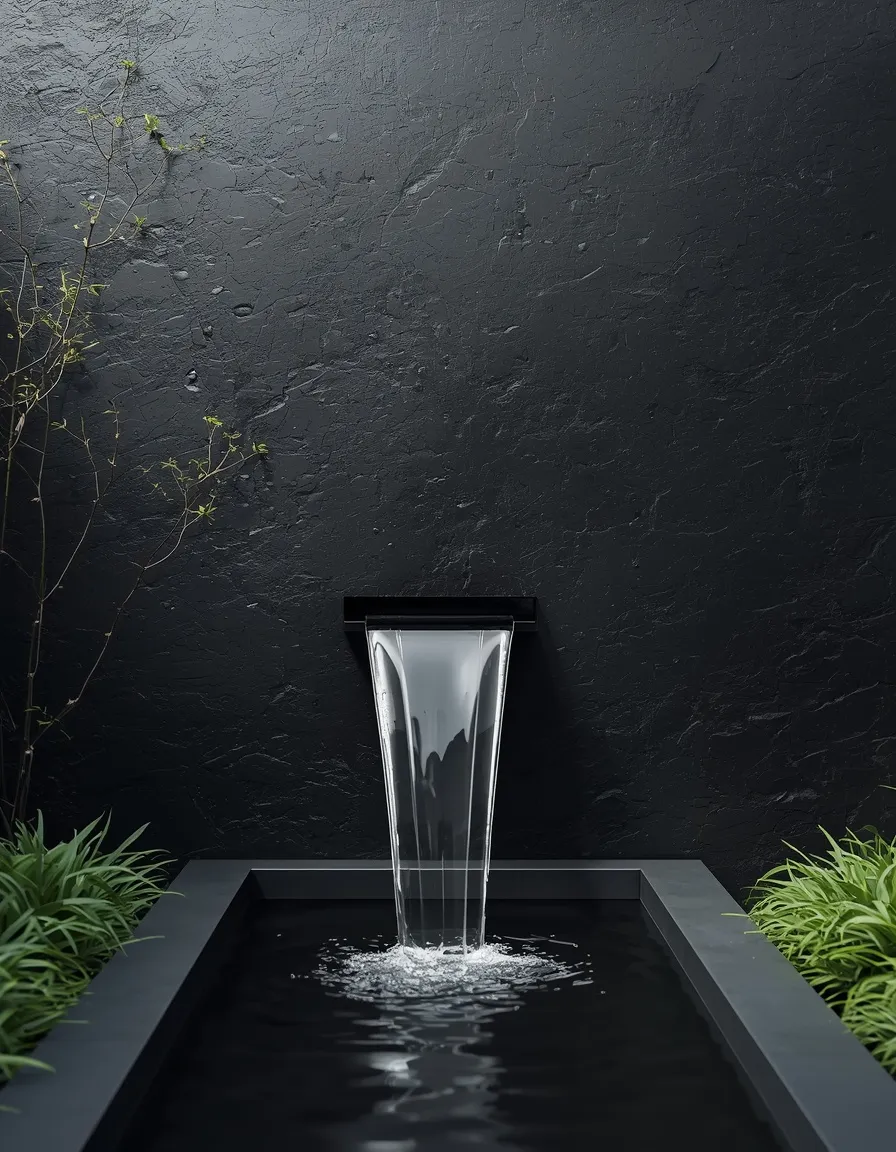
A sleek slab of black slate or brushed metal, water running in an unbroken sheet down its smooth surface into a narrow trough, brings a distinctly contemporary energy that softer rock waterfalls don’t attempt.
The key to a clean sheeting effect is a precisely leveled weir, the lip at the top where water first spills over; even a slight tilt sends the water pooling to one side instead of falling evenly across the full width. Slate, honed granite, and powder-coated metal panels are the most common surface choices, each offering a different sound profile, slate tends to produce a softer patter while metal carries a brighter, more resonant tone. This style pairs naturally with minimalist, geometric garden design and works particularly well mounted against an existing wall or fence rather than as a freestanding structure, saving both material and installation complexity.
- Delivers a clean, contemporary look suited to minimalist garden design
- A precisely leveled top weir is essential for an even sheeting effect
- Different surface materials produce noticeably different water sounds
6. Solar-Powered Waterfall
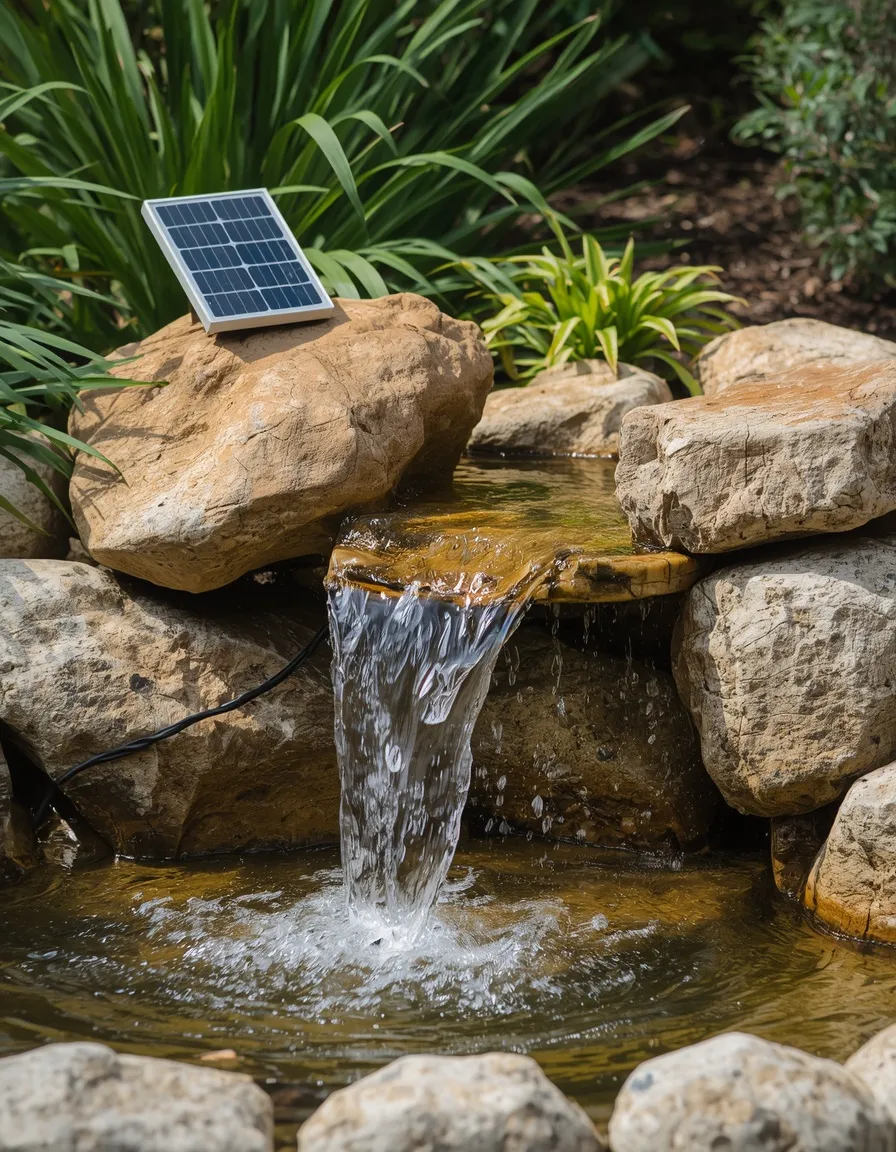
A small waterfall running entirely on a rooftop or ground-mounted solar panel, with no cord trailing across the lawn to an outlet, suits off-grid corners of a garden that a wired pump simply can’t reach.
Match the solar panel’s wattage to the pump’s power draw rather than assuming any small panel will do; most compact garden waterfall pumps need at least 10 to 20 watts of continuous panel output to run reliably through a full afternoon. Battery-backed solar kits keep the waterfall running on cloudy days and after sunset, while direct-connect kits without a battery only run while the panel is actively receiving sunlight, which is worth knowing before choosing one for an evening entertaining space. This style is particularly well suited to gardens without a nearby outdoor outlet, since running new electrical service to a remote yard corner is often the most expensive part of any wired water feature.
- Runs without any wiring, ideal for garden corners far from an outlet
- Battery-backed kits keep water flowing on cloudy days and into the evening
- Avoids the cost of running new outdoor electrical service to a remote spot
7. Bamboo Spout Waterfall
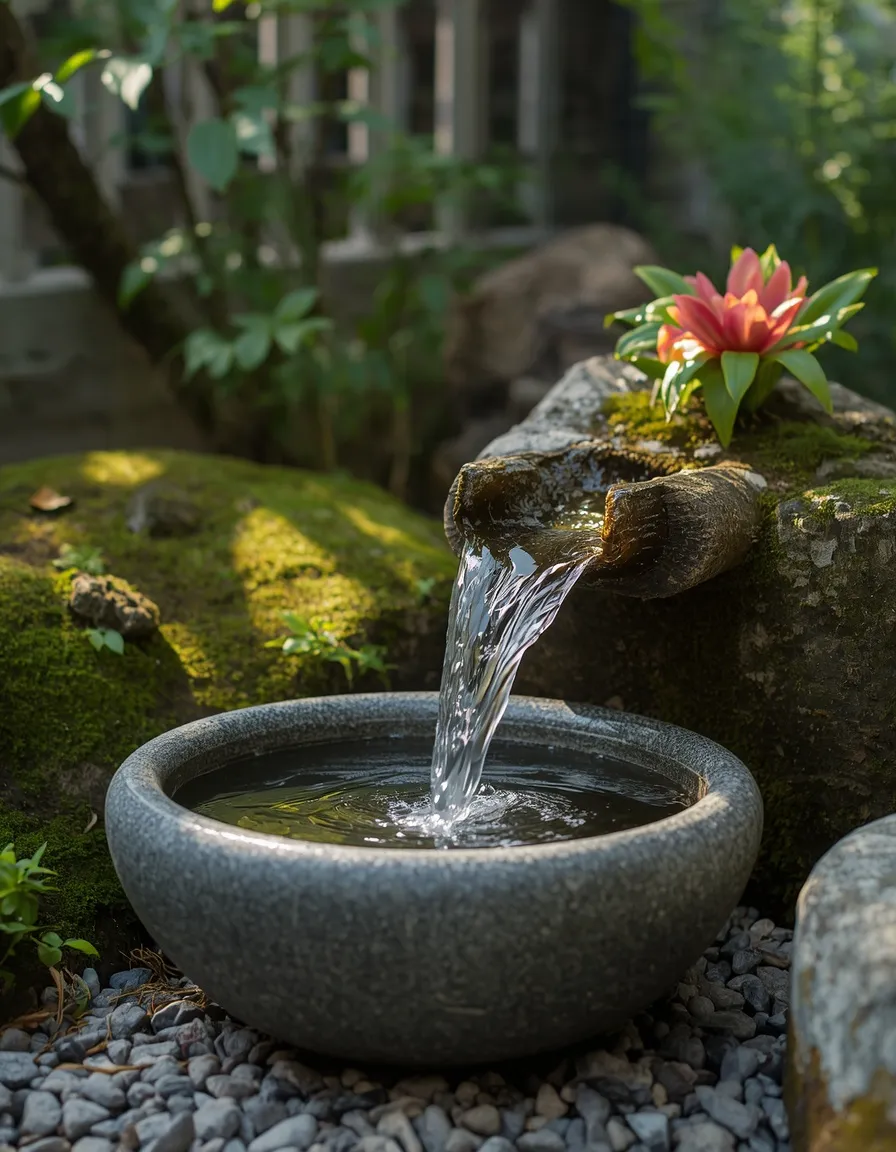
A single bamboo spout tipping rhythmically to release a small measure of water into a stone basin below, the traditional shishi-odoshi design, brings a quiet, meditative sound to a Japanese-inspired or zen garden corner.
The spout balances on a pivot point roughly one-third of the way along its length, so it fills, tips to empty, and knocks against a stone as it resets, a sequence that repeats every 20 to 40 seconds depending on the water flow rate feeding it. A small, gentle pump is all that’s needed here, since the goal is a slow trickle rather than a full waterfall’s volume. This works best positioned somewhere the knocking sound can actually be heard and appreciated, near a seating area or meditation corner, rather than tucked against a busy path where the subtle sound gets lost. Bamboo needs periodic sealing or replacement every few years as it weathers, since untreated bamboo left in constant moisture eventually softens and splits.
- Creates a distinctive rhythmic sound rather than continuous rushing water
- Needs only a small, gentle pump rather than a high-flow setup
- Best placed near a seating or meditation area where the sound can be appreciated
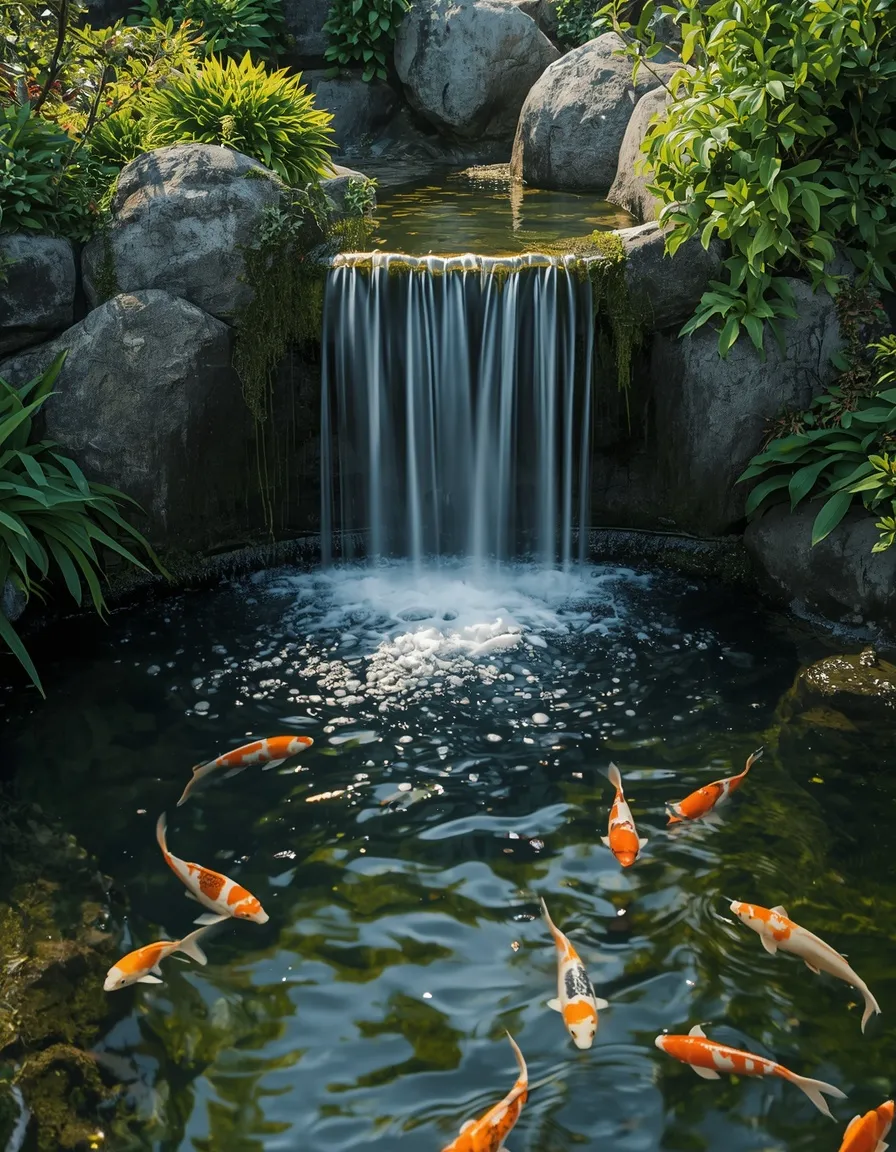
8. Koi Pond Waterfall
A waterfall spilling directly into a koi pond does more than add movement, the constant aeration it provides is genuinely important for fish health, not just visual appeal.
Moving water increases dissolved oxygen levels in the pond, which koi and other pond fish depend on, particularly during warm summer months when water holds less oxygen naturally. Position the waterfall at one end of the pond rather than centered, so fish have a calmer zone away from the turbulence to retreat to, and use a biological filter box integrated into the waterfall’s plumbing to help manage fish waste before it’s redistributed through the pond. Depth matters here too: koi ponds generally need at least 3 feet (90 cm) of depth in part of the pond to protect fish through winter in temperate climates, considerably deeper than a purely decorative pondless feature would ever require. Avoid copper or zinc components anywhere in the waterfall’s plumbing, since both metals are toxic to fish at surprisingly low concentrations.
- Aeration from moving water genuinely benefits fish health, especially in summer
- Needs greater pond depth than decorative-only waterfall styles
- Copper and zinc plumbing components should be avoided due to fish toxicity
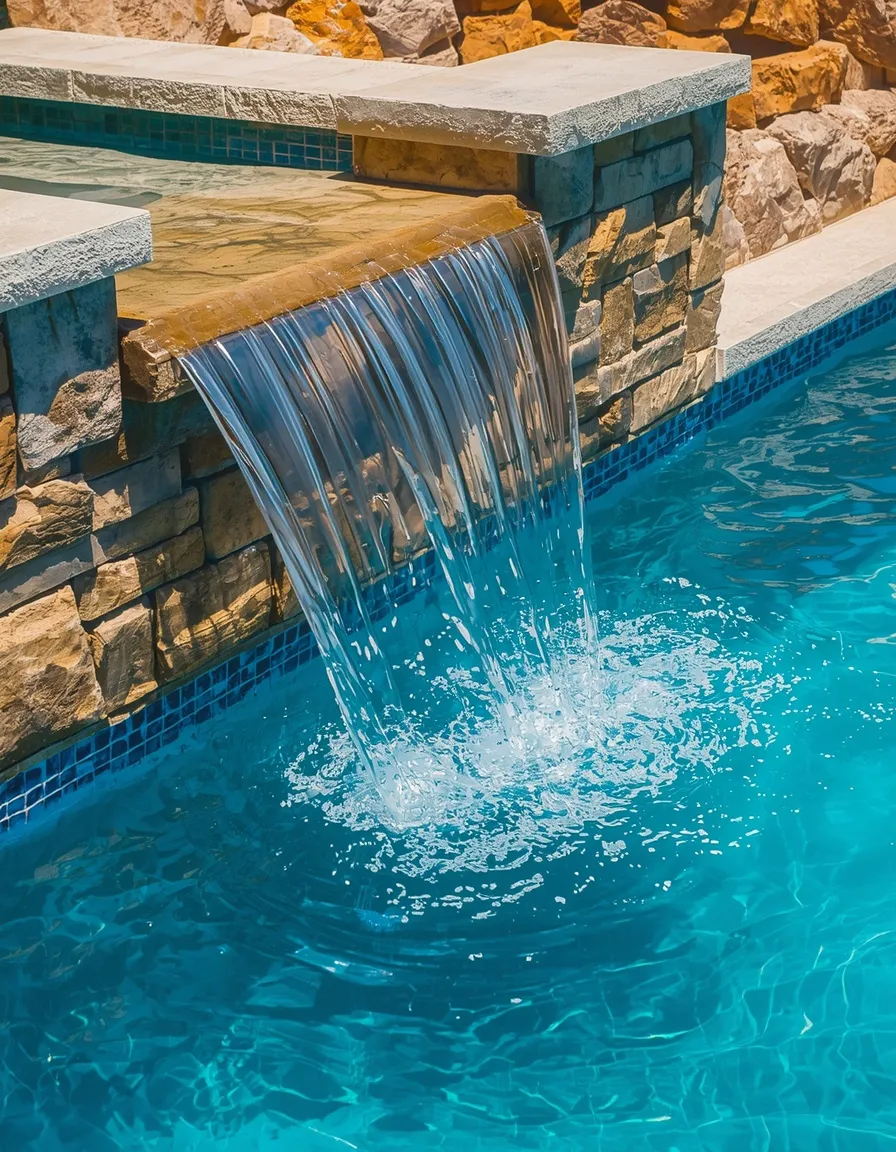
9. Poolside Waterfall
A waterfall built into the raised end of a swimming pool, water sheeting down natural stone or a smooth concrete face directly into the swim area, turns a straightforward rectangular pool into something closer to a resort setting.
These features are typically built during the pool’s initial construction or a major renovation, since the plumbing usually ties into the pool’s own circulation system rather than running as a separate feature, which keeps ongoing maintenance simpler than a standalone waterfall would. Position it at the shallow end or a corner rather than directly in the swim lane, so swimmers aren’t constantly moving through the falling water and turbulence. Because it shares the pool’s chlorinated or salt-treated water, standard pond plants and fish aren’t compatible with this style, the look comes entirely from stone selection and lighting rather than planting. Underwater or edge-mounted LED lighting timed to run at dusk extends the feature’s impact well past daylight hours.
- Best planned during pool construction or a major renovation, not as a simple add-on
- Shares the pool’s filtration system, simplifying long-term maintenance
- Relies on stone and lighting for visual impact rather than pond planting
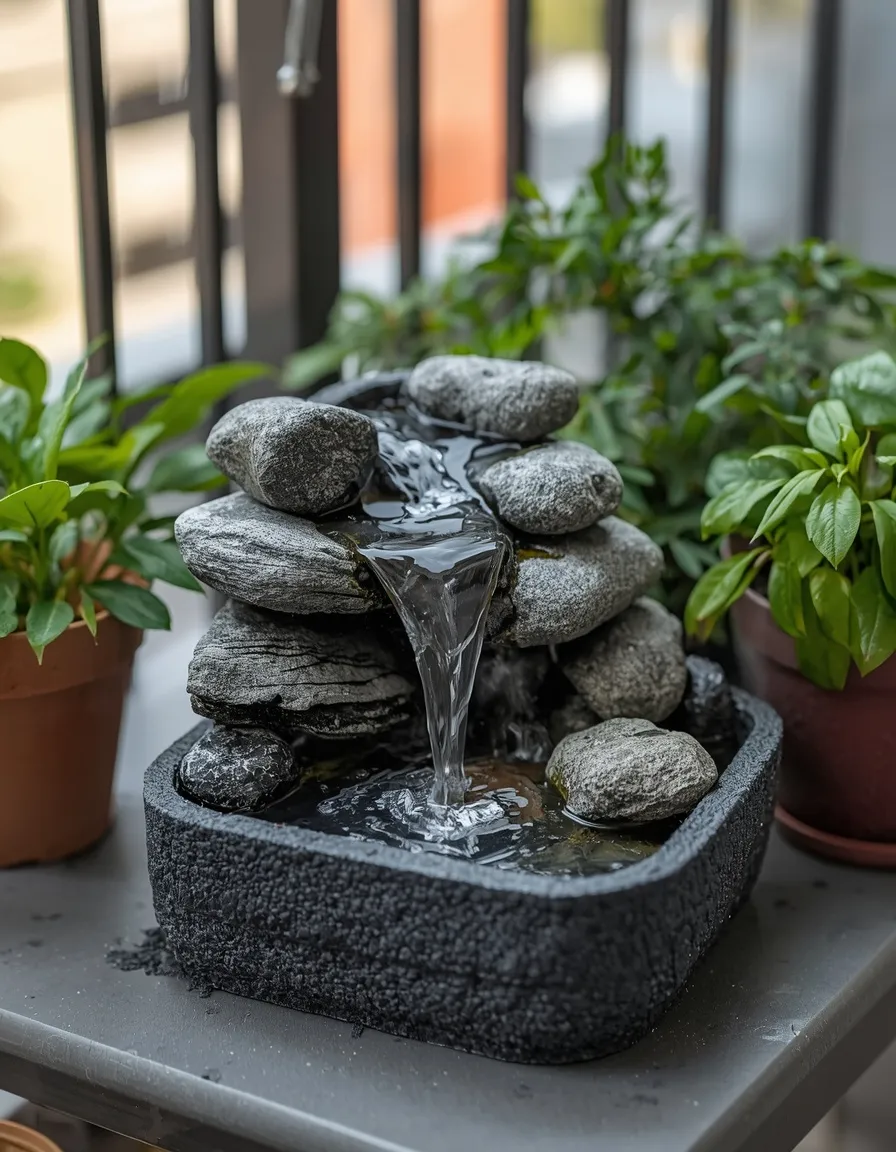
10. Balcony and Patio Mini Waterfall
A tabletop or wall-mounted mini waterfall, barely 2 feet (60 cm) tall, brings the sound and movement of a garden waterfall to a balcony or small patio where a full-scale build simply isn’t possible.
Look for self-contained units with a built-in reservoir and pump rather than assembling separate components, since these are designed specifically for the weight and space limits of balcony use and typically weigh under 20 pounds (9 kg) when filled. Position it away from strong prevailing wind, which scatters spray and speeds up evaporation, and check the water level every few days rather than weekly, since small reservoirs run dry far faster than an in-ground feature would. This is one of the few garden waterfall ideas that translates directly to renters and apartment dwellers, since nothing needs to be built into the structure itself. A small battery-powered pump option exists for balconies without an accessible outlet, though runtime is limited compared to a plugged-in unit.
- Weighs under 20 pounds (9 kg) filled, suiting most balcony weight limits
- Needs more frequent water top-ups than larger in-ground features
- One of the only styles on this list that fully suits renters and apartments
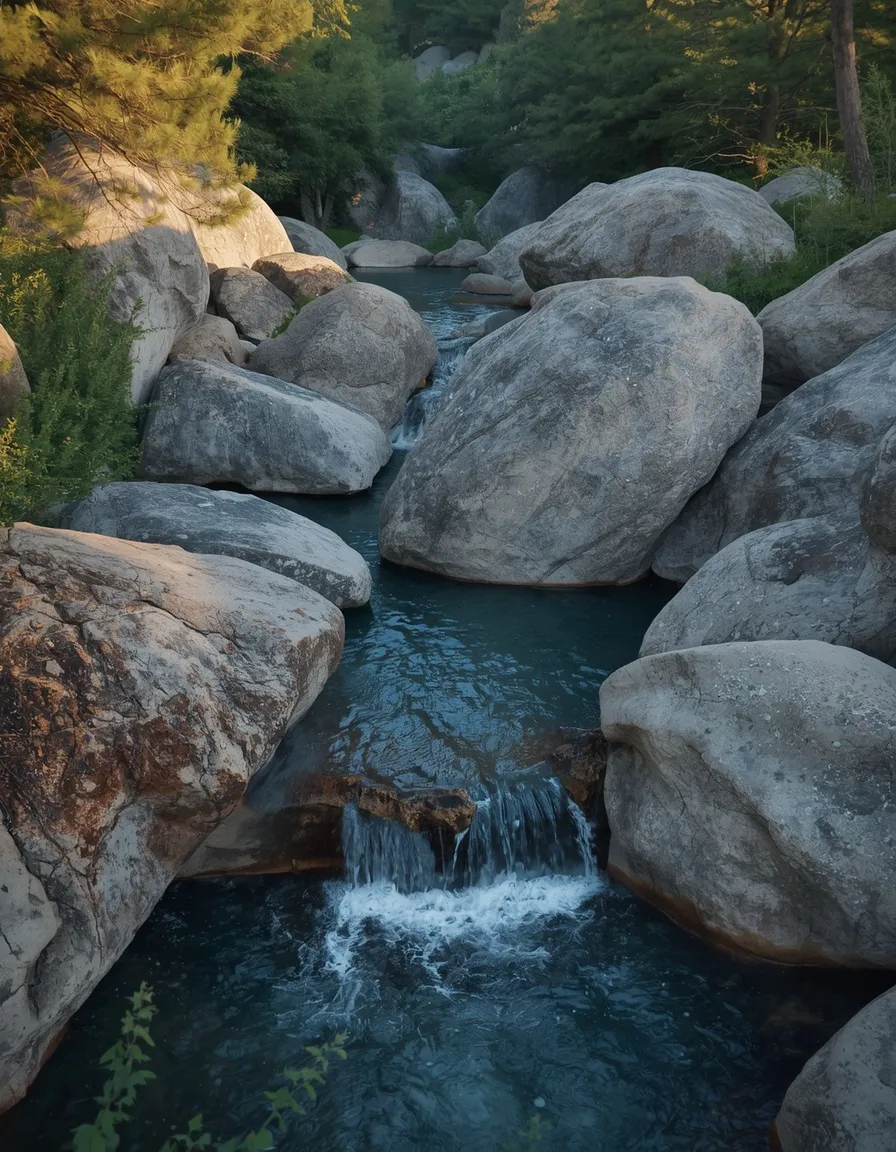
11. Boulder Waterfall
A cluster of massive natural boulders, some weighing several hundred pounds, arranged so water threads between and over them into a pool below, creates the most naturalistic, large-scale waterfall style on this list.
This is a project that genuinely requires heavy equipment and, in most cases, a professional landscaper or hardscape contractor, since boulders over roughly 200 pounds (90 kg) can’t be safely placed by hand and shifting one after placement to fix a flow issue is far harder than with smaller stones. Source boulders locally where possible, both to keep delivery costs manageable and because regionally native stone tends to look more settled and appropriate in the landscape than an obviously imported material. Plan the water’s path before placement rather than after, sketching where the flow should split, pool, and rejoin around each boulder, since repositioning large stone after the liner and plumbing are in is genuinely difficult. This style suits larger properties with the space to let a substantial feature breathe rather than feel crowded.
- Delivers the most naturalistic, large-scale visual impact of any style here
- Typically requires professional installation due to the weight of the stone involved
- Best suited to larger properties with room for the feature to feel proportionate
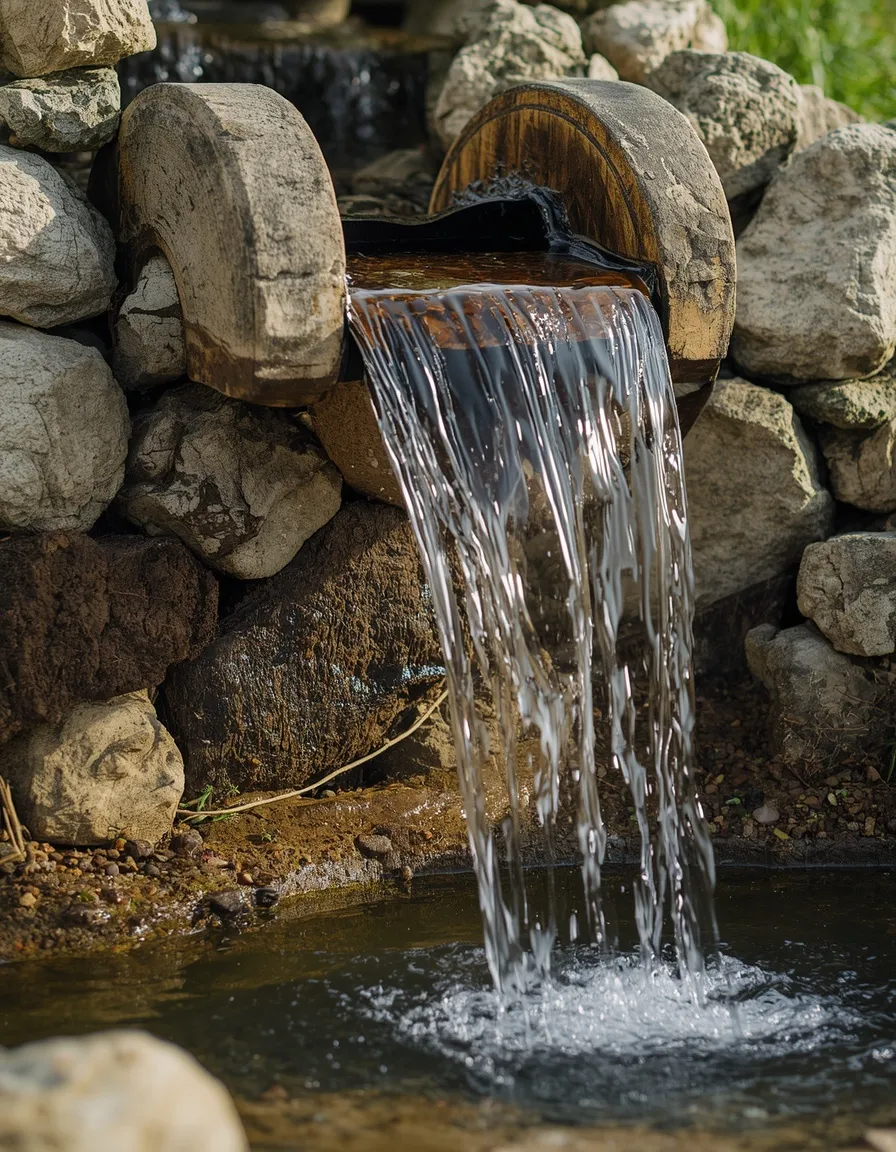
12. Reclaimed Material Rustic Waterfall
Water spilling over a salvaged millstone, an old ceramic drainpipe, or a weathered wooden trough gives a waterfall genuine character that new, uniform materials can’t replicate, the same instinct that drives a broader rustic backyard ideas approach to outdoor spaces.
Source salvaged materials from architectural reclamation yards rather than random secondhand finds, since reclamation yards typically clean and inspect pieces for structural soundness before resale, an old drainpipe with a hidden crack fails quickly once water pressure hits it daily. Seal porous materials like reclaimed wood or unglazed stone with a food-safe, waterproof sealant before installation, both to slow deterioration and to prevent the material from leaching tannins or residue into the recirculating water. This style works particularly well as a smaller accent feature within a larger rustic or cottage garden rather than the sole focal point, letting the salvaged piece read as a found object rather than a manufactured centerpiece. Expect more frequent maintenance than manufactured materials require, since reclaimed pieces age and weather in less predictable ways.
- Brings genuine character and history that new manufactured materials can’t replicate
- Works best as an accent feature within a broader rustic garden design
- Needs more frequent maintenance than manufactured stone or metal materials
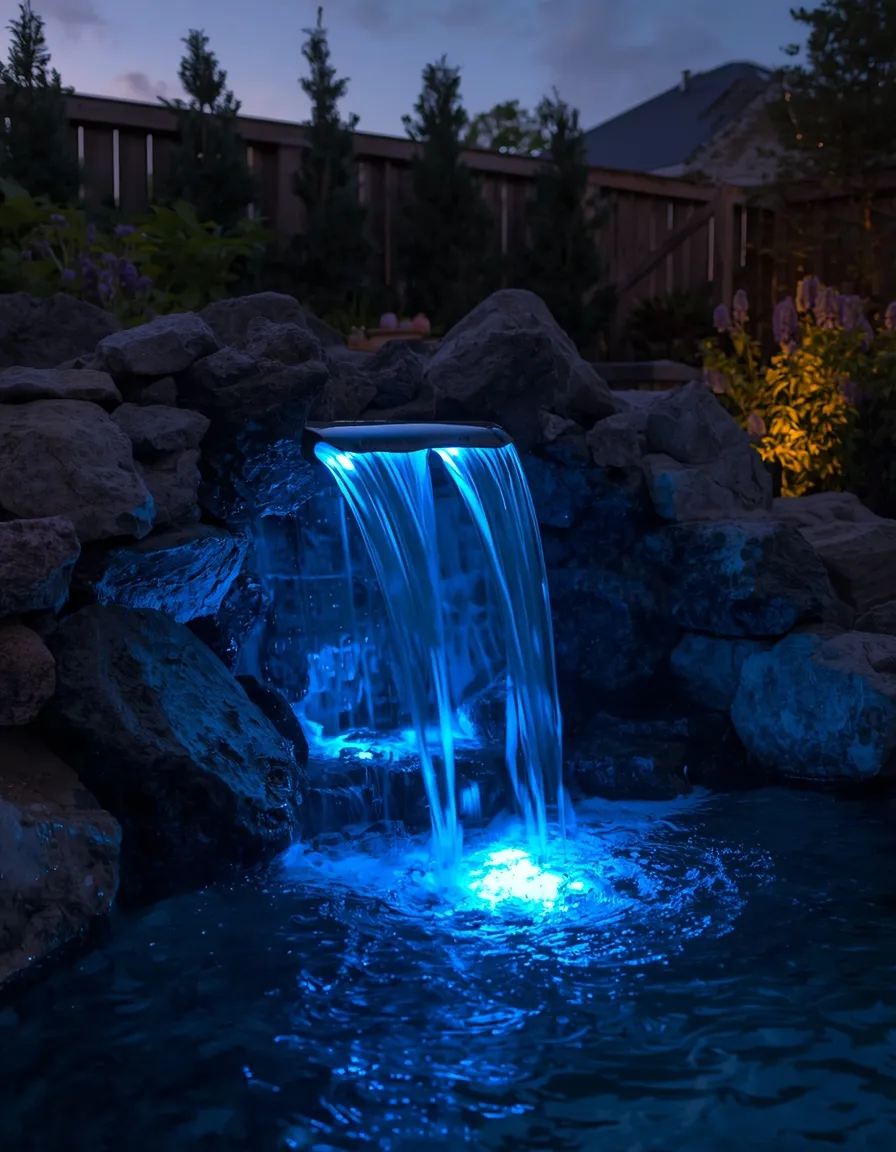
13. LED-Lit Night Waterfall
Submerged color-changing LED lights turning a waterfall’s falling water into a glowing curtain of blue, purple, or amber after sunset extends a garden feature’s impact well past daylight hours.
Position lights beneath or behind the falling water rather than in front of it, so the light passes through the water itself rather than simply illuminating the surface from the wrong angle, which is the most common setup mistake and results in a flat, unlit-looking feature despite working fixtures. Low-voltage 12-volt lighting systems, run through a transformer rather than direct household current, are both the safer and more standard choice for anything submerged or near water. Warm white lighting tends to suit naturalistic rock waterfalls better, while color-changing RGB fixtures fit modern water walls and more playful garden styles particularly well. Clean algae and mineral buildup off submerged fixtures every few weeks, since buildup dims output considerably faster than most people expect.
- Extends a waterfall’s visual impact well into the evening
- Low-voltage 12-volt lighting run through a transformer is the safer standard for submerged fixtures
- Light placement behind or beneath the water, not in front, makes the biggest visual difference
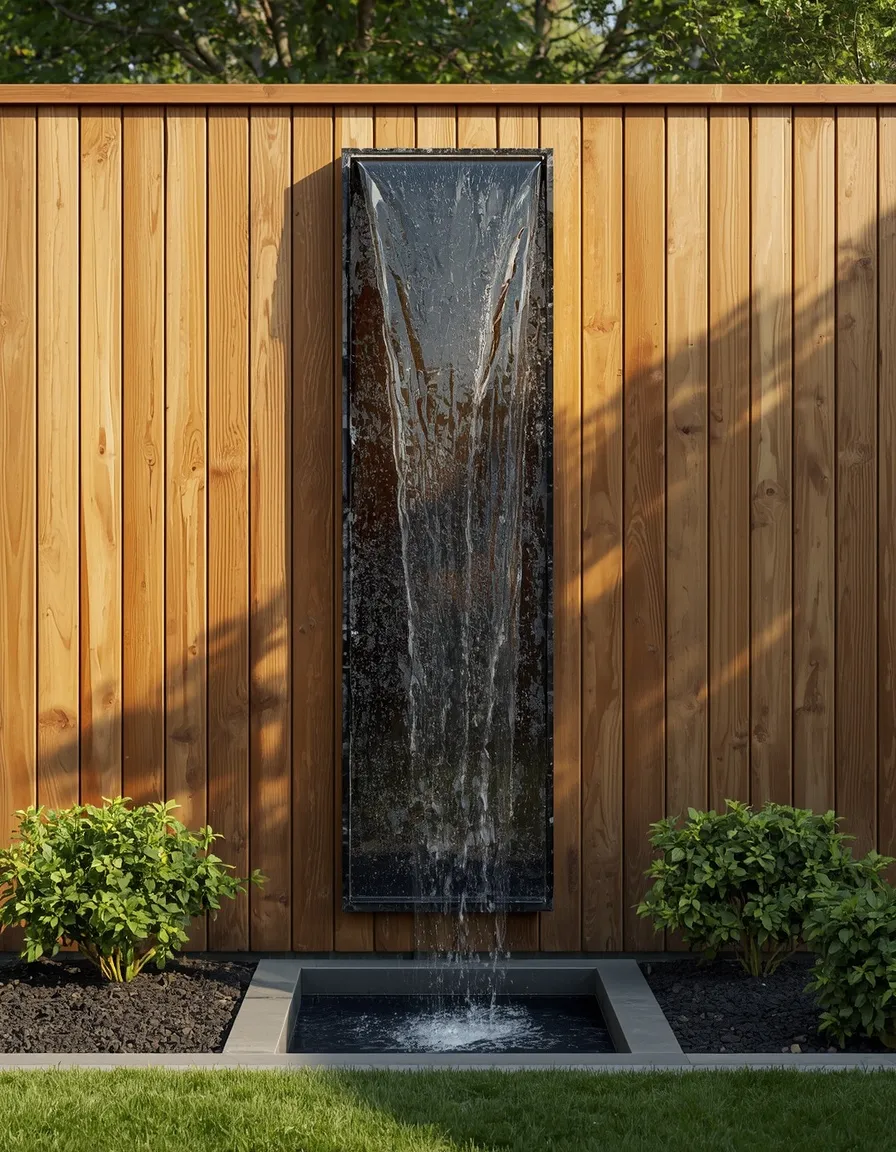
14. Vertical Wall-Mounted Waterfall
A slim waterfall panel mounted flush against an existing fence or exterior wall, water running down its face into a narrow trough at the base, adds real water feature impact without claiming any floor space at all.
This style suits narrow side yards, tight courtyards, and small urban gardens especially well, since the entire feature occupies a footprint as shallow as 6 to 8 inches (15 to 20 cm) from the wall. Mount the pump and plumbing on the back side of the panel where possible, keeping visible hardware to a minimum and preserving the clean sheeting effect from the front. Check that the mounting wall or fence can bear the combined weight of the panel, water, and hardware before installation, since a water-filled panel is considerably heavier than it looks; a stud finder and appropriate anchors matter more here than with most other styles on this list. This is a particularly strong option for a small garden already tight on ground-level planting space.
- Occupies almost no floor space, fitting footprints as shallow as 6 inches (15 cm)
- Suits narrow side yards and small urban courtyards especially well
- Requires confirming the mounting wall can bear the combined weight before installation
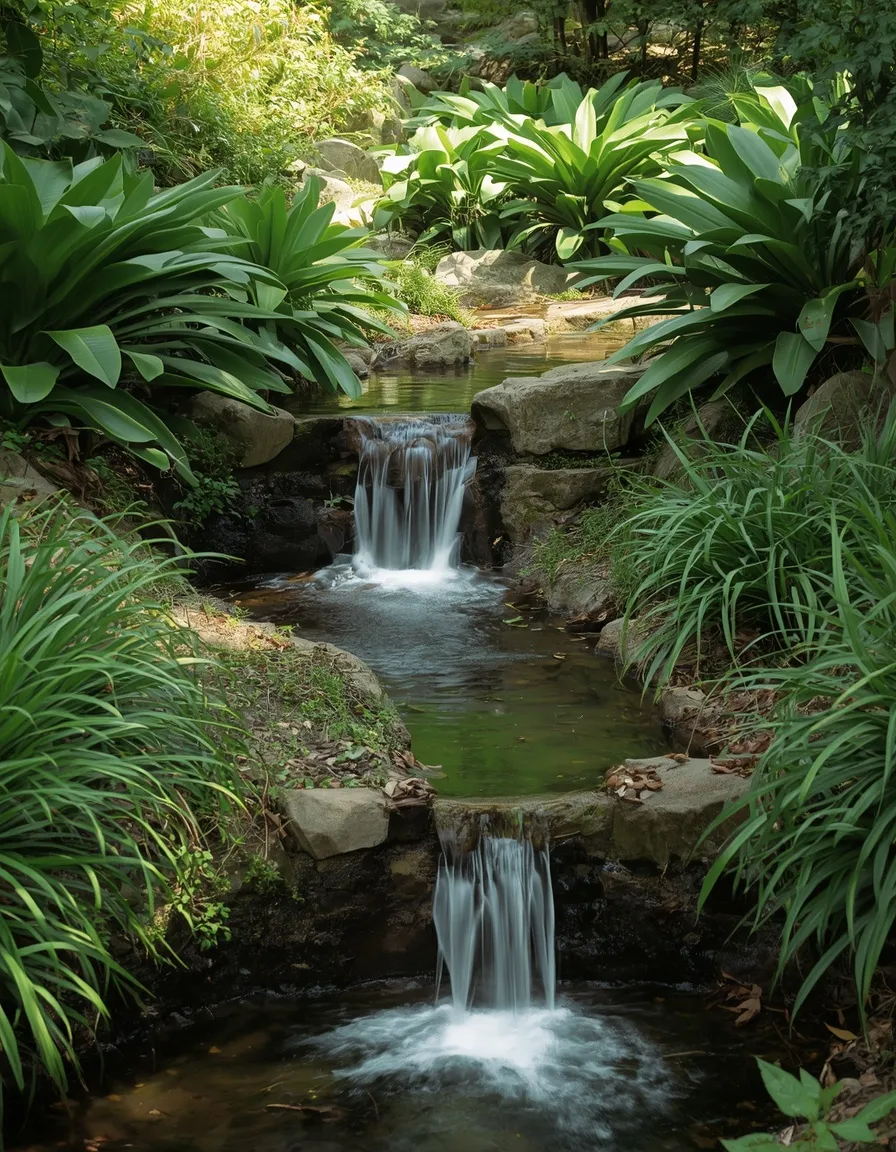
15. Stream-Fed Waterfall
A meandering stream winding through planting beds before dropping into a waterfall at its lowest point brings a sense of a naturally occurring water source rather than an isolated feature dropped into the yard.
Design the stream’s path to follow the yard’s existing contours where possible, since fighting the natural grade means more excavation and a less convincing result than working with it. Line the entire stream bed, not just the waterfall basin, with the same EPDM liner and underlayment to prevent water loss along the stream’s length, a common oversight that leaves a stream running dry within a few feet of its source. Plant moisture-loving species like creeping jenny, water iris, or ferns directly along the stream’s edges, where the consistently damp soil suits them better than the rest of the garden. This style demands considerably more space and budget than a contained waterfall alone, generally starting at 15 to 20 feet (4.5 to 6 m) of stream length to read as a genuine feature rather than a short connector.
- Creates the most naturalistic overall water feature, reading as a found stream rather than a built one
- Requires lining the full stream bed, not just the waterfall basin, to prevent water loss
- Needs considerably more space and budget than a self-contained waterfall
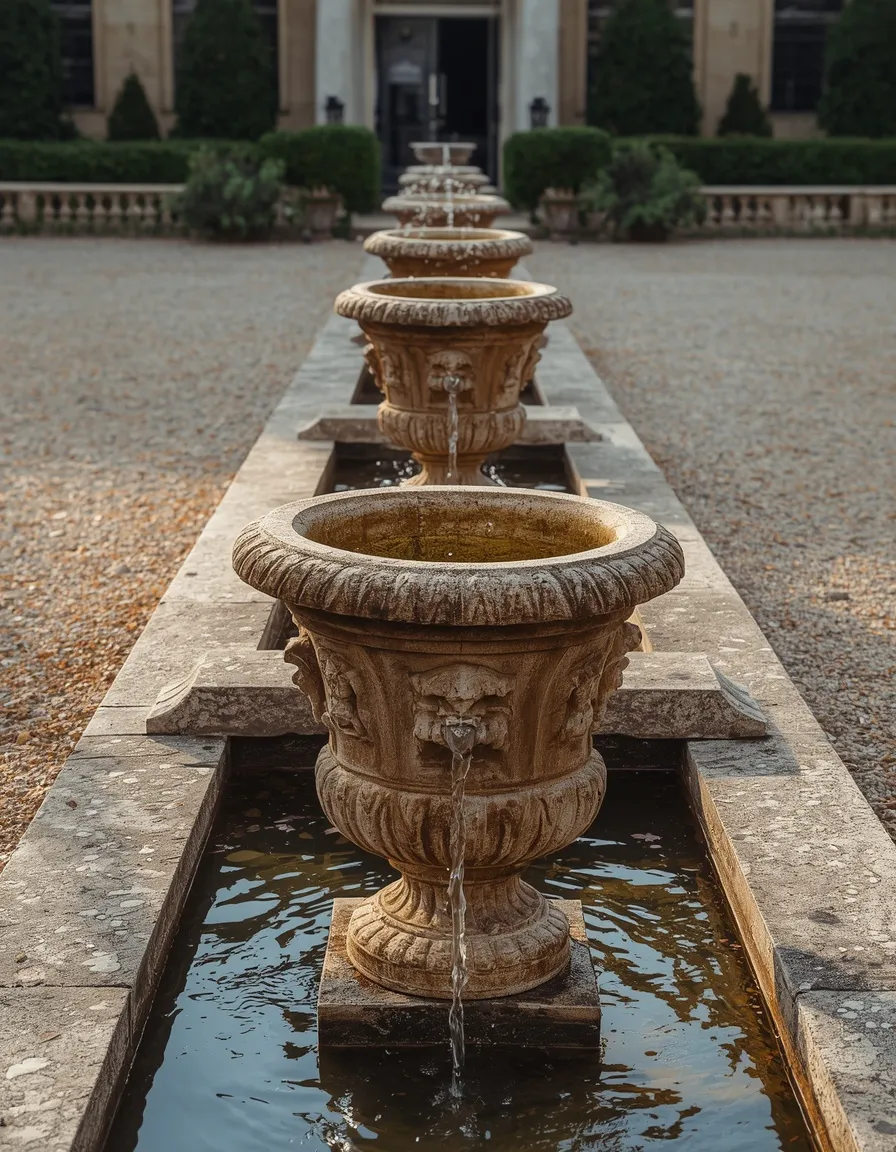
16. Fountain Urn Spillway Waterfall
A series of ornamental urns cascading water from one into the next before reaching a basin below brings a formal, classical elegance that suits a structured, symmetrical garden design far better than a naturalistic rock waterfall would.
Cast stone or fiberglass urns with pre-drilled spillway holes are considerably easier to plumb than drilling ceramic pieces yourself, and fiberglass versions offer the visual weight of stone at a fraction of the actual weight, a meaningful advantage for a raised or tiered installation. Arrange urns in a graduated size sequence, largest at the bottom, so the visual proportion feels intentional rather than random, and stagger the heights unevenly rather than in a perfectly straight vertical line for a more natural spillway pattern. This style pairs naturally with formal, symmetrical garden layouts, entrance courtyards, and Mediterranean-inspired designs, and works well as a paired installation flanking a doorway or path rather than a single central feature.
- Suits formal, symmetrical garden layouts better than naturalistic rock-based styles
- Fiberglass urns offer stone’s visual weight at a fraction of the actual weight
- Works especially well as a paired feature flanking an entrance or path
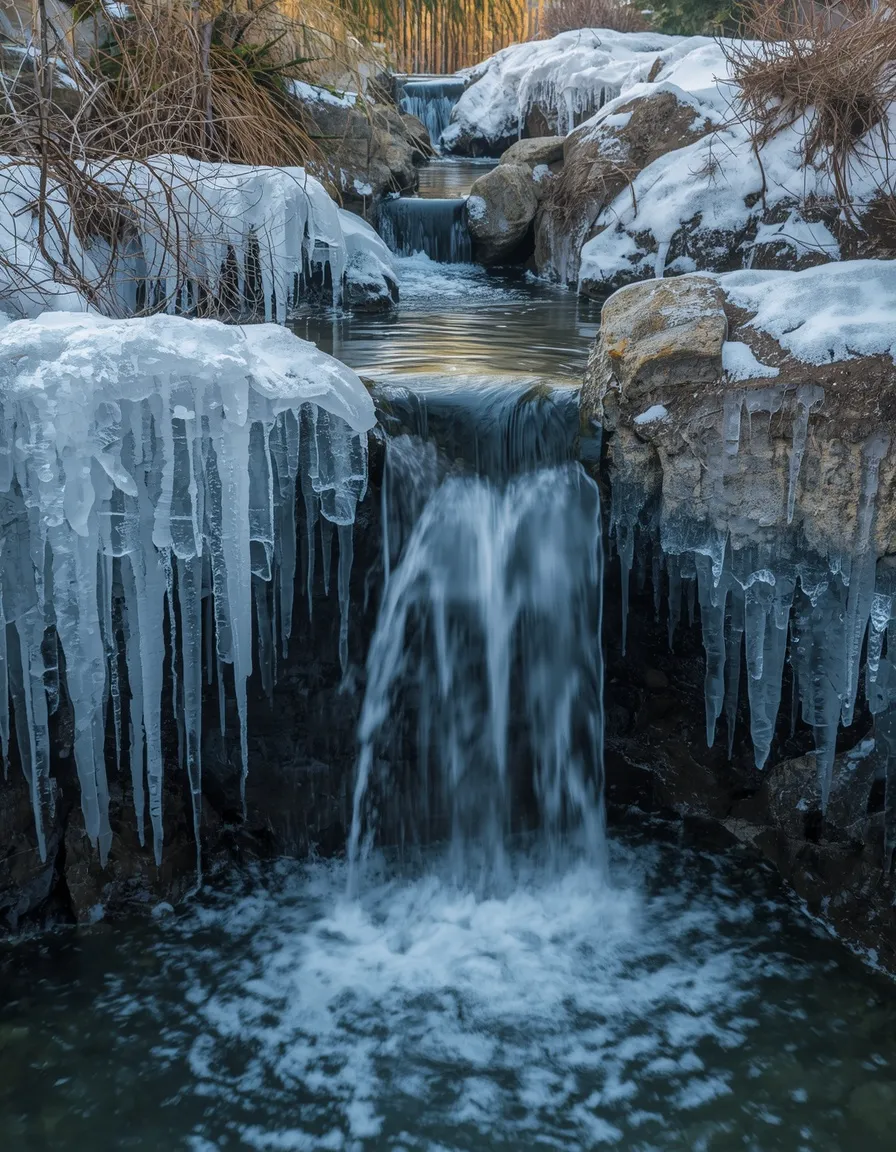
17. Winter-Safe Waterfall for Cold Climates
A waterfall designed to keep running through freezing temperatures, ice building up in decorative formations along the rock edges rather than cracking the plumbing beneath, turns winter from a shutdown season into a genuine visual feature.
Running the pump continuously through winter, rather than shutting it down, is often the safer choice in climates with hard freezes, since moving water resists freezing solid far better than standing water does, and a running pump generates enough friction heat to help keep its own housing from freezing. Set the pump below the eventual ice line, at least 18 to 24 inches (45 to 60 cm) deep in the basin, so it stays submerged in liquid water even if surface ice forms. In climates with extended deep freezes, fully draining and storing the pump for winter is the more reliable option; check the specific pump’s cold-weather rating before deciding, since not all units are built to run in near-freezing water. Never chip at ice buildup with a hard tool to clear a blocked area, since this risks puncturing the liner beneath; a bucket of warm water works far more safely to melt problem spots.
- Running the pump continuously through winter often prevents freezing better than shutting it down
- The pump should sit well below where surface ice is likely to form
- Never chip at ice with hard tools, since this risks puncturing the liner underneath
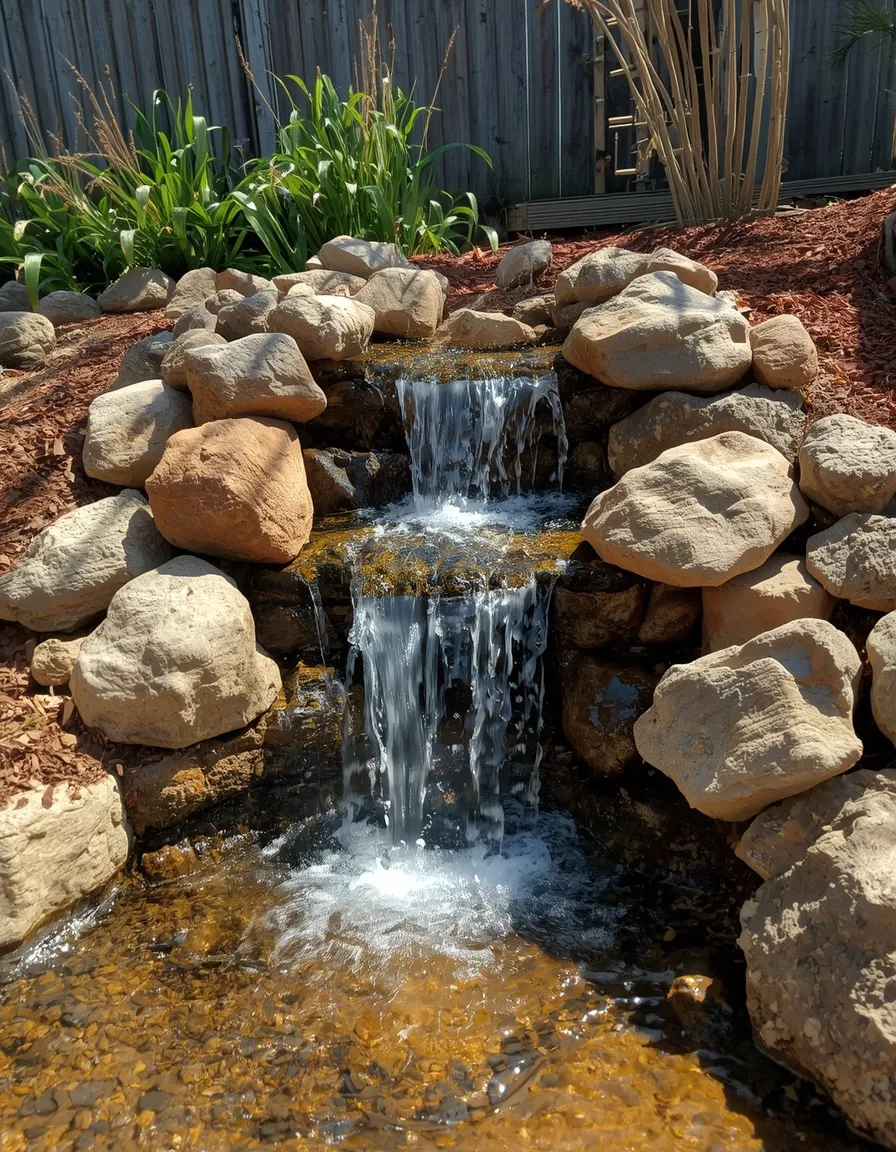
18. Budget DIY Pump Kit Waterfall
A basic all-in-one waterfall kit, complete with a small pump, flexible tubing, and a preformed spillway, gets real moving water into a garden for well under most other styles on this list, often for the cost of a single weekend’s materials.
These kits are designed for a single weekend installation without specialized tools, typically involving digging a shallow basin, placing the preformed unit, connecting the included pump and tubing, and covering the edges with rock or gravel from a local supplier. The tradeoff for the low cost and easy installation is scale, most kits top out around 2 to 3 feet (60 to 90 cm) of height and a modest flow rate, so this style suits a modest accent feature rather than a dramatic focal point. A common mistake is skimping on the rock and gravel used to disguise the kit’s edges, since an otherwise good installation can look obviously artificial if the preformed basin’s rim is left visible. This is a genuinely solid entry point for a first-time water feature builder before committing to a more ambitious custom design.
- The most budget-accessible entry point into garden waterfall ideas on this entire list
- Installable in a single weekend without specialized tools
- Best treated as a modest accent feature rather than a dramatic focal point given its scale
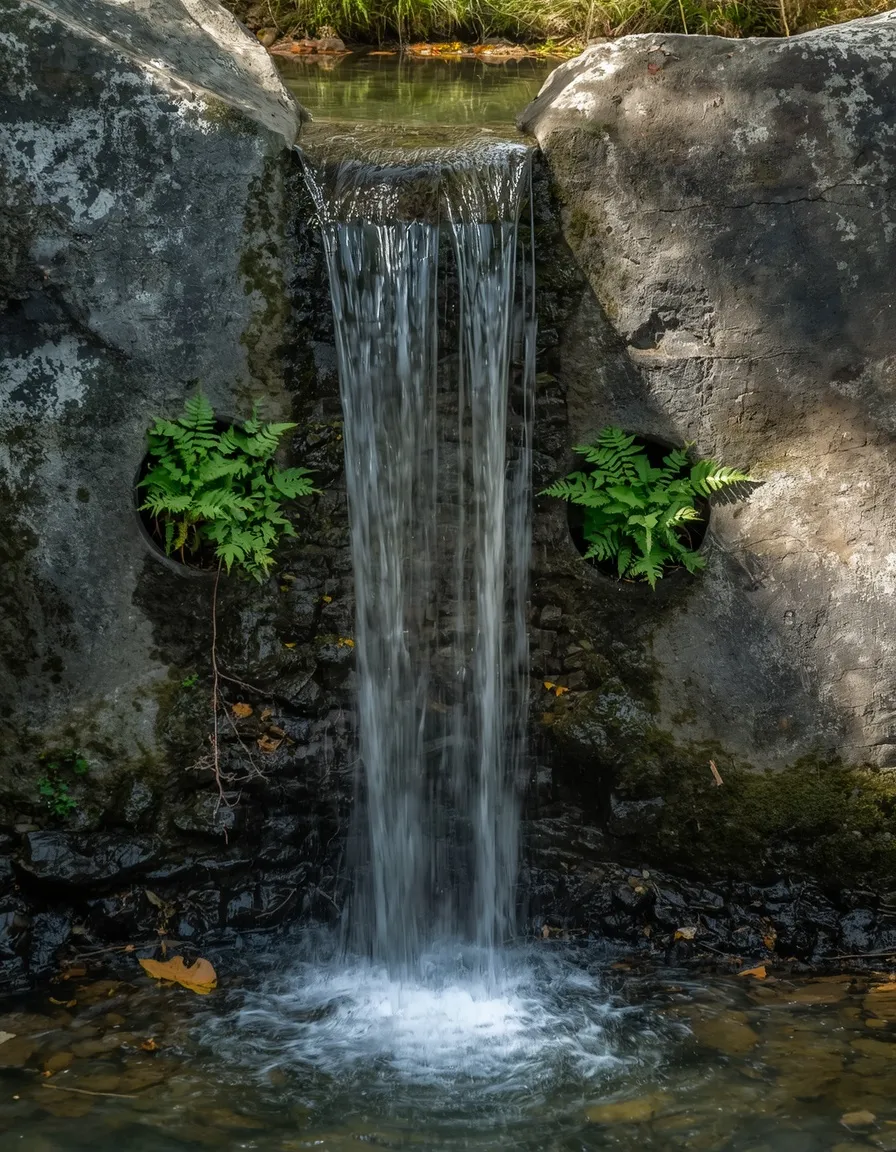
19. Planting-Pocket Waterfall
Small gaps and ledges built directly into a rock waterfall’s face, planted with moss, ferns, or creeping sedum, turn the structure itself into a living, textured feature rather than bare stone with water running over it.
Leave shallow pockets, roughly 3 to 4 inches (7 to 10 cm) deep, built into the rock arrangement during construction, since retrofitting planting pockets into an already-built waterfall is far more difficult than planning for them from the start. Choose plants suited to the specific moisture zone of each pocket, true moss and ferns for spots that stay consistently damp from splash, and hardier sedum or creeping thyme for higher, drier ledges that only get occasional overspray. Use a small amount of well-draining planting medium mixed with sphagnum moss to hold the plants in place within each pocket rather than standard potting soil, which washes out quickly under regular water contact. This style takes considerably more planning at the design stage but delivers a noticeably more lush, established look within a single growing season than a bare stone waterfall of the same size.
- Integrates living plants directly into the waterfall’s structure for a lush, textured look
- Planting pockets need to be planned during construction, not added afterward
- Different pockets need different plants based on how much consistent moisture they receive
Conclusion
The best garden waterfall ideas succeed or fail on the details most photos don’t show: a pump sized correctly for the drop, a liner that survives more than one summer, and a plan for winter before the first freeze arrives. Start with the style that actually fits the yard’s space and budget rather than the most dramatic option in the lineup, a modest pondless build done well will always outlast an ambitious boulder feature built beyond its foundation’s limits.
For more structural garden features to round out the design, Sunday Abode’s garden design ideas cover plenty of complementary approaches. Pick one version, get the pump sizing right, and let the sound do the rest of the work.
FAQs
How much does a garden waterfall cost to build?
Cost varies enormously by style: a budget DIY pump kit or container waterfall can run a few hundred dollars in materials, while a professionally installed boulder waterfall or poolside feature can run into the thousands once excavation and stone delivery are factored in. Choosing the style first, based on realistic budget and yard size, is the most effective way to set expectations before shopping for materials.
Do I need a professional to install a garden waterfall?
It depends on scale: pondless features, container waterfalls, and budget pump kits are realistic DIY weekend projects for someone comfortable with basic tools. Boulder waterfalls and poolside features generally need professional installation, since moving heavy stone safely and tying into an existing pool’s plumbing both require equipment and expertise most homeowners don’t have on hand.
How do I keep a garden waterfall from freezing in winter?
Running the pump continuously through winter, with it positioned well below the likely ice line, often prevents a full freeze better than shutting the system down entirely. In climates with extended hard freezes, fully draining and storing the pump for the season is the more reliable option, and any ice that does form should be melted with warm water rather than chipped away, which risks puncturing the liner underneath.
Are garden waterfalls safe for yards with young children?
A pondless design removes the open-water drowning risk that features with a visible pool carry, making it a genuinely safer choice for households with young children. For any style with standing open water, such as a koi pond or poolside waterfall, a physical barrier around the water is worth adding, in line with the layered protection approach the CPSC-backed poolsafely.gov campaign recommends for backyard water features generally.
How do I stop algae from growing in a garden waterfall?
Moving water alone reduces algae growth significantly compared to standing water, since algae thrives in still, sun-warmed conditions. Positioning the feature with some shade, using a biological filter box on ponds with fish, and cleaning submerged pump intakes and lighting fixtures every few weeks all help keep algae from taking hold.
What size pump do I need for a garden waterfall?
A useful starting formula is roughly 100 gallons per hour (380 liters per hour) of pump flow for every inch (2.5 cm) of waterfall width, with an additional 10 percent of capacity added for every extra foot (30 cm) of vertical height the water needs to climb. Undersized pumps are the most common reason a finished waterfall looks weak or apologetic rather than confident.
Can I have a garden waterfall on an apartment balcony?
Yes, a self-contained tabletop or wall-mounted mini waterfall unit, typically weighing under 20 pounds (9 kg) filled, is designed specifically for balcony weight limits and space constraints. These units need more frequent water top-ups than larger in-ground features, since their small reservoirs run dry faster, but they require no permanent installation and can move with a tenant between apartments.