
Introduction
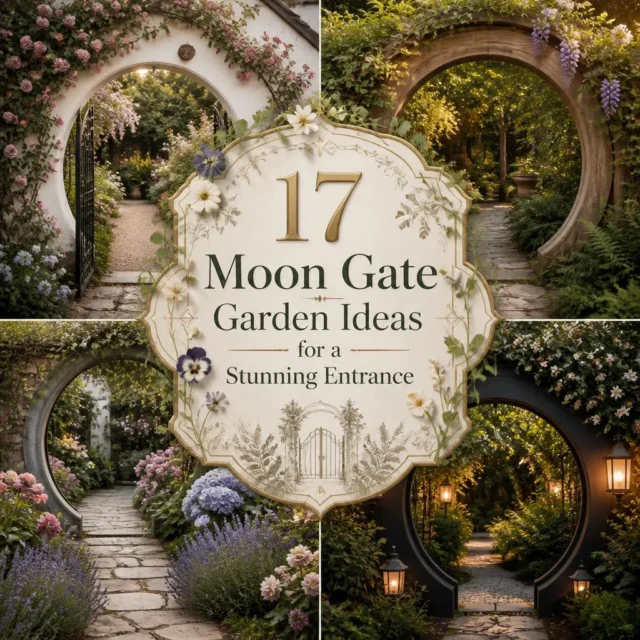
A moon gate garden turns an ordinary walk from one part of the yard to another into something worth pausing for. Borrowed from centuries-old Chinese courtyard design, the perfect circle cut into a wall, fence, or freestanding frame acts like a picture window for whatever lies on the other side, a rose bed, a reading nook, a pond catching the afternoon light. This guide gathers seventeen moon gate garden ideas covering every budget, skill level, and climate, from a weekend cattle panel build to a mortared stone archway meant to outlast the house. Whether the goal is a quiet DIY project or a full garden design overhaul, there’s a version here that fits your own abode, along with the practical build and planting details most round-ups skip entirely.
1. Classic White Wood Moon Gate
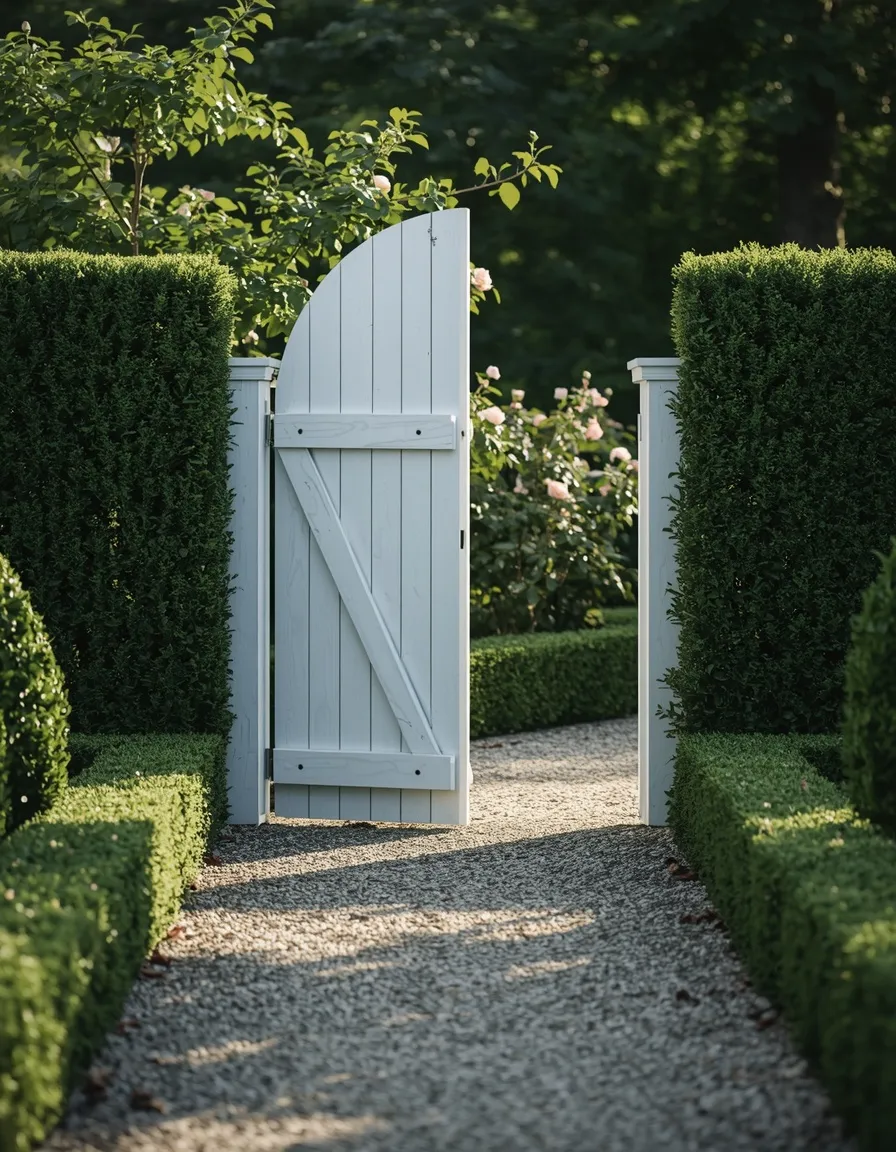
Picture a crisp white circle standing at the end of a gravel path, framed by boxwood hedges clipped low enough not to compete with its shape. This is the moon gate garden entrance most people picture first, and for good reason: painted wood is forgiving, adaptable to almost any planting style, and easy to repaint if the surrounding garden’s palette changes over time.
Build it from pressure-treated plywood or exterior-grade MDF cut into a ring roughly 6 to 7 feet (1.8 to 2.1 m) in diameter, the standard size for a walk-through gate that still reads as generously proportioned rather than cramped. Prime and paint with exterior latex before installation, then seal the cut edges to prevent moisture wicking. A common mistake is skipping a proper footing; even a lightweight wood ring needs posts set at least 24 inches (60 cm) into the ground and set in concrete, especially in areas with strong winds.
- Works in nearly any garden style, from cottage to formal
- Easiest of all moon gate materials to repaint or refresh seasonally
- Reads clearly from a distance, making it a strong focal point for long sightlines
2. Modern Wrought Iron Moon Gate
Where wood softens a garden, wrought iron sharpens it. A slim black steel ring set into a stucco or concrete wall gives a moon gate garden design a distinctly contemporary edge, especially when paired with minimal planting rather than a full cottage border.
Iron rings are typically custom-welded to size, so measure the opening twice before ordering and confirm the fabricator includes mounting flanges rated for outdoor use. Powder coating outperforms standard paint here, resisting rust far longer in humid or coastal climates. Because metal gates are heavier than wood, the wall or frame they’re set into must be structurally sound; this is one case worth having a contractor confirm before installation rather than assuming a garden fence post can bear the load.
- Delivers a sleek, architectural look with almost no maintenance once powder coated
- Pairs especially well with succulents, ornamental grasses, or gravel gardens
- Holds its shape and finish far longer than painted wood in wet climates
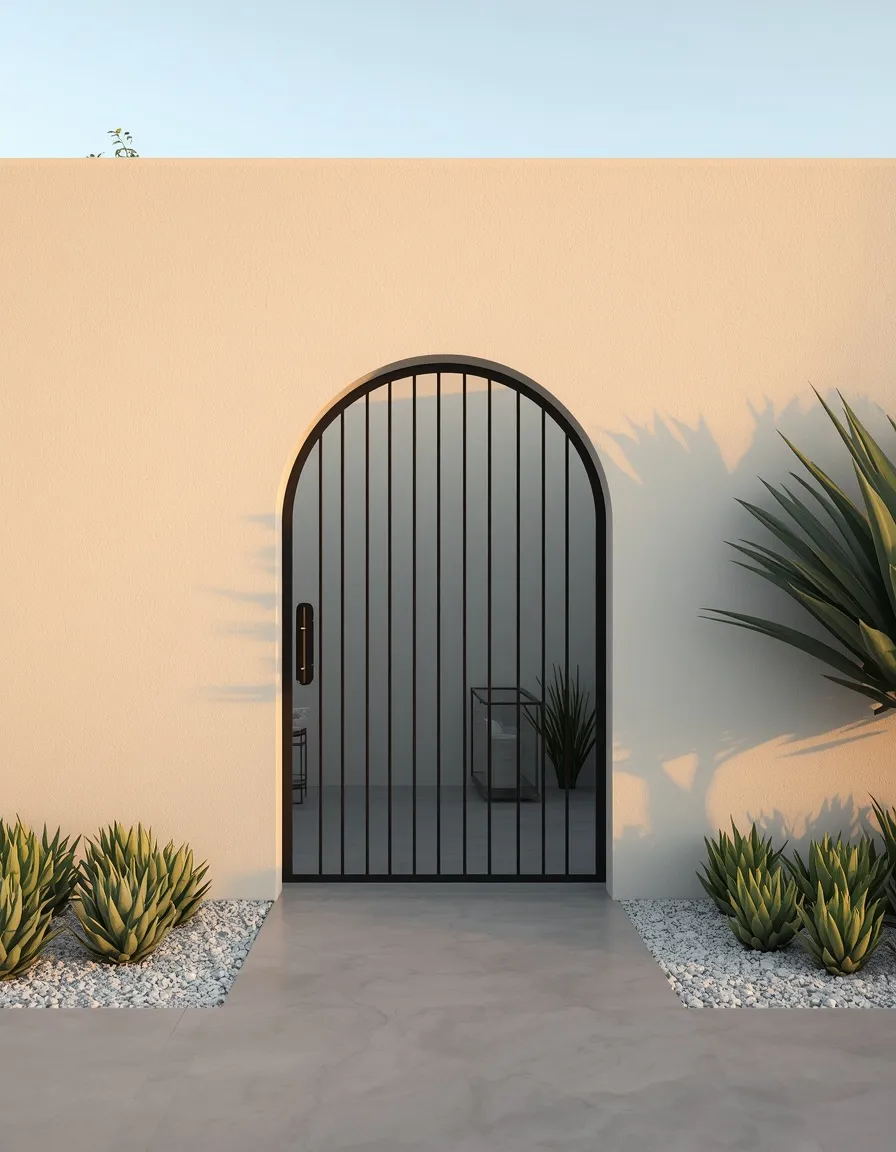
3. Natural Stone Moon Gate Archway
For a garden meant to feel like it’s been there for generations, stone is the material that delivers. A mortared brick or fieldstone ring built into a low garden wall has real permanence, the kind of feature that becomes the reason people remember a garden at all.
This is the most involved build on this list and, realistically, not a solo weekend DIY project unless you already have masonry experience. Most homeowners hire a mason for the ring itself, then handle planting and finishing touches themselves. Budget for a proper footing below the frost line in colder climates, since heaving ground can crack mortar joints within a single winter. Reclaimed brick keeps costs down and adds instant age to the finished piece.
- Adds long-term value and a sense of permanence few other garden features match
- Naturally weather-resistant, requiring no repainting or sealing
- Best suited to gardens with an existing stone wall, patio, or path to tie into
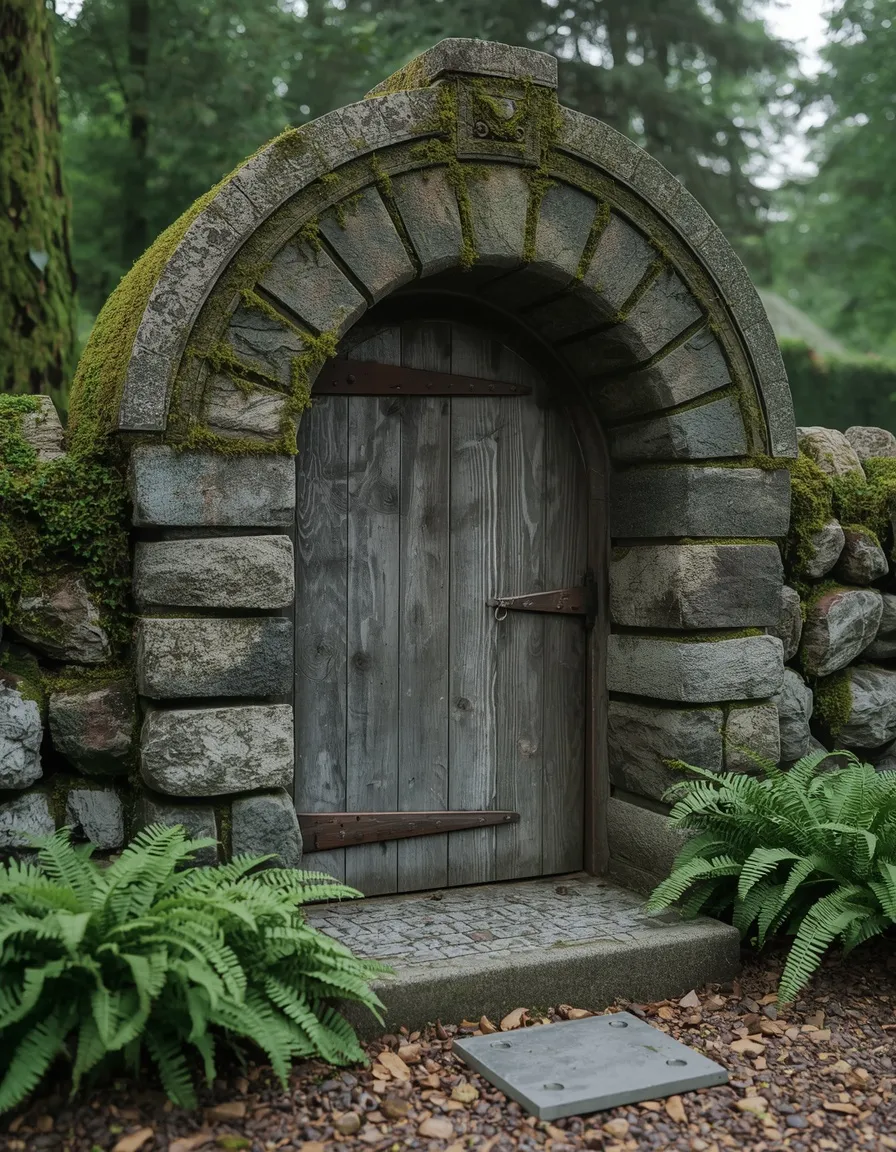
4. Zen Bamboo Moon Gate
A ring built from lashed bamboo poles feels closer to the material’s origins than any painted version, and it suits a garden leaning into a calm, unfussy aesthetic rather than an ornamental one. Set against dark green foliage, a bamboo moon gate almost disappears into the planting, which is part of its charm.
Use pressure-treated or naturally rot-resistant bamboo species, and lash joints with tarred garden twine or UV-stable cord rather than standard rope, which breaks down within a season or two outdoors. Bamboo moon gates work best as a semi-permanent feature; expect to replace lashings every two to three years and inspect poles annually for splitting, particularly near ground contact where moisture collects.
- Lower material cost than wood, iron, or stone
- Suits Japanese-inspired, tropical, or minimalist garden styles especially well
- Lightweight enough to relocate if the garden layout changes later
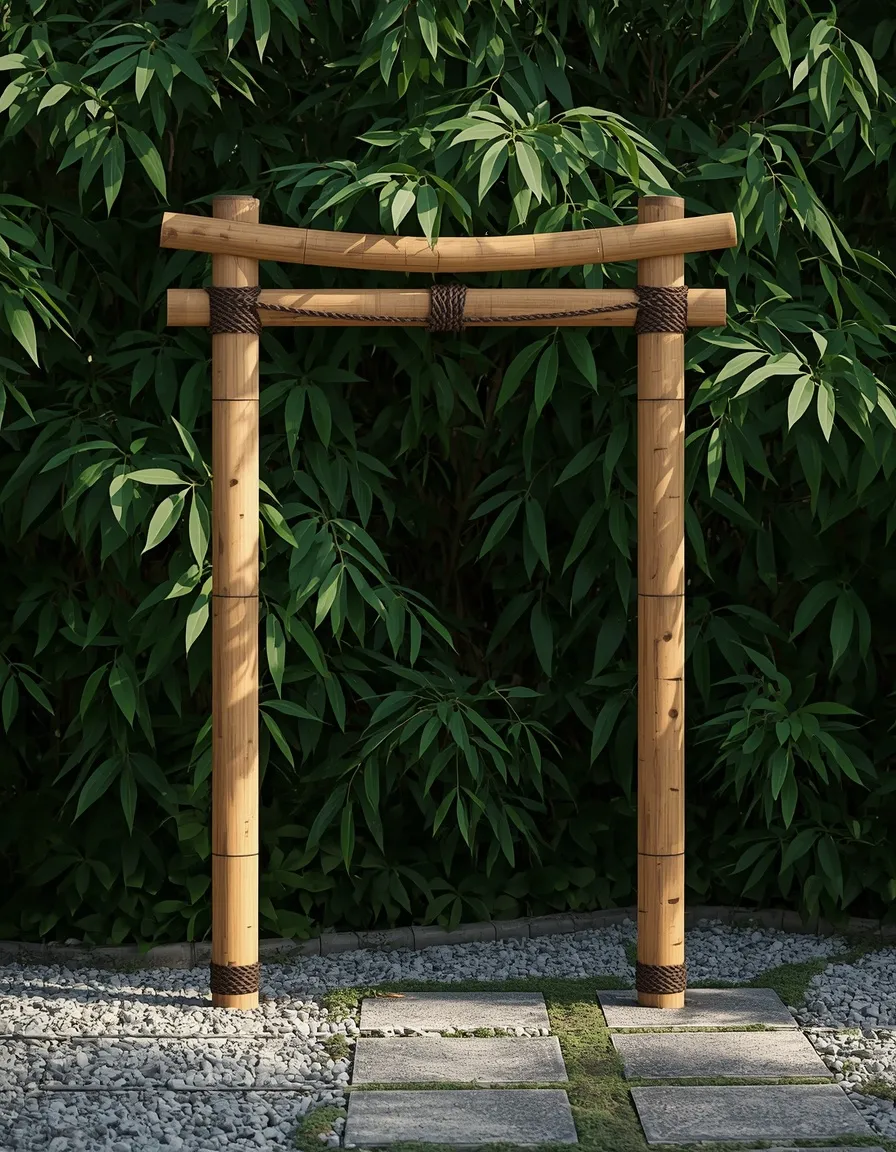
5. Budget DIY Cattle Panel Moon Gate
For anyone who wants a moon gate garden entrance diy project without a large budget, a cattle panel arch bent into a circle is the fastest, cheapest route to the shape. A single 16-foot (4.9 m) galvanized cattle panel can be cut and curved into a rough ring, then anchored with T-posts on either side.
This version won’t have the crisp, formal circle of a mortared build, and that’s the point; it’s meant to disappear under climbing plants within a season. Wear heavy gloves and safety glasses when cutting the panel, since the wire ends are sharp and springy under tension. Stake the base securely into the ground on both sides, since an unsecured panel arch can shift or tip once foliage adds weight, particularly in windy conditions.
- The most affordable entry point into moon gate garden design
- Ideal for renters or anyone testing the idea before committing to a permanent build
- Disappears completely once climbers fill in, hiding the humble base material
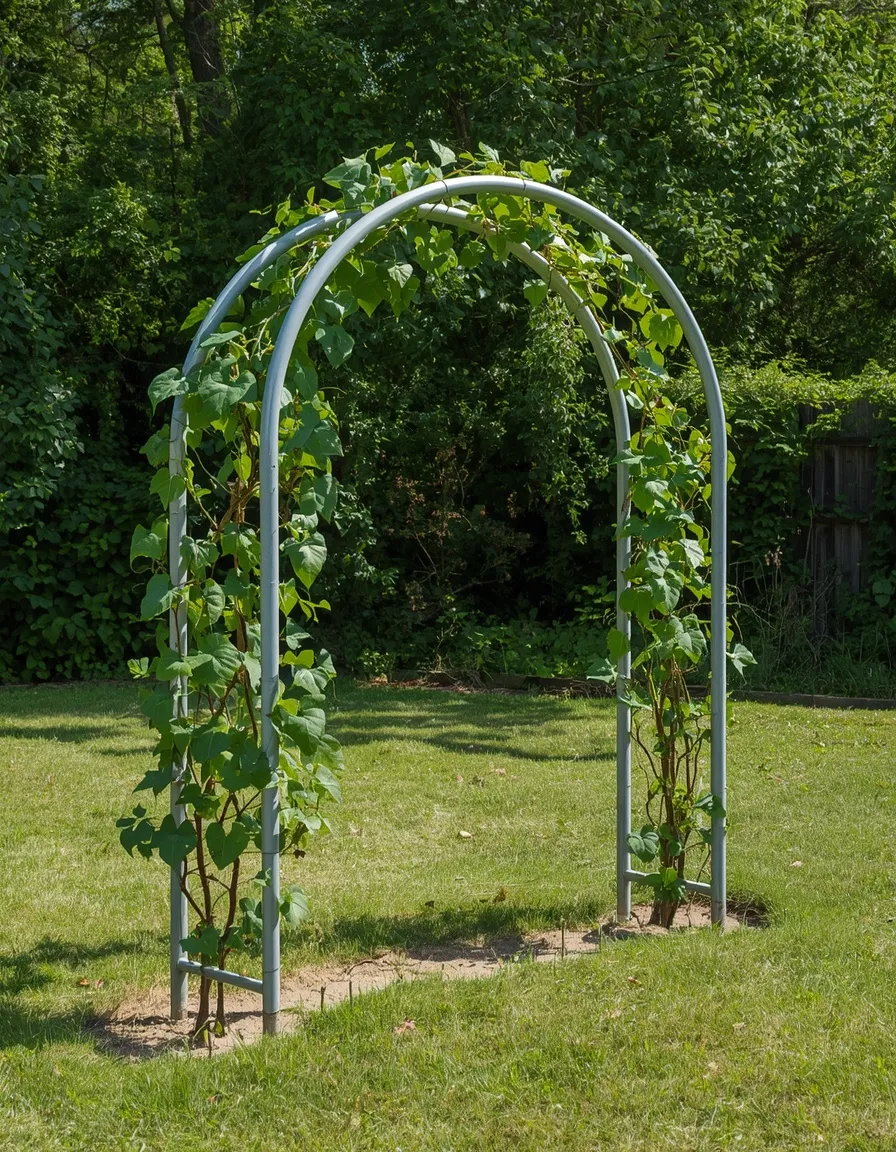
6. Wisteria-Draped Moon Gate Trellis
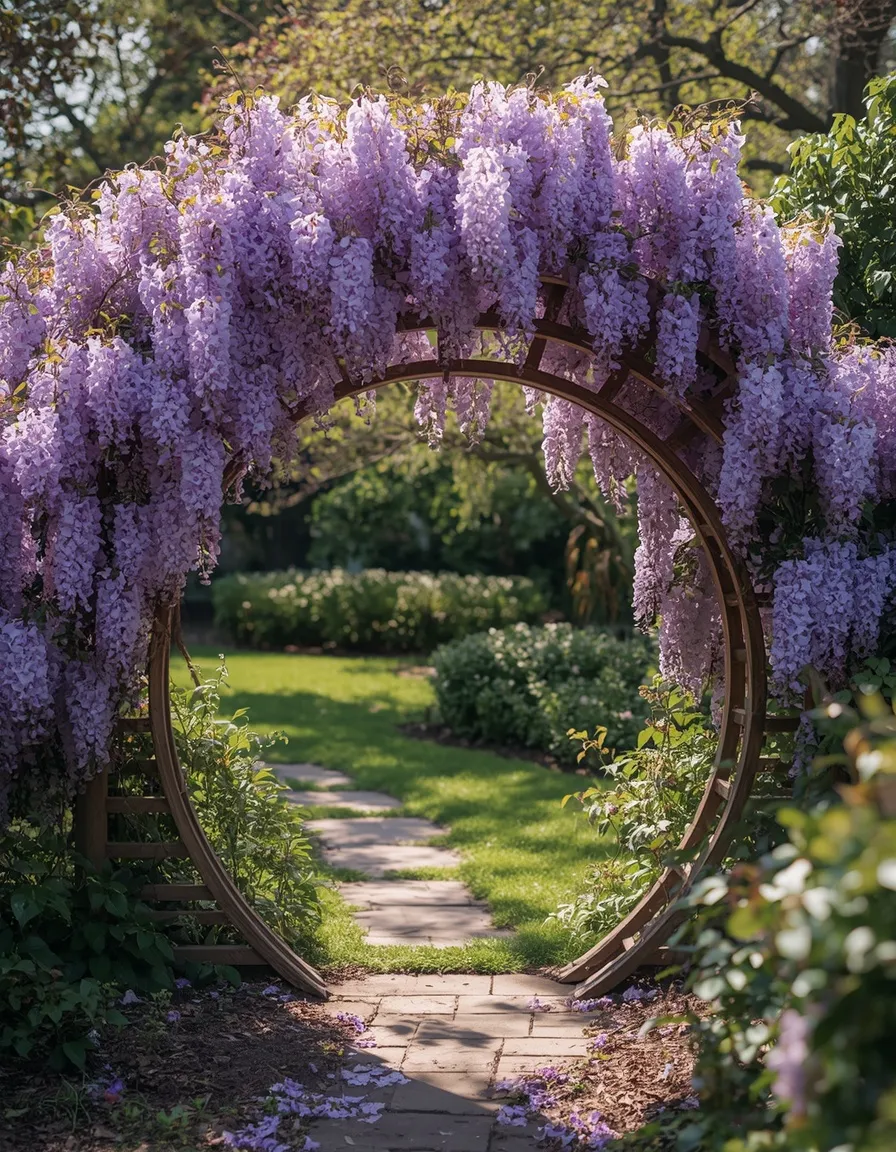
A moon gate garden trellis dripping with wisteria in late spring is one of the most photographed garden features on the internet for good reason: the cascading purple blooms follow the curve of the ring almost perfectly, framing whatever’s beyond it in soft color.
Train wisteria onto a sturdy wood or metal ring rather than a flimsy one, since mature vines get heavy fast and can warp a lightweight frame within a few years. Prune hard twice a year, once after flowering and once in late winter, to keep growth in check and encourage blooms rather than unchecked foliage. One important safety note: wisteria seeds and pods are toxic if ingested, and the ASPCA lists wisteria as toxic to pets, so keep this variation away from gardens with dogs prone to chewing fallen pods. Wisteria also needs a genuinely sturdy structure and a full growing season’s head start before it fills in, so this is a patience project rather than an instant one.
- Creates one of the most striking seasonal displays of any moon gate style
- Works well over a well-anchored wood or metal ring rather than a lightweight frame
- Best suited to gardens without pets prone to chewing fallen seed pods
7. Moon Gate Fence Focal Point
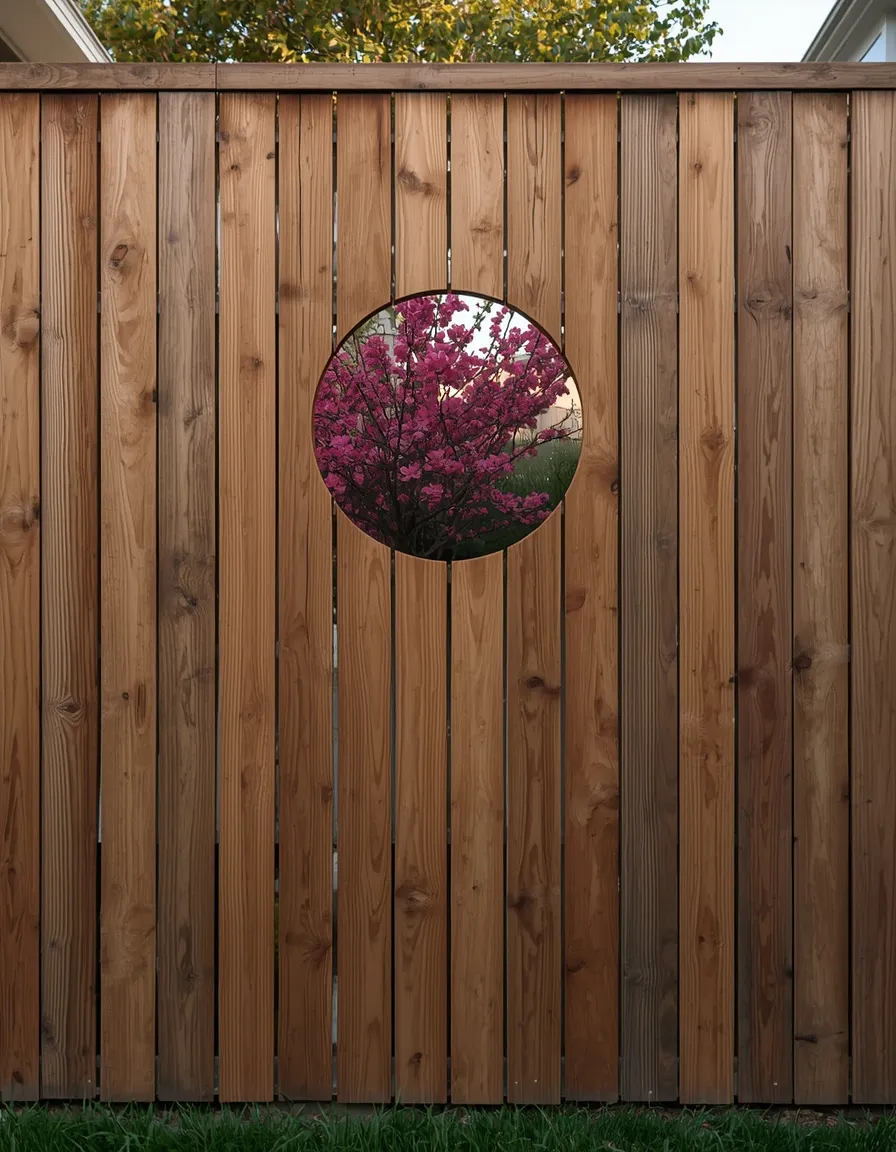
Rather than standing alone, a moon gate garden fence design cuts the circular opening directly into an existing privacy fence, turning a solid boundary into a framed view of whatever lies beyond, a neighbor’s flowering tree, a distant hillside, or simply more of your own garden.
This works best on solid wood fences at least 6 feet (1.8 m) tall, where the ring is centered and reinforced with a doubled frame around the cut edge for structural integrity. Because you’re cutting into an existing structure rather than building fresh, confirm local fence height and modification codes before cutting, particularly for shared boundary fences. This idea suits gardens where the fence itself is already a visual feature rather than something to hide behind.
- Turns a plain boundary fence into a genuine design feature
- Costs far less than a freestanding gate since it reuses existing structure
- Works especially well when it frames a specific view worth highlighting
8. Moon Gate Framing a Pond View
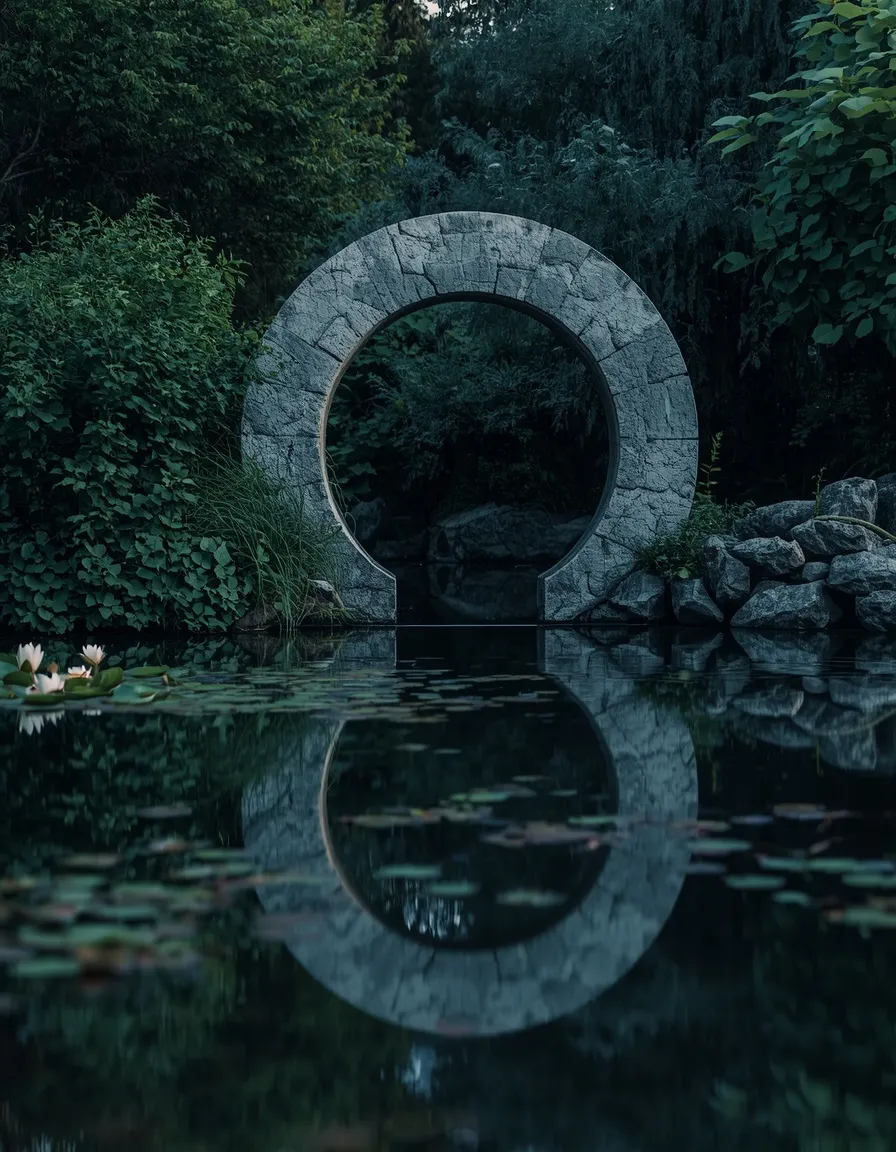
Set beside a pond or water feature, a moon gate does something subtle but effective: it slows the eye down before it reaches the water, building a small sense of arrival rather than letting the pond be visible from every angle at once.
Position the gate a few feet back from the water’s edge rather than directly beside it, so there’s a short transitional path between the two. Reflective or still water intensifies the circular shape further, especially at dawn or dusk when the gate’s silhouette can mirror on the surface. Keep planting around the base low, since tall foliage at the gate’s threshold blocks the very view it’s meant to reveal.
- Builds a sense of arrival and discovery around a water feature
- Creates striking reflection effects on still water at low-light hours
- Encourages a slower, more intentional path through the garden
9. Moon Gate Garden Room Divider
Larger gardens benefit from being broken into distinct “rooms,” a vegetable patch, a lawn area, a seating zone, and a moon gate is one of the most elegant ways to mark the transition between them without a solid wall blocking sightlines entirely.
Position the gate along a natural division already present in the garden, such as a change in paving material or an existing hedge line, rather than placing it arbitrarily in open lawn. This works particularly well in gardens over roughly 1,500 square feet (140 sq m), where the space genuinely benefits from being visually segmented. In smaller yards, a single gate can still suggest division without needing a full connecting wall on either side.
- Divides larger gardens into distinct zones without fully blocking views
- Adds a sense of journey and discovery as visitors move through the space
- Works with or without a connecting wall, depending on garden size
10. Courtyard Moon Gate for Small Spaces
A moon gate doesn’t require acreage. In a small courtyard or side yard, a modestly scaled ring, closer to 4 to 5 feet (1.2 to 1.5 m) in diameter, can still deliver the full visual effect while suiting the more intimate proportions of the space.
Scale down the surrounding planting to match: dwarf shrubs, potted topiary, or trailing vines in containers rather than large hedging that would overwhelm a compact area. A smaller gate also opens up DIY options that wouldn’t be practical at full scale, including tabletop-adjacent builds using lightweight materials like PVC framed and clad in thin plywood strips. This scale works particularly well for apartment-adjacent patios and townhouse side gardens where space is genuinely limited.
- Proves a moon gate garden idea doesn’t require a large yard
- Pairs naturally with container gardening and potted plant styling
- Lightweight materials make this the most apartment- and renter-friendly scale
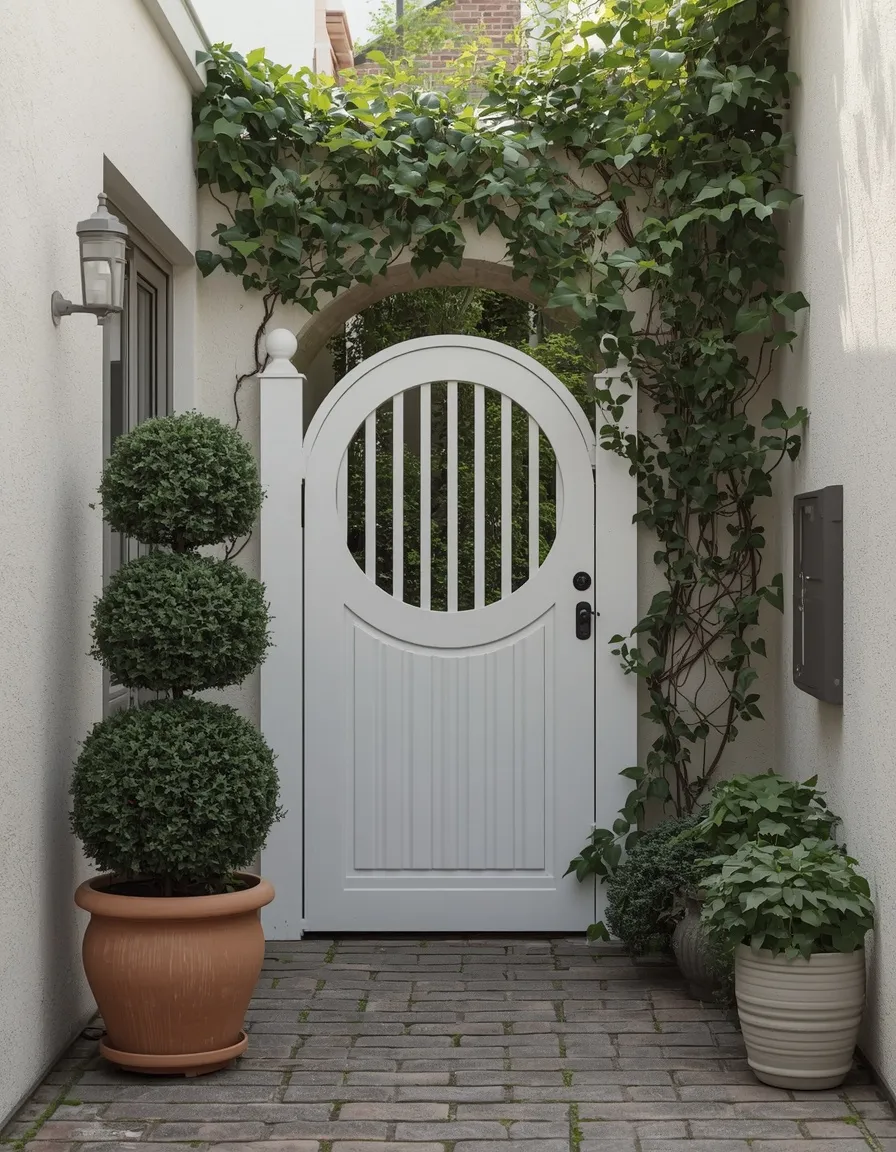
11. Bold Painted Moon Gate
Not every moon gate needs to disappear into the garden; some are meant to be the loudest thing in it. A deep lacquer red, ink black, or saturated cobalt blue ring reads as a genuine design statement, especially against green foliage where the contrast does most of the work.
Use an exterior enamel or lacquer-style paint rather than flat latex for the saturated color to hold its depth outdoors, and expect to refresh the finish every two to three years depending on sun exposure. Bold color reads best on a solid material like wood or metal rather than something with visible texture, like stone or bamboo, which tends to mute the color’s impact. This is a strong option for gardens already working with a defined color palette elsewhere, such as painted furniture or a colorful front door.
- Delivers instant visual impact without needing elaborate planting
- Ties naturally into an existing color scheme elsewhere in the garden or home exterior
- Works especially well photographed for Pinterest-style garden inspiration boards
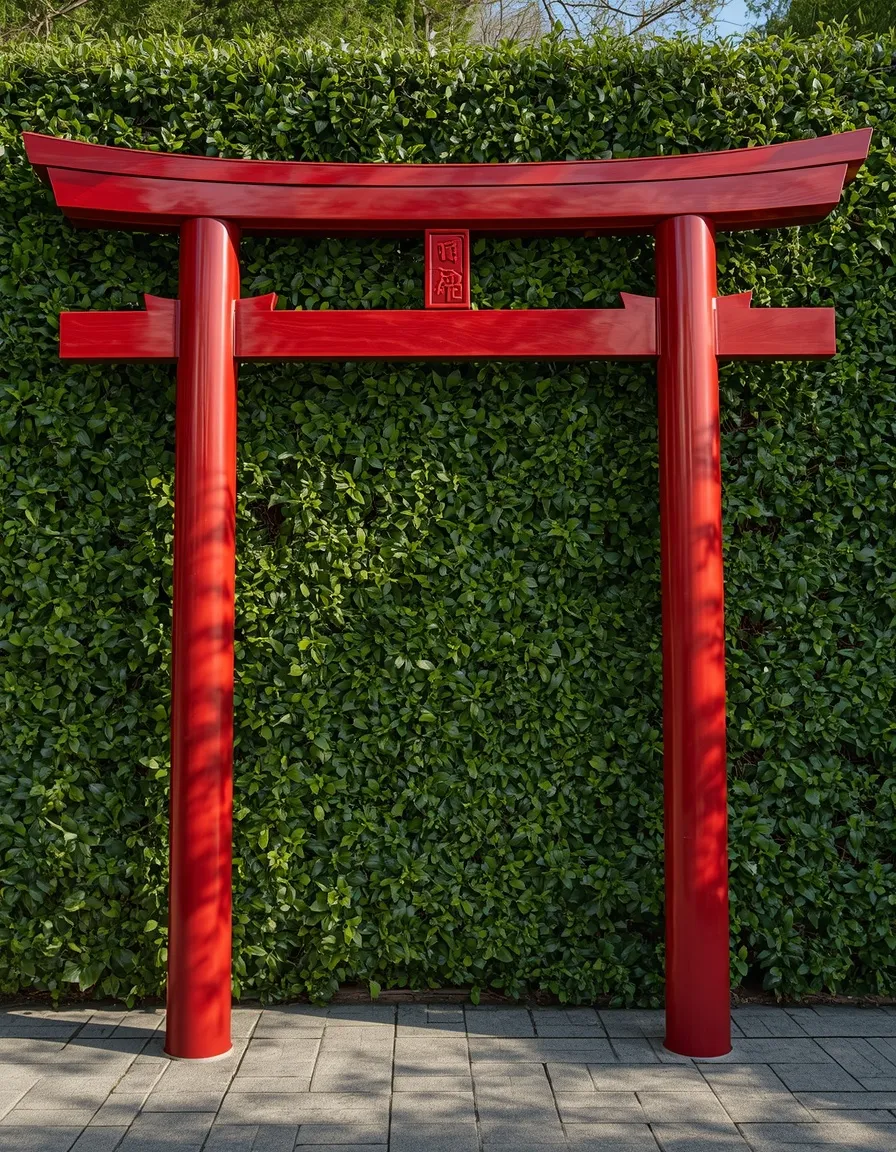
12. Lantern-Lit Moon Gate at Dusk
At night, a moon gate takes on an entirely different character. Warm lantern light hung along the inside curve of the ring, or small uplights staked at its base, turns the shape into a genuine focal point after sunset rather than a feature that disappears once the sun goes down.
Use low-voltage or solar landscape lighting rather than running standard household wiring outdoors, unless it’s installed by a licensed electrician with weatherproof, code-compliant fixtures. Space small uplights evenly along the base of the arch to wash light up the curve rather than clustering them on one side, which creates uneven shadows. This idea pairs particularly well with any of the climbing plant versions above, since foliage catches and softens the light beautifully.
- Extends the garden’s usable and visible hours well past sunset
- Works with solar fixtures, making it accessible without electrical work
- Pairs especially well with vine-covered or trellis-style moon gates
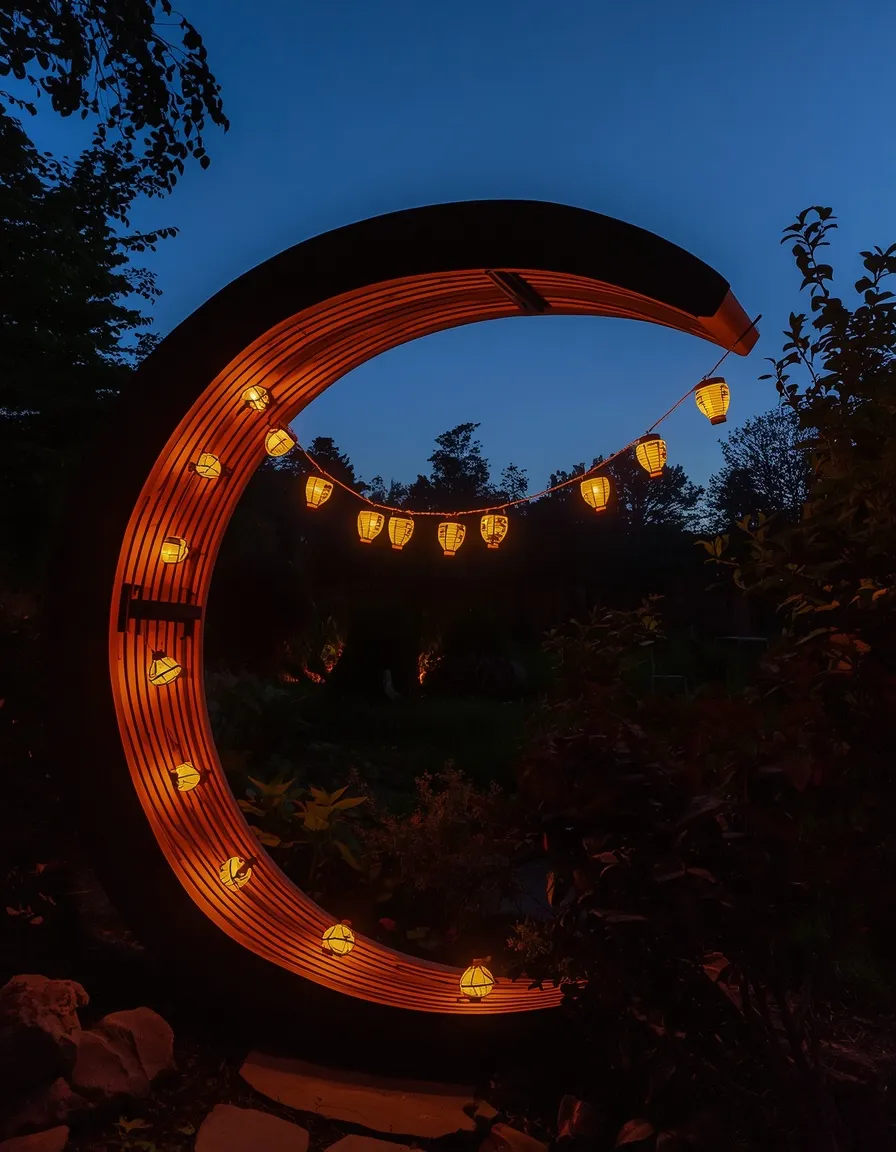
13. Mirror Moon Gate Illusion
In a small or oddly shaped garden, mounting a circular mirror inside a moon gate frame creates a genuine illusion of depth, reflecting the planting in front of it back and making the space read as roughly double its actual size.
Use only outdoor-rated acrylic or safety-backed mirror, never standard household glass, since regular mirror glass isn’t built to withstand temperature swings or moisture and can crack or delaminate within a season. Mount it slightly recessed within the ring rather than flush, which helps sell the illusion by adding a shadow line around the reflective surface. This works best positioned so it reflects planting or sky rather than a fence or wall, which would undercut the illusion entirely.
- Makes small gardens feel significantly larger without any structural changes
- Adds movement and light as the reflection shifts throughout the day
- One of the few moon gate ideas designed specifically to solve a spatial problem
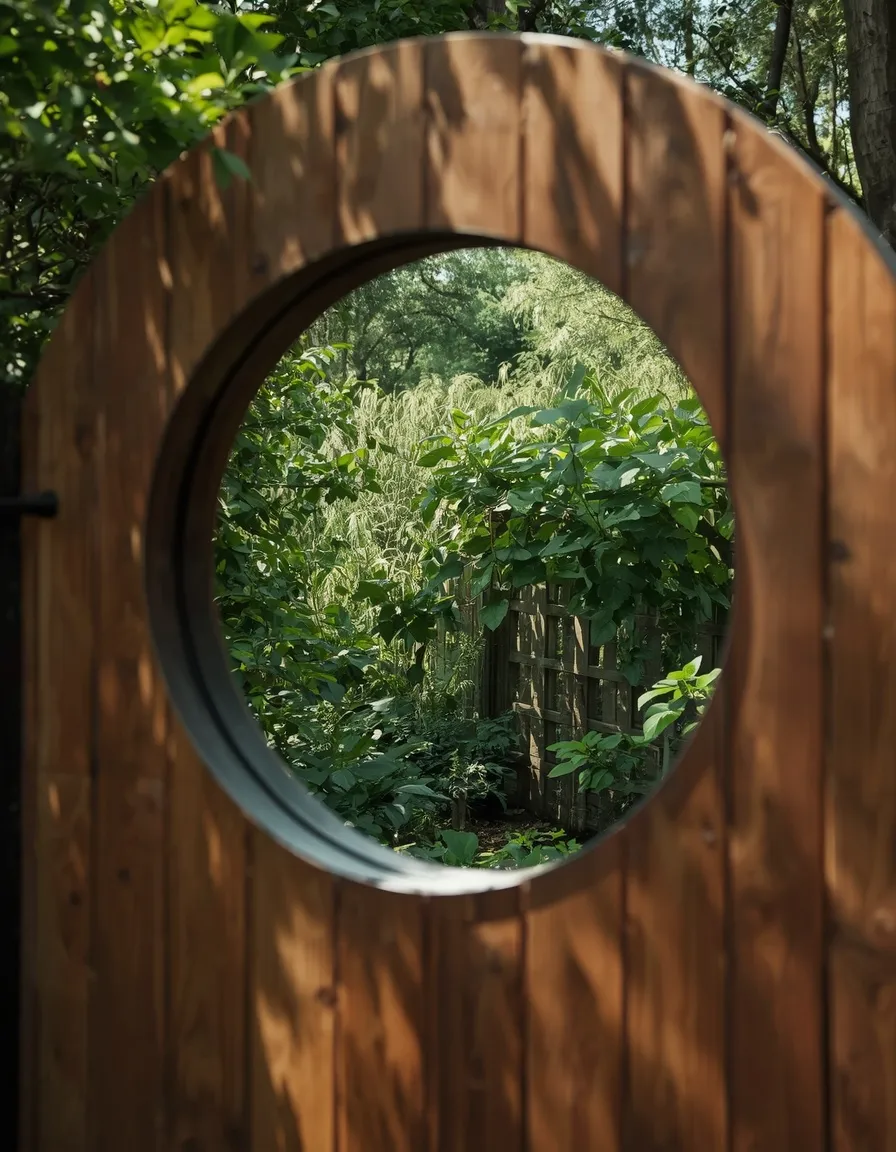
14. Reclaimed Wood Cottage Moon Gate
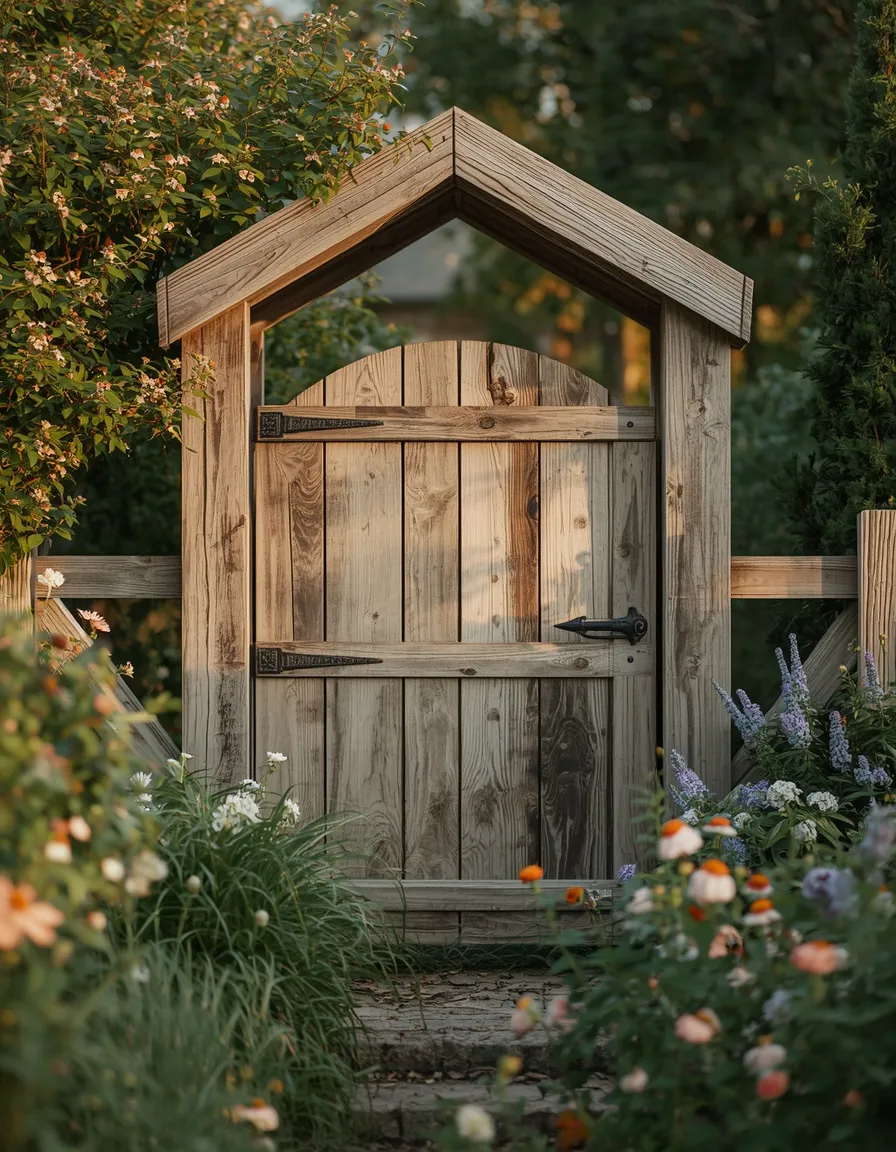
Built from mismatched, weathered fence boards or salvaged barn wood, a reclaimed moon gate leans fully into a lived-in, cottagecore aesthetic rather than the crisp precision of a painted version. The slight imperfections in the wood are the entire appeal here.
Source reclaimed lumber from architectural salvage yards rather than random curbside finds, since salvage yards typically treat wood for pests and rot before resale. Leave the natural finish or apply only a clear weatherproofing sealant rather than paint, which would erase the texture that makes this version distinctive. This style pairs naturally with informal, overflowing planting, cottage garden perennials, self-seeding annuals, and climbing roses left slightly untamed rather than clipped hedges.
- Delivers genuine character and texture no new material can replicate
- Generally the most budget-friendly premium-looking option, using salvage-priced materials
- Suits informal cottage gardens far better than a crisp painted alternative would
15. Built-In Bench Moon Gate Nook
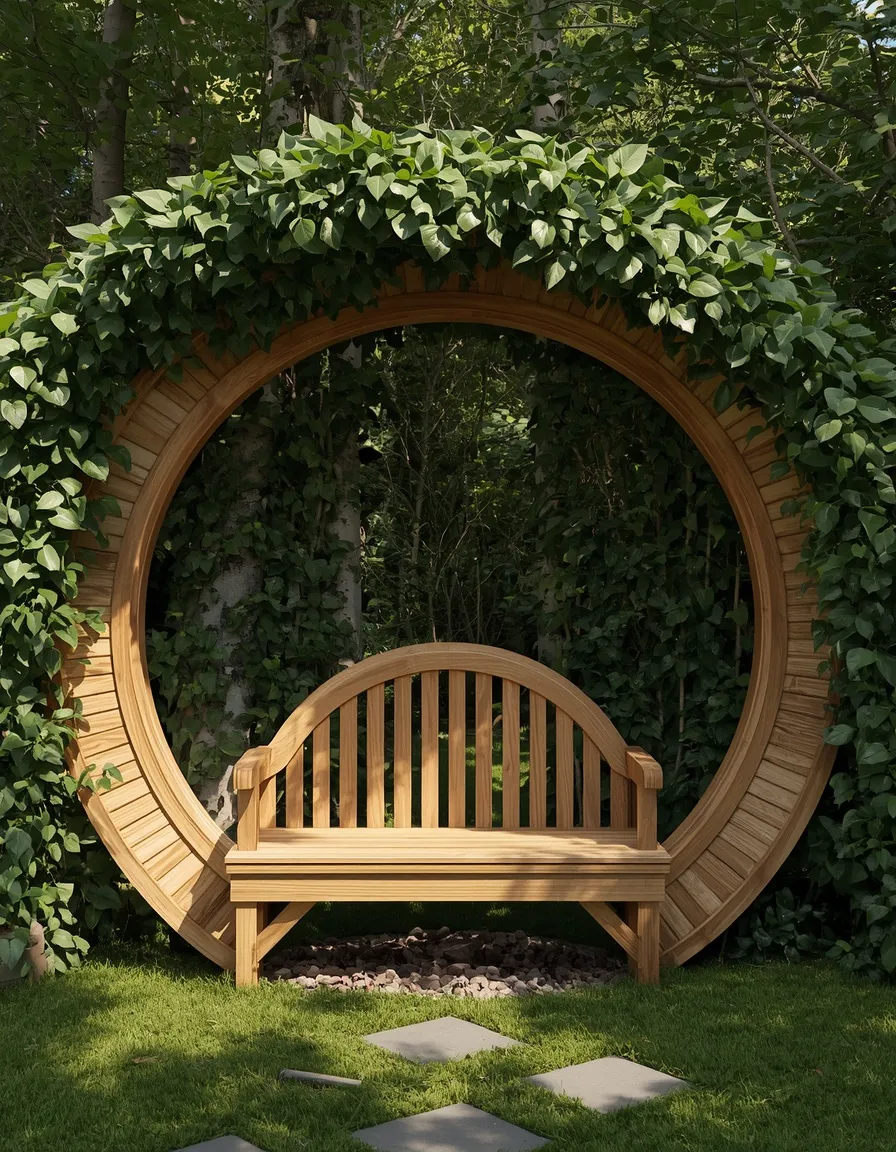
Rather than a pure pass-through, this version incorporates a bench directly into the base of the moon gate structure, turning the archway into a destination in its own right rather than just a transition point between garden areas.
Build the bench from the same material as the ring for visual cohesion, and set it slightly recessed so the seating doesn’t interrupt the circular shape when viewed from a distance. Because this version sees regular weight-bearing use, footings need to be more robust than a purely decorative gate; consult a local building professional if the structure will support significant foot traffic or seating weight regularly. This idea works particularly well positioned to catch morning or afternoon sun, turning it into an actual spot to sit rather than just a photo backdrop.
- Turns a decorative feature into a genuinely usable garden seating area
- Creates a natural resting point along a longer garden path
- Best positioned with a specific view or sun exposure in mind
16. Herb Garden Moon Gate Entrance
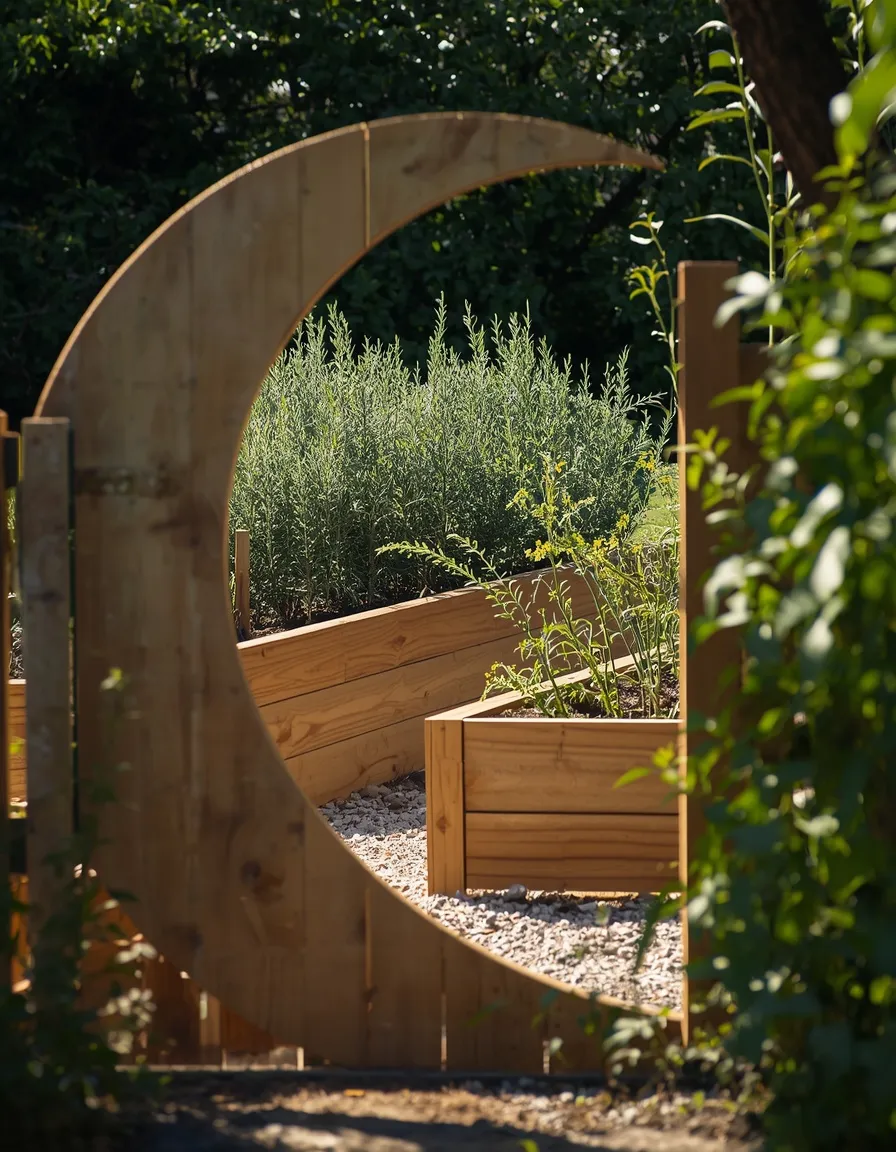
Positioned at the entrance to a dedicated herb or kitchen garden, a moon gate signals a shift in purpose, from ornamental to productive, without needing a sign or fence to announce it. Walking through the ring into a bed of rosemary, thyme, and basil has a genuine sense of occasion.
Keep the gate itself simple, unpainted wood or plain metal, so it doesn’t compete visually with the practical, often looser planting style of an herb bed. Position it on the sunniest approach to the herb garden, since most culinary herbs need at least six hours of direct sun daily, and the gate’s placement can subtly guide visitors along the best-lit path. This is a strong option for anyone building a working kitchen garden who still wants a moment of design intention at its entrance.
- Marks a clear transition into a productive growing area
- Works with simple, unadorned materials that won’t compete with practical planting
- Encourages a natural pause before entering a working garden space
17. Fairy-Tale Floral Moon Gate
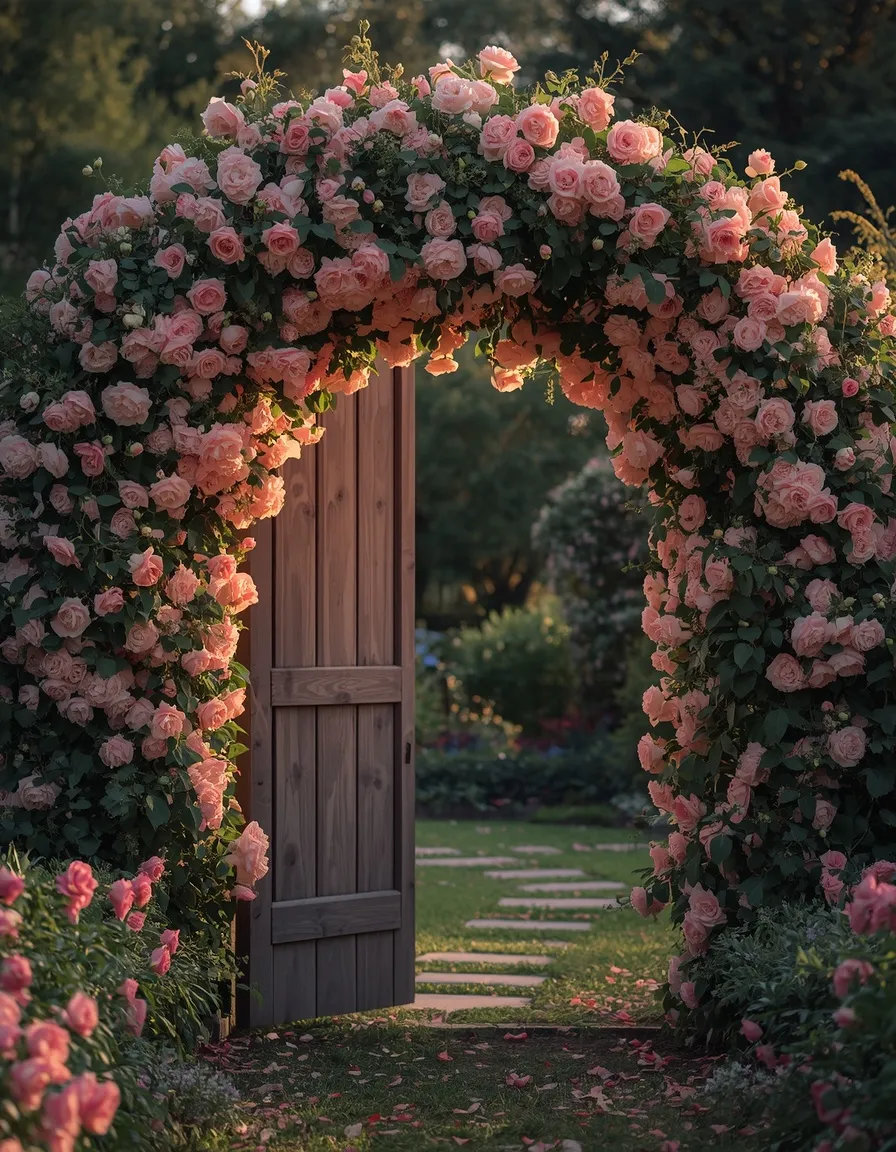
The most romantic version on this list, a fairy-tale moon gate is built to disappear almost entirely under cascading blooms, think climbing roses, clematis, or jasmine layered together for a fuller, more textured cover than any single vine could achieve alone.
Combine two or three climbers with staggered bloom times to extend the flowering window across more of the growing season rather than a single intense but brief burst. Because multiple mature vines add significant weight over time, this version needs one of the sturdier frame materials on this list, wood or metal rather than bamboo or lightweight panel. This is the moon gate garden aesthetic most associated with wedding and event photography, but it works beautifully as a permanent garden feature too, not just a seasonal setup.
- Creates the fullest, most layered floral display of any style on this list
- Extends bloom time by combining climbers with staggered flowering seasons
- Popular for event styling but equally suited to a permanent garden feature
Conclusion
However it’s built, a moon gate garden gives an outdoor space something most gardens are missing: a genuine sense of arrival. Whether that means a weekend cattle panel arch draped in climbing roses or a mortared stone ring meant to last decades, the ideas above cover every budget, skill level, and garden size, with the practical build, planting, and safety details that actually matter once the project moves past the inspiration board. For more structural garden design inspiration to pair with a new moon gate, the garden design category has plenty of related features worth exploring, and if you’re already drawn to reclaimed materials, this pallet garden table ideas guide pairs naturally with a rustic cottage moon gate build. Pick the version that fits your own outdoor space, and let it become the feature everyone pauses at on the way through.
For more ideas across every part of the home and garden, Sunday Abode covers design projects worth revisiting long after the first build.
FAQs
What is a moon gate in garden design?
A moon gate is a circular opening built into a wall, fence, or freestanding frame, originally from Chinese courtyard architecture, used to frame a view or mark a transition between two parts of a garden. It functions both as a passable gateway and as a decorative focal point.
How much does it cost to build a moon gate garden feature?
Cost depends heavily on material: a DIY cattle panel version can cost under $100 in materials, while a painted wood build typically runs a few hundred dollars, and a mortared stone or custom wrought iron gate installed by a professional can run into the thousands. Choosing the material first is the best way to set a realistic budget.
Can I build a moon gate garden entrance myself without hiring a contractor?
Yes, several versions on this list, including the cattle panel arch, bamboo build, and painted wood ring, are realistic weekend DIY projects for someone comfortable with basic tools. Stone or heavy wrought iron builds generally require professional installation due to structural and footing requirements.
What plants grow well on a moon gate trellis?
Wisteria, climbing roses, clematis, and jasmine are all popular choices because their growth habit naturally follows a curved frame. Combine two climbers with staggered bloom times for a longer flowering window, and choose a sturdy wood or metal frame rather than a lightweight one to support mature vine weight.
Is a moon gate garden safe for a yard with children or pets?
Structural stability matters most: any gate should be properly footed or staked so it can’t tip, especially versions with lighter frames like cattle panel arches. If choosing wisteria for planting, note that its seeds and pods are toxic if ingested, so it’s worth avoiding in gardens with pets prone to chewing fallen plant material.
What size should a moon gate be for a garden?
A standard walk-through moon gate typically measures 6 to 7 feet (1.8 to 2.1 m) in diameter, while smaller courtyard versions can work well at 4 to 5 feet (1.2 to 1.5 m). The right size depends on whether the gate needs to function as a genuine passageway or purely as a framed view.
Can a moon gate work in a small yard or courtyard?
Yes, a scaled-down moon gate paired with container planting and lightweight materials suits small courtyards, side yards, and even apartment patios well. Reducing the diameter and using potted rather than in-ground plants keeps the feature proportional to a compact space.