

Introduction
Low maintenance landscaping ideas promise a lot online, and most quietly leave out the part where ‘low maintenance’ still means some maintenance, just far less of it, and only when plants and materials genuinely suit your climate. The yards that actually stay easy year after year are built on real principles: less lawn, more mulch and gravel, plants chosen for actual conditions rather than a magazine photo, and a foundation prepped properly so weeds do not undo the plan by midsummer. This guide gathers twenty distinct ways to build that kind of yard, covering front and back yards, desert and Pacific Northwest climates, slopes, decks, and the honest tradeoffs of options like artificial turf. Consider it a working plan for a yard that fits your actual schedule, not just your abode’s curb appeal.
Getting the Foundation Right Before You Plant
Genuinely low-maintenance landscaping starts with two honest admissions: no planted landscape is entirely maintenance-free, and copying a design built for a different climate is the single most common reason a low-maintenance yard ends up high-maintenance within a year or two. What ‘low maintenance’ actually means is fewer, shorter maintenance tasks, occasional deep watering instead of daily sprinkler runs, an annual mulch top-up instead of weekly mowing, rather than zero ongoing care of any kind.
Before installing any of the ideas below, get the foundation right. Remove existing grass and weeds thoroughly rather than planting over them, since even a small patch of surviving grass or weed roots will resurface through new mulch or gravel within a season and undo much of the maintenance savings. Lay a proper base, either several layers of overlapping cardboard smothered under mulch for organic beds, or a woven landscape fabric under gravel and hardscape, and apply mulch or gravel at a genuine depth, 2 to 3 inches (5 to 7.5 cm) of mulch or 2 inches (5 cm) of gravel over fabric, rather than a thin, decorative layer that lets weeds punch through within weeks. If using a pre-emergent herbicide as part of bed prep, follow label instructions on keeping pets and children off treated areas until the product has fully dried or as otherwise directed, since these products are formulated for soil application but still carry handling precautions.
Finally, match every plant choice to your actual USDA hardiness zone, sun exposure, and regional rainfall pattern rather than a generic low-maintenance plant list written for a different climate; a plant that is genuinely low-care in the Pacific Northwest’s consistent moisture can require constant supplemental water in a hot, dry region, and the reverse is just as true for desert-adapted plants moved somewhere wet.
20 Low Maintenance Landscaping Ideas to Try in Your Yard
Each idea below is genuinely distinct in technique, plant category, or regional application, so scan for the ones that match your actual climate and problem areas rather than trying to fit every idea into one yard.
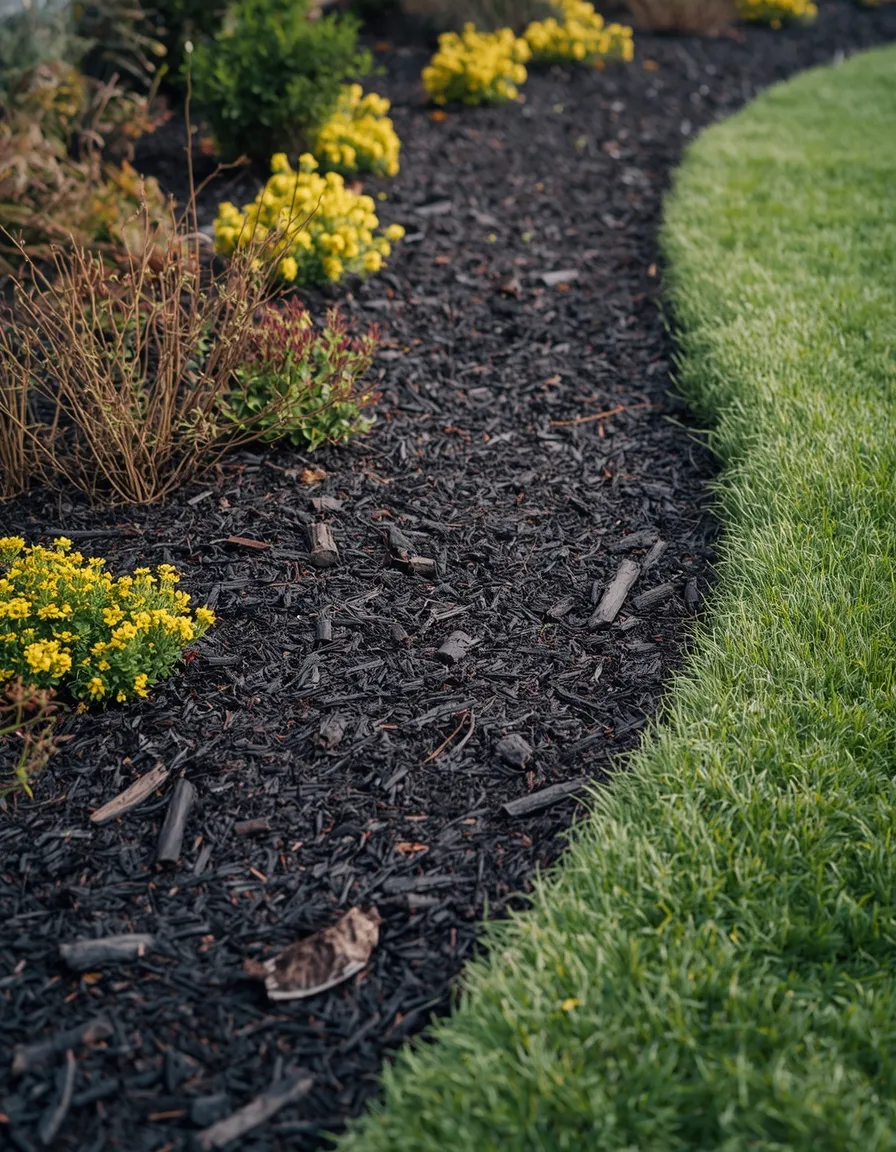
1. Mulched Planting Beds Instead of Lawn
Converting a section of lawn, or all of it, into deep mulched planting beds eliminates the single highest-maintenance element most yards have: grass that needs mowing, edging, and watering on a weekly schedule for most of the year.
Remove existing turf completely with a sod cutter or by smothering it under cardboard and mulch for several months before planting, rather than tilling grass directly into the bed, since surviving grass roots regrow aggressively through fresh mulch. Fill beds with a mix of shrubs, perennials, and groundcover selected for the site’s actual sun and soil rather than lawn alternatives alone, and top with 2 to 3 inches (5 to 7.5 cm) of shredded bark or wood chip mulch, replenished annually as it breaks down. This is the foundational move behind most of the other ideas on this list, since nearly every low-maintenance planting strategy assumes mulch has replaced turf as the default ground surface.
- Eliminates mowing, edging, and frequent watering across the converted area
- Suits front and back yards wanting a genuine, lasting maintenance reduction
- Solves the recurring weekly time and cost commitment that lawn requires
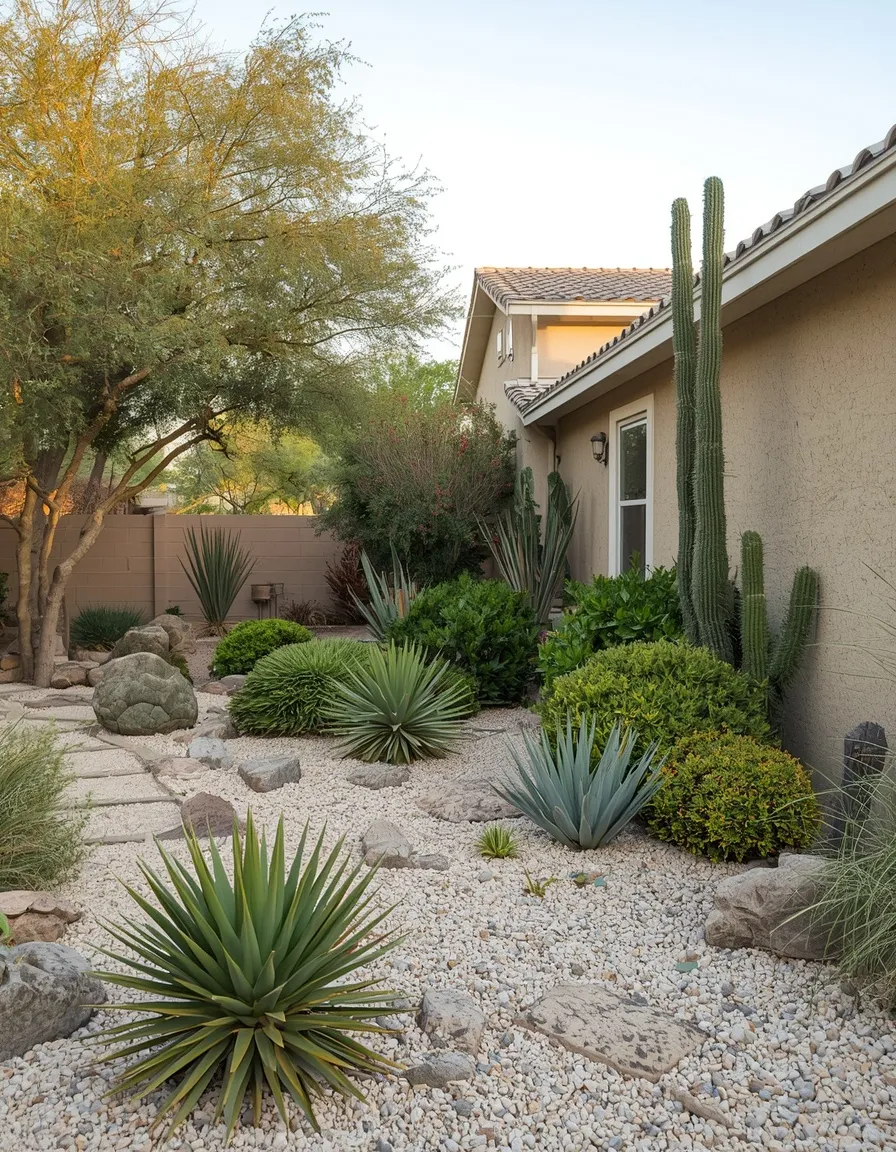
2. Xeriscape Gravel and Succulent Front Yard
A front yard reimagined with decomposed granite or crushed gravel as the primary ground surface, punctuated by structural succulents like agave and yucca alongside drought-tolerant perennials, delivers genuine curb appeal in hot, dry climates without a sprinkler system running daily through summer.
Lay landscape fabric beneath gravel to suppress weeds before spreading a 2-inch (5 cm) layer of stone, and group plants by water need so drought-tolerant specimens are not competing with anything needing regular irrigation nearby. Position spiny plants like agave and prickly pear well back from walkways and the front door, since their physical structure poses a real scratch and puncture hazard regardless of any toxicity concern. This approach works especially well as low maintenance landscaping in desert climates like Arizona and the broader Southwest, where a cottage-style lawn and flower bed would demand constant irrigation just to survive summer heat.
- Delivers genuine curb appeal without fighting a hot, dry climate
- Suits Arizona, the Southwest, and other low-water regions specifically
- Solves the high water bill and constant irrigation that a lawn demands in arid heat
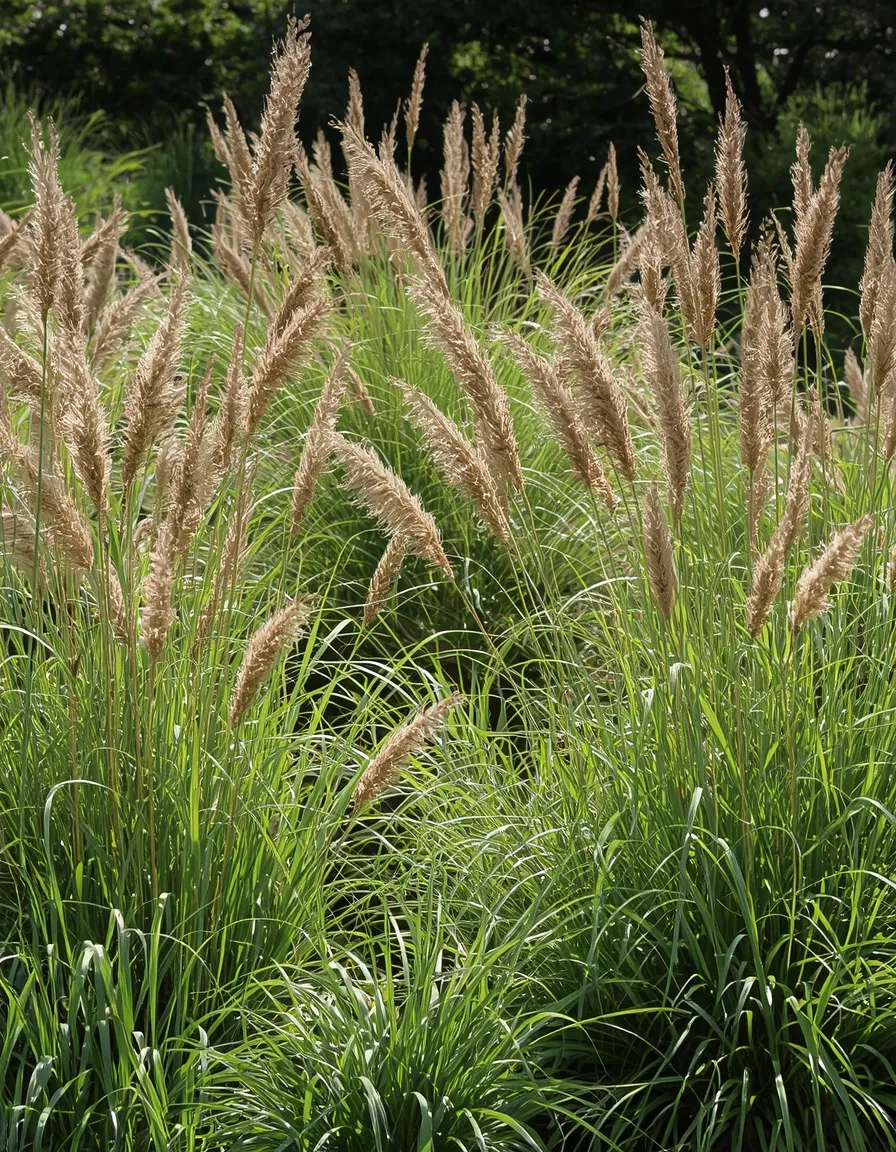
3. Ornamental Grasses for Texture and Structure
A mixed planting of ornamental grasses, feather reed grass, fountain grass, little bluestem, brings movement and seasonal texture to a bed without the deadheading, staking, or frequent division that many flowering perennials require.
Choose clumping grass varieties over aggressively spreading ones for a bed setting, since running grasses can escape into lawn or neighboring beds and become their own maintenance problem. Cut most ornamental grasses back to a few inches above ground once a year in late winter, before new growth emerges, rather than deadheading or pruning throughout the season, which is the single yearly task most varieties genuinely need. Leave seed heads standing through fall and winter for both visual interest against snow or bare branches and as a food source for birds, rather than cutting back in autumn.
- Adds movement and seasonal texture with a single annual cutback
- Suits sunny beds wanting height and structure without flowering upkeep
- Solves the constant deadheading many flowering perennial beds require
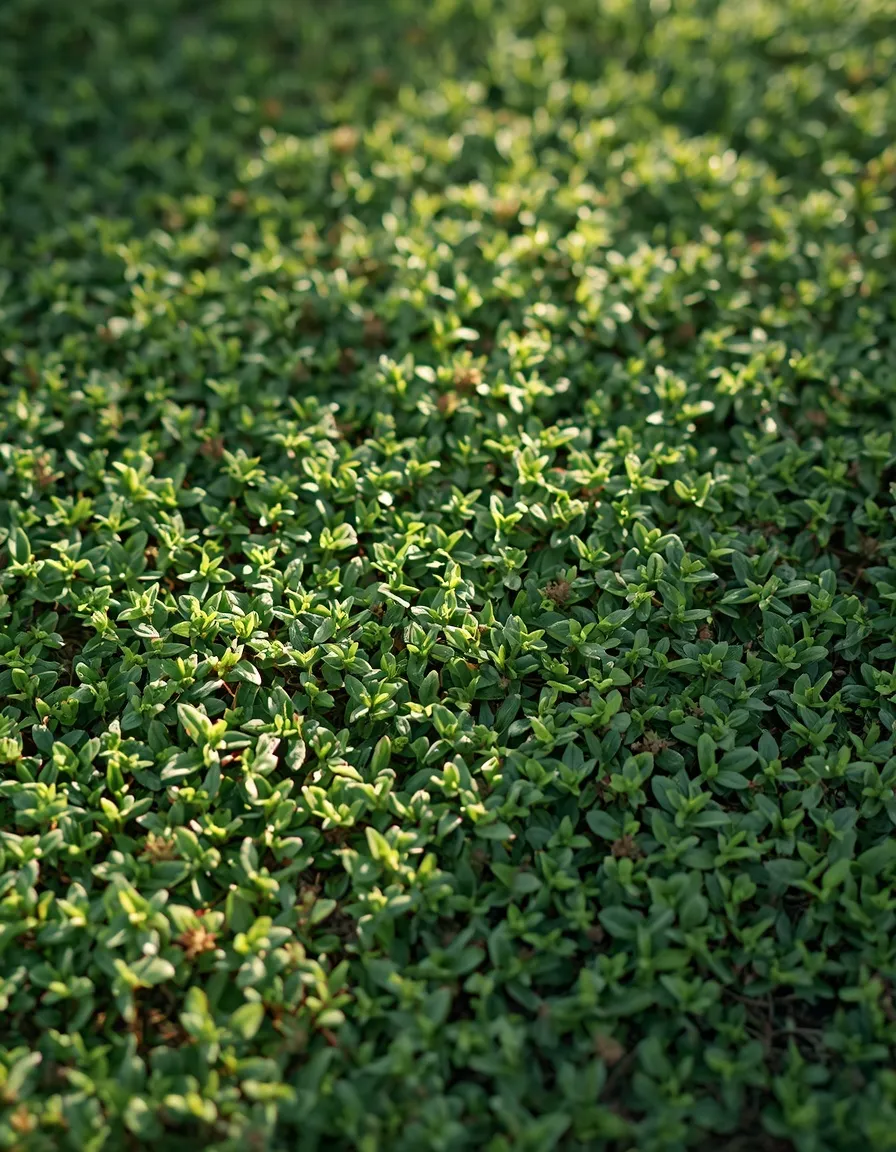
4. Groundcover Instead of Grass
A spreading groundcover like creeping thyme, sedum, or ajuga fills the same visual role as a lawn, low, green, and continuous, while tolerating far less water and needing no mowing at all once established.
Choose the specific groundcover based on foot traffic expectations: creeping thyme and Irish moss handle occasional light foot traffic well, while sedum and ajuga prefer to be left largely undisturbed. Space young plants 8 to 12 inches (20 to 30 cm) apart rather than relying on a single plant to fill a large area quickly, since most groundcovers spread considerably within one to two growing seasons once established. Water consistently through the first season while roots establish, then reduce to occasional deep watering during dry spells, since most low-maintenance groundcovers are considerably more drought-tolerant once mature than as new plantings.
- Replaces lawn’s visual role without mowing or heavy water needs
- Suits sunny to partly shaded areas with light to moderate foot traffic
- Solves the ongoing mowing commitment lawn requires even in small areas
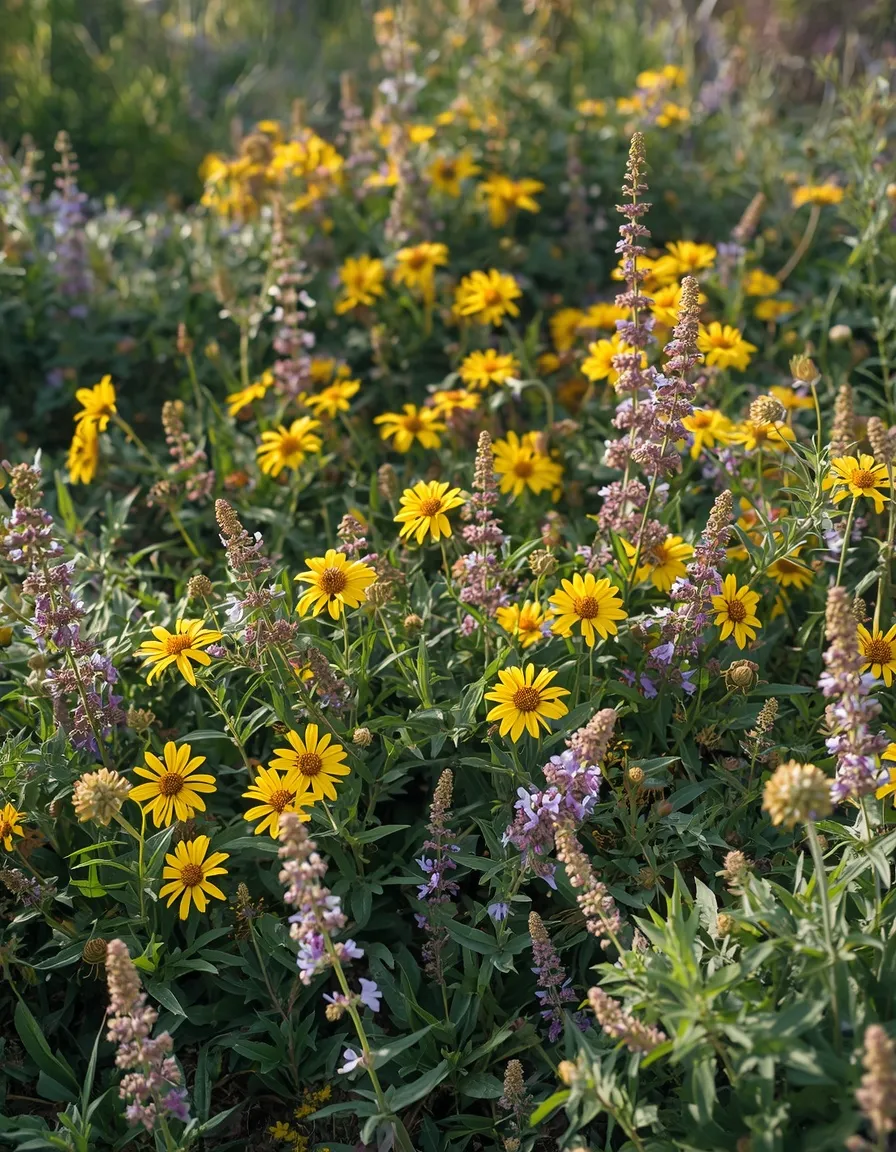
5. Native and Climate-Adapted Plant Selection
Building a plant palette entirely from species native to your specific region, rather than popular ornamentals bred for a different climate, is the single highest-leverage decision in any low-maintenance landscaping plan, since native plants are already adapted to local rainfall, soil, and temperature swings without help.
Check with a local extension service or native plant society for a regionally specific plant list rather than a generic national one, since ‘native’ varies enormously by region and a plant native to one part of a country may be entirely unsuited to another region’s conditions. Native plants typically need supplemental water only through their first one to two seasons of establishment, after which local rainfall patterns alone usually sustain them. This approach also tends to support local pollinators and wildlife more effectively than non-native ornamentals, an ecological benefit that comes alongside the maintenance savings rather than instead of them.
- Reduces water, fertilizer, and pest management needs simultaneously
- Suits any climate, since the approach adapts entirely to your specific region
- Solves the mismatch that causes most struggling, high-maintenance plantings
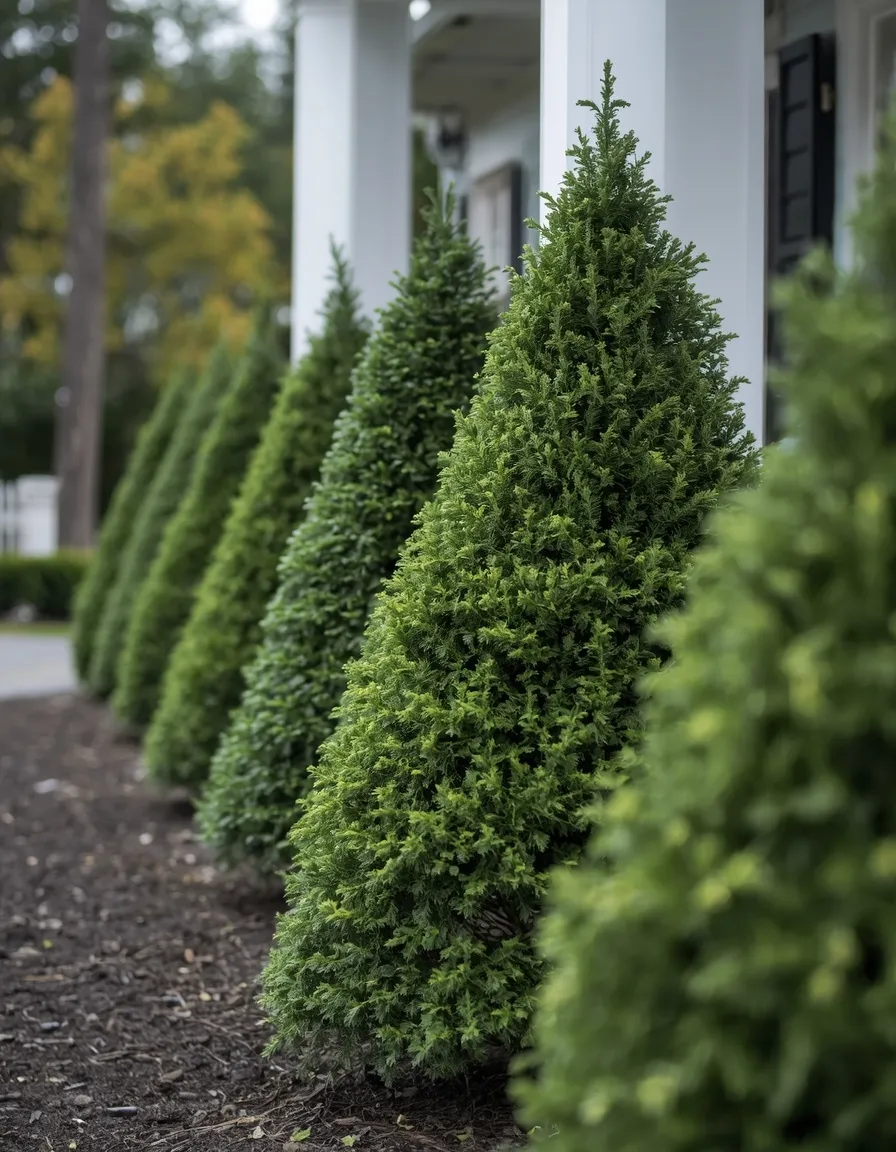
6. Evergreen Structural Shrubs
A framework of evergreen shrubs, boxwood, holly, or dwarf conifers, planted at key points around a yard’s structure provides year-round green form and definition without the seasonal die-back and spring cleanup that perennial-heavy beds require.
Choose slow-growing or naturally compact varieties suited to the mature size you actually want, rather than a fast-growing shrub that will need frequent pruning to control, since selecting the right mature size from the start eliminates most future maintenance entirely. If pets have yard access and chew on garden plants, note that boxwood is listed as toxic to dogs and cats by the ASPCA; inkberry holly offers a similar dense, clippable evergreen form without that risk. Prune most structural evergreens once a year in late winter or early spring rather than repeatedly through the growing season, which keeps the maintenance genuinely minimal rather than a recurring task.
- Provides year-round structure without seasonal die-back or spring cleanup
- Suits foundation plantings and bed anchors needing permanent green form
- Solves the bare, empty look many yards have through winter months
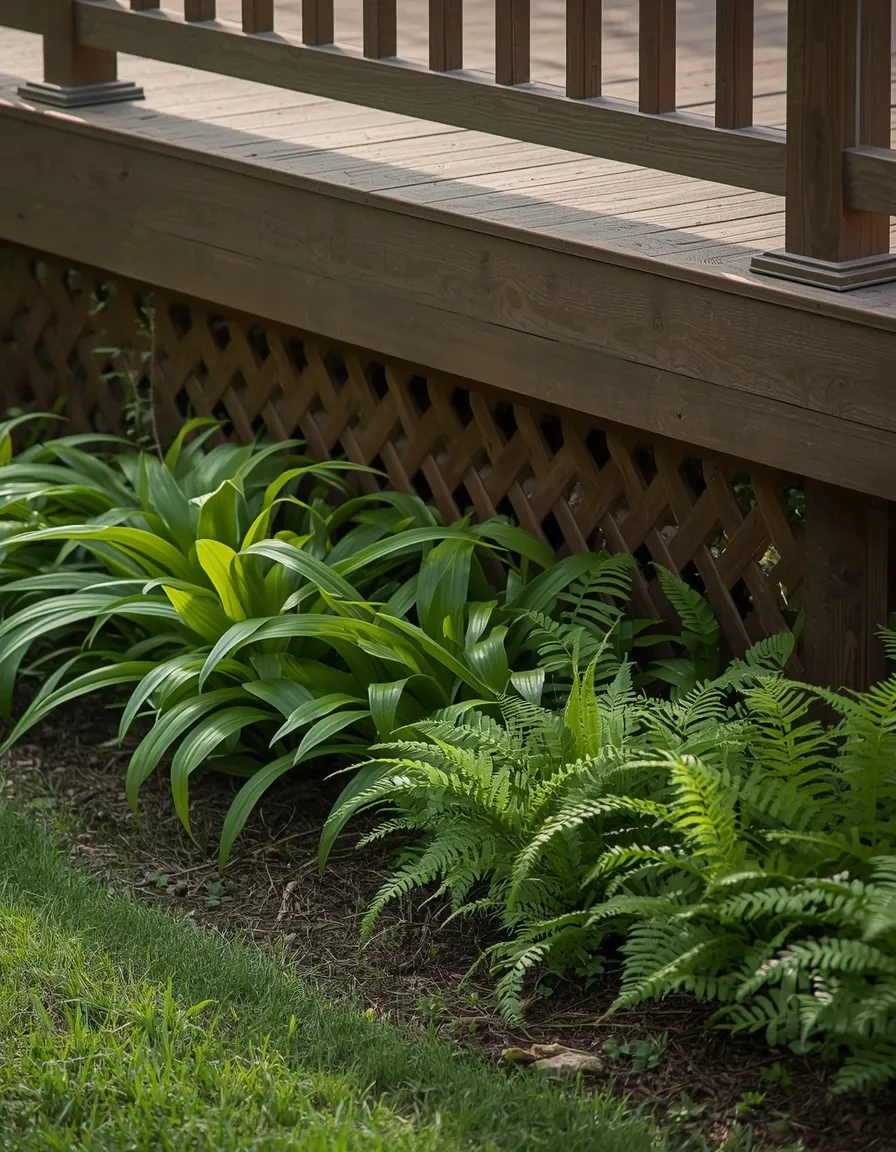
7. Low-Maintenance Landscaping Around a Raised Deck
The shaded, often dry strip beneath and around a raised deck, typically one of a yard’s most neglected and hardest-to-plant spots, becomes genuinely low maintenance once filled with shade-tolerant groundcover and gravel rather than left as bare dirt or struggling grass.
Choose plants rated for both shade and the drier soil conditions common beneath a deck’s rain shadow, hostas, ferns, and heuchera along the outer edges where some rain reaches, gravel or mulch in the driest zone directly underneath. Address drainage before planting, since water running off a deck’s surface often concentrates along its edges and can pool without a slight grade away from the structure. This approach solves one of the more commonly neglected zones in residential landscaping, since the space is frequently either ignored entirely or planted with lawn that then struggles and requires constant attention in deep shade.
- Turns a commonly neglected, hard-to-plant zone into genuine landscaping
- Suits any raised deck with shaded ground space beneath or beside it
- Solves the bare dirt or struggling grass typical beneath deck structures
8. Slope and Small Hill Groundcover Planting
A sloped section of yard, planted with spreading, deep-rooted groundcover rather than mowed as lawn, solves two problems simultaneously: it eliminates the genuine difficulty and safety risk of mowing an incline, and it stabilizes soil against erosion far more effectively than turf grass alone.
Choose groundcover with a fibrous, spreading root system, creeping juniper, periwinkle, or a regionally appropriate native spreader, rather than anything with a single taproot, since dense fibrous roots are what actually hold slope soil in place during heavy rain. Plant on a slight diagonal or staggered grid rather than straight rows running down the slope, which helps slow water runoff rather than channeling it. Mowing any slope steeper than about a 4:1 ratio, roughly a 25 percent grade, carries a real tip-over risk with a standard walk-behind mower, which is itself a strong practical argument for groundcover over lawn on small hills specifically.
- Eliminates the genuine safety risk of mowing a steep incline
- Suits small hills and slopes where turf mowing is difficult or dangerous
- Solves erosion problems that mowed slopes are especially prone to
9. Permeable Paver Patio Zone
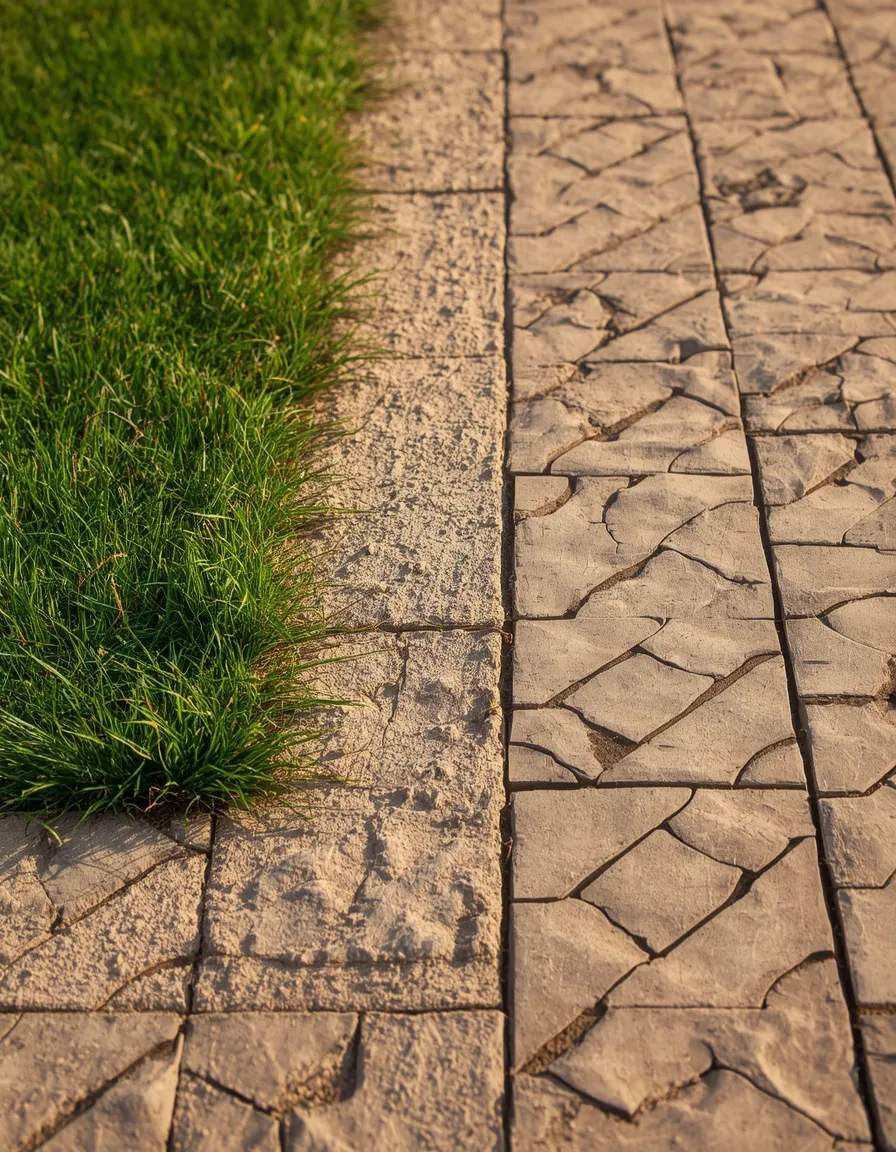
A patio built from permeable pavers, set with sand or gravel joints rather than solid poured concrete, replaces a section of lawn with genuinely low-maintenance hardscape while still allowing rainwater to drain through rather than pool or run off.
Install pavers over a properly compacted gravel base at least 4 inches (10 cm) deep, since inadequate base preparation is the most common cause of pavers shifting or settling unevenly within a few years. Sweep polymeric sand into the joints rather than plain sand, which hardens slightly once wet and resists weed growth and ant colonization considerably better than loose sand alone. This zone requires essentially no ongoing maintenance beyond occasional sweeping and rejoining sand every several years, making it one of the truly lowest-maintenance surfaces on this entire list once properly installed.
- Delivers genuinely minimal ongoing maintenance once properly installed
- Suits dining and seating areas replacing lawn near the house
- Solves drainage problems that solid concrete or non-permeable surfaces create
10. Drip Irrigation for Low-Water Beds
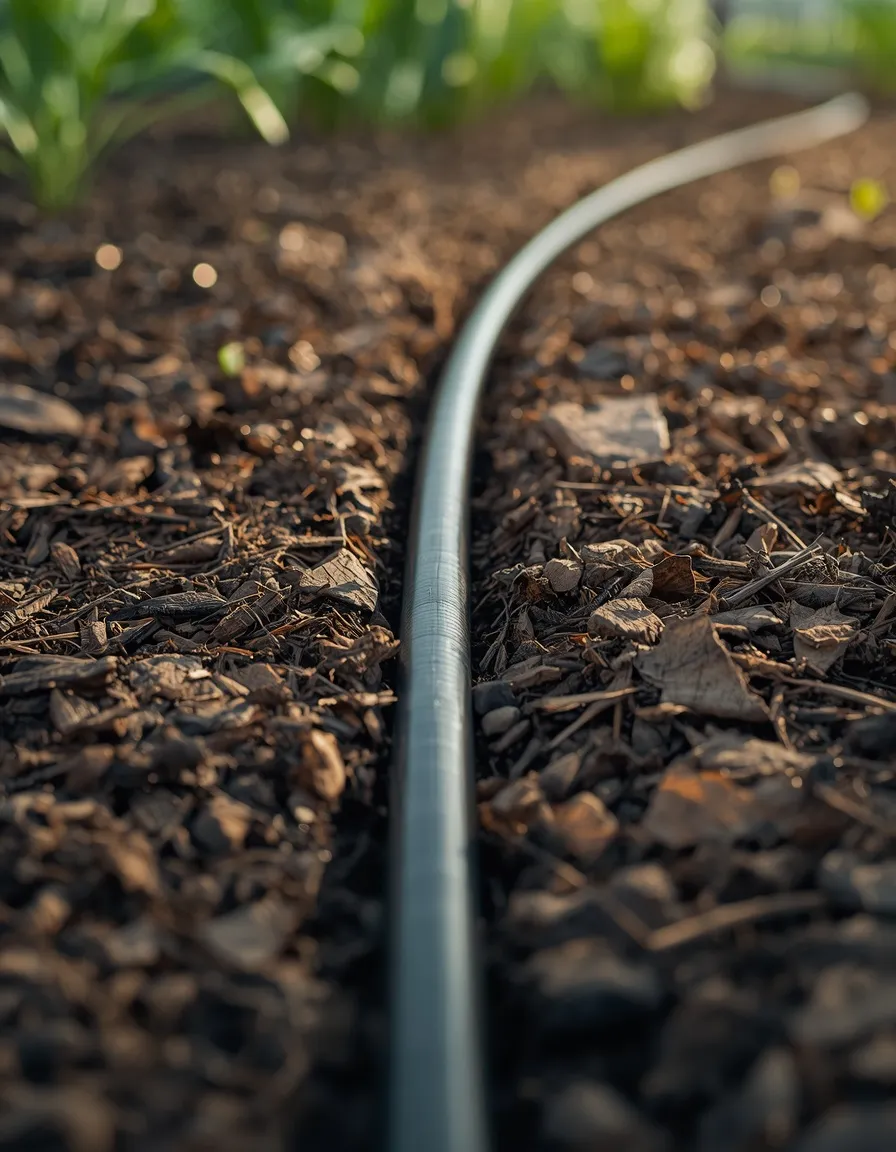
A simple drip irrigation line, run along planting beds and connected to an inexpensive timer, delivers water directly to plant roots on an automatic schedule, removing hand-watering from the maintenance list entirely while actually using less water than a sprinkler or hose.
Install drip line or soaker hose beneath mulch rather than on top of it, which reduces evaporation loss and keeps the system visually invisible once beds are mulched over. Set the timer for early morning watering, deep and infrequent rather than daily and shallow, since infrequent deep watering encourages roots to grow downward and become more drought-resilient over time. A basic battery-operated hose-end timer and drip kit covers a small to medium bed for a modest cost and requires only seasonal adjustment as weather and plant establishment change.
- Removes hand-watering from the regular maintenance routine entirely
- Suits any planted bed, from a single foundation strip to a full yard
- Solves the water waste and plant stress that inconsistent hand-watering causes
11. Rock Garden or Dry Riverbed Feature
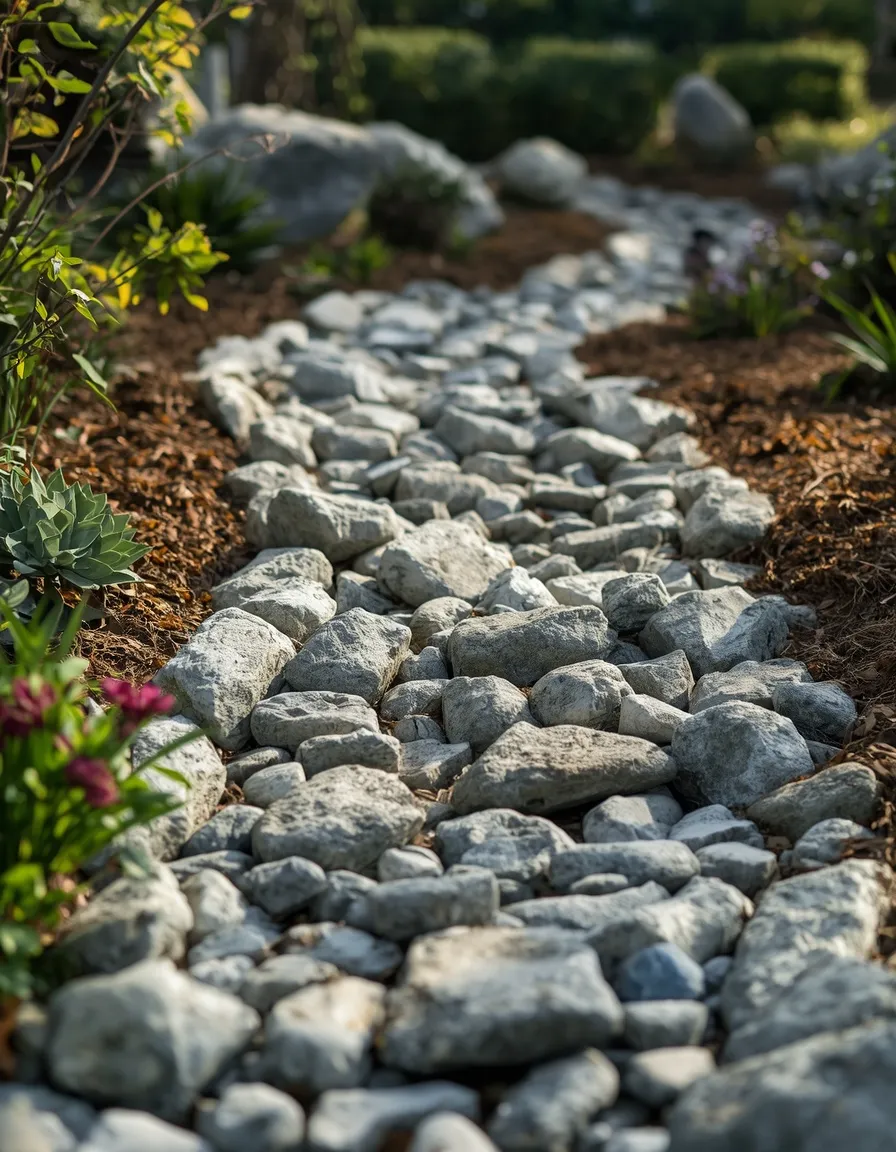
A dry riverbed, a curving path of river rock and boulders mimicking a natural streambed, doubles as both a striking landscape feature and a functional drainage channel for a yard’s low or wet spot, an area that would otherwise need constant attention.
Follow the yard’s natural water flow when routing the dry riverbed’s path, since the feature works genuinely better when it follows where water already wants to go during heavy rain rather than fighting the site’s actual grade. Layer river rock over landscape fabric in varied sizes, larger boulders along the edges and smaller rounded stone in the channel itself, for a natural rather than uniform look. This feature requires essentially no maintenance beyond occasional debris clearing, making it one of the few landscaping ideas that solves a functional drainage problem and a maintenance goal simultaneously.
- Solves drainage problems in low or consistently wet yard sections
- Suits yards with a visible natural low point needing a functional solution
- Delivers a striking visual feature that requires almost no upkeep
12. Repeat-Blooming Low-Care Perennials
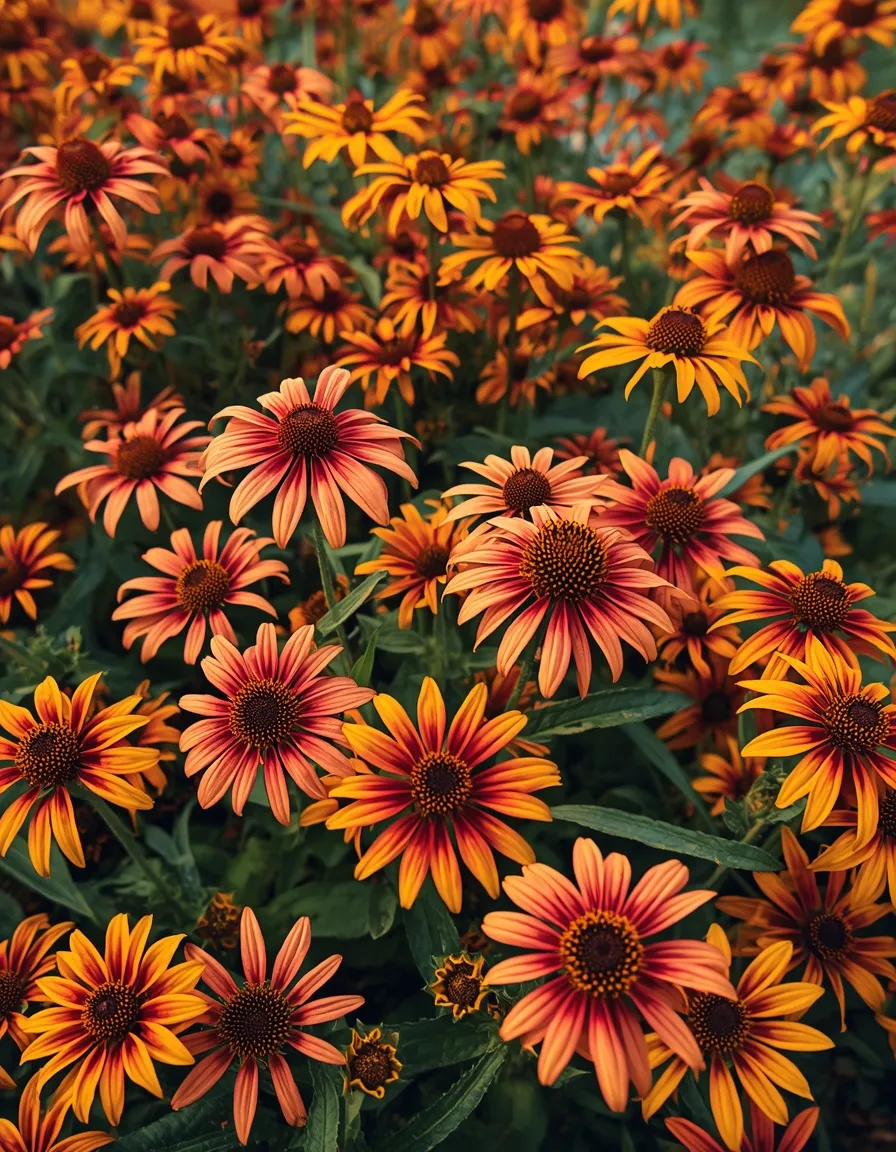
A bed planted with perennials specifically selected for their extended, self-cleaning bloom habit, coneflower, black-eyed Susan, catmint, delivers season-long color without the weekly deadheading that many showier flowering plants demand to keep blooming.
Choose varieties explicitly bred or known for a self-cleaning habit, meaning spent blooms drop or fade without needing to be manually removed to encourage further flowering, rather than assuming all perennials behave this way. Divide most low-maintenance perennials every three to four years rather than annually, which keeps clumps healthy without becoming a yearly task, and this is typically the only significant maintenance these varieties genuinely require. Group perennials with similar bloom times in drifts rather than scattering single specimens throughout a bed, which delivers a stronger visual impact for the same amount of planting and care.
- Provides season-long color without weekly deadheading maintenance
- Suits sunny beds wanting genuine flowering interest, not just foliage
- Solves the high-maintenance reputation flowering perennials often carry
13. Simplified Ranch-Style Foundation Planting
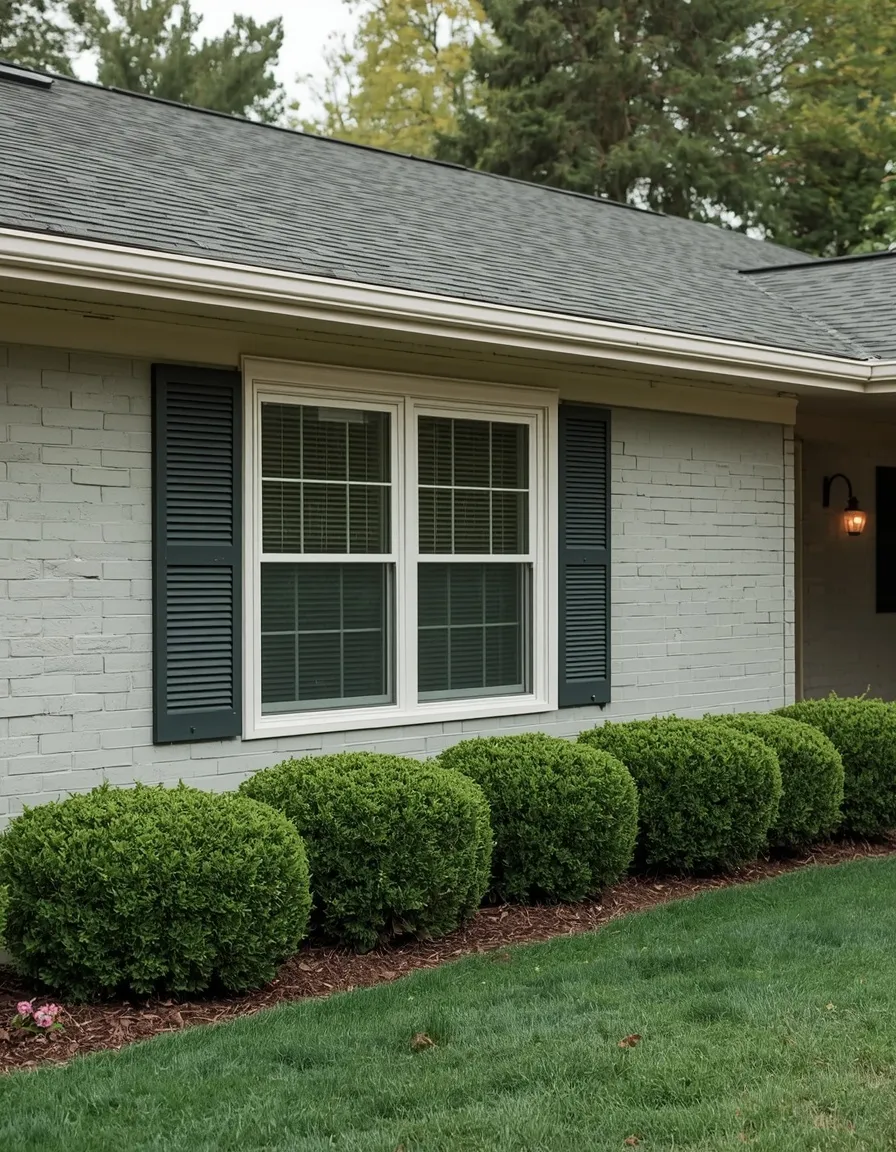
A ranch home’s typically long, low profile calls for a foundation planting strategy built around a few repeated shrub varieties in clean drifts, rather than the layered, fussy planting scheme that suits a taller, more vertical home style.
Repeat two or three shrub varieties in long runs along the foundation rather than varying the planting every few feet, which suits a ranch home’s horizontal lines far better than a busy, mixed foundation bed and considerably simplifies both planting and future maintenance. Keep plant height proportional to the home’s low roofline, generally staying below window sills along the main facade, so shrubs frame rather than obscure the home’s architecture. This straightforward, repeated approach to low maintenance landscaping for the front of a ranch-style house also tends to read as more intentional and put-together than a mixed cottage-style bed would against that architecture.
- Suits a ranch home’s horizontal architecture better than a mixed cottage bed
- Simplifies both installation and ongoing maintenance through repetition
- Solves the busy, disorganized look many foundation plantings develop over time
14. Mulched Tree Rings
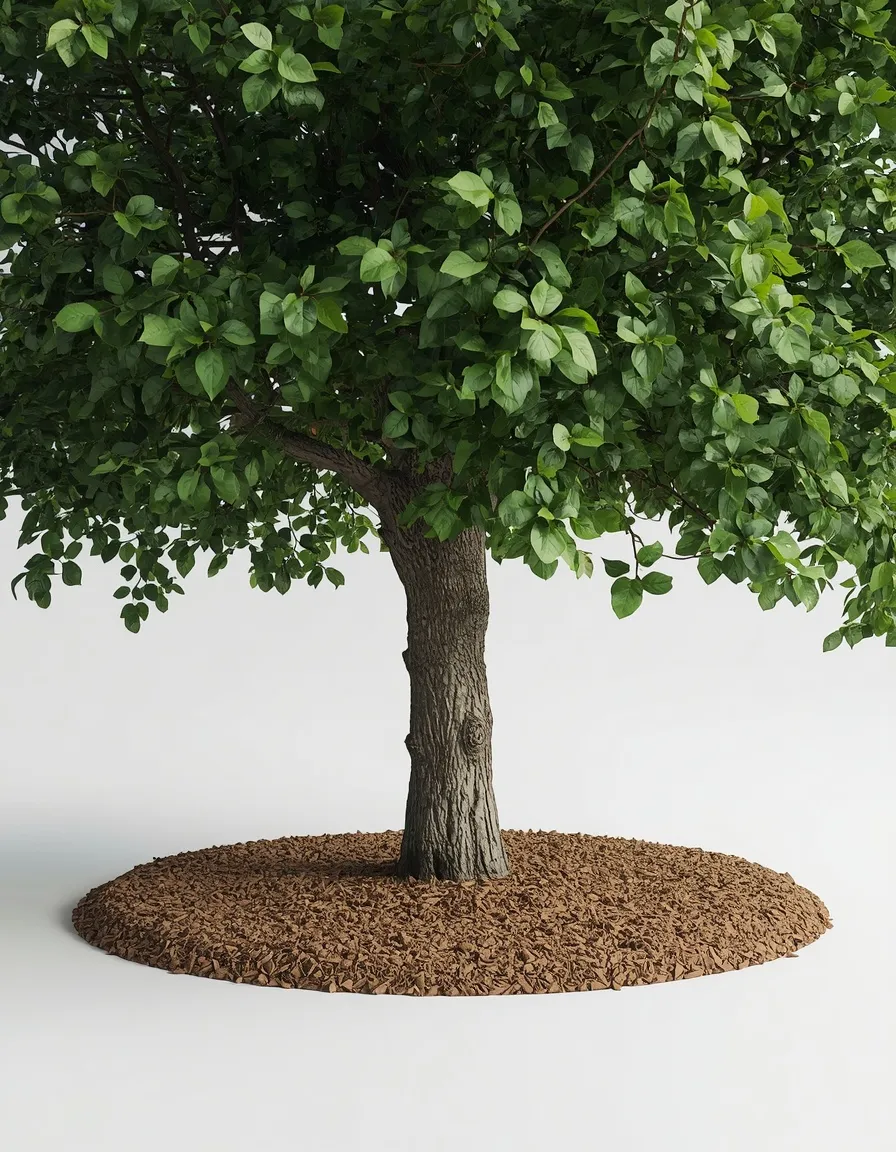
Replacing the ring of grass struggling to grow directly beneath a mature tree’s canopy with a simple mulched bed eliminates the awkward, damage-prone task of mowing and trimming around a trunk while genuinely benefiting the tree’s root health.
Keep mulch pulled back several inches from the trunk itself rather than piled directly against the bark, since mulch mounded against a trunk traps moisture and encourages rot and pest problems, a mistake known informally as a mulch volcano. Extend the mulched ring out to at least the tree’s drip line where practical, since grass growing directly under a canopy typically struggles anyway due to shade and root competition, making this one of the easiest, most immediately rewarding conversions on this entire list. Replenish mulch depth annually rather than letting it fully break down and disappear, maintaining roughly 2 to 3 inches (5 to 7.5 cm) consistently.
- Eliminates the awkward mowing and trimming task around every trunk
- Suits any yard with mature trees currently surrounded by struggling grass
- Solves root competition and mower damage that grass-to-the-trunk causes trees
15. Ornamental Grass Privacy Border
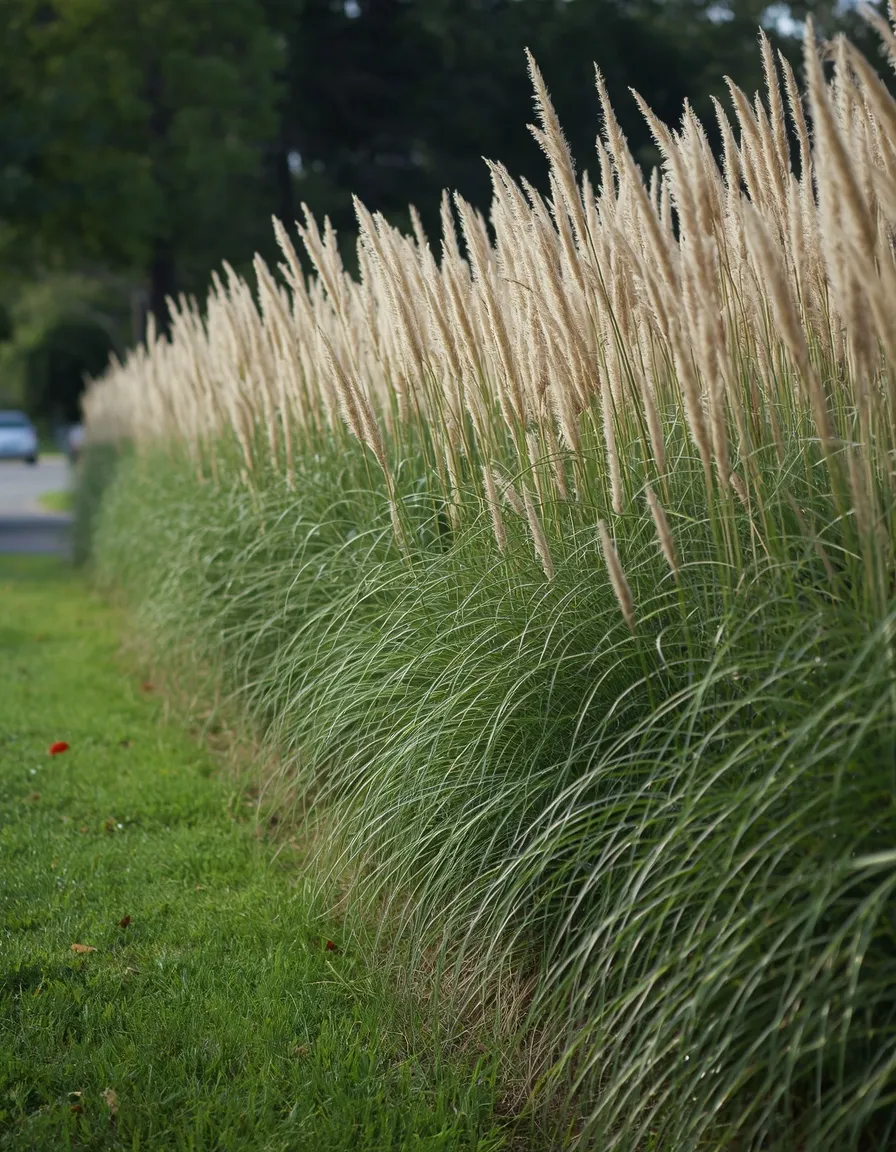
A dense, mass-planted row of taller ornamental grasses along a property line delivers genuine seasonal privacy screening with a fraction of the pruning a clipped hedge demands, moving and rustling with wind rather than standing as a rigid green wall.
Choose a taller variety specifically suited to screening, miscanthus or switchgrass rather than the shorter accent varieties used for textural bed planting, and space plants roughly 2 to 3 feet (61 to 91 cm) apart for the row to fill in and screen effectively within two growing seasons. Unlike a clipped hedge needing several trims per year to maintain a formal shape, this border needs only the single annual cutback most ornamental grasses require, making it considerably lower maintenance for the same screening function. Note that most ornamental grasses die back to bare stubble through winter in colder climates, so this works best paired with an evergreen element nearby if year-round screening matters.
- Delivers privacy screening with far less pruning than a clipped hedge
- Suits property lines wanting seasonal, naturalistic rather than formal screening
- Solves the frequent trimming schedule that formal hedges require
16. Pacific Northwest Shade and Moss Groundcover
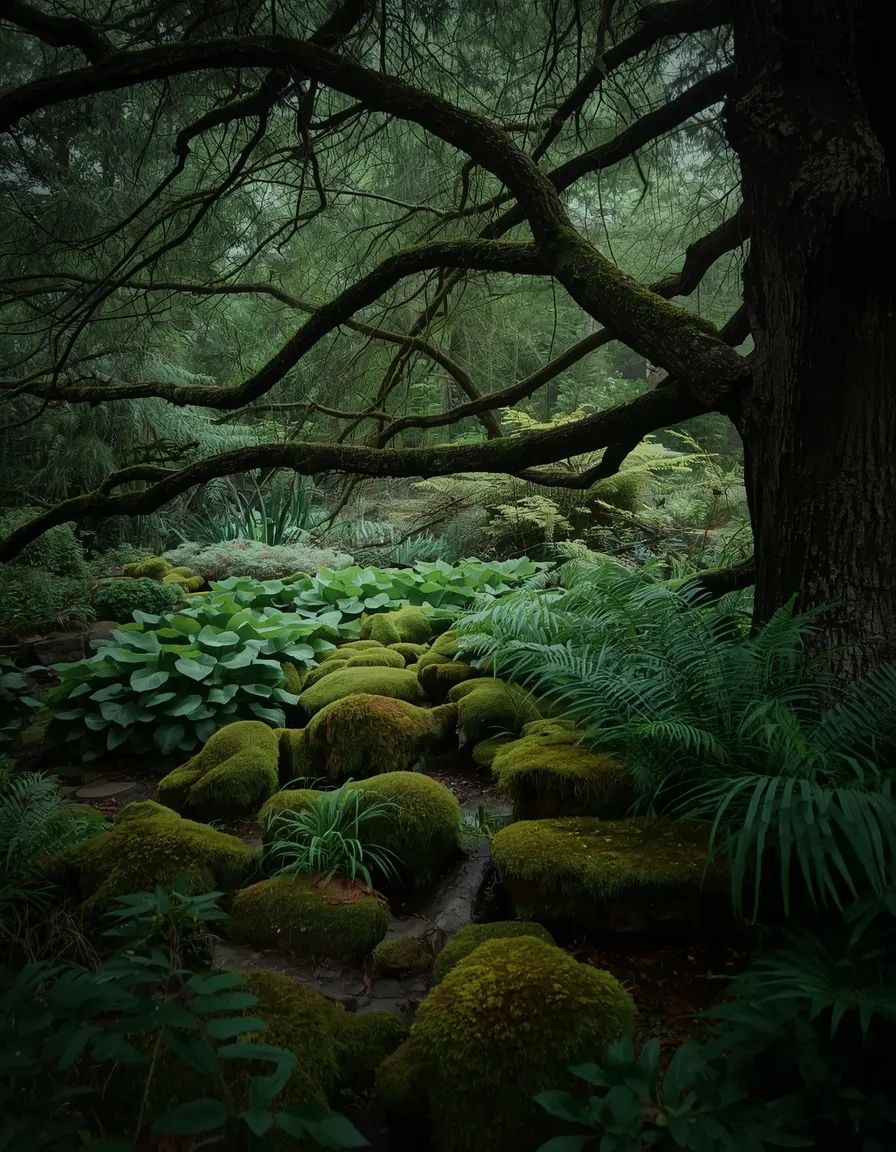
In the Pacific Northwest’s consistently damp, often shaded conditions, a groundcover of moss and shade-tolerant ferns replaces the constant losing battle of maintaining lawn under tree canopy with a planting that genuinely thrives in exactly those conditions instead of fighting them.
Choose the moss species based on the specific site’s shade and moisture level, since some varieties tolerate slightly more foot traffic and light than others, and prepare the area by removing existing grass and lightly scarifying the soil surface rather than planting moss directly over turf. Pair moss with sword fern, deer fern, or hosta in slightly less-shaded pockets for textural variety, since moss alone across a large area can look monotonous without some vertical contrast. This approach turns the Pacific Northwest’s climate, often treated as a landscaping obstacle for anyone trying to maintain a sunny-climate lawn under tree cover, into a genuine low-maintenance advantage instead.
- Works with the Pacific Northwest’s damp, shaded climate rather than against it
- Suits yards with mature tree canopy where lawn consistently struggles
- Solves the constant reseeding and repair that shaded PNW lawns typically need
17. Consolidated Raised Bed Planting
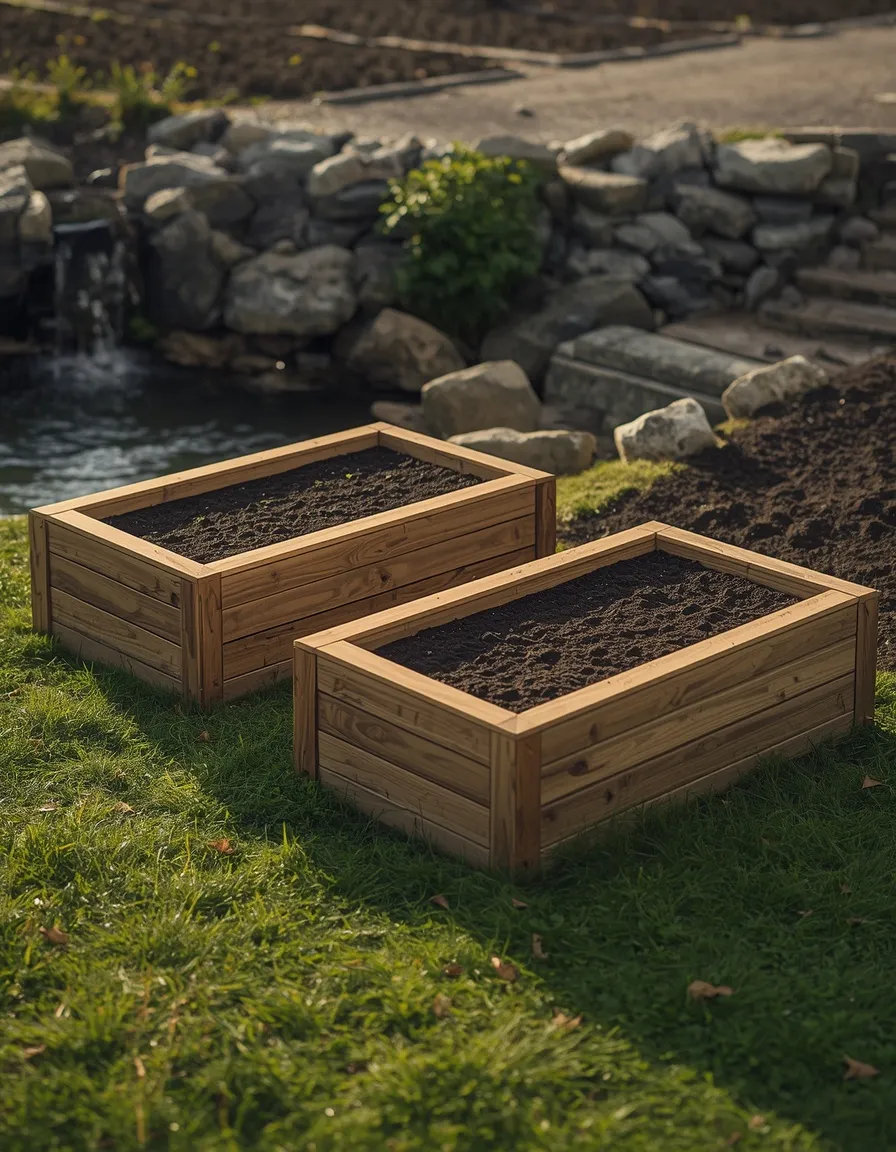
Replacing a scattered collection of individual pots, small beds, and random planting spots with two or three larger, well-designed raised beds concentrates maintenance into fewer, more efficient sessions rather than a dozen small tasks spread across the whole yard.
Build raised beds at least 12 inches (30 cm) deep for most perennial and shrub plantings, using rot-resistant lumber or composite material, and fill with a quality soil blend rather than native soil alone, giving plants a genuinely better growing environment that requires less troubleshooting over time. Group beds near each other and near a water source rather than scattering them around the property, since travel time between disconnected planting areas adds up as its own hidden maintenance cost. This consolidation approach works especially well for anyone transitioning from a high-maintenance, plant-heavy yard toward a genuinely simplified one, since it forces a deliberate edit rather than trying to maintain everything that already exists.
- Concentrates maintenance tasks into fewer, more efficient sessions
- Suits yards currently scattered with many small, disconnected planting areas
- Solves the hidden time cost of maintaining plantings spread across a property
18. Curved, Mower-Friendly Lawn Edges
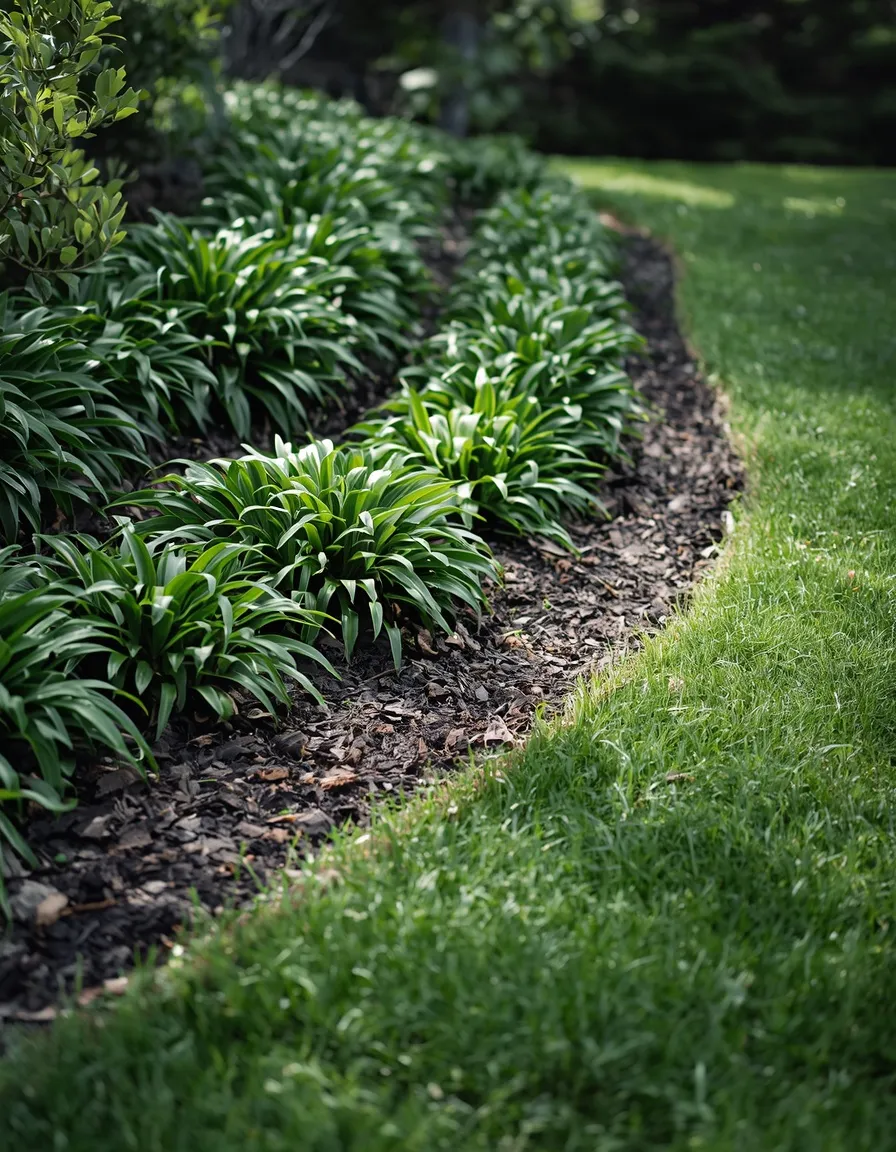
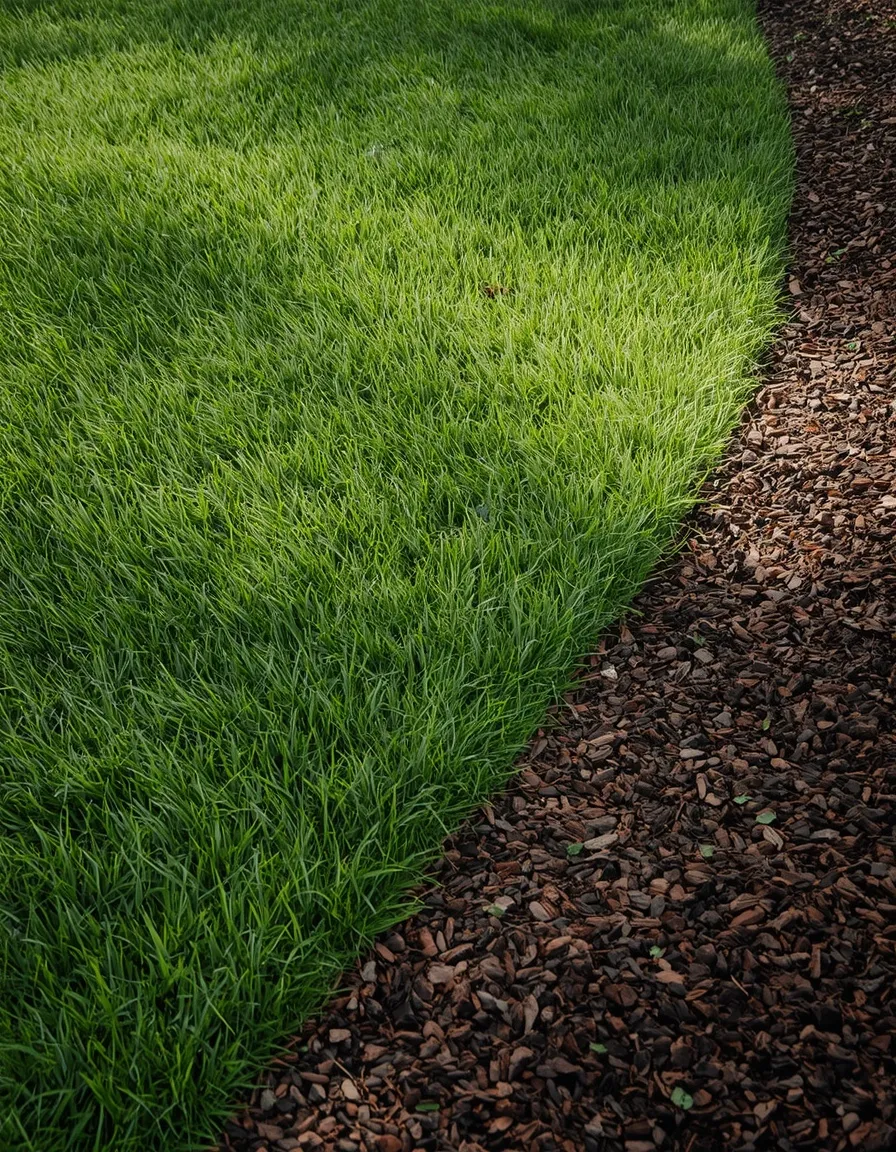
For any lawn area kept rather than replaced, reshaping sharp corners and tight angles into smooth, sweeping curves removes the single biggest source of ongoing mowing frustration: the awkward, time-consuming trimming that hard angles and narrow strips always require.
Mark a new curved edge with a garden hose laid out in the desired shape before cutting, adjusting the curve until it looks right from both the ground and, if possible, an upstairs window, since curves that look fine at ground level sometimes read as awkward from above. Eliminate narrow grass strips under 3 feet (91 cm) wide entirely, converting them to mulched bed instead, since strips this narrow are disproportionately time-consuming to mow and trim relative to their size. This is one of the lowest-cost ideas on this list, since it requires no new plants or materials, just resodding or reseeding the new edge line.
- Removes the most time-consuming trimming and edging tasks specifically
- Suits any yard keeping some lawn rather than eliminating it entirely
- Solves the disproportionate time cost that awkward corners and thin strips create
19. Climbing Vine on a Low-Care Trellis
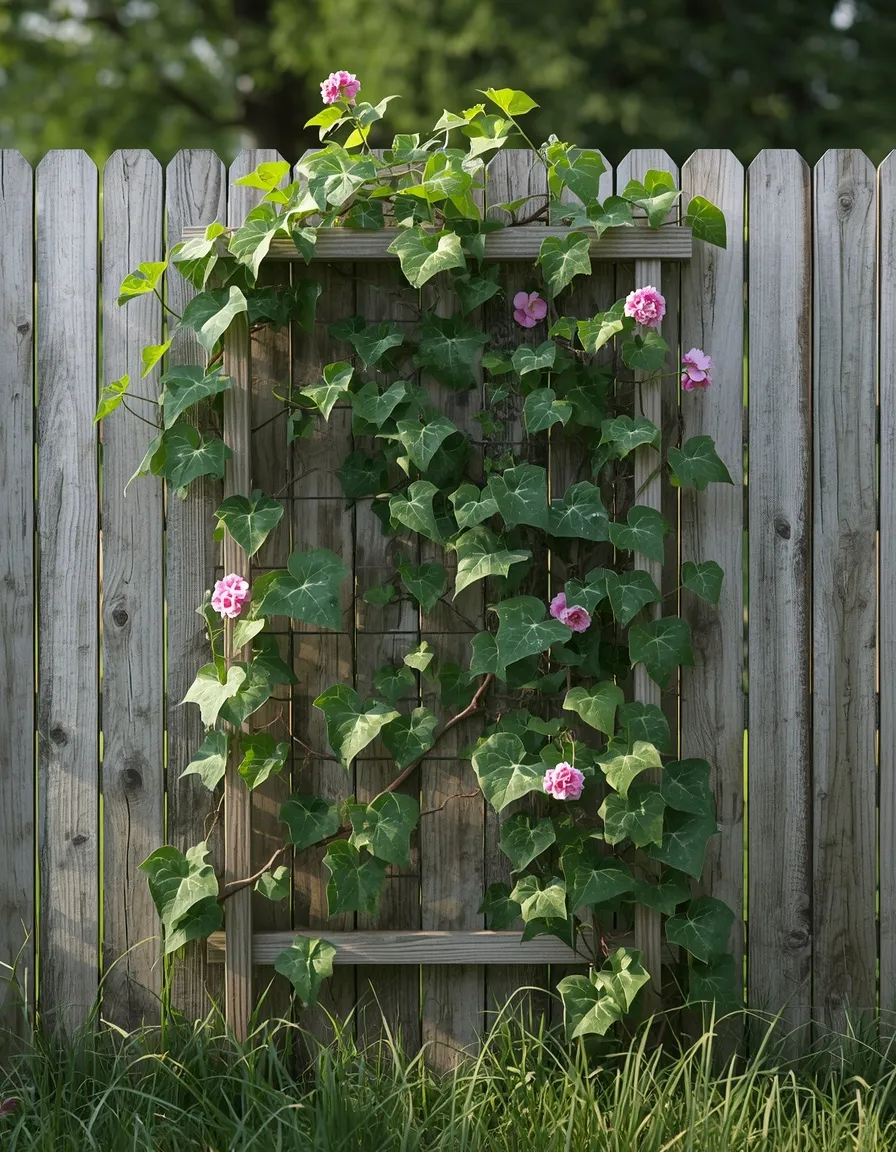
A single hardy climbing vine, trained up a simple trellis or against a wall, delivers vertical greenery and seasonal flowers with one annual pruning session, filling visual space that would otherwise need an entire bed of shorter plants to achieve the same impact.
Choose a well-behaved, non-invasive climbing variety suited to your region, clematis, climbing hydrangea, or a native honeysuckle rather than an aggressive grower like English ivy, which can damage structures and become genuinely difficult to control once established. Prune most flowering vines once a year at the appropriate time for that specific species, since pruning timing varies by whether a vine blooms on old or new wood, and pruning at the wrong time simply removes the coming season’s flowers without reducing future maintenance. This idea delivers a strong vertical visual statement from a single planting hole, considerably less maintenance than filling the same vertical space with multiple shorter plants.
- Delivers vertical greenery and flowers from a single, minimal planting footprint
- Suits blank walls, fences, and trellises needing softening without a full bed
- Solves the visual emptiness of vertical surfaces most yards leave unaddressed
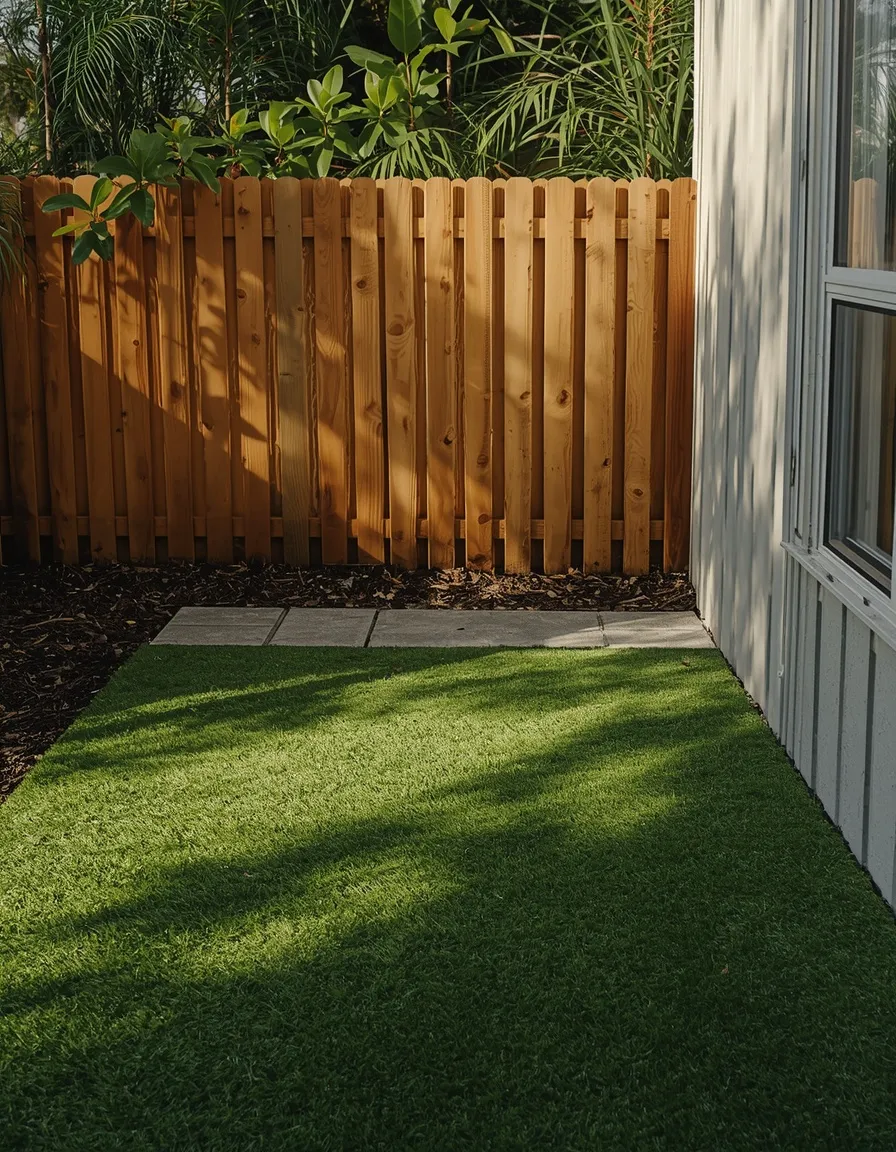
20. Artificial Turf for Zero-Mow High-Traffic Areas
For a small, heavily trafficked area where real grass consistently struggles, a dog run, a shaded side yard, a strip between a driveway and fence, artificial turf delivers a genuinely consistent green surface with zero mowing, watering, or seasonal die-back, though it comes with real tradeoffs worth weighing honestly.
Choose a turf product with adequate drainage backing and infill designed for the intended use, pet-specific turf systems exist for exactly the odor and drainage challenges a dog run creates, rather than a generic decorative product. Be aware that artificial turf absorbs and radiates heat considerably more than real grass, reaching temperatures uncomfortable or even burn-risk for bare feet and paws on hot, sunny days, so this idea suits shaded or partially shaded areas, or climates without extreme summer heat, considerably better than a full-sun installation in a hot region. It is also worth being honest that artificial turf is not truly maintenance-free, it needs periodic rinsing, brushing to keep fibers upright, and occasional infill replenishment, and it carries a real environmental tradeoff as a petroleum-based product with no biodegradability, worth weighing against a genuinely drought-tolerant living groundcover for the same low-mow goal.
- Delivers a consistently green, zero-mow surface for small high-traffic areas
- Suits shaded dog runs and problem strips better than full-sun installations
- Solves lawn failure in high-traffic zones, with real tradeoffs worth weighing first
Final Thoughts
Low maintenance landscaping ideas work best when they are honest about the tradeoff: less time spent mowing, watering, and pruning in exchange for more thought put into plant selection, bed prep, and matching a design to your actual climate before a single shovel goes into the ground. Whether that means converting one problem strip of struggling lawn into mulched bed, adding a drip irrigation line to reduce hand-watering, or rethinking an entire front yard around drought-tolerant planting suited to your region, the strongest results come from choosing ideas that fit your actual yard rather than copying a design built for different soil, sun, or rainfall. That same easy-care philosophy carries indoors too, and these small indoor garden ideas apply a similar minimal-effort approach to houseplants under your own roof. For more ways to build a garden around what a space can actually sustain, the garden design category on Sunday Abode covers layout and planting well beyond lawn reduction alone. Start with the section of your yard that currently demands the most time, and let the rest follow as your schedule allows
FAQs
Is any landscaping truly zero maintenance?
No, and it’s worth being upfront about that. Even the lowest-maintenance yards need occasional mulch top-ups, annual pruning, and periodic weeding; the honest goal of low maintenance landscaping is fewer, shorter tasks rather than eliminating yard work entirely.
What are the cheapest low maintenance landscaping ideas to start with?
Mulched tree rings, curved lawn edges, and groundcover from divided existing plants cost very little beyond labor and materials already on hand. Converting one small, problem area first, a struggling grass strip or a bare patch under a tree, is a more affordable starting point than redoing an entire yard at once.
What low maintenance landscaping works in a hot desert climate?
Xeriscape gravel with structural succulents like agave and yucca, paired with native or regionally adapted drought-tolerant perennials, is built specifically for this. Avoid cottage-style lawn and flower beds entirely in true desert climates, since they demand constant irrigation just to survive rather than genuinely reducing maintenance.
How is low maintenance landscaping different in the Pacific Northwest?
The region’s consistent moisture and shade call for a different approach than a dry climate, moss and shade-tolerant ferns thrive under tree canopy where lawn typically struggles and requires constant reseeding. Working with the region’s natural dampness rather than fighting it with sun-loving plants is the key difference from a desert-style low-maintenance plan.
Is artificial turf actually low maintenance?
It eliminates mowing and watering, but it is not entirely maintenance-free, it needs periodic rinsing, brushing, and infill replenishment, and it heats up considerably more than real grass in direct sun. It suits small, shaded, high-traffic areas better than a full sunny yard, and it carries a real environmental tradeoff worth weighing against a living groundcover alternative.
Can I make a sloped yard low maintenance without a full landscaping crew?
Yes, replacing lawn on a slope with spreading, fibrous-rooted groundcover is a project most confident DIYers can handle themselves, and it solves both the mowing safety risk and erosion problems that sloped lawn creates. Steeper slopes or larger terracing projects are worth consulting a professional about, but simple groundcover conversion on a moderate slope does not require special equipment.
What should I plant around a raised deck that gets little sun?
Shade-tolerant plants like hostas, ferns, and heuchera work well along the edges where some light and rain reach, while the driest zone directly underneath is often better suited to gravel or mulch than any living plant. Address drainage before planting, since water running off the deck’s surface tends to concentrate along its edges.
A note on safety: avoid mowing slopes steeper than a 4:1 grade, position spiny desert plants away from walkways, follow herbicide label precautions around pets and children, and choose pet-safe evergreens like inkberry holly if boxwood’s ASPCA-listed toxicity is a concern.