
Introduction
Small indoor garden ideas prove that a genuine garden doesn’t need a yard at all, just a window, a stair landing, a bare corner, or even a bathroom with the right amount of steam. A trailing pothos on a kitchen shelf, a tray of herbs on a sill, a tabletop fountain trickling quietly in a reading nook, all of it counts, and all of it can turn an apartment or a small home into something that feels genuinely alive. This list moves through window and light-based ideas, space-saving vertical solutions, herb and vegetable setups, water and zen-style features, and family-friendly projects, along with the light measurement, drainage, and pet-safety details most indoor garden guides skip entirely. Consider it the reference for bringing real greenery into every corner of your own Sunday Abode, whatever the square footage.
Small Indoor Garden Ideas by Window and Natural Light
Light is the single biggest constraint on any indoor garden, so it makes sense to start with the spots already getting real natural light before improvising anywhere else.
1. Windowsill Herb Garden
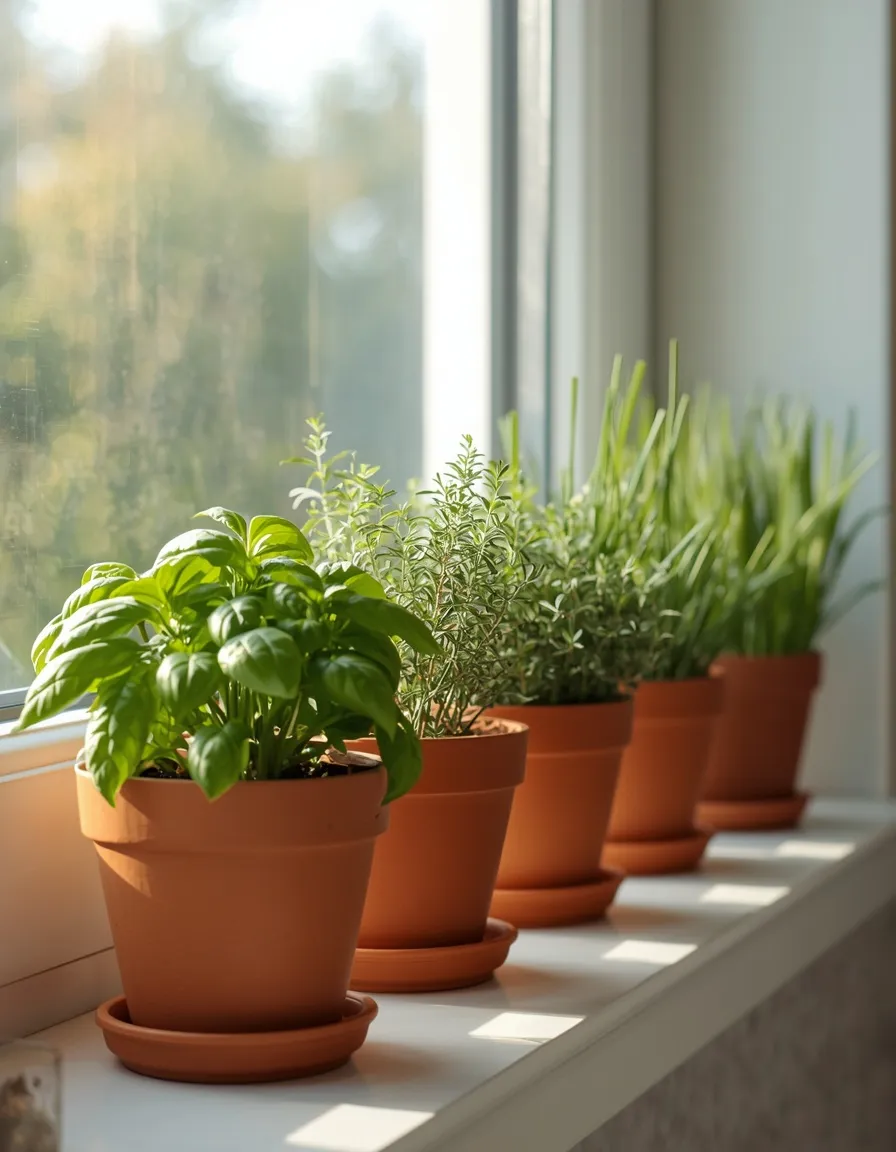
A row of small pots along a kitchen windowsill, basil, thyme, chives, and parsley within actual arm’s reach of the stove, is the most classic small indoor garden idea there is, and still one of the most genuinely useful.
Most culinary herbs need at least four to six hours of direct sun daily to grow well indoors, a south-facing window generally delivers the most consistent light in the Northern Hemisphere, while a north-facing window plays that same role for anyone gardening south of the equator, so it’s worth checking actual sun exposure through the day rather than assuming based on a single hemisphere’s convention. Use pots with drainage holes and a saucer underneath every one, windowsills and their surrounding wood or painted trim are genuinely vulnerable to water damage from pots that drain directly onto the surface. Rotate pots a quarter turn every few days so growth stays even rather than leaning hard toward the glass, and space pots enough to avoid crowding, poor airflow between crowded herb pots increases the odds of fungal issues in a humid kitchen. If the available window doesn’t get enough direct sun, a small clip-on grow light extends the usable hours considerably without needing a full setup.
- Puts commonly used cooking herbs within actual reach of meal prep
- Works in almost any home with at least one reasonably sunny window
- Solves the “want fresh herbs without a dedicated garden bed” problem simply
2. Living Room Plant Corner
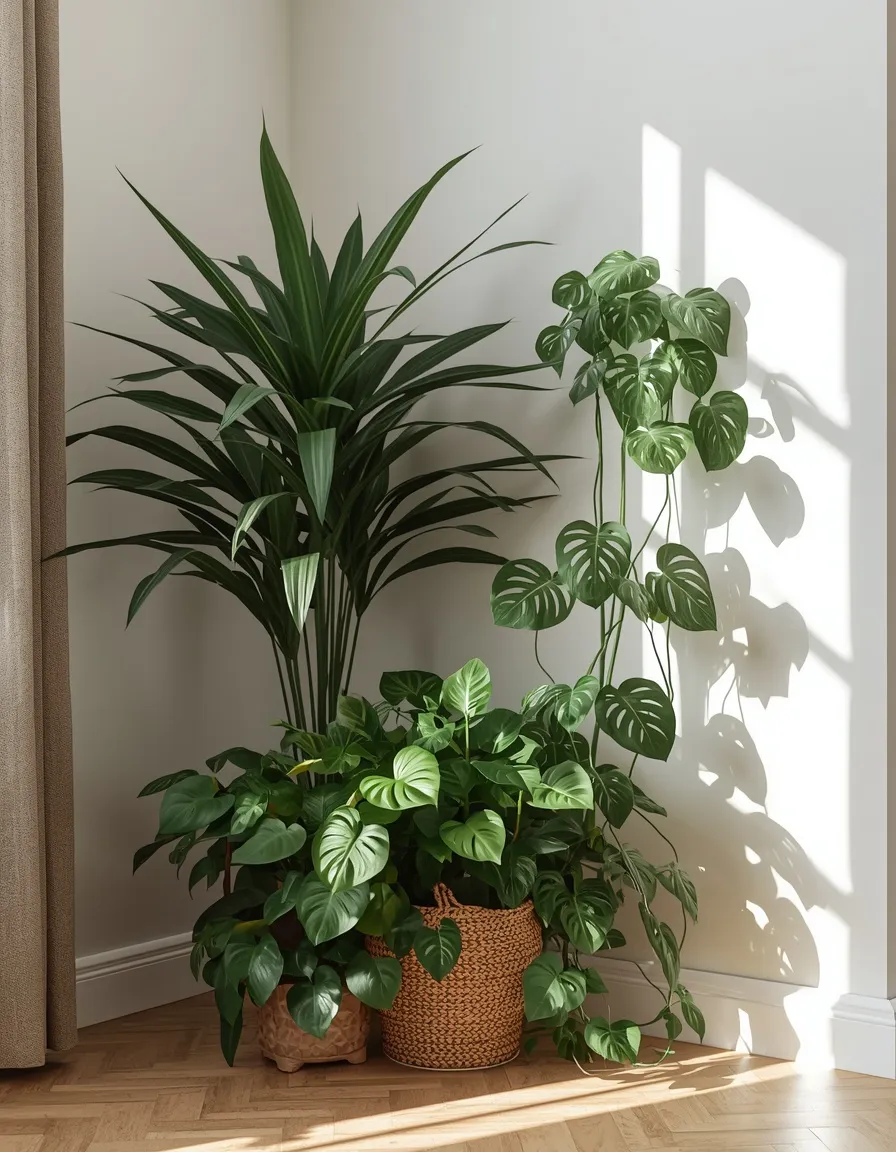
A cluster of floor plants at varying heights in one dedicated living room corner, rather than scattered single pots around the room, reads as a genuine indoor garden rather than incidental decor.
Group three to five plants of different heights and leaf shapes together, a tall specimen like a fiddle leaf fig or a parlor palm anchoring the back, medium plants filling the middle, and a trailing pothos or philodendron spilling over the front edge, this layered grouping does considerably more visual work than the same plants scattered individually around a room. Check light levels honestly before committing to this corner, a spot that reads as bright to the eye isn’t necessarily bright enough for most plants, a light meter app or even a simple shadow test gives a more accurate read than guessing. If pets share the home, note that pothos and philodendron, two of the most common plants used in exactly this kind of grouping, are toxic to cats and dogs according to the ASPCA, causing oral irritation if chewed, so it’s worth choosing pet-safe alternatives like a parlor palm or Boston fern if a cat or dog has regular access to the room.
- Creates a genuine focal point rather than plants scattered incidentally around a room
- Works best with honestly assessed light levels rather than an assumed bright spot
- Solves the “have several plants but no real garden feel” problem through grouping
3. Bathroom Humidity Plant Corner
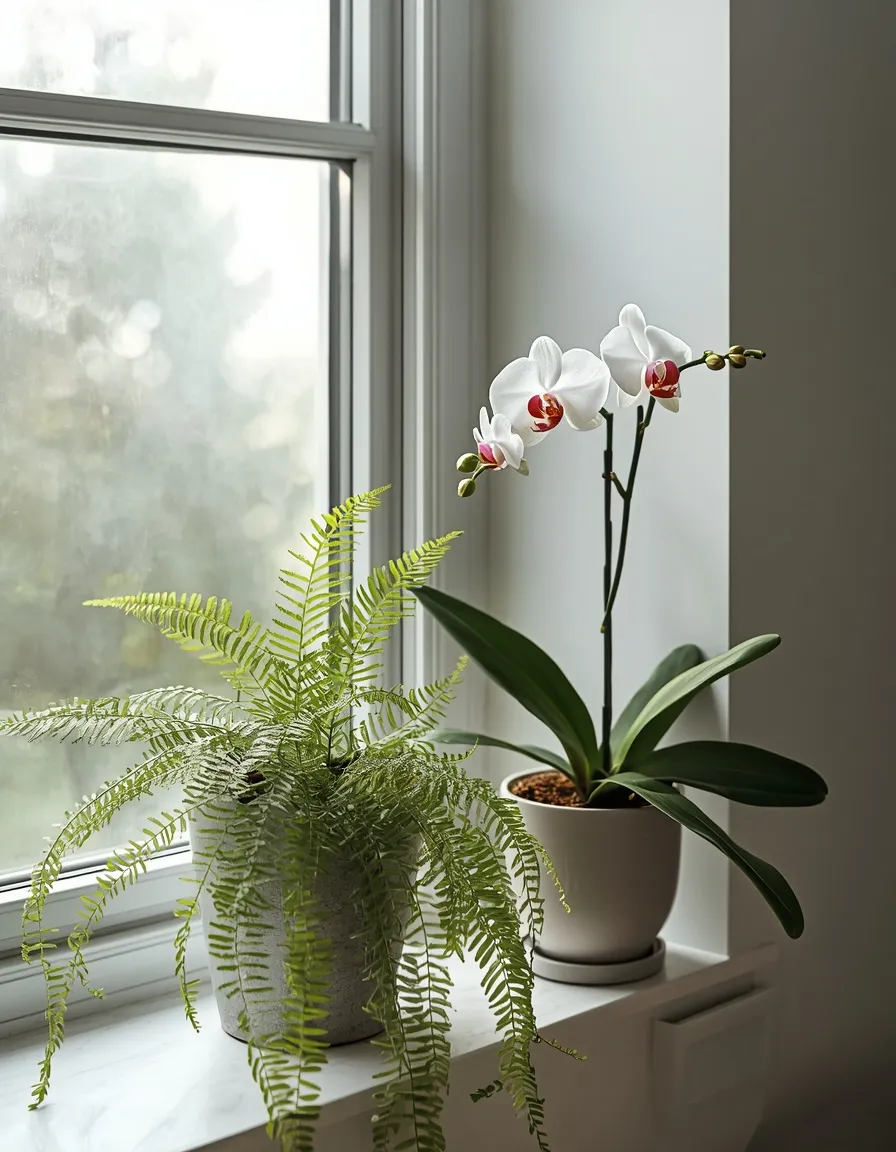
A cluster of ferns, orchids, or other humidity-loving plants on a bathroom shelf or windowsill takes advantage of one genuinely underused indoor garden spot, the naturally elevated moisture from regular showers and baths.
Choose species that specifically want high humidity and can tolerate lower light, Boston fern, maidenhair fern, and most orchids all do considerably better in a steamy bathroom than they would in a typical dry living room. Make sure the bathroom has functioning ventilation, an exhaust fan that’s actually used after showers, before adding a cluster of moisture-loving plants on top of existing steam, combined humidity without adequate airflow raises genuine mold and mildew risk on walls and grout, not just a plant care consideration. Position plants away from direct water spray from the shower itself, and use a windowsill or shelf that won’t be damaged by the combination of splashed water and plant drainage. This idea works especially well in a bathroom with even a small window, but many of these species tolerate the lower light of a windowless bathroom reasonably well too, provided the humidity and warmth are consistently present.
- Uses ambient bathroom humidity that most homes otherwise waste on plant-unfriendly rooms
- Works especially well for ferns and orchids that struggle in typical dry indoor air
- Solves the “no good spot for humidity-loving plants” problem most homes have
4. Entryway Mini Garden Nook
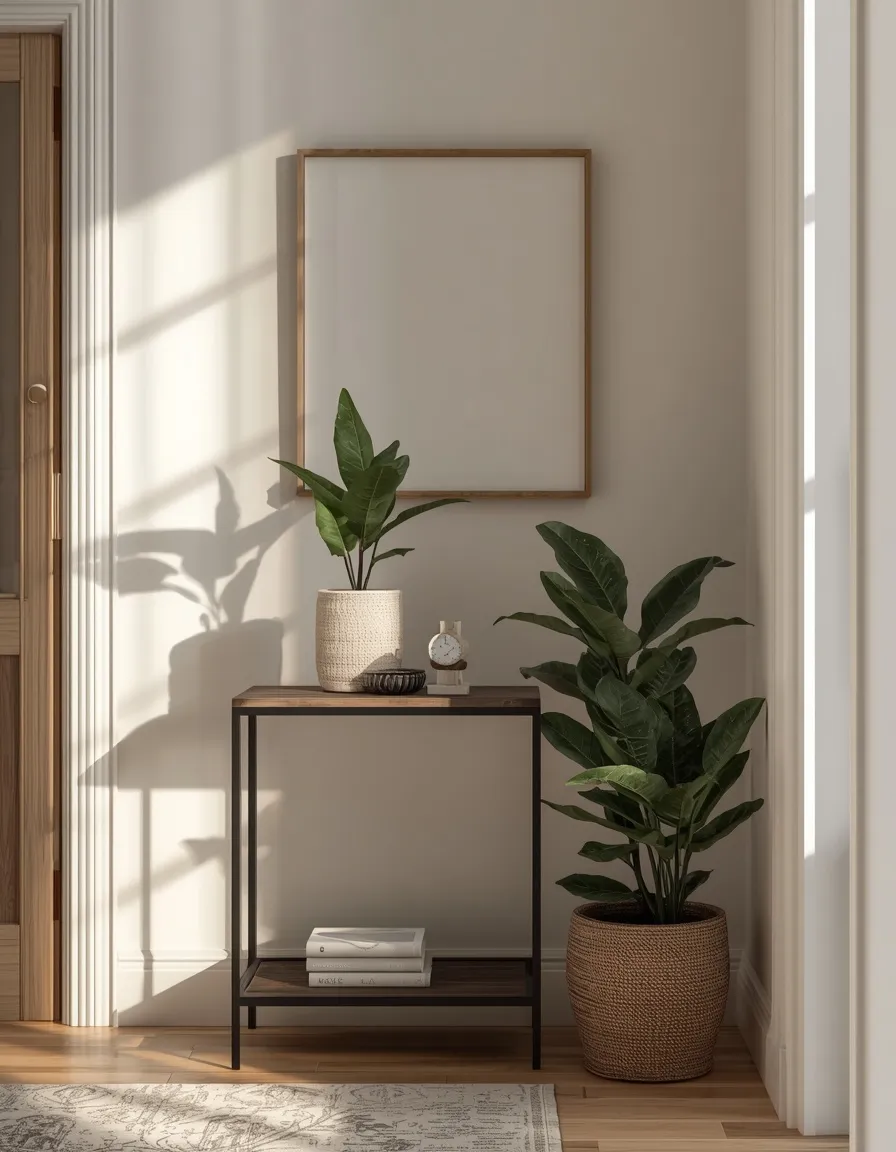
A small grouping of hardy, low-light-tolerant plants just inside the front door turns the first few steps into the house into a genuine green welcome rather than an afterthought hallway.
Choose genuinely tough, low-light plants for this specific spot, entryways are frequently the dimmest, most temperature-inconsistent area in a home, opened repeatedly to outdoor drafts, ZZ plants, snake plants, and pothos all tolerate that inconsistency considerably better than a plant that needs steady bright light. Keep the footprint intentionally small and contained, a single well-chosen console table or a narrow plant stand, rather than anything that narrows a walking path people use daily, entryways are functional spaces first and a garden nook needs to respect that. Add one element with genuine seasonal or textural interest, a small woven basket planter, a single trailing vine, to keep the spot from reading as an afterthought grouping of leftover plants. This works especially well as the very first small indoor garden idea to try, since it’s low commitment and immediately visible every time the front door opens.
- Creates a genuine green first impression without disrupting daily foot traffic
- Works well with hardy, low-light plants suited to an entryway’s inconsistent conditions
- Solves the “entryway feels bare and unfinished” problem with minimal footprint
Space-Saving Small Indoor Garden Ideas
When floor space genuinely doesn’t exist, going vertical, or tucking a garden into an awkward gap already in the house, does most of the work.
5. Vertical Wall-Mounted Planter
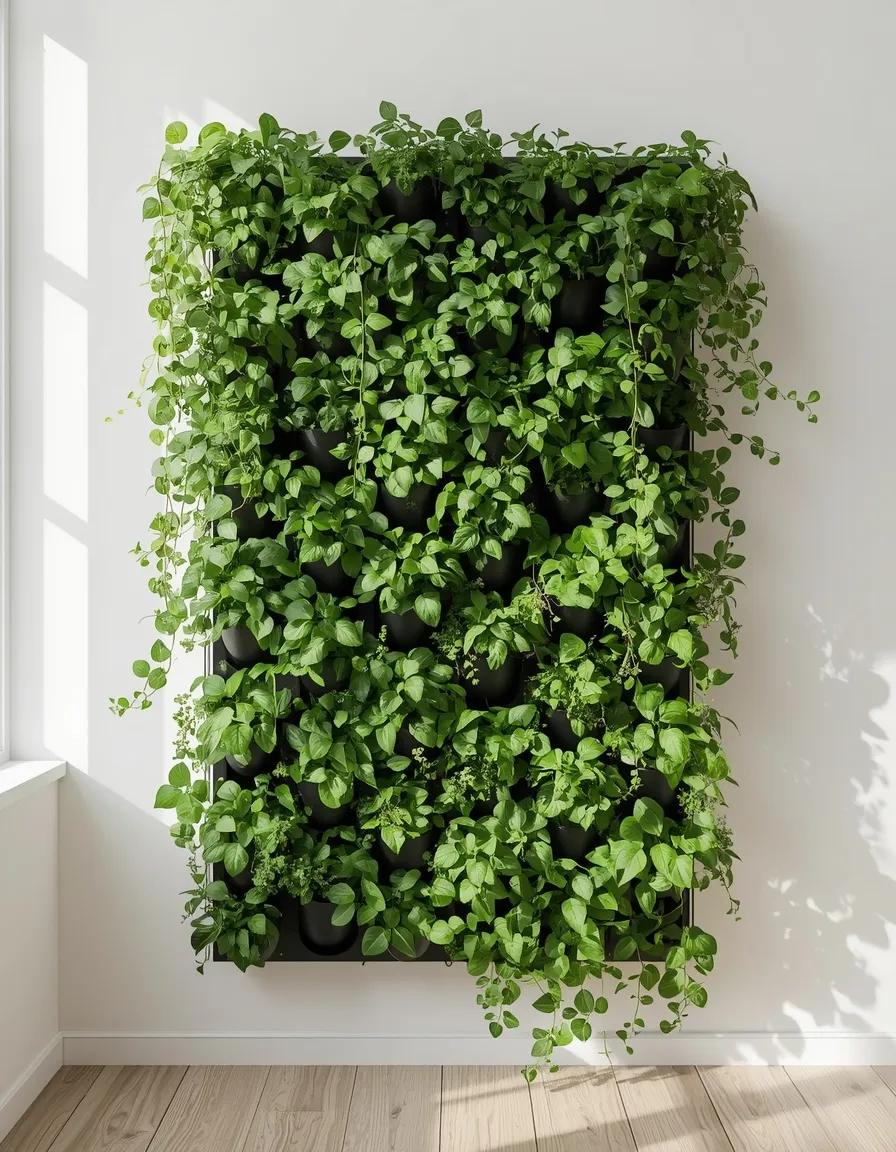
A modular system of wall-mounted pockets or planter boxes, densely planted floor to partway up a wall, brings the volume and texture of a full garden bed using zero floor space at all.
Choose a system with a built-in or add-on drip irrigation line for anything beyond a handful of pockets, hand-watering a tall wall-mounted grid evenly is genuinely difficult and uneven watering is the most common reason these installations fail within the first year. Mount the frame into wall studs rather than drywall anchors alone if the finished, watered system will weigh more than a few kilograms, a fully planted and saturated vertical garden is considerably heavier than the empty frame suggests. Choose shallow-rooted plants suited to the pocket depth specifically, most systems offer only 10 to 15cm (4 to 6in) of soil volume, which rules out deep-rooted specimens regardless of how well-lit the wall is. Install a waterproof backing layer or liner behind the entire structure to protect the wall from moisture damage, this matters even more indoors than outdoors since drywall doesn’t tolerate repeated moisture exposure the way exterior siding does.
- Delivers real garden volume and density without using any floor space
- Works best with built-in irrigation rather than relying on manual watering for every pocket
- Solves the “want a full green wall but have no floor room” problem directly
6. Hanging Planter Display
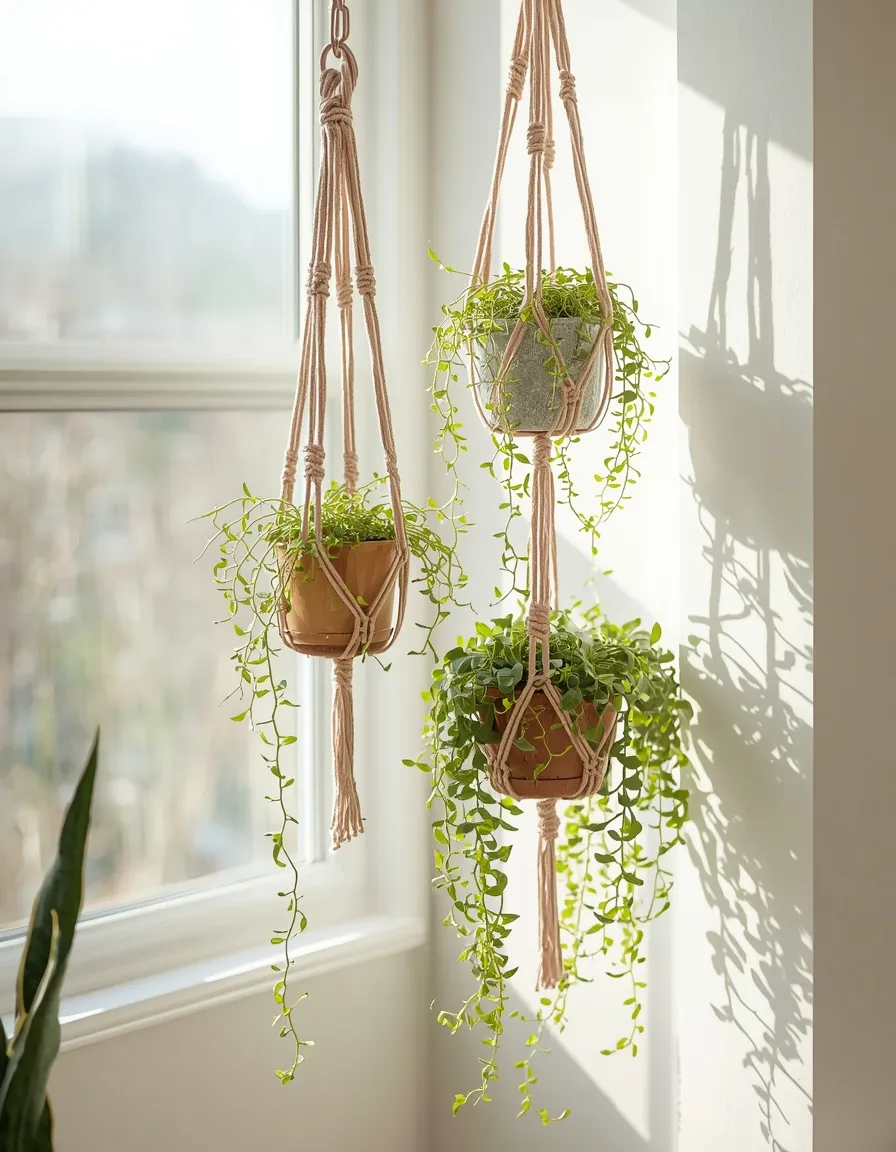
A cluster of trailing plants in macrame or ceramic hangers, suspended at staggered heights near a bright window, brings genuine vertical layering and movement that a row of shelf-bound pots can’t match.
Anchor hooks into a ceiling joist or a rated wall stud rather than drywall alone, a fully watered hanging planter, pot, soil, and plant together, is considerably heavier than it looks and a saturated large pot can weigh several kilograms, more than a standard drywall anchor is rated to hold safely over time. Stagger hanger lengths rather than hanging everything at one uniform height, this creates the layered, cascading look that makes a hanging display read as intentional rather than simply plants suspended at random. Choose genuinely trailing species, pothos, string of pearls, or English ivy all suit this format considerably better than an upright plant that reads awkwardly hanging in midair. Water hanging plants over a sink or in a spot where dripping won’t damage flooring or furniture below, and let excess water fully drain before rehanging.
- Adds vertical layering and movement that ground-level or shelf displays can’t achieve
- Works especially well with genuinely trailing plant species rather than upright ones
- Solves floor-space limitations while still delivering real visual density
7. Shelving Ladder Plant Display
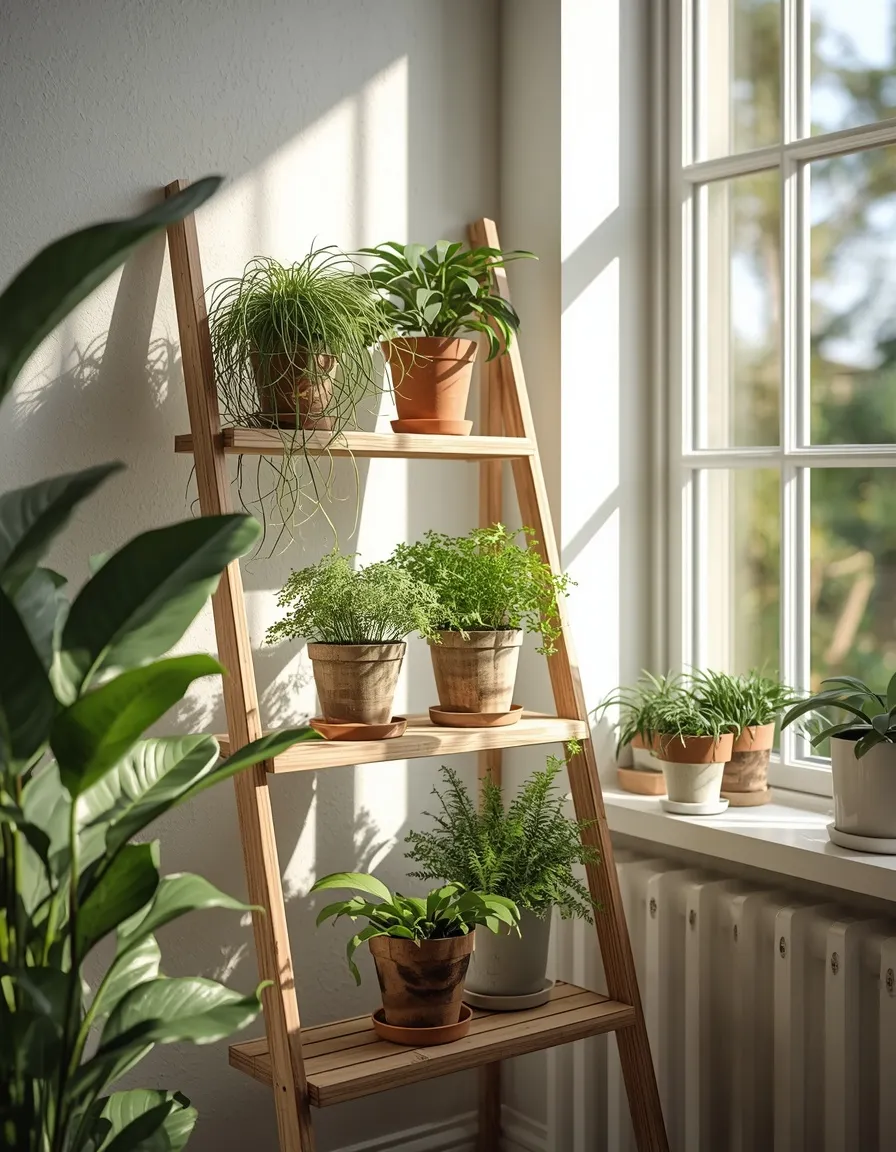
A tiered wooden or metal ladder shelf, holding potted plants of graduated sizes from top to bottom, turns a single narrow furniture footprint into a genuinely full-looking plant collection.
Position the ladder shelf where the upper tiers actually receive enough light to matter, a shelf placed against a wall away from any window leaves the top plants in considerably dimmer conditions than the bottom ones despite appearing to occupy the same general area, angle the whole piece near a window rather than flush against an interior wall for more even light across all tiers. Choose a shelf rated for the combined weight of multiple filled pots, cheaper ladder shelves are sometimes built for lighter decor items and can bow or fail under several large, watered planters. Mix plant sizes and forms across the tiers deliberately, a trailing plant on an upper shelf cascading down past the tier below adds movement that a uniform row of same-sized pots doesn’t achieve. This is one of the most furniture-flexible ideas on this list, since the whole display moves as one unit if the room layout changes.
- Turns a narrow furniture footprint into a genuinely full plant collection
- Works best angled near a window so upper tiers get comparable light to lower ones
- Solves the “want many plants but have very little floor space” problem in one piece of furniture
8. Room Divider Plant Screen
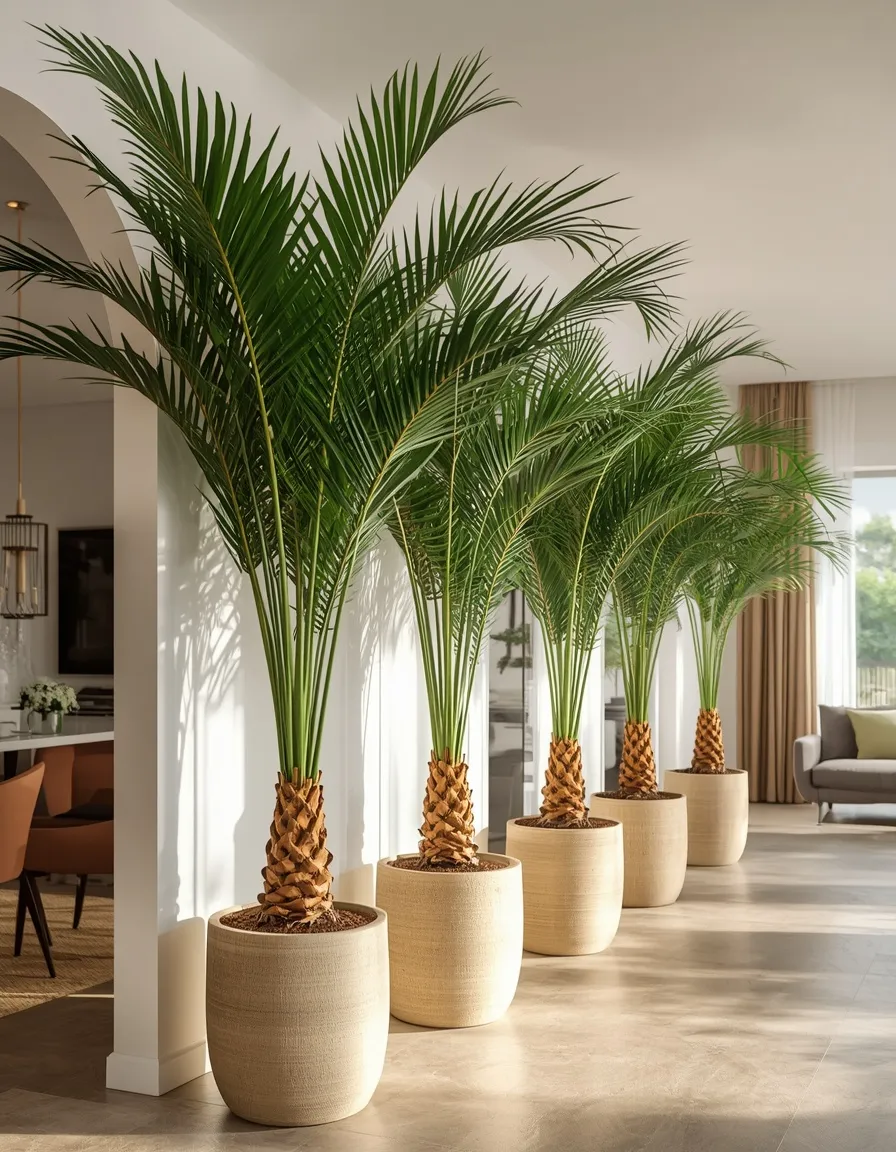
A row of tall plants in matching planters, or a plant-filled shelving unit used specifically to separate one zone of an open floor plan from another, does the functional work of a room divider while adding a genuine garden element instead of a plain screen or curtain.
Choose tall, relatively narrow-profile plants for this specific use, a row of parlor palms, snake plants, or dracaena all provide real height and visual separation without the wide footprint a bushier plant would need. Space plants closely enough that the visual line reads as continuous rather than gappy, while still leaving enough room between pots for adequate airflow and light to reach each plant individually. This works especially well in a studio apartment or open-plan living space specifically, dividing a sleeping area from a living area, or a home office corner from the rest of a room, without the visual weight of a solid wall or furniture-based divider. Use plants tall enough to actually achieve the screening effect, most true room-dividing height starts around 1.2 to 1.5m (4 to 5ft), anything shorter reads as decorative rather than functional.
- Divides an open floor plan functionally while adding real greenery instead of a plain screen
- Works especially well in studio apartments or open-plan spaces needing zone separation
- Solves the “need to divide a room without a wall or bulky furniture” problem
9. Under-Stairs Garden Nook
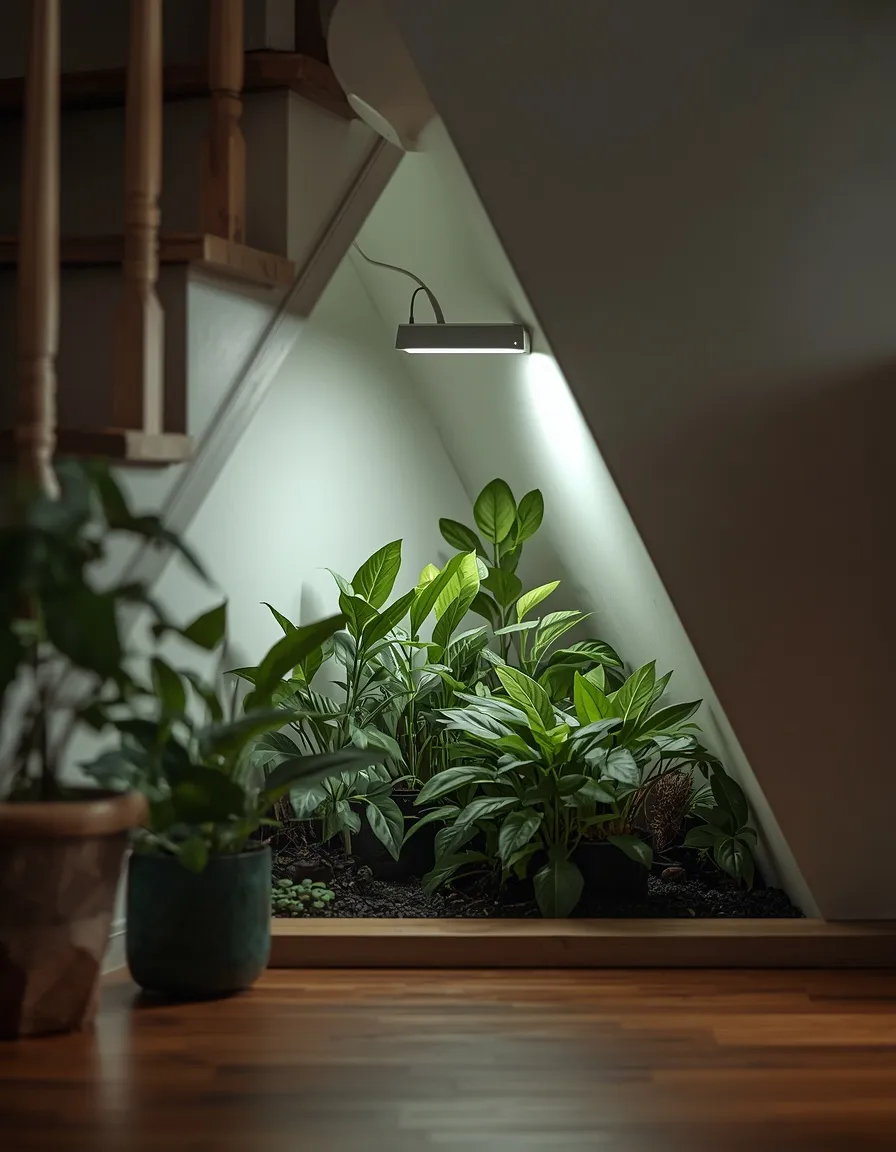
The awkward triangular gap beneath a staircase, often wasted storage space or left empty entirely, fits a genuinely striking small indoor garden once it’s cleared out and given the right plants for its specific light conditions.
Assess the actual light honestly before planning anything, most under-stair spaces get little to no direct light and sit in the dimmer end of what indoor plants can tolerate, so this is the right spot for genuinely low-light species, ZZ plants, snake plants, pothos, and cast iron plant, rather than anything needing bright indirect or direct light. Check that the space has reasonable airflow before installing a dense plant grouping, a fully enclosed under-stair nook with no ventilation can trap humidity against the surrounding wood framing and drywall over time, a small fan or simply leaving the space slightly open on one side helps considerably. Add a grow light if the natural light genuinely isn’t sufficient even for low-light species, a warm-toned LED strip tucked under the stair’s underside lighting can make an otherwise unusable dim spot fully plantable. This is one of the highest-impact ideas on this list for turning genuinely wasted square footage into something worth looking at.
- Turns commonly wasted, awkward square footage into a genuine design feature
- Works best with true low-light plant species matched honestly to the space’s actual conditions
- Solves the “under-stairs space is either empty or cluttered storage” problem directly
Small Indoor Herb, Vegetable, and Grow Light Ideas
These ideas lean on supplemental light rather than a sunny window alone, which opens up genuine food-growing options in rooms that get little or no natural sun.
10. Hydroponic Countertop Herb Garden
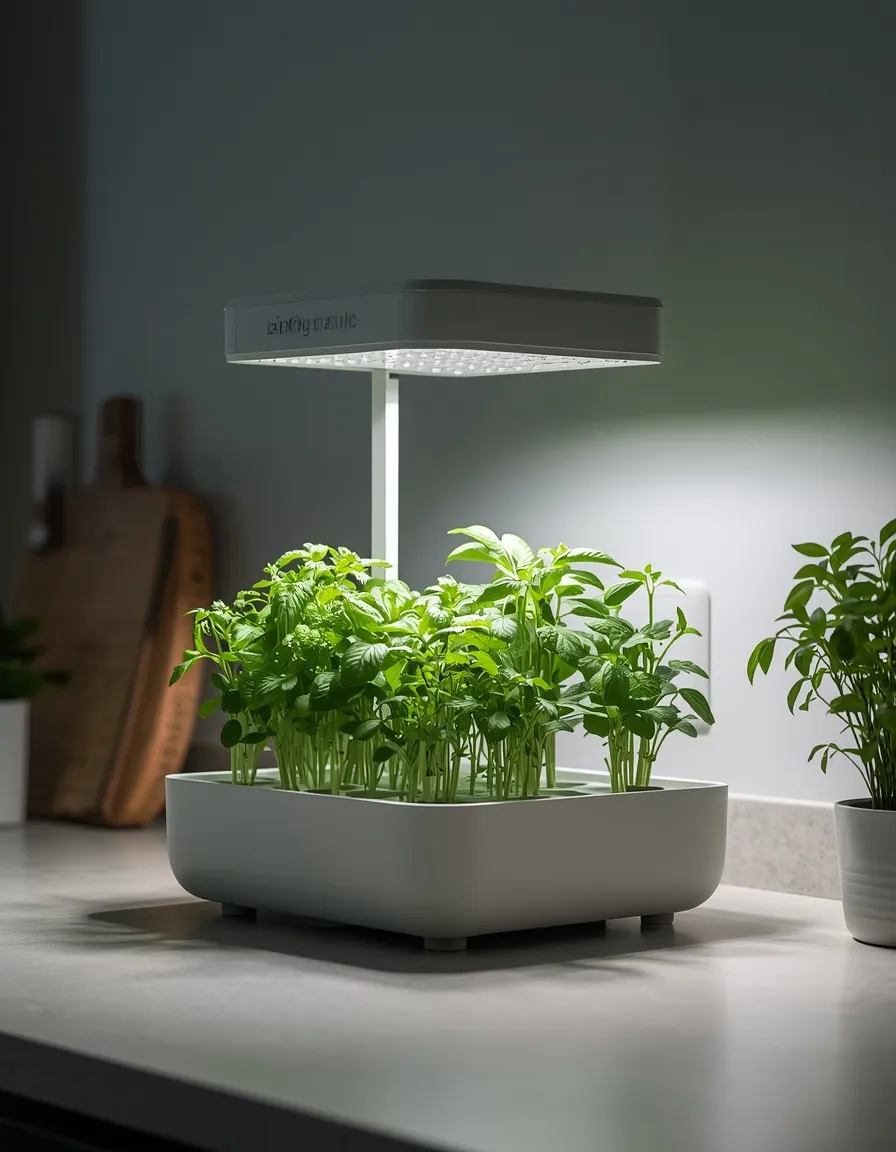
A self-contained countertop hydroponic system, seed pods, water reservoir, and a built-in grow light all in one compact unit, grows herbs and small greens on a kitchen counter regardless of window access or natural light at all.
This works considerably better than soil-based windowsill growing for a kitchen with poor natural light, since the built-in grow light replaces sun exposure entirely rather than supplementing it, making this a genuine option for a north-facing kitchen or an interior room with no window whatsoever. Keep the unit’s electrical components and cord routing away from the sink and any splash zone, and plug it into a GFCI-protected outlet specifically, the combination of standing water and electrical components is exactly the situation that type of outlet is designed to protect against. Follow the system’s specific nutrient dosing rather than skipping it or guessing at quantities, hydroponic plants rely entirely on the nutrient solution for what soil would otherwise provide, and under-dosing leads to weak growth considerably faster than it would in soil. This is a genuinely higher-cost option compared to a simple pot on a sill, but it delivers reliable, consistent growth in kitchens that a sunny windowsill approach simply can’t serve.
- Delivers reliable herb growth regardless of natural window light or kitchen orientation
- Works especially well in north-facing or interior kitchens with genuinely poor natural light
- Solves the “want fresh herbs but have no bright window” problem completely
11. Indoor Vegetable Grow Station
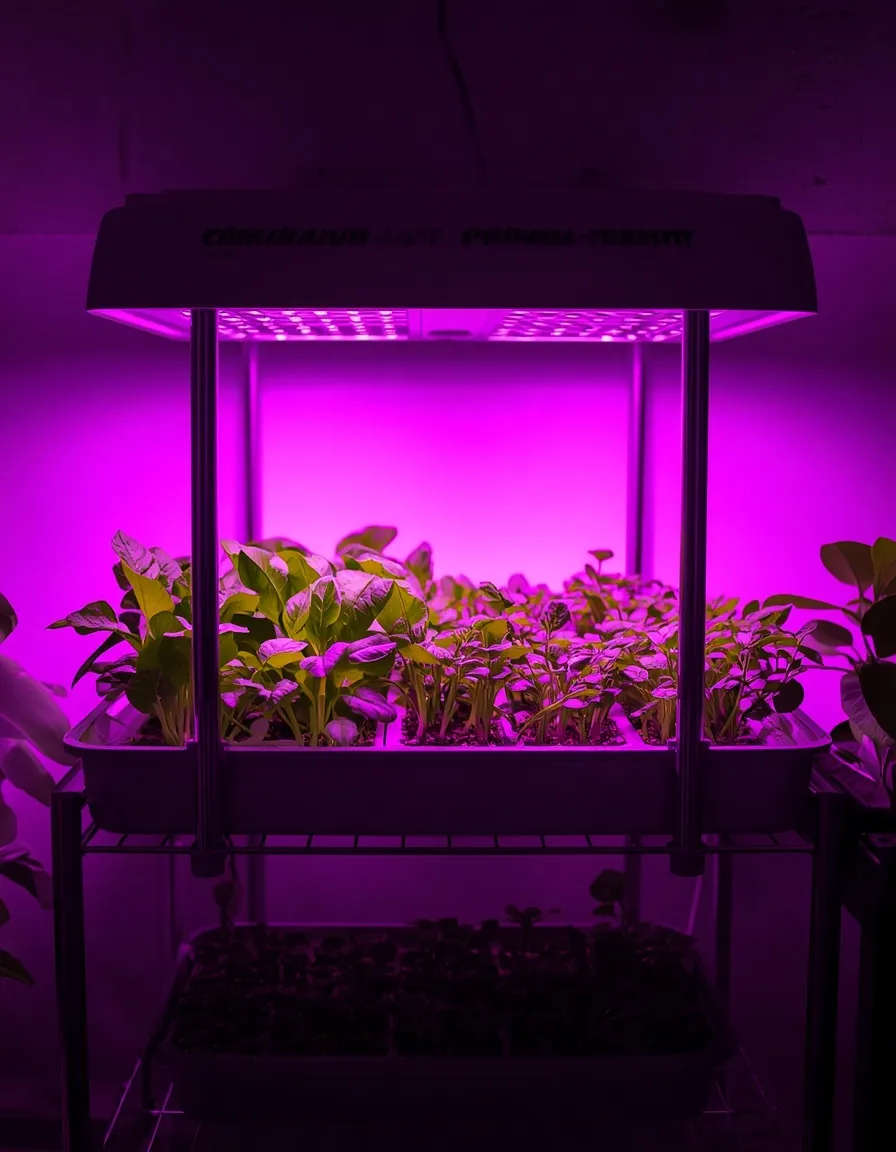
A dedicated shelf or small rack fitted with full-spectrum grow lights, growing lettuce, microgreens, or dwarf peppers year-round, brings genuine food production indoors at a scale a windowsill herb pot can’t match.
Position full-spectrum LED grow lights roughly 15 to 30cm (6 to 12in) above the plant canopy depending on the specific light’s intensity, and run them on a timer for 12 to 16 hours daily, most fruiting vegetables need considerably more light duration indoors than a sunny window alone would provide even in a bright room. Choose compact, genuinely indoor-suited varieties, dwarf or patio-type tomato and pepper cultivars, loose-leaf lettuce, and microgreens all perform considerably better in a small indoor setup than a full-sized outdoor variety would. Keep all electrical connections, timers, and light fixtures elevated and routed away from any watering or misting zone directly beneath them, and use a drip tray under every pot to catch runoff before it reaches the grow light’s wiring below. This is a genuinely more involved project than most ideas on this list, closer to a small hobby setup than casual decor, and suits someone specifically interested in growing real food indoors year-round.
- Delivers genuine year-round food production regardless of season or window access
- Works best with compact, indoor-suited vegetable varieties rather than standard outdoor cultivars
- Solves the “want to grow real vegetables but have no outdoor space or season” problem
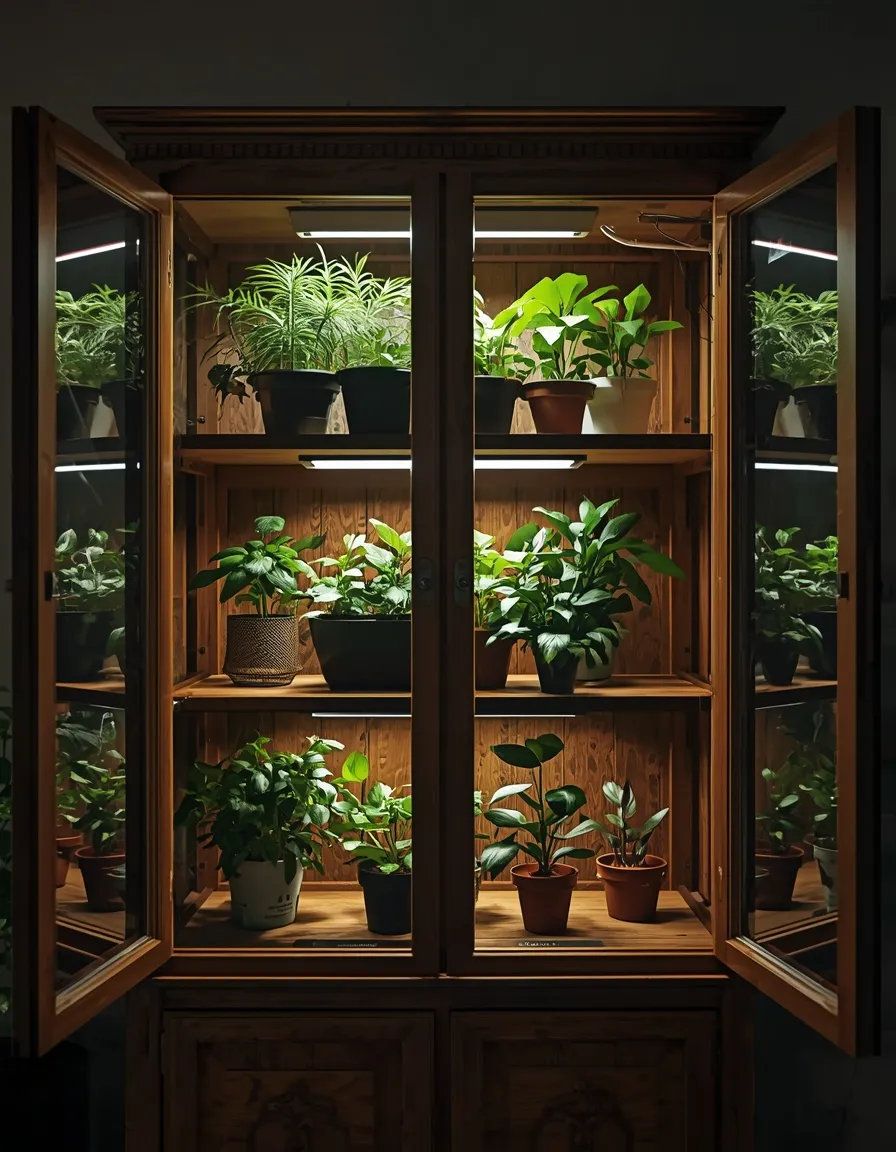
12. Grow Light Garden Cabinet
A closed cabinet or console fitted with interior grow lights and glass or open shelving, holding a rotating collection of plants, functions as genuine furniture that happens to also be a small greenhouse.
This works especially well for anyone wanting a dedicated indoor garden without a visible tangle of cords, lights, and growing equipment on open display, the enclosed cabinet format keeps all of that hardware contained and out of sight when the doors are closed. Choose a cabinet with actual ventilation, vents or gaps built into the design, rather than a fully sealed unit, enclosed spaces with grow lights and moist soil generate real heat and humidity that needs somewhere to escape. Use this format specifically for smaller specimen plants or a rotating propagation station, cuttings, young seedlings, or plants recovering from stress, rather than large mature specimens that won’t physically fit the enclosed format. This is one of the more furniture-forward ideas on this list, genuinely suited to someone who wants the function of a grow setup without it reading as equipment in the middle of a living space.
- Hides grow light equipment and cords inside genuine furniture rather than visible hardware
- Works well for propagation, cuttings, or smaller specimen plants specifically
- Solves the “want a grow light setup that doesn’t look like a lab” problem
13. Winter Garden for Tender Plants
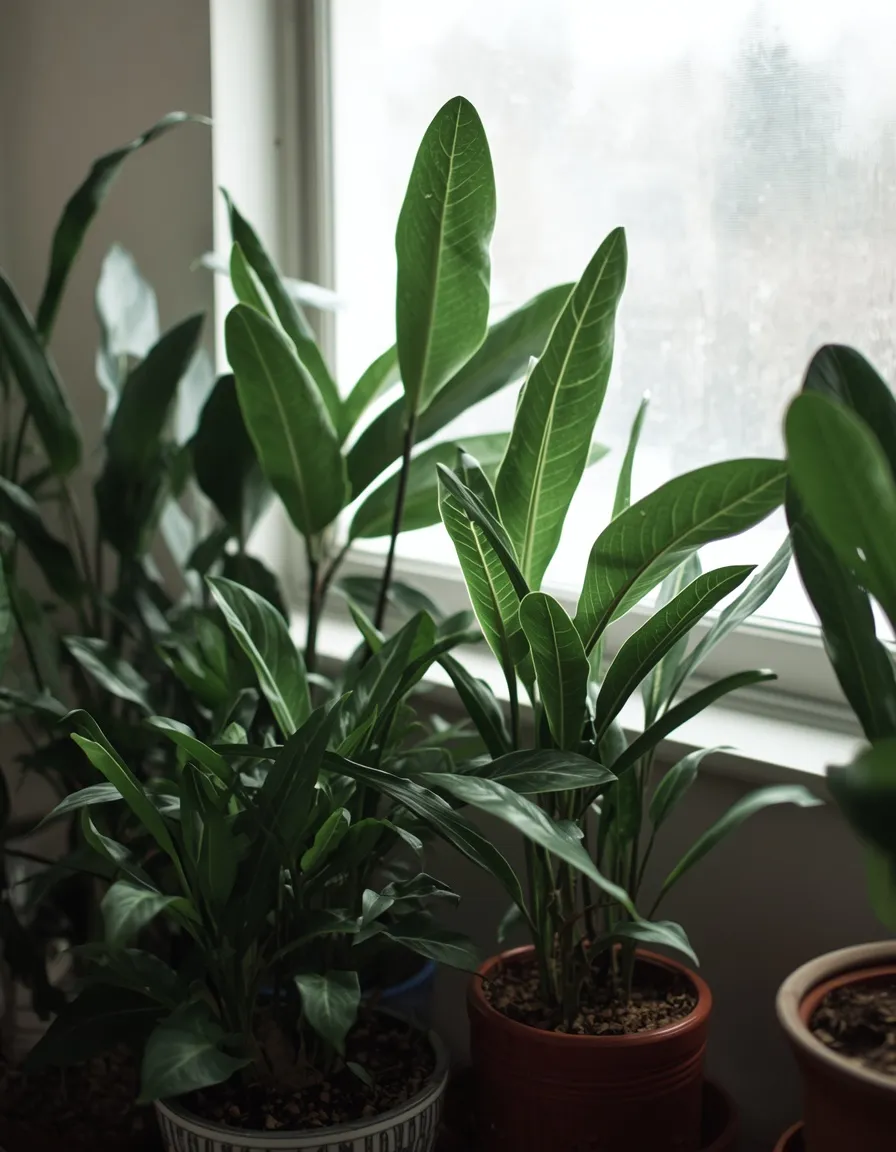
A dedicated indoor grouping, set up specifically each autumn to house tender or tropical plants that spent the warmer months outdoors, turns the seasonal ritual of bringing plants inside into an actual planned garden rather than a scattered emergency relocation.
Inspect every plant closely before bringing it indoors, checking leaf undersides and soil for aphids, spider mites, or other pests that thrive outdoors but can spread rapidly to existing houseplants once brought into a warm, enclosed space, a short quarantine period in a separate room for anything questionable is worth the extra week. Reduce watering frequency once plants are indoors for the season, most tender plants slow their growth considerably with the shorter days and lower light of an indoor winter, and the same watering schedule that worked outdoors in full sun will overwater a dormant or semi-dormant plant indoors. Group plants by their actual light needs within the space available rather than treating the whole winter garden as one uniform setup, a plant that thrived in full outdoor sun still needs the brightest indoor spot available, even though that’s considerably dimmer than where it spent the summer. This idea specifically suits climates with real seasonal temperature swings, gardeners in consistently warm, frost-free regions won’t need this particular setup at all.
- Turns seasonal plant relocation into a genuinely planned garden rather than a last-minute scramble
- Works specifically for climates with real seasonal cold, not consistently warm regions
- Solves the “tender plants brought in from outside struggle or bring in pests” problem
Small Indoor Zen, Water, and Courtyard Garden Ideas
Water and stone bring a different kind of indoor garden entirely, less about growing something and more about the sound, stillness, or architectural presence of the space itself.
14. Indoor Zen Sand Garden Tray
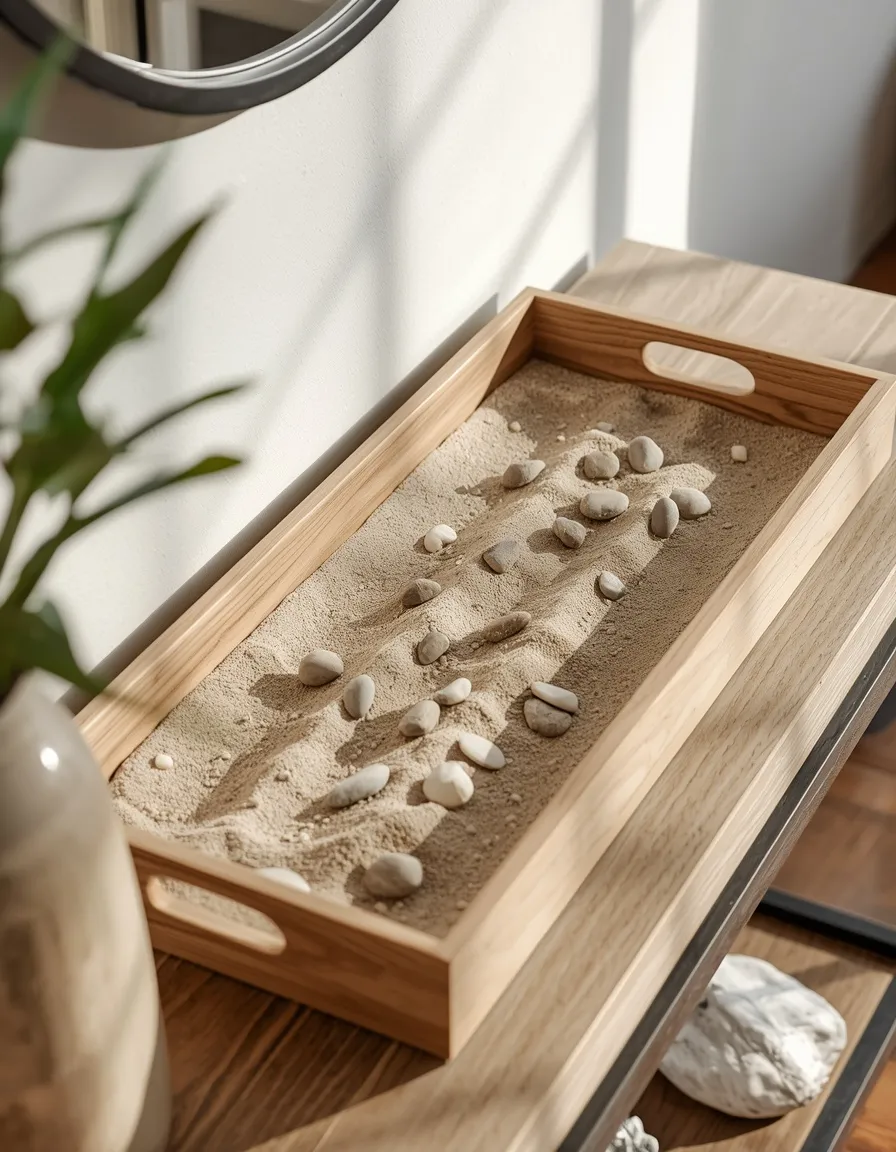
A shallow wooden tray of raked sand with a few small stones, displayed on a console table or shelf, brings the calm, minimalist quality of a traditional dry Japanese garden indoors at a scale that suits any room.
Choose a tray with genuine depth, at least 3 to 4cm (1.25 to 1.5in), so the sand actually holds a raked pattern rather than the rake scraping the tray’s bottom, and use fine, contained decorative sand rather than coarser outdoor gravel, which tracks and scatters considerably more indoors. Position it somewhere it can be viewed without being brushed against constantly, an entryway console or a quiet shelf works better than a high-traffic coffee table that gets bumped throughout the day. Keep the accompanying planting minimal if any is added at all, a single small clipped plant or none at all suits the restrained, negative-space quality this style depends on considerably better than a busy grouping. This idea pairs particularly well positioned near the small indoor water fountain covered next on this list, the two styles share the same quiet, minimalist material logic.
- Brings genuine minimalist calm indoors at a scale that fits any room
- Works best positioned in a low-traffic spot where the raked pattern can actually last
- Solves the desire for this specific aesthetic without needing any outdoor garden space
15. Small Indoor Water Fountain
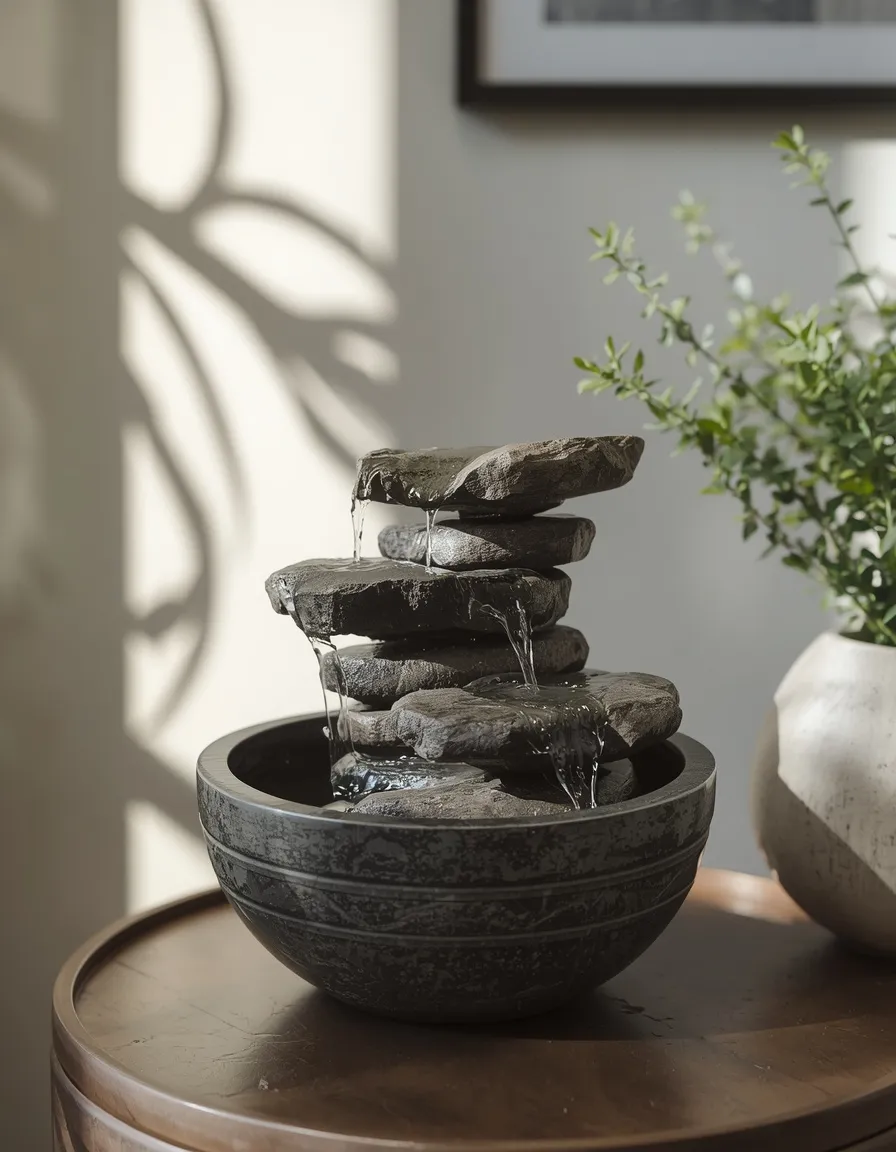
A compact, self-contained tabletop fountain, water trickling over stone or ceramic into a small recirculating basin, adds ambient sound and gentle movement to a room in a way no plant alone can replicate.
Choose a genuinely self-contained unit with a sealed reservoir and a quiet, low-flow pump, a fountain loud enough to notice constantly defeats the calming purpose it’s meant to serve, and most small units list their pump’s flow rate, a lower rate generally means quieter operation. Plug the pump into a GFCI-protected outlet given the direct water and electrical component combination, and keep the fountain on a genuinely water-resistant surface or tray, even a well-sealed unit occasionally splashes or evaporates enough to affect wood furniture underneath over time. Refill and clean the basin regularly, standing water in a small reservoir left unchanged for weeks develops algae and mineral buildup considerably faster than a larger feature would. This works especially well in a home office or reading nook specifically, where the ambient sound genuinely helps mask distracting noise from elsewhere in the home.
- Adds ambient sound and movement no plant-only display can replicate
- Works especially well in a home office or reading nook to mask background noise
- Solves the desire for a genuine water feature in a footprint as small as a side table
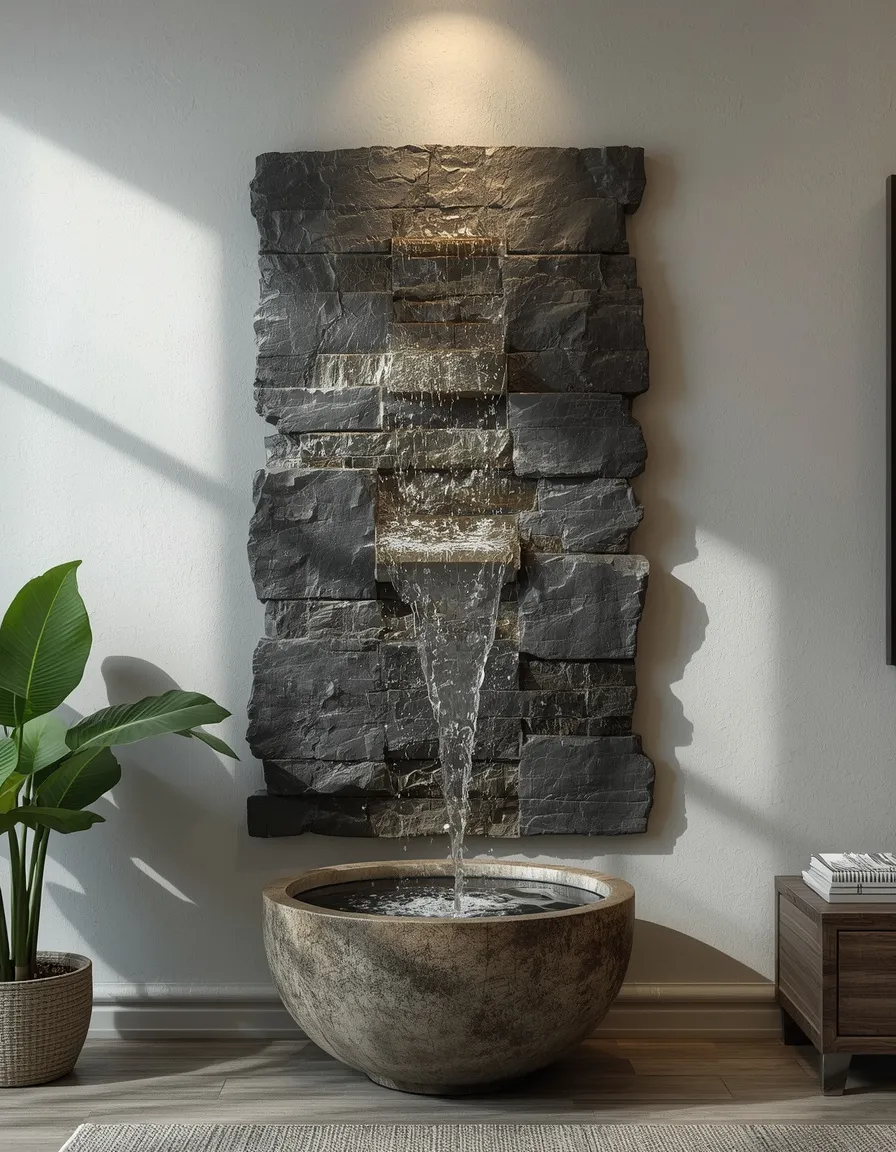
16. Mini Indoor Waterfall Feature
A wall-mounted slate or stone panel with water sheeting down its surface into a small catch basin brings a considerably larger sense of scale and drama than a tabletop fountain, without needing an actual pond.
Mount the panel securely into wall studs given its combined weight of stone, water, and hardware, and route the electrical cord for the pump neatly rather than leaving it exposed and dangling near the water flow itself, a genuine shock and trip hazard worth planning around from the start rather than fixing later. Position the piece somewhere the ambient humidity it generates won’t cause problems, a small amount of evaporation is normal, but placing it directly beside sensitive wood furniture, electronics, or artwork isn’t worth the risk over time. This is a considerably higher-investment and higher-installation-effort idea than the tabletop fountain covered earlier in this list, suited to someone genuinely committed to a dramatic water feature rather than a first small step into indoor water elements. Choose this over a tabletop fountain specifically when the goal is a genuine visual focal point as much as ambient sound, the scale simply reads differently on a wall than on a table.
- Delivers considerably more visual drama and scale than a tabletop water feature
- Works best as a genuine focal point rather than a subtle background element
- Solves the desire for a substantial water feature without the space or plumbing a pond needs
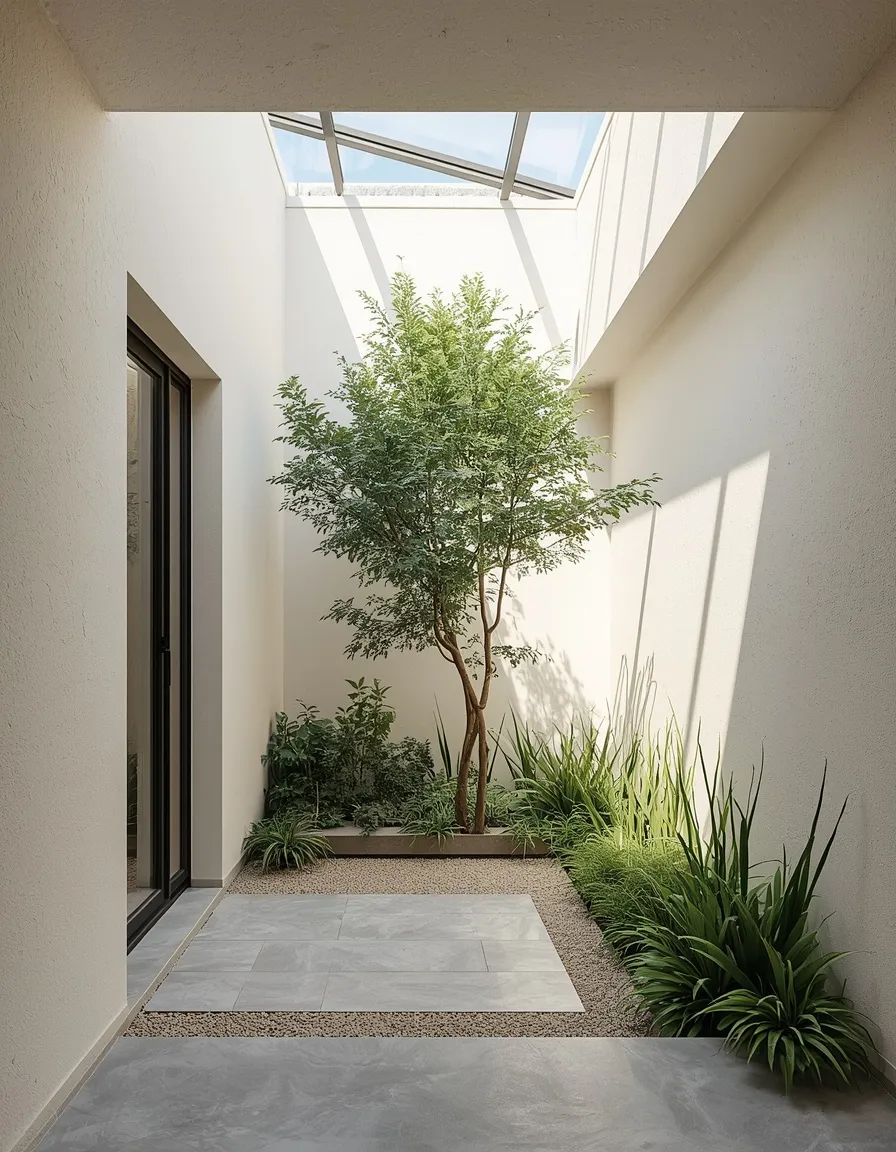
17. Small Indoor Courtyard Garden
A small interior courtyard, open to the sky or topped with a skylight, planted with a cluster of shade-tolerant greenery and perhaps a single small tree, brings a genuine architectural garden space into the literal center of a home.
This idea depends entirely on having the actual architectural feature already in place, a genuine interior courtyard or a skylit atrium space, rather than something easily retrofitted into a standard room, so it applies most directly to homes already built with this layout, common in some Mediterranean, Latin American, and Southeast Asian residential architecture, or to anyone renovating with the structural option available. Choose plants suited to the courtyard’s actual sun exposure, a fully open-to-sky courtyard behaves essentially like an outdoor bed and can handle more sun-loving species, while a skylight-topped, glass-covered version filters and reduces light considerably and needs more shade-tolerant choices. Ensure genuine drainage is built into the space if it’s open to rainfall, standing water in an interior courtyard is both a structural risk to the surrounding building and a mosquito breeding concern. This is one of the most architecturally significant ideas on this list rather than a simple styling project, and it’s worth consulting a professional for drainage and structural considerations specific to the home.
- Brings a genuine architectural garden space into the literal center of a home
- Works only where the courtyard or skylit structure already exists or is part of a planned renovation
- Solves the desire for a true indoor-outdoor garden space rather than a styled corner
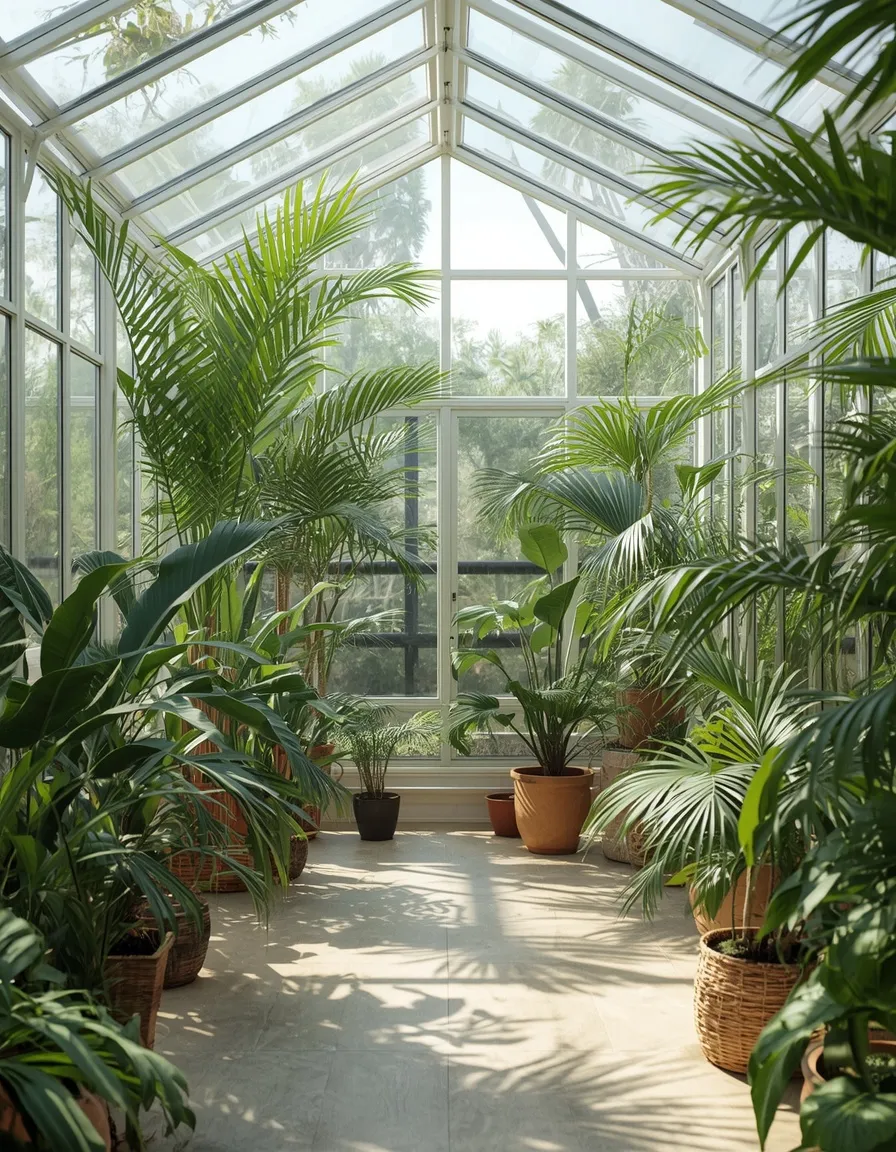
18. Enclosed Sunroom or Patio Garden Room
An enclosed sunroom or a glassed-in former patio, filled with a genuine collection of larger specimen plants, functions as a dedicated indoor garden room rather than a single decorated corner of a living space.
Take advantage of the room’s typically higher light levels compared to the rest of the house, sunrooms are usually glazed on multiple sides specifically for that reason, which opens up genuinely sun-loving specimens, citrus trees, larger palms, and flowering tropicals, that wouldn’t thrive in a standard interior room. Watch temperature swings carefully in this space specifically, a sunroom without proper insulation or shading can overheat significantly on a sunny day and drop close to outdoor temperatures overnight, both genuine stress factors for tropical plants that a more climate-stable interior room doesn’t present. If the sunroom’s glass looks out onto an actual palm-landscaped yard or patio bed, echoing that same tropical structure inside with a potted parlor palm or kentia palm creates a deliberate visual continuity between the indoor and outdoor planting; our guide to palm tree landscaping ideas covers the outdoor side of building that same look. This is genuinely one of the largest-scale projects on this list, closer to furnishing an entire room than adding a single feature.
- Functions as a genuine dedicated garden room rather than one decorated corner
- Works best taking advantage of the space’s typically higher light and glazing
- Solves the desire for a true indoor garden room at a scale beyond a single feature
Small Indoor Garden Ideas for Style and Family
The last stretch covers ideas built around who actually uses the space, from a purely decorative accent to a project designed specifically for kids.
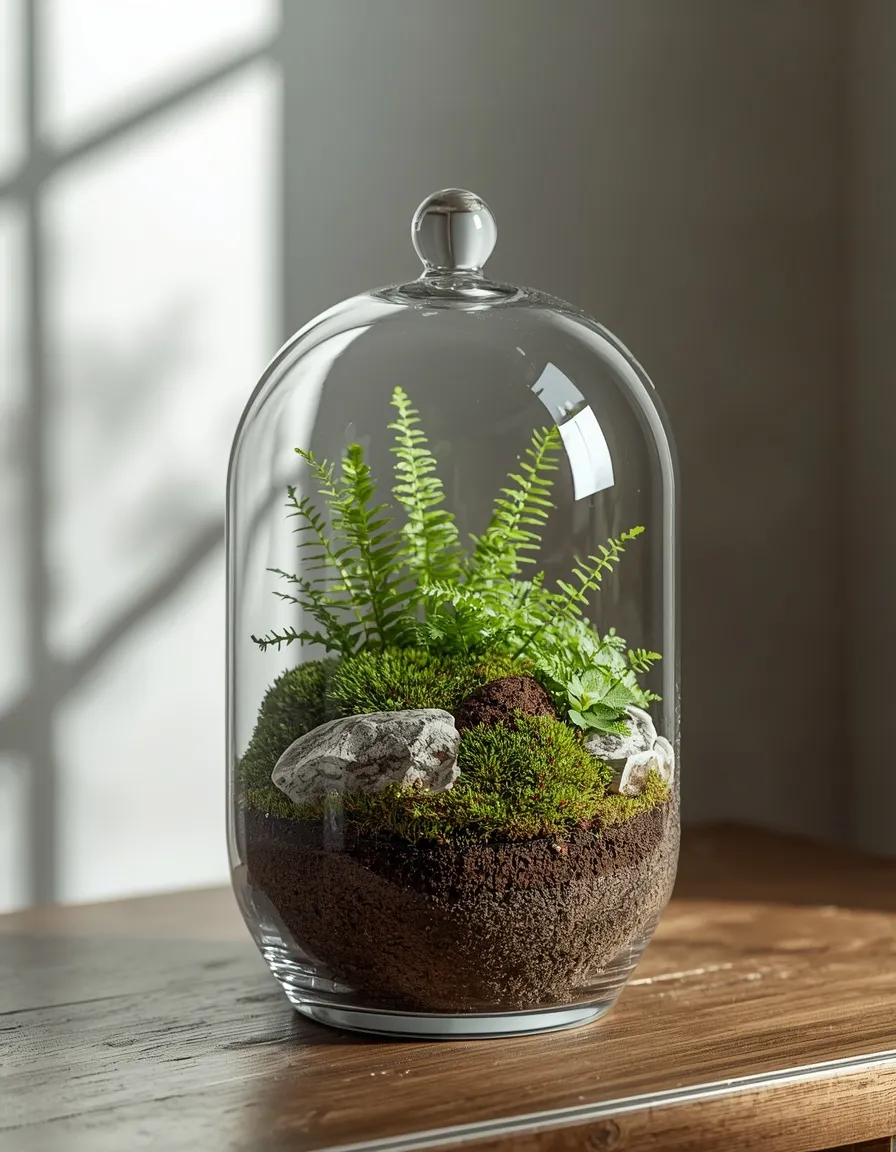
19. Tabletop Terrarium Garden
A glass terrarium, layered with drainage material, soil, and a small cluster of moisture-loving miniature plants, brings a genuinely self-contained little ecosystem to a shelf, desk, or coffee table.
Layer the base correctly for real drainage, a layer of gravel or small stones at the bottom, a thin layer of activated charcoal to keep the environment fresh, then potting soil, this layering matters considerably more in a closed or narrow-necked container than in an open pot, since there’s no drainage hole to rely on. Choose genuinely small, slow-growing, humidity-loving species, moss, small ferns, fittonia, or miniature peperomia all suit the enclosed, humid environment a terrarium creates considerably better than a standard houseplant would. For a closed terrarium specifically, water sparingly and infrequently, the sealed environment recycles its own moisture through condensation, and overwatering a closed terrarium is one of the most common mistakes, leading to mold and rot rather than a thriving miniature garden. Position it in bright, indirect light rather than direct sun, a closed glass container in direct sun heats up considerably and can genuinely cook the plants inside.
- Creates a genuinely self-contained miniature ecosystem in a very small footprint
- Works well on a desk, shelf, or coffee table where a full plant wouldn’t fit
- Solves the “want a garden but have almost no surface space at all” problem
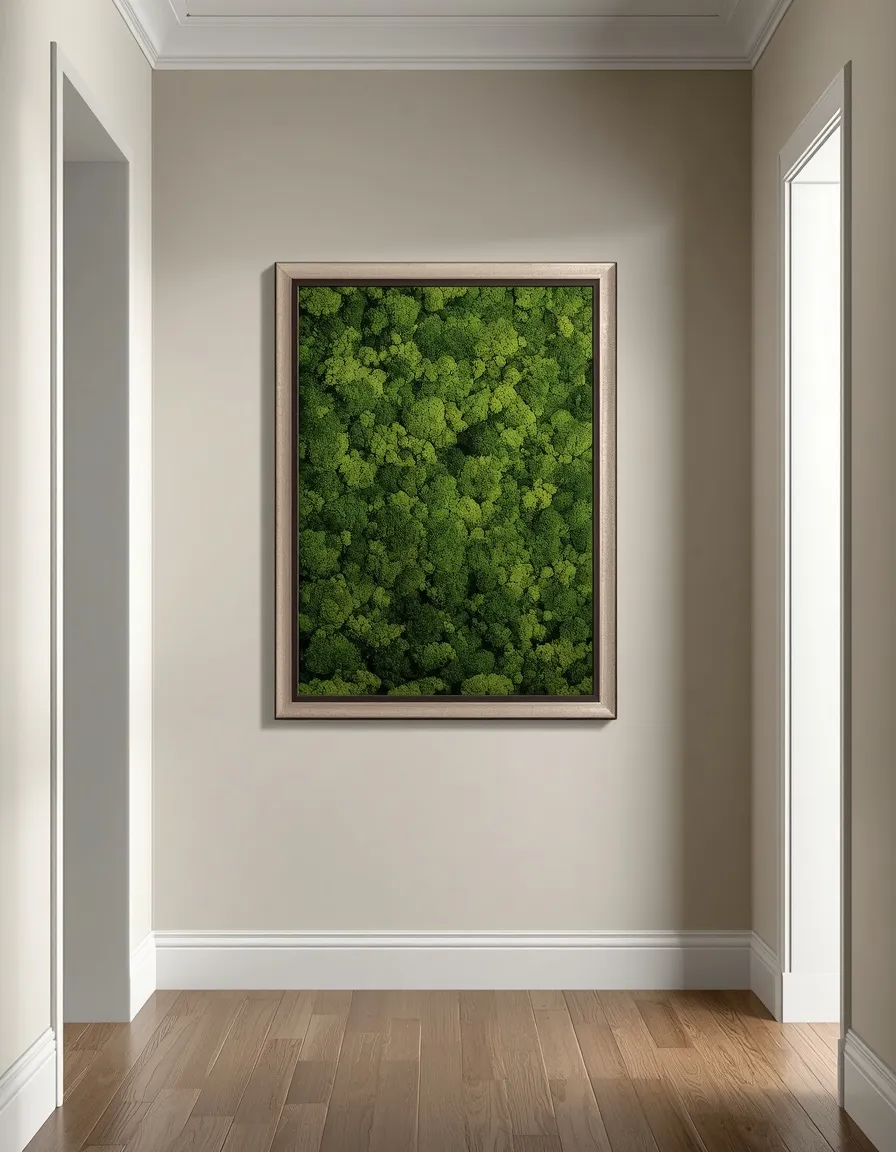
20. Moss Wall or Frame Accent
A framed panel or small wall section covered in preserved moss brings deep, textured green to a wall with genuinely zero ongoing plant care required, an unusual but real advantage among the ideas on this list.
Understand the key distinction before starting this project, preserved moss has been treated with a glycerin-based solution that keeps it soft and green indefinitely without water, light, or soil, this is meaningfully different from living moss, which needs the same consistent moisture and shade any living plant requires and won’t survive as simple wall decor. Choose preserved moss specifically for this application unless there’s a genuine plan to maintain living moss’s actual environmental needs, most moss wall decor projects use preserved material precisely because it removes the maintenance and light requirements a wall-mounted living plant would otherwise need. Mount the frame or panel using standard picture-hanging hardware rated for its weight, preserved moss panels are considerably lighter than a living planted wall system, which makes this one of the more straightforward mounting projects on this list. This works especially well in a low-light spot where a living plant genuinely couldn’t survive, a windowless hallway or an interior wall far from any window.
- Adds deep textured green to a wall with genuinely zero ongoing care once installed
- Works especially well in low-light spots unsuited to any living plant
- Solves the “want a green wall but have no light or time for plant maintenance” problem
21. Kids’ Mini Garden Corner
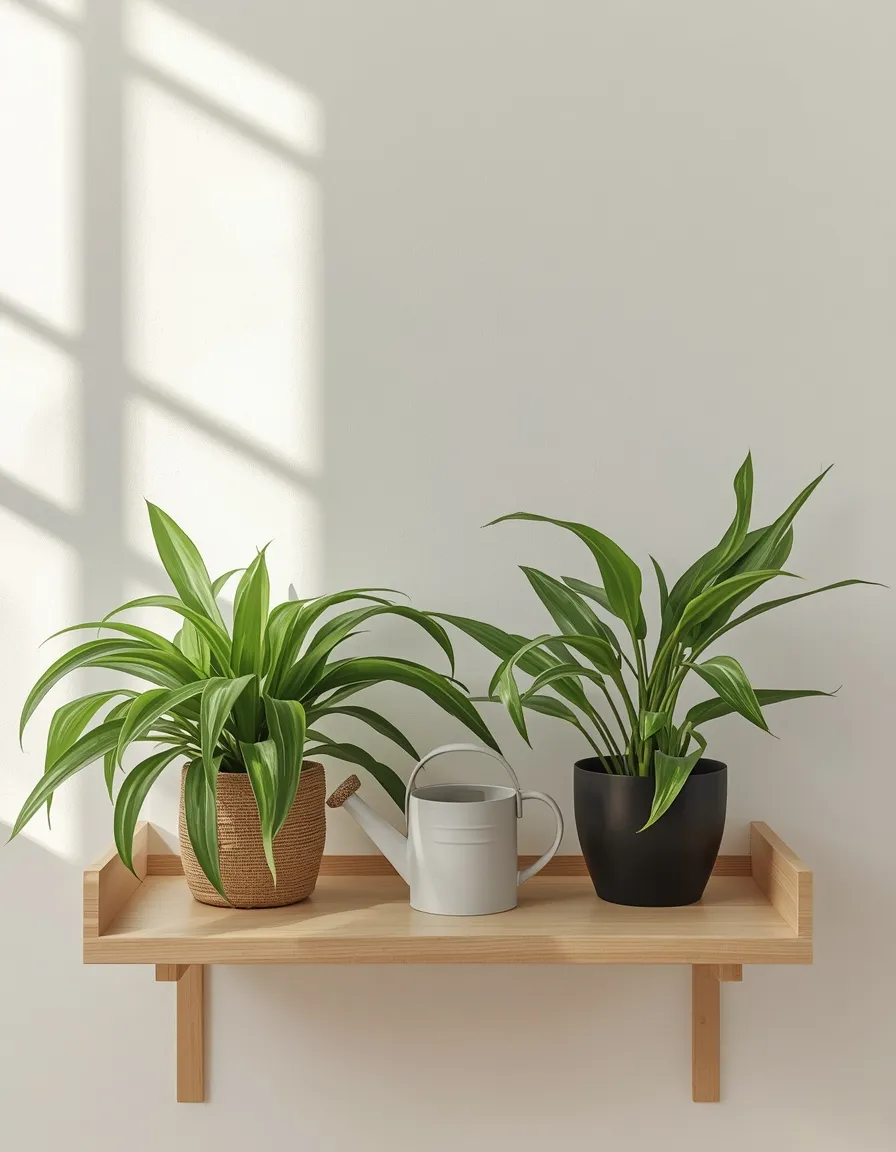
A small, low shelf or table holding a few hardy, genuinely child-safe plants and simple tools, sized for small hands, turns gardening into an activity a child can actually participate in rather than only watch.
Choose plants that are both hardy enough to survive some inevitable overwatering or rough handling and genuinely non-toxic if a curious younger child tastes a leaf, spider plants, African violets, and sunflowers grown from seed all work well and avoid the toxicity concerns that rule out many common houseplants for a dedicated kids’ space. Use simple, child-sized tools, a small watering can, a hand trowel, rather than adult equipment scaled down only in marketing, real fit matters for a young child actually completing the task independently. Position the corner at a height and location a child can reach and tend without needing to be lifted or closely supervised for every interaction, this is what actually makes the activity theirs rather than something done to them. Frame this as a genuinely low-pressure, exploratory space rather than one with a strict “right” way to arrange or water things, much like a kids’ sensory activity, the process matters considerably more than a perfect result for this specific age group.
- Turns gardening into a hands-on activity a child can genuinely participate in independently
- Works best with hardy, explicitly non-toxic plants suited to a young child’s handling
- Solves the desire to introduce real gardening to kids in a genuinely safe, low-pressure way
Conclusion
Small indoor garden ideas add up fastest when they’re matched honestly to the light, humidity, and space actually available in a given spot, rather than picked purely because a photo looked appealing somewhere else. Start with whichever idea solves an actual gap in the home, a bare windowsill, an empty stair triangle, a living room corner with nothing anchoring it, and build outward from there as confidence grows. Pay attention to the practical details covered throughout, honest light assessment, pet-safe plant choices, secure mounting for anything hanging, since those are what keep a small indoor garden thriving rather than becoming a source of frustration. For more plant styling inspiration, the Indoor Plant Styling category has plenty more to explore.
Frequently Asked Questions
How do I know if a spot in my home has enough light for an indoor garden?
A simple shadow test works better than guessing, hold a hand about 30cm above a surface in the spot during midday, a sharp, well-defined shadow generally indicates strong indirect light suited to most houseplants, while a faint or barely visible shadow suggests genuinely low light. It’s also worth remembering that south-facing windows deliver the most consistent light in the Northern Hemisphere, while north-facing windows play that same role south of the equator, so light advice should be checked against actual sun exposure rather than assumed from a single hemisphere’s convention.
Can I grow vegetables indoors in a small space without a yard?
Yes, a dedicated grow light setup or a self-contained hydroponic countertop system both deliver genuine food production regardless of window access, since the supplemental light replaces natural sun entirely rather than depending on it. Compact, indoor-suited varieties, dwarf tomatoes, loose-leaf lettuce, and microgreens specifically, perform considerably better in this kind of small setup than standard outdoor cultivars would.
What are the best small indoor garden ideas for low-light rooms?
ZZ plants, snake plants, pothos, and cast iron plant all genuinely tolerate low light, which makes them the right choice for spots like an under-stairs nook, a windowless entryway, or an interior hallway rather than anything needing bright indirect or direct sun. A preserved moss wall panel is also worth considering for a genuinely light-free spot, since it needs no light at all once installed.
Are indoor water features like fountains and waterfalls safe to have at home?
Yes, with a few precautions, plug any pump into a GFCI-protected outlet given the direct combination of water and electrical components, route cords neatly away from the water flow itself, and keep the unit on a water-resistant surface to protect furniture from splashing or evaporation over time. Regular cleaning also matters, standing water left unchanged in a small reservoir develops algae and mineral buildup faster than most people expect.
Are common houseplants used in these ideas safe for pets?
Not always, pothos and philodendron, two of the most commonly used plants in hanging displays and living room groupings, are toxic to cats and dogs according to the ASPCA and cause oral irritation if chewed. Parlor palms, spider plants, and Boston ferns are generally considered pet-safe alternatives that still deliver a similar lush, trailing, or architectural look.
What’s the difference between a preserved moss wall and a living moss wall?
Preserved moss has been treated with a glycerin-based solution that keeps it soft and green indefinitely without any water, light, or soil, making it essentially permanent decor rather than a living plant. Living moss, by contrast, needs the same consistent moisture and shade any living plant requires and won’t survive as simple wall decor without ongoing care matched to those needs.
Do I need to do anything special before bringing outdoor plants inside for winter?
Yes, inspect every plant closely for pests on leaf undersides and in the soil before bringing it indoors, since insects that are manageable outdoors can spread quickly to existing houseplants in a warm, enclosed space, a short quarantine in a separate room is worth it for anything questionable. It’s also worth reducing watering frequency once plants are indoors, since most tender plants slow their growth considerably with shorter days and lower indoor light.