
Introduction
Picture a bare strip along the back fence suddenly thick with cosmos, salvia and trailing sweet peas by midsummer. That kind of transformation is exactly what good backyard flower garden ideas make possible: a handful of smart layout and planting choices turn overlooked ground into the most photographed corner of the yard. Whether you are working with a shaded side path, a sun-baked stretch of Texas clay, or a small patio with room for only a few containers, the right approach scales to fit the space you actually have. This guide gathers twenty-one distinct ways to plan, plant and style a backyard flower garden, from cutting gardens built for the vase to low-maintenance perennial borders that barely need a second thought. Each idea is built to make your own patch of ground feel like a genuine extension of your Sunday Abode, not a rerun of the yard next door.
1. Fence-Line Flower Border
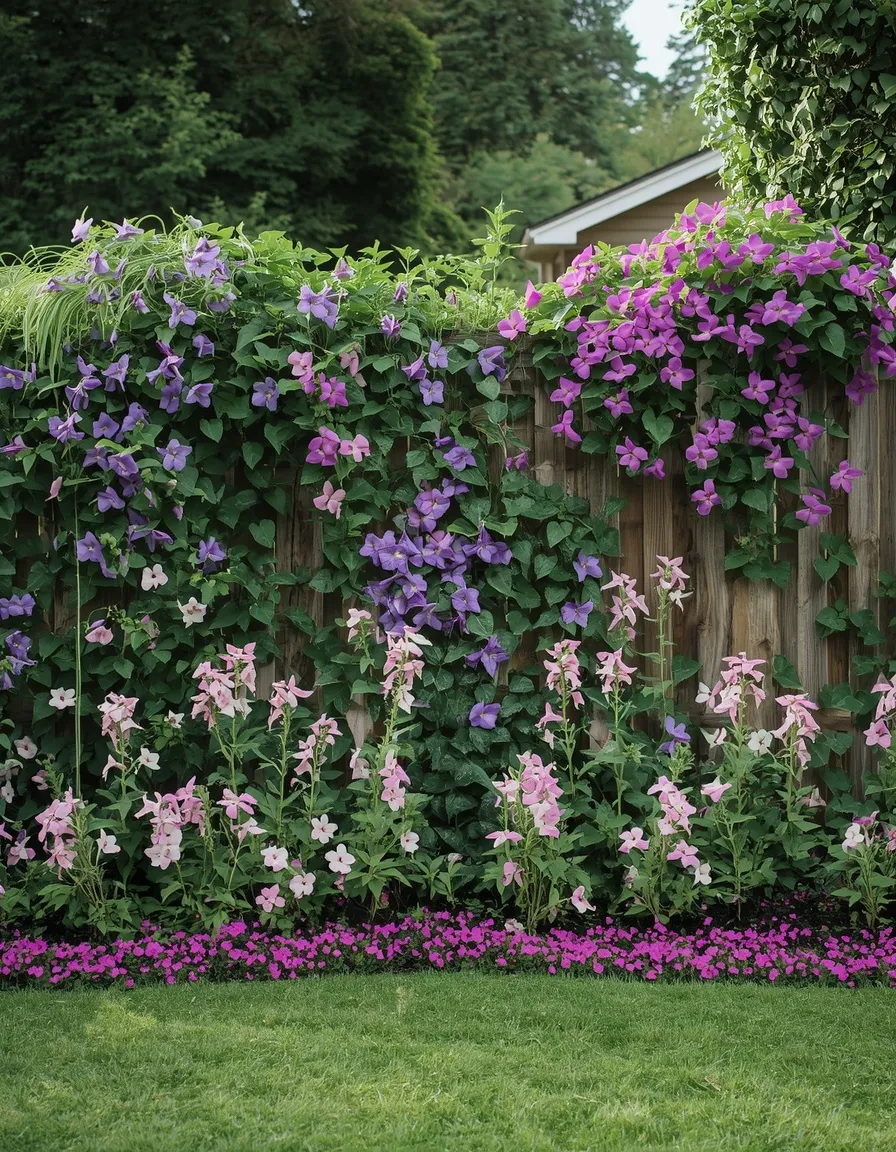
A plain wooden or vinyl fence stops being a backdrop and becomes the star when it is dressed in a deep, layered border. Picture climbing sweet peas and clematis threading through the top rail while tall phlox, foxglove and delphinium fill the middle ground and a low skirt of alyssum softens the base.
Build the border in three height tiers, working from tallest at the fence line down to trailing plants at the front edge, so nothing blocks the plants behind it. Leave at least 18 inches (45cm) of clearance around gates and utility access panels so the border never interferes with swing space or maintenance. A common mistake is planting a single row flush against the fence, which looks flat from any angle other than straight on; stagger clumps instead of a straight line for a fuller look.
- Turns an unused fence line into usable growing space
- Works well for narrow side yards where floor space is limited
- Hides an unattractive fence or utility structure behind foliage
2. Raised Bed Flower Garden
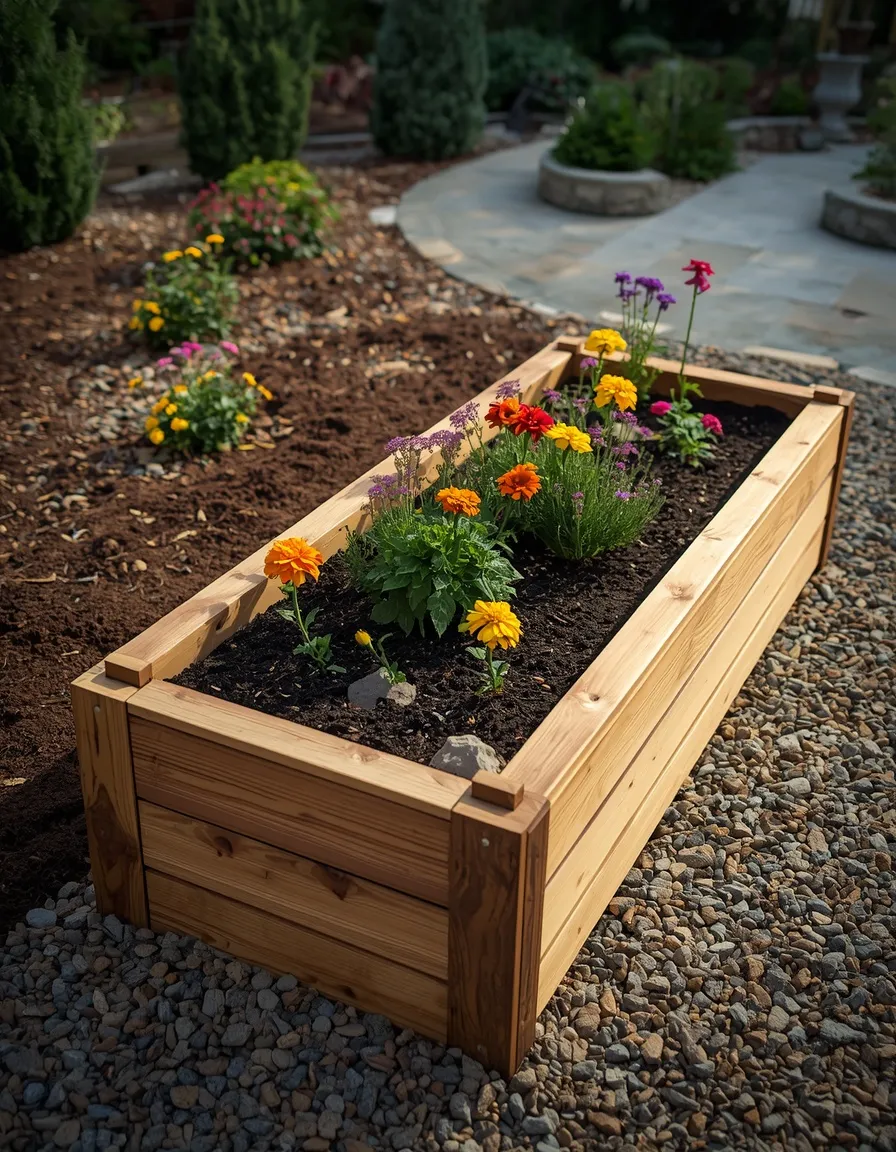
A crisp cedar or composite frame filled with rich, dark soil gives flowers a defined stage, especially in yards where the native ground is compacted clay or full of tree roots. Raised beds read as intentional and tidy from the moment they are built, even before a single bloom opens.
Aim for a bed depth of at least 12 to 18 inches (30 to 45cm) so roots have real room to establish, and fill with a blended topsoil, compost and coarse sand mix rather than straight garden soil. Raised construction also improves drainage dramatically compared with dense clay, which is one of the most common reasons perennial flowers fail to establish. Skip pressure-treated lumber if you plan to mix in edible plants later, since older treated wood can leach chemicals into soil; untreated cedar or composite boards are the safer long-term choice.
- Solves poor drainage and compacted soil without amending the whole yard
- Keeps a tidy, defined edge that reads well from a patio or window
- Easier on the back for planting, weeding and deadheading
3. Cutting Garden for Fresh Blooms
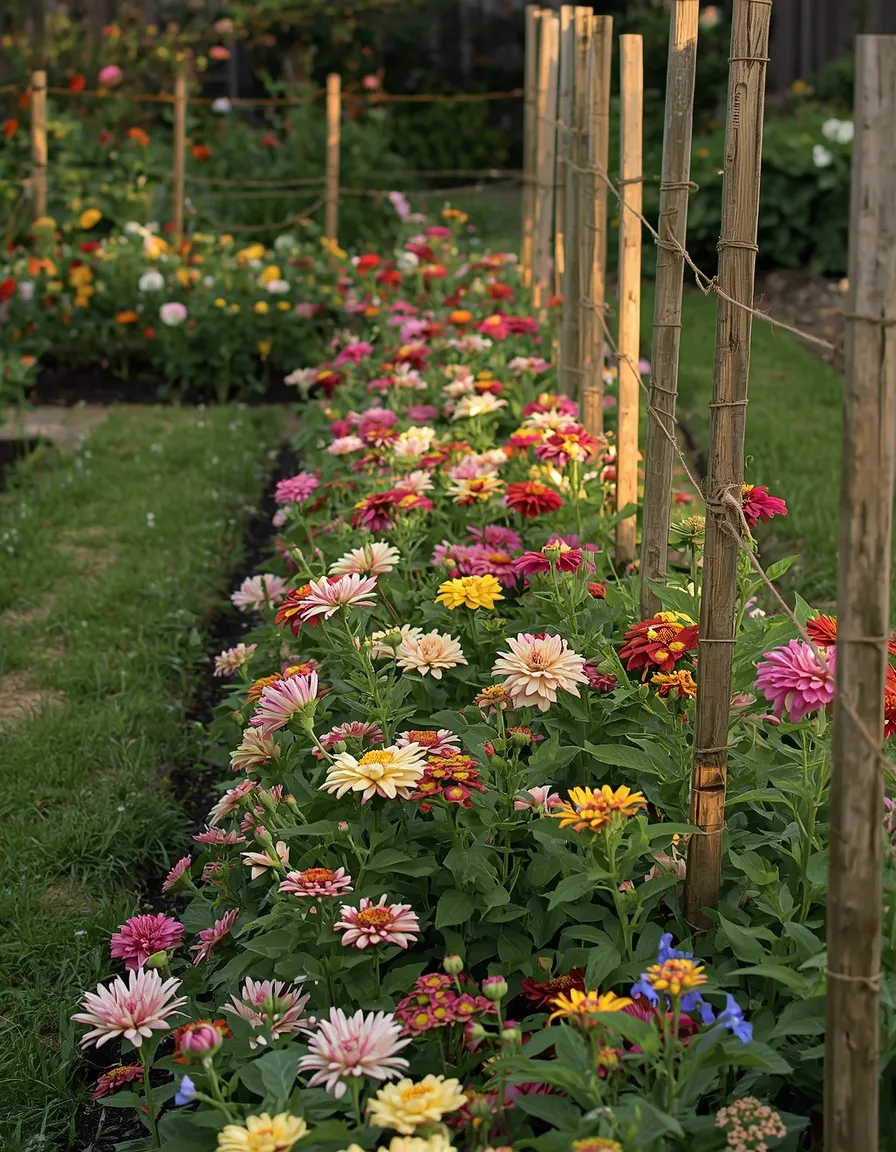
Set aside one dedicated bed, even a small 4 by 8 foot (1.2 by 2.4m) one, purely for flowers you intend to cut. Rows of zinnias, cosmos, dahlias and snapdragons planted in straight lines rather than artful drifts make it easy to harvest without disturbing the rest of the display.
Space plants roughly 9 to 12 inches (23 to 30cm) apart in rows so air circulates and cutting is easy, and stagger two or three sowings three weeks apart to keep fresh blooms coming through the season. Cut stems in the early morning when they are most hydrated, and the more you cut, the more most annuals will rebloom. The main mistake gardeners make here is planting a cutting garden as a border, since it looks bare after a heavy harvest; keep it tucked to one side instead.
- Keeps decorative beds looking full even after cutting for vases
- Ideal for gardeners who want fresh flowers indoors weekly
- Row planting makes weeding, staking and harvesting far faster
4. Cottage-Style Mixed Border
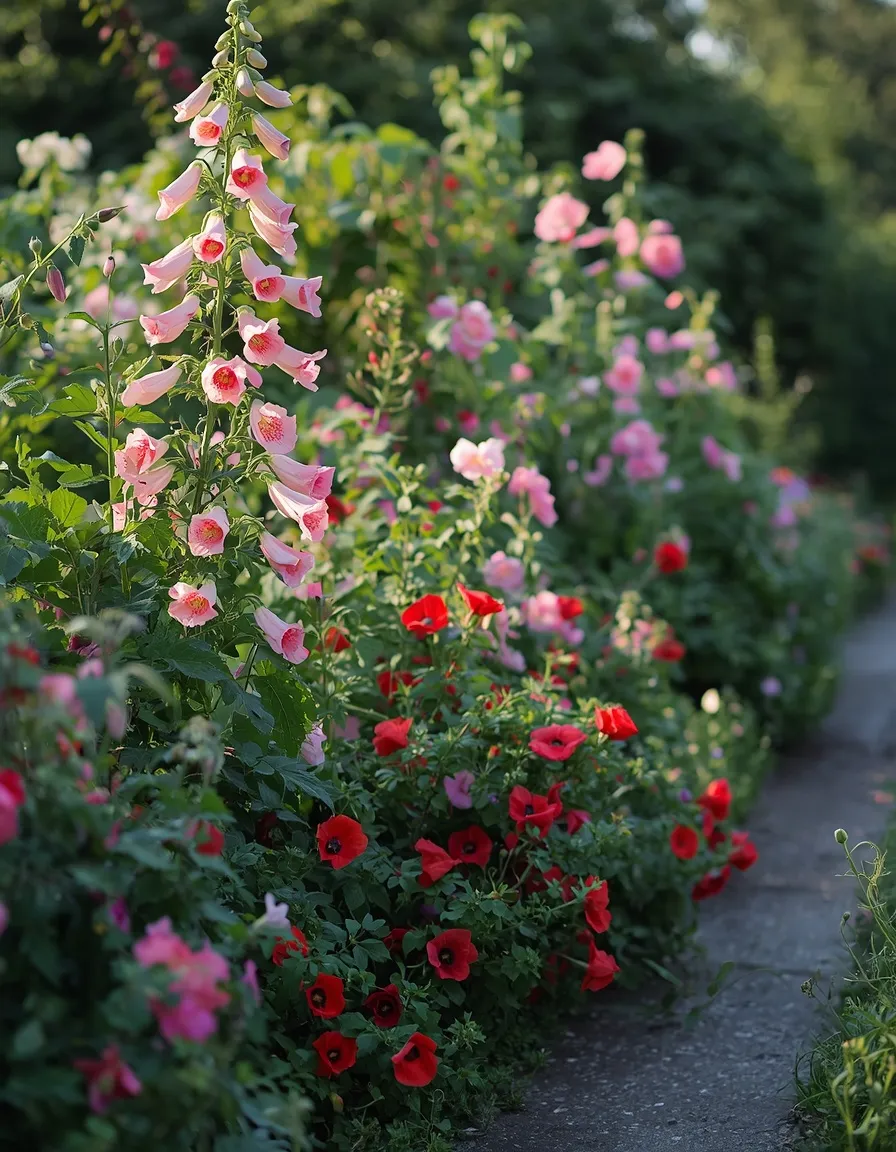
Loose, romantic and slightly wild, a cottage border mixes foxglove, hollyhock, cosmos, poppies and roses in overlapping drifts rather than tidy rows. It is the look most associated with an English backyard, but it adapts easily to any climate with the right plant swaps.
The technique that makes this work is layering by bloom time and height rather than by species, so something is always flowering as something else fades. Let self-seeding annuals like nigella, larkspur and poppies drop seed at season’s end instead of deadheading everything, since next year’s border partly plants itself. The most common mistake is over-editing; a cottage border that is too neat loses the effect entirely, so resist the urge to line plants up in rows.
- Delivers continuous color from spring through first frost
- Self-seeding varieties reduce replanting costs year over year
- Suits informal, relaxed backyard styles better than manicured layouts
5. Modern Minimalist Flower Bed
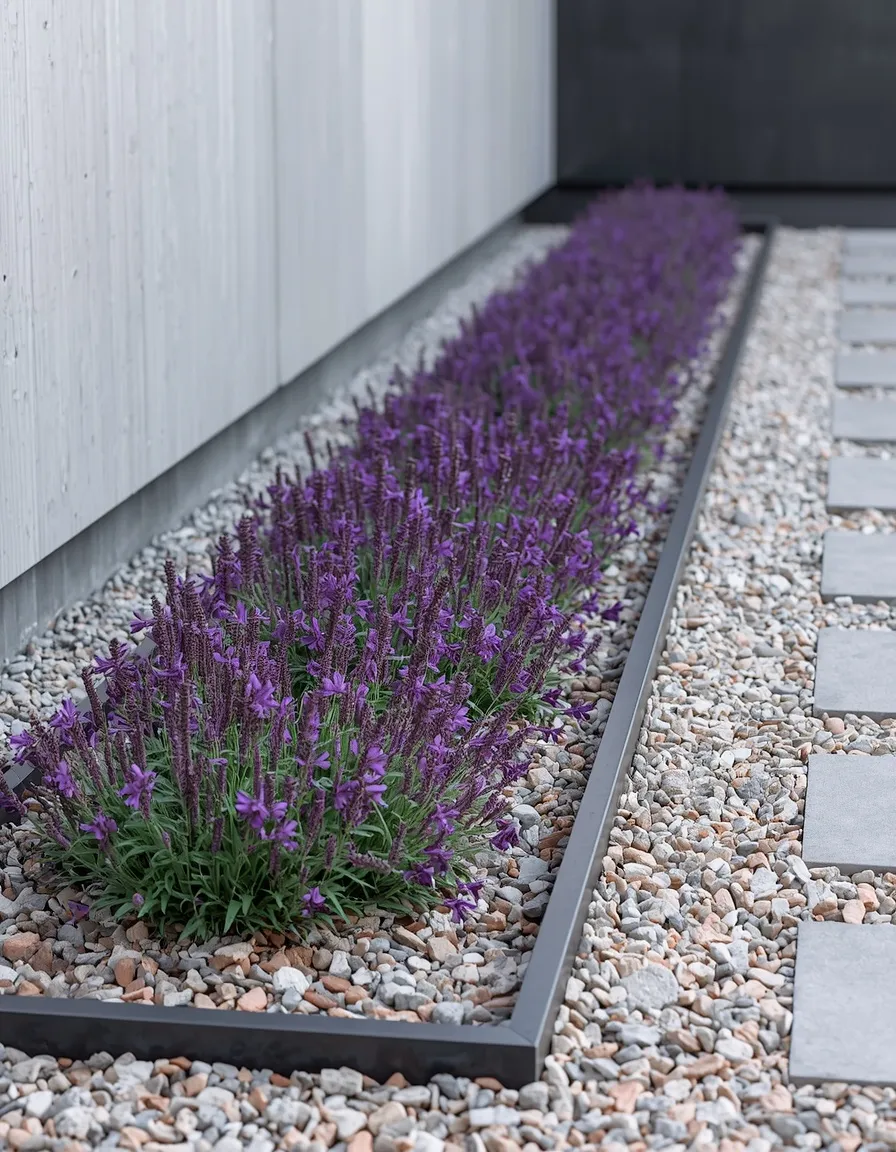
A modern flower bed trades variety for restraint: one or two flower species repeated in a clean, geometric block, edged in steel or concrete and mulched in pale gravel. Think a single sweep of white agapanthus or purple salvia against dark mulch, framed by a straight steel edge.
Repetition, not variety, is what reads as intentional here, so resist adding a third or fourth flower type once the palette is set. Pair the bed with drought-tolerant ornamental grasses for texture without breaking the color discipline, and choose a hard edging material, like steel or poured concrete, over soft plastic edging, which looks temporary. This style works especially well in small modern backyards with minimal lawn, where a single striking bed does more visual work than several scattered ones.
- Low plant variety means simpler, lower-maintenance care
- Pairs naturally with contemporary patios, gravel and steel accents
- Makes a strong visual statement in a compact footprint
6. Small Corner Garden Nook
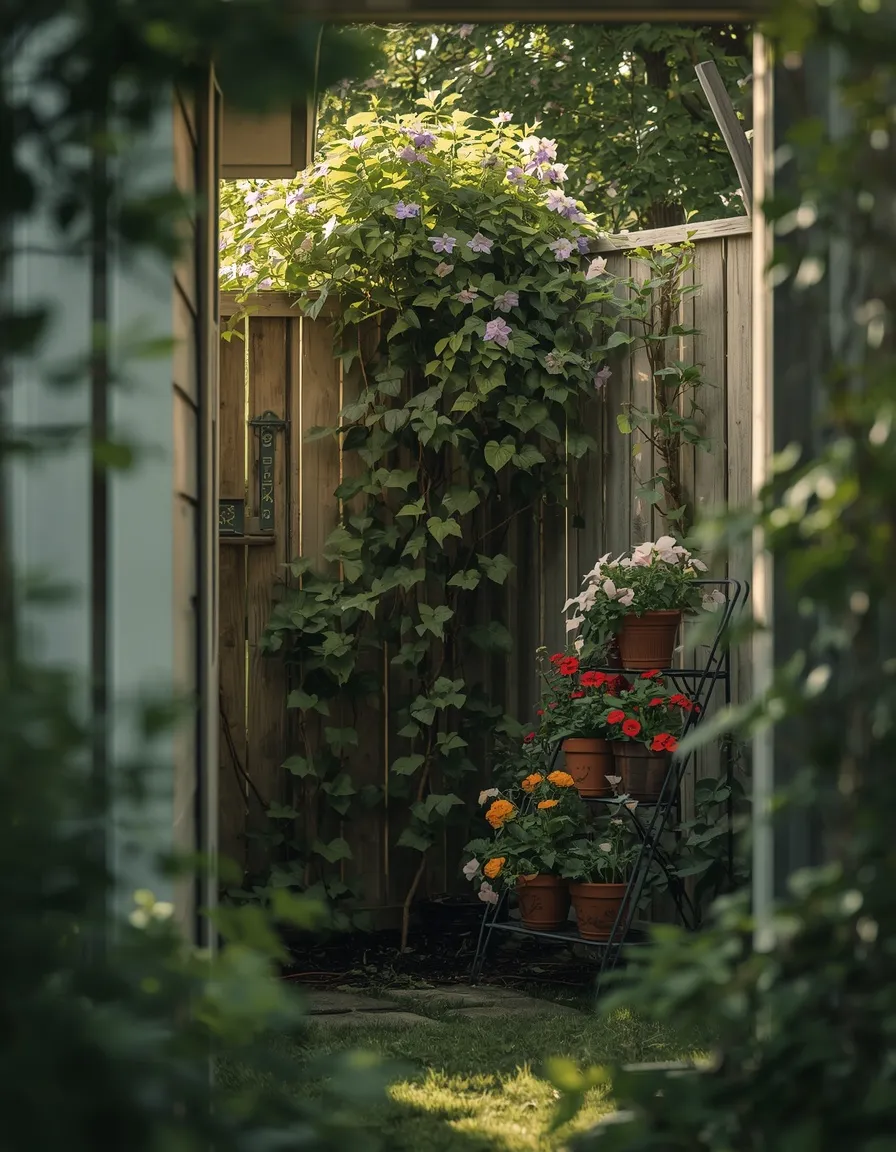
The dead patch behind a shed, beside a gate, or where two fence lines meet is often the most overlooked square footage in a backyard, and it is usually the easiest to transform. A tight cluster of vertical-growing flowers turns that forgotten corner into a genuine destination.
Because the footprint is small, build up rather than out: a narrow trellis with climbing clematis, a tiered plant stand, and one or two upright perennials do more with less space than a sprawling bed would. If you are planning this kind of layout more broadly, our guide to corner garden ideas walks through additional ways to make small, awkward angles work harder. Keep taller elements toward the back corner so the space still feels open rather than boxed in.
- Reclaims otherwise wasted square footage
- Works in yards too small for a traditional flower bed
- Pairs well with a bench or small seat for a private nook
7. Pathway-Lined Flower Beds
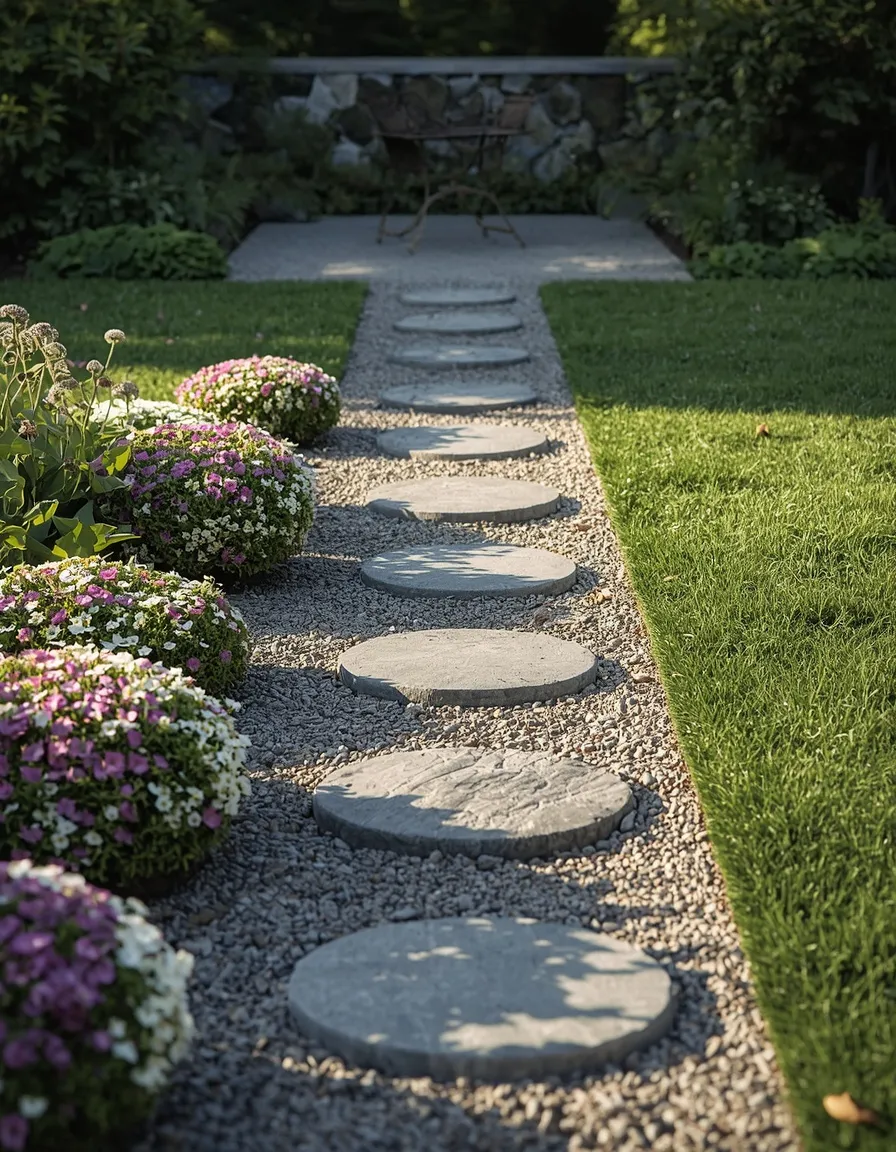
A path through the backyard instantly feels more finished when it is flanked by low, spilling flowers rather than bare mulch or lawn edging. Gravel, stepping stones or brick paths all work; the flowers do the job of softening whatever hard material you choose.
Set the first row of plants back at least 6 inches (15cm) from the path edge to leave room for growth without blocking foot traffic by midsummer, and choose low, mounding varieties like alyssum, dianthus or creeping phlox rather than anything that flops. Stepping stones can get slippery once foliage spills over them after rain, so keep taller plants a few inches further back if the path doubles as a main walking route. Curve the bed line slightly rather than running it dead straight for a more natural feel.
- Softens hard landscaping materials like gravel, brick or pavers
- Guides the eye and foot traffic naturally through the yard
- Works along both formal and casual garden paths
8. Shade Garden Under Trees
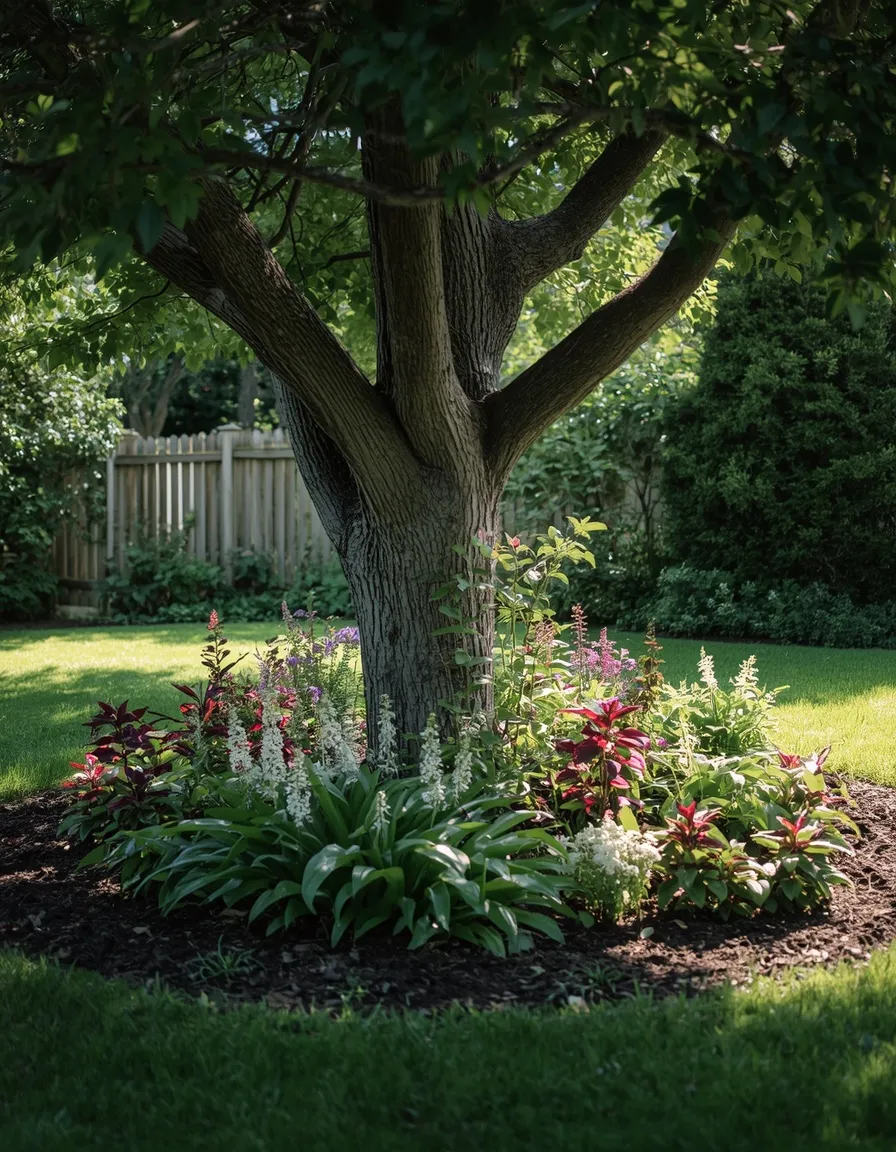
The dim strip under a mature tree does not have to stay bare. Astilbe, hosta, bleeding heart and impatiens all flower reliably in dappled or partial shade, turning a typically neglected zone into one of the softest, coolest corners of the yard.
Tree roots compete hard for water and nutrients, so rather than digging deep planting holes that damage surface roots, mound a few inches of fresh compost and soil over the root zone and plant into that layer instead. Shade beds also dry out faster than they look, since tree canopy blocks rain as much as sun, so plan on watering more frequently than a sun bed of the same size. Avoid heavy tilling near an established tree’s root zone, which can stress or kill the tree.
- Makes use of space most backyards leave completely bare
- Cools and softens the area beneath mature trees
- Reduces watering needs compared with turf grass in the same spot
9. Full-Sun Perennial Border
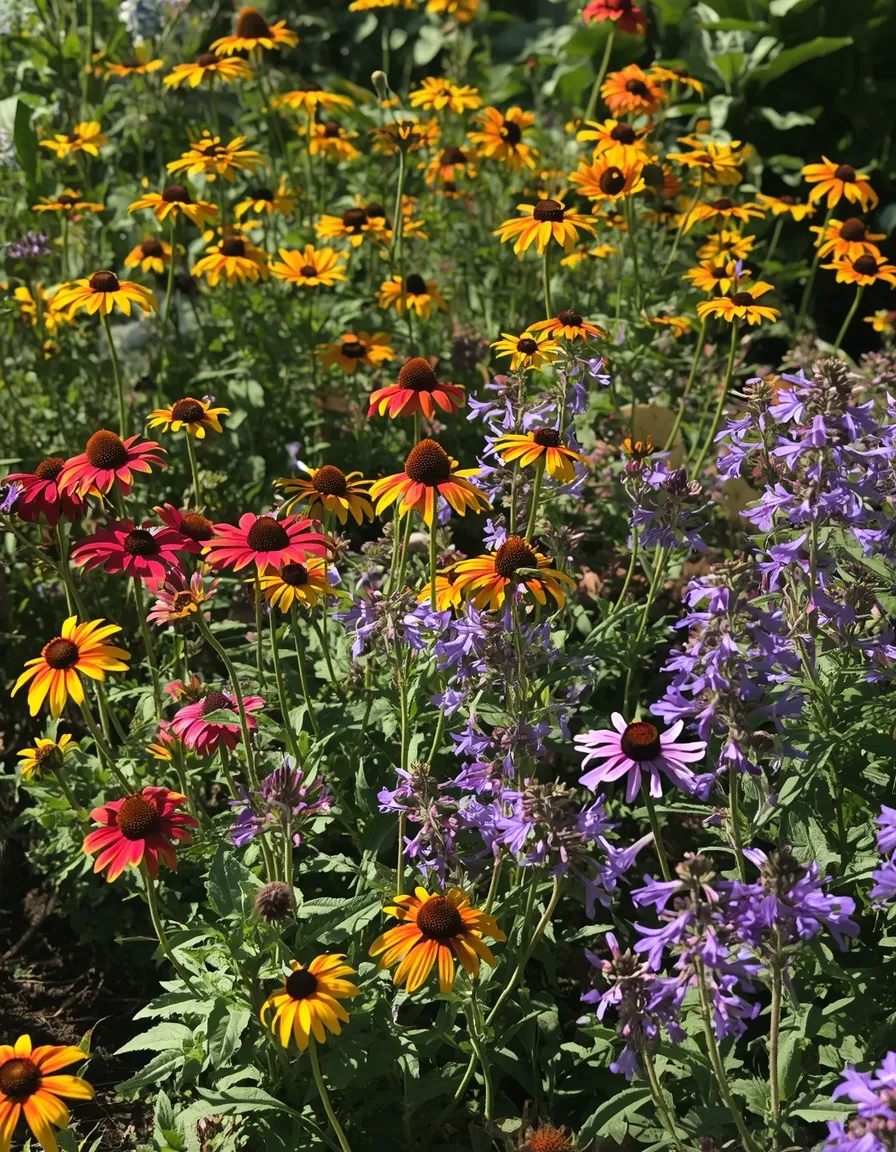
Coneflower, black-eyed Susan, yarrow and salvia thrive in a bed that gets six or more hours of direct sun a day, rewarding that exposure with months of steady bloom and far less babying than shade-loving alternatives.
Right plant, right place matters more here than almost any other backyard bed: sun-loving perennials planted in true full sun develop stronger stems and better color than the same species stretched toward partial shade. Stake taller varieties like delphinium early in the season before they lean, and deadhead spent blooms through summer to keep the border producing rather than going to seed early. Once established, most full-sun perennial borders need only occasional deep watering during dry spells.
- Rewards a hot, exposed spot most gardeners struggle to plant well
- Establishes into a low-water bed after the first year or two
- Attracts pollinators reliably through the height of summer
10. Vegetable and Flower Potager
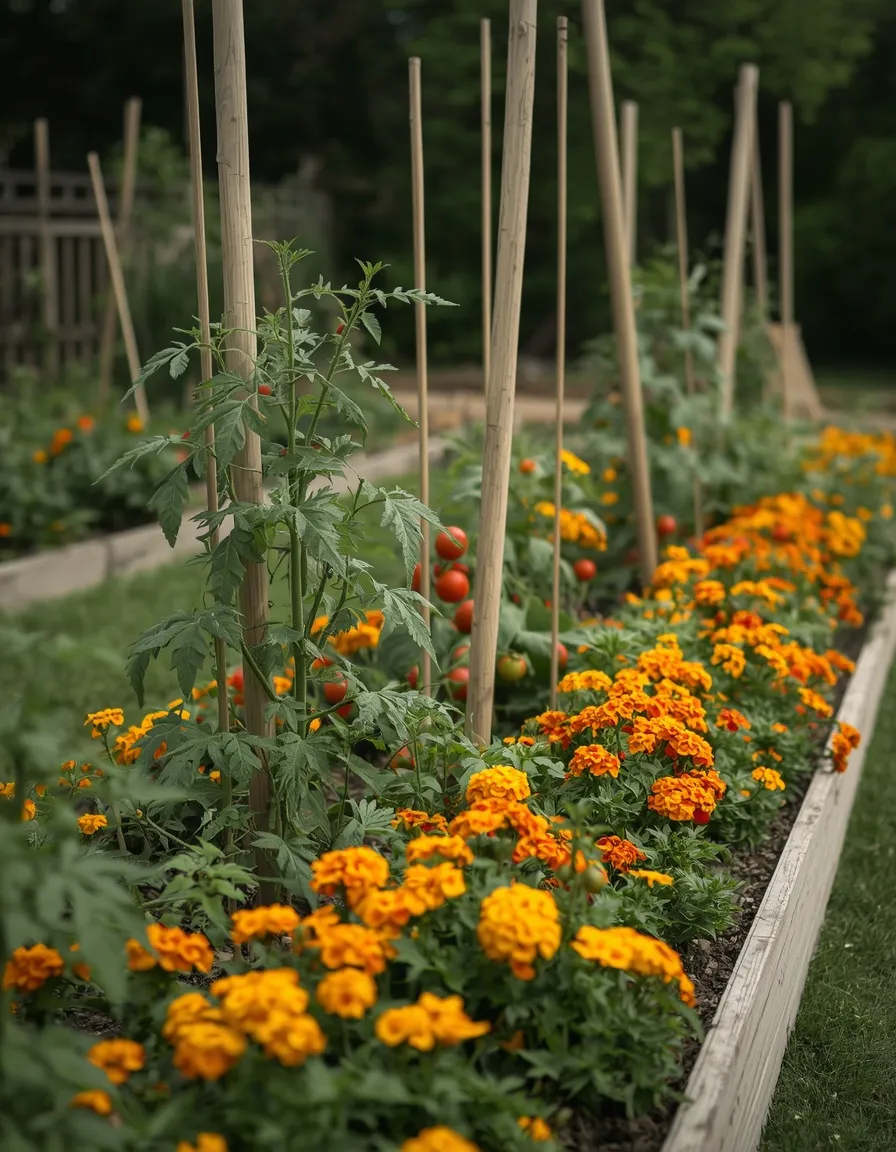
Borrowed from the French kitchen garden tradition, a potager mixes edibles and flowers in the same bed rather than separating them, so marigolds edge a row of tomatoes and nasturtiums climb alongside beans.
The flowers are not just decorative here; marigolds and nasturtiums genuinely help deter certain pests, while their blooms draw in the bees and hoverflies that pollinate the vegetables nearby. Keep taller vegetables like staked tomatoes toward the north side of the bed so they do not shade out lower-growing flowers, and rotate which section holds edibles each year to keep soil-borne pests from building up. This layout suits gardeners who want backyard flower garden ideas that double as a small food source without looking like a strict rows-and-stakes vegetable patch.
- Combines two garden goals in one footprint for smaller yards
- Companion planting can reduce reliance on pest sprays
- Reads as a decorative bed, not a utilitarian vegetable row
11. DIY Container Flower Cluster
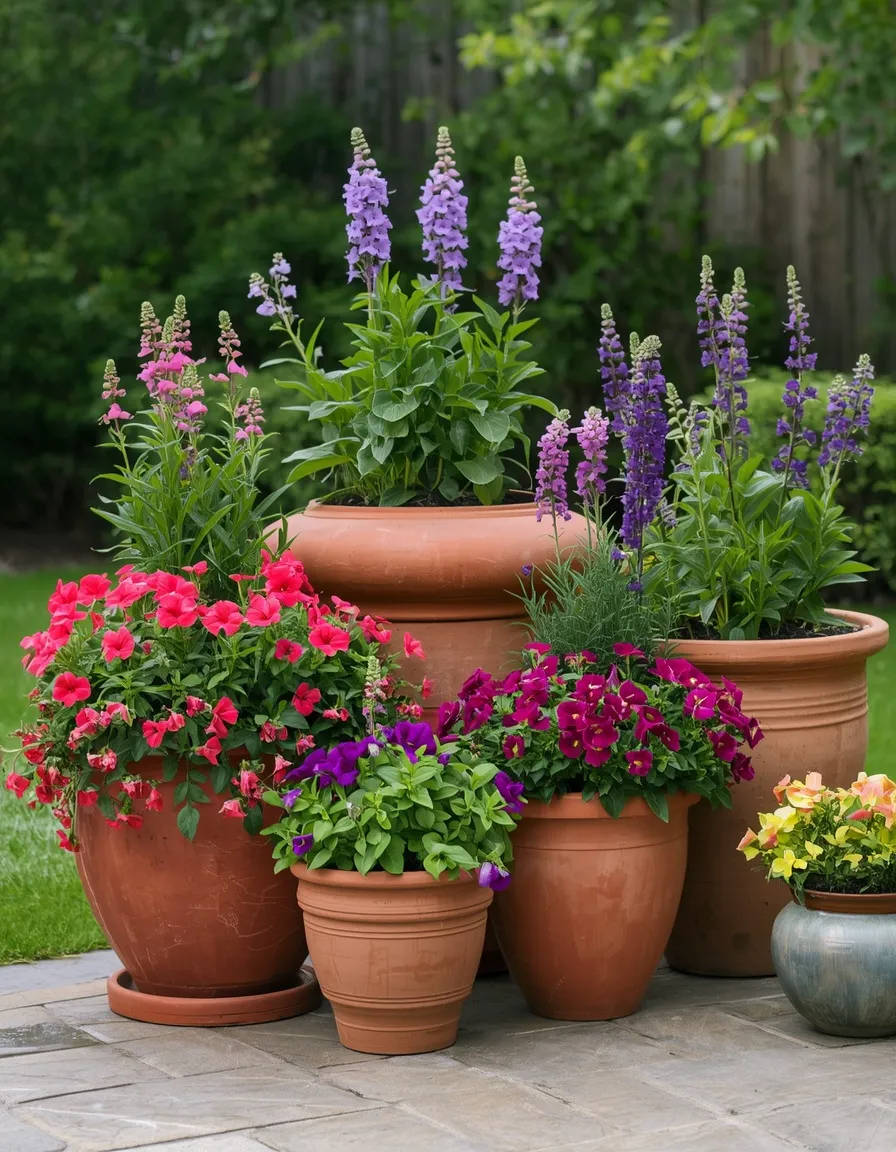
For a rented backyard, a small patio, or anyone not ready to dig a permanent bed, a cluster of large pots delivers the same visual impact without touching the ground. Group pots in odd numbers of varying heights for the most natural-looking arrangement.
Follow the classic thriller-filler-spiller formula in each pot: one upright plant for height, several mounding plants to fill the middle, and one trailing variety to spill over the rim. Every container needs real drainage holes, and setting pots on small feet or bricks keeps roots from sitting in water after rain, which is the most common reason container flowers fail. Because nothing is planted in the ground, this whole setup can move with you, making it one of the few backyard flower garden ideas that fully suit renters.
- No digging or permanent bed required
- Fully portable for renters or anyone who may relocate
- Easy to refresh seasonally by swapping individual pots
12. Circular Island Flower Bed
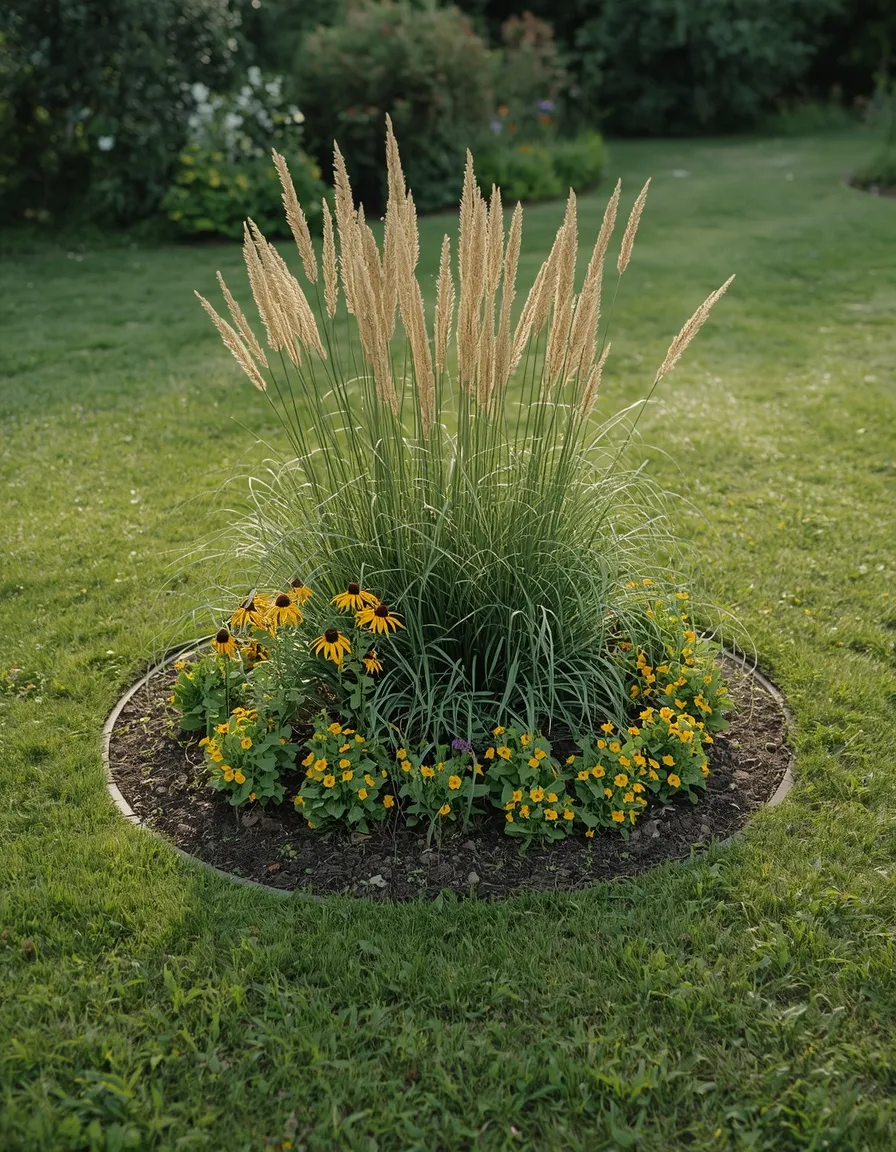
An island bed set into an open lawn, viewed from all sides rather than just the front, gives a backyard a focal point without touching the fence or borders at all. It reads especially well in mid-size yards with more lawn than the household actually uses.
Plant the tallest species at the center and grade down in height toward the outer edge in every direction, since this bed has no back row to hide behind. Keep the bed size proportional to the surrounding lawn, generally no more than about a third of the open space, so it reads as a feature rather than an obstacle. Leave a mowable strip of at least 12 inches (30cm) around the perimeter to make lawn maintenance simple.
- Creates a true 360-degree focal point in open lawn space
- Breaks up a large, flat lawn without extensive hardscaping
- Easy to size up or down depending on available yard space
13. Tiered Flower Bed for Sloped Yards
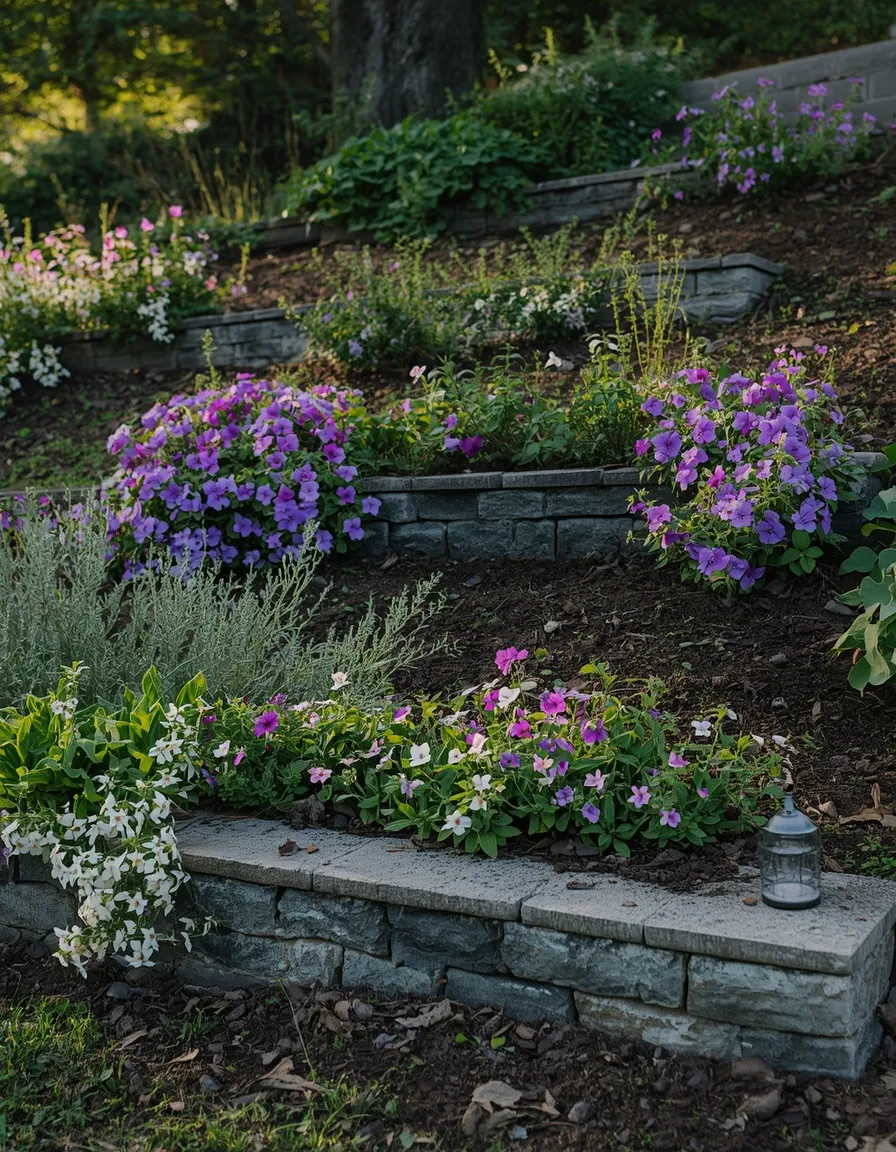
A sloped backyard that is usually treated as a landscaping problem can become its best feature once it is stepped into two or three terraced flower beds, each held by a low retaining wall of stone, brick or timber.
Terracing slows water runoff and lets flowers establish roots on ground that would otherwise wash out after every rain, which is one of the most practical reasons to choose this layout on a slope. Choose plants with fibrous, spreading root systems, like creeping phlox or catmint, for the front edge of each tier to further stabilize soil. Any retaining wall taller than about 3 feet (0.9m) should be checked against local building codes, since taller walls often need engineered footings or permits, and all walls need drainage gravel behind them to prevent pressure buildup.
- Solves erosion and runoff issues instead of fighting them
- Turns unusable slope into genuine planting space
- Creates natural viewing tiers from a patio below
14. Pollinator-Friendly Wildflower Patch
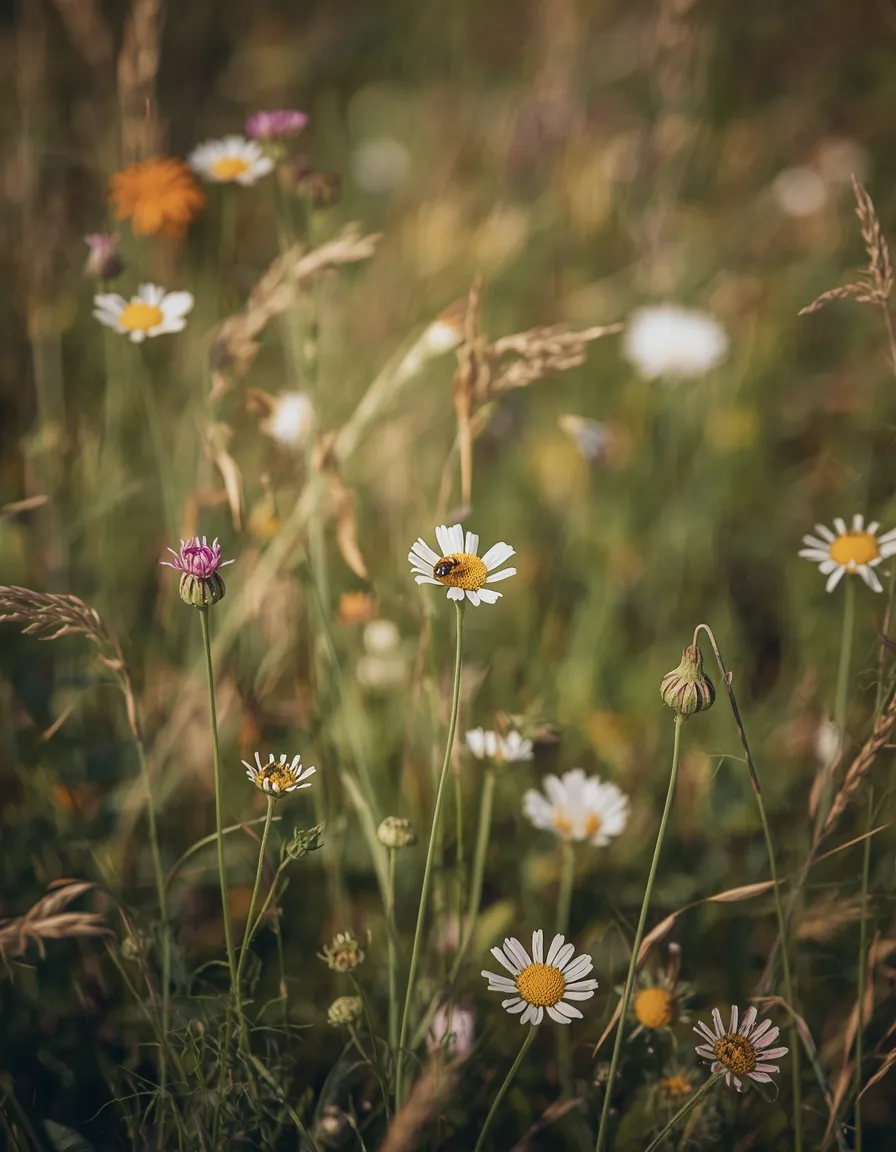
Rather than a manicured bed, a wildflower patch leans into a looser, semi-wild look using native or regionally adapted species, and it does more for local bees, butterflies and birds than almost any other backyard planting.
Choose a native wildflower seed mix suited to your specific region rather than a generic blend, since regional natives are what local pollinators are actually adapted to use; the Xerces Society’s regional plant guides are a reliable free resource for this. Skip pesticides entirely in this bed, since even organic-labeled sprays can harm bees and butterflies along with the pests they are meant to control. Mow or cut the patch back once in late winter, not in fall, to leave seed heads and shelter for overwintering insects.
- Directly supports declining local bee and butterfly populations
- Requires less water and fertilizer than a cultivated bed
- Provides winter shelter for beneficial insects when left uncut
15. Low-Maintenance Perennial Bed
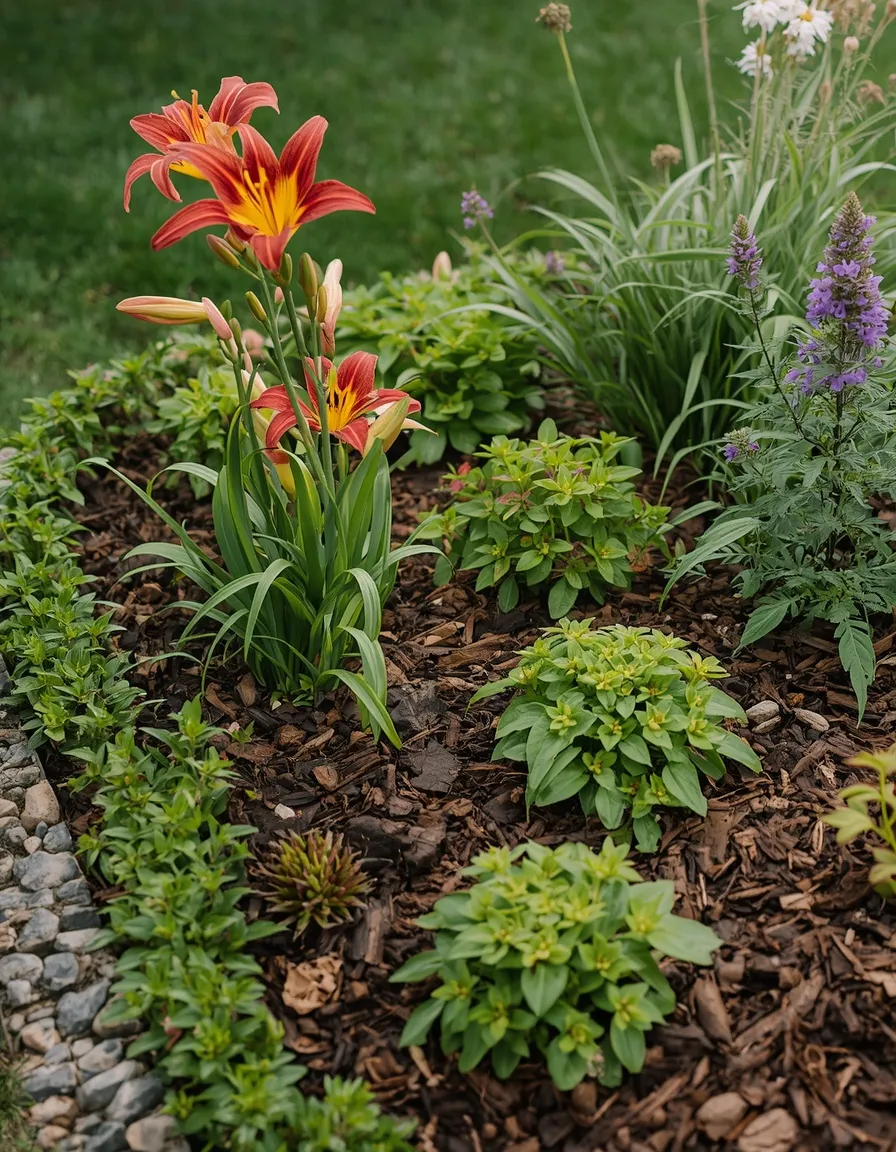
Built around plants that return reliably year after year, like daylily, sedum, catmint and coneflower, this bed is designed for a homeowner who wants real color without a weekly commitment. Once established, it asks for very little.
A 2 to 3 inch (5 to 7.5cm) layer of mulch is doing most of the maintenance work here, since it suppresses weeds and holds soil moisture between waterings. Choose plants rated for your USDA hardiness zone rather than borderline varieties, since a perennial that is not reliably hardy in your climate will need replacing every year, defeating the purpose. Most beds like this need only one seasonal cutback in early spring before new growth starts.
- Ideal for a first backyard flower garden or a busy household
- Comes back reliably each year without replanting
- Mulching cuts watering and weeding time significantly
16. Vertical Trellis Flower Wall
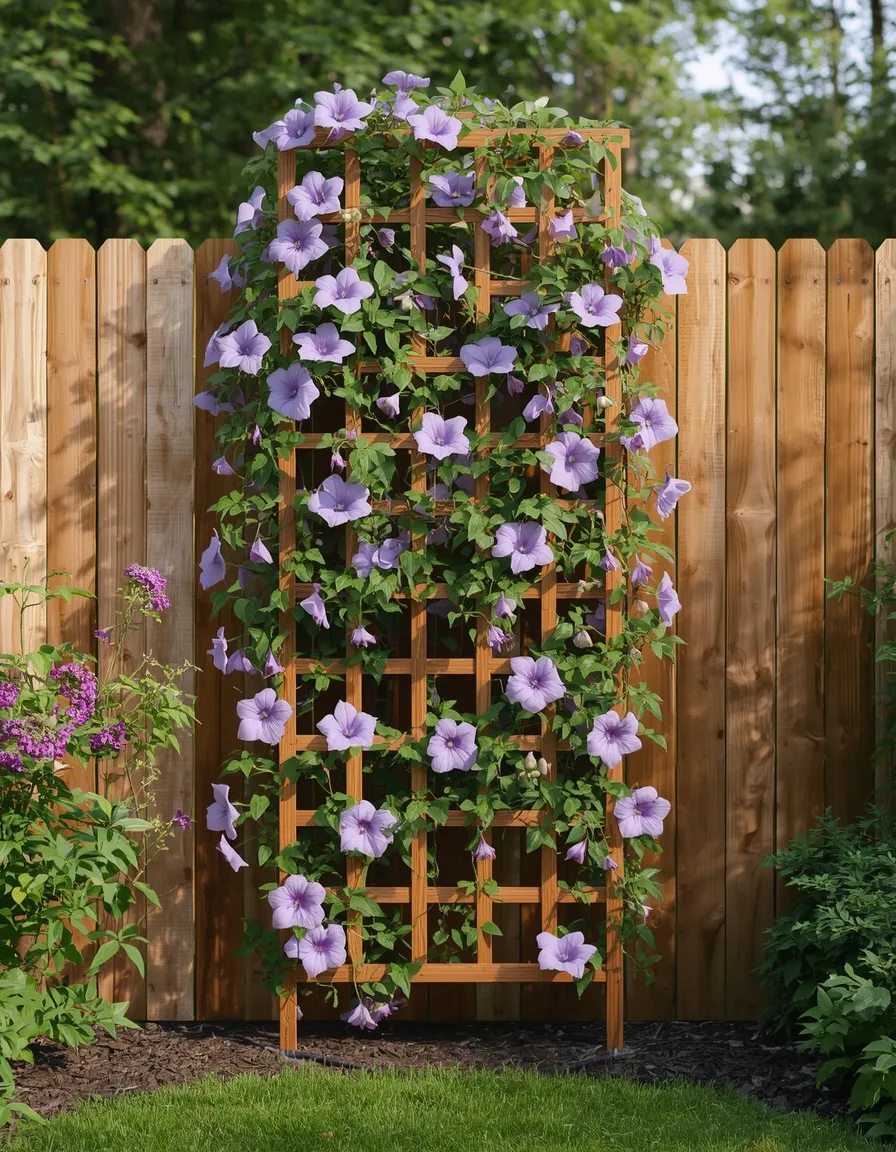
A blank fence panel or house wall becomes a floor-to-ceiling flower feature once a trellis goes up and climbing varieties like clematis, sweet peas or climbing roses are trained onto it. It adds height and color without using any ground footprint.
Anchor the trellis securely into structural framing, not just siding or a thin fence panel, since a mature vine gets heavy and a poorly mounted trellis can pull loose or pull the wall material with it. Run horizontal tension wires spaced about 12 inches (30cm) apart for faster, more even coverage than a single trellis panel alone. Train young vines gently toward the support in their first weeks, since most climbers need a little guidance before their tendrils or twining stems take over on their own.
- Adds vertical color without using any ground-level planting space
- Screens an unattractive wall, fence or utility area
- Suits narrow side yards where floor space is limited
17. Drought-Tolerant Xeriscape Bed
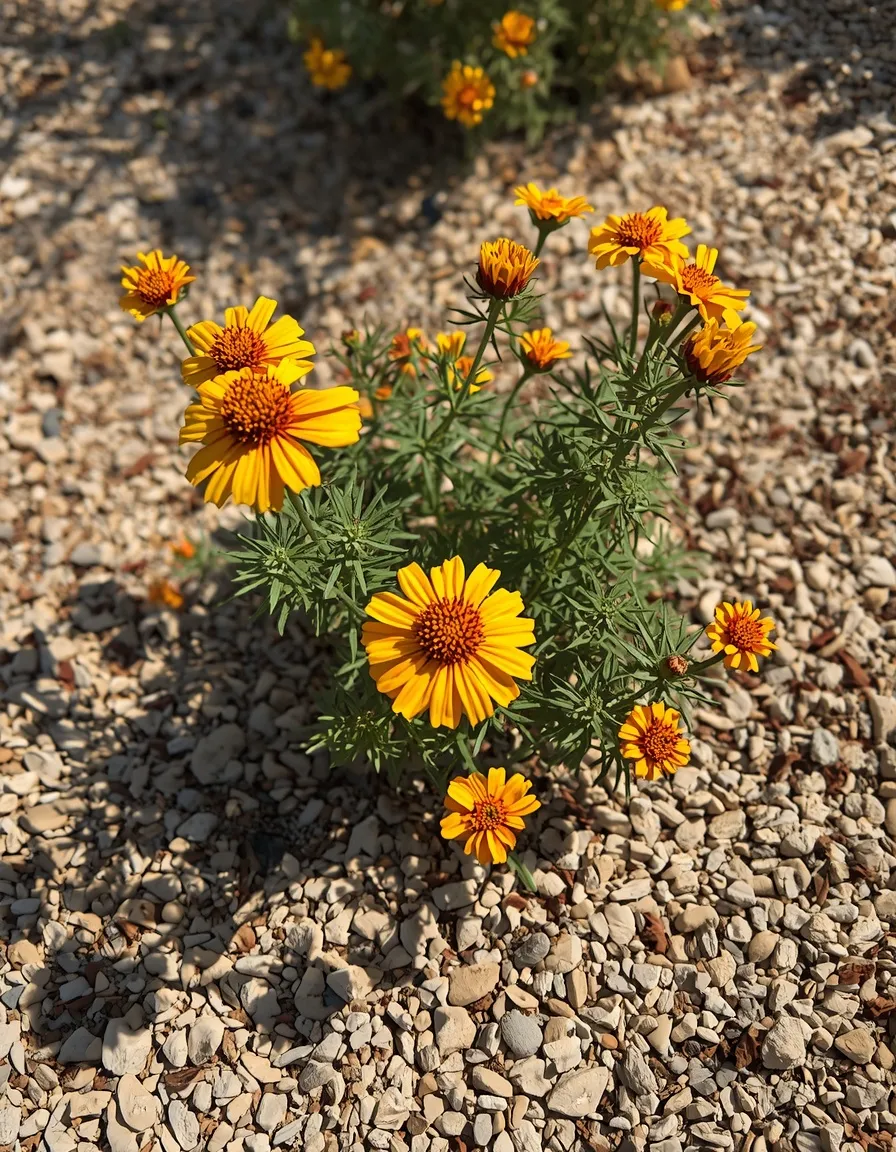
In hot, dry climates like much of Texas, the Southwest or coastal California, a xeriscape bed built around lantana, salvia greggii, blanket flower and gaillardia delivers real color while using a fraction of the water a traditional border needs.
Group plants by water need rather than just by look, since even drought-tolerant species vary in how much they want early on; most establish best with deep, infrequent watering for the first season rather than daily light sprinkling, which encourages weak, shallow roots. A 2 to 3 inch (5 to 7.5cm) gravel or bark mulch layer keeps roots cooler and cuts evaporation significantly. Confirm your USDA hardiness zone before choosing species, since a plant that is drought-tolerant in one region may still need winter protection in another.
- Cuts backyard water use significantly compared with lawn or thirsty beds
- Well suited to Texas and other hot, dry regional climates
- Lower long-term maintenance once plants are established
18. Garden Gate Entrance Planting
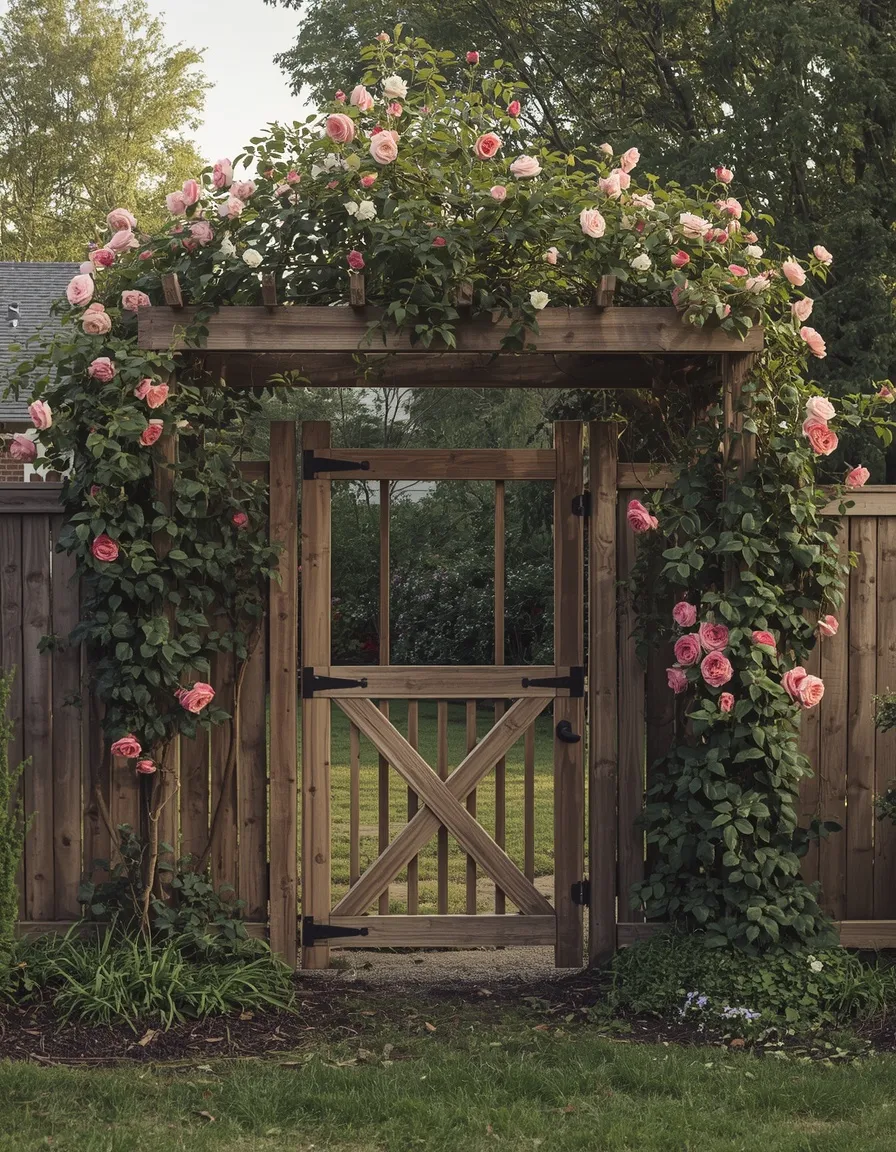
Whatever marks the entrance to a backyard, a gate, an arbor or simply a gap in the fence, becomes a real moment once it is flanked with flowers. Climbing roses over an arch or a pair of matched planters on either side both work well.
Symmetry reads as more formal and put-together, so matching plantings on either side of a gate suit a tidier overall yard, while a single lush planting on one side feels more relaxed and cottage-style. Keep thorny climbers like roses trained up and away from the actual foot traffic path through the gate, since a snagging cane at hand height is an easy scratch waiting to happen. Rotate in seasonal color at the base each year to keep the entrance feeling current.
- Creates a genuine sense of arrival at the backyard entrance
- Frames the transition from side yard or driveway into the main garden
- Easy to refresh seasonally without touching the rest of the layout
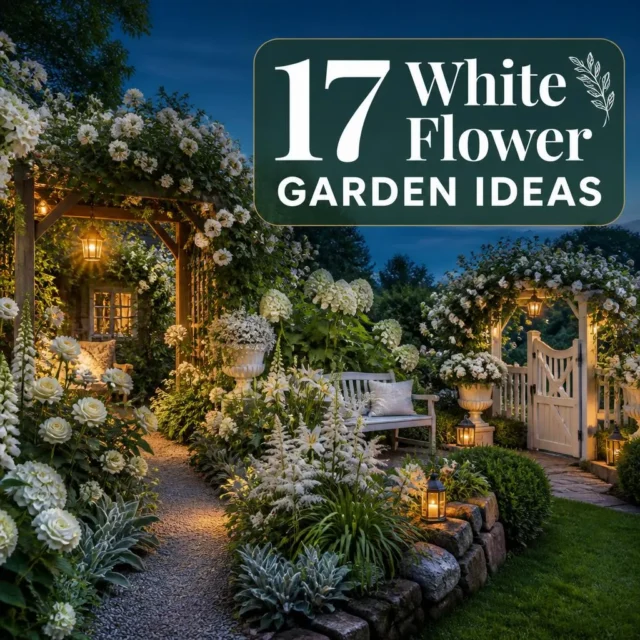
19. Moon Garden with Night Blooms
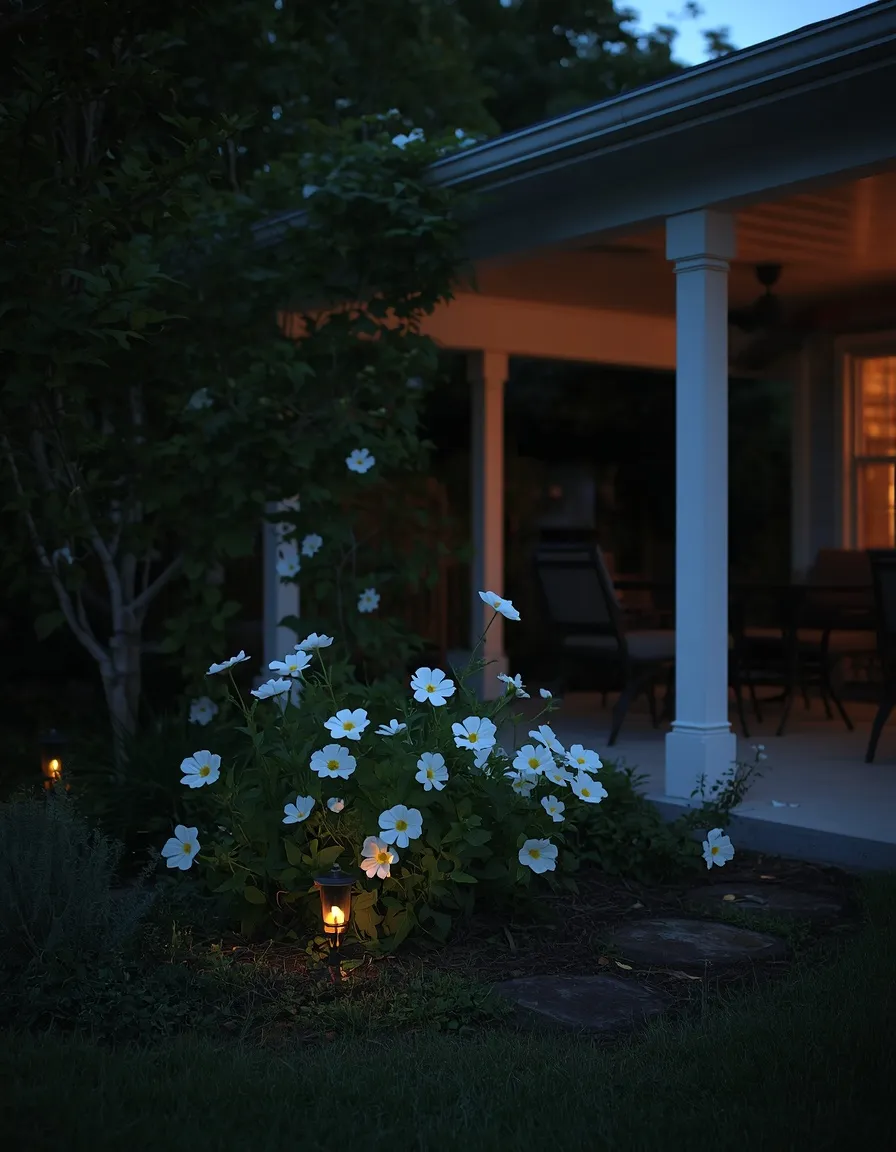
A moon garden is planted entirely in white and pale flowers, moonflower, white cosmos, evening primrose and nicotiana, chosen specifically because they seem to glow at dusk and are often most fragrant after dark. It is one of the more genuinely unique backyard flower garden ideas for anyone who actually uses their yard in the evening.
Position this bed near a patio, deck or seating area rather than a spot only seen from indoors, since the entire point is enjoying it after sunset. Evening-fragrant varieties like nicotiana and moonflower vine release most of their scent at dusk, so plant them close to where people actually sit. One important safety note: moonflower (Datura) seeds and foliage are toxic if ingested, so keep it out of yards used by young children or pets prone to chewing plants, and choose safer alternatives like white cosmos or white nicotiana instead if that is a concern.
- Extends garden enjoyment into evening hours, not just daytime
- Fragrance is strongest exactly when most households are outside relaxing
- A genuinely distinctive theme rarely seen in typical backyard beds
20. Color-Block Themed Flower Bed
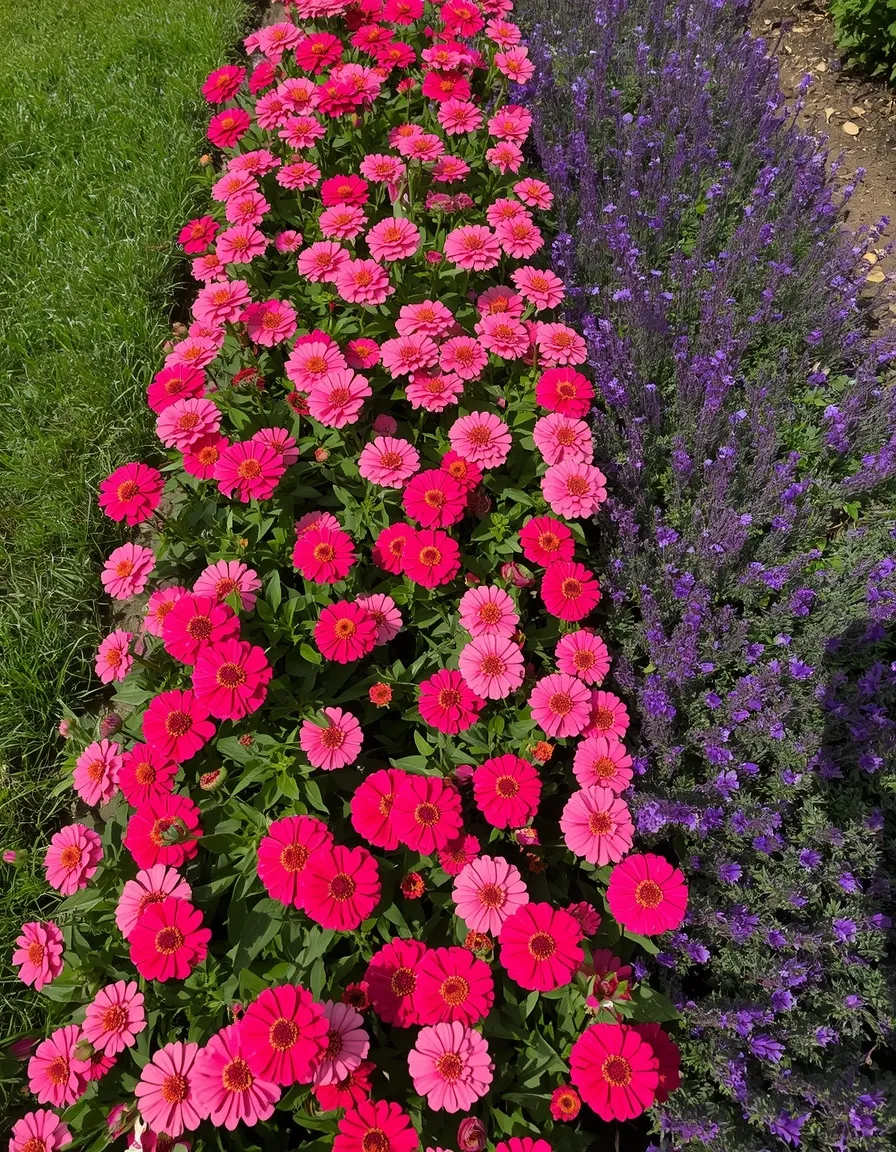
Instead of mixing colors throughout a bed, group flowers into bold, solid blocks, a full section of hot pink zinnias next to a block of deep purple salvia, for a graphic, almost painterly effect that photographs exceptionally well.
The technique depends on choosing varieties with similar bloom windows within each color block, so one section does not fade to green while its neighbor is still peaking. Repeat each color in at least three or four plants rather than one or two, since a block that is too small just reads as a random cluster rather than an intentional statement. The most common mistake is adding a stray plant of a different color into a block out of impatience for more variety, which breaks the entire effect.
- Creates a strong graphic, Pinterest-friendly visual from a distance
- Simplifies plant selection since each block only needs one or two species
- Works especially well for a bed built around a specific color scheme
21. Raised Planter Boxes Along a Patio
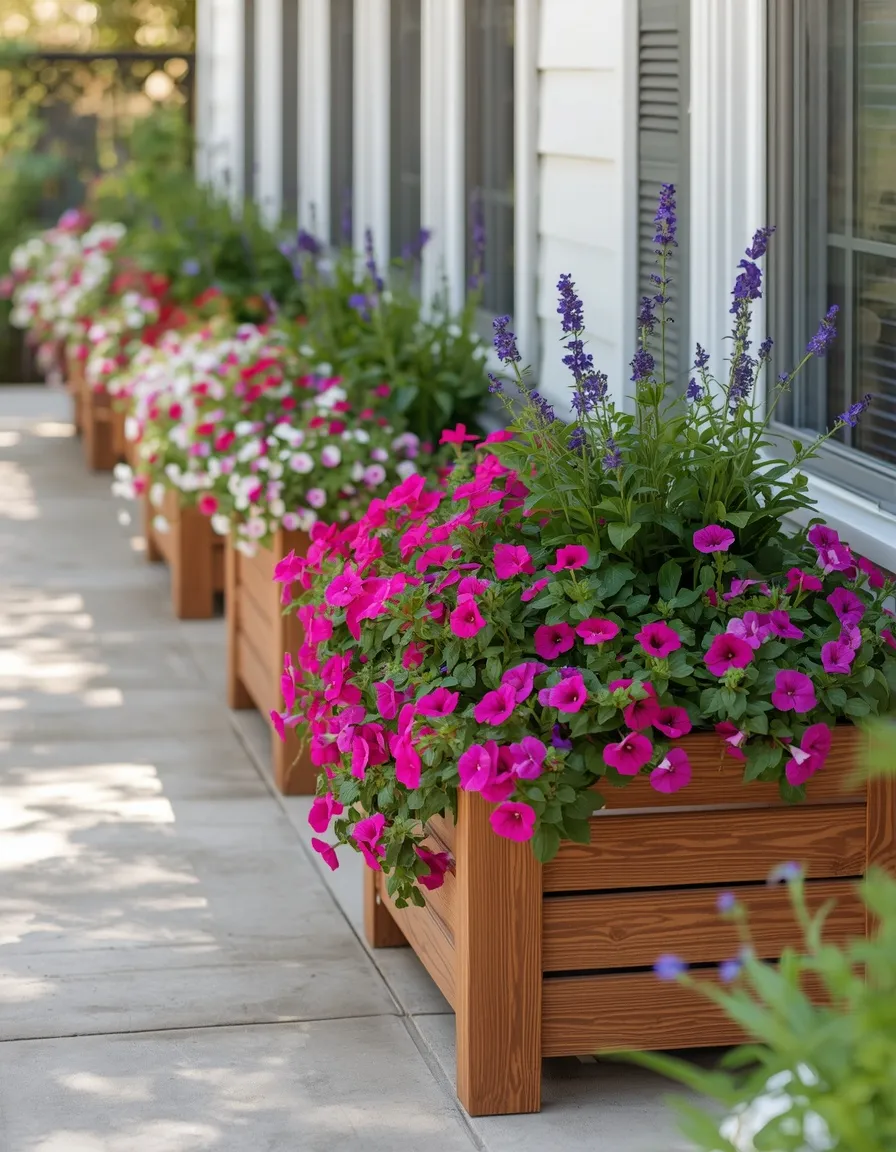
A run of raised planter boxes along the edge of a patio does double duty as a low garden and a soft, informal boundary for the seating area, filled with a mix of upright and trailing flowers that spill over the sides.
Build boxes to roughly 18 to 24 inches (45 to 60cm) tall, low enough to plant and deadhead comfortably from a seated position, but tall enough to define the patio edge clearly. Use trailing varieties like petunias, lobelia or verbena along the outer edge so blooms soften the box’s hard lines within a few weeks of planting. Because these boxes sit right next to daily-use space, keep watering easy to reach; a coiled hose or nearby spigot saves far more effort long-term than it seems worth upfront.
- Defines a patio or seating area without a hard structural boundary
- Puts flowers at a comfortable height for everyday enjoyment and care
- Softens the transition between hardscape and the rest of the yard
Conclusion
Good backyard flower garden ideas come down to matching the right layout to the light, soil and space you actually have. A shaded corner, a fence line, a sloped patch or a bare patio rail can each become a genuine flower garden once the approach fits the site instead of fighting it. Start with just one or two of these ideas rather than all twenty-one at once, and let the bed prove itself before expanding it next season. For more flower-specific inspiration, Sunday Abode’s flowers coverage is worth exploring before the next planting season begins. Pick the layout that fits your yard, and give it room to grow into something worth stepping outside for.
FAQs
What’s the best backyard flower garden idea for a small yard?
For a small backyard, container clusters or a single small corner nook tend to work better than a sprawling border, since they deliver real color without demanding much square footage. A raised planter box along a patio edge is another strong option, since it does double duty as a seating boundary and flower bed in one narrow footprint.
How do I start a flower garden from scratch in a backyard with no existing beds?
Start by tracking sun exposure across the space for a full day, since that single factor determines almost every other choice, from a full-sun perennial border to a shaded planting under trees. Pick one layout idea, like a fence-line border or a raised bed, mark out the space, and build the soil with compost before planting rather than choosing plants first and hoping the ground cooperates.
What flowers work best in a shaded backyard corner?
Astilbe, hosta, bleeding heart and impatiens all bloom reliably in partial to full shade, making a shaded corner one of the more forgiving spots in a backyard once the right species are chosen. Because tree roots often compete for water in these spots, mounding fresh soil over the root zone instead of digging deep planting holes protects both the tree and the new flowers.
Can vegetables and flowers share the same backyard bed?
Yes, a potager-style bed that mixes marigolds, nasturtiums and similar flowers among vegetables is a long-standing gardening tradition, and the flowers genuinely help by drawing in pollinators and deterring certain pests. Keep taller vegetables toward the north side of the bed so they do not shade out lower-growing flowers nearby.
What backyard flower garden ideas work well in hot, dry climates like Texas?
Drought-tolerant xeriscape beds built around lantana, salvia greggii, blanket flower and gaillardia are well suited to Texas and other hot, dry regions, since these species handle heat and irregular rainfall without constant watering. Deep, infrequent watering during the first season encourages stronger root systems than light daily watering does.
How much sun does a backyard flower bed actually need?
Most classic flowering perennials, like coneflower, black-eyed Susan and salvia, need at least six hours of direct sun a day to bloom well and develop strong, upright stems. Beds getting less than that generally do better with shade-tolerant species like astilbe or hosta rather than full-sun varieties pushed into too little light.
What’s a good low-maintenance option for a first-time backyard flower gardener?
A bed built around reliable perennials like daylily, sedum and catmint, finished with a 2 to 3 inch layer of mulch, is one of the easiest starting points, since these plants return yearly and the mulch cuts down on weeding and watering. One seasonal cutback in early spring is usually the only major maintenance the bed needs.