

Introduction
Cheap trellis ideas don’t have to mean flimsy ones, a bamboo teepee lashed together for climbing peas and a cattle panel arch bent for heavy grapevines both cost next to nothing while genuinely holding up to real plant weight and weather. The real skill in budget trellis building is matching the structure to the plant, a lightweight string grid suits sweet peas but would collapse under a loaded squash vine, and knowing which repurposed materials, pallets, old ladders, salvaged window frames, actually hold up outdoors versus fall apart within a season. This guide covers nineteen cheap trellis ideas, specific materials, plant-matched structures, and the load-bearing and safety details most budget garden content skips. Whatever’s sitting in the garage or a nearby free pile, there’s a version of this that fits any abode.
1. Repurposed Wood Pallet Trellis
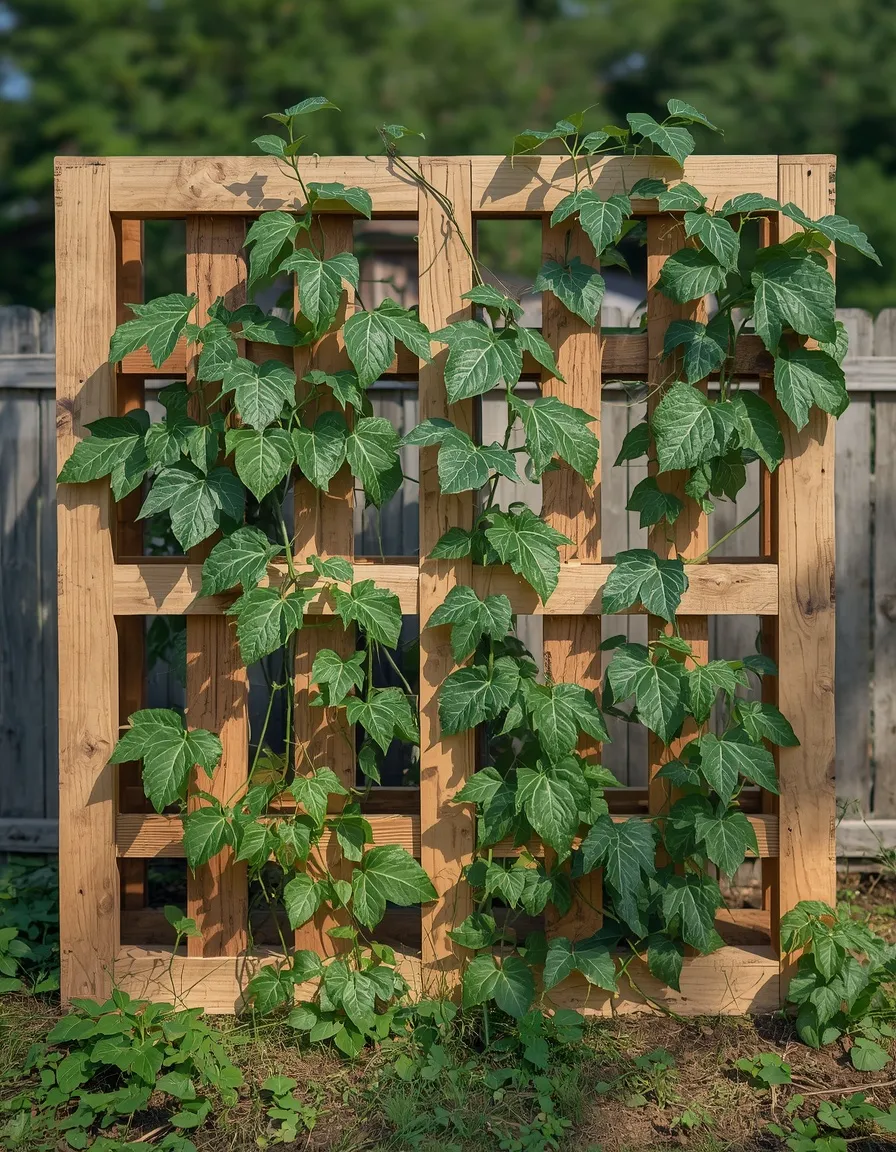
A disassembled wood pallet, its slats pried apart and reassembled into an open lattice, turns free construction waste into a genuinely sturdy trellis that would otherwise cost real money.
Pry the pallet slats loose with a flat bar and hammer, keeping the nails or replacing them with fresh deck screws, then reassemble the boards with wider gaps between them to create real climbing structure rather than the pallet’s original tight slat spacing. Sand any rough or splintered edges before installing it where hands or bare skin will regularly brush against it. Check whether a pallet is heat-treated, stamped HT, or chemically fumigated, stamped MB, before using it anywhere near edible plants, heat-treated pallets are the safer choice since methyl bromide fumigation used on some pallets leaves chemical residue best kept away from food crops. A single pallet trellis handles moderate climbers like beans or small squash well but isn’t sturdy enough on its own for genuinely heavy vines without additional bracing.
- Turns free, often discarded material into a genuinely sturdy climbing structure
- Checking the pallet’s stamp for heat treatment versus chemical fumigation matters for food safety
- Suits moderate climbers like beans well but needs bracing for heavier vines
2. Bamboo Teepee for Climbing Peas
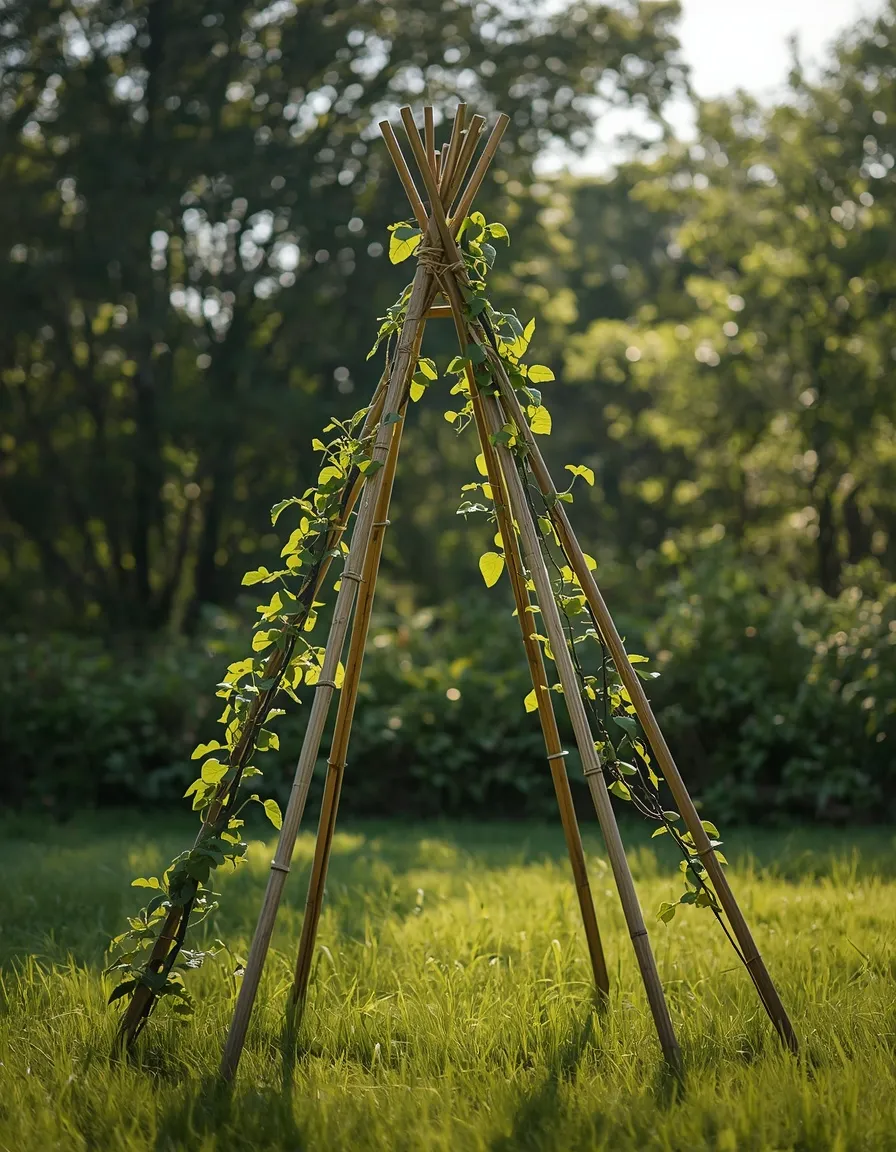
Four or five bamboo poles lashed together at the top and splayed out at the base into a freestanding teepee shape is one of the fastest, cheapest trellis structures to put together for a bed of climbing peas.
Sink each pole 6 to 8 inches (15 to 20 cm) into the soil for stability, spacing the base legs roughly 2 to 3 feet (60 to 90 cm) apart, then lash the tops together tightly with garden twine or wire, a loose lashing lets the whole structure lean and eventually collapse once peas add real weight to the poles. Bamboo poles are genuinely inexpensive to buy new and often available secondhand or from anyone thinning an established bamboo stand, making this one of the most accessible options on this list even without repurposed materials. Peas climb by tendril, wrapping themselves around anything narrow enough to grip, so bamboo’s naturally slim diameter works better for peas specifically than thicker repurposed lumber would.
- One of the fastest, cheapest freestanding structures to assemble for climbing peas
- A tight lashing at the top is essential, since a loose one lets the teepee collapse under weight
- Bamboo’s narrow diameter suits pea tendrils better than thicker repurposed materials
3. Cattle Panel Trellis for Heavy Climbers
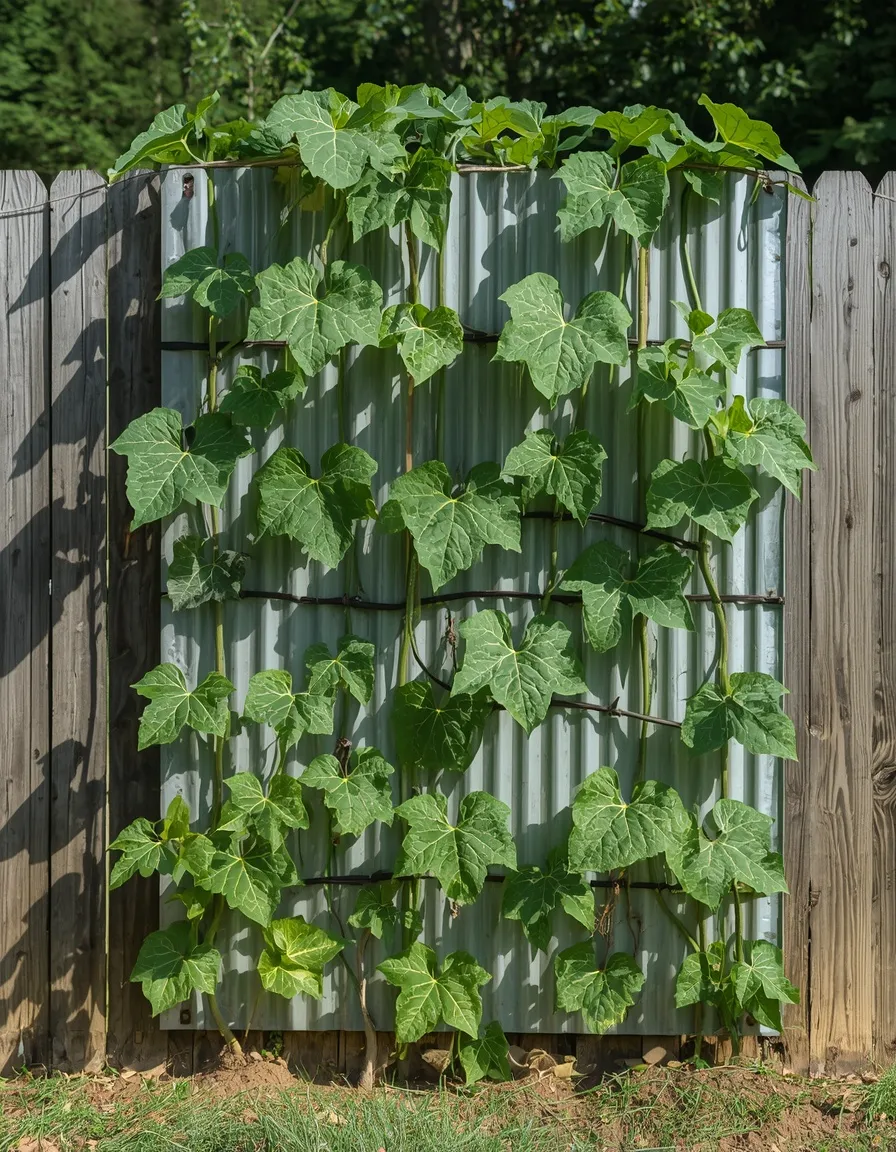
A single galvanized cattle panel, cut to size and anchored upright against a wall or fence, delivers a rigid, genuinely heavy-duty trellis capable of supporting mature squash, heavy grapevines, or climbing roses without sagging.
A full cattle panel, typically 16 feet (4.9 m) long, can be cut into two or three shorter sections with a bolt cutter or angle grinder to fit a specific bed, making a single panel purchase stretch across multiple trellis locations rather than buying several smaller pre-made trellises. Secure the panel to sturdy T-posts driven at least 18 inches (45 cm) into the ground on each end, since the panel’s rigidity means the failure point in wind or under heavy plant weight becomes the anchoring rather than the panel itself. This is genuinely the sturdiest budget option on this list for anything expected to bear real weight, a mature butternut squash vine loaded with fruit needs this level of structural support far more than a lightweight bamboo teepee could provide.
- Delivers genuine heavy-duty support for mature squash, grapes, and climbing roses
- A single panel can be cut into multiple sections, stretching one purchase across several beds
- Secure T-post anchoring matters more here than the panel’s own strength, which is already high
4. Rebar and Twine Grid Trellis
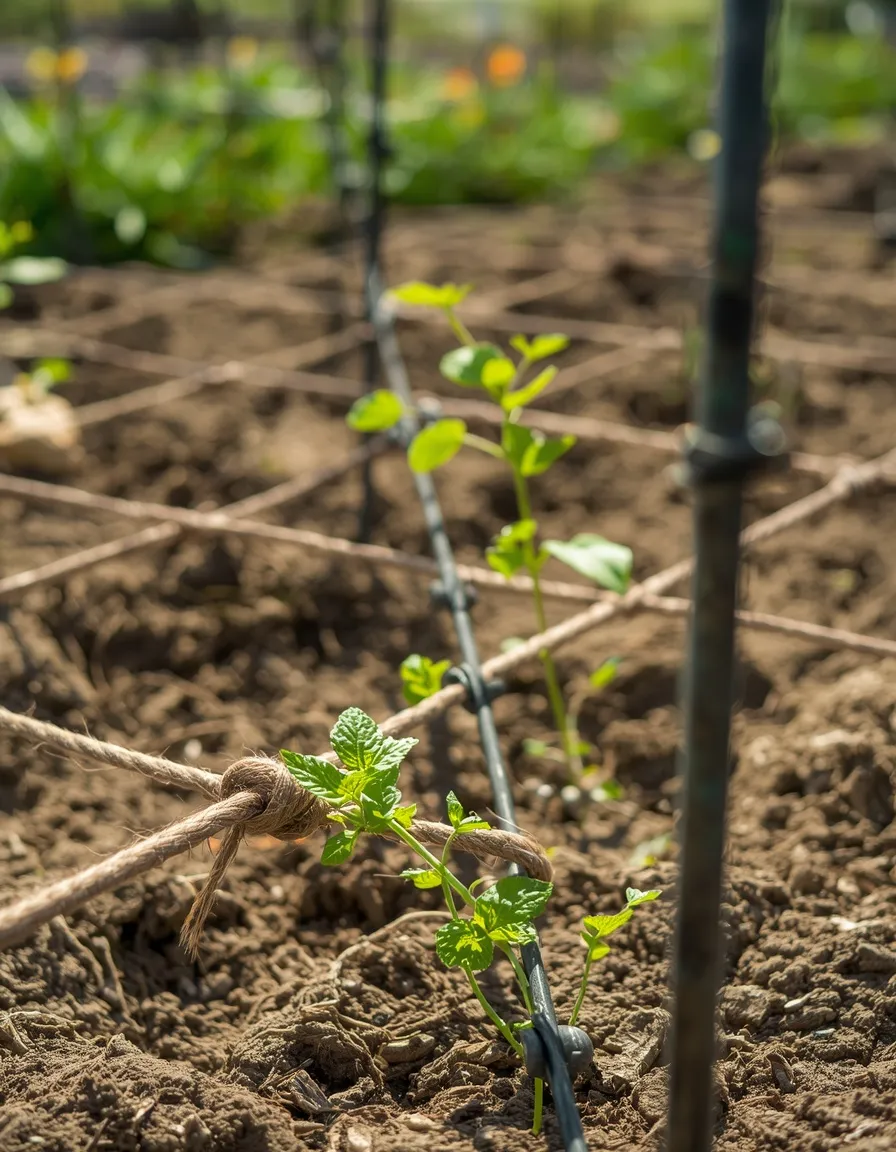
A grid of garden twine strung between a few lengths of rebar driven into the ground is close to the cheapest trellis it’s possible to build, using materials that cost only a few dollars total for a modest bed.
Drive rebar stakes 12 to 18 inches (30 to 45 cm) into the ground at each corner and along the sides of the intended trellis area, then string biodegradable jute or sisal twine horizontally and vertically between the stakes to create a grid climbing plants can grip. This is genuinely a seasonal, temporary structure rather than a permanent one, the twine breaks down over a single growing season and needs replacing annually, which actually works in favor of anyone rotating crops or garden layouts year to year rather than committing to a fixed permanent trellis. Cap exposed rebar ends with rebar safety caps or tennis balls, since an uncapped vertical rebar stake is a genuine impalement hazard for anyone who trips or falls near the bed.
- Among the cheapest possible trellis options, using only a few dollars of material
- Biodegradable twine breaking down each season suits crop rotation and changing layouts
- Exposed rebar ends need safety caps, since an uncapped stake is a real puncture hazard
5. Repurposed Ladder Trellis
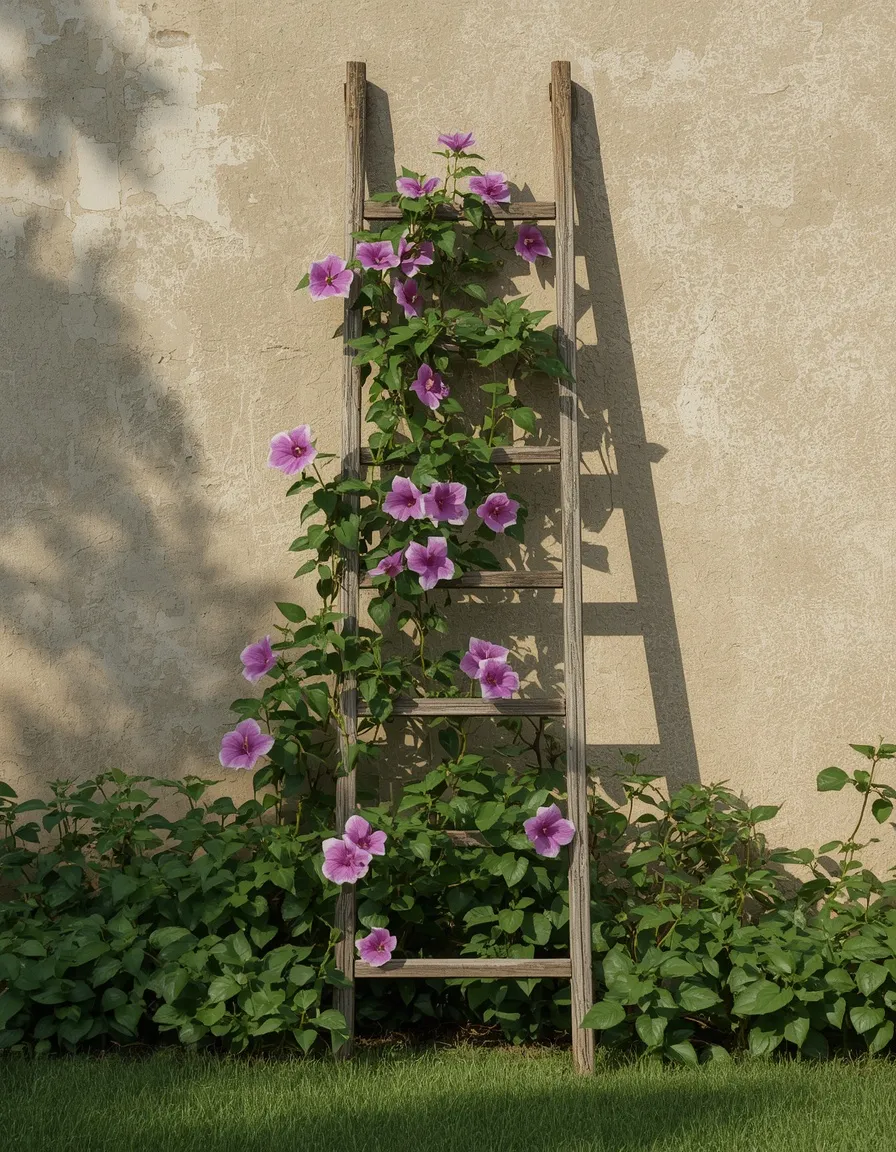
An old wooden extension ladder, no longer safe to actually climb, leaned against a fence or wall becomes a genuinely charming, ready-made trellis with built-in rungs that climbing plants take to immediately.
Lean the ladder at a stable angle, roughly 15 to 20 degrees off vertical, against a solid wall or fence, and secure the top with a strap or wire anchor point so wind or an accidentally brushed-against vine doesn’t knock it loose. Check that the ladder is genuinely structurally sound enough to hold soil-laden, mature plant weight even if it’s no longer safe for a person to climb, since a ladder with rotted rungs or rusted-through metal joints isn’t safe as a trellis either. This idea works particularly well for flowering vines like clematis or morning glory, where the ladder’s rungs create a naturally attractive, staggered climbing pattern that a flat panel trellis doesn’t offer.
- Turns a ladder no longer safe to climb into a genuinely functional, ready-made structure
- Needs securing against a wall or fence, since an unanchored leaning ladder can shift or fall
- The staggered rung pattern suits flowering vines particularly well for visual interest
6. Concrete Reinforcing Mesh Trellis Panel
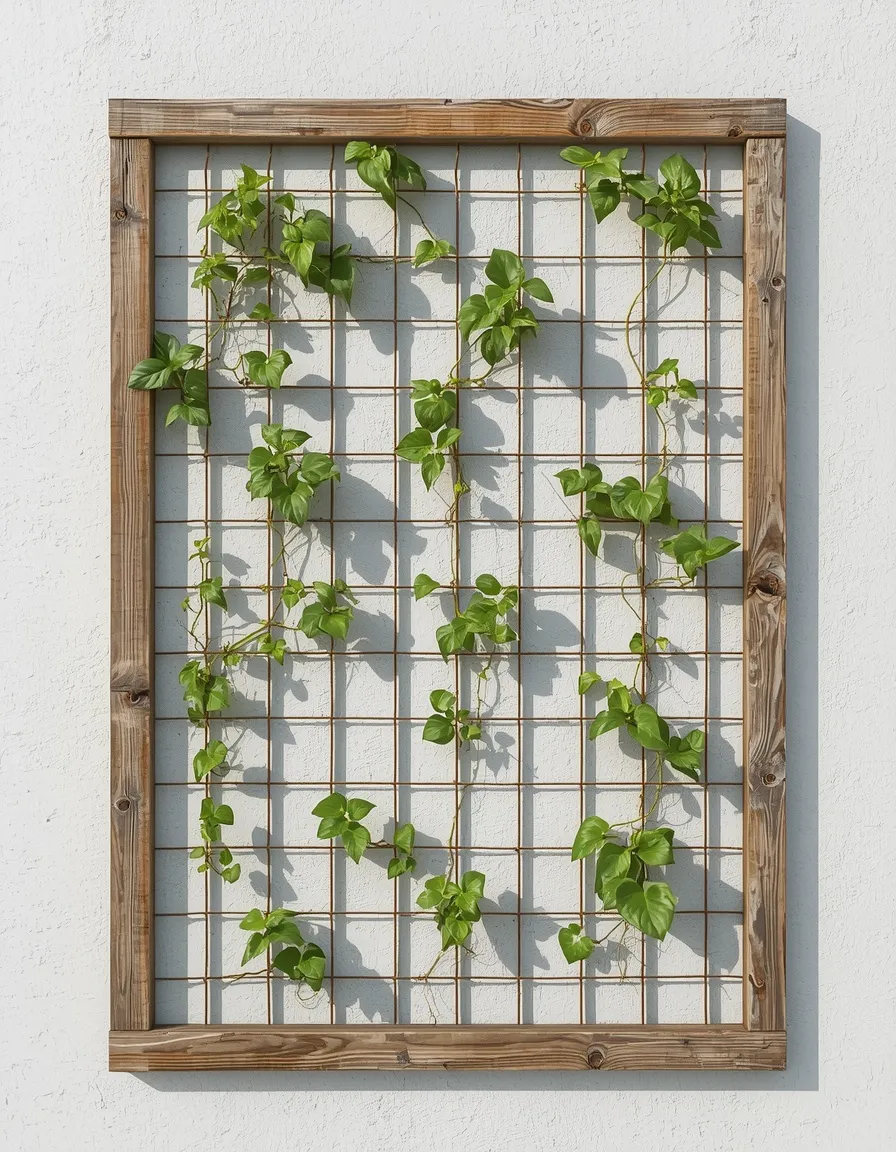
A sheet of concrete reinforcing mesh, sold cheaply at any hardware or building supply store for its intended use in concrete slabs, makes an unexpectedly effective and genuinely inexpensive rigid trellis panel.
The mesh comes in flat sheets with a consistent grid pattern, typically 6 inch (15 cm) squares, sturdy enough to support real plant weight while being light enough to cut with bolt cutters and handle without heavy equipment. Frame the mesh panel’s edges with scrap wood or attach it directly to a simple wood frame for a cleaner finished look and added rigidity, since the bare mesh edges are sharp and can snag skin or clothing without some kind of edge treatment. This material costs meaningfully less per square foot than most pre-made decorative trellis panels sold specifically for garden use, since it’s priced as a construction material rather than a garden product.
- Costs meaningfully less per square foot than pre-made decorative garden trellis panels
- The consistent grid pattern suits a wide range of climbing plants without modification
- Framing the sharp mesh edges with wood improves both safety and finished appearance
7. PVC Pipe A-Frame for Tomatoes
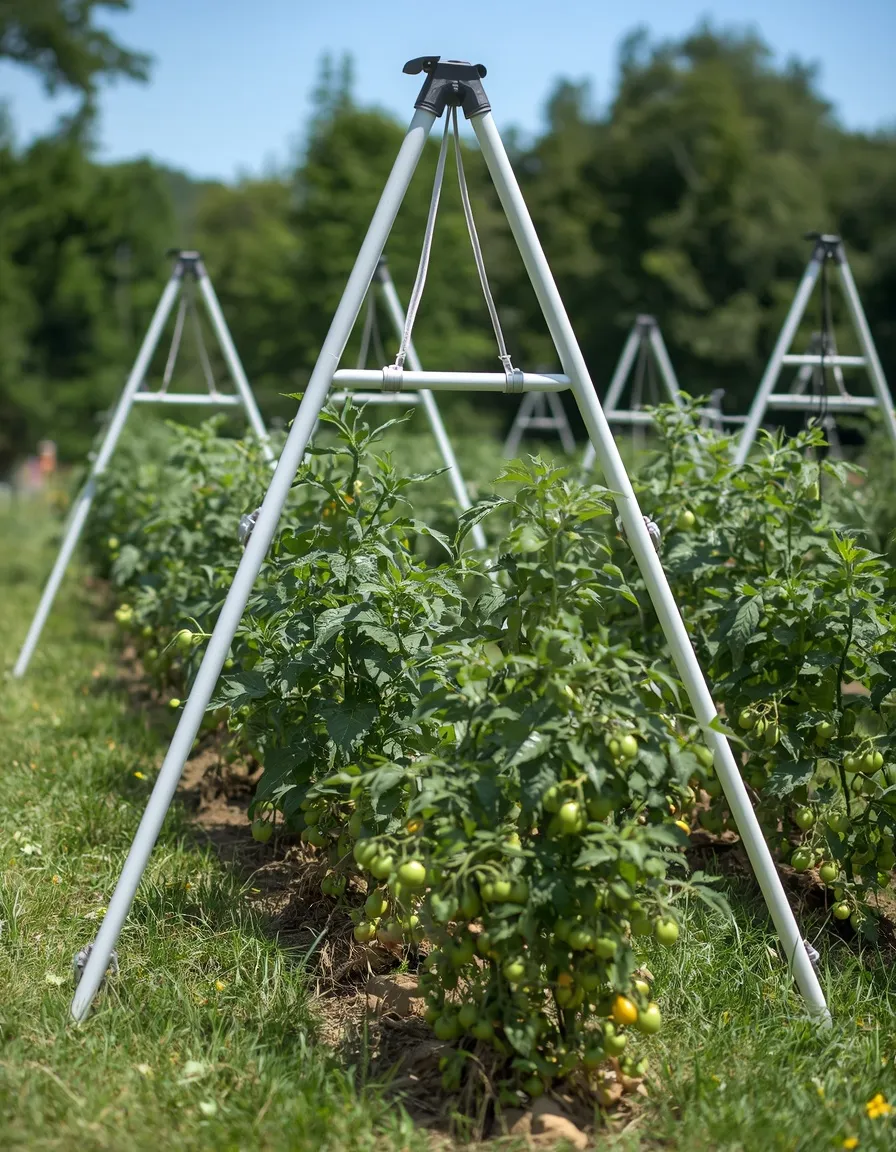
A simple A-frame built from lightweight PVC pipe and fittings gives sprawling tomato plants genuine vertical support without the cost or weight of a wooden frame.
Build two triangular end frames from PVC pipe and elbow fittings, connect them with horizontal cross pipes at the top and midway down, and set the finished structure directly over a tomato row so plants can be trained up through the frame as they grow rather than tied to a single central stake. PVC is genuinely inexpensive and widely available in a range of diameters, and the finished frame disassembles easily at the end of the season for compact off-season storage, a real advantage over a bulkier wood frame that takes up considerably more space to store. Anchor the frame’s base legs into the ground or weight them with bricks, since an empty PVC frame is lightweight enough to blow over in wind before plants have grown enough to add stabilizing weight.
- Lightweight and inexpensive, with easy off-season disassembly for compact storage
- Plants can be trained up through the frame rather than tied to a single stake
- Needs ground anchoring or weighting, since an empty frame is light enough to blow over
8. String Trellis Grid for Sweet Peas
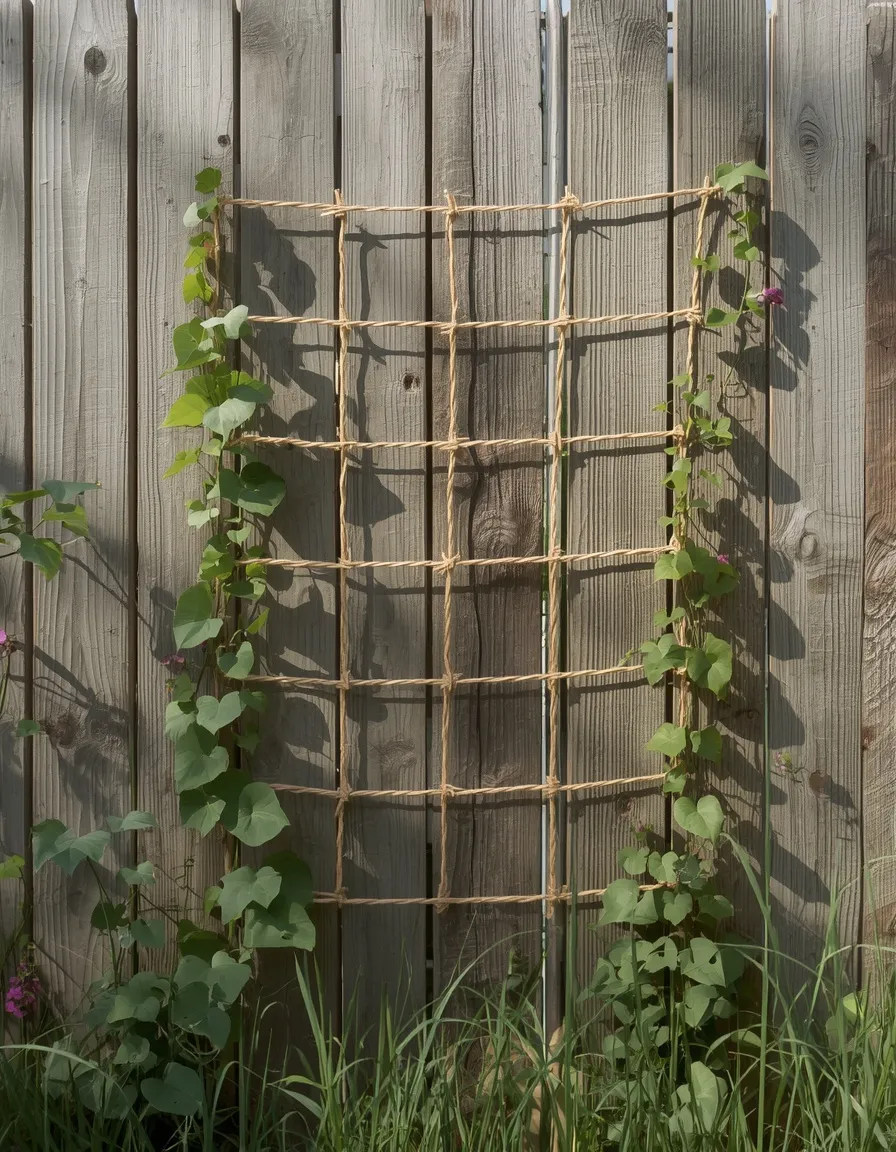
A flat grid of twine strung vertically and horizontally against an existing wall or fence gives fragrant sweet peas and other light annual vines a genuine climbing surface without adding any freestanding structure to the space at all.
Screw small eye hooks into the wall or fence at the grid’s corners and along the edges, then run twine between them in a simple grid pattern, spacing the lines 6 to 8 inches (15 to 20 cm) apart, close enough for tendrils to reach the next line easily as the plant grows upward. This works best for genuinely lightweight annual vines, sweet peas, morning glory, or nasturtium, rather than heavier perennial climbers, since the twine itself has real limits on how much weight it can support before sagging or snapping. Remove and replace the twine each season rather than trying to reuse weathered lines, since UV exposure and weather noticeably weaken twine’s strength over a single growing season.
- Adds no freestanding structure, using only an existing wall or fence as the anchor
- Suited specifically to lightweight annual vines rather than heavier perennial climbers
- Twine should be replaced each season, since UV exposure weakens it considerably over time
9. Salvaged Window Frame Trellis
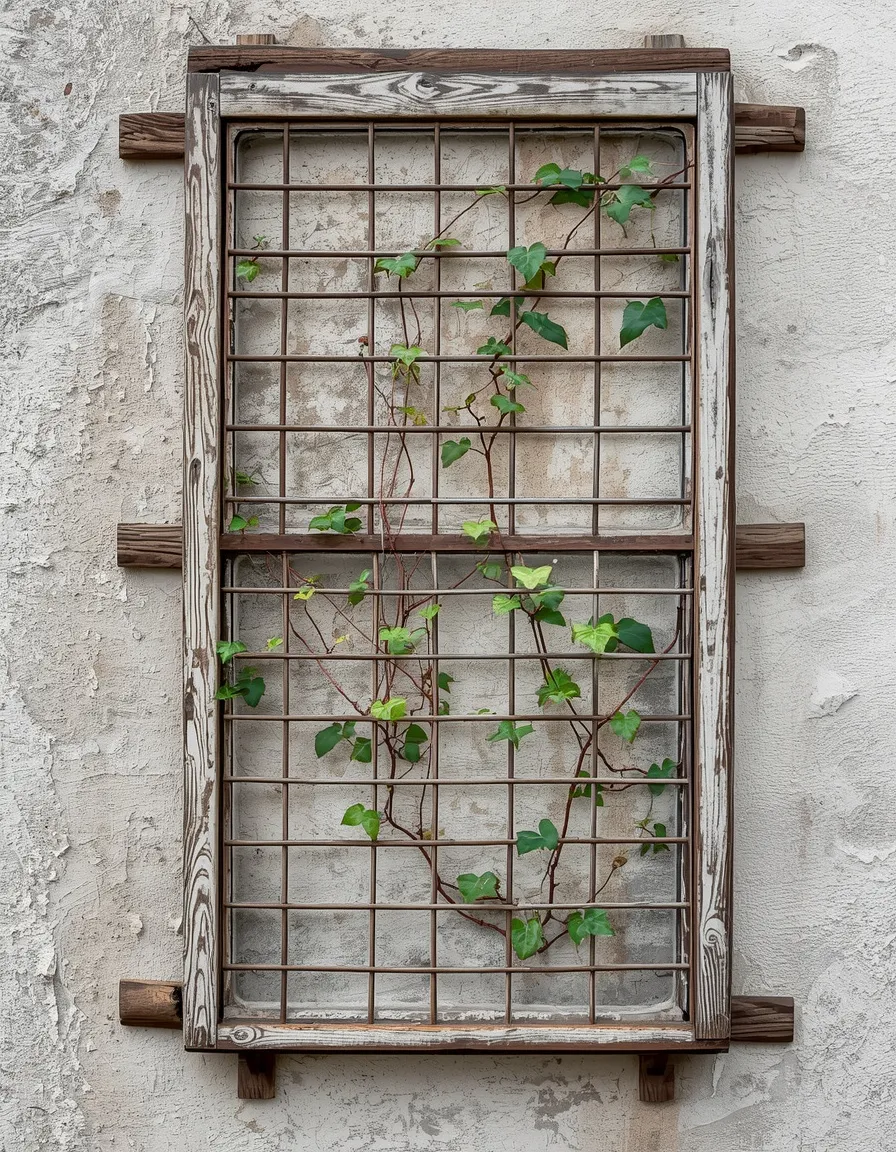
An old wooden window sash, glass removed and the empty frame mounted flat against a wall, brings genuine architectural charm to a trellis that a plain grid or panel simply doesn’t offer.
Remove any remaining glass carefully, wearing gloves and eye protection, and check the wood frame for rot or structural weakness before mounting it, since a genuinely deteriorated window frame won’t hold up outdoors regardless of how charming it looks. Mount the frame a few inches off the wall using spacer blocks, rather than flush against it, so climbing plants have room to actually wind through the mullions rather than being pressed flat against the surface. This idea suits smaller, lighter climbing plants particularly well, clematis, black-eyed Susan vine, or a modest climbing rose, since the original window’s grid of small panes creates a naturally decorative but structurally modest support.
- Brings genuine architectural character that a plain grid or panel doesn’t provide
- Mounting with spacer blocks off the wall gives plants real room to climb through
- Best suited to lighter climbing plants given the window frame’s original delicate construction
10. Woven Branch Trellis
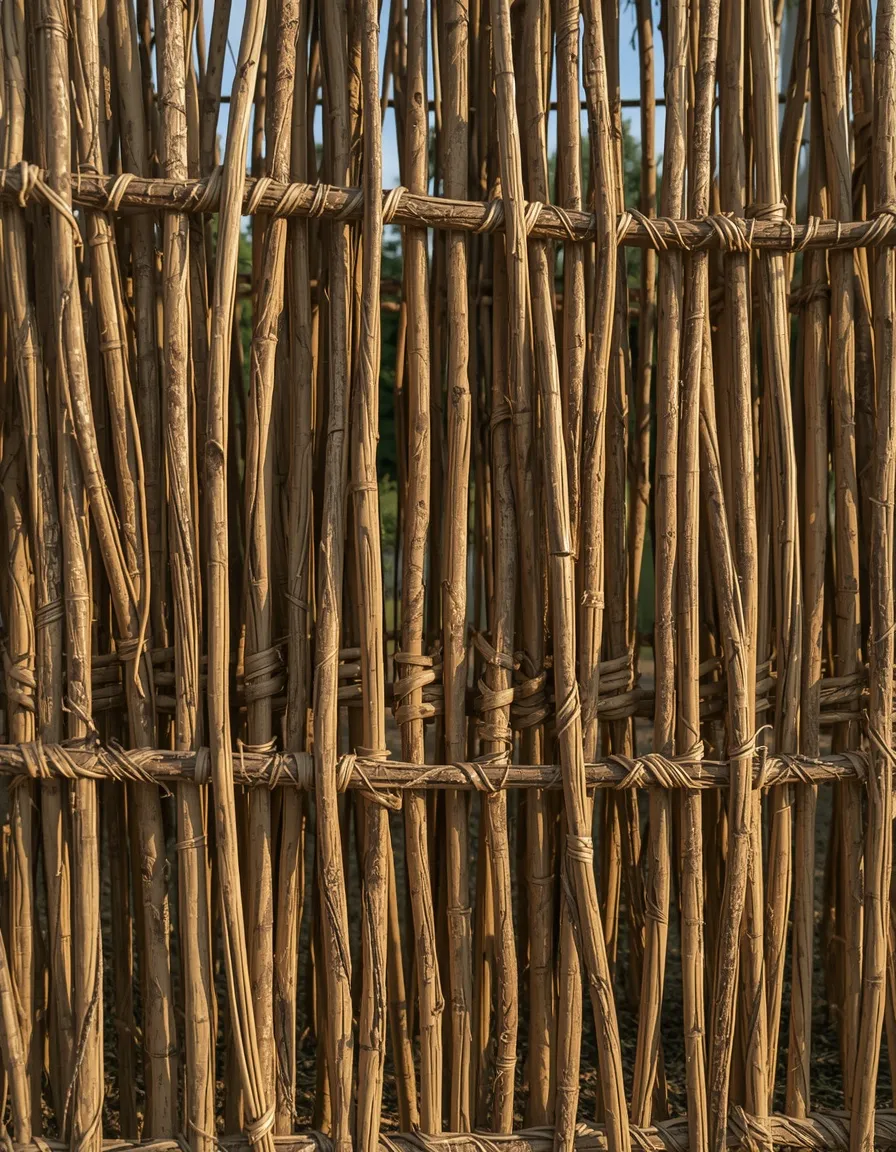
Flexible willow, hazel, or dogwood branches woven between upright stakes create a genuinely rustic, entirely free trellis for anyone with access to a few young trees or a neighbor willing to share prunings.
Drive several sturdy upright stakes into the ground first, then weave flexible branches horizontally between them in a basket-weave pattern, working from the bottom up and tucking each branch’s end back into the weave to hold it in place without needing wire or twine at every junction. Freshly cut, still-flexible branches, harvested within a day or two of weaving, bend and weave considerably more easily than dried-out wood, which becomes brittle and prone to snapping. This structure is genuinely biodegradable and will break down within a couple of seasons, making it a strong choice for a temporary bed layout or anyone who enjoys rebuilding the structure as a seasonal ritual rather than wanting something permanent.
- Uses entirely free material for anyone with access to flexible branches or willing neighbors
- Fresh, still-flexible branches weave considerably more easily than dried-out wood
- Naturally biodegradable, suiting a temporary layout rather than a permanent structure
11. Repurposed Fence Panel Privacy Trellis
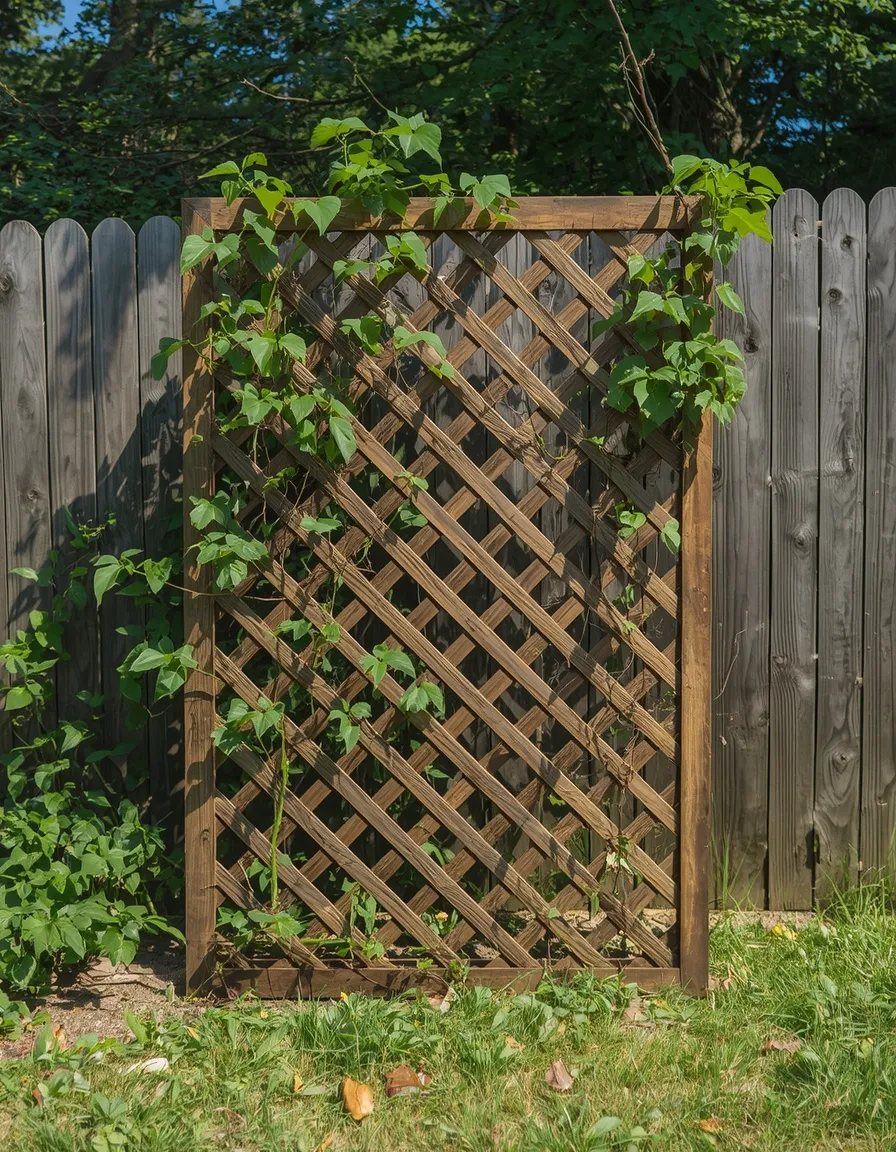
A discarded lattice or picket fence panel, salvaged from a renovation or found secondhand, stood upright as a standalone screen does double duty as both a climbing trellis and genuine privacy screening in one piece.
Set the panel into the ground using simple wood or metal fence posts on either side, sinking posts at least 18 to 24 inches (45 to 60 cm) deep for real stability, since a tall panel acting as both trellis and privacy screen catches considerably more wind load than a smaller open trellis and needs correspondingly sturdier anchoring. Lattice-style panels work better for this dual purpose than solid picket panels, since the open lattice pattern gives climbing plants actual gripping surface while still providing meaningful visual screening once foliage fills in. This idea suits property line screening, blocking a view of a utility area, or dividing a yard into distinct zones considerably more cheaply than either a purpose-built privacy fence or a decorative trellis purchased separately.
- Combines climbing structure and genuine privacy screening in a single salvaged piece
- Needs sturdier anchoring than a smaller trellis due to the wind load a tall panel catches
- Open lattice panels outperform solid picket panels for this specific dual-purpose use
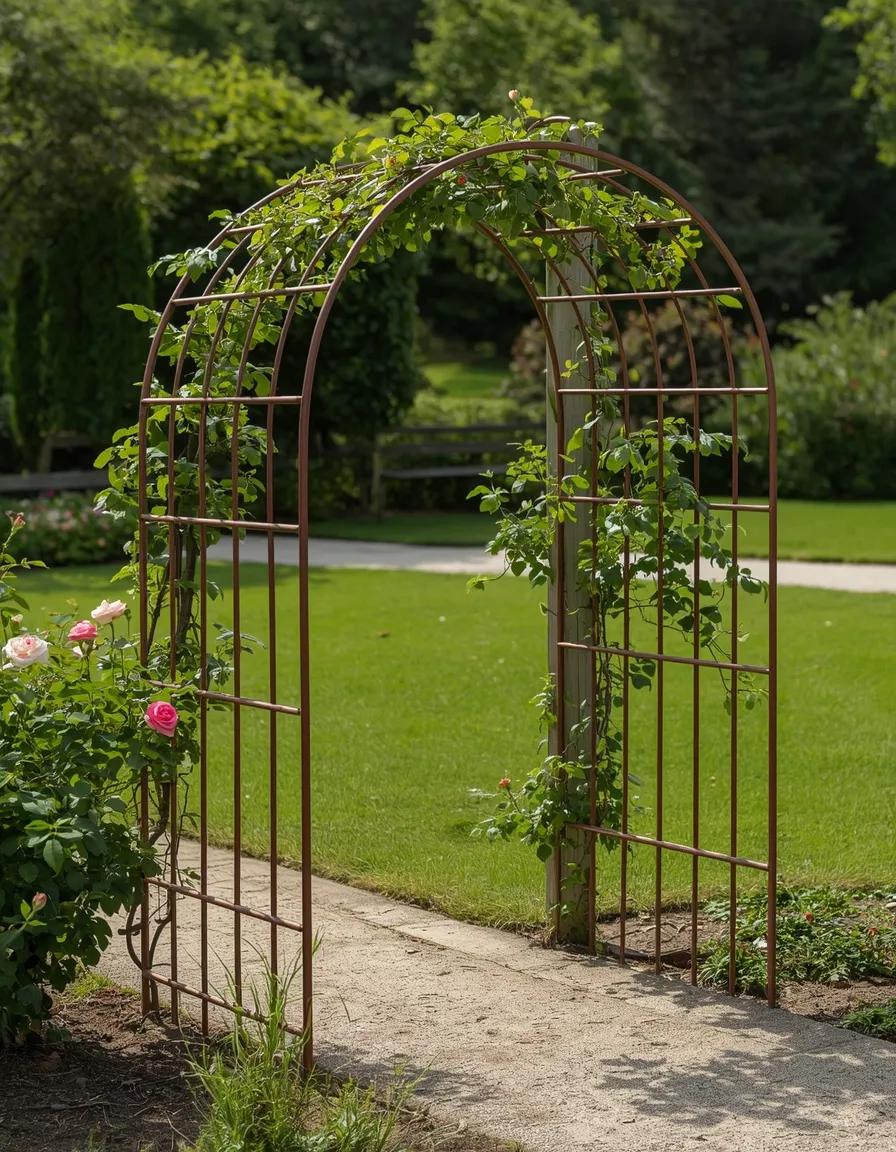
12. Budget Arch Trellis from Cattle Panel or Conduit
A cattle panel or a run of flexible electrical conduit, bent into a simple arch and anchored at both ends, creates a genuine garden archway trellis for a fraction of the cost of a decorative pre-made arch.
Bend a cattle panel section by hand, working slowly from both ends toward the center, into an arch shape roughly 6 to 7 feet (1.8 to 2.1 m) tall at the peak, then sink each end into the ground beside sturdy T-posts to hold the curved shape and resist the outward spring-back force galvanized panel naturally has. Flexible metal or PVC conduit offers a lighter, more affordable alternative for a smaller archway, though it needs more frequent anchoring points along its length than the inherently rigid cattle panel does, since conduit alone bends more easily under wind or plant weight. Position the arch over a path, gate, or garden entrance rather than in open bed space, since an archway’s visual impact depends entirely on being walked through, not just viewed from the side.
- Delivers a genuine garden archway for a fraction of the cost of a decorative pre-made arch
- Cattle panel holds its bent shape better than conduit, which needs more frequent anchoring
- Works best positioned over a path or entrance, where the archway can actually be walked through
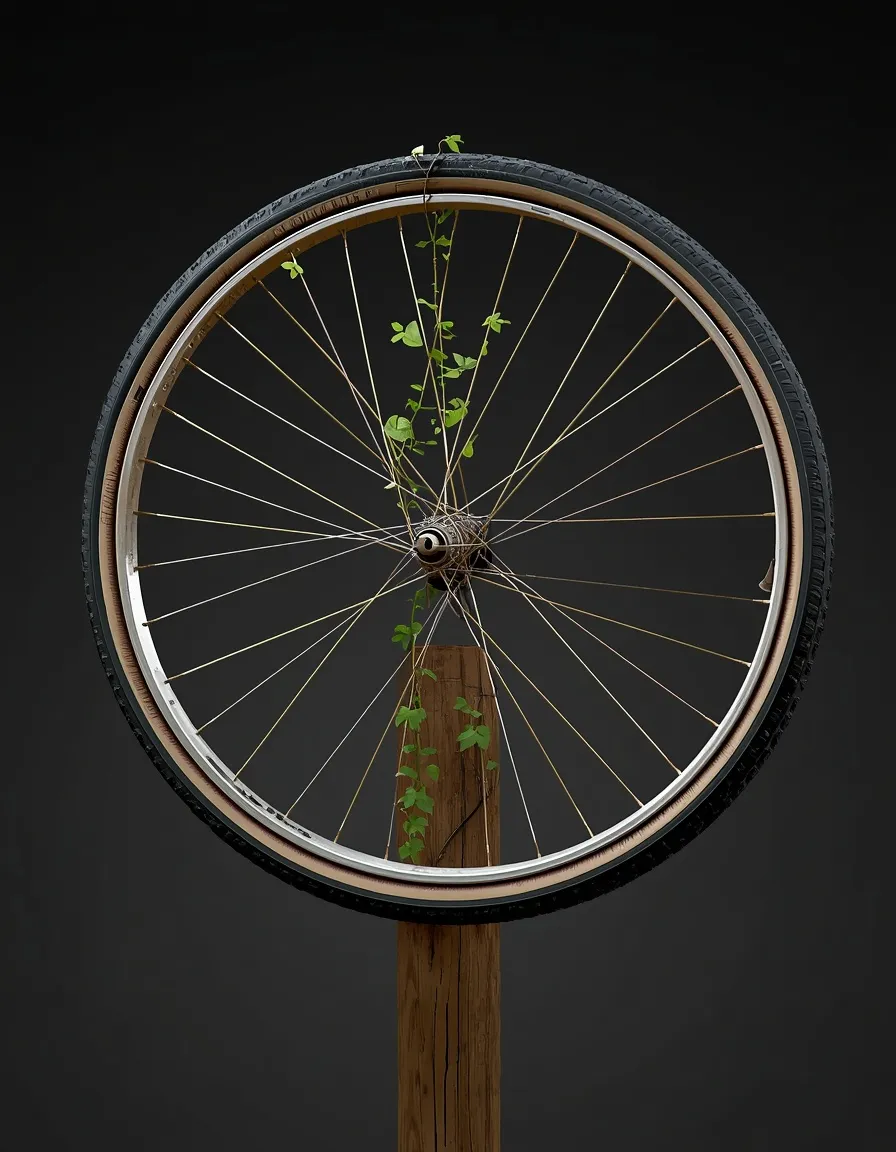
13. Bicycle Wheel Trellis for Small Vines
An old bicycle wheel, tire and tube removed, mounted upright on a simple post creates a genuinely distinctive circular trellis for small, lightweight vines that a standard flat panel can’t replicate.
Remove the tire and tube completely, leaving just the metal rim and spokes, then mount the wheel horizontally onto a sturdy wooden or metal post using a simple axle bolt or bracket, positioning it at a height where the circular shape reads clearly as a design feature rather than getting lost in surrounding foliage. This works best for genuinely small, lightweight climbers, sweet peas, small clematis varieties, or nasturtium, since the thin spokes offer limited structural support compared to a solid panel or grid. Multiple wheels mounted at staggered heights along a fence line or bed edge create a repeated visual pattern that reads as intentional, decorative design rather than a single novelty piece standing alone.
- Creates a genuinely distinctive circular design a flat panel or grid can’t replicate
- Suited specifically to small, lightweight vines given the wheel spokes’ limited structural support
- Multiple wheels at staggered heights read as intentional repeated design rather than a single novelty
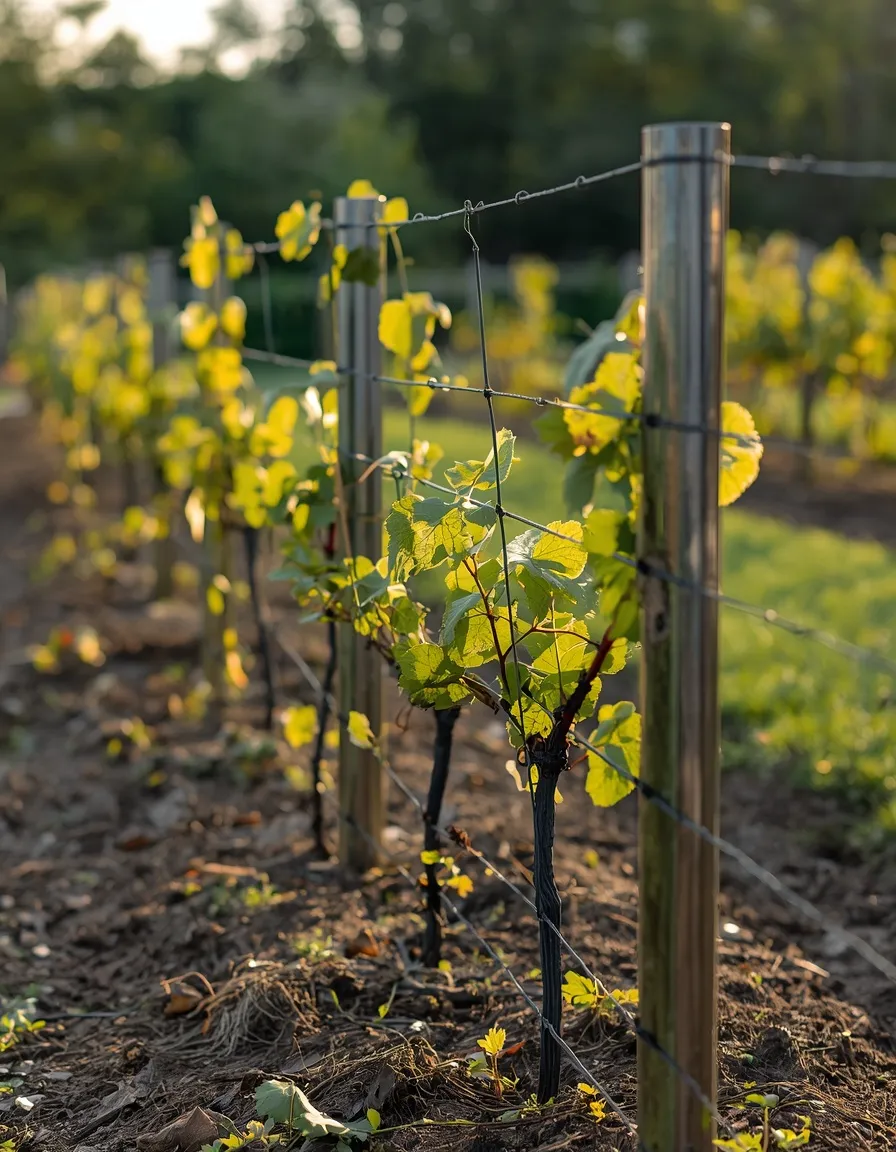
14. Grape Trellis from Rebar Posts and Wire
A simple two-wire trellis strung between sturdy rebar or wood posts gives grapevines the specific horizontal training structure they actually need, considerably different from the vertical climbing support most other vines want.
Sink posts every 8 to 10 feet (2.4 to 3 m) along the row, deep enough, at least 2 feet (60 cm), to resist the substantial ongoing tension a loaded grapevine puts on the wire over years of growth, then string two horizontal wires, one around 3 feet (90 cm) high and a second around 5 to 6 feet (1.5 to 1.8 m), training the vine’s main trunk up and its fruiting canes out along each wire. Galvanized wire, rather than plain steel, resists rust considerably longer under years of outdoor exposure, a meaningful consideration since a productive grape trellis is meant to last many seasons rather than being rebuilt annually like some of the more temporary options on this list. This two-wire horizontal system is genuinely the standard approach for grape training specifically, rather than a generic vertical trellis adapted for grapes, since it matches how grapevines naturally want to grow and fruit.
- Matches grapevines’ natural horizontal training habit rather than generic vertical climbing support
- Deep post anchoring is essential to resist the substantial long-term tension grapevines put on wire
- Galvanized wire resists rust considerably longer than plain steel for this long-term structure
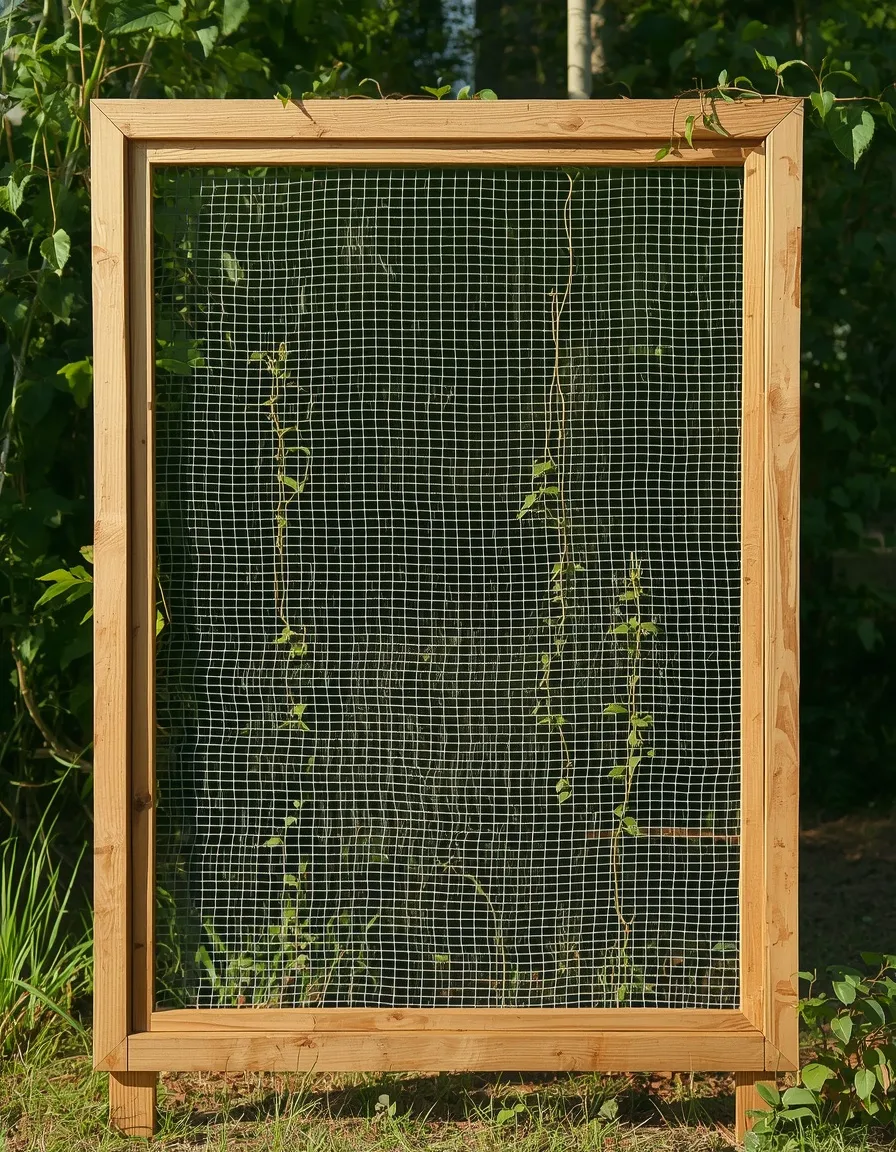
15. Chicken Wire and Wood Frame Trellis
A simple wood frame built from scrap lumber and stapled with inexpensive chicken wire creates a genuinely versatile, lightweight trellis panel that costs a fraction of a solid wood lattice.
Build a basic rectangular frame from scrap 2×2 or 1×2 lumber, then stretch chicken wire across it and staple it securely to the frame’s back edges, pulling the wire taut as it’s stapled to avoid a sagging, loose panel once plant weight is added. Chicken wire’s small hexagonal openings work particularly well for plants with fine tendrils, like sweet peas or small clematis, that struggle to grip a wider grid spacing. If buying new lumber rather than using genuine scrap, choose standard untreated pine or cedar rather than pressure-treated lumber for anything sitting directly in soil growing edible crops; the EPA notes that older CCA-treated wood was largely phased out of residential use by 2003 over arsenic leaching concerns, which is one reason many gardeners still avoid treated lumber in direct contact with food-crop soil even with newer, generally safer formulations. This is a genuinely quick weekend project achievable with basic hand tools, and the finished panel is light enough to lean against a wall or fence rather than requiring the deep, sturdy ground anchoring heavier structures on this list need.
- Costs a fraction of a solid wood lattice while remaining genuinely versatile
- The small hexagonal openings suit fine-tendriled plants better than wider grid spacing
- Untreated wood is worth choosing over pressure-treated lumber for anything touching edible-crop soil
16. Repurposed Headboard Rose Trellis
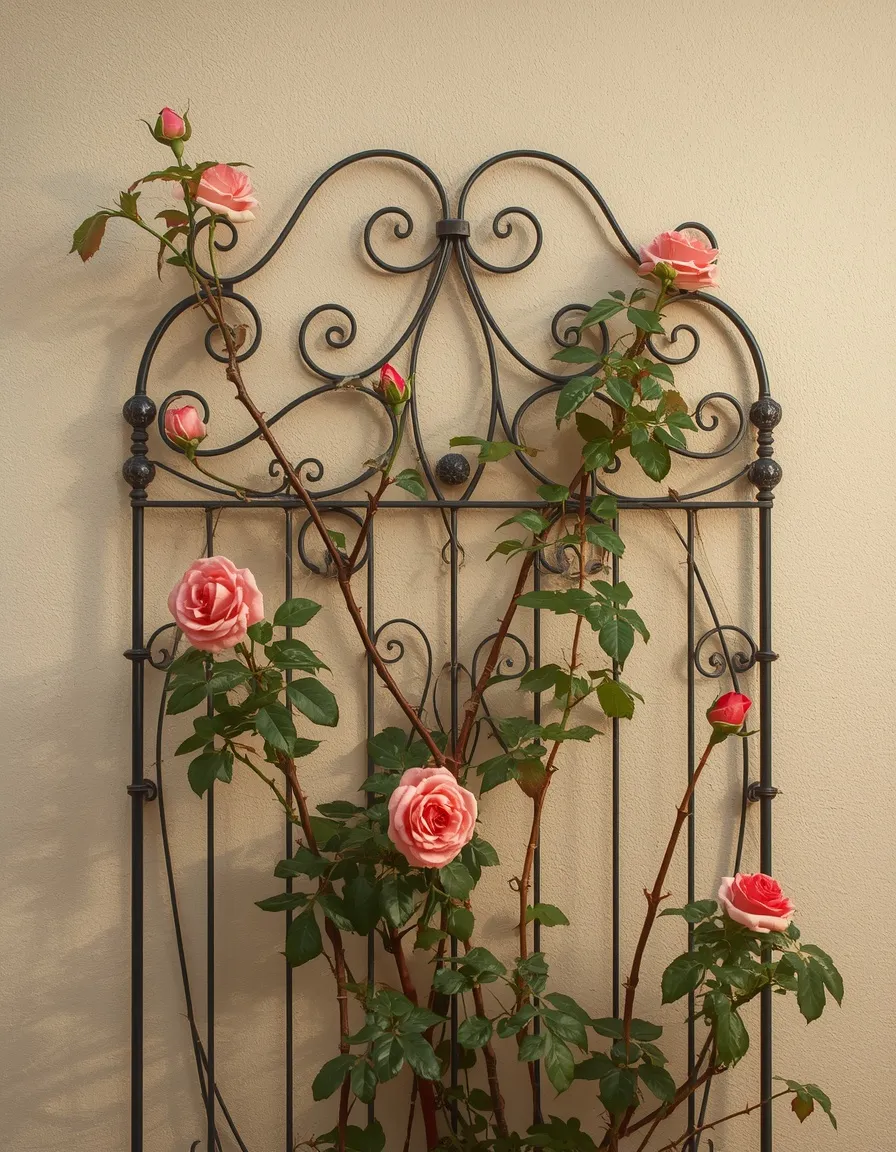
An old wooden or wrought iron headboard, no longer needed for its original purpose, mounted upright against a wall brings genuine ornamental character to a climbing rose that a purpose-built trellis often can’t match.
Wrought iron headboards, with their existing scrollwork and open patterns, generally translate to a garden trellis more successfully than solid wood headboards, since the wood versions need the panel cut into or replaced with lattice to actually give roses something to climb through. Mount the headboard a few inches off the wall using spacer blocks or brackets, giving canes room to grow behind the structure rather than being crushed flat against a solid surface. Climbing roses have genuinely heavy, thorny canes that need loose ties, not tight ones, to actually secure to the headboard’s frame as they grow, using soft garden twine or velcro plant tape rather than wire, which can cut into canes as they thicken with age.
- Brings genuine ornamental character that a purpose-built trellis often can’t replicate
- Wrought iron headboards generally work better than solid wood, which needs modification
- Loose ties with soft material protect thickening rose canes better than wire would
17. Quick Bamboo Grid for Cucumbers
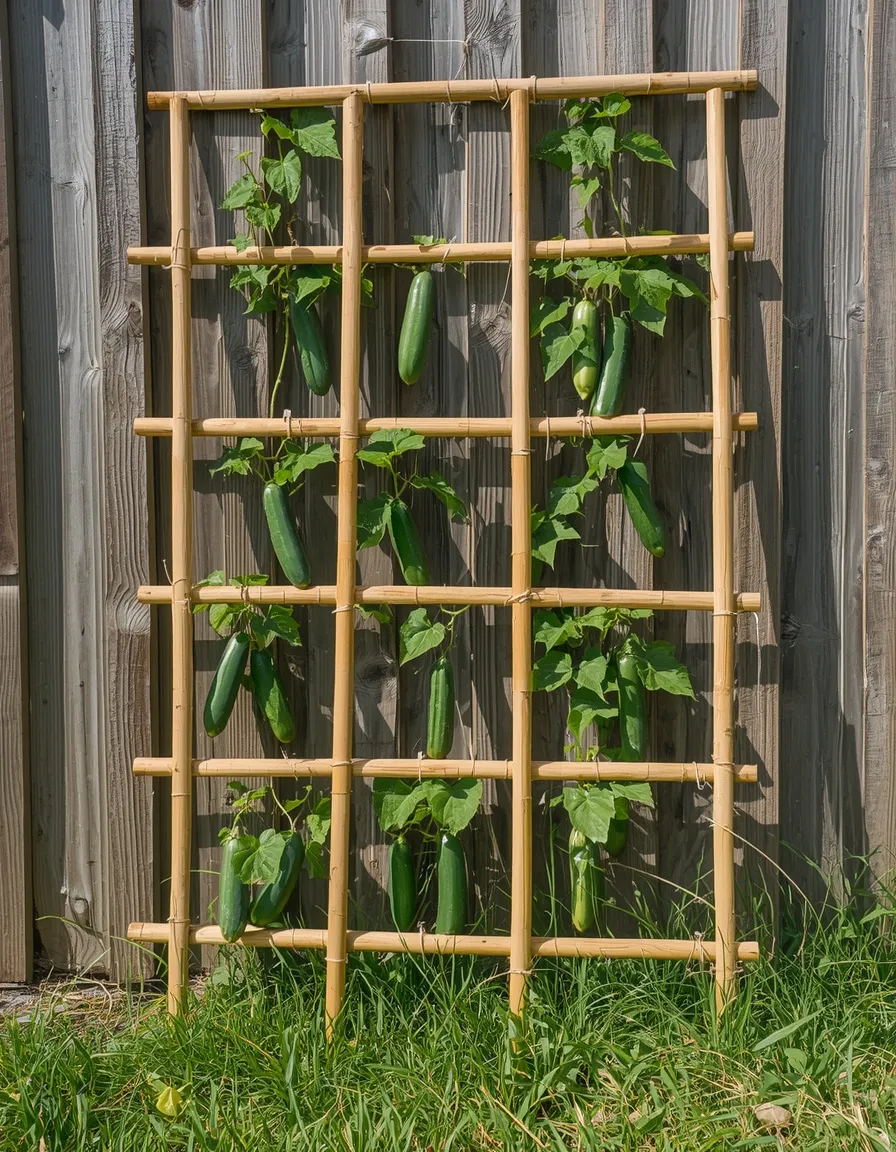
A simple bamboo grid, poles lashed together into a flat vertical frame rather than a freestanding teepee, gives cucumber vines a fast, genuinely inexpensive climbing structure that keeps fruit straighter and easier to spot at harvest.
Lash horizontal bamboo crosspieces to two or three vertical poles at 12 to 18 inch (30 to 45 cm) intervals, creating a ladder-like grid that leans against a fence or stands staked upright at the row’s edge, giving cucumber tendrils plenty of narrow surfaces to grip as they climb. This budget approach works well as a quick seasonal solution, but for anyone wanting a deeper dive specifically into cucumber trellis design, spacing, and variety-specific training techniques, Sunday Abode’s cucumber trellis ideas covers that topic in considerably more depth than a single budget-focused entry here can.
- A fast, genuinely inexpensive structure that keeps cucumber fruit straighter and cleaner
- The ladder-like grid gives narrow gripping surfaces cucumber tendrils take to easily
- Works well as a quick seasonal build for anyone wanting a simple, low-cost solution
18. Cinder Block and Pipe Modular Trellis
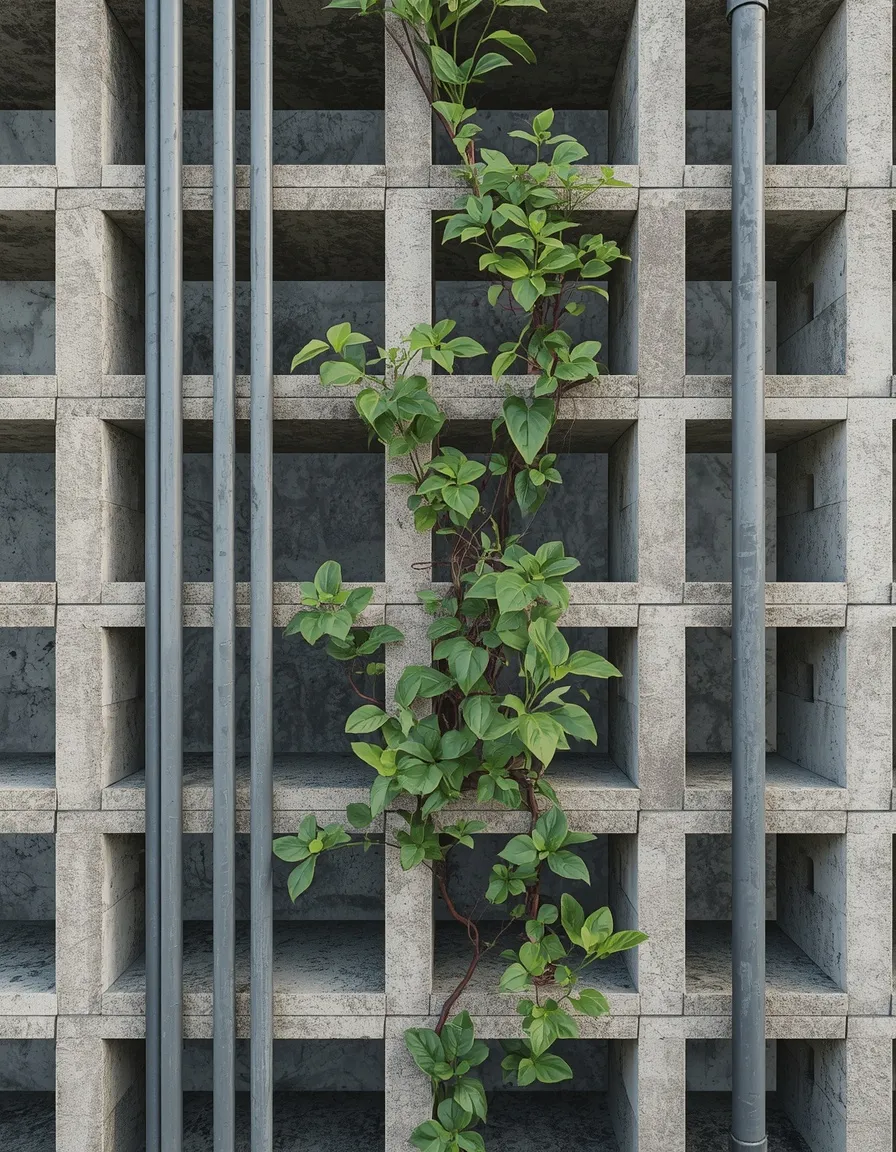
Concrete cinder blocks with metal or PVC pipe uprights slotted into their hollow cores create a genuinely modular trellis system that requires no digging, driving stakes, or permanent installation at all.
Set cinder blocks flat on the ground where the trellis is needed, then slot pipe sections vertically into the blocks’ hollow cores, using the block’s own weight to hold the upright steady rather than needing it anchored into the ground. This makes the entire structure genuinely temporary and relocatable, pull the pipe out and move the blocks whenever a bed layout changes, which suits renters or anyone still experimenting with garden layout considerably better than a structure requiring in-ground anchoring. Fill the block cores with soil or gravel for additional stability if the trellis will be supporting real plant weight, since an empty core relies entirely on the block’s own weight and offers less resistance to being knocked or blown over.
- Requires no digging or permanent installation, using the block’s weight for stability instead
- Genuinely relocatable, suiting renters or anyone still experimenting with garden layout
- Filling block cores with soil or gravel adds meaningful stability for heavier plants
19. DIY Privacy Screen Trellis Wall
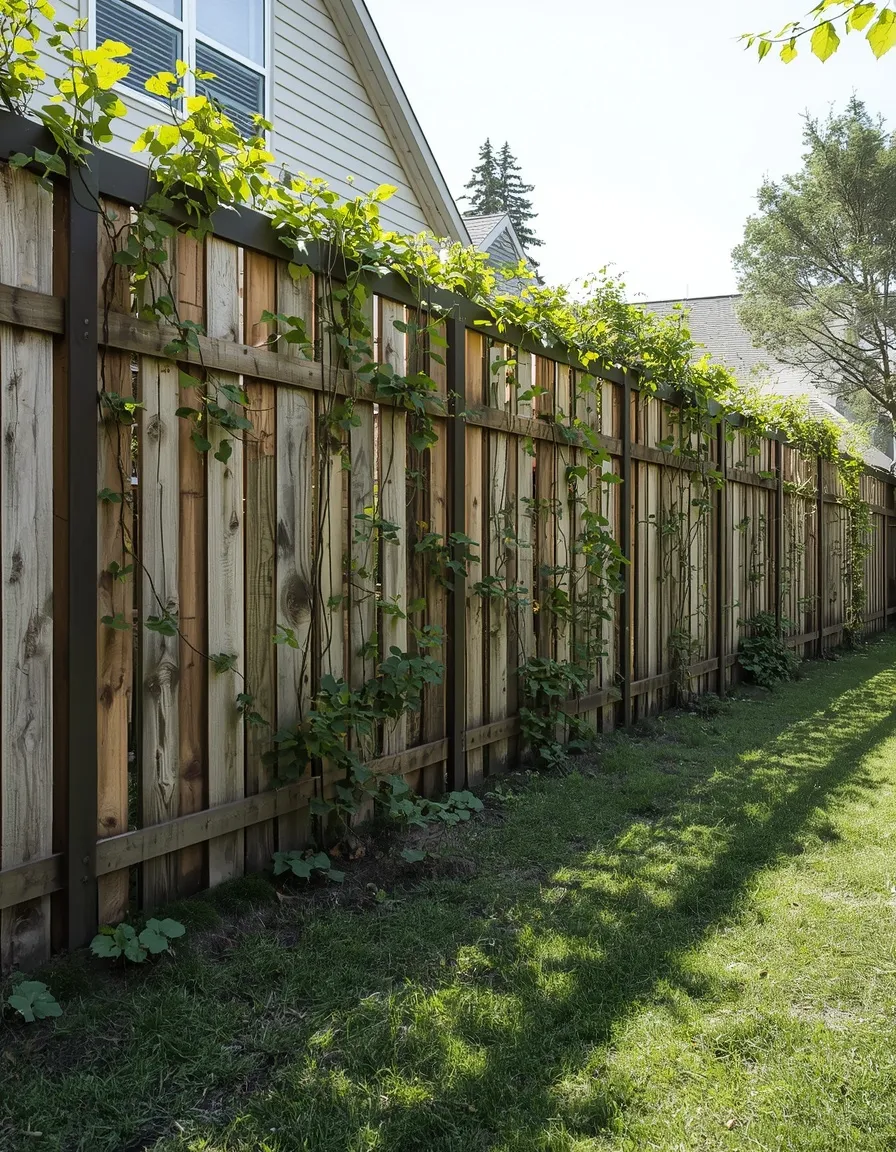
A full-width trellis wall, built from a simple frame filled with lattice, reclaimed fence boards, or woven branches, does the combined work of blocking an unwanted view and giving vines a genuine floor-to-top climbing surface.
Build or salvage a frame sized to the specific screening need, a utility area, an unattractive fence line, or a neighbor’s direct sightline, and fill it with whichever budget material on this list fits the available scrap and skill level, cattle panel for something heavy-duty, chicken wire and scrap lumber for something quick and light. Plant fast-growing, dense climbers specifically chosen for screening rather than purely ornamental value, since a sparse or slow-establishing vine leaves the screen looking more like an empty frame than genuine privacy for at least the first season. Anchor a full privacy wall considerably more securely than a smaller decorative trellis, since the combined surface area of the structure and its eventual foliage catches meaningfully more wind load than an open, airy trellis design does.
- Combines genuine privacy screening with a full climbing surface in one structure
- Fast-growing, dense climbers matter more here than in purely decorative trellis applications
- Needs considerably sturdier anchoring than a smaller trellis, given the wind load a full wall catches
Conclusion
The best cheap trellis ideas come down to matching material sturdiness to what’s actually being grown, a rebar and twine grid handles peas beautifully but has no business supporting a mature grapevine, while a cattle panel would be genuine overkill for a few sweet peas against a fence. Start with the plant first, its mature weight and growth habit, then work backward to the cheapest structure genuinely capable of supporting it rather than the other way around.
For more layout and design inspiration, Sunday Abode’s garden design ideas cover plenty of complementary approaches. Build with what’s already on hand where possible, anchor it properly, and let the plants do the rest of the work.
FAQs
What’s the cheapest material to build a trellis from?
A rebar and twine grid is close to the cheapest option available, costing only a few dollars in materials, though it’s a seasonal structure since the twine breaks down within a growing season. Genuinely free materials like repurposed pallets, old ladders, or willow branches cost nothing at all beyond the time to build them.
How do I know if a cheap trellis is sturdy enough for my plants?
Match the structure to the plant’s mature weight: lightweight options like string grids or chicken wire suit annual vines like sweet peas, while heavier climbers like mature squash, grapes, or climbing roses need a genuinely rigid structure like cattle panel or a properly anchored wood frame. A trellis that looks fine when a plant is young can still fail once real weight and wind resistance build up later in the season.
Can I use pressure-treated wood for a trellis near vegetables?
It’s worth some caution: older CCA-treated lumber was restricted from most residential use in the United States in 2003 due to arsenic leaching concerns, and while newer treatments are generally considered safer, many gardeners still prefer to avoid treated wood in direct contact with edible crop soil. Untreated wood, repurposed pallets checked for heat treatment rather than chemical fumigation, or non-wood materials like bamboo, metal, or PVC sidestep the concern entirely.
What’s a good cheap trellis for a privacy screen?
A repurposed lattice fence panel or a full-width trellis wall filled with cattle panel, chicken wire, or reclaimed fence boards does double duty as both a climbing structure and genuine visual screening. Fast-growing, dense climbers matter more for privacy screening than purely ornamental vines, since a sparse vine leaves the screen looking more like an empty frame.
How do I anchor a lightweight trellis so it doesn’t blow over?
Sink support posts or stakes at least 12 to 18 inches (30 to 45 cm) into the ground for smaller structures, and deeper, 18 to 24 inches (45 to 60 cm) or more, for anything with real height or surface area like a privacy screen. Weighting the base with bricks or setting posts into filled cinder block cores are both effective alternatives when driving stakes into the ground isn’t practical.
What’s the best cheap trellis for climbing roses?
A cattle panel handles a mature climbing rose’s genuine weight well, while a repurposed wrought iron headboard brings real ornamental character for a smaller planting. Either way, loose ties with soft twine or plant tape, rather than wire, protect rose canes as they thicken with age.
Are DIY trellises safe to build with kids helping?
Simpler builds like a bamboo teepee or a string grid are genuinely approachable for kids to help with under supervision, while cutting cattle panel, working with power tools, or handling rebar are better left to adults. Any exposed rebar ends should be capped regardless of who’s helping, since an uncapped vertical stake is a real puncture hazard in a garden bed.