
Introduction
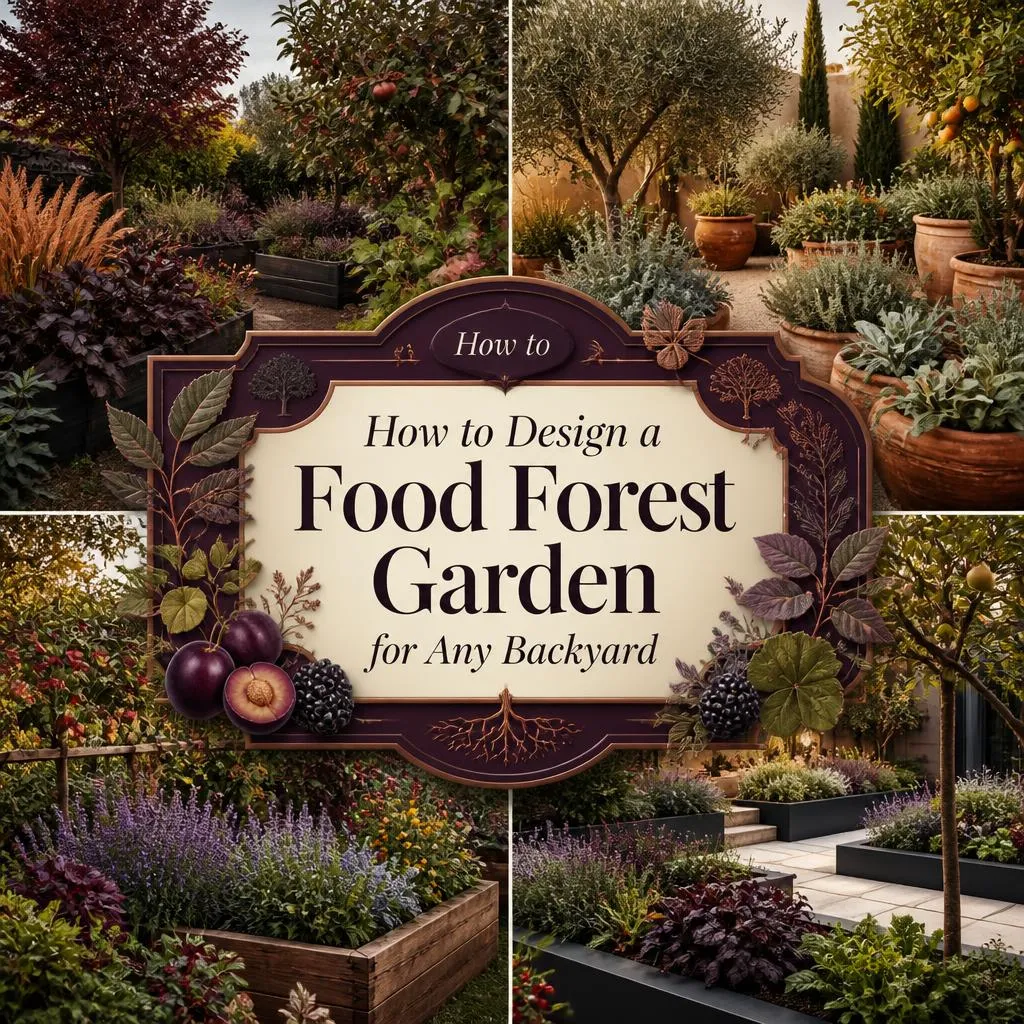
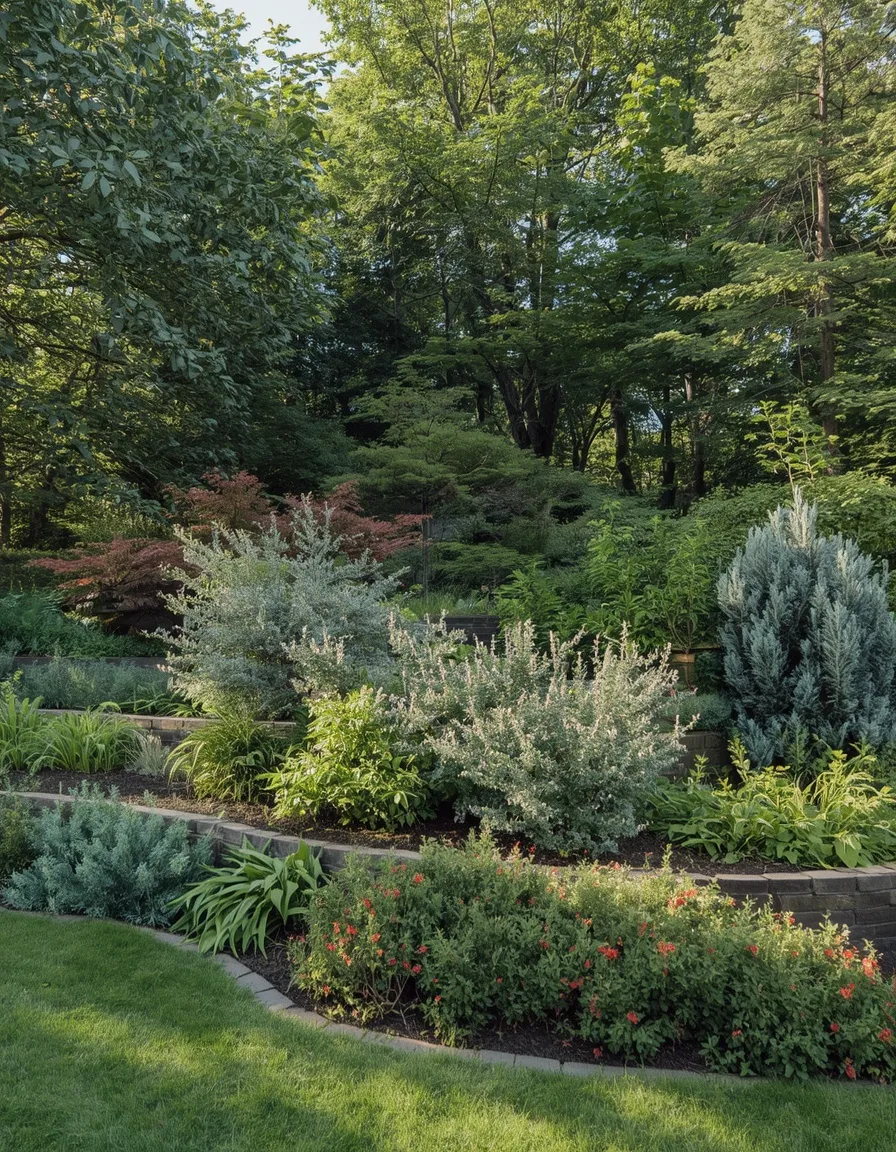
A food forest garden starts from a simple observation: a healthy forest never needs replanting, fertilizing, or spraying, yet it produces year after year on its own. A food forest garden borrows that layered structure, tall fruit and nut trees, smaller understory trees, berry shrubs, herbs, groundcover, and root crops all growing together, and applies it to a backyard specifically to grow food with less ongoing input than a conventional vegetable garden requires. This guide walks through designing one properly: the seven planting layers that make the system work, realistic site planning, companion plant guilds, and honest guidance on how much maintenance a young food forest actually needs before it matures. Whether the space is a quarter acre or a modest backyard, there’s a version of this system that fits any abode.
What Is a Food Forest Garden?
A food forest garden, also called a forest garden or edible forest garden, is a perennial planting system designed to mimic the structure of a natural woodland edge using productive, edible, or otherwise useful plants instead of purely wild ones. The concept traces back to tropical home gardens practiced for centuries and was formalized for temperate climates by researchers like Robert Hart in the 1980s, whose small Shropshire garden became one of the most referenced food forest designs in permaculture literature. Unlike a traditional vegetable garden, which is replanted from bare soil every year, a mature food forest garden is built almost entirely from perennial plants, trees, shrubs, and self-seeding or spreading herbaceous species that come back on their own season after season, dramatically reducing the annual digging, sowing, and soil disturbance a conventional plot requires.
- Built primarily from perennial plants rather than annuals replanted each year
- Modeled on natural forest structure using edible and useful species instead of purely ornamental or wild ones
- Reduces long-term digging, tilling, and replanting compared to a conventional vegetable garden
Planning Your Site Before Planting
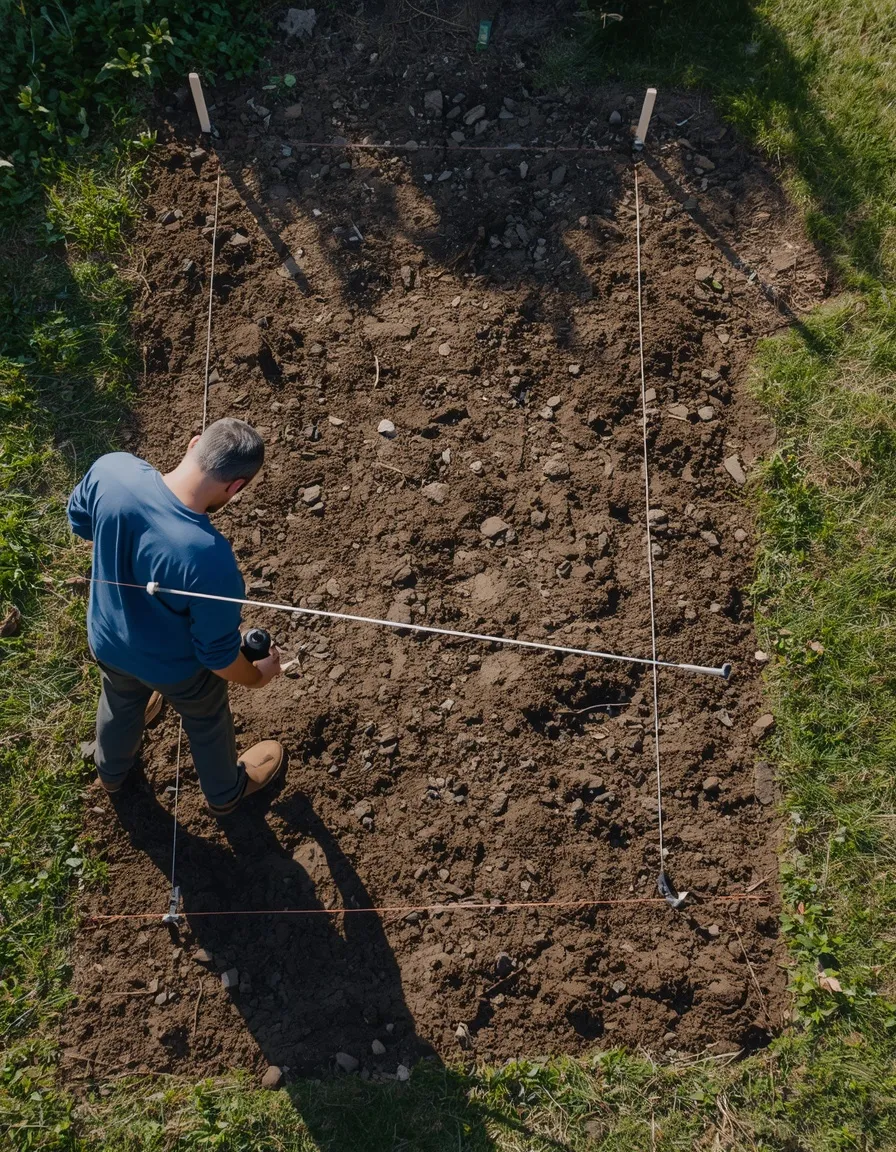
Before ordering a single tree, an honest assessment of the site’s sun, soil, and water conditions determines which food forest garden layout will actually succeed, since the wrong site assumptions are the single biggest reason first attempts fail within a few years.
Track sunlight across the space for a full day if possible, since most fruiting trees and shrubs need at least 6 hours of direct sun, while the shadier, cooler zones beneath an established canopy are exactly where later understory and groundcover layers will eventually live. Test soil drainage by digging a 12-inch (30 cm) hole, filling it with water, and timing how long it takes to drain; standing water after several hours signals a drainage problem that needs addressing with raised mounds or swales before planting rather than after. Map the space’s mature footprint, not its current empty appearance, since a fruit tree planted at 4 feet (1.2 m) tall can spread to a 15 to 20 foot (4.5 to 6 m) canopy within a decade, and overcrowded first plantings are the most common design mistake in newly established food forest gardens.
- A full-day sun assessment prevents the most common site-selection mistake
- A simple drainage test identifies problem areas before they become expensive to fix
- Planning for mature tree size, not current sapling size, prevents overcrowding years later
The Seven Layers of a Food Forest Garden
A food forest garden’s structure is typically described in seven layers, each occupying a different vertical and horizontal niche the way a natural forest does, and understanding how these layers interact is what separates a genuine food forest garden design from a random collection of fruit trees. Not every layer needs to be present from day one; most established food forests build up gradually over several years as the canopy layer matures enough to define the growing conditions beneath it.
Canopy Layer (Large Fruit and Nut Trees)
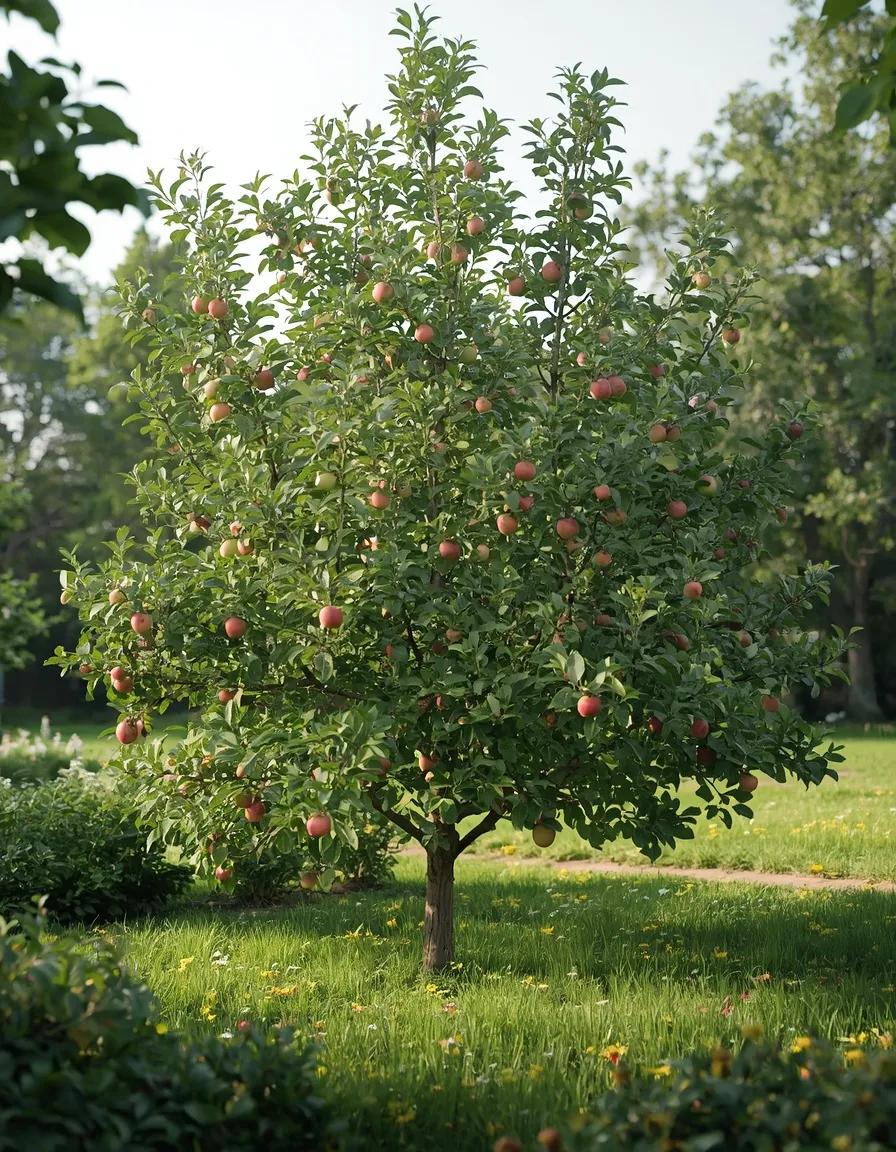
Standard or semi-dwarf fruit and nut trees, apple, pear, walnut, chestnut, form the tallest layer and set the overall scale and shade pattern for everything planted beneath them.
Space canopy trees 20 to 30 feet (6 to 9 m) apart depending on the specific variety’s mature spread, and choose dwarf or semi-dwarf rootstocks for smaller backyard plots, since standard rootstock trees can reach 25 feet (7.6 m) or taller and quickly overwhelm a modest space. This layer takes the longest to become productive, often 4 to 8 years for fruit trees and considerably longer for nut trees like walnut, so canopy selection deserves the most research and patience of any layer in the design. A useful variation for small spaces is planting fewer canopy trees than photos of mature food forests suggest, one or two well-placed dwarf fruit trees genuinely anchor a backyard-scale design without shading out everything beneath them.
- Sets the overall scale, shade pattern, and microclimate for every layer beneath it
- Takes the longest of any layer to become productive, often 4 to 8 years or more
- Dwarf and semi-dwarf rootstocks are essential for realistic backyard-scale spacing
Sub-Canopy Layer (Smaller Fruit Trees)
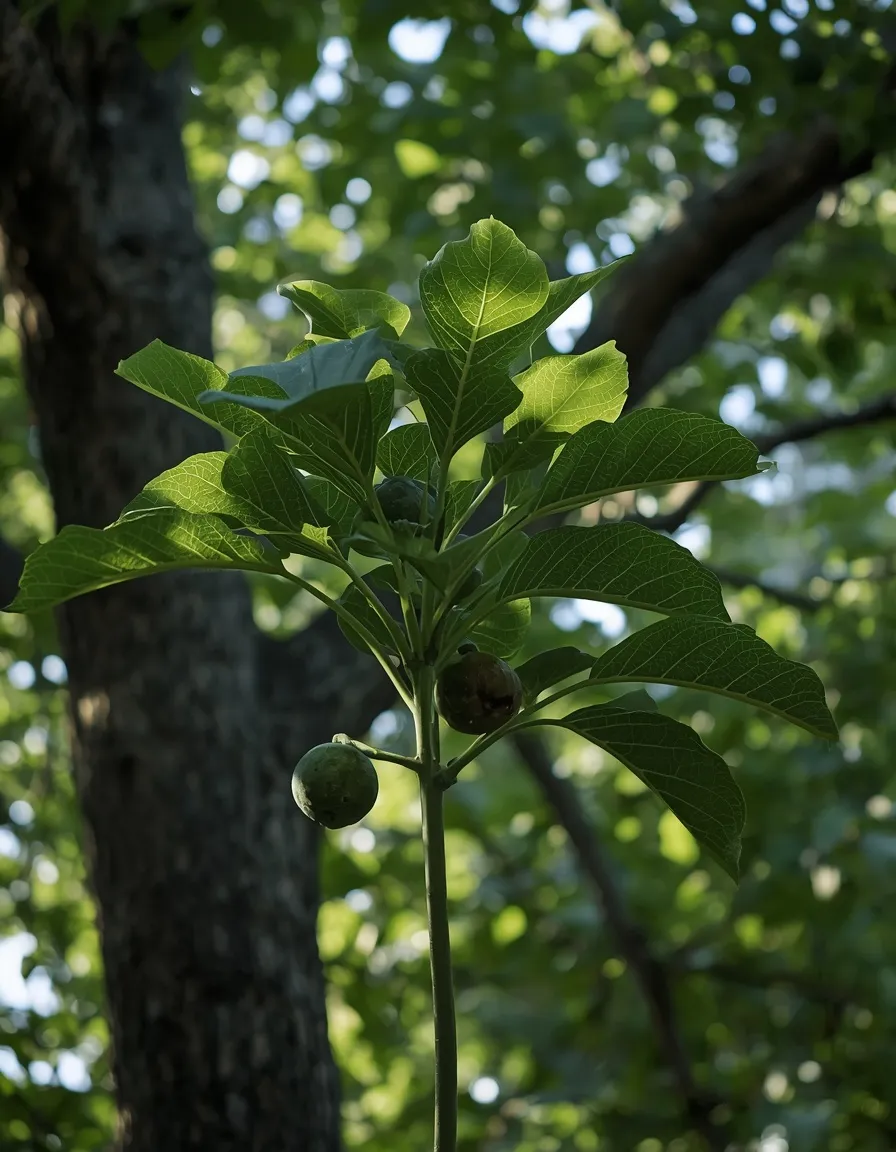
Smaller trees like dwarf apple varieties, fig, mulberry, or hazelnut fill the layer just beneath the canopy, taking advantage of the partial shade and different light conditions the taller trees create.
Position sub-canopy trees on the sunnier edges of the canopy’s drip line rather than directly beneath dense shade, since even shade-tolerant fruiting trees need some direct or filtered light to produce well. This layer typically reaches productive maturity faster than the canopy above it, often within 2 to 4 years, giving a young food forest garden its first meaningful harvests while the canopy trees are still establishing. Figs and mulberries are particularly forgiving choices for beginners in this layer, tolerating a wider range of soil conditions and pruning mistakes than many canopy trees do.
- Fills the space between canopy and shrub layers, using filtered light effectively
- Often productive within 2 to 4 years, faster than the canopy layer above it
- Figs and mulberries are especially forgiving entry points for less experienced gardeners
Shrub Layer (Berries and Soft Fruit)
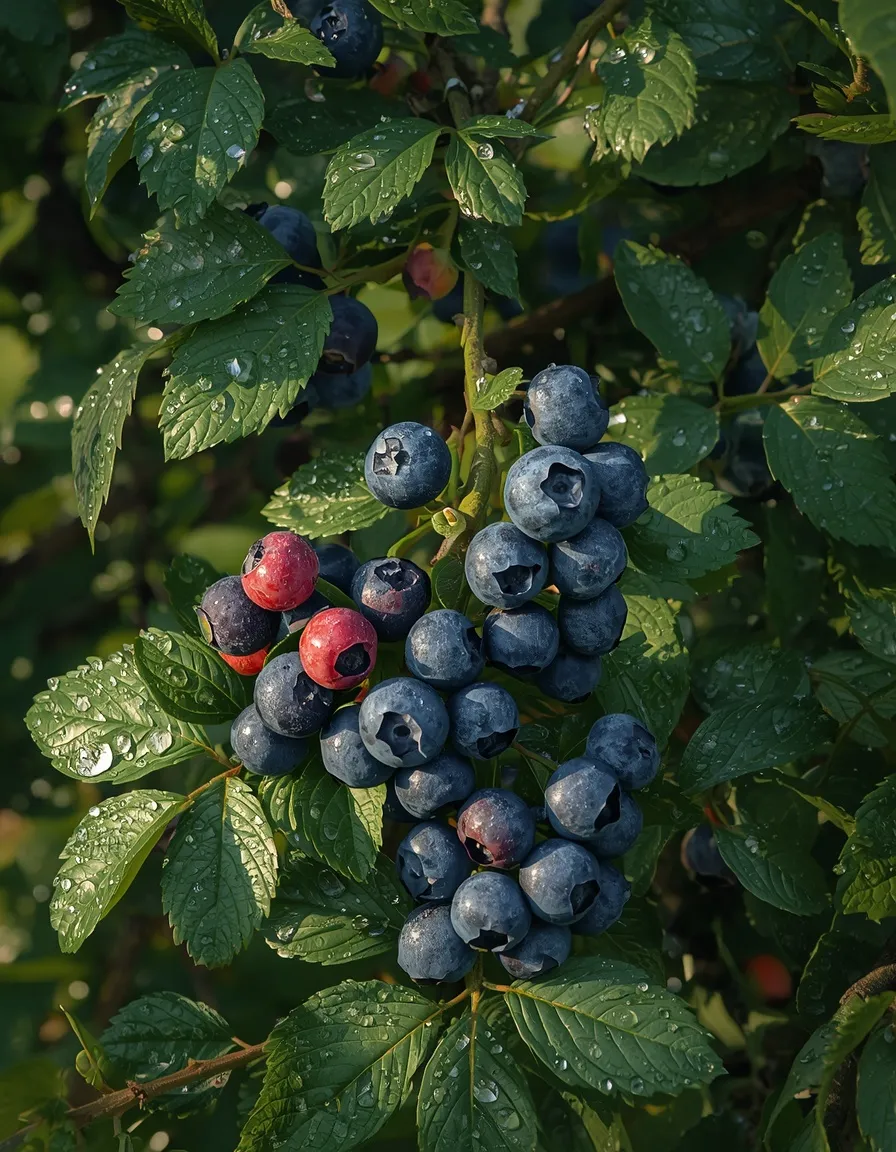
Currants, gooseberries, blueberries, and raspberry canes make up the shrub layer, filling the middle height with fast, reliable harvests while the tree layers above are still years from full production.
This is genuinely the layer that rewards patience the least and effort the most immediately, most berry shrubs produce a meaningful harvest within their second or third year, making them worth planting early to keep a new food forest garden feeling productive while trees mature. Match specific shrubs to the shade conditions they’ll eventually sit in: currants and gooseberries tolerate partial shade well, making them suited to positions beneath maturing canopy trees, while blueberries need consistently acidic soil, generally a pH of 4.5 to 5.5, that most garden soil needs amending to achieve.
- Produces meaningful harvests within 2 to 3 years, faster than any tree layer
- Currants and gooseberries tolerate the partial shade of a maturing canopy well
- Blueberries specifically need acidic soil, often requiring amendment before planting
Herbaceous Layer (Perennial Vegetables and Herbs)
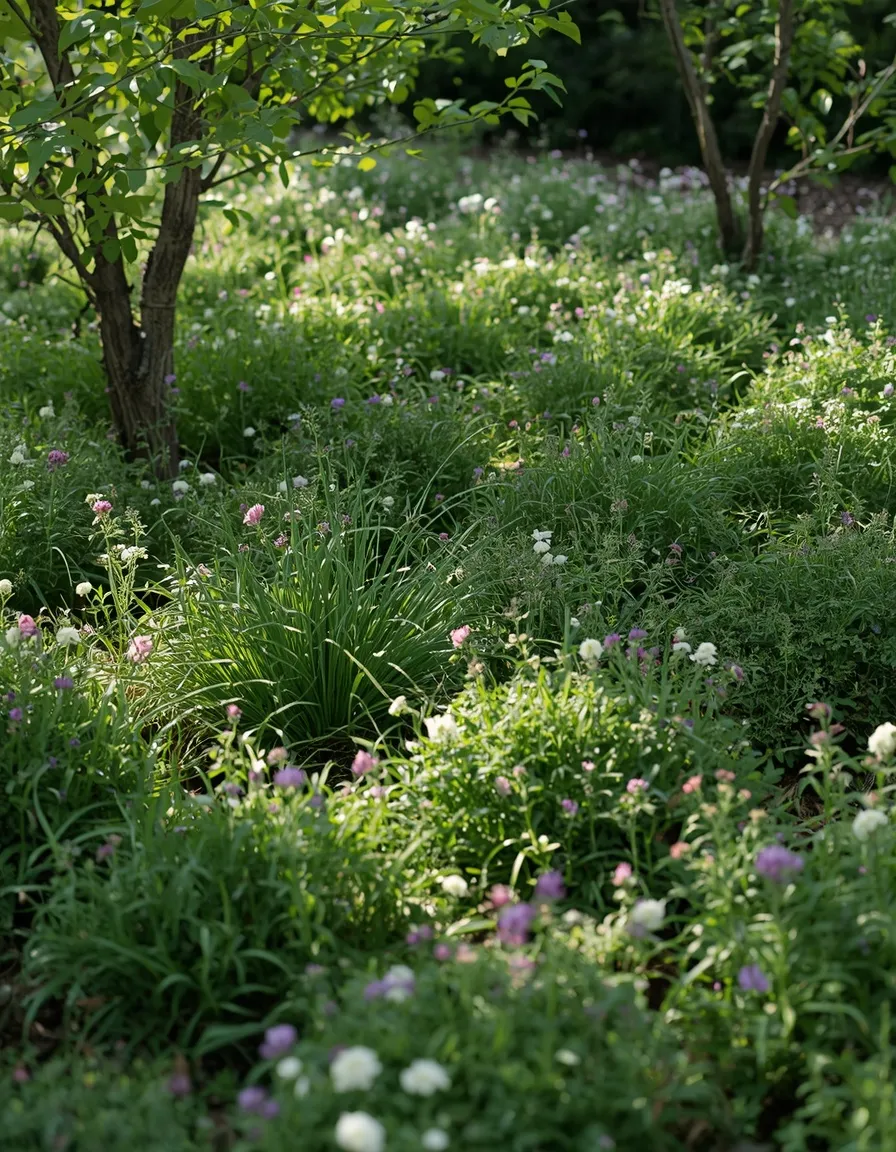
Perennial herbs and vegetables, rhubarb, sorrel, chives, oregano, and perennial kale varieties, fill the herbaceous layer, the closest equivalent a food forest garden has to a traditional vegetable bed, without the annual replanting.
This layer benefits most from being planted in loose drifts and repeated groupings rather than single specimens, both for a more natural forest-edge look and because many perennial herbs, like oregano and chives, spread readily and fill gaps between shrubs and young trees on their own. Comfrey is one of the most commonly recommended herbaceous layer plants in permaculture circles for its deep taproot, which draws nutrients up from the subsoil, and its leaves make an effective mulch and liquid fertilizer once chopped and composted.
That said, comfrey deserves a caution most food forest guides skip: handling the leaves can irritate skin for some people, and the RHS advises against consuming comfrey internally in any quantity due to compounds that can affect the liver, so it’s best treated strictly as a mulch and soil-building plant rather than a food crop, despite occasionally appearing on edible plant lists.
- The closest layer to a traditional vegetable garden, without annual replanting
- Best planted in repeated drifts rather than single specimens for a natural look
- Comfrey is prized for soil building but should be treated as a mulch plant, not a food crop
Groundcover Layer (Low Spreading Edibles)
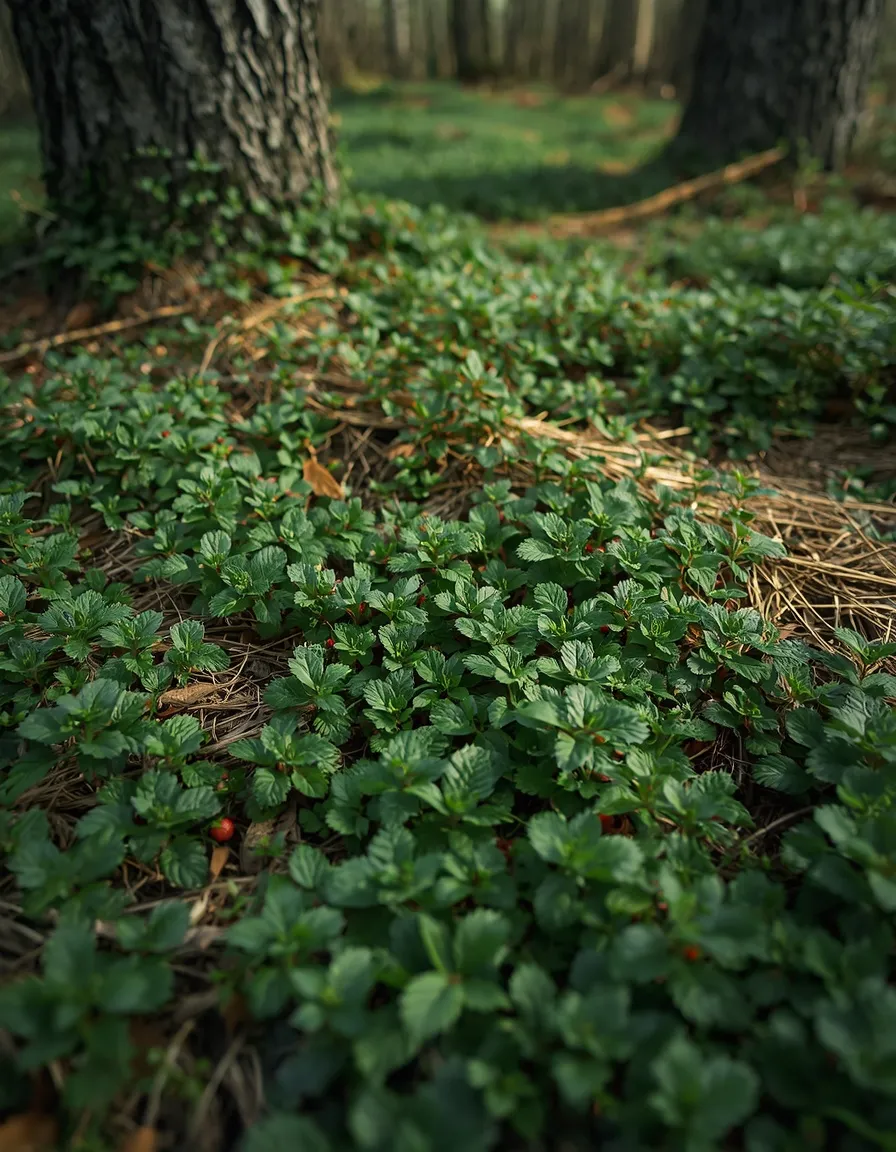
Low, spreading plants like strawberries, creeping thyme, and nasturtium carpet the ground between taller layers, suppressing weeds and keeping soil covered the way leaf litter does on a real forest floor.
This layer does real functional work beyond food production: living groundcover reduces water evaporation from the soil surface, suppresses weed germination by blocking light, and prevents the erosion bare soil is prone to during heavy rain. Strawberries are the most consistently productive groundcover option for food production, though they need at least partial sun and struggle in the deepest shade beneath a mature canopy, where shade-tolerant options like wild ginger or sweet woodruff, grown more for groundcover function than yield, tend to perform better.
- Suppresses weeds and reduces water evaporation the way forest floor leaf litter does
- Strawberries offer the best food yield but need at least partial sun to fruit well
- Shade-tolerant groundcovers work better than strawberries in deep canopy shade
Root Layer (Underground Crops)
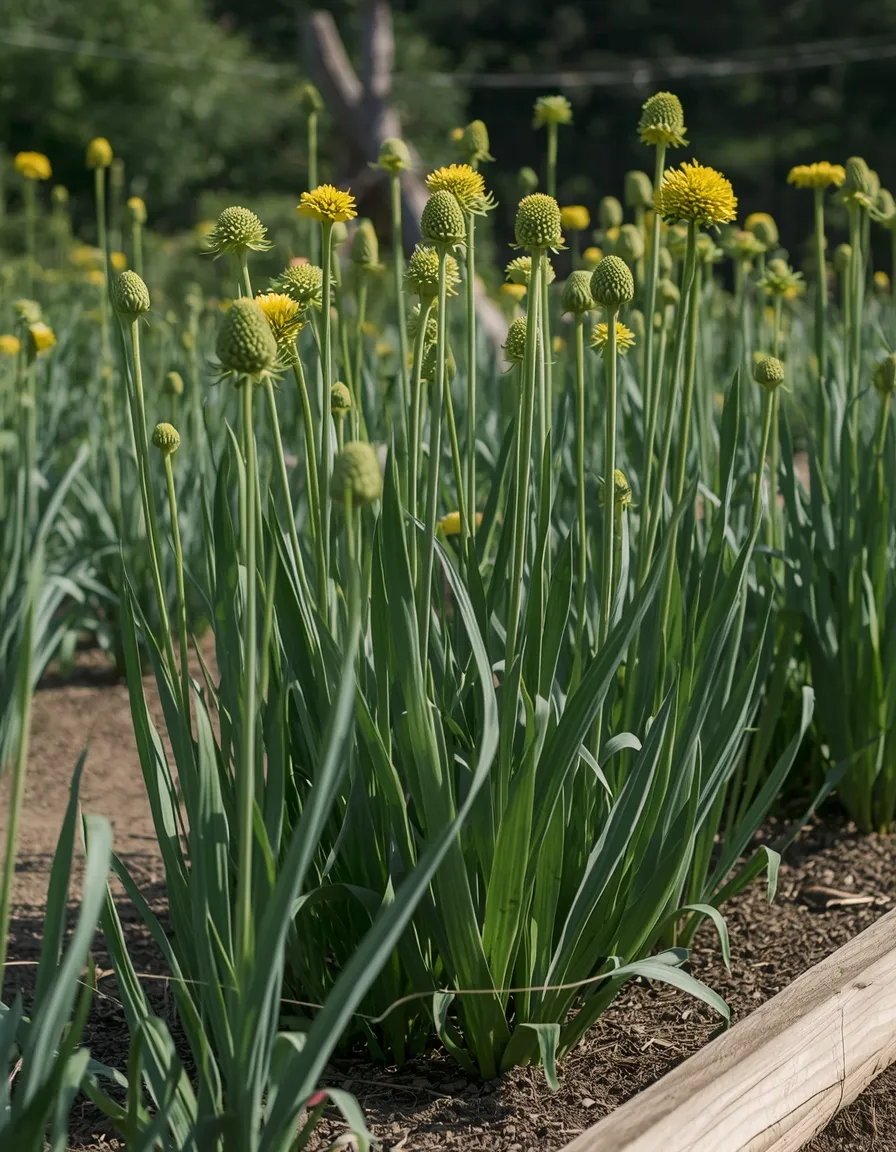
Perennial and self-seeding root crops, Jerusalem artichoke, perennial onions, and horseradish, occupy the underground layer, using vertical soil space that the other six layers leave largely untouched.
Jerusalem artichoke is worth a specific caution here: it’s a genuinely vigorous, spreading plant that can become difficult to fully remove once established, since even small tuber fragments left in the soil regrow, so it’s better planted in a contained bed or an area where its spread is welcome rather than mixed loosely throughout a design. Horseradish shares a similar spreading habit and benefits from the same contained placement. This layer is one of the easier ones to add gradually over time, since most root layer plants tolerate being tucked into gaps between establishing trees and shrubs without much site preparation.
- Uses vertical soil space the other six layers don’t compete for
- Jerusalem artichoke and horseradish both spread aggressively and are best contained
- One of the easiest layers to add gradually as gaps open up in the design
Vine Layer (Climbing Edibles)
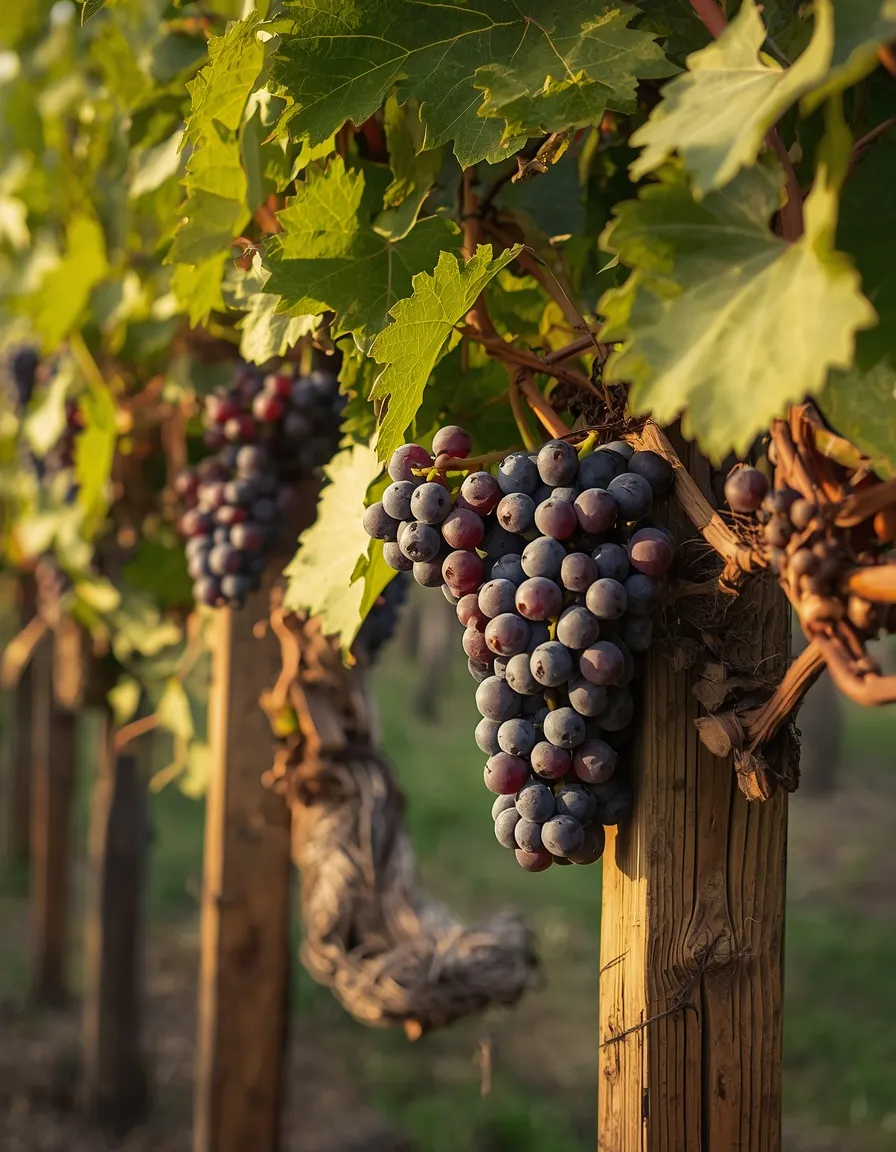
Grapes, kiwi, and climbing beans make up the vine layer, using the vertical structure of trees, trellises, or fences to grow upward rather than competing for ground space with everything else.
Train vines onto mature, sturdy trees rather than young saplings, since a vigorous grape or kiwi vine can genuinely stunt or topple a tree that hasn’t developed enough trunk strength to support the additional weight and wind resistance. A freestanding trellis or arbor is the safer choice in a food forest garden’s early years, moving vines onto living trees only once those trees are well established, typically after 5 or more years of growth. This layer works particularly well along a garden’s boundary fence, adding a productive vertical layer to structure that would otherwise contribute nothing to the system.
- Uses vertical space rather than competing with other layers for ground area
- Should only be trained onto trees that are well established, not young saplings
- Works especially well along an existing boundary fence or trellis
Companion Planting and Guilds
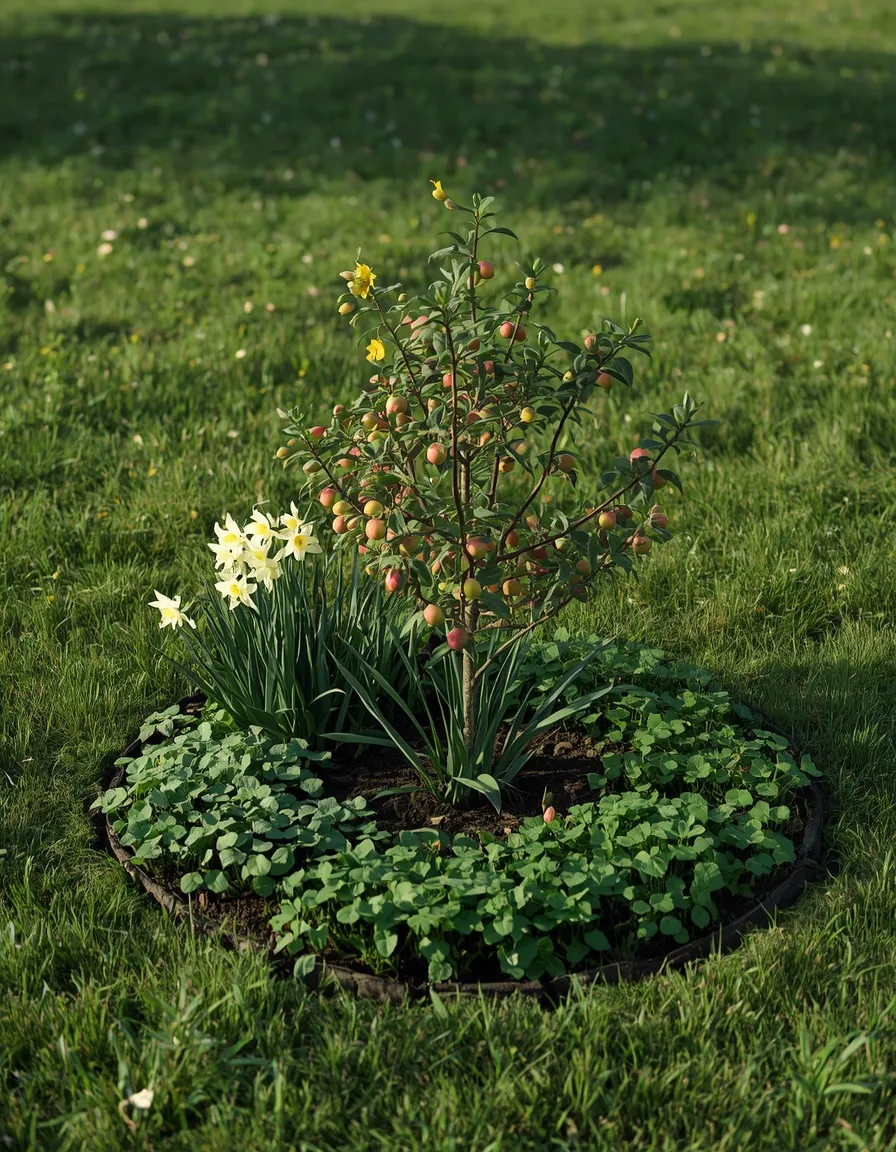
A guild is a small cluster of plants, usually centered on one canopy or sub-canopy tree, chosen specifically because each member supports the others through nitrogen fixing, pest deterrence, pollinator attraction, or mulch production, the practical mechanism that lets a food forest garden actually function with less fertilizer and spraying than a conventional orchard.
A classic apple tree guild might include a nitrogen-fixing shrub like Siberian pea shrub or a groundcover clover planted at the tree’s drip line to feed the soil, daffodils or alliums planted around the trunk to deter burrowing rodents from the roots, comfrey nearby for chop-and-drop mulch, and a pollinator-attracting herb like yarrow or bee balm planted close enough to draw pollinators to the tree during its bloom window. Nitrogen-fixing plants are worth prioritizing in every guild, since they’re doing real, ongoing soil fertility work rather than purely aesthetic or productive work, common options include clover, Siberian pea shrub, and false indigo depending on the climate and available space. Build one guild fully around a single tree before replicating the pattern elsewhere, since a half-finished guild scattered across the whole design does less functional work than one complete example.
- Nitrogen-fixing plants reduce the fertilizer a food forest garden needs over time
- Pollinator-attracting herbs planted near fruiting trees can improve fruit set
- Complete one guild fully before repeating the pattern, rather than spreading plants thin
Food Forest Garden Ideas for Small Spaces
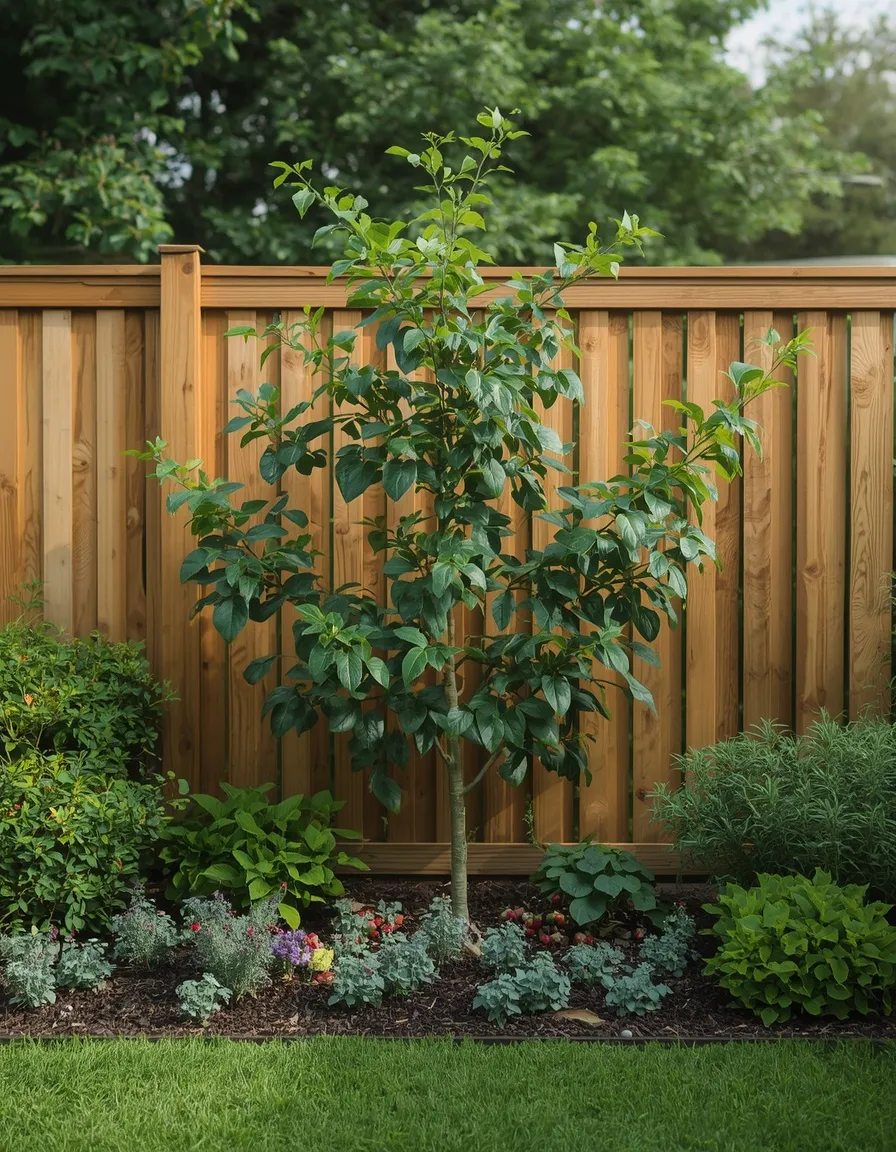
A food forest garden doesn’t require the acre-plus plots most design photos show; a genuinely productive version can fit a standard suburban backyard or even a generously sized urban lot once the layers are scaled down proportionally rather than simply cut from the plan.
Start with just two or three layers rather than all seven, typically one or two dwarf fruit trees, a berry shrub layer beneath them, and a groundcover, and add the herbaceous and vine layers gradually as the space and the gardener’s confidence both grow. Container-grown dwarf fruit trees work well for genuinely tiny spaces or rented properties, since they can be moved and don’t commit the space permanently the way an in-ground tree does. Espaliered fruit trees, trained flat against a fence or wall, are a particularly space-efficient canopy option for narrow side yards, delivering real fruit production from a footprint as shallow as 12 to 18 inches (30 to 45 cm). This same instinct toward scaling productive planting down to fit a real, limited footprint runs through Sunday Abode’s urban garden coverage, which tackles many of the same space constraints from a slightly different angle.
- A scaled-down two or three layer version fits most standard backyards
- Container-grown dwarf trees suit rented properties and genuinely tiny spaces
- Espaliered trees deliver real fruit production from a footprint as shallow as 12 inches (30 cm)
Climate and Regional Considerations
Food forest garden design shifts meaningfully by climate, and a plant list built for a warm Mediterranean garden won’t translate directly to a cool, wet temperate climate like much of the UK, or to a hot, humid subtropical one.
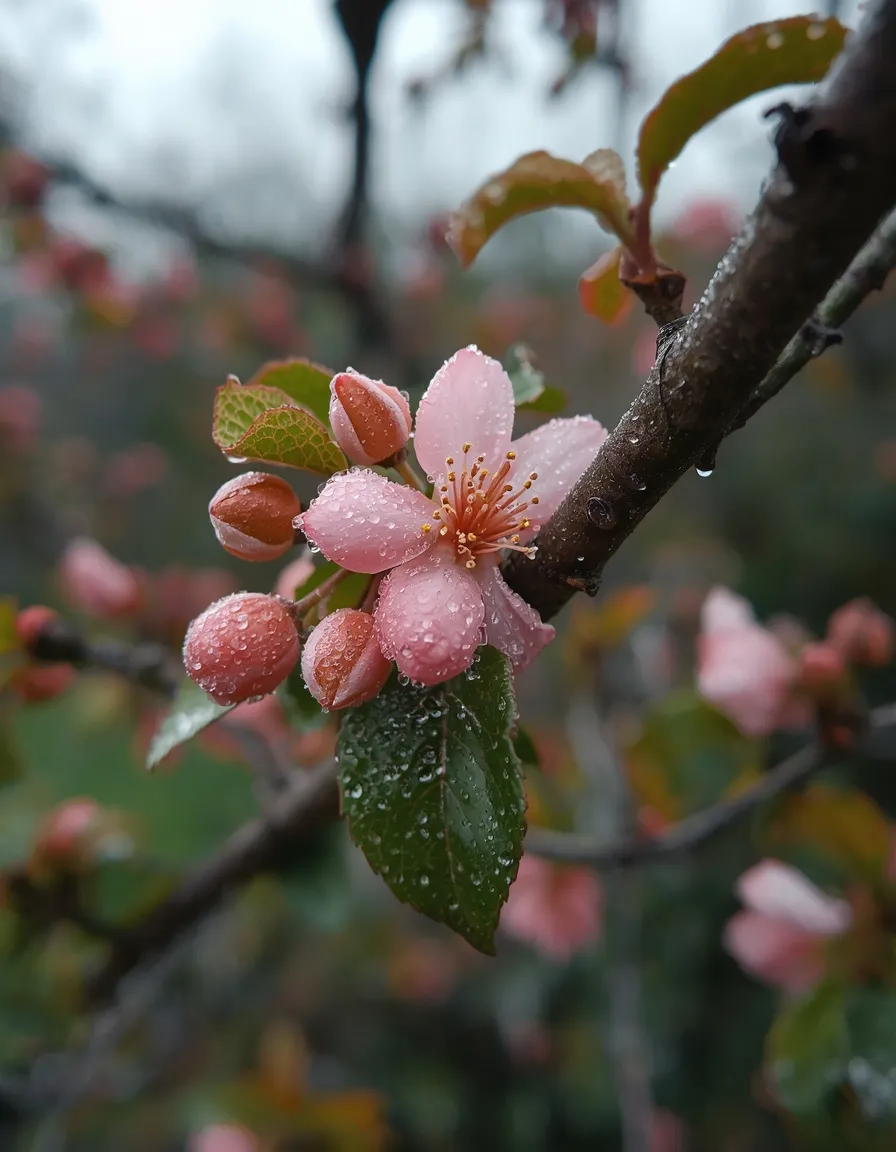
In cooler temperate climates, including most of the UK, choose canopy and sub-canopy trees rated for the local hardiness zone with a comfortable margin, since a late spring frost after early blossom is one of the most common causes of a lost fruit harvest in these regions, and selecting later-blooming varieties reduces that risk considerably. Wetter climates benefit from the drainage planning covered earlier in this guide even more than average, since waterlogged roots are a faster way to lose a young fruit tree than almost any other single factor. In hot, dry climates, the canopy layer’s shade becomes functionally more important earlier in the design, since it protects the more heat-sensitive shrub and herbaceous layers beneath it from scorching, which is less of a concern in cooler, cloudier regions.
- UK and other cool temperate climates benefit from later-blooming varieties to avoid frost loss
- Drainage planning matters even more in consistently wet climates
- Hot, dry climates depend on the canopy layer’s shade earlier in the design process
Maintenance Philosophy: Low-Input, Not No-Input
A food forest garden is genuinely lower maintenance than a conventional vegetable garden once established, but the phrase no-maintenance that circulates around the concept sets unrealistic expectations that cause a lot of first attempts to fail from neglect during the years they need attention most.
The first three to five years require real, regular involvement: watering new trees through their first two dry seasons until roots establish, weeding around young plantings before groundcover fills in and does that job on its own, and correcting any overcrowding early rather than letting it compound as plants mature. Chop-and-drop mulching, cutting nitrogen-fixing and dynamic accumulator plants like comfrey back and leaving the cuttings in place as mulch, is the closest a food forest garden gets to fertilizing, and doing this two or three times a season during the growing period keeps soil fertility building without any bagged fertilizer input. Once the canopy and groundcover layers mature, typically somewhere in year five to seven depending on climate and species, maintenance genuinely does drop to occasional pruning, harvesting, and light management rather than the frequent tending a young system needs.
- The first 3 to 5 years require real, regular watering, weeding, and correction, not neglect
- Chop-and-drop mulching from nitrogen fixers replaces most conventional fertilizing
- Maintenance genuinely decreases significantly once the system matures around year 5 to 7
Common Mistakes to Avoid
Most struggling food forest gardens share a small handful of avoidable design mistakes rather than genuinely bad luck, and recognizing them before planting saves years of correction later.
Overcrowding at planting time is the single most common issue, spacing trees and shrubs for their current small size rather than their mature spread, which leads to competition, poor air circulation, and disease problems within a few years that require difficult removal decisions to fix. Skipping the site assessment covered earlier in this guide is a close second, planting straight into poorly drained or deeply shaded ground without addressing the underlying issue first. A third common mistake is expecting full productivity too soon and giving up during the slow early years, when berry shrubs and quick herbaceous layers are producing but the canopy trees genuinely haven’t caught up yet; tracking the realistic timeline for each layer, as outlined throughout this guide, helps set expectations that match how the system actually develops.
- Overcrowding at planting time is the most common and hardest mistake to correct later
- Skipping a proper site assessment often causes drainage or shade problems that surface years later
- Expecting full productivity in year one or two ignores each layer’s realistic timeline
Conclusion
A well-designed food forest garden rewards patience more than most growing methods, the first few years ask for real attention, and the payoff is a system that genuinely needs less digging, less fertilizing, and less replanting once it matures. Start small: one or two well-spaced canopy trees, a berry layer beneath them, and a nitrogen-fixing companion planted alongside, rather than attempting all seven layers in the first season.
For more structural garden design inspiration to plan alongside a new food forest, Sunday Abode’s garden design ideas cover plenty of complementary approaches. Map the site honestly, plant for the mature size rather than the sapling, and let the layers fill in on their own schedule.
FAQs
What is a food forest garden?
A food forest garden is a perennial planting system that mimics the layered structure of a natural woodland using edible and useful plants instead of purely wild ones. It typically includes up to seven layers, from a canopy of fruit and nut trees down to root crops, all growing together rather than being replanted from bare soil each year.
How long does it take for a food forest garden to produce food?
Timing varies significantly by layer: berry shrubs often produce within 2 to 3 years, sub-canopy trees like fig within 2 to 4 years, while canopy fruit and nut trees can take 4 to 8 years or longer to reach full production. Most food forest gardens don’t feel genuinely established and low-maintenance until somewhere around year 5 to 7.
Can I fit a food forest garden in a small backyard?
Yes, a scaled-down version with just two or three layers, typically one or two dwarf fruit trees, a berry shrub layer, and groundcover, fits most standard backyards without needing the acre-plus plots often shown in design photos. Container-grown or espaliered dwarf trees make the concept work in even tighter urban spaces.
Is a food forest garden really low maintenance?
It’s lower maintenance than a conventional vegetable garden once mature, but not maintenance-free, especially in the first three to five years. New plantings need regular watering, weeding, and correction of any overcrowding before the system’s layers fill in and start doing that work on their own.
What plants should I avoid combining in a food forest garden?
Avoid planting aggressive spreaders like Jerusalem artichoke or horseradish loosely throughout the design, since they’re difficult to remove once established and can crowd out slower-growing neighbors; contained beds work better for these. It’s also worth avoiding training vines onto young saplings, since a vigorous grape or kiwi vine can stunt or topple a tree that hasn’t developed enough trunk strength yet.
Is comfrey safe to grow in a food forest garden?
Comfrey is a valuable soil-building plant for chop-and-drop mulch, but it comes with a real caution: handling the leaves can irritate skin for some people, and it shouldn’t be eaten in any quantity due to compounds that can affect the liver. It’s best treated strictly as a mulch and soil amendment plant rather than a food crop.
What’s the difference between a food forest garden and permaculture?
Permaculture is a broader design philosophy for sustainable land use that includes water management, animal systems, and building design, while a food forest garden is one specific, widely used application of permaculture principles focused on layered perennial food production. Most food forest garden designs draw directly on permaculture concepts like guilds and nitrogen-fixing companion planting.