
Introduction
Urban garden ideas have to work harder than a sprawling backyard ever would: less soil, less direct sun, more hard surfaces radiating heat, and often a landlord’s rules or a shared wall to design around. That constraint is exactly what makes good urban garden design worth getting right, since every raised bed, trellis, or container earns its place rather than filling empty space. This guide gathers twenty-one distinct ways to make the most of a courtyard, front garden, small backyard, or rooftop, covering layout planning, space-efficient growing techniques, and the practical realities, soil safety, sun mapping, water access, that most city gardening guides skip entirely. Consider it a working plan for turning whatever square footage your abode actually has into a garden that earns its keep.
Before You Start: Mapping Sun, Soil, and Rules
A few practical steps before planting will save real time and money later, especially in a dense urban setting where conditions vary wildly from one property to the next. Start by mapping sun exposure across a full day, since neighboring buildings often cast shade patterns that shift significantly through the seasons; a spot that gets six hours of sun in June may get two in October once a building’s shadow lengthens, so track exposure across at least a few different times before committing to sun-loving plants. Next, if you plan to grow any food crops, especially in a yard with an older home, a history of industrial use nearby, or proximity to a busy road, test the soil for lead before planting. The EPA updated its residential soil lead guidance in 2025, recommending caution above roughly 200 parts per million, with a stricter 100 ppm threshold for households with other lead sources like older paint or plumbing; urban soils average considerably closer to these thresholds than rural ones, which is exactly why testing matters more in a city garden. A basic soil test through a local extension service typically costs very little and takes a few weeks to return results. If contamination turns up, raised beds filled with tested, clean soil sidestep the problem entirely, several ideas below use exactly that approach. Finally, check local rules before any structural change, front-yard planting restrictions, fence height limits, and rules around removing lawn all vary significantly by city and by lease, so a quick call to a local planning office or landlord avoids a project that has to be undone.
21 Urban Garden Ideas to Try in Your Space
Each idea below is genuinely distinct in technique, space type, and investment level, so scan for the ones that match your actual sun, soil, and square footage rather than trying to fit every idea into one small lot.
1. Sketch Your Layout Before Planting
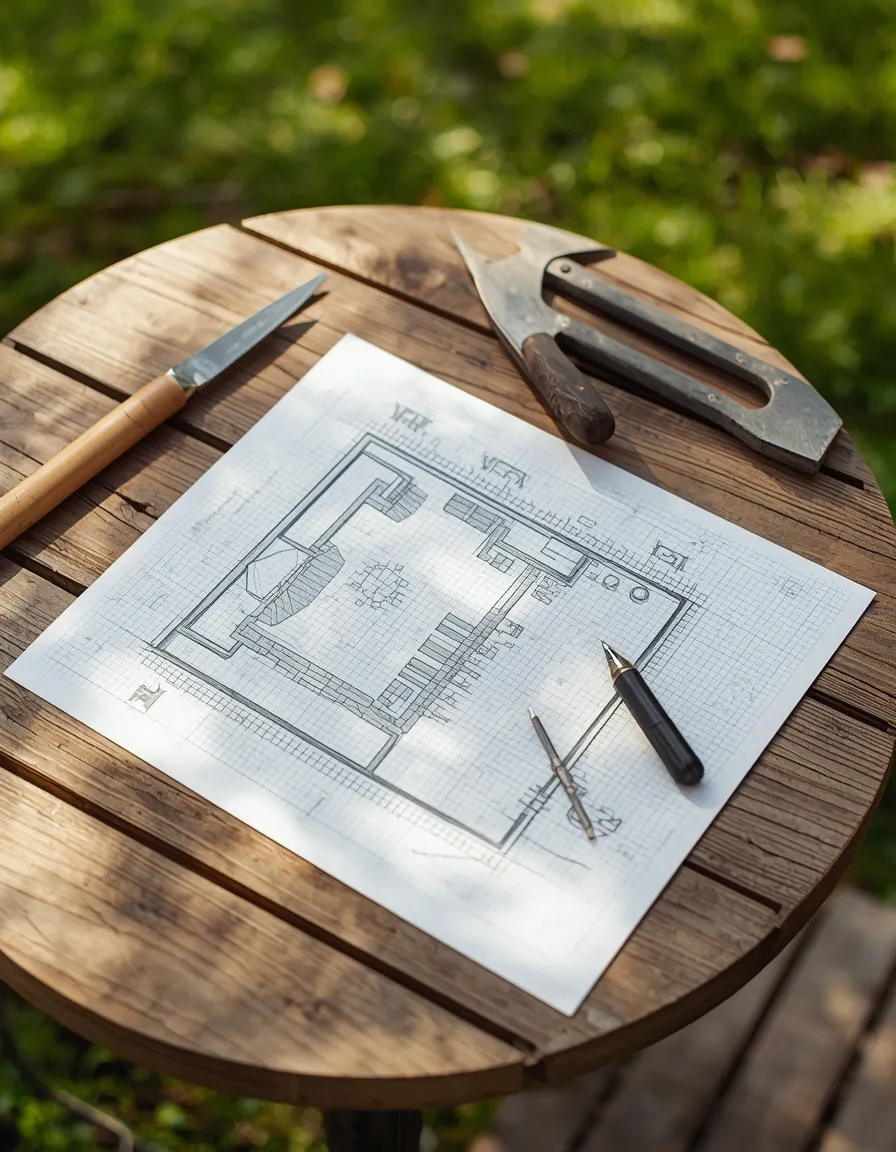
Before buying a single plant, a simple hand-drawn sketch of the available space, marked with sun patterns, water access points, and existing structures like fences or downspouts, turns a vague sense of the yard into an actual working plan rather than a collection of impulse purchases from the garden center.
Measure the space roughly and sketch it to scale on graph paper, or use a free garden planning app if a digital version suits you better, marking fixed elements first, doors, gates, hose bibs, before adding planned zones for seating, growing beds, and pathways. Leave clear sightlines from the main window or door you view the garden from most often, since urban gardens are frequently seen from indoors as much as walked through, and a plan that looks good from a kitchen window is worth as much as one that looks good at ground level. Revisit the sketch after living with the bare space for a season if possible, since real sun and use patterns often differ from what a first impression suggests.
- Prevents costly redesigns from plants placed in the wrong light or spot
- Suits any urban space, from a fire escape to a full backyard
- Solves the piecemeal, unplanned look of gardens built one impulse purchase at a time
2. Vertical Trellis Wall for Vining Vegetables
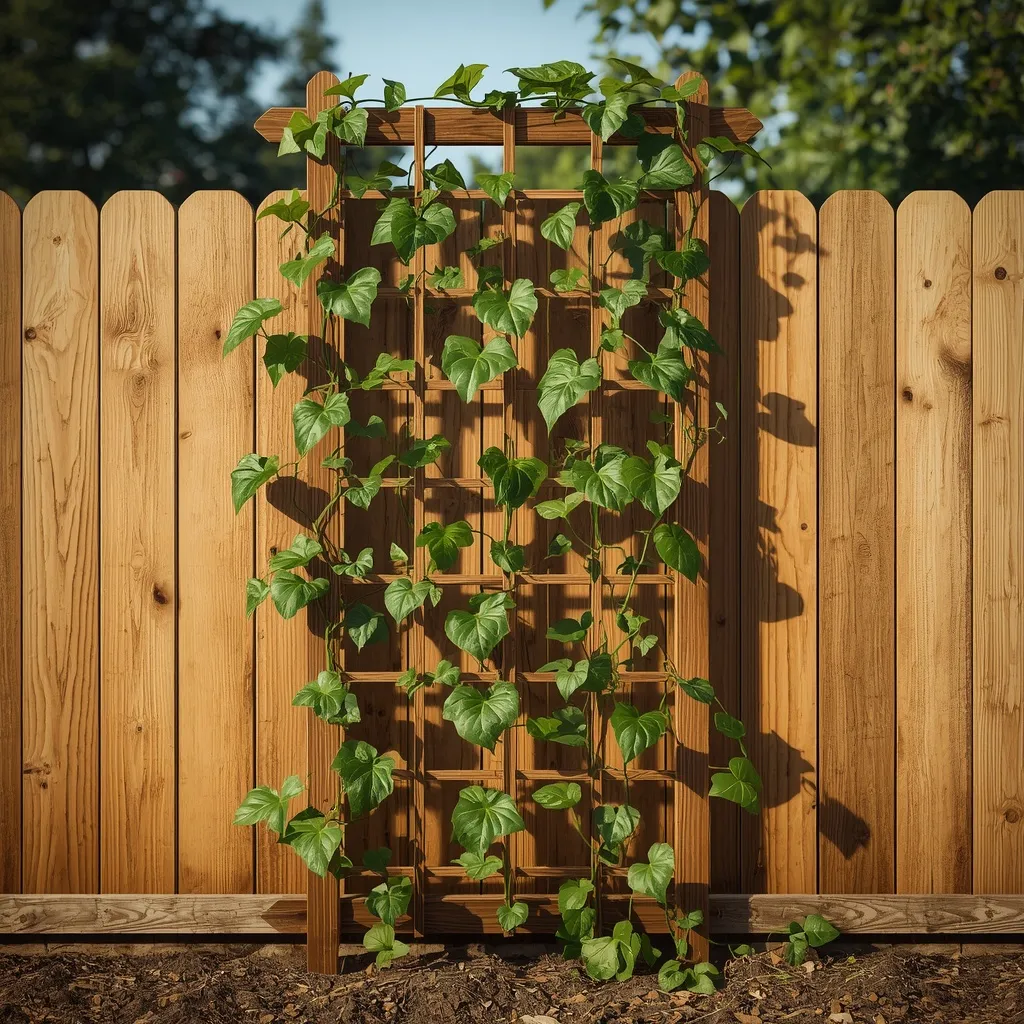
A tall trellis panel mounted against a sunny fence or wall, planted with cucumbers, pole beans, or a climbing squash variety, turns unused vertical space into genuine growing area, often producing more food per square foot of ground than the same crops grown sprawling on the ground.
Anchor the trellis into the wall or fence structure itself rather than just into soil, since a mature vine loaded with wet foliage and fruit puts real lateral weight on a freestanding trellis in wind. Choose a trellis height suited to the specific crop, 6 to 8 feet (1.8 to 2.4 m) for pole beans and cucumbers, taller for indeterminate tomatoes with sturdy staking, and train young vines onto the structure with soft ties rather than wire, which can girdle growing stems. This technique works especially well against a south or west-facing wall that radiates stored heat, extending the growing season measurably in cooler climates.
- Multiplies growing space without expanding the garden’s footprint
- Suits sunny fences and walls that otherwise go completely unused
- Solves the space limits that keep many city gardeners from growing vining crops
3. No-Dig Raised Bed for Poor Urban Soil
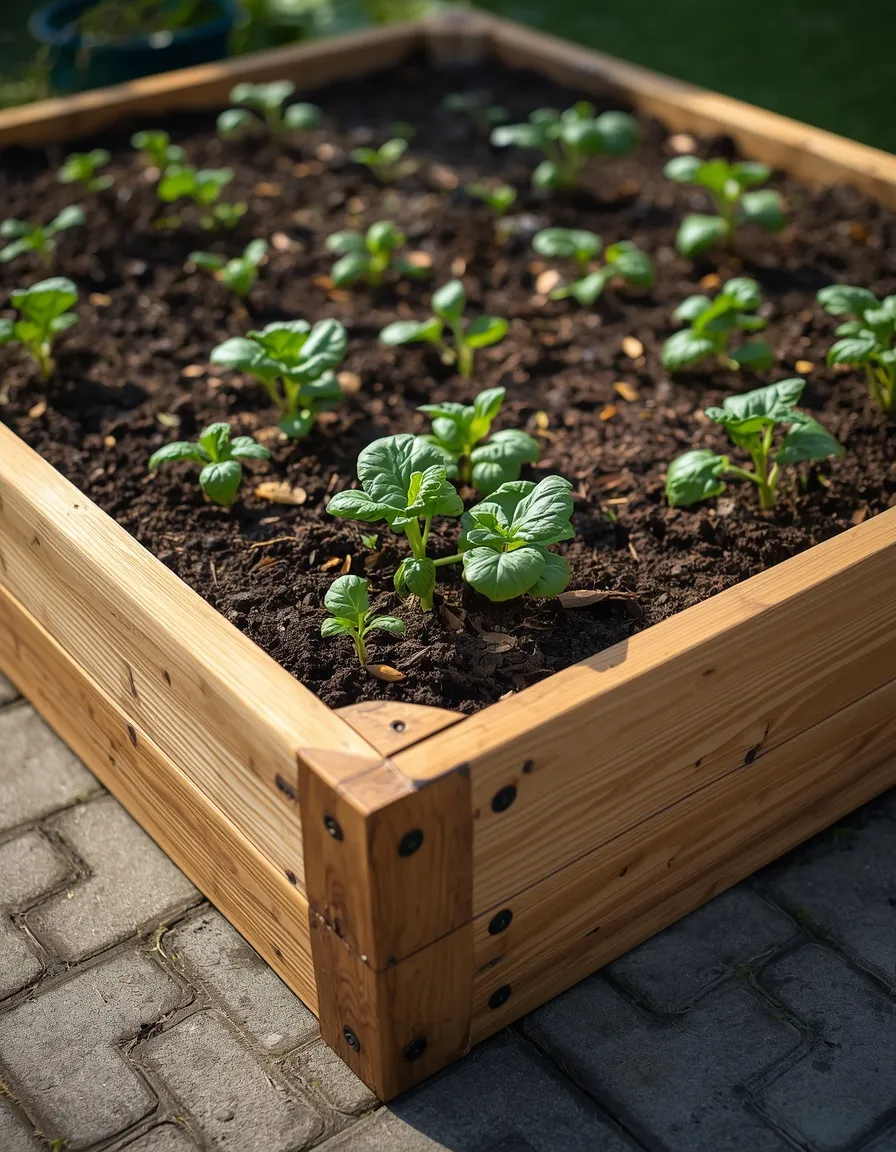
A raised bed built directly on top of existing ground, layered with cardboard, compost, and topsoil rather than dug into whatever soil is already there, sidesteps compacted, contaminated, or simply poor urban soil entirely while still producing a genuine vegetable harvest within the first season.
Build the frame from untreated cedar, composite lumber, or galvanized metal at least 8 inches (20 cm) deep for most vegetables, and layer cardboard directly on the ground first to suppress weeds and grass before filling with a mix of compost, topsoil, and aged manure. This no-dig method is particularly valuable if soil testing revealed elevated lead levels, since the bed’s contents are entirely known and controlled rather than whatever contamination sits in the ground below. Top off with 1 to 2 inches (2.5 to 5 cm) of fresh compost each spring rather than fully replacing the soil, which keeps the bed productive for years without the labor of digging.
- Solves poor, compacted, or potentially contaminated urban soil in one build
- Suits any hard surface, including a section of existing patio or driveway
- Delivers productive growing space within a single season of building
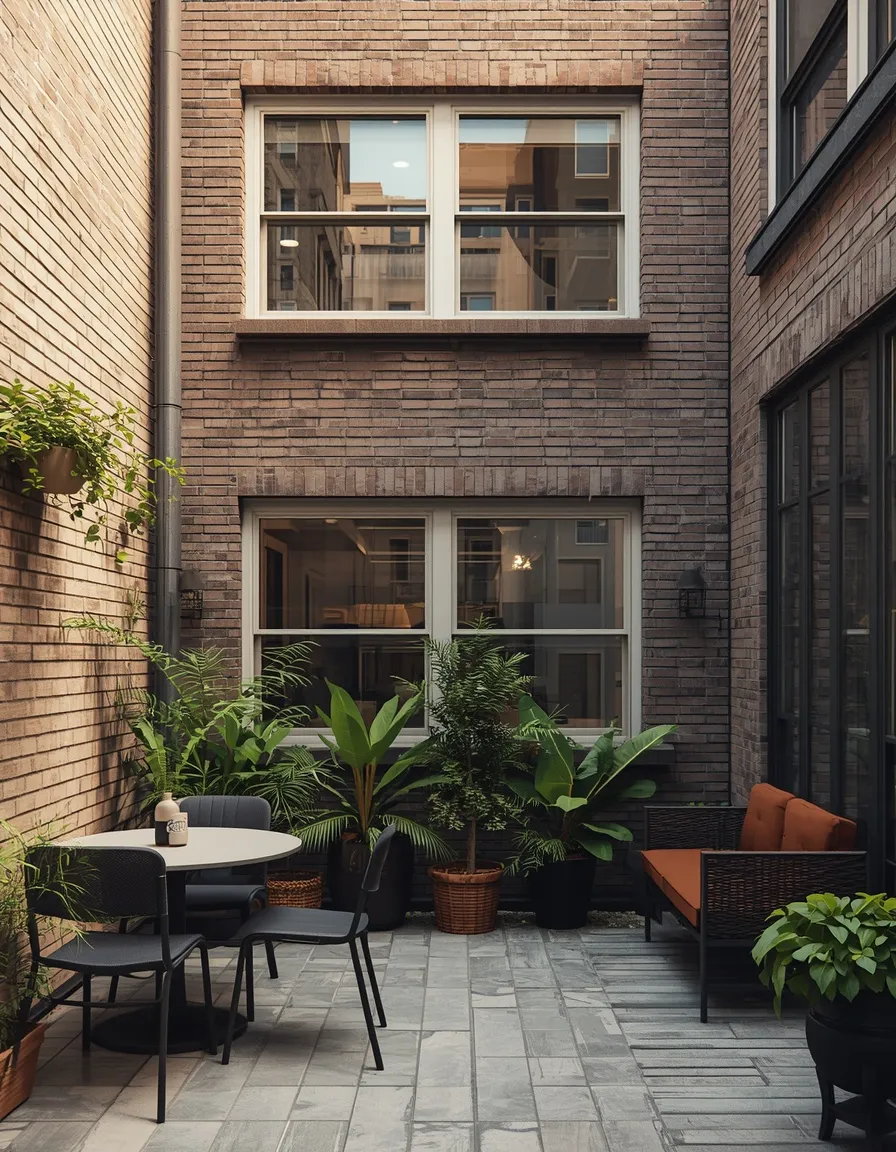
4. Courtyard Container Garden Zoning
A shared or private courtyard, arranged into distinct zones, a dining corner, a cluster of edible containers, a shaded seating nook, reads as a genuine garden rather than a random collection of pots scattered wherever space allowed.
Group containers by function first, then by size and plant type within each zone, since a courtyard’s compact scale means every grouping is seen up close and a cluttered mix of unrelated pots reads as disorganized quickly. Use a mix of container heights, ground-level, waist-height, and hanging, to create visual layers in a space that has almost no room to spread horizontally. In a shared courtyard, confirm which areas are designated for individual use versus common space before installing anything permanent, since this is one of the most common sources of dispute in multi-unit urban housing. If your courtyard leans more toward quiet minimalism than a working plant collection, a zen garden approach built around raked gravel and considered stone placement is worth exploring as an alternative to a plant-heavy layout.
- Turns a random collection of pots into a considered, functional layout
- Suits shared apartment courtyards as well as private ones
- Solves the cluttered, directionless feeling of ungrouped container gardens
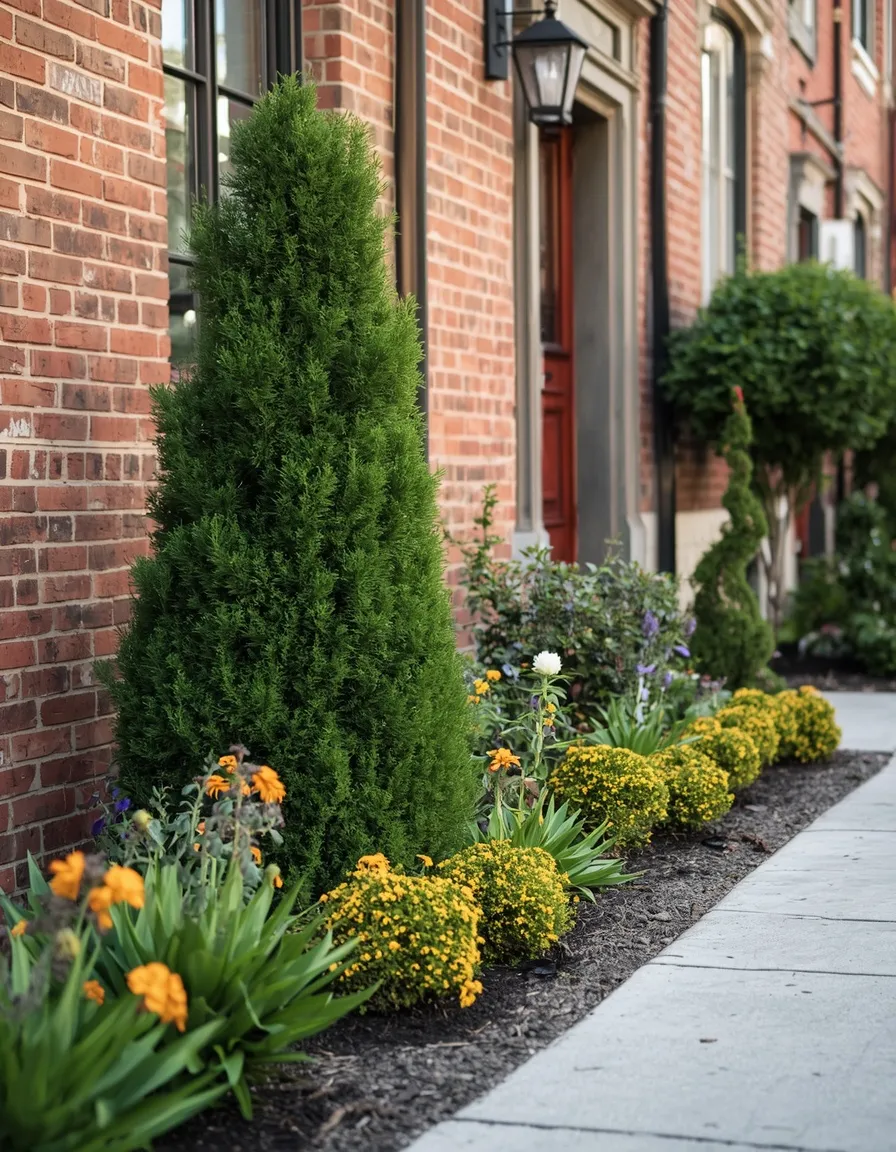
5. Front Garden Foundation Planting
A narrow bed running along the front of a rowhouse or townhome, planted with a mix of structural shrubs and seasonal color, replaces bare foundation concrete or a strip of struggling grass with the first real garden most visitors and neighbors actually see.
Keep the plant palette relatively restrained, three to five species repeated rather than one of everything, since a small front garden viewed from the sidewalk reads as considered at a limited palette and cluttered at a wide one. Choose plants that tolerate reflected heat and road salt if the bed sits near a street or driveway, since front gardens face harsher conditions than a sheltered backyard. Check local rules on front-yard landscaping before removing an entire lawn, since some municipalities and homeowner associations have specific requirements for street-facing plantings.
- Creates genuine curb appeal from a narrow, often-overlooked strip
- Suits townhomes and rowhouses with minimal front setback
- Solves the neglected, foundation-planting-as-afterthought look common in cities
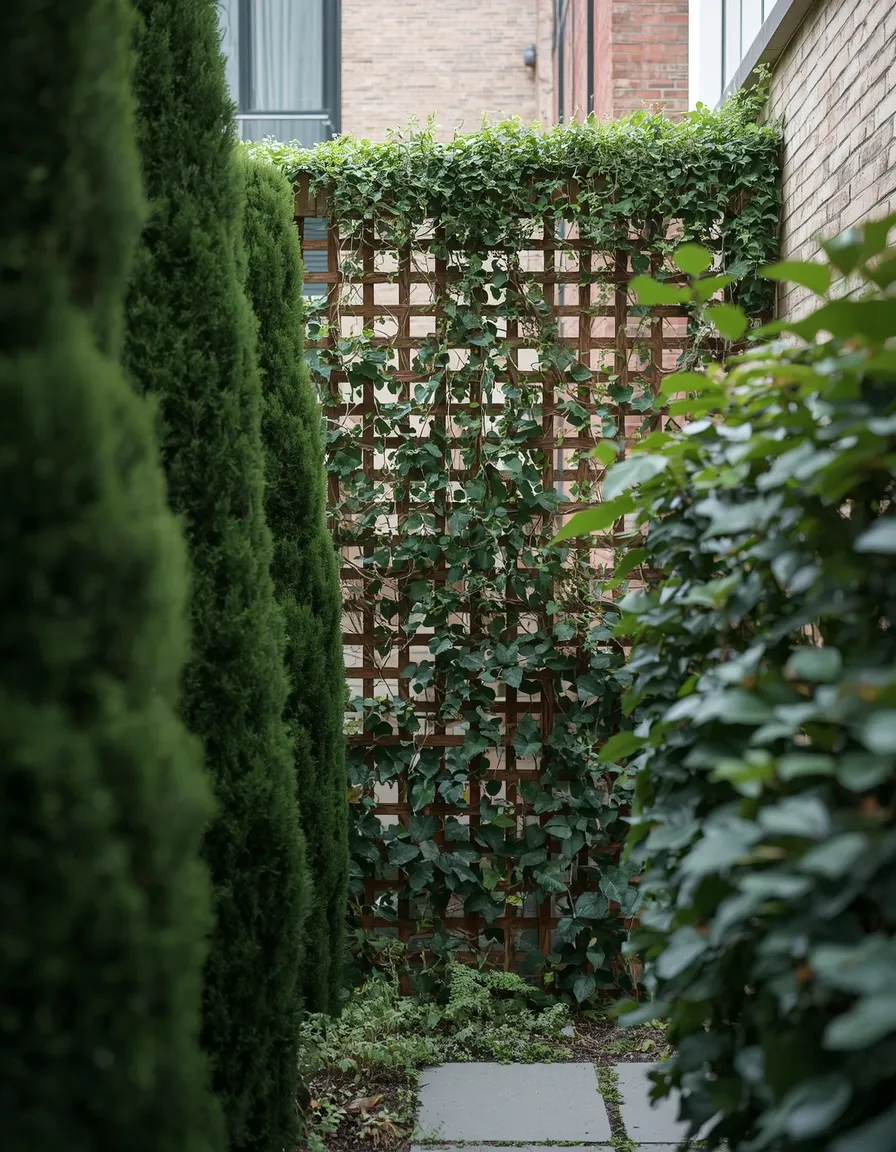
6. Living Privacy Wall or Green Screen Fence
A row of columnar evergreens, bamboo in a contained planter, or a lattice panel woven with fast-growing vines along a shared property line screens a courtyard or small backyard from neighboring windows without the flat, closed-off feeling of a solid privacy fence.
Choose clumping bamboo varieties over running types if bamboo is part of the plan, and always plant running bamboo inside a physical root barrier at least 30 inches (76 cm) deep, since running bamboo spreads aggressively and is notoriously difficult to remove once established in a shared urban lot. For a faster, lower-maintenance option, a lattice panel planted with an annual vine like black-eyed Susan vine delivers screening within a single growing season while a slower perennial vine establishes behind it. Confirm the property line and any shared-fence agreements with neighbors before installing anything that crosses or sits directly on a boundary.
- Provides privacy screening without a solid wall’s closed-in feeling
- Suits shared courtyards and small lots with close neighboring buildings
- Solves the exposed, overlooked feeling common in dense urban housing
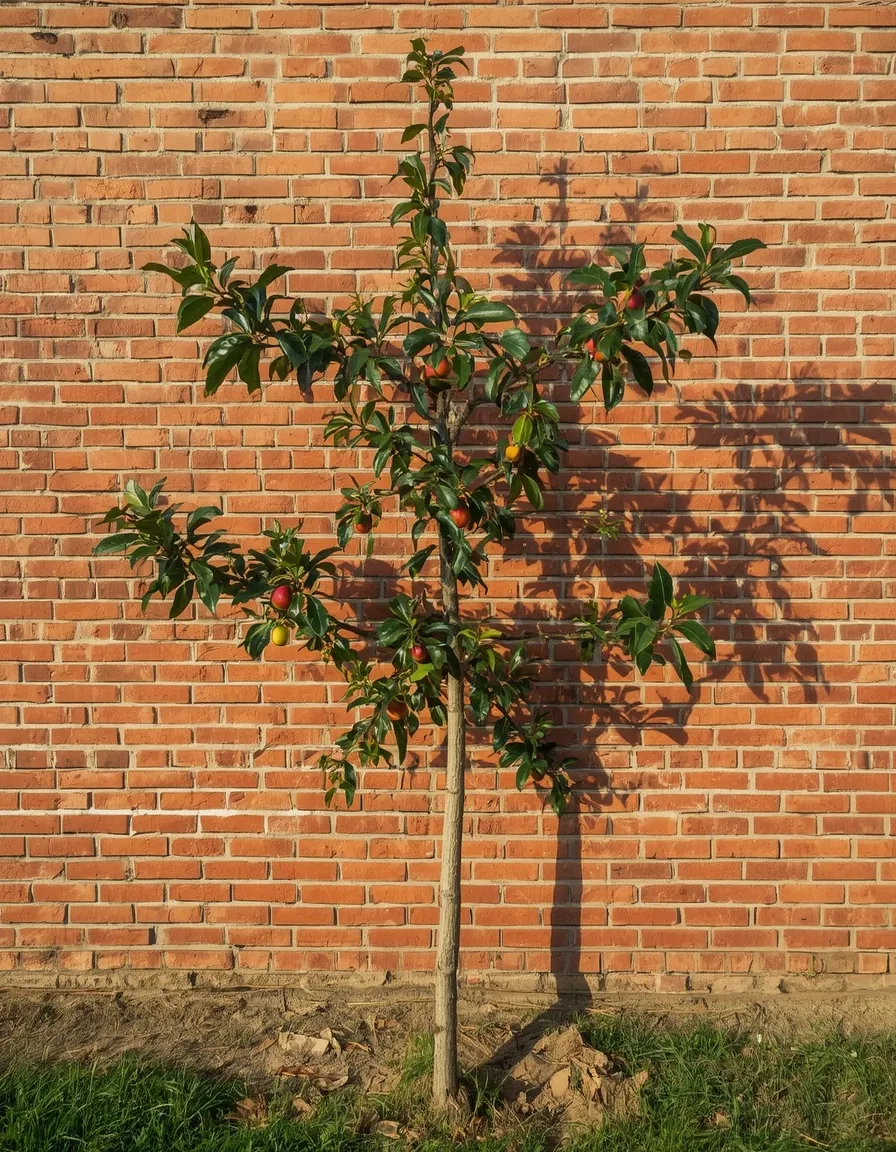
7. Espaliered Fruit Tree Against a Wall
A fruit tree pruned and trained flat against a sunny wall in a formal branching pattern, espalier, produces a genuine harvest of apples, pears, or figs from a footprint barely deeper than the tree’s trunk, a technique built specifically for exactly the space constraints of a city garden.
Start with a young, bare-root tree on dwarfing rootstock, and commit to structured pruning two to three times per growing season to maintain the flat branching pattern against a wire support system mounted to the wall. A south or west-facing wall that retains heat overnight extends the effective growing season and improves fruit ripening in cooler climates, making this technique particularly valuable in urban microclimates that run slightly warmer than surrounding rural areas. Espalier training takes three to five years to fully establish, so this idea suits gardeners planning to stay in a space for the medium term rather than a quick seasonal project.
- Delivers a genuine fruit harvest from an almost two-dimensional footprint
- Suits sunny, sheltered walls that would otherwise go unused
- Solves the assumption that fruit trees require more space than a city lot allows
8. Herb Spiral for Compact Kitchen Gardening
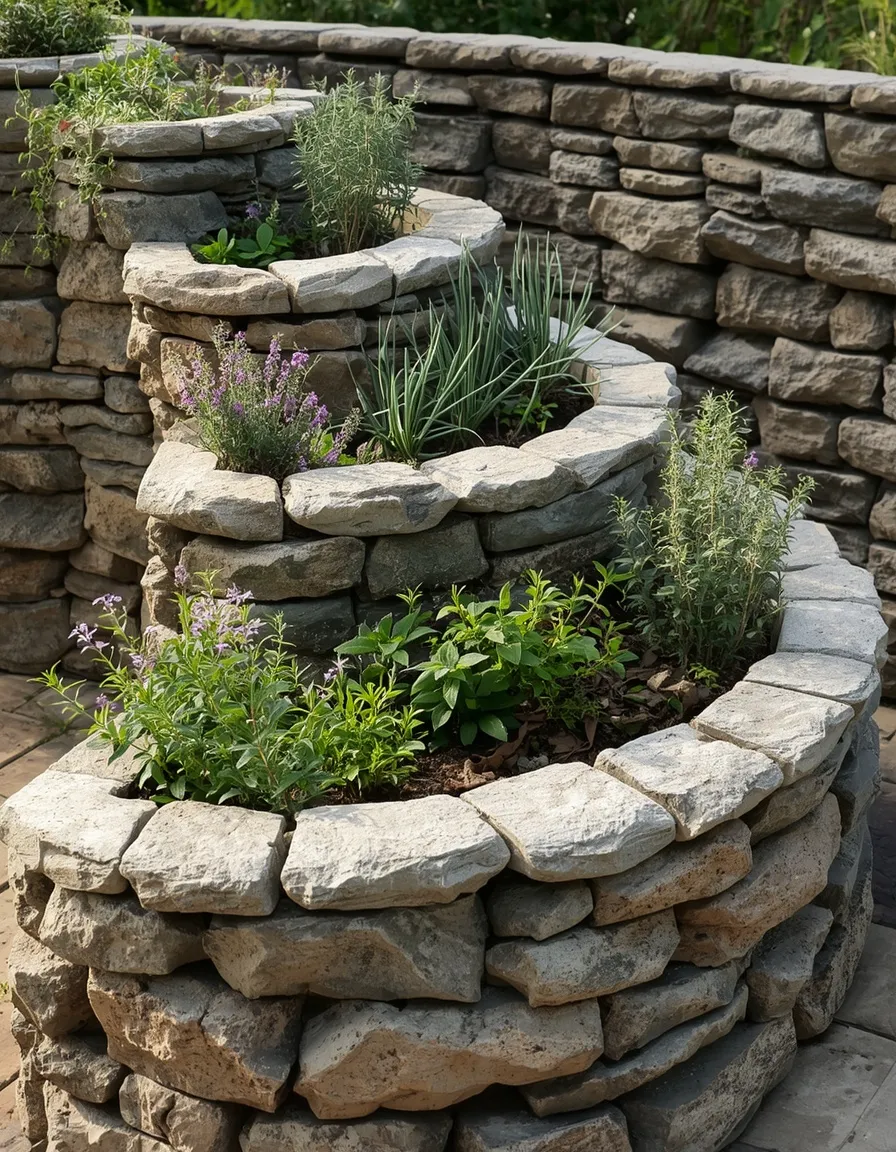
A spiral-shaped raised bed, built upward in a tightening coil from stacked stone or brick, creates several distinct microclimates, dry and sunny at the top, cool and moist at the base, within a single structure roughly the footprint of a garden umbrella.
Build the spiral to about 3 feet (91 cm) in diameter and roughly 3 feet tall at its highest point, filling with well-draining soil mixed with grit near the top for Mediterranean herbs like rosemary and thyme, and richer, moisture-retentive soil near the base for herbs like mint and parsley that prefer more consistent water. Orient the spiral’s opening or lowest point toward the site’s prevailing sun direction so the widest range of light conditions is available across the structure. This is one of the most space-efficient ways to grow a genuinely diverse kitchen herb collection in an urban garden, fitting a dozen or more distinct herbs into a footprint smaller than most single raised beds.
- Packs a diverse herb collection into an unusually small footprint
- Suits patios and courtyards wanting a distinct sculptural garden feature
- Solves the single-microclimate limitation of a flat raised bed
9. Shade-Tolerant Urban Garden Corner
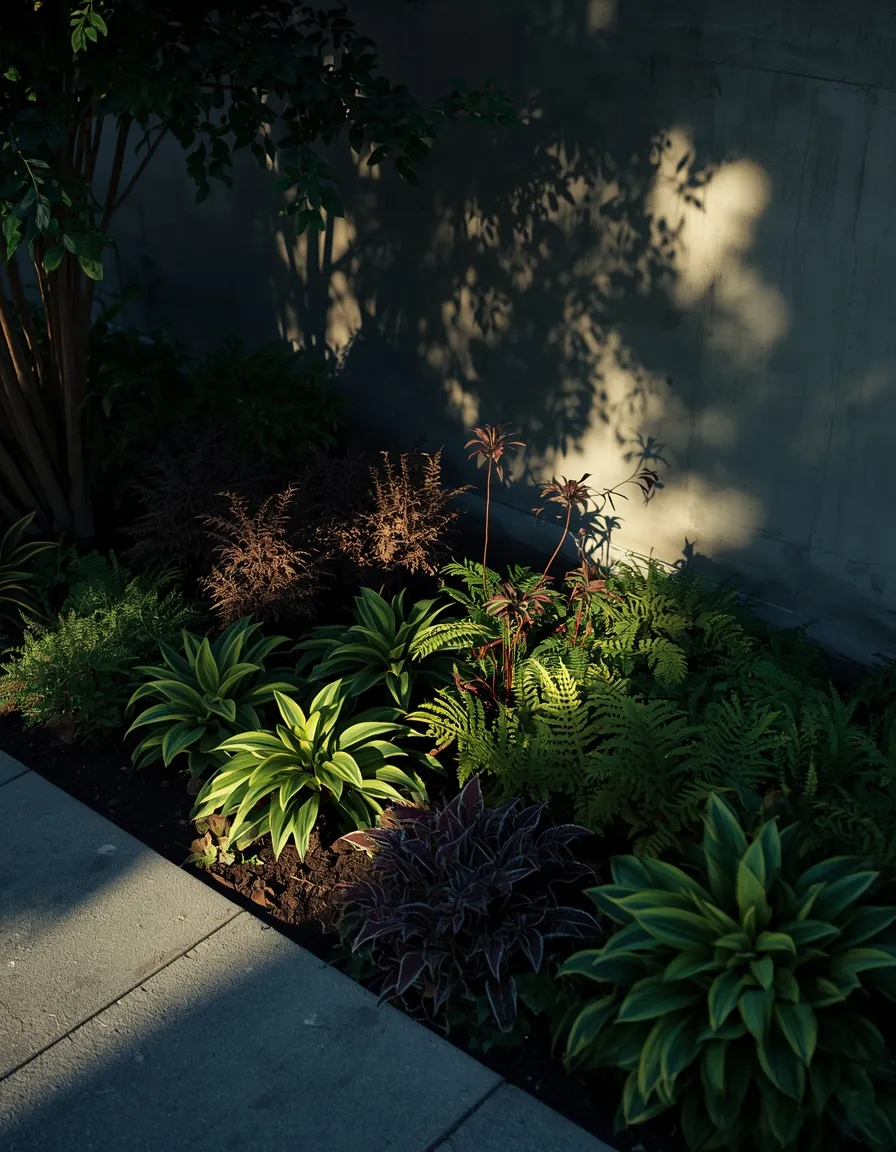
A corner shaded for most of the day by a neighboring building, filled with hostas, ferns, and heuchera rather than left as bare, struggling ground, turns one of the most common urban garden problems into a genuinely lush, textured feature.
Layer plants by height and leaf texture rather than relying on flower color, since shade gardens read as rich through contrast and form more than through bloom, which is limited in low light. Water shaded urban corners consistently rather than assuming shade means low water needs, since dense shade from buildings often comes paired with dry, root-competitive soil beneath overhangs where rain rarely reaches directly. Mulch heavily to retain what moisture the space does get, and choose plants rated for at least one zone hardier than your actual zone if the corner also gets significant wind funneling between buildings, which increases cold stress beyond what the general climate would suggest.
- Turns an urban garden’s most common problem zone into a real feature
- Suits courtyards and side yards boxed in by neighboring structures
- Solves the bare, patchy look of grass or sun-loving plants failing in deep shade
10. Reclaimed Crate Vertical Planter Stack
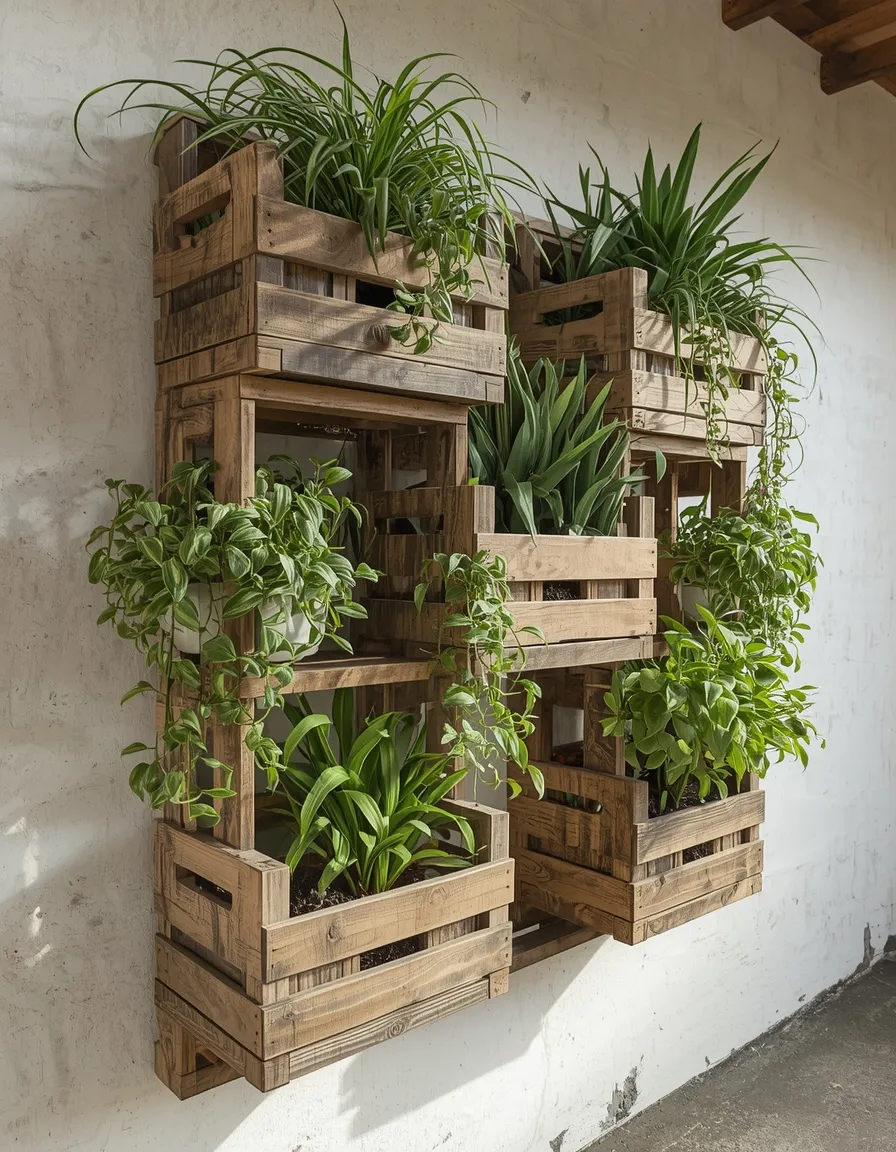
A stack of weathered wooden crates, staggered and mounted or leaned against a wall, each holding a different trailing or upright plant, builds a vertical garden with genuine reclaimed character at a fraction of the cost of a manufactured living wall system.
Source crates from a local market, brewery, or salvage yard rather than buying new reproduction versions, and line the interior of each crate with landscape fabric before adding soil, since most crates were not built to hold damp soil directly against the wood. Stagger crate placement rather than stacking them in a perfectly even grid, and secure each crate to a ledger board or the wall itself with brackets rather than relying on stacking alone, since a loaded crate is heavier than it looks and a fall poses both a plant loss and a real injury risk below. This idea costs very little when crates are sourced free or cheap, making it one of the most budget-friendly vertical growing ideas on this list.
- Delivers vertical growing space at meaningfully lower cost than manufactured systems
- Suits gardeners who enjoy a reclaimed, collected material aesthetic
- Solves the high price barrier of commercial living wall planter kits
11. Compact Composting System
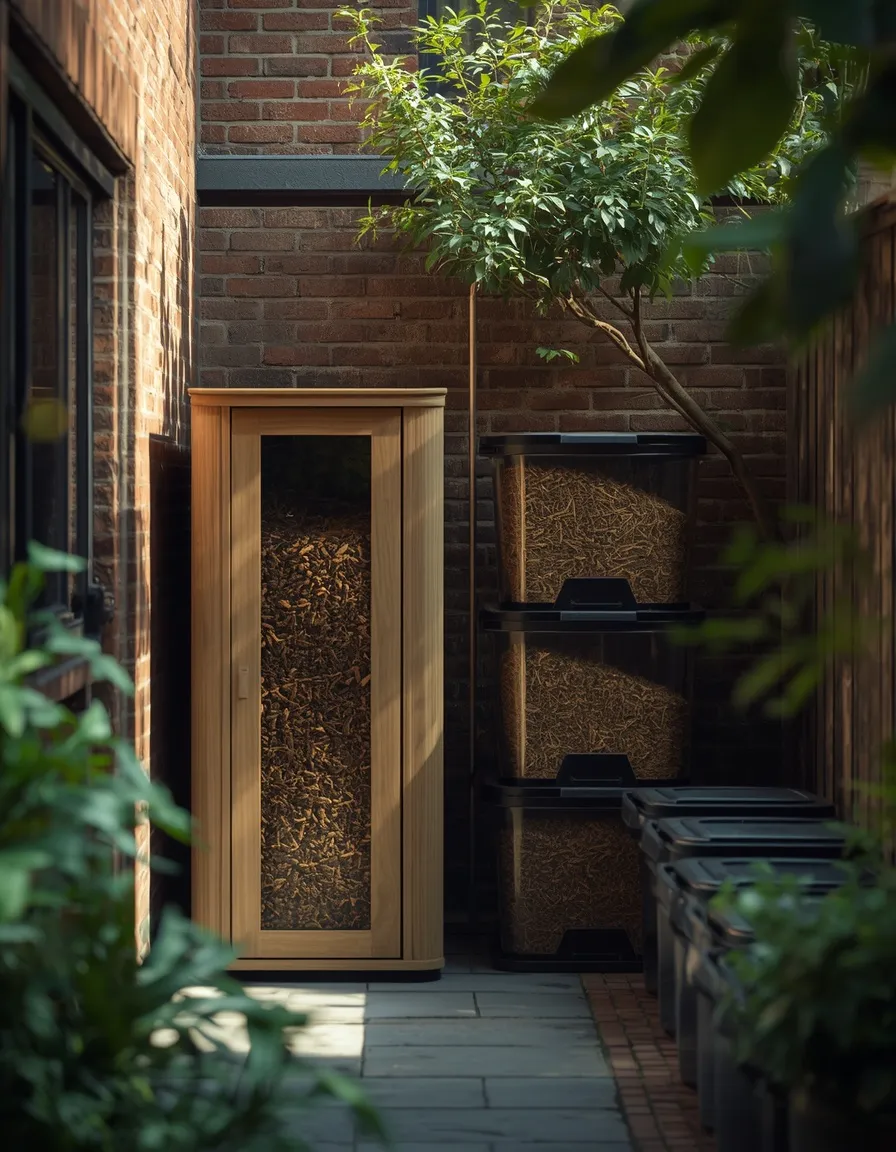
A small, enclosed compost tumbler or a stacked worm bin, tucked into an unused corner of a courtyard or balcony, turns kitchen scraps into genuinely useful garden soil without the space or smell concerns that keep many city gardeners from composting at all.
Choose an enclosed tumbler system over an open pile in any shared or close-quarters urban setting, since enclosed systems manage odor and deter pests far better than open composting, which matters considerably more in a dense neighborhood than a rural property. A worm bin, using red wiggler composting worms, works particularly well for balconies and indoor-adjacent spaces since it produces minimal odor when maintained correctly and can sit in a shaded spot year-round in most climates. Balance nitrogen-rich kitchen scraps with carbon-rich material like shredded cardboard or dry leaves in roughly equal volume, since an imbalanced compost system is the most common cause of the smell and pest problems that give composting a bad reputation.
- Reduces household waste while producing genuinely useful garden soil
- Suits balconies, courtyards, and shared spaces where odor and pests matter more
- Solves the assumption that composting requires more space than a city lot allows
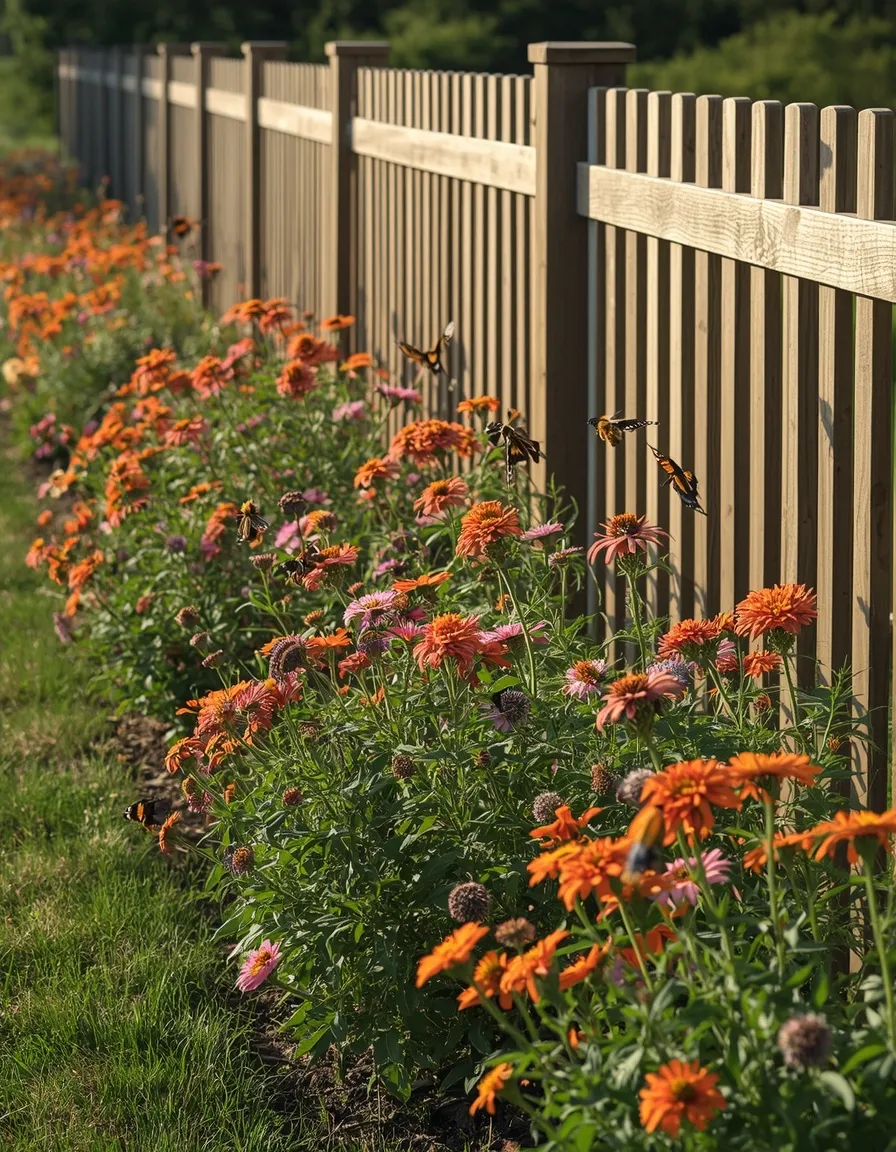
12. Pollinator-Friendly Urban Border
A border planted with a sequence of native or regionally adapted flowering plants timed to bloom from early spring through late fall gives an urban garden a genuine ecological role, supporting bees and butterflies that struggle to find consistent forage in a paved, mowed city landscape.
Choose a sequence of three to five species with staggered bloom times rather than a single mass planting that flowers all at once and leaves nothing for the rest of the season, and prioritize native or regionally adapted species over ornamental hybrids, since many hybrids are bred for flower size at the expense of the nectar and pollen that make a plant useful to pollinators. Avoid systemic pesticides entirely in a pollinator border, since these compounds persist in nectar and pollen long after application and are a documented contributor to pollinator decline. This border works particularly well along a front garden or fence line where it is visible to neighbors and passersby, quietly demonstrating that an urban garden can support real biodiversity.
- Supports pollinators in a landscape where forage is otherwise scarce
- Suits front gardens and fence lines with consistent visibility
- Solves the ecological blank spot that paved, mowed urban landscapes create
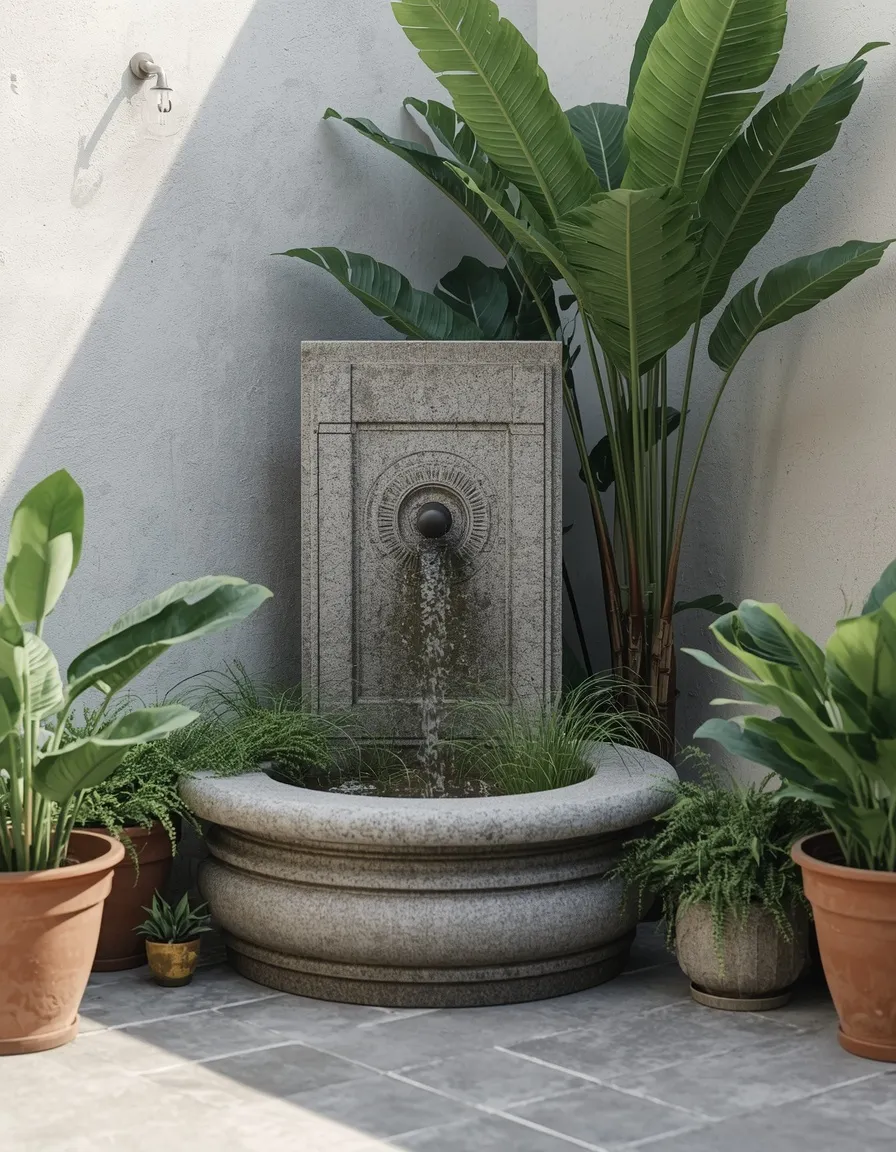
13. Small Courtyard Water Feature
A compact recirculating fountain or a simple stone basin, set into a courtyard corner, adds the sound of moving water to a space that otherwise carries every passing car and neighboring conversation, genuinely changing how the space feels to sit in.
Choose a self-contained, recirculating unit that does not require a plumbed water line for the simplest installation, and run any pump through a GFCI-protected outdoor outlet, since combining water and electricity outdoors always carries a shock risk without proper grounding. Position the feature away from direct seating sightlines to nearby windows, both the courtyard’s own and any neighboring units, since the sound that feels pleasant up close can carry and become an annoyance at a distance in dense housing. Clean and refresh the water regularly in warm climates to prevent mosquito breeding, and consider a small feature with no standing open water if young children have unsupervised access to the space.
- Masks urban noise more effectively than any purely visual feature
- Suits enclosed courtyards where sound carries and reflects
- Solves the harsh acoustic environment common in dense city gardens
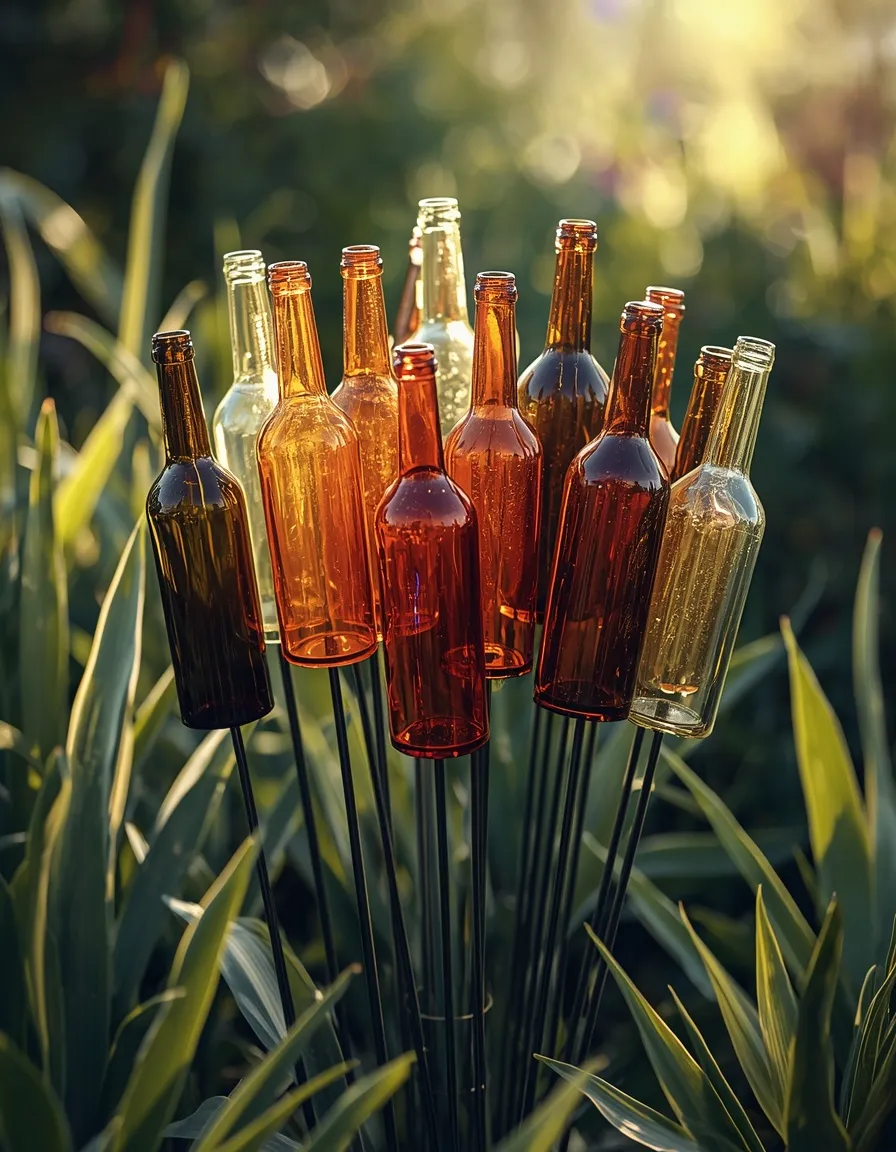
14. Glass Bottle Garden Art Accent
A cluster of colored glass bottles, upended onto slim metal rods or strung along a simple frame, catches and scatters light through a garden bed the way stained glass does through a window, a genuinely distinctive urban garden decoration built from material that would otherwise go in recycling.
Choose thicker glass bottles, wine or beer bottles rather than thin drink bottles, for both a richer color when lit and better resistance to cracking from temperature swings, and mount bottles on rods with a rounded or capped tip rather than a sharp point, since an exposed sharp rod at child or pet height is a genuine puncture hazard. Group bottles by color family rather than mixing every shade at once, which reads as more intentional against a garden’s green backdrop. Position the display where afternoon or evening sun passes through it directly for the strongest visual effect, since backlighting is what makes this idea work.
- Adds color and light effects no plant or painted object can replicate
- Suits garden beds and fence lines that catch direct afternoon sun
- Solves the want for a genuinely distinctive, low-cost decorative accent
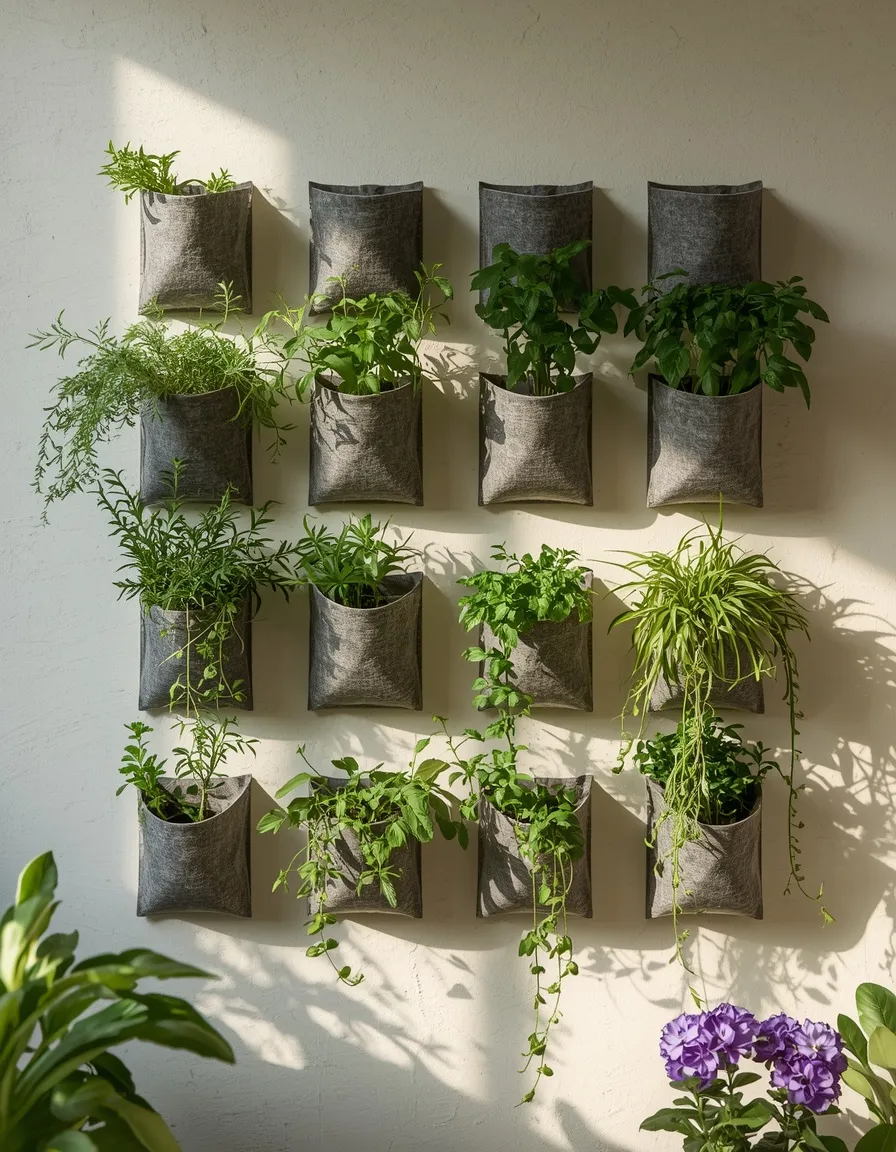
15. Modular Living Wall Planter System
A grid of modular felt pocket panels or stackable planter modules, mounted flush against a sunny wall and planted with a mix of herbs, succulents, or trailing ornamentals, turns an entire vertical surface into growing space in a way a single trellis or crate stack cannot match at scale.
Choose a system with a built-in or add-on drip irrigation line rather than planning to hand-water each pocket individually, since a wall of dozens of small planting pockets dries out considerably faster than the same volume of soil in one container and hand-watering at that scale becomes unsustainable quickly. Mount the system’s frame into masonry anchors rated for the fully saturated weight of the entire wall, not just the dry weight, since wet soil and mature root systems add substantial weight beyond what the empty system weighs. This idea suits gardeners ready for a bigger investment and more irrigation planning than the reclaimed crate idea above, in exchange for a considerably larger and more uniform growing surface.
- Delivers the largest vertical growing surface of any idea on this list
- Suits sunny walls in courtyards, patios, and small backyards alike
- Solves the space ceiling that container gardening alone eventually hits
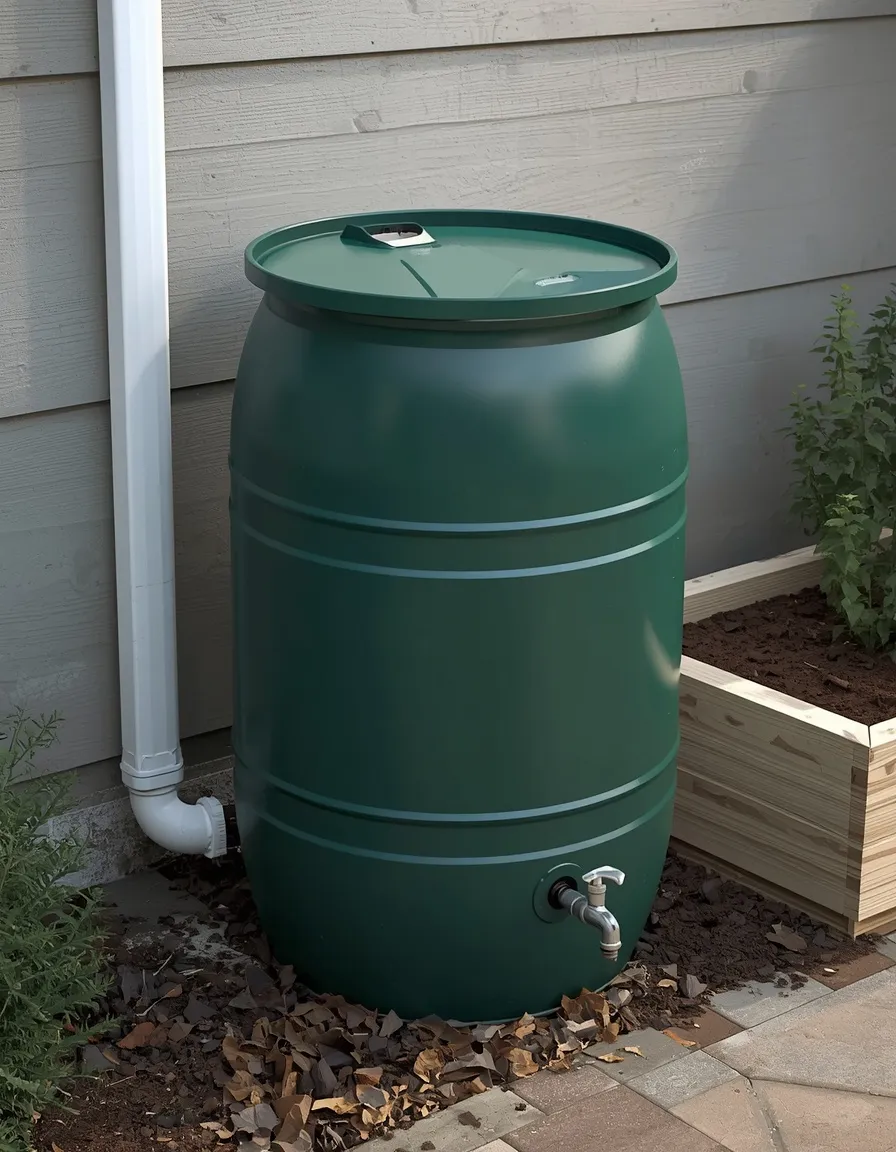
16. Rain Barrel Water Harvesting Setup
A rain barrel connected to a downspout, fitted with a spigot near the base, captures roof runoff that would otherwise disappear into a storm drain and turns it into a free water source for container and raised bed gardens through drier stretches of the season.
Install a barrel with a secure, mesh-screened lid to keep out debris and prevent standing open water from becoming a mosquito breeding site, and elevate the barrel on a stable stand so gravity provides enough pressure to fill a watering can from the spigot. Check local regulations before installing a rain barrel, since a small number of jurisdictions with senior water rights systems restrict or regulate residential rainwater collection, though this is uncommon in most urban areas. A single 55-gallon (208-liter) barrel fills faster than most gardeners expect, often overflowing after a single significant rain event, so a linked overflow hose directing excess water to a garden bed makes the system considerably more useful.
- Provides a free water source that reduces municipal water use and cost
- Suits any home with a downspout and a reasonably sunny garden nearby
- Solves the waste of roof runoff that most urban properties simply lose
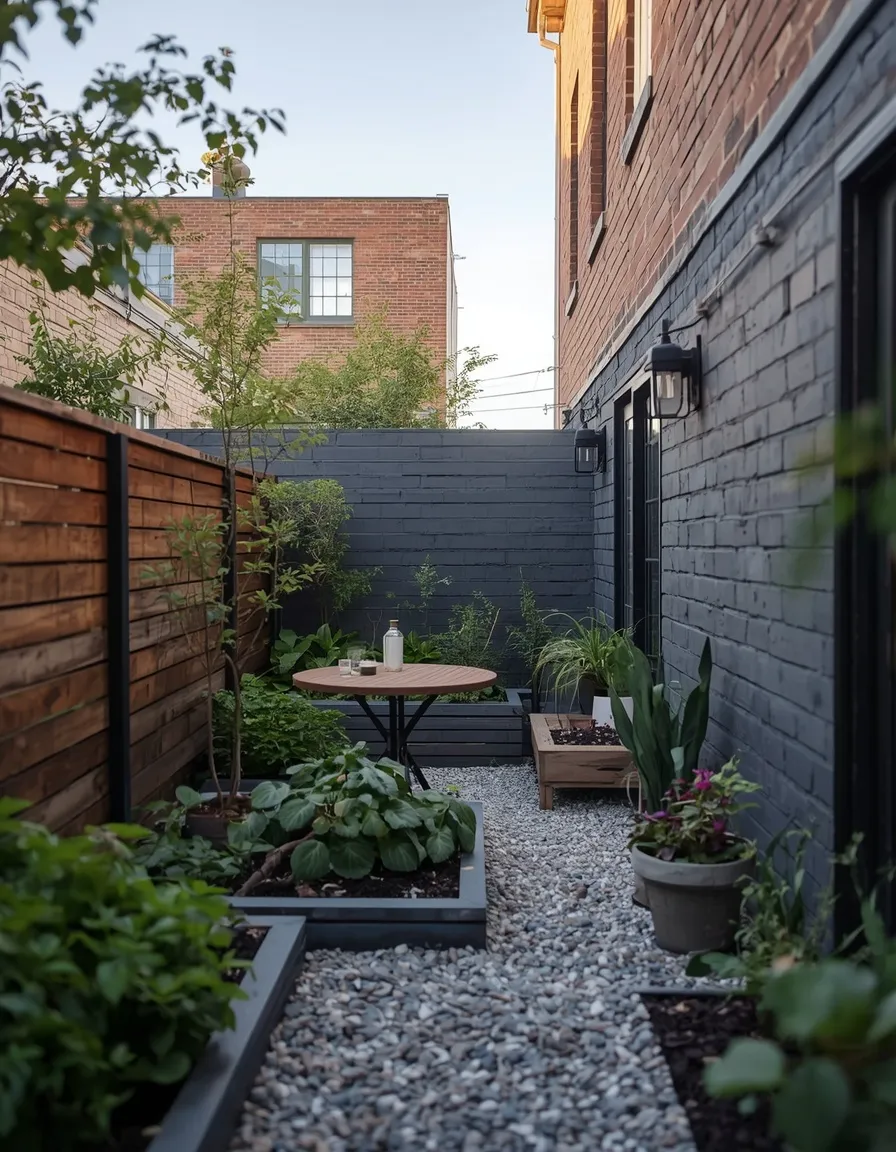
17. Tiny Urban Backyard Zoning
A backyard smaller than most living rooms, divided into two or three clearly defined zones, a small dining spot, a compact growing area, a patch of lawn or gravel, rather than left as one undefined rectangle, reads as considerably larger and more intentional than the same square footage used without division.
Use a change in material, gravel giving way to decking, or a low border like a single course of brick, to signal a zone change without needing an actual wall or fence between areas, which would make an already small space feel more enclosed. Keep sightlines open across the whole yard even as zones are divided, positioning taller elements, a trellis or a small tree, at the back or sides rather than the center, where they would block the view across the space. This zoning approach works at almost any scale down to roughly 150 square feet (14 sq m), below which a single unified zone usually serves a tiny yard better than subdivision.
- Makes a small yard read as considerably larger through clear organization
- Suits backyards too small for a single large feature like a full lawn
- Solves the undefined, purposeless feeling of an unzoned small yard
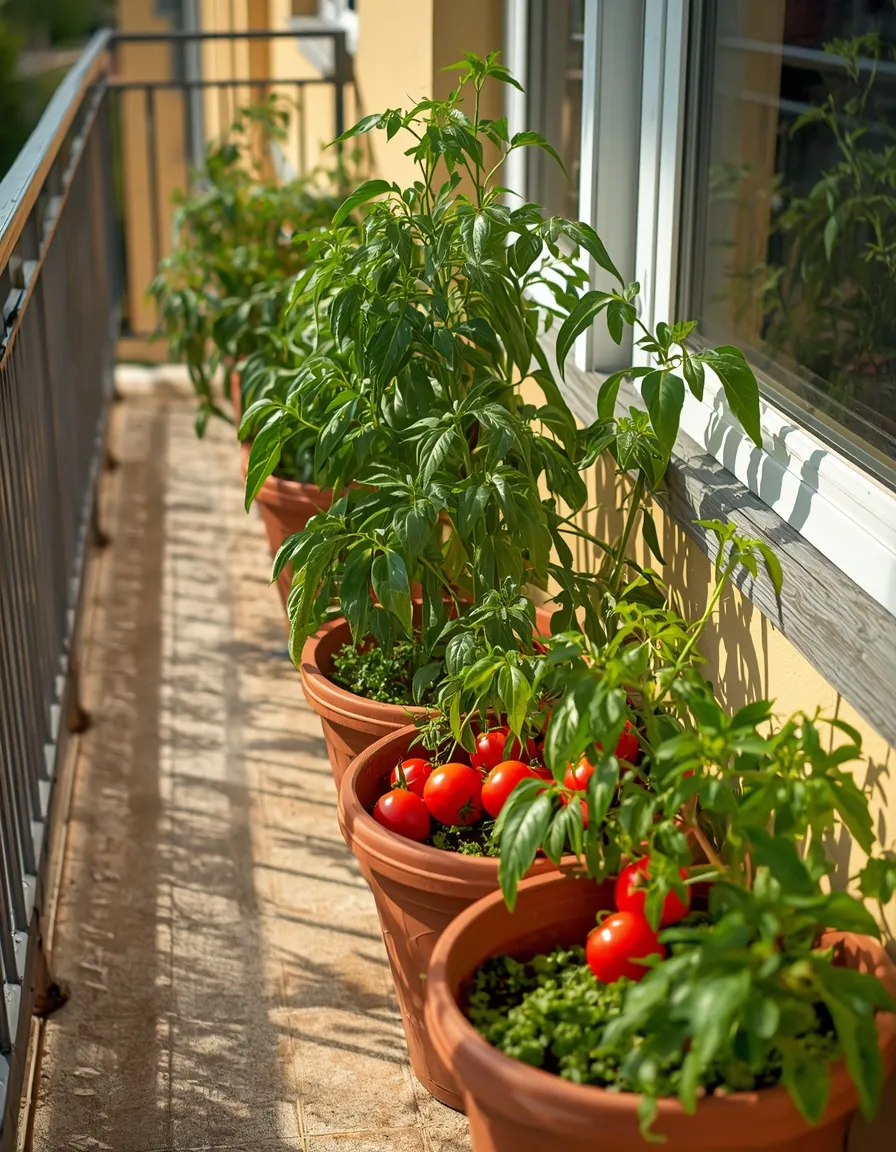
18. Balcony or Rooftop Edible Containers
A row of deep containers on a balcony or rooftop, planted specifically for food rather than decoration, tomatoes, peppers, dwarf beans, salad greens, brings genuine harvestable produce to a space with no ground-level soil access at all.
Choose dwarf or container-bred vegetable varieties over standard garden varieties, since full-size tomato and pepper plants outgrow most containers and struggle with the root restriction, while varieties bred specifically for containers are sized appropriately from the start. Confirm the balcony or roof’s weight capacity before grouping multiple large, soil-filled containers together, since saturated soil is considerably heavier than dry soil and older buildings in particular may have specific load limits worth checking with a building manager. Position containers to maximize whatever direct sun the space receives, rotating pots periodically if sun exposure is uneven across the space, since most fruiting vegetables need at least six hours of direct light to produce well.
- Brings genuine food production to spaces with zero ground-level soil
- Suits balconies and rooftops that receive at least half a day of direct sun
- Solves the assumption that container gardening cannot produce real food
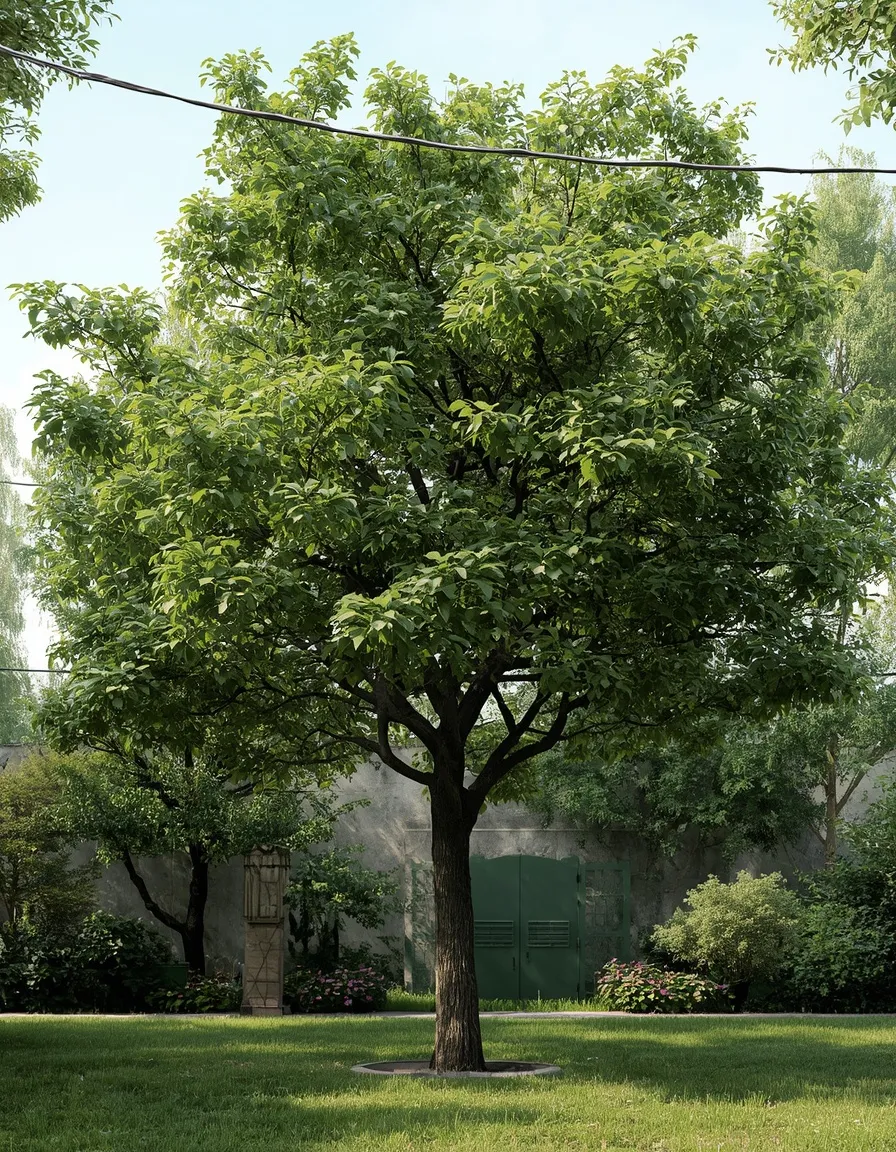
19. Urban Shade Tree or Specimen Planting
A single, well-chosen tree, planted where it has room to reach a mature canopy, does more to cool and soften a small urban garden than any combination of smaller plants, casting the kind of deep, structural shade that also lowers surrounding surface temperatures measurably on hot days.
Choose a tree species with a mature size genuinely suited to the available space, both above ground and below, since urban planting sites frequently underestimate root spread and end up removing a tree years later once it conflicts with foundations or utility lines. Confirm the location relative to underground utilities before digging, since utility marking services exist specifically to prevent the very common mistake of striking a line during a residential planting project. A single well-placed tree also does more for a small garden’s long-term character and value than most other single additions on this list, worth the years of patience a tree requires to mature.
- Delivers genuine cooling and shade no smaller planting can replicate
- Suits gardens with enough space for a tree’s mature canopy and roots
- Solves the flat, shadeless heat that many small urban gardens struggle with
20. Keyhole Garden Bed Layout
A circular raised bed with a wedge-shaped notch cut toward the center, giving access to a built-in composting basket at the bed’s core, lets a gardener reach every part of a relatively large growing area without ever stepping into the bed itself.
Build the bed roughly 6 feet (1.8 m) in diameter with the central composting basket, a simple wire mesh cylinder, positioned so kitchen scraps and garden waste added there slowly feed nutrients and moisture outward into the surrounding soil as they break down. This layout maximizes growing area relative to the gardener’s actual reach, since the design specifically eliminates the need for pathways between rows that a standard rectangular bed requires. Keyhole beds work especially well in hot, dry urban microclimates, since the central composting core helps retain moisture more effectively than a standard raised bed of the same size.
- Maximizes usable growing area relative to a standard rectangular bed
- Suits hot, dry urban sites needing better built-in moisture retention
- Solves the wasted path space that rectangular raised beds typically require

21. Seating Nook Carved Into Planting
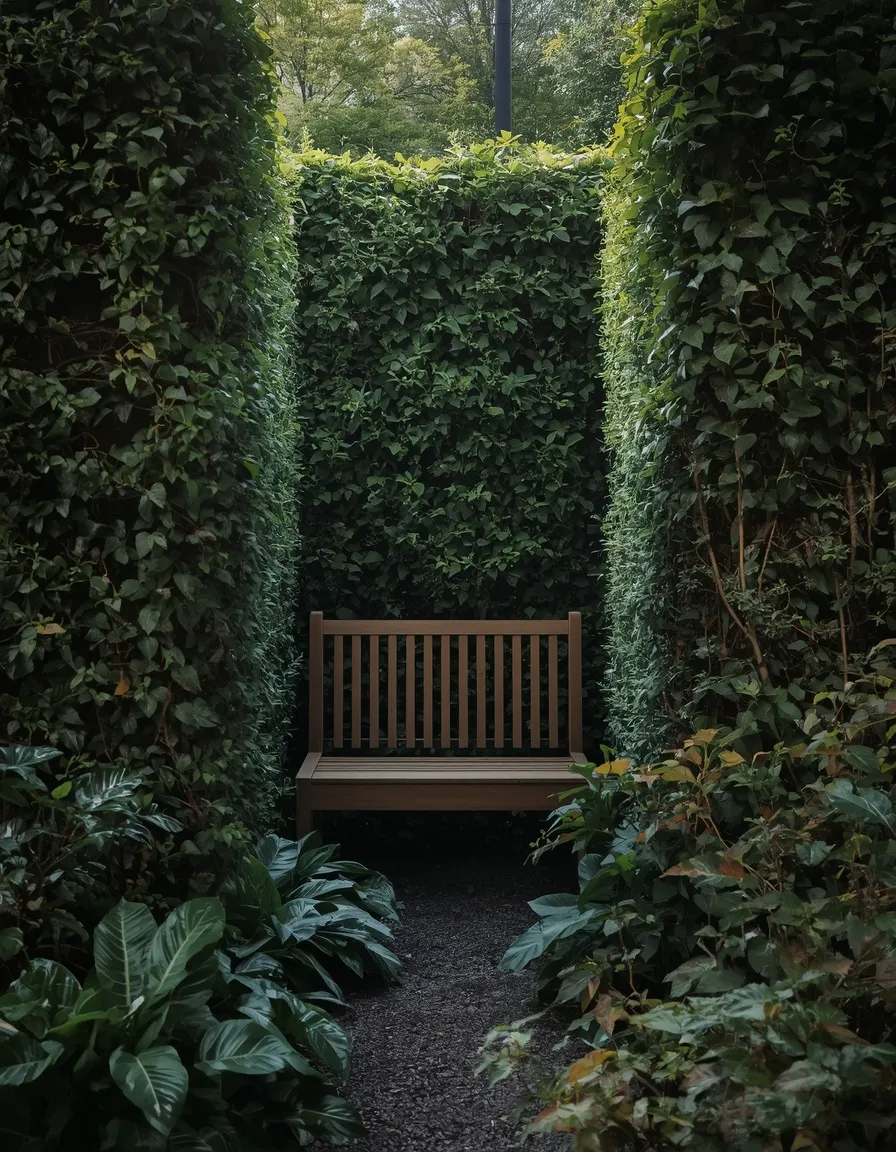
A small bench or pair of chairs, tucked into a gap deliberately left within a dense planting bed rather than placed on an open patio, gives an urban garden a private, enclosed feeling far beyond what the space’s actual square footage would suggest.
Position the seating so plants rise on at least two sides, using taller structural plants or a trellis to create a sense of enclosure, while keeping the seat itself oriented toward the garden’s best view or focal point rather than facing a blank wall. This technique works particularly well in a garden too small for a dedicated seating area separate from the planting, since it layers function into space that would otherwise be growing area alone. Leave enough clearance, at least 3 feet (91 cm), for comfortable entry and exit without brushing against every surrounding plant, which quickly becomes irritating with anything thorny or heavily textured nearby.
- Creates a genuinely private feeling seating spot in very little space
- Suits gardens too small for planting and seating as separate zones
- Solves the exposed, on-display feeling of seating placed on open patio
Final Thoughts
Urban garden ideas succeed by working with real constraints, limited soil, unpredictable shade, shared walls, rather than pretending a city lot is a rural acre. Whether that means starting with something as simple as a sketched layout and a single vertical trellis, or working toward a bigger project like a no-dig raised bed system or a modular living wall, the strongest urban gardens come from choosing techniques that fit the space’s actual sun, soil, and rules rather than copying a design built for a different kind of property entirely. That same practical approach to a compact outdoor space is what Sunday Abode is built around, and for more ways to make a small space work harder, the garden design category covers layout and planting well beyond city gardening alone. Start with the one or two ideas your space is best suited for, and build outward as you learn what the light and soil actually allow.
FAQs
How do I start urban garden design in a very small space?
Begin with the sketch-first approach covered above, mapping actual sun and water access before choosing plants, then pick two or three ideas suited to your specific constraints rather than attempting a wide mix at once. A single vertical trellis or a no-dig raised bed often delivers more usable growing space than several small container groupings scattered without a plan.
Is urban garden soil actually unsafe to grow food in?
Not always, but it is worth checking rather than assuming. Urban soils average higher lead levels than rural ones due to decades of vehicle exhaust, old paint, and industrial history, so a basic soil test before growing vegetables, particularly near an older home or busy road, is a genuinely worthwhile step covered in more detail above.
What urban garden ideas work with almost no direct sun?
A shade-tolerant corner planted with hostas, ferns, and heuchera is built specifically for this situation, layering texture and form rather than relying on the flowers that need more light to produce. Several other ideas, including a compact composting system and a modular living wall with shade-tolerant species, also work in lower-light conditions with the right plant choices.
Can I grow real food in containers on a balcony with no yard at all?
Yes, dwarf and container-bred vegetable varieties are specifically suited to this, and a row of deep containers positioned for maximum available sun can produce a genuine harvest of tomatoes, peppers, and greens. Confirm the balcony’s weight capacity before grouping several large, soil-filled containers together, since saturated soil adds significant weight.
What is the difference between a trellis, a living wall, and an espalier?
A trellis is a simple support structure for vining plants to climb; a modular living wall uses dozens of small planting pockets to cover an entire surface; and an espalier trains a single tree or shrub flat against a wall in a specific branching pattern. All three grow vertically, but they suit different goals, from a quick vegetable harvest to a structural garden feature.
How do I keep a shared urban courtyard garden from causing conflict with neighbors?
Confirm which areas are designated for individual versus shared use before installing anything permanent, and check property lines and any shared-fence agreements before adding privacy screening or structures near a boundary. Clear zoning within your own portion of the space, covered above, also helps define what belongs to whom without needing a conversation about every individual plant.
Are rain barrels and composting actually practical in a city garden?
Yes, both scale down well for urban use. An enclosed compost tumbler or worm bin manages odor and pests far better than an open pile in close quarters, and a single rain barrel connected to a downspout typically provides more free water than most small urban gardens can use before overflowing.
A note on safety: test soil for lead before growing food in an urban setting, confirm balcony or rooftop weight limits before grouping containers, and check property lines and building rules before installing fences, trellises, or shared structures.