
Introduction
Feng shui plants do more than decorate a room; they’re chosen deliberately for how their leaf shape, growth habit, and placement are believed to shift the energy, or chi, moving through a home. Whether the goal is inviting wealth into an entryway, calming a bedroom before sleep, or softening the sharp edges of an open office, the right feng shui plants can genuinely change how a room feels to live in. This guide covers seventeen of the most trusted feng shui plants, room by room, along with the plants worth avoiding and the pet safety details most lists skip. Consider it a practical starting point for bringing a little more intention into any abode.
What Makes a Plant Good Feng Shui?
In feng shui, a plant’s energy comes down to a few consistent principles rather than folklore alone. Rounded, broad leaves are associated with the Wood element and wealth energy, since they’re read as holding and gathering chi rather than letting it scatter. Upward, vigorous growth signals active, healthy chi, which is one reason a thriving plant is considered far more auspicious than a struggling one, and why a wilting or yellowing plant is generally seen as a sign to either revive it quickly or remove it rather than let stagnant energy linger. Thorns, spikes, and sharp pointed leaves create what’s known as sha chi, or poison arrow energy, particularly when pointed toward a seating area, a bed, or a main doorway, which is why most traditional feng shui guidance steers away from cacti and other spiky succulents in high-use rooms. This same intentional approach to natural materials and calm, uncluttered spaces overlaps closely with other slow-living design philosophies, including the pared-back layouts found in Japandi garden ideas, where natural texture and negative space matter as much as any single object.
- Rounded or oval leaves generally represent wealth and gathering energy
- Healthy, upward growth signals active chi; wilting plants should be revived or removed
- Thorns and sharp pointed leaves create sha chi and are best kept away from seating and doorways
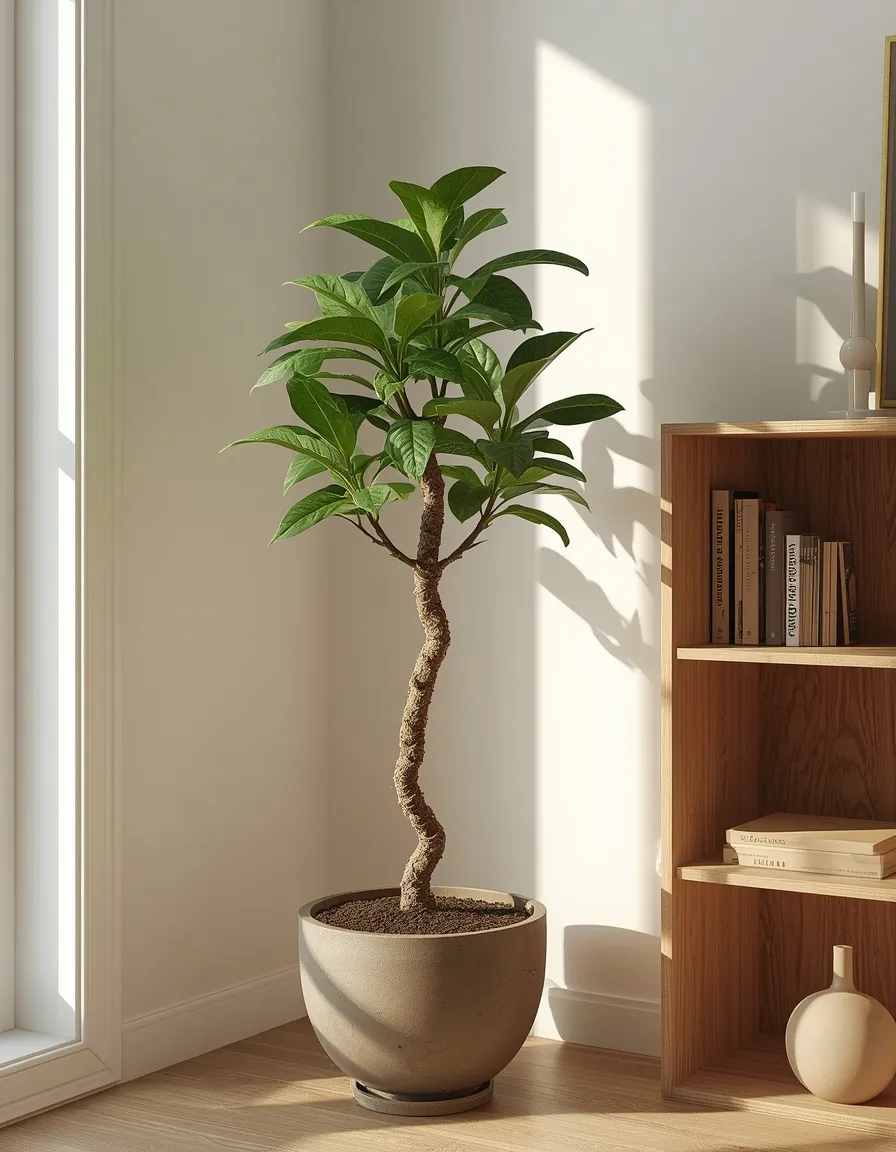
1. Money Tree (Pachira Aquatica)
A braided-trunk money tree tucked into the wealth corner of a living room is one of the most recognizable feng shui plants there is, its five-leaflet clusters said to represent the five feng shui elements working together in balance.
Position it in the southeast corner of a room, the area traditionally associated with wealth and abundance in the bagua map, or near a home office desk where financial decisions get made. Money trees prefer bright, indirect light and soil that dries out between waterings; overwatering is the single most common way to lose one, since root rot sets in quickly in soggy potting mix. A genuinely useful variation for renters or small spaces is a tabletop version, which delivers the same symbolism without needing floor space. Money trees are non-toxic to cats and dogs, making them one of the safer choices on this list for pet-owning households.
- Symbolizes balanced wealth energy through its five-leaflet clusters
- Best placed in the southeast wealth corner or near a home office
- Pet-safe, unlike several other popular feng shui plants on this list
2. Jade Plant (Crassula Ovata)
Sometimes called the friendship plant, a jade plant’s thick, coin-shaped leaves are one of the most literal pieces of feng shui plant symbolism, their rounded shape read as a stand-in for growing wealth.
Jade plants do best in bright light near a south or east-facing window and need infrequent, deep watering, closer to a succulent’s schedule than a typical houseplant’s; letting the soil dry out fully between waterings prevents the root rot that’s the most common cause of jade plant decline. Place it near an entryway or on a desk in the wealth corner rather than a bedroom, since its energy is considered more active and outward-facing than restful.
One important note that a lot of feng shui plant guides skip: the ASPCA lists jade plant as toxic to both cats and dogs, so it’s worth keeping this one out of reach or choosing a different plant entirely in households with pets that chew on foliage.
- Coin-shaped leaves are one of the most direct wealth symbols in feng shui
- Thrives on infrequent watering, closer to succulent care than typical houseplant care
- Toxic to cats and dogs, so placement matters in pet households
3. Lucky Bamboo (Dracaena Sanderiana)
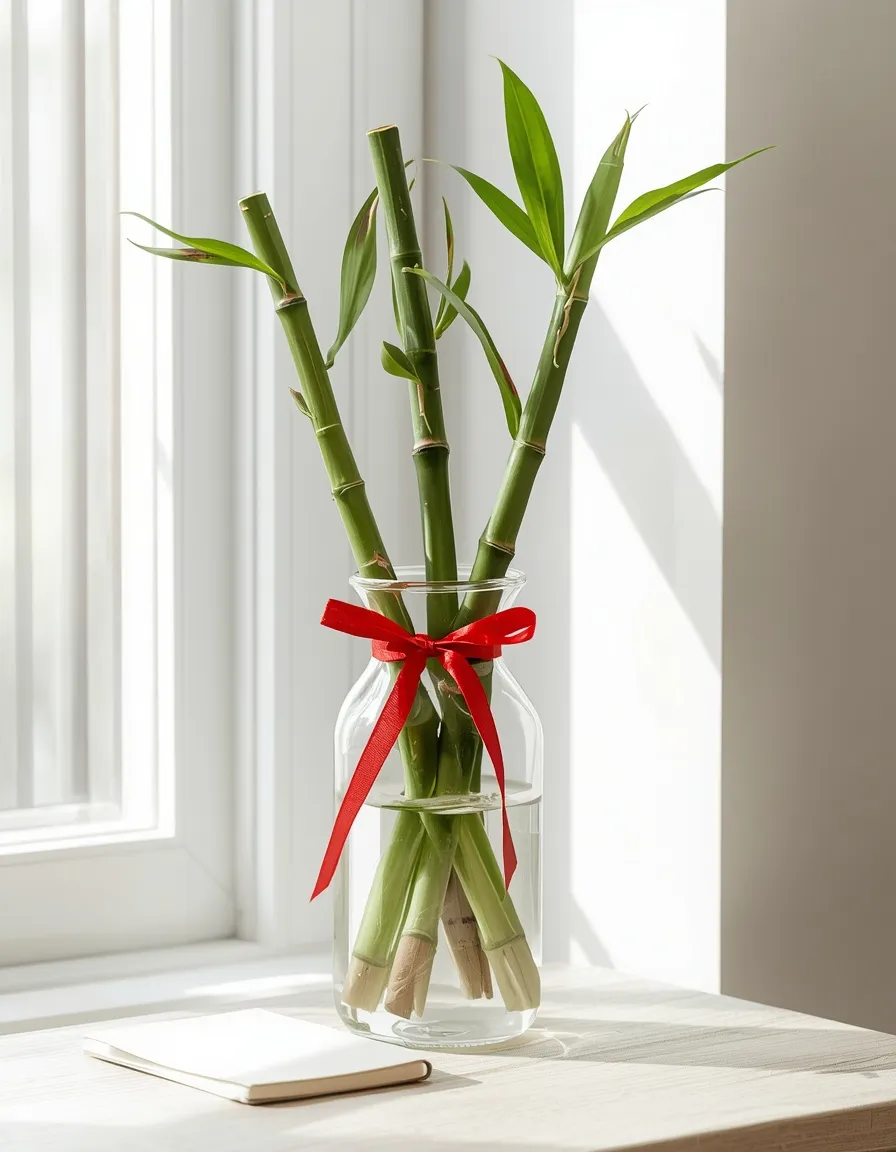
A glass vase of lucky bamboo stalks on a desk or entry table is one of the most gifted feng shui plants worldwide, and unlike most entries on this list, the exact number of stalks changes its meaning.
Three stalks are traditionally associated with happiness, five with wealth, and eight with growth and prosperity, while four stalks are generally avoided since the number sounds like the word for death in Mandarin and Cantonese. Lucky bamboo isn’t true bamboo at all, it’s a Dracaena species that grows happily in water alone, though it does best with the water changed weekly to prevent the root rot and algae buildup that dulls its stalks over time. Keep it in bright, indirect light rather than direct sun, which scorches the leaves quickly. It’s also worth noting the ASPCA classifies lucky bamboo as toxic to cats and dogs, so a water-filled glass vase within reach of a curious pet is worth reconsidering.
- Stalk count changes the meaning: 3 for happiness, 5 for wealth, 8 for growth
- Grows in water alone, making it one of the lowest-maintenance options here
- Toxic to pets, so keep vases out of reach in multi-pet households
4. Snake Plant (Dracaena Trifasciata)
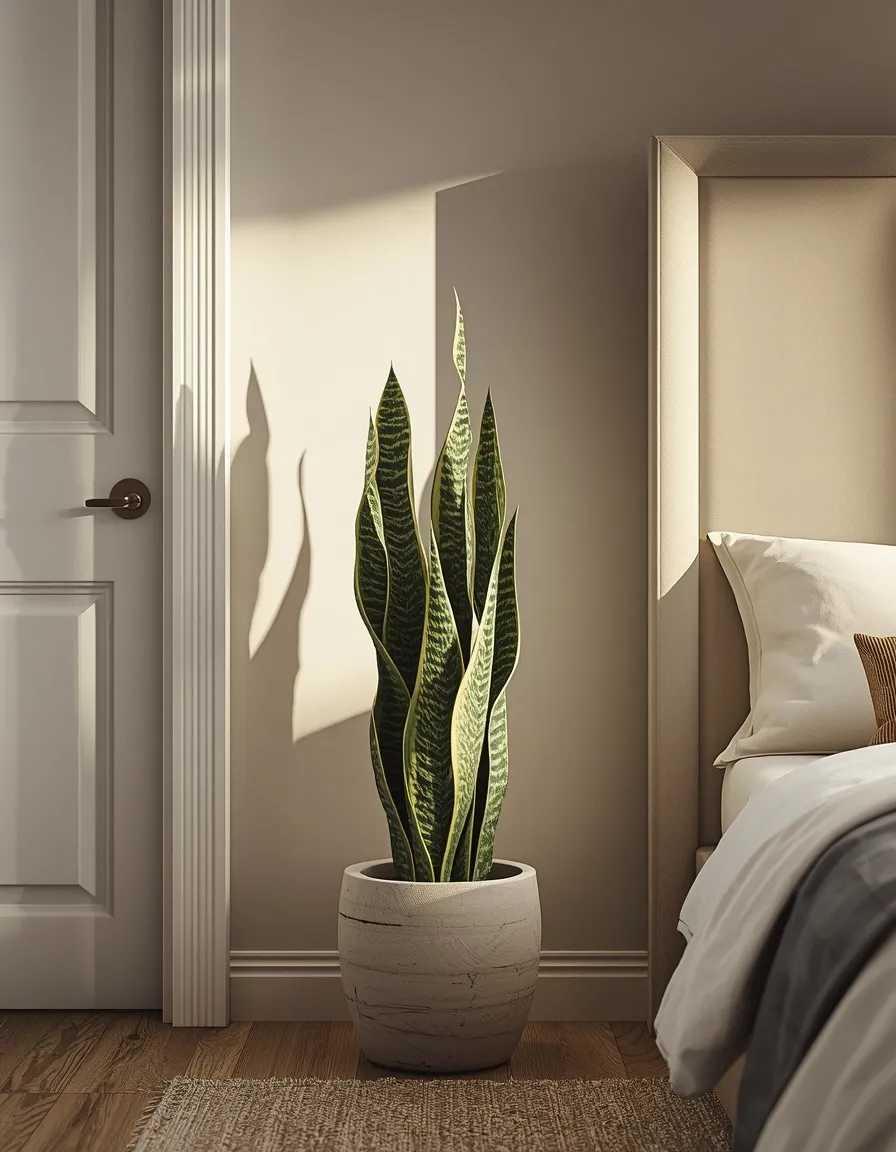
A tall snake plant standing sentinel beside a bedroom doorway is a classic protective feng shui placement, its stiff, upright leaves read as a quiet barrier against negative or stagnant energy entering the room.
Snake plants are genuinely one of the most forgiving houseplants available, tolerating low light, irregular watering, and long stretches of neglect that would kill most other entries on this list. Botanically, they use CAM photosynthesis, absorbing carbon dioxide and releasing oxygen overnight rather than during the day like most plants, which is part of why they’re traditionally recommended for bedrooms despite general feng shui caution around keeping too many plants in sleep spaces. Position it near the door rather than directly beside the bed, since its sword-like leaves can create sha chi if pointed at a sleeping body. Snake plants are mildly toxic to cats and dogs if chewed, so it’s worth choosing a sturdy, out-of-reach container in pet households.
- One of the few plants traditionally welcomed in bedrooms for its overnight oxygen release
- Extremely low-maintenance, tolerating low light and irregular watering
- Best placed near the doorway rather than directly beside the bed to avoid sha chi
5. Peace Lily (Spathiphyllum)
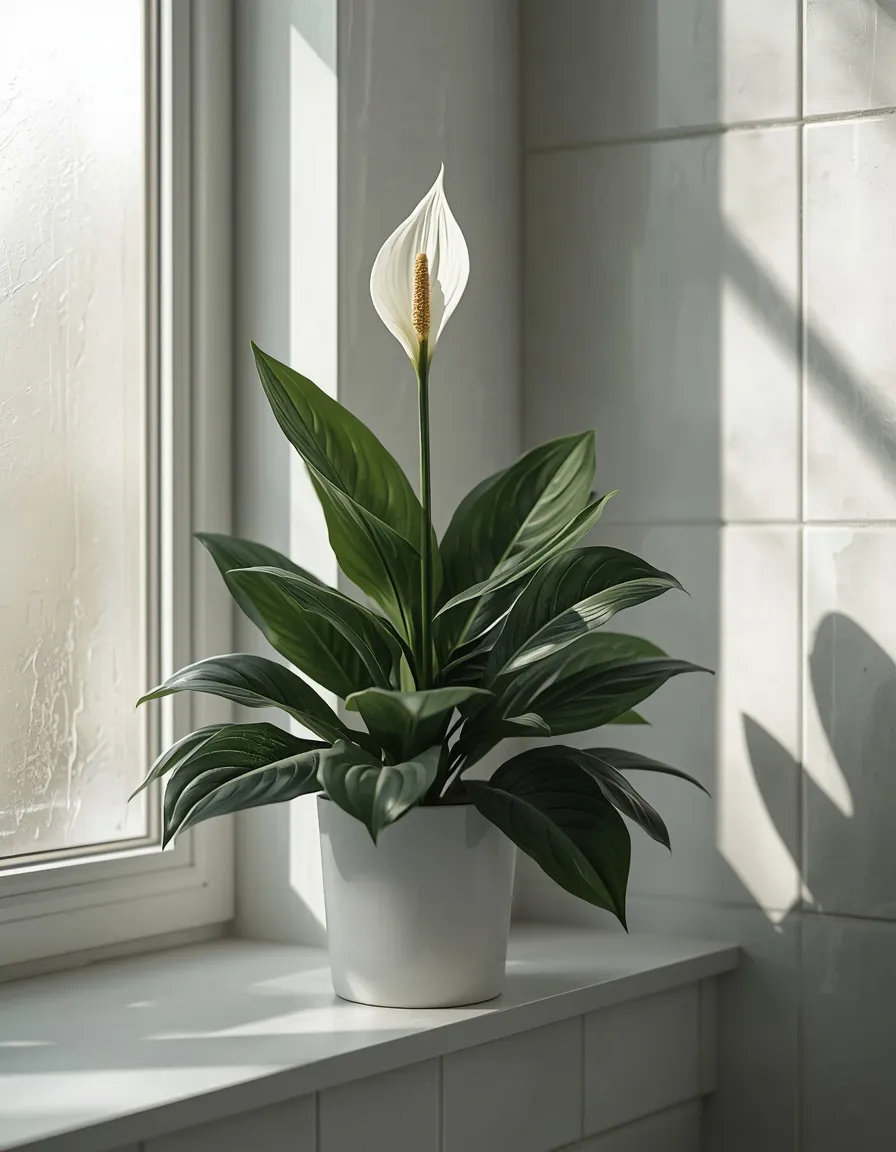
A peace lily’s dark, glossy leaves and pale white blooms bring a quiet, calming presence to a bathroom, a room that’s notoriously difficult to style with feng shui in mind since it’s associated with draining rather than gathering energy.
Bathrooms benefit from lower-maintenance, humidity-loving plants, and peace lilies genuinely thrive in the higher humidity a bathroom provides, unlike many houseplants that struggle there. Keep it in indirect light, since bathrooms with small or frosted windows rarely offer enough brightness for direct sun anyway, and water when the leaves begin to droop slightly, which is this plant’s unusually clear signal that it’s thirsty. In feng shui terms, the peace lily’s calming, harmonious energy is thought to help counteract the wealth-draining reputation bathrooms carry by keeping the room’s chi active and cared for rather than neglected. Peace lilies are toxic to cats and dogs if ingested, so this is another entry worth placing on a shelf out of pet reach.
- One of the few houseplants that genuinely thrives in bathroom humidity
- Its drooping leaves give an unusually clear watering signal
- Toxic to pets, so shelf placement is safer than floor level in pet households
6. Golden Pothos (Epipremnum Aureum)
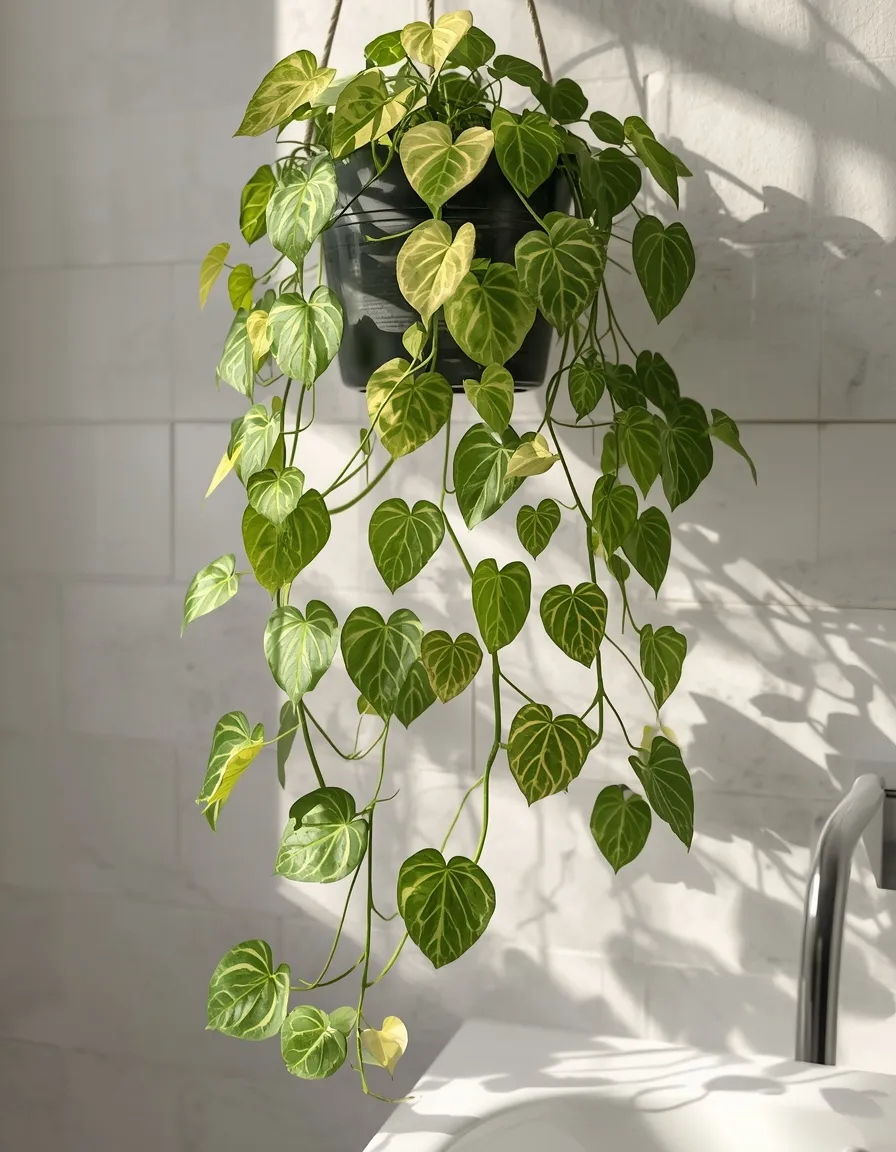
Trailing golden pothos vines cascading from a high shelf or bathroom windowsill are sometimes called money plant in feng shui circles, their continuous vining growth read as a visual metaphor for wealth that keeps flowing rather than stalling.
Pothos tolerates nearly any indoor light condition, from bright indirect light to the dim corners of a windowless bathroom, making it one of the most flexible plants on this list for rooms with limited natural light. Let the soil dry out between waterings and trim leggy vines back to encourage fuller, bushier growth rather than a single long trailing stem. In feng shui, trailing plants are best kept above eye level, on a shelf or in a hanging planter, rather than allowed to trail across the floor, where the energy is considered to pool rather than circulate. Golden pothos is toxic to cats and dogs, a detail worth flagging given how often it’s recommended for low-light rooms pets also spend time in.
- Extremely tolerant of low light, making it a strong choice for windowless bathrooms
- Continuous trailing growth symbolizes wealth that keeps circulating rather than stagnating
- Best displayed above eye level rather than trailing across the floor
7. Orchid (Phalaenopsis)
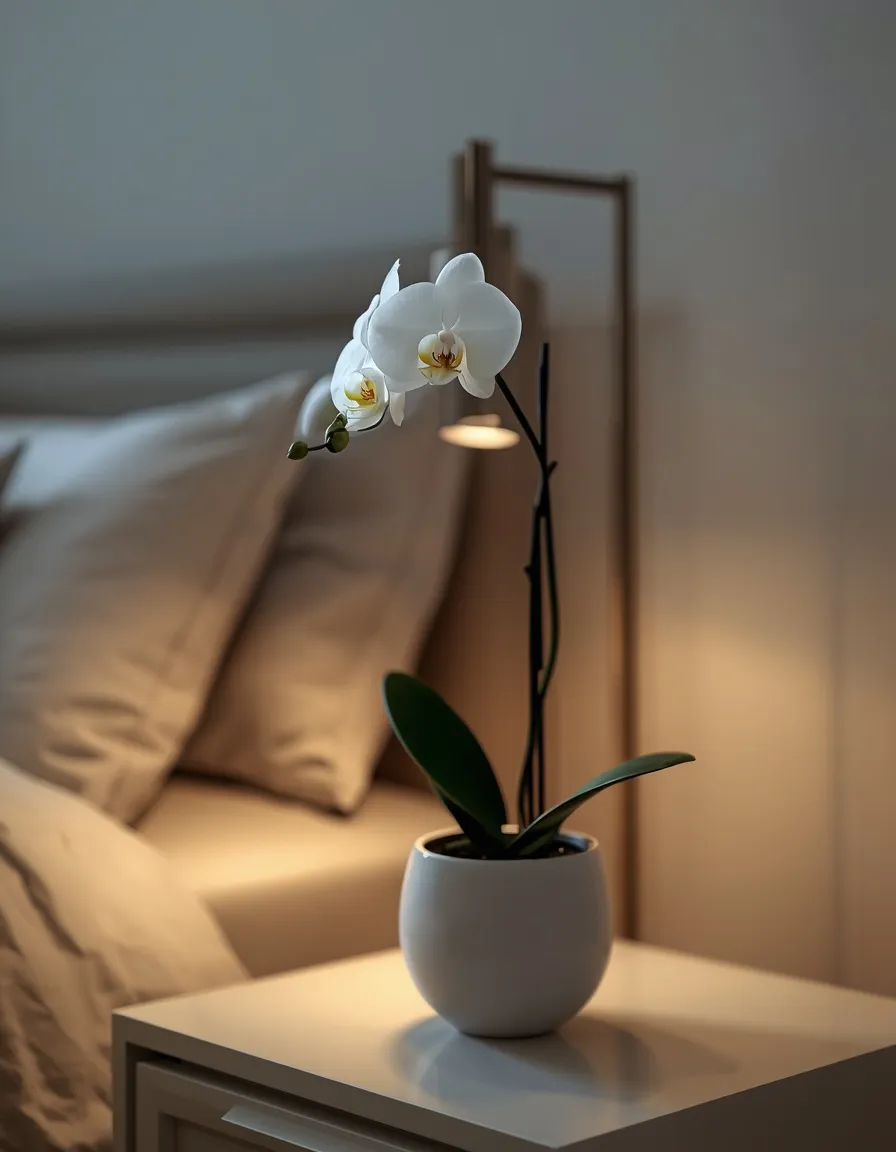
A single phalaenopsis orchid on a bedroom nightstand brings a soft, romantic energy that most feng shui traditions associate with love and relationships rather than wealth or protection.
Place orchids in the relationship corner of a bedroom, generally the back right area of the room when standing at the doorway looking in, or simply keep a pair of them together, since paired objects are considered to reinforce partnership energy in feng shui more than a single specimen does. Orchids need bright, indirect light and a distinct watering rhythm, typically once a week, letting the roots dry out between waterings since they’re epiphytes in their native habitat and don’t tolerate consistently soggy growing medium. A common mistake is repotting a blooming orchid into regular potting soil rather than a specialized bark-based orchid mix, which suffocates the roots. Orchids are non-toxic to cats and dogs, another point in their favor for bedroom placement in pet-friendly homes.
- Associated with love and relationship energy rather than wealth
- Best displayed in pairs or in the bedroom’s relationship corner
- Pet-safe, making it a low-worry choice for a bedroom nightstand
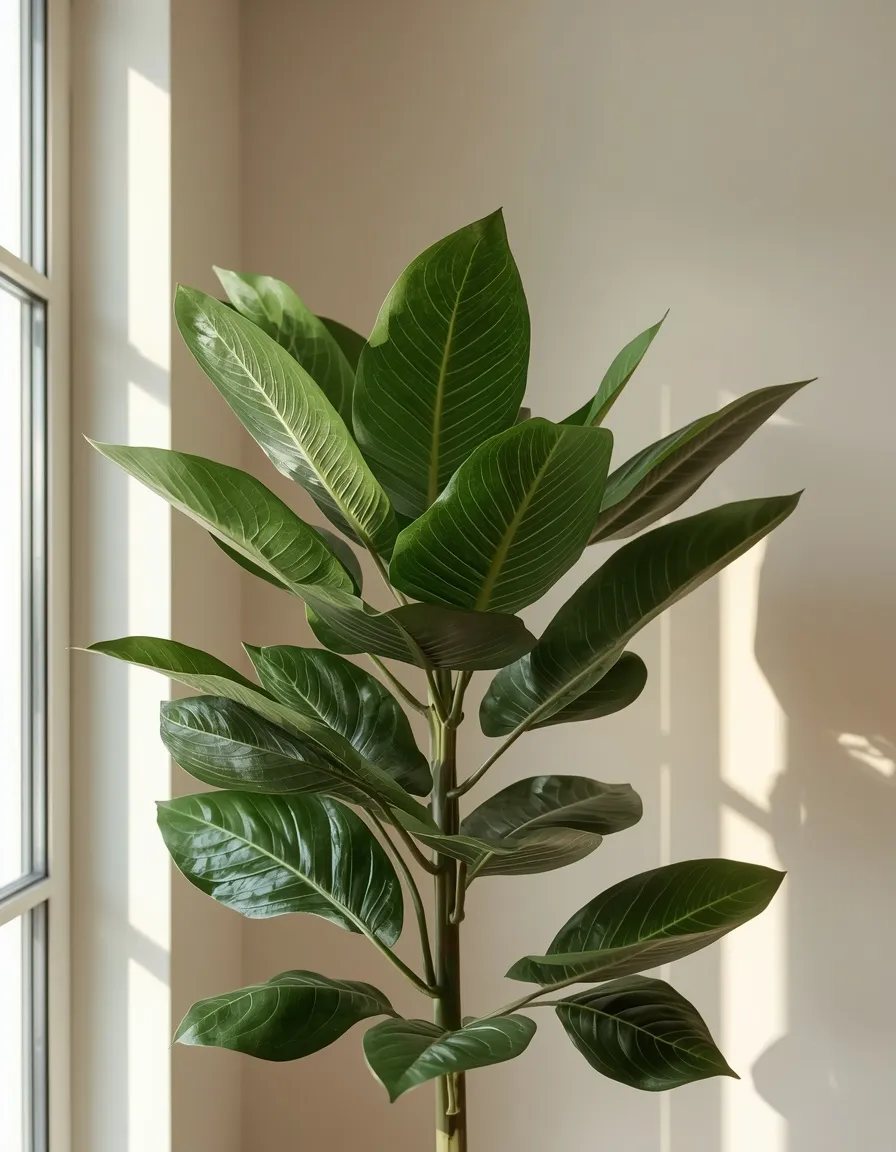
8. Rubber Plant (Ficus Elastica)
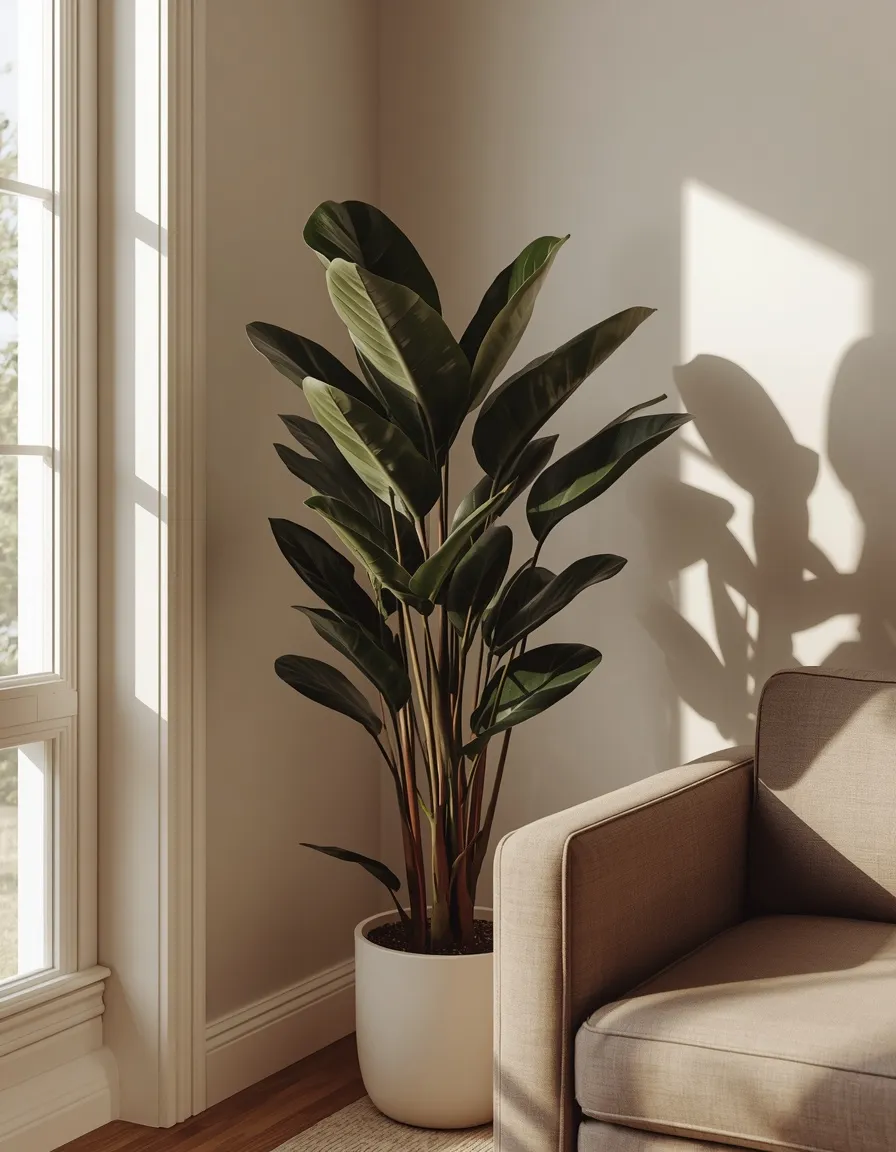
A rubber plant’s broad, glossy, deep green leaves standing tall in a living room corner deliver one of the boldest wealth statements of any feng shui plant, its sheer leaf size read as abundant, generous energy.
Give it a spot with bright, indirect light and enough floor space that its wide leaves aren’t constantly brushing against furniture, since a cramped, struggling rubber plant works against the abundant energy it’s meant to represent. Wipe the leaves down with a damp cloth every few weeks, both to keep them glossy and because dust buildup is thought to dull a plant’s chi in feng shui practice, not just its appearance. Rubber plants grow quickly and can reach 6 feet (1.8 m) or taller indoors over several years, so plan for a floor corner rather than a shelf from the start. The sap is mildly irritating to both people and pets if the stem is broken, so keep pruning tools away from curious pets and wash hands after trimming.
- Large, glossy leaves symbolize generous, abundant wealth energy
- Regular leaf cleaning is both a care task and a feng shui practice
- Sap is mildly irritating if the stem breaks, so handle pruning with care around pets
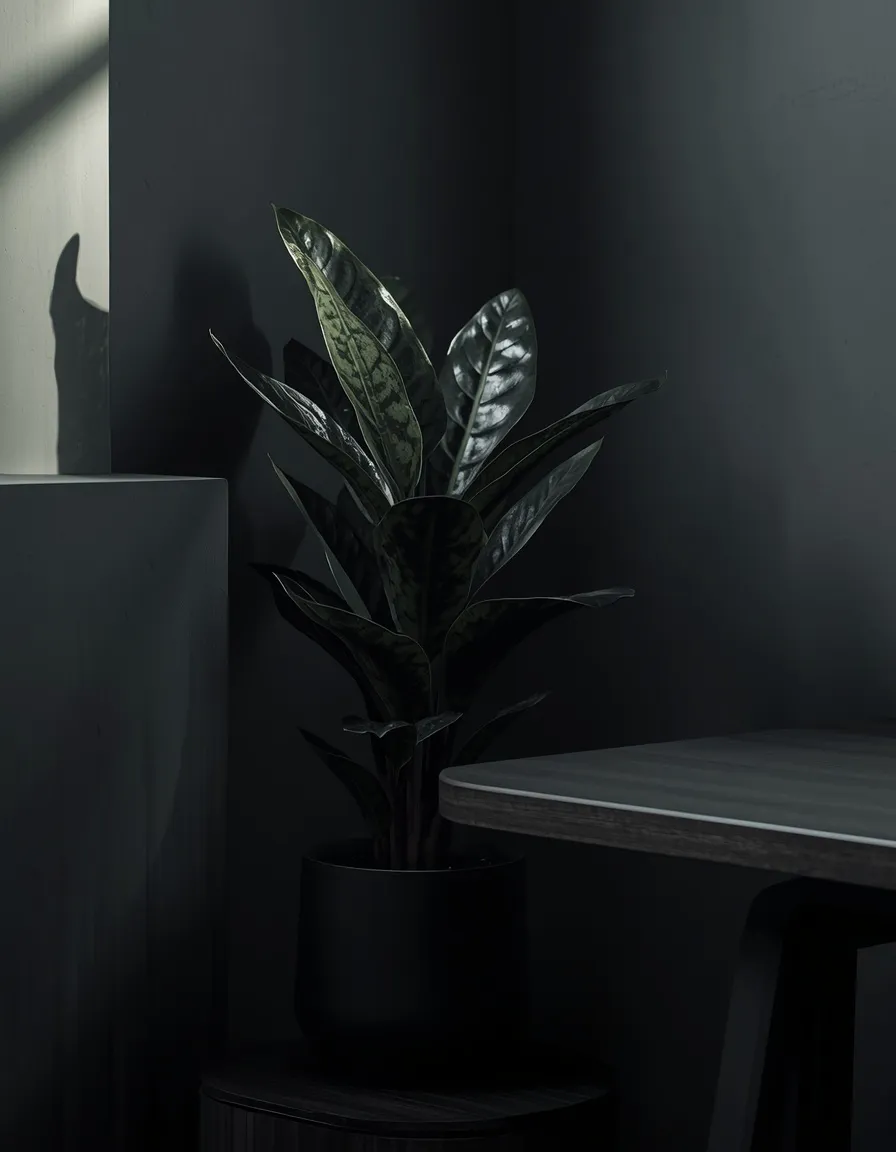
9. Areca Palm (Dypsis Lutescens)
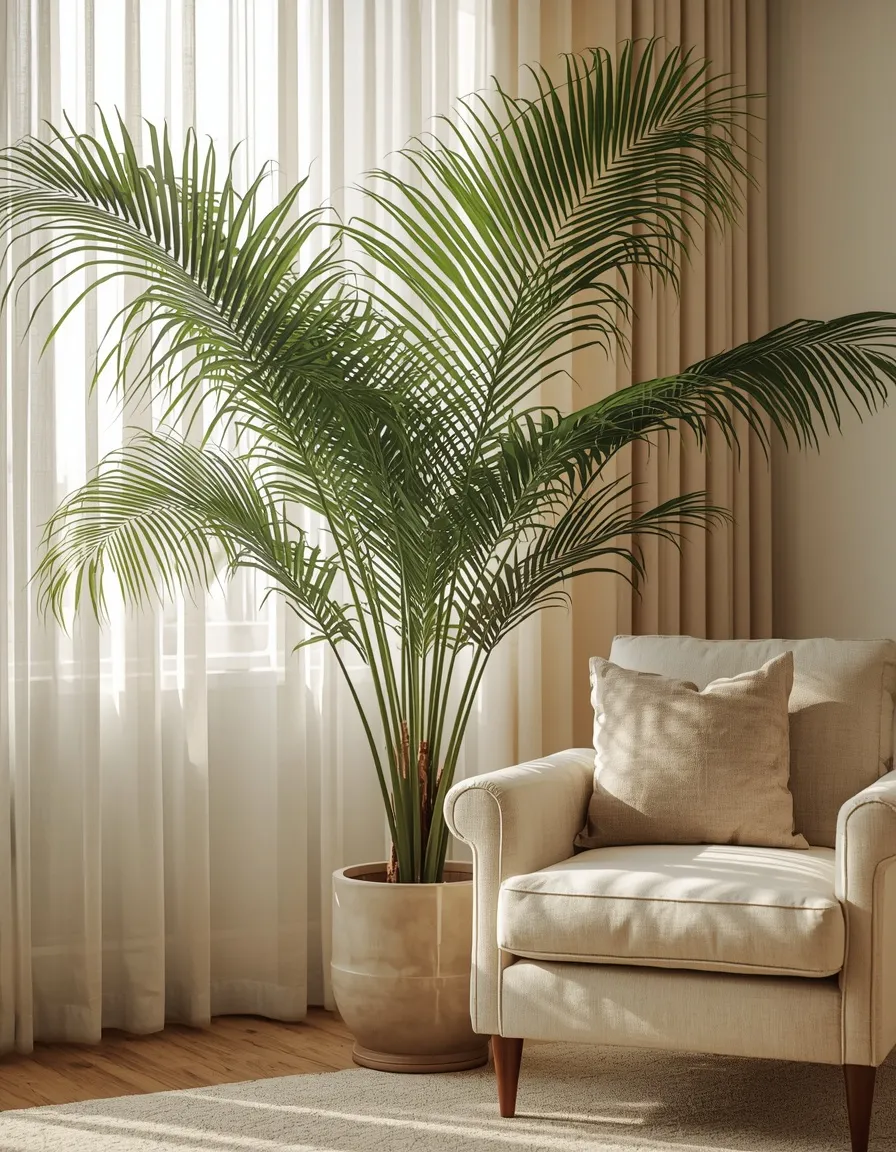
An areca palm’s soft, feathery fronds arching over a living room armchair do double duty in feng shui, softening the sha chi created by sharp furniture corners while adding graceful, upward energy to the room.
Areca palms need bright, indirect light and consistently moist, well-draining soil, watering roughly once a week and adjusting for how quickly the specific room dries out. They’re one of the larger plants on this list, often reaching 6 to 7 feet (1.8 to 2.1 m) indoors, so they work best as a statement piece near a sofa or in an office corner rather than a small side table. A genuinely useful pairing is placing one directly in the sightline of a sharp table edge or exposed structural column, since its soft fronds are specifically used in feng shui to visually diffuse those hard lines. Areca palm is one of the few plants on this entire list that’s non-toxic to both cats and dogs, making it an easy recommendation for households with curious pets.
- Softens sha chi created by sharp furniture edges and structural corners
- Reaches a substantial size, working best as a statement floor plant
- Non-toxic to pets, unlike many other popular feng shui plants
10. Chinese Money Plant (Pilea Peperomioides)
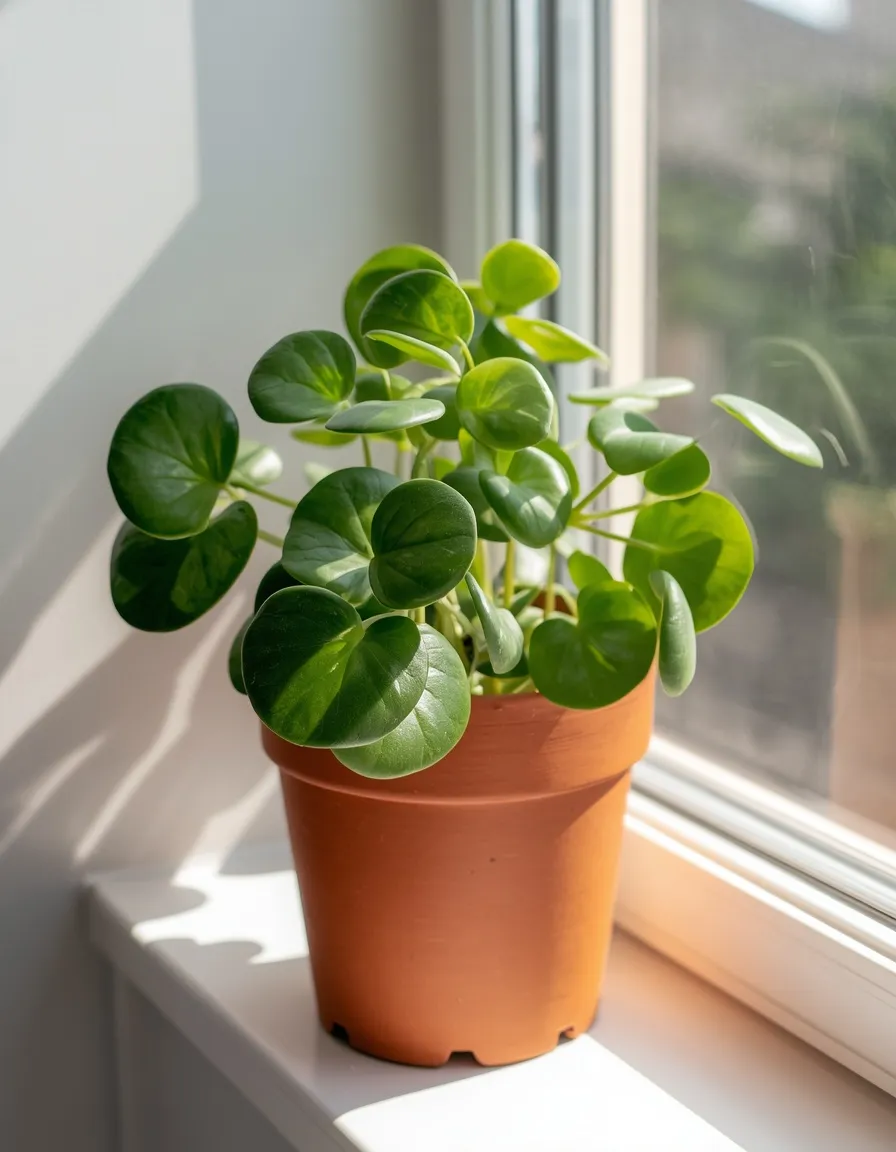
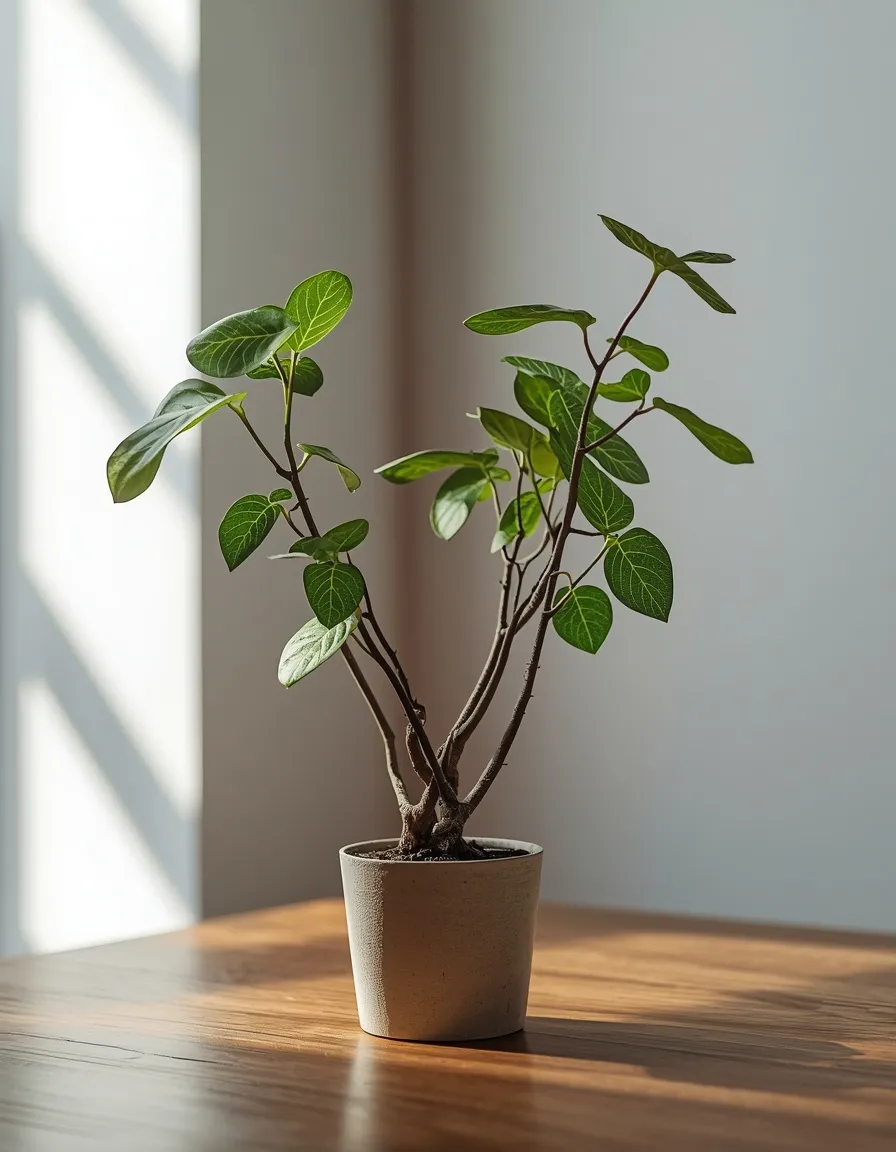
A Chinese money plant’s perfectly round, coin-shaped leaves on thin upright stems make it one of the most on-the-nose wealth symbols in feng shui, and its compact size suits a desk far better than the larger money tree.
Rotate the pot a quarter turn every week or so, since pilea leaves grow toward the light source and will end up lopsided without regular rotation, a small maintenance habit that keeps the plant’s growth even and, by feng shui logic, its energy balanced too. It produces small offset plantlets, or pups, at its base regularly, which can be potted separately and gifted, a detail that lines up neatly with the plant’s reputation for sharing prosperity. Bright, indirect light and soil allowed to dry slightly between waterings suit it best; too much direct sun scorches the round leaves and creates brown spots. Chinese money plant is non-toxic to cats and dogs, making it a safe desk companion in pet-friendly offices.
- Round, coin-shaped leaves are a direct, recognizable wealth symbol
- Produces plantlets that can be shared, tying into its prosperity symbolism
- Non-toxic to pets and compact enough for any desk
11. Boston Fern (Nephrolepis Exaltata)
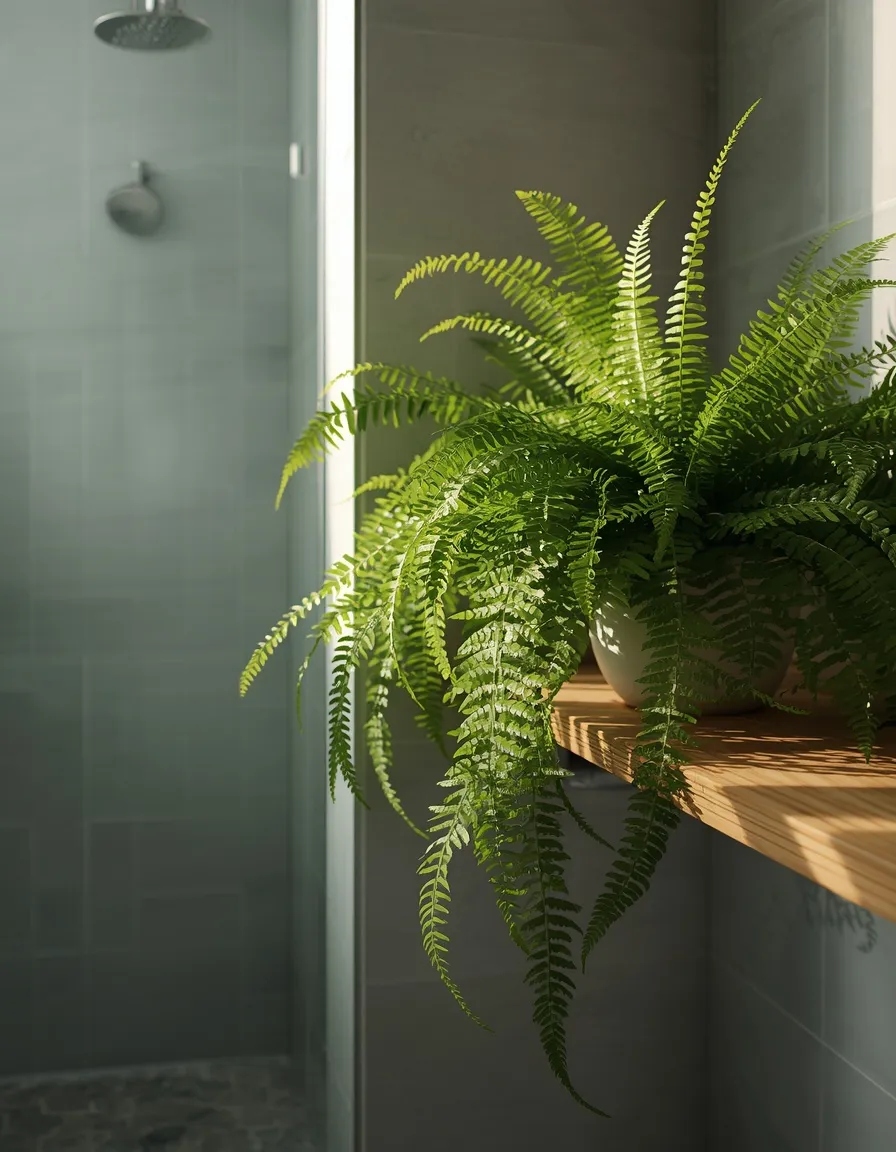
A Boston fern’s lush, cascading fronds bring a soft, calming yin energy to a bathroom shelf or a bright bedroom corner, its texture reading as gentle and restful rather than bold or attention-seeking.
Ferns need consistently moist soil and, ideally, humidity above what most homes naturally offer, which is exactly why a bathroom with a shower is one of the best rooms for one rather than a dry living room. Mist the fronds a few times a week if the air is dry, and trim any browning fronds at the base rather than snipping just the tips, since partial trimming leaves an uneven, ragged look. In feng shui, ferns are associated with softening and calming a room’s energy rather than actively attracting wealth or luck, making them a strong pairing plant alongside a bolder wealth-focused plant like a money tree or jade plant elsewhere in the same room. Boston ferns are non-toxic to cats and dogs, another safe pick for households with pets that like to nibble.
- Genuinely thrives in bathroom humidity, unlike most feng shui plants on this list
- Associated with calming, softening energy rather than active wealth attraction
- Non-toxic to pets and low-risk for households with curious animals
12. ZZ Plant (Zamioculcas Zamiifolia)
A ZZ plant’s glossy, dark green leaves growing steadily in a dim office corner represent resilient, unstoppable growth energy in feng shui, thriving in exactly the low-light conditions most plants on this list would struggle in.
It’s genuinely one of the most drought-tolerant houseplants available, storing water in thick underground rhizomes, so watering once every two to three weeks is typically enough, and overwatering is a far bigger risk than underwatering. Its steady, upright growth habit is why it’s frequently placed in home offices and workspaces, symbolizing consistent progress rather than sudden change. A common mistake is placing it in direct sun, which can scorch the glossy leaves; bright indirect light or even fairly dim interior corners suit it far better. ZZ plant is mildly toxic to cats and dogs if chewed, due to calcium oxalate crystals in the sap, so keep it on a shelf rather than the floor in pet households.
- Thrives in low light where most other feng shui plants on this list would struggle
- Represents steady, consistent growth, making it a strong home office choice
- Mildly toxic to pets, so shelf placement is safer than floor level
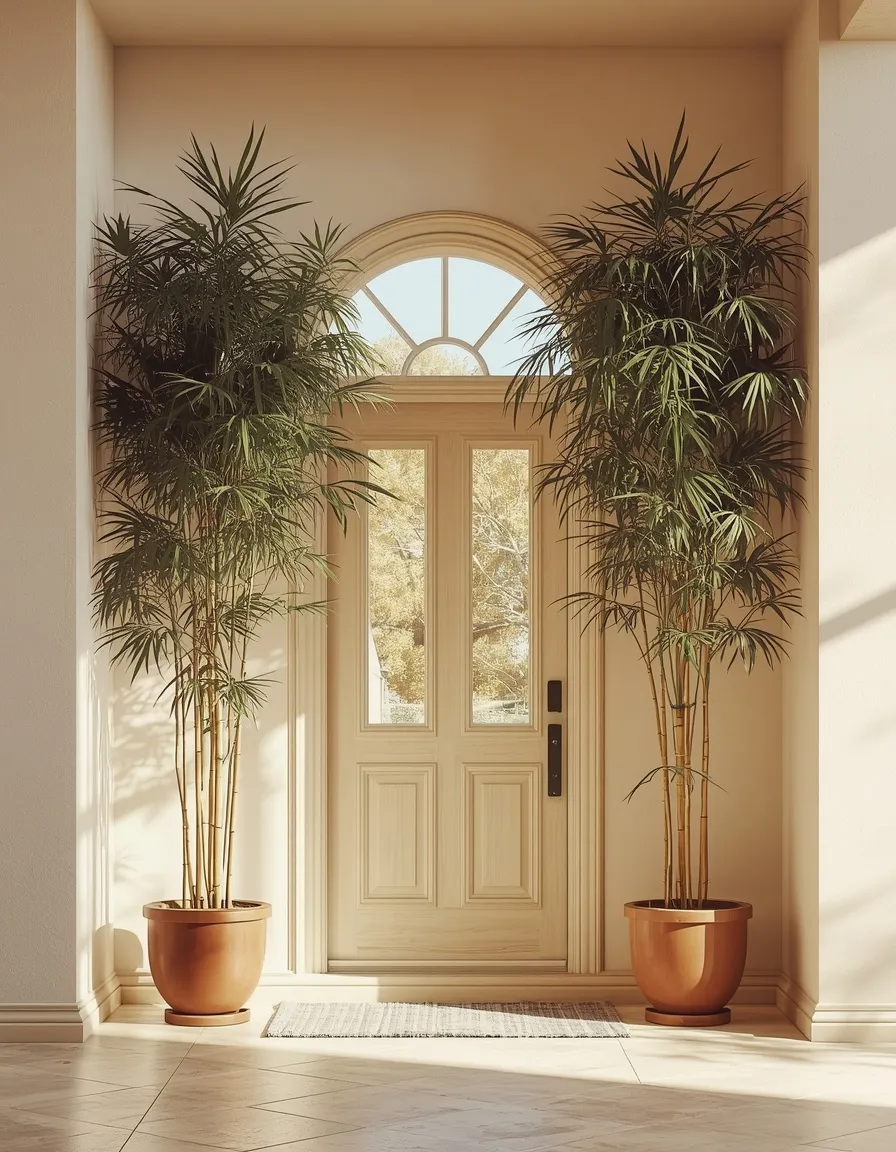
13. Bamboo Palm (Chamaedorea Seifrizii)
A bamboo palm flanking a front entryway brings a protective, air-purifying presence to the first space guests and residents encounter, its slender upright canes echoing the growth symbolism of true bamboo without the maintenance.
It tolerates lower light than most palms, making it genuinely suited to entryways and hallways that rarely get direct sun, and prefers consistently moist soil without ever sitting in standing water. Because entryways are considered the point where chi enters a home in feng shui, a healthy, well-maintained plant here matters more than almost any other placement on this list; a struggling or dusty plant right at the front door sends the opposite message of the fresh, welcoming energy it’s meant to create. Wipe the fronds down periodically to keep dust from dulling their color. Bamboo palm is non-toxic to cats and dogs, making it one of the safest large statement plants for a shared entryway space.
- Positioned at the entryway, the point where feng shui considers chi to enter a home
- Tolerates lower light better than most palm varieties
- Non-toxic to pets, suiting shared entry spaces where animals pass through often
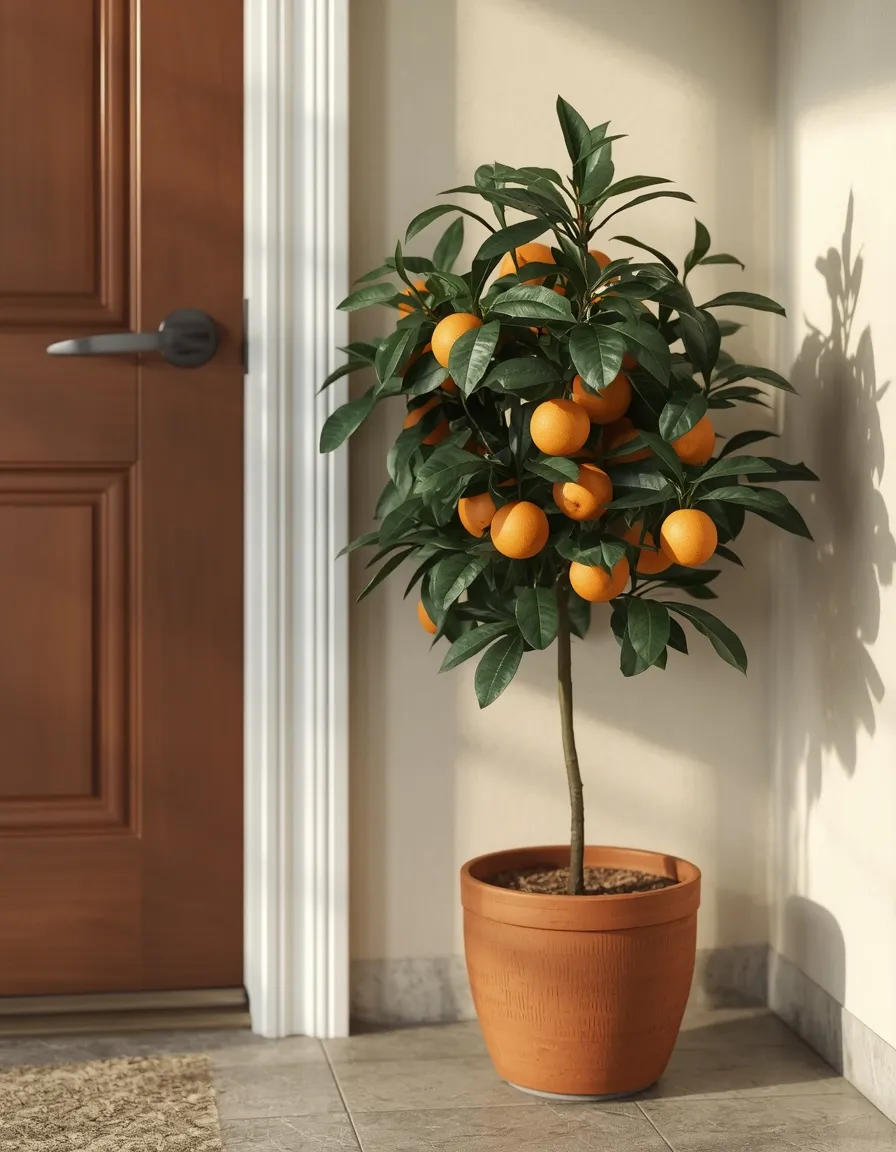
14. Citrus Tree (Calamondin or Kumquat)
A small potted citrus tree beside a front door, its glossy leaves and bright fruit catching the light, is one of the most literal abundance symbols in feng shui, since fruit-bearing plants are read as a direct sign of prosperity and good fortune.
Calamondin and kumquat varieties are compact enough for containers and adapt reasonably well to bright indoor light near a south-facing window, though they genuinely appreciate a summer outdoors on a patio or balcony where stronger light encourages more fruit. In colder climates, bring container citrus trees indoors well before the first frost, since even a light freeze can damage or kill them; a gradual transition over a week or two, spending increasing time indoors before the final move, reduces leaf drop from the change in light and humidity. Citrus fruit and foliage are mildly toxic to cats and dogs if ingested in quantity, so keep fallen fruit swept up in pet households. This is one of the few entries here equally suited to an indoor-outdoor feng shui plants approach, moving between a bright entryway and an outdoor patio through the seasons.
- Fruit-bearing growth is one of the most direct abundance symbols in feng shui
- Genuinely benefits from a season outdoors before returning inside for colder months
- Mildly toxic to pets if fruit or foliage is eaten in quantity
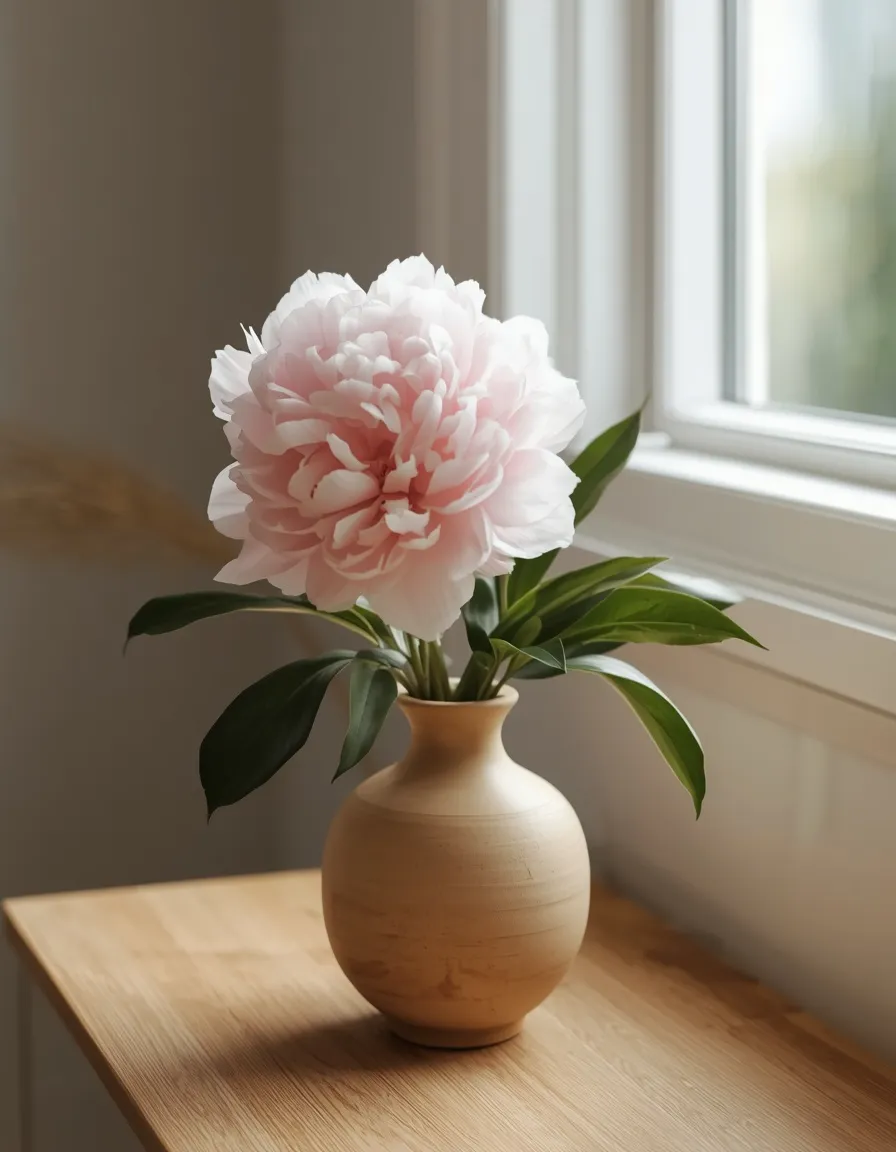
15. Potted Peony
A blush pink peony in full bloom on a living room console table brings romantic, celebratory energy that feng shui traditionally links to love, honor, and prosperity all at once, a rare plant said to cover multiple kinds of good fortune.
Peonies are seasonal bloomers rather than a year-round houseplant, so most indoor arrangements use a potted specimen brought inside briefly during its bloom window or a well-tended cut arrangement refreshed every few days. Give it the brightest spot available, since peonies are more light-demanding than most plants on this list and will produce fewer blooms in a dim corner. In feng shui, peonies are traditionally kept out of the bedroom despite their romantic association, since their bold, showy energy is considered too stimulating for a restful space, and are placed in living rooms or entryways instead. Peonies are mildly toxic to cats and dogs if ingested, so keep fallen petals cleared up around pets.
- Associated with love, honor, and prosperity simultaneously, a rare multi-purpose symbol
- Traditionally kept in living rooms and entryways rather than bedrooms despite its romantic ties
- Mildly toxic to pets, so fallen petals should be cleared promptly
16. Fiddle Leaf Fig (Ficus Lyrata)
A fiddle leaf fig’s oversized, violin-shaped leaves reaching toward a living room ceiling represent strong, upward growth energy in feng shui, the kind of bold statement plant that anchors an entire room’s chi.
Give it a spot with plenty of bright, indirect light and avoid moving it frequently once it’s settled, since fiddle leaf figs are notorious for dropping leaves in response to changes in light, temperature, or drafts. Because of its eventual height, often 6 feet (1.8 m) or more indoors, place it where it won’t obstruct the main pathway into the room or block the front door’s sightline, since feng shui specifically cautions against large plants that impede the free flow of chi entering a space. Rotate it a quarter turn monthly for even growth, and dust the broad leaves regularly for the same reasons noted with the rubber plant above. Fiddle leaf figs are mildly toxic to cats and dogs, so consider a heavy, stable pot that can’t be easily knocked over by a curious pet.
- Large upward leaves symbolize strong, ambitious growth energy
- Should never obstruct a doorway or main walking path, per feng shui guidance
- Mildly toxic to pets, and prone to dropping leaves if moved too often
17. Aloe Vera
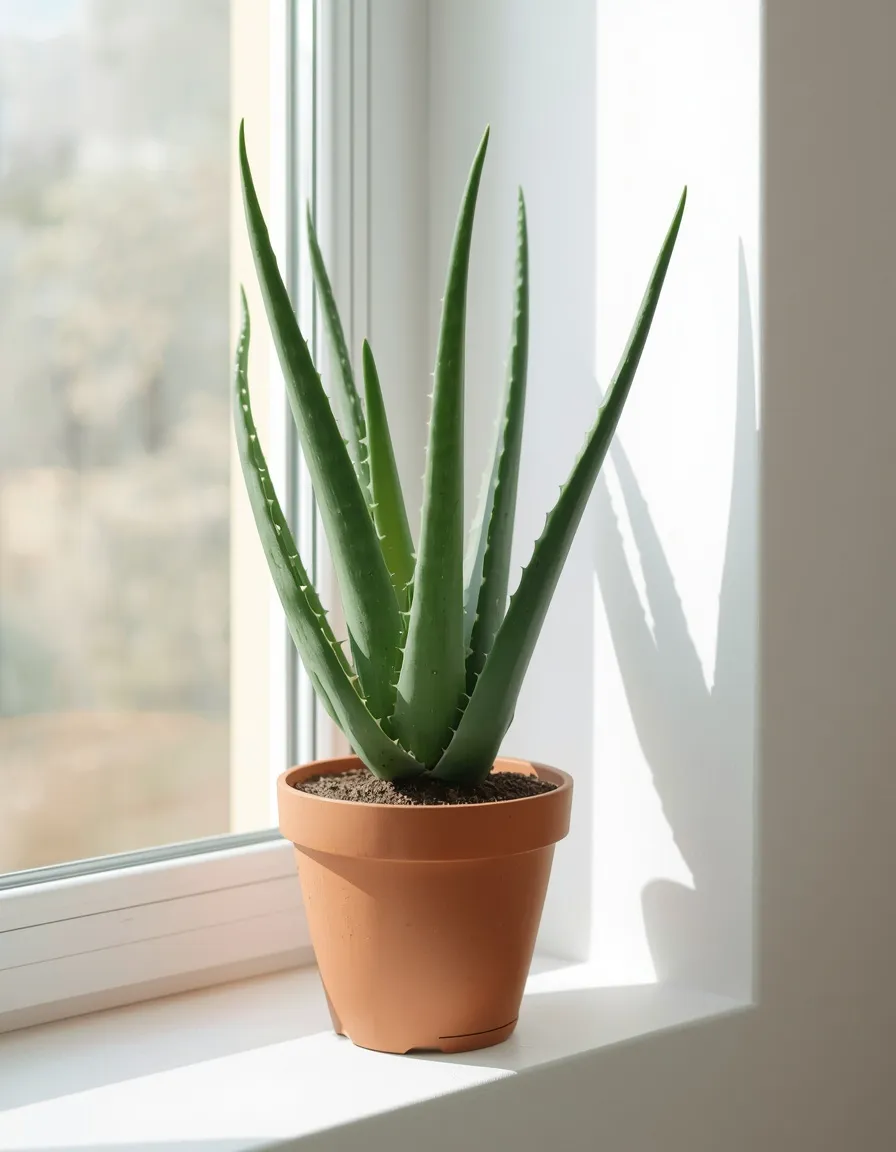
A potted aloe vera on a kitchen windowsill combines protective, healing energy with genuine practical use, its gel long associated with soothing burns and skin irritation alongside its feng shui reputation for guarding a home against negative energy.
Aloe needs bright light and infrequent watering, closer to a cactus’s schedule than a leafy houseplant’s, letting the soil dry out completely between waterings to avoid the root rot that’s the most common way to lose one. Because its leaves have soft serrated edges rather than true thorns, most feng shui guidance treats aloe more gently than true cacti, though it’s still worth keeping it turned so the leaf edges don’t point directly at a kitchen seating area. It’s traditionally placed near a kitchen or front door for its protective association, rather than a bedroom or living room where softer energy is preferred. Aloe vera is toxic to cats and dogs if ingested, an important note given how often it’s kept within easy reach on a kitchen counter.
- Combines protective feng shui symbolism with genuine practical first-aid use
- Serrated leaf edges are gentler than true thorns but still worth angling away from seating
- Toxic to pets, so counter placement needs to account for curious animals
Feng Shui Plants to Avoid Indoors
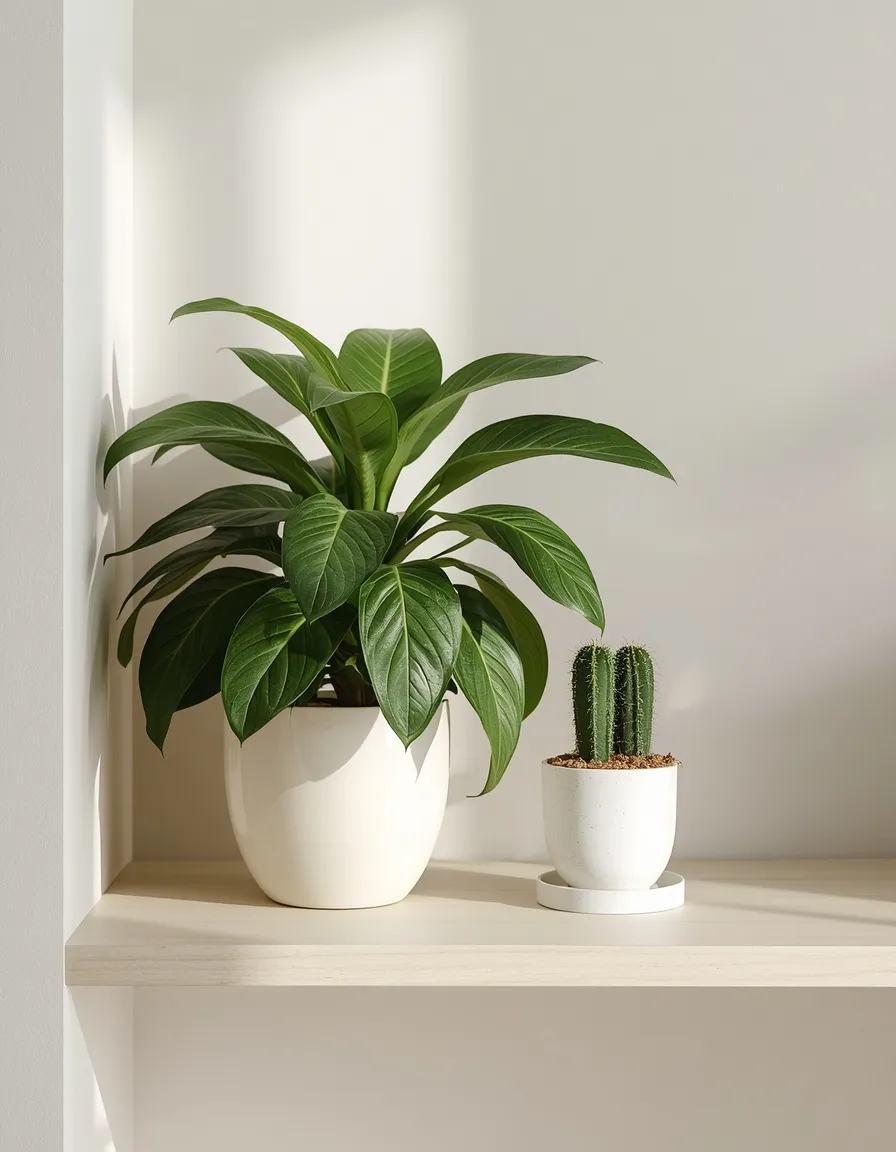
Not every plant belongs in a feng shui-styled home, and knowing what to leave out matters just as much as choosing the right pieces. Cacti and other spiky succulents top the list of plants most feng shui guidance steers away from in living spaces, their thorns creating the same sha chi, or poison arrow energy, discussed throughout this guide, particularly when placed on a desk, coffee table, or windowsill within a seating area’s sightline.
Dried or dead flower arrangements are considered actively bad feng shui rather than simply neutral, since they represent stalled, lifeless energy rather than the living, growing chi a healthy plant provides; a bouquet left too long past its prime is generally better composted than displayed. Artificial silk or plastic plants sit in a middle ground: most feng shui practitioners consider them acceptable substitutes in genuinely low-light rooms where a real plant can’t survive, but not as a first choice, since they can’t provide the living energy real plants are valued for. Bonsai trees are a genuinely debated case; their deliberately restricted growth is read by some feng shui traditions as suppressed or restricted energy, while others value their calm, disciplined aesthetic, so this one comes down to personal preference more than firm consensus.
- Thorny cacti and spiky succulents create sha chi, especially near seating areas
- Dried or dead arrangements represent stalled energy and are best composted, not displayed
- Artificial plants are an acceptable fallback for low-light rooms, though not a first choice
Conclusion
Feng shui plants work best as a system rather than a single lucky purchase, a resilient snake plant guarding a bedroom doorway, a money tree anchoring the wealth corner, a fern softening a humid bathroom shelf. Start with one or two plants that suit a space’s actual light and humidity conditions rather than trying to add all seventeen at once, and let a thriving, well-cared-for plant do the real work its symbolism promises.
For more indoor plant styling inspiration to round out the rest of a home, Sunday Abode’s indoor plant styling ideas cover plenty of complementary approaches. Pick the plant that matches the room’s real needs first, and the feng shui benefits follow naturally from there.
FAQs
What are the best feng shui plants for a bedroom?
Orchids and snake plants are two of the most commonly recommended feng shui plants for bedrooms, orchids for their calming romantic energy and snake plants for their overnight oxygen release. Even so, most feng shui guidance recommends keeping bedroom plants to just one or two and positioning anything with pointed leaves, like a snake plant, near the door rather than directly beside the bed.
Are feng shui plants safe for pets?
It depends heavily on the specific plant: money trees, orchids, areca palms, Chinese money plants, Boston ferns, and bamboo palms are all non-toxic to cats and dogs, while popular choices like jade plants, pothos, snake plants, peace lilies, lucky bamboo, and aloe vera are toxic if ingested. Checking a plant’s pet safety before bringing it home is worth doing regardless of its feng shui symbolism, especially in households with pets that chew on foliage.
Where should I place feng shui plants near my front door?
A bamboo palm or small citrus tree flanking an entryway is a traditional choice, since the front door is considered the point where chi enters a home in feng shui and benefits from a healthy, well-maintained plant nearby. Avoid placing anything large enough to obstruct the doorway or block the main walking path, since that’s thought to restrict the flow of energy into the home rather than welcome it.
Can artificial plants work for feng shui?
Artificial silk or plastic plants are generally considered an acceptable fallback in rooms too dim for a real plant to survive, though most feng shui practitioners still prefer living plants when the light allows for it. A real plant’s active, growing chi is considered part of what makes it effective, which an artificial version can’t fully replicate.
What feng shui plants should I avoid indoors?
Cacti and other spiky succulents are the most commonly avoided plants in feng shui, since their thorns create sha chi, or negative pointed energy, especially near seating areas or doorways. Dried or dead flower arrangements are also considered poor feng shui, since they represent stalled rather than living energy, and are generally better composted than kept on display.
How many feng shui plants should I have in one room?
There’s no fixed number, but most feng shui guidance favors one or two well-placed, thriving plants over a crowded collection, since overcrowding can make a room’s chi feel cluttered rather than balanced. Starting with a single plant suited to the room’s actual light and humidity, and expanding gradually, tends to work better than adding several at once.
Does lucky bamboo stalk count really matter in feng shui?
Yes, the number of stalks is considered meaningful rather than incidental: three stalks are associated with happiness, five with wealth, and eight with growth, while four stalks are typically avoided because the number sounds like the word for death in Mandarin and Cantonese. It’s one of the more specific pieces of numerology within feng shui plant traditions.