
Introduction
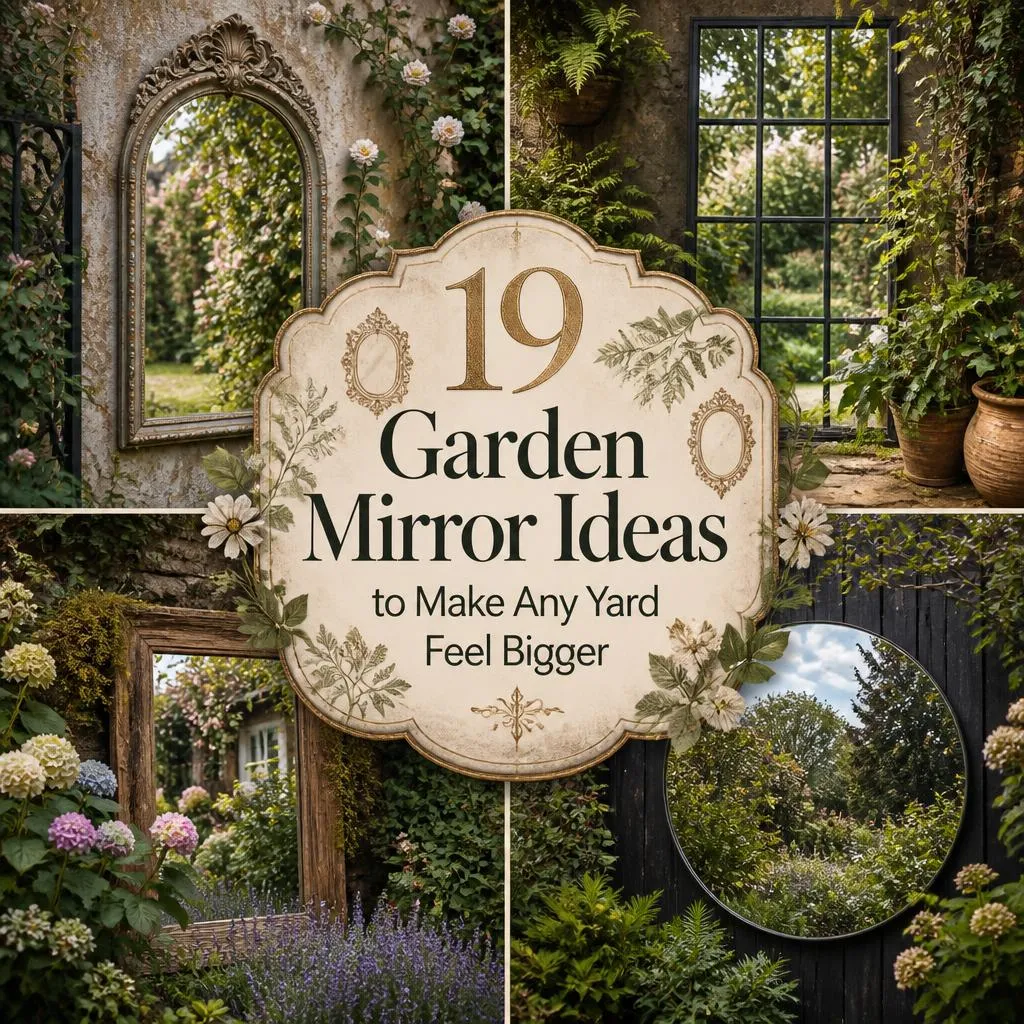
Garden mirror ideas are some of the cheapest, most dramatic changes a backyard, courtyard, or balcony can get without moving a single plant: a well-placed mirror can make a modest garden read twice its actual size, bouncing light into a shaded corner and tricking the eye into seeing a path, a window, or a whole second garden where there’s really just a fence. This list covers the classic depth-and-illusion tricks, shape and style choices, hands-on mosaic projects for anyone who wants to break out the tile nippers, and a few safety details, bird strikes and weatherproofing chief among them, that most garden mirror guides skip entirely. Consider it the reference for making your own outdoor Sunday Abode feel larger, brighter, and considerably more interesting to look at.
Garden Mirror Ideas for Depth and Optical Illusion
This is the category most people picture first: mirrors used specifically to bend perspective, bounce light, and make a garden feel like it extends further than the property line actually allows.
1. Fence-Mounted Depth Mirror
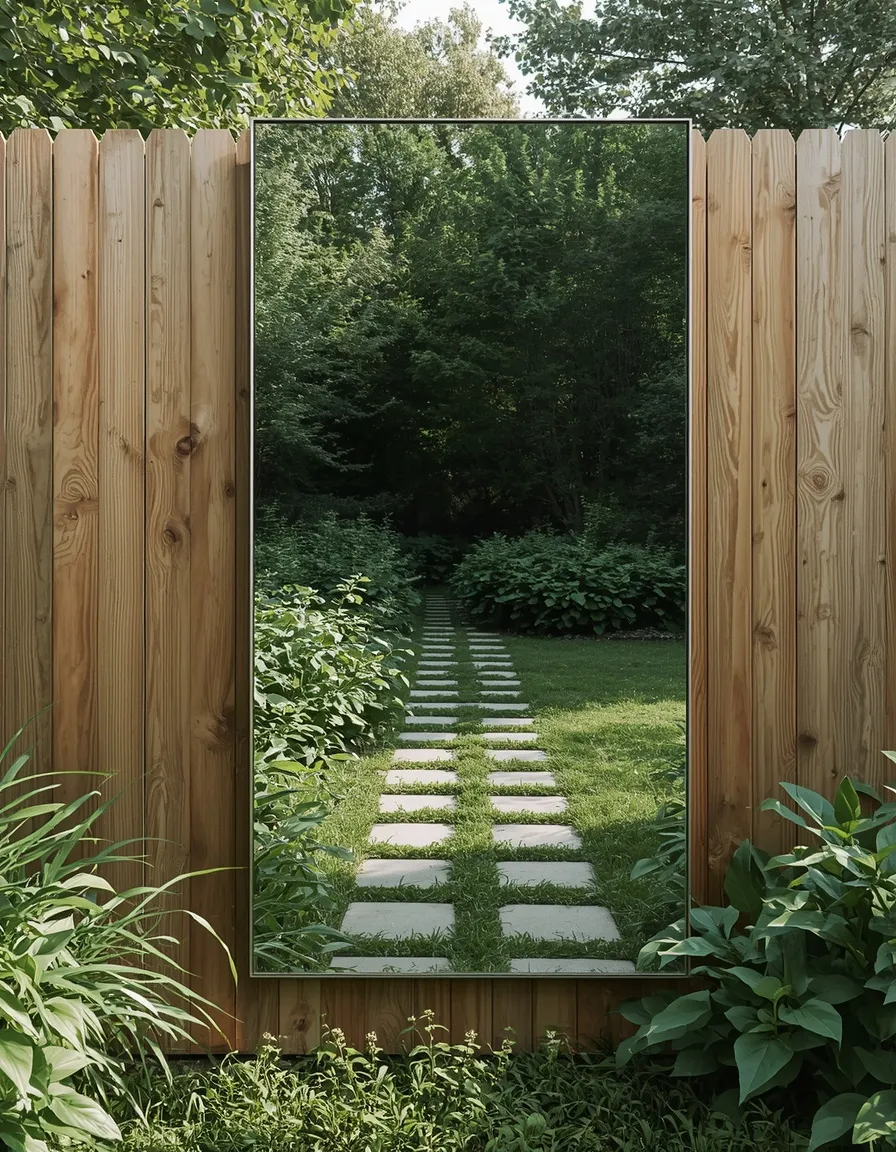
A large rectangular mirror mounted flat against a solid fence panel is the single most effective garden mirror trick there is: from a few steps back, the reflected planting reads as an entirely separate bed just beyond the boundary.
Choose a mirror sized to the fence panel, roughly 60 to 90cm (2 to 3ft) wide reads as convincingly window-like without overwhelming a small garden, and mount it using rated outdoor wall anchors rather than adhesive strips alone, a mirror that size is heavier than it looks and wind load on a fence adds real stress over time. Use either acrylic mirror sheet or a glass mirror with a fully sealed, moisture-resistant backing, uncoated glass mirrors fog and develop black desilvering spots within a season or two outdoors. One safety note worth taking seriously: birds perceive reflected sky and foliage in a mirror as open space and can fly directly into it. According to the American Bird Conservancy, spacing small decals roughly 5 to 10cm (2 to 4in) apart across the surface, or angling the mirror slightly downward so it reflects the ground rather than open sky, meaningfully reduces this risk.
- Delivers the most convincing “the garden keeps going” illusion of any technique on this list
- Works best on a solid, structurally sound fence panel rather than a flimsy or leaning one
- Solves the “boxed-in small yard” feeling more effectively than adding more plants alone
2. Faux Window Illusion Mirror
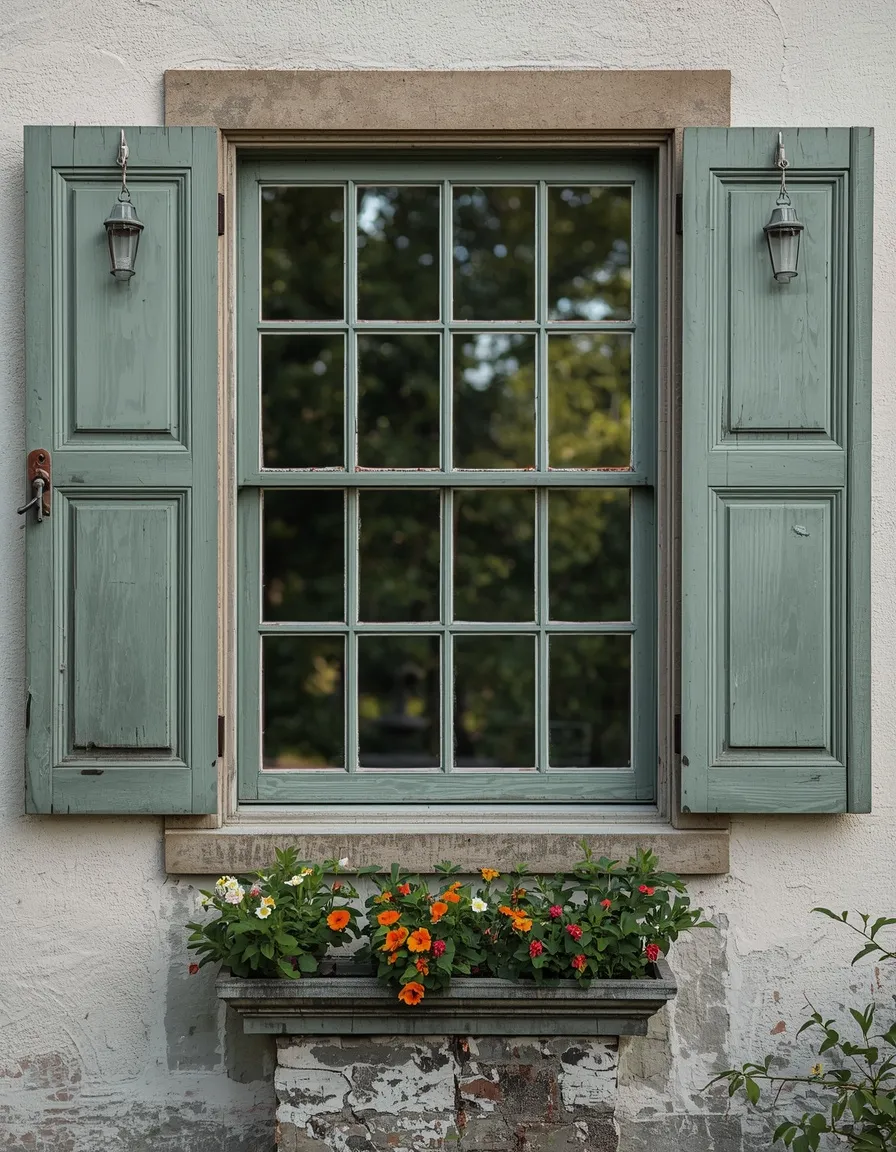
A mirror set inside a real window frame, complete with mullions, a sill, and sometimes working shutters, reads as an actual window looking into another garden rather than a flat reflective panel.
Reclaimed window frames from architectural salvage yards work best since the proportions already look authentic; measure the frame’s glazing opening and have a mirror cut to fit, rather than forcing a standard-sized mirror into an odd frame. Paint the frame in a color that complements the house trim or a contrasting accent shade, and mount it at a realistic window height, roughly 1 to 1.2m (3.5 to 4ft) off the ground, so the scale reads correctly from a seated or standing view on the patio. A flower box or a trailing plant beneath the sill sells the illusion further. The common mistake is using a frame with panes too small relative to the wall it’s mounted on, which reads as a toy rather than a believable window.
- Creates a specific, storytelling illusion rather than a generic reflective surface
- Works especially well on a blank exterior wall or garden shed that needs visual interest
- Solves the “flat, boring wall” problem with real architectural character
3. Faux Doorway Archway Mirror
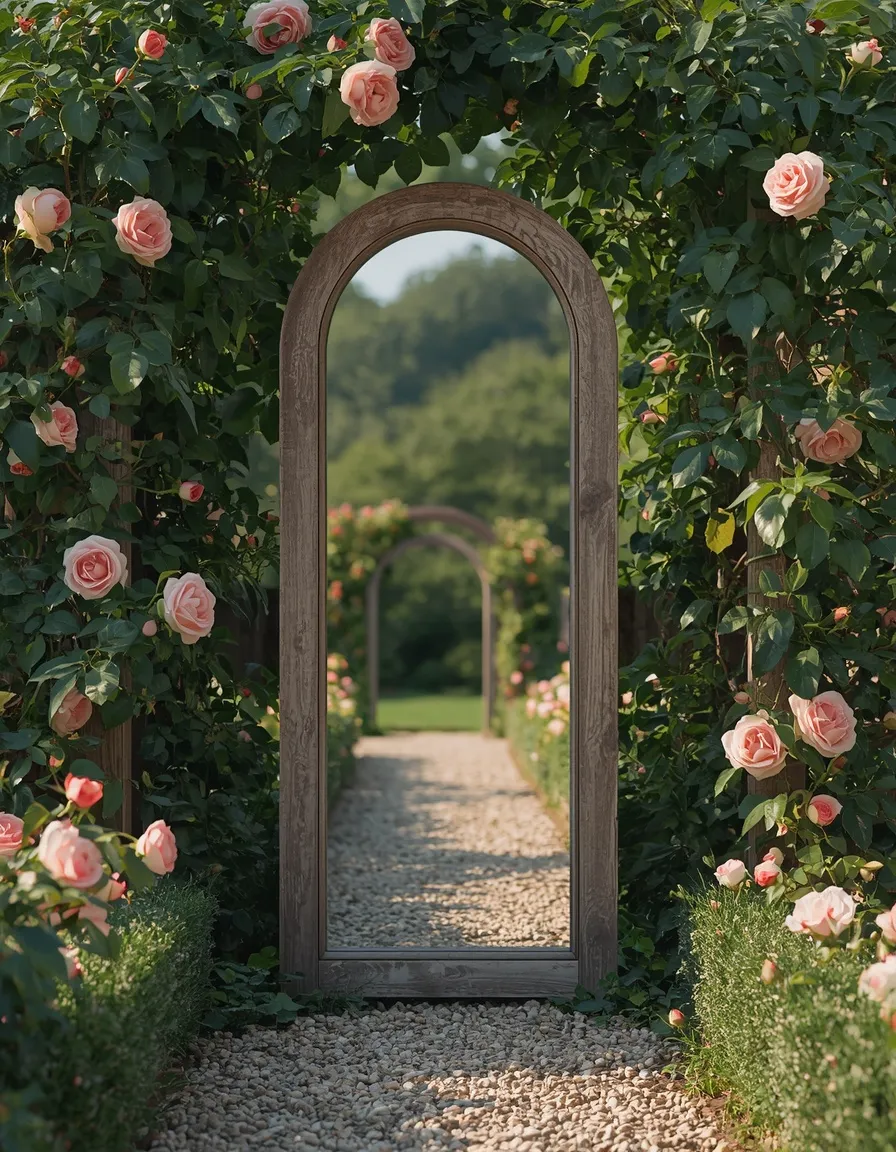
An arched or tall rectangular mirror framed to resemble a garden door, sometimes flanked by climbing plants like a real entrance, suggests a passage into another space entirely.
Size the mirror close to real door proportions, roughly 1.8 to 2m (6 to 6.5ft) tall and 75 to 90cm (2.5 to 3ft) wide, since anything much smaller reads as decorative rather than illusory. An arched top reads more convincingly as a doorway than a square one, and a simple painted wood or wrought iron surround finishes the effect. Position it at the end of a path or between two garden beds rather than against a random flat wall, the illusion works best where a real doorway would logically make sense in the layout. Secure the frame to the wall or a freestanding post structure rather than leaning it, an unsecured tall mirror is a genuine tip-over hazard, especially in a yard used by children or pets.
- Delivers the strongest sense of a garden “continuing” of any framing style
- Works best positioned at a path’s end or between two distinct garden zones
- Solves a dead-end path or blank corner with a believable focal destination
4. Facing Mirrors for an Infinity Effect
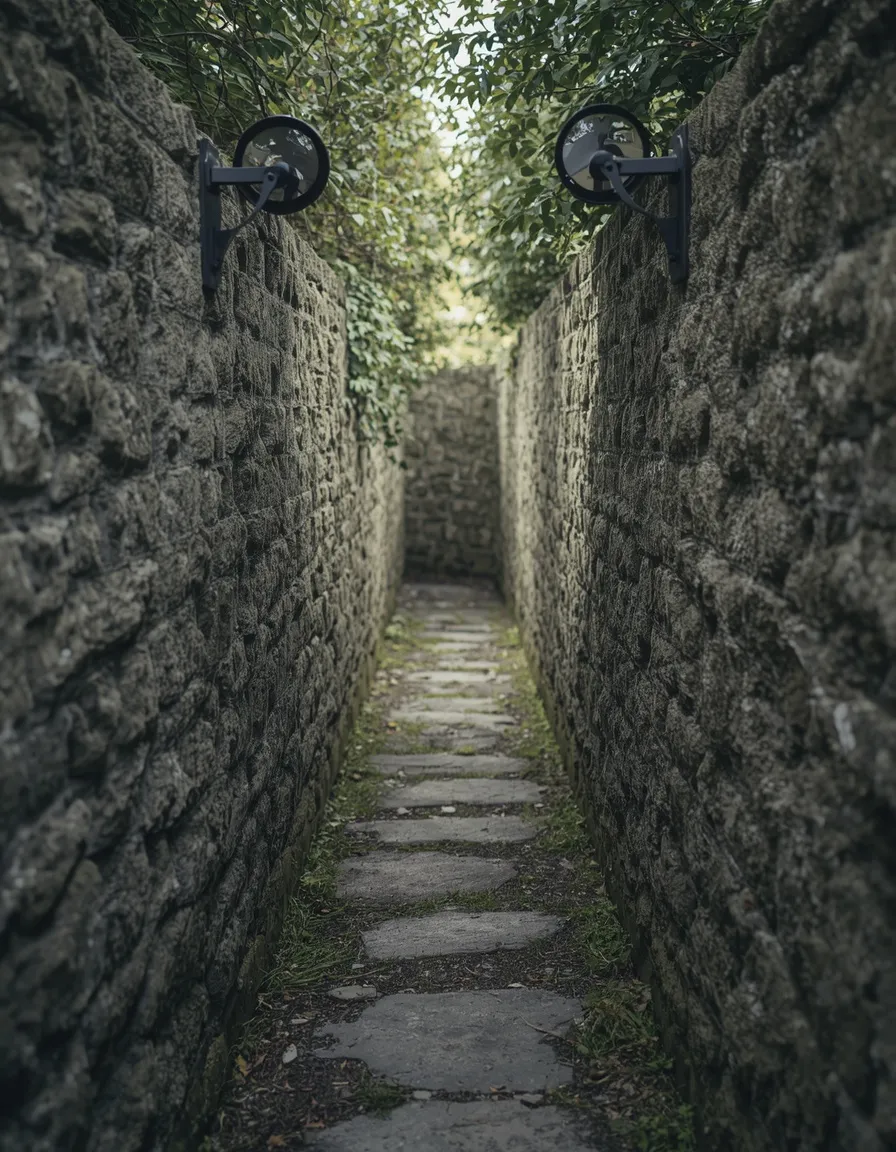
Two mirrors mounted to face each other across a narrow garden passage or alcove create a genuine infinity effect, repeating reflections that seem to extend the space indefinitely in both directions.
This works best in a narrow, semi-enclosed space, a side yard passage, a covered walkway, or a nook between two structures, where the repeating reflection has a defined channel to travel down rather than dispersing across an open lawn. Keep both mirrors precisely parallel; even a few degrees of misalignment breaks the repeating effect and creates a distorted, dizzying reflection instead of a clean one. Use smaller mirrors for this technique, roughly 30 to 45cm (12 to 18in), since the effect depends on the distance between them more than the size of either mirror. This is one of the more visually striking ideas here, but it needs a genuinely quiet, low-traffic spot to be appreciated, it doesn’t translate well to a busy main patio.
- Produces one of the most visually dramatic effects achievable with garden mirrors
- Works specifically in narrow passages, alcoves, or side-yard walkways
- Solves the “this side yard is just a wasted gap” problem with a genuine feature
5. Mirror Behind a Water Feature
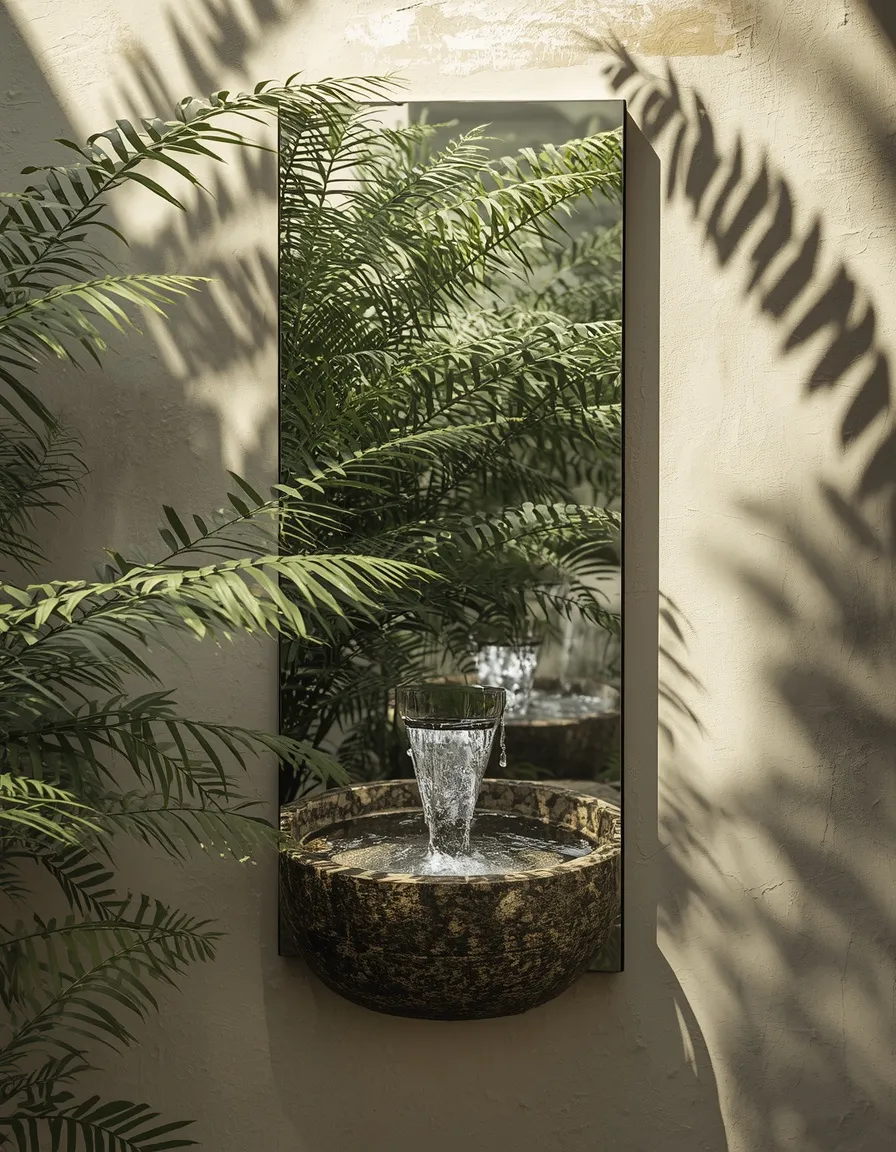
Positioning a mirror directly behind a small fountain or wall-mounted water feature doubles the visual movement and sound cues, making a modest feature read as considerably more substantial.
Mount the mirror slightly behind and above the water feature so the reflection captures the moving water without the feature’s hardware or plumbing showing in the reflection itself. Use acrylic rather than glass in this application specifically, splashing water combined with sun exposure accelerates the black-spotting that affects unsealed glass mirrors, and acrylic handles that moisture exposure better long term. This pairing works especially well in a shaded courtyard or covered patio, where the doubled light reflection helps compensate for lower natural brightness. A smart variation for a tighter budget is a small tabletop fountain against a mirrored panel rather than a full wall-mounted feature, the same doubling effect works at a much smaller scale.
- Doubles the sense of movement and sound from a single water feature
- Works especially well in shaded courtyards that need more perceived light
- Solves the “feature looks small and lonely on a big wall” problem
6. Mirror to Brighten a Shady Corner
A mirror angled to catch available light and redirect it into a genuinely dark corner can make the difference between a dead patch of soil and a spot that actually supports planting.
Position the mirror on the sunnier side of the shaded area and angle it, even a slight 10 to 15 degree tilt, toward the darkest section rather than mounting it flat, flat mirrors mostly reflect what’s directly in front of them rather than redirecting light around a corner. This is a functional fix as much as a decorative one; the added light can genuinely shift a spot from deep shade to dappled shade, widening the range of plants that will grow there. Mirrors used this way are also a classic tool in feng shui garden design, where reflective surfaces are placed specifically to redirect light and energy flow rather than just for decoration; our guide to feng shui plants covers the planting side of that same principle in more depth. Reassess the angle seasonally, since the sun’s path shifts significantly between summer and winter, and a mirror angled correctly in July may do very little by December.
- Genuinely increases usable light in a shaded bed, not just a visual trick
- Works best angled rather than flat, redirecting light rather than only reflecting it
- Solves the “nothing will grow in this corner” problem without removing a tree or structure
Garden Mirror Decor Ideas by Shape and Style
Once the illusion tricks are covered, shape and framing decisions are what turn a mirror from a clever trick into an actual piece of garden decor.
7. Round Mirror Focal Point
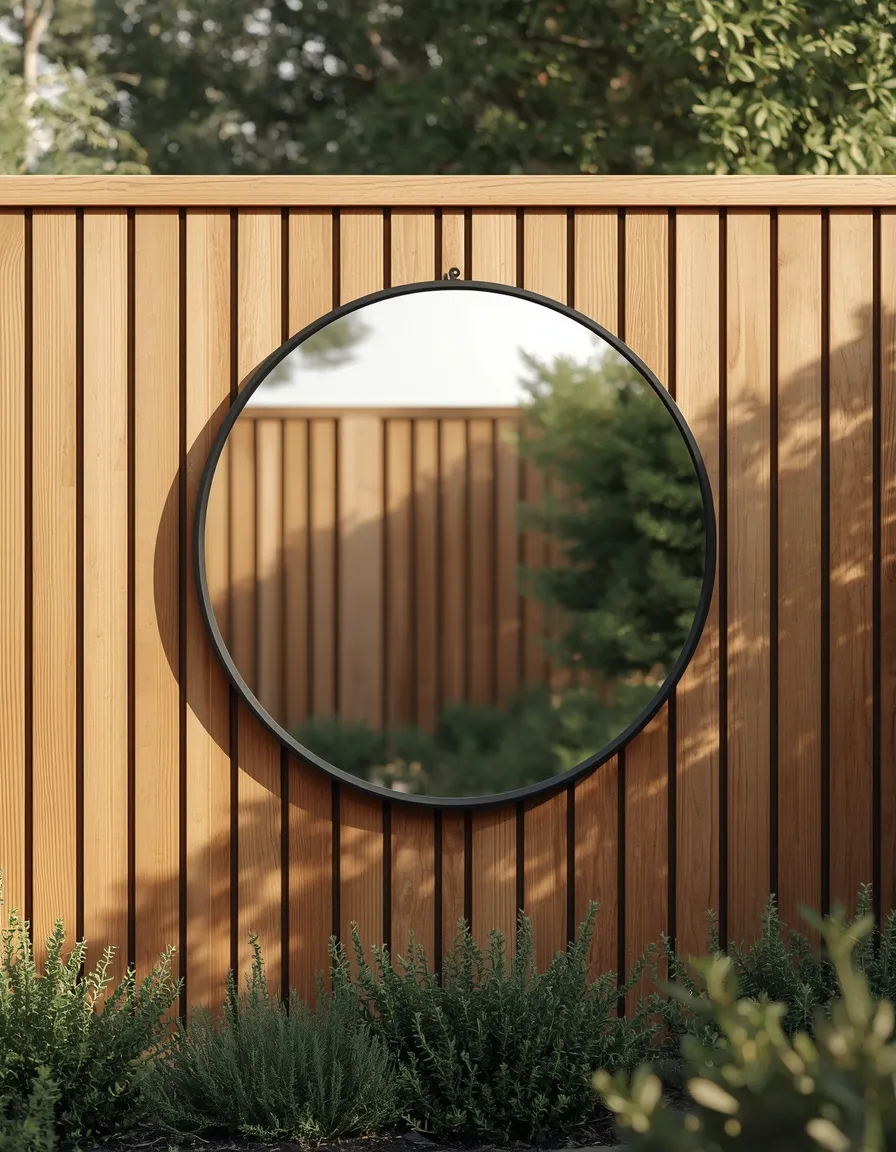
A single large round mirror, porthole-style, hung on a fence or garden wall reads as a clean, modern focal point without the busier framing that a rectangular mirror often needs.
A round shape softens the visual impact of a mirror set against straight fence lines and rectangular beds, giving the eye a break from all those hard angles. Choose a diameter proportional to the wall, roughly one-third the height of the fence panel it’s mounted on tends to look intentional rather than either lost or overwhelming. A simple thin metal rim, black or brushed brass, keeps the look modern; a thicker rope or wood frame leans more coastal or rustic. This idea works as a genuinely simple weekend project since round mirrors typically come pre-framed and ready to hang, no custom framing required, unlike several of the illusion-style ideas above.
- Reads as intentional decor rather than an obvious optical trick
- Works well in modern, minimalist, or coastal-style gardens specifically
- Solves the “too many hard angles” problem in a squared-off garden layout
8. Sunburst or Ornate Frame Mirror
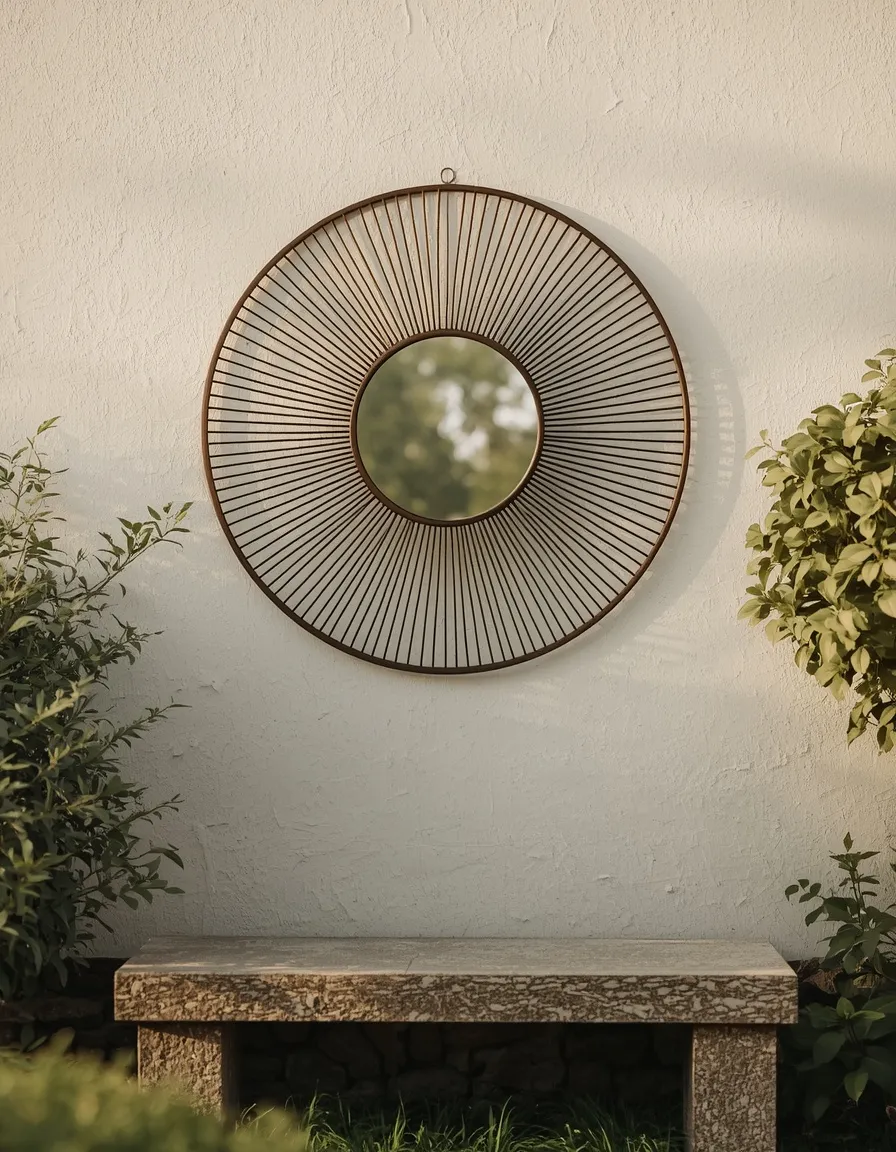
A round mirror ringed with a sunburst of metal spikes or an ornately carved frame turns the mirror itself into garden art, functioning almost like a piece of wall sculpture that happens to reflect.
This style works best as a single statement piece rather than repeated across a garden, one sunburst mirror reads as intentional; three or four starts to compete with itself. Weatherproof metal finishes, powder-coated steel or solid brass rather than plated finishes, hold up considerably better outdoors than decorative pieces designed for interior use, indoor-rated frames often rust or the plating flakes within a single wet season. Hang it at a height where the full sunburst pattern is visible from the main viewing point, typically eye level from the patio or main seating area, rather than high on a wall where the detail gets lost. A common mistake is buying an indoor decor mirror because the price is lower; the frame usually fails outdoors well before the mirror itself does.
- Turns a mirror into a genuine art piece rather than just a reflective surface
- Works best as a single bold statement rather than repeated placements
- Solves a plain, undecorated wall with real personality and texture
9. Mixed Mirror Gallery Wall
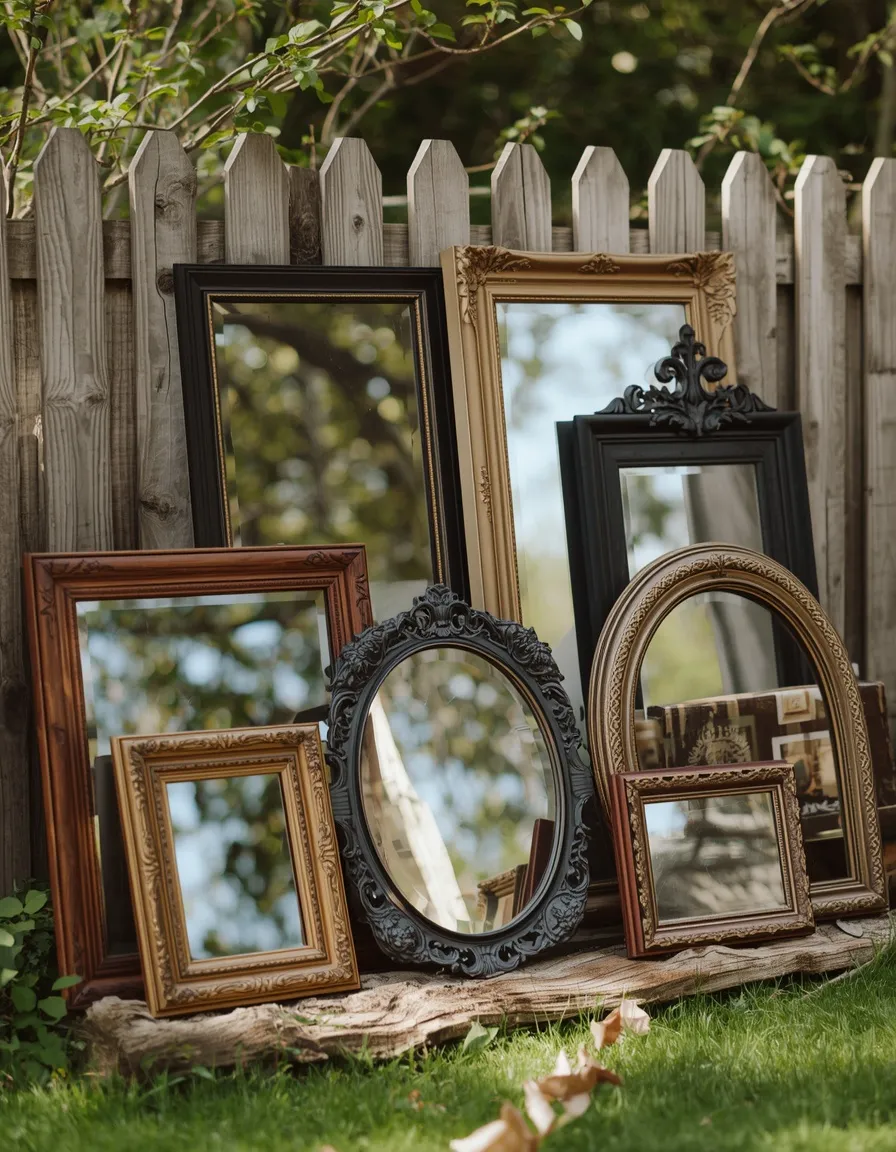
A cluster of differently shaped and framed mirrors, arranged the way an indoor gallery wall groups artwork, brings an eclectic, collected-over-time feel to a garden wall or fence.
Vary the frame finishes deliberately, mix two or three materials like weathered wood, black metal, and one ornate piece, rather than five mirrors in five completely different styles, which reads as cluttered instead of curated. Lay the arrangement out on the ground first to test spacing before mounting anything, keeping roughly 5 to 8cm (2 to 3in) between frames typically reads as a cohesive grouping rather than a scattered one. This idea works particularly well covering an unattractive wall, an old fence repair, a mismatched patch of siding, since the varied mirror sizes and shapes distract from the surface flaw more effectively than one large mirror would. Secure every piece independently with its own wall anchor rather than relying on a single mounting rail, since outdoor conditions put more stress on adhesives and clips than an indoor gallery wall ever experiences.
- Distracts effectively from a damaged, mismatched, or unattractive wall surface
- Works well for an eclectic, collected, or bohemian garden style
- Solves the “one mirror looks lonely on this big wall” problem
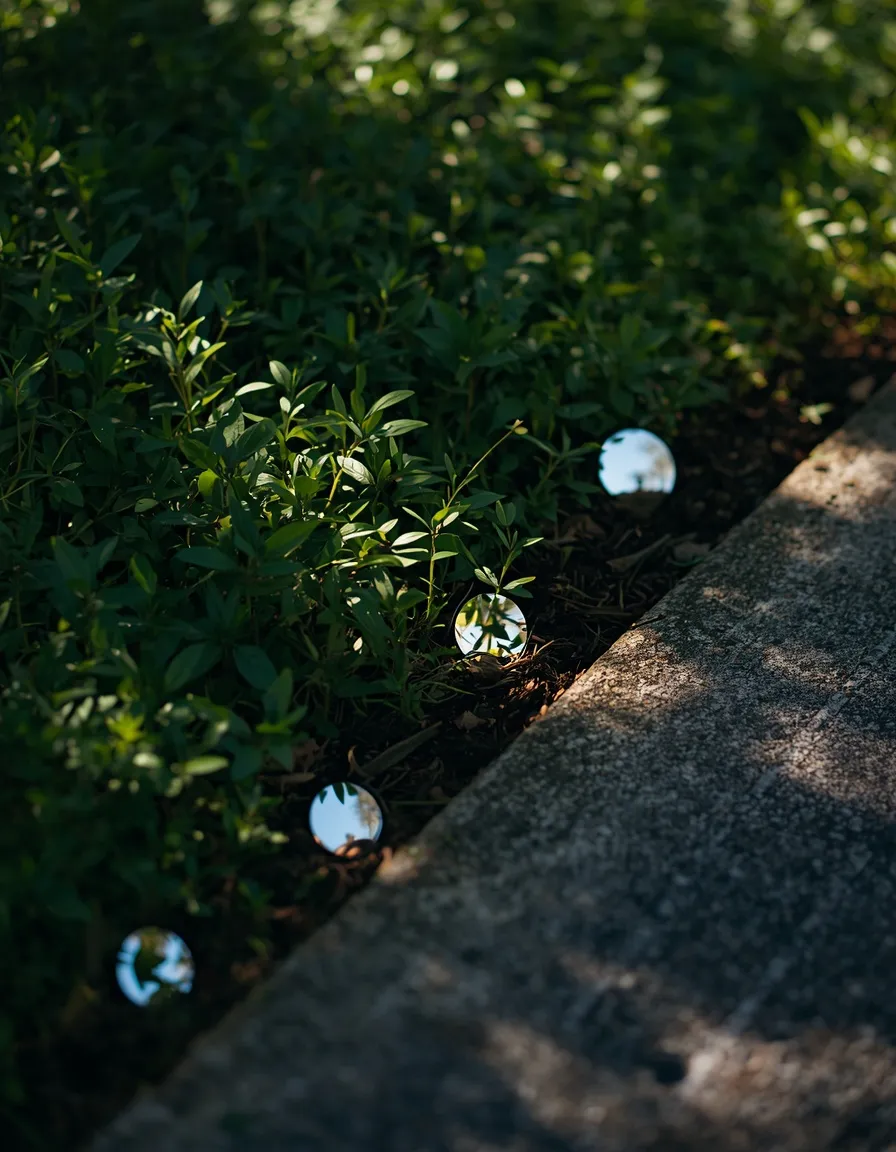
10. Scattered Small Mirror Accents
A handful of small round or geometric mirror discs, tucked among foliage rather than mounted as a single focal piece, catch and scatter light through a bed the way dew or dappled sun would.
Use small mirrors, 5 to 10cm (2 to 4in) across, mounted on short stakes or wired directly to sturdy branches at varying heights through a planting bed, rather than lining them up evenly, an irregular scatter reads as natural light-catching rather than deliberate decoration. This works especially well in a bed viewed mostly in passing, along a path edge or near a gate, where the flickers of reflected light register as a subtle detail rather than needing to be a focal point. Keep individual pieces small and low to the ground specifically to avoid the bird-strike risk that larger, eye-level mirrors carry, small low mirrors tucked into foliage are far less likely to read as open sky to a bird in flight. This is one of the lowest-cost and lowest-commitment ideas on this list, a handful of craft-store mirror discs covers a surprising stretch of bed.
- Adds subtle sparkle and light movement without a single dominant focal piece
- Works well along path edges or beds viewed mostly while walking past
- Solves the desire for garden mirror decor without a large or expensive piece
DIY Broken Mirror and Mosaic Garden Ideas
Old or cracked mirrors don’t need to go straight to the bin, broken glass is genuinely one of the most popular and rewarding garden craft materials, provided a few tool-safety basics are covered first.
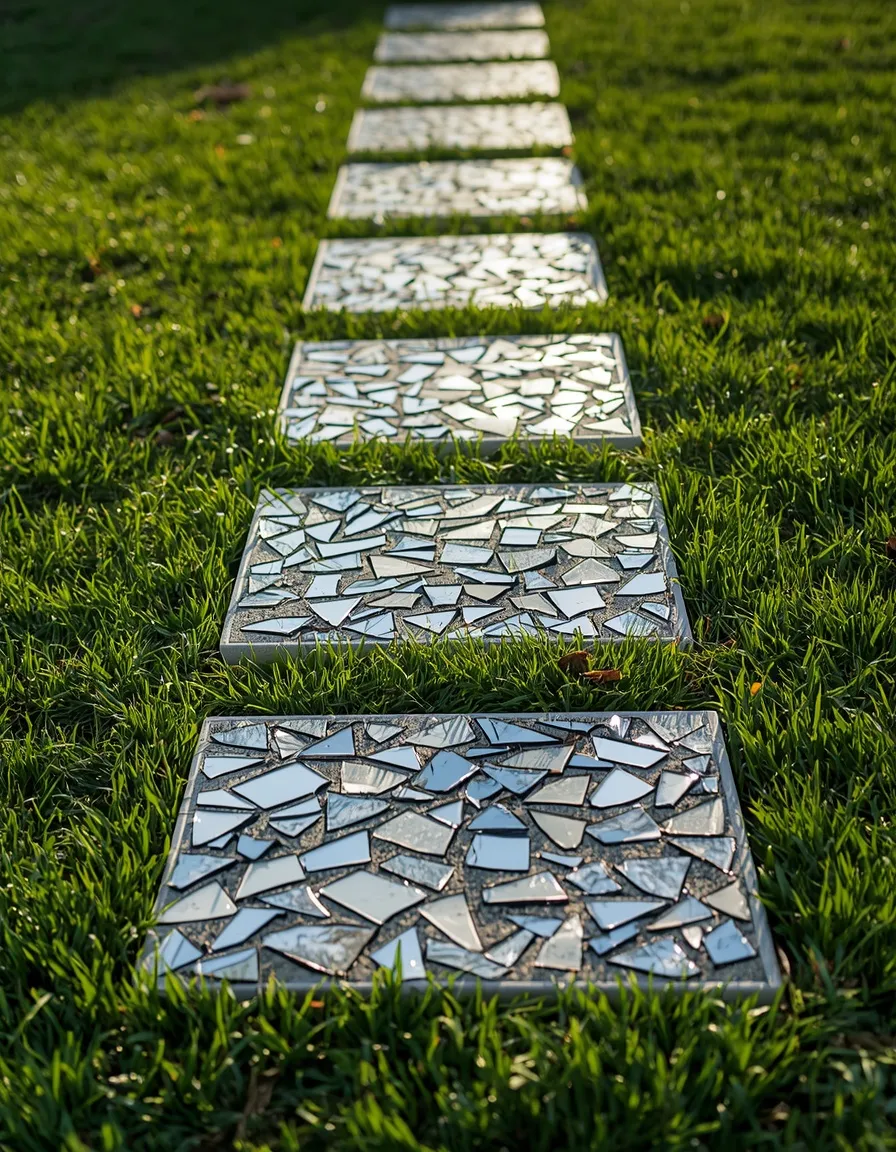
11. Broken Mirror Mosaic Stepping Stones
Shattered mirror pieces set into a concrete stepping stone catch light underfoot with every step, turning a purely functional path element into something that sparkles in full sun.
Break an old mirror inside a folded towel or heavy fabric with a hammer, this contains the shards far better than breaking it exposed, and always wear safety glasses and thick gloves throughout the entire process, mirror glass produces genuinely sharp, unpredictable edges. Press the pieces into a wet concrete stepping stone mix or a purchased paver mold, leaving small gaps between shards for grout, then grout the full surface once the concrete has cured, typically 24 to 48 hours, and seal any exposed sharp edges flush with the grout line. Space finished stones so pieces sit slightly recessed rather than proud of the grout line, proud edges catch bare feet and can chip more easily underfoot over time. This project works well as a genuinely beginner-friendly first mosaic attempt, since a small, flat stepping stone is far more forgiving than a curved or vertical surface.
- Adds sparkle and light to a functional path element that’s otherwise purely practical
- Works as a genuinely approachable first mosaic project for total beginners
- Solves the “plain concrete path looks utilitarian” problem with almost no added cost
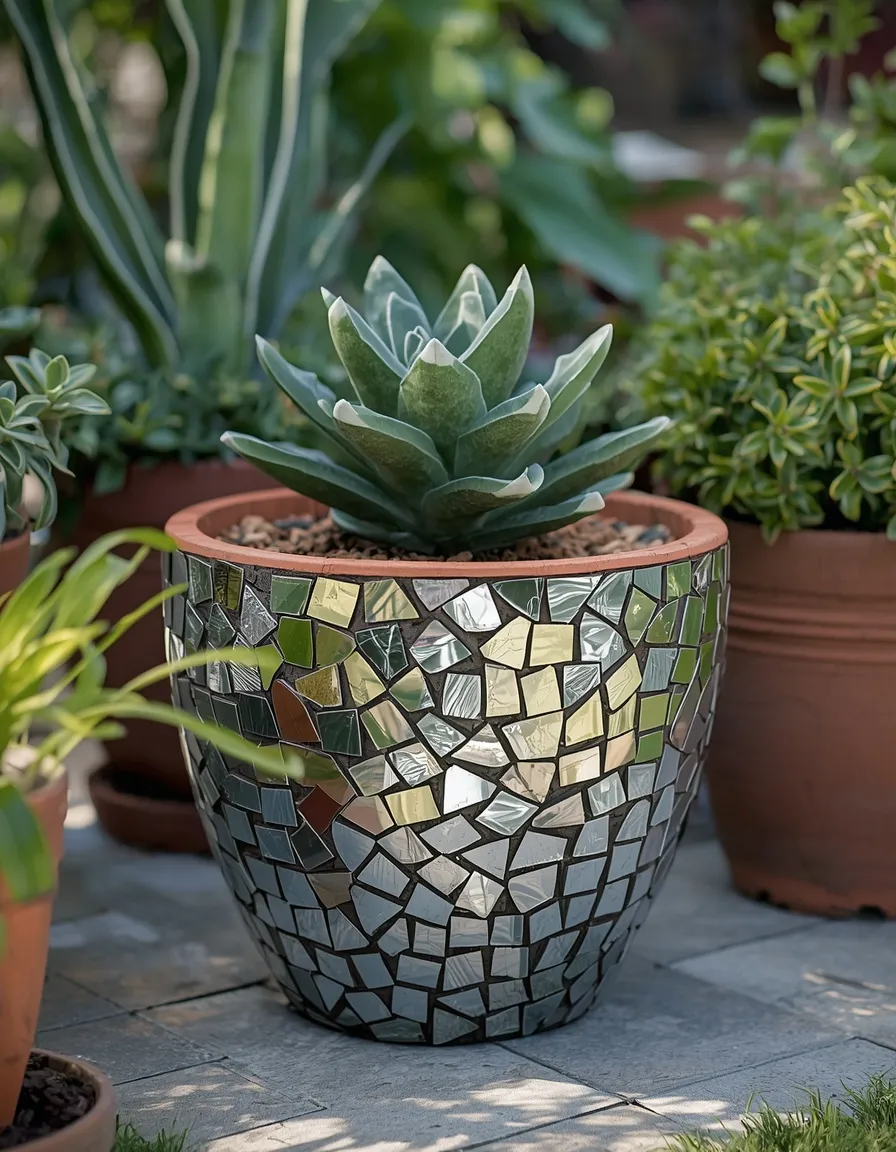
12. Mosaic Mirror Planter or Birdbath
A plain terracotta planter or concrete birdbath covered edge to edge in small broken mirror pieces turns an ordinary garden object into a genuine centerpiece that catches light from every angle.
Use tile adhesive rated for outdoor and wet-area use, standard craft glue fails within a season of temperature swings and moisture exposure, and apply pieces to a clean, dry surface working in small sections so the adhesive doesn’t set before each piece is placed. Grout the full surface once the adhesive has cured, using a grout float to work grout into every gap, then wipe the excess away with a damp sponge before it fully hardens on the mirror surface. For a birdbath specifically, keep the mirror mosaic on the exterior sides only and leave the interior basin plain or lightly textured, birds need secure, non-slippery footing to actually use a birdbath, and a fully mirrored interior can also concentrate reflected heat uncomfortably on shallow standing water in full sun. This project is a satisfying weekend upgrade for a plain object already sitting unused in a shed or garage corner.
- Turns an already-owned, ordinary garden object into a genuine standout piece
- Works well for planters, birdbaths, or plain garden stools and side tables
- Solves the “this piece looks cheap and plain” problem without buying anything new
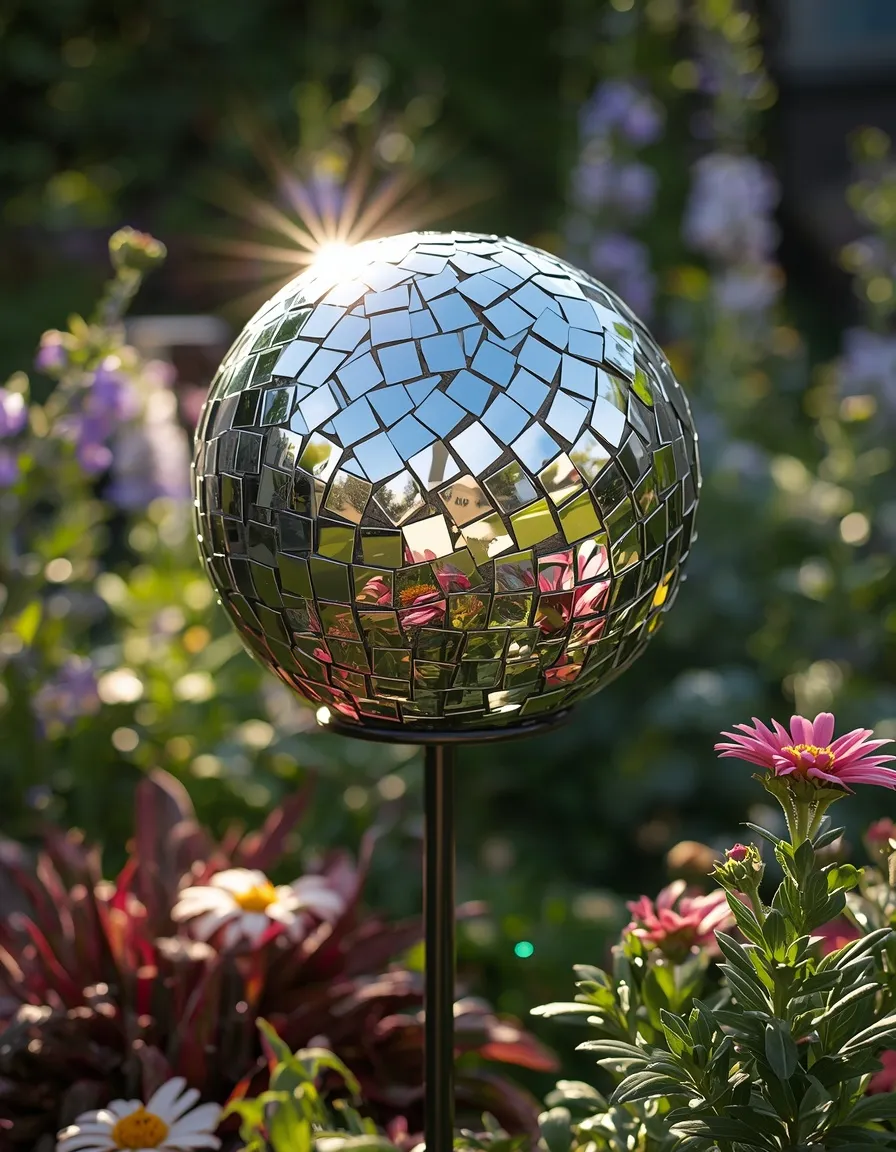
13. Mosaic Mirror Gazing Sphere
A sphere covered in small mirror tiles, mounted on a simple metal stand among garden beds, catches and scatters reflected light in every direction as the sun moves across the sky.
Start with a lightweight foam or hollow concrete sphere base rather than solid concrete, a fully solid sphere gets heavy fast and becomes difficult to mosaic evenly on the underside. Work in sections, applying tile adhesive and mirror pieces to roughly a quarter of the sphere at a time and letting it set before rotating to the next section, this prevents pieces from sliding on the curved surface before the adhesive grips. Because a curved, reflective surface can concentrate sunlight onto a small hot spot under specific sun angles, similar in principle to a magnifying glass, avoid positioning the finished sphere where that concentrated reflection would fall directly on dry mulch, wood siding, or other flammable material for extended periods; a spot surrounded by living groundcover or gravel is the safer choice. Mount it at a height, typically 60 to 90cm (2 to 3ft), where the light-scattering effect is visible from the main seating area.
- Scatters reflected light in every direction rather than a single flat plane
- Works as a genuine focal point among planting beds or along a border
- Solves the desire for a classic “gazing ball” look using upcycled mirror scraps
14. Upcycled Vintage Frame Mirror
An old ornate mirror frame, salvaged from a thrift store or a family piece no longer wanted indoors, gets a second life as garden art once the interior mirror is weatherproofed or swapped for an outdoor-rated one.
Remove the original interior mirror if it’s standard indoor glass and have an acrylic or outdoor-rated mirror cut to the exact same dimensions as a replacement, this preserves the character of the vintage frame while solving the fogging and desilvering problem that would otherwise ruin it outdoors within a season. Seal any bare or unfinished wood on the frame itself with an exterior-grade sealant or paint before installation, untreated wood frames warp and rot noticeably faster outdoors than indoors. This idea works particularly well for anyone drawn to a cottage, vintage, or eclectic garden style, since the ornate detailing of an older frame doesn’t read the same way in a strictly modern or minimalist space. A genuinely sustainable choice for gardeners who’d rather repurpose an existing piece than buy something new specifically for outdoor use.
- Gives a genuinely sustainable second life to a frame otherwise headed for a closet or landfill
- Works especially well for cottage, vintage, or eclectic garden styles
- Solves the “want character, not a big-box store mirror” problem

Garden Mirror Ideas That Work With Plants and Structures
The last stretch is about integration, how a mirror sits alongside the plants, furniture, and structures already doing work in the garden, rather than as an isolated object.
15. Vine-Framed Living Mirror
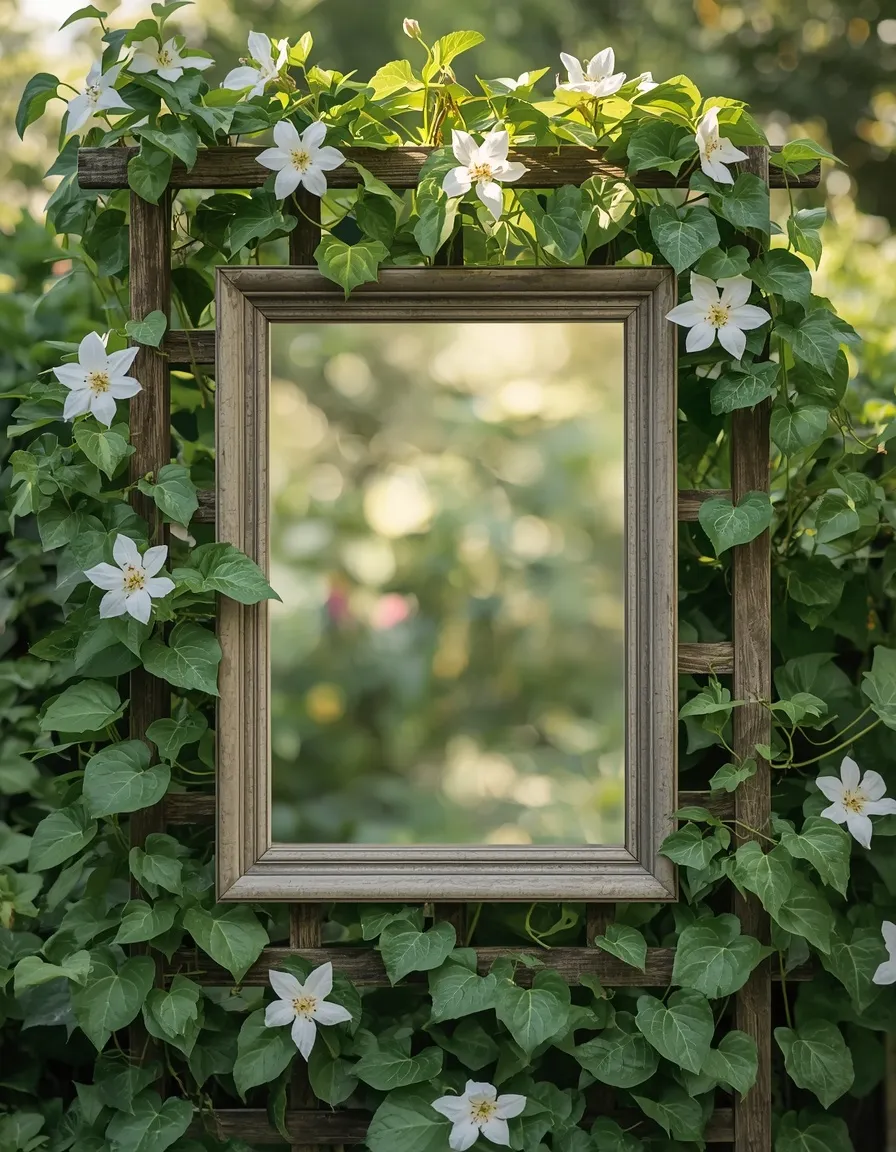
A simple, plainly framed mirror mounted against a wall or trellis and allowed to be gradually framed by a climbing vine looks less like an object placed in the garden and more like something that grew there.
Choose a moderate-growth climber, clematis or a compact climbing rose rather than an aggressive grower like wisteria, which can eventually obscure the entire mirror surface within a couple of seasons if left unchecked. Mount the mirror first and let the vine establish around the frame’s edges over one to two growing seasons, training it lightly rather than letting it grow across the reflective surface itself, foliage directly on the mirror defeats the purpose and traps moisture against the glass or acrylic. This idea pairs naturally with the fence-mounted depth mirror technique described earlier in this list, using a living frame instead of a built one softens the same illusion considerably. Prune back any growth encroaching on the mirror face itself every few weeks during the growing season to keep the reflective surface clear.
- Softens a mirror’s edges naturally instead of relying on a built frame
- Works well layered onto an existing fence-mounted or wall-mounted mirror
- Solves the “looks like an object stuck onto the garden” problem organically over time
16. Mirror Panel on a Shed or Blank Wall
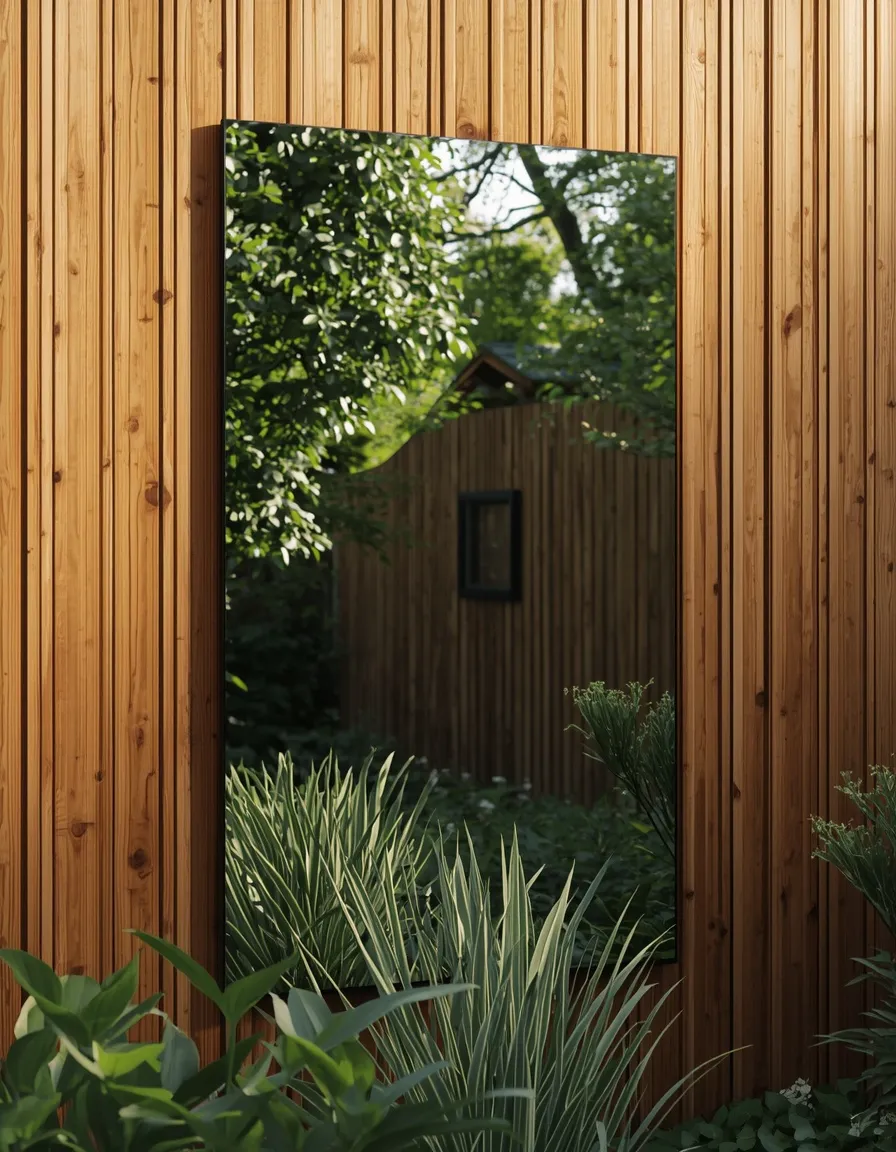
A large mirror panel mounted on a garden shed, garage wall, or blank exterior surface breaks up what’s often the least attractive structure in the entire yard and reflects the planting back at itself.
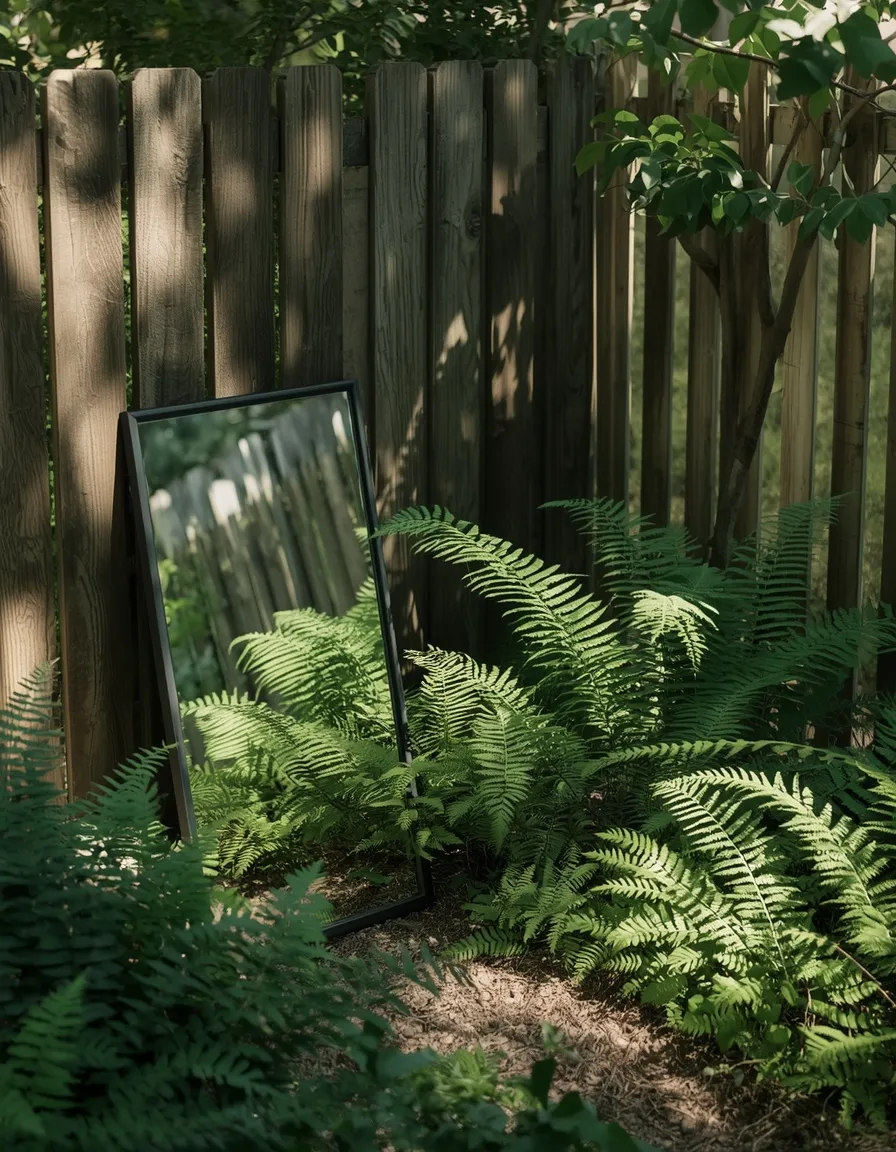
Size the panel generously relative to the wall, a mirror covering roughly half the visible wall height reads as intentional architecture rather than a small decorative afterthought stuck on a big surface. Check the wall’s structural condition before mounting anything heavy, sheds in particular sometimes have thinner or weaker cladding than a house exterior, and use anchors rated for the actual substrate material, whether that’s wood siding, brick, or metal panel. This idea does double visual duty in a small garden specifically, since it not only decorates the shed but also visually doubles whatever planting sits in front of it. A smart variation for a rental property or a shed that can’t be drilled into is a freestanding mirror panel on a simple A-frame stand, leaned against the wall rather than fixed to it.
- Transforms typically the least attractive structure in a backyard into a feature
- Works especially well doubling nearby planting through reflection
- Solves the “ugly shed wall” problem without repainting or rebuilding anything
17. Mirror-Backed Reading Nook
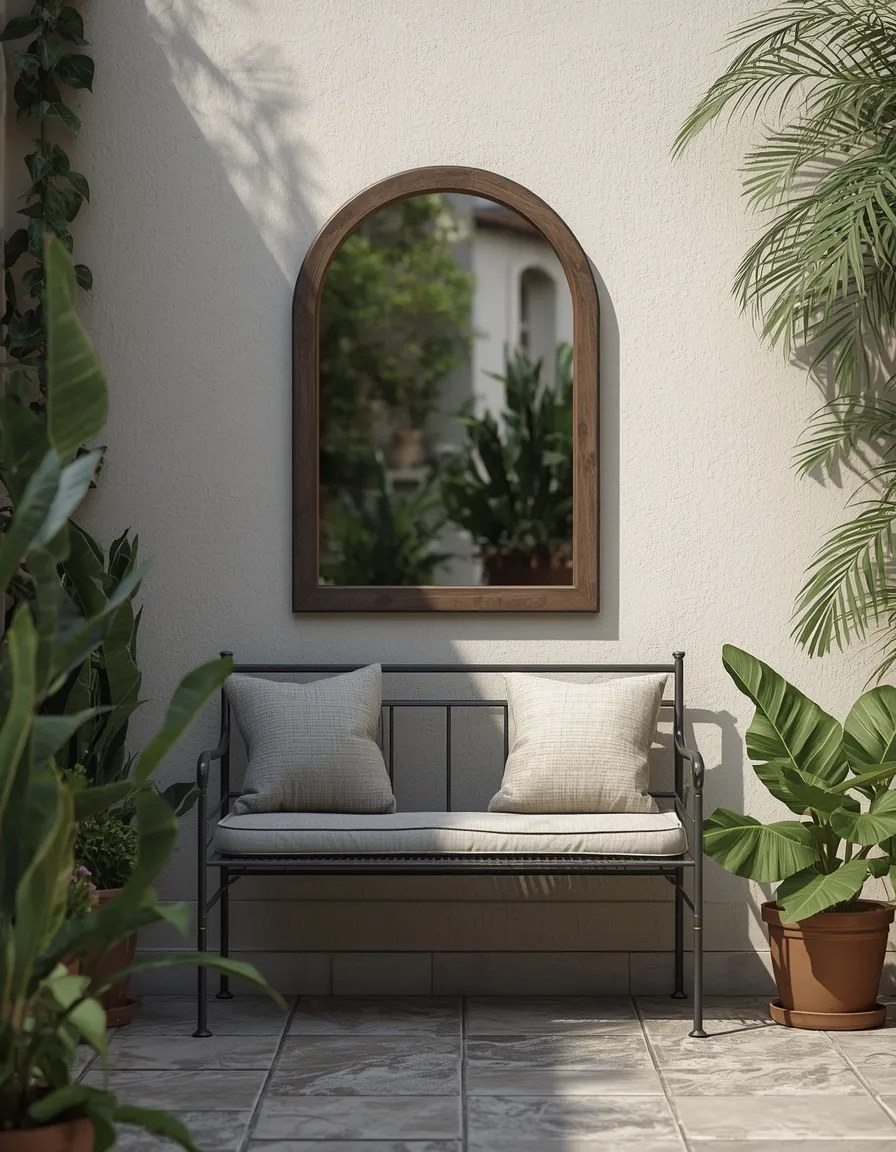
A mirror mounted directly behind a garden bench or reading chair makes a small seating nook feel considerably more open and bright, since the seated view captures the reflected garden along with the real one.
Position the mirror at a height that reflects planting and sky rather than the back of the chair itself, typically mounted starting around 45 to 60cm (18 to 24in) above the seat back. This works especially well in a small courtyard or a tucked-away corner nook where a person is likely to actually sit and linger, rather than a spot that only gets passed through, the illusion of extra space matters most where someone spends real time. Add a small side table or a potted plant at the mirror’s base to break up the transition between the real furniture and the reflected garden, an unbroken flat mirror edge right at floor level tends to look more like an obvious trick than a considered design choice. Choose acrylic over glass for this application if young children regularly use the nook, it eliminates the shatter risk entirely in a spot where furniture and foot traffic are both close to the mirror surface.
- Makes a small, enclosed seating nook feel noticeably larger and brighter
- Works best in a spot where someone actually lingers, not just passes through
- Solves the “cozy nook feels a little claustrophobic” problem without adding square footage
18. Mirror Trellis or Privacy Screen
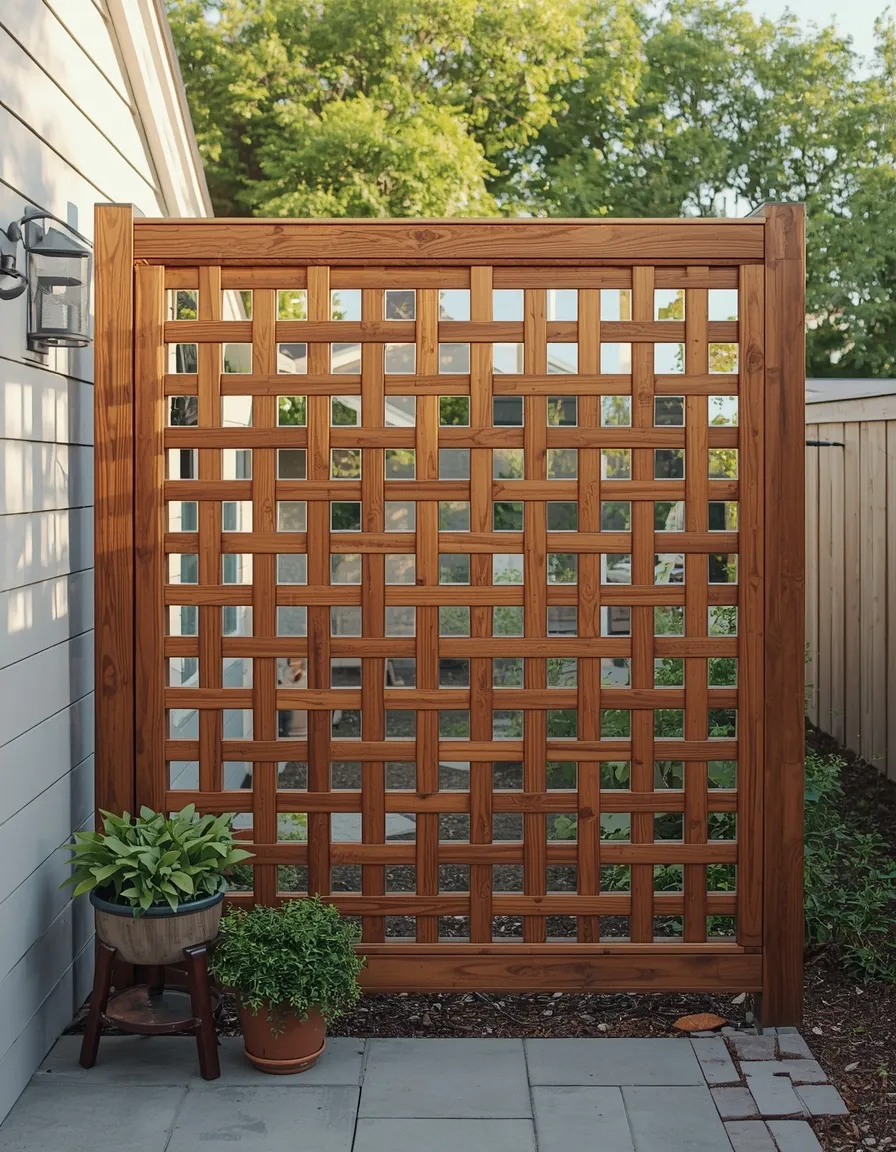
Mirror panels set into the open sections of a lattice trellis or privacy screen double as both a screening structure and a light-bouncing feature, doing two jobs in the same footprint.
Cut acrylic mirror sheet to fit individual lattice openings rather than using one large panel behind the trellis, this keeps the structure’s airy, permeable look intact while still adding reflective interest through the gaps. This works particularly well as a privacy solution for a deck or patio facing a neighboring yard, the trellis structure provides the actual screening while the mirror pieces add visual depth rather than reading as a plain, solid privacy fence. Secure each mirror piece into its lattice opening with a flexible outdoor-rated adhesive or trim strips rather than rigid clips, wood lattice expands and contracts with temperature and humidity, and a rigid mount can crack the mirror piece over a season or two of that movement. A smart variation is mixing solid lattice sections with mirrored ones rather than mirroring the entire screen, which keeps the structure from becoming visually overwhelming.
- Combines genuine privacy screening with a light-bouncing decorative feature in one structure
- Works well facing a neighboring yard or a less attractive view that needs softening
- Solves the “solid privacy fence feels heavy and closed-in” problem
19. Renter-Friendly Balcony Mirror
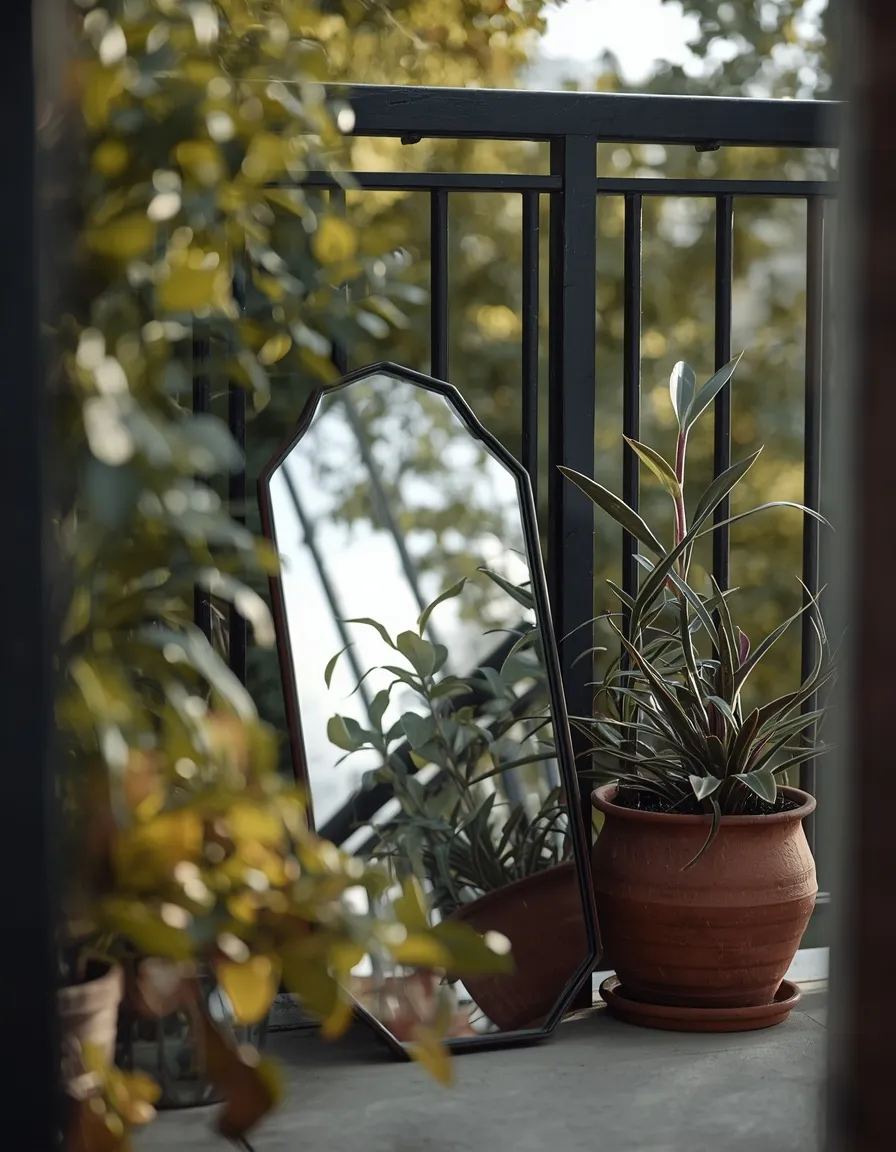
A small to medium mirror leaned against a balcony railing or hung from an over-rail hook, rather than drilled into a wall, brings the same depth trick to a rented apartment or condo balcony with zero permanent modification.
Choose a lightweight acrylic mirror over glass specifically for this application, both for easier handling on an upper floor and because a dropped acrylic piece poses far less risk to anyone below than shattering glass would. Over-rail hooks rated for the mirror’s actual weight, or a simple leaning easel-style stand, avoid drilling into railings or walls entirely, which matters for security deposits and most rental lease terms. Position it to reflect potted plants or a small balcony garden rather than the interior of the apartment through a window or door, for both privacy and because reflected greenery is the entire visual point of the idea. Secure any leaned mirror against wind with a discreet strap or bracket rather than trusting it to stay put on its own, balconies are considerably windier than ground-level gardens and an unsecured leaning mirror is a genuine fall hazard to anyone below.
- Delivers the depth-and-light trick with zero permanent installation or drilling
- Works specifically for rented apartments, condos, and small balcony gardens
- Solves the “no yard, no wall I’m allowed to touch” problem entirely
Conclusion
Garden mirror ideas earn their reputation as one of the highest-impact, lowest-cost changes a backyard can get, since a single mirror can genuinely double how much light and depth a space reads as having. Start with whichever idea solves the yard’s actual problem, a shaded corner, a blank shed wall, a boxed-in small patio, rather than picking the most photogenic option first. Bird strikes and weatherproofing are both easy to get right from the start and harder to fix once a mirror is already mounted, so it’s worth settling those details before anything goes up permanently. For more layout inspiration once it’s in place, the Garden Design category has plenty more to explore.
Frequently Asked Questions
Are mirrors safe to use outside in a garden?
Yes, as long as the mirror and mounting are suited to outdoor conditions, acrylic mirror sheet or a glass mirror with a sealed, moisture-resistant backing holds up far better than a standard indoor mirror, which typically develops black desilvering spots within a season or two. The real safety considerations are less about the garden itself and more about bird strikes and secure mounting, both covered throughout this list.
Do garden mirrors actually cause birds to fly into them?
Yes, birds perceive reflected sky and foliage in a mirror as open space rather than a solid surface, and collisions are a genuine, well-documented risk according to the American Bird Conservancy. Spacing small decals roughly 5 to 10cm (2 to 4in) apart across the mirror’s surface, or angling it to reflect the ground rather than open sky, meaningfully reduces that risk.
What’s the best mirror material for outdoor garden use?
Acrylic mirror sheet is generally the more durable and forgiving choice outdoors, it’s lighter, won’t shatter, and handles moisture exposure better than uncoated glass, though it does scratch more easily over time. A glass mirror with a fully sealed, moisture-resistant backing is a reasonable alternative where scratch resistance matters more, near a path or seating area, for example.
How do I use a garden mirror in a small space like a balcony?
A lightweight mirror leaned against a railing or hung from an over-rail hook delivers the same depth and light trick without drilling into anything, which matters for rental properties and lease terms. Position it to reflect potted plants rather than the apartment’s interior for both privacy and visual effect, and secure it against wind, since balconies are considerably breezier than ground-level gardens.
What should I do with a broken or cracked garden mirror?
Broken mirror glass is a genuinely popular mosaic material for stepping stones, planters, birdbaths, and gazing spheres rather than something that needs to be thrown away. Always break it inside a folded towel and wear safety glasses and thick gloves throughout the process, since mirror glass produces sharp, unpredictable edges.
Can a mirror really make a small garden look bigger?
Yes, a mirror sized to a fence panel and mounted flat creates a convincing illusion that the planting continues beyond the boundary, which is one of the most effective small-garden tricks available. Framing it like a window or doorway, or angling it to bounce light into a shaded corner, extends that same depth effect even further.
Do garden mirrors need to be cleaned or maintained differently than indoor mirrors?
Yes, outdoor mirrors accumulate water spots, pollen, and grime faster than indoor ones and should be checked periodically for backing damage, since moisture getting behind the reflective coating is what causes the black spotting common in mirrors not rated for outdoor use. A soft cloth and a vinegar-water solution works for routine cleaning; avoid abrasive cleaners on acrylic specifically, since they scratch the surface easily.